This year’s celebration of the Patum 2022 festival in Berga has sung and chanted for independence. With the square full of about 6,000 people on Thursday, the massive Catalan independence flag, the Estelada (with the white star in a blue triangle)1 was launched across the crowd as they sang the Catalan national anthem, Els Segadors2 (the Reapers).
With the song finished, some began to shout “independencia” (independence) and this was quickly taken up by the mass, revisiting the tradition of protest that existed before the pandemic. The Catalan independence movement has been somewhat becalmed of late, with serious divisions between the two main nationalist political parties and a lack of grass-roots activity.
Scene with traditional giant figures from the festival (Photo sourced: Internet)
The Patum festival is a traditional Catalan festival of great importance and is recognised by UNESCO as a Masterpiece of the Oral and Intangible Heritage of Humanity. “The fiesta coincides with Corpus Christi and includes a whole series of theatrical representations, characters and figures that fill the town of Berga every spring. It is a religious commemoration that dates back to the Middle Ages, which has managed to preserve both its religious and profane roots.
“La Patum de Berga has been held annually for centuries during Corpus Christi, and includes street entertainment and shows with different figures typical of these fiestas (giants, “big-heads”, eagles, guitas (dragons), plens (devils)). Fire and dance play a central role. The fiesta really gets underway on the Thursday of Corpus Christi, with the Ceremonial Patum. The salto de plens is the apotheosis of the fiesta. It represents an infernal orgy where fire devils jump to the rhythm of music. The following day is the Children’s Patum.”3
Scene with the giant Catalan independence flag during the singing and chanting at the festival on Thursday (Photo sourced: Internet)
Berga is in the Barcelona region but over 107km from the city (and about half-way to Andorra). The Patum Festival of this year 2022, which began Wednesday, June 15 and will last until Sunday, June 19, was expected to be even more crowded than usual after two years in a row without being able to celebrate it due to the pandemic.
1The other Catalan nationalist flag commonly seen is the Vermelha, with a red star and no blue. The white X on a black background is also flown but more rarely, it draws on history also and signifies ‘death before surrender’.
2An anarchist, Emili Guanyavents won the competition to compose the national anthem lyrics in 1899 and based it upon a traditional historical cultural expression arising out of an uprising of Catalan rural workers in 1640 against the chief minister of Philip IV of Spain. The lyrics are, as might be expected, very militant and, since even the Catalan lanugage was banned, the song was of course banned during the four decades of the Spanish Franco dictatorship
On 2nd June a number of Left anti-imperialist organisations and individuals held a public rally in Bilbo/ Bilbao. The municipal authority refused them use of a building and they held it in the open air in the Etxebarrieta Square. The organisers issued a statement in Euskera (Basque language) and Castillian (Spanish) calling for unity against the war plans of NATO and the EU and denounced the equivocating posture of the ‘official’ left Basque movement, denounced also the militarism of the Spanish coalition Government and advertised a joint demonstration for 18th June in Moyua, on the south side of the river in Bilbao1.
STATEMENT ISSUED BY COORDINATING GROUP (translated by D.Breatnach from Castilian Spanish version published in Ecuador Etxea)
For several weeks, various people and groups from Bilbao, Meatzaldea, Uribe-Kosta, Ezkerraldea and Busturialdea2 have been coming together in this broad initiative to respond to the escalation of war that we are seeing around us. An escalation of war promoted by NATO, with the aim of shielding the world hegemony of the United States against the rise of emerging powers such as China, India, Iran or Russia. A strategy that is doomed to failure, but that will cause, if we do not prevent it first, destruction, misery and death throughout the planet.
In Bilbo/ Bilbao 2nd June, reading the declaration and call to unite and for rally on 18 June in Basque and Castillian (Spanish). (Photo source: Ecuador Etxea)
In relation to the conflict in Ukraine, we believe that in no case can one speak of an inter-imperialist struggle between the NATO countries and Russia. Rather, it is an offensive planned for years to overthrow the legitimate government led by Vladimir Putin and gain control of Russian energy resources and markets. A policy of looting and plundering that the current Russian President put a stop to, no matter how hard it is for some to admit it. Ukraine is nothing more than the operations base and the cannon fodder of Atlanticist imperialism against its historical enemy, Russia.
Many on the Left say that the Russia of today is not the Soviet Union of yesterday. And they are completely correct. The problem is that even the slightest economic planning for social purposes by any State has become an obstacle to the viability of the parasitic capitalism that we live under. There we have the cases of Slovdan Milosevic, Saddam Hussein or Muammar Gaddafi, sadly imprisoned and/or executed in the face of complicit silence or the enthusiastic support of what they call the “international community.”
Those of us who are here today have already learned our lesson: first they demonize the currently out of favour ruler through the media, and then they justify military offensives and imperialist massacres. That is why at this time we cannot make the mistake of placing ourselves at equidistance. Both Russia and the Donetsk and Luhansk People’s Republics have every right in the world to defend themselves against the aggressions of NATO and the EU, which conspire and supply weapons to fascist governments like Zelensky’s to harass Russia and destabilize the region. Not to mention the openly Nazi battalions captured in Azovstal, whose release France and Germany now demand in order to advance in the negotiations. What do European governments owe the Nazis in Azov? What do they have to hide and why do they intend to buy their silence?
The truth is that we still do not know the exact reason why the States of the European Union have completely bowed to the interests of the United States. It is evident that the sanctions against Russia and the new oil and gas supply routes imposed by the US only benefit the Yankee tycoons, the Arab sheikhs and the absolutist monarchies of Saudi Arabia, Qatar or the United Arab Emirates. NATO vassals like Borrell have definitively cast the old European project into History’s dump. They prioritize profit and military spending to the detriment of the health and living conditions of the broad masses and announce a future of misery and sacrifice for a war in favor of a capitalism that is against us. The European Union is definitely a rotting political corpse, in case anyone ever thought that it could have been a progressive alternative or for oppressed nations like ours.
Arnaldo Otegi, leader of “the institutional Abertzale Left” (Basque left-nationalist movement). (Photo source: Internet)
Precisely here in the Basque Country, the official position of the institutional Abertzale Left3 regarding what is happening in the Ukraine is especially embarrassing. It seems unbelievable that those who proclaim themselves heirs to the historic struggles of the Basque Working People, a people of which the majority in 1986 opposed remaining in this criminal organization4, now wave the flag of “no to war” and of ambiguity. It seems immoral to us, both the pacifism that denies the just right to defense of those who are attacked by imperialism, as well as the lukewarm posture of those who do not take a stand, thus facilitating the advance of imperialism. Anti-imperialism and anti-capitalism must be cultivated day by day, if we do not want the ideological and cultural offensive of NATO and the EU to continue having effect, in particular among the sons and daughters of the working class. Thirty-six years later we unambiguously reaffirm ourselves in NO to NATO, no to FASCISM, no to GENOCIDAL IMPERIALISM.
As we said, we are witnessing an implacable propaganda to make us part of this imperialist strategy, so that we do not rebel against what is happening. While they continue to spread one-sided thinking through the big media, television channels that question the official story — such as Russia Today — are closed without the slightest shame, content on the Internet is censored by appealing to supposed “verified information”, journalists like Pablo González5 are imprisonedor political information is systematically eliminated from our streets. They not only want to indoctrinate us, they directly deny us the right to be informed. Where are the defenders of freedom of expression? Are we already living in a hidden state of emergency?
It is our obligation, therefore, to denounce, not only the rise of international fascism, but also the fertile ground that the fascists have in the Spanish State of the bannings, the GAL6, the closure of newspapers and the systematic torture of political dissidents7. Atlantic capitalism will never be able to find a better ally than the PSOE8, veritable experts in the art of manipulating and deceiving the working and broad masses. Sadly, there are times when collective memory seems too fragile. Of course, for this new phase they have found a faithful shield-bearer, the party of Yolanda Díaz9. Seconds were never good, we are already seeing where these wolves in sheep’s clothing are leading us…
We said at the beginning that different people have come together to counteract this hegemonic discourse that manipulates consciences and protects the sequestration of rights and freedoms. From Muskiz to Gernika we rebel today here against this ominous imperialist offensive. All this suffering is not necessary, there is no reason to accept the misery and the war to which NATO and the EU want to condemn us. It is also not the time to stay at home watching, or to follow the war as if it were a video game.
We therefore issue a call to all the towns and neighborhoods of Euskal Herria and other nations to continue organizing the fight against imperialism, capitalism and fascism. And we also invite all the people who are against the imperialist offensive of NATO and the EU to participate in the demonstration that we will carry out in Bilbao, on June 18 at 6:30 p.m. from the Plaza Elíptica.
NO TO NATO! NO TO THE EUROPEAN UNION! NO TO IMPERIALISM!
End statement.
TRANSLATOR FOOTNOTES
1Which is also the location of the representation of the Spanish State in Bizkaia and guarded by armed police.
2A number of towns and districts across the SW Basque province of Bizkaia.
3The ‘official’ leadership of the left-Basque independence movement, e.g the EH Bildu party under the leadership of Arnaldo Otegi and others.
4In the 1986 referendum on whether to remain in NATO, the Basque Country gave the highest majority for No, with the Canaries and Catalonia coming behind. For the whole Spanish state, nearly 57% voted Yes against 43.15%.
5Basque freelance journalist reporting for Publico (Spanish left online media) and La Sexta, threatened and advised to leave Ukraine by state intelligence services, which he did but arrested by Polish intelligence on 28 February as he was about to re-enter Ukraine with a group of journalists. Poland has charged him with spying for Russia but to date produced no evidence and even denied him access to his lawyer. The Spanish State sent intelligence service agents to question his wife, mother and friends.
6GAL: A Spanish state terror and assassination organisation of the 1980s operating against the Basque resistance which was exposed as led by the Prime Minister (though never even questioned) Felipe Gonzales and directed operationally by the Minister of the Interior and senior Army and Police officers, a number of which received prison sentences.
7The Spanish state has long been accused by human rights organisations of torturing political dissidents and convicted in the European Court of Human Rights a number of times of failure to investigate complaints of torture. The State has closed newspaper and social media sites, jailed rappers, banned political parties, banned demonstrations, closed political cultural centres, disqualified political activists from representation in elections and jailed political activists.
8The main Spanish social-democratic party, currently in coalition government with Podemos.
9Yolanda Díaz resigned from Izquierda Unida (United Left – a broad coalition) but remained a member of the Communist Party of Spain; she is currently Deputy Prime Minister in the Spanish coalition government.
FromLa Izquierda Diario (the Daily Left) by Carlos Rubio (Translated by D.Breatnach)
Foreign Affairs and Interior Departments spare no expense when it comes to strengthening the Atlantic Alliance summit, scheduled for June 29 and 30th. The budget increase of 1.95 million euros for the State Security Forces includes the purchase of 6,000 Taser chargers for the convened protests.
On October 8, 2021, the next NATO summit meeting in Madrid was officially announced, where Prime Minister Sánchez announced that “they would have all the capabilities” to “guarantee security”, at a key “historic moment” for the organisation.
(Image from Social Revolution)
Two months before the official date, Ministers of the Interior Marlaska and Exterior Albares are already anticipating some of the measures to be taken to prepare for the Summit. €37 million will be the budget limit, which will include the cost of assembly and adaptation of Ifema (Madrid festival organising consortium — DB), the catering and the security of the meeting.
More specifically, the State Security Forces will have almost 2 million euros to reinforce their equipment, which includes the purchase of 6,000 chargers for Taser pistols, to guarantee “a safe environment in the face of a possible threat”, according to the Marlaska himself.
Together with this acquisition, the purchase of metal detector arches, parcel inspection scanners, digital personal video cameras and computer graphics equipment for the preparation of three-dimensional plans of complete buildings is expected.
(Image from Social Revolution): “70 years of war, NATO no, bases out”
The National Police will be the body deployed for this summit, which will be involved in “establishing a comprehensive security arrangement for it that will cover, in addition to the place where the meetings are held, travel and all those places of accommodation where the delegations of different countries that are planning their assistance will be staying”.
According to the Government, all these measures are a priority since “several organisations and social groups are already announcing protests.”
The leading issue at this summit, given the context, is the war in Ukraine and the position that NATO is to take against Putin’s reactionary invasion. This time, there will be 50 delegations, some of them invited from outside NATO but close to it, as in the cases of Ukraine, Sweden or Finland.
At this summit, it is foreseeable that the main trend that has already been taking place in recent months and has been justified by the war between Kyiv and Moscow will be strengthened: imperialist rearmament.
In recent months, from the various partners of the alliance and from the EU, weapons have been sent successively to Ukraine, defending the interests of the alliance, arming the Ukrainian Security Forces and militias, among which are groups such as the well-known Azov Battalion and the Pravy Sektor, to name a few examples. While Russian troops remain… on their battlefronts, these armed far-right groups are strengthening their hegemony and repression in the parts of the country they control.
(Image from Social Revolution)
In this regard, as Sánchez stated: “Madrid and Spain are going to play a determining role”. Last Thursday, the President of the Government announced that Spain was going to double military aid to Ukraine, at the same time that the Army ship “Ysabel” is sailing to Poland with 200 tons of ammunition and war material of various kinds.
Since March 2nd, when the first shipment of weapons by the Spanish State was approved in Congress, the efforts of the “progressive government” (i.e social-democrat and Podemos coalition – DB) to actively participate in the escalation of war have continued uninterruptedly.
(Image from Social Revolution)
Sánchez seems to reinforce his intention to turn the Spanish state into one of the main partners of NATO and the US in Europe. In accordance with the positive historical diplomatic relations between the US and Morocco, Spain legitimised less than a month ago the illegitimate occupation of Western Sahara by the Alaouite monarchy, selling the Saharawi people in exchange for a diplomatic relationship that maintains a strong border policy between Africa and the EU; and to ensure the economic interests of Spain over her former colony.
(Image from Social Revolution)
Spain is the seventh ranking country in contribution of money to the organisation and which, in line with the other members of the Treaty Organisation, raised its defence budget by 1.5 billion euros between 2020 and 2021, which is still far from the 2% requested by “the White House” from its partners.
With the 2018 budgets the “progressive government” approved from the beginning an increase of almost 11% in defence and 6.5% in the National Police and Civil Guard, so it is expected that this trend will continue to rise.
End.
“Prime Minister Sanchez and his master” (Image from Social Revolution)
Far from the battleground which drew their separate loyalties, on Sunday (8th) an area of the Basque city of Bilbao became for a short while another battleground as pro-Palistinians and supporters of the Israeli basketball team Hapoel U-NET Holon clashed. The confrontation gave no indication of having being organised as such but many accounts from the Basque side spoke of days of anti-Palestinian actions and provocations — including an assault on a Palestinian woman — without any police intervention.
The Israeli basketball team was taking part for the first time in a four-team basketball championship, the “Big Four Finals”, the other three being MHP Ludwigsburg (Germany), Lenovo Tenerife (Canaries, Spanish State) and Baxi Manresa (Catalonia, Spanish State).1
Although the Hapoel supporters (around 80 according to one report and 200 according to others) had received some jeers when walking through the city during the weekend, their numbers had faced no organised resistance to tearing down pro-Palestinian posters and signs. The main physical clash arose on Sunday after some Zionists on their way to the basketball arena tore a Palestinian flag from the front of a small bar in the old section of the city and set fire to it. The customers in the bar responded vigorously and the battle played out in that general area until the arrival of the Ertzaintza, the Basque southwest regional police force.
Zionist basketball fans moving in on the Basque bar to far left of photo (Source photo: Internet)
Zionists basketball fans burn Palestinian flag seized from bar (Source photo: Internet)
Short report from Bilbao Hiria (my translation from Castillian original):
As usual in these cases, the social networks were the ones that began reporting the violent behaviour of the Hapoel Holon ultras. For two days the media remained complicit in silence until the altercations went viral and they had to start up the story manipulation machinery.
Most of the media dealing with the subject have equated the aggressors and the attacked, presenting it as fights between fans, but perhaps the worst case is that of El Correo, which turned the situation around by calling the Bilbao population “pro-Palestinian terrorists” whom it accuses of having harassed and attacked the peaceful Israeli “fans” since they arrived in the city and of setting them up in “an ambush” that was the cause of the altercations on Sunday.
It is interesting to see the treatment of the media depending on who causes the disturbances. When they happen in a demonstration or a strike, they make sure to make known how much the destruction costs each citizen, because there is nothing more evil than wanting to fight for your rights. But, on the other hand, breaking street furniture because any team loses or wins a game is the height of democracy.
THE PEOPLE UNITED… Once again it was the people’s organization that faced the attacks, that protected the establishments and denounced the impunity of the Zionist ultras. The response was quick and for Sunday afternoon they organized a rally to show rejection of what happened. Interestingly, it was the only time that the Ertzaintza made an appearance and identified some attendees, arresting two (who have since been released).
End item.
As mentioned above, earlier on the Sunday, a Basque antifascist platform, Sare Antifaxista, had convened a demonstration in what may be considered the central area of Bilbao north of the river, the Unamuno square. The demonstration was organised under pro-Palestinian and anti-Zionist slogans and, as stated above, here the Ertzaintza did intervene, detaining two pro-Palestinians and recording them on their database before setting them free later. Among the slogans shouted as they began to march was “Israel is a terrorist state” (in Basque).
March from Unamuno makes its way through the Casco Viejo (Old Quarter) (Source photo: Internet)Palestine solidarity and anti-Zionist march (note banner in English, presumably so Zionists could read it) crossing the San Anton bridge but the Zionists have been past and attacked already (Source photo: Internet)
The Haupol fans had either passed by or avoided that demonstration before, less than 10 minutes walking distance away from Unamuno, they crossed the Nervión river on the San Anton bridge on their way to the arena. In doing so, they had to pass a small Basque bar just on the very south side where a Palestinian flag was hung over the entrance.
Soon a group of Zionists rushed the bar, tore the flag down and set fire to it with a flare. There were only 15 customers inside or on the terrace but they responded quickly and bottles and even furniture began to fly at the Zionists (possibly the Hapoel fan reported hit on the head with a chair received his injuries here). The Zionists picked up tables, chairs and parasols too to launch at the bar, smashing window glass there and on the next-door entrance to an apartment building.
There are many migrants living in that area known in Basque and Spanish as “Bilbao the Old” and they began to arrive to assist the customers of the Basque pub, at which point the Ertzaintza also arrived and shepherded the Israeli fans towards the arena and afterwards, in two groups to their accommodation in the city2. The police reported no arrests or recording of identities arising from that battle and one Hapoel supporter required medical attention after being hit over the head with a chair.
Basque police, the Ertzaintza, arrive to seal off the Bilbi/ Bilbao la Vieja area to ensure no retribution against the Zionists — the sympathies of the poorer area can be seen in the Palestinian flag in the background (Source photo: Internet)
That very day, the Israeli Occupation Forces shot dead a Palestinian for the crime of trying to pass through from the Jordan side.
THE MEDIA, THAT BAR AND THE BASQUE POPULATION
Although Bilbao social media had been buzzing with reports of Zionist provocation for two days, the mainstream media did not pick up on it until the battle at the bridge end. True to form the mainstream media either tried to represent both sides as equally at fault or, as with the case of a reporter for the right-wing El Correo3 – and ‘right-wing’ in the Spanish state usually means descended from fascist Franco supporters during the Civil War – to cast the Zionists as the unfortunate victims. It was she who alleged specifically anti-semitic insults had been thrown at the fans which though not impossible, would certainly be unusual in Bilbao. It is the fascist groups in the Spanish state (including in the Basque Country) who have a history of anti-semitism as did the fascist Falange, who fought alongside Franco’s forces in the coup against the Popular Front Government in 1936.
The Abertzale4 Left has always been socialistically-inclined, anti-fascist and anti-racist and the first planned victim of the armed Basque group ETA was Melitón Manzanas, chief of the political police division of the Guardia Civil in Donosti/ San Sebastian in 1968, a man with a record of torturing detainees but also of hunting down Jews escaping through France and handing them over to the Gestapo.
The Naiz.eus5 website had no report on the incident but its Facebook page carried a photo of the burning of the Palestinian flag by Zionists and a report which, however, did not mention the Palestinian solidarity demonstration (perhaps because its own movement had not organised it). It appears to have been the only publication to also draw attention to the shooting dead of a Palestinian by the Israelis that very day.
El Debate went even furthering misrepresentation than El Correo through the former’s manipulated video of interviews with two people. The first, a youth and alleged eye-witness, gave an account blaming “around ten youth shouting in Basque” for being the cause of the event with only an unclear reference to a flag-burning. His testimony in foreign-accented Castilian is so at variance with so many other accounts that one is inclined to take him as a plant, either by Zionists or anti-Basque popular movement interests. The other testimony, from an elderly lady, a resident next door, is sweeping in its condemnation – but of whom? She refers to a peaceful bar and people on the patio – including with children – before the clash; after the youth’s testimony one is led to believe that she is condemning those “Basque youth”. Hardly, from information received here she is in fact the owner of the bar’s mother and also much video footage shared on social media had been shot from above in her very building.6
That particular bar at the centre of the battle is right by the southern end of the bridge, very small, not much more than a passageway from door to toilet with a bar on the way but also containing a patio outside with tables and chairs of the light aluminium or plastic type. The clientele is varied in age profile from 20s right through to 50s and 60s, generally Left and pro-Basque independence — and I have never seen it empty (unlike the much bigger and well-lit nearby Taberna of the Abertzale Left which also has a patio).
If the Palestinian flag was not permanently attached7, the management or patrons may well have intended to make a point on that day. They could hardly have expected the reaction however but despite their gross disparity in numbers responded vigorously.
Basque police shepherding the Zionist fans to the basketball arena a little uphill from their attack on the bar while at least one yells defiance (Source photo: Internet)So brave when so many and then protected by police before the numbers even up (Source photo: Internet)
FINAL RESULTS
The final results of the Anton Bridge match ended in a draw with only one injury to a Zionist, thanks to the intervention of the very biased ‘referees’, the Ertzaintza (who also took down two players’ names from only one side). There was no extra time played. However the match will be long remembered with effect no doubt the next time any Israeli Zionist team brings its fans to Bilbao.
For those interested in the result of the other match, Lenovo knocked Hapoel out of the competition at a final score of 78-71.
end.
image
Customers and local residents help staff tidy up after Zionist attack (Source photo: Internet)(Source photo: Internet)
1Apparently these are unwilling to support the boycott of Israel but like many others will no doubt flock to support the boycott of Russian teams declared by the International Basketball Federation, among a boycott of Russian competitors from participation in at least 27 international competitions ranging from canoeing and chess to paralympics and pentathlon.
2According to one report, that required an Ertzaintza commander speaking to them in English (a rare event in that police force, surely).
3The Courier, right-wing Basque Catholic newspaper closed down in 1936 by the Popular Front government, resuscitated under the Franco dictatorship and true to its pedigree since.
4Izquierda Abertzale, literally “Patriotic Left”, a broad movement (but centrally-led) of political party, daily newspaper, trade union, social centres and pubs (and formerly also armed organisation ETA). For generations it dominated the general Basque patriotic movement but for decades now has been losing support as its embracing of a non-existent “peace process” failed to end even the dispersal of its hundreds of political prisoners throughout the French and Spanish states, to say nothing of gaining their release under amnesty. There are also anarchists and other groups outside the formal Izquierda Abertzale, including some formed by its former members.
5Online representations of the Abertzale Left’s daily newspaper GARA.
6When the filming was being made, the bar was shut and the area deserted. One suspects the youth was there by arrangement with the reporters, whereas the elderly lady was videoed leaving the premises next door. Her recorded interview may well have been edited to remove clarification of the target of her denunciations; even if she had not made it clear herself it seems unlikely that she would not have been asked to clarify whom she was blaming. According to Wikipedia, the Spanish newspaper El Debate was a right-wing Catholic-conservative newspaper that, like El Correo, ceased publication in 1936 (year of the election of the Popular Front Government followed by the military-fascist uprising). However, an online search turns up the current newspaper’s own website, claiming its foundation in 1910 – the same year as that of its right-wing namesake and a quick review of even its headlines reveals its very right-wing and unionist editorial attitude. With the media with which it is provided it is hard to blame the average Spanish citizen for ignorance or bigotry.
7It was not so in years past but having not been there in two years can’t say whether prior to that day it had been.
SPEECH DELIVERED AT THE RALLIES ORGANISED BY JARDUN IN RESPONSE TO THE MURDER OF CORSICAN POLITICAL PRISONER YVAN COLONNA (Se encuentra la versión anterior en castellano/español al fondo)
Yvan Colonna was from a young age a member of the Corsican liberation movement. After being forced to remain in hiding for four years, he was arrested in 2003, accused of participating in an action carried out by an anonymous group. The accusation was based on statements of several of the movement’s members detained at the police station, who later rejected the statements but Yvan was sentenced to life imprisonment.
Posters demanding justice for Yvan Colonna after his arrest (Photo sourced: Internet)
Colonna was left in a very serious coma after the beating by a jihadist prisoner in Arles prison. On Monday of this week, Yvan passed away after three weeks in hospital. During that time there were riots denouncing the role of the French state in Yvan’s murder.
Yvan was murdereded by the penitentiary policy of dispersal and the conditions of the prison. We in the JARDUN Coordination charge that the beating and death received by Yvan was a direct consequence of the penitentiary policy of the French State. Likewise, we want to underline the need to create an organisation in support of the freedom of political prisoners and the fight against oppression and exploitation.
It should not be forgotten that in Corsica, the struggle for independence has been ongoing for decades with the aim of overcoming the political-economic system imposed by the French State and fighting for a popular and democratic government that would act in favour of the Corsican people. The struggle of the Corsicans is the struggle against French imperialism, against the oppression of the local working people and against the exploitation they suffer.
In Euskal Herria (the Basque Country – Trans.) we are well aware of the repression and oppression by oppressive states and we are witnesses to the massacres committed so many times by the French State. Because we cannot forget the imperialist attitude of the French State in Algiers and other colonies, becoming, together with the United States, the main promoters of contemporary torture.
Solidarity picket in Gastheiz/ Vitoria, southern Basque Country, on Friday 25th (Photo: Jardun Koordinadora)
All of this shows us nothing less than the need for the organisation of the working class. It is evident that both the imperialist power and the oppressive States exercise a monopoly on violence to defend their economic interests and, in every nation, those who pay are always the working class.
It is time to denounce the fraud of social peace, it is time to denounce the warlike attitude of NATO, in Donbass, the Sahara, Palestine, today they are waging endless wars in defence of the interests of imperialism and its servants — and in view of this, it is time to awaken internationalist solidarity!
For this reason, we in JARDUN proclaim that it is time to turn to revolutionary organisation for all working people! Because only the organised people can offer real help and, as far as we are concerned, only the Basque working people can obstruct the participation of the Spanish and French States, organizing themselves in Euskal Herria to face the enemy, working for a political system in favour of the Basque working people.
We are clear that struggle is the only way and we will loudly proclaim that we have to confront the enemy, exploitation and class oppression. That is why we encourage you to join the organisation, because it is time to fight, it is essential to resist!
AGUR ETA OHORE YVAN! (Farewell with Honour Yvan!)
GORA KORSIKAKO HERRI LANGILEAREN BORROKA! (Long live the struggle of the Corsican working people!)
GORA EUSKAL HERRIA ASKATUTA! (Long live a free Basque Country!).
end.
Solidarity picket in Donosti/San Sebastian, southern Basque Country, on 26th March (Photo: Jardun Koordinadora)
Lectura lanzada en las concentraciones organizadas por JARDUN ante el asesinato de Yvan Colonna
Yvan Colonna era miembro del movimiento de liberación corso, en el que militó desde joven. Tras ser obligada a permanecer 4 años en la clandestinidad, fue detenida en 2003 acusada de participar en una acción llevada a cabo por un grupo anónimo. La acusación se fundamenta en la declaración de varios de los miembros detenidos en la comisaría, que posteriormente rechazaron la declaración, pero Yvan fue condenado a cadena perpetua.
Colonna quedó en coma muy grave tras la paliza de un preso yihadista en la cárcel de Arlés. El lunes de esta semana, Yvan falleció cuando llevaba 3 semanas hospitalizado. Con el objetivo de denunciar el papel del Estado francés en el asesinato de Yvan desde que ingresó en hospital, durante ese tiempo ha habido disturbios.
Yvan fue asesinado por la política penitenciaria por la dispersión vivida y las condiciones de la prisión. Desde la coordinadora JARDUN denunciamos que la paliza y la muerte recibida por Yvan ha sido consecuencia directa de la política penitenciaria del estado francés. Asimismo, queremos subrayar la necesidad de articular una organización a favor de la libertad de los presos políticos y de la lucha contra la opresión y la explotación.
No hay que olvidar que en Córcega, la lucha por la independencia se ha dado durante décadas con el objetivo de superar el sistema político económico impuesto por el Estado francés y luchar por un gobierno popular y democrático que actuara en favor del pueblo corso. La lucha de los corsos es la lucha contra el imperialismo francés, la opresión del pueblo obrero local y la lucha contra la explotación que sufren.
En Euskal Herria conocemos bien la represión y la opresión de los estados opresores y somos testigos de las masacres cometidas tantas veces por el Estado francés. Porque no podemos olvidar la actitud imperialista del Estado francés en Argel y otras colonias, llegando a ser, junto con los Estados Unidos, los principales impulsores de la tortura contemporánea.
Todo ello no nos demuestra más que la necesidad de la organización de la clase trabajadora.. Es evidente que tanto la potencia imperialista como los Estados opresores ejercen el monopolio de la violencia para defender sus intereses económicos, y en todo pueblo, su pagador, es siempre la clase obrera.
Es hora de denunciar el fraude de la paz social, es tiempo de denunciar la actitud guerrera de la OTAN, Donbass, el Sáhara, Palestina, hoy en día están dando un sinfín de guerras en defensa de los intereses del imperialismo y de sus siervos, ¡y ante eso es tiempo de despertar la solidaridad internacionalista!
Para ello, desde JARDUN proclamamos que es hora de volcarse en la organización revolucionaria para todo pueblo obrero!! ¡Porque sólo el pueblo organizado puede ofrecer una verdadera ayuda, y en lo que a nosotros se refiere, sólo el pueblo trabajador vasco puede interrumpir la participación de los Estados Español y Francés, organizándose en Euskal Herria para hacer frente al enemigo, trabajando por un sistema político a favor del pueblo trabajador vasco.
Nosotros tenemos claro que la lucha es el único camino y proclamaremos en voz alta que tenemos que enfrentar al enemigo, a la explotación y la opresión de clase. Por eso os animamos a uniros a la organización, porque es tiempo de lucha, ¡es imprescindible resistir!
In Dublin on Friday, prominent Catalan journalist Vicent Partal departed from the advertised subject of his Irish tour to talk specifically about the struggle for Catalan1 independence and to propound a new tactical departure for the nation in conflict with the Spanish state. In three-night speaking tour organised by ANC Ireland, Partal spoke also in Belfast and Cork, in which venues he stuck reportedly more closely to the advertised subject.
ANC Ireland is an Irish-based iteration of Asamblea Nacional de Catalonia, a mass grassroots pro-independence Catalan organisation which has been primarily responsible for the massive demonstrations on the Diada, the Catalan national Day and for the organisation and promotion of the Referendum on 1st October 2017, when scenes of Spanish police attacking voters shocked many around the world. The President of the ANC at the time, Jordi Sanchez, was later jailed by a Spanish court along with Jordi Cuixart, the President of another Catalan grassroots organisation, Omnium Cultural2.
Carles Pujol of ANC Ireland (right) introducing Vicent Partal (left)
Vicent Partal, who began his tour in Queen’s University in Belfast on the 9th continuing on to Cork University on the 10th, spoke in Dublin on the 11th in the Teachers’ Club in the City centre. Partal has been a journalist since the early 1980s, in which career he has covered the Balkan War, the Demolition of the Berlin Wall, the Beijing Students’ Protests and other events of international prominence. His publishing ventures in Catalonia progressed to the founding in 1995 of the electronic newspaper Infopista catalana that later became VilaWeb, publishing mainly in Catalan but from time to time in English also. In 2007 VilaWeb TV opened as a web TV initiative and nowadays is available as a YouTube channel and on iTunes. Partal is also Chairperson of the European Journalism Centre.
THE NEW TACTIC
In Dublin, Carles Pujol, of ANC Ireland, introduced Vicent Partal to the 50 or so of mostly Catalans in attendance at the talk on Friday in the Teachers’ Club.
Vicent Partal addressing the audience in Dublin
Partal came out from behind the speakers’ table covered in Esteladas, independentist flags, and leaning informally against it behind him, faced his audience. Instead of covering the advertised subject of “minoritised languages” and their promotion through the Internet, he addressed recent features of the struggle for independence of the Catalan nation and proposed tactics which he believed would lead to success. His audience was no doubt surprised but seemed engaged and no-one objected. Partal remarked that he had a somewhat blunt habit of stating what he believed but wished to encourage debate. He stated that the “monster” that is “the real Spain” needed to be exposed to the Catalan people and, now that has been done, needs to be exposed to the EU. Catalonia had the credit of having exposed the Spanish State as none else had done, he maintained and had stood up to the regime as none else after the fake Transition from the fascist dictatorship of General Franco.
In essence, Partal stated, a further exposure would come when the exiled Catalan Members of the European Parliament returned to Catalonia and were arrested by the Spanish State. This violation of their immunity as MEPs under the laws of the EU would be condemned by the European Court of Justice which would order their release. The exposure of the true fascist nature of the Spanish State, in addition to mobilisations on the streets would bring about irresistible pressures for the independence of Catalonia.
After the applause for his presentation had died down, Carles Pujol called for questions or statements and approximately ten members of the audience obliged, with Partal replying to each. The first question related to censorship and pressures against publication which Partal may have faced, to which he replied that pressures only work if one gives in to them. With regard to State threats he had disobeyed an instruction to the media from the Spanish State and time would tell what would be the outcome in that regard.
Another question was whether it would not be better to keep building up the numbers of votes for pro-independence parties, currently represented by 52%, in order to win independence? Partal replied that once the Spanish State had attacked a Referendum, the question of numbers for validation ceased to exist – “after that, even 5,000 people on the street for independence would be enough!” Besides, the Catalans need to return to the position they had when Puigdemont declared a Republic on 10th October (but suspended it) and to follow it through.
A scenario of increasing repression and no advance towards independence was what another person saw and Vicent replied that freedom was not without cost and that the repression needed to be faced and defeated. The Catalan journalist also denied there was anything to be gained by participation in talks with the Spanish state when independence was ruled out in advance.
Another member of the audience disagreed with the statement that Catalonia was the first to stand up in rupture from the Spanish State since the Transition, pointing out that the only region to reject the monarchist and unitary state Constitution forced on to the people in Spanish State after the death of Franco had been the Basques3, to which Partal conceded. The man also asked whether with the two main trade unions in Catalonia4 being being in favour of union with the Spanish State, effective general strikes could be organised in Catalonia. Vicent replied that he did not see the traditional approach favouring trade union organisation and action in popular protests as useful any longer. The youth in the Battle of Urquinaona5 had proved that they were able to drive the Spanish Police out and they had done so without trade union organisation, perhaps even without ever having employment to become union members.
An Irishman asked how Partal would define or describe democracy. The Catalan journalist said that there are a number of ways of looking at that question but his most basic one would be that no-one lived in fear.
To the question of what the Catalan journalist saw as an effective organisational political approach to take the struggle for independence forward, he said that all three pro-independence parties6 are now in a position of not struggling for independence and a new formation is necessary. At a recent conference, the pro-independence party with most elected members of the Catalan Government was talking about progressing to independence in 40 years! It was unclear whether the new approach should be just a platform for independence or a new fourth party but he did not at present support the latter option. It was clear that the independence movement needs to be in opposition to the Catalan Government, Partal said.
One section of the crowd in the bar area before the talk
The meeting ended with thanks to the campaigning Catalan journalist and to the meeting’s participants, along with some notifications and a request for people to get involved in Catalan solidarity work. However discussions continued informally for hours afterwards in the bar area.
End.
A small section of the crowd in the bar area before the meeting
FOOTNOTES
1Catalonia is usually understood to comprise the territory of the autonomous region of that name (Catalunya in their own language) within the Spanish state. However the region of Pau within the French state territory is often included and the term Paisos Catalans (Catalan Countries) includes not only Paul but also the autonomous region of Valencia and the Balearic Islands.
2Tried after two years in jail without bail, they were convicted of the crime of sedition and in October 2019 sentenced to nine years in jail, arising out of their efforts to manage peacefully a large spontaneous protest at Spanish police invasion of Catalan Government offices. They were pardoned in June 2021 and released.
3He might also have mentioned the decades of struggle of the southern Basque Country on military and political levels, with a huge number of Basques as political prisoners.
4Comisiones Obreras formed by the Communist Party during the Franco dictatorship but no longer under the party’s control and UGT, very much allied to the social-democratic Partido Socialista Obrero, by far the main trade unions in the Spanish state. Far behind in membership in Catalonia but growing is Intersindical CSC, a class trade union.
6Esquerra Republicana (Republican Left), Junts per Cat (Together for Cat(alonia) and CUP (Popular Unity Candidacy); the first two made up the pro-independence majority in the Catalan parliament, with CUP in opposition but supporting them with their delegates votes in clashes with the Spanish unionist parties.
A young Dublin man, out to see something of the world, arrived in Franco’s Spain just a few years after WWII. At a reception at the German Embassy in Madrid (foreign press invited and anywhere for a free meal) he met a tall attractive half-Basque, half-German woman. Lucila Hellmann de Menchaca was multi-lingual – bilingual in German and Spanish through her upbringing, she had also learned English and French. She knew only a few words in Euskera – her mother’s side of the family was not very patriotic and in any case, since the victory of Franco’s military-fascist coup in ‘39, the language was forbidden. They conversed mostly through English.
Deasún, tall with grey-blue eyes and dark curly hair and thin moustache, had been raised only with English language but was learning Irish and Spanish, the latter out of necessity and the former by choice.
They were attracted to one another and began dating; within around six months they were married and soon afterwards on their way to Tangiers, where Deasún had a job waiting for him writing copy for a USA radio broadcasting company. The Moroccan city was an “international zone” city according to the Tangier Protocol, which meant that it was effectively ruled by the British, Spanish and French and, inevitably, full of liberation political activists, smugglers, spies and double-agents.
In that multi-lingual society with the Muezzin calling the faithful to prayer five times a day in Arabic and Berber heard in the street along with European languages, Luci was soon pregnant and, as her time neared, went back to Madrid to be near her family. Luci and Deasún first’s child was born in the German hospital in that city; then back to Tangiers soon afterwards, of course.
Their big guard dog, named Bran after one of Fionn Mac Cumhaill’s famous wolfhounds, occasionally takes off to return days later with scratches and bite-marks. He was watchful of the child and one day complains, whimpering to Deasún who, when he goes to investigate, finds the crawling child stuffing the dog’s dinner into his mouth.
Deasún watches his son speaking his first words in Spanish from Luci and some in Irish from himself. Increasingly he feels the need to have his son develop his speech in Ireland; soon the couple are back in the Spanish state and, after a short interlude, visiting the Basque Country of Luci’s youth, crossing the border into the French state by train to the coast and boat to England. A short stay with a cousin there and they and their child are on the way to Deasún’s native Dublin by train and boat.
Some years later in Dublin, his family of sons and a daughter growing up speaking Spanish and Irish in the home and English in the street, Deasún composes the piece of music which he calls “An Ghailseach” (the Foreign Woman”). Luci and Deasún’s youngest son, Cormac, an accomplished flute and whistle player, learns the piece. Some years later again, in the Club an Chonnradh with his father, Cormac plays the air and Deasún is amazed to learn that the piece he likes so much was actually composed by himself.
An Ghaillseach, composed by Deasún Breatnach, played on low whistle by Cormac Breatnach; Garry Ó Briain accompanying on guitar and keyboard, mastered by Seán McErlaine, uploaded by Féilim Breatnach.
Cormac records the piece and it is played on an Irish-language radio programme to mark a century since the birth of Deasún. On the morning of the broadcast Cormac cannot listen to it for he is on his way to Stockholm, where the Amerghin Ensemble of which he is a part have an engagement to perform their music. The older son listens to the program just before he is due in the Dublin city centre on a historical conservation commitment. The tears spring to his eyes from the sheer painful beauty of the piece.
Luci and Deasún are years gone (they died within days of one another in 2007) but An Ghailseach has joined the extremely rich and varied body of traditional Irish music, where it will outlast yet other generations to come.
Political Statement against the new banning attempt: the Ministry of the Interior initiatates a procedure in the Spanish National Court for the “extinction” of Izquierda Castellana
The Central Contentious-Administrative Court No. 6 of the Spanish National Court has notified us on August 5th of the motion put forward by the Ministry of the Interior through the State Lawyers in which the “extinction” of Izquierda Castellana is sought, that is, its disappearance as a legal political organization.
Demonstration of Izquierda Castellana with their logo on banner declaring “Spanish State Prison of Peoples”.
On this occasion, the Ministry of the Interior resorts to administrative tricks, arguing that IzCa’s statutes do not comply with the changes introduced through the legislative reform of Organic Law 3/2015, of March 30, on the control of the financial-economic activity of Political Parties.
It is paradoxical that a political organization that, as is the case with Izquierda Castellana, never in its entire history requested or received any financial subsidy, is intended to be outlawed based on these kinds of reasons, especially when most of the political parties that ostensibly breach the legal regulations on such matters are not even warned of such a possibility.
In our opinion, the attempted extinction / banning of IzCa sponsored by the Ministry of the Interior has a political motivation: the intention of making disappear an organization whose essential activity is the denunciation of all the corrupt, antisocial, antidemocratic and antipatriotic activities of the current Regime of the 2nd Bourbon Restoration; and whose ultimate aim inevitably passes through the establishment of a democratic, republican and social rights system.
IzCa, as we pointed out, has not received or requested a single euro from the public treasury. Our activity is based solely and exclusively on our resources, especially on our human resources, that is, on the militants and activists who support us every day in one way or another. IzCa does not have as such – nor does it claim – representation in the institutions of this post-Franco regime. We do not despise this sphere of action, but it seems to us that the most important and useful thing in this historical moment is to promote the movement and popular organization in the various sectors, and we focus on this and we also believe with some success; that is what the Regime and its successive governments have not forgiven us.
IzCa has suffered permanent harassment from the constituted power since our founding; numerous media-police operations have been plotted against our organization. In 2008 there was already an attempt to ban IzCa, which was finally archived without action in the National Court itself. Last December the trial against our comrade Luis Ocampo was held – Doris Benegas was also on trial – with regard to the events that occurred in the Republican demonstration in Madrid in October 2014. In that trial, a year and a half in prison was requested by the Prosecution. Finally, our comrade was acquitted; in its judgment, the Madrid Provincial Court Court recorded that his version of events was fully credible.
IzCa has been denouncing the repressive policy towards the popular movement and at the same time favourable to the extreme Right that has been carried out by the Ministry of the Interior and very especially by the Government Delegation in Madrid, intensified repression since the beginning of the Covid-19 pandemic. We accurately forecast the overwhelming defeat of the institutional Left in Madrid in the last regional elections on May 4; and we predict – we believe that without the slightest possibility of error – the defeat of the institutional Left in the next general elections if it continues on the current path. If you try to make activist organizations disappear, those that with more dedication and commitment defend the interests of the working classes, you are facilitating the path of access to the government by the Right. If the interests of the peoples of the Spanish State are subordinated to those of imperialism – certainly in a phase of full decline – one of the most significant expressions of which is the scheduled holding of the next NATO summit in Madrid in 2022, it is refusing to build its own project in solidarity with the peoples of the world and, once again, facilitating the advance of the right wing, militarism and warmongering.
We are going to fight against our outlawing at the National High Court and before all judicial bodies, including European ones, where it is necessary. In the National Court, that special court of which we do not recognize any democratic legitimacy, nor for the entire institutional framework of the ’78 Regime,starting with its Head of State, just as “exemplary” in its general terms as the rest of its institutions and whose legality is based on Franco’s legality. But above all, we will continue to fight in the streets.
Study and reflect; organize and mobilize; build popular power. That’s the only way.
Izquierda Castellana, August 6, 2021
COMMENT:
The Izquierda Castellana is a revolutionary socialist organisation basing itself on the territory of Castille (a central area of the Spanish state including Madrid) and claiming its right to self-determination, drawing its historical inspiration from the revolt of the Comuneros in the 1520s. The party or organisation seeks social justice internally, self-determination for its own territory and supports the struggles for self-determination of others (for example, the Basques and Catalans), is opposed to imperialism abroad and military alliances such as NATO. IzCa is anti-racist and anti-fascist and has suffered repression.
The potential for revolution in the Spanish State is not in the Basque Country and Catalonia alone, nor only in other areas such as Galiza and Asturies but in the heartland of the State also, in Madrid and in other parts of Castille. It seems clear that the struggles for independence of the Basque Country and Catalonia as in the past will be met with heavy Spanish repression and the only possibility for success in such circumstances would a situation in which the State was met with uprisings in other parts also. I have long advocated the building of the type of alliances that could make that possible.
(Report by Jardun Koordinadora translated by Dublin Basque Solidarity Committee)
The atmosphere was tense on September 25, 2021 in Leitza due to the presence from the early hours of the morning of the Civil Guard and the secret police. To this must be added the checkpoint and identification by the GAR (Guardia Civil “anti-terrorist” Rapid Response Organisation – Translator) of many of those attending the political event organized by the revolutionary organization JARKI. In the same way, the Civil Guard had no problem in stopping and subjecting to identification those who traveled by bus organized from Bilbao and Gernika. This was not the only episode of police repression since several JARDUN activists from Leitza complain of having been followed by the secret police over recent days.
One of the posters for the event (Photo source: Jardun Koordinadora)
The event organized by the revolutionary organization JARKI gathered hundreds of people in Leitza square. Once the flame was lit, to the sound of the adarras and the txalapartaris (traditional ox horns blown and wooden percussion instrument played – Trans.), the act began, under a gigantic ikurriña (flag of the Basque Country – Trans.). Next, the dantzaris exhibited the “agintariena” (see Notes) while a gust of wind snapped the rope securing the ikurriña and two young people had to climb the pediment to hold it for the rest of the act. Later, two bertsolaris took the stage asserting with their verses independence, socialism and amnesty, as the legitimacy of the fight of the gudaris (volunteer liberation fighters).
Dancing the Aurresku, the honour dance and presenting red flowers to the memory of the martyrs of the Basque struggle for independence and socialism. (Photo source: Jardun Koordinadora)
To conclude the ceremony, a member of JARKI read a statement in reference to the commemoration of Gudari Eguna. The statement among many other things vindicated the struggle for memory of Euskal Herria, and of those who have given all in for it, thus legitimizing their struggle and the celebration of this day. He also mentioned the presence of ‘dogs’ in different uniforms that act with total impunity, making it clear that there is no type of coexistence between the oppressed and the oppressors. To the revolutionary organization JARKI this underlines a clear principle: confronting who is oppressing you and who is keeping you under their control is not an option, but a necessity.
End of the event, singing the Internationale and the Eusko Gudariak (Photo source: Jardun Koordinadora)
The act ended with the singing of the Internationale and the Eusko Gudariak.
The Gudari Eguna (Day of the Soldier) originally celebrated the Basques who fell fighting the fascist-military coup in the ‘Spanish’ Anti-Fascist War or who were executed when captured or died as a result of their prison conditions. The martyrs in the struggle against the Franco dictatorship and after required that they also be included in the Gudari Eguna celebrated in October but since the Basque Nationalist Party dominates that commemoration and excludes the later martyrs, the patriotic left movement has changed the date to the last weekend in September and celebrates all the Basque martyrs. The last weekend in September was chosen because of the Franco regime’s execution of two ETA and three FRAP volunteers on 27th September 1975.
Jarki is a revolutionary socialist organisation for Basque independence. Statement on who Jardun are: “It is an image that includes a group of organizations fighting for the achievement of the Basque socialist state, operating under common agreed ideological bases and minimums. JARDUN is a meeting place for different organizational frameworks, a movement that promotes their collaboration. To this end, it provides a common framework for the adoption, coordination and decision-making of the various organizations that make it up. Therefore, at different levels, it is a tool for solidarity between militancy, organizations and groups within it. Using these coordination frameworks, the ACTION will be made up of sectoral organizations with specific functions and well-defined roles to carry out in a sector-specific way. The aim of this sectoral framework is to promote the efficiency of the organizations, which, in turn, incorporate the Basque Country Workers’ Alternative in the field in which they work. In this way, all the organizations that make up JARDUN work within the framework of the same objective and strategic line, each of which deals autonomously with its own line of work.As long as we understand that the workers are the subject of the struggle for an independent, socialist and united Basque state. So, when we talk about the Basque Country Workers’ Alternative, we are talking about a comprehensive political alternative that meets the needs of the Basque Country Workers. Its aim is to reach all areas of Basque society as a tool for activating and organizing the critical pro-independence and socialist masses in the Basque Country. In other words, the Basque Workers’ Alternative must be a tool for confrontation that will lead us to a break with the states. Ultimately, JARDUN must be the organizational framework for the Basque Revolutionary Workers. In order to achieve the strategic goals of the Basque Revolutionary Workers, which must carry out the Basque socialist revolution, it must be a comprehensive alternative that must provide the means to carry out the necessary struggles.”
Leitza is a town in northern Nafarroa (Navarra), one of four provinces of the Basque nation within the Spanish state.
The Guardia Civil are a Spanish state-wide gendarmerie or militarised police force, armed and living in barracks. They were the physical backbone of Franco’s dictatorship and continued in a repressive political role following the “Transition to democracy”.
The Agintariena is a ‘dance’ which resembles a short military parade with ‘arms’ to music; two lines of dancers march while a flag-bearer proceeds between them. At a particular point the dancers all go down on one knee with heads bent while the flag-bearer waves the flag over them all, seemingly in blessing over the fallen in battle. A mass example in a festival can be seen in the video clip https://www.youtube.com/watch?v=kfoTmQZC_gs with the irrintzi (traditional ullulating call) thrown in for good measure.
Bertxolaris are performers of a traditional format of expression in song and rhyme on any theme. Competitions among these are held in the Basque Country in which the performers must extemporise rhyming verses on a given theme; these receive great public interest.
“dogs in uniform” — “txakkurak” (dogs), a pejorative slang name given for generations to the police in the Basque Country.
The Internationale is a song of revolutionary socialist struggle with lyrics written by an Anarchist activist in the Paris Commune of 1871 and put to music later by Marxist; it has been translated into a great many languages with examples in every populated continent. Eusko Gudariak (Basque Soldiers) is a Basque national anthem (in theme somewhat like the Irish national anthem “The Soldiers’ Song”). It was reputedly sung by ETA martyr Juan Paredes Manot (Txiki) while being executed by Guardia Civil firing squad in 1975, even continuing while mortally wounded by the first volley.
(Changed headline andtranslated from article in Publico.es by D.Breatnach)
(Reading time main text: 7 mins.)
Franco’s repression in Fregenal de la Sierra executed more than 80. Now, a second excavation seeks to recover the bodies of those who did not come to light in 2012, when the skeletons of 43 victims were recovered. The remains found indicate cruelty towards women, disrespecting them even after they were shot.
Central plaza Badajoz, probably influenced by its Moorish heritage — what the tourists are advised to see of Badajoz. (Photo credit: Stephen Colebourne via Wikipedia)
When they gave her the jacket of her son, who had just been shot, she lost her speech. She was like this for two and a half years, in silence, until she died. The father, a lifelong labourer, said on his deathbed that he bequeathed his little house to his five children. “You only have four,” one of the witnesses told him. “Until they give me the body of my son, I still have five,” replied the man. They were the mother and father of Juan Serrano García, shot in September 1936 in Fregenal de la Sierra (Badajoz1), when the rebels tricked him into returning: “They said that all those who had not committed crimes of blood, would be free of reprisals,” adds Andrés Serrano, representative of the Association of relatives of the executed from the town and Juan’s nephew.
His body was found in 2012 in a mass grave in the town’s cemetery along with 42 other bodies, although many more are still waiting in the ground. At that time, there were seven graves opened. Now, five more are uncovered to try to account for the more than 80 murdered by Franco’s troops of which there is a record. Among the bodies there is an unusually high percentage of women for the situation, points out Laura Muñoz-Encinar, archaeologist and forensic anthropologist at the Institute of Heritage Sciences (Incipit), attached to the Higher Centre for Scientific Research (CSIC), and who is participating in the exhumation.
The forced and almost physical silence of Juan’s mother testifies to the decades and decades of internal repression of the thousands of victims of the Franco regime. So much so, that Serrano learned about the story of his uncle obliquely from his mother, the political one of the family. She did not tell him directly: “An anthropologist friend wanted to interview her for a job, so I took the opportunity and told him to ask her about what happened in the Civil War. I hid in a room next to the terrace, where they were and thus I was able to hear first-hand and for the first time in my life about the execution of my uncle, the hardships my grandparents went through and the stigmatization my family suffered for being, for everyone else, ‘reds’ “, related the historical memorialist at 68 years of age.
Massacre by the fascist-military in the Bullring in Badajoz 1936, artist unknown (image sourced on Internet)
They were in a hurry to kill them
The case of Juan, a militant in the UGT2 and of socialist sympathies, assassinated at the age of 21, is just one more. In Fregenal, more than eight dozen people who were related to politics and social struggle during the Republican period were executed. Located in Badajoz, many townspeople joined “The Column of 8,000”, coming from the north of Huelva, to flee from the fascist barbarism between the air raids. The troops took Fregenal on September 18 and three days later Juan returned to the town together with another comrade. They thought that nothing would happen to them, because they had not committed any blood-crime.
“They arrived at 10:30 in the morning and at 11:15 they were both arrested. They were taken to jail, and no matter how hard my grandparents tried to intervene with some powerful people from the town to save him from being shot, on September 22 he was murdered”, relates Serrano. The same thing happened a few meters away, in those days, in the town square: “They shot about four people in the center of town; it was an exemplary shooting. They wanted to increase the fear that there was already,” he says.
That same September 22nd, Juan’s parents had already guessed the worst. They knew that their son had been detained and that the Francoists had no mercy. Their suspicions were confirmed when, a few hours later and for greater confirmation, they were given the jacket that their son had been wearing. According to Serrano, the rebel soldiers also told them that they should stop searching, that they already knew where he was, and not to bother people, referring to the people to which they had gone to ask for compassion for their young son.
The first exhumation: 43 bodies
More than 70 years later, the team to which Laura Muñoz-Encinar, the archaeologist belongs, arrived. It was 2010 and they couldn’t start the excavation for two years. After the surveys and a research project approved by the Ministry of the Presidency, they excavated seven mass graves. “There were men and women. They were from young to very advanced ages. Among the seven women we found, one of them had a full-term fetus of between 7 and 9 months,” explains the Incipit scientist.
A bullet found in the mass graves excavation in Fregenal de la Sierra this year. (Photo credit: Laura Muñoz-Encinar)
The change of central government in 20113 meant the cancellation of the funding allocation related to the investigation of what happened during the Civil War and the Dictatorship, so they had to wait nine long years until they were able to return to the town. Muñoz-Encinar explains that “During this time almost all the children of the victims, of which there were many, have died. There is only one daughter living, María Lobo Villa. The Francoists executed her mother, three uncles and a grandfather. Now, mainly, grandchildren and great-nephews and great-nieces remain. “
In that excavation they found the body of a woman buried between two men, something recurring according to the expert. Once again, and as always, they got the worst of it. This is demonstrated by what happened to Antonia Regalado Carballar, known as “La chata carrera” (“the flat racer”?-DB). A 22-year-old political activist, this woman transgressed the traditional roles of the patriarchal culture of the time. “They detained her and took her to the cemetery. There they physically and psychologically abused her, and several of them raped her. After killing her, said the undertaker, they put her in the ditch between the bodies of two men,” Muñoz-Encinar explains further. Serrano adds what the rebels who were there said, as the gravedigger recalled, “As men tempt you, there you have men for your whole life.” They haven’t found her body yet.
This type of symbolism, highly contemptuous for all victims and sexualized in the case of women, is not an isolated event. “In the current excavation we have already found a body face down. In a Judeo-Christian culture like ours, the placement of the bodies responds to a ritual of elevating the soul to heaven, that is why the bodies are placed face up and with the limbs stretched , and not doing it like that is a post-mortem humiliation”, the archaeologist explained.
Killed without trial years after the War
She herself points out that all the remains already found and those they are still looking for were civilian victims of extrajudicial repression, executed on the basis of the war party in force from 1936 to 1948. That is that, almost ten years after the end of the war, it was still possible to execute civilians without the need to bring them through a judicial procedure. That is what happened in Fregenal de la Sierra in 1946 to a party of guerrillas4. This is how Muñoz-Encinar relates it: “We know that they were fighting in the mountains, that they were pursued, until one night they entered a brothel. There they were betrayed and, after a scuffle, they were arrested. They were murdered, their bodies were exhibited in the street entrance to the cemetery and then put in a grave.” Also victims of extrajudicial repression years after the Civil War ended, the team of experts does not know if their bodies will be in the five graves they are currently studying and in which they have already found three bodies.
Human remains uncovered in 2012 excavations in Fregenal de la Sierra, Badajoz. (Photo credit: Laura Muñoz-Encinar)
End report.
COMMENT:
By Diarmuid Breatnach
The Spanish state territory holds more mass graves than any country in the world with the exception of Cambodia. Most of their occupants were killed during the Spanish Antifascist struggle with or without a military court hearing outside of conflict zones, that is to say, either in the rear areas of the fascist-military forces, i.e areas already safely conquered. In some of the areas, there had been little or no military resistance whatsoever but that did not halt the arrests and executions. And after the conclusive defeat of the Republic, the executions continued. Many victims, perhaps even the majority, had never even fired a gun in defence of the Republic but were considered enemies of the fascist State through their support for the Republic, their political ideology, social attitude or sexual orientation.
Photograph taken of massacred bodies in Badajoz before they were burned and buried (Photo sourced: Internet)
The punishment was not always a death sentence but people died also in prison due to massive overcrowding, disease, inadequate food or clean drinking water, water for washing or inadequate medical care.
Despite the frequent assertion that the 1936 military-fascist uprising against the elected Republican Government was to “restore Christian values” and was supported by most of the Spanish Catholic Church hierarchy, rape of women and girls was frequent, whether they were afterwards shot or not. This was widely attested in evidence by victims, witnesses and even some war reporters.
Those who survived or did not go to jail faced constant harassment, confiscation and theft of land, animals and produce; fines and public humiliation, in particular the women who were force-fed laxatives and then paraded in nightclothes or underclothes through the neighbourhood, sometimes to the doors of the Catholic church, unable to control their bowels as they walked.
Babies were also taken from murdered supporters of the Republic and later from working class women (who were told their baby had been stillborn) and given to childless fascist couples. Children of the “Reds5” were taunted at school and insulted by teachers.
After its sharpest form abated the repression nevertheless continued throughout the nearly four decades of the Dictatorship and it was extremely dangerous to even speak of disinterring the mass graves and reburying the victims in dignity, not to speak of honouring them as antifascist martyrs. Even after the death of Franco and the Transition to an alleged democracy, many kept silent to protect their families. Schools suppressed the history6. Murderers and torturers were not prosecuted. Thieves kept what they had taken. The ruling class consisted for the most part of supporters of the fascist-military uprising and their descendants and they thronged the civil service, military, police, judiciary, church hierarchy, media (State and private), the education system – along with many businesses and a number of political parties.
More recently, the work of generations of those keeping the historical memory alive, investigating, speaking, marking areas, even disinterring on their own initiatives, is bearing fruit. The Law of Historical Memory, passed through the Spanish Parliament under a social-democratic Government in 2007 helped for a little while but then fell into disuse under the PP Government, though it was not abolished.
Its renovation in 2020 by the PSOE-Unidas Podemos coalition has spurred more excavation bu the Law and its renovation had been preceded by the work over decades by volunteers of historical memory associations in many different parts of the State, such as the Basque Country, Catalonia, Asturias, Galicia, Andalucia and Madrid. The associations have been assisted by forensic experts working voluntarily. This work has helped create the political-social-cultural atmosphere in which in October 2019 the long-promised removal of the remains of the Dictator General Franco and the leader of the fascist Falange, Primo Rivera, took place from their fascist mausoleum in the Valle de Los Caidos7 (“Valley of the Fallen”, a fascist monument constructed with prisoner labour and a shrine for Spanish fascists).
Nevertheless the renovated Historical Memory Law, or its program posted by the Government, has been criticised by relatives and other historical memory activists, because it rules out any reparations. They are bitter that most of the known torturers, murderers and rapists died natural deaths without having faced even a trial and their accusers8 and that not only do their families hang on to their ill-gotten gains but that the State does not acknowledge its duty to the victims. The State itself, or one of its departments, is also engaged in a judicial-political struggle to recover from organisations and families some properties, including national monuments and one of them of UNESCO World Heritage status. Some local authorities face prosecution and reductions in allocation of central funds because they are holding on to commemorative signs exalting Franco or someone of his supporters.
Of course, the fascists and most varieties of the Right in the Spanish polity are angry at these events and link them to the struggle for Catalan independence as fatal to the Spanish State; they demonstrate and threaten a coup or some kind of repercussion, retired Army senior officers sign declarations and some rattle their sabres in public, the spokesperson of the Franco Foundation reminds the current King Felipe that it is entirely due to Franco that his father became monarch (which is true and Juan Carlos also swore allegiance to that regime, an oath which he never recanted).
Even some liberals are uneasy, feeling that “it’s reopening old wounds”, to which the relatives of the victims and others reply: “the wounds have never closed.”
2Unión General de Trabajadores, a general workers’ union allied to the social-democratic PSOE party. The union was outlawed by Franco and many of its supporters suffered imprisonment or even execution or murder without trial. It is one of the largest unions in the Spanish state today and the PSOE is one of the traditional parties of government.
3In that year’s General Election the right-wing Partido Popular won a landslide victory against the PSOE and the political climate changed considerably. Both the PP and the PSOE support the unionist and monarchist Spanish Constitution but the PP contains a harder Right, including supporters of the Franco regime and memory and outright fascists, some of which have split off at times to form the right-wing Ciudadanos and fascist Vox parties.
4Guerrilla struggle persisted in parts of the Spanish state after the defeat of the Republic, in some cases for decades.
5To sustain the fiction that they were fighting against “Communism”, (no doubt believed by many), those leading the fascist-military uprising constantly referred to their enemies as “Reds”. Some of course were but the Republic was also supported by Basque, Catalan and Galician nationalists, democrats, social-democrats, revolutionary socialists, anarchists, libertarians and anarcho-syndicalists. The foreign press mostly referred to them as Republicans (sometimes as “Government supporters”) and the fascist-military side as Nationalists (sometimes as “rebels”). Communists, revolutionary socialists and anarchists predominated among the foreign volunteers who joined the Republican forces through the International Brigades and other routes (for example, Orwell, a member of the Independent Labour Party, fought with the mostly Trotskyist POUM) but they also included socialist Republicans from Ireland for example along with simply dedicated antifascists.
6Indeed, writing a review of the city history this very year, the author skips from 1921 to the 1970s, missing out the entire Antifascist War and the Massare of Badajoz, in an article featuring photos of the bullring where much of the massacre took place! https://www.hoy.es/opinion/peldanos-historia-20210110005509-ntvo.html
7An event covered in detail on Spanish TV in the style of a state funeral.
8Notable exceptions were Melitón Manzanas, Commander of the Political-Social Brigade of the Guardia Civil, a notorious torturer and Nazi collaborator, assassinated by the Basque armed group ETA in San Sebastian/ Donosti in 1968 and Admiral Carrero Blanco, Franco’s nominated successor, also assassinated by ETA in Madrid in 1973. Manzanas was awarded posthumously the Medal of Civic Merit by the Aznar Government in 1998 as “a victim of terrorism”.


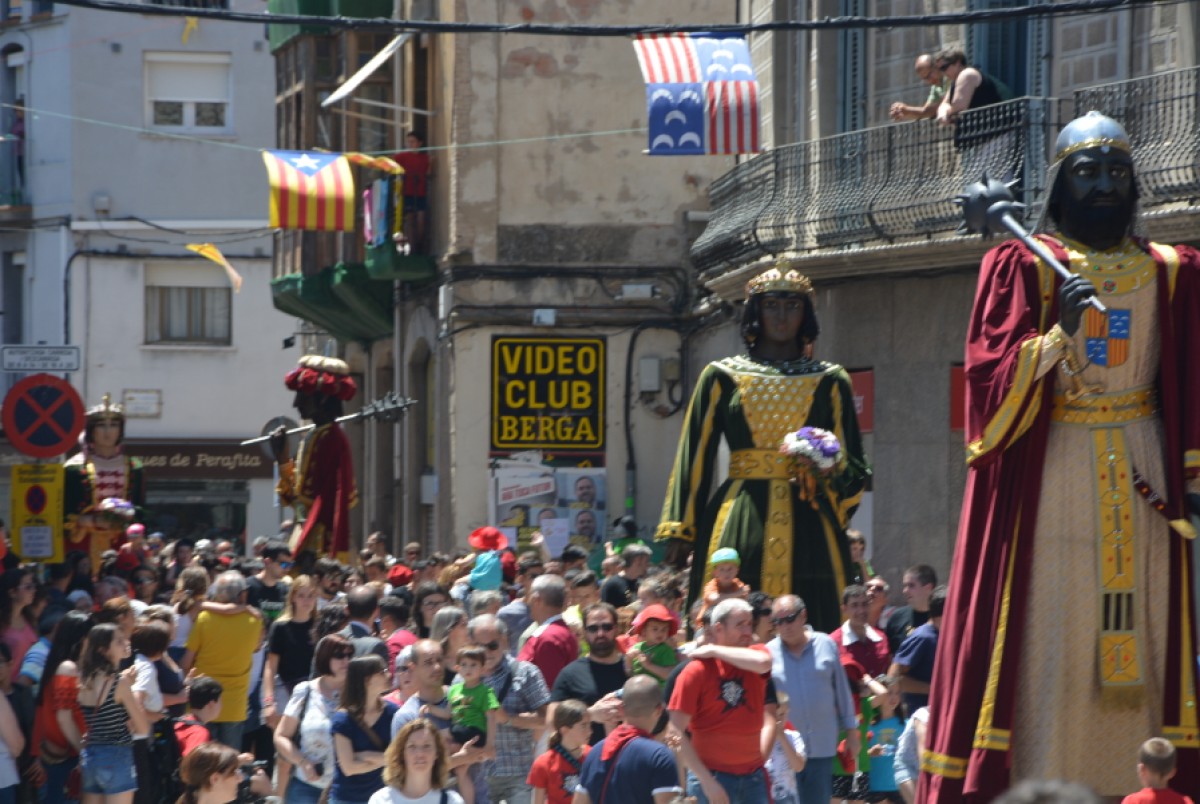
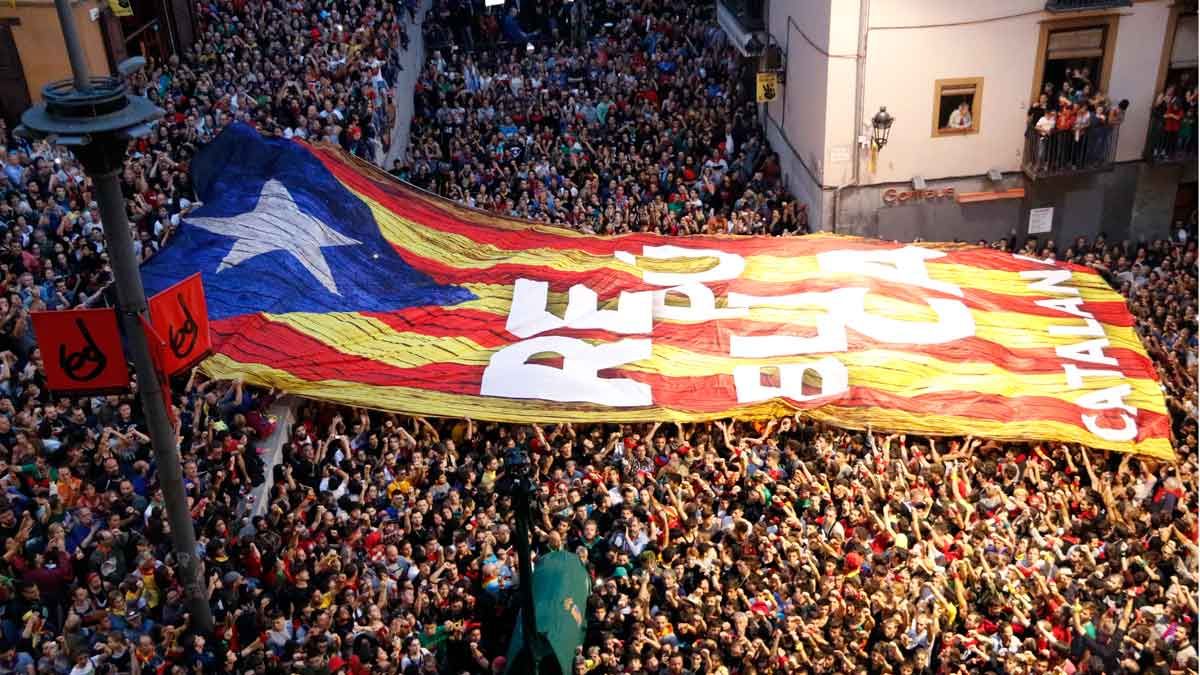


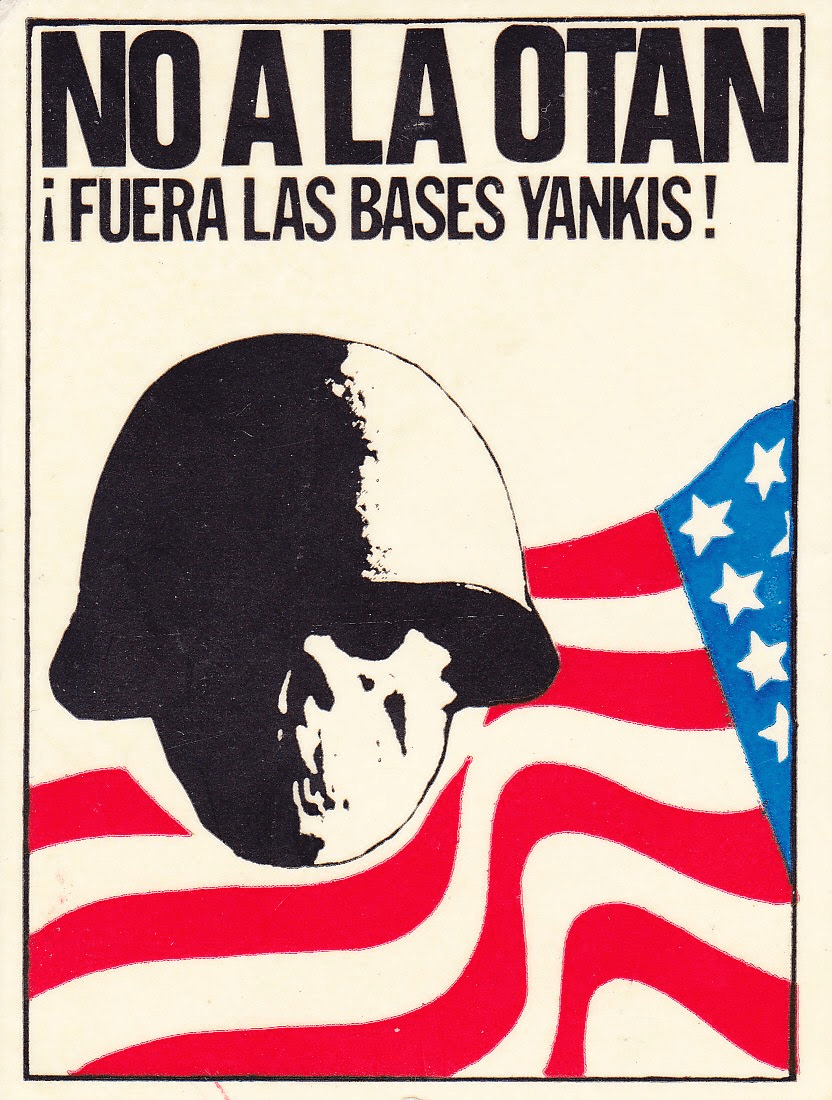
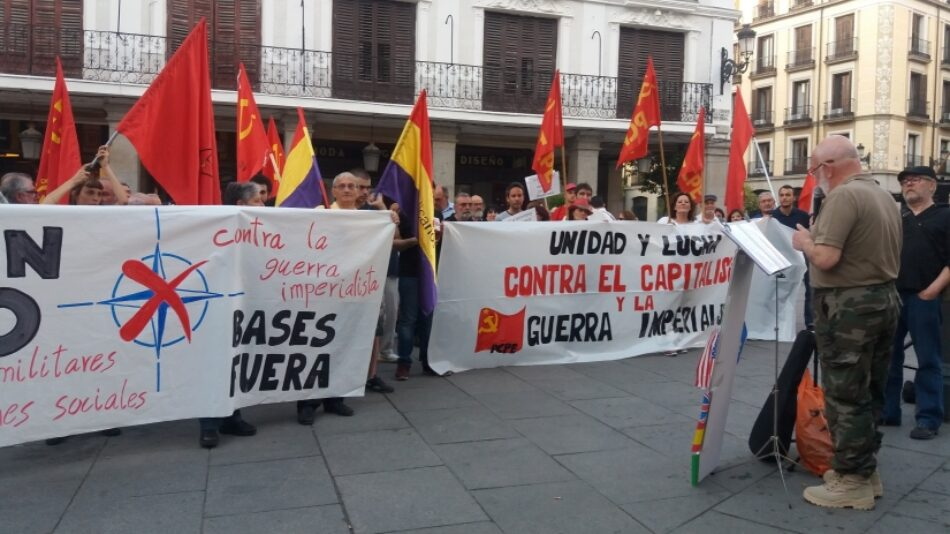
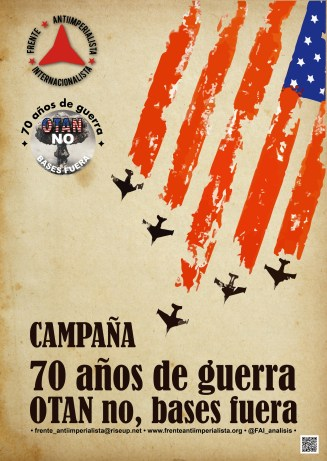
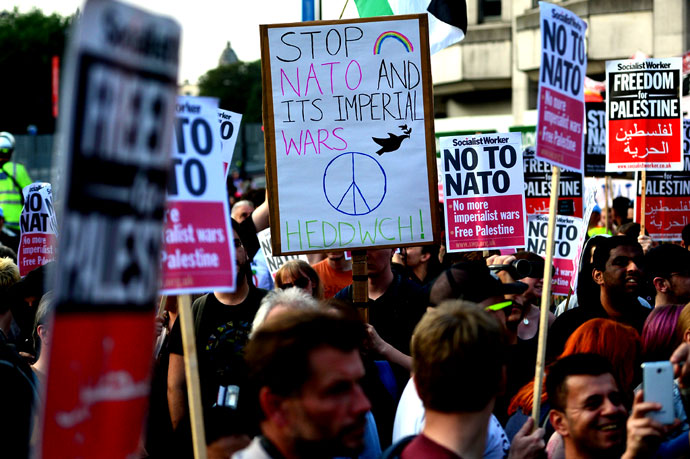
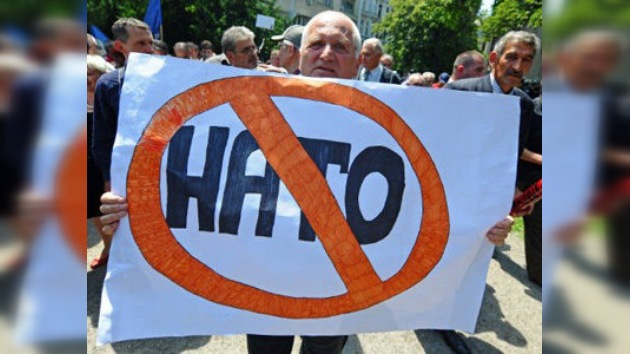
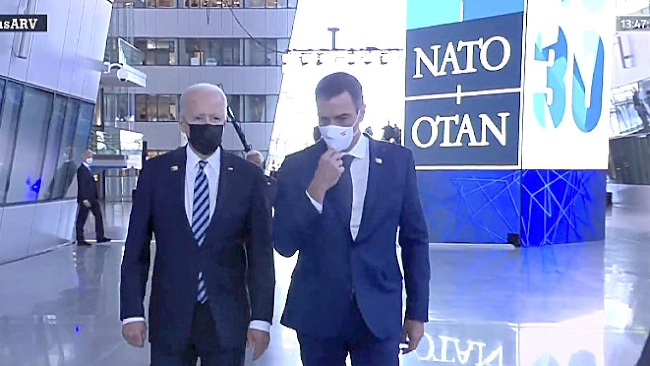

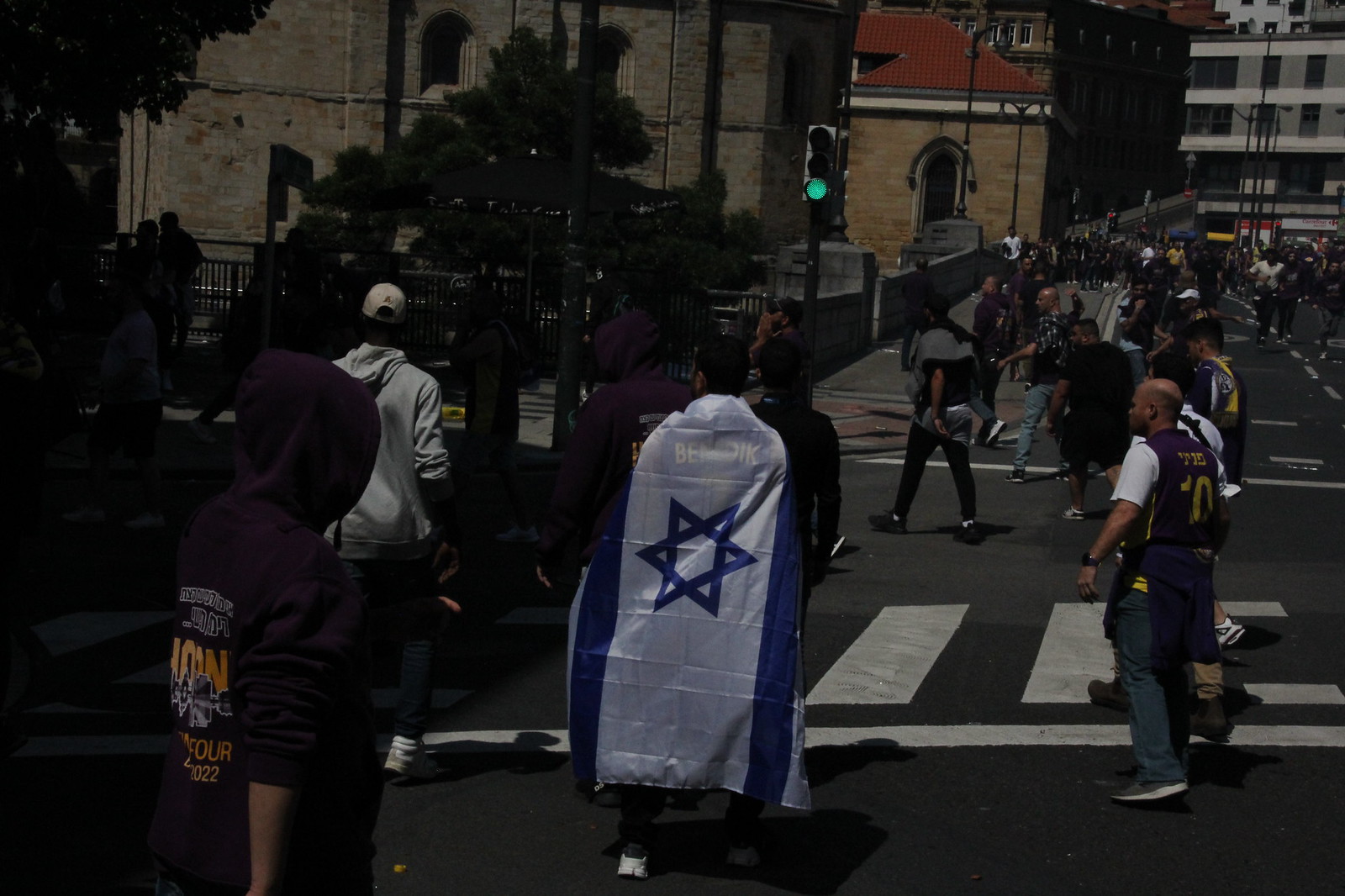

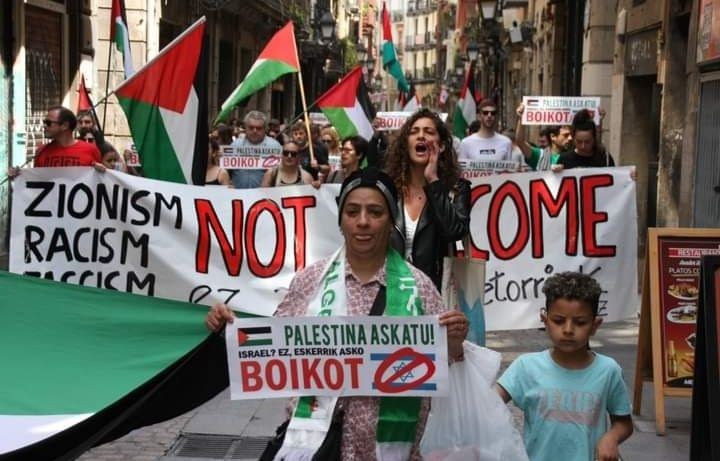


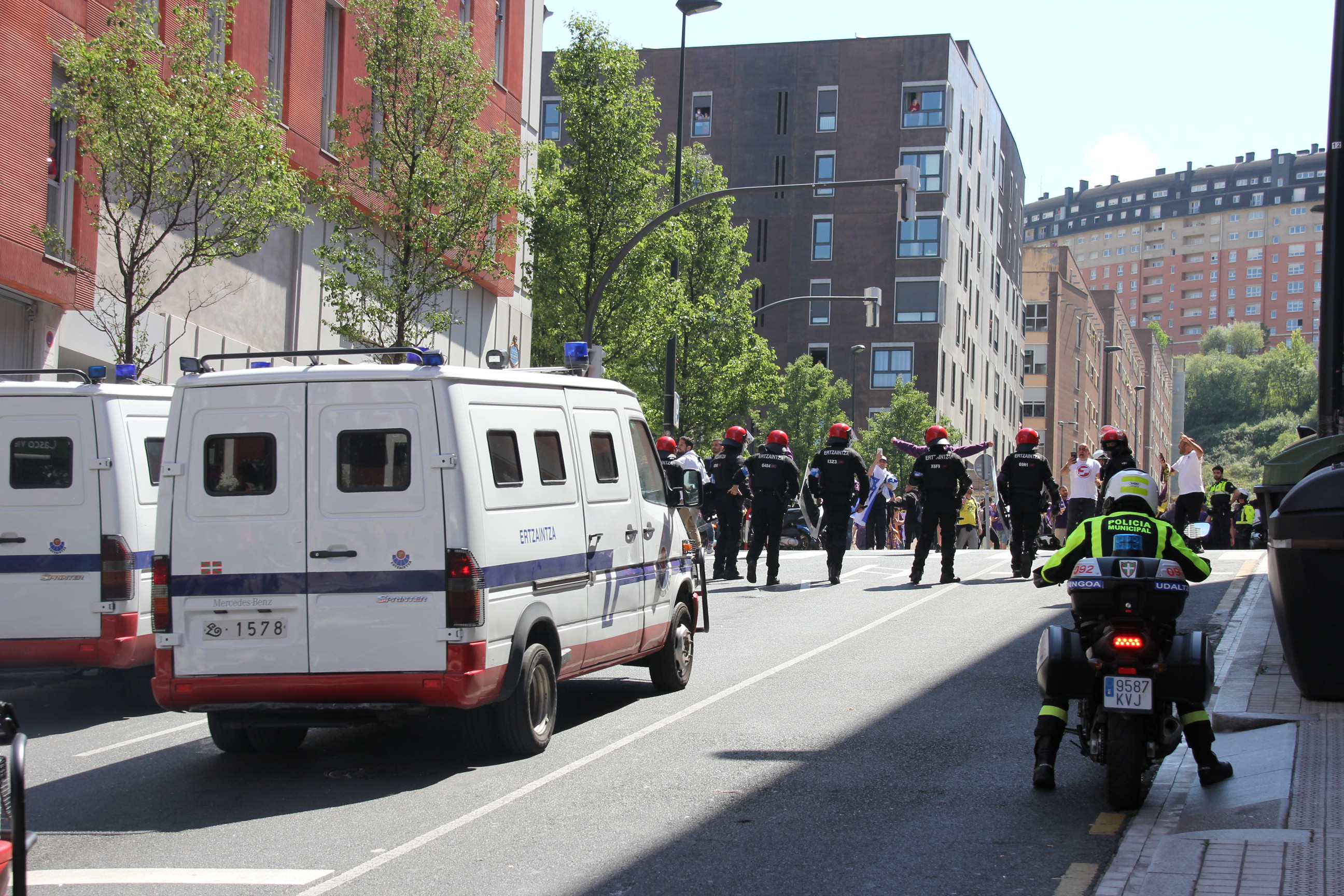
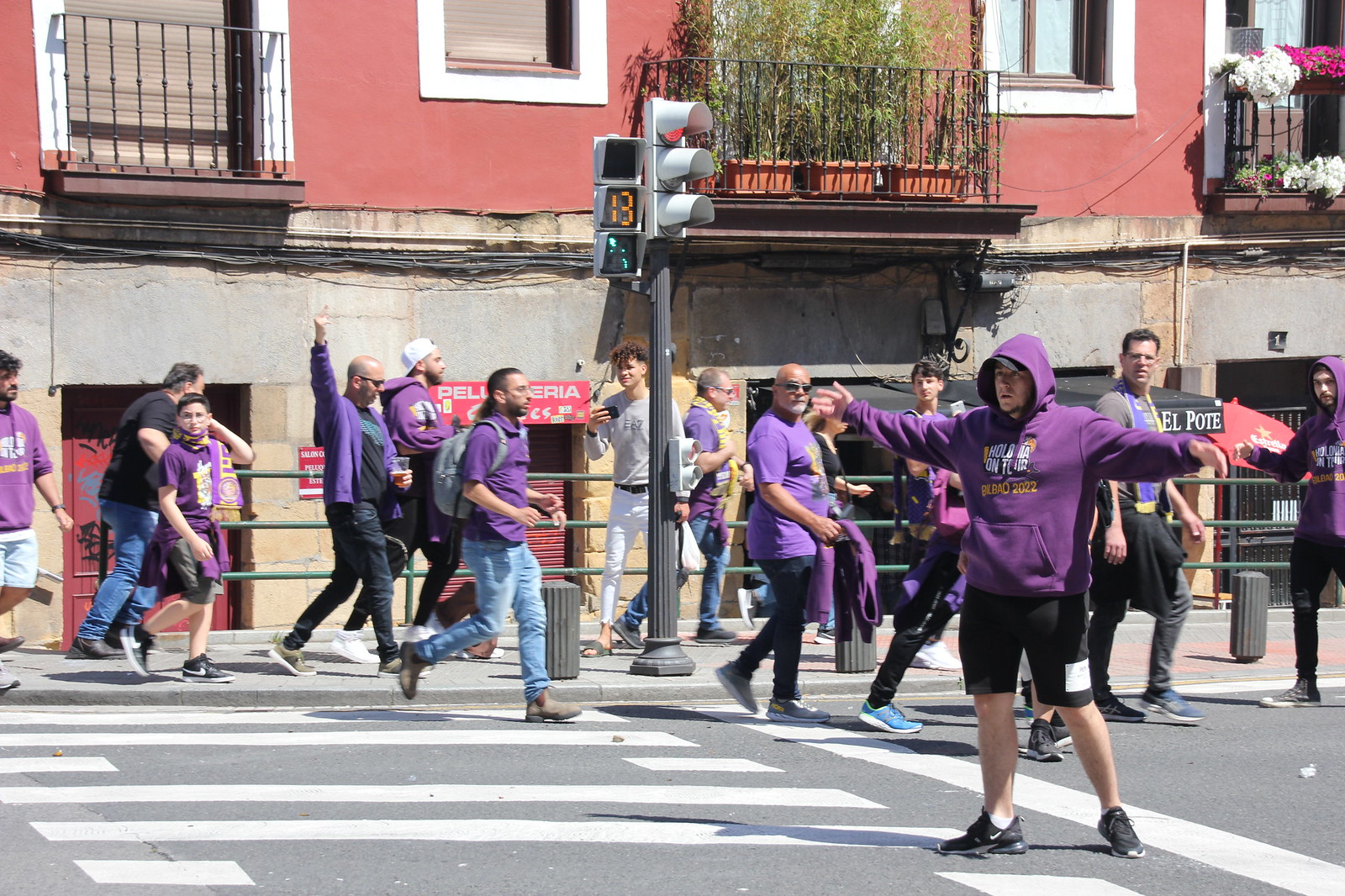


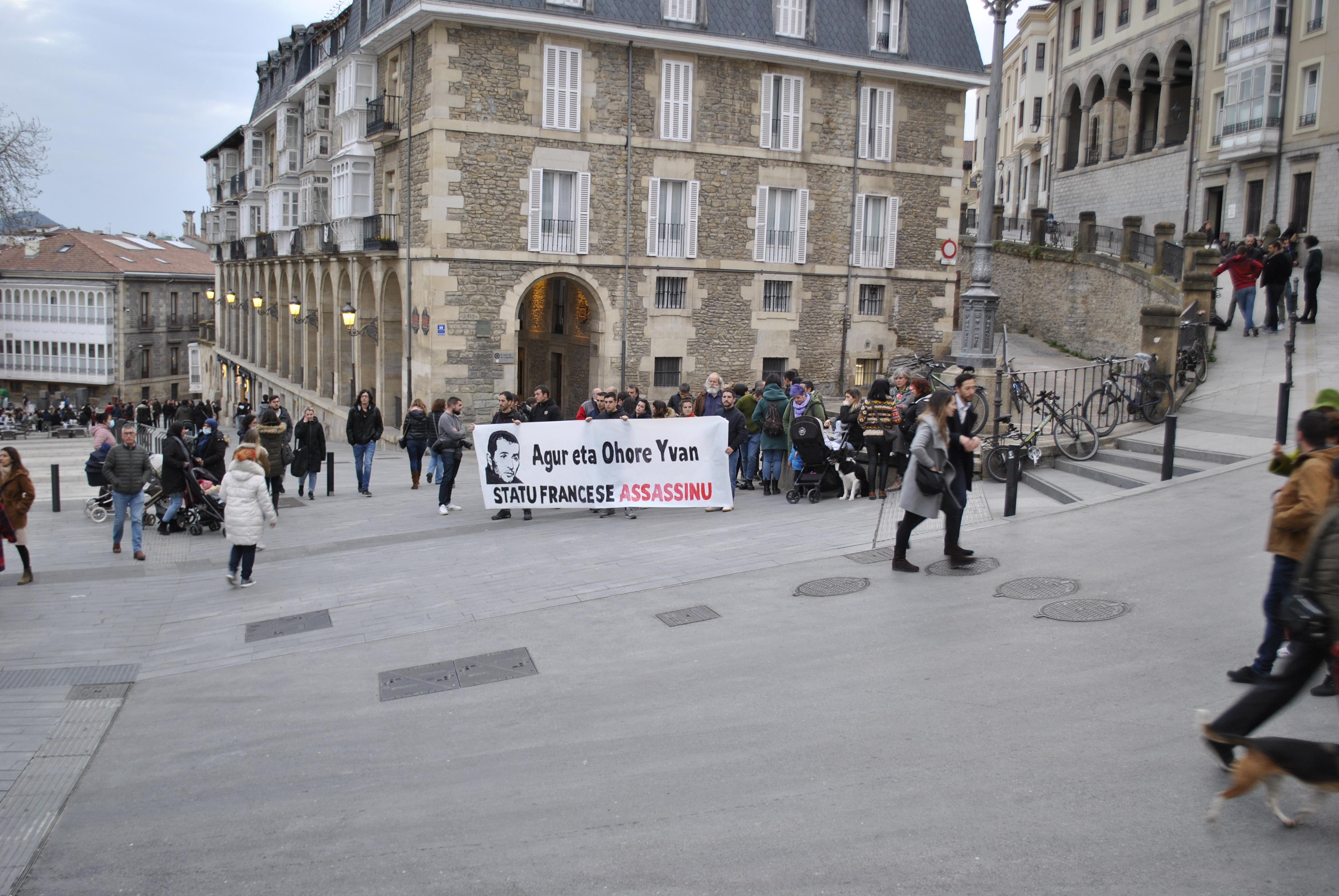

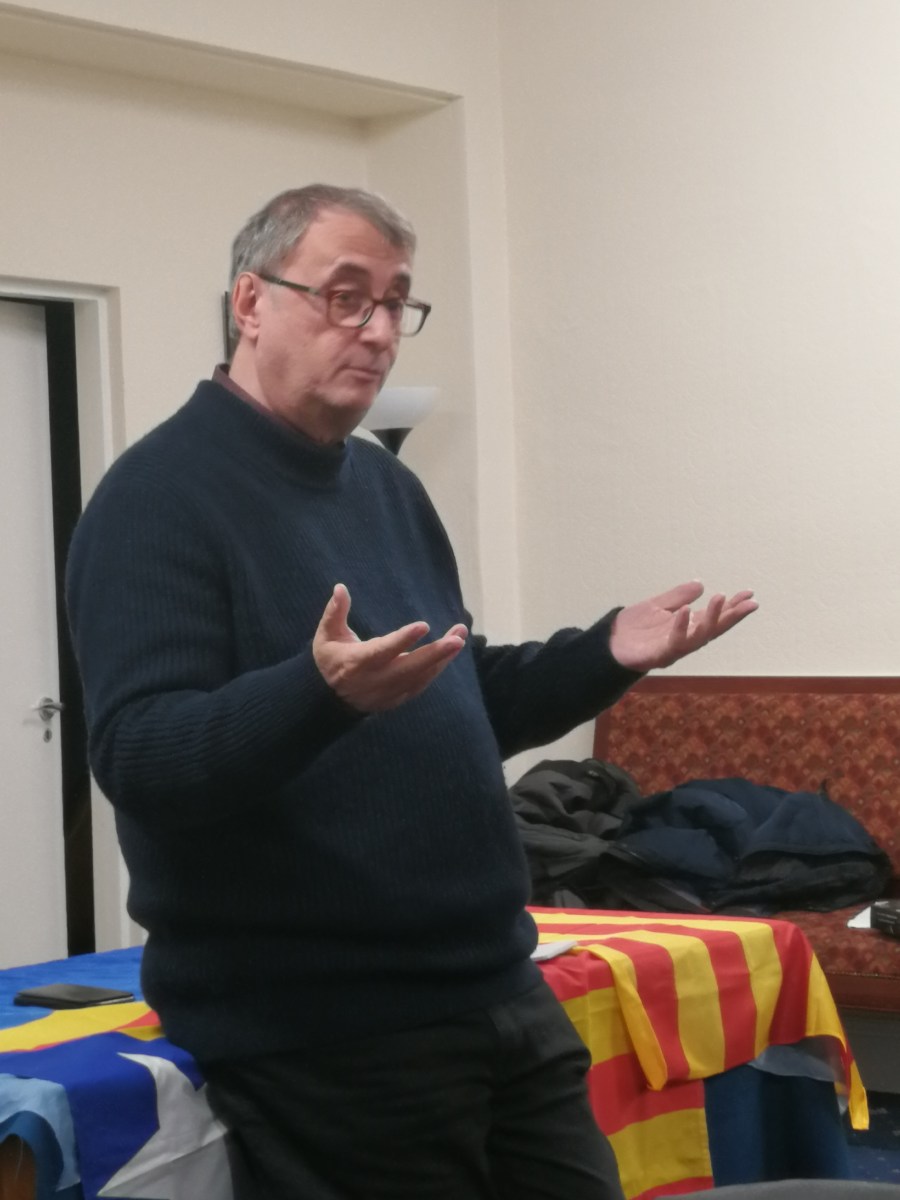




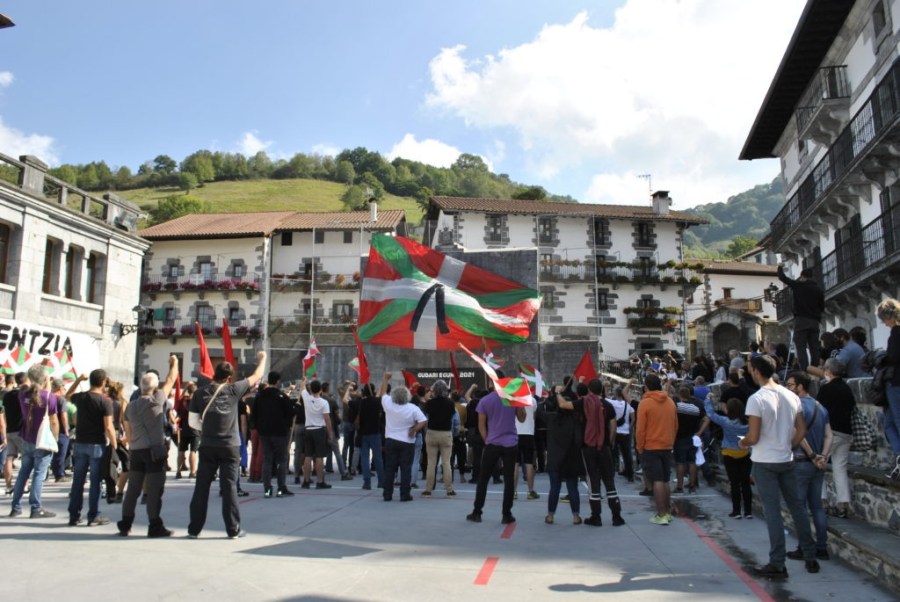

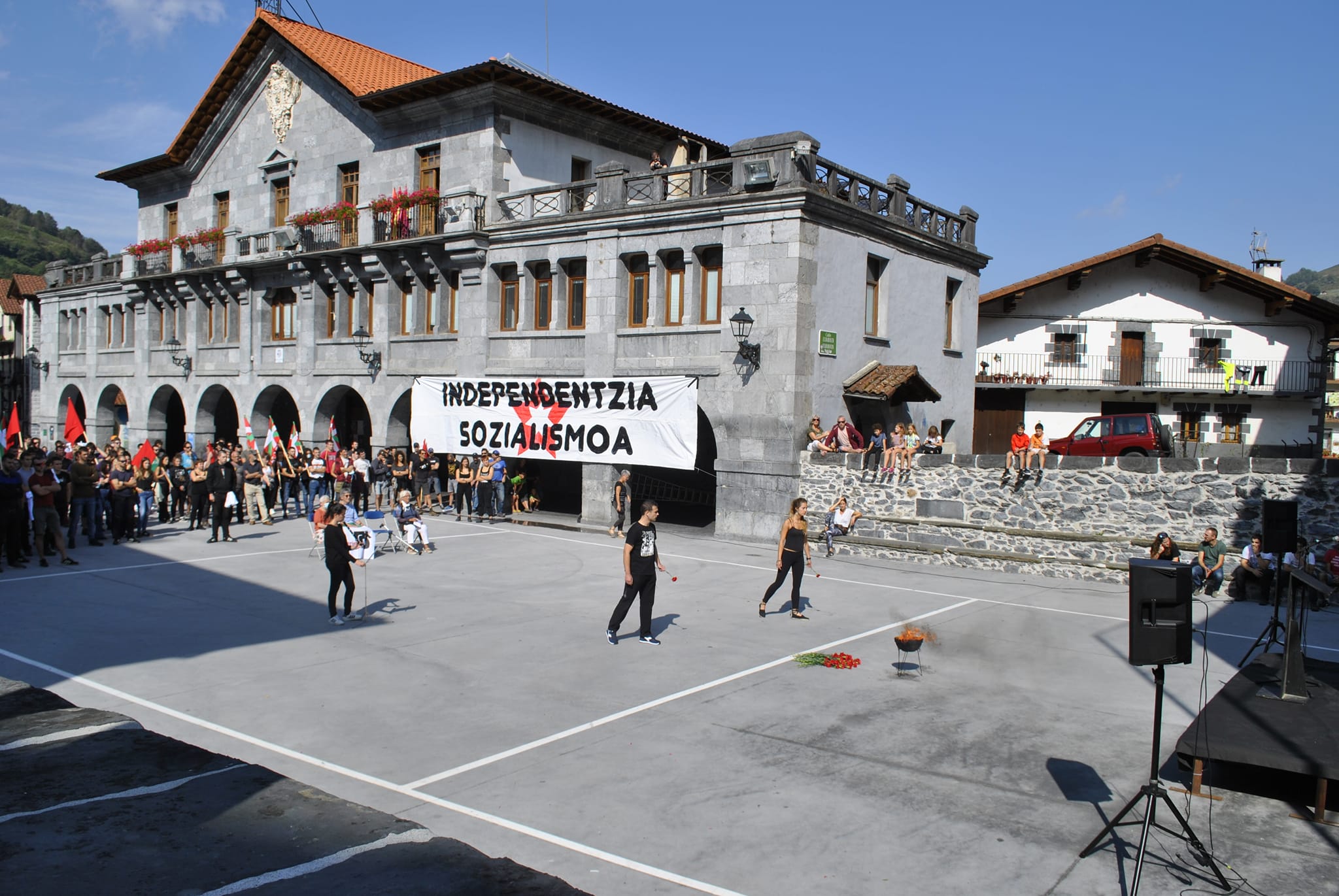


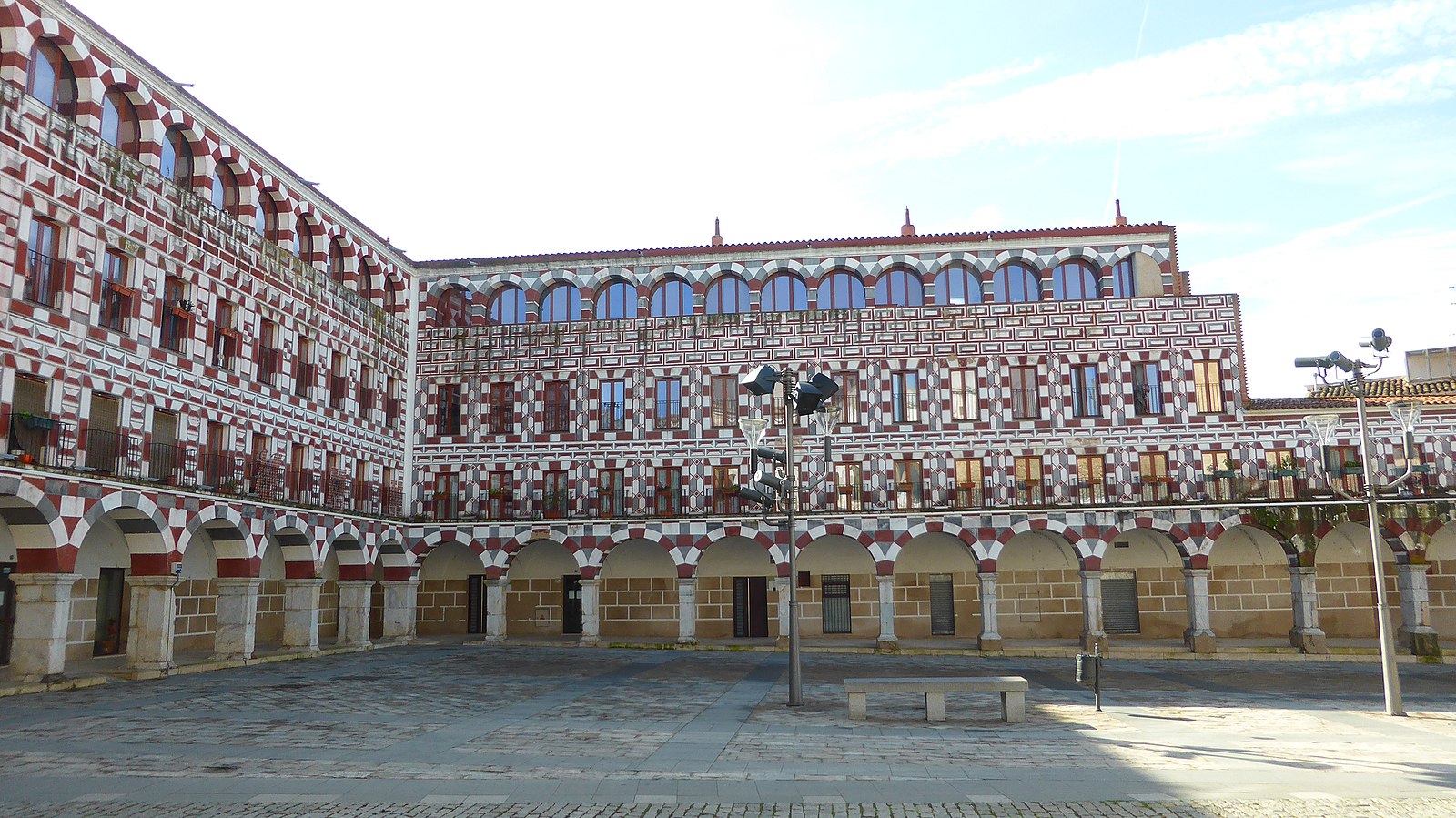


 rebelbreeze