SPANISH POLICEMAN TORTURER ON UN COMMITTEE FOR PREVENTION OF TORTURE

From FB page of Dublin Basque Solidarity Committee

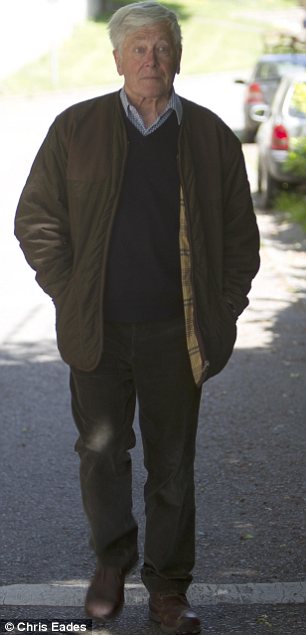
SPANISH STATE APPOINTS POLICE OFFICER CONVICTED OF TORTURE TO UNITED NATIONS COMMITTEE FOR THE PREVENTION OF TORTURE.

Convicted Guardia Civil torturer of prisoner, Jose Maria De las Cuevas Carretero, appointed by the Spanish State to the UN Committee for the Prevention of Torture.
(Photo sourced from Gara newspaper)

No-one could accuse the Spanish authorities of failing to appreciate irony.

In 1997, in one of the rare cases of the Spanish authorities charging a police officer with torture and even rarer of conviction, Captain (then a Sergeant) José María De las Cuevas Carretero, along with fellow Guardia Civil officers Manuel Sánchez Corbi and Antonio Lozano García were found guilty of torturing Basque ETA suspect Kepa Urra when they detained him in 1992. A further three police accused were found not guilty but the medical evidence on Mr. Urra’s admission to hospital six hours after his arrest made it impossible for the Bizkaya court not to find his captorsguilty. Despite the police officers’ denials, the three were found guilty of having taken Mr. Urra to a deserted spot after this arrest and there, while he was handcuffed, to have beaten him with a blunt object and dragged him along the ground. They were sentenced to four years in prison and barred for six years from public office (a common accompaniment to prison sentence in the Spanish State).

However, one year later the Spanish Supreme Tribunal reduced the prison sentence of each to one year which meant they were free to go but with the public office disqualification still in force. The following year, they were pardoned by the Spanish Minister of Justice of the incoming PP Government of Aznar and Mr.De las Cuevas Carretero carried on with his police career, rising to the rank of Captain and participating in fora of the State and internationally.

Mr. De las Cuevas Carretero, who is a qualified lawyer, has been lecturing of the treatment of prisoners and about corruption. And who could say that he is not eminently qualified to lecture on those subjects? Or to represent the Spanish State authorities on those issues?

(News and photo source: Gara, also some background Internet research)

THE SHAMROCK AND THE COLOUR GREEN – NATIVE OR FOREIGN IMPORTS INTO IRISH ICONOGRAPHY?

Diarmuid Breatnach

We are long accustomed to the association of these two symbols with Irish ethnicity and nationalism, the shamrock and the colour green — but historically can they be shown to be authentically Irish?

Shamrock closeup
(Photo sourced at Internet)


The shamrock symbol has been used by a number of products and services, including Aer Lingus, formerly the Irish national airline and now a subsidiary of the International Airways Group1. Both as a plant and a living symbol it is now being sold on the streets and in shops in preparation for the celebration of the male patron saint of Ireland, St. Patrick on March 17th.

St. Patrick himself was a foreign import, albeit one seized unwillingly by Irish raiders. The son of a Romanised Celt it seems and probably from Wales, Patricius was kept as slave labour herding sheep until his escape but he returned as a Christian missionary and became one of the founders of the Celtic Christian Church in Ireland. 

We may view this as an amazing feat in itself – Ireland was one of the few European countries which went from the old multi-gods religion to the monotheism of Judeo-Christianity in a largely peaceful transition. However the Celtic Church at least tolerated and many would say condoned many of the laws and customs of the old culture, including marriage of priests, the right to divorce by men or women and a higher status for women than was common in an increasingly feudal Europe.

The word “shamrock” is an Anglic corruption of the Irish seamróg, itself a contraction of seamair óg, meaning a sprig of young — or more likely small –clover. The Irish shamrock is usually the species Trifolium dubium (lesser clover; Irish: seamair bhuí), with yellow flowers or the white-flowered Trifolium repens (white clover; Irish: seamair bhán) with the bias towards the yellow-flowered.

Children at schools influenced by the Catholic clergy in Ireland (which was and still is in control of the vast majority of the schools within the Irish state) were taught that St. Patrick used the shamrock to illustrate the existence of the Christian Holy Trinity of the Father, Jesus Christ and the Holy Ghost, i.e. explaining how there may be three different aspects in one entity, as in the three leaves on the one stem of the shamrock.

A charming story but clearly without any foundation whatsoever – not only is it not mentioned in what is believed by historians to be Patrick’s autobiography but the story only emerged much later. However, the crucial case against the veracity of the story is that neither the Gaels nor the Celts in general2 had any need to be convinced of the existence of trinities of gods: in Ireland we already had the Morrigan, a female trinity of Badhb, Macha and Anand and of course the Celts had the ubiquitous triskele symbol (surviving as the national symbol of Manx) to illustrate a trinity, religious or otherwise. 

The first clear association of the shamrock with St. Patrick in Ireland comes in an account by an English traveller to occupied Ireland, Thomas Dineley, who described in 1681 Irish people on St. Patrick’s Day wearing green on their clothes, including the shamrock. But the first account of St. Patrick’s use of the shamrock is not seen until 1726, when it appears in a work by Caleb Threlkeld, a botanist.

But what of the colour green? Surely that at least is authentically Irish? Well, it certainly has a longer pedigree. Dineley’s account in 1681 associates wearing green with the celebration of the feast day of St. Patrick’s, one of the three patron saints of Ireland3 (yet another trinity?). But the Catholic Confederacy of 1642-1652, an alliance of Gaelic chieftains with Norman-Irish aristocracy against the Reformation being imposed upon them, also flew a green flag, with a gold harp upon it.

The symbol of Ulster was the Red Hand from an ancient Irish myth of arrival but what was the background? Both the O’Neills and O’Donnells, dominant clans of Ulster, have designs in red and blue against a white background. Only Leinster province has a design in green and yellow.

BLUE?

The colour of an old design for Meath is blue. There is an old heraldic design for Ireland of three crowns on a blue background and although this was the arms granted by Richard II of England to Robert de Vere as Lord of Ireland in 13864, over two centuries after the Norman invasion, it may have drawn on the colour of an existing Irish flag or design.

The Wikipedia page on the Coat of arms of Ireland, although commenting that heraldry is a feudal practice suggests an older inspiration:

The colour of the field is sometimes called ‘St. Patrick’s blue’, a name applied to shades of blue associated with Ireland. In current designs, used by the UK and Irish states (sic), the field is invariably a deep blue. The use of blue in the arms has been associated with Gormfhlaith, a Gaelic mythological personification of Ireland. The word Gormfhlaith is a compound of the Irish words gorm (“blue”) and flaith (“sovereign”); it is noted in early Irish texts as the name of several queens closely connected with dynastic politics in the 10th and 11th century Ireland. The National Library of Ireland, in describing the blue background of the arms, notes that in early Irish mythology the sovereignty of Ireland (Irish: Flaitheas Éireann) was represented by a woman often dressed in a blue robe.”

The designers of the Cumann na mBan flag may have been aware of the ancient claim of the colour blue when they made that the background colour of their own flag.  Markievicz and Hobson would even more likely have been aware of it as well as the blue with an orange, golden or silver sunburst, alleged flag of the legendary band of warriors na Fianna, when they made that the flag of the Republican youth organisation they founded, Na Fianna Éireann.

THE GREEN FLAG

But what about the United Irishmen’s flag of green, with a golden harp? When talking about the United Irishmen we need to remember from where they received their ideological influences. These were mostly from radical and republican thinkers and agitators in Britain, the USA and France. The United Irishmen organisation was founded by Anglicans and Presbyterians, mostly colonists and settlers or their descendants and most of their leadership in the uprisings of 1798 and 18035 came from from among that section of Irish society. That goes a long way to explaining why most of the revolutionary texts of the time are in the English language, in a country where the majority even then still spoke Irish and with a rich literary and oral tradition in the Irish language.

United Irishmen harp motif with motto.
(Photo sourced at Internet)

There is a historical trend among colonists to feel disadvantaged with regard to their compatriots back in “the mother country”, to resent levels of taxation, to complain of inadequate representation and of corrupt or inefficient government. This occurred in English-speaking America and led to the American Revolution and the creation of the United States. It also occurred in the other America, where the Spanish-speaking colones developed conflicts with the Spanish Kingdom and eventually rose in rebellion against it across South and Central America, eventually gaining independence for a number of states.

A similar process was taking place in Ireland, where the disaffected who belonged to the established church, the Anglican or Church of Ireland, understood that to create a strong autonomous nation, even as part of the English-ruled unity of nations, they would need to bring into government the greater majority, the Presbyterians 6 and even the overwhelming majority, the Catholics (i.e the native Irish).

Henry Grattan attempted this by trying to get the excluded denominations admitted to the Irish Parliament but Crown bribery, sectarianism or fear of having to return lands grabbed by their grandparents or others, combined to have a majority vote the proposals down. That ensured that the organisers of the United Irishmen would realise that no progress to their objectives was possible without revolution.

Irish nationalists among the descendants of colonists often adopted Irish symbols and some other Irish identifiers as a sign of difference from the English. There was some interest in the Irish language but it does not appear to have been widely studied by most Irish Republicans of the time as witnessed by the incorrect appellation of “Erin” for Ireland – any Irish-speaker would know that Éire is the nominative form for the country and ‘Éireann’ is employed in the genitive and dative cases. United Irishmen were involved in organising the Belfast Harp Festival of 1792, while folk-song collectors and antiquarians dug among the people and archives for survivals of an older Irish culture.

The Harp, an ancient Irish musical instrument employed also to accompany poetry recitation was employed as a symbol by the Unitedmen — often with the motto “ ‘Tis new-strung and shall be heard”. In addition, the English had long recognised the instrument as a symbol for Ireland, albeit under the Crown.

THE COLOUR GREEN

But where did the colour green come from to be associated with Irish nationalism? This question could do with more research than I have the time or other facilities to devote to it but one may comment what green is not: it is neither the Red of Royal England nor the Blue of Royal France. Nor is it the red with a white saltire of the Order of St. Patrick, another colonial creation and clearly of Royal and colonial origin and patronage, created at the time of a bubbling of the nationalist pot in Ireland and only sixteen years before the 1798 Uprising.

Interestingly, the Irish Brigade (1688–1791) of the French Army did include the colour green in its flag design, four quarters alternately green and red, with a crown in each. And the standard of Napoleon’s La Légion Irlandaise in 1841 is described as of “emerald green”.

Regimental colours of one of the irish Regiments of the French Royal Amy, De Berwick, until 1791. (Photo sourced at Flags of Ireland — see Further Reading for link)


William Drennan (1754–5 February 1820), United Irishman, is credited with first use of the description “Emerald Isle” in his poem When Erin First Rose and it was much later re-used in the ballad Bold Robert Emmet. John Sheils, a Drogheda Presbyterian and United Irishman, employed the harp, the colour green, St. Patrick, Erin (sic) and the shamrock all in his song The Rights of Man, which he composed some years prior to the 1798 Rising. The “three-leaved plant” which is “three in one” is used in Sheils’ song:

to prove its unity in that community

that holds with impunity to the Rights of Man”

The trinity there is clearly the political one desired by the Unitedmen of Protestant (Anglican), Catholic and Dissenter (Presbyterian and other sects).

Green was widely worn by people with United Irish sympathies and particularly during repression by Orange militia, people wearing green were targeted. However, if one wanted to wear a suspect nationalist colour, how safer than to do so than on the feast day of the alleged founder of Christianity in Ireland and acknowledged by Protestant, Sects and Catholics alike?

From the United Irishmen onwards, green has been unarguably associated with Irish nationalism and Irish Republicanism, in the flags of the Fenians, the Irish Volunteers and even of the Irish Citizen Army, also part of the tricolour flag awarded by Parisian revolutionary women to the Young Irelanders which is now the national flag of the Irish state. Green was also the colour of the flag of the St. Patrick’s Battalion that fought for Mexico against the invasion by the USA (1846-’48) and of ceremonial uniforms of some Irish formations during the American Civil War along with the main colour of some of their regimental flags, also of the flags of the Fenian veterans of that war invading Canada in 1866.

Flag of the Irish Brigade (later the Fighting 69th) in the Union Army, American Civil War.
(Photo sourced at Internet)

Does it matter whether green is authentically an ancient Irish colour or not? Would Irish Republicanism or nationalism be de-legitimised if it could be proven the colour they are using was of dubious origin or of comparatively recent political significance for Ireland? I don’t think so. But it is good to be aware of the different origins of symbols and to question and even challenge what is handed to us as unquestionably authentic.

However, enough people have now fought under the green in eight uprisings in Ireland and struggles abroad; enough people have laid down their lives under the colour and indeed, once it became a symbol of Irishness, enough Irish have been persecuted, prosecuted and even executed for wearing it, to ensure that “wherever green is worn” can be Irish. And in that representation, the shamrock too, which of course happens to be green, and could be passed off as a devotional symbol to suspicious authorities and murderously insecure and sectarian minorities of colonial origin, has its place.

Painting depicting the Battle of Ridgeway, Fenian invasion of Canada, 1866. (Photo sourced at Wikipedia)
The Wearing o’ the Green

(by John Keegan “Leo” Casey (1846 – March 17, 1870). Keegan, known as the Poet of the Fenians, was an Irish poet, orator and republican who was famous for authorship of this song, apparently written when he was 15 and also as the writer of the song “The Rising of the Moon” (to the same air), also as one of the central figures in the Fenian Rising of 1867. He was imprisoned by the English and by a huge irony died on St. Patrick’s Day in 1870 at the age of 24).

O Paddy dear, and did ye hear the news that’s goin’ round?

The shamrock is by law forbid to grow on Irish ground!

No more Saint Patrick’s Day we’ll keep, his colour can’t be seen

For there’s a cruel law ag’in the Wearin’ o’ the Green.”

I met with Napper Tandy7, and he took me by the hand

And he said, “How’s poor old Ireland, and how does she stand?”

“She’s the most distressful country that ever yet was seen

For they’re hanging men and women there for the Wearin’ o’ the Green.”

So if the colour we must wear be England’s cruel red

Let it remind us of the blood that Irishmen have shed

And pull the shamrock from your hat, and throw it on the sod

But never fear, ’twill take root there, though underfoot ’tis trod.

When laws can stop the blades of grass from growin’ as they grow

And when the leaves in summer-time their colour dare not show

Then I will change the colour too I wear in my caubeen

But till that day, please God, I’ll stick to the Wearin’ o’ the Green.

But if, at last, her colours should be torn from Ireland’s heart

Her sons, with shame and sorrow, from the dear old soil will part;

I’ve heard whispers of a Country that lies far beyond the sea,

Where rich and poor stand equal, in the light of Freedom’s day!

O Erin! must we leave you driven by the tyrant’s hand!

Must we ask a Mother’s blessing, in a strange but happy land,

Where the cruel Cross of England’s thralldom’s never to be seen:

But where, thank God! we’ll live and die, still Wearing of the Green!

End.

John ‘Leo’ Keegan Casey monument, Glasnevin Cemetery, Dublin (Photo sourced at Wikipedia)

FURTHER READING

An undated interesting article about the origins of Irish national symbols (also giving a list of additional reading) http://www.gov.ie/en/essays/symbols.html

https://en.wikipedia.org/wiki/List_of_flags_of_Ireland

https://en.wikipedia.org/wiki/Coat_of_arms_of_Ireland

Reference to colour green in the standard of Napoleon’s Irish unit La Légion Irlandaise http://www.irishtimes.com/culture/heritage/enlisting-for-my-enemy-s-enemy-1.1779145

and in some uniforms and flags of Irish formations in the Union Army in the American Civil War https://www.abebooks.com/book-search/title/new-yorks-fighting-sixty-ninth-regimental/author/john-mahon/ and

https://www.amazon.com/Rising-Moon-Peter-Berresford-Ellis/dp/0312006764

https://en.wikipedia.org/wiki/Shamrock

About Leo Casey http://www.irishidentity.com/extras/gaels/stories/leocasey.htm

FOOTNOTES

1A consortium of Iberia, Vueling and ironically, British Airways.

2Nor indeed other cultures such as the Hindi or the classical Greeks

3Sts. Patrick, Bridget and Columcille

4It continued in use until 1541

5 And even many of the leaders, journalists and poets of the Young Irelanders and of the Fenians.

6And other “Dissenters” such as Unitarians, Methodists, Society of Friends (Quakers) etc.

7Napper Tandy was a United Irishman who lived in Dublin; his home is mentioned in the most common versions of the well-known Dublin song, The Spanish Lady.

A VERBAL HANGING IN DUBLIN’S THOMAS STREET

Clive Sulish

While eastbound drivers in Thomas Street on Friday 3rd March gawped, traffic slowed in the westbound lane to allow az small procession pushing a gallows, trundling along on wheels. There were surprisingly few witty comments, even the notoriously quick Dubliners too surprised to come up with a witty bon mot (or even a focal maith).

Diarmuid Breatnach outside St. Catherine’s Church, Thomas Street.
(Photo: /////)

The procession stopped at the Robert Emmet plaque, in the railing wall of the former Protestant St. Catherine’s Church, approximate place of execution of Robert Emmet on 20th December 1803.

Elayne Harrington, aka Temperamental MiscElaynous performing her piece outside St. Catherine’s Church, Thomas Street.
(Photo: D.Breatnach)

Despite continuous rain a small crowd had gathered on the pavement in front of the monument and the gallows, with a small platform less than a foot high, was placed facing them. Dublin artist Elayne Harrington, also known as the well-established street poet/ rapper artist from Finglas, Temperamental MiscElayneous, stood on the platform to announce that the event was to honour Robert Emmet and was a project as part of the Liberties Street Project, a continuation of the IPIP (In Public In Particular) program at the National College of Art and Design, Thomas Street, Dublin 8.

Harrington thanked people for attending despite the weather and, after outlining the program for the event, announced Diarmuid Breatnach, who took up position with the gallows and hanging noose just behind him.

Breatnach is best known as a co-founder of the Save Moore Street From Demolition campaign, maintaining a campaign table with a petition and leaflets on the market street for a few hours every Saturday but is also known as an acapella singer, particularly in Dublin traditional-folk circles.

Section of the crowd at the event outside St. Catherine’s Church, Thomas Street.
(Photo: D.Breatnach)

After thanking MiscElayneous for the invitation and the crowd for attendance, Breatnach proceeded to reiterate that the event was taking place very near the spot where, at the age of 25, Robert Emmet had been hung and then decapitated by the British colonial administration in 1803.

Harrington reminded him to stand on the low platform which Breatnach did, drawing a laugh from the crowd when he indicated the hanging noose and commented: “Me Ma always said I’d end up like this.”

Breatnach asked the audience to imagine the scene of the execution in 1803 and referred them to a painting of the scene available on the Internet, showing a huge crowd, with people looking out of windows in nearby buildings and mounted redcoats keeping the crowd back from the gallows. Many of in the crowd would have been supporters but the better-known would not have been there – they were in jail or in hiding.

The execution was carried out there, Breatnach said, because the whole Thomas Street and Liberties was known as a revolutionary area, which Breatnach went on to describe (see video below).

Elayne Harrington, aka Temperamental MiscElaynous performing her piece outside Stl Catherine’s Church, Thomas Street.
(Photo: D.Breatnach)

Executions, said Breatnach, have been carried out down through the ages on Irish people resisting invasion, colonialism and imperialism and fighting for social justice. The gallows have become an enduring image in Irish history and a number of songs (Breatnach mentioned ten from the 19th century up to the present) refer to it.

The state we have now, said Breatnach, set up in 1922, preferred shooting, which was the method by which it eliminated its opponents at the time, 81 of them in official executions. Hanging remained however in this state but the last execution was in 1954.

Breatnach stated that we are often taught history as a dead subject, something in the past to which we are largely unrelated but he believed history to be a living thing, in the stones of walls and streets, in the air and in the words people have left us. And in our songs.

Breatnach selected three songs that mentioned Robert Emmet: The Three Flowers, written early last Century by Norman G. Reddin (two verses); Bold Robert Emmet perhaps by Tom Maguire around 1916 but certainly published in 1934; and Anne Devlin in recent decades by Pete St. John. Breatnach sang the three songs one after the other with MiscElayneous accompanying on her bodhrán.

Diarmuid Breatnach outside St. Catherine’s Church, Thomas Street, talking about the radical revolutionary history of the area.
(Photo: ////)

During the applause which greeted the end of Breatnach’s performance, Elayne Harrington replaced him on the stage, thanked him and introduced herself as Temperamental Miscellaneous and spoke about her contribution, which was to be an extract of Emmet’s famous speech from the dock in the Green Street Courthouse, but re-worked into more modern Dublin idiom. Harrington then launched into a spirited rendition of her piece (see video below for the full performance).

No matter what words I utter, it’ll fail to change your mind and I wouldn’t have it any other way. You’ve made me a bed and I’ll lie in it. ………….

There’s plenty I could tell why my reputation should be kept clean from the utter lies and slander which’ve been lashed upon it. ……………

I wouldn’t dream that I could impress upon a court as trapped in its own self and corrupted, a fair impression of my character. …………………….

If merely dying was the case, after being deemed in the wrong and you in the right I’d take it on the chin and I wouldn’t breathe a word but that same law that not only wants to get rid of me also aims at filthying my name and sullying the memory of me. ……………..

In the hope that my memory won’t fade and that it might retain its honour among my brothers and sisters, I’ll stand up for myself and my integrity and weaken those charges against me. ……………

…. our cloths are entwined, mine and the martyred heroes of the gallows and battlefield, consecrated by sacrifice … for protection and guardianship of their homestead and their righteousness. ………..

This is what I hope: for my memory and name to serve those who live on by it being a source of empowerment …. witness the malignant malicious government that gains its false riches through sin alone, that treats a people as wolves to be domesticated and blooded to the taste of their fellows, to dance to their tune and to the death knell ……………..

Concluding the event, Harrington thanked the attendance and invited them to place small pots of growing flowers she had provided in front of the monument, which they did.

Stablising the scaffold outside St. Catherine’s Church, Thomas Street.
(Photo: D.Breatnach)

WHY THE EVENT?

What had led Elayne Harrington to choose this act as part of her course?

“I was interested in Robert Emmet and his uprising ever since I heard a Dublin tour guide dismiss Robert Emmet while briefly mentioning his uprising”, explained the rapper from Finglas.

“I came to think that although Emmet failed in his objective, he had attempted a brave and good thing and his speech was really impressive. His uprising attempt took place in the area where my college is and he was executed just down the road, so that’s how I came to think of this event.

“I’m thankful to my course tutor and fellow students for supporting me in this act and to another tutor who helped me with the construction of the gallows. I am grateful to Diarmuid Breatnach also, who has been very supportive and contributed to the performance and I was really glad that my Da was able to be here and help today too.”

Why did Harrington call this “the first of the verbal execution series”?

“I see this as an event that can be brought to other places – like the gallows I built, it is transportable” she says with a grin but then turns serious. “The performances can be adapted also to other occasions of which Irish history is full.”

We’ll be watching this space!

Elayne Harrington and section of audience outside St. Catherine’s Church, Thomas Street, looking eastward (in the direction of Dublin Castle, ten minute’s walk away).
(Photo: D.Breatnach)

VIDEO OF EVENT

(complete event outside St. Catherine’s)

https://www.youtube.com/watch?v=wJmb553yKf8


WE WANT CHANGE?


Diarmuid Breatnach

Yes we do – or at least most of us do. There are a few who do not.

Some people think that those few who do not want change are our rulers, the big capitalists — but they are mistaken. The capitalist class forced change to overthrow the feudal system, which was hampering their growth and the development of industry and commerce. And capitalists know that change is inevitable, so it is better to go with it than to try to stop it. That is why they set up courses such as those called “Change Management” — if change is inevitable, then manage it, the thinking goes. Manage it so that it comes out to capitalist advantage, naturally.

(Source Internet, using "change management" as search words)
(Source Internet, using “change management” as search words)

Change Management courses, particularly those dealing with personnel, emphasise managing change as smoothly as possible, making it non-traumatic. In that way, it is assumed, there will be less reaction against the change, less opposition.

But in fact, sometimes capitalism wants the exact opposite – it wants change to be as traumatic as possible. These are the situations described under the title “Shock Doctrine” by economic/ environmental activist and theorist Naomi Klein (2007). This has two mechanisms: in the first, the shocking change taking place disarms people from the psychological ability to organise resistance; in the second, the speed of the shock (or shocks) of the economic and political manoeuvres of the capitalists moves faster than the opposition can organise, achieving their goals before opposition can coordinate an effective resistance.

Klein has described how huge natural disasters such as earthquake (Haiti), tsunami (Thailand, Indonesia) and flood (New Orleans, USA) are used to force foreign or native private takeovers of sectors of the national economy while the people and the regime in power are reeling under the impact of the disaster.

Political and economic disasters are also used in this model, such as the military coup in Chile and the collapse of the USSR (in the case of Poland), the economic collapse in Bolivia, the invasion of Iraq, the financial collapse of the “Tiger economies” of SE Asia. Even a potentially beneficial change of great magnitude may be used, such as the collapse of white minority rule in South Africa, during which the black majority won formal equality and citizenship but lost control of most of the economy (and lost a lot more which I do not intend to discuss here).

Internet source http://sinkers.org/stage/?p=536

There is in fact a military precursor to this which has been called, in the context of US military strategy, “Shock and Awe”. This doctrine was described by its authors, Harlan K. Ullman and James P. Wade (1996), as “attempting to impose this overwhelming level of Shock and Awe against an adversary on an immediate or sufficiently timely basis to paralyze its will to carry on … [to] seize control of the environment and paralyze or so overload an adversary’s perceptions and understanding of events that the enemy would be incapable of resistance at the tactical and strategic levels”.

Of course there were many elements of this in the Blitzkrieg of the Nazi German army in its invasions of other countries and even the medieval invasions by the Huns and of the Mongols. Cromwell employed elements of it in Ireland in his army’s massacres at Wexford and Drogheda.

Aside from needing change to overcome feudalism, managing change to its advantage and use of shock doctrine to facilitate changes it wants, the capitalist system itself promotes change as part of its system. Small capitalists combine and form conglomerates, in which big capitalists come to power and, in turn, eat up smaller capitalists in order to dominate their sphere of economic activity. We have seen the growth of supermarkets and the decline of small shops, the rise of chain stores killing independent clothes shops, chain cafes and eateries driving indpendent cafes and restaurants out of business.

Capitalists also promote inventions and discoveries so as to increase their wealth but also in order to stay in front of the competition – a capitalist concern that stays at its original level will be taken over or driven out of business by its competitors. Our grandparents hardly knew about the possibility of mobile phones and computers, let alone small hand-held audio-visual connections to the Internet; our children today play with visual electronic games, films and music before they learn to talk. To be sure, monopolies also suppress inventions but they can only do so to an extent as some capitalist somewhere will break the embargo or consensus (if the discovery can be used to make sufficient profits making the attempt worth the risk).

OK, but we want change too and, we think, what we want is not the capitalist kind of change we’ve been talking about until now, although innovations and discoveries should continue and in fact accelerate – but for the benefit of the people, not the capitalists. Technological advances and innovations that do not make big profits may nevertheless be very valuable to us for all kinds of reasons.

So, yes, we want change. But what kind of change? Change to what? Change how? There a vast panorama opens.

We want to eliminate homelessness; have an efficient universally affordable health service; not to have to struggle for a decent standard of living in food, housing and small luxuries; to enjoy universal and affordable access to education at all levels; not to harm the environment; to have the positive aspects of our cultural inheritance, including history, valued and promoted. We want equal rights and respect between people regardless of race or ethnicity, gender, sexuality, ability … and freedom of choice.

In 1930s Germany, people wanted those things too, except that a lot of people were convinced that the contents of the last sentence above were harmful and not what they wanted. But there were many, many people who did want those contents too. The issue was in doubt for awhile.

In the 1928 elections the Nazi Party achieved just 12 seats (2.6% of the vote) in the Reichstag (German Parliament) and in three areas the Nazi Party failed to gain even 1% of the vote. In the Presidential elections of March 1929, the Nazi candidate Erich Ludendorff gained only 1.1% of votes cast, and was the only candidate to poll fewer than a million votes.

We know that elections are not everything – but still.

Five years later, the Nazis were in power — but even after the Communist Party was declared illegal their candidates polled a million votes.

The people definitely wanted change and the established ‘democratic’ parties were unable or unwilling to deliver it. The change the people ended up with was not probably what most had imagined and for some time it spelt disaster for Germany – and unbelievable suffering for large parts of the rest of the world … and also for millions of German citizens.

To look closer to home, people wanted change here too and from 1917 onwards they showed that electorally by voting for the newly-reorganised Sinn Féin party. From 1919 a significant section of the populace took to arms to pursue change and had the active or tacit support of a huge part of the population. But in 1921 the movement and the people split about what kind of change they wanted. A civil war followed with a heavy level of brutality against civilians and combatants, particularly by the State side, which won the contest — and we ended up with the State we now have.

Bombardment of Republican-held Four Courts in Dublin by Free State forces from the bottom of Winetavern Street (with British artillery on loan) starts the Civil War on 28 June 1922 (Source Internet)
Bombardment of Republican-held Four Courts in Dublin by Free State forces from the bottom of Winetavern Street (with British artillery on loan) starts the Civil War on 28 June 1922 (Source image: Internet)

It is well to be fairly clear about the change we want and what we do not want. There was no such general clarity in the ranks of those fighting for change from 1916 to 1921. It turned out that many who were fighting for change were fighting for different things.

Differences must have come up over the years of struggle and we know from some evidence that they did. We also must assume from the political nature of prominent people in the struggle that there were differences. Even within the IRB itself, only one of the organisations involved, there were differences that surfaced in attitude to the 1913 Lockout, the control of the Volunteers in 1914 and the Treaty of 1922.

Of course, we need maximum unity against the principal enemy. But that is unity in action only. If we put unity in thought, principles or political or social program first, as some organisations have and some others claim to do, we end up with small organisations unable to effectively counter the resistance of the ruling class to the change we want and, in the end, unable to overcome that resistance. On the other hand, if we sacrifice everything to unity against the enemy, we leave ourselves hostages to events in the future and to what kind of society will emerge from the struggle.

Somewhere between those two is where we need to be, preserving the freedom to discuss, explore and proclaim differences of opinion and social program, while avoiding unnecessary squabbles and maintaining unity in action. It is a difficult balance to strike but it needs to be done. In the midst of fighting the common enemy and striving for unity in action against it, we must fight for that freedom also inside the resistance movement, the freedom to discuss, explore and yes, also to criticise.

End.

UNSCIENTIFIC MYTH AND IGNORANCE ABOUT THE IRISH LANGUAGE

Clive Sulish

A most interesting and stimulating lecture was held on Wednesday night at Pearse House in Dublin. Hosted by Misneach, an Irish language campaigning organisation, the lecture was titled “Miotas agus Aineolas faoin nGaeilge” (“Myth and Ignorance about the Irish Language”).


What Colm Ó Broin, who described himself as an Irish language activist, has done is to take a number of frequently-expressed ideas hostile to or dismissive of the Irish language and to deconstruct them, analyse them and compare them with other languages and social situations. For the purpose of the lecture, he took around ten of those ideas, encapsulated in stock phrases well known to Irish speakers and campaigners – and probably to many others not within those categories.

Some of the attendance at the lecture before its start

Over the years, we have heard and read these stock phrases and ideas expressed with tedious regularity, for example that the language is archaic or dead, is full of English words, that it is an expensive commodity, that Irish language schools are elitist, that the language is or was badly taught or that it was “beat into” people. Over the years, many speakers and activists have of course countered these ideas, sometimes by reasoned argument and sometimes by a trenchant phrase, such as: “What, was it only Irish that was bet into you then?” or “Was it only Irish that was taught with an overwhelming concentration on grammar to the exclusion of conversation?”

But Ó Broin has gone about this work scientifically, methodically. For the purpose of his lecture he took around ten of these propositions, deconstructed and exploded them, revealing their underlying lack of logic and scientific fact. For example, dealing with the proposition that the language is dead, Ó Broin produced a long list of living languages around the world – the vast majority, actually – that have less speakers than does Irish. On the allegation that Irish is full of English words, he produced pages of English-language words that are of French origin (leaving aside the easier and also huge list of words or Greek or Roman origin).

Colm Ó Broin, Irish language activist and presenter of the lecture

Having revealed the lack of scientific truth or logic as a basis for hostility or contempt towards the Irish language, Ó Broin turned to psychology as an explanation, finding fear and/or shame as the motivating factor. Turning back to history, he reminded his audience of the Statutes of Kilkenny of 1366, when the England-based descendants of the Norman Conquest of England dating from 1066, attacked the ‘gone native’ customs of the Irish-based descendants of the Norman Conquest of Ireland beginning in 1169 (though Ó Broin did not say so, the English Normans had gone quite ‘native’ themselves by then, integrating with the Saxon nobility and the Statutes were written in English, not French).

The Statutes forbade the Irish Normans (“the degenerate English” who had become “more Irish than the Irish themselves”) from playing Irish games and music, speaking Irish, submitting themselves to Irish law, adopting Irish cultural and social customs including marriage. It was the coloniser’s fear, fear of the Irish-Normans losing their allegiance to the English Crown, that was at the heart of that hostility.

Since the Irish who oppose the Irish language cannot be said to be “the coloniser”, something else must be at work there. Ó Broin twice in his lecture called on the state-funded or supported Irish-language organisations Foras na Gaeilge and Connradh na Gaeilge to undertake social research into what is behind this attitude among large sections of the public (according to opinion polls).

Some of the attendance at the lecture

This would of course be useful work, especially if it led to the production of measures to counter such myths and ignorance. It is likely however that the answer has already been supplied, by for example the work Patrick Pearse (1879-1916) and Franz Fanon (1925-1961), though it would be useful to have more up-to-date validation. Fanon’s work focused on the coloniser’s view being culturally and psychologically internalised by the colonised individual and society and Pearse focused more on the mechanisms by which that was done through the educational system run by the coloniser. The idea is expressed succinctly, though in a different context, in the words of a popular nationalist song, Memory of the Dead by John Kells Ingram (1823 – 1907):

“He’s all a knave or half a slave

who slights his country thus …”.


franz-fanon-cognitive-dissonancecover-the-murder-marchine

The lecture was delivered by Ó Broin in Irish to an audience that contained Irish speakers and presumably all present could at least understand the language. My feeling was that this research and deconstruction needs to go out to the non-Irish-speaking public in this country. In response to a question, Ó Broin replied that he had in fact written some of it in English some years ago and that material had been posted on a website that no longer exists. Currently, his work exists only in Irish. It is to be hoped that he returns to putting this work out there among the people who perhaps most need it.

End.

SPANISH STATE TO REIMPOSE NUCLEAR POWER PLANTS ON THE SOUTHERN BASQUE PEOPLE?


Diarmuid Breatnach


The Basque Country is one of the few places in the world where popular opposition successfully prevented the completion of a nuclear power plant; the opposition consisted of both popular mobilisations and armed action. But is the Spanish state now about to reimpose a nuclear program on the Basques?


In the 1960s, the Spanish state began a program of nuclear plant construction in the territory under its dominion. This was an era of great enthusiasm among states and industrialists for nuclear power and generally there was little popular opposition – most of the nuclear opposition at the time being focused on use of nuclear (and earlier, atomic) weapons and nuclear-powered military vessels.

Broad popular opposition to nuclear power itself began to build in particular after the accident at the nuclear reactor at Three-Mile Island (Pennsylvania, USA, 1979) and a catalogue of smaller nuclear reactor accidents (such as those at Sellafield, Wales, for example).

The lobby in favour of nuclear power tends to emphasize the ‘cleaness’ of the fuel (i.e. as opposed to ‘acid rain’ carbon dioxide and other pollution from coal-burning and oil-burning stations, and oil tanker disasters), relative ‘cheapness’ to produce (as opposed to oil, gas and coal) and possibly inexhaustible power (as opposed to fossil fuels). The lobby against nuclear power quotes environmental damage from accidents with potentially greater consequences and points out that the ‘cheapness’ is created by ignoring the costs of safe disposal of nuclear waste material which, if taken into account, would make it much more expensive.

Of course there are powerful interests in favour of nuclear power programs, including military, industrial energy production and construction industry. Employment opportunities in work-poor areas often build local support for construction of such plants also but in some areas it is precisely the local community that opposes the construction and that was the case in the southern Basque Country (the four provinces in Spanish-controlled territory).

Nuclear reactors tend to be built away from especially large population centres; if one accepts the necessity of such plants this policy makes sense but exposes people in areas far from the national decision-making centres to the pro-nuclear policy and its consequences, actual and potential. The later stages of the Spanish nuclear program included building three reactors in the Basque Country and one had already been built in the first phase at Garoňa, in the nearby Spanish province of Burgos.

LEMOIZ: A HISTORY OF STRUGGLE AGAINST NUCLEAR REACTORS IN THE BASQUE COUNTRY

The first site of the Basque-location phase of construction was at the small harbour of Lemoiz (Lemoniz in Spanish), situated in a picturesque part of Bizkaia (Biscay) province and attracted opposition from a coalition of interests: militant Basque left-nationalists, anti-nuclear and environmental campaigners.

lemoiz-from-distance
Lemoiz nuclear reactor site seen from a distance (photo source Internet)

Popular demonstrations began in the 1970s while the site was under construction with people traveling to the site to protest, also holding protests elsewhere and there were even some incidents of sabotage inside the facility, which was guarded by a Guardia Civil (Spanish Francoist paramilitary police force) post. This took place during the life of the Franco regime (he died in 1975) and also after his death during the repression of the “Transición” process which was not completed until 1982. Festivals and marches were also organised elsewhere in the Basque Country against the project.

The first armed attack by ETA was carried out 18 December 1977 with an attack on the Guardia Civil post at the site, during which David Álverez Peña, one of the ETA group’s members was injured, causing his death a month later. ETA later succeeded in planting a bomb in the reactor of the station which exploded on 17 March 1978, causing the death of two employees (Andrés Guerra and Alberto Negro), and wounding another two. Substantial damage was caused to the structure in the explosion, delaying construction.

Lemoiz nuclear reactor site seen from a distance (photo source Internet)
Scene one hour after killing of Gladys del Estal in Tudela, Nafarroa in 1983, her body still lying on the ground (photo source Internet)

On an International Day of Action Against Nuclear Power, 3rd June 1979, a police bullet resulted in the death of an anti-nuclear activist during a demonstration in Tudela, a town in the Basque province of Nafarroa; her name was Gladys del Estal and she was from Donostia/ San Sebastian in Gipuzkoa province. Demonstrations against the facility were now a weekly event.

Honor ceremony at a commemoration for Gladys Estal, shot by police at an anti-nuclear demonstration in Tudela, Nafarroa province.
Traditional honor dance being performed by two Basque women at a ceremony commemorating Gladys Estal, shot by police at an anti-nuclear demonstration in Tudela, Nafarroa province. (photo source Internet)

ETA struck again on 13 June of that year with another bomb placed inside the site, on this occasion in the turbine area which, when it detonated, caused the death of another employee, Ángel Baños.

The deaths of employees in explosions might not have been intentional but on 29th January 1981 ETA kidnapped the chief engineer of the power station, José María Ryan, from Bilbao. The armed organisation issued an ultimatum to demolish the facility or to face the death of their hostage. Despite a demonstration organised against this threat, ETA killed engineer when the company did not back down.

The company replaced Ryan with Ángel Pascual as chief project engineer and ETA assassinated him on the 5th May 1982. Work at the site ground to a halt and Iberduero, the company developing the site temporarily halted work, calling on the Basque Government to commit itself to supporting the project.

Mass demonstration at Lemoiz against the nuclear reactor (photo source Internet)
Mass demonstration 1979 at Lemoiz against the nuclear reactor (photo source Internet)

The Government of the Autonomous Basque region in which the site was located was in the hands of the Basque Nationalist Party (PNV) which, although completely opposed to ETA and by no means socialist, feared to go publicly against popular opinion opposed to the nuclear project. In 1983 the company officially stopped work, at which time both reactors were almost ready to go into production.

The deadlock was broken by the PSOE (Spanish unionist social-democratic party) winning the general election in 1984 on an anti-nuclear power policy and their government declared a moratorium on the building of all nuclear reactors throughout the state.

SPANISH STATE RETURNING TO A NUCLEAR -BUILDING PROGRAM?

The Spanish state currently has seven nuclear reactors generating a fifth of its electricity and its first commercial nuclear power reactor began operating in 1968.

After the horrific nuclear reactor disaster of Chernobyl (USSR 1986), people probably assumed that no further nuclear reactors would ever be built in the Spanish state. But the PSOE, the main establishment political party that formerly forced the nuclear moratorium shows signs of beginning to waver on the issue and even the nuclear reactor disaster at Fukishima (Japan 2011) does not appear to have deterred them. The PP, the right-wing Spanish unionist party, has always been in favour of nuclear reactors so that now a ruling class consensus favourable to more reactors seems to be forming (or formed).

lemoiz-skull-directions
(Source: Internet)

Last month, according to press reports in the Basque Country, José Ramón Torralbo, president of Nuclenor, the operator of the Garoña plant, stated that a “two-year-long” “comprehensive” evaluation of the nuclear power plant found no reason that the reactor could not be restarted “with some modifications”, although consideration of the request to reopen the plant is not complete and asked that deliberations of the CSN (Nuclear Safety Council) “should not be interfered with”.

Around the same time it was reported that the reopening of the Lemoiz plant was being considered also.

The decision on reopening is not to be based on questions of feasibility in the short term alone but on the decision of the Spanish Government with regard to its energy policy in general and with regard to nuclear power in particular. The President of Nuclenor indicated when speaking about the Garoña plant that a commitment to operate for 40 years only would rule out feasibility and that they would be looking for a 60-year minimum commitment and preferably for 90 years – presumably this would apply also to the Lemoiz plant.

Referring to environmental and other opposition to nuclear power generation, the president of the Forum of the Spanish Nuclear Industry, Antonio Cornadó, claimed it an “error” to “mix ideological with technological considerations”, stating that has “negative consequences” for the state energy model and for the economy, since the sector generates an important contribution to GDP and taxes.

Cornadó put this figure at €2,781 million contribution of the nuclear industry to Spanish GDP, the equivalent of 30% of the textile and footwear industry and said that “environmental taxes are becoming fashionable and seem set to increase”, stating that of every 100 euros of business, 25 go to the payment of taxes which contributes 781 million euros in taxes overall.

In addition Cornadó raised the fear of “irreversible risk …. of failing to meet climate change targets” and that “Spain is not ready to tackle the massive dismantling of all its nuclear power plants, which would be a very difficult and very expensive technological plan.”

A new uranium mining project is also commencing.

SPANISH STATE READY TO REOPEN LEMOIZ DESPITE ITS HISTORY?

With regard to Lemoiz and plans for any further nuclear reactors in the Basque Country, the factors to consider of course are much than financial viability, given the history of the plant. The Spanish state and indeed the ‘Autonomous’ Basque Government may feel that the current political situation favours a return to the nuclear program in the Basque Country or at least is less favourable to the forces that oppose it.  This is despite the leading PNV (Basque Nationalist Party) official in Araba province declaring his opposition to it.

Some Basque trade union sources have claimed that Iberduero, the company owning the Lemoiz plant, have communicated to them that it has no plans to reopen Lemoiz but it is not clear whether these statements are merely trying to calm fears or possibly even enlist trade union support for employment at the plant.

2016-06-11, Vitoria-Gasteiz. Garoñaren aurkako manifestazioa Araba Garoñarik Gabe plataformak zentral nuklearra berriz ireki ez dadin eskatzeko 11-06-2016, Vitoria-Gasteiz. Manifestación de Araba Sin Garoña para pedir que no se reabra la central.
Demonstration in Gastheiz/ Vitoria, Araba province last June calling for closure of Garona plant (photo source: Gara)

The leadership of the Abertzale (pro-Basque independence) Left has chosen to abandon the armed struggle (ETA has been on “permanent ceasefire” since 2011) and, under the leadership of Arnaldo Otegi, to pursue a national independence program electorally in alliance with social democratic parties, which has seen a fall in street opposition activities also. The opposition to the Abertzale Left’s approach within the broad movement is growing but currently weak and, to an extent, divided.  It is difficult to see how the movement’s current mainstream approach can hope to prevent a vigorous return to a Spanish State nuclear program throughout the territory it controls, including the southern four provinces of the Basque Country. 
On the other hand, the Spanish ruling class finds itself politically divided and with neither of its main political parties able to form a government, with increasing talk of both of them, the PP and the PSOE, coming to an agreement for a national coalition government. That may bring the Spanish ruling class further problems in the future as the possibility of democratic alternative choices become more remote and are seen to be so. The discontent of broad sections of society within the Spanish state in recent years has been expressed in monster demonstrations, strikes, some movements and in elections, in which oppositional but mainly radical social-democratic parties across the state have made gains, sometimes huge ones. At the moment, the revolutionary opposition movement(s) in all parts of the state is weak and divided but this may change as the situation develops.


End.


English-language video (but sketchy and difficult to understand at times): https://www.youtube.com/watch?v=g0oANKygvaA

INTERNET SOURCES

http://www.world-nuclear.org/information-library/country-profiles/countries-o-s/spain.aspx

http://www.naiz.eus/hemeroteca/gara (various editions with reports concerning the Garoña plant)

Joe Kelly — and a generation passing

A generation is passing. Actually they have been passing for some time, the generation of the fighting years of the late 1960s, the 1970s, the 1980s and even the 1990s.

They campaigned variously for social housing; civil rights north and south; for human rights; against Church domination; against Unionist sectarianism; for free access to contraception; for right to divorce; for an end to censorship; for national self-determination; for Gaeltacht civil rights; for Irish language rights and Irish on TV; in support of political prisoners; the rights of women; for Irish Traveller rights; protection of heritage and environment; solidarity with many struggles around the world, including Cuba, Vietnam, Rhodesia, South Africa, Chile, the Black Panthers; against drug dealers; for freedom to choose lifestyle; decriminalisation of gay and lesbian life; for community projects in deprived areas including youthwork and, let’s not forget, organised, fought in and supported strikes.


That generation fought many battles, some of which they won and some which built bases for later battles and their story is told only in bits and pieces here and there. They organised, marched, sat in, occupied, wrote, made placards, painted slogans, put up posters and some fired guns; they were watched, raided, beaten, fined, jailed, calumnied, sacked, expelled, kept unemployed, derided from pulpit, press and judge’s bench, some were shot, and not just they but their families made to suffer too.

I am not referring to people of any specific age but of all those who were any age from young to old and active during those years. The causes of death have been many, from simple old age and life lived out to the death penalty.

But the death penalty was not in force in Ireland in the 1960s, you may think? Actually it was, it wasn’t abolished until 1990 in this state. But you’d be kind of correct as in practice no formal execution has been carried out by this state since 1954.

So, then what am I talking about? Maybe referring to the ‘United Kingdom’, since six counties of Ireland are included in that state? Yes, and no. The death sentence still exists in the UK only for “Arson in Her Majesty’s shipyards” but it was abolished in Britain for the crime of murder in 1965 and, in fact, no-one had been formally executed there from the year before. If the judicial death penalty had still been in force, the people in charge of that state might’ve been been spared the embarrassment of seeing nearly a score of Irish people they had wrongly convicted in 1974 walk free decades later as judges eventually had to find them ‘Not Guilty’.

A bit late for Giuseppe Conlon, against whom there had not even been a shred of doubtful evidence, but never mind. But had they all died in prison or been executed, people might not have worked so hard to see their convictions in court overturned – people among whom Joe Kelly, who died this week and who was cremated on Saturday, stands tall.

But the death penalty was not removed from the judges’ arsenal in that bastion of reaction, Six Counties state, until 1973, when the 30 Years’ War had entered its early years (somebody from the British state clearly had to sit down with the Unionist bigots and explain, although of course they sympathised with their loyal brethren, how bad it would be for Britain and the Queen if they started sentencing and executing IRA and INLA fighters).

There are more ways to skin a cat …. yes, and to kill too. The orange and SAS and MRF death squads killed more against whom there was not even a court conviction. And some of the Republicans killed one another too. And twelve died on hunger strike, one each in 1974 and in ’76 and ten in 1981. Actually, considering the brutality of force-feeding, it’s surprising there weren’t more deaths – Marian and Dolours Price were force-fed 167 times over 203 days in 1973 and it was the publicity around their case and the deaths of Gaughan and Stagg that ended the practice of force-feeding, ensuring that the Hunger Strikers of 1980 and ’81 at least did not have to endure that experience.

But there are more ways to kill …. Many of that generation of fighters died from ‘natural’ causes but died early – cancers, heart attacks, liver damage, despair ….. ah, yes, that brings to mind suicide, of which some also died. But despair also can drive you to drink, even more easily if it has been part of your experience of socialising and alcohol is one of the top killers in the world. And some died of drugs …. or drugs and alcohol …. or infections from unsafe drug injection …. But most who died early did so in summary from the wear and tear of struggle, of prison, of separation, of relationship breakdowns, of betrayal, despair.

Not all died, even those who are not among the fighters today. Some walked away from the struggle and though I can’t imagine being in their shoes, I do not begrudge them. So long as they didn’t betray any on their way out or make a living out of spitting on their former comrades and causes afterwards. But some, a very few, did exactly that and you can read what they have to say quite often in their articles or hear them quoted in the newspapers or on TV or radio.

Some found other ways to betray and did it in secret, feeding information to their handlers and some even diverting attention from themselves by accusing others, some innocent and some of a lesser grade of betrayal than that of the accusers. We know of some of them but may never learn about them all.

Joe Kelly

Poster displayed at memorial in Teacher's Club (photo accessed from a Facebook posting)
Poster displayed at memorial in Teacher’s Club (photo accessed from a Facebook posting)

A few have survived and are still around, fighting the struggle, whether in organisations or as independents. Joe Kelly was one in both categories, in a sense. I knew him but did not know him well and met him only in the last decade, after I had returned from decades living and working in London. I am given to understand that he had passed through a number of political organisations, including Fianna Fáil and the Labour Party. A strange CV, one might think, for a radical left-wing social and political activist. The last political group with which I had associated Joe was People Before Profit, on a local level, around Phibsboro. Joe invited me to attend a quiz they were running and I did so mainly to return a favour – he had attended, to contribute to the singing at my invitation, an evening of the Clé Club where I had been “Fear a’Tí” for that night. I was amazed to win a Blackberry at the quiz (sorry, Joe, I still haven’t gotten around to learning and using it!). Last I heard, he wasn’t with the PBP.

Somebody told me years back that he had been a central organiser of a solidarity event in Dublin for the Birmingham Six in which lights had been floated down the Liffey. Of course I was impressed – on a political/ human rights level but also for the poetic vision involved. I have found little about that event since and Joe, who I found a modest man, didn’t give me much in response to my pressing. A couple of searches on the Internet yielded me only a passing reference to the River Parade, of 1990, a year before the Birmingham Six were finally cleared in court and released. Likely I have not been asking the right people or looking in the right corners.

I met Joe by arrangement for a coffee a couple of times, while I tried to get him into something I was doing and he tried to get me into something he was working at – neither of us succeeding in our efforts to recruit the other. Since Joe was working for awhile in the community sector I also approached him to explore possibilities for me when, despite a long track record in the fields of working in homeless shelters and addiction as well as other community activism I was out of work, but he wasn’t able to help me.

And of course I bumped into him on demonstrations, as in those in solidarity with Palestine or against the Water Tax or against the Lisbon Treaty. For awhile we were active together in the Dublin branch of the Ireland Palestine Solidarity Committee and I believe he left like me after witnessing some nasty in-fighting years ago, though we both often turned up to protest pickets and demonstrations and public meetings called by the organisation. We would also meet at events in solidarity with the Cuban people.

I heard him described at his funeral service, by someone who should know, as a Republican. Certainly Joe was very proud of his father and uncle who had both fought in the 1916 Rising, the first in the GPO and the second in Bolands’ Mill and proudly displayed his father’s medal at a public event in the Teachers’ Club in Dublin.

Joe Kelly displaying his father's 1916 service medal at a 1916 commemoration event (photo: D.Breatnach)
Joe Kelly displaying and talking about his father’s 1916 service medal at a 1916 commemoration event (photo: D.Breatnach)

However, he was among the number that I invited but failed to get to events over the last decade to highlight the plight of Irish Republicans being hounded by the State and imprisoned without trial. That did puzzle me, for I knew Joe to have a track record of fighting for human rights. And this was shown not only in his campaigning for the Birmingham Six.

Joe fought for the rights of divorce and choice of abortion, as well for the right to freedom from partner abuse, in particular through the movement for women’s refuges, what many people still refer to as “battered wives hostels”. He was active in the campaign for the right to gay marriage, so amazingly successful in Ireland. And Joe was also active in campaigns against racism towards migrants.

“Conas atú tú?” or “Dia dhuit”, Joe would invariably greet me whenever we met. I would not call him exactly fluent but he could understand and speak Irish. I suppose I assumed he had some affection for the language and was also paying me, a known native speaker, the courtesy of addressing me in Irish and speaking awhile in the language. At his funeral service, I learned it went further than that. I heard his grandchildren say that he frequently spoke to them in Irish and when they did not understand him, would translate what the words meant. Some people in the audience chuckled to hear this. I felt sad and somewhat angry too, that a question so important to our cultural identity, an aspect so threatened today, should be treated so apparently lightly by some and that the only words to be spoken at his funeral service in Irish were those in the final sentence spoken by his brother, Jim, in his eulogy: “Slán leat, Joe”. In the booklet produced for the occasion and freely available at Club na Múinteoirí, there was however one dedication in Irish (and I have since learned that one of the speeches at the Teacher’s Club was in Irish) and I note that both grandchildren who spoke bear Irish-language names.

Paying respects and memorial service

On Saturday, laid out in the lovely Room 2 in the Teacher’s Club (sin Club na Múinteoirí, Joe) in Dublin’s Parnell Square, a venue often used for social, cultural and political events, in a closed wicker basket coffin, Joe received his visitors. And they were MANY. Feminists, Palestine solidarity activists, Cuba solidarity activists, community activists, independent political activists and a sprinkling of activists in various parties all attended and many contributed their memories or words dedicated to him while he was laid out there.  (I took many photos here and some at Mount Jerome but somehow seem to have lost them all).joe-kelly-speaking-at-event

Attending first another funeral (of another singer) that morning in Howth, then travelling into Dublin to take part in the Moore Street Awareness weekly table, I had to miss some of that. I spelled a comrade while he attended to pay his respects, then attended later while he took over back at the table.

Room No. 2 was still packed but so was the whole bar lounge area. I had missed all the eulogies and reminiscences and even singing – “The Foggy Dew” I was told. Had anyone sung “The Parting Glass”, I asked. No, apparently not. So then to ask his sister if it would be alright to do it, then the MC, his long-time collaborator, comrade and friend, Brendan Young. It would be welcome, I was told. And Fergus Russell (also his second funeral that day) and I did three verses together, using a mic so it might carry through to the lounge and, though we took turns at fluffing a line, not too badly. It is a great song for such occasions and each verse was particularly appropriate to Joe.1

A little later, the Internationale was sung by all (copies of the words of a verse and the chorus distributed beforehand), the wicker coffin (I must have one of those when my time comes!) was lifted on to shoulders by family and friends and brought through the respectful lines while Joe’s daughter sang The Night They Brought Old Dixie Down.2

Then the hearse came out and led the cortege to Mount Jerome cemetery. I didn’t know the protocol regarding cycling in a funeral cortege but followed anyway, managing to get temporarily lost on the way and arriving just as the hearse arrived at the cemetery. Again, the chapel was packed.

The ceremony was non-religious and officiated by Therese Caherty, ex-partner and friend. In turn Therese herself, his brother, his bereaved current partner, relatives and his comrade and friend Brendan Young all gave their moving eulogies and often funny anecdotes. Brendan emphasised that for Joe, the process of the conduct of a struggle was as important as the end to be reached, which I knew to be true from our time together in the Dublin IPSC and I’d be in agreement with Joe on that.

There were, despite the many I did see during those events, some faces I did not see in the congregation or at the Club na Múinteoirí before the service or later, when many returned to the Club to free sandwiches and soup laid on by the management there. It was their loss.

I never saw him dance but am told he loved it and taught his grandchildren not only to sing but to dance too. I did know he’d learned to tango. He’s left this dance floor now and gone on to another and whateverone steps and two steps and the divil knows what new steps”they are dancing there, I’m sure Joe is learning them and probably teaching a few of his own.

Slán leat, Joe – árdaigh iad!

A chríoch.

FOOTNOTES

1  “Of all the money that e’er I had, I spent it in good company


And all the harm that e’er I’ve done, alas, it was to none but me


And all I’ve done for want of wit to memory now I can’t recall


So fill to me the parting glass, good night and joy be with you all

“If I had money enough to spend and leisure time to sit awhile


There is a fair maid in this town, that sorely has my heart beguiled


Her rosy cheeks and ruby lips I own, she has my heart enthralled


So fill to me the parting glass, good night and joy be with you all

“Of all the comrades that e’er I’ve had, they are sorry for my going away


And all the sweethearts that e’er I’ve had,

they would wish me one more day to stay


But since it falls unto my lot that I should rise and you should not


I’ll gently rise and I’ll softly call good night and joy be with you all”

2  This song of nostalgia for the American Confederacy has a haunting melody but its ideology is often ignored by those who sing it.

3  Line from The Charladies’ Ball

ANTI-INTERNMENT CONVOY AND MARCH HARASSED BY IRISH POLITICAL POLICE


Clive Sulish


A convoy of cars set off from the Six Counties to Dublin on Saturday morning, arriving in Dublin that afternoon to join in a short march through the city centre, to highlight the ongoing internment of Irish Republican activists.  The event was organised by two organisations independent of political parties or organisations: Duleek Independent Republicans and Anti-Internment Group of Ireland.

Convoy passing through Dundalk (photo from )
Convoy passing through Dundalk (photo: S. Lynch )

The convoy set out on Saturday morning at 11am am from Newry and passed in turn through the towns of Dundalk, Drogheda, Julianstown and Whitehall to conclude at the Garden of Remembrance in Dublin city centre. Unusually for such events, the convoy received no harassment in the Six Counties from the RUC/ PSNI – that work was left to their counterparts in the Twenty-Six Counties.

Supporters of the Dublin march began to gather at the Garden of Rembrance around 1.15pm and from then on every arrival was stopped by Irish Special Branch asking them their names and addresses. Some refused to give them.

The political police also asked for the driving licences of three of the convoy cars that arrived at the Garden of Rembrance (others had parked elsewhere in the city).

Garda Special Branch harassing convoy arrivals near Garden of Remembrance (photo D.Breatnach)

All of this harassment was exceeding the legal powers of the Gardaí and some of those they targeted told them so and refused to cooperate with them.

The march set off from its mustering point and proceeded down Dublin’s main street, O’Connell Street, passed by the Larkin Monument and the location of Bloody Sunday 1913, on to pass the O’Connell Monument (which still bears bullet holes from the 1916 Rising and possibly from the Civil War also) and across O’Connell Bridge.

Then D’Olier Street going south, turning right at the wall of Trinity College then right again at the Bank of Ireland building (until 1800 the Irish Parliament, from which Catholics and Presbyterians were barred).

The march turned right again into Westmoreland Street and headed back across the bridge to the GPO, along the same route as so many British artillery shells and rifle and machine gun bullets had poured one hundred years ago.

The march attracted considerable attention from people along its short route with many audible exclamations about internment still being in existence in Ireland.

Duleek Independent Republicans in O'Connell Street with their new banner (photo: T..Conlon)
Duleek Independent Republicans in O’Connell Street with their new banner (photo: S. Lynch )

SPEAKERS AT THE GPO

At the GPO building (the Headquarters of the Rising in 1916) the marchers gathered around to hear speakers. Diarmuid Breatnach from the Anti-Internment Group of Ireland greeted the marchers and other listeners briefly in Irish and then went on in English to note that internment without trial, which people believed had ended decades ago, continues still being used against Republican activists.

Breatnach recalled that one Republican had been sent to jail without trial for four years in the Six Counties. Another Republican activist had spent two years in jail on remand only to have the case against him collapse and he had been set free – however, having spent two years in jail already. Breatnach then introduced Cait Trainor, an Independent Republican.

Cait Trainor speaking at rally at GPO (Photo: T. Conlon)

Speaking in a strong carrying voice, Trainor pointed out that the Good Friday Agreement had not brought an end to political prisoners in Ireland and that among the crowd there that day there were “family members of Irish political prisoners and indeed some who have been prisoners themselves in the not-so-distant past.”

Trainor pointed out that different forms of internment have emerged over the years, including internment by remand, where activists are held in jail for long periods of time before coming to trial or sometimes the charges are dropped before they even get a chance to have their say in court but “in the meantime the person could have done the equivalent of a five-year sentence”. Moving on to another type of internment, that reserved for prisoners released “under licence”, Trainor mentioned that for example Martin Corey, Marion Price and currently Tony Taylor do not get to trial nor to see the reason they are being put in prison, it being a secret which will only be heard in a court hearing also held in secret.

“Every man was a right to know his accuser and to know at least what he is accused of,” Trainor pointed out.

Front of the march in O'Connell Street (photo: S. Lynch
Front of the march in O’Connell Street (Photo: T.Conlon)

Speaking to those who believe that there are no political prisoners in Ireland, Trainor asked how they explain “the scores of men currently in Roe House and Maghaberry Gaol”? Trainor stated that “while there has been British occupation of Ireland there has always been resistance to it, that did not end with the Good Friday Agreement.”

“The Freestate Government is no better,” stated Trainor and referred to the case of Dónal Ó Coisdealbha remanded in custody since May 2015 and convicted, not on anything he has done but on what he has said in conversation. To that has been added “the usual trumped-up charge of membership of an illegal organisation” and the state broadcaster RTÉ added the fabrication that he was in court on explosives charges.

At the GPO (Photo: D.Breatnach)
At the GPO
(Photo: D.Breatnach)

Referring to special legislation in the 26 Counties by which the word of a Garda Superintendent is sufficient to secure a conviction on a charge of membership of an illegal organisation, Trainor highlighted the cases of five men from Sligo and three from Dublin so charged and reminded her listeners that these Gardaí are part of a force “rotten with corruption as Garda whistle-blowers will attest to.”

Trainor pointed out that December is traditionally prisoners’-focus month for Republicans and called for unity around the issue of prisoners, stating that in the future it will be only through the ridding Ireland of British occupation that there will be no political prisoners.

At the GPO (Photo: D.Breatnach)
At the GPO
(Photo: D.Breatnach)

After the applause had died down, Breatnach referred to the special powers of the Offences Against the State Act in the Irish state and reminded listeners that a few days previously had been the day on which in 1972, British agents had exploded two bombs in Dublin City Centre in order to help the state push through the amendment to that legislation. Two years later they had exploded another two bombs in Dublin and one in Monaghan, killing more people in one day than any other explosion during the conflict. Yet little is said about those explosions, because they were not caused by Republicans.

Breatnach referred also to another point made by Trainor, saying that the Irish state is also becoming increasingly repressive and using its courts against people resisting the water tax and evictions. But those victims of the State appear not to see themselves as sharing the fate of Irish Republicans. “If we do not stand together we will fall,” said Breatnach, “but if we unite against repression we can defeat it.” In that context Breatnach regretted that “Irish socialists are not yet marching with us against internment.”

Breatnach then introduced Dave Hopkins, of the Irish Republican Socialist Party.

hopkins-photo-for-cropping
David Hopkins, who spoke at the rally on behalf of IRSP ( Cropped from photo by: T.Conlon)

Hopkins addressed some of the points that had earlier been made by Cait Trainor and stated that “even being in the company of a known dissenting voice could be deemed reason enough to charge a person with ‘membership’ now in this failed statelet.”

Turning to the Six Counties, Hopkins attacked the “stop and search tactics” being used by the PSNI (“the unreformed RUC”) to harass activists.

As Trainor had earlier, Hopkins also referred to the wrongful conviction of John Paul Wooton and Brendan McConville (the Craigavon Two) and to previous cases of wrongful conviction such as the Birmingham Six, the Maguire Seven and the Guildford Four and pointed out that it had taken decades for these to clear their names.

Hopkins went on to discuss further repressive legislation which will “ensure further abuses of power and lead to more and more people becoming victims of injustice.” Hopkins referred to the “Investigatory Powers Act 2016” introduced by the Westminster Government which gives intelligence agencies …. the powers to track, monitor and use in evidence web browsing and internet use against all kinds of individuals.”

“What London does, Dublin will surely follow,” said Hopkins.

At the rally GPO (Photo: T.Conlon)
At the rally GPO
(Photo: T.Conlon)

Following the applause at the end of Hopkins’ speech, Breatnach thanked both speakers on behalf of the Anti-Internment Group of Ireland and Duleek Independent Republicans, also pointing out that both organisations are independent of any political party or organisation, thanked all who had come to support the event, also the speakers and wished them all a “Slán abhaile.”

End

Irony intrudes (photo: T. Conlon)
Family of supporters leaving Garden of Remembrance ad tail end of march
Family of supporters leaving Garden of Remembrance ad tail end of march (Photo: T. Conlon)
A bunch of them
A bunch of an Craoibhín Slíbhín
Special Branch harassment at work (but don't like being photographed)
Special Branch harassment at work (but don’t like being photographed)

UNITY – IS IT A GOOD THING?

Diarmuid Breatnach

One often hears it said that we need more unity, that “unity is strength” and on the other side the despairing wail (and sometimes facile sneer) that “the Left (or Republicans) are too disunited to do anything”. But rarely does one see the question analysed. Unity with whom? On what basis? For how long? Can unity actually contribute to weakness instead of strength?

I have five siblings and at times we quarreled among ourselves, especially the older ones. I remember my mother telling me about a father (or it might have been a mother), who asked his five sons (who presumably also quarreled) to bring him ten sticks as long as their hands and as thick as their thumbs. Of they went, probably quarreling about where would be the best place to get them, who should be in charge, what kind of wood etc……. But eventually, they arrived and produced the ten sticks.

The father handed one stick to each son and then asked them to snap it in two. Puzzled, each one tried and, of course, succeeded easily. Then the father picked up the remaining five sticks and tied them together in a bundle. He handed the bundle over to his youngest son and asked him to snap the bundle in two. The youngest son tried until sweat broke out on his brow but was unable to break them.

Hand the bundle over to your brother,” said the father, indicating the next youngest of the brothers. The son shamefacedly handed over the bundle. But he cheered up when he saw that brother couldn’t break it either. And so it went, the bundle passing up the line until it came to the eldest and though he sweated and strained, he also failed.

Do you see,” asked the father, “how easy it was to break any one of you on your own? And how impossible when you were all together?”

My mother had adapted an old European story attributed to a Greek slave called Aesop in the 4th or 5th century BCE but we didn’t know that then. As we grew older the story seemed to reflect a truism, one that had been incorporated into movements of resistance including defensive ones such as trade unions.1

The bundle of sticks motif on advertisement by union banner artists, with the motto “Unity Is Strength” (Source: Internet)

But of course, we also saw movements and organisations grow and split. I witnessed a lot of such activity (and participated in some of it) while working in London and some of my siblings passed through Sinn Féin, Official Sinn Féin and the IRSP and another passed through Sinn Féin and Provisional Sinn Féin (as did my father before he left that and joined Republican Sinn Féin).

And always the wailing cry all around – if only we were all united! The call for unity seems so intuitive, so basic that one rarely gets to hear any of the harmful effects of unity. But is that because there are no harmful effects? On the contrary!

IRELAND AND CHINA

The nationalist Irish Volunteers organisation was formed in 1913, ostensibly in response to the formation of the Ulster Volunteers the previous year with a declared aim of preventing Home Rule (a kind of national autonomy similar to that of the Dominion territories then) which had been promised to the nationalists (broadly-speaking, the vast majority of the Irish population). The Irish Republican Brotherhood, the moving force behind the foundation of the Irish Volunteers, had plans to use it in insurrection against Britain.

The nationalist Irish Parliamentary Party, the preferred conservative, constitutionalist and even pro-Empire party of the Catholic Irish bourgeoisie, at first ignored the movement. But when it grew to 100,000 members amid enormous enthusiasm, the IPP became worried it might oppose them politically and John Redmond, the party leader, demanded an additional 25 places for nominees of theirs on the Volunteers’ 25-member executive, even though it already contained some supporters of theirs. The IRB, who despised Redmond as a collaborator with British rule, held a meeting among themselves and agreed to vote against accepting that pressure. Most of them did vote against but some changed their mind and, along with some non-IRB nationalists on the executive voted in favour, so that the Redmonites were admitted on to the organisation’s controlling body.

At that time, the IPP was the largest Irish nationalist party and no other party came even close in winning the votes of Catholic men eligible to vote. It is easy to see what the majority on the executive must’ve thought when they voted to accept them: “We’ll be stronger after this, more united; the Catholic Church and the Catholic media will be friendly towards us and encourage even more recruitment. Britain will have to give us Home Rule and we can have an argument later about what kind of politics we want for Ireland when we have our own Dáil” (Parliament). On the other hand, they might have thought that unity with Redmond and his IPP would be far better than being opposed by them.

IRB men Thomas Clarke and Seán Mac Diarmada and others were furious – they foresaw a time in the future when Redmond and his IPP would use their positions, along with allies they had made on the Executive, to try to sabotage the project of Irish independence, upon which the IRB had set its mind and heart. Such an event came to pass after the outbreak of the First World War when John Redmond made his speech on 20th September 1914, on the occasion of reviewing a Volunteer troop at Woodenbridge, Co. Wicklow, encouraging the Volunteers to enlist in the British Army.

That call, and the resistance to it from within the movement and its executive body, led to a split which reduced the Irish Volunteers from the 170,000 membership which it had reached to a force of 12,300, the majority siding with Redmond and many going on to the war slaughter on the Continent.

The IRB continued to organise in secret among the remaining Volunteers but a number of the Volunteers’ founding executive had always been non-IRB, such as Eoin Mac Neill and The O’Rahilly, and that continued to be the case. When they learned at the last moment that the IRB nucleus planned to proceed with an uprising on Easter Sunday 1916 and calling out the Volunteers to join, Eoin Mac Neill and The O’Rahilly2 did everything they could to halt it. They succeeded only in sabotaging it sufficiently that only about on third of the Volunteers mobilised, and they mostly in Dublin, on Easter Monday instead.

The above lines in these examples are not typed to suggest that thousands of Irish would not have gone to join the British Army in 1914 or even that the whole of the Irish Volunteers would have taken part in the Rising were it not for a) Redmond’s split and b) the cancellation by Mac Neill. I reproduce them only to show that unity can have harmful effects too.

After the 1916 Rising, the survivors of Cumann na mBan, Irish Volunteers, Fianna Éireann and some from the Irish Citizen Army reformed their military organisation which in time came to be called the Irish Republican Army and fought the War of Independence from 1919-1921 against the British. The IRA and the party that had grown around them, Sinn Féin, was also a coalition of people of different ideologies and, when the British offered a partial compromise of a partitioned Dominion status “independence”, the movement split again, out of which emerged the State and its vicious Civil War, with the execution of 83 Republicans by the new State and many unofficial murders carried out by its security forces.

L-R: Chiang Kai Shek, Mao Zedong, photographed in 1945 during short-lived repetition of Chinese Nationalist-Communist alliance against Japanese invasion (photo: Jack Wilkes, Internet)

Let us go a bit further in geography though not so far in time to the unity between the Communist Party of China and the Kuomintang of Chiang Kai Check, a national bourgeois party, against feudal warlords and the plunder of their country by foreign imperialists. The First United Front, also known as the KMT–CPC Alliance, was formed in 1923. Together, they formed the National Revolutionary Army and set out in 1926 on the Northern Expedition. The alliance fell apart due to factors and incidents we need not go into but the result was an anti-communist purge of Communists and the Shanghai massacre of 1927, in which between 300 and 400 were purged and 5,000 communist and trade union militants disappeared. It took the Communist Party two decades to recover their strength and begin to build their influence.

Again, recounting this history is not necessarily in order to prove that the Communists were wrong in their attempt at unity but merely to show the disastrous effect of the way in which events turned out for them and how vulnerable they were because of that unity at that time. In the 1940s, on the other hand, another unity worked out better for the Communist-led patriotic forces, though Chiang Kai Shek had to be forced into that alliance.

THE PEOPLE, UNITED, CAN NEVER BE …”

In Chile in the early 1970s, a left-wing democratic anti-imperialist movement grew. It had many different components: nationalistic and/ or social democratic petit-bourgeoisie; revolutionary communists; revolutionary socialists of other types; masses of supporters of unclear ideology but focused on social justice and opportunity to make more of their lives and the lives of their children. Its party was the Popular Unity party and the leader of this coalition was Salvador Allende, essentially a social-democrat, who was elected President.

The United States ruling class, the major imperialist power in the area, not only seriously disliked many of the policies of the new Chilean regime but also feared that the ideas might catch on in other parts of the world or, even worse, that people outside Chile in Latin America would gain hope and confidence from what was going on in Chile and attempt the same in their own countries. The problem was that the Chilean people had voted by majority for the Allende option. Well, not so much of a problem for the USA – they had disposed of democratically-elected governments in the under-developed world before. Obviously a coup was what was needed – and the CIA began to work for one.

The CIA or even 50 CIAs cannot overthrow a government – to do so they need an army of some sort. It might be by US military invasion, as they did in Nicaragua in 1912, Haiti in 1915, or Dominican Republic in 1916. Or it might be by invasion of a neighbouring region, as they did by supporting and instigating the invasion of Guatemala from Honduras in 1954 or of Iran by Iraq in 1980. The Iraq-Iran war lasted eight years but the Iranian government did not fall and Iraq was defeated. Or it might be by a “rebel” army, such as the infamous Bay of Pigs US-funded invasion of Cuba in 1961 or the Contras, funded and trained by the USA, against the Sandinista Nicaraguan Government from 1979 to the early 1990s. Or it might be the army of the very State they want to subvert — and so it was in Chile in 1973.

Now, how was it that Allende didn’t see that coming? Was he stupid? Far from it – Allende knew the history of the USA in Latin America and he knew that the commanders of Chile’s Army, Navy, Air Force and Police, and most if not all of the higher ranks of the three services too, were right-wing in ideology, some downright fascist in outlook.

Allende’s options were to try and deal with the senior military ranks and hope they would remain loyal, or to dismiss them and appoint others more trustworthy, from lower ranks. But dismissing them might precipitate the very thing he was trying to avoid – a right-wing military coup. However, that threat could be met by arming the workers.

On the other hand, arming the workers might provoke the military and police.

Both options were risky. To a revolutionary, I would think, relying on the loyalty of the military was the riskiest while the second, much less so. But Allende was a social-democrat, not a revolutionary. He chose to hope that the military would not revolt and when the coup came, it was not just he who paid with his life but thousands of his followers and others on the Left. They didn’t have enough arms with which to resist for long and arrest, torture and death awaited them. The toll of the coup was over 3,000 dead or missing, thousands of prisoners tortured, and 200,000 Chileans forced into exile.

Poster bearing the alternative slogan, sourced on Internet.
It was produced by the Ad Hoc Committee to Establish Solidarity With Resistance in Chile, on the occasion of the Speaking and Fund Raising Tour Across Canada by a Representative of the People’s Front of Chile.

Before the coup, a slogan that had become popular in Allende’s Chile declared: “El pueblo, unido, jamás sera vencido”. It has been changed by socialists abroad to “The workers, united, will never be defeated”, as though saying “workers” instead of “people” made the slogan more revolutionary. But a large swathe of the people in Chile were united, and even more united were the workers — they had marched and voted for the Allende option and were eagerly awaiting the benefits of a different regime. And still they were defeated – by a much smaller but much better armed and much more ruthless enemy.

A different slogan came into being after the coup (and perhaps it had been around earlier too but got drowned out by the other): “El pueblo, armado, jamás sera aplastado” (the armed people will never be crushed). People may argue that is simplistic and they may be right – but it contains a lot more truth and sophistication than the slogan it replaced.

IRELAND TODAY

We are constantly being urged today in Ireland towards “unity of the Left” and “unity of Irish Republicans” and, before we nod our heads in reflex action and shake them in despair, it would be worthwhile to look at this proposition a little more closely.

Firstly, what is the unity for? As a minimum it can only be, if we are to consider it a serious proposition, to strengthen our resistance and to defeat austerity measures and state repression.

Then, who are we to unite with? “The Left” means different things to different people and that too needs some exploring. For example, is the Labour Party to be included? Some would say “yes”, including many trade union leaders and activists.

Yet the Labour Party is part of a Government that is heaping austerity upon working people and of a State that is using its police, courts and jails to repress resistance. How can we unite with that? And if the Party is not the same as its members in the Government, why doesn’t the Party denounce and disown those Ministers? No, this cannot be – we cannot have unity with those who work with our enemies.

Others would include Sinn Féin in the list of groups with which we should join for “unity of the Left”. But in what way can Sinn Féin be seriously considered to be part of the Left? In the Six Counties, it is part of a Government of a colonial state and has imposed austerity on the working people there. It has also colluded in State repression of Republicans. SF is mounting no serious opposition to any austerity measure either side of the Border although it often makes the appropriate noises. It does not support the necessary and appropriate action of civil disobedience, never mind organise it. Its mantra is “Vote for us and we’ll see everything is made ok”. That is not a suitable partner in any “unity of the Left”.

Excluding Sinn Féin and the Labour Party removes the largest party and the most TDs from the proposed “united Left” and that is one reason some do not wish to exclude them. However it would be dangerously stupid to try to build unity with these and, even if temporarily successful in some imagined scenario of the future, both elements would desert and even betray us at a crucial moment when we would be preparing a campaign of serious disobedience, to say nothing of revolution.

PRINCIPLES AND TACTICS OF UNITY

Who does that leave? Well, tiny parties and even smaller groups of independent TDs and local authority Councillors, a wide variety of independent activists and a number of campaigns of varying size. Well, better small than rotten at the core, right? And there are millions of others out there yet for us to draw support from in future!

But having unity across that broad mass of individuals and organisations? How? Shall we draw up a constitution and get everyone to agree? They never will and we’ll waste valuable time on the project. Is it all hopeless then?

Not at all. What we need is agreement upon a few fundamentals – the bare necessities, as in the title of Terry Gilkison’s lyrics in the 1967 Disney film “Jungle Book”. Let’s imagine we have come together to discuss cultivating a field. We dropped the Labour Party from our work force because they had been sowing fields with weedkiller. We dropped Sinn Féin because they had sowed a part of the field with weedkiller and were arguing that we didn’t need to clear stones and weeds or dig in the rest of it.

That’s not to say that we won’t have any problems with any of those left but let’s see, eh?

So all the remainder agree that the field needs cultivating, that stones and weeds need removing and digging needs doing. There might be some who don’t (or won’t) agree on what crops to sow and when but at the moment we have the maximum unity, admittedly on paper, for the minimum tasks required.

It might be that on the first day some turn up at the appointed time, 8am and others straggle in at 9, 10, 11 …. OK, it’s early days yet. But those who didn’t turn up at all? They are on notice of dismissal. That is fair – we all agreed that this work needed doing and they are not contributing to it at all.

Now, it turns out that some got tired or bored at noon and left the job, while others worked on to 8pm. Some of those who worked until later are those who turned up later so, although not in the way we expected and agreed, they have put in their hours (and twice that of some who turned up at 8am and were gone by noon). We don’t expect people to work 12 hour shifts every day but we will set a minimum – a realistic one according to our numbers and our people.

Probably, when we started we set up a committee to administer and organise the work – organise tools, meals, accommodation, allocate work to different areas, organise delivery of fertilizer …. And later, decisions will need to be made about what seeds to sow and seasonal work priorities but we can make those at a democratic assembly. And assemblies can elect the members of the administration too – but as individuals, not as the slates of parties or coalitions.

As the year progresses, more will join the work and some will leave or be expelled – but the decision will be made on the basis of the minimum necessary work for the minimum task. If the project succeeds or is seen to be doing well, others will become interested and some of those will join. And they will see who works well and who does not, whom they feel they can trust and who not. And they will also learn to organise, propose solutions or questions, join in collective decision-making.

We may lose the small political parties along the way and some will wail at the loss. But what we have noticed about the parties up to now is that on the whole they put the Party first and the struggle (which also means the people) second. Of course not all ego-trippers, glory-hunters, niche-seekers and petty dictators are in political parties and we’ll have to deal with those individuals too, and their cliques. And not everyone in a party is a party hack. But the work decides (or it doesn’t and we learn from our mistakes) and the decisions are democratic, by popular vote of people involved in the work.

When the work required for the day or week is done or in quiet seasons we should run courses on agriculture. There will be different schools of agricultural thought – OK, fine, let each set up a school, or run workshops, print manuals, newsletters, run FB pages, etc, etc.

It seems to me that is a practical unity, one that can work. We can and I think need to tolerate differences of opinion. But anyone found spreading weedkiller on crop-ground – well, that needs dealing with very firmly. And those who don’t want to dig, remove stones, pull weeds? Their choice — but they won’t be in our workforce or eat from our field.

So, the principles developed in the example were:

  • The maximum unity on the minimum task

  • Unity in practice more than in words

  • Equal rights for all who contribute (and no special rights for anyone)

  • Freedom of speech and press (subject to the basic safeguards) for all who contribute

  • Open to all who join on the same basis

  • Democratic decision-making

It seems to me that kind of unity will indeed be strength. Unity on other bases? Disaster waiting to happen, early or late.

FOOTNOTES

1 In doing a snap piece of research for this article I note that the Nottinghamshire Miners’ Association had the fable represented on their banner – ironically or perhaps of necessity, considering the fractured history of the miners in that area. It was also on a Durham trade union banner, according to Wikipedia.

2 The O’Rahilly, seeing the Rising going ahead despite his efforts, joined it and presented his car for use in a barricade. On the Friday of Easter Week, he was mortally wounded leading a charge against rifles and a machine-gun behind a British Army barricade at the Parnell Street end of Moore Street. He died in a nearby laneway which now bears the name O’Rahilly Parade and where there is a monument to him, including a copy  of his farewell letter to his wife in his own words script.