As news reaches us of wars in various parts of the world it behoves us to try, not only to discern who did what when to whom but to see whether there is an overall pattern behind them. A religious explanation might be that there is much evil loose in the world but that analysis will advance us little.
The fact is that there are powerful imperialist powers ‘loose in the world’ and they are either directly causing these wars or exacerbating them, not because the men and women dominating these powers are evil as such but because they strive to control resources, markets and strategic areas. This striving brings these powers into conflict not only with the interests of millions of people in the respective areas but also into competition with other imperialist powers – and this competition has led to two World Wars and many smaller ones in the last century alone.
In the first of those on a World scale, 1914-1919, Britain (or the UK, if one prefers) went to war with Germany. The Austro-Hungarian Empire lined up with Germany as did the Ottoman Empire. Russia, France, the USA and other powers lined up with Britain. And many other states and colonies and territories got pulled into the conflict.
The British Empire in 1916 excluding territories of influence, for example Latin Amarica, where it was then dominant. Source internet
WHAT WAS THE WAR ABOUT?
It was about many things – and not exactly the same things for each participating state – but basically it was about who would have the lion’s share of the resources of the less-developed world, in particular Africa and who would control the markets for selling those resources and also the industrial goods produced in the “home countries”. And, in order to control those things, which power would control strategic areas in the world – which included ports for navies and forts along certain overland trade routes and coasts.
What brings other countries and territories in?
Smaller players join with great powers for a share of the spoils or have been bound to them by treaties – perhaps they were themselves brought to heel in earlier times by the power to which they are now joined. Colonies and “dependent” territories contributed huge numbers of people on both sides, either recruited in preference to poverty, by war-excitement or by misleading propaganda that their sacrifice would buy their freedom or greater autonomy after the war.
Germany was defeated eventually and the French and British imposed a punitive surrender condition on them, allowing them to plunder Germany’s industrial Ruhr Valley. This injured national pride so much that Hitler was able to use it to whip up an aggressive German nationalism which facilitated another war, 1939-1945.
THE SECOND WORLD WAR
This war also pulled in allies, colonies and other territories. But what was the war actually about? Essentially the same things: which power would control the markets for selling those resources and also the industrial goods produced in the “home countries”. And, in order to control those things, which power would control strategic areas in the world.
The German industrial and financial ruling class, which supported Hitler, was not going for war out of injured pride – they wanted to control the oilfields and land to the east and Middle East and to knock out their main competitors in world domination – once again, the British and French but also now the USA, which had been a much smaller player in WWI. By now Holland and Belgium were mostly small fry and Imperial Russia had, along with a number of other countries, become the USSR. Fascist Italy and Imperial Japan were prominent players with their own objectives but joined with Nazi Germany.
Map on which one can see the encirclement of Russia: Turkey in NATO, Ukraine is hostile to Russia, Georgia tried to break away, Afghanistan is occupied, Pakistan is hostile, Syria is embattled, Iran awaits. (source Internet)
WAR IN THE MIDDLE EAST TODAY
Nowadays, the USA strides the world as almost unchallenged superpower, supported enthusiastically by a reduced UK and with varying degrees of enthusiasm by its other allies in the EU and elsewhere across the world. Only one challenger on the world power level exists, which is Russia, now a capitalist country, certainly with colonial and no doubt with imperialist ambitions.
The USA (with the assistance of its allies) seeks to surround Russia with regimes allied to itself. Not so long ago, this was impossible in the Middle East, where a number of strong regimes were opposed to US domination: Iraq, Libya, Syria and Iran. The US and allies have succeeded in knocking out the first two of these and the third is fighting to defend itself from multi-pronged attacks. If Syria falls, Iran will be next and then, from the Middle East, Russia will be totally blocked. So of course, Russia decides not to wait for that to happen and gives military aid to the Syrian regime.
THE FUTURE?
The struggle for world domination is being played out in other areas of the world too, of course but this is the most intense area at the moment and the Israeli Zionist v. Palestinian struggle also plays a part in it.
It is difficult to look too far ahead in order to predict the various local and overall world outcomes. However, from the history of empires in general it seems inevitable that at some point the power of the USA must wane.
There are a number of contradictions besetting the USA but one of its potentially most disastrous is its external debt. In the typical pattern of imperialist capitalism, the financial capital of the USA has merged inextricably with industrial and military capital, leading to the description of “the US military-financial-industrial complex”. That in itself does not perhaps make the USA too vulnerable but its borrowing abroad to sustain this complex does: according to a number of sources on the Internet the foreign debt of the USA is nearly 18 trillion dollars: $17,910,859,000,000.
Well, we may think, the USA is an enormous country with huge resources and controlling huge amounts of resources around the world. Yes, it is – but that debt keeps growing. And the interest payments on it are huge – so huge that each year they are not repaid in total and are added to the debt.
Of course, if creditors were to call in the debts and the US financial system collapsed, the creditors would end up with very little in terms of repayment. That leaves the USA safe for the moment but each year it becomes more vulnerable. 32.5% of the total foreign debt is held by China and that huge country may at some time in the future find it in its interest to bring the USA down or to use that finance to pressure greater penetration into US markets (above the current level which US manufacturers are already complaining about). At the moment, President Trump is talking about getting the USA’s foreign creditors to accept lower interest repayments. He may or may not get his way but for the US, it is a bad sign.
USA national debt 2016 (source Internet)
The domestic debt of the US is over $12 trillion and 47% of that is foreign-owned too.
The USA’s economy is in many ways a military one. It needs wars – not just to fight itself but by its proxies. Since WW2 alone, it has been involved in 24 offensive military conflicts, from Korea to Syria. Without wars, how can the USA justify its military expenditure? And without that expenditure, what happens to the military-financial-industrial complex?
For the continuing extraction of resources, the USA needs compliant regimes – compliant with US needs, that is. Inevitably this results in support for dictators or regimes who are massively corrupt and who get armed to the teeth by the USA and repress their own populations, resulting in poverty, torture and violation of human rights. It also results in resistance, in popular movements which at times turn to armed struggle. Overall, the US, which seeks stability for its extraction of natural resources, creates massive INstability in the world.
THE MEANING FOR US
So what does all this mean to us? Firstly, that we should oppose imperialism. The question of “how” is a different one but the objective is unavoidable. Secondly, that to talk of achieving “peace” without eliminating imperialism is at best an indulgence in wishful thinking, at worst a cruel duping of people. Any kind of “peace” deal without the removal of imperialism is at best a temporary one only.
Peace with imperialism (sourced on Internet)
As for “peace processes” in areas of strong popular resistance, where ironically we often see major representative of imperialism enthusiastically engaged, since they never remove the central reasons behind the conflict, those processes merely buy a short-term stability for imperialism and capitalism to continue, more or less as before. For that reason, “pacification” is a much more correct term than “peace process”. The effect of pacification processes on the imperialist, colonialist and capitalist systems is often undramatic, not so the scale of their detrimental effect on the movements of popular resistance – but that’s another topic.
Dublin awoke on the morning to March 14th 1921 to the news that six IRA Volunteers, captured in an ambush at Drumcondra two months before, had been hanged.
The gates of Mountjoy Gaol were opened at 8:25 am and news of the executions was read out to the distraught relatives of the dead. As many as 40,000 people had gathered outside and many mournfully said the rosary for the executed men.
On the morning of March 14 1921 six IRA Volunteers were hanged in Mountjoy Gaol.
Crowds of protesters outside Mountjoy Jail being held back by British troops and a tank (image from Dorney’s article)
The labour movement called a half-day general strike in the city in protest at the hangings. The clandestine Republican Government declared a day of national mourning. All public transport came to a halt and republican activists made sure the strike was observed. IRA officer Frank Henderson recalled:
“Patrick Sweeney, Vice Commandant of the 2nd Battalion, and other members of the Battalion paraded the Battalion area during the hours of public mourning to ensure that shops were closed. With the exception of one or two public houses which had to be cleared, the order to cease work was loyally obeyed by the citizens.”
By evening, the streets cleared rapidly as the British-imposed curfew came into effect at 9pm each night. The city must have been a fearful place, patrolled by regular British troops and the much-feared paramilitary police, or Auxiliaries, as people scurried home and awaited IRA retaliation for the hangings. This was not long in coming.
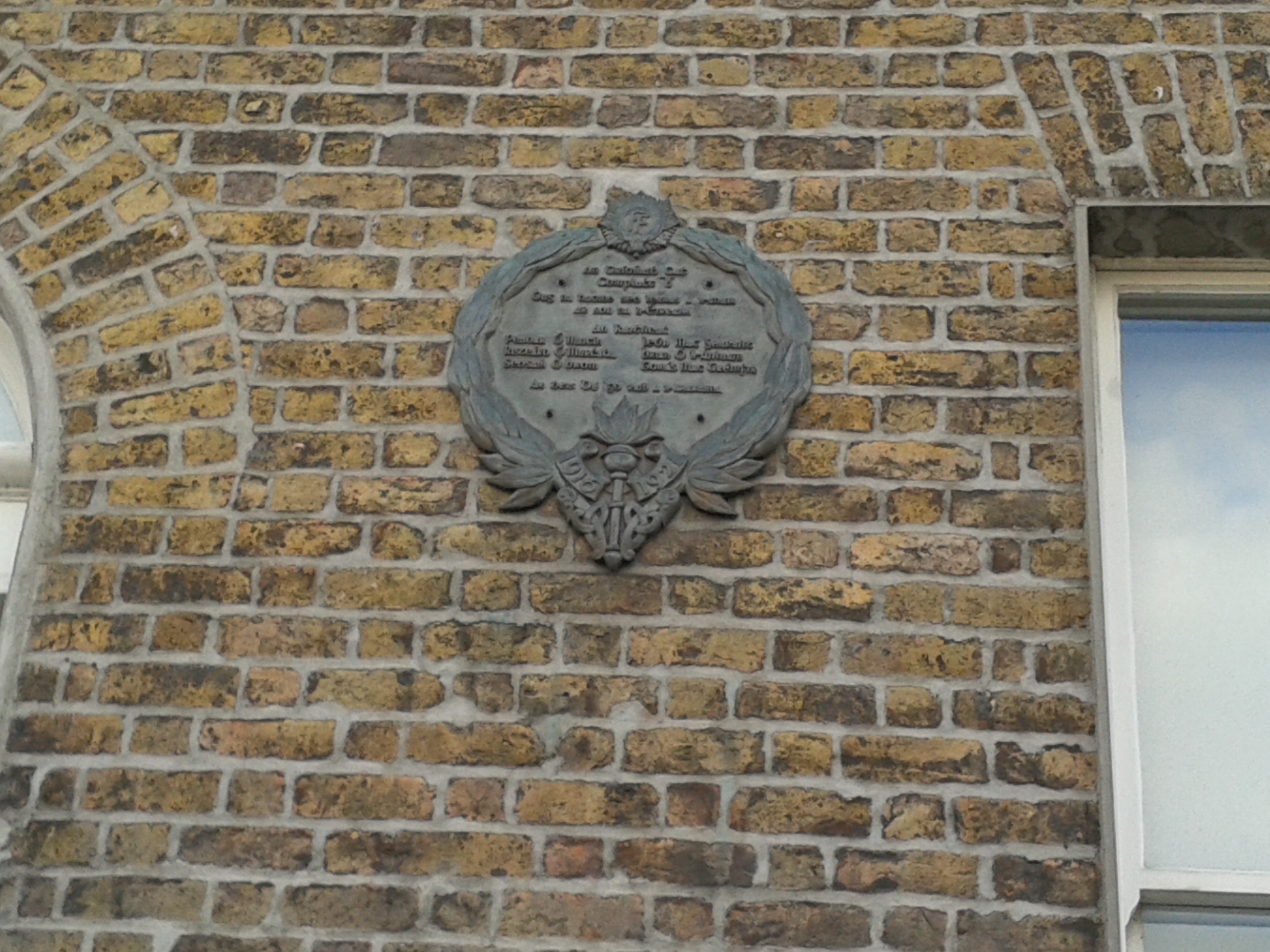
Pearse Street, or Great Brunswick Street as it then was, nestles just south of the river Liffey, running from Ringsend, an old fishing port, to the city centre. Number 144 housed the company headquarters of the Dublin IRA’s 3rd Battalion at St Andrews Catholic Hall. It had been used for this purpose since before insurrection of 1916.
On the evening of March 14, their captain Peadar O’Meara sent them out to attack police or military targets. As many as 34 IRA men prowled the area, armed with the standard urban guerrilla arms of easily-hidden handguns and grenades. One young Volunteer, Sean Dolan threw a grenade at a police station on nearby Merrion Square, which bounced back before it could explode, blowing off his own leg.
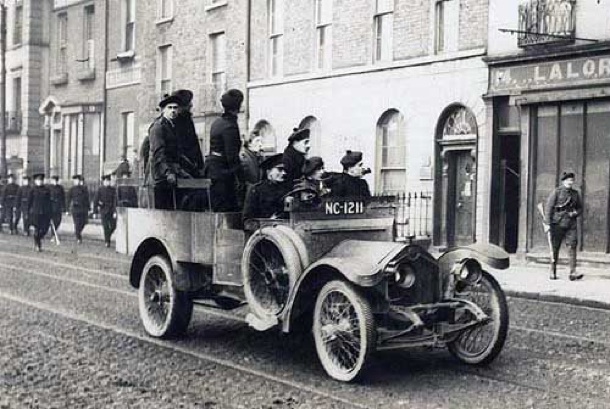
Auxiliaries on a raid c.1920 (image sourced on Internet)
It was about 8 o’clock. The curfew was approaching. A company of Auxiliaries, based in Dublin Castle was sent to the area to investigate the explosion. It consisted of one Rolls Royce armoured car and two tenders (trucks) holding about 16 men. Apparently the Auxiliaries had some inside information as they made straight for the local IRA headquarters at 144 Pearse Street. One later testified in court that – “I had been notified there were a certain number of gunmen there”.
But the IRA were also waiting. As soon as the Auxiliaries approached the building, fire was opened on them from three sides.
What the newspapers described as ‘hail of fire’ tore into the Auxiliaries’ vehicles. Five of the eight Auxiliaries in the first tender were hit in the opening fusillade. Two of them were fatally injured, including the driver (an Irishman named O’Farrell) and an Auxiliary named L. Beard.
But the IRA fighters were seriously outgunned. The Rolls Royce armoured car was impervious to small arms fire (except its tyres, which were shot out) but mounted a Vickers heavy machine gun, which sprayed the surrounding houses with bullets. The unwounded Auxiliaries also clambered out of their tenders and returned fire at the gun flashes from street corners and rooftops.
Civilian passersby flung themselves to the ground to avoid the bullets but four were hit, by which side it was impossible to tell. The British military court of inquiry into the incident found that the civilians had been killed by persons unknown; if by the IRA then they were ‘murdered’, if hit by Auxiliaries the shootings were ‘accidental’ — which, aside from demonstrating the court’s bias, shows us that no one was sure who had killed them.
Firing lasted for just five minutes but in that time seven people (including the two Auxiliaries) were killed or fatally wounded and at least six more wounded. A young man, Bernard O’Hanlon aged just 18, originally from Dundalk, lay sprawled, dead, outside number 145, his ‘bull-dog’ revolver under him which had five chambers, two of which contained expended rounds and three live rounds – indicating he had got off just two shots before being cut down.
Another IRA Volunteer, Leo Fitzgerald was also killed outright. Two more guerrillas were wounded, one in the hip and one in the back. They, along with Sean Dolan who had been wounded by his own grenade were spirited away by sympathetic Fire Brigade members and members of Cumann na mBan and treated in the nearby Mercer’s hospital.
Three civilians lay dead on the street. One, Thomas Asquith was a 68 year-old caretaker, another, David Kelly was a prominent Sinn Fein member and head of the Sinn Fein bank. His brother, Thomas Kelly was a veteran Sinn politician and since 1918 a Member of Parliament. The third, Stephen Clarke, aged 22, was an ex-soldier and may have been the one who had tipped off the Auxiliaries about the whereabouts of the IRA meeting house. An internal IRA report noted that he was ‘under observation… as he was a tout for the enemy’.
Location of the plaque on house near to Library in Pearse St. (formerly Gt. Brunswick St.) commemorating the fight. The plaque is in the 3 o’clock position on the photo. (photo D.Breatnach this year)
In five minutes of intense gunfire, seven people were mortally wounded; two IRA Volunteers, two Auxiliaries and three civilians.
Two IRA men were captured as they fled the scene, one, Thomas Traynor a 40 year-old veteran of the Easter Rising, was carrying an automatic pistol but claimed to have had no part in the ambush itself. He had, he maintained, simply been asked to bring in the weapon to 144 Great Brunswick Street. The other was Joseph Donnelly a youth of just 17.
As most of the IRA fighters got away through houses, over walls and into backstreets, the Auxiliaries ransacked St Andrew’s Catholic Hall at number 144, but found little of value. Regular British Army troops quickly arrived from nearby Beggars Bush barracks and cordoned off the area, but no further arrests were made. Desultory sniping carried on in the city for several hours into the night.
From FB page of Dublin Basque Solidarity Committee
SPANISH STATE APPOINTS POLICE OFFICER CONVICTED OF TORTURE TO UNITED NATIONS COMMITTEE FOR THE PREVENTION OF TORTURE.
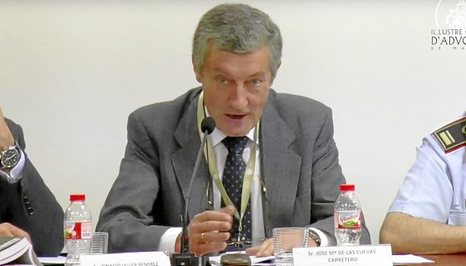
Convicted Guardia Civil torturer of prisoner, Jose Maria De las Cuevas Carretero, appointed by the Spanish State to the UN Committee for the Prevention of Torture. (Photo sourced from Gara newspaper)
No-one could accuse the Spanish authorities of failing to appreciate irony.
In 1997, in one of the rare cases of the Spanish authorities charging a police officer with torture and even rarer of conviction, Captain (then a Sergeant) José María De las Cuevas Carretero, along with fellow Guardia Civil officers Manuel Sánchez Corbi and Antonio Lozano García were found guilty of torturing Basque ETA suspect Kepa Urra when they detained him in 1992. A further three police accused were found not guilty but the medical evidence on Mr. Urra’s admission to hospital six hours after his arrest made it impossible for the Bizkaya court not to find his captorsguilty. Despite the police officers’ denials, the three were found guilty of having taken Mr. Urra to a deserted spot after this arrest and there, while he was handcuffed, to have beaten him with a blunt object and dragged him along the ground. They were sentenced to four years in prison and barred for six years from public office (a common accompaniment to prison sentence in the Spanish State).
However, one year later the Spanish Supreme Tribunal reduced the prison sentence of each to one year which meant they were free to go but with the public office disqualification still in force. The following year, they were pardoned by the Spanish Minister of Justice of the incoming PP Government of Aznar and Mr.De las Cuevas Carretero carried on with his police career, rising to the rank of Captain and participating in fora of the State and internationally.
Mr. De las Cuevas Carretero, who is a qualified lawyer, has been lecturing of the treatment of prisoners and about corruption. And who could say that he is not eminently qualified to lecture on those subjects? Or to represent the Spanish State authorities on those issues?
(News and photo source: Gara, also some background Internet research)
While eastbound drivers in Thomas Street on Friday 3rd March gawped, traffic slowed in the westbound lane to allow az small procession pushing a gallows, trundling along on wheels. There were surprisingly few witty comments, even the notoriously quick Dubliners too surprised to come up with a witty bon mot (or even a focal maith).
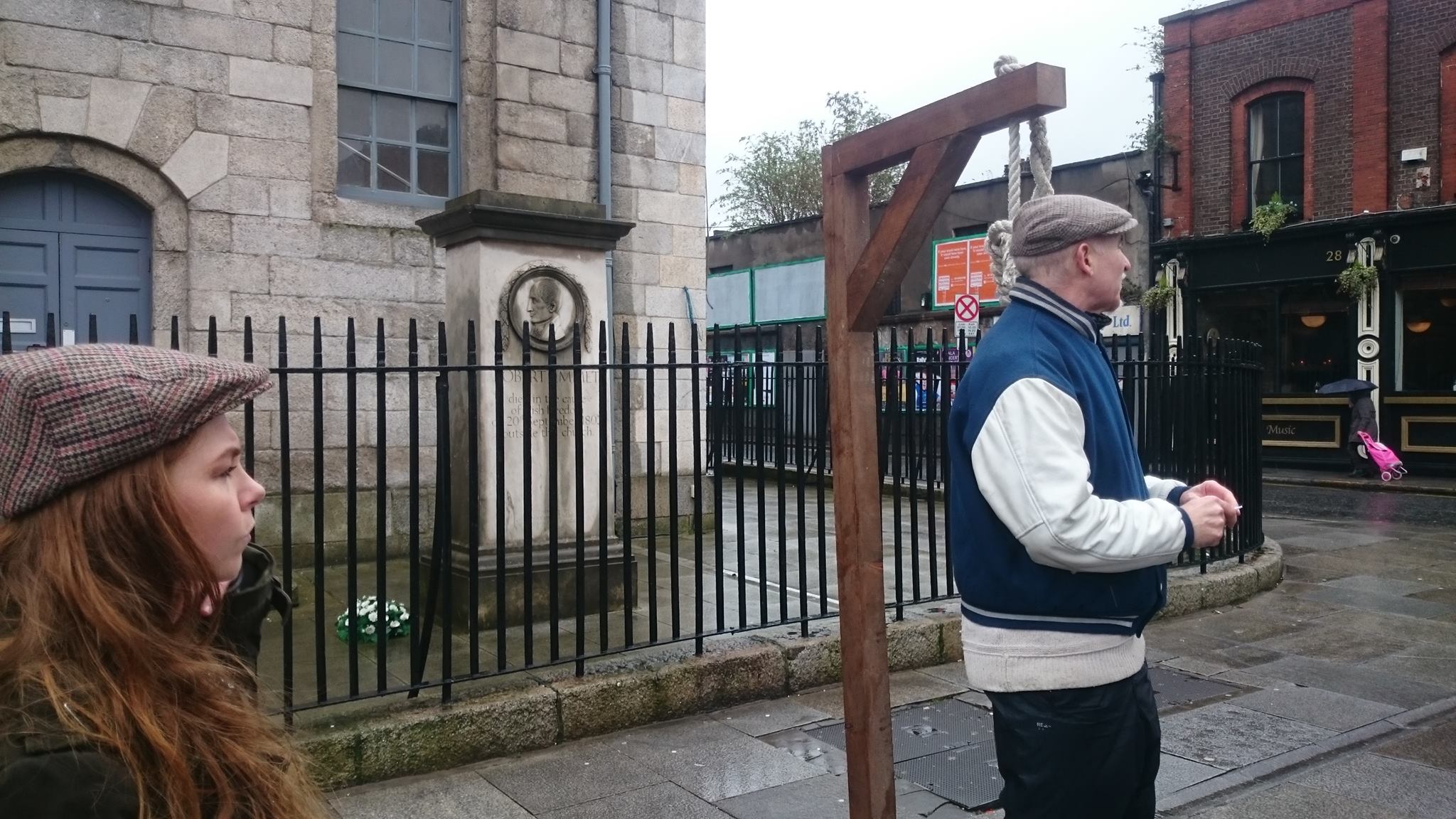
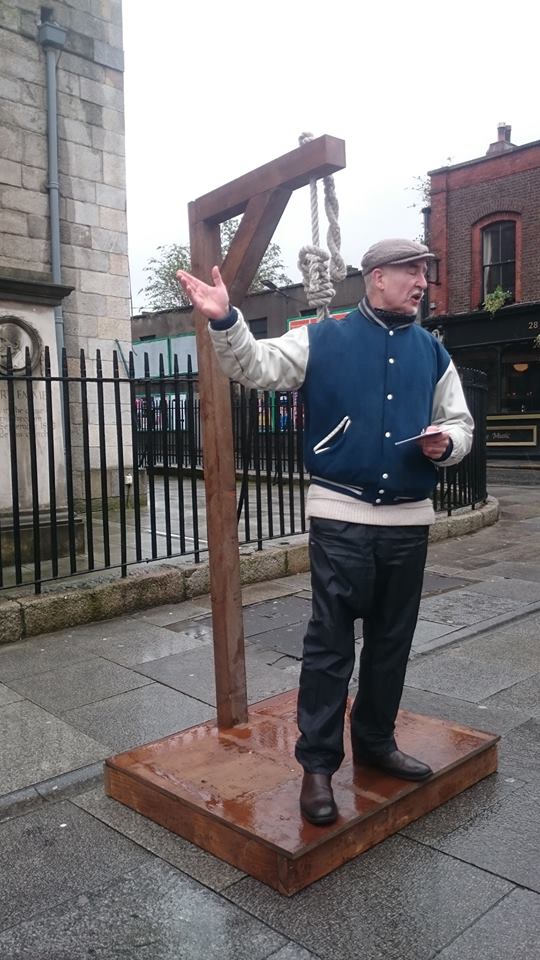
Diarmuid Breatnach outside St. Catherine’s Church, Thomas Street. (Photo: /////)
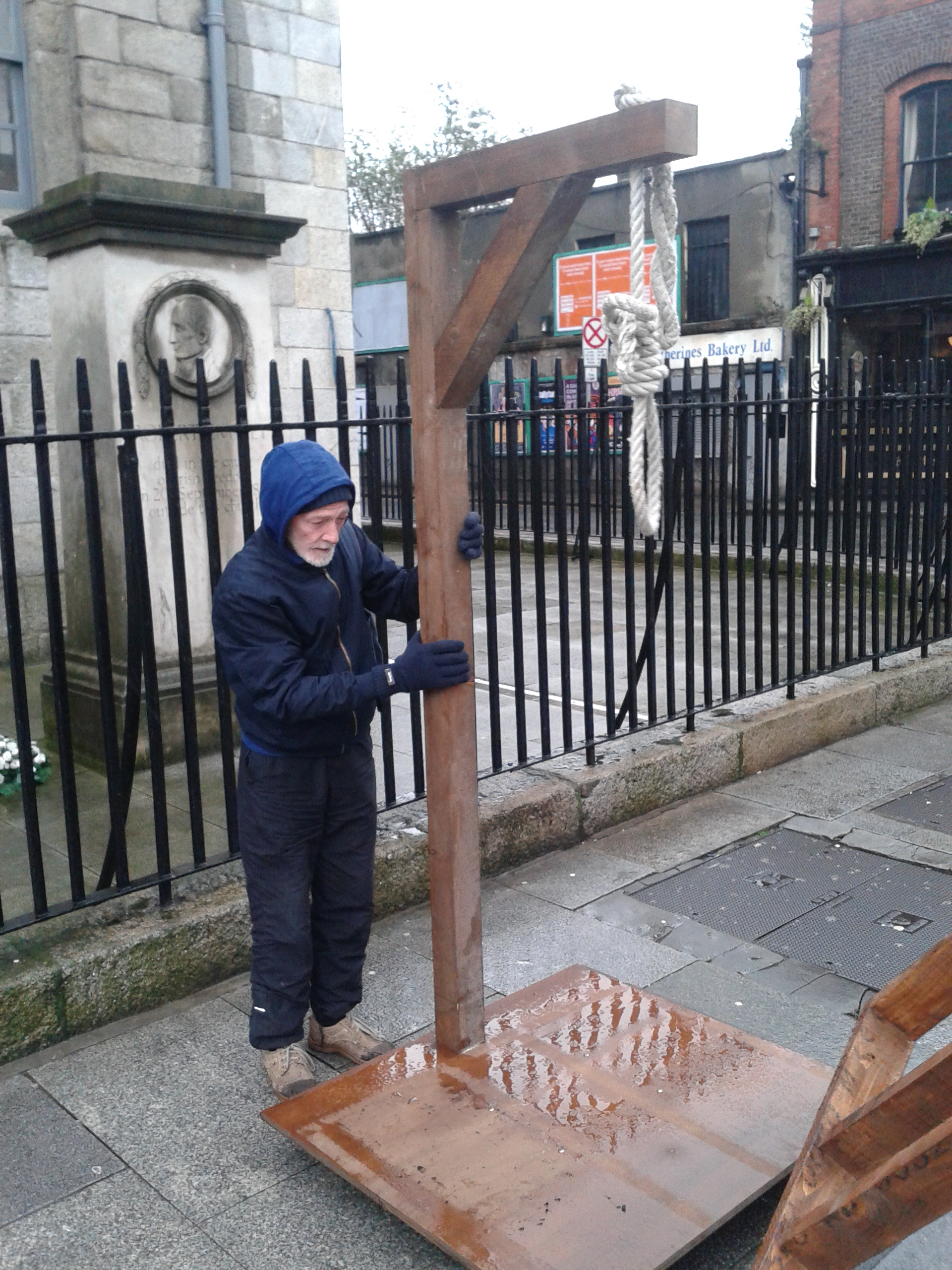
The procession stopped at the Robert Emmet plaque, in the railing wall of the former Protestant St. Catherine’s Church, approximate place of execution of Robert Emmet on 20th December 1803.
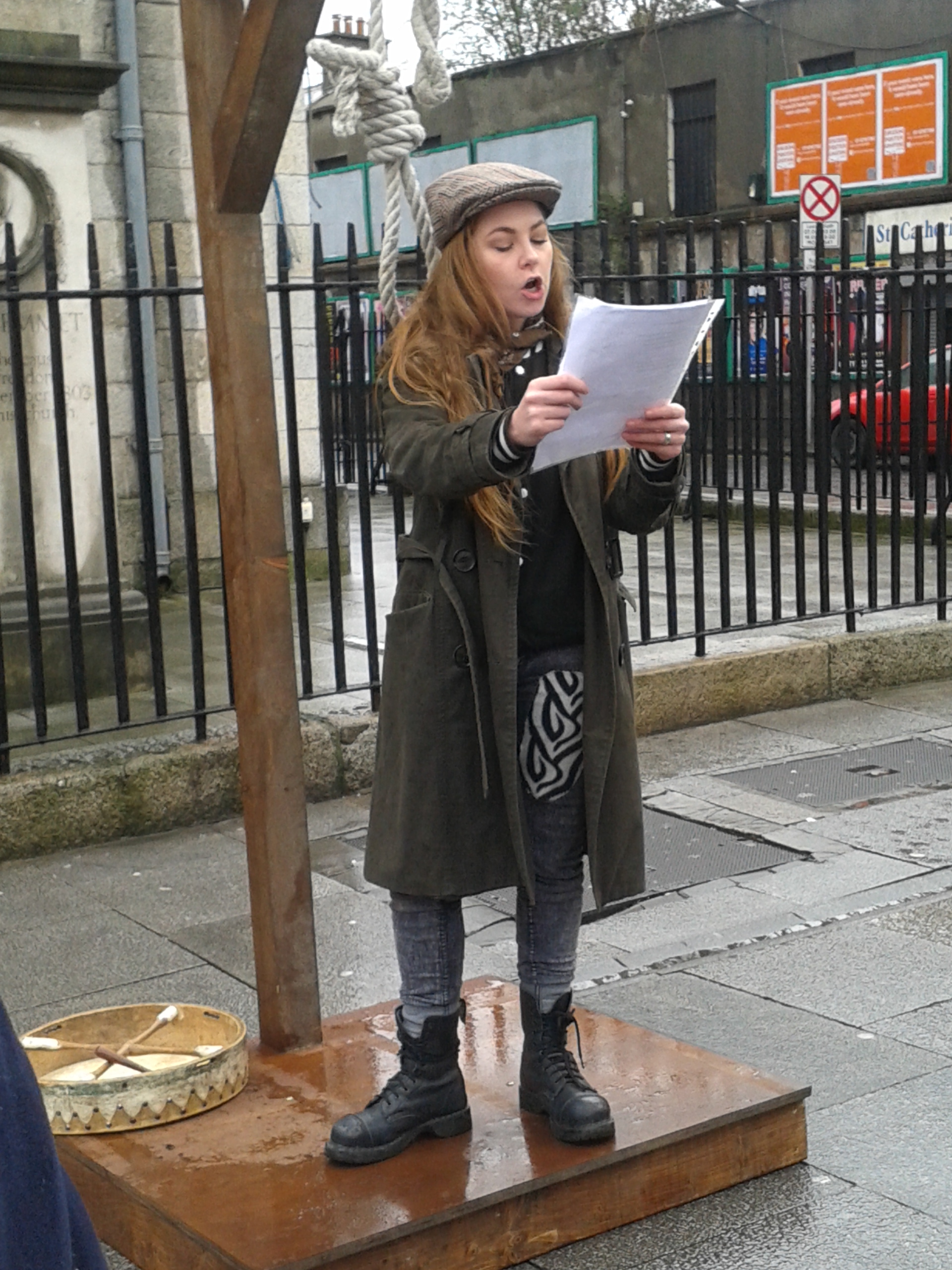
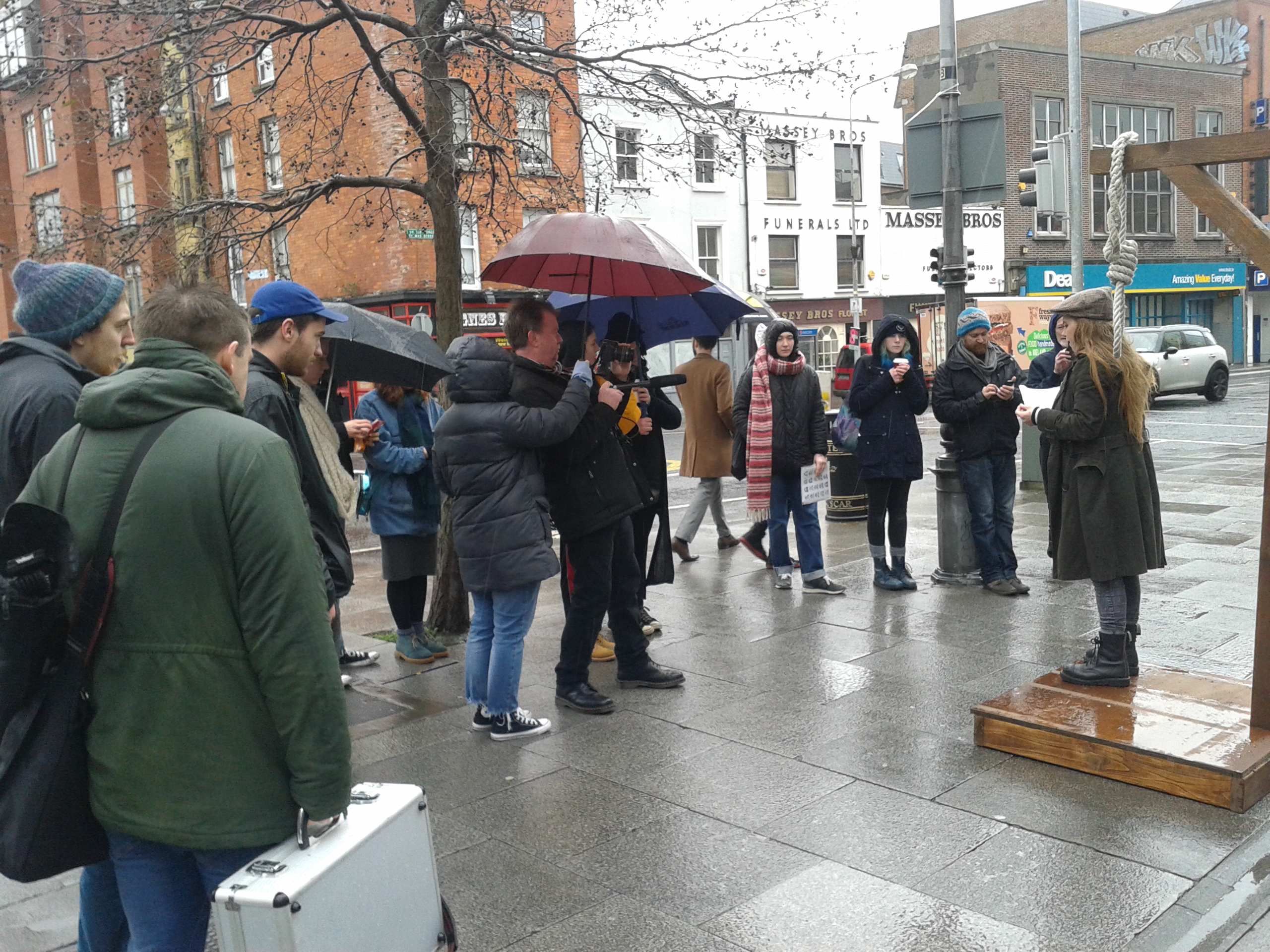
Elayne Harrington, aka Temperamental MiscElaynous performing her piece outside St. Catherine’s Church, Thomas Street. (Photo: D.Breatnach)
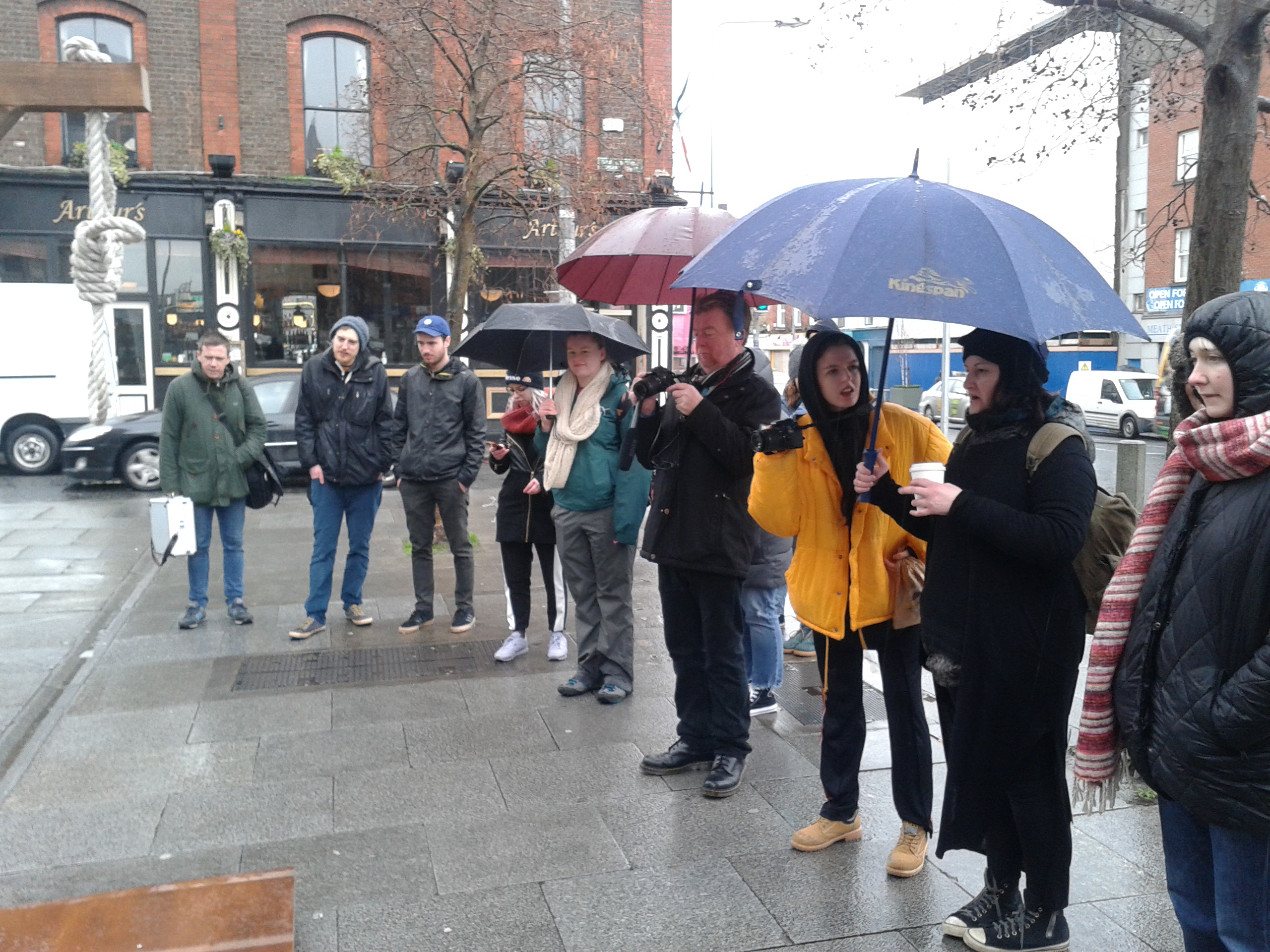
Despite continuous rain a small crowd had gathered on the pavement in front of the monument and the gallows, with a small platform less than a foot high, was placed facing them. Dublin artist Elayne Harrington, also known as the well-established street poet/ rapper artist from Finglas, Temperamental MiscElayneous, stood on the platform to announce that the event was to honour Robert Emmet and was a project as part of the Liberties Street Project, a continuation of the IPIP (In Public In Particular) program at the National College of Art and Design, Thomas Street, Dublin 8.
Harrington thanked people for attending despite the weather and, after outlining the program for the event, announced Diarmuid Breatnach, who took up position with the gallows and hanging noose just behind him.
Breatnach is best known as a co-founder of the Save Moore Street From Demolition campaign, maintaining a campaign table with a petition and leaflets on the market street for a few hours every Saturday but is also known as an acapella singer, particularly in Dublin traditional-folk circles.
Section of the crowd at the event outside St. Catherine’s Church, Thomas Street. (Photo: D.Breatnach)
After thanking MiscElayneous for the invitation and the crowd for attendance, Breatnach proceeded to reiterate that the event was taking place very near the spot where, at the age of 25, Robert Emmet had been hung and then decapitated by the British colonial administration in 1803.
Harrington reminded him to stand on the low platform which Breatnach did, drawing a laugh from the crowd when he indicated the hanging noose and commented: “Me Ma always said I’d end up like this.”
Breatnach asked the audience to imagine the scene of the execution in 1803 and referred them to a painting of the scene available on the Internet, showing a huge crowd, with people looking out of windows in nearby buildings and mounted redcoats keeping the crowd back from the gallows. Many of in the crowd would have been supporters but the better-known would not have been there – they were in jail or in hiding.
The execution was carried out there, Breatnach said, because the whole Thomas Street and Liberties was known as a revolutionary area, which Breatnach went on to describe (see video below).
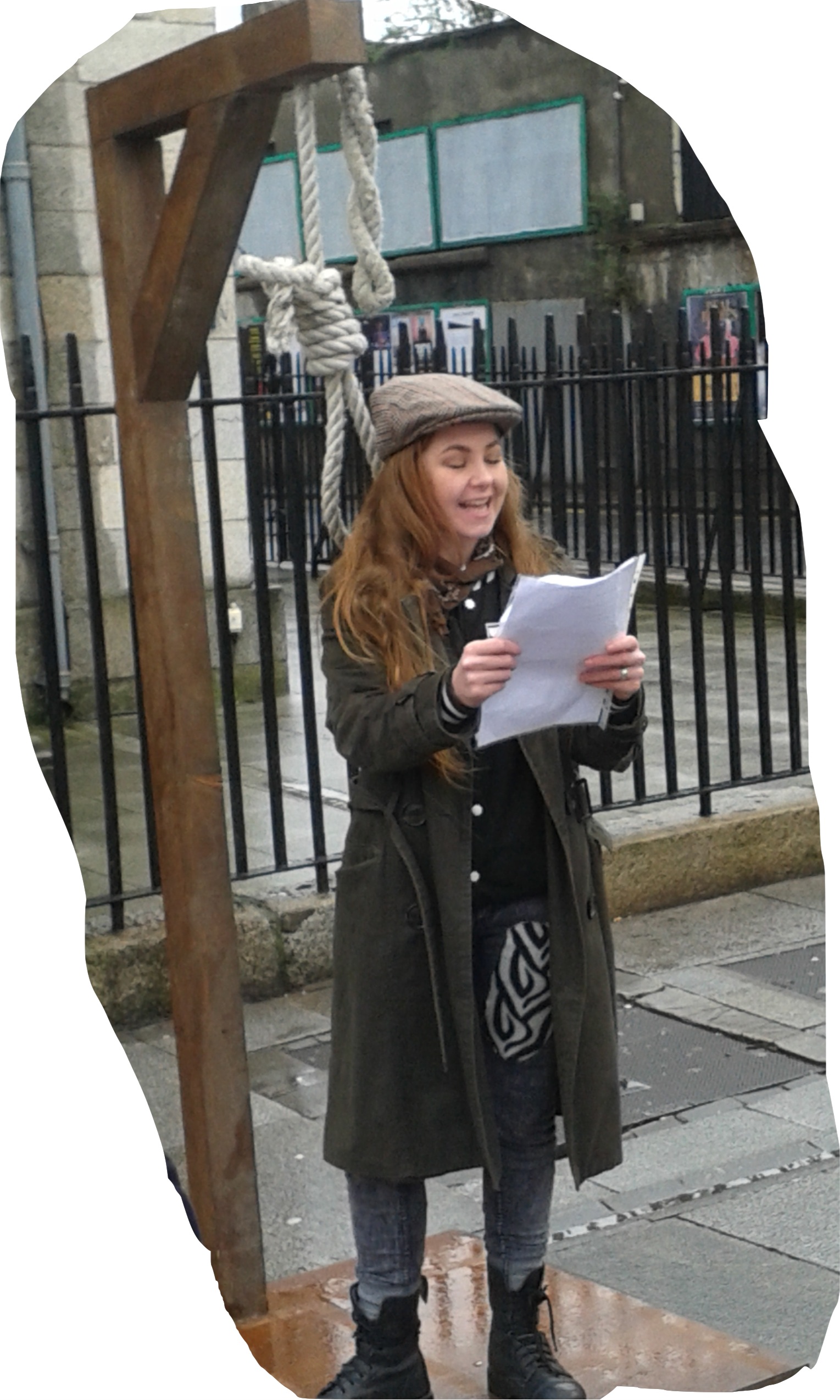
Elayne Harrington, aka Temperamental MiscElaynous performing her piece outside Stl Catherine’s Church, Thomas Street. (Photo: D.Breatnach)
Executions, said Breatnach, have been carried out down through the ages on Irish people resisting invasion, colonialism and imperialism and fighting for social justice. The gallows have become an enduring image in Irish history and a number of songs (Breatnach mentioned ten from the 19th century up to the present) refer to it.
The state we have now, said Breatnach, set up in 1922, preferred shooting, which was the method by which it eliminated its opponents at the time, 81 of them in official executions. Hanging remained however in this state but the last execution was in 1954.
Breatnach stated that we are often taught history as a dead subject, something in the past to which we are largely unrelated but he believed history to be a living thing, in the stones of walls and streets, in the air and in the words people have left us. And in our songs.
Breatnach selected three songs that mentioned Robert Emmet: The Three Flowers, written early last Century by Norman G. Reddin (two verses); Bold Robert Emmet perhaps by Tom Maguire around 1916 but certainly published in 1934; and Anne Devlin in recent decades by Pete St. John. Breatnach sang the three songs one after the other with MiscElayneous accompanying on her bodhrán.
Diarmuid Breatnach outside St. Catherine’s Church, Thomas Street, talking about the radical revolutionary history of the area. (Photo: ////)
During the applause which greeted the end of Breatnach’s performance, Elayne Harrington replaced him on the stage, thanked him and introduced herself as Temperamental Miscellaneous and spoke about her contribution, which was to be an extract of Emmet’s famous speech from the dock in the Green Street Courthouse, but re-worked into more modern Dublin idiom. Harrington then launched into a spirited rendition of her piece (see video below for the full performance).
No matter what words I utter, it’ll fail to change your mind and I wouldn’t have it any other way. You’ve made me a bed and I’ll lie in it. ………….
There’s plenty I could tell why my reputation should be kept clean from the utter lies and slander which’ve been lashed upon it. ……………
I wouldn’t dream that I could impress upon a court as trapped in its own self and corrupted, a fair impression of my character. …………………….
If merely dying was the case, after being deemed in the wrong and you in the right I’d take it on the chin and I wouldn’t breathe a word but that same law that not only wants to get rid of me also aims at filthying my name and sullying the memory of me. ……………..
In the hope that my memory won’t fade and that it might retain its honour among my brothers and sisters, I’ll stand up for myself and my integrity and weaken those charges against me. ……………
…. our cloths are entwined, mine and the martyred heroes of the gallows and battlefield, consecrated by sacrifice … for protection and guardianship of their homestead and their righteousness. ………..
This is what I hope: for my memory and name to serve those who live on by it being a source of empowerment …. witness the malignant malicious government that gains its false riches through sin alone, that treats a people as wolves to be domesticated and blooded to the taste of their fellows, to dance to their tune and to the death knell ……………..
Concluding the event, Harrington thanked the attendance and invited them to place small pots of growing flowers she had provided in front of the monument, which they did.
Stablising the scaffold outside St. Catherine’s Church, Thomas Street. (Photo: D.Breatnach)
WHY THE EVENT?
What had led Elayne Harrington to choose this act as part of her course?
“I was interested in Robert Emmet and his uprising ever since I heard a Dublin tour guide dismiss Robert Emmet while briefly mentioning his uprising”, explained the rapper from Finglas.
“I came to think that although Emmet failed in his objective, he had attempted a brave and good thing and his speech was really impressive. His uprising attempt took place in the area where my college is and he was executed just down the road, so that’s how I came to think of this event.
“I’m thankful to my course tutor and fellow students for supporting me in this act and to another tutor who helped me with the construction of the gallows. I am grateful to Diarmuid Breatnach also, who has been very supportive and contributed to the performance and I was really glad that my Da was able to be here and help today too.”
Why did Harrington call this “the first of the verbal execution series”?
“I see this as an event that can be brought to other places – like the gallows I built, it is transportable” she says with a grin but then turns serious. “The performances can be adapted also to other occasions of which Irish history is full.”
We’ll be watching this space!
Elayne Harrington and section of audience outside St. Catherine’s Church, Thomas Street, looking eastward (in the direction of Dublin Castle, ten minute’s walk away). (Photo: D.Breatnach)
The Basque Country is one of the few places in the world where popular opposition successfully prevented the completion of a nuclear power plant; the opposition consisted of both popular mobilisations and armed action. But is the Spanish state now about to reimpose a nuclear program on the Basques?
In the 1960s, the Spanish state began a program of nuclear plant construction in the territory under its dominion. This was an era of great enthusiasm among states and industrialists for nuclear power and generally there was little popular opposition – most of the nuclear opposition at the time being focused on use of nuclear (and earlier, atomic) weapons and nuclear-powered military vessels.
Broad popular opposition to nuclear power itself began to build in particular after the accident at the nuclear reactor at Three-Mile Island (Pennsylvania, USA, 1979) and a catalogue of smaller nuclear reactor accidents (such as those at Sellafield, Wales, for example).
The lobby in favour of nuclear power tends to emphasize the ‘cleaness’ of the fuel (i.e. as opposed to ‘acid rain’ carbon dioxide and other pollution from coal-burning and oil-burning stations, and oil tanker disasters), relative ‘cheapness’ to produce (as opposed to oil, gas and coal) and possibly inexhaustible power (as opposed to fossil fuels). The lobby against nuclear power quotes environmental damage from accidents with potentially greater consequences and points out that the ‘cheapness’ is created by ignoring the costs of safe disposal of nuclear waste material which, if taken into account, would make it much more expensive.
Of course there are powerful interests in favour of nuclear power programs, including military, industrial energy production and construction industry. Employment opportunities in work-poor areas often build local support for construction of such plants also but in some areas it is precisely the local community that opposes the construction and that was the case in the southern Basque Country (the four provinces in Spanish-controlled territory).
Nuclear reactors tend to be built away from especially large population centres; if one accepts the necessity of such plants this policy makes sense but exposes people in areas far from the national decision-making centres to the pro-nuclear policy and its consequences, actual and potential. The later stages of the Spanish nuclear program included building three reactors in the Basque Country and one had already been built in the first phase at Garoňa, in the nearby Spanish province of Burgos.
LEMOIZ: A HISTORY OF STRUGGLE AGAINST NUCLEAR REACTORS IN THE BASQUE COUNTRY
The first site of the Basque-location phase of construction was at the small harbour of Lemoiz (Lemoniz in Spanish), situated in a picturesque part of Bizkaia (Biscay) province and attracted opposition from a coalition of interests: militant Basque left-nationalists, anti-nuclear and environmental campaigners.
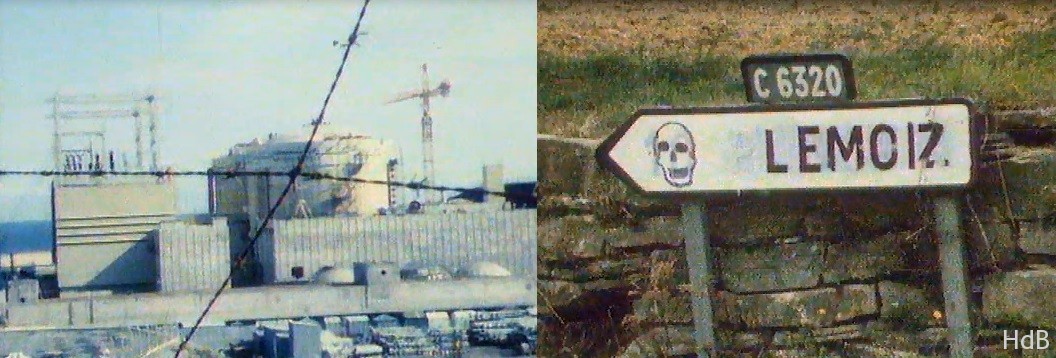
Lemoiz nuclear reactor site seen from a distance (photo source Internet)
Popular demonstrations began in the 1970s while the site was under construction with people traveling to the site to protest, also holding protests elsewhere and there were even some incidents of sabotage inside the facility, which was guarded by a Guardia Civil (Spanish Francoist paramilitary police force) post. This took place during the life of the Franco regime (he died in 1975) and also after his death during the repression of the “Transición” process which was not completed until 1982. Festivals and marches were also organised elsewhere in the Basque Country against the project.
The first armed attack by ETA was carried out 18 December 1977 with an attack on the Guardia Civil post at the site, during which David Álverez Peña,one of the ETA group’s members was injured, causing his death a month later. ETA later succeeded in planting a bomb in the reactor of the station which exploded on 17 March 1978, causing the death of two employees (Andrés Guerra and Alberto Negro), and wounding another two. Substantial damage was caused to the structure in the explosion, delaying construction.
Scene one hour after killing of Gladys del Estal in Tudela, Nafarroa in 1983, her body still lying on the ground (photo source Internet)
On an International Day of Action Against Nuclear Power, 3rd June 1979, a police bullet resulted in the death of an anti-nuclear activist during a demonstration in Tudela, a town in the Basque province of Nafarroa; her name was Gladys del Estal and she was from Donostia/ San Sebastian in Gipuzkoa province. Demonstrations against the facility were now a weekly event.
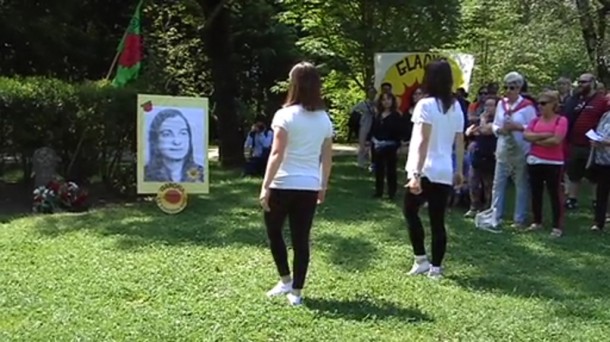
Traditional honor dance being performed by two Basque women at a ceremony commemorating Gladys Estal, shot by police at an anti-nuclear demonstration in Tudela, Nafarroa province. (photo source Internet)
ETA struck again on 13 June of that year with another bomb placed inside the site, on this occasion in the turbine area which, when it detonated, caused the death of another employee, Ángel Baños.
The deaths of employees in explosions might not have been intentional but on 29th January 1981 ETA kidnapped the chief engineer of the power station, José María Ryan, from Bilbao. The armed organisation issued an ultimatum to demolish the facility or to face the death of their hostage. Despite a demonstration organised against this threat, ETA killed engineer when the company did not back down.
The company replaced Ryan with Ángel Pascual as chief project engineer and ETA assassinated him on the 5th May 1982. Work at the site ground to a halt and Iberduero, the company developing the site temporarily halted work, calling on the Basque Government to commit itself to supporting the project.
Mass demonstration 1979 at Lemoiz against the nuclear reactor (photo source Internet)
The Government of the Autonomous Basque regionin which the site was located was in the hands of the Basque Nationalist Party (PNV) which, although completely opposed to ETA and by no means socialist, feared to go publicly against popular opinion opposed to the nuclear project. In 1983 the company officially stopped work, at which time both reactors were almost ready to go into production.
The deadlock was broken by the PSOE (Spanish unionist social-democratic party) winning the general election in 1984 on an anti-nuclear power policy and their government declared a moratorium on the building of all nuclear reactors throughout the state.
SPANISH STATE RETURNING TO A NUCLEAR -BUILDING PROGRAM?
The Spanish state currently has seven nuclear reactors generating a fifth of its electricity and its first commercial nuclear power reactor began operating in 1968.
After the horrificnuclear reactor disaster of Chernobyl (USSR 1986), people probably assumed that no further nuclear reactors would ever be built in the Spanish state. But the PSOE, the main establishment political party that formerly forced the nuclear moratorium showssigns of beginning to waver on the issue and even the nuclear reactor disaster at Fukishima (Japan 2011) does not appear to have deterred them. The PP, the right-wing Spanish unionist party, has always been in favour of nuclear reactors so that now a ruling class consensus favourable to more reactors seems to be forming (or formed).
(Source: Internet)
Last month, according to press reports in the Basque Country, José Ramón Torralbo, president of Nuclenor, the operator of the Garoña plant, stated that a “two-year-long” “comprehensive” evaluation of the nuclear power plant found no reason that the reactor could not be restarted “with some modifications”, although consideration of the request to reopen the plant is not complete and asked that deliberations of the CSN (Nuclear Safety Council) “should not be interfered with”.
Around the same time it was reported that the reopening of the Lemoiz plant was being considered also.
The decision on reopening is not to be based on questions of feasibility in the short term alone but on the decision of the Spanish Government with regard to its energy policy in general and with regard to nuclear power in particular. The President of Nuclenor indicated when speaking about the Garoña plant that a commitment to operate for 40 years only would rule out feasibility and that they would be looking for a 60-year minimum commitment and preferably for 90 years – presumably this would apply also to the Lemoiz plant.
Referring to environmental and other opposition to nuclear power generation, the president of the Forum of the Spanish Nuclear Industry, Antonio Cornadó, claimed it an “error” to “mix ideological with technological considerations”, stating that has “negative consequences” for the state energy model and for the economy, since the sector generates an important contribution to GDP and taxes.
Cornadó put this figure at €2,781 million contribution of the nuclear industry to Spanish GDP, the equivalent of 30% of the textile and footwear industry and said that “environmental taxes are becoming fashionable and seem set to increase”, stating that of every 100 euros of business, 25 go to the payment of taxes which contributes 781 million euros in taxes overall.
In addition Cornadó raised the fear of “irreversible risk …. of failing to meet climate change targets” and that “Spain is not ready to tackle the massive dismantling of all its nuclear power plants, which would be a very difficult and very expensive technological plan.”
A new uranium mining project is also commencing.
SPANISH STATE READY TO REOPEN LEMOIZ DESPITE ITS HISTORY?
With regard to Lemoiz and plans for any further nuclear reactors in the Basque Country, the factors to consider of course are much than financial viability, given the history of the plant. The Spanish state and indeed the ‘Autonomous’ Basque Government may feel that the current political situation favours a return to the nuclear program in the Basque Country or at least is less favourable to the forces that oppose it. This is despite the leading PNV (Basque Nationalist Party) official in Araba province declaring his opposition to it.
Some Basque trade union sources have claimed that Iberduero, the company owning the Lemoiz plant, have communicated to them that it has no plans to reopen Lemoiz but it is not clear whether these statements are merely trying to calm fears or possibly even enlist trade union support for employment at the plant.
Demonstration in Gastheiz/ Vitoria, Araba province last June calling for closure of Garona plant (photo source: Gara)
The leadership of the Abertzale (pro-Basque independence) Left has chosen to abandon the armed struggle (ETA has been on “permanent ceasefire” since 2011) and, under the leadership of Arnaldo Otegi, to pursue a national independence program electorally in alliance with social democratic parties, which has seen a fall in street opposition activities also. The opposition to the Abertzale Left’s approach within the broad movement is growing but currently weak and, to an extent, divided. It is difficult to see how the movement’s current mainstream approach can hope to prevent a vigorous return to a Spanish State nuclear program throughout the territory it controls, including the southern four provinces of the Basque Country.
On the other hand, the Spanish ruling class finds itself politically divided and with neither of its main political parties able to form a government, with increasing talk of both of them, the PP and the PSOE, coming to an agreement for a national coalition government. That may bring the Spanish ruling class further problems in the future as the possibility of democratic alternative choices become more remote and are seen to be so. The discontent of broad sections of society within the Spanish state in recent years has been expressed in monster demonstrations, strikes, some movements and in elections, in which oppositional but mainly radical social-democratic parties across the state have made gains, sometimes huge ones. At the moment, the revolutionary opposition movement(s) in all parts of the state is weak and divided but this may change as the situation develops.
A generation is passing. Actually they have been passing for some time, the generation of the fighting years of the late 1960s, the 1970s, the 1980s and even the 1990s.
They campaigned variously for social housing; civil rights north and south; for human rights; against Church domination; against Unionist sectarianism; for free access to contraception; for right to divorce; for an end to censorship; for national self-determination; for Gaeltacht civil rights; for Irish language rights and Irish on TV; in support of political prisoners; the rights of women; for Irish Traveller rights; protection of heritage and environment; solidarity with many struggles around the world, including Cuba, Vietnam, Rhodesia, South Africa, Chile, the Black Panthers; against drug dealers; for freedom to choose lifestyle; decriminalisation of gay and lesbian life; for community projects in deprived areas including youthwork and, let’s not forget, organised, fought in and supported strikes.
That generation fought many battles, some of which they won and some which built bases for later battles and their story is told only in bits and pieces here and there. They organised, marched, sat in, occupied, wrote, made placards, painted slogans, put up posters and some fired guns; they were watched, raided, beaten, fined, jailed, calumnied, sacked, expelled, kept unemployed, derided from pulpit, press and judge’s bench, some were shot, and not just they but their families made to suffer too.
I am not referring to people of any specific age but of all those who were any age from young to old and active during those years. The causes of death have been many, from simple old age and life lived out to the death penalty.
But the death penalty was not in force in Ireland in the 1960s, you may think? Actually it was, it wasn’t abolished until 1990 in this state. But you’d be kind of correct as in practice no formal execution has been carried out by this state since 1954.
So, then what am I talking about? Maybe referring to the ‘United Kingdom’, since six counties of Ireland are included in that state? Yes, and no. The death sentence still exists in the UK only for “Arson in Her Majesty’s shipyards” but it was abolished in Britain for the crime of murder in 1965 and, in fact, no-one had been formally executed there from the year before. If the judicial death penalty had still been in force, the people in charge of that state might’ve been been spared the embarrassment of seeing nearly a score of Irish people they had wrongly convicted in 1974 walk free decades later as judges eventually had to find them ‘Not Guilty’.
A bit late for Giuseppe Conlon, against whom there had not even been a shred of doubtful evidence, but never mind. But had they all died in prison or been executed, people might not have worked so hard to see their convictions in court overturned – people among whom Joe Kelly, who died this week and who was cremated on Saturday, stands tall.
But the death penalty was not removed from the judges’ arsenal in that bastion of reaction, Six Counties state, until 1973, when the 30 Years’ War had entered its early years (somebody from the British state clearly had to sit down with the Unionist bigots and explain, although of course they sympathised with their loyal brethren, how bad it would be for Britain and the Queen if they started sentencing and executing IRA and INLA fighters).
There are more ways to skin a cat …. yes, and to kill too. The orange and SAS and MRF death squads killed more against whom there was not even a court conviction. And some of the Republicans killed one another too. And twelve died on hunger strike, one each in 1974 and in ’76 and ten in 1981. Actually, considering the brutality of force-feeding, it’s surprising there weren’t more deaths – Marian and Dolours Price were force-fed 167 times over 203 days in 1973 and it was the publicity around their case and the deaths of Gaughan and Stagg that ended the practice of force-feeding, ensuring that the Hunger Strikers of 1980 and ’81 at least did not have to endure that experience.
But there are more ways to kill …. Many of that generation of fighters died from ‘natural’ causes but died early – cancers, heart attacks, liver damage, despair ….. ah, yes, that brings to mind suicide, of which some also died. But despair also can drive you to drink, even more easily if it has been part of your experience of socialising and alcohol is one of the top killers in the world. And some died of drugs …. or drugs and alcohol …. or infections from unsafe drug injection …. But most who died early did so in summary from the wear and tear of struggle, of prison, of separation, of relationship breakdowns, of betrayal, despair.
Not all died, even those who are not among the fighters today. Some walked away from the struggle and though I can’t imagine being in their shoes, I do not begrudge them. So long as they didn’t betray any on their way out or make a living out of spitting on their former comrades and causes afterwards. But some, a very few, did exactly that and you can read what they have to say quite often in their articles or hear them quoted in the newspapers or on TV or radio.
Some found other ways to betray and did it in secret, feeding information to their handlers and some even diverting attention from themselves by accusing others, some innocent and some of a lesser grade of betrayal than that of the accusers. We know of some of them but may never learn about them all.
Joe Kelly
Poster displayed at memorial in Teacher’s Club (photo accessed from a Facebook posting)
A few have survived and are still around, fighting the struggle, whether in organisations or as independents. Joe Kelly was one in both categories, in a sense. I knew him but did not know him well and met him only in the last decade, after I had returned from decades living and working in London. I am given to understand that he had passed through a number of political organisations, including Fianna Fáil and the Labour Party. A strange CV, one might think, for a radical left-wing social and political activist. The last political group with which I had associated Joe was People Before Profit, on a local level, around Phibsboro. Joe invited me to attend a quiz they were running and I did so mainly to return a favour – he had attended, to contribute to the singing at my invitation, an evening of the Clé Club where I had been “Fear a’Tí” for that night. I was amazed to win a Blackberry at the quiz (sorry, Joe, I still haven’t gotten around to learning and using it!). Last I heard, he wasn’t with the PBP.
Somebody told me years back that he had been a central organiser of a solidarity event in Dublin for the Birmingham Six in which lights had been floated down the Liffey. Of course I was impressed – on a political/ human rights level but also for the poetic vision involved. I have found little about that event since and Joe, who I found a modest man, didn’t give me much in response to my pressing. A couple of searches on the Internet yielded me only a passing reference to the River Parade, of 1990, a year before the Birmingham Six were finally cleared in court and released. Likely I have not been asking the right people or looking in the right corners.
I met Joe by arrangement for a coffee a couple of times, while I tried to get him into something I was doing and he tried to get me into something he was working at – neither of us succeeding in our efforts to recruit the other. Since Joe was working for awhile in the community sector I also approached him to explore possibilities for me when, despite a long track record in the fields of working in homeless shelters and addiction as well as other community activism I was out of work, but he wasn’t able to help me.
And of course I bumped into him on demonstrations, as in those in solidarity with Palestine or against the Water Tax or against the Lisbon Treaty. For awhile we were active together in the Dublin branch of the Ireland Palestine Solidarity Committee and I believe he left like me after witnessing some nasty in-fighting years ago, though we both often turned up to protest pickets and demonstrations and public meetings called by the organisation. We would also meet at events in solidarity with the Cuban people.
I heard him described at his funeral service, by someone who should know, as a Republican. Certainly Joe was very proud of his father and uncle who had both fought in the 1916 Rising, the first in the GPO and the second in Bolands’ Mill and proudly displayed his father’s medal at a public event in the Teachers’ Club in Dublin.
Joe Kelly displaying and talking about his father’s 1916 service medal at a 1916 commemoration event (photo: D.Breatnach)
However, he was among the number that I invited but failed to get to events over the last decade to highlight the plight of Irish Republicans being hounded by the State and imprisoned without trial. That did puzzle me, for I knew Joe to have a track record of fighting for human rights. And this was shown not only in his campaigning for the Birmingham Six.
Joe fought for the rights of divorce and choice of abortion, as well for the right to freedom from partner abuse, in particular through the movement for women’s refuges, what many people still refer to as “battered wives hostels”. He was active in the campaign for the right to gay marriage, so amazingly successful in Ireland. And Joe was also active in campaigns against racism towards migrants.
“Conas atú tú?” or “Dia dhuit”, Joe would invariably greet me whenever we met. I would not call him exactly fluent but he could understand and speak Irish. I suppose I assumed he had some affection for the language and was also paying me, a known native speaker, the courtesy of addressing me in Irish and speaking awhile in the language. At his funeral service, I learned it went further than that. I heard his grandchildren say that he frequently spoke to them in Irish and when they did not understand him, would translate what the words meant. Some people in the audience chuckled to hear this. I felt sad and somewhat angry too, that a question so important to our cultural identity, an aspect so threatened today, should be treated so apparently lightly by some and that the only words to be spoken at his funeral service in Irish were those in the final sentence spoken by his brother, Jim, in his eulogy: “Slán leat, Joe”. In the booklet produced for the occasion and freely available at Club na Múinteoirí, there was however one dedication in Irish (and I have since learned that one of the speeches at the Teacher’s Club was in Irish) and I note that both grandchildren who spoke bear Irish-language names.
Paying respects and memorial service
On Saturday, laid out in the lovely Room 2 in the Teacher’s Club (sin Club na Múinteoirí, Joe) in Dublin’s Parnell Square, a venue often used for social, cultural and political events, in a closed wicker basket coffin, Joe received his visitors. And they were MANY. Feminists, Palestine solidarity activists, Cuba solidarity activists, community activists, independent political activists and a sprinkling of activists in various parties all attended and many contributed their memories or words dedicated to him while he was laid out there. (I took many photos here and some at Mount Jerome but somehow seem to have lost them all).
Attending first another funeral (of another singer) that morning in Howth, then travelling into Dublin to take part in the Moore Street Awareness weekly table, I had to miss some of that. I spelled a comrade while he attended to pay his respects, then attended later while he took over back at the table.
Room No. 2 was still packed but so was the whole bar lounge area. I had missed all the eulogies and reminiscences and even singing – “The Foggy Dew” I was told. Had anyone sung “The Parting Glass”, I asked. No, apparently not. So then to ask his sister if it would be alright to do it, then the MC, his long-time collaborator, comrade and friend, Brendan Young. It would be welcome, I was told. And Fergus Russell (also his second funeral that day) and I did three verses together, using a mic so it might carry through to the lounge and, though we took turns at fluffing a line, not too badly. It is a great song for such occasions and each verse was particularly appropriate to Joe.1
A little later, the Internationale was sung by all (copies of the words of a verse and the chorus distributed beforehand), the wicker coffin (I must have one of those when my time comes!) was lifted on to shoulders by family and friends and brought through the respectful lines while Joe’s daughter sang The Night They Brought Old Dixie Down.2
Then the hearse came out and led the cortege to Mount Jerome cemetery. I didn’t know the protocol regarding cycling in a funeral cortege but followed anyway, managing to get temporarily lost on the way and arriving just as the hearse arrived at the cemetery. Again, the chapel was packed.
The ceremony was non-religious and officiated by Therese Caherty, ex-partner and friend. In turn Therese herself, his brother, his bereaved current partner, relatives and his comrade and friend Brendan Young all gave their moving eulogies and often funny anecdotes. Brendan emphasised that for Joe, the process of the conduct of a struggle was as important as the end to be reached, which I knew to be true from our time together in the Dublin IPSC and I’d be in agreement with Joe on that.
There were, despite the many I did see during those events, some faces I did not see in the congregation or at the Club na Múinteoirí before the service or later, when many returned to the Club to free sandwiches and soup laid on by the management there. It was their loss.
I never saw him dance but am told he loved it and taught his grandchildren not only to sing but to dance too. I did know he’d learned to tango. He’s left this dance floor now and gone on to another and whatever “one steps and two steps and the divil knows what new steps”3 they are dancing there, I’m sure Joe is learning them and probably teaching a few of his own.
Slán leat, Joe – árdaigh iad!
A chríoch.
FOOTNOTES
1 “Of all the money that e’er I had, I spent it in good company
And all the harm that e’er I’ve done, alas, it was to none but me
And all I’ve done for want of wit to memory now I can’t recall
So fill to me the parting glass, good night and joy be with you all
“If I had money enough to spend and leisure time to sit awhile
There is a fair maid in this town, that sorely has my heart beguiled
Her rosy cheeks and ruby lips I own, she has my heart enthralled
So fill to me the parting glass, good night and joy be with you all
“Of all the comrades that e’er I’ve had, they are sorry for my going away
And all the sweethearts that e’er I’ve had,
they would wish me one more day to stay
But since it falls unto my lot that I should rise and you should not
I’ll gently rise and I’ll softly call good night and joy be with you all”
2 This song of nostalgia for the American Confederacy has a haunting melody but its ideology is often ignored by those who sing it.
Manager of Dublin City Council Road Management Department
Dear Sir/ Madam,
Please allow me to extend my heartfelt thanks for your work on the city roads and more than that, the ingenuity displayed by your staff. Dublin and to an extent the whole of Ireland is being kept safe, thanks to the work of your Department, from Japanese Army invasion. Or any other cycle-born troops.
I must admit I was not expecting to find that people working for the local authority had studied the Imperial Japanese Army assault on Singapore in 1942 and who had learned from it. If only there were more like your staff in the rest of Ireland! But no, complacency rules. “Ah, sure it’ll do” is the order of the day.
Few people now seem to recall the complacency with which Lieut. General Arthur Percival faced the Imperial Japanese threat to Singapore in 1942. Almost an island, Singapore had massive artillery pointed out to sea, ready to pound the Japanese invasion fleet. No artillery of any size was pointing towards the mainland. The jungle there was impassable to an army of any size, apparently.
Unfortunately someone neglected to tell the Imperial Japanese Army that. They sent their soldiers on bicycles down jungle trails, moving thousands of troops into position in days. Then they stormed across the Causeway and attacked Singapore.
Lieut. General Arthur Percival surrendered an estimated 85,000 soldiers, most of whom had never fired a shot in Singapore. The Japanese had nothing but contempt for these soldiers and officers who had been surrendered by Percival, not only that, but had done so for the most part without putting up any kind of resistance at all. That was part of the reason they treated the prisoners so badly.
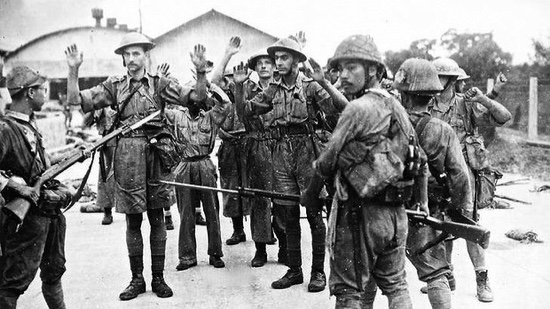
British soldiers surrendering to Japanese Army at the Surrender of Singapore 1942. (Sourced on Internet)
Had the British command in the region not been so complacent, they would not only have turned some of Percival’s big guns around to fire on the mainland but would have sent sappers – British and Commonwealth Armies’ engineers — out into the jungle to dig bicycle traps. Like your engineers have installed on Dublin city streets, roads and laneways.
How Lieut. General Arthur Percival could have used your engineers, if only he had realised the danger in time! But your engineers have used ingenuity above and beyond anything that British sappers might have thought up. A simple hole in the road after all is visible, even at night in dim Dublin street lighting — and may be avoided. But your engineers are more skilled than that – they consider: “OK, so the invading cyclist will see this hole and swerve to avoid it. He’ll swerve on the inside, so he doesn’t get hit by a passing vehicle. So we’ll place another hole, a little further on, on the inside.”
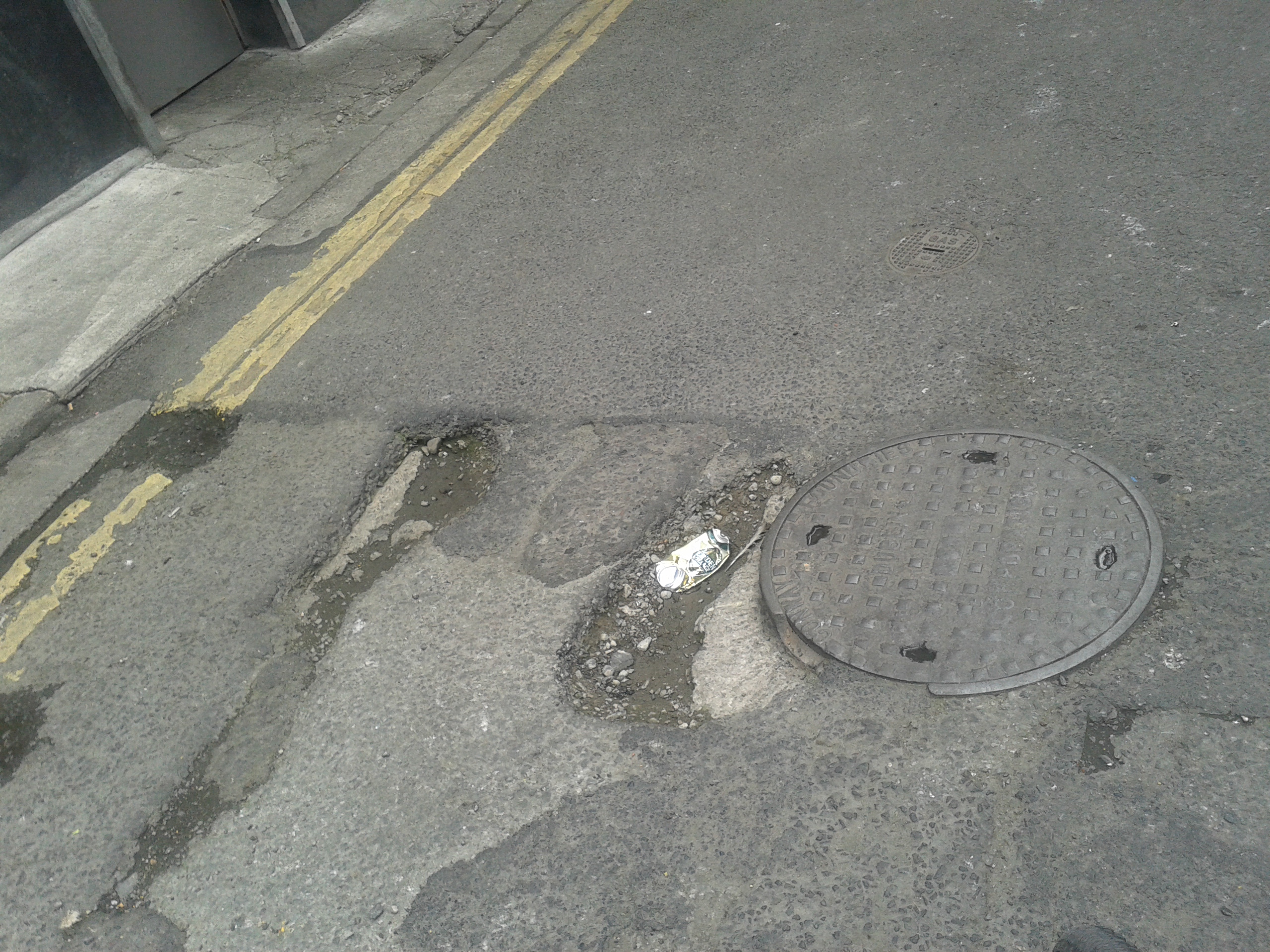
Excellent bicycle trap designed by Dublin City engineers, one of many in a whole defence network
Now, a rather pedestrian (if you’ll forgive the pun) engineer, might very well leave it at that. But no – your engineers ask themselves: “But after a number of disasters, jarring bumps, split tires and crashes, won’t the invading cyclists automatically swerve to the outside when they spot a hole ahead?” And so naturally, just to vary the rule, the engineers put another hole on the outside of the first from time to time.
Your engineers go yet further. “Wouldn’t it be better if they couldn’t see the hole at all?” they ask one another. After all, this is a common feature of traps – almost obligatory, one might think — so no great credit to your engineers in thinking of that. No, their genius is in how they carry out the disguising.
Normally, on a jungle path or trail, a pit (or a land-mine) would be covered over with loose earth and dead leaves to disguise it. But on a tarmacadamed road such is not possible (and even if it were, might claim the lives of innocent pedestrians or even motorists, for example trying to pass other traffic on the inside). This is where the true genius of your engineers is displayed.
Firstly, they place the holes in dark places – e.g where street lamps are not functioning, or under shade of trees. Sometimes instead of a hole, they construct a sharp dip in the tar macadam. And aware that cyclists often look ahead, see darker patches in the shade and swerve to avoid them, thinking “Aha! The sappers have placed a hole in the shade!” (sorry, I don’t know how to say that in Japanese) – yes, imagining that, your sappers darken a small area of road a little before a real dip! The cyclist sees the darker spot, thinks “Aha!” etc, swerves to avoid and, a moment later, hits the real dip. Masterly!
Of course, holes and dips are not the only useful anti-cycling device – ridges function quite well at times and can take unawares a cyclist who has been on the lookout for holes. Another clever ruse is the one of making the ridge small, therefore not too destructive to ride over, but placing a number of ridges beyond it, so that the cyclist experiences a shuddering sensation going over one ridge after another. He might even be induced to swerve here, when a passing vehicle may obligingly side-swipe him.
Then there is the principle of distraction. I don’t know what Percival’s engineers might have done, perhaps placed pictures of disrobing geishas near a pit but your engineers are more prosaic. Besides, exposure to many pictures of disrobing geishas might dull the effect over a period, or even become unfortunately forever associated in the minds of Japanese soldiers with pits and horrible crashes. No, your engineers think to themselves: “At what locations are the eyes of all cyclists likely to be diverted from the road surface straight ahead?” And they hit upon the answer, of course (perhaps they even had some cyclist double-agents working for them?).
Cyclists take their eyes off the surface of the road ahead when approaching traffic lights, or intersections, or crossing intersections or just having crossed one. They want to be sure that they obey the traffic lights and even more than that, that they don’t get hit by a vehicle coming from another direction, or side-swiped by one as they swerve out to avoid a parked vehicle just after having safely got across another intersection. So holes, dips and wheel seizing cracks are placed in shortly before traffic lights, in the middle of intersections or just on the other side!
There is also an economic benefit to all this necessary work of cyclist-trapping, and it is in the saving of the Motor Tax allocated to the local authority. The money saved by not filling in these holes goes to pay the Water Charge – a worthy recipient and appropriate diversion of revenue, if ever there was one!
There is even, dare I say it, a greening side-benefit, for inside those holes, little plants, grasses and even shrubs can take hold, bringing more green to our sometimes too grey city.
In days to come I hope that the work of your engineers, ably led and directed by yourselves, of course, may become properly recognised. Some recognition is surely due to men (and women?) who toil in anonymity to save us from a bicycle-mounted troop invasion. Besides which we don’t want to have to learn Japanese, being already fluent in another conqueror’s language – we have enough difficulty ordering food by numbers in Chinese restaurants. And if were taught Japanese in school, we wouldn’t want to have to actually speak it (as can be seen from the case of our National Language).
For appropriate recognition of the work of your Department, a public monument could be considered – perhaps one constructed from crushed bicycles. And plaques – perhaps set into roads at appropriate places or on signs as one approaches traffic lights and junctions. One can only hope. Keep up the good work!
As Mayo began to prepare for a replay of the 2016 championship Gaelic Football final against Dublin, I stood with others on a very wet day in Dublin’s Croppies’ Acre to commemorate and honour Robert Emmet and the United Irishmen – an event replete with Mayo connections.
Eniscorthy Historical Reenactment Society inside the monument during the ceremony. (Photo: Paddy Reilly)
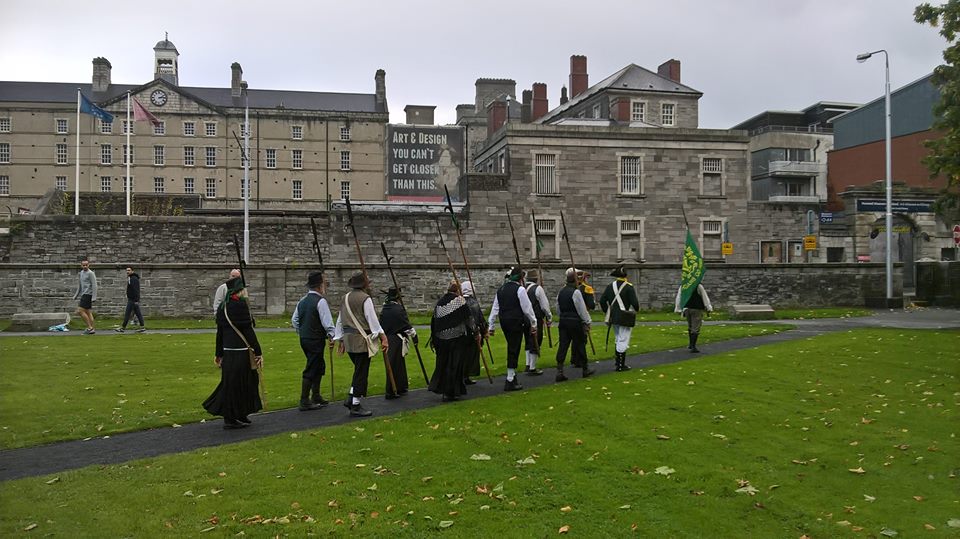
The event, organised by the Asgard Howth 1916 Society, was graced by the presence of the Enniscorthy Historical Reenactment Society, men and women in 1798 costume bearing pikes, including officer uniforms – they had travelled up from Wexford that morning to attend the event. Donal Fallon, historian, blogger, tour guide and broadcaster was to give the oration. Padraig Drummond, the organising persona, had asked me to sing two songs at the event, one near the start and the other near the end.
For the first song, I had chosen the Bold Robert Emmet ballad1 (originally known as The Last Moments of Robert Emmet2), a song that commonly sung more often a few decades ago but still reasonably well remembered. For the second, I was spoiled for choice of relevant songs: Anne Devlin, Boolavogue, The Croppy Boy, Henry Joy, The Irish Soldier Laddie. Kelly the Boy from Killane, The Rising of the Moon, Rodaí Mac Corlaí, Sliabh na mBan, the Three Flowers, The West’s Awake, The Wind That Shakes the Barley …… or I could finish learning some of which I knew bits, like the Sean Bhean Bhocht, General Munroe, Memory of the Dead (Who Fears to Speak of ’98?) or the Mayo version of An Spailpín Fánach.
Drawing depicting the trial of Robert Emmet in Green Street Courthouse, Dublin. (Photo source: Internet)
Though a beautiful song in lyrics and air, I felt Sliabh na mBan was too long for the event and cutting it would also feel wrong. Anne Devlin remembers an extremely brave comrade of the United Irishmen and gives rare acknowledgement to the role of women in the struggle for Irish freedom, which had me veering towards that choice. However, I eventually settled on Men of the West, celebrating the 1798 uprising in Mayo when a small French force under General Humbert landed to support them.
Diarmuid Breatnach singing “Men of the West/ Fir an Iarthair”. (Photo: Paddy Reilly)
MEN OF THE WEST
The Mayo connection in the forthcoming GAA final was one reason for the choice, another was that this time of year is that which witnessed the repression in Mayo after the defeat of the last rising of that year (and the last forever, the British and their Orange supporters may have thought, until Emmet came out five years later). And other reasons were that I could sing it as a macaronic song (with some of the verses in Irish and some in English), the song was not too long and it has a chorus in which participants could join.
Bartholomew Teeling, with the French who landed at Mayo, captured when they surrendered at Baile na Muc. Hung in Dublin and his body thrown into the “Croppy Hole”. (Photo source: Internet)
There were yet other reasons for the choice too – not in our culture of song and game, nor in the calendar, but in the ground under our feet, for somewhere under there in what was first called “The Croppies’ Hole” and later “Croppies’ Acre”, the mass grave of many United Irish, lie the bodies of the executed Matthew Tone — younger brother of Theobald Wolfe Tone (who was soon after to give his own life to the Rising) – and Bartholomew Teeling. The younger Tone and Teeling had landed with the French in Mayo, been taken prisoner after the surrender of the French at Baile na Muc, in Co.Longford, brought to Dublin and, despite their French Republican Army officer rank, tried as rebels and hung there.
And in researching background for this article, I came across even further Mayo connections.
The lyrics of Men of the West were written by William Rooney and put to the air of an Irish song called Eoghan Chóir written in turn — and also air apparently composed — by a Mayo United Irishman and songwriter, Riocard Bairéad (Richard Barrett3), who composed the even better-known Preab San Ól4.
The lyrics of Men of the West were later translated into Irish by Conchúr Mag Uidhir, who won a prize for that work at a Feis Ceoil in 1903 – again in Mayo. It was the lyrics of both these versions that I combined to make the macaronic version I chose to sing at the commemoration at Croppies’ Acre5.
THE DUBLIN SONGWRITER — BACKGROUND
While I need to do some research to find out more about this Mag Uidhir, quite a lot is known about William Rooney (Liam Ó Maolruanaigh). Born in the Dublin former red-light district known as “The Monto”6 in 1873, Rooney grew up in a what had been considered the second city of the British Empire but had declined in status with the abolition of the Irish (colonial) Parliament in 1800. The city contained the residence of the Crown’s representative in Ireland, a number of British army barracks and the administration apparatus of the colony, the latter in Dublin Castle. Dublin also contained a substantial loyalist population of the Ascendancy, in addition to “Castle Catholics”7. However, Dublin was also a focal point in Irish nationalist and separatist politics. Relatives and descendants of members and sympathisers of the United Irishmen of 1798 and 1803 lived in the city and the events were in the living memories of some.
William Rooney, journalist, organiser, Irish language revivalist and author of songs. (Photo source: Internet)
Irish Republicanism had seen a resurgence with the Young Irelanders of 1848 and some of their supporters were easily alive when William Rooney was born in 1873 and during his childhood. The founding of the Irish Republican Brotherhood in 1858 preceded Rooney’s birth by only 15 years and although the raid on the The Irish People newspaper took place in 1865, followed by the trial and conviction to penal servitude of Ó Donnobháin Rosa, Thomas Clarke Luby and John O’Leary, they would have been still talked about during Rooney’s childhood.
The following year, 1866 saw the failed rising of the Fenians in Ireland and also their shock invasion of Canada and, in 1867, the stirring freeing of the American Fenian prisoners in Manchester and the subsequent hanging of the three martyrs, Allen, Larkin and O’Brien. The spectacular rescue of escaping Fenian prisoners from Australia by the Catalpa and their celebrated delivery to the freedom in the United States took place in 1876.
Although these events were all over (or just occurring, in the case of the Catalpa) by the date of Rooney’s birth, their echoes remained – in living memory, in the cause of prisoners serving sentences in English jails or penal colonies and in agitation for a political prisoners’ amnesty. And God Save Ireland8, written to commemorate the Manchester Martyrs in 1866 by Timothy Daniel Sullivan would have been an extremely popular song among a wide section of the Dublin population during Rooney’s childhood, along with patriotic verses and songs by Thomas Moore (1779-1852), Thomas Davis (1814-1845) and James Clarence Mangan (1803-1849). Verse and songs by these poets were learned by ear and recited or sung but were also available in printed form, in songbooks, song sheets and nationalist publications.
Sullivan was a journalist, owning and editing the publications The Nation, Dublin Weekly News and Young Ireland. As a journalist, Sullivan published reports of meetings of the banned National League in December 1887, for which he was convicted and imprisoned for two months by the British administration. William Rooney was in his late teens at that time and Sullivan lived until 1914.
At the age of around thirteen William Rooney became acquainted with a leading Irish nationalist of his times, Arthur Griffith, through Rooney’s membership of The Irish Fireside Club, a literary discussion group. Both of them joined the Leinster Debating Society (which later became the Leinster Literary Society) which they soon led, Griffith as presidents and Rooney as Secretary. The early 1890s controversy surrounding Parnell’s relationship with Catherine O’Shea caused a serious disruption in the nationalist movement of the time and caused a serious split in the Irish Parliamentary Party of which the Leinster Literary Society became a casualty.
Rooney then formed the Celtic Literary Society in 1893, of which he became president; he also edited An Seanachuidhe (old spelling of “Seanchaí”, a story-teller, a relater of things past), the Society’s journal. The Society’s aims were the study of the Irish language, history, literature and music; it had branches in different parts of the country and its members included John O’Leary, Frank Hugh O’Donnell and Arthur Griffith.
AN GHAEILGE
William Rooney was fluent enough in the Irish language to write and to give orations in it and journalists of his times, after summarising a speech in English from the same platform, generally wrote only that he had spoken in Irish9. When he learned his Irish is not clear but he was teaching it in the offices of the Celtic Society. Then Eoin MacNeill got him to join the Gaelic League/ Connradh na Gaeilge after it was formed in 1893.
The Connradh was mainly concerned with promoting the Irish language and literature but also became a social focus in later years, hosting céilidhe (dances and occasion for songs, recitations). Patrick Pearse advocated a more political approach to promoting Irish culture and this accorded with Rooney’s opinion. On the other hand Rooney regarded Irish independence without the revival of the language and culture as meaningless and he castigated the Irish Parliamentary Party for its inaction on the Irish language.
Rooney gave an alternative example, traveling the country speaking publicly in Irish and in English on the need for Irish independence and for the revival of the Irish language.
JOURNALISM AND POLITICAL ORGANISATION
Building on his earlier writing in An Seanachuidhe, Rooney founded with Griffith The United Irishman newspaper in 1899 and his articles and other writings were published in a number of publications of his times:United Ireland, The Shamrock, Weekly Freeman, The Evening Herald, Shan Van Vocht and Northern Patriot (the latter two in Belfast).
Near the end of 1900, again in conjunction with Griffith, William Rooney helped found Cumann na nGaedheal. The former Fenian John O’Leary was president and the Cumann was intended as an umbrella organisation to co-ordinate the activities of a number of nationalist groups (it was merged with others in 1907 to form the original Sinn Féin).
As the centenary of the 1798 Uprising approached, there was something of a fever of preparation with many indicating an interest in participation. Rooney would see his 25th birthday during centenary year and becameof the most prominent organisers for the National Commemoration committee, if not, indeed, the main one.
The year 1898, somewhat similarly to the current centenary of the the 1916 Rising, saw commemorative plaques and monuments being erected, along with talks, meetings, lectures, articles and songs being written. According to historian Ruan O’Donnell, a feeling that the 1889 events had not reached an appropriate level led in 1903 to substantial commemorative events of Emmet’s rising in 1803. Many political working relationships were made during those years which were to survive into much more active days less than two decades since. Many of the songs we have today about the 1798 Rising were written during this period too and Rooney’s Men of the West was presumably also.
In the year of the 1798 centenary commemoration, one of the main centenary commemorations was held in Croppies’ Acre, attended by a reported 100,00010.Rooney was one of the main organisers and a stone was laid on the site which is there to this day.
Stone laid (or unveilled) during commemoration event in Croppies’ Acre in 1898, the first centenary of the Rising. The stone is on the ground near the north-west gate and corner of the park. (Photo: Paddy Reilly)
WILLIAM ROONEY IN MAYO
(The following text is taken from an article by Brian Hoban in the on-line edition of the Castlebar News for 22, Apr 2011)
William Rooney had visited Castlebar with Maud Gonne in 1898 for the centenary celebrations of ‘The Year of the French’. He gave a passionate speech in Irish in which he exhorted people to think for themselves, to educate themselves, and not to take their teachings from others.
He founded Castlebar’s first Public Library at the Town Hall, to which he dedicated his books. Three years later, at the early age of twenty-eight, William Rooney was dead, but the esteem in which he was held in Castlebar continued to grow. In 1911, a new Hurling Club in the town was named the ‘William Rooney’ in his honour. The following year “The Rooney Hall” was opened in Tucker Street. It became a local landmark for several generations, much used by various civic and voluntary organisations, including the PTAA.
The one surviving connection is in ‘Poems and Ballads’, a collection of Rooney’s poetry edited by Arthur Griffith and published in 1902, a year after his death. An original of this title is held by Mayo County Library where it can be consulted.
1798 Centennial Celebrations
William Rooney was one of the main protagonists in establishing the National Commemoration to celebrate the centennial of the 1798 rebellion. Only one month after its inception nationalists in Mayo formed the “Castlebar Central and Barony of Carra ’98 Centenary Association with James Daly appointed as president of the Connaught ’98 Centenary Council. On the 9th January 1898 a commemoration, which was presided over by James Daly, was held at Frenchill, near Castlebar. This was attended by Maud Gonne Mac Bride and addressed by James Rooney. ……………….
James Daly pointed out that the event was both about remembering dead patriots and undertaking “to abide by the principles of the men of ’98 until their country was free again and took its place among the nations of the earth.”
EARLY DEATH AND MEMORY
William Rooney died of TB in 1901 at the age of 27, shortly before he was due to marry. He is buried in Glasnevin Cemetery.
In 1902 the United Irishman published a collection of his writings and in 1908 a collection of his work edited by Griffith, Poems and Ballads of William Rooney, was published. The publication was reviewed disparagingly in the Daily Express that year by James Joyce but Yeats dedicated the 1908 edition of Cathleen Ni Houlihan “To the Memory of William Rooney”.A collection of his lectures and articles, from the United Irishman was published by M.H. Gill the following year.
Griffith described William Rooney as “the Thomas Davis of the new movement”. Brian Ó hUigín (“Brian na Banban” 1882–1963), editor for many years of The Wolfe Tonne Annual and himself no slouch as a writer of songs and verse, said of Rooney that “he blazed the trail to 1916 and gave his life for Ireland”.
And many of William Rooney’s songs are still being sung.
End.
Wreath being laid by Pól Ó Scannaill inside the monument on behalf of a number of groups. Padraig Drummond of Asgard 1916 Society MC of event. (Photo: Paddy Reilly)
APPENDIX
THE MACARONIC VERSION OF MEN OF THE WEST/ FIR AN IARTHAIR
(Arranged by D.Breatnach)
1.
Má mholtar le dán is le h-amhrán,
Na fir a bhi tréan agus fíor,
Donal Fallon, historian, blogger, tour guide and broadcaster who gave the main oration
‘Chuir clú agus cáil lena ndánacht
Ar shruthán ‘s gleann agus sliabh:
One of the panels inside the circular monument. (Photo: Paddy Reilly)
Ná fágaidh ar deire na tréan-fhir
Do chruinnigh ar phlánai Mhuigheo –
Nuair a ghnóthaí na Gail I Loch gCarman,
Said muinntir an Iarthair ‘bhí beo.
Chorus
I give you the gallant old West, boys,
Where rallied our bravest and best;
When Ireland lay broken and bleeding:
Hurrah boys, hurrah for the West!
(Photo: Paddy Reilly)
2.
The hilltops with glory were glowing
‘twas the eve of a bright harvest day,
And the ships we’d been wearily awaiting
Sailed into Killalla’s broad bay.
And over the hills went the slogan
To awaken in everyone’s breast
That spirit that’s never been broke’ boys
Among the true hearts of the West.
Curfá
Seo sláinte muinntir an Iarthair daoibh,
Section of Croppies Acre on a drier day, showing open circular 1798 monument in middle distance and Collins Barracks Museum in the far background. View is from SE gate on Wolfe Tone Quay. (Photo: D.Breatnach)
Unknown author but sometimes credited to Tom Maguire (1892– 1993, famed leader of the Mayo Flying Column [yet another Mayo connection!] in the War of Independence, who later took the Republican side in the Civil War). On the other hand Zimmermann (1967) gives the song its earliest appearance as c.1900, when Maguire would have been around only eight years of age. For Tom Maguire credit see http://thewildgeese.irish/profiles/blogs/robert-emmet and a number of other references, some of which state inaccurately that Emmet was “hung, drawn and quartered”; that was indeed his sentence but the British practice of cutting the body of “traitors and rebels”open while still alive to access the entrails had been discontinued for decades although the decapitation part was still practiced and was carried out on Emmet.
3In the very brief research I carried out on the Mayo songwriter, I came across another songwriter by the name of Richard “Richie” Barrett (1933– 2006), an Afro-American who was also a singer, musician and band promoter, involved with such famous rythm ‘n blues groups as the Chantels and Three Degrees. One might hope for a family connection ….
4Translated later into English, recorded by the Dubliners folk and ballad group under the title Another Round.
5For lyrics, see the Appendix after article body and Sources.
7A pejorative term to describe Catholics who cooperated with the colonial Ascedancy regime in Ireland and sought admission to their social circles (for example, to balls and receptions held at the Castle in the 19th Century). An even more contemptuous description for the behaviour of this stratum was the Irish “ag sodar i ndiaidh na h-uaisle” (‘trotting after the nobles’, i.e. like dogs or perhaps servants)
8He also wrote the All for Ireland! anthem, Song from the Backwoods and the Michael Dwyer ballad.
http://www.ainm.ie/Bio.aspx?ID=1038 (NB: I am not the Diarmuid Breathnach, joint author of this piece — please note the slightly different spelling of his family name)
O’Donnell, Ruan: Remember Emmet: Images of the Life and Legacy of the Irish Revolutionary Robert Emmet, National Library of Ireland (2003)
Zimmermann, Georges-Denis, Songs of Irish Rebellion: Political Street Ballads and Rebel Songs 1780-1900 (1967), Allen Figgis, Dublin; reprinted (2012) by Four Courts Press.