Diarmuid Breatnach (slightly edited repost from 2014)
(Reading time:3 mins.)
In England it is called “Boxing Day” but in Ireland the 26th of December is “St. Stephen’s Day”. Despite the Christian designation it has long been the occasion in Ireland for customs much closer to paganism.
It was common for a group of boys (usually) to gather and hunt down a wren, a small songbird.
The wren can fly but tends to do so in short bursts from bush to bush and so can be hunted down by determined boys. The bird might be killed or kept alive, tied to a staff or in a miniature bower constructed for the occasion.
The Dreoilín singing on a mossy rock.
The Wren Boys would then parade it from house to house while they themselves appeared dressed in costume and/or with painted faces.
In some areas they might only carry staff or wands decorated with colourful ribbons and metallic paper while they might in other areas dress in elaborate costumes, some of them made of straw (Straw Boys) and these were sometimes also known as Mummers.
However a distinction should be drawn between these two groups. The Mummers in particular would have involved acting repertoires with traditional character roles and costumes, music and dance routines.
The simpler Wren Boys however might each just contribute a short dance, piece of music or song. In all cases traditional phrases were used upon arrival, the Mummers having the largest repertoire for in fact they were producing a kind of mini-play.
The origins of the customs are the subject of debate but a number of Irish folk tales surround the wren.
Straw Boys at a festival.
The bird is said in one story to have betrayed the Gaels to the Vikings, leading to the defeat of the former. There is a Traveller tradition that accuses the wren of betraying Jesus Christ to soldiers while another tradition has the bird supplying the nails (its claws) for the crucifixion of Jesus Christ.
Yet another tradition has the wren as King of the Birds, having used its cunning in a competition to determine who would be the avian King, hiding itself under the Eagle’s wind and flying out above the exhausted bird when it seemed to have won.
By the 1960s the Wren Boy custom was beginning to die out even in areas where it had held fast but it slowly began to be revived by some enthusiasts. Nowadays fake wrens are used.
Christmas Day in Ireland was traditionally a day to go to religious service and to spend at home with family or to go visiting neighbours.
It was not a day of presents or of lights or Christmas Trees, customs brought in by the English colonizers in particular from Prince Albert, the British Queen Victoria’s royal consort, who was German.
St. Stephen’s Day may have celebrated the turn of the season heralded by the Winter Solstice (the wren being a bird that on occasion sings even in winter) but moved to a Christian feast day.
In any case it produced colour and excitement at a time which did not have the religious and commercial Christmas season to which, in decades, we have become accustomed.
The lovely song The Boys of Barr na Sráide from a poem by Sigerson Clifford takes as its binding thread the boys in his Co. Kerry childhood with whom Sigurson went “hunting the wren” but follows also their fight against the invader and their subsequent emigration to England or the USA.
Drawing of Wren Boys out on their round.
I’ve been singing this song in private recently but also at the December gathering of the monthly 1916 Performing Arts Club in Dublin.
In this recording it is sung by Muhammed Al-Hussaini (then resident in London and part of the singing circle of Comhaltas Ceoltóirí na hÉireann, meeting in the Camden Irish Centre) in which I had the pleasure of participating on a visit to London in 2014 (see The London Visit on the blog).
There are recordings of others performing this song well but the unusual origin as well as its quality persuaded me to choose this one and, in addition the memory of participating in a singing circle with this lovely and modest singer in London, who greeted me in Irish.
Muhammed also plays the violin on this recording, accompanied by Mark Patterson on mandolin and Paul Sims on guitar.
Mummers from Fingal, north of Co. Dublin
Ends.
Note: If you found this article of interest, why not register with Rebel Breeze for free, so that you will be notified by email of subsequent articles. You can de-register any time you wish.
The photo with the recording shows some of the Limerick fighters of the Kerry IRA in the War of Independence (1919-1921) or perhaps in the Civil War (1922-1923)
Thursday night (30th), with almost non-stop downpour of rain was a dreary and miserable one in Dublin. Not so however inside the Cobblestone’s back room where solidarity and resistance resounded in song, instrumental and spoken word.
The event organisers, Solidarity Sessions collective, an independent organisation founded late last year have declared a number of times that they wish to contribute to “creating a community of solidarity and resistance through culture.”
Certainly the flags on the stage of the Tricolour, Starry Plough and Palestine conveyed some of the context, as did posters of 1916 martyrs Connolly and Pearse with text pointing out that the first was a migrant and the second, son of a migrant.1
In addition a merchandise stall sold T-shirts figuring the Palestinian Resistance with funds raised going to Palestinian relief work on the ground. Solidarity Sessions have also donated to ‘buy’ a water truck from Uisce for Gaza and also donated to Streetlink Homeless Support in Dublin.
Mark Flynn performing at Solidarity Sessions No.3 in the Cobblestone. (Photo: R.Breeze)
The material performed on stage contributed much of solidarity and resistance also. This was the third event this year and the second at the Cobblestone pub, one other being at the International Bar and the fourth expected at the Peadar Brown pub on Southside’s Clanbrassil Street.
There was a lot of audience participation at times during the evening, with Alan Burke joined from the floor in the chorus of his spirited rendition of The Aul’ Triangle (to which he added a verse of his own) and Sive was accompanied on request by continuous refrain under her singing.
Mark Flynn was also backed by the audience in his adaptation of A Roving I’ll Go to a sailing to Portugal song he told his audience he had put together in minutes of a creative flash the like of which he ruefully admitted not having experienced since. Flynn also sang Bogle’s antiwar Waltzing Matilda.
Alan Burke performing at Solidarity Sessions No.3 in the Cobblestone. (Photo: R.Breeze)
The audience was extremely quiet during Dorothy Collin’s spoken word pieces about assassinations by the Zionist Occupation and Palestinian resistance, interrupting her performance with applause only after a haiku in Irish and at a point where she became visibly emotionally affected.
The Resistance Choir included in their performance an exuberant Bread and Roses, the lyrics originating in a speech at a mostly female textile workers’ strike in Massachusetts, USA in 1912 and Burke sang of an innocent miner framed on a murder charge and hanged – but pardoned posthumously.
Class struggle was also present in Burke’s singing My Name Is Dessie Warren, about a trade union activist with flying pickets2 during the 1970s construction workers’ strike in England. Some were tried under the Conspiracy Laws and jailed, including Ricky Tomlinson and Des Warren.3
The Resistance Choir about to perform at Solidarity Sessions No.3 in the Cobblestone, being introduced by the MC, Ru O’Shea. (Photo: R.Breeze)
ANNOUNCEMENTS
Three imminent resistance events were announced from the stage: Friday morning, due to appear in court4 were two Palestine solidarity activists attacked by Gardaí at Dublin Port and a good show of numbers in solidarity was requested.5
On Saturday a picket in solidarity with Irish Republican prisoners would be held outside Kilmainham Jail6 and on Sunday a demonstration to blockade Dublin Port was announced, people being requested to gather at The Point on the north Liffey quays.
Sive, who performed at Solidarity Sessions No.3 in the Cobblestone. (Photo sourced: Internet)
The organising collective, volunteers on door duty and the performers all donated their services free of charge. Further donations will be made to causes considered worthy, the collective assured their guests and supporters.
Ru O’Shea, MC for the evening, thanked all the performers who gave their services for free, the audience for their attendance, supporters staffing the door, the Cobblestone and sound engineer. The next Solidarity Sessions night will be at Peadar Brown’s on Thursday 4th December.
Ongoing “contributing to building a community of solidarity and resistance.” And outside, it had stopped raining for awhile.
End. Note: If you found this article of interest, why not register with Rebel Breeze for free, so that you will be notified by email of subsequent articles. You can de-register any time you wish.
FOOTNOTES
1James Connolly was born into the Irish diaspora in the poor area of Cowgate in Edinburgh and first came to Ireland as an adult in response to an invitation to found the Irish Socialist Republican Party. Subsequently Connolly went to the USA for a period before returning to Ireland (therefore 3 times a migrant). Patrick Pearse was born and raised in Dublin but his father was English. Both Pearse and Connolly were executed in Kilmainham Jail with another twelve by British bullets after their surrender of the 1916 Rising.
2‘Flying pickets’ operate in principle like the guerrilla ‘flying columns’, sending a large number of union picketers to specific locations chosen in secret, thereby reducing the opportunities for the police etc to mobilise at the spot in advance
3Ricky Tomlinson after release became a famous actor, mostly in comic roles. Warren developed Parkinson’s from forcible injections with restraining drugs and long periods in isolation in jail, dying not long after release. I remember the case and campaigns when I was working in England and a period afterwards when I was briefly active in the Construction Safety Campaign and read statistics about on average a construction worker killed weekly and one seriously injured daily on British construction sites.
4Yes, the Gardaí charging with criminal offences people they pepper-sprayed and batoned without warning.
6Kilmainham Jail was a British colonial prison in Dublin, also used for a while by the Irish Free State to imprison the Resistance during the Civil War/ Counterrevolution. It is now a very popular museum and holds the execution site of 14 prominent Irish Republicans after their surrender in 1916.
A night of resistance and other songs on Friday night in Peadar Browne’s Dublin pub raised funds to assist in fighting state repression of Palestine solidarity activists in Ireland, as Palestine solidarity activists face persecution across the Western world.
The evening’s performance consisted of a mix of political and other songs, a number of which were original material. However it was the political material that most drew interest, ranging from international struggles to the rich Irish Republican tradition.
Olive and Fynn in performance at the fund-raising event (Photo: R.Breeze)
To begin the event Diarmuid Breatnach explained the need to support Palestine solidarity activists against the repression of the Irish authorities, hence the fundraising event and announced that in addition to performing he would be standing in for the event’s MC who had been unable to attend.
Breatnach began his set combining two songs from the German antifascist tradition, three verses of Peat Bog Soldiers and three from the Hans Beimler ballad.1 Then from the Spanish Anti-Fascist War he sang Ay Carmela!, the air of which he said was from an anti-French occupation folk song.
Next the MC announced a performance by two performers, half of the four-strong Croí Óg ballad band. During their performance with voice, guitar and banjo there was an incident from a couple of unruly elements nearby who had substantial drink taken and had been very loud throughout.
Two members of the Croí Óg band performing at the fundraising event (Photo: R.Breeze)
A man who had been refused permission to sing solo began shouting that the songs were not Republican, ironically interrupting Grand Old Country, a song about the Fenian tradition. It became clear that what he wished was to perform the Grace ballad, which he began to sing loudly.
A male confronted the interrupter; the latter’s friend, a big elderly Glaswegian protested; others took to the floor … but the incident wound down, the interrupters and audience resuming their seats. However, the putative Grace singer threw threats at his earlier confronter across the room.
The big Glaswegian then crossed the room to confront the audience member, a female audience member intervened, he brushed her aside and the audience section erupted, only the quick arrival of the pub’s landlady preventing a fight … And the musicians resumed their performance.
Among the songs performed by Croí Óg were Crossmaglen and British Soldier Go on Home. The MC called for appreciation applause for them, made some barbed comments about the recent anti-social behaviour and welcomed the song-and-guitar duo Olive and Fyn to the stage.
Sage Against the Machine performing at the fundraiser event (Photo: R.Breeze)
The duo performed their own material in lovely harmonies, mostly non-political, also including their ironically titled Save the Landlord! After they had left the stage to applause Breatnach got up on stage again to announce a short break and to remind the audience to contribute to the funds.
His additional comment: “Remember when someone sang in a Dublin pub and everyone went quiet? Remember those days? Remember?” was followed by loud applause throughout the pub.
Breatnach restarted the second half, singing a capella again two songs celebrating Irish women’s resistance,2 ending with songs in Irish including the ballad of Rodaí Mac Corlaí. After concluding he introduced Sage Against the Machine to take to the stage, singing solo with guitar.
Sage’s material was mostly original, sung in English but went on to Masters of War in a spirited concluding verse, followed by Gallo Rojo, Gallo Negro3 in Spanish from the anti-fascist tradition in Spain. The MC then presented Eoin Ó Loingsigh, also with voice and guitar.
Eoghan Ó Loingsigh performing at the event (Photo: R.Breeze)
Although no further incidents occurred, the volume of ‘conversation’ between a number of people not far from the stage was high. Loingsigh’s material included Only Our Rivers Run Free, Viva La Quince Brigada4and a satirical song contrasting the fates of the rich and the poor after death.
The evening’s scheduled performances concluded with Seán Óg, also solo with voice and guitar, his selection including Ho Chi Minh, republican ballads Boys of the Old Brigade, The Patriot Game, Boolavogue and his own composition Boys of Gaza to air and structure of The Boys of Kilmichael.5
Breatnach thanked the attendance for their support, restating the context of the event and asked for another round of applause for all the performers, who gave their time and creativity for free, then called for people to stand for the Irish national anthem6 which he led with the first verse in Irish.
Diarmuid Breatnach in performance at the fundraiser event (Photo: R.Breeze)
At the concluding line of “seo libh, canaig …” the audience exploded to complete the words “Amhrán na bhFiann!” followed by launching into the chorus, also in Irish.
The event had been organised by two broad Palestine solidarity organisations, Saoirse Don Phalaistín and Palestine Action Ireland and among the attendance were a number of their activists, including some victims of state repression.
Most of the charges to date have been under the Public Order Act but also some around ‘criminal damage’ and the potential is there for more serious charges and possible jail sentences, as have been the case in some other European administrations.
In addition to actions of their own, including occupying and picketing the Israeli Embassy, Axa Insurance and picketing the Palestine Authority, Saoirse don Phalaistín and Palestine Solidarity Action organised Resistance Blocs to participate in mass demonstrations organised by the IPSC.
Seán Óg performing at the fundraiser event (Photo: R.Breeze)
Peadar Browns pub has become increasingly known as an Irish Republican tavern on the south side of Dublin city. Its small stage area is decorated with Republican artwork on the walls and on many of the bodhráns7 hanging there, along with some Glasgow Celtic celebratory material.
The side of the pub, on a minor street, carries a large mural representation of the Palestinian national flag, along with the slogan SAOIRSE DON PHALAISTÍN. However Dublin City Council have directed that it must be removed, to the anger of a great many people.
Mural on the side of the Peadar Brown pub (Photo sourced: Internet)
Historically cultural events of this type have a function other than to raise defence funds and to promote the cause: they are also occasions for replication of the cultural face of resistance and for expression of new cultural compositions but additionally for the creation of a community of resistance.
4About the Irish who went to fight against fascism in 1930s Spain.
5Also known as The Kilmichael Ambush, celebrating a famous event in West Cork during the War of Independence (1919-1921). However, the air of both songs is that of an older ballad about the 1798 Rising called Men of the West.
6The lyrics were originally written in English and later translated to Irish in which language it most usually sung today.
7A shallow one-sided Irish drum, same shape as a tambourine but much larger, played with a wooden striker on the outside with variation in tension achieved by hand pressure on the inside.
An event was held on a busy Saturday afternoon in Dublin’s city centre to commemorate IRA volunteer Patrick O’Brien, killed by soldiers of the Irish State.
The event included bagpipe airs, a colour party, speeches and a resistance song.
A colour party with Irish Tricolour and the flags of the four provinces, led by a lone piper marched into and a short distance westward up Talbot Street towards where a crowd waited beside a memorial sign that had been erected shortly earlier. The colour party took up station on the opposite side of the road.
Led by a piper playing Irish airs, the colour party (i.e carrying the flags – the Irish Tricolour and those of the four provinces of Ireland) approaches as the start of the commemoration. (Photo: D.Breatnach)
Among the airs being played on the short march were Thomas Moore’s Let Erin Remember and The Wearing of the Green or The Rising of the Moon, the same traditional air to both different songs referring to the 1798 Rising.
THE SHORT LIFE OF A LOYAL REPUBLICAN
Framed portrait photo of Vol. Patrick O’Brien on display at the commemoration (Photo: D.Breatnach)
Gina Nicoletti, chairing the event, recounted to the crowd a short history of Volunteer Patrick O’Brien who was born on 17 August 1898 in the townland of Woodlands near Castledermot in County Kildare to a local agricultural working couple.
The O’Brien family had 16 children, all of whom survived and ten of whom lived with Patrick and his parents in a three-room house at the time of the 1911 Census.
An obituary published in a Republican newspaper on the anniversary of his death suggests that Patrick moved to Dublin in 1915, joining the Irish Volunteers in December of that year aged 17. He took part in the 1916 Easter Rising under the command of Edward Daly.
Evading capture in 1916 and returning home, O’Brien joined the local Irish Volunteers company in Castledermot but returned to Dublin in May 1917 and became attached to E Company, 3 Battalion, Dublin Brigade, Irish Volunteers, which was based on the south side of the city.
Sean Óg sings The Foggy Dew while accompanying himself on guitar and centre of photo is Gina Nicoletti, who chaired the event. (Photo: D.Breatnach)
An active IRA member during the War of Independence, Vol. O’Brien took the anti-Treaty side in the IRA split in March 1922.
In a response to a renewal of executions of IRA men by the Free State government, Liam Lynch (IRA Chief of Staff) issued the ‘Amusements Order’ on 13 March 1923 banning all cinema, theatre and sports events “at a time of national mourning” with action threatened against non-compliance.
At midnight on 23 March 1923, Patrick took part in an operation to blow up the Carleton Picture House, O’Connell Street (then near the Parnell Monument opposite the Savoy Cinema). The cinema had closed an hour before a landmine at the front entrance shattered the glass of several windows.
There were no injuries but newspaper articles reported that the sound of the explosion was heard several miles away. Accounts of what happened afterwards were gathered from one of the IRA unit, Volunteer Joseph Doody in his pension application.
The unit unexpectedly encountered Free State soldiers coming from the Parnell Monument who opened fire on them and another patrol was approaching from the southern end of O’Connell Street and the unit retreated through Findlater Place and out to Marlborough Street.
In the running firefight in Talbot Street, O’Brien was hit by at least four bullets (three in his left leg and one in his right leg). He fell wounded on the pavement between Speidel’s pork butchers and the Masterpiece Picture Palace at 99 Talbot Street and died about 30 minutes after arrival at hospital.
The colour party lowers the flags in honour of a martyr as the piper plays a lament (Photo: D.Breatnach)
Patrick O’Brien was 24 and his death certificate listed his occupation as an employee of a railway company. His address was 28 Cadogan Road, Fairview which is a cul de sac of Victorian redbrick houses close to Annesley Bridge and opposite the Sean Russell statue.
Only three weeks before Patrick’s death, the Free State CID1 had raided no. 43 Cadogan Road and captured the press used to print the Sinn Féin2 paper An Phoblacht along with eight people who were on site. A number of prominent IRA families lived in the vicinity, including the Brughas.
Patrick O’Brien was buried in the Republican Plot, Glasnevin Cemetery and a volley was fired over his grave, presumably following the funeral in the cover of darkness as the IRA could not have risked such a public display during the burial, in a time of martial law.
The colour party raise the flags again in symbolism of the struggle carrying on after honouring a martyr (Photo: D.Breatnach)
Despite the hard repression by the Irish State on combatants, their relatives and friends, O’Brien’s family were proud of Patrick as displayed in an anniversary notice placed in The Nationalist & Leinster Times.
The Irish Independent reported on 27 March 1923 that at the inquest of Patrick’s death, his brother James told those present:
“[My brother] … belonged to the IRA since 1915 being then about 15 years of age. He had never changed his principles since then. He always intended to die as he did … rather than change his principles as he swore allegiance to the Republic in 1916.”
FLORAL WREATH, SONG AND SPEECH
A representative of Anti-Imperialist Action was called upon and stepped forward to attach a green, white and orange floral wreath to the pole beneath the commemorative sign.
The plaque/ placard commemorating Vol. Patrick O’Brien attached in Talbot Street by Independent Republicans with the floral wreath from Anti-Imperialist Action attached below it (Photo: D.Breatnach)
Seán Óg accompanied himself on guitar singing The Foggy Dew, a popular Republican ballad about the 1916 Rising composed by Fr. Charles O’Neill.
Dublin City Councillor Cieran Perry gave a fairly short speech stressing the importance of these acts of remembrance upholding traditions of resistance in the Dublin working class, also denouncing the fake patriots who stir up racist divisions and hostility in the community.
Perry’s speech also listed some of the crimes of the Irish state, facts underlined when Joe Mooney read out the list of 70 IRA Volunteers formally executed by the Irish state along with those killed in battle or after they surrendered, or were abducted, tortured and murdered in Dublin 1922-’23.
Cnclr. Cieran Perry speaking at the commemoration. (Photo: D.Breatnach)
TRAFFIC AND PEOPLE
Traffic was light along the narrow Talbot Street during the event and slowed down to ease past the crowd that had spilled from the pedestrian pavement into the street. A few minutes’ eastward of the spot is the plaque commemorating the killing of Sean Treacy by the British in November 1920.
There was a substantial number of people in support of the event on both pavements of the one-way street but others gathered too, whether out of curiosity or in sympathy. Some of those present consisted of visitors from other countries, whether as students, tourists or workers.
The crowd grew and spilled on to Talbot Street. [The plaque to Vol. Sean Treacy killed by British soldiers in 1920 is high on the front of a building just beyond the tree on the right of photo] (Photo: D.Breatnach).
Not for the first time I thought that having leaflets to distribute summarising the event and the reason for it would be useful. I spent a little time explaining some aspects of the event and its history to a couple of visitors from Sweden who seemed very interested.
The uniformed Gardaí kept away from the event, though no doubt the plain-clothed political Special Branch had a few of their own in the vicinity to collect faces and try to match names.
THE ORGANISERS: INDEPENDENT REPUBLICANS
The commemorative event was organised by a group by the name Independent Republicans which has been doing great work in conserving and promoting historical memory associated with events such as the 1916 Rising, the War of Independence and the Civil War.
The Irish Free State came to power as an instrument of British imperialism which clothed, armed and otherwise supplied the state’s National (sic) Army. Independent Republicans have collected the names of 70 Irish Republicans killed in Dublin by that Army.
The group has also devoted time and effort to researching the backgrounds and circumstances of death of many on that list, a substantial undertaking for which we owe them a great debt. Their erection of ‘plaque’ signs around the city at the spot where the fighters fell is also great work.
The commemorative plaque/ placard to Vol. Patrick O’Brien’s memory being erected shortly before the start of the event (Photo: D.Breatnach)
On Easter Saturday (8 April) Independent Republicans will be holding a 1916 Rising commemoration in Dublin city centre, details below.
Anti-Imperialist Action will be holding theirs on Easter Sunday (9 April), details below.
End.
FOOTNOTES:
1Criminal Investigation Department, based at Oriel House, where police detectives and some soldiers of the Free State organised operations against Republicans including raids, assassinations, abductions and torture.
2This is not the party of the same name today. Sinn Féin began as a dual-monarchy Irish nationalist party, adopting Republicanism later in 1918. Those who later supported the anti-Republican status of the country and partition by England left the party and another large number left to join the Fianna Fáil party upon the latter’s founding. Briefly in the 1960s the party espoused socialism but split at the end of the decade and Sinn Féin under the Provisionals briefly adopted socialism again during the 1970s. The party of that name today is neither socialist nor even Republican.
“Mo Ghile Mear”, lyrics composed later in the the 18th Century lamenting the failing of an earlier Rising, a traditional Irish air at least generations old, combined in the 1970s, sung today in great style.
I have not researched the origins of this myself but the theme is well-known, so from relying on Wikipedia, the free encyclopedia: “Mo Ghile Mear” (translated “My Gallant Darling”, “My Spirited Lad” and variants) is an Irish song. The modern form of the song was composed in the early 1970s by Dónal Ó Liatháin (1934–2008), using a traditional air collected in Cúil Aodha, County Cork, and lyrics selected from Irish-language poems by Seán “Clárach” Mac Domhnaill (1691–1754).
The lyrics are partially based on Bímse Buan ar Buairt Gach Ló (“My Heart is Sore with Sorrow Deep” (but “Gach Ló” means “every day” and there is no mention of “My Heart” in the title – D. Breatnach), c. 1746), a lament of the failure of the Jacobite rising of 1745.[1][2] The original poem is in the voice of the personification of Ireland, Éire, lamenting the exile of Bonnie Prince Charlie.[3]Mo ghile mear is a term applied to the Pretender in numerous Jacobite songs of the period. O’Daly (1866) reports that many of the Irish Jacobite songs were set to the tune The White Cockade. This is in origin a love song of the 17th century, the “White Cockade” (cnotadh bán) being an ornament of ribbons worn by young women, but the term was re-interpreted to mean a military cockade in the Jacobite context.[4]
Another part of the lyrics is based in an earlier Jacobite poem by Mac Domhnaill. This was published in Edward Walsh‘s Irish Popular Songs (Dublin, 1847) under the title of “Air Bharr na gCnoc ‘san Ime gCéin — Over the Hills and Far Away”. Walsh notes that this poem was “said to be the first Jacobite effort” by Mac Domhnaill, written during the Jacobite rising of 1715, so that here the exiled hero is the “Old Pretender”, James Francis Edward Stuart.
The composition of the modern song is associated with composer Seán Ó Riada, who established an Irish-language choir inCúil Aodha, County Cork, in the 1960s. The tune to which it is now set was collected by Ó Riada from an elderly resident of Cúil Aodha called Domhnall Ó Buachalla. Ó Riada died prematurely in 1971, and the song was composed about a year after his death, in c. 1972, with Ó Riada himself now becoming the departed hero lamented in the text. The point of departure for the song was the tape recording of Domhnall Ó Buachalla singing the tune. Ó Riada’s son Peadar suggested to Dónal Ó Liatháin that he should make a song from this melody.[5]
Ó Liatháin decided to select verses from Mac Domhnaill’s poem and set them to the tune. He chose those that were the most “universal”, so that the modern song is no longer an explicit reference to the Jacobite rising but in its origin a lament for the death of Seán Ó Riada.[6]
THIS RENDITION is to my mind and ear an excellent one in traditional-type arrangement and voices (not to mention looks of certain of the singers) and all involved are to be commended. I have not always liked the group’s rendition but this is just wonderful.
In history, we fought in Ireland for two foreign royals at two different times and on each occasion they left us in the lurch.
The construction of an Independent and Socialist State that integrates Araba, Bizkaia, Gipuzkoa, Lapurdi, Nafarroa Behera, Nafarroa Garaia and Zuberoa.
(On the 18th I reported on the launch of the Basque organisation Jardun, a coordinating body seeking to unite Basque left-national organisations and collectives in a revolutionary movement. Since then they have published a fuller manifesto of their aims, here translated from the Castillian version.)
The construction of a society based on the power of the Basque working class, on overcoming the class struggle and on the socialization of the means of production.
Overcoming all oppression against working women.
Reunification of Euskal Herria.
Remaking Euskal Herria Basque-speaking.
Map showing the seven provinces of the Basque Country — the three northern ones are currently ruled by the French State, the others by the Spanish State. (Source image: Internet)
The new alternative of the Basque Working People is a pro-independence and socialist political project whose ideological principles have six main points:
Independence.
Socialism.
Internationalism.
Class feminism.
Amnesty.
Environmentalism.
Independence.
The national question is framed within the various oppressions suffered by the Basque Working People, oppression that in the opinion of this coordinating organisation can only be overcome through independence. In other words, when we speak of self-determination, we are referring to the undeniable right of the Basque Working People to separate from the states that oppress them and to undertake a process of building an independent and socialist state.
Socialism.
Before talking about socialism, it is convenient to specify what we mean when we speak of the Basque Working People. The Basque Working People is made up of everyone who lives and sells their labour power in Euskal Herria. Every worker within the Basque Working People, from the moment they suffer exploitation and oppression, that is, from the moment they suffer the blow of capital in a crude way in their day to day life, has the potential to organize the revolution. Therefore, when we speak of socialism, we refer to overcoming the class oppression suffered by the Basque Working People, on the way to creating a classless society.
Internationalism.
We must understand that the Basque Working People cannot undertake the fight against capital alone. It is necessary to maintain contact with the different oppressed peoples and to acceptmutual aid. Even so, JARDUN will always set down an unpassable red line, that the national framework of the Basque working people can never be doubted. (Translator’s note: I was unsure about what exactly was meant by this sentence but one Jardun’s supporters told me it means that any struggle expecting solidarity from Jardun must accept the Basque people as a nation).
Class feminism.
It is necessary to overcome the sex-gender dichotomy and the reproductive role that capital imposes on working women, in order to overcome the oppression suffered by working women and the structural reasons that originate it.
“Freedom for political prisoners; Jail for those who oppress the people.” Cartoon poster from Chile but which summarises the Jardun position. (Image sourced: Internet)
Amnesty.
Amnesty is a strategic term that, going beyond confining itself to the freedom of all those fighterswho have worked for the freedom of Euskal Herria, implies political recognition in the eyes of working people of the struggle they have carried out and placing at the disposal of popular justice those who have systematically oppressed them.
Environmentalism.
Within the current capitalist production model, the environment suffers from overexploitation, responding to the logic of obtaining the highest possible economic performance, generating more waste than can be managed and creating a degradation that in many cases puts living conditions at risk. That is why the environmental struggle can only be approached from a root change in the production processes.
Photo taken during the Albertia battle commemoration and launch of Jardun earlier this month. (Photo source: Jardun)
The six points outlined above that define the ideology of JARDUN cannot be understood or addressed in an isolated way, since if their achievement does not go hand in hand with the others, the only thing that we will achieve will be to perpetuate the oppression suffered by the Basque Working People. In the same way, only by addressing these points from a class point of view will the workers of Euskal Herria be able to obtain control of the productive processes and political power, neutralizing the bourgeoisie.
Although the Basque Working People have the potential to carry out the revolution, only by acquiring awareness of their situation and organizing themselves in pursuit of national and social liberation can they begin the revolutionary process, forming the Basque Revolutionary Proletariat. JARDUN needs to be the organizational space of the Basque Revolutionary Proletariat. At the same time, the working people at an organic levelshould be composed of different sectoral organizations working under the same strategic objectives, for the construction of an independent and socialist Euskal Herria.
In the same way that our predecessors faced the oppression that this people has suffered and fought against fascism in Albertia, today, it is up to us to confront the oppression that working people suffer and for that, unity is necessary, it is necessary join forces. It is time to start joining forces. It is time to start adding forces. It is necessary to get together with different groups in Euskal Herria and defend a common project. It is necessary for different groups to join JARDUN, so that each one from their own fighting trenches can contribute what they can, with a firm commitment, and thus respond as a people, as a working people to capital. Since we are very clear about the way forward and what strategy has to be carried out. And let there be no doubt that we will continue working in that direction. For those who have given their lives, for Euskal Herria and for the workers of Euskal Herria.
Republicans and other local antifascists countered a Far-Right rally and “prayer circle” who were protesting a Croke Park letting on Friday to some Muslims to celebrate their religious festival of Eid. When confronted by a handful of antifascists, the early fascists folded up their banner and cowered behind police protection, unfolding it later when many more reinforcements arrived. Later still there were some scuffles and a number of arrests.
The first shot fired on social media against the Croke Park letting was by Niall McConnell, leader of the tiny “Síol na hÉireann” group calling for a protest at the venue, followed by Gemma O’Doherty of “Anti-Corruption Ireland”, with other Far-Right posters quickly getting on the bandwagon. The main claim was that they were going there to prevent “creeping Sharia law” but alsotacked on being against ritual animal slaughter, child brides, pedophilia etc. What they were really about however was Christian or even Catholic fundamentalism, racism and fascism and this became crystal clear during the morning.
Eid festival celebrants at prayer in Croke Park on Friday. (Photo source: Internet)
In the close foreground, an antifascist displays both languge versions of the quotation from the 1916 Proclamation. Behind him a number of Far-Right protesters. (Photo source: Dublin Republicans Against Fascism)
WHO THEY WERE AND WHAT THEY SAID
In contrast to many of the counter-protesters, none of the Far-Right seemed to be local and indeed many had travelled some distance to be there, some known to have come from Donegal and Mayo.
When calling out the responses of the Catholic prayer cycle of the Rosary1, Niall McConnell was roaring them out through a megaphone. McConnell, a founder of the tiny “Síol na hÉireann” group based in Donegal, believes in an Ireland built solely on Irish ethnicity (by which he means of Irish blood) and that its ethos should be Christian. How Irish blood “ethnicity” is to be judged is not explained, given that the Irish people are a mix of the Celtic population with many others, including Viking, Norman, Scottish, English, Welsh, possibly Basque, Italian, Polish etc. This is being “patriotic” according to McConnell, who is never seen campaigning for an end to the partition of Ireland nor of foreign occupation of one-sixth of the country.
Unloading rifles at Howth, 1915, Erskine and Molly Childers in foreground. Erskine was English but would later join the IRA and was executed by the Free State regime in 1922. (Source photo: Internet).
Patrick Pearse’s father being an English migrant did not prevent his two sons from being true patriots, promoting the Irish language, progressive education, national drama and literature and fighting for independence. Thomas Davis’ father being Welsh did not prevent his son from founding The Nation newspaper or from composing such songs as “A Nation Once Again” (a recording of which the Far-Right played!) and “The West’s Awake!” Erskine Childers being English did not prevent him sailing a yacht into Howth to deliver Mausers to the Irish Volunteers in 1914 nor in joining the IRA during the War of Independence and the Civil War and being executed by the Free State junta. And a missionary called Patricius being Welsh did not prevent him ending up as St. Patrick, a patron saint of Ireland!
Although billing himself as an “Irish Patriot”, McConnell calls for an alliance of “nationalists across Europe” and has posed for a photograph in a line-up of Far-Right European figures that included Nick Griffin, former leader of the fascist British National Party2. McConnell’s party’s website calls on people to join to “resist and turn back the new plantation”, a reference to a paranoid conspiracy in which the Far-Right claim to believe that the EU plans to replace Irish people with migrants.
A far-Right Lineup for meeting at the EU Parliament: Irish “patriot” Niall McConnell at the far right of photo (and in politics) with, among others, fascist Nick Griffin of the British National Party (fourth from left). (Photo source: Internet)
Apart from promising any new members of “Siol nah Eireann” (sic, no such words in Irish) the fantasy of joining “local cumans” (they have none and there is no such word in Irish either), they intend to provide them with “education” (i.e propaganda), “ideology” (fascism), “physical fitness and self-defence” (training in being bootboys) in Ireland and abroad …..!
Another who believes in an “ethnic Ireland” is Gemma O’Doherty who started off as an investigative journalist but turned into a proposer of illogical conspiracy theories and propagandist of racism. Protesting in a tweet against the recent election of Hazel Chu as Lord Mayor of Dublin, she ranted that Ms. Chu, born and raised in Ireland, is part of the Communist Party of China (!) takeover of Ireland. Parts of the Far-Right claim to believe that CPC is taking over the world through the UN (where China has ONE seat on the permanent Security Council out of FIVE!3) and on the other hand, President Trump is wonderful.4
One of the banners displayed by later Far-Right arrivals. The man in the foreground assaulted a Republican some weeks ago in full view of the Gardaí but was not arrested. He was involved in a scuffle here too while filming. (Photo source: Dublin Republicans Against Fascism)
Gemma O’Doherty has at times been caught out posting lying statistics to whip up racial fears and had two of her Youtube sites shut down by Google due to her continuous attempts to whip up race-hate. Since then she has been campaigning for “free speech” but for whom? Outside Croke Park she said that the country needs to become “a Catholic Ireland once again”. In this “Catholic Ireland” of her dreams, would there be “freedom of speech” for dissenting Catholics, Protestants, Jews, Muslims, atheists or agnostics? The “Catholic Ireland” State of the recent past censored films, banned books and newspapers and forbade not only abortion in all circumstances but also contraception and divorce, not to mention LGBT rights.
O’Doherty is another fake “patriot” who told her listeners that “our patriots died for a Catholic Ireland”, despite the fact that nearly every single leader of the United Irishmen was a Protestant, as were many of the Young Irelanders and not a few prominent members of the Irish Volunteers — and she totally ignored the words of the 1916 Proclamation.
Near the end of the event, some members of the National Party appeared, wearing green golf shirts with “NP” marked on them. Although their “Vision” for Ireland on their website claims to include “an Ireland united, Irish and free”, they have never been seen engaged in struggles against British colonialism and the partition of the country. The NP is against “replacement-level immigration”, i.e that racist conspiracy theory again and wants capital punishment for serious crimes, in which they include carrying out a pregnancy termination. Like most of the Far-Right, they oppose the “Black lives matter” campaign and the party’s founder, Justin Barrett (not there on Friday), tweeted that if he gets into government he will remove the Irish nationality of Hazel Chu, a woman who was born in the Mater Hospital in Dublin, was educated in Ireland and spent most of her life here.
The man on the right supports far-Right protests yet claims to be a Irish Republican. (Photo source: Dublin Republicans Against Fascism)
Praying in support of religious sectarianism and racism. (Photo source: Dublin Republicans Against Fascism)
Also missing were racist and islamophobe leaders of the “Irish Yellow Vests” Glen Miller and Ben Gilroy, also Herman Kelly, founder of the tiny Irish Freedom Party, another “patriot” who believes in a “Christian and ethnic Irish Ireland”. Kelly has shared a platform with British fascist and Loyalist Jim Dowson and Irish fascist Rowan Croft (aka “Gran Torino”).
Aside from all that, on Friday one woman ‘innoculated’ the ground around the Far-Right protesters with sprinkled salt, apparently proof against “witches” (anti-fascist women). A few of them shook their rosary beads at the protesters while another woman seemed to go into ecstasy, praying with arms alternately raised high or spread. “I don’t know anything about politics,” she said to one of the counter-protesters, “I just come here to pray.” Of course, the handball alley entrance to Croke Park is a well-know prayer venue! (Perhaps for fans of other county teams hoping Dublin won’t win the All-Ireland yet again ….)
“I am not interested in politics, I just come here to pray”! said this woman of the Far-Right ensemble. (Note the Síol organisation have unfurled their banner again with the arrival of more reactionaries). Photo source: Dublin Republicans Against Fascism
One of their leaders, Dee Wall frequently seen at their rallies at the GPO, claimed she supported religious liberty for all but failed to explain how that squared with protesting at Muslims celebrating Eid at Croke Park. Unless that is she was in agreement with those whose reply to the slogan of “religious and civil liberty for all” was “for the Irish” and meant not only that, for some Muslims ARE Irish, but rather “for Christian, Catholic, several generations Irish only”. Another woman called an antifascist a paedophile(the Far-Right regularly call antifascists “paedophiles”) and told him that the Coronavirus was only in his head, i.e in his imagination – many of them believe that the coronavirus is just a scare to bring about “a one-world government”, one woman commenting that mask-wearers are part of the plot.
One of the Far-Rightists shouted that he never saw the antifascists protesting against the Government, which brought a chorus of incredulous protests from his opponents, the most telling being: “You’ve never seen us because you weren’t there!”
After the Muslims had left by another exit and as the antifascists were leaving, one woman called out antifascists that they were being funded by the millionaire Soros – another fantasy they pretend to believe. One of the antifascists shouted ironically back at her: “I haven’t received my cheque yet – can you have a word with him for me?”
Calling antifascists “paedophiles” might be useful in demonising their opponents but if believed by some could cause people real problems in their community. It is also ironic, given that these ultra-Catholics defended the Church hierarchy and its paedophiles right to the last, some even still maintaining that the scandal institutions were innocent and the targets of malicious accusations. Herman Kelly of the INP was for a time Assistant Editor of the Catholic Herald and maintained that the allegations were ‘fake news’. Also many of the Far-Right in Ireland and in Britain have been convicted in court of …. guess what? Yes, pedophilia.
WHAT WAS THE FAR-RIGHT FUSS ABOUT?
There was never going to be ritual slaughter of any animals in Croke Park, of course, nor any of the other scares being thrown by racists and fascists.
Just as the venue has been let for other large gatherings, in particular pop concerts, a Muslim religious organisation obtained permission from the GAA to hold a celebration of their festival of Eid there in the stadium.
The feast Day of Eid is an important one in the Muslim religious calendar and its main features are obligatory acts of charity towards the poor, communal prayer followed by social feasting and visiting of relatives and friends. Areas of large capacity are usually required (and more so if observing social distancing), such as large mosques, community centres or hired halls. A sermon is preached by a religious leader, after which a prayer is recited asking for Allah’s forgiveness, mercy, peace and blessings for all living beings across the world.
As to “creeping Sharia law”, since Muslims account for less than 2% of the population of the Irish state, the fascists and other islamophobes have to talk them up into something bigger as a threat, hence the “creeping”. Nor is it the case that all Muslims would support fundamentalist Muslim law any more than all Christians support fundamentalist Christian law or all Jews support Jewish Orthodoxy.
With regard to “child brides”, an unfortunate feature of many civilisations, including past European ones and parts of the United States, there is an age of consent in Ireland maintained by law and, furthermore, a law supported by the vast majority of the population of all religions and of none.
The Catholic Arch-Bishop of Ireland and leading clerics of the Anglican and Jewish community attended the event, as did Government Minister O’Gorman whose car was surrounded by Far-Right protesters screaming at him and banging on the car despite a walking Garda escort. Among the speeches at the Croke Park event – in a mix of English, Arabic and Irish – was a talk by 21-year-old Abood Aljumaili, encouraging the attendees to try out the native Irish sport played at the stadium, like hurling.
Photograph taken from behind fascist lines. On the other side of the police line a home-made placard against racism is held up by some local people. Some other counter-protesters were also there but are out of the camera view. (photo sourced: Internet)
SCUFFLES AND ARRESTS
In a headline on a video posted on line by one of her supporters, Gemma O’Doherty exclaimed: “Antifa tried to attack me” but the video shows nothing of the sort. It does show a minor confrontation far from her between an antifascist and a fascist, the one doing the filming. In reply to a question, the fascist can be heard saying that Protestants will be admitted to their movement if they convert to Catholicism. It appears that the fascist pushes the antifascist, who pushes back and then the police are separating the two. The rest of the video records O’Doherty talking, talking ….
A month ago a Far-Right poster claimed that the homophobic rally outside Leinster House had been attacked by “Antifa”. However video footage showed a large crowd of rally participants, some of them threatening a tiny group of antifascist counter-protesters. A fortnight ago the leader of theFar-Right organisation the Irish Yellow Vests told a crowd on Custom House Quay that “the Antifa” had attacked the Far-Right with petrol bombs – another fantasy. But it was some of his supporters’ crowd of 500 that attacked the 40 or so counter-protestors. And McConnell of the tiny “Síol” group claimed at a Far-Right gathering in Europe recently that the Israeli secret services were threatening him due to his lip-service support for the Palestinians (in his case, based on anti-semitism rather than Palestinian solidarity).
While regularly practicing violence, fascists like to portray themselves as victims, especially on their way to taking power. A few weeks ago a fascist crossed the road from their rally at the GPO to attack a Republican while their speaker was shouting in her microphone that they would not be provoked by the violence of the antifascists! They also like to pretend that the police are on the side of the antifascists, while historically and in recent times, the reality is otherwise. After all, the police have been facing Republicans and Socialists in protests for decades, on issues as diverse as Republican prisoners, political repression in both administrations, gender and sexuality rights, the BP oil pipeline in Mayo, lack of housing, cuts in welfare …..
This was underlined when one of the Far-Rightists outside Croke Park shouted that he never saw the antifascists protesting against the Government, which brought a chorus of incredulous protests from his opponents, the most telling being: “You’ve never seen us because you weren’t there!”
There were a number of incidents, one when a Far-Rightist threw water at a video photographer and, after the latter complained to the Gardaí, was taken aside and eventually could be seen walking away from the scene.
Altogether there were three arrests: an antifascist woman who was attacked by a woman on the Far-Right fought back. The police dived in but the Far-Right woman did not want to let go of her opponent’s hair even when the police were trying to separate them. It took three police about five minutes to get her away and into a police van. The antifascist woman walked calmly with a police officer to a patrol car. Some time later a young lad who seemed to be a local person but had not been with the counter-protest, pulled the cord on the Far-Right’s amplifier, silencing it temporarily. The police pounced on him and took him away. According to information received, all were released without charges and a Garda report is being prepared for the Director of Public Prosecutions.
Gardaí struggle to get Far-Right woman attacker of antifascist woman into Garda van. Her victim who fought back, also arrested is out of view standing quietly beside a Garda. Two Far-Right men protest to the Gardaí. (Photo source: Dublin Republicans Against Fascism).
WHAT DOES THIS ALL MEAN AND WHAT NEXT?
All over Europe and the USA, the Far-Right is on the rise, as they sense an opportunity in ruling class austerity measures and popular dissatisfaction and disaffection. The latter is demonstrated in street mobilisations but also electorally, as votes for traditional political parties fall and the main parties in Government or otherwise are forced to abandon their false opposition and resort to ruling in coalitions of various forms.
Fascists attempt to mobilise the popular discontent against the established political class but to misdirect the popular anger and throw it against ethnic or social minorities, creating a false unity based on a notion of purity of blood and, in some cases, religion. If they can be seen to build a strong enough movement that seems capable of both mobilising people and attacking the resistance movements of the people to austerity and repression, the ruling class turn to them as they did in Europe in the 1930s and 1940s.
Aside from the difficult circumstances, it is generally accepted by historians that a number of errors were made by the antifascist forces in the past. The leaders of targeted communities often counseled not responding to the threat as that would draw further attention and hostility towards them, some even denouncingthose in their communities who were organising resistance to the police. Some sections of targeted groups did not mobilise until it was too late, others argued that the fascists were a diversion from the anti-capitalist struggle. The antifascists did not all unite across ideological barriers. The fascists were permitted to get a grip at street level and intimidate some areas of their opposition, eventually receiving the full support of the ruling class and their State.
Those errors must not be repeated.
End.
8.45 am, early fascists of Síol na hÉireann confronted by small group of antifascists fold up their banner and cower behind Garda lines until more fascists and racists arrive. (Photo source: Dublin Republicans Against Fascism).
APPENDIX
A HISTORY OF RELIGIOUS OPPRESSION
Ireland has suffered different religions imposed upon it but none of those have been Muslim.
Presumably Christianity was imposed on a pagan Ireland of many centuries, although that seems to have been a largely painless process (unlike in many other parts of Europe). Subsequently the Celtic Church was suppressed across Europe by Rome and in 1155 Pope Adrian IV authorised King Henry II to invade Ireland, allegedly to bring the Irish Christian Church into conformity with Rome.
When Henry VIII of England broke with Rome in 1532 he tried to impose his religion not only on England but also on Ireland, a project continued by his daughter Elizabeth I and most other English monarchs. The administration of the Plantations of Ireland by colonists tried to ensure English-speaking Protestants were given the land taken from the Irish and that no indigenous Irish were allowed to live or work there. For a time priests and bishops were outlawed and hunted.
The Penal Laws (1607 in some degree right up to the 1840s) robbed Catholics of most civil and religious freedom and penalised also non-Anglican Protestant sects. The colonist Irish Parliament excluded Catholics and Presbyterians even after some were permitted to vote. From the moment the Irish Catholic Church stopped being persecuted, it collaborated with the foreign occupation of Ireland and its leaders condemned the Republican uprisings of 1798 and 1803 and every Irish resistance organisation since.
After the Irish national capitalist class joined with the Catholic Church leadership to agree to the partition of the country and Irish membership of the British Commonwealth Dominions and slaughtered those who had fought against foreign occupation 1922-1923, a puritanical conservative Catholic Church dominated the 26-County State while a sectarian, puritanical Presbyterian ethos dominated the 6-County statelet. Elements of anti-semitism were observed in the Church during the 1930s and the hierarchy supported Franco’s military-fascist uprising in Spain and blessed the fascist Blueshirts as they went to support Franco but condemned the Irish Republicans and Socialists who went to support the elected Popular Front Government. The Civil Rights movement in the Six Counties began a fight-back against sectarian oppression there at the end of the 1960s, about the same time as a slower struggle was breaking out in the rest of Ireland against the social and political domination of the Catholic Church.
The Irish people overall have shown that they wish to be free to make their own choices and decisions in matters of faith and social practice without being dominated by any religious authorities. The 1916 Proclamation of Independence declared that “The Republic guarantees religious and civil liberties to all” and, though that has yet to be realised, it seems to be what most people agree with. But clearly not the “patriots” of the Far-Right.
FOOTNOTES
1The prayers that compose the Rosary cycle are arranged in sets of ten Hail Marys, called decades. Each decade is preceded by one Lord’s Prayer (“Our Father”) and traditionally followed by only one “Glory Be” and five decades are recited per rosary. Rosary beads are an aid towards saying these prayers in the proper sequence. There have been several Catholic devotional movements in Ireland that have emphasised praying the Rosary and, in modern times, most associated with Fr. Peyton’s “Rosary Crusade” beginning in the 1940s. In the 50’s and 60’s it was influential in Ireland and the phrase “The family that prays together, stays together” became well-known, which might be considered ironic at least in the physical sense, given the very high rate of emigration from Ireland, which included Fr.Peyton himself and his siblings. According to historian Hugh Wilford, “Peyton himself was deeply conscious of the political dimension of his mission, proudly proclaiming in a 1946 radio broadcast, ‘The rosary is the offensive weapon that will destroy Communism—the great evil that seeks to destroy the faith'” (Living memory and Wikipedia https://en.wikipedia.org/wiki/Patrick_Peyton).
2 In addition to being a racist organisation against immigration, the BNP cultivated links with Ulster Loyalists in the Six Counties, Scotland and elsewhere, also with Nazi groups in Europe. It supported white colonist regimes in Africa and organised attacks on Irish community organisations in Britain and on Irish solidarity demonstrations.
3 The Security Council is the only body of the EU that can decide policy and any one of the five Permanent Members can veto a decision. The Five are France, UK, USA, Russia and China; the UK and France tend to vote in line with the USA.
4 The other permanent seats are held by the UK and France, which normally vote with the USA and Russia.
I write to say how much I admired your attempt to have the Royal Irish Constabulary and the Dublin Metropolitan Police honoured in Ireland. It was never going to be easy to propose such a ceremony in a country that was occupied by les Anglais for nearly eight centuries and a part of which it is still occupying. But you did not flinch! It took real courage and I empathise with you on its failure (temporary, I hope).
Royal Irish Constabulary assisting landlord in relocation of a tenant in Co. Clare. (Photo sourcede: Internet)
Perhaps it was a little too soon. But as you know, I’m sure, once the unthinkable has been proposed, it is no longer unthinkable; then some day ….
It must be particularly galling for you to see the response of the “swinish multitude”, as your own orator Edmund Burke would have had it, result in the pushing into No.1 slot in the ITunes charts of that odious song of Dominic Behan’s, performed by that rabble-rousing folk group, the Wolfe Tones. To see that disgusting song enter the current Irish charts at No.33 –- and from there reach the No.1 played in the British and Irish charts! But go straight to No.1 in Scotland! Not to mention doing well in the USA and in Canada …..
How hurtful also to see the proliferation of mocking cartoons, videos and memes (all over social media, it seems). And coming up to the anniversary of the introduction of that great band of public servants, too: the RIC Special Reserve and the Auxiliaries.
But as I said earlier, it took courage to attempt what you did – something lacking in your silent partners in government, Fianna Fáil, who remained silent until they could see how the public wind would blow. Someone could get hurt in the rush to disassociate! It is the fate of courageous individuals such as yourself, if I may borrow a phrase from a popular science fiction series, “to boldly go where no-one has gone before.” Even if it looks like no-one follows.
Crowd gathering around gallant RIC Inspector felled by a hurley stick in Dublin 1917. (Photo sourcede: Internet)
Would that we had men of your calibre here in France! The legitimacy of the Vichy Government (1940-1945) was denied by ‘Free France‘ during WWII and by all subsequent French governments after that. They maintained that the Vichy government was an illegal one run by traitors – hard to believe, I know but look it up on Wikipedia! A group of us have been trying to get German soldiers and the Vichy police honoured for some time now but can we find even one politician of any stature who would risk his reputation in the attempt? No, we seem to have no Monsieur Flanagans here in France, c’est dommage!
We have a network of people with similar interests in a number of other countries, including Russia, Poland, Vietnam and Algeria – you may smile when you see the network’s acronym: RIC! Of course the letters stand for other words in our case: Rehabilitation of Invader Collaborators. Whether it was the Russians or Poles who aided the German invaders, or the Algerians who aided our French occupation or the Vietnamese who aided the US invaders, they all have something in common: they did a difficult job, hated by most of their compatriots.
Bandying around words like “concentration camps”, “torture”, “massacres”, “rape” and “executions” does not conceal the truth that ultimately these men (and women, it must be said) were obeying orders. Some of those words I hear have been bandied around about the RIC and DMP too, including those of “spies”, “informers”, “shoneens” and “Castle Catholics”. One must admit that the Irish have a capacity for les bon mots, however one might disdain what they mean – while not mincing words they certainly know how to weave them, if you’ll pardon the mixed metaphors.
Perhaps some day when you can be spared from your Ministerial duties (or when you have retired, far away be the day!), you could come and address the annual general meeting of our RIC – it would be a great honour for us.
DMP teaching people respect for the law, Dublin 31 August 1913. Note some agitators are continuing to cause trouble even lying down. (Photo sourced: Internet)
When, some day in the future, the Irish public recognises how deserving the RIC and DMP are of State honouring, the logical consequence will be of course to honour the Black and Tans and the Auxilliaries, who were sent specifically by Churchill to work in support of – and closely with – those two bodies of fine men. And once that has been accepted it should not be difficult to have the successors of the RIC in Northern Ireland honoured too: the Royal Ulster Constabulary and the B-Specials. Of course, there will be some die-hards who will mutter “sectarianism”, “brutality” and “Loyalist murder gang collusion” but one can never quite get rid of those bitter people, can one? God knows, the English tried!
Speaking of bitter words, I hear some Irish people are saying that as Minister for Justice, rather than honouring “traitors” and “murderers” (sic) you should be pursuing the English to disclose their secret papers regarding the murder of 33 people in the Dublin and Monaghan Bombing by alleged British agents in 1974. How unkind! Some people just can’t forget and move on, can they? Do they not realise that those bombers, whoever they were, were just obeying orders too?
And even bitterer! Some have been heard to say that if Michael Collins were alive he’d have had you shot, given that he had enough RIC, ‘Tans and Auxiliaries shot himself. One can understand some bitterness but that is really nasty, given that Collins can be said to be one of the founders of your own party. And who can truthfully say what Collins would or would not have done? He certainly surprised a lot of Republicans in 1922 when he borrowed British cannon to open fire on Republican positions in Dublin!
When the day comes in the future for Irish rehabilitation for those noble collaborators of foreign occupation, the Royal Ulster Constabulary and Dublin Metropolitan Police, then hopefully the Blueshirts, that fine body of men, co-founders of your own party Fine Gael, can be rehabilitated too. And who knows, some day even reconstituted and formally brought into government? It is not beyond the bounds of possibility, even though the sympathisers of those kinds of politics are very few at the moment ….
And then there’s the man they called “Lord Haw Haw”, William Joyce, of similar ideology — was he not an Irishman also? Did he not carry out his orders too? Of course, that might not go down too well with les Anglais due to his broadcasts in English from Nazi Germany — even though he was an informer against the IRA for the British during the War of Independence. Or perhaps precisely because of it: the English can never quite forgive one they consider theirs, once he turns against them, can they? One must be careful sometimes – after all, les Anglais still have quite some influence in the world, especially in your own country, n’est ce pas?
(Reading time: 1 minute; watching time: 3 minutes per video)
A choreographed protest against violence against women is sweeping the world. It was first seen on International Day Against Violence Against Women, 27th November in the centre of Santiago, the capital city of Chile. Organised by feminist group La Tesis, it formed part of the popular resistance to the the Sebastián Piñera regime and its repression, since accusations of rape and other sexual violence against the repressive forces have, according to a number of human rights agencies, amounted to 15% of the total (at least 70 separate cases in the first month of protests).
Source: Internet
The lyrics chanted were, in translation: Patriarchy is a judge who judges us for being born
and our punishment is the violence that you don’t see.
It’s femicide, impunity for my murderer,
it’s disappearance, it’s rape.
And it wasn’t my fault, where I was or how I was dressed.
The rapist is you. The rapist is you.
It’s the police, the judges, the State, the President.
The oppressive State is a macho rapist.
This was an extremely powerful and effective protest and caught the imagination of others, with videos spread by social media and also appeals across borders by feminist networks.
No doubt the continuation of the protest will take place in other contexts but it remain a powerful and innovative call.
As with other protests in Chile, those congregating in the area were attacked by forces of the State soon afterwards — the same forces against which the protest had been organised.
Dublin Castle, located in the south city centre, has been the centre of the British occupation of Ireland since 1171 until 1921 (and even after that, some would say).The site offers one-hour guided tours to the public for much of the day, at approximately an hour apart, seven days a week and last year claimed a visitor total of nearly half a million. As a Dubliner interested in history and a walking tour guide, I was well overdue to take an official guided tour of the place, which I did recently.
Overall the State Rooms Tour was interesting and I did learn some things but I was also aware of many gaps. Was this unavoidable in a tour of one hour covering more than eleven hundred years (given that Viking Dublin was also covered) of history? Of course – but in the choices of what to leave out, was there an ideology at play, one that sought to diminish the repressive history of the institution and the struggle against it?
An artist’s impression of Viking Dublin in 9th Century
The first presentation to us by the tour guide was of Viking Dublin, the settlement of which took place in the 7th Century. The Vikings had a confrontational occupation of England but this had not been the case here, we were told – the Vikings settled amongst us, intermarried, introduced personal and family names, place-names, etc.
Well, somehow the tour spiel had ignored the many battles between the Vikings and the natives in Ireland even after the settlement in Dublin (and other areas), leading up the famous Battle of Clontarf in 1014, fought on what is now the north side of Dublin city. The 12-hour battle was important enough to be recorded elsewhere in Europe and in a Viking saga. Yes, it had also been an inter-Irish battle, in particular between the King of Leinster and the High King of Ireland but Viking Dublin played an important part, as did Viking allies and mercenaries from Manx and the Orkneys – and its result had ended forever any possibility of a Viking takeover of Ireland.
A noticeable gap in Irish-Viking history of Dublin to omit it, one might say.
Nevertheless, the tour guide gave us interesting information about the Viking settlement and a map showed an artist’s impression of how it would have looked.
Down in the base of what had been the Powder Tower, it was interesting to see the stone work, to hear the guide talk about the foundation of the Viking wall below us and how the cement used to bind the stones was a mixture of sand, oxblood, horsehair and eggshells. To me it was also interesting to see the stone course lines of one pointed arch above a curved one but unsure what I was looking at — and we were a big group, the tour guide some distance away to ask.
Powder Tower base incorporating some of the original Viking wall.
Two separate arch stone courses, one above the other in the base of the Powder Tower.
Down below the walkway, where water lay on the ground a couple of inches deep, some green plant was growing in the lights illuminating the work. This was above the route of the Poddle, I supposed, which once fed the Linn Dubh (black pool) and which now runs underneath Castle and city before emptying into the Liffey.
“BEYOND THE PALE”
The Normans reached Dublin in 1171 after landing in Wexford in 1169, our guide informed us but we were not told that in the process they defeated Irish resistance and the Dublin Vikings and, most curiously, there was no mention of the Pale. That would have been an interesting explanation to visitors of the origin of the expression “beyond the Pale” and what it implied1.
The guide did tell us later in the St. Patrick’s Hall (the State banquet room) that the paintings on the ceiling were to demonstrate to the Irish that all the civilising influences had come from the English to the Irish savages, that if the Irish were now civilised, their ranking was definitely below the English.
One of the ceiling paintings in St. Patrick’s Hall, where the Uachtarán is inaugurated and which is also the State’s banqueting hall
That might have been an appropriate time to mention of the Statutes of Killkenny 1366, nearly two centuries after the Norman invasion and how the Irish Normans had, outside Dublin, adopted ‘uncivilised’ Gaelic tongue, custom and even law, so that their cousins in England were now calling them “the degenerate English” who had become “more Irish than the Irish themselves”.
If the English Reformation got a mention I must have missed it but certainly there was nothing said about the imposition of the new religion on Ireland, colonists and natives alike and the many wars that resulted. Anglicanism had become the religion of the English State, with its monarch at the head of the Church but none of the Irish natives and most of the colonists did not wish to adopt that religion. So it led to many uprisings, first notably from the Irish Normans (Gall-Ghael), then by the Irish and a number of major wars, including the Cromwellian and Williamite ones, also to the Penal Laws. That State religion was the reason that Elizabeth I had founded Trinity College, so that the sons of the colonists would be educated in the “true faith”. Religion had been used by the coloniser to try to undermine unity among the inhabitants of Ireland and had been employed to physically divide the island in 1922, which had also led to a much more recent war of nearly three decades.
The Reformation and its effects seemed a quite significant portion to leave out of Irish history in general and of Dublin history in particular.
Apparently a Lord Lieutenant of Tudor times riding out of (or returning to) the Castle with his knights and soldiers to deal (or having dealt) with the troublesome Irish natives (a representation on display in the Castle).
As the Castle had briefly been acknowledged as being, among other things, a prison, it seemed strange to omit the escape after four years of captivity of Red Hugh O’Donnel and two O’Neill brothers in 1592 — particularly so since the whole experience had left O’Donnell with a seething hatred of the English occupation which only ended years later in a poisoned death in Spain at the hands of an English agent. Aodh Ruadh Ó Domhnaill, as he was known then to most of Ireland (and Scotland), fought the English occupation from 1591 to 1602. Apart from being an important part of the Castle’s history one would have thought it would make an exciting and interesting story for tourists.
Aodh Rua Ó Domhnaill monument (Photo source: Internet)
However, the story was omitted – but then so were the tortures carried out in the Castle, the severed heads erected on spikes on Castle walls and, although it was said that it took the English 400 years to conquer the rest of Ireland, this was apparently because “there were no roads and there were lots of bogs”!
Commenting on later medieval Dublin city, the guide told us about the many diseases that were endemic, due to lack of sanitation in the city, along with blood-letting being the major medical treatment. It was strange that she did not mention the effects of the Black Death or Bubonic Plaque, which travelled through Ireland in 1634. The plague, carried by fleas on the black rat, affecting almost alone the city populations, almost wiped out the English colony in Ireland.
Artist’s impression of medieval Dublin City (perhaps 17th Century?). The guide told us it would have been pretty smelly.
IRISH WOOD, FAKE STONE COLUMNS
Chapel main stained glass window, looking east
In the Chapel, the guide pointed out the names and coats of arms on each side as being those of Lord Lieutenants of Ireland, i.e the representatives of the English monarch in governing Ireland. There were of course no native Irish names among them and few even of the Gall-Ghael.
One that took my attention, near the doorway, was that of Cornwallis, dated 1798. Lord Cornwallis (“Cornwall’” in the traditional ballad The Croppy Boy) was in charge of the suppression of the United Irishmen uprising in 1798, at which he was successful but less so in the Thirteen Colonies of North America, which he lost to rebellious colonists, some of whom were relatives and friends of the beaten republicans in Ireland.
Among the other Lord Lieutenants of Ireland, Lord Cornwallis’ coat of arms; he was suppressor of the 1798 Rising in Ireland but lost the war against the 13 Colonies of North America.
The ‘fake stone’ columns and one line of coats of arms of former Lord Lieutenants of Ireland.
In response to an enquiry as to whether there were any questions, I asked who were represented by the sculpted heads along the chapel wall on the outside. Some represented Christian saints and some kings, such as Brian Boru2, she replied. Is there a list available of who they all are? No, I was told, only of some of them and I could consult that later.
Amazingly, only the floor and walls in the chapel were stone. The columns, she told us, were Irish oak plastered over to look like stone.
Section of ceiling and columns in the Chapel.
MONARCHS AND PRESIDENTS
In her introduction to the tour, our guide had informed us that Lords, Kings, Queens and Presidents had visited the Castle. The creation of the role of President in the 1937 Constitution, she told us later, had been to replace that of the English Monarch. I had not been aware of that. She told us that he commanded the Army, which was news to me too (or I had forgotten) and it turns out to be true, though more so in form than in substance for, as she informed us, real power is vested in the Taoiseach (Prime Minister).
An extremely heavy chandelier in the Throne Room, mostly solid brass, with the emblems of the English Rose, the Scottish Thistle and the Irish Shamrock worked into it.
The ceremonial throne upon which Queen Victoria had to be lifted.
In the Throne Room we were told that Queen Victoria had visited Ireland 1n 1849 and had to be lifted up to the Throne, as she was so small (bit of a deflater for the lines in the “Monto” song!3).
In her visit to Ireland the guide told us, the Monarch had been shocked by the scenes of hunger during the “Famine” (the Great Hunger) and that aid to the starving improved after her visit. Well, perhaps but the effects of the Great Hunger were covered in newspapers and appeals long before 1849 and the worst of the holocaust was over before then, the statistics of which the guide gave us; in our folk history Victoria is referred to as “the Famine Queen”.
The guide made much of the fact that Queen Elizabeth II (who might be known in a republic as: “Ms. Elizabeth Windsor”), had visited the Castle, had spoken in Irish at the reception banquet and how this was the first time an English monarch had spoken English at a State occasion, though Elizabeth I she told us knew a few Irish phrases.4 The guide attached no little importance to Elizabeth I’s gesture and to the whole visit as an act of reconciliation and we know that no less than the Irish President at the time, Mary Mac Aleese, had looked around mouthing “Wow!” when the monarch spoke five words in Irish: “A Uachtaráin agus a chairde … (“President and friends” …).
Such is the sycophancy of the Castle Irish mentality, that five words in the native language of a country being visited by a head of a foreign state should evoke such wonder and gratitude in their hearts. Forgetting that the very colonial regime of that state had for centuries worked to stamp out that language, barring it from all public arenas and educational institutions. One must wonder that a monarch whose armed forces are in occupation of one-sixth of the nation’s territory should be so honoured by the head of this state and other dignitaries from the areas of politics and visual, written and performing arts!5
I could have commented that during the Monarch’s visit, huge areas of the city centre had been barred to traffic by the police force of this “republic” in a huge negation of civil liberties; that police had been taking down posters against the visit and ripping even Irish tricololour flags from the hands of protester to stuff them in rubbish bins and truck; that Dublin City Council workmen had been removing anti-Royal graffiti while workers’ housing estates had been waiting for years for a cleanup service.
Guiding a small Latin American tour through the Castle grounds a few days before the scheduled banquet-reception, we were accosted by secret police who required us to state and prove our identities, state our reasons for being there (!) and the tour group to hand over their cameras for the agents to scroll through their histories. And the agents seemed surprised when I failed to agree with them that their actions had been reasonable.
I could have said that during Elizabeth Windsor’s reception banquet I had been with others in Thomas Street protesting her Castle reception and that at the corner with Patrick Street, we had been prevented by lines of riot Gardai from proceeding any further – not out of concern for her security but so that Her Majesty should not even hear any sound or see anything to disturb the serenity of her visit.
I did not say any of that – I still had a tour to finish and, besides, no doubt this is the Castle Tour Discourse, not to be blamed on one guide.
We were shown too the two banquet halls, the original and the one for state visits nowadays as the original was “too small”.6 And the sights of hunger outside the Castle walls in 1849 had not seemed to intrude on the guests enjoying the five-course meal served at Victoria’s welcoming banquet.
St. Patrick’s Hall, where the Uachtarán is inaugurated and which is also the State banquet room.
Seeming somewhat out of place, there was also an exhibition of Irish painting of the modernist school.
Portraits of the Presidents of the Irish State lined the corridor through which we passed to St. Patrick’s Hall (also the Irish State banquet room) and I could not help but contemplate that of the nine Presidents to date, one had been a founder of an organisation banned by the British occupation, another two had been soldiers against the British occupation but had since taken part in the suppression of their erstwhile comrades.
Portrait of Erskine Childers, one of the past Presidents of Ireland. His mother was a UStater, his father, also Erskine, was English and ran guns into Howth for the Irish Volunteers and later joined to fight for Ireland in the War of Independence. In the Irish Civil War he fought against the State, which captured and executed him.
Another was the son of an Englishman who became an Irish Republican and was executed by the Irish state and another had resigned after being insulted in the Dáil by a Minister of the Government.
Not surprisingly, perhaps, nothing was said about any of that, either.
NO CASTLE CATHOLICS OR COPS?
Coming into more modern times, the I916 Rising got a reference, unsurprisingly as a detachment of the Irish Citizen Army had besieged the Castle for a couple of days, mostly from the nearby City Hall; the ICA’s leader, ironically, had been brought a wounded prisoner from Moore Street and treated in the Castle too. That was James Connolly and he was mentioned — though the ICA was not, nor were we informed that he was a revolutionary socialist. We were told we could visit the room named after him in which he had been held and treated on a bed there. After the end of the guided tour I went there and although it was an experience to enter the room of course the actual display was disappointingly sparse.
View of the Connolly Room with the supposed hospital bed on which he was treated for gangrene and also courtmartialed prior to being taken to Kilmainham Gaol and shot. (Photo source: Internet)
As headquarters of the British occupation of Ireland and necessarily of repression of resistance, the Castle always had soldiers stationed or passing through there. But it also held a police force, the secret service of the Dublin Metropolitan Police. Usually unarmed with more than a truncheon up until 1916, the uniformed DMP maintained order and bourgeois public morality in Dublin but also repressed public resistance to the British occupation. Not only sex workers and drunks were arrested but so were singers of patriotic ballads, protesters and public speakers. During times of Fenian activity, the DMP also worked to counter the influence of Irish patriots in the city and the plain-clothes G Division was created in 1874 to recruit informers and hunt down active Fenians.
A section of the Fenians were however prepared to counter this with assassinations of informers, some DMP and attempts on the lives of senior DMP officials in the city7 during the mid 19th Century. In the early years of the 20th Century it was G Division which also spied on activists in the trade union and labour movement, nationalists, republicans, the Irish language movement and suffragettes and it was they who identified Irish insurgent prisoners captured by the British Army in 1916, ensuring the death sentence for many (though 14 were eventually executed in Dublin).
The DMP, mostly the uniformed officers, could in fact be credited with being the inspiration to form the Irish Citizen Army: the vicious and sometimes murderous attacks of the DMP on workers’ assemblies during the 1913 Dublin Lockout had decided James Connolly and Jim Larkin to call for the creation of the workers’ militia. During the Rising, it seems that three DMP were shot dead, all by members of the ICA, one of them being at the Dublin Castle entrance.
On Bloody Sunday 1920, during the War of Independence, two IRA officers and an Irish language enthusiast prisoners were tortured and killed in Dublin Castle by police, including the specially-recruited terrorists of the Auxiliary Division. In order to cover up their actions, the police staged photos which they claimed depicted the prisoners not properly guarded and then jumping their guards to seize their weapons, which is how they came by their deaths, according to the cover story.
Plaque commemorating the police murder of three prisoners on Bloody Sunday (erected by the independent National Graves Association).
Soon after that, G Division detectives were being killed in various parts of the city by Collins’ Squad and the Dublin IRA. In fact, a number of the officers and of British Army spies took up residence in the Castle itself, for protection.
After the creation of the Irish Free State in 1921, the independence movement split and in the following Civil War (1922-1923) the repression of the continuing resistance was mostly the work of the Irish National Army. However, when the Irish police force was established, the Gardaí Síochána, their Special Branch detectives were again based in Dublin Castle,8 though they are based elsewhere now.
First in the series of staged photos allegedly showing the three prisoners and their guards on Bloody Sunday
The second of the staged photos to cover up the police murders, even more ridiculous than the first.
Since there was no mention of any this on our tour, a significant part of Castle history was being omitted.
CASTLE CATHOLIC IDEOLOGY?
There existed during the British occupation a social group — or perhaps more than one — that in the commentary of most Irish, perhaps, were referred to as “Castle Catholics”. This was not a reference to Catholics who owned a castle but to those of the native and Norman-Irish stock, i.e nearly all Catholics who, while maintaining their religion, bowed to the English occupation in everything else. And particularly the more elevated echelons among that group, for whom attendance at functions in the Castle were the high point of their social calendars and indeed their lives. Ag sodar i ndiaidh na n-uaisle9, as the Irish have it in their native tongue.
With some exceptions, I thought the tour and commentary, although interesting and of course catering to the expectations of foreign tourists, had more than a little of “Castle Catholic” or, better said, “Castle Irish” to it.
And it therefore lost a lot in the telling.
End.
FOOTNOTES:
1Effectively an English anti-Irish racist term: “The Pale” referred at first to the areas enclosed by the Normans by an earthworks surmounted by a wooden palisade, i.e the area of colonist control. “Beyond the Pale” were the areas still under control of the Irish clans, uncivilised in the viewpoint of the colonists and the expression survives in English today to describe something as being a horror.
2A missed opportunity to mention the Battle of Clontarf and the defeat of the Dublin Viking and Irish Leinster forces!
4Apparently Elizabeth I had a fair bit of linguistic ability, being fluent in English, Latin and French. It is believed by some that she knew more than a few phrases of Irish, having been taught by a tutor she recruited.
5Among them were the musicians The Chieftains and the poet laureate Heaney who had, some decades earlier written that “no glass was ever raised in our house to an English King or Queen”!
6There were 172 dinner guests at the banquet to welcome Elizabeth I of the UK.
7For a good atmospheric account of the struggle between the two forces, see The Shadow of the Brotherhood – the Temple Bar shootings by Barry Kennerc, Mercer (2010)
8An Irish Republican ballad of the early 1970s based on an earlier song had it thus:
“Oh the Special Branch in Dublin,
They’re something for to see:
They crawl out from the Castle
To inform on you and me.
But the day is coming soon me boys
And the rifles they will bark –


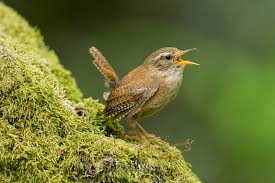
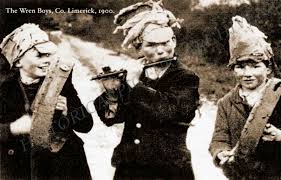
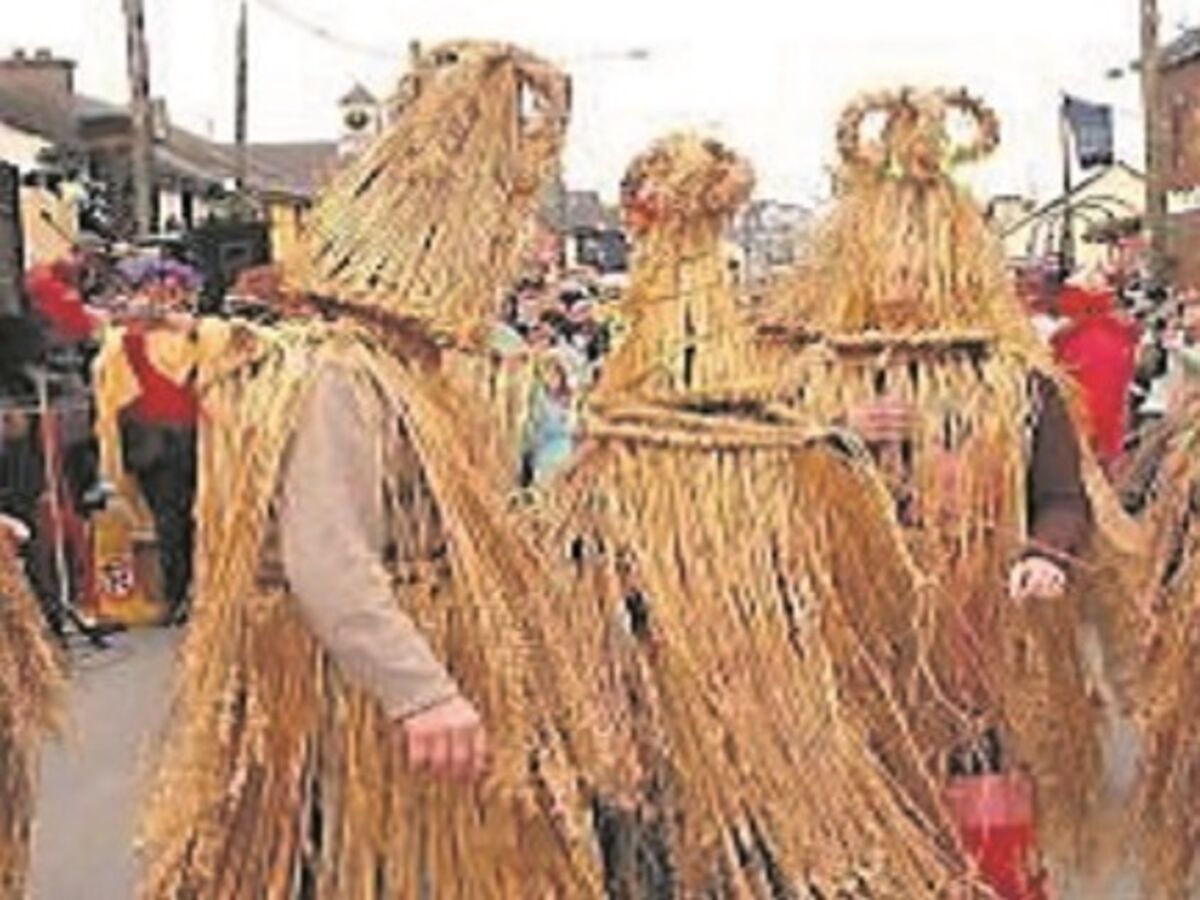
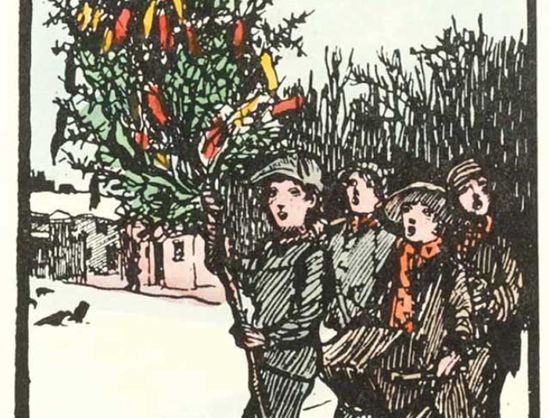


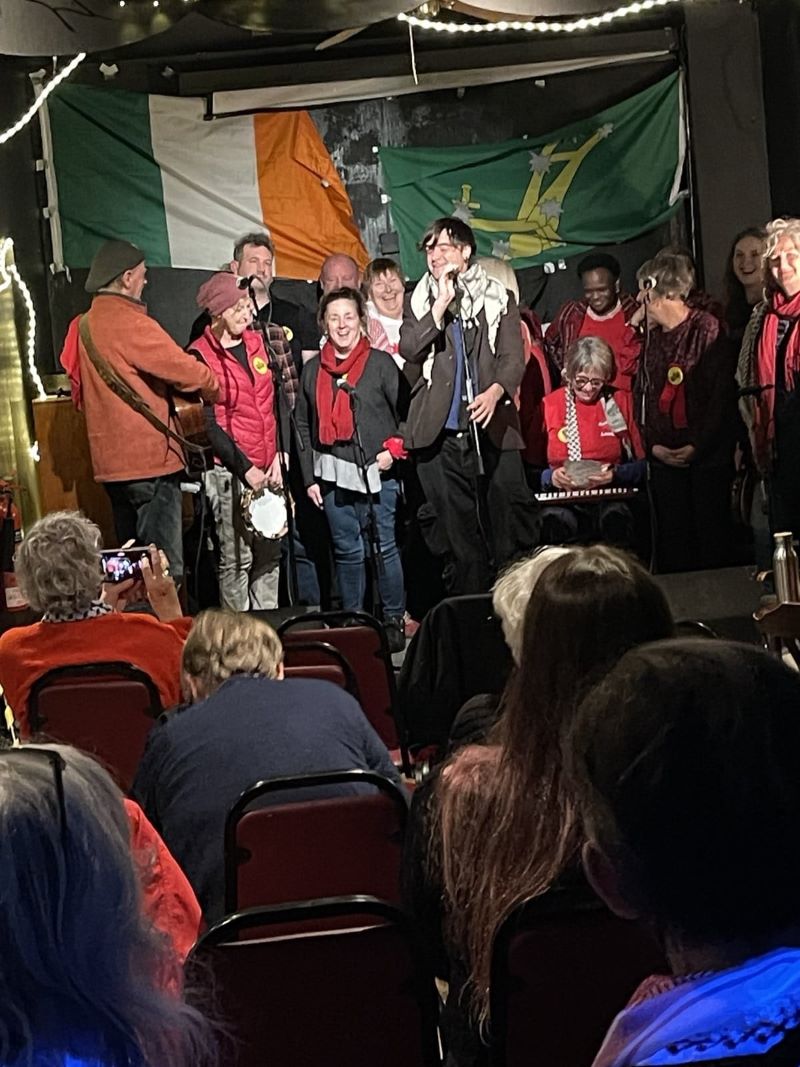


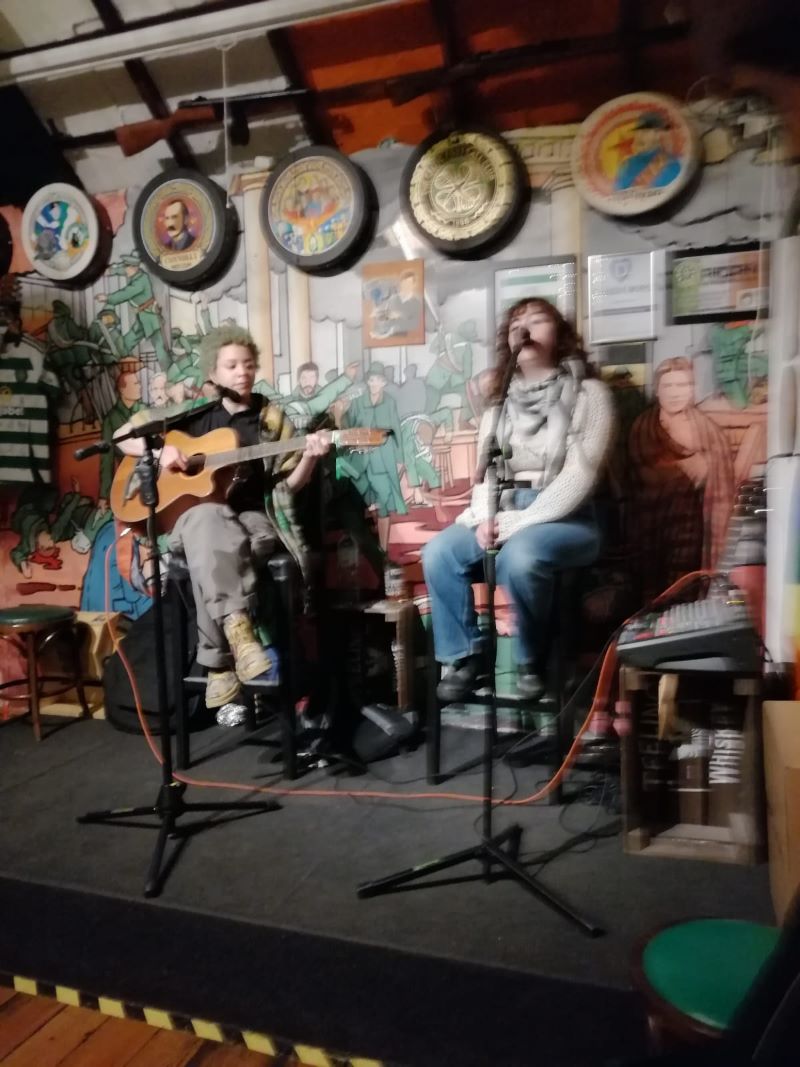
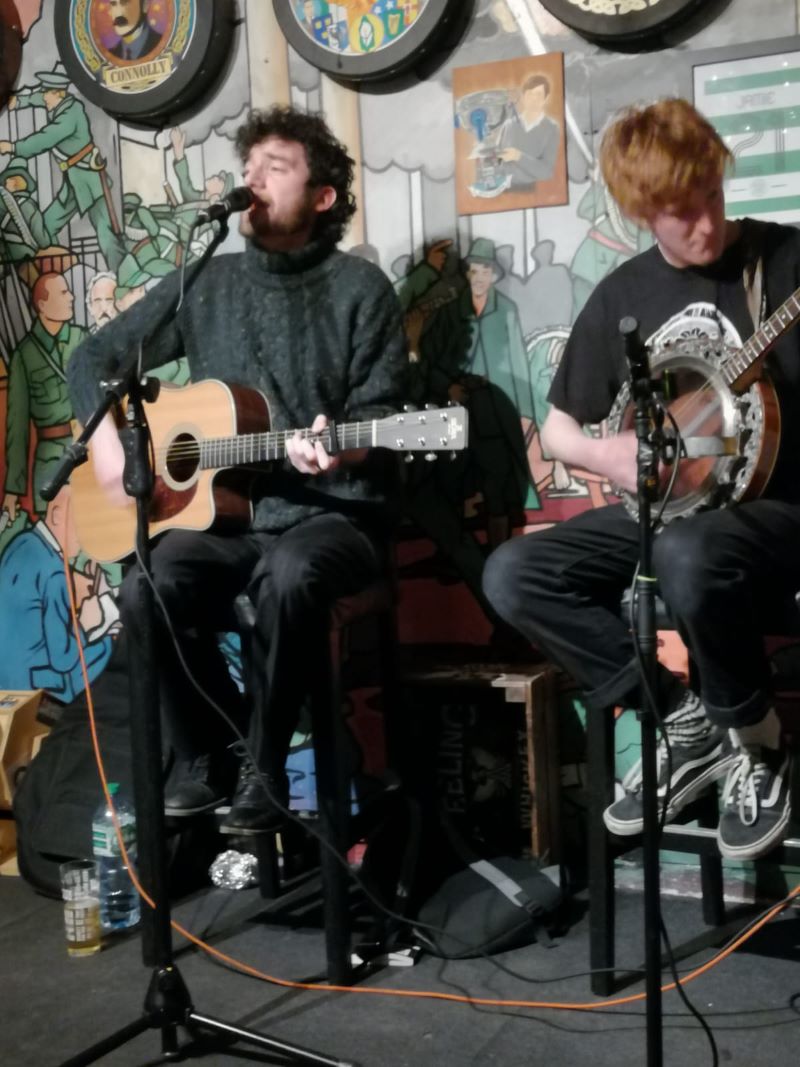


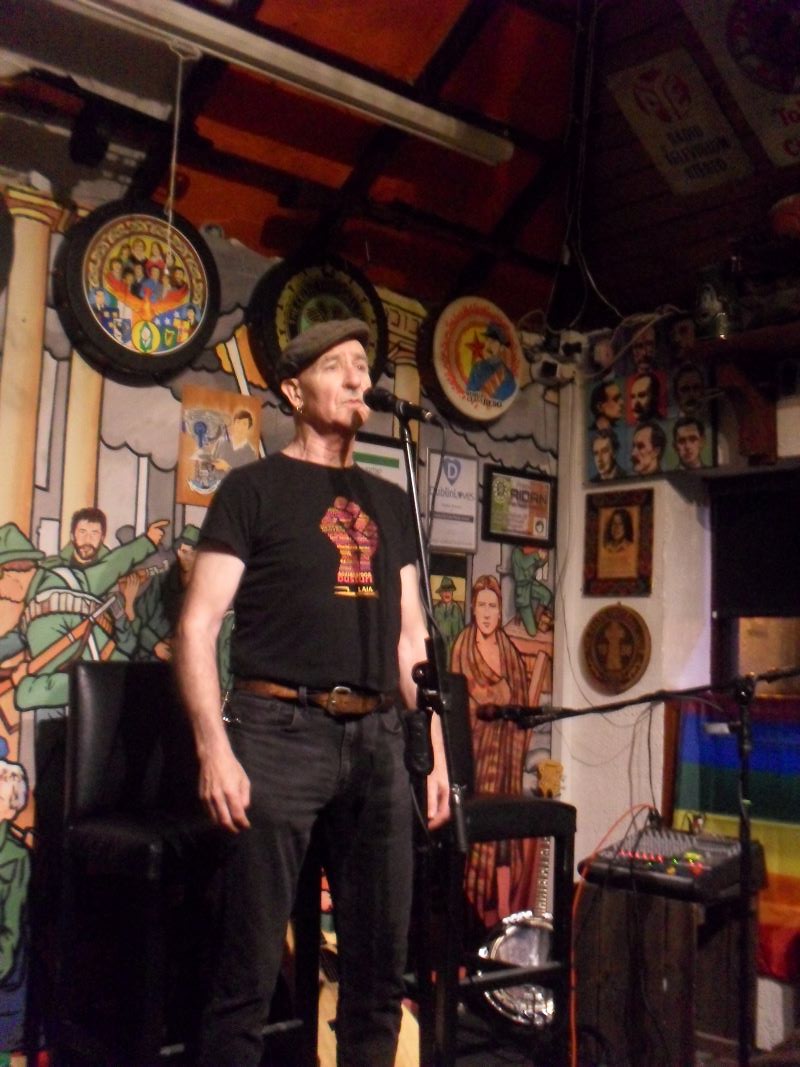
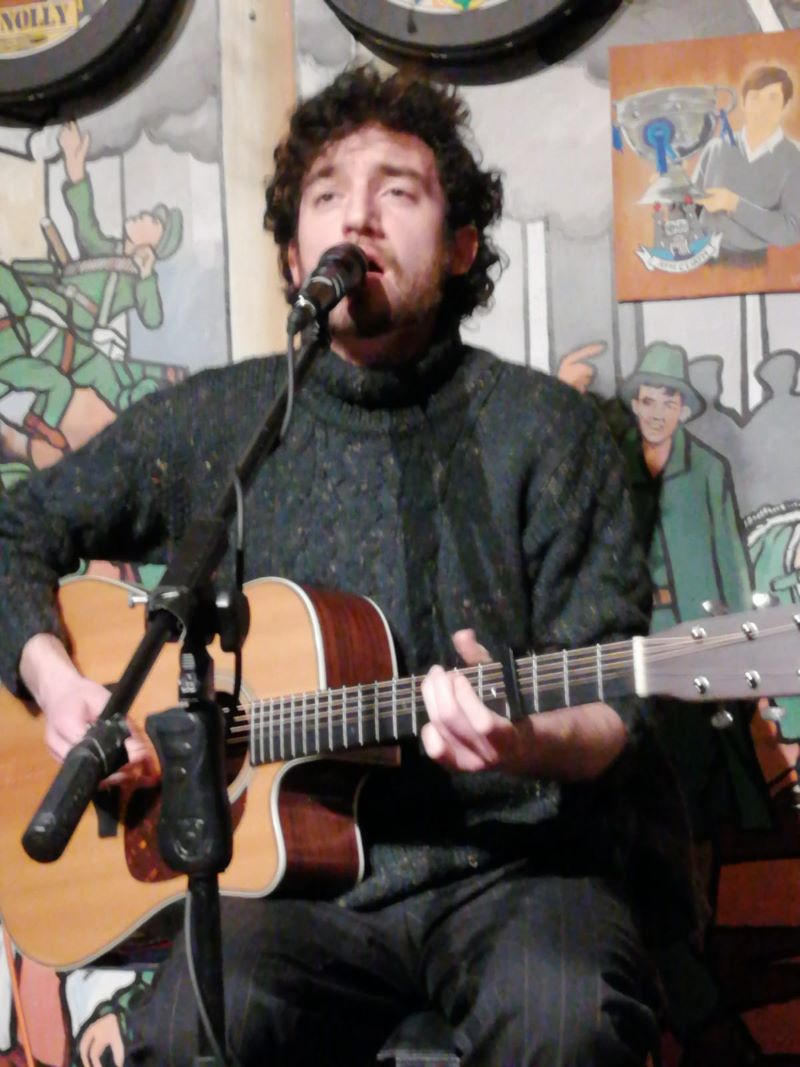
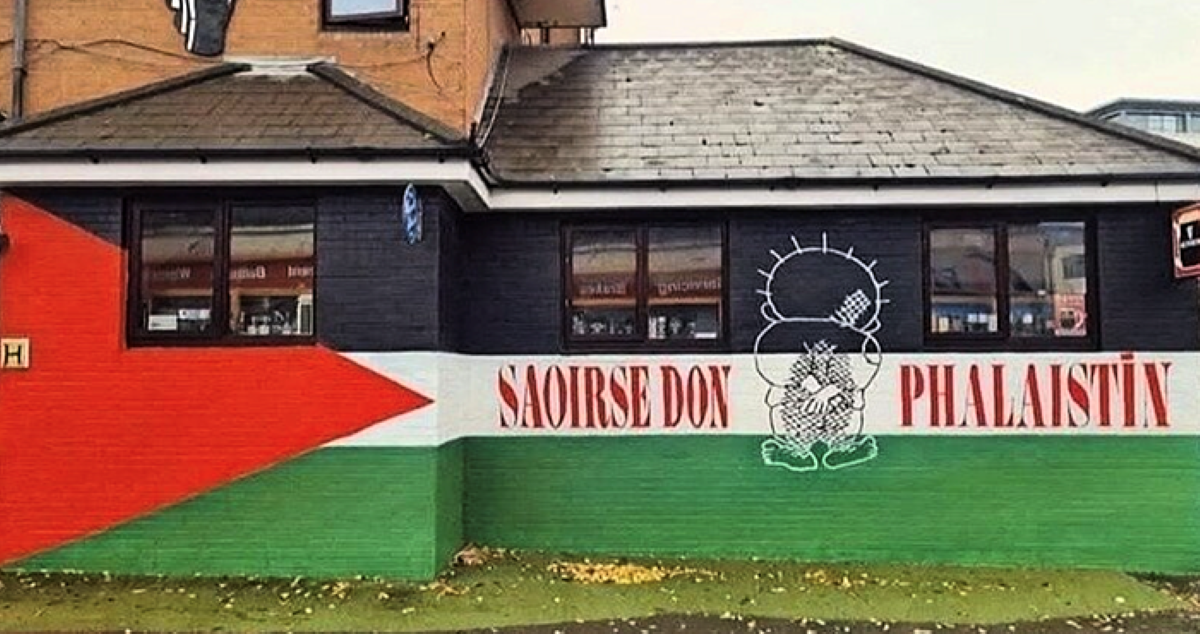


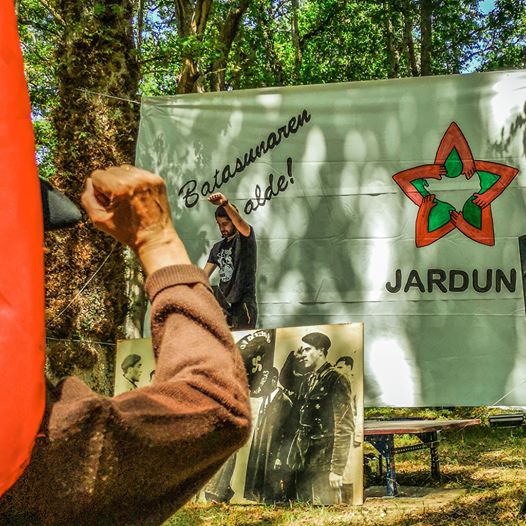
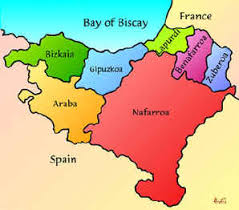


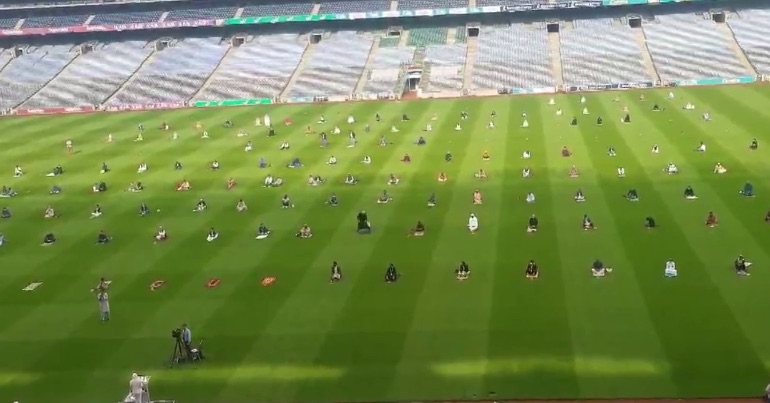


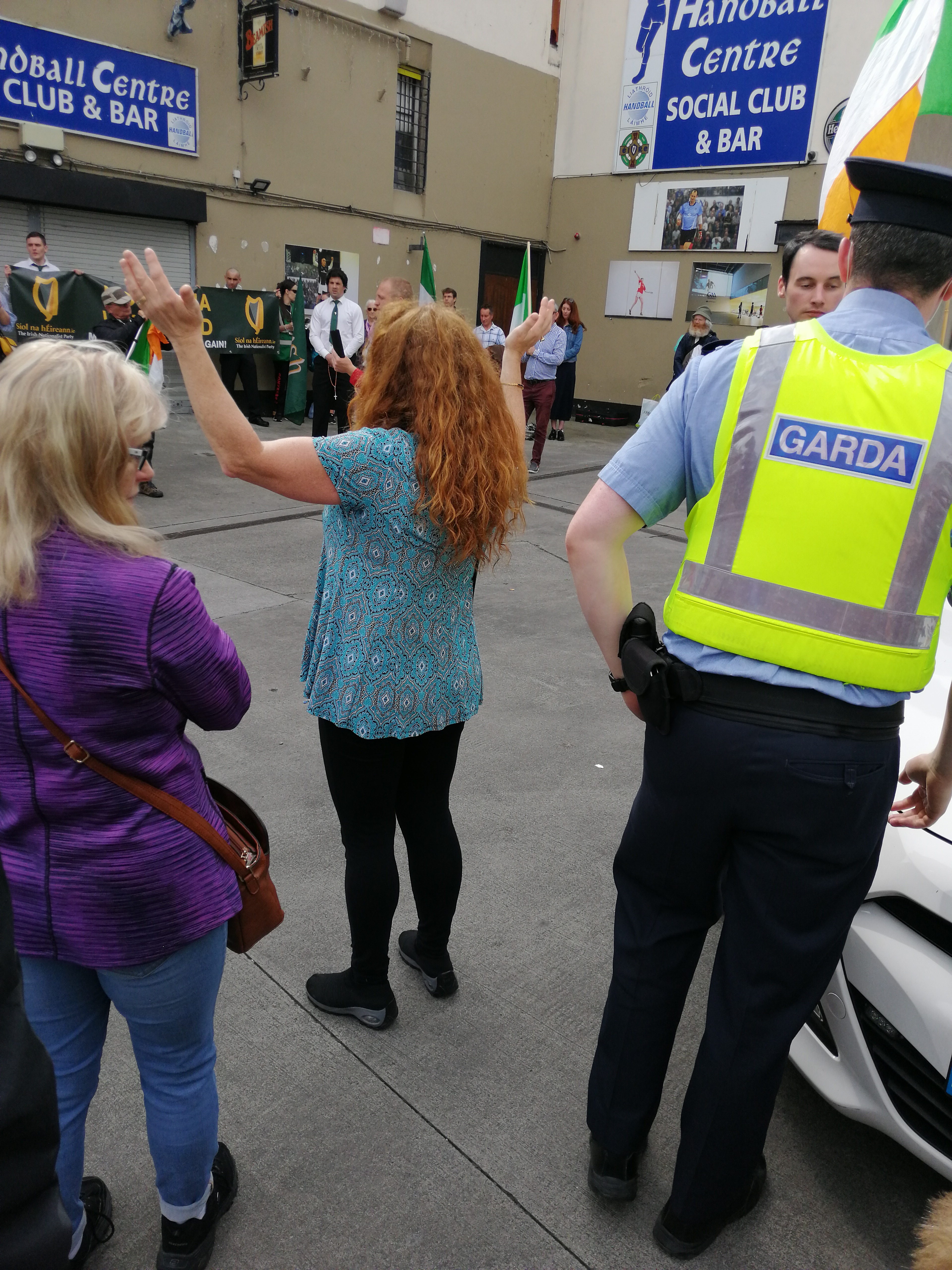

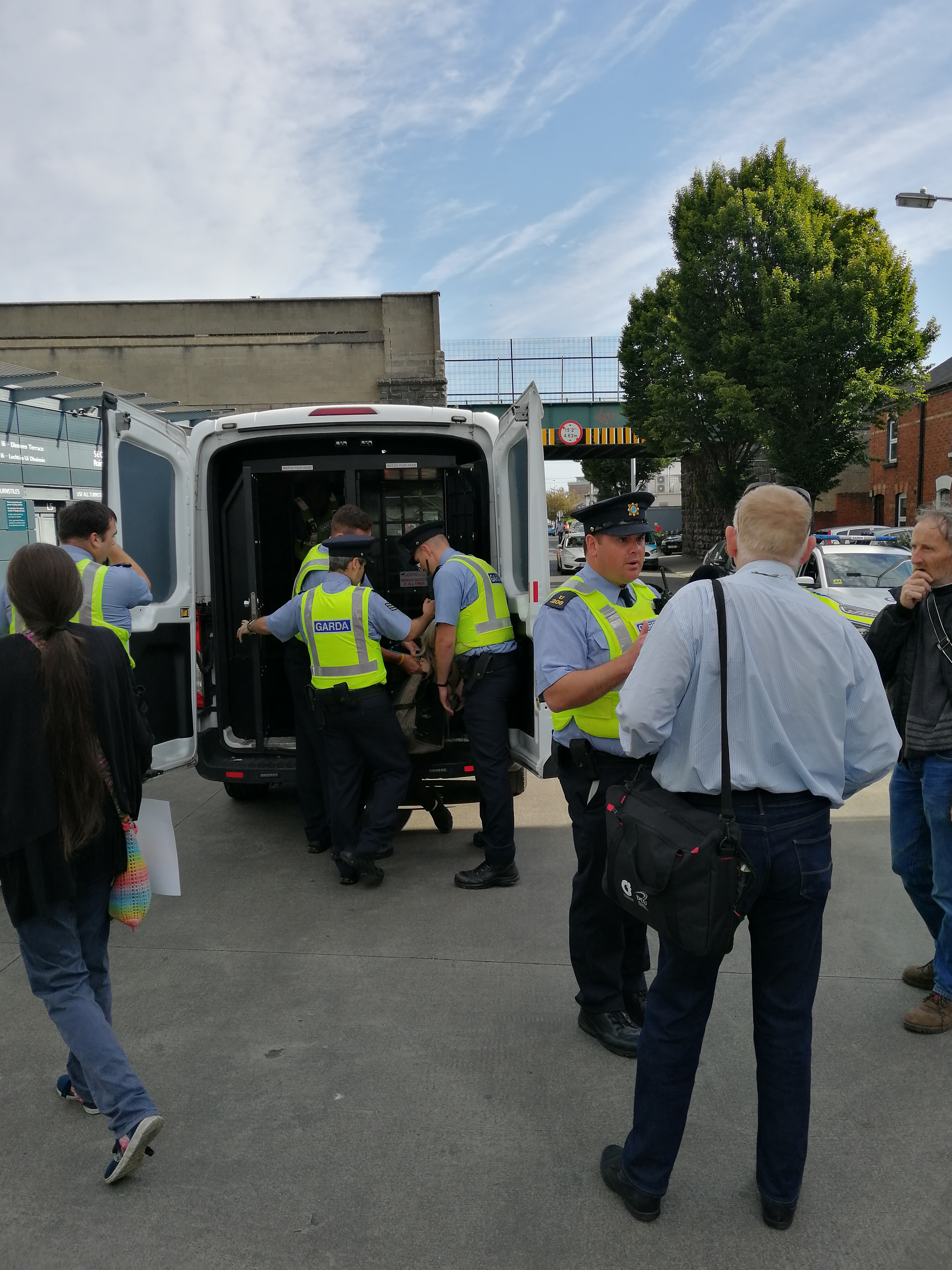


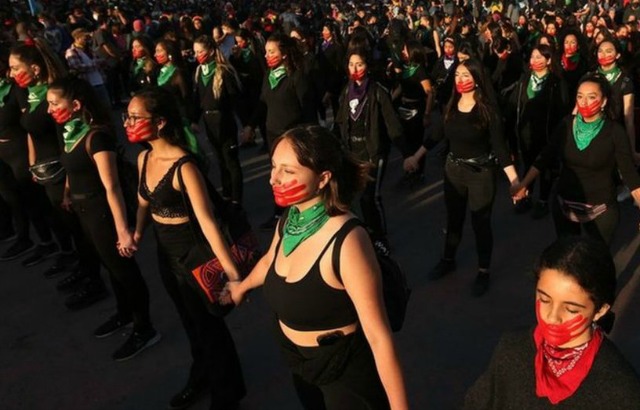


 rebelbreeze