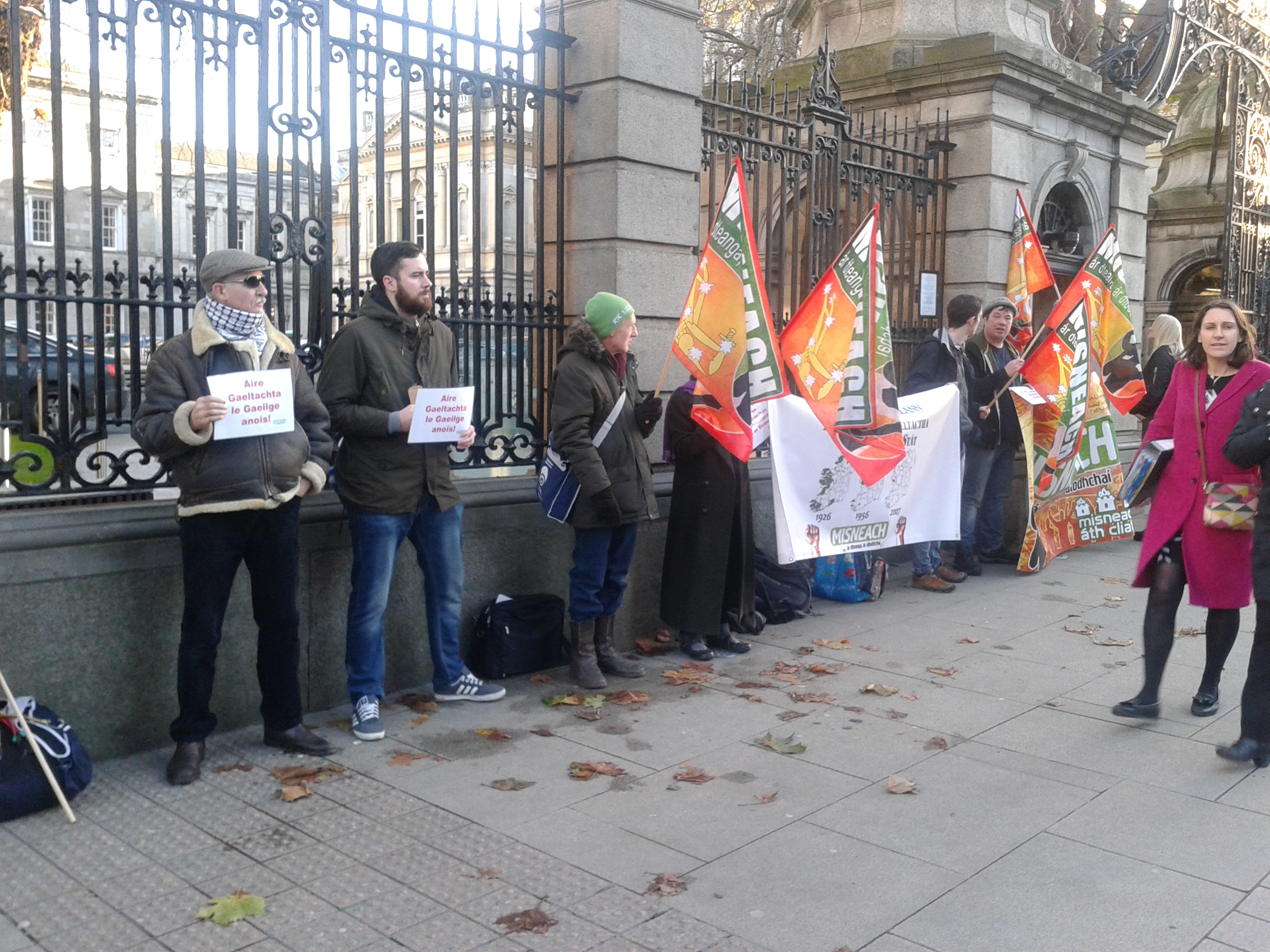
De réir ráiteas a d’eisigh craobh BÁC den dream Misneach inné (15/12/2016) d’éirigh go maith le hagóid Misneach ar son Cearta Teanga lasmuigh de Theach Laighean. Bhailigh daoine i rith am lóin chun seasamh i gcoinne cur i gcéill na hairí Humphreys agus Kyne. Bhí neart tacaíochta don agóid ó dhaoine a d’imigh thar bráid, cuid mhaith acu a d’iarr leithscéil nach raibh mórán Gaeilge acu féin agus cúpla daoine ó thíortha i gcéin ina measc.
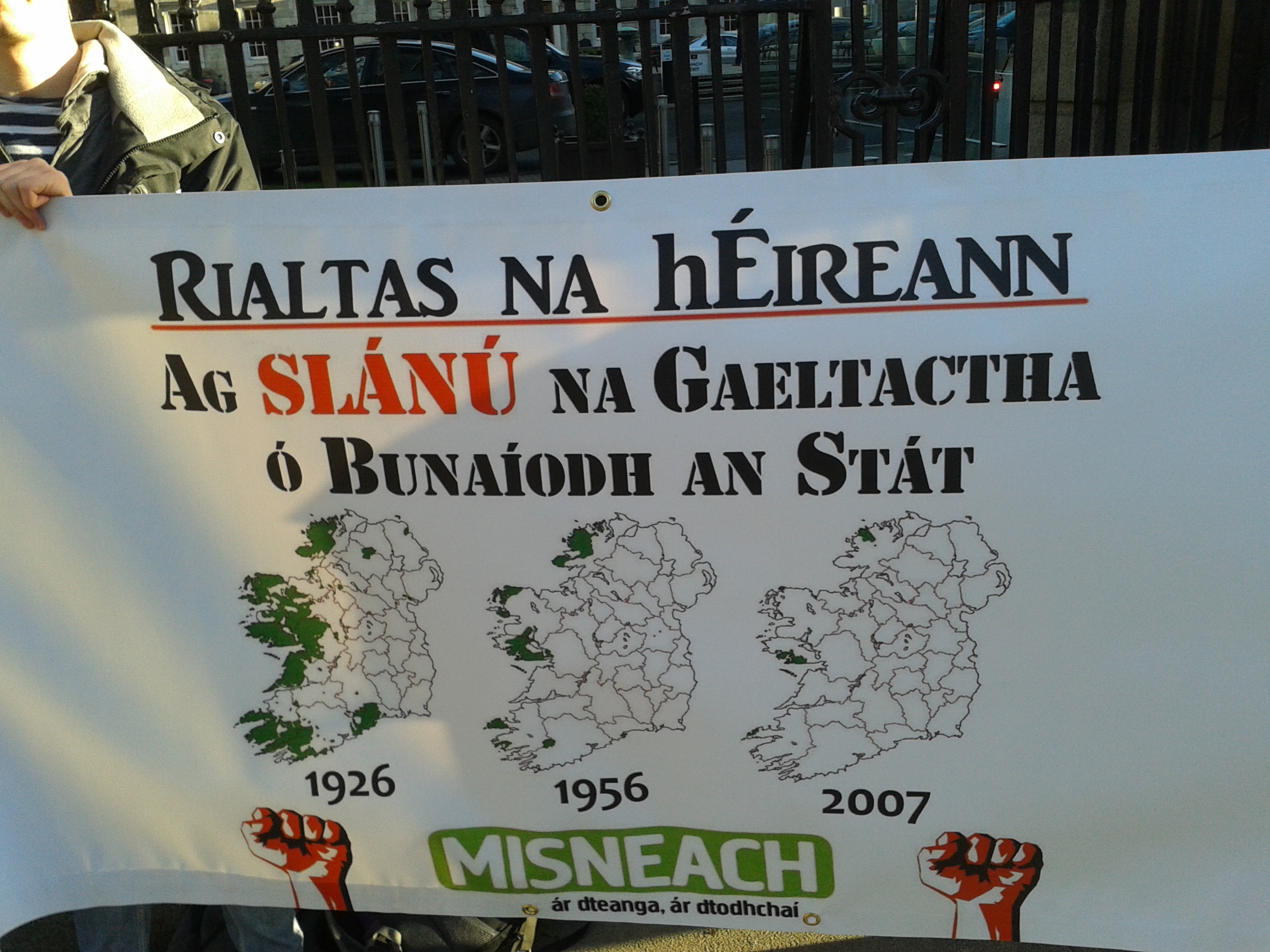
Map on Misneach banner illustrates the decline of areas where Irish is a living community language under the Irish state’s administration. (Photo D.Breatnach)
D’ardaigh urlabhraí Misneach, Kerron Ó Luain, ceist an buiséad a pléadh i measc an chomhchoiste inniu:
‘Gheall Sean Kyne go dtabharfaí 1,000,000 euro breise don Ghaeilge ar Adhmhaidin ar RnaG níos luaithe. Is ardú 1% atá i gceist le sin. Ach, is méid suarach é 1% nuair a smaoinítear go gearradh 75% de bhuiséad Údarás na Gaeltachta agus 35% ó bhuiséad Foras na Gaeilge ó 2008.
D’fhógair an tAire McHugh i rith 2015 go mbeadh 1,000,000 euro breise do bhuiséad caipitil na Gaeilge chomh maith. Tá sé soiléir gur cleas atá sna fógraí seo. Gearrtar na deicheannaí de mhilliún ó bhuiséad ach, ar an láimh eile, fógraítear “airgead breise” de mhéid an-bheag amhail is gur dul chun cinn é. Is cleas é leis an bpobal Gaeilge a cheannach agus faraor tá an cuma ar an scéal go n-oibríonn an chleasaíocht seo.’
Chríochnaigh Ó Luain:
‘Arís tá Misneach ag glaoch ar na ceanneagraíochtaí Gaeilge gníomhú agus Lá Mór eile a eagrú. Tá sé feicthe ón ngluaiseacht a d’fhás i gcoinne príobháidiú a dhéanamh ar ár n-uisce, gurb é an t-aon chineáil cumhacht a dtugann na polaiteoirí aird ar bith air ná cumhacht na sluaite amuigh ar na sráideannaí.
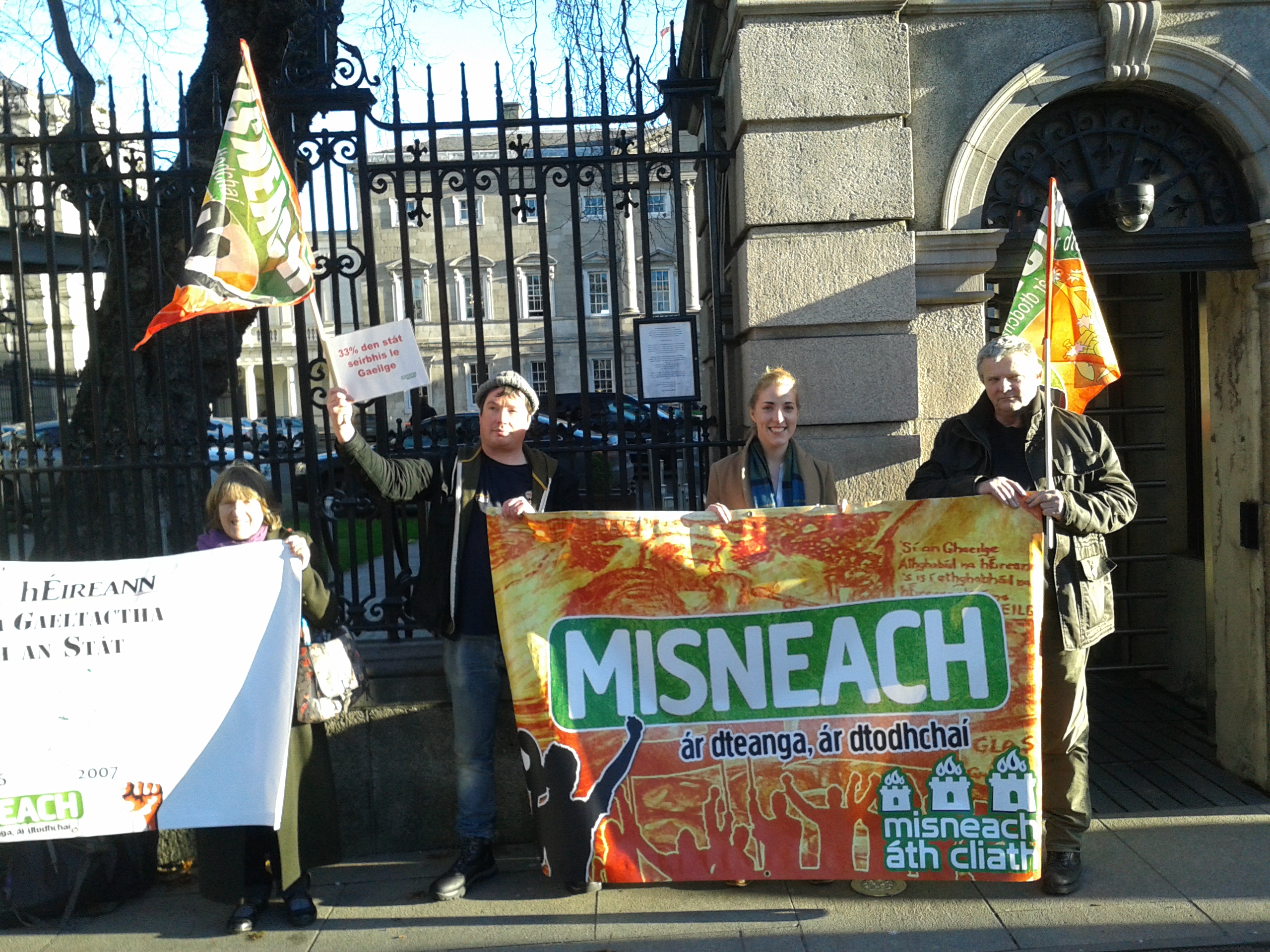
Section of protest demonstration outside the Dáil (Photo D.Breatnach)
Má leantar ar aghaidh mar atá agus an pobal Gaeilge ina dtost caithfear milliúin euro chugainn anseo is ansiúd i mbealach soiniciúil ach ní dhéanfar aon dul chun cinn i ndáiríre. Agus gan ach 10 mbliain fágthaí ag an nGaeilge mar theanga pobal laethúil sa Ghaeltacht tá gníomh raidiciúil de dhíth láithreach.’
———————————————————————-
According to a statement of the Dublin branch of the Misneach organisation yesterday (15/12/2106), a successful demonstration for Language Rights was held outside Leinster House. People gathered during lunchtime to highlight the hypocrisy of the government ministers charged with overseeing the language, Heather Humphreys and Sean Kyne. There was plenty of support from passers-by, including people who apologised for their own lack of Irish and a few people from abroad.
Spokesperson for Misneach, Kerron Ó Luain, alluded to the budget being discussed by the committee today:
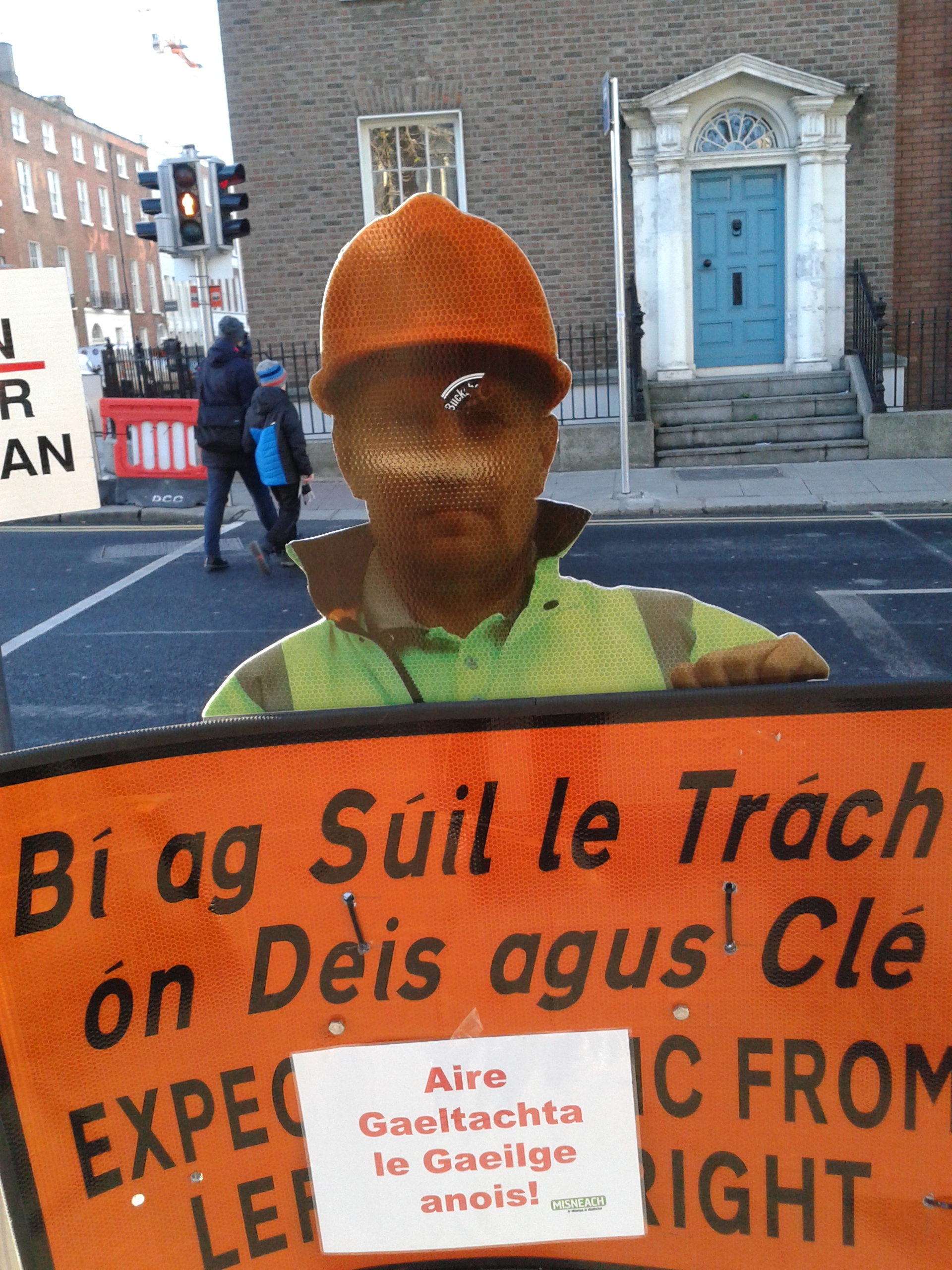
Tongue-in cheek use of road traffic sign (Photo D.Breatnach)
‘Sean Kyne apparently promised an additional million euro for the Irish language on RnaG’s Adhmhaidin programme this morning. That amounts to a 1% rise. Realistically, 1% is a pitiful amount when it is considered that 75% has been cut from the budget of Údarás na Gaeltachta agus 35% from that of Foras na Gaeilge since 2008.
Then Minister for the Gaeltacht, Joe McHugh, made a similar announcement in 2015 when he said that one million additional euros would go to the capital budget for the Irish language. It is patently obvious to all that this is a cynical ploy. Tens of millions are cut from the budget only for grand announcements of “additional funding” of pitiful amounts to be made afterwards as if this were progress. It is a ploy being adopted to buy off the Irish language community, and unfortunately it appears to be working.’
Ó Luain finished:
‘Misneach is once more calling on the chief Irish language organisations to mobilise towards another Lá Mór. It is evident from the movement which opposed the privatisation of our water that the only type of power politicians pay any heed to is the power of the people marching on the streets.
If the situation persists and the Irish language community remains silent, and accepting of token gestures of one million euro here and there, then no real progress will be made. With only 10 years left for Irish as a living community language in the Gaeltacht now is the time for radical action.’
(Photo D.Breatnach)Section of protest after some people had left (Photo D.Breatnach)
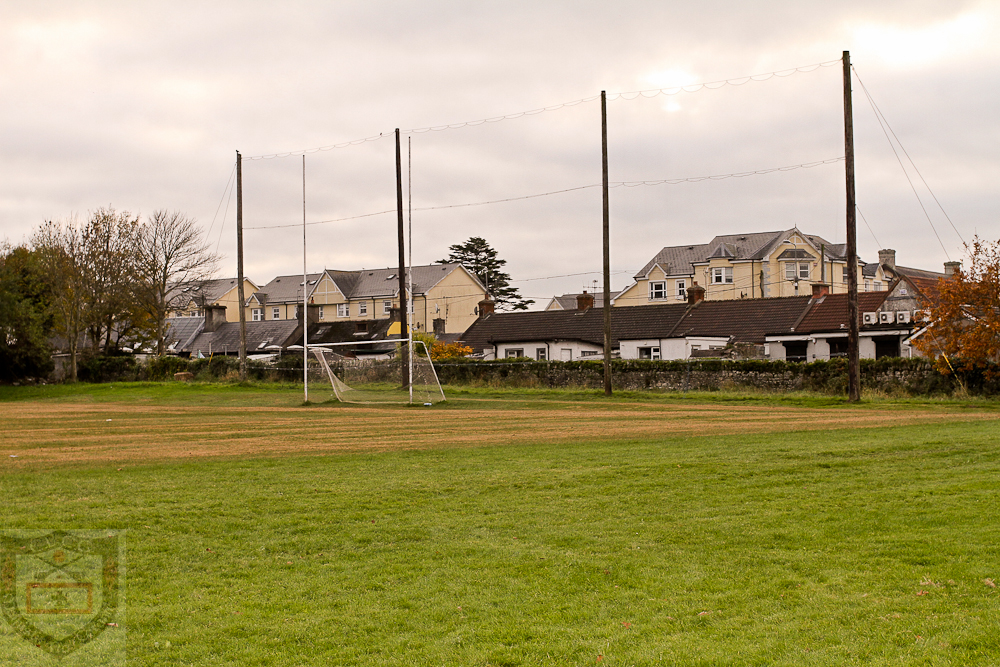
(Gaelic football team Sheares Brothers has been doing very well for a change. A reporter from the Irish Times is about to conclude his interview of the club’s Bainisteoir).
(Photo sourced: Internet)
Your club’s local nickname is “the Pats”, I’m told.
Yes, I’ve heard that too.
Is it true – what I’ve been told – that all your players, in your entire team, are called Patrick?
Well, now, many are named Patrick, right enough, but they are not all called Patrick.
[Reporter jots down in his notebook: ‘named not called – wtf???’] Does that not cause problems, though, on the field? I mean, it must be difficult at times for your players to know to which of them the Captain is referring when he shouts out: “Patrick”.
[The interviewer smiles. He has shown the ridiculousness of this situation]. (Fucking unbelievable that this team got as far as its current position in theLeague! he thinks)
No, not all. Sure if the Captain called out “Patrick”, he’d be referring to himself! That would be a strange thing to do, for sure, to be talking to himself! Well, when with the team, anyway.
(This man is an idiot. An idiot managing a ridiculous team. Still, get the interview done, file the story. Then the pub ….) Ok …. what if he wants to say, to indicate to a player, to pass the ball to the left midfielder? Would he just call the position – as in “Pass the ball to Left Midfield”?
Well, he might …. but he’d more likely say “Give Paudie the ball”. That’s Paudie’s usual position, you see.
Oh, right.
No, left.
(What a thicko!) I meant “ok”. Your left Midfielder’s nickname is “Paudie”?
Well, it’s the name he goes by anyhow. Paudie Whelan.
So are all your players called a variation on Patrick?
Pretty much, yes.
Fifteen variations on Patrick? And no repetitions? That’s not possible, is it?
It seems to be.
OK, all right …. what about say, your Centre Forward?
Pa. Pa Walsh.
Hmm. Left Forward?
Packy Ó Braonáin.
Right Forward?
Emm …
(Got you now!)
Sorry, he’s just back from an injury. Patchy …. Patchy Stokes.
Left Half-Forward?
Patchik Mulhearn.
Centre Half-Forward?
Paddy plays that position – Paddy McGuinness.
Right Half-Forward?
Patch Hennessy.
(Has to run out of them soon). Left Mid-Field?
You had his name already – Paudie Whelan.
(Smartass!) Yes, of course. Right Mid-Field?
That’d be Pád Óg Trainor.
That’s P, a, u, d ……
No. P, á, d; Ó, g.
Right.
Right Half-Back?
No, I meant just “Right” , as in “OK’.
Right.
(Is he taking the piss?) Well ….. where was I?
Midfield.
Yes …. thanks …. Right Half-Back?
I thought you said ….? Never mind …Paudeen Sullivan.
Centre Half-Back?
Pád …. Pád Carney.
P, a, u ….
No, P, á, d; C, a, r ….
I know how to spell Carney, thanks.
Oh, ok.
Left Half-Back?
That’s Patrick … our Captain. Patrick Burke.
Left Corner-Back?
Ah ….
(Have I got him?)
Ah, sorry ….
(Aha! At last!)
Pat Sheehan. His name slipped me mind there for a minute, sorry.
Oh …. Ah. Good. Full Back?
Páraic Ó Flaithearta. Will I spell it for you?
(Fucking smart-ass! I’ll get it from their website. Just let me run him out of Patrick variants first.) No, it’s ok, I know my koopla fokol, gurra mah hugut.
Muise, tá fáilte romhat. Bail ó Dhia ort.
Well …. let’s carry on. Right Corner-Back?
Pádraig. Pádraig Lehane.
(Got you now!) Pádraig. The same as the man next to him, the Full Back.
No, that’s Páraic. P, á, r, a, i, c.
Oh! Ok, yes, I see. My mistake. Goalie?
Patsy O’Farrell.
Yes. Well, thanks. Yes …. I don’t suppose your substitutes are called Patrick?
No, neither is.
Oh, good.
Sorry?
Good … good story, thanks. I must be going ….
Don’t you want to know their names?
The subs?
Yes.
OK, yes I suppose. Yes, please.
PJ Hanley and Packer Dunne.
I …. see …. ‘PJ’ as in ….. Patrick Joseph?
Dead on!
Um … Well …. Thanks for your time. All the best for your next game in the League. I don’t suppose, heh, heh, your Junior team are all variants of Patrick too?
Ah, not at all! Of course not. Sure, that would be awful confusing. No, there’s Michael Fitzgerald, Mick Smith, Mickey Doyle, Mícheál Connors, Micilín Seoighe, Mikhail ….
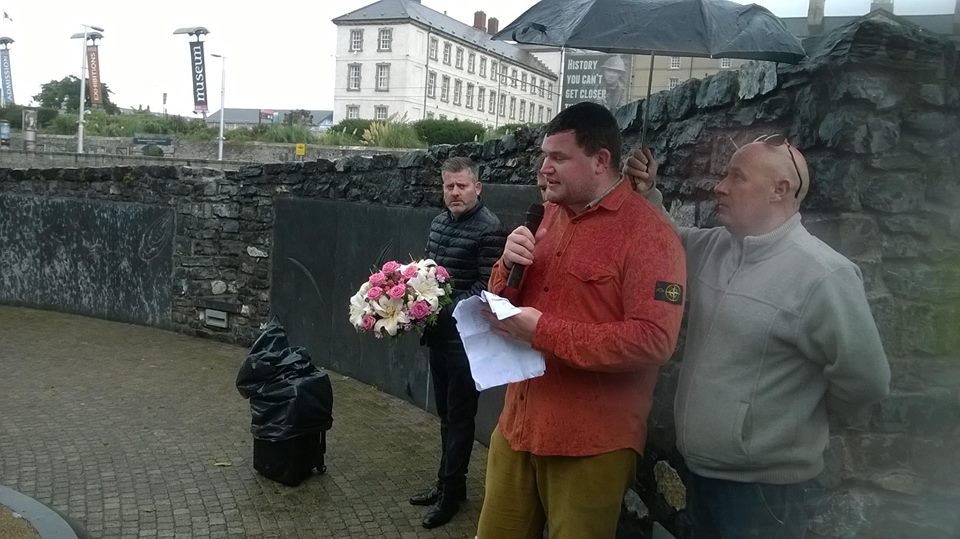
As Mayo began to prepare for a replay of the 2016 championship Gaelic Football final against Dublin, I stood with others on a very wet day in Dublin’s Croppies’ Acre to commemorate and honour Robert Emmet and the United Irishmen – an event replete with Mayo connections.
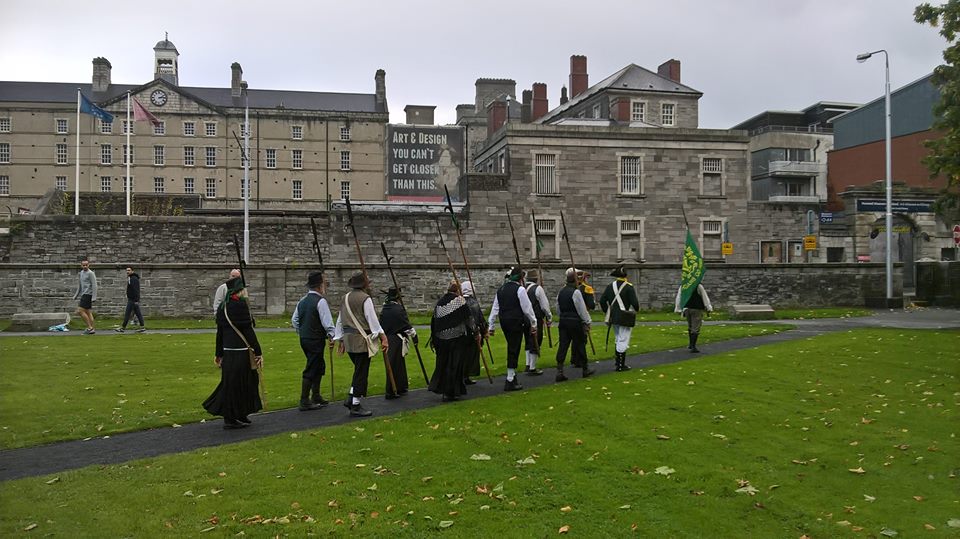
Eniscorthy Historical Reenactment Society inside the monument during the ceremony. (Photo: Paddy Reilly)
The event, organised by the Asgard Howth 1916 Society, was graced by the presence of the Enniscorthy Historical Reenactment Society, men and women in 1798 costume bearing pikes, including officer uniforms – they had travelled up from Wexford that morning to attend the event. Donal Fallon, historian, blogger, tour guide and broadcaster was to give the oration. Padraig Drummond, the organising persona, had asked me to sing two songs at the event, one near the start and the other near the end.
For the first song, I had chosen the Bold Robert Emmet ballad1 (originally known as The Last Moments of Robert Emmet2), a song that commonly sung more often a few decades ago but still reasonably well remembered. For the second, I was spoiled for choice of relevant songs: Anne Devlin, Boolavogue, The Croppy Boy, Henry Joy, The Irish Soldier Laddie. Kelly the Boy from Killane, The Rising of the Moon, Rodaí Mac Corlaí, Sliabh na mBan, the Three Flowers, The West’s Awake, The Wind That Shakes the Barley …… or I could finish learning some of which I knew bits, like the Sean Bhean Bhocht, General Munroe, Memory of the Dead (Who Fears to Speak of ’98?) or the Mayo version of An Spailpín Fánach.
Drawing depicting the trial of Robert Emmet in Green Street Courthouse, Dublin. (Photo source: Internet)
Though a beautiful song in lyrics and air, I felt Sliabh na mBan was too long for the event and cutting it would also feel wrong. Anne Devlin remembers an extremely brave comrade of the United Irishmen and gives rare acknowledgement to the role of women in the struggle for Irish freedom, which had me veering towards that choice. However, I eventually settled on Men of the West, celebrating the 1798 uprising in Mayo when a small French force under General Humbert landed to support them.
Diarmuid Breatnach singing “Men of the West/ Fir an Iarthair”. (Photo: Paddy Reilly)
MEN OF THE WEST
The Mayo connection in the forthcoming GAA final was one reason for the choice, another was that this time of year is that which witnessed the repression in Mayo after the defeat of the last rising of that year (and the last forever, the British and their Orange supporters may have thought, until Emmet came out five years later). And other reasons were that I could sing it as a macaronic song (with some of the verses in Irish and some in English), the song was not too long and it has a chorus in which participants could join.
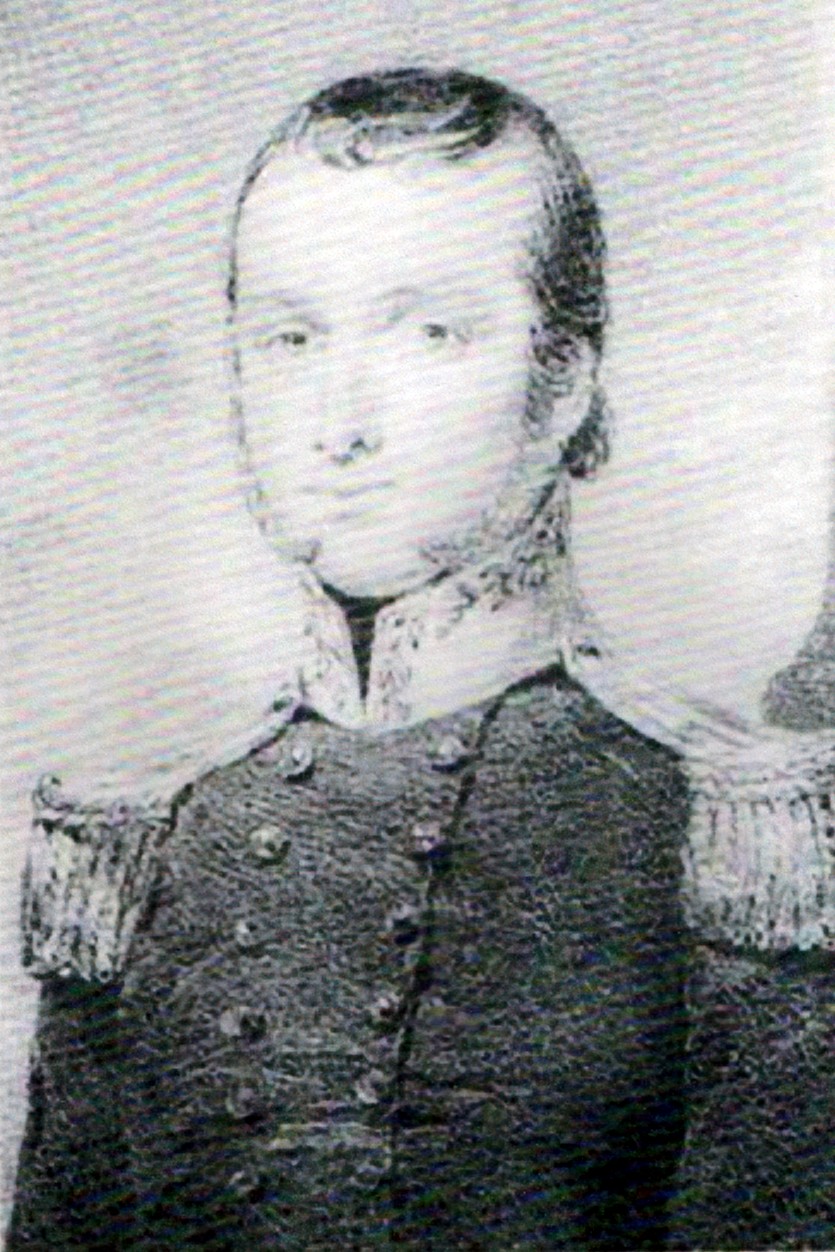
Bartholomew Teeling, with the French who landed at Mayo, captured when they surrendered at Baile na Muc. Hung in Dublin and his body thrown into the “Croppy Hole”. (Photo source: Internet)
There were yet other reasons for the choice too – not in our culture of song and game, nor in the calendar, but in the ground under our feet, for somewhere under there in what was first called “The Croppies’ Hole” and later “Croppies’ Acre”, the mass grave of many United Irish, lie the bodies of the executed Matthew Tone — younger brother of Theobald Wolfe Tone (who was soon after to give his own life to the Rising) – and Bartholomew Teeling. The younger Tone and Teeling had landed with the French in Mayo, been taken prisoner after the surrender of the French at Baile na Muc, in Co.Longford, brought to Dublin and, despite their French Republican Army officer rank, tried as rebels and hung there.
And in researching background for this article, I came across even further Mayo connections.
The lyrics of Men of the West were written by William Rooney and put to the air of an Irish song called Eoghan Chóir written in turn — and also air apparently composed — by a Mayo United Irishman and songwriter, Riocard Bairéad (Richard Barrett3), who composed the even better-known Preab San Ól4.
The lyrics of Men of the West were later translated into Irish by Conchúr Mag Uidhir, who won a prize for that work at a Feis Ceoil in 1903 – again in Mayo. It was the lyrics of both these versions that I combined to make the macaronic version I chose to sing at the commemoration at Croppies’ Acre5.
THE DUBLIN SONGWRITER — BACKGROUND
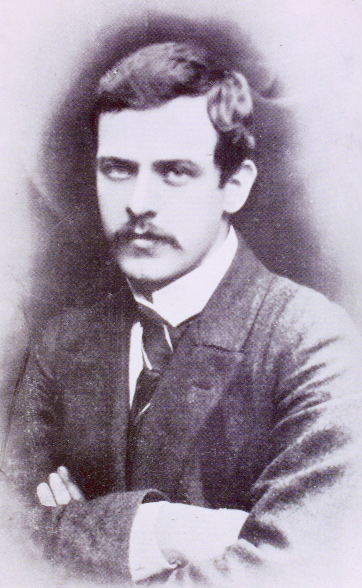
While I need to do some research to find out more about this Mag Uidhir, quite a lot is known about William Rooney (Liam Ó Maolruanaigh). Born in the Dublin former red-light district known as “The Monto”6 in 1873, Rooney grew up in a what had been considered the second city of the British Empire but had declined in status with the abolition of the Irish (colonial) Parliament in 1800. The city contained the residence of the Crown’s representative in Ireland, a number of British army barracks and the administration apparatus of the colony, the latter in Dublin Castle. Dublin also contained a substantial loyalist population of the Ascendancy, in addition to “Castle Catholics”7. However, Dublin was also a focal point in Irish nationalist and separatist politics. Relatives and descendants of members and sympathisers of the United Irishmen of 1798 and 1803 lived in the city and the events were in the living memories of some.
William Rooney, journalist, organiser, Irish language revivalist and author of songs. (Photo source: Internet)
Irish Republicanism had seen a resurgence with the Young Irelanders of 1848 and some of their supporters were easily alive when William Rooney was born in 1873 and during his childhood. The founding of the Irish Republican Brotherhood in 1858 preceded Rooney’s birth by only 15 years and although the raid on the The Irish People newspaper took place in 1865, followed by the trial and conviction to penal servitude of Ó Donnobháin Rosa, Thomas Clarke Luby and John O’Leary, they would have been still talked about during Rooney’s childhood.
The following year, 1866 saw the failed rising of the Fenians in Ireland and also their shock invasion of Canada and, in 1867, the stirring freeing of the American Fenian prisoners in Manchester and the subsequent hanging of the three martyrs, Allen, Larkin and O’Brien. The spectacular rescue of escaping Fenian prisoners from Australia by the Catalpa and their celebrated delivery to the freedom in the United States took place in 1876.
Although these events were all over (or just occurring, in the case of the Catalpa) by the date of Rooney’s birth, their echoes remained – in living memory, in the cause of prisoners serving sentences in English jails or penal colonies and in agitation for a political prisoners’ amnesty. And God Save Ireland8, written to commemorate the Manchester Martyrs in 1866 by Timothy Daniel Sullivan would have been an extremely popular song among a wide section of the Dublin population during Rooney’s childhood, along with patriotic verses and songs by Thomas Moore (1779-1852), Thomas Davis (1814-1845) and James Clarence Mangan (1803-1849). Verse and songs by these poets were learned by ear and recited or sung but were also available in printed form, in songbooks, song sheets and nationalist publications.
Sullivan was a journalist, owning and editing the publications The Nation, Dublin Weekly News and Young Ireland. As a journalist, Sullivan published reports of meetings of the banned National League in December 1887, for which he was convicted and imprisoned for two months by the British administration. William Rooney was in his late teens at that time and Sullivan lived until 1914.
At the age of around thirteen William Rooney became acquainted with a leading Irish nationalist of his times, Arthur Griffith, through Rooney’s membership of The Irish Fireside Club, a literary discussion group. Both of them joined the Leinster Debating Society (which later became the Leinster Literary Society) which they soon led, Griffith as presidents and Rooney as Secretary. The early 1890s controversy surrounding Parnell’s relationship with Catherine O’Shea caused a serious disruption in the nationalist movement of the time and caused a serious split in the Irish Parliamentary Party of which the Leinster Literary Society became a casualty.
Rooney then formed the Celtic Literary Society in 1893, of which he became president; he also edited An Seanachuidhe (old spelling of “Seanchaí”, a story-teller, a relater of things past), the Society’s journal. The Society’s aims were the study of the Irish language, history, literature and music; it had branches in different parts of the country and its members included John O’Leary, Frank Hugh O’Donnell and Arthur Griffith.
AN GHAEILGE
William Rooney was fluent enough in the Irish language to write and to give orations in it and journalists of his times, after summarising a speech in English from the same platform, generally wrote only that he had spoken in Irish9. When he learned his Irish is not clear but he was teaching it in the offices of the Celtic Society. Then Eoin MacNeill got him to join the Gaelic League/ Connradh na Gaeilge after it was formed in 1893.
The Connradh was mainly concerned with promoting the Irish language and literature but also became a social focus in later years, hosting céilidhe (dances and occasion for songs, recitations). Patrick Pearse advocated a more political approach to promoting Irish culture and this accorded with Rooney’s opinion. On the other hand Rooney regarded Irish independence without the revival of the language and culture as meaningless and he castigated the Irish Parliamentary Party for its inaction on the Irish language.
Rooney gave an alternative example, traveling the country speaking publicly in Irish and in English on the need for Irish independence and for the revival of the Irish language.
JOURNALISM AND POLITICAL ORGANISATION
Building on his earlier writing in An Seanachuidhe, Rooney founded with Griffith The United Irishman newspaper in 1899 and his articles and other writings were published in a number of publications of his times:United Ireland, The Shamrock, Weekly Freeman, The Evening Herald, Shan Van Vocht and Northern Patriot (the latter two in Belfast).
Near the end of 1900, again in conjunction with Griffith, William Rooney helped found Cumann na nGaedheal. The former Fenian John O’Leary was president and the Cumann was intended as an umbrella organisation to co-ordinate the activities of a number of nationalist groups (it was merged with others in 1907 to form the original Sinn Féin).
As the centenary of the 1798 Uprising approached, there was something of a fever of preparation with many indicating an interest in participation. Rooney would see his 25th birthday during centenary year and becameof the most prominent organisers for the National Commemoration committee, if not, indeed, the main one.
The year 1898, somewhat similarly to the current centenary of the the 1916 Rising, saw commemorative plaques and monuments being erected, along with talks, meetings, lectures, articles and songs being written. According to historian Ruan O’Donnell, a feeling that the 1889 events had not reached an appropriate level led in 1903 to substantial commemorative events of Emmet’s rising in 1803. Many political working relationships were made during those years which were to survive into much more active days less than two decades since. Many of the songs we have today about the 1798 Rising were written during this period too and Rooney’s Men of the West was presumably also.
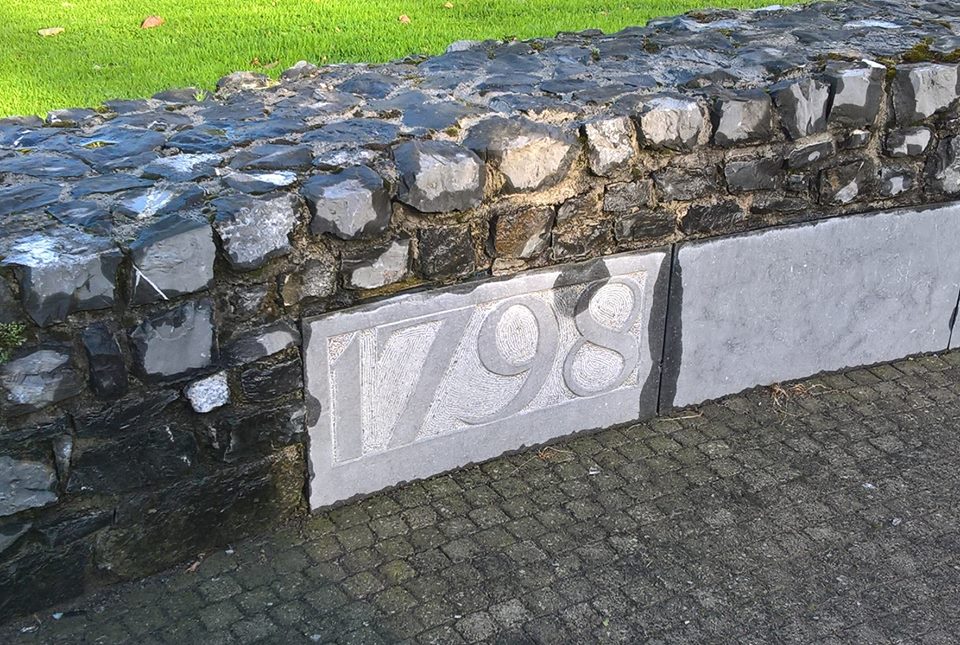
In the year of the 1798 centenary commemoration, one of the main centenary commemorations was held in Croppies’ Acre, attended by a reported 100,00010.Rooney was one of the main organisers and a stone was laid on the site which is there to this day.
Stone laid (or unveilled) during commemoration event in Croppies’ Acre in 1898, the first centenary of the Rising. The stone is on the ground near the north-west gate and corner of the park. (Photo: Paddy Reilly)
WILLIAM ROONEY IN MAYO
(The following text is taken from an article by Brian Hoban in the on-line edition of the Castlebar News for 22, Apr 2011)
William Rooney had visited Castlebar with Maud Gonne in 1898 for the centenary celebrations of ‘The Year of the French’. He gave a passionate speech in Irish in which he exhorted people to think for themselves, to educate themselves, and not to take their teachings from others.
He founded Castlebar’s first Public Library at the Town Hall, to which he dedicated his books. Three years later, at the early age of twenty-eight, William Rooney was dead, but the esteem in which he was held in Castlebar continued to grow. In 1911, a new Hurling Club in the town was named the ‘William Rooney’ in his honour. The following year “The Rooney Hall” was opened in Tucker Street. It became a local landmark for several generations, much used by various civic and voluntary organisations, including the PTAA.
The one surviving connection is in ‘Poems and Ballads’, a collection of Rooney’s poetry edited by Arthur Griffith and published in 1902, a year after his death. An original of this title is held by Mayo County Library where it can be consulted.
1798 Centennial Celebrations
William Rooney was one of the main protagonists in establishing the National Commemoration to celebrate the centennial of the 1798 rebellion. Only one month after its inception nationalists in Mayo formed the “Castlebar Central and Barony of Carra ’98 Centenary Association with James Daly appointed as president of the Connaught ’98 Centenary Council. On the 9th January 1898 a commemoration, which was presided over by James Daly, was held at Frenchill, near Castlebar. This was attended by Maud Gonne Mac Bride and addressed by James Rooney. ……………….
James Daly pointed out that the event was both about remembering dead patriots and undertaking “to abide by the principles of the men of ’98 until their country was free again and took its place among the nations of the earth.”
EARLY DEATH AND MEMORY
William Rooney died of TB in 1901 at the age of 27, shortly before he was due to marry. He is buried in Glasnevin Cemetery.
In 1902 the United Irishman published a collection of his writings and in 1908 a collection of his work edited by Griffith, Poems and Ballads of William Rooney, was published. The publication was reviewed disparagingly in the Daily Express that year by James Joyce but Yeats dedicated the 1908 edition of Cathleen Ni Houlihan “To the Memory of William Rooney”.A collection of his lectures and articles, from the United Irishman was published by M.H. Gill the following year.
Griffith described William Rooney as “the Thomas Davis of the new movement”. Brian Ó hUigín (“Brian na Banban” 1882–1963), editor for many years of The Wolfe Tonne Annual and himself no slouch as a writer of songs and verse, said of Rooney that “he blazed the trail to 1916 and gave his life for Ireland”.
And many of William Rooney’s songs are still being sung.
End.
Wreath being laid by Pól Ó Scannaill inside the monument on behalf of a number of groups. Padraig Drummond of Asgard 1916 Society MC of event. (Photo: Paddy Reilly)
APPENDIX
THE MACARONIC VERSION OF MEN OF THE WEST/ FIR AN IARTHAIR
(Arranged by D.Breatnach)
1.
Má mholtar le dán is le h-amhrán,
Na fir a bhi tréan agus fíor,
Donal Fallon, historian, blogger, tour guide and broadcaster who gave the main oration
‘Chuir clú agus cáil lena ndánacht
Ar shruthán ‘s gleann agus sliabh:
One of the panels inside the circular monument. (Photo: Paddy Reilly)
Ná fágaidh ar deire na tréan-fhir
Do chruinnigh ar phlánai Mhuigheo –
Nuair a ghnóthaí na Gail I Loch gCarman,
Said muinntir an Iarthair ‘bhí beo.
Chorus
I give you the gallant old West, boys,
Where rallied our bravest and best;
When Ireland lay broken and bleeding:
Hurrah boys, hurrah for the West!
(Photo: Paddy Reilly)
2.
The hilltops with glory were glowing
‘twas the eve of a bright harvest day,
And the ships we’d been wearily awaiting
Sailed into Killalla’s broad bay.
And over the hills went the slogan
To awaken in everyone’s breast
That spirit that’s never been broke’ boys
Among the true hearts of the West.
Curfá
Seo sláinte muinntir an Iarthair daoibh,
Section of Croppies Acre on a drier day, showing open circular 1798 monument in middle distance and Collins Barracks Museum in the far background. View is from SE gate on Wolfe Tone Quay. (Photo: D.Breatnach)
Unknown author but sometimes credited to Tom Maguire (1892– 1993, famed leader of the Mayo Flying Column [yet another Mayo connection!] in the War of Independence, who later took the Republican side in the Civil War). On the other hand Zimmermann (1967) gives the song its earliest appearance as c.1900, when Maguire would have been around only eight years of age. For Tom Maguire credit see http://thewildgeese.irish/profiles/blogs/robert-emmet and a number of other references, some of which state inaccurately that Emmet was “hung, drawn and quartered”; that was indeed his sentence but the British practice of cutting the body of “traitors and rebels”open while still alive to access the entrails had been discontinued for decades although the decapitation part was still practiced and was carried out on Emmet.
3In the very brief research I carried out on the Mayo songwriter, I came across another songwriter by the name of Richard “Richie” Barrett (1933– 2006), an Afro-American who was also a singer, musician and band promoter, involved with such famous rythm ‘n blues groups as the Chantels and Three Degrees. One might hope for a family connection ….
4Translated later into English, recorded by the Dubliners folk and ballad group under the title Another Round.
5For lyrics, see the Appendix after article body and Sources.
7A pejorative term to describe Catholics who cooperated with the colonial Ascedancy regime in Ireland and sought admission to their social circles (for example, to balls and receptions held at the Castle in the 19th Century). An even more contemptuous description for the behaviour of this stratum was the Irish “ag sodar i ndiaidh na h-uaisle” (‘trotting after the nobles’, i.e. like dogs or perhaps servants)
8He also wrote the All for Ireland! anthem, Song from the Backwoods and the Michael Dwyer ballad.
http://www.ainm.ie/Bio.aspx?ID=1038 (NB: I am not the Diarmuid Breathnach, joint author of this piece — please note the slightly different spelling of his family name)
O’Donnell, Ruan: Remember Emmet: Images of the Life and Legacy of the Irish Revolutionary Robert Emmet, National Library of Ireland (2003)
Zimmermann, Georges-Denis, Songs of Irish Rebellion: Political Street Ballads and Rebel Songs 1780-1900 (1967), Allen Figgis, Dublin; reprinted (2012) by Four Courts Press.
It was nearly ten o’clock at night when she approached me on a badly-lit street near Dublin’s North Circular Road. I had paused my bicycle to send a text on my mobile and I saw her coming towards me. I had the impression that, just before she made for me, she had been looking around as though to determine where she was – perhaps I had seen her doing that in my peripheral vision.
She had a handbag and was dragging one of those suitcases with an extending handle and trundling on little wheels. As she reached me, I asked her could I help her with directions, which actually interrupted her asking me for help. But that was ok, it worked against her being totally dependent, the asker – after all, I had asked too. She had a USA accent.
Yes, of course I would help if I could.
Did I know the whereabouts of a certain hotel? Well, the area in the hotel’s name I do know but I didn’t recall the hotel itself. And sometimes they give themselvess the name of somewhere known or popular even though their hotel is not near the place at all.
Did she have the street name? No.
The phone number? Somewhere in her bag (she meant her case).
I explained that I don’t have Internet on my mobile phone but she could look it up on Google map? She doesn’t have Internet access on her phone either.
Can she afford a taxi? Yes, of course.
Well, why not hail one? She has done that but they tell her the hotel is just down the road.
Well, why not ask them to take her there? She has, but they tell her it’s just down the road.
Hmmmm – a sliver of doubt entered my brain. Taxi drivers refusing a short drive fare on a weekday night? To an address with which they are familiar? And leaving a woman, clearly a tourist, on her own in that area on foot ….. Something is wrong with this story.
Still … what to do?
OK, so I’ll ride around on the bike and find the place (even if I have to stop a taxi and ask the driver, I was thinking). Then I’ll come back and tell her (and accompany her there too, I think to myself).
She is very grateful but I think it is not safe for her to wait for me here. Perhaps the courtyard of a pub a little further back? A well-lit one.
OK.
I walk the bike, she trundles the case. Talks about her plans for her two-week stay, which appear to be to arrive in Dublin and then figure out where to go from there. Relates having been booked into a Dublin hostel which another passenger on a bus told her was in a bad district so she didn’t go there. Something seems wrong about this story too.
We reach the pub – it is still in business hours and the courtyard, though deserted, is brightly lit. There are tables and chairs and and I ask her to wait there for me and I’ll be back in a few minutes. She agrees.
Three minutes later I have found the hotel and in four, five at the most, I am back at the pub.
But the courtyard is empty.
Oh, no! She just got up and went?!
Wait. Maybe she asked someone where it was and set off there on her own. But then I would have passed her on the way back – I couldn’t have missed her.
Maybe …. oh God! Maybe whoever she asked volunteered to take her there. And she went with them. Got into a car ….
Ah, Jayzus! What now? Call the cops?
But now I see her ….. coming out of the pub, pulling the case, carrying her bag, all of it awkward as she manages the door….. Maybe she didn’t feel safe out there on her own and went inside …. but no, she has a pint of lager in her hand.
I remind her that I asked her to wait and that I’d be back in a few minutes. I have found the place and was ready to accompany her there but now she has bought a pint. (I am hoping she will leave the pint but no chance).
She is so grateful and would like to buy me a drink.
It’s an offer I might well have accepted when I had got her to her hotel and she had checked in. Now, though? I show her where her hotel is, a straight walk down the road I point out to her, wish her well and ride off.
Asking for it – bloody asking for it! It’s a phrase that doesn’t usually mean someone wants something bad to happen, rather that their conduct makes that a likely outcome. Unfortunately it is used too often with regard to the victims of rape, when wanting it to happen is occasionally precisely what is insinuated – smearing the victim and exonerating the attacker. But usually, conduct with predictable bad results is what is indicated; for example, leaving your bag or laptop inside your car, visible to passers-by, is asking to have your car broken into. Leaving your bike unlocked in the open out of your sight is asking to have it stolen.
Surely it is not a healthy situation for a person to be walking around in a badly-lit part of a strange city at ten at night? And looking like a tourist, whom a predator might therefore assume to have some money and perhaps a camera, Ipad, etc? And a woman alone, considered a defenceless potential victim?
Surely one would want to get into one’s hotel as soon as possible? OK, I understand the appeal of the pint, particularly if one has been stressed out by travel and then wandering around looking for one’s hotel. But hotels have bars, where the worst that will happen to one (or the best, depending on one’s point of view) is that it will lead to sharing one of the hotel beds with a stranger. OK, if you want local colour with your pint, find a “typical” local pub after you’ve checked in. And be sure you know your way back.
But there she had been, wandering around a badly-lit street at night looking for a hotel (and walking further away from it when I met her). And someone goes to find her hotel and asks her to wait and in less than five minutes she’s bought a pint, which means she won’t be able to go to the hotel when the guy returns. And she blithely offers to buy him a drink.
Information picket (with table across the road) organized by Anti-Internment Group of Ireland in September 2014 at Thomas St./ Meath St. junction, Dublin.Palestinian and Kurdish flags at a Kobane solidarity rally in Trafalgar Square, London in 2014. (Photo: D.Breatnach)
The flag of the ICA, flown over Murphy’s Imperial Hotel in 1916
I’m no shade of green,
though neath such flags I’ve oft times been,
and ‘neath the Plough in Gold on Green,
and some years back
Also the black,
aye and the red-and-black;
or Palestinian red and black and white and green,
Cumann na mBan, “Irish Republic” and Tricolour flags displayed at Dublin’s GPO by Moore Street campaign supporters. (Phoro: D. Breatnach?)
Or the Basque crosses white and green upon red …..
In solidarity I have flown all those flags I’ve said
But when all’s said and done —
though hard to choose just one —
from my heart and from my head:
I choose the workers’ Red.
Sept 2016
A number of the Basque flag, the Ikurrina, flying in Dublin during a solidarity protest. (Photo: D.Breatnach)
Anarcho-Sindicalist and Anarchist black flags (Photo source: Internet)Bangladeshis on Mayday demonstration. (Photo source: Internet)
On Sunday in Dublin on my travels I conversed (about more than directions) on three different occasions with visitors from the United States and found a wide range of attitudes.
BOSTON, LARKIN AND THE COPS
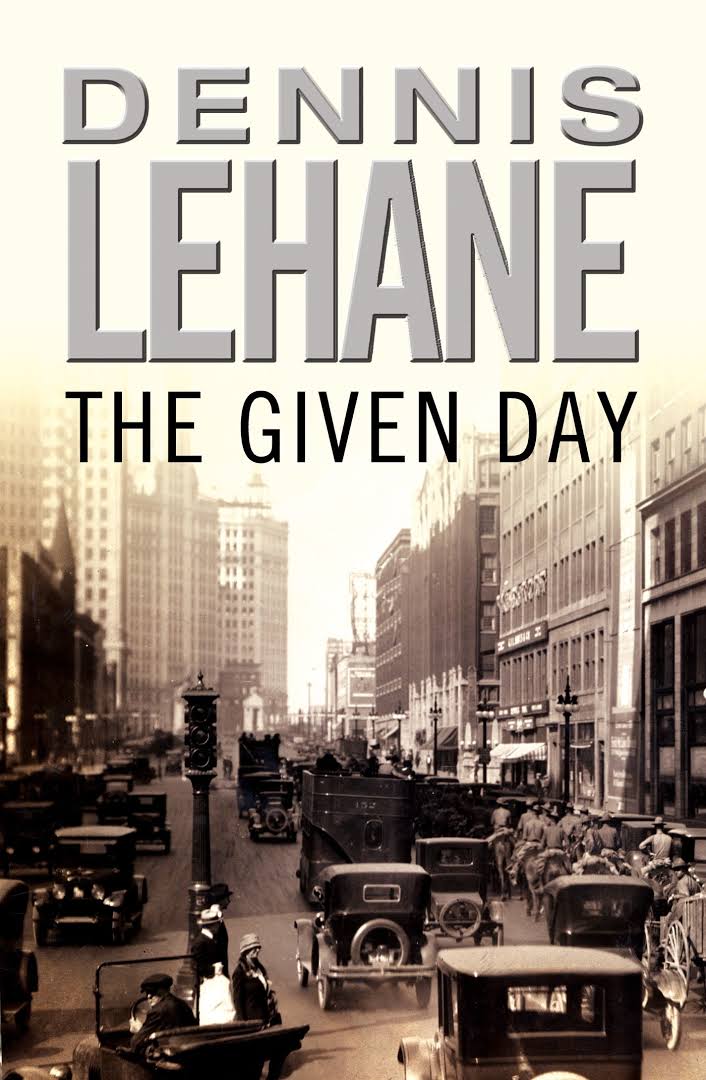
The first of these was with an elderly couple outside Kilmainham Gaol Museum. The man had “Boston” displayed on his T-shirt and I started talking about Dennis Lehane’s novel “The Given Day”, which is set in Boston and which I had just finished reading. They had read it, really liked it and told me it was the first of a trilogy to which I responded that I would certainly be looking for the follow-ups.
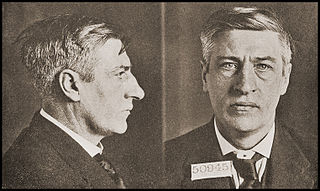
Jim Larkin’s “mug shots” when charged with “criminal anarchism” in New York 1919 (he served time in Sing Sing penitentiary). (Photo sourced Internet)
I talked about Lehane’s slant towards the cops as opposed to the revolutionaries and how of course my slant would be the other way but that in any case Lehane had not done his research on Larkin, who figures in the novel with other revolutionaries and radicals. Lehane refers to Larkin’s “gin-breath” but Big Jim was well known as a teetotaler, which I explained to them.
Then I talked a bit about the Irish Citizen Army that Larkin had founded with James Connolly and others, how they grew up out of the 1913 Lockout/ Strike and that Larkin had served time in Sing Sing prison later as a punishment for his revolutionary oratory in the USA.
I didn’t get the feeling that I and the two Bostonians were in agreement with my revolutionary sympathies but certainly did when it came to the workers fighting the Lockout in 1913. We parted amicably as they went off to enjoy some more of their holiday.
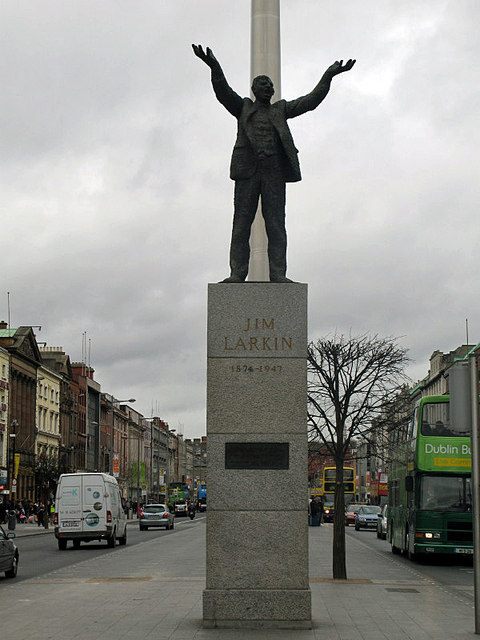
(Photo sourced Internet)The Jim Larkin monument in O’Connell Street today (Photo: D.Breatnach)
Encounter No.2 took place in Cornucopia, into which I had dropped for a cup of coffee.
I took my ‘Americano’ to a vacant table. The one next to me became vacant for awhile and was then occupied by an elderly lady who left her handbag open next to me. I advised her that was an unwise thing to do in Dublin and she remarked. in US accent upon the Leonard Peltier badge that I had been unconsciously wearing all day, so we talked about his case for awhile. She didn’t seem sympathetic to the FBI and expressed horror at the treatment of Peltier, now approaching his 40th year in prison for an act of which he was unjustly convicted.
The lady asked me for advice about literary events in Dublin and as she was, sadly, leaving the day before Culture Night, all I could suggest was a visit to Books Upstairs, where someone might be able to advise her. After I jotted down the address and a rough map for her, I left.
THE DEVIL AND THE TRUMPETTES
It was my intention to attend later that evening the Song Central session, on their first night back after their summer break. Song Central is a monthly gathering of singers and listeners upstairs in Chaplin’s pub, across from the Screen cinema. But I needed to eat first and so headed for a burrito in Pablo Picante, a small place serving Mexican food in Temple Bar (well, at the western end of Fleet Street).
Sitting eating my burrito and facing out into the street, I noticed passers-by pointing at the window and laughing. I could have become paranoid except it was clear that they were pointing to an image painted on the window further to my left. Then a late 30s or early 40s couple who in their style looked kind of to the Left maybe laughed at the image and took photos. The female whipped out a lipstick and wrote something over the painting, then had the man take a photo of her next to what she had written.
Curiosity had me now and after they wandered off, I went outside and saw that the painting on the window was a caricature of US Presidential candidate Donald Trump and underneath it the artist had written in big letters “DIABLO”. Of course, that would be because Trump wants to build a wall along the border with Mexico due to the negative impact he accuses Mexican migrants of having on the US, which Trump wants to “make great again”. And he has also impugned a US Judge’s ability to rule impartially on his case, due to the judge’s Mexican heritage.
The painting in the window of the Pablo Picante burrito restaurant in Fleet St. (Photo: D.Breatnach)
The woman had scrawled something along the lines of “He’s not, we love him” with a heart sign on a part of the painting – clearly far from being Lefties!
I went back inside, got a serviette, came outside and rubbed off her comment, then back inside to continue my assault on the burrito.
Not long after, I was not a little surprised to see the woman and the man standing outside again. She noticed the removal of her comment and commenced to write again. I went to the counter to tell the staff what was going on and returned to find the woman inside, leaning on my jacket on the window shelf and working on rubbing out the painting from the inside!
My challenge on what did she think she was doing elicited the response that Donald Trump was going to be (or might be?) their next President and that the painting was disrespectful. I stood between her and the painting, telling her that we have free speech in this country (which is not strictly true but as the nearest weapon I could reach ….) and just kept repeating it. Then the guy came in and told me I had “no idea”. He kept repeating that and I kept repeating the “free speech” stuff, alert in case he took his case into the physical arena (and he looked fit, too). I also wondered what I would do if instead, it was the woman who attacked me. But they left soon afterwards.
Soon after, a member of staff (Mexican, presumably) went outside and rubbed off her comment, returning with a wry smile.
SINGING THE USA
At the Song Central session later that evening, post-burrito and post Trumpettes, the theme happened to be about the USA, songs from there or about travelling there etc, it being the anniversary of the “9/11” attack on the Twin Towers. If I’d remembered about the theme, I’d have learned the Allende song recorded by Moving Hearts, or brushed up on the lyrics of “Hey Ronnie Reagan” by Christie Moore. Because “9/11” ( in 1973) is also the anniversary of the CIA-instigated military coup in Chile, which over time claimed the lives of 32,000 people.
Interestingly, most of the song contributions during the night that referred to the USA (and most of them did, though people are not obliged to follow the theme), were critical of the US state, whether because of its endemic racism towards blacks and Latinos or its genocide towards the First People, or because of its wars. One song I felt pretty sure would be sung – and it was — was about the firemen on 9/11 running up the stairs of the doomed building while occupants ran down – a powerful song about the heroism of a section of public service emergency workers.
Luckily I could remember some US song material and sang “The Ludlow Massacre” and “How Can I Keep From Singing”, both composed in the US: one written by a revolutionary and the other adapted in the US by a progressive singer.
I had set out that day without remembering the significance of the date for the USA and yet throughout the day had a significant level of engagement with people from the US and, at the end of the day, with the terrible event itself.
End.
Postscript:
On Tuesday, while taking a photo of the Trump caricature in the window to accompany this piece, another US couple began to talk to me. The man opened with: “The man IS a devil” (referring to Trump).
I remarked that Trump was not going to get elected but his role would be to make Clinton look good, then she could carry on bombing and invading countries if she got elected, no problem.
The woman told me they didn’t like Clinton either. They were from Boston and the man and his father before him had been union organisers. He was complained about the weakness of the unions nowadays.
We talked about cops breaking strikes in the USA in the 1930s and how the cops themselves went on strike in Boston during that period. He talked about what the cops are like nowadays against pickets and demonstrations, militarised ….
One of my appointments on a recent trip to Euskal Herria, the Basque Country, was with a “free radio station”, with a dual purpose: to learn about their operation and to give them an interview about my thinking on the political phenomena known to most people as “peace processes”. The radio station in question is Zintilik and located in the Orereta area of Errenteria town, not far north from Donosti/ San Sebastian, in the souther Basque province of Gipuzkoa and my hosts were Hektor Gartzia and Julen Etxegarai.
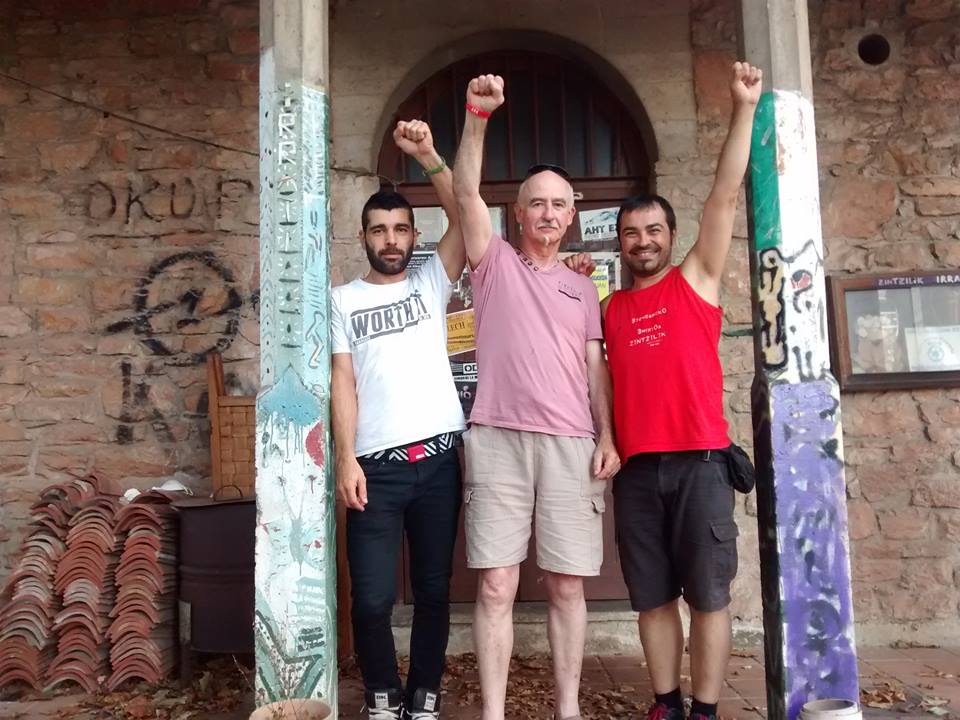
View of side of building which houses Zintilik. Photo D.BreatnachJulen and Hektor setting up for the interview Photo D.Breatnach
Not long after I arrived, one of my hosts related his memory of events in the area after a local ETA fighter had been killed. The Guardia Civil had swamped the area to prevent an “homenaje” (an event honouring the dead) taking place, guns pointing at men and women; the children, of which he had been one, gathered into their grandparents’ house ….. He showed me where the police vehicle had parked at the end of the street, his sweeping hand indicating the places where the armed police had stood.
THE “FREE RADIO”
The “free radio station”, also known as “pirate radio” has been broadcasting for 32 years, which I find amazing. It began broadcasting from an “okupa”, an occupation of a private empty building, turning it into an alternative social and political centre. Under popular pressure, the local authority, under the control at the time of the PSE, i.e. (Spanish unionist social democratic party), granted them the building they currently use.
Front of Zintilik building from the street. Photo D.Breatnach
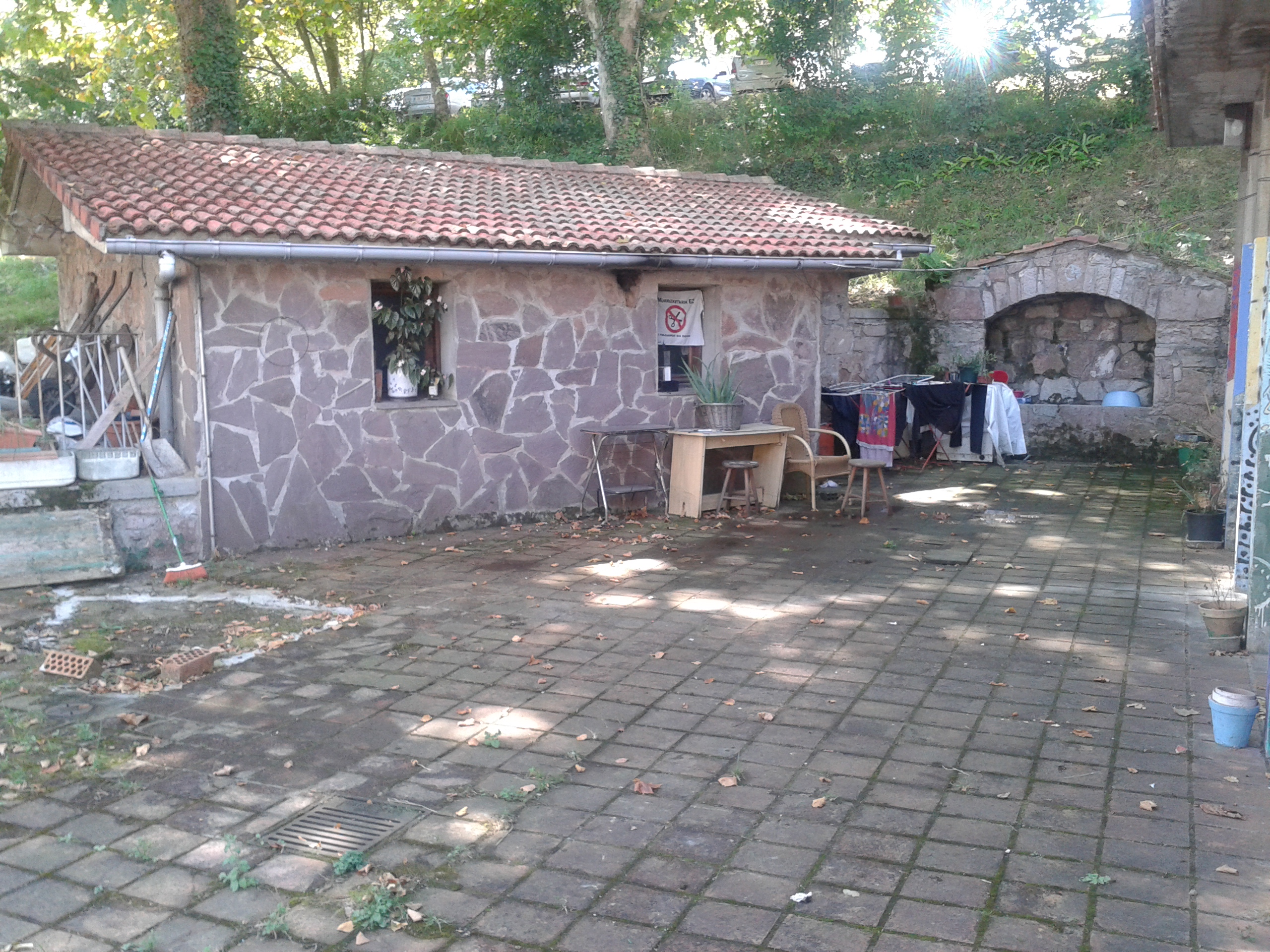
Originally built to house a smithy, for some reason the building never saw service in that capacity. It is in my estimation an attractive building in a traditional-enough local style, of thick stone, compact without being squat. It has an attractive back yard, no doubt intended at one time to receive the horses with hooves in need of iron shoes, fitted and nailed. The roof is tiled in what seems the usual way for the Basque Country.
Zintilik broadcasts 24 hours a day, which it is able to do using repeats. The Zintilik collective owns its equipment and funds itself through fund-raising concerts, txosnak (stalls/ marquees) at festivals and occasional donations. They run advertisements for
Julen and Hektor again. Photo D.Breatnach
local community groups and announce events but accept no commercial sponsorship – nor does their wish for independence stop there. “We don’t receive any funding from the local authority or from the Basque Autonomous Government,” declares Julen, “nor do we wish to.”
“Funding from such sources comes with strings attached”, adds Hektor.
“Or one becomes dependent on it and unable to function without it”, further explains Julen.
Partial scenic view from the back of the building. A block of flats to right just out of shot does restrict it however. (Photo D.Breatnach}
As a further illustration of self-reliance, they tell me how they climbed on to the roof of their building to repair a leak, rather than ask the municipal authorities to do it. And it was the same when branches of a nearby plane tree needed cutting to prevent them knocking against the radio aerial on windy days.
“We know it’s work that the local authority owes us and that we and the rest of the community pay their salaries but we prefer not to depend on them,” they explain.
As an example of how dependency – although of a different sort – can undermine a community resource, they relate the story of building which was occupied in order to be used as a community resource. As time passed, many were using it as a social resource but less people were volunteering for the work involved in maintenance at any level. Appeals of the four or so committed people who ended up doing everything fell on the deaf ears of the clientele until one day the four locked the centre doors after the last user had left for the evening and, the next day, handed the keys over to the local authority.
The back yard to the building where we ate a meal after the interview. The structure there is an outhouse. (Photo D.Breatnach)
“As you imagine, this was a great shock to the clientele,” they tell me, “but it was the result of their own lack of commitment to the project.”
I reflect that many activists will identify in one way or another with that sad experience.
RECORDING THE INTERVIEW
Julen and Hektor discuss the format and general content of the interview with me and map it out, do sound checks and then we go to it. Hektor, who knows quite a bit about the more recent Irish history and about the current situation in the Six Counties, is my interviewer, while Julen monitors from the control room and occasionally joins in with comment or question.
Interview room. Photo D.Breatnach
For music in between sections of interview, Irish Ways and Irish Laws (John Gibbs) and Where Is Our James Connolly? (Patrick Galvin) have been chosen, both sung by Christy Moore and Joe McDonnell (Brian Warfield), by the Wolfe Tones.
They also invited me to sing Back Home in Derry, Christy Moore’s lyrics arrangement of Bobby Sands’ poem – but to the air I composed for it. I am happy to oblige – I enjoy singing but it is more than that: I want the air I composed to get a hearing. Christy Moore used Gordon Lightfoot’s air to The Wreck of the Edmund Fitzgerald for Sands’ poem and, excellent though that fit is, especially with Moore’s chorus, I think that the poem (and its author) deserves an air of its own.
Recording room. Photo D.Breatnach
Although the main focus of the interview was the phenomenon of “peace (sic) processes”, we discussed aspects of Irish, Spanish, Palestinian and South African recent history, including the 1916 Rising in Ireland, along with the backgrounds to the songs chosen. For the most part, I left it to my interviewers to draw conclusions relating to their experience of political processes in their own country.
FESTIVALS AND STORMS
Upstairs in the broadcasting/ recording and interview rooms, all is in good order: equipment and facilities. After the interview, I note that downstairs, in the main space, things are a in a bit of a mess, for which Julen apologises (he has never seen the state of my flat).
“Some of the community groups we support store their placards and banners here,” he says. “Besides, we’ve just finished our local festival and everyone relaxes, dumps their equipment and goes on holiday.” Throughout the Summer and early Autumn, each village, town, city and even area will have its own week-long festival for which the community groups and campaigns will organise and participate.
Down in Donostia (San Sebastian), to where Hektor and Julen accompanied me after we ate the food they had prepared, the city was in the midst of its own festival and was heaving with people – tourists from everywhere, it seemed, as well as Basques.
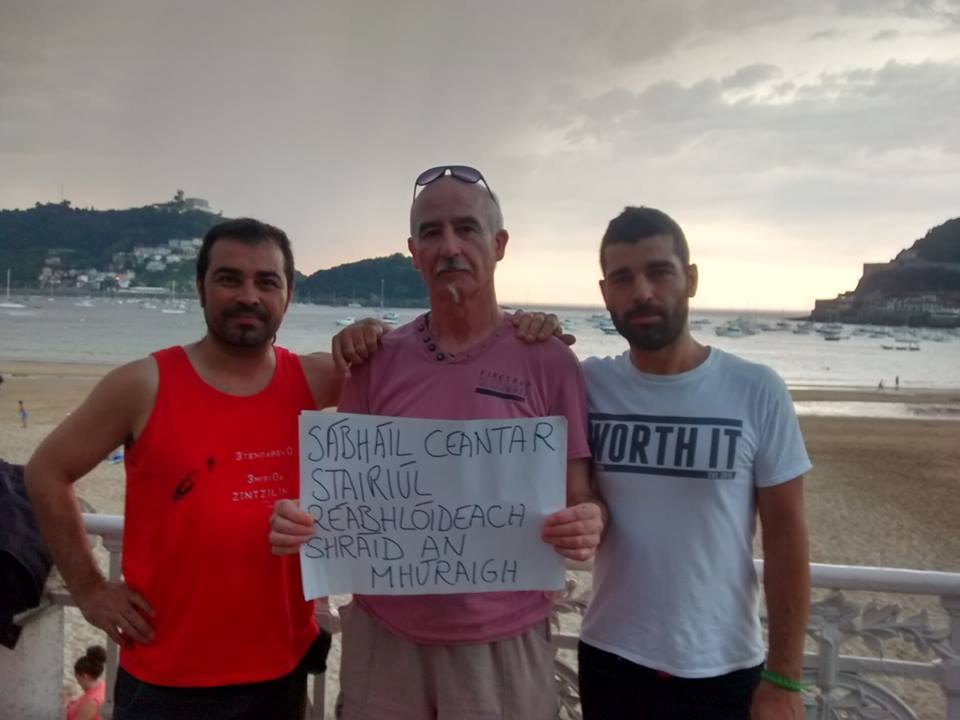
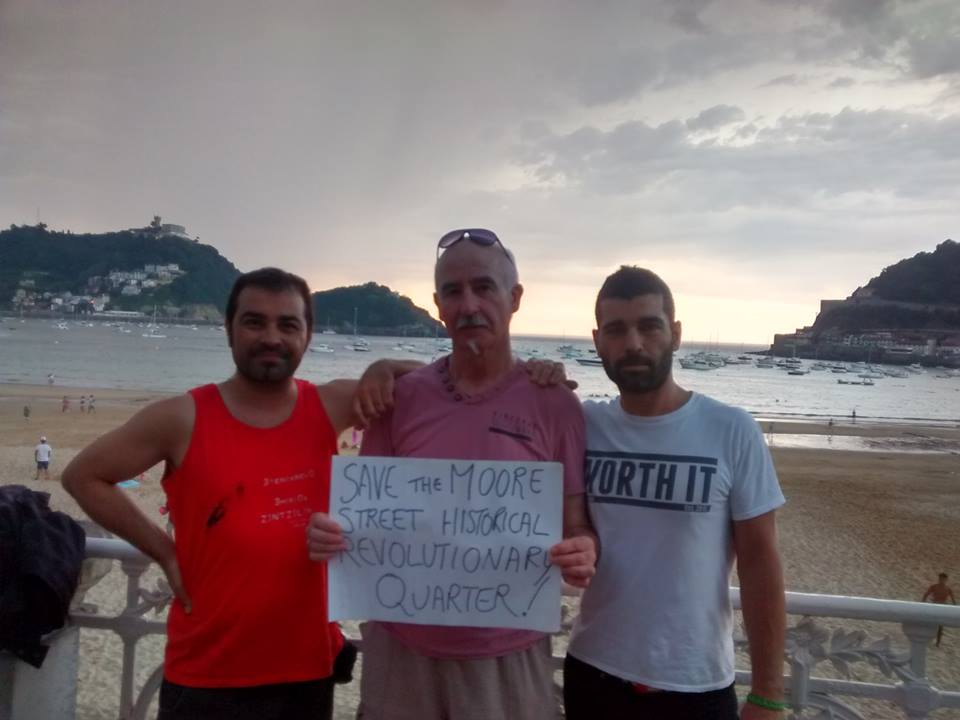
With that picturesque bay and its island in our background, they got a passing young woman to take our photo, the three of us – the conversation with her was in Euskara only. I held up the placards I had prepared for the photo in turn, one in Irish and another in English, supporting the Moore Street quarter in Dublin.
R-L: Julen, Diarmuid, Hektor. Donosti bay in the background with island partly visible. Storm building in the sky.
Dark clouds were gathering overhead and on the horizon the sky was a baleful orange. A storm or at least a downpour was being promised and, as we turned back towards the bus station, the first drops began to fall. In the humid heat, the light rain was welcome for awhile but for part of my solitary journey back to Bilbo, it formed a silvery curtain in the coach’s headlights and streamed down the windows.
I remembered being told that one can frequently witness a violent storm in the Donosti bay while not so far away in Bilbao, as a result of local conditions, all is calm. As for winter storms in Donosti, the waves hitting and surging over the seafront and piers have to be seen to be believed; occasionally the sea reaches inland, floods cellars and converts parked cars into boats or semi-submarines.
The rain eased off and stopped about half-way through my journey and when I got into San Mames station in Bilbo, the streets were not even wet.
On the platform at Mundaka there are only a few to catch the 9.18 a.m. train to Bilbao. Mundaka is a popular coastal resort town in Bizkaia province, southern Basque Country. “Egun on” (“good day”), I greet those on the platform in Euskara in passing, the Basque language, and they reply the same.
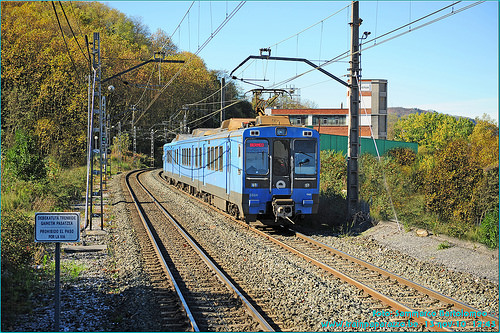
Train on the Atxuri (Bilbao)-Bermeo line. Note the warning sign to bottom left of image, in Euskera first and Castillian second. (Photo sourced on Internet).
A young couple with two little boys come on to the only platform (for both directions) and I think I hear the woman speaking to the boys in Euskara. But soon, I make out some Castillian (Spanish) words; however it is not unusual to hear some Castillian words and even phrases scattered through Euskara conversation, in the southern Basque Country, at any rate. But no, I can tell now that the conversation between mother and child is definitely all in Castillian – I must have been mistaken earlier, when I thought they were speaking in Euskara.
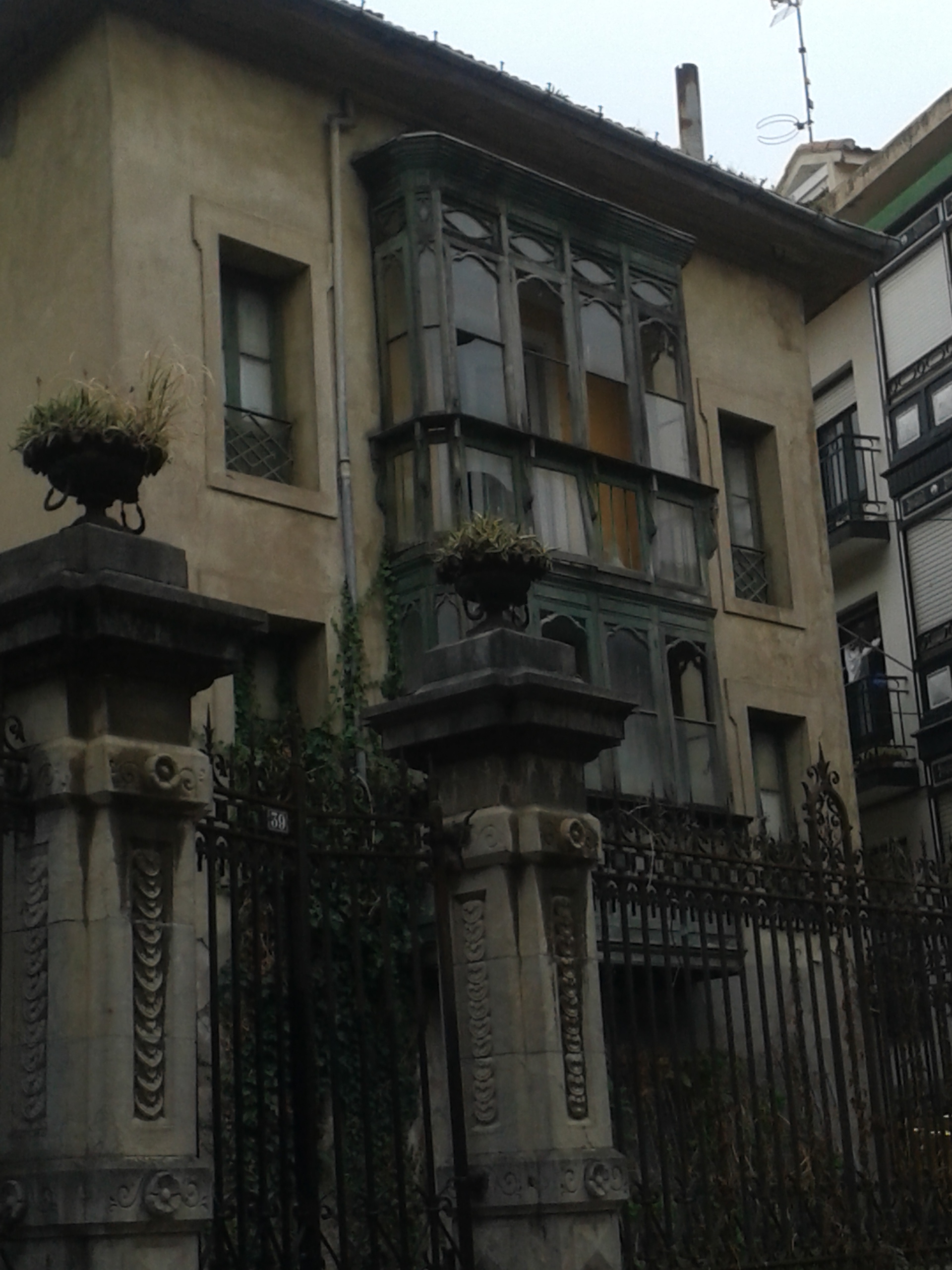
A view from a Mundaka building a number of stories up. The port is out of sight to the left, the station behind. (Photo: D.Breatnach)“Casa de Los Ingleses”, a beautiful if rather gothic-looking old house, residence of an English family with business interests locally many years ago. I passed it on the short walk from the town to the station. Behind it there were plots being worked for vegetables, all due to disappear beneath a new car park construction. (Photo: D.Breatnach)The residence of the servants of the Casa de Los Ingleses, a lovely building in its own right. Its demolition is planned to make way for a new construction (see design in next photo) — my guide encouraged me to write a letter of protest to the municipality. (Photo: D.Breatnach)The construction planned to replace the “servants’ house” after the latter has been demolished. (Photo: D.Breatnach)
“Miao, miao” says the smallest boy, pointing at some feral cats dozing near the platform. “Bai, katua” replies the mother and a flood of Euskara follows, both boys and mother and occasionally father too conversing in Euskara. And so they continue until the southbound train arrives and everyone gets on, except one man, presumably waiting for a northbound train to Bermeo.
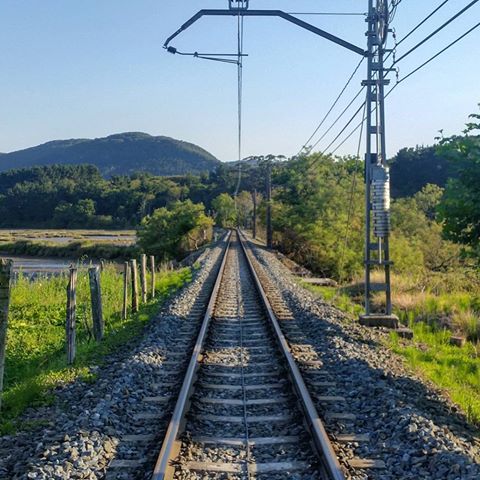
On our journey southwards, soon passing alongside salt marshlands, I note that the names of the stations are in Euskara only: Itsasbegi-Busturia, Axpe-Busturia (in the broad estuary of the Urdebai river), San Kristobal Busturia, Forua, Instituto Gernika, Gernika….
The Wikitravel entry for Gernika translates it to the Castillian “Guernica” and opens with this: “Basque town which was the site of the first airborne bombing attack on a civilian town during the Spanish civil war. The bombing, by the Condor Legion of Germany’s Luftwaffe in 1937, inspired Picasso to paint the landmark cubist work Guernica, now on display at the Centro de Arte Reina Sofia in Madrid.”
Well, yes, but one might add for clarity that it was done as part of Franco’s fascist offensive and that the fascist press later blamed it on Asturian Anarchist “fire-bombers”. And one might update it by commenting that the Basques have asked for Picasso’s painting to be located in Gernika itself, a request which the Spanish state authorities, the political descendants of the fascist victors of that war, have refused.
Train tracks from Axpe Busturia, the estuary to the left and salt marshes on both sides. (Source: Internet).
Onwards again, the next stop is Lurgorri-Gernika. At the next after that, Zugast station, a middle-aged man gets on with Berria, the all-Euskara newspaper, under his arm. This periodical, being in many ways the replacement of another newspaper, Egunkaria, has a noteworthy connection with history.
Founded in 1990, Egunkaria was the first all-Euskera daily newspaper in the world; it had a left-nationalist editorial line and a journalistic outlook, which led it to report ETA statements alongside those from Spanish unionist political parties and from the State. The Basque language was no longer illegal or banned since the transición, post-General Franco, when the fascist Spanish oligarchy brought the leaderships of the social democratic party and the Communist Party on board, along with their respective trade union leaders — and called it “Democracy”.
But on 20th February 2003, the Spanish State’s militarised police, the Guardia Civil, raided the newspaper’s premises, seized records, machines and closed down the periodical. They also raided the homes or arrested at the building a total of ten people associated with the newspaper, at least four of which were tortured subsequently. For one of those, the manager, a gay man, the torture included sexual violation.
Massive protest demonstrations ensued from an outraged Basque population. The arrested were released on bail.
On 15 April 2010, seven years later, the defendants were finally acquitted on all charges relating to ‘terrorist’ connections and the judges added that there had been no justification for the closure of the newspaper in the first place.
By then, Egunkaria was beyond recovery and anyway Berria had stepped in to occupy the niche (apparently with the blessing of the Egunkaria team). The case against the State for compensation for the loss of the newspaper and also for torture remains open, sixteen years later. The Court of Human Rights at Strasbourg found the Spanish State guilty of not investigating the manager’s complaint of being tortured and ordered compensation paid. It did not, however, as it usually does not, find the State guilty of the torture itself. Of course, torture is difficult to prove, particularly when the State in question keeps political detainees for five days incommunicado, without access even to independent medical practitioners, while its police go about getting their “confessions”
On the train journey now, the next stop has the delightful-sounding name of Muxika. This causes some amusement to a teenage boy in a nearby seat, accompanied by an older woman – they have been talking in Castillian only since they got on. I wonder are they aware that in June 2013 José Mujica, President of Uruguay until last year, visited the townland that gave rise to his surname. Mujica was presented with a key to the town by the Mayor, who is of the Abertzale Left party Bildu.
The train pulls out of Muxika, then on to Zugastieta-Muxika station as we continue running southward through thick woodlands, occasional industrial parks and small allotments where an occasional middle-aged man tends to his large tomatoes, the small elongated sweet peppers of the region, courgettes, climbing beans …..
Onwards to Morebieta Geralekua before the line takes a sharp twist north-eastwards to more woodlands, rivers, streams and mountains at Lemoa, Bedia, Usansolo, Zuhatsu Galdakoa. Now the built-up areas of Ariz Basauri followed by the contrast of the picturesque Etxebarri before a southward curve to Bolueta and then eastward, to run along the Nervion river to Atxuri station in Bilbo (Bilbao), journey’s end.
All of the stations along this route were named in the Basque language – not one had a Castillian version showing (although there will be plenty of that in streets and squares in Bilbao). The public announcements on this train, as on their counterparts in the Irish 26 Counties, are bilingual but with this difference – on the Basque train, they are always in Euskara first, Castillian second. Likewise with the signage. One is never under any doubt about which language is being given primacy there, nor indeed here, where the English version comes first and, when in text, is in a more dominant type or more contrasting colour.
The Irish language is being derailed even as, to mix metaphors, it is being given lip service. Further down the tracks, unless some urgent repair work is undertaken, lies the final stop – the cemetery of our national language.
Croppies’* Acre, a piece of parkland believed to the site of a mass grave of United Irishmen insurgents and non-combatant victims, situated between the Liffey’s Wolfe Tone Quay and the Collins Barracks complex of the Irish National Museum, was some weeks ago reopened to the public for the first time in four years. Few if any of the campaigners for its saving or its reopening were invited to the event or given credit in the short newspaper report about the occasion.
This report seeks to correct that omission, to give a brief account of efforts made over the years and to comment on the care of the park today.
(* “Croppy” was a name given to supporters of the United Irishmen, apparently because of the males wearing their hair cut short and close to the scalp, in the style of the revolutionary French of the time. “Crapaí” and “Cnapaí” were the versions of the word in the Irish language).
The Pedestrian Gate on Wolfe Tone Quay, Liffey side, open to the public again after four years (Photo C. Sulish)
HISTORY OF THE SITE AND OF THE CAMPAIGNS AROUND IT
In 2012, after the site had been closed for some time allegedly due to health and safety concerns for visitors due to drug-injecting paraphernalia left there by people using the site at night-time, Pádraig Drummond and Diarmuid Breatnach set up the Croppies Acre Rejuvenation project with a Facebook page to promote the importance of the site and to gather forces to pressure the authorities into reopening the site and maintaining it properly.
Prior to this, a number of visits had been made by Irish Republicans (the 1916 Societies on some occasions, independent Republicans on others) to the closed site to collect and dispose safely of drug-injecting paraphernalia and other waste and it was felt that a public campaign was needed.
Memorial stone about halfway along the the Liffeyside of the park. In the distance, the heaped earth and earth-moving machine in October last year which had caused concern (Photo: D. Breatnach)
As part of the campaign a letter to the media was composed by Drummond and Breatnach in consultation with the National Graves Association (a voluntary independent organisation that marks and maintains the graves of those who fought for Irish freedom and which also erects plaques to commemorate people and events). Although none of the main media published the letter it is reproduced here not only as a document of the history of campaigning for the site in its own right but also because it summarises well what had gone before.
“Croppies Acre is remembered in Dublin folklore as the site of a mass grave in which the bodies of dead insurgents were thrown in 1798. Among those lying in Croppies’ Acre are reputedly the bones of Bartholomew Teeling and Matthew Tone (brother of Wolfe Tone — CS), both hanged at the Provost Prison on Arbour Hill after the Battle of Ballinamuck on 8 September 1798.
“In 1898, the centenary of the United Irish uprisings, 100,000 marched to the site and placed a plaque there. As many people will be aware, the centenary commemoration of the United Irish played a significant part in the creation of a national pro-independence culture which fed into the Easter 1916 Rising, less than twenty years later, and which in turn fed into the War of Independence 1919-’21 and the creation of an Irish state.
Memorial stone placed during 1798 centenary commemoration which was attended by 100,000 (Photo: D. Breatnach)
“Although a 1798 rising commemoration plaque was laid at the site by “soldiers of the Eastern Command” of the Irish Army in 1985, soldiers were sometimes to be seen playing football on the field until the mid-1990s, while Collins Barracks was still in use by the Irish Army. This practice ceased after a number of complaints from members of the public who felt the practice was not respectful to the dead insurgents. The Irish Army vacated Collins Barracks in 1996 or thereabouts and the National Museum moved into the buildings in 1997.
“In 1997 a proposal to turn the graves of the Patriot Dead into a car and bus park was all the more stunning as the bi-centenary of the United Irishmen’s Rising of 1798 was imminent and groups everywhere were renovating monuments and graves, organising seminars and lectures and planning pike marches.
“The then secretary of the National Graves Association, Tess Kearney (since deceased — SC), was in poor health, but decided that such an occasion required action regardless of her personal circumstances. Tess turned in a magnificent effort for the television cameras and organised a campaign to “Save the Croppies Acre”. Within days, various interested parties came together and, under the leadership of the NGA, the plan to build a coach park on the site was defeated and the Croppie’s Acre site was developed two years ago (i.e in 2010 — CS) as a national monument with an expenditure of some €35,000. The field layout is simple with `(some individual) flagstones throughout the site presumably symbolising the bodies lying below and a small open circular stone structure on which are reproduced parts of the text and facsimile typeface of the Droites del Homme (Rights of Man) document from the French Revolution (1789). Also featured is the text of Seamus Heaney’s poem “Croppies” and the motif of the barley seed head is reproduced on the stone in reference to the poem and Irish folk memory.
The enclosure monument in Croppies’ Acre, with National Museum, Collins Barracks in the background. (Photo: D.Breatnach)
The Drummond/ Breatnach letter, signed by a number of historians, history tour guides, authors and history enthusiasts, also noted that:
“The Office of Public Works has closed the site because it considers it unsafe to permit public access due to some night-time activities there. Recently some of us went to inspect the site and were shocked at the condition into which it has sunk. Used syringes, discarded needles, bottles, cans and other rubbish were found at a number of locations but especially inside the stone structure.
“Rubbish bags were filled and disposed of, with the hazardous waste disposed of in bio hazard containers that were then handed into the local authorities. A return visit found almost as much rubbish as had been disposed of previously. A third visit found even more. This is not acceptable and must change.
The letter concluded by stating that
“It may be that some will say that the expense, even though relatively small, of looking after a national monument, cannot be justified in the current climate of austerity. To those we would say that possibly, had we valued sufficiently our independence and the sacrifices made for it in the past, we would not have allowed foreign finance speculators to bring us to sad straits in which we find ourselves now. The image of our past locked away while we are plundered as a nation in the present is a stark contrast.
“However about that, the Office of Public Works must take the appropriate action to look after this site properly and offer safe access to the park during the hours of daylight seven days a week. At night, the site needs to be well-lit and protected. Mr. Brian Hayes, TD, Minister of State responsible for the OPW since 2011, must take urgent action.”
At the time, the OPW probably seemed a much safer bet as custodians than Dublin City Council, especially with the Council’s Planning Department having granted property speculators planning permission to construct a giant shopping centre over the Moore Street battleground and market. However, it was eventually Dublin City Council that took responsibility for the maintenance and reopening of the site to the public.
But throughout the years after the setting up of that campaign, from 2012 to 2014, nothing seemed to be happening to put matters right. Groups of Republican volunteers paid visits from time to time to clean up the site, collecting horrifying amounts of used hypodermic needles and other paraphernalia and waste but the authorities appeared unmoved.
Twice in February 2014, questions were asked in the Dáil, the Irish Parliament, of Minister for Public Expenditure and Reform Brian Hayes. Pádraig Drummond had written to TDs (elected representatives) Clary Daly and Maureen O’Sullivan, who received replies to their questions, the former written and the latter an oral reply. Daly’s reply from Minister of State Hayeswas that “The Office of Public Works and Dublin City Council have agreed in principle that the management and maintenance of the Croppies Acre Memorial Park will be undertaken by the Council. OPW and Dublin City Council are reviewing the Council’s proposals regarding improved access to the park prior to formalising a licence arrangement, following which the park is expected to re-open to the public.”
The oral reply was much longer but the nub of it was the same.
“We weren’t getting people signing up to form a campaigning group and we were running out of energy”, said one of the campaigners about those years.
In September 2015, soon after DCC staff were seen to have been cleaning up the site and cutting the grass, concerned Republicans visited the site and posted photos on the campaign FB page of drug paraphernalia and mess which had quickly accumulated again on the site.
In October of that year, Dublin City Council staff began work inside the park with earth removers. In the absence of any notice of what was intended and no public consultation, protesters — including Éirigí — mobilised and halted work. Dublin City Council gave a written guarantee (see photo) that the work was only to create or upgrade a circular pathway. The protests ceased but an eye was kept on proceedings.
However photographs taken during a visit by other concerned people that same month showed drug paraphernalia again accumulating at the site.
View from the west pedestrian gate to the east since the Acre opened (Photo: C. Sulish)
The letter guarantee which led to calling off the protests in October 2014
THE SITE REOPENS TO THE PUBLIC
By June this year, the site had been cleaned up, planted, a path put through part of it and finally reopened to the public, four years after the campaign to reopen it had begun. The Daily Herald reported on the opening ceremony (see link for their report below) on the 15th, presided over by Lord Mayor Críona Ní Dhálaigh in one of her last acts before her year as Mayor was up.
The Herald report alluded to the years of closure and “problems with drug users” but not once did it mention the National Graves Association, the Republican groups that repeatedly visited the site and those that mobilised to protect it in October last year, or the campaign set up in 2012 and the letter to the media of that year and TDs questions in the Dáil.
A sleeping bag, perhaps, against the wall within the monument park weeks after reopening. (Photo: C.Sulish)
The report did mention Councillor Mannix Flynn who, it said, had been campaigning over the years for the site’s reopening. “Councillor Mannix Flynn, for all I know, may have been campaigning hard for the site’s reopening,” said Diarmuid Breatnach. “I can’t say he has and I can’t say he hasn’t. But I can say that not once in those years of agitation, campaigning and trying to raise the profile of the issue, did we ever hear from or about him in connection with Croppies’ Acre.”
This month, I visited the site again and found it open and being used by the public, reasonably clean and with some attractive plantings of flowers and grasses. But inside the circular monument, there was a small pile of excreta in one spot and, on the way out, I noted what seemed to be a sleeping bag against the eastern wall. The site will need continual watching.
End.
(Photo: C. Sulish)
(Photo: C. Sulish)
View southwards across the park (Photo: C. Sulish)
The Tricolour in this case would have been better replaced by the green flag of the United Irish with the harp in gold. (Photo: C. Sulish)
APPENDIX
LINKS TO QUOTED AND RELATED MATERIAL
Letter sent to mass media in 2012, after DCC had locked up the site: http://www.politics.ie/…/221010-croppies-acre-rejuvenation.…
Daily Herald report on the reopening of Croppies’ Acre