RACIST CAMPAIGN AGAINST NEW MAYOR OF DUBLIN

Diarmuid Breatnach

(Reading time: 5 mins.)

Dublin has a Lord Mayor of Chinese descent. According to some, this is some kind of disaster. Apparently to them, she is a migrant (though born, bred and educated in Ireland) and even an advance scout for a takeover by Chinese Communists (because, of course, all Chinese are communists, even those from Hong Kong – but wait, didn’t Gemma O’Doherty also tweet approvingly that some Chinese Hong Kong businessman wants to have the Communist Party of China declared a terrorist organisation?).

Hazel Chu. wearing chain of mayoral office, poses for photo with her daughter and husband.
(Photo source: Internet)

          Speaking after her election (on 43 votes against the nine for the other candidate, according to RTÉ), Ms Chu said she wanted the Dublin Agreement parties who had backed her election) to tackle the housing and homeless crisis which has seemed like “filling a hole in a sinking ship”.

Her other priorities are making Dublin a liveable city, fighting discrimination and protecting the vulnerable. In her speech, she said she wondered if her mother – who had worked washing dishes in a restaurant off O’Connell Street – dreamed that her daughter would one day become Lord Mayor.

Since being elected a public representative on to Dublin City Council in 2019, on the highest first-preference count of any Irish local authority councillor (perhaps Pembroke constituency is a Chinese Communist base?), also receiving the highest percentage vote of any first-time candidate, Hazel Chu has reportedly been subject to racist harassment, vilification and even threats, both on social media and by telephone calls to her home. Not because of her views or her political party – purely because her parents are Chinese who met and settled in Dublin in the 1970s.

When Hazel Chu was nominated for the position and before her election, racist and right-wing conspiracy theorist Gemma O’Doherty recorded herself on video attacking her and claiming that Chu is a supporter of pedophilia (because she allegedly supported the closure by Google of O’Doherty’s Youtube channels) and in Gemma-World apparently a Chairperson of the Green Party can also be “a hard-core Communist”.

After Chu’s election, O’Doherty tweeted, above a highly dubious “news” item claiming that a property developer plans to build a new city in Ireland for Hong Kong refugees (!): It’s fitting Dublin now has a Chinese Mayor when millions more are to be planted in our home in the coming years. You wanted Communism. You’ve got it. Don’t say we didn’t warn you! But the Reds know it will only make the patriot movement grow and grow.

O’Doherty has become notorious not only for her anti-immigrant rhetoric but also for claiming that the the whole Covid19 pandemic was fake and part of a plan to put in place a New World Order (apparently the existing Order is not bad enough) and that the EU has a plan to replace Irish people with migrants. One of her heroes is Donald Trump and her opponents she claims are all “Reds” who are “funded by Soros”, as is the Black Lives Matter movement, “Antifa” etc. Along with the Right in the USA she defends the statues of racists and conquistadors (even though the latter were armed immigrants and definitely dangerous to the locals!).

Hazel Chu studied and qualified as a barrister in Ireland.
(Photo source: Internet)

Justin Barrett, founder of the National Party (sic) and former member of far-Right organisation Youth Defence has said that if he were to get into power he would strip Hazel Chu of her citizenship. It is hardly surprising to see a proposal straight out of Nazi Germany coming from this former campaigner against divorce and abortion and for a “Catholic Ireland” that would ban muslims from entering the country because apparently muslims are a serious threat to our lives and Irish liberty (Henry VIII, Elizabeth I, Oliver Cromwell, William of Orange, Lord Castlereagh, King George III and Lloyd George must’ve all been muslims!). Barrett is on record as being an admirer of the anti-semitic Fr. Denis Fahey and writer Hilaire Beloc (a French immigrant to Britain!).

Dublin City Hall, seen looking eastward.
(Photo source: Wikipedia)

BEYOND THE CRAZY PARANOIA – FASCISM

          Beyond the craziness, the paranoia and ludicrous theories of conspiracy (as distinct from the real conspiracies in the world), what we have here is virulent racism and lurking in among those sad and mad people and raving racists …. are the handful of organised fascists. Those who dare not at the moment come out and declare their wish to have a corporate state in Ireland, one to outlaw oppositional organisations and demonstrations and suppress the resistance of the working class. A REAL conspiracy. A kind of State that becomes increasingly attractive to the capitalist ruling class as it finds itself in difficulty to keep up its profit levels and feels it needs to squeeze the working people harder. A REAL possibility.

Which is why we need to take these matters seriously. Such organisations as Anti-Corruption Ireland (sic), Yellow Vests Ireland and the National Party are the means by which the fascists mobilise a stream in which they can swim – and collect others to swim with them.

They must not be given an inch.

That the ruling Gombeen class would turn to them if they looked like a viable option is entirely possible if viewed historically. The State was set up by that ruling class in a vicious Civil War in which it not only repressed its opposition and the population but executed 80 Republicans with barely a court martial, shot prisoners and exploded them on landmines, kidnapped and murdered activists.

A large part of the opposition to that State at the time became coopted by the ruling class and that process has come into full development with the current Fianna Fáil/ Fine Gael coalition Government. And we can already see the straws in the wind in the behavior of the Gardaí, who appear in and out of uniform to harass peaceful Republican pickets and Debenham’s worker picketers while on the other hand, weekly demonstrations of the far-Right, violating in every way pandemic precautions, remain untouched by those same Gardaí.

The far-Right in Ireland have been trying for some time to present themselves as “patriots”, flying the Irish Tricolour, playing the Soldiers’ Song, etc. They do not have a history of promoting the Irish language or fighting for the rights of Irish speakers, nor of campaigning against English colonialism in the Six Counties, nor for Reunification of the country. Nor have they a track record of even defending areas of historical importance from rapacious Gombeen and foreign property speculators. They were not active in the struggle against British Petroleum in the Erris area nor in preventing the selloff of Irish forestry. So what actually is this “patriotism” of theirs? Nothing. Nothing but racism.

It is not even enough apparently for these racists that a person be born in Ireland – they have to be “ethnically Irish”. Would that be like the Pearse brothers, shot by British firing squads, whose father was English? Like Constance Markievicz, founder of the Na Fianna and officer in the 1916 Rising, one of the Gore-Booth planter family? Like Thomas Davis, Young Irelander author of A Nation Once Again and other songs, whose father was Welsh? Like Theobald Wolfe Tone, founder of the United Irishmen, a descendant of planters? Like Erskine Childers, fourth President of Ireland and son of an Englishman who died for Ireland, executed by this very State?

And while we are about discussing things “ethnically Irish”, should these “patriots” not return that flag they keep waving, the Tricolour, to the descendants of the Parisian revolutionary women who first presented it to Thomas Meagher in 1848?

end.

Coat of Arms of Lord Mayorality of Dublin.
(Photo source: Internet)

SOURCES

https://en.wikipedia.org/wiki/Hazel_Chu

Gemma-world tweet: https://twitter.com/gemmaod1/status/1277900127362060288

Gemma-world video: https://mail.google.com/mail/u/0?ui=2&ik=8302533bd1&attid=0.1&permmsgid=msg-f:1670942037845421793&th=173060ee2e0b2ee1&view=att&disp=safe&realattid=173060c781cbf5abe9d1

RTÉ: https://www.rte.ie/news/2020/0629/1150402-chu-dublin-lord-mayor/

Indo: https://www.independent.ie/irish-news/whether-im-irish-or-not-has-nothing-to-do-with-them-councillor-hazel-chu-hits-back-at-online-trolls-after-threatening-messages-38391990.html

IRISH REPUBLICANS AND ANTIFASCISTS GATHER IN DUBLIN TO HONOUR SEÁN RUSSELL

Clive Sulish

(Reading time: 10 mins)

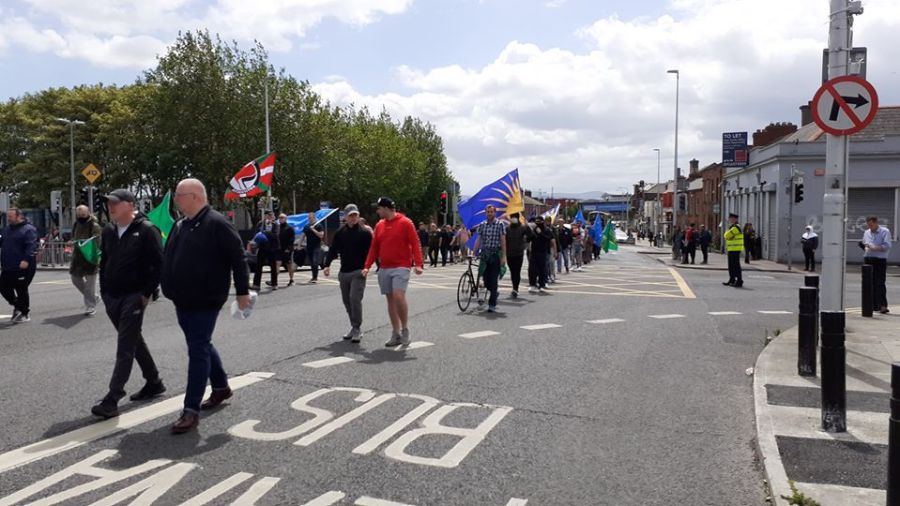
A few hundred Irish Republicans and other Anti-Fascists gathered today in the Ballybock area north of Dublin city centre to commemorate IRA leader of the 1940s Seán Russell. The event was organised a few weeks after the incumbent Irish Prime Minister, Leo Varadkar, had made a public statement suggesting that Russell was a fascist sympathiser and that his monument and some others in Ireland should be removed. In attendance yesterday (Sunday 21st June) was a cross-section of the Irish Republican movement in addition to independent Irish socialists and anti-fascists.

Note: Photos of the event are from individuals D. Breatnach and C. Perry and organisations Saoradh and Anti-Imperialist Action.

The statue representing Seán Russell on the monument plinth.
The theme banner crossing Annesley Bridge on the way to Fairview Park.

NAZI COLLABORATOR” SLUR

          Leo Varadkar’s comment that Sean Russell had been “a Nazi collaborator” was made in the course of a TV discussion on racism, arising out of the killing of George Floyd by a police officer in the USA, an event which sparked off huge protests not only in the USA but, because it had been so clearly documented and shared on social and news media, around much of the world. Among the angry retorts in reply had been an Open Letter by Matt Doyle, of the National Graves Association, pointing out that Russell was an Irish Republican with no elements of fascism in his history or ideology and that in fact Varadkar’s party, Fine Gael, was the one built on fascism, i.e the Blue Shirts movement of the 1930s, which Republicans had fought and defeated.

Seán Russell had gone to Nazi Germany in 1940 to seek assistance from them in ridding Ireland of British colonialism but on his way back to Ireland in a German submarine, accompanied by Frank Ryan, Russell had become seriously ill, died and was buried at sea, 20 miles from Galway. Frank Ryan was also an Irish Republican but had been wounded fighting fascists in the Spanish Civil War; after his capture the Nazi German allies of the Spanish fascists had expressed interest in Ryan for the purposes of assisting Irish Republican action against the English occupation of the occupied Six Counties.

View of section of the parade crossing Annesley Bridge on the way to the monument in Fairview Park.

A BROAD REPUBLICAN PARTICIPATION IN PROCESSION AND RALLY

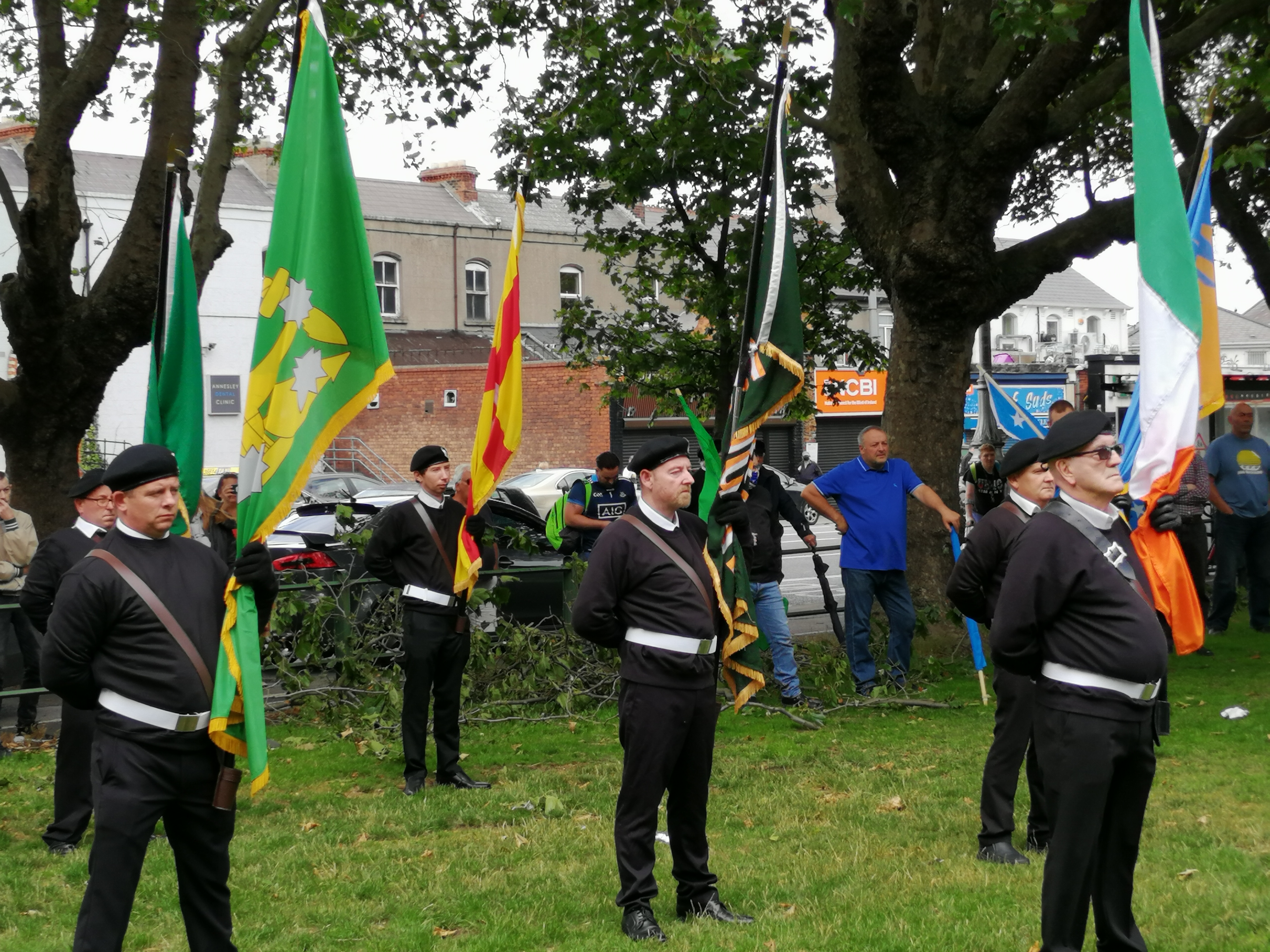
          The attendance had representation from across the Irish Republican spectrum from “Stickles” to “Provies” to “Dissidents”1, mixed with some independent socialists and antifascists but notably absent was a representation from the Irish socialist and communist parties in any numbers, nor were their flags to be seen. No anarchist flags were in evidence either and only one Antifa flag was, that one from the Basque Country. The event was organised by “Independent Republicans”, a headline permitting a wide attendance free from sectional hostilities or the more fundamental division of for or against the Good Friday Agreement. The flags most in evidence among the attendance were the orange rising sun on a blue field of Na Fianna and both versions of the “Starry Plough”, the one in gold on a green field and the one with white stars on a blue field.

Section of the crowd at the event in Fairview Park with Annesley Bridge Road in the background.

The Starry Plough was the flag of the Irish Citizen Army, founded by James Connolly and Jim Larkin and described as “the first workers’ army in the world”; formed in 1913 to defend the Dublin strikers and locked-out workers from the attacks of the Dublin Metropolitan Police, its ethos was socialist and for Irish independence. The ICA recruited men and women and a number of the latter were officers during the 1916 Rising, including third-in-command in two insurgent garrisons. That version was gold-on-green field version but the Republican Congress of the 1930s had the white-stars-on-blue-field version. The Republican Congress was a short-lived attempt to unite communists, socialists and the Irish Republican movement in one front.

Na Fianna Éireann was an Irish Republican youth organisation founded by Bulmer Hobson of the IRB and Constance Markievicz in 1909 and therefore predated the ICA (and the Irish Volunteers). Members of na Fianna were highly motivated and disciplined and played a prominent part in the collection of Mauser rifles smuggled into Howth in 1914, in the 1916 Rising, the War of Independence and in the Irish Civil War.

The colour party at the event.  The flags displayed traditionally include the Tricolour, those of the four provinces and that of Na Fianna, along with the Starry Plough (either version but that shown here is the original ICA design).

Led by a traditional Irish Republican colour party and a lone piper, the parade on Sunday set off from under the railway bridge crossing the North Strand road and marched north in the traditional formation of two lines, their flags fluttering in the strong breeze. The procession crossed the Tolka river at Annesley Bridge, scene of a battle in 1916. In fact, the whole area had also been the scene of running battles in 1014 as the defeated Viking mercenaries from Orkneys and Manx ran for their ships, pursued by some of Brian Boróimhe’s (“Boru”) forces, for prior to the draining and reclaiming of the marsh, dunes and mudflats of the “sloblands” to permit laying out of Fairview Park and parts of the East Wall area, the seashore had been there.

Once over the bridge, the procession turned into Fairview Park and marched a short distance under trees until arriving at the Seán Russel monument and its surrounding low iron fence, where a number of people had already gathered. The monument had been erected in 1951 by the National Graves Association, a totally independent NGO and had been attacked twice, once having an arm removed and on the other occasion, its head. The first attack has been attributed to right-wing elements and the second, to antifascists.

The lone piper plays by the monument.

WREATH, SPEECHES AND SONG

          Patrick “Parko” Burke as MC for the event welcomed those in attendance and called for the placing of a floral wreath at the monument on behalf of Dublin Republicans. The piper played a short piece while the flags of the colour party were lowered and a moment’s silence was observed, then as the flags were raised again a short piece was played again.

The wreath to be laid on behalf of Dublin Republicans at the monument.
Laying the wreath at the foot of the monument.

The MC then introduced Gerry Mac Namara, who is a member of the extended Russell family.

Speaking briefly first in Irish and going on to address the gathering in English, the speaker recounted that Russell’s antecedents had been Fenians and that Seán himself was an Irish Republican who fought in the 1916 Rising and War of Independence and continued in the IRA after De Valera led a split to form Fianna Fáil. Mac Namara denounced Varadkar for his comments and commented that if the Prime Minister was in the mood to remove monuments there are a number of memorials of the British occupation and to English landlords in Ireland with which he might make a good beginning. Mac Namara made some comments in a similar vein in reference to Cnclr. Ray McAdam, “the publicity-seeking Fine Gael Councillor” who had recently sought to desecrate the 1798 mass grave monument at Croppies Acre.  “Sean Russell has no grave”, commented Mac Namara, “because he was buried at sea.  This monument is the closest thing to a gravestone he has.”

Gerry Mac Namara, a member of the extended Russell family, speaking at the event.

If Varadkar wanted to talk about racism in Irish history, he would do well to refer to Oliver J. Flanagan, a prominent member of the Fine Gael party and Minister in Fine Gael government, who had in the Dáil in 1943 called called on the Irish Government to do as the Nazis had done and to “rout the Jews out of this country …. where the bees are, there is honey and where the Jews are, there is money.”

Liam Manners, a young man came forward then to read a statement from the Irish Republican prisoners in Maghaberry, Mountjoy and Portlaoise jails. The first of those prisons is of the Six Counties colonial administration while the other two are of the Irish State.

Pat Savage at the event performing an Irish ‘rebel’ ballad. The MC, Patrick “Parko” Burke is holding the microphone for him.
Liam Manners at the event reading statement on behalf of Irish Republican Prisoners.

Pat Savage was called forward and performed the Republican ballad “White, Orange and Green”, about an anonymous teenage Republican girl who refuses to surrender the Irish Tricolour to an English soldier during the War of Independence.

A REPUBLICAN LIKE TONE AND PEARSE”

          Mallachy Steenson came to stand in front of the monument and gave a resumé of Seán Russel’s service to the Republican movement. In seeking help to rid Ireland of British occupation Russell had been not only to Nazi Germany but to imperialist USA and Soviet Russia, however he had not been accused by Varadkar of being a Soviet or a US imperialism collaborator. Russell was ready to receive help from Nazi Germany to get rid of the British occupation, as he said himself but nothing more.

Steenson stated that Russell had been an Irish Republican in the same mold as Patrick Pearse and Theobald Wolfe Tone: Tone had sought help from France and Pearse from Imperial Germany, yet Tone was not a “French collaborator” nor was Pearse a collaborator with German imperialism or monarchy. Steenson commented that “the enemy of my enemy is my friend” has been a well-known tactical slogan on many occasions.

Briefly touching on John Mitchell, whose statue in Newry some had suggested had suggested should be got rid of, Steenson pointed out that Mitchell had opposed English rule in Ireland for which he had been deported to Australia as a convict. From there he had escaped to the USA. While it was unfortunate that he had taken the side there of the slave states of the Confederacy, were it nor for the English he would have been in neither Australia nor America.

Mallachy Steenson, delivering the main speech at the event.

The Sean Russell monument is not only to commemorate Russell, Steenson pointed out and there are names on the pediment of many other Republicans, including those executed by the De Valera government because they had continued the fight which Fianna Fáil had abandoned. The Irish Republicans of the 1940s, of which group Sean Russell was an important member, passed through a particularly difficult period.

Talking about monuments which he said should be removed, Steenson referrred to the wall of names in Glasnvevin Cemetery, which he said should be called “the Wall of Shame” and went on to refer to the attempt to interfere with the Croppies’ Acre memorial2. Steenson said that there was a concerted effort to remove or rewrite Irish history. There had not been too much controversy during the early part of the “Decade of Commemorations” but coming up soon would be the Civil War. How would Varadkar and Fine Gael justify the Free State’s execution of 77 Republicans after a summary court martial, he wondered. Or the Free State army tying of captured Republicans to a land mine and blowing them up? Or the removal from their cells in Mountjoy Jail of four Republican leaders, one from each province before shooting them dead the next day3?

The MC made a mention of the National Graves Association and announcing that the organisation had a big event planned for later in the summer, then called for another song which Pat Savage performed: “Off to Dublin in the Green”, a Republican ballad about the 1916 Rising.

Patrick Burke acknowledged the presence of Dublin City Councillors Cieran Perry and Christy Burke and invited the latter to say a few words.

Like Steenson, Cnclr. Burk referred to the “wall” in Glasnevin but also reminded listeners that in January of this year the Minister for Justice Charlie Flanagan had proposed to commemorate the Black ‘n Tans4 but his plans had been defeated by the public reaction of outrage. Burke referred also to the plan to build a playground on the United Irishmen mass grave at Croppies’ Acre and that a motion by Councillors such as Cieran Perry against any such desecration had won 50% of the vote and since he had been Chair, he had given the additional casting vote in favour of the protective motion. Cnlr. Burke said that he along with Cnclrs. Mannix, Perry and others were preparing a motion to prevent any Republican monument being removed in Dublin.

The formal part of the event concluded with the playing of the chorus of Amhrán na bhFiann, the Irish National Anthem while some remained in the area to take photographs, have theirs taken in front of the monument or catch up with friends or acquaintances whom they had not seen for some time.

INCIDENTS

          There were three minor incidents during the event:

1) Two cyclists had strung a line of bunting in LBTG colours between their bicycles and were at first some distance behind the monument but later moved to the street in front. It is not known whether they were supporting the event or commenting on it in some way.

2) While one of the speakers was addressing the crowd, one of a small group of secret police approached one of the supporters of the event who had become momentarily separated from the general attendance and tried to detain him there for questioning. However, the man shouted to the crowd that he was being “harassed by the Special Branch” and with a snarl the secret policeman stepped out of the man’s way. After all, there were several hundred supporters of the event present but only a handful of secret police!

3) During the proceedings, a middle-aged woman came from behind the monument and stood to one side of it in the space left open, looked at the statue, then at the attendance with an insolent attitude, then stalked away without saying anything.

CONCLUSION

          The event was marked by the absence of any obvious representation of the fascists and racists of the far-Right in Ireland who have been for some time now attempting to represent themselves as “Irish patriots” and who, it was rumoured had been warned not to attend.

The mood at the event was defiant and the speeches militant in form, seeming to reflect a determination to defend Irish Republican history and monuments to the anti-colonial resistance of the Irish people from forces in or outside Government who might wish to destroy or misrepresent them.

The calumny that Sean Russell was in any way a supporter of fascism has been staunchly refuted. However the correctness or otherwise of the general thesis that “the enemy of my enemy is my friend” and its specific application to Nazi Germany or other cases remains a subject of some debate even in Irish Republican circles.

End.

FOOTNOTES

1Popular words used to describe the Official Sinn Féin and IRA and its split, Provisional Sinn Féin and IRA and those Republicans of various groups and none, of armed group or none, that rejected the Good Friday Agreement.

2The “wall” referred to is an installation put up in 2016 by the Glasnevin Cemetery Trust commemorating fatalities during the 1916 Rising but which includes the names of soldiers of the British Army alongside those of freedom fighters of the insurgency. Many in Ireland have objected strenuously to this juxtaposition and the installation has been continually guarded by Gardaí, the police force of the Irish State which has failed to prevent at least two attacks on the “Wall” and there are plans to include Black and Tans and Auxilliaries on it in future.

3Actually more than 77 executions of Republicans, since the number does not include a few executed for armed robberies to raise funds for the struggle. The first of the land mine atrocities was the Ballyseedy Massacre in Kerry, on 7th March 1923, followed by others within 24 hours: five at Countess Bridge near Killarney and four in Cahirsiveen. There were many unofficial executions by the Free State during the Civil War, varying from kidnapping and murders to shooting prisoners of war: of the 32 Republican fighters killed in Kerry in March 1923, only five were killed in combat.

4In January Charlie Flanagan, Minister of Justice of the Fine Gael minority Government, had declared his plan to commemorate the colonial police force of the British occupation of Ireland, the Royal Irish Constabulary. In 1920 these had also included two auxiliary special police forces, the “Black and Tans” and the “Auxiliaries”, whose role was to terrorise the Irish population and who committed torture, murder, arson and theft until they were disbanded in 1921 after the signing of the “Anglo-Irish Treaty”.  A wave of public repugnance had caused the Government to “postpone the event”.

TWO SEPARATE BASQUE PRISONER SOLIDARITY PICKETS IN DUBLIN SATURDAY

Clive Sulish

(Reading time:  )

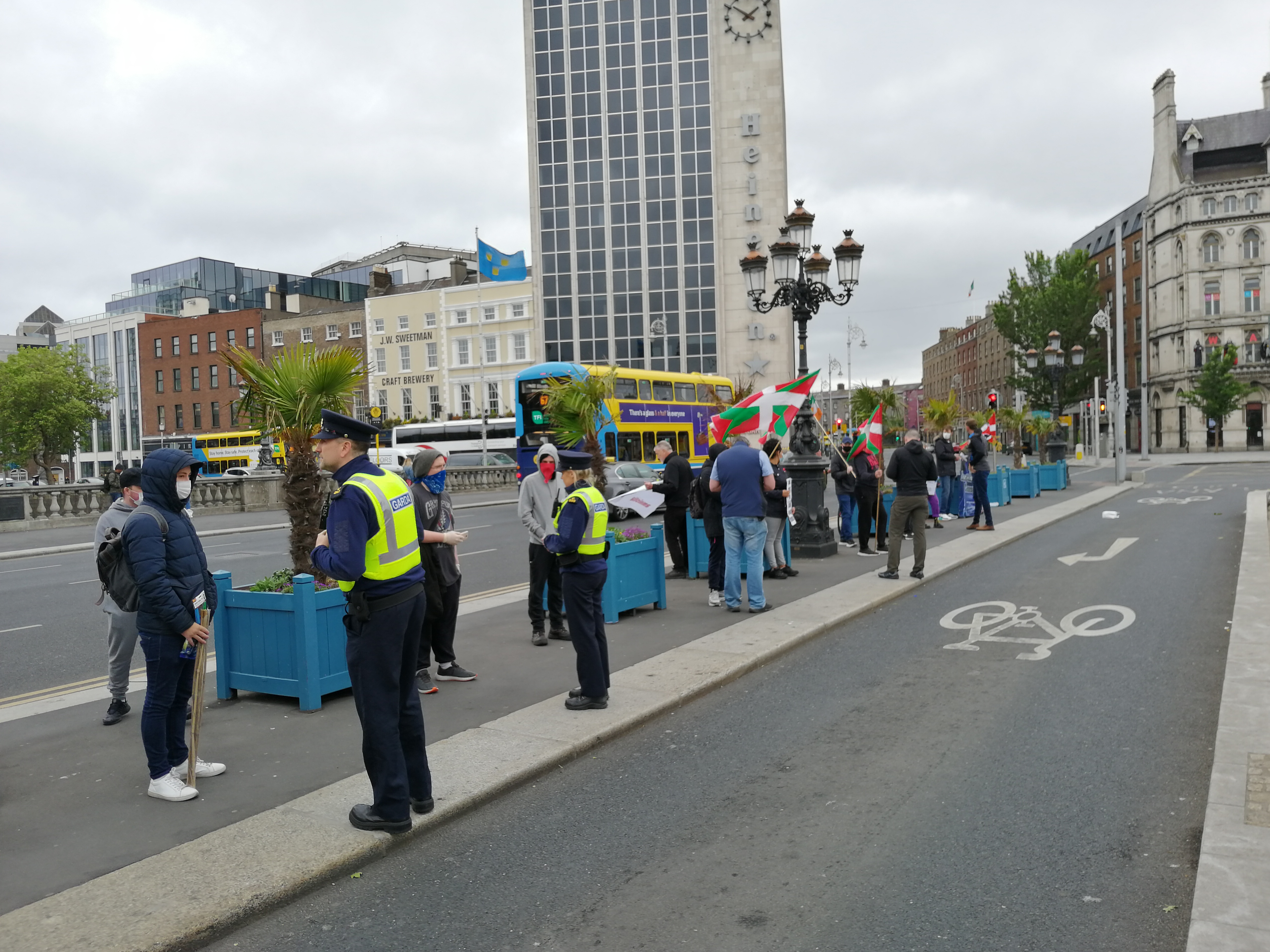
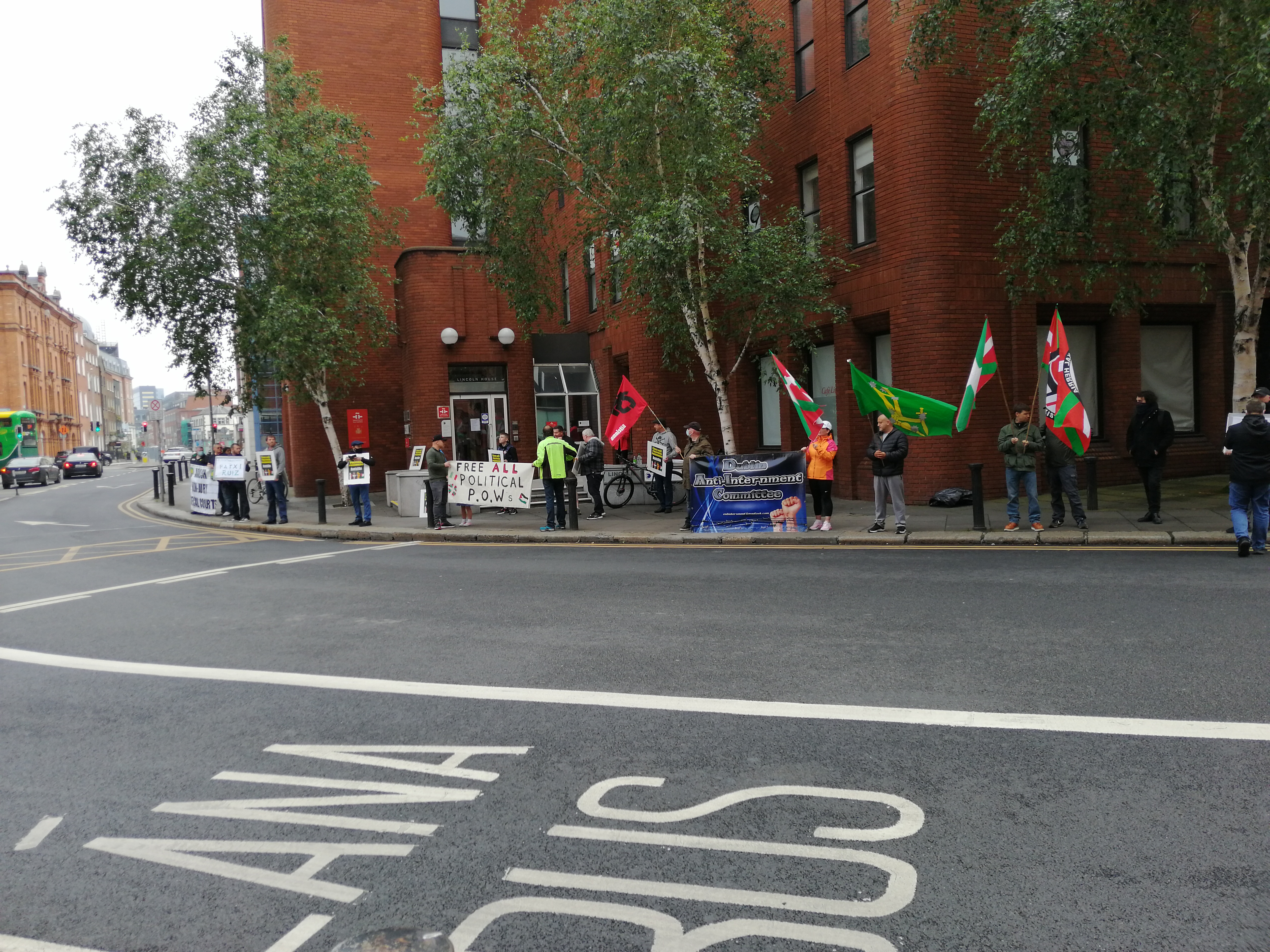
Two separate political prisoner solidarity pickets took place Saturday 13th in Dublin City centre, one on O’Connell Bridge and the other at the Instituto Cervantes, the cultural arm of the Spanish Embassy, on the one-way traffic system at Lincoln Place, linking Nassau Street and Westland Row.

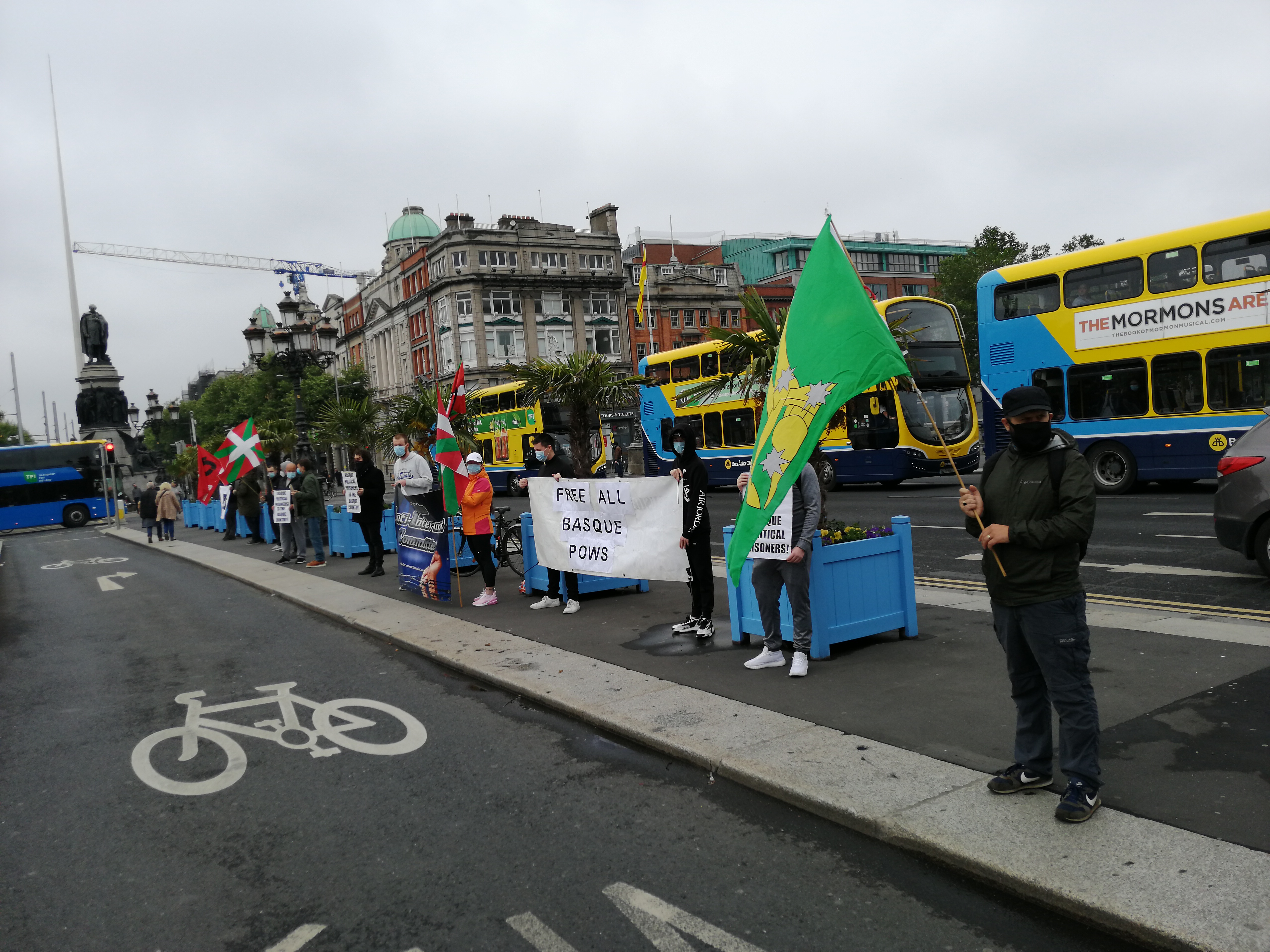
The Basque political prisoner solidarity protest on O’Connell Street last Saturday, looking northward (Photo: C.Sulish)

          The first, at 2pm on the pedestrian reservation on O’Connell Bridge, was the fourth weekly one organised by a broad coalition in solidarity with Patxi Ruiz, who had ended his hunger strike in a Spanish jail on its 31st day earlier in the week. The second picket, outside the Instituto Cervantes at 3pm, was organised by the Irish Republican group Saoradh, not only in solidarity with Basque prisoners but with all political prisoners, although Patxi’s struggle had given the original impulse for a picket at this time. In addition, Irish Republican prisoners in Port Laoise had on Friday embarked on a 72-hour solidarity fast.

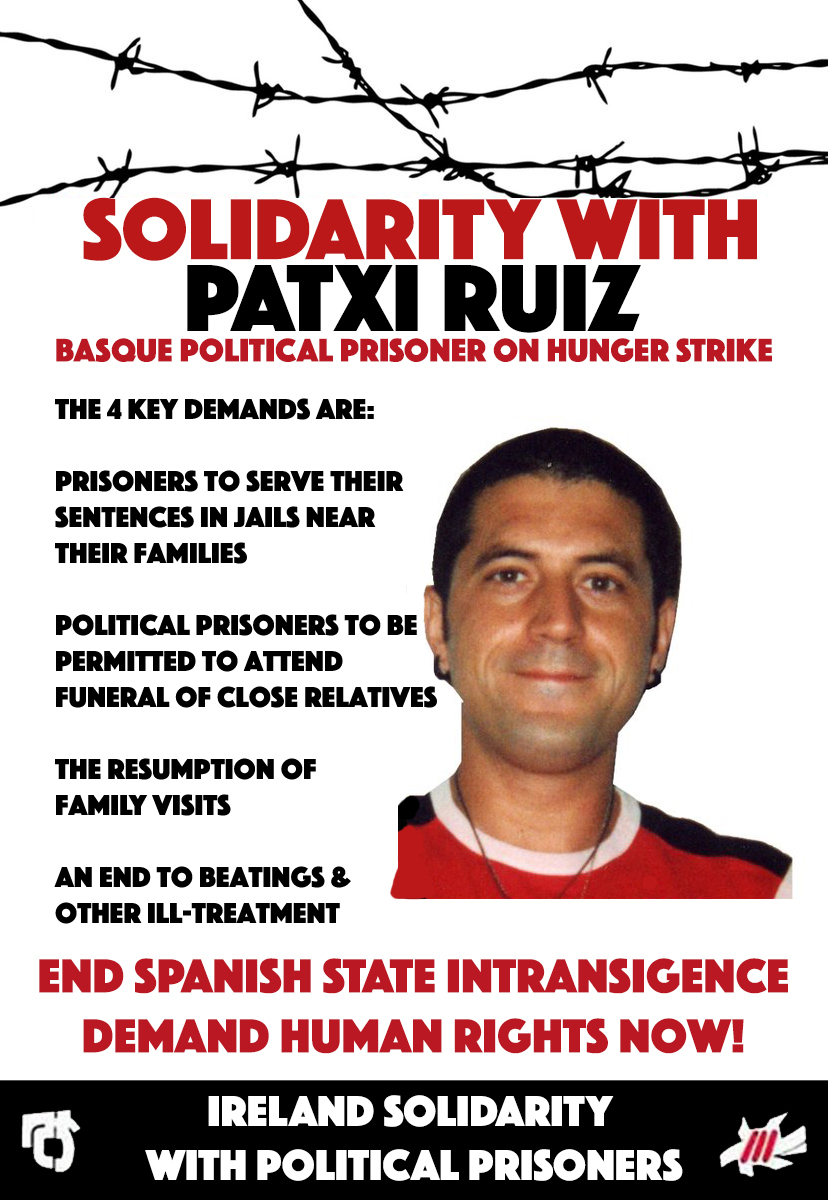
Patxi Ruiz is one of around 200 Basque political prisoners serving sentences in the Spanish and French states, almost invariably, in jails far from their homes, their families and friends, if not too sick, elderly or too young, having to travel long distances to visit them. Ending the dispersal policy was one of Ruiz’s demands, the end of beatings by warders another. He also called for the automatic right to attend funerals of close family (he had been denied permission to attend his father’s funeral) and the resumption of family visits. It is not known whether any of those demands have been conceded but thought unlikely.

Poster produced in Derry for Patxi Ruiz solidarity mobilisation (Image source: Internet)

Although Ruiz is one of five prisoners who have publicly rejected the new path of their movement’s official leadership announced in 2012, his struggle was supported during the hunger-strike by protest mobilisations across the Basque Country, involving pickets, solidarity fasts and sit-ins, protest marches and car-cavalcades. After ten days the official leadership criticised his following through statements by the political parties Sortu and EH Bildu (the latter may be seen as a successor to Herri Batasuna). More recently, the leader of EH Bildu Arnaldo Otegi, generally seen as the main architect of the shift in 2012, publicly attacked the hunger-striker and his support movement, including the Amnistia group, accusing them of directing the whole thing against his party. Amnistia, whose full name translates as “Movement for Amnesty and Against Repression”, replied that they had more important things to focus on than damaging that party’s electoral chances, such as conditions in the prisons, the liberation of their nation and of the working class.

INTERNATIONAL SUPPORT

Plainclothes political police and uniformed Gardaí harassing protesters on O’Connell Bridge on June 6th.

          Patxi Ruiz’s struggle found support internationally: a monster petition in Argentina, a rally in Italy, a mass picket in Barcelona and a number of public expressions of solidarity in Ireland. An ad-hoc coalition of four groups composed of Anti-Internment Group of Ireland, Dublin Basque Solidarity Committee and Anti-Imperialist Flying Column, all in Dublin, along with Derry Anarchists mobilised to support the prisoner’s hunger and thirst strike.  A hunger strike can be sustained by a healthy individual for a number of weeks without irreparable harm, however going without fluids is not only painful but hastens collapse of a number of bodily organs. Fortunately Patxi Ruiz decided to end the thirst part of his strike on the 18th of May.

A Patxi Ruiz solidarity picket in Derry (Photo: Derry Anarchists)

The method political prisoners choose to protest is their choice, not ours,” one of the organisers said in Dublin on Saturday; “our role is to support them and publicise their situation. We don’t have access to the mass media, so if we need to highlight something, what we have is our social media along with whoever shares our posts — and our presence on the street.”

Their first picket was on O’Connell Street in front of the GPO on May 23, the second by the Jim Larkin monument in the same street on the 30th and the last two on O’Connell Bridge in June, while in Derry people gathered at the Free Derry Corner monument every Saturday. Each week photos were taken, some sent to the Basque Country and some published on social media, with an update on the situation.

SECRET POLICE HARASSMENT IN DUBLIN

One of the secret policemen who was harassing the protesters on Saturday. (Photo credit: Clive Sulish)

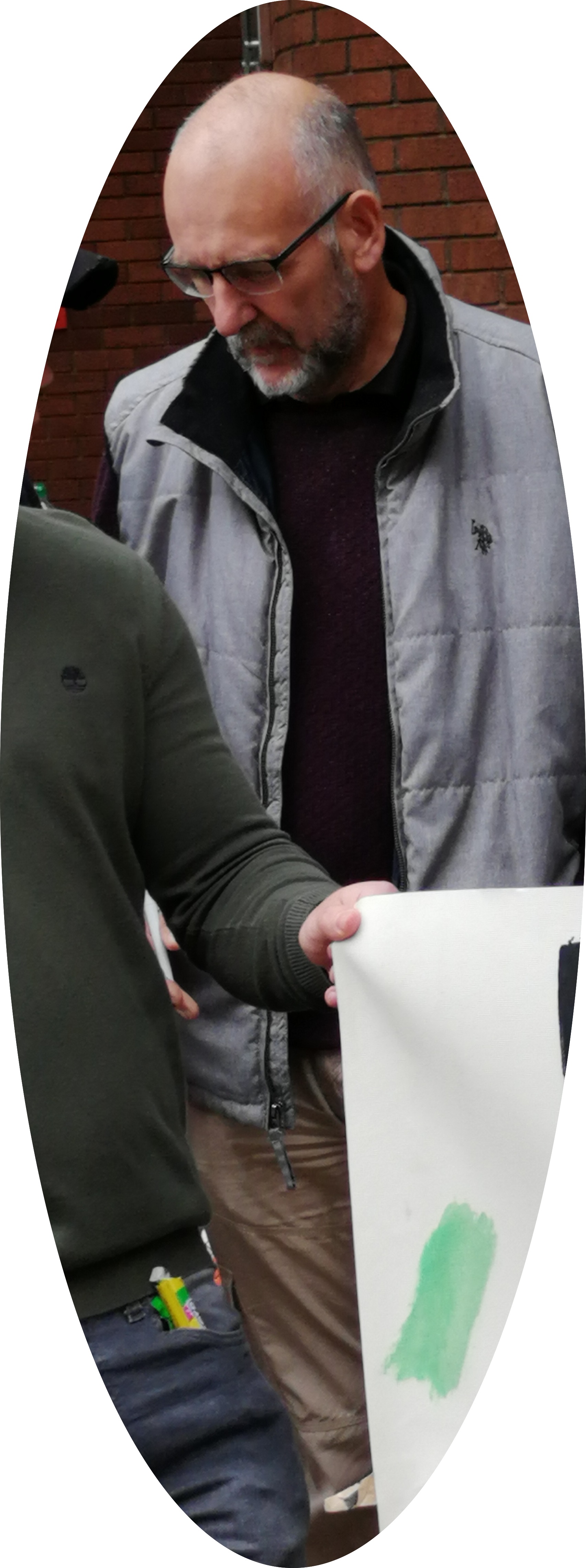
          During a number of those pickets, participants were approached by plainclothes Gardaí, of the political surveillance section colloquially known as “the Special Branch” and required to give their names and addresses. Although the Special Powers Act does give the Gardaí quite extensive powers to question and even detain suspects, they are supposed to have a reasonable suspicion that the suspects are committing – or about to commit — a crime. It is hard to imagine in this case that such reasonable suspicion existed in the minds of these Gardaí and much easier to believe that the purpose is a cross between intimidation and amassing files on people who are carrying out a peaceful protest and breaking no law. Meanwhile a vocal group of far-Right people demonstrating against pandemic restrictions have been staging protests in front of the GPO, reportedly without any interference by the Special Branch. A number of participants commented that the Irish Council for Civil Liberty should be doing something about this abuse of Garda powers.

One of the Special Branch officers questioning a protester who is holding a placard (Photo credit: Clive Sulish)

The secret political police were again very much in evidence at the second political prisoner solidarity picket on Saturday. Organised by the Irish Republican organisation Saoradh, it began at 3pm and soon collected a half-dozen of these gentlemen who proceeded to demand names and addresses from all present. Unable or unwilling to state which crime they suspected the picketers were committing or about to commit ensured that in the case of a couple of strong-willed individuals who understood the provisions of the quoted Act, the ‘Branch officer was unsuccessful. In a couple of other cases their inability to question in the Irish language left them also without success when confronted with some who were fluent and insisted upon their Constitutional right to have the whole exchange conducted “i nGaeilge”. Some of those problems the ‘Branch had encountered before with the picketers in O’Connell Street and on O’Connell Bridge.

Another view of one of the secret police at his harassment work.  The building centre middle distance is Oriel House, interrogation, torture and murder-planning centre of the Irish Free State during the Civil War.
(Photo credit: Clive Sulish)

Neither Gardaí nor protesters remarked upon the irony of the presence of Oriel House less than 100 metres away on the corner of Westland Row. The building, which operated as a police station during the Irish Civil War, was notorious for the torture inflicted on detainees within, as well as being used as an operations base for kidnapping and murder by the Free State Army and Gardaí.

IRISH REPUBLICAN PRISONERS IN PORTLAOISE ON 72-HOUR FAST

          The protesters, who included some from the earlier protest on O’Connell Street, were spread following the curve of the pavement outside the Instituto, which was closed. A number of Basque flags were in evidence, along with a Palestinian one and a number of Irish ones too. Banners and placards completed the display.

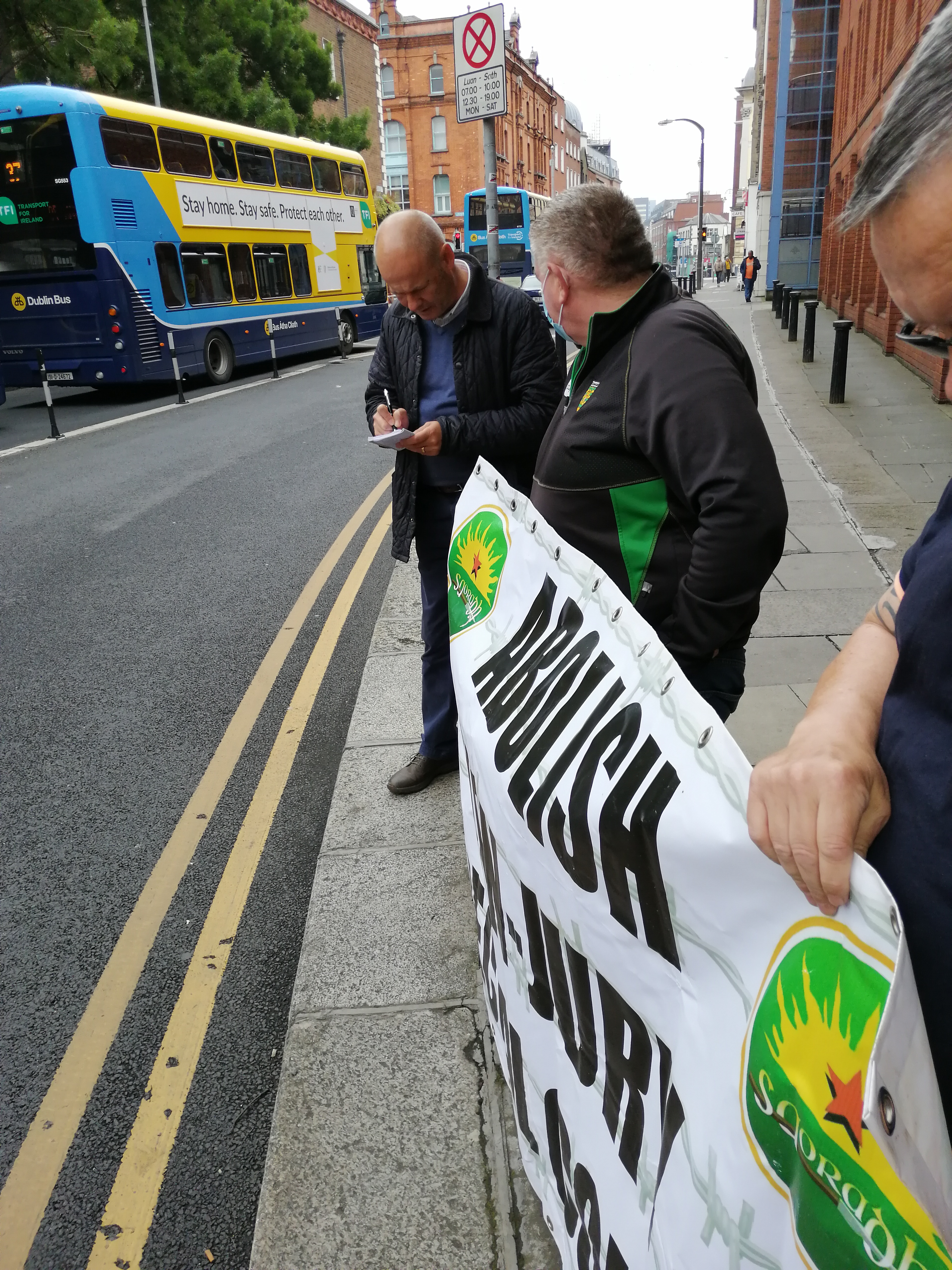
One of the banners on the second picket. The non-jury special courts both sides of the Border are where Republicans are convicted on palry or non-existent evidence and sentenced to terms of imprisonment. (Photo credit: Clive Sulish)

Some time into the protest, the picketers gathered to hear a statement read out on behalf of the Irish Republican prisoners in Portlaoise prison, Co.Laois, Ireland. The statement had been published on social media earlier in the week as part of an announcement of a 72-hour fast of Republican prisoners en Portlaoise, commencing on Friday and expressed solidarity with Patxi Ruiz and other political prisoners arising from the struggles of the Basques, Catalans, Palestinians, Kurds and socialists in Turkey.

One of the banners on the Saoradh picket (Photo credit: Clive Sulish)

The Portlaoise prisoners’ statement went on to point out that they too are political prisoners as are those in Maghaberry and to denounce the strip-searching and sectarian abuse in the latter, along with the antiquated conditions in Portlaoise, as well as the special courts that are used to jail them on both sides of the Border. It also criticised people who campaign about faraway struggles without seeing those at home, along with some ex-prisoners who had signed a recent appeal in solidarity with Patxi Ruiz but who, according to the statement, did nothing about the current Irish political prisoners.  (The End Internment Facebook page of the Anti-Internment Group of Ireland lists around 70 Irish Republican prisoners, mostly in Portlaoise or in Maghaberry).

View of the protest outside the Instituto Cervantes, cultural centre of the Spanish Embassy, Dublin.
(Photo: C.Sulish)
Solidarity with Patxi Ruiz placard in Irish on the 2nd picket last Saturday.   (Photo credit: Clive Sulish).

A statement from the Saoradh group was read out too which, though shorter, covered much of the same ground. Both statements were applauded by those present and the protesters dispersed soon afterwards.

End.

RESPONSE OF THE BASQUE AMNESTY MOVEMENT TO ATTACK BY THE EPPK

IN RESPONSE TO THE EPPK ATTACK ON THE PRO-AMNESTY MOVEMENT

Posted on Sat, 05/30/2020 – 11:46

(translated from Castillian published version by D.Breatnach 31/ 05/2020).

Amnistia demonstration (photo sourced: Internet).

Unfortunately, once again and contrary to what we would like, we are obliged to respond to an attack against our movement. On this occasion it has been the EPPK1 that, while applauding the institutional parties that are part of the system, has launched an attack against the popular movement in an attempt to damage what they do not control.

It does not go unnoticed that the day chosen to publish this attack is the Day of Mobilisations that we have called in support of Patxi Ruiz. In addition to being an electoral movement with its mind set on the elections, the EPPK note, written in one of the Sortu offices, aims to weaken today’s mobilisations. Despite referring to us, we interpret the fact that they do not mention the name of the Movement for Amnesty and Against Repression as a symptom of political weakness. It is our custom to say things more clearly than that. Nothing would call for such action but seeing that they stand to lose hegemony in the street, they act from their gut instead of their head.

We recall other similar attacks that, far from strengthening unity among prisoners, have served to divide the EPPK itself. For example, the false accusation leveled against our movement by prisoners who were being tried in the Paris Court in 2015, had the effect of causing four other prisoners with long sentences to separate themselves from the EPPK. All four publicly criticised it, and things like that should make those who plan these attacks reflect on the consequences that actions of this type have on those inside (including many of the EPPK).

Dealing with the content of today’s EPPK statement, the first thing we should highlight is its lack of rigor. They say that we have used Patxi’s dramatic situation to criticize Sortu, EH Bildu, Etxerat, EPPK and Sare. We must say that these groups are not the navel of the world and that we have put all our strength into Patxi. But in addition to that, we have not mentioned in any statement either the EPPK, or Etxerat or Sare.

We have mentioned EH Bildu and Sortu, always to respond to the accusations hurled by them against the Pro Amnesty and Against Repression Movement. Like the EPPK now, the previous two have accused us of pushing Patxi Ruiz towards his death and, in the face of such petty statements as these, our position will always be firm. We will not accept attacks of this kind in the difficult situation we are experiencing, and less so from those who think only of the elections. We will not admit it from those who have not said anything about Patxi until after ten days, except when it was to criticise the actions in his support.

The position of the Pro Amnesty and Against Repression Movement has been, from the outset, to prioritise Patxi’s life over anything else. For this, we have maintained direct contact with the group that acts as the family’s representative, with the lawyers and with a group of professionals who work in different fields of medicine and who advise us.

All the decisions that we have made in these hard times, including the political initiatives that we have promoted, have been made taking into account and following the advice of these three groups. We ask for respect and responsibility from Sortu and from all the organizations that move in its orbit, towards us, towards the aforementioned groups and above all towards Patxi, who is the one who makes the decision to continue with the hunger strike. Of course, we can assure that we will be supporting Patxi to make the decisions that he makes regarding this issue.

Image used on Amnistia movement’s web page.

ATTITUDE OF THE PRISONERS IN MURCIA II

          We must state that our movement has at no time made assessments of the personal attitudes of any member of the EPPK. We have not doubted the concern that the rest of the prisoners of Murcia II may have about Patxi’s situation. The Pro Amnesty Movement makes political evaluations and far from treating prisoners as if they were “unfortunates”, it treats them like the political militants they are.

For this reason, on May 20 we said that the fact that they had not moved in support of Patxi was a consequence of the “Basque Road to Peace” proposal by EH Bildu and Sortu. Specifically, we explained that entering the game of grade progressions2 left prisoners defenceless in prison, because if they took action they would lose the possibility of advancing in grades. To this we added that we have been warning about the consequences of this path for six years and that the only thing that confirms or denies theories is practice. This case confirms that our theory is correct, above opinions and objectively.

As a last point, it seems really audacios to say that if Patxi was taken to the hospital, it was because the members of the EPPK requested it from the prison management. Patxi was hospitalised on the eleventh day of the hunger and thirst strike, following kidney failure and following a judge’s order.

MEDIATION OFFERED BY SORTU

          On the night of May 14th, Sortu contacted the Pro Amnesty and Against Repression Movement through an intermediary. Sortu offered us to take advantage “under the table” of some contacts it has in Madrid to change Patxi’s situation. According to what we were told, the movement should give them the “green light” for this. They suggested that with the activism we promote, we could be pushing Patxi to continue with the hunger and thirst strike.

The group that looks after Patxi’s situation evaluated ​​the proposal, consulted with those around them and drew conclusions: the first is that Patxi does not want something like this and that his will must be respected. The second is that the only reason for asking for a “green light” can be is that in return we request to stop the street actions. The third is that those who made us the offer (we know how to distinguish them from the party bases), more than for Patxi’s life, are concerned about the consequences that his death can cause in the political situation.

The day after receiving the proposal, we replied that if they have a real option to avoid Patxi’s death, they would not need anyone’s “green light” to take the necessary approaches. Despite the fact that they asked us for confidentiality, on May 19th EH Bildu made public through an electoral note that it had offered us its means to help resolve Patxi’s situation and the next day Sortu, in a note in the same vein, accused us of pushing Patxi towards his death. By making this contact public and making serious accusations, they showed that their only intention was “to get rid of the body on top of them.” We know how to maintain discretion and appreciate the help offered when it is sincere, but we will not allow manipulations tailored to anyone’s partisan interests.

APPEAL TO EUSKAL HERRIA3

          In closing, we call on the Basque Country to continue supporting Patxi, to denounce the attacks against prisoners, and to continue pressing the fight for amnesty. Only the cessation of all kinds of oppression implicit in the political concept of amnesty will bring about a true peace based on justice. We are proud of the response given in Euskal Herria and of the internationalist support we have received.

Issued in the Basque Country, on May 30, 2020.

Pro Amnesty and Against Repression Movement.

https://www.amnistiaaskatasuna.com/es/articulo/ante-el-ataque-del-eppk-al-movimiento-pro-amnistia

Patxi Ruiz Romero, Basque political prisoner, now on hunger strike.
(Image sourced: Internet)


FOOTNOTES

1Basque Political Prisoners’ Collective, part of the Abertzale Left movement following the political line of the official leadership. Currently the vast majority of the Basque political prisoners are following its general line although a number of male and female prisoners have broken ranks to take actions in solidarity with Patxi and a number of ex-prisoners have also published a statement in his support.

2The Spanish penal system applies one of a number of grades to prisoners, according to which the conditions of imprisonment and possibility of early release on parole are decided. Formerly the EEPK, in line with the official leadership of the Abertzale Left movement, the decision was to maintain an attitude of political opposition to the system and to take collective decisions. When the position of the leadership on the overall struggle changed, so too did the recommendations to the prisoners, which was now to respond to the prison system as individuals and progress through the grades in what would be considered ‘good behaviour’ by the authorities.

3 “The Land Where the People Speak Euskera” (Basque native language), the name for the entire Basque Country, north and south.

SPANISH STATE BEGINS TO PLUNDER BANK ACCOUNTS OF THE PEOPLE’S TAVERNS

(Reading time: 2 minutes)

Diarmuid Breatnach

The Herriko Tabernak (People’s Taverns) are a feature of Basque Society, in particular in the Southern Basque Country, i.e the part under Spanish control. Founded by members of the Abertzale (pro-Independence) Left, run by supporters and frequented by sympathisers, they have been a place to have a drink and some pintxos, have a coffee and chat with friends, hold social events and large group meals, as well as occasional meetings. The Spanish State is now seizing their funds.

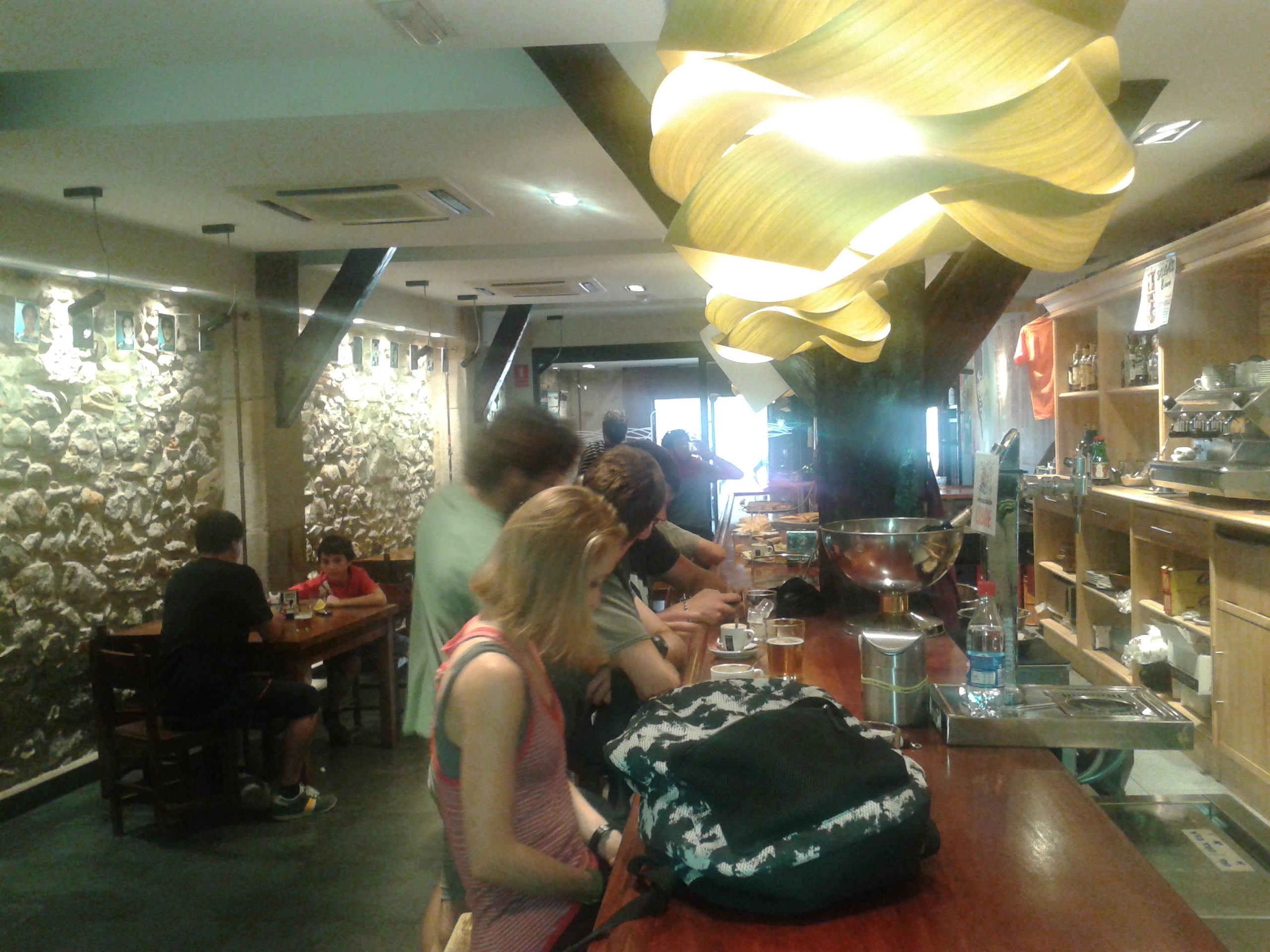
One of the Herriko Tabernak in Bilbo, this one in Errondabide, Casco Viejo; view from the back towards the entrance and street. Photo: D.Breatnach 2015)

          In 2016 the Audencia Nacional, the Spanish National Court, handed down a judgement that the funds of these taverns are forfeit, in what the Abertzale Left party Sortu called “the greatest political and economic plunder since the Civil War”. This is a reference to the wide-scale misappropriation of funds, machinery and land of the losers of that war by the victors, General Franco and his supporters. The wealth of many individuals and families in the Spanish State today can be traced back to that theft.

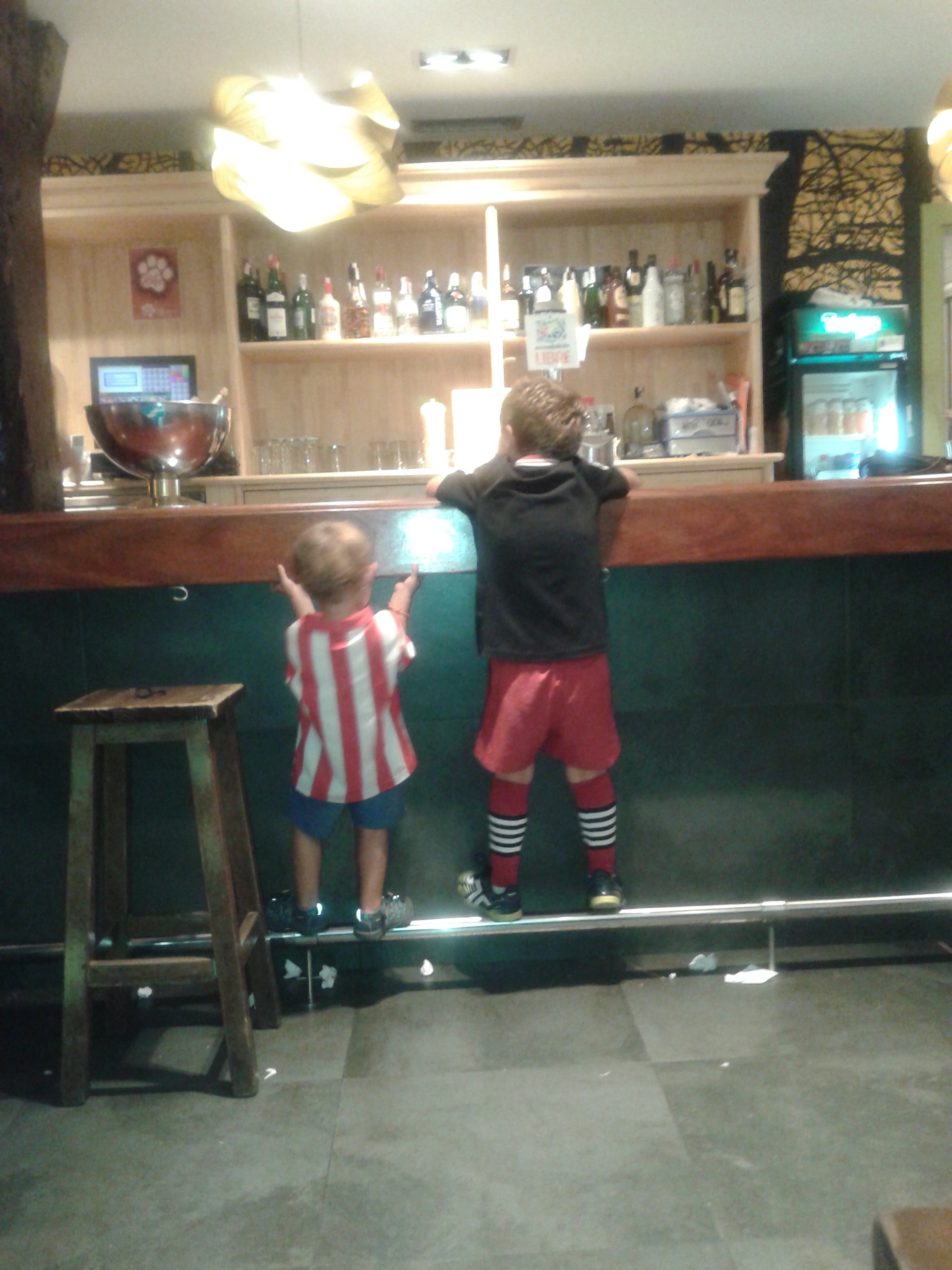
They will not be served alcohol! Parents often meet at the Herriko for a while after collecting their children from the Basque-language pre-schools.
(Photo: D.Breatnach 2015)

While a number of these taverns were closed down in the past, most kept going, supported by their loyal clientele and local communities. Although the punitive judgement of the Audiencia against the Herrikos was in 2016, its origin dates back further to the reign of one of the Audencia’s ex-judges, Baltazar Garzon, who infamously claimed that every aspect of Basque independent expression was linked to the armed organisation ETA. Baltazar, loved by liberals, claimed that “everything is ETA”, under which dictum homes were raided, activists tortured and jailed on their “confessions”, political organisations banned, social and cultural centres closed, along with newspapers, radio stations and social media.

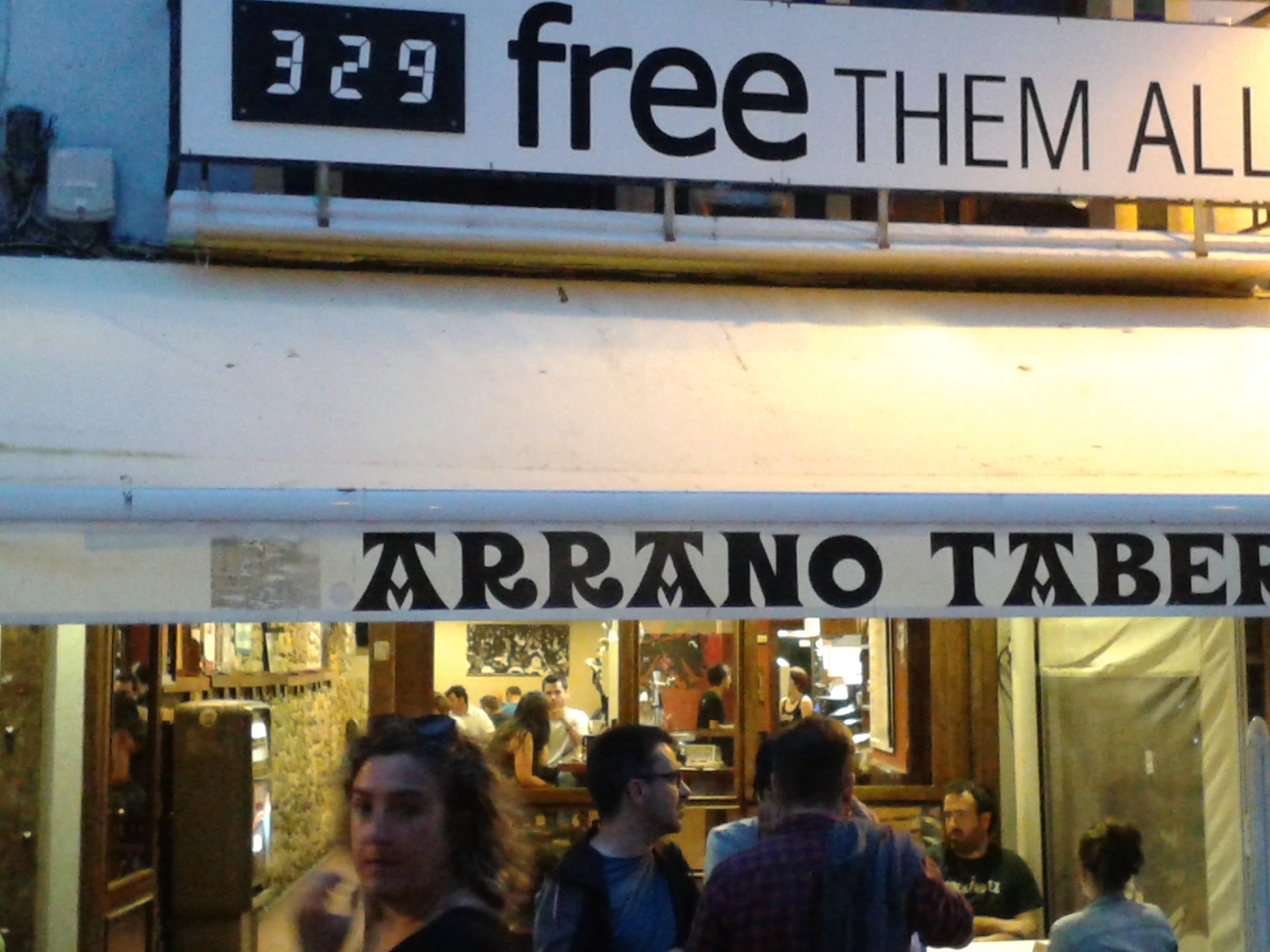
Arrano Herriko Taberna, Zarautz, Gipuzkoa province, southern Basque Country.  Banner above it calls for freeing of the officially-recognised Abertzale Left political prisoners.
(Photo: D.Breatnach, 2018)


Some modest afternoon pintxos available in the Errrondabide Herriko (Photo: D.Breatnach 2015)

EXPROPRIATION TAKES PLACE DURING A MILITARISED LOCKDOWN

          This expropriation is taking place, as commented the left-wing media Izquierda Diario, in the midst of an emergency pandemic lockdown in which more than 7,000 sanctions in little over a month have been applied by the military and police who are in charge of and patrol the streets. (Unlike Ireland and many other countries, people in the Spanish State are not permitted to take exercise outside their homes, whether maintaining social distances or not).

While the judicial apparatus cannot process the massive claims of illegal dismissals, unpaid wages, unpaid ERTEs” (temporary compensation for loss of earnings due to the pandemic) commented the Diario, “or thousands of resources for fines during these days for the restrictions of the pandemic, yes there is time to seize the money of more than 100 taverns.”

COMMENT

Cafe esnea and “Bring the prisoners home” serviettes, Herriko Taberna.
(Photo: D.Breatnach 2015)

          While it is true that in many areas there are privately-owned bars sympathetic to the movement and that also in many areas dissenters from the line of the Abertzale Left official leadership decline to use the Herrikos, nevertheless the disappearance of the latter must entail serious damage to the social and cultural base of the broad Basque independence movement.

end.

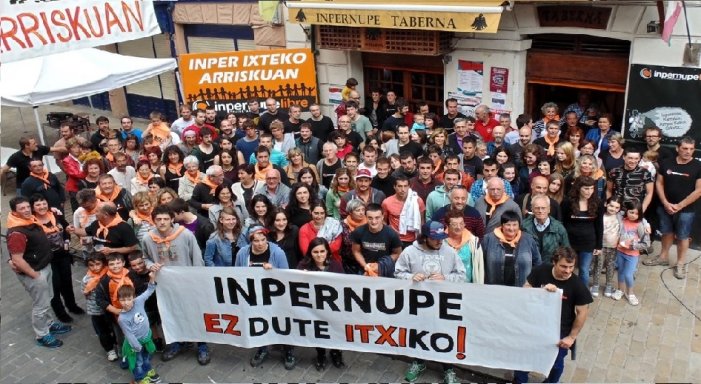
Protest against the original judgement by some supporters of the Herriko Taberna of Inpernupe, Zumaia (scene of some of the Game of Thrones footage), Guipuzkoa Province, Southern Basque Country.  Banner declares “Ipernupe will not close!” while another in background declares it is in danger of closing.
(Source photo: Izquierda Diario)

REFERENCE

http://www.izquierdadiario.es/En-Estado-de-Alarma-la-Audiencia-Nacional-incauta-las-cuentas-de-107-herriko-tabernas

SHOP STAFF WITH GLOVES BUT NO MASKS!

Diarmuid Breatnach
(Reading time: less than one minute)

IN TESCO PHIBSBORO TODAY

Image source: Internet
Staff wearing gloves (at last) but no masks. Distance instructions for shoppers at staffed checkouts but no masks — and what about floor staff, tending shelves, collecting empty baskets, ANSWERING QUERIES FROM CUSTOMERS AT CLOSE RANGE? !!
“Every little helps”?  TOO LITTLE!
 
Criminal neglect by big employers of their staff and also, in the long run, of the wider public. And the unions?!!

Lots of empty spaces on shelves by the way.  And I remembered the toilet paper!

End.

SUSPENDED SENTENCE FOR GARDA WHO ASSAULTED RTÉ CAMERAMAN

Diarmuid Breatnach

(Reading time RB article: 5 mins; I.Times article: 3 mins)

In court on 6th March in Dublin, Garda Sean Lucey, who had struck an RTÉ cameraman with his baton in the groin, although his statement was “less than an apology”, received a suspended prison sentence. He had been found guilty by a jury in December but the Judge had postponed sentencing. Antifascists arrested on the same day as the assault by Garda Lucey, while preventing the proposed Dublin launch of the European islamophobic group Pegida, have been fined and three are still facing trial.

Garda Sean Lucey, leaving the court after his sentencing for assault on a journalist.
(Source: Irish Times).

          It was back on 6th February 2016, coincidentally the centenary of the 1916 Rising, when the islamophobic European organisation Pegida, announcing its intention to launch itself in a major city in every European state, planned a rally to launch an Irish branch in Dublin. The individuals and organisations supporting this initiative included racist, fascist and generally far-Right groups and individuals in Europe, including in Ireland.

Long before the planned Pegida rally, anti-racists and antifascists had occupied the intended space outside the GPO, while groups of anti-fascists mingled with curious bystanders on the other side of the street. Quite soon, some fascists of Eastern European background began to insult some women and also to threaten a filmmaker from Rabble, an independent alternative media organisation, calling him a “ fucking communist”.

Earlier that day, the anti-fascists and anti-racists had occupied the site of the
planned Pegida rally.
(Photo: D.Breatnach)
Fascists of E. European origin make their presence known in North Earl Street through threats and insults. (Photo source: Antifascist photographer)

Having revealed themselves, the fascists quickly became the targets of antifascist hostility and scattered down North Earl Street. Some scuffles took place there and some of the fascists ran on down Talbot Street. Gardaí, including riot police (Public Order Unit) waded into the antifascists and also beat up a fascist, in an apparent case of mistaken identity. Subsequently the Gardaí cordoned off that area with drawn batons and police dogs.

It was soon revealed that some other fascists were holed up in a bar in Cathedral Street and many antifascists made their way there, only to run into another confrontation with riot police who repeatedly struck anti-fascists in order to drive them out into O’Connell Street. It was there that the assault on the RTÉ journalist took place.  It took until December 2020 for the case to come to court while, in the meantime, anti-fascists were charged, convicted and fined.

Gardaí wielding batons in Cathedral St.
(Photo source: Antifascist photographer)

The report of the case in the Irish Times (see References, Sources) reveals three things, it seems:

  1. The fact that his victim was a journalist of the State broadcaster and supported by his union and employers meant the Gardaí could not get away with the assault without some kind of punishment;

  2. On the other hand the Judge was determined to treat the assault as leniently as possible under the circumstances;

  3. The Garda’s whole attitude was in essence that he had done nothing really wrong.

Regarding Garda Lucey’s attitude, which even Judge Melinda Greally remarked upon (“his statement of regret falling short of an apology”), it suggested that he might well have assaulted or would in future assault some other member of the public – especially if he were not a journalist of a State broadcasting service. Perhaps an independent journalist …. or an anti-fascist demonstrator …. or even some member of the public who voiced some objection to his behaviour.

Furthermore, before Garda Lucey struck Mr. Colm Hand in the groin, he struck at his camera. What can that mean? Surely nothing less than that he did not wish his actions or those of his colleagues to be recorded! And perhaps a message to other potential journalists in future. Colm Hand declared that apart from the pain of the injury at the time (which could have caused permanent injury), “what happened on that day shattered my confidence and I have never fully recovered.” The five-day trial in December last year, necessary because Garda Lucey did not admit initially to the offence, was also stressful for Mr. Hand and that and the period leading up to it had caused him worry and sleeplessness.

The Judge must’ve been aware of all these possibilities in future and past Garda behaviour and yet, despite Garda Lucey’s attitude, decided to view his assault as “an aberration.”

This was because, she said, he had no previous blots on his career. But how would those blots have appeared if he had, indeed, behaved similarly in previous situations? Who would have recorded those incidents in his career? The only reason this occasion was noted was because he had struck a journalist of a state broadcasting service and neither the victim, his employers nor his union had been prepared to drop the matter so that, eventually, it had to come to court.

QUESTIONS NOT ASKED

          The Irish mass media – including RTÉ itself — does not ask such questions. Nor speculate whether Garda violence was inflicted on others in that area on that day.  It was and I myself witnessed it. 

Part of the struggle in Cathedral Street.
(Photo source: Internet)

After I moved forward to denounce one Garda who was beating the protectively-raised hands of a protester, one huge member of the POU struck at my fingers with his baton several times and when I evaded the blows, shoved the baton into my stomach, which caused me in reflex to grab it and engage in a short tugging battle, during which he grew increasingly irate and I increasingly worried for my personal safety.

During a sit-down protest outside the Dáil some years ago, Gardaí drew their batons and assaulted demonstrators peacefully sitting down, which was photographed in clear evidence. Not one Garda was charged with assault (nor likely reprimanded) arising out of that incident. And there have been many other such incidents.

No judge should quote an unblotted record of a Garda as any reason for leniency in sentencing. But of course, the judiciary realise that the Gardaí are the first physical line of defence of the system they uphold and for that reason they will always get special consideration. As Judge Greally was quoted as saying, “she has the highest regard for the work of the Gardaí.”

END AND AFTERMATH OF THE PEGIDA CONFLICT

          The Pegida V Anti-racists conflict in which that assault on Colm Hand took place is only vaguely referred to in the Irish Times report – surely a deliberate occluding of context and of an event that would have been of interest to its readers.

After the various struggles in North Earl and Cathedral Streets, Gardaí pretended to arrest the fascists and brought them out in police vans to safety while decoy vans made their way into O’Connell Street, drawing large crowds of anti-fascists to block them and curious onlookers to view the event. Earlier, some Irish fascists coming in to town by LUAS had run into antifascists and never made it to the intended Pegida launch, one needing to go to A&E instead.

Subsequently, antifascists monitoring fascist communications reported that some Eastern European fascists complained of the lack of spine of their Irish counterparts and swore they would never again cooperate with them. Dublin may have been the only European capital where Pegida did not succeed in launching itself and subsequently the whole initiative faded from the news.

Launch of the Pegida ship in Dublin.
(Cartoon D.Breatnach)

As noted earlier, a number of antifascists faced charges and were sentenced in court, including fined. Three Irish Republicans of different allegiances were charged and are currently awaiting trial; their charges are of “violent disorder” which on conviction carry a sentence of up to ten years imprisonment, an unspecified fine, or both. It is the first time this charge has been used by the Irish State against political activists.

End.

REFERENCES, SOURCES:

Irish Times report on sentence: https://www.irishtimes.com/news/crime-and-law/courts/criminal-court/garda-who-assaulted-rt%C3%A9-cameraman-gets-suspended-sentence-1.4195207

Violent disorder charge and penalty: http://www.irishstatutebook.ie/eli/1994/act/2/section/15/enacted/en/html

247 VICTIMS OF FRANCO REBURIED WITH MEMORIAL

https://www.publico.es/politica/247-victimas-franquismo-llevan-anos-almacen-valladolid-reciben-sepultura.html

(Para el informe en castellano haz clic en el enlace)

(Translated from Castillian by D.Breatnach)

(Reading time: 3 minutes)

MADRID 02/15/2020 1:57 PM ALEJANDRO TORRÚS

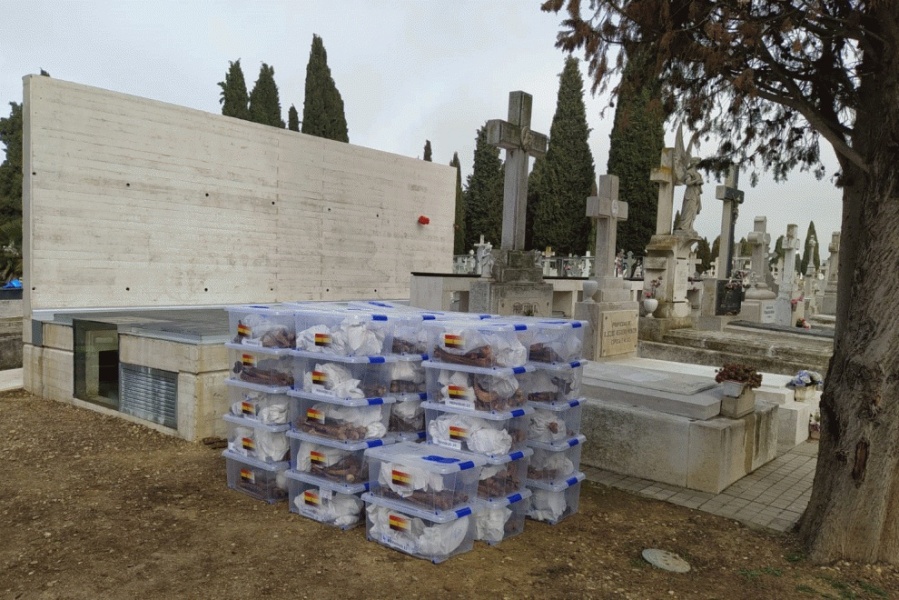
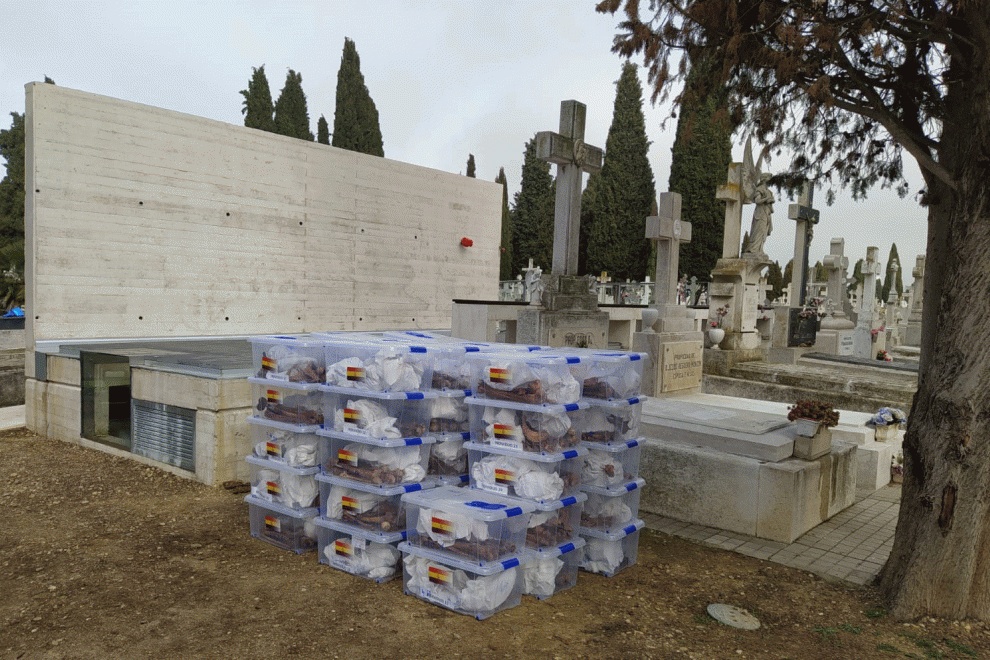
          At last. The remains of 247 victims of Franco that have lain in a warehouse in Valladolid for over two years will be buried this Sunday in a memorial constructed within the Carmen cemetery. This will be the end of a long process that began in 2016 with the exhumations of communal graves in the cemetery itself, paralyzed since for a long time by the insistence of UGT to install a bust of Pablo Iglesias Posse. Finally, there will be a memorial, there will be the names of the more than 2,650 fatalities of the province, the 247 bodies recovered and there will be no bust of the founder of UGT and the PSOE.

(Trans: UGT is one of two main Spanish trade unions and is connected to the social democratic PSOE; both were banned — along with many other organisations — during the Franco Dictatorship but since then the PSOE has been in government more than any other party. Valladolid is about halfway between Madrid and the Bay of Biscay).

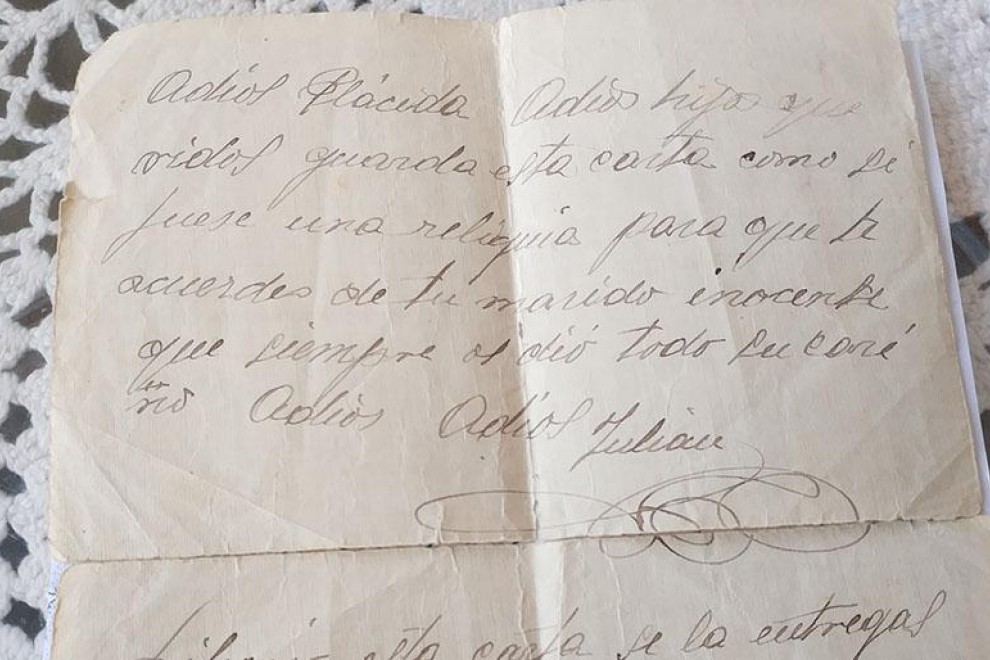
3) Letter sent by Julián Carlón to his wife and children from the Valladolid prison.- ALEJANDRO TORRÚS

“We want this tribute to be an act of democratic recognition and historical justice to all those who defended the Second Republic regardless of the party in which one was active,” explained Julio del Olmo, president of the Association for the Recovery of Historical Memory (ARMH) of Valladolid, responsible for the exhumation and custody of the bodies, to Público.

Memorial built in the Carmen cemetery, just a few meters from the location of the graves of the victims of the Dictatorship. (Photo: Valladolid ARMH)

The event will begin at 12.00 noon this Sunday and will include participation of relatives of the victims, the Valladolid writer Gustavo Martín Garzo, musical performances and the presence of the Mayor of Valladolid, Óscar Puente and the Secretary of State for Democratic Memory, Fernando Martínez.

However, the tribute comes too late for many victims. For example, for Saturnina, who passed away a few weeks ago. Her perseverance and struggle and that of her husband facilitated the ARMH in identifying the place where the graves were in the cemetery and proceed to their exhumation. Saturnina was only a child when Franco’s forces shot her father, Julián Carlón, on October 1, 1936.

Saturnina, in fact, barely knew anything about her father. He was four years old when he was taken. “I only remember the day he was taken and the place where he was buried, which my uncle told me about,” she confessed tearfully to this newspaper in September 2019. “I don’t even know how he was killed. I just know he was taken away, that he never came back and that, from that day, there were only tears in my home. My mother never told me about my father because of fear,” she said. However, thanks to the indications of a relative, Saturnina kept a memory of the exact place where the bodies were buried after their execution.

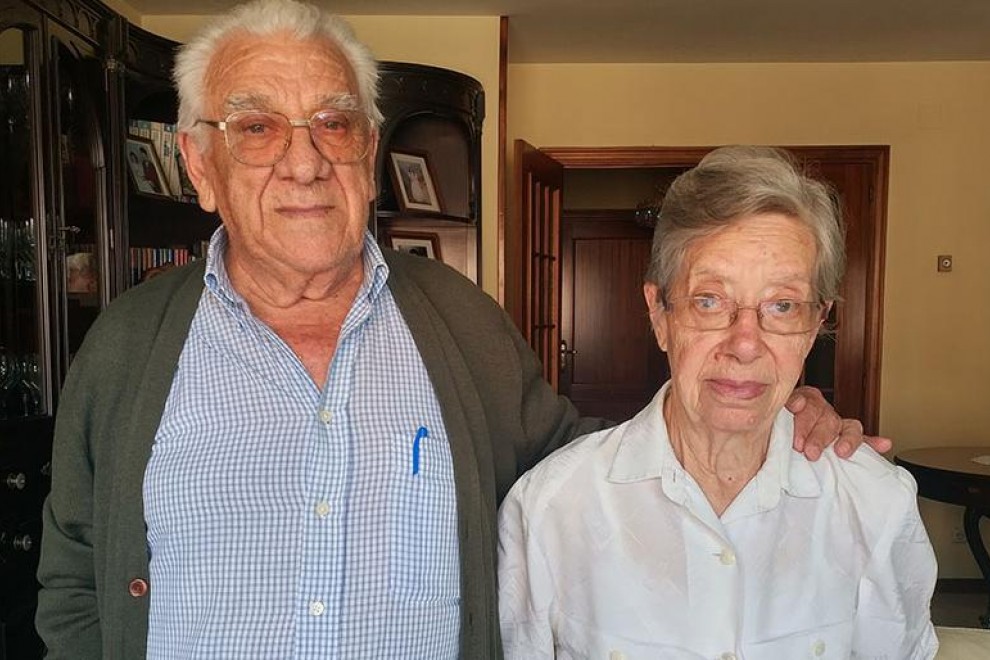
Saturnina & Avilio at home September 2019. Saturnina was 4 years of age when the Francoist forces took her father away and shot him.
(Photo: Torrus)

REMAINS OF THREE WOMEN AND TWO MEN IDENTIFIED

           To date, the Valladolid ARMH has managed to identify “with total security” five of the 247 bodies recovered. These are of three women and two men: Lina Franco Meira; Republican Army sergeant Francisco González Mayoral; the Mayor of Casasola de Arión, Mateo Gómez Díez; and mother and daughter María Doyagüez and María Ruiz Doyagüez.

“Of the four graves with the 247 bodies that we have found, we have only been able to certify those five people to almost 100%. Of many others, we can be almost certain that they correspond to one group or another of those shot, but we cannot name each skeleton. We lack the means and it is a tremendously complicated process,” laments Del Olmo, who, however, points out that the remains of the victims will be well preserved so that, if possible, they continue working on identifications.

Letter from Julián Carlón in Valladolid Prison to his Wife & Children.
(Photo: A. Torrús)

Cases such as that of Lina Franco Meira, which has been identified, are exceptional when 81 years have elapsed since the end of the Civil War. Her bones could be identified thanks to a DNA test sample of one of her daughters, 93 years old. An exceptional case of longevity that has allowed name and surname to be given to some bones and, in addition, allows us to believe that among the rest of those sharing her grave are her other 14 neighbors of the town of Castromocho (Palencia) that were taken along with Lina Franco to Valladolid to be executed and buried.

“SO THAT FRANCO AND AMNESIA DO NOT WIN”

          Franco’s forces not only killed Lina Franco and more than 2,000 people in this province (Castille-Léon). They also tried to erase their names, their life stories and their struggles. Now, 84 years after the coup, a memorial will recover their names and try to spread their fight in defence of Republican values. The challenge, however, continues and consists in being able to identify as many of them as possible so that Franco and amnesia do not win the battle.

End item.

DIMINISHING FAR-RIGHT DEMONSTRATORS BEG GARDA PROTECTION

Diarmuid Breatnach

(Reading time: 5 minutes) )

After weeks of propaganda and whipping up their support, a much-reduced turnout of the Irish far-Right lined up in front of Leinster House on Saturday 1st February and were confronted by an anti-fascist, anti-racist opposition a little smaller in size but which had been convened by word of mouth alone. There were some scuffles and a couple of arrests and the far-Rightists begged for a Garda escort to leave their protest after little more than one hour.

Confronting one another across Kildare St, far-Right and anti-fascists, seen from a little distance (Photo: D.Breatnach)

“FREE SPEECH”?

          The far-Rightists had called the demonstration allegedly in defence of “free speech”, protesting legislation proposed recently by Fine Gael against “hate speech”. Apart from the fact that the detail of the legislation has not been published yet, most on the non-institutional Left in Ireland and perhaps especially Irish Republicans, would be extremely wary of such widely-framed legislation, known to have been used in other administrations primarily against people denouncing the police, political parties, politicians and even royalty.

However, most Republicans and the non-institutional Left would not agree with the “right to free speech” which the far-Right is seeking, which is the “right” to spout virulent and lying material in the course of their racism, islamophobia, LBGTphobia, attacks on women seeking pregnancy termination or campaigning for the right to choose. In fact, we can trace the public start of the far-Right concern with “free speech” in Ireland to July 2019 when Gemma O’Doherty had her Youtube account suspended and then closed by Google, due to complaints that her racist rants were violating Google’s own standards. A similar case occurred in January in Spain when the relatively new far-Right Spanish party Vox had their Twitter account suspended, after they had accused a municipal education program on equality of “using public funds to promote paedophilia”. (see also FAR RIGHT CHANTS OF “PAEDOS” below for more on this issue).

The far-Right demonstrators with Leinster House in the background.  They fly a lot of Tricolour flags in an attempt to convey themselves as ‘patriotic’.
(Photo: D.Breatnach)

Even thinking about the issue for a few seconds will make it clear that there is not and never has been an unfettered right to say whatever one wants in public. Long before there were modern laws against defamation of an individual based on lies, it was forbidden by the Brehon laws (the oldest surviving codified legal system in Europe) which laid down punishment for the offence. Judaic and Christian traditions have it forbidden in the Ten Commandments as have those of many other cultures. The issue is not that all speech should be free but what kind of discourse should be permitted and which should not. And it is precisely that racist discourse, LBGTphobia, Islamophobia and attacks on the rights of women that the Republicans and non-institutional Left oppose, partly for its own sake and partly because it is along those lines that fascism seeks to build itself and split the working people in order to come to rule — in a dictatorship that will soon ban any criticism whatsoever of those in power.

Some confused or misguided Asian anti-blasphemy laws protesters among the far-Rightists, despite the common anti-migration and racist discourse of the far-Right.
(Photo: D.Breatnach)

FAR-RIGHT CHANTS OF “PAEDOS”

          Among the exchange of insults between both sides, at one point the far-Rightists were heard to chant “paedos” at their opposition. The word is an abbreviation of the word “paedophiles”, which describes people who sexually abuse children for their own twisted gratification.

Imagine if some of these far-Rightists were in one’s neighbourhood and began to accuse an anti-fascist of being a paedophile! This is one of the ways in which they abuse any right to free speech.

But in any case, what is the basis for this chant? Do they really believe that their opponents are all paedophiles? No, like the Spanish far-Right party Vox referred to earlier, they count LGBT people as equal to paedophiles, i.e people who sexually abuse children. That is how sick their thinking is. Nor do they believe that all their opponents are LGBT themselves but according to the far-Right, the fact that we uphold the right of people to decide their own sexuality and for consenting adults to choose their relationships, makes us the equivalent of those who sexually abuse children!

View of the anti-fascist, anti-racist demonstrators, at the Molesworth St. intersection, viewed northward down Kildare St. (Photo: D.Breatnach)

SURGE, SCUFFLES AND ARRESTS

          At one point, a surge developed among the anti-fascists towards the south of their numbers and the general Gardaí and Public Order unit (the Gardaí are the police force of the Irish state) charged the anti-fascists with batons drawn, with which they struck a number of antifascists. A man reported to be a fascist, on the steps outside a building on the same side of the street as the antifascists, was seen lashing out downwards, presumably at antifascists, with a pair of crutches. At that point the Gardaí restrained him and later it seems arrested him but apparently they had already arrested an anti-fascist. Most of the police dived at the anti-fascists during this brief episode and a few activists were rescued from police hands. However, a fascist who crossed the road from the Leinster House side with a stick, who took a number of swings at anti-fascists, was escorted back across the road by Gardaí, apparently without any attempt to arrest him.

The man seeing striking out at anti-fascists with crutches before being restrained by Gardaí. An antifascist was arrested during this incident.
(Photo: D.Breatnach)

The far-Right rally had been scheduled for 1.00pm and at 2.15 pm they left, having begged the Gardaí for an escort, with which they were provided. Meanwhile, the riot police prevented the anti-fascists from following them.

However, a brief encounter on the quays a little later between small numbers of both groups necessitated the Gardaí once again to protect these “nationalist” warriors.

Yellow Vest Ireland fuhrer Glen Miller seeking escort from senior Garda officer.
(Photo source: antifascist participant)

DIMINISHING AND DESERTED BY LEADERS?

          Those who fancy themselves as the public leaders of the motley crew of the far-Rightists left their acolytes deserted, for apart from Yellow Vest leader and islamophobe Glen Miller, they did not attend. Neither Gemma O’Doherty nor Justin Barrett were to be seen there and the ex-British Army soldier Rowan Croft made only a brief appearance before vanishing.

As mentioned earlier, although extensively publicised in advance, the numbers of the far-Right were significantly down on previous events outside Leinster House, which may point to a limited reservoir of activists in the far-Right in Ireland, also to some inability to sustain an extended program of public events (after all, keyboard activism has been their main activity until recently).

On the other hand, their opponents, using personal contact only to mobilise from among Irish Republicans, Socialists, Anarchists and general Anti-Fascists of different organisations and none, were able to put together a counter-demonstration of a size approaching that of the far-Rightists.

However, it would be unwise to relax. The far-Right is on the rise across most of Europe; the capitalist system world-wide is heading for crisis and at such times turns to fascism to force the working people to pay for the crisis through austerity. In addition, in Ireland we are already in part of an austerity program with the bank bailout draining our taxes, our health service in crisis and no public housing program to counter spiraling homelessness and mortgage debt.

The Gombeens and foreign capitalists who feed on our sweat and blood will hesitate before taking on the working people in this country in an open fight. But with fascists and racists splitting the working people and diverting them from the cause of our woes, that would be a different matter. Continuing vigilance is required, along with mobilisation to counter their public events. But also, education of the people and giving genuine leadership in fighting for a decent life for working people of all ethnic backgrounds in Ireland.

End.

Cropped photo D.Breatnach)

USEFUL LINKS & SOURCES:

Dublin Republicans Against Fascism: https://www.facebook.com/Dublin-Republicans-Against-Fascism-104013457786981/

Anti-Fascist Action Ireland (they published a report from which I took some of the information here, the rest being based on my observation): https://www.facebook.com/afaireland/?

BALBRIGGAN COMMUNITY UNITES AGAINST FAR-RIGHT INVASION

Published first in Dublin Republicans Against Fascism, reprinted by kind permission.

(Reading time: 2 minutes)

Dublin Republicans Against Fascism commend the diverse Balbriggan community for coming together yesterday, Monday 27th, to confront and ward off a motley crew of sinister far-right agitators who arrived in the town late evening to hold a public meeting.

Dublin Republicans Against Fascism who were present relay the following description of events:

The public meeting was to be an election launch for the carpetbagger candidate Gemma O’ Doherty who traveled from her residence in leafy South County Dublin to attend, and her fellow ACI (Anti-Corruption Ireland) candidate John Waters. A special guest speaker for the evening was to be Justin Barrett, the leader of the far-right National Party, a party primarily made up of landowners, businessmen and wealthy middle class elites.

KEEP DUBLIN TIDY

As they announced their meeting publicly the community of Balbriggan were concerned at the presence of these well-established racists and bigots coming into the town and inciting hatred and division. In response the community of Balbriggan, and at very short notice, assembled at the town square and decided to go down and attend the meeting to confront these carpetbaggers in person. Up to a hundred people from the community marched down the main street of Balbriggan to attend only to find at the venue, a scruffy disused gym down a back lane, to be guarded by three of Gemma’s acolytes who prevented access. Inside the building, and already assembled, were two of the speakers, Gemma and John, and a bussed-in gang of a dozen supporters from across the country.

The Balbriggan community, having been denied access to the public meeting, decided to protest outside the gates. As the time of the start of the public meeting arrived, the Brit soldier Rowen ‘the rat’ Croft (a far Right Youtuber) and two of his Youtube army marched down, with his head held high as a compensatory measure, only to find the gate closed and locked. Rowen ‘the rat’ was left facing the anger of the Balbriggan community with no means of immediate escape. Beads of sweat percolated from his head as he tried to signal to those inside to open the gate.

Ex-British soldier Rowen Croft, one of O’Doherty’s minions, desperately trying to get through protesters into her miniscule meeting (Photo source: Dublin Republicans Against Fascism)

Shortly after this the Führer mobile of Justin Barrett of the National Party arrived. Despite the assembled protest occupying the road Justin arrogantly tried to ram through the crowd and into the gym. He was unsuccessful however as people blocked the front of his vehicle in scenes reminiscent of Joan Burton in Jobstown sitting in a fogged-up car surrounded by an angry community. Justin was seen frantically on the phone to the Gardai and the half-dozen far-right heavies assembled in the building to try and get him access, but to no avail. As it happens, the car Justin was driving was his girlfriend’s car, NP candidate Rebecca “Barrett”. The car had no valid NCT and the tax was out of date by a number of months. This was reported to Gardai but they did not act. Justin, causing tailbacks in traffic was eventually directed by Gardai to leave the area and he was not seen for the rest of the night.

Justin Barrett, Fuhrer of the National Party, prevented from entering by community protest.
(Photo source: Dublin Republicans Against Fascism)

Despite the meeting being on lock down, one of Gemma’s supporters arrived in a 191 white Mercedes. Under heavy garda escort this supporter, who was wearing designer clothes, retrieved what looked like trays of foreign-grown food from the back her Merc and made her way into the building to supply the beleaguered Gemma and co with supplements.

As it became apparent that the meeting was locked down with no access for the Balbriggan community to attend, the protest continued for an hour before leaving the carpetbaggers to their meeting which turned out to be a demoralised echo chamber.

The Balbriggan community showed real unity yesterday. They showed that ethnic and religious differences will not divide them despite the best efforts of sectarian hate preachers like ACI and the NP. Dublin Republicans Against Fascism will continue to support the people of Dublin opposing this travelling carnival of hate wherever they go.

Gardaí protecting Gemma O’Doherty “public” meeting and helping prevent entrance from local community who disagree with her racist and islamophobic speeches.
(Photo source: anti-racist protester)

SOURCE:

https://www.facebook.com/Dublin-Republicans-Against-Fascism-104013457786981/?