An Irish Republican Easter Rising commemoration conducted on Sunday 20th April followed tradition in some aspects but departed in others. The event in Glasnevin Cemetery was organised by the Anti-Imperialist Action group.
As the 1916 Rising commenced on Easter Monday it is traditionally commemorated on various days around the Easter weekend. The actual date however was 24th April which a now-deceased socialist Republican activist publicly celebrated every year as Republic Day in front of the GPO.1
Taken from near rear of the marching columns approaching Cross Guns Bridge. (Photo: R.Breeze)
Among the commemorations organised by Irish Republicans around the past weekend was that by the AIA group on Sunday, rallying by the Phibsboro shopping parade for 1pm, before marching out to Glasnevin cemetry along the Phibsboro Road in two parallel separate lines.
This gathering in the past has been marred by the Special Branch, the political plainclothes police, harassing and attempting to intimidate those present, demanding their names and addresses under anti-terrorist (sic) special legislation. This time they were there but did not approach.2
Just after passing Crossguns Bridge over the Royal Canal, a flare was lit and the march stopped in the street.3
After a short pause the march resumed, led by the colour party,4 six men and women, each carrying a different flag with the Tricolour and Starry Plough in the lead, all dressed in black trousers, white shirts, black berets, sunglasses and lower face masked.
The images of each of the Seven Signatories of the 1916 Proclamation, all shot by British firing squads were on large placards were carried among the marchers: Tom Clarke, James Connolly, Patrick Pearse, Seán Mac Diarmada, Joseph Plunkett, Thomas McDonagh, Eamonn Ceannt.
(Photo: R.Breeze)
A variety of flags were also flown among the marchers, including the green and gold Starry Plough,5 Palestinian flag, Basque Ikurrina and red flags (with gold hammer and sickle emblem on at least one).6 The AIA banner carried at the front bore a quotation from Bobby Sands in Irish.
The march soon passed the main gates of Glasnevin Cemetery to their right but continued before turning leftward to then cross over the pedestrian railway bridge to the newer part of Glasnevin Cemetery and up to the monument to the Six armed struggles referred to in the Proclamation.7
Formed in two lines the attendance was welcomed in Irish and English by the event’s MC, calling also for the reading of the Proclamation of Independence, which a man stepped forward to do. The MC recommended a careful reading of the still-relevant document to attendees from abroad.
Section on the left of the attendance at the commemoration rally with another section to the right out of shot. (Photo: R.Breeze)
Following the reading, the MC commented on the important role of culture in the 1916 Rising8and called on an activist who he said has done much to promote traditional and folk Irish song, who proceed to sing Patrick Galvin’s Where Oh Where Is Our James Connolly? “with some changes”.
Next the call was given for those who wished to lay floral tributes while the colour party lowered their flags in homage to the fallen to commands in Irish, then slowly raised them again before responding to the command in Irish to stand ‘at ease’.
(Photo: R.Breeze)
Another activist was called to read the 1915 statement on the Irish Citizen Army by James Connolly in which the revolutionary leader outlined the police violence during the 1913 Lockout that created the need for the ICA and how it had gone beyond defence in assertiveness.
The statement declared its class allegiance and origins “Hitherto the workers of Ireland have fought as parts of the armies led by their masters, never as members of an army officered, trained, and inspired by men of their own class.”
Reading Connolly’s “To the Irish Citizen Army” (Photo: R.Breeze)
The PA amplification failed on the reader but she carried on in a strong voice reading Connolly’s words that the ICA sought alliance with all progressive forces but remained independent, not to be bound by the limits others set themselves and going further on their own if necessary.9
Another singer was called to perform Erin Go Bragh10 specifically about the 1916 Rising (by Dominic Behan, originally called A Row in the Town).
Singing Erin Go Bragh at the Monument (Photo: R.Breeze)
It is traditional for organisations to deliver a keynote message or statement of aims at 1916 commemorations and a statement was read on behalf of the Irish Socialist Republican Movement (of which the AIA is a part) restating the objectives of national independence and socialism.
In that context the struggles against the Irish ruling class putting the State into imperialist alliance and against the British occupation of the nation, also a NATO member, were greatly important and the Gardaí had broken a comrade’s foot in that struggle.
(Photo: R.Breeze)
Referring to the international context of the 1916 Rising and the international connections of the revolutionary movement in 1916, the MC read out a fraternal message to AIA from the People’s Front for the Liberation of Palestine,11 declaring that the struggles of both peoples are one.
The event concluded at around 2.45pm with a singer performing Amhrán na bhFiann12 (first verse and chorus) followed by an announcement or reminder of a public meeting organised by the AIA titled Rebuilding the Republic to take place at 4pm at a venue not very far distant.
End. Footnotes
1Easter is a religious festival and its date varies from year to year according to computations based on the lunar and solar calendars and cannot fall on the same date annually in the Gregorian calendar (or the Julian one). After the insurrectionary forces had taken possession of the building, Patrick Pearse with James Connolly by his side read the Proclamation outside the General Post Office (GPO) building on the first day of the Rising (after its rescheduling from the previous day, Sunday): 24 April 1916. Tom Stokes tried for years to have the date adopted as Republic Day and annually organised an event outside the GPO on that date. After his death others carried on commemorating the date but rather than outside the GPO, at Arbour Hill. The Republican movement continues to hold its 1916 commemoration events over the Easter weekend.
2Possibly because the dust has not yet settled on the Gardaí’s recent violent arrests on 23 peaceful activists in three different events over four days (See Rebel Breeze’s IrishState Ramps Up Repression) recently.
3This spot has a 1916 history: A group of Irish Volunteers walked from Maynooth on Easter Monday along the banks of the Royal Canal, meeting two Irish Volunteers guarding the bridge and that night slept in Glasnevin Cemetery. The following morning they continued their journey to the city centre. Later, as the Rising was being suppressed, the British soldiers placed a barrier on the Bridge and prevented most people from passing through. A local man who had been deaf from birth failed to heed the soldiers’ challenge and they shot him dead.
4The ‘colour party’ carries the ‘colours’, i.e the flags and usually marches at the front. The number and type of flags varies but Irish Republican colour parties always carry the Tricolour among them, usually followed by the Starry Plough of which for many years the white stars on a blue background version was the most common. Often a flag of each of the four provinces would also carried and the Gal Gréine (or Sunburst) of the Fianna and of the Fenians would be carried too. The Harp on a Green background was another flag that was often carried by Colour Parties.
5The original design of the flag of the first workers’ army in the world, the Irish Citizen Army, created in 1914. It is a plough following the form of the Ursa Mayor constellation with a sword replacing the ploughshare.
6This is usually considered a symbol inherited from the Bolsheviks, the sickle representing the agricultural workers and the hammer, the industrial workers, their conjunction symbolising unity of peasants and industrial proletariat.
71798 and 1803 (United Irishmen), 1848 (Young Irelanders), 1867 (Fenians), 1882 (Invincibles group within the Fenians), 1916 (IRB, Irish Volunteers, Irish Citizen Army, Cumann na mBan, Fianna Éireann)
8Irish language revival, national theatre groups, national sports, poetry, music and song all contributed to an atmosphere conducive to resistance and uprising.
9However it may be for others, for us of the Citizen Army there is but one ideal – an Ireland ruled, and owned, by Irish men and women, sovereign and independent from the centre to the sea, and flying its own flag outward over all the oceans. We cannot be swerved from our course by honeyed words, lulled into carelessness by freedom to parade and strut in uniforms, nor betrayed by high-sounding phrases.
The Irish Citizen Army will only co-operate in a forward movement. The moment that forward movement ceases it reserves to itself the right to step out of the alignment, and advance by itself if needs be, in an effort to plant the banner of freedom one reach further towards its goal. https://www.marxists.org/archive/connolly/1915/10/forca.htm
10The slogan Éirinn (or Éire) go brách (“Ireland for ever”) was rendered in English spelling as Erin go bragh.
11 A socialist and secular resistance Palestinian resistance organisation; its armed wing is Brigades of the Martyr Abu Ali Mustafa which has been part of the armed resistance throughout the period, often in coordination with other groups.
12In a reversal of the usual sequence, the lyrics of this song by Peadar Kearney and Patrick Heeney were first composed in English but later translated to Irish, that being the most popular version of the chorus today.
Thousands marched recently in two cities of the Basque Country, Bilbo and Iruña/ Pamplona,1 respectively the capitals of the Bizkaia and Nafarroa2 provinces, in solidarity with the Palestinian people and with their Resistance.
And almost immediately posters could be seen calling for the same on the 11th November, but in four Basque cities, including a city in one of the provinces on the French state’s side.3
“Well that’s great but sure we do that here every second week or so,” some might say. But they’d be wrong. The marches organised by the Ireland Palestine Solidarity Campaign, while calling for solidarity with the Palestinians and BDS4 of the ‘Israeli’ state and businesses, do not support the Resistance.
The rally stage at the end of the march in Bilbao, on the east bank of the Nervion river. Banner exalting the Resistance in the centre facing the crowd, banner to the left calling for solidarity with the Resistance and another to the right calling for struggle against ‘Israel’. (Photo cred: Resumen Latinamericano)
Nor do the marches organised by the main Palestine solidarity organisations in England or in Scotland. It might be pleaded that in the UK at least, people could be arrested for declaring support for a number of Palestinian resistance organisations that are on the EU “terrorist” list.5
The leadership of the Basque Patriotic Left6 does not support the resistance either, preferring to draw the Palestinians and Basques together as victims under a Gernika-Gaza initiative and even criticising the resistance along with the Zionists in a “both sides” kind of analysis.
But no law exists in these countries forbidding expression of “solidarity with the Palestinian Resistance.” The organisers of those campaign organisations don’t declare for the Resistance because a) they don’t support it or b) wish to remain tolerated by the upholders of the status quo.
View of section of the crowd, giving an idea of its size, the largest Palestine solidarity demonstration in the Basque Country since the present phase of Zionist genocide began on 8th October last year. (Photo cred: Resumen Latinamericano).
IT MATTERS
Well, ok, but does it really matter? Yes, it does and it matters a lot, for the Palestinians, for others struggling against imperialism elsewhere around the world – and for us. Not supporting the Resistance leaves open the question of, for example, the Palestinian Authority.
This Vichy-like organisation headed by a corrupt Quisling sends its security force to intimidate and beat up critics and demonstrators, to arrest them and also Resistance fighters (including invading hospitals to chase down the wounded) and removes defences against IOF invasion.
The PA, despite its widely-acknowledge corruption and the contempt in which it is held by broad Palestinian society, is formally recognised as the ‘representative of the Palestinian people’ by the western imperialists and by many social-democratic parties in Europe.
It is an offence against the Palestinian people and internationalist solidarity to accept the PA as any kind of representation of the heroic Palestinian people – or even to leave the question open. Furthermore, such a stance leaves the door open to all kinds of traitors and confusion.
In our own struggles, we need to be clear who are our enemies and friends. To accept treasonous agencies as representatives of struggling people contaminates our own attitudes in struggle, confuses and undermines our thinking, clouding our vision.
A woman holds high a placard calling to “Free Palestine” and to “Boycott Israel.” (Photo sourced: Internet)
BEING CLEAR AND MAKING IT CLEAR
We need to be clear – and to make it clear – that we support the Palestinian resistance in all its forms: popular, armed, trade unionist, cultural, artistic … and that we abhor collaboration and collusion with the enemy.
We can do that – and it has been done on occasion – by mobilising all who agree on a demo behind a banner celebrating the Palestinian Resistance. But how much better, if like the Basques today in Bilbao and in Iruña/ Pamplona, the whole demonstration marched behind that kind of slogan!
It might be thought that the demonstrations on 5th October would gather less than the safer Gernika-Gaza group of the official leadership of the Left Basque Patriotic movement (Otegi & co.) and other liberals but this was not the case in Bilbo anyway, on the biggest solidarity demonstration since October last year.
Advance posters for the solidarity march. (Photo sourced: Internet)
Two Palestinian Resistance factions, the Popular Front for the Liberation of Palestine and the Democratic Front for the Liberation of Palestine sent messages of thanks to the organisers and the demonstrators.
The demonstration and its theme were covered widely in Basque, Spanish, European and Latin American media, usually with photos.
Addressing the rally after the march in Bilbo on 5th October, a speaker listed the many crimes of the Zionist State and was loudly cheered when she said that only the abolition of that state could bring that career of genocidal crimes to an end.
The cheers grew louder still as she called for solidarity with the Palestinian resistance and all others fighting against imperialism and Zionism. And continued as she went on to call for a break with all states and political parties that support the Zionist State.7
The cheers might even have reached EH Bildu’s office and the leadership of the Gernika-Gaza group.
The march on its way to the rally across the river pauses on the way for photos.The long banner calls for “Support for the Palestinian Resistance” but also ” Oppose Israel and its accomplices.”(Photo cred: Boltxe)
End.
FOOTNOTES
1A number of places with Basque toponymics, under Spanish colonialism, were given Spanish names.
3There are seven provinces in the Basque Country, three on the French side of the Border (Iparralde, ‘the North Country’) and four on the Spanish side (Hegoalde, ‘the South Country’).
6That was the broad movement of legal and banned organisations of revolutionary Left and independentist outlook, the movement now reformist, much reduced and fragmented under the leadership of Arnaldo Otegi and the EH Bildu party.
7That clearly includes the conservative Basque Nationalist Party (PNV) and the social-democratic Spanish Socialist Workers Party (PSOE) currently in coalition government in the Basque Autonomous Regional Government.
Thousands of people gathered this Saturday in Barcelona to defend the rights of the Palestinian people and to condemn the bombings and attacks by the State of Israel in the Gaza Strip.
The demonstration was sponsored by the Palestinian Community of Catalonia and the Prou Complicitat amb Israel (Enough of Complicity with Israel – trans.) coalition and supported by more than 100 entities and social movements in Catalonia.
The event began at six in the afternoon at the crossroads between Avinguda Diagonal and Passeig de Gràcia of the Catalan capital.
Demonstration in support of Palestine in Barcelona, October 21, 2023. — Lorena Sopêna / EUROPA PRESS
All organisations signed the manifesto “Let’s stop the genocide in Palestine. Stop the arms trade with Israel” with a clear desire to condemn the historical repression of the Palestinian people and calling on governments “to stop being complicit in this televised massacre.”
The participating entities declare what is being done is “not in our name.”
The call brought together a cross-section in attendance, from young people to seniors and entire families.
Shouting “Long live the Palestinian struggle” or “Israel murders, Europe sponsors”, the protesters proceeded to Plaça de Catalunya, waving Palestinian flags and posters with slogans in Catalan, Spanish, English and Arabic and images of the crimes committed in Gaza by the Israeli army.
Explanatory leaflets were also distributed directing use of correct terminology when talking about Palestine, encouraging protesters to change expressions such as “conflict between Israel and Palestine” to “Israeli colonisation of Palestine” or “IDF (Israel Defense Forces)” by “FOI (Israel Occupation Forces).
In this same vein, banners could be read expressing “if you are the occupying force, you are not defending yourself”, “Collective punishment is a war crime. Stop the genocide in Palestine” or “Apartheid was wrong in South Africa and is wrong in Palestine.”
EUROPE AND USA DENOUNCED
Given the latest visits by the President of the United States, Joe Biden, and of the European Commission, Ursula von der Leyen, to Israeli President Benjamin Netanyahu, the protesters also accused the European and American institutions of “complicity” and ” sponsorship of genocide.”
The manifesto signed by the more than 100 entities stated: “The EU continues to consider Israel, despite being an extremely racist and far-right government, as a strategic partner, and the United States provides $1 billion in military aid.”
The Spanish Government is not free from reproach either, since, as the manifesto describes, “they have authorised the export of weapons to Israel worth 137 million euros since 2000.”
Faced with the recent Israeli forces’ attacks on Gaza, protesters demanded that the Spanish Government and the EU force Israel to declare an immediate ceasefire and the establishment of humanitarian corridors.
They also called for the suspension of the arms trade and the sanctioning of Israel to end the “occupation, colonialism and apartheid of the Palestinian people” and to “allow the return of the eight million Palestinian refugees.”
(Photo sourced: Prou Complicitat amb Israel)
Finally, they also demanded that the Generalitat of Catalonia “stop considering Israel as a strategic region in the Agency for Business Competitiveness” and have required the breaking of the friendship association between Barcelona and Tel Aviv.
The current Mayor, Jaume Collboni, reinstated that relationship after taking office, overturning its suspension by the former mayor Ada Colau.
COMMENTby D.Breatnach
Despite the overall majority for Catalan independence in Catalonia, there are sharp divisions within the movement on how to proceed and respond to Spanish State repression and these differences find expression also in attitudes to the Israeli State.
In the Basque Country too there have been demonstrations in towns across the southern country (i.e in the Spanish state) by different organisations which have been very clear in their condemnation of the current Israeli bombing but also of the entire Zionist project and Israel’s history.
On the other hand, the only demonstration organised by the “officialistas” of EH Bildu and social democratic allies, which took place in Donosti/ San Sebastian on 20th September confined itself to calls for “peace”, “negotiation” and equal treatment by the Israeli state.
Publicity poster for Palestine solidarity and defending the right to resistance demonstration scheduled for Saturday 28th in Bilbao.
This sharp divergence in what might be called “the Palestinian solidarity movement” has been observed in other parts of Europe too, including Ireland as some elements seek not to stray too far from their state’s consensus while others are determined to break from it.
Oscar DíazTranslation from Castilian Spanish by D.Breatnach (Reading time main piece: 10 mins.)
1. What is Herri Ekimena?
Herri Ekimena is an initiative that emerged in March 2022. A series of organizations began to get together due to concern about the offensive of Atlanticist imperialism in Ukraine, in addition to the blatant manipulation of the media to get us to support their war strategy.
We also observed that, in a context of capitalist crisis and with the excuse of the war against Russia, economic measures were being imposed that resulted in greater impoverishment of the working class.
That is why we took to the streets at that time with the slogan “NATO and the EU condemn us to war and misery”, to turn the official discourse around a little and point to these two organizations as the main ones responsible for the increase in international tensions, as well as for the oppression of the working classes of the imperialist bloc itself.
Also in the month of June of that 2022 we called a demonstration in Bilbo, “against the imperialism of NATO and the EU” and calling for the end of the Russophobia that is still being promoted.
In parallel to the NATO summit that was held in Madrid, we also carried out a 48-hour poster campaign in Gernika, a city with great anti-fascist symbolism that the Ukrainian Nazis tried to appropriate, citing it in a speech before the Spanish Parliament by Zelensky himself.
After a short break, we resumed the fight in the streets at the end of the year, with the “Free Euskal Herria out of NATO and the EU” campaign. In March we held a massive demonstration in Bilbo, together with Askapena1 and the Bardenas Ya2 collective.
View of demonstration against NATO and war in Bilbao, June 2022. (Photo source: Bultza Herri Ekimena)
This demonstration was exciting to us as we saw that the work that had been done was already bearing fruit and that the anti-imperialist spirit that has historically characterized Euskal Herria was projected in the streets.
We are currently in a restructuring process in order to be more effective, and give new impetus to the anti-imperialist struggle in the streets, which is where this game is truly played.
2. Why combine anti-fascist and anti-imperialist slogans?
The imperialist offensive, which has to do with the systemic crisis of capitalism and the rise of new economic powers, is being accompanied by a general reduction of rights and freedoms.
Those in power fear popular revolts, like those that have been taking place in the French State in recent months.
In Euskal Herria we know well what emergency laws or illegal practices are employed to put an end to dissent, but these types of measures are spreading and becoming normalized throughout Europe. Concentration camps for migrants, deportations without any type of legal guarantee, electronic anklet tags are also normalized…
And also in the case of the countries bordering Russia, imperialism is responsible for waving old supremacist and anti-Slavic flags, such as is happening in Ukraine or Poland.
We see therefore that capitalism, in its most decadent phase, has little scruple when it comes to reactivating liberticidal policies or inciting openly Nazi military and paramilitary shock forces.
So in effect, we believe that the anti-imperialist struggle and the anti-fascist struggle are inseparable parts of the same struggle for our rights and freedoms.
3. A few years ago one could see Donbass flags in the stands of Atlethic3. Why mix football and politics?
Through various institutions, including football clubs, they want to force down our throats the supposed “depoliticization of public spaces.” It is false, because they are the first to try to control absolutely all areas of our lives that we may become submissive and uncritical people.
The media bombardment is constant, generating false debates among humble people about insecurity, occupying empty properties… They thus try to legitimize, by action or omission, measures of social control and police repression that are very, very worrying.
So when someone puts a poster on the street to denounce any injustice, or puts up a banner, or paints graffiti… They are calling into question that false normality that they want to impose on us.
Banner displayed by Athletic Bilbao FC fans during a match. The text is difficult to see in its entirety but in general it is clearly in solidarity with the Donbas region against attack from the Kiev administration.
It is sad — but this situation also reflects the weakness of the system in terms of political legitimacy. Who explicitly supports them? Who is not fed up with everything that is happening? So they are afraid of the flame that starts a prairie fire.
Sports venues do not escape this logic of imposing false normality, even if the laws have to be twisted or passed directly through the triumphal arch.
A Donetsk flag, for example, ruins their photo and calls into question the story that people agree with what they do. So they impose fines of €3,000 just for displaying the flag of a People’s Republic.
Let’s hope that in not many years we will be able to analyze all this as the blows of a dying regime, but for now it is up to us to organize the response and popular solidarity. Repression should not be normalized, nor should people who step forward feel alone.
We do not believe that the social base of EH Bildu is in favor of NATO. That is, if we asked EH Bildu voters if they were in favor of NATO, surely 99% would say no. The problem is that, for its leaders, opposing Atlanticist imperialism is not currently on the list of priorities.
Regarding the issue of the war in Ukraine, Arnaldo Otegi5 has openly positioned himself in favor of Ukrainian “sovereignty” and against the Russian “occupation.” Is Ukraine now a sovereign state? Or is it rather a puppet of NATO in its offensive against Russia?
Doesn’t Russia have the right to defend itself from NATO attacks? What about the thousands of people killed in Donbass since 2014? Should Russia have been obliged to watch this genocide impassively?
Have the self-determination processes in Donetsk, in Lugansk, in Crimea … not been practical exercises of sovereignty? In this context, we can say that the speech of some EH Bildu leaders has favored and continues to favor the interests of NATO.
Their support for the State Budget deserves special mention, which includes a 25% increase in military spending. A measure imposed precisely by NATO to approach 2% of GDP in 2029, which is truly outrageous.
So… perhaps it is harsh to say that EH Bildu is in favor of NATO so let us put it another way: What is EH Bildu doing to make Euskal Herria break with NATO? What teaching are they carrying out among their social base and at a public level to create a truly anti-imperialist consciousness?
Very little or nothing, we believe, that is the reality.
5. Will it be possible to continue to see reliable information about Ukraine in the Basque Country and the Spanish state now that military juntas have been formed in African countries that have expelled French embassies? They are very different countries and thousands of kilometers away…
The events that are taking place in the SAHEL area are complex processes, and surely have many sides that make it difficult for us to equate them with the decolonization processes that we have known historically.
But we would be committing a mistake if, due to these supposed “imperfections” with respect to the theoretical manual, we stopped supporting countries that are fighting for nothing less than to expel their occupiers (since those are true occupiers who try to impose themselves by force of weapons thousands of kilometers from their borders) and also to gain control of their enormous natural resources.
How can it be that in extraordinarily rich countries, like Niger or Gabon, the majority of the population survives in absolute poverty? We will have to carefully observe all these processes, but in anti-imperialist Euskal Herria we can only rejoice and tell them that they are not alone.
In this land that, to a degree, also knows what it is to fight against armed occupiers and various collaborators, we know very well that solidarity is the love between people.
Regarding the quality of the information that we are able to receive in Euskal Herria or in the Spanish state, we believe that right now it is below minimum.
It is pathetic to see how, every time an event occurs that could undermine the hegemony of Atlantic imperialism, the mainstream media wait to receive instructions before even reporting the event.
The control of capital over the big media is a reality, so we must promote and support alternative means of information and communication. And also to fight openly in the streets, so that they have no choice but to report our demands.
6. Couldn’t the creation of a multipolar world be dangerous on a war level?
Yes, in fact it already is. We had been talking for years about the end of Yankee hegemony and the economic rise of countries like Brazil, Russia, India, China and South Africa, the so-called BRICS.
Perhaps we thought that this change of orientation of world hegemony was going to be a calm process, without any surprises…
But nothing could be further from the truth. While it is true that Yankee imperialism is mortally injured (which we believe it is), the truth is that it seems willing to kill as it dies.
Currently it has restructured NATO in a few months, has de facto absorbed the European Union and is reconfiguring its alliance policy on a global scale. It is increasingly easier to identify “which side” the different states are on, which can be the prelude to a conflict on a planetary scale.
We have been able to verify this recently with Morocco. NATO and the EU buy Morocco and abandon the Sahara to its fate.6 What should the Sahrawis do if Algeria, Russia or China offer them help to win their rights and survive as a people?
Of course there may be geopolitical interests in this aid from emerging powers, but it is necessary to analyze whether the agreements, commercial exchanges, donations and aid are produced with mutual respect for sovereignty and benefit the currently oppressed nations.
Of course, from a revolutionary point of view we have to be exacting, and not give a blank cheque to these emerging powers.
In this entire process of multipolarity, whether we like it or not, which is already making its mark upon world geopolitics, there is a class struggle that we must not ignore.
But this critical stance cannot lead us to fall into ninism and evade our own historical responsibility: to combat Atlanticist imperialism from the very heart of the beast.
7. You say “Euskal Herria free from NATO.” And what about the rest of the Spanish state?
We say Euskal Herria should be free outside NATO, but also outside the EU. We believe that this contribution is important, since for many years consideration of leaving the EU has been a kind of taboo, also in Euskal Herria.
Some thought that the EU might even support a possible independence process in Euskal Herria, just as was thought in Catalonia.
“A Free Basque Country out of NATO and the EU”.
But the EU has definitively been revealed as a capitalist lobby, as an instrument at the service of elites with a more than dubious past, even with regard to their support for Nazism.
Úrsula von der Leyen, Josep Borrell… are faithful representatives of the EU of Capital, authoritarian and totally committed to the interests of the US. That is why we say that neither the nation nor as a class have a future within the EU.
We make this statement from Euskal Herria, which is our area of struggle. But of course it extends to the entire Spanish State, as well as to the French State and all the peoples of Europe.
A future in freedom is not possible belonging to these criminal organizations, neither in Euskal Herria nor anywhere else.
8. What do you think of the military administration by Margarita Robles of the PSOE/UP government?7
Margarita Robles is a pit bull of Spanish politics, a woman who knows perfectly the ins and outs of the State from the offices to the sewers. Not for nothing has she been in positions of power for more than 30 years, originally in the shadow of Belloch, later of Rubalcaba…
At first it may have been surprising to see her at the head of a Ministry like the Defense Ministry, she who comes from the judiciary and who, even in relation to the conflict between Euskal Herria and the Spanish State, had adopted a dialogue profile at certain times.
We are missing a lot of information (I wish that we in Herri Ekimena knew what was going on in the Ministry of Defense, haha), but Margarita Robles is probably dedicating herself to doing in the Spanish military what she also did in her day in the Ministry of Justice and Interior.
That was to send the most archaic elements to the refrigerator in a non-traumatic way to perfectly adapt to the current standards and guidelines of NATO and the EU. Change a minimum so that everything remains absolutely the same.
Can anyone imagine Spanish generals standing up for Spanish national sovereignty in the face of Atlanticist imposition? This could happen in the French State, in fact it would not be unreasonable for something like this to happen.
In the Spanish State it is much more unlikely, but it is the responsibility of politicians like Mrs. Robles that nothing should deviate from the script written by Washington and Brussels.
In this regard, it is worth highlighting the role of the PSOE in what has been the process of integration of the Spanish State into imperialist structures. In addition to Felipe González, we could mention Javier Solana (who became Secretary General of NATO), Josep Borrell8…
Whether it is a matter of affinity, or a matter of pragmatism, the truth is that it appears that the PSOE generates a lot more trust among the imperialist powers than any other political party at the level of the State.
9. There were elections this past July 23, 2023. Did any of the political forces propose the departure of NATO from the Spanish state?
We are not aware that this was the case. As we have said before, this government is responsible for the largest increase in military spending in history, and faithfully complies with NATO and EU mandates.
“No to NATO – Out of Bardenas!”
Vice President Yolanda Díaz has publicly supported sending weapons to Ukraine and, as far as we know, no party that supports the government has opposed these shipments as a matter of principle.
We remember that these are weapons that are being used by Nazi soldiers to bomb and murder, not alone Russian soldiers but also the civilian population of Donbass. So we have to organize and fight in the streets, because if we don’t, things will remain exactly the same or worse.
This is the reason for existence of Herri Ekimena, to activate the popular struggle against the imperialism of NATO and the EU. We are working at it and, if all goes well, there will be good news in this regard in the coming weeks.
1Askapena was the internationalist solidarity arm of the broad Basque national liberation organisation but split from it many years ago in concern at the deviation from the path of resistance by the leadership under Arnaldo Otegi.
2Bardenas Ya is an organisation campaiging against the military installation in Bardenas, Nafarroa (Navarre).
3Athletic Bilbao FC, whose fans and many of its players have a strong anti-fascist and pro-Basque independence tradition.
4EH Bildu is the political party of the current compliant ‘official’ leadership of the Basque national movement, replacing the Herri Batasuna of the past.
5Leader of EH Bildu who has led the party into what many consider its collaborationist current stance.
6Western Sahara was a Spanish colonial possession and it abandoned it without decolonisation, which allowed Morocco and Mauritania to invade and occupy it against the wishes of the Saharawi people. As a result of the national liberation struggle of the Polisario Front, Mauritania withdrew but Morocco remained in occupation and carrying out repression against the resistance. Shortly before Trump’s departure from the USA’s presidency, he agreed to endorse Moroccan defiance of the UN-recognised Sahawarwi resistance to occupation in exchange for Morocco reversing its long anti-Zionist policy and formally recognising the Zionist occupation of Palestine, which the Moroccan Kingdom has done.
7The recent coalition Government of the Spanish State, the social-democratic PSOE with the Left-social democratic alliance of Unidas Podemos. Currently, the PSOE is endeavouring to form a government in coalition with a somewhat reconfigured Left-social democratic coalition called Sumar.
8All three have been PSOE politicians, Felipe González a prime minister and widely believed head of the GAL anti-Basque terrorist gang. Borrell was President of the European Parliament (2004-2007) and Minister of Foreign Affairs of the Spanish Government from 2018 to 2019. He attacked Catalan self-determination which he characterised as part of a disease, despite his own Catalan origin and he is now the Foreign Minister of the European Union.
Kontxi Arana, code name “Rita”, was a fighter of the Basque armed organisation ETA and also of the Sandinista movement. A ceremony of homage to her memory on 22nd April was also the occasion of an antifascist conference with representatives from a number of European countries.
The event took place in Gernika, the SW Basque town infamously bombed by German and Italian Nazi and Fascist squadrons during the Spanish Civil/ Ant-Fascist War, the act which inspired the Catalan painter Picasso´s famous piece on the event (which he called by its Spanish name, “Guernica” (sic)). The venue was the disused Astra factory, formerly manufacturer of handguns.
The Origins and Nature of Fascism
The day-long anti-fascist conference began with a talk on the origins and basic nature of fascism by Iñaki Gil de San Vincente, Marxist theoretician and veteran of the Basque Left Patriotic Movement from which leadership of however he has broken for a number of years.
Speaking in Castillian, he declared the essential nature of fascism to be authoritarianism, deriving from the development of the bourgeois family. The central authority figure in that family, later reproduced in other social classes including the working class is the Father, represented in capitalist society by the employer and the Church.
It is an authority to which all are required to submit: patriarchical, homophobic and intolerant of criticism or deviation.
De San Vincente spoke at length about this development and about early descriptions of fascism, for example by Clara Zetkin and Lukacs and described it as a production of capitalism and imperialism and therefore represented today most clearly in the actions of US Imperialism and the NATO over which it exercises hegemony.
The speaker also highlighted the development of NATO and its recruitment of Nazis as well as the development of its Vatican route for Nazis to leave Europe and enter Latin American countries where they would form fascist centres.
This talk was followed by a representative of Ezkerraldea Antifaxistako (Antifascist Left) who, speaking mostly in Castilian, outlined the history of the development of fascism in the Spanish state following the military-fascist uprising and the four decades of dictatorship, and how the organisation he represented responded to that.
The final speaker of the morning session was from Mugimendu Socialistako (the Socialist Movement – organisation with a large membership, according to a participant) who spoke entirely in Euskera (Basque language). Although simultaneous translation was provided into Castilian (Spanish), the volume of such was too low to be understood by many.
Morning session of the anti-fascist conference in Gernika (Photo: DRAF)
According to a participant, the content of that speaker´s contribution was similar to that of the previous speaker, although he mentioned the existence of Frente Obrero (Workers´Front), a Basque organisation which, despite its name, is a fascist organisation. The existence of that latter group appeared to be news to many present.
These talks were followed by a break and, upon resumption, there were some contributions from the floor and some responses from the panel, after which all repaired to the green outside the Astra building to where the ceremony of respect to the memory of Kontxi “Rita” Arana was to take place.
Kontxi Arana: A leading Basque liberation fighter who also joined the Sandinistas in the liberation struggle of Nicaragua
A Basque woman of the independent Patriotic Left movement blew the traditional cow or bull horn to summon attention, while the speaker in the Basque language introduced the program and speakers along with a short history of this internationalist anti-imperialist and anti-fascist fighter.
Kontxi Arana was an active member of the Basque armed liberation organisation ETA who avoided capture while on operations in the Spanish State but was arrested in the French state and exiled to an island, from which she and others escaped. Sometime later she surfaced in Nicaragua, where she had joined the Sandinista armed liberation movement.
Around the end of the 1990s, the leadership of the Basque Patriotic Left asked some exiles to return to the Basque Country to help push the pacification process and release of prisoners but the Spanish State refused to play, though they did not arrest Kontxi (however according to reports arrangements were not well organised to support her).
Most of the crowd present at the Gernika commemoration and homage to Kontxi “Rita” Arana, with the Astra building in the background and the railway line fence just visible in the left background.
The homage to her memory
A man formerly of the official patriotic Left movement spoke in Spanish about the need for internationalist solidarity, through which however mistakes can be made (e.g. in supporting corrupt leadership) which however does not alter the importance of such solidarity, without which the revolution cannot advance.
This was followed by a man from Dublin Republicans Against Fascism who briefy explained in Castilian (Spanish) the history behind Christy Moore´s “Viva La Quince Brigada“, which the Dubliner then sang in its original English.
Dublin Republicans Against Fascism representative singing Christy Moore’s Viva La Quinze Brigada.
The homage event concluded with red carnations being laid by members of the audience in front of a portrait of Kontxi “Rita” Arana. Two ex-political prisoners played the ´txistu´ (Basque three-hole flute), one of them also beating a rhythm on a small drum (´tamborina´). A young woman stepped forward and danced the ´aurresku´, a traditional honour dance.
Crowd queuing to lay red carnations in front of a portrait of Kontxi Arana
This dance was traditionally danced by a male, then by male dancers, then by male and female dancers until today, when it may be performed by any of those combinations or by a lone female, as in this case, and often enough in ordinary clothing as was the case on this occasion, though she did wear dancing shoes laced to the ankles.
The young woman performing the honour Aurresku dance in one of the high kicks of the dance with, to the far right, the ex-political prisoner txistulari (players of the Basque flute). In the immediate background, participants and organisers. (Photo: DRAF)
The musicians then played the air of The Internationale, which most could be heard singing in Euskera, followed by Eusko Gudariak (“Basque Soldiers”), the Basque national resistance song, similar to the Soldiers’ Song/ Amhrán na bhFiann of Ireland in content. Many had raised clenched fists as the songs were sung.
Suddenly, a wild high-pitched yodelling cry rang out from a female throat, the Irrintzi, traditional Basque battle-cry which probably echoed around the mountains in olden days.
All the audience then repaired to the Astra building where a hot meal was served to all on long tables with a bottle of wine to share among each group of several people (those present had purchased tickets to the event either in advance or upon attendance).
Afternoon session: Presentations from Turkish, Irish and Catalan antifascists.
The afternoon session started a little late as people straggled in. The chairperson, speaking in Euskera, introduced the theme of the session which was for antifascists from Turkey, Ireland and Catalonia to describe the situation with regard to fascism in their countries and how it was being confronted.
Turkey
Two people from the Turkish-based revolutionary organisation Anti-Imperialist Front presented their contribution while using a video of images, some subtitled in Castilian but where not, spoken by the woman in English while her comrade translated simultaneously into Castilian.
Overall, the presentation was about the development of state fascism in Turkey and the failed military coup of 2016. The DHKP/C organisation had resisted this on the streets but a major struggle with the Erdogan government took place in trials and in the jails.
Through hunger strikes and physical resistance in the jails, hundreds of martyrs had lost their lives, said the speaker but had remained undefeated. Also martyred had been members of the Group Yorum music group which has played revolutionary songs heard by millions.
Another struggle was carried out through public hunger strikes by elderly relatives seeking the uncovering of mass graves in the bodies of fighters, their sons, had been thrown by the Turkish military.
As a result two mass graves had been eventually disinterred, permitting the remains of fighters of the DHKP/C and of the PKK (Kurdish patriotic socialist organisation) to be returned to their families for respectful re-burial.
The Turkish speakers concluded by stating the necessity for anti-fascism to be anti-imperialist and calling for internationalist solidarity and victory to peoples’ struggles.
Section of audience at afternoon session of the anti-fascist conference in Gernika, Basque Country.
Ireland
The next speaker was from Dublin Republicans Against Fascism, explaining that eight centuries of occupation of his country by England has ensured that the dominant struggle had been one of national liberation and that all armed struggles since 1798 had been led by Republicans of various kinds: 1801, 1848, 1867, 1882 and 1916.
The Irish State that came into being after the War of Independence in 1921 had been a client of the UK, conceding over one-fifth of its national territory as a direct colony. The armed forces of the State had formally executed over 80 of the IRA and instituted a wave of repression including kidnappings, torture, murders including of prisoners.
In keeping with the rise of fascism across 1930s Europe, Ireland saw the Blueshirt movement, led by former police chief Eoin O’Duffy. The Republican movement and socialists fought these on the streets, the speaker said.
The Dubliner recounted briefly the history of Irish Republicans and socialists going to fight Franco in the Spanish state and the Irish diaspora fighting the British fascists, the Blackshirts, in British cities and in defence of Eastern European Jews in famous Battle of Capel Street in the East End of London against over 7,000 police.
He went on to recount some more recent successful physical attacks by joint Republican groups against fascist organisations, the Pegida group in 2016 and even more recently the National Party. Recently too, Republican ex-prisoners had released a video stating the opposition of Republicanism to fascism with a growing list of signatures.
In conclusion, the speaker said that Ireland’s history made it difficult for fascism to advance in Ireland (except in the Loyalist areas) but as long as capitalism exists so too does the danger of fascism, particularly if the progressive forces do not fight effectively against the attacks of Capital on working people.
Catalonia
The representative of the Anti-Repression Platform of Catalonia, speaking in Castilian (Spanish), explained their organisation had come into existence after the repression of the Independence Referendum in 2017 and the subsequent frame-ups and allegations of terrorism against the Committees for the Defence of the Republic.
The speaker alluded to the jailing of the revolutionary socialist rapper Pablo Hasel and comrades who were charged with terrorism merely for expressing and organising solidarity for those being repressed.
“Don’t try to frighten us with threats of a fascist party getting into government”, he said in a reference to the growth of the Spanish fascist party Vox, because we have had a fascist government in the Spanish state since 1939!” (The year that the military-fascist forces defeated the Second Republic and founded four decades of dictatorship).
The Catalan went on to denounce the social-democratic party PSOE (currently in coalition government with Podemos Unitas), pointing out that it has had more political prisoners in jail and fatal victims than any other party in Spanish government (he was probably including the sponsoring the GAL terrorists of the 1980s).
“There has not been a year in which there were no political prisoners in the Spanish state”, he went on to say but also denounced the current Catalan Government, led by the allegedly pro-independence and leftist ERC party and its repression of socialists and independence activists.
He pointed out that fascists would make no distinction between communists and anarchists and asked “so then why should we?” He declared that all who resist repression now, regardless of before, are welcome to take part in their organisation.
The panel at the afternoon session: from left to right: speakers from Catalonia and Ireland, Basque chairperson, Turkish speakers and translator.
Prisoners on hunger-strike
The chairperson of the panel thanked the speakers and drew together elements from each of their presentations.
He went on to announce the declared intention of a small group of Basque political prisoners to embark on a hunger strike and to outline solidarity events being organised. The prisoners concerned are in the non-compliance minority of Basque political prisoners with a regime that forbids them referring to themselves as political prisoners.
The prison authorities intended to make the prisoners share a cell with other political prisoners who are however in compliance, intending to undermine the resistance of the small group and also posing the danger of conflicts within the cell. (A few days later news came that the hunger-striking prisoners had won their demands).
Amnistia organisation solidarity poster announcing forthcoming hunger-strike of political prisoners, now over because they won their demand.
Summary
The conference in its organisation and content of contributions drew anti-fascism together with imperialism and internationalist solidarity, all from an anti-capitalist perspective. It also drew connections between solidarity with political prisoners and resistance to repression.
All of the Basque organisations represented are in opposition to the trajectory of the leadership of what had been the Basque Left Patriotic movement, now represented by the EH Bildu party led by Otegi (with daily newspaper GARA, its trade union organisation LAB) and many of the older people were ex-supporters of that leadership.
That included some prominent ones such as Inaki Gil de San Vincente and the speakers and organisers of the conference and of the homage to the memory of Kontxi “Rita” Arana. The younger participants might have included ex-members or had come into political consciousness in opposition to that leadership.
Taken together, they are what many call ‘dissidents’ though some reject that term, saying that they are in fact sticking to the original line of independence and socialism and that it is the official leadership and their followers who have deviated. Their numbers are comparatively small at the moment but they are growing.
On 2nd June a number of Left anti-imperialist organisations and individuals held a public rally in Bilbo/ Bilbao. The municipal authority refused them use of a building and they held it in the open air in the Etxebarrieta Square. The organisers issued a statement in Euskera (Basque language) and Castillian (Spanish) calling for unity against the war plans of NATO and the EU and denounced the equivocating posture of the ‘official’ left Basque movement, denounced also the militarism of the Spanish coalition Government and advertised a joint demonstration for 18th June in Moyua, on the south side of the river in Bilbao1.
STATEMENT ISSUED BY COORDINATING GROUP (translated by D.Breatnach from Castilian Spanish version published in Ecuador Etxea)
For several weeks, various people and groups from Bilbao, Meatzaldea, Uribe-Kosta, Ezkerraldea and Busturialdea2 have been coming together in this broad initiative to respond to the escalation of war that we are seeing around us. An escalation of war promoted by NATO, with the aim of shielding the world hegemony of the United States against the rise of emerging powers such as China, India, Iran or Russia. A strategy that is doomed to failure, but that will cause, if we do not prevent it first, destruction, misery and death throughout the planet.
In Bilbo/ Bilbao 2nd June, reading the declaration and call to unite and for rally on 18 June in Basque and Castillian (Spanish). (Photo source: Ecuador Etxea)
In relation to the conflict in Ukraine, we believe that in no case can one speak of an inter-imperialist struggle between the NATO countries and Russia. Rather, it is an offensive planned for years to overthrow the legitimate government led by Vladimir Putin and gain control of Russian energy resources and markets. A policy of looting and plundering that the current Russian President put a stop to, no matter how hard it is for some to admit it. Ukraine is nothing more than the operations base and the cannon fodder of Atlanticist imperialism against its historical enemy, Russia.
Many on the Left say that the Russia of today is not the Soviet Union of yesterday. And they are completely correct. The problem is that even the slightest economic planning for social purposes by any State has become an obstacle to the viability of the parasitic capitalism that we live under. There we have the cases of Slovdan Milosevic, Saddam Hussein or Muammar Gaddafi, sadly imprisoned and/or executed in the face of complicit silence or the enthusiastic support of what they call the “international community.”
Those of us who are here today have already learned our lesson: first they demonize the currently out of favour ruler through the media, and then they justify military offensives and imperialist massacres. That is why at this time we cannot make the mistake of placing ourselves at equidistance. Both Russia and the Donetsk and Luhansk People’s Republics have every right in the world to defend themselves against the aggressions of NATO and the EU, which conspire and supply weapons to fascist governments like Zelensky’s to harass Russia and destabilize the region. Not to mention the openly Nazi battalions captured in Azovstal, whose release France and Germany now demand in order to advance in the negotiations. What do European governments owe the Nazis in Azov? What do they have to hide and why do they intend to buy their silence?
The truth is that we still do not know the exact reason why the States of the European Union have completely bowed to the interests of the United States. It is evident that the sanctions against Russia and the new oil and gas supply routes imposed by the US only benefit the Yankee tycoons, the Arab sheikhs and the absolutist monarchies of Saudi Arabia, Qatar or the United Arab Emirates. NATO vassals like Borrell have definitively cast the old European project into History’s dump. They prioritize profit and military spending to the detriment of the health and living conditions of the broad masses and announce a future of misery and sacrifice for a war in favor of a capitalism that is against us. The European Union is definitely a rotting political corpse, in case anyone ever thought that it could have been a progressive alternative or for oppressed nations like ours.
Arnaldo Otegi, leader of “the institutional Abertzale Left” (Basque left-nationalist movement). (Photo source: Internet)
Precisely here in the Basque Country, the official position of the institutional Abertzale Left3 regarding what is happening in the Ukraine is especially embarrassing. It seems unbelievable that those who proclaim themselves heirs to the historic struggles of the Basque Working People, a people of which the majority in 1986 opposed remaining in this criminal organization4, now wave the flag of “no to war” and of ambiguity. It seems immoral to us, both the pacifism that denies the just right to defense of those who are attacked by imperialism, as well as the lukewarm posture of those who do not take a stand, thus facilitating the advance of imperialism. Anti-imperialism and anti-capitalism must be cultivated day by day, if we do not want the ideological and cultural offensive of NATO and the EU to continue having effect, in particular among the sons and daughters of the working class. Thirty-six years later we unambiguously reaffirm ourselves in NO to NATO, no to FASCISM, no to GENOCIDAL IMPERIALISM.
As we said, we are witnessing an implacable propaganda to make us part of this imperialist strategy, so that we do not rebel against what is happening. While they continue to spread one-sided thinking through the big media, television channels that question the official story — such as Russia Today — are closed without the slightest shame, content on the Internet is censored by appealing to supposed “verified information”, journalists like Pablo González5 are imprisonedor political information is systematically eliminated from our streets. They not only want to indoctrinate us, they directly deny us the right to be informed. Where are the defenders of freedom of expression? Are we already living in a hidden state of emergency?
It is our obligation, therefore, to denounce, not only the rise of international fascism, but also the fertile ground that the fascists have in the Spanish State of the bannings, the GAL6, the closure of newspapers and the systematic torture of political dissidents7. Atlantic capitalism will never be able to find a better ally than the PSOE8, veritable experts in the art of manipulating and deceiving the working and broad masses. Sadly, there are times when collective memory seems too fragile. Of course, for this new phase they have found a faithful shield-bearer, the party of Yolanda Díaz9. Seconds were never good, we are already seeing where these wolves in sheep’s clothing are leading us…
We said at the beginning that different people have come together to counteract this hegemonic discourse that manipulates consciences and protects the sequestration of rights and freedoms. From Muskiz to Gernika we rebel today here against this ominous imperialist offensive. All this suffering is not necessary, there is no reason to accept the misery and the war to which NATO and the EU want to condemn us. It is also not the time to stay at home watching, or to follow the war as if it were a video game.
We therefore issue a call to all the towns and neighborhoods of Euskal Herria and other nations to continue organizing the fight against imperialism, capitalism and fascism. And we also invite all the people who are against the imperialist offensive of NATO and the EU to participate in the demonstration that we will carry out in Bilbao, on June 18 at 6:30 p.m. from the Plaza Elíptica.
NO TO NATO! NO TO THE EUROPEAN UNION! NO TO IMPERIALISM!
End statement.
TRANSLATOR FOOTNOTES
1Which is also the location of the representation of the Spanish State in Bizkaia and guarded by armed police.
2A number of towns and districts across the SW Basque province of Bizkaia.
3The ‘official’ leadership of the left-Basque independence movement, e.g the EH Bildu party under the leadership of Arnaldo Otegi and others.
4In the 1986 referendum on whether to remain in NATO, the Basque Country gave the highest majority for No, with the Canaries and Catalonia coming behind. For the whole Spanish state, nearly 57% voted Yes against 43.15%.
5Basque freelance journalist reporting for Publico (Spanish left online media) and La Sexta, threatened and advised to leave Ukraine by state intelligence services, which he did but arrested by Polish intelligence on 28 February as he was about to re-enter Ukraine with a group of journalists. Poland has charged him with spying for Russia but to date produced no evidence and even denied him access to his lawyer. The Spanish State sent intelligence service agents to question his wife, mother and friends.
6GAL: A Spanish state terror and assassination organisation of the 1980s operating against the Basque resistance which was exposed as led by the Prime Minister (though never even questioned) Felipe Gonzales and directed operationally by the Minister of the Interior and senior Army and Police officers, a number of which received prison sentences.
7The Spanish state has long been accused by human rights organisations of torturing political dissidents and convicted in the European Court of Human Rights a number of times of failure to investigate complaints of torture. The State has closed newspaper and social media sites, jailed rappers, banned political parties, banned demonstrations, closed political cultural centres, disqualified political activists from representation in elections and jailed political activists.
8The main Spanish social-democratic party, currently in coalition government with Podemos.
9Yolanda Díaz resigned from Izquierda Unida (United Left – a broad coalition) but remained a member of the Communist Party of Spain; she is currently Deputy Prime Minister in the Spanish coalition government.
Far from the battleground which drew their separate loyalties, on Sunday (8th) an area of the Basque city of Bilbao became for a short while another battleground as pro-Palistinians and supporters of the Israeli basketball team Hapoel U-NET Holon clashed. The confrontation gave no indication of having being organised as such but many accounts from the Basque side spoke of days of anti-Palestinian actions and provocations — including an assault on a Palestinian woman — without any police intervention.
The Israeli basketball team was taking part for the first time in a four-team basketball championship, the “Big Four Finals”, the other three being MHP Ludwigsburg (Germany), Lenovo Tenerife (Canaries, Spanish State) and Baxi Manresa (Catalonia, Spanish State).1
Although the Hapoel supporters (around 80 according to one report and 200 according to others) had received some jeers when walking through the city during the weekend, their numbers had faced no organised resistance to tearing down pro-Palestinian posters and signs. The main physical clash arose on Sunday after some Zionists on their way to the basketball arena tore a Palestinian flag from the front of a small bar in the old section of the city and set fire to it. The customers in the bar responded vigorously and the battle played out in that general area until the arrival of the Ertzaintza, the Basque southwest regional police force.
Zionist basketball fans moving in on the Basque bar to far left of photo (Source photo: Internet)
Zionists basketball fans burn Palestinian flag seized from bar (Source photo: Internet)
Short report from Bilbao Hiria (my translation from Castillian original):
As usual in these cases, the social networks were the ones that began reporting the violent behaviour of the Hapoel Holon ultras. For two days the media remained complicit in silence until the altercations went viral and they had to start up the story manipulation machinery.
Most of the media dealing with the subject have equated the aggressors and the attacked, presenting it as fights between fans, but perhaps the worst case is that of El Correo, which turned the situation around by calling the Bilbao population “pro-Palestinian terrorists” whom it accuses of having harassed and attacked the peaceful Israeli “fans” since they arrived in the city and of setting them up in “an ambush” that was the cause of the altercations on Sunday.
It is interesting to see the treatment of the media depending on who causes the disturbances. When they happen in a demonstration or a strike, they make sure to make known how much the destruction costs each citizen, because there is nothing more evil than wanting to fight for your rights. But, on the other hand, breaking street furniture because any team loses or wins a game is the height of democracy.
THE PEOPLE UNITED… Once again it was the people’s organization that faced the attacks, that protected the establishments and denounced the impunity of the Zionist ultras. The response was quick and for Sunday afternoon they organized a rally to show rejection of what happened. Interestingly, it was the only time that the Ertzaintza made an appearance and identified some attendees, arresting two (who have since been released).
End item.
As mentioned above, earlier on the Sunday, a Basque antifascist platform, Sare Antifaxista, had convened a demonstration in what may be considered the central area of Bilbao north of the river, the Unamuno square. The demonstration was organised under pro-Palestinian and anti-Zionist slogans and, as stated above, here the Ertzaintza did intervene, detaining two pro-Palestinians and recording them on their database before setting them free later. Among the slogans shouted as they began to march was “Israel is a terrorist state” (in Basque).
March from Unamuno makes its way through the Casco Viejo (Old Quarter) (Source photo: Internet)Palestine solidarity and anti-Zionist march (note banner in English, presumably so Zionists could read it) crossing the San Anton bridge but the Zionists have been past and attacked already (Source photo: Internet)
The Haupol fans had either passed by or avoided that demonstration before, less than 10 minutes walking distance away from Unamuno, they crossed the Nervión river on the San Anton bridge on their way to the arena. In doing so, they had to pass a small Basque bar just on the very south side where a Palestinian flag was hung over the entrance.
Soon a group of Zionists rushed the bar, tore the flag down and set fire to it with a flare. There were only 15 customers inside or on the terrace but they responded quickly and bottles and even furniture began to fly at the Zionists (possibly the Hapoel fan reported hit on the head with a chair received his injuries here). The Zionists picked up tables, chairs and parasols too to launch at the bar, smashing window glass there and on the next-door entrance to an apartment building.
There are many migrants living in that area known in Basque and Spanish as “Bilbao the Old” and they began to arrive to assist the customers of the Basque pub, at which point the Ertzaintza also arrived and shepherded the Israeli fans towards the arena and afterwards, in two groups to their accommodation in the city2. The police reported no arrests or recording of identities arising from that battle and one Hapoel supporter required medical attention after being hit over the head with a chair.
Basque police, the Ertzaintza, arrive to seal off the Bilbi/ Bilbao la Vieja area to ensure no retribution against the Zionists — the sympathies of the poorer area can be seen in the Palestinian flag in the background (Source photo: Internet)
That very day, the Israeli Occupation Forces shot dead a Palestinian for the crime of trying to pass through from the Jordan side.
THE MEDIA, THAT BAR AND THE BASQUE POPULATION
Although Bilbao social media had been buzzing with reports of Zionist provocation for two days, the mainstream media did not pick up on it until the battle at the bridge end. True to form the mainstream media either tried to represent both sides as equally at fault or, as with the case of a reporter for the right-wing El Correo3 – and ‘right-wing’ in the Spanish state usually means descended from fascist Franco supporters during the Civil War – to cast the Zionists as the unfortunate victims. It was she who alleged specifically anti-semitic insults had been thrown at the fans which though not impossible, would certainly be unusual in Bilbao. It is the fascist groups in the Spanish state (including in the Basque Country) who have a history of anti-semitism as did the fascist Falange, who fought alongside Franco’s forces in the coup against the Popular Front Government in 1936.
The Abertzale4 Left has always been socialistically-inclined, anti-fascist and anti-racist and the first planned victim of the armed Basque group ETA was Melitón Manzanas, chief of the political police division of the Guardia Civil in Donosti/ San Sebastian in 1968, a man with a record of torturing detainees but also of hunting down Jews escaping through France and handing them over to the Gestapo.
The Naiz.eus5 website had no report on the incident but its Facebook page carried a photo of the burning of the Palestinian flag by Zionists and a report which, however, did not mention the Palestinian solidarity demonstration (perhaps because its own movement had not organised it). It appears to have been the only publication to also draw attention to the shooting dead of a Palestinian by the Israelis that very day.
El Debate went even furthering misrepresentation than El Correo through the former’s manipulated video of interviews with two people. The first, a youth and alleged eye-witness, gave an account blaming “around ten youth shouting in Basque” for being the cause of the event with only an unclear reference to a flag-burning. His testimony in foreign-accented Castilian is so at variance with so many other accounts that one is inclined to take him as a plant, either by Zionists or anti-Basque popular movement interests. The other testimony, from an elderly lady, a resident next door, is sweeping in its condemnation – but of whom? She refers to a peaceful bar and people on the patio – including with children – before the clash; after the youth’s testimony one is led to believe that she is condemning those “Basque youth”. Hardly, from information received here she is in fact the owner of the bar’s mother and also much video footage shared on social media had been shot from above in her very building.6
That particular bar at the centre of the battle is right by the southern end of the bridge, very small, not much more than a passageway from door to toilet with a bar on the way but also containing a patio outside with tables and chairs of the light aluminium or plastic type. The clientele is varied in age profile from 20s right through to 50s and 60s, generally Left and pro-Basque independence — and I have never seen it empty (unlike the much bigger and well-lit nearby Taberna of the Abertzale Left which also has a patio).
If the Palestinian flag was not permanently attached7, the management or patrons may well have intended to make a point on that day. They could hardly have expected the reaction however but despite their gross disparity in numbers responded vigorously.
Basque police shepherding the Zionist fans to the basketball arena a little uphill from their attack on the bar while at least one yells defiance (Source photo: Internet)So brave when so many and then protected by police before the numbers even up (Source photo: Internet)
FINAL RESULTS
The final results of the Anton Bridge match ended in a draw with only one injury to a Zionist, thanks to the intervention of the very biased ‘referees’, the Ertzaintza (who also took down two players’ names from only one side). There was no extra time played. However the match will be long remembered with effect no doubt the next time any Israeli Zionist team brings its fans to Bilbao.
For those interested in the result of the other match, Lenovo knocked Hapoel out of the competition at a final score of 78-71.
end.
image
Customers and local residents help staff tidy up after Zionist attack (Source photo: Internet)(Source photo: Internet)
1Apparently these are unwilling to support the boycott of Israel but like many others will no doubt flock to support the boycott of Russian teams declared by the International Basketball Federation, among a boycott of Russian competitors from participation in at least 27 international competitions ranging from canoeing and chess to paralympics and pentathlon.
2According to one report, that required an Ertzaintza commander speaking to them in English (a rare event in that police force, surely).
3The Courier, right-wing Basque Catholic newspaper closed down in 1936 by the Popular Front government, resuscitated under the Franco dictatorship and true to its pedigree since.
4Izquierda Abertzale, literally “Patriotic Left”, a broad movement (but centrally-led) of political party, daily newspaper, trade union, social centres and pubs (and formerly also armed organisation ETA). For generations it dominated the general Basque patriotic movement but for decades now has been losing support as its embracing of a non-existent “peace process” failed to end even the dispersal of its hundreds of political prisoners throughout the French and Spanish states, to say nothing of gaining their release under amnesty. There are also anarchists and other groups outside the formal Izquierda Abertzale, including some formed by its former members.
5Online representations of the Abertzale Left’s daily newspaper GARA.
6When the filming was being made, the bar was shut and the area deserted. One suspects the youth was there by arrangement with the reporters, whereas the elderly lady was videoed leaving the premises next door. Her recorded interview may well have been edited to remove clarification of the target of her denunciations; even if she had not made it clear herself it seems unlikely that she would not have been asked to clarify whom she was blaming. According to Wikipedia, the Spanish newspaper El Debate was a right-wing Catholic-conservative newspaper that, like El Correo, ceased publication in 1936 (year of the election of the Popular Front Government followed by the military-fascist uprising). However, an online search turns up the current newspaper’s own website, claiming its foundation in 1910 – the same year as that of its right-wing namesake and a quick review of even its headlines reveals its very right-wing and unionist editorial attitude. With the media with which it is provided it is hard to blame the average Spanish citizen for ignorance or bigotry.
7It was not so in years past but having not been there in two years can’t say whether prior to that day it had been.
The revolutionary Basque socialist coordination organisation Jardun Koordinadora organised a celebration of Aberri Eguna, the Basque national day, combining political, social and cultural forms. Aberri Eguna takes place annually on Easter Sunday, a date chosen by its founder Elias Gallestegi based on a traditional commemoration day of the Easter Rising in Ireland. Aberri Eguna was first celebrated in Bilbo in 1932 attended by 65,000 people, including members of Emakume Abertzale Batza1, the Basque nationalist women’s organisation founded by Gallestegi also in emulation of the Irish organisation Cumann na mBan. Around 1,000 people, with a high representation of youth but also of veterans of the struggle, attended the events in Gernika2.
Jardun-organised Aberri Eguna procession passing through Gernika (Photo courtesy Jardun)
The Irish connection was reiterated on Sunday by the reading at the political rally of messages of solidarity from three Irish-based sources: Anti-Imperialist Action, Anti-Internment Committee of Ireland and Dublin Basque Solidarity Committee.
Jardun Koordinatora is a relatively new initiative which is a sharp departure from the trajectory in recent decades of the official leadership of the Abertzale Left, a trajectory which has served to dismember and dishearten the movement.
La Haine Report
(Translation by Dublin Basque with explanatory notes in italics)
The different organisations comprising this Coordination (Jardun) demonstrated in Gernika under the slogans “Aberri gorria, biharko Euskal Herria, “Independentzia eta Sozialismoa”, “Euskal Herrilangilea Aurrera”, “Presoak Kalera Amnistia osoa” and “Amnistiarik gabe bakerik ez” (“Bright future in tomorrow’s Basque Country” “Independence and Socialism”, “Forward Basque workers”, “Prisoners Free with Full Amnesty” and “No Peace Without Amnesty”).
This Sunday, April 17, the JARDUN Coordination convened the Aberri Eguna (Basque National Day) gathering some 1,000 people to claim the national objective of the Basque Working People.
Along with a Zanpantzar group (performers with bells in traditional costumes representing animals), the event began with a march starting from Plaza Mercurio and during the journey different acts were carried out to demand prisoner amnesty and rights for working women. The event ended with the speeches read in Pasealeku Plaza: the first two were messages of solidarity sent by Anti-Imperialist Action and Anti-Internment Committee (both of Ireland) and ended with the political statement of the JARDUN Coordination.
Tradition Zapantzarak lead the procession (Photo courtesy Jardun)
The demonstration went smoothly. However, the bus that departed from Irunea/ Pamplona had problems getting there because the National Police stopped it in Urdiain, taking details of the occupants.
To conclude, JARDUN Coordination stated that the only alternative for the Basque Working People will come from the hand of independence and socialism. To conclude, the Internationale and the Eusko Gudariak (Basque Soldier) were sung.
Spanish armed police stopped the contingent from Irunea/ Pamplona heading for Gernika and recorded their details. (Courtesy of Jardun)
Jardun Statement for Aberri Eguna 2022 (Translated by D.Breatnach from text supplied in Castillian Spanish)
Under capitalism, we workers are condemned to survive. We build our lives around work and the exploitation we suffer in it, while the bourgeoisie lives at the expense of this work. Such is the dynamic of capital. This is the logic of the economic system currently in force in the world. That is why it is important to clearly identify and point out the adversary facing us; because the capitalist system, the bourgeoisie, normalises and legitimises the fears and the repression that it produces daily to absorb the blood of the workers.
(Photo courtesy Jardun)
But with 19 years in prison for the freedom of his people, the murder of Iván Colona, a direct consequence of the criminal French prison policy, is not normal. The situation of the working people of Ireland, suffering from crushing British occupation for more than 800 years, is not normal. After eight long years of war, the situation of the working people of Donbass, who experience bombings, murders and massacres on a daily basis, is not normal. And much more heinous, outside of the norm, are the attempts to whitewash and legitimise criminal institutions such as NATO murderers.
We must situate ourselves in that context, understand within that reality, the situation that Euskal Herria (the Basque Country) is experiencing. Today our country are controlled by both the French and Spanish states. Not only do both these states not recognise Euskal Herria but they carry out an oppression based on that denial against the working class of Euskal Herria. In effect, we must understand well that, beyond the national question providing the a joint market for the states, the working class can only use the political project of the bourgeoisie as an element of unity to support and protect it, promoting interclassist attitudes.
“We, the organized women workers, will overcome all oppression!” (Photo courtesy Jardun)
The aforementioned denial, as well as the attacks carried out by the Spanish and French States against the Basque Working People, must be understood as an ideological motivation of the national State. We must, therefore, situate the oppression of Euskal Herria in the very creation of the Spanish and French capitalist states; because the objective of the denial is clear, the assimilation of Euskal Herria. To do this, the states take advantage of the institutions aimed at creating divisions and gaps in the Basque consciousness. And to protect these institutions and guarantee the supremacy of the bourgeoisie, they take advantage of dogs of various colours to attack the working people. To promote alienation and renounce our identity, in addition to normalising the attacks against the language, they have turned the Basque language and culture into souvenirs of a territory that today wants to dedicate itself to tourism, since for the bourgeoisie everything is business, to the point of commodifying our places of residence.
This being the case, given that denial is a decision of a political nature, we must cover with a political character the oppression experienced by Euskal Herria to view it with a class vision. We have to be clear about the concept of the political nature with regard to Euskal Herria nationality. Therefore, we have to fight against normalised oppression. Along this path, it is up to the workers of Euskal Herria to build our own political project and in response to this we have to equip ourselves with our own institutions that have to arise out of the counter-power that we need to form. And for this it is necessary for a Workers’ Euskal Herria to break politically with the Spanish and French states.
Photo shows a substantial following by veterans of the struggle (Photo courtesy Jardun)
These States offer the working people the use and threat of both persecution and violence, within the capitalist system that condemns the working class to servitude for the benefit of the bourgeoisie. For this reason, to carry out the aforementioned political rupture, political confrontation must be a valued concept in order to carry out the political project of the workers of Euskal Herria. Political confrontation must also be the engine of the revolutionary process aimed at achieving an independent and socialist Basque state in Euskal Herria.
For this, it is necessary to take the revolutionary process to the extreme and form a political body that must feed the revolutionary alternative. Specifically, a political body to be formed by organised workers in favour of national and social liberation and the sale of their labour power in the Basque Country. A political body that is committed to achieving an independent and socialist Basque State. Because the Basque Working People cannot be limited to the forms of work authorised by the capitalist system. These not only destroy the revolutionary potential of the working class, but are aimed at sustaining and reproducing the ideology of the bourgeoisie; because the enemy will not give, in any way, more than he is willing to give. The bourgeoisie will not voluntarily give up its privileges.
(Photo courtesy Jardun)
It is essential to set in motion the revolutionary process that must take place on the path of a classless society, towards the acquisition of political power by the working class; the aforementioned subject will only be achieved through the confrontation carried out with the capitalist state. Through the counter-power built in the confrontation, the Basque Working People must articulate revolutionary structures that wear down the centres of power of the oppressor and guarantee his liberation against the exploiters, to guarantee the achievements obtained during the revolutionary process. Because the political power of the Basque Working People must be based on counter power. In other words, the revolutionary alternative of the working people will be built and take root as the control and power of the capitalist states over the workers of the Basque Country is annulled. The revolutionary alternative must be a comprehensive political alternative that satisfies the needs of the Basque Working People.
It must be understood that this will be capable of leading struggles based on the activation and commitment of the workers. Therefore, in order to weave and build a revolutionary alternative at this time, the priority is the activation of workers aimed at promoting the ideological struggle and mobilization, understanding the JARDUN coordinator as an instrument to achieve this. In short, JARDUN is a framework created with the aim of promoting the organisation of bodies and militants to win the freedom of Euskal Herria. Its objective is that, under a common political project and strategic approach, each organisation carries out its contribution in specific political areas, but that all act within the framework of a common strategy and direction.
We have to be aware that this will be achieved through gradual activation and participation through the awareness of the Basque Working People. In this process, the revolutionary process itself will be carried out gradually, and the Alternative of the Basque Working People must carry out struggles based on the different forces, conditions and problems of the moment. As its political work deepens and Basque workers’ participation in the Coordination increases, JARDUN will create new framework organisations and acquire comprehensiveness and integrity, with the revolutionary movement’s priority being to create the conditions to achieve it.
(Photo courtesy Jardun)
When talking about the liberation of Euskal Herria, self-determination is a frequently mentioned term: self-determination, a term that appears many times when a nation is subjected to the sovereignty of another against its will. But when we speak of self-determination, considering the revolutionary process developed under a counter-power based on political rupture, we are not referring, in any way, to the vote marked, accepted and facilitated by the States that persecute Euskal Herria, but to the process of separation of one nation from the state structures of another nation. Self-determination as synonymous with the revolutionary process that must be carried out to achieve an independent and socialist Basque State, in the case of Euskal Herria.
Autonomism, because it is a struggle based on the management of the remains provided by the states, is not an option. It is not a legitimate choice on the table for the revolutionary movement, since this implies reformism and the strengthening of the position of power and subjugation of the States, together with the renunciation of the strategic objectives aimed at the liberation of the Basque Working People. However, it would be a serious mistake to believe that, through national liberation, the liberation of the workers will take place mechanically. This must be understood within the class struggle, in which we must place self-determination itself within the class conflict.
On the other hand, there exists the denial, underestimation or rejection of the national question, the strengthening of the repression that the capitalist states carry out and accepting the framework of the oppressive nation imposed, in the name of socialism, with the argument of unity of the workers. Regarding the national issue, the lack of correct position also allows the French and Spanish States to continue applying unjust laws and coercion, helping to hide the dimension of oppression suffered by the working class of Euskal Herria. Keeping silent before a crushing stomp, since taking a neutral position means protection from crushing; taking neutral positions allows oppressive power relations to continue unchanged over time and space, perpetuating them.
The political rally of Jardun’s celebration of Aberri Eguna in Gernika (Photo courtesy Jardun)
Consequently, the mere demand for independence only benefits the interest and political project of the bourgeoisie of the Basque Country. And the socialism that in Euskal Herria does not address the national question goes hand-in-hand with denial, denying in class parameters the revolutionary potential of the national question. The achieving of the independent and socialist State must be the result of the revolutionary process of Euskal Herria due to the national oppression suffered by the Basque workers. Revolutionary alternatives beyond the essential defence of independence and socialism must be the basis of the political position of the Basque Working People. They are only alternative for the Basque Working People, because it inevitably comes hand-in-hand with independence and socialism.
Long live a free Basque Country!
Long live a socialist Basque Country!
End.
FOOTNOTES
1A strong organisation in the antifascist resistance to the fascist-military uprising against the Spanish Republic but no longer in existence.
(Report by Jardun Koordinadora translated by Dublin Basque Solidarity Committee)
The atmosphere was tense on September 25, 2021 in Leitza due to the presence from the early hours of the morning of the Civil Guard and the secret police. To this must be added the checkpoint and identification by the GAR (Guardia Civil “anti-terrorist” Rapid Response Organisation – Translator) of many of those attending the political event organized by the revolutionary organization JARKI. In the same way, the Civil Guard had no problem in stopping and subjecting to identification those who traveled by bus organized from Bilbao and Gernika. This was not the only episode of police repression since several JARDUN activists from Leitza complain of having been followed by the secret police over recent days.
One of the posters for the event (Photo source: Jardun Koordinadora)
The event organized by the revolutionary organization JARKI gathered hundreds of people in Leitza square. Once the flame was lit, to the sound of the adarras and the txalapartaris (traditional ox horns blown and wooden percussion instrument played – Trans.), the act began, under a gigantic ikurriña (flag of the Basque Country – Trans.). Next, the dantzaris exhibited the “agintariena” (see Notes) while a gust of wind snapped the rope securing the ikurriña and two young people had to climb the pediment to hold it for the rest of the act. Later, two bertsolaris took the stage asserting with their verses independence, socialism and amnesty, as the legitimacy of the fight of the gudaris (volunteer liberation fighters).
Dancing the Aurresku, the honour dance and presenting red flowers to the memory of the martyrs of the Basque struggle for independence and socialism. (Photo source: Jardun Koordinadora)
To conclude the ceremony, a member of JARKI read a statement in reference to the commemoration of Gudari Eguna. The statement among many other things vindicated the struggle for memory of Euskal Herria, and of those who have given all in for it, thus legitimizing their struggle and the celebration of this day. He also mentioned the presence of ‘dogs’ in different uniforms that act with total impunity, making it clear that there is no type of coexistence between the oppressed and the oppressors. To the revolutionary organization JARKI this underlines a clear principle: confronting who is oppressing you and who is keeping you under their control is not an option, but a necessity.
End of the event, singing the Internationale and the Eusko Gudariak (Photo source: Jardun Koordinadora)
The act ended with the singing of the Internationale and the Eusko Gudariak.
The Gudari Eguna (Day of the Soldier) originally celebrated the Basques who fell fighting the fascist-military coup in the ‘Spanish’ Anti-Fascist War or who were executed when captured or died as a result of their prison conditions. The martyrs in the struggle against the Franco dictatorship and after required that they also be included in the Gudari Eguna celebrated in October but since the Basque Nationalist Party dominates that commemoration and excludes the later martyrs, the patriotic left movement has changed the date to the last weekend in September and celebrates all the Basque martyrs. The last weekend in September was chosen because of the Franco regime’s execution of two ETA and three FRAP volunteers on 27th September 1975.
Jarki is a revolutionary socialist organisation for Basque independence. Statement on who Jardun are: “It is an image that includes a group of organizations fighting for the achievement of the Basque socialist state, operating under common agreed ideological bases and minimums. JARDUN is a meeting place for different organizational frameworks, a movement that promotes their collaboration. To this end, it provides a common framework for the adoption, coordination and decision-making of the various organizations that make it up. Therefore, at different levels, it is a tool for solidarity between militancy, organizations and groups within it. Using these coordination frameworks, the ACTION will be made up of sectoral organizations with specific functions and well-defined roles to carry out in a sector-specific way. The aim of this sectoral framework is to promote the efficiency of the organizations, which, in turn, incorporate the Basque Country Workers’ Alternative in the field in which they work. In this way, all the organizations that make up JARDUN work within the framework of the same objective and strategic line, each of which deals autonomously with its own line of work.As long as we understand that the workers are the subject of the struggle for an independent, socialist and united Basque state. So, when we talk about the Basque Country Workers’ Alternative, we are talking about a comprehensive political alternative that meets the needs of the Basque Country Workers. Its aim is to reach all areas of Basque society as a tool for activating and organizing the critical pro-independence and socialist masses in the Basque Country. In other words, the Basque Workers’ Alternative must be a tool for confrontation that will lead us to a break with the states. Ultimately, JARDUN must be the organizational framework for the Basque Revolutionary Workers. In order to achieve the strategic goals of the Basque Revolutionary Workers, which must carry out the Basque socialist revolution, it must be a comprehensive alternative that must provide the means to carry out the necessary struggles.”
Leitza is a town in northern Nafarroa (Navarra), one of four provinces of the Basque nation within the Spanish state.
The Guardia Civil are a Spanish state-wide gendarmerie or militarised police force, armed and living in barracks. They were the physical backbone of Franco’s dictatorship and continued in a repressive political role following the “Transition to democracy”.
The Agintariena is a ‘dance’ which resembles a short military parade with ‘arms’ to music; two lines of dancers march while a flag-bearer proceeds between them. At a particular point the dancers all go down on one knee with heads bent while the flag-bearer waves the flag over them all, seemingly in blessing over the fallen in battle. A mass example in a festival can be seen in the video clip https://www.youtube.com/watch?v=kfoTmQZC_gs with the irrintzi (traditional ullulating call) thrown in for good measure.
Bertxolaris are performers of a traditional format of expression in song and rhyme on any theme. Competitions among these are held in the Basque Country in which the performers must extemporise rhyming verses on a given theme; these receive great public interest.
“dogs in uniform” — “txakkurak” (dogs), a pejorative slang name given for generations to the police in the Basque Country.
The Internationale is a song of revolutionary socialist struggle with lyrics written by an Anarchist activist in the Paris Commune of 1871 and put to music later by Marxist; it has been translated into a great many languages with examples in every populated continent. Eusko Gudariak (Basque Soldiers) is a Basque national anthem (in theme somewhat like the Irish national anthem “The Soldiers’ Song”). It was reputedly sung by ETA martyr Juan Paredes Manot (Txiki) while being executed by Guardia Civil firing squad in 1975, even continuing while mortally wounded by the first volley.
The wolf was hunted to extinction in Ireland during English occupation1 – in fact, a similar bounty was paid by the colonial administration on delivery of Catholic priests and resistance fighters as was paid on a wolfskin2. They were extirpated in most of western Europe and in large parts of the USA and plans to reintroduce them run into lots of opposition. But really, what is the problem with wolves?
The canine with closest ancestry to our domestic dog is the wolf, the Eurasian and American subspecies – close enough to our dog to mate and produce viable offspring – and the divergence from a common ancestor is estimated to have occurred 11,00 to 16,00 years ago.3 The wolf is an apex predator usually in a pack ruled by an alpha male and alpha female, the only ones permitted to mate and their offspring are cared for by the whole pack.
Highly social, adaptable to different terrain and weather, the wolf is a highly-intelligent animal able to travel long distances and fierce in defence or attack. Many people might fear wolves through imagining they or their children being attacked by them – and certainly there are enough childhood stories to feed that fear — but the main opposition to their conservation or reintroduction does not come from that source. Nor is the source those pet owners, particularly of weak or diminutive descendants of the ancient canine stock, like those for example in Los Angeles who complain that a coyote ate their toy poodle.
Wolves playing among themselves in juxtaposition to humans in Gorbeia, the largest natural park in the south-western Basque Country. The presence of wolves there is mentioned in only some of the tourist promotional literature and no explanation was provided with the youtube posting of this remarkable video.
The main opposition, and by far the most powerful, are the livestock farmers4. And their fears are far from irrational. Wolves are top-range predators easily capable of killing a sheep, pig or goat and, as a pack, of killing cows and even horses too5. Most livestock farmers are not going to be convinced by arguments in favour of biodiversity when they largely favour one or two breeds of meat or dairy animal, selectively-bred for high production relative to maintenance cost.
And the bigger the livestock farmer, the more realistic his problem with wolf conservation — or worse, wolf reintroduction. The bigger the herd, the more widely it is dispersed for grazing, the more difficult to protect. Paid guards with high-powered rifles are only effective by day. Corralling by night requires electrified fencing and even they are not infallible.6
So how did people manage before? In some parts of Western Europe, there have been wolves in living memory and people raising livestock in those areas made a reasonable living. How did they do it?
The answer is dogs7. Not the poodle or spaniel or terrier type but big strong dogs capable of fighting wolves and, in the case of some breeds, more than a match in a one-on-one contest. The studded or spiked collar was invented to shield the dog’s vulnerable neck and throat.
PROTECTION FROM WOLVES BY DOG
In a video from the Basque Country I viewed some years ago, some villagers talked about wolves and the mastiff dogs they had and these are discussed also in a video in Spanish included here with shepherds from the Zamora region, in Castille and León, in central Spain. This type of dog is not a sheep or cattle herder8 but rather a livestock guard; living around the livestock, it knows them and does not permit predators of any size to approach them. In some parts of the world and in the case of some breeds, nor will they permit the approach of any humans, other than their masters and their known associates. Livestock guardian dogs are not all mastiffs but all are typically big and strong breeds, hardy to the prevalent weather conditions typical to their area, socialised to the herd animals and therefore at ease with them (and vice versa), protective of the livestock and inhibited from injuring or killing them, even when hungry. They are comfortable enough with their owners (although reputedly some do not enjoy petting) and his or her close associates, with some breeds also very protective of their owners.
Vikham LGD from Pakistan (Image sourced: Internet)
There are around fifty currently known breeds around the world to fill this role9 including: Akbash and Aksaray Malaklisi of Turkey, Bakharawal of India, Beauceron of France, Cane di Manara of Sicily, Estrella Mountain dog of Portugal, Georgian Mountain Dog, Great Pyrenees and Pyrenean Mastiff, Greek Shepherd, Himalayan Sheepdog, Karakachan of Bulgaria, Mazandrani of Iran, Mucuchies of Venezuela, Slovak Cuvac, Vikhan Sheepdog of Pakistan. The Irish Wolfhound was probably not one, it seems to have been primarily a hunting chase dog, though its name suggests it might have been used to hunt wolves too.10
2019 interviews in Castillian Spanish with shepherds who use Mastiffs livestock guard dogs in Zamora region, central Spain.
It should be born in mind that in many parts of the world, wolves are not the only mammalian apex predators; big cats and bears compete with them; in those regions guard dogs have to be and are willing and able to confront those species too. Despite the size and armament differential, a good guard dog will confront such predators displaying extreme threat in appearance and sound (and possibly also summoning assistance). Livestock guard dogs have been known to fight to the death but bear or even lions will usually back off to seek easier prey. Besides, a flock needs a minimum of two livestock guard dogs and and there might be more.11
These breeds are mostly comparatively rare now in many parts of the world, where apex predators have been extirpated, since their function has largely been dispensed with, or they are maintained as pets or competition show dogs.
Carpathian LGD (Image sourced: Internet)
None of the Basque villagers interviewed had mastiffs any longer, although one Basque livestock farmer informed the interviewer that his father had two. However, in some other parts of Iberia, the mastiff breed is still active as a working dog and a shepherd in Zamora (Castille and León autonomous community, central Spain) with a flock of 450 sheep has five mastiffs; all five might not be necessary but as he explains, one must have a working reserve in case of injury, sickness etc among the guard dogs. He spends €5,000 p.a on the dogs. The shepherds there have no interest in the show specimens of the breed saying that they are not being judged by their working ability. “If a wolf sees a show dog, it laughs,” says another shepherd. “If our dogs see one, they’d laugh too.” “It is impossible for the necessary qualities of a working dog to be judged in show environment”, says another shepherd, pointing out too that a mastiff that is too heavy cannot run, thereby rendering it it useless for guarding the flock.12 The dogs also need to learn from experience how to respond not just to an individual wolf but to a pack, where individual members of the pack will seek to lure the dog away towards others in ambush, or to detach it from the prey which others will then attack.
Iberian Mastiffs LGD with sheep (Image sourced: Internet)
A wikipedia entry on Livestock Guard Dogs links their use with wolf coexistence: “With the reintroduction of predators into natural habitats in Europe and North America, environmentalists have come to appreciate Livestock Guard Dogs because they allow sheep and cattle farming to coexist with predators in the same or nearby habitats. Unlike trapping and poisoning, LGDs seldom kill predators; instead, their aggressive behaviors tend to condition predators to seek unguarded (thus, non-farm animal) prey. For instance, in Italy’s Gran Sasso National Park, where LGDs and wolves have coexisted for centuries, older, more experienced wolves seem to “know” the LGDs and leave their flocks alone.”13
Adult Akbash LGD & juvenile Central Asian Ovcharkas guarding beef calves, Sublette County, Wyoming, USA. (Photo sourced: Internet)
Some Basque and Spanish shepherds seem to agree and are prepared to coexist with the wolf, using more traditional methods of livestock farming, corralling their stock by night with dogs to protect on duty as they are also by day.14 With a different apex predator in Australia, the widely-hated by farmers dingo, a few farmers are seeking to coexist with the predator against the opposition of the majority of their colleagues, in areas where dead dingoes may be seen suspended from trees or even roadside structures.
Dingoes are pack animals in which only the alpha pair breed (like wolves) and one of the cattle farmers states that dingo extermination attempts break up the pack, resulting in more individuals breeding. He also relates that kangaroos eat down the vegetation which competes with his cattle but also contributes to drying out of the land. When he stopped trying to eliminate the dingo, he says, they preyed on the kangaroo which in turn resulted in more surviving vegetation and land in better condition.15
A shepherd in the Zamora range states too that the wolf keeps down the numbers of wild boar and deer and generally across Europe these ungulates are reported to be on the increase (the white-tailed deer also in the USA). Boar are well-known in some regions for raiding cultivated fields, trampling growing plants to reach what they find edible, well able to knock down types of fencing, squeeze through gaps and so on. Increasingly on the Internet one can find videos of wild boar, often accompanied by their litter, foraging in villages and towns (in one video, even successfully overturning a trash dumper to feed on the contents). These types of ungulates contribute their own kind of environmental damage in addition in some cases to nuisance to humans16.
The Zamoran shepherd comments also that deer, a natural prey of wolves, often carry brucelosis and infect cattle, which in turn is is transmissible to humans and treated as a serious disease. In cattle it results in loss of weight, abortion of fetuses and lower milk production and as the shepherd says, state control procedures require the destruction of the whole herd upon finding of some infected animals. Apart from anything else, clearly this measure can have serious economic consequences for the farmer and for the whole state in question.17
If wolf conservation and reintroduction is be successful in the long-term, it will require livestock farmers to have smaller herds and a partnership with herd guard dogs, as well as other defensive means. This entails the irony that the expansion in herd protector dogs results in protection for wolves, in preventing their cousins from causing depredation in the herds, which would entail reprisals from humans.
It may be that farmers will occasionally lose a lamb or a calf or a pig from their ranges to a predator – but they lose occasional animals anyway, to pests, disease and mishap. Their stock animals will probably be healthier and tend towards the sturdier types.
Yes, but smaller herds? Well, is it not widely accepted (except by big farmers and banks) that we breed too many meat animals, with huge emission of greenhouse gasses and lots of waste? Smaller herds would surely be environmentally welcome.
Map of Grey Wolf distribution in the present (green) and past (red). (Source: Wikipedia, Grey Wolf distribution by Country)
CONSERVATION AND REINTRODUCTION PROGRAMS
Reintroduction methods for wolves vary from releasing adult animals from captivity, whether alone or as a pair, to placing captive-bred pups within a wild litter, when according to reports they are fostered without difficulty by the wolf bitch.
The problems involved in projects of conservation and reintroduction are not small. The wild mammalian apex predators can compete with and threaten the other mammalian apex predator – the human. Direct predation on humans by the other land-based predators is statistically low; fatal encounters for humans are much, much rarer than those for the other mammal involved and, when occurring, usually arise from self-defence by the animal or defence of kind (especially of the young), along with rabid animals. So, in general, leave them alone and they’ll leave us alone.
Still of a Mexican Wolf Reintroduction from video (Videocredit: Arizona Game & Fish Dept. 2018)
OPPOSITION
But leaving our livestock alone is a different proposition entirely and even more so if our livestock and livestock management systems have reduced the wolves’ natural prey, both in number and variety. And we tend to do that. Our systems tend to reduce forest to favour grassland for our domesticated grazers, which reduces or wipes out forest prey. Then we set out to reduce or even eliminate the wild grazers competing with our domesticated ones. Even when we develop forests we tend to favour monoculture or restrict to a few species of commercial timber with high turnover in comparatively shorter time.
Hunting and fishing reserve managers kill predators ranging from hawks, eagles, and owls to stoats, badgers, wolverines, foxes, otters, bears, felines and wolves; legal and illegal means of killing predators include shooting, trapping and poisoning. But those practices also favour only those particular wild species valued for hunting, often edging out a diversity of other species which are now faced with “unfair competition” from the “sport” species, resulting in damage to diversity and to the particular eco-system.
Large-scale elimination of prey animals in order, for example, to protect crops, also reduces the natural prey available to predators. Growing only particular kinds of trees will result in quicker turnover and or greater profits but also in monoculture forests giving little shelter to diverse wild life.
For good reasons as explained by their supporters, the presence of apex predators affects not only their prey and other predators but also vegetation, which in turn affects other animals, birds and fish (through their effect on water courses) – in fact, a top-down effect on the whole local environment which has been shown to beneficial.
The objectors argue that large mammalian predators can cause significant problems to humans and most significant among those humans are the livestock farmers. They, ranging from rancher livestock operations of thousands of animals, down through the medium enterprises of some hundred head, to small farmers with up to a sore or so, are the main source of opposition to wolf conservation or – what are we thinking of? — reintroduction.
The opposition based on fear of attack on person, largely without contemporary logic but relying on ignorance and some folklore, can be educated and managed by conservationists but the livestock farmers are a different proposition. Those who rely on livestock to make a decent living and those companies for which it is big business, along with their shareholders and banks, are not going to be easily persuaded. The smaller or even medium-sized concerns are potentially more amenable to convincing, especially if aided by state grants to offset losses to predation18. The evidence is that for them a change to investing in livestock guard dogs would be manageable and very possibly more emotionally rewarding19.
Big business is another matter. Grants would have to be substantial to convince them and, in any case, ecological grants to big business have not turned out to be of benefit to the environment overall. Quite crudely, big business will need to be forced to reduce the size of its operations or be put out of business one way or another; how that may be achieved is another day’s discussion. Meanwhile, progressing with smaller and medium-sized livestock farmers will make some difference and play an important educational role in what is good for the environment and for us.
NATURAL REINTRODUCTION AND VIABILITY
Not all reintroduction is human-initiated. In the Pyrenean region of the Iberian peninsula, in areas devoid for years of the native wolf, they speak of the appearance of the Italian wolf (sub-species) slightly divergent from its Iberian cousin), though none of those migrants having yet bred and thereby established a pack. This situation is leading to increased discussion around the pros and cons of wolf conservation and herd protection there.
The wolf is protected in Iberia and though classified as game species in the northern part of the Spanish state20 a ban on hunting wolf was introduced even there in February of this year (2021). This had been agreed some years earlier by the Euskadi regional Government but not implemented, until conservationists (with the support of some traditional shepherds took a successful court case to force the implementation.21 Compensation is paid for livestock killed by wolf or bear but in uneven amounts and by different systems across the state.
In the case of achieving general agreement and support for reintroduction, there remains the problem of viability of the reintroduced animals. Although the White-Tailed Eagle reintroduction to Ireland has been successful, reintroduced Golden Eagles struggle to survive and expand on the amount of suitable prey available to them. Wolves might not fare much better, once they had reduced the red and roe deer populations in the country.
However, a puzzle for us is that the earlier well-referenced wolf existence in Ireland predates that of the deer, raising questions on what were its main prey animals at that time. Perhaps it was the wild boar and certainly the presence of the torc is attested to in many Irish place-names.
In a number of other European countries, wolves could probably build sustainable populations preying on deer and boar, in addition to rodents and lagomorphs, along with some waterfowl (in particular ground-nesting ones such as the mallard). Swans in Ireland for example would presumably have to change their nesting habits to more isolated reed-beds and islands (though wolves are good swimmers).
In countries with large wild areas the problems of wolf and human interaction are reduced but Ireland is not such a country. The success of such a project in Ireland would require substantial areas apart from bogland being given over to wildness, with substantial forest coverage (the benefits of the latter are discussed below). Sheep flocks and cattle herds would need to be smaller and require guarding by day and night; the benefits of smaller livestock herds and a mechanism for their protection has been discussed earlier here.
Also required would be a rigorous enforcement of predator protection legislation which does not have a good record in Ireland (see http://trinitynews.ie/2016/10/farmers-wildlife-freak-outs-and-facts/) and and a compensation scheme for farmers in case of livestock loss (or indeed cultivated land loss to wilding habitat, multi-species deciduous forest planting, etc).
SUPPORT — WHY BOTHER?
The financial and educational benefits of eco-tourism are often quoted in defence of reintroduction of wolves and other terrestrial apex predators and, for some, those are sufficient justification. Eco-tourists are particularly interested in seeing apex predators and even hearing them, especially in the case of wolves. Certainly providing for such tourism is a niche which can permit a living to be made from management of low livestock numbers or even land without any livestock at all. As such it can be a convincing argument for small herding communities or for individual farms in livestock country.
Another reason quoted is the psychological and scientific benefits of living more in tune with the natural world and, though hard to quantify, in a world heading for ecological disaster such potential benefit should not be ignored. Which is what it is likely to be, however, in communities and enterprises focused on surviving in the present (not to mention those for whom extracting maximum profits is the only viable reason for any undertaking).
Another and more tangible benefit of encouraging mammalian apex predator conservation or reintroduction is the early and visible environmental improvement resulting in places where it has been tried. Wild grazers compete with livestock grazers, often more efficiently than livestock can manage. Not only that but they will graze areas being left for regrowth by the farmer. Such overgrazing results in arid ground, retaining little moisture, soil erosion and can even end in desertification. What long-term benefit to the environment if reducing domestic herds results in more and more land being overgrazed?
In addition, there are the problems of infection of livestock and in turn humans by diseases carried by wild ungulates (e.g. deer, bison, antelope, boar, wild goats, mountain sheep22).
The large predator can be the solution. Wolves and other apex predators keep down the numbers of wild ungulates, keeping them also on the move (in fear of predators), allowing vegetation to recover from grazing, in turn assisting moisture retention in the soil. These changes in turn benefit many other animals and plants, from invertebrates up to birds, mammals, reptiles and amphibians.
Previously to wolf reintroduction to Yellowstone, the moose had only the occasional bear to worry about and they chewed their way through branch and leaf; rangers had to cull large numbers every year and even so there was substantial deforestation and large numbers of moose would die during severe winters, only to be quickly replenished the following year. Only one family of beavers was seen at work (their food of shrubs and low trees by the water margins was being eaten by the moose).
Twenty-five years after the reintroduction of wolves, willow and aspen had recovered in some areas of Yellowstone, beaver colonies had increased 14-fold, song-birds had recovered and some new species were being seen. The soil is retaining greater moisture. There are arguments about how much these changes are due to the action of the wolves but most experts grant the wolves at least some credit while some others give them a lot.23
Yellowstone Park protected wolf pack (Photo credit: Doug Smith, via National Park Service)
So that’s good news for the environment and the wolf, not so good for the moose, right? Actually, it seems to be good news for the moose too, with lower die-off for moose in winter,24 signalling a general improvement in health of the stock surviving predation.
When the numbers of grazers is controlled, tree seedlings of willow and alder get a chance to grow on the edges and banks of bodies of freshwater, which tends to control soil erosion on banks and reduce flooding. When grazers are prevented or restricted from eating seedlings, new trees survive to extend the woods and forests or to replace fallen trees and harvested timber.
Beaver in Yellowstone National Park (Photo crdt: Neal Herbert, National Park Service). Although wolves will kill and eat beaver if they can, the wolves also control Moose which were a greater threat to the beaver, eating the woody waterside vegetation upon which the beaver depends for food.
Many ecologists and forestry experts blame the white-tailed deer for changes across large parts of the USA, involving reductions in canopy-cover, reductions in diversity of tree species and general forestry maintenance (to say nothing of failure to extend)25.
For the ecology of the world, the thinning out of wild grazers is perhaps the most valuable service rendered by large mammalian predators although other factors need to be taken into account, including pattern and variety of planting and management, domestic herd sizes, along with of course responses to insect and fungal pests.26
It has long been known too that many species of trees prevent or restrict soil erosion and restrict flooding by holding water margins and, in some cases such as mangroves, sap the effects of hurricanes coming from the seaward side, along with tidal waves.
More crucially, trees produce oxygen and consume or hoard carbon. According to the U.S. Department of Agriculture, “One acre of forest absorbs six tons of carbon dioxide and puts out four tons of oxygen”.
We all know that we need oxygen to breathe and also to combine with other elements, such as carbon dioxide, to produce water.27 But the problem of excess loose carbon dioxide is recognised as one of the most serious confronting the eco-system at this moment, with carbon dioxide emissions creating part of the “greenhouse” cover over the earth, contributing hugely to global warming. This process in return is causing sea-levels to rise and also to warm, causing mass deaths in seas, along with big changes in weather systems with devastating effects for human and animal populations.
The wolf can also play a role in mediating the effect of other predators and has done so in part of the USA with regard to the coyote, similar to what the dingo has done to the European-introduced red fox, which has become a problem in Australia.
American mink in Ireland, an invasive versatile semi-aquatic predator (Photo sourced: Irish News). Could the wolf help control this pest?
In Ireland another introduced species, more likely through escape from fur farms, the american mink, is also a problem and is spreading.28 It may be that the wolf can play a helpful role there too, along with having some effect in controlling that other american, the grey squirrel which, in turn, might assist the red squirrel’s return to areas from which it has long been absent.
End.
FOOTNOTES
1Though indications exist of some hunting of wolves by humans in Ireland, in England, wolf persecution was enforced by legislation and the last wolf was killed in the early 16th century during the reign of Henry VII (see Wikipedia on the Eurasian Wolf). Ireland was invaded by British-based forces in 1169 and over time native forces were defeated and the whole country came under English rule until partly independent in 1921.
2For priests: “An 1709 Penal Act demanded that Catholic priests take the Oath of Abjuration and recognise the Protestant Queen Anne as Supreme Head of the Church of England and, by implication, in Ireland. Priests who refused to conform were arrested and executed. ……….The reward rates for capture varied from £50–100 for a bishop, to £10–20 for the capture of an unregistered priest; substantial amounts of money at the time. The work was dangerous, and some priests fought in self-defence. https://en.wikipedia.org/wiki/Priest_hunter
For Wolves: “In AD 1652 the Commissioners of the Revenue of Cromwell’s Irish Government set substantial bounties on wolves, £6 for a female, £5 for a male, £2 for a subadult and 10 shillings for a cub”. https://en.wikipedia.org/wiki/Wolves_in_Ireland
4In some parts of the USA and Western Europe, where hunting big game is a widespread activity, fear of competition with the wolf in hunting season is also an important factor and one where “the common man” may come into conflict with those wishing to protect or reintroduce the wolf.
5It is worth noting that wild grazing mammals are capable of defence against hunting canines by outrunning them and, usually as a last resort, by fighting them with horn, antler, tusk, teeth or hoof. In turn, wolves have to plan, ambush, select targets and coordinate attacks. Old and very young grazers are vulnerable but calves and foals are pushed by their mothers to stand minutes after birth; in an hour or two, they can run. A wolf injured in attack cannot travel with the pack and will miss out on most food and, if failing to heal rapidly enough, will die. There is a constantly flexing relationship between the survival mechanisms of both prey and predator.
6In the first place they need to be high enough to prevent wolves leaping or scrambling over them, also proof against digging under. And since anecdotal evidence relates livestock guard dogs being willing to stand the pain of electric shock if sufficient stimulus is provided to get out of an electrified enclosure, one must assume that wolves will develop that same resolution at some point. Finally, there is the issue of possible weather damage and failure of the power supply to the barrier.
8There are a few types that can combine the characteristics of herding and guard, such as the Beauceron but in general livestock dog breeds specialise in either guarding or herding. In Australia, where the apex land predator is not the wolf but the smaller and lighter Dingo, some herding breeds also act as livestock guard dogs.
9Two are known to be extinct: The Alpine Mastiff and the Molossus.
10It seems that this breed was so valued abroad that Irish chieftains and English occupiers exported them, so that no originals of the breed remain. The current breed that goes by that name, a gentle attractive dog of high stature, is derived by cross-breeding. Wikipedia: “Based on the writings of others, Graham had formed the opinion that a dog resembling the original wolfhound could be recreated through using the biggest and best examples of the Scottish Deerhound and the Great Dane, two breeds which he believed had been derived earlier from the wolfhound. Into the mix went a Borzoi (“Korotai”), who had proved his wolf hunting abilities earlier in his native Russia. For an outbreed a “huge shaggy dog” was added, which may have possibly been a Tibetan Mastiff.
14See videos in Spanish from Zamora and the Basque Government region (latter in References & Resources)
15See Sources and References at article end for items in relation to dingo conservation,
16Apart from upending trash containers and raiding farms, boar may also attack humans, especially in the case of a sow accompanied by her litter and is capable of inflicting mortal wounds. Should boar become widespread in very close contact with humans, children might be attacked too.
18A Zamoran shepherd says he receives no grant and though not asking for one, says he should be supplied free of charge the ID chip he is required by law to embed in his dogs. On the other hand the Euskadi regional Government agreed to pay a grant and other regions have done so too, in areas where the wolf and bear are known to be in residence, without having to prove or even claim a kill of any of their stock.
19Partnership with working dogs is likely to be therapeutic in itself and surely wholly preferable to setting out traps, poison bait (which kills other predators and scavengers too) and shooting, including even killing cubs. Besides, break up the pack and more wolves will mate and bear litters.
20Ironically that status can serve to protect predators from extermination and since it was given that status in Poland, the wolf population increased substantially (see Wikipedia the Eurasian Wolf).


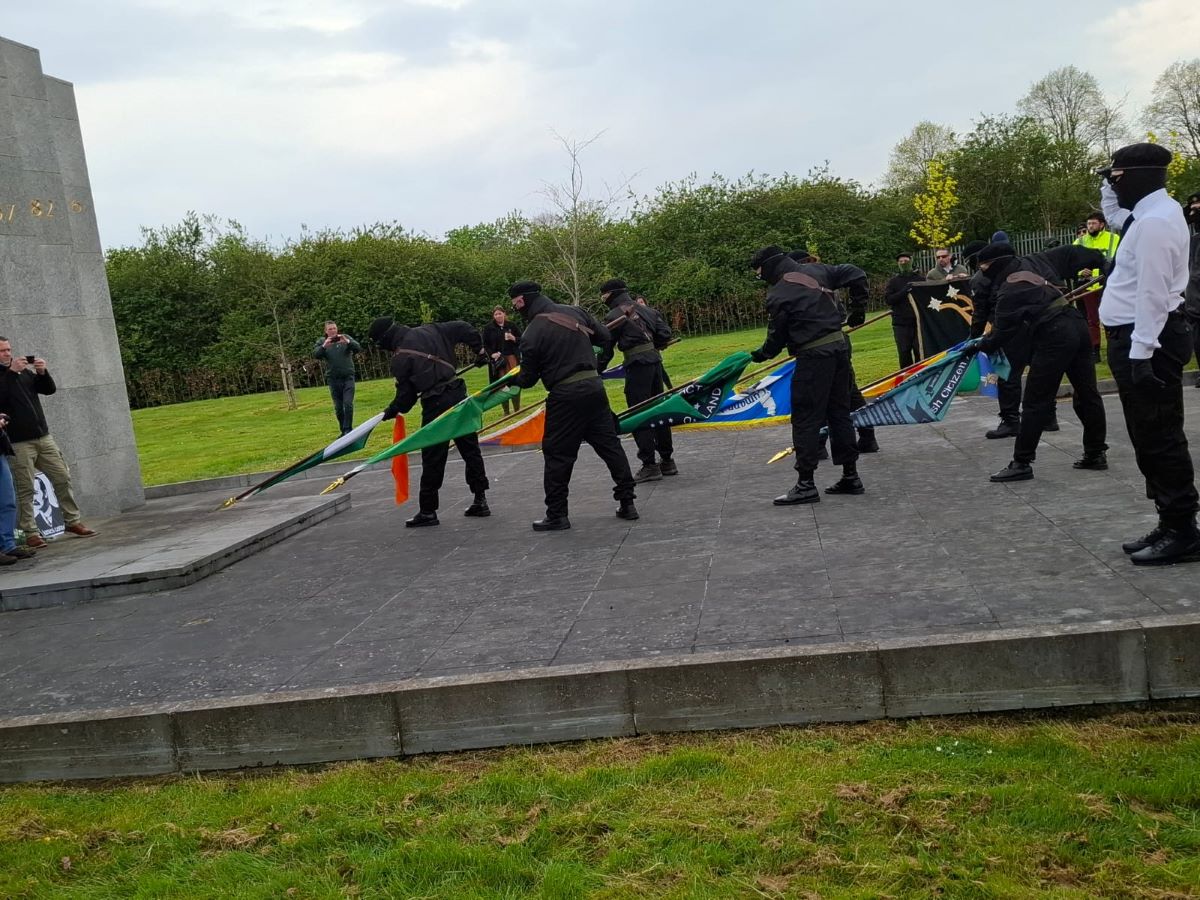
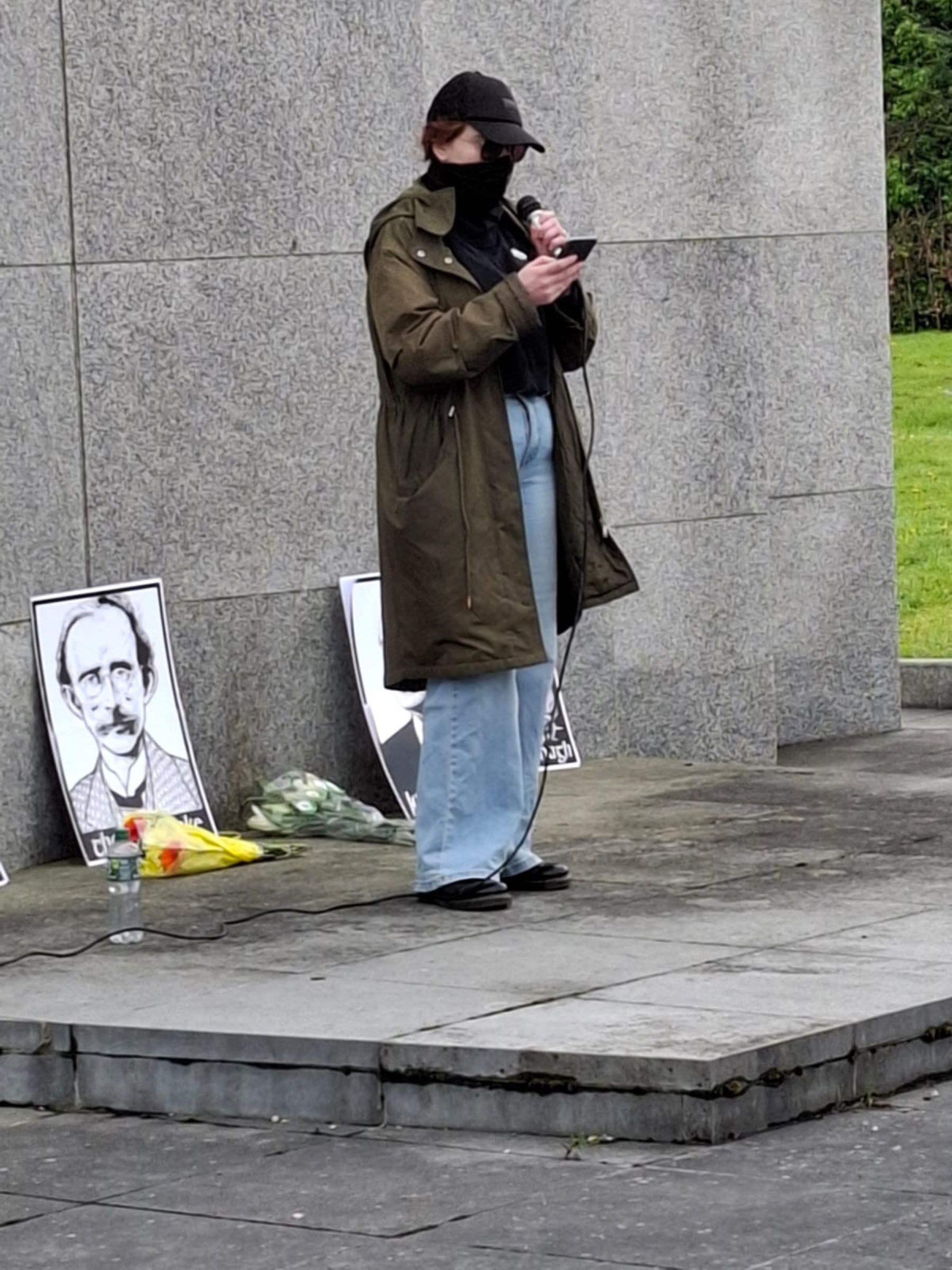
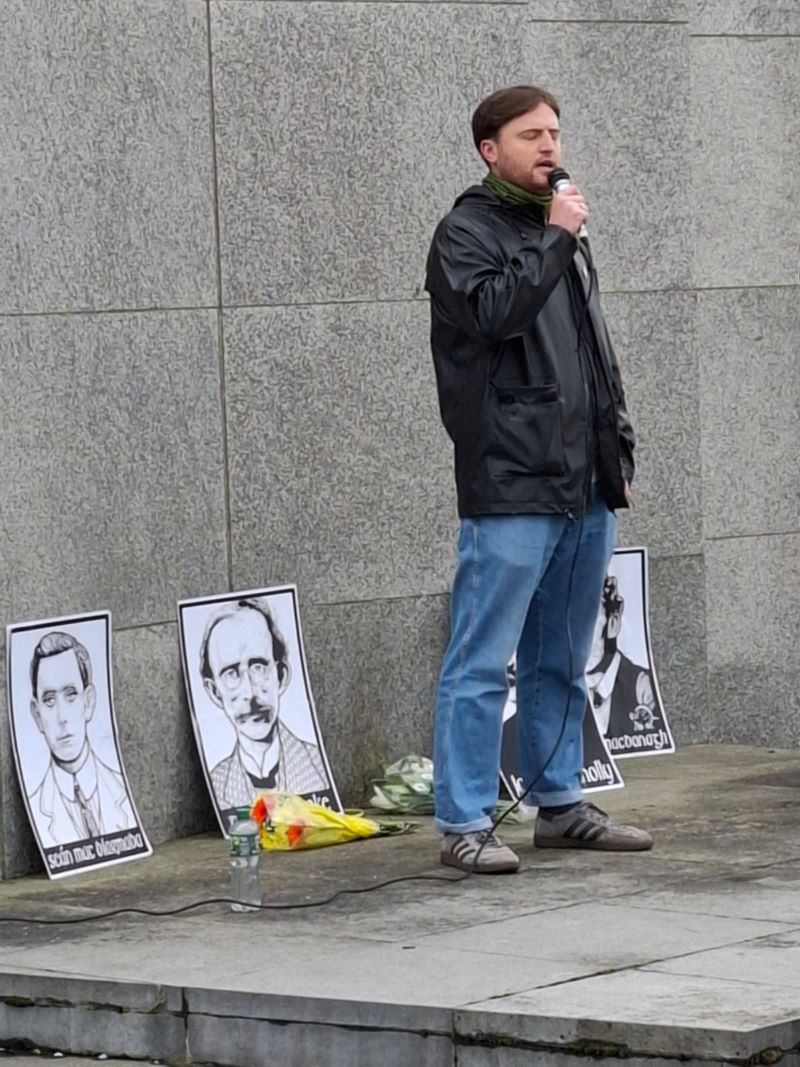

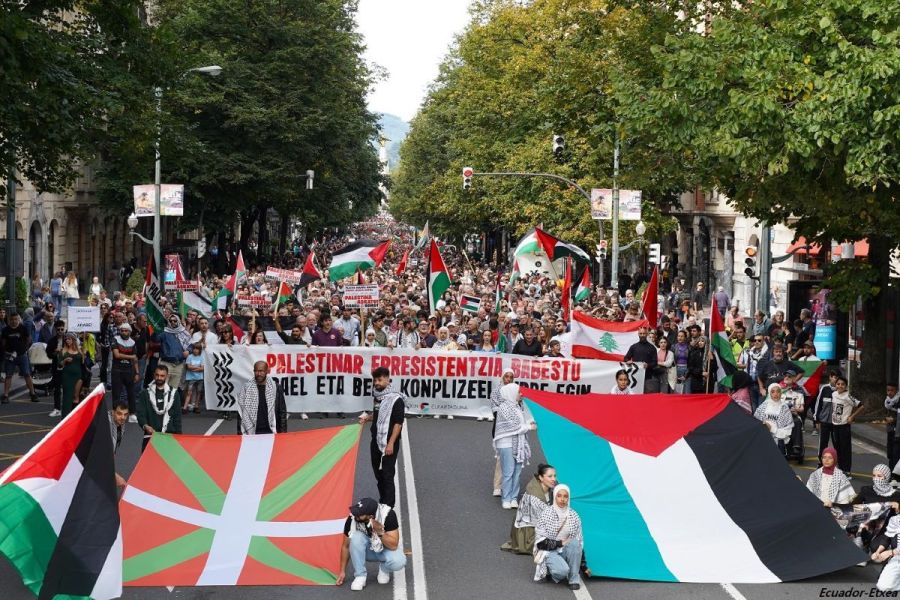
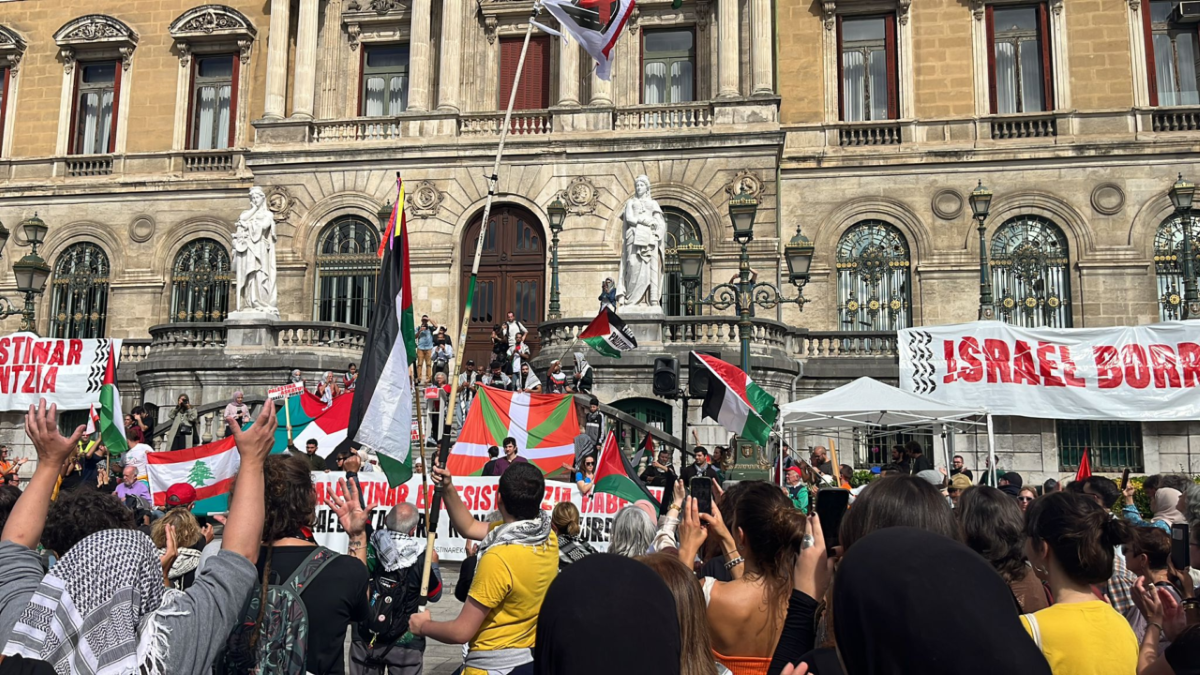


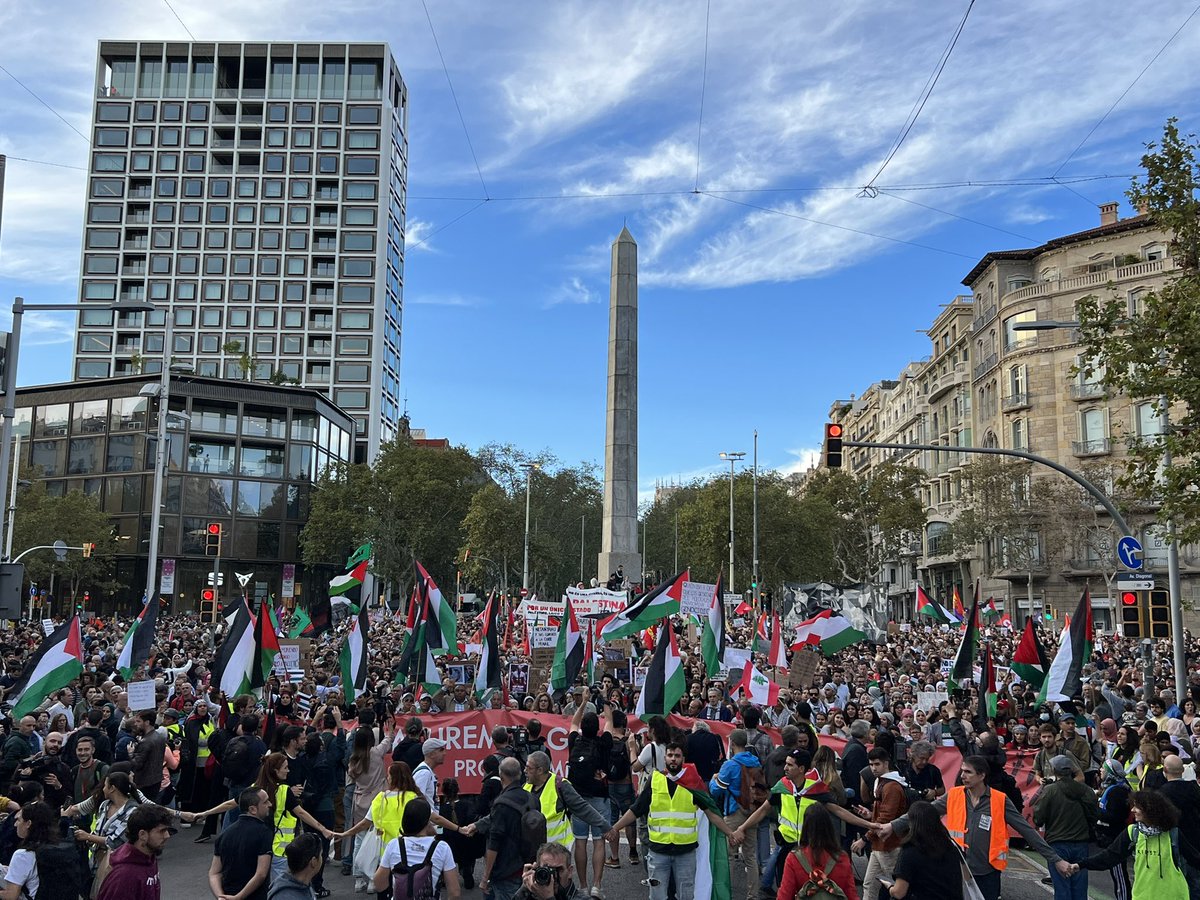


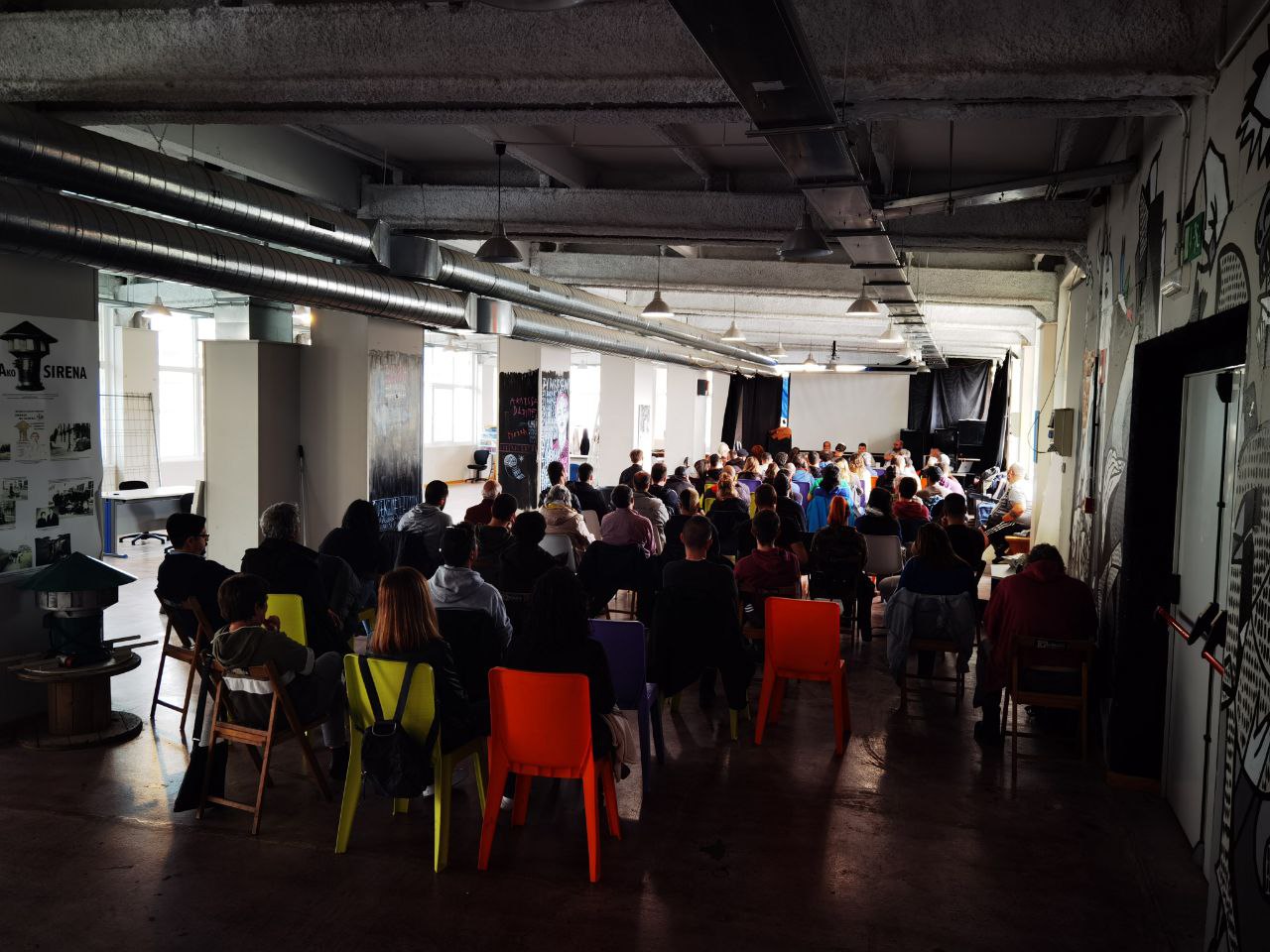

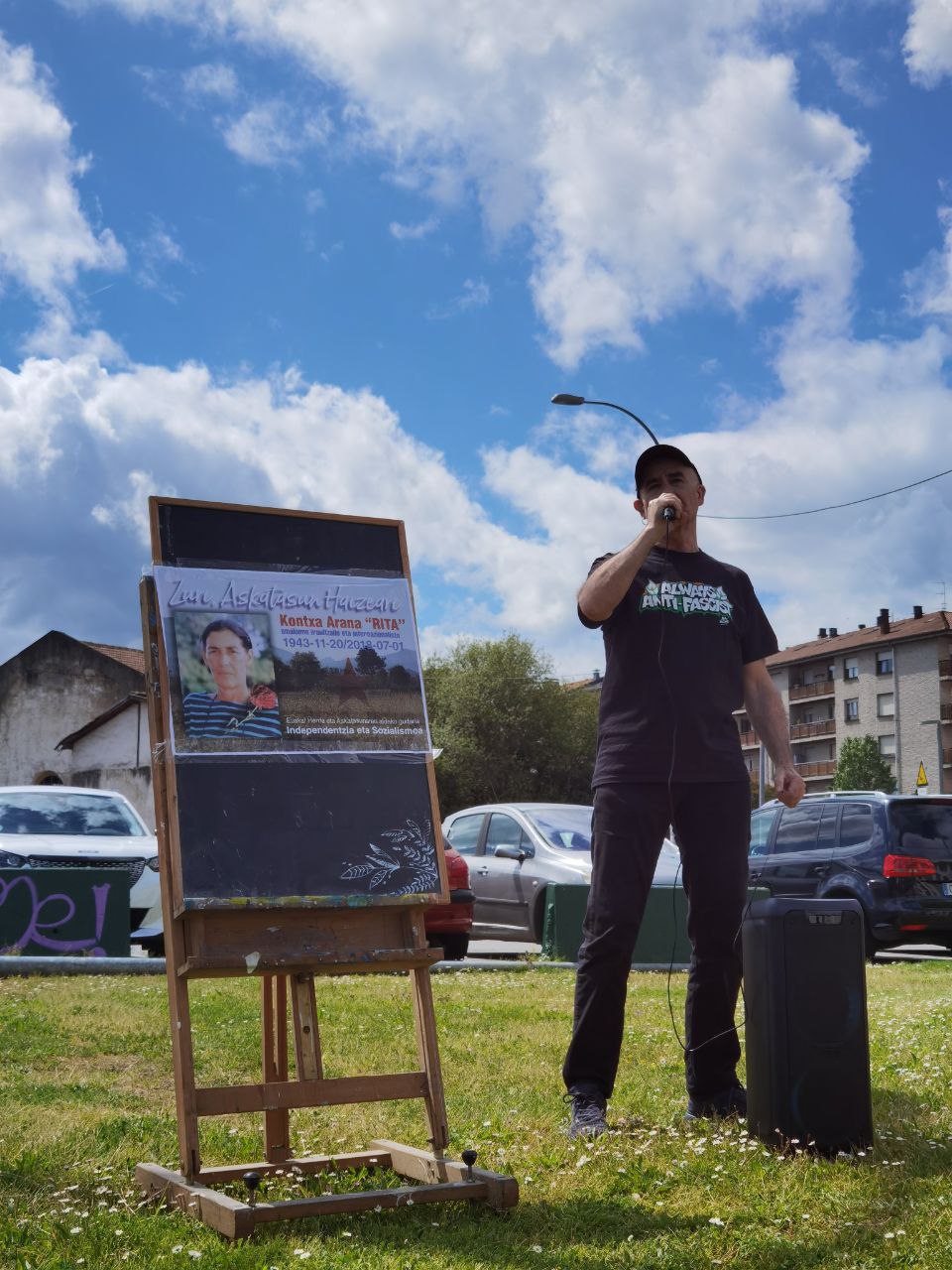


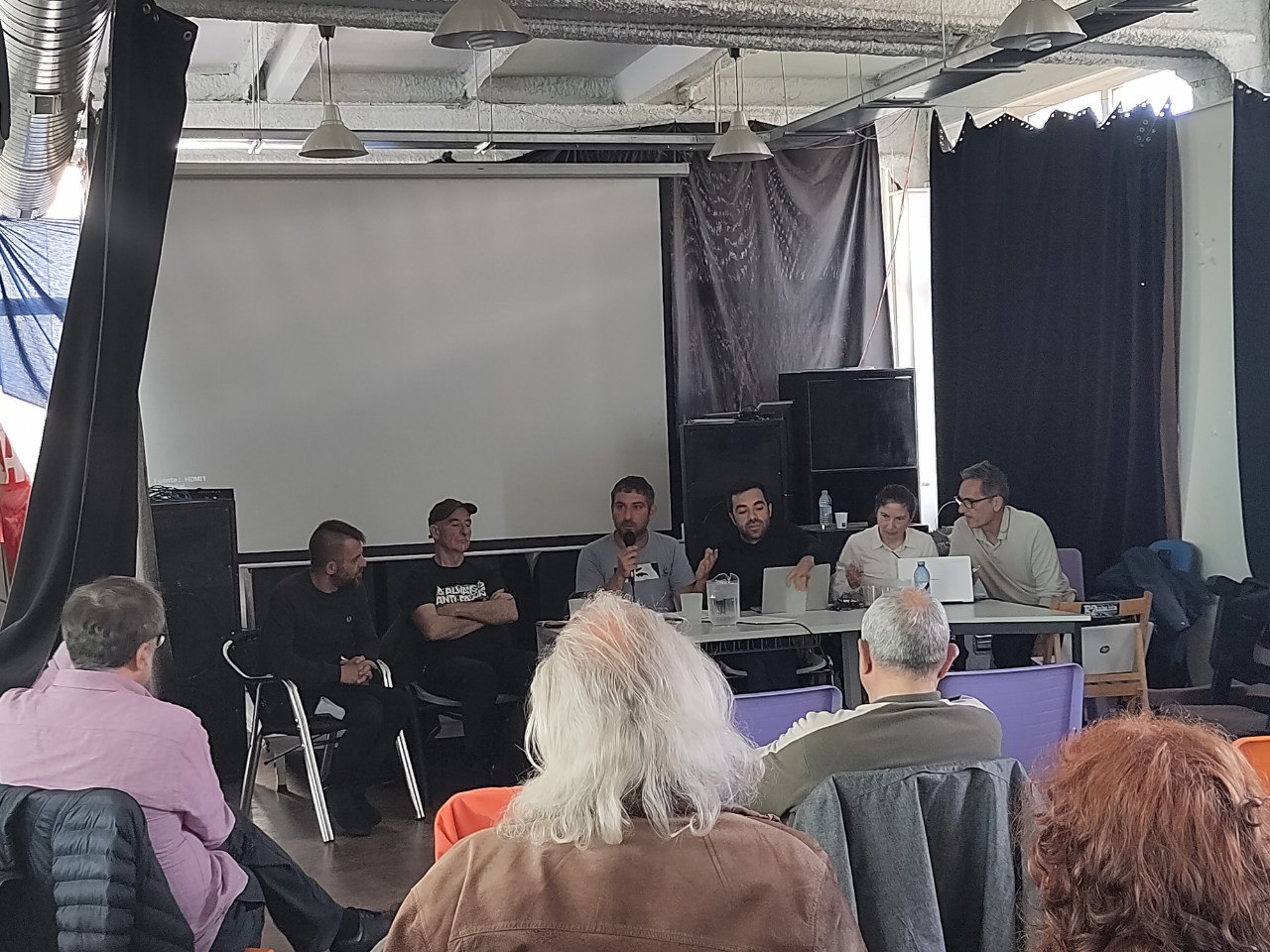


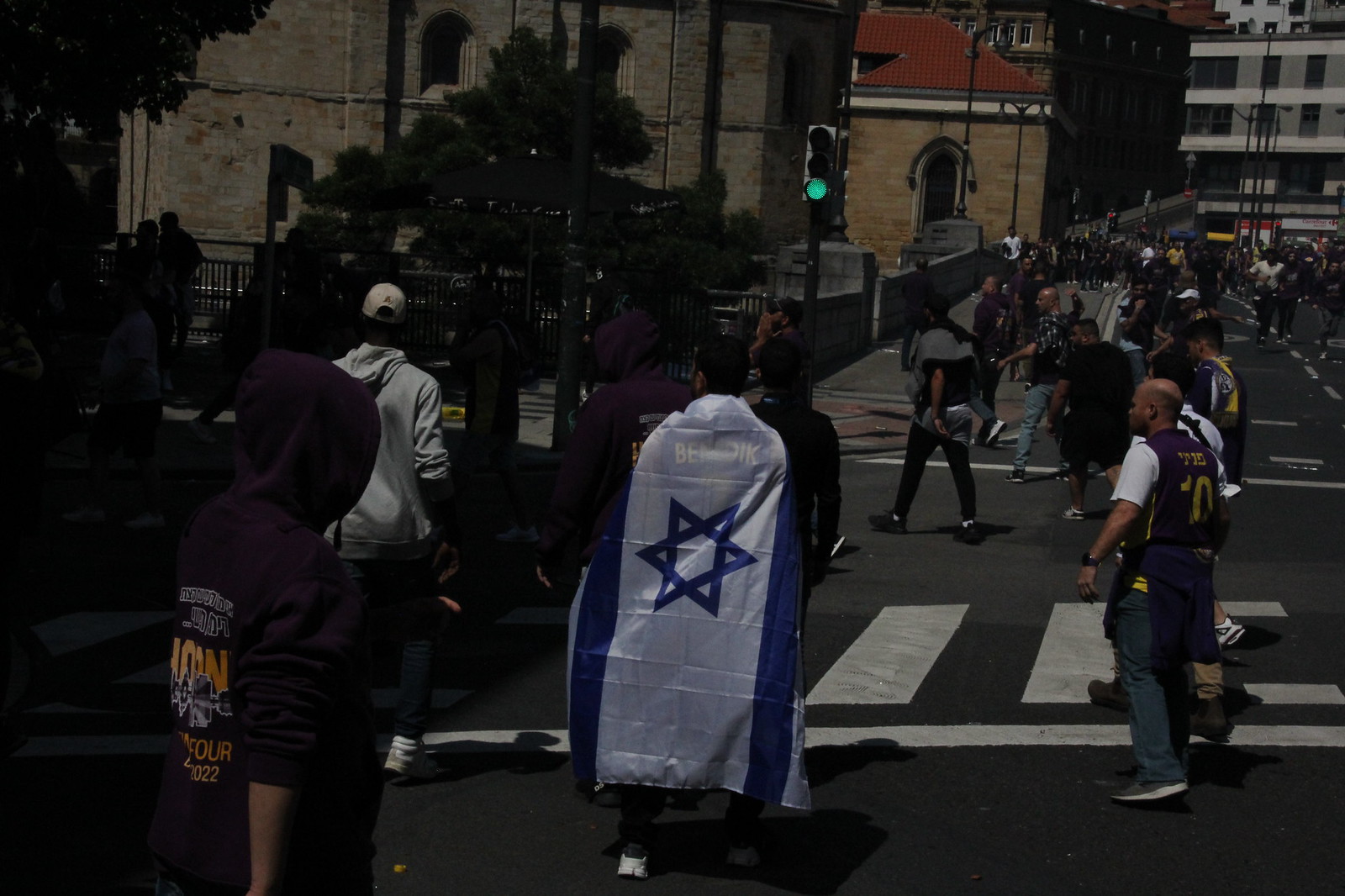

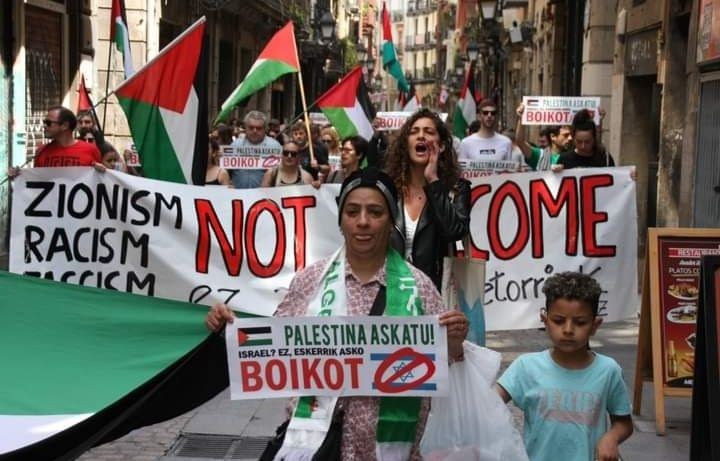


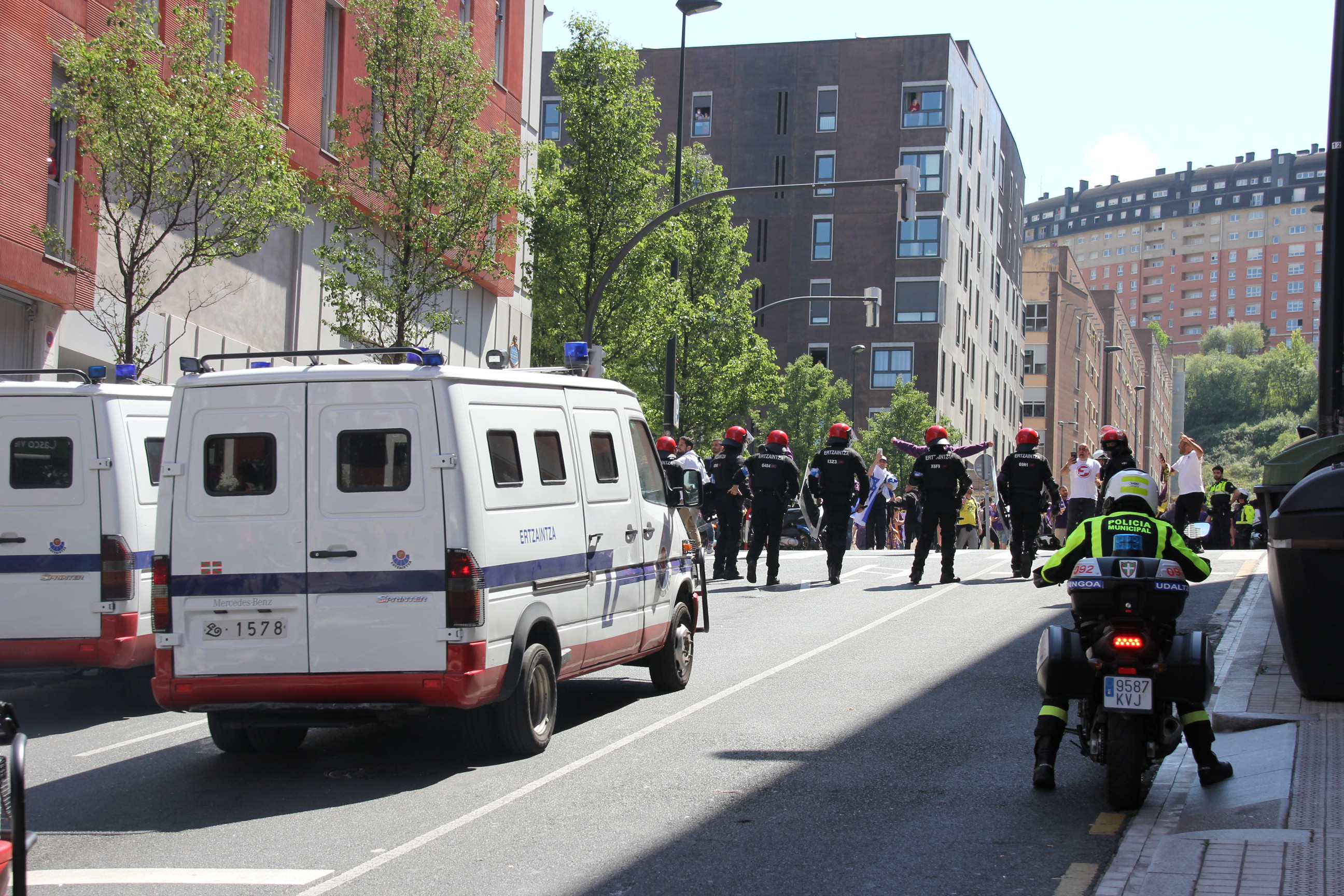
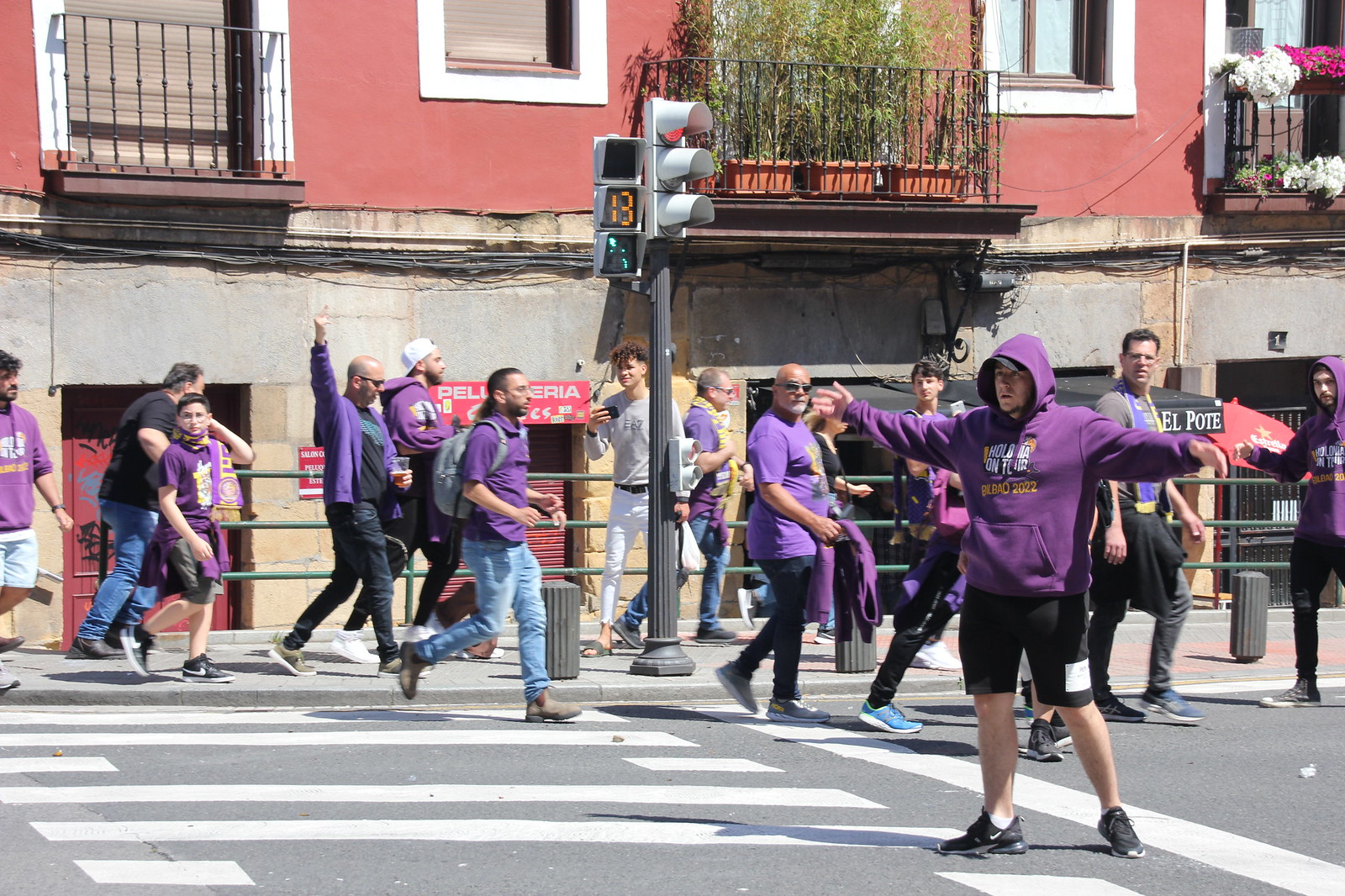


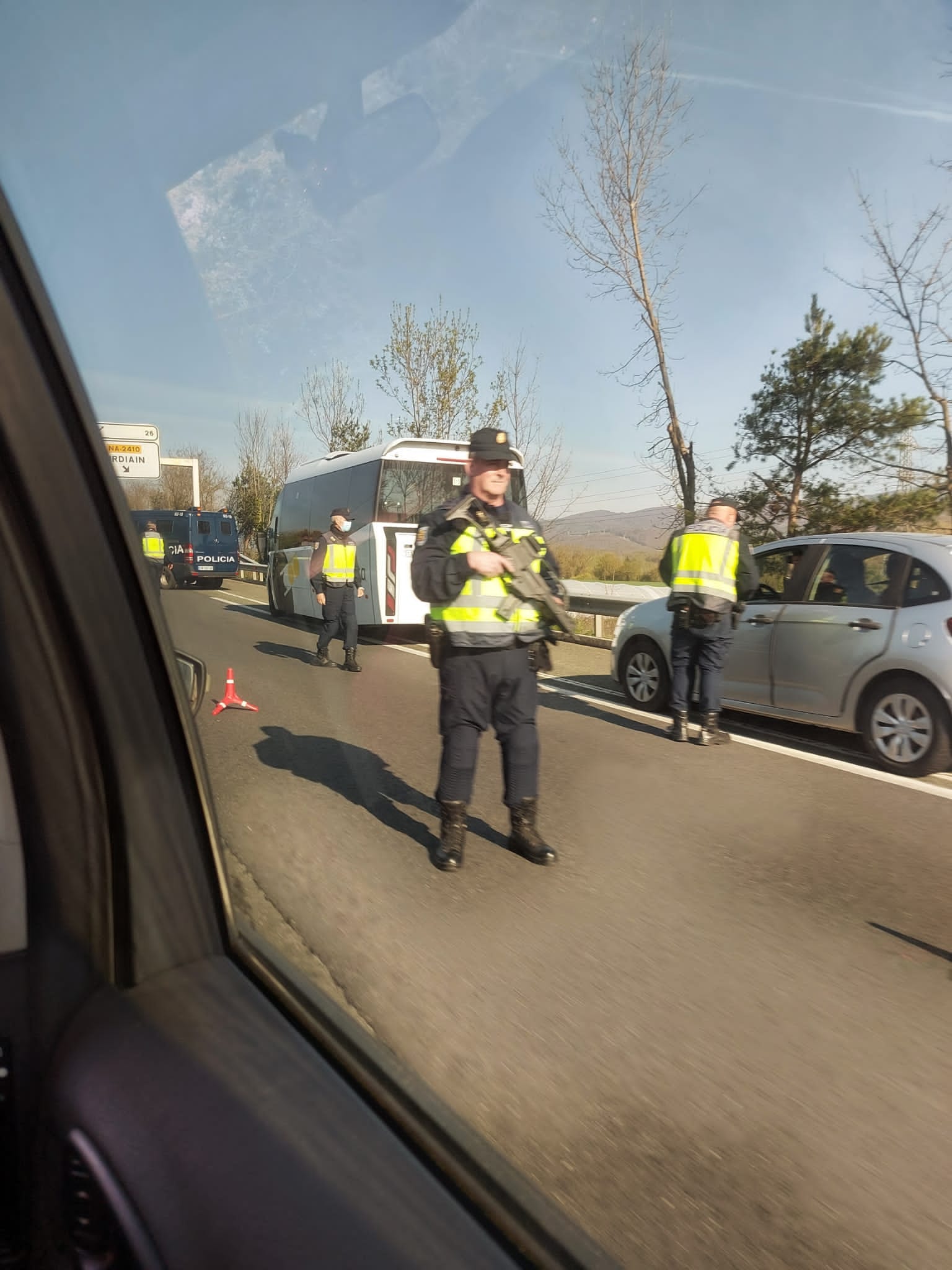
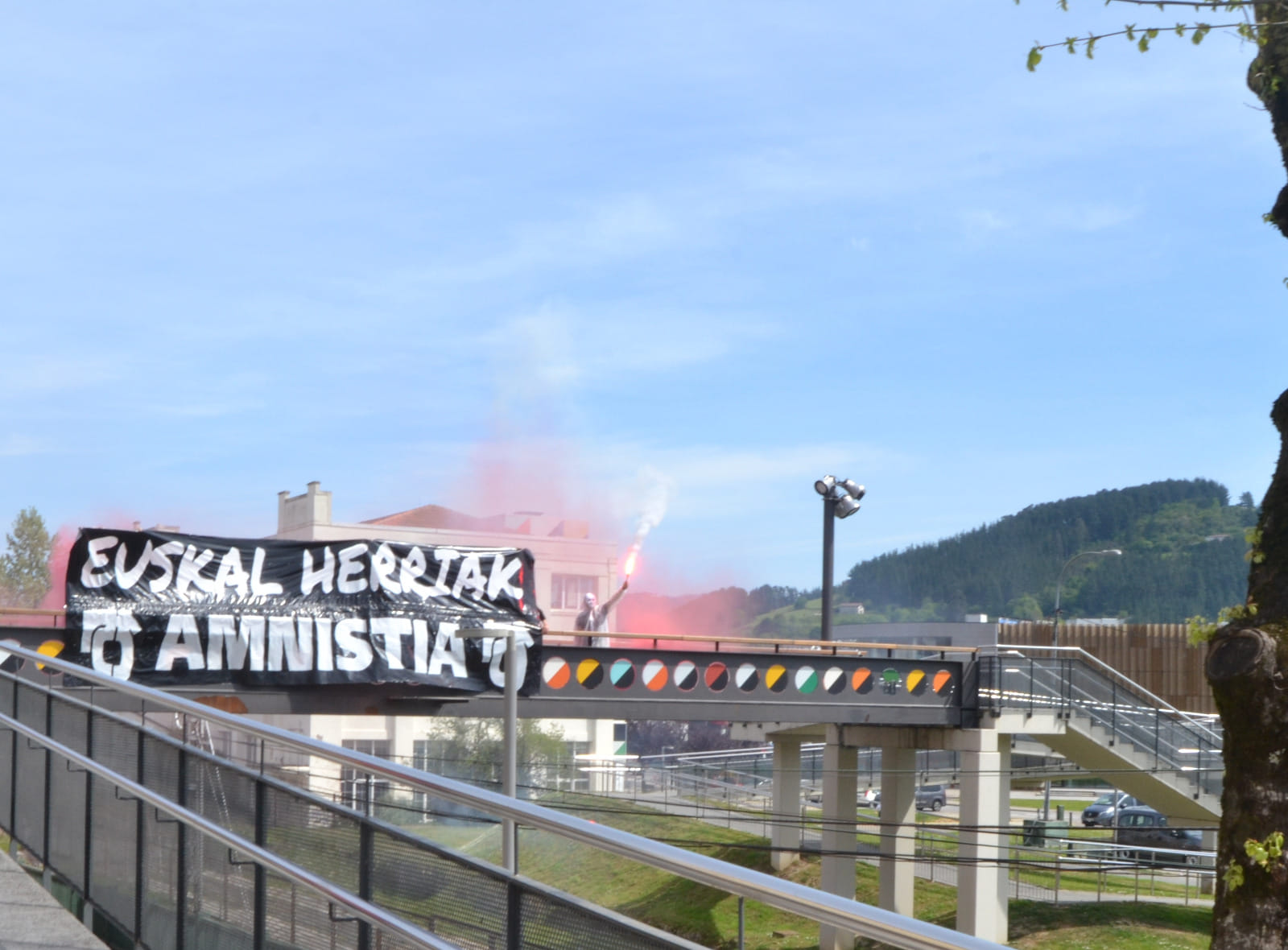


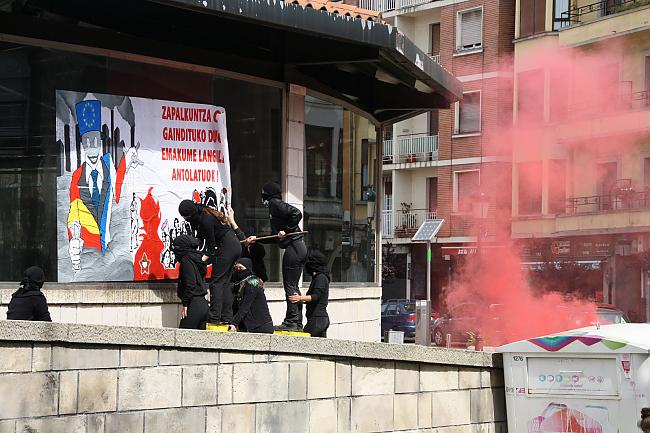

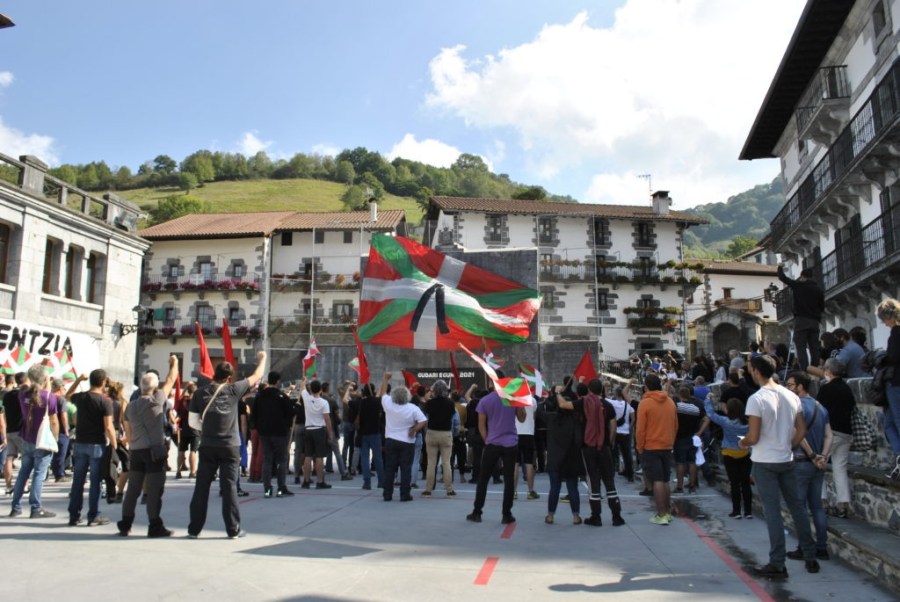

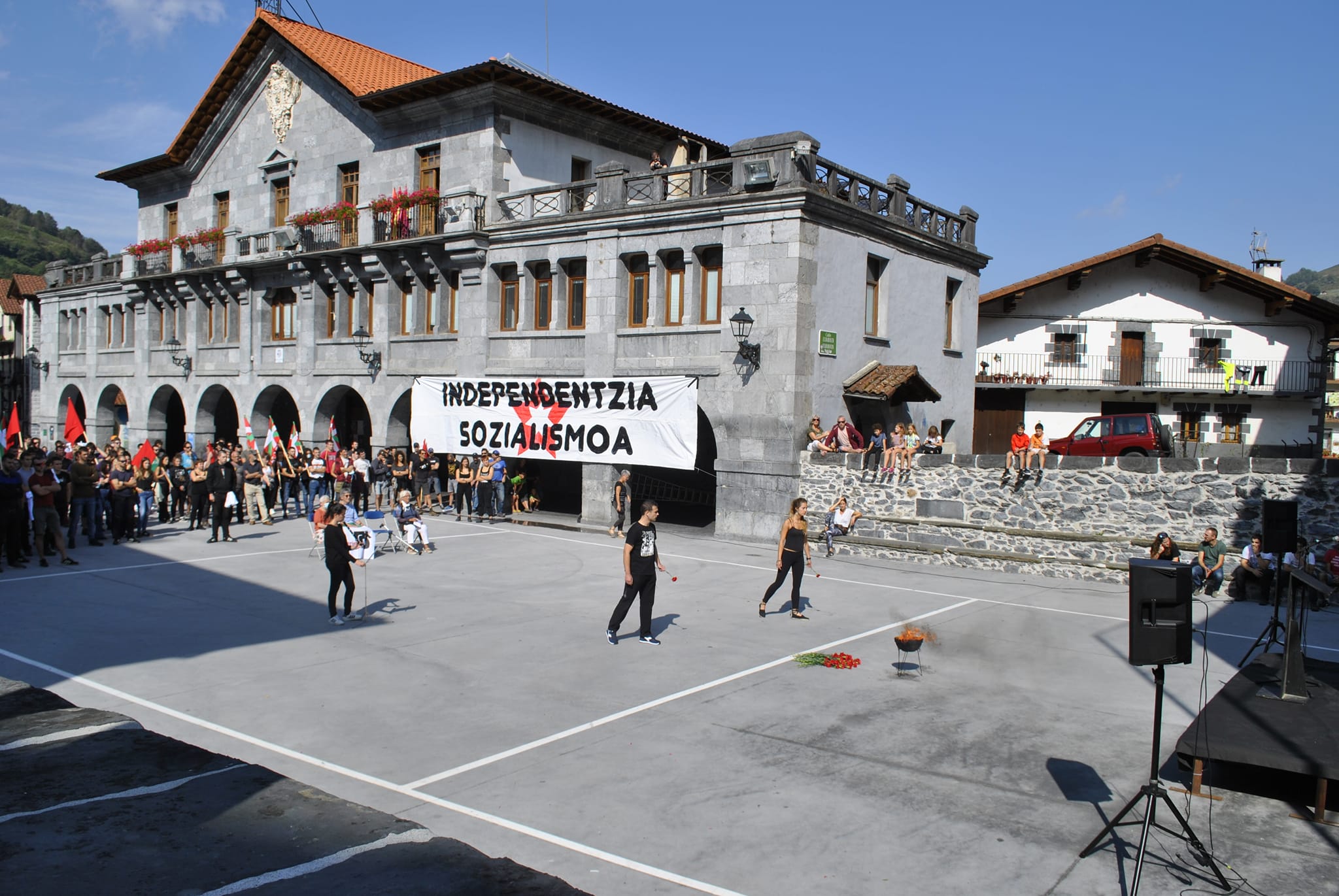








 rebelbreeze