SAN FERMINES 2019: RETURN OF THE OLD REGIME AND THE BATTLE OF THE FLAGS

Introduction and translation by Diarmuid Breatnach

The San Fermines Festival in Iruña (Pamplona in Castillian) is renowned around much of the world for its colour and also danger with the running (corrida) of the bulls. But for many years it has been the occasion and site of sharp political struggle and there have been other dangers too.

ANTI-BASQUE NATIONALISM IN NAFARROA

          Although the city is Basque, centre of the medieval kingdom of Nafarroa (Navarre), it was run for decades by UPN (Union of Navarrese People), what some considered the Basque version of the Partido Popular, post-Franco Spanish political party founded by the Dictator’s supporters. Although in 2008 UPN broke from its fraternal relations with the PP, the party remains Spanish-unionist and conservative, strongly opposed to Basque independentism and wishing to remain separate from the rest of the Basque Country, whether the other three southern provinces or the three across the French border.

During the Spanish Republic of 1936, the ruling political interests in Nafarroa broke with the Basque nationalists and opted for supporting the military-fascist coup of Franco and the other three generals – the reactionary Nafarroan Carlists murdered 3,000 Basque nationalists, republicans, communists, anarchists and social democrats in their province alone. They also took part in fighting as part of the military-fascist forces.

For many years, the first day of the San Fermines festival has been the scene of struggle between those who sought to bring the Basque national flag, the Ikurriña, into the main square, to be present during the launch of the week of festivities. And beatings and for Basque independentists have resulted, even fines and jail sentences, especially when they have been successful.

But in the elections of 2015, a coalition of political parties of Basque independentism, nationalism, and left-social democracy took power in the Navarrese regional Government and began to change matters on a number of fronts. In 2017 the Ikurrina was flown from the official balcony and the the Spanish Government Delegation in the region took a judicial case against those responsible and the same people in 2018, EH Bildu, refrained from flying it, displaying instead a bare flagpole. However, that coalition lost its majority of seats in the elections this year and the UPN came back into power, with the resumption of ‘business as usual’.

ASSAULT AND RAPE

          In recent years, another menace has come to the fore, with some men assaulting women in the press of the crowd. Most horrifying was the multiple rape of an 18-year-old woman on July 7th, during the San Fermines festival of 2016. The woman, who approached a few men to help her find her way and was apparently under the influence of intoxicants, was led into a doorway, her phone taken off her and raped in a number of ways by each, who also videoed the event and put it up on the Internet. Due to the description to the Nafarroan police by the victim and their promotion of their act on social media, the perpetrators were soon arrested. But they were tried not for the more serious crime of rape but for sexual abuse, because she appeared not to resist and therefore no violence was necessary to restrain her – a feature of Spanish law.

The group of five violators and rapists had given themselves the boastful title of La Manada (the Wolf-Pack) contained a Spanish Army soldier and a Spanish Guardia Civil policeman among its members. And they on a previous occasion filmed themselves having sex with an intoxicated woman on the flat bed of a truck and put that too out on social media.

Gang-rapists, the self-styled La Manada (“the wolf-pack”) (Photo source: Internet)

The Pack claimed that their victim was willing but found it difficult to explain that she had only met them seven minutes before the assaults or their taking of her mobile phone and some other matters and were found guilty and sentenced to nine years jail but allowed bail when they appealed. Since their appeal might find them not guilty, one might argue that they were entitled to bail while awaiting the hearing.

BASQUE AND CATALAN INDEPENDENTISM V. RAPE

          However, the youth from Alsasua (Basque town in Nafarroa), who were accused of assaulting off-duty Guardia Civil policemen who entered a Basque independentist late-night bar as a provocation in October 2016, were not only kept in jail while awaiting trial in Madrid but also four of them while awaiting an appeal hearing (against sentences of between two and 13 years jail!). And the Catalan independence grass-roots campaign leaders and elected politicians who were charged with sedition, rebellion and misuse of public funds for organising a referendum on independence in October 2017, were kept in jail until their trial and are there still, now awaiting judgement. They include one who was elected an MP while in jail and another who was elected an MEP (Jordi Sanchez and Oriol Junqueras).

Many aspects of the Manada case led to an outcry over the whole Spanish state. Although the Prosecution had asked for sentences of 22 year and 10 months, they were sentenced to nine year jail. On December 5th 2018 their sentences were confirmed to those nine years, although two judges on the panel disagreed, wishing for sentences of a little over 14 years as they felt that there had been intimidation and coercion, there had been “degrading acts” and she had been left half-naked on the ground with her mobile phone taken (and memory cards removed). The five-judge panel however ordered the first court that tried them to issue another sentence for the filming and publishing of the rape as her privacy had been violated. The Defence lawyer has indicated that his clients would appeal the sentence as did also the City of Iruna (Pamplona).

THE BATTLE OF THE FLAGS

The town square of Iruna/ Pamplona, traditional site of the launch of the San Fermines folk festival, this year showing, despite threats of the UPN Mayor, Ikurrinak and banner against the dispersal of Baque political prisoners prominently displayed.
(Photo sourced: publico.es)

Translation of short article in Publico.es

          In the end, the ikurriña was present. The images of the first Sanfermines after the return of the Right to the City Council of Pamplona are already crossing the world and they do it with the ikurriña and the flag of Navarre displayed among the public. The earlier threats of Mayor Enrique Maya (UPN) had no effect, nor did the police deployment in the surrounding area.

Under an intense sun and in a crowded square, the txupinazo (firing of ceremonial rocket — Translator) of the Sanfermines – the act that marks the beginning of the festivities — took place at 12.00 o’clock. Minutes before, (many of) the attendees managed to deploy a ikurriña of great proportions, accompanied by the Flag of Navarra. A white placard also appeared in which the return of the ETA prisoners was demanded (i.e end of the dispersal of independentist prisoners all over the Spanish state — Trans).

“UPN, kanpora” (UPN, out!) was heard in the square when the Mayor was on the balcony. A few days before, Maya had issued a notice announcing that entering with fabric of large proportions was strictly forbidden, citing security reasons. However, the same Councilor said shortly after in an interview in the newspaper El Mundo that there would also be “a device” to prevent the EH Bildu councilors unfurling the Basque flag on the balcony of the town hall.

POLICE SEIZURE OF FLAGS

          One hour before the txupinazo, journalist Gara Aritz Intxusta reported by Twitter that local police had seized “150 small ikurriñas that were going to be used in a kalejira” (festival parade) that was going to be performed in the streets of the city to protest against the Mayor’s party.

Source: https://www.publico.es/politica/ikurrina-acto-presencia-sanfermines-gritos-upn-fuera.html

Video posted 2013

of daring event as the hour for the launch approached, Basque independentists in “disguise” of anglers, cast a line across from the rooftop on one side of the square to the other and then a stronger line was taken across with a giant ikurrina attached. One can see earlier, police rushing to confiscate a flag or banner and a giant political prisoners’ banner being held above many in the crowd. In 2013 the UPN Mayor deliberately delayed the launch past the traditional hour of noon so as to give secret police time to cut the line and not to have it happening with the Ikurrina hanging over the square.

End.
SOLIDARITY RALLIES – REFUGEES, ASYLUM SEEKERS AND THE SUDANESE

Diarmuid Breatnach

(Less than 5 minutes reading time)

A number of solidarity demonstrations took place in Dublin City centre last week.

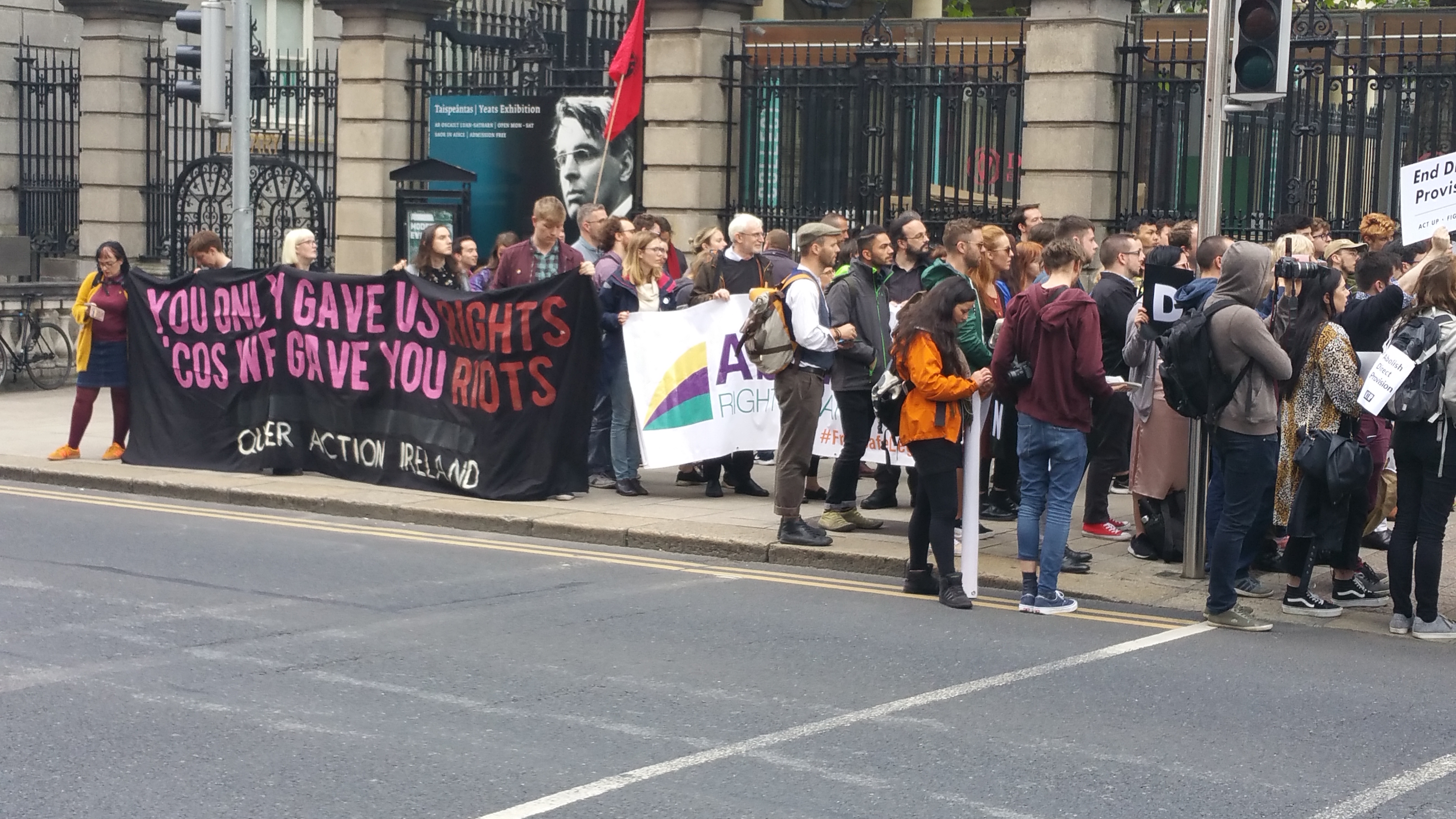
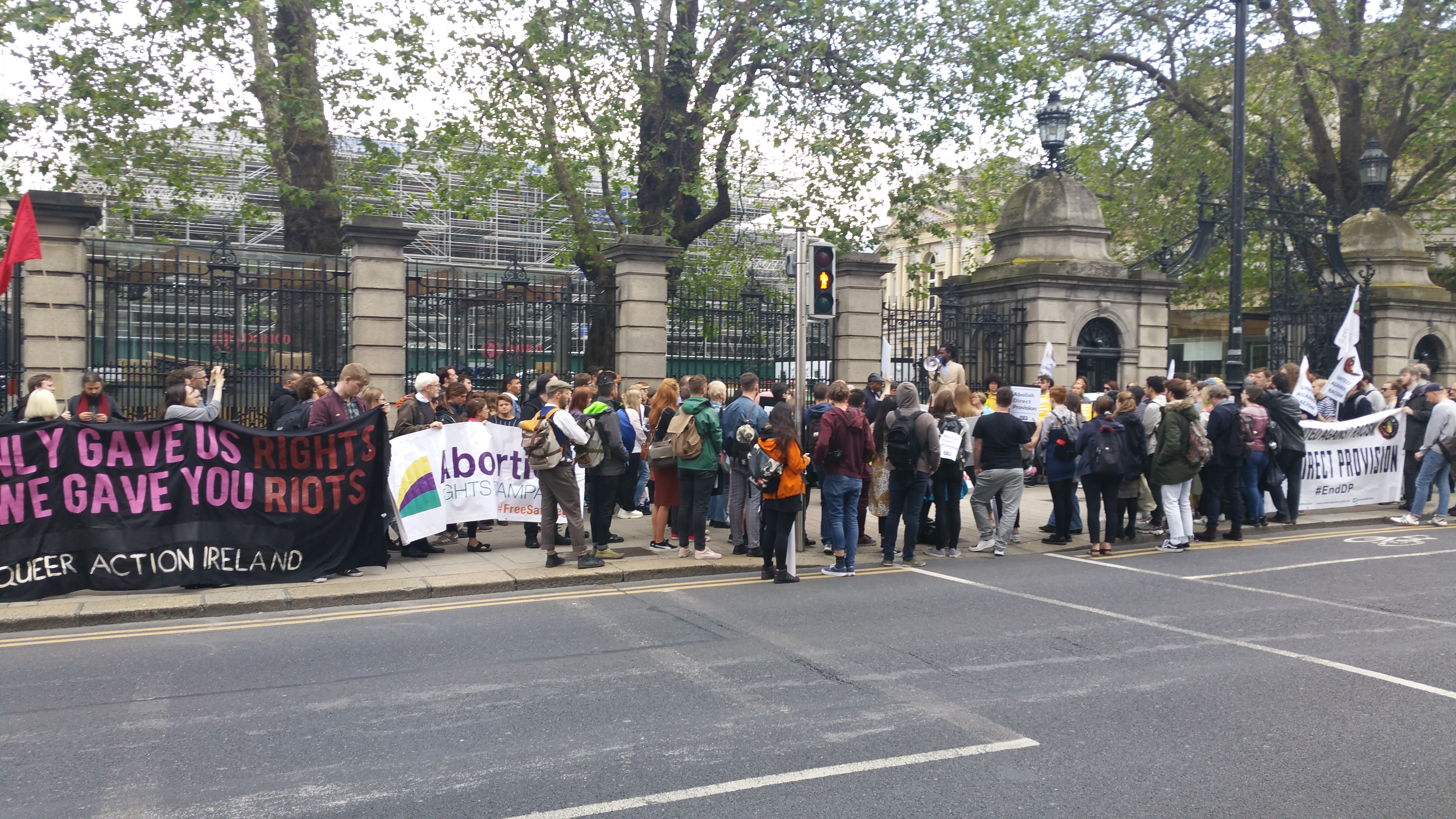
On the evening of 20th June, officially World Refugee Day, a rally calling for the closure of the Direct Provision Centres and to Stop Deportations was held outside the Dáil (Irish Parliament). A number of speakers, some of them refugees and asylum seekers, addressed the crowd. However, the amplification was so weak that only those very near them could hear what they said.

Demonstrators against the Direct Provision system and against deportations outside the Irish Parliament, the Dáil.
(Photo: D.Breatnach)

Explanatory text from the organisers: “Despite the number of displaced people increasing year-on-year, the amount of people permitted to seek asylum in Europe has fallen by 10% since 2017. Thousands are forced to climb razor wire fences and entrust their lives to people smugglers as governments continue to close their doors. Accounts of overcrowded camps, lack of sanitation, and torture at the hands of police and militia groups from those who do manage to enter are growing more frequent.

In Ireland, asylum seekers are forced to wait for years in privatised, isolated centres as the Department of Justice & Equality comes up with reasons to reject and deport them, where they are treated as cargo to be shipped ‘back to where they came from’.

Section of the crowd supporting the rally outside the Dáil, the Irish Parliament.
(Photo: D.Breatnach)


Mobilisation against direct provision — introduced as a ‘temporary solution’ in 2000 — has increased in recent years yet significant moves by our representatives to abolish it remain to be seen. Our newly elected MEPs similarly show little interest in confronting the EU’s dehumanising regulations.

Join us as we demand action. For an end to direct provision and deportations. For freedom of movement for all and an end to Fortress Europe.”

Another section of the crowd supporting the rally against the Direct Provision centres and against deportations, under a heavy rain shower.
(Photo: D.Breatnach)

Though a number of supporting organisations were listed — STUDENTS AGAINST DIRECT PROVISION, MOVEMENT OF ASYLUM SEEKERS IN IRELAND, MIGRANTS AND ETHNIC MINORITIES FOR REPRODUCTIVE JUSTICE, REFUGEE AND MIGRANT SOLIDARITY IRELAND, SAY NO TO DIRECT PROVISION IN IRELAND, UNION OF STUDENTS IN IRELAND it seemed as though the core organisers were from the People Before Profit organisation.

The supporters were subjected to a number of very heavy rain showers but most remained until the scheduled end of the event.

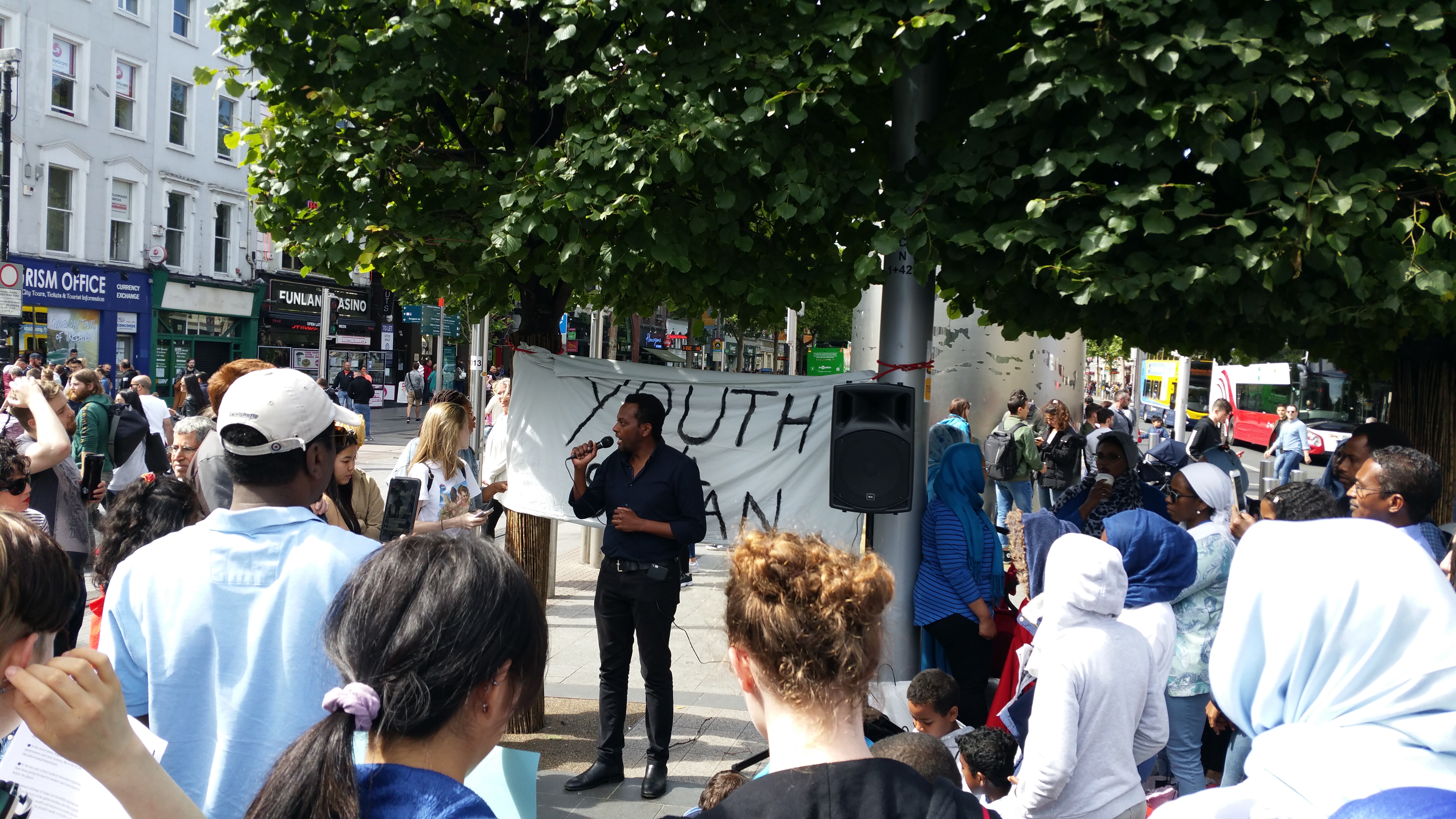
On Saturday afternoon, 22nd June, a rally in support of the Sudanese people was held on the central pedestrian reservation in O’Connell Street, Dublin city’s main street. They too were addressed by a number of speakers but it was not always possible to hear who they were or all that they had to say.

View of section of the crowd at the Sudanes solidarity rally in O’Connell Street.
(Photo: D.Breatnach)

According to aid NGO, Concer, “Over 46.5% of the Republic of Sudan’s population is living below the poverty line and 5.5 million are in need of humanitarian assistance.” A war has been raging there since 2013 in which an estimated 400,000 people are estimated to have died.

According to Wikipedia: “More than 4 million people have been displaced, with about 1.8 million internally displaced and about 2.5 million having fled to neighboring countries, especially Kenya, Sudan, and Uganda. This makes it the world’s third-largest refugee population after Syria and Afghanistan. About 86% of the refugees are women and children.”

A view of another section of the Sudanese solidarity rally (Photo: D.Breatnach)

The core organisers of this event seemed to be a youth group of the Socialist Party although it also appeared that the Sudanese community had organised to support it through their own networks.

end.


One of the speakers at the Sudanese solidarity event (Photo: D.Breatnach)

“MY IRELAND” – OUR LAND?

(Reading time text: 15 mins maximum)

Film review by Diarmuid Breatnach

Around 60 people viewed the film “My Land” on Sunday morning (23/ 06/ 2019) in the Irish Film Institute in Dublin, scheduled at the decidedly un-prime time of 11.30 am on a Sunday morning. “In this revealing documentary, Anthony Monaghan, an Irish filmmaker now living in the United States, takes a hard look at economic migration, mass evictions, and the growing homeless crisis that plague Ireland today. In search of answers, he travels the nation and interviews Irish people from all walks of life” (the description on the FB page for the event).

One of a number of versions of title photos for the film
(Photo source: advertisement for the film)

          The film opens focused on heavily-built man in shorts with a broad somewhat weathered face, wearing a straw stetson-type hat, brim turned up both sides and overall looking quite like a middle-aged man of the American Indigenous people. The rhythms of his speech and accent soon however reveal a mixture of western Irish and USA. The man parks his construction company pickup truck, gets out and we watch him walk on to a bridge, to look down upon a river, possibly the Missouri, where he stands looking for awhile before turning to the camera and beginning to speak.

Monaghan photo?

DEVASTATION OF RURAL AREAS

          Anthony Monaghan is from Erris, County Mayo and went to work in England when he was 15 years of age as many others around his age did too, especially in that area with an absence of industries and therefore of employment. Later, he emigrated to the USA. Later still, he returned and took out a mortgage on a house but, as we learn later, the bank took it from him and he has now returned to Missouri USA, where he decided to make the documentary.

We hear the sound-track of Lovely Blacksod Bay, a song about the ‘return’ of the son of an emigrant to Mayo.

View of Termon, Blacksod Bay. The English version of the place-name comes from the irish original “An Tearmann”, meaning “the sanctuary” (several place-names of this kind in Ireland).
(Photo: Internet).

Interspersed with beautiful scenery shots, interviewees talk about the problems of the Belmullet area, principally of lack of employment and consequent emigration. Included among those interviewed are Rose Conway-Walsh, Sinn Féin Senator from Bellmullet, Mayo, whose grown-up children had to move away. Another a former male emigrant who returned to the area in the early 1980s now sees his children moved away to work in England, his grandchildren there, returning twice a year, which brings excitement as they arrive and sadness as they leave. Another ‘returned’ migrant, a writer, came to the area from the Irish diaspora in London, brought as a child by his parents. He too had to emigrate for a while – now, back again, he expects his daughters to leave also.

As we accompany Monaghan to the local graveyard overlooking the sea, he points to the name of a brother on a headstone, a sibling who did not return alive from emigration.

The film shifts to a young woman, possibly Irish-UStater, accompanying herself on auto-harp while singing Noreen Bawn (Nóirín Bán), a sentimental song about tragedy in emigration.

John McGuinness, TD for Kilkenny-Carlow area, is also interviewed as is a FG member of the legal profession. Peter McVerry, of an NGO working with the homeless, also speaks, as does a local businessman.

The talk is of the devastation suffered by rural communities by unemployment and emigration, then the cutbacks on services to the areas, the closing of post offices, the isolation and vulnerability of the elderly, the long journeys to medical services ….

At a harbour, Monaghan talks to a man who fishes from a boat for a living, who says that kind of livelihood is gone, with big boats competing with the smaller ones. He sees no future for the younger generation making a living from the sea as he has done.

DUBLIN AND HOMELESSNESS

A homeless couple sleeping rough

          The film shots switch to Dublin streets and homeless people sleeping rough or begging. Among the interviewed now are the same people as before but more are added, including actor-author and former homeless person Glen Gannon and radio broadcaster Marion Shanley who, with three children, had faced eviction from her home. Tony Walsh, former homeless man and organiser of a food-serving service to homeless and other persons in need was also interviewed, as was bankrupt property developer Tom Hardy, author of “Waiting for the Sheriff”. Along with those was a young Dubliner, currently homeless.

A number of people, including the young Dublin homeless man, point out the profits that are being made by landlords. Tom Hardy reels off statistics in the profits being made there and also by the vulture funds in “buying” mortgage debts from banks at knockdown prices which the banks would not offer their debtors. A woman talks about the horror of having to raise one’s children in the hotel rooms in which homeless services place them, where they are cramped and cannot cook food. She talks about what this is doing to the children and wonders psychological problems are in store for them in future. “Why don’t the Government declare a housing emergency?” she almost wails. Clearly it is a housing emergency but as Gannon points out, they won’t declare it. It is not in their interests to do so. And according to the woman quoted earlier, a tsunami of evictions is on the way.

McVerry commented that there is a section of the population in Ireland who are doing quite well and who have no stake in any radical change in society. A number of the interviewees made reference to the wealth of the country, including several who said it was the fifth wealthiest state in the EU. I failed to find confirmation of that particular statistic and istead found a wide variety of rankings. Of course, the wealth of a state is not necessarily reflected in its people or, to be more exact, among the majority. While the problems of lack of affordable decent housing and employment, along with emigration cause suffering among a large section of people, revealed in rising rates of suicide, the number of wealthy are rising fast, with 83,000 people in Ireland whose income exceeds more than one million dollars per year (see References at end of review). It’s hard to believe that the misery of the struggling does not have some relationship to the soaring wealth of a tiny minority.

“Homes not hostels” banner on the side of Apollo House, a protest occupation of some weeks in December 2016 which attracted much support and media attention. But the homeless crisis has got much worse since.
(Photo: D.Breatnach)

SOLUTIONS

          All the interviewees, to one degree or another, placed the blame for the situation on the Government. Most of them also blamed the banks and the vulture funds. Some pointed to vested interests of TDs who are rental landlords while other went as far as to allege corruption and in effect an integrated system of banks-landlords-vulture funds-district courts-TDs- Government.

Some of the interviewees alleged that the Irish are too accepting, too meek. One who did so was a Ginley (or McGinley), who said that the Irish had fought for the British and for the USA but had never fought for themselves. He seemed either ignorant or dismissive of the long Irish history of resistance and also of the fact that not only the Irish who fought in the British and US armies were not “fighting for themselves” but neither were the British and US working people alongside them!

Marion Shanley was one who upheld the Irish history of resistance and pointed out that in war, to which she hoped it would not come, incidents of suicide tended to almost disappear.

Given the size of the problems and the combination of political and financial interests, it was going to be interesting to see what solutions were advocated.

Anthony Monaghan wished to see some kind of combination of workers and business people to sort out the problems and hoped “the fighting Irish” would come to the fore.

TD McGuinness stated it was important for the politicians to come closer to the people and asked for greater leniency from the district courts in house repossession cases. Senator Conway-Walsh also wanted to see greater leniency from the courts but tighter legislation against vulture funds too. The homeless young Dubliner put forward the radical solution of having members of the Government spend a week in the conditions of homeless people.

Only Glen Gannon baldly put forward the clear solution, the only one possible, given the interlinking of financial and political interests: Revolution.

DANGERS

          There is a vacuum of leadership, as a couple of interviewees remarked.

During his interview, the man I remembered as Ginley (or McGinley), referred to Ben Gilroy as a champion “of our own”, an electoral candidate who had been failed by the electorate and whose “vote was derisory” in the recent elections. However Gilroy (who was present at the screening, as were a number of interviewees), had in the past posted an islamophobic rant on social media and had shared leadership of the recently-defunct Irish Yellow Vests with a racist, anti-emigration, anti-gay and lesbian islamophobe.

This points to a possible danger, not only that we might continue to be driven downwards but that in desperation, we might turn to fascism and racism, as other people have done in difficult times. And in precisely those kinds of times, the ruling capitalist class has not usually been shy of finding their champions to push those kinds of ‘solutions’, splitting the working class and diverting attention from the real problems.

And one form of fascism has been indeed to seek the unity of workers and businessmen sought by Monaghan (though that should not of course be taken as a suggestion that he is himself a fascist). In such “unities” there is no question of which sector will be in command.

In a film about the Ireland of today, it was interesting to see no images or hear any reference to immigration other than that of the Irish diaspora. It could have been that the makers wanted to keep the narrative simple …. or there could have been another reason for it.

Anthony Monaghan said at one point that although he knew that was not possible, he’d like to go back 20 years. At the turn of the century, i.e twenty years ago, the false Irish economy bubble was about to burst.

SPIRITUALITY IN RESISTANCE

          In one scene, the camera follows Anthony Monaghan going down into a holy well (St. Dervla’s) near his original home and blessing himself with some of the water there. Remarking that although he does not condone the scandals that have come out of the church in recent decades, he regrets the Irish turning away from the Catholic faith, which he feels sustained us in years past and bound us together.

One of Monaghan’s interviewees points out that the worst thing about the scandals in the Church was not the abuses themselves but the cynical covering them up by those in authority, exposing more people still to abuse and suffering.

Talking about Catholicism as a binding agent of the Irish while almost in the next breath about our martyrs and heroes of the past, ignores a very important part of that very history of resistance which Monaghan upholds. The Catholic Church, from the moment Penal Laws began to be lifted, worked might and main against that Irish resistance. Its leadership condemned the United Irishmen (in particular the few priests who joined them), the Land League actions, the Fenians and the IRA in nearly every period and in all of its manifestations. In addition, the founders of the United Irishmen were Protestants, as were nearly all the prominent people of the Young Irelanders; Protestants were to be found too among the founders of the Volunteers, the Fianna, Ininí na hÉireann and the Irish Citizen Army.

In fact, history was sorely missing in all the analyses, since no-one pointed out that the State had been set up in a counterrevolution, an alliance of Catholic Church and Gombeen capitalist class under the old master’s tutelage. There seemed to be no acknowledgement that the Irish state is a neo-colony, run by a Gombeen capitalist and political class, its natural resources to be plundered by foreign multinationals, its services to be sold to the same, its own natural industries to be run down.

Human beings do have a spiritual sense, whatever anyone may say against that – but that is not necessarily about religion, contrary though that statement may seem. A sense of who we are as Irish people, as workers, as human beings, as part of life on earth, can be both practical and spiritual. It can be conveyed in language, song, poetry, visual art …. and in a knowledge of living history.

In that respect, it was strange that in a film about Ireland made by a man from Erris, by the Belmullet Peninsula and a large part of which figures in the narrative and images, there were only five words in Irish to be heard. For Béal Muirthead is a Gaeltacht, an Irish-speaking area, though shrinking under pressure from English-speaking monoglots.

Pub in Erris with name (“Harbourside”) in Irish
(Photo sourced: Internet)

IN CONCLUSION,

it was an interesting film from the point of view of presenting the issues and gathering some opinions about them.

But as well as who were interviewed, it was interesting to note who were not. No active revolutionaries — socialist, communist, republican …. no activists in recent or current movements of resistance. And no reference to the mass mobilisations against the water charges and the local battles resisting meter installation. Nor of the demonstrations protesting homelessness. Not even a mention of the titanic (or biblical Davidian) struggle in Rossport, Mayo, against Shell BP.

The last song I remember hearing on the film’s soundtrack was James Connolly, not the song about the revolutionary socialist and trade union organiser he was (see below) but instead one which portrays him as an “Irish rebel” out of context, without mention of class or of the Irish Citizen Army, of which he was the leader.

End.
REFERENCES AND SOURCES:

Trailer for film: https://www.youtube.com/watch?v=vP1lcSvBbtQ&feature=share

Lyrics and air Lovely Blacksod Bay song: https://www.itma.ie/inishowen/song/lovely-blacksod-bay-song-cornelius-mceleney-singing-in-english

Recording of Noreen Bawn: https://www.youtube.com/watch?v=_0n3VwC9Kr4

Recording of James Connolly, the Irish Rebel: https://www.youtube.com/watch?v=wEmy8nif7J8

Recording of Where Is Our James Connolly?: https://www.youtube.com/watch?v=6tqGknooC9g

Irish economic and financial status: http://www.oecdbetterlifeindex.org/countries/ireland/

https://www.independent.ie/business/irish/ireland-scores-well-on-growth-and-gdp-but-inequality-soars-36518158.html

Millionaires in Ireland: https://www.thejournal.ie/wealth-report-ireland-3264492-Mar2017/

WORKING CLASS IN LONDON RESIST RELIGIOUS RESTRICTIONS

On 24th June 1885 the UK Parliament passed a number of laws, allegedly for purposes of religious compliance but which impacted almost uniquely on the working and lower middle classes.  On 24th June the workers mobilised to protest these laws, congregating in Hyde Park, where the aristocracy and their admirers in the capitalist class paraded.  Karl Marx was there — click on this link for his report: Workers’ demonstration 24 June 1855 in Hyde Park

CÚPLA MÍLE PROTESTORS RATHER THAN MÍLE FÁILTE FOR TRUMP’S VISIT

Diarmuid Breatnach

          Ireland has broken off its love affair with the USA but the breakup’s been coming for a long time. Of course it was always a kind of mythical USA that was the love object, of film stars, rock n’ roll, friendly presidents, Irish-U.Stater politicians, of U.Stater tourists – never the real USA, good or bad. One could feel the tensions in the relationship during the Viet Nam War, though that was mostly to be seen in the youth and some lefties. But then came the lying scandals in the US Presidency of Nixon and Clinton and the naked warmongering throughout all, including the Bushes, Snr. and Jnr.

Looking southward from around the middle of the crowd in front of the Garden of Remembrance, Parnell Square, Dublin. (Photo: D.Breatnach)

          Ireland, below the level of its Gombeen politicians, has split up with the USA (at the level of ITS politicians and millionaires [often the same thing]) but it has been a relatively civilised breakup and thankfully with no children (well, apart from the Irish illegal immigrants – sorry, undocumented visitors).

While some businesses in an Dún Beag might have turned a profit out the Fear Mór’s visit, having the Chief of the World Superpower drop in on us has cost us – around 10 million euro, according to the Irish Independent. Loads of extra Gardaí on the ground in Co. Clare and Limerick, in the air and on sea, does not come cheap (though I’m sure the overtime was welcome). All would have been bad enough if we had invited him but we hadn’t. Will the Irish Government present the US Presidency with an itemised bill? Probably not.

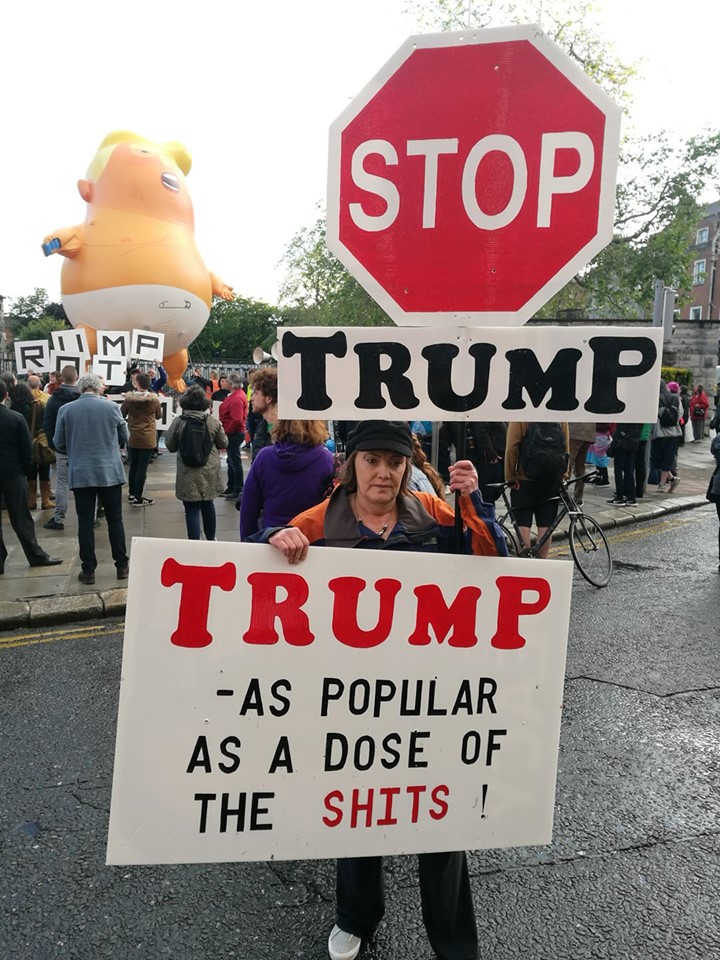
Blimp rising — taken from northern edge of rally.
(Photo: D. Breatnach)

At the invitation of The Irish Examiner, a number of organisations and individuals had written letters to Trump for publication (see link below); most were critical and these included Amnesty International, Irish Council for Civil Liberties, Ireland Palestine Solidarity Campaign, National Union of Journalists, National Women’s Council of Ireland, National Union of Students; Brendan Ogle, Tara Flynn and Clare Daly. For entertainment value I’d pick out the IPSC’s and Tara Flynn’s (well, she is a comedian). The ICCL also had a newspaper advertisement criticising Trump, which was sponsored by the American Civil Liberties Union and figured logos of a number of other civil rights organisations.

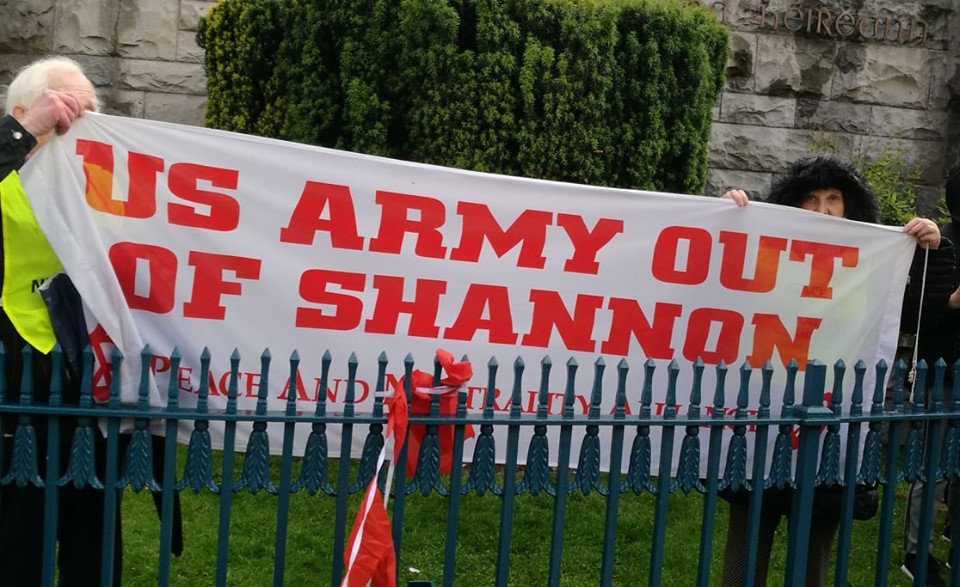
There were protests in various parts of the country, including one to greet his arrival at Shannon airport (hopefully US munitions and troop carriers were pulled to one side so as not to hinder his landing). The Irish Times said there were about 200 protesters there so, on past reporting, there could have been anything between 300 and 1,000. It is not easy to get to Shannon airport unless one has a car, even from Galway the gaps between bus arrival times are substantial. And no train station.

(Photo: G.Guilfoyle)

DUBLIN RALLY

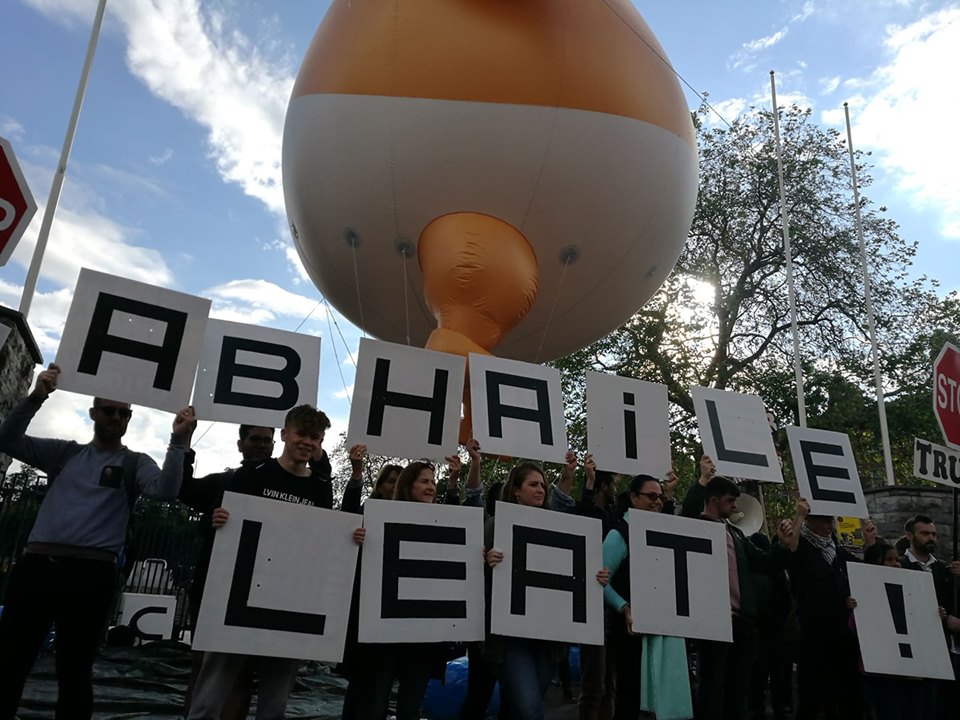
          Dublin had a showy and packed anti-Trump rally, with a Baby Trump blimp floating above the crowd outside the Garden of Remembrance. An activist brought big letter placards which, with the help of volunteers from the crowd, spelled out anti-trump messages in English and in Irish. Indeed an interesting feature was a number of placards partly or completely in Irish.

(Photo: D.Breatnach)
(Photo: G.Guilfoyle)

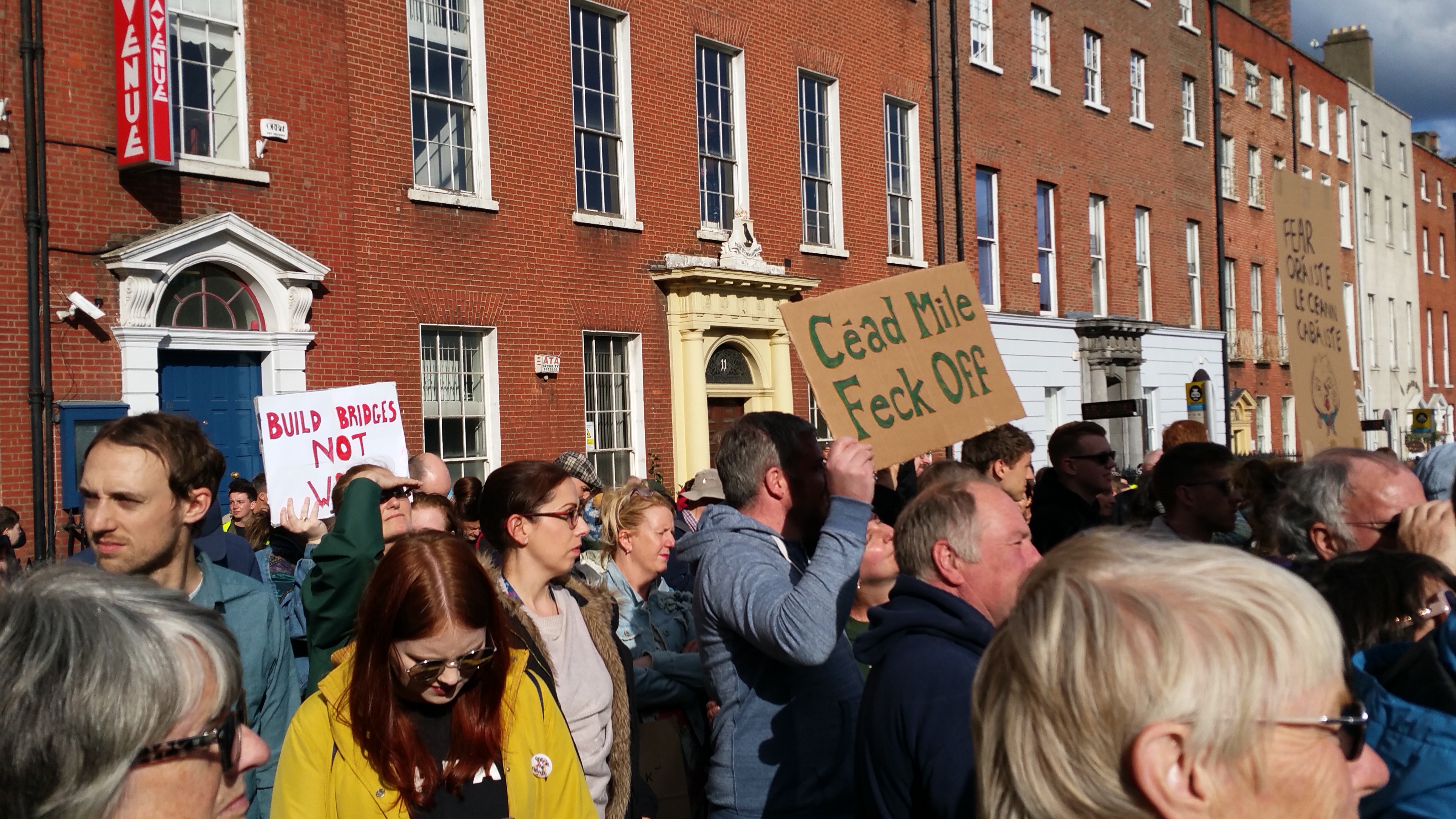
The theme of “welcome” or “fáilte” was of course played upon in reverse, in speech and placard, with more than a hinted reference to the old Bord Fáilte slogan inviting tourists to the land of “céad míle fáilte”.

On this placard play is made of the old “Céad míle fáilte” sentence (“a 100,000 welcomes”) but with a different twist.

The event was managed by Unite Against Racism which is, for the most part, People Before Profit, which in turn is really the Socialist Workers’ Party. A number of other left-wing party flags could be seen too. A group of Shinners were at the rally with their trademark flags (never go anywhere without the party’s flag) but no “dissidents” were present as a group, though I certainly noted some as individuals.

The speakers at the rally covered a number of themes, including of course misogyny, migrants, Palestine, war-making and imperialism. Liam Herrick of the ICCL was an unusual sight to see on an outdoors protest platform, speaking at the second part of the rally. Curiously, the rally organisers had sent a major part of the attendance off to march around the city centre for awhile and of course, when they got back, they had shed a great part of their numbers. A torrential downpour no doubt encouraged the desertions.

Glenda, “the woman of letters”, with some of her work.

Coming towards the end of the rally, a performer accompanied himself on guitar while he rendered some songs for the diminished attendance. Woody Guthrie’s “Plane Crash at Los Gatos” (also known as “Deportees”) would have been an apposite choice, a song about Mexican labourers being employed in the south-eastern US fruit harvests and then driven back across the Border. Guthrie was moved to sing about them when in 1948 a plane carrying mostly deported Mexicans crashed, killing all on board and though the names of the crew were given in the news reports, the Mexicans were referred to only as “deportees”.

At the rally, eventually Trump was deflated (the blimp, I mean), tethering weight bags emptied of water, placards were packed, flags furled …. and I went to get some shopping.

End.
(Photo: G.Guilfoyle)
(Photo: D.Breatnach)

REFERENCES AND FURTHER INFORMATION:

https://www.independent.ie/world-news/north-america/president-trump/ring-of-steel-to-protect-trump-for-two-days-will-cost-10m-38173483.html

https://www.irishexaminer.com/breakingnews/specialreports/letters-to-the-president-dear-mr-trump–928499.html?fbclid=IwAR0j1hb62cIjBWLxTaXhVwlUCaVaCD76SX-78s_RRJX1aN7ZJTOH2iJDwuU

45th ANNIVERSARY OF DUBLIN & MONAGHAN BOMBING — STILL NO JUSTICE

(Reading time main text: up to 15 minutes)

Diarmuid Breatnach

View of section of the crowd (Photo: D.Breatnach)

                    Forty-five years after the highest violent loss of life of any day in the Thirty-Years War in Ireland, survivors and relatives of victims of the Dublin and Monaghan bombing seem no nearer achieving justice. The identities of some of the Loyalist terrorists were known quite quickly after the bombing by Irish Army Intelligence and Garda Special Branch; British Intelligence penetration of some Irish State agencies had already been claimed by Irish Army intelligence and not long afterwards, Commissioner Ned Garvey was exposed as a British agent by a disgruntled British intelligence operative. Yet no arrests by the Royal Ulster Constabulary, no arrest warrants issued by the Irish Government and – incredibly – remains of bomb material were sent by Garvey’s superior to the British colony authorities for analysis. And consecutive British Governments refuse to hand over the relevant files or to disclose their contents.

View of section of the crowd at the commemoration.
(Photo: D.Breatnach)

45th ANNIVERSARY COMMEMORATION IN DUBLIN

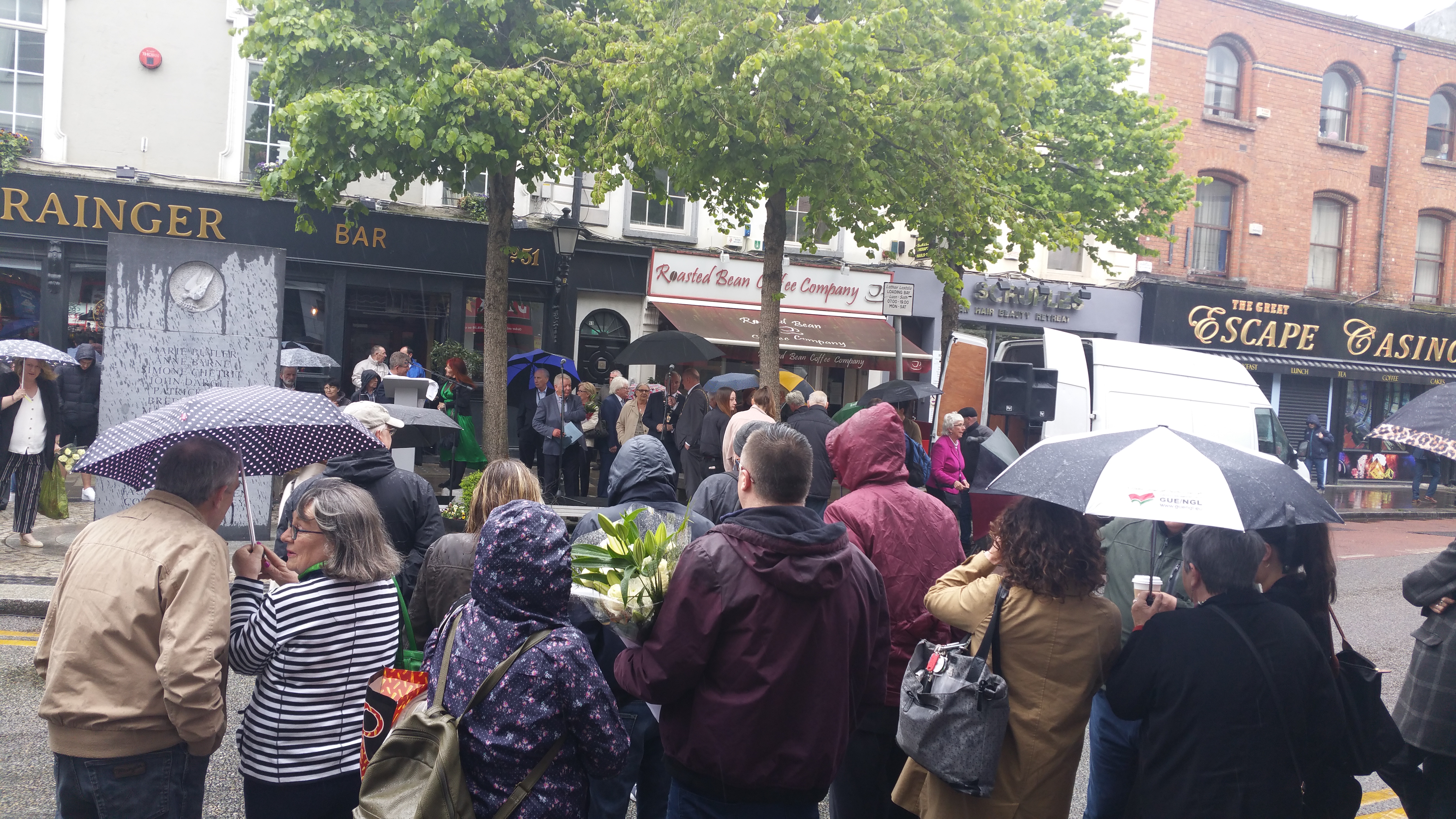
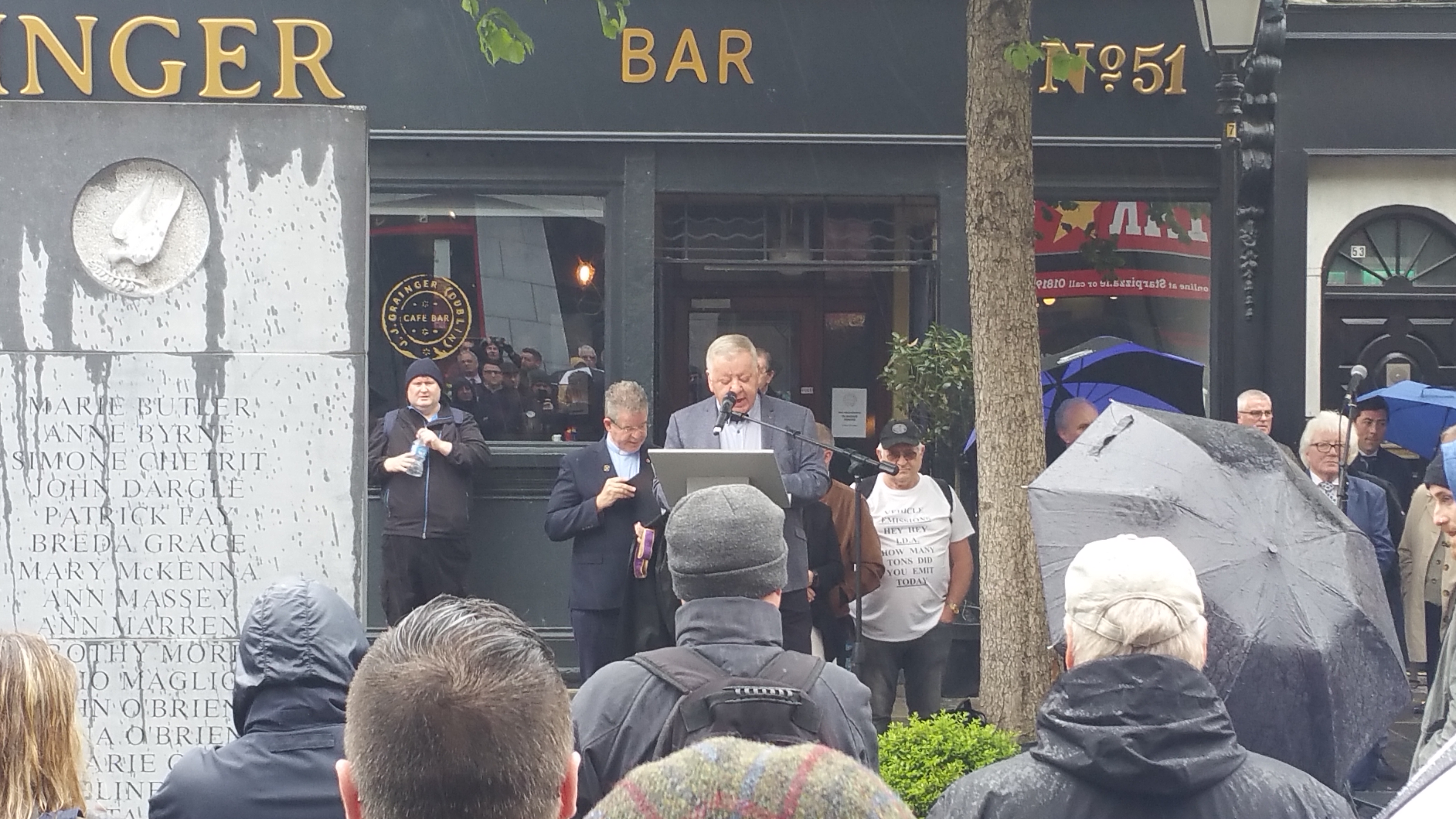
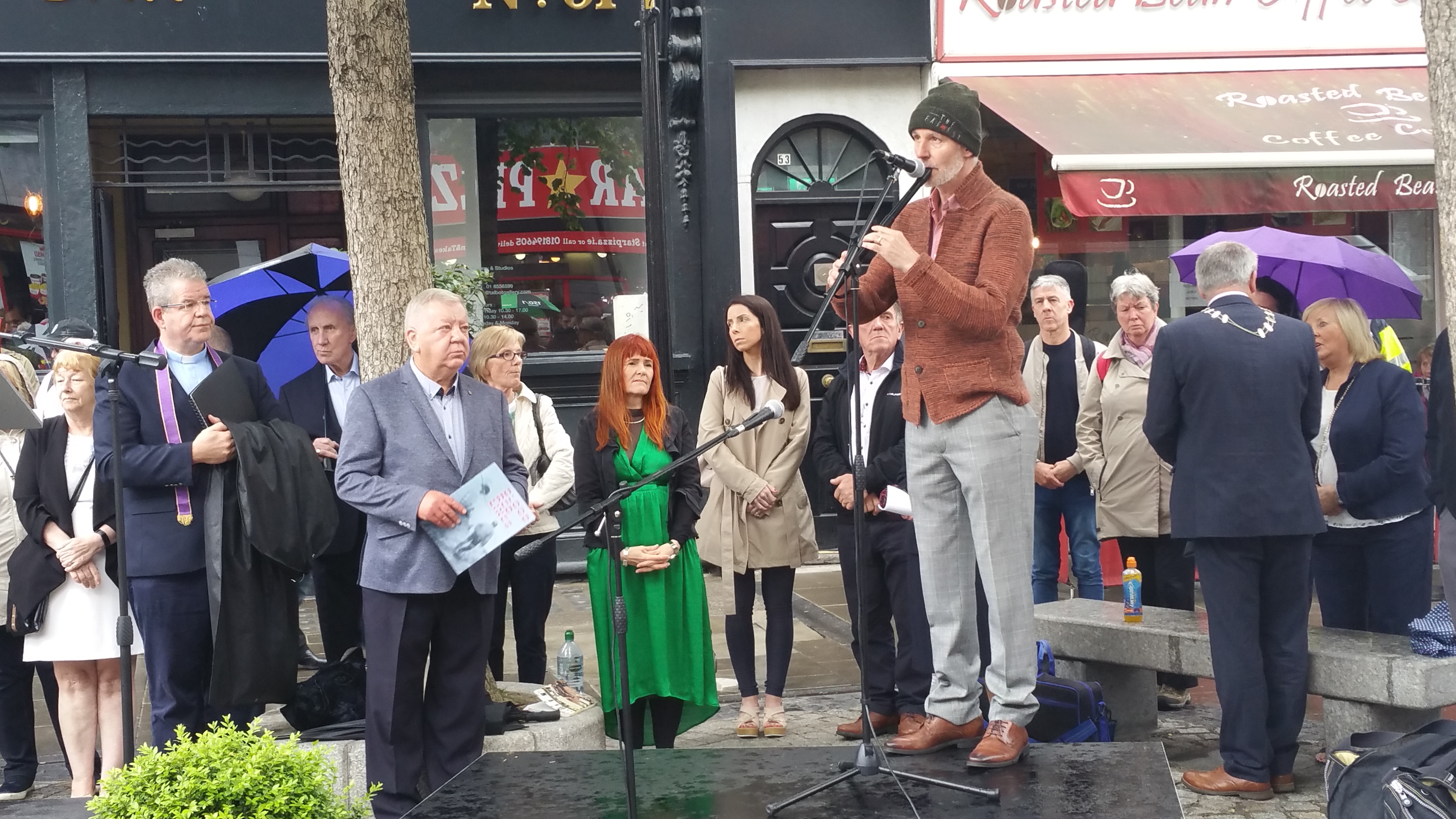
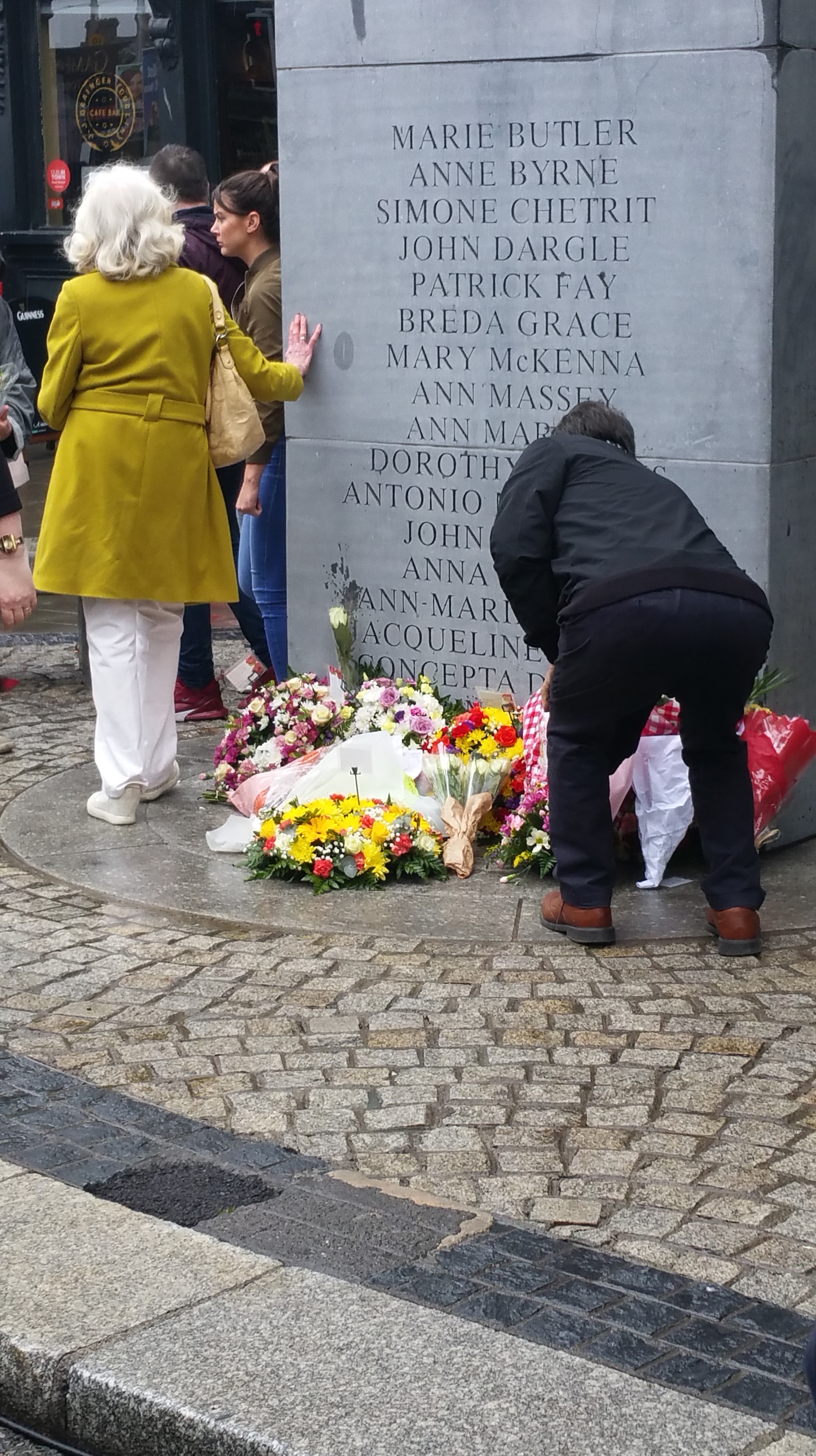
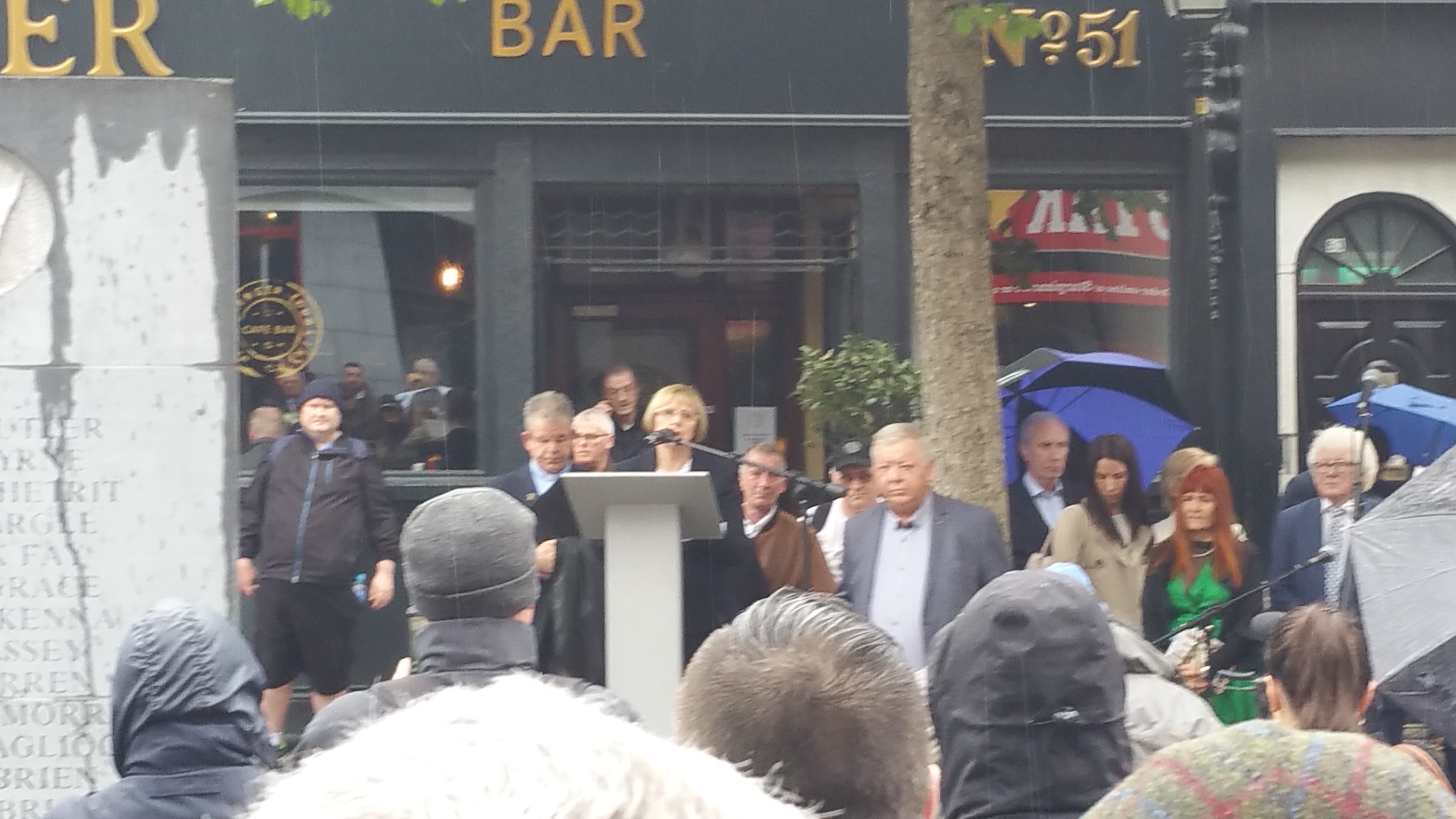
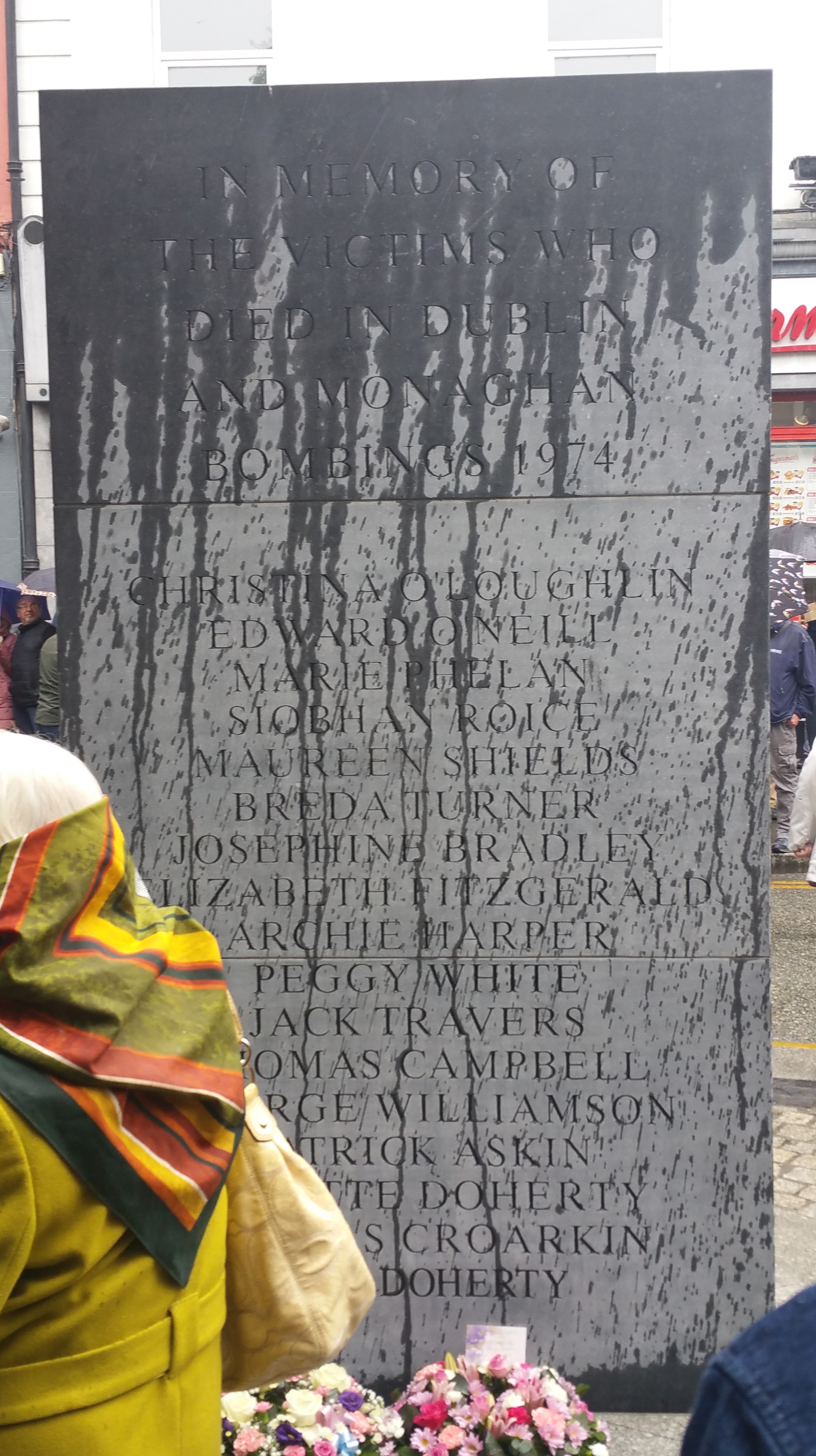
          A crowd had gathered at the Dublin and Monaghan Bombings Monument in Talbot Street for some time before the event was due to start on the 17th May.  Aidan Shields, whose mother Maureen was killed in in Talbot Street, acted as the master of ceremonies and, after saying a few words about the bombings and the campaign, outlined the course the proceedings would follow, apologising also to those who had to stand in the rain. 

Irish Minister for Justice Charlie Flanagan spoke about the bombings and about the efforts he had made, on behalf of the Government, to have the British Government lift their embargo on the relevant files. He also used the opportunity to criticise by implication the armed Republican resistance in the British colony and to promote the Good Friday Agreement, seeking collaboration between different political parties in running the Six Counties, i.e the British colony. Although he said he shared the relatives’ frustration at the British Government still not disclosing the information about the bombing in their files, not once did he condemn them, nor criticise successive British governments, British Intelligence nor the administration of the colony and its police force.

Aidan Shields, MC of the event, whose mother Maureen was killed in the bombing.
(Photo: D.Breatnach)

The Mayor of Dublin Niall Ring and Cathaoirleach of Monaghan Council, David Maxwell, also spoke at the event.

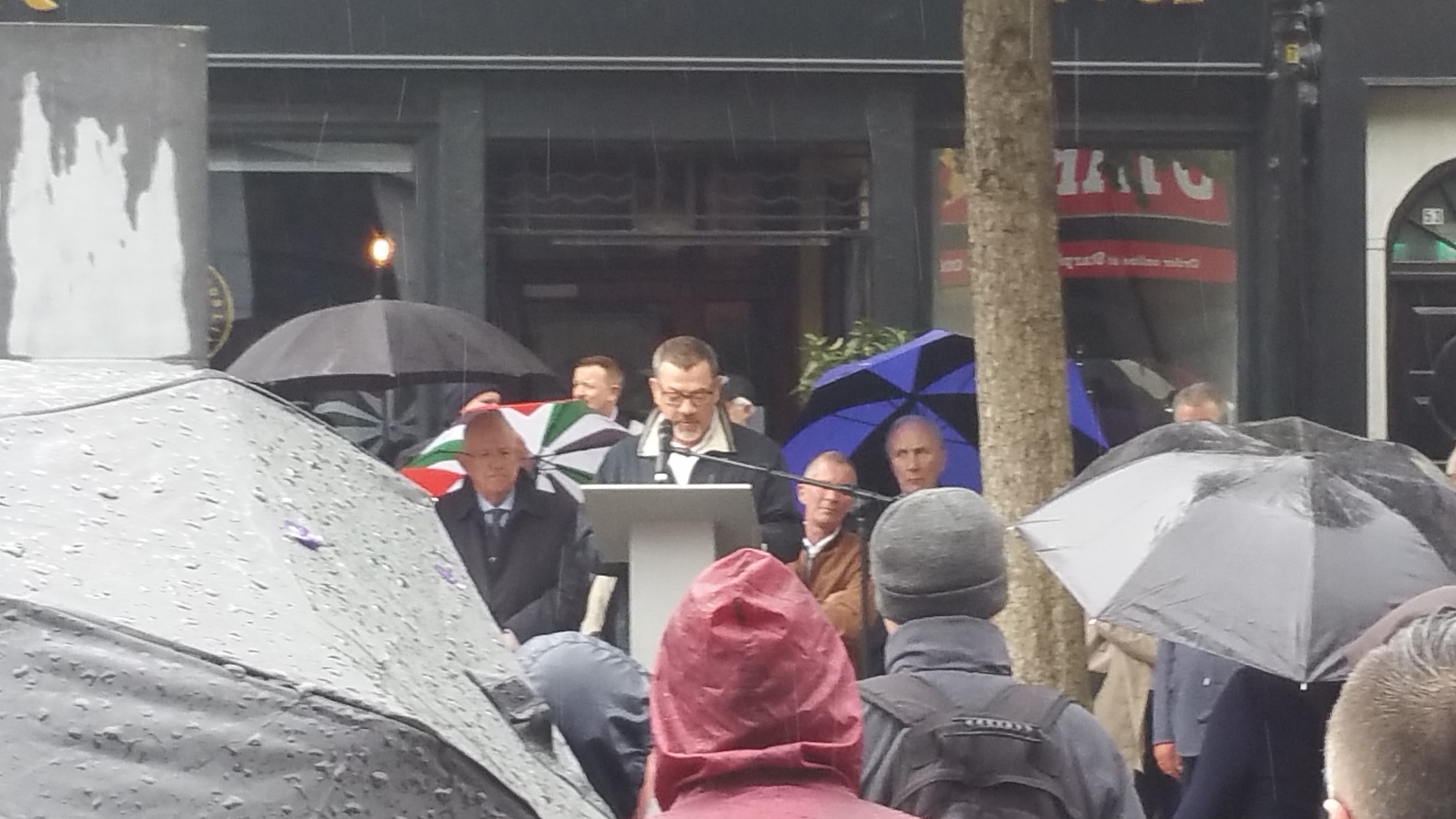
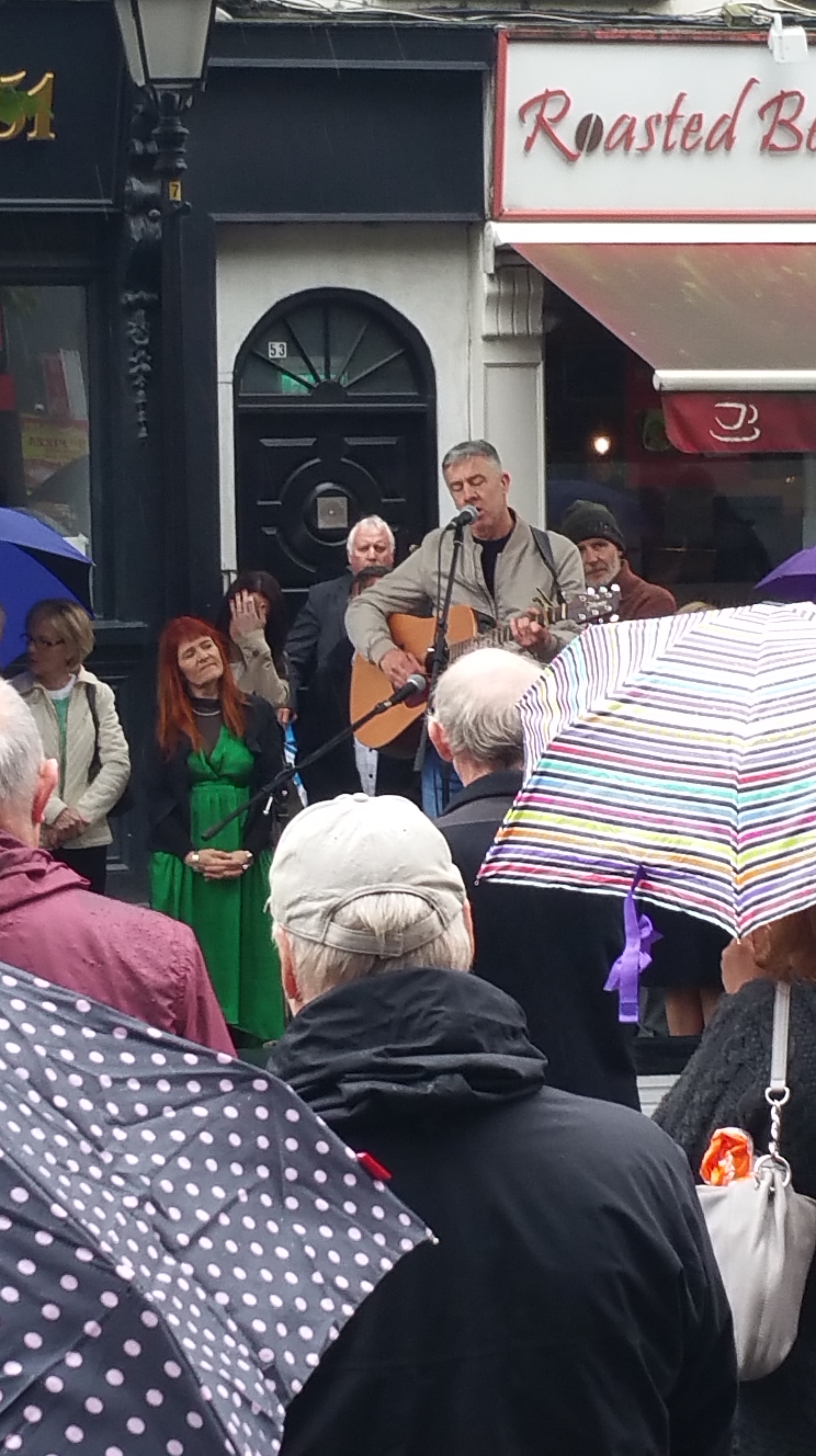
It was left to Noel Hegarty, a survivor of the bombing, in a poem (see References) and Pat Savage in his Song for Derek (which I’ve been unable to find on line) to place the blame for the attack and the lack of progress where it belonged.

Noel Hegarty reading his poem (see link for the words). (Photo: D.Breatnach)
Pat Savage performing his Song for Derek
(Photo: D.Breatnach)

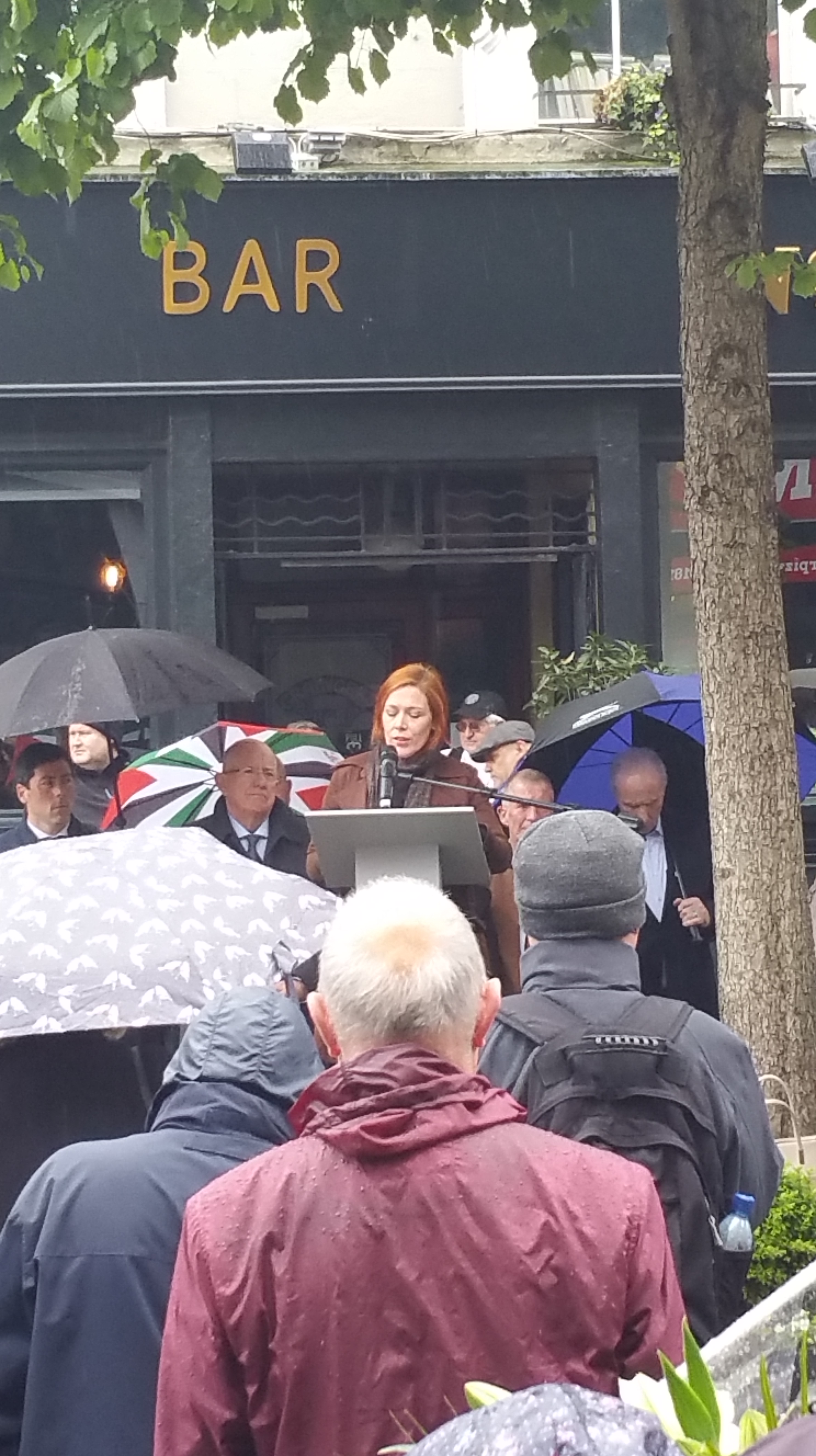
Julieann Campbell, author and Derry Bloody Sunday relative – her uncle John Duddy was the first fatal victim of the Paratroopers on that day in 1972 — gave the oration for the ceremony. She talked about the loss through sudden death, the effect on relatives and how it is exacerbated when official lies are told about the deaths with secrecy used to make it harder for the relatives and survivors to get at the truth. She referred to one British file on Bloody Sunday that is embargoed for decades yet and turned to Minister Flanagan, asking him publicly to press the British for the release of that file also, a request which was applauded by the crowd.

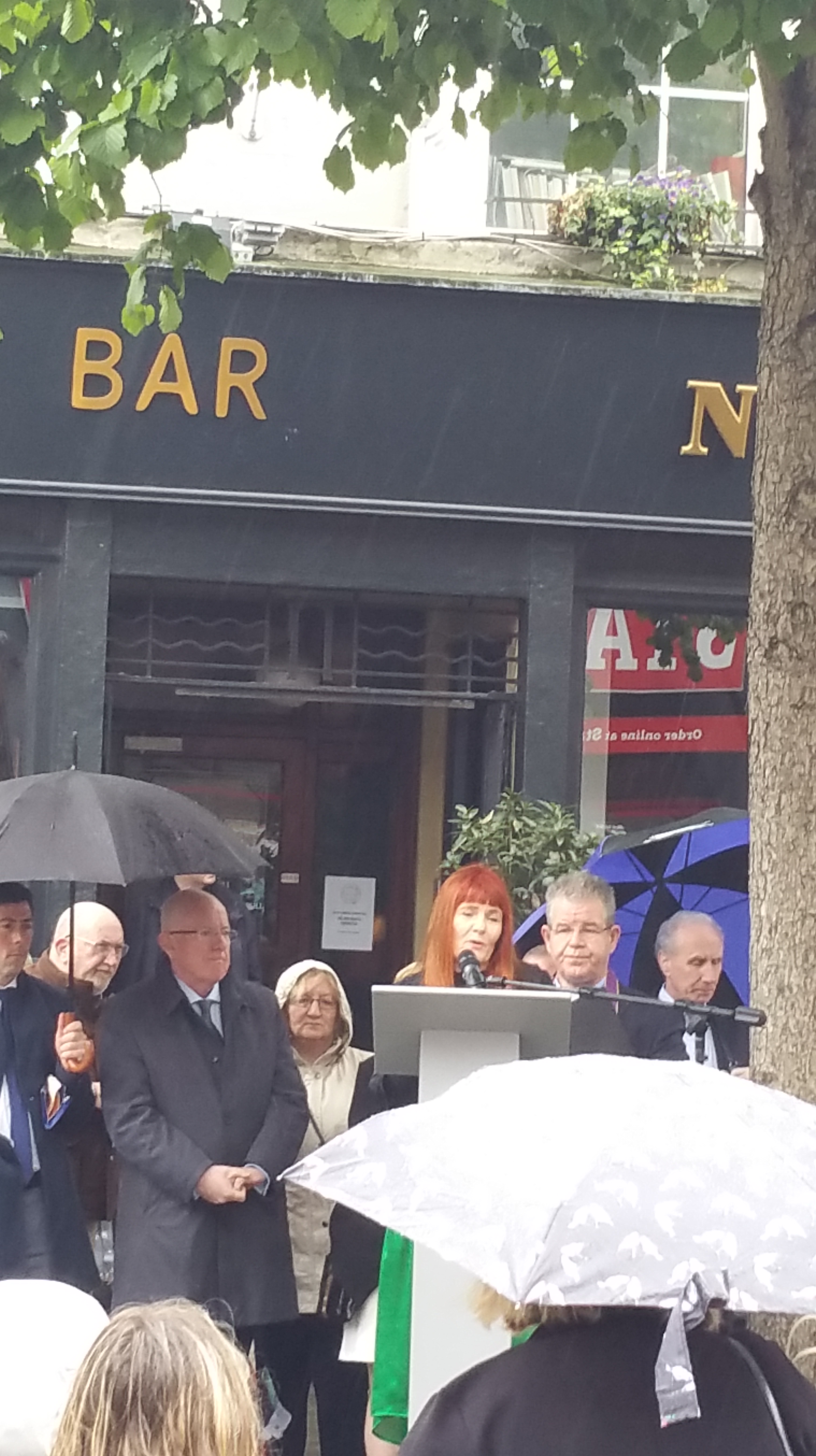
Rachel Hegarty read one of her sonnets from her collection, May Day 1974, which she composed based on witness testimonies about the deceased and Ciarán Warfield performed a song about the bombing and the lack of justice obtained. Fr. Tom Clowe led those who wished to respond in a Christian prayer (the Rev. Trevor Sargent had injured himself the day before and was unable to attend). Cormac Breatnach played low whistle while floral wreaths were laid and again at the conclusion of the event.

Rachel Hegarty reading one of her poems about the victims
(Photo: D.Breatnach)

THE BOMBING 45 YEARS AGO – THREE BOMBS IN DUBLIN AND ONE IN MONAGHAN

          What might be considered the official Dublin City centre is the area surrounding O’Connel Street, just north of the river Liffey. The street runs north-south and is bisected at its middle by a thoroughfare running east-west. The eastern part is mostly Talbot Street, with a short continuation named North Earl Street. Crossing over O’Connell Street one now passes by the Spire, where once stood Nelson’s Column (until blown up by dissident Republicans in 1966) and continuing westward, one enters Henry Street. This street contains big stores such as Debenhams and Arnotts and is a higher-class shopping street than are the streets chosen to place two bombs, Talbot Street; could it have been decided that predominantly working and lower-middle class victims were less likely to create pressure on the Irish Government to find those responsible? The other bomb’s target street, Parnell, is also not one of high-end shopping.

Cormac Breatnach, playing at the event.
(Photo: D.Breatnach)

There had been previous Loyalist bombings in Dublin, for example of the Wolfe Tone Monument in Stephens Green and the O’Connell Monument in Glasnevin Cemetery. None of those had caused deaths but a bombing in 1972 had killed a public transport worker and another, in 1973, had killed two and injured 185. No arrests were made in connection with either and in fact the Fianna Fáil government blamed Irish Republicans for the ’72 bombing, using the emotions engendered to push through more repressive legislation. That was an Amendment to the Offences Against the State Act, one which allowed the State to jail people on a charge of belonging to an illegal organisation, without any evidence other than the word of a Garda of Superintendent rank or higher and is regularly used to convict people today.

On the 17th May 1974 four bombs exploded in Dublin and Monaghan – killing 33 people including a woman who was nine months pregnant.

  • Three car bombs exploded without warning in the capital shortly before 5.30pm on Friday 17 May 1974.

  • Two of the bombs went off on Talbot and Parnell Streets before a third blast exploded on South Leinster Street near Trinity College, 27 people died.

  • Shortly afterwards another bomb exploded outside a pub in Monaghan, killing seven people. Hundreds more were injured.

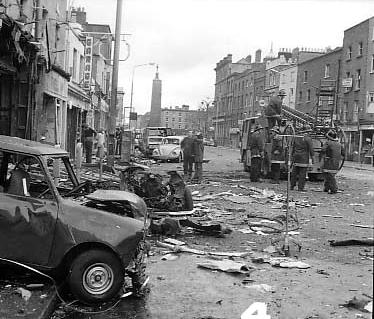
Wreckage in East Parnell Street after the bomb there
(Photo source: Internet)

After the bombings, the most concrete result in Irish Government policy was that Irish Republicans being sought by the British began to be tried in the Irish State. The Criminal Law (Jurisdiction) Act 1976 allowed trial in the Republic for alleged crimes committed in the Six Counties, and vice versa, which facilitated Irish State cooperation with the British State against Republicans, overcoming the many failures in extradition cases up to that date.

This parallels somewhat the 1980s GAL terrorist campaign waged by the Spanish Government against Basque independentists in the northern Basque Country, part of the French State’s territory. After Spanish State-sponsored terrorist shootings and bombings of independentist Basques for some time on what it considers French soil, the French Government began to extradite refugees to the Spanish State. However it was 1984 before the Irish State actually extradited a Republican to the Six Counties, with the extradition of Dominic McGlinchey (who subsequently had his conviction overturned there). It is curious that this possible rationale for the Dublin/ Monaghan bombings does not seem to have been considered – after all, the 1972 bombings by British agents had resulted in a change in Irish law to the disadvantage of Republicans within the Irish State.

Juliann Campbell, niece of Derry Bloody Sunday fatal victim John Duddy, giving the oration at the commemoration.
(Photo: D.Breatnach)

The Justice for the Forgotten campaign organises an annual commemoration on the date of the bombings but internationally and perhaps even in Ireland, this massacre is the least-known of all that took place during the recent 30 Years War. Arguably this is because a) the bombs were not placed by the IRA and the massacre was not therefore of much use in propaganda against them; b) the victims were mostly Irish and/or c) the perpetrators were Loyalists and British Intelligence operatives working together.

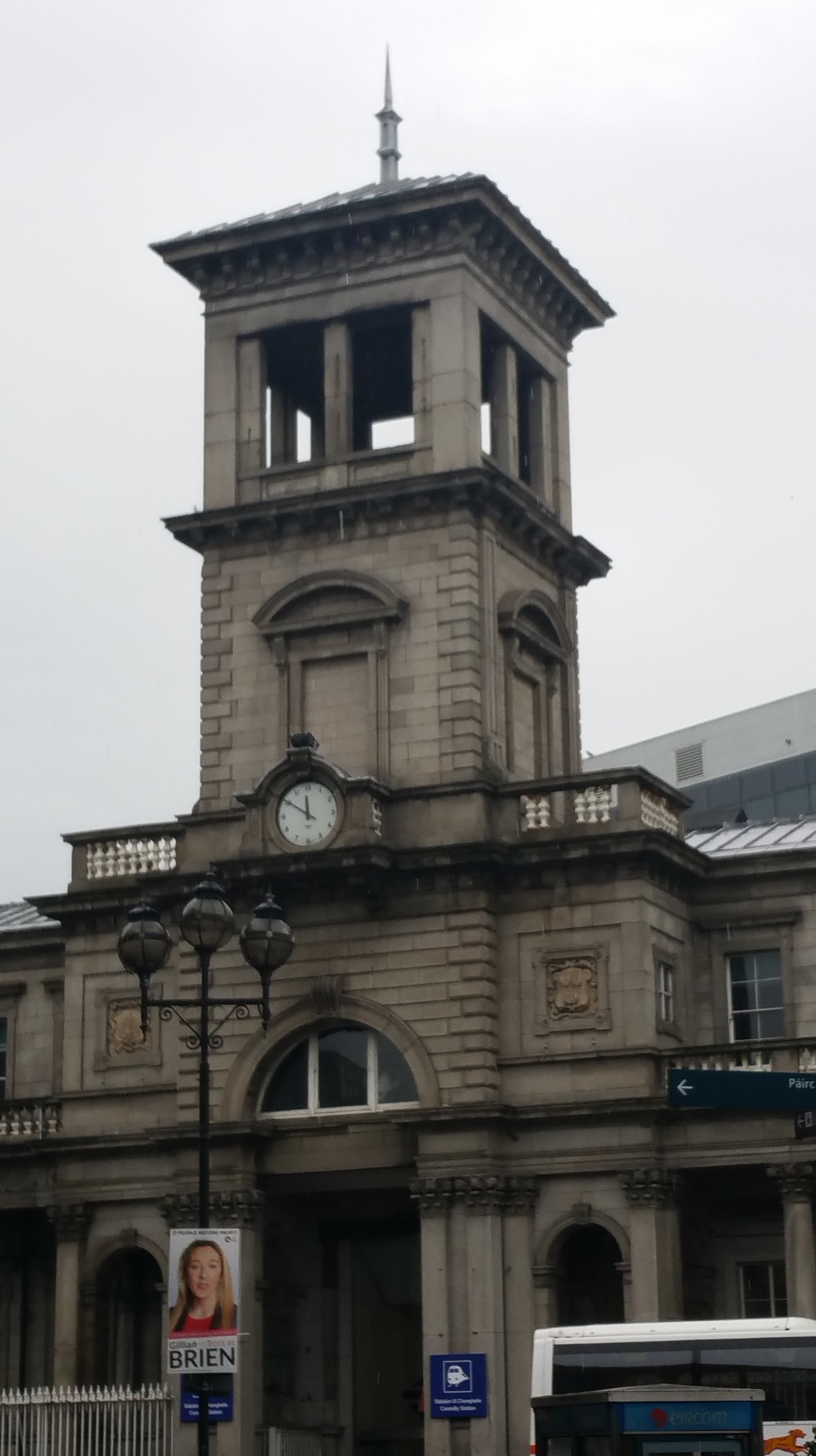
Overlooking the Talbot Street Monument of the Bombings, the tower of Connolly Train Station (formerly Amiens St. Stn.), from which British machine-gun bullets were fired at Irish insurgents during the 1916 Rising.
(Photo: D.Breatnach)

SECRETS AND AVOIDANCE

          It is interesting how coyly the media treat the whole question of British collusion with Loyalist death squads, including the Glenanne Gang’s involvement in the Dublin-Monaghan bombings, along with Irish State‘s lack of energy in pursuing the matter, including possible collusion and certain secrecy. There are sometimes ‘suspicions’, ‘concerns’, ‘inferences’, ‘allegations’ ….

And yet most of these matters are beyond speculation, established as facts through a number of different sources. Contrast that with how happy the media are to label the tragic but accidental shooting dead of Lyra McKee as a “murder”, even though legally and in fact, murder can only be when someone intends to kill the victim – which not even the press in its greatest hysteria has tried to suggest was the case.

The Justice for the Forgotten campaign has taken a civil case against the British State which appears to be playing its usual delaying game in situations like this. On 17th April they were due to respond to questions of the campaign’s lawyers but did not do so until eight days later, which resulted in the campaign’s lawyers not being able to proceed at the Belfast High Court on May 1st ….. The relatives will now have to wait until September.

The lack of energy and firmness in pursuing the issues and the disclosure of British files is not the only evidence of the Irish State’s lack of interest. It is also the case that much of the funding for the Justice for the Forgotten campaign was removed by the Irish Government some years ago; the campaign was obliged to leave its Gardiner Street office and remove much of their equipment and files to a portakabin in a supporter’s back garden.

Margaret Urwin speaking, main administrator/organiser in JFF (Justice for the Forgotten), underfunded organisation campaigning for disclosure and justice with regard to the Dublin and Monaghan bombings.
(Photo: D.Breatnach)

The British are not the only ones sitting on secret files. Mrs. O’Neill had called on Leo Varadkar to release the files deposited by the McEntee Commission, which was charged with investigating the Garda inquiry of the time, an inquiry which has been heavily criticised over the years. “I personally ask the Taoiseach to consider this reasonable and fair request,” she had said. Martha O’Neill’s husband, Eddie, was killed in the bombing and her sons Billy, then aged seven and Eddie jnr. aged five, were badly injured but survived.

Last year, Fred Holroyd, a British Army Intelligence officer who was the liaison with the RUC for a number of years during part of the three decades of war in the Six Counties, offered to give evidence on British involvement in the bombings – but in a secret court. Holroyd is suing the British Ministry of Defence over sacking him and has spoken out about collusion between the British administration and Loyalist paramilitaries including those widely believed to be the Loyalist bombers responsible for the carnage on the 17th May 1974.

Another measure of the Irish Government’s lack of enthusiasm for going after the perpetrators of the bombings and their handlers can be seen in the fact that the first documentary to be made about the atrocity in the Irish capital city and Monaghan town, was made not by the State broadcaster, RTÉ but by the English company First Tuesday, Yorkshire TV. “Hidden Hand – The Forgotten Massacre” was broadcast on 6 July 1993. Not everyone who had TV in the state then had ITV – I believe it required a special aerial at the time – and if memory serves me correctly, Yorkshire TV offered simultaneous screening to RTÉ, which it declined. The program made a case that the British Army, the RUC and Loyalist paramilitaries could have been involved in a number of killings, including the Dublin-Monaghan bombings.

The failure of the Irish Government at the time to pursue the case energetically and in a correct manner was responsible for much more than leaving the injured and the the relatives of 33 murdered people without justice. It also left the Glenanne Gang, a Loyalist paramilitary Ulster Volunteer Force death squad that included serving members of the Royal Ulster Constabulary police force and the British Army’s Ulster Defence Force, free to carry out around another 120 sectarian murders in the Six Counties.

(Photo: D.Breatnach)

Year after year, the Dublin/ Monaghan commemoration is held and year after year, relatives call for truth and justice; the Irish politicians express regrets and say that they will ask the British Government for the files again, to be refused again. And there it is left, until the following anniversary.

End.

REFERENCES AND FURTHER INFORMATION:

Justice for the Forgotten campaign: http://www.dublinmonaghanbombings.org/home/

and https://www.facebook.com/Justice4theForgotten1974/

Holroyd: https://www.bbc.com/news/world-europe-48303360

Glenanne Gang: https://www.thejournal.ie/readme/dublinmonaghan-bombings-we-need-to-know-extent-of-british-involvement-with-this-loyalist-gang-3557141-Aug2017/

Coy Irish Times reporting: https://www.irishtimes.com/news/ireland/irish-news/government-presses-for-action-over-dublin-monaghan-bombings-1.3895839

1972 & 1973 Dublin bombings: https://en.wikipedia.org/wiki/1972_and_1973_Dublin_bombings

Hidden Hand TV documentary film: https://www.youtube.com/watch?v=Wr_wdPwipgQ

Noel Hegarty poem: http://www.dublinmonaghanbombings.org/poem6.html

THE GREAT HUNGER COMMEMORATED IN SLIGO, DUBLIN AND CELTIC PARK

AN GORTA MÓR COMMEMORATED IN SLIGO, DUBLIN AND CELTIC PARK

(Reading time of article text: 5 minutes)

Clive Sulish

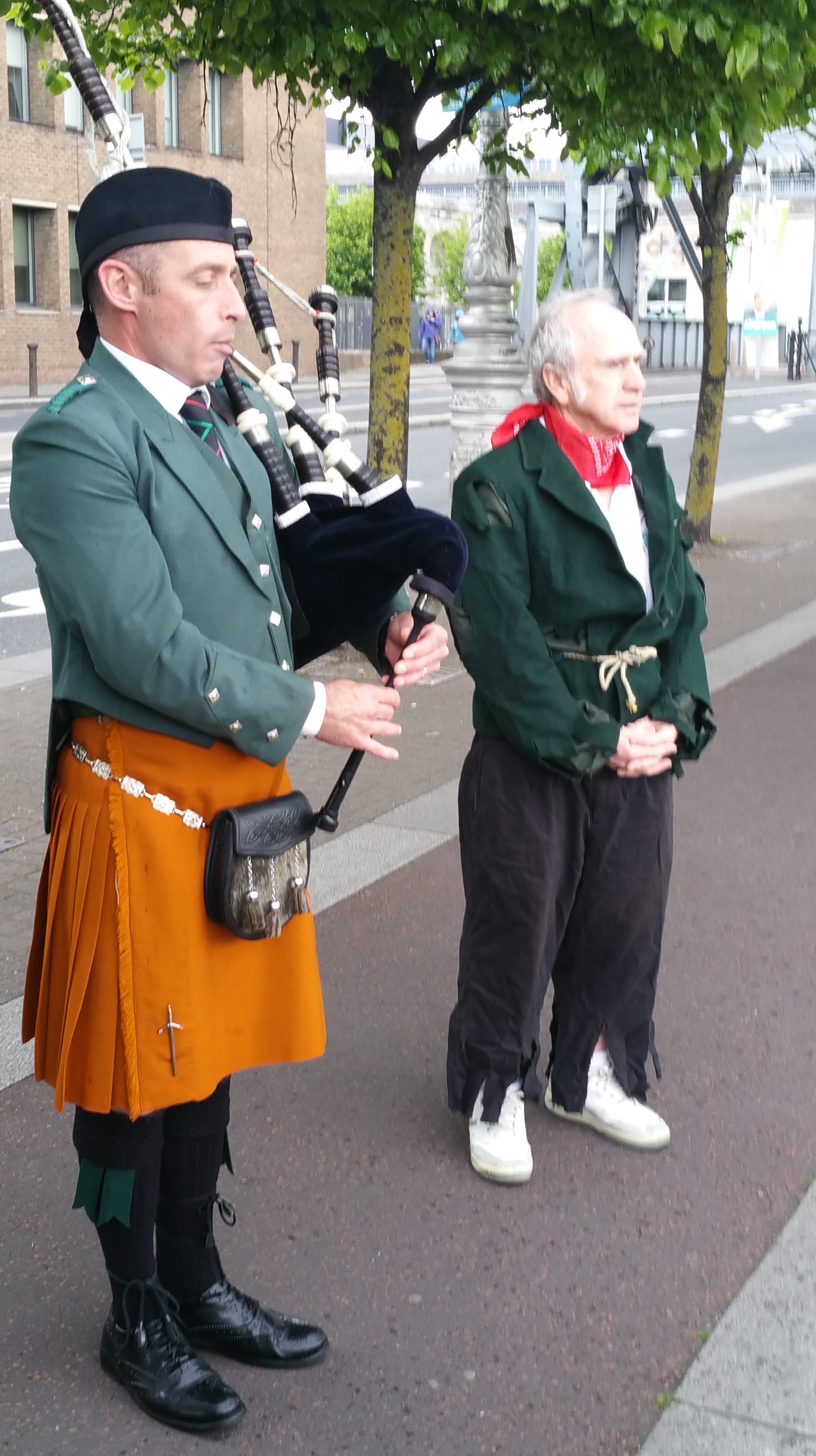
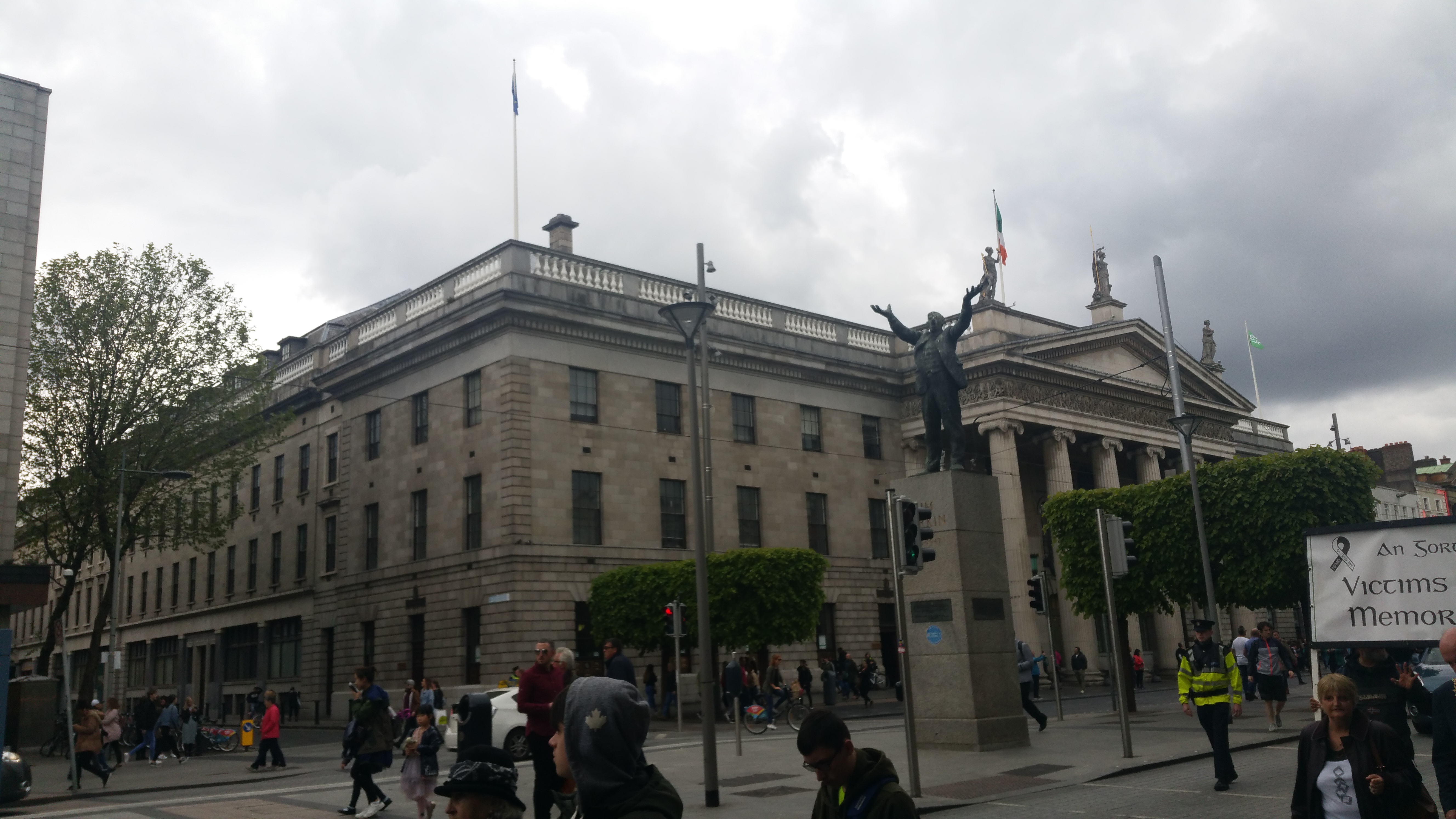
Michael and Olivia Blanch and piper halt the procession for a moment’s reflection outside the GPO building, HQ of the Easter Rising in 1916.


A small crowd gathered at the Garden of Remembrance, Dublin on Sunday afternoon to commemorate the Great Hunger, an Gorta Mór on National Famine Day.  Led by a lone piper, they marched through O’Connell St., the city’s main street, some of them in period costume, to the Great Hunger Memorial on the Custom House Quay, North Dock and later on to the iconic sailing ship, the Jeannie Johnson.

Participants proceed after a moment’s reflection at the GPO building, HQ of the Easter Rising 1916 and pass by Jim Larkin’s monument, “who also agitated for the poor of Dublin”.

With some adults and children dressed in period clothes, some of them tattered to represent the destitution of the starving poor, they marched down O’Connell Street led by the lone piper and turned left at the Bridge, proceeding along to Custom Quay’s North Dock and the Great Hunger memorial. There they were addressed by Michael Blanch of the organising committee and by Niall Ring, Lord Mayor (coming to the end of his year in that role), who had accompanied them from the Garden of Remembrance.

Lord Mayor Niall Ring speaking at the Famine Memorial.

Some sentences in Irish were spoken by the MC of the event and by the Lord Mayor, while Michael Blanch referenced the deadly impact the Great Hunger had on the Irish language (i.e with the depopulation of the main Irish-speaking areas of the western seaboard). The Irish Tricolour came in for a mention in the Dublin commemoration also; it had been presented to William Smith O’Brien by women in Paris during the revolution there of 1848 and the Young Irelanders had staged their own uprising that year also, small and certainly too late, easily crushed by the British colonial forces. The huge Irish diaspora was also mostly a result of the Great Hunger and had contributed significantly to the formation and membership of the Irish Republican Brotherhood, also known as the Fenians, founded simultaneously in 1858 on St. Patrick’s Day in Dublin and in New York. The IRB, in turn, had been the main driving force behind the 1916 Rising.

Section of crowd at Famine Memorial (and unintentional illustration of clashing architectural styles and building heights on the south quays opposite).
Piper playing lament and Michael Blanch at the Famine Memorial.
Michael Balanch and MC of proceedings at the Famine Memorial and banner of the Committee.

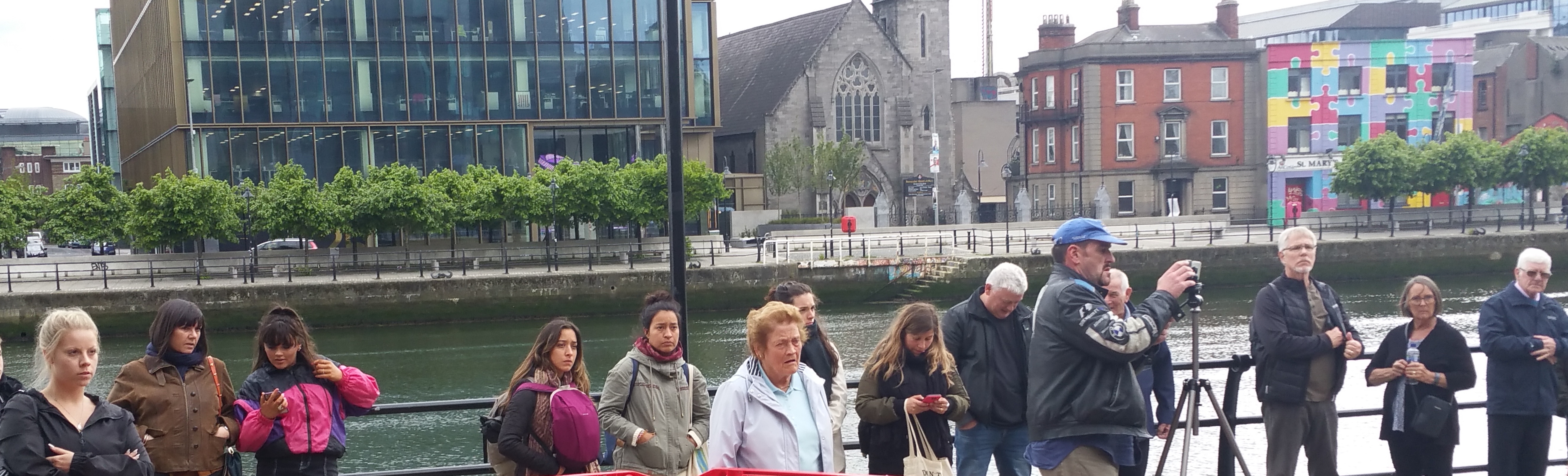
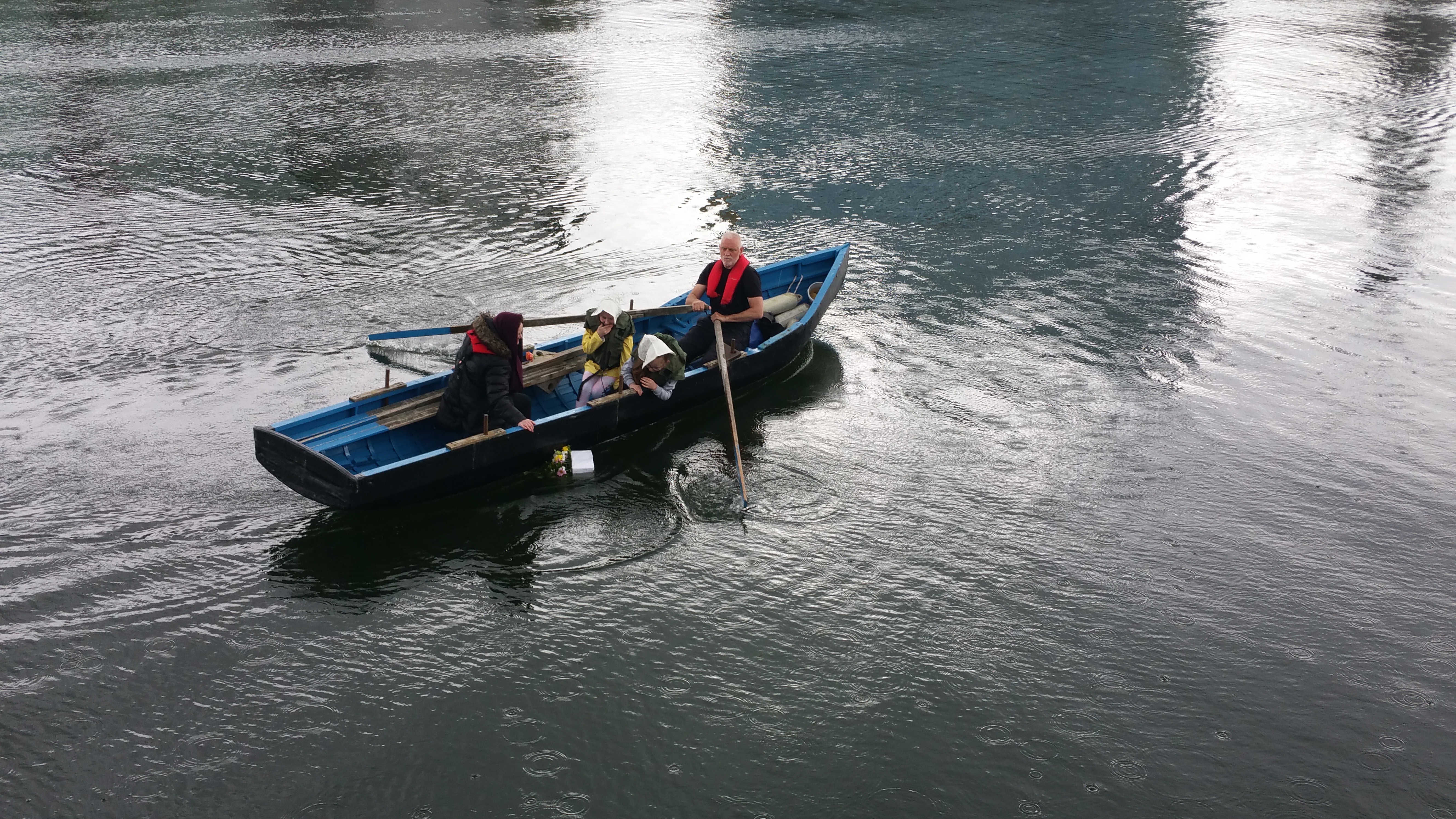
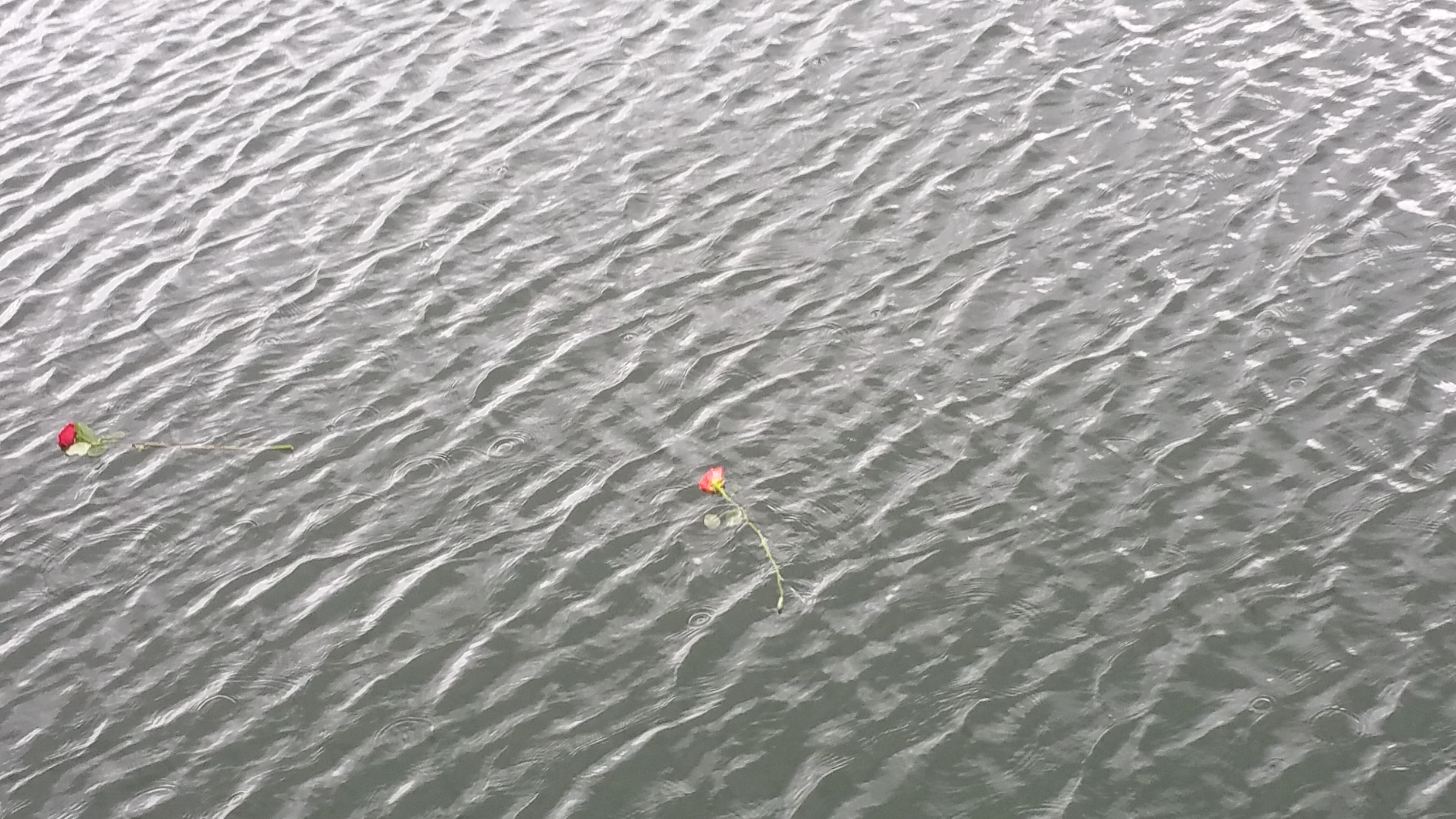
Tourists and other passers-by stopped to watch as wreaths were laid on on the statues of the monument and an Irish-language version of Amazing Grace was sung by a young girl in period costume. A currach (small traditional Irish sea-craft), containing a woman and two young girls in period costume and rowed by a man, pulled into place on the Liffey across from the group; one of the girls placed a wreath in a cardboard box into the river, to commemorate the Irish diaspora and those who had perished during their journeys. Participants then threw single red roses bouquets into the river also and floral wreaths were deposited around the statues of the 1977 memorial by sculptor Rowan Gillespie. And the piper played a lament, Hector the Hero.

Girl singing “Amazing Grace” in Irish.

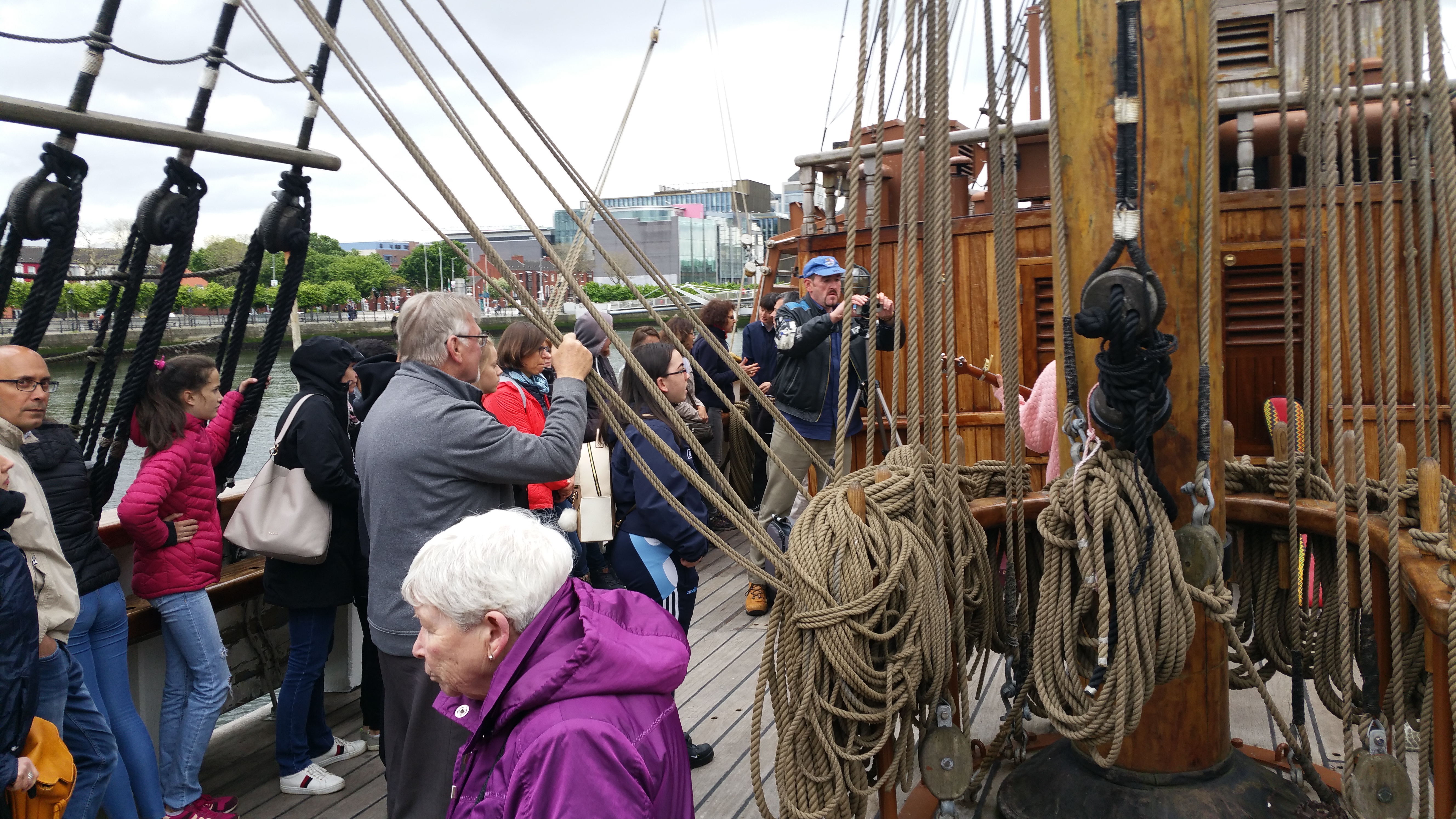
The gathering moved on then to the sailing ship the Jeannie Johnson, to hear Evelyn Campbell sing her Famine Song and Diarmuid Breatnach sing Skibereen and Fields of Athenry. After that, some repaired to the Teachers’ Club, where tea, sandwiches, gur cake and biscuits were on offer. By coincidence, a Musical Society were relaxing there too and it was not long before songs from different parts of the world were being exchanged from different parts of the room.

Somewhat incongruous, the top floors of the International Finance Services Centre, which looms over the Famine Memorial, commissioned by Nora Smurfit of the Irish capitalist family.

Evelyn Campbell on board the Jeannie Johnson, accompanying herself on guitar while she sings her Famine Song.

THE CAMPAIGN FOR A NATIONAL IRISH FAMINE DAY

The currach on the Liffey near the Famine Memorial on the quay.

The commemorative wreath is lowered into the Liffey from the currach.
Participants prepare to throw stem roses into the Liffey to commemorate those who died during emigration and the diaspora that survived.
Some of the stem roses floating in the Liffey.


The Great Hunger is the preferred term in English by many for the terrible disaster that struck Ireland in the mid-19th Century, for people starved alongside what was for a while at least, an abundance of food.

Mast and some of the rope work of the Jeannie Johnson sailing ship.

For three successive years, a fungus-like oomycete infested the potato crop, staple diet of most of the population. Although Phytophthora infestans had attacked the potato crops on the European mainland and in Britain also, nowhere was the disaster of the dimensions it grew to in Ireland: nowhere else were the the majority of the population obliged to sustain themselves on the potato while yielding up every other edible product (except perhaps milk) to pay the landlord’s rent on land conquered from the ancestors of the starving, thousands of soldiers and police being on hand to ensure the hungry paid up. “The Almighty indeed sent the potato blight”, wrote Young Irelander journalist John Mitchell, “but the English created the Famine.”

Well over one million Irish starved or died of attendant diseases in less than five years during the reign of Queen Victoria, while ships left Irish ports laden with food and grain was fermented to make lucrative whiskey and beer. Another million emigrated and it is estimated that about one third of those also died – of drowning, of disease aboard ship or of the various dangers migrants faced. Five years after the potato crop failed, estimates put the population of Ireland at around six million, from the over 8 million of before. Over the next decade, another million would leave, paid to go, lied to go, forced to go, or gone out of desperation and loss of faith in any future in the country of their birth under foreign domination.

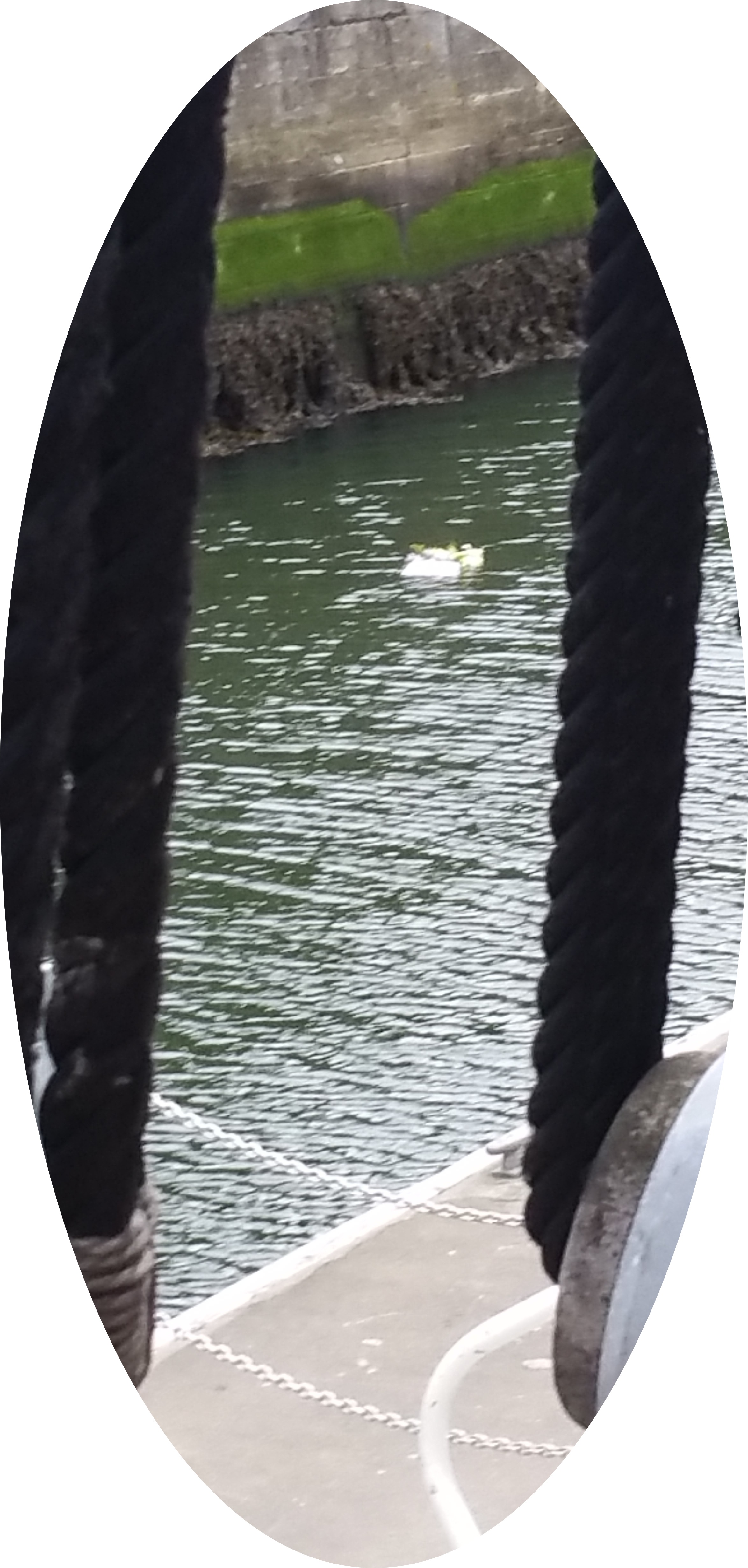
The floral wreath deposited from the currach earlier floats past the Jeannie Johnson.

In 2008 it was agreed by the Irish Government that there would be a national Famine Day in the Irish calendar of national events and it would take place on the third Sunday in May. The State commemoration this year was held in Sligo, attended by Leo Varadkar (who was met by a protest of the Sligo Women’s Cervical Smear Action Group). The ceremony was covered in the RTÉ news which was shown on TV in the Teacher’s Club. Michael Blanch told those present that the campaign he and his wife had started in 2004 through the Committee for the Commemoration of Irish Famine Victims, had resulted in this national event and that it was also being commemorated by the Glasgow Celtic team in the special jerseys they wore that day (in their Scottish Premiership win 2-1 against Hearts). The symbol is black and white which are the colours of the Commemoration and he had also wanted GAA teams playing on this day to wear it on their jerseys (the Munster Hurling Championship match between Limerick and Cork was also being shown that afternoon on the TV screen in the Teachers’ Club).

End.

People commemorating stand among the ghosts of the victims who, as a result of the Great Hunger, died in Ireland or in emigration.


REFERENCES AND LINKS FOR FURTHER INFORMATION

Celtic game on Sunday: https://www.bbc.com/sport/football/48242024

Celtic FC wearing Famine Commemoration logo on their jerseys on 19th May 2019: http://www.celticfc.net/news/16184

https://en.wikipedia.org/wiki/National_Famine_Commemoration_Day

Presentation by Michael Blanch at the Oireachtas in support of a National Annual Famine Commemoration Day: https://data.oireachtas.ie/ie/oireachtas/committee/dail/32/joint_committee_on_culture_heritage_and_the_gaeltacht/submissions/2018/2018-11-28_opening-statement-michael-blanch-chairman-committee-for-commemoration-of-irish-famine-victims_en.pdf

Sligo National Irish Famine Day commemoration event: https://www.rte.ie/news/ireland/2019/0518/1050300-national-famine-commemoration/

Talk: “Struggle Against Racism & Fascism In The 21st Century”

Diarmuid Breatnach

(Report reading time: 3 minutes)

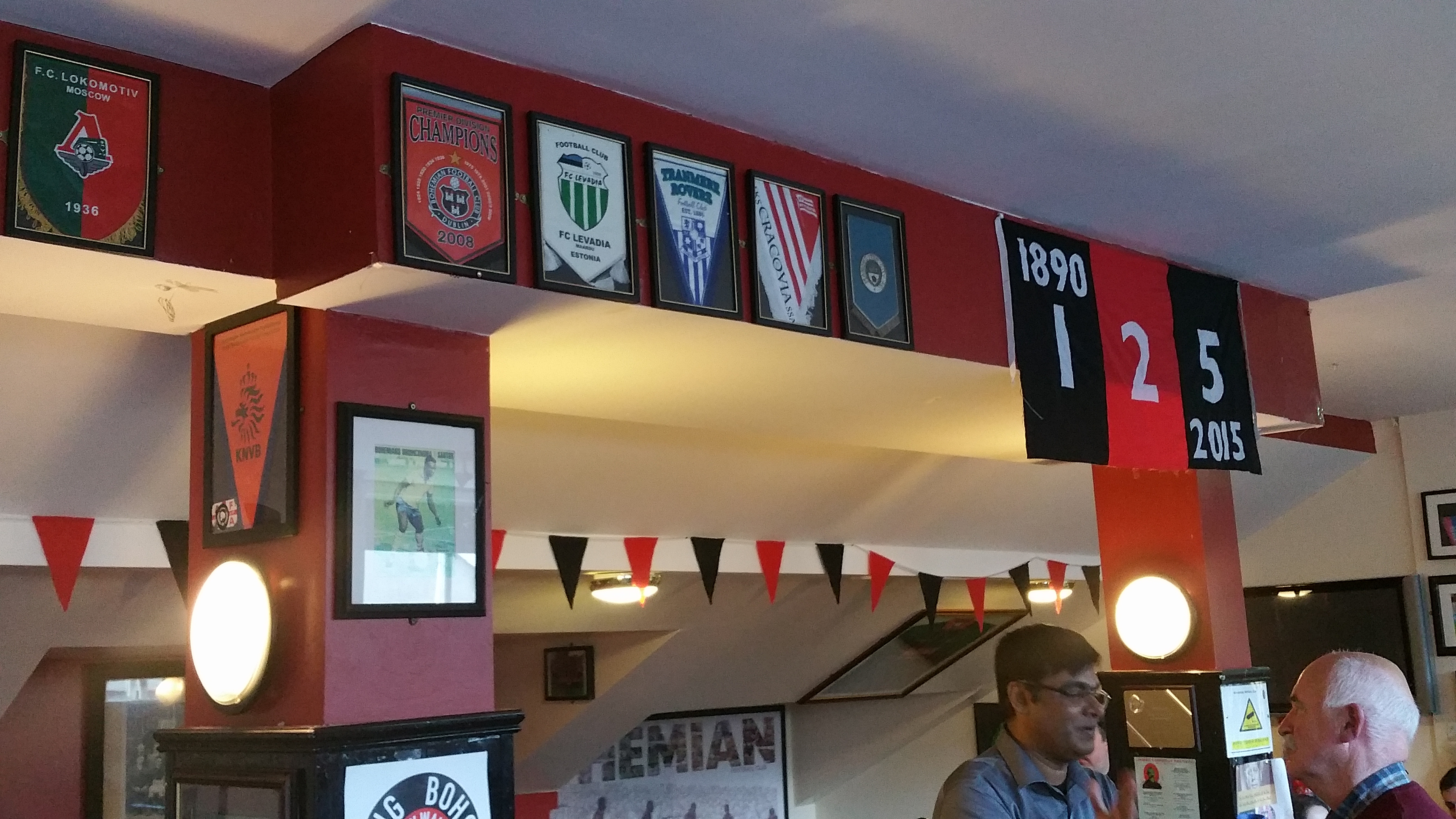
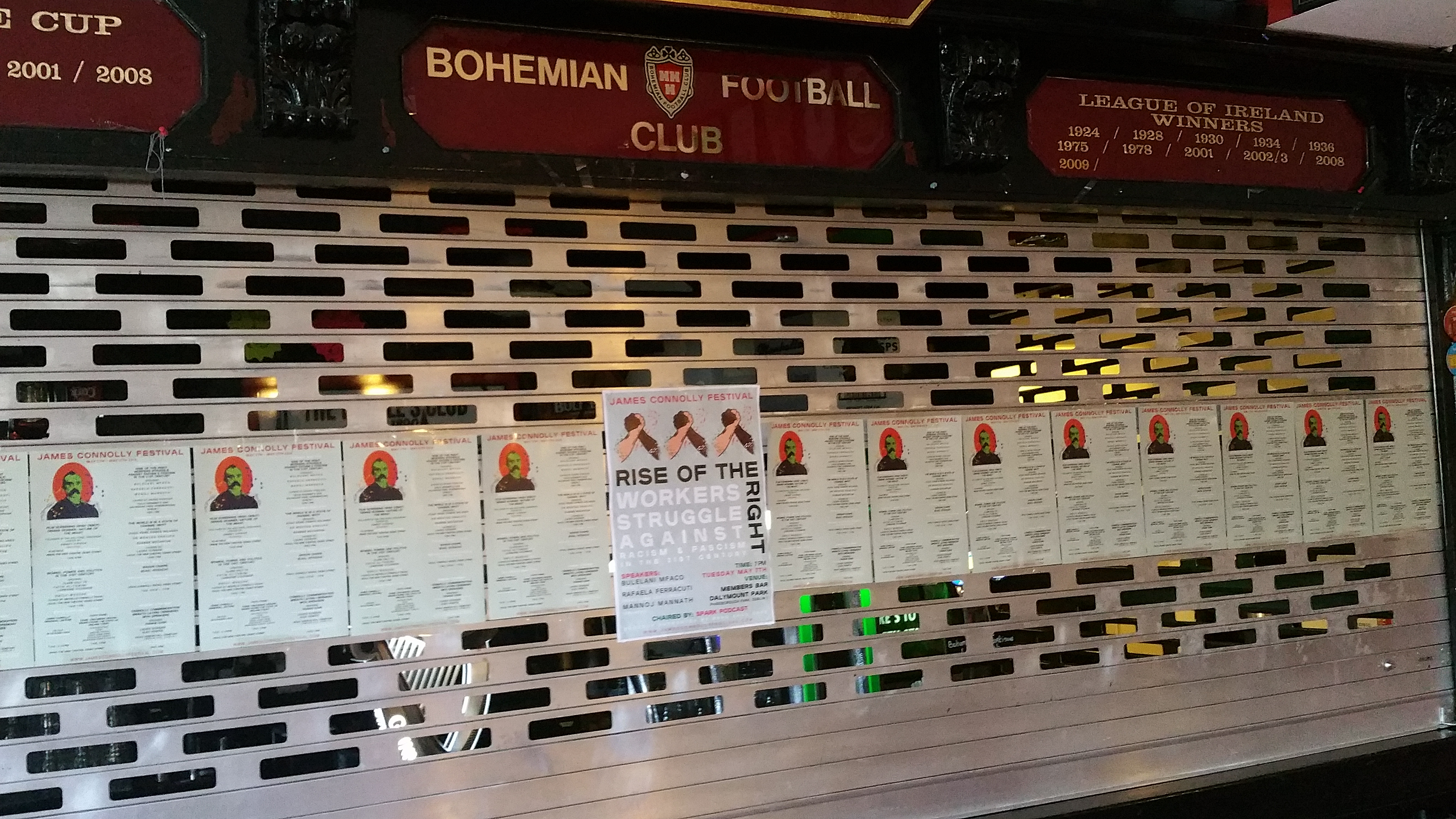
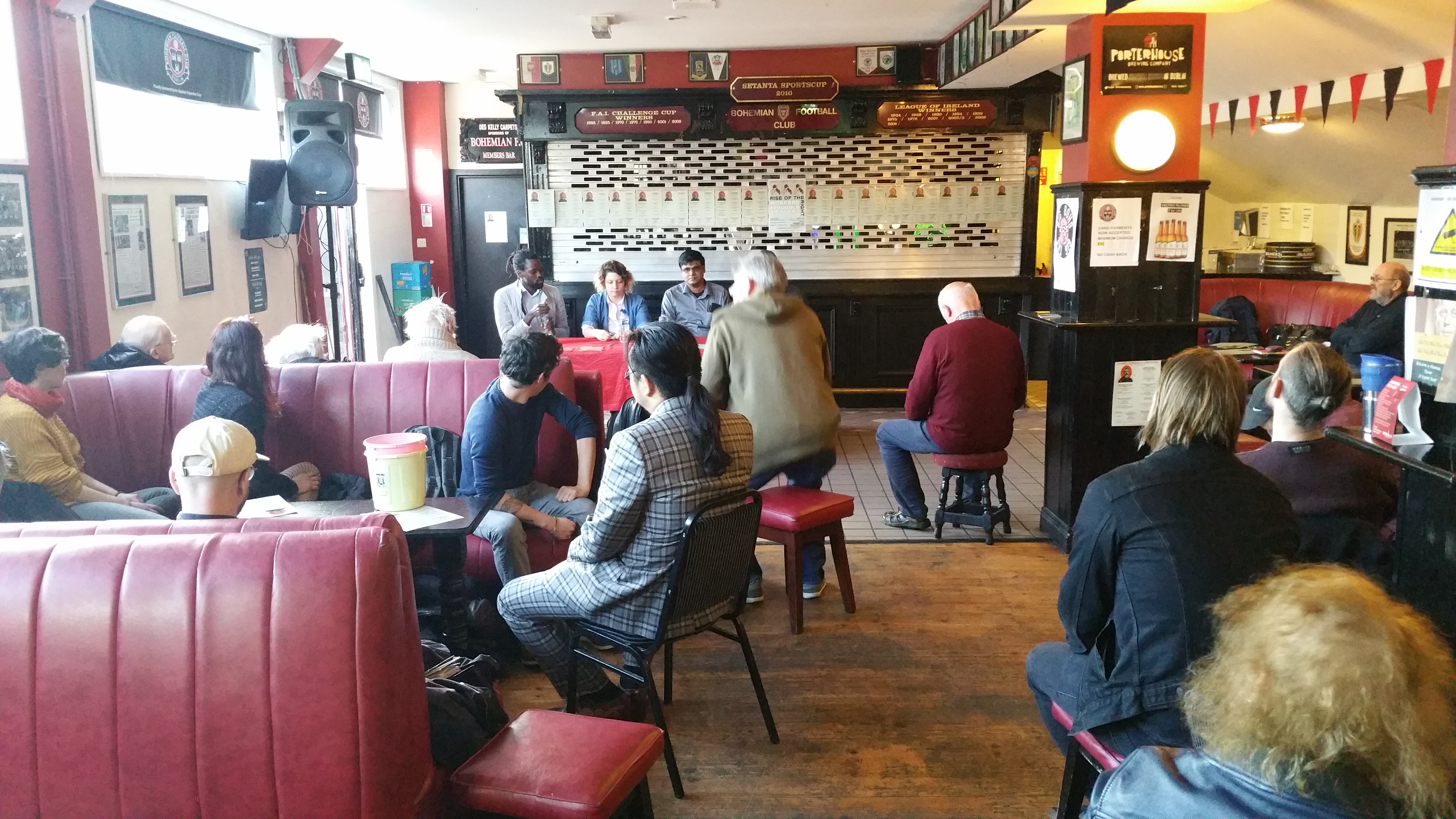
The above was the title of an event as part of the James Connolly Festival 2019 and was held in the Bohemians FC Members’ Bar in Dalymount Park, Phibsborough, Dublin on 7th May. The event was chaired by Spark Podcast and had three speakers, one from a Direct Provision asylum seeker’s hostel, another from a Brazilian immigrant community and a third from Kerala state in India but resident in Ireland.

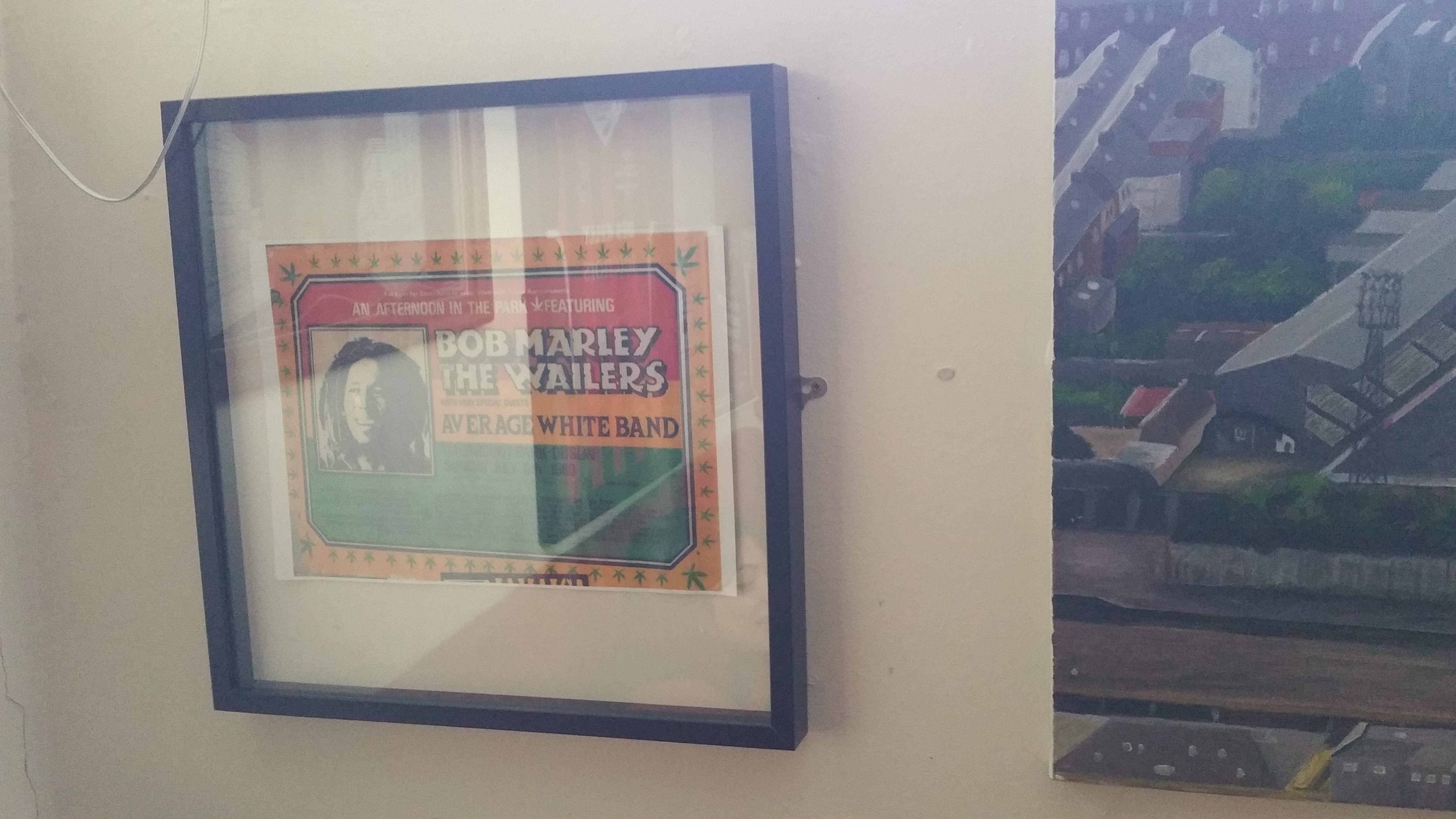
Poster commemorating Bob Marley and the Wailers concert in Dalymount Park, July 1980.
Section of Bohemians’ supporters bar with memories of games played int the past.
Memorials of past games played by Bohemians FC
Bohemians’ supporters’ bar with posters for the JCF and one for the specific event of the night.

The first speaker was Bulelani Mfaco who introduced himself as a South African, gay and an asylum seeker. Speaking about racism, he said that it was necessary to stand up to it and quoted the example several times of Mary Manning, who was one of eleven strikers (“Ten Young Women and One Young Man”, song by Ewan McColl) in Dunne’s Stores in Dublin in pursuance of their union’s policy (IDATU) not to handle South African goods while the white racist regime was in power.

Bulelani said that fascists mean what the say in their threats about their targets, blacks, gays, asylum seekers, women who won’t act as the fascist think they should …. and so they should be prevented from coming to power. He said that as a black man he is aware of racism often on the street.

Speaking about the conditions of asylum seekers and the conditions imposed on them, including being asked to prove that he was gay (!!!), he said they do not come as freeloaders but are prevented from working while their cases are examined, which can take years, therefore the Government’s system forces them to be recipients of aid. Once a judgement is given, which in 9 out of 10 cases is a rejection of the application to stay, they can appeal and racists say they are just doing that to delay the process of their expulsion. In reality, many cases are successful on appeal as the reasons stated for rejection at the first stage were so irrational.

He also pointed out that seeking asylum has no necessary link to war but is about a person “having a reasonable fear of persecution because of their race, religion, nationality, membership of a social group or political opinion and is expelled or chooses to leave their country because of one of those factors”. A “social group” under threat could mean and often does, being one lesbian, bisexual, gay or transgender.

Eloquent and with wide knowledge about people seeking asylum in different countries, Bulelani was at times in danger of leaving the other speakers without enough time for their own contributions.

Rafaela Ferracuti (Brazilian Left Front) spoke about the fascist and racist policies of the current regime in Brazil and the harmful reforms of workers rights’ and open justification of attacks on indigenous people. Ferracuti spoke also about the situation of Brazilian migrants working in Ireland and referred to a fairly recent attack on some of them by Travellers. Asking for people to support Brazilian workers here, Rafaela also spoke about links with the Workers’ Party (which I assumed incorrectly at the time to be a generic term or a Brazilian party I had not heard of).

Manoj Mannath (of Kranthi organisation) talked about the slow climbing to power in an Indian state of a fascist party and talked about the process they had followed to do so, using Hindu religion in a supremacist way and also targeting those of the “untouchable” (sic) class.

Both Ferracuti and Mannath were speaking with difficulty in a language other than their own and I found it quite hard to follow them at times.

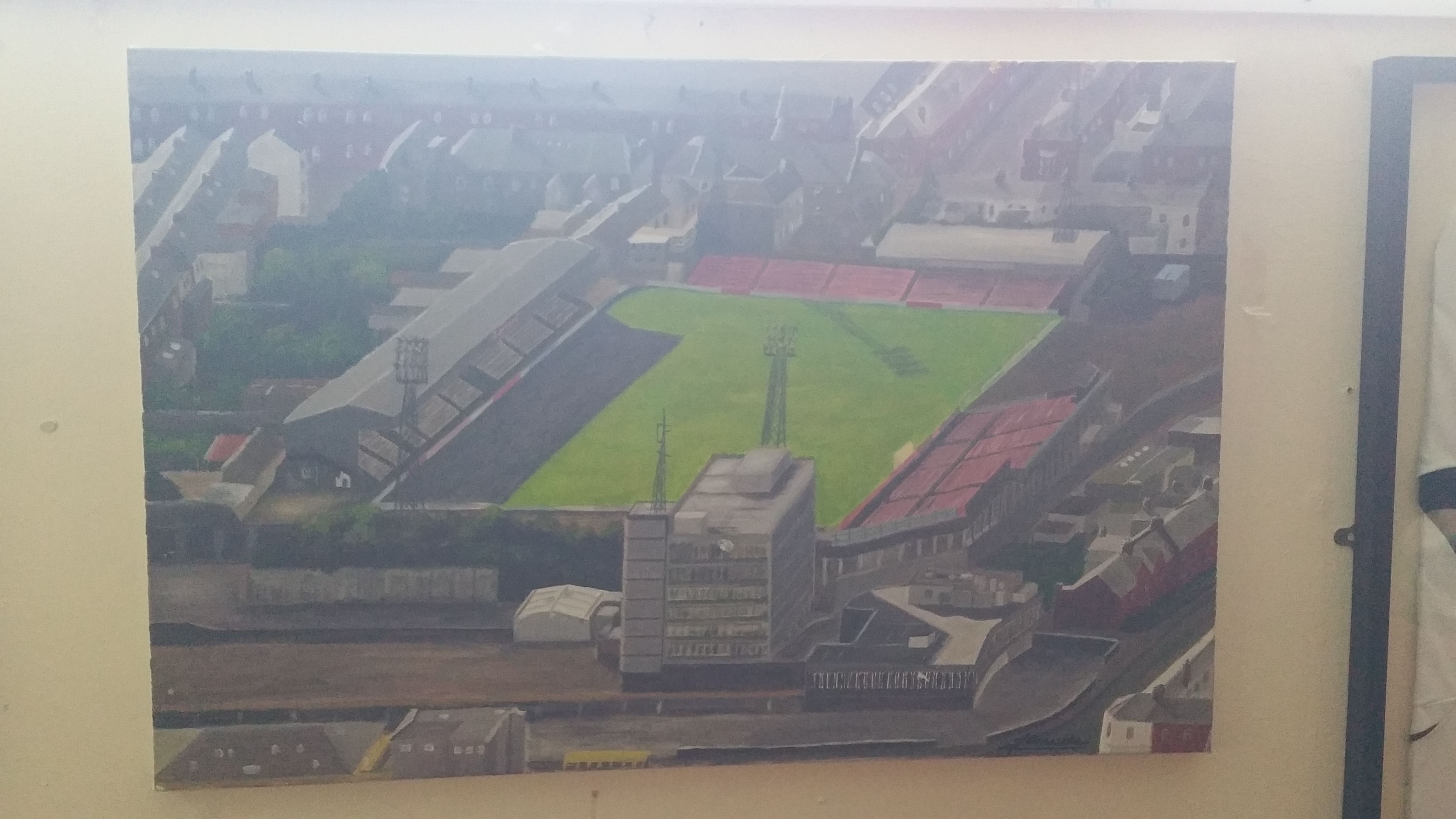
Framed photograph of birds-eye view of the Dalymount football stadium (apologies for the shine off the glass in the frame).

During questions and contributions, the following points were made or clarified:

  • The attack on Portuguese migrants by Travelers was wrong but some of the response by Portuguese migrants had been to leave racist graffiti, which would not help matters.

  • Irish Travelers are or have been for a long time the most discriminated-against section of Irish society with hard living conditions and high infant mortality and as often happens with people pushed to the bottom, some of them have turned to drugs and feuds are breaking out between rival gangs.

  • One person opined that the Government does not want to stop immigration but to control it and keep migrants insecure and with little rights, the easier to exploit them. The trade unions should recruit migrants to help them and also to prevent them being used as cheap labour to undermine any conditions won by Irish workers.

  • The Irish have been migrants to many countries and some had joined the oppressors while others became prominent in workers’ resistance.

  • Another ascertained that Rafaela had been referring to the Irish organisation the Workers’ Party and she stated that it is an anti-immigration party.

  • Another contribution stated that as well as the work of attacking racist policies and statements, fascists had to be prevented from establishing themselves and referred to the prevention in Dublin a few years ago of the launch of Pegida, a Europe-wide fascist organisation targeting Muslims. The Irish and Polish components had been physically prevented from holding their rally and anti-fascists are currently being taken through the courts on serious charges. He felt that these people should be supported.

  • Yet another responded that although that action was good, when one got to that stage, it was already too late.

  • The use of religion to divide people in India was compared to its use by the British occupation in Ireland but also by the same British colonisers in India and in some other lands.

  • Another said that the real target of fascists was the indigenous mass of people and that the other targets were being put up as diversions. As the economic situation worsens, the capitalists need to suppress the struggles of the working class and sections are targeted in order to divide the opposition.

  • There was general agreement that the various targeted sectors and the Irish working people needed to support one another.

The James Connolly Festival is an annual week-long event of talks on political events and sometimes cultural performances organised in the month of May in Dublin by the Communist Party of Ireland and open to the public. There is a program of other events continuing every day until Sunday: http://jamesconnollyfestival.com/#about

COMMENT:

Overall, I felt quite disappointed. I had assumed the talks and the meeting would concentrate on the practical and ideological struggle against fascism and the rise of the far-right in Ireland and perhaps in Europe, with some lessons from further afield. Or possibly even on concrete actions that might be taken to support asylum seekers. Perhaps that was an unwarranted assumption but in any case, apart from the contribution of Bulelani Mfaco, the South African asylum seeker, the examples (as far as I could understand them), though of interest, seemed to have little direct relevance to the struggle here in Ireland.

End.

CELEBRATED PALESTINIAN CARTOONIST EXHIBITS IN IRISH CITIES

(Lots of images but text reading time less than 5 minutes)

Diarmuid Breatnach

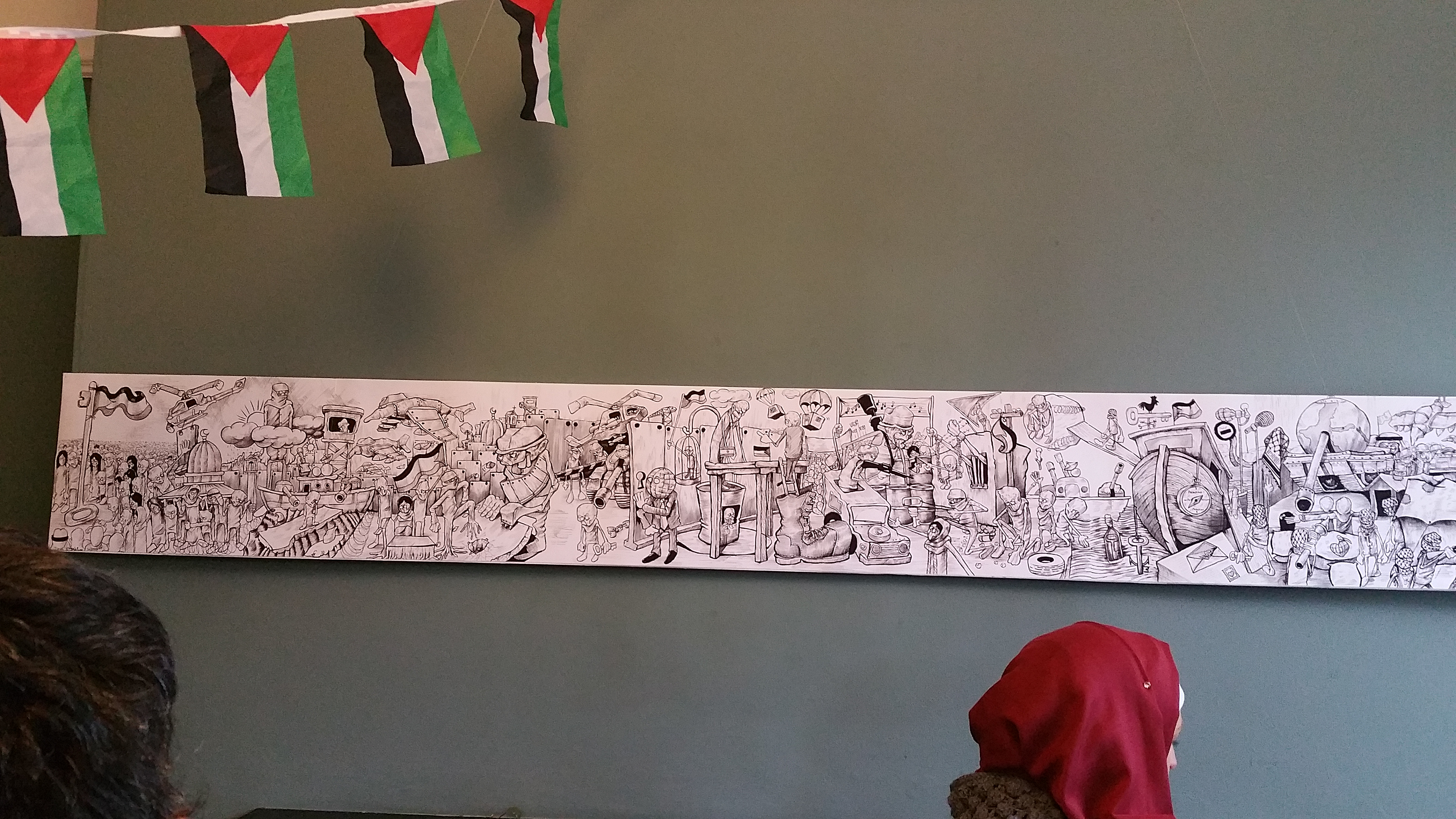
As Palestinians and their supporters around the world mark anniversaries of the Return to Palestine demonstrations and Land Day, Israeli snipers kill Palestinian children.  Dublin marks the day with a solidarity rally and exhibitions and talks by internationally-recognised Palestinian cartoonist Mohammad Saba’aneh.

          The Ireland-Palestine Solidarity Campaign organised a rally to mark the anniversary of the start of the Return to Palestine demonstrations last year and also Land Day. Sadly, marking a Palestinian anniversary usually involves marking the deaths of martyrs and this was no exception, as Israeli Occupation Force snipers killed four demonstrators, three of them 17 years of age.

Section of the Palestine solidarity rally at the Spire in O’Connell Street, as it was ending.

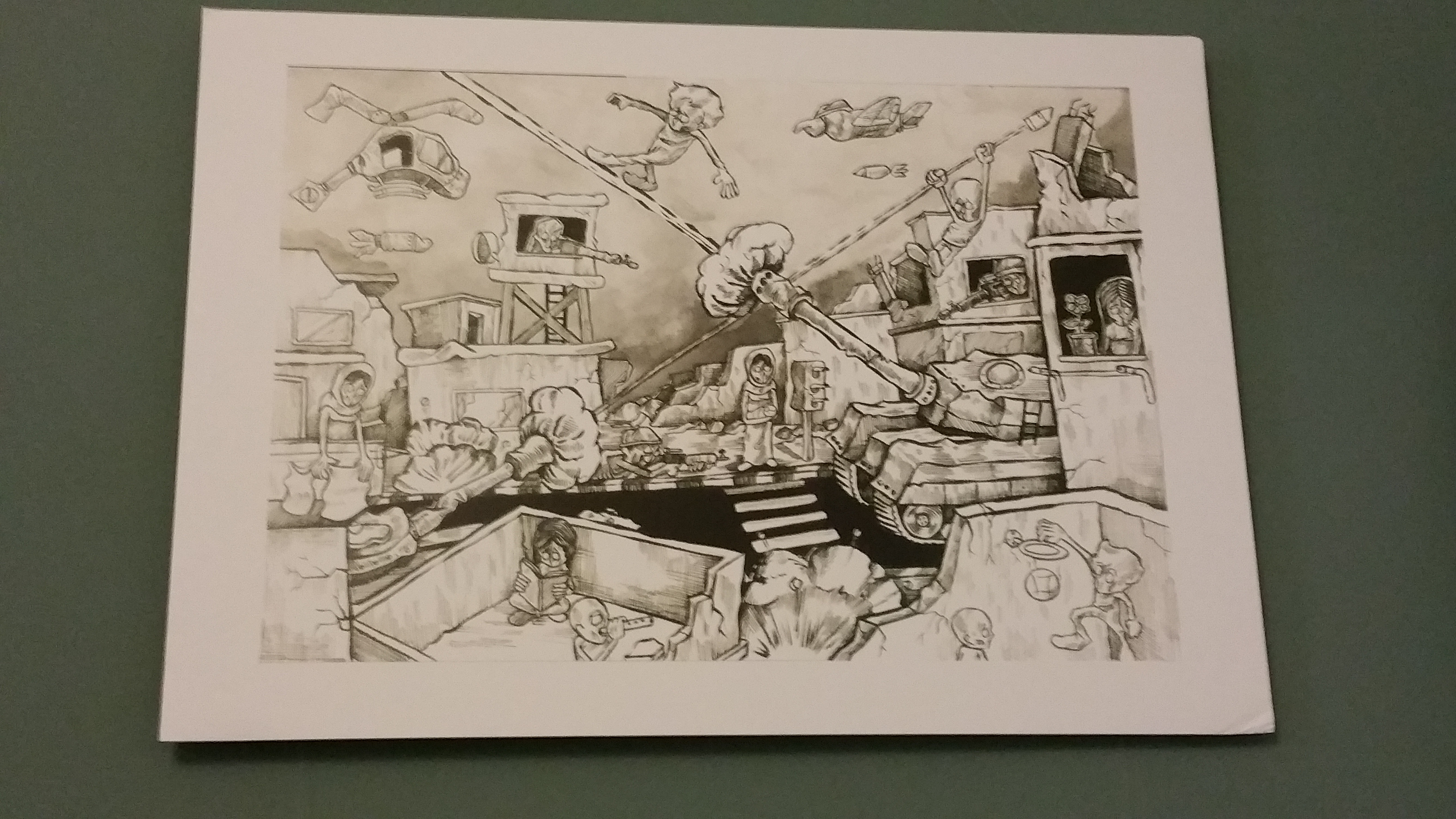
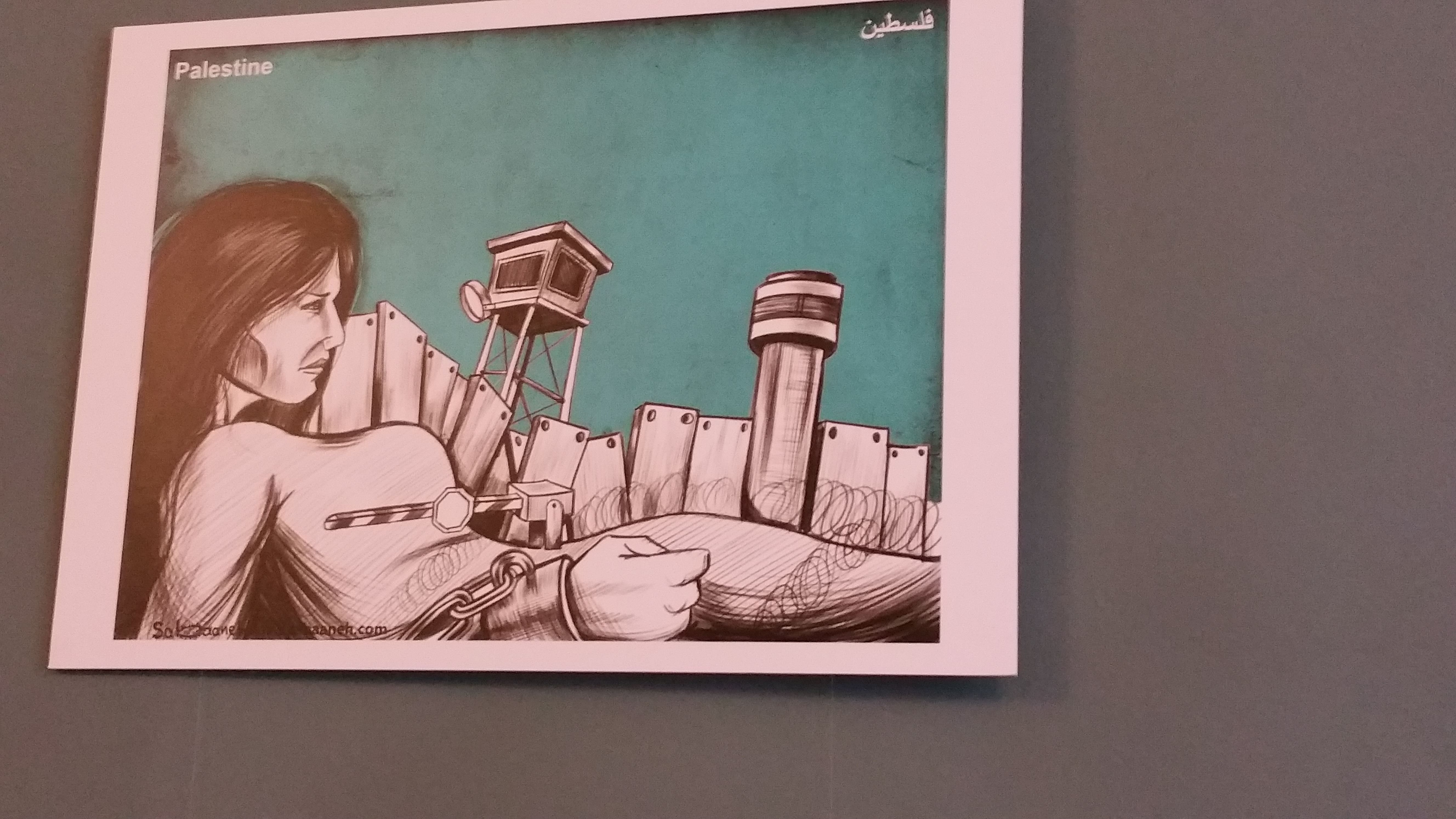
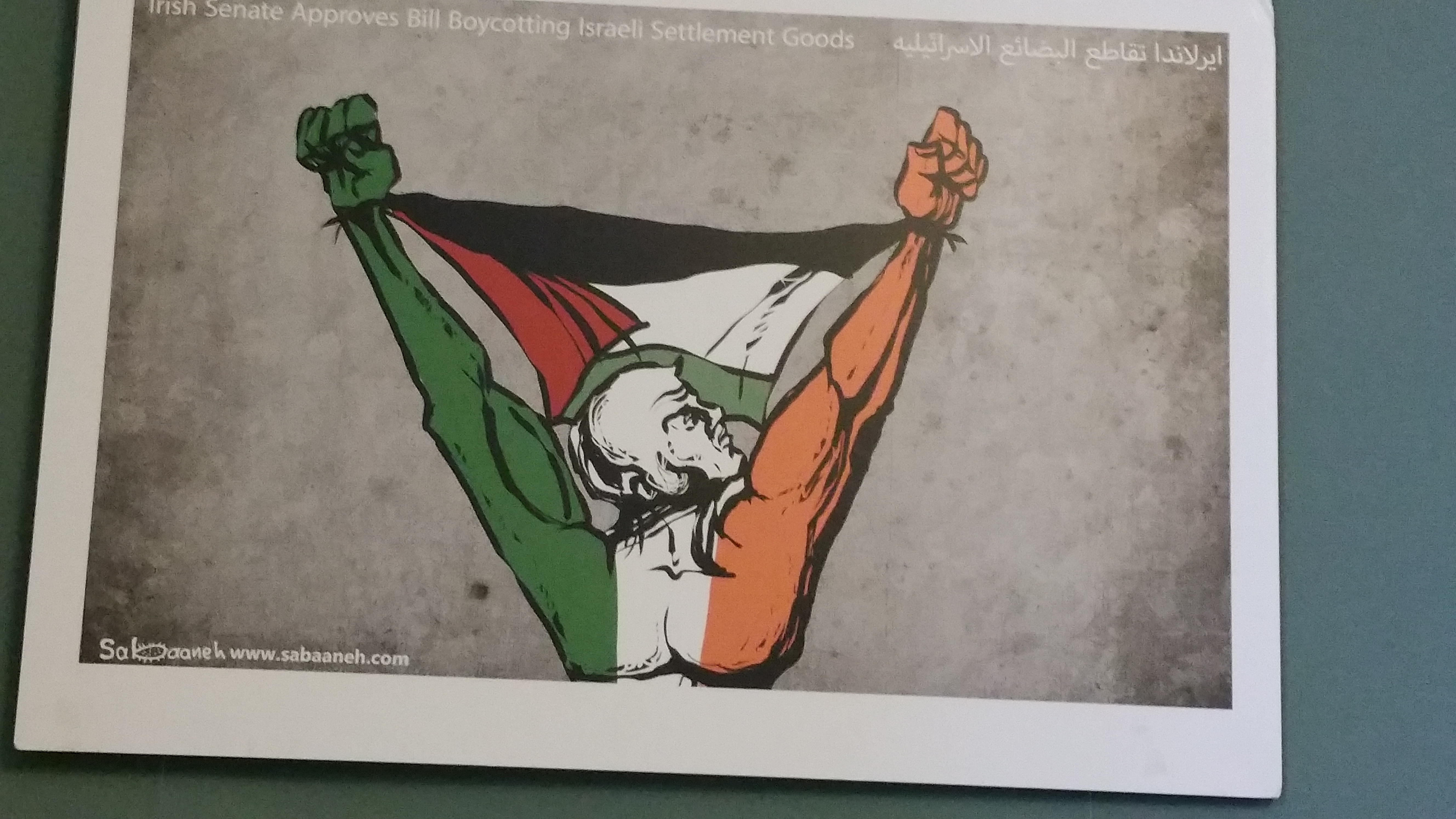
After the rally, of which I just caught the tail end because of the weekly Save Moore Street From Demolition campaign duty, I managed to catch the exhibition of noted Palestinian political cartoonist Mohammad Saba’aneh and to buy his book PALESTINE in black and white. Sadly, a prior appointment meant I had to miss his talk, which I would have loved to attend, especially as I dabble a little in cartoon-drawing myself.

The World (or its governments, including the Arab countries) ignores the oppression of Palestinians by the Israeli Zionists. Artist: Mohammad Saba’aneh.

Fortunately, Mohammad Saba’aneh was still there and was kind enough to autograph his book for me. When I took a photo of him with Fatin Al Tamimi, photographer and Chairperson of the IPSC, she insisted on taking a photo of me with him too – shukran.

Artist: Mohammad Saba’aneh and myself. (Photo: Fatin Al Tamimi with my camera phone)
Photographer and Chairperson IPSC with Artist Mohammad Saba’aneh.

On Thursday, Saba’aneh had also given a talk at the National College of Art & Design, along with Tuqa Al Saraj, also a Palestinian artist but today based in Dublin.

Mohammad Saba’aneh was born in 1978 in Ramallah in occupied Palestine, where he still lives. He is a Palestinian painter and caricaturist who has been imprisoned by Israel because of his art. He has a daily cartoon in the Palestinian newspaper al-Hayat al-Jadida and his work features in publications across the Arab world.

A veritable cartoon strip. Artist: Mohammad Saba’aneh.

HELPING THE DEAF AND THE TRAUMATISED WITH CARTOONS

          Saba’aneh used caricature with deaf students to help them adopt another language to express their feelings and with children who witnessed an Israeli assault to help them psychologically. He took part in many workshops designed for children to develop critical thinking. Saba’aneh was responsible for organizing an international fair at Mahmoud Darwish museum in 2014 in which more than 100 international artists participated. Freedom House chose one of his works in 2016 as one of the year’s most important photos. His first book was published in the US in April 2017.

Children in Israeli Zionist jails — one of my favourites. Artist: Mohammad Saba’aneh.

INTERNATIONAL WORK AND RECOGNITION

          Saba’aneh is the Middle East representative for Cartoonist Rights Network International and the Palestinian ambassador for United Sketches, an international association for freedom of expression and cartoonists in exile and participated in many international publications such as The truth has more than one face in Europe and Sketch of Freedom in the US. He. He is the recipient of numerous awards, including the 2017 Marseille International Cartoon Festival Prix d’Or. Pulitzerwinning cartoonist Matt Wuerker described him as “an inspiration for cartoonists around the world.” Noted graphic journalist Joe Sacco has said of this work that it is a “gut punch that gets straight to the essence of the stark reality of Palestinian life under Israeli occupation.”

Life for children in Palestine under the Israeli Zionists. Artist: Mohammad Saba’aneh.

PROGRAM DATES:

Thursday 28th March – NCAD (Dublin), 7pm, Harry Clarke Lecture Theatre
Friday 29th March – TCD (Dublin), 3pm, Room LTEE1, Hamilton Building
Saturday 30th March – Dublin, 2.30pm, The Pearse Centre, 27 Pearse St

All of the above now over.


Monday 1st April – Waterford, 7.30pm, The Tower Hotel
Tuesday 2nd April – Limerick, 8pm, Perys Hotel
Wednesday 3rd April – Galway, 7pm, Black Gate Cultural Centre
Thursday 4th April – Maynooth University, 4pm, Venue TBC (Afternoon)
Thursday 4th April – Celbridge, 8pm, Celbridge Manor Hotel

End.

Judicial Justice under the Israeli Zionists. Artist: Mohammad Saba’aneh.

SOURCES:

Background information: Wikipedia and IPSC FB page

Photos (unless otherwise indicated): D.Breatnach

LINKS:

IPSC: https://www.facebook.com/groups/20826333992/

Artist: Mohammad Saba’aneh.
A nod to Michaelangelo’s the “Birth of Adam”. Artist: Mohammad Saba’aneh.


The cost of NOT boycotting Israeli products. Artist: Mohammad Saba’aneh.
Posters on railings outside Pearse House.
Praise for Sen. Frances Black’s Bill to ban imports from the “Occupied Territories”. Artist: Mohammad Saba’aneh.


Artist: Mohammad Saba’aneh.
Symbols in Palestinian cartoons. The Key for the right to return is somewhat of an irony, as when the Christian Spanish Monarchs expelled the Sephardic Jews from Al Andalus, many of them also took the key to their house with them.


FASCIST HORROR IN WESTERN SPAIN

A brief account of the fascist horror between Cantalpino and Villoruela (Salamanca) during the Spanish War, forwarded to me for translation from Castillian (Spanish).  I will post the original separately.  

Diarmuid Breatnach

Comment: If another reason were ever needed to ensure we crush fascism before it gets strong!  Stories like this illustrate how fascism was not defeated, much less rooted out in the Spanish State and remains at its heart to this day.  No progress can be made towards democracy in that state without taking that fact into account.  DB.

(Translator’s note: Villoruela is a municipality located in the province of Salamanca, Castille and León, in western Spain).

Alejandra, the interviewee, who was raped in front of her husband, next to her while a gun was held to his chest.

Fear ravaged Cantalpino, where the Falangist hordes killed a woman and 22 men; where they robbed and raped. Mrs. Alejandra tells the story and her eyes seem to look inside herself: “They murdered many here and Eladia Pérez, the Jaboneta, too. They went looking for her son Guillermo, whom they “took for a walk” later, and she did not want to open for them; so the bastards shot and killed her; then they took her to the cemetery and her body did not fit in the hole and the bastards cut off her head with the shovel … the murderers were people from the town and strangers, Falangists, priests, friars and that kind. The priest was the worst, he gave his blessing to the “walks” .. They also cut the hair of about a hundred women to the scalp and, in the rain and everything, they took them in procession, the music playing and the Falangists shouting “Up Spain!” and “Long live Franco!” and … I shit on the mother who gave birth to them! “

Alejandra continues with her story: “… they did a lot to me, they raped others. Five Falangists raped me. They took my husband out of bed, may the poor man rest in peace, and they pushed a pistol against him, in the chest, and there, in front of him, they raped me. Some had me by the arms and others, by the legs, and here, Saint Ines, to what they wanted to do, and the guns on the bed in the presence of my Desiderio. Poor Desiderio! They also stole everything they could. Yes, yes, they were from here, from Cantalpino. Unfortunately, this violation was not an isolated incident. In Poveda de las Cintas, a few kilometers from Cantalpino, the story was repeated, this time with the wife of the secretary of the town hall .. “

On August 24, 1936 the blood did not stop in Cantalpino, the impunity of the murders encouraged the Francoists. That same afternoon they appeared in Villoruela, less than 10 kilometers from Cantalpino, 3 Falangists accompanied by fascist neighbors of the town: They arrested the following people: Eustasio Ramos (51 years old), Elías Rivas (43), the brothers Leonardo (43) , and Leoncio Cortés (41), Daniel Sánchez (35), Esteban Hernández (29) Francisco García (25) and Benigno Hidalgo (18).

The fascists gave criminal replies to the families of the detainees when they went to look for them at home: Leonardo Cortés’ wife was asked where her husband was; she replied that she did not know and they answered: “Do not worry, even though he were underground, we will find him”. Daniel Sanchez had been risking his life to save the lives of other people with his mules and his cart to cross the flood, regardless of what color or what party they were. When they went to look for him at home, the woman said to them: “Wait, he is taking off his clothes, he is all wet”; the answer was: “Do not worry, he will get it all the same”. When they went to Esteban Hernández’s house, his mother told them: “wait, he does not have socks”; the answer was: “Do not worry, he will not need them”. When they went to look for Benigno Hidalgo, his mother told them: “I have to give him an injection”; “Do not worry, we’re going to give it to him,” they replied.

Once captured, they were arrested at the City Hall tied hand and foot with ropes. The members of the City Council called a meeting and decided that the 8 detainees should be shot. So bound, they were put on a truck in Villoruela, after midnight, and they were moved to the end of Salvadiós, a town in the province of Ávila. There, at a crossroads, they were shot and left lying in a ditch. Right there they were buried by neighbors from Salvadiós. The murderers were 7 from the town, the one that drove the truck and the 3 outsider Falangists.

Two of the detainees’ wives, María Engracia Cortés and Angeles del Pozo, went to ask for help from the nuns of the convent. They told the nuns what was happening and the nuns answered that this was a crusade, and that if they had not done anything why had they had been fleeing, to which the neighbors correctly answered: “Jesus Christ was also persecuted and though had done nothing, was crucified. “

Jaime Cortés, the son of one of those shot, said that “after the suffering they caused, the fascists appointed among the townspeople a policeman, allegedly civic, to control our movements from home, the demonstrations of suffering. We spent the whole night crying with my mother and my grandparents in the kitchen .. it takes a lot of patience and resignation to live a lifetime with the criminals who shot your father .. We had to go through calamities and sufferings … I always remembered very well a phrase that my mother told us very often: “Children, I never want to see you with blood on your hands” … the only reasons for which they were shot were their way of thinking differently from the Franco regime, that is, to defend freedom, the rights of workers, social security and education … they were shot for defending the largest right of all person: freedom .. “

From the date August 15, 1936 to June 16, 1939, there is no document or record book of the Villoruela archives. Who were the ones who made that documentation disappear? In the book of death certificates for March 13, 1937 the entry inscribed by the judge Iñigo de la Torre these 8 people shot dead are listed as missing.

Originals by Ángel Montoro in Jiminiegos36 and Foro por la memoria (Intervíu nº 177, 4-10 October 1979). Photo by Xavier Miserachs