As part of a general rise in workers trade union militancy in the UK (including then Ireland), a general transport strike was called in August 1911. This involved train operators, dockers, sailors, carters and other types of worker. At one point the British State drafted extra police into Liverpool and, eventually, armed soldiers (as had been done against striking miners in the Rhonda Valley, Wales) and Royal Navy gunboats were sent up the Mersey river. On 12th August a massive police charge on workers attending a rally in Liverpool resulted in nearly two hundred injuries and became known as the city’s Bloody Sunday1.
BACKGROUND
1888 is seen by many labour historians as the point at which the weight of importance in the trade union movement shifted from the craft unions with their guild traditions, to the general workers, the “unskilled” (sic) and “semi-skilled” and when trade union actions began to be more militant and sustained. Over the following years, the working class built up its strength through many industrial struggles, many of which it lost but the general impetus was forward.
The great areas of need for capitalism were coal extraction for power, factory production for producing commodities and machines, along with transport to convey the coal to the factories and the commodities from the factories to the country and to the world. In 1911 transport involved trains and shipping, as well as horse and cart (motor transport had yet to generally oust the horse), the unions being those of train workers, ship-builders, carters and sailors. Factory workers were in engineering, textile and other unions. Miners unions recruited the coal-diggers and sorters. Construction workers were needed to build housing for workers, factories for them to work in, roads, railways and canals to transport goods and fuel.
In general, workers were becoming more militant and more politicised, more aware of ideas about the situation of their class and its future. Increasingly, workers in one union would support those of another on strike (although it was not until 1914 that three unions formed the Triple Alliance: The Miners Federation of G. Britain, The National Union of Railwaymen and The National Transport Workers’ Federation).
LIVERPOOL
In Liverpool on May 11th 1911 there was a huge demonstration in the port city of Liverpool as part of the seamen’s strike led by the Transport Workers Federation. The strike being total and with difficulty in employing trained scabs, the employers were obliged to agree new terms with the union.
Mass workers meeting, Liverpool August 1911 (Sourced photo: Gunboats article)
“Hearing of the victory of the seamen, 4,000 dockers immediately walked off the job on June 28 demanding improved pay and conditions. The dockers, many of whom had refused to load ships during the national strike, were quickly followed out by the scalers and coal heavers, and by the end of the day 10,000 men were on strike. Seeing this, the seamen walked out on strike again purely in support of the dockers. Mass meetings were held, and the largely un-unionised dock workers began to flock to the National Union of Dock Labourers (NUDL2).” (Libcom)
“It was the Transport strike during August that was to see matters escalate even further and near pushed the country to revolution. This incidentally was a national dispute with the railways going out on strike. This in turn was supported by dockers and other transport workers that saw the transportation of goods being brought to a grinding halt.
“Tensions were rising with the shipping companies stating that the dockers were in breach of their contract and declaring a lockout. To add fuel to the fire they also tried to call the military in as strike breakers.” (Gunboats up the Mersey)
As the rail strike began to spread across the country, a mass demonstration in Liverpool was declared as a show of support.
Support for the strike cut across the sectarian lines existing in Liverpool. “Reading Fred Bower’s account of workers marching from all over Liverpool must have shaken the establishment. ‘From Orange Garston, Everton and Toxteth Park, from Roman Catholic Bootle and the Scotland Road area they came. Forgotten were their religious feuds. The Garston band had walked five miles and their drum major proudly whirled his sceptre twined with orange and green ribbon.’
‘Never in the history of this or any other country had the majority and might of the humble toiler been so displayed. A wonderful spirit of humour and friendliness permeated the atmosphere.’ ” (Gunboatsetc)
Tom Mann addressing a mass meeting in Liverpool August 1911 (Sourced photo: Gunboats article)
“Taking place on August 13 at St George’s Plateau, 100,000 workers came to hear speeches by workers and leaders of the unions, including Tom Mann. The demonstration went without incident until about 4 o’clock, when, completely unprovoked, the crowds of workers suddenly came under attack from the police. Indiscriminatedly attacking bystanders, the police succeeded in clearing the steps of St George’s Hall in half an hour, despite resistance from strikers who used whatever they could find as weapons. Fighting soon spilled out into nearby streets, causing the police and troops to come under attack as workers pelted them with missiles from rooftops. Becoming known as Bloody Sunday, the fighting resulted in scores of injuries on both sides.” (Libcom)
Mounted Police escorting material with armed troops marching behind them, Liverpool August 1911 (Sourced photo: Gunboats article)
“There are no records of why the Police decided to charge a peaceful crowd which resulted in a mass panic with 186 people being hospitalised and 95 arrests. Fred reports how after the carnage caused by the Police that it resembled a battlefield with wounded men, women, and children, lying singly in heaps over a vast area.” (Gunboats etc)
(Police with prisoners, Liverpool August 1911 (Sourced photo: Gunboats article)
“Fighting across the city continued for several days, coming to a head when a group of workers attacked a prison van carrying some arrested strikers. Two workers were shot dead by troops during the ensuing struggle, one a docker and the other a carter.
“A general strike of all transport workers in Liverpool was arranged for the night of August 14, and the next day saw the city come to a complete halt. Any movement of goods was closely guarded by troops, most of whom were drafted in from outside of Liverpool as the territorials of the city had largely been confined to barracks, the authorities wary of their loyalty3.” (Libcom)
Liverpool August 1911 (Sourced photo: Gunboats article)
“Following Bloody Sunday a convoy of prisoners who had been arrested on that day were being escorted by thirty-two soldiers of the 18th Hussars on horseback fully armed with live ammunition along with mounted Police. A magistrate was also present carrying a copy of the riot act. However before it could be even read a disturbance broke out on Vauxhall road with troops opening fire, injuring five people, two fatally. The victims were John W. Sutcliffe and a twenty-nine year old docker Michael Prendergast. Five days later, on the 19th August two more civilians were shot by troops in Llanelli. These are the last occasions in history when British soldiers have killed civilians on the streets of mainland Britain.” (Gunboats etc)
Troops ride a lorry load of material, Liverpool August 1911 (Sourced photo: Gunboats article)
“However, the strike’s days were numbered. Under intense pressure from the government to end the dispute, the railway employers and moderate leaders of the railwaymen’s union began a series of talks. A deal was struck ensuring that all strikers would be reinstated, and the railwaymen returned to work on August 21, with a general return to work ordered for the next day. Sporadic rioting occurred in working class districts throughout the end of August.” (Libcom)
Troops bearing rifles, Liverpool August 1911 (Sourced photo: Gunboats article)
“The show of strength displayed by the transport workers of Liverpool in 1911 clearly demonstrated the material gains that could be won through cross-industry solidarity. Paving the way for the massive industrial revolts by British workers during 1910-1914, the strike movement inspired similar action throughout the pre-war years.” (Libcom)
COMMENT:
Some historical commentary from the Left criticises the union leadership for their actions in settling the strike but I find it hard to see the justification for this. They got reinstatement of all sacked and locked-out workers (which is a lot more than the union leaders did in 1926 as, under the influence of the Labour Party, they scrambled to call off the General Strike). The alternative would seem to have been to go for revolutionary insurrection (which would certainly have impeded the later carnage of WWI 1914-1918) but: a) is it reasonable to expect revolutionary leadership from trade union leaders and (b) were conditions such that a significantly large section of the workers in Britain would have answered the call to revolution?
A different question is perhaps that of preparation for a possible police charge, of which there had been enough examples. Workers could have been encouraged to prepare pieces of timber as placard holders and staffs as flag and banner-poles. A defeat of a police attack is both a welcome defensive action as well as a confidence-building one for oppressed people.
The role of Churchill is striking in this period, particularly in the midst of recent disputes about his racism in general and his encouraging the setting up of the terror units of the Auxiliary Royal Irish Constabulary (Black and Tans) and the Auxilliary Division in Ireland. Although it must be remembered that Government Ministers generally act as representatives and in the interest of the ruling class, Churchill was a particularly imperialist and capitalist reactionary and had in January of that same year sanctioned the burning of an East End building in which anarchists had taken refuge in the Siege of Sidney Street.
In fact, Churchill was so reactionary and bellicose that during the 1926 General Strike he was kept away from any operational control in the Cabinet and entrusted with editing and producing eight editions of the virulent anti-striker British Gazette. The challenge to the adulation of the British ruling class and sycophantic historical cheerleaders of the historical person of Churchill does not lack for material to justify that challenge.
The fact that local troops in Liverpool could not be trusted by the ruling class is interesting and occurred again during the Glasgow General Strike in 1919 when, arguably a revolution should have been called for. By then the soldiers had been conscripted into a horrific imperialist war and were being prevented from demobilisation because they were going to be needed to suppress the national liberation struggles breaking out across the Empire. And one of those struggles was the War of Independence in Ireland which one can confidently predict would have allied with a British insurrection both from class solidarity and from opportunism. One of the leaders of the Glasgow workers, Willie Gallacher, of Irish descent (so was Tom Mann, by the way), member of the Independent Labour Party and later a Communist, commented later that the workers were ready but that the leaders were not. A revolutionary outlook should alert one that if the ruling class does not trust a part of their repressive forces, the least revolutionaries should do would be to call on those to join the struggle.
Liverpool’s son Jim Larkin was already in Ireland as an organiser for the NUDL and by 1911 leading the breakaway Irish Transport & General Workers Union, with the great struggle of the Lockout still to come in 1913. Then with Edinburgh-born-and-raised James Connolly, he went on to initiate the first workers’ army in the world, the Irish Citizen Army.
The 1911 martyrs of Sutcliffe and Prendergast were recorded as being A contingent of Liverpool city’s Irish diaspora would join the Irish Volunteers and embark for Dublin to take part in the 1916 Rising, when a Royal Navy gunboat would sail up a different river and open fire on what was considered a British city. Later, sailors and dockers operating from Liverpool would be sending consignments of arms to the IRA for their War of Independence.
But in Britain, the workers of Liverpool fought some great battles and those of August 1911 were a harbinger of others to come.
End.
FOOTNOTES
1 (NB: I remember reading about this many years ago and as the anniversary is with us decided to write it up however briefly. I have used material from some articles rather than the articles themselves because some lacked detail, others were more general or I did not agree with descriptions of workers’ motivations being solely about wages and good working conditions. However I hope this article encourages people do their own reading on the events or at the very least raises their awareness of the history of the working class and of its enemies.)
2This was the trade union that employed Jim Larkin as an organiser and also sent him to organise in Belfast. Subsequently Larkin was sent to Dublin where he led the building up the NUDL up very successfully with a number of successful strikes. Subsequently Larkin and the NUDL’s Irish leader, Sexton, parted company after the latter had Larkin tried in court. After that, Larkin founded the Irish Transport & General Workers’ Union and most of the Dublin members of the NUDL left that union to join the ITG&WU, of which James Connolly also became a leader.
3This is similar to the situation of the 1919 Glasgow General Strike, when the locally-garrisoned troops were confined to barracks for fear they’d support the workers.
Actually what the hierarchy referenced fearing in a recent 95-page statement was “two Spains”, which most commentators took as being a reference to a repeat of the Anti-Fascist war of 1936-1939, with Republican Spain and Fascist Spain. The statement of the Spanish Episcopal Conference (CEE) spoke of the “stability” which the 1978 Constitution has given the Spanish State. So have they suddenly now become democrats? Of course, one can think of another way of imagining such a dichotomy: Rich Spain and Worker Spain. I think the Bishops fear another kind of civil war – i.e revolution.
The 95-page document entitled ‘Faithful to missionary sending’ was prepared not only by the collegiate bodies of the CEE but also by external collaborators. Less open to different interpretations are the other concerns raised by the Bishop’s Conference, regarding the increasing secularisation of society, the scandals around abuse of those in the care of Church institutions and pastors, along with the other scandal of church appropriation of public property, including even a UNESCO site1. The Bishops feel that some of these processes and issues are not merely accidental or incidental to modern times but rather are deliberately driven by people in hostility to the Church.
CHURCH AND POLITICS
It is customary and has been so throughout history for the dominant religious institution to have a close relationship with the dominant class in society and this has certainly been the case with the Catholic Church in the Spanish Kingdom. The Spanish ruling elite at the turn of the last century, in a country with underdeveloped capitalist industry was an alliance of two different social classes, the aristocracy and the capitalist-financier class. The social atmosphere was deeply conservative and dominated by the Catholic Church hierarchy which, through them and the religious male and female orders, controlled institutions of social and educational provision. Progressive artists were penalised and often enough went into exile.2
The First Spanish Republic, a brief attempt to liberalise and democratise the State after the abdication of King Amadeo in 1873, survived not even two years before being overthrown in a military coup, followed by repression causing the exile of many of republican leaders and supporters.
However, a wave of revolt against the conservatism and lack of democracy of the Spanish Kingdom came around again and in 1931 the Second Republic was created, overthrowing the dictatorship of General Primo Rivera. Initially the composition of the government was right-wing and the revolt of the Asturian miners was cruelly suppressed by the Army and the militarised police force of the Guardia Civil3. The right-wing government fell in 1936 when a democratic left-wing Popular Front government was elected, which set about legislating for greater social freedoms, equality and discussing autonomy for nations4 within the State.
DEMOCRATIC GOVERNMENT AND MILITARY-FASCIST UPRISING
That was the signal for the forces of reaction to strike and most of the military high command, allied with the fascist Falange5, staged a coup. In Barcelona, the coupists were quickly suppressed by a popular upsurge which took on a revolutionary character. In some other parts, particularly in Madrid, the coupists were suppressed too but without a revolution.
General Franco in partnership with another three generals and senior naval commanders led or joined the coup but Franco’s forces were isolated in part of North Africa (then a Spanish colony). While the ‘democratic’ European powers ‘blockaded the conflict’, Nazi Germany and Fascist Italy provided the logistical support6 to get Franco’s forces to the Canary Islands, then to Spain, where they found little organised opposition but nevertheless carried out a reign of terror. The Spanish Catholic Church hierarchy and most of its priests and religious orders supported the military and fascist rebellious forces with enthusiasm.
Spanish Catholic hierarchy supporting fascist military (Photo sourced: Internet)
A conflict variously called “the Spanish Civil War” or “the Spanish Antifascist War” followed, ending in 1939 with victory for the military-fascist forces, who lost an estimated 175,000 killed in action, and 110,000 died fighting for the Republic.7
Following the earlier pattern of areas the fascists had conquered, a wave of repression ensued against republicans, communists, socialists, anarchists, democrats, trade unionists, Basque, Catalan and Galician nationalists, gays and lesbians, with summary executions, military tribunals and executions, mass jailing, public humiliation of women …. Estimates of executions behind the fascist-military lines during the War range from fewer than 50,000to 200,0008. Most of the victims were killed without a trial in the first months of the war and their corpses were left on the sides of roads or in clandestine and unmarked mass graves.Spain has the highest number of mass graves anywhere in the world with the exception of Cambodia9, with 740 mass graves containing the remains of some 9,000 people having been found so far. The support of the Catholic Church for the military and fascists did not waver throughout.
THREE DECADES OF FASCIST DICTATORSHIP
After that initial phase, three decades of political and social repression followed under the Franco dictatorship, again fully supported by the Spanish Catholic Church.
However, the dictatorship was always resisted to some degree or another and that resistance began to grow apace during the 1960s. The Partido Comunista de España and the social-democratic Partido Socialista Obrero de España, both banned, were organising underground and becoming increasingly popular. Both had affiliated trade union organisations and the Comisiones Obreras10, linked to the PCE was particularly widespread. The youth of the Basque Nationalist Party (PNV) broke with the conservative and inactive leadership and, joining with a revolutionary socialist movement in the southern Basque Country, formed ETA11, taking up armed struggle at the end of the 1960s.
Fascist dictator General Franco (R) with his protege and nominated successor, Juan Carlos (L), later King of Spain. (Photo sourced: Internet)
As the Dictator aged the imperialists began to worry about the potential for a revolution in Spain and contacts in influential circles were sought to persuade the ruling class to replace the Dictatorship with a parliamentary democracy. Some elements in the Spanish Catholic Church opposed those initiatives but one which embraced it was the technocratic Opus Dei, which with some others, steered the country through the Transición.
Amidst a wave of repression including murders of activists by State and other fascist forces, with fear of an indefinite continuation of the Dictatorship, a Referendum on a monarchist and unitary state constitution was held. The PCE and the PSOE were legalised and, with their support, the 1978 Constitution received majority support. It is that Constitution which is regularly quoted when the State declines to permit the Basque and Catalan nations to even hold a referendum on independence.
In summary then, the Spanish State has evolved from a deeply conservative and repressive state, through a fascist-military uprising to a fascist and socially conservative dictatorship, all along with the support of the Spanish Catholic Church. When a revolution was feared, in consultation with imperialist advisers, the technocrat section of the Church, with the support of the social democratic and communist parties, helped prepare a transition to a parliamentary democratic form. Central to the Transition was preserving the mostly fascist ruling class and ensuring it would remain safe from any reparations, not to speak of criminal charges for murder, rape, torture, large-scale thefts …
But now, the Church hierarchy is sounding a warning. If it fears revolution, it has cause to.
VULNERABILITY OF THE SPANISH STATE
The possibility of revolution in Spain may seem far distant to most external and internal observers but two things should be taken into account:
Revolution often grows and matures very quickly from what seemed like unready conditions and
the Spanish State is by far the most vulnerable in the whole of the EU.
INTERNAL FORCES HOSTILE TO THE SPANISH STATE
The Spanish State consists of a number of nations, of which Catalonia, the Basque Country (Euskal Herria) and Galicia (Galiza) are the most obvious. But “Paisos Catalans” includes also Valencia and the Balearic Islands, all areas where Catalan is spoken and Asturias also consider themselves a Celtic nation (as does Galiza).
Map showing regions and nations of the Spanish state (Photo sourced: Internet)
The southern Basque Country has spent decades mobilising for independence in a wide social and political opposition to the Spanish State and though the official leadership of its movement is now pacified, a strong potential remains there. As the momentum of the latter declined, the movement for independence in Catalonia increasingly matured and in 2017 an unsanctioned referendum returned a majority for independence. Spanish police raided polling booths, attacked the voters and later nine social and political leaders were jailed by the State while others were obliged to go into exile. The 2021 elections returned a majority of pro-independence candidates and the total vote for independence exceeded 50% for the first time since pro-independence candidates presented themselves in elections.
The movements for independence respectively in Galiza and Asturies are nowhere near at the same level as those of the Basque Country or of Catalonia but they are growing. This is true also of the Paisos Catalans and the Islas Canarias.
With regard to the wide workers’ organisations, while the Comisiones and UGT at present maintain overall control, the majority of organised workers in the Basque Country and Galiza belong to trade unions supporting independence. Intersindical, a class trade union12 movement, also supporting independence, is growing in Catalonia and the Canaries.
Generally the Spanish State finds itself increasingly isolated at home and abroad. Its repression measures against the Basques and Catalans have not only disaffected people in those nations but also, despite general media and fascist propaganda, sectors of the Spanish intelligentsia. Writers, actors, artists have experienced repression or have spoken out against the repression of members of their sector. Political activist and rapper Pablo Hasel is in jail while Valtonyc, another rapper, is in exile to avoid imprisonment, both because of their lyrics.
Repeated financial corruptionscandals have increasingly undermined confidence in the political and business classes.
FORCES SUPPORTING THE SPANISH STATE
The image of the Spanish Monarchy has suffered probably irreparable damage. The previous King, Juan Carlos, who was a visible link between the Dictatorship and the current parliamentary system but credited by liberal commentators as managing the “transition to democracy”, has abdicated. His personal reputation was damaged by a number of public relations disasters and he is now being pursued on allegations of financial and political corruption. His son-in-law is serving a jail sentence for financial and political corruption too. The current King, Juan Carlos’ son Felipe VI, though by no means compromised to any similar degree, has not built up any significant social support either, despite a generally sycophantic Spanish media.
Coronation King Felipe VI of Spain, son of the abdicated King Juan Carlos (Photo sourced: Internet)
The Catholic Church, the great organisation of social control for centuries and throughout the Dictatorship, has lost much of its influence, a fact bewailed by the Bishops in their communique. In the Basque Country and in Catalonia, the Hierarchy had little influence anyway because of its support for Franco. But the scandals of physical and sexual abuse in church institutions and by pastors, common across much of the western world, have impacted on the Church across the Spanish state too. In addition, the increasing secularisation of modern western society has also weakened the Church’s influence, as have its opposition to contraception and abortion, divorce, homosexuality and of course same-sex marriage, all of which are now legal.
(Photo sourced: Internet)
Surveys indicated that only 3% of Spaniards consider religion as one of their three most important values, lower than the 5% European average, though religious festivals remain popular on a mainly cultural level.
According to the Spanish Centre for Sociological Research, as of July 2021, while 58.6% of Spanish citizens self-identify as Catholic, only 18.6% define themselves as practicing, with 40% as not practicing. Another 37% have no religion, identifying variously as atheists (15.1%), agnostics (11.5%) or non-believers (10.4%)13. The total number of parish priests, i.e the level of Church personnel most in direct contact with the population, shrank from 24,300 in 1975 to 18,500 in 2018, with an average age of 65.5 years.14
However, the COPE radio network, owned by the Catholic Spanish Bishops’ Conference, broadcasts material ranging from the conservative to the fascist and always for Spanish unionism. COPE, an acronym for Cadena de Ondas Populares Españolas (“People’s Radiowaves of Spain Network”) formerly called Radio Popular, is the second most played among Spain’s generalist radio. COPE owns music stations Cadena 100, Rock FM and Megastar FM, in addition to the Spanish generalist TV channel Trece. The station is associated with the right-wing Spanish journal DiarioABC.
The privately-owned media in the Spanish state, whether favouring the PSOE (e.g El País) or the Partido Popular (e.g El Mundo and ABC) tends to be supportive of the union and the status quo15, with the state TV networks even more so. The bias against for example Basque or Catalan independence activists is remarkably obvious, with TV cameras accompanying police on raids to arrests of activists and publication of prejudicial statements long before the accused face trial and again during the trial itself.
Both traditional main political parties have their origins in the Spanish Anti-Fascist War. In common with most European parliamentary democracies, the two-party system has lost support in the Spanish state, resulting in recent governments being coalitions of political parties. This increases the potential for political thinking along class rather than party lines while also creating internal difficulties for the coalitions.
The right-wing Partido Popular was formed in 1989 but was a reconfiguration of the Alianza Popular, formed after the State’s change to the parliamentary system to give fascists and deep conservative supporters of Franco a representation in elections. Much reduced now, the PP has given rise to a chain of splits, first to form Ciudadanos, in turn shedding some members to form the more or less openly fascist Vox party. Any return of the PP to governing the Spanish state would require it to form a coalition with one or both of Cs and Vox.
The PSOE, formerly illegal under the Dictatorship, has on the surface many of the features of a western social-democratic party. However, it has been deeply implicated in repression of struggles in the Basque Country, including wide-scale torture of prisoners. Further, under the Felipe Gonzales presidency (prime ministership), the Spanish State ran terrorist squads carrying out kidnapping, torture, murder and bombings against pro-independence Basques. The operation was exposed in a series of articles in El Mundo and, although Gonzales didn’t face even a police interview, the eventual resulting list of convictions included the Minister of the Interior, Director of State Security, Sec-General of the PSOE in the Basque province of Bizkaia, Czar of the “Antiterrorist Struggle”, Bilbao Chief of Police Intelligence Brigade, another Police Chief, regional Governor for the Spanish State in Bizkaia, and a colonel, Chief of the Guardia Civil HQ in Intxaurrondo (Basque Country).
Although successfully unseating the PP Government on a vote of “no confidence” in the Government’s 2018 budget, the PSOE’s leader, Pedro Sanchez, was only able to enter government by forming a coalition with Unidas Podemos16, itself a coalition of left social-democrats, trotskyists and communists. Since the new Government took over the repression of Catalans of its predecessor, only releasing imprisoned Catalan activists on parole recently, it does not have the support of the Catalan independentists, with the exception of one major party which voted to help the Government’s budget scrape through, as did the official leadership of the Basque independence movement17.
Fascism was never defeated in the Spanish state, it merely put on a democratic mask, albeit faded and patched. The current members of the ruling class are mostly descendants of the military-fascist alliance of 1936 and virtually all beneficiaries of the Dictatorship, often sitting on wealth, industry and media expropriated from their opponents defeated in the Antifascist War. There are sections of active and militant fascists across the Spanish state with wide police and military connections, denouncing the independence initiatives in Catalonia, criticising immigration, ridiculing equality measures and parading with fascist symbols and salutes to exalt the memory of General Franco and Primo Rivera. Although some of those activities are illegal, they act with visible impunity. The Vox political party has stated openly that it wants to amend the Constitution to remove the status of regional autonomy, which they believe encourages aspiration for independence and thereby endangers the unity of the Spanish State.
Spanish fascists demonstrating in Madrid in 2018, fascist salutes and symbols illegal but none arrested (Photo sourced: Internet)Spanish fascist flags and salutes, Catalonia 2019 (Photo sourced: Internet)
Some government antifascist measures of late, along with the rise of independence activism in Catalonia have caused apprehension among this section of fascists, which finds expression in more rallies and demonstrations and increasingly threatening language and displays. The Government measures include the removal — long-promised by the PSOE — of Franco and Rivera’s remains from the mausoleum in the fascist monumental park of the Valle de los Caidos (“Valley of the Fallen”) which was built with political prisoner labour. The State’s TV service covered the event at length and in a manner resembling a homage ceremony.
Currently historical memory legislation is being promoted to assist in the discovery, investigation and honouring of the graves of the victims of Franco, while another piece of legislation seeks to make illegal any promotion of Franco or of fascism generally. The future of these initiatives is uncertain but the fact that even the current anti-fascist legislation is not upheld does not inspire confidence.
Map of known mass grave locations across the Spanish state (Photo sourced: Internet)
In conclusion,
The Bishops’ concerns about the safety of the 1978 Constitutional State seem to be twofold: on the one hand they see the demands for self-determination of nations within its territory as a threat to the State while on the other hand they fear that the fascists will push matters to an extreme, i.e that “civil war” – and this time, the fascists will lose, in the course of which the State will fall. However a close reading also looks like a threat to the national liberation and democratic forces, a warning to desist from their challenges to the status quo – or else!
As to their concerns for their Church, the Bishops are correct in believing that it is under attack but misunderstand the nature of the opposition, a large part of which is more to do with resenting the privileged position of the Church within the Spanish State than a hatred of the institution and faith as a whole. The Church received €144 million in funding from the State18 in 2019, ultimately from the taxes levied on people, no matter what their religion or state of faith, their opinion of the institutions or of their activities. And the tax-payers have no control over those institutions.
Of course, the Church does have its enemies, people who will never forgive it for the role it has played in the abuse of people and for its role in history, in particular its support for the military-fascist uprising, the horrific repression during that war and again during the subsequent dictatorship.
But the Bishops are right about one thing – the Spanish state is very vulnerable. Which is no doubt also the reason for the general contradictory stance of most other states in the EU, which on the one hand wish the Spanish State would act in a more subtle way than naked repression, while on the other fearing the spillover effect of possible revolution and the territorial breakup of “Spain”.
2Cervantes, the most famous Spanish writer and much praised by the State today, never received any support from the Spanish Kingdom. In 1569 he fled a warrant for arrest due to wounding an opponent a duel. Later, his family could not afford his ransom when captured by Corsairs but his freedom was eventually bought by an organisation working to free Christian slaves in the Ottoman Empire. Employed later by the Spanish as a tax collector he was jailed briefly a number of times for “irregularities. He is celebrated as a writer not only in Spanish but his Don Quixote de la Mancha has been widely read in translation.
3The Guardia Civil is a Spanish state-wide police force but militarised — they have military ranks and live in barracks. The gendarme-type force is one common in states needing to control a disparate population with a history of rebellion, eg: the Carabinieri of Italy, Gendarmerie of France, Royal Irish Constabulary of Ireland under British rule (then the RUC in the colony, now the PSNI).
4Catalonia got its autonomy during its popular suppression of the coup attempt and, once the war was underway, three southern Basque provinces got theirs too, while the conservative Carlists in the fourth province, Nafarroa (Navarra) sided with the coup and massacred any supporters of the Government they could find. Galician autonomy was under discussion but after only two weeks of fighting in July 1936, the fascists took control and the project was abandoned. The fascists killed 800,000 people there, mostly civilians and after the hostilities.
5La Falangia Española, a fascist organisation founded by Primo Rivera (son of the General of the same name) in October 1933. It was later remodeled by Franco to unite all the fascist and right-wing nationalist organisations and from then was the only legal political party during the Franco Dictatorship.
6Both fascist powers also provided personnel, weapons, military transport, tanks …. the infamous urban centre bombing of Gernika was carried out by German and Italian planes. The Republican side received some assistance from the Mexican Government and in particular the Soviet Union and volunteers for the International Brigades. The balance of equipment and trained personnel was always however in favour of the fascist-military insurgents.
10The Comisiones today is much less under the influence of the PCE and, together with UGT, which remains under the control of the PSOE, form the two main Spanish trade unions, their leaderships institutionalised and generally collaborative with the State and for the union of Spain.
11Euskadi Ta Askatasuna (Basque Country And Freedom) was much more than the depiction of “terrorist” organisation one finds in most descriptions. It was a cultural and social Basque liberation organisation, persecuted by the Spanish State, against which it took up arms after almost a decade of repression and torture. After years of decline but during which the wider movement expanded hugely, ETA disbanded around 2012. Many of its convicted fighters remain dispersed throughout the jails of the Spanish and French states while others are in exile.
12A class union does not recruit members repressive forces (e.g. police, jailers, armed forces), nor of management in work places. Also Intersindical has a very democratic structure with an elected General Secretary permitted to serve for only two years.
15An exception is the attitude to the Catholic Church, which is generally critical in El País, in line with its more secular identity.
16Izquierda Unida (United Left), the often disunited coalition of mostly Trotskyist small groups coordinated by the CPE, formed an electoral coalition with Podemos just before the elections. Podemos arose from a small group of Trotskyists that emerged from 13M, the huge popular opposition to the Spanish State, especially in Madrid, in turn engendered by the protest movement commonly known as “Los Indignados”. Podemos rode that wave of indignation to win five seats in their first participation in elections, those to to the European Parliament in May 2014. In the 2015 General Elections on 20 December 2015, Podemos received 21% of the vote and became the third largest party in the Parliament, with 69 out of 350 seats. In subsequent elections, as part of coalitions, Podemos’ number of MPs in the Spanish Parliament has fallen consecutively to 49, 47, 32 and 26, with its 5 MEPs reduced to three. Conversely, the party’s membership is growing, according to reports.
A fire in a Bangladesh factory last Thursday killed at least 52, some of them children as young as 11 years of age, according to relatives and neighbours. “Emergency services told Al Jazeera they had recovered 49 of the bodies at the Hashem Food and Beverage factory in Rupganj, an industrial town 25km (15 miles) east of the capital, Dhaka. Three people also died after jumping out of the building.” The police chief of Narayanganj district in which the factory was located, Jayedul Alam, was quoted saying that multiple fire and safety regulations had been breached and that, at the time of the fire, the entrance/ exit had been padlocked, the latter also confirmed by firefighters.
Those who died were workers, part of the world-wide slaughter of workers to satisfy the greed of a few. Every second, every minute of every day, all over the world, workers are killed or mutilated by the capitalist system in accidents at work. They are “accidents” only in the sense that the employers in most cases did not deliberately set out to kill the workers – they merely required them to work in conditions and without precautions that risked – no, ensured — accidents would happen. In fact, as a safety blog writer recommended (see Sources), we should stop calling them accidents – let’s call them mishaps instead, incidents that could have been avoided. And a proportion of those mishaps that were bound to occur would be fatal.
Those left behind to mourn a sibling, parent, partner, friend or – heavens above – a child, are of the workers also. Gone too, an income, a precarious investment in survival. The ripples of the “accident” spread outward through family and worker neighbourhood, ripples that very rarely, if ever, reach the rich neighbourhoods, the place where live those who profit from those workplaces.
From time to time here in the “western world” or the “North” as this sector, more in economic terms than political is variously described, we hear of such disasters in the “other” world, such as that at Rana Plaza in 2013. These are the places around the world where smaller-to-medium local capitalism is at work alongside foreign mega-capitalism. Many of the brand-name products we consume, wear or use are manufactured or processed in those countries. For the capitalists to make the profits their system requires and to compete with one another, consumption needs to be high and therefore the prices to be relatively low. And the wages – much, much lower. And safety conditions? Negligible.
The Tazreen Fashions factory fire in Dhaka, 2012 killed 112 workers (Photo source: Al Jazeera)
In November 2012 a blaze at Tazreen Fashions in Dhaka, which makes clothes for foreign clients including C&A, Walmart, Sears, Disney and others, killed 112 workers. Commenting on the background to the disaster, in a Guardian article in 2012, journalist Scott Nova, (see Sources) stated:
“In the last two years, fires in Bangladesh and Pakistan have taken the lives of nearly 500 apparel workers, at plants producing for Gap, H&M, JC Penney, Target, Abercrombie & Fitch, the German retailer KiK and many others”. Nova went on to comment (in 2012): Bangladesh is now the world’s second-largest apparel producer. It did not attain that status by achieving high levels of productivity, or a strong transportation infrastructure; it got there by being the rock-bottom cheapest place to make clothing.
“This derives from three factors: the industry’s lowest wages (a minimum apparel wage of 18 cents an hour), ruthless suppression of unions and a breathtaking disregard for worker safety. The industry in Bangladesh has been handsomely rewarded for its cost-cutting achievements, with an ever-rising flood of business from western brands …… And local factory owners understand that if they do not continue to offer the lowest possible prices, those brands will be quick to leave.”
Some of the western world’s high street brands that are produced by super-exploited workers in firetrap factories abroad. (Photo sourced: Internet)
Added to that is the apparel industry’s indulgence in “fast fashion”, in order to boost consumption still further. No longer is the year divided into four seasons but “52 micro-seasons”. “Fast fashion giants H&M and Forever 21 receive new garment shipments every day. Topshop features 400 new styles every week, while Zara releases 20,000 designs annually” (see Green America link in Sources). To keep up with that demand requires a frenetic level of production, albeit at lower quality, layoffs when each ‘micro-seasonal” demand is filled and of course, even less concern with safety conditions. The factory fire last Thursday is only the latest in a long list and there will be many more.
But lest we think industrial mishaps are a problem only somewhere else, it would be useful to remind ourselves that even in our relatively under-industrialised economy in Ireland, workplace accidents continue to maim and kill. According to the Irish state’s Health & Safety Authority: “Regrettably, 47 fatal work-related accidents were reported to the Authority in 2019, representing a substantial increase from 2018, which was the lowest year on record with 39 fatal accidents. … The number of work-related non-fatal injuries also increased in 2019, with 9,335 reported to the Authority.” And: “the 39 fatalities recorded in 2018 was one of the lowest numbers of workplace fatalities on records. However, despite the current pandemic circumstances, it would appear that 2020 is heading for number in the mid to late 40s.”
As we may imagine, construction comes high on the mishap list but so also do factories, agricultural work, transport and fishing and mishaps occur also in hospitals and care homes, shops, restaurants and even offices. The Covid19 pandemic revealed that many areas of occupation are necessary for our daily lives but are also vulnerable. And revealed also how slowly and inefficiently protective measures for those workers were taken by their management levels or sadly, enforced or even monitored by trade unions.
Firefighters work at the scene of the burning Bangladesh factory last Thursday (Photo credit: Mohammad Ponir Hossain/Reuters)
IMPUNITY OR CRIMINAL PENALTY?
It is reported that the owner of the burned Bangladeshi factory and a number of his sons have been arrested. This is to be welcomed and hopefully the prosecution of those responsible will be followed through. Prosecution of employers responsible for mishaps is one measure that can be taken to extend the protection of workers but the process is rarely in the hands of the workers and in addition deals with structures that are more aligned with the interests of employers than they are with those of their workers.
Such procedures that have been tried have usually been under civil1 law and involved claims for financial compensation alleging negligence; however increasingly criminal law is being invoked, as is presumably the case with the Bangladeshi factory.
Years ago I was associated with a militant organisation by the name of The Construction Safety Campaign.2 If I recall correctly, at the time, one worker was being killed every week on a construction site in Britain, with injuries on a daily basis.
The CSC maintained that every time a fatality occurred on a construction site, work should cease for the whole day. It is indicative of the attitude of the big construction companies and indeed of many subcontractors that such a demand actually required voicing.
Among their other demands was that whenever there was such a fatality, that the main contractor be charged with manslaughter, i.e the crime of being responsible for an unintended fatality through action or inaction. Such a demand was very reasonable but was seen as almost revolutionary at the time. But a few years later a construction company boss did indeed stand trial for manslaughter and, although he was acquitted, a precedent had been set. However it remained a difficult process to even have the employer charged, to say nothing of convicted.
It was not until 2008 that legislation was specifically enacted to facilitate the charging of companies when individual company directors proved difficult to charge with manslaughter in the event of fatalities in their workplaces. The first case under the new legislation took place in 2009 and the sole company director in this case was also charged separately under common law with manslaughter. Seeing alleged culpability of the employer in this case, that he had required a geologist to work in an unshored trench deeper than his own height which, when collapsed, suffocated the geologist, reminded me of the claim of the defendants in the Shrewsbury 24 trials arising out of the 1972 construction strike.3
(Sourced at IDCOMMUNISM.ORG)
CONTINUING SLAUGHTER? 6,000 DEATHS A DAY.
“The ILO (International Labour Organisation) estimates that some 2.3 million women and men around the world succumb to work-related accidents or diseases every year; this corresponds to over 6000 deaths every single day. Worldwide, there are around 340 million occupational accidents and 160 million victims of work-related illnesses annually.” (see Sources)
Capitalism kills. It kills and maims millions of workers by workplace mishaps, overwork, diseases, psychological stresses, environmental disasters – and let’s not forget wars.
Revolution, we are often cautioned, is chaotic and entails death and injury to many – most of which will be workers, whether in the revolutionary forces, or enlisted by the system, or in one way or another swept into the casualty figures. This is all true. But Revolution killing as many as capitalism? Hardly. And after successful Revolution, production can be organised to eliminate mishaps and unhealthy working conditions. At least, with the mechanisms in the hands of the workers, they have the possibility of removing workplaces from danger or, where danger might be inevitable, to reduce it greatly. Industrial mishaps, let’s not forget, are avoidable.
MEANWHILE
While we work for revolution and a society under the control of the workers, we have a duty to ourselves and to our dependents to work to reduce the occurrence of mishaps. We can do this by improving conditions and prevention in our own workplaces, by reporting health and safety violations elsewhere to the relevant authorities and by demanding reparations and improvements from the companies whose products we consume through their use of production facilities abroad – such as firetrap sweatshops4.
Under legislation in Ireland and the UK, workers are entitled to elect health and safety representatives, with which management are obliged to consult. These may be coincidentally representatives of a trade union but they need not be even union members – the legal right to health and safety representation is separate from the question of trade union representation. Of course, raising issues of concern that would cost the management time and money to address may necessitate the H&S representatives to ensure they have trade union protection, legislation notwithstanding.
In a workplace years ago, wishing for a period of relative calm, I declined nomination as trade union shop steward and instead accepted that of staff health and safety representative. Quite quickly I found myself in more arguments with local management than the union representative needed to be and across the organisation too, as I pushed for Risk Assessments to be carried out, as we had done in my workplace, examining every operation. The organisation’s Health & Safety Committee agreed the need for the assessments but failed to push for them and unfortunately so did the trade union itself. Health and Safety representatives may find themselves struggling not only with Management but also with their own trade union structures (and at times with their own co-workers). Nevertheless, comprehensive workplace risk assessments are the only reasonable way to avoid or limit mishaps.
Practice fire procedures or drills are necessary too. In another workplace, this time as a manager myself, we made recorded fire checks on every shift and stepped up fire drills from every six months to monthly, from always announced to some unannounced. Who would remember was required after six months? Had there been changes in the building, procedures or staff since the lat exercise? On one of our early drills, the observer we had detailed to follow with checklist and notepad found problems that had never been recorded previously and which required our team to take remedial measures. On the occasion of another drill, I learned that the front entrance had been used instead of the emergency exit. Investigation revealed that in the passage way towards that emergency exit, one of the staff had placed his bicycle for safe-keeping – and he was the staff health and safety representative!
The election of workers’ representatives and the monitoring of their performance in those roles is the responsibility of the workers, not management. All I could do was to instruct the person to remove the bicycle and to make all staff aware that the placing of any obstruction in the emergency exit passage way was a serious disciplinary offence.
SOLIDARITY
As most of us around the world are workers, it is necessary for us to express internationalist solidarity towards one another. Note I said “necessary”, not just desirable. When our labour power is at the mercy of employers who move factories around the world, or contract factories anywhere they find sufficiently profitable, our gains in separate countries can be undermined, we can be undercut and made unemployed. The effective response to these threats lies in internationalist solidarity, so that we assist workers in other lands in their organisation and we target their exploiters when we find them nearby.
In 2015 I joined a picket of major French clothing company Benetton’s shop in the Stephens Green Shopping Centre, Dublin. We also did a sit-in inside the shop, defying threatening behaviour of the Centre’s security staff and likewise the threat to call the police. A subsequent picket and sit-in also took place (see Sources). Benetton was one of the many foreign companies exploiting the workers of Rana Plaza and, after the disaster there, had promised to pay financial compensation to the relatives of the workers killed there. Such offers are often made in similar situations for public relation reasons, usually without admitting culpability. At the time their store in Dublin was picketed, Benetton had still not paid the compensation promised two years earlier.
In contrast to fascists and other racists who advocate protecting our own native workforce above all else, we should extend solidarity to all other workers who are being exploited. When all workers are achieving protection from the worst working conditions and lowest wages, it will be that much harder for our employers to use one section against another. In the past, our employers in every business, industry, city or country tried to treat with us as individual workers but we found that banding together was the only way to improve our conditions and remuneration for all. Internationalist solidarity is the application of that lesson on an international level — the same level as that on which our exploiters operate.
End.
FOOTNOTES:
1 Civil law deals with matters like company law, family law, personal injury cases, libel and slander. A number of penalties including financial damages can be imposed and awarded by the judiciary in such cases but not prison terms (however failure to comply with penalties imposed can result in imprisonment for “contempt of court”).
2 I got a bit of a scare when attending one of the CSC’s pickets which was of the Houses of Parliament in Westminster, prior to a meeting inside booked by an MP and which we were going to attend. As we went through the security sensors, the construction worker I had been talking to set off the sensor alarms. As we were both political activists and I was Irish in Britain at a time of IRA bombings there, this made me very nervous. The construction worker began pulling nails and screws out of his pockets and piling them into a tray while I grinned nonchalantly at the security police. His pockets emptied, he went through again – and set the alarms off once more. I was sure we were going to be taken into a room and strip-searched. However, once they ascertained that it was the steel toecaps in his construction boots that were setting off the alarms, we were allowed through, me wanting to punch my comrade a number of times.
3 During their trial for alleged intimidation in flying pickets from construction site to site during the 1972 construction strike in Britain, some of the Shrewsbury 24 gave evidence that among the violation of health and safety regulations they had witnessed at sites they had picketed was workers being obliged to work in unshored trenches deeper than their own height. Twenty-four construction trade unionists were charged with serious crimes as a result of their activism during the strike and twenty-two were convicted across three trials in 1973 and 1974 with six, including the later actor Ricky Tomlinson, being sentenced to years in prison. The convictions of all 22 were overturned on appeal earlier this year but a number had died in the intervening years.
4. In view of the reality, it is shocking that a fashion clothing company should call itself, even in some attempt at irony, “Firetrap”. This company is now part of the Fraser Group, with factories in much of the world producing clothing, in particular sports wear. https://en.wikipedia.org/wiki/Firetrap
Viktor Babariko, leading political opposition leader until he was arrested on corruption charges just before the Presidential election last August, has been sentenced in Belarus to 14 years in jail and a fine equivalent to a little over €47,990. Viktor Babariko was the head of a bank owned by the gas company Gazprom.
Viktor Babariko in Minsk courtroom cage July 2021 (Photocredit Rami Nasibulin BelTA Pool/ AP)
The news has already drawn condemnation of the Lukashenko regime in Belarus from the USA’s Embassy and howls of protest are sure to be heard across the EU also. The hypocrisy there on this kind of treatment of political opponents is stark – the Spanish state jailed nine political leaders for their involvement in an independence referendum in 2017, sentencing them to up to 13 years in prison (the State Prosecution asked for around 50 years), while leaders of most EU states and main political parties remained silent.
To be sure, European regimes, even the Spanish one, are more liberal than the one in Belarus. After four years in jail, the Spanish regime recently released those Catalan political activists on conditional pardons, a move unlikely to be equalled in Belarus. But those Catalans are barred from standing in elections and face a return to jail for “any repetition of their crimes” – i.e organising politically for Catalan independence. And some others are in jail for activities during the protest general strikes and over 3,000 are threatened with judicial process for involvement in the 2017 Referendum. Other Catalan political leaders are in exile, including the former President of Catalonia’s autonomous region, who is a Member of the European Parliament.
And European regimes wouldn’t use financial wrongdoing charges against political opponents, would they? Or try to cripple them financially? Actually, right at this moment, the Spanish State, through its audit court, is pursuing former Catalan Government ministers and officials on charges of misusing their Government’s funds, demanding a total of €50.4 million from them (sums of over €2m each). Furthermore, they must put those amounts up as bonds — without being convicted of financial wrongdoing in any criminal court — and have only weeks to do so.
Oriol Junqueras, former Deputy Leader of Catalonia (also elected an MEP while in jail), has been ordered to “repay” €1.9m. Carles Puigdemont, former Catalan President now in exile in Belgium, has also been ordered to pay €1.9m. On Tuesday Puigdemont commented on Twitter that his lawyer had been given only three hours to read 500 pages of court documents and 10 minutes to put his case.
What if those being targeted refuse to pay or simply can’t pay? Their property, including house and car can be seized along with a portion of their income, quite possibly deducted for the rest of their lives.
Andreu Mas-Colell, 76, a former Catalan finance minister, also faces a court demand for a large repayment. A former Harvard economics professor, he has received the support of 53 economists, including 33 Nobel laureates, who last week wrote a letter urging the Spanish state not to impose a large fine on him. His son, Gabriel Mas, told the Financial Times: “In the next 15 days, Andreu will have to deposit a guarantee of €670,000-€2.8m as the result of an administrative decision in which not a single judge has participated.”
With regard to the Babariko sentence, the stink of hypocrisy rising from the Spanish State is appalling — but it covers most of the EU too.
The undemocratic non-jury Special Criminal Court was renewed for another year in the Dáil yesterday evening with the lowest abstentions or vote against it ever. All Sinn Féin’s TDs (members of the Irish parliament) absented themselves and FG, FF, Greens and Labour all voted for another year’s renewal, with the Social Democrats abstaining. Seven votes were cast against it, the lowest ever since it was brought in as part of the Offences Against the State Act in 1972.
Voting against renewal were the five PBP/Solidarity TDs (Bríd Smith, Richard Boyd Barrett, Gino Kenny, Mick Barry, Paul Murphy) and the two left-wing Independent TDs: Joan Collins and Thomas Pringle. Sinn Féin, who abstained in 1920 for the first time after decades of opposition, just didn’t attend at all this time. In 1920 they said that they were awaiting a review of the Act promised by the Justice Minister – but without any explanation of what in the review could possibly convince them to keep the Act in place. The Social Democrats, whose amendment to bring the Special Court to an end by a deadline of June 29th next year was rejected, abstained in the vote.
Section of picketers with banner (Photo: Abolish the Special Courts)
SINNFÉIN ABANDONS DECADES OF OPPOSITION TO THE SPECIAL CRIMINALCOURT
Since the Acts’ inception, Sinn Féin has voted against the annual renewal – until last year, when they abstained and this year, absented themselves from the Dáil before the vote. For some years now, the party has been reshaping itself to take part in a coalition government with one of the government parties. Supporters of the party who believe this a necessary disguise to enter the corridors of power and that the party will then return to its Republican past will find that for whatever principle the party gives up voluntarily, a further one will be extracted by pressure. Those who crawl into government will never be able to stand up in it later.
James Geoghegan, FG’s candidate for the forthcoming by-election in Dublin Bay East, taking a swipe at SF’s candidate Lynn Boylan, said “When it comes before both the Dáil and Seanad, what will Sinn Féin and Senator Lynn Boylan do? Will they abstain yet again, which undermines the laws in place to keep our citizens and democratic institutions safe?
“If Senator Boylan wishes to be a senior legislator and member of Dáil Eireann, she must show her support for the institutions of the State and do all in her power to protect the public from criminality and the threat of terrorism.”
Note that Geoghegan has no difficulty in equating support for “democratic institutions” with supporting their very negation, such as jury-less trials.
Voting display in the Dáil (sourced from Abolish the Special Courts)
Sinn Féin party leaders may think that in not opposing the SCC’s renewal, they are abandoning only some Republican principles, as Republicans have been the main victims of the Special Criminal Court to date but in fact they are also colluding in a major attack on civil and human rights, as pointed to by the opposition of civil and human rights organisations to the SCC.
OPPOSITION OUTSIDE THE DÁIL
Picket group at intersection just before Garda barrier. (Photo: Anti-Imperialist Action)
Outside the Dáil, which has been held in the Convention Building on the Dublin quays since the Covid 19 measures, a protest picket took place before the vote. The demonstration was organised by the Abolish the Special Courts campaign and supported by a mixed attendance of Republicans, Socialists and Anarchists.
A number of passing motorists, particularly in company vans and lorries, blew their car horns in solidarity in passing, some also extending a clenched fist or “thumbs up” sign out of their window.
Left Independent TDs Thomas Pringle and Joan Collins joined the picketers for a while and Richard Boyd Barrett chatted with them in passing too; all three posed for a photo while holding a placard against the SCC before returning to the Dáil to speak and vote against the juryless court.
Independent left TDs (Irish MPs) Joan Collins and Thomas Pringle joined the picket for a while. (Photo: Abolish the Special Courts)
The Abolish the Special Courts campaign was launched in 2017 and a public meeting the campaign group organised in Dublin in 2018 heard about a number of then recent cases of unjust convictions in the non-jury courts. Since then the campaign group has organised protests against the SCC.
Group of picketers near the Samuel Beckett Bridge (Photo: Anti-Imperialist Action)
IRISH STATE TERRORIST LEGISLATION ASSISTED BY BRITISH TERRORISM
The Special Criminal Court, as stated earlier, is part of the Offences Against the State Act (OAS) 1939, which is sometimes described as the Irish State’s anti-terror legislation. However, the setting up of the Special Criminal Court and the infamous Amendment to the OAS which allows convictions of “membership of an illegal organisation” solely on the unsupported word of a Garda at superintendent rank or higher, was in fact passed on a wave of hysteria after a terrorist bombing in 1972 by British Intelligence terrorists.
Aftermath of the 1972 car bomb explosion by British agents to have the Dáil vote in favour of the SCC and the Amendment to the Offences Against the State Act. Two public transport workers were killed here. (Photo sourced: Internet)
On the evening of December 1st, 1972, a car bomb exploded near Liberty Hall in Dublin and although there were no fatalities in that explosion, many were injured. A second bomb a short time later at Sackville Place, off O’Connell Street, killed Mr George Bradshaw (29), a bus driver, and Mr Duffy (24), a bus conductor.
The indications had been that Fine Gael and Labour were both going to vote against the Fianna Fáil proposals but in the panic after the the explosions, which were blamed against all logic on the IRA, the opposition to the Acts collapsed and they passed.
THE PRETENCE OF “TEMPORARY PROVISIONS”
The Acts must be voted upon annually because, as with much emergency legislation across the world, the myth is propagated that the provisions are temporary; however these “temporary measures” have now been in place for 82 years! To give another example, the specifically anti-Irish emergency legislation introduced to Britain in 1974, the annually-renewable Prevention of Terrorism Act, was only abolished 15 years later to be replaced by the Prevention of Terrorism Act 1989 (again “Temporary Provisions”) which in turn was replaced by the Terrorism Act 2000.
The powers this Act provide the police have been controversial, leading to noted cases of alleged abuse, and to legal challenges in British and European courts. The stop-and-search powers under section 44 of the Act have been ruled illegal by the European Court of Human Rights.
That Act was strengthened by the Prevention of Terrorism Act 2005, which was then replaced by Section 1 of the Terrorism Prevention and Investigation Measures 2011. All repressive legislation in Britain has now ceased even the pretence of being temporary.
A similar trajectory has been followed by “emergency” legislation in the Six Counties statelet, from the very creation of the administration in 1921 (with the Emergency Powers Act of 1920), a new Act in 1926, amended in 1964 and replaced by the Civil Contingencies Act 2004, providing unlimited powers of harassment for the colonial police along with refusal of bail, undemocratic bail conditions and easy convictions for the non-jury Diplock Courts.
Section of picketers with banner proclaiming a slogan of the Irish Transport & General Workers Union during WW1 (Photo: Abolish the Special Courts)
NON-JURY COURTS
Historically, on occasion juries have been misled and have also been complicit in unjust verdicts, convicting innocent people (there are infamous cases such as the Irish-related ones in Britain in the 1970s, the Birmingham Six, Guildford Four, Maguire Seven, Giuseppe Conlon and Judith Ward). But much less so than non-jury courts. The right to be tried by a jury empaneled by random selection is considered across the world a fundamental democratic right and, furthermore, is one that has been fought for across the centuries, first to win the actual right, then to apply it across classes and finally to apply it to women and ethnic minorities.
The Six County colony has the Diplock non-jury courts and the Irish State has the SCC, both emergency and undemocratic measures in two states that are supposed to be democracies. Both courts regularly remand accused in custody without bail or impose undemocratic restrictions on the few occasions when bail is granted, such as having to be indoors by a specific time daily, prohibition from attending political meetings, etc. At trial, the required burden of proof on the Prosecution is very light indeed, ensuring an unnaturally high rate of convictions.
Richard Boyd Barrett TD of PBP/Solidarity, holding placard, supporting the picket. (Photo: D.Breatnach)
The Irish Council of Civil Liberties, which was founded in 1976 by people concerned about the increase in repressive powers of the Irish State, has stated that the court “continues to represent the single biggest denial of fair trial rights in our legal system”. The SCC has also been condemned by Amnesty International and the Human Rights Commission of the United Nations.
Whereas apologists for these undemocratic and repressive measures argue that non-jury courts are necessary because jurors might be intimidated, they fail to produce evidence of this having happened. However, there is hard evidence of unjust convictions by the Special Criminal Court.
In 2017 Michael Connolly, who had already spent 14 months in prison had his SCC conviction for alleged membership of the IRA overturned and a retrial ordered, during which he was found “not guilty”. Assistant Commissioner of the Gardaí Michael O’Sullivan was judged to have been “careless” in producing a single piece of “evidence” twice as the basis of his belief of the man’s guilt, which made it appear that there were two pieces of evidence, which the SCC considered sufficient to convict.
In 1986 the Special Criminal Court found Osgur Breatnach, Brian McNally and Nicky Kelly guilty of robbing a mail train near Sallins, Co. Kildare. They were innocent but had “confessed” after beatings in Garda custody, which the Prosecution claimed they had inflicted upon themselves and which the SCC accepted despite vigorous denials and the fact that Breatnach had been in a cell on his own. The three were sentenced to between nine and 12 years but their convictions were later overturned and they were paid compensation by the State in acknowledgement of their innocence. “Whistleblower”, a multi-media work on the unjust convictions organised by musician Cormac Breatnach, a brother of one of the victims of the SCC, has won Irish and international awards –but the SCC continues in operation and to be supported by TDs year after year.
SHAME!
This year and last were the worst years in the existence of the undemocratic court, with lowest votes ever recorded against it. As the Abolish Special Courts campaign succinctly summarised the vote in the Dáil: “Shame on those who used to support the abolition of non-jury special courts who now vote in favour of it, abstain or don’t show up to vote at all.”
End.
Line-up of protesters for a photo as picket draws to a close (Photo : Anti-Imperialist Action)
The blackened shell of the Grenfell Tower being hosed by fire fighters in 2017 (Photo sourced: Internet) (Photo credit: Yui Mok/ PA)
Who killed Grenfell? Who was it killed the people of Grenfell?
Who put their lives at deadly peril?
Very well, I’ll resign, said Paget-Brown
But it wasn’t me who put them down.
I didn’t give them the runaround.
I didn’t want them out of town.
Their deaths aren’t down to my account.
No, I didn’t kill the people of Grenfell.
Who was it killed the people of Grenfell? Who put their lives at deadly peril?
Not us, said the leaders of the TMO
It shouldn’t be us that have to go.
We listened, we really listened, you know.
We dealt with their complaints like the seasoned pros
We are, and that our salaries show.
No, we didn’t kill the people of Grenfell.
Who was it killed the people of Grenfell? Who put their lives at deadly peril?
Not me, said Housing Minister Barwell.
I was always a hundred per cent impartial.
My door was always open wide, as normal.
We had endless meetings, minuted and formal.
My interests were in no way commercial.
No, I didn’t kill the people of Grenfell.
Who was it killed the people of Grenfell? Who put their lives at deadly peril?
Not us, said the 72 Tory MPs.
We never voted down that amendment, you see,
To make rented properties safe and clean.
And while we’re all landlords, as it seems,
We didn’t kill the people of Grenfell.
Who was it killed the people of Grenfell? Who put their lives at deadly peril?
It wasn’t me, said Boris Johnson.
I closed 10 fire stations? That’s just nonsense.
The Knightsbridge one was of special importance.
Just next to Grenfell, by all the evidence.
Thank God I don’t have that on my conscience.
No, I didn’t kill the people of Grenfell.
Who was it killed the people of Grenfell? Who put their lives at deadly peril?
Not us, said the British Government.
You can’t threaten any of us with imprisonment.
A bonfire of regulations, that was our sentiment.
Health and safety just filled us with merriment.
For business and profits, there must be no impediment.
We didn’t kill the people of Grenfell
We didn’t kill the people of Grenfell
We didn’t kill the people of Grenfell
We didn’t kill the people of Grenfell.
(Photo credit AP)
NOTE
On 14 June 2017 a catastrophic fire in the Grenfell tower block in West London caused 72 deaths and 70 injuries and made hundreds homeless. Four years later and nobody has been held to account for what the then Shadow Chancellor, John McDonnell, called ‘social murder’ – criminal irresponsibility, cowardice and racism by the Tory Government. We will not rest until the guilty are brought to book. No justice – no peace.
The poem will appear in my next collection, ‘Bones of the Apocalypse’, published by Frequency Press. Tim Evans
E. Conde NOTICIAS DE NAVARRA (translation by D.Breatnach)
Never could a coffee have been so bitter. This Wednesday the First Section of the Provincial Court of Navarra is to judge a Guardia Civil officer, belonging to the Citizen Security Unit of the Command of Navarra, accused by the Prosecutor’s Office and the private prosecution of the crime of illegal detention by a public official after he arrested a waitress at a gas station, with whom he argued because the coffee was not to his liking. They ask for him to be fined a sum of 2,160 euros and that he be disqualified for nine years from his post. In addition, they demand that he compensate the victim with 1,000 euros for moral damage.
The events occurred around 10:30 p.m. on July 27, 2019 when the defendant, a Guardia Civil since 2005, in command of a unit arrived with his colleague at the Acciona service station on the A-12, in the area of Legarda. There they went into the café and ordered some coffees. According to the Prosecutor’s Office, “since he did not like the coffee, he argued with the waitress and manager, who was serving the rest of the customers.”
Neither the complaint form nor her driver’s license was acceptable to him
He did not restrict himself to mere protest. He requested the complaint sheet, arguing with her to give it to him immediately. The defendant considered that said sheet was not the corresponding one and asked for her National ID and the woman gave him her driving license. The Guardia insisted that this sheet was not the correct one and considered her driving licence identification insufficient.
The waitress continued working, but the defendant called her, made her step outside away from where the customers could see what was happening and “with abuse of authority, telling her that she was disrespectful”, proceeded to arrest her at around 10:45 p.m. and to put her in the patrol car. She was taken to the Puente la Reina barracks, and handcuffed as a detainee. She was held until 2:00 am, when a statement was taken and she was released. As a result, the victim suffered from anxiety.
During the investigation of the case there was an attempt to resolve the matter by the criminal mediation procedure but as this was unsuccessful, it goes to trial. In principle, any possibility of agreement is ruled out since the officer, if convicted of said crime, would be disqualified from any similar job for a relevant period of time.
COMMENT
by Diarmuid Breatnach
The case is an extreme example of a common aspect of the Guardia Civil – arrogance, a sense of entitlement and impunity and lack of respect for issues of justice or ordinary people. Contempt and hostility towards socialists, LGBT and aspirations of the nations within the state are common too but, although this took place in Nafarroa, in one of the Basque regional autonomies, the report does not reveal whether this played a part.
The Guardia Civil is one of two “national” police forces of the Spanish State and the oldest police force of the kingdom. It is a gendarmerie, an armed police force with military organisation and role in addition to a civil one, such as the Gendarmerie of the French state, Carabinieri of the Italian state and the Royal Irish Constabulary all over Ireland until 1921 and its remnant, the Police Force of Northern Ireland (British colony) today. The force is quartered in barracks for accommodation with police station facilities, cells etc.
GUARDIA CIVIL AND FASCISM
When the fascist-military coup was launched against the republican Popular Front Government of the Spanish state in 1936, the Guardia Civil split evenly between those who remained loyal to the Government and those who defected to the fascist-military, with those loyal becoming the Guardia Republicana. However, that percentage was in the lowest order of police force loyalty to the republican Government, with elected government loyalty in other police forces at around 70% of membership. After the defeat of the republican forces, the superior officer of the Guardia Republicana, General José Aranguren was tried by Francoist military court, sentenced to death and executed in Barcelona.
Often thought to be of Franco prisoners during the Civil War, in fact this photo is of prisoners of the Guardia Civil during the suppression of the Asturias Miners’ Strike in 1934 by General Franco during the right-wing period of the Republican Government, which was overturned in the 1936 elections of the Popular Front. (Photo sourced: Internet)
In the areas conquered by the fascist-military forces and in the whole state after the defeat of the republican forces, the Guardia Civil were one of the chief forces seeking out and rounding up former supporters of the republican Government along with communists, socialists, anarchists, republicans, Basque, Catalan and Galician nationalists. Most of the detainees were brought before military courts and either sentenced to death, to penal servitude or to heavy fines and confiscations of property. Some never made it to court, being summarily executed. Rapes were also recorded and infants of murdered parents were trafficked to fascist childless families.
In the nations that had shown wishes for independence or autonomy, such as Catalonia and the southern Basque Country (of which Navarre is a part), along with other areas where antifascist resistance had been strong such as some areas of Madrid, the Guardia Civil was a constant and visible force of surveillance and repression of the civil population in terms of culture, morality and politics.
Guardia Civil searching country area during the later decades of the Franco regime. (Photo sourced: Internet)
During times of guerrilla conflict, the Guardia at times killed prisoners and routinely tortured detainees during interrogation (the Wikipedia entry says that they were accused of “heavy-handedness”!). Colonel Tejero of the Guardia Civil led 200 of that force in a failed attempted coup in 1981 which included an armed invasion of the Spanish Parliament. Several Guardia including very high-ranking officers were convicted of organising the fascist murder squads of the 1980s (GAL etc) run by the Spanish PSOE Government.
The Guardia until recently was the primary police force acting against the Basque national resistance and numerous of their detainees over decades have testified to being tortured, humiliated (including sexually) and threatened almost immediately after arrest, during their transportation by the Guardia to the force’s barracks in Madrid, where the torture etc continued up to the five days incommunicado detention permitted under Spanish State “anti-terrorist” legislation. The treatment usually produced “confessions” which were then used to secure a conviction and long prison sentence. The European Court of Human Rights has a number of times found the Spanish State guilty of not investigating allegations of torture by detainees and a number of human rights organisations such as Amnesty International have condemned the impunity of the torturers.
Guardia Civil in action in Catalonia during the Referendum on independence there on 1st October 2017. (Photo sourced: Internet)
The Guardia Civil frequently break up demonstrations and in 2017 both they and the Policía Nacional invaded Catalonia in force, the Guardia Civil seizing ballot boxes in the Catalonia Independence Referendum and beating voters and people protesting their actions (also firing rubber bullets which are banned by the regional Government).
Since 2020, actions against Basque and Catalan independence campaigners have been carried out mostly by their autonomous regional police forces (Ertzaintza and Forales in the Basque autonomous regions and Mossos d’Escuadra in Catalonia) but, if charged with “terrorism” or “security crimes”, detainees were delivered to the Guardia Civil who then took them to Madrid for interrogation.
“20-year old Daunte Wright was killed on April 11th, 2021 in Brooklyn Center, a suburb of Minneapolis, Minnesota by a cop (26 year veteran) who allegedly mistook their own gun for a taser. On March 3rd, 2021, Daisha Smalls’ 1 year old child was shot in the head by cops in Houston, Texas while they were chasing a robbery suspect. On March 29th, 13 year old Adam Toledo was shot and killed in Chicago after being chased down by a cop. The Atlanta, Georgia mass shooter who targeted Asian women in massage parlours was said to have “had a bad day” in a statement from Captain Jay Baker, a cop with a history of anti-Asian social media posts. Capitol police were caught taking pictures with domestic terrorists and QAnon fuckwits (oh sorry… “protestors”) in January as they stormed the Capitol Building to protest Biden’s inevitable presidency. These are just some examples from 2021.”
According to Mapping Police Violence, 319 people have been killed by police in the USA alone since January 1st, 2021. Hell, there were only 18 days in 2020 when cops didn’t kill somebody. Lots of people aren’t going home to their families, their spouses, or their friends because of run-ins with the “thin blue line” and we’re supposed to accept it. We’ve been conditioned to believe that cops are always making the best call and actively keeping communities safe from bad guys and miscreants. Anyone who dies at their hands probably had a good reason to be shot, tased, beaten, or otherwise neglected. “They should have complied” we hear. “They shouldn’t have run” they argue. “Just be polite” they claim again and again.
Image with thanks from Order & Anarchy (see link for article)
The oppression of the Palestinians led to an outbreak of active resistance recently in Jerusalem, to which the Israeli Army reacted with increased repression, timed to harass Palestinian Muslims during the period of Ramadan.
At the height of devotees attending the Al-Aqsa mosque, this escalated into attacks on worshippers within the temple itself. At the same time, Israeli Zionist settlers threatened dozens of Palestinian families with eviction from their homes in East Jerusalem.
Reacting to these events, one of the Palestinian organisations fired home-made rockets into officially Israeli territory, to which the Israeli armed forces responded in turn with drone missiles and missiles from its air force jets on Gaza.
The Zionist military fired on protesting Palestinians in the West Bank with live ammunition. The death toll has climbed to 200 Palestinians, according to Gaza’s Health Ministry, including 59 children and 35 women, with 1,305 people wounded. Ten Israelis have been killed, two of them children.
The casualty figures once again show the gross disproportion between what the Palestinians and their Zionist masters experience: in civil and human rights, citizenship, in land ownership, electricity and clean water supply, heating, fishing, education facilities, building materials …
… in freedom to travel inside and outside the state, in depth and breadth of surveillance, in arms and defence capability, in states that support them.
And in city structural damage: despite the many home-made rockets launched against the zionists, there has yet been no significant damage in Israeli towns, while their armed forces have effected large-scale structural damage in Gaza and bodies are still being pulled from the rubble.
In only one area perhaps do the Palestinians have the advantage over the Israeli Zionists: in support among the people around the world.
Israeli Zionist missiles strike the tower housing many media services, including Associated Press and Al Jazeera, which drew broad criticism from the mass media for a change. But families also lived here. Everyone was given ten minutes to get out. The Israeli Occupation Force has not yet bothered to explain its rationale for targeting this building. (Photo source: Internet)
PALESTINIAN SOLIDARITY MARCH DEFIES POLICE THREATS
Responding to these attacks on Palestinians, the Ireland Palestine Solidarity Campaign, the main organiser of Palestinian solidarity action in Ireland, called for solidarity demonstrations and in particular advertised a solidarity rally to take place in Dublin’s city centre for 2pm on Saturday 15th May.
The organisation asked those in attendance to comply with measures against Covid19 infection, to wear masks, maintain social distancing and comply with stewards’ instructions.
However the IPSC was contacted by the Irish police force, the Gardaí, who told them not to go ahead with the event, that if they did they would intervene to stop it and also made threats of €5,000 fines and prison against the organisers.
In a later public statement the Gardaí declared that they “have no role in permitting or authorising marches or gatherings. There is no permit/ authorisation required for such events”!
But there is apparently an ability and power to intimidate and threaten progressive organisations to deter them from organising solidarity events.
Or to kettle socialist and socialist republican Mayday marchers and demand all their names, addresses and dates of birth before threatening them with arrest if they did not disperse.
Or to threaten Debenham workers and their supporters, assaulting some of them while escorting KPMG forces in to evaluate stocks during pandemic restrictions.
A Palestinian policeman stands among the rubble of the tower in Gaza recently occupied by families and media agencies. (Photo source: Internet)
The predicament of the IPSC exposed the vulnerability to this kind of intimidation of a broad organisation that seeks to win friends in ruling circles. The leaders and organisers are placed in a position of not only personal but also of organisational vulnerability.
Even should they be prepared to defy the State to fine and/or imprison them, would they also be prepared to damage their organisation or to lose some friends they are cultivating in the circles of political influence?
What was one of the strengths of a broad organisation thus becomes a weakness; a more radical or even revolutionary organisation, with less influence in influential circles can decide on defiance, risk fines and jail with however perhaps less possibility of influencing official opinion and ultimately, action.
Fortunately in this case one such organisation did step forward and took up the baton: the Trinity College BDS group expressed its solidarity with the IPSC on its treatment by the Gardaí and called their own rally for the exact same place and time as the original one called by the IPSC.
Video of rally at end of demonstration, near Israeli Embassy
Despite concern over Covid19 transmission and Garda threats – and the extremely short notice and much smaller circle of contacts of the TC BDS group — the response was magnificent, both in internationalist solidarity and in maintenance of the right to organise such progressive events.
Before the appointed hour, people began to gather in large numbers at the Spire in O’Connell Street, Dublin’s main street and north city centre.
After being addressed by a number of speakers, they set off in a march towards the Israeli Zionist Embassy near Ballsbridge, beyond the south city centre. As they marched their numbers grew until, approaching the Embassy, they numbered several thousand.
Along the way, bystanders applauded the marchers and passing vehicles blew their horns in solidarity.
A section of the Dublin rally in solidarity with Palestine photographed outside the GPO in the city’s main street before they set off on the 5.5km march to the Israeli Embassy (Photo credit: PA, Breaking News)
Marchers shouted slogans of solidarity with the Palestinians, calling for the freedom of Palestine and the expulsion of the Israeli Ambassador as a mark of the Irish people’s objection to what is being done to the Palestinians.
Near the Embassy, a number of speakers addressed the crowd and after dispersing, a number of demonstrators boarding public transport to return home were congratulated by the drivers.
LESSONS FOR US
The situation regarding calling and holding the demonstration in Dublin outlined some of the weaknesses of a broad organisation when it faces repression from the State and the greater resilience of a smaller organisation in being able to defy the State.
It may be necessary in future to maintain support for both types of organisation, each being appropriate for particular situations.
Also demonstrated was the necessity to openly defy unjust laws and prohibitions at times and particularly around the right to organise, to protest and to show solidarity, which the demonstrators did so well on Saturday.
Such situations also reveal the difficulty for the Gardaí in carrying out repressive actions and they are reduced to threatening individuals.
THE FAR-RIGHT MARCHES TOO – FOR WHAT?
Meanwhile, a couple of hundred of the far-Right also marched in Dublin, allegedly in defence of civil liberty. Not in solidarity with the Palestinians’ civil liberties and not in defence of our civil liberty to organise to show solidarity with people in other struggles.
No, they marched in defence of the right to defy health protection regulations, in proclaiming the Covid19 pandemic to be a) a hoax or b) greatly exaggerated and in claiming that wearing masks damages one’s health and even intelligence(!).
They were insisting that vaccinations are a) dangerous to one’s health or b) means of injecting nano-machines into people’s bloodstream in order to control them.
A clip posted by Ireland Against Fascism showed one of the QAnon Saturday screechers for months outside the GPO, Dolores Webster, aka Dee Wall, lately self-declared “digital journalist” (don’t laugh) posting her reactionary propaganda.
In apparent total ignorance of the actual reality (but when has that mattered?), she broadcasted a claim by video from her studio (her car), accompanied by the strains of Abba from the headphones of her head-bobbing passenger.
She claimed that the “scum in the Dawl” had allowed the Palestinian solidarity march to go ahead to distract from the alleged general removal of freedom and in particular from the far-Right group Irish Yellow Vests to hold their rally on May 1st!
When all the Covid19 precautionary restrictions are removed, what will these elements have to march about? The will need to return to the topics that engaged many of them in the recent past: racism, anti-immigrants, islamophobia, homophobia and anti-socialism, along with their false patriotism.
None of that is welcome of course but at least it will be without this false concern for “civil rights and freedom” and closer to the reality of what the far-Right in general – and fascists in particular — stand for.
SUPERPOWER BACKING AND IMPUNITY
The current atrocities of the Zionist State, which it carries out with impunity, along with its history, starkly reveals the effect of its main backing power, the USA, and the imperialist alliance dominated by that Power.
The USA backs Israel with military aid to the tune of $10 Million daily, which is aside from other direct and indirect aid. Israel is the only state in the Middle East which is not only very friendly to the USA but totally dependent on the support of that superpower.
For the ruling class of the USA, Israel is the only state in the Middle East which is totally safe forever from fundamentalist Muslim revolution or from left-wing anti-imperialist revolution and is therefore an extremely important factor in the USA’s plans to totally dominate the Middle East.
Solidarity marcher in Dublin on Friday with a home-made placard (Photo Credit: PA, Breaking News.ie)
This imperialist alliance finds reflection not only in the action/ inaction of governments in Europe, for example but also in the reporting of the mass media.
One of the latter’s tropes is the constant emphasis on the numbers of Palestinian missiles fired, without revealing their general ineffectiveness in delivering destruction, in total contrast to the Israeli missiles. Another is their constant repetition of a lie, that “Hamas seized power in Gaza”.
The truth is that Hamas swept the board in the 2006 elections for the Palestinian Authority. The “seizing” that was done was by Al Fatah, which usurped the results in the West Bank and installed themselves there; they tried to do the same in Gaza and, in a short fierce struggle, were beaten.
But the Western powers decided that Hamas was illegitimately in power, seized funds due to it and supported its blockading – by both Israel and Egypt.
No explanation is offered in the general mass media as to how a generally politically-secular Palestinian public would turn from its decades of allegiance to Fatah to vote for the fundamentalist Muslim Hamas.
The main reason was Fatah’s surrender of the goals of Palestinian independence and freedom and the return of the refugees, in exchange for running a colonial administration with opportunities for living off bribery and corruption and Fatah’s settling down to that status quo.
CASTING A GIANT DARK SHADOW
It was not only in Dublin and in towns across Ireland that Palestine solidarity demonstrations were held on May 15th but by people across much of the world, generally in opposition to the wishes of their governments and ruling elites.
It is worth thinking about how this has come about, in particular in contradiction to a mass media hostile to the Palestinians.
Palestinians come to view the remains of the tower block that was home to families and that housed a number of media agencies. (Photo source: Internet)
The Zionist state of Israel was declared in 1948, its anniversary actually only three days ago – May 14th, the first states to recognise it being the USA and the USSR. In Ireland at the time, there was general support for the new state which continued to the “June War” of 1967 and somewhat beyond.
The general Irish population were horrified by the history of the Nazi-organised Holocaust and sympathised with the Jewish survivors.
Irish nationalists and even Republicans empathised with the Zionist civil and armed struggle against the British (who, ironically, had begun the process of Zionisisation of Palestine).
The 1966 film Cast a Giant Shadow purporting to show that struggle, starring Kirk Douglas and a cameo appearance by Frank Sinatra, was widely enjoyed and cheered in cinemas across Ireland.
Though some of the film’s characters were based on real-life counterparts, the general narrative was a grotesque distortion, hiding the massacres of Palestinians and the expulsion of thousands as the Zionist state was created.
Many Irish language supporters admired how the new state had brought the Hebrew language, for centuries only spoken in religious contexts, back into everyday usage.
Solidarity marcher in Dublin on Friday with a home-made placard and a thought-provoking message (Photo Credit: Sam Boal, The Journal)
Yet, by a few years ago, general pro-Palestinian sympathy across Ireland had become so strong that Israel’s Ambassador to Ireland declared the country “the most anti-semitic in Europe”. That of course is the Zionists term for anyone who supports the Palestinians or criticises the Israeli state harshly.
Only a few days ago, the current Ambassador accused some politicians of spewing hate towards Israel. He was responding not only to Left and Sinn Féin TDs who criticised the actions of Israel towards the Palestinians, but also to the Tánaiste (Deputy Prime Minister equivalent) Leo Varadkar!
Varadkar had commented that Israel’s actions are “indefensible” and Government Minister for Foreign Affairs Simon Coveney said at an EU conference that the EU had “fallen short” and failed to project its influence in agreeing a position in against illegal activity by the Israelis against Palestinians.
Palestinian solidarity march in Cork on Saturday (Photo source: Internet)
The fact that establishment right-wing/ conservative politicians feel obliged to take a public stand, however ineffectively, against actions of the Israeli Zionists is a strong indication of how much Irish public opinion has changed over decades.
Implicitly such stands reflect against the Zionists’ biggest international backer and world superpower, the USA. Since the Cast a Giant Shadow film, the state’s shadow of which we are aware now is indeed frighteningly giant and very dark.
In response, the natural cultural and historical feelings of the Irish people have stirred in sympathy with the oppressed Palestinians – and in defiance of threatened police repression at home.
For months the Duque government in Colombia has been unleashing violent repression on its people, in particular those who organise or participate in protests. The statistics are frightening, which is what they are intended to be: 40 dead, hundreds injured (some with loss of an eye), nearly 170 “disappeared”. Yet the people continue to protest.
What all this has exposed is that Colombia, despite its support by western states, has no democracy and that its vaunted “peace process”, like all others elsewhere before it or since, has had nothing to do with peace but everything to do with pacification. Unlike many in other parts of the world however, its acceptance by the FARC was the prelude to intensified State repression, with assassinations of leaders and activists of popular democratic movements. Also exposed is the lie that Colombia and the USA are truly involved in a “War on Drugs”, a commodity the sale of in which most of the political class of Colombia are involved and the profits in which the financial institutions in Colombia and much of the world are active in laundering.
Meanwhile, the people are subjected to economic squeeze, they protest, they are shot, beaten, tortured, raped, disappear ….
This police victim survived but many did not (Photo source: Gearóid Ó Loingsigh)
In two weeks of protests, statistics from the Defensoria del Pueblo (a kind of Ombudsman), listed 42 dead and 168 reported “disappeared”; of the dead, 41 were civilians and one was a member of the State security forces. A 17-year-old female demonstrator was reportedly sexually abused by four police officers and took her own life afterwards. Protesters burned the station where it happened but the officers themselves remain at large.
Protestors burning the station where police officers sexually violated a 17-year-old demonstrator who took her own life afterwards.
WHO KILLED VILLA?
Lucas Villa Vasquez, an iconic figure in the peaceful demonstrations, dancing and carrying out acrobatic acts, was shot during the General Strike, was declared brain dead in hospital and had his life-support system turned off, his heart stopping finally on 11th of May. Andrés Felipe Castaño, a 17-year-old youth shot on the same day underwent two operations before he could come off the critical list.
Who killed Villa? Not Duque, the President wanted people to believe as he sent a message of condolence to Villa’s family, the first personal condolence he has offered since the demonstrations – and the killing – began, except for the one police officer killed so far. Not the Police, their Director General, Major General Jorge Luis Vargas Valencia insisted, insisting his force is working hard to find the culprits and that a reward for information has risen to 100 million pesos1 for information. But people who know how these things work are only in doubt about one question: was it the police themselves who killed Villa and nearly killed Andrés Felipe, or was it one of the State-sponsored fascist gangs (which have strong links with the police and army)?
Dilan Cruz, murdered by police two years ago, is remembered on demonstrations where people are still being killed. (Photo source: Gearóid Ó Loingsigh)
Villa has joined over 40 martyrs known to have been killed by the forces of the State; since their names are known only to their families or smaller political and social circles, Villa’s name stands for them all. As did Dilan Cruz before him, shot at close range to the head by a “non-lethal” beanbag in October 2019. And what of the nearly 170 disappeared? Are some of them already dumped into pits or rivers? Others in prison cells, awaiting their next session with the torturers? Or in the case of female prisoners, awaiting their next incident of violation?
Man in blue top and white trousers dancing in some clips was Lucas Villa Vasquez
Two Latin American league soccer matches in Colombia were affected on Wednesday: Visitors from Argentina’s River Plate team had their warm-up in Barranquilla abandoned for awhile due to the volume of police tear gas drifting in from outside and loud bangs could be heard also. That was a Copa Libertadores game and another, between Atletico Nacional and Nacional of Uruguay in Pereira was delayed by an hour due to protests there.
The South American Football Confederation (CONMEBOL) moved matches from Colombia to Paraguay and Ecuador last week to ensure the protests did not affect games but the Copa America is due to be held in Colombia and Argentina next month with Colombia hosting 15 games including the final of the world’s oldest international tournament. The title match is due to be held in Barranquilla on July 10.
“SUSTAINABLE SOLIDARITY” WITH WHOM?
Part of the reason for the protests in the first place was the proposed tax reform by another name: Sustainable Solidarity Law. The Duque Government plans by this system to collect 23 billions in Colombian pesos (US$ 6,300 millions) by extending its tax base, to avoid any further increase in the country’s international risk qualification, to institutionalise the basic income level and build a fund to comply with its environmental protection targets.
Well, ok, but who is going to pay this tax-by-another name? According to the Minister of Finance himself, Alberto Carrasquilla, 73% is to be contributed by ordinary citizens and the rest by the companies.
Art in active resistance
In addition, the law proposes to apply the collection of Value Added Tax, which in Colombia is up to 19%, to basic consumer products such as public services (water, electricity and gas), funeral services, electronic items such as computers and other services that have been exempt until now.
Add to that ongoing State repression in the countryside, the number of unemployed nationally rising to 4.1 million as a result of the pandemic and the country was ready to take to the streets. But not ready for the repression of the demonstrators that followed.
Riot Policeman aims weapon at point-blank range at unarmed demonstrators in Colombia. Whether tear-gas canister or stun grenade launcher, at this range it would almost certainly kill but if not, partial or full blindness would be likely along with permanent brain damage. (Photo source: Internet)
President Duque asked the Colombian Parliament to withdraw the new tax reform which they did but the people are on their feet now, as they say there; now they have martyrs too on top of the issues they already had.
WHAT CAN BE DONE?
It is up to the people of Colombia, the workers, civil servants, small business people, indigenous – to free themselves. None else can do it. But we owe them solidarity, just as we in turn have claimed solidarity (and will claim again) from others. It is difficult at the moment to see how our solidarity can express itself in much more than symbolic form, such as pickets, demonstrations, articles and memes on social media. But even those have more than a moral effect, for the Colombian Embassy staff here have as part of their duties to collect information on how the regime in Colombia is viewed in Ireland and to report that to their bosses at home. And since the Colombian ruling class needs to do business around the world ….
Recent small Colombian solidarity picket protest outside the Colombian Embassy in Dublin.
The Colombian masses also need to know that they do not stand alone, that others are watching, applauding them, cursing their enemies, mourning their martyrs.
We can also assist by continuing our efforts against another faraway enemy of democracy, the main instigator and protector of reaction, repression and oppression around the world, and main external supporter of the Colombian regime, trainer of its repressive forces – the ruling class of the United States of America.
Solidaridad con el pueblo Colombiano! Dlúthpháirtíocht le poball na Colóime!
Banner slogan: “The Tax Reform means Hunger and Misery for the people.” (Photo source: Gearóid Ó Loingsigh)
TV news report on the general strike, general protests against killing by government forces; mothers and grandmothers of murdered protesters demonstrate against “Public Order” forces; Duque tries to present concern and gives a concession to students at a certain level: https://www.youtube.com/watch?v=Xz8ed0hS6OQ


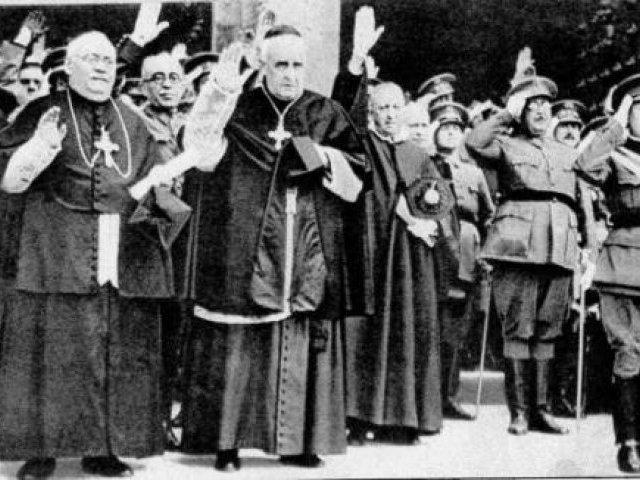
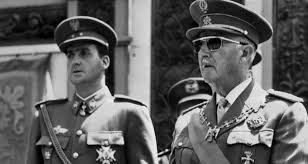




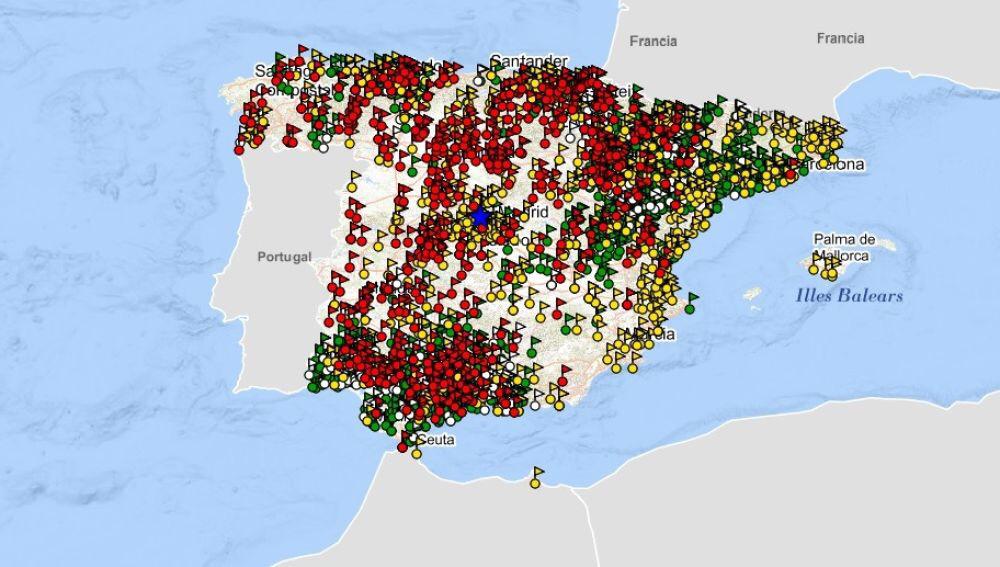
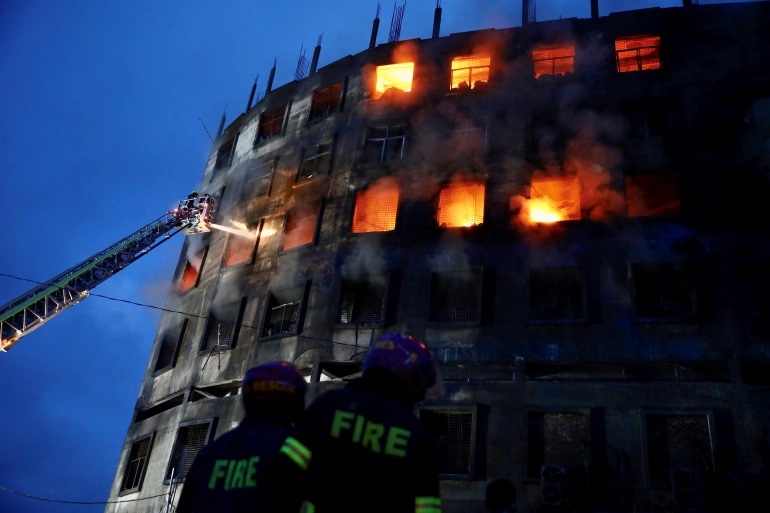


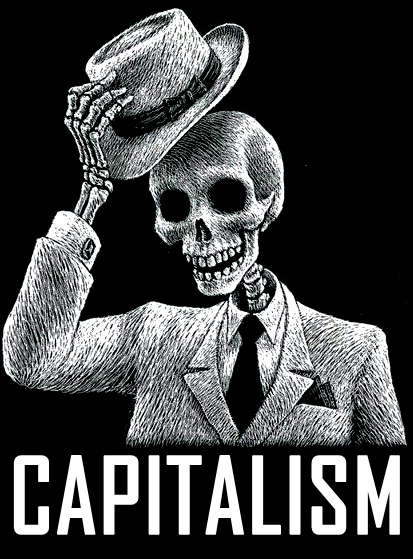
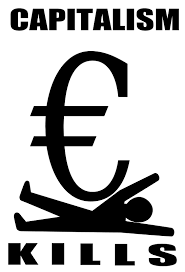



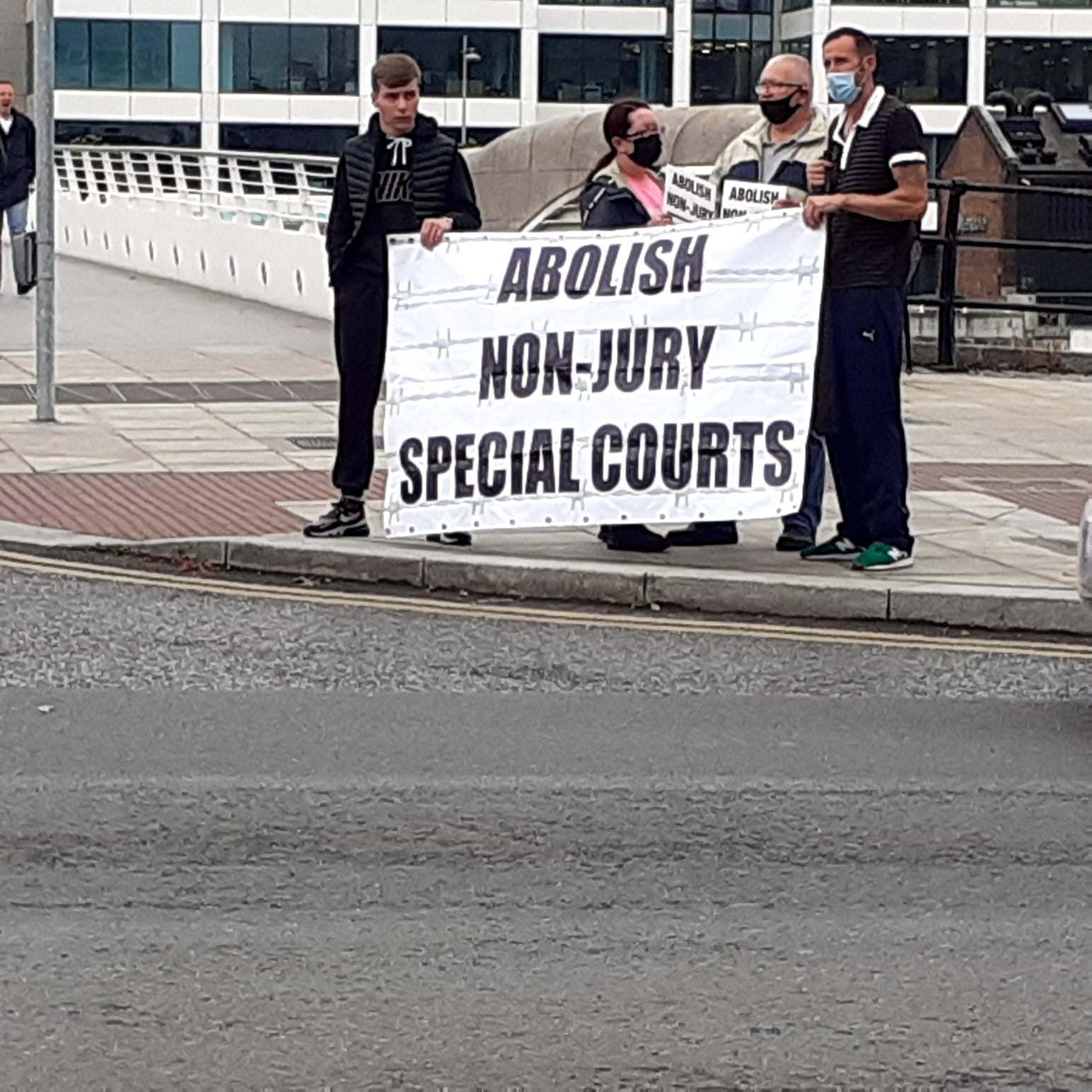


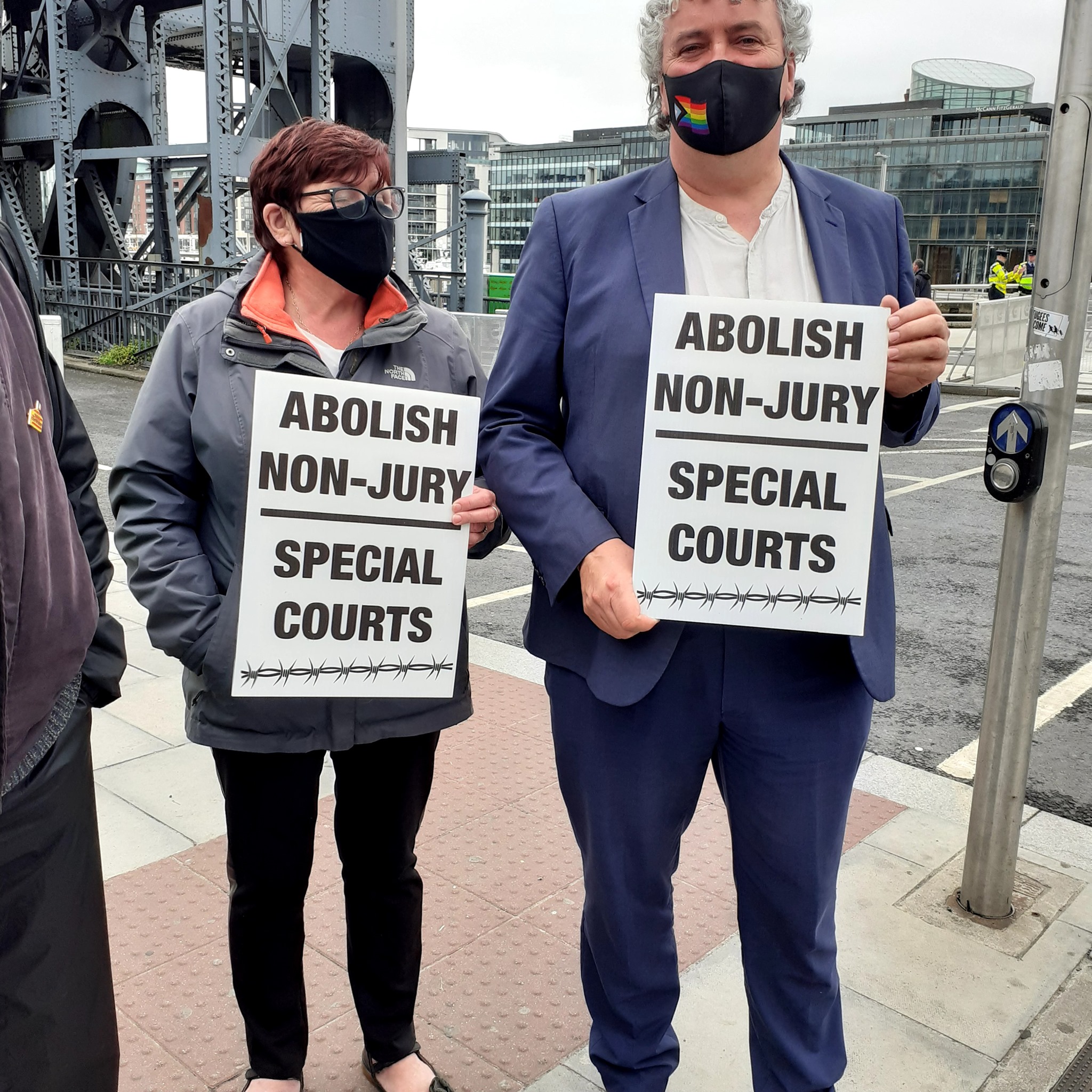


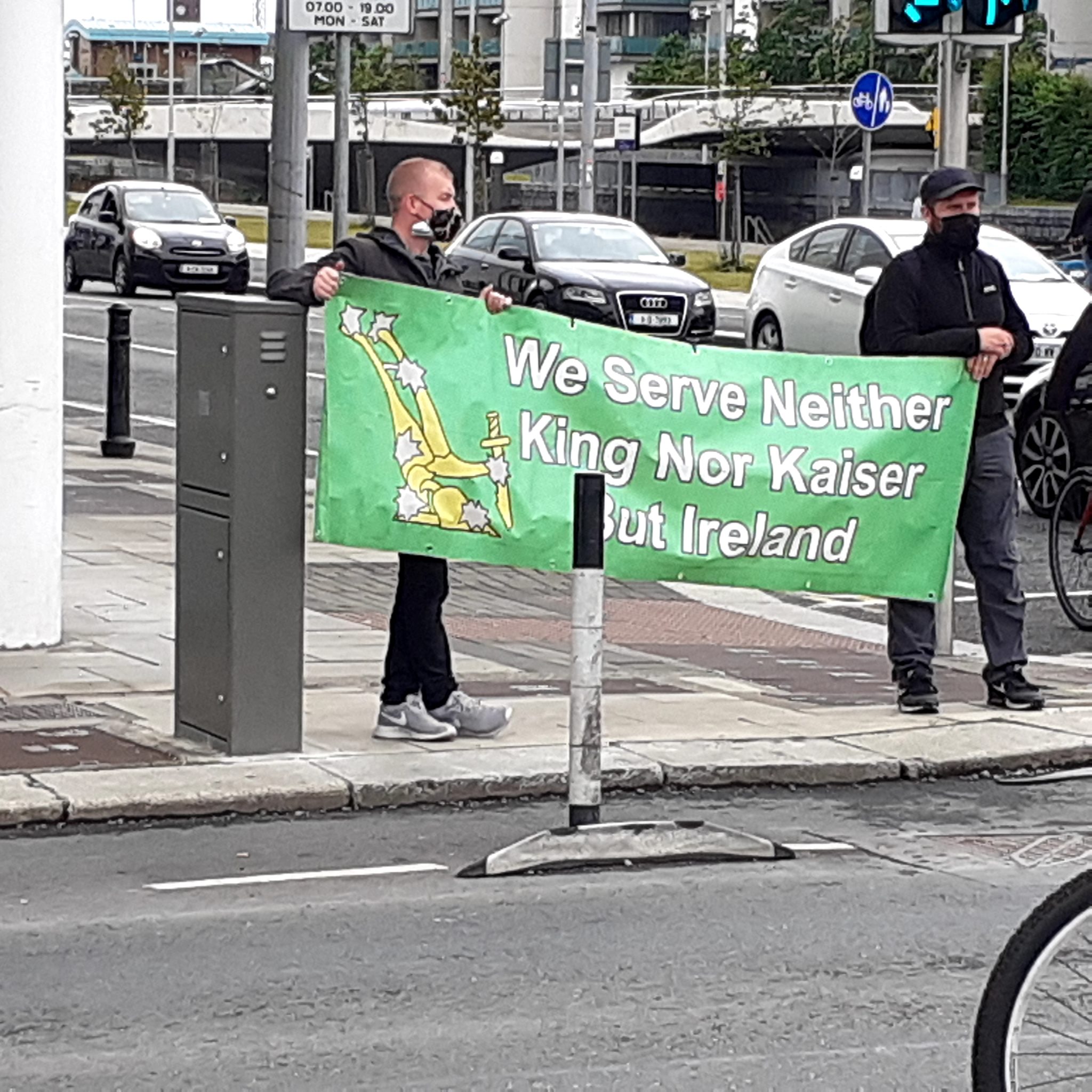

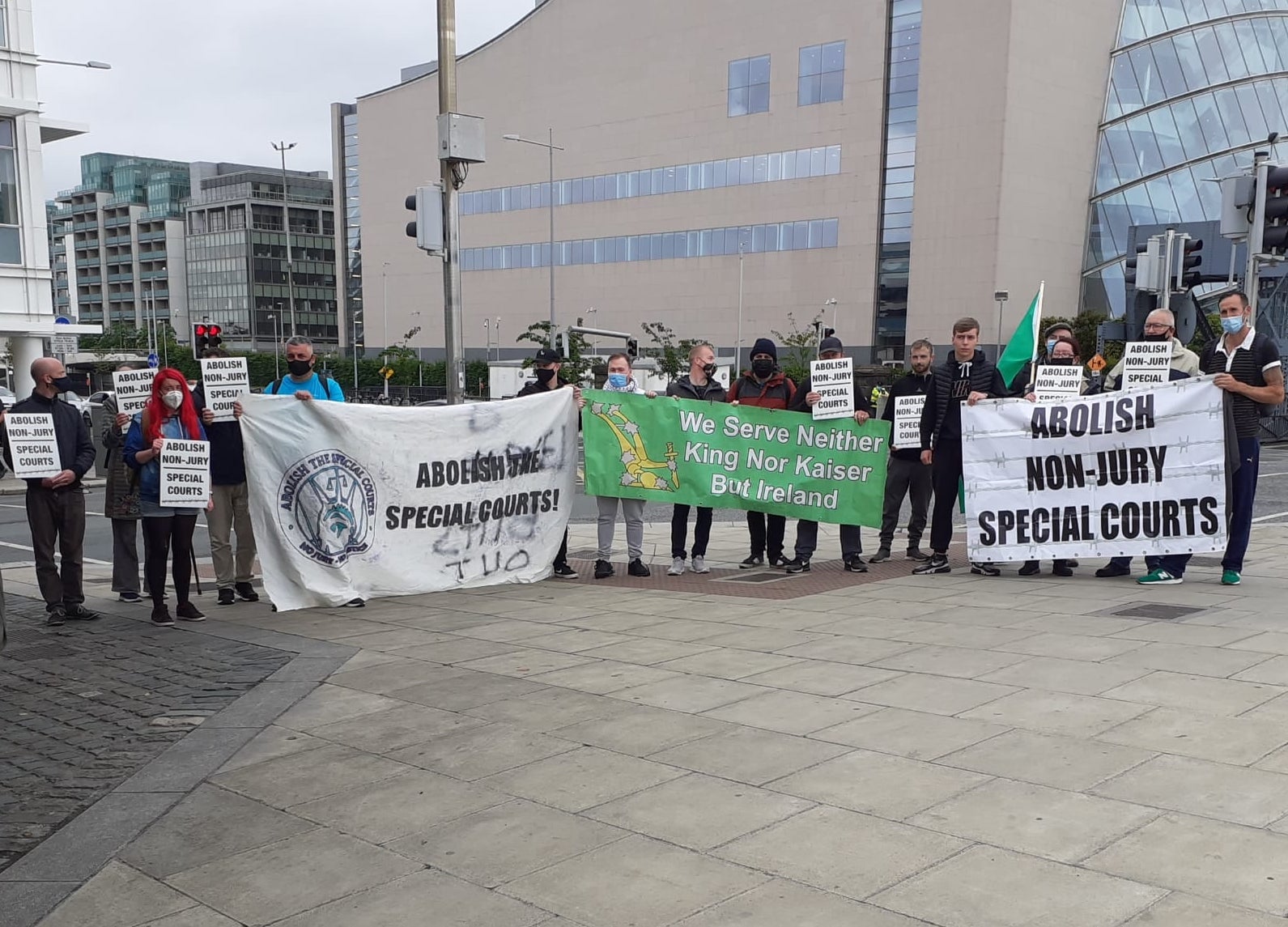


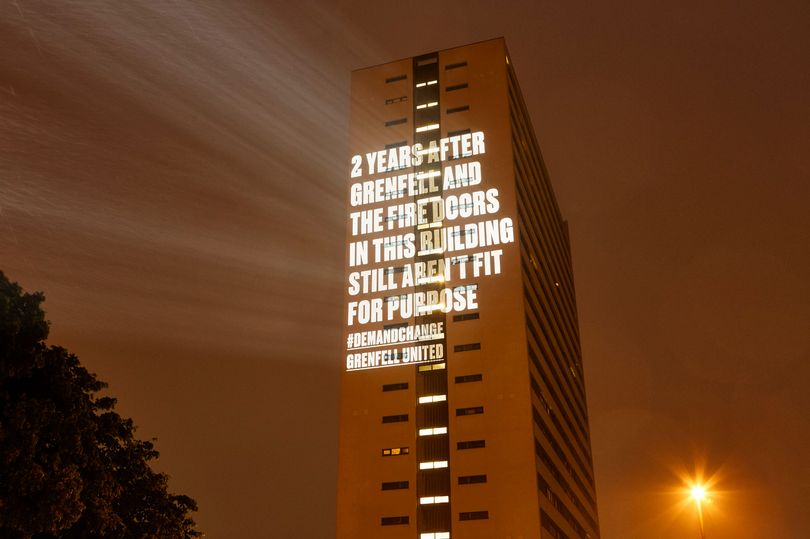


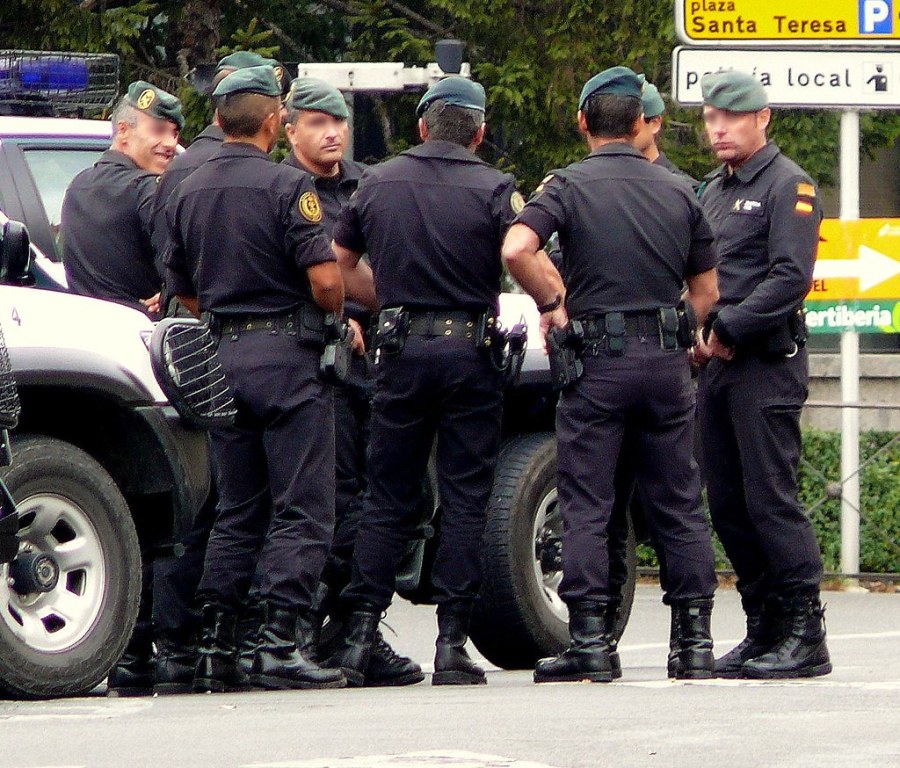

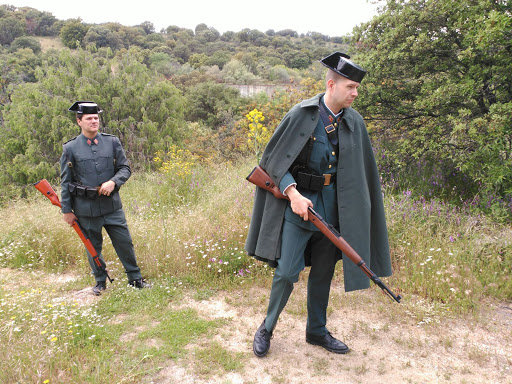

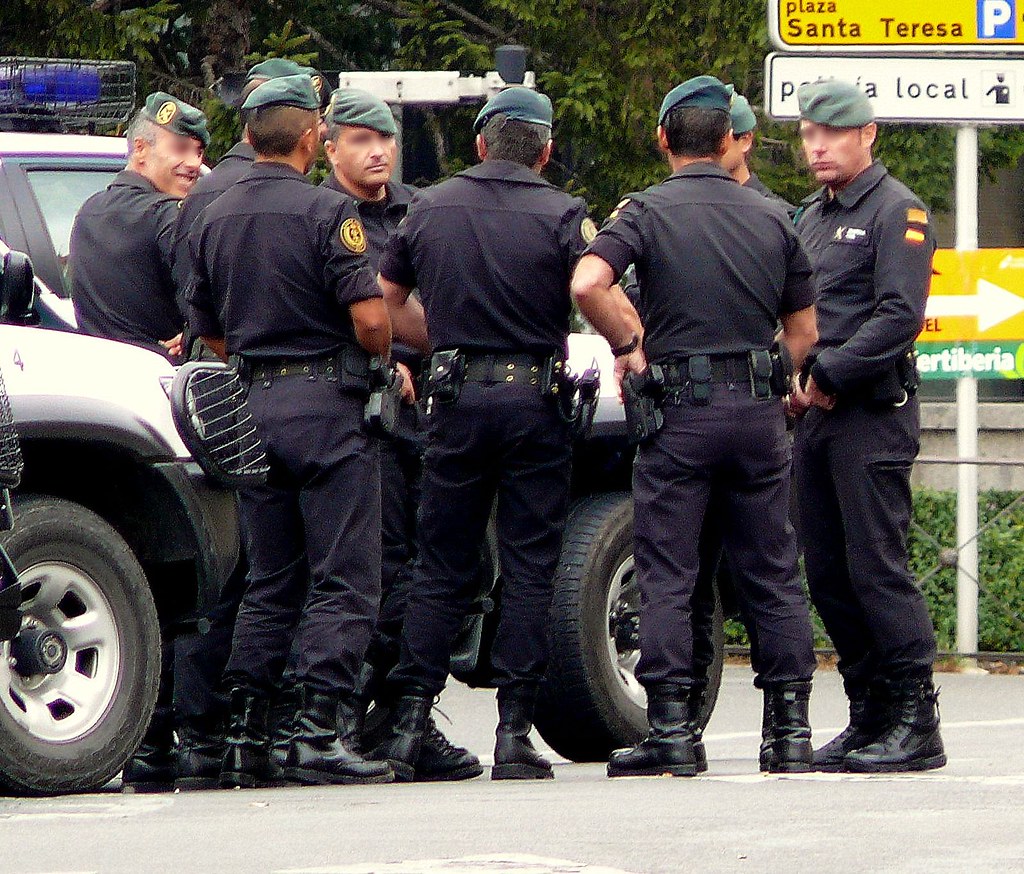

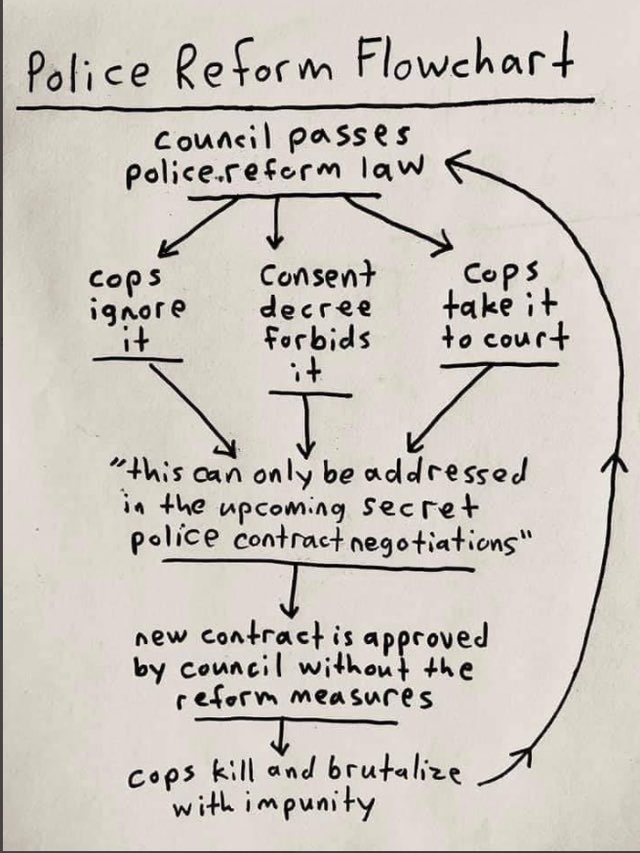


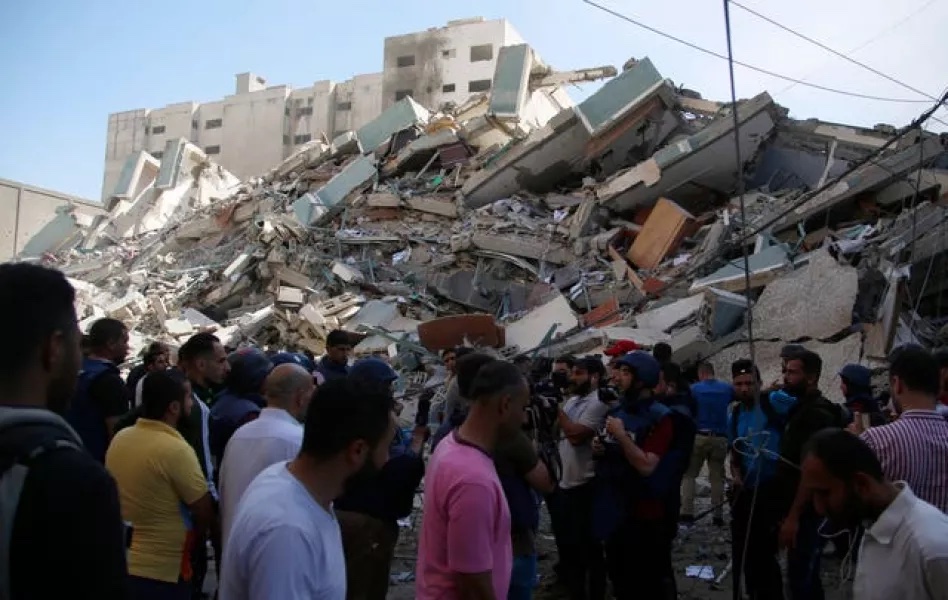



 rebelbreeze