

Clive Sulish
(Reading time: 5 mins.)
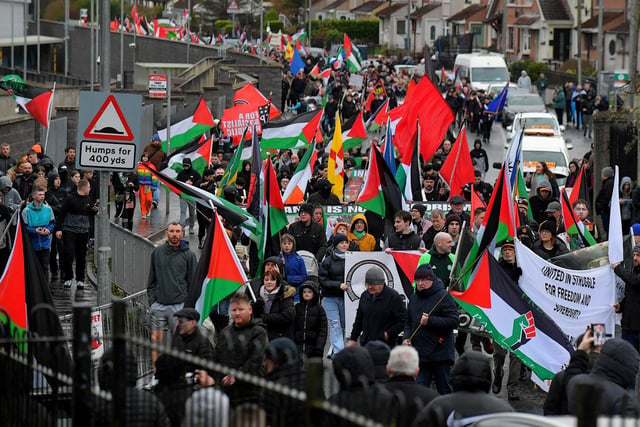
Dublin city centre on Saturday witnessed another giant Palestine solidarity march with a breakaway group; also a picket against internment of Irish Republicans; fascist provocations and Gárda repression resulting in the arrest of a demonstrator.
The national demonstration march had been called by the Ireland Palestine Solidarity Campaign as part of a solidarity and protest pattern that included fortnightly Dublin marches last year but is now generally monthly and at times with other events in addition.

Numbers on these marches in a city of only around 1.5 million population are impressive, though they draw on some participation from outside Dublin but there also regular local pickets and demonstrations of much smaller numbers at locations of high visibility or of specific significance.1
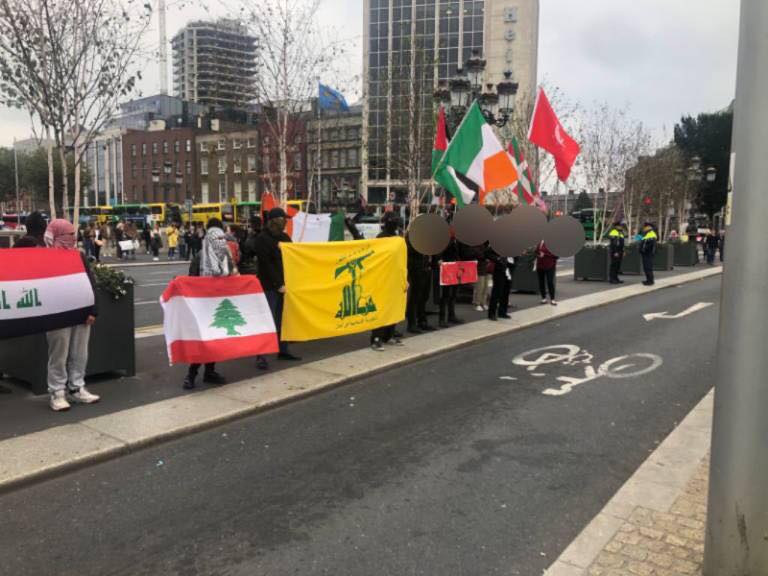
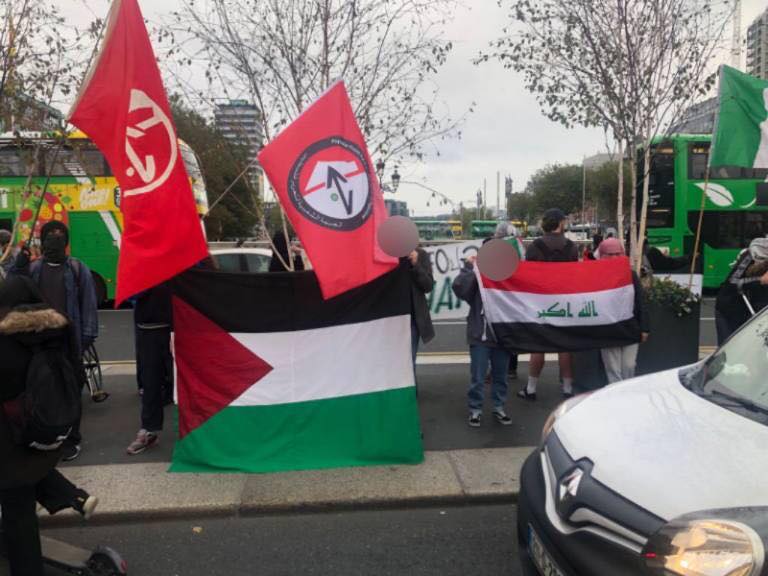
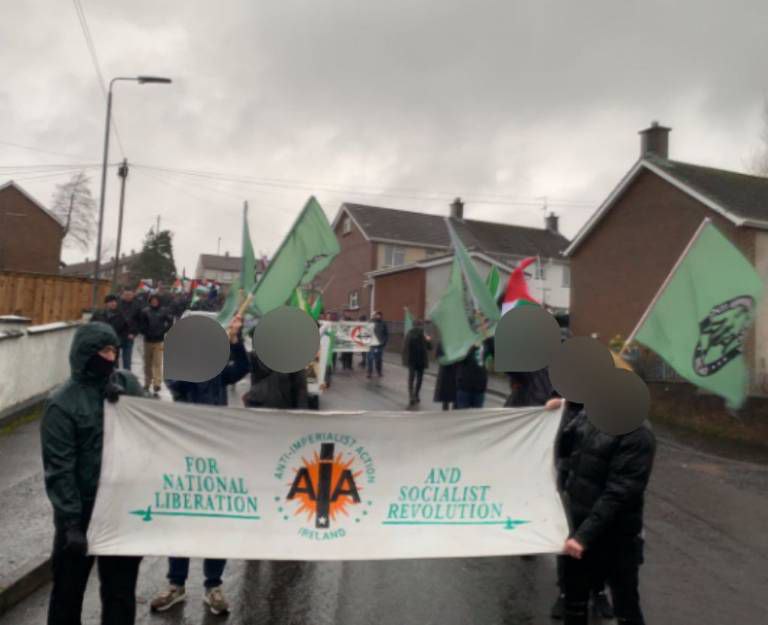
The march set off from the Garden of Remembrance in the north city centre proceeding towards Leinster House, seat of the parliament of the Irish State, near O’Connell Bridge passing a picket with an anti-Internment banner organised by the Anti-Imperialism Action organisation.

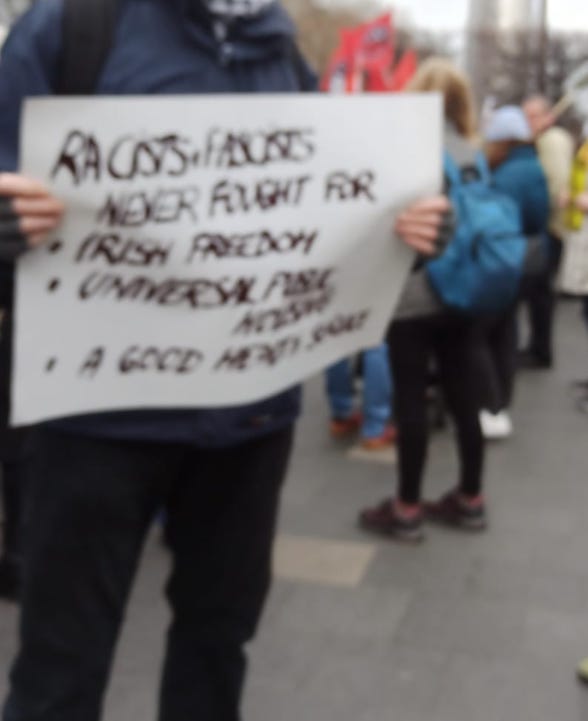
As the march reached the non-pedestrianised stretch of Grafton Street a half-dozen fascists made their presence felt on the sidelines by throwing insults at a section of the marchers, who responded with louder From Ireland to Palestine – Occupation is a crime! and antifascist slogans.
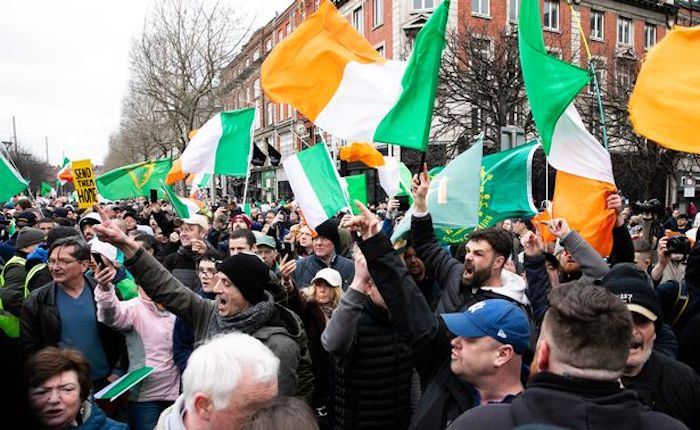
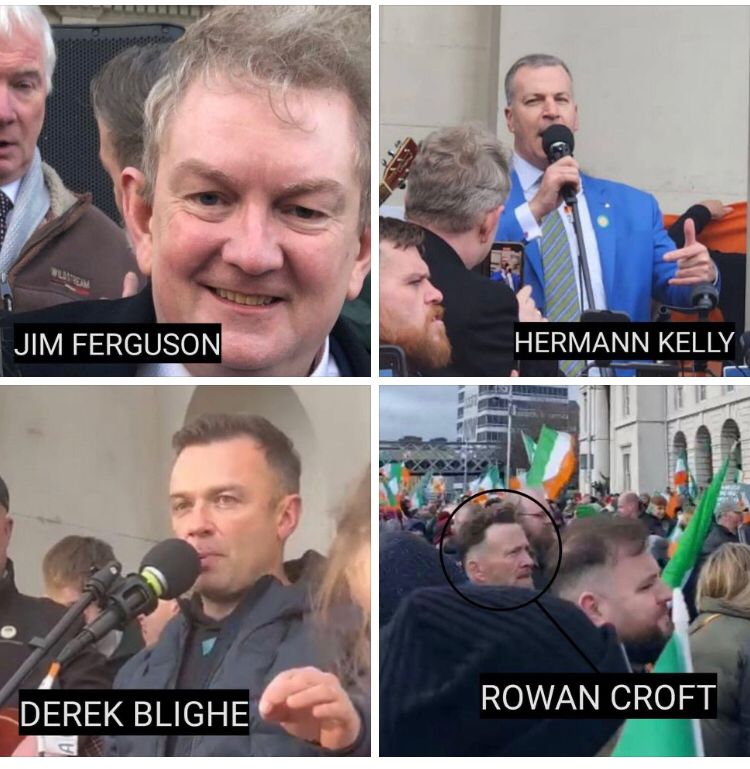
Not just the Irish state but fascists and other far-Right elements in Ireland have a real problem with Palestine solidarity, claiming that’s because the protesters should be marching for Ireland. However those elements for the most part have zero track record in marching for Irish independence.
No, for them ‘Irish nationalism’ consists of demonstrating against immigration and burning buildings intended – or which they believe intended – for housing refugees. Clearly as fascists and far-Right what they detest about marches such as these is internationalist solidarity itself.

Incongruously for those who want only internal causes upheld, the fascists of the Loyalist variety in the occupied Six Counties uphold the Zionist state of ‘Israel’ and those inside the Irish state, as was seen in Dublin on Saturday too, laud and uphold as an example Donald Trump!
BREAKAWAY2
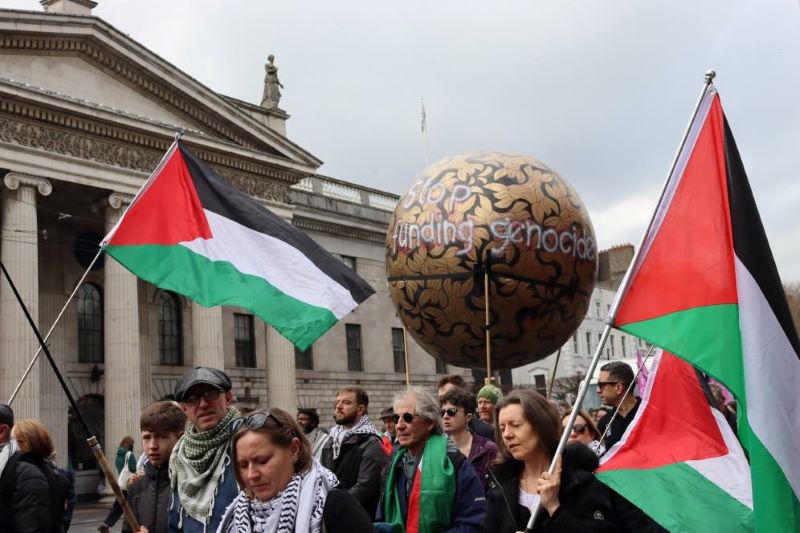
Very shortly after the verbal exchange with the fascists, a section of the march diverted to walk up the pedestrianised section of Grafton Street. A couple of Gardaí, reinforced by the fascists, attempted to prevent this but the marchers flowed around the obstruction to continue up the street.
On Wednesday evening, some of those present had marched down that very street on their way to occupy O’Connell Bridge, bringing traffic in both directions to a halt for half an hour.3
Further along the pedestrianised street the breakaway, including Ireland Action for Palestine and Saoirse Don Phalaistín groups, joined with another section of marchers who had earlier broken away from the IPSC march, this one led by the Mothers Against Genocide banner.
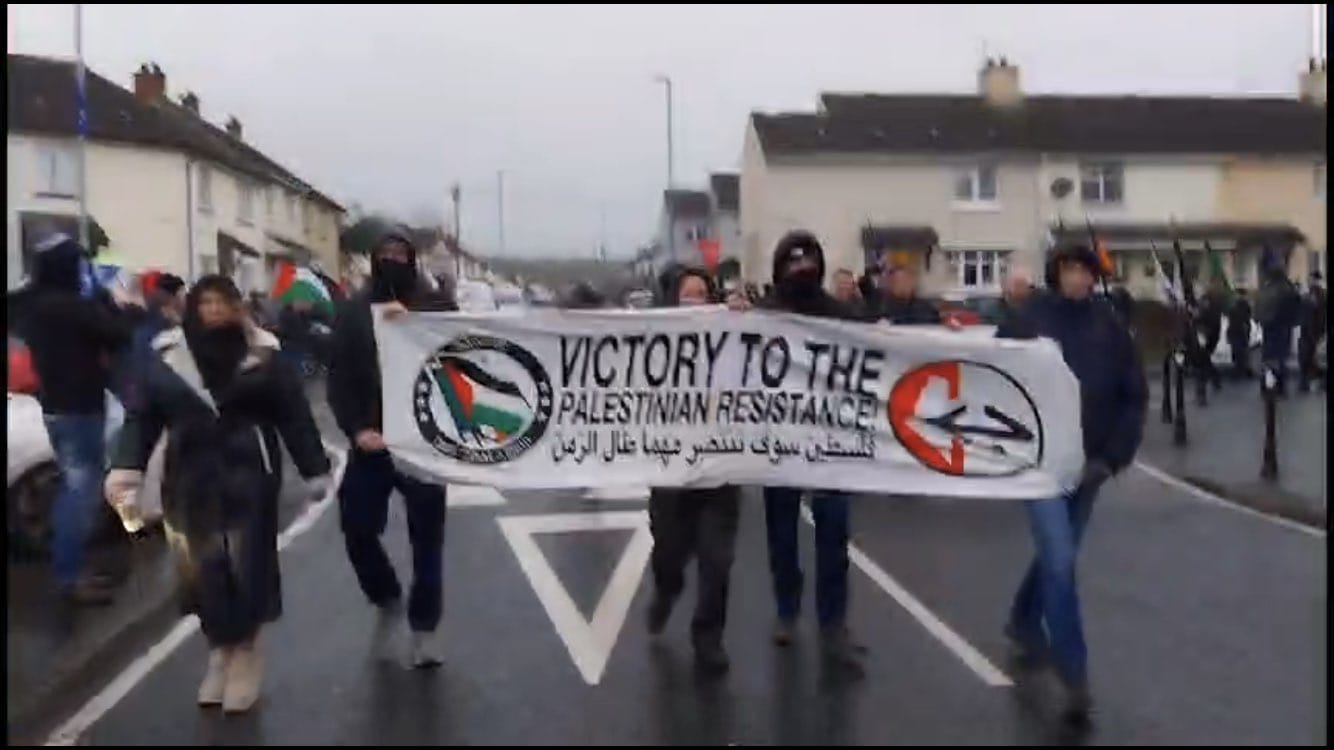
The shouted slogans from what were broadly two differing sections tended to merge with regard to calls to stop the bombing, opposition to genocide and broad support for Palestine but differed in that one section was also calling for support for the Palestinian Resistance and resistance generally.4
Content of slogans from the groups differed less markedly in calling for Irish Government intervention in support of Palestine, with the ‘Mothers’ mostly demanding the enactment of the Occupied Territories Bill5 and others condemning Government collusion in Shannon Airport.
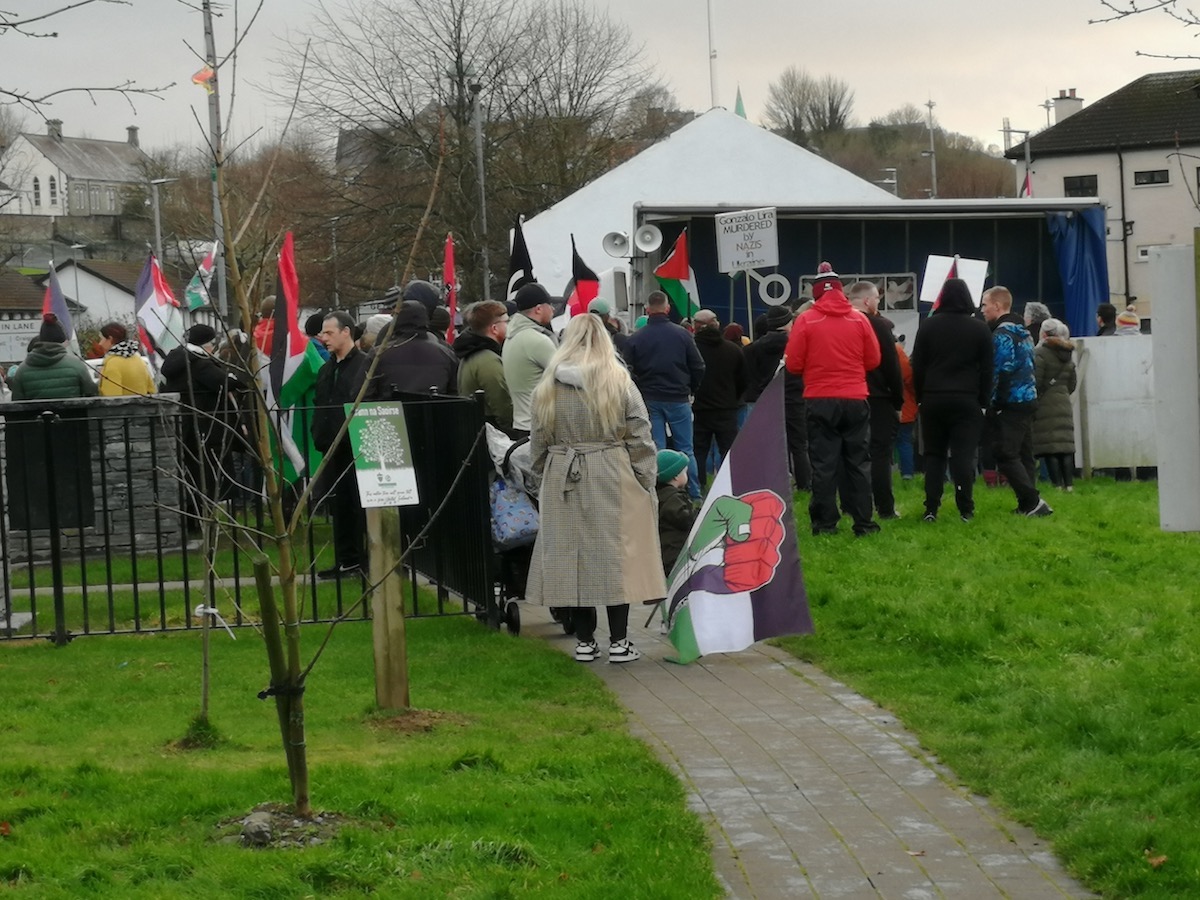
The whole breakaway mass marched along South Stephens Green and turned north into Dawson Street, to pause inside the junction with Molesworth Street, where the tail of the main march, was already beginning to reduce although speakers and artists were performing on the IPSC platform.

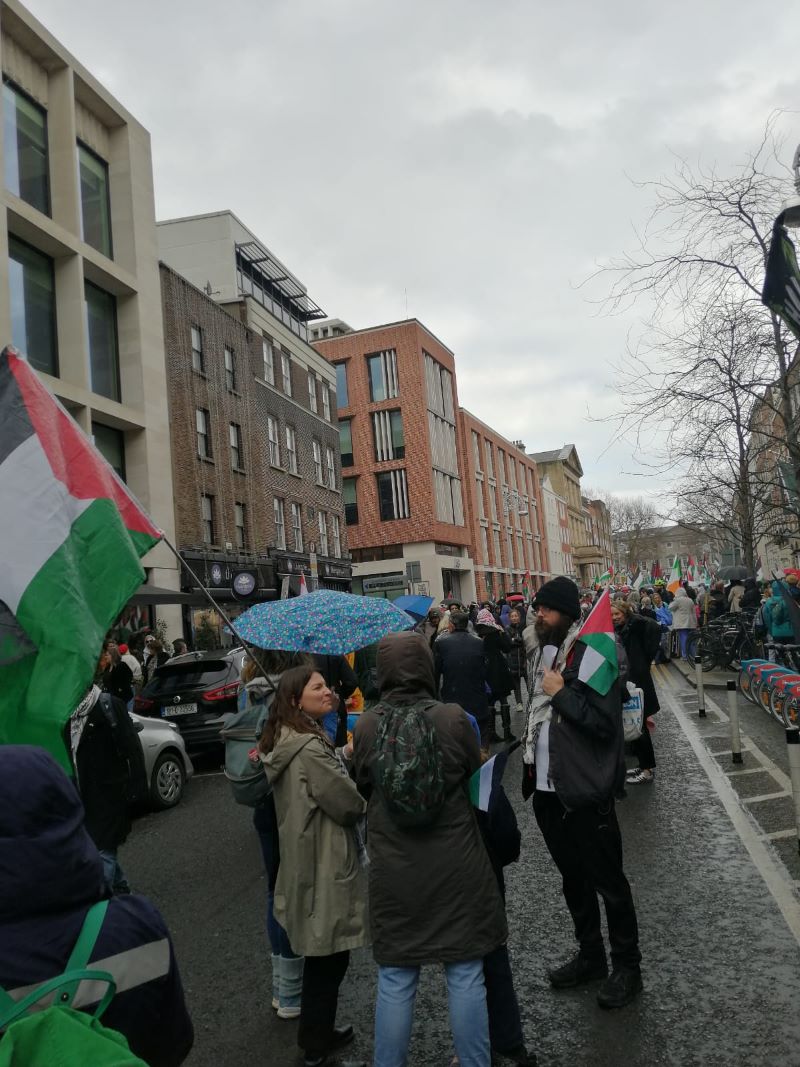
On Dawson Street, across from the junction, the fascists had installed themselves, including a man in a red ‘Trump’ hat waving a “Make America great again” flag.

The Palestine solidarity protesters here – some distance from the diminishing main march crowd,6 with some IPSC stewards standing watching nearby, responded to the fascists’ jeers and Trump fan with jeers of their own, slogans and some bursts of song.7
According to a report form Anti-Fascist Action observers nearby and posted later that day, a senior Garda officer approached one of the fascists and had a quiet word with them, after which the fascists packed their banner and went away quietly smiling while the Public Order Unit arrived.
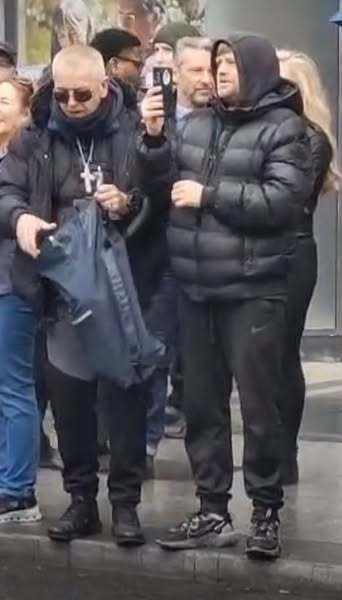
These then began to aggressively push the demonstrators back towards Molesworth Street and as a demonstrator remarked it was the POU that were now blocking Dawson Street to traffic.
Soon the Gardaí seemed to decide to arrest one of the Palestine solidarity demonstrators and charged into the crowd, shoving, knocking down and even punching people who resisted strongly or just held on to the intended victim as long as they were able to.
A woman struck back at a POU man who had seized her by the throat but even so it took the intervention of one of his unit to get him to release his hold. The marks of his hand on her throat could be seen afterwards. Interestingly a press report later stated the Gardaí denied there was any incident.
Eventually the Gardaí succeeded in their intent and the protester was taken away to chants of Let him go! Numbers of the main march were dwindling greatly by this point but so were those of the breakaway section and people there were concerned to support their arrested comrade.
One of three police stations was the likely destination: Store Street, Pearse Street or Kevin Street. It was established that he was held at the latter station and was later released, given a few days to decide, under the Public Order Act whether to accept a caution or to be charged and face trial.
More confrontations of various sorts are likely as the Zionist genocide in Palestine ratchets even higher and frustration mounts at the Irish Government’s persistent refusal to end their collusion with the Zionist state and with its main supplier, US imperialism.
End.
FOOTNOTES
1Mostly by organisations not part of the IPSC.
2Breakaway actions by groups often take place when they seek another target to that of the march organisers or to spread the visual and auditory impact of the demonstration or to break the ‘normalisation’ pattern, as when protesters feel the IPSC leadership is organising set marches of minimum disruption, on routes agreed with the Gardaí (which is not legal requirement in the Irish state).
3See https://rebelbreeze.com/2025/03/21/dublin-traffic-clogged-up-as-palestine-solidarity-protesters-march-around-city-centre
4There is only one solution – Intifada revolution! From Ireland to Palestine – Occupation is a crime!
5 Agreed years ago in the Irish Parliament before but prevented from enactment by successive coalition Governments.
6As soon as the IPSC march arrives numbers always begin to leave, either to commence return home journeys or because they feel they are not going to hear anything new and their contribution was to be part of a visible mass, which they have now done.
7The Irish-language Gráinne Mhaol and English-language Come Out Ye Black n’ Tans.




























 rebelbreeze