Like many Brooklyn Jews of his generation, Howard Zinn, an icon of the American left, questioned laissez fair American capitalism and American nationalist glorification of country. He was the author of “A People’s History of the United States,” a best seller which sold more than two million copies and inspired a generation of high school and college students to rethink American history. He was also a strong supporter of the civil rights movement and an opponent of the Vietnam war, as well as being a much-loved professor. Proudly, unabashedly radical, Zinn delighted in debating ideological foes, including his own college president, and in attacking conventional ideas, not the least that American history was a heroic march toward democracy.
One of the many different jacket covers for reprints of Zinn’s most famous book — this one abridged for teaching purposes (Image sourced: Internet)
Born Aug. 24, 1922, Howard Zinn grew up in Bedford Stuyvesant. His parents were Jewish immigrants who met in a factory. His father worked as a ditch digger and window cleaner during the Depression. His father and mother ran a neighborhood candy store for a brief time, barely getting by. For many years his father was in the waiter’s union and worked as a waiter for weddings and bar mitzvahs. “We moved a lot, one step ahead of the landlord,” Zinn recalled. “I lived in all of Brooklyn’s best slums.”
“NO LONGER A LIBERAL”
His parents were not intellectuals and Zinn recalled that there were no books in his home growing up. At some point his parents, knowing his interest in books, and never having heard of Charles Dickens, sent in a coupon with a dime each month to the New York Post and received one of ultimately twenty volumes of Dickens’ complete works. He became interested in fascism and began to read about its rise in Europe and to engage in political discussions and debates with some young Communists in his neighborhood. Zinn was radicalized thanks to a peaceful political rally in Times Square, where mounted police charged the marchers, hit Zinn knocked him unconscious. Zinn explained, “From that moment on, I was no longer a liberal, a believer in the self-correcting character of American democracy. . . The situation required not just a new president or new laws, but an uprooting of the old order, the introduction of a new kind of society—cooperative, peaceful, egalitarian.”
After graduating from Thomas Jefferson High School, Zinn became an apprentice shipfitter in the Brooklyn Navy Yard, where he and a few other apprentices began to discuss books and strategize about how to improve their dangerous working conditions. Excluded from the craft unions of skilled workers, they formed their own Apprentice Association. On an overnight boat trip he organized to raise money for the association, he met his future wife, Roslyn Shechter, who shared Howard’s progressive views and was also a Jewish child of immigrants. Zinn joined the Army Air Corps in 1943, eager to fight the fascists, and became a bombardier in a B-17. While in the Air Force he was disturbed by the race and class inequality among the servicemen. It wasn’t until years after the war that he questioned the necessity of the bombs that he dropped. But at the end of the war, back in New York, he deposited his medals in an envelope and wrote: “Never Again.”
View of students and faculty carrying signs during a strike by faculty and staff of Boston University, on Commonwealth Avenue, Boston, 1979. Historian Howard Zinn, then a professor at BU, is just visible in the centre foreground. (Photo by Spencer Grant/Getty Images)
“I would not deny that [WWII] had a certain moral core, but that made it easier for Americans to treat all subsequent wars with a kind of glow,” Zinn said. “Every enemy becomes Hitler.”
After the war, he went back to interview victims of the bombing, and later wrote about it in two books. His own experience and his subsequent interviews led him to conclude that the bombing had been ordered more to enhance the careers of senior officers than for any military imperative, and he later wrote about the ethics of bombing in the context of Hiroshima and Nagasaki, Tokyo and Dresden, as well as Iraq.
Zinn and Roz married in 1944. While Zinn worked various jobs after the war, they lived on meager income in a rat-infested basement apartment in Brooklyn. Their daughter Myla was born in 1947 and Jeff in 1949. They moved to new public housing in 1949 and Zinn went to New York University for his B.A in history.
Thanks to the GI Bill, which paid the tuition of veterans, Zinn went to Columbia, where he earned an MA in 1952 with a thesis about a famous coalminers’ strike in Colorado, then obtained his PhD with a dissertation about the career in Congress of Fiorello LaGuardia, the reforming mayor of New York. He studied at Columbia under Richard Hofstadter who taught Zinn that American liberals were not as liberal as they thought they were, and that the two common threads in all American history were nationalism and capitalism.
PROFESSOR ZINN
In 1956, Zinn accepted a professorship at Spelman College, a traditionally black college for women in Atlanta, Georgia. Among his students were Maria Wright Edelman, the campaigner for children’s rights, and the future novelist Alice Walker, author of The Color Purple. At Spelman, he was a mentor to and later the historian of the Student Non-Violent Co-ordinating Committee (SNCC), the radical student wing of the civil rights movement. Zinn took part in many civil rights protests, and he encouraged his students to join him in these marches, which angered Spelman’s president. Zinn angered the authorities at Spelman over his insistence that its students should not be trained to be ladies, but should be actively involved in politics. “I was fired for insubordination,” he recalled. “Which happened to be true.” Zinn moved to Boston University in 1964, where he quickly became an outspoken critic of the Vietnam War. He angered many Americans, including Boston University’s president, by traveling with the Rev. Daniel Berrigan to Hanoi to receive prisoners released by the North Vietnamese, and produced the antiwar books “Vietnam: The Logic of Withdrawal” (1967) and “Disobedience and Democracy” (1968). When Daniel Ellsberg, a previously gung-ho John F Kennedy and Lyndon B Johnson administration official, came out against the war, he gave one copy of the Pentagon Papers (officially titled United States-Vietnam Relations, 1945–1967: A Study Prepared by the Department of Defense, the government’s secret history of the war) to Zinn and his wife, Roslyn. Zinn and Noam Chomsky edited what became known as the Mike Gravel edition, published in Boston in 1971-72 by the Beacon Press.
In 1980, he published his most successful work, A People’s History of the United States, which was a highly controversial revision of American history. Instead of the usual congratulatory tone of most American history textbooks, his work concentrated on what he saw as the genocidal depredations of Christopher Columbus, the blood lust of Theodore Roosevelt and the racial failings of Abraham Lincoln. He also highlighted the revolutionary struggles of impoverished farmers, feminists, laborers and resisters of slavery and war. Bruce Springsteen said the starkest of his many albums, “Nebraska,” drew inspiration in part from Mr. Zinn’s writings.
For decades, he poured out articles attacking war and government secrecy.
When President Ronald Reagan bombed Tripoli in 1986, Zinn wrote: “There is no flag large enough to cover the shame of killing innocent people for a purpose which is unattainable.” He denounced the invasion of Iraq and also criticized President Barack Obama’s intensification of the war in Afghanistan. He was sharply attacked in Israel and by many of his fellow American Jews for saying that war was morally the equivalent of terrorism.
Howard Zinn (Photo sourced: Internet)
Mr. Zinn retired in 1988, concluding his last class early so he could join a picket line. He invited his students to join him. Zinn also wrote three plays: “Daughter of Venus,” “Marx in Soho” and “Emma,” about the life of the anarchist Emma Goldman. All have been produced. Zinn died in 2010.
Zinn always believed in standing up to injustice and fighting for oppression. He said near the end of his life, “Where progress has been made, wherever any kind of injustice has been overturned, it’s been because people acted as citizens, and not as politicians. They didn’t just moan. They worked, they acted, they organized, they rioted if necessary to bring their situation to the attention of people in power. And that’s what we have to do today.”
End.
POSTSCRIPT from Rebel Breeze:
TRUMP ATTACKS ZINN AFTER LATTER’S DEATH
“If you want to read a real history book,” Matt Damon’s character tells his therapist, played by Robin Williams, in the 1997 film “Good Will Hunting,” “read Howard Zinn’s ‘A People’s History of the United States.’ That book will knock you on your ass.”
It is very unlikely that President Donald Trump knew who Howard Zinn was before he saw the name on his teleprompter. And it is even less likely that he’s read “A People’s History of the United States.” But that didn’t stop him from saying — at the White House Conference on American History on Thursday — that today’s “left-wing rioting and mayhem are the direct result of decades of left-wing indoctrination in our schools. It’s gone on far too long. Our children are instructed from propaganda tracts, like those of Howard Zinn, that try to make students ashamed of their own history.”
Mohamed Fadel states that he was seriously injured last April by a Moroccan drone, during the same action in which the head of the Saharawi National Guard was killed. Morocco is silent on the use of these unmanned devices that have become the obsession of the Polisario Front troops.
Mohamed Fadel, ‘Mundi’, in a tent in the Saharawi refugee camp of Bojador, in Tindouf, Algeria, on October 15.
Mohamed Fadel can say that he has firsthand experience of the changes between the two wars against Morocco in which he was wounded. The first was in 1985, when a shell fragment hit him in the arm. But he recovered and returned to the front in no time. The second time was the recent April one and “it was more serious,” he says, showing the marks on his body under his military jacket.
Burns to his face, hands and arms, two scars the size of a coin on his right side and an incision of more than a foot long across the middle of his belly. “They had to open me up to remove the three pieces of shrapnel that I had inside. It took me three months to fully recover,” he explains in perfect Spanish. “It was a drone attack. That is now the big difference,” insists this seasoned 64-year-old Saharawi fighter.
But Mundi, as everyone knows him in the refugee camps in Tindouf, Algeria, does not like to talk about two different wars. This, he says, the one that the Polisario Front declared on November 13 after 30 years of ceasefire, “is just a continuation of the previous one”, the one that began in 1975, after the military occupation of the former Spanish Sahara by part of Morocco. “The enemy is the same and the objective is the same: the referendum that has not been held and the independence of the Sahara. The only things that have changed are the means, the technology,” explains the Saharawi fighter, in the shade of a tent in the Bojador refugee camp.
“They are neither seen nor heard, but they are there and attack at any moment”
Moroccan drones are the worst nightmare in this new stage of hostilities, according to all the Sahrawi fighters interviewed by Público during the Polisario-organized trip to the camps last week.
“They are neither seen nor heard, but they are there and attack at any moment,” insists Mundi, although at the moment they have not shown any documentary evidence certifying the presence of armed or surveillance drones. The two parties accuse each other of using them, although both deny it, according to the latest report on this conflict by the UN Secretary General, Antonio Guterres.
Saharawi women living in Gastheiz (San Sebastian) in the south-west Basque Country demonstrate in solidarity with their people’s struggle and the Polisario Front (“askatu” = “free”) in May 2020. (Photo source: Internet)
An almost paranoid obsession
After each Sahrawi attack against the defensive Wall built by Morocco, all eyes are on the sky. Drones feel close almost always, even if they are not there, like an almost paranoid obsession. One of the main military directives of the Polisario is to stay away from cars when they halt, because they are their main target. When they believe that a drone is following behind, the old Sahrawi vehicles separate, stop and the unit that was on board runs away.
Morocco has embraced the purchase of Turkish-made armed drones, according to ‘Reuters’
These unmanned devices make up much of modern warfare and have been instrumental in recent conflicts. One of the most recent, for example, was the capture by Azerbaijani troops of Nagorno Karabakh last year. They defeated the Armenians thanks to Turkish-made drones, deploying practically no soldiers to the front, recalls the arms trade expert Tica Font, from the Delàs Center for Peace Studies.
Font emphasizes that Turkey, Azerbaijan’s main ally in the conflict, is one of the few countries that manufacture and sell drones capable of loading and firing missiles, along with the United States, Rabat’s main military supplier, followed by France and Spain.
Indeed, as Reuters recently revealed, Turkey has expanded the sale of armed drones to Morocco. Specifically, several sources cited by the British agency speak of purchase requests from Rabat of the Bayraktar TB2 model, of which they would have already received a first batch ordered in May.
The Moroccan Army attack on the protest camp at Guergat on 13 Nov. 2020 which sparked the long-delayed renewal of Polisario armed struggle (Photo source: Internet)
As we moved away, a drone followed us
Although that was two months after the attack Mundi is talking about. According to him, the bombing that wounded him was on April 11. “In broad daylight, at four in the afternoon. We were near the Wall, we had just carried out an operation against a Moroccan base and they responded. First with artillery and, later, when we were moving away, a drone followed us,” he described.
His vehicle stopped and his three companions followed the rules of dispersing, but Mundi had no time to get to safety. “The missile landed very close to the car and I was level with the front wheel,” he recalls. He claims that that afternoon he was able to see one of the aircraft in the air, although he did not see it fire. He believes there had to be more than one, “because eight or nine missiles were launched, and that cannot be carried by a single drone,” he maintained.
Mohamed Fadel ‘Mundi’, wounded Saharawi Fighter photographed in Saharawi refugee camp, Tinduf, Algeria 15 Oct 2021 (Photo cred: Jairo Vargas)
In that Moroccan bombardment, Mundi explained, the esteemed head of the Saharawi National Guard, Adah el Bendir, 61, a noted military strategist expert in engineering and combat, died. The Polisario announced the important loss. Morocco, for its part, opted for its most effective tactic since the resumption of hostilities: silence and indifference. Only the Alawite news portal Le Desk reported that an Israeli-made Harfang model drone had participated in the attack on El Bendir. Morocco did not even want to claim a goal in a war that does not exist for Rabat.
However, the Delàs Center expert warned that most of the marketed drones are for surveillance and monitoring, and that they do not need to carry weapons to attack a target. “Many have all kinds of built-in radar and sensors that send information to a central computer. With that data, you can open fire with precision from any platform, be it a ship, an aircraft or a ground unit. Tens of kilometers from the target” says Font.
Saharawi struggle supporters in Bordeaux, France on 11 December 2020 (AFP). France is a Permanent Member of the UN Security Council and is the main European state supporting Morocco.
That’s Le Desk‘s version of the attack in which Mundi was wounded and El Bendir killed. According to this Moroccan portal, the drone laser marked the target and an F-16 fighter launched the projectiles.
“They do not scare us, because with fear nothing is done in war. But there is a lot of uncertainty, a lot of anxiety and tension,” he affirms after 46 years as a soldier in the Saharawi people’s army.
Mundi is confident that sooner or later they will find the formula to detect and demolish the Moroccan aircraft. “We learned to fight them when they raised the wall, we learned to shoot down their planes and we learned to capture their armour,” he says. “We are still starting. At the moment we are using a tactic of attrition. We attacked bases and retreated. In the 80s we also started that way when they built the wall. Until 1984 we did not carry out large-scale attacks. War has its times,” he says. This one has already lasted more than 40 years.
DRHE threaten to clamp down on food tables feeding the homeless
Diarmuid Mac Dubhghlais
(Reading time: mins.)
Rebel Breeze editorial introduction: Through its agency Dublin Regional Homeless Executive, Dublin City Council recently threatened to close down the charity services delivering food and bottled water to homeless and hungry people. On the back of scandal about the alleged sexual predation of the deceased founder of the Inner City Homeless organisation, the Council issued a press statement which implied the threat, supported also by indications of Garda cooperation. Diarmuid Mac Dubhghlais, founder and organiser of the Éire Nua Food Initiative, one of the many charity services engaged in the work, has responded in a detailed article, reprinted here with the author’s permission.
THE 26-County State released figures on September 24 showing that there are currently 8,212 people accessing emergency accommodation in the State, a total of 6,023 adults and 2,189 children who are homeless.
A homeless person’s bed outdoors, cardboard as insulation underneath sleeping bag, this one located under the arch of the GPO (the building that was the HQ of the 1916 Rising). (Photo: Éire Nua Initiative)
These figures of homelessness have long been disputed by many others who work within the homeless sector as the State refuses to count those who are couch-surfing, or otherwise sharing accommodation with friends/family. The vast majority of the nation’s homeless are in the capital with 4,220 people accessing accommodation. 953 families are homeless in Ireland, according to the report.
Homelessness charities have warned that more families face losing their homes in the coming months due to private rental market constricts and evictions rise. This has already been borne out with reports of new faces showing up at the many soup runs/food tables that are in the city centre. Pat Doyle, CEO of Peter McVerry Trust, said “Any increase is disappointing because it means more people impacted by homelessness. However, we are now at the busiest time of year for social housing delivery and we would hope that the number of people getting access to housing will significantly increase in the coming months.”
Dublin Simon CEO Sam McGuiness cited the toll on the physical and mental health of people trapped in long-term homelessness. He said: “This population is desperate to exit homelessness and yet they are spending longer than ever before in emergency accommodation. This group deserves far better lives than the ones they are currently living. We see first-hand the toll this is taking in the increased demands for our treatment services, counselling services and the increase in crisis counselling interventions. Outcomes for people in emergency accommodation will not improve until they have a secure home of their own. Until this happens there is scant hope of a better future for this vulnerable group.”
“MANY CHILDREN NOW SPEND THEIR FORMATIVE YEARS IN HOMELESSNESS”
Éire Nua food initiative founder Diarmuid Mac Dubhghlais pointed out at a homelessness protest that many children now spend their formative years in homelessness and have no real idea of what it is like to have a traditional “Sunday dinner” or their own bedroom/play area. This will severely impact their personalities far into the future.
A report published on September 14 by the Irish Human Rights and Equality Commission and the Economic and Social Research Institute (ESRI) found that lone parents and their children account for 53% of all homeless families. The report said that lone parents and their children are much more likely to experience poor housing than other household types. The report also highlights the disadvantages experienced by young people, migrants, people with disabilities and Travellers in the Irish housing system. Researchers looked at six dimensions of housing adequacy – accessibility, affordability, security of tenure, cultural adequacy, quality, and location. They found that less than 25% of lone parents reported home-ownership, compared with 70% of the total population. Lone parents had higher rates of affordability issues (19%) when compared to the general population (5%) and were particularly vulnerable to housing quality problems such as damp and lack of central heating (32% compared to 22%).
Ethnic minority groups had a significantly higher risk of over-crowding, the research found. Over 35% of Asian/Asian Irish people, 39% of Travellers and over 40% of Black/Black Irish people live in over-crowded accommodation, compared to 6% of the total population. Almost half of all migrants in Ireland live in the private rental sector, compared to 9% of those born in Ireland. Migrants, specifically those from Eastern Europe (28%) and non-EU countries (27%), are more likely to live in over-crowded conditions.
One of the queues for free food and water at a charity food table outside the GPO building. (Photo: Éire Nua Initiative)
The research found that almost one third of persons living with a disability experience housing quality issues, compared to 21% of those without a disability. Researchers said there remains a real risk that levels of homelessness will worsen after the pandemic restrictions are lifted and they raised concern about rents increasing faster than mean earnings in Dublin and elsewhere. In 2020, mean monthly rent in Ireland was estimated to be 31% of mean monthly earnings. “Adequate housing allows people to not only survive but thrive and achieve their full potential, whilst leading to a more just, inclusive and sustainable society.”
Meanwhile, the Dublin Regional Homeless Executive (DRHE) said on September 28 that it is to seek greater regulation of organisations providing services for homeless people in the capital as soon as possible in the wake of the Inner City Helping Homeless (ICHH) controversy. Dublin City Council’s deputy chief executive Brendan Kenny, who has responsibility for the Dublin Regional Homeless Executive (DRHE) in his role, said that due to the high number of informal homeless organisations set up in recent years there is “currently no vetting, no controls, on many people who are actually interacting directly with homeless people”. Kenny said he doesn’t want “over-regulation” to lead to certain groups disbanding but added: “At the moment there’s nothing and that’s not good enough.”
In a statement, the DRHE said it is “strongly of the view that greater regulation, vetting, and scrutiny is required for organisations/charities that set themselves up as service providers for homeless persons, including the provision of on-street food services”. “Several such organisations not funded by the DRHE have come into existence in recent years and the DRHE and our partner agencies will be endeavouring in the coming months to bring the necessary expanded scrutiny and regulation to all such organisations.”
Garda Commissioner Drew Harris said there will be a review of Garda vetting procedures for the homelessness sector. Kenny said a report commissioned by Dublin City Council into the impact of unvetted charities is near completion and will provide further insight on the matter. It has been pointed out several times over the past four months that the DRHE, DCC and others have long tried to close the soup runs/food tables in the city centre and many now fear that what has been revealed through the ICHH debacle will be used to close many of these down. The DRHE are ignoring the fact that it is their rules and the oversight bodies recognised by them that has let the homeless down, not the food tables. Much of the work done by the food tables is done in the open and in full public view.
The issues highlighted through the ongoing ICHH investigation show it is what went on behind closed doors that is the problem. Those in oversight positions didn’t do their jobs; people were put in positions of authority without relevant qualifications. The DRHE, DCC and the police should look to how they can improve safety within their “regulated” organisations before seeking to regulate the volunteers who serve a need without any remuneration.
Many of the volunteers at food tables would have difficulty meeting the requirements of police vetting as some would be former addicts, and many others have no desire to become registered charities.
Again, it was pointed out by Diarmuid that many of these “regulated” charities will have high overheads such as transport insurance, maintenance and fuel costs. Some will have CEO wages and petty cash expenses to cover before any donations can be spent on the service user, whereas the Éire Nua food initiative and some others do not seek cash donations. All is done voluntarily and any costs are borne by the volunteers themselves. He cited that many registered charities are little more than businesses operating within the homelessness sector.
Diarmuid has been quoted in the past citing that “there are now many businesses making huge money out of those who are in homelessness” and “that the volunteer ethos that surround many food tables is not to be found within some charities”.
“IMPROVE THE STANDARD OF REGISTERED ACCOMMODATION, NOT SHUT DOWN THE VOLUNTARY ORGANISATIONS”
Kenny said the large number of pop-up soup runs mean some people are less likely to engage with the larger charities funded by the DRHE and in turn, less likely to engage with their support services. The DRHE views sleeping in a homeless hostel, rather than on the street, as a “much safer” option. However, he acknowledged that some homeless people don’t want to stay in a hostel, for a variety of reasons.
“We fully understand that but we’re strongly of the view that a hostel bed is absolutely safer and more hygienic than sleeping in a sleeping bag on the side or a street or in a tent. We know there are some people that just won’t go to a hostel – it may be that they have mental health issues. “We are also aware that some people would prefer to stay in a tent in order to stay involved in drugs and be taking drugs because they may not be able to do it in the hostel.” Kenny added that while hostels provide shelter and food, they “wouldn’t be the nicest place to sleep” but are still “far safer” than being on the street.
He totally ignores the many testimonies from residents, former residents and former workers within these hostels of the theft of personal property, the numerous assaults on residents by other residents, the bullying of residents by some staff members, low hygiene standards, open drug and alcohol abuse and the arbitrary nature operating within some hostels where a resident can be denied access on the whim of staff.
It is incumbent of the State, DRHE and the various councils to bring the standard of these types of accommodation up to a better standard and NOT try to shut those organisations who look after the many who fear staying within State accommodation.
Kenny also noted that sometimes tourists or those who are not homeless queue up to get food from the soup runs. He said fights also break out sometimes. “We’ve come across situations of tourists maybe going up to a food van and getting food, and maybe other people that are not in need of services. And the reality is that anybody that’s sleeping in a hostel, food is provided for them so there is not a shortage of food in the hostel services.
“[Soup runs] do attract a lot of people. I know there are times when large numbers of vulnerable people congregate and you end up with disputes and fights as well.”
Éire Nua free food service workers with table, outside the GPO. (Photo: Éire Nua Initiative)
On the issue of tourists queuing for food, he may well be right, but as the Éire Nua group has pointed out, “we feed the homeless AND hungry, we will not discriminate or question anyone who stands waiting for some food”.
Also pointed out by many residents of various hostels is the small proportions of meals given; while enough to sustain it is often not enough to keep that empty stomach feeling at bay. And for the five to six years that Diarmuid has volunteered alone, with the Éire Nua group or on another soup run, he or other volunteers have never had to call the police. On the few occasions where trouble has occurred, it is often rectified within seconds as the majority of people awaiting food know that: (1) the volunteers are their friends and out there to help them and (2) causing disruption to the smooth running of the tables can result in being denied food. The final word to Kenny from the Éire Nua food initiative: “Let the DRHE look to itself and those under its umbrella before looking to those outside their group; let them ensure the regulations in force within are enforced. Do not blame those who volunteer out of the goodness of their hearts for the sins of those who worked for them.”
End.
EDITORIAL COMMENT:
It may be that the primary concerns of the Dublin municipal authorities and the Gardaí are to remove the visible signs of poverty and homelessness, rather than protection of the vulnerable among these. DCC Brendan Kenny’s comments in mid-August against the proliferation of homeless people living in tents may be seen as a concern that the charity food services constitute an unwelcome reflection on the performance of the Irish State and the municipal authorities of its capital city, visible not only to the city’s inhabitants — at all levels of society — but also to its visitors.
Political Statement against the new banning attempt: the Ministry of the Interior initiatates a procedure in the Spanish National Court for the “extinction” of Izquierda Castellana
The Central Contentious-Administrative Court No. 6 of the Spanish National Court has notified us on August 5th of the motion put forward by the Ministry of the Interior through the State Lawyers in which the “extinction” of Izquierda Castellana is sought, that is, its disappearance as a legal political organization.
Demonstration of Izquierda Castellana with their logo on banner declaring “Spanish State Prison of Peoples”.
On this occasion, the Ministry of the Interior resorts to administrative tricks, arguing that IzCa’s statutes do not comply with the changes introduced through the legislative reform of Organic Law 3/2015, of March 30, on the control of the financial-economic activity of Political Parties.
It is paradoxical that a political organization that, as is the case with Izquierda Castellana, never in its entire history requested or received any financial subsidy, is intended to be outlawed based on these kinds of reasons, especially when most of the political parties that ostensibly breach the legal regulations on such matters are not even warned of such a possibility.
In our opinion, the attempted extinction / banning of IzCa sponsored by the Ministry of the Interior has a political motivation: the intention of making disappear an organization whose essential activity is the denunciation of all the corrupt, antisocial, antidemocratic and antipatriotic activities of the current Regime of the 2nd Bourbon Restoration; and whose ultimate aim inevitably passes through the establishment of a democratic, republican and social rights system.
IzCa, as we pointed out, has not received or requested a single euro from the public treasury. Our activity is based solely and exclusively on our resources, especially on our human resources, that is, on the militants and activists who support us every day in one way or another. IzCa does not have as such – nor does it claim – representation in the institutions of this post-Franco regime. We do not despise this sphere of action, but it seems to us that the most important and useful thing in this historical moment is to promote the movement and popular organization in the various sectors, and we focus on this and we also believe with some success; that is what the Regime and its successive governments have not forgiven us.
IzCa has suffered permanent harassment from the constituted power since our founding; numerous media-police operations have been plotted against our organization. In 2008 there was already an attempt to ban IzCa, which was finally archived without action in the National Court itself. Last December the trial against our comrade Luis Ocampo was held – Doris Benegas was also on trial – with regard to the events that occurred in the Republican demonstration in Madrid in October 2014. In that trial, a year and a half in prison was requested by the Prosecution. Finally, our comrade was acquitted; in its judgment, the Madrid Provincial Court Court recorded that his version of events was fully credible.
IzCa has been denouncing the repressive policy towards the popular movement and at the same time favourable to the extreme Right that has been carried out by the Ministry of the Interior and very especially by the Government Delegation in Madrid, intensified repression since the beginning of the Covid-19 pandemic. We accurately forecast the overwhelming defeat of the institutional Left in Madrid in the last regional elections on May 4; and we predict – we believe that without the slightest possibility of error – the defeat of the institutional Left in the next general elections if it continues on the current path. If you try to make activist organizations disappear, those that with more dedication and commitment defend the interests of the working classes, you are facilitating the path of access to the government by the Right. If the interests of the peoples of the Spanish State are subordinated to those of imperialism – certainly in a phase of full decline – one of the most significant expressions of which is the scheduled holding of the next NATO summit in Madrid in 2022, it is refusing to build its own project in solidarity with the peoples of the world and, once again, facilitating the advance of the right wing, militarism and warmongering.
We are going to fight against our outlawing at the National High Court and before all judicial bodies, including European ones, where it is necessary. In the National Court, that special court of which we do not recognize any democratic legitimacy, nor for the entire institutional framework of the ’78 Regime,starting with its Head of State, just as “exemplary” in its general terms as the rest of its institutions and whose legality is based on Franco’s legality. But above all, we will continue to fight in the streets.
Study and reflect; organize and mobilize; build popular power. That’s the only way.
Izquierda Castellana, August 6, 2021
COMMENT:
The Izquierda Castellana is a revolutionary socialist organisation basing itself on the territory of Castille (a central area of the Spanish state including Madrid) and claiming its right to self-determination, drawing its historical inspiration from the revolt of the Comuneros in the 1520s. The party or organisation seeks social justice internally, self-determination for its own territory and supports the struggles for self-determination of others (for example, the Basques and Catalans), is opposed to imperialism abroad and military alliances such as NATO. IzCa is anti-racist and anti-fascist and has suffered repression.
The potential for revolution in the Spanish State is not in the Basque Country and Catalonia alone, nor only in other areas such as Galiza and Asturies but in the heartland of the State also, in Madrid and in other parts of Castille. It seems clear that the struggles for independence of the Basque Country and Catalonia as in the past will be met with heavy Spanish repression and the only possibility for success in such circumstances would a situation in which the State was met with uprisings in other parts also. I have long advocated the building of the type of alliances that could make that possible.
Here’s a photo I took recently. We were travelling over the Healy Pass, crossing from West Cork into Kerry when this little house caught my eye.
What would it be like to live there in the mountains? What would you do all day? Would you grow potatoes? Would you be a sheep farmer? Would you have a clever sheep dog to gather in the sheep and run all over the mountains for you, to herd in the awkward ones? Would you be like the ‘Mountainy men’ from “The Wayfarer” poem by Patrick Pearse?
And what about electricity? Or Broadband?
Perhaps you’d have a blog, or a vlog, even. You could make funny videos about the sheep, maybe. I don’t know. We live such disparate lives, nowadays. It’s probably quite difficult up there in winter. Snow and ice. Certainly the Healy Pass would be treacherous in the snow. But beautiful. …
(Reading time main text: 5 mins; total includingbackround: 7 mins.)
Last Thursday (7th October) the former home of the Pearse family saw the launch of a plan for Moore Street as an alternative to the current Hammerson plan. The latter, a large property development company based in England, currently has a planning application in to Dublin City Council awaiting a decision. Moore Street is a centuries-old iconic street market in the heart of Dublin city but was also a battleground during the 1916 Rising, as the insurgents’ headquarters garrison in the General Post Office building evacuated the building, set aflame by British shelling and strove to relocate to continue the insurrection to the north-west of the city.
The former home of Patrick Pearse, Commander-in-Chief of the 1916 insurrection and of his brother William, both executed by British firing squads, now a building held in trust with facilities for meetings and a small theatre, was the location chosen by the Moore Street Preservation Trust to launch their alternative plan.
A packed room of people sweltered in their Covid19 face-masks as they listened to a number of speakers on behalf of the Moore Street Preservation Trust, formed earlier this year along with a guest spot for Mary Lou Mac Donald, President of the Sinn Féin political party, prior to the unveiling of the scale model.
A section of the crowd at the launch inside the room, while others crowded the doorway and corridor beyond.
Mícheál Mac Donncha, a Dublin City councillor for the Sinn Féin party and Secretary of the Trust, chaired the event and, after an introduction to the subject of the meeting, announced Patrick Cooney who spoke for the Trust on their history, aspects of the long campaign and the alternative plan. Cooney outlined what the Trust considers the importance historically of the “Moore Street battleground” and remarked that their plan was the only alternative to the Hammerson plan, which he said is supported by no-one else.
In traversing aspects of the conservation struggle, Cooney referred to the High Court case taken against the Minister of Heritage and the property developer (which was then Joe O’Reilly’s Chartered Land) and the momentous judgement that the whole Moore Street area was a national historical monument. The capacity of the Judge to make that decision was overturned in a later appeal by the Minister of Heritage’s legal team.
Patrick Cooney also paid tribute to the week-long occupation of the buildings by others in January of 2016, which had prevented the demolition of three buildings in the sixteen-building terrace in Moore Street. He said that his group could not be identified with the occupation since they were part of the High Court case ongoing at the time but named two Irish Republicans (of a group opposed to the Good Friday Agreement) who had acted as their link with the occupation body, leaving a possible impression that his group had been involved in some way from behind the scenes in the occupation of the buildings.
Closer view of the model, viewed from the east and looking westward — Moore Lane is represented at bottom, O’Rahilly Parade at far right and Moore Street at top of image.
Cooney also mentioned the Bill moved by Sinn Féin TD (parliamentary representative) Aengus Ó Snodaigh, currently awaiting debate in the Dáil (Irish parliament) and how it mirrored to a large degree that put forward formerly by a TD of the Irish political party Fianna Fáil, currently in coalition Government, which had not been proceeded with. Cooney paid tribute to the political party Sinn Féin as “the only political party to support” the Moore Street conservation struggle (which may have come as a surprise to Peadar Ó Tóibín, TD of the Aontú political party, who was present in the audience).
Mac Donncha thanked Cooney for his contribution and introduced Jim Connolly Heron, a great-grandson of James Connolly, one of the executed leaders of the 1916 Rising who talked about the historical importance of the site and the importance of its preservation. Connolly Heron talked about historical buildings in Dublin that had been demolished. He said their plan represented an opportunity for the State to atone for the “lamentable failure to save Wood Quay” and commented that “On that occasion the voice of the people was silenced; the loss to the city was immeasurable and we can ill afford another Wood Quay.”
Then Connolly Heron, with Proinnsias Ó Rathaille, grandson of The O’Rahilly, removed the Starry Plough flag of the Irish Citizen Army to unveil the architect’ scale model to loud applause and the clicking of phones and cameras.
A portion of the attendance then removed to the small theatre where Seán Antóin Ó Muirí, for the architects, took the audience through a slide show of drawings and maps while discussing their relevance to the Preservation Trust’s plan.
Outside the building, a large group of teenage Danish students, on a walking history tour conducted by Lorcán Collins of 1916 Rising Tours, had gathered, where they were addressed by Lorcán and also by Aengus Ó Snodaigh TD and, very briefly by Diarmuid Breatnach of the SMSFD group who, at Lorcán’s request, sang them the “Grace” ballad (in which Joseph Plunkett addresses Grace Gifford, his bride of only hours before he is to be executed by British firing squad).
THE ALTERNATIVE PLAN
The Alternative Plan as outlined by the architect involves a number of ideas that have been put forward over the years: refacing some of the buildings to match the pre-1916 facing surviving on some of the buildings, using appropriate matching construction materials, uncovering the cobblestones, etc. The two-story elevation has been promoted previously as have awning-covered ground-level shopfronts but the north end of the terrace at four storeys is a departure perhaps from previous plans other than the Hammerson and O’Reilly plans, as is perhaps the opening up of some spaces around the “back” of the terrace (accessed through Moore Lane). The plan foresees a unitary unbroken terrace which all campaigning groups have proposed.
Architect’s drawing imagining an arch leading to an internal courtyard from Moore Lane to the back of the museum in Moore Street.
Unlike some plans and visions previously mooted, the Alternative Plan as explained does not propose excluding chain stores, nor propose pubs and bakery among the businesses; street stalls were mentioned only in passing with no discussion of the range of hot and cold food or other merchandise that might be on sale. The housing units proposed do not specify local authority rental. Unlike a number of previous plans there was no mention of the benefits of linking the development of a Moore Street cultural quarter to a number of other nearby amenities and cultural quarters nor to that of rejuvenating the north city centre by day and by night.
The history component does not seem to vary much from the Hammerson/ O’Reilly one, being concentrated on the four buildings which the State has named “the historical monument”, a title also used by Trust. In the unbroken terrace proposed (and frequently demanded by campaigners) of course the Alternative Plan departs significantly from the Hammerson one but strangely this contrast was not alluded to in either the verbal or visual presentations.
In the overall presentation of a slideshow and scale model perhaps the most significant contribution of this plan is to present some of the possibilities in a manner more easily grasped and form easier for many no doubt to visualise. It is this that has been missing in past plans and proposals.
HAMMERSON AND DUBLIN CITY COUNCIL
On the west side of Moore Street is the ILAC shopping centre, built with DCC planning permission in 1977 on what was a patchwork of streets and laneways, many of them containing shops and stalls selling various new and second-hand merchandise. A university study group concluded that, apart from the construction companies, the ILAC had benefitted the big stores of Debenhams and Dunnes and that the compensation paid out to most stall-holders and small shops had been inadequate to relocate within the City Centre and workers had been made redundant. The ILAC is half-owned by Irish Life and the other half passed from O’Reilly to Hammerson.
In the early years of this century a consortium of property developers were applying for planning permission to carry out plans in the area from the northwest side of O’Connell Street to Moore Street but Dublin City Council Planning Manager froze the plans and in a very strange deal later handed it all over to Joe O’Reilly. The whole murky story (including city councillors being legally threatened to keep silent by the then Planning Manager Jim Keogan) was covered in a two-part program, Iniúchadh na Cásca, by the Irish language television channel TG4 before O’Reilly got his giant “shopping mall” planning permission (the program was re-broadcast in 2016).
Jim Keogan took early retirement from DCC and is now employed by McCutcheon Halley, a Cork-based planning consultancy company while the most recent Ireland Director for Hammerson is Mark Owen, straight from his previous employment as the Head of Asset Management & Recovery for NAMA.
The architects’ scale model, showing the quarter from a north-facing perspective (i.e from Henry Street). The street to the left is Moore Street and at the right, Moore Lane. Further to the right would be O’Connell Street, not shown here. The Henry Place lane is shown from the nearest part of the model.
INTERNAL CAMPAIGN CONTROVERSIES
Patrick Cooney in his presentation of their Alternative Plan referred to a split in the original conservation committee and in fact over the years there have been a number of controversies and conflicts among campaign groups. The remaining part of the committee containing Mr. Cooney and Mr. Connolly Heron also experienced a number of acrimonious departures. Due to internal difficulties the 1916 Relatives Association, to which both also belonged did not have a meeting for over a year and when it did so eventually, there were loud internal arguments and clashes between Mr. Connolly Heron and others, leading to a number of departures, including Marcus Howard of Easter Rising Stories, producer of many historical documentaries and filmed interviews, including a number on Moore Street.
In that atmosphere, Brian O’Neill was seen by many as a stable and quiet choice for Chair of the 1916 Relatives Association and was duly elected. Shortly afterwards Barry Lyons, a long-time campaigner was expelled from the Association as was also long-time campaigner Donna Cooney, grand-niece of Elizabeth O’Farrell and a DCC Councillor. Neither seems to have been given a formal hearing or allowed an appeal. Although formerly the 1916 Relatives’ Association opposed the developers’ plans, Brian O’Neill now represents the Association on the Minister’s Advisory Group on Moore Street and is on record supporting the Hammerson plan.
Clashes between different campaign groups and individuals have taken place on occasion inside the Lord Mayor’s Forum on Moore Street, including one between members of the Connolly Heron-Cooney group and Colm Moore, another campaigner for many years and the individual who took the High Court case against the Minister of Heritage.
The Ministers’ Consultative Group on Moore Street and its later iteration as the Minister’s Advisory Group, although it has a seat for Jim Connolly Heron, rejected the membership applications of the most active groups in the broad campaign, those who were involved in the 2016 Occupation and the six-week Blockade: the Save Moore Street From Demolition and the Save Moore Street 2016 groups. The SMSFD group has a stall on the street every Saturday, stated to have been since the founding of the group in September 2014, at 368 weeks to date and claims 380,000 signatures to its petition to save the area.
The Connolly Heron and Cooney group do not acknowledge the SMSFD group in public and on one occasion during the Blockade Mr. Cooney posted that the only campaign group they recognised outside of their own was the Save Moore Street 2016 one. However, among all the invitations that were sent out to attend the unveiling last Thursday, neither they nor the SMSFD groups received one – and nor did Colm Moore, the man who took the famous High Court case.
After the formal representation last week but while still inside the Pearse home building, Patrick Cooney was heard to clash with a prominent campaigner and City Councillor in the presence of a radio reporter. Immediately outside, Proinnsias Ó Rathaille verbally abused a member of the SMSFD group (who had learned of the event through the media) in the hearing of many people, including Danish teenagers on a walking history tour.
LOOKING AHEAD
At time of writing it is important to realise that the only plan with Planning Permission is the original O’Reilly one which Hammerson acquired. The latter have submitted their changed plan for a shopping district and new roads which is currently under review by the Planning Department who have asked for some minor changes and gave them six months to produce them. Many objections were registered (and paid for), even by the Housing Department and the feeling is that the vast sweep of popular opinion is against the Hammerson plan – however that is far from being a guarantee against its acceptance by DCC’s Planning Department. And, as NAMA failed to seize them from Joe O’Reilly, their largest debtor at the time and allowed him to transfer them, all the buildings but two (owned by Dublin City Council) are owned by Hammerson.
Should Hammerson receive approval from DCC’s Planning Department, on previous history a not unlikely event, campaigners are sure to appeal the decision to An Bord Pleanála but that avenue too holds little hope for conservationists, given the record of that body’s decisions in Dublin. In the event of an unwelcome decision there, the High Court remains the only recourse in law (for which leave has to be sought to take the case). Protests on the street are of course likely.
Given Hammerson’s financial difficulties in recent years, even if granted planning permission they may not be able to proceed with their plan immediately and despite Hammerson’s denials the suspicion of many is that they will sell the area on – but for that, they need the new Planning Permission attached first and the current one runs out next year.
End.
BACKGROUND TO A LONG CAMPAIGN
In 1916 Moore Street and surrounding streets and laneways became a battleground, as the Irish insurgent force evacuating its erstwhile HQ in the GPO ran into encircling forces of the British Army. A detachment of the GPO garrison proceeding up Moore Street ran into British rifle and machine gun fire, killing three including its leader, The O’Rahilly and wounding others. The main part of the evacuation forces also suffered casualties but occupied No.10 Moore Street and tunnelled through the 16-building terrace to the laneway at the end, where an assault group was being mobilised to attack the British Army barricade at the Moore Street/ Parnell Street junction. The decision to surrender, taken by the leadership, cancelled the assault. Along with William Pearse, five of the Seven Signatories of the 1916 Proclamation spent their last hours of freedom in Moore Street, not long after to be shot by British firing squads: Thomas Clarke, Patrick Pearse, James Connolly, Sean McDermott and Joseph Plunkett.
Prior to 1966 there was nothing in Moore Street to inform people of what happened there although in that year, amidst the 50th anniversary commemorations of the 1916 Rising, a small plaque was placed at first floor level on No.16 Moore Street, believed to have housed the last HQ of the 1916 Rising. That plaque was noted missing in 2002 – it turned up in a property speculator’s office – and fears of demolition plan for the buildings gave rise to a campaign to save it. A meeting was organised by the National Graves Association and a committee formed, hardly a single one of which is currently active in the campaign today for a number of reasons (Patrick Cooney alluded to one of them, a split when some sided with the property developer of the time but there have been many others).
The 50th anniversary of the 1916 Rising plaque in Moore Street, the only fixture to say anything of the sort that happened there.
The campaign extended its demand for the conservation of the whole terrace, backyards etc and in 2006 the State finally conceded a historical importance worth conserving in Moore Street by declaring Nos.14-17 a National Monument, though these still belonged to O’Reilly. In 2008, O’Reilly applied for planning permission for a huge “shopping mall” from O’Connell Street to Moore Street, with a “ski slope” on top and carpark underneath, entailing the demolition of all but Nos.14-17 and the renovation of these as a small museum. DCC’s Planning Department approved the plan but it was appealed to An Bord Pleanála which, against the advice of its own Inspector, rejected the appeal. With the removal of the “ski slope” top and the underground carpark, the giant “shopping mall” was approved but O’Reilly’s demolition plans faced a problem in that two buildings at the end of the terrace belonged to Dublin City Council and four in the middle are protected structures.
In 2009 and 2012 dramatist Frank Allen organised human chain “Arms Around Moore Street” events which gained some media attention.
The campaign gained prominence again when in September 2014 O’Reilly offered Dublin City Council the dilapidated Nos. 14-17 in exchange for Nos. 24-25, where the Council had a waste management depot, a “land-swap” favoured by the City Managers and the Minister of Heritage. A branch of the campaign set up a stall on the street and began to collect signatures to a conservation petition and to disseminate campaign leaflets. In November the majority of DCC councillors voted to reject the deal.
The campaign group with a weekly Saturday stall on the street, now called Save Moore Street From Demolition and separate from the other which had mainly concentrated on lobbying, organised the first public meeting about the campaign in November 2014, inviting as speakers Jim Connolly Heron and Donna Cooney (there had been some conflicts between the two). But in January 2016 the group noted hoardings going up around Nos.12-18 with plans for the demolition of three buildings. They called two emergency meetings during the week on the street and supporters, a mix of people including water protesters and Irish Republicans, occupied the buildings, an act which became headline news.
While the Minister of Heritage made ready to obtain an injunction against the occupiers, instead Colm Moore, who had registered a case with the High Court against the State plans, obtained an injunction against any demolition until the case should be decided and the occupiers left the buildings after one week. However, subsequently alarmed by sounds of heavy machinery inside the buildings, campaigners asked to inspect the works but were refused, as was also a delegation of politicians led by the Lord Mayor.
A new defence coalition called Save Moore Street 2016 had been formed of those who had occupied the buildings and including representatives of the weekly stall group, SMSFD and these now installed a blockade on the buildings from 6.30am to 4pm Monday to Friday. No building workers were admitted to the buildings until the decision of the High Court, on 18th March 2016, that the whole terrace and its surrounding area is a national historical monument.
In the meantime the SMSFD group separately and, in particular the SMS2016 coalition, had organised marches, history walking tours, street concerts and street theatre events in period costume, including mock “heritage funerals” and a reenactment of the 1916 surrender.
Towards the end of 2016, also the 100th anniversary of the 1916 Rising, the Minister of Heritage set up her Advisory Group on Moore Street and the 1916 Relatives’ Association, formed earlier that year, were invited to participate, as was the separate Jim Connolly Heron/ Paddy Cooney etc group, along with representatives of the political parties in the Dáil. Not invited were the National Graves Association, the Save Moore Street From Demolition or the Save Moore Street 2016 activist groups — the applications of the latter two were rejected, though they were permitted to make a submission.
By this time, O’Reilly had been permitted by the responsible officer at NAMA to transfer his Moore Street and Dundrum portfolio to Hammerson.
The Lord Mayor’s Forum on Moore Street, where all concerned have had representation, has met regularly some years but not on others. The 1916 Relatives Association has seen internal changes and ended with its Chairperson supporting the Hammerson plan. The Jim Connolly Heron/ Paddy Cooney group has gone through a number of name changes, shedding some individuals and gaining others, before the current group presenting the Alternative Plan.
Immediately outside the Pearse’s house, a group Danish teenage students, having arrived as part of a history walking tour conducted by Lorcán Collins (in cap, far right of photo, seen from the back) is addressed by Aengus Ó Snodaigh TD (mostly out of shot).
Replying to a query on Quora on the above question, I spent some time thinking and typing the reply and then thought I might as well make that effort available to a wider audience. I have participated in many Irish instrumental music and singing sessions over decades, mostly in London and Dublin and I have two brothers who are musicians and another who is a singer. I am myself a singer, not an instrument player, nor an academic but will attempt an answer. I would recommend consulting the Irish Traditional Music Archive and reading books on the subject such as Ó Súilleabháin’s and Ó Lochlainn.
Traditional Irish music has had many external influences and among the main forms of its dance expression, jigs, hornpipes and reels, only the latter is considered originally Irish. Polkas are particularly popular in Kerry and, I suppose, built around reels. There are also slip-jigs.
The best way to experience these is probably is probably at or viewing a set-dancing session. These are based in form on the “quadrilles” of the Napoleonic period (which can be found as far away as Latin America and Cuba) and are similar to English and US Old Timey square dancing. Probably all the variants of the Irish instrumental dance music will be heard performed among the various set-dances — virtually all sequentially in the deceptively-named “Plain Set”.
Note a number of features in this good exhibition of a part of a set: hard shoes, not trainers (one exception there) to give good floor contact and sound); also some individual flourishes in footwork and body movement etc but still remaining within the music. (Source: The Harp Irish Set Dancers)
The form of dance called “sean-nós” (see description of the singing form by the same name further down) is individual expression, fast footwork with what one might also call “ornamentations”, similar to tap-dancing. The arms are held loosely down to the side or elbows to the side, slightly extended but also loosely. The overall posture may be erect or slightly stooped.
In terms of instruments used today, not one is believed to be originally Irish except the harp (which incidentally is the symbol of the Irish state, the only state in the world to feature a musical instrument in that capacity though we are far from being the only nation with a harp tradition).
The harp is an ancient Irish instrument but also symbol and was re-used by the revolutionary and republican United Irishmen, who rose in insurrection in 1798 and 1803. The later Fenians too used the symbol in less stylised form. (Image sourced: Internet)
The harp (there two main kinds, the smaller knee-standing and the larger resting on the floor between the knees) was described by Norman travellers (spies) prior to their invasion of Ireland but were known also in Wales (observers remarked not only on the aesthetic quality of the performances but also on their speed). A kind of drum was referred to by the travellers and some kind of flute but without any detail on either. The proliferation of instruments in a traditional Irish session are therefore far from being originally Irish: fiddle (violin), uilleann pipe, flute, whistle, accordion (piano or more likely button), concertina, melodeon, bazouki, mandolin, banjo and …. guitar. This last is mostly performed as an underlying rhythm instrument, a function also of the bodhrán (a kind of one-sided drum) and one may also hear a pair of spoons or sections of rib bones played for percussion. The guitar-player is often also the singer and given space to do so accompanied by his guitar, presumably in recompense for his restriction to rhythm performance the rest of the time. In many sessions there has grown sadly a tendency to restrict the performance of song to this individual or some other in the circle of musicians whereas in the past a member of the audience would perform the song; this restriction has led to the growth of song and even voice-only sessions (such as the Góilín in Dublin).
We owe the typical instruments in traditional Irish music to northern and central Europe, the Middle and Far East and to Africa. Many other instruments have been brought into use in performing Irish traditional music (including, famously, the Australian didgeridoo) but, apart from the proliferation of variations on the whistle, they have as yet failed to win popularity among musicians.
(Image sourced: Internet)
Traditional march airs also exist and, to my ear, have a tendency to be fast for the purpose. I have speculated that these represented trotting horses of the elites or warrior-caste with lower-ranking fighters running alongside — but that is pure speculation.
There are many slow airs and waltzes, definitely an import, have been composed and are also played.
TRADITIONAL, ETHNIC
With regard to the ethnicity of the performers this is not of great relevance and Irish traditional music on instruments and in voice is being played well in many different parts of the world or in Ireland by musicians with a non-Irish ethnic background. Naturally too the Irish diaspora has spawned many excellent traditional Irish musicians (and, we can remark in passing, in many other genres too: rock, pop, blues, jazz, classical).
The term “traditional” itself can open up a debate but with regard to song, I was offered this interesting definition some years ago: “author unknown, performed over three generations.” Authorship is therefore an issue as is permanency (or at least persistency). One feature of traditional music throughout the world, according to Ó Súilleabháin is never to end in a crescendo (although occasionally one may hear a traditional song or ballad treated in this way, it is rare).
However, as with “tunes” or “airs” in instrumental music, songs are being composed all along within the traditional or folk form, sometimes re-using known airs, sometimes adapting them and on occasion composing new ones.
It is important to note that ballads are not considered a “traditional” form, having entered Ireland in the 18th and 19th centuries but they are accepted in traditional singing circles.
Ballads and traditional songs were on many themes of course but given Ireland’s history, the national struggle was bound to feature often. (Image sourced: Internet)
THE SINGER AND THE SONG
Traditional-style singers not only eschew crescendos but also, in general, bodily gestures or dramatic pauses or changes of volume. There are emphases rendered on occasion but these tend to be subtle.
A form of singing known as “sean-nós” (literally ‘old style’) exists with regional variations. From experience and perception (but without formal study) I would say that the main distinguishing feature of this form is in the ornamentation of notes, viz. drawing some out to briefly twist around them (interestingly, one verb in Irish for “play” as in instrument or “sing” is “cas”, literally “twist/ turn/ weave”) and the ending of a line may have an additional note added. The Qawwali religious music of Pakistan and Indian shares many features as does parts of the Flamenco singing, albeit the latter is loudly expressive.
In terms of the great themes of Irish song (and at times of instrumental pieces) these are overwhelmingly love, patriotic struggle and emigration, with sub-categories, including some that merge two or even three of the main themes (hear for example “Skibereen” or the waltz-air “Slieve na mBan”.
PLEASE DON’T CLAP ….
A very important element of Irish traditional and folk singing is not only the performance but also the audience. The tradition is not for choral or duet etc singing with harmonies, though these exist but rather for the single voice. In this we differ from other Celtic nations such as the Welsh and Bretons but parallel the Scottish tradition as well as some other folk traditions, including some English and USA Old Timey expressions.
The tradition has been that a singer will be heard through to the end with perhaps some sounds of encouragement at various junctures (on occasion I have observed a noisy Irish pub become suddenly silent as the customers become aware that a song is being sung, remaining totally silent until the end of the song). Should there be a chorus, listeners may join in and a well-known and appreciated line may get listeners joining in too (think for example of the last line in the non-traditional form — but often sung in sean-nós style — ballad about the Great Hunger: “… revenge for Skibereen!”).
I should mention here that accompanying the beat in traditional music by clapping is certainly not “cool”, although traditional musicians performing on stage have been seen to encourage it (presumably in order to reduce the isolation feeling of the performers and to increase the enjoyment of non-perceptive listeners). In fact clapping overcomes the nuances of the performance as well as the concentration of the listener, therefore limiting the depth of the experience. “Tap feet by all means and clap at the end if you please” is the general rule.
I must note also in conclusion that Irish/ Scottish traditional music with some English folk contribution are the main influences in not only Old Timey USA music but also bluegrass and country & western, with spillover into some other forms. As such, this fount of music is responsible for the creation of the “white” or “European-origin” popular music of the USA, ie around half of the entire body. The other half is of African origin, in blues and jazz (in so far as these are not the same thing), giving rise to rock n’roll, swing etc. But both these “halves” have naturally had an influence on the other and in Ireland, traditional music is also influenced by — and contributes to — “crossover” variations of music.
I would comment also that socially and politically Irish musicians have tended to identify to one degree or another with the people and their resistance and were often persecuted for doing so. This was natural, given that they mostly came from the Irish population and that was where they found their audience. In that regard it is sad to note that some, including the Chieftains musician group and singer Imelda May, performed at a state banquet in Dublin a few years ago for the English Queen, who is head of the UK state and of the British Armed Forces, currently occupying one-sixth of our small national territory and also invading other parts of the world.
Most tourists in Wroclaw, Poland sadly, never make it to Nadodrze, a gritty area of often run-down, gray and battered tenements far from the city’s glorious market square and the sleek, new glass buildings that have sprung up around it. Although investment poured into other areas of the city, transforming them into trendy magnets for real estate speculators, Nadodrze has been largely overlooked and had retained much of its grim East Block appearance.
Walking into Nadodrze today, most outsiders would never guess that the walls of the area’s battered nineteenth century tenements hide an amazing collection of brightly colored paintings that transform the inner courtyards behind the walls into places of rich imagination, bold design and skilled creation, evidence of the great talent of local working-class people and the Roma community who helped create them.
(Photo credit: Geoff Cobb)
(Photo credit: Geoff Cobb)
These colorful inner-courtyards are the conception of Wroclaw artist Mariusz Mikołajek, who in 2014, along with other local artists, formed the Center for Cultural Backyard Animation (OKAP)with the goal of transforming the drab inner-courtyards into a bright space all the residents could take pride in. Creating the art was a real community endeavor and the participants included everyone in the area, seniors, children and untrained adults, who all took part in the project. They set up classes first for children and then for adults. Everyone was allowed to discover his or her own painting or sculptural abilities. The locals embraced the project, pouring large amounts of time and effort into its completion. The design of colourful courtyards in Nadodrze eventually covered many other other courtyards in the once-gloomy area.
The art decorating the inner courtyards is referred to as un-murals because the art there is often three dimensional. Ceramic figures, household items and other materials often protrude out from the walls. There is also an astonishing variety of scenes and images on the walls, adding to the wonder of seeing these fantastic creations.
(Photo credit: Geoff Cobb)
The link below is for a virtual tour of one of the courtyards.
The colorful courtyards have helped the area to revitalize and the once forgotten area has now become a magnet for artists, Bohemians and students. Local residents speak with great pride about the artwork they have created. Nadodrze serves as a model for the transformative power of art to build a community.
On Friday morning passing pedestrians, public and private transport drivers and passengers on Dublin’s Finglas Road witnessed a funeral cortege in which trade union banners and flags were carried by some of the mourners. The hearse leading the procession, followed by a lone piper did not bear the Starry Plough-draped coffin which instead was carried on the shoulders of a rota of family, comrades and friends on the approximately one-kilometre walk from the home of Manus O’Riordan to service at the famous Glasnevin Cemetery.
A large crowd participated in the funeral procession composed of a wide cross-section of the Irish Left, from revolutionaries to radical reformers to sedate social democrats. Manus was well known in Irish left-wing circles for a number of reasons. At various times he had been an active socialist, a member of the very small but influential and very controversial B&ICO, a senior official in the major trade union SIPTU and an active senior member of the Friends of the International Brigades Ireland. This last owed much to the fact that Manus’ father had fought in Spain and the veneration in the Irish Left and much of the Irish Republican movement for the Irish volunteers who fought to defend the Spanish Republic against the fascist-military uprising led by General Franco and aided by Nazi German and Fascist Italy. Mick O’Riordan survived the Spanish Antifascist War and was General Secretary of the Communist Party of Ireland and the last time some of the mourners had walked this route was in the elder O’Riordan’s funeral in 2006.
One of a number of combined Spanish Republic and Starry Plough flags attached to lampposts along the funeral route (Photo: D.Breatnach)
The trade union banners marked Manus’ trade union work while another signalled his support for the Cuban Republic against the blockade imposed upon it by the USA. Two large flags in the red, gold and purple of the Spanish Republic of 1936-1939 were carried too, bearing the legend “Connolly Column” (in Irish and in English) to represent the Irish volunteers who fought against the military-fascist coup. Along the route, copies of a combined Spanish Republic and Starry Plough, attached high upon lampposts, fluttered or strained outwards in the breeze. Among the procession a number of Starry Plough flags flew also, the green and gold version of the Irish Citizen Army, along with a Basque and a Palestinian flag, the latter recalling the stand of the Basque country against Franco and the former, Manus’ solidarity with the struggle of the Palestinian people. At one point, the Catalan Senyera (flag) was also displayed, recalling that in the Ebro Offensive, Michael O’Riordan had been chosen to carry the Catalan flag across the Ebro river. A number of people also wore scarves of the Bohemian Football Club, with supporters among Manus’ family and friends.
Banner of SIPTU, the largest trade union in Ireland (Photo: D.Breatnach)
Banner of the Irish Transport & General Workers’ Union, precursor of SIPTU (Photo: D.Breatnach)
Though cold, the day remained sunny and most thankfully of all, rain-free. Upon reaching the cemetery, the coffin was taken into the chapel near the entrance at which non-religious or religious services may be chosen. Due to Covid19 restrictions, the service was reserved for family and close relatives only.
The rest of the crowd gathered outside and perhaps before 11 am a burst of applause heralded the approach of the President of the Irish State, Michael D. Higgins, accompanied by a senior member of the Irish armed forces in ceremonial uniform. The applause was no doubt in appreciation for Higgins’ appearance and due to his office but also certainly in approval of his decision not to attend a forthcoming British colonial state function to celebrate the centenary of the partition of Ireland in 1921. And also no doubt in sympathy to the controversy regarding his decision whipped up by sections of the British and Irish media and a handful of politicians, not only British and Unionist.
Another IT&GWU banner bearing a scene from Bloody Sunday 1913 (Photo: D.Breatnach)
There was an ex-president of a different kind present too, Jack O’Connor, who was elected General President of the SIPTU (trade union) in 2003 for three terms and in 2009, President of the Irish Congress of Trade Unions. O’Connor took a stint sharing the weight of the coffin and though no doubt he had his supporters in the crowd he had a substantial number of enemies in the trade union movement too, though this is not the place to speak of the reasons.
Among others who attended to pay their sympathies to the O’Riordan family and Manus’ partner Nancy Wallach were Minister for Finance Paschal Donohoe, Sinn Féin president Mary Lou McDonald and Sinn Féin TDs Louise O’Reilly and Sean Crowe.
Former Labour Party leader Ruairí Quinn, former Press Ombudsman and Labour TD John Horgan, Communist Party of Ireland Gen. Sec. Eugene McCartan and retired trade union leader Mick O’Reilly of Unite were also there.
(Photo: D.Breatnach)
After the service, some of the attendance repaired to the not very distant Maples Hotel in Iona Road, where food had been prepared and refreshments could be purchased. Even with the crowd by then much diminished, they were spread over two reception rooms and had to be fed in shifts.
Manus’ sister Brenda playing a piece on the harp by medieval Irish musician Turlough O’Carolan while his daughter, Jess read a poem by Charlie Donnelly, who died fighting fascism in Spain, “The Tolerance of Crows” and his son, Luke sang the “Roll Away The Stone” song celebrating workers’ leader Jim Larkin (a song often sung by Manus himself in the past.
Manus was a regular participant in the singing session of the Góilín where he sang songs, in some of which the lyrics were his translations into Spanish, Irish or English and some were of his own composition. He composed poetry too. Accordingly, a significant section of the attendance at his funeral was composed of singers and participants of the Góilín and it was strange to hear no song sung during the procession or among the crowd outside; however folk singer Radie Peat of Lankum sang Liam Weldon’s song Via Extasia and Gerry O’Reilly sang The Parting Glass before Francis Devin sang the socialist anthem The Internationale before Manus O’Riordan’s coffin draped in The Starry Plough was removed for cremation.. At least one occasion to pay respect to Manus’ memory is promised in the future and no doubt song will play an important part of the proceeding then.
Manus O’Riordan wrote and lectured copiously over the years on a number of topics and over time revised some of his opinions, never shrinking from doing so publicly and renouncing a previous position strongly held. All his assertions were backed by arguments in favour and never merely by assertion.
(Photo: D.Breatnach)Approaching the corner of the cemetery (guarded by a watchtower), with the coffin and procession just out of shot. (Photo: D.Breatnach)
Despite the numerous verbal battles in which Manus took part in speech and print, a number of them quite heated, he managed to remain on speaking terms with most people including his political enemies and had a wide range of friends and of people with whom he was on good terms. He lived an active and useful life but one cut short too soon at the age of 72.
There will be a number of groups and occasions where his absence will be keenly felt and of course by his family and his partner Nancy Wallach.
(Report by Jardun Koordinadora translated by Dublin Basque Solidarity Committee)
The atmosphere was tense on September 25, 2021 in Leitza due to the presence from the early hours of the morning of the Civil Guard and the secret police. To this must be added the checkpoint and identification by the GAR (Guardia Civil “anti-terrorist” Rapid Response Organisation – Translator) of many of those attending the political event organized by the revolutionary organization JARKI. In the same way, the Civil Guard had no problem in stopping and subjecting to identification those who traveled by bus organized from Bilbao and Gernika. This was not the only episode of police repression since several JARDUN activists from Leitza complain of having been followed by the secret police over recent days.
One of the posters for the event (Photo source: Jardun Koordinadora)
The event organized by the revolutionary organization JARKI gathered hundreds of people in Leitza square. Once the flame was lit, to the sound of the adarras and the txalapartaris (traditional ox horns blown and wooden percussion instrument played – Trans.), the act began, under a gigantic ikurriña (flag of the Basque Country – Trans.). Next, the dantzaris exhibited the “agintariena” (see Notes) while a gust of wind snapped the rope securing the ikurriña and two young people had to climb the pediment to hold it for the rest of the act. Later, two bertsolaris took the stage asserting with their verses independence, socialism and amnesty, as the legitimacy of the fight of the gudaris (volunteer liberation fighters).
Dancing the Aurresku, the honour dance and presenting red flowers to the memory of the martyrs of the Basque struggle for independence and socialism. (Photo source: Jardun Koordinadora)
To conclude the ceremony, a member of JARKI read a statement in reference to the commemoration of Gudari Eguna. The statement among many other things vindicated the struggle for memory of Euskal Herria, and of those who have given all in for it, thus legitimizing their struggle and the celebration of this day. He also mentioned the presence of ‘dogs’ in different uniforms that act with total impunity, making it clear that there is no type of coexistence between the oppressed and the oppressors. To the revolutionary organization JARKI this underlines a clear principle: confronting who is oppressing you and who is keeping you under their control is not an option, but a necessity.
End of the event, singing the Internationale and the Eusko Gudariak (Photo source: Jardun Koordinadora)
The act ended with the singing of the Internationale and the Eusko Gudariak.
The Gudari Eguna (Day of the Soldier) originally celebrated the Basques who fell fighting the fascist-military coup in the ‘Spanish’ Anti-Fascist War or who were executed when captured or died as a result of their prison conditions. The martyrs in the struggle against the Franco dictatorship and after required that they also be included in the Gudari Eguna celebrated in October but since the Basque Nationalist Party dominates that commemoration and excludes the later martyrs, the patriotic left movement has changed the date to the last weekend in September and celebrates all the Basque martyrs. The last weekend in September was chosen because of the Franco regime’s execution of two ETA and three FRAP volunteers on 27th September 1975.
Jarki is a revolutionary socialist organisation for Basque independence. Statement on who Jardun are: “It is an image that includes a group of organizations fighting for the achievement of the Basque socialist state, operating under common agreed ideological bases and minimums. JARDUN is a meeting place for different organizational frameworks, a movement that promotes their collaboration. To this end, it provides a common framework for the adoption, coordination and decision-making of the various organizations that make it up. Therefore, at different levels, it is a tool for solidarity between militancy, organizations and groups within it. Using these coordination frameworks, the ACTION will be made up of sectoral organizations with specific functions and well-defined roles to carry out in a sector-specific way. The aim of this sectoral framework is to promote the efficiency of the organizations, which, in turn, incorporate the Basque Country Workers’ Alternative in the field in which they work. In this way, all the organizations that make up JARDUN work within the framework of the same objective and strategic line, each of which deals autonomously with its own line of work.As long as we understand that the workers are the subject of the struggle for an independent, socialist and united Basque state. So, when we talk about the Basque Country Workers’ Alternative, we are talking about a comprehensive political alternative that meets the needs of the Basque Country Workers. Its aim is to reach all areas of Basque society as a tool for activating and organizing the critical pro-independence and socialist masses in the Basque Country. In other words, the Basque Workers’ Alternative must be a tool for confrontation that will lead us to a break with the states. Ultimately, JARDUN must be the organizational framework for the Basque Revolutionary Workers. In order to achieve the strategic goals of the Basque Revolutionary Workers, which must carry out the Basque socialist revolution, it must be a comprehensive alternative that must provide the means to carry out the necessary struggles.”
Leitza is a town in northern Nafarroa (Navarra), one of four provinces of the Basque nation within the Spanish state.
The Guardia Civil are a Spanish state-wide gendarmerie or militarised police force, armed and living in barracks. They were the physical backbone of Franco’s dictatorship and continued in a repressive political role following the “Transition to democracy”.
The Agintariena is a ‘dance’ which resembles a short military parade with ‘arms’ to music; two lines of dancers march while a flag-bearer proceeds between them. At a particular point the dancers all go down on one knee with heads bent while the flag-bearer waves the flag over them all, seemingly in blessing over the fallen in battle. A mass example in a festival can be seen in the video clip https://www.youtube.com/watch?v=kfoTmQZC_gs with the irrintzi (traditional ullulating call) thrown in for good measure.
Bertxolaris are performers of a traditional format of expression in song and rhyme on any theme. Competitions among these are held in the Basque Country in which the performers must extemporise rhyming verses on a given theme; these receive great public interest.
“dogs in uniform” — “txakkurak” (dogs), a pejorative slang name given for generations to the police in the Basque Country.
The Internationale is a song of revolutionary socialist struggle with lyrics written by an Anarchist activist in the Paris Commune of 1871 and put to music later by Marxist; it has been translated into a great many languages with examples in every populated continent. Eusko Gudariak (Basque Soldiers) is a Basque national anthem (in theme somewhat like the Irish national anthem “The Soldiers’ Song”). It was reputedly sung by ETA martyr Juan Paredes Manot (Txiki) while being executed by Guardia Civil firing squad in 1975, even continuing while mortally wounded by the first volley.

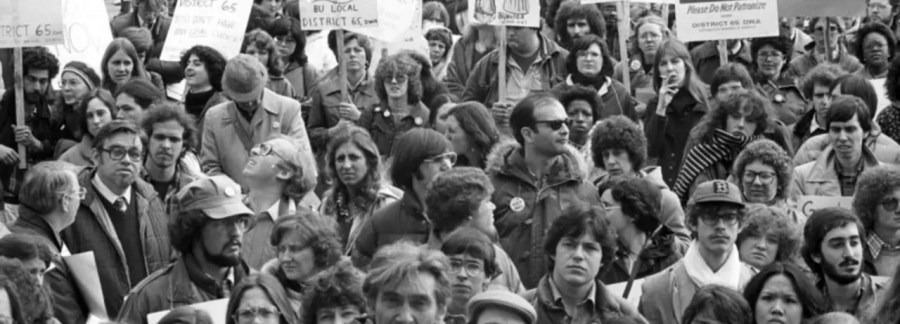


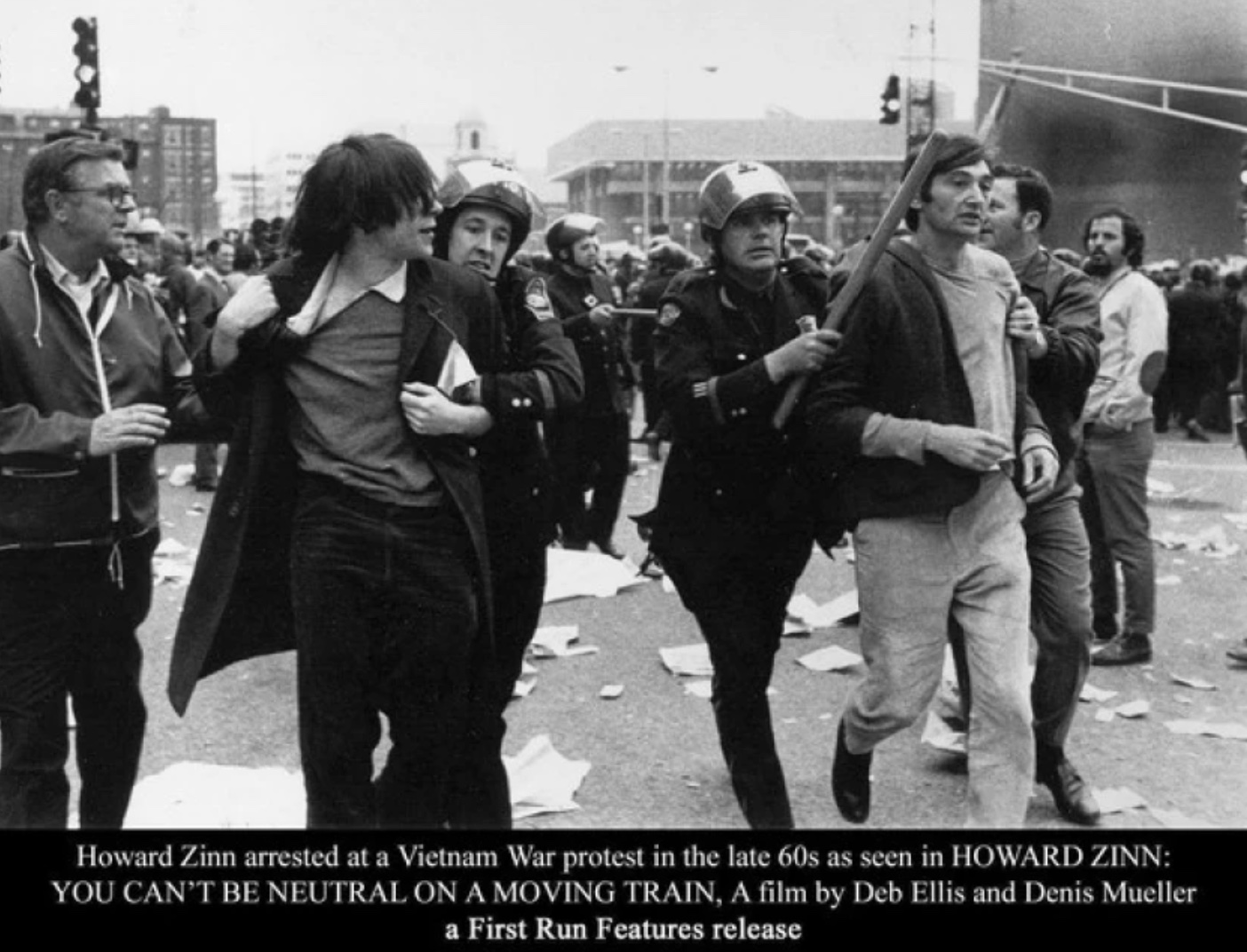

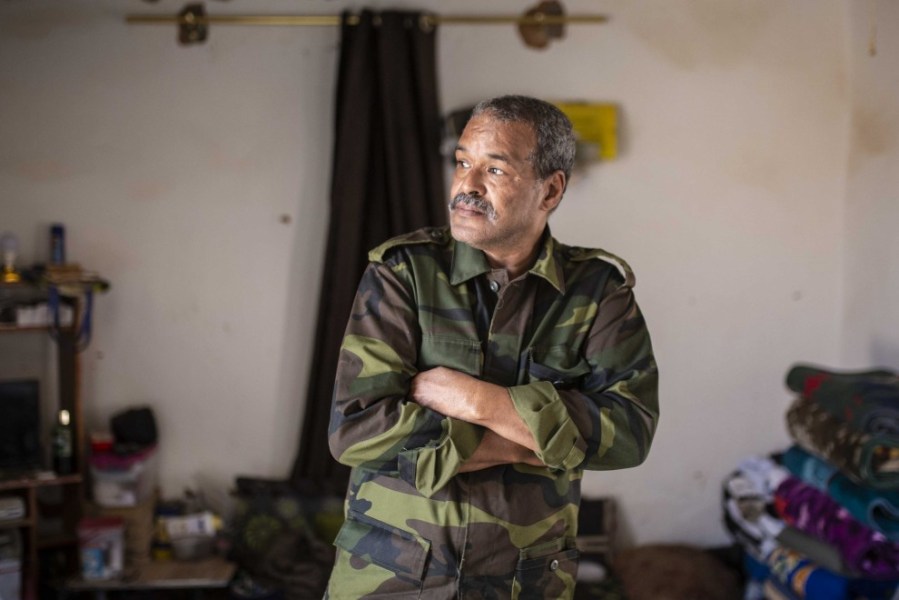
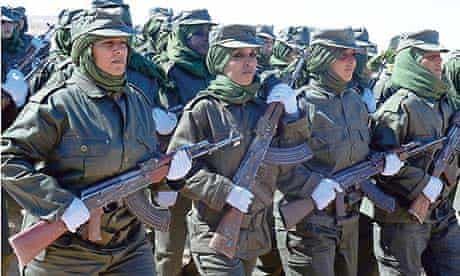


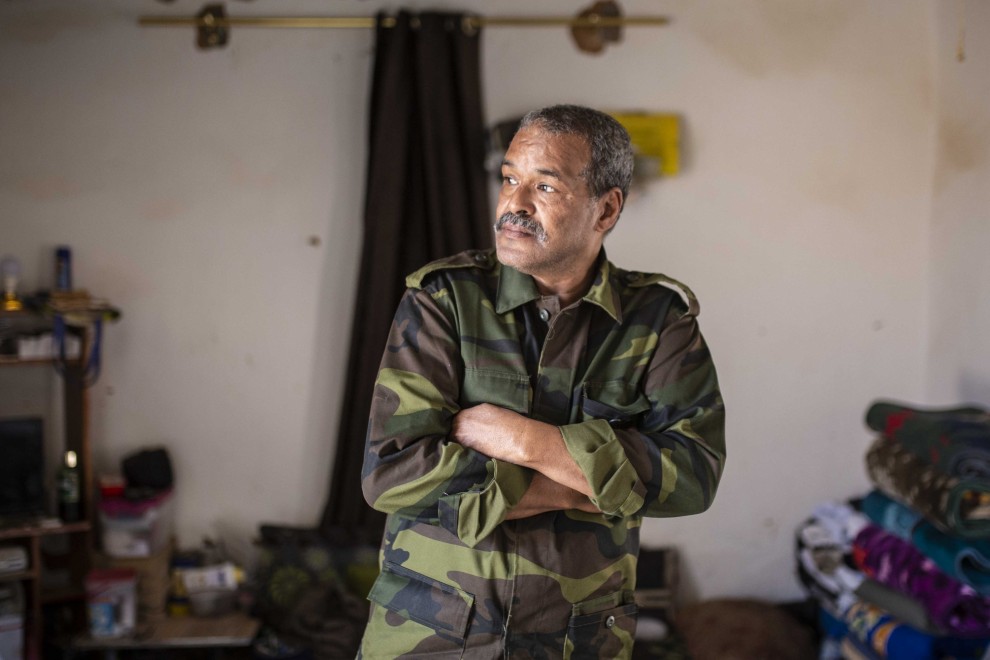
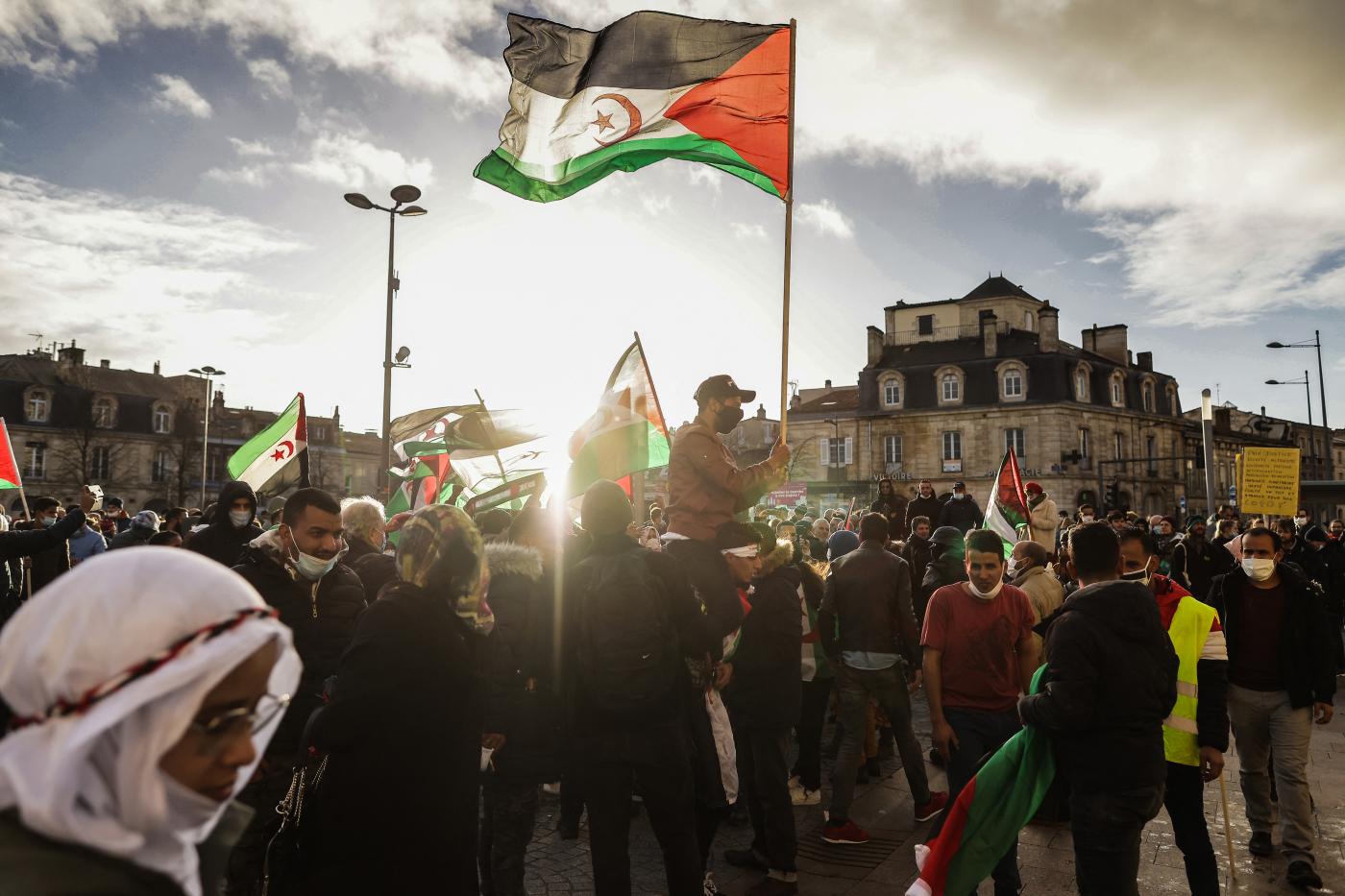


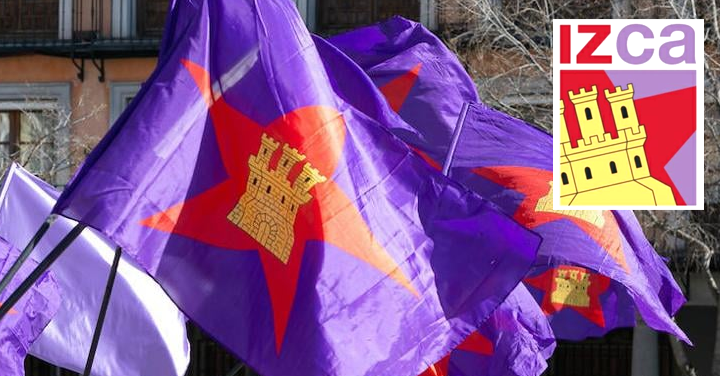


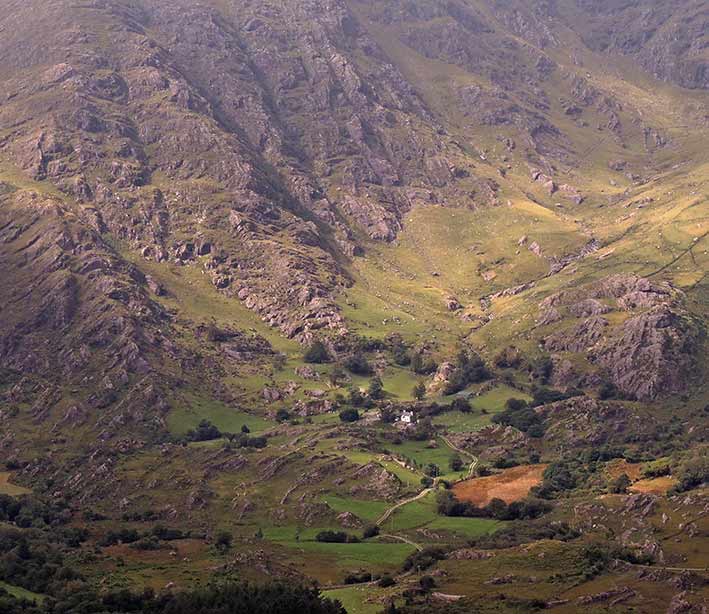
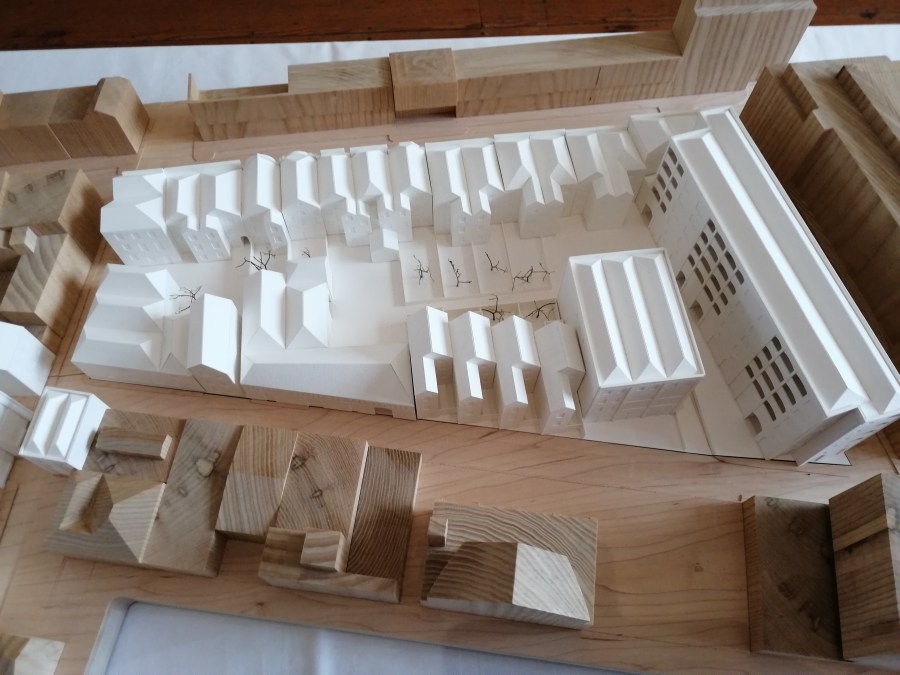


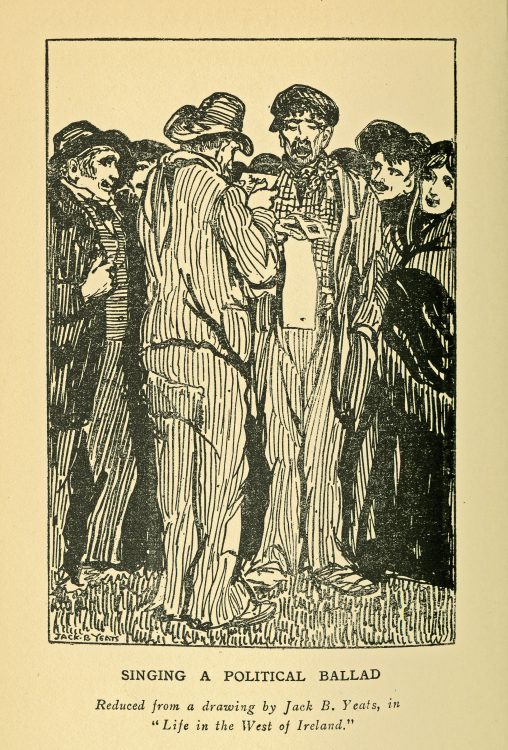


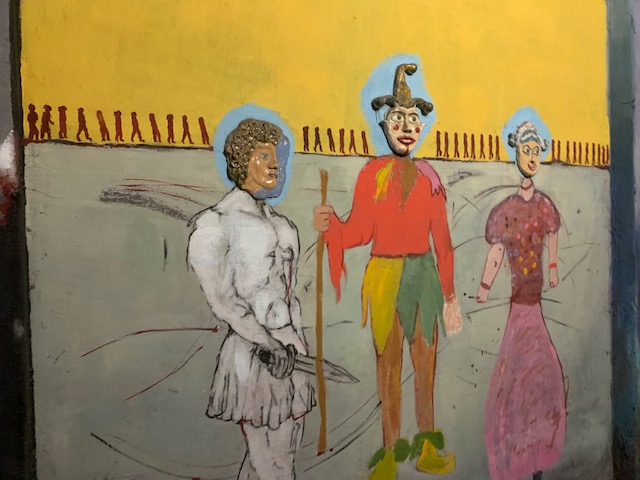


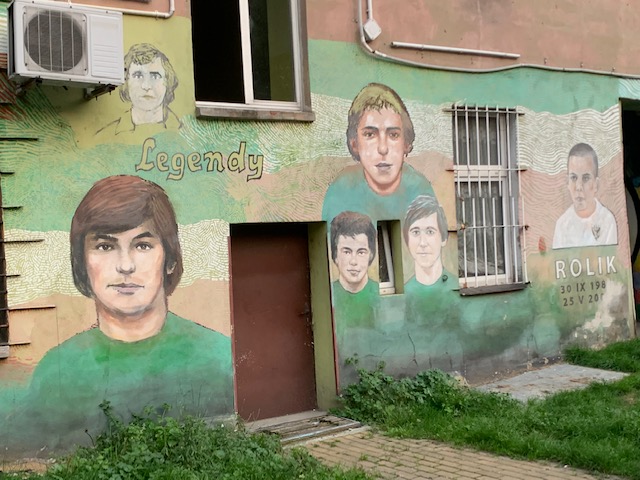
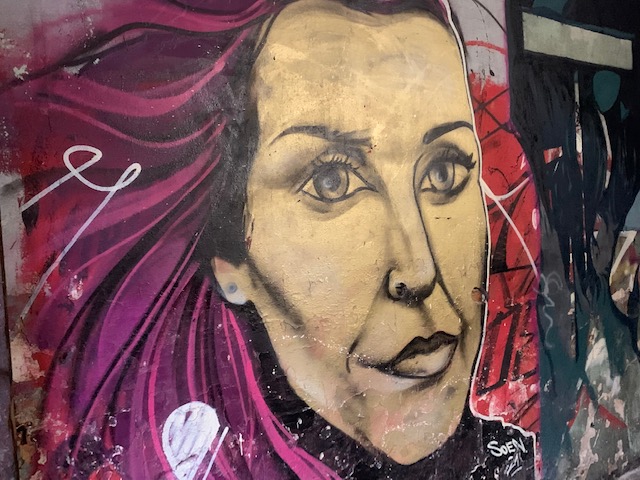


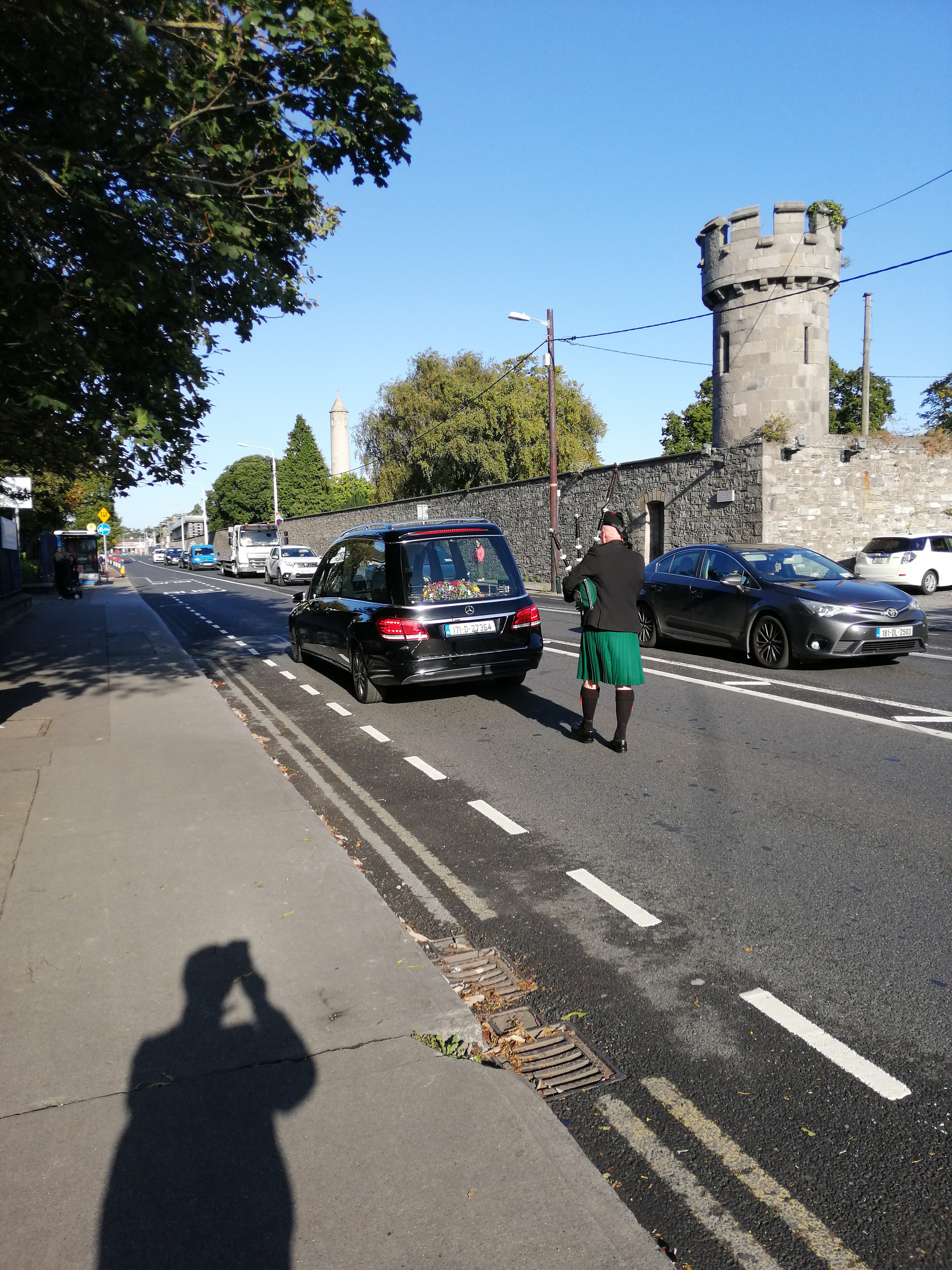
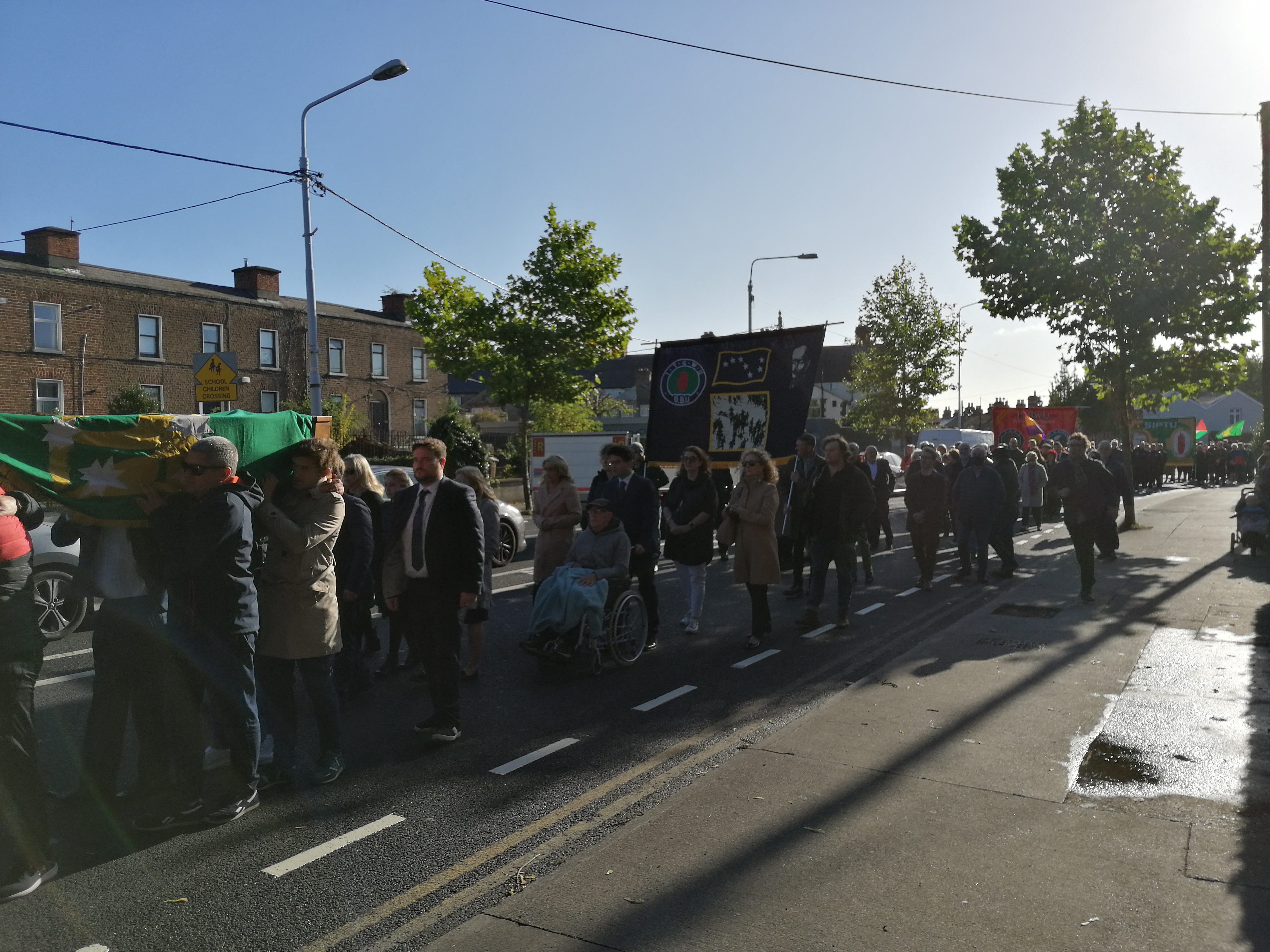

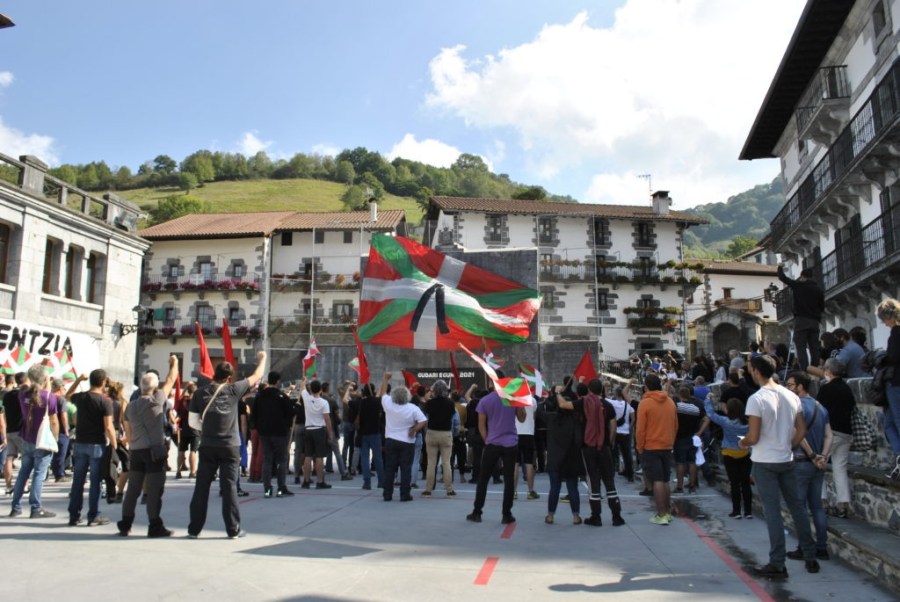

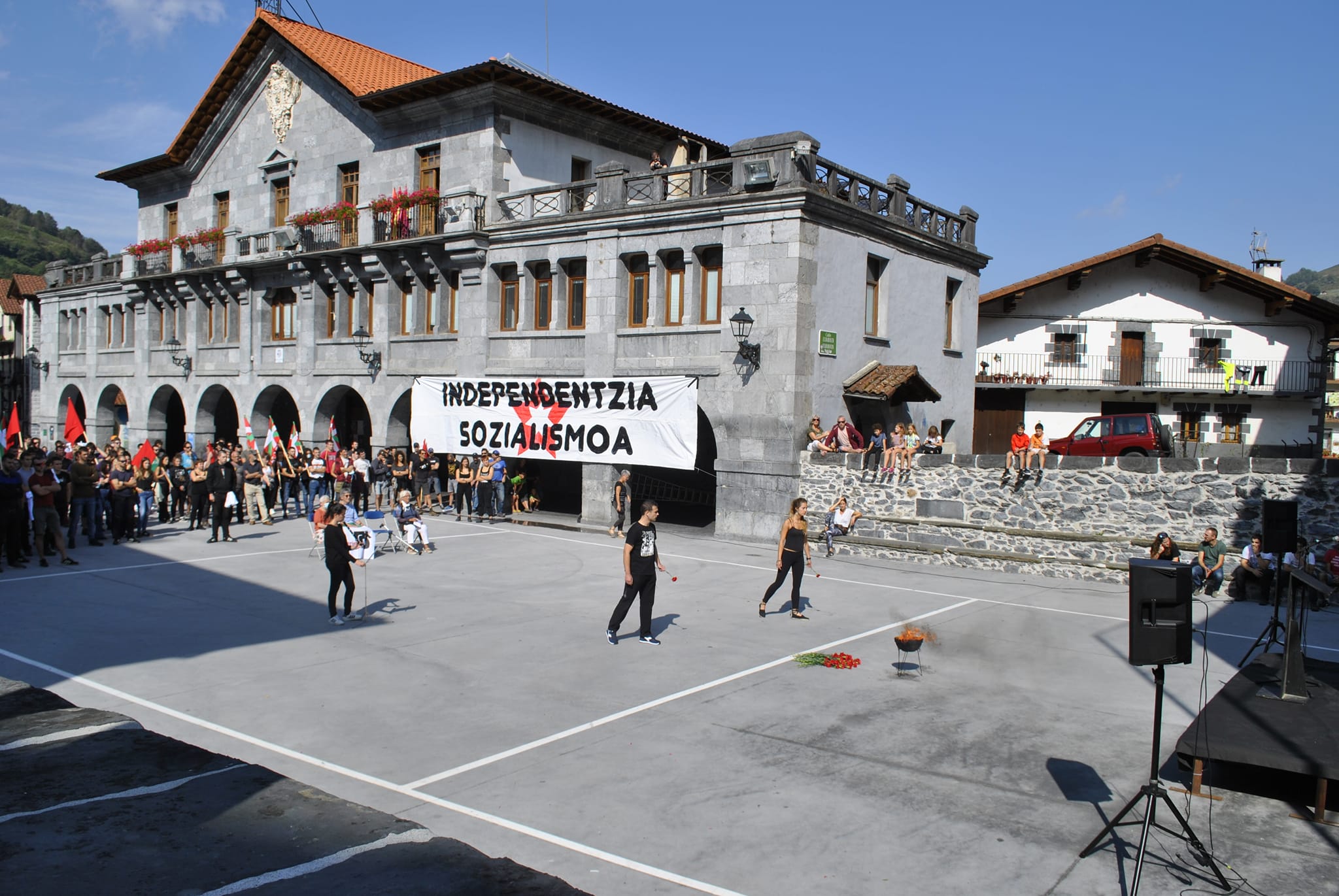


 rebelbreeze