In the Basque Country the Day of the Patriot Soldier is commemorated on two different dates: by the Basque Nationalist Party on October 28th and by the Patriotic Left on September 27th. Each date marks different events but each is anti-fascist in character.
On October 28th one of the many atrocities of the Spanish Civil War/ Anti-Fascist War was enacted by the Spanish fascist military when they executed 42 captured Basque soldiers of the Eusko Gudarastea, a Basque antifascist militia opposing the military-fascist coup of Franco and another three generals.
Section of the crowd at the Gudari Eguna commemoration in Arrigorriaga, Bizkaia province, southern Basque Country. (Photo: D.Breatnach)
This atrocity occurred in 1937, when that war had another two years to run. The Basque Nationalist Party (PNV) was then the main political party in that part of the Basque Country1 and many of its politicians and administrative officials were executed by the Franco regime too.
Commemoration of the PNV´s Day of the Patriotic Soldier (Gudari Eguna) was carried out clandestinely during the four decades of the fascist Franco regime but was permitted in the post-Franco arrangement in the Spanish State, when the PNV were legalised.
The PNV became the dominant force politically in the two provinces that had declared for the Spanish Republic, which was the largest part of the Basque Autonomous Region. Nafarroa however was given a separate autonomous government which split the nation administratively in at least four.2
A DIFFERENT DATE TO COMMEMORATE
However in the 1960s a large part of the PNV´s youth wing had become disenchanted with the party and, entering into alliance with a Basque socialist movement, formed ETA, a mainly political organisation but, existing under a fascist-military regime, inclined also towards armed resistance.
The platform at the Gudari Eguna commemoration organised by Jarki with the event’s speaker/ chairperson addressing the participants. (Photo: D.Breatnach)
ETA grew in support and in actions, military but not only, the Left Patriotic movement (Izquierda Abertzale) widening to fight on a number of fronts, linguistic, social, trade unionist and political with the armed section carrying out many actions.
The last political executions of the Franco regime were in 1975 of two members of ETA and three of FRAP3; the two Basques were Juan “Txiki” Paredes4 and Angel Otaegui. All five, despite huge international solidarity mobilisations and appeals for clemency, were shot by firing squads.
Today, the Patriotic Left´s Gudari Eguna is commemorated by different groups and not all together. As has occurred in Ireland, the accommodation of the leadership of the Basque Patriotic Left to the Spanish electoral system and abandonment of armed struggle has resulted in fragmentation.
A protest in Arrigorriaga I passed by on my way to the Gudari Eguna commemoration. I did not stop to enquire as to the purpose; I had made an error on the journey, was late and in a hurry. From the arrows design I understand these to be the Sare group doing their last Friday of the month picket in solidarity with the prisoners. ‘Giltzak’ means ‘keys’ as the graphic banner design shows and so the aim is probably to have them all leave jail. That is also the aim of the ‘dissident’ group Amnestia but they seek complete amnesty for the political prisoners whereas Etxerat, Sare and EH Bildu normally refrain from even calling them ‘political prisoners’since, according to the Spanish State, that amounts to ‘supporting terrorism.’ (Photo: D.Breatnach)
The political party EH Bildu commemorated the executions but so did the dissenting Jarki and Tinko/Amnistia and the historical memory organisation, Ahaztuak. They did not do so together nor, naturally with the PNV on the different date.
In Arrigorriaga Jarki organised their event in the birthplace and home of Argala, nom-de-guerre of José Miguel Beñaran Ordeñana, a theoretician and activist of great importance in the development of ETA and assassinated by the state-sponsored GAL terrorists.
The attendance at the event listened to the event’s MC addressing them, after which a group of youth carrying flaming torches came on stage. The MC ended her talk with calls for a free and socialist Basque Country, after each which the audience chanted “Gora!” (‘Up!’).
She then led them in singing the Eusko Gudariak with clenched fist in the air, followed by introducing the Internationale in Basque, the revolutionary socialist song that emerged from the Paris Commune of 1871, the audience joining in (though not everyone as well-versed as with the previous song).
I sang the chorus in French, the only language other than English in which I know the chorus, sadly.
HISTORICAL MEMORY & THE MARTYRS
The martyrs of the people´s struggles around the world are remembered organically and kept close to their hearts by the people from which they came, at least for a few generations. Initiatives of conserving and transmitting historical memory keep those commemorations going further.
Section of the crowd at the commemoration of Gudari Eguna, organised by the Jarki organisation. (Photo: D.Breatnach)
In Ireland we know that commemorating the risings of the United Irishmen (1798 and 1803) fed into the struggles of the Young Irelanders a half-century later, their memory in turn contributing to the Fenians which again became part of the history of future generations and of several armed struggles.
Counter-movements, recognising the potency of historical memory, try to appropriate it and adapt it to their political program or to diminish its importance and even deny it. Both those counter-currents can be seen in many parts of the world, including in Ireland and in the Basque Country
However, the ongoing revolutionary streams and their commemorations will always be closest to the real meaning of those events in the historical memory of the people, in the real social and political meaning of martyrdom.
Patrick Pearse remarked on this process in his famous oration over the grave of O´Donovan Rosa: Life springs from death and from the graves of patriot men and women spring living nations.
Footnotes:
1The Basque Country is composed of seven provinces, four on the Spanish state´s side of its northern border and three on the French state´s side. The Anti-Fascist War split the southern Basque Country with principally two provinces, Gipuzkoa and Bizkaia, taking the side of the Spanish Republic, which at the last minute granted them national autonomy. Nafarroa (Navarre) mostly took the fascist-military side and murdered around 3,000 antifascists and Alava province took that side too.
2Two separate autonomous regions in the Spanish state and the provinces on the French side in different French regional administrative areas.
3Frente Revolucionario Antifascista y Patriota (Revolutionary Anti-Fascist & Patriotic Front); the three were: José Luis Sánchez-Bravo Sollas, José Humberto Baena Alonso and Ramón García Sanz.
4According to his brother who, despite being misdirected arrived as Paredes was being shot by the Guardia Civil, who were shooting at different parts of his body, Txiki Paredes continued to sing Eusko Gudariak (‘Soldiers of the Basque Country’) until he finally died.
Pat Reynolds gave this oration in East London Cemetery on Sunday 21st May 2023 for Michael Barrett, the last man publicly hanged in Britain
A cháirde agus a chomrádaíthe,
Tá fáilte go leor romhaibh chun chruinnithe i gcuimhne Michael Barrett inniu. Welcome friends and comrades to this commemoration today for Michael Barret and Patrick O’Donnell. I have been asked to speak of Michael Barret and the movement he represented.
Michael was born in Ederney in the Maguire County of Fermanagh in 1841 and was judicially hanged though innocent by the British Government in 1868 at Newgate Prison, where the Old Bailey now stands.
Newgate prison was closed in 1903 and his remains with others were interred here in this cemetery. He was the last person to be publicly hanged in Britain.
A Fenian bombing took place on 13th December 1867 to try and rescue O’Sullivan Burke the Fenian who planned the successful prison van escape in Manchester.
The bombing blew a huge hole in the wall and demolished nearby tenement buildings, killing 12 people and injuring many others. It led to a huge State-engineered backlash in Britain against the Fenians and put their cause back some 10 years.
Michael Barret, who had gone to Glasgow to work was an innocent man and was in Glasgow at the time of the incident.
False evidence given by a police informer Patrick Mullaly who was given a free passage to Australia implicated Barrett, but he had compelling evidence that he was in Glasgow at that time. After two hours the jury declared him guilty.
One of the trial lawyers Montagu Williams stated of Barrett:
‘On looking at the dock, one’s attention was attracted by the appearance of Barrett, for whom I must confess I felt great commiseration. He was a square built fellow, scarcely five feet eight in height and dressed like a well-to-do farmer.
This resemblance was increased by the frank, open, expression on his face. A less murderous countenance than Barrett’s I have not seen. Good humour was latent in his every feature and he took the greatest interest in the proceedings’.
Barrett ended his speech from the dock thus:
‘I am far from denying, nor will the force of circumstances compel me to deny my love of my native land. I love my country and if it is murderous to love Ireland dearer than I love my life, then it is true, I am a murderer.
If my life were ten times dearer than it is and if I could by any means, redress the wrongs of that persecuted land by the sacrifice of my life, I would willingly and gladly do so.’
The Daily Telegraph the next day stated that Barrett had:
‘Delivered a most remarkable speech, criticising with great acuteness evidence against him, protesting that he had been condemned on insufficient grounds, and eloquently asserting his innocence.’
Michael Barrett monument detail, Co. Fermanagh (Sourced: Internet)
In Fermanagh his aged mother had walked many miles to appeal to the local Tory MP Captain Archdale, a noted Orangemen, who rejected her. Barrett was hanged in front of 2,000 jeering people singing Rule Britannia. The following day Reynolds’ News recorded that;
‘Millions will continue to doubt that a guilty man had been hanged at all; and the future historian of the Fenian panic may declare that Michael Barrett was sacrificed to the exigencies of the police, and the vindication of the good Tory principle, that there is nothing like blood.’
His hangman was the notorious Calcraft who had botched the hanging of the Manchester Martyrs, Allen, Larkin and O’Brien.
There is a huge difference between an accident leading to deaths by patriots fighting tyranny and the deliberate actions of the imperialists, which is why patriots have to be always careful to avoid civilian deaths.
There are many similarities between the Clerkenwell bombing and the Birmingham bombing of 1974.
In both cases they set back the cause of Irish freedom for many years, deeply harmed the Irish community in Britain and was used by the State for repressive measures against the community and to divide off the Irish community from the English working classes.
Disraeli brought in the Habeas Corpus Act and created the Special Branch. Of interest is that their first definition of Irishness was ‘Persons who were born in Ireland or whose recent forebears came from Ireland.” Back in the 1980s the GLC adopted the same definition.
We also had the Birmingham Six case with the ‘appalling vista’ of Lord Denning the Appeal Judge, who later regretted that the six innocent men were not hanged. For Gladstone it set him on his mission ‘to pacify Ireland’.
I ask you two questions today, what kind of people and community gave rise to patriots like Michael Barrett and the Manchester Martyrs, and the second question, what kind of regime or government would hang knowingly innocent men.
To understand the Fenians we have to understand the colonisation of Ireland and in particular the Great Starvation of Ireland An Gorta Mór. Over one and a half million people were starved to death by British imperialism and another two million forced to emigrate to Britain and the USA.
There was no famine in Ireland at this time, and it is imperialistic propaganda to call it such. It was clearly genocide in a land overflowing with food.
The potato crop made up under 25% of the agricultural produce of Ireland, but at this time Ireland was part of the UK where the potato crop was about 5% of the total produce of the UK. I know of no country where there was famine because of a 5% failure of the crops.
Michael Davitt back in 1904 called the Great Starvation a ‘Holocaust’ as did others. Ken Livingstone drew some comparison between the Great Starvation and the experience of the Jewish community during the Second World War.
Hitler named his strategy ‘The Hunger Plan’ where he starved Poles and Jews and others groups of food, and these victims are included in the Holocaust figures including also his starvation of the Warsaw Ghetto.
The shipment of food grown by the people of Ireland to Britain during the Great Starvation was a clear decision by the British government to starve the Irish people.
The Nazi Governor in Poland Hans Frank wrote of the starvation of Jews ‘that we sentence 1.2 million Jews to die of hunger should be noted only marginally’.
The economic theory of laissez-faire is a total invention, within years they could spend millions in Crimea, a place most English had never heard of.
I recall the great Irish writer Frank O’Connor stating ‘Famine is a useful word when you do not wish to use words like ‘genocide’ or ‘extermination’, and again ‘It was not that the people were too simple to realise the Dachau-like nightmare of their circumstances’.
He goes on ‘The word famine itself is a question begging for its meaning ‘an extreme and general shortage of food’, and to use it of a country with a vast surplus of food, cows, sheep, pigs, poultry, eggs and corn, is simply to debase a language’.
O’Connor went further: ‘Irish historians who are firmly convinced that the Famine was all a mistake in the office, explain it in terms of an economic theory called laissez-faire. This is another cock that won’t fight.
Anyone who can believe that the British government maintained a garrison of 100,00 men in Ireland for the purpose of not interfering in trade and industrial affairs attaches some meaning to the word history that escapes me’.
The Great Starvation of the Irish people was a daily planned strategic intervention by the English government which is borne out by the evictions and forced migrations which followed and by the white supremacist and racist beliefs held in England at that time, which has largely been ignored by the historians.
The failure of the Young Ireland movement in the 1848 rebellion led to the deportation of their leaders and a flight of others to France and the USA. From this came the Fenian movement and the Irish Republican Brotherhood set up in the USA and Ireland in 1858.
There was of course also the French Revolution of 1848 which inspired people all over the world and which also inspired the Fenians.
The American Civil War of 1861-65 was to inspire the Irish in the USA. Over 30,000 Irishmen were to lose their lives in War the vast majority fighting for the Union and for the abolition of Slavery.
Revisionists question whether the Irish were really fighting for the abolition of Slavery, yet the same historians in hindsight claim that the British and Irish who fought in the 2nd World war were fighting against fascism and the Nazis.
The Irish men who died firing against slavery are entitled to the same respect from history.
The 1867 rebellion in Ireland did not really take off. Frantz Fanon stated: ‘Each generation must, out of relative obscurity, discover its mission, fulfil it, or betray it’. The Fenians took a more measured road and passed it on to the next generation, but not without a fight.
In the USA they invaded the British Canadian Dominion twice in 1867 with about 700 Fenian soldiers, veterans of the American Civil War. They held a convention in in 1867 with 6,000 armed men present.
In Britain the Fenians massed near Chester Castle in an attempt to seize the guns there and get them to Ireland via Holyhead for the Fenian Rising. As in the USA they were betrayed by spies and with Chester Castle reinforced by soldiers, the raid was called off in February 1967.
In September Colonel Kelly was arrested in Manchester and was released when Fenians attacked the prison coach which later led to the Manchester Martyrs, Allen Larkin and O’Brien who were innocent men framed up by the English government.
The impact of the Manchester Martyrs in Ireland was huge with some 17 monuments put up in their honour and with the Catholic Church forced to backtrack on their anti-Fenian stance and allow masses and commemorations to be widely held in Ireland.
Michael Barrett is part of this sacrifice of the Irish abroad to Irish freedom made within a year of each other. My call is for Michael Barrett to be included within the Manchester Martyrs’ history and commemoration.
By the 1870s the Irish had moved to parliamentary means to move their fight for liberation onwards. You will notice that the fight for Irish freedom goes in flows, a rebellion often followed by political and parliamentary activity along with agitation. Both means were effective for their times.
In Ireland we had Michael Davitt and the Land League, again we have the huge contribution from Britain to this effort from Davitt. We also had the bombing campaign in Britain by O’Donovan Rossa and Tom Clarke from 1880-87, the Invincibles in Dublin and the execution of Lord Cavendish in 1882.
We have the great Irish Literary and Gaelic revival. Again, the Irish Literary Society was founded in Southwark, SE London in the 1880s which spread to Dublin, Belfast and Cork.
We had the Gaelic League and the GAA as part of this revival which led on to the 1916 Rising and the founding of the nation.
What kind of regime or government could knowingly judicially murder innocent men like Michael Barrett and the Manchester Martyrs? We know the history of British colonisation of Ireland and British Imperialism.
This is the same British Imperialism which would in 1919 lead to the Amritsar massacre in India. But let us stay in 1860s iwith this colonial Empire.
In 1865 the Jamaican people rose up against British colonial rule in Jamaica which left 400 dead in a colonial reign of state terrorism. They hung the leader Paul Bogle and 14 others and executed seven women and prosecuted George William Gordon who had nothing to do with the Rebellion.
They executed him. The Fenians at the time raised funds to help the survivors bring action against the English government. You see here a long history of hanging both Irish and Black people across their colonies.
Today I salute the Irish in Britain who marched in the 1980’s against apartheid in South Africa and who today march with the Palestinian people following a noble Fenian internationalist tradition.
British rule in Ireland was based on Imperialism, White Supremacy and Racism. This was first formulated by Gerald of Wales in 1187 some 700 years before they hanged Barrett and the Manchester Martyrs.
Gerald in his books Topography of Ireland and Conquest of Ireland used racism to justify the conquest of Ireland and portrayed the Irish as inferior, backward, inhuman, uncivilised, feckless and lazy.
This was a litany of manufactured racist lies when Ireland had been the ‘Island of Saints and Scholars’ and the seat of learning in Western Europe bringing enlightenment to Europe during the Dark Ages.
Gerald’s views were published across Europe and held sway until around 1650 for about 500 years. This first racialisation of the Irish did not require any religious framework.
When Henry 8th split with Rome in 1534 the racist code used for conquest in Ireland was then overlaid with a state-sponsored sectarian religious code.
Irish scholars were driven out of Oxford where they were a dominant force and Henry sought to build up his fleet to destroy Irish fleets on the south coast to control trading in Irish sea ports and towns.
There followed the Plantation of Elizabeth 1st who knighted Gilbert the mass murderer of Munster who later founded a British colony in Newfoundland.
Later on, we had the Cromwellian conquest of Ireland with large-scale massacres at Drogheda and Wexford, widespread smaller massacres and the forced transporting of Irish slaves to the Caribbean.
Revisionists deny this history and seem to wrongly believe that these people were on some kind of ‘Cromwell Tours of the Caribbean’. For the record these forced transported people were not indentured people.
It is of interest that Gerald of Wales’ views on the Irish were not held of African people from 1200 onwards but were lifted from the Irish situation and applied to African people on the advent of enslavement to justify what the European colonial powers were doing.
So now Africans can be perceived in the same way as the Irish, as backward, inferior, childlike and have their freedoms taken away.
Let us now look at racism and the White Supremacist views of British Imperialism in the 1800s which gave rise to the great Starvation, the Manchester and London hangings of innocent men.
Robert Knox in The Races in 1850 described the Celts as an inferior race which became part of the ‘scientific’ racism of the day, with Knox updating Gerald of Wales.
Even Engels came out with his racist views of the Irish ‘The race that live in these ruinous cottages in measureless filth, and stuck in this atmosphere penned in, as if on purpose, this race must have reached the lowest stages of humanity’, instead of seeing what British imperialism and racism had done to the Irish people at home and abroad.
John Bedoe in his Races of Britain in 1862 views the Irish as Africanoid and having African roots, and again as ‘European Negroes’. Punch portrayed the Irish as apes and monsters, even Parnell, and the Irish as Aboriginals and on the same level as gorillas.
Charles Kingsley on visits to Ireland in the 1860’s states ‘I am haunted by the human chimpanzees I saw’ and ‘to see white chimpanzees is dreadful’. A new Gorilla at London Zoo is called ‘Paddy’ and the ‘Irish Yahoo’ is seen as the missing link between man and gorilla.
The Irish are described ‘as half naked savages who retain a vast amount of their primitive savagery to this day’.
We can see how scientific racism is now applied equally to Black and Irish for the purpose of colonisation and oppression.
In this context we can see the mindset of the British establishment who committed genocide against the Irish people, and who over centuries had murdered Irish people at random. We can see how the same regime of government can hang innocent people at home and abroad.
Michael Barrett, a self-educated man emerges from this dunghill of White Supremacy and pure racism as a heroic figure, like the Manchester Martyrs a true patriot as shown in his speech from the dock. He should be remembered with the Manchester Martyrs and not separated from their heroic end.
Barrett, a Christlike figure and a Cúchulainn who died on behalf of his people and for his political beliefs.
He was part of an Irish tradition in Britain of being in the forefront of democratic rights for liberty justice and freedom, not just for the Irish but also the British people.
We see in the Chartist movement of the 1840s being led by Irishmen Fergal O’Connor and Bronterre O’Brien that fight for liberty and the rights of man.
Also the leadership of Donegal man Doherty leading the workers of Lancashire and the ongoing links in the trade union movement to today from leaders like Mick Lynch inspired by James Connolly to Pat Cullen of the RCN.
We see it in the gift of The Red Flag song from a County Meath man and The Ragged Trousered Philanthropists novel by Noonan to the British working class.
In honouring Michael Barrett today, we stand full square for a United Ireland as proclaimed in the Fenian and 1916 Proclamations and for working class liberty in Britain.
I will finish today by reading the Fenian Proclamation of 10th February 1867 from the Irish People to the World. In it we can see what the 1916 Proclamation borrowed and built on. It is also what Michael Barrett lived and in the end died for.
Fenian Proclamation, 1867
Proclamation of the Irish Republic, issued February 10th, 1867, by the Irish Republican Brotherhood.
I.R. — PROCLAMATION! —
THE IRISH PEOPLE TO THE WORLD
We have suffered centuries ofoutrage, enforced poverty, and bitter misery. Our rights and liberties have been trampled on by an alien aristocracy, who, treating us as foes, usurped our lands and drew away from our unfortunate country all material riches.
The real owners of the soil were removed to make room for cattle, and driven across the ocean to seek the means of living, and the political rights denied to them at home, while our men of thought and action were condemned to loss of life and liberty.
But we never lost the memory and hope of a national existence. We appealed in vain to the reason and sense of justice of the dominant powers. Our mildest remonstrances were met with sneers and contempt. Our appeals to arms were always unsuccessful.
Today, having no honourable alternative left, we again appeal to force as our last resource. We accept the conditions of appeal, manfully deeming it better to die in the struggle for freedom than to continue an existence of utter serfdom.
All men are born with equal rights, and in associating together to protect one another and share public burthens, justice demands that such associations should rest upon a basis which maintains equality instead of destroying it.
We therefore declare that, unable longer to endure the curse of Monarchical Government, we aim at founding a Republic based on universal suffrage, which shall secure to all the intrinsic value of their labour.
The soil of Ireland, at present in the possession of an oligarchy, belongs to us, the Irish people, and to us it must be restored.
We declare also in favour of absolute liberty of conscience, and the complete separation of Church and State.
We appeal to the Highest Tribunal for evidence of the justice of our cause. History bears testimony to the intensity of our sufferings, and we declare, in the face of our brethren, that we intend no war against the people of England —
our war is against the aristocratic locusts, whether English or Irish, who have eaten the verdure of our fields — against the aristocratic leeches who drain alike our blood and theirs.
Republicans of the entire world, our cause is your cause. Our enemy is your enemy. Let your hearts be with us. As for you, workmen of England, it is not only your hearts we wish, but your arms. Remember the starvation and degradation brought to your firesides by the oppression of labour.
Remember the past, look well to the future, and avenge yourselves by giving liberty to your children in the coming struggle for human freedom.
On a gloomy wet and windy day today, Republicans and other anti-imperialists held a commemoration in Dublin’s Arbour Hill of the 14 executed martyrs in Dublin and the remaining two: Thomas Kent shot in Cork and Roger Casement hanged in Pentonville Jail, London. A heavy downpour interrupted the speaker but the event resumed after the cloudburst eased off though it was still raining. Sixteen lilies were laid on the grave patch and a song was sung that named seven of the martyrs, the signatories of the Proclamation.
The event was organised by Irish Socialist Republicans and Anti-Imperialist Action Ireland. In addressing the attendance Pádraig Drummond, chairing the event, pointed out that they were commemorating the Sixteen executed Martyrs of the 1916 Rising but that 15 of them had been murdered. Those had been tried by military court and even the British reviewing the actions later had agreed that the executions had been illegal; therefore Drummond said those 15 had been murdered and General Maxwell1 was a war criminal.
The 1916 Proclamation being read in Arbour Hill, 3rd May 2021. (Photos from AIA with thanks)
In addition, the chairperson continued, Maxwell had refused the relatives access to the bodies and had them buried without coffins in a quicklime pit in order to prevent their graves becoming martyrs’ shrines2.
When it came to the executions, Drummond said, Maxwell gave firing party duties to soldiers of the Sherwood Foresters, who had been decimated by Irish Volunteers at the battle of Mount Street Bridge on 26th April, seemingly to encourage them to avenge themselves for their regiment’s dead on unarmed prisoners condemned to die.
Pádraig Drummond called on one of the attendance to read out the Proclamation and, after he had done so, sixteen single Cala Lillies were laid on the plot above the quicklime pit.
Single lillies for each of the 14 martyrs buried here in Arbour Hill, 3rd May 2021. And two beneath the photos of the other two 1916 executed martyrs, Thomas Kent, shot by British firing squad in Cork and Roger Casement, sentenced to hang by British judge with sentence carried out by British hangman in Pentonville Jail. (Photos from AIA with thanks)
Diarmuid Breatnach was then called forward to address the attendance; speaking first in Irish and then in English, Breatnach said that he had been asked to make some remarks on the history of Irish uprisings in relation to assistance given from abroad but in doing so, he was not laying down any dictates or anything of the sort, only some reflections. “We should learn from our successes,” Breatnach said but also from our failures and perhaps to focus even more closely on the latter.
Breatnach had not been speaking long when the rainfall intensified. He was protected by umbrella but others in attendance were not; he faltered and looked for guidance to the chairperson of the event when the heavens seemed to burst open and with a nod, the whole ensemble headed for the shelter of a nearby horse-chestnut tree.
ALLIES
When the rain had eased off somewhat Breatnach returned to his theme, recounting how (Hugh) Aodh Ó Néill and Aodh Rua Ó Domhnaill (Hugh Roe O’Donnell) had waged a guerrilla campaign in Ulster but relied on help from imperial Spain to free the whole country from England. Later the Irish resistance had sided with English monarchs against the English Parliament in the mid and late 17th Century, when they believed the monarchs would give them religious freedom and perhaps some of their lands back. The Papacy had supported the Irish in opposition to Cromwell and Imperial France gave military assistance against William of Orange later in the same century.
Diarmuid Breatnach addressing the gathering in Arbour Hill, 3rd May 2021; Pádraig Drummond, who chaired the event, standing to his left. (Photo from AIA with thanks)
The United Irishmen in the 1790s had looked for help to Republican France, Breatnach recalled but the flotilla under Hoche failed to land in 1796 and after the Rising was provoked prematurely by the British, by the time General Humbert landed in Mayo with not enough troops, the rising was nearly finished. In 1803, Emmet’s rising took place without the expectation of foreign assistance but was quickly over.
The Young Irelanders apparently believed in 1848, the Year of Revolutions all over Europe that an insurrectionary mobilisation could be achieved peacefully in Ireland and did not look for help from abroad — but were quickly suppressed, the speaker said.
On St. Patrick’s Day 1858 the Irish Republican Brotherhood was founded simultaneously in Ireland and in the United States. In 1866 the Fenians invaded Canada and in 1867 carried out a campaign in Britain, then had a brief unsuccessful rising in Ireland. They had not asked for troops from outside but in their Provisional Proclamation called on the English working class to rise against their exploiters.
The IRB was reformed and re-energised at the beginning of the last century and intended to lead a rising when England was in a war, which was expected soon. WW1 began in 1914 and in 1916 the Irish rose expecting help from Imperial Germany (which they received in armaments but nothing else) and from the USA in political support of which they received little.
The speaker remarked that looking back on all these instances in Irish history, those risings which had not had help from abroad, as with Emmet’s and the Young Irelanders, had lasted the least time.
It would be unrealistic, Breatnach continued, to expect to defeat a powerful enemy such as the UK with its army, navy and air force, without help from an external force. Unless of course the rulers of the UK were struggling with insurrectionary struggles from their own working class.
SOLIDARITY
Looking ahead, the closest areas from which help could come to an Irish insurrection are Britain and the European mainland. In looking for allies it would be necessary to evaluate the benefits and costs of particular alliances. Breatnach felt that when a part of the Irish leadership accepted the deal they were offered in 1921, they had an alternative option of linking with the struggles of the working class in Britain. In 1926 there was a general strike throughout Britain and earlier, in 1921 there had been strike struggles including one in Glasgow, where the local military unit was under lock and key by their own officers in fear that they would join the resistance. Large numbers of British soldiers who wanted to be demobbed after the War were being held back because their rulers knew they would need them to suppress liberation struggles throughout the world. These soldiers were rioting in some areas in Britain. Breatnach remarked that it is difficult to be certain but that if the Irish resistance had combined with the British workers in that period our whole history might have turned out very differently.
Some of the attendance in Arbour Hill, 3rd May 2021, standing in homage to the 16 executed 1916 Martyrs, 14 of whose bodies were buried in a quicklime pit (located underneath the green stretch. (Photo from AIA with thanks)
In conclusion Breatnach went on to talk briefly about internationalist solidarity, which can be a different issue than alliances; solidarity can be a moral issue but it can also be a practical one, as it is workers that would be required to produce material and load ships being sent against us. He had also noted, he remarked, that often internationalist solidarity would be the first thing dropped by those intending to abandon the revolutionary path; Breatnach exhorted the attendance to treat internationalist solidarity as a duty, a pleasure and a practical help.
Pádraig Drummond thanked Breatnach for his remarks and asked him to sing the Larkin Ballad as a conclusion to the event, which Diarmuid did.
“In Dublin City in 1913,
The boss was rich and the poor were slaves ….”
The lyrics were written by Donagh Mac Donagh, orphan son of one of the executed Signatories of the Proclamation. The narrative begins with the union militancy under Larkin’s leadership, followed by the Dublin Lockout of 1913 and ends with the execution of the Signatories. The participation in the Rising of the workers’ defence militia, the Irish Citizen Army, along with James Connolly being one of the Seven Signatories of the Proclamation, provided an organic link between the Lockout and the Rising.
After the event people took photos and socialised briefly before heading for their homes through persistent rain.
FOOTNOTES
1. General John Maxwell, a veteran of colonial wars, was the officer charged with the suppression of the Rising; he set up the martial tribunals that handed down nearly 100 death sentence to participants, of which 15 leading revolutionaries were actually put to death, the others having their death sentences commuted to prison sentences.
Wikipedia: “Maxwell arrived in Ireland on Friday 28 April as “military governor” with “plenary powers” under Martial law, replacing Lovick Friend as the primary British military commander in Ireland. He set about dealing with the rebellion under his understanding of Martial law. During the week of 2–9 May, Maxwell was in sole charge of trials and sentences by “field general court martial”, in which trials were conducted in camera, without defence counsel or jury. He had 3,400 people arrested and 183 civilians tried, 90 of whom were sentenced to death. Fifteen were shot between 3rd and 12th May. H.H Asquith and his government became concerned with the speed and secrecy of events, and intervened in order to stop more executions. In particular, there was concern that DORA (Defence of the Realm Act, wartime legislation –CS) regulations for general courts martial were not being applied. These regulations called for a full court of thirteen members, a professional judge, a legal advocate, and for the proceedings to be held in public, provisions which could have prevented some of the executions. Maxwell admitted in a report to Asquith in June that the impression that the leaders were killed in cold blood and without a trial had resulted in a “revulsion of feeling” that had emerged in favour of the rebels, and was the result of the confusion between applying DORA as opposed to Martial law (which Maxwell had actually pressed for from the beginning). As a result, Maxwell had the remaining death sentences commuted to penal servitude. Although Asquith had promised to publish the court martial proceedings, the transcripts were not made public until 1999.”
However, it is known that Maxwell insisted on executing two more after Asquith’s caution and these were Sean Mac Diarmada (McDermot) and James Connolly, to which Asquith agreed.
2 In that, Maxwell was signally unsuccessful and between 1955 and 1966 the Arbour Hill site was developed as an important Irish historical monument and at this time of year will be visited by organisations and individuals, precisely in commemoration of the 1916 Rising.
(Translated by D.Breatnach; la versión en castellano al fondo)
(Reading time: 8 mins.)
To this day, many people, both from the Spanish state and foreigners, believe that Franco’s repression only occurred in areas where the coup failed and war followed. But this is not the case for in areas such as Galicia (1), the Canary Islands, Castilla y Leon, Ceuta, Melilla, where the coup d’état triumphed in just a few days, the repression was equally brutal.
Photo of the executions taken from a distance by a Guardia CivilPhoto montage of original photo of the executions in 1936 and the memorial monument there today.
I am going to expose the events that occurred in my Galician homeland, which is what I know best. There was not a single battle there, so that some historians say that there was no war in Galicia; there are also those who think that the majority of Galicians were Francoists because Franco was born in Galicia. This is another myth, which is refuted by the fact that on June 28, 1936 its Statute of Autonomy was voted and approved by a large majority with almost one million votes in favor of the Statute. One of the main promoters of the Statute was Daniel Castelao, father of the Galician nation, writer, politician, draftsman, painter, etc., who was luckily in Madrid presenting this Statute in the courts, which is how he was able to save his life. The other was Alexandre Bóveda, shot in A Caeira, Pontevedra, on August 15, 1936, which is why every August 15th we Galicians commemorate the day of the GALIZA MARTIR, in memory of all the acts of repression.
“The fascist ‘stroll'” (Daniel Castelao) [The Falange, who carried out many of the non-judicial killings, would round up people and say “We’re going for a stroll.”- DB]
“That will teach them to have ideas” (Daniel Castelao)
The reason why the coup triumphed in Galicia has nothing to do with the Galicians supporting the coup but rather that in Galicia, as in many of the communities where the coup triumphed, it had more to do with the four civil Governors: Francisco Pérez Carballo, Gonzalo Acosta Pan, Ramón Garcia Nuñez and Gonzalo Martín March, who decided not to hand over arms to the people. They thought that the coup was not going to take place, or that in any case it would be easily controlled. They were very mistaken and they paid for it with their lives, because the Francoists, despite this, shot them. I should highlight here also the story of Juana Capdevielle, wife of the civil Governor of A Coruña, who was raped, shot and her breasts torn off. (2)
“All for Country, Religion and Family” (Daniel Castelao)
The repression that I know best about occurred in my city, A Coruña, where in a place near the Tower of Hercules, called Campo De La Rata, about 700 people were shot and thrown into the sea and where veritable mass meetings of fascists were convened to attend the shootings. Here is told the sad story of the brothers known as “La Lejia”, because their father had a bleach factory (3); of these brothers it is told that Bebel de la Lejia was a player of Deportivo de A Coruña (4) and a socialist, like his four brothers — when he went to be shot he lowered his pants and urinated on his murderers. Pepin de la Lejia was the only one of the brothers who managed to escape, he did so on a fishing boat to Asturias where he joined the Republican army and in the subsequent bombardment he lost a leg but managed to escape to France and from there into exile in Argentina. There is a beautiful song that tells his story. (5)
GUERRILLA ORGANISATION IN GALICIA POST-ANTIFASCIST WAR
In Galicia, one of the first guerrilla resistance organisations was also formed, the guerrilla army, part of the Leon-Galicia Guerrilla Federation and formed mostly by refugees who fled to the mountains, people who simply hid in the mountains but that the Communist Party managed to turn into a guerrilla organisation, one of the most numerous in the state, in order to deliver economic blows to the landowners or to carry out sabotage on the Tungsten mines, a mineral that was sold by the Francoists to the Nazis to make cannons for tanks. The guerrilla organisation ended up being abandoned by the Allies who recognized the Franco regime, but even so the last guerrillero was shot in 1968, a Galician they called “O Piloto”. The best known was Benigno Perez Andrade, known as “Foucellas”, an avid fan of the DEPOR, who went every Sunday in disguise to the stadium to see Deportivo A Coruña after which he posted the tickets to the civil Government.
We should also note that of the last five officially shot by the Franco regime (6,) two were Galicians: Xose Humberto Baena and Jose Luis Sanchez Bravo, both members of the FRAP (Frente Revolucionario Antifascista y Patriota) tried in a farce of a trial in which the Defence lawyers were even threatened beforehand by pistols aimed at them and all the evidence presented by the Defence was denied.
PLUNDER BY FRANCO AND FAMILY
And to conclude, I cannot end on the Francoist repression in Galicia, without mentioning something very recent that only occurred a few months ago, when the Department of Justice recognised that the State was the legitimate owner of the Pazo de Meiras (pazo in Galician means “palace”) which was literally usurped, stolen, etc by a series of Francoist characters to give to Franco, supposedly as a gift from the Galician people. The reality was that they created a kind of revolutionary tax (and I know this because my mother is from the same town where the pazo is located), in which whoever did not give money to buy the pazo for the Dictator was called “a Red”, which we all know entailed imprisonment and one could even be shot. After much struggle, there was success in getting the Justice Department to return the pazo to the State, originally without any compensation but the Dictator’s family appealed and once again the Court declared that the State had to pay one million euros, allegedly for a series of repairs they had made. However this has been appealed again by the State and in addition there is another series of processes underway, for other properties confiscated by the Franco family, such as the Casa Cornide, various statues of the Santiago Cathedral, several medieval baptismal fonts of many other churches etc. End.
“They killed her son” (Daniel Castelao)
“Final lesson from the schoolteacher” (Daniel Castelao). [Non-fascist teachers, as intellectuals, were high on the list for execution by fascists – DB]“They could not be buried in consecrated ground”. (Daniel Castelao)
FOOTNOTES
Galicia is a nation of Celtic origin with a coast on the north-west of the Spanish state but speaking a Romance language very similar to Portuguese. It is bordered by Asturias (another Celtic nation) and Castilla y León to the east, Portugal to the south and otherwise the Atlantic Ocean. It is recognised as a historic nationality by the Spanish State and is governed as one of the “autonomous communities”.
“According to Carlos Fernández Santander, at least 4,200 people were killed either extrajudicially or after summary trials, among them republicans, communists, Galician nationalists, socialists and anarchists. Victims included the civil governors of all four Galician provinces; Juana Capdevielle, the wife of the governor of A Coruña; mayors such as Ánxel Casal of Santiago de Compostela, of the Partido Galeguista; prominent socialists such as Jaime Quintanilla in Ferrol and Emilio Martínez Garrido in Vigo; Popular Front deputies Antonio Bilbatúa, José MiñonesDíaz Villamil, Ignacio Seoane, and former deputy Heraclio Botana); soldiers who had not joined the rebellion, such as Generals Rogelio Caridad Pita and Enrique Salcedo Molinuevoa and Admiral Antonio Azarola; and the founders of the PG,Alexandre Bóveda and Victor Casas as well as other professionals akin to republicans and nationalists, such as the journalist Manuel Lustres Rivas or physician Luis Poza Pastrana (Wikipedia).
“Lejia” is “bleach” in the Castillian (Spanish) language.
Real Club Deportivo de La Coruña (‘Royal Sporting Club of La Coruña’), commonly known as Deportivo La Coruña, Deportivo or simply Dépor, is a professional soccer club based in the city of A Coruña, Galicia, in the Spanish state. They currently play in the third tier of the League in the Spanish state. Founded in 1906 as Club Deportivo Sala Calvet by Juan Parra Rois, the Blue and Whites were a regular in top positions in La Liga for some 20 years, from 1991 to 2010, finishing in the top half of the table in 16 out of 19 seasons, and are 12th in the all time La Liga table. As a result, the club was a regular participant in European competitions, playing in the UEFA Champions League five seasons in a row, reaching the quarterfinals twice and reaching the semi-finals in the 2003-04 season (Wikipedia).
https: //youtu.be/ywhOfjNEuZY
The other FRAP member was Ramón García Sanz; also executed on the same day 27th September 1975 were two ETA members, Ángel Otaegi and Juan Txiki Paredes Manot.
A dia de hoy, mucha gente, tanto del estado español, como extranjeros, creen que la represión franquista sólo se dio en las zonas en donde el golpe de estado fracasó, esto no es asi, zonas como Galicia, Canarias, Castilla y Leon, Ceuta, Melilla, donde el golpe de estado triunfó en apenas unos pocos dias, la represión fue igualmente brutal, yo voy a exponer, los hechos que ocurrieron, en mi patria gallega, que es lo que más conozco, donde no hubo ni una sola batalla , tanto es asi que algunos historiadores dicen que en Galicia no hubo guerra , también hay quienes piensan que la mayoría de gallegos eran franquistas porque Franco nació en Galicia, es otro mito, que no es real.
Para demostrar esto decir que Galicia , el 28 de junio de 1936 voto y aprobó su estatuto de autonomia ( https://es.m.wikipedia.org/ ) por una amplia mayoria con casi un millón de votos a favor del estatuto, cuyos principales impulsores fueron Daniel Castelao, padre de la Patria gallega , escritor, politico, dibujante, pintor etc . , quien por suerte se encontraba en Madrid presentando este estatuto en las cortes, por eso pudo salvar su vida, y Alexandre Bóveda, fusilado en A Caeira , Pontevedra , el 15 de Agosto de 1936, por eso todos los 15 de Agosto los gallegos conmemoramos el dia de GALIZA MARTIR, en homenaje a todos los represaliados . Coleccion de cuadros pintados por Castelao sobre la represión en Galicia https://youtu.be/ljyuasmr9iY
El motivo por el que el golpe triunfó en Galicia , no tiene nada que ver con que los gallegos apoyaran el golpe, si no que en Galicia, como en muchas de las comunidades donde triunfó el golpe tiene más que ver con que los 4 gobernadores civiles : Francisco Pérez Carballo, Gonzalo Acosta Pan, Ramón Garcia Nuñez y Gonzalo Martín March , decidieron no entregar armas al pueblo , pensaban ellos que el golpe no se iba a producir, o que en todo caso , seria facilmente controlado, estaban muy equivocados e incluso lo pagaron con sus vidas, porque los franquistas, pese a esto, los fusilaron : https:// , destacar aqui tambien la historia de Juana Capdevielle, mujer del Gobernador civil de A Coruña , a quien violaron, fusilaron y arrancaron los pechos.
La represión que mas conozco ocurrió en mi ciudad, A Coruña, donde en un lugar próximo a la Torre de Hercules , llamado el CAMPO DE LA RATA, se fusilaron y arrojaron al mar a cerca de 700 personas y donde se organizaban autenticas multitudinarias reuniones de fascistas para asistir a los fusilamientos. Aqui contar la triste historia de los hermanos conocidos como de LA LEJIA , porque su padre tenia una fábrica de lejia, de estos hermanos contar que BEBEL DE LA LEJIA , era jugador del DEPORTIVO DE A CORUÑA y socialista , como sus 4 hermanos , cuando iba a ser fusilado se bajó los pantalones y orinó a sus asesinos : https://youtu.be/93VlSccyLxE Pepin de la Lejia fue el unico de los hermanos que consiguió escapar, lo hizo en un barco pesquero hasta Asturias donde se enroló en el ejercito republicano y en bombardeo perdió una pierna , pero consiguió escapar a Francia y exiliarse en Argentina , esta es una linda canción que cuenta su historia :https://youtu.be/ywhOfjNEuZY
En Galicia también se constituyó una de las primeras formaciónes guerrillera de resistencia, el exercito guerrilleiro, integrado en la Federación de guerrillas Leon-Galicia y formado en su mayoria por huidos al monte, personas que simplemente se escondieron en el monte , pero que el partido Comunista logró convertir en guerrilla, una de las mas numerosas del estado, con el fin de llevar acabo golpes economicos a los terratenientes o de realizar sabotajes a las minas de Wolframio, mineral que era vendido por los franquistas a los nazis para fabricar cañones para tanques. La guerrilla acabó al verse abandonados por los aliados que reconocieron al regimen de Franco, pero aun asi el ultimo guerrillero fue un gallego al que llamaban O PILOTO, fusilado en 1968. El más conocido fue BENIGNO PEREZ ANDRADE, conocido como FOUCELLAS , reconocido seguidor del DEPOR , que iba todos los Domingos al estadio a ver al DEPORTIVO A CORUÑA , disfrazado y luego enviaba las entradas al gobierno civil por correo
También comentar que de los últimos 5 fusilados por el franquismo, 2 eran gallegos :Xose Humberto Baena y Jose Luis Sanchez Bravo , ambos militantes del FRAP ( Frente Revolucionario Antifascista y Patriota ) juzgados con una farsa de juicio en el que incluso encañonaron en la previa a los abogados defensores con pistolas y fueron denegadas todas las pruebas presentadas por la defensa
Y para acabar, no puedo terminar sobre la represion franquista en Galicia, sin mencionar algo muy reciente que tan sólo hace pocos meses cuando la justicia reconocia que el estado era el legitimo propietario del Pazo de Meiras ( pazo en gallego significa palacio ) que fue literalmente usurpado, robado , etc por una serie de tipos franquistas para regalarselo a Franco, supuestamente como un regalo del pueblo gallego a los Franco , cuando la realidad fue que crearon una especie de impuesto revolucionario, y esto lo sé porque mi madre es del mismo pueblo donde esta el pazo , en el que quien no daba dinero para comprarle el pazo al dictador , se le llamaba rojo, lo que todos sabemos que conllevaba prision y hasta podia ser fusilado. Despues de mucho luchar, se consiguió que la justicia devolviera el pazo al estado, en un principio, sin ninguna indemnizacion, pero la familia del dictador recurrió, y otra vez la justicia declaró que el estado debia de pagar 1 millon de euros , ellos alegan por una serie de reparaciones que hicieron, pero esto ha vuelto a ser recurrido por el estado , al margen de que hay en marcha otra serie de procesos , por otras propiedades confiscadas por los Franco , como la Casa Cornide, diversas estatuas de la catedral de Santiago, varias pilas bautismales medievales de otras tantas iglesias etc: https://www.lavanguardia.
A brief account of the fascist horror between Cantalpino and Villoruela (Salamanca) during the Spanish War, forwarded to me for translation from Castillian (Spanish). I will post the original separately.
Diarmuid Breatnach
Comment: If another reason were ever needed to ensure we crush fascism before it gets strong! Stories like this illustrate how fascism was not defeated, much less rooted out in the Spanish State and remains at its heart to this day. No progress can be made towards democracy in that state without taking that fact into account. DB.
(Translator’s note: Villoruela is a municipality located in the province of Salamanca, Castille and León, in western Spain).
Alejandra, the interviewee, who was raped in front of her husband, next to her while a gun was held to his chest.
Fear ravaged Cantalpino, where the Falangist hordes killed a woman and 22 men; where they robbed and raped. Mrs. Alejandra tells the story and her eyes seem to look inside herself: “They murdered many here and Eladia Pérez, the Jaboneta, too. They went looking for her son Guillermo, whom they “took for a walk” later, and she did not want to open for them; so the bastards shot and killed her; then they took her to the cemetery and her body did not fit in the hole and the bastards cut off her head with the shovel … the murderers were people from the town and strangers, Falangists, priests, friars and that kind. The priest was the worst, he gave his blessing to the “walks” .. They also cut the hair of about a hundred women to the scalp and, in the rain and everything, they took them in procession, the music playing and the Falangists shouting “Up Spain!” and “Long live Franco!” and … I shit on the mother who gave birth to them! “
Alejandra continues with her story: “… they did a lot to me, they raped others. Five Falangists raped me. They took my husband out of bed, may the poor man rest in peace, and they pushed a pistol against him, in the chest, and there, in front of him, they raped me. Some had me by the arms and others, by the legs, and here, Saint Ines, to what they wanted to do, and the guns on the bed in the presence of my Desiderio. Poor Desiderio! They also stole everything they could. Yes, yes, they were from here, from Cantalpino. Unfortunately, this violation was not an isolated incident. In Poveda de las Cintas, a few kilometers from Cantalpino, the story was repeated, this time with the wife of the secretary of the town hall .. “
On August 24, 1936 the blood did not stop in Cantalpino, the impunity of the murders encouraged the Francoists. That same afternoon they appeared in Villoruela, less than 10 kilometers from Cantalpino, 3 Falangists accompanied by fascist neighbors of the town: They arrested the following people: Eustasio Ramos (51 years old), Elías Rivas (43), the brothers Leonardo (43) , and Leoncio Cortés (41), Daniel Sánchez (35), Esteban Hernández (29) Francisco García (25) and Benigno Hidalgo (18).
The fascists gave criminal replies to the families of the detainees when they went to look for them at home: Leonardo Cortés’ wife was asked where her husband was; she replied that she did not know and they answered: “Do not worry, even though he were underground, we will find him”. Daniel Sanchez had been risking his life to save the lives of other people with his mules and his cart to cross the flood, regardless of what color or what party they were. When they went to look for him at home, the woman said to them: “Wait, he is taking off his clothes, he is all wet”; the answer was: “Do not worry, he will get it all the same”. When they went to Esteban Hernández’s house, his mother told them: “wait, he does not have socks”; the answer was: “Do not worry, he will not need them”. When they went to look for Benigno Hidalgo, his mother told them: “I have to give him an injection”; “Do not worry, we’re going to give it to him,” they replied.
Once captured, they were arrested at the City Hall tied hand and foot with ropes. The members of the City Council called a meeting and decided that the 8 detainees should be shot. So bound, they were put on a truck in Villoruela, after midnight, and they were moved to the end of Salvadiós, a town in the province of Ávila. There, at a crossroads, they were shot and left lying in a ditch. Right there they were buried by neighbors from Salvadiós. The murderers were 7 from the town, the one that drove the truck and the 3 outsider Falangists.
Two of the detainees’ wives, María Engracia Cortés and Angeles del Pozo, went to ask for help from the nuns of the convent. They told the nuns what was happening and the nuns answered that this was a crusade, and that if they had not done anything why had they had been fleeing, to which the neighbors correctly answered: “Jesus Christ was also persecuted and though had done nothing, was crucified. “
Jaime Cortés, the son of one of those shot, said that “after the suffering they caused, the fascists appointed among the townspeople a policeman, allegedly civic, to control our movements from home, the demonstrations of suffering. We spent the whole night crying with my mother and my grandparents in the kitchen .. it takes a lot of patience and resignation to live a lifetime with the criminals who shot your father .. We had to go through calamities and sufferings … I always remembered very well a phrase that my mother told us very often: “Children, I never want to see you with blood on your hands” … the only reasons for which they were shot were their way of thinking differently from the Franco regime, that is, to defend freedom, the rights of workers, social security and education … they were shot for defending the largest right of all person: freedom .. “
From the date August 15, 1936 to June 16, 1939, there is no document or record book of the Villoruela archives. Who were the ones who made that documentation disappear? In the book of death certificates for March 13, 1937 the entry inscribed by the judge Iñigo de la Torre these 8 people shot dead are listed as missing.
Originals by Ángel Montoro in Jiminiegos36 and Foro por la memoria (Intervíu nº 177, 4-10 October 1979). Photo by Xavier Miserachs
On the 22nd of August 1798, almost 1,100 troops under the command of General Humbert landedat Cill Chuimín Strand, Bádh Cill Ala (Killala Bay), Co. Mayo.
Painting said to be depicting French landing at Kilalla
The events are covered in six songs that I know of: Na Franncaigh Bhána; An Spailpín Fánach (Mayo version); Mise ‘gus Tusa agus Hielan Aindí; The West’s Awake by Thomas Davis; Men of the West and its Irish translation, Fir an Iarthair.
Some of the songs, especially the traditional ones from this area, are in Irish, which was the commonly-spoken language of the area (unlike parts of Dublin, Wexford and Antrim, where most of the songs from the period were in English).
The French troops on this occasion — unlike the numbers sent by Napoleon in 1796 but which failed to land at Bantry Bay due to stormy conditions — were insufficient to change the overall insurrectionary situation and though they and the Irish fought bravely, the Rising in the West failed. Most of the French who surrendered were treated as prisoners of war but the Irish who rose were butchered or taken prisoner and hanged. Matthew Tone and Bartholomew Teeling, both Irish but holding commissions as officers in the French Army, were taken to Dublin, tried and hung. Their bodies are reputed to lie in Croppies’ Acre.
Portrait of General Jean Joseph Amable Humbert
Nevertheless the Rising is remembered with pride and General Humbert’s memory held in affection. Sixteen years later he fought the English again at the Battle of New Orleans, taking place between December 14, 1814 and January 18, 1815, this time as a private soldier in the American Army — and successfully. He had settled in New Orleans already and remained there after the war, working as a schoolteacher until his final days.
There is a French military former officer character in Mel Gibson’s film The Patriot (2000), Major Jean Villeneuve (played by Tcheky Karyo). A film commentary on line says his character was suggested by the Marquis de Lafayette, of the French military and Baron Von Steubon, a Prussian mercenary (http://www.patriotresource.com/thepatriot/characters/villeneuve.html.).
But might the character not have been suggested by Humbert? Anyone who knew his story would be eager to put him in the film, one would think. In the film, he fights in his French officer’s uniform at the final battle (unnamed but probably based that on at Cowpens); Humbert, though he fought at the rank of private, also fought in his Napoleonic Officer’s Army uniform at the Battle of New Orleans.
Still photo from the film, with Tchéky Karyo to the right in the role of the French Major Villeneuve. His character could have been based in part on that of Jean Joseph Amable Humbert.
Robert Roda of New Hampshire is listed as the writer of the screenplay. New Hampshire is not known as an Irish-American stronghold and Roda does not sound like an Irish name. But then, it is not only Irish and French people who are interested in Irish and French history.
On a sunny but somewhat cool day on the 30th April, despite being on the cusp of the first day of Summer, a plaque was unveiled in North King Street. It was at last a memorial, a kind of formal recognition of a series of murders that took place in the locality 100 years ago. So many murders, in fact, that they have collectively become known as the “North King Street Massacre.”
‘In the closing days of the 1916 Rising the British army exacted brutal revenge on the civilian population of North King Street. Between 28th and 29th April sixteen civilian men and boys were brutally murdered by members of the South Staffordshire regiment of the British army.
‘The bodies of many of the victims were secretly buried in yards and cellars and personal items of the victims were stolen. Not one British soldier or officer was ever held to account for this atrocity.‘
The revenge on the civilian population of that small area of Dublin was for the spirited and well-planned defence of the area by Volunteers under Commandant Edward Daly, whose district HQ was the Four Courts. 60 Volunteers fought off repeated attacks by a force overall in their area of over 800 British soldiers — outnumbered 40 to 3 and, furthermore, without a single machine gun, of which the British had several (and better, faster firing rifles). A video on the battle by Marcus Howard can be found here, with interviews with Darren Kelly and Derek Molyneux, authors of When the Clock Struck in 1916https://www.youtube.com/watch?v=Kuy5u6BnjQo
Lone piper leading march from Stoneybatter along North Brunswick Street
‘These 15 unoffending citizens were murdered by the military under circumstances which mark the crime as a cold-blooded and calculated atrocity hardly equalled in the blackest annals of warfare. None of the victims had any connection whatever with the insurrection, and indeed some of them may have been entirely opposed to it. One of the- murdered men, immediately before being shot, pointed to a pictorial representation of the Royal Standard which hung over his bed as a proof of non-complicity with the Insurgents, but no mercy was shown him.
‘The doomed men were torn from the bosom of their family, and despite all exposulation and explanation regarding their views, or identity, and despite the tears and entreaties of their terror-stricken relatives and women-folk, were led away to be slaughtered. In some instances requests were made that the military should at least make enquiries at the neighbouring police stations or obtain information from some of the prominent citizens to whom they were known. But all appeals were fruitless, they all shared a common fate at the hands of their cruel captors.
‘The young son of poor Hickey — a lad of scarcely 15 years — was at the last moment heard pleading pathetically for his father’s life. Both father and son were butchered together.
‘The wife of one of the murdered men carried a baby a few weeks old in her arms; the wife of another gave birth to a child but a few weeks after her husband’s murder. Both saw their husbands led away to death without even a moment’s respite to snatch a last farewell to those they loved. The houses in which they were taken were never at any time occupied by the Volunteers and no traces of arms or ammunition were found on the premises.
‘None of the murders was done during a sudden attack of assault, or in the heat of passion. In some cases several hours elapsed, allowing ample time for consultation with the officers in command before the doomed men were slaughtered. The officers seem in all cases to have overseen or directed the “ military operations.’ It would be difficult to find a parallel to these atrocious crimes.
‘At the inquest on Patrick Bealan and James Healy, Lieut.-Col. Taylor did not appear but sent a statement to’ the Coroner in the course of which he said :
“ No persons were attacked by the troops other than those who were assisting the rebels, and found with arms in their possession.”
General Maxwell afterwards made the sufficiently candid and luminous statement in the “ Daily Mail ” respecting the conduct of the troops under his command:
“. . . . Possibly some unfortunate incidents, which we should regret now, mav have occurred . . . . it is even possible that under the horrors of this attack some of them ‘ saw red ’, that is the inevitable consequences of a rebellion of this kind. It was allowed to come into being among these people and could not be suppressed by velvet glove methods, where troops were so desperately opposed and attacked. Some, at any rate, of the allegations are certainly false, and are probably made in order to establish a claim for compensation from the Government.”
Past and Future
Section of crowd at North King Street at unveiling of plaque event
‘Repeated attempts were made to have a public enquiry into the facts of these military murders, but were opposed by the British Government.’
Sixteen civilians had been murdered in cold blood in one of the principal cities of the British Empire by soldiers of that very Empire. No official investigation ever took place, no soldier or officer was ever charged.
NO MEMORIAL FOR NINETY-NINE YEARS
It is perhaps understandable that no memorial was put up to mark the massacre while the British remained in occupation of the city – it would have been taken down by the authorities. But after the 26-County State was set up in 1921, it is less easy to understand. These victims were innocent civilians and not partisan to either side during the Civil War or the years of anti-Republican repression that followed. Not even the allegedly ‘Republican’ governments of Fianna Fáil provided a permanent marker to commemorate the massacre.
But for some years, Terry Crosbie, a local history enthusiast, has been campaigning to get a memorial erected to remember the massacre and its victims. Slowly, over the years, his campaign attracted support and finally came to fruition this year, the 100th anniversary of the Easter Rising and of the massacre too. Terry had in mind a boulder with a plaque on it but found that difficult to advance and, faced with a plaque being at last permitted and the wish to see the massacre being marked in its centenary, was pleased to see the erection of the plaque 100 years after those hours of terror for the area.
Historians and Reenactors by the plaque
Terry Lyons (foreground), moving spirit behind the commemoration, in private conversation after the event
A PLAQUE AT LAST
The parade for the march to the site assembled at 2.00pm outside Kavanagh’s Pub on Aughrim Street in Stoneybatter and not long afterwards departed in a short parade, led by a piper, to North King Street where the plaque was unveiled.
Dr. Mary Muldowneyof the Smithfield and Stoneybatter People’s History Project presided at the short ceremony. However, the amplification seemed poor and most people failed to hear what was being said. A number of “We can’t hear!” calls resulted in slightly better volume but still not enough for most to hear. A song that had been specifically written about the massacre was played but the same difficulty prevailed.
The plaque was unveiled to loud applause and wreaths and single lillies were placed before it by people related to the massacre victims.
The attendance was a healthy one in numbers as may be seen from the photos but also attracted a great cross-section of the political spectrum: older Stickies and Provos, some Left Labour, independent socialists and Republicans, housing activists, Save Moore Street activists, anti-Water Tax campaigners mixed with historians and local people who had no political organisational or campaign affiliation to speak of.
It was good to see a permanent memorial at last to the murder in cold blood of 16 civilians by an Army that has been responsible for countless atrocities around the world, including a number during the 30 Years War in the Six Counties; at least one of their units is accused in bronze here for what they did over a period of less than 24 hours one hundred years ago.
The 28th of June was not a normal Sunday in Moore Street. On a normal Sunday, Moore Street is not a busy street, although it is not quiet either. The stallholders are on a day off to come back on Monday but a number of small shops are open as are the supermarkets and the ILAC shopping centre, one of which doors opens up on to Moore Street. But on this Sunday, crowds packed a part of the street for the event organised by the Save Moore Street from Demolition group.
Part of the crowd lining up around the 1916 Terrace in Moore Street
Paul O’Toole, who played a number of sets, including singing some songs of his own composition
As a crowd had gathered already by 1.30pm, a half an hour early, singer-musician Paul O’Toole responded to his performing instincts and started playing a set of compositions of his own and of others. A song against the Water Charges opened his set, to be followed by another of his own, We Shall Not Lie Down.
Meanwhile the Save Moore Street from Demolition (non-political party) group, had set up their stall as they had done the previous day there and on another 41 Saturday afternoons in Moore Street. The folding table, covered in a Cumann na mBan flag donated by a diaspora supporter, was staffed by Bróna Uí Loing, a relation of 1916 veterans and of Fenians involved in the famous Manchester prison van escape, and Vivienne Lee, another early activist in the campaign. On the table was a petition to save the street and leaflets were being handed out by helpers. Nearby, some Irish tricolours, the Starry Plough and the Irish Republic flag fluttered and a number of placards indicated the concerns of the campaign: “NÍL SAOIRSE GAN STAIR (“There is no freedom without history”) stated one, while another said “NO TO SPECULATORS”.
MOORE STREET IN HISTORY
Moore Street is the sole remaining street of a market quarter going back hundreds of years comprising three parallel streets with many lane-ways in between, all the rest of which are now buried underneath the ILAC shopping centre and a Dunne’s Stores; people lived in those streets and laneways and clothes and shoes, meat and fish, fruit and vegetables and furniture were sold there.
But in 1916, Moore Street, its back yards and its surrounding streets were host to history of a different kind: in the last days of the 1916 Rising, the GPO roof burning and the ceiling unsafe, around 300 Irish Citizen Army and Irish Volunteers evacuated the building and made their way through a side door, across a Henry Street made hazardous by flying bullets, and into Henry Place. It was probably here that the English revolutionary socialist, Weekes (also variously Weeks, Wicks) who had joined the Rising, fell dead.
The insurgents’ evacuation group included three women: Elizabeth O’Farrell, her life-long friend Julia Grennan and Winifred Carney, James Connolly’s secretary who, on leaving Liberty Hall on Easter Monday, had packed a Webley pistol along with her typewriter. All three had refused to leave as the other Cumann na mBan women made their own earlier hazardous way helping the wounded fighters to Jervis Street hospital.
As the evacuees made their way hurriedly through the Henry Place laneway, they encountered a storm of machine-gun and rifle fire at the intersection of the lane and another, now named Moore Lane. The fire was coming from a British Army barricade at the top, in what is now Parnell Street. Here Michael Mulvihill fell, mortally wounded; he was also fresh over from England but originally from Kerry. Volunteers broke into a yard and dragged a car out, placing it across the gap and taking a breath, they ran across, mostly one by one. Connolly was being carried on a makeshift stretcher, his ankle shattered earlier by a ricocheting bullet in Williams Lane, ironically just next to Independent House, owned by leader of Dublin “nationalist” capitalists, William Martin Murphy and also ironically, across the road from the former office of the Irish Socialist Republican Party, founded by Connolly in 1896, sixteen years earlier.
Shortly before the evacuating group were making their way across that murderous gap, Michael The O’Rahilly had led a dozen fighters who had volunteered for the task in a charge at another British barricade and machine-gun a the top of Moore Street, also in what is now Parnell Street. Since the GPO was being evacuated, there was no covering fire from the top of that building and the fire coming down the street must have been terrific. None made it as far as the barricade. The O’Rahilly was apparently unharmed and got quite close; he sheltered in a doorway on the west side of the street and then ran across to a lane on the other side. A burst of machine-gun fire caught him and in the laneway, now named O’Rahilly Parade, he died, after having penned a note to his wife. The note is reproduced now on a bronze plaque in that street.
The other group, having made it through Henry Lane and prevented from further progress by the firing of that same machine-gun, broke into the first house of a Moore St. Terrace on the north side of the terrace and began to tunnel northwards from house to house, occupying in time the whole terrace by the time their leaders gave up their plan of breakout and, in an attempt to save further loss of civilian life, surrendered themselves and all the garrisons of the Rising on both sides of the Liffey on Saturday of Easter Week.
The surrender party of Pearse and O’Flaherty met General Lowe in what is now Parnell Street (exactly where is disputed but from the photo of the event it would appear to be outside of where In Cahoots café is now). The GPO/ Moore Street garrison marched up O’Connell Street and surrendered their arms outside the Gresham Hotel and were kept prisoner in the garden of the Rotunda, the building where the first public meeting to found the Irish Volunteers had been held in 1913. A British soldier posed later for a photo with the Irish Republic flag held upside down in front of the Parnell Monument and at some point a whole group of British officers posed for another photo, also holding the flag upside-down to signify the defeat of the rebels.
From that tunneled-through terrace in Moore Street, six were among the 14 shot by firing squad, including five of the signatories of the Proclamation: Tom Clarke (whose tobacconist shop was where the Centra shop is now, across from the Parnell Monument), Patrick Pearse, James Connolly, Seán Mac Diarmada and Joseph Plunkett. Another, William Pearse, was also executed.
MOORE STREET ON THE 28th JUNE 2015
Jumping forward to June 28th 2015, while Paul O’Toole was playing and singing to keep the audience interested, shouted slogans from the Henry Street end of Moore Street announced the arrival of the Dublin Says No weekly march, come to support the campaign.
Paul O’Toole’s place was taken later by Kev and Dwayne, who played and sang a set of Dublin and 1916 ballads, to be followed by a performance of two of his pieces by John Cummins, Poetician, champion of the Slam Poetry competition. His piece on Moore Street was particularly well received.
John Cummins, poetician, performing his Moore Street piece
Kev and Dwaine, who also provided entertainment with a set of Dublin and 1916 songs
Diarmuid Breatnach of the Save Moore Street from Demolition group, who had been MCing the entertainment part of the event, then called on the crowd to line up on the street and stretch arms in a symbolic act of: “Love for Moore Street and our heritage and resistance to the plans of property speculators to destroy it”. Paul O’Toole came back on and played as the crowd eventually stretched around all four sides of the “1916 terrace”, areas where in 1916 bullets flew and people died as a relatively small group of women and men took on the British Empire. Cries could be heard of “Save Moore Street, save it all, Save the Terrace and the stalls!”
When the ‘Arms Around’ exercise had been completed, photographed and filmed, Breatnach called the participants to gather back around to the Moor Street terrace and introduced Mel Mac Giobúin, to speak on behalf of the SMSFD group and to MC the final part of the event.
Mel thanked the crowd for encircling the 1916 terrace in defence of “ ‘me jewel and darlin’ Dublin’ as Éamon Mac Thomáis would say”. Mel explained that the small group of which he was part had run an information and petition stall “every Saturday for over 40 weeks in Moore Street, in rain, cold and now sunshine” and paid tribute to all those who had campaigned over the years. He spoke of the support of ordinary people who shop in the street, who come up to the stall not only to sign the petition but to tell us their memories of shopping or working in Moore Street, of relatives who were involved in the 1916 Rising and/ or in the War of Independence.
The line stretching around from Moore St, to the corner of Moore Lane with Henry Place, then (out of frame) up Moore Lane to O’Rahilly Parade and back into Moore St.
Mel Mac Giobúin, speaking on behalf of the Save Moore Street from Demolition group
Enumerating some of the advances that had been made over the years, Mel denounced the Chartered Land giant “shopping mall” proposal and the NAMA process through which property speculator Joe O’Reilly was now going and Moore Street along with him. (Joe O’Reilly was, at €12.8 billion, top of the list of NAMA debtors not long ago but is now at No.6 of the Top Ten. He is still in business and being paid €120,000 annually by the State to manage his debts; also was recently involved in bidding for another big property site — DB). Dublin City Council had received a large number of submissions, Mel said, and was now beginning to think that another shopping mall might not be the best idea for Moore Street.
Bróna Uí Loing and Vivienne Lee, members of the campaigning group with the campaign table displaying petition and leaflets
“We should continue to recognise the important significance of the 1916 Rising and the long tradition of the street market” Mel said and, in concluding, he thanked the crowd but asked them to be ready to be called out again in defence of the Moore Street historic quarter.
Next to speak was Donna Cooney, representing the 1916 Relatives Association, who spoke of the Cumann na mBan women in Moore Street in 1916, one of them being her great grand-aunt, Elizabeth O’Farrell. Donna recounted how O’Farrell had tripped in Moore Lane during the evacuation but had been caught and saved by Sean McGarry. On entering No.10, the first thing O’Farrell remembered seeing was Connolly on a stretcher and went to tend to him (she was a nurse by profession).
Donna spoke of the perilous journey O’Farrell had to take twice in the negotiations with General Lowe and then later, more danger in the unhappy task of taking the surrender instructions from Pearse and Connolly to insurgent strongholds in various parts of Dublin. “The Government needs to do much more”, said Donna, referring to Government plans to commemorate the centenary of the Rising in 2016 and was warmly applauded by the crowd.
Donna Cooney, great-grandniece of Elizabeth O’Farrell, speaking on behalf of the 1916 Relatives’ Assocation
Proinnsias Ó Rathaille, called up next by Mel, is also a 1916 hero’s relative – his grandfather was The O’Rahilly, who died in the lane that now bears his name. Proinnsias spoke briefly of the international importance of the 1916 Rising, which had given such inspiration and encouragement for their own revolutions to nations around the world, particularly those under the British Empire. Turning to the importance of the Irish diaspora to the struggles, Proinnsias singled out Maeve O’Leary who continues to promote the cause from Australia where her home is now and who had recently returned to her native Dublin for a short while (and worked with the Save Moore Street from Demolition group — DB).
Proinnsias concluded by reading the moving poem written by Yeats to the memory of The O’Rahilly to great applause.
Proinnsias Ó Raithille, grandson of The O’Rahilly and a campaigner for Moore Street
The final speaker introduced by Mel was Jim Connolly Heron, great-grandson of James Connolly, a long-time campaigner for the appropriate preservation of Moore Street. Jim spoke about how the Chartered Land plan to destroy Moore Street had been agreed by a Minister in the current government and how a land-swap deal, which would have facilitated the destruction of much of the 1916 terrace, had been voted down by elected councillors of a number of political parties and independents.
Jim Connolly Heron, great grandson of James Connolly and a long-time campaigner about Moore St.
Jim went on to speak of the NAMA sell-off of assets due for the following day, when among other properties, Chartered Land’s stake in the ILAC and Moore Street was to be sold off to the highest bidder. “Moore Street is not for sale”, he said, to cheers. Jim went on to speak of “the golden generation” who had risen in 1916 and the need to honour their memory and to commemorate the event properly and how conserving the historic Moore Street quarter, the only surviving 1916 battle-site, is very important part of that. Jim concluded to loud cheering and applause by saying that “Moore Street will not be sold on our watch!”
Paul O’Toole then played and sang again his “We Will Not Lie Down”, with the crowd joining in on the chorus, after which he accompanied Diarmuid Breatnach singing “Amhrán na bhFiann”, the first verse solo and everyone joining in on the chorus.
And so the third Arms Around Moore Street event in six years (along with other types of campaign events) came to a close. Next Saturday, the Save Moore Street from Demolition information and petition table will be there again, for people to sign, to read, to share their memories, their anger, their hope that the market, the terrace, the quarter are saved. In the meantime, people will sign the petition on line and post supportive comments on the SMSFD Facebook pages and others. It is not just their past – it is their future too.
End
Section of the crowd of supporters in Moore Street
Politics is about the present and the future, obviously … but it is also about the past.
Different political interests interpret and/or represent the past in different ways, emphasising or understating different events or aspects or even ignoring or suppressing them entirely. There is choice exercised in whom (and even what particular pronouncement) to quote and upon what other material to rely. And by “political interests” I mean not only groups, formal (such as political parties) or informal, but also individuals. Each individual is political in some way, having opinions about some aspects of questions that are political or at least partly-political. For example, one often hears individuals say today that they have no interest in politics, yet express strong opinions of one kind or another about the right to gay and lesbian marriage, the influence of the Catholic Church, and how the country is being run by Governments.
So when an individual writes a history book, there are going to be political interpretations, although not all writers admit to their political position, their prejudices or leanings, in advance or even in the course of their writing. One historian who does so is Padraig Yeates, author of a number of historical books: Lockout –Dublin 1913 (a work unlikely to be ever equalled on the subject of the title), A City In Wartime — 1914-1919, A City in Turmoil – 1919-1921and his latest, A City in Civil War – Dublin 1921-’24. The latter was launched on Tuesday of this week, 12th May and therefore much too early for people for who did not receive an earlier copy to review it. So it is not on the book that I am commenting here but rather on the speeches during the launch, which were laden with overtly political references to the past and to the present. If a review is what you wanted, this would be an appropriate moment to stop reading and exit – and no hard feelings.
The launch had originally been intended to take place at the new address at 17 D’Olier Street, D2, of Books Upstairs. However the interest indicated in attending was so great that Padraig Yeates, realising that the venue was going to be too small, went searching for a larger one. Having regard to how short a time he then had to find one and with his SIPTU connections, Liberty Hall would have been an obvious choice. Whether he had earlier been asked to speak at the launch I do not know but, having approached Jack O’Connor personally to obtain the use of Liberty Hall, in the latter’s role of President of SIPTU, the owners of that much-underused theatre building, it was inevitable too that O’Connor would be asked to speak and act as the MC for the event.
O’Connor’s introduction was perhaps of medium length as these things go. He talked about the author’s work in trade unions, as a journalist and as an author of books about history. O’Connor’s speech however contained much political comment. Speaking of the period of the Civil War (1919-1923), he said it had “formed what we have become as a people”. That is a statement which is of dubious accuracy or, at very least, is open to a number of conflicting interpretations. The Civil War, in which the colonialism-compromising Irish capitalist class defeated the anti-colonial elements of the nationalist or republican movement, formed what the State has become – not the people. The distinction between State and People is an essential one in our history and no less so in Ireland today.
Talking about the State that had been created in 1921 (and not mentioning once the creation of the other statelet, the Six Counties) and referring to the fact that alone among European nations, our population had not risen during most of the 20th Century and remained lower than it had been up to nearly the mid-Nineteenth, a state of affairs due to constant emigration, O’Connor laid the blame on the 26-County State and in passing, on the capitalist class which it served. He was undoubtedly correct in blaming the State for its failure to create an economic and social environment which would stop or slow down the rate of emigration – but he did not explain why it was in the interests of the capitalists ruling the state to do so. Nor did he refer to the cause of the original drastic reduction in Ireland’s population and the start of a tradition of emigration – the Great Hunger 1845-’49.
The Great Hunger memorial on Dublin’s Custom House Quay. The Great Hunger and its immediate aftermath initiated mass Irish emigration.
Even allowing for the fact that O’Connor wished to focus on the responsibility of the 26-County State, the Great Hunger was surely worthy of some mention in the context of Irish population decline. Just a little eastward along the docks from Liberty Hall is the memorial to that start of mass Irish emigration. It was the colonial oppression of the Irish people which had created the conditions in which the organism Phytophthora infestans could create such devastation, such that in much less than a decade, Ireland lost between 20% and 25% of its population, due to death by starvation and attendant disease and due also to emigration (not forgetting that many people emigrating died prematurely too, on the journey, upon reaching their destination and subsequently). Phytophthora devastated potato crops in the USA in 1843 and spread throughout Europe thereafter, without however causing such a human disaster as it did in Ireland. In Mitchell’s famous words: “The Almighty, indeed, sent the potato blight, but the English created the famine.” And that is what makes that period of population decline uncomfortable for some historical commentators.
Indeed, O’Connor did not mention British colonialism once, nor Partition, nor imperialism. And nor did either of the other two speakers, nor the author. I remarked on this to an Irish Republican present, to which he responded with a rhetorical question: “Did you expect them to?” Well, yes, perhaps naively, I did. While not expecting an Irish Republican analysis from Padraig Yeates and perhaps not either from anyone he would consider appropriate to speak at the launch of one of his books, dammit, we are talking about history. The presence of Norman/English/British Colonialism for 800 years prior to the creation of the Irish Free State, and its influence on that state’s creation and on subsequent events in Ireland, is worthy of at least a mention in launching a book about the Civil War. Not to mention its continuing occupation of one-fifth of the nation’s territory.
Colonialism and Imperialism and, in particular, the Irish experience of the British variant, were not so much ‘the elephant in the room‘ at the launch as a veritable herd of pachyderms. They overshadowed us at the launch and crowded around us, we could hear them breathing and smell their urine and excreta – but no-one mentioned them. The date of the launch was the anniversary of the execution of James Connolly 99 years ago, a man whom the Labour Party claims as its founder (correctly historically, if not politically), a former General Secretary of the ITGWU, forerunner of SIPTU and the HQ building of which, Liberty Hall, was a forerunner too of the very building in which the launch was taking place. His name and the anniversary was referred to once, though not by O’Connor, without a mention of Sean Mac Diarmada, executed in the same place on the same day. And most significantly of all, no mention of who had Connolly shot and under which authority.
That circumspection, that avoidance, meant that a leader of Dublin capitalists, William Martin Murphy, could not be mentioned with regard to Connolly’s death either — i.e. his post-Rising editorial in the Irish Independent calling for the execution of the insurgents’ leaders. But of course he did get a mention, or at least the class alliance he led in 1913 did, in a bid to smash the ITGWU, then under the leadership of Larkin and Connolly. This struggle, according to O’Connor and, it must be said also to Padraig Yeates, was the real defining struggle of the early years of the 20th Century, not the 1916 Rising, the War of Independence nor yet the Irish Civil War. It was in 1913 that “the wrong side won”.
One-eyed as that historical vision must be, we have to question whether it is even partially correct. The Lockout was a great defeat for the ITGWU and for the leading elements in the Irish workers’ movement. But the Lockout did not break the trade union and, in fact, it later began to grow in membership and in branches. Other trade unions also survived and some expanded. So in what manner was 1913 decisive in ensuring that “the wrong side won” in later years? The Irish trade union movement was still able to organise a general strike against conscription in April 1918 and the class to organise a wave of occupations of workplaces in April 1919.
True, the Irish working class had lost one of its foremost theoreticians and propagandists by then, in the person of James Connolly. And who was it who had him shot? Not Murphy (though he’d have had no hesitation in doing so) nor the rest of the Irish capitalist class. In fact, worried about the longer-term outcome, the political representatives of the Irish ‘nationalist‘ capitalist class for so long, the Irish Parliamentary Party, right at the outset and throughout, desperately called for the executions to halt. General Maxwell, with the support of British Prime Minister Asquith, ordered and confirmed the executions of Connolly and Mallin of the Irish Citizen Army and British Army personnel pulled the triggers; in essence it was British colonialism that executed them, along with the other fourteen.
For the leaders of the Labour Party and of some of the trade unions, and for some authors, Padraig Yeates among them, the participation of Connolly and the Irish Citizen Army in the Rising was an aberration. For these social democrats, the struggle should have been against the Irish capitalist class only (and preferably by an unarmed working class). It is an inconvenient fact that Ireland was under colonial occupation of a state that had strangled much of the nation’s economic potential (and therefore of the growth of the working class) in support of the interests of the British capitalist class. It is an inconvenient fact that the Irish capitalist class had been divided into Unionist and Nationalist sections, the former being descendants of planter landowners and entrepreneurs whose interests were completely bound up in Union with Britain. It is an inconvenient fact that the British and the Unionists had suppressed the last truly independent expression of the Irish bourgeoisie, the United Irishmen and, in order to do so effectively, had created and enhanced sectarian divisions among the urban and rural working and middle classes. It is also an inconvenient fact that the British cultivated a client “nationalist” capitalist class in Ireland and that the police and military forces used to back up Murphy’s coalition in 1913 were under British colonial control.
To my mind, a good comprehensive analysis of the decline inprominence of the Irish working class on the political stage from its high point in early 1913 and even in 1916, has yet to be written. One can see a number of factors that must have played a part and the killing of Connolly was one. But something else happened between 1913 and 1916 which had a negative impact on the working class, not just in Ireland but throughout the World. In July 1914, WW1 started and in rising against British colonialism in Ireland, Connolly also intended to strike a blow against this slaughter. As the Lockout struggle drew to its close at the end of 1913 and early 1914, many union members had been replaced in their jobs and many would find it hard to regain employment, due to their support for the workers and their resistance to the campaign to break the ITGWU. It is hard to avoid the conclusion that many joined the British Army or went to work in war industries in Britain. Although the Irish capitalist class supported the British in that War (up to most of 1917 at any rate) it was imperialism which had begun the war and British Imperialism which recruited Irish workers into its armed forces and industries.
Reaching back in history but to different parts of Europe, Padraig Yeates, in his short and often amusing launch speech, cracked that “for years many people thought Karl Kautsky’s first name was ‘Renegade’ ” — a reference to the title of one of Lenin’s pamphlets: The Proletarian Revolution and the Renegade Kautsky. Yeates apparently admires Kautsky and quoted him on Ireland. But Kautsky advocated no uprisings against imperialism or colonialism in the belief that “super-imperialism” (also called “Hyper Imperialism”) would regulate itself peacefully, letting socialists get on with the task of evolving socialism. Two World Wars since then and current developments have negated Kautsky’s theory but more to the point, to advocate his theory as a guiding principle at the time he did was a major ideological threat to proletarian revolution and to the evolving anti-colonial struggles of the world and therefore he was a renegade to any variant of genuine socialism and socialist struggle.
This is relevant in analysing the position of the trade union leaders and the Irish Labour Party today. They are social democrats and their central thesis is that it is possible to reform capitalism, by pressure on and by involvement in the State. They deny what Lenin and others across the revolutionary socialist spectrum declare, that the state serves the ruling class and cannot be coopted or taken over but for socialism to succeed, must be overthrown.
It is the social-democratic analysis that underpinned decades of the trade union leaders’ social partnership with the employers and the State, decades that left them totally unprepared, even if they had been willing, to declare even one day’s general strike against the successive attacks on their members, the rest of the Irish working class and indeed the lower middle class too since 2011. Indeed Padraig Yeates, speaking at a discussion on trade unions at the Anarchist Bookfair a year or two ago, conceded that social partnership had “gone too far”. Can Jack or any other collaborationist trade union leader blame that on the transitory defeat of the 1913 Lockout? They may try to but it is clear to most people that the blame does not lie there.
Two other speakers addressed the audience at the launch, Katherine O’Donnell and Caitriona Crowe. Catriona Crowe is Head of Special Projects at the National Archives of Ireland and, among other responsibilities, is Manager of the Irish Census Online Project, an Editor of Documents on Irish Foreign Policy, Vice-President of the Irish Labour History Society. She is also Chairperson of the SAOL Project, a rehabilitation initiative for women with addiction problems, based in the North Inner City. It was her, I think, who made the only mention of “Blueshirts” and her also that mentioned the anniversary of James Connolly. Although her speech was overlong in my opinion for a book launch in which she had already been preceded by two longish speeches, strangely I can remember very little of what she had to say.
Katherine O’Donnell’s contribution however made a considerable impression upon me. She declared herself early in the speech to be lesbian and a campaigner for gay and lesbian rights and is Director of the Women’s Studies Centre at the School of Social Justice at UCD. O’Donnell began by praising Padraig Yeates’ work, of which she declared herself “a fan”. In a speech which at times had me (and sometimes others too) laughing out loud, she discussed the contrast in the fields of historical representation between some historians and those who construct historical stories through the use of imagination as well as data; she denounced the social conservatism of the state, including the parameters of the upcoming referendum on same-sex marriage, the legal status of marriage in general and the climate of fear of prosecution engendered by the shameful capitulation of RTE to the Iona Institute on the accusation of “homophobia” (she did not mention them specifically but everyone knew to what she was referring).
After the launch speeches — (L-R) Padraig Yeates, Katherine O’Donnell, Caitriona Crowe.
Jack O’Connor, between speeches, made a reference to a giant banner hanging off Liberty Hall which had the word “NO” displayed prominently, saying that they had received congratulatory calls from people who thought it was against same-sex marriage. The banner was however against privatisation of bus services. The current banner on Liberty Hall says “YES” to the proposal in the forthcoming referendum and he said that now busmen were calling them up complaining …. to laughter, O’Connor commented that “it’s hard to the right thing, sometimes”. Presumablywhat he meant was that it is hard to know what the right thing to do is, or perhaps to please everybody.
It is indeed hard to please everybody but I’d have to say that it is not hard to know that the purpose of and‘the right thing to do’ for a trade union, is to fight effectively and with commitment for its members and for the working class in general. And that is precisely the responsibility which has been abrogated by Jack
In the background to this photograph of a Reclaim the Streets demonstration in 2002 is Liberty Hall, draped in a hug “Vote Labour” banner. SIPTU has maintained that position through a number of coalition governments in which Labour has participated and that have attacked the living standards and rights of workers.
O’Connor personally, along with other leaders of most of the trade unions, including the biggest ones for many years, SIPTU and IMPACT. And also by the Irish Congress of Trade Unions. That is why Jack O’Connor gets booed now if he ever dares stand on a public platform related to trade union struggle, a treatment received also by David Beggs before he retired from the Presidency of ICTU.
Back in 2011, another giant banner hung from Liberty Hall – that time it urged us to VOTE LABOUR, as did leaders of other trade unions. Stretching magnanimity, we might give the trade union leaders the benefit of the doubt and say they had forgotten that the Labour Party had only ever been in Government in coalition, most often with the right-wing Blueshirt Fine Gael party and that its most recent spell sharing power had given us one of the most repressive governments in the history of the State. Let us imagine for a moment that these social-democratic union leaders had forgotten all that. But, after February 2011, as Labour and Fine Gael went into coalition and both reneged on their election promises, as the Coalition government began to attack the working class and the lower middle class, what is their excuse then? When did they denounce the Labour Party to their members, publicly disaffiliating from the party? No, never, and the fact that those disgusting connections continue was underlined by the presence at the book launch of a Labour Party junior Government Minister and the late arrival of noneother than Joan Burton, Minister for Social Constriction …. er, sorry, Protection.
Plaques in Glasnevin’s Republican Plot recording the names of 77 of the 81 Irish Volunteers officially executed by the Free State between November 1922 and May 1923. Their police and military killed about another 150 without judicial procedure.
Considering that the book being launched was about the Civil War, it is really extraordinary that no speaker mentioned the repression by the Free State during and after that war. I am certain that Padraig Yeates has not glossed over that, he is much too honest and too good a historian to do so. But that only one speaker at the launch (Catriona Crowe) should mention the sinister Oriel House and none the at least 25 murders its occupants organised, nor the 125 other murders by Irish Free State soldiers and police, nor the 81 state executions between November 1922 and January 1923, sets one wondering at just how much self-hypnosis sections of our political and academic classes are capable.
The month of January is the start of the year, according to the calendar most of us use but, for the Celts and some other peoples, it was the last month of winter, which had begun in November, after the feast of Samhain.
I am notified of many birthdays in January from among my Facebook friends. That would seem to indicate a higher rate of conception at the end of March/ early April and onwards but a quick search on the internet did not supply me comparative figures. However, in our climate, new food begins to be available inland in January as salmon arrive to spawn and with sheep lactating from February. Onwards from there, plants begin to grow again and birds lay eggs, animals give birth and so on. The pregnant mother needs a ready supply of food to sustain a viable pregnancy.
Though January may be a month of births, from what I see of history it is also a month of deaths … early, unnatural deaths …. of executions, in fact. These particular executions to which I refer took place in Ireland and in the United States of America and they were carried out by the respective states of those countries.
Executions by the Irish Free State
This week saw the anniversary of five such executions, on the 15th January 1923 — executions by the Free State of IRA Volunteers. Four of these were in Roscrea and the fifth was in Carlow:Vol.F. Burke; Vol.Patrick Russell; Vol.Martin Shea; Vol.Patrick MacNamara; Vol.James Lillis.
They were not the first executions by the Free State: eight had been executed the previous November and thirteen in December. The killing for the new year of 1923 had begun with five in Dublin on the 8th January and another three in Dundalk.
The Mountjoy Four reprisal executions by the Irish Free State on 8th December 1922 of one IRA Volunteer from each province.
Nor were those executed on the 15th January to be the last for that month: on the 20th another eleven stood against a wall to be shot by soldiers of the Irish state; on the 22nd, another three; on the 25th, two more; and another four on the 26th before the month’s toll of 34 had been reached. As we progress through the year, each month will contain the anniversary of an executed volunteer and in all but one, multiple executions.
Apart from those who died while fighting, seventy-seven Volunteers and two other supporters of the struggle were officially executed by the Irish Free State between November 1922 and 29th December 1923. In addition there were many (106-155) murdered without being acknowledged by Free State forces — shot (sometimes after torture) and their bodies dumped in streets, on mountains, in quarries .…1
Soiidarity demonstration outside Mountjoy Jail, probably organized by Cumann na mBan, perhaps in protest at Mountjoy executions December 1922
These deeds and others led to the composition of a number of songs, among the best of which are in my opinionMartyrs of ’22 (sung to the air of The Foggy Dew) and Take It Down from the Mast. The latter was written in 1923 by James Ryan, containing two verses about the Six Counties which one doesn’t normally hear sung. Dominic Behan in the 1950s added a verse of his own about the four executions by the State in reprisal for the assassination of TD Sean Hales, when the State deliberately shot one Volunteer from each province, each of whom had been in custody when the assassination took place: Rory O’Connor, Liam Mellows, Richard Barrett, Joseph McKelvey, Dominic Behan recorded the latter in the 1950s: https://www.youtube.com/watch?v=-b2EL8Jytao
This was the bloody baptism of the new state, a neo-colony state of twenty-six counties on a partitioned island, with six counties remaining a British colony.
MARTYRS OF ’22
1
When they heard the call of a cause laid low, They sprang to their guns again; And the pride of all was the first to fall — The glory of our fighting men. In the days to come when with pipe and drum, You’ll follow in the ways they knew, When their praise you’ll sing, let the echoes ring To the memory of Cathal Brugha.
2
Brave Liam Lynch on the mountainside Felll a victim to the foe And Danny Lacey for Ireland died in the Glen of Aherlow Neil Boyle and Quinn from the North came down To stand with the faithful and true And we’ll sing their praise in the freedom days ‘Mong the heroes of ’22.
3
Some fell in the proud red rush of war And some by the treacherous blow, Like the martyrs four in Dublin Town, And their comrades at Dromboe: And a hundred more in barrack squares and by lonely roadsides too: Without fear they died and we speak with pride of the martyrs of ’22.
Executions of “Molly Maguires”
Wednesday, 14th January, was the anniversary of the executions of James McDonnell and Charles Sharp at Mauch Chunk jail, Pennsylvania. Both had been accused of being “Molly Maguires”, a resistance group of workers, mostly miners, in the Pennsylvania region. Today, the 16th, is the anniversary of the execution of another “Molly”, Martin Bergin; 20 were executed over two years. And many more had been murdered in their homes or ambushed — many others had been beaten; these activities were carried out by “vigilantes” hired by the coal-mine owners and by Iron & Coal Guards, also employed by them.
The exact origin of the name Molly Maguires is uncertain but they were among a number of agrarian resistance organizations of previous years in Ireland; according to accounts, they gathered at night wearing women’s smocks over their clothes to attack landlords and their agents. Since these smocks tended to be white in colour, Whiteboys or Buachaillí Bána was another name for them.
Molly Maguires tribute statue by Zenos Frudrakis in Molly Maguires Memorial Park, Mahanoy City, Pennsylvania, USA
Somewhat Ironically, the state of Pennsylvania was itself named after a man with connections to Ireland: William Penn’s father, the original William, had commanded a ship in the Royal Navy during the suppression of the Irish uprising in 1641, for which he had been given estates in Ireland by Cromwell.
His son, William went to live on the Irish estates for a while and was suppressing Irish resistance there in 1666. Not lot long afterwards he became a Quaker in Cork.
In 1681 the younger Penn’s efforts to combine a number of Quaker settlements in what is now the eastern United States were successful when he was granted a charter by King Charles II to develop the colony. The governance principles he outlined there are credited with influencing the later Constitution of the United States. Charles II added the name “Penn” to William’s chosen name of “Sylvania” for the colony, in honour of the senior Penn’s naval service (he had by then become an Admiral).
Less than two hundred years later, Pennsylvania was one of the United States of America and the anthracite coal discovered there was being mined by US capitalists. The mine owners squeezed their workers as hard as they could and regularly replaced them with workers who were emigrating in mass to the United States in the mid-19th Century.
According to James D. Horan and Howard Swiggett, who wrote The Pinkerton Story sympathetically about the detective agency, about 22,000 coal miners worked in Schuylkill County, Pennsylvania, at this time and 5,500 of these (a quarter) were children between the ages of seven and sixteen years. According to Richard M. Boyer and Herbert M. Morais in Labor’s Untold Story, the children earned between one and three dollars a week separating slate from the coal. Miners who were to injured or too old to work at the coal face were put to picking out slate at the “breakers”, crushing machines for breaking the coal into manageable sizes. In that way, many of the elderly miners finished their mining days as they had begun in their youth. The life of the miners was a “bitter, terrible struggle” (Horan and Swiggett).
Workers who were illiterate and immigrants without English were unable to read safety notices, such as they were. In addition immigrants faced discrimination and Irish Catholics, who began to arrive in large numbers in the United States after the Great Hunger of 1845-1849 faced particular discrimination although (or because) most spoke English (as a second language to Irish, in many cases). The mine-owners often employed Englishmen and Welsh as supervisors and police which also led to divisions along ethnic lines.
As well as wages being low and working conditions terrible, with deaths and serious injuries at work in their hundreds every year, the mine-owners cut corners by failing to ensure good pit props and refused to install safety features such as ventilating or pumping systems or emergency exits. Boyer and Morais quote statistics of 566 miners killed and 1,655 seriously injured over a seven-year period (Labor, the Untold Story).
In 1869 a fire at the Avondale Mine in Luzerne County, Pennsylvania, cost the lives of 110 miners. There had been no emergency exit for the men’s escape. It is a measure of the influence of the mine and iron capitalists that the jury at the inquest into the deaths did not apportion blame to the mine-owner, although it did add a rider recommending the instalation of emergency exits in all mines.
Earlier at the scene, as the bodies were being recovered from the mine, a man had mounted a wagon to address the thousands of miners who had arrived from surrounding communities: “Men, if you must die with your boots on, die for your families, your homes, your country, but do not longer consent to die, like rats in a trap, for those who have no more interest in you than in the pick you dig with.”
The speaker was John Siney, a leader of the Workingmen’s Benevolent Association, a trade union that had been organizing among the miners for some time; his words were a call to unionize and thousands did so there and then and over the following days.
Trade union organisers in the USA throughout the 19th Century (and later) were routinely subject to harassment, threats and often much worse and the workers at times responded in kind. Shooting and stabbing incidents were far from unknown, with fifty unexplained murders in Schuykill County between 1863 and 1867. The mine-owners had the Coal and Iron Police force and were known to hire additional “vigilantes” to intimidate and punish trade union organisers. They also hired the Pinkerton Detective Agency to gather intelligence on union organisers and on the Molly Maguires.
The employers watched concerned as the WBA trade union grew to 30,000 strong with around 85% membership among the coal miners of the area, including nearly all the Irish. The “Great Panic” of 1873 changed the situation. A stock crash due to over-expansion was followed by a decrease in the money supply and staggering levels of unemployment followed. As is often the case, the capitalists maintained their life-styles while claiming inability to pay living wages to their workers. As is often the case too, they used the opportunity of high unemployment to force worse wages and conditions upon the workers.
One of those capitalists owned two-thirds of the mines in the southeastern Pennsylvania area; he was Franklin B. Gowen, owner of the Reading & Philadelphia Railroad and of the Reading & Philadelphia Coal & Iron Company. Gowen was determined to break the WBA and formed his own union of employers, the Anthracite Board of Trade; in December 1874 they announced a 20% cut in wages for their workers. On 1st January 1875 the WBA brought their members out on strike.
The history of the coal mines of Pennsylvania and their terrible conditions and mortality in the 19th Century, the extreme exploitation of the mine-owners’ systems and their use of prejudiced and corrupt courts, media and vigilantes to have their way, is a long one. The history of the workers’ resistance is also a long one and the “Molly Maguires” were a part of it. Their own history is also dogged by controversy, with some even doubting the existence of the Mollies, claiming that the secret society was an invention of the employers to create panic and to associate the unionized workers with violence in the minds of the public. The brief notes following are part of a narrative accepted by some historians but not by others.
In order to defend themselves, the miners developed two types of organisation which, in many areas where the workers were Irish, existed side by side. One was the Workingmen’s Benevolent Association, a trade union the methods of which were those of industrial action, demonstrations and attempts to use the legal system in order to improve working conditions and gain better remuneration for the workers.The leaders of the WBA condemned violence used by workers as well, of course, as denouncing the employers’ violence.
The other was the Molly Maguires, a secret oath-bound society which organized under the cover of the Ancient Order of Hibernians. The AOH in turn was a self-help or fraternal organization for Catholics of Irish origin, mostly in the Irish diaspora, particularly in the USA, where early Catholic Irish migrants had encountered much hostility and discrimination from the WASP establishment and from “nativist” groups. In keeping with the history of their namesakes, the Molly Maguires of the USA were prepared to use violence in response to the violence of their employers.
In March1875, Edward Coyle, a leading member of the union and of the Ancient Order of Hibernians, was murdered, as was another member of the AOH; a miners’ meeting was attacked and a mine-owner fired into a group of miners (Boyer and Morais).
Reprisals by the Mollies followed as attacks on their members and the miners in general escalated. These attacks were carried out by State police, the Coal and Iron Police of the mine-owners and in particular by the “Vigilantes”, also hired by the mine-owners.
The information supplied by the Pinkerton Agents in their daily reports, although often only initial speculations from surveillance, were used to target individuals who were then often murdered2. One of the Pinkerton agents, James McParlan3from Co. Armagh, who hadpenetrated the Mollies under cover of the alias “James McKenna”, was reportedly furious that his reports were being used to target people for the “Vigilantes”, including people he considered innocent. His job as he saw it was to gather information which would stand up in court to convict the leading Mollies, sentence them to death and break the organisation. Although his employer tried to pacify him in fact Alan Pinkerton himself had urged the mine-owners to employ “vigilantes”.
John “Black Jack” Kehoe, allegedly one of the leaders of the Molly Maguires
The mine-owners pursued a dual strategy of violence against Mollies and other leaders and members of the WBA, while also preparing legal charges against trade union officials and collecting evidence to have the Mollies tried for murder. The courts collaborated, as did the mass media. Much of the clergy were not found wanting either and denounced the union leaders to their congregations.
The state militia and the Coal and Iron Police patrolled the district, maintaining an intimidatory presence during the strike. On May 12th John Siney, a leader of the WBA was arrested at a demonstration against the importation of strike-breakers. Siney had opposed the strike and advocated seeking arbitration. Another 27 union officials were arrested on conspiracy charges. Judge Owes’ words while sentencing two of them are indicative of the side on which the legal system was, at least in Pennsylvania in 1875:
“I find you, Joyce, to be President of the Union and you, Maloney, to be Secretary and therefore I sentence you to one year’s imprisonment.”
Stories appeared in the media of strikes as far away as Jersey City in Illinois and in the Ohio mine-fields, all allegedly inspired by the Mollies. Much of the anti-union propaganda in the media was directly provided by Gowen who planted stories therein of murder and arson by the secret society.
With the workers starving and deaths among children and the infirm, surrounded by armed representatives of the employers and the state militia (also friendly to the employers), their leaders arrested, the union nearly collapsed and the strike was broken, miners going back to work on a 20% cut in their wages. The strike had lasted six months but the Mollies fought on and McPartland noted increased support for them, including among union members who had earlier declined to support their methods.
When the Mollies were brought to trial in a number of different court cases of irregular conduct, Gowen had himself appointed as Chief Prosecutor by the State. One of the accused, Kerrigan, turned state’s evidence and his and McPartland’s evidence helped send 10 Molly Maguires to their deaths:Michael Doyle, Edward Kelly, Alex Campbell, McGeehan, Carroll, Duffy, James Boyle, James Roarity, Tom Munley, McAllister.
Execution of Molly Maguire 1877 (French soure: I have been unable to find the name of the victim or the exact date of his execution)
In that area and in many other major industrial areas across the United States throughout the rest of that century and well into the next, employers continued to use spies and “vigilantes”, company police, local law enforcement agencies, state militia, labour-hostile press, fixed juries and biased judges to break workers’ defence organisations, often martyring their leaders and supporters.
A number of books have been published about the Molly Maguires and their story of has been dramatised in the film of the name (1970), starring Sean Connery as Jack Kehoe and Richard Harris as McPartland. The Mollies have also been celebrated in a number of songs, among which the lyrics of the Dubliner’s version is probably the worst and those of The Sons of Molly Maguire are the best I have heard (see Youtube recording link below end of article).
Molly Maguire tribute banner ITGWU (Cork branch)
In June 2013 the East Wall History Group organized a talk on the Mollies by US Irish author John Kearns at the Sean O’Casey Centre in Dublin’s North Wall area (video of the talk and audio of a radio interview with the author are accessible from this link:http://eastwallforall.ie/?p=1505).
In 1979, on a petition by one of John “Black Jack” Kehoe’s descendants and after an official investigation, Governor of Pennsylvania Milton Shapp posthumously pardoned Kehoe, who had proclaimed his innocence until his death (as had Alex Campbell). Shapp praised Kehoe and the others executed as “martyrs to labor” and heroes in a struggle for fair treatment for workers and the building of their trade union.
End
The Sons of Molly Maguire:
Footnotes:
1 I gratefully acknowledge the listing of that wonderful voluntary and non-party organisation, the Irish National Graves Association, which has done such important work to document and honour those who have fallen in the struggle for freedom of the people of our land http://www.nga.ie/Civil%20War-77_Executions.php
2 In what one may see as a strange coincidence, among the Mollie victims of Vigilante violence were cousins of Pat O’Donnell, with whom he had stayed for some time. Pat O’Donnell shot dead Carey in 1883 because he had turned state evidence against the Invincibles (see https://rebelbreeze.wordpress.com/2014/12/17/pat-odonnell-patriot-or-murderer/).
3 Also sometimes referred to as “McParlan”. In addition some researchers have expressed the opinion that there in fact two McParlands, brothers, working for Pinkerton against the Molly Maguires.


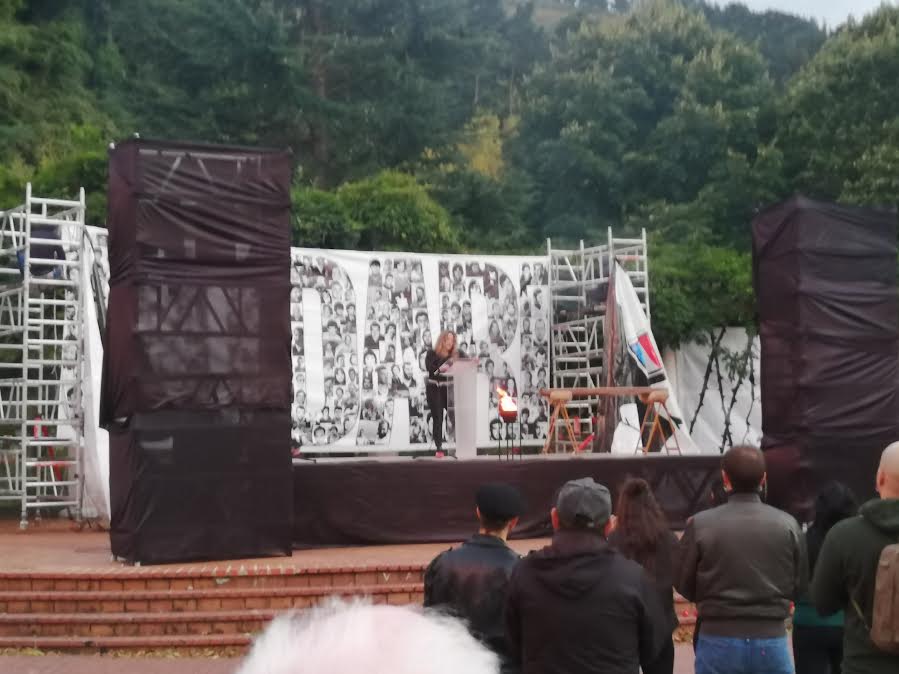


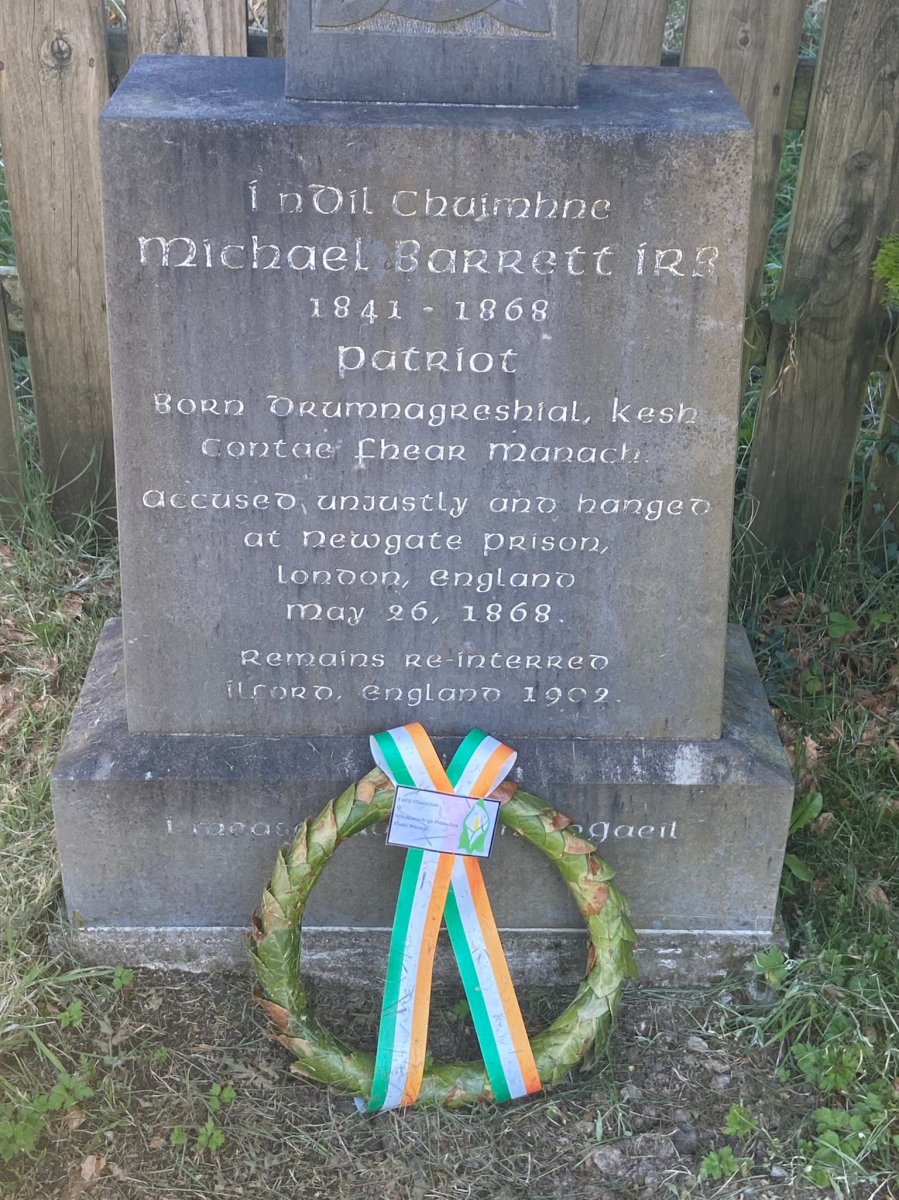
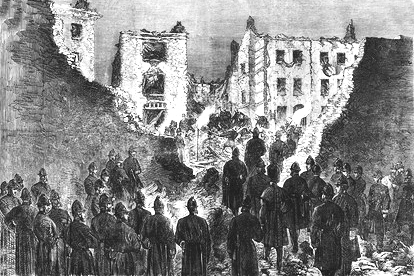
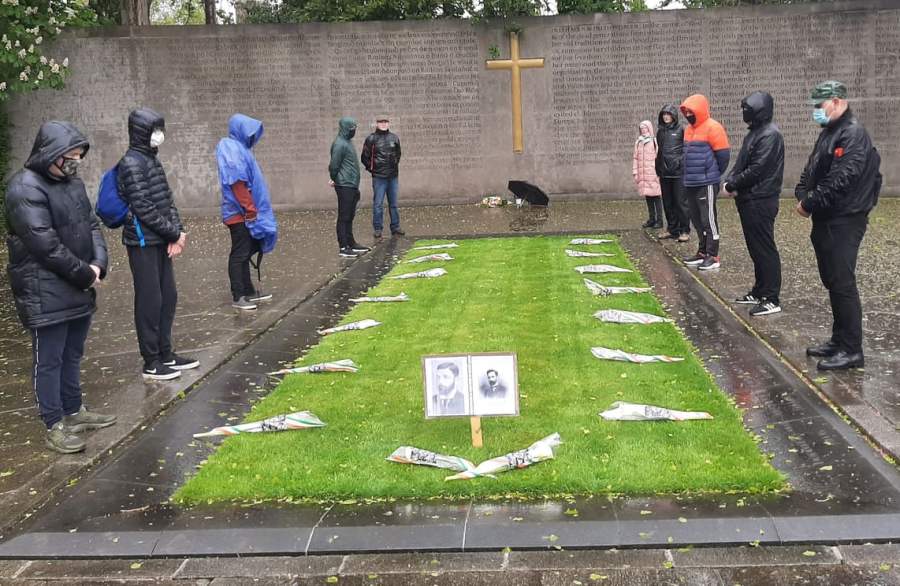
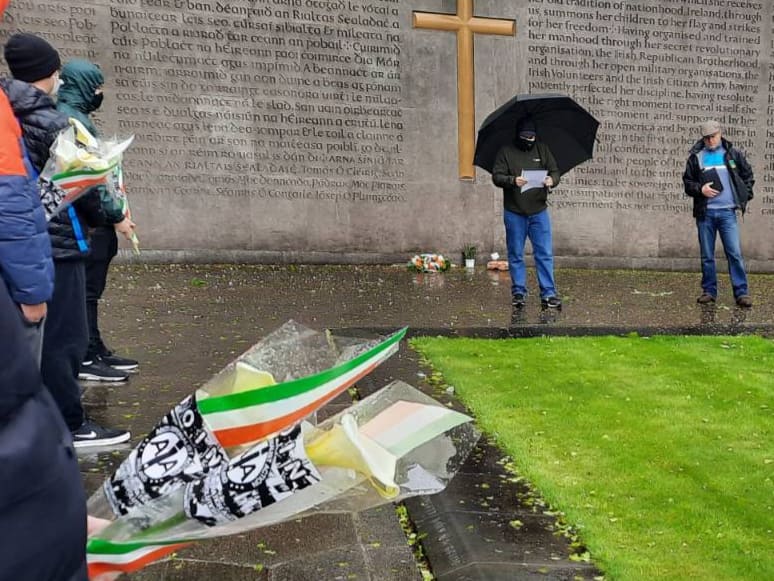
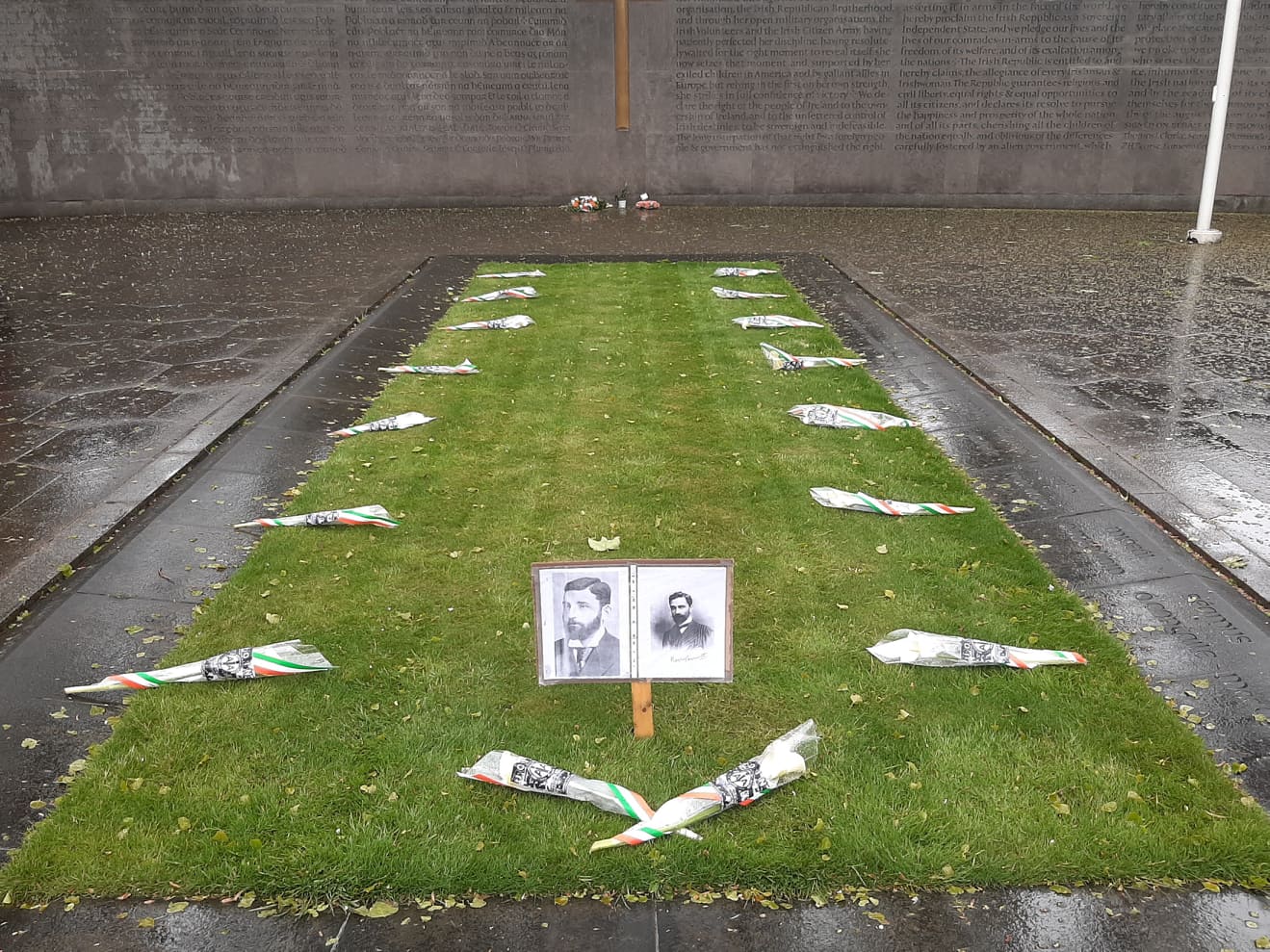
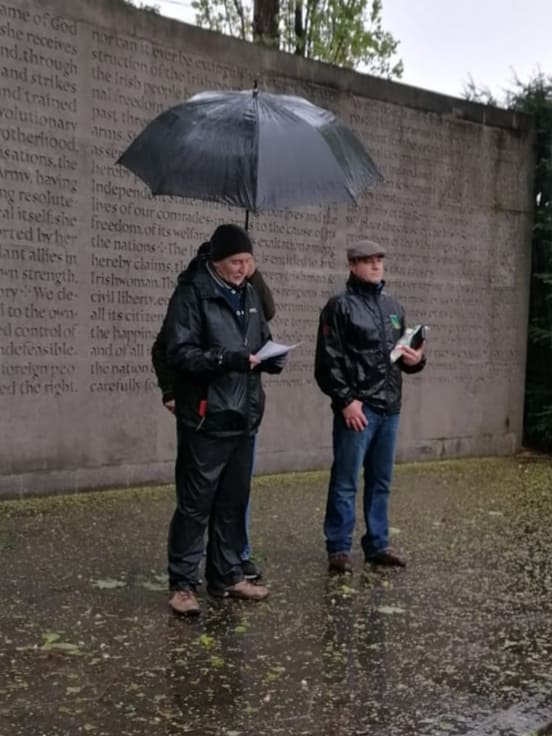
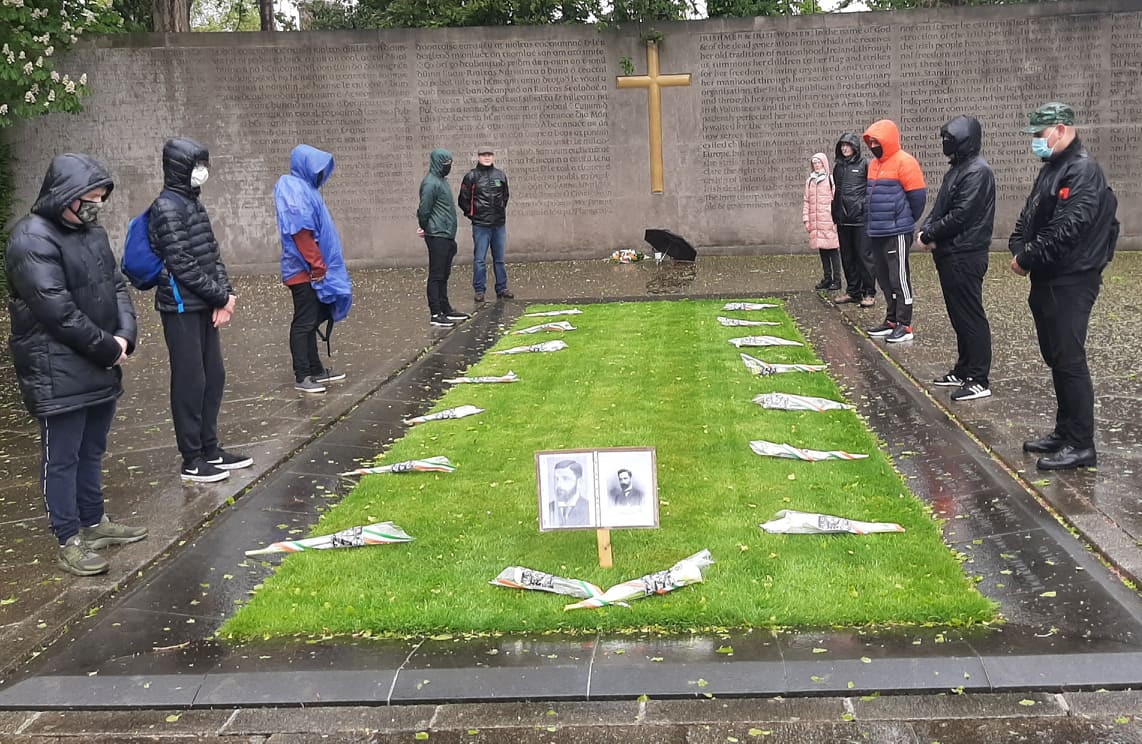



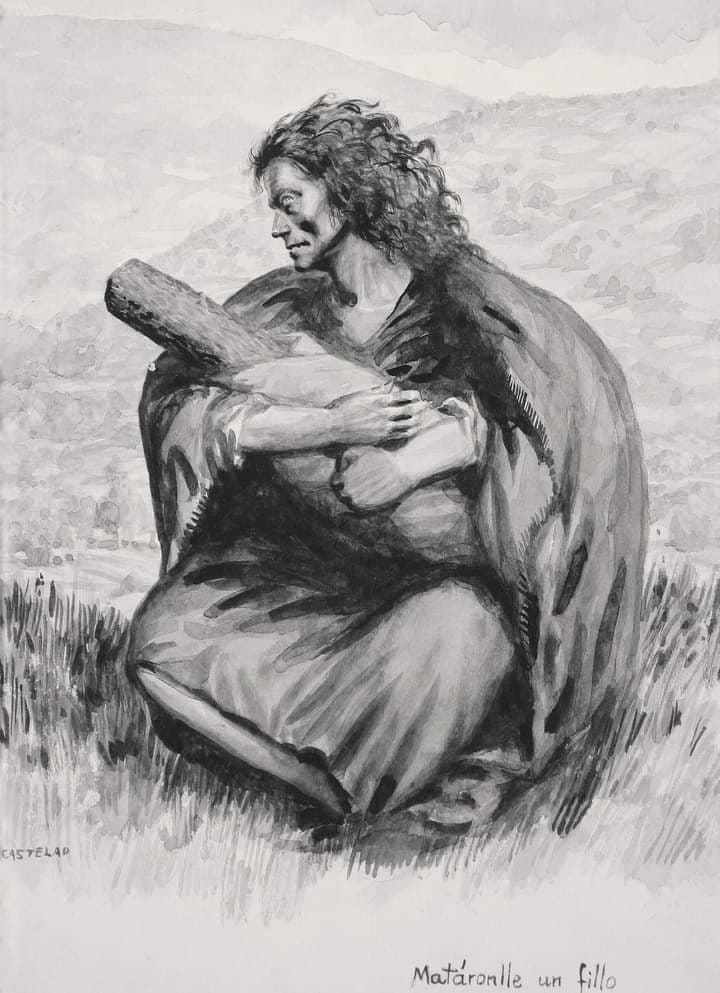


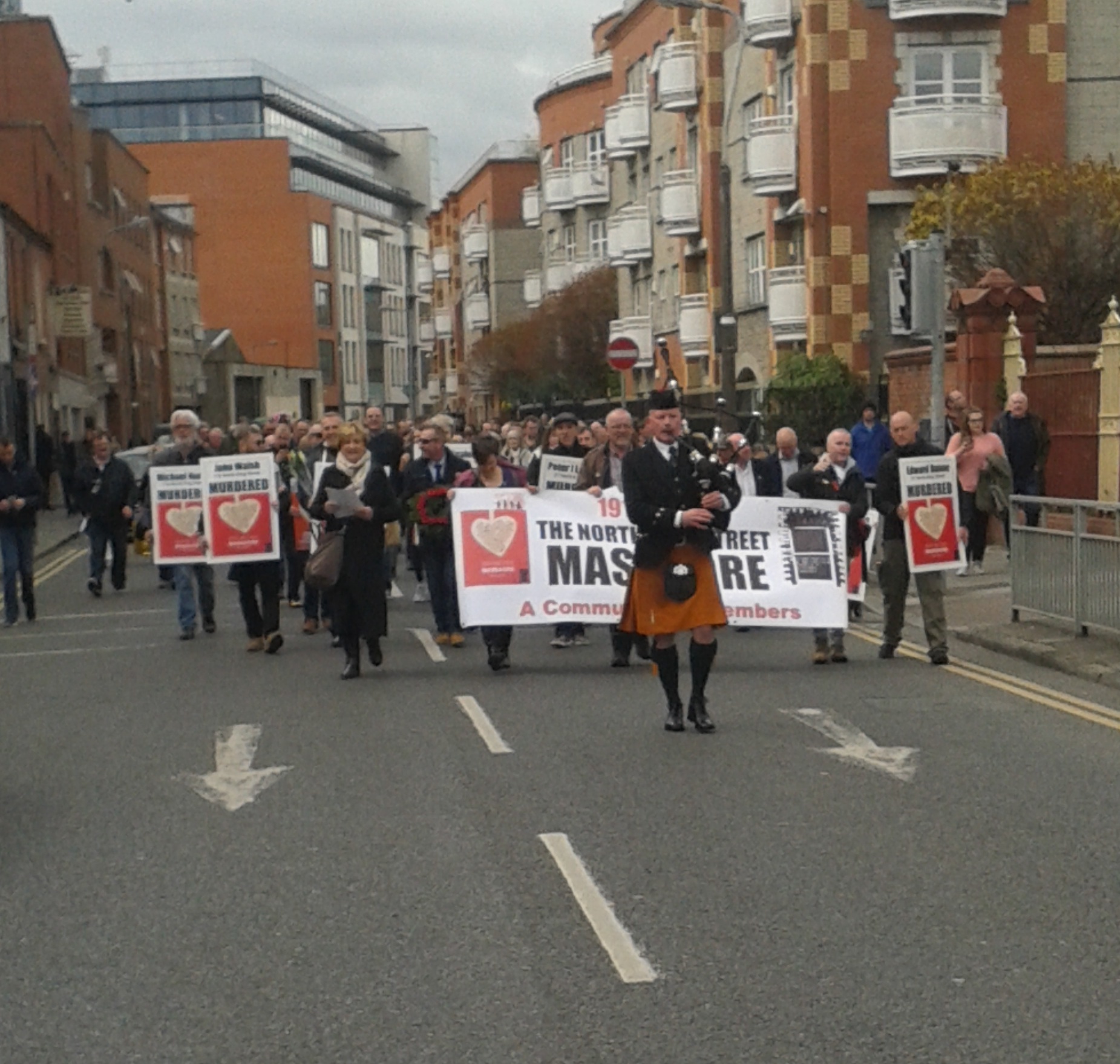

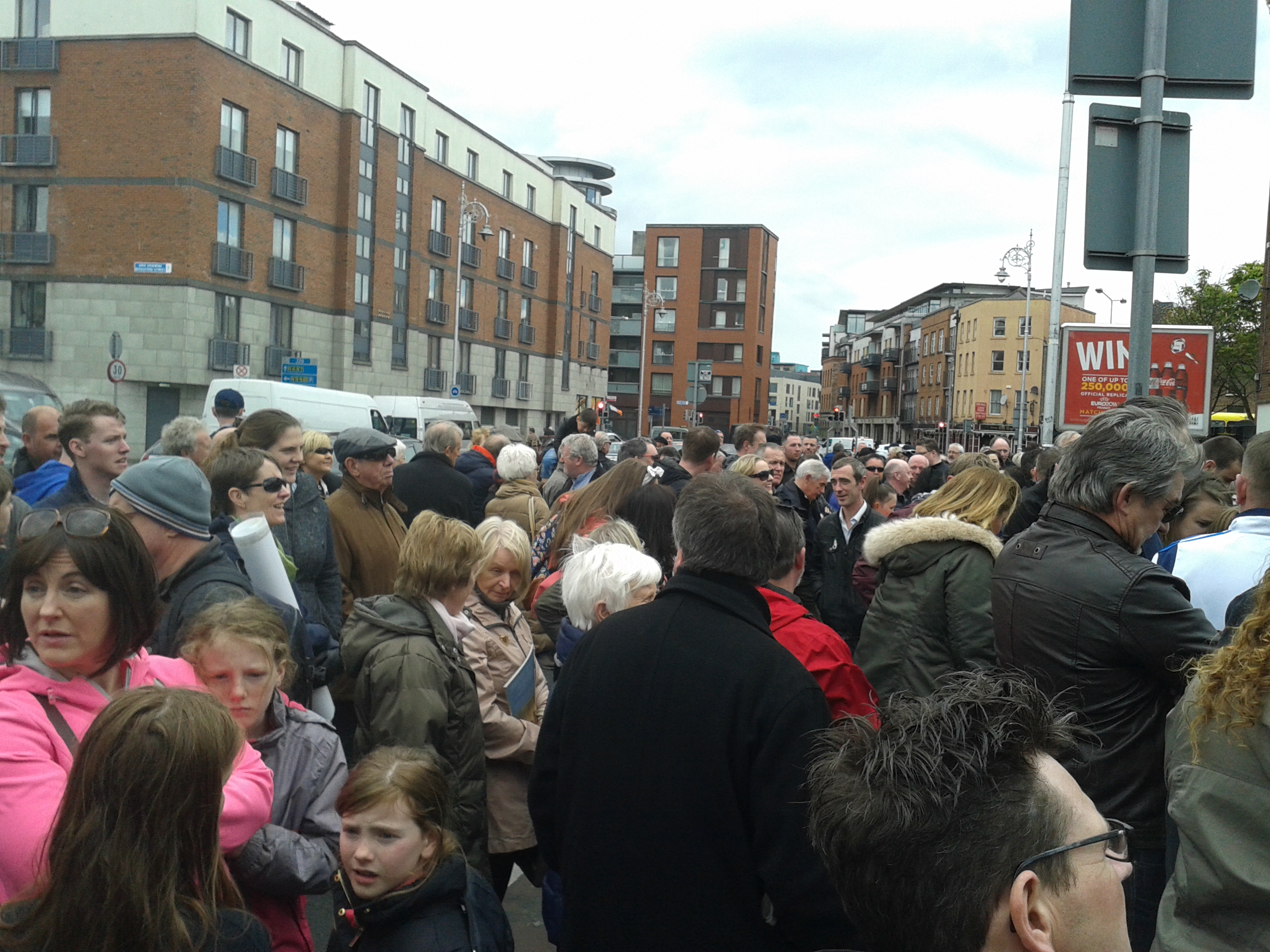

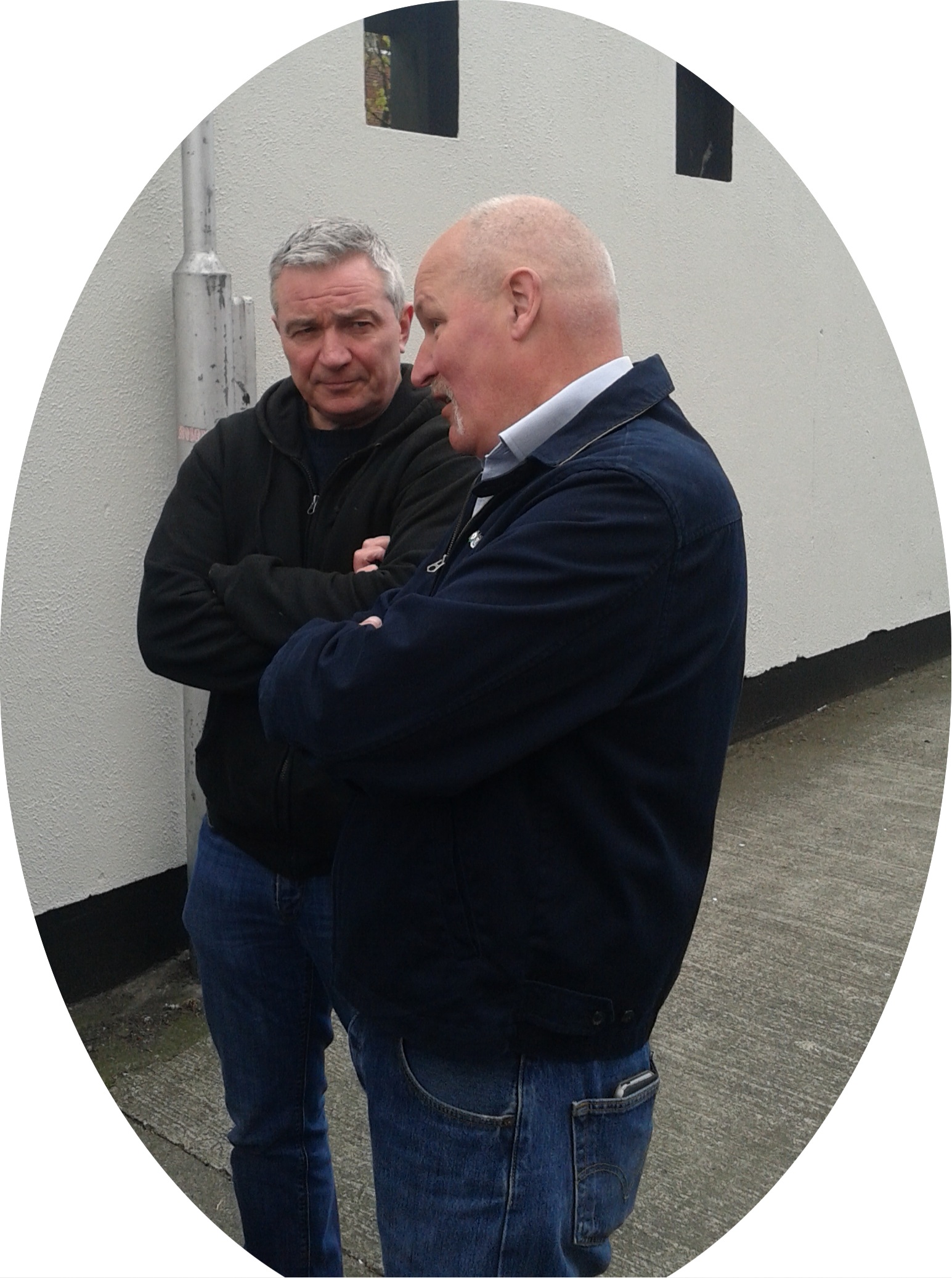


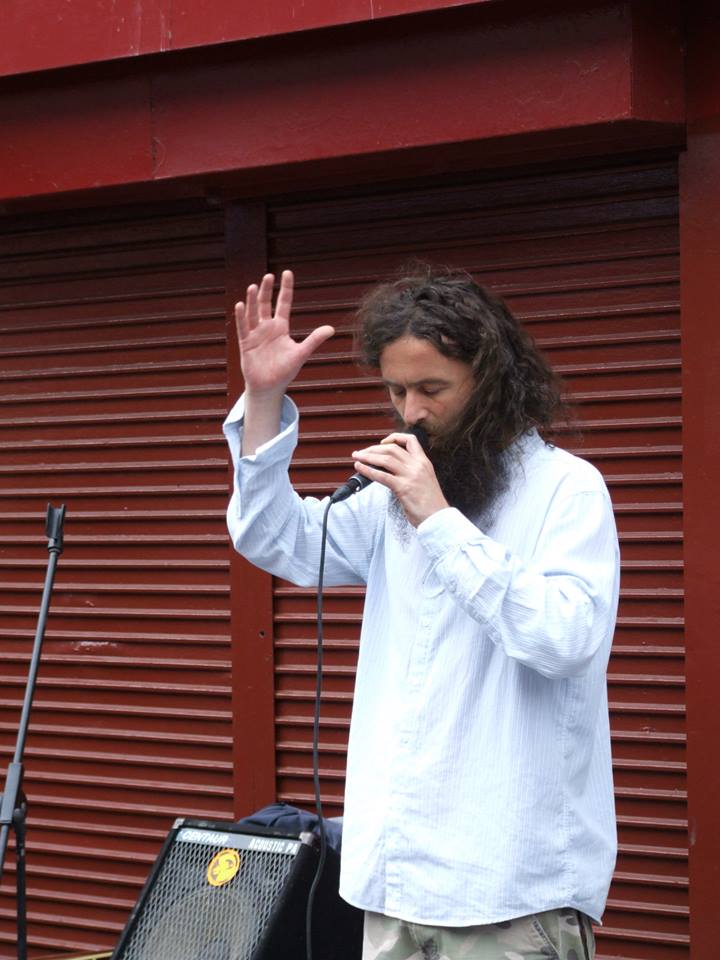


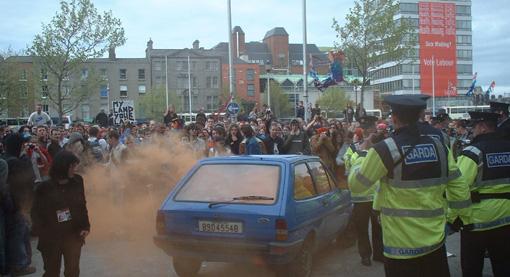
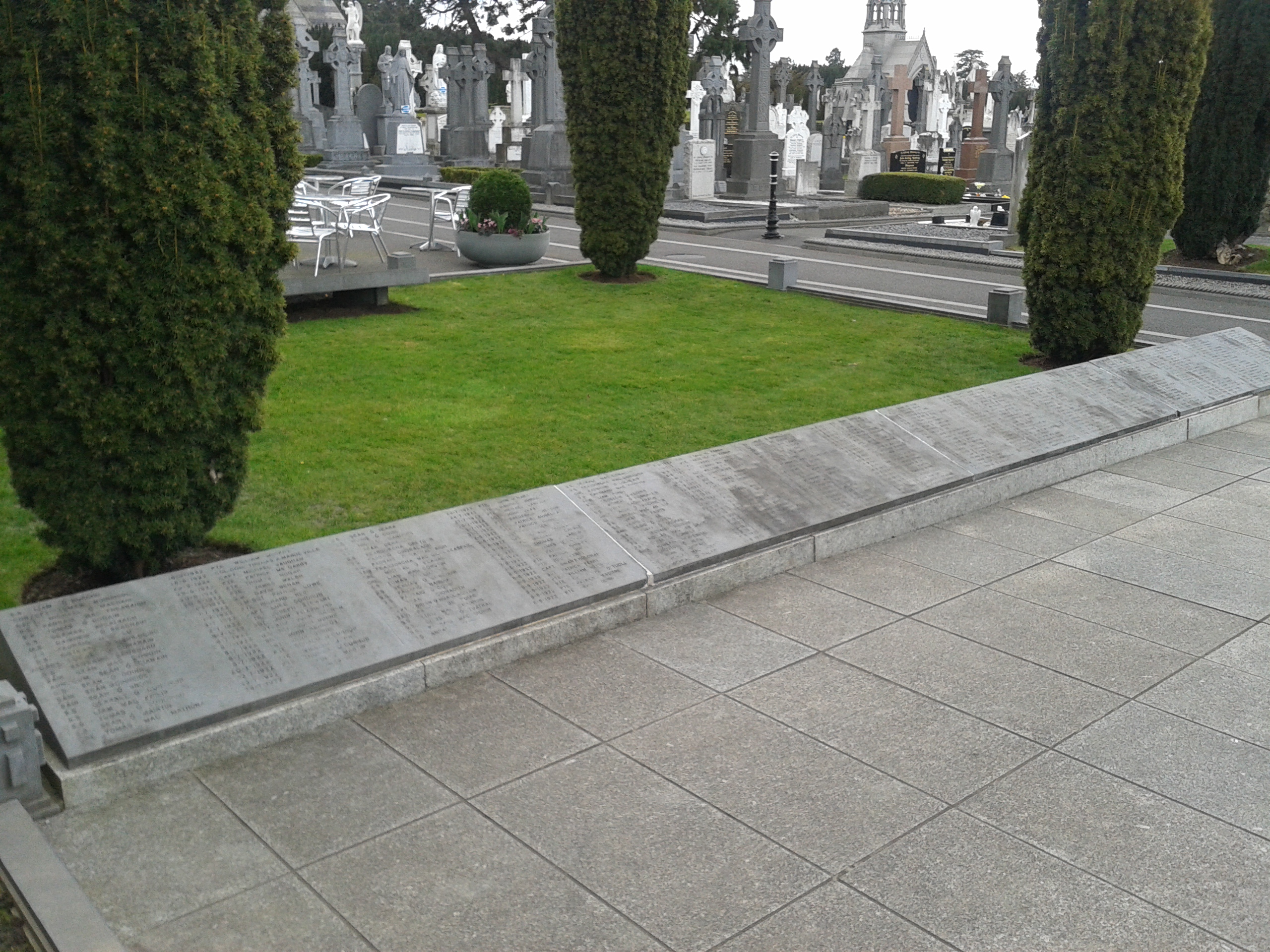
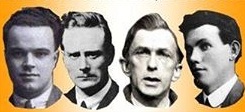


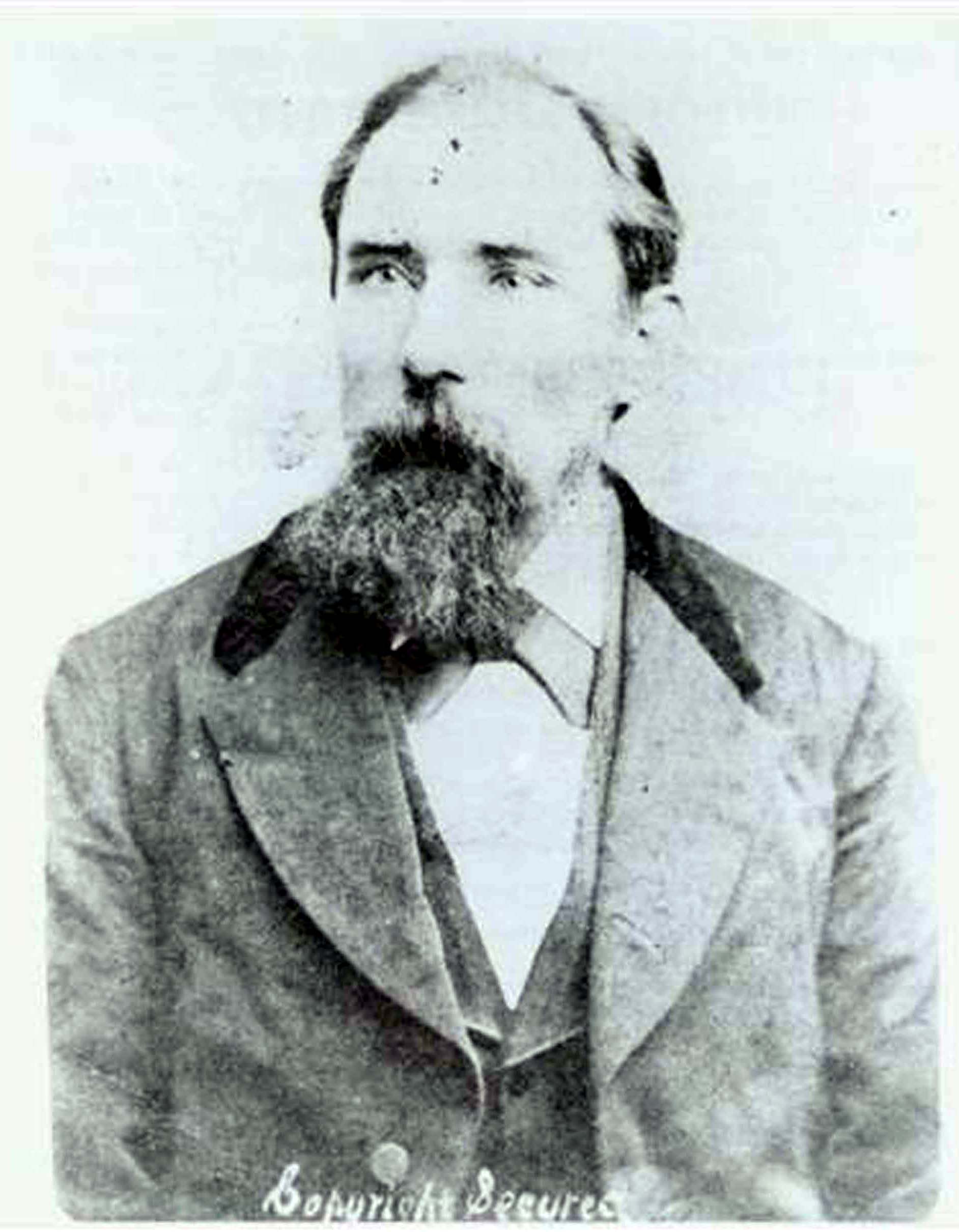


 rebelbreeze