Manager of Dublin City Council Road Management Department
Dear Sir/ Madam,
Please allow me to extend my heartfelt thanks for your work on the city roads and more than that, the ingenuity displayed by your staff. Dublin and to an extent the whole of Ireland is being kept safe, thanks to the work of your Department, from Japanese Army invasion. Or any other cycle-born troops.
I must admit I was not expecting to find that people working for the local authority had studied the Imperial Japanese Army assault on Singapore in 1942 and who had learned from it. If only there were more like your staff in the rest of Ireland! But no, complacency rules. “Ah, sure it’ll do” is the order of the day.
Few people now seem to recall the complacency with which Lieut. General Arthur Percival faced the Imperial Japanese threat to Singapore in 1942. Almost an island, Singapore had massive artillery pointed out to sea, ready to pound the Japanese invasion fleet. No artillery of any size was pointing towards the mainland. The jungle there was impassable to an army of any size, apparently.
Unfortunately someone neglected to tell the Imperial Japanese Army that. They sent their soldiers on bicycles down jungle trails, moving thousands of troops into position in days. Then they stormed across the Causeway and attacked Singapore.
Lieut. General Arthur Percival surrendered an estimated 85,000 soldiers, most of whom had never fired a shot in Singapore. The Japanese had nothing but contempt for these soldiers and officers who had been surrendered by Percival, not only that, but had done so for the most part without putting up any kind of resistance at all. That was part of the reason they treated the prisoners so badly.
British soldiers surrendering to Japanese Army at the Surrender of Singapore 1942. (Sourced on Internet)
Had the British command in the region not been so complacent, they would not only have turned some of Percival’s big guns around to fire on the mainland but would have sent sappers – British and Commonwealth Armies’ engineers — out into the jungle to dig bicycle traps. Like your engineers have installed on Dublin city streets, roads and laneways.
How Lieut. General Arthur Percival could have used your engineers, if only he had realised the danger in time! But your engineers have used ingenuity above and beyond anything that British sappers might have thought up. A simple hole in the road after all is visible, even at night in dim Dublin street lighting — and may be avoided. But your engineers are more skilled than that – they consider: “OK, so the invading cyclist will see this hole and swerve to avoid it. He’ll swerve on the inside, so he doesn’t get hit by a passing vehicle. So we’ll place another hole, a little further on, on the inside.”
Excellent bicycle trap designed by Dublin City engineers, one of many in a whole defence network
Now, a rather pedestrian (if you’ll forgive the pun) engineer, might very well leave it at that. But no – your engineers ask themselves: “But after a number of disasters, jarring bumps, split tires and crashes, won’t the invading cyclists automatically swerve to the outside when they spot a hole ahead?” And so naturally, just to vary the rule, the engineers put another hole on the outside of the first from time to time.
Your engineers go yet further. “Wouldn’t it be better if they couldn’t see the hole at all?” they ask one another. After all, this is a common feature of traps – almost obligatory, one might think — so no great credit to your engineers in thinking of that. No, their genius is in how they carry out the disguising.
Normally, on a jungle path or trail, a pit (or a land-mine) would be covered over with loose earth and dead leaves to disguise it. But on a tarmacadamed road such is not possible (and even if it were, might claim the lives of innocent pedestrians or even motorists, for example trying to pass other traffic on the inside). This is where the true genius of your engineers is displayed.
Firstly, they place the holes in dark places – e.g where street lamps are not functioning, or under shade of trees. Sometimes instead of a hole, they construct a sharp dip in the tar macadam. And aware that cyclists often look ahead, see darker patches in the shade and swerve to avoid them, thinking “Aha! The sappers have placed a hole in the shade!” (sorry, I don’t know how to say that in Japanese) – yes, imagining that, your sappers darken a small area of road a little before a real dip! The cyclist sees the darker spot, thinks “Aha!” etc, swerves to avoid and, a moment later, hits the real dip. Masterly!
Of course, holes and dips are not the only useful anti-cycling device – ridges function quite well at times and can take unawares a cyclist who has been on the lookout for holes. Another clever ruse is the one of making the ridge small, therefore not too destructive to ride over, but placing a number of ridges beyond it, so that the cyclist experiences a shuddering sensation going over one ridge after another. He might even be induced to swerve here, when a passing vehicle may obligingly side-swipe him.
Then there is the principle of distraction. I don’t know what Percival’s engineers might have done, perhaps placed pictures of disrobing geishas near a pit but your engineers are more prosaic. Besides, exposure to many pictures of disrobing geishas might dull the effect over a period, or even become unfortunately forever associated in the minds of Japanese soldiers with pits and horrible crashes. No, your engineers think to themselves: “At what locations are the eyes of all cyclists likely to be diverted from the road surface straight ahead?” And they hit upon the answer, of course (perhaps they even had some cyclist double-agents working for them?).
Cyclists take their eyes off the surface of the road ahead when approaching traffic lights, or intersections, or crossing intersections or just having crossed one. They want to be sure that they obey the traffic lights and even more than that, that they don’t get hit by a vehicle coming from another direction, or side-swiped by one as they swerve out to avoid a parked vehicle just after having safely got across another intersection. So holes, dips and wheel seizing cracks are placed in shortly before traffic lights, in the middle of intersections or just on the other side!
There is also an economic benefit to all this necessary work of cyclist-trapping, and it is in the saving of the Motor Tax allocated to the local authority. The money saved by not filling in these holes goes to pay the Water Charge – a worthy recipient and appropriate diversion of revenue, if ever there was one!
There is even, dare I say it, a greening side-benefit, for inside those holes, little plants, grasses and even shrubs can take hold, bringing more green to our sometimes too grey city.
In days to come I hope that the work of your engineers, ably led and directed by yourselves, of course, may become properly recognised. Some recognition is surely due to men (and women?) who toil in anonymity to save us from a bicycle-mounted troop invasion. Besides which we don’t want to have to learn Japanese, being already fluent in another conqueror’s language – we have enough difficulty ordering food by numbers in Chinese restaurants. And if were taught Japanese in school, we wouldn’t want to have to actually speak it (as can be seen from the case of our National Language).
For appropriate recognition of the work of your Department, a public monument could be considered – perhaps one constructed from crushed bicycles. And plaques – perhaps set into roads at appropriate places or on signs as one approaches traffic lights and junctions. One can only hope. Keep up the good work!
(Gaelic football team Sheares Brothers has been doing very well for a change. A reporter from the Irish Times is about to conclude his interview of the club’s Bainisteoir).
(Photo sourced: Internet)
Your club’s local nickname is “the Pats”, I’m told.
Yes, I’ve heard that too.
Is it true – what I’ve been told – that all your players, in your entire team, are called Patrick?
Well, now, many are named Patrick, right enough, but they are not all called Patrick.
[Reporter jots down in his notebook: ‘named not called – wtf???’] Does that not cause problems, though, on the field? I mean, it must be difficult at times for your players to know to which of them the Captain is referring when he shouts out: “Patrick”.
[The interviewer smiles. He has shown the ridiculousness of this situation]. (Fucking unbelievable that this team got as far as its current position in theLeague! he thinks)
No, not all. Sure if the Captain called out “Patrick”, he’d be referring to himself! That would be a strange thing to do, for sure, to be talking to himself! Well, when with the team, anyway.
(This man is an idiot. An idiot managing a ridiculous team. Still, get the interview done, file the story. Then the pub ….) Ok …. what if he wants to say, to indicate to a player, to pass the ball to the left midfielder? Would he just call the position – as in “Pass the ball to Left Midfield”?
Well, he might …. but he’d more likely say “Give Paudie the ball”. That’s Paudie’s usual position, you see.
Oh, right.
No, left.
(What a thicko!) I meant “ok”. Your left Midfielder’s nickname is “Paudie”?
Well, it’s the name he goes by anyhow. Paudie Whelan.
So are all your players called a variation on Patrick?
Pretty much, yes.
Fifteen variations on Patrick? And no repetitions? That’s not possible, is it?
It seems to be.
OK, all right …. what about say, your Centre Forward?
Pa. Pa Walsh.
Hmm. Left Forward?
Packy Ó Braonáin.
Right Forward?
Emm …
(Got you now!)
Sorry, he’s just back from an injury. Patchy …. Patchy Stokes.
Left Half-Forward?
Patchik Mulhearn.
Centre Half-Forward?
Paddy plays that position – Paddy McGuinness.
Right Half-Forward?
Patch Hennessy.
(Has to run out of them soon). Left Mid-Field?
You had his name already – Paudie Whelan.
(Smartass!) Yes, of course. Right Mid-Field?
That’d be Pád Óg Trainor.
That’s P, a, u, d ……
No. P, á, d; Ó, g.
Right.
Right Half-Back?
No, I meant just “Right” , as in “OK’.
Right.
(Is he taking the piss?) Well ….. where was I?
Midfield.
Yes …. thanks …. Right Half-Back?
I thought you said ….? Never mind …Paudeen Sullivan.
Centre Half-Back?
Pád …. Pád Carney.
P, a, u ….
No, P, á, d; C, a, r ….
I know how to spell Carney, thanks.
Oh, ok.
Left Half-Back?
That’s Patrick … our Captain. Patrick Burke.
Left Corner-Back?
Ah ….
(Have I got him?)
Ah, sorry ….
(Aha! At last!)
Pat Sheehan. His name slipped me mind there for a minute, sorry.
Oh …. Ah. Good. Full Back?
Páraic Ó Flaithearta. Will I spell it for you?
(Fucking smart-ass! I’ll get it from their website. Just let me run him out of Patrick variants first.) No, it’s ok, I know my koopla fokol, gurra mah hugut.
Muise, tá fáilte romhat. Bail ó Dhia ort.
Well …. let’s carry on. Right Corner-Back?
Pádraig. Pádraig Lehane.
(Got you now!) Pádraig. The same as the man next to him, the Full Back.
No, that’s Páraic. P, á, r, a, i, c.
Oh! Ok, yes, I see. My mistake. Goalie?
Patsy O’Farrell.
Yes. Well, thanks. Yes …. I don’t suppose your substitutes are called Patrick?
No, neither is.
Oh, good.
Sorry?
Good … good story, thanks. I must be going ….
Don’t you want to know their names?
The subs?
Yes.
OK, yes I suppose. Yes, please.
PJ Hanley and Packer Dunne.
I …. see …. ‘PJ’ as in ….. Patrick Joseph?
Dead on!
Um … Well …. Thanks for your time. All the best for your next game in the League. I don’t suppose, heh, heh, your Junior team are all variants of Patrick too?
Ah, not at all! Of course not. Sure, that would be awful confusing. No, there’s Michael Fitzgerald, Mick Smith, Mickey Doyle, Mícheál Connors, Micilín Seoighe, Mikhail ….
As Mayo began to prepare for a replay of the 2016 championship Gaelic Football final against Dublin, I stood with others on a very wet day in Dublin’s Croppies’ Acre to commemorate and honour Robert Emmet and the United Irishmen – an event replete with Mayo connections.
Eniscorthy Historical Reenactment Society inside the monument during the ceremony. (Photo: Paddy Reilly)
The event, organised by the Asgard Howth 1916 Society, was graced by the presence of the Enniscorthy Historical Reenactment Society, men and women in 1798 costume bearing pikes, including officer uniforms – they had travelled up from Wexford that morning to attend the event. Donal Fallon, historian, blogger, tour guide and broadcaster was to give the oration. Padraig Drummond, the organising persona, had asked me to sing two songs at the event, one near the start and the other near the end.
For the first song, I had chosen the Bold Robert Emmet ballad1 (originally known as The Last Moments of Robert Emmet2), a song that commonly sung more often a few decades ago but still reasonably well remembered. For the second, I was spoiled for choice of relevant songs: Anne Devlin, Boolavogue, The Croppy Boy, Henry Joy, The Irish Soldier Laddie. Kelly the Boy from Killane, The Rising of the Moon, Rodaí Mac Corlaí, Sliabh na mBan, the Three Flowers, The West’s Awake, The Wind That Shakes the Barley …… or I could finish learning some of which I knew bits, like the Sean Bhean Bhocht, General Munroe, Memory of the Dead (Who Fears to Speak of ’98?) or the Mayo version of An Spailpín Fánach.
Drawing depicting the trial of Robert Emmet in Green Street Courthouse, Dublin. (Photo source: Internet)
Though a beautiful song in lyrics and air, I felt Sliabh na mBan was too long for the event and cutting it would also feel wrong. Anne Devlin remembers an extremely brave comrade of the United Irishmen and gives rare acknowledgement to the role of women in the struggle for Irish freedom, which had me veering towards that choice. However, I eventually settled on Men of the West, celebrating the 1798 uprising in Mayo when a small French force under General Humbert landed to support them.
Diarmuid Breatnach singing “Men of the West/ Fir an Iarthair”. (Photo: Paddy Reilly)
MEN OF THE WEST
The Mayo connection in the forthcoming GAA final was one reason for the choice, another was that this time of year is that which witnessed the repression in Mayo after the defeat of the last rising of that year (and the last forever, the British and their Orange supporters may have thought, until Emmet came out five years later). And other reasons were that I could sing it as a macaronic song (with some of the verses in Irish and some in English), the song was not too long and it has a chorus in which participants could join.
Bartholomew Teeling, with the French who landed at Mayo, captured when they surrendered at Baile na Muc. Hung in Dublin and his body thrown into the “Croppy Hole”. (Photo source: Internet)
There were yet other reasons for the choice too – not in our culture of song and game, nor in the calendar, but in the ground under our feet, for somewhere under there in what was first called “The Croppies’ Hole” and later “Croppies’ Acre”, the mass grave of many United Irish, lie the bodies of the executed Matthew Tone — younger brother of Theobald Wolfe Tone (who was soon after to give his own life to the Rising) – and Bartholomew Teeling. The younger Tone and Teeling had landed with the French in Mayo, been taken prisoner after the surrender of the French at Baile na Muc, in Co.Longford, brought to Dublin and, despite their French Republican Army officer rank, tried as rebels and hung there.
And in researching background for this article, I came across even further Mayo connections.
The lyrics of Men of the West were written by William Rooney and put to the air of an Irish song called Eoghan Chóir written in turn — and also air apparently composed — by a Mayo United Irishman and songwriter, Riocard Bairéad (Richard Barrett3), who composed the even better-known Preab San Ól4.
The lyrics of Men of the West were later translated into Irish by Conchúr Mag Uidhir, who won a prize for that work at a Feis Ceoil in 1903 – again in Mayo. It was the lyrics of both these versions that I combined to make the macaronic version I chose to sing at the commemoration at Croppies’ Acre5.
THE DUBLIN SONGWRITER — BACKGROUND
While I need to do some research to find out more about this Mag Uidhir, quite a lot is known about William Rooney (Liam Ó Maolruanaigh). Born in the Dublin former red-light district known as “The Monto”6 in 1873, Rooney grew up in a what had been considered the second city of the British Empire but had declined in status with the abolition of the Irish (colonial) Parliament in 1800. The city contained the residence of the Crown’s representative in Ireland, a number of British army barracks and the administration apparatus of the colony, the latter in Dublin Castle. Dublin also contained a substantial loyalist population of the Ascendancy, in addition to “Castle Catholics”7. However, Dublin was also a focal point in Irish nationalist and separatist politics. Relatives and descendants of members and sympathisers of the United Irishmen of 1798 and 1803 lived in the city and the events were in the living memories of some.
William Rooney, journalist, organiser, Irish language revivalist and author of songs. (Photo source: Internet)
Irish Republicanism had seen a resurgence with the Young Irelanders of 1848 and some of their supporters were easily alive when William Rooney was born in 1873 and during his childhood. The founding of the Irish Republican Brotherhood in 1858 preceded Rooney’s birth by only 15 years and although the raid on the The Irish People newspaper took place in 1865, followed by the trial and conviction to penal servitude of Ó Donnobháin Rosa, Thomas Clarke Luby and John O’Leary, they would have been still talked about during Rooney’s childhood.
The following year, 1866 saw the failed rising of the Fenians in Ireland and also their shock invasion of Canada and, in 1867, the stirring freeing of the American Fenian prisoners in Manchester and the subsequent hanging of the three martyrs, Allen, Larkin and O’Brien. The spectacular rescue of escaping Fenian prisoners from Australia by the Catalpa and their celebrated delivery to the freedom in the United States took place in 1876.
Although these events were all over (or just occurring, in the case of the Catalpa) by the date of Rooney’s birth, their echoes remained – in living memory, in the cause of prisoners serving sentences in English jails or penal colonies and in agitation for a political prisoners’ amnesty. And God Save Ireland8, written to commemorate the Manchester Martyrs in 1866 by Timothy Daniel Sullivan would have been an extremely popular song among a wide section of the Dublin population during Rooney’s childhood, along with patriotic verses and songs by Thomas Moore (1779-1852), Thomas Davis (1814-1845) and James Clarence Mangan (1803-1849). Verse and songs by these poets were learned by ear and recited or sung but were also available in printed form, in songbooks, song sheets and nationalist publications.
Sullivan was a journalist, owning and editing the publications The Nation, Dublin Weekly News and Young Ireland. As a journalist, Sullivan published reports of meetings of the banned National League in December 1887, for which he was convicted and imprisoned for two months by the British administration. William Rooney was in his late teens at that time and Sullivan lived until 1914.
At the age of around thirteen William Rooney became acquainted with a leading Irish nationalist of his times, Arthur Griffith, through Rooney’s membership of The Irish Fireside Club, a literary discussion group. Both of them joined the Leinster Debating Society (which later became the Leinster Literary Society) which they soon led, Griffith as presidents and Rooney as Secretary. The early 1890s controversy surrounding Parnell’s relationship with Catherine O’Shea caused a serious disruption in the nationalist movement of the time and caused a serious split in the Irish Parliamentary Party of which the Leinster Literary Society became a casualty.
Rooney then formed the Celtic Literary Society in 1893, of which he became president; he also edited An Seanachuidhe (old spelling of “Seanchaí”, a story-teller, a relater of things past), the Society’s journal. The Society’s aims were the study of the Irish language, history, literature and music; it had branches in different parts of the country and its members included John O’Leary, Frank Hugh O’Donnell and Arthur Griffith.
AN GHAEILGE
William Rooney was fluent enough in the Irish language to write and to give orations in it and journalists of his times, after summarising a speech in English from the same platform, generally wrote only that he had spoken in Irish9. When he learned his Irish is not clear but he was teaching it in the offices of the Celtic Society. Then Eoin MacNeill got him to join the Gaelic League/ Connradh na Gaeilge after it was formed in 1893.
The Connradh was mainly concerned with promoting the Irish language and literature but also became a social focus in later years, hosting céilidhe (dances and occasion for songs, recitations). Patrick Pearse advocated a more political approach to promoting Irish culture and this accorded with Rooney’s opinion. On the other hand Rooney regarded Irish independence without the revival of the language and culture as meaningless and he castigated the Irish Parliamentary Party for its inaction on the Irish language.
Rooney gave an alternative example, traveling the country speaking publicly in Irish and in English on the need for Irish independence and for the revival of the Irish language.
JOURNALISM AND POLITICAL ORGANISATION
Building on his earlier writing in An Seanachuidhe, Rooney founded with Griffith The United Irishman newspaper in 1899 and his articles and other writings were published in a number of publications of his times:United Ireland, The Shamrock, Weekly Freeman, The Evening Herald, Shan Van Vocht and Northern Patriot (the latter two in Belfast).
Near the end of 1900, again in conjunction with Griffith, William Rooney helped found Cumann na nGaedheal. The former Fenian John O’Leary was president and the Cumann was intended as an umbrella organisation to co-ordinate the activities of a number of nationalist groups (it was merged with others in 1907 to form the original Sinn Féin).
As the centenary of the 1798 Uprising approached, there was something of a fever of preparation with many indicating an interest in participation. Rooney would see his 25th birthday during centenary year and becameof the most prominent organisers for the National Commemoration committee, if not, indeed, the main one.
The year 1898, somewhat similarly to the current centenary of the the 1916 Rising, saw commemorative plaques and monuments being erected, along with talks, meetings, lectures, articles and songs being written. According to historian Ruan O’Donnell, a feeling that the 1889 events had not reached an appropriate level led in 1903 to substantial commemorative events of Emmet’s rising in 1803. Many political working relationships were made during those years which were to survive into much more active days less than two decades since. Many of the songs we have today about the 1798 Rising were written during this period too and Rooney’s Men of the West was presumably also.
In the year of the 1798 centenary commemoration, one of the main centenary commemorations was held in Croppies’ Acre, attended by a reported 100,00010.Rooney was one of the main organisers and a stone was laid on the site which is there to this day.
Stone laid (or unveilled) during commemoration event in Croppies’ Acre in 1898, the first centenary of the Rising. The stone is on the ground near the north-west gate and corner of the park. (Photo: Paddy Reilly)
WILLIAM ROONEY IN MAYO
(The following text is taken from an article by Brian Hoban in the on-line edition of the Castlebar News for 22, Apr 2011)
William Rooney had visited Castlebar with Maud Gonne in 1898 for the centenary celebrations of ‘The Year of the French’. He gave a passionate speech in Irish in which he exhorted people to think for themselves, to educate themselves, and not to take their teachings from others.
He founded Castlebar’s first Public Library at the Town Hall, to which he dedicated his books. Three years later, at the early age of twenty-eight, William Rooney was dead, but the esteem in which he was held in Castlebar continued to grow. In 1911, a new Hurling Club in the town was named the ‘William Rooney’ in his honour. The following year “The Rooney Hall” was opened in Tucker Street. It became a local landmark for several generations, much used by various civic and voluntary organisations, including the PTAA.
The one surviving connection is in ‘Poems and Ballads’, a collection of Rooney’s poetry edited by Arthur Griffith and published in 1902, a year after his death. An original of this title is held by Mayo County Library where it can be consulted.
1798 Centennial Celebrations
William Rooney was one of the main protagonists in establishing the National Commemoration to celebrate the centennial of the 1798 rebellion. Only one month after its inception nationalists in Mayo formed the “Castlebar Central and Barony of Carra ’98 Centenary Association with James Daly appointed as president of the Connaught ’98 Centenary Council. On the 9th January 1898 a commemoration, which was presided over by James Daly, was held at Frenchill, near Castlebar. This was attended by Maud Gonne Mac Bride and addressed by James Rooney. ……………….
James Daly pointed out that the event was both about remembering dead patriots and undertaking “to abide by the principles of the men of ’98 until their country was free again and took its place among the nations of the earth.”
EARLY DEATH AND MEMORY
William Rooney died of TB in 1901 at the age of 27, shortly before he was due to marry. He is buried in Glasnevin Cemetery.
In 1902 the United Irishman published a collection of his writings and in 1908 a collection of his work edited by Griffith, Poems and Ballads of William Rooney, was published. The publication was reviewed disparagingly in the Daily Express that year by James Joyce but Yeats dedicated the 1908 edition of Cathleen Ni Houlihan “To the Memory of William Rooney”.A collection of his lectures and articles, from the United Irishman was published by M.H. Gill the following year.
Griffith described William Rooney as “the Thomas Davis of the new movement”. Brian Ó hUigín (“Brian na Banban” 1882–1963), editor for many years of The Wolfe Tonne Annual and himself no slouch as a writer of songs and verse, said of Rooney that “he blazed the trail to 1916 and gave his life for Ireland”.
And many of William Rooney’s songs are still being sung.
End.
Wreath being laid by Pól Ó Scannaill inside the monument on behalf of a number of groups. Padraig Drummond of Asgard 1916 Society MC of event. (Photo: Paddy Reilly)
APPENDIX
THE MACARONIC VERSION OF MEN OF THE WEST/ FIR AN IARTHAIR
(Arranged by D.Breatnach)
1.
Má mholtar le dán is le h-amhrán,
Na fir a bhi tréan agus fíor,
Donal Fallon, historian, blogger, tour guide and broadcaster who gave the main oration
‘Chuir clú agus cáil lena ndánacht
Ar shruthán ‘s gleann agus sliabh:
One of the panels inside the circular monument. (Photo: Paddy Reilly)
Ná fágaidh ar deire na tréan-fhir
Do chruinnigh ar phlánai Mhuigheo –
Nuair a ghnóthaí na Gail I Loch gCarman,
Said muinntir an Iarthair ‘bhí beo.
Chorus
I give you the gallant old West, boys,
Where rallied our bravest and best;
When Ireland lay broken and bleeding:
Hurrah boys, hurrah for the West!
(Photo: Paddy Reilly)
2.
The hilltops with glory were glowing
‘twas the eve of a bright harvest day,
And the ships we’d been wearily awaiting
Sailed into Killalla’s broad bay.
And over the hills went the slogan
To awaken in everyone’s breast
That spirit that’s never been broke’ boys
Among the true hearts of the West.
Curfá
Seo sláinte muinntir an Iarthair daoibh,
Section of Croppies Acre on a drier day, showing open circular 1798 monument in middle distance and Collins Barracks Museum in the far background. View is from SE gate on Wolfe Tone Quay. (Photo: D.Breatnach)
Unknown author but sometimes credited to Tom Maguire (1892– 1993, famed leader of the Mayo Flying Column [yet another Mayo connection!] in the War of Independence, who later took the Republican side in the Civil War). On the other hand Zimmermann (1967) gives the song its earliest appearance as c.1900, when Maguire would have been around only eight years of age. For Tom Maguire credit see http://thewildgeese.irish/profiles/blogs/robert-emmet and a number of other references, some of which state inaccurately that Emmet was “hung, drawn and quartered”; that was indeed his sentence but the British practice of cutting the body of “traitors and rebels”open while still alive to access the entrails had been discontinued for decades although the decapitation part was still practiced and was carried out on Emmet.
3In the very brief research I carried out on the Mayo songwriter, I came across another songwriter by the name of Richard “Richie” Barrett (1933– 2006), an Afro-American who was also a singer, musician and band promoter, involved with such famous rythm ‘n blues groups as the Chantels and Three Degrees. One might hope for a family connection ….
4Translated later into English, recorded by the Dubliners folk and ballad group under the title Another Round.
5For lyrics, see the Appendix after article body and Sources.
7A pejorative term to describe Catholics who cooperated with the colonial Ascedancy regime in Ireland and sought admission to their social circles (for example, to balls and receptions held at the Castle in the 19th Century). An even more contemptuous description for the behaviour of this stratum was the Irish “ag sodar i ndiaidh na h-uaisle” (‘trotting after the nobles’, i.e. like dogs or perhaps servants)
8He also wrote the All for Ireland! anthem, Song from the Backwoods and the Michael Dwyer ballad.
http://www.ainm.ie/Bio.aspx?ID=1038 (NB: I am not the Diarmuid Breathnach, joint author of this piece — please note the slightly different spelling of his family name)
O’Donnell, Ruan: Remember Emmet: Images of the Life and Legacy of the Irish Revolutionary Robert Emmet, National Library of Ireland (2003)
Zimmermann, Georges-Denis, Songs of Irish Rebellion: Political Street Ballads and Rebel Songs 1780-1900 (1967), Allen Figgis, Dublin; reprinted (2012) by Four Courts Press.
The Irish state’s Ministry of Arts, Heritage, Rural, Regional and Gaeltacht Affairs is facilitating speculators’ plans to demolish the Moore Street 1916 Historical Quarte (with the exception of four houses) in order that they may build a giant shopping centre (mall). (Non-revenue copying and distribution welcome but acknowledgement of source expected)
On the platform at Mundaka there are only a few to catch the 9.18 a.m. train to Bilbao. Mundaka is a popular coastal resort town in Bizkaia province, southern Basque Country. “Egun on” (“good day”), I greet those on the platform in Euskara in passing, the Basque language, and they reply the same.
Train on the Atxuri (Bilbao)-Bermeo line. Note the warning sign to bottom left of image, in Euskera first and Castillian second. (Photo sourced on Internet).
A young couple with two little boys come on to the only platform (for both directions) and I think I hear the woman speaking to the boys in Euskara. But soon, I make out some Castillian (Spanish) words; however it is not unusual to hear some Castillian words and even phrases scattered through Euskara conversation, in the southern Basque Country, at any rate. But no, I can tell now that the conversation between mother and child is definitely all in Castillian – I must have been mistaken earlier, when I thought they were speaking in Euskara.
A view from a Mundaka building a number of stories up. The port is out of sight to the left, the station behind. (Photo: D.Breatnach)“Casa de Los Ingleses”, a beautiful if rather gothic-looking old house, residence of an English family with business interests locally many years ago. I passed it on the short walk from the town to the station. Behind it there were plots being worked for vegetables, all due to disappear beneath a new car park construction. (Photo: D.Breatnach)The residence of the servants of the Casa de Los Ingleses, a lovely building in its own right. Its demolition is planned to make way for a new construction (see design in next photo) — my guide encouraged me to write a letter of protest to the municipality. (Photo: D.Breatnach)The construction planned to replace the “servants’ house” after the latter has been demolished. (Photo: D.Breatnach)
“Miao, miao” says the smallest boy, pointing at some feral cats dozing near the platform. “Bai, katua” replies the mother and a flood of Euskara follows, both boys and mother and occasionally father too conversing in Euskara. And so they continue until the southbound train arrives and everyone gets on, except one man, presumably waiting for a northbound train to Bermeo.
On our journey southwards, soon passing alongside salt marshlands, I note that the names of the stations are in Euskara only: Itsasbegi-Busturia, Axpe-Busturia (in the broad estuary of the Urdebai river), San Kristobal Busturia, Forua, Instituto Gernika, Gernika….
The Wikitravel entry for Gernika translates it to the Castillian “Guernica” and opens with this: “Basque town which was the site of the first airborne bombing attack on a civilian town during the Spanish civil war. The bombing, by the Condor Legion of Germany’s Luftwaffe in 1937, inspired Picasso to paint the landmark cubist work Guernica, now on display at the Centro de Arte Reina Sofia in Madrid.”
Well, yes, but one might add for clarity that it was done as part of Franco’s fascist offensive and that the fascist press later blamed it on Asturian Anarchist “fire-bombers”. And one might update it by commenting that the Basques have asked for Picasso’s painting to be located in Gernika itself, a request which the Spanish state authorities, the political descendants of the fascist victors of that war, have refused.
Train tracks from Axpe Busturia, the estuary to the left and salt marshes on both sides. (Source: Internet).
Onwards again, the next stop is Lurgorri-Gernika. At the next after that, Zugast station, a middle-aged man gets on with Berria, the all-Euskara newspaper, under his arm. This periodical, being in many ways the replacement of another newspaper, Egunkaria, has a noteworthy connection with history.
Founded in 1990, Egunkaria was the first all-Euskera daily newspaper in the world; it had a left-nationalist editorial line and a journalistic outlook, which led it to report ETA statements alongside those from Spanish unionist political parties and from the State. The Basque language was no longer illegal or banned since the transición, post-General Franco, when the fascist Spanish oligarchy brought the leaderships of the social democratic party and the Communist Party on board, along with their respective trade union leaders — and called it “Democracy”.
But on 20th February 2003, the Spanish State’s militarised police, the Guardia Civil, raided the newspaper’s premises, seized records, machines and closed down the periodical. They also raided the homes or arrested at the building a total of ten people associated with the newspaper, at least four of which were tortured subsequently. For one of those, the manager, a gay man, the torture included sexual violation.
Massive protest demonstrations ensued from an outraged Basque population. The arrested were released on bail.
On 15 April 2010, seven years later, the defendants were finally acquitted on all charges relating to ‘terrorist’ connections and the judges added that there had been no justification for the closure of the newspaper in the first place.
By then, Egunkaria was beyond recovery and anyway Berria had stepped in to occupy the niche (apparently with the blessing of the Egunkaria team). The case against the State for compensation for the loss of the newspaper and also for torture remains open, sixteen years later. The Court of Human Rights at Strasbourg found the Spanish State guilty of not investigating the manager’s complaint of being tortured and ordered compensation paid. It did not, however, as it usually does not, find the State guilty of the torture itself. Of course, torture is difficult to prove, particularly when the State in question keeps political detainees for five days incommunicado, without access even to independent medical practitioners, while its police go about getting their “confessions”
On the train journey now, the next stop has the delightful-sounding name of Muxika. This causes some amusement to a teenage boy in a nearby seat, accompanied by an older woman – they have been talking in Castillian only since they got on. I wonder are they aware that in June 2013 José Mujica, President of Uruguay until last year, visited the townland that gave rise to his surname. Mujica was presented with a key to the town by the Mayor, who is of the Abertzale Left party Bildu.
The train pulls out of Muxika, then on to Zugastieta-Muxika station as we continue running southward through thick woodlands, occasional industrial parks and small allotments where an occasional middle-aged man tends to his large tomatoes, the small elongated sweet peppers of the region, courgettes, climbing beans …..
Onwards to Morebieta Geralekua before the line takes a sharp twist north-eastwards to more woodlands, rivers, streams and mountains at Lemoa, Bedia, Usansolo, Zuhatsu Galdakoa. Now the built-up areas of Ariz Basauri followed by the contrast of the picturesque Etxebarri before a southward curve to Bolueta and then eastward, to run along the Nervion river to Atxuri station in Bilbo (Bilbao), journey’s end.
All of the stations along this route were named in the Basque language – not one had a Castillian version showing (although there will be plenty of that in streets and squares in Bilbao). The public announcements on this train, as on their counterparts in the Irish 26 Counties, are bilingual but with this difference – on the Basque train, they are always in Euskara first, Castillian second. Likewise with the signage. One is never under any doubt about which language is being given primacy there, nor indeed here, where the English version comes first and, when in text, is in a more dominant type or more contrasting colour.
The Irish language is being derailed even as, to mix metaphors, it is being given lip service. Further down the tracks, unless some urgent repair work is undertaken, lies the final stop – the cemetery of our national language.
The march called to save “the Revolutionary Quarter” of Moore Street followed the footsteps of the GPO garrison on Easter Monday but, upon reaching the GPO, continued on along the that week’s Saturday surrender route up to the Rotunda. Wheeling left then, the march proceeded on to the junction with Moore Street, where the British Army had their barricade and machine gun on Friday Easter Week — the cause, along with the sniper in the Rotunda tower, of many deaths and injuries in Moore Street. The march wheeled left again into Moore Street and proceeded to the rally outside the GPO, where speakers were to address them and artists to perform.
The Save Moore Street 2016 campaigners and supporters gathered well over an hour before the advertised time outside Liberty Hall where their wardrobe department was busy outfitting people while a steward organised people for photo shoots, leafleting and kept the crowd informed.
By the time the march set off from Liberty Hall it had gathered many, quite a few in period costume and some others joined it along the way. Many had come already dressed in period costume or were decked out by the wardrobe department of the Save Moore Street 2016 campaign and a solid group of them marched behind the new campaign banner.
Section of march crossing to west side O’Connell Street in foreground; section of march in background passing Wynne’s Hotel in Lower Abbey Street. (Photo: )
Others marched behind the original Save Moore Street (from demolition) 2016 banner while others carried banners of some organisations supporting the march: the Cabra 1916 Society, O’Hanrahan Car1ow 1916 Society, Dublin Says No, Munster Anti-Internment Committee, Republican Sinn Féin, Dublin IRSP …..
Led by two people with megaphones and, at times, spontaneously, they shouted: “Save Moore Street from demolition!”
With reference to the Chartered Land and now Hammerson’s huge shopping centre plan for the area, the marchers shouted:
“Do we need another shopping centre? No! Do we need our heritage? Yes! Do we need our street market? Yes!” Also, “What do we want? Hammerson out! When do we want it? Now!”
Amy and Josh youth supporters flank a march steward as the march passes one of the many kinds of 1916 tours being run in the city this year. (Photo: B.Hoppenbrouwers)
Up Lower Abbey Street the marchers went, in the footsteps of the GPO Garrison on that Easter Monday morning, past Wynne’s Hotel where Cumann na mBan had been formed in 1913, past the former Hibernia Bank on the corner of Abbey and O’Connell Street, where Volunteers fought and where Irish Volunteer Captain Thomas Weafer, from Enniscorthy was killed and his body consumed by the flames caused along the street by British shelling.
Turning into O’Connell Street, the marchers passed the location of Bloody Sunday 1913 when, after Jim Larkin defied a court ban to speak, the Dublin Metropolitan Police ran riot beating Lockout strikers and onlookers down to the ground with their truncheons.
COUNCILLORS, TDs, PROMINENT CAMPAIGNERS, ARTISTS AND HISTORIANS MARCHING
A number of elected representatives supported the march: seen in the crowd were Dublin City Councillors Cieran Perry, Pat Dunne, Anthony Conaghy and former Mayor Críona Ní Dhálaigh, also TDs Joan Collins and Maureen O’Sullivan.
Section of the march in upper O’Connell Street, heading northwards, showing prominent supporters TD Maureen O’Sullivan in foreground and Robert Ballagh in middle section, flanked by Patrick Cooney, one of the founders of the 1916 relatives’ campaign Save Moore Street.
Among the artistic and dramatic sector whose participation was noted were artist and activist Robert Ballagh, drama director Frank Allen (who also organised the first Arms Around Moore Street event in 2009 — and has the T-shirt to prove it!), Brendan O’Neill — also an actor and long-time campaigner — and actor Ger O’Leary.
Relatives of prominent fighters in 1916 also participated and Jim Connolly Heron, great-grandson of James Connolly and among the earliest campaigners for Moore Street and Donna Cooney, great-grandniece of Elizabeth O’Farrell, who went out into the killing zone to organise the surrender, were both noted marching. Patrick Cooney, also of the specific 1916 relatives’ group that brought the legal challenge to the High Court marched along too and spoke from the platform at the rally. Gabriel Brady, grand-nephew of the printer of the 1916 Proclamation, Christopher Brady, was there too, as was Eoin Mac Lochlainn, a relative of the Pearse brothers and a relative of Seán Mac Diarmada was also present and in fact helped carry one of the SMS2016 banners.
A number of historians walked among the marchers, including Ruan O’Donnell, Dónal Fallon, Ray Bateson, Hugo McGuinness, along with local history activists such as Joe Mooney (of East Wall History Group) and Terry Fagan (of North Dublin Inner City Folklore Project). Ciarán Murphy, joint blogger and joint author with Dónal Fallon of the Come Here To Me publication marched along too. From the non-history world of academia, Paul Horan, lecturer of Trinity College (and who wrote the letter published in the Irish Independent on July 2nd denouncing the Minister of Heritage appealing the Barrett High Court judgement that the whole Moore Street quarter is a national monument) marched in period costume too.
THE SURRENDER ROUTE
Passing the General Post Office, the marchers continued along the route of the GPO/ Moore Street Garrison as they surrendered on the Saturday of Easter Week, up to the Gresham, where they laid down their weapons and on to the Rotunda, in the garden of which many had been kept for two days without food or water, while detectives of G Division from Dublin Castle came down to identify prisoners for execution. On the way the marchers passed the Parnell Monument, where British officers had displayed the battle-damaged “Irish Republic” flag upside down as a trophy for a photographer.
On this Saturday in 2016, volunteers (some in costume) accompanied the marchers along the route, handing out leaflets, which were eagerly taken by onlookers, while others – all in costume — collected donations along the way, distributing stickers in exchange. Well in excess of five hundred leaflets were distributed in the period of the short march.
SILENCE IN MOORE STREET
The march stopped in Moore Street for a minute’s silence. (The building to the left is a section of the ILAC shopping centre; to the right may be seen a section of the hoarding in front of five buildings in the ‘1916 Terrace’ and the banner illegally placed on four of those houses (declared a ‘national monument’ since 2007) by the Department of Arts, Gaeltacht and Heritage.
Turning into and a little along Moore Street, the marchers were called to stop for a minute’s silence out of respect for the Irish Volunteers, Citizen Army and civilians who had been shot down in that street by British Army guns, for the six who had been shot by firing squad after they surrendered and for those who had risked their lives in an uprising against the biggest empire the world has ever seen.
All sound in the street died: marchers, street traders, bystanders, shoppers — all stood silent in a street which would otherwise be filled with the noise of a street market and busy shopping thoroughfare on a Saturday afternoon.
At the conclusion of the minute’s silence, the march recommenced, calling its demands with renewed vigour, out into Henry Street, right to O’Connell Street to form up for the rally by the stage in front of the GPO.
SPEAKERS AND PERFORMERS
The rapper Temper-Mental MissElayneous (Elaine Harrington) from Finglas was the first on the stage and performed her “Fakes and Manners” and “Buachaillí Dána” raps but continuous problems with the sound amplification at this stage of the rally meant much of what she was saying could not reach the audience (fortunately this was amended later).
Rapper Temper-Mental MissElayneous (Elayne Harrington) from Finglas performing with bodhrán
Niamh McDonald, chairing the rally, welcomed the crowd and said that the campaign to save the Moore Street quarter was at a crossroads; developments had brought Irish property developers and the State into opposition to the appropriate conservation of the quarter but also now foreign vulture capitalists. “Save Moore Street 2016 will do what it takes to defend this historic quarter” she said, reiterating three basic demands of the campaign:
That a full independent expert assessment be carried out of the battlefield area
that all construction or remedial work be accessible to expert independent monitoring and
that the whole process by transparent to the public.
It was time for the campaign now to take the fight to the speculators and the next in a series of monthly events would be a demonstration against Hammerson themselves, McDonald told the rally.
Niamh McDonald, chairing the rally and speaking on behalf of Save Moore Street 2016 addressing the rally as one of the march stewards (in period costume) holds the megaphone for her. (Photo: )
The first speaker was then announced, historian and author Ruan O’Donnell, who reminded the rally that the Government of the time had been prepared to demolish Kilmainham Jail. The site had languished until volunteers took up the work of restoring it as a museum and now it is so successful that one has to queue to gain access to it.
Ruan O’Donnell, historian, lecturer and author addressing the rally. (Photo: )
O’Donnell castigated the attitude and thinking of successive Irish governments and pointed out that the GPO and Moore Street are sites of crucial importance in the struggle of the Irish people for nationhood.
O’Donnell’s speech, as did McDonald’s, received cheering and applause a number of times during their course as well as at the end.
Dónal Fallon, also author and historian, then stepped up to address the rally and also denounced the Gombeen state that had followed the struggle for independence, in which property speculators grew fat while the people suffer in a housing crisis.
Donal Fallon, blogger, author & historian addressing the rally. (Photo: )
He reminded the rally of the struggle to save the Viking archaelogical site at Wood Quay and how, with Dublin City Council building over it, the writer and author of Strumpet City, James Plunkett, had said that Dublin had “shamed itself before the world.” Fallon said that Dublin needs to redeem itself and will do so in the struggle to save the Moore Street quarter.
Patrick Cooney (of the relatives’ group that took the High Court challenge against the Minister of Heritage) was then introduced and spoke of the recent Appeal Court appearance where the Minister’s team had been castigated by a Judge who insisted they had to specify against which part of Judge Barrett’s judgement they were appealing – her Department could not take a blanket position and say that they were against it all (SMS2016 comment: indeed, part of the judgement was that the banner erected on Nos.14-17 had been erected illegally, and the Minister has already stated that work would commence to remove it and to fill in the holes the builders put into the face of those buildings in order to fix the banner there). Cooney welcomed the announcement that the appeal would not be heard until December 2017, saying that this would give time for more pressure and perhaps a change of government.
Cooney also spoke of the long struggle to have the importance of the site acknowledged and to save it from property speculators and in passing also paid tribute to those who had occupied the building in January of this year.
Sean Doyle, in period costume, addressing the rally. (Photo: )
Last to speak was Seán Doyle, speaking on behalf of the Save Moore Street 2016 campaign. Seán questioned whether we were worthy of the inheritance which had been bestowed upon us.
Referring to speculators and their facilitators, Doyle concluded by saying that “men in suits can be more dangerous than men in armour”.
All those speeches were enthusiastically applauded.
By this time the technical problems of the sound amplification had been overcome with the assistance of a member of the audience and Paul O’Toole stepped up to the microphone. He recalled that the best stage he had ever performed upon had been a couple of pallets drawn up in front of No.16 Moore Street in order to play at a rallying event there.
Paul O’Toole playing and singing during the rally. (Photo: )
He then sang and played “The Foggy Dew” and “The Cry of the Morning”, followed by his own composition “We Will Not Lie Down”. The event could not end without Temper-Mental MissElayneous being given an opportunity to perform with the sound amplification in full working order and she launched into her “Fakes and Manners” rap.
The crowd having applauded the performers, everyone was thanked for contributing to the event, banners were rolled up and costumes packed back into cases. Some people stood around chatting while the lorry that had provided the stage pulled out into the traffic, one of the organisers gave a radio interview to Newstalk and MissElayneous, on a roll now, performed for a small audience and video camera with the GPO as a background.
Across the road, outside the GPO, to which it relocated after some of its activists went to participate in the march, having earlier completed its 94th Saturday on Moore Street through which it has collected more than 50,000 signatures in support of Moore Street, the Save Moore Street From Demolition campaign table was also wrapping up.
And, despite threatening sky and pessimistic forecasts – it hadn’t rained once.
A REPRESENTATIVE OF THE CAMPAIGN TO SAVE THE MOORE STREET HISTORIC QUARTER ADDRESSED THE ANTI-INTERMENT MEETING AFTER OTHER SPEAKERS, TO ASK FOR SUPPORT FOR THE FORTHCOMING CAMPAIGN MARCH IN DUBLIN.
Clive Sulish
A Chairde,
gabhaim buíochas libh as éisteacht a thabhairt dom agus buíochas freisin as cead cainte ag an ócáid seo ón Anti-Internment Group of Ireland.
A chairde, Níl saoirse gan stair. That is a saying in Irish which means “There is no freedom without history.” This is true in the sense that every struggle for freedom has a history but also in the sense that we cannot win freedom if we don’t know our history.
History is not dead; it is a living thing. We here today are all part of history, in our small way, part of the history of the struggle against the reintroduction of internment in our country, in particular in the Six Counties but creeping into the Twenty-Six as well.
History is not just about battles, although battles form an important part of the historical record. But more, history itself is a battleground! And there are historians who take their sides in that battle: some celebrate our struggles and relate the story of our heroes, while others lie about and twist our history, cast our heroes and martyrs as villains or even try to hide our history completely.
NÍL SAOIRSE GAN STAIR. Those who control the history of a people will find it much easier to control the people too.
On the Friday of Easter Week, as the GPO was in flames and the roof about to fall in, four evacuations from the GPO took place. There were two evacuations of Cumann na mBan, one of them taking the wounded under fire to Jervis Street Hospital. Then another two evacuations, one for a charge on the British barricade at the end of Moore Street, all of which were shot down, dead, dying or wounded. Another evacuation of more than 200 men and women occupied a terrace of houses, tunneling through the walls, from house to house and it was from there that they eventually surrendered on the Saturday.
For some reason that history was kept from us. As depicted in the Michael Collins film, where the GPO garrison is shown coming out from the GPO with their hands up, we thought that’s how it was. But it didn’t happen like that. The Moore Street history was kept from from us.
Decades later, in the 1970s, as property speculators crawled over Dublin and ripped it apart for their own constructions, a strong financial reason was created to conceal the Moore Street history. Then after 16 years of campaigning, the State finally granted a concession and nominated just four buildings as a National Monument. But their plan involved pulling down neighbouring buildings. This would then have facilitated the property speculator’s plan to demolish the rest and to build a huge shopping centre over and around those four houses, all the way from O’Connell Street down to Moore Street and all the way from Parnell Street down to Henry Street. Into that shopping centre, the four houses would be a shoebox museum, with a cafe inside and perhaps a Mac Donald’s on one side and a Starbucks on the other.
But they were stopped. They were stopped by men and women who occupied those buildings, and who blockaded it for six weeks.
Then there came that decision of a High Court judge, that the whole quarter was a historic battleground. Not just four buildings, not just a terrace, but other houses too, the streets and back lanes. He declared the whole to be a National Monument.
So of course there were great celebrations among the campaigners. But what happened next? The Minister of Heritage, which had been her title, announced she was going to appeal the decision. And the speculators asked for a seven-year extension on their planning permission, which it seems Dublin City Council will grant them.
NÍL SAOIRSE GAN STAIR. We are all a part of history. We need to know it. We need to defend it. Not for the past – or at least, not only for the past. But for our present. And for our future. The future of our children and of generations to come. A future free from colonialism. Free from speculators. Free from vulture capitalists.
As an aspect of that resistance, that defence of our history, we will be marching next week on Saturday in Dublin. There are leaflets here beside me on the table for you to take, not just advertising the event but also explaining the situation.
We would hope that you would all stand and march with us, shoulder to shoulder, in Dublin next week, in defence of our history against State and speculators, in defense of our heritage, our past and our future.
UP TO FOUR SCORE PROTESTERS LINED A MAIN STREET IN NEWRY ON SATURDAY 2nd JULY TO PROTEST THE CONTINUATION OF INTERNMENT WITHOUT TRIAL OF POLITICAL ACTIVISTS
Clive Sulish
This the event was organised for the third year running by the Anti-Internment Group of Ireland and was supported by a number of organisations, campaigns and independent activists. AIGI was formed some years ago to raise awareness of the reintroduction of internment without trial by the use of remand in custody and revoking of licences.
Republican activists are being arrested on trumped-up charges and then refused bail outright or sometimes offered it in exchange for acceptance of conditions limiting their freedom to live normally and, in particular, to be politically active. This in itself lays bare the real motivation behind the charges – one who was unable to support the event because of his bail conditions told this reporter that he has to sign at a police station every day including the middle of the afternoon on Saturdays, is not allowed to speak about political prisoners, to attend political meetings or to post or comment publicly on social media. If refused bail, activists may await trial for two years and, if then found ‘not guilty’ by the no-jury Diplock Courts, will already have spent two years in prison anyway.
Former political prisoners released on licence under the terms of the Good Friday Agreement may be arrested and detained without trial, without charge, without even a police interview as happened to Martin Corey (four years without trial and released under gagging conditions). Currently Tony Taylor is in jail without charge under this system.
AIGI was founded to raise public awareness about these serious violations of civil and political rights. The Dublin branch of AIGI, the Dublin Anti-Internment Commitee, holds regular public pickets and meetings in the Dublin area and has facilitated other public events for other campaigns, such for example the framed Craigavon Two. Recently the Munster Anti-Internment Committee was also founded as another branch of the AIGI (both committees were represented at the Newry event).
This slideshow requires JavaScript.
SPEAKERS DENOUNCE BAIL CONDITIONS, REFUSAL OF BAIL AND OPPRESSION INSIDE JAIL.
A number of speakers called attention to the repression of the Six County state in its arrests of political activists, refusal of bail or imposition of oppressive conditions if bail is granted, imprisonment on trumped-up charges and through revoking of licences. The case of the Craigavavon Two was mentioned by a number of speakers, as was the case of Tony Taylor. The Craigavon two are in jail convicted of the killing of a British soldier, even though the case against them is riddled with holes and depends on an eyewitness who came forward nearly a year after the event, whose evidence is contradictory, whose movements on the night in question are denied by his own family and who is described by his own father as “a Walter Mitty character”.
All the speakers called for continuous action and unity against repression and were vigorously applauded.
JOE CONLON WAS THE FIRST SPEAKER. HE SPOKE ON BEHALF OF THE DUBLIN ANARCHIST BLACK CROSS, a support group for political prisoners.
In the course of his speech he pointed out that the struggle of Republican prisoners in Maghaberry Prison has been going on for well over a decade. Commenting on a brutal prison regime, Conlon focused on the attacks on “prisoners‘ families and loved ones being refused visits without any warning and loved ones being banned for a couple of months at a time also without warning.”
Attacking the system of solitary confinement within the jail, Conlon picked out the case of “Gavin Coyle (who) has spent five years in isolation,” while, he pointed out, non-Republican prisoners usually spend at most up to three weeks in isolation, as a punishment. “The use of forced isolation is to try destroy the morale, spirit and mind of a prisoner. In Gavin Coyle‘s case the British state are trying to break him down physiologically and MI5 have made several approaches to him in the Isolation block.”
Conlon went to assert that “these exact same tactics are being used ……. acrossEurope to get Anarchist activists jailed and used against prisoners and their families to break them,” and recalled that the previous year several anarchist prisoner had gone on hunger strike.
Calling attention to the 39–day hunger strike by Tasos Theofilou, who was sentenced to 25 years jail in 2014, Conlon said that “he was convicted of manslaughter, carrying a firearm and armed robbery, which he has always denied. The only evidence against him was DNA that was found on a moveable object, none of the witnesses in trial could identify him,” Conlon pointed out.
PAUL CRAWFORD OF CÓGUS AND REPUBLICAN NETWORK FOR UNITY ADDRESSED THE CROWD ALSO.
Thanking the organisers for the invitation to speak and declaring it a privilege to address the gathering, Crawford addressed some remarks towards the terminology of “internment” and raised some questions regarding its accuracy with regard to some cases, the injustice of which however he went on to denounce.
The media and political class came in for denunciation too for ignoring the fact of framing of activists on flimsy evidence.
Crawford went on to speak of his comrade Carl Reilly who, he said “is another example of selective detention.” Reillly is arrested on a charge of directing terrorism and, Crawford informed the crowd, “this charge is based on secret recordings allegedly taken in the 26 counties yet passed to the state forces in the north to use as evidence to remand him there.”
Crawford told those assembled that he himself is Carl’s co-accused, released on bail. “I am forced to endure draconian and repressive bail conditions which are clearly designed to prevent me from carrying out my role within my political party in an effective manner. I am not allowed to send Carl a birthday card, to talk to him or even to have third–party contact with him.” Crawford said. “In essence,” he continued,“I’m not even allowed to ask his wife to tell him I was asking for him. Many activists north and south are effectively interned on bail, in prison outside of prison walls.”
STEPHEN MURNEY, FROM NEWRY AND IN ÉIRIGÍ was himself a fairly recent victim of internment through refusal of bail for nearly two years, after which he was cleared of all charges.
“When republicans are targeted by the British occupation forces, backed by their political mouth pieces in Stormont,” Murney told the crowd, “they can expect to be held for anything up to five years in a British prison.” “Many of these cases are built on sand and eventually collapse before trial,” he continued, “although the end result is that those republicans are held in prison for several years despite being innocent.”
In the course of his speech, Murney pointed out that the families,whosebattle is “largely unseen and unheard ……. are left to pick up the pieces”. Continuing, he stated: “I think it’s appropriate and important that today we acknowledge the struggle that women have to endure when their husbands and sons find themselves interned”.
Murney went to talk about the “living nightmare” that bail conditions impose on activists, making it “impossible to live anything that even remotely resembles a normal family life. Late night checks, daily bail signing, draconian curfews and being forced into exile are the order of the day.” He went on to say that those who are forced to wear an electronic tag “not only have to endure Crown force harassment, but they also find themselves being harassed by their lackeys In the G4S security company.”
Not even after completing there sentences are activists free from harassment, Murney declared, as “many find themselves with severe licence conditions being imposed and being unable to return to their homes to live.”
SPEAKER CALLS FOR SUPPORT FOR DEFENCE OF MOORE STREET AND HISTORY
Last to speak was Diarmuid Breatnach, introduced by the chair as representing the Save Moore Street From Demolition campaign. He began by quoting a saying, “Níl saoirse gan stair” (‘There is no freedom without history’). Breatnach spoke of the importance of history, of knowing it well and how it is interpreted; how those who hide or control history do so in order to control the people. He pointed out that history is not dead but is constantly being made, “as those of us here today are in a small way part of the history against the reintroduction of internment”.
Speaking about the last Headquarters of the 1916 Rising, the terrace of houses in Moore Street occupied by the GPO Garrison, Breatnach related how the long years of people campaigning for their conservation had resulted in an Irish High Court judgement that the whole of the Moore Street quarter is a National Monument.
However, Minister Humphreys is appealing the judgement, Breatnach told the crowd and the property speculators have applied for a seven-year extension on their planning permission for a giant shopping mall, which involves the demolition of the whole quarter with the exception of four buildings.
Focusing on the forthcoming march on Saturday 9th in Dublin (organised by the Save Moore Street 2016 campaign), Breatnach encouraged all to take leaflets, inform themselves and others about the issues and to march with the campaign and supporters in Dublin, “not just for the past, nor just for the present but for …. a future free from colonialism, imperialism and property speculators.”
“A VERY SUCCESSFUL EVENT …. HIGHLIGHTING THAT INTERNMENT WITHOUT TRIAL HAS NOT GONE AWAY”
Police vehicles passed along the street keeping the demonstrators under surveillance a number of times but did not stop, nor did police on foot appear. They also took a turn around the car park noting vehicle registration numbers.
People driving past in cars almost without exception accepted leaflets and some tooted their horns in solidarity. The presence of large numbers of cars of expensive make passing through the street drew an expression of surprise from one Dublin participant. “Green diesel prosperity,” replied his comrade laconically. Clearly there is more than one kind of ‘cross-border initiatives’!
“This was a very successful event,” stated a spokesperson for the organisers, a sentiment echoed by many, quite possibly all of those in attendance. “As in past events, people from different Republican organisations and Republican and socialist independent individuals participated. We also distributed in excess of one thousand leaflets here today and highlighted that internment without trial has not gone away.”
Newcomers to this event were in evidence this year also, with the banner of the Anarchist Black Cross (support group for political prisoners) clearly to be seen.
The presence of Munster and Dublin branches of the Anti-Internment Group of Ireland reflect the growth of the organisation and interest in its core principles of active committees, democratically run by participating activists, independent of any political organisations but open to members of all and of none.
Go raibh maith agat a Chathaoirligh agus a Choiste Eagraithe as an gcuireadh chun cainte ar son feachtas Shábhála Ó Leagaint Shráid an Mhúraigh. Go raibh maith agaibh freisin, a lucht tacaíochta, as a bheith i láthair agus as bhur néachtanna go dtí seo.
Thank you Chair and Organising Committee for the invitation to speak on behalf of the Save Moore Street From Demolition Group and to supporters of the campaign here today and for their deeds in the past.
The Save Moore Street From Demolition group began in September 2014, founded by a handful of people who had supported other Moore Street campaigners over the years and at times helped with organising events. Our call to do something different was the emergency looming when Chartered Land offered to hand over the houses of the national monument, No.14-17, to Dublin City Council in exchange for the ones owned by them, No.s 24-25. We knew that once O’Reilly got those two, he would have demolished them …. along with the rest of the 1916 Terrace all the way up and including No.18.
Moore Street, November 2014, Vivienne Lee at the weekly campaign table while people sign the petition. Brendan O’Neill, an early supporter, signing.
The Council’s Chief Executive, Owen Keegan, was completely in favour but he had a problem: since this involved disposal of Council assets, the deal could not be agreed by officials but would have to be voted for by a majority of Councillors. So it was put to them and he recommended acceptance. And the SMSFD group was born to fight that.
We put up a table with a petition every Saturday in Moore Street. We lobbied Councillors on line and at Council meetings. We gave out leaflets in Moore St. We set up FB pages and kept them lively every week, slowly building up our support. Down in Moore Street, we interacted with the street traders, small shops and of course with passers-by.
Number of people signing the petition at the Moore Street stall in its early days, Robbie Lawlor at the table.
I’d be lying if I said there were not times when we were tempted to stop. Maybe times when only three of us were there and when one of that three was off sick or away, or even two. But others did come by to help us from time to time.
And when we gave the emergency call about the planned demolition of the buildings, when we called the emergency demonstrations for two consecutive days in the street, the response was immediate. And it was active. The people who occupied those buildings saved them from being demolished.
And the campaign that we have now built together will hopefully ensure that the 1916 Terrace will be saved for the benefit of generations to come, both in Ireland and around the world.
TERRACE AND SITE
The experts employed by the State and the speculators tell us that one building or another in the terrace is not a 1916 building. But the fact is that there has never been an independent survey of the site. Can we trust experts employed by speculators who care nothing for history or heritage, whose only concern is making lots of money? Can we trust experts employed by a State that has cared little throughout its history for heritage, culture or history but has been focused instead throughout on serving the Gombeens in our country and vultures from abroad?
I think we cannot. But regardless of what any expert may say, whether independent or not, no-one can deny that terrace is the site of the GPO garrison. The whole terrace. Sixteen houses. Not four.
Moore Stret December 2014, the weekly campaign stall in fourth month — Bróna Ní Loing, Diarmuid Breatnach at table with Mel Mac Giobúin talking to an interested passer-by
Sixteen – something of an important and recurring number in connection with the Rising. The year was 1916. The number of executions was sixteen. And there are sixteen houses.
That whole site is a historic site and by any rational, historically-minded appraisal, not only deserves preservation, but cries out for it. Cries out for preservation, Brothers and Sisters, in the midst of this historic quarter, this small area in the heart of Dublin, with its last remaining street of a whole market area, centuries old, now buried under the ILAC. A small historic quarter with artifacts, points of importance, buildings and sites of importance going back to the Land War, the 1913 Lockout, the 1916 Rising, the War of Independence, the Civil War ….
BRICKS AND MORTAR
“It is just bricks and mortar,” some of our critics have said. “History is about people, not buildings.” Of course, history is about people. And not just leaders, but the mass of people who, in the midst of their daily struggles to live, to work, to raise families, dare to dream. And where do dreams happen? In the imagination.
And has psychology not taught us the importance of symbols? This building behind me has a symbolism of great potency. The faces of the our martyrs, our flags, the pictures of the starving people of the Great Hunger, the words of speeches and proclamations which we read in little symbols of written words, plaques and monuments …. the very letters on paper, also symbols to convey meaning …. even our spoken words ….
All these symbols give shape and expression to our dreams. Not only the dreams which we experience in our sleep but the great dreams of humanity, the waking and sleeping dream, of freedom, peace, in which to pursue our interests, in which to seek happiness.
SPECULATORS
These our dreams, our human dreams of progress for mankind, are not shared by all. They are not shared by Joe O’Brien of Chartered Land.
They are not shared by the board of directors of Irish Life, who buried the rest of the centuries-old market under their architecturally-hideous ILAC shopping centre. And who seek to build further out into Moore Street and upwards and have been granted permission by Dublin City Council Planning Department to do so.
And so we must conclude, must we not, that our dreams are not shared by such senior officials in Dublin City Council as Owen Keegan and others running the Planning Department.
No. They do not share our dreams for the future, nor our respect for what was valuable in our past.
December 2014, crowd signing the petition in Moore Street, Bróna at the table
An Bord Pleanála has approved the massive shopping centre plan to construct an architectural horror from O’Connell Street across to Moore Street, and from O’Rahilly Parade down to Henry Street, in the course of which they will destroy the 1916 Terrace and enclose a shoebox museum … next to a MacDonalds, perhaps, or a Starbucks …. Constructing a cathedral to Mammon, to the gods of chain stores and eatery franchises ….. So we must conclude that An Bord Pleanála does not share our dreams either.
Lobby of Dublin City Councillors at City Hall 4th October 2014against the ‘Land Swap” in Moore Street, — picket organised by Save Moore Street From Demolition campaign. Signed petition sheets sellotaped together stretched — 2nd and 3rd participants from left are Paddy Cooney and Proinsias Ó Rathaile, of the Save Moore Street campaign.
But does an Bord Pleanála act independently? No it does not, as we well know and as been shown in many planning controversies in the past. It follows the dictates, nods and winks of its political masters, the political class and its nominees in the Dáil. And these do not belong to one political party only, but to several.
And Minister Heather Humphreys, their representative with special responsibility in this case, patently does not share our dreams nor our respect for heritage.
The board of directors of the giant property company Hammerson do not share our dreams either. They dream of big ugly buildings and giant car parks where chain stores and restaurants and franchise eateries can market their goods, depriving shops and goods of any individual regional or national character, making one city’s commercial centre look like any other, from Dublin to Dupont, from Cork to Caracas.
But behind all this array of servile public departments and officials and political representatives, aiding and abetting the clutch of home-grown speculators and foreign vultures, there are the final villains, the whole Irish class of neo-colonial, money-grabbing, huckstering, fumbling-in-a-greasy-til, greedy, incompetent, philistine shower that climbed up upon our backs in 1921 – the Irish gombeen class.
CAPITALIST CLASS
When we have viewed with dismay how little our native ruling class cares for our land, our history, our natural resources, or very PEOPLE ….. some among us have said: “But how can they treat with such disrespect the history and artifacts of the men and women who gave them independence? Their own ancestors?” But such commentators are mistaken, brothers and sisters.
The heroes of 1916 are not the political ancestors of the gombeen class – they are ours! A few who fought in 1916 and later became part of the gombeen class from the 1920s onwards, true …. but when they did so, they disowned their forebears.
WE have not disowned the heroes of 1913, nor of 1916, nor of struggles afterwards.
There has not been an independently-minded capitalist class in Ireland since the late 17th Century – and they were nearly all Protestants, of one sect or another. They sought national unity and independence and when they were denied it, rose in rebellion for political, economic and cultural independence in 1798 …. and again in 1803 … But they were defeated and their survivors changed their ideas or left the country.
This class of native capitalists that we have now in the 26 Co.s, mostly of Catholic religious background, grew up under foreign domination. They learned early on to doff the cap to the foreign master, ape him in clothes and manners, speak his language and carry out little deals behind his back.
They learned to be ‘cute hoors’ but they never learned to fight and risk life and limb for a principle. They scramble to get to the top of the dung-heap and crow from there. Or they push and jostle one another to get their snouts in the trough.
They never stood up on their two legs, with back straight and head up, and flew the flag of freedom. They could never stand straight on a gallows and cry “God Save Ireland!” before they were hung, or stand defiantly in front of a prison wall to receive the bullets of their executioners. They never faced the batons of the Dublin Metropolitan Police or the rifles and bayonets of the Royal Irish Constabulary.
And this is why James Connolly, who spent his last days in the building behind me and later in Moore Street, before he was taken away and they made sure to shoot him dead even when they realised that they were going too politically far with the executions …. And by the way the newspaper of Irish Catholic nationalist gombeen man William Martin Murphy, the Irish Independent, called for his execution …..
this is why James Connolly said: “Only the working class remain as the incorruptible inheritors of the fight for Irish freedom.”
Connolly saw the foreign-dependent and internally corrupt nature of the native capitalist class even before they seized power over his body and the bodies of others who had fought for independence and a just society. And by the way, nor did they stop there – they added hundreds more bodies to ensure they kept the power they had grabbed. And out of our every generation, sent thousands of our youth into exile, rather than build a country that would keep them at home, give them work, housing.
THE CENTENARY & IDEALS
As I come to the end of what I have to say here, early in the centenary year of the 1916 Rising, and I thank you for your patience, I reflect that it appears to be a law of life that for everything we gain, there is a price to be paid. We have learned that many, oh so many times throughout our history, have we not?
What we are asking for — no demanding — from our rulers, in the case of the campaign for the Moore Street historical quarter, is not much in the grand scheme of their plunder and exploitation.
It is in their power to give it and to pay the political price do so, without bringing down their house of cards.
But if they will not grant it, what then? Well, then we must fight for it. And we too must be ready to pay the price. And I think it is clear that there are many here, and not only here, prepared to pay that price.
And I can do no better than to quote the words of another one who spent his last few days in this building behind me and in the Moore Street 1916 Terrace, who also had some valuable words to say to us. Pádraig Mac Piarais, in his poem The Rebel:
“And I say to my people’s masters:
Beware,
Beware of the thing that is coming,
beware of the risen people,
Who shall take what ye would not give.
Did ye think to conquer the people,
Or that Law is stronger than Lfe and than men’s desire to be free?
We will try it out with you,
Ye that have harried and held,
Ye that have bullied and bribed,
tyrants,
hypocrites,
liars!”
End.
Diarmuid Breatnach, who gave the speech, earlier at the march, as it came down through Moore Street into Henry Street, heading for the GPO and the rally. Behind Diarmuid is the entrance to Henry Place, evacuation route of the GPO Garrison in 1916. (Photo: Save Moore Street 2016)
(Created by Bart Hoppenbrouers & Diarmuid Breatnach)
Finian McGrath was an independent Teachta Dála (member of the Irish parliament) but recently joined in coalition with Fine Gael to allow them to form a minority government (with the other major party, Fianna Fáil, abstaining if they did not agree with a FG proposal, thereby ensuring the minority government could not be outvoted. Recently Finian McGrath was also awarded a Minister’s post.
Previously Finian McGrath declared that he was opposed to the water charge — against which there is a huge popular movement — and would not be paying it. However, when he was told that, as a Minister, he would be expected to give an example and pay it, he decided he would do so.
A Marvelous Medicine Used for Years in the Curing of Rebelliousness of the Spirit, troubling Visions of Utopia and Declarations of Constancy.
As an Unguent
Helps dispel painful Resistance and Stiffness of Spine
Lubricates Joints, facilitating Climbing, Bowing, Kneeling and Bending over

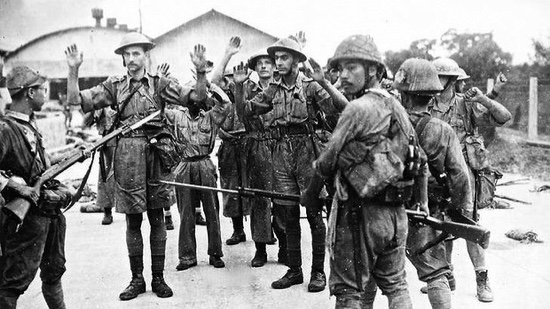
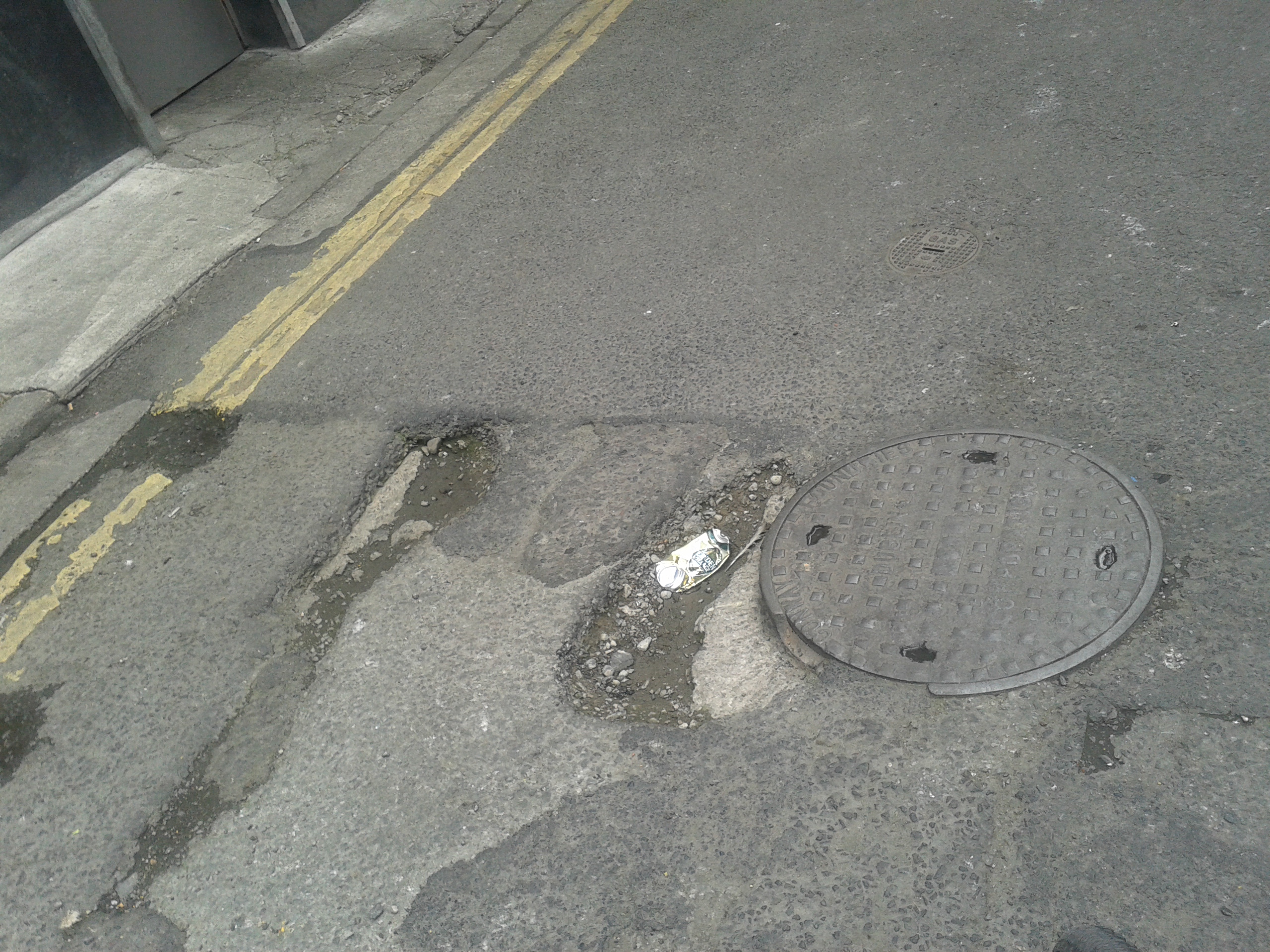
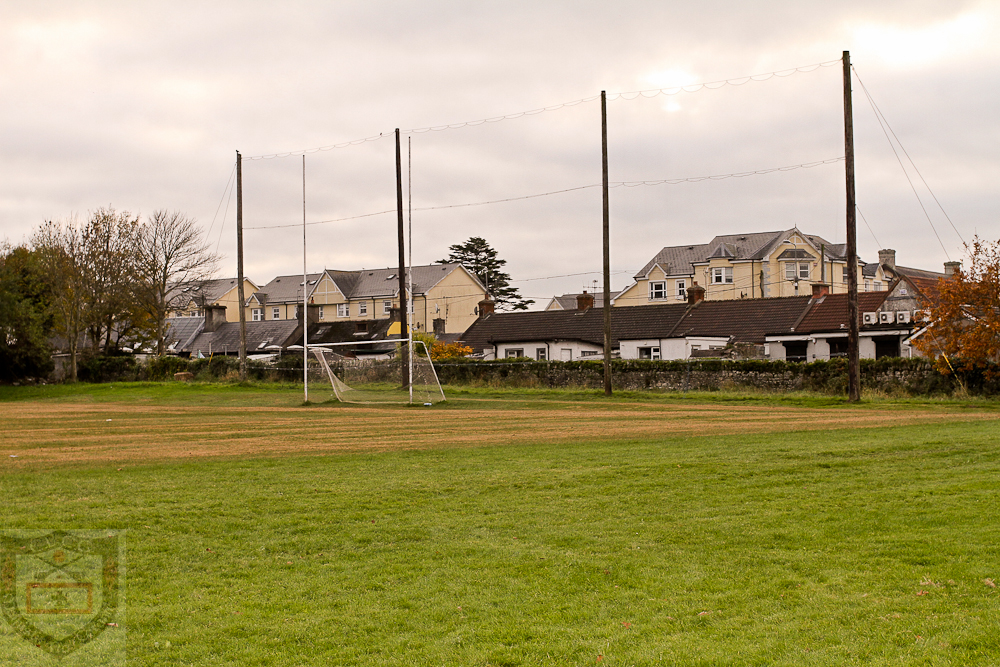


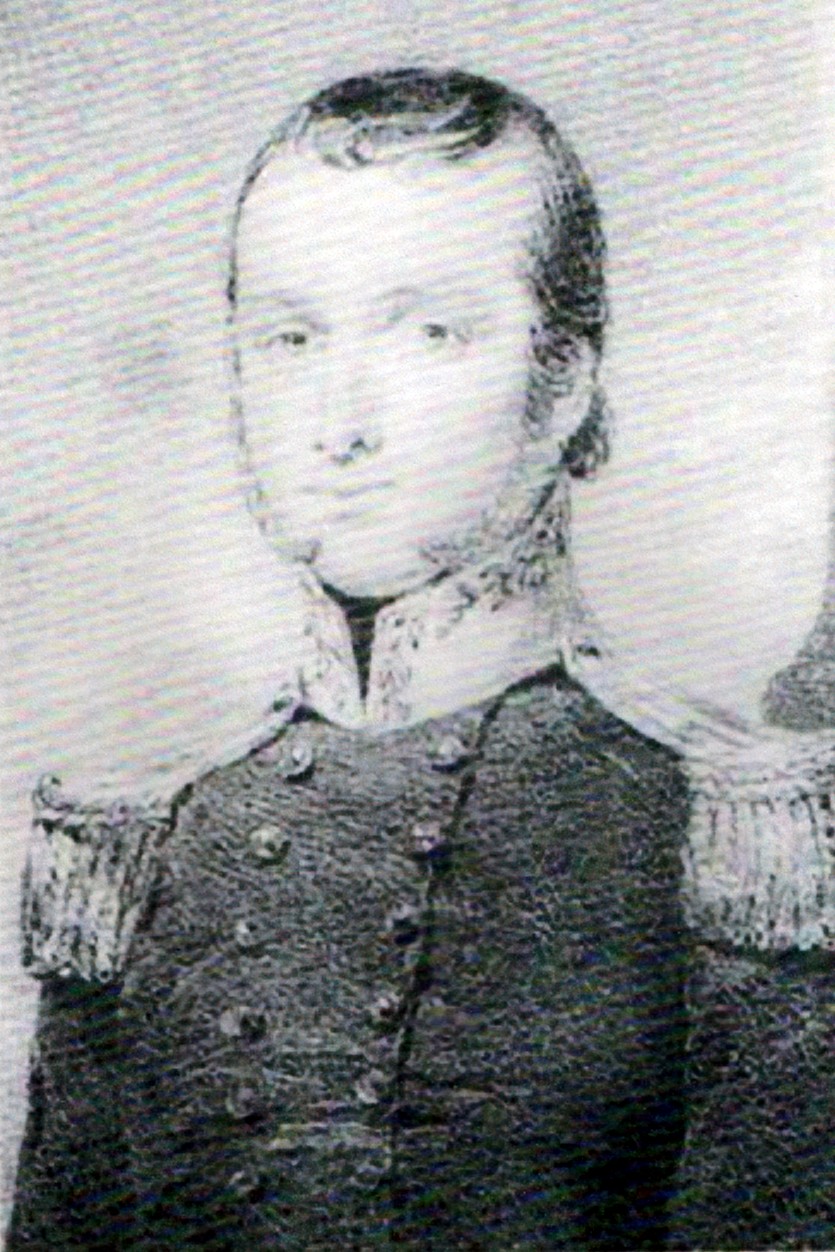
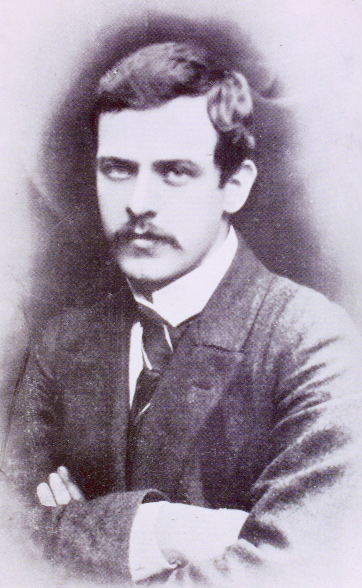


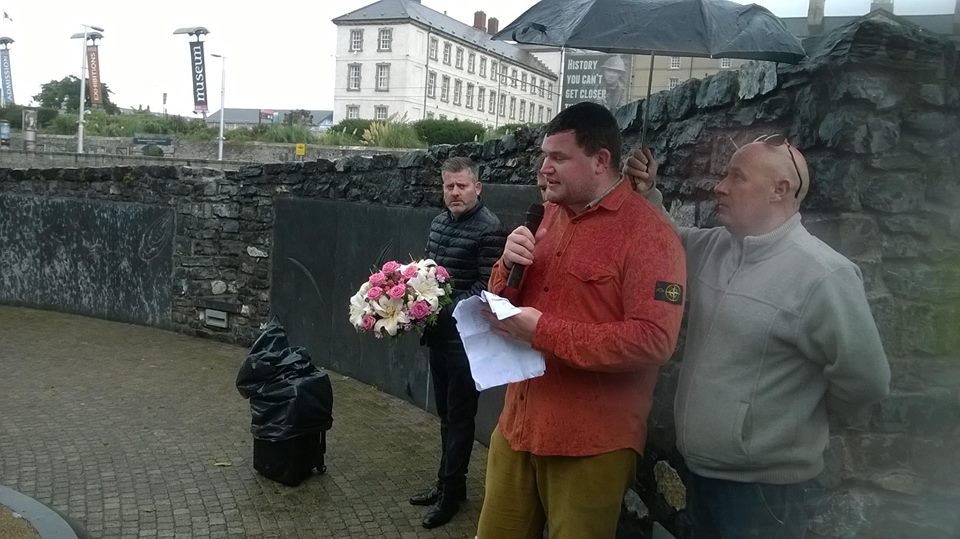
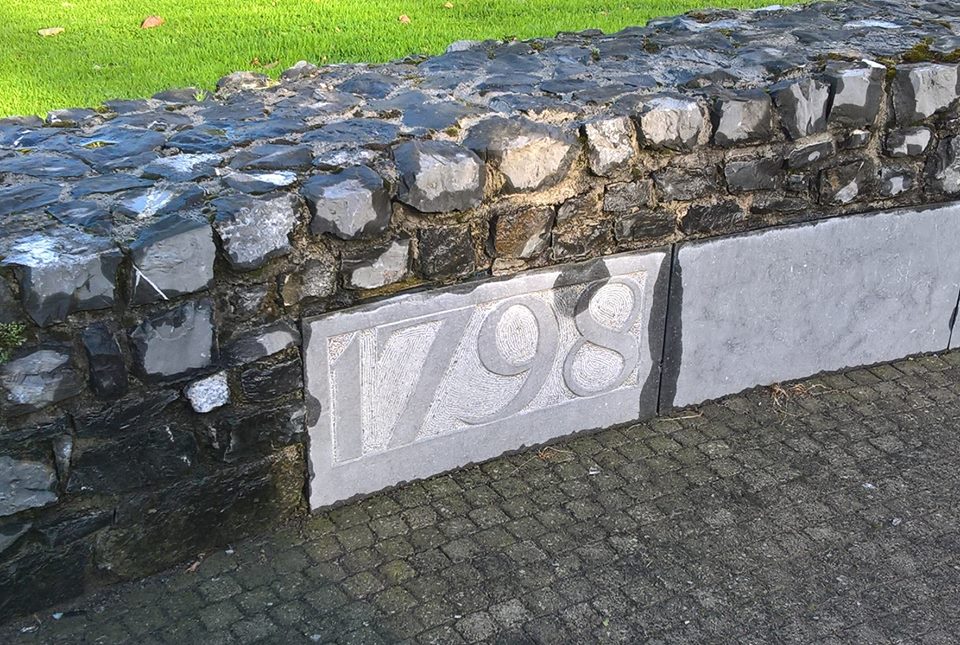
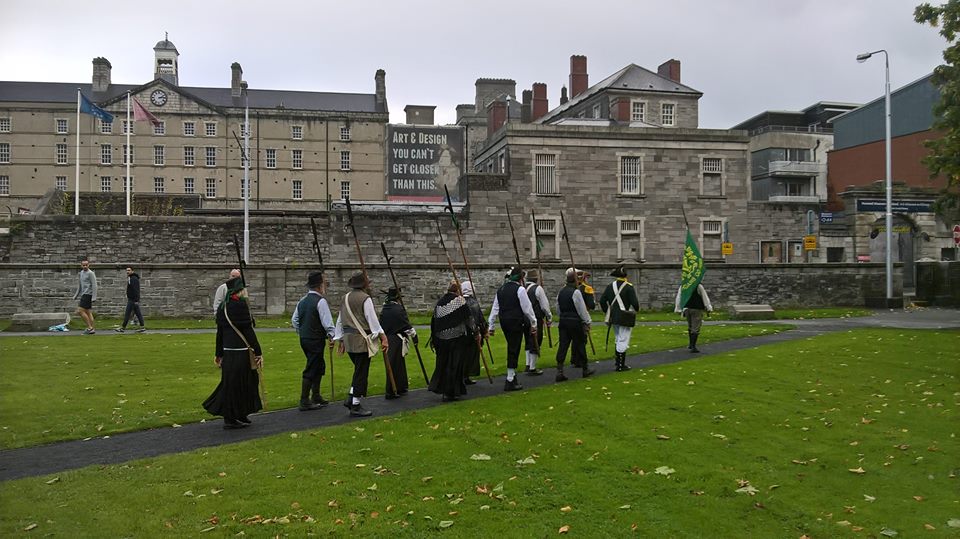


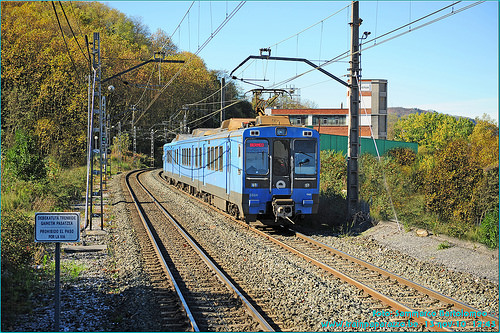


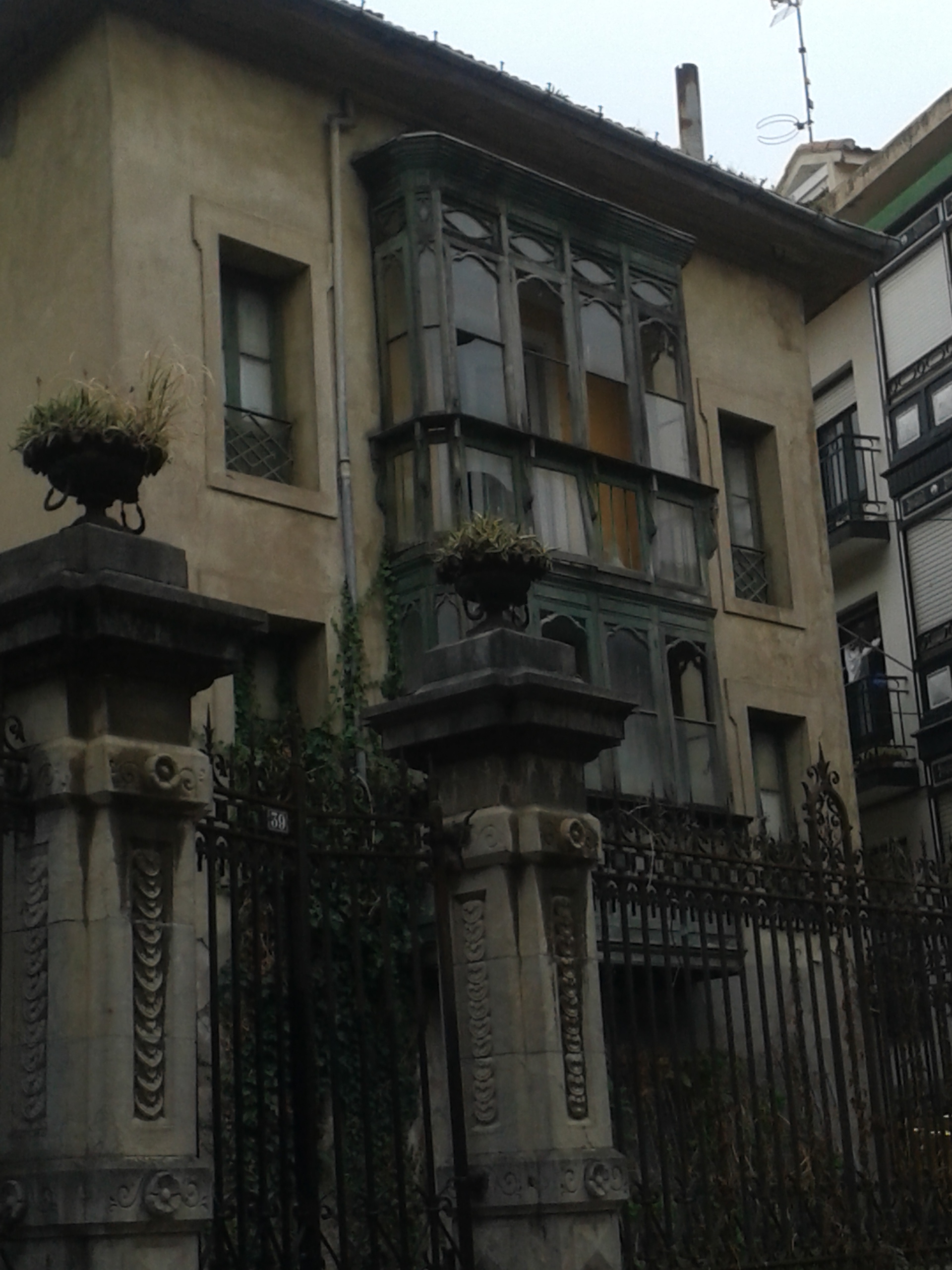

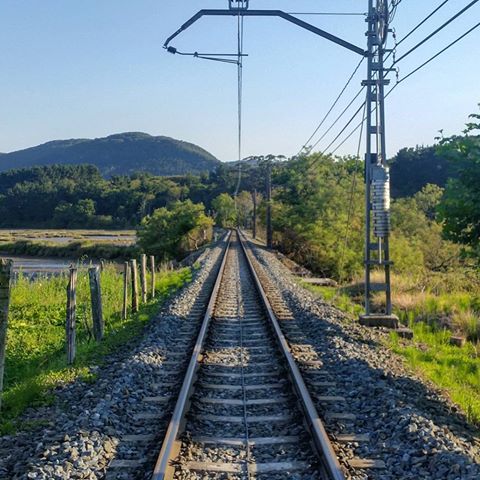

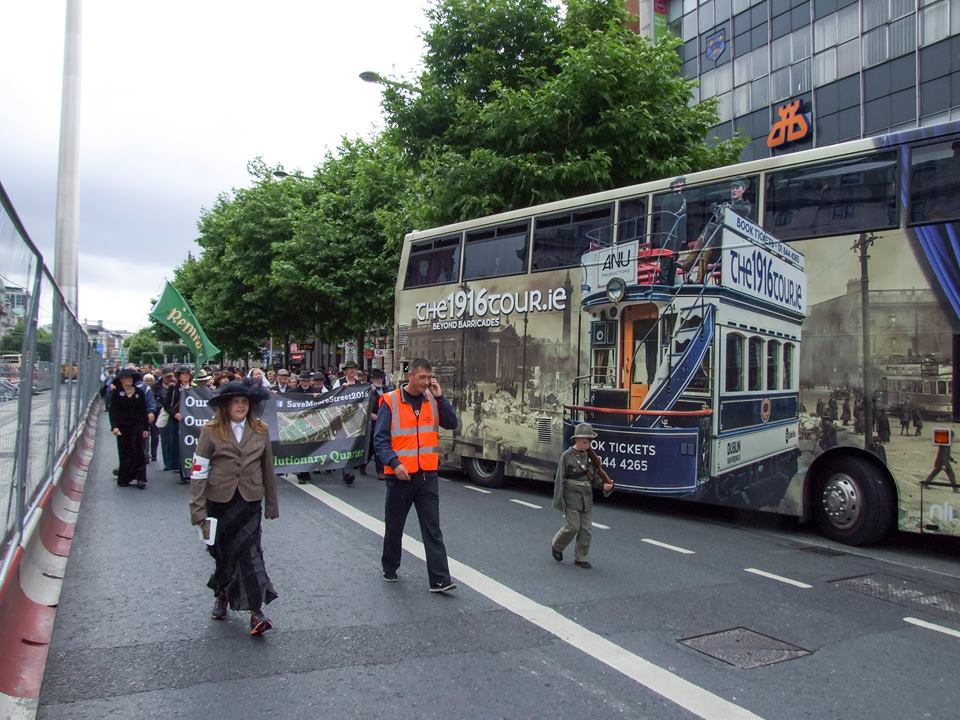
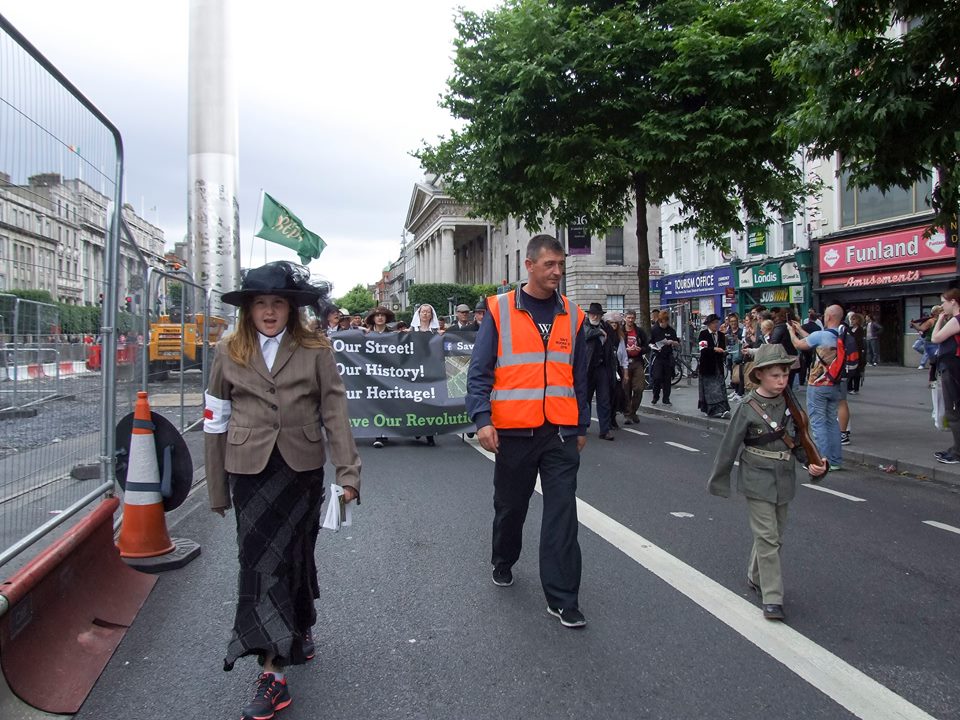
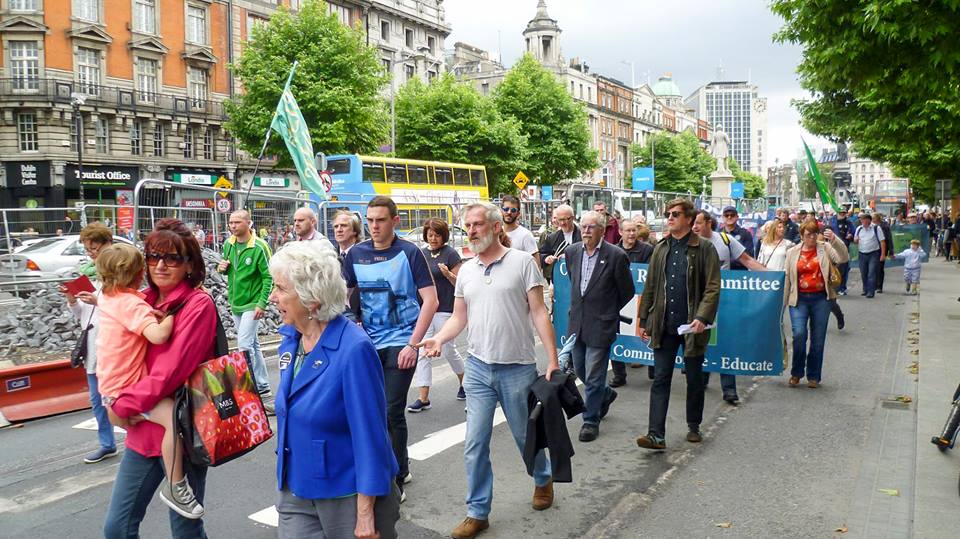


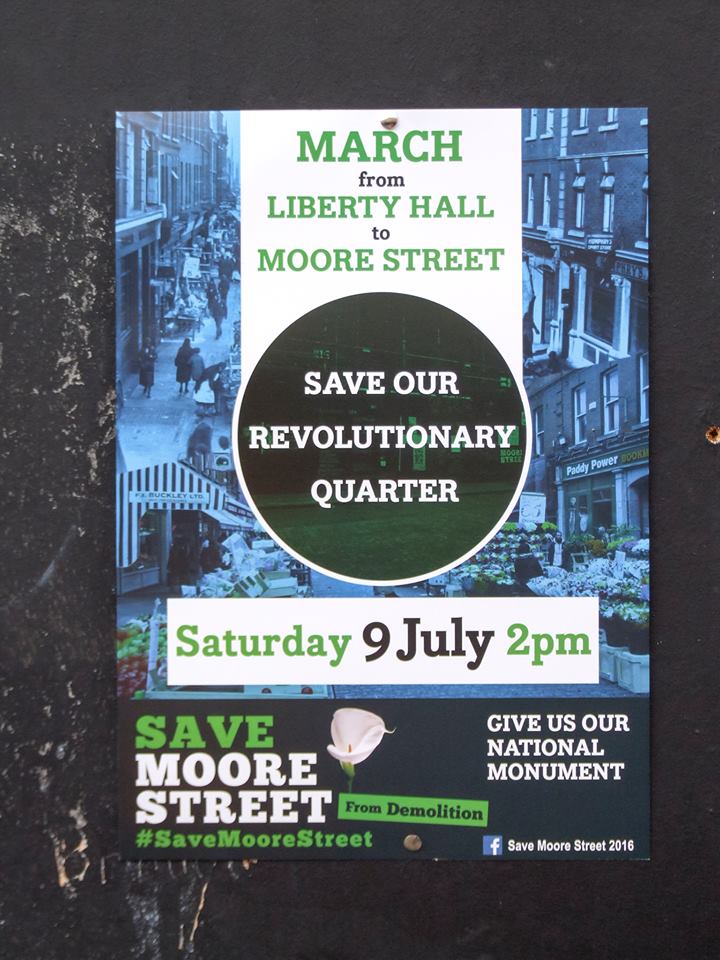
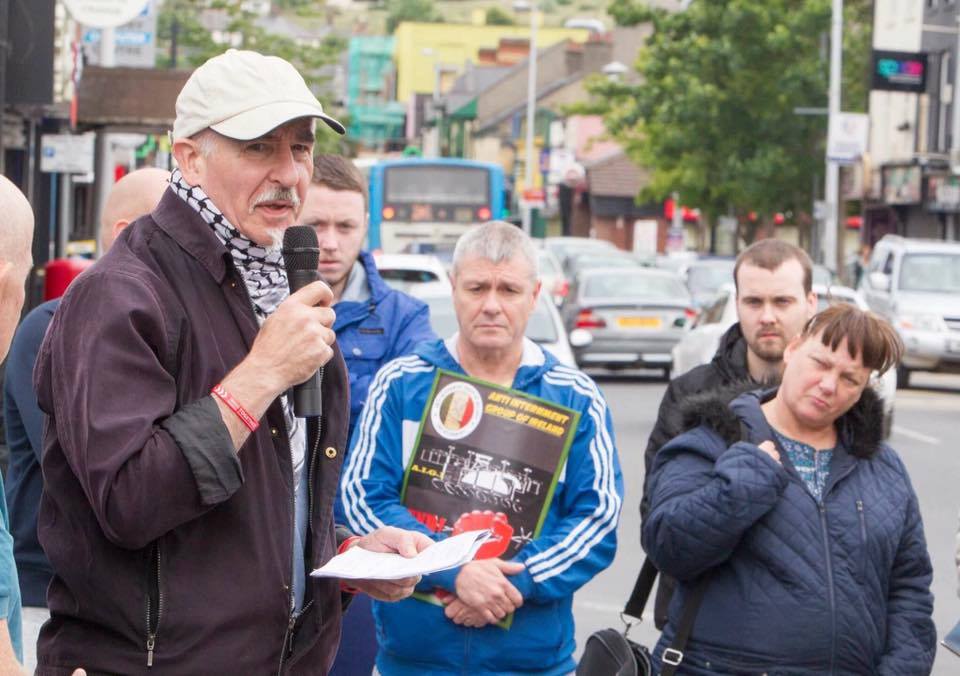
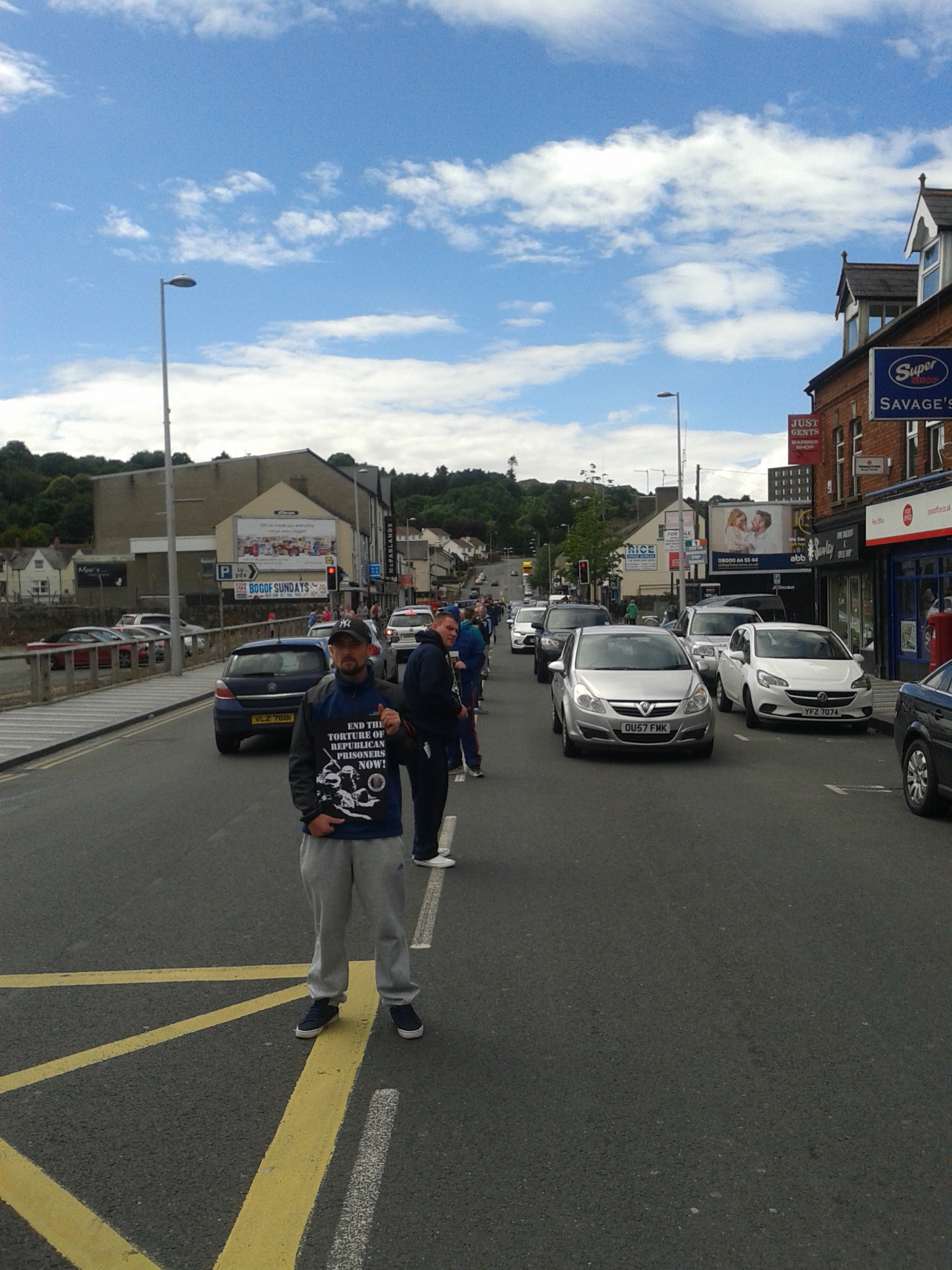
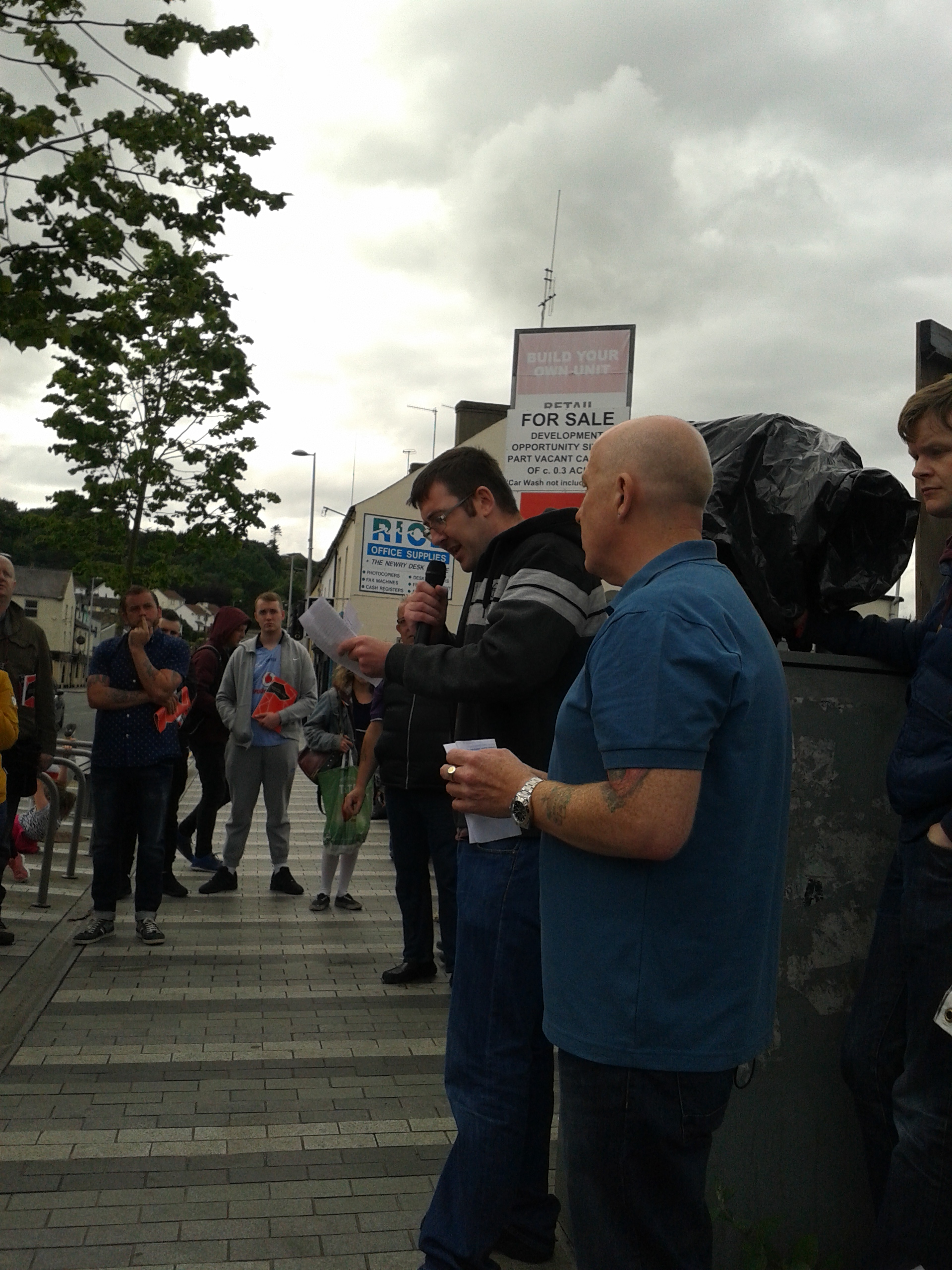
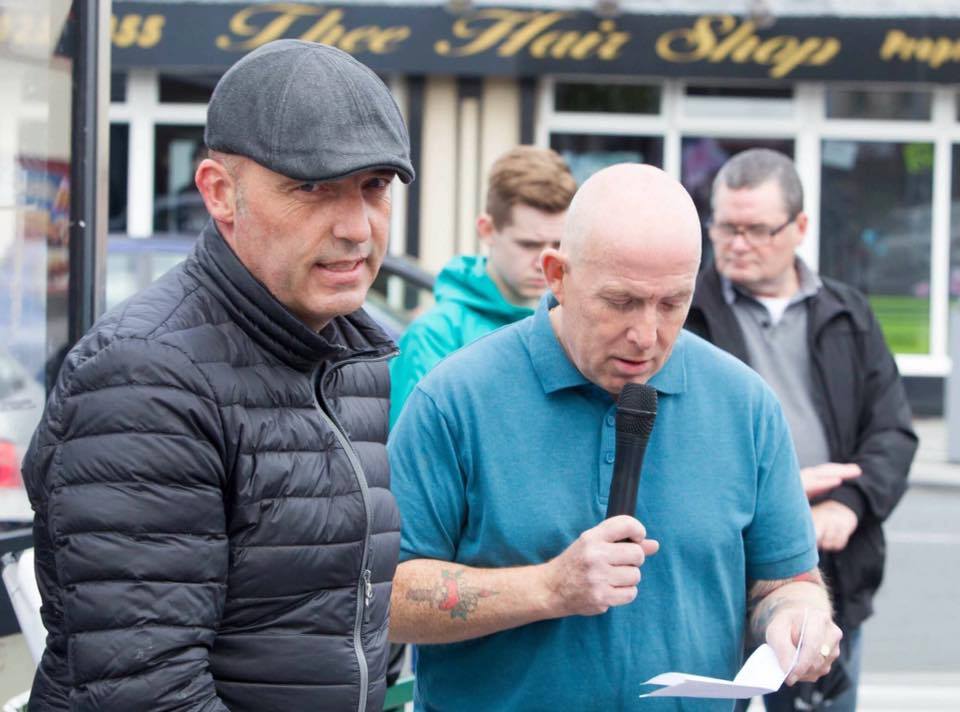
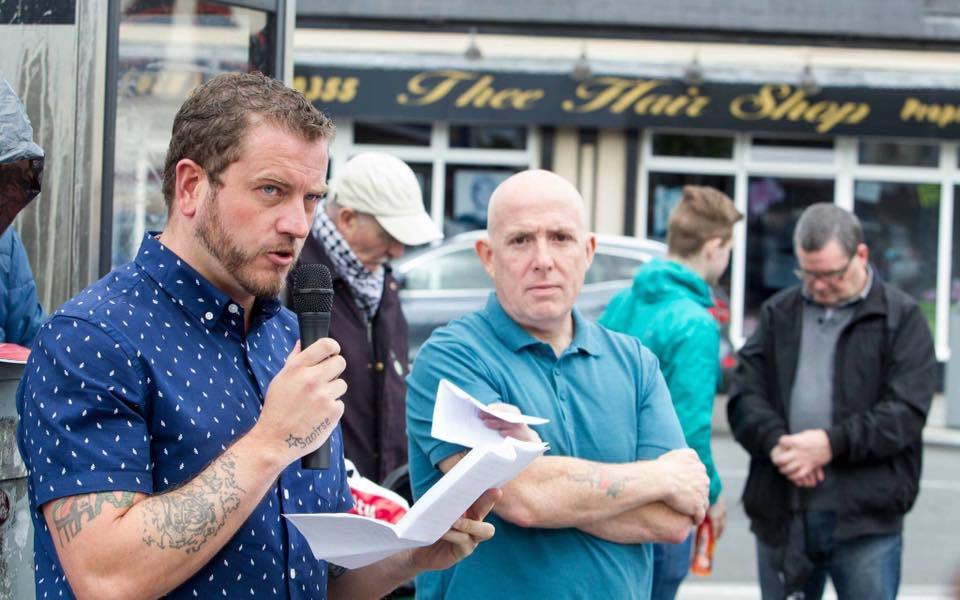





 rebelbreeze