Gearóid Ó Loingsigh (with kind donation of photos)
(Reading time: 7 mins.)
08 March 2023
Photo Coca Plants Northern Colombia: G.O.L.
The drugs issue in Colombia supposedly occupies the time of and is a concern to the government.
It has been an important issue for all the governments and as was to be expected it is one that has come up again in the dialogues with the ELN, despite this organisation denying any links to the drugs trade.
The author (left) and Pablo Beltran, the ELN negotiator (centre) and representative of social movement in Ecuador (right) in 2017 conference in University of Simon Bolivar, Quito, Ecuador. (Photo: GOL)
In the peace process with the FARC, agreement was reached on the issue. What was agreed to in Point 4 of the Havana Accord was abysmal and showed that the FARC did not understand the problem nor the possible solutions.
Of course, there could be a difference between what the FARC understood and what it agreed to, as at the end of the day the state won the war and imposed the greater part of what the FARC signed up to.
Following the agreement in the declarations of the main FARC commanders there is nothing to be seen that indicates that they really understood the problem. Will it be any different with the ELN?
One of the main concerns of the ELN has been to put a distance between themselves and the drugs trade.
Whilst it is true that the ELN is not the FARC, it is also true that in their areas of influence or those contiguous there are coca and poppy crops and the USA is not going to believe them that they have nothing to with it, whether they like it or not. The ELN accepts that it places taxes on economic activities and for the USA that is drug trafficking.
So, some time ago, the ELN issued a statement where they restated that they have nothing to do with drugs and invited an international commission to visit the country to see the reality for itself.(1) They ask that a UN delegate take part in the delegation. They also make a series of proposals in relation to the issue as such.
On the first point, the ELN feels sure of itself regarding its ability to show in practice that they are not drug traffickers. The ELN correctly states that:
When the Colombian government and the USA accuse the ELN of having an active role in the trade, they are lying, but above all they are covering up for those really responsible and the deep-seated problems, which indicate their unwillingness to take real and effective measures.(2)
ELN guerrilla camp, Colombia (Photo: GOL)
But for the USA, it is not about whether they are guilty or not, it is a political tool and weapon and to give them a voice and vote in the affair is extremely dangerous. When the USA accuses the ELN of being drug traffickers, it is not making a mistake.
A mistake on their part would be to say something they believe and be wrong about it, but they accuse the ELN for political reasons on the basis of their strategic needs and the legal basis to their accusations is the least of it: it is just propaganda. By inviting them into the country, the ELN falls into their trap.
The UN participated in the commissions of investigation for supposed weapons of mass destruction in Iraq. The lack of evidence of such weapons wasn’t of much use.
The USA played around with supposed or real non-compliance by Saddam and did what they always wanted to do: invade Iraq. In this they counted on the explicit support of Great Britain and the tacit support of others.
There is a myth in Colombia that the only baddies are the USA and that other imperialist powers such as Canada (a country that is not seen as imperialist by many sections of the “Colombian left”), and other countries of the European Union are good, or at least not really that bad to the point they are friends of the Colombian people.
In the case of Colombia, the EU competes with the US in almost everything. The EU is Colombia’s second commercial partner and its companies are dominant in sectors such as mining, health and oil, amongst others.
The ELN also asks for the legalization of drugs. The demand is justified and quite opportune, but their counterparts i.e. the Colombian state is not sovereign in the matter and furthermore there is a need to clarify what is understood by legalization.
If by legalization they mean legalizing production for medical purposes, the bad news is that medical production is already legal. The thing is, that it is controlled. In fact, in many jurisdictions they don’t talk of illegal drugs but rather controlled substances.
Cocaine is a controlled substance. Its production for medical reasons is authorized by the International Narcotics Control Board (INCB) and production is almost exclusively carried out in Peru. And the market is quite small, not even reaching 400 kilos per year as I pointed out in an earlier article.(3) It solves nothing in relation to Colombia.
If on the other hand, they are talking about legalizing recreational use, something which could positively impact the Colombian countryside, then it is a matter of international jurisdiction. Colombia cannot legalise it on its own.
Colombia is a signatory to the Single Convention of 1961 that holds sway in the matter and in addition there are power relationships at play.
It doesn’t matter whether it legalises production for recreational use, it will never be able to legally export it, not only without the consent of the other country, but also the whole setup of the UN and its bodies such as the INCB i.e. at the end of the day, the USA.
Even if it is legalized for internal consumption, there are other problems that have already arisen in countries such as Uruguay which legalised recreational use of marijuana or some of the states in the USA.
The banking system dare not receive funds from those legalised markets and the producers resort to old methods more akin to money laundering to deposit legal funds in legal accounts in a legal banking system.
Even in the hypothetical case of the USA and the EU agreeing, the legalisation of cocaine would go far beyond Colombian cocaine and would include other drugs such as opium and its derivatives such as heroin. It is worth looking at the drugs market and its production.
According to the UN, cocaine is produced directly or indirectly in eight Latin American countries (Colombia, Peru and Bolivia account for almost all of it), whilst 57 countries produce opium, the Asian countries being the largest producers (Afghanistan, Myanmar and Mexico dominate the market).
A bucket of opium poppy seed (Photo: GOL)
Cannabis, which is the most widely consumed drug in the world is produced in 154 countries.
For 2020, the UN calculated that there were 246,800 hectares of opium and 234,000 of coca.(4) They also calculate a production of 7,930 tonnes in 2021(5) and 1,982 tonnes of cocaine in 2020.(6) We are not talking about small quantities of production or land. Almost half a million hectares between these two drugs and 64 countries.
Any proposal of legalisation has to include these countries and their peasantry.
The number of drug users is also large. The UN calculates that in 2020 there were 209 million cannabis consumers, 61 million people who had consumed opiates, 24 million amphetamine users, 21 million cocaine consumers and 20 million users of ecstasy.(7)
They say that in 2020, they had calculated that 284 million people between the ages of 15-64 years used drugs, i.e. one in every 18 people in this cohort.(8)
There are consequences to this, in economic but also cultural terms regarding the use and abuse of substances. But there also consequences in terms of health. Some 600,000 people received some treatment for drug problems.(9)
So when the ELN says that “Drug addicts are ill and should be cared for by the states and not pursued as delinquents”(10) their idea is correct, however, the size of the problem is greater than the real capacity of the health systems in the countries that have large numbers of users.
Photo Opium Poppy Nariño Colombia: G.O.L.
The total number of people injecting drugs is 5,190,000 in Asia, 2,600,000 in Europe and 2,350,000 in the Americas (almost 75% of which is in north America).(11)
Of those who inject, 5.5 million have Hepatitis C, 1.4 million are HIV positive and 1.2 million are HIV positive and also have Hepatitis C.(12) These are not minor problems and are high-cost illnesses.
Of course, these figures do not include the unlawful abuse of legal pharmaceuticals. In the USA almost 80% of the overdoses are from the consumption of legal opiates such as fentanyl, which caused 78,238 deaths in 2021 in that country.
But the issue does require legalisation and not other means that the FARC aimed for. The peasants of Colombia did not make a mistake in choice of crop when they planted coca. Coca was and continues to be a very profitable crop, despite all the difficulties that it generates.
There is no need to substitute it with another crop such as cocoa or African palm etc. It is not about the crop but rather the production model and the political and economic context.
The increase in coca production in Colombia, is not due to subjective factors such as the decisions of peasants, not even of the drug barons and less still of the insurgencies but rather objective economic factors.
This is a key point. It was the decisions of northern countries that impacted the countryside and pushed thousands of peasants around the world to grow opium poppy and coca. The neoliberal cutback policies in the north also contributed to the dramatic rise in problem drug use due to the increase in misery in those countries.
Bedding, equipment and reading material in an ELN guerrilla camp, Colombia (Photo: GOL)
In any discussion we should distance ourselves from the idea that the drugs problem can be solved in a negotiation with the ELN, although they could negotiate some points that would contribute positively to a solution.
But the problem is political and the free trade agreements and other measures that had a negative impact on the countryside have to be looked at again.
Also, they have to reach an agreement with the Colombian government, not for some perks for peasants nor corrupt projects and budgets such as those the FARC agreed to, but rather a political agreement where the government argues and campaigns for the derogation of the Single Convention of 1961.
The mass media is not great for accuracy or wide coverage and even less so for trustworthy analysis but it does often provide entertainment. Not always even intentionally.
Like when the western mass media reported one day that the Russians were shelling the nuclear reactor in the Russian-held sector of the Donbas area and, within hours, that the Russians were shelling from there.
We’ve all seen examples of the unreliability of the mass media (run by capitalists for the capitalist system so what can we expect, after all?) in our own country but hard to imagine more consistently unreliable and biased than its coverage of the war in the Ukraine.
Take for example the bombing of the Nord Stream pipeline on 26 September last year. The undersea pipeline was delivering Russian gas to Germany; its owners are Russian in financing partnership with European companies and it cost around $9.5 Billion euros to build.
It’s a twin pipeline stretching 1,230 km through the Baltic Sea. Each line comprises around 100,000 individual pipes, each 12 m in length.
So who did the wmm (western mass media) line up to blame, or at least to suggest might have carried out this sabotage? Yep, Russia, major shareholders in the pipeline and major route for exporting of their gas for sale to Europe!
Made no sense at all but to a public marinated in msm propaganda for months …
Now, if you were a reasonable detective, you’d be asking yourself: “Who stands to gain from this?” And you’d have to conclude “enemies of Russia”. Next, who would have the capability and opportunity to do it?
Well, states near the sea there who are not friendly to Russia, obviously. Like Sweden and Norway, whose states have reportedly been investigating for months without any apparent results..
But not just them, also US NATO, who has ships nearby and who carried out the BALTOPS 22 major naval exercise not long before the explosions – including underwater exercises. Sweden and Norway had both participated in the BALTOPS 22 joint NATO exercise.
Ships participating in NATO’s BALTOPS 22 exercise last year. (Images sourced: Internet)
Who would point the finger of suspicion at them? Not the western mass media, that’s for sure.
However a big fly has very recently landed in the ointment. Seymour Hersh, a long-established USA journalist, who has in his CV a Pullitzer Prize for the exposure of the 1968 US massacre of the Mai Lai village in Vietnam, published a report pointing the finger at the USA.
Of course Russia jumps on that – it’s their pipeline and they consider that the US is fighting a proxy war against them in Ukraine. The US and its allies in turn accuse Russia of just using the accusation to divert attention away from their continued invasion of Ukraine and war there.
Sure, that’s possible. But the blowing of the pipeline is an acknowledged fact and it was blown up by somebody – and the US are looking more and more like the most likely suspects. But don’t expect much help in clearing this up from the wsm.
A naval diver surfaces during NATO’s BALTOP 22 exercise last year. (Images sourced: Internet)
Apparently Hersch’s report is not reliable because he didn’t name his inside sources. Really? He didn’t burn his whistleblowing sources on whom, apart from any considerations of decency, he might need to use in future? Or for reason to be trusted by future whistleblowers?!
Now we have a new version. No, not Russia in the frame any more but some “pro-Ukrainian group” or “anti-Putin Russian group”. And the source for this? An unnamed (but suddenly that’s not a problem any more) US Intelligence agency. Yeah, sure.
Neither wsm massaging nor US laundering is going to clean this story up. In pursuance of its drive for world hegemony, the ruling class of the US has been pushing Russia, its main obstacle in Europe, into war.
Well, despite the dangers, the European allies of the USA can go along with that, some (e.g. Poland) more enthusiastically than others, but ok overall. But to sabotage the pipeline delivering gas to Germany, the big power in the EU?
Reckless, US ruling class, reckless. And not just environmentally.
SOURCES
Spare a thought for a family being tortured by the Irish State, which has jailed one of its sons already and went and jailed another one more recently. Yes, you’ve heard of them, the Burke family.
First of all, their son Enoch who was a teacher, objected to a pupil identifying themselves by another gender.
The school required him to refer to this person not as ‘he’ or ‘she’ but as ‘they’. Oh, you can imagine the torment suffered by poor Enoch!
The Burke family leaving from one of Enoch Burke’s court appearances. Enoch is on the far left (not politically) and Simeon in the centre (not politically either). (Images sourced: Internet)
True, he might only have to refer to this person a dozen times in the year but … being forced to say “they”. This is a sin against Enoch’s religion! His religious rights are at stake here!
So naturally Enoch had to take a stand and naturally too had to do it in a public situation in the school, for which he got suspended while awaiting a disciplinary hearing.
Enoch’s religious principles required him to refuse the suspension and keep attending the school and to disobey a court order, for which (and for his stalwart protests in court) he was sent to prison in contempt of court.
Eventually, of course, he was sacked but he applied to the High Court to prevent that, during which attendance he and his family antagonised the judge by their interruptions and manner.
Then the younger son, Simeon, emulating his older brother, refused to be silent and accused the judge of “forcing the people of Ireland to accept transgender”, obviously an attack on his religion too.
The judge was “shoving transgenderism down the throats of the people of Ireland, not only in the schools but in the universities”, cried out the younger Burke. The judge ordered him to leave the court and when he declined, the Gardaí were called.
Young Simeon was removed, during which he was, he told the Judge, “shocked and shaken to the core” and had “been treated in a brutal fashion” by a “mob of Gardaí”. And charged with breach of the Public Order.
Left: Enoch Burke; right: Simeon Burke leaving the High Court. (Images sourced: Internet)
This raised unkind comments on social media from people alleging that they knew Garda “brutal treatment” in Dublin and in Rossport and that Simeon simply had no idea (some going so far as to cruelly dub him “Simple Simeon”, a reference to a similar-sounding children’s game).
Simeon was offered bail in his own name for a paltry sum and with no conditions except to stay away from the High Court but the brave young Burke refused to sign his bail form. So he went to jail too.
Simeon Burke should know something about the law, having studied it at University of Ireland, Galway. He ran for Student Union President there against the Left in general, where, according to Isaac Burke’s media, out of 2,500 votes cast, he received 482 first preference votes.
The legalisation of contraception, divorce and gay marriage are all presumably “crimes against God” too in the eyes of the Burke family and the High Court judges are sworn to protect those decisions.
Some unkind people are pointing out that if the Burkes consider the High Court to be wrong and its operation against their religion, why take their case there for adjudication? Yes, that is puzzling.
But the substantive and original issue remains: should a man of religious conviction be forced to use the third person plural pronoun to refer to any person?
And, come to think of it, did the Burkes object when Christianity was being “shoved down the throats of the people of Ireland, not only in the schools but in the universities”?
The Irish State nominally rules over the 26-Counties land territory and its corresponding sea and airspace. Yet these have been and are repeatedly violated by the US and UK military with Irish ruling class secret collusion.
Now a Senator in Leinster House is seeking a hearing in the High Court to have the behaviour of successive Irish Governments in allowing UK military overflights declared unconstitutional.
The Sea, oh the sea … and the air!
As stipulated by international law, a sovereign state’s area includes the sea up to 12-miles from its border1 and therefore Ireland has a 12 mile territorial sea, a 200 mile exclusive economic zone before any additional claims are made to the continental shelf including the Rockall Bank.2
According to media report, a comprehensive survey of the Irish State’s territorial waters was not undertaken until 2014, i.e nearly a century after its foundation, which in itself is an indictment of an allegedly independent island state.
According to The Geological Survey of Ireland (GSI) says potential territorial waters stretch to 898,442km sq – an area bigger than the oil rich North Sea.3
Royal Air Force fighter jet – the Irish State is reported to have secretly agreed to allow these to overfly Irish airspace (Photo sourced: Internet)
Through the decades when Ireland was a fishing nation and fresh fish was eaten weekly in most homes, Irish fishing boats had to compete with those from many other states fishing illegally inside Irish sea limits.
The Irish Navy was the only policing enforcement agency and through much of that time it had only three corvettes to patrol 12 miles out from the whole coastline of the Irish state. Subsequent EU legislation then left Irish seas more open to foreign-based fishing than it did to Irish boats.
The sovereign air space of a state corresponds to that over its land and 12-miles out to sea from its coastline.4
The use of Shannon airport by the US military in transit of troops, weapons and prisoners has long been known and protested.
Shannon Airport protests
Over the years there have been many highly-publicised protests over the US military use of Shannon, ranging from mass protests outside the airport buildings to deliberate trespass and even damage to a US warplane.
The response from the Government Minister to questions in Leinster House is always that the US is not violating Irish sovereignty, arms, military and prisoners are not being transported through there – because the US authorities have assured the Irish Government that they are not.
In February 2003 five members of the Catholic Workers’ Movement under the name Pitstop Ploughshares gained access to a hanger in Shannon Airport and damaged a USAF warplane there. They were Deirdre Clancy, Nuin Dunlop, Karen Fallon, Ciaron O’Reilly and Damien Moran.
They were jailed for up to 11 weeks awaiting committal for trial to which they were finally sent in Dublin Circuit Court in March and October 2005 on two counts of criminal damage, €100 and US $2.5 million. The faced a maximum 10 years if convicted.
Two aborted trials followed as one judge after another revealed their bias and partiality. In July 2006 after twelve days a mixed male and female jury acquitted the accused on all charges on the grounds that they had taken the action to save lives in Iraq and were justified in doing so.
In October 2012 dramatist, writer, former Republican prisoners and veteran activist Margaretta D’Arcy was arrested with Niall Farrell for scaling the fence and entering the grounds of Shannon Airport.
Four convicted Shannon Airport protestors, L-R Mick Wallace, Margarett D’Arcy, Niall Farrell, Clare Daly. (Photo sourced: The Journal.ie)
In June 2014 at the age of 80 and suffering from Parkinson’s disease D’Arcy was jailed for two weeks in Limerick Prison for refusal to pay the fine and remained defiant.
In July 2014 then members of the Irish Parliament Clare Daly and Mick Wallace5 used a rope ladder to climb over a perimeter fence and enter the grounds of Shannon Airport and made no attempt to avoid arrest.
They were both fined by a court for trespass in February 2015 and refused to pay the fine, eventually being taken to Limerick jail by Gardaí in December 2015 and released less than two hours later.
On 25 April 2017 anti-war activists Edward Horgan, a retired Irish soldier of 78, and civil servant Dan Dowling, 39, were arrested in the airport grounds and charged with criminal trespass and malicious damage (felt-tip graffiti slogan on a warplane).
In a very low-level publicity case in January this year (2023), a jury in Dublin found both guilty of trespass but not of criminal damage at the airport and were ordered to pay €5,000 each to a women’s refuge in Co Clare.
On St. Patrick’s Day 2019 two ex-USA military Ken Mayers and Tarak Kauff, now anti-war campaigners of the US chapter of Veterans for Peace, cut a hole in the airport’s perimeter fence, entered Shannon airfield with a banner and were arrested.
In May last year, a majority jury verdict found Mayers (85) and Kauff (80) guilty of interfering with the running of the airport but unanimously not of criminal damage to an airport perimeter fence and of trespassing the airport with the intent to commit an offence or interfere with property.
Ex-USA military Kauf and Mayers of Veterans for Peace (US) protesting US military use of Shannon Airport (Photo sourced: Internet)
The judge fined the anti-war activists 5,000 euro each. Both had spent 11 weeks in prison and had been required to spend nine months in Ireland awaiting trial, despite clear indications that they had no intention of absconding and indeed were looking forward to the trial to publicise the issue.
Senator Craughwell’s case to the High Court.
Less well-known is that successive Irish governments have for decades by secret agreement permitted permitted UK air force planes to fly over Irish airspace and to interdict, i.e. force or shoot down other aircraft. This is what has led to Senator Craughwell’s taking a case to the High Court.
The Independent Senator maintains that although not the case of a formal military alliance, granting permission to fly over Irish State airspace, unless validated by referendum, is a violation of Ireland’s neutrality and sovereignty and is seeking a number of declarations from the Court.
Craughwell, who is a former member of the Irish Defence Forces and the British Army, as well as being an ex-President of the Teachers Union of Ireland, said that his belief in the existence of a secret agreement is based on a reply from then Taoiseach Brian Cowen to Enda Kenny in 2005.
The Senator seeks High Court declarations including that the agreement between Ireland and the UK allowing armed British military aircraft to intercept aircraft over Irish airspace amounts to an impermissible dilution and breach of Articles 1, 5, 6, 13, 15, and 28 of the Irish Constitution.
He also seeks a declaration that the Government’s failure to exercise control over Ireland’s territorial waters, airspace and exclusive economic zone breaches Article 5 of the Constitution which declares that Ireland is a sovereign independent democratic state.
Craughwell further seeks an order restraining the government from bringing in legislation to give effect to the agreement, unless it has been passed by a referendum.
Aerial view of Ireland (Image sourced: Internet)
Irish State Neutral?
Most Irish people mistakenly believe that Ireland’s military neutrality is specifically enshrined in Bunreacht na hÉireann, the Irish Constitution. However Article 29, section 4, subsection 9° underlines the neutrality of the Irish State in respect of a military force of the EU:
The State shall not adopt a decision taken by the European Council to establish a common defence pursuant to Article 42 of the Treaty on European Union where that common defence would include the State.6
“This was originally inserted by the 2002 amendment ratifying the Treaty of Nice and updated by the 2009 amendment ratifying the Treaty of Lisbon. An earlier bill intended to ratify the Treaty of Nice did not include a common defence opt-out, and was rejected in the first Nice referendum, in 2001.”7
It is fairly clear that the citizens of the Irish state are generally in favour of retaining Irish neutrality but there are elements within the state frequently trying to undermine that policy, chiefly the native Gombeen ruling class.
The Irish State has never been truly independent; it came into existence agreeing to the partition of the nation and in waging war against the forces of national liberation, during which it executed more Irish Republicans than the British had during the War of Independence.
Subsequently, the Irish State has been characterised as neo-colonialist, dominated firstly by British capital, then by the US and finally by the EU.
There are elements within Irish upper circles who long to join the EU military and political club while some others share a nostalgia for the British Empire and Commonwealth and the kind of supporting and sharing role to which John Redmond and his Irish Nationalist Party aspired.
Finally, there are of course elements in the Irish armed forces that are attracted by career advancement through joint military operations with other armed forces along with greater weaponry, such as would be available in a joint European armed force or as part of NATO.
Worryingly, Mícheál Martin during questions in Leinster House some months ago denied that the population would have to be consulted in referendum before the State could join some military alliance.
What now?
Whatever formal position the State may take on neutrality in future, it has been undermining it for decades and doing so in secret.
Why the secrecy? Presumably because the ruling class is aware that most Irish people want to remain militarily neutral and would wish to get rid of a government that was trying to ditch the neutrality policy.
Ireland needs to be independent of all imperialist alliances. Should the Gombeen ruling class succeed in committing the State’s armed forces to some military alliance, the choice is certain to be either imperialist NATO or imperialist EU.
In the latter case, it is entirely possible that Irish troops would be sent to suppress social or national risings in Europe – for example in Catalunya or the Basque Country, with Spanish troops being sent to quell mass protests in Ireland.
Or in either case, that Irish troops would become part of some joint imperialist force in Latin America, Africa or Asia.
Meanwhile the Gombeens, because of the State’s allowing US and UK military aircraft over Irish skies and in Shannon airport, are potentially painting a target for retribution on to the Irish population.
End.
FOOTNOTES
1Except obviously where it intersects with another state’s borders (seeAirspace – Wikipedia)
4Airspace – Wikipedia and obviously this currently ends at the borders of the Six County colony, whose own 12-mile UK zone also ends where it meets the Irish borders on land, sea and air.
In late November last year the UK’s Home Secretary1 referred to refugees and migrants entering Britain as “an invasion”, for which a Hollocaust survivor, 83-year-old Joan Salter, challenged her, likening her speech to that of the Nazis.
An NGO working with refugees, Freedom From Torture, posted some of the exchange on Twitter. In turn, the NGO came under pressure from the Home Office to retract the video.
This month, not only did the charity refuse but did so publicly, fully endorsing the content of the video.
Anyone would well understand the difference between invading a country and entering it as a refugee, asylum seeker or even economic migrant. Those come unarmed, fleeing to safety or trying to make a living for themselves and their family.
A minister of a British Government should be extremely well-placed to understand the distinction. After all, there is no continent and very few countries, including its near neighbours, which the British ruling class has not caused to be invaded at some time or other.2
Map of areas of the world ‘owned’ by Britain or the UK at one time (Source: Internet)
From the time the descendants of the Anglo-Saxon invaders of Celtic England merged with the descendants of the later Norman invaders, England has gone from being a major invading and colonising military and naval power to being a major imperialist one.
Imperialist action did not always end in invasion; pressure could be applied in other ways, through bribery — or open threat. The term “gunboat diplomacy” was coined to describe imperialist actions short of actual invasion and Britain was renowned for actions of that type.
The ruling class of Britain has waged war against people to take over trade routes, to colonise land and extract resources, in competition with other colonial powers, to quash resistance and even for the right to sell opium in China.
In the course of those colonial and imperialist activities, Britain has carried out many invasions. In fact, Suella’s parents themselves come from former colonies.
Braverman is a child of migrants
Suella Braverman is the daughter of parents of Indian origin who emigrated to Britain in the 1960s: Uma (née Mootien-Pillay) from Mauritius and Christie Fernandes, from Kenya. Both those countries have indeed been invaded by Britain.
Kenya in particular from 1952-1960 had one of the worst experiences of colonial treatment by the British military, including wide-scale murder, torture and rape. India and Pakistan had their infrastructure and manufacture undermined by Britain leading to regular country-wide famines.
Suella Braverman, MP, currently UK Home Secretary. (Sourced: Internet)
Suella should know about invasions, refugees and migrants but is on record as saying that the British Empire was on the whole a beneficial experience for its conquered. This is a prime example of the “slave mind” that apes the invader and wants to collaborate with it.3
Such “slave-minded” people can be even more vicious and callous in their attitudes than the conquerors themselves and Braverman certainly fills that bill. And it’s not just in occasional choice of words that Braverman nears Nazi appearance.
During Braverman’s unsuccessful campaign for selection as leader of the Conservative Party last July, she said her priorities would have included to “solve the problem of boats crossing the Channel” and “to withdraw the UK from the European Convention of Human Rights.”
In October 2022, Braverman said that she would love to see a front page of The Daily Telegraph sending asylum seekers to Rwanda4 and described it as her “dream” and “obsession.” No doubt she includes human rights and legality concerns as “all of this woke rubbish.5”
A courageous NGO
Holocaust survivor Joan Salter, the woman who accused Braverman of Nazi-like speech, is the daughter of refugees from Nazi persecution who survived but endured imprisonment and hazardous journeys. She has an MBE for her work on Holocaust education.
Joan Salter, Holocaust survivor who challenged the Home Secretary. (Sourced: Internet)
In response to a Home Office accusation that the clip is only partial and therefore misleading, the NGO’s CEO Sonya Sceats pointed out the full exchange is available in video on its website and said the charity will not remove the Twitter clip.
“As an organisation providing therapy to torture survivors who feel targeted by her language and who know first-hand where such dehumanising language can lead, we will not do so. She has used language she should be ashamed of, and we won’t be pressured into helping her hide it.”
Non-Governmental Organisations nearly always rely on government funding, whether directly or indirectly and as a result tend not to rock the boat too much, in case they find their boat getting smaller or their team even being tossed overboard.
Sony Sceats, CEO of Freedom From Torture charity who stood up to the Home Secretary.
As a result, in public the CEOs of those organisations tend to vary from generally totally compliant6 to cautiously critical on certain occasions. In that context, the actions of Salter in the initial video and of the Freedom From Torture NGO in militantly backing her can only be admired.
1This is the UK’s equivalent to Minister for Home Affairs, these days normally restricted to Britain (i.e excluding the colony in Ireland) and in particular England and Wales (i.e often excluding even Scotland).
3The concept of the ‘slave mind’ or ‘colonised mind’ has been addressed by a number of writers on national liberation, notably Patrick Pearse (1879-1916) from Ireland and Franz Fanon (1925-1961) from Martinique.
4That plan has been condemned by many human and civil rights organisations and also denounced as illegal.
5A quote dating from her attempt at Leader of the Conservative Party.
Working people have experienced many betrayals in history and the struggle for self-determination of the Irish nation has been – and is being – betrayed also.
When such betrayals occur, a range of common reactions is evoked; thinking about those responses may help the betrayed at least to moderate the harm and turn the experience to some benefit.
Equally, some ways of handling the experience can magnify and deepen the harm already caused.
Betrayal is a difficult experience for the betrayed certainly but not without some cost to the betrayer too and each has a number of common responses. This applies to the personal as well as to the political but there are some differences.
The betrayers have their followers to different degrees and these too have psychological reactions to the betrayal — and to criticism of the betrayal. We can observe these reactions in a number of recent historical cases of high levels of resistance subsequently betrayed.
The most recent phase of high degree resistance in Ireland took place largely in the British colony of the Six Counties, beginning with mass struggles for civil rights before passing through protracted guerrilla war and intense struggles of political prisoners in the jails.
In the Basque Country, the corresponding phase began with ideological-cultural struggle and mass industrial actions against the Franco dictatorship, quickly developing into a guerrilla campaign combined with street battles, resistance to conscription and struggles around prisoners in the jails.
The leadership of the Irish struggle came to political agreement with the colonial occupier, disbanded and decommissioned its guerrilla forces and acceding to its right of conquest, joined the occupier’s colonial administration, concentrating thereafter on building up its electoral base.
A similar process took place in the Basque Country but with important differences: the imprisoned activists were not released and the movement’s political leadership was not even admitted into joint management of the colonial administration.
Each nation witnessed splits, recrimination, dissidence, repression on groups continuing resistance but also a range of psychological responses which at best did not assist recuperation and in fact often deepened the harm of betrayal by the leadership.
STANDARD RESPONSES BY THE BETRAYED
DISMAY is a common reaction: How could he/ she/ they? I never thought they would. We’re finished now.
BLAME is another also common response: It was that leader’s or leadership’s fault. We didn’t fight hard enough. Those comrades criticised too much.
SELF-CENSORSHIP And EXCESSIVE CAUTION: We can see the harm in some of the leadership’s actions but we must be careful not to step too far out of the movement, where we will be marginalised and unable to have an effect1.
DESPAIR: That’s the end of everything. There’s no way out of this. It was all for nothing – all those sacrifices, all that pain.I’ll never trust people or get involved again.
APATHY: So I/ we might as well forget about it all. Just think about ourselves/ myself/ family. Drop out. Drink. Take drugs.
DENIAL: We’ve not really been betrayed. It’s just another way to go for the same thing. This is the only reasonable choice. We couldn’t keep on that way any longer, this is just a change of method. We’re just having a pause. The leadership is clever and has tricks up their sleeves. This is just to fool the authorities. It’s just going to take a little longer to win than we thought.
Those are defensive constructions in emotion and, in so far as that takes place, in thinking. But defensiveness can turn to aggression – and frequently does. The betrayers – and often the duped also – resent being reminded of what and where they are. It makes them uncomfortable.
HOSTILITY: How dare those people criticise us/ the leadership? They don’t understand and just want continual conflict. They’re endangering our secret plan. Who do they think they are? They’re just wrecking everything, undermining our new plans. They need to be taught a lesson.
PERSONAL ATTACKS: That critic is no great activist. S/he hasn’t suffered as some of us have. They were always troublemakers. Jealous, that’s what they are. They’re not very bright; no idea about real politics. They are in fact traitors, helping our enemies.
MARGINALISATION: We are not going to listen to those critics. We will not allow them space on our media. We’ll try to make sure they don’t get venues in which to spread their poison. If people are friends with them they can’t be our friends too. Such people will not enjoy our hospitality or invitations to our events. People should not even talk to them. If the authorities attack those dissidents, we are not going to trouble ourselves about them – it’s their own look out.
MANAGING THE BETRAYAL
PROMOTING LEADER ADULATION is a useful tool in shutting down the opportunities for criticism and in repressing them when they arise. “Who are we to criticise this great comrade’s thinking or actions?” becomes an implicit question, clearing the way for betrayal.
Leaders who have surrendered or compromised the struggle, L-R: Gerry Adams and Martin McGuinness of the Provisionals, Arnaldo Otegi of the Basque Patriotic Left, Abdullah Ocalan of the PKK and Yasser Arafat of Al Fatah. The latter seemed to be attempting to to turn back from the path of betrayal when he became very ill (quite probably poisoned) and died.
SEEKING COUNTER-REVOLUTIONARY ALLIANCES is engaged upon so as to appear to its members to make the organisation’s influence greater, or to outflank and isolate more revolutionary tendencies and often ultimately to make the leadership acceptable to the ruling circles.
BEGGING FOR CONCESSIONS when the revolutionary path has been abandoned can often be observed, as in “we’ve abandoned our militant struggle, please stop repressing us”, for example, a frequent response to repression of the Basque leadership once it abandoned the revolutionary path.
COLLUDING WITH THE OCCUPIER becomes a new second nature to a leadership abandoning revolution, not only in abandoning armed struggle, for example but in destroying weapons and suppressing elements still in resistance.
PROVING THEIR READINESS TO COLLUDE FURTHER, revolutionaries turned collaborators denounce continued resistance, try to convince revolutionaries to desist (or threaten or physically attack them), promote the repressive arms of the State such as the police and so on.
INTOLERANCE OF CRITICISM becomes default position; such criticism tends to expose the contradiction between the original purpose of the organisation and its concrete actions in the present. Censorship, expulsion and misrepresentation become common.
MARGINALISATION OF CRITICS follows from intolerance of criticism – the individuals or groups must be made pariahs so as to nullify or at least reduce their influence. Association with them, socially or politically – even in agitating around civil rights – must be discouraged.
REPRESSION OF DISSIDENTS finally becomes necessary, whether by threats or by actual violence or, when admitted to governing circles, by use of repressive state machinery.
DEALING WITH BETRAYAL RATIONALLY
The first necessary step is to analyse how the betrayal came about: how was it organised? What were the conditions that made it possible? What were the early signs?
Then, proceed to: what could we have done differently? What WILL we do differently in future?
Electoral work
One common assumption here in Ireland, especially in Irish Republican circles, is that the rot began with standing in elections. This is not logical and it is in effect making a negative fetish of electoral work, a taboo to be avoided.
It is often useful to the revolution in many ways to have representation in the parliament and local authorities, for example in promoting or blocking practical or legislative measures, getting media air time, visiting prisons — all without ever promoting reformism as a way forward.
Certainly the prioritisation of electoral work over other aspects is a sign that something has gone wrong: the strength of the popular revolutionary movement is on the street, in workplaces, communities, places of education, rather than in parliaments and local authorities.
The drive towards electoral representation can encourage bland slogans of the soap powder kind (“new improved” or “washes even better”) rather than those with revolutionary content and also the promotion of more bourgeois individuals in preference to grass-roots organisers.
Anodyne election slogan in both languages for Sinn Féin.
But none of that means that representation in those bodies cannot be used to further the popular struggles or that such aberrations cannot be avoided. And in fact, the concentration on criticism on the electoral factor served to distract from a more fundamental error.
Of course, electoral work should never, for revolutionaries, be about entering government under the current socio-economic system, i.e sharing in the administration of the State.
Leader adulation & intolerance of criticism
If criticism is not tolerated when errors are committed, they can hardly be corrected. Again and again it has been observed that the party/ organisation faithful refuse to accept external criticism from non-enemies. Internally the leadership inhibits criticism by the members.
The cult of the leader also inhibits criticism and therefore correction of errors. And behind this image others can hide and also commit errors. Problematic as dead icons may be, living ones are many times more dangerous – deceased ones at least do not change their trajectories.
Such created living icons have been Mandela in South Africa, Yasser Arafat among Palestinians, Gerry Adams and Martin McGuinness in Ireland, Arnaldo Otegi in the Basque Country and Abdullah Ocalan among Kurds (particularly in the Turkish and Syrian states).
Nobody knows everything or is always right. Bothersome as being criticised may be, its total absence is worse, allowing us no opportunity to question ourselves as activists and in particular as revolutionary organisations.
The revolutionary leadership, party or organisation is not the people
The revolutionary leadership, party or organisation does not have all the answers and is not the people. This might seem obvious but from the behaviour of such leaderships and their followers in the past it is clear that the opposite philosophy has been dominant.
Confusing the organisation with the people or with revolution itself, we assume that what is good for the organisation is also good for the people and the revolution. This however is not always so and leads to placing the perceived well-being of the organisation above the needs of the revolution.
Indulging this confusion leads to political opportunism and sectarianism, bad relations with other revolutionaries, ignoring all external criticism and placing the needs of the leadership higher than those of the membership and of the membership higher than those of the mass movement.
Internationalist solidarity
In internationalist solidarity work we build the unity of the people across borders and against the same or different enemies than those against which we are struggling.
One feature observed in a number of organisations where the leadership is moving towards betrayal is a reduction or elimination of such work.
To those in our ranks seeking an accommodation with imperialism and capitalism, those internationalist solidarity alliances are either a) unimportant or b) a hindrance to the alternative reactionary alliances to which they aspire.
The latter was very much the case with the Provisionals’ attitude to US imperialism. For decades, their leadership maintained apparently mutually-contradictory positions on what is the biggest imperialist superpower in the world.
On the one hand, for example, there could be involvement in solidarity with Cuba against the US economic blockade and, in the past, against US sabotage and terrorism against the Sandinista regime in Nicaragua.
On the other hand, the leadership sought the support of the US elite against British colonialism, which is occupying a part of Ireland and against which the movement was waging, in that colony, an armed and popular struggle.
Seeking support from the US imperialist elite entailed distancing from left-wing Irish USA and dropping support for even long-term inmates of US jails, such as American Indian Leonard Peltier and Black American Mumia Abu Jamal, arising out of popular struggles inside the US.2
Leonard Peltier, Native American convicted in 1977 in deeply flawed trial for murder of two FBI agents in 1975 shootout on Pine Ridge Reservation. Nearly 80 years of age now and with multiple health issues, even release on clemency grounds is constantly blocked. His is one of many campaigns in the USA which SF cannot support as they seek to remain friends with the Democratic Party elite there.
Black American journalist and activist, framed for the murder of a corrupt Philadelphia policeman in 1981 and sentenced to death in 1982, sentence commuted to imprisonment for life without parole in 2011. Mumia is nearly 70 years of age now with a number of health issues. Another of the type of injustice in the USA about which SF cannot campaign as they seek to stay close to the Democratic Party elite. Anecdotally, a SF Councillor who was regularly writing to him was obliged to desist on instruction from her party leadership.
Unprincipled alliances
Another warning sign is the founding of unprincipled alliances with other organisations in struggle. For example, although it is correct to have a position of support for the Palestinian people, that should not necessarily bind us to exclusively support the fighters of one organisation only.
The Provisionals made their alliance with the Al Fatah organisation to the exclusion of all others in Palestine but worse was to come, for Al Fatah shoved aside the idea of a free Palestine and the right of return in exchange for administrative partial autonomy and funding.3
From there, Al Fatah became so corrupt that the Palestinian people, that had long supported a secular leadership, voted overwhelmingly for an islamic fundamentalist party, Hamas4. The unprincipled alliance with Al Fatah and the ANC was used to ‘sell’ the GFA to Irish Republicans.5
In the Basque Country, the mass movement’s leadership developed close links with the leadership of the Provisionals and refused links with Irish Republican organisations that dissented from the Provisionals’ position or with Republican prisoners after the Good Friday Agreement.
That should have sounded alarm trumpets in the Basque movement but if it did, it remained largely without practical effect. Askapena, the Basque internationalist solidarity organisation did split from the main movement but did not go so far as to support ‘dissident’ Irish Republican prisoners.
LESSONS
On the basis of the preceding I think we can draw a number of primary lessons.
LESSON ONE: ANALYSE THE MISTAKES OF THE PAST AND SEEK TO AVOID REPLICATING THEM
The type of struggle, location, timing, peripheral situation, long, medium and short-term objectives, experience and expertise of personnel, resources … all need to be analysed, in conjunction with the strengths and weaknesses of the enemy.
In carrying out this kind of analysis on the Irish struggle, we see that we faced one of the military superpowers, also well linked into the western imperialist world. The Republican movement’s battle area was in total one-sixth of the nation’s territory and the location deeply divided.
The rest of the nation was ruled by a weak foreign-dependent ruling class.
Map of Ireland showing the British colony of the Six Counties. The Provisionals took on the British state, mostly confining their struggle in that deeply divided politically and culturally region shown in yellow.
A movement cannot choose when it has to step forward in defence but it can choose how it develops the struggle afterwards. It seems obvious that in order to be victorious, at the very least the struggle would have to be spread throughout the nation.
That in turn would entail putting forward social and economic objectives to attract wider support which, in turn, would mean taking on the Catholic Church hierarchy.
In addition, the question of effective external allies was relevant here but even more so in the Basque Country, located across the borders of two powerful European states.
The total population of the portion of the Basque nation within the Spanish state is far short of three million, that of the rest of the state over 44 million.
Clearly allies external to the Basque nation would be essential for victory and these would have to come from across most of the Spanish state at least.
Map showing the ‘autonomous’ regions of the Spanish State; the southern Basque Country is shown in pink at the top, including ‘Navarre’ shown in yellow next to it. Essentially, the Basque Patriotic Left without allies confronted the Spanish state from there.
Such an assumption would entail, in turn, outlining objectives to attract considerable numbers from across the Spanish state which in turn would mean creating alliances with revolutionary and other progressive forces across the state.
LESSON TWO: REFRAIN FROM PERSONALISING THE ISSUES
When criticism of the counter-revolutionary line put forward by individual leaders becomes personalised, the political essence of the criticism becomes lost or at least obscured. It can seem as though the critics have personal reasons for their hostility or even jealousy of the individuals.
Much of what one sees publicly posted by opponents of pacification programs in Ireland and the Basque Country often seems more about hostility to the personalities of MaryLou MacDonald, Gerry Adams, Martin McGuinness or Arnaldo Otegi than about specific policies and actions.6
Crucially, focusing criticism on individual leaders serves to conceal other underlying causes of failure and betrayal that are usually more fundamental: problems in objectives, errors of strategy, in particular and also of tactics along with unhealthy organisational dynamics.
LESSON THREE: DEVELOP INTERNATIONALISM AND AVOID UNPRINCIPLED ALLIANCES
In the face of imperialist and other reactionary alliances, revolutionaries need internationalist solidarity, the basis for which should be revolutionary positions and action. Exclusive alliances are generally to be avoided as is uncritical support or unquestioning approval of all actions.
LESSON FOUR: CONTRIBUTE TO BROAD FRONTS WITHOUT SURRENDERING THE REVOLUTIONARY LINE
A broad front is essential not only for successful revolution but also often for defence against repression. Such fronts should be built on a principled basis with respect for the participating groups and individuals but without surrendering the revolutionary line.
At the same time, the possibility of betrayal, opportunism or sabotage and marginalisation by partners in broad fronts need to be guarded against and, if occurring, to be responded to in a principled and measured manner.
Broad fronts not only increase the numbers in resistance in a unified manner but also expose the activities of the constituent groups to the members of other parts of the broad front. Activists can then evaluate organisations and one another on the basis of experience rather than of reputation.
The revolutionary line should not be abandoned or concealed when in a broad front with organisations and individuals who have varying lines. At the same time, it is not necessary to be pushing the revolutionary line every minute.
LESSON FIVE: DON’T GIVE UNCONDITIONAL TRUST TO LEADERS
Of course, our leaders and activists must be trusted – but always in the knowledge that no-one is perfect or above the possibility of error. The shutting down of opportunity to voice criticism should sound alarm bells in any revolutionary movement.
There are of course “time and place” considerations in criticism; for example, the capitalist mass media, police interrogation or trial in court are hardly appropriate places to criticise a revolutionary movement’s leadership.
LESSON SIX: TOLERATE INTERNAL CRITICISM AND CAUCUSES IN BALANCE WITH COLLECTIVE RESPONSIBILITY
The above touches upon this area too. People who follow us without question may equally do so with another.
The right to caucus, i.e to collect around a particular revolutionary trend or focus needs to be acknowledged and formalised. Like-minded people will naturally associate and it is far healthier to have this occur in the open rather than in secret.
At the same time, when a discussion reaches democratic decision, the minority whose positions were rejected need to present a common front with the rest of the organisation or movement.
Similarly, political and organisation criticism needs to be welcomed or at least tolerated within the organisation or movement because it may be correct and point an alternative way forward and even if it isn’t, the discussion around the criticism will help to clarify matters.
Such openess to criticism and discussion encourages a conscious and thinking membership which by that measure alone and organisationally makes it more difficult for some individual or clique to manipulate the membership.
1“Outside the broad movement it is very cold”, said a Basque to me once. He was a member of a small Left group critical of the leadership’s approach but unwilling to completely rupture with them.
3With the Camp David (1978) and Oslo Accords (1993 & 1995).
4In 2006 (the most recent) Palestinian parliamentary elections, Change and Reform (Hamas) won 74 seats and Al Fatah 45. In Gaza Al Fatah rejected the result and tried to seize power but were defeated in a short battle, though Hamas did not battle their assumption of power in the West Bank. All dates for elections to Palestinian Parliament since have passed without polling.
5And since then, unprincipled alliances with Provisional Sinn Féin have been used by the main Basque organisation leadership and ditto with Colombia to ‘sell’ pacification processes in those countries (which have been even worse for them than has the GFA been in Ireland).
6As a historical note, it is said that some of the delegates who voted for the Anglo-Irish Treaty in January 1922 were moved to do so by the nature of the attacks of Cathal Brugha, for the anti-Treaty side on Michael Collins, leader of those for the Treaty. The majority of delegates voting in favour was only seven.
TINKO is an independent organization created to work for COMPLETE AMNESTY. As an amnesty organization, it intends to create the necessary means to fight against repression with its scope of work being the Basque Country.
As its name indicates2, it intends to reflect the attitude of determination and commitment of some political prisoners3 in these difficult times. Along with the dignity and toughness that is being maintained, there must be constant struggle in the streets.
It is our responsibility to keep the flame of the struggle burning; for this reason, we see it more necessary than ever to organise ourselves.
Drop-banners against repression in different locations in the southern Basque Country/ Spanish state (Photo: Tinko)
TINKO’s understanding of repression goes beyond reporting each case in isolation, since each of these cases responds to a general repressive situation.
The states are the ones that speak of the individualised treatment of prisoners, denying their political nature and hindering solidarity. Therefore, our duty in this regard is to promote unity and solidarity.
It is the slogan of COMPLETE AMNESTY that offers this overview of the aforementioned repression, as well as the political solution that opposes this repression.
Full amnesty includes freedom from all political repression without exclusion, as well as overcoming the underlying causes of repression, such as national and social oppression.
Therefore, TINKO is an organization made up of ideologically-conscious activists, who want to make their contribution in the field of anti-repression towards a Basque Socialist State.
If the intensity of the struggle is met with repression, it will be our task to counter that repression, to try to facilitate the conditions for the struggle.
It is necessary to take a broader reading of repression, paying attention to reality with the intention of joining our forces.
We aim to create a broad movement against the repression that upholds the interests of the political victims of the struggle cycles of yesterday, today and tomorrow, that will always be in accord with the declaration of complete amnesty and not establish differences according to the struggles carried out.
It is necessary to underline the enormous generosity of the militants who suffered the repression of the previous phase. They have been our compass even in the bleakest times and they continue to be so today.
Total amnesty is our strategic objective and we do not define it in a purely legal way but instead in a political way.
Amnesty includes the unconditional release and freedom of prisoners, fugitives, refugees and political deportees and also the resolution of the reasons that motivated these people to fight for their fundamental rights, in the case of the Basque Country, against national and social oppression by the Spanish and French states.
Only ending the denial of our rights can ensure that prisons do not fill up anew after they have been emptied. These are the other measures that a full amnesty should include, along with the aforementioned freedom from political repression:
The right to self-determination
Abolition of repressive laws against the working class. Repeal the labour reform laws, the muzzle law, the party law and the anti-terrorism law4.
Dismantle and expel the repressive and occupying forces from the Basque Country.
Press conference in November in solidarity with 18 people from Berango accused of “glorification of terrorism” (sic) for organising an “ongi etorri” (welcome) event for a released political prisoner. (Photo: Tinko)
ANTI-REPRESSION NETWORK
As we said at the beginning, TINKO intends to create the necessary means to combat repression.
We consider it necessary to create useful tools to organise in cases of repression, which allow the creation of effective solidarity networks for the protection of those who suffer repression for being active in different fields.
Monthly summary of repression (Castilian language version) December 2022, including: 9 months jail for two youth participants in the 2020 General Strike; municipal police in Irunea/ Pamplona are to get taser pistols; the municipal council in Hernani fine Socialist Movement 3,168 euro for running a street stall; Basque political prisoner initiates indefinite hunger strike in the Zabala prison. (Source: Tingo)
In addition to organising instruments for protection in the courts, insisting on repression as being general and calling for total amnesty. While the net would be politically wide, victims of repression would receive protection according to the following minimum essentials:
Joining the call for total amnesty.
Feeding the network itself, that is, strengthening the network against other cases of repression.
Putting the collective before the individual.
Not denying access to basic political rights in a possible trial: the right to political organization, the right to demonstrate, the right to assembly and the right to freedom of expression.5
End.
FOOTNOTES
1Tinko was founded some months after an internal dispute inside the Amnistia organisation in the autumn of 2020 about whether to support a demonstration in Madrid or not. Amnistia itself, as with Tinko, grew out of the perceived necessity to resist repression in order to move forward in struggle, while the official leadership of the left-nationalist movement was adapting itself to the requirements of the Spanish State.
2“Tinko” means ‘firmness’ in the sense of ‘resolved/ standing firm’.
3Note the qualification “some”: the leadership of the Basque prisoners’ organisation and of the relatives’ support group, Etxerat, followed the abandonment of the revolutionary path by the leadership of the Basque Izquierda Abertzale mass movement. Most of the prisoners followed the leaders’ line, which entailed prisoners not calling themselves “political” prisoners, not joining any protests and seeking parole as individuals, including apologising for their previous actions. The leadership dropped the call for Amnesty and confined their demands to an end to the dispersal of prisoners away from their home areas.
4In brief, laws restricting the right to strike and to record and disseminate police violence, along with laws permitting repression of political activists.
5There is a practical reason for the inclusion of this requirement: The Spanish State demands the political activists it arrests apologise for their resistance and undertake not to repeat it. Shamefully and to the shock of many, in September 2019, 47 activists in three organisations engaged in prisoner solidarity work, including officials of the Basque Left Movement, in exchange for non-custodial sentences on all but two (who received relatively light sentences) pleaded “guilty” to ‘anti-terrorism’ charges. Doing so endorsed the criminalisation by the Spanish State of prisoner solidarity work and was a great shock to many Basques, including the 50,000 who had demonstrated in Bilbao in solidarity with the accused only days before the trial and had been kept in ignorance of the deal. (SeeEuskal Herria. Iñaki Gil de San Vicente: “Es inadmisible engañar a 50.000 personas, pactando a sus espaldas” – Resumen Latinoamericano)
Whilst many of the Wokerati repeat uncritically any statement from the Western media or even NATO on Ukraine, wokeness itself was not to be found in Ukraine.
The rabid right wing homophobic sentiment expressed at gay rights marches before the war, was not a fertile ground for the Wokerati.
Homophobia abounds, as does racism, something we saw when black people were taken off or prevented from boarding trains leaving Ukraine at the start of the war.
Gay rights and racism are not woke issues per se, in fact the Wokerati in the West have abandoned gay rights, particularly Lesbian rights, in favour of male heterosexuals invading women’s spaces. But you get the general idea about Ukraine being a hostile terrain.
Not any more, wokeness and its methods have come to Ukraine. How it has done so, and on what issue, is illustrative of the reactionary nature of wokeness. When Russia invaded Ukraine, ridiculous calls were made to ban everything from Tchaikovsky to Tolstoy.
In doing so, they emulated woke calls for authors to be banned from the airwaves and also the rewriting of history with long dead authors being judged by current understandings of society on issues like race, but not class.
Class was still fair game, in fact it is the target of many woke comedians, whose middle-class audiences like to show their social sense of rightness by frowning on historical authors on issues, like race, women (to a degree only) and others.
So, we are only a few steps from Shakespeare, John Donne and others getting chopped, but they have no problem with working class people being the target of their jokes.
Now the Ukrainians have got in on the game with calls for the closure of a museum in Kiev dedicated to the writer Mikhail Bulgakov.1 Yes, I had to look him up too. I have to confess to the woke literati that he was never on my radar before this moment.
I mean, he is not Tolstoy, is he? And he is certainly not anything closer to home like Beckett, or even the English author Thomas Hardy, both of whom have survived the woke banning spree so far, but this might be because their stuff is a little dense and maybe they haven’t read them yet.
I know I haven’t, though as a child my Da would read them and sometimes out loud. So, I knew not to bother with them at an early age, unless you were going to get very serious.
Bulgakov’s crime was that he wasn’t enamoured with Ukrainian nationalism and so he must be expunged from the record.
Mikhail Bulkakov Museum Kiyv (Photo sourced: Internet)
Ukraine’s national writers’ union has called for the museum at number 13A Andriivskyi Descent – a historic cobbled street linking the upper town with the district of Podil, on the banks of the Dnipro River – to be closed down.2
Apparently, he even criticised some Ukrainian nationalists of his time and Stalin was fond of some of his plays, though he censored him at the same time. Bulgakov opposed the idea of an independent Ukraine.
And even The Guardian acknowledges that this was a common position at the time. He was not alone.
The museum’s director, Lyudmila Gubianuri, has also hit back against criticism, calling Bulgakov “a man of his time”.
“He was born and lived in the Russian empire. Bulgakov had an inherent imperial mindset, but neither he nor his family were ever Ukrainophobes,” she stressed. “Bulgakov did not believe in the reality of an independent Ukraine, like quite a lot of people at that time.”3
Mikhail Bolgakov (Photo sourced: Internet)
Were we to do this in Ireland, lots of people would come a cropper. Seán O’Casey would get it in the neck. Joyce would be frowned upon as well, not for the views that saw the Catholic Church come down upon him, but perhaps his general view of Ireland.
Brendan Behan was certainly in favour of Irish independence, but he joined the IRA and was arrested on bombing charges, so in the new climate of blessing the British government for taking up the White Man’s Burden in relation to us, he might also get it.
There is no end of writers who might be banned. Roddy Doyle, is no friend of Irish independence. His unpublished play My Granny Was A Hunger Striker, written shortly after the 1981 hunger strike which saw ten men die, gives you an idea of where he stands.
Maybe in the future someone might call for his works to be removed, no more The Van or Paddy Clarke Ha, Ha, Ha, or his work on violence against women in the home, The Woman Who Walked into Doors. I knew I should never have read him or even Behan, Joyce or Casey.
Yes, I actually read them, unlike Beckett.
The reactionary nature of wokeness can be seen in its arrival in Ukraine. It is about stifling dissent and debate and generally promoting reactionary ideas. It is something more at home in an authoritarian regime like the Ukrainian one.
Russia has been more straightforward in its censorship, though now a capitalist regime, its take on repression and censorship, has been borrowed straight out of the Soviet era book.
The Wokerati under the guise of liberalism also want to shape a view of society on the basis of authoritarian methods, such as social shaming and the banning of literature to the literary equivalent of Outer Mongolia and have had some success.
Liberals ban books and place authors in quarantine, Ukrainian nationalists adopt the same tactics. Tells you everything you need to know about both.
Though, that the Western Wokerati were streets ahead in the book burning club probably means they have the edge over the zealots of the East and this is also telling.
Speech by Pat Reynolds2 in Commemoration of Irish Civil Wars 1920-1923 on a sub-zero evening outside Camden Irish Centre, London on 8th Dec 2022
(Reading time: 15 mins.)
A Chairde Ghaeil agus a Chomrádaithe, tonight we are gathered here to remember and celebrate the lives of Liam Mellows, Rory O’Connor, Dick Barrett and Joe McKelvey, four great Irish patriots.
We also call out the neo-colonial Irish Free State for those unlawful murders and all other executions carried out by this British Imperialism-backed Dublin regime, acting on orders to attack the Irish Republic and its army and people.
In remembering this time and the setting up of the Irish Free State and the Northern Ireland government 1920 -1923 we take the Republican view of history in an All-Ireland context and avoid the narrow structures of the Free State 26-County centenaries.
These ignore the Six Counties and the heroic role played by the people there in defence of the Republic and a United Ireland.
In looking at this time in history we consider the two proxy wars waged in Ireland by British guns and on behalf of imperialistic interest to put down the Republican fight for a 32-county Irish Republic declared in Dublin at Easter 1916.
That was voted by a very large majority in 1918 for the same All-Ireland Republic, fought for in a war of independence from 1919 -1920 by an undefeated IRA.
The revisionists try to partition the Irish struggle to backdate some kind of imaginary Loyalist/Unionist state which never existed, was never fought for or voted on to create a colonial divide-and-rule in what was always even — under colonial rule — one country.
As Republicans we reject the 1948 Republic declared by the Blueshirts3 and fascist Franco ally Costello.
Those who want to read about this heroic struggle by the Irish people should read the two books by Ernie O’Malley TheSinging Flame on the War of Independence and On Another’s Man’s Wound on the Civil War.
In looking at the history of this time we see two wars being fought against the Republic, the first in what became Northern Ireland from June 1920 to June 1922, a two-year war to put down the Republican people in the North East of Ireland.
The second war was within the newly created 26 Counties Free State from November 1922 to May 1923, a nine-month war by British guns against the Republic.
It is sad to state here tonight that the only war ever fought by the Free State Army was to put down the Irish Republic and its own people.
James Joyce in the Dubliners short story collection has this wonderful story The Dead where at the end he looks out the window and sees it is snowing, in his words “it is snowing all over Ireland, snowing, on the living and the dead.”
At that time in history, we see British guns firing down all over Ireland, leaving us the heroic dead and the living nightmare that became the Irish Free State and the Six Counties, seen years earlier by James Connolly as “a carnival of reaction”.
What we see happening at this time of history is that Imperialism tried and won by negotiation what they had failed to do in war, to defeat the undefeatable IRA and the undefeated people.
The imposition of Partition upon the Irish people required the breaking up of the Republic declared in 1916 in rebellion, by democratic vote in 1918, and fought for in the War of Independence from 1919-1921.
The Imperialists moved first to break the Republicans and Nationalists in the North East of Ireland.
We see from Churchill’s father playing “the Orange card”4 to benefit the Tory party in the late 1800 to the Curragh Mutiny in 1913, and the arming of the Unionists their intentions on retaining the wealthiest part of Ireland and the Belfast manufacturing base of shipbuilding.
We see the hand of Sir Henry Wilson at play from the aftermath of the Curragh Mutiny, where he protected senior army officers, to his role in being political and military advisor to the emerging Northern Ireland government, and the arming of the new Unionist state.
We see his hand in diverting the body of Terence MacSwiney from Holyhead to Cork, the hanging of young Kevin Barry and the Orange led anti-Catholic pogroms of Belfast and Banbridge.
We see it in other links too with the Orange murder gangs which, led by Orangemen were involved in murders in Cork, and in the murder of Thomas MacCurtain Lord Major of Cork.
District Inspector Swanzy5 was believed to be responsible for the gang who murdered Thomas MacCurtain who was then moved to Lisburn, Co. Antrim. He was tracked there and executed by the IRA.
Sir Edward Carson in the House of Commons supported the Amritsar Massacre6 as did Churchill who falsely claimed that the protesters were armed and stated, ‘Men who take up arms against the State must expect at any moment to be fired on.
Men who take up arms unlawfully cannot expect that troops will wait until they are quite ready to begin the conflict. When asked What about Ireland?, Churchill stated, I agree and it is in regard to Ireland that I am specially making this remark.
We can see this in the murder of Thomas Mac Curtain7 and other Republicans
Also when another Orangeman from Banbridge, Colonel Smyth stated this policy that suspects could be shot on sight if the RUC had good reason to believe they might be carrying weapons or did not put up their hands.
Smyth’s new shoot-to-kill policy was published and he was recalled to London to meet Lloyd George. Michael Collins ordered that Smyth be executed before he could implement his shoot to kill policy.
Later on, Smyth’s brother,8 also in special forces was shot dead in a shoot-out with Dan Breen in Dublin. After Smyth’s funeral in Banbridge there was organised large scale anti-Catholic attacks on businesses and houses.
The anti-Catholic pogroms lasted for two years from June 1920-June 1922 in the North-East of Ireland in Belfast, Banbridge and other areas. There were over 500 deaths in these pogroms but only 13% (65) were army/police or IRA while the other 87% were civilians.
Here civilians are the main targets, with 58% of these being Catholic and 42% being Protestant. But based on the population of Belfast at the time, 76% Protestant and 24% Catholic, Catholics were four times more likely to be killed than Protestants.
The British government stood largely idly by while these pogroms went on and did absolutely nothing about it.
We see this clearly in how Catholic workers and Protestant socialists were driven out of the shipyards, some ten thousand Catholic workers driven out of their jobs for being Irish and Catholic and we see one thousand homes and business burned out.
Damaged buildings in Lisburn due to sectarian riots. Note parochial hall gutted on far right.
Some 80%of the places burned out were Catholic-occupied or owned and 80% of the refugees were Catholic. Considering Catholics only made up one quarter of the Belfast population we can see what happened here.
This was the putting down of the Republican nationalist community to enforce the partition in Ireland and to prepare for a one-party neo-fascist apartheid Protestant statelet.
The impact of the ten thousand job losses and the burning of houses and businesses led to large scale migration of Catholics from the North east to Britain and to Dublin.
We also see at this time the use of British death squads to murder Catholic as they did in Cork City with McCurtain and now in Belfast with the McMahon family and others. These death squads were operating within the RUC9.
In the 1970-1995 period we see the emergence again of these British death squads in Northern Ireland linked to British intelligence, army and police with often open collusion and sharing of agents and information.
Collins had asked a Catholic priest and a university professor to record and write up each of the deaths during the pogroms, but when it was at the printers the Free State government after Collins death decided to pulp the whole print run.
This was in order to cover up what had happened to the Republican/nationalist community around Belfast in the pogroms, probably because of their own shame with the own war crimes of executions of prisoners and atrocities during the war.
It was to add to their shameful record. The story of the Orange pogrom was not published until the 1990s. Those who want to can read it under the title Orange Terror. Equally The Orange State or Arming the Protestants by Michael Farrell cover this time.
The execution of Sir Henry Wilson in London in June 1922 put an end to these pogroms against Catholics in that the head of the serpent, the rabid anti-Catholic Orange Bigot was gone.
He was a political and military advisor to the new Northern Ireland government and was largely responsible for the arming of the new Protestant state, including the B Specials10.
Tonight, we honour those brave Irish volunteers and community activists who tried to stop the pogroms and defend isolated Catholic areas in Belfast where most of the killings took place, those who stood for an All-Ireland Republic and against the imposition of Partition.
We must never separate their fight from the fight in the rest of Ireland to defend the Republic. The partitionist mind has no place in Republican history.
The war in Ireland to smash the Republic now turned to the rest of Ireland when under Churchill’s orders and Churchill-supplied weapons, Collins attacked the Republican army in the Four Courts starting a second proxy war on behalf of British imperialism in Ireland.
The Truce between the undefeated IRA and the British government started on 6th July 1921 and ended with the Treaty of 5/6 December 1921. The Treaty was signed under threats by Lloyd George of immediate and terrible war.
The Treaty today would be seen as unconstitutional under international law given the violent threats made by Lloyd George. The Treaty was for the Partition of Ireland with a British Governor General in Dublin and an oath of loyalty to the English King.
Two of the big lies around the Treaty were when Collins stated it was a stepping stone towards a united Ireland, in fact it was a millstone around the necks of the Irish people since then.
The second lie to justify this surrender was that the IRA was weak and low in arms. This was nonsense as evidenced by the Civil war fight.
The Dáil on 7th January 1922 voted 64-57 in favour of the Treaty, once again the Dáil11 voted under the duress of immediate and terrible war.
All the women deputies voted against it, as did the female relatives of the 1916 leaders Pearse, Connolly, the MacSwineys and Cumann na mBan
The Catholic Bishops fully supported the Treaty as they did with the Act of Union in 1800, and every priest in Maynooth took an oath of loyalty to the English Crown on ordination.
The Press in Dublin, TheIrish Times, Independent and The Freema ns Journal all supported the Treaty as did big businesses, big farmers and the Unionist community which included four Unionist TDs.
From January to May 1922 Collins rebuilt the new Irish army up to some 58,000 men. These included some 30,000 ex-British Army men, some 3,000 deserters from the IRA and some 25,000 new recruits.
The British Army allowed any serving Irishman to transfer into the new Irish army without any loss of pay or rank.
Collins was running to London on a regular basis to see Churchill who wanted to see the new army attack the IRA. In May 1922 Churchill stated that ‘there is a general reluctance to kill each other’.
There was a General Election on 16th June 1922 when Pro-Treaty group won 58 seats with 35 going to anti-Treaty, four to Unionists, 17 Labour, seven to a Farmers’ party and 17 others.
Collins broke the Pact with De Valera under orders from Britain and by June 1922 there were two armies in Ireland, the IRA and the new army set up by Collins and Mulcahy.
The IRA held an Army Convention in Dublin with over 200 delegates representing about 75% of the IRA and they voted to stand by the Republic.
They took over the Four Courts under the leadership of Rory O’Connor and Liam Mellows with Liam Lynch as Chief of Staff.
After the execution of Sir Henry Wilson on Collins’ command, the British government blamed the Four Courts garrison and Lloyd George openly called for the Four Courts to be attacked or the Treaty would be declared void.
On 28th June 1922 Collins ordered the Four Courts to be attacked using borrowed British big guns, but even the uniforms boots and the Lee Enfield rifles had been supplied by Churchill.
A big explosion of ammunition inside the Four Courts led to their surrender, while fighting continued around O’Connell Stree and Cathal Burgha died emerging from one building. The IRA retreated from Dublin towards their new Munster Republic.
Griffiths and Collins were to die in August 1922 and the war against the Republic entered a new and ugly phase. Mulcahy set up a semi-dictatorship, fascist in outlook and in practise. On 15th October he introduced the new Bill labelled “the Murder Bill” into Dáil Éireann.
The new government’s links with fascists can be clearly seen later on in the 1930s with their linking up with Blueshirts, their support for Franco and we saw against in the 1970s, with their police Heavy Gangs, press censorship and emergency courts12.
The Emergency Powers Act aka the Murder Bill is a shameful chapter of history which that party and the people involved including the church by its silence needs to be held accountable.
In November 1922 Ernie O Malley was arrested lucky for him he was badly wounded so escaped being executed, but on 17th November 1922 four young Republicans were executed by their State to get the public ready for bigger executions.
The Mountjoy Four executions by the Irish Free State in 1922 of one IRA Volunteer from each province.
The later execution of Erskine Childers a patriotic Irish man was most shameful. Griffiths’ mocking of Childers was racist and shocking as all the Irish abroad and at home would be offended by Griffiths. Childers with an Irish mother was as Irish as De Valera, Pearse, Cathal Brugha or Terence MacSwiney.
The Free state was formally up on 6th December 1922, on 7th Sean Hayes TD was shot dead by the IRA and the following morning the Free state executed Rory O’Connor, Liam Mellows Dick Barrett and Joe McKelvey from Belfast one from each province.
While the Free State made a big issue of a TD being killed, they themselves killed in cold blood Cathal Brugha, Harry Boland and Liam Mellows, all TDs.
The song composed after the executions,
Take it down from the mast Irish traitors, It’s the flag we Republicans claim. You murdered brave Liam and Rory You have taken young Richard and Joe.13
The Free State went on to commit further war crimes against the Republic and Republicans; in all they murdered over 80 men without proper trial and in cold blood.
They executed four young IRA men in Donegal and Sean McKeown was responsible for the cold-blooded murder of the Noble Six Republican prisoners in Sligo.
Co Kerry was the worst for Free State atrocities, in one case nine IRA prisoners were tied to a land mine and blown to pieces, along with four more executed in Kerry and more again executed by land mine in Cahirciveen.
In total 17 were murdered in cold blood by the Free State army in Kerry. There had been over 400 sentenced to death over 80 state executions, but we must also add in the number of surrendered prisoners who were executed.
Tod Andrews in his Book Dublin Made Me suggested the total figure of State and army executions during this time to be 153.
After the death of Liam Lynch, the IRA decided to dump arms at the end of April 1922.
In a general election in August 1922 the Free State got 63 seats with Sinn Féin getting 44 despite the loss of the Civil War. In 1926 DeValera14 broke with Sinn Féin and in 1927 won 44 seats with Fianna Fáil, thus taking the Sinn Féin vote.
In 1932 De Valera came to power and he in turn after using the IRA in the 1930s to defeat the Blueshirts turned against them and was cruel in his jailing and treatment of Republicans.
To finish, we are here tonight in Camden to honour all those who stood with the Republic in the War of Independence and in the battle to prevent the Partition of Ireland.
Those who died in the pogroms in the North East as much as the young soldiers who died defending the Republic in the Civil War.
In the Republic too the Free State used the same tool as the Unionists in using a form of ethnic cleansing to push out their opponents out by emigration.
Just as the Catholics in the North East were driven out of Harland and Wolf and driven abroad, so too were the defeated Republicans in the rest of Ireland who could not get a job in the army, police or civil service, in teaching or in any other public service.
We see in Sean Sexton’s book of Irish Photos15 whole IRA battalions in New York and in Chicago at their annual dinner dances driven out of |Ireland by the new Free state.
By 1923 the Irish Republican Army had been defeated in the battle for the Republic but their spirit was still alive among the Irish people. In every generation the Republican movement would attempt to fight on towards that original dream of a United Irish republic.
More so the Spirit of the Republic came alive in the 30-year war in Northern Ireland from 1969 -1998, and it came alive in the 1981 Hunger strike of Bobby Sands MP and his nine comrades.
As we approach another crucial stage in Irish history, we need to be wary of the dying embers of British imperialism, they will again try and dilute that Republican dream with offers of NATO, Commonwealth, and a role for British monarchy.
We can see the Tory Right again use the Orange card with the Protocol where they are prepared to break an international agreement.
And we see in the Legacy Bill how the Tory Party has contempt for all the people of Northern Ireland, Unionist and Nationalist, when it comes to protecting British imperial interest there.
We see it in unionist Keir Starmer16 when he stated that he would campaign for Northern Ireland to stay in the Union, contrary to another agreed international treaty to remain neutral on this issue. Let us as Republicans remain eternally vigilant against British deceit.
Pat Reynolds (extreme left of photo) speaking outside the Camden Irish Centre on the Free State executions.
Tonight, as we honour the men and women who stood by the Republic and against the Partition of Ireland, we should stand by the same Republic declared by the 1916 Proclamation free from any British interference and the pledge to treat all our children equally17.
We stand here too in the spirit of Tone and Connolly.
We stand proudly in honour of four brave Irish patriots here tonight, in honour of the workers driven from the shipyards of Belfast, the people who perished in the pogroms, the men and women in the North East and in the whole of Ireland who stood with the Republic, all those who gave their lives for the Republic, and those who down the long years have fought and kept that flame alive.
The view of Joyce that it is snowing all over Ireland stays with me on this cold night, but it moves on to a vision of Ireland of Easter lilies growing in freedom all over Ireland and dancing freely in the breeze.
It is there in the struggle of those who fought and died for the Republic. That we remember tonight. It is there in the words of Bobby Sands in his Rhythm of Time18 when he shouts that they, the Republicans, were Right.
End.
FOOTNOTES
1The title was chosen be Rebel Breeze as this take on the Irish Civil War consisting of two wars (or campaigns?) is unusual and worthy of consideration. The editing for publication and footnotes are Rebel Breeze’s also. The text was supplied thanks to Pat Reynolds.
2Pat Reynolds, from Longford, is a long-time Irish community activist settled in London. He was co-founder of the campaigning Irish in Britain Representation Group and is co-founder of the Terence McSwiney Commemoration Committee.
3Irish fascist organisation of the 1930s led by former Free State Commissioner of Police and former IRA officer Eoin O’Duffy.
4A reference to the 1886 quotation of the senior Churchill with regard to whipping up members of the unionist Orange Order in Ireland to defeat British Government proposals on Ireland.
5Of the Royal Irish Constabulary, the British colonial gendarmerie in Ireland.
6In India, 1919 when over 1,000 unarmed people were shot dead by British Army soldiers.
7IRA Volunteer and elected Lord Mayor of Cork in January 1920, murdered by Royal Irish Constabulary in March 1920.
8Major George Osbert Smyth, one of the British Army killed during an escape from a raid on a house in Drumcondra, Dublin of IRA Volunteers Dan Breen and Sean Tracy during raid to capture them.
9Royal Ulster Constabulary, British colonial gendarmerie, currently renamed Police Service of Northern Ireland.
10A part-time reserve of the RUC which had weapons at home or at work, greatly detested and feared among the nationalist community. The reserve was disbanded in May 1970 with many members incorporated into the Ulster Defence Regiment of the British Army.
11Dáil Éireann, an all-Ireland Parliament prior to Partition, now of the Irish State and excluding the six counties of the British colony.
12Reference to a special political police force tasked with repression of Republicans and gaining confessions under torture (see for example framing of The Sallins accused and Joanne Hayes case), the censorship under Section 31 of the Broadcasting Act and the Special no-jury Courts set up under the Amendment to the Offences Against the State Act.
13Two couplets from different verses of the Soldiers of Twenty-Two Irish Republican song.
14Éamonn De Valera, a 1916 commandant, later anti-Treaty leader, later still founder of the Fianna Fáil party after splitting from Sinn Féin, Taoiseach (Prime Minister) and later President of the Irish State.
First published in “Socialist Democracy” December 2022, republished here with kind permission of author.
The death of Vicky Phelan on November 14th was announced by the media. They were full of praise for a woman who was a victim in the cervical smear scandal.
She was one of over 200 women whose cervical smear tests were outsourced to a private US company, which gave back erroneous results.
Women who could have received treatment went on to develop cancer and in the case of Vicky Phelan die. But she didn’t just die. She was murdered.
Engels in his famous tract The Condition of the Working Class in England stated that
When one individual inflicts bodily injury upon another such that death results, we call the deed manslaughter; when the assailant knew in advance that the injury would be fatal, we call his deed murder.
But when society places hundreds of proletarians in such a position that they inevitably meet a too early and an unnatural death, one which is quite as much a death by violence as that by the sword or bullet; when it deprives thousands of the necessaries of life, places them under conditions in which they cannot live – forces them, through the strong arm of the law, to remain in such conditions until that death ensues which is the inevitable consequence – knows that these thousands of victims must perish, and yet permits these conditions to remain, its deed is murder just as surely as the deed of the single individual; disguised, malicious murder, murder against which none can defend himself, which does not seem what it is, because no man sees the murderer, because the death of the victim seems a natural one, since the offence is more one of omission than of commission.(1)
The Irish state has for a long time deprived its population of the necessaries, as Engels put it, of life in relation to health care. One of the first politicians to wreak havoc in the health system in pursuit of her ideology and profit was Mary Harney.
Mary Harney, former Health Minister who set up the Irish health service for privatisation – guilty of murder through neglect. (Photo sourced: Internet)
She and her party the Progressive Democrats were ideological in their commitment to the privatisation of health care. Under her rule and that of successive governments, the health service was privatised.
First, they ran it down, closing hospital wards and reducing the number of beds in the health service, paying Consultant Doctors extravagant salaries, allowing them to moonlight as private consultants, whilst there are now around one million people on public waiting lists.
The system is a shambles and compares poorly in terms of speed and quality of care to even Third World countries.
At the same time a private health care sector has arisen and expanded, all the time promoted by the state through tax breaks and discounts for the companies with affiliates being able to write off part of their private health insurance against tax.
In other words, a public subsidy to the health companies paid for through the taxes of many people who cannot afford to use these services. The Irish health service does not exist to provide health care but rather to generate profit. It is important to understand what this means in practice.
If profit is the motive, then the law of supply and demand takes over and prices and the quantity of services are calculated on the same or similar basis to the sale of a car. It also means that in order for some to be treated and live, others must die.
It is an intrinsic part of the system and they know it. For health care to be profitable some must not have full access to it, some must die in order for others to make profits. If everyone can access cancer treatment without problems then there is no need for private medicine.
This is not the situation in Ireland. Public services are run down in order to encourage private medicine and profit.
It is in this context that the Health Service Executive outsourced the testing of cervical smear tests not only to a private company, but to one in another jurisdiction. Money was to be made, and to hell with the consequences.
Dr David Gibbons, a former member of the screening programme, said he expressed concerns about the outsourcing of smear tests to the US in 2008 but they were dismissed.
Tony O’Brien, former head of the National Cancer Screening Service and Director General of the HSE until 2018 — another one of the guilty (Photo sourced: Internet)
Gibbons, chair of the cytology/histology group within the programme’s quality assurance committee, brought up his worries with Tony O’Brien, then chief executive of the National Cancer Screening Service and director general of the HSE until 2018, but they were not listened to.
Dr Gibbons resigned as a result. O’Brien defended the decision to outsource the testing saying that tests would have otherwise been left idle for a year or been examined by doctors “on their kitchen table”.(2)
Why would they lie idle for a year? Because they had decided not to spend money on it. Why would doctors end up examining them on their kitchen table? Because the facilities weren’t there.
When it all went wrong, they dragged their heels on informing the women, and this is where Vicky Phelan comes in.
She was diagnosed with cancer in 2014, but only informed of the false negative from the unapproved labs used by the HSE in 2011 and sued the US company and the HSE, but her case against the HSE was struck out.
The cat was out of the bag, however, but they continued to drag their heels on informing women that they may in fact have cancer and they stuck by their accountancy guns and continued to outsource the tests.
As Engels stated they know these victims will perish and yet permit the conditions to continue.
When she died, the great and good in Irish society expressed their praise for her. The murderers came back to the crime scene in a perverse act to say “It wasn’t me, I didn’t do it”. The Taoiseach, Micheál Martin stated on Twitter
Very saddened at the passing of Vicky Phelan, a woman of great courage, integrity, honesty & generosity of spirit. She will be long remembered as someone who stood up for the women of Ireland, & globally.(3)
The Tánaiste Leo Varadkar, for his part, was brazen in his Janus-like abilities.
Today Ireland has lost a woman of limitless courage, compassion and strength. I want to extend my deepest sympathies to Vicky’s family, particularly to her children on the loss of their incredible mother.
Vicky was a shining example of the power of the human spirit. Her fight to uncover the truth and the courage with which she faced her illness made her an inspiration to us all. We mourn her as a nation, as a society, and as individuals.(4)
Both of these men bear responsibility for what happened. To listen to them you would swear they were talking about some social justice warrior in a far-off land who stood up to a government that the Irish state is not on good terms with.
Condolences from murderers by neglect, Taoiseach Mícheál Martin and Tánaiste Leo Varadkar, presiding over the privatisation and degradation of the Irish health service. (Photo sourced: Internet)
Varadkar was a government minister in 2011 when Vicky Phelan was tested. He was Minister for Health when she was diagnosed with cancer and he was Minister for Social Protection when she was eventually informed about the mess up with her results.
Martin has been a T.D. in the Irish parliament (Dáil) since 1989 and has served as a minister on and off since 1997 and is the current Taoiseach.
They oversaw the dismantling of the health system, they made up the rules and implemented them. What happened to Vicky Phelan was on their watch. In other jurisdictions functionaries can be held liable for decisions they take, but not in Ireland.
They took decisions on the health service which affect the lives of millions, not just Vicky Phelan. Every year countless patients die in Ireland due to a lack of access to proper healthcare; Varadkar and Martin know this and yet they proceed with their actions.
In a criminal court case where a person carries out an act knowing it could result in the death of a person and decides to proceed nonetheless, they would be liable for that person’s death through recklessness.
Yet, politicians take decisions that kill people knowing that this is the likely outcome. They are guilty of what Engels termed social murder.
Vicky Phelan didn’t just die, Fine Gael and Fianna Fáil along with the Greens murdered her. No amount of praise from Vlad the Impaler a.k.a Leo Varadkar can hide the fact that he bears responsibility for death.
Vicky Phelan, cervical cancer campaigner, 1974-2022.
The founding of the Irish Citizen Army, the first workers’ army in the world1, was commemorated in Dublin at the site of Wolfe Tone monument in Stephens Greeen, in song and speech on 23rd November 2022.
Organised by the Connolly Youth Movement, the other participating organisations represented were the Irish Communist Party, Independent Workers Union, Lasair Dhearg2 and Welsh Socialist Republican Solidarity (Ireland) – the Irish branch of the Welsh Underground Network.
In addition, a number of independent activists were also present.
CYM speaker beside the Wolf Tone Monument (by Edward Delaney) which was blown up by Loyalists in 1969; it was recast and the surviving head incorporated. (Photo: Rebel Breeze)
THE IRISH CITIZEN ARMY
The Irish Citizen Army was founded on 23rd November 1913 on a call from Jim Larkin and James Connolly, both leading the Irish Transport and General Workers’ Union in its titanic struggle against the federation of Dublin Employers’ plan to break and disperse the union.
The call for the formation of the ICA arose due to the attacks of the Dublin Metropolitan Police on the workers and their supporters; already in August 1913 the DMP had killed two workers by truncheon blows and injured many, including a youth who would die later as a result.
The ICA’s initial organiser was the writer and dramatist Seán O’Casey, later succeeded by Boer War veteran Jack White.3 In addition to requiring its recruits to be union members, the ICA enrolled women as well as men and some of the former were officers commanding both genders4.
While the ITGWU was defeated in the eight months of the Lockout, it was not smashed and came back stronger in a relatively short period. The ICA faded away then but was reorganised over following years and approximately 120 took part as a unit in the 1916 Rising, alongside other units.5
SPEECHES AND SONG
A small crowd had gathered at the advertised location, the Wolfe Tone Monument in Stephen’s Green and the chairperson of the event called people to order.
Diarmuid Breatnach, an independent activist, was asked to sing one of Connolly’s compositions, ironically titled Be Moderate, often referred to instead by its refrain, “We only Want the Earth”.
An older man with a Dublin accent, Breatnach told his audience that Connolly published the lyrics in New York in 1907, going on to sing the five verses to the air of Thomas Davis’ A Nation Once Again6, using the chorus part to repeat the refrain that “ … we only want the Earth!”7
A representative of the Independent Workers’ Union, a young man with an Ulster accent, spoke about the need for workers to have a trade union and for that union not to align itself with employers or with the State.
In order to truly represent the interests of the workers, the union needs to be independent, he maintained and also democratic in its decision-making.
In conclusion, the speaker said that the IWU is the union that is needed and called on people present to join it and to support it.
“MAKE THE VISION A REALITY”
Amy Margaret, a young woman, also with an Ulster accent, delivered a speech on behalf of the organisers of the event, the Connolly Youth Movement.
“The Citizen Army was a direct response to the brutality carried out by the RIC and Dublin Metropolitan Police during the Dublin Lockout” she said; “the police killed two workers, injured hundreds more with baton charges, and frequently ransacked the tenements where strikers lived.”
“The Citizen Army fought back with some succes” she continued “and as one pointed out, a hurley has a longer reach than a baton. It was in the Citizen Army that the working-class stood up to the RIC and employers,” she continued.
“The same RIC that torched farmer’s homes during the Land war, the same employers who often owned the slums where workers lived; it was here at Stephen’s Green (and elsewhere in the city) that the Citizen Army stood up to the British Empire, alongside comrades in the Irish Volunteers.”
She told her audience that when, during a dockers’ strike in 1915, scabs were imported and police harassed picketers, Connolly sent a squad of the ICA with fixed bayonets to the scene, resulting in the dispute’s resolution with “a considerable increase in wages to the dockers concerned”.
“The Citizen Army was not simply workers armed with guns,” the speaker said, “but also armed with culture” and referred to weekly concerts in Liberty Hall (the ITGWU’s HQ) and to the dramatic acting history of Seán Connolly and whistle-playing of Michael Malin, both 1916 martyrs
“What the ICA stood and fought for in their own words, “… is but one ideal – an Ireland ruled and owned by Irish men and women, sovereign and independent, from the centre to the sea.”
“Connolly was clear however that such a Republic would have no place for the “rack-renting, slum-owning landlord” or the “profit-grinding capitalist”, but should rather be a “beacon-light to the oppressed of every land”.
“The most fitting tribute for the ICA then is to make that Republic a reality. To do so we must learn from the past and their examples. We can learn from them to never be cowed by the odds against us, we can learn from their comradeship to each other.
We can learn from how they combined political, economic and cultural methods to advance the cause of a worker’s republic. But more importantly we must be able to learn from their shortcomings.
After the Rising and the loss of its leadership the ICA began to devolve into a social club and whilst some members played an important role during the Tan War, the ICA was not the revolutionary workers’ army it once was.
Therefore we must build a truly mass movement – not just a committed core of activists, and we must build a movement not reliant upon key personalities so that it can function no matter what.
We all know that things must change in Ireland, and so we reaffirm the principle that the Citizen Army stood by; only the Irish working class is capable of waging the revolutionary struggle necessary to change things; not capitalists and landlords.
Helena Molony of the ICA, said, “We saw a vision of Ireland, free, pure and happy. We did not realise that vision. But we saw it.”
As the socialist-republican youth of today, we commit ourselves to make that vision a reality and to build a Republic that the men and women of the Citizen Army would gladly call their own.”
Some of the gathering at the Wolfe Tone Monument (out of shot to the right) to commemorate the creation of Irish Citizen Army (Photo: Rebel Breeze)
MARKIEVICZ: “RESOLUTION, COURAGE AND COMMITMENT“
Breatnach was called back to the microphone and talked about the lessons to be learned from Constance Markievicz, co-founder of Na Fianna Éireann, the Irish Citizen Army and of Cumann na mBan, born in Britain “as were a number of our national and class heroes”, he said.
“Constance was born into a settler landlord family, the Gore-Booths”, he told the audience and her experience of witnessing deprivation, along with her sister Eva, during the Great Hunger, had a strong effect on both, inclining them to social reform and they became also suffragettes.
The speaker said that in that latter aspect and as a poet Eva became well-known particularly in England but Constance was better known as a revolutionary and for her allegiance to the working class and to the Irish nation.
He reminded his listeners that Markievicz was artistic and apt to strike poses; O’Casey, founder of the ICA had been hostile to her and co-founder of Cumann na mBan and wife of Tom Clarke of the IRB, Kathleen Clarke, had found her irritating.
Breatnach said that Markievicz was 3rd in 1916 garrison command at Stephen Green and had been accused not only shooting dead there a member of the DMP but of exulting in it; however according to witness accounts she had not even been present when the officer was killed.8
Bust of Volunteer Markievicz in Stephen’s Green (Photo: Rebel Breeze).
A British officer at her court-martial after the surrender of the 1916 Rising had claimed that she begged for her life at the court-martial but the official British records published later gave the lie to that and her own account that she demanded equal treatment with the executed leaders rings true.
“Her life as an example,” Breatnach continued, “teaches us not to judge people only by their background or indeed by their idiosyncrasies but primarily by their resolution, courage and commitment, all of which Constance Markievicz had by the bucket-load.”
The speaker also reminded those present that the very Wolfe Tone monument beside which he stood had been blown up in a number of British Loyalist bombings of the city during the 1970s, a number of which would soon be commemorated on the December anniversary of one of them.
The Irish State had prosecuted not a single one of the perpetrators, not even for the Dublin and Monaghan bombings, with the highest death toll9 of any one day during the recent 30 Years War. Instead, they had used the 1972 bombing to pass emergency legislation to attack Irish Republicans!10
Speaking briefly as a historical memory conservation activist, primarily active in the campaign to save the Moore Street market and 1916 battleground from speculators, Breatnach remarked that it was fortunate that the area behind him was a public park.
Otherwise it would all have been a prime target for property speculators. People sometimes express surprise that Irish governments do so little to protect areas of insurrectionary history. He stated however that this was natural since it was not their history but that of the struggling people.
“The history of the Irish ruling class is of a foreign-dependent one”, Breatnach stated, “rather than that of a national bourgeoisie willing to fight for independence. The last time Ireland had such a bourgeoisie was in 1798, mostly led by descendants of settlers and planters.”
“This is why Connolly pointed out that the Irish working class are the true inheritors of the Irish struggle for freedom. National independence and socialism are two different objectives but interdependent in Ireland and for the struggles to succeed they must be led by the working class.”
CONCLUDING
Wreaths were laid on behalf of a number of organisations, including Lasair Dhearg and the chairperson thanked all for their attendance, leaving people to their various ways into the mild autumn-like afternoon.
End.
(Cropped photo: Rebel Breeze)
(Photo: Rebel Breeze)
FOOTNOTES
SOURCES
1Clearly not the first army composed of workers, since these are the members of most armies; nor the first to fight for the workers, as did some for the Paris Commune in 18th March-28th May1871. However, the ICA was founded specifically for the defence of workers, the first in the world to be so, though its constitution was largely Irish nationalist.
2Socialist and anti-fascist Irish Republican organisation mostly represented in Belfast. The name means “Red Flame”.
3A number of Irish were veterans of the Boer War, the British against Dutch colonists in South Africa, most like White were on the British side but some fought for the Boers, to the extent of forming an Irish Brigade for the purpose. Later, a number from both groups ended up fighting alongside one another in the 1916 Rising (and no doubt against others who remained in the British Army).
5The Irish Volunteers, Cumann na mBan, Na Fianna Éireann, the Hibernian Rifles and of course the Irish Republican Brotherhood, the chief architects of the Rising, its members fighting as members of other units, chiefly the Volunteers and the Fianna (the membership of both those organisations was exclusively male though its couriers were often female but Tom Clarke’s wife, Kathleen Clarke, was the IRB’s liaison from Dublin with the sister organisation in the USA.
6James Connolly (1868-1916) did not prescribe any air for the lyrics and they have been sung to several. A Nation Once Again was composed by leading member of the Young Irelanders, Thomas Davis (1814–1845) and published in 1844, for many years considered a candidate for Irish national anthem.
7“For our demands most moderate are: we only want the Earth!”
8Breatnach also said that least two and probably three members of the DMP were killed during the Rising, each one in an area under the control of the ICA, who no doubt remembered well the force’s actions during the 1913 Lockout.
91974: 33 male and female civilians and a full-term unborn baby.
10The Amendment to the Offences Against the State Act, including the introduction of the no-jury Special Courts, essentially for trying Irish Republicans with a much lower quality of evidence required to convict, including the unsupported word of a senior Garda officer.


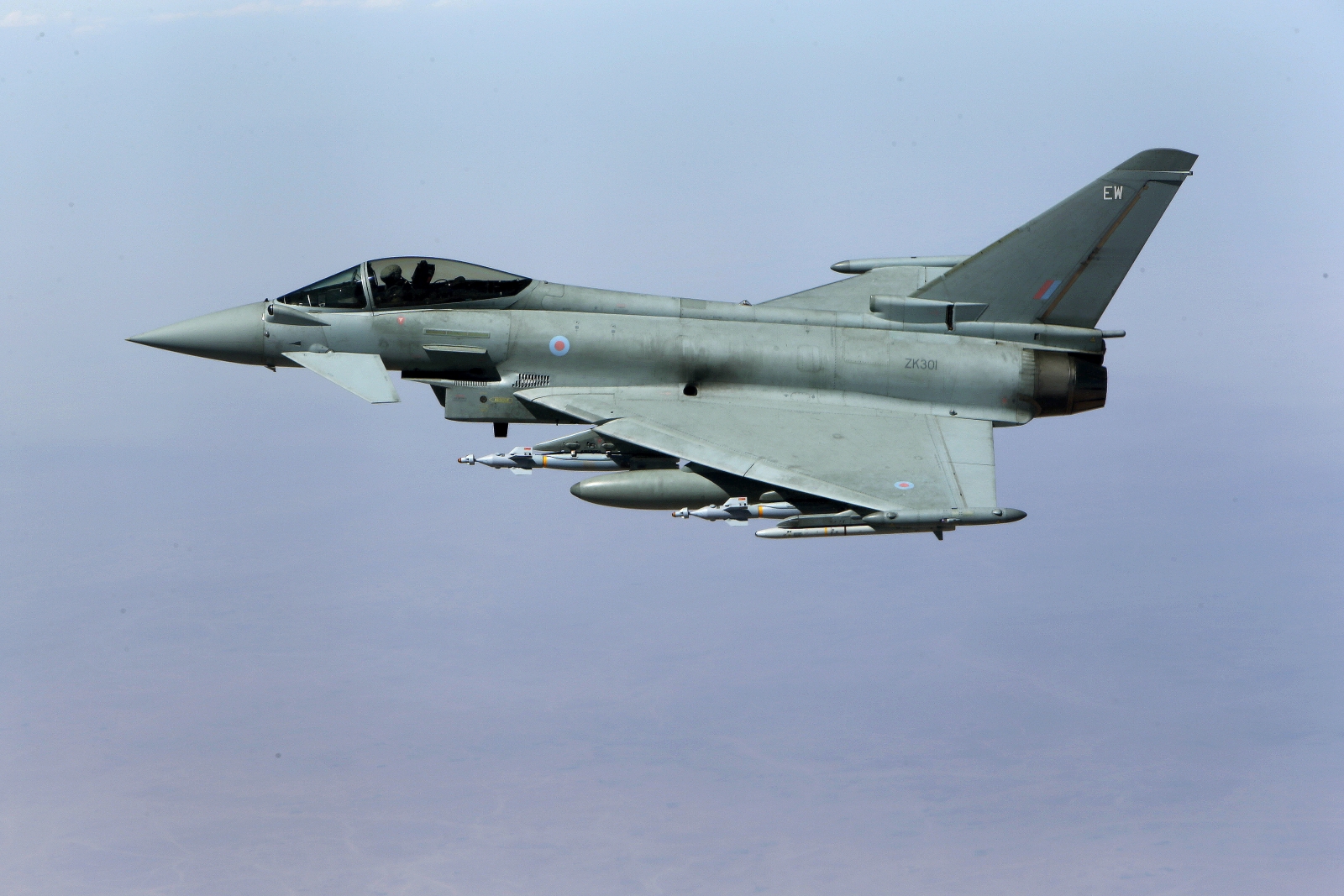


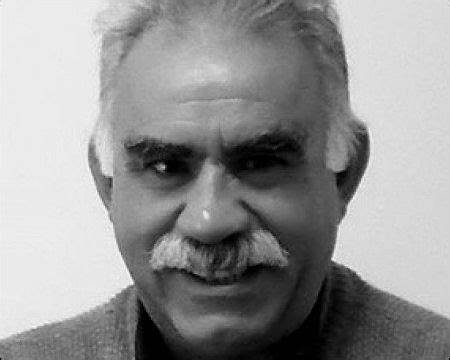
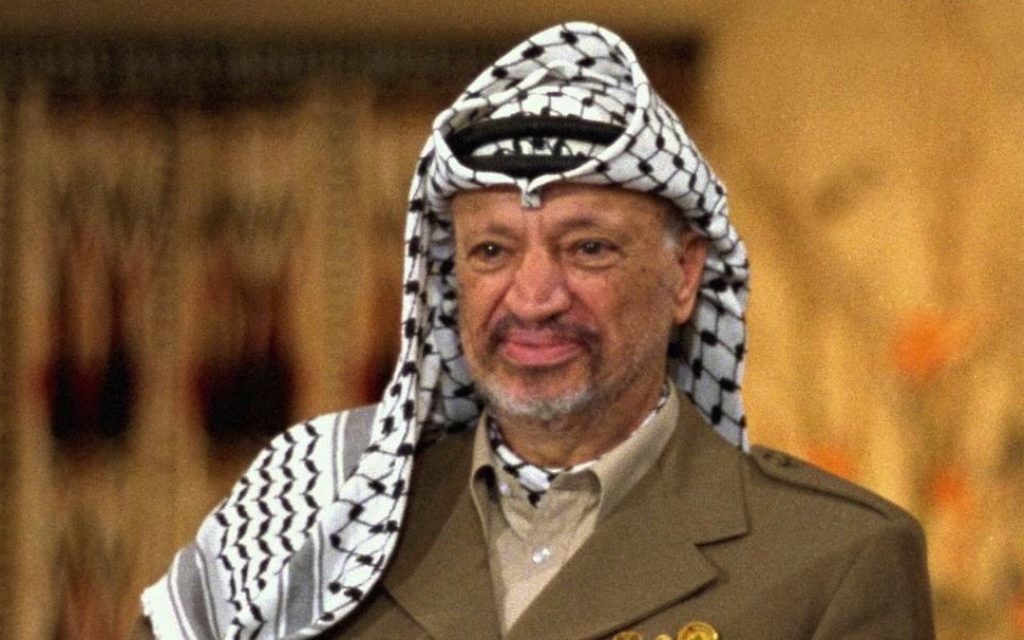

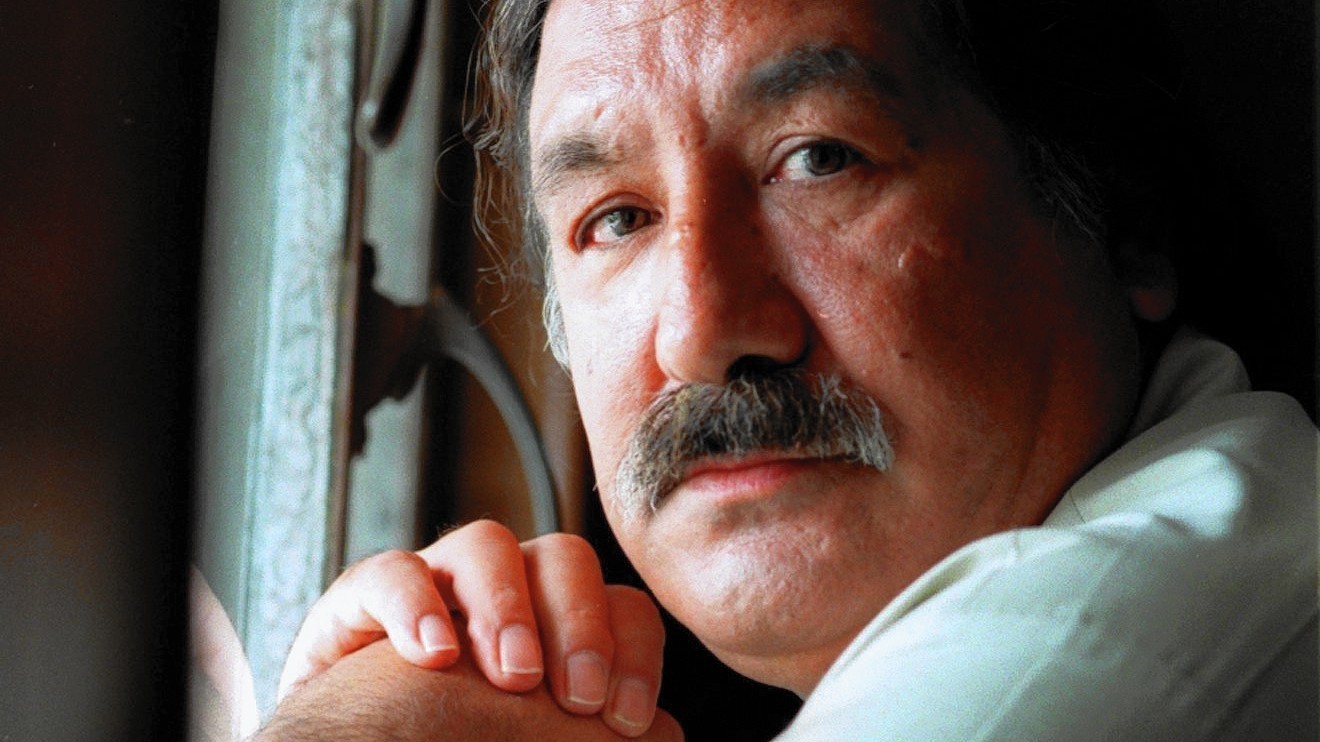


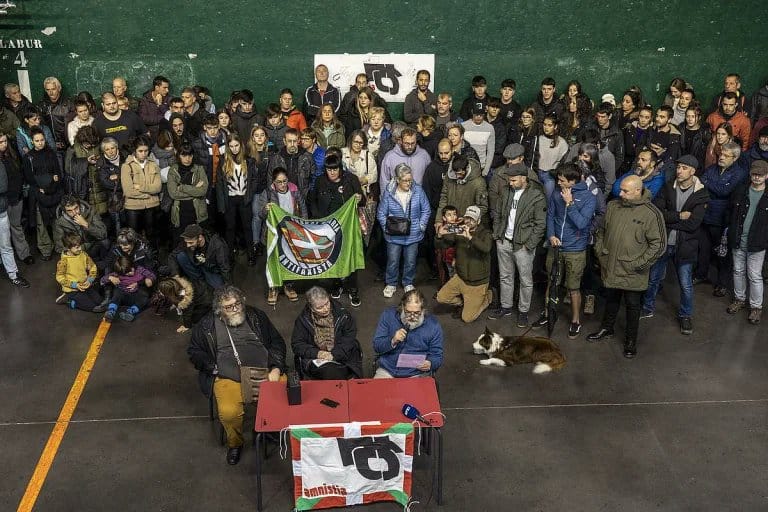

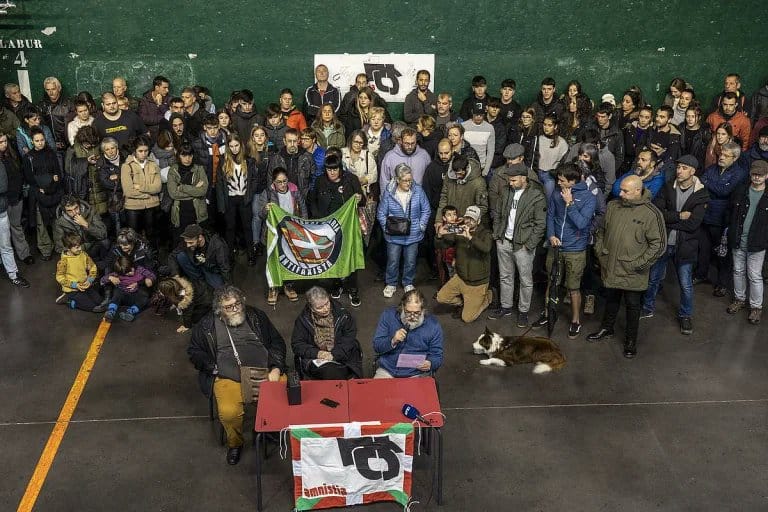
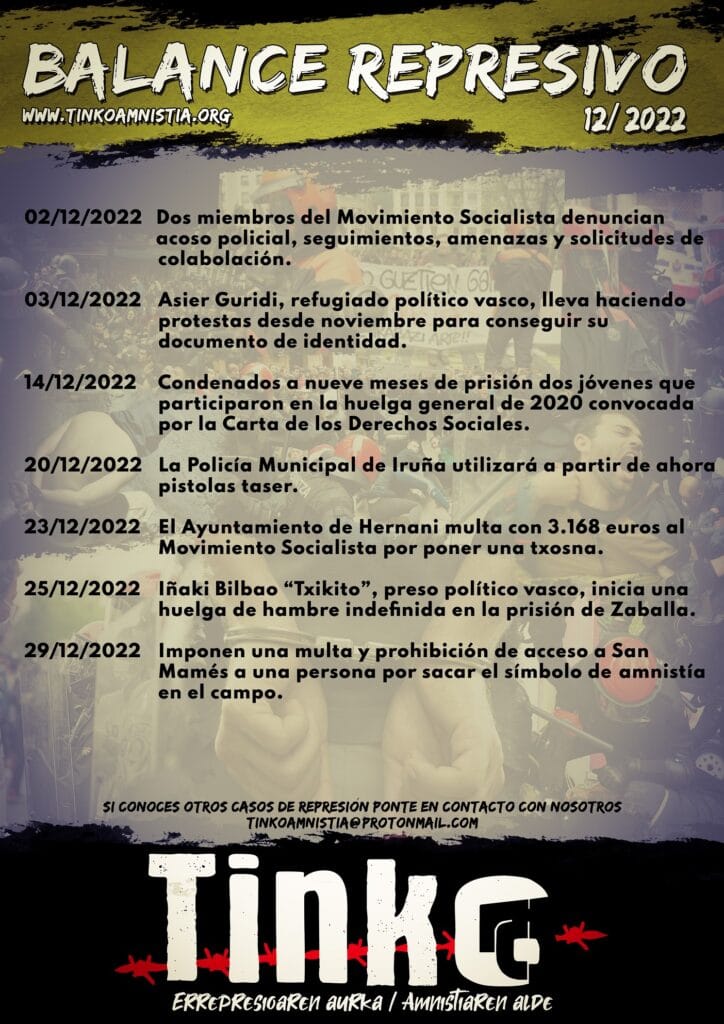


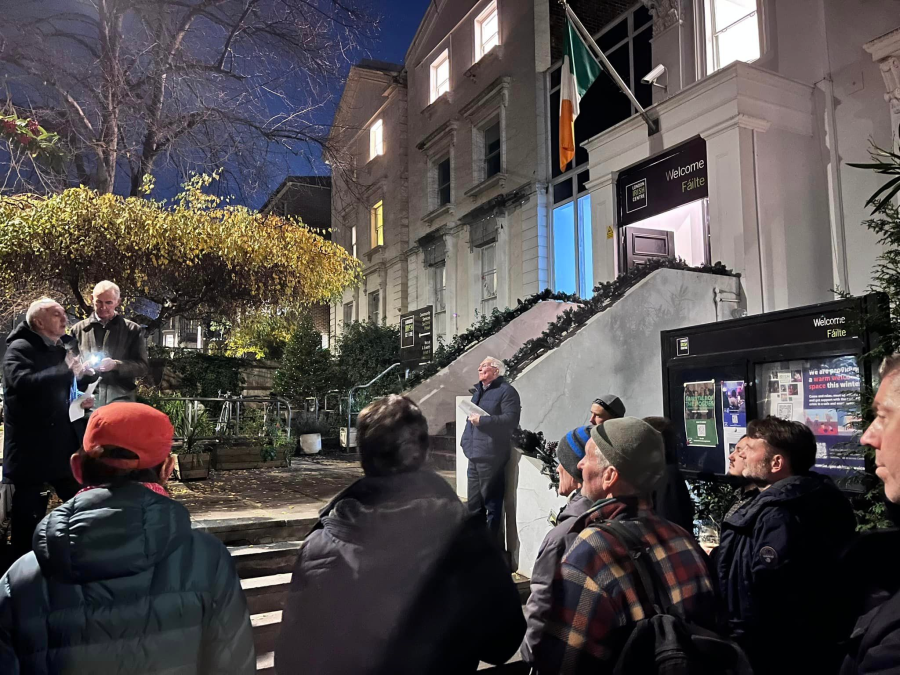
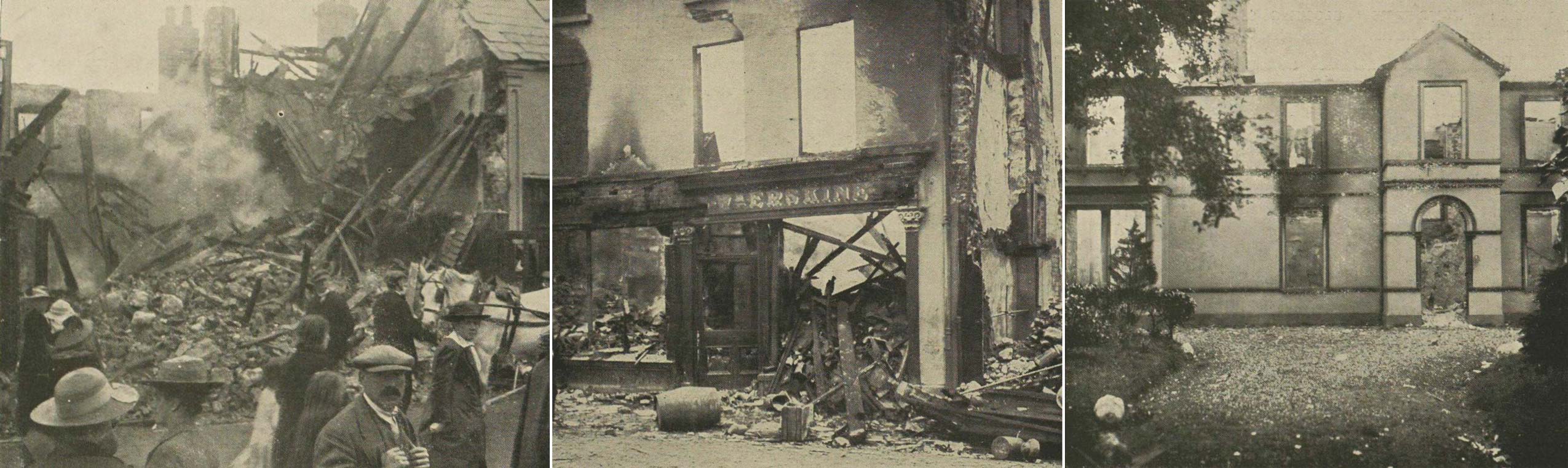
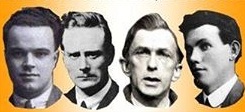
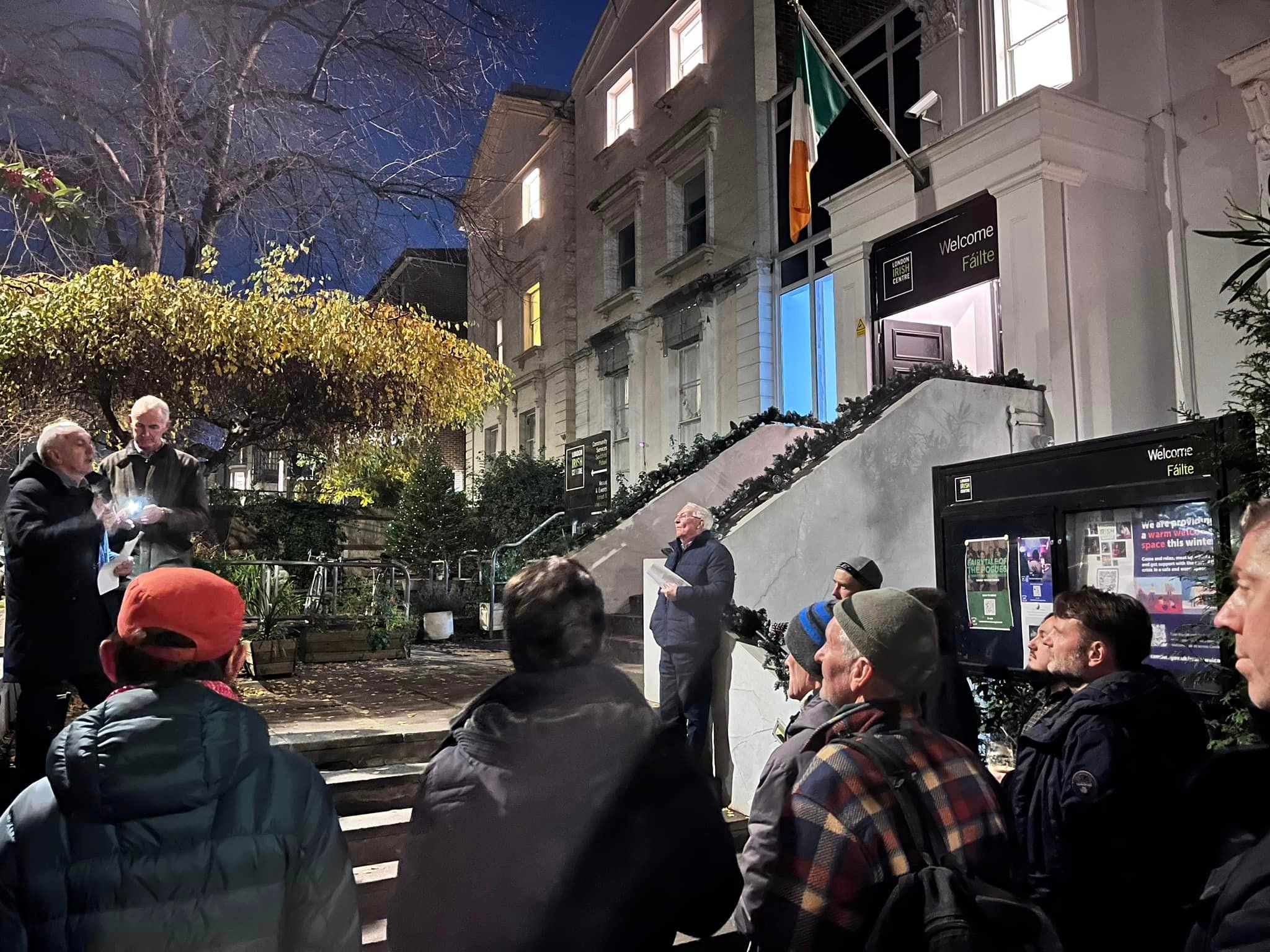


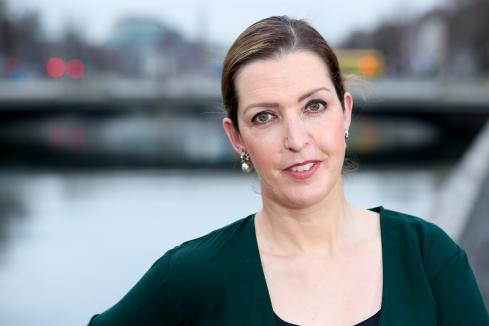
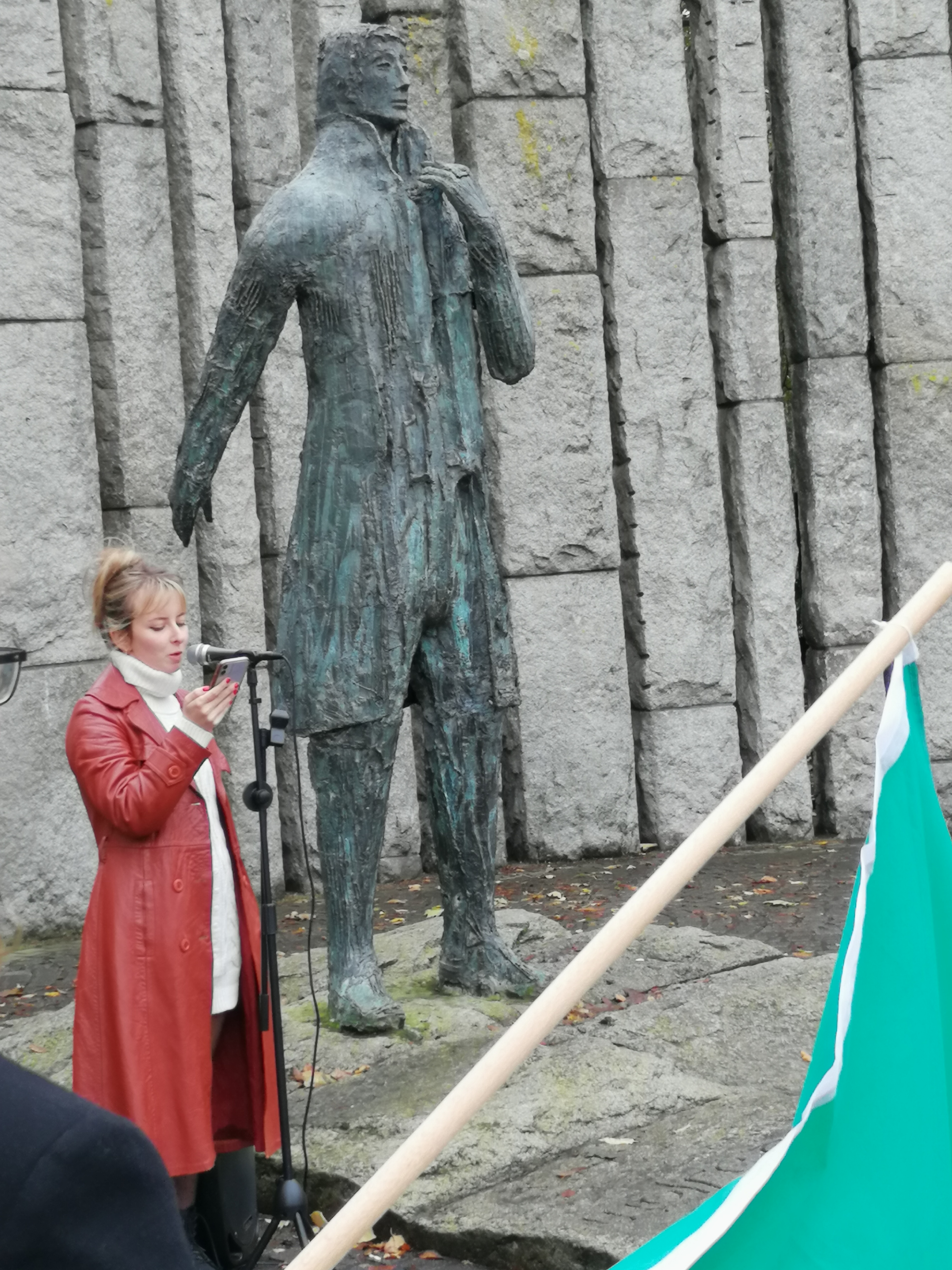
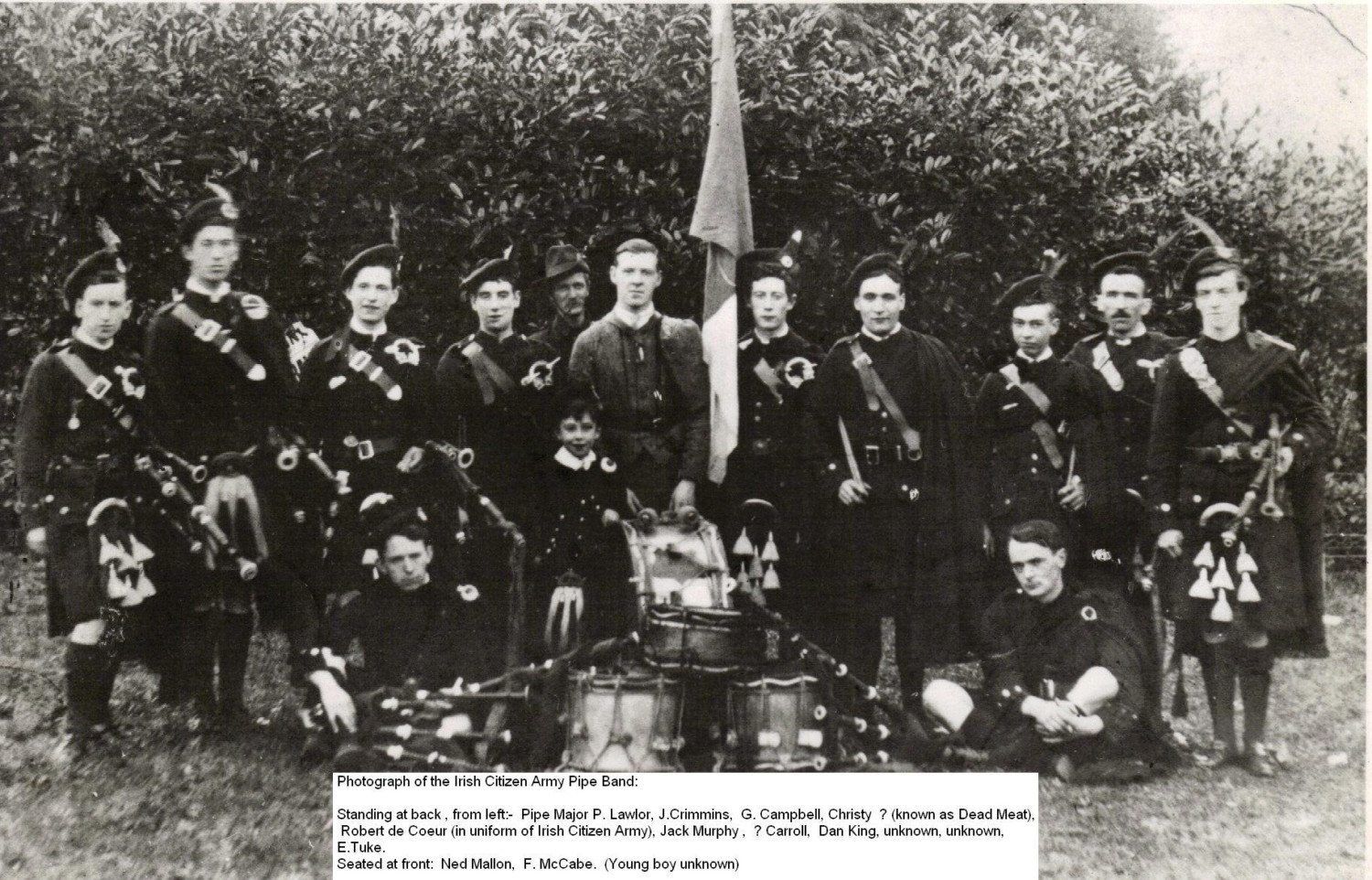
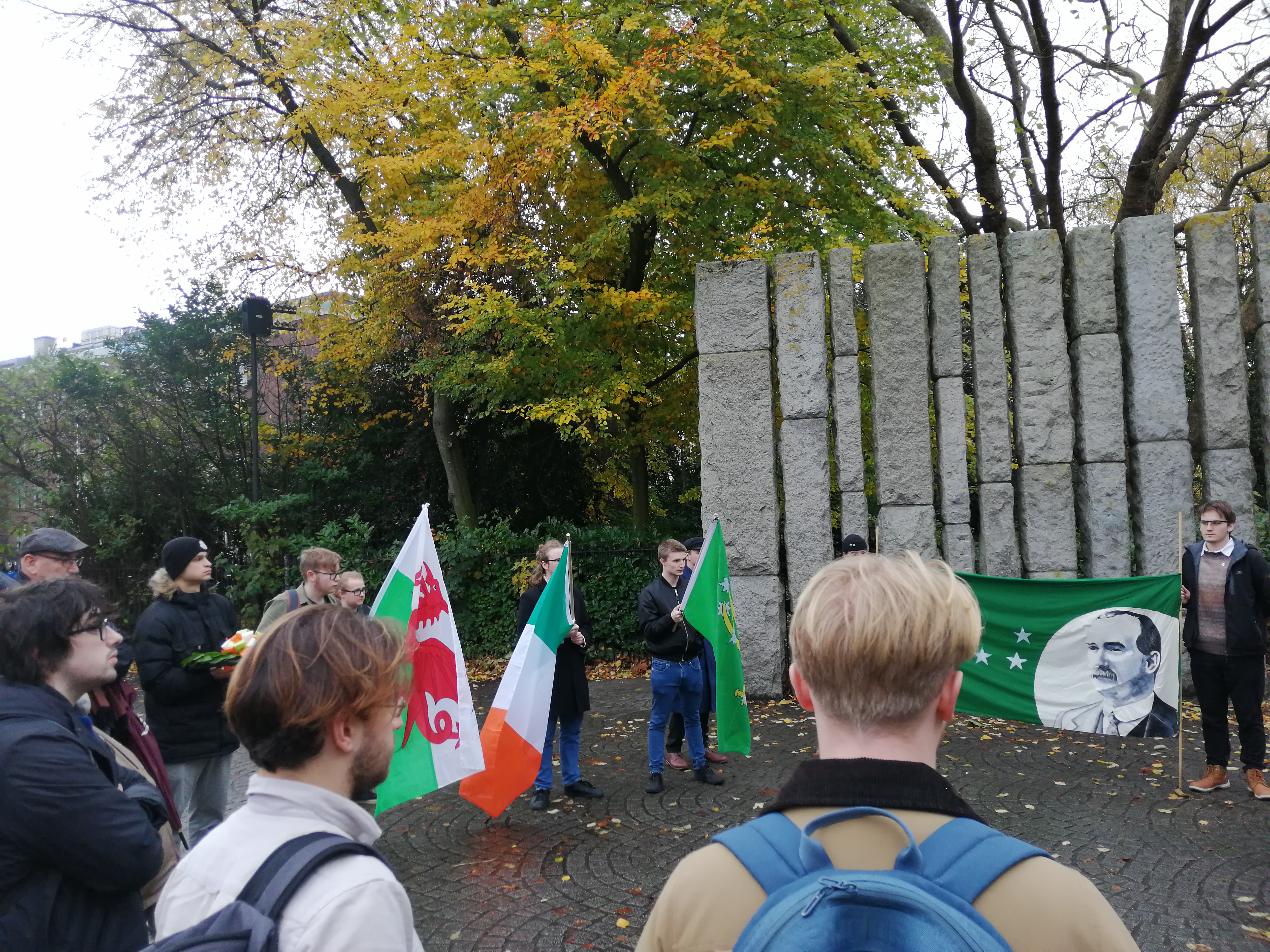
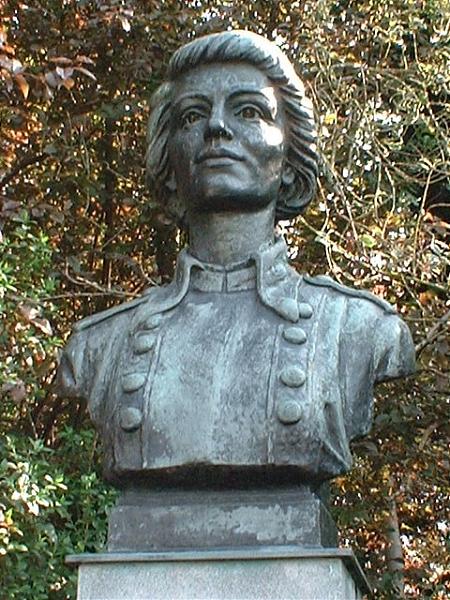
 rebelbreeze