As the northern hemisphere turned eastwards and the majority western calendar turned to a new year, it has been customary for people to wish one another a ‘Happy New Year’, not just for the first day of January but for the twelve months to come.
Although the Celtic New Year will not begin until the first of February, and the new year begins with “teacht an Earraigh … tar éis na Féile Brighde”, I have done likewise but with deep feelings of ambivalence.
Because facing us as 2026 progresses is genocide in some parts of the world, growing fascism in some other parts, tighter squeezes on working people, smaller proxy wars and, almost certainly, a larger war, with desperate migrations of people, if surviving death to find racism and exploitation.
Faced with armed occupation and genocide, armed resistance is justified and arguably necessary, even were it not established as a right within the Geneva Convention. But even unarmed and peaceful resistance is being penalised and repressed, including in the ‘Western democracies.’
Support and solidarity organisations are being outlawed, people expressing legitimate opinions against genocide, racism, ethnic cleansing and armed occupation supported by those ‘democracies’ are being hounded in their jobs and private lives, beaten and arrested by police and even shot dead.
But where there is oppression there is also resistance. The struggles against the racist and genocidal entity, though supported in arms, finance and politically by the Western ‘democracies’ have awoken people in those countries to solidarity action in the face of their governments’ opposition.
(Cartoon by D.Breatnach)
Hugely important lessons have been learned: about the nature of the Zionist state, about the collusion of the ‘democracies’ in colonial occupation and genocide, about ‘the independence of the judiciary’ and the ‘free press’, along with the partiality and ineffectiveness of ‘international law’.
And also about the ineffectiveness of liberal opinion and organisations, even in their heartlands of the ‘democracies’, to achieve meaningful change or even stop the repression. And about how the State knows this and reacts most violently against direct solidarity action.
Organic links have become clear between war in Yemen and Somalia, the spread of Islamist jihadism and imperialism, between prison struggles in Palestine, Britain and Ireland, between the troubles of the world and much of their origins among the colonial and imperial powers.
Yes, where there is repression, there is also resistance and our duty lies in feeding that resistance in all the ways that we can, including being visible in protests at their trials and supporting them in jail. And impeding our ruling class’ attempts to tie us to NATO or other military alliance.
So what I wish for is an increase in the militant resistance of the masses and greater unity in struggle, simultaneously with greater disunity among the imperialist states and ruling classes, bringing us closer to the kind of world we need.
I wish that for us all throughout 2026.
End.
Note: If you found this article of interest, why not register with Rebel Breeze for free, so that you will be notified by email of subsequent articles. You can de-register any time you wish.
Twenty-three activists arrested at three different Dublin events between Monday and today (Friday). Three women reported being strip-searched. Six activists were pepper-sprayed into the eyes.
Oppression leads to resistance; the system responds with repression. But repression can also lead to resistance.
Swiss police have arrested and detained Palestinian journalist and Executive Director of the popular Electronic Intifada website. According to reports he was interrogated for an hour at the airport after his arrival and released but arrested a day later.
Abunimah was due to give a series of talks in Switzerland and that fact, in addition to his journalistic work in writing for and organising weekly podcasts from the Electronic Intifada website give the context for his arrest which is simply pro-Zionist and pro-imperialist censorship.
The EI (Electronic Intifada) carries articles from its reporters inside Gaza and the weekly podcasts on YouTube provide analysis and discussion, along with interviews with commentators, writers and activists. Military expert Jon Elmer gives a roundup covering actions of the Resistance.
On a personal note, the weekly EI podcasts on Wednesday (now Thursday) evenings on YouTube became not only compulsory watching for me but also emotional therapy in the midst of the Zionist genocide in Gaza.
Ali Abunimah (Image cred: Al Jazeera screengrab)
Abunimah is a US citizen of Palestinian descent, fluent in Arabic, English and conversant with Hebrew. Founded in 2001, the EI website associate editors are Maureen Clare Murphy, Nora Barrows-Friedman, Michael Brown, David Cronin, Tamara Nassar and Asa Winstanley.
The site’s editors are no strangers to attempted and actual repression: Germany banned Abunimah from entering last year, while UK police raided Asa Winstanley’s home and confiscated his computer equipment, which they are still holding weeks later but without charging him.1
Palestinian solidarity activists in Switzerland have protested Abunimah’s detetion.
The UN Special Rapporteur on freedom of opinion and expression, Irene Khan, called Abunimah’s arrest “shocking news” and urged his release while Francesca Albanese, UN Special Rapporteur on human rights in the occupied territories bemoaned the European “toxic … climate” for free speech.
When free speech in one area of discourse is attacked, freedom of speech on all subjects is endangered so even those who are not very supportive of Palestine should protest Abunimah’s arrest in this blatant act of censorship and repression.
End.
Footnotes:
1 Winstanley is a member of the weekly broadcasting team as well as an author of articles on the site.
By Nicki Jameson13 January 2025 (Reading time: 12 mins.)
(NB: An unconnected article with very similar title about the Irish organisation IPSC, rather than the English one as this is, was published on this blog in December 2023)
The below speech was delivered by Nicki Jameson at a Revolutionary Communist Group public meeting in London on 12 December 2024 titled ‘Defend the right to defend Palestine: fight back against state repression and media lies’.It is reprinted here from its publication in the RCG’s Fight Racism Fight Imperialism newspaper with permission and reformatted by RB for publication.
The genocidal Zionist onslaught which followed the 7 October 2023 Al Aqsa Flood operation caused a crisis for the imperialist ruling class. In both the US and Britain this was reflected in election results, for example.
Whatever now happens in the aftermath of this week’s events in Syria, and what splits in the solidarity movement this may lead to, it remains the case that international support for the resilient Palestinian struggle is widespread and not diminishing.
In this context, the British government, both under the previous Conservative administration and now under Labour, has sought to contain and limit the effectiveness of the protest movement.
It does not want to be seen to ban protests entirely, but it has aimed to render them impotent and tokenistic.
While it would, of course deny this, the role of the national Palestine Solidarity Campaign (PSC) is to facilitate this limitation.
It does this by ensuring that anger against the Zionist genocide is channelled into ‘safe’ slogans such as the demand for a ceasefire, and formulaic A to B marches, organised on terms dictated by the police, culminating with a passive crowd listening to anodyne speeches from the usual suspects.
Contained as they are, that PSC marches nonetheless constitute a regular expression of solidarity with the Palestinian struggle by a significant section of the British public is way too much for some in the political establishment.
And also for the vocal cohort of Zionists whose angry social media presence is used to decry ‘hate marches’ and demand greater policing and more arrests.
The police themselves vacillate between different approaches, dependent on the whims of the Home Secretary of the moment and Zionist political pressure.
Palestine protests
The very first protests in early October 2023 after the AAF operation were lightly policed. On 9 October we stood directly outside the Israeli embassy with no conditions or attempt to prevent the demo.
Within a very short period of time this had changed dramatically and the then weekly protests organised by PSC were subject to heavy policing.
Zionist keyboard warriors on twitter began immediately to play a role in fingering people, posting video footage of alleged crimes, with the demand that people be arrested. The police duly obliged.
While total overall arrest figures seem hard to track down, between October 2023 and March 2024 there were 305 arrests under the Metropolitan Police’s Operation Brocks – the policing operation related to Palestine protests in London.
This included 89 far-right counter protesters arrested on Remembrance Day, when – riled up by then Home Secretary Suella Braverman – they came to ‘defend the cenotaph’ from a non-existent attack.
During this period eight people were arrested on FRFI contingents in London. Their experience is fairly typical of those targeted at the time.
London police making an arrest on Palestine solidarity march 13 January 2024 (Photo cred: FRFI)
In the main they were profiled by Zionists on twitter, who flagged up to the compliant police that the comrades either had placards bearing the words ‘Victory to the Intifada’ or were using that slogan.
A young person was also arrested on the spurious pretext that he was wearing a symbol of a proscribed organisation, although the PFLP is not in fact proscribed in this country. He was subsequently de-arrested but not before those who came to his aid were also swept up.
Of this eight, only one person was charged. This was subsequently thrown out of court. Of the others, all but one have been definitively told they will not be charged.
A ninth comrade, arrested in a dawn-raid on their home remains on bail under the Terrorism Act in relation to a speech made 15 months ago.
It was clear from police interviews, that the cops in Operation Brocks had no idea what Intifada actually meant and had been given a script by their political masters.
We take the exoneration of those arrested to mean that VICTORY TO THE INTIFADA, a call for solidarity with the uprisings of Palestinians against Zionist oppression, is entirely legitimate and in no way criminal.
Spurious arrests continue to take place, using the now tried and tested process of Zionist twitter posts highlighting the offensive words or item, prompting either immediate arrest or the publishing of a police ‘wanted’ notice.
Following the lack of any prosecution for slogans such as ‘From the river to the sea’ or ‘Victory to the Intifada’, the most common ‘crime’ is comparison of Israeli genocide to the Nazi holocaust.
Although no-one has been successfully prosecuted along these lines, Zionists continue to claim it is an anti-Semitic hate crime.
Many of these arrests are farcical.
People will remember the arrest, charging, trial and not guilty verdict of Marieha Hussain, who had depicted Conservative politicians Rishi Sunak and Suella Braverman as coconuts on a homemade placard she took to a protest on 11 November 2023.
In May 2024, four activists from Camden Friends of Palestine were arrested under the Terrorism Act for holding a banner depicting a dove flying through the Israeli apartheid wall.
Police claimed that as the banner depicted ‘a clear blue sky with no clouds’ and there had been similar weather on 7 October, this showed obvious support for Hamas. After 3 months on bail they were told that there would be no charges.
A tremendous amount of police time and money is being spent on this process with what would appear to be no tangible reward in terms of convictions or imprisonment.
However, what simply looking at the charge or conviction rates fails to show is the way these arrests are used as harassment and interference both in people’s ability to protest and their everyday lives.
Those described here have had bail conditions which specified variously that they could not enter the borough of Westminster, could not enter university premises other than for study and must surrender their passports and not leave the country.
Arrestees from the CPGB-ML were banned for the duration of their bail from attending protests and distributing literature. People flagged for arrest by Zionist twitter have also been reported to their employers, professional bodies and universities in an attempt to ruin their ability to work or study.
While most early arrests were under Public Order police powers, there is increasing use of the Terrorism Act (TA) 2003 to criminalise solidarity with Palestine, targeting both protesters on the streets and what people say on line.
Journalists and youtubers, such as Richard Medhurst, Sarah Wilkinson and Asa Winstanley have been subject to arrests and house raids.
The TA was brought in by the last Labour government at a time when Keir Starmer was Director of Public Prosecutions.
On 27 November, the Met Police used the TA to raid the premises of the Kurdish Community Centre in Haringey, north London, arresting six people and placing the centre under siege.
Anti-Zionist blogger/activist Tony Greenstein will be in court next week on a charge under section 12 of the TA, for responding over a year ago to a Zionist tweet accusing him of being a Hamas supporter with the words: ‘I support the Palestinians, that is enough and I support Hamas against the Israeli army.’
Anti-imperialist Jewish and Palestine Solidarity activist Tony Greenstein, who is being persecuted by the British police. (Photo sourced: Internet)
The aim is to create a climate of fear in which people become scared to attend even the most peaceful and routine of protests, where we censor our own slogans, placards and behaviour in order to evade the eyes of the on-line harassers and the police.
Palestine Action and Elbit
Alongside all this has run another process in which the brave participants show no fear in the way they exercise their solidarity with the Palestinian struggle.
Palestine Action was set up in 2020 by activists who were frustrated by the PSC’s lack of direct action to enforce BDS – Boycott, Divestment and Sanctions.
Since then it has primarily targeted the British operation of Israeli arms company, Elbit Systems, as well as other companies collaborating with Elbit or are otherwise implicated in the arming of the Zionist war machine or sale of its ‘battle tested’ technology to other countries’ militaries.
Palestine Action’s tactics mainly consist of occupations, blockades and drenching premises in red paint to symbolise the blood on the hands of these profiteering companies.
Until recently, although a lot of these actions led to arrests, very few Palestine Action activists ended up behind bars. This has changed since Keir Starmer’s Labour government came to power. There are currently 18 Palestine Action activists in prison in England, along with 2 in Scotland.
One of the Scottish prisoners is the last of the group known as the Thales 5, who were convicted of occupying the roof of the Glasgow premises of French company Thales in 2022. Thales was working with Elbit to produce Watchkeeper drones for the British military.
The prisoners in England have not been convicted and are all held on remand, having been refused bail by the courts. The majority were arrested in relation to actions against the Filton arms factory in Bristol. Ten people were remanded in August and a further eight in November.
Although none have been charged with terrorism offences, the TA was used to effect their arrests, allowing the police more powers to detain pre-charge, raid homes and generally act in a heavy-handed manner.
In the latest arrests in November, flatmates and families were evicted from their homes, sometimes for several days while the police searched premises. In one raid, the mother and younger brother of the person arrested were both handcuffed, despite not being accused of any offence.
In prison, those on remand for pro-Palestine direct action have come in for special scrutiny and additional intrusive measures on top of those which all prisoners are forced to deal with.
The six women detained in Bronzefield prison in August were all allocated to separate wings and deliberately prevented from associating with one another. Their mail has been heavily censored.
Four male prisoners in Wormwood Scrubs, although not subject to the same separation regime, have also had their correspondence held up, censored and returned to sender, with supporters being served with notices to the effect that no communication between them is permitted.
FRFI successfully appealed against such a notice in relation to our sending the paper to the prisoners, although the prison claims it still has a right to withhold the paper or other publications if the censors decide they are ‘inappropriate for a prison setting’.
The purpose of all this is clearly to scare those it is directly targeting it and to deter others from coming forward to join Palestine Action’s activities.
As Palestine Action carries out more actions against Elbit, including repeatedly blockading the UAV Engines site at Shenstone in the Midlands, which manufactures engines for Elbit, it is clear that the repression is not succeeding.
Palestine solidarity demonstration Downing Street 14 December 2024. (Source photo: Internet)
In addition to the litany of his war crimes, he will be remembered for authoring the text book Low Intensity Operations – Subversion, Insurgency and Peace-keeping (1971), a manual for dealing with subversive and recalcitrant populations, both at home and abroad.
Kitson’s work continues to form a central plank of British strategy for policing dissent and his disciples are clearly leading policing operations against pro-Palestine protesters.
In Kitson’s book, he details how ‘psychological operations’ should be used to isolate ‘subversives’ from the people while building links with and strengthening support for moderate elements who do not oppose the state but disagree on certain policies.
This technique was used both abroad in Britain’s colonies, and at home to police, for example, the Irish solidarity movement of the 1970s-80s.
Today’s ‘moderates’ take the form of the PSC, Stop the War and similar organisations. PSC marches are negotiated with the police, with strict conditions imposed on the protests.
The PSC has provided no support for people arrested on its demonstrations, citing the low arrest rates as proof of how respectable their protests are, while distancing itself from those who have been targeted.
While the PSC opposes Zionist massacres of the Palestinian people, it does not support the resistance of those under attack.
Consequently it does not complain when the British police uses Terrorism Act powers to criminalise people for supporting the right of Palestinians to resist their oppressors through armed struggle.
This treachery puts the PSC on the wrong side of international law – oppressed nations successfully fought for the right to self-defence by means of armed struggle to be enshrined in UN resolutions in 1974 and 1982.
Fighting back, building solidarity
For some of us, the culture around supporting our arrested comrades was drilled into us many years ago. A whole new generation has had to learn these lessons.
It is positive to see that, although the PSC and such organisations continue not to want to get their hands dirty with supporting anyone targeted by the police, a different attitude is also widespread and ‘arrestee support’, prison solidarity letter-writing etc are common currency among activists.
At the same time there is an element of this solidarity which is depoliticised. For example, the provision of a constant presence at a police station to monitor things and be there when arrestees are released is a good thing and the support organisations which provide this do an invaluable job.
However, when we have comrades under arrest, we want to do more than legal monitoring and instead turn the police station into a focus for protest. The same with courts and prisons.
It’s very positive to see Palestine Action, the SOAS encampment and others also doing this to great effect, thus ensuring that the focus is not just on the Israeli companies who are their principle targets, but also on the British criminal justice machinery which is being marshalled against those who take a stand.
Our task, as always, here in the belly of the imperialist beast, remains to protest against the British government and British corporations’ complicity in the Zionist genocide.
And to show unconditional solidarity with those who fight back against the Zionist war machine by whatever means are at their disposal.
Supporting the resistance and opposing the British state cannot fail to bring us into conflict with that same state and we must continue to stand alongside everyone who is criminalised for their solidarity.
Language is many things and only part-things too and languageS are only part of languaGE. All humans have it to some extent and some animals also. It communicates but it is not in itself communication. That might sound weird until you realise that when you say Ouch! or Oh! you have usually communicated pain or surprise to anyone within hearing but without any intention of doing so. So language must be intentional communication and that means it can be used to communicate information we believe to be true — but also that which we do not. I think it was Umberto Eco who commented to the effect that if you can’t lie in it, it is not language.
Of course, we do other things with it apart from just communicating our sense or reality or being deliberately false – we can add overtones of emotion, playfulness, disdain, love, respect, hate and many other things besides. If we could not, poetry, acting and novels would not exist in our cultures.
NON-VERBAL
It is strange to think that language is only the minor partner in a human communication system. We are told non-verbal communication is 73-91% of our communication1 and that that words are only part of even the verbal – which contains – apart from non-verbal sounds — also articulation, volume, tone, pitch, speed, rhythm and the pauses in between words or phrases. If we understood only words themselves we would stumble through interactions with other humans as through a mist. There are people who suffer something approaching that condition, in fact.
Despite its comparatively minor role in communication, we relate language to the spoken and intentional communication by the very name we give it: language, from langue, French for “tongue” and indeed in slightly archaic English, we use the word “tongue” also, as in “speaking in tongues” or “in a foreign tongue” for example. Not just in English – for example in Castillian (“Spanish”), lengua and Irish, teanga.
But there are other words too, even in those languages, for example idioma in Castillian and béarla in Irish. Wait a minute, doesn’t béarla mean the “English language”? With a capital letter it does, as we use it now but originally it was Sacs-bhéarla, i.e Saxon language2. I would hazard a guess (but avoiding doing the research) that the word “béarla” is related to béal, i.e “mouth”3. So, still something spoken and the German has that too, with its word for language: sprache (from “speaking”).
Not all languages are spoken and there are systems of codes and also sign languages, of which there are an estimated 300 in use around the world4, divided into deaf sign languages, auxiliary sign languages and signed modes of spoken languages.5 We all use auxiliary sign language, for example in traffic signaling to turn left or right, in pointing “over there”, in indicating “come” and “go” and to insult (various in different cultures) along with “maybe” or “sort of” (hand outstretched palm down, level, then wobbled a little one side to the other). We use a surprising number of those if we stop to count them and those are only hand-signals, without taking into account soundless movements of head, lips, eyes, eyelids, eyebrows, shoulders ….
One of a number of alphabet sign languages, this one two-handed. (Image accessed: Internet)
Some work-trades or specific operations have their own signal-systems too and, for example, in sub-aqua in Europe at least, the “thumbs up” doesn’t mean what it does on land but rather the need to swim to the surface.
My brother Oisín expressed the interesting speculation that the Irish pre-Roman letters system of Ogham could have been used as a sign language also, using the position of fingers across the face. As the European invasion into parts of America pushed tribes out of their traditional areas, many met on the Great Plains and, lacking a common spoken language, developed a common sign language. Early European traders, hunters and explorers learned parts of that sign language too.
Many animalsuse sign communication and some of it, in animals of higher intelligence, is intentional,6 which means it is language. However we run into problems with that qualification in some cases: bees are not animals of higher intelligence and yet a worker bee acts out a “dance” to indicate to the hive where much nectar and pollen may be found, direction and distance included and clearly the communication of information is intended. However, one supposes that while the bee could not lie, those animals of higher intelligence have the ability to do so, for example pretending nothing is wrong (when it is) or that they have not just transgressed some prohibition (when they have) or that they do not intend to do so (when they do).7
A cleaner wrasse enters the mouth of a cod to remove its parasites; the cod holds its mouth open until the cleaner finishes. But the cod also comes to the ‘cleaner station’ and indicates its wish to be cleaned by remaining stationery and wobbling slightly from side to side. (Photo accessed: Internet)
There are, as we are all aware, many different spoken languages in the world but we may still be surprised by just how many: 6,500 according to one on-line source and 6,700 to another8. One state or country alone may be host to many; ask for a phrase translated to Nigerian language and you may be asked to specify which of over 500 languages you mean.9
And then there are dialects, distinct forms of the same language. People learning Irish sometimes complain that Irish has four (or five, by some calculations) main dialects: different words for the same things, distinct pronunciations of the same words ….. They rarely reflect on the different dialects in the language to which they are accustomed: for example, English may have the most dialects in the world, across English-speaking countries and even in Britain (anyone who doubts this should listen to typical examples of Newcastle, Glaswegian and South London speech). The English imposed a southern dialect as their standard but although a standard has been created in Irish too (an chaighdeán) it has official versions in the main dialects, in addition to non-standard Irish forms being recognised as valid in writing. This may make learning Irish seem more difficult to a learner but, apart from the respect this shows to different regional cultures, one might ask how well learning standard English equips one to exchange communication effectively at certain societal levels in many of the English-speaking cultures of the world.
Map of language groups in Nigeria (Photo accessed: Internet)
ONE WORLD LANGUAGE?
The Christian Old Testament (also containing a number of Hebraic texts) gives us the fable of how those who in their arrogance tried to build a tower to reach God were inflicted with so many languages that they could no longer understand one another, thereby causing the failure of the project. The fable is usually called the Tower of Babel (the words “babble” and “babbling” are supposedly not derived from it but I wonder). The fable seems a harsh judgement on the value of different languages in the world but even some atheists have expressed a wish to have only one language so that we could all instantly understand one another – and some socialists are not free of this notion and consequently disdain national cultures and languages.
As different cultures met one another across the world some types of languages in common have evolved, generally categorised as either pidgins or creoles. Both kinds are composites of two or more languages but a pidgin remains a second language while a creole becomes a mother tongue10. “Pidgins have been particularly associated with areas settled by European traders; examples have been Chinook Jargon, a lingua franca based on an American Indian language and English that was formerly used in Washington and Oregon, and Beach-la-mar, an English-based pidgin of parts of the South Seas. Some pidgins have come to be extensively used, such as Tok Pisin in Papua, New Guinea and the pidgins of the West African coast11.”
Traffic sign in Tok Pisin, one of the world’s pidgin languages (Photo accessed: Internet)
We know also of the past existence of a north-sea maritime pidgin that included words in Euskera (Basque) and Nordic and no doubt others have existed, probably at different times Phoenician or Greek or Chinese-based. Certainly there was a Norse-English-Irish one in existence which became a creole. Perhaps for a short while there was an Irish-Norman one too, before most of the settled Norman conquerors became Irish-speaking12. The Jewish community languages of Yiddish and Ladino probably started off as pidgins but became creoles, based in the first case on German and the second on archaic Spanish.13
Kouri-vini is a French-based creole spoken by less than 10,000 people mostly in the USA state of Louisiana.14Patois, Patwah or Patwa is a Jamaican Creole spoken in Jamaica and among parts of its diaspora15. “Notable among creoles is Haitan Creole, which grew primarily from the interactions between French colonists and enslaved Africans on Haiti’s plantations.”16 The Irish Traveller language, Shelta,Cant or De Gammon is also a creole, containing words from Irish, Latin and Romany as well as English.
ONE WORLD LANGUAGE?
To have a world language in addition to others would be no bad thing of course and there have been some attempts at that but never one that succeeded in encompassing the whole world; English has probably come closest, so far. That language had the earlier backing of the largest colonial empire the world has ever seen, the British but now primarily has the backing of the world’s strongest super-power, the United States of America17. In the past, English competed for world cultural dominance with French and both were agreed as official languages for shipping and air transport based sorely on the colonial power of both states rather than the number of speakers, in which case Chinese and Spanish would have been chosen. In earlier times, German was spoken over most of central Europe from Poland to Germany and in the Tyrol. Still further back in the past, Latin, because of the power of Rome and Greek, partly through its earlier colonisation but also through its science and culture, were widely spoken across large parts of the world. Still, even in the Roman Empire, many spoke only a few words of Latin, even in Rome itself at the height of its dominance, where Greek and Hebrew might be more common.
States where English is the official language (Image accessed: Internet)
Before its conquest by Roman legions and the destruction of its culture, a Celtic language or group of languages known as “Gaulish” was spoken from what is today the Italian side of the Alps to what is now northern France and possibly variants of it also in Iberia. Today, Gaulish is gone and of the Celtic languages, only Irish, Scots Gaelic, Manx (the Q-Celtic group) and Welsh, Breton and Cornish (the P-Celtic group) remain. Latin is no longer a spoken language.
Esperanto was conceived of as a world language, though largely euro-centric in origin and for a time was popular as a project with many socialists18. It is still in use but estimates give us a figure of only 100,000 speakers at present19. However that number may grow, through the Internet for example and as a project to internationalise ease of communication while at the same time resisting the current linguistic dominance of the US empire.
Even within one state, the need for a common language may struggle with the claims of different languages or even varieties of the same language. For example many different languages and varieties of language were spoken across what is now Italy and the unification of all that variety into a one-State Italy was assisted by the imposition of standard Italian20.
Huge states with many languages on the African and South Asian continents have adopted the languages of their colonisers as languages of state, which is why so many people from those parts of the world can speak English in addition to their native tongues (or French, especially in parts of Africa).
The adoption of a common language for use across different cultures and languages has its advantages but also its dangers, in particular for those languages that find themselves at a power disadvantage. Those languages may suffer a lowering of respect among speakers of the dominant language and, in time, even among their own native speakers. They can struggle with reduced resources in education, publishing or physical resources in their heartlands. They can even be forbidden and their speakers punished.
REPRESSION OF LANGUAGES
In fairly recent times child-speakers of Welsh and Irish were punished in school for speaking their maternal tongues, one example being the count of physical blows to be inflicted by a teacher for the number of words spoken in the forbidden language. That was an expression of the cultural domination of British colonialism through the English language21 in the respective conquered nations and it has a history dating back at least to the 14th Century in Ireland when a number of attempts were made to prevent its settlers from speaking Irish.22
Euskera (Basque), Asturian, Gallician and Catalan were all banned or restricted at different times in the Spanish kingdom and most definitely banned under three decades of the Franco dictatorship. Breton, Catalan, Corsican and Euskera are not forbidden in France but they do suffer from under-resourcing in education and infrastructure.
Irish suffers similarly in the British colony of the Six Counties and also in the Irish state despite being officially the latter’s first language.
Kurdish was forbidden in any official domain in Turkey and its speakers still suffer discrimination. Esperanto was banned by the Nazis and the Franco regime and though never officially banned in the Soviet Union, Esperantists did suffer severe persecution there for a period under Stalin23. Native Peoples’ languages were banned in the state (and many Christian) schools in the USA and in Canada.
As a result of past repression, cultural domination, starving of resources and other factors, 40% of languages in the world are in danger of extinction24, according to UNESCO, a great number of those being of colonised peoples.
LANGUAGE IS MUCH MORE THAN COMMUNICATION
Earlier on, we noted that as well as variations of tongue and speaking, there is another word forlanguage which we find in Castillian (Spanish) as idioma. There is a reflection of that word in English too, in idiom25, which a dictionary explains as
a group of words established by usage as having a meaning not deducible from those of the individual words (e.g. “over the moon”, “see the light”).
a characteristic mode of expression in music or art. (e.g. “they were both working in a neo-impressionist idiom”)
Digging deeper into the origins of the word, through etymology, we find: late 16th century: from French idiome, or via late Latin from Greek idiōma ‘private property, peculiar phraseology’, from idiousthai ‘make one’s own’, from idios ‘own, private’.
Clearly it cannot be private, by very definition of language, but language is ‘owned’, it does ‘belong’. It belongs to the culture from which it comes. It can be shared, of course but some at least of it always remains an expression of the culture that gave birth to it, that moulded it over centuries. And even of its adoption of other words, expressions or concepts in the course of its development.
The language of a culture expresses its way of seeing, its understanding of aspects of the world around it and how it sees itself. That also finds its expression in song, poetry, instrumental music, yes and even visual art.
When a language is lost, so is all that. And so too is the future of that language and its mother culture. It may be replaced of course. And the dead language may carry much of its furniture, baggage and knick-knacks into its replacement home26. But not all – much is lost and lost forever. Especially that language’s future – where it might have gone, could have become.
Bilingualism is good and multilingualism better but the better bilingual or multilinguist is aware, as is a good translator, of the many different ways of speaking and seeing and also the less than satisfactory experience of translating some expressions from one language into another. In the latter case, we search for approximations.
According to UNESCO, 40% of languages in the world are in danger of extinction27. According to the same organisation, Irish is one of 12 languages in the EU area that are in danger28. The loss of such a language would be a pity anywhere but perhaps particularly damaging for a small nation struggling to develop to serve the people it encompasses. Irish predates English by centuries and has a wide body of literature and artistic expression form and was the earliest expression in Europe of literature in the vernacular, i.e in the language of the common people. The harp is our oldest recorded musical instrument and also our national state symbol …. but its playing was often accompanied by spoken, chanted or sung words. In Irish. Most our place-names even in their English forms retain their Irish origin, including 29 of our 32 Counties.
Languages of Europe and their respective groups (note that Basque is an “isolate”, i.e not recognised as belonging to any other group; note also the current position of two languages of formerly great European reach: Greek is much reduced and Latin non-existent). Kurdish, of the Iranian family, does not appear appear because its area is out of view on the Turkish part of the map. (Image accessed: Internet)
A world containing one, two or three languages only may seem useful but it would kill so much history, so much variety in the world around us. Ultimately perhaps, even with globalisation and internet, speciation of language might take place, as areas developed dialects that might possibly develop into new languages. We don’t know that would happen, however and it makes sense to hang on the variety in the world at the moment. To spend some time, effort and yes, even physical resources to protect languages that are in danger. To speak more than one language ourselves and to protect our own if it is threatened. The strategies to carry out that protection are subjects for another day’s discussion. But first we have to understand the value of doing so or at the very least, some idea of what its loss will cost us.
We might begin by learning some Irish and speaking what we know of it – in Ireland, most everywhere. Beatha teanga í a labhairt29.
2In all the surviving Celtic languages, the English are still referred to as “Saxons” (e.g in Irish Sacsannach/ aigh, which became Sasanach/ aigh), which testifies to an enduring memory (and not a good one) of the people who overran the Celts in much of Britain many centuries ago.
3and that word can be found in many place-names around Ireland, usually denoting a river-mouth and corrupted in English to “bel”, as in Belmullet in Mayo and Belfast.
6Most of it, however (like our own), is unintentional: the startled cry and flight, the erection of ears to hear better or to focus, the turning of the head to look in the direction of movement, sound or scent, etc. All of those actions communicate information to neighbouring animals (even of different species) but they are not intentional.
7Most will have seen this behaviour perhaps in dogs, cats or pigs.
12The Yola of Wexford was more an ancient English sprinkled with Irish words.
13Of course, Hebrew is a Jewish language and many of its words are to be found in both Ladino and Yiddish but for centuries there were many more speakers of those creoles than there were of Hebrew.
15I heard it often enough in my decades in London.
16https://www.britannica.com/topic/language/Pidgins-and-creoles (and perhaps its survival is partly due to the fact that 1) the African slaves were from different language groups and 2) that Haiti was the first slave colony to achieve liberation in a successful uprising (1791-1804))
17Yet even there Hispanic has made great penetration from some US states, from Latin America and from the Caribbean.
18I use the word here to include reformist social democrats and revolutionary communists and anarchists.
21The irony here is that English is historically a fairly new language, a fusion of in the main of Anglo-Saxon with French, in which the latter is the origin of around 60% of its words.
22The Statutes of Kilkenny in 1366 castigated the Anglo-Normans who had conquered parts of Ireland and settled in them as “the degenerate English” who had “become more Irish than the Irish themselves” through their adoption of Irish customs and culture. The Statutes forbade the now Irish-Normans from adopting those cultures and from speaking Irish (without success except in the heart of the colonial administration in Dublin).
25In fact, reading a discussion on this word alone can teach us so much about language, expressions we use without thinking and how language works.
26Generations that have not spoken Irish still retain not only some words from the language but even forms of construction and of pronunciation. Take for example the reply to “Will you go?” as “I will” or “I won’t”, because in Irish there are no words for “yes” or “no”. Or to say “I have a thirst on me” instead of “I am thirsty” (very close in fact to the “I have thirst” in Romance languages – e.g tengo sed or j’ai soif). Hear also the pronunciation of a hidden vowel between L and M (or R and N) in pronouncing the Irish name Colm and words like “film” (fil-um).
A cross-section of mostly independent activists from across the Communist, Republican and Anarchist continuum held a small march today to celebrate May 1st, International Workers’ Day. All wearing masks against spreading the virus and marching from the north city centre to the south, they held a momentary picket outside the HQ of the KPMG financial group which has carried out evictions of people from their homes as well as raids on Debenham’s stores to inventory stock, led by Gardaí attacking Debenham workers’ pickets and their supporters. At the close of the march the participants were surrounded by a large force of Gardaí and all had their names and addresses recorded under Covid19 legislation while a number were arrested and others were threatened with arrest under the Public Order Act.
May 1st was agreed as the international day of the working class after the police massacre of demonstrators in Chicago in 1886 on a demonstration for the 8-hour day and the subsequent framing of anarchists leading to the judicial martyrdom of five activists.
Gathering outside the Garden of Remembrance (Photo: R.Breeze)
Just after noon today the march set off in two columns from outside the Garden of Remembrance and proceeded down O’Connell Street (Dublin’s main street). The leading banner recalled that on Liberty Hall prior to the 1916 Rising: “We serve neither King nor Kaiser but Ireland”. Many of the marchers were young and led by a banner with a red flag showing the design of the hammer and sickle, followed by a number of Fianna Éireann flags (orange sunburst on a blue field) and Starry Ploughs (gold ursa mayor and plough on a green field) of the Irish Citizen Army. There were also some other red flags and flags of Antifascist, Cumann na mBan flag (name in peach with brown rifle on a blue background), “Irish Republic”, the Irish Tricolour and the Starry Plough (ursa mayor in white on a blue background).
“WE ONLY WANT THE EARTH”
Initially a lone voice on the march sang verses of James Connolly’s satirical song Be Moderate1 to the air of Davis’ A Nation Once Again with other voices joining in on the chorus:
We only want the Earth,
We only want the Earth
And our demands most moderate are:
We only want the Earth!
View of marchers being addressed across the road from the GPO, Dublin city centre (in the far distance, figure with arms raised is part of the Larkin monument). (Photo: R.Breeze)Placards and two of the flags outside the GPO in Dublin city centre (Photo: R.Breeze)Beside James Connolly Monument (to the left, out of shot; the HQ of Ireland’s biggest union SIPTU is visible to the right). Gardaí may be seen gathering also plainclothes ‘Special Branch’ officer turned away (dark jacket, blue jeans). (Photo: R.Breeze)
The marchers gathered briefly outside the GPO, where a couple of speakers addressed them before re-forming to march again, turning into Abbey Street and gathering again at the James Connolly monument in Beresford Place, where they were briefly addressed again, then marching on past the Bus Áras and across the river, a heavy screen of Gardaí between the marchers and Custom House Quay, where a far-Right “May Day” rally has been advertised by the Irish Yellow Vests2, opportunistically and hypocritically using the image of Martin Luther King!
The Mayday marchers proceeded to Pearse Street, around by Trinity College and into Grafton Street. There were a number of shouts and slogans, including:
Happy May 1st, International Workers’ Day! Up the workers!
Housing for need, not for profit! Housing for all, not for profit!
There were also a number of slogans shouted against the two main Coalition parties, Fine Gael and Fianna Fáil, who were accused of being robbers. A number of shouts also pointed out that the workers are the creators of all wealth.
Proceeding along the west side of Stephens’ Green, a voice called out that this area had been held under the Irish Citizen Army in 1916 and called attention to the marks of bullet impact on the exterior of the College of Surgeons building. In Harcourt Street the march turned into Stokes Place and, as the security guard at the barrier challenged them with “Excuse me!” a marcher replied: “You’re excused!” Outside the KPMG building the marchers paused briefly before leaving again and retracing their steps, folding up their banner and rolling up flags.
Inside the complex where the KPMG has their Dublin HQ. (Photo: R.Breeze)
GARDA HARASSMENT, THREATS AND ARRESTS
At the bottom of Grafton Street the leading group of marchers, all flags and banner now folded, turned left into Dame Street prior to dispersing and were there halted by a large group of Gardaí with a number of Garda vans and cars in attendance.
Garda officers proceeded to harass the marchers, asking them their purpose in being in the city, requiring replies under Covid19 regulations, along with names, addresses and dates of birth. When a man shouted “Shame on you! Shame!” at the Gardaí as they were arresting a young man, a Sergeant threatened him with arrest under the Public Order Act. “For what?” asked the man, denying that he had used threatening or abusive words, the Garda insisting he had and cautioning him.
Some of the Gardaí harassing marchers in Dame Street (Photo: R.Breeze)
More Gardaí harassing May Day marchers at end of march in Dame Street (Photo: R.Breeze)
Some of the Garda vehicles used in harassment of the May Day marchers at the end of their march in Dame Street (Photo: R.Breeze)
Four Gardaí were around another marcher accusing him of having an offensive weapon (a pair of scissors to cut the cable ties on the groups’ flags!). When another marcher pointed out to them that they were just using excuses to harass the marchers and asked were they going to do the same to the Irish Yellow Vest crowd on Custom House Quay, he too was threatened for using “threatening and abusive words” and ordered to disperse.
It is believed that three were arrested but difficult to confirm due to Gardaí ordering others to disperse under threat of further arrests.
Two of the bicycle Gardaí who were keeping tabs on the marchers, seen here in Dame Street, looking back towards the concentration of Gardaí harrassing May Day marchers. (Photo: R.Breeze)
DEMOCRATIC RIGHT TO PROTEST AND PICKET UNDER ATTACK
Despite Covid19 legislation under Level Five forbidding non-essential work, last week KPMG employees entered Debenham’s stores in cities of the Irish state while Gardaí forcibly removed Debenham workers and supporters’ pickets.
On Thursday this week, taxi drivers in Dublin were intimidated by Gardaí from holding a protest although they would have been isolated within their taxis and perforce practicing social distancing. According to information given in the Dáil by some TDs (members of the Irish Parliament), the taxi drivers were threatened with hefty fines and impact upon their license renewals (a department of the Gardaí manages the verification and renewal of taxi drivers’ licenses).
Yet all throughout the Level Five restrictions, Far-Right groups have held marches and rallies protesting against the Lockdown, without wearing masks or practicing social distancing, without enduring Garda threats and without mass taking of names and addresses. It remains to be seen what action if any the Gardaí took or will be taking on Custom House Quay today3. What the charges against the May Day marchers arrested today might be remain to be seen too and how long they are (or were) detained.
The Garda actions against legitimate and peaceful protests and pickets seem to harbinger more attacks on rights to protest as the Gombeen capitalist class and their government endeavour to make the workers pay for the financial cost of the Covid19 crisis and ‘recovery’.
End.
FOOTNOTES
1One of the songs published in Connolly’s songbook “Songs of Freedom” in 1907 in New York.
2A Far-Right organisation led by an Islamophobe that has joined with openly fascist organisations in the past.
3According to reports received, in Dublin Gardaí prevented the IYV entering on to Custom House Quay and moved them on a number of times after that. However in Cork the Gardaí facilitated the Far-Right (around 350, according to the Irish Times) in holding a march and rally in which they were addressed bty former Aontú Councillor Anne McCloskey from Derry (despite travel restrictions) and Dolores Cahill, 2nd-in-command of the fascist Irish Freedom Party. Cahill has been withdrawn by UCD from her lecture course after petition by 133 students and debunking of her theories but is still receiving her salary from the institution. On St. Patrick’s Day she told a rally the wearing of masks would mean that children would “never reach their IQ and job potential because their brains are starved of oxygen,” adding that the reason “globalists” are “putting down the masks” is due to the fact “oxygen-deprived people are easier to manipulate”. McCloskey told the crowd in Cork that people were dying of other illnesses untreated because the authorities wanted to to ascribe the deaths to the “mild” Covid19 virus so their freedom could be restricted. She said that people should take off their masks and embrace.
Iván Ramírez was the last of those arrested for the Andino Case to be freed by the Colombian authorities after spending almost four years arrested as part of the legal frame up. I spoke to him a number of weeks after his release.
Ivan Ramirez, managing to smile after his ordeal (Photo: G.Ó.Loingsigh).
Iván graduated from the National University as a sociologist and before his arrest he worked for the National Centre for Historical Memory (CNMH) as part of an accord with the official German international aid agency GIZ. His work consisted of carrying out workshops to collate information on the murders and massacres committed against members of the Unión Patriótica in the department (administrative area) of Meta in order to build a Memory Centre in the city of Villavicencio. This centre was never built and when his house was raided the Police took various files collected as part of his work. He also worked on the issue of the infamous Massacre of Trujillo, carried out by the Third Division of the Army whose boss, not to say capo, Manuel Bonnet Locarno would become the highest commander of the State’s armed forces. There was a chance of continuing to work with this body, but his arrest put paid to any hope of a new job with them and he went on to be part of another nefarious chapter in the Colombian State’s war on its own people.
“At that time, I didn’t think about it, but neither was I unaware that the activity I was engaged in — e.g. academic or professional life — could have certain consequences. Well, looking at our national history and context, you realise no one is immune from ending up in prison or being murdered for political reasons. So I never thought I would end up being part of a judicial frame up. Obviously in the context that one looks at the background and cases of other people that were also sociologists who had been victims of frame ups, well it was always possible, but it wasn’t on my mind.“
Prior to his arrest, two of the people he had known in Meta in the context of his work with the CNMH were murdered. Little did he know that in a short time he would go on to be part of the sad story of the dirty war against social fighters and the judicial frame ups. Neither did he know that documents related to his legal work with a state body would be presented in court as evidence against him. Almost every researcher of the Colombian conflict has a copy of the report ¡Basta Ya! (Enough!) published by the CNMH.
It was not the only document that they took from his house as evidence.
“There were also texts on the history of the insurgencies that are also academic works in Colombia and in the hearing they were introduced, as propaganda texts when when they were really academic documents and there was one on the Quintin Lame armed movement which was also published by the National Centre for Historic Memory. They are publicly available documents and as a professional you have to study them.“
A prosecutor has to be really stupid or desperate in the face of the weakness of his case to introduce such documents in a trial. Amongst the credits for these documents are the name of ministers and high-ranking politicians such as Germán Vargas Lleras, Angelino Garzón the former Vice-President of the country and the publication was financed by the European Union, the Spanish Embassy and the official wing of the US government USAID. It would seem that the Prosecutor saw subversives everywhere. Though it should be pointed out that this type of manoeuvre is common and there are many cases where the prosecutors introduced widely published books as evidence. It would seem, on occasions that the prosecutors have not even read the Penal Code, less still would they read literature or sociological texts.
The evidence against him was not the only farce, his arrest seemed like an episode of Key Stone Cops.
“I was arrested four times. The first time was in Bogotá on public transport. I was going to meet my partner at some workshops she was doing to start working at Compensar. I was in a public transport bus at about four in the evening, I was going towards the centre. I was in the bus and some motorised cops stopped the bus. They took three people off it. They asked for our I.D. and they gave the I.D. back to the two others and let them go. They detained me under the pretext that I was supposedly a burglar. There was a white van behind the bus and one of the cops told me to get into it and that my accomplice was in it. When they opened the van, there was a very suspicious looking guy inside and the first thought that went through my head, was that they are going to do something to me, kill me or disappear me.“
He didn’t want to get in the van and told the police that he didn’t trust them, but even so, they took him to the Police Station as a suspected burglar and moved him from one place to another at all times as a suspected burglar. At last they took him in handcuffs to his apartment, whilst they interrogated him about his family. When he got there two secret police officers turned up to search his home.
“They went into the house and went through absolutely everything. It began at 7.30 P.M. and lasted till 2 A.M. It was an irregular procedure, when house searches are carried out after 7 P.M. there must be a representative of a supervisory body present and there wasn’t. In the preliminary hearings, I was freed due to the illegal nature of my arrest.“
THE “TALIBAN”
He went to Sasaima, a county in Cundinamarca, near Bogotá, seeking some peace and quiet, but the nightmare followed him there and he noticed the presence of plain clothes police following him and hanging around the town, which made him anxious as the difference between a plain clothes police officer and a paramilitary is one of opportunity and convenience. In this second arrest he was presented to the media as the worst terrorist. He was called alias The Taliban (1), perhaps a reference to his physical appearance or a play on words with his name, but as they later acknowledged this nickname was invented by the police themselves, but it was not the only stupidity in the case. When he shaved, this was presented as evidence of his presumed guilt by trying to change his appearance. The process against him is a complete farce from start to finish. But as a result of it he spent almost four years in prison and during his imprisonment his daughter was born and he could only see her during normal visits, once a fortnight. The searches and treatment were the usual ones, a Colombian prisoner receives no special treatment for being the father of a newly born child, “to them, even if the person is blind or is paralysed in 90% of their body, they are just another prisoner”.
As a sociologist Iván well understands the problems of the country and the rampant inequality. His experience in the prison confirmed that. He saw the luxuries enjoyed by some and the poverty of others depending on the wing they were held on. When he was in the Modelo Prison, for reasons unknown to him, he was transferred to Wing 3. There he saw another prison world.
“You see how people with money live inside the prison with lots of privileges whilst there were other prisoners who had nowhere to sleep, they had to make do with cardboard, no food. On Wing 3 there was a lot more space and a library, it was impressive, a very good coffee shop and very good workshops. There was a good gym, it was big with gym machines, not just free weights and ovens to cook with.“
Ivan Ramirez in a serious moment (Photo: G.Ó.Loingsigh).
CAPITALISM WITHIN THE JAIL
Of course, on Wing 3 there were various high level prisoners, from the Odebrecht case (2) and also from Interbolsa (3). It could also be seen in that some of the cells cost up to 12 million pesos (3000 euros), in addition to the monthly rent. Property speculation takes place inside the walls, especially where there are prisoners of that ilk. Capitalism doesn’t stop at the gate, but rather it reproduces itself within the prison system.
Iván was the last one to be freed. As happened with the others the Prosecutors sought out judges in their pockets to justify the unjustifiable, and between those manoeuvres and the lethargy of the prison service in obeying orders, he was imprisoned over and again without ever really stepping out into freedom. In one of his rearrests a Prosecutor from Popayán legalised his arrest in a court in Medellín when the criminal case is in Bogotá and then they applied a law passed after his first arrest and the events. Although he did hold on to some hope, he knew that in Colombia many judges are not objective and don’t always make findings in law, causing him to despair, as happens with many prisoners in the country, who are unjustly imprisoned, at the mercy of the whim of the judge on duty, or as happens with many, they lack the money to hire a good lawyer.
After his last rearrest Iván did not go back to prison, instead he was held for various months in a Police Station, a place of detention which is supposedly temporary, although there are people held in them for up to a year or more, in places like that where the conditions of imprisonment are worse than in the jails, if that were possible.
“In that Station, overcrowding was at 100%. For example, in the cell I was in, it was very small, about 3 x 8 metres, or something like that and there were more than 100 people held in difficult sanitary conditions, you had sleep on top of each other and you couldn’t stretch. You spent the day sitting down, there was no way to walk or exercise. The food was also rancid and you had to eat it.“
His view of a certain class of prisoner changed having seen how some of them also fought for their dignity. “The kid who sells drugs, the bloke who robs buses and others, are sometimes classed as worthless people, but it is simply the circumstances that bring people along a different path and that shouldn’t be judged but rather understood in all its complexity.”
Iván, the sociologist lived through a field work on the injustices of the legal system, the dirty war in Colombia, poverty, inequality that no one wants to go through. His passage through the halls of injustice have not quenched his thirst for knowledge and like his fellow accused in the Andino Case he continues to be committed to a better future for this country.
end.
FOOTNOTES
In Colombian Spanish, “that guy Ivan”, el tal Ivan, pronounced the same as “the Taliban”.
DESPITE LOW TURNOUT DUE TO PANDEMIC FEARS, THE THREE CATALAN INDEPENDENTIST PARTIES TOGETHER HAVE A COMFORTABLE ABSOLUTE MAJORITY
Despite the Covid19 pandemic and bad weather causing a low turnout for the elections to the Government (Govern) of the Catalan Autonomous Region, elected representatives of political parties for Catalan independence won a comfortable absolute majority of their Parlament and, for the first time in recent history, won more than 50% of the total votes cast.
It is worth noting that although most of the Spanish and much of the European media (including shamefully the Irish) is referring to the victors in this election as “separatists” this is not the correct term and implies or at least leaves open to interpretation that there is some basis for their campaign other than a historic nation seeking independence. The Irish over centuries were not “separatists” with regard to England and the United Kingdom, they were independentists. And those Irish parties that wanted to remain with the UK were — and are – unionists, with a parallel too in the elections in Catalonia.
In a Parlament of 135 seats (absolute majority 68 minimum), the results are:
INDEPENDENTISTS
Total seats: 74
ERC (Esquerra Republicana de Catalunya, traditional left-republican party of various trends)
33 seats (up one) 21.4% votes cast
JxCat (Junsts per Catalunya, independentist party consisting of various trends with origins in alliance with right-wing Catalan nationalist party PdeCat but split from them last year)
32 seats (up 12) 20.0% votes cast
CUP (Convergencia Unida Popular, a confederation of left-wing groups mostly active on a community and municipal level)
9 seats (up 5) 6.67% votes cast
UNIONISTS
Total seats: 53
PSC (Catalan branch of the Partido Socialista Obrero de Espana, social-democratic main government party in the Spanish State)
33seats (up 16) 13.9 % of votes cast
PP (Partido Popular, formed by Franco supporters after the Dictator’s death, main government party in the Spanish State after PSOE)
3 seats (down one) 3.8 % of votes cast
Cs (Ciutadans, Spanish unionist party formed by split from the PP)
6 seats (down 30) 5.6 % of votes cast
Vox (Spanish fascist and unionist party formed by split from PP and Ciutadans)
11 seats, 7.7 % of votes cast
OTHER
Total seats: 8 seats (no change) 6.87 % of votes cast
ECP (En Comú Podem [“Communs”], coalition of Podemos, Izquierda Unida etc, left-social democrats and trotskyists, in theory supporting the right to independence but in practice rarely supporting the independentists).
Results of February 2021 elections to the Catalonian Parliament. (Source image: Internet)
CONTEXT
Most of Catalonia is currently part of the Spanish state, with a small part around Pau, in the southern French state. Catalonia has its own political history and national language, Catalan but its autonomy was ended in conquest by the Bourbons of the Spanish Kingdom in 1741 and its language discriminated against. In 1936 the workers of Barcelona, the capital city, rose and defeated the forces of the Spanish military-fascist coup against the elected Popular Front Government of Spain. But after the victory of the military-fascist forces in 1939 in the Spanish Antifascist War, Catalonia, which had sided with the Government on a promise of autonomy, suffered repression, its leaders and supporters executed and language banned.
Map showing Catalonia in the iberian peninsula and part of southern France (without Pau picked out)
Catalonia is also considered by many to be part of the Paisos Catalans (Catalan Countries), which include the regions such of Valencia and the Balearic islands, where dialects of Catalan are spoken.
Although a small part of the Spanish State in terms of land and population, Catalonia is one of the most economically successful regions of the Spanish State. A wish for national independence gained renewed political support during the recent decade, growing apace when the Spanish State greatly reduced Catalan autonomy in a reinterpretation of the Statute of Autonomy in respect of Catalonia. Grassroots movements in favour of independence grew hugely, in particular the ANC and Omnium; they organised a referendum on independence to take place on 1st October 2017. The Spanish State sent its militarised police to seize ballot boxes and attack voters and protesters. Subsequently the Spanish State jailed the leaders of the Independentist party ERC, the grassroots organisations ANC and Omnium, along with politicians. It issued arrest warrants for a number of others, including the President of the Government and leader of JuntsXCat party and a leading activist of CUP, all of whom are currently in exile. 700 Town Mayors are under investigation for their role in the referendum and activists are in jail or on trial for their activities in protests and one-day general strikes (of which there have been three since 2017).
Man and woman celebrating and displaying the Vermelha, the socialist version of the Catalan independentist flag.
(Source image: Internet)
ELECTION TIMING AND RESULTS
Quim Torra, Puigdemont’s replacement, who had been stripped of his position as President of the Catalan Parliament by a Spanish Court for displaying a banner in support of the political prisoners on a Government building during Catalan municipal elections, had threatened to call snap regional elections; these were expected around October last year but the Covid19 pandemic prevented that plan going ahead.
However, when the Catalan Govern because of the pandemic decided to postpone their elections until this summer,, it was forced by a Spanish State court (at the behest of unionists) to call them for 14th February. That of course led to a low turnout, which usually favours the Right and Unionists, thus making the results even more remarkable.
Catalans queuing to vote in the rain in the midst of a pandemic; the Spanish State did not permit them to postpone for couple of months. (Source image: Internet)
With the independentist parties achieving more than 50% of the vote for the first time and an overall majority in the Parlament, Catalans favouring independence regard the election results as positive overall. But their pleasure is tempered by the unwelcome gains of the Spanish social democrats of the PSC and the ten seats won for the first time in Catalonia by the fascist Vox party.
The PSC is the Catalan branch of the PSOE, the Spanish social-democratic party currently in government in coalition with Podemos-Izquierda Unida, the latter a kind of trotskyist coalition (of which the Catalan version is “En Comú Podems”) and both parties are essentially Spanish unionist, the PSOE bluntly so and the junior partner in practice.
Although the PSC were no doubt aided by having as a candidate Salvador Illa, the former Minister for Health of the current Government of the Spanish State, it seems that some of the votes to elect the PSC came from pro-Spanish unionist Catalans on the Right, deserting their more natural allegiances in order to achieve a strong unionist and Spanish government presence in the Catalan Parlament. The Catalan traditional unionist Right wing took a hammering, losing 31 seats as the PP went down from four to three seats and their upcoming replacement Ciutadants from 36 to just six. But newcomers and more clearly fascist Vox gained eleven seats. In terms of seats alone, as a crude measure, the PSC and Vox gained seats totalled 44, while PP and Cs together lost 31. Looked at that way, it seems clear that the increase of seats for the social-democratic PSC and the fascist Vox came from right-wing unionists, with a gain of another 13 seats unexplained.
The PSC and Vox successes have been of concern to many Catalan independentists. However those parties reflect existing realities in Catalonia with which the independentist republicans will need to grapple. The vote for Vox illustrates quite starkly that much of the base of the allegedly democratic right-wing conservative Ciutadans was in fact fascist, as suspected by more than a few and it is as well to be aware of it and to have that exposed.
The support for the PSC is a wider problem and, while some of it will remain irreconcilably Spanish Unionist for the foreseeable future, there are probably elements among its voters that are capable of being won over to the independentist position.
GOING FORWARD
As noted earlier, the three republican independentist parties have won a comfortable overall majority, in that they have 74 seats between them, six more than the 68 needed for an absolute majority in the 135-seat Parlament. Even if all the Spanish unionist parties vote together, social democrats voting with Right and Far-Right, they can only outvote the Catalan independentists, in the normal course of events, should one of the latter parties join their vote or abstain, which is hard to imagine occurring.
In the last Parlament, the CUP became a left-opposition to the coalition Govern of ERC and JxCat but never joined the unionist parties in voting against the Govern.
Immediately following the announcement of the results, the Communs leader in effect admitted she would try and split the independentist alliance by asking ERC to join with them and with PSC to form “a left-wing government” which is a shameful use of words since the independentist alliance has put forward more proposals of a socialist nature for Catalonia than have been presented by the PSOE in the state, most of them blocked by the Spanish Constitutional Court and the PSOE is in fact now about to renege on the rent controls it had agreed with its coalition partner. However neither its supporters nor the electorate would be likely to forgive ERC’s leadership should they take such a step and whether tempted or not, they will not go there.
Of course, the Spanish State could reduce the Independentist majority by finding some pretext to jail some of their elected members and such a scenario is far from inconceivable, given the nature of the Spanish State and its recent history in Catalunya. But that would be a very high-risk avenue, even for the Spanish State.
The very likely development is for ERC and JxCat to join in a coalition government, with or without CUP (who might choose to remain in opposition but in “confidence and supply” with the Govern, meaning that they would vote for them if necessary to defeat a vote of the unionist opposition). ERC and JxCat are quite deeply divided on how to proceed in relation to the Spanish State. Although ERC has a longer history of Republican opposition and even some armed struggle through the Terra Lliure resistance, and thinks of itself as “Left”, it is JxCat that has been most resolute in its attitude to the Spanish State. ERC wanted to sit down for talks with Sanchez, Prime Minister and leader of the PSOE, even though Sanchez has stated categorically that independence is not up for negotiation; JvCat ridiculed the very idea. When Sanchez needed other party votes to get his Government’s budget through the Cortes (the Spanish Parliament), ERC gave their votes along with the PNV, the Basque Nationalist Party. And now ERC has asked the Spanish Government to authorise a referendum on Catalan independence which, on past performance, can only be denied. In the absence of getting something substantial in return, JxCat refused to give their votes to support the Spanish Government’s budget (as did the Basque independentist members).
Going into the mid-term future, not only will Catalan independence be forbidden by the Spanish ruling class through its State but many of the measures the Catalan Government has agreed to take around social justice, for equality, against bullfighting and so on, will be frustrated by the Spanish State through its upper courts, as before.
There seems no way forward for the Catalan independentists other than at the very least a sustained campaign of civil disobedience to make Catalonia ungovernable by the Spanish State. In such a situation, it is difficult to imagine the Spanish State not sending its military to occupy the nation and repress the resistance. With whatever response that would arouse among Catalans.
End.
POSTSCRIPT:
Clerk in court, Pablo Hasél trial: “Do you swear to tell the whole truth?”
Hasél: “I am here because of telling the whole truth.”
The jailing by the Spanish State of Catalan revolutionary socialist poet-rapper Pablo Hasél on 16th February has led to demonstrations and rioting in Barcelona in which both the Guardia Civil of the Spanish State and the Catalunya police, the Mossos d’Escuadra, have been engaged. The Spanish police have fired rubber bullets which are banned in Catalunya while the Mossos have baton-charged ferociously and, firing foam projectiles, took the eye of a 19-year-old woman. The protests are ongoing.
Over 400 visual artists, also of words and music, have signed a demand for the release of Hasél whose jailing has also been condemned by Amnesty International. Pickets in his support have been organised across the southern Basque Country and Navarran regional police, the Forales, fired rubber bullets at a march in Hasél’s support in Iruna (Pamplona). Other places including Madrid have also seen demonstrations protesting the jailing of the rapper.
Riot police and people protesting jailing of Pablo Hasél. (Source image: Internet)
(translated from Castillian by Diarmuid Breatnach)
(Reading time: 2 mins.)
STATEMENT BEFORE MY IMMINENT IMPRISONMENT:
In ten days the armed wing of the State will come to kidnap me by force to imprison me because I am not going to present myself at the prison voluntarily. I don’t know to which jail they will take me or for how long (I will be detained). Among all the cases that I have accumulated through struggle, some with convictions pending appeal and others pending trial, I could spend up to almost 20 years in prison.
This constant harassment that I have suffered for many years and that goes beyond prison sentences, is not only due to my revolutionary songs, but also because of my activism beyond music and writing. The Prosecutor herself put it into words: “he is dangerous for being so well known and inciting social mobilization.” Putting the struggle I speak of in my songs into practice is what has put me especially in the spotlight, in addition to supporting organizations that have fought the State, being in solidarity with their political prisoners and raising awareness by denouncing injustices by pointing out the culprits loudly and clearly.
“Do you swear to tell the whole truth?” “I am here because of telling the whole truth.” (Image sourced: Internet)
It is very important to be clear that this is not an attack only against me, but against freedom of expression and therefore against the vast majority who are not guaranteed it like so many other democratic freedoms. When they repress one, they do it to scare the rest. With this terrorism they want to prevent their crimes and policies of exploitation and misery from being denounced, we cannot allow it. They know that I’m not going to give up because I’m in prison, but they they do it in particular so that the rest do. By not internalizing that it is an aggression against any anti-fascist, solidarity has been lacking to avoid my imprisonment like so many others. The regime grows in the face of the lack of resistance and every day it takes away more rights and freedoms without thinking twice when it comes to attacking us — we need to organize self-defense against its systematic attacks. Many people write to me asking what they can do. It takes a lot of diffusion so that everyone knows what they are doing and is aware of it, but above all organization is urgent not only to bring solidarity to the events in the streets and coordinate it well, also to defend all the rights that they trample on with impunity.
It is also necessary to call out the badly-named “progressive” Government1 for allowing this and so much more; while protecting the Monarchy and increasing its budget, they do not touch the gag law and other repressive laws, they have also added the “digital gag law”, they continue to keep jails full of fighters in terrible conditions, in addition to other policies against the working class. There is no doubt that if we were imprisoned during a government of PP and VOX2 there would be much more of a scandal, but these phonies who while claiming to be left-wing have not even firmly opposed this.
“From above they mock the past,
they tread on us in the present
to rob us of our future.” (Image sourced: Internet)
I will not repent3 to reduce the sentence or avoid jail, serving a just cause is a cause of pride that I will never renounce. If they release me before the end of my sentence, it will be because solidarity pressure conquers them. Prison is another trench from which I will continue to contribute and grow, like so many other people I began to fight inspired by the example of resistance and other contributions of numerous political prisoners. I hope that this serious outrage will be used to add more people to the fight against the regime, enemy of our dignity, that if they imprison me to silence the message, they will give rise to a much greater voice and lose out. With regard to going into exile,4 I decided to remain here so that this opportunity can be used to expose them even more. This blow against our freedoms can turn against them, let’s get down to work.
Pablo Hasél.
(Image sourced: Internet)
BRIEF INTRODUCTION TO PABLO HASÉL:
Pablo Hasél (Pablo Rivadula Duró), poet, writer, political rapper and activist from Leida in Catalonia, 32 years of age, has described himself as a revolutionary Marxist. Since 2011 Hasél has been convicted in Spanish courts on a number of occasions of “promoting terrorism” and for “slandering” Spanish State and Royal institutions in his lyrics, as well as for allegedly assaulting a TV3 reporter and being party to an assault on a Catalan far-right group.
Pablo Hasél burning the colours of the Spanish monarchical state during a performance.
(Image sourced: Internet)
Hasél began his recording in 2005 with Esto no es un Paradiso (This Is Not a Paradise) since when he has recorded another 64 discs on his own and another 35 in collaboration with others. In 2020 alone Hasél recorded two discs. He is also that author of nine poem collections, four of which are in collaboration with Aitor Cuervo Taboada, and one collection of stories.
FOOTNOTES
1The current Government, a coalition between the PSOE and Podemos. The former is the social-democratic party of the two-party system of the Spanish State which has been breaking down of late. Podemos-Izquierda is a coalition of trotskyist Left tendencies, Left social-democrats and the old Spanish Communist Party.
2The PP has been the right-wing conservative party of the two-party system of the Spanish State while Vox is even further to the Right.
3The Spanish penal and judicial system requires prisoners to repent of the “crimes” of which they have been convicted if they are to be moved to less harsh prison conditions or to be paroled. This is a particularly crushing requirement of inmates convicted of politically-inspired actions who are serving long sentences of a number of decades.
4 In May 2018, the day before he was due to surrender himself to Spanish jail, rapper Valtónyc (José Miguel Arenas) went into exile in Brussels.
French electricity workers switching low-cost electricity to workers’ homes (Photo source: The Free)
“For Christmas, the CGT lowers the price of electricity”: words on banner on French electricity generating station or routing installation (Photo source: The Free)

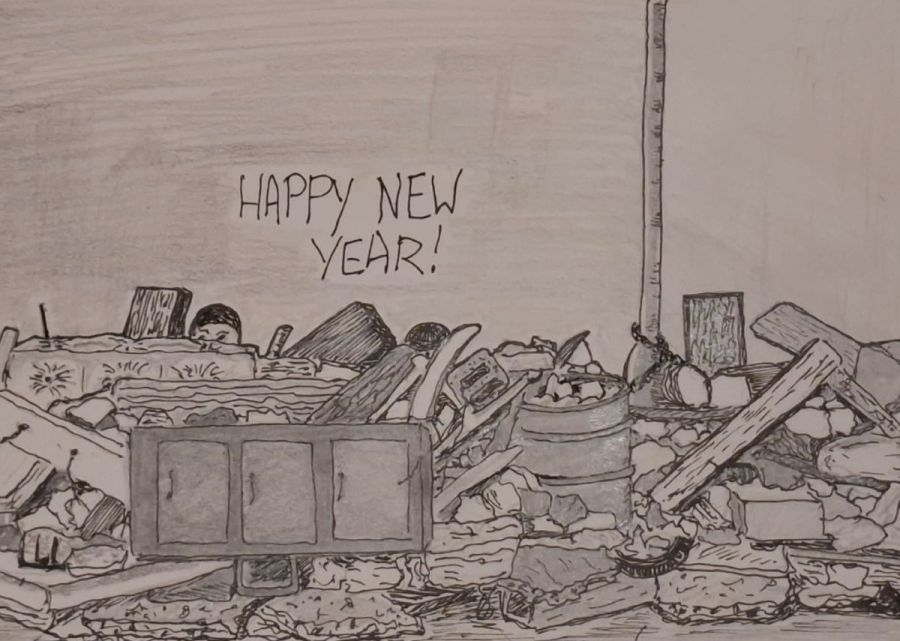
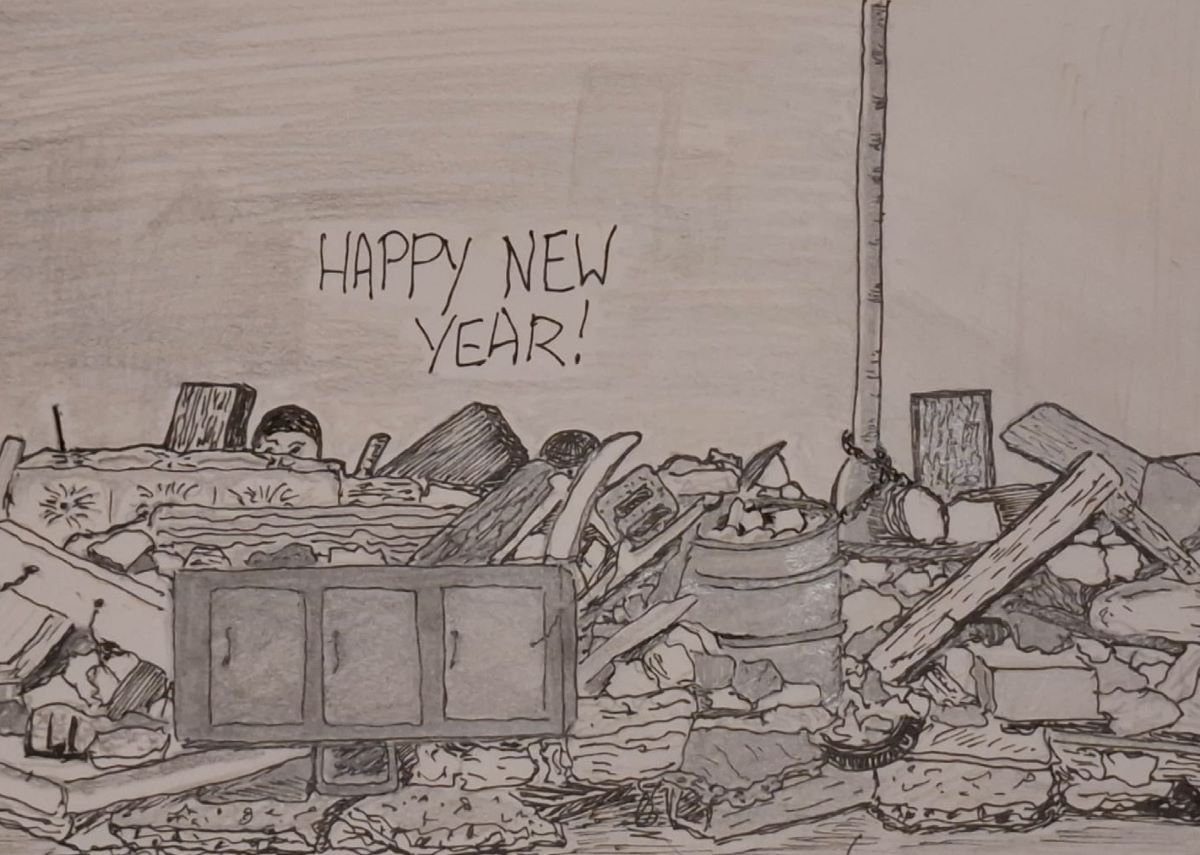


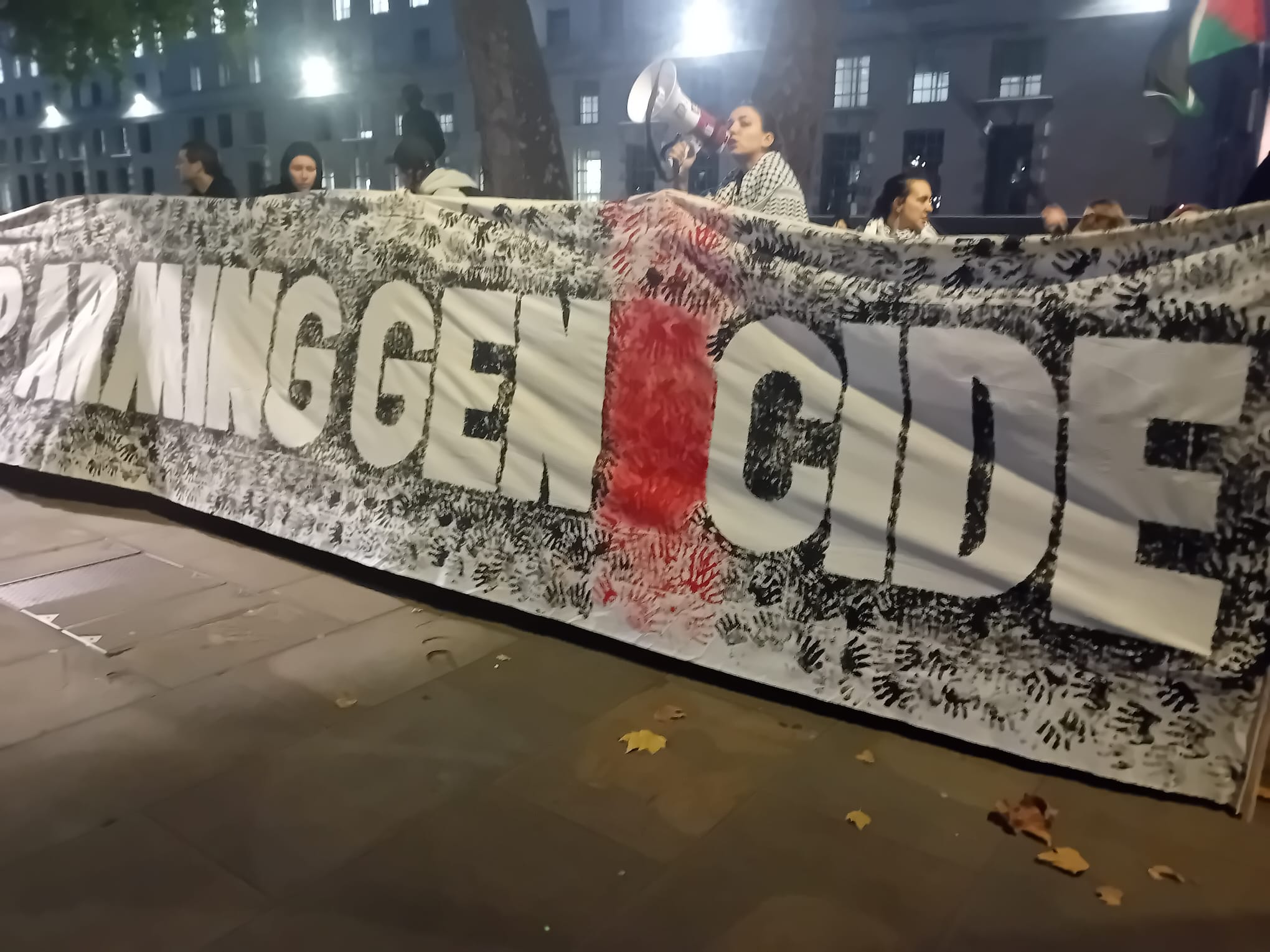


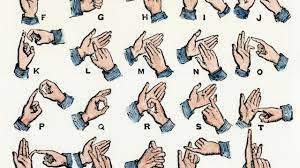


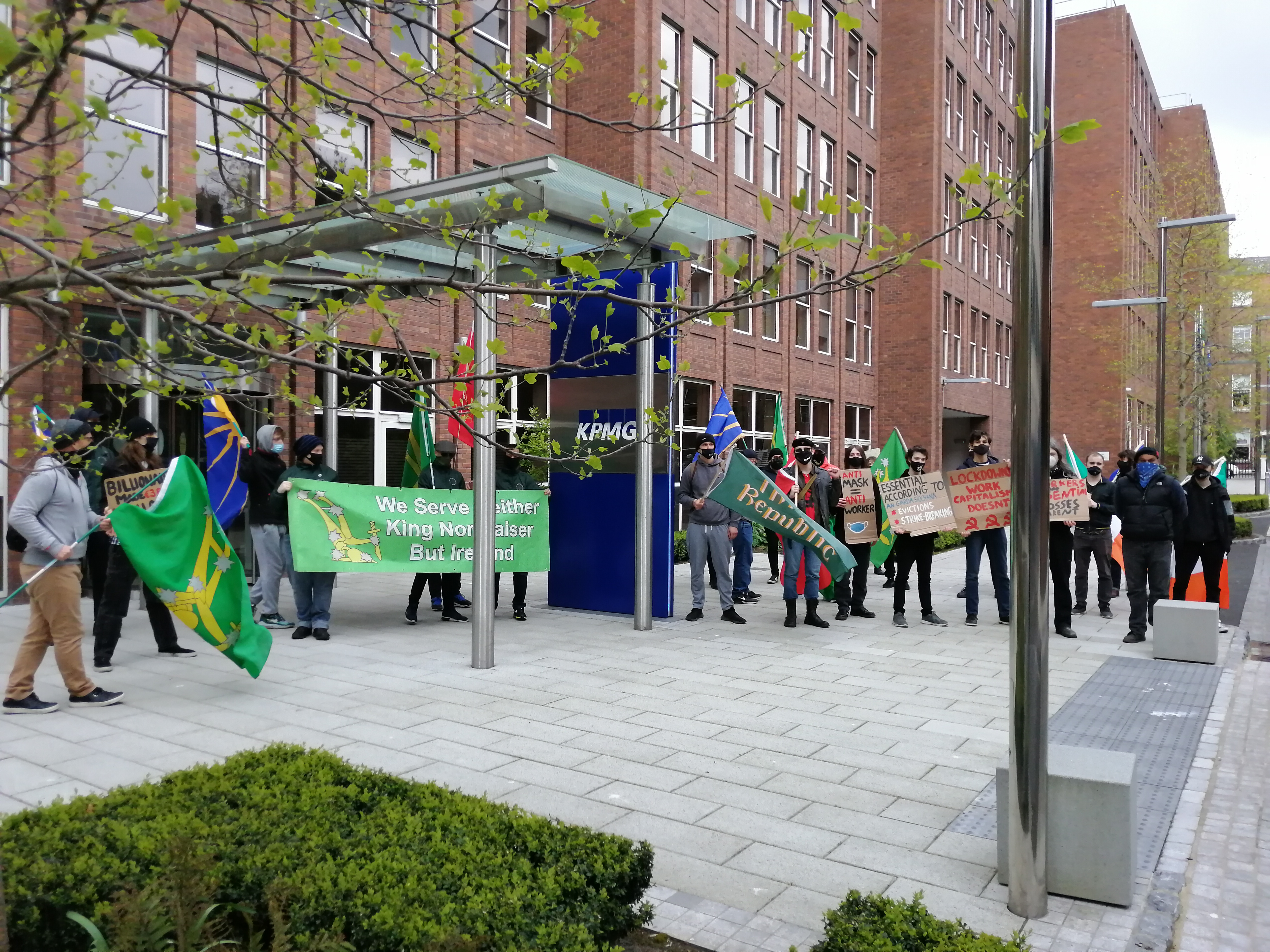
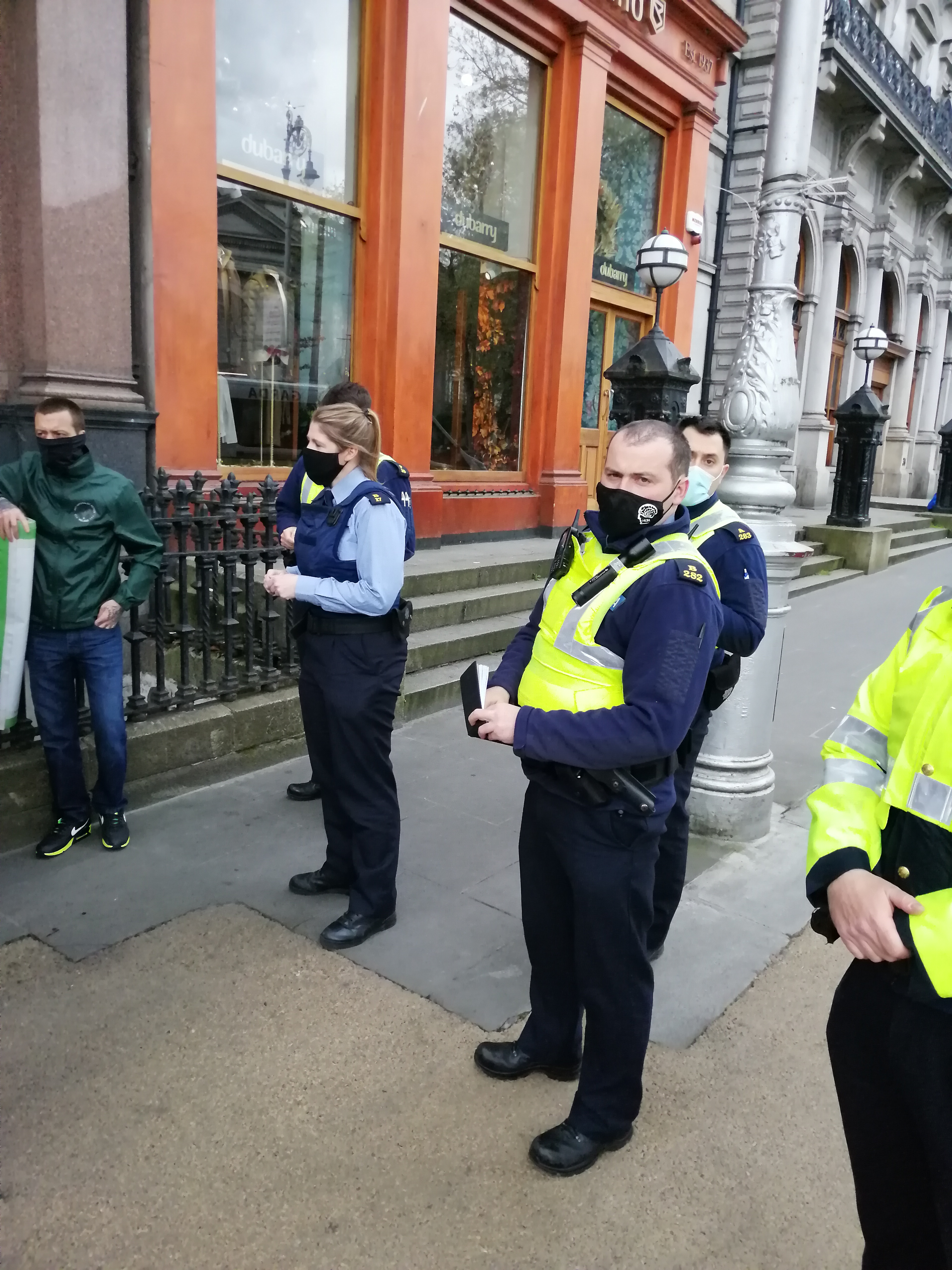
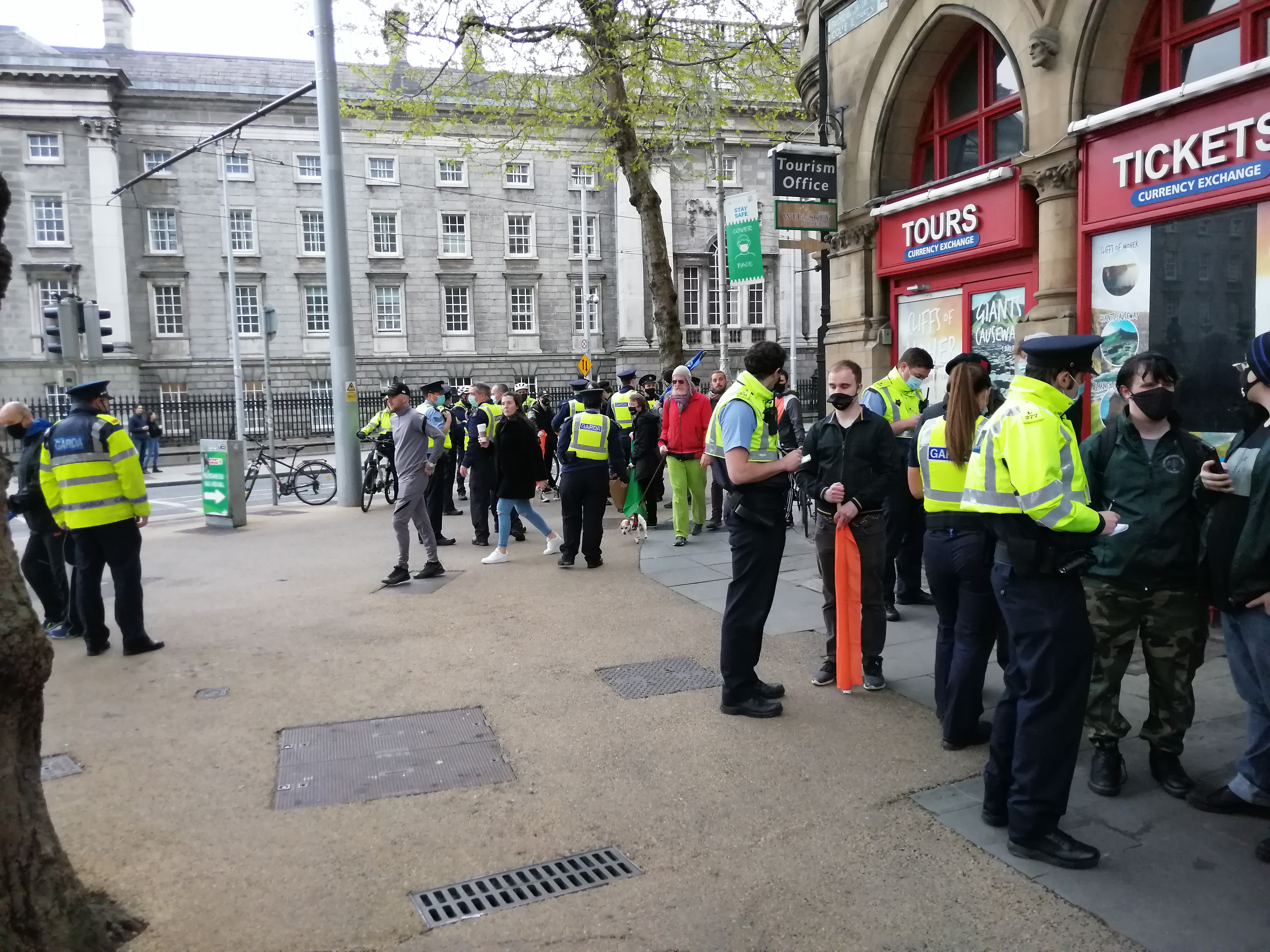
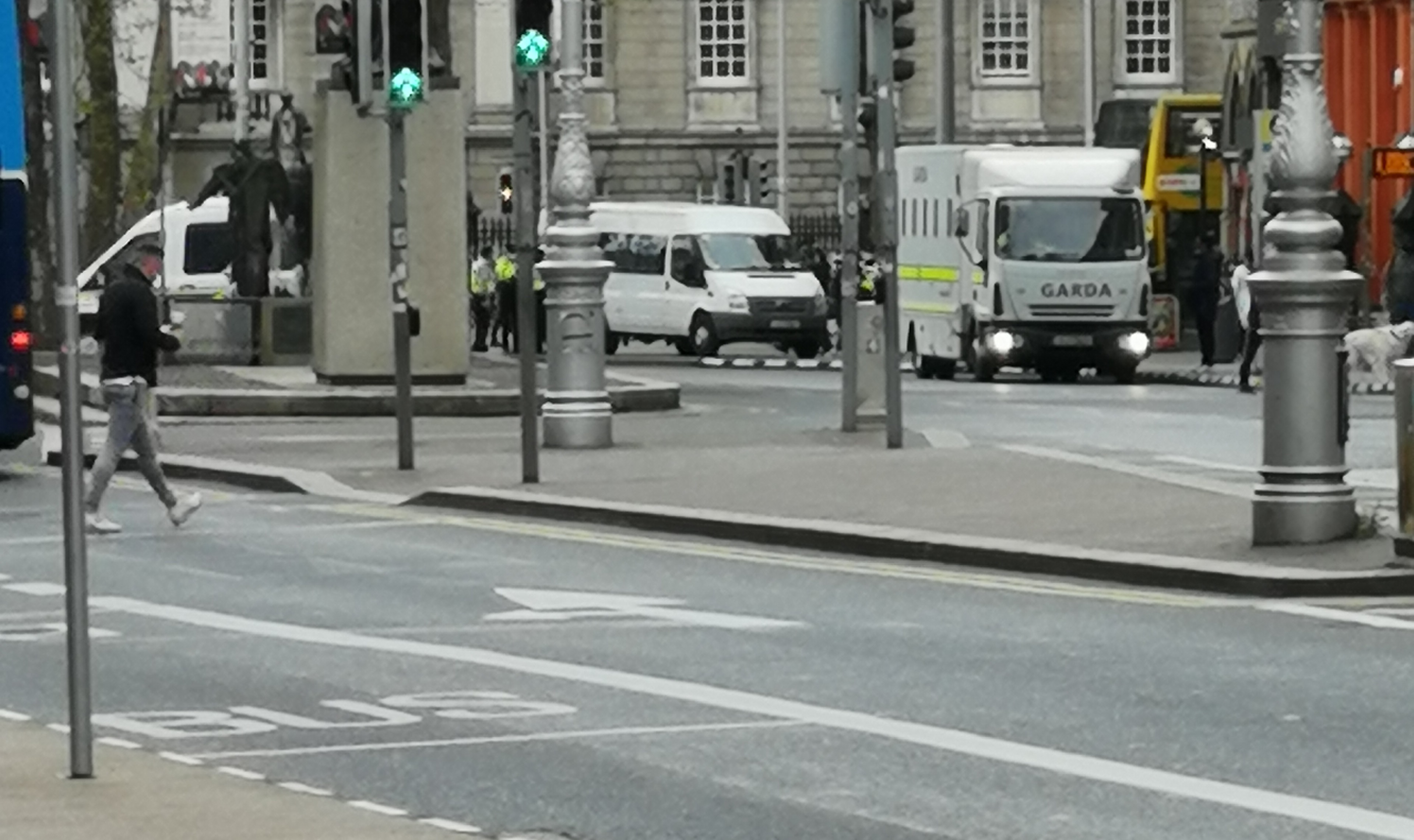
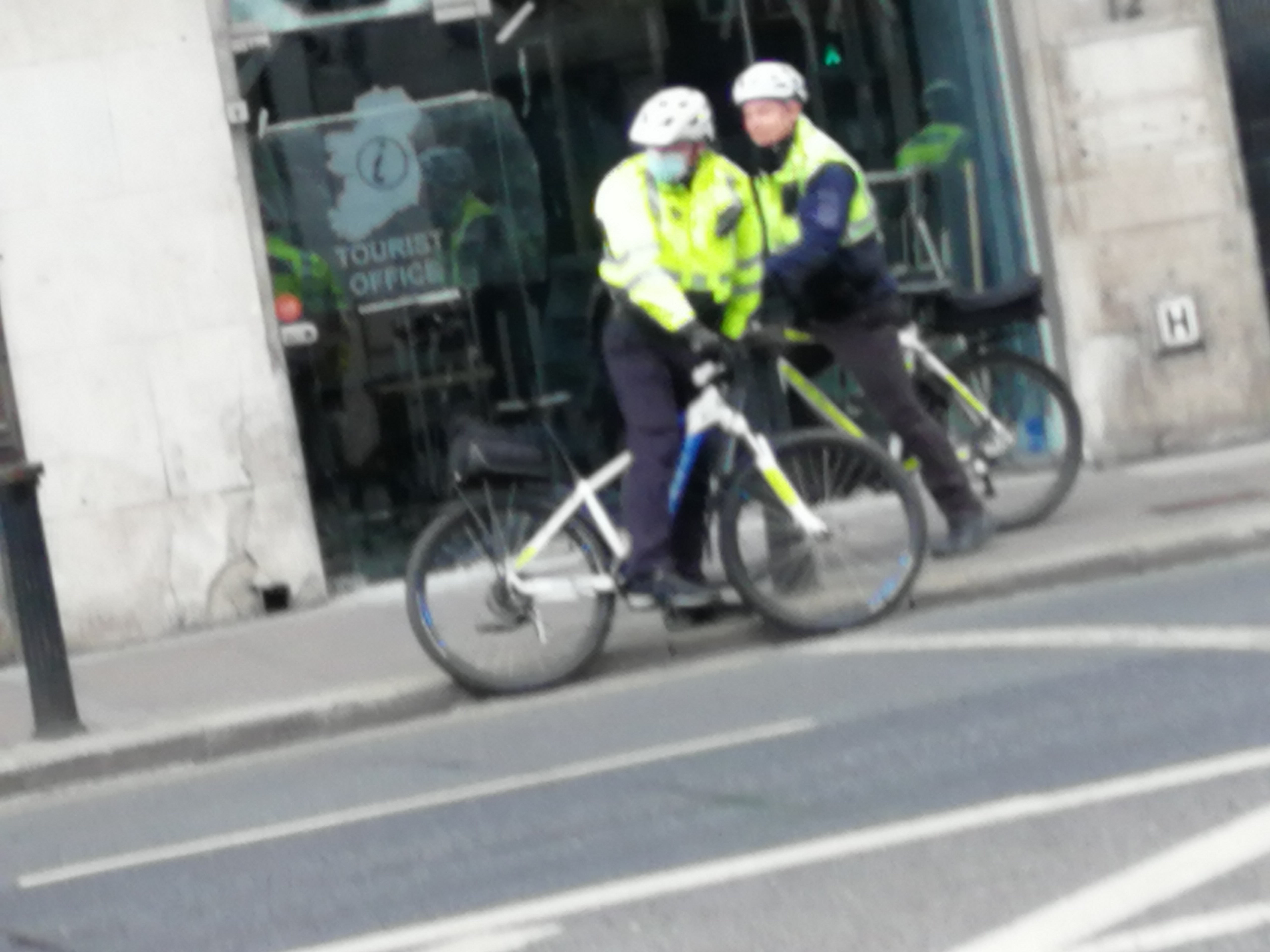


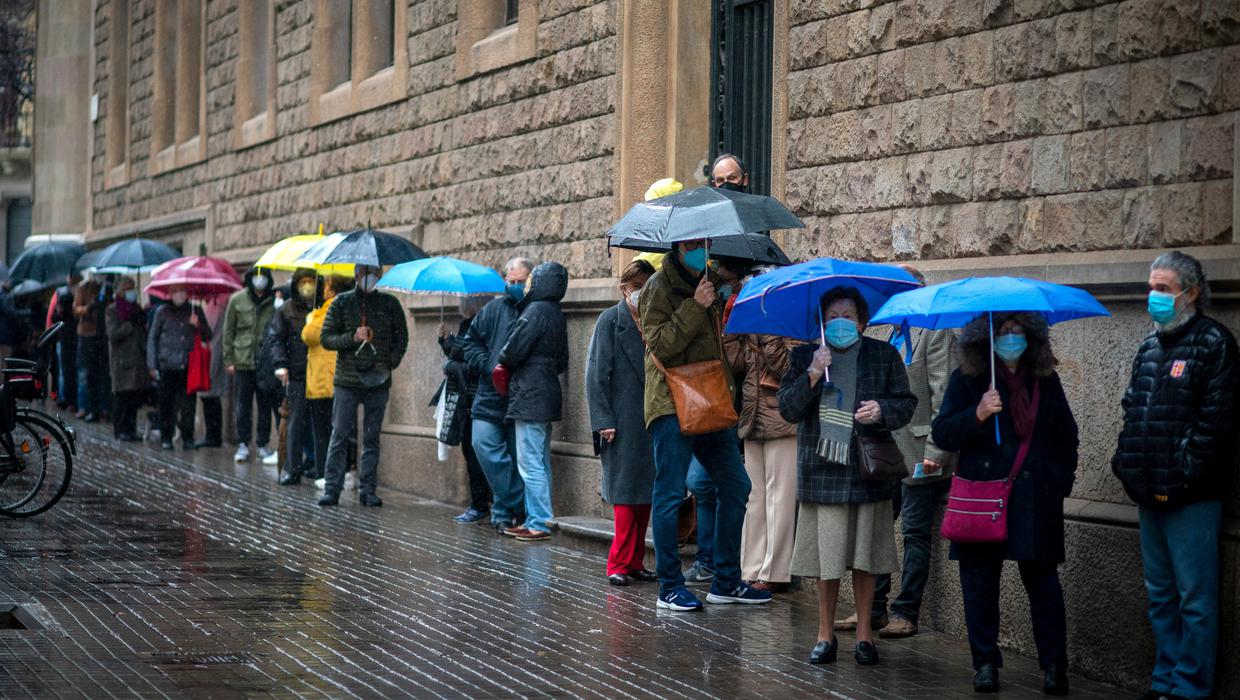


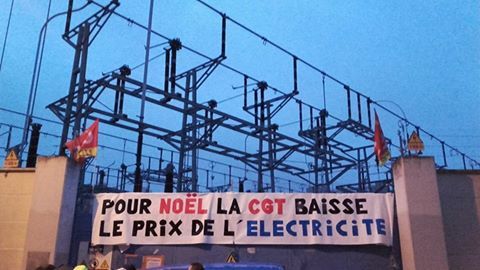
 rebelbreeze