DISCURSO DEL COMÍTE ANTI INTERNAMIENTO DE DUBLÍN PARA LA CONMEMORACIÓN DE PASCUA ABRIL 2019
A Chomrádaith agus a chairde, go raibh maith agaibh (“Companer@s y amig@s, gracias”) al Acción Anti-Imperialista de Irlanda por invitar al Comité de Anti-Internamiento de Dublín a hablar en este evento.
Tradicionalmente este es un tiempo cada año de conmemoraciones.
Conmemoramos en primer lugar a las mujeres, hombres y chicos que salieron a luchar contra un Imperio, el más grande jamás conocido y, en ese momento, el militar más poderoso del mundo. Algun@s lucharon solo por la independencia de Irlanda, much@s lucharon también por la justicia social y otr@s lucharon contra la guerra imperialista. El nuestro fue el primer alzamiento contra la carnicería de la Guerra imperialista y el mundo tuvo que esperar un año antes de que hubiera otro, en Rusia, y dos años antes del alzamiento espartaquista en Alemania.
Pero también conmemoramos a aquell@s much@s otr@s que lucharon y much@s que dieron su vida contra el invasor a través de los siglos, contra el colonizador, los ladrones de tierras, contra la monarquía inglesa por una República, contra los traidores de la causa de la independencia, contra los Gombeen (capitalistas nativos). Los gobernantes de nuestro propio Estado y los gobernantes coloniales de la colonia inglesa restante en suelo irlandés.
Es correcto y apropiado conmemorar los hechos heroicos y el sacrificio del pasado.
Pero no se trata solo del pasado; también se trata del presente y del futuro. A chomrádaithe (“companer@s), la lucha aún no está terminada y sus objetivos aún no se han alcanzado. Vivimos en un país dividido por una frontera británica y también dividido entre ricos y pobres, donde una pequeña minoría de explotadores vive de los trabajadores y de la clase media baja, convirtiendo la miseria de much@s en los euros y libras de unos pocos.
A medida que el fascismo asoma su fea cabeza y destapa sus sangrientos colmillos nuevamente por todo el mundo, nuestros gobernantes aquí en Irlanda también se vuelven cada vez más a la represión. Recordamos a los que están en juicio ahora por oponerse exitosamente al lanzamiento del fascista Pegida en Dublín en 2012. Y los partidarios del Sinn Féin Republicano atacados en Newry mientras conmemoraban el mismo Alzamiento de 1916 el año pasado, también en juicio ahora, una repetición de los ataques del RUC bajo la Ley de Poderes Especiales. Y las redadas en los hogares de much@s republican@s de otras organizaciones a lo largo del año. Y aquellos que languidecen en la cárcel después de la condena por cortes especiales sin jurado en ambos lados de la Frontera.
Parte del arsenal de la represión ha sido tradicionalmente el internamiento sin juicio. Y camaradas, tras el Alzamiento de 1916, hubo una gran ola de detenciones en Irlanda. Más de 3.500 hombres y mujeres fueron arrestados y se dictaron noventa sentencias de muerte, aunque más tarde todas menos 16 fueron conmutados. 1,852 mujeres y hombres fueron internados en campos de concentración y prisiones en Inglaterra y Gales.
Los británicos recurrieron nuevamente al internamiento durante la Guerra de la Independencia, al igual que los gobiernos irlandeses durante la Guerra Civil y en los años 30 y 40, y los británicos en los Seis Condados en los años 70. Eso fue internamiento masivo, pero el internamiento continúa hoy de forma más selectiva, a través de la revocación de la licencia para ex presos y la negativa de la libertad a fianza para otros. Tod@s l@s republican@s deben oponerse a esta práctica represiva y no solo l@s republican@s, sino también l@s socialistas y, de hecho, todas las personas democráticas. La historia muestra una y otra vez que lo que el Estado se sale con la suya contra un grupo, lo usa más tarde contra otro.
El Comité contra el internamiento de Dublín se esfuerza por celebrar un piquete mensual de información en diferentes partes de Dublín y un evento anual en Newry. No somos sectarios y somos independientes de cualquier partido u organización política, lo que significa que TODAS las organizaciones republicanas deben apoyar nuestros eventos, ya que el internmiento nos afecta a todos. O nos oponemos juntos a la represión estatal, camaradas … o vamos a la cárcel por separado.
The above was the title of an event as part of the James Connolly Festival 2019 and was held in the Bohemians FC Members’ Bar in Dalymount Park, Phibsborough, Dublin on 7th May. The event was chaired by Spark Podcast and had three speakers, one from a Direct Provision asylum seeker’s hostel, another from a Brazilian immigrant community and a third from Kerala state in India but resident in Ireland.
Poster commemorating Bob Marley and the Wailers concert in Dalymount Park, July 1980.Section of Bohemians’ supporters bar with memories of games played int the past.Memorials of past games played by Bohemians FCBohemians’ supporters’ bar with posters for the JCF and one for the specific event of the night.
The first speaker was Bulelani Mfaco who introduced himself as a South African, gay and an asylum seeker. Speaking about racism, he said that it was necessary to stand up to it and quoted the example several times of Mary Manning, who was one of eleven strikers (“Ten Young Women and One Young Man”, song by Ewan McColl) in Dunne’s Stores in Dublin in pursuance of their union’s policy (IDATU) not to handle South African goods while the white racist regime was in power.
Bulelani said that fascists mean what the say in their threats about their targets, blacks, gays, asylum seekers, women who won’t act as the fascist think they should …. and so they should be prevented from coming to power. He said that as a black man he is aware of racism often on the street.
Speaking about the conditions of asylum seekers and the conditions imposed on them, including being asked to prove that he was gay (!!!), he said they do not come as freeloaders but are prevented from working while their cases are examined, which can take years, therefore the Government’s system forces them to be recipients of aid. Once a judgement is given, which in 9 out of 10 cases is a rejection of the application to stay, they can appeal and racists say they are just doing that to delay the process of their expulsion. In reality, many cases are successful on appeal as the reasons stated for rejection at the first stage were so irrational.
He also pointed out that seeking asylum has no necessary link to war but is about a person “having a reasonable fear of persecution because of their race, religion, nationality, membership of a social group or political opinion and is expelled or chooses to leave their country because of one of those factors”. A “social group” under threat could mean and often does, being one lesbian, bisexual, gay or transgender.
Eloquent and with wide knowledge about people seeking asylum in different countries, Bulelani was at times in danger of leaving the other speakers without enough time for their own contributions.
Rafaela Ferracuti (Brazilian Left Front) spoke about the fascist and racist policies of the current regime in Brazil and the harmful reforms of workers rights’ and open justification of attacks on indigenous people. Ferracuti spoke also about the situation of Brazilian migrants working in Ireland and referred to a fairly recent attack on some of them by Travellers. Asking for people to support Brazilian workers here, Rafaela also spoke about links with the Workers’ Party (which I assumed incorrectly at the time to be a generic term or a Brazilian party I had not heard of).
Manoj Mannath (of Kranthi organisation) talked about the slow climbing to power in an Indian state of a fascist party and talked about the process they had followed to do so, using Hindu religion in a supremacist way and also targeting those of the “untouchable” (sic) class.
Both Ferracuti and Mannath were speaking with difficulty in a language other than their own and I found it quite hard to follow them at times.
Framed photograph of birds-eye view of the Dalymount football stadium (apologies for the shine off the glass in the frame).
During questions and contributions, the following points were made or clarified:
The attack on Portuguese migrants by Travelers was wrong but some of the response by Portuguese migrants had been to leave racist graffiti, which would not help matters.
Irish Travelers are or have been for a long time the most discriminated-against section of Irish society with hard living conditions and high infant mortality and as often happens with people pushed to the bottom, some of them have turned to drugs and feuds are breaking out between rival gangs.
One person opined that the Government does not want to stop immigration but to control it and keep migrants insecure and with little rights, the easier to exploit them. The trade unions should recruit migrants to help them and also to prevent them being used as cheap labour to undermine any conditions won by Irish workers.
The Irish have been migrants to many countries and some had joined the oppressors while others became prominent in workers’ resistance.
Another ascertained that Rafaela had been referring to the Irish organisation the Workers’ Party and she stated that it is an anti-immigration party.
Another contribution stated that as well as the work of attacking racist policies and statements, fascists had to be prevented from establishing themselves and referred to the prevention in Dublin a few years ago of the launch of Pegida, a Europe-wide fascist organisation targeting Muslims. The Irish and Polish components had been physically prevented from holding their rally and anti-fascists are currently being taken through the courts on serious charges. He felt that these people should be supported.
Yet another responded that although that action was good, when one got to that stage, it was already too late.
The use of religion to divide people in India was compared to its use by the British occupation in Ireland but also by the same British colonisers in India and in some other lands.
Another said that the real target of fascists was the indigenous mass of people and that the other targets were being put up as diversions. As the economic situation worsens, the capitalists need to suppress the struggles of the working class and sections are targeted in order to divide the opposition.
There was general agreement that the various targeted sectors and the Irish working people needed to support one another.
The James Connolly Festival is an annual week-long event of talks on political events and sometimes cultural performances organised in the month of May in Dublin by the Communist Party of Ireland and open to the public. There is a program of other events continuing every day until Sunday: http://jamesconnollyfestival.com/#about
COMMENT:
Overall, I felt quite disappointed. I had assumed the talks and the meeting would concentrate on the practical and ideological struggle against fascism and the rise of the far-right in Ireland and perhaps in Europe, with some lessons from further afield. Or possibly even on concrete actions that might be taken to support asylum seekers. Perhaps that was an unwarranted assumption but in any case, apart from the contribution of Bulelani Mfaco, the South African asylum seeker, the examples (as far as I could understand them), though of interest, seemed to have little direct relevance to the struggle here in Ireland.
A brief account of the fascist horror between Cantalpino and Villoruela (Salamanca) during the Spanish War, forwarded to me for translation from Castillian (Spanish). I will post the original separately.
Diarmuid Breatnach
Comment: If another reason were ever needed to ensure we crush fascism before it gets strong! Stories like this illustrate how fascism was not defeated, much less rooted out in the Spanish State and remains at its heart to this day. No progress can be made towards democracy in that state without taking that fact into account. DB.
(Translator’s note: Villoruela is a municipality located in the province of Salamanca, Castille and León, in western Spain).
Alejandra, the interviewee, who was raped in front of her husband, next to her while a gun was held to his chest.
Fear ravaged Cantalpino, where the Falangist hordes killed a woman and 22 men; where they robbed and raped. Mrs. Alejandra tells the story and her eyes seem to look inside herself: “They murdered many here and Eladia Pérez, the Jaboneta, too. They went looking for her son Guillermo, whom they “took for a walk” later, and she did not want to open for them; so the bastards shot and killed her; then they took her to the cemetery and her body did not fit in the hole and the bastards cut off her head with the shovel … the murderers were people from the town and strangers, Falangists, priests, friars and that kind. The priest was the worst, he gave his blessing to the “walks” .. They also cut the hair of about a hundred women to the scalp and, in the rain and everything, they took them in procession, the music playing and the Falangists shouting “Up Spain!” and “Long live Franco!” and … I shit on the mother who gave birth to them! “
Alejandra continues with her story: “… they did a lot to me, they raped others. Five Falangists raped me. They took my husband out of bed, may the poor man rest in peace, and they pushed a pistol against him, in the chest, and there, in front of him, they raped me. Some had me by the arms and others, by the legs, and here, Saint Ines, to what they wanted to do, and the guns on the bed in the presence of my Desiderio. Poor Desiderio! They also stole everything they could. Yes, yes, they were from here, from Cantalpino. Unfortunately, this violation was not an isolated incident. In Poveda de las Cintas, a few kilometers from Cantalpino, the story was repeated, this time with the wife of the secretary of the town hall .. “
On August 24, 1936 the blood did not stop in Cantalpino, the impunity of the murders encouraged the Francoists. That same afternoon they appeared in Villoruela, less than 10 kilometers from Cantalpino, 3 Falangists accompanied by fascist neighbors of the town: They arrested the following people: Eustasio Ramos (51 years old), Elías Rivas (43), the brothers Leonardo (43) , and Leoncio Cortés (41), Daniel Sánchez (35), Esteban Hernández (29) Francisco García (25) and Benigno Hidalgo (18).
The fascists gave criminal replies to the families of the detainees when they went to look for them at home: Leonardo Cortés’ wife was asked where her husband was; she replied that she did not know and they answered: “Do not worry, even though he were underground, we will find him”. Daniel Sanchez had been risking his life to save the lives of other people with his mules and his cart to cross the flood, regardless of what color or what party they were. When they went to look for him at home, the woman said to them: “Wait, he is taking off his clothes, he is all wet”; the answer was: “Do not worry, he will get it all the same”. When they went to Esteban Hernández’s house, his mother told them: “wait, he does not have socks”; the answer was: “Do not worry, he will not need them”. When they went to look for Benigno Hidalgo, his mother told them: “I have to give him an injection”; “Do not worry, we’re going to give it to him,” they replied.
Once captured, they were arrested at the City Hall tied hand and foot with ropes. The members of the City Council called a meeting and decided that the 8 detainees should be shot. So bound, they were put on a truck in Villoruela, after midnight, and they were moved to the end of Salvadiós, a town in the province of Ávila. There, at a crossroads, they were shot and left lying in a ditch. Right there they were buried by neighbors from Salvadiós. The murderers were 7 from the town, the one that drove the truck and the 3 outsider Falangists.
Two of the detainees’ wives, María Engracia Cortés and Angeles del Pozo, went to ask for help from the nuns of the convent. They told the nuns what was happening and the nuns answered that this was a crusade, and that if they had not done anything why had they had been fleeing, to which the neighbors correctly answered: “Jesus Christ was also persecuted and though had done nothing, was crucified. “
Jaime Cortés, the son of one of those shot, said that “after the suffering they caused, the fascists appointed among the townspeople a policeman, allegedly civic, to control our movements from home, the demonstrations of suffering. We spent the whole night crying with my mother and my grandparents in the kitchen .. it takes a lot of patience and resignation to live a lifetime with the criminals who shot your father .. We had to go through calamities and sufferings … I always remembered very well a phrase that my mother told us very often: “Children, I never want to see you with blood on your hands” … the only reasons for which they were shot were their way of thinking differently from the Franco regime, that is, to defend freedom, the rights of workers, social security and education … they were shot for defending the largest right of all person: freedom .. “
From the date August 15, 1936 to June 16, 1939, there is no document or record book of the Villoruela archives. Who were the ones who made that documentation disappear? In the book of death certificates for March 13, 1937 the entry inscribed by the judge Iñigo de la Torre these 8 people shot dead are listed as missing.
Originals by Ángel Montoro in Jiminiegos36 and Foro por la memoria (Intervíu nº 177, 4-10 October 1979). Photo by Xavier Miserachs
Recently a number of people have been marching in Dublin, saying that they are the Yellow Vests of Ireland. This is obviously inspired by the Gilets Jaunes (“Yellow Vests”) whose protests against the French Government began in November last year and swelled to huge numbers in Paris demonstrations and riots. Some smaller groups have announced their formation in different parts of Ireland too. But there are questions concerning them.
Irish Yellow Vest protest crossing O’Connell Bridge 15 December 2019. (Photo source: Internet)
The Yellow Vests in Dublin have been meeting on Saturday afternoons at the Custom House and marching from there. I am busy on Saturdays and on the one day I made the time to join them, I did not find them and learned later from their posts that on that occasion they had gone to Dublin Port and apparently blocked the approach road for a period.
Originally the organisers stated that there would be no leaders but then two emerged, Glen Miller and Ben Gilroy. Until last week Gilroy was serving three months for contempt of court, a sentence imposed by a judge when he learned that Gilroy had not completed the community service sentence imposed for a previous contempt of court. Held in contempt of court a number of times Gilroy has always apologised afterwards and had his contempt considered “purged”, i.e cleared. It seems that the judge in this case decided that Gilroy was playing games with the court around the issue of contempt, which is probably a fair assumption (which is not at all to say that such actions are wrong).
Gilroy took a case to the High Court alleging failure to comply with certain legal requirement and on February 4th the Judge granted him liberty on bail in his own recognisance (i.e his own financial bond) while is case was discussed and decided. However this week the Judge ruled that his imprisonment was not unlawful and revoked Gilroy’s bail, which meant he had to return to jail.
In recent years a number of groups have sprung up which oppose a number of unpopular legal procedures, for example evictions, by a mixture of physical obstruction (by numbers of people) to bailiffs but also by appealing to what they claim are laws that take precedence over the legal procedures they are confronting. The “Land League” is one of these (no organic relationship to the 19th Century Irish organisation of Davitt and Parnell) and, not unrelated to the “League” in its reliance on arcane laws and procedures, real or imagined, is the Sovereign Movement, the “Irish Republican Brotherhood” (again, despite their claim of “inheritance”, no organic relationship to the 19th and 20th Century organisation) and the Fremen.
While some people are impressed by these arcane legalisms others are bewildered by or scornful of them and, despite their claims, these organisations seem unable to point to where their legalisms have actually been ultimately successful. They have certainly succeeded in slowing down such actions as repossessions and evictions by taking up court time and numbers turning up to block an eviction will often succeed in delaying the process, without any need to appeal to any kind of legalistic underpinning. Property rights reign supreme under capitalism and certainly the Irish state is no exception to that rule; on the other hand the authorities in the Irish state tend to prefer to carry out the normal business of capitalism with as little confrontation as possible.
Summoning numbers to block or delay an eviction and to support a victim of the system in court are of course tactics of struggle honoured by time and usage in Ireland, whether against the British administration or that of the Irish State. Such reliance on mobilisation of numbers can sometimes produce small or partial victories but they hint at something else – the mass mobilisation of insurrection and revolution. And that is part of the appeal of groups such as the “Land League” and probably in part of the Yellow Vests.
Section of Irish Vest protest Dublin 22 December 2019. (Photo source: Internet)
But if insurrection and revolution are hinted at, we need to know whether the hints are in earnest. Calling for a general election, one of the demands of the Yellow Vests, hardly seems insurrectionary. How would that change anything? Calling for an end to a number of attacks on working people including evictions is good but how is it to be achieved? Is there an objective of overthrowing capitalism and imperialism in Ireland? We do not hear so if there is. If an insurrection is hinted at, by whom is it to be and for whom?
RACISM
It is here that we run into a disturbing problem: racism, of which Gilroy and Miller have both been accused. Any movement or organisation led by racists is not going to be one for progressive change in society, let alone a socialist insurrection but worse – it is likely to be a breeding ground for fascism. And of late, fascist forces are gathering throughout most of the world and certainly in Europe. Capitalism is struggling and the workers must be made to pay the cost through keeping wages and social expenditure down and profits high. When persuasion and collaborationist workers’ leaderships are no longer effective, capitalism must fall back on naked force. Fascist movements are the frontline of that force, its leading edge and racism (or religious sectarianism, with which we in Ireland have more experience) is used to divide the lower classes, the ones that will be made to pay.
Of course not all the people supporting the Yellow Vests are racist but when an anti-immigration banner is tolerated on a march1 then it would be remarkable if racism were not being tolerated as well. And with regard to the leadership, Glen Miller’s racism is well established from his posts on social media. He has posted material against immigration, against Muslims, against Travellers and against lesbian, gay and transgender people – classical minority targets of fascism to split the working people. He also shares racist material by others including Tommy Robinson, a fascist public figure operating in England.
Gilroy is not usually so glaringly racist but he has certainly posted an islamophobic rant on social media.
One might argue that Islam is a religion and that being against it is not racism. Perhaps not, if one were against all religion, for example. But ethnicity and religious belief or organisation are often interconnected, at least in particular periods and societies. Most muslims are not white European. And the Irish certainly know from their own experience how easily anti-Catholicism became conflated with anti-Irishness, in Britain for example, in the USA (think of WASPS and the ‘Nativists’) and in Ireland under colonial rule.
Islamophobes fantasise about Moslems taking over the country, anti-immigrationists fantasise about immigrants taking over the country, racists fantasise about non-Europeans taking over the country. There are nuances between them but in the end do they matter that much? The effect is the same: society is portrayed as divided by ethnic origin rather than by class and the focus is diverted from the bankers, gombeen capitalists and their political servants an on to migrants instead.
It might be argued that “looking after our own first” is a natural outlook and not racist. But we need to look at where that comes from and where it leads. It starts from the false premise that there is a great shortage and that we should divide those scarce resources first among the Irish. But in fact there is sufficient wealth produced in Ireland to fund all the education, housing and healthcare needs of all the people, immigrants included. And this is because the wealth is produced by working people – including migrants. The problem for us all is that that huge portions of that wealth is being diverted to fund the market gambling, lifestyles and financial empires of Gombeen (Irish capitalists) and foreign capitalists and bankers. Those are the people who would be rubbing their hands with glee or happily exchanging bribes and payoffs if, instead of uniting to confront them, the workers began to fight amongst themselves, divided by race or religion.
When the 1916 Proclamation declared the objective of the insurgents to “pursue the happiness and prosperity of the whole nation ….oblivious of the differences carefully fostered by an alien government, which have divided the minority from the majority in the past”, it was addressing in part that religious sectarianism by which England had restrained the descendants of its colonists from overthrowing its colonial rule and also the pitting of Protestant against Catholic workers, a division which had been played out before 1916 and was to be enacted to even worse degree later. The “Protestants” were the “immigrants” of those years, along with their descendants2, albeit a privileged minority which migrants rarely are.
In making that statement, the insurgents of 1916 were drawing on an Irish revolutionary tradition stretching back to the United Irish of the 1790s and early 1800s, of the likes of Wolfe Tone, Henry Joy McCracken and Robert Emmett. It was a tradition that ran through every revolutionary movement in Ireland since that time, through the Young Irelanders, the Fenians, the Volunteers and the Irish Citizen Army, a tradition that called for overcoming differences to build unity against the common enemy. That is the unity that fascists and racists seek to shatter.
Fascists may and often do verbally castigate capitalist governments, politicians, industrialists and bankers. But they end up serving them. They split the mass of the working and lower middle classes on the basis of race, they attack the defence organisations of the working class, they target other groups such as gay and lesbians, push women into the most subservient roles possible. The Nazis were “National Socialists” and part of their movement talked about nationalising industry under workers’ control. But they were backed by big capitalists such as Thyssen, Krupp and IG Farben and many others in Germany. In the USA and in Britain they were backed by Henry Ford and promoted by Viscounts Northcliffe and Rothermere, owners of the Daily Mail (until England declared war on Germany and the US entered WWII on the Allied side). The Nazis in Germany took over the trade union offices on Mayday and closed them down, forcing workers instead to join fascist unions controlled from the top, part of the State.
WHAT KIND OF UNITY?
It is interesting that while fascists divide the working people in order to facilitate their control and undermine the struggles against the capitalist class, they often cry for unity. German unity. Aryan unity. White unity. Spanish unity. British unity. Irish unity. And when people have criticised individual leading figures in these groups, in particular recently of the Yellow Vests in Ireland, they have been accused of dividing, of undermining the struggle and calls for “unity” have been raised.
Whether it is right that the court should consider it criminal for someone to hold it up to disrepute, as Gilroy and some others have done on occasion, is another question and whether three months is a reasonable punishment for “contempt of court” in another. The courts are instruments of the State which in turn is an instrument of the ruling class and as such all revolutionaries must perforce hold them in disrepute and, in my opinion, three months in jail is excessive by normal standards in this state. But cries raised by the Irish Yellow Vests against this seek to glorify Gilroy as some kind of “people’s leader” and in turn to promote the ‘Vests’ as a viable resistance movement.
Workers know that unity in struggle is necessary but have also learned over the years that calls for unity may also be used to allow collaborationist trade union leaders and politicians to continue misleading the workers. Such calls can be employed to silence questions about where the movement is going. And now they are being used, unwittingly by some no doubt, to the effect of trying to silence the challenges to such as Gilroy and Miller about their racism and where they are trying to lead the Yellow Vests.
Such calls are being used not only to stifle the criticism of the leaders’ racism but to undermine the criticism of racism itself, as though racism were some kind of Leftie concept or diversion from the real issues. In a post in defence of Gilroy on 18th January, Miller posted a long ‘plain folksy’ discourse in which he said that Gilroy and he have “no time for political correctness and the posh talk”. So according to that discourse we should ignore the accusations of racism, action is needed, and for that we need unity – we should stop bleating on about racism. But the action is often dubious, the destination vague, the unity based on lack of analysis and stifling of criticism and – ultimately – on the opposite of unity, the division of the working people and the undermining of their resistance to those who are the real source of their misery and discontent.
It is not because of the anti-racist or politically-correct posturing of anyone, whether middle class or not, that socialists stand against racism: it is not just because it is inhumane, either; it is primarily because it splits and weakens the working class and diverts anger and resentment from the real enemy.
The Yellow Vests in Ireland are by no means a fascist or even racist movement. But they tolerate racists, are led by racists and could provide a breeding ground for fascists – something for which fascists are always on the lookout.
WHAT TO DO?
So what should be our response, as socialists of various kinds?
First, I think we need to step back and examine the situation a little. The Yellow Vests here copy the Yellow Vests in Paris. Awhile back, the Socialist parties (I do not count the Labour Party in this) wanted us to copy the Greek uprising and Syriza’s electoral success. Earlier than that, some people wanted us to emulate the Indignados of Spain. And further back still, others sought to copy the Occupation movement of the USA.
It seems to me that all that striving speaks of a desperate need felt by some elements in our society, a need that cries out that something must be done; something to cure the mess that our Gombeen system has made of our health and welfare systems, of the housing crisis, of cuts to other services; that some stand should be made against paying off the bankers’ gambling debts with our hard-earned money and trying to get us to pay a third tax on our water supply when the money collected already has not been used as it should. A feeling that something should be done about the corruption of that give-away of our natural resources, about the selling of our transport, postal, telecommunications systems, about the funding of private landlords, about renewed emigration of our young. About increased hours and travel time spent just trying to stay still economically but nevertheless slipping slowly back. About evictions of people who have paid the actual building cost of their homes a number of times over. About governments that oversee this rotten system, worrying chiefly about staying in government and pleasing native and foreign capitalists; about a police force in which we find an average of a scandal per year with no end in sight and yet happy to repress people’s resistance …. and with their Armed Response Unit cars to be seen everywhere around the city centre.
Those people are right, of course. Something should be done. Something must be done. But what? There’s the rub, as they say. The working class should rise and take power, is the classic revolutionary socialist answer; also of the socialist Republicans, who tie the question to getting rid of British colonialism. Whether our revolutionary socialists in Ireland are actually revolutionary is a good question however, and in any case they are small parties. Whether our socialist Republicans are actually socialists or Republicans first is another interesting question and in any case they are splintered in groups and independents.
All those movements abroad that various people tried to emulate or reproduce here in Ireland did not succeed in changing the situation in their own lands. The USA, the country with the most billionaires in the world (and in politics!), continues to slide towards eventual downfall, in huge debt as a result of funding its military-industrial-financial system, for which billions around the world and millions inside its own borders pay with misery ….. and still the debt cannot be paid. But a huge sub-class exists, often living in city wastelands of run-down housing estates.
The Spanish state continues to squeeze its citizens, prepares to go to war against a nation seeking independence and fascist groups organise openly. Suicides prior to, during or after evictions are no longer startling news.
The Greek Left-coalition government of Syriza collapsed and prostrated itself to the EU and the IMF and schools had to close in winter for lack of heating fuel.
The French Government has alternated repression with some concessions but ultimately nothing has changed.
The growing vacuum of resistance in Ireland will be filled by a revolutionary movement based on working people in militant resistance to – and directed at – the capitalist system. Or it will be filled by fascism.
To build a revolutionary resistance movement, unity in struggle is needed and for that unity, racism must be driven out of the people’s movements. That will not be done by condemnation of racists alone. It will not be achieved only by calling for unity against capitalism. The revolutionary movement must be built and it is by action that it will distinguish itself and attract support from the militant sections of the people.
It is by its revolutionary critical discussion on politics, history, science and culture that it will inform the mass of its potential and necessary objectives.
It will not be built by theoretical declarations or arguments alone, nor by actions that are either timid or cannot be maintained, or by actions of only a few far in advance of the mass. Some of the actions will, perforce be risky and the State will exert a price.
But it is either that or – fascism awaits.
End.
FOOTNOTES
1Reported on at least one of the marches and I have seen a photograph of it
2Some Protestants were descendants of Catholics who had changed their religion to avoid persecution or land confiscation and some Catholics were descendants of Protestants who had converted or who had married a Catholic who raised their children in that faith. But largely, Anglicans, Presbyterians and other Protestant sects in Ireland were descendants of waves of colonists in particular from the 15th Century onwards, while Catholics were largely descendants of the indigenous Irish and of the Norman invaders.
Summary: Fascism is mobilising across many parts of the world including the very Spanish state where it caused a war through a military-fascist coup and brought in four decades of a fascist dictatorship. The main point of commemorations of the anti-fascist resistance and of the International Brigades should be of raising the alarm and mobilising resistance anew. Why in some instances is this not happening?
What is the point of commemorations of the International Brigades? Or of the ‘Spanish Civil War’? Yes of course I believe these things should be commemorated but I still want to know what the point is.
I would think that most people would agree with two reasons:
To remind us never to let fascism take over again
To honour the memory of those who fought it, many who sacrificed their lives or their liberty or their health in the struggle against fascism.
I believe there is a third important reason though perhaps most people wouldn’t put it up there right away, though I doubt they’d disagree with it:
To learn from the successes and mistakes of the past.
How is it then that one can go to an event to celebrate the the Irish International Brigaders but at the same time not hear a mention once in a number of hours about the mobilisation of fascist forces in Europe? How is it one cannot hear even a passing reference to the fascist forces that are stridently mobilising within the very Spanish state, at this moment? How is it that there is no mention of the Irish State bringing antifascists before the courts now for allegedly taking part in actions against the intended launch of the fascist Pegida organisation in February 2012?
Sure, we can all forget some very important point in a speech, forget to name somebody who should get a mention, etc. But all throughout the evening? And no placards or posters to challenge the rising fascism of today? That cannot be just a slip. Were it amnesia, it would be bad enough but if a tacit or tactical agreement not to remind us that would be worse, much worse.
Bob Doyle, the last of the Irish Brigaders to die, who is often mentioned at such events, would not have had it that way. In his nineties, I heard him speak a couple of times and he was always clear that the main point is to stop the fascists today. Frank Ryan, who regularly gets references at commemorative events (often without anyone mentioning he was IRA before he went out, as were many of the other Irish Brigadistas), would have agreed with Doyle, I’m sure.
TODAY FASCISM IS RISING IN THE SPANISH STATE – but then, it never went away.
In the very territory where what is usually called the Spanish Civil War and less frequently the Spanish War Against Fascism (and other things)1 took place, Spanish fascists are openly organising, marching, threatening right now. A few weeks ago they were commemorating the dictator General Franco and Primo Rivera, founder of the Spanish fascist organisation, La Falange. Earlier in November they were provoking Catalans by having a rally in Barcelona. A little earlier still, they were provoking Basques by rallying in Altsasu, the town from which Basque youth got jail sentences of up to thirteen years arising out of a late-night pub brawl with off-duty Spanish policemen who provocatively went into an independentist bar and in which the most serious injury (if it was an actual result) was a damaged police ankle.2
Fascist organisation Falange women guard of honour for commemoration of the fascist founder of the Falange, Primo Rivera (Photo source: Internet)
All that would be bad enough if it were not that the Spanish State is actively tolerating them. Throwing fascist salutes, flying the Spanish fascist flag and shouting fascist slogans are all illegal under Spanish law; but the fascists brazenly do all these things and they do not get arrested!.
Fascist salutes and symbols at a recent fascist commemoration in Madrid (Photo source: Internet)
Of course, fascism was never defeated in the Spanish state. Fascism won there. We can shout “No Pasarán” (‘they shall not pass), the slogan for the defence of Madrid3 as much as we like but sadly, eventually sí pasaron (‘they did pass’), despite the enormous sacrifices of Castillians, Asturians, Andalucians, Basques, Asturians, Catalans and other peoples there, despite the bright internationalist spirit of the International Brigaders from well over 60 nations and states. And the victorious fascists tortured, shot, raped, humiliated, confiscated and stole food, valuables, businesses, imprisoned and half-starved the vanquished. And exported prisoners and jews to Nazi concentration camps.
Then the fascist regime consolidated their power, converting the schools to places of instruction in fascist and religious indoctrination, re-imposed a patriarchal ideology and ‘morality’ on girls and women, repressed languages other than Castillian, banned all trade unions except the fascist one, beat up and shot strikers and demonstrators, tortured independentist activists, shot some dead …. All of this went on for 40 years under General Franco.
During the first decade of that fascist reign of terror in the Spanish state, Fascism at first trampled over western and eastern Europe, North Africa, Asia …. until the tide began to turn, first in Eastern Europe and then in Asia and at last the fascist powers were defeated. Fascist leaders faced popular vengeance and Nuremberg and Tokyo Tribunals, executions and prison sentences. The societies they had sprung from were subjected to anti-fascist education. A great many of the guilty escaped but some were hunted down in following years.
During World War II on the other hand, Spanish fascism gave material and intelligence aid to the German and Italian fascist states and cooperated in hunts for the “French” (i.e Basque, Asturian, Catalan, Occitan and some Spanish anti-Nazi resistance, the maquis or maquisards4along the French-Spanish Border. It also sent back to the Nazis escaped prisoners, Jews and downed Allied airmen.
After the War, nothing happened to Spanish fascism (except that it sheltered hundreds of Nazi war-criminals, either permanently or on their way to South America, often with Vatican help). Fascism continued unimpeded in the Spanish state until ETA assassinated Carerro Blanco, Franco’s nominated successor and Franco himself died5 two years later.
Under internal pressure from Opus Dei and externally by European powers and especially by the USA, it was decided to modernise and rebrand the State6. The social democratic PSOE and its affiliated trade union the UGT were legalised under conditions and so were the Communist Party of Spain and its union, the Comisiones Obreras7. The conditions were that these would control their supporters (hence the trade unions) while the Transition was being carried through with repression; although republicans all, they would agree to the reimposition of a monarchy; that they – God forbid! — not go hunting fascists if they ever got into government; that they support the inviolability of the Spanish state union. The PSOE and the CPE agreed to the conditions and delivered, the latter even swallowing the fascist murder of five of its trade union lawyer members and serious injury to another four during the Transition and the PSOE swallowing the attack on the offices of the CGT.
The Transition took place in an atmosphere of hope and fear, repression against resistance: the new Spanish unionist and monarchical constitution was voted in, with regional autonomy to placate subjugated historical nations within the state; the new King, Juan Carlos de Borbón was installed. Ten years later, the Spanish State was admitted to the European Union8. That same year, the new Spanish Government under the PSOE was conducting fascist-police-military assassination squads against left-wing Basque independence activists9.
But all throughout those years and still, the fascists kept their plundered wealth. The fascist clergy, judges, civil servants, police, military and media all kept their positions and wealth. They just had to open up their ranks a little to let in the climbing social democrats and “communists”. Not one fascist was tried for any of the crimes carried out during the “Civil War” or during the Franco regime afterwards.
WHY THE FASCISTS ARE COMING BACK (but then, they never went away)
Two things are exercising the Spanish fascists at the moment. First among these is the long struggle of the Spanish State to hold on to its forced union of the nations and regions conquered by monarchs of the Royal Houses of Spain and by fascist dictators, then maintained by both the mainstream constitutional political parties, the PP an the PSOE.
As a combination of factors combined with State repression to halt and disintegrate the southern Basque march towards independence, Catalonia took up its own struggle10. The independence movement there, which has left, right and centre elements but at base is popular and democratic and with wide support, has been steadily advancing. At institutional level, the ‘autonomous’ Catalan Government is a coalition of pro-independence forces (but with a numerous, strong, right-wing and Spanish-unionist opposition) and the majority of town councils have pro-independence majorities and Town Mayors. At grassroots level, the cultural organisation Omnium and especially the ANC (National Catalan Assembly) have organised massive independence demonstrations, a referendum on independence (disrupted with violence by the Spanish police11) and a protest General Strike. Some of the movement’s social and political leaders are in jail (four on hunger strike as this is published) and about to go on trial for their activism.
The union of the Spanish state is an article of faith for the Spanish fascists and reflected in the Spanish fascist slogan of España, Una, Grande y Libre!12 The “Una” is the forced unity, the denial of independence to the Basques and Catalans (or any others who might consider going for it).
But it is not only an article of faith for the fascists in the Spanish state, it also the case with regard to the Spanish ruling class. Catalonia and the southern Basque Country are two of the best-performing economic areas in the Spanish state and together account for a substantial part of the State’s exports and revenues, apart from land mass and extent of coast. Furthermore, the successful exit of these two regions would undoubtedly encourage similar plans among others, such as Valencia and the Balearic islands (which are also Catalan-speaking) and the Celtic nations of Galicia and Asturias. Uprisings might be the result in impoverished Andalucia and Extremadura …. None of that is a scenario which the Spanish ruling class is inclined to even consider and it has its Constitution to depend on, with legal punishment for any secession without a majority vote in its Parliament and the ultimate guarantor in the Spanish Armed forces.
All this is bad enough but a substantial section of the Spanish Left is also against any secession from Spanish State territory. The PSOE of course (which also means the UGT), since it takes its turn as the government of the Spanish ruling class, is one opponent but also the Spanish Communist Party (and the Comisiones union), much of the Trotskyist-Communist alliance of Izquierda Unida (the inappropriately-named ‘United Left’) and the populist Podemos, to which it gave unclaimed birth. For those, the argument against secession is about “the unity of the working class”13. That the “unity of the working class” against Spanish unionism, capitalism, imperialism and fascism might be achievable by agreeing to the right of secession and supporting it, while building a united front against all that is reactionary in the state, does not seem to have occurred to them. Of course their issue might be in reality about control.
DIGGING UP THE PAST
The other issue exercising the fascists is the movement around the historical memory of the anti-fascist struggle and the effects of the 40 decades of Franco dictatorship.
Throughout the territory of the Spanish State, which currently includes the southern Basque and Catalan countries, there are graves of dead anti-fascists, usually unmarked and sometimes of many bodies together. The Catholic Church in most areas refused funeral services to the families of “los Rojos” (the Reds, i.e anyone who opposed the fascists) and the terror was such that often relatives were afraid for themselves and their children if they were too insistent with enquiries as to where their relative had been killed or buried. These burial sites are by roadsides, in quarries as well as in or near cemeteries and other places. Many of those were combatant and non-combatant prisoners who were executed, others fell in battle. Historical memory associations in different communities have been documenting the sites and trying to identify the occupants, an activity which fascists and some others consider as “causing divisions in society”.
Mass grave of executed anti-fascists in Burgos, one of many across the Spanish state. (Photo source: Aranzadi, in El Pais newspaper — see Links).
In 2008 Judge Baltasar Garzón (since disbarred) ordered the opening up of 19 mass graves from that War14. Naive liberals and leftists (or perhaps those with very limited concerns) rushed to hail Garzón as a defender of democratic rights while ignoring his history as a judge presiding over repression of Basque independentists, including closure of newspapers and radio station, and prison sentences based on ‘confessions’ obtained through torture15. Despite Garzón’s repressive credentials there was an outcry from the Spanish right-wing and the exhumations were halted.
Also across the Spanish State’s territory there are plaques, monuments and street names dedicated to Franco and other fascist notables which in some areas have been the scene of protests. Most notable of all these sites is the mausoleum of General Franco and of Primo Rivera (founder of the fascist Falange), located within the Valle de los Caídos (‘Valley of the Fallen’). This monument, constructed in part by political prisoner labour,
“covers over 3,360 acres (13.6km2) of Mediterranean woodlands and granite boulders on the Sierra de Guadarrama hills, more than 3,000 feet (910m) above sea level and includes a basilica, a Benedictine abbey, a guest house, the Valley, and the Juanelos — four cylindrical monoliths dating from the 16th century. The most prominent feature of the monument is the towering 150-metre-high (500ft) cross erected over a granite outcrop 150 metres over the basilica esplanade and visible from over 20 miles (32km) away.” (Wikipedia).
The mausoleum, only 60 kilometres (just under 38 miles) from Madrid is the scene of many fascist ceremonies and demonstrations of adherence to the ideology of Franco and Rivera.
The Valle de los Caidos monument, containing the mausoleum with bodies of General Franco and Primo Rivera (Photo: Paul Hanna, Reuters, published in Washington Post — see Links)
For all of these reasons, varying forces on the Spanish Left and other antifascists‘ spectrum have called for the removal of the cadavers of the two fascists to ordinary graves, the destruction of the mausoleums and the rededication of the whole area to the victims of fascism. When last in government, the PSOE committed itself to some of these objectives but did not carry them out. Now in government again, it has renewed that commitment which is another reason for Spanish fascist hysteria. The two main political parties of the constitutional Right (Partido Popular and Ciudadanos) combined with some smaller right-wing parties in abstaining from a recent Parliamentary motion “strongly condemning” the dictatorship and “any kind of exaltation” of the Franco regime. The motion was passed on 21st November 2918 with 97 votes of Spanish social democrats, Basque and Catalan independentists …. but there were 136 abstentions.
The Spanish Left has a serious difficulty in opposing fascism, committed as so much of the Left is to a central tenet of Spanish fascism, the current territorial integrity of the State. Also the Left in many other places besides the Spanish state is divided on how to respond to fascism in general; responses varying from replying with force by popular action to calling on the State to ban them, campaigning politically against them to generally ignoring their mobilisation.
Is it possible that some notion of preserving the ‘unity of the Left’ could be at the bottom of the silence about the growing fascism in the world and in particular within the Spanish state at some commemorative events?
THE WORTH OF COMMEMORATIONS
The Friends of the International Brigades and other associations of what is often described as “historical memory” have done very important work in recovering the history of resistance to fascism. Not only that but also in tying that history not just to the territory of the Spanish state where battles were fought by the International Brigades but to places where those Volunteers came from in Ireland, England, Wales and Scotland. That work helps the people of those areas to locate themselves within the continuum of history and to emulate the ideals of those Volunteers should they choose to do so. The narratives of the sacrifice made and risk taken by the Volunteers counter the capitalist ethos of greed and of self-preservation above all else and suggest an alternative.
Such commemorations and monuments, if they are to survive and if they are to have real practical meaning, must also serve as calls to action, to mobilise to stop the rise of Fascism and to drive it back. And to support those who are fighting fascism, here, in the Spanish state and elsewhere. If we are to shout No pasarán! let us mean:Ésta vez no pasarán – y nunca jamás! (‘This time they shall not pass – and never again!)
end.
FOOTNOTES
1Although there people of fascist mentality everywhere in the Spanish state, they were outnumbered in most places by anti-fascists and without the logistical and manpower assistance of Nazi Germany and Fascist Italy, fascism could not have succeeded. Therefore many argue that it was not a civil war but instead a coup, a military uprising though supported by fascists both native and foreign. In the southern Basque Country and probably in Catalonia, some view it as a military invasion rather than a civil war. In Nafarroa (Navarra), because of the reactionary Carlist movement there, it did take on the character of a civil war and the Carlists murdered 3,000 leftists and republicans – when the Falange got there, there was no-one left for them to kill.
2A debate in the EU on a ban in all its membership against fascist symbols took place in December 2012 but has not yet resulted in a decision. A Catalan independentis MEP contributed to the discussion https://www.greens-efa.eu/en/article/press/eu-wide-ban-on-nazi-and-fascist-symbols-and-slogans/ with perhaps a rather tongue-in-cheek declaration that the Spanish Government had no interest in fascist symbolism; the truth is more complicated than that (see WHY THE FASCISTS ARE COMING BACK and DIGGING UP THE PAST sections).
3This slogan is said to have been coined for the crucial antifascist defence of Madrid by Dolores Ibarruri, known as “La Passionara” because of text she wrote in her youth and later her speeches too. She was a Basque and a member of the CPE. The slogan has been repeated many times since in different parts of the world but in Cable Street in 1936 it became a reality when an alliance of forces, chiefly Jewish and Irish community with some local Communist leadership, stopped 20,000-30,000 of Mosley’s “Blackshirts” and their escort of 7.000 police, along with all the mounted police in London, from marching through a predominantly immigrant Jewish quarter.
4“Maquis” is “dense scrub vegetation consisting of hardy evergreen shrubs and small trees, characteristic of Mediterranean coastal regions” (Internet description) which is where the ‘French’ rural anti-fascist or anti-Nazi Occupation resistance fighters camped and hid. “Maquisards” was the word describing those Resistance fighters in French but “the Maquis” was erroneously later applied to the fighters and their organisation.
6The Spanish State was not a member of the European Union and there was concern in many quarters about admitting an unreconstructed fascist dictatorship into membership. However, under USA patronage, it had joined NATO in 1982 and US air bases were being built across the territory. Opus Dei is a Catholic association mostly of people from professional and upper-middle classes and, in Spain, with right-wing views but with a technocratic approach rather than ideological which pitched them against the fascist Falange in the “democratisation” of the Spanish State.
7Both the PSOE (Partido Socialista Obrero de España) and the Unión General de Trabajadores had been illegal and persecuted under Franco, as had the more militant PCE (Partido Comunista de España) and the Commisiones Obreras trade union (in acronym in Castillian usually shown as CCOO). Those two trade unions are by far the most widespread in the Spanish state with the majority of members (except in the Basque Country and Galicia). The PSOE is one of the two mainstream political parties in the state, alternating with the right-wing Partido Popular.
8The Spanish State was admitted in 1986 but negotiations had been going on for some time.
9See GAL and BVE assassination squads operating in the Spanish and French states (1983-1987).
10Catalunya is an ‘autonomous’ region under the post-Franco Spanish Constitution, as are the two divisions of the southern Basque Country, Euskadi and Nafarroa (Navarre, Navarra). The Popular Front Government of the Spanish State had recognised the self-administering right of both Euskadi and Catalunya and they were important parts of the anti-fascist resistance; their autonomous status was revoked under the Franco dictatorship.
11On 1st October 2017, one of a number of Spanish police invasions of Catalunya last year.
13This argument has over the course of time been used by sections of social democrats, Communists, Trotskyist and Anarchists against liberation struggles in colonies and also in opposition to a boycott against South Africa or Palestine. The argument of class solidarity has been employed in a manner and in situations which have actually weakened the class struggle, bound the working class to their masters in common cause and also encouraged the growth of racism. As long ago as the mid-19th Century, Marx and Engels and others argued against this identification interest with the ruling class, encouraging the British workers in their own interest to support the Irish people in their liberation struggle against British colonialism.
Summary: Alarm is being expressed in a number of quarters, especially within the Spanish state’s territory, at the gains made by the hard right in the regional elections in the southern Spanish province of Andalucia. Held on 2nd December this year, a fairly new party, hard-right Vox won seats for the first time – 12 of them. Ciudadanos, another hard-right party which has been around longer, increased their share of the seats by twelve to 21. Should we be afraid? I think not …. we should certainly be alert – but for other reasons.
Vox supporters celebrate their party’s results in Andalusian elections (Photo source: Internet)
NB: This is not a deep analysis but rather a look at some of the circumstances in Andalusia in relation to those of the Spanish state as a whole and in the context of its history and current situation.
On 2nd December, elections were held in the Andalusian region, one of the 17 ‘autonomous communities’ of the Spanish state. At the time, the social-democratic PSOE controlled the regional government but only with the ‘confidence and supply’ support of the very right-wing party Ciudadanos; the latter withdrew their support and the PSOE called a snap election. The extremely right-wing (to use the most neutral description applicable) political party Vox for the first time had some electoral success and took 12 seats.
Vox is opposed to the right to choose abortion and also to equal same-sex marriage, proposing instead a different “civil union” for gay and lesbian couples. Like all the main Spanish political parties (and many smaller ones), Vox upholds the territorial integrity of the Spanish state but unlike most others opposes also the Statute of Autonomy which created regions with a degree of autonomy (which was part of the deal of ‘Transition’ from the Franco dictatorship, mainly to placate the nations within the state’s territory). The party is critical of multi-culturalism and immigration policies in general and regarding Islam in particular.
The election of those 12 Deputies has caused a wave of panic across many left-wing and democratic sectors across the Spanish state and one hears and reads comments that “this is the first time a party of the extreme right has gained seats in the Spanish state since the end of the Franco Dictatorship.” If that is true, it is so only in the perception of those commentators.
NOT ONLY FASCIST DEPUTIES HAVE BEEN ELECTED SINCE FRANCO BUT FASCIST GOVERNMENTS TOO
The fact is that fascism was never defeated in the Spanish state after the Popular Front Government was overthrown by Spanish military-fascist coup, aided by Nazi Germany and Fascist Italy, in 1938. For four subsequent decades, there was a fascist dictatorship. After that, there was a fake “Transition”1 in which political groupings directly related to the dictatorship formed political parties and the first two governments (September 1975-July 1976) were of unashamed fascist background followed by two of the UCD (July 1976-December 1982), also of fascist background but wearing the veneer of being ‘centre-right’. One of UCD’s most important movers and shakers was Manuel Fraga, the director of murderous State repression of all antifascist, anti-monarchical and independentist resistance during the “Transition”, his slogan being “The streets are mine”.
The next Government was of the social-democratic PSOE, which swept the board, assisted by a panic about the restoration of a fascist dictatorship, aroused by a somewhat farcical very minor attempt at a military coup, the supporters of which entered the Parliament while it was in session and took it over for a while before they surrendered when it was clear they were out on their own.
The PSOE and its associated trade union, the UGT, had been illegal under Franco. The attempt to rebrand the Spanish State as a “democracy” required a bipartisan social democratic party and also a restraining hand on the illegal trade unions (i.e all that were not fascist). But legalising the PSOE and the UGT would be insufficient if the Communist Party of Spain and its allied trade union, the Comisiones Obreras (CCOO) were left out in the cold, where they would certainly cause a lot of trouble. Both parties were anti-monarchist — would they agree to to monarchy being foisted on the public after more than four decades without one? Could they guarantee not to go after any fascists for crimes of torture and murder? Would they support a unionist constitution? Would they control their unions? They could, would and did, even putting up with the murder of union lawyers (PCE/CCOO) and bombing of the UGT headquarters during the ‘Transition’.
The PSOE was in government from December 1982 to May 1986, during which time it ran assassination and terror squads (GAL 1983-1987) against the Basque left-wing pro-independence movement with the aid of high-ranking Spanish military and police officers directing Spanish and foreign fascist mercenaries.
A number of scandals including the one about GAL helped push the social democrats out of government and next in was a new party of the ‘centre-right’. Well, a new name anyway: Partido Popular — its founder was “The-streets-are-mine” Manuel Fraga, leading a split from the UCD. The PP has been consistently alternating in government of the Spanish State with the PSOE ever since: 1996-2004; 2011-2018.
The PSOE got into government of the state again in 2004-2011 and is in once more at the moment, in a minority government, having unseated the PP on a vote of no confidence on a corruption scandal.
THE 2018 ELECTIONS IN ANDALUCIA
The first thing to note perhaps is that the total turnout was under 57% which indicates a high level of disenchantment with the electoral and political system. The PSOE had been in government there for thirty-six years, i.e since the incorporation of the regional government in 1982. What had it delivered for the people in those years? One need only look at the region’s place in the Spanish state’s economic tables – second from bottom.
The election results gave the the PSOE a drop of 7.4% in votes on their last performance and they lost 14 seats. However, with 33 seats they remain the party with the most deputies in the regional Government, with a seven-seat majority over their nearest rival, the Partido Popular and its 26 seats.
Diaz with PSOE party faithful after making statement on the party’s results in Andalusian elections (Photo source: Internet)
The other social-democratic party, a coalition around Podemos, also took a drop: 5.57% in votes and lost three seats.
The combined or total loss of seats to parties of social-democracy was 17 and the sum of their loss of votes was 12.61%.
As it happens, the right-wing Partido Popular also dropped votes and seats, -5.99% and seven respectively.
Ciudadanos, a newer party than the PP but just as hard right, benefitted with 12 additional seats and 8.99% increase in their votes. And then Vox took the remaining 12 seats from a previous zero on only a 10.51 % increase in their percentage of votes (they had stood before but got no deputies elected).
Where did the other votes go? Apart from the 1.8% invalid votes (exactly the percentage drop of voters on the last turnout, curiously), they were spread between 22 other parties or platforms, of which no less than 15 were totally new in elections. Some of those are right-wing but most, going by their titles, seem to represent a band varying from soft to hard Left to Independentist or regional.
In conclusion, the election results show no sudden far-right advance in reality but a newish party of the far right, competing with other far-right parties, took 22 seats it had not had before, while the social democrats, though losing votes, remain in government for the moment.
Some commentators, including many on the Left, have sought to ascribe the rise in the support for Vox as a reaction to insecurity around the fear of the secession of Catalonia from the Spanish state. This is bit rich from often the very commentators who have tried to portray the popular Catalan movement for independence as an elitist movement, motivated by selfishness to keep their wealth and not share it with poor regions like Andalusia.
So we can all relax, we needn’t worry? No, we DO need to worry but not so much for the reason of these election results. We need to worry because of the fascist nature and history of the Spanish ruling class and its State; because fascist groups are on the rise in the Spanish territory; because the Left has real problems in countering fascism and because fascism is on the rise in Europe in general.
The fact is that most of the Spanish Left, from social-democracy to ‘revolutionary’ socialists, are also totally committed to Spanish territorial integrity. That, and their reluctance to mobilise the masses to take decisive firm action against fascist mobilisations and provocations, makes it very hard for the Left to build a mass and effective anti-fascist movement.
ANDALUCIA
Map of Spanish state (yellow) including Canary Islands with Andalusia in red. (Source image: Wikipedia)
The southernmost part of the Spanish state is where to find Andalucia, sharing a land strip with the Rock of Gibraltar; it is the most populous and the second largest in area of the autonomous communities in the state and its capital is Sevilla (Seville). It is the only European region with coastline on both the Atlantic and the Mediterranean. Parts of the province record the highest temperatures of the state but other parts see quite high rainfall.
The earliest known paintings of humanity have been found in the Caves of Nerja, Málaga.2.The region has been under Phoenician, then Carthagenian control, later under the Visigoths, followed by the Romans and even by the Eastern Roman Empire. For three-and-a-half centuries Andalusia became a Moorish domain from which comes the name (Al Andalus) the region bears today. It was an area of great culture and learning and Christians and Jews were tolerated and protected. The Spanish Christian conquest employed divisions among the Moors, conquered Al Andalus and eventually forced all Muslims and Jews to convert to Christianity or suffer expulsion, allowed only to take the clothes on their backs.
Andalucia in the early-to-mid 20th Century was ruled by a landed aristocracy in a semi-feudal relationship with the mainly rural working population. The region got an early visit from Franco’s military invasion in 1936 and, although there was little armed resistance apart from Malaga and that ill-equipped, an estimated 55,000 were killed deliberately, in executions of thousands of workers and activists of the leftist parties during Franco’s repression.3
The region is characterised by a variety of climatic conditions and topography, inhabited by a great biodiversity of flora and fauna, although some of the latter are quite threatened, such as the Iberian Wolf, Iberian Lynx and the Ibex.
Agriculture and husbandry have traditionally been the main products, with olives, citrus fruits, stone fruits, nuts, alongside some other produce in lower percentages; there is also a depleted but active fishing industry. Andalucia is the single largest producer of olive oil with about 40% of the world market. “One-third of Andalucía’s agricultural land is planted with olive trees, and sales of Andalucian olive oil grew a staggering 56 per cent between 2011 and 2015, to a million tonnes, worth 2,000 million euros. Nearly 500 companies export their olive oil from Andalucía, with Britain the fifth-largest market at nearly 100 million euros.
“Another world-renowned product from Andalucía which is exported all over the world is jamón ibérico de bellota, gourmet air-cured ham made from Iberian acorn-fed pigs, nothing less than a religion for Andalucians, while sustainably-caught bluefin tuna caught off the coast is frozen and sent to Japan to be served as delectably tender sushi.
“In total, one-fifth of all Spanish food and drink exports originate in Andalucía, where the number one area is fruit and vegetables – and tomatoes are the top product”.4
What cause would people in that province have for dissatisfaction that right-wing parties could then exploit? Well, there are no shortage of reasons.
Andalucia is the second-poorest administrative region in the Spanish state. Although unemployment has taken nearly a 4% drop over the previous year, it still stands at an average of 24.4%. Averages conceal other realities and though average male unemployment is almost 3% lower, the female average share is higher than the average by 3.5%. As they age profile drops below twenty-five, the unemployment figures soar to almost 50%.
Table unemployment statistics in Andalucia
Unemployment rate (LFS)
24.4%
28.3%
Male unemployment rate (LFS)
21.6%
25.7%
Female unemployment rate (LFS)
27.9%
31.4%
Unemployment rate less than 25 years
47.9%
57.8%
Unemployment male less than 25 years
48.9%
55.0%
Unemployment rate female less than 25 years
46.6%
61.3%
Unemployed rate over 24 years
22.7%
26.2%
Male unemployment rate over 24 years
19.6%
23.6%
Female unemployment rate over 24 years
26.5%
29.3%
Unemployment rate less than 20 years
66.4%
78.2%
Male unemployment rate less than 20 years
66.8%
76.4%
Female unemployment rate less than 20 years
65.7%
80.5%
(Source: see link for “Unemployment statistics Andalucia)
The situation then in Andalusia may be characterised as one where about every fourth person is unemployed as is every second one under the age of twenty-five. Where paid employment is hard to find, wages are likely to be low, trade union victories harder to achieve and conditions therefore far from the optimum obtainable from the system.
“Between 2000–2006 economic growth per annum was 3.72%, one of the highest in the country. Still, according to the Spanish Instituto Nacional de Estadística (INE), the GDP per capita of Andalusia (€17,401; 2006) remains the second lowest in Spain, with only Extremadura lagging behind.” (Wiki)
Traditionally a region known for agriculture and husbandry, these sectors are now the lowest contributors to GDP in Andalusia. Construction for the tourist industry siphoned off many workers but the collapse of the construction boom left most of those workers with nowhere to go, much of their old agricultural employment mechanised or replaced with migrant labour. Despite agriculture’s very low position in GDP, 45.74 percent of the Andalusian territory is cultivated. That does not mean that those areas are efficiently5 cultivated however and one of the activities for which one Andalusian trade union movement6 has become known is the occupation of agricultural land which is not being adequately or at all maintained, due to absentee owners or land held by banks but not in production.
“The large landowner past of Andalusia has not changed substantially although the banks and some companies now own much of what belonged to semi-feudal aristocrats. “The agrarian census of 1982 found that 50.9 percent of the country’s farmland was held in properties of 200 or more hectares, although farms of this size made up only 1.1 percent of the country’s 2.3 million farms. At the other end of the scale, the census showed that 61.8 percent of Spain’s farms had fewer than 5 hectares of land. These farms accounted for 5.2 percent of the country’s farmland.”7
In May of this year the trade union SAT (Andalusian Union of Workers) published a denunciation of a new Land Law proposed by the PSOE in which they also pointed to some structural problems and their impact on the working people of the region8.
“The most recent act of savagery is the new Land Law that they (PSOE) intend to approve, to finish hanging any dream of Agrarian Reform for our working people of Andalusia. Andalusia is not understood without the struggle for land, and this is more recent than it seems, much more real and topical than we would like.
“The concentration of land ownership is a problem that annihilates our people, currently in Andalusia, 2% of the owners have more than 50% of the arable land, and the worst is that this figure is increasing.
“If we go to Jaén, this figure is even more scandalous, because 4% have 66%, and much of it without giving a job, as is the case of Cortijo del Aguardentero, our Cerro Libertad, one of more than 150 farms, the majority underutilized by the BBVA9 in the Jaén de Piedras Lunares and Olivares de Miguel Hernández areas.
“These figures contrast with the alarming fact that in Andalusia every three days a worker dies, or that more than 60% of Andalusian employees earn less than € 1,000 per month. Also alarming are the number of marginalizations, risk of poverty and lack of school resources, all at more than 40%.
“There are laws that can put an end to all this, but there is no political will in a government that is more a plug-in factory than a socialist party, which only seeks to perpetuate itself in power, being supporters of corrupt banks, all at the cost of death of our land.
“There are alternatives:
1 ° Repeal of this Land Law proposal.
2 ° Implementation of Law 8/1984 of Agrarian Reform of the Statute of Autonomy of the Junta de Andalucía on farms that can be clearly improved.
3 ° The land has to fulfill a social function, for the human and sustainable development of Andalusia.
4th Comprehensive Agrarian Reform, which allows the Usufruct and Land work in Andalusia. Work in the labor force, in the sowing and harvesting, in the primary sector. We do not want property, which must be of a public entity, we want to work and live in peace.
5th Creation of productive, industrial and agro-sustainable Andalusian fabric, generating employment in the transformation and packaging of the product collected.
6 ° Domestic consumption and export of the sown, harvested and agro-transformed product, giving employment and work in the tertiary sector, services.
“This would suppose a Revolution of our earth, a valorization of what we were, of what we are and what we want to be: A FREE PEOPLE WITH FREE PEOPLE.
“This is possible, but political will is needed, and for that, and more importantly, we need the human will to mobilize, as we are defending with our sweat and our lives El Humoso in Marinaleda, Somonte in Córdoba and Cerro Libertad in Jaén10.
“Challenge to the Andalusian society to face with arguments and mobilization the nonsense and unreason of the government of the PSOE of the Junta de Andalucía.
“We announce mobilizations this summer for this, and we call for you to join.
“Andalusians and Andalusians, get up, ask for land and freedom.”
And then, on top of capitalist exploitation and mismanagement, there is corruption. “A recent probe revealed the extent to which PSOE officials exploited their power in the region of Andalusia, where the party has governed without interruption since the return to democracy. Two former regional presidents, Manuel Chaves and José Antonio Griñán, are currently on trial for their alleged part in a scam that included fraudulent early retirement packages, company subsidies and commissions handed out to the tune of €136 million”.11
A recent corruption table based on individual cases puts Andalucia way over all other regions and the PSOE in about 25% of the corruption cases by party (see References for the link to the report).
CONCLUSION
There was no huge swing to the hard right although considering how the social-democrats had abused the votes the people gave them, it would not have surprising if there had been (and there still might be).
Despite their appalling record, the PSOE got 33 seats, the party with the most in the regional Government. That is worth thinking about – despite the crap the working people of Andalusia have had to put up with from the PSOE, they still gave most of their votes to the social democrats. Since this cannot logically — on the performance of the party for the people – be as a result of great affection for thePSOE, it seems likely to indicate at least a dislike or fear of the right-wing parties.
What actually happened is that in a regional election in an impoverished region, on a low turnout and with many candidates; within a state where fascism was never overthrown, with huge legal and illegal repression, with the Partido Popular — a part of the Franco heritage — regularly in government and other right-wing parties snapping at its heels, where social democracy and the established communist party colluded most shamefully with fascism and an imposed monarchy, where the history of the Anti-Fascist War is not taught: a new version of the bedrock Right in Spanish politics won seats in a regional government which it had never won before.
That is what happened. But that is far from being the first time the hard Right won seats in the Spanish state – it has done so regularly in all elections outside parts of the Basque and Catalan countries and has regularly been in government.
Those on the Left who are now wailing about Vox’s success have been and are upholding the myth of Spanish democratic politics since the Transition. They are colluding in the decades of suppression of the Basque and Catalan national movements and the propaganda against them. And many of them have marched with the Right – including fascists – in demonstrations in support of permanent Spanish union, against ‘terrorism’, etc.
Those on the Right who are complaining about Vox are being disingenuous too: they marched with Vox and other fascists for a ‘stronger Spain’ and against the independence of the nations; they saw the fascist salutes and emblems and heard the fascist slogans (whether they joined in with those or not). They were happy to have Vox take out prosecutions against Catalan independence activists and politicians.
NEVERTHELESS, WE SHOULD BE WORRIED. Because generally throughout the Spanish state, the fascists are mobilising on the streets. The fascists are particularly worried by the independentist movements in Catalonia and in the southern Basque Country as well as by proposals to demolish the shrine to Franco and Riveras12 and to remove their remains to a common graveyard. The fascists have strong links with the Spanish police and armed forces and the latter have shown themselves particularly tolerant of the behaviour of fascists on the streets. And in preparation for the repression of the working class in economically austere times to come, fascists have been mobilising throughout Europe with state laws and procedures becoming more repressive. Migrants are being targeted both for extra exploitation and for attack by word and action. We need to do more than worry – we need to mobilise and find ways to unite in effective action.
1All the fascist police commanders, senior armed forces officers, judiciary, lawyers, clergy, senior civil service administrators and academics retained their positions. All the business men and media barons continued and kept whatever plunder they had managed to appropriate during the war and after.
3Executions: “ …. in the city of Cordoba 4,000;in the city of Granada 5,000;in the city of Seville 3,028;and in the city of Huelva 2,000 killed and 2,500 disappeared. The city of Málaga, occupied by the Nationalists in February 1937 following the Battle of Málaga experienced one of the harshest repressions following Francoist victory with an estimated total of 17,000 people summarily executed” (Wiki).
5To be confused with “intensively” which usually implies large-scale monoculture, chemical fertilizers and chemical sprays of fungicides, pesticides and insecticides, along with very advanced mechanisation.
6Sindicato Andaluz de Trabajadores (SAT, ‘Andalusian Union of Workers).
12Valle de los Caídos, a park built in part by political prisoner labour, containing a mausoleum for Franco and Rivera’s remains, a site of frequent fascist demonstrations in homage to the memory of both men.
A mixed audience of anti-fascists were entertained on 23rd November by a range of artists from the Irish trad-folk scene and a Spanish band performing to commemorate on its 80th anniversary the return of the Irish survivors of the International Brigades to Ireland. The event, “The Return of the Connolly Column” was organised by the Friends of the International Brigades in Ireland (FIBI) and the venue, the Workman’s Club on Wellington Quay of the Dublin City Centre, was packed.
The event began with Dougie Dalby introducing Harry Owens, a Spanish Civil War historian and founder member of the FIBI. Owens gave a speech, recalling how the social-democratic PSOE Government in the Spanish State in the 1980s had not wished to support the marking and conservation of graves of International Brigaders who had fallen in battle but had been convinced to do so by Edward Heath, British Prime Minister and by the leader of the Irish Labour Party at the time, Dick Spring. FIBI had become part of that commemoration effort in visiting some of the sites but also in erecting monuments and plaques in various parts of Ireland.
Colm Morgan from Co. Louth followed, with guitar and voice, with some of his own compositions, including one about Frank Ryan – excellent material in my opinion – to be followed by Mick Hanley (guitar and voice again) accompanied by Donal Lunny. Hanley and Lunny have history, of course, not least in that great band of the past, Moving Hearts; both belong to that honourable class of Irish musicians who have not been afraid to support progressive causes including some in their own country – and who have never performed for “any English King or Queen”.
(L-R) Dónal Lunny and Mick Hanley performing at the FIBI event. (Photo source: FIBI)
Lunny accompanied various artists at different times during the evening, sometimes on keyboard and sometimes with guitar, as well as adding vocals once also. After his pairing with Hanley, he accompanied Tony Sweeney’s excellent lively accordion-playing which drew more than one whoop from the audience. All however quietened down for Justin McCarthy reading “The Tolerance of Crows” by Charlie Donnelly, Irish poet, member of Republican Congress and Field Commander of a unit of the International Brigades and who fell at the Battle of Jarama on 27th February 1937.
Muireann Ní Amhlaoibh on whistle accompanied by Dónal Lunny (Photo source: FIBI)
After the break excellent singer Muireann Ní Amhlaoibh sang (accompanied by Lunny) and her rendition of Sliabh Geal gCua na Féile, a song composed by an Irish emigrant working in a Welsh coalmine in the late 19th Century, was particularly beautiful. It is a lament for home and language by Pádraig Ó Míléadha, from the Déise (‘Deci’) area of Wateford.
John Faulkner, virtuoso composer and singer-songwriter, raised in London of Irish background and for many years a resident of Kinvara, Co. Galway (but almost Co.Clare) accompanied himself singing a number of songs, including Patrick Galvin’s great composition Where Oh Where Is Our James Connolly? He performed an anti-war song by Eric Bogle also, All the Fine Young Men, which he introduced saying that some wars need to be fought.
Andy Irvine playing and singing at the concert (Photo source: FIBI)
Andy Irvine took the stage second-to-last of the acts for the evening, another London import to Ireland for which Irish folk and traditional music is very grateful, a composer, singer-songwriter and player of a number of instruments, accompanied once again by Lunny, who shares a history with him in Moving Hearts and Planxty. Irvine performed a number of songs, including Woody Guthrie’s All You Fascists Bound to Lose which, though not very creative in lyrics has a chorus with which the audience joined enthusiastically.
Gallo Rojo performing at the event (Photo source: FIBI)
Last on for the evening was Edinburgh-based Gallo Rojo1, anti-fascist musical collective, opening with a reading in the original Castillian of La Pasionara’s farewell speech to the International Brigaders at their demobilisation parade in Barcelona (see Links). It seemed to me that this would have worked better for an Irish audience with a simultaneous or interspersed reading in English but it received strong applause from the audience. This was followed by Ay Carmela!, then Lorca’s Anda Jaleo! I had to leave after that but I could hear the band starting on Bella Ciao, the song of Italian anti-fascist resistance of the 1940s but based on an older song of oppressed women agricultural workers.
It did occur to me at that point that among all the great material of the evening, I had heard no song to represent the International Brigaders of nations other than Ireland which is often the case at such events. More unusually, no reference I could recall was made to growing fascism in Europe and especially in the Spanish State (it never went away there), nor to antifascists facing trial arising out of mobilisation against the attempted Dublin launch of the fascist organisation Pegida in February 2012.
Immediately outside the concert hall, the bar area held a large number of people, perhaps as many as a quarter again of the audience inside. The performances inside were being conveyed by electronic speakers to them too but I am unsure how many were listening. There was a FIBI stall there too selling antifascist material.
Overall, the audience appeared to be mostly Irish with some foreign nationals and from a broad range of political backgrounds: Communist Party of Ireland, Sinn Féin, Anarchists and independent supporters and activists of mainly socialist and/or Republican ideology.
I am informed that FIBI are currently finalising the editing of a video of the concert and this will be available as soon as possible.
HISTORICAL BACKGROUND:
1. THE INTERNATIONAL BRIGADES
The International Brigades were raised through Communist parties around the world to assist in the defence of the republican Popular Front Government of the Spanish State against a military coup with Spanish fascist (and Basque Carlist) support, aided by Nazi Germany and Fascist Italy. The Brigades consisted of volunteers from at least 65 nations2 and included Jews from a number. Early Irish volunteers enlisted chiefly in units of British and USA organisation but were present in groups from Australia and Canada too but later some made their way directly from Ireland; later too some of the Irish came to be known as the Connolly Column. The English-speaking units and some others were formed3 into the 15th International Brigade (originally the Fifth, but when added to the ten indigenous brigades of the Spanish Republic – Spanish, Catalan and Basque – became the Fifteenth). Not all foreign anti-fascist volunteers enlisted through the International Brigades, some joined Anarchist or Trotkyist militias4 and at least one, an Irishman, joined a Basque unit.
The Republican Government of the Spanish state disbanded the International Brigades on 23rd September 1938 in an unsuccessful bid to have the non-fascist European powers5 pressure their German and Italian fascist counterparts to withdraw their logistics, soldiers and airforce support from the Spanish military-fascist forces. By that time many of the “Brigadistas” were dead or captured as they had borne some of the heaviest prolonged fighting at Madrid (1936); Jarama, Brunete and Belchite (all 1937); Fuentes del Ebro and the Ebro itself (1938).
Famous photo by Robert Capa, war reporter from Hungary, showing emotional face of Brigadistas saluting (and perhaps singing the Internationale) at their demobilisation parade in Barcelona. (Photo source: Internet)
Their formal demobilisation parade with their auxiliary recruits (including women) was held in Barcelona on 28th October, where they received the famous oration from the Basque Dolores Ibárruri, “La Pasionara”, prominent anti-fascist and activist of the Communist Party of Spain (see Links). It is notable that she addressed her oration to “communists, socialists, republicans, anarchists” as not only communists fought and died in the ranks of the Brigadistas.
Section of survivors of the International Brigades at their demobilisation parade in Barcelona. (Photo source: Internet)Another close-up from the demobilisation parade in Barcelona (Photo source: Internet)
2. A DIFFERENT IRELAND
The Irish Brigadistas returning to Ireland found a society very different from that of today. Anti-communist hysteria was prevalent, whipped up in particular by the Catholic Church and supported in particular – but not exclusively – by Fine Gael (which formed in part from Blueshirts6). The Fianna Fáil Government was not fascist but was of the Irish capitalist class relying heavily on Catholic Church support and so contributed to anti-communism; all of the main media was anti-communist and finally the IRA, as well as having forbidden any of its Volunteers to fight for any other cause than Ireland’s, had expelled communists from the IRA in 1934. As with the time of repression of Republicans by the Free State, the USA seemed a good option for some of the Irish Brigadistas (some had enlisted there anyway) but there too, many antifascist war veterans found themselves subject to anti-communist hysteria and even later, when the USA was fighting fascist powers, labelled as “premature antifascists”!
Today here in Ireland the general attitude is one of respect or even pride in that part of our history, when Irish Volunteers went abroad to fight in defence of democracy and socialism against fascism7. The best-known song to date about the Irish Brigadistas is undoubtedly Viva La Quinze Brigada8 by Ireland’s best-known folk singer-songwriter, Christy Moore. Published accounts by Irish participants include The Connolly Column byMichael O’Riordan (1979) and Brigadista (2006) by Bob Doyle. Moore’s song is very popular in Ireland (and among the Irish diaspora in Britain) and a plaque listing some of the Irish martyrs is fixed to the wall by the entrance to the Theatre building of the major Irish trade union, SIPTU.
Funeral in May 1983 of Michael O’Riordan, survivor Irish Brigadista and General Secretary of the Communist Party of Ireland (among other positions and activities). (Photo source: Indymedia)
Michael O’Riordan survived the War and was prominent in the Communist Party of Ireland, dying in Dublin in 1983. Bob Doyle was the last surviving known Brigadista from Ireland; on 22nd January 2009 he died in England, where he had been living and had raised a family. On February 14th that year his ashes were carried by relatives and admirers in a march from the Garden of Remembrance in Dublin city centre to Liberty Hall, where a reception was held. An optimistic photographer with the byline of “anarchaeologist” reported the following day in Indymedia: “…. in a display of left unity and solidarity we will doubtless see more of on the streets of Dublin over the coming months ….. Groups attending the celebration included the main unions, Éirigí, the WSM, the IRSP and Dublin Sinn Féin. Banners were also carried by the International Brigades Memorial Trust and the Inistiogue George Brown Memorial Committee. Supporters of the Dublin branch of the Irish Basque Solidarity Campaign demonstrating outside the GPO dipped their flags as a mark of respect as the crowd passed by”. The DIBSC actually wheeled in behind the march as the tail end passed, though the reporter seems not to have noticed that.9
Supporters of the Dublin Basque Solidarity Committee lower Basque flags in honour as ashes of last Irish Brigadista to die are carried down O’Connell Street in procession. (Photo source: Indymedia)Relatives and friends leading procession with Bob Doyle’s ashes give clenched fist salute to Basque solidarity demonstrators they are passing (see other photo with Basque flags). (Photo source: Indymedia)
FRIENDS OF THE INTERNATIONAL BRIGADES IN IRELAND
“The aim of the concert was to honour the enduring legacy of the 15th International Brigade and its ongoing contribution in the war against fascism”, a spokesperson for FIBI said in a statement. “As such, it was both a commemoration of the 80th anniversary of the disbandment of the Brigade and the subsequent return of the survivors to Ireland but it was also a celebration of their spirit in choosing to sacrifice everything for working-class principles.”
FIBI is an entirely voluntary organisation but does incur costs in erecting memorials, research, promotion etc. “This concert was designed to raise a modest amount to ensure the continuation of this work without having to resort to piecemeal fundraising over the next year or two. We are delighted to say we met our twin objectives of hosting a fitting occasion to coincide with the 80th anniversary of what became known as The Connolly Column and raising funds to help us continue with our efforts to ensure those who went are never forgotten.”
With its work of commemoration ceremonies and erection of plaques and monuments around the country, a work which not only reminds us of the Irish contribution in general but also links it to specific individuals from specific areas, the Friends of the International Brigades in Ireland has been deepening the wider attitude of respect for the International Brigades and pride in the Irish volunteers which has been growing steadily.
Hopefully all of this will combine with and inform any action necessary to halt the rise of fascism throughout the world and of course to prevent it taking hold in Ireland.
3 The Balkan Dimitrov Battalion and the Franco-Belgian Sixth February Battallion.
4George Orwell, who wrote Homage to Catalonia, probably the most famous English-language account of the war by a participant, enlisted in the militia of the POUM (Partido Obrero de Unifacción Marxista), a coalition of Trotskyis organisations (but whose alliance with the Right Opposition was renounced by Trotsky himself). The much larger anarcho-syndicalist trade union and movement Confederación Nacional del Trabajo (CNT), closely associated with the Federación Anarquista Ibérica (FAI), also had militias, of which the Durruti Collumn was the largest and is the best known today. Some foreigners also enlisted in those militias.
5These powers, such as France and the UK, were following an allegedly “non-interventionist” policy but effectively forming part of the blockade preventing the Republican Government from receiving aid. Later the governments of those two states in particular tried a policy of appeasement of Nazi Germany and Fascist Italy which was unsuccessful (except in encouraging further aggression) and they ended up going to war.
6Former IRA leader Eoin O’Duffy had, with Irish Catholic Church endorsement, recruited many more Irishmen to fight alongside the Spanish military-fascist forces but they acquired a reputation for ill-discipline and in one of their only two brief military engagement mistakenly fired on fascists; they went home in disgrace in late June 1937 (a year before the International Brigades were demobilised and the surviving, non-prisoner Irish were able to return home.
7Republicans and Communists had fought the fascist Blueshirts in Ireland too and the significant contribution of participants from the Irish diaspora to the famous antifascist victory of the Battle of Cable Street (and following guerrilla attacks on fascists at Hyde Park) in London has more recently been recognised (though not yet on the main relevant Wikipedia entry).
8Originally written as Viva La Quinta Brigada (i.e “the Fifth”); however that is the name of a song in Castillian contemporary with the War and later versions of Moore’s song include a line acclaiming “the Fifteenth International Brigade” which would be “la Decimiquinta” which has three syllables too many and so “Quinze”, i.e ‘Fifteen’.
9The DIBSC had already scheduled and advertised a picket to take place on the same day in Dublin’s main street, protesting against Spanish State repression of the Basque independence movement and treatment of prisoners. Upon learning of the planned march to honour Bob Doyle’s memory, I suggested holding our Basque solidarity event earlier, lowering the flags in respect when the march approached and then following it as the tail end passed us. I was unsure of what the reaction of Doyle’s relatives and supporters might be but as soon as those at the front saw what we were doing, a number of them raised clenched fists. It was an emotional moment for me, certainly.
This weekend fascist activities took place across the Spanish state with some more to follow next week. In Madrid fascists demonstrated on two different occasions, i.e to commemorate the dictator Franco and the founder of the fascist Falange, Primo Rivera. They also demonstrated for the unity of the current Spanish state territory and against any interference in General Franco’s shrine. These demonstrators flew Spanish fascist flags, gave fascist salutes and shouted fascist slogans – all illegal under Spanish law — but the Spanish police stood quietly by. Wait! They did intervene — to remove antifascist Femen demonstrators (see El Nacional photo and NBC video link)!
The weekend included anti-fascist events also. On Saturday afternoon there was a march organised by Dignidad Antifascista (‘Antifascist Dignity’), with a rally on Sunday at the entrance to the fascist shrine, the Valley of the Fallen, called by the campaign #NiValleNiAlmudena (‘Neither Valley nor Almudena’, i.e that Franco be buried neither in the Valley nor in the Almudena, the largest cemetery in Madrid).
Fascist Spanish-nationalist regalia and fascist salutes during the Primo Rivera homage on Friday evening in Madrid. Much of this is illegal according to Spanish law but, as usual, the police take no action. (Photo source: Internet)
The specific occasion for the fascist (and hence, the anti-fascist) events are the anniversaries of the deaths on 20th November of the dictator Franco (1975) and of Primo Rivera (1936), the founder of the Spanish fascist organisation, the Falange.
The Falange began with their traditional march of homage to Rivera (yes, the fascist Falange have “traditional” public events in the Spanish state), leaving Madrid around 9pm on Friday night to arrive at the Valley on Saturday morning.
Fascist women in the uniform of the Falange during the Primo Rivera homage on Friday evening in Madrid. (Photo source: Internet)
“The Falange returns to the streets to show that the flag of the Homeland and Social Justice is upheld and is more necessary than ever,” they declared in a statement.
On Saturday, the Madrid Antifascist Coordination held its own anti-fascist traditional march under the slogan of Dignidad Antifascista, changing their route to start from Plaza del Sol to arrive at Plaza de España, apparently because of the location of the neo-Nazi group Hogar Social Madrid (Social Home Madrid) in the former HQ of the Comisiones Obreras trade union (see History of the Spanish State Appendix), Plaza de España (see video in media link).
Illegal fascist salutes but as usual no action from Spanish police on Friday evening in Madrid. (Photo source: Internet)
On Sunday a number of groups gathered at the entrance to the Valley of the Fallen to call for “the removal of the tombs of Francisco Franco and José Antonio Primo de Rivera, the withdrawal of fascist symbols from the Sierra de Madrid, the converting of the site into an anti-fascist memorial and the dismantling of the Cross of the Valley,” according to a statement by the Forum for the Memory (historical) of the Madrid Region in a statement. This action is part of the campaign #NiValleNiAlmudena and it was the thirteenth time that the Forum for (historical) Memory and the Social Forum of the Sierra have demonstrated against the graves of Franco and Primo de Rivera in the Valley of the Fallen.
On the other hand, the Abbey of the Valley of the Fallen organised a praying of the holy rosary also on Sunday, at 10.30a.m in the basilica, “for the hope of youth and family in Spain,” as they do every Sunday (this might seem harmless but these are specifically traditional concerns of fascists, the traditional patriarchal family and a fascist youth movement). Also, the (fascist) Association for the Repeal of the Historical Memory (Law) convened a demonstration at 11.30a.m on Sunday to take place between Callao and the Plaza de Oriente, to hold their traditional act of Franco homage. A Femen group who tried to disrupt this demonstration, stripped to the waist and with anti-fascist statements painted on their upper bodies were violently thrown to the ground by fascists in the crowd and repeatedly kicked and punched while the women shouted defiance. Spanish police removed the anti-fascist Femen demonstrators and took no action against the fascists.
Masses will be celebrated throughout Spain for the soul of the dictator and, in Madrid, a “Legionary Mass” (i.e for a fascist organisation descended from the Spanish Foreign Legion) is scheduled to take place in the church of Santiago on Tuesday the 20th and the same day at 8:00 pm in the parish of San Francisco de Borja on Serrano Street, as reported by the Francisco Franco Foundation on its website, in which they also announced an annual dinner on November 30th somewhere in El Pardo.
WHAT DOES IT ALL MEAN?
Is all this just the strutting of some crackpots we don’t need to worry about, as some liberals and social-democrats think? Or the last gasps of a dying creed as some others believe?
Some of the participants may be crackpots and the creed may be expiring but that does not make it less dangerous – the lashings ofa dying monster’s tail are capable of killing and maiming many people. And it may not be dying.
Fascism has been part of the Spanish State since the 1930s (see following section) and only underwent an essentially cosmetic transformation (or “Transition”) in the 1970s but now it feels itself threatened by important counter-trends within the state. Chief among these in practical content is undoubtedly the strong grassroots Catalan independentist movement but in symbolic content, the democratic demand that Franco’s tomb be removed and his current resting place ended as a rallying shrine for Spanish fascists (hence the events that took place around it this weekend) is huge.
Symbols are important for all peoples and movements and Franco’s mausoleum at the Valle de Los Caidos is one very important for Spanish fascists. For anti-fascists, it is an abomination, built through the sweat of half-starved and abused political prisoners to the glory of their oppressor, an unknown number of which died doing so.
The bunch of arrows and that double-headed eagle on their version of the Spanish flag are also symbols of Spanish fascism, as is the straight-arm salute. Accordingly, these were made illegal in the Spanish state, not without some resistance but everyone knowing that no action was going to be taken against the actual fascists. And so it has proven. The Spanish fascists march, display their fascists symbols, give their fascist salutes, shout fascist slogans and they are never arrested for doing so.
On the other hand anti-fascists, revolutionaries, independentists are constantly under surveillance, often detained and tortured and from time to time jailed for long sentences, often for comparatively minor offences or actions or words that would not be classed as a criminal act anywhere else in Europe.
But of course, Europe is growing more fascist too, in governments in the East and in the rise of fascist movements across most of Europe. And Spanish fascism will inevitably give encouragement to those movements as well as drawing encouragement from them.
Across the Spanish state there are streets named after fascists and monuments to them and some of the regular events glorifying fascism there were listed earlier. Add to that a section of the national media that is very right-wing and legal organisations that are fascist in all but name and most of the support structures for a fascist state are in place. All, if one adds the military and police.
The main Spanish police forces, the Guardia Civil and the Policía Nacional, have a history of brutality on the street and torture in their police stations. The GC is actually a militarised police force. The military itself has a history of violent suppression of colonial resistance and, according to the Constitution, is the guarantor of the territorial integrity of the State. And that integrity is threatened by the pro-independence movements of Catalonia and of the southern Basque Country.
“Long live the Unity of Spain” slogan on Spanish flag colours at the Primo Rivera homage on Friday evening in Madrid. The Spanish Right and much of the Left share this objective which is opposed by some of the Left and the Catalan and Basque independence movements. (Photo source: Internet)
The Spanish fascists are not just defending their symbols and history but also the integrity ofthe State of the whole Spanish ruling class. And fear, dislike or even hate the fascists as they may, many on the Spanish Left find themselves hereon the same side as the fascists. Neither the PSOE, nor Podemos, nor the CPE, nor many sections of Izquierda Unida (the misnamed “United Left”) support the independentist movements, whether from “the good of the economy” or from the credo of “the unity of the working class”. And many of them go further, accusing the independentists of being “nazis”, an accusation which is also thrown, hilariously, by the Spanish Right.
This of course makes any genuine resistance to the fascist movement very complicated for large sections of the Spanish Left, i.e those that actually agree with them on one central plank of Spanish fascism – the territorial unity of the Spanish state.
End.
APPENDIX: SHORT HISTORY OF THE MODERN SPANISH STATE
Like within a number of European states, fascism was the chosen way to go of the majority of the Spanish bourgeoisie, the ruling class, in the 1920s and 1930s. At first this involved military coups and dictatorships but in 1936, a full-blown military-fascist uprising against the elected Government of the state took place, with sections of the Basque and Catalan middle and ruling classes in support. Other sections of Catalan and southern Basque Country society stood by the Republican elected government and fought hard against the military-fascist coup. And the anti-fascists would have won but for the assistance of transport, bombers, weapons and men from Nazi Germany and Fascist Italy, while the other European states (apart from the USSR) enforced a “non-interventionist” blockade of the fighting Republic.
The Republic overthrown, there followed a period of intense repression of any form of leftist or democratic ideology as well as of the Basque and Catalan languages and national aspirations and, though the intensity faded in time, the repression was always very much there during the 40 years of the Franco dictatorship (and increased in the Basque Country).
The Franco-fascist repression was not only physical, with imprisonment, torture and executions; was not only against national cultures but also moral and political, intensely patriarchal and pro-fascist and with the very enthusiastic support and at times leadership of the Spanish Catholic Church hierarchy and most of its clergy, monks and nuns, imposed through school and church. And of course the judicial and legal system.
As Franco’s life-term was clearly drawing towards its end, concern began to be raised about his successor and how Spain would be ruled afterwards. These concerns were expressed not only internally but also from abroad, especially by the USA which was building military bases across the state and by the EU, which was concerned to have an ultimately unstable state on its southern flank. Franco had designated Admiral Carrero Blanco as his successor and Juan Carlos, of the Bourbon royal dynasty, to be King. In 1973 ETA, the Basque armed leftist national liberation organisation, assassinated Carrero Blanco in Madrid and a few years later, in 1975, Franco died.
The rush was on now by modernist elements of the Spanish ruling class, in particular advisedinternally by Opus Dei, to carry the State through this crisis. This was achieved by the legalisation of the banned political parties, the social-democratic PSOE and the Communist Party, which was absolutely necessary for the project since they controlled the two biggest trade unions, the Unión General de Trabajadores and the Comisiones Obreras (these were being legalised too). And Juan Carlos was made king of a country that had been without one for over four decades with the agreement of both those formerly republican parties.
The Basque and Catalan nationalist parties were also legalised but, although the new Constitution being pressed on the people was accepted overall, it was rejected by majority in the Basque Country. The Constitution made secession illegal without a majority in the Spanish Parliament in favour.
And this “Transition” was also accompanied by repression, including even the murder of its union lawyers which the CPE tolerated.
Subsequently the PSOE got elected into Government, replacing the Francoist party but showed itself fit to govern an essentially unreconstructed fascist state by running assassinations squads (“GAL, BVE”) against the Basque independence movement. And of course implementing whatever economic measures required by the Spanish ruling class.
The UGT and Comisiones Obreras are the main trade unions in the Spanish State, the largest in membership everywhere but in Galicia and the Basque Country, with their leaderships generally following the social-democratic lead, colluding with the ruling class, mounting mostly show strikes from time to time but no real resistance. One can expect somewhat more resistance from them when the other main political party, the formerly Francoist Partido Popular, is in government, but as soon as the PSOE is back in, even that dies down.
On the anniversary of Kristalnacht, the Spanish TV channel Telecinco showed a program about the Nazi attack on Jewish premises and people on 9-10 November 1938 which, because of the breaking of shop windows and looting, came to be be known by that name, which translates as Broken Glass Night. In showing the program, they inserted shots of Catalan independentist events, drawing a clear parallel between the two.
A journalist at a German television channel denounced the Spanish TV station for this and challenged them to explain their actions.
Wikipedia: Estimates of the number of fatalities caused by the pogrom have varied. Early reports estimated that 91 Jews were murdered during the attacks.Modern analysis of German scholarly sources by historians …. puts the number much higher. When deaths from post-arrest maltreatment and subsequent suicides are included, the death toll climbs into the hundreds. Additionally, 30,000 Jewish men were arrested and incarcerated in concentration camps.
Jewish homes, hospitals, and schools were ransacked, as the attackers demolished buildings with sledgehammers.The rioters destroyed 267 synagogues throughout Germany, Austria, and the Sudetenland,and over 7,000 Jewish businesses were either destroyed or damaged.
Spanish unionists have often accused the Catalan independentist movement of being Nazi or Fascist. No evidence has ever emerged of the Catalan pro-independence movement being anti-semitic or even right wing. A few years ago the Catalan Parlament, with a pro-independence majority, passed a law to give migrants equal access to health care with Catalan nationals but the Spanish High Court ruled the law illegal. The Parlament passed the law again this year. Giving migrants equal rights in health services hardly sounds typical of fascists.
But logic has nothing to do with this. Nor has history.
In accusing the Catalan movement of being fascist in nature, Spanish unionists not only exhibit their ignorance of the nature of Catalan society and the independence movement, but also their ignorance of the history of the Spanish State.
It is in fact the Spanish unionist forces which have a very close connection with fascism.
It was the military coup and fascist forces in the Spanish Civil War (or more correctly, the Anti-Fascist War) which sought the overthrow of the democratically-elected Popular Front Government and which, in order to succeed, called in the German Nazis and Italian Fascists for military assistance. Catalonia ndependentists were a major component of the anti-fascist alliance but Barcelona eventually fell to the fascist forces and a fascist dictatorship under General Franco followed. After Franco died, the right-wing forces put together a political party to participate in forthcoming ‘democratic’ elections and named it the Partido Popular.
Franco & Hitler reviewing fascist troops in the northern Basque Country during the Iberian Antifascist War (Image source: Internet)
This party gathered most of the old regime and die-hard fascists into it and is one of the two main political parties of the Spanish state. From December 2011 until it was unseated recently in a no-confidence vote due to corruption scandals, the PP was in Government of the Spanish state. It was that Government that sent Spanish police searching for referendum ballot boxes in September last year and on 1st August 2017 to attack voters with truncheons, boots, fists and rubber bullets. It was the PP Government which charged and jailed without bail Catalan independence activists and began proceedings against hundreds of others including a great many Catalan town mayors, which the current PSOE Government is processing.
The PP has been nearly eliminated electorally in Catalonia but another political party with similar ideology is strong there, also Spanish unionist, criticising the Catalan independence movement at every opportunity and supporting Spanish repression of the movement.
There are also actual openly-fascist organisations in the Spanish state which have representation inside the police and military and which regularly flaunt their banned fascist emblems, salutes and slogans with impunity. As well as being anti-semitic and otherwise racist, Spanish state unity is a central them with these too.
(Source of image: Internet)
All of these elements – along with many Spanish unionists of other political types, such as many in the PSOE – have denied the democratic right to self-determination of the Catalan people and supported fascist-type attacks on their activists and movement.
In summary then, although of course one may – as anywhere else – find some anti-semites and nazi types in Catalan society, even in the independence movement, the greatest number and natural home of this type is to be found in the Spanish unionist movement and its various political parties – the very ones who are accusing the Catalans of being fascists.
But drawing parallels, no matter how irrational, between the Nazi Kristalnacht and the democratic Catalan independence movement is a new low, even for them.
Quite a few pro-Catalan independence people have expressed horror and indignation at the statements of Spanish politician José Manuel García-Margallo in an interview recently. They should instead that be grateful that he spoke much of the truth and dispelled unrealistic illusions about the way forward for Catalonia.
Ex-Foreign Minister of the Spanish State José Garcia-Margallo, photographed recently. (Photo source: VilaWeb)
Did he threaten the independence movement with violence? Yes and not too subtly. That was no doubt his purpose as well as perhaps reassuring Spanish unionists, whether fascist or otherwise. But nevertheless, he spoke an important truth.
Spanish ex-Foreign Minister José Manuel García-Margallo said that Spain would not withdraw ‘peacefully’ from the Principality. ‘It will not deliver the keys to the dependencies and furl up the flag’, he told ‘El morn de Catalunya Ràdio’. He expressed support for the accusations of ‘rebellion’ against the Government of Puigdemont, President Forcadell, Jordi Cuixart, Jordi Sànchez and the General Secretary of ERC, Marta Rovira. According to him, the unilateral way to achieve independence ‘necessarily’ implies violence.
Margallo was raised in a family with close military relatives, two of which died in the anti-colonial Rif uprising, one of whom was a colonial Governor of a town there. The ex-Minister of Foreign Affairs was educated (and presumably brought up in) a part of the occupied Basque Country which must have helped condition him and his early adult life was spent under the Franco dictatorship. His early political career was there too and took shape during the ‘Transition‘ and since.
Translation of the transcript of the excerpt below:
“-Mónica Terribas: Crime of ‘rebellion’, does it exist there are or not, José Manuel? (DB: one of the charges against the Catalan activists but which requires the use of violence).
“-García-Margallo: I think there is a crime of rebellion. I share the theses of Llarena, that is, I believe that what we saw on the streets during the course of the (events outside the) Ministry of Economy was violent. I think that, by definition, unilateral secession can only be achieved by violence. That is, I say that hypothetically this leads to violence. Because? We have discussed it many times and we all agree: the Constitution does not allow secession. Therefore there will be no referendum agreed. Secondly, the Spanish state will not withdraw peacefully, that is, it will not deliver the keys to the dependencies and furl up the flag. So how is the Catalan Republic proclaimed? If it cannot be by agreement and it can not be by unilateral abandonment, then it will have to be by violence. And that necessarily leads to rebellion.”
Margallo’s political party, the Partido Popular is of course a coalition of a number of Franco-fascist organisations, put together to operate in the ‘new’ Spanish state. But the greater truth about the Spanish ruling class is more important than all this.
The Dictatorship ruled as the only face available of the Spanish ruling class – representing “old money”, from the expropriation of the labour power of workers and the plunder of its colonies but also “new money”, appropriated from the losers in the Spanish Anti-Fascist War.
In the 1960s and 1970s the Spanish State began to receive substantial US and other investment, particularly in military form. But the concern of investors was that with the rise of national liberation movements and the upsurge of the youth and student movement around the world, that an unyielding dictatorship would lead to revolution, so pressure began to be applied, although it was understood that attempts at reform after so much repression could also precipitate a revolution. Given the prevailing circumstances within the Spanish state, such a revolution could only be a socialist one.
When General Franco died in November 1975 two years and one month after his chosen successor Admiral Carerro Blanco had been assassinated, the reformers got room to move (internally Opus Dei and externally the US and others, especially the EU or Common Market as it was then). Reform and normalisation of control meant bringing on board of the ship of State two significant political forces with their corresponding large trade unions, illegal until then: the social-democratic PSOE with their UGT trade union and the Marxist CPE with their more militant Comisiones Obreras union. And imposing a Monarchy.
Both those illegal opposition forces agreed, accepted the monarchy and were legalised; then controlled and even sacrificed their own members. They pushed for agreement of the monarchist and unionist Constitution of 1978, in which the majority of a dazed and hopeful population of the state (but not in the Basque Country) voted in favour of it (and which is now being used to illegalise Catalan bids for independence).
Subsequently the PSOE gained an electoral majority and while in government in the 1980s ran assassination squads against the Basques (chiefly GAL and BVE groups, although foreign fascist gunmen were also brought in for individual jobs).
Under alternating governments of the PSOE and of the PP, the State forcesregularly used repression, particularly in the Basque Country, including torture of detainees and jailing people on the basis of ‘confessions’ tortured from them and which they repudiated in court. And they dispersed political prisoners throughout the jails of the State, hundreds or thousands of kilometres from their families.
This Spanish State is one that had at one time ruled much of the world and never ceded territory without a fight — with the English, the French, the Dutch, the North Americans; with native resistance and liberation movements from the Canaries to the Caribbean, to America, the Philippines and Africa. As a monarchy and feudal system, it overthrew the Arab colony of generations and expelled Arabs and Jews, brought in the terror of the Inquisition (the worst of all the states that had it), suppressed the rising of the Comuneros and resistance of the Basque and Catalan nations. As a semi-feudal capitalist monarchy, it overthrew a Republic and then raised a military coup with foreign fascist aid to overthrow another.
So this José Manuel García-Margallo is being on the whole brutally honest here and shattering the illusions many people had, especially those of a liberal or social-democratic turn of mind, that somehow Catalonia would win genuine independence without having to fight a Spanish military repression. But they should look on his utterances as doing them a favour, forcing them to look at reality.
In fact, for all that I have recounted about the particular nature of the Spanish State and its history, the more general historic truth is also that NO capitalist state (not to mention an imperialist one) is going to stand by and see itself being dismembered and losing huge chunks of what it considers its territory and economy.
Nations that won true independence had to fight for it. In the last century alone, how did Algiers win independence from the French? How did Kenya in Africa and Aden in the Middle East expel the British occupation forces? How did the Vietnamese expel the French occupation forces and defeat the US aggressors? How were the Nazi and Italian fascist and Japanese invaders of so many countries defeated?
People who hear the truth, no matter how bitter it tastes, should spend no time in bewailing it but instead concentrate on preparation.

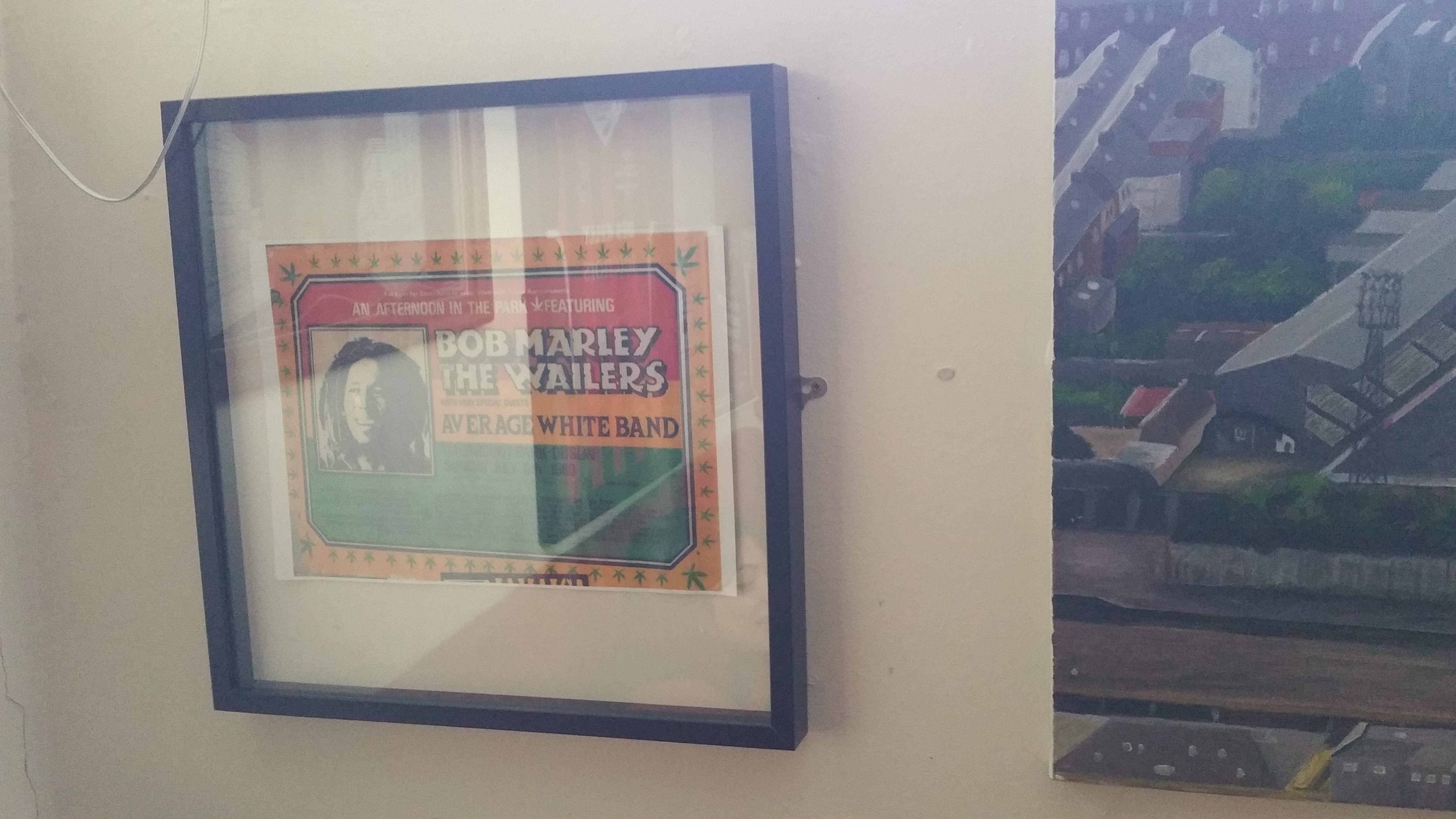
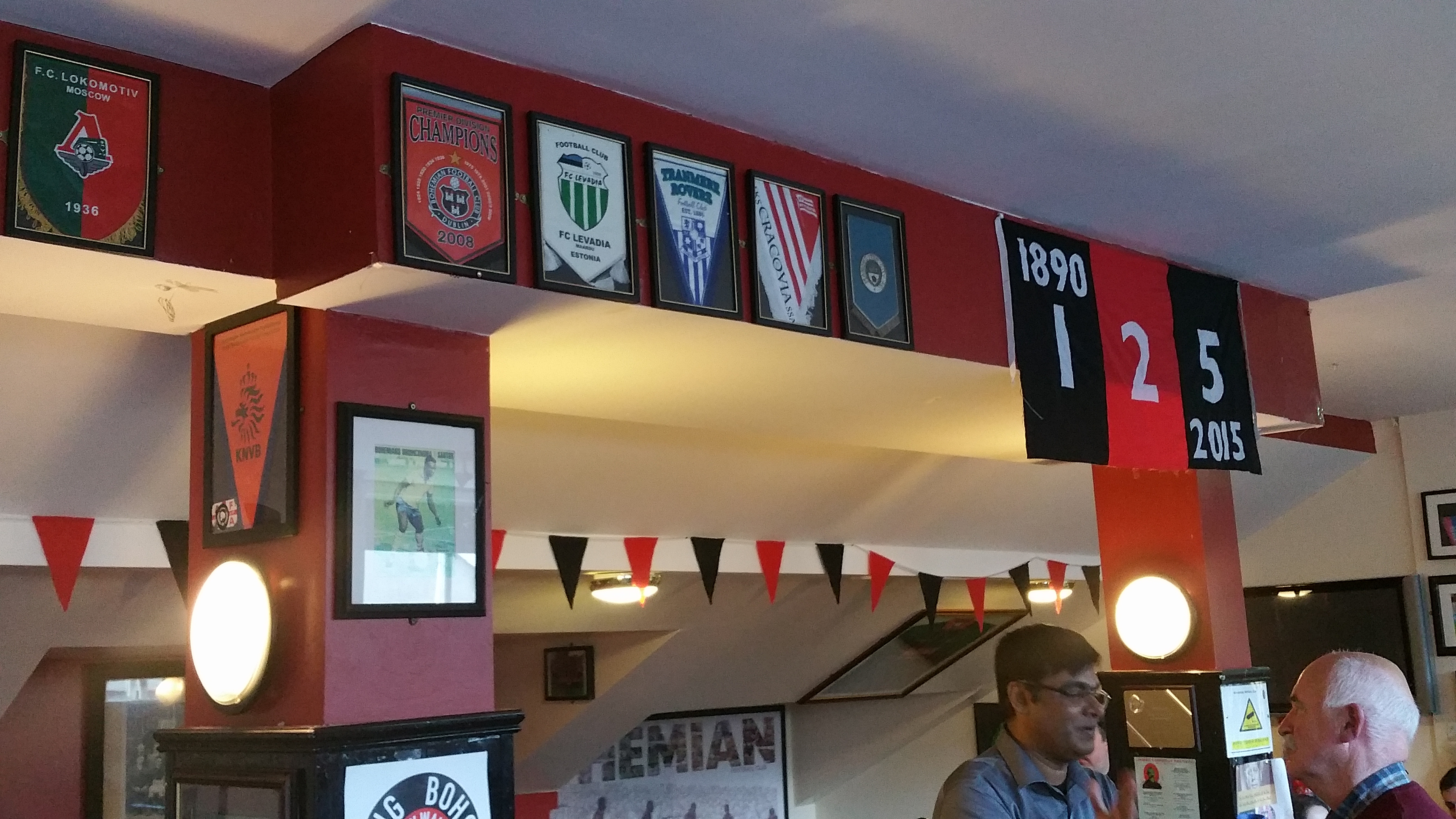

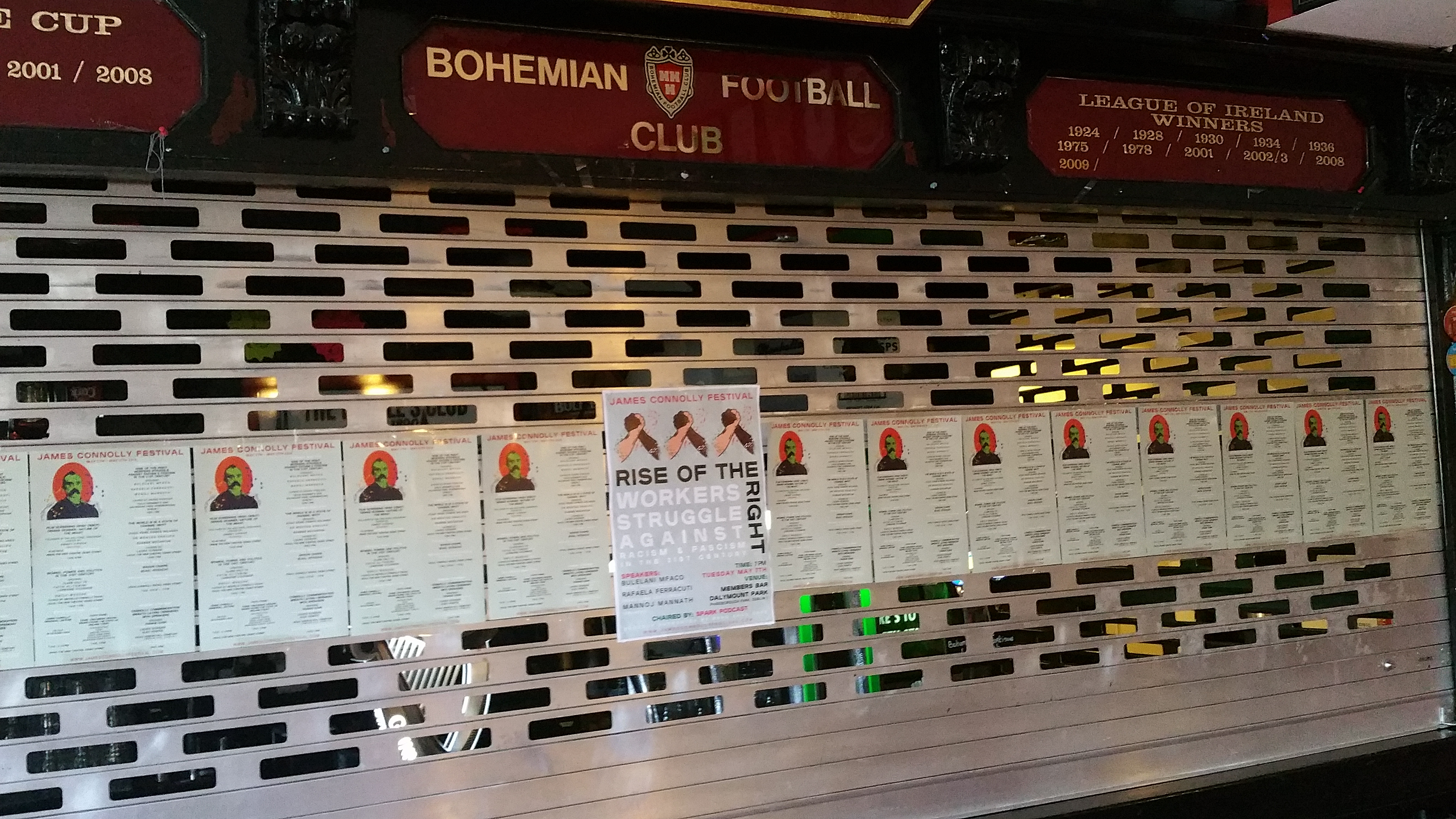
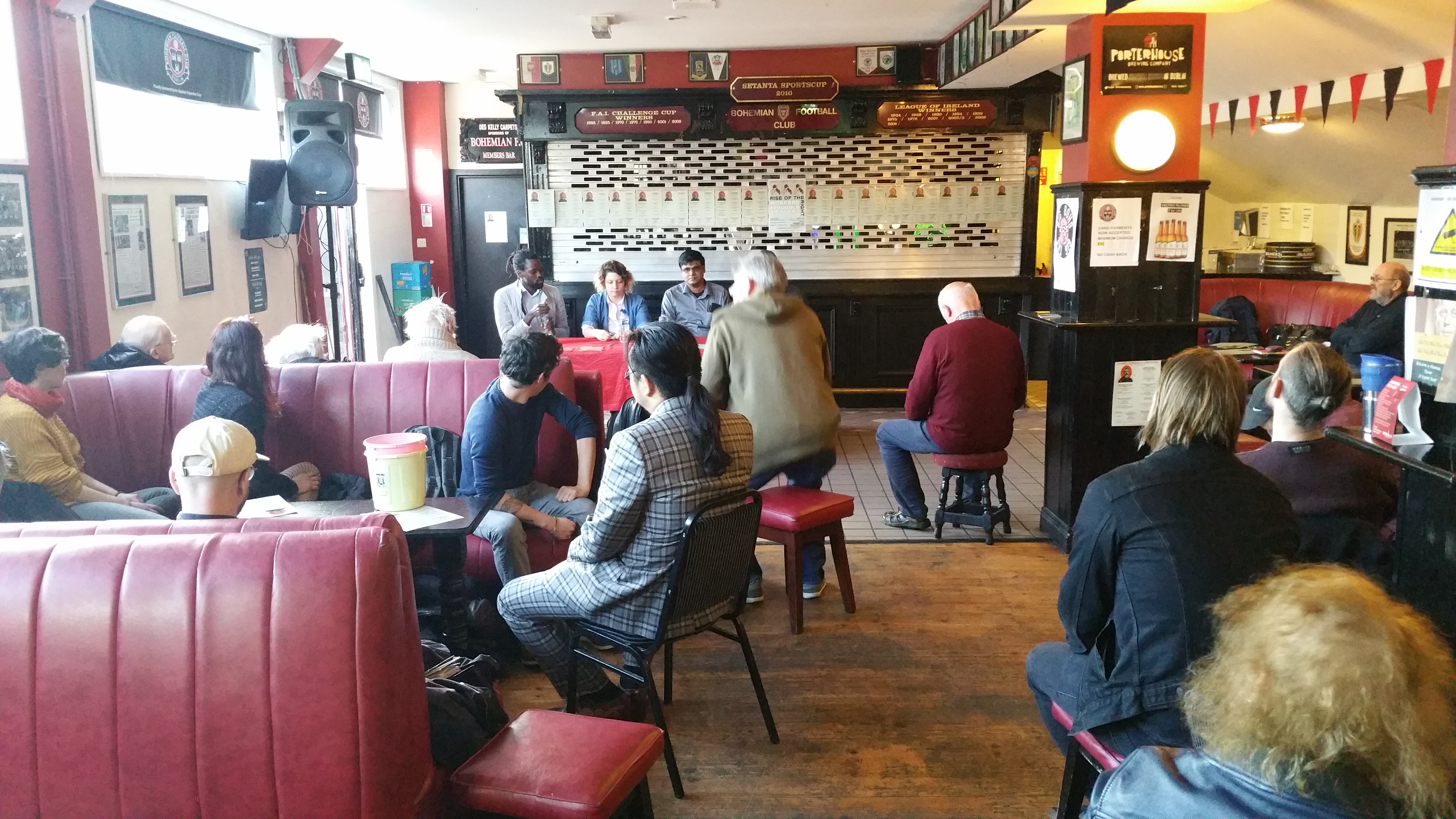
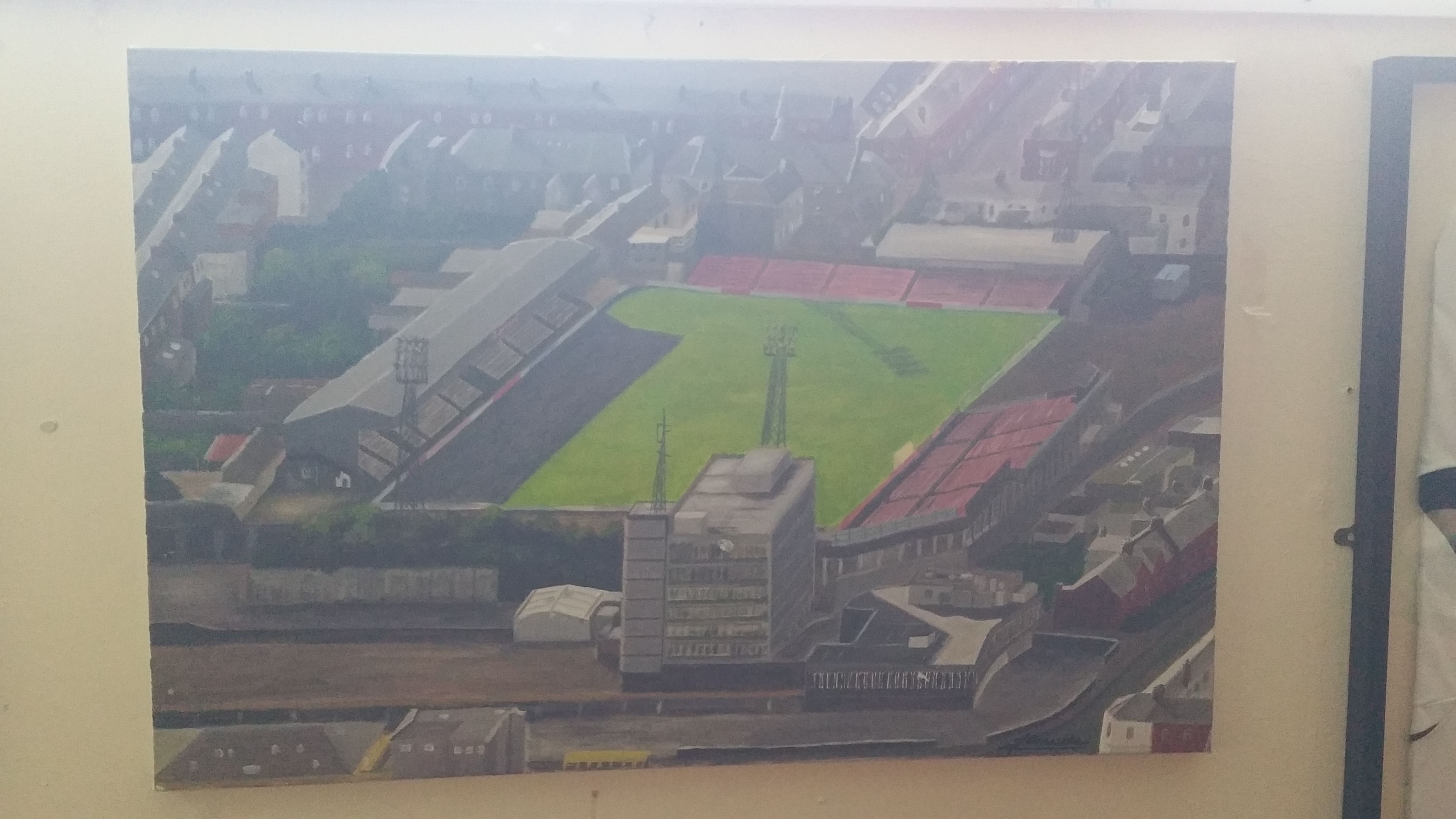

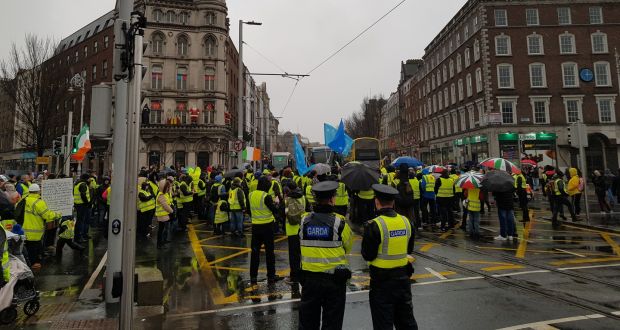
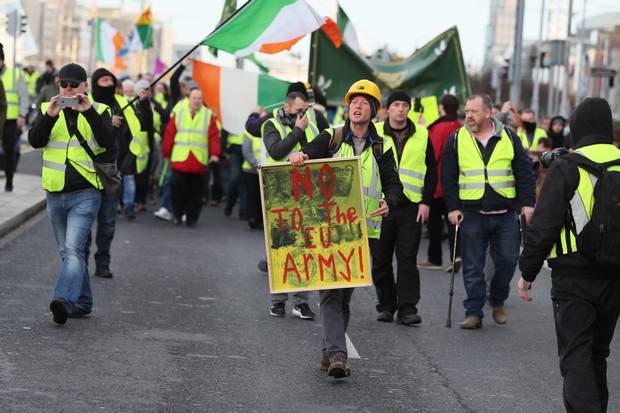

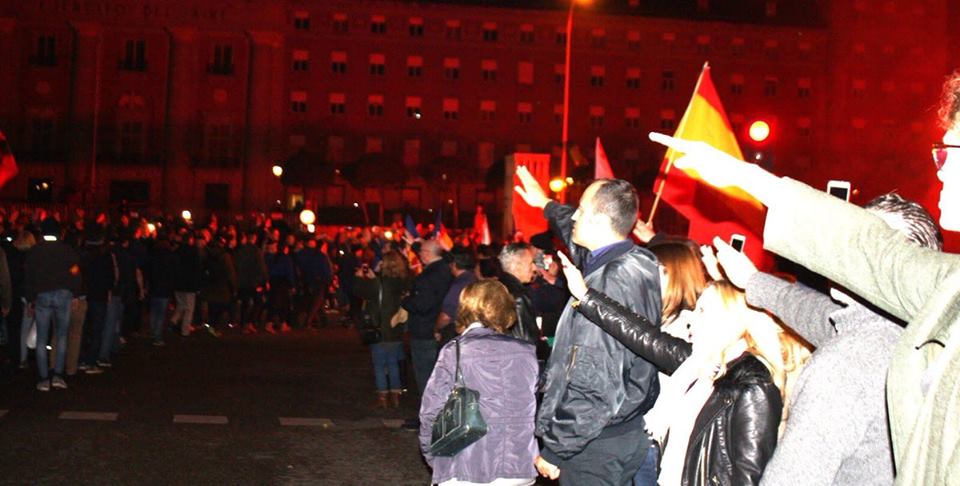

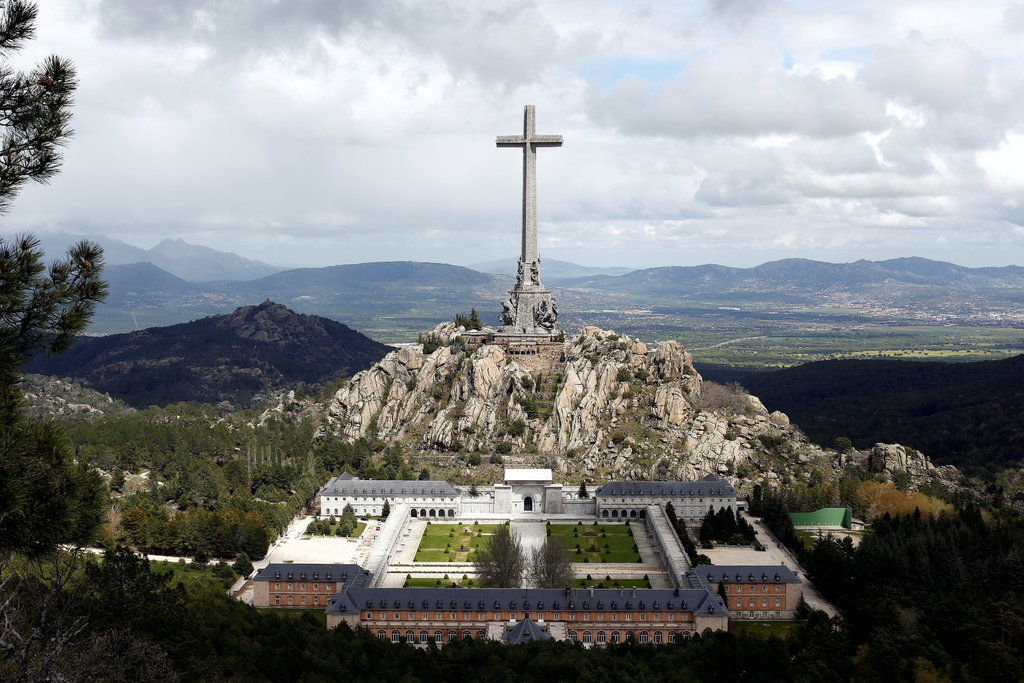
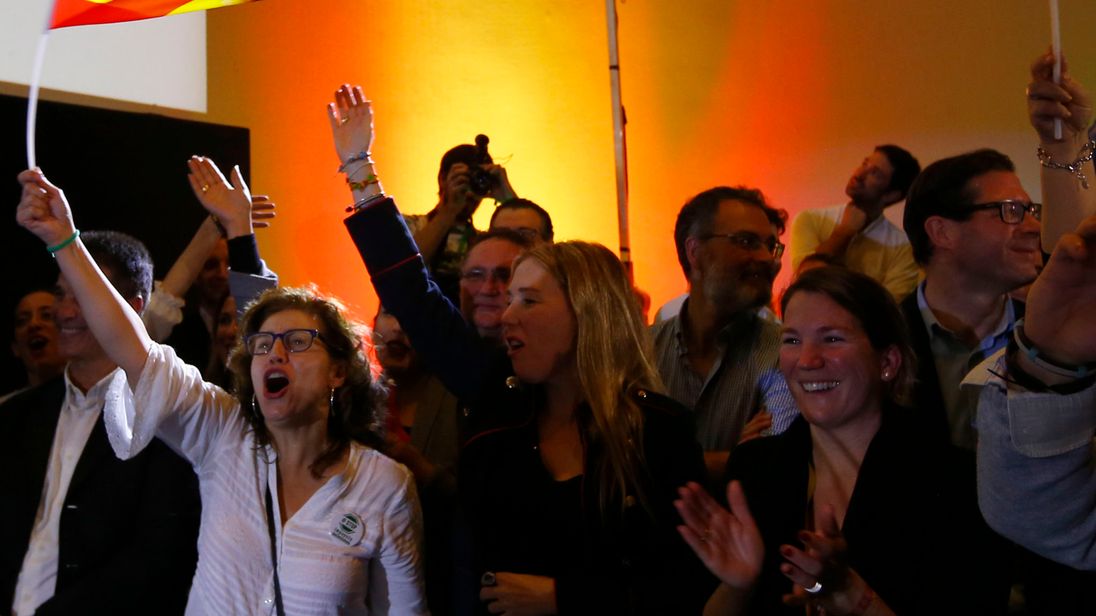

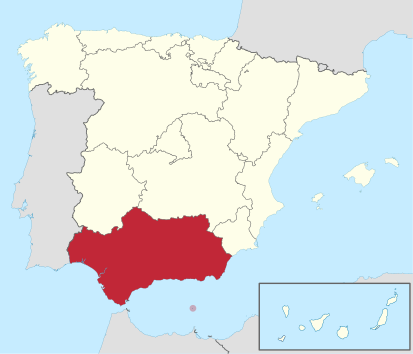


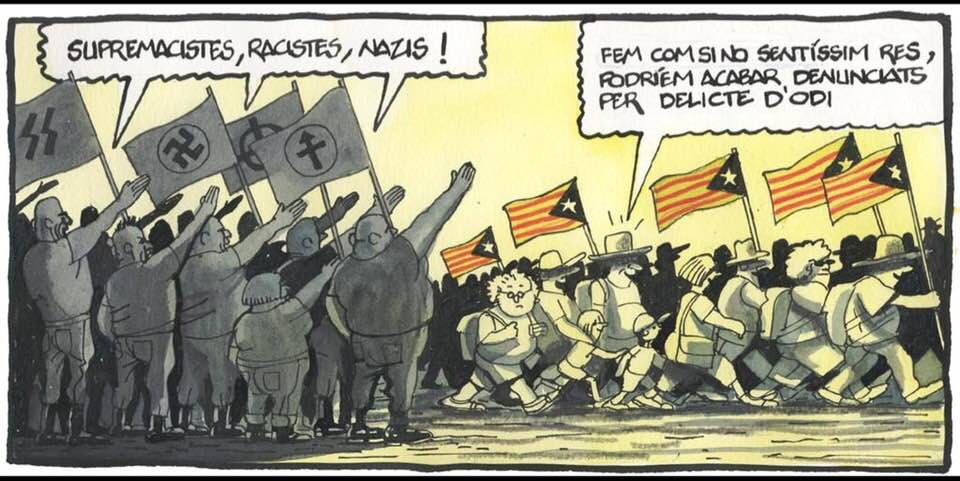

 rebelbreeze