I write to say how much I admired your attempt to have the Royal Irish Constabulary and the Dublin Metropolitan Police honoured in Ireland. It was never going to be easy to propose such a ceremony in a country that was occupied by les Anglais for nearly eight centuries and a part of which it is still occupying. But you did not flinch! It took real courage and I empathise with you on its failure (temporary, I hope).
Royal Irish Constabulary assisting landlord in relocation of a tenant in Co. Clare. (Photo sourcede: Internet)
Perhaps it was a little too soon. But as you know, I’m sure, once the unthinkable has been proposed, it is no longer unthinkable; then some day ….
It must be particularly galling for you to see the response of the “swinish multitude”, as your own orator Edmund Burke would have had it, result in the pushing into No.1 slot in the ITunes charts of that odious song of Dominic Behan’s, performed by that rabble-rousing folk group, the Wolfe Tones. To see that disgusting song enter the current Irish charts at No.33 –- and from there reach the No.1 played in the British and Irish charts! But go straight to No.1 in Scotland! Not to mention doing well in the USA and in Canada …..
How hurtful also to see the proliferation of mocking cartoons, videos and memes (all over social media, it seems). And coming up to the anniversary of the introduction of that great band of public servants, too: the RIC Special Reserve and the Auxiliaries.
But as I said earlier, it took courage to attempt what you did – something lacking in your silent partners in government, Fianna Fáil, who remained silent until they could see how the public wind would blow. Someone could get hurt in the rush to disassociate! It is the fate of courageous individuals such as yourself, if I may borrow a phrase from a popular science fiction series, “to boldly go where no-one has gone before.” Even if it looks like no-one follows.
Crowd gathering around gallant RIC Inspector felled by a hurley stick in Dublin 1917. (Photo sourcede: Internet)
Would that we had men of your calibre here in France! The legitimacy of the Vichy Government (1940-1945) was denied by ‘Free France‘ during WWII and by all subsequent French governments after that. They maintained that the Vichy government was an illegal one run by traitors – hard to believe, I know but look it up on Wikipedia! A group of us have been trying to get German soldiers and the Vichy police honoured for some time now but can we find even one politician of any stature who would risk his reputation in the attempt? No, we seem to have no Monsieur Flanagans here in France, c’est dommage!
We have a network of people with similar interests in a number of other countries, including Russia, Poland, Vietnam and Algeria – you may smile when you see the network’s acronym: RIC! Of course the letters stand for other words in our case: Rehabilitation of Invader Collaborators. Whether it was the Russians or Poles who aided the German invaders, or the Algerians who aided our French occupation or the Vietnamese who aided the US invaders, they all have something in common: they did a difficult job, hated by most of their compatriots.
Bandying around words like “concentration camps”, “torture”, “massacres”, “rape” and “executions” does not conceal the truth that ultimately these men (and women, it must be said) were obeying orders. Some of those words I hear have been bandied around about the RIC and DMP too, including those of “spies”, “informers”, “shoneens” and “Castle Catholics”. One must admit that the Irish have a capacity for les bon mots, however one might disdain what they mean – while not mincing words they certainly know how to weave them, if you’ll pardon the mixed metaphors.
Perhaps some day when you can be spared from your Ministerial duties (or when you have retired, far away be the day!), you could come and address the annual general meeting of our RIC – it would be a great honour for us.
DMP teaching people respect for the law, Dublin 31 August 1913. Note some agitators are continuing to cause trouble even lying down. (Photo sourced: Internet)
When, some day in the future, the Irish public recognises how deserving the RIC and DMP are of State honouring, the logical consequence will be of course to honour the Black and Tans and the Auxilliaries, who were sent specifically by Churchill to work in support of – and closely with – those two bodies of fine men. And once that has been accepted it should not be difficult to have the successors of the RIC in Northern Ireland honoured too: the Royal Ulster Constabulary and the B-Specials. Of course, there will be some die-hards who will mutter “sectarianism”, “brutality” and “Loyalist murder gang collusion” but one can never quite get rid of those bitter people, can one? God knows, the English tried!
Speaking of bitter words, I hear some Irish people are saying that as Minister for Justice, rather than honouring “traitors” and “murderers” (sic) you should be pursuing the English to disclose their secret papers regarding the murder of 33 people in the Dublin and Monaghan Bombing by alleged British agents in 1974. How unkind! Some people just can’t forget and move on, can they? Do they not realise that those bombers, whoever they were, were just obeying orders too?
And even bitterer! Some have been heard to say that if Michael Collins were alive he’d have had you shot, given that he had enough RIC, ‘Tans and Auxiliaries shot himself. One can understand some bitterness but that is really nasty, given that Collins can be said to be one of the founders of your own party. And who can truthfully say what Collins would or would not have done? He certainly surprised a lot of Republicans in 1922 when he borrowed British cannon to open fire on Republican positions in Dublin!
When the day comes in the future for Irish rehabilitation for those noble collaborators of foreign occupation, the Royal Ulster Constabulary and Dublin Metropolitan Police, then hopefully the Blueshirts, that fine body of men, co-founders of your own party Fine Gael, can be rehabilitated too. And who knows, some day even reconstituted and formally brought into government? It is not beyond the bounds of possibility, even though the sympathisers of those kinds of politics are very few at the moment ….
And then there’s the man they called “Lord Haw Haw”, William Joyce, of similar ideology — was he not an Irishman also? Did he not carry out his orders too? Of course, that might not go down too well with les Anglais due to his broadcasts in English from Nazi Germany — even though he was an informer against the IRA for the British during the War of Independence. Or perhaps precisely because of it: the English can never quite forgive one they consider theirs, once he turns against them, can they? One must be careful sometimes – after all, les Anglais still have quite some influence in the world, especially in your own country, n’est ce pas?
(A talk given at a recent session of the monthly 1916 Performing Arts Club, published by permission of the author)
I want to say a few words on the subject of ‘Equality’ in particular as it pertains to racism. It is a word that is bandied about quite a bit lately and it is in danger of being misappropriated by some factions with their own agenda.
Now when we speak of equality, one of the most important points to remember is that true equality recognises difference but it apportions an equal value to all difference. Understanding equality therefore is an acceptance that we are not homogenous or in other words we are not all the same.
Also, Equality is not finite so granting rights to one group does not erode the rights of another or reduce their entitlements.
To achieve an egalitarian society is most likely a myth, as society itself, applies a hierarchy to almost every facet of our lives. However, it is the struggle for equality that is important. That struggle has enabled conditions to be put in place that level the playing field and assist the least advantaged to achieve better outcomes.
The introduction of relatively free access to education and the introduction of employment regulations and human rights laws are but some changes that have lessened disadvantage. By striving for equality, and there is a long way to go, we are creating an active democracy by attempting to give equal voice to those from all walks of life regardless of colour, class or creed.
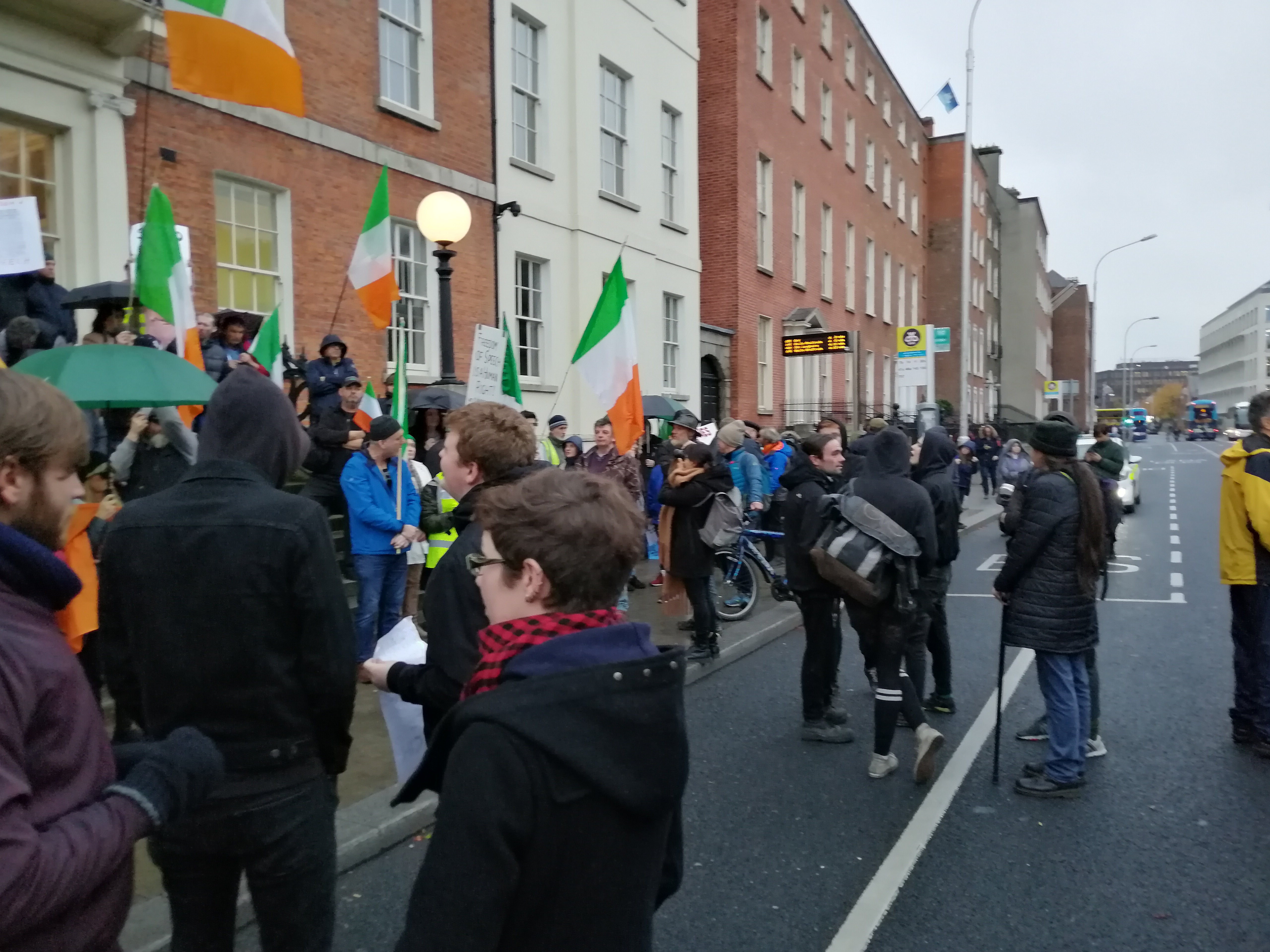
Left photo background: Mixed far-right demonstration outside Dept. Justice, Dublin, early Nov. 2019 — note presence of Irish Tricolour flags to indicate exclusive ‘Irish nationalism’. Left foreground and right of photo: counter-demonstrators. (Source photo: D.Breatnach)
The antithesis of Republicanism
Now the last number of years has seen a rise in a type of neo- nationalism across the West and Ireland is not immune. This type of nationalism is the antithesis of Republicanism as it seeks to exclude. Republicanism on the other hand seeks to embrace and is inclusive regardless of colour or class.
Far right extremists attempts to engender a sense of unity and nationhood through demonising the ‘other’ and are utilising equality as a weapon.
They ignore the part the West played and continues to play in the perpetuation of poverty and war in Africa, Asia etc and how the consequences of their actions have a direct link to the numbers of refugees seeking asylum.
Instead they purport to speak for the disenfranchised ‘true national’ implying that their taxes are paying for the less deserving and they are ending up with an unequal share as a consequence.
There is a new narrative that promotes the idea that ‘equality and charity begins at home’ and ‘let’s look after our own first’. It hijacks the word ‘equality’ to engender a belief that the rights of the stereotypical national are being diminished.
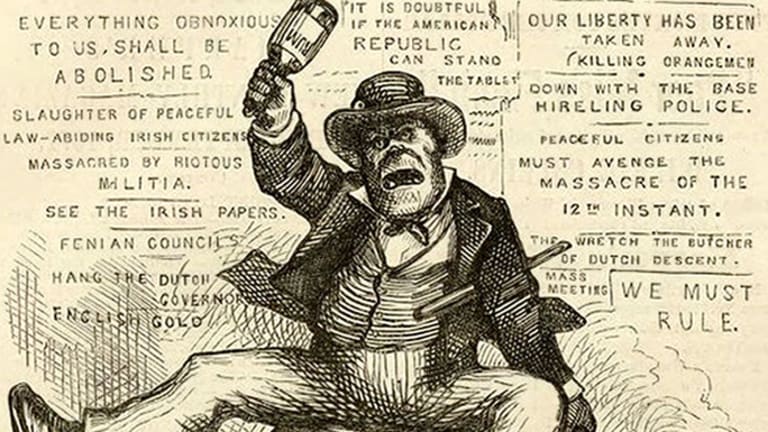
Anti-Irish migrants racist cartoon, USA, 19th Century. (Source image: Internet)
Think of our recent presidential election. Peter Casey was trailing in the polls until his vitriolic tirade against Travellers. His support swelled, because he appealed to those who believe they are paying more than their fair share of tax but are still receiving less than, in their minds, an undeserving group such as Travellers. The implication being that there is an inequitable division and they have to wait longer for what is rightly their due.
Brexit is similar in that it developed a narrative around who is the true British person. Why should they allow ‘others’ into their country and use British taxes to house and feed the stranger resulting in longer waiting lists for housing, health etc for the indigenous population. And I emphasise again, the part the West has played in ravaging the countries from which many people now flee is ignored.
I just ask that when someone comes looking for your vote and is spouting the word ‘equality’, just pause a moment and consider how they are using that word. Instead of seeing the richness that our interaction with people of all shades of colour has given to our society, that was once so insular, are some candidates utilising the word equality as a form of discrimination and exclusion?
Fascism and ‘free speech’
The right to free speech is not without restraint and carries a duty of care. Implicit in any egalitarian society, which gives voice to diverse groups, is respect and tolerance. Fascism and racism therefore have no place in any society struggling for equality as their invective generates hate and creates division and discrimination. Unfortunately the rise in authoritarian leaders such as Trump, Bolsonaro, Orban has given licence (under the guise of freedom) to those who only spout hate.
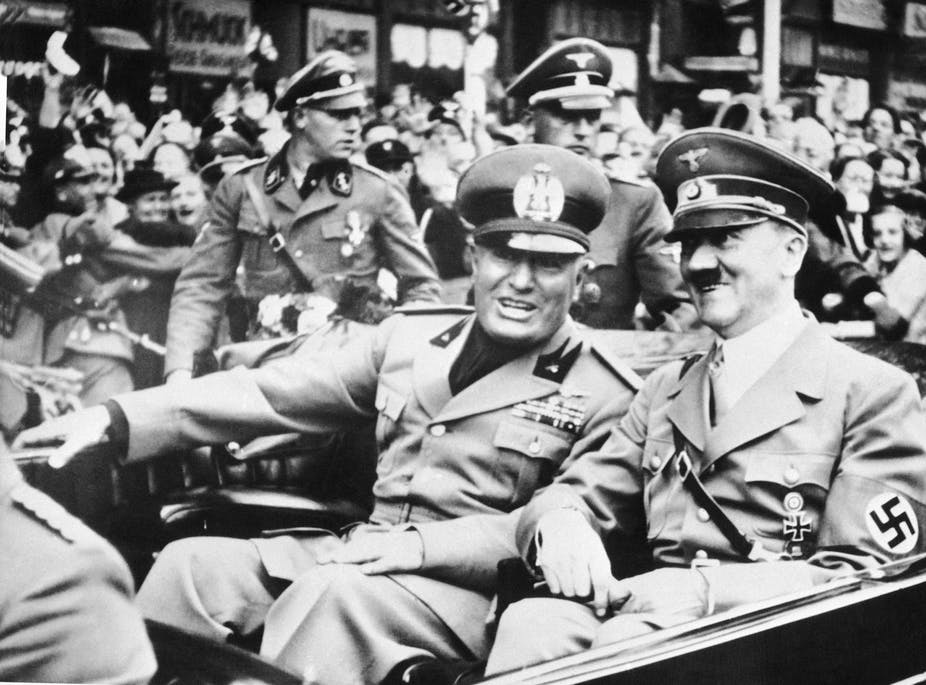
Leaders of Italian and German fascism in the 1930s — their parties insisted on the right to free speech for them but once in power, imprisoned, tortured and killed their political opponents. (Source photo: Internet)
Racism
A comment I have often heard, by mainly white people, is that they never see colour, only the person. This is supposedly well meaning and a display of openness. However, the question has to be asked that if they don’t see black what do they see? In a perverse way they are actually racist as our colour is a signifier of who we are. To refuse to see a person’s colour be it black or any shade is a denial of a fundamental part of identity. Black people are some of the most disadvantaged carrying centuries of oppression and discrimination. If we refuse to see ‘black’ then how can we put conditions in place to alleviate the disadvantage that has accompanied colour?
“THERE ARE MORE OF US THAN THERE ARE OF THE BULLIES”
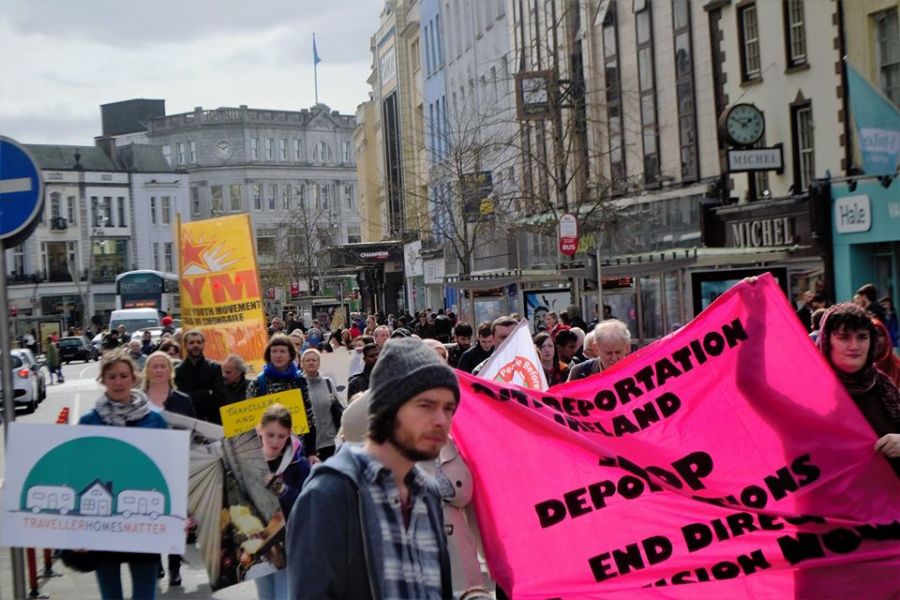
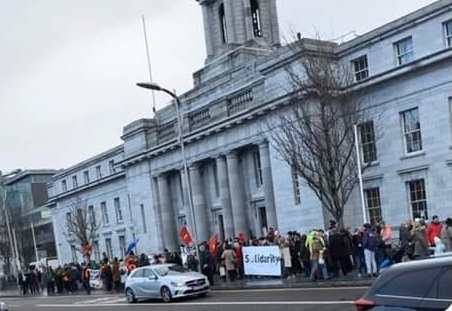
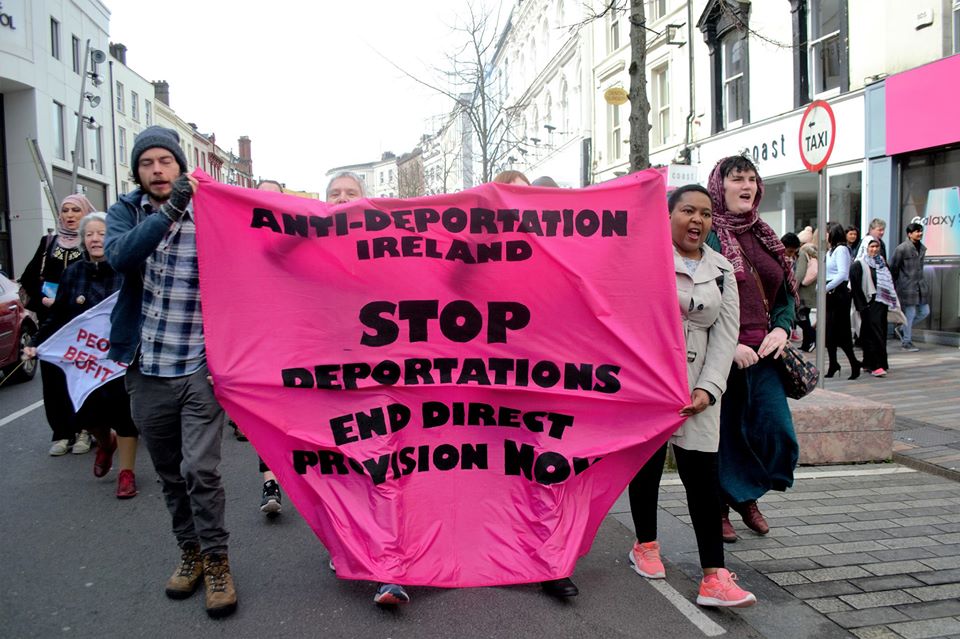
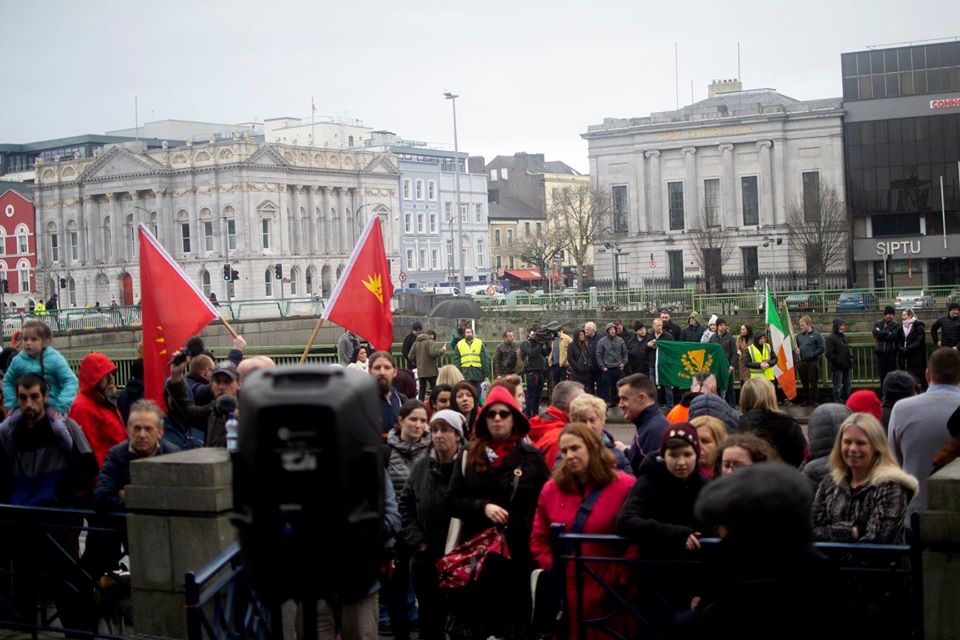
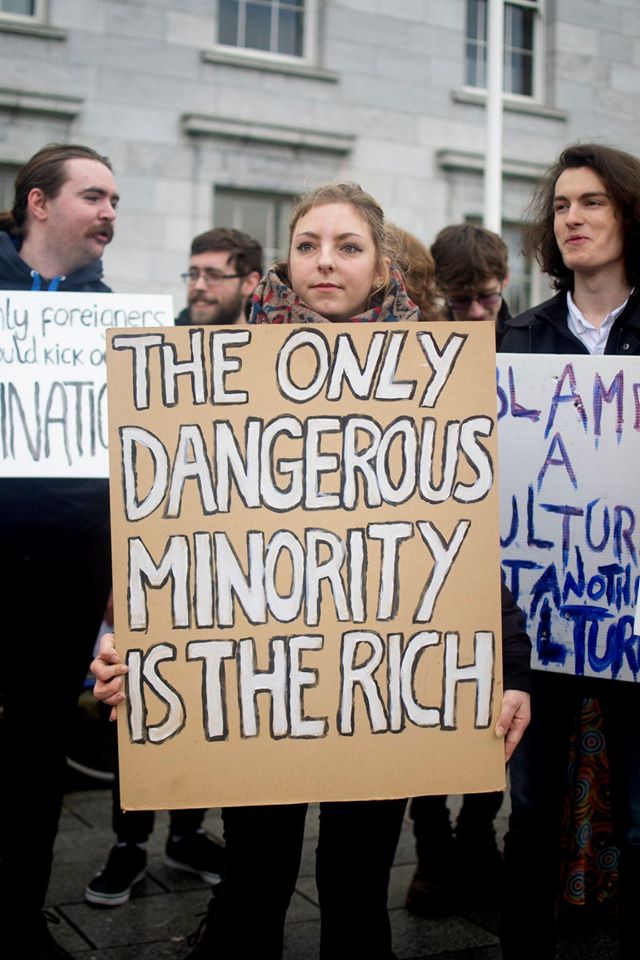
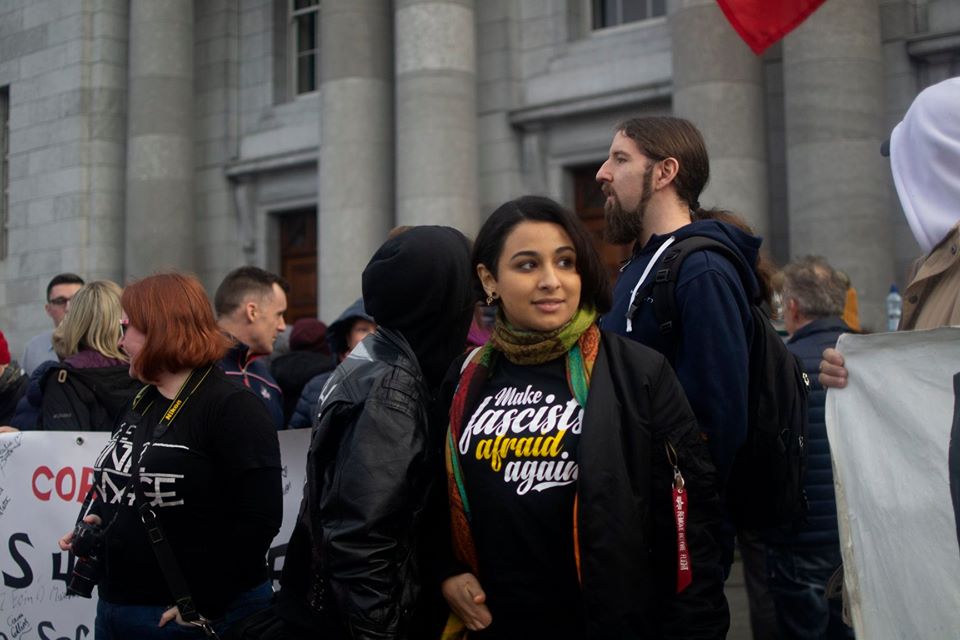
Learning of the intention of a far-Right coalition to hold a rally at Cork Town Hall on 4th December, a coalition of anti-racists and anti-fascists containing a range of Left and Irish Republican organisations, community and anti-deportation groups organised a counter-rally which dwarfed the numbers of the racists and fascists, who object to migrants, asylum seekers and LBGT people. Two TDs and a number of councillors also attended.
One of the organisers, Tracy Ryan, said that she had her two sons with her at the rally. “I’ve brought up my children to believe that everyone is equal and everyone deserves the same opportunities and chances in life,” she said.
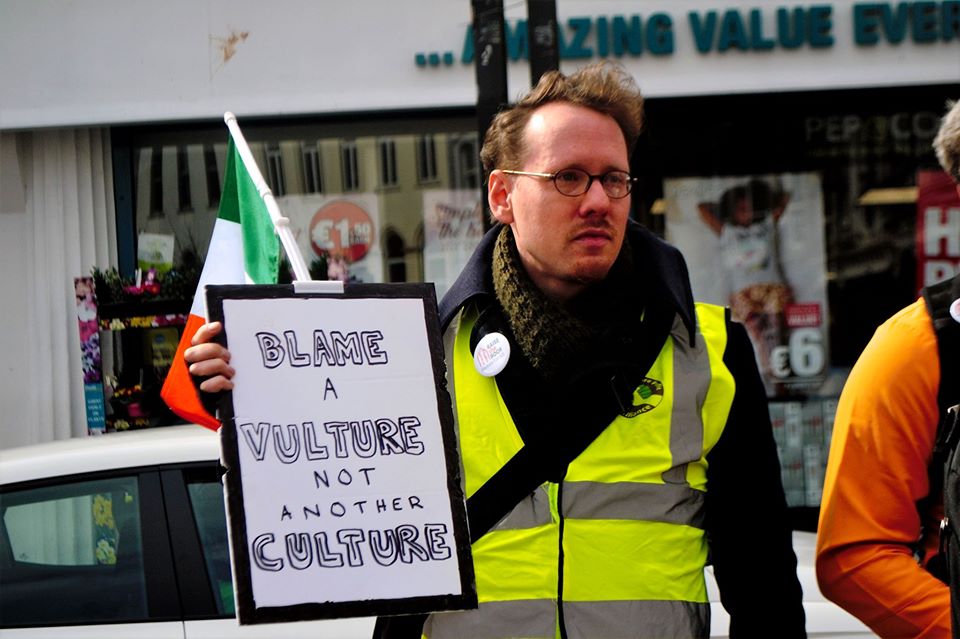
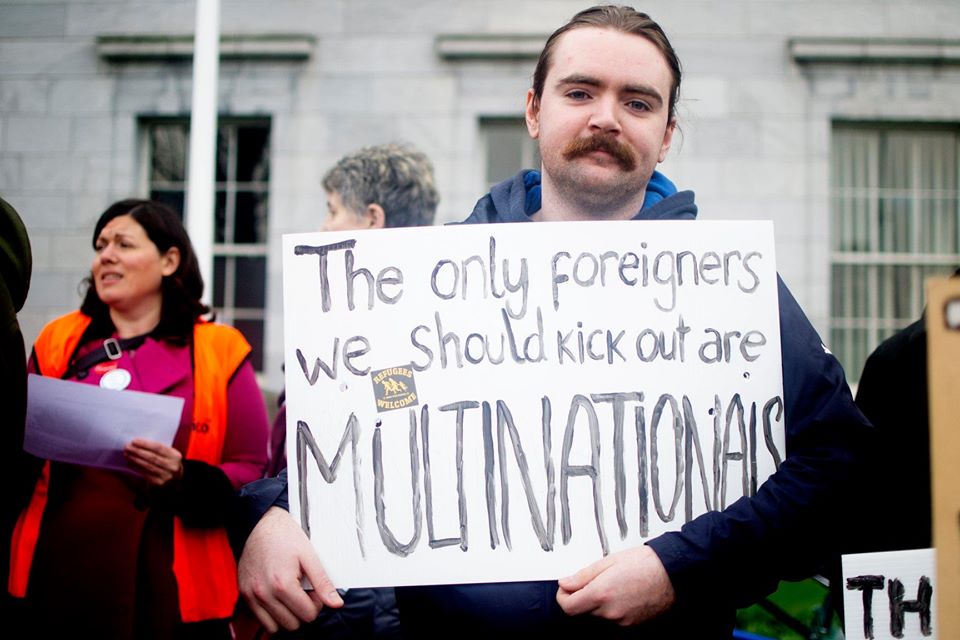
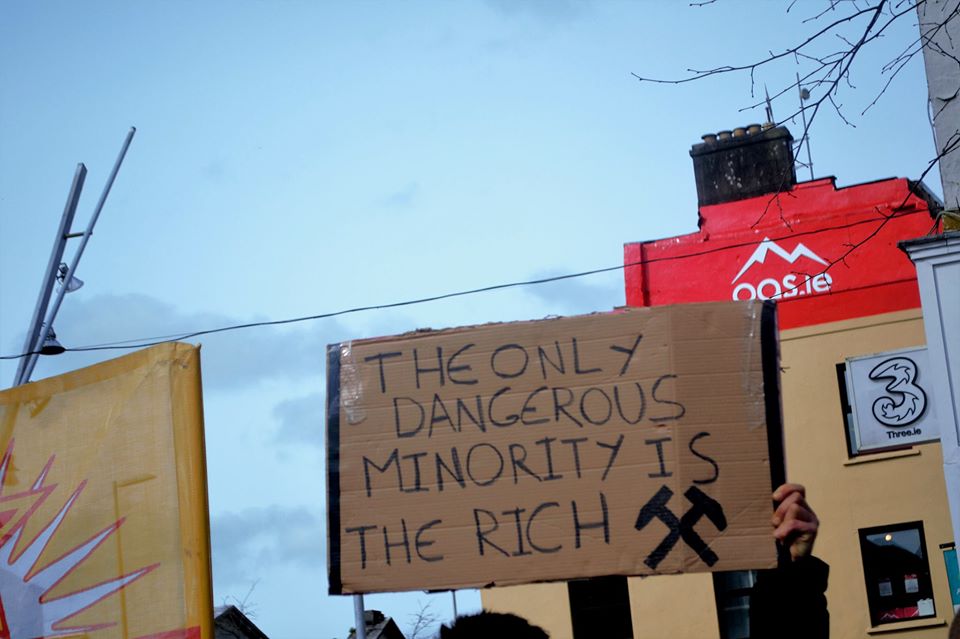
View of counter rally half hour before due to start (Photo: Students Against Racism)Placard displayed at counter-rally (Photo: Shamim Melekian)Anti-racist football club supporters at the counter-rally. (Photo: Shamim Melekian)
FREE SPEECH?
The specific rallying issue for the far-Right on this occasion, as it was in Dublin on 14th December last year (see https://rebelbreeze.wordpress.com/2019/12/15/dublin-counter-rally-outnumbers-racists-and-fascists/), was the legislation proposed by the Fine Gael Government against “hate speech”. The mixture of social conservatives, racists and fascists that make up the far-Right in Ireland have been complaining for some time that they are being denied freedom of speech, in particular since the most prominent member of their ranks, ex-journalist Gemma O’Doherty, had her two Youtube channels shut down by Google in 2019 after, according to Google, she broadcast racist statements and continued to do so after one of the channels was suspended for a week.
There is a wide variety of views on the proposed legislation outside of the far-Right, some socialists and Republicans remarking that “hate speech” is too wide a label and that they have seen such legislation used against themselves when they denounce prominent politicians or businessmen, the police or Loyalists. What unites all these groups demonstrating against the far-Right is not a defence of the Government’s proposed legislation but a determined opposition to allowing the far-Right to gain a foothold in Ireland, from which it may expand to introduce a fascist regime, reversing gains in social legislation, banning oppositional groups, terrorising minorities and restricting further the rights of unionised workers.
One of the groups on the counter-rally (Photo: Shamim Melekian)One of the many pointed placards on the counter-rally held by a supporter. (Photo: Shamim Melekian)
Opponents of the far-Right point out that they begin by seeking freedom of speech to attack minority groups and their political opponents but once they have established a base, move to physically removing their opposition and banning freedom of speech of anyone who disagrees with them.
“There are more of us than there are of the bullies”, said one of the organising group, speaking to news media the day before the counter-rally. Poet and community worker Kathy D’Arcy added: “We are one people, one human race, one unified city whose people are known throughout the world for kindness, friendliness, good humour and inclusiveness.”
Declan Power of Waterford, organiser of a much smaller rally of the far-Right over the same weekend, rejected the accusation that they were racists or had any other agenda than freedom of speech. However at the event Diarmuid Ó Cadhla, of a group called The People’s Convention, revealed that he wanted to limit migration and was against the Government’s policies which, he alleged, are for “globalisation and open borders”. Presumably this was a reference to one of the conspiracy theories of the far-Right, viz. that the EU allegedly has a policy of opening all borders to mass immigration and replacing the Irish with foreigners. Laughable as this may seem to some and flying against all the evidence as it does, it is believed by some on the far-Right and used to whip up fears and hatred of migrants.
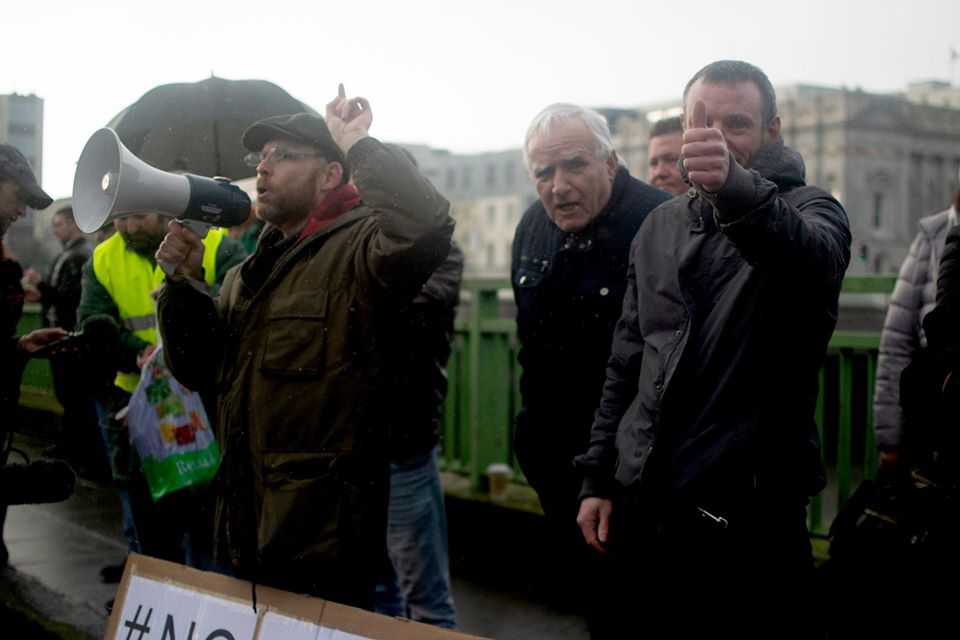
View of far-Right rally over section of counter-rally. (Photo: Shamim MelekianCloseup of some of the far-Right group in Cork (Photo: Shamim Melekian)Woman on counter-rally holds up a placard addressing the far-Right (Photo: Shamim Melekian)
HISTORY OF ANTI-RACIST MARCHES IN CORK
The rally on 4th January this year was far from being the first anti-racist demonstration in Cork: an anti-racist march took place in March last year and or five years before that, there had been an anti-racist march in Cork every year.
Speaking in advance of the anti-racist march last year, Joe Moore of Cork Says No to Racism pointed out that while racism still exists in Cork, it is “a small number of people who have racist views towards minority religions, asylum seekers Travellers and the Roma community.”
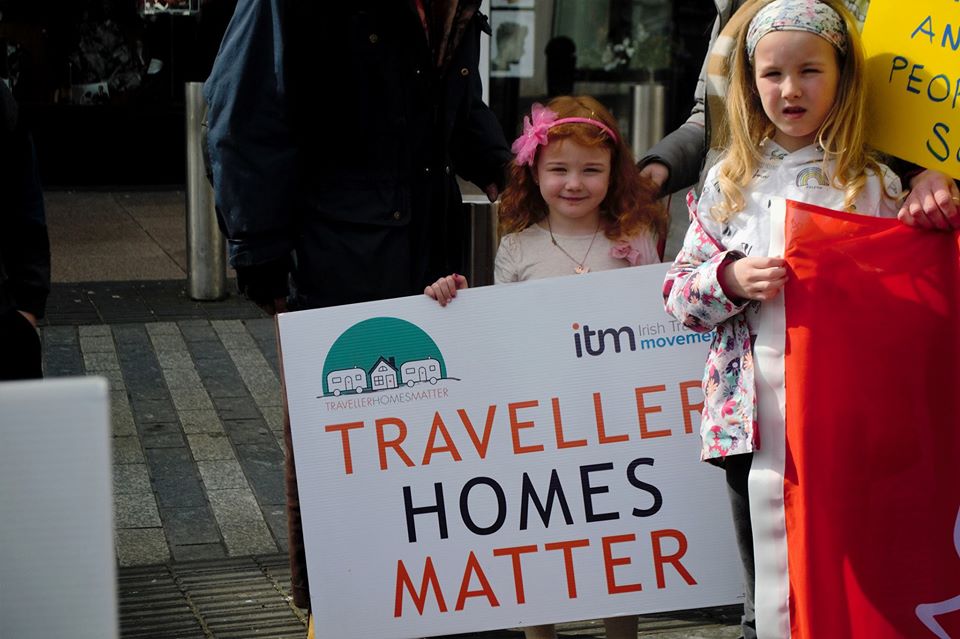
Mr. Moore also pointed out some gaps in State provision, stating that the school books for children contain no mention of the Traveller community in Ireland, which itself has housing and education issues.
There is also a history of fascism in 1930s Cork when the Blueshirt fascist movement was opposed by anti-fascists and socialists inside and outside the IRA. Ironically, while opposition to the Fine Gael Government’s proposed legislation is the purported rallying point for the far-Right, the Blueshirts were one of the three groups that joined to form the Fine Gael party (which is why many opponents of the party call them “Blueshirts” to this day).
Fascist salutes at a Blueshirt rally in 1934 in Charleville, Cork. (Photo source: History Ireland).
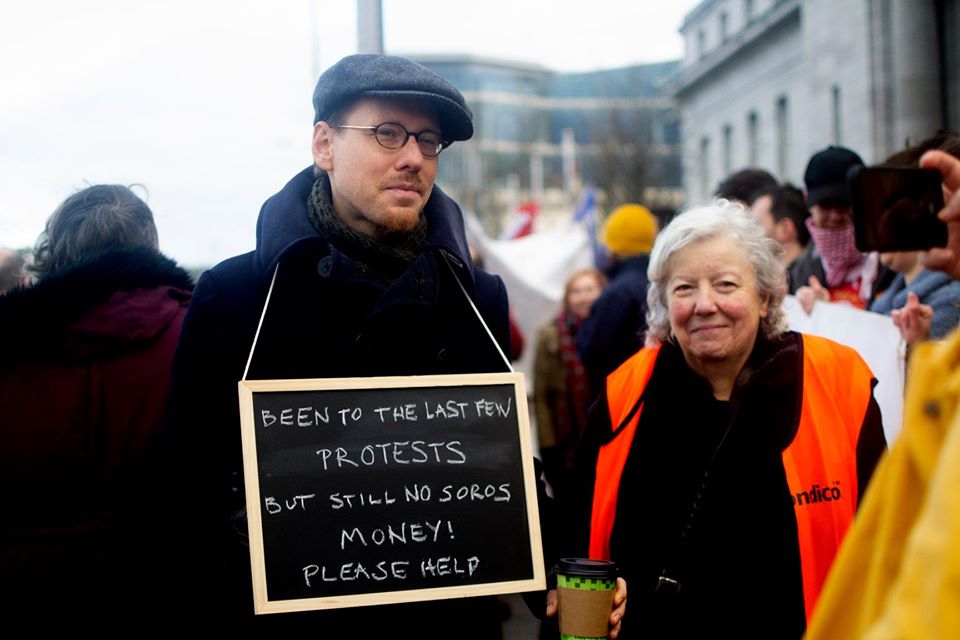
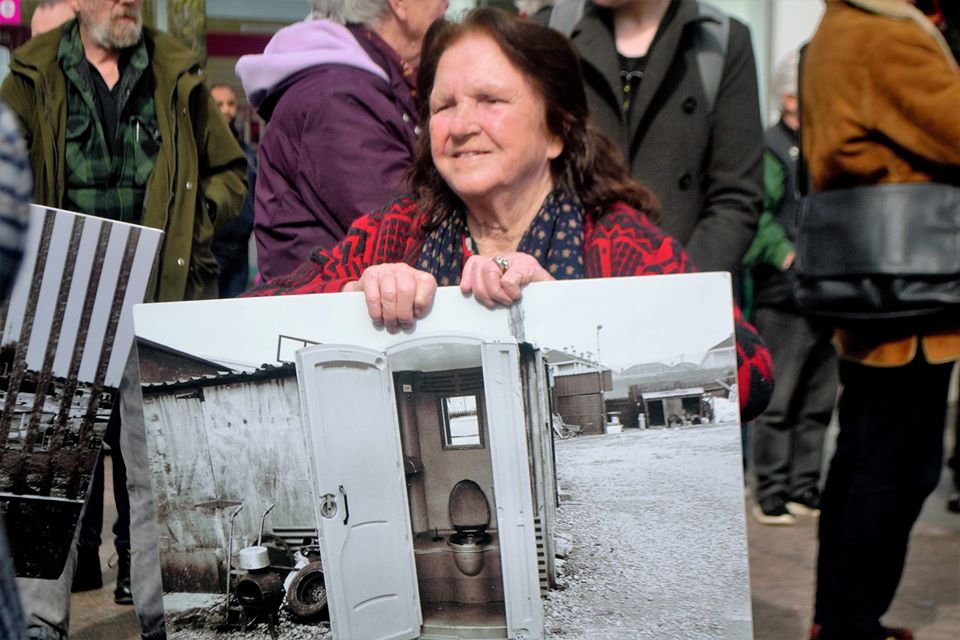
Counter-rally supporter mocks conspiracy theory that Soros Foundation is funding all the anti-racist and anti-fascist activists. (Photo: Shamim Melekian)(Photo: Shamim Melekian)Another pointed placard message on the counter-rally. (Photo: Shamim Melekian)Woman on counter-rally displaying presumably dire conditions on halting sites for Travellers. (Photo: Shamim Melekian)
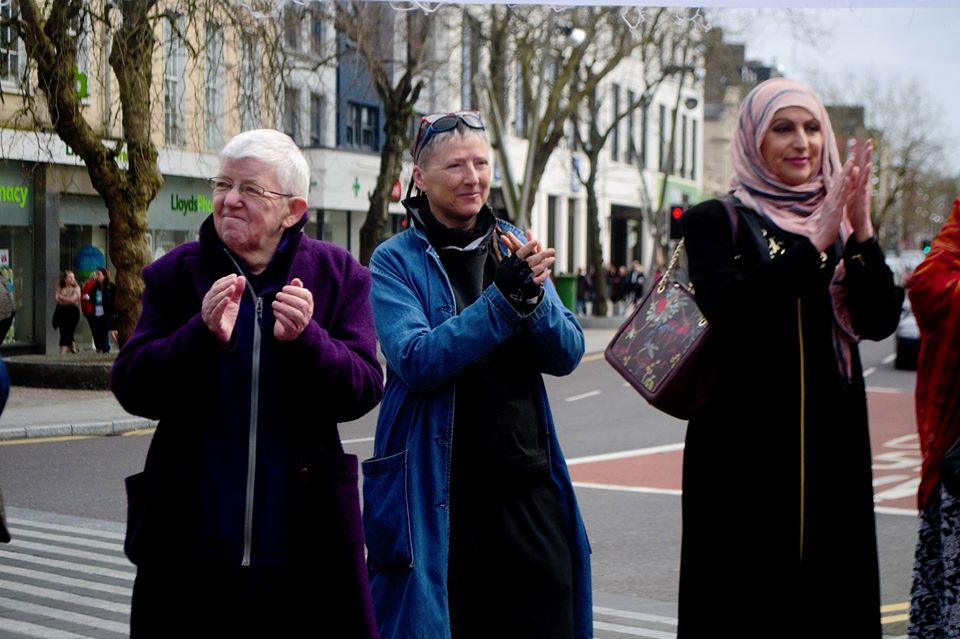
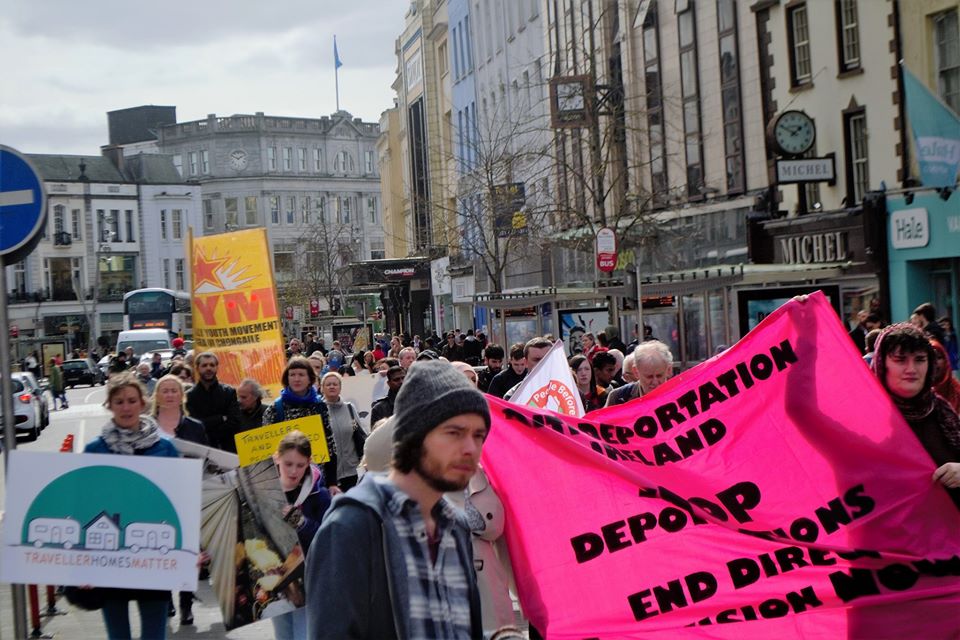
Women of varied ages and backgrounds applauding speaker at counter rally. (Photo: Shamim Melekian)Counter rally supporter sends pointed message on placard (Photo: Shamim Melekian)Young supporter of counter rally sports a T-Shirt display which might become very popular. (Photo: Shamim Melekian)Section of counter rally on the march through Cork city centre. (Photo: Shamim Melekian)
Friends and Comrades, self-respecting people of all organisations and none, Irish or migrants, who understand what it is to resist colonialism and imperialism and exploitation of labour: this is an appeal to act in defence of our self-respect.
As you must all be aware by now, the current Government of the Irish State plans to hold an event honouring the Royal Irish Constabulary and the Dublin Metropolitan Police in Dublin on the 17th of this month. Some at least are probably already considering how to react to this shameful event; I hope you are and if so, that you will give my suggestions some consideration. If you have not yet decided to respond to this event then I hope all the more that you will consider what I have to say.
The need to protest this event in a large and unified way is great. It is a matter of our self-respect as a nation, as a colonised people (and colonised peoples) that never ceased resisting, as workers, as trade unionists, as Irish Republicans and all varieties of the Left in Ireland.
The RIC and the DMP were not only the eyes and ears of the English colonist regime but also its first rank arm of repression after the British Army; they were the enforcement bodies of the landlords and bosses.
RIC still on site after assisting an eviction — see the battering ram that was used by the bailiffs to demolish much of the wall. (Photo source: Internet)
ROYAL IRISH CONSTABULARY
Formed in 1822, the armed nationwide Irish Constabulary got the “Royal” appellation from Victoria, the Famine Queen herself, in recognition of that organisation’s role in the suppression of the Fenian uprising of 1867. During the evictions of poor peasants and agricultural labourers from their lowly cottages and huts, the RIC attended every one, having become the FIRST RANK force of repression in Ireland, the Army being relegated to their backup should it be required. The RIC was the ever-present force of repression during the Tithes War, the Great Hunger and the Land War and was the main force responsible for the suppression of the Young Irelanders in 1848. On 5th May 1882 in Ballina, Co. Mayo, there were children among the slain when the RIC opened fire on a demonstration celebrating the release of the Land League leader prisoners.
RIC constables assisting eviction of Thomas Considine and family, Moyasta, Co. Clare 1767. (Source photo: Internet)
During the 1916 Rising, the RIC again played its part in repression of the resistance movement, particularly outside Dublin and it was they who attacked the Kent house in Cork, killing one son and arresting two others, including Thomas Kent which the British colonial regime executed, being one of the Sixteen the British killed in reprisal for the Rising. The RIC was the principal organisation supplying the names of non-participants in the Rising to be arrested and interned in jails and concentration camps in Britain.
After the Rising, the RIC continued one of its main roles as the eyes and ears of the British occupation in Ireland, collecting information on anyone who sang patriotic songs, spoke for independence or against the landlords, joined an Irish cultural organisation, agitated for women’s suffrage, organised a trade union branch ….
It was largely due to this role that the armed Republican forces made the RIC its first target in the War of Independence and in fact, the very first shots of that war were fired at the RIC in Soloheadbeg, killing two of them – this very month, 21st January 1919, 101 years ago and only four days after the date upon which this quisling State plans to honour that force.
RIC assisting bailiffs carrying out an eviction. The defenders have blocked the door with thorn brush and are throwing hot water out on their attackers. (Source photo: Internet)
When the “Black and Tans” and “Auxiliaries”, the RIC Special Reserve and the RIC Auxiliary Division to give them their official titles, were dispatched in March 1920 at Churchill’s initiative to terrorise and murder Irish people, outside Dublin they became part of the of the RIC and from then on, the existing RIC became responsible not only for its prior crimes but for those of the ‘Tans and Auxies too, such as the many murders, including those of the Mayors of Cork and Limerick; the torture of suspects and violation of women; the burning of farmhouses and cooperatives and even of villages and towns: Tuam, Trim, Balbriggan, Knockcroghery, Thurles and Cork – among others.
In 1922, while the RIC ceased to exist in the ‘Free State’, they became the Royal Ulster Constabulary in the Six Counties, with their even-more murderous reserve, the B-Specials. The B-Specials were incorporated into the Ulster Defence Regiment in 1970 and the RUC was renamed the PSNI (Police Force of Northern Ireland) in 2001. Both organisations have been active in carrying out or in collusion with sectarian murders, acting as members or in collusion with Loyalist paramilitaries and under British intelligence operatives.
Bailiffs using battering ram to gain entry to evict a family in Ireland. The RIC are present to protect the bailiffs. (Photo source: Internet)RIC King Street barracks after attack during War of Independence. (Photo source: Internet)
DUBLIN METROPOLITAN POLICE
The DMP was the colonial police force specifically responsible for controlling Dublin, the capital city of the colony. During the 1913 Lockout it showed itself capable of serving Irish capitalists, whether native or of colonist background, without discrimination. Indeed the leader of the Dublin 400 capitalists out to break the Irish Transport and General Workers’ Union, was an Irish nationalist, Catholic and owner of The Irish Independent: William Martin Murphy.
Apart from any others this force of tall thugs may have killed or fatally injured with beatings in their cells, the DMP killed a number of workers during the eight months of the struggle, raided houses and sent many to jail. Two workers, James Nolan and John Burke, died of their injuries within days of the DMP’s baton charge on a street meeting in Eden Quay just by Liberty Hall on 30th August 1913. The following day, in what became known as Bloody Sunday Dublin 1913, the DMP was in action again on O’Connell Street and in Princes Street, mercilessly beating people there (including those already knocked down), during which they knocked unconscious Patsy O’Connor, a young Fianna boy of 16 giving first aid to one of the wounded. Patsy died two years later from his injuries at the age of 18.
The DMP in action on O’Connell St on Bloody Sunday 1913, the second day of police riots in Dublin, early during the Lockout. (Photo source: Internet)
In a rage at the defence by the residents of Corporation Flats of people fleeing the police charge on Eden Quay, the DMP returned there on the 31st, leaving hardly a door or stick of furniture unbroken or person unbeaten, including women and children.
The special political secret police in Dublin were the G Division of the DMP, spying and compiling files on active nationalists, republicans, socialists, suffragettes, Irish speakers, pacifists. After the Surrender of the 1916 Rising, it was they who came among the prisoners to identify them for the British Army, leading to many receiving death and jail sentences. During the 1916 Rising it appears that three DMP officers were killed by the Irish Citizen Army – while many hid in their cells.
Arrest of Jim Larkin by DMP, shortly before the rest of the DMP present attacked supporters and onlookers. (Photo source: Internet)
During the War of Independence, the DMP G Division spied on and targeted Irish Republicans and other dissident groups. The Irish Republican Army of course targeted this force and killed a number of them. On the day when the IRA mobilised in Dublin to eliminate the special British Army counterinsurgency intelligence network, the DMP and the Auxiliaries seconded to them had already murdered Conor Clune and Volunteers Peadar Clancy and Dick McKee in Dublin Castle.
Later that day, the DMP and RIC went down to attack the GAA and murdered 14 unarmed people, including two players on the field, also injuring 60-70 people.
Aftermath of DMP baton attack on Sinn Féin public meeting in front of ruins of Liberty Hall to arrest Cathal Brugha and George Snr. Plunkett. Inspector John Mills was struck on the head by a hurley and died later in Jervis St. Hospital. His assailant was a member of Na Fianna and he was never apprehended. Mills was the first DMP officer killed after 1916 and the blow was probably not intended to be fatal. A number were shot with intention to kill during the War of Independence. (Photo source: Internet)
AN ADEQUATE PUBLIC RESPONSE IS NECESSARY
It is not only appropriate but absolutely necessary, as a matter of self-respect, that we mobilise a public opposition to this disgusting honouring of the spies on our people and the murderers of our martyrs.
There are many ways that this can be done but I would humbly suggest that two in particular are necessary:
A mass public demonstration near the day of the ceremony (or at least near it) and near Dublin Castle (where the event is to be held);
An electronic petition something along the lines of “Self-Respect: Against honouring colonial spies and murderers of our martyrs”.
Although our people have achieved a number of successes in struggle over the years, we have often failed too. In particular we failed to give an adequate response to the visit of the British Queen (and Commander-in-Chief of the Paratroopers) to Dublin, or to Wall of Shame in Glasnevin Cemetery. There were some other visits of notable imperialists which also did not receive an adequate response.
Failure is not fatal and we can recover from it – but we cannot build on failure. We can only build on success. This public response needs to be a success and in order to achieve that it cannot be the response of one organisation or of two but needs to be a broad one in which anyone can take part who are not racists or fascists. In order to achieve that, the organising committee should be broad enough to include activists from across the oppositional spectrum who are not part of a party of government (or part of previous government) in either jurisdiction in Ireland. Such an organising committee should be able to include representatives of socialist and republican parties and collectives and also trade unionists.
A broad demonstration of that kind should be free of paramilitary displays which would represent only a section and quite probably alienate another. But all Irish and migrant community and trade union flags and banners should be permitted (with the exception of racist or fascist ones) and the broad banner on the front should spell the general theme of the demonstration.
I am conscious that I am nobody in particular to make this call but given that I think such a response is necessary and that I really want to see this, I make the call anyway and pledge myself to help.
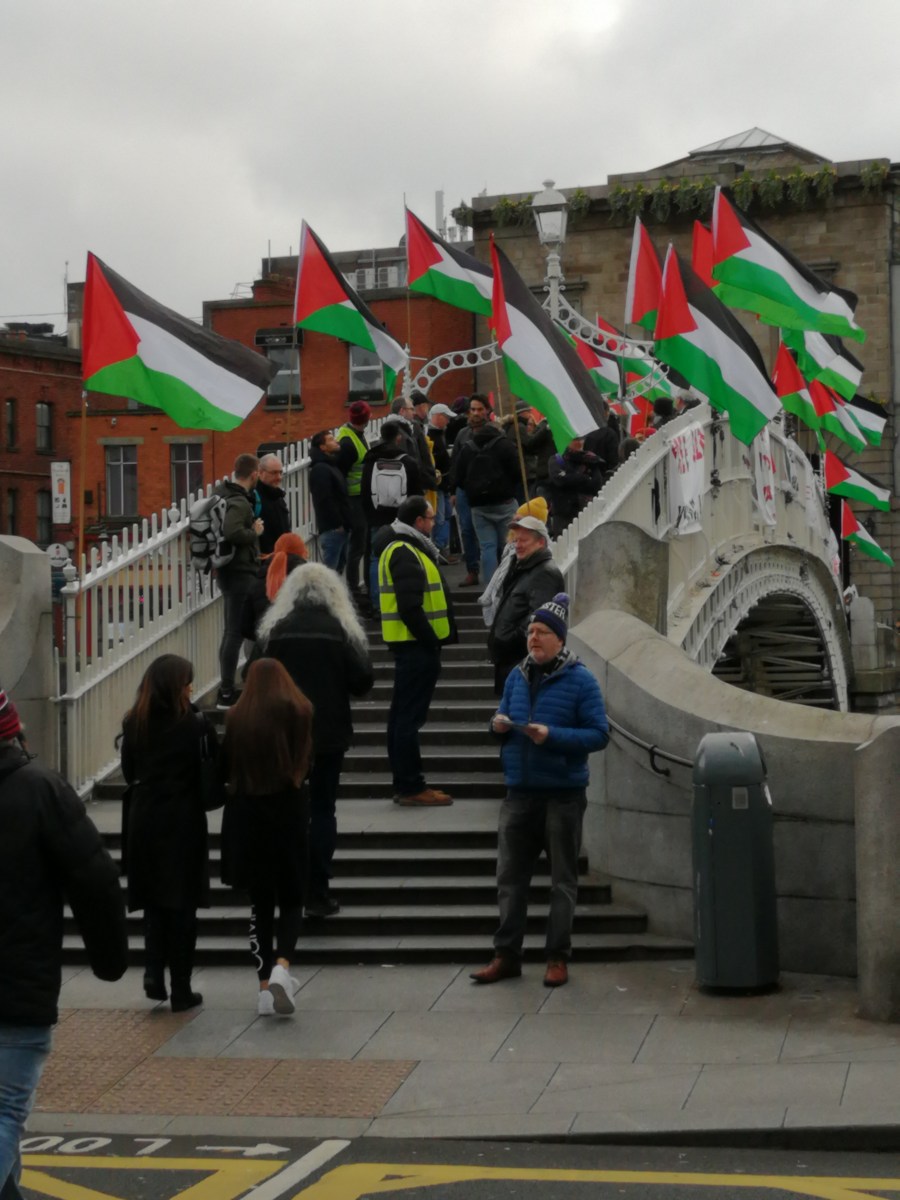
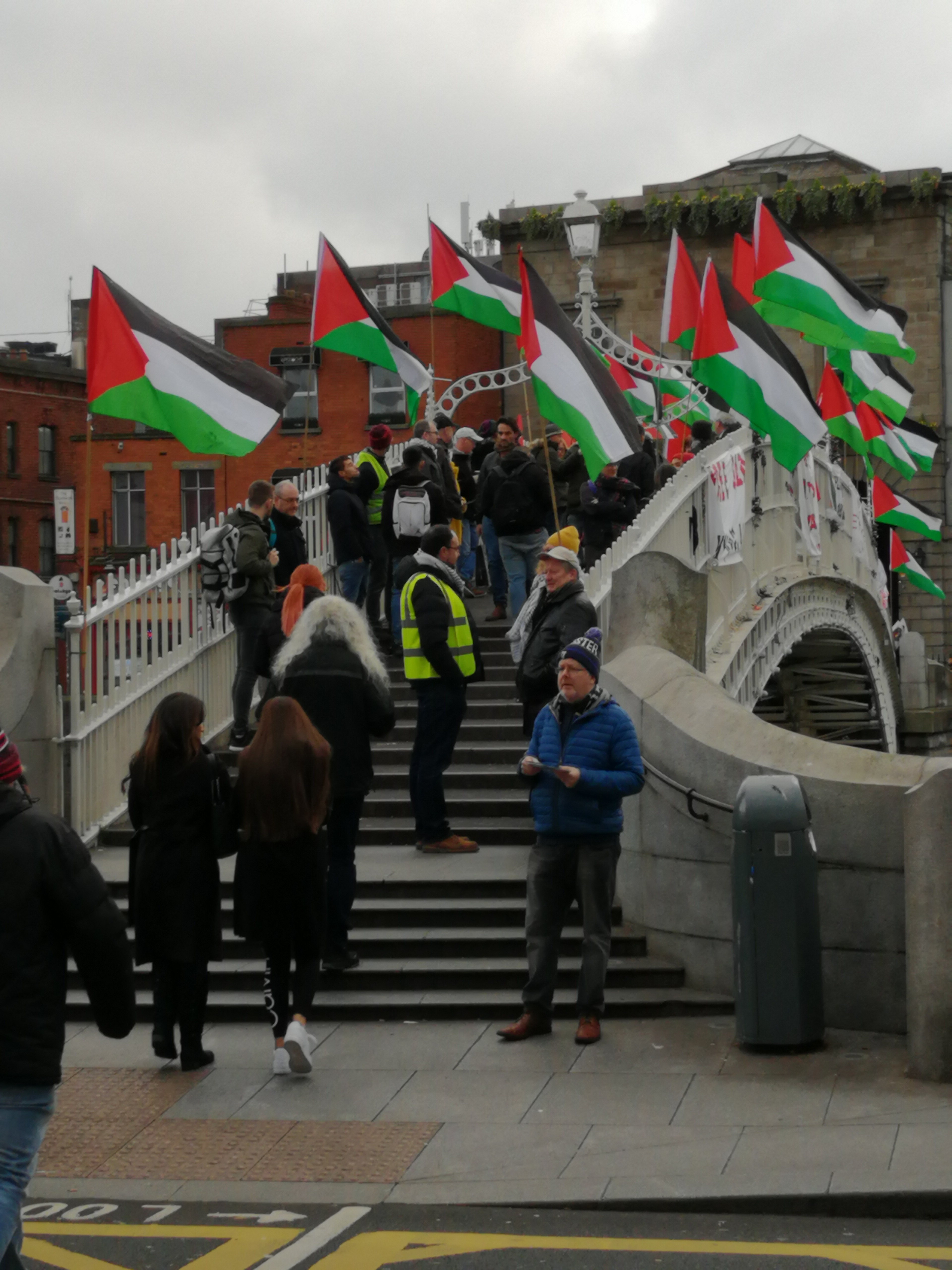
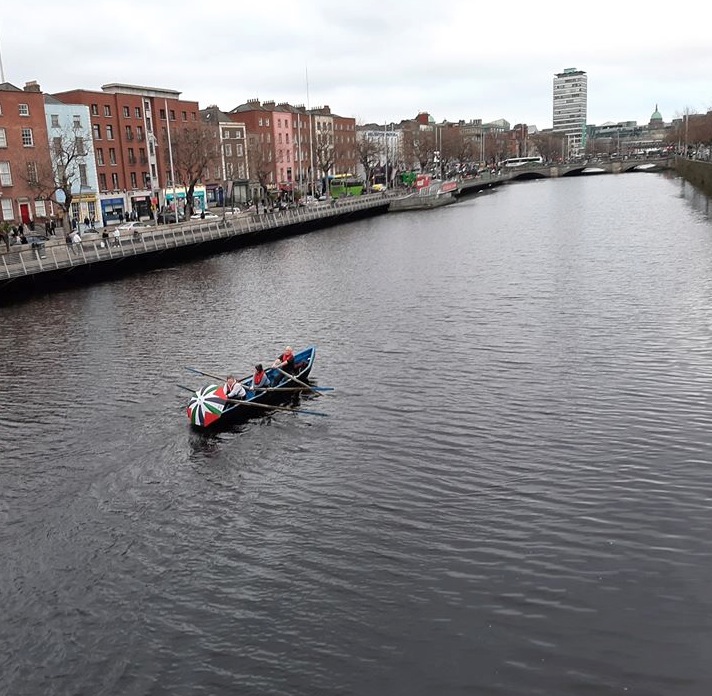
The iconic Halfpenny Bridge over the river Liffey in Dublin seemed to be flying on Palestinian flags on New Years’ Eve. The annual event organised by the Ireland Palestine Solidarity campaign was favoured with not only a dry but also mild day this year and supporters and passers-by clicked their cameras to capture the scene, in the midst of which an Irish currach showing Palestinian colours was rowed up and down the river nearby by three women.
Currach (traditional light Irish rowing boat) rowed downriver by three women in solidarity with the Palestinian people (Photo: D.Breatnach)
Communists, Socialists. Irish Republicans (both pro and anti-Good Friday Agreement) and generally democratic people lined both sides of the Bridge itself and spilled out at each end, which the IPSC had a busy stall on the south side, next to the Merchants’ Arch.
Yesterday brought to an end a year that was far from the worst in the long history of the bloody Zionist occupation of Palestine and the oppression of the Arab-Palistinian population. Even so, 149 Palestinians were killed during 2019 according to a statistical collection agency and 35 of those were children. During the same period 10 Israelis were killed, including two children. However, in December alone, nearly 45 Palestinians were killed by Israeli Zionists against no Israelis. The hugely disproportionate balance of death and injury in favour of Israeli Zionism has been a consistent pattern since the the beginning of the Occupation and makes any notion of there being a “war between two sides” deemed nonsense by many commentators who instead, see the conflict as vicious repression by the Israeli State and largely ineffective resistance by what is now a minority Palestinian population, controlled to a prison-like degree by a highly-militarised state.
A bridge of flags. (Photo: D.Breatnach)
USA SUPPORTING A RACIST STATE AND ILLEGAL OCCUPATION
2019 was also the year in which the USA Administration for the first time pronounced the Israeli settlements in what are termed “the occupied territories” to be no longer illegal, flying in the face of world opinion and many declarations of the United Nations. This comes after the introduction of the new Israeli citizenship law last year, pushed through by the right-wing and religious coalition with 62 votes against 55, which defines Israel as the nation-state of the Jewish people, completing the process of making it officially a racist and religious state, downgrading the political, civil and cultural rights of all other ethnic and religious communities within the territory it controls. The measure was widely criticised by human rights groups around the world and within Israel itself, as also by much of the Jewish world population.
Part of the Ha’Penny Bridge yesterday (Photo: D.Breatnach)
Solidarity with Palestinians is traditionally demonstrated in other places in Ireland too on New Year’s Eve as well as at various other times during the year: between yesterday and today, eight Irish cities and towns demonstrated publicly in support of the Palestinians. Some years ago the Israeli Ambassador to Ireland described Ireland as “the most anti-Semitic country in Europe”. Since what he really meant was “the most anti-ZIONIST country in Europe”, most Irish people took that comment as a compliment. It is the Zionists who try to equate Jewishness with Zionism and the Israeli State in order to further their ideological indoctrination and intimidate democratic opposition; in doing so, the put all Jewish people in danger of the backlash against the crimes of the Israeli State. Fortunately there have been – and continue to be – Jewish people, some of them quite prominent, who speak out against the crimes of Zionism but these are dubbed “self-hating Jews” by the Zionists, who heap insults upon them.
The IPSC continues to organise a number of Palestine solidarity events every year and welcomes wide participation.
end.
The Palestinian solidarity currach going upriver. (Photo: Mel Mac Giobúin) [cropped]
(Reading time: 1 minute; watching time: 3 minutes per video)
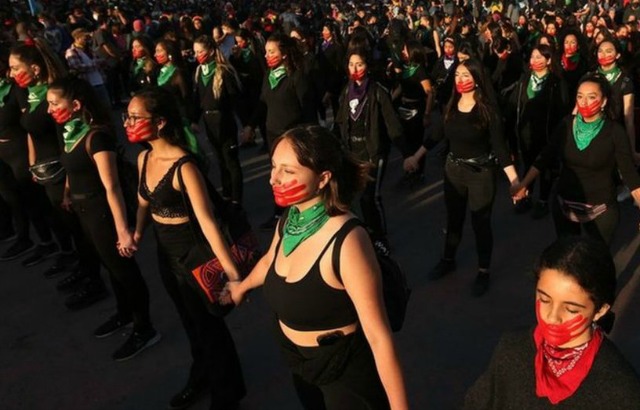
A choreographed protest against violence against women is sweeping the world. It was first seen on International Day Against Violence Against Women, 27th November in the centre of Santiago, the capital city of Chile. Organised by feminist group La Tesis, it formed part of the popular resistance to the the Sebastián Piñera regime and its repression, since accusations of rape and other sexual violence against the repressive forces have, according to a number of human rights agencies, amounted to 15% of the total (at least 70 separate cases in the first month of protests).
Source: Internet
The lyrics chanted were, in translation: Patriarchy is a judge who judges us for being born
and our punishment is the violence that you don’t see.
It’s femicide, impunity for my murderer,
it’s disappearance, it’s rape.
And it wasn’t my fault, where I was or how I was dressed.
The rapist is you. The rapist is you.
It’s the police, the judges, the State, the President.
The oppressive State is a macho rapist.
This was an extremely powerful and effective protest and caught the imagination of others, with videos spread by social media and also appeals across borders by feminist networks.
No doubt the continuation of the protest will take place in other contexts but it remain a powerful and innovative call.
As with other protests in Chile, those congregating in the area were attacked by forces of the State soon afterwards — the same forces against which the protest had been organised.
In September this year the Spanish newspapers were bleating that Catalans had been discovered preparing a terrorist attack with explosives — and some foreign media even picked up the reports. Nine alleged members of CDRs (Committees for the Defence of the Republic) were arrested under terrorism legislation while the media showed exciting footage and photos of a big Guardia Civil operation with police breaking down doors. Some right-wing Spanish newspapers even claimed to know the target of the “terrorist cell”. Five months later, no charges of possession of explosives have emerged and all but two have been released on bail.
Spanish State Security Forces conducting a search as part of “Operation Judas” (Source: Spanish State Ministry of Information (sic))
At least 500 members of the Spanish State’s Security Forces and Corps took part in the well-publicised operation against the CDRs on 23 September. In the usual Spanish judicial disregard for the concept of “innocent until proven guity”, the National Court Prosecuting office and Spanish media declared that the arrested had “advanced plans” for attacks over the forthcoming days.
El Mundo (daily of the editorial line of the right-wing PP), for example, opened its paper edition with the headline “The CDR intended a terrorist attack in Catalonia ‘on D-Day’”. Seven of the arrested were sent to jail without bail and the scare-story of Catalan independence terrorists ready to attack ran like wildfire through news and social media. El Confidencial was able to go further and to disclose that the intended explosive “thermite” (which is not even an explosive) was intended to blow up a barracks of the Guardia Civil.
El Confidencial might have the scoop on the target but El Mundo scooped the actual date for the explosion: “on the second day of the Trial” (i.e of the Catalan independentists).
Another right-wing journal, carrying without any sense of irony the title La Razón (“Reason”) was able not only to confirm the target but to identify even more actors in the conspiracy, with their headline that “The CDR of Torra squeeze: they were going to attack a barracks with explosives”. Quim Torra is currently President of the Catalan Government and the most he has been accused of by the Spanish State is “disobedience” for delaying in removing yellow prisoner solidarity bunting from the Government’s building during the last elections.
Not to be outdone, another media with the unassuming (but surely at most aspirational) title of El Periódico, somehow knew that not only Quim Torra was involved but also Carles Puigdemont, who was over in Brussels.
Nobody can accuse most of the Spanish media of failing to appreciate fantasy and though such “reporting” may be laughable to us, it is sobering to reflect that this is what is being fed daily to the broad Spanish public and used to justify all kinds of repression against oppositional movements and even critical individuals.
Anyway, where is all this hysteria of a CDR bombing plot now, three months later?
Nowhere.
FIVE “TERRORISTS” RELEASED ON BAIL
Five of the seven members of what had been called ‘Technical Response Team’ have been released on bail coming up to the Christmas holidays; the first three on 5,000 euros bail, on December 20th. The National Court’s rationale was somewhat bizarre for a “terrorist” case, categorising two subgroups among the seven, one being the “producer” of the explosives, consisting of four people, and another the “executor.” So the Court released on bail those they considered to be the members of the “executor” team: Eduard Garzón, of which the Guardia Civil had stated that he was “the second most important member of the criminal organization”, Guillermo Xavier Duch and Xavier Bugas.
Just six days later, the National Court also released Ferrán Jolis, on bail of 5,000 euros, also stating that he did not belong to the subgroup responsible for the preparation of explosives. However, on the same day, despite opposition from the Prosecutor’s Office, another judgement ordered the release on bail of Alexis Codina on 10,000 bail. The Guardia Civil “investigations” had earlier declared Codina the owner of a “clandestine laboratory” where explosive compounds were prepared!
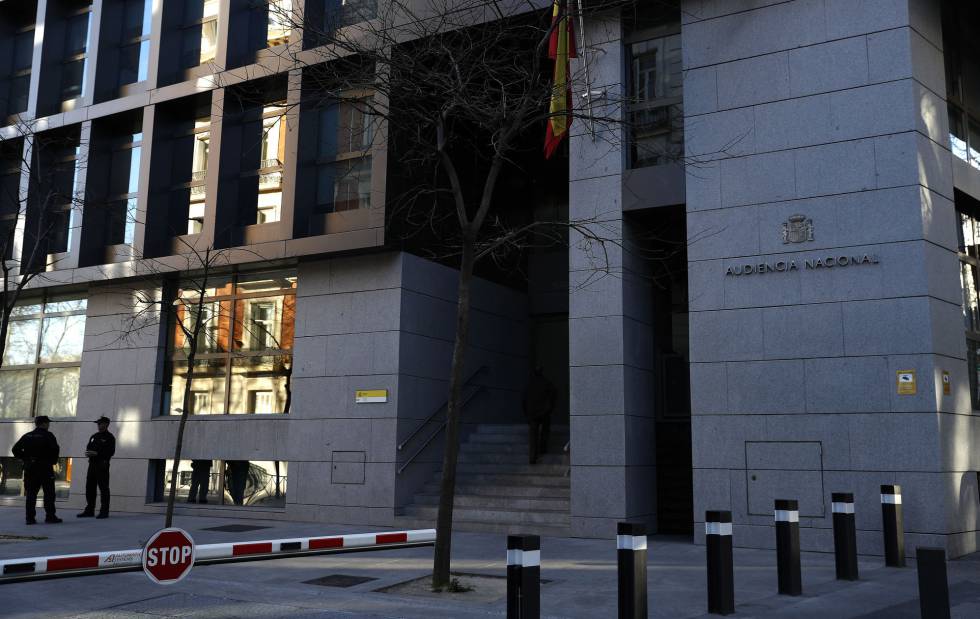
The dreaded Audiencia Nacional, the special Spanish State court for “terrorism” charges, located in Madrid. (Source photo: Internet)
But wait a minute! So perhaps these were people low down in the terrorist organisation? Or even perhaps the police were mistaken about their involvement? But there WAS a terrorist cell, right? There were explosives found, right?
The National Court, with a special brief to deal with ‘national security crimes’, found many words to answer that question in a resounding negative: “The Court declares “the objective non-existence of explosives held by Mr. Codina” since it only found “precursors” of the thermite and also that the defendant has “documents with information to make explosives.”
Or in other words, no explosives. Or lots of other stuff you might find around a house or garage. Thermite itself is not even an explosive but combustible material, such as one might find in fireworks or flares, for example. Which, strangely enough, was what many Catalans were insisting back in September was all that the police had found. But who listens to Catalans, anyway? Especially pro-self-determination ones.
OK, OK, but a terrorist organisation was discovered, right?
The National Court had something to say about that: “The Court, at this time of resolution of an appeal against a precautionary measure, with a broad, but limited knowledge of the proceedings that are in ongoing investigation, without the existence of a previous criminal organization of a terrorist character thus judicially declared of reference, cannot issue a definitive judgment sufficiently founded on the nature or non-terrorist of the facts, or the existence of an organization that would have been constituted ex novo, nor from the point of view of its purposes, structuring, previous criminal manifestations, or degree of development in its possible conformation.”
That sounds like another “No”, too.
So why are two Catalans still in jail and on what charges are the nine to be tried eventually? Surely the Spanish State will find something? If only they still had the Baltazar Garzón judge still in office, with his mantra of “everything is ETA”!
Former Judge Baltazar Garzón, who ignored accusations of torture while sentencing Basque independentists on the basis of “confessions” and closed down all kinds of social, political and media agencies under the mantra that “everything is ETA”. Sadly he was lauded as a progressive by many liberals when he ordered the exhumation of one of the many mass graves of Franco’s era. (Photo source: Internet)
And concerning the two still in jail, who were denied access to solicitors for weeks and one of whom refused legal assistance of the Catalan movement, there is something of a smell about that whole business too. Was that guy an informer? Or one who was turned by threats or even worse? Why would he, as the State claims he did, admit to things that even the Court is now saying were not done nor going to be done? And was the code name of the police operation, “Judas”, though somewhat unimaginative, a clue?
TERRORISTS EVERYWHERE!
Painting oppositional movements — especially those for national self-determination – as “terrorist” is an old game of the Spanish State, going right back to Franco’s regime (a bit ironical really since his regime was certainly terrorist). It was done with the Basques for decades, banning political parties, closing down social centres, banning newspapers, radio stations and social media pages. In fact, creating a climate of terror amongst Basque pro-independence activists of all types.
Of course, the Spanish State itself has been caught out in terrorism, even after the death of Franco, when the social-democratic PSOE government in the 1980s was running terrorist kidnap and murder gangs against the Basques, with Government Ministers, senior police and army officers instructing and paying hired assassins.
The great thing about the “terrorism” brush is that once the State and the media begin to paint oppositional people with it, all one sees of those sometimes troublesome liberals is dust-clouds as they depart at speed – and not by any means only in the Spanish state.
Maybe you can’t teach an old dog new tricks – but in the Spanish State, the old tricks are usually good enough.
Racists and Fascists, posing as Irish “patriots”, malign migrants to Ireland and target them in racist propaganda. This is a fundamentally unpatriotic activity, flying against not only our own huge history of migration to other lands but also against the great history of migrants’ contribution to the struggle for Irish independence and socialism.
Of the Seven Signatories of the 1916 Proclamation of Independence, two were migrants and two more were sons of migrants.
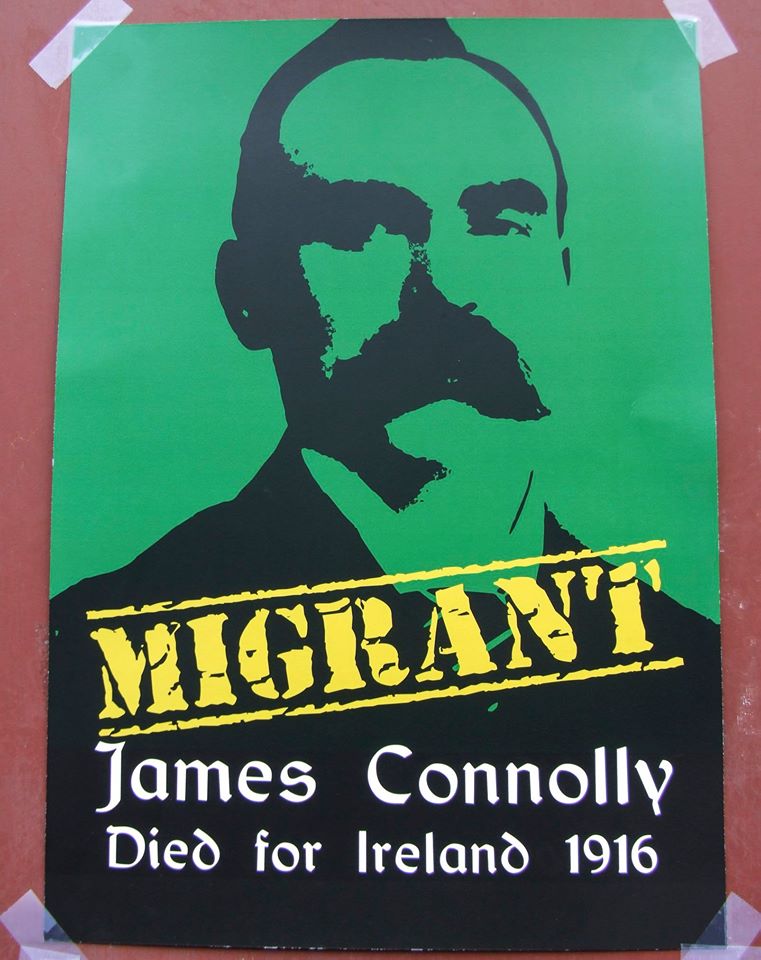
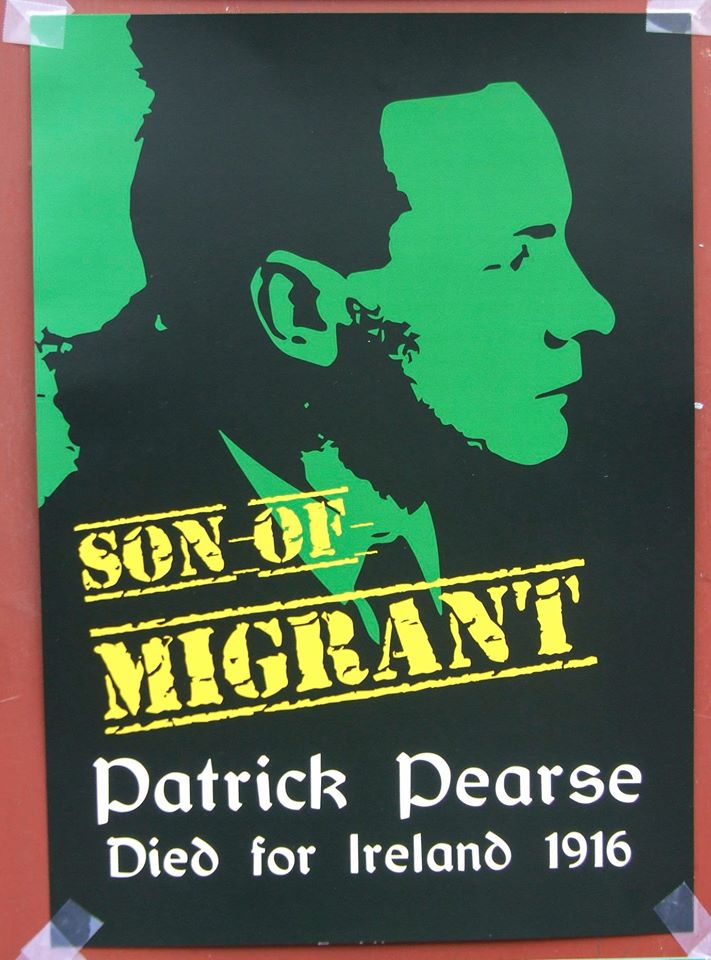
Of the sixteen of the Rising executed by the English, two were migrants (Connolly and Clarke), another three were sons of migrants (Pearse brothers, Mac Donagh) and at least six bore family names of foreign ancestry (Casement, Ceannt, Clarke, Colbert, Kent, Plunkett).
Numerous migrants took part in the 1916 Rising, mostly from England and Scotland but also some from the USA, one from Argentina, another from Finland and yet another from Sweden).
James Connolly, revolutionary socialist and anti-imperialist, author, songwriter, journalist and trade union organiser was a migrant who did not see Ireland until he was a young man. (Design: Maria Castella; photo: B.Hoppenbrouwers)
Constance Markievicz (nee Gore-Booth), feminist, Irish Republican, Socialist, officer in the Irish Citizen Army, first woman elected to the British Parliament, first female Minister of the Dáil and first Labour Minister in the world, was born in England; she was sentenced to death in 1916 by the English but had her sentence commuted. Volunteer Eamon De Valera, a 1916 Rising garrison Commander, was born in the USA to an Irish mother and a Cuban father. The captain of the Asgard yacht that delivered the Mauser rifles for the 1916 Rising was an Englishman, Erskine Childers and among the crew were his wife Molly from the USA and Mary Spring Rice (born London). Childers fought in the War of Independence and the Civil War and was executed by the Irish Free State in 1922.
Jim Larkin, trade union organiser and Lockout resistance leader, who was in the USA during the Rising, was co-founder of the Irish Transport & General Workers’ Union and of the Irish Citizen Army, also of the Irish Labour Party. Larkin was born and raised in Liverpool and did not see Ireland until sent to Belfast by his England-based trade union.
Constance Markievicz, Irish Republican, revolutionary socialist, officer in the Irish Citizen Army, sentenced to death in 1916 but commuted. She was a migrant, born in England. (Image source: Internet)
A LONG HISTORY OF MIGRANT CONTRIBUTION TO IRISH STRUGGLES
The aforesaid should not surprise us as migrants have often participated in struggles for freedom and social progress in their adopted countries and they and their descendants have a long history of taking up those struggles in Ireland – often sacrificing their liberty and even their lives in doing so.
Patrick Sarsfield, a hero of the resistance to William of Orange in the army of James II was of Anglo-Norman descent (he was a prominent member of the Wild Geese and was killed in military service abroad in 1683).
Nearly all the leaders of the Society of United Irishmen, the first Republican revolutionary organisation of Ireland, were Protestants of various sects and descendants of migrants. Henry and Mary Joy McCracken were active in saving Irish traditional melodies; their ancestors were Huguenots (French Protestant refugees).
Henry Joy was executed publicly in Belfast by the English in 1798, his sister walking hand-in-hand with him to the gallows. General Henry Munro, another Antrim Unitedmen leader, also executed in 1798, was of Scottish descent.
Theobald Wolfe Tone, Anglican co-founder of the Unitedmen and often described as the “father of Irish Republicanism”, was also of Huguenot ancestry; he died in jail in Dublin, while his brother Matthew was hanged. Edward Fitzgerald, another leader of the Unitedmen who died of his injuries in a Dublin jail, was a Protestant and descendant of Norman invaders.
Robert Emmet, another famous United Irishman but martyred in 1803, bore a surname of English origin as did one of his prominent comrades, Thomas Russell (“The Man from God Knows Where”), also executed by the English that year.
The Young Irelanders were the next Irish Republican organisation in history, their leaders a mixture of Protestant and Catholic background. One of the most famous was Thomas Davis, the son of a Welshman in the British Army and an Irish woman descended from Irish chieftain Ó Súilleabháin Béara.
Davis founded The Nation newspaper and composed a number of poems and songs, some of the latter being still sung today (e.g A Nation Once Again and The West’s Awake).
James Stephens and a handful of others founded the Irish Republican Brotherhood on 17th March 1858 in Dublin, the third Irish Republican organisation in Irish history and the life of which extended into the 1920s. Stephens is a family name of Anglo-Norman origin.
John Devoy of the Irish Republican Brotherhood in the USA, who was very active in supporting the 1916 Rising and the War of Independence, carried a family name of Welsh origin. Wales was also the likely origin of Michael Davitt’s family name, he who was chief organiser of the Land League’s base membership.
Volunteers Terence McSwiney and Kevin Barry, who both died in the same week in 1920, the first on hunger strike and the second hanged by the English, had family names of foreign origin.
WHO IS NOT A DESCENDANT OF MIGRANTS?
Of course, we are ALL descendants of migrants. The earliest date for human occupation of parts of Ireland has been calculated as being 7,000 BCE.
Since the earliest date given for the existence of homo sapiens is 300,000 years ago in the Horn of Africa (although throwing spears in Germany have been assessed as being between 380,000 and 400,000 years old), it follows that human settlement in Ireland was comparatively late and that all Irish are descended from migrants.
Stone age people arrived first, then the metal workers of bronze, followed by people of Celtic culture working iron.
Subsequently Ireland saw influxes of other groups, from Norse and Danes when they began to settle in parts of Ireland, followed by their cousins based in Normandy (and mercenaries they brought with them), then English and so on.
Religious groups seeking security such as Jews or fleeing persecution, for example the Huguenots, also entered at various times. Just a study of family names common in the Ireland of today reveals some of those ancestries.
The Norse, Danes, Normans and early English came as invaders, some more came subsequently as planters and many others came just to make a living in Ireland, like most migrants of today.
But descendants of all those groups, including of invaders and planters, contributed to and even led the struggle for Irish independence and social progress. Not only that but a significant number of those who arrived as migrants themselves took a stand for Irish independence, some of them paying the ultimate price.
Patrick Pearse, author in Irish and English, poet, journalist, Irish Republican and in overall command of the insurrectionary forces in 1916, was the son of an Englishman, as was his brother William. Both were executed after the surrender. (Design: Maria Castella; photo: B.Hoppenbrouwers)
CONCLUSION
Far from being “patriotic”, maligning migrants simply for being migrants is counter to the history of the general struggle for Irish independence and of Irish Republicanism in particular. It actually undermines the unfinished struggle for Irish independence and unification as well, of course, as the struggle of the working people for socialism.
End.
TRADUCCIÓN AL CASTELLANO:
LOS INMIGRANTES EN LA HISTORIA IRLANDESA
Los racistas y fascistas, haciéndose pasar por “patriotas” irlandeses, atacan a los inmigrantes en Irlanda en su propaganda racista. Esta actividad es fundamentalmente antipatriótica, que vuela no solo contra nuestra enorme historia de migración a otras tierras sino también contra la gran historia de la contribución de los inmigrantes a la lucha por la independencia y el socialismo irlandés.
De los Siete Signatarios de la Proclamación de Independencia de 1916, dos eran inmigrantes y un tercero era hijo de un inmigrante. De los dieciséis del Azamiento ejecutados por los ingleses, dos eran inmigrantes (Connolly y Clarke), otros dos eran hijos de inmigrantes (hermanos Pearse) y al menos seis tenían apellidos de ascendencia extranjera (Casement, Ceannt, Clarke, Colbert, Kent, Plunkett). Numerosos inmigrantes participaron en el Alzantamiento de 1916, principalmente de Inglaterra y Escocia, pero también algunos de los EEUU, uno de Argentina, otro de Finlandia y otro de Suecia).
Constance Markievicz (soltera Gore-Booth), feminista, republicana irlandesa, socialista, oficial del ejército ciudadano irlandés y primera mujer elegida para el Parlamento británico, la primera mujer ministra del Parlamento irlandés y primera ministra femenina de trabajo del mundo, nació en Inglaterra; fue condenada a muerte en 1916 por los ingleses, pero la conmutaron la pena. El voluntario Eamon De Valera, un comandante de la guarnición del Azamiento de 1916, nació en los Estados Unidos de una madre irlandesa y un padre cubano. El capitán del yate Asgard que entregó los fusiles Mauser para el Alzamiento de 1916 era un inglés, Erskine Childers y entre la tripulación estaban su esposa Molly (de los Estados Unidos) y Mary Spring Rice (nacida en Londres). Childers luchó en la Guerra de la Independencia y la Guerra Civil y fue ejecutado por el Estado Libre de Irlanda en 1922.
Jim Larkin, organizador sindical y líder de la resistencia al Cierre Patronal, que estuvo en los EEUU durante el Alzamiento, fue cofundador del Sindicato de Trabajadores Generales y de Transporte de Irlanda y del Ejército de Ciudadanos de Irlanda, también del Partido Laborista. Larkin nació y creció en Liverpool y no vio Irlanda hasta estar enviado a Belfast por su sindicato con sede en Inglaterra.
UNA LARGA HISTORIA DE CONTRIBUCIÓN MIGRANTE A LAS LUCHA IRLANDESA
Lo anterior no debería sorprendernos, ya que los migrantes a menudo han participado en luchas por la libertad y el progreso social en sus países adoptados y ellos y sus descendientes tienen una larga historia de asumir esas luchas en Irlanda, a menudo sacrificando su libertad e incluso sus vidas al hacerlo. .
Patrick Sarsfield, un héroe de la resistencia a Guillermo Naranja en el ejército de Jaime II de Gran Bretaña, era de ascendencia anglo-normanda (era un miembro destacado de los “Gansos Silvestes” y fue asesinado en el servicio militar en el extranjero en 1683).
Casi todos los líderes de la Sociedad de Irlandeses Unidos, la primera organización revolucionaria republicana de Irlanda, eran protestantes de varias sectas y descendientes de inmigrantes. Henry y Mary Joy McCracken fueron activos en salvar las melodías tradicionales irlandesas; sus antepasados eran hugonotes (refugiados protestantes franceses). Henry Joy fue ejecutado públicamente en Belfast por los ingleses en 1798, su hermana caminó de la mano con él hacia la horca. El general Henry Munro, otro líder de Los Irelandeses Unidos de Antrim, también ejecutado en 1798, era de ascendencia escocesa. Theobald Wolfe Tone, cofundador anglicano de los Irelandeses Unidos y a menudo descrito como el “padre del republicanismo irlandés”, también era de ascendencia hugonote; murió en la cárcel de Dublín, mientras que su hermano Matthew fue ahorcado. Edward Fitzgerald, otro líder de los Irelandeses Unidos que murió por sus heridas en una cárcel de Dublín, era protestante y descendiente de invasores normandos.
Robert Emmet, otro famoso de los Irelandeses Unidos pero martirizado en 1803, tenía un apellido de origen inglés, al igual que uno de sus camaradas prominentes, Thomas Russell (“The Man from God Knows Where”), también ejecutado por los ingleses ese año.
Los Jóvenes Irlandeses fueron la próxima organización republicana irlandesa, sus líderes una mezcla de antecedentes protestantes y católicos. Uno de los más famosos fue Thomas Davis, hijo de un galés en el ejército británico y una mujer irlandesa descendiente del jefe irlandés Ó Súilleabháin Béara. Davis fundó el periódico The Nation y compuso una serie de poemas y canciones, algunas de las cuales todavía se cantan hoy (por ejemplo, A Nation Once Again y The West’s Awake).
James Stephens y un puñado de otros fundaron la Hermandad Republicana Irlandesa el 17 de marzo de 1858 en Dublín, la tercera organización republicana irlandesa en la historia de Irlanda y cuya vida se extendió hasta la década de 1920. Stephens es un apellido de origen anglo-normando.
John Devoy, de la Hermandad Republicana Irlandesa en los EEUU, que fue muy activo en el apoyo al Alzamiento de 1916 y la Guerra de la Independencia, llevaba un apellido de origen galés, lo qual también fue el origen probable del apellido de Michael Davitt, el principal organizador de la membresía base de la Liga de la Tierra.
Los Voluntarios del IRA Terence McSwiney y Kevin Barry, quienes murieron en la misma semana en 1920, el primero en huelga de hambre y el segundo ahorcado por los ingleses, tenían apellidos de origen invasor.
¿QUIÉN NO ES UN DESCENDENTE DE MIGRANTES?
Por supuesto, TODOS somos descendientes de migrantes. La fecha más temprana para la ocupación humana de partes de Irlanda se calculó ser en 7,000 aC. Dado que la fecha más temprana dada para la existencia del homo sapiens es hace 300,000 años en lo que hoy es Marruecos, se deduce que el asentamiento humano en Irlanda fue relativamente tarde y que todos los irlandeses son descendientes de migrantes.
Primero llegaron personas de la edad de piedra, luego los trabajadores metalúrgicos de bronce, seguidos por gente de la cultura celta que trabajaban el hierro. Posteriormente, Irlanda vio la afluencia de otros grupos, de nórdicos y daneses cuando comenzaron a establecerse en partes de Irlanda, seguidos por sus primos con sede en Normandía (y mercenarios que trajeron con ellos), luego ingleses, etc. Los grupos religiosos que buscaban seguridad como los judíos o huían de la persecución, por ejemplo los hugonotes, también ingresaron en varios momentos. Un estudio de apellidos comunes en la Irlanda de hoy basta para revelar algunos de esos antepasados.
Los nórdicos, daneses, normandos y los primeros ingleses llegaron como invasores, algunos más llegaron posteriormente como plantadores y muchos otros vinieron para ganarse la vida en Irlanda, como la mayoría de los inmigrantes de hoy. Pero los descendientes de todos esos grupos, incluidos los invasores y plantadores, contribuyeron e incluso lideraron la lucha por la independencia de Irlanda y el progreso social. No solo eso, sino que un número significativo de los que llegaron como migrantes tomaron posición por la independencia de Irlanda, algunos de ellos pagando el precio final.
CONCLUSIÓN
Lejos de ser “patriótico”, difamar a los migrantes simplemente por ser migrantes es contrario a la historia de la lucha general por la independencia de Irlanda y del republicanismo irlandés en particular. De hecho, mina la lucha todavía inconclusa por la independencia y la unificación irlandesa, así como, por supuesto, la lucha de los trabajadores por el socialismo.
On what was an extremely cold day, faith groups joined with migrants and community groups, Irish Republicans, socialists, communists and anarchists to oppose a mobilisation by racists and fascists outside Leinster House, which houses the Oireachtas, the Irish Parliament. There were a couple of moments of surges towards the right-wingers but these were contained without arrests.
The anti-racist demonstrators responded to a call for the counter-rally and occupied the space from 12.00 noon on 14th December 2019, which left the racists and fascists having to face them from the other side of Kildare Street, at the junction with Molesworth Street but, in any case, they were outnumbered at about ten to one by the anti-racists and anti-fascists. The call came from SARF (Solidarity Alliance against Racism and Fascism), Islamic Foundation of Ireland, United Against Racism and Irish Network Against Racism (INAR).
The two opposing groups facing one another seen from the northern end of Kildare Street. The anti-fascists are to the left of photo. (Photo: D.Breatnach)
“FREE SPEECH”
The right-wing group had called for a rally to protest about the legislation proposed by the party in Government, Fine Gael, against “hate speech”. Ironically, Fine Gael are themselves a right-wing party which was formed in part out of the 1930s Irish fascist organisation, known colloquially as “the Blueshirts” (a name by which Fine Gael are known to this day by many). Earlier this year, Gemma O’ Doherty’s Youtube account was suspended and then terminated by Google because of its anti-migrant content, which gave the racists another issue: censorship of “free speech”.
Historically fascists, when their movement is weak, have often mobilised under the banner of “freedom of speech”. This has meant not only freedom to speak out against the government in power (which many anti-fascists would also wish for) but also the freedom to demonise targeted social, ethnic and religious groups and to call for their restriction, expulsion, jailing — or even death. Immediately upon gaining power, fascists restrict the freedom of speech of all others: not only of the social, ethnic and religious groups they targeted but also of their critics, the political opposition and trade unions. In this of course they are not so different from some socialist, communist or Irish Republican groups that rail against suppression and censorship only subsequently to silence criticism within their own ranks by threats, expulsions and censorship in the media they control. The point however is not to be fooled by the “free speech” demands of fascists and racists.
Section of the anti-racist mobilisation seen from a facing northward position. Beyond the irish Tricolour in the foreground, the Catalan estelada may be seen in the background, also Anarchist and Communist flags. (Photo: D.Breatnach)
All the same, this does not mean that we should support the proposed Fine Gael legislation either. “Anti-Hate Speech” legislation elsewhere was passed in capitalist states under the guise of protection of vulnerable minorities but then at times used for the protection of capitalists, royalty, government ministers and the police. If racist or homophobic incitement is the supposed target, why not specify that? Is hate itself necessarily a bad thing, if the hated object is racism, state suppression, exploitation?
Section of antifascist rally (left of photo) and most of racist rally (right) seen from facing southward position. Those wearing pink hi-viz vests are stewards. (Photo: D.Breatnach)
A BROAD RIGHT-WING, RACIST COALITION SHELTERING FASCISTS
The origin of this right-wing coalition seems to have coalesced around former anti-corruption journalist Gemma Doherty who, some time subsequent to being fired by her newspaper after she exposed some aspects of the financial dealings of the paper’s owner, apparently underwent a transformation into a rabid anti-immigration racist. People opposed to legislation legalising gay marriage and permitting greater access to abortion gathered around her, as did others against the State’s problematic child and family agency TUSLA and some others. Accordingly it is a broad but small, generally right-wing movement of many who feel a sense of their values being ignored or undermined. How disparate at times can be judged by their demonstration at the Department of Justice building a little over a month ago, when among their signage was a banner attacking TUSLA and abuses by the Catholic Church, while a woman among their number shook a set of rosary beads at the counter-demonstration!
Viewed from near the southern end of the crowds, the right-wingers across the street to the left of photo, anti-racists closer in foreground. (Photo: D.Breatnach)
The confusion was illustrated yesterday too when a woman among the right-wingers could be seen flying an estelada, a flag of Catalan independentists. From a number of people from among the counter-demonstrators who spoke to her, including Catalans and other people from the Spanish state, it appears that she equated the demonstration with demanding free speech, which she rightly stated was being denied by the Spanish state to many, including Catalan independentists.
Such groups are often believers in bizarre conspiracies (nor are they alone in that) and current among some of them is a belief that the EU plans to replace Irish people with migrants. For that reason the EU, which many Irish Republicans and socialists also oppose for very different reasons, is one of the targets of this right-wing coalition.
Organised fascists, who are currently a tiny group in the territory of the Irish state (but much larger, in the shape of Loyalists, in the British colony in Ireland, the Six Counties) find themselves generally isolated in society within the Irish state and no doubt threatened too. Therefore they try to infiltrate broader anti-government groups, as they did with a brief emergence of an Irish “Yellow Vest” movement, mostly in Dublin (see https://rebelbreeze.wordpress.com/2019/02/16/irish-yellow-vests-and-questions/) – in which they do not reveal their fascist project but present themselves as being against the Government, against corruption, for remedy of homelessness and as Irish patriots. And of course for free speech.
Nor are organised fascists the only opportunists, as a small number of politicians seeking election (or reelection) have been known to whip up fear of migrants and racist sentiment against Irish Travellers (originally a nomadic group). These offenders very recently have included an Independent TD (parliamentary delegate) from Galway and a Fine Gael candidate seeking election.
At some point of course, if they intend to come to power in society, fascists need to reveal some of their agenda but before they can do that they need to train some of their stormtroopers, public speakers and organisers and they need to command the street, at least in some areas. That was the reason for the 1930s rallies and attempted march on Dublin of the Blueshirts in Ireland, Mussolini’s Blackshirts March on Rome, the rallies and street-fighting of the Brownshirts in Germany and Moseley’s Blackshirts’ failed attempt to penetrate London’s East End. In the Spanish and Portuguese states, the fascists needed a military coup to aid them and, in the former case, the logistical and personnel assistance of the already-fascist states of Germany and Italy (a military coup was feared by the young Fianna Fáil government in 1930s Ireland too). In 2016, the need for a street presence was the reason for the attempted Dublin city centre launch of the European islamophobic organisation Pegida, which was defeated by mass mobilisation and physical opposition (for which some Irish Republicans are still being processed through the Irish courts).
Although Gemma O’Doherty and her supporters had been confronted before in Ireland, yesterday’s was the first large mobilisation against their racist anti-immigration message and it vastly outnumbered that of the racists.
Another view of both sides, mostly the anti-racists, from facing southward position. (Photo: D.Breatnach)
POLICE AND STEWARDS SAVE RACISTS AND FASCISTS FROM A TROUNCING
Generally the two opposing forces seemed content with shouting and chanting across the street at one another, apart from the occasional anti-fascist wandering over to verbally confront the opposition. The anti-racists who in the opinion of the police got too close to the racists were sent back by the police but one of the antifascists had to approach the Gardaí (Irish state police) to remove one of the racists who had embedded himself among the anti-fascists. This seemed dangerously like asking the police to deal with the fascists whereas police bias at least is generally against the antifascists. Surely the crowd could have easily expelled him (at least) unaided?
As has been the custom with them and their intention to appear patriotic, the racists and fascists were displaying a host of Irish tricolours but this time there were a number of these also among the antifascists, along with a number of green-and-gold Starry Plough flags, as well as some communist and anarchist flags.
However, when a small group among the right-wingers pulled out the blue-and-white version of the Starry Plough, flag of the Republican Congress of the 1930s, along with the Sunburst flag of the Fianna Éireann (Republican youth group of past generations) and began waving them, a section of Irish Republicans surged forward in outrage and for a few moments the stewards and the Gardaí struggled to contain them.
Those who had brandished those particular flags were clearly delighted with the reaction they had provoked. Since at previous demonstrations of the racists and fascists they had never displayed those particular flags and, since they only made an appearance later in their rally yesterday, it seems clear that they had displayed them solely for the purpose of provocation.
A little later there was another surge from a different point which was again contained.
It was understandable, given the broad composition of the anti-racist rally, that the organisers would wish to prevent physical fighting breaking out from among their ranks on this occasion. However, there is a danger of this kind of stewarding becoming collusion with the State – or at the very least being seen to be so by sections of anti-fascists.
MIGRANTS AND IRELAND
The bubble expansion of the Irish economy for an unexpectedly long period from the late 1980s to the beginning of this century, provided employment opportunities which could not be filled by the low level of the Irish population (a result of two centuries of heavy migration from Ireland to other countries). These employment opportunities, mostly in construction and services, tended to be availed of by migrants, mostly from European states with declining or stagnant economies but also by some from states in Africa, Latin America, the Middle East and China.
Although Ireland had seen foreign colonisation from Britain for centuries, it had only experienced small emigration from elsewhere, which also tended to restricted to certain periods, for example Huguenots at the end of the 17th Century and Italians in two waves, following each World War. The change in population composition in some areas at the end of the 20th Century was startling and difficult for some to which to accustom themselves (though welcomed by others). When combined with the subsequent bursting of the Irish economic bubble and cuts in public services, severe housing crisis and a health service failing spectacularly, migrants became a handy scapegoat for some people and a useful target for fascists.
Some of the migrant communities in Ireland were represented among the anti-fascists but apart from a sprinkling of black faces, were not so easy to identify. A Catalan estelada (yes, another one) revealed a small group of Catalans representing CDR Dublin and a representative of Asamblea Nacional de Catalunya Ireland also spoke from the PA system earlier in the day. Some Spanish were in evidence and a Basque Antifascist flag could also be seen but undoubtedly the largest migrant antifascist contingent was Italian. Many of these were supporters of the Sardine movement against Italian right-wing populist politician Salvini and which welcomes migrants. Perhaps a hundred strong, they sang antifascist songs, including of course the Bella Ciao and made speeches in Italian and in English.
Section of the Italian ‘Sardine’ movement supporters. (Photo: D.Breatnach)
THE FUTURE?
As increasingly around the world governments become more right-wing and fascist organisations mobilise, anti-fascists need to organise too. The thesis that fascism is capitalism in crisis seems well-proven which means that antifascists should not nor cannot rely on the forces of the capitalist State to prevent the growth of fascism or to protect the social and ethnic groups targeted by fascists and racists.
Although the Catholic Church in Ireland no longer has the power it had in the Irish state since its creation in the 1920s and the fascists cannot rely on its heavy backing as in the 1930s, there is no room for complacency in Ireland or anywhere else.
Mobilisation against the fascists and racists to deny them public spaces from which to recruit and to organise is essential. And a broad anti-fascist and ant-racist unity in action needs to be built, similar to what was seen yesterday although within that broad movement there also needs to be struggle against liberal ideology. But one cannot combat sickness purely by countering infection – care needs to be given to cultivation of a healthy body too. The Ireland body is sick: sick from cultural and physical colonialism, sick from territorial partition, from racist Loyalism and native gombeenism, from underdeveloped economy and plundered resources, from housing and health crises. While these remain unresolved we can expect at least sporadic outbreaks of fascist and racist infection and quite possibly an epidemic. It is not only in the struggle against fascism that unity is needed.
end
POSTSCRIPT
From information either not available to me or unconfirmed at the time, the blue-and-white Starry Plough which had been used to provoke anti-fascists was actually seized by the latter in the scrimmage. There was apparently another, which was allegedly seized by Republicans after the right-wingers had left for which two men were arrested and handcuffed.
According to reports, one of the right-wing women attempted to kick one of the arrested men while he was handcuffed and she was also arrested.
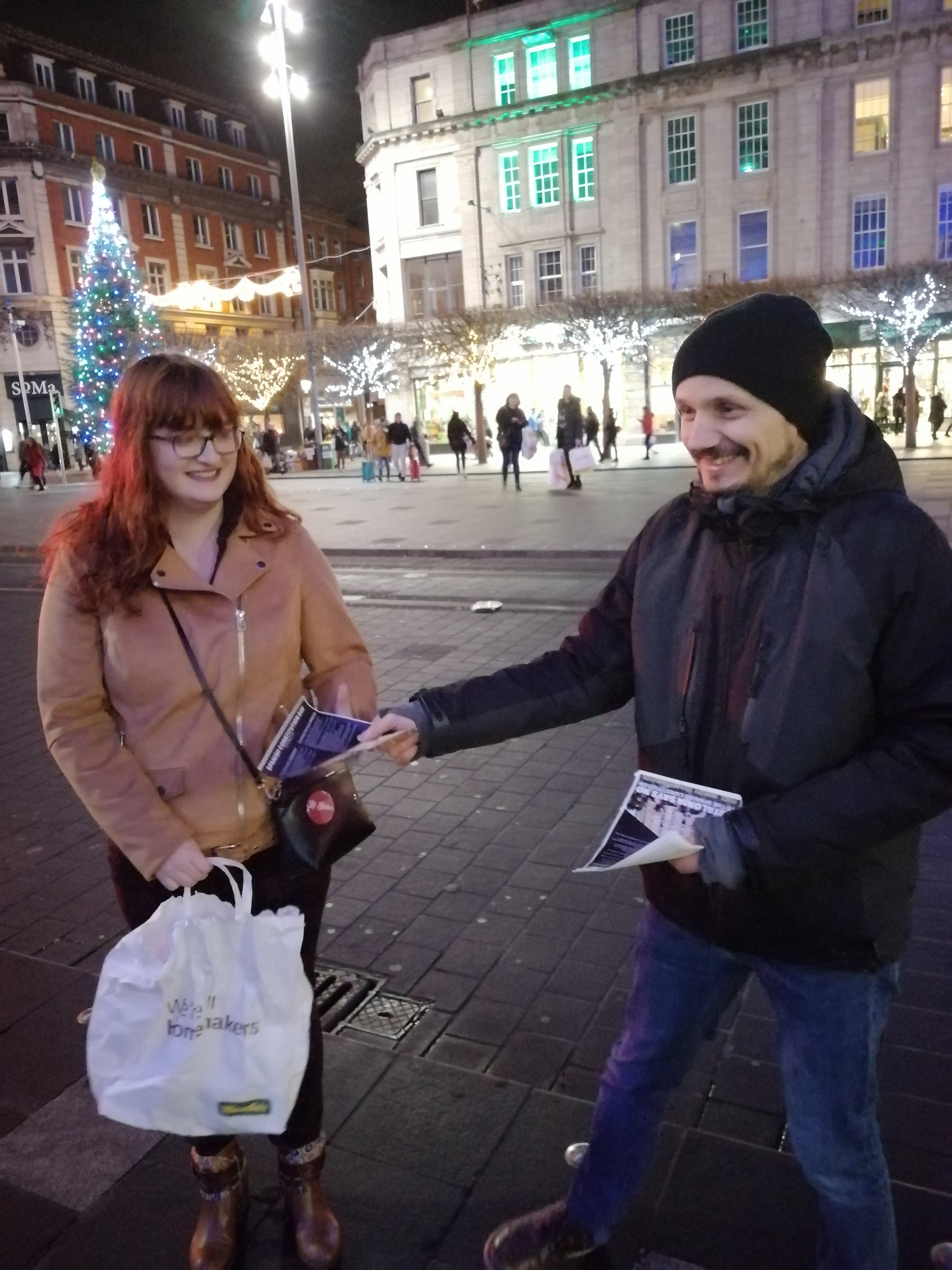
At little over a week’s notice, a protest picket took place on the evening of Friday, 6th December in Dublin City’s main street in protest at the lack of democracy of the Spanish Constitution. The date chosen was the same as the public holiday designated by the Spanish State to celebrate the adoption of the Spanish Constitution by majority in 1978.
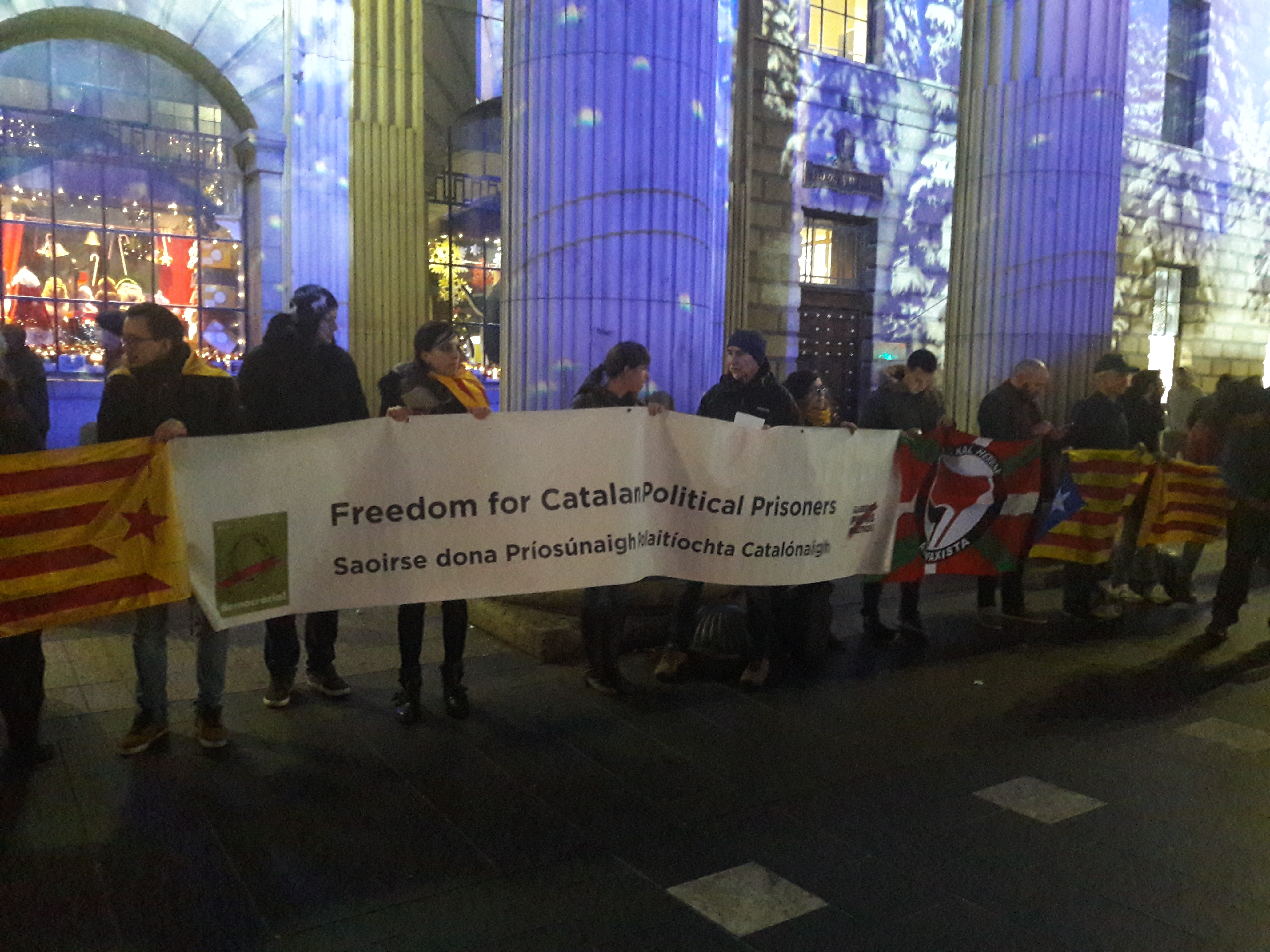
(Photo: D.Breatnach)
The protest was organised by three Catalonia-solidarity organisations in Dublin: With Catalonia/ Leis an Chatalóin, ANC Ireland and CDR Dublin. Calling the Constitution “a forced marriage without right to divorce”, the organisers published a statement in advance explaining the background to the Constitution and calling on people to support the protest.
The statement explained that when General Franco, the fascist-military dictator of the Spanish state, died near the end of 1975, opposition of various kinds that had illegal under the dictatorship – trade union, anti-fascist, republican, national-independentist – had been building for some time and took encouragement from his death. But State repression intensified with attacks by police, military and by fascist gangs.
Centre view of picket on Friday with GPO Christmas Nativity scene in background (Photo: C.Pujol)
“In 1977 the regime proposed to legalise their opposition parties, the PSOE and the Communist Party – on condition those parties agreed to support the installation of Franco’s nominee as King and Head of State and to control their affiliated (illegal) trade unions, the UGT and Comisiones Obreras.” This was the price for prisoners being released but no action could be taken against the torturers and murderers of thousands during the Anti-Fascist War or the Dictatorship or against those who had stolen children, raped and plundered. The (republican!) party leaders agreed and recommended the 1978 monarchical and unionist Constitution to their members and affiliated trade unions. Amid a wave of repression the take-it or leave-it Constitution was agreed in the Parliament and then in Referendum on 6th December 1978 by a large majority throughout the Spanish state, except in the Basque Country.
The statement pointed out that while the Constitution guarantees the right to self-determination, tht can be only if the majority of the Spanish Parliament agrees. in 1919 when Ireland had a majority of pro-independence delegates elected, as Catalonia has now, the text recalled that they declared independence. The statement went out to point out the close parallels of Ireland 100 years ago and Catalonia today, as the British proclaimed the declaration illegal, banned the First Dáil (Irish Parliament) and jailed elected delegates it could catch.
Poster for the event (creation D.Breatnach & B.Hoppenbrouwers)
Although the Catalan Government has not yet been declared illegal, the statement pointed out that “seven of its Ministers and elected officers have been jailed for 13 years and others heavily fined (two grass-roots organisation leaders have also been jailed for nine years); 700 town mayors are to be judicially processed for allowing the Referendum on independence to go ahead in their towns on 1st October 2017, a Referendum when many polling stations witnessed a savage Spanish police attack that was seen around the world (but much of it not in the Spanish state, outside of Catalonia and the Basque Country). Opinion polls have shown that 70-80% of people in Catalonia want to have a referendum on independence, free from attack or threat but the Spanish State uses the excuse of the Constitution to deny them that opportunity.”
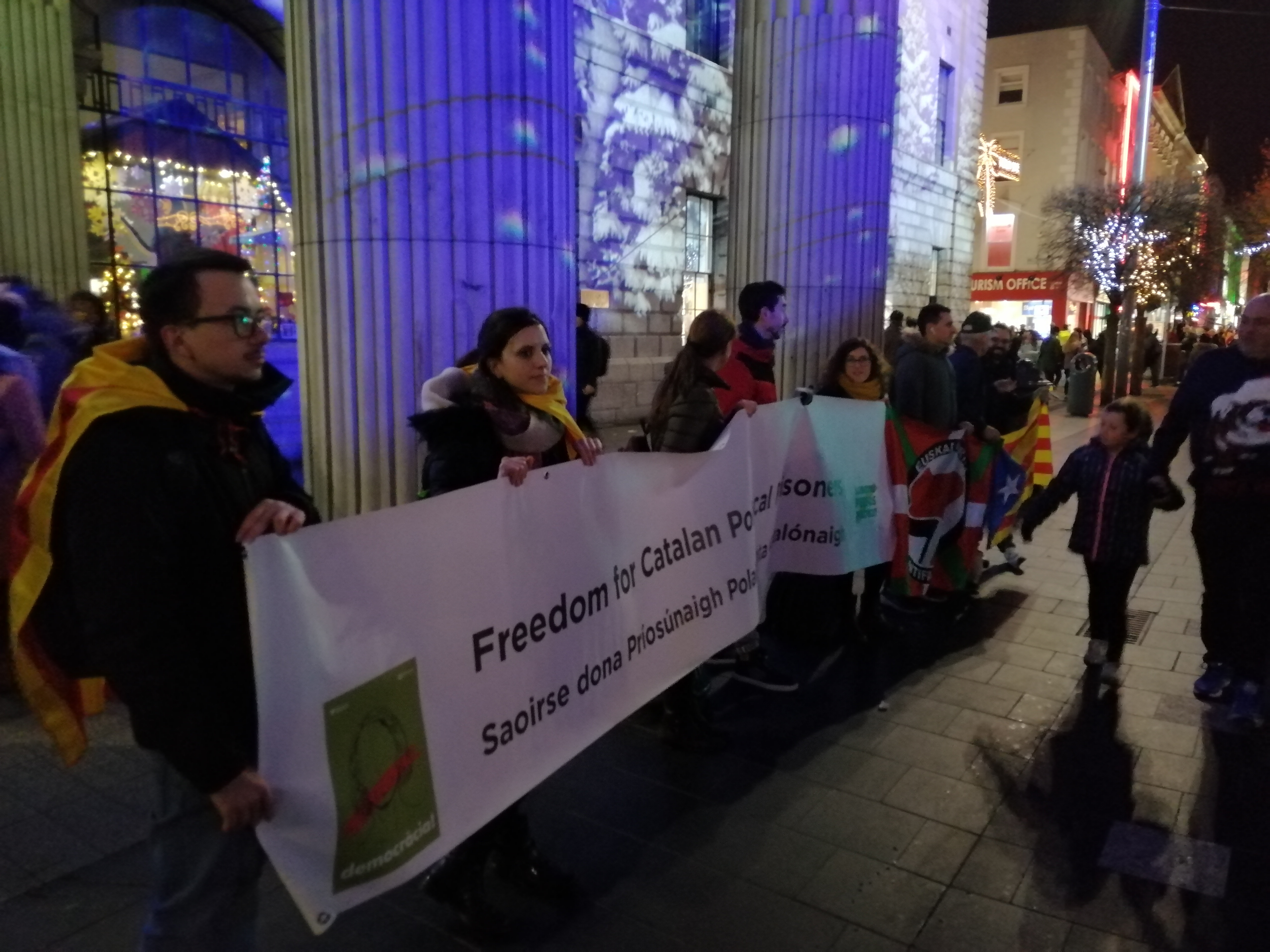
On the picket in Dublin a banner was displayed in Irish and English supporting Catalan political prisoners, along with a number of estelades (flags supporting Catalan independence), most of them of the red star variety (rather than the more common white star in a blue triangle). There was also a Basque Antifascist flag.
View of picket looking northwards (Photo: D.Breatnach)
As the protest drew to a close, outlining their reasons for supporting the protest, a number of individuals gave short video interviews; one in Irish and Marc Loan of CDR Dublin gave one in in English.
Carles Pujol of ANC Ireland thanked everyone for attending and said a few words about the need for the protest and referred also to the Catalan political prisoners in Spanish jails. Diarmuid Breatnach of WCLC spoke briefly about the appropriateness of the protest taking place in front of of the General Post Office building, which had been the HQ of the 1916 Easter Rising against British domination. He went on to point out some of the parallels between Catalan and Irish history and concluded by saying that Catalonia today is in the same situation as Ireland was a century before.
As the protest began to conclude, another picketbegan to assemble in solidarity with Irish Republican prisoners and there was some friendly interaction between both groups. However the Catalan solidarity protesters were heading off for a performance in Dublin by Els Pets, a long-standing Catalan band in a kind of folk-rock genre.
During the band’s performance, which was enthusiastically received by the mainly expatriate Catalan audience, a number of references were made from the stage to the aspiration for Catalan independence. At one point, a band member ironically sympathised with the Irish not having a king, saying “You don’t know what you’re missing.” The Spanish King is hated by many Catalans because of his personal position with regard to violent repression against Catalan Referendum voters in October 2017 but also because the monarchy was re-imposed on a Republican Catalonia by General Franco. When the satirical song “I want to be a King” was performed, members of the audience began to blow yellow balloons and to bounce them around the area (yellow is the colour designated for ribbons supporting Catalan political prisoners).
At the end of the concert, a number of supporters lined up with placards supporting the right to self-determination, also denouncing the Constitution and Spanish State repression.
The placard display at the end of the Els Pets concert. (Photo: C.Pujol)
Note:
The politically-independent organisations concerned have organised more than ten public Catalan solidarity events in Dublin this year, including a cultural day in the park, film showings, talks and protest pickets. In addition, there have been organisational meetings and external meetings with public representatives and participation in a Spanish-Embassy sponsored debate (which wasn’t!).
End.
Els Pets on stage. (Photo: D.Breatnach)No, it certainly is not! (Photo: D.Breatnach)Yellow ribbon banner in solidarity with the prisoners. (Photo: D.Breatnach)Estelada waving among the audience. (Photo: D.Breatnach)Yellow balloons time! (Photo: D.Breatnach)