Original Breaking News article: DAVID YOUNG, PA (with commentary in italics by Diarmuid Breatnach)
The rededication of a memorial to the National Army soldiers killed in the Civil War enables their memory to be rehabilitated, a ceremony in Dublin has heard.
Defence Forces Chief of Staff Lieutenant General Sean Clancy paid tribute to the some 810 soldiers killed serving on the Free State side in the 1922-2023 conflict as he addressed the event at Glasnevin Cemetery on Sunday.
Descendants of some of those who died, representative of all four provinces, were invited guests at the ceremony, among them relatives of Michael Collins, the commander in chief of the National Army who under direction by Churchill, gave the orders that began the Irish Civil War and who was killed in 1922.
Taoiseach Leo Varadkar and Tánaiste Micheál Martin, the leaders of Fine Gael and Fianna Fáil, the two main parties forged from the divisions of the Civil War, also attended the rededication of the National Army Monument.
Sinn Féin TD Matt Carthy also attended the military commemoration, as did Dublin Lord Mayor Daithí de Róiste.
This neatly brought together political parties of the neo-colonial and neo-liberal Irish State with opposing histories: Varadkar to represent the pro-British and fascist neo-colonial origins of Fine Gael; Mícheál Martin and De Róiste representing Fianna Fáil, the allegedly Republican but in reality Irish Gombeen split from the previous iteration of Sinn Féin; Carthy for the current neo-colonial, neo-liberal and colonial servant Sinn Féin.
Taoiseach Varadkar (Fine Gael) and Tánaiste Martin (Fianna Fáil) unveiling monument to soldiers of the ‘Free State’ killed in the Civil War 1922-1923. (Photo cred: Brian Lawless/ PA)Matt Carthy TD, who represented his party Sinn Féin at the unveiling and dedication of the monument to soldiers of the Free State killed in the Civil War 1922-1923. (Photo sourced: Internet)
Prior to the ceremony, there was no monument in the country specifically dedicated to the soldiers of the National Army who fought against the anti-Treaty side in the Civil War.
Weeks after the war ended, on August 3rd, 1923, the Oireachtas passed legislation that led to the creation of the modern-day Defence Forces, Óglaigh na hÉireann. That is, the defence forces of the neo-colonial ruling class who created the Irish state.
The rededication event for the forgotten fallen of the National Army, which had already robbed the Irish language version name of the IRA, adopted the name Óglaigh na hÉireann during the Civil War, took place on the Sunday prior to the centenary of that date.
“It is appropriate then, in the spirit of real inclusiveness, of ethical remembering, and with a full desire to deal with some of the more uncomfortable aspects of our shared history, that we remember some of 810 uniformed members of Óglaigh na hÉireann who gave their lives in the service of the State during the tragic and critical period at the foundation of our democracy,” Lt Gen Clancy told the ceremony.
It is necessary, in order to bury any idea of achieving the Republic declared at the start of the 1916 Rising, that we honour some of the 810 men we recruited to bury that Republic in 1922, kitted out in uniforms, armed and transported by our ancient enemy. We wish to pass over quickly over not only the kidnappings, torture, murders, killing of disarmed prisoners and even sexual assaults by this fine body of men – the precursors to the current army of the Irish State – but also their terrorising of major part of the country with raids on homes and internment of men and women. Although this fine body of men were fighting to establish a neo-colony not even covering the whole of Ireland, we make no apology for calling them what they clearly were not, Óglaigh na hÉireann, i.e “Warriors of Ireland”.
The monument in Glasnevin to soldiers of the Free State killed during the Civil War – apart from the Free State Army having appropriated the name in Irish of the IRA, the legend claims they “died for their country”, a clearly inaccurate statement since at best they were fighting for the government and state of the 26 Counties, which excludes the UK colony of the Six Counties (‘Northern Ireland’ sic). (Photo cred: PA)
“For far too long there has been no memorial of any kind, nor any complete listing of the National Army war dead.” Understandably.
“Indeed, this year represents perhaps the last real opportunity to rectify that.”
As we prepare to commit this armed force to NATO at some point in the future and to PESCO in the nearer future, it is important to take a further step in legitimising this armed force of the neo-colonial state.
The remains of some 180 of the 810 soldiers who died serving in the National Army are buried at the plot in Glasnevin Cemetery. Uncomfortably close to graves of many of their victims.
“Sources at the archives show that the average soldier buried here was in his early 20s, was unmarried and from a working-class background,” said Lt Gen Clancy. In other words, the typical recruitment profile of lower-rank soldiers in capitalist and imperialist armies.
“Many had previously served in the IRA during the War of Independence, some even in the 1916 rising, many others had served in the British Army, underlying yet again how complex is the weave of Irish history.”
Actually, “many” is a questionable though vague estimate of the numbers who had “served in the IRA during the War of Independence”, though some had, including some of the most vicious, such as Major-General Paddy Daly, torturer and murderer.
The chief of staff highlighted the “poignant example” of two young Belfast-born Dublin-raised brothers – Frederick (18) and Gerald McKenna (16) – who were buried in Glasnevin after being killed together in action in Cork in August 1922 only a month after joining the National Army.
Aye, two men born in Belfast, a city which the Free State was fighting to ensure remained a direct colony of the United Kingdom.
“Whatever the often very legitimate reasons our forebears may have had for forgetting in the intervening 100 years, I think it’s appropriate now that I as the 32nd Chief of Staff of Oglaigh na h Eireann should finally take this opportunity to rehabilitate their memory,” said Lt Gen Clancy.
Especially as I try to establish a legitimate background to the armed force of an illegitimate State preparing to enter foreign imperialist wars and suppression of legitimate uprisings.
After all, we have great experience in all that, as the history behind this monument shows.
In all areas of endeavour and no less in revolutionary work it is essential to review our actions (and those of others) periodically in order that we may draw lessons to improve the success of future activity.
Irish history provides an abundance of material to revise.
The most recent period worthy of intensive review in my opinion is the three-decade war, mostly in the Six Counties but also having repercussions within the territory of the Irish State, in Britain and even further abroad.
An article in the July issue of An Phoblacht Abú1, monthly hard-copy newspaper of the Anti-Imperialist Action organisation, discusses the psychological and organisational problems arising from the way that three-decade struggle came to an end and its effects on the resistance movement.
That period in Ireland commenced with a struggle for democratic civil rights, not one of the demands of which were for more than was already well established in the rest of the ‘UK’. But it soon changed into a guerrilla war with huge numbers of political prisoners and jail struggles.
The movement experienced a number of splits and changes of leadership but for most of of the time it was led by the Provisional organisation’s leadership although changes took place inside its own leadership too.
Ruairí Ó Brádaigh, President Provisional Sinn Féin 1970-1983, speaking at GPO rally 1976. He led an unwinnable war. (Photo cred: Pat Langan/ Irish Times)
Some of the Provisional IRA leadership following the 1970s split: Martin McGuinness, Dáithí Ó Conaill, Sean Mac Stiofáin, IRA press conference 1972, Derry. (Photo cred: LarryDoherty)
The period ended with that leadership not only abandoning armed struggle but being coopted with its structures into joint management of the colonial occupation and preparing for joint management of the neo-colonial Irish state, a number of smaller splits in the movement a much disillusion.
The An Phoblacht Abú article concentrates on building or rebuilding trust in leadership through measures such as clear communication, discussion, organisational restructuring, collective solidarity, open discussion, transparent communication and education.
The article does not say this but in my opinion one of the basic educational needs is to acknowledge that in the circumstances, what happened was inevitable (and to consider how different circumstances might be constructed in future).
UNWINNABLE
It is essential in my view to acknowledge that the struggle, as it was waged, was bound to lose. Yes, unwinnable: an unassisted armed struggle against a world imperialist power fought primarily in one-fifth of our territory where the population is deeply divided – how could we think otherwise?
Clearly, the Provisional leadership did think otherwise. Assuming they were not insane or very stupid, on what could their belief have been based?
I can see only two rational possibilities:
1) They believed the British had no essential need to retain the 6-Co. Colony and would abandon it if put under enough pressure, or
2) that the Irish ruling class, through its government, would step in and join the struggle.
If they believed the first, their analysis was not historically-based. Since its invasion and occupation of Ireland in the mid-12th Century, the British ruling class has repeatedly gone to enormous efforts to suppress Irish self-determination.
When they had the opportunity to leave in 1921 they had cultivated a client bourgeoisie, then instigated a civil war and partitioned the land, leaving themselves a firm foothold in the country.
Their initial response to a call for simple civil rights in the late 1960s was violent suppression on the streets, abolition of habeas corpus and introduction of internment without trial – and army massacres.
If the previous lessons of history were not clear to the movement’s leadership, then those events up to 1972 should have made them crystal clear.
If the Republican leadership believed the Irish ruling class would step up, they failed to draw the lessons of history since at least 1921 and to understand the neo-colonial nature of the Gombeen class, amply illustrated in the preceding 50 years of the Irish State.
As embarked upon and fought, the war could not be won but a strugglewas potentially winnable.
However, to have a chance of winning, the struggle would have to be over the whole 32 Counties. And to engage the maximum number of people, it would have to take up the social, cultural, economic and political deficits across the Irish state and across the colony.
The social rights of women and LBG2 people were widely-acknowledged deficit areas, yet the Republican movement did not seriously address them. Of course, doing so would have put the Movement in direct opposition to the Catholic Church hierarchy and its followers.
Why should that be a problem? Hadn’t the Hierarchy been pro-British occupation since the late 1800s3 and anti-Republican since the 1790s? Wasn’t it one of the cornerstones of the neo-colonial Irish State, its social prop and social control mechanism?
Yes but the problem was that some of the leadership themselves were in that ideological ambit and were in any case afraid to disaffect many of their followers. A natural fear, of course. Yet only in that way could the struggle go forward across the Irish state’s territory.
It was left to campaigners mostly outside the Republican Movement, including social democrats and liberals, to fight for the rights to contraception, divorce, equality for women, LGB rights. And later, to take on the huge institutional abuses of the Catholic Church in Ireland.
Those issues affected directly well over half the population of the Irish state and the the leadership lacked the interest or the courage4 to take part in their struggles, never mind lead them, which it left to mostly non-revolutionary leaderships.
There were many other issues that affected people in the 32 Counties which a revolutionary leadership could take up and, I would argue, should have taken up.
The latter includes emigration, rights of the Irish diaspora (particularly in Britain), foreign penetration of the Irish economy, foreign land ownership, housing shortage, industrial struggles, academic freedom, Irish language rights, Church control of education and the health service …
Some of those issues were taken up for a while by the movement in parts of the 26 Cos. prior to the split in the Republican Movement but were progressively dropped as the armed struggle in the 6 Cos. took off.
When years later the Provisional leadership got interested in social democratic reformism, they found they could hardly make any headway in the unions against the Labour Party and the remains of the Workers’ Party – because of the Provos’ earlier overwhelming neglect of that area of struggle.
SUMMARY
The struggle in the Six Counties could not be won precisely because it was primarily confined to that area and also one in which a powerful enemy had seduced a huge section of the population.
When the leadership acknowledged the unwinnability of the struggle as being waged, instead of changing their methods and aims of struggle to take in the whole 32 Cos, they decided on capitulation and getting the most possible out of it for themselves.
A change in the top leadership of Sinn Féin and the IRA: Gerry Adams and Martin McGuinness photographed in 1987. They recognised they could not win and set about managing abandoning it while getting something out of the system for the leadership. (Photo: PA)
The leadership of the Republican movement was unwilling to widen the struggle because they believed that it was unnecessary to do so and/ or they were unwilling to overcome their own ideological indoctrination and/or lacked the courage to confront prejudices among their following.
Some of the social struggles have now been won or hugely progressed but without the leadership of the Republican Movement, in fact by leaderships of mostly reformist trends.
Due to leaving the industrial struggle to social democrats, the trade union movement has degenerated hugely and is in a poor state to take on any substantial economic or rights struggle, to say nothing of a revolutionary one.
The surviving Republican movement seems unwilling to acknowledge those historical facts and its failure thus far in leadership. Admission of the facts is necessary in order to commence to repair the movement and to prepare for a struggle with a prospect of success.
End.
FOOTNOTES
1Page 9, entitled COMRADESHIP – GUARD AGAINST BETRAYAL; I intend to review the July issue of the newspaper separately some time soon.
2I have omitted the T from LGB because it is only comparatively recently that the transexual issue has gained wide acknowledgement, whereas the Gay, Lesbian and even Bi-Sexual issue were widely known about at the time under discussion.
3The Irish (settler) Parliament passed an act giving middle-class and higher Catholics the right to vote in 1793.
Gearóid Ó Loingsigh 12 April 2023 (first published in Socialist Democracy)
(Reading time: 5 mins.)
The president of Colombia, Gustavo Petro, announced in a National Peace, Reconciliation and Harmony Council (CNPRC) meeting that the state didn’t have sufficient funds to fulfil the Havana Accord signed with the FARC.(1)
The situation seems to be so serious that according to the President it will take 125 years to fulfil it. There are some points in which he is right, but only if we ignore the most obvious things: the nature of the Accord itself.
He alludes to this and asks some rhetorical questions, ones which he should really ask as proper questions, not as some gesture in his oratory, but rather as questions to the FARC, Santos and all those who promoted the Accord nationally and internationally.
Among guarantors of the Colombian conflict pacification deal signed by, at the time, Colombian President Juan Manuel Santos, left, and leader of the Revolutionary Armed Forces of Colombia (FARC) Timoleón Jiménez, known as “Timochenko,” during a news conference announcing an agreement between the two parts in Havana on Sept. 23, 2015. Among those applauding, Cuban President Raul Castro at far right of picture. (Source photo: Internet)
Petro asks “was that Accord signed with the aim of applying it, or with the aim of disarming the FARC and later, Colombian style reworking everything?(2)
Well of course it was sonny boy. That much was clear. At the time you were told so and those of us who criticised the Accord were accused of wanting more war, ignoring that many of us had never participated in or supported the war. It was a debate they didn’t want to have.
During the not very open process negotiated behind closed doors, it was said, in the midst of the euphoria of the signing and the parties in public squares with huge screens in the streets so one would miss it, that criticisms were not welcome.
They were, as an old friend used to say, as welcome as a fart in a space suit.
Petro continued and stated something he certainly believes is very important.
I want to implement the Peace Accord, but it costs 30.5 billion Euros. If the Santos government signed this in the name of the state and society is represented in this, then, tell me where am I to get this 30.5 billion?(3)
There is an easy answer to that question. The money can be got from the same place that they, and in that I include Petro, thought it was when they signed the Accord in 2016. Don’t ask where they are going to get the money, but rather tell us where you expected to get it in 2016.
Petros giving a clenched fist salute after his inauguration as President of Colombia. (Source photo: Internet)
Senators such as Iván Cepeda who played an important role in the process can point to where. The cost of the Accord was obvious from day one, this problem is not new and it is just not credible thatPetro and his Congress benches have just realized how much money was needed.
But the truth is Petro, Cepeda wanted to bring the FARC to an end and rework things later. All of them without exceptions. Of if this is not the case, maybe they can tell us where they thought they would get the money.
The former FARC commander, Timochenko said that war against the FARC (he excludes all of the other guerrilla groups that have existed) cost 83.7 billion Euros and the 30.5 of Petro is a minimal cost for the chance of a country in peace.
He is partially right, except that the problem is not about money or amounts, but rather the Accord itself and their perspective that what is needed is money and not political changes. The Havana Accord reads like shopping list, like a list of demands and a not very precise list at that.
A Land Bank would be set up with three million hectares, but it doesn’t say where and left it to the whim of whichever government.
So Petro announced that he would fulfil that part by buying land off cattle ranchers. The same ranchers whose spokesperson José Felix Lafaurie accepted that Fedegan’s affiliates, rice growers and various multinationals financed the right-wing paramilitaries.(4)
Nothing happened to him, nor to the 10,000 cattle ranchers who had signed an open letter where they acknowledged their crime.(5) At the time it was argued that the Prosecutor was not in a position to process that many people.
It wasn’t true, the crime had been publicly vindicated and they also said that there was nowhere to put 10,000 criminals. This wasn’t true either.
According to the prison service’s own figures and the calculations of the Corporación Excelencia en Justicia, in 2006 the Colombian prison system had a capacity for 52,414 prisoners with 60,021 actually held in them.
In 2011, that figure had risen to a capacity of 75,260 with 100,451 people in them i.e. they managed to put 40,000 poor prisoners in overcrowded conditions, but they had no room for 10,000 paramilitaries and their lackies.
In 2006 there were 19,353 prisoners on remand.(6) A little bit of creativity with the judicial abuse of remand and they could have put the paramilitary funders in jail without any problems.
The prison population eventually reached the figure of 125,000 prisoners in overcrowded conditions whilst others rambled around their lands despite having acknowledged their crime.
What was missing was the will. But instead of spending money buying land from paramilitaries and their backers, Petro could confiscate the land of those 10,000, amongst others. It wouldn’t cost that much.
There are other measures he could take with a view to peace, justice and truth. Petro could ask for the extradition of the Board of Chiquita who paid a 25 million dollar fine in the US having accepted their responsibility in the crime of financing paramilitary groups.
It wouldn’t cost more than the price of posting the request. There are other measures that have some bureaucratic costs, like forcing public bodies to comply with land restitution findings, something which does not happen. It also only requires the will to do so.
Petro’s focus is the same one as the FARC and the Santos’ government and other peaceniks, who are now Congress reps: it is a question of money. But this is not the case. It is a question of returning stolen land, reviving organisations, guaranteeing the right to exercise one’s rights.
It is also the disbandment of the specialised riot squad, ESMAD. It is more expensive to change its name and give it a makeover, as Petro proposes, than abolishing it.
He wanted to buy fighter jets at a cost of 3,150 million dollars. Due to public reaction, he backtracked but he did buy the Barak MX air defence system from Israel at a cost of 131.2 million dollars.(7) He also bought 18 Howitzers from Israel at a cost of 101.7 million dollars.(8)
Such systems are for conventional wars between countries, they are of no use against insurgents, i.e. they are toys for the military. Maybe they will be used in the Coup that Petro’s followers announce all the time. It is what happened in Chile.
So, is there any money or not? And what will be done with the things that don’t cost much? Why don’t they reduce the extravagant salaries of the magistrates in the Special Jurisdiction for Peace who to date have produced little?
But then, at least he partly accepts what was always the case, that the peace process and the Havana Accord were a mockery of the victims of the Colombian conflict. Their only purpose was to remove the FARC from the field, particularly in areas with oil and other natural resources.
No one sought to solve any deep-seated problems in the country and here we are with the tale that there is a lack of money, when really what was lacking throughout the entire process were clear political positions.
(3) Ibíd., Euro figures were calculated at 4906 pesos to the Euro and the original figure of 150 billion in the article was taken using the Spanish definition of billion, which is a million, million.
(4) El Cambio No 704 diciembre 2006/enero 2007 Diez Preguntas (Entrevista con José Félix Lafaurie p. 48)
(5) El Espectador (17/12/2006) La hora de los ganaderos, p. 2A
An event was held on a busy Saturday afternoon in Dublin’s city centre to commemorate IRA volunteer Patrick O’Brien, killed by soldiers of the Irish State.
The event included bagpipe airs, a colour party, speeches and a resistance song.
A colour party with Irish Tricolour and the flags of the four provinces, led by a lone piper marched into and a short distance westward up Talbot Street towards where a crowd waited beside a memorial sign that had been erected shortly earlier. The colour party took up station on the opposite side of the road.
Led by a piper playing Irish airs, the colour party (i.e carrying the flags – the Irish Tricolour and those of the four provinces of Ireland) approaches as the start of the commemoration. (Photo: D.Breatnach)
Among the airs being played on the short march were Thomas Moore’s Let Erin Remember and The Wearing of the Green or The Rising of the Moon, the same traditional air to both different songs referring to the 1798 Rising.
THE SHORT LIFE OF A LOYAL REPUBLICAN
Framed portrait photo of Vol. Patrick O’Brien on display at the commemoration (Photo: D.Breatnach)
Gina Nicoletti, chairing the event, recounted to the crowd a short history of Volunteer Patrick O’Brien who was born on 17 August 1898 in the townland of Woodlands near Castledermot in County Kildare to a local agricultural working couple.
The O’Brien family had 16 children, all of whom survived and ten of whom lived with Patrick and his parents in a three-room house at the time of the 1911 Census.
An obituary published in a Republican newspaper on the anniversary of his death suggests that Patrick moved to Dublin in 1915, joining the Irish Volunteers in December of that year aged 17. He took part in the 1916 Easter Rising under the command of Edward Daly.
Evading capture in 1916 and returning home, O’Brien joined the local Irish Volunteers company in Castledermot but returned to Dublin in May 1917 and became attached to E Company, 3 Battalion, Dublin Brigade, Irish Volunteers, which was based on the south side of the city.
Sean Óg sings The Foggy Dew while accompanying himself on guitar and centre of photo is Gina Nicoletti, who chaired the event. (Photo: D.Breatnach)
An active IRA member during the War of Independence, Vol. O’Brien took the anti-Treaty side in the IRA split in March 1922.
In a response to a renewal of executions of IRA men by the Free State government, Liam Lynch (IRA Chief of Staff) issued the ‘Amusements Order’ on 13 March 1923 banning all cinema, theatre and sports events “at a time of national mourning” with action threatened against non-compliance.
At midnight on 23 March 1923, Patrick took part in an operation to blow up the Carleton Picture House, O’Connell Street (then near the Parnell Monument opposite the Savoy Cinema). The cinema had closed an hour before a landmine at the front entrance shattered the glass of several windows.
There were no injuries but newspaper articles reported that the sound of the explosion was heard several miles away. Accounts of what happened afterwards were gathered from one of the IRA unit, Volunteer Joseph Doody in his pension application.
The unit unexpectedly encountered Free State soldiers coming from the Parnell Monument who opened fire on them and another patrol was approaching from the southern end of O’Connell Street and the unit retreated through Findlater Place and out to Marlborough Street.
In the running firefight in Talbot Street, O’Brien was hit by at least four bullets (three in his left leg and one in his right leg). He fell wounded on the pavement between Speidel’s pork butchers and the Masterpiece Picture Palace at 99 Talbot Street and died about 30 minutes after arrival at hospital.
The colour party lowers the flags in honour of a martyr as the piper plays a lament (Photo: D.Breatnach)
Patrick O’Brien was 24 and his death certificate listed his occupation as an employee of a railway company. His address was 28 Cadogan Road, Fairview which is a cul de sac of Victorian redbrick houses close to Annesley Bridge and opposite the Sean Russell statue.
Only three weeks before Patrick’s death, the Free State CID1 had raided no. 43 Cadogan Road and captured the press used to print the Sinn Féin2 paper An Phoblacht along with eight people who were on site. A number of prominent IRA families lived in the vicinity, including the Brughas.
Patrick O’Brien was buried in the Republican Plot, Glasnevin Cemetery and a volley was fired over his grave, presumably following the funeral in the cover of darkness as the IRA could not have risked such a public display during the burial, in a time of martial law.
The colour party raise the flags again in symbolism of the struggle carrying on after honouring a martyr (Photo: D.Breatnach)
Despite the hard repression by the Irish State on combatants, their relatives and friends, O’Brien’s family were proud of Patrick as displayed in an anniversary notice placed in The Nationalist & Leinster Times.
The Irish Independent reported on 27 March 1923 that at the inquest of Patrick’s death, his brother James told those present:
“[My brother] … belonged to the IRA since 1915 being then about 15 years of age. He had never changed his principles since then. He always intended to die as he did … rather than change his principles as he swore allegiance to the Republic in 1916.”
FLORAL WREATH, SONG AND SPEECH
A representative of Anti-Imperialist Action was called upon and stepped forward to attach a green, white and orange floral wreath to the pole beneath the commemorative sign.
The plaque/ placard commemorating Vol. Patrick O’Brien attached in Talbot Street by Independent Republicans with the floral wreath from Anti-Imperialist Action attached below it (Photo: D.Breatnach)
Seán Óg accompanied himself on guitar singing The Foggy Dew, a popular Republican ballad about the 1916 Rising composed by Fr. Charles O’Neill.
Dublin City Councillor Cieran Perry gave a fairly short speech stressing the importance of these acts of remembrance upholding traditions of resistance in the Dublin working class, also denouncing the fake patriots who stir up racist divisions and hostility in the community.
Perry’s speech also listed some of the crimes of the Irish state, facts underlined when Joe Mooney read out the list of 70 IRA Volunteers formally executed by the Irish state along with those killed in battle or after they surrendered, or were abducted, tortured and murdered in Dublin 1922-’23.
Cnclr. Cieran Perry speaking at the commemoration. (Photo: D.Breatnach)
TRAFFIC AND PEOPLE
Traffic was light along the narrow Talbot Street during the event and slowed down to ease past the crowd that had spilled from the pedestrian pavement into the street. A few minutes’ eastward of the spot is the plaque commemorating the killing of Sean Treacy by the British in November 1920.
There was a substantial number of people in support of the event on both pavements of the one-way street but others gathered too, whether out of curiosity or in sympathy. Some of those present consisted of visitors from other countries, whether as students, tourists or workers.
The crowd grew and spilled on to Talbot Street. [The plaque to Vol. Sean Treacy killed by British soldiers in 1920 is high on the front of a building just beyond the tree on the right of photo] (Photo: D.Breatnach).
Not for the first time I thought that having leaflets to distribute summarising the event and the reason for it would be useful. I spent a little time explaining some aspects of the event and its history to a couple of visitors from Sweden who seemed very interested.
The uniformed Gardaí kept away from the event, though no doubt the plain-clothed political Special Branch had a few of their own in the vicinity to collect faces and try to match names.
THE ORGANISERS: INDEPENDENT REPUBLICANS
The commemorative event was organised by a group by the name Independent Republicans which has been doing great work in conserving and promoting historical memory associated with events such as the 1916 Rising, the War of Independence and the Civil War.
The Irish Free State came to power as an instrument of British imperialism which clothed, armed and otherwise supplied the state’s National (sic) Army. Independent Republicans have collected the names of 70 Irish Republicans killed in Dublin by that Army.
The group has also devoted time and effort to researching the backgrounds and circumstances of death of many on that list, a substantial undertaking for which we owe them a great debt. Their erection of ‘plaque’ signs around the city at the spot where the fighters fell is also great work.
The commemorative plaque/ placard to Vol. Patrick O’Brien’s memory being erected shortly before the start of the event (Photo: D.Breatnach)
On Easter Saturday (8 April) Independent Republicans will be holding a 1916 Rising commemoration in Dublin city centre, details below.
Anti-Imperialist Action will be holding theirs on Easter Sunday (9 April), details below.
End.
FOOTNOTES:
1Criminal Investigation Department, based at Oriel House, where police detectives and some soldiers of the Free State organised operations against Republicans including raids, assassinations, abductions and torture.
2This is not the party of the same name today. Sinn Féin began as a dual-monarchy Irish nationalist party, adopting Republicanism later in 1918. Those who later supported the anti-Republican status of the country and partition by England left the party and another large number left to join the Fianna Fáil party upon the latter’s founding. Briefly in the 1960s the party espoused socialism but split at the end of the decade and Sinn Féin under the Provisionals briefly adopted socialism again during the 1970s. The party of that name today is neither socialist nor even Republican.
The celebration of the memory of Eddie O’Neill, organised by Friends of the International Brigades Ireland was held in the Dublin Club building of the Irish National Teachers’ Union on 5th August, attended by many of his friends, relatives and comrades.
Eddie died 27th July 2021 but the commemoration had to be postponed until Covid precautions permitted a gathering of many of those who wished to attend, although messages were also received from those who inevitably could not attend this event.
Maureen Shiels opening the event (Photo: D.Breatnach)
Opening the event, speaking in Irish and in English, Maureen Shiels said that although Eddie was sorely missed, the proceedings were intended to celebrate the life of FIBI’s honorary President, with talks, reminiscences and music.
Eddie O’Neill had been a member of the Provisional IRA active in England, had been captured and jailed, had then become a part of the resistance within the prison system, not only with other IRA prisoners but also others within the jails.
After his release Eddie had worked to bring former Republican prisoners together for mutual support, going on to work on having the story of those in English prisons told and also working to strengthen the historical memory of the Irish who fought against Franco.
FILM
Joe Mooney showed a short fictional film but celebrating Tyrone socialist Republican and poet, Charley Donnelly, who was killed on 23rd September 1937 at the Battle of Jarama. Mooney is a history activist in his East Wall community and has organised walking history tours, talks and other events.
These have involved the social and political history of his area around the Fenians, 1913 Lockout, 1916 Rising, War of Independence and Civil War. But also connections to other actions in other areas, such as the Spanish Anti-Fascist War, in which local anti-fascist Jack Nalty1 was killed.
Shiels called on Ruan O’Donnell to give the main oration, historian and author, including of Vols. 1 & 2 of Special Category – the IRA inEnglish prisons, in which Eddie had organised the interviews, she had written them out in longhand and Maureen Maguire2 had then typed them up.
MAIN ORATION – RUAN O’DONNELL
Giving the main oration of the event, historian O’Donnell took the audience on a tour through the record of Eddie’s activism in England, actions of sabotage carefully calculated to cause disruption, publicise the on-going war yet without causing any civilian casualties.
O’Neill had been the impulse and some of the driving force behind O’Donnell’s two works (so far) on Irish political prisoners in jails in England during the the last decades of the former century and had been not only one of the prisoners but an organiser of escapes and other acts of resistance.
Eddie watched the paratroopers and colonial police attack the demonstrators’ protest march at Magilligan internee concentration camp from the roof on to which he had climbed; during the English prison protest at Gartree was again a rooftop protester and drew up the list of demands.
Ruan O’Donnell went on to speak of Eddie’s personal qualities of not only courage but also determination and his privacy, how he kept his family life separate from his military activities and also talked little about the illness that was going to end his life.
Seán Óg performing at the event (Photo: D.Breatnach)
MUSIC
A recording of The Mountains of Pomeroy3 was played, along with a video clip of Andy Irvine performing at a FIBI gala concert in the Workman’s Club in November 2018, played by Joe Mooney. Irvine worked Woody Guthrie’s You Fascists Bound to Lose into his own instrumentals.
At various times Sean Óg was called to sing and, accompanying himself on guitar, performed The Prisoners’ Anthem4 (celebrating the resistance of Irish Republican prisoners), Christy Moore’s Viva La Quince Brigada and The Peat Bog Soldiers5(song of revolutionary prisoners of the Nazis).
At a request from Sheils that “we should remember our own Civil War”, he sang Soldiers of ‘226. I sang the Hans Beimler song to celebrate the German trade unionist and communist who had escaped Dachau, gone to fight in Spain and was killed in the Battle for Madrid in November 19367.
Right: Diarmuid Breatnach singing Hans Beimler. Left, Brenda O’Riordan (Photo: FIBI)
Brenda O’Riordan sang a rendition of Si Me Quieres Escribir (“If You Want to Write to Me” [I’ll be on the Gandesa frontline]) and related some reminiscences of her brother Manus, a foremost activist in FIBI (1949-September 26, 2021) and of their father, International Brigader Michael O’Riordan.
PERSONAL REMINISCENCES
A number of people gave personal reminiscences of Eddie O’Neill from their own experience, including one member of his family who talked about Eddie’s sense of humour and also his observance of security with regard to his Volunteer activities.
(Photo: D.Breatnach)
Harry Owens, Spanish Civil War historian and author, said that Eddie had contributed so much to remembering the war in Spain. At a commemoration there once, they had been asked why they drag up the past; Harry had replied “So we don’t let it happen again.”
FOCAL SCOIR
There is something else about Eddie O’Neill’s political standpoint of that I do not hear said about him, which is that he was not a supporter of the pacification strategy called “the Irish Peace Process”, nor indeed of the South African or Palestinian parallel processes.
It is understandable why in a “broad church” such as the Friends of the International Brigades Ireland, there would be a reluctance to mention this. Understandable but mistaken, in my opinion. It was an important facet of Eddie that he could reflect on the struggle and his and others’ sacrifices.
Section of attendance early, centre left of room. (Photo: D.Breatnach)
But he could assess mistakes also and where the leadership had taken the movement. Specifically with regard to the South African situation, we agreed that Ramaphosa and Zuma had betrayed the struggle and that Mandela had, with his personal status and silence, facilitated that8.
Nevertheless, Eddie surprised me by calling ANC fighter Robert McBride “one of the worst gangsters”, as I was recalling how I had once campaigned to save him from execution9. It seems a weakness in us if we can’t assess our errors even when one of our fighters points them out.
Eddie was all the good things that people said about him and the event was a fitting tribute to his memory and his contribution to the struggle but also a reminder to us that we are not supposed to just honour a fallen flag but to pick it up and carry it forward as far as we can. As Eddie did.
End.
Eddie O’Neill and Andy Irvine (Photo: FIBI)
FOOTNOTES
1Jack Nalty (1902-23 September 1938), Irish Republican Volunteer, socialist, trade unionist and athlete, was the last Irish Brigader to be killed in action in that war, on the Ebro the day before the Republican forces surrendered to the military coupist and fascists under General Franco. “He died heroically, after returning into danger to rescue a machine gun crew that had been left behind. As they withdrew they were hit by a burst of fascist machine gun fire and, though Jack died instantly, thankfully both British volunteers survived”(East Wall History Group). Jack Nalty is mentioned in Christy Moore’s “Viva La Quince Brigada” and on a number of plaques in public places.
2I have personal reason to know that Maureeen Maguire also did some of the interviews.
3The mountains are in Eddie O’Neill’s County of Tyrone. The song is of resistance, lyrics penned by George Sigerson (1836-1925).
4Composed by Gerry O’Glacain of The Irish Brigade group.
5As the communists and socialists were forbidden to sing their own songs, they created this one but in some cases were threatened with death to stop singing this one too, although it is has been recorded that the guards in some cases enjoyed the singing as they marched the prisoners out to work. The lyrics have been translated into many languages.
6Lyrics by Brian “na Banban” Ó hUigínn/ O’Higgins (1882 – 10 March 1963), to the air of The Foggy Dew, a popular song about the 1916 Rising.
7Lyrics in German by Ernst Busch (22 January 1900 – 8 June 1980) to air by Friedrich Silcher (1789-1860).
8Those were leaders of the African National Congress and the National Union of Miners respectively, though Ramaphosa is currently head of the ANC and President of South Africa and Zuma is in a long process of being tried for corruption. Ramaphosa is widely believed to have organised the Marikana massacre of striking mineworkers in 2012, which Zuma colluded with and which Mandela, then at liberty, kept silent about.
9 it has been suggested that McBride was an unrecognised grandson of John McBride, Mayor in the Irish Transvaal Brigade fighting the English in the Boer War and 1916 insurgent shot by British firings squad. Robert McBride was held up by IRA/Sinn Féin leader Martin McGuinness as an example of a former combatant who moved up into a l eadership role following the political changes in South Africa. The Wikipedia entry on his career after Apartheid will shock some people.
Dedication of Friends of the International Brigades Ireland:
Eddie O’Neill 1951 – 2021
Irish Republican, Anti-Fascist, Internationalist
Éamon ‘Eddie’ Ó Néill, a true legend of the left republican and anti-fascist movement passed away peacefully in the company of his family in Connolly Hospital, Blanchardstown, Dublin, on July 27. Eddie was a proud loughshore native of Doire Treasc i gContae Thír Eoghain.
We send our condolences to his family in Dublin and Tyrone and to his many comrades and friends across Ireland, Spain, the Basque Country, Catalunya, the US, Britain, Canada, Cúba and elsewhere.
Eddie O’Neill represented the very essence of Irish republican resistance and its symbiotic relationship with international anti-fascist solidarity and activism. A warm, engaging, charismatic and intriguing individual, he represented all that is best in humanity, with his understated selflessness often masking a fearless determination.
Interned as a young man while serving his engineering apprenticeship at Shorts, he was incarcerated in Crumlin Road Jail, Belfast, and Magilligan prison Camp, Co Derry, where he witnessed the infamous precursor to Bloody Sunday, when soldiers fired plastic bullets and CS gas at anti-internment protesters on Magilligan Strand.
After his release, Eddie became a full-time republican activist, operating in Ireland, the US and England. He was arrested in London in 1974 on conspiracy charges and while on remand he was broken-hearted by the death of his close friend and Co Tyrone comrade, Hugh Coney, who was shot dead by British soldiers after an escape from Long Kesh prison camp that October.
Convicted as a member of the so-called ‘Uxbridge 8’ the following year, he received a 20 years’ sentence in maximum-security English prisons. Over the next 14 years until his eventual release in 1988, he would spend much of his time in solitary confinement in various jails, enduring unimaginable brutality.
Eddie held little regard for material things, but he did treasure a copy of Peadar O’Donnell’s The Gates Flew Open – although he never read it. It belonged to his comrade Frank Stagg who left it open on his locker before he died on hunger strike in 1976. Eddie had shared the adjoining cell in Wakefield Prison. In all the years he had it, he never turned that page.
He was classed as a Category E prisoner – one considered likely to escape. He made good on this classification in 1977 with an escape attempt from Wormwood Scrubs and the following year he took part in a rooftop protest in Gartree in pursuit of demands for repatriation and political status.
As a result of the relentless attempts to break his spirit, in May 1979 he was rushed to the prison hospital at Parkhurst on the Isle of Wight suffering from blinding headaches, insomnia, partial blindness and partial paralysis.
For the previous two years he had suffered an inhumane regime of sleep torture, consisting of his cell light being left on 24 hours a day and frequent night searches, even though he was forced to strip before going to bed and to leave his clothes outside his cell.
He had no sooner finished his treatment than he was transferred to Winson Green prison and put back into solitary. He subsequently received a severe beating from prison officers. When he complained about his injuries, he lost his remission. Ever the fighter, he appealed this capricious decision, and the lost remission was restored.
He took everything that the empire could throw at him.
Following his eventual release, he continued his republican activism but widened it to encompass internationalism and anti-fascism. This path inspired him, along with International Brigades veteran Bob Doyle, Harry Owens and a small number of others, to establish the Friends of Charlie Donnelly, in memory of a fellow republican socialist, Co Tyrone native and International Brigader who had fallen at the Battle of Jarama in defence of the Spanish Republic in February 1937.
The group’s motivation has never been purely historical in nature: Eddie and the other members believe that the best way to honour the International Brigades is to draw inspiration from them to encourage future generations to take up the fight against fascism and imperialism.
Thanks in no small part to Eddie’s single-minded dedication to getting things done and his ability to attract people to work with him, in 2010 the group evolved into Friends of the International Brigades Ireland (FIBI).
Eddie proved that neither borders nor languages were insurmountable barriers to activism. He forged strong and enduring links across Ireland, Britain, Spain, The Basque Country, Catalunya, and the US in particular. These relationships will be the backbone of FIBI’s work into the future.
In Ireland, Eddie and other FIBI members had been erecting and repairing monuments to International Brigaders for several years. His work extended to every corner of Ireland and in 2010, he fulfilled a long-term ambition to complete a cairn overlooking where Charlie Donnelly fell at Jarama.
Of course, he had already planned this many years before it happened, laying the groundwork for this initiative of such symbolic importance through close co-operation with the Ayuntamiento de Rivas Vaciamadrid local authority and activists in the Asociación de Amigos de las Brigadas Internacionales (AABI).
The cairn, comprising stones from the 32 counties of Ireland, has been maintained and restored by the local authority after frequent attacks by Franco’s heirs and successors – a backhanded compliment to its significance. This monument has become a rallying point for internationalists, socialists, republicans, communists, anarchists, and democrats who gather every year to pay homage to those who defended democracy and freedom in the 1930s.
Eddie was committed to erecting memorials to every single Irish Brigader who served the anti-fascist cause in Spain. He researched primary and secondary sources in several countries and unearthed information on previously ‘lost’ volunteers, spending countless hours researching the labyrinthine Moscow Archives.
This research forged a path for commemorations in areas where local communities had no idea of the heroism of their forebears. Many of these ‘Volunteers of Liberty’ remain buried in unknown graves on Spanish soil, but Eddie was determined that their memories would endure.
Eddie’s determination to confront fascism became emblematic of his activism and internationalist outlook. In him, it was easy to recognise the living spirit of the International Brigaders.
His name was rightfully synonymous with the anti-fascist cause in Ireland and beyond. He planned and organised commemorative events across Spain, the Basque Country and Catalunya, where he was a regular and popular visitor in his famous green Hiace van (which served simultaneously as transport, accommodation and centre of logistics). Eddie’s name is lauded in many villages, towns, and cities across the Iberian Peninsula where he rested, laughed, talked politics, cajoled, and took part in acts of international solidarity.
Eddie stayed particularly close to his many friends and comrades in the Republican Movement and he had a deep and enduring bond with his fellow ex-prisoners, many of whom joined him as he led solidarity trips to Spain and the Basque Country from 2007 onwards.
Although a committed internationalist, he remained very proud of his Co Tyrone roots. He was the force behind the recent revival of the Charlie Donnelly Winter School in Dungannon and the annual commemorations at Killybrackey and Moybridge. He was also passionate about his beloved Fir an Chnoic (Derrytresk Gaelic Football Club) in his native parish and was extremely proud to see the team reach the All-Ireland Final in Croke Park in 2012.
Eddie leaves a powerful, inspiring legacy that will endure for those of us who follow. His energy seemed boundless and, even as his final illness took a heavy toll, he continued to carry his pain with stoicism, dignity, and humour.
His loss is devastating, not only to his family and friends, but to FIBI, of which he was the founder and Honorary President. His final message to the group urged us to carry on his work in commemorating the International Brigades and continuing the anti-fascist cause, which he considered more relevant now than ever, in the face of the increasing threat from resurgent monopoly capitalism, neoliberalism and the growing confidence of the fascist foot soldiers of hate and intolerance.
In his final days, he implored us to keep following in his footsteps. We are comforted in the belief that he knew we would continue his struggle. And what an inspiration we now have! What a legacy he has left us.
La lucha continúa!
No pasarán!
The Flowering Bars
(Charlie Donnelly 1914-37)
After sharp words from the fine mind,
protest in court,
the intimate high head constrained,
strait lines of prison, empty walls,
a subtle beauty in a simple place.
There to strain thought through the tightened brain,
there weave
the slender cords of thought, in calm,
until routine in prospect bound
joy into security,
and among strictness sweetness grew,
mystery of flowering bars.
1Jack Nalty (1902-23 September 1938), Irish Republican Volunteer, socialist, trade unionist and athlete, was the last Irish Brigader to be killed in action in that war, the day before the Republican forces surrendered to the military coupist and fascists under General Franco. “He died heroically, after returning into danger to rescue a machine gun crew that had been left behind. As they withdrew they were hit by a burst of fascist machine gun fire and, though Jack died instantly, thankfully both British volunteers survived”(East Wall History Group). Jack Nalty is mentioned in Christy Moore’s “Viva La Quince Brigada” and on a number of plaques in public places.
2I have personal reason to know that Maureeen Maguire also did some of the interviews.
3The mountains are in Eddie O’Neill’s County of Tyrone. The song is of resistance, lyrics penned by George Sigerson (1836-1925).
4Composed by Gerry O’Glacain of The Irish Brigade group.
5As the communists and socialists were forbidden to sing their own songs, they created this one but in some cases were threatened with death to stop singing this one too, although it is has been recorded that the guards in some cases enjoyed the singing as they marched the prisoners out to work. The lyrics have been translated into many languages.
6Lyrics by Brian “na Banban” Ó hUigínn/ O’Higgins (1882 – 10 March 1963), to the air of The Foggy Dew, a popular song about the 1916 Rising.
7Lyrics in German by Ernst Busch (22 January 1900 – 8 June 1980) to air by Friedrich Silcher (1789-1860).
8Those were leaders of the African National Congress and the National Union of Miners respectively, though Ramaphosa is currently head of the ANC and President of South Africa and Zuma is in a long process of being tried for corruption. Ramaphosa is widely believed to have organised the Marikana massacre of striking mineworkers in 2012, which Zuma colluded with and which Mandela, then at liberty, kept silent about.
9 it has been suggested that McBride was an unrecognised grandson of John McBride, Mayor in the Irish Transvaal Brigade fighting the English in the Boer War and 1916 insurgent shot by British firings squad. Robert McBride was held up by IRA/Sinn Féin leader Martin McGuinness as an example of a former combatant who moved up into a l eadership role following the political changes in South Africa. The Wikipedia entry on his career after Apartheid will shock some people.
The above would have been the headline 100 years ago1. Well, not the main one, perhaps, which would have been MASSACRE AT BACHELOR’S WALK – TROOPS OPEN FIRE ON CIVILIANS – 4 DEAD, MANY WOUNDED2.
Then, probably, GUNS LANDED AT HOWTH! POLICE AND SCOTTISH OWN BORDERERS FACED DOWN — REPORTS OF 1,500 GERMAN RIFLES LANDED FROM AMERICAN YACHT.
JOINT OPERATION OF IRISH VOLUNTEERS, IRISH CITIZEN ARMY, CUMANN NA MBAN AND FIANNA ÉIREANN — DUBLIN CASTLE FURIOUS.
MAYOR SHOCKED AT CIVILIAN DEAD AND WOUNDED — DEMANDS INQUIRY.
Speakers at a commemoration on the West Pier, Howth on Saturday 23rd July commented on all those features of the landing of 1,500 German rifles, single-shot Mauser Model 71 (M1871), their collection by the organisations of the broad revolutionary movement — and the army massacre that followed.
The event was organised by Irish Socialist Republicans and Anti-Imperialist Action organisations. A colour party of two men and two women led the march up to the pierhead where the event was held.
The Save Moore Street From Demolition campaign banner was displayed along the way.
Event about to begin, Margaret McKearney in distance, colour party in foreground, mostly bystanders to the right, attendance out of shot behind and to right of camera person. (Photo: Rebel Breeze)
The event was chaired by Margaret McKearney, a veteran Republican from Tyrone once described by Scotland Yard as “the most dangerous woman in Britain” and who lost three brothers in the struggle (one in SAS ambush at Loughgall and another murdered by UVF).
McKearney recalled the need of Irish nationalists for weapons when the Loyalists were arming to prevent Home Rule3 being granted to Ireland and the Loyalists with British elite complicity had received a huge shipment at Larne.
Speakers, songs and a laying of a floral wreath were the main content of the event.
THREE SPEECHES – DETAILED, DIRECT AND DEFIANT
McKearney called Phillip O’Connor to speak, a historian and local resident with a particular interest in the revolutionary period in Howth4.
O’Connor began with a quotation from C.J. O’Connell in his Lordship of the World (1924) that “Every Nation, if it is to survive as a nation, must study its own history and have a foreign policy”.
Phillip O’Connor speaking at the event — the plaque at the pier head behind him. (Photo: Rebel Breeze)
The speaker went on to relate how our rulers demote and distort our nation’s history and how for various reasons even families and communities neglect to pass on that history to following generations.
O’Connor went on to relate the extensive instances of local people’s participation in our nation’s revolutionary history. He brought out names of local people who had been active in Cumann na mBan and the Irish Volunteers and the Sinn Féin party of the time.
The speaker also drew attention to the Irish Citizen Army unit in the locality – the only one outside Dublin – that went on to participate in the 1916 Rising in Dublin and in Fingal. Of course many of that spread of revolutionary organisations had participated in the Howth guns landing.
O’Connor concluded by repeating the quotation: “Every Nation, if it is to survive as a nation, must study its own history and have a foreign policy”.5
McKearney then called on Seán Doyle, a veteran socialist Republican who spoke on behalf of the Revolutionary Housing League, focusing on the housing crisis in Ireland and quoted Roger Casement1 at his trial in London in 1916:
Where all your rights become only an accumulated wrong; where men must beg with bated breath for leave to subsist in their own land, to think their own thoughts, to sing their own songs, to garner the fruits of their own labours…
then surely it is a braver, a saner and a truer thing, to be a rebel in act and deed against such circumstances as these than tamely to accept it as the natural lot of men. Doyle went on to recall James Connolly’s admiration for the struggle of the Land League and for Michael Davitt2.
However, Connolly, the speaker reminded his audience, had excoriated those who were outraged by the eviction of a tenant farmer but with “the working person locked out from his workplace or evicted from his home”, remained “at best silent if not critical.”
“We need to engender the same passion ourselves because the system does not care or share the plight of working people,” Doyle asserted and lashed “anyone who says he loves Ireland and can witness people dying on the street homeless while 180,000 houses are boarded up vacant”.
The speaker declared that the RHL would no longer remain silent, confined or recognise the ruling class’ self-serving laws or allow them to prosper, would no longer accept homelessness, nor “see our children rent an mortgage slaves for the rest of their lives”.
“We in the RHL believe that a roof over your head is not a commodity but an essential of life like water or oxygen. Houses make homes, make communities and a society we aspire to”. Doyle went on to call for a realisation “that pleading and appealing to a non-caring ruling class is futile.”
Seán Doyle speaking on behalf of the Revolutionary Housing League (Photo: Rebel Breeze)
Concluding, Doyle called on people to join the Socialist Republicans in action and quoted James Connolly6:We believe in constitutional action in normal times; we believe in revolutionary action in exceptional times. These are exceptional times, and called on people to “Build the Revolution!”
Cáit Trainor, an independent Republican activist from Armagh was called and stepped forward to give a rousing speech.
Reviewing as others had done the impelling of the arming of the Irish Volunteers by the arming of the Unionists against the prospective Irish “Home Rule”, Trainor went on to recall some of the other participants in the revolutionary movement of the time.
“Cumann na mBan with upwards of 1500 members was formed to assist the Volunteers, though some of the most radical women republicans, such as Helena Moloney and Constance Markievicz, elected to join the socialist Citizen Army instead, where they were given equal standing with the men.
“The Volunteers also had a ready-made youth wing, the Fianna Éireann, founded by Constance Markievicz7 in 1903 as an alternative to the ‘imperialist’ Boy Scouts. The Fianna were in fact to provide many of the most militant Volunteer activists.
“All of these groups would work together in the lead up to and including the 1916 rising, working together while maintaining their own autonomy with a unity of purpose.” “The Irish Volunteers had the men, the women and the youth, the next move was to secure the arms.”
Trainor referred to the arduous journey of guns-carrying yacht which included a stop in Holyhead to repair damaged sales after the Boat was hit with one of the worst storms to hit the area for decades.
The speaker attributed the success of the Howth landing to “the working together of various sections of Irish society.” “They came from varying religious backgrounds, not all were even Irish born and — even more surprising for the time — women took a leading role.”
Cáit Trainor speaking at the event on the Howth pier (Photo: Rebel Breeze)
Taking the 1916 Proclamation as an example, with its address to “Irishmen and Irish Women”, Trainor maintained that “Irish Republicanism has always been and remains to be a modern forward-thinking ideology in comparison with the outdated imperialist mindset of unionism.”
Cáit Trainor compared that address with the opening line of the unionist Ulster proclamation of 1913 that opens with “Whereas Ulstermen” and continued without any reference to women anywhere in the document.
Trainor stated that today Irish Republicanism needed to “get every section of society more involved in the struggle” and that “anyone who makes their home in Ireland must be encouraged to make their contribution and to be as passionate about Ireland and its success as an independent nation as anyone else.”
The speaker recalled Thomas Davis’ words: “It is not blood that makes you Irishbut a willingness to be part of the Irish Nation.8”
“Irish Republicanism”, stated Trainor “stands in stark contrast to the archaic outlook of British imperialists and Irish reactionaries by boasting of a diverse membership” bringing “fresh and original insights, talent and ingenuity” unlike the paradigm of “Christian, male and white”.
Trainor remarked that “Revolutions are a dirty business and revolutionaries must be armed to meet the might of their opponent” and that “the revolutionaries of today … come from the same tradition”, that “the cause and goal has not changed for any true Irish Republican.”
“Republicans in the early part of the last century did not set out to simply smash an orange state, or replace one flag for another; they were out for the Republic, an independent state for all the people, Republicans and the political prisoners who currently reside in prisons both north and South are out for the same thing9.
“It is an absolute travesty that the Republican prisoners are widely ignored by greater society, indeed most people would not even know they exist, believing falsely that with the signing of the GFA all prisoners were released and that political prisoners in Ireland were consigned to history.
“The media and constitutional nationalists along with pseudo socialist groupings like to skirt over the truth of the matter, they are more concerned with political prisoners in far-flung places around the world than political prisoners on their own doorstep.
“…. we understand that while Ireland remains occupied there will always be men and women willing to resist it, that this inevitably will ensure that political prisoners remain a reality in Ireland, and these prisoners will always have the decided and unfaltering support of Irish Republicans.
“Surrendering for seats in the enemies parliament isn’t a victory of any kind,” said Trainor, “it’s an utter defeat, the idea is to pacify with false power and notions of equality with your overlords, imperialists have used this strategy for centuries to quell rebellion and unbelievably it still works.”
Trainor dismissed the “alternatives to the Irish Republic” and condemned “reformism or British and Free State parliaments.”
(Photo: Rebel Breeze)
Pointing out that it was not an easy road for revolutionaries in the past no more than in the present, Trainor declared that “Revolutions are not won in the halls of parliaments but on the streets with the ordinary people”.
Coming back to the Howth landing of guns 100 years earlier, she said that “there is again an increase in militarism internationally and also nationally with unionist paramilitaries evidently armed and threatening violence.”
While constitutional nationalists sit on their laurels begging for British concessions unionist paramilitaries supported by unionist parties are organising again to secure their dominance and Irelands submission.
Cáit Trainor concluded with another quotation from Pádraig Pearse10: “The Orangeman11 with a gun is not as laughable as the nationalist12 without one”.
Living flowers in a pot are laid in remembrance of those who have given their lives in the struggle. (Photo: Rebel Breeze)
SONGS
Diarmuid Breatnach sang the ballad Me Old Howth Gun, written by James Doherty under the name of ‘Séamas McGallowgly’ and collected in 1921, with words that seemed extremely prescient for its time, with the civil war to come the following year:
…… There was glorious hope that we Would set old Ireland free But now you’re parted far from me, oh me old Howth gun.
Oh, the day will surely come, Oh me old Howth gun, When I’ll join the fighting men, Oh me old Howth gun; In some brave determined band I will surely take my stand For the freedom of my land, Oh me old Howth gun.
Diarmuid Breatnach singing at the Howth event (Photo: Rebel Breeze)
Afterwards many people commented that they had not heard the song before and Breatnach replied that Pádraig Drummond had sent him the lyrics to learn for the event (which he had half-managed to do, he commented ruefully).
The event ended with the lowering of the colour party’s flags in honour of those who died for Irish freedom and, introducing it as “a fighting song, sung during the Rising”, Breatnach sang the first verse and chorus of Amhrán na bhFiann (The Soldiers’ Song).
End.
View of colour party with the harbour behind them (Photo: Rebel Breeze)
FOOTNOTES
1The guns were landed in Howth Harbour on 26th July 2014 by Erskine Childers and crew in his yacht The Asgard (which has its own room with the original yacht in the National Museum at Collins Barracks, Dublin).
2On their return from Howth, the revolutionary forces were confronted by a force of Dublin Metropolitan police but they were unsuccessful in having the rifles surrendered, as were also a unit of the British Army, the King’s Own Scottish Borderers. The latter were jeered by a Dublin crowd on their empty-handed return and at Bachelor’s Walk on the quays they opened fire on the crowd and bayoneted at least one victim. A woman and three men were killed and many wounded.
3A kind of partial autonomy that was on offer but within the British Commonwealth.
4See ROAD TO INDEPENDENCE – Howth, Sutton and Baldoyle play their part (2016) by Phillip O’Connor.
5The point about studying our history is often made at Irish Republican events but the one about having a foreign policy, though so important, is rarely if ever mentioned. Having a sound revolutionary foreign policy would have militated against the Provisional organisation’s seeking an accommodation with the leaders of US Imperialism 1970-1999 or expecting better of the World imperialist leaders at the “Paris Peace Conference” in 1919. Today the broad Republican movement has no coherent foreign policy except currently for Irish State neutrality.
6Roger Casement (1864-1916), of Anglo-Irish background, British diplomat (CMG) then Irish nationalist, member of the Gaelic League, poet, important role in organising the purchase of rifles that were transported to Howth and Wicklow. He was hanged in Pentonville Jail 3rd August, the last of the 1916 executions by the British.
7Thomas Davis (1814-1845), foremost among the Young Irelanders, publisher and contributor to The Nation, composer of A Nation Once Again, The West’s Awake and other notable songs and poems; his father was Welsh.
8James Connolly (1868-1916), revolutionary socialist, trade union organiser, journalist, historian, songwriter), Commandant of the insurrectionary forces in the 1916 Rising, executed by British firing squad.
9Constance Markievicz (nee Gore-Booth), (1868-1927), socialist Republican revolutionary, suffragist, founder member of the Irish Citizen Army and Cumann na mBan, fought as officer of the Irish Citizen Army in the 1916 Rising, sentenced to death (commuted), joined Sinn Féin, took the Republican side in the Civil War, founder member of Fianna Fáil. She was the first woman elected to Westminster Parliament (on abstentionist ticket), first Cabinet Minister in Europe (in the First Dáil) and first Minister of Labour in the world.
10There are currently around 60 Irish Republican prisoners in prisons on both sides of the British border.
11Pádraig Mac Piarais/ Patrick Pearse (1879-1916), writer, poet and journalist in English and Irish, educationalist, revolutionary Republican, Commander-in-chief of the 1916 insurrectionary forces, executed by British firing squad.
12British loyalists, followers of the anti-Catholic sectarian ideology of the Orange Order (founded 1796).
13At the time most Irish Republicans, despite the long existence of the Irish Republican Brotherhood, were seen as part of the broad nationalist spectrum but at its most militant end and were described as ‘advanced nationalists’.
Different view of colour party, against the lighthouse at the East Pierhead (Photo: Rebel Breeze)
On the evening of 7th July, people passing on O’Connell Street, Dublin’s main street in the north city centre either stopped a while or passed with a glance at the crowd gather at the intersection with Cathedral Street, a narrow lane leading eastward.
The Irish Tricolour and the Starry Plough flags (both versions1) held aloft gave a strong indication of the purpose of the gathering, which was to honour an Irish patriot shot down at that spot by Free State soldiers on 5th July 1922 and dying on the 7th.
A poster from the period with drawings thought to be by Constance Markievicz (Photo: D.Breatnach)
CATHAL BRUGHA RESUMÉ
Cathal Brugha was an Irish Republican, an Irish language activist, a soldier and politician. For a period in the Irish Republican Brotherhood, he joined the Irish Volunteers at the outset2 and was a lieutenant in charge of twenty Volunteers to receive with others the arms delivered to Howth Harbour in 1914.
In the 1916 Rising Brugha was second-in-command under Eamonn Ceannt at the South Dublin Union, now covered by James’ Hospital, where he received in excess of 25 wounds from bullets and grenade shrapnell and was not expected to live.
Surviving, Brugha was elected a Teachta Dála (member of parliament) for the abstentionist Sinn Féin coalition party in the UK General Election of 1918, serving until his death, first President of Dáil Éireann (the Irish Parliament) from January to April 1919, Minister of Defence from 1919 to 1922 and Chief of Staff of the IRA from 1917 to 1919.
Cathal Brugha, along with most Republican activists, was strongly opposed to the Anglo-Irish Agreement of 1921 which was supported by Michael Collins, Arthur Griffiths and others and joined the Republican opposition in the Dáil, resigning his government posts to do so.
A poster from the period with drawings thought to be by Constance Markievicz (Photo: D.Breatnach)
However, he and Oscar Traynor of the IRA both opposed the occupation of the Four Courts by IRA under Rory O’Connor but when it was bombarded by the Free State with British artillery on 28th June, Traynor ordered occupation of O’Connell Street buildings to divert some of the heat from the Four Courts.
The Free State Army bombarded the Republican positions in O’Connell Street with artillery and machine guns (as the British Army had done in 1916). Eventually the Republicans retreated apart from a small holding group which Brugha ordered to surrender but did not do so himself.
Approaching Free State soldiers with pistol in hand, he was shot by them in the leg, severing a femoral artery and died two days later in hospital. His widow Kathleen continued the Republican line as an activist and TD.
Mags Glennon, Chairing the event (Photo: D.Breatnach)
THE HONOUR CEREMONY
Mags Glennon, chairing the event, thanked people for coming, stressing the importance of remembering our history and listed briefly the important actions of and positions held by Cathal Brugha, before calling on Sean Óg to perform The Soldiers of ‘22,3 the five verses of which he sang, accompanying himself on guitar.
At intervals between speakers Sean Óg performed another two songs, Cathal Brugha andA Soldier’s Life4.
Joe Mooney brought a series of three posters for distribution, which were quickly taken up. These were copies from the period, condemning the Free State Army for the murder of Cathal Brugha, with drawings believed to be by Constance Markievicz.
A poster from the period with drawings thought to be by Constance Markievicz (Photo: D.Breatnach
MAIN ORATION
The main speaker was historian and author Kerron Ó Luain, who began speaking in Irish and returned to it on occasion, though the content of his talk was by far in English.
Ó Luain initially paid his respects to recently-deceased Mícheál Ó Doibhlin, a Dublin historian who had done much historical research to bring further into the light of today the contributions two Republican women in two different periods.
These were Anne Devlin of the United Irishmen (uprisings in 1798 and 1803) and Josephine McGowan, killed in 1918, the first Cumann na mBan martyr5. Ó Doibhlin had also assisted Ó Luain in the latter’s research into the insurrectionary history of his own area, Rath Cúil (Rathcoole)6.
Kerron Ó Luain speaking, Joe Mooney holding the microphone. (Photo: D.Breatnach)
Continuing to relate some brief facts about Brugha’s early life, born into a mixed-religion household, Ó Luain emphasised Brugha’s interest in the Irish language and his membership of the Gaelic League (Conradh na Gaeilge)7 in the same decade as its founding.
The speaker contrasted that aspect with the militarist image of Brugha often projected by hostile commentators. Brugha met his future wife at meetings of the Connradh and had been a strong advocate of the proceedings of the First Dáil being conducted mostly in Irish and of the Democratic Programme being first read and agreed in Irish.
The setting up of Sinn Féin to contest the 1918 UK General Elections had involved a coalition of many different elements Ó Luain said, including dual monarchism advocates such as the original founder Griffiths and even white Dominion aspirants, alongside Republicans such as Cathal Brugha.
Section of the crowd at the event. (Photo: D.Breatnach
These had been the lines along with the alliance had fractured when the British proposed the terms of the Anglo-Irish Treaty. British influence on the Free State was seen not only in its war on the Republicans but in the legal system adopted based on common law without any thought given to any of the principles of the native Brehon Law.
The British influence was evident also in the form of dress with some Free State politicians such as Cosgrave wearing a top hat and research has shown over 90% of the civil servants of the Free State had been employed by the previous British colonial administration.
The Free State adopted a formal position of support for An Ghaeilge, the Irish language, while doing nothing to support the struggling rural Irish-speaking areas, which were being drained by emigration, leading the inhabitants to want to acquire English for their future locations.
Some of the attendance. (Photo: D.Breatnach)
Another small section shot (Photo: D.Breatnach)
The number of Irish-speakers within the territory of the State has declined drastically since it was founded.
Unusually for an oration honouring an Irish martyr but very important historically, the speaker pointed out that Brugha was not a socialist Republican and had advocated land ownership whereas other Republicans such as Liam Mellows (executed by the Free State in 1922), Peadar O’Donnell and Frank Ryan in the 1930s had proclaimed the need for a socialist Republic.
In conclusion, the speaker said that Cathal Brugha was an honest courageous Republican with a genuine love of the Irish language and a staunch upholder of the truly independent Republic proclaimed in 1916 but yet to be achieved. He had been killed as part of the counterrevolution.
It is important for future efforts, Ó Luain stated, to be aware of the different strands in the Republican opposition to the status quo and to be clear on the desired future shape of society in the Republic.
View of many in the attendance at the event. (Photo: Cabra 1916-1921 Rising Committee)
OTHER REPUBLICAN MARTYRS OF THE BATTLE FOR DUBLIN 1922
Damien Farrell spoke on behalf of Dublin South Central Remembers and representing the McMenamy family from the area. Frank McMenamy had been asked to introduce the Roll of Honour on behalf of relative Ciaran McMenamy of F Coy, 1st Batt, anti-Treaty IRA (Ambulance Corp) but was unable to attend.
Ciaran was one of four brothers — Fergus, Manus and Francis — who fought in the revolutionary period 1916-23. Ciaran was part of the crew that tended Cathal Brugha and rushed him to hospital on the 5th July. When Brugha succumbed to his wounds, Ciaran was a pall bearer at his funeral.
Damien said that this most likely identified him for arrest which happened later and he was interned in the infamous Newbridge Camp and participated in the mass hunger strike of prisoners in 1923 against conditions.
Ciaran McMenamy contracted a cold that developed into consumption which secured his release to convalesce in the County Home in Kildare but this proved ineffective and Ciaran was eventually released from internment around Christmas 1923.
On the 26th of April 1924 Ciaran McMenamy died in 55 Pearse Square, a house connected to the family. For the past two years Dublin South Central Remembers have held remembrance events at the house, with the full permission and support of the current occupants (no relations) with the intention of having a plaque erected in time for his centenary in 2024.
Finnuala Halpin reading the Roll of Honour of the The Battle of Dublin 1922, in which her grandfather fought. (Photo: D.Breatnach)
Fionnuala Halpin read the roll of honour of those killed in The Battle of Dublin 1922, a battle in which her grandfather fought.
John Monks
William Clarke
Joe Considine
William Doyle
Francis Jackson
John Mahoney
Sean Cusack
Matthew Tompkins
Jack McGowan
Thomas Markey
Thomas Wall
Charles O’Malley
Cathal Brugha
Veteran Republican, hunger-striker and author Tommy McKearney placed a wreath in honour of the fallen on behalf of Independent Republicans and a minute’s silence was observed in their honour also.
COMMEMORATE THE CIVIL WAR MARTYRS OF YOUR AREA?
A number of different Republican organisations were represented at the event, along with many independent Republicans and historical memory activists, including walking history tour guides.
Poster and dedication floral wreath in honour of Cathal Brugha, Cathedral Street, Dublin city centre 7 July 2022 (Photo: Cabra 1916-1921 Rising Committee)
Mags Glennon asked people to keep in touch with the organisers and also to be aware of other commemorative events, offering to make available the commemorative posters with the local martyrs’ names incorporated into the design for display for others around the country.
End.
FOOTNOTES
1The original, with the design of plough in gold following the outline of the Ursa Mayor constellation in white stars, on a green background and the later Republican Congress version of the white stars alone on a light blue field.
3Composed by Brian Ó hUigínn, sung to the air of The Foggy Dew.
4A Soldier’s Life was originally composed by Young Irelander Thomas Davis (1814-1945) and recorded by The Wolfe Tones band; the composer of Cathal Brugha’s lyrics appears unknown and it was recorded by Declan Hunt.
5A rally held by women just off Dame Street in 1918 was batoned by members of the Dublin Metropolitan Police and she died of her injuries shortly afterwards. I have heard Ó Doibhlin relate her story and saw him becoming emotional as he did so. The DMP’s batons in September 1913 were also responsible for the deaths of at least three others, although one died in 1915.
6For a number of recent years Ó Doiblin has been noted, along with historian Liz Gillis and others, for research and exposition of information regarding the Burning of the Customs House on 25th May 1921, which corrected a number of common misapprehensions about that event.
7Founded by Protestant Douglas Hyde/ Dubhghlas de hÍde this month in 1893.
USEFUL LINKS
The Independent Republicans group do not appear to have a website or FB page but may be contacted through the Cabra 1916-1921 Rising Committee: https://www.facebook.com/cabra1916
Mohamed Fadel states that he was seriously injured last April by a Moroccan drone, during the same action in which the head of the Saharawi National Guard was killed. Morocco is silent on the use of these unmanned devices that have become the obsession of the Polisario Front troops.
Mohamed Fadel, ‘Mundi’, in a tent in the Saharawi refugee camp of Bojador, in Tindouf, Algeria, on October 15.
Mohamed Fadel can say that he has firsthand experience of the changes between the two wars against Morocco in which he was wounded. The first was in 1985, when a shell fragment hit him in the arm. But he recovered and returned to the front in no time. The second time was the recent April one and “it was more serious,” he says, showing the marks on his body under his military jacket.
Burns to his face, hands and arms, two scars the size of a coin on his right side and an incision of more than a foot long across the middle of his belly. “They had to open me up to remove the three pieces of shrapnel that I had inside. It took me three months to fully recover,” he explains in perfect Spanish. “It was a drone attack. That is now the big difference,” insists this seasoned 64-year-old Saharawi fighter.
But Mundi, as everyone knows him in the refugee camps in Tindouf, Algeria, does not like to talk about two different wars. This, he says, the one that the Polisario Front declared on November 13 after 30 years of ceasefire, “is just a continuation of the previous one”, the one that began in 1975, after the military occupation of the former Spanish Sahara by part of Morocco. “The enemy is the same and the objective is the same: the referendum that has not been held and the independence of the Sahara. The only things that have changed are the means, the technology,” explains the Saharawi fighter, in the shade of a tent in the Bojador refugee camp.
“They are neither seen nor heard, but they are there and attack at any moment”
Moroccan drones are the worst nightmare in this new stage of hostilities, according to all the Sahrawi fighters interviewed by Público during the Polisario-organized trip to the camps last week.
“They are neither seen nor heard, but they are there and attack at any moment,” insists Mundi, although at the moment they have not shown any documentary evidence certifying the presence of armed or surveillance drones. The two parties accuse each other of using them, although both deny it, according to the latest report on this conflict by the UN Secretary General, Antonio Guterres.
Saharawi women living in Gastheiz (San Sebastian) in the south-west Basque Country demonstrate in solidarity with their people’s struggle and the Polisario Front (“askatu” = “free”) in May 2020. (Photo source: Internet)
An almost paranoid obsession
After each Sahrawi attack against the defensive Wall built by Morocco, all eyes are on the sky. Drones feel close almost always, even if they are not there, like an almost paranoid obsession. One of the main military directives of the Polisario is to stay away from cars when they halt, because they are their main target. When they believe that a drone is following behind, the old Sahrawi vehicles separate, stop and the unit that was on board runs away.
Morocco has embraced the purchase of Turkish-made armed drones, according to ‘Reuters’
These unmanned devices make up much of modern warfare and have been instrumental in recent conflicts. One of the most recent, for example, was the capture by Azerbaijani troops of Nagorno Karabakh last year. They defeated the Armenians thanks to Turkish-made drones, deploying practically no soldiers to the front, recalls the arms trade expert Tica Font, from the Delàs Center for Peace Studies.
Font emphasizes that Turkey, Azerbaijan’s main ally in the conflict, is one of the few countries that manufacture and sell drones capable of loading and firing missiles, along with the United States, Rabat’s main military supplier, followed by France and Spain.
Indeed, as Reuters recently revealed, Turkey has expanded the sale of armed drones to Morocco. Specifically, several sources cited by the British agency speak of purchase requests from Rabat of the Bayraktar TB2 model, of which they would have already received a first batch ordered in May.
The Moroccan Army attack on the protest camp at Guergat on 13 Nov. 2020 which sparked the long-delayed renewal of Polisario armed struggle (Photo source: Internet)
As we moved away, a drone followed us
Although that was two months after the attack Mundi is talking about. According to him, the bombing that wounded him was on April 11. “In broad daylight, at four in the afternoon. We were near the Wall, we had just carried out an operation against a Moroccan base and they responded. First with artillery and, later, when we were moving away, a drone followed us,” he described.
His vehicle stopped and his three companions followed the rules of dispersing, but Mundi had no time to get to safety. “The missile landed very close to the car and I was level with the front wheel,” he recalls. He claims that that afternoon he was able to see one of the aircraft in the air, although he did not see it fire. He believes there had to be more than one, “because eight or nine missiles were launched, and that cannot be carried by a single drone,” he maintained.
Mohamed Fadel ‘Mundi’, wounded Saharawi Fighter photographed in Saharawi refugee camp, Tinduf, Algeria 15 Oct 2021 (Photo cred: Jairo Vargas)
In that Moroccan bombardment, Mundi explained, the esteemed head of the Saharawi National Guard, Adah el Bendir, 61, a noted military strategist expert in engineering and combat, died. The Polisario announced the important loss. Morocco, for its part, opted for its most effective tactic since the resumption of hostilities: silence and indifference. Only the Alawite news portal Le Desk reported that an Israeli-made Harfang model drone had participated in the attack on El Bendir. Morocco did not even want to claim a goal in a war that does not exist for Rabat.
However, the Delàs Center expert warned that most of the marketed drones are for surveillance and monitoring, and that they do not need to carry weapons to attack a target. “Many have all kinds of built-in radar and sensors that send information to a central computer. With that data, you can open fire with precision from any platform, be it a ship, an aircraft or a ground unit. Tens of kilometers from the target” says Font.
Saharawi struggle supporters in Bordeaux, France on 11 December 2020 (AFP). France is a Permanent Member of the UN Security Council and is the main European state supporting Morocco.
That’s Le Desk‘s version of the attack in which Mundi was wounded and El Bendir killed. According to this Moroccan portal, the drone laser marked the target and an F-16 fighter launched the projectiles.
“They do not scare us, because with fear nothing is done in war. But there is a lot of uncertainty, a lot of anxiety and tension,” he affirms after 46 years as a soldier in the Saharawi people’s army.
Mundi is confident that sooner or later they will find the formula to detect and demolish the Moroccan aircraft. “We learned to fight them when they raised the wall, we learned to shoot down their planes and we learned to capture their armour,” he says. “We are still starting. At the moment we are using a tactic of attrition. We attacked bases and retreated. In the 80s we also started that way when they built the wall. Until 1984 we did not carry out large-scale attacks. War has its times,” he says. This one has already lasted more than 40 years.
He also asked not to be wrapped in a shroud but a blanket. The idea of a shroud he found humiliating. His remains being wrapped in a blanket was not a shock. The blanket had defined the prison protest and he identified as a blanketman, even telling British secretary of state Roy Mason “bury me in my blanket.”
(Translated by D.Breatnach; la versión en castellano al fondo)
(Reading time: 8 mins.)
To this day, many people, both from the Spanish state and foreigners, believe that Franco’s repression only occurred in areas where the coup failed and war followed. But this is not the case for in areas such as Galicia (1), the Canary Islands, Castilla y Leon, Ceuta, Melilla, where the coup d’état triumphed in just a few days, the repression was equally brutal.
Photo of the executions taken from a distance by a Guardia CivilPhoto montage of original photo of the executions in 1936 and the memorial monument there today.
I am going to expose the events that occurred in my Galician homeland, which is what I know best. There was not a single battle there, so that some historians say that there was no war in Galicia; there are also those who think that the majority of Galicians were Francoists because Franco was born in Galicia. This is another myth, which is refuted by the fact that on June 28, 1936 its Statute of Autonomy was voted and approved by a large majority with almost one million votes in favor of the Statute. One of the main promoters of the Statute was Daniel Castelao, father of the Galician nation, writer, politician, draftsman, painter, etc., who was luckily in Madrid presenting this Statute in the courts, which is how he was able to save his life. The other was Alexandre Bóveda, shot in A Caeira, Pontevedra, on August 15, 1936, which is why every August 15th we Galicians commemorate the day of the GALIZA MARTIR, in memory of all the acts of repression.
“The fascist ‘stroll'” (Daniel Castelao) [The Falange, who carried out many of the non-judicial killings, would round up people and say “We’re going for a stroll.”- DB]
“That will teach them to have ideas” (Daniel Castelao)
The reason why the coup triumphed in Galicia has nothing to do with the Galicians supporting the coup but rather that in Galicia, as in many of the communities where the coup triumphed, it had more to do with the four civil Governors: Francisco Pérez Carballo, Gonzalo Acosta Pan, Ramón Garcia Nuñez and Gonzalo Martín March, who decided not to hand over arms to the people. They thought that the coup was not going to take place, or that in any case it would be easily controlled. They were very mistaken and they paid for it with their lives, because the Francoists, despite this, shot them. I should highlight here also the story of Juana Capdevielle, wife of the civil Governor of A Coruña, who was raped, shot and her breasts torn off. (2)
“All for Country, Religion and Family” (Daniel Castelao)
The repression that I know best about occurred in my city, A Coruña, where in a place near the Tower of Hercules, called Campo De La Rata, about 700 people were shot and thrown into the sea and where veritable mass meetings of fascists were convened to attend the shootings. Here is told the sad story of the brothers known as “La Lejia”, because their father had a bleach factory (3); of these brothers it is told that Bebel de la Lejia was a player of Deportivo de A Coruña (4) and a socialist, like his four brothers — when he went to be shot he lowered his pants and urinated on his murderers. Pepin de la Lejia was the only one of the brothers who managed to escape, he did so on a fishing boat to Asturias where he joined the Republican army and in the subsequent bombardment he lost a leg but managed to escape to France and from there into exile in Argentina. There is a beautiful song that tells his story. (5)
GUERRILLA ORGANISATION IN GALICIA POST-ANTIFASCIST WAR
In Galicia, one of the first guerrilla resistance organisations was also formed, the guerrilla army, part of the Leon-Galicia Guerrilla Federation and formed mostly by refugees who fled to the mountains, people who simply hid in the mountains but that the Communist Party managed to turn into a guerrilla organisation, one of the most numerous in the state, in order to deliver economic blows to the landowners or to carry out sabotage on the Tungsten mines, a mineral that was sold by the Francoists to the Nazis to make cannons for tanks. The guerrilla organisation ended up being abandoned by the Allies who recognized the Franco regime, but even so the last guerrillero was shot in 1968, a Galician they called “O Piloto”. The best known was Benigno Perez Andrade, known as “Foucellas”, an avid fan of the DEPOR, who went every Sunday in disguise to the stadium to see Deportivo A Coruña after which he posted the tickets to the civil Government.
We should also note that of the last five officially shot by the Franco regime (6,) two were Galicians: Xose Humberto Baena and Jose Luis Sanchez Bravo, both members of the FRAP (Frente Revolucionario Antifascista y Patriota) tried in a farce of a trial in which the Defence lawyers were even threatened beforehand by pistols aimed at them and all the evidence presented by the Defence was denied.
PLUNDER BY FRANCO AND FAMILY
And to conclude, I cannot end on the Francoist repression in Galicia, without mentioning something very recent that only occurred a few months ago, when the Department of Justice recognised that the State was the legitimate owner of the Pazo de Meiras (pazo in Galician means “palace”) which was literally usurped, stolen, etc by a series of Francoist characters to give to Franco, supposedly as a gift from the Galician people. The reality was that they created a kind of revolutionary tax (and I know this because my mother is from the same town where the pazo is located), in which whoever did not give money to buy the pazo for the Dictator was called “a Red”, which we all know entailed imprisonment and one could even be shot. After much struggle, there was success in getting the Justice Department to return the pazo to the State, originally without any compensation but the Dictator’s family appealed and once again the Court declared that the State had to pay one million euros, allegedly for a series of repairs they had made. However this has been appealed again by the State and in addition there is another series of processes underway, for other properties confiscated by the Franco family, such as the Casa Cornide, various statues of the Santiago Cathedral, several medieval baptismal fonts of many other churches etc. End.
“They killed her son” (Daniel Castelao)
“Final lesson from the schoolteacher” (Daniel Castelao). [Non-fascist teachers, as intellectuals, were high on the list for execution by fascists – DB]“They could not be buried in consecrated ground”. (Daniel Castelao)
FOOTNOTES
Galicia is a nation of Celtic origin with a coast on the north-west of the Spanish state but speaking a Romance language very similar to Portuguese. It is bordered by Asturias (another Celtic nation) and Castilla y León to the east, Portugal to the south and otherwise the Atlantic Ocean. It is recognised as a historic nationality by the Spanish State and is governed as one of the “autonomous communities”.
“According to Carlos Fernández Santander, at least 4,200 people were killed either extrajudicially or after summary trials, among them republicans, communists, Galician nationalists, socialists and anarchists. Victims included the civil governors of all four Galician provinces; Juana Capdevielle, the wife of the governor of A Coruña; mayors such as Ánxel Casal of Santiago de Compostela, of the Partido Galeguista; prominent socialists such as Jaime Quintanilla in Ferrol and Emilio Martínez Garrido in Vigo; Popular Front deputies Antonio Bilbatúa, José MiñonesDíaz Villamil, Ignacio Seoane, and former deputy Heraclio Botana); soldiers who had not joined the rebellion, such as Generals Rogelio Caridad Pita and Enrique Salcedo Molinuevoa and Admiral Antonio Azarola; and the founders of the PG,Alexandre Bóveda and Victor Casas as well as other professionals akin to republicans and nationalists, such as the journalist Manuel Lustres Rivas or physician Luis Poza Pastrana (Wikipedia).
“Lejia” is “bleach” in the Castillian (Spanish) language.
Real Club Deportivo de La Coruña (‘Royal Sporting Club of La Coruña’), commonly known as Deportivo La Coruña, Deportivo or simply Dépor, is a professional soccer club based in the city of A Coruña, Galicia, in the Spanish state. They currently play in the third tier of the League in the Spanish state. Founded in 1906 as Club Deportivo Sala Calvet by Juan Parra Rois, the Blue and Whites were a regular in top positions in La Liga for some 20 years, from 1991 to 2010, finishing in the top half of the table in 16 out of 19 seasons, and are 12th in the all time La Liga table. As a result, the club was a regular participant in European competitions, playing in the UEFA Champions League five seasons in a row, reaching the quarterfinals twice and reaching the semi-finals in the 2003-04 season (Wikipedia).
https: //youtu.be/ywhOfjNEuZY
The other FRAP member was Ramón García Sanz; also executed on the same day 27th September 1975 were two ETA members, Ángel Otaegi and Juan Txiki Paredes Manot.
A dia de hoy, mucha gente, tanto del estado español, como extranjeros, creen que la represión franquista sólo se dio en las zonas en donde el golpe de estado fracasó, esto no es asi, zonas como Galicia, Canarias, Castilla y Leon, Ceuta, Melilla, donde el golpe de estado triunfó en apenas unos pocos dias, la represión fue igualmente brutal, yo voy a exponer, los hechos que ocurrieron, en mi patria gallega, que es lo que más conozco, donde no hubo ni una sola batalla , tanto es asi que algunos historiadores dicen que en Galicia no hubo guerra , también hay quienes piensan que la mayoría de gallegos eran franquistas porque Franco nació en Galicia, es otro mito, que no es real.
Para demostrar esto decir que Galicia , el 28 de junio de 1936 voto y aprobó su estatuto de autonomia ( https://es.m.wikipedia.org/ ) por una amplia mayoria con casi un millón de votos a favor del estatuto, cuyos principales impulsores fueron Daniel Castelao, padre de la Patria gallega , escritor, politico, dibujante, pintor etc . , quien por suerte se encontraba en Madrid presentando este estatuto en las cortes, por eso pudo salvar su vida, y Alexandre Bóveda, fusilado en A Caeira , Pontevedra , el 15 de Agosto de 1936, por eso todos los 15 de Agosto los gallegos conmemoramos el dia de GALIZA MARTIR, en homenaje a todos los represaliados . Coleccion de cuadros pintados por Castelao sobre la represión en Galicia https://youtu.be/ljyuasmr9iY
El motivo por el que el golpe triunfó en Galicia , no tiene nada que ver con que los gallegos apoyaran el golpe, si no que en Galicia, como en muchas de las comunidades donde triunfó el golpe tiene más que ver con que los 4 gobernadores civiles : Francisco Pérez Carballo, Gonzalo Acosta Pan, Ramón Garcia Nuñez y Gonzalo Martín March , decidieron no entregar armas al pueblo , pensaban ellos que el golpe no se iba a producir, o que en todo caso , seria facilmente controlado, estaban muy equivocados e incluso lo pagaron con sus vidas, porque los franquistas, pese a esto, los fusilaron : https:// , destacar aqui tambien la historia de Juana Capdevielle, mujer del Gobernador civil de A Coruña , a quien violaron, fusilaron y arrancaron los pechos.
La represión que mas conozco ocurrió en mi ciudad, A Coruña, donde en un lugar próximo a la Torre de Hercules , llamado el CAMPO DE LA RATA, se fusilaron y arrojaron al mar a cerca de 700 personas y donde se organizaban autenticas multitudinarias reuniones de fascistas para asistir a los fusilamientos. Aqui contar la triste historia de los hermanos conocidos como de LA LEJIA , porque su padre tenia una fábrica de lejia, de estos hermanos contar que BEBEL DE LA LEJIA , era jugador del DEPORTIVO DE A CORUÑA y socialista , como sus 4 hermanos , cuando iba a ser fusilado se bajó los pantalones y orinó a sus asesinos : https://youtu.be/93VlSccyLxE Pepin de la Lejia fue el unico de los hermanos que consiguió escapar, lo hizo en un barco pesquero hasta Asturias donde se enroló en el ejercito republicano y en bombardeo perdió una pierna , pero consiguió escapar a Francia y exiliarse en Argentina , esta es una linda canción que cuenta su historia :https://youtu.be/ywhOfjNEuZY
En Galicia también se constituyó una de las primeras formaciónes guerrillera de resistencia, el exercito guerrilleiro, integrado en la Federación de guerrillas Leon-Galicia y formado en su mayoria por huidos al monte, personas que simplemente se escondieron en el monte , pero que el partido Comunista logró convertir en guerrilla, una de las mas numerosas del estado, con el fin de llevar acabo golpes economicos a los terratenientes o de realizar sabotajes a las minas de Wolframio, mineral que era vendido por los franquistas a los nazis para fabricar cañones para tanques. La guerrilla acabó al verse abandonados por los aliados que reconocieron al regimen de Franco, pero aun asi el ultimo guerrillero fue un gallego al que llamaban O PILOTO, fusilado en 1968. El más conocido fue BENIGNO PEREZ ANDRADE, conocido como FOUCELLAS , reconocido seguidor del DEPOR , que iba todos los Domingos al estadio a ver al DEPORTIVO A CORUÑA , disfrazado y luego enviaba las entradas al gobierno civil por correo
También comentar que de los últimos 5 fusilados por el franquismo, 2 eran gallegos :Xose Humberto Baena y Jose Luis Sanchez Bravo , ambos militantes del FRAP ( Frente Revolucionario Antifascista y Patriota ) juzgados con una farsa de juicio en el que incluso encañonaron en la previa a los abogados defensores con pistolas y fueron denegadas todas las pruebas presentadas por la defensa
Y para acabar, no puedo terminar sobre la represion franquista en Galicia, sin mencionar algo muy reciente que tan sólo hace pocos meses cuando la justicia reconocia que el estado era el legitimo propietario del Pazo de Meiras ( pazo en gallego significa palacio ) que fue literalmente usurpado, robado , etc por una serie de tipos franquistas para regalarselo a Franco, supuestamente como un regalo del pueblo gallego a los Franco , cuando la realidad fue que crearon una especie de impuesto revolucionario, y esto lo sé porque mi madre es del mismo pueblo donde esta el pazo , en el que quien no daba dinero para comprarle el pazo al dictador , se le llamaba rojo, lo que todos sabemos que conllevaba prision y hasta podia ser fusilado. Despues de mucho luchar, se consiguió que la justicia devolviera el pazo al estado, en un principio, sin ninguna indemnizacion, pero la familia del dictador recurrió, y otra vez la justicia declaró que el estado debia de pagar 1 millon de euros , ellos alegan por una serie de reparaciones que hicieron, pero esto ha vuelto a ser recurrido por el estado , al margen de que hay en marcha otra serie de procesos , por otras propiedades confiscadas por los Franco , como la Casa Cornide, diversas estatuas de la catedral de Santiago, varias pilas bautismales medievales de otras tantas iglesias etc: https://www.lavanguardia.


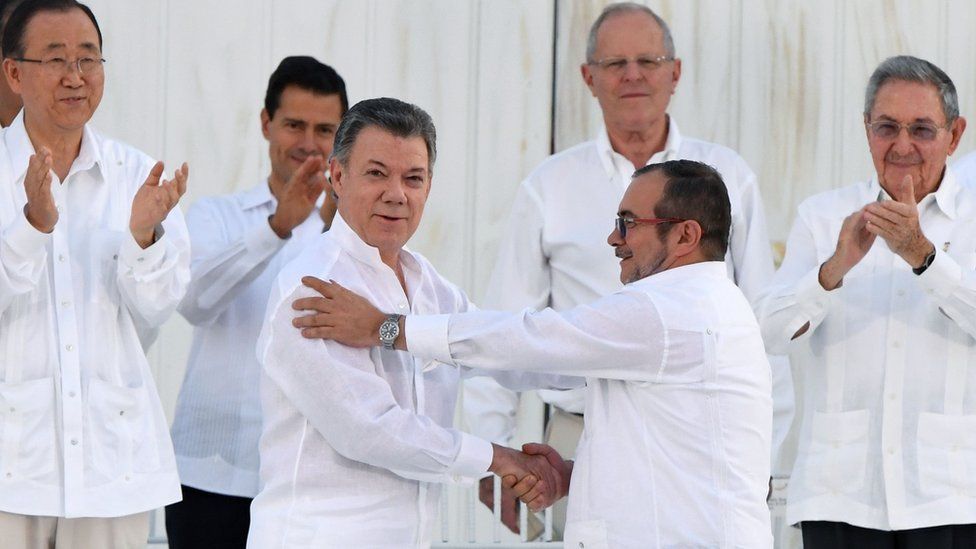
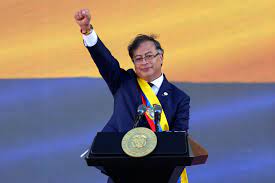


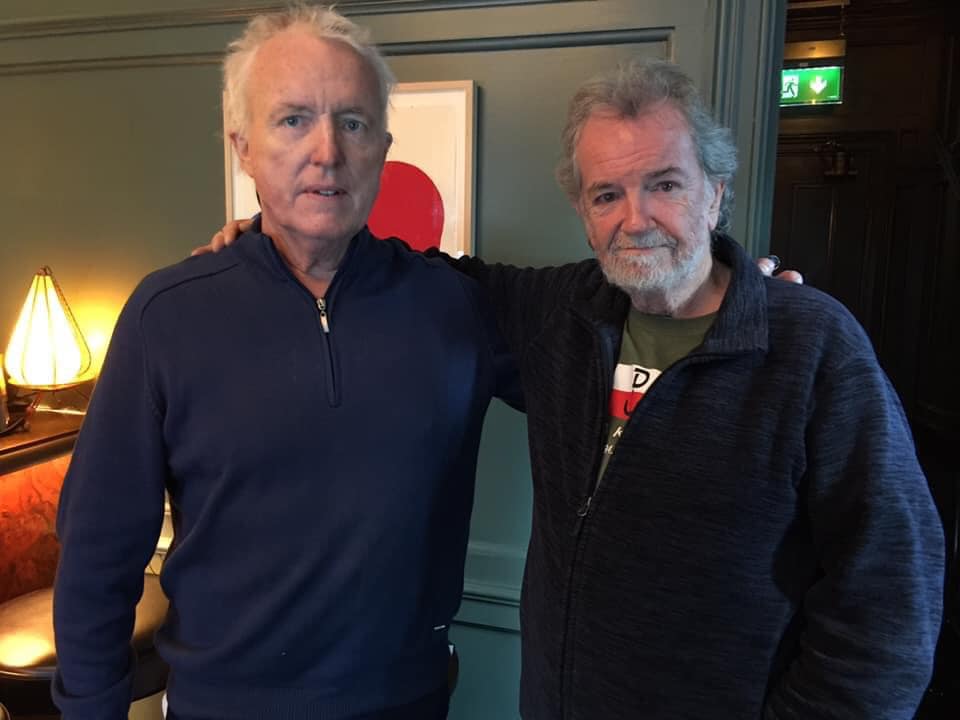

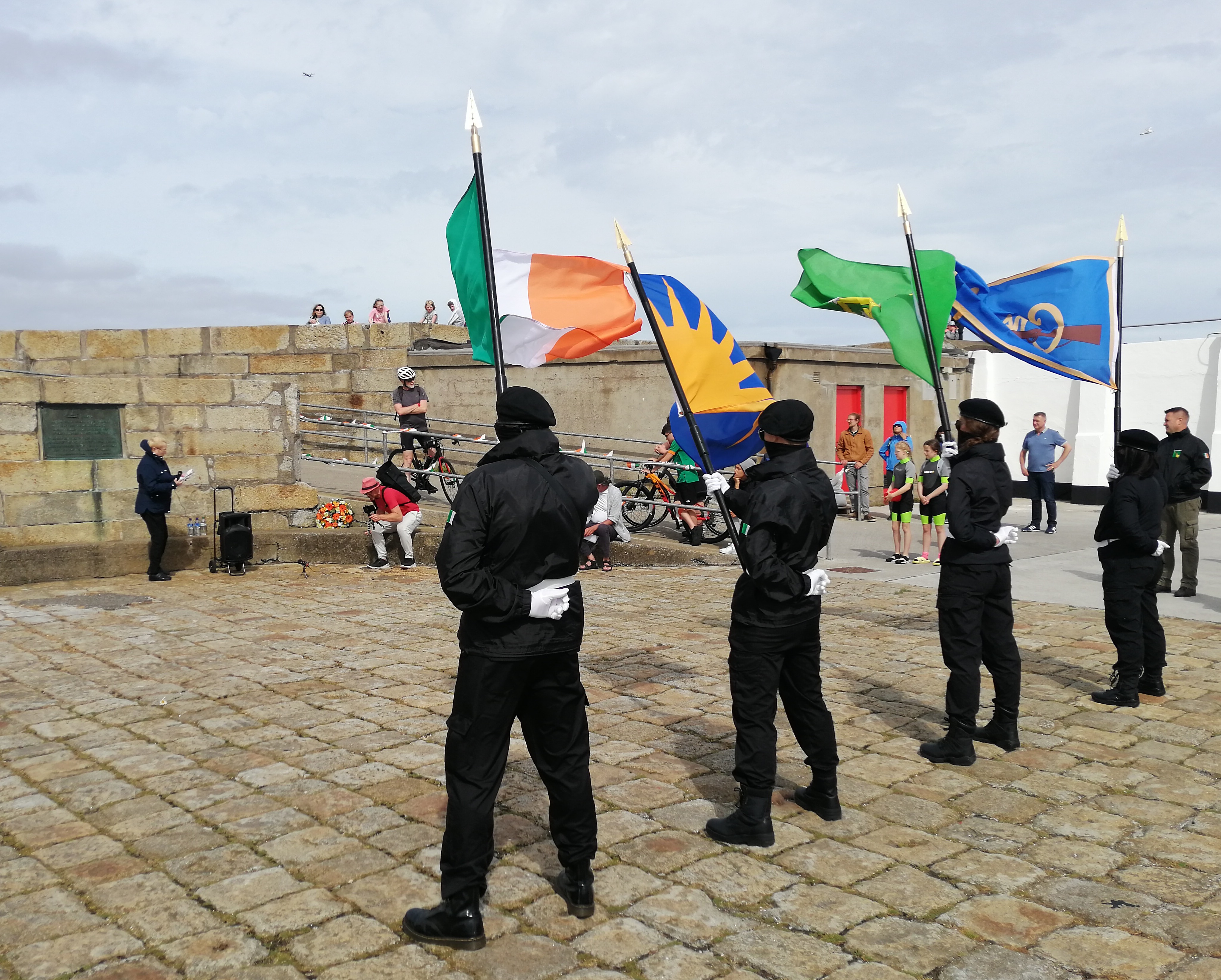

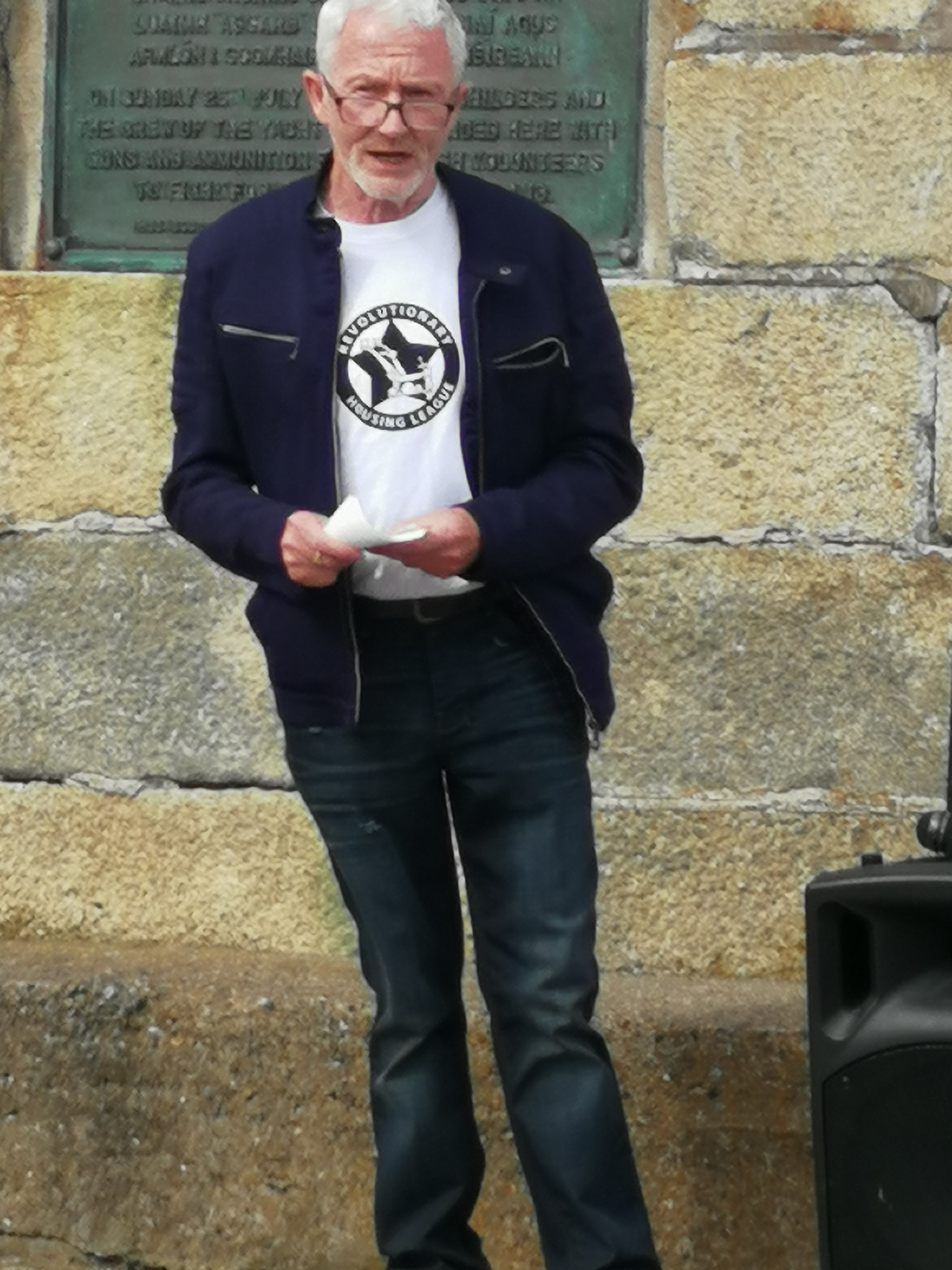




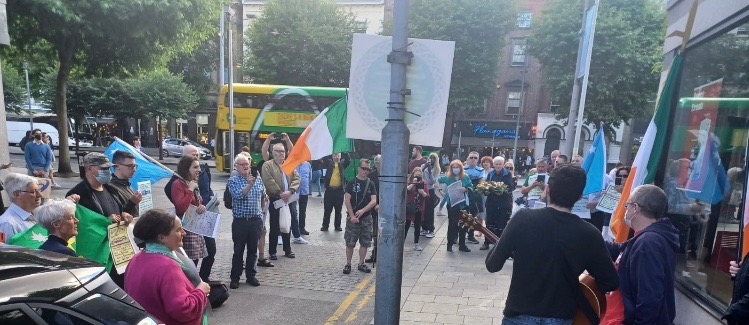


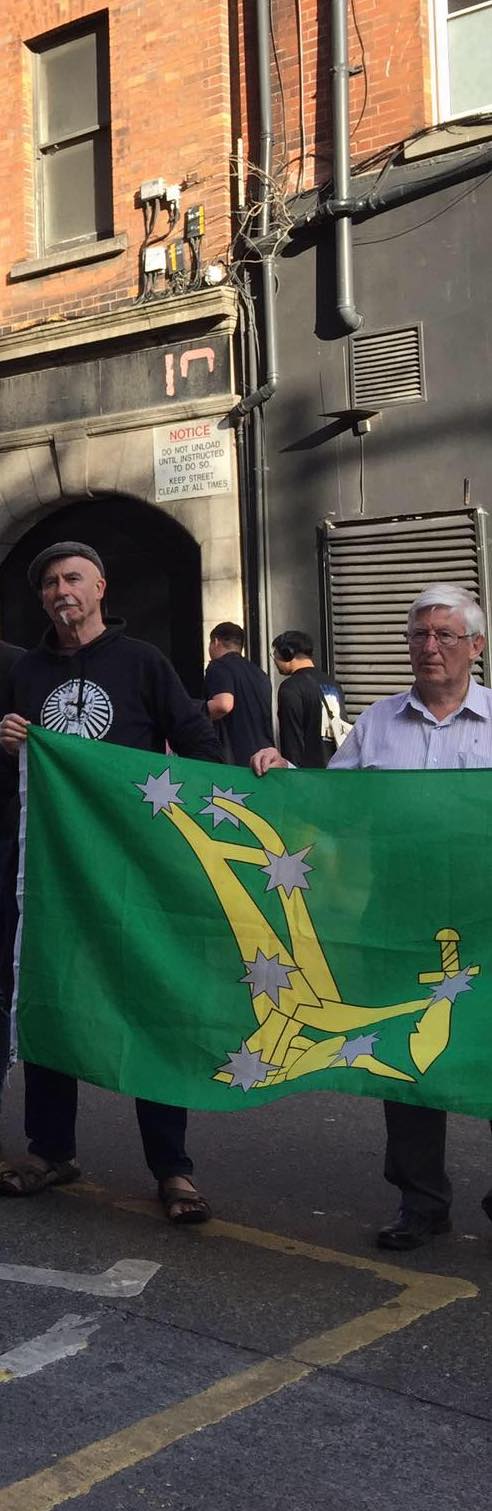
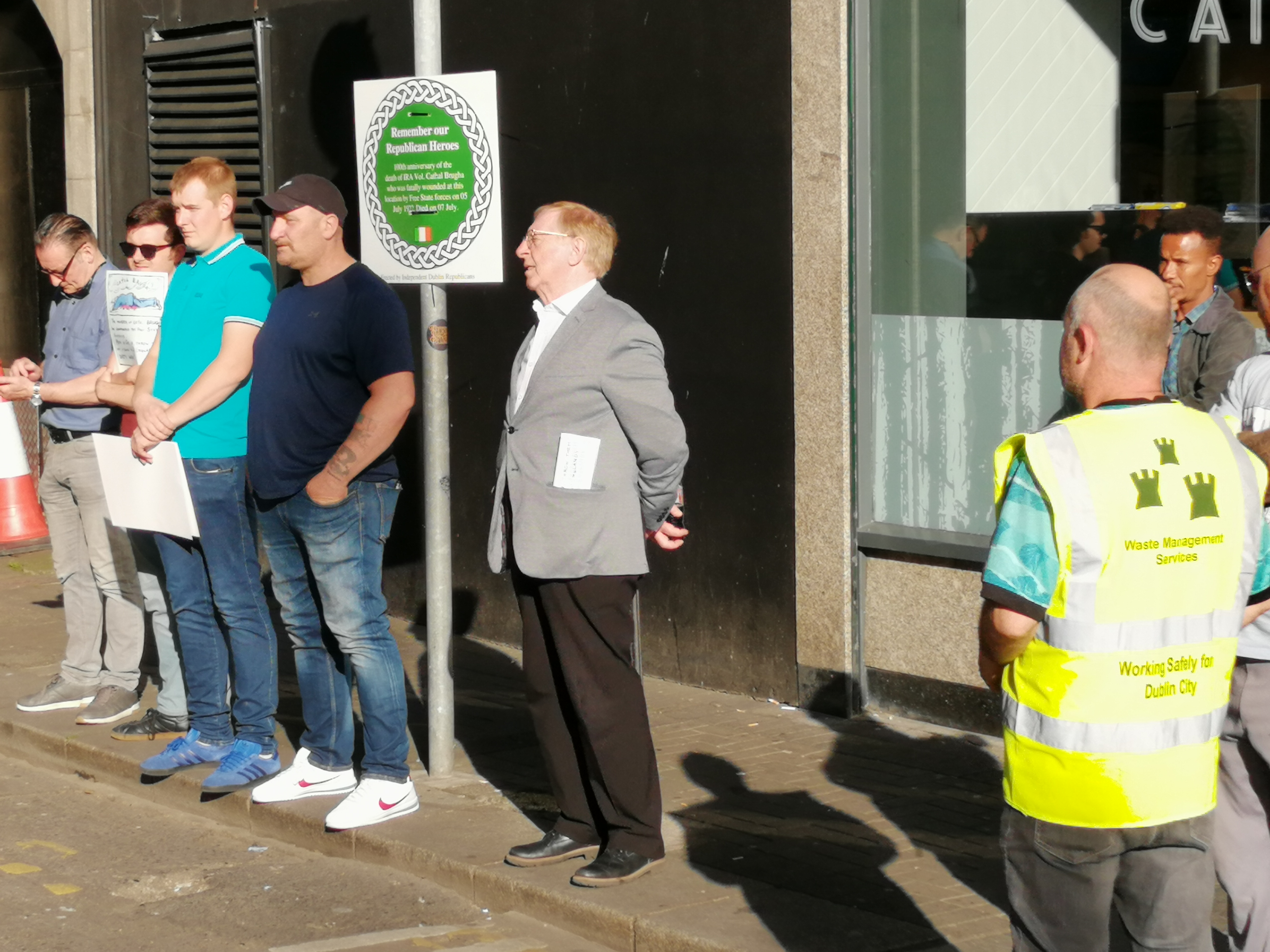




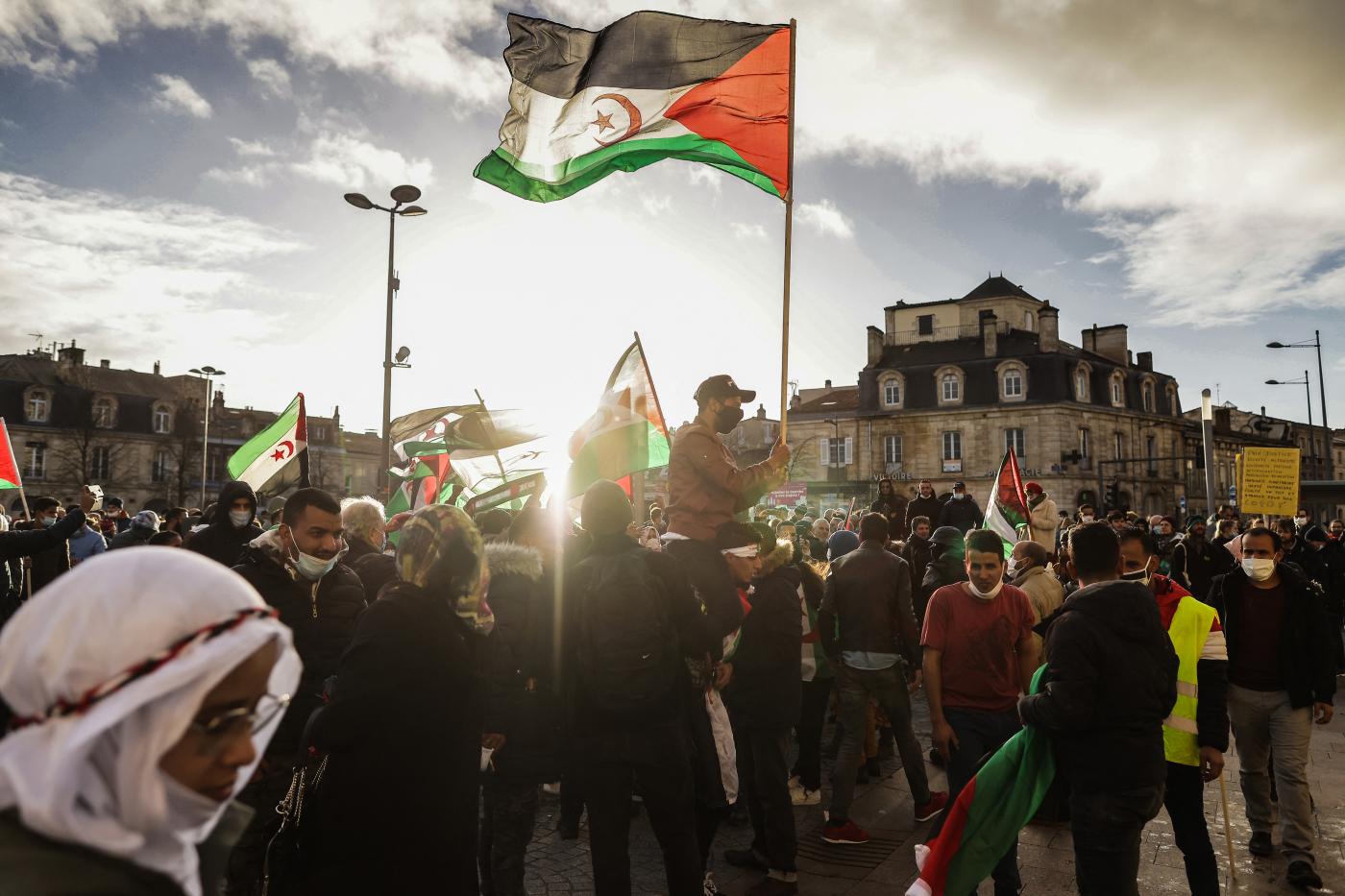



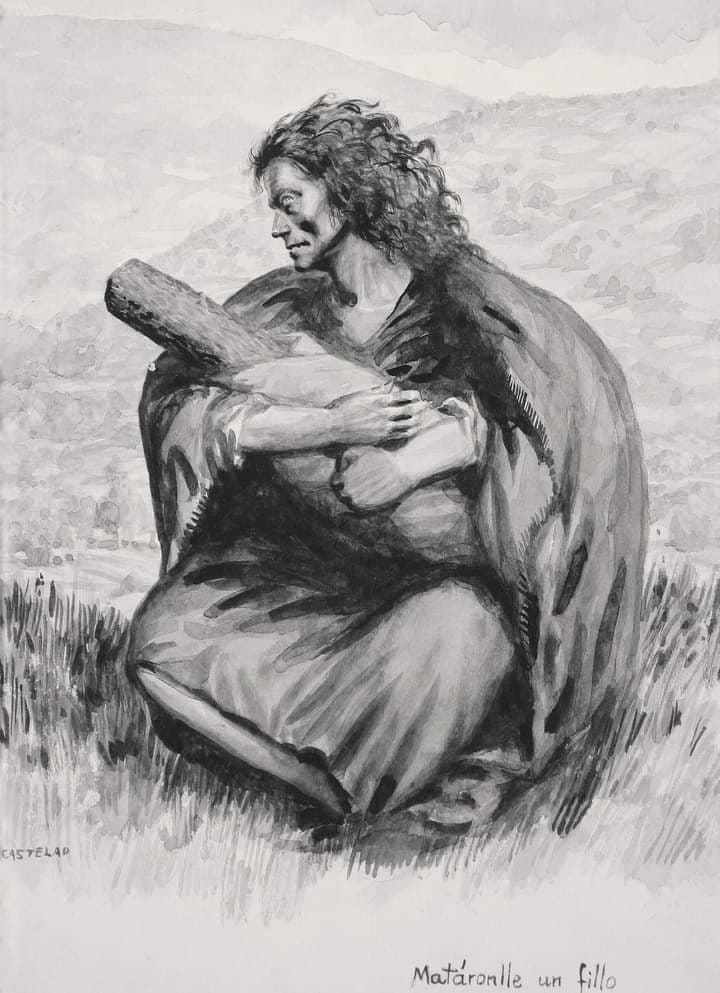


 rebelbreeze