Friends and Comrades, self-respecting people of all organisations and none, Irish or migrants, who understand what it is to resist colonialism and imperialism and exploitation of labour: this is an appeal to act in defence of our self-respect.
As you must all be aware by now, the current Government of the Irish State plans to hold an event honouring the Royal Irish Constabulary and the Dublin Metropolitan Police in Dublin on the 17th of this month. Some at least are probably already considering how to react to this shameful event; I hope you are and if so, that you will give my suggestions some consideration. If you have not yet decided to respond to this event then I hope all the more that you will consider what I have to say.
The need to protest this event in a large and unified way is great. It is a matter of our self-respect as a nation, as a colonised people (and colonised peoples) that never ceased resisting, as workers, as trade unionists, as Irish Republicans and all varieties of the Left in Ireland.
The RIC and the DMP were not only the eyes and ears of the English colonist regime but also its first rank arm of repression after the British Army; they were the enforcement bodies of the landlords and bosses.
RIC still on site after assisting an eviction — see the battering ram that was used by the bailiffs to demolish much of the wall. (Photo source: Internet)
ROYAL IRISH CONSTABULARY
Formed in 1822, the armed nationwide Irish Constabulary got the “Royal” appellation from Victoria, the Famine Queen herself, in recognition of that organisation’s role in the suppression of the Fenian uprising of 1867. During the evictions of poor peasants and agricultural labourers from their lowly cottages and huts, the RIC attended every one, having become the FIRST RANK force of repression in Ireland, the Army being relegated to their backup should it be required. The RIC was the ever-present force of repression during the Tithes War, the Great Hunger and the Land War and was the main force responsible for the suppression of the Young Irelanders in 1848. On 5th May 1882 in Ballina, Co. Mayo, there were children among the slain when the RIC opened fire on a demonstration celebrating the release of the Land League leader prisoners.
RIC constables assisting eviction of Thomas Considine and family, Moyasta, Co. Clare 1767. (Source photo: Internet)
During the 1916 Rising, the RIC again played its part in repression of the resistance movement, particularly outside Dublin and it was they who attacked the Kent house in Cork, killing one son and arresting two others, including Thomas Kent which the British colonial regime executed, being one of the Sixteen the British killed in reprisal for the Rising. The RIC was the principal organisation supplying the names of non-participants in the Rising to be arrested and interned in jails and concentration camps in Britain.
After the Rising, the RIC continued one of its main roles as the eyes and ears of the British occupation in Ireland, collecting information on anyone who sang patriotic songs, spoke for independence or against the landlords, joined an Irish cultural organisation, agitated for women’s suffrage, organised a trade union branch ….
It was largely due to this role that the armed Republican forces made the RIC its first target in the War of Independence and in fact, the very first shots of that war were fired at the RIC in Soloheadbeg, killing two of them – this very month, 21st January 1919, 101 years ago and only four days after the date upon which this quisling State plans to honour that force.
RIC assisting bailiffs carrying out an eviction. The defenders have blocked the door with thorn brush and are throwing hot water out on their attackers. (Source photo: Internet)
When the “Black and Tans” and “Auxiliaries”, the RIC Special Reserve and the RIC Auxiliary Division to give them their official titles, were dispatched in March 1920 at Churchill’s initiative to terrorise and murder Irish people, outside Dublin they became part of the of the RIC and from then on, the existing RIC became responsible not only for its prior crimes but for those of the ‘Tans and Auxies too, such as the many murders, including those of the Mayors of Cork and Limerick; the torture of suspects and violation of women; the burning of farmhouses and cooperatives and even of villages and towns: Tuam, Trim, Balbriggan, Knockcroghery, Thurles and Cork – among others.
In 1922, while the RIC ceased to exist in the ‘Free State’, they became the Royal Ulster Constabulary in the Six Counties, with their even-more murderous reserve, the B-Specials. The B-Specials were incorporated into the Ulster Defence Regiment in 1970 and the RUC was renamed the PSNI (Police Force of Northern Ireland) in 2001. Both organisations have been active in carrying out or in collusion with sectarian murders, acting as members or in collusion with Loyalist paramilitaries and under British intelligence operatives.
Bailiffs using battering ram to gain entry to evict a family in Ireland. The RIC are present to protect the bailiffs. (Photo source: Internet)RIC King Street barracks after attack during War of Independence. (Photo source: Internet)
DUBLIN METROPOLITAN POLICE
The DMP was the colonial police force specifically responsible for controlling Dublin, the capital city of the colony. During the 1913 Lockout it showed itself capable of serving Irish capitalists, whether native or of colonist background, without discrimination. Indeed the leader of the Dublin 400 capitalists out to break the Irish Transport and General Workers’ Union, was an Irish nationalist, Catholic and owner of The Irish Independent: William Martin Murphy.
Apart from any others this force of tall thugs may have killed or fatally injured with beatings in their cells, the DMP killed a number of workers during the eight months of the struggle, raided houses and sent many to jail. Two workers, James Nolan and John Burke, died of their injuries within days of the DMP’s baton charge on a street meeting in Eden Quay just by Liberty Hall on 30th August 1913. The following day, in what became known as Bloody Sunday Dublin 1913, the DMP was in action again on O’Connell Street and in Princes Street, mercilessly beating people there (including those already knocked down), during which they knocked unconscious Patsy O’Connor, a young Fianna boy of 16 giving first aid to one of the wounded. Patsy died two years later from his injuries at the age of 18.
The DMP in action on O’Connell St on Bloody Sunday 1913, the second day of police riots in Dublin, early during the Lockout. (Photo source: Internet)
In a rage at the defence by the residents of Corporation Flats of people fleeing the police charge on Eden Quay, the DMP returned there on the 31st, leaving hardly a door or stick of furniture unbroken or person unbeaten, including women and children.
The special political secret police in Dublin were the G Division of the DMP, spying and compiling files on active nationalists, republicans, socialists, suffragettes, Irish speakers, pacifists. After the Surrender of the 1916 Rising, it was they who came among the prisoners to identify them for the British Army, leading to many receiving death and jail sentences. During the 1916 Rising it appears that three DMP officers were killed by the Irish Citizen Army – while many hid in their cells.
Arrest of Jim Larkin by DMP, shortly before the rest of the DMP present attacked supporters and onlookers. (Photo source: Internet)
During the War of Independence, the DMP G Division spied on and targeted Irish Republicans and other dissident groups. The Irish Republican Army of course targeted this force and killed a number of them. On the day when the IRA mobilised in Dublin to eliminate the special British Army counterinsurgency intelligence network, the DMP and the Auxiliaries seconded to them had already murdered Conor Clune and Volunteers Peadar Clancy and Dick McKee in Dublin Castle.
Later that day, the DMP and RIC went down to attack the GAA and murdered 14 unarmed people, including two players on the field, also injuring 60-70 people.
Aftermath of DMP baton attack on Sinn Féin public meeting in front of ruins of Liberty Hall to arrest Cathal Brugha and George Snr. Plunkett. Inspector John Mills was struck on the head by a hurley and died later in Jervis St. Hospital. His assailant was a member of Na Fianna and he was never apprehended. Mills was the first DMP officer killed after 1916 and the blow was probably not intended to be fatal. A number were shot with intention to kill during the War of Independence. (Photo source: Internet)
AN ADEQUATE PUBLIC RESPONSE IS NECESSARY
It is not only appropriate but absolutely necessary, as a matter of self-respect, that we mobilise a public opposition to this disgusting honouring of the spies on our people and the murderers of our martyrs.
There are many ways that this can be done but I would humbly suggest that two in particular are necessary:
A mass public demonstration near the day of the ceremony (or at least near it) and near Dublin Castle (where the event is to be held);
An electronic petition something along the lines of “Self-Respect: Against honouring colonial spies and murderers of our martyrs”.
Although our people have achieved a number of successes in struggle over the years, we have often failed too. In particular we failed to give an adequate response to the visit of the British Queen (and Commander-in-Chief of the Paratroopers) to Dublin, or to Wall of Shame in Glasnevin Cemetery. There were some other visits of notable imperialists which also did not receive an adequate response.
Failure is not fatal and we can recover from it – but we cannot build on failure. We can only build on success. This public response needs to be a success and in order to achieve that it cannot be the response of one organisation or of two but needs to be a broad one in which anyone can take part who are not racists or fascists. In order to achieve that, the organising committee should be broad enough to include activists from across the oppositional spectrum who are not part of a party of government (or part of previous government) in either jurisdiction in Ireland. Such an organising committee should be able to include representatives of socialist and republican parties and collectives and also trade unionists.
A broad demonstration of that kind should be free of paramilitary displays which would represent only a section and quite probably alienate another. But all Irish and migrant community and trade union flags and banners should be permitted (with the exception of racist or fascist ones) and the broad banner on the front should spell the general theme of the demonstration.
I am conscious that I am nobody in particular to make this call but given that I think such a response is necessary and that I really want to see this, I make the call anyway and pledge myself to help.
Racists and Fascists, posing as Irish “patriots”, malign migrants to Ireland and target them in racist propaganda. This is a fundamentally unpatriotic activity, flying against not only our own huge history of migration to other lands but also against the great history of migrants’ contribution to the struggle for Irish independence and socialism.
Of the Seven Signatories of the 1916 Proclamation of Independence, two were migrants and two more were sons of migrants.
Of the sixteen of the Rising executed by the English, two were migrants (Connolly and Clarke), another three were sons of migrants (Pearse brothers, Mac Donagh) and at least six bore family names of foreign ancestry (Casement, Ceannt, Clarke, Colbert, Kent, Plunkett).
Numerous migrants took part in the 1916 Rising, mostly from England and Scotland but also some from the USA, one from Argentina, another from Finland and yet another from Sweden).
James Connolly, revolutionary socialist and anti-imperialist, author, songwriter, journalist and trade union organiser was a migrant who did not see Ireland until he was a young man. (Design: Maria Castella; photo: B.Hoppenbrouwers)
Constance Markievicz (nee Gore-Booth), feminist, Irish Republican, Socialist, officer in the Irish Citizen Army, first woman elected to the British Parliament, first female Minister of the Dáil and first Labour Minister in the world, was born in England; she was sentenced to death in 1916 by the English but had her sentence commuted. Volunteer Eamon De Valera, a 1916 Rising garrison Commander, was born in the USA to an Irish mother and a Cuban father. The captain of the Asgard yacht that delivered the Mauser rifles for the 1916 Rising was an Englishman, Erskine Childers and among the crew were his wife Molly from the USA and Mary Spring Rice (born London). Childers fought in the War of Independence and the Civil War and was executed by the Irish Free State in 1922.
Jim Larkin, trade union organiser and Lockout resistance leader, who was in the USA during the Rising, was co-founder of the Irish Transport & General Workers’ Union and of the Irish Citizen Army, also of the Irish Labour Party. Larkin was born and raised in Liverpool and did not see Ireland until sent to Belfast by his England-based trade union.
Constance Markievicz, Irish Republican, revolutionary socialist, officer in the Irish Citizen Army, sentenced to death in 1916 but commuted. She was a migrant, born in England. (Image source: Internet)
A LONG HISTORY OF MIGRANT CONTRIBUTION TO IRISH STRUGGLES
The aforesaid should not surprise us as migrants have often participated in struggles for freedom and social progress in their adopted countries and they and their descendants have a long history of taking up those struggles in Ireland – often sacrificing their liberty and even their lives in doing so.
Patrick Sarsfield, a hero of the resistance to William of Orange in the army of James II was of Anglo-Norman descent (he was a prominent member of the Wild Geese and was killed in military service abroad in 1683).
Nearly all the leaders of the Society of United Irishmen, the first Republican revolutionary organisation of Ireland, were Protestants of various sects and descendants of migrants. Henry and Mary Joy McCracken were active in saving Irish traditional melodies; their ancestors were Huguenots (French Protestant refugees).
Henry Joy was executed publicly in Belfast by the English in 1798, his sister walking hand-in-hand with him to the gallows. General Henry Munro, another Antrim Unitedmen leader, also executed in 1798, was of Scottish descent.
Theobald Wolfe Tone, Anglican co-founder of the Unitedmen and often described as the “father of Irish Republicanism”, was also of Huguenot ancestry; he died in jail in Dublin, while his brother Matthew was hanged. Edward Fitzgerald, another leader of the Unitedmen who died of his injuries in a Dublin jail, was a Protestant and descendant of Norman invaders.
Robert Emmet, another famous United Irishman but martyred in 1803, bore a surname of English origin as did one of his prominent comrades, Thomas Russell (“The Man from God Knows Where”), also executed by the English that year.
The Young Irelanders were the next Irish Republican organisation in history, their leaders a mixture of Protestant and Catholic background. One of the most famous was Thomas Davis, the son of a Welshman in the British Army and an Irish woman descended from Irish chieftain Ó Súilleabháin Béara.
Davis founded The Nation newspaper and composed a number of poems and songs, some of the latter being still sung today (e.g A Nation Once Again and The West’s Awake).
James Stephens and a handful of others founded the Irish Republican Brotherhood on 17th March 1858 in Dublin, the third Irish Republican organisation in Irish history and the life of which extended into the 1920s. Stephens is a family name of Anglo-Norman origin.
John Devoy of the Irish Republican Brotherhood in the USA, who was very active in supporting the 1916 Rising and the War of Independence, carried a family name of Welsh origin. Wales was also the likely origin of Michael Davitt’s family name, he who was chief organiser of the Land League’s base membership.
Volunteers Terence McSwiney and Kevin Barry, who both died in the same week in 1920, the first on hunger strike and the second hanged by the English, had family names of foreign origin.
WHO IS NOT A DESCENDANT OF MIGRANTS?
Of course, we are ALL descendants of migrants. The earliest date for human occupation of parts of Ireland has been calculated as being 7,000 BCE.
Since the earliest date given for the existence of homo sapiens is 300,000 years ago in the Horn of Africa (although throwing spears in Germany have been assessed as being between 380,000 and 400,000 years old), it follows that human settlement in Ireland was comparatively late and that all Irish are descended from migrants.
Stone age people arrived first, then the metal workers of bronze, followed by people of Celtic culture working iron.
Subsequently Ireland saw influxes of other groups, from Norse and Danes when they began to settle in parts of Ireland, followed by their cousins based in Normandy (and mercenaries they brought with them), then English and so on.
Religious groups seeking security such as Jews or fleeing persecution, for example the Huguenots, also entered at various times. Just a study of family names common in the Ireland of today reveals some of those ancestries.
The Norse, Danes, Normans and early English came as invaders, some more came subsequently as planters and many others came just to make a living in Ireland, like most migrants of today.
But descendants of all those groups, including of invaders and planters, contributed to and even led the struggle for Irish independence and social progress. Not only that but a significant number of those who arrived as migrants themselves took a stand for Irish independence, some of them paying the ultimate price.
Patrick Pearse, author in Irish and English, poet, journalist, Irish Republican and in overall command of the insurrectionary forces in 1916, was the son of an Englishman, as was his brother William. Both were executed after the surrender. (Design: Maria Castella; photo: B.Hoppenbrouwers)
CONCLUSION
Far from being “patriotic”, maligning migrants simply for being migrants is counter to the history of the general struggle for Irish independence and of Irish Republicanism in particular. It actually undermines the unfinished struggle for Irish independence and unification as well, of course, as the struggle of the working people for socialism.
End.
TRADUCCIÓN AL CASTELLANO:
LOS INMIGRANTES EN LA HISTORIA IRLANDESA
Los racistas y fascistas, haciéndose pasar por “patriotas” irlandeses, atacan a los inmigrantes en Irlanda en su propaganda racista. Esta actividad es fundamentalmente antipatriótica, que vuela no solo contra nuestra enorme historia de migración a otras tierras sino también contra la gran historia de la contribución de los inmigrantes a la lucha por la independencia y el socialismo irlandés.
De los Siete Signatarios de la Proclamación de Independencia de 1916, dos eran inmigrantes y un tercero era hijo de un inmigrante. De los dieciséis del Azamiento ejecutados por los ingleses, dos eran inmigrantes (Connolly y Clarke), otros dos eran hijos de inmigrantes (hermanos Pearse) y al menos seis tenían apellidos de ascendencia extranjera (Casement, Ceannt, Clarke, Colbert, Kent, Plunkett). Numerosos inmigrantes participaron en el Alzantamiento de 1916, principalmente de Inglaterra y Escocia, pero también algunos de los EEUU, uno de Argentina, otro de Finlandia y otro de Suecia).
Constance Markievicz (soltera Gore-Booth), feminista, republicana irlandesa, socialista, oficial del ejército ciudadano irlandés y primera mujer elegida para el Parlamento británico, la primera mujer ministra del Parlamento irlandés y primera ministra femenina de trabajo del mundo, nació en Inglaterra; fue condenada a muerte en 1916 por los ingleses, pero la conmutaron la pena. El voluntario Eamon De Valera, un comandante de la guarnición del Azamiento de 1916, nació en los Estados Unidos de una madre irlandesa y un padre cubano. El capitán del yate Asgard que entregó los fusiles Mauser para el Alzamiento de 1916 era un inglés, Erskine Childers y entre la tripulación estaban su esposa Molly (de los Estados Unidos) y Mary Spring Rice (nacida en Londres). Childers luchó en la Guerra de la Independencia y la Guerra Civil y fue ejecutado por el Estado Libre de Irlanda en 1922.
Jim Larkin, organizador sindical y líder de la resistencia al Cierre Patronal, que estuvo en los EEUU durante el Alzamiento, fue cofundador del Sindicato de Trabajadores Generales y de Transporte de Irlanda y del Ejército de Ciudadanos de Irlanda, también del Partido Laborista. Larkin nació y creció en Liverpool y no vio Irlanda hasta estar enviado a Belfast por su sindicato con sede en Inglaterra.
UNA LARGA HISTORIA DE CONTRIBUCIÓN MIGRANTE A LAS LUCHA IRLANDESA
Lo anterior no debería sorprendernos, ya que los migrantes a menudo han participado en luchas por la libertad y el progreso social en sus países adoptados y ellos y sus descendientes tienen una larga historia de asumir esas luchas en Irlanda, a menudo sacrificando su libertad e incluso sus vidas al hacerlo. .
Patrick Sarsfield, un héroe de la resistencia a Guillermo Naranja en el ejército de Jaime II de Gran Bretaña, era de ascendencia anglo-normanda (era un miembro destacado de los “Gansos Silvestes” y fue asesinado en el servicio militar en el extranjero en 1683).
Casi todos los líderes de la Sociedad de Irlandeses Unidos, la primera organización revolucionaria republicana de Irlanda, eran protestantes de varias sectas y descendientes de inmigrantes. Henry y Mary Joy McCracken fueron activos en salvar las melodías tradicionales irlandesas; sus antepasados eran hugonotes (refugiados protestantes franceses). Henry Joy fue ejecutado públicamente en Belfast por los ingleses en 1798, su hermana caminó de la mano con él hacia la horca. El general Henry Munro, otro líder de Los Irelandeses Unidos de Antrim, también ejecutado en 1798, era de ascendencia escocesa. Theobald Wolfe Tone, cofundador anglicano de los Irelandeses Unidos y a menudo descrito como el “padre del republicanismo irlandés”, también era de ascendencia hugonote; murió en la cárcel de Dublín, mientras que su hermano Matthew fue ahorcado. Edward Fitzgerald, otro líder de los Irelandeses Unidos que murió por sus heridas en una cárcel de Dublín, era protestante y descendiente de invasores normandos.
Robert Emmet, otro famoso de los Irelandeses Unidos pero martirizado en 1803, tenía un apellido de origen inglés, al igual que uno de sus camaradas prominentes, Thomas Russell (“The Man from God Knows Where”), también ejecutado por los ingleses ese año.
Los Jóvenes Irlandeses fueron la próxima organización republicana irlandesa, sus líderes una mezcla de antecedentes protestantes y católicos. Uno de los más famosos fue Thomas Davis, hijo de un galés en el ejército británico y una mujer irlandesa descendiente del jefe irlandés Ó Súilleabháin Béara. Davis fundó el periódico The Nation y compuso una serie de poemas y canciones, algunas de las cuales todavía se cantan hoy (por ejemplo, A Nation Once Again y The West’s Awake).
James Stephens y un puñado de otros fundaron la Hermandad Republicana Irlandesa el 17 de marzo de 1858 en Dublín, la tercera organización republicana irlandesa en la historia de Irlanda y cuya vida se extendió hasta la década de 1920. Stephens es un apellido de origen anglo-normando.
John Devoy, de la Hermandad Republicana Irlandesa en los EEUU, que fue muy activo en el apoyo al Alzamiento de 1916 y la Guerra de la Independencia, llevaba un apellido de origen galés, lo qual también fue el origen probable del apellido de Michael Davitt, el principal organizador de la membresía base de la Liga de la Tierra.
Los Voluntarios del IRA Terence McSwiney y Kevin Barry, quienes murieron en la misma semana en 1920, el primero en huelga de hambre y el segundo ahorcado por los ingleses, tenían apellidos de origen invasor.
¿QUIÉN NO ES UN DESCENDENTE DE MIGRANTES?
Por supuesto, TODOS somos descendientes de migrantes. La fecha más temprana para la ocupación humana de partes de Irlanda se calculó ser en 7,000 aC. Dado que la fecha más temprana dada para la existencia del homo sapiens es hace 300,000 años en lo que hoy es Marruecos, se deduce que el asentamiento humano en Irlanda fue relativamente tarde y que todos los irlandeses son descendientes de migrantes.
Primero llegaron personas de la edad de piedra, luego los trabajadores metalúrgicos de bronce, seguidos por gente de la cultura celta que trabajaban el hierro. Posteriormente, Irlanda vio la afluencia de otros grupos, de nórdicos y daneses cuando comenzaron a establecerse en partes de Irlanda, seguidos por sus primos con sede en Normandía (y mercenarios que trajeron con ellos), luego ingleses, etc. Los grupos religiosos que buscaban seguridad como los judíos o huían de la persecución, por ejemplo los hugonotes, también ingresaron en varios momentos. Un estudio de apellidos comunes en la Irlanda de hoy basta para revelar algunos de esos antepasados.
Los nórdicos, daneses, normandos y los primeros ingleses llegaron como invasores, algunos más llegaron posteriormente como plantadores y muchos otros vinieron para ganarse la vida en Irlanda, como la mayoría de los inmigrantes de hoy. Pero los descendientes de todos esos grupos, incluidos los invasores y plantadores, contribuyeron e incluso lideraron la lucha por la independencia de Irlanda y el progreso social. No solo eso, sino que un número significativo de los que llegaron como migrantes tomaron posición por la independencia de Irlanda, algunos de ellos pagando el precio final.
CONCLUSIÓN
Lejos de ser “patriótico”, difamar a los migrantes simplemente por ser migrantes es contrario a la historia de la lucha general por la independencia de Irlanda y del republicanismo irlandés en particular. De hecho, mina la lucha todavía inconclusa por la independencia y la unificación irlandesa, así como, por supuesto, la lucha de los trabajadores por el socialismo.
As fascism begins again to raise its ugly head in Ireland, it is necessary for all its opponents, whether social-democrats, revolutionary socialists of various types or democrats, to consider effective means to restrain its growth and to nullify its influence upon the ordinary masses of Irish society. These masses are at this point generally hostile to fascism and to racism (a seed-bed of fascism) but that can change and in history, has changed before, not just in other lands but in Ireland too during the 1930s.
Traditionally, the views on effective means of defeating fascism in western european society have varied between defeating their arguments, legislating against them or denying them any public space within which to grow. It might be useful to briefly examine the premise and experience of these different approaches in order to evaluate their efficacy.
DENYING FASCISM ANY PUBLIC SPACE
Taking the last case above first, most active antifascists, whether Anarchist, Irish Republican, Communist or Socialist, proclaim the need to physically prevent fascists gathering in public spaces or on platforms. This approach puts these elements into direct confrontation with the forces of the State which see the methods of the Antifa as illegal, as subverting their own roles and, often enough at different times, as a threat to their own plans for repression of resistance to regimes of austerity. 1
In 1970s Britain, those who advocated such an approach, despite the fairly recent history of the War Against Fascism and the 1930s struggles in Britain, were in a small minority and seen, not just by social-democrats and liberals but also by most of the socialist and communist Left, as “ultra-leftists”, “adventurists” or just plain “hooligans and thugs”.
Attempt by Sir Oswald Mosely, leader of the British Union of Fascists (Blackshirts) to rebuild the fascist movement meets clear resistance in 1960s Manchester. (Photo source: Internet)Depiction of an earlier anti-fascist event, the Battle of Cable Street 1936, mainly against London Metropolitan Police escorting Blackshirts to Jewish settlement area in East London. (Photo source: Internet)
A small English marxist-leninist party2, with its African, Asian and Latin American student connections, promoted the “no free speech for fascists” policy and managed, for awhile, to have the similar “no platform for fascists” policy adopted by the National Union of Students. Some revolutionary Communists, Socialists and Anarchists combined with some militant groups of the ethnic minorities targeted by the fascists to pursue this policy on the streets. The National Front and the British Movement found their marches, meetings, concerts3 and rallies attacked and they were eventually driven off the streets, with many sacrifices in the antifascist movement from the deaths of at least two antifascists4 to jail sentences, heavy fines and physical injuries.
In 2016, the islamophobic party Pegida was prevented by popular direct action from launching itself in Dublin. This approach does seem to have been successful in Britain, at least for decades, and in some other European areas, with ethnic and other minorities gaining a space in which to promote their culture and develop their politics. At the same time, it has to be acknowledge that many of the concerns of the ruling British elite had been successfully addressed or contained during the 1980s: restriction on the trade unions through industrial relations legislation, defeat of the National Union of Miners (1984-’85), of the printing unions at Wapping (1986-87), of the dockers through buy-outs and redundancies; repression of the Irish community through the operation of the Prevention of Terrorism (sic) Act 1974 and the jailing of nearly two score Irish people framed on bombing charges in five separate trials; increasing workers’ insecurity and dependence through large-scale change from being renter-occupiers to mortgage holders.
The sinking instead of launching of Pegida in Dublin, 2016. Cartoon by D.Breatnach)
LEGISLATING AGAINST FASCISM
Legislating against fascism in western european democracies has largely been imposed opportunistically, as with France, Spain and the UK, as the ruling elites faced up to war with states where fascism was already dominant. In the Spanish state it proved ineffective and heroic popular resistance was ferociously overcome by a military-fascist uprising backed by the resources of two fascist states, while the ‘democracies’ stood by or imposed a blockade on relief for the beleaguered Republic. In France, any measures were nullified by the German Nazi invasion. In the UK, the measures proved effective due to the wartime posture of the ruling elites, facing a possible invasion and needing a mobilisation of the entire population to resist that possibility5. In the Irish state, where a new quasi-Republican government was facing the real possibility of a fascist coup aided by elements in the military, some banning measures were effective but these were preceded and assisted by popular mobilisation and direct action against the Blueshirts.
After the defeat of fascism by war and popular resistance, antifascist legislation was imposed on the defeated fascist states by victorious insurgents or by conquering forces. But today, fascism is on the rise in all those states that have been the subject of antifascist legislation. In the Spanish state, where fascism was victorious and remained so for three decades, fascists and their crimes were actually protected and, despite the democratic veneer of the “Transition”, no action was taken against fascists openly parading, displaying fascist paraphernalia and honouring fascist leaders such as General Franco and Primo Rivera (founder of the fascist Falange).
Liberal, social-democratic and even some socialist elements call for the State to bring in and to enforce legislation against “hate speech”. However, apart from being an insufficient answer, the label of “hate speech” has been used in the Spanish state to penalise denunciation of the Spanish State and its police forces.
DEFEATING THE ARGUMENTS OF FASCISM
Defeating the arguments of fascism, such as racist propaganda against ethnic minorities and for special rights for one section of the population, conservative and homophobic ideology, arguments in favour of male superiority, are argued to be necessary to defeat fascism since legal repression and active suppression can only drive those forces temporarily underground, from where sooner or later, they will emerge again.
Not quite the same but a similar non-State and pacific line is that the fascists need to be over-awed by the mobilisation of their opponents and their pariah status demonstrated to a passive public by the mass of anti-fascist numbers.
In the 1970s and 1980s in Britain, this was the dominant line among anti-fascists, among social-democrats such as the Labour Party, liberals, the Communist Party of Great Britain and the Trotskyists of the Workers’ Revolutionary Party and of the Socialist Workers’ Party6. Their first tactic upon hearing of a plan for a fascist mobilisation was to build an antifascist mobilisation near the same point, to show large numbers opposing and hopefully outnumbering the fascists.
However, the fascists were already attacking ethnic minorities and other groups and hanging around oppositional mobilisations to pick off individuals or small groups. They had also attacked a number of antifascist public meetings with clubs and bottles and even a gas spray into eyes. Left-wing paper sellers were targeted on the street. Irish solidarity and other solidarity marches and meetings were also attacked and though certainly the Irish proved able to defend themselves, during the scuffles, the police were able to find an excuse to arrest the Irish marchers.
The leaders of the peaceful opposition to fascism policy refused to change their line and, as the likelihood of violent confrontations between fascists and their opponents increased, would call for a rally near the fascist mobilisation and then lead the antifascist march away from the fascists. The SWP promoted youth concerts under the banner of Rock Against Racism, but the fascists continued to mobilise.
In retrospect, it did seem as though the small and large-scale pitched battles with with fascists and with the police escorting and protecting them were what was demoralising the fascists and leading to splits within their organisation, ultimately defeating the fascist offensive of those decades.
Even so, the leaders of AFA (Anti-Fascist Action) which mobilised most of the successful actions against the British fascist organisations and their mobilisations, certainly in London, argued that it was necessary also to defeat fascism politically7 and that failure to do so would ensure a resurgence of fascism at some time in the future. This prediction has surely come true in Britain with EDL and UKIP, for example.
One of the successful antifascist battles in Portland USA, June 2018. (Photo source: Internet)
EVALUATING CONCLUSION
In my opinion, each of these approaches is necessary but overall reliance on any individual approach is likely to bring the democratic forces to tragic defeat.
The model of active denial of a public space has a position of central importance; the action to prevent the launch of Pegida proved successful and no doubt such actions will be necessary again in the future (though perhaps learning from that action to prevent or at least minimise arrests of antifascists).
I do not believe it is the role of antifascists to call for capitalist state action against fascists and any prohibitive legislation should be specifically anti-racist, anti-homophobic etc. A wide catch-all “anti-hate speech” legislation will find revolutionaries its targets more often than it does fascists (as is happening in the Spanish state at the moment).
Defeating the arguments of fascism must have a role in denying the fascists many of their recruits. As in European countries in the 1930s including Ireland and Germany in particular, some of the foot soldiers of the fascists are the oppressed poor, the educationally disadvantaged, the misguided as to who their real enemies are and where they are to be found.
In the 1930s the enemy was portrayed as being the Jews, Communists and homosexuals inside the country, whilst today those bogeymen are replaced by migrants, moslems, gays and supporters the right to choose abortion. In the 1930s the external enemy was the then-dominant European powers, France and the UK, as well as the Soviet Union; today, it is the EU.
It is not the role of anti-fascists to defend the EU (which to my mind is indefensible and which in any case will gain us nothing) but rather to point towards the real enemy, Irish capitalism and foreign imperialism. We need to show that through constant demonstration of examples and by leading struggles against those institutions.
In particular in Ireland it is of the utmost necessity to expose the nationalist posture of the fascists and racists. In two showings of Gemma Doherty supporters in Dublin recently, they flew many Irish tricolours, played ‘rebel songs’ and sang the Irish National Anthem (The Soldiers’ Song, by Republican Peadar Kearney). In a confrontation between them and the anti-fascists, it can seem that the fascists and the racists are upholding the honour of the nation. However the Blueshirts actually upheld the partition of the nation and the granting of a portion to a foreign power and fascists will end up supporting our foreign-dependent capitalist class. In addition, Irish fascists have been seen making overtures to Loyalists in the Six Counties, forces loyal to an occupying power.
James Connolly monument, Dublin. This Irish working-class martyr did not see Ireland until he was sent there in the British Army, from which he soon enough deserted. (Photo source: Internet)Constance Markievicz in Irish Citizen Army officer uniform. She was born in England to a planter family. (Photo source: Internet)Robert Erskine Childers and wife Molly, bringing rifles into Howth for the Irish Volunteers. Molly was from the USA. Childers was English, later he joined the IRA in the War of Independence and in the Civil War. He was executed by the Irish Free State in 1922.
Apart from the fact that we are all descended from migrants, many of those historic heroes celebrated in ‘rebel songs’ were born abroad, were descended from recent migrants or had at least one foreign parent; that list would include Wolfe Tone, Henry Joy and Mary McCracken, Thomas Davis, Tom Clarke, Patrick Pearse, James Connolly, Jim Larkin, Constance Markievicz, Eamon De Valera, Erkine and Molly Childers …..
We need to deny the fascists any place in popular anti-capitalist struggles, as successfully done with the brief flare of Yellow Vests organisation in Dublin and will no doubt need to be done again, for example in housing demonstrations.
Migrants need to organise themselves against attacks and increased exploitation and we need to be active in their support. This is the case too for other targeted groups; liberal cries for justice or for the application of “anti-hate speech” legislation will avail them not at all in the long run.
Recent racist and fascist demonstration at the Dáil against proposed legislation banning “hate speech”. (Photo source: Internet)
Having said that active denial of a public space for fascists is necessary, I would add that secret mobilisations should be for work that needs to be secret; however it is ludicrous to gather secretly and then to march out to stand in front of the fascists shouting at them. That work of visible opposition does need to be done but publicly, with mass mobilisations – antifascist forces should be able to outnumber the fascist and racist mobilisations in Ireland by a factor of ten to one. We should have effective amplification systems, play antifascist songs, and fly relevant flags (in particular, in my opinion, the Starry Plough, flag of the Irish working class in struggle in 1913 and in 1916).
It is crucial for us to realise that without revolutionary answers to crisis, fascism will present false solutions and diversions, calculated to have an appeal to sections of the population. And the revolutionary answers need to be not only theoretical but seen in practice also, actions that seem as though the revolutionaries and their allies are seriously fighting the system to advance the cause of the working people.
Fascism is one of the faces of Capitalism in specific circumstances. Ultimately, as long as capitalism exists, the danger of Fascism will never be far away.
End.
FOOTNOTES:
1Recently the media reported judgement against a number of people who had allegedly attacked Irish fascists while the latter were on their way to the 2016 attempt to launch the Islamophobic party Pegida in Dublin. Others are currently awaiting trial for allegedly attacking apparently Polish fascists who were trying support the same launch. Of all the European countries where the launch of Pegida had been planned, Ireland may be the only one where this was signally unsuccessful.
2English Communist Movement (Marxist-Leninist), which became the EC Party (m-l). It was mostly active in London and Birmingham. The NUS currently has a a “No Platform” policy but which applies to specific organisations and individuals, including some British fascist and racist organisations.
3For example of the fascist skinhead band Skrewdriver.
4Both were killed by London Metropolitan Police truncheons: Kevin Gately, Leeds student of Irish parents, 1974; Blair Peach, New Zealand teacher, 1979.
5In the USA, fascism was only repressed to any great extent when the USA decided to enter the Second World War, which was after the bombing by the Imperial Japanese of Pearl Harbour.
6There were elements within all these sections that did not agree with official line and some acted in opposition to it. The SWP expelled those who practiced direct action against fascists and many of those elements went on to form Red Action and Anti-Fascist Action.
7For this premise and a partial history of the physical struggle against fascist organisations in 1980s and 1990s Britain, see for example, Beating the Fascists – the untold story of Anti-Fascist Action, by Sean Birchall, Freedom Press, 2010.
SPEAKERS WARN OF RISING FASCISM, CALL FOR UNITY OF ANTI-FASCISTS
Flags of various kinds flew above a gathering in Monagear, Co. Wexford on Saturday 7th September, while a number of banners were visible among the crowd: Peter Daly Society, Connolly Association Manchester, Wexford Community Action, Anti-Imperialist Action Ireland, Friends of International Brigades Ireland, Éirigí, Connolly Column. Also in attendance was a group of young men and women dressed to represent the International Brigaders and the POUM1 milita, organised by the Cavan Volunteers group. The event had been organised by the Peter Daly Society with support from the Peadar O’Donnell Forum.
Long view of Peter Daly commemoration seen from the back (Photo source: Peter Daly Society)A reminder of even older struggles — banner inside the Monageer Tavern. (Photo source: D.Breatnach)
Monagear is a small village in the centre of Co. Wexford, a few kilometres north-east of Wexford town. Also known a Monageer, both words are, like most place-names in Ireland, from the original Irish language: Móin na gCaor, “the bogland of the berries” (probably of the Rowan or Mountain Ash, which in Irish is Crann Caorthainn). Not far from it are the historic place-names associated with the United Irishmen uprising of 17982 in that county, such as Boolavogue and Enniscorthy and indeed, a small commemoration garden in the village has memorial stones dedicated to that struggle and to others since.
View in a cloud-darkened moment over the crowd, past the new houses in the village and to the hills and mountains in the distance. (Photo source: D.Breatnach)
At a signal, the gathering of people with flags and banners, led by a colour party flying the Irish Tricolour, the flag of the 2nd Spanish Republic, a red starry flag and the Irish workers’ Starry Plough, moved in procession down into the village area and assembled outside the raised platform containing the tasteful simple memorial to Peter Daly, International Brigader killed in the War Against Fascism in the territory of Spain (1936-1939).
Steve McCann, Chairman of the Peter Daly Society, with another man beside him, opened the ceremony from the memorial platform by briefly outlining the history of the Peter Daly commemorations and of the Society (founded in 2011) which he said had from the beginning welcomed the involvement and participation of Irish Republicans, Communists, Socialists, Anarchists and plain anti-fascists. After outlining the program of speeches and songs for the day, he called Gearóid Ó Machaill to give the first speech, on behalf of the Friends of the International Brigades, Ireland.
Steve McCann addressing crowd with colour party and reenactment group visible below (Photo source: D.Breatnach)
“THE IRISH ARE NOT IMMUNE TO FASCISM”
Ó Machaill opened his speech in Ulster Irish, thanking the organisers for giving him the opportunity to speak there at the cradle of Peter Daly, Irish Republican, socialist, anti-fascist. Continuing, he said that the conditions that gave rise to fascism in the 1930s are very similar to those of today. Speaking of the Republican Congress of 1936-1938, he said it had worked to overcome divisions in the working class and in the anti-imperialist movement. But it had fallen apart in disunity, unfortunately and in Ireland today, the anti-fascist forces are as divided too.
The Irish were not immune to fascism and had a strong fascist movement in the 1930s, supported for awhile by the State, X said. In the years since the defeat of fascism around most of the world, attempts to set up a fascist movement in Ireland had been smashed, said Ó Machaill but cautioned against complacency.
In some other parts of the world, workers betrayed by social democracy and hurt by capitalism, turned to hard right parties and outright fascists and it was entirely possible that such fascists would become popular while leading a campaign against bankers and even imperialism, pushing a line of “Irish for the Irish”.
“We cannot afford the divisions and need to unite ….. as Republicans and Socialists did in preventing the attempted launch of Pegida in 2016,|” said the speaker.
Colour Party facing photographer, POUM and Brigader reenacters to the left. (Photo source: G. Ó Machaill)
MIGRANT DEPORTEES
Steve McCann introduced the man beside him as Diarmuid Breatnach and called him to sing the first song of the selection for the ceremony and to say a few words about its content. Breatnach pointed out that migrants are often a prime target of fascists and the song he was to sing was about migrants and their treatment. On 28th January 1948,a DC-9 transporting Latino illegal migrants and “guest workers” crashed in the Los Diablos region of California and all 32 on board were killed. The radio news reported the crash but only gave the names of the crew members and the Immigration Department guard, saying the others killed were “deportees”. The names of the dead were known in their localities and were printed in local newspapers but were not deemed worthy of mention on the radio.
Diarmuid Breatnach reading introduction before singing a song. Steve McCann is standing to the left of the photo on the stage. (Photo source: Ado Perry)
Wood Guthrie wrote a poem called “Deportee” about the tragedy which was put to music by Martin Hoffman, the song since called Deportees or Plane Wreck at Los Gatos. Breatnach then sang the song, the chorus of which says:
Goodbye to my friends,Farewell RosalitaAdios mis amigos, Jesús y Maria;You won't have a name When you ride the big airplane --All they will call you Will be “deportees”.
LESSON OF HISTORY – NOT LIBERALISM BUT ROBUST ACTION IS NEEDED
Mags Glennon was called to read a statement on behalf of Anti-Fascist Action. Moving on from the background to the fascist upsurge of the 1930s and the background of those who fought to defeat it, Glennon read: “Far-right parties have risen from minor subculture to government across Europe in recent years, showing the glaring need for principled and active opposition to fascist and far right forces. The most concerning aspect of this political resurgence is the support it has received from young people and large sections of the traditional working class, due to the abandonment of these people by social democrats, and other parties who claimed to ‘represent’ them. Well meaning liberalism has never defeated fascism. It never will.”
Reading from the statement, Glennon called for a “re-energising” of the struggle to defeat those “aiming to distract our communities and young people from fighting their real enemy. Where there are fascists we must oppose them.”
Glennon concluded by reading: “Appeals to the police, to parliament or to Google to censor fascists have no place in anti-fascist struggle. History has shown that robust action against fascists in Ireland has always sent them running back to the gutters to think again. Long may it continue. La lucha continua!”
POUM militia and International Brigader reenacters seen from behind, centre photo. (Photo source: G. Ó Machaill)
“MUST ORGANISE IN WORKING-CLASS COMMUNITIES”
The MC, Steve McCann, introduced the anti-fascist and community activist as well as Independent Dublin City Councillor, Ciaran Perry. Speaking without notes, Perry outlined the historical necessity of defeating fascism politically and physically.
Echoing a previous speaker’s comments, Perry too called for unity of the antifascist forces against fascism but also against capitalism and imperialism. He said that working-class communities, betrayed by social democracy and distracted by identity politics, had become prey to the propaganda of fascists.
Ciaran Perry speaking
Fascism is a facet of capitalism”, Perry said “and therefore the enemy of the working class. The working class should be our natural constituency.”
Going on to suggest that if fascists build bases in working class communities it is because of the failure of the Left, he called on socialists and antifascists go into those communities and to build their bases there.
ESCAPE FROM DACHAU AND DEATH IN SPAIN
Breatnach stepped forward to sing a combination of two songs from the German side of the anti-fascist struggle. The German political prisoners in the concentration camps were forbidden to sing socialist songs and had written their own, one of which became famous around the world was The Peat Bog Soldiers, lyrics written by Johann Esser, a miner and Wolfgang Langhoff, an actor and melody composed by Rudi Guguel.
“Hans Beimler (1895-1936) was a WWI veteran, a Communist, a Deputy elected to the Reichstag in 1932,” said Breatnach. “In January 1933 Hitler came to power in Germany. The Communist Party was banned and in April 1933 Beimler was arrested and sent to Dachau extermination camp where, in May, he strangled his SA guard and, putting on the man’s uniform, escaped. He went to Spain where he was a Commissar with the International Brigades and was killed in the Battle of Madrid on 1st December 1936.”
He would sing two verses of the Peat Bog Soldiers, Breatnach explained, combined with the Hans Beimler song.
Photo of Hans Beimler, WWI veteran, Communist, escapee from Dachau, International Brigader, killed in the Battle of Madrid 1936. (Photo source: Internet)
“THE NORM WAS FOR ALL CAPTURED INTERNATIONAL BRIGADERS TO BE EXECUTED”
The sun sinking towards the west shone over the heads of the attendance on to the raised bed of the memorial stone and its flagpoles and, except when covered by clouds, into the eyes of those on the platform. Outside the nearby pub some locals gathered and behind those gathered around the monument, others in attendance lined a low wall while nearby other local people, mostly youth, congregated for a time. Occasionally a passing car drove carefully along the street past the crowd. House martins darted above, a wasp occasionally bothered the speakers and the smokey-blue soft curves of the Silvermine Hills and Knockmealdown Mountains rose to the west.
Harry Owens speaking from the platform (Monagheer Tavern to the right of photo)
The Chair of the event called Harry Owens to speak.
Harry ‘s speech traced the history of world events that had led up to the fascist coup and war in Spain. He also spoke about the kind of people the Brigadistas had been, quoting from their comrades, journalists and opponents. That Captain Frank Ryan had his life spared was unusual, he explained, as the tendency was for all anti-fascist officers to be executed and all International Brigaders of all ranks. Whilst the Spanish fascists wanted to execute them, the Italian soldiers tended to keep them alive in order to exchange them for Italian prisoners of the Republican side.
The death toll among officers and men in the International Brigades had been higher than the norm in warfare and the average in the Irish contingent higher still, Owens said. The food and armament supply conditions of the Republican side had been poor in many areas but almost to a man they had fought on until death, capture or demobilisation. It was their conviction, that they knew what they were fighting for and believed in it that accounted for that.
After Owens’ speech, Breatnach stepped forward to sing, without introduction, Viva la Quinze Brigada3(the song written by Christy Moore about the Irish who fought in the 15th International Brigade). The song mentions Peter Daly in the verse:
This song is a tribute to Frank Ryan,
Kit Conway and Dinny Coady too,
Peter Daly, Charlie Reagan and Hugh Bonner,
Though many died, I can but name a few.
Danny Doyle, Blazer Brown and Charlie Donnelly,
Liam Tumlinson, Jim Straney from the Falls,
Jack Nalty, Tommy Patton and Frank Conroy,
Jim Foley, Tony Fox and Dick O’Neill.
The words of Moore’s chorus rang out along the street:
“Viva la Quinze Brigada!
No Pasarán!” the pledge that made them fight;
“Adelante” is the cry around the hillside,
Let us all remember them tonight.
…. and concluded with the cry “Viven!” (“They live!”)
WREATHS, THE INTERNATIONALE AND AMHRÁN NA BHFIANN
McCann called for those who wished to lay wreaths on behalf of organisations and the following came to lay floral tributes: John Kenny, activist of the Peter Daly Society; Mags Glennon for Anti-Fascist Action; Seán Doyle for Anti-Imperialist Action Ireland (who had provided the colour party); Connolly Association Manchester; and Gary O’Brien for Éirigí. Messages of support had been received from the CPI, IRSP and the Connolly Association Manchester.
Closeup of Peter Daily memorial with floral tributes laid. (Photo source: Peter Daly Society)
McCann then called Breatnach forward to sing the Internationale, the international anthem of the working class, the lyrics of which Breatnach explained had been composed by Anarchist Eugene Pottier of the Paris Commune, in 1871, the first time the working class had seized a city. It had been written to the air of the Marsellaise but later put to its own melody by worker-composer Pierre de Gayter.
“It was written in French”, said Breatnach, “which is why I propose to sing the chorus once in French at the start but it has been translated into many languages. Youtube has a post with 95 translations ….. and there are at least three versions of it in English and people are welcome to sing along in any version they know,” Breatnach concluded before singing the French chorus, followed by two English verses and chorus.
The MC Steve directed attention to a bodhrán decorated with a dedication to Peter Daly by Barry O’Shea which was displayed by Erin McCann and which would be raffled as a fund-raising exercise at the reception inside the pub.
Ciara McCann with the bodhrán decorated by Barry O’Shea (Photo source: D.Breatnach)
Steve McCAnn then called Marie Kenny Murphy and Marilyn Harris up on to the stage, where they played the Irish national anthem on flutes, with many people singing along in its Irish translation4:
Anocht a théim sa bhearna baoil,
Le gean ar Ghael chun báis no saol;
Le gunnaí scréach, faoi lámhach na bpiléar,
Seo libh, canaig’ Amhrán na bhFiann.
Section of crowd around monument (Photo source: G. O Machaill)
REFRESHMENTS, EXHIBITION, RAFFLE, SONG AND CONVERSATION
All the speakers had referenced the historical memory of the Anti-Fascist War on Spanish territory to the struggles of today and even of tomorrow and the selection of songs had been deliberately chosen to emphasise internationalism and workers’ solidarity from the past and needed today.
McCann thanked all the performers, speakers and participants and in particular welcomed the participation of the Connolly Association contingent from Manchester, encouraging them to attend again the following year. Inviting all to enter the local Monageer Tavern to view the Antifascist War memorabilia and to have some food, the MC brought the ceremony to an end.
Inside the local pub, the Monageer Tavern, food had been made available by the owners and the function hall was provided for the commemoration participants.
An interesting display of memorabilia of the Spanish Anti-Fascist War had been erected inside by the Cavan Volunteers history group. The walls of the function room on one side were also covered with permanent framed photographs and other images of Irish history, among which Joe Mooney, anti-fascist, community worker and activist of the East Wall History Group, spotted a photo of the Dublin docks with a docker well-known to his community in the foreground!
Music was provided by Tony Hughes with voice and guitar, singing a selection of songs including anti-racist and Irish Republican ballads, also Viva La Quinze Brigada.
Tony Hughes playing and singing at the event inside the Monageer Tavern (Photo source: D.Breatnach)Spanish Anti-Fascist War memorabilia organised by the Cavan Volunteer history and re-enactment group (Photo source: D.Breatmach)
When the raffle was held a search went on for the winning number ticket which eventually unearthed it in the possession of Helena Keane, seller of the tickets and who adamantly refused to take the prize. Another dip into the stubs brought Gearóid Ó Machaill’s ticket out, ensuring the decorated bodhrán would find a new home somewhere in the occupied Six Counties.
Section of the function room wall in the Monageer Tavern. (Photo source: D.Breatnach)Another section of the function room wall. (Photo source: D.Breatnach)(Photo source: Ado Perry)
FOOTNOTES
1The International Brigades were organised through the Comintern and Communist parties in various parts of the world but a number of International Volunteers came also through the mainly Trotskyist POUM, including Anarchists. One Irish volunteer went to join the Basque Gudaris and was killed fighting the fascists there.
2First Republican rising in Ireland, organised and led for the most part by Protestants, descendants of British colonists.
3Christy Moore called this “Viva la Quinta Brigada” (i.e the Fifth) but in later versions sang in English a line in the first verse calling it “the 15th International Brigade”. It appears that from different chronological perspectives one can call it either the Fifth or the Fifteenth but the mostly English-speaking brigade of the International Brigades is usually named the Fifteenth. Quinze is the Spanish word for “fifteen” and Viva la Quinze Brigada scans in the song while “decimoquinta Brigada” has too many syllables to fit.
4The Soldier’s Song was written originally in English by Peadar Kearney, an Irish Republican worker with socialist sympathies and put to music by worker-composer Patrick Heeny. It was translated to Irish by Liam Ó Rinn under the title Amhrán na bhFiann and published in 1923. Only the chorus became the anthem of the Irish State and that was not until later. The Irish-language version is the one most commonly sung at non-State occasions now.
You don’t care about history? Well, perhaps but history cares about you. Or rather, it affects you and the world you live in, explains how you got to where you are, your successes and failures – and where you might yet go.
Of course, what I said earlier was kind of a slick answer; history doesn’t really care about you …. or about me …. or anyone else. The wind moves the trees, fills the sails, cools us or brings rain or snow – it affects us, moves us and things around us …. but is not moved by us. That is a useful metaphor because often people think they can stop some things happening by wishing strongly that they would not. Liberals and social democrats, for example …. But the metaphor breaks down – unlike our relationship with the wind, we can move things.
The shape of a tree testifies to the forces that have come to bear upon it as it was growing and its bark rings tell us of years of plenty or scarcity. To say that you don’t care about history is like, in a way, saying you don’t care about your childhood. That period of your past life and the influences that came to bear upon it and how you reacted to them have made you, to an extent, who you are today. Certainly they have hugely affected you, as any psychologist will tell.
A tree shaped in its growing by prevailing wind etc, revealing an important part of its history. (Photo source: Internet)
If you really don’t care about history, you should not care whether you experience pain or pleasure. Typically, humans like to repeat pleasure and to avoid pain. But how do we know in advance what will give us pleasure or instead cause us pain? Experience. And that too is a kind of history. Which may also teach us what pleasure may be reached through pain, as for example in certain kinds of exercise – or what pleasures may end in pain, as with addictions. And we don’t only have our own experience to go on but that of many others, in their stories and in the accounts of those who have studied them. Another kind of history.
To say that you don’t care about history is to say that you don’t care about cause and effect. You don’t care about science, in other words. Science, in the sense of observation of processes and in the sense of experiment, is a kind of history. If you do this to that, in this atmosphere at that temperature, this will be the result. How do we know? It has been observed or tested, time and time again and recorded. Very like history.
Perhaps history was not taught to you in the way most suited to you at the time. Or rather, perhaps it was not introduced to you as it would best have been. A required subject to study, to gain marks and to ignore forever afterwards is hardly likely to inspire. A list of dates, of kings and queens, of prime ministers, along with their desires, though they figure in it, is not really history. “Facts” without encouragement to challenge, to interpret, to ask and to search for why and how – these drive some minds away while others learn them – but only as dogma.
Kings, Queens, Generals and Leaders of insurgents helped make history – but they didn’t really make history, though we are told they did and often say it ourselves. No king built a castle or a city though we are often told that is what happened. People build castles and cities: they dig foundations and sewers or latrines, dig wells or canals, cut timber and stone, mine and forge metal, construct buildings, grow food, settle, take up livelihoods, raise children, study nature, perform arts, record in print or orally …. History was made by people, ordinary people mostly with a few extraordinary individuals; history was made by people like you and I.
Or perhaps you acknowledge all that but think ok, as an ordinary person, there is nothing you can consciously do to alter the course of things now? Yes, our masters would like you to think that. The reality is that you can make choices: to join that organisation or movement, participate in that action or demonstration …. or not. To vote for one person or party or another – or to abstain. To treat people in this or that way.
What will help you make those choices? Well, for a start, your experience. And experience is a personal history. I did that and this happened; I didn’t agree with that outcome so now I will do something else. But we also have the experiences of millions of others upon which to draw, across thousands of years. History.
Thomas Paine’s writings influenced republican thinking which in turn led many to revolution. (Photo source: Internet)Washington DC Monument to Irish Republican revolutionary Robert Emmet, a United irishman (a copy of the monument is in Stephens Green, Dublin). He was part of a historical process. (Photo source: Internet)
You are not an isolated individual and your people, your nation or state, is not an isolated mass. The productive forces of emerging capitalism struggled with monarchy and feudalist systems and elites and produced republicanism. Republican ideas were promoted by English and French intellectuals, for example and found receptive minds among the capitalist sons and daughters of English colonists in Ireland, bringing about the bid for a democratic parliament of all the people in Ireland. When that attempt failed, the ideas impelled some to found the United Irishmen, which hundreds of thousands of others supported because they wished for freedom from the colonial power. Less than a decade after the failure of Grattan’s Parliament to admit representation by Catholic and Dissenter, the United Irish rose in revolutionary upsurge. That was in 1798 and they looked for support from republican France, which had its revolution less than a decade earlier, in 1789. The Irish and the French republicans were encouraged by the American Revolution, which had begun in 1765 and emerged victorious in 1783.
The republican revolutions were carried out by the ordinary mass of people but it was the capitalist class that they brought to power; today the working class struggle to overcome them and come into power themselves, for the first time a majority class taking power and holding up the possibility of the end of classes and therefore of class exploitation. “The history of all hitherto existing society is the history of class struggles”, wrote Karly Marx and Frederick Engels in the Communist Manifesto, published in 1848.
You are in history. You are a product of history. What you do now affects the historical outcome to some degree at least – to one degree or another you are making history. You might as well study its process and use its lessons to illuminate your way: the distilled and concentrated experiences of millions of human beings like you.
(Reading time: Introduction, one minute; Part One: 5 mins; Part Two 2 mins: Part Three: 3 mins; Part Four: 2 mins; Total: 13 mins.)
Diarmuid Breatnach
INTRODUCTION:
Although I often think about the big questions – and am generally guided by my philosophy on them, my mind and energy are usually too occupied with specific struggles to focus on them for long. Recently however I had the opportunity and the need to think about the war, the one we have yet to win.
The Storming of the Bastille (translation), French Revolution, 1789 by Jean-Pierre Houel. (Image sourced: Internet)
But to which war am I referring? The Irish war of national liberation that has been flaring up for centuries, being lost each time before flaring up again? Or the class war, which has had a few sharp Irish episodes but has been, for the most part in Ireland, in abeyance? The answer is BOTH, though it may seem that my emphasis in the discussion, certainly in the early part, is on the national liberation war.
In order to imagine how we might win, it is helpful to examine past struggles and analyse what went wrong with them. Pessimists love to focus on those things I know – but in order to push us towards reformism or just surrender; my approach instead is from a revolutionary perspective.
Generally, Socialists analysing the class struggle don’t even ask themselves why we have not had a revolution yet. From week to week, month to month, they tend to focus on this or that particular trade union or social struggle but without going into the big picture. It seems as though they can’t even imagine a socialist uprising in Ireland, it’s just too far away to think about, apparently. But if one can’t even imagine such a revolution, how could one consider the necessary steps to get there?
Communards at barricade, Paris Commune 1871. (Image source: Internet)
Irish Republicans on the other hand are often thinking in terms of revolution, usually including armed struggle. However it seems to me that Irish Republicans don’t like analysing past failures of the movement but when they do, their verdicts tend to be that the leaders betrayed the struggle or that taking part in public elections corrupted the movement; or that infiltration, spies and informers was the problem. And some other reasons. The thing is, although all those things played a particular part, they are not the fundamental reason.
“Defeat of the Rebels at Vinegar Hill” by George Cruikshanks, i.e United Irishmen last major position in Wexford overrun, 1798.
PART ONE: THE THIRTY-YEARS’ WAR – DOOMED TO LOSE
(Reading time this section: less than 5 minutes)
Derry Monument and Mural of the Civil Rights struggle which preceded the armed struggle in the Six Counties. (Image sourced: Internet)
The national liberation war that began in 1969 in the Six Counties and ended in 1998 (though some armed incidents continue from time to time) began as a civil rights struggle and changed into a war of communal defence and of national liberation. The military part of the struggle for the most part took place in the occupied Six Counties. The political element of the struggle was waged all over Ireland (and abroad) but in the main consisted of support for the struggle in the Six occupied Counties.
Fought in that way, the struggle was bound to lose. It could never win. How could anyone imagine that they could win a struggle fought against a world power in one-sixth of the country, where even the population there was divided against them? What could they have been thinking?
To my mind, there are only two possible sane replies to that question, which is that they believed: 1) that the British ruling class would get worn down by struggle and leave and/ or 2) that the Irish ruling class would intervene in some way to assist the struggle and make continued British occupation untenable.
1) ‘The British ruling class would get worn down and leave’: This theory must have depended on British repression being condemned abroad and being unpopular at home but had to rest fundamentally on the British having no great stake in continuing its possession of its colony there.
Anyone who thought that (and there were many who did and still many who do, not just Irish Republicans) made a fundamental error. Time and again the British ruling class has shown its determination to hang on to what might be considered its first colony, even as the ruling class’ composition changed from feudal-colonialist to capitalist-imperialist and as the world changed around it.
Mural in nationalist area in the Six Counties (Image sourced: Internet)
Even when the British ruling class, weakened by WW1 and facing an Irish guerrilla war which enjoyed the support of the vast majority of Irish people, with national liberation uprisings breaking out across its Empire and with its repression in Ireland increasingly unpopular at home, entered into negotiations with the Irish resistance, it held on to a foothold, the Six Counties.
Subsequently, it had that colony managed in a permanent state of emergency laws, with institutionalised sectarian discrimination at all official levels and outbreaks of pogroms in the street and workplace.
That became even more exposed during the civil rights struggle and the national liberation war that followed when the British State compromised whatever good international reputationremained to its Armed Forces, its judiciary, its legal establishment, its media and its very legal framework.
Even now, when many believe that the Good Friday Agreement means that a 50% plus-one-vote in favour in the Six Counties will be sufficient to end Partition, they do not realise that such a decision will have to also obtain a majority in the British Parliament and be endorsed by the British Monarch. They are also forgetting the broken promises that surrounded Partition in the first place.
British Army in Belfast 1969 (bayonets and guns pointed towards nationalist area). (Image sourced: Internet)
When analysing what holding on to the Six Counties has cost the British State in terms of reputation, military and financial contributions, one can only rationally assume that continuing to hold on to that foothold is of great importance to the British State. One may speculate as to the reasons underlying that but the central fact cannot be denied.
2) ‘The Irish ruling class would intervene in some way to assist the struggle and make continued British occupation untenable’:
There was some basis for this belief in that a section of Fianna Fáil, a party that had emerged from a split in Sinn Féin in the 1930s and had become one of the mainstream parties in the Irish state, had retained some traditional commitment to seeking a united Ireland. However it was a thin enough basis on which to depend in a national liberation struggle since that section had no majority within the party itself, to say nothing of the foreign-dependent nature of the Irish native capitalist class, the Gombeens, as a whole.
The question came to a trial of strength in the Arms Crisis of 1970, in which at least two Fianna Fáil Government Ministers were involved in secretly buying arms for the defence of nationalist areas in the Six Counties (since the IRA had insufficient weapons at the time) from rampaging Loyalist mobs and the Royal Ulster Constabulary (including the part-time B-Specials). The Ministers alleged that they had acted in the full knowledge of the rest of the Government. By the time the whole affair was over, two Ministers had been sacked and another two resigned in protest.
If it had not been clear before that the Gombeens, the native Irish capitalist class was no patriotic capitalist class but rather a neo-colonial one, it should have been clear after that. But the armed struggle in the Six Counties intensified, especially after the massacres of unarmed civilians carried out by British Paratroopers the following year, 1971 in Belfast and again in Derry in 1972. And the war lasted until 1998.
If, as had been demonstrated to be the case that the British ruling class were determined to hold on to the Six Counties and the Irish ruling class was not going to seriously challenge that possession, did the Republican movement have any other option than to fight on a war that they could not possibly win?
I am clear that it did.
Clearly, in order to have a chance of success, the war had to be extended to the other five-fifths of the country, which is to say into the territory under the control of the Irish native capitalist class. This class had seized power after the War of Independence (1919-1921) and had beaten and suppressed its opposition duringand afterthe Civil War (1922-1923) and furthermore was supported by a powerful ally, the Irish Catholic Church. Since the founding of the first Irish Republican organisation, the United Irishmen of the late 1790s, the Catholic Church hierarchy had opposed Irish Republicanism; it had condemned four Irish priests who participated in the uprising of 1798, excommunicated the Fenians, had at first condemned the 1916 Rising and the War of Independence only to latch on to it at the end along with the Gombeen class.
The general Irish population likely would not have supported or sustained an armed struggle in the 1970s against the Gombeen class but that class could have been fought politically, through agitation and mobilisation, on many social, political and economic fronts. Without going into the specific details of each, these were:
against the huge wastage of Irish youth through emigration
to remedy the shortage of affordable housing (which in part contributed to the above)
to end unemployment (also contributing hugely to emigration)
to raise the level of wages and lower wage earners’ taxation
for the right to divorce
for equality for women in law
for the right to contraception devices and medication for men and women
against decriminalisation and for equal rights for gay and lesbians
to halt the decline of the Irish language, in particular of the rural Irish-speaking areas
to improve services for the rural areas
to oppose the open-door policy for foreign multinationals to exploit Irish natural and human resources
to secularise the education service
and the health service.
to remove the privileged status of the Catholic Church within the state.
Irish women photographed at Connolly Station 1971, about to board train to Belfast to purchase contraceptives to bring back to the Irish state, illegal at the time. There was no right to abortion either or divorce and a husband’s signed permission was necessary to take out a hire purchase agreement. (Image sourced: Internet)
The Republican movement in general, with some exceptions, declined to take on any of those struggles. They did not organise in the trade union movement, left the social struggles to others and most of all, declined to take on the Catholic Church on any issue except its opposition to the national liberation struggle. Even there, it was happy to publicly avail of the services of members of the Church clergy who supported them. Republicanism was, from its very beginning, as well as anti-monarchist, about separation of Church and State but it was difficult to see that in the Irish Republican movement, particularly after the War of Independence.
A full half of those fourteen points above (nos. 5,6, 7, 8, 12, 13 and 14) would have meant taking on the Church head-on and no doubt the hierarchy would have hindered the struggle over most of the others too, due to its strong links with the State and its ruling class.
Because of its tactical and no doubt ideological refusal to take up those struggles, the Republican movement could do little more in the 26-County state than to agitate for solidarity with the beleaguered nationalist population inside the British colony.
Though this could be effective for a time it could not become a mass movement, nor survive a long struggle, without any remedy being sought for the issues facing the population within the state.
The wonder is not that the majority leadership of the Republican Movement threw in the towel on the military struggle in 1998 but that they had waited so long to do it. Of course, they never admitted the true nature of what they were doing: abandoning the armed struggle and revolution in total and instead, using their negotiating position to advance themselves politically – not in the economic, social and political struggle envisioned above but rather in a political struggle to find themselves a place among the Gombeen political class in the Irish state and as accomplices in the governing of the colonial state.
PART 2: COLLECTING THE FORCES FOR REVOLUTION
(Reading time this section: 2 minutes)
A successful revolution in Ireland, as in most places, would require the involvement of a mass movement. That mass movement would be unlikely to be one that had national self-determination as its only aim – certainly not in the 26 Counties (the Irish state). Mass movements arise at times around different issues and exist as long as the issue does or instead until the movement gets worn down or broken up. Such movements arose around the Household Tax and, later, around the additional Water Charges.
Section of protest against water charges, O’Connell Street, Dublin, 29 Aug. 2015 (Image source: Internet)
Even though the objectives of such movements are often not revolutionary, the participation in them by revolutionaries is necessary if, in the future, there is to be a revolution. Revolutionary activists can make contacts and prove themselves by the way they participate whilst at the same time pointing out that a revolution is necessary in order to resolve all these issues completely and permanently. Such activists can also influence the movement (or sections of it) to act in more revolutionary ways, so that the movement can be guided by – and imbued with — revolutionary spirit.
Working people in struggles come up against concrete problems which need to be resolved in order to move forward. Prior to 1913 in Ireland, workers learned the need for unity in struggle which was emphasised by the employers’ attempts to break the Irish Transport and General Workers’ Union in August 1913. The attacks on them by the Dublin Metropolitan Police illustrated the need for organised defence and Larkin and Connolly called for the formation of what became the Irish Citizen Army, which later also fought prominently in the 1916 Rising.
Members and supporters of the Irish Transport & General Workers’ Union cheering outside the union’s HQ, Liberty Hall, August 1913. Later the union formed the ICA to defend themselves from the DMP; the ICA took a prominent part in the 1916 Rising. (Image source: Internet)
Trade unions are the only mass organisations of the working class in Ireland and it is necessary for revolutionaries to be active within them. Currently, other than social democrats, it is mainly members of both trotskyist parties and independent activists who engage politically with the trade unions. Those members are mostly in clerical work and their political work tends to concentrate on employment demands around wages and working conditions. When they introduce politics it is generally to get some motion passed by their branch. Also at times, they will campaign to get a perceived left-wing candidate elected to some position within the trade union bureaucracy.
None of the above are without value but they remain disjointed in terms of program and often confined to just one trade union. Not only that, but often the Left party involved will engage in order to recruit some new members and in order also to retain their own members by providing them with activity. When broad front trade union groups are formed, they tend to become an arena where the dominant trotskyist parties compete for dominance.
If we are to have a successful revolution – and in particular a socialist one – participation in the struggles of workers in the trade union movement is absolutely necessary. But participation should be primarily among the rank and file of the trade union and also across trade unions, focused on providing solidarity to members of whichever union is in struggle – in addition to encouraging unorganised workers to organise and become active. The objective is not to help make one trade union or one section more militant but rather to create a militant workers‘ solidarity movement within the whole trade union movement. It is essential to have members in the ‘blue-collar’ work unions or departments as well as in the clerical unions or sections. And the cross-union organisation I advocated should be independent — the preserve of no political party.
Participation in such struggles provides an opportunity for revolutionaries to make contact with people who are activists but not yet revolutionaries and to give those people an opportunity to evaluate the revolutionaries in terms of their actual practice. Revolutionaries can support the people struggling for worthwhile reforms while at the same time pointing to their partial and temporary nature. Revolutionary activists can play an educational role in the mass movements while at the same time becoming educated themselves by the daily reality faced by the masses in this system.
PART 3: THE ABSOLUTE NEED FOR UNITY – BUT WHAT KIND?
(Reading time this section: 3 minutes)
It is, most people would think, a ‘no-brainer’ (i.e an obvious truth) that unity is necessary in the struggle to overthrow the current system. It might be thought surprising, therefore, that disunity is more the rule among those who aspire to revolution.
Generally, those who claim to be revolutionary socialists will not unite with Irish Republicans. In addition, those socialists of one party will often fail to unite with those of a different party. The same dynamic is to be seen among Irish Republicans also.
There have been many attempts to overcome this problem. In the 1930s the Republican Congress sought to unite Irish Republicans with revolutionary socialists. In the face of hostility within the mainstream Republican movement and also with divisions among the communist element in Ireland at the time, faced in addition with anti-communist hysteria whipped up by the Catholic Church, the experiment failed. The leadership of the Sinn Féin and the IRA of the later 1960s tried to combine socialism and republicanism within one party and military organisation, an attempt that crashed when it was discovered that the arms necessary to defend ‘nationalist’ community areas in the Six Counties, particularly in Belfast, were unavailable, leading to an acrimonious split in the movement. A subsequent attempt to combine the socialist and republican elements in another organisation survived a little longer but also failed for a number of reasons, some internal and also due to Irish State repression.
Socialist Republicans, members of Republican Congress from Shankhill Road, marching to annual Wolfe Tone commemoration, Bodenstown 1934. They were attacked by conservative Republicans. (Photo source: Internet)
There have been some attempts to unite the non-republican Left itself also, which usually failed due in part to ideological differences but also to political sectarianism and personality clashes. Currently both trotskyist parties have an uneasy working relationship, the small grouping of Independents for Change exists also, the Communist Party is very small too and the anarchists are scattered and unable for years now, for the most part, to mount united action.
Attempts to unite the various parts of the Irish Republican movement have, in general, focused on creating a new organisation or absorbing activists unhappy with one organisation into another.
A frequent approach has been for some people to sit down and produce what they consider solid policy and a constitution, then to propose this format to others around which to unite. Even when accepting amendments from the elements they seek to recruit, these attempts too have largely failed.
It seems a rational approach: if we want unity, surely first we have to agree on what for, how, etc, etc before we can go into action? I believe, contrary though it may seem, that actually we should unite in action first. Uniting in action tends to break down barriers of mistrust that are built on hearsay or suspicions fostered by sectarian elements. Action also tends to clarify certain questions that until then are theoretical only. Of course, at some point, action will need to be guided by worked out policy but initially the action itself can be sufficient guide, especially since approaching the question the other way around has been so generally unproductive.
The question then arises: with whom to unite? In general, I would say that the answer is: with all with whom we can, in actual practice, unite: different types of revolutionary socialists (including anarchists), Irish Republicans, Left social democrats, human and civil rights activists.
There are some exceptions I think necessary to mention: fascists, racists, religious sectarians and parties that participate in Government. Fascists seek to impose an undemocratic regime completely hostile to the interests of working people and, far from our uniting with them, need to be defeated; racists and religious sectarians seek to divide the movement along lines of ethnicity or religious affiliation. Revolutionaries need to draw a clear line of distinction between the movements of resistance and those who participate in a native capitalist or colonial government, i.e the management organisations of the enemy.
Many issues lend themselves to united action but perhaps none more so, and none are more essential, than against repression.
PART FOUR: UNITY AGAINST REPRESSION
(Reading time this section: 3 minutes)
All revolutionary movements – and many that are progressive but not revolutionary – face repression at some point in their existence. Not to recognise that fact and to have some kind of preparation for it, even if very basic, is indicative of a non-revolutionary attitude to the State. Nor have we any reason in Ireland to be complacent on this question.
The Irish State turned to military suppression in the first year of its existence as did also the colonial statelet. Detentions, torture, murders and official executions were carried out by Free State forces over a number of years, followed by censorship and arrests, all facilitated by emergency repressive legislation. In the Six Counties, in addition to similar even more repressive legislation, there were two sectarian militarised police forces and sectarian civilian organisations.
After a change of government, the Irish State introduced internment without trial during the Emergency (1939-1946), the Offences Against the State Act in 1939, Special Criminal (sic) Courts in 1972 and the Amendment to the OAS in that same year.
Poster for 2014 Commemoration of Bloody Sunday massacre, Derry 1972. The poster calls for unity. (Image source: Internet)
The Six County statelet had the Special Powers Act (1922) and brought in internment without trial in 1971 (the Ballymurphy Massacre that year and the Derry Massacre the following year, both by the Parachute Regiment, were of people protesting the introduction of internment). The statelet also introduced the Emergency Provisions Act and the no-jury Diplock Courts in 1973 and, though technically abolished in 2007, non-jury trials can and do take place up to today.
The British state targeted the Irish diaspora in Britain in 1974 with the Prevention of Terrorism (sic) Act and that same year and the following, framed and convicted nearly a score of innocent people of bombings in five different cases – had the death penalty not been previously abolished for murder, most of them would have been executed. It took the victims over 15 years to win their freedom, by which time one had died in jail. Brought in as a temporary measure, the PTA continued in force until 1989 but a general Terrorism Act was brought into British Law in 2000 and remains in force today.
Photos of the Birmingham Six, Irishmen resident in England, showing bruises from police beatings after their arrest in 1974; they were also beaten by jailers. Also arrested, brutalised, framed and convicted were the Guildford Four, Maguire Seven and Giuseppe Conlon and Judith Ward. (Photo source: Internet)
State repression rarely targets the whole population and, particularly in a capitalist “democracy” focuses on particular groups which it fears or feels it can safely persecute. However, we should also recall Pastor Niemoller’s words about the creeping repression which even the German Nazi state instituted, going after first one group, then another, and another …. Among the list of groups targeted eventually by the Nazis were Jews, Roma, Communists, Socialists, Anarchists, Social Democrats, Jehova’s Witnesses, Free Masons, Gays and Lesbians, Mentally Ill or challenged, physically challenged ….
It is in the interests of the vast majority of the population to oppose repression of different groups, whether those groups be based on ethnicity, gender, sexuality, citizenship status or democratic politics. Not everyone recognises this of course but one might expect that political activists challenging the status quo would do so. Sadly, experience shows that they do not in practice (though they may acknowledge it intellectually).
Anti-Internment and political prisoner solidarity picket September 2016 at Kilmainham Jail, Dublin (a former place of detention and execution for political prisoners under both the British occupation and the Irish State, now a museum). (Photo source: Rebel Breeze)
With some periodic exceptions, socialist groups in Ireland do not support protests against repression of republicans. Furthermore, some republican groups will not support others when the latter are subjected to repression. Yet at any time, Republicans of any group can be and are regularly harassed in public or raided at home; their employers may be warned about them by the political police; they may be detained on special repressive legislation, denied bail, effectively interned; they can be easily convicted in the non-jury Special Criminal Courts or Diplock Courts; ex-prisoners released on licence in the Six Counties can be returned to jail without any charge or possibility of defence.
The Irish State’s non-jury Special Criminal Court is a tempting facility for putting away people whom the State finds annoying and it is widely thought it was considered for the trials of the Jobstown protesters. The result of the trial, where the jury clearly took a different view to the presiding judge, may well have justified the opinion of those in the State who considered sending the defendants to the SCC.
Unity against repression is a fundamental need of a healthy society and of movements that challenge the status quo. Practical unity in any kind of action also tends to break down barriers and assists general revolutionarybroad unity. Unity against repression is so basic a need that agreement with this or that individual is unnecessary, nor with this or that organisation in order to defend them against repression. Basic democratic rights were fought for by generations and have to be defended; in addition they give activists some room to act without being jailed. On this basis, all must unite in practice and political sectarianism has no place in that.
Without some basic unity in practice across the sector challenging the status quo, there can be no revolution. But more than that: we stand together against repression ….. or we go to jail separately.
End.
Diarmuid Breatnach is a veteran independent revolutionary activist, currently particularly active in committees against repression, in some areas of internationalist solidarity and in defence of historical memory.
Well, I can see that it would be for Britain, to leave the European Union, the European Economic Community, the Common Market …… It will impact in particular on trade and they’ll have to leave the euro currency ….. no, wait, they never joined that anyway, kept their own currency throughout. In fact, British ruling circles were never that keen to join a “community” that they were not in charge of and, even worse, that Germany was.
And I can see that the Brexit drama has has had quite an unsettling effect on the leadership of the Conservative Party (sorry, Conservative and Unionist parties), with one Prime Minister getting sacrificed so an apparently worse one can step into the vacancy.
I can also see that it has rocked the shaky Union, with the majority of Scotland and the Six Counties voting to stay in the EU and (unproven) concerns among many in Britain that the vote in favour of leaving was dominated by right-wing, jingoistic and even racist elements.
But why is it a problem for the population of Ireland, as we keep being told it is – or will be?
Well, apparently we might get a “hard Border” around the British colony of one-sixth of our nation. There might be customs and military controls, checkpoints, watch towers ….. And this will all undermine the Good Friday Agreement. Apparently.
Why would it? Apparently the illusion of normality around the armed occupation of our country will disappear, once we have to go through checkpoints and pay tax on shopping from one side of the Border or the other. Once that illusion is swept away, those “dissident” Republicans will take arms and launch another war of resistance, or campaign of terrorism, according to how you feel about it.
Really? Border checkpoints will do that? Amazing!
So, was that what started the last three decades or so of armed conflict in what some geography-challenged people call “Northern Ireland”? Well, no, not really. Firstly, it was that fifty years earlier, those six counties (hence the title of “The Six Counties”) had been hijacked when the rest of the nation was being given a measure of independence, then had been put under a police state run by sectarian religious bigots. Yes I know it’s not nice to say that but when you go into a hardware shop to buy a spade, you don’t ask for “a spoon”.
And then those people who were at the receiving end of that bigotry and police state treatment felt a wind of change blowing around the world and had the temerity to demand an end to sectarianism in the allocation of work, housing and voting rights, along with wanting ordinary civil rights that were available in the rest of the UK but not for the people in the Six Counties, despite the colony being, we were told, “as British as Finchley”.
Naturally the police and the sectarian bigots set upon those marchers with batons, rocks and toxic tear gas – and even live rounds – but still couldn’t get them to give up their outrageous demands. The poor cops were getting worn down so, naturally again, the colonial power sent in the troops, with guns and fixed bayonets. And so the war started.
It wasn’t the checkpoints that led to war, honestly. It was other things completely.
Of course, it is possible that something different from before might trigger another war. That’s the thing about occupation forces and indigenous populations – the relationship usually begins with violence, has a number of recurrent bouts of violence …. and is ended by violence.
British colonial police force, the PSNI, harassing an Irish Republican in Newry. If armed struggle breaks out anew, it is more likely to be about regular incidents such as these rather than the customs checkpoints of a “hard Border”!
So, the Good Friday Agreement – a great achievement, right. Er … why? Oh, it brought peace. Actually no, it didn’t. It brought a pause in the armed resistance struggle is what it did. And that’s only something like peace if it holds. I don’t think it will, nor do I think border controls are what will undermine it. And even if it stayed as it is, it would be pacification, not peace.
The Good Friday Agreement amounts to this, in crude essence:
Colonising power: We can kill you and you can kill ours – but you can’t send ours to prison for decades and make their families suffer. We can’t beat you but we can outlast you and outhurt you.
Republican organisation: We will resist.
CP: Yes, you have been. But you are not going to win. Why not do a deal?
RO: What deal is on offer?
CP: Peace process.
RO: What does it involve?
CP: 1. We get to keep the colony. 2. You stop fighting. 3. You destroy your weapons.
RO: What do we get out of it?
CP: 1. You get your prisoners out (but under licence of good behaviour). 2. You get to build a political career, if you want it. 3. And if you do, one day you could help us manage this colony.
RO: Hmmm. OK, we’ll take it.
In all the discussion about the Brexit question, particularly by mass media pundits and establishment politicians (and wannabe establishment politicians like SF’s), when do we hear it being said that the Six Counties is a colony occupied by force?
This isn’t another country with which we happen to have a border, such as between Germany and the French state, for example, or between the French and Spanish states. They aren’t people of another nation on the other side of that Border — they are Irish. It is a part of our country and for nearly eight centuries the British invaders and colonisers saw it as one country too — until they had to pull out and decided it was important to keep a foothold in it.
So, coming back to the question of the people in Ireland, why should we be too concerned, one way or another with regard to Brexit? Apart from people in the Border areas who need to travel regularly across it and are going to be greatly inconvenienced by it, I don’t think we should.
Maybe we can find some real problems for us to deal with instead. Apart from the colonial status of those Six Counties, along with its continuing dominant sectarianism and bigotry, which is not even mentioned in the dominant discourse, we have a continuing bank bailout debt, a massive social housing deficit, a crumbling health service, public services and natural resources being plundered and a corrupt police force …..
Part of series HOW TO WIN THE WAR — GETTING INTO POSITION.
See also: INTRODUCTION:
PART ONE: THE THIRTY-YEARS’ WAR – DOOMED TO LOSE
PART TWO: COLLECTING THE FORCES FOR REVOLUTION
PART THREE: THE ABSOLUTE NEED FOR UNITY – BUT HOW AND WHAT KIND? WITH WHOM?
All revolutionary movements – and many that are progressive but not revolutionary – face repression at some point in their existence. Not to recognise that fact and to have some kind of preparation for it, even if very basic, is indicative of a non-revolutionary attitude to the State. Nor have we any reason in Ireland to be complacent on this question.
The Irish State turned to military suppression in the first year of its existence as did also the colonial statelet. Detentions, torture, murders and official executions were carried out by Free State forces over a number of years, followed by censorship and arrests, all facilitated by emergency repressive legislation. In the Six Counties, in addition to similar even more repressive legislation, there were two sectarian militarised police forces and sectarian civilian organisations.
After a change of government, the Irish State introduced internment without trial during the Emergency (1939-1946), the Offences Against the State Act in 1939, Special Criminal (sic) Courts in 1972 and the Amendment to the OAS in that same year.
Poster for 2014 Commemoration of Bloody Sunday massacre, Derry 1972. The poster calls for unity. (Image source: Internet)
The Six County statelet had the Special Powers Act (1922) and brought in internment without trial in 1971 (the Ballymurphy Massacre that year and the Derry Massacre the following year, both by the Parachute Regiment, were of people protesting the introduction of internment). The statelet also introduced the Emergency Provisions Act and the no-jury Diplock Courts in 1973 and, though technically abolished in 2007, non-jury trials can and do take place up to today.
The British state targeted the Irish diaspora in Britain in 1974 with the Prevention of Terrorism (sic) Act and that same year and the following, framed and convicted nearly a score of innocent people of bombings in five different cases – had the death penalty not been previously abolished for murder, most of them would have been executed. Brought in as a temporary measure, the PTA continued in force until 1989 but a general Terrorism Act was brought into British Law in 2000 and remains in force today.
Photos of the Birmingham Six, Irishmen resident in England, showing bruises from police beatings after their arrest in 1974; they were also beaten by jailers. Also arrested, brutalised, framed and convicted were the Guildford Four, Maguire Seven and Giuseppe Conlon and Judith Ward. (Photo source: Internet)
State repression rarely targets the whole population and, particularly in a capitalist “democracy” focuses on particular groups which it fears or feels it can safely persecute. However, we should also recall Pastor Niemoller’s words about the creeping repression which even the German Nazi state instituted, going after first one group, then another, and another …. Among the list of groups targeted eventually by the Nazis were Jews, Roma, Communists, Socialists, Anarchists, Social Democrats, Jehova’s Witnesses, Free Masons, Gays and Lesbians, Mentally ill or challenged, physically challenged ….
It is in the interests of the vast majority of the population to oppose repression of different groups, whether those groups be based on ethnicity, gender, sexuality, citizenship status or democratic politics. Not everyone recognises this of course but one might expect that political activists challenging the status quo would do so. Sadly, experience shows that they do not in practice (though they may acknowledge it intellectually).
With some periodic exceptions, socialist groups in Ireland do not support protests against repression of republicans. Furthermore, some republican groups will not support others when the latter are subjected to repression. Yet at any time, Republicans of any group can be and are regularly harassed in public or raided at home; their employers may be warned about them by the political police; they may be detained on special repressive legislation, denied bail, effectively interned; they can be easily convicted in the non-jury Special Criminal Courts or Diplock Courts; ex-prisoners released on licence in the Six Counties can be returned to jail without any charge or possibility of defence.
The Irish State’s non-jury Special Criminal Court is a tempting facility for putting away people which the State finds annoying and it is widely thought it was considered for the trials of the Jobstown protesters. The result of the trial, where the jury clearly took a different view to the presiding judge, may well have justified the opinion of those in the State who considered sending the defendants to the SCC.
Anti-Internment and political prisoner solidarity picket September 2016 at Kilmainham Jail, Dublin (a former place of detention and execution for political prisoners under both the British occupation and the Irish State, now a museum (Photo source: Rebel Breeze)
Unity against repression is a fundamental need of a healthy society and of movements that challenge the status quo. Practical unity in any kind of action also tends to break down barriers and assists general revolutionary broad unity. Unity against repression is so basic a need that agreement with this or that individual is unnecessary, nor with this or that organisation in order to defend them against repression. Basic democratic rights were fought for by generations and have to be defended; in addition they give activists some room to act without being jailed. On this basis, all must unite in practice and political sectarianism has no place in that.
Without some basic unity in practice across the sector challenging the status quo, there can be no revolution. But more than that: we stand together against repression ….. or we go to jail separately.
End.
Diarmuid Breatnach is a veteran independent revolutionary activist, currently particularly active in committees against repression, in some areas of internationalist solidarity and in defence of historical memory.
(Part of series “HOW TO WIN THE WAR — GETTING INTO POSITION”. See also INTRODUCTION; PART 1: THE THIRTY-YEARS’ WAR – DOOMED TO LOSE; PART 3: THE ABSOLUTE NEED FOR UNITY – BUT HOW AND WHAT KIND? WITH WHOM? PART 4: UNITY AGAINST REPRESSION
A successful revolution in Ireland, as in most places, would require the involvement of a mass movement. That mass movement would be unlikely to be one that had national self-determination as its only aim – certainly not in the 26 Counties (the Irish state). Mass movements arise at times around different issues and exist as long as the issue does or instead until the movement gets worn down or broken up. Such movements arose around the Household Tax and, later, around the additional Water Charges.
Section of protest against water charges, O’Connell Street, Dublin, 29 Aug. 2015 (Image source: Internet)
Even though the objectives of such movements are often not revolutionary, the participation in them by revolutionaries is necessary if, in the future, there is to be a revolution. Revolutionary activists can make contacts and prove themselves by the way they participate and also regularly point out that a revolution is necessary in order to resolve all these issues completely and permanently. Such activists can also influence the movement (or sections of it) to act in more revolutionary ways, so that the movement can be guided by – and imbued with — revolutionary spirit.
Working people in struggles come up against concrete problems which need to be resolved in order to move forward. Prior to 1913 in Ireland, workers learned the need for unity in struggle which was emphasised by the employers’ attempts to break the Irish Transport and General Workers’ Union in August 1913. The attacks on them by the Dublin Metropolitan Police illustrated the need for organised defence and Larkin and Connolly called for the formation of what became the Irish Citizen Army, which later also fought prominently in the 1916 Rising.
Members and supporters of the Irish Transport & General Workers’ Union cheering outside the union’s HQ, Liberty Hall, August 1913. Later the union formed the ICA to defend themselves from the DMP; the ICA took a prominent part in the 1916 Rising. (Image source: Internet)
Trade unions are the only mass organisations of the working class in Ireland and it is necessary for revolutionaries to be active within them. Currently, other than social democrats, it is mainly members of both trotskyist parties and independent activists who engage politically with the trade unions. Those members are mostly in clerical work and their political work tends to concentrate on employment demands around wages and working conditions. When they introduce politics it is generally to get some motion passed by their branch. Also at times, they will campaign to get a perceived left-wing candidate elected to some position within the trade union bureaucracy.
None of the above are without value but they remain disjointed in terms of program and often confined to just one trade union. Not only that, but often the Left party involved will engage in order to recruit some new members and in order also to retain their own members by providing them with activity. When broad front trade union groups are formed, they tend to become an arena where the dominant trotskyist parties compete for dominance.
If we are to have a successful revolution – and in particular a socialist one – participation in the struggles of workers in the trade union movement is absolutely necessary. But participation should be primarily among the rank and file of the trade union and also across trade unions, focused on providing solidarity to members of whichever unions are in struggle – in addition to encouraging unorganised workers to organise and become active. The objective is not to help make one trade union or one section more militant but rather to create a militant workers solidarity movement within the whole trade union movement. It is essential to have members in the ‘blue-collar’ work unions or departments as well as in the clerical unions or sections. And the cross-union organisation I advocated should be independent — the preserve of no political party.
Participation in such struggles provides an opportunity for revolutionaries to make contact with people who are activists but not yet revolutionaries and to give those people an opportunity to evaluate the revolutionaries in terms of their actual practice. Revolutionaries can support the people struggling for worthwhile reforms while at the same time pointing to their partial and temporary nature. Revolutionary activists can play an educational role in the mass movements while at the same time becoming educated themselves by the daily reality faced by the masses in this system.
PART THREE: THE ABSOLUTE NEED FOR UNITY – BUT HOW AND WHAT KIND? WITH WHOM?
PART FOUR: UNITY AGAINST REPRESSION
The national liberation war that began in 1969 in the Six Counties and ended in 1998 (though some armed incidents continue from time to time) began as a civil rights struggle and changed into a war of communal defence and of national liberation. The military part of the struggle for the most part took place in the occupied Six Counties. The political element of the struggle was waged all over Ireland (and abroad) but in the main consisted of support for the struggle in the Six occupied Counties.
Derry Monument and Mural of the Civil Rights struggle which preceded the armed struggle in the Six Counties. (Image sourced: Internet)
Fought in that way, the struggle was bound to lose. It could never win. How could anyone imagine that they could win a struggle fought against a world power in one-sixth of the country, where even the population there was divided against them? What could they have been thinking?
To my mind, there are only two possible sane replies to that question, which is that they believed: 1) that the British ruling class would get worn down by struggle and leave and/ or 2) that the Irish ruling class would intervene in some way to assist the struggle and make continued British occupation untenable.
1) ‘The British ruling class would get worn down and leave’: This theory must have depended on British repression being condemned abroad and being unpopular at home but had to rest fundamentally on the British having no great stake in continuing its possession of its colony there.
Anyone who thought that (and there were many who did and still many who do, not just Irish Republicans) made a fundamental error. Time and again the British ruling class has shown its determination to hang on to what might be considered its first colony, even as its ruling class’ composition changed from feudal-colonialist to capitalist-imperialist and as the world changed around it.
Mural in nationalist area in the Six Counties (Image sourced: Internet)
Even when the British ruling class, weakened by WW1 and facing an Irish guerrilla war with the support of the vast majority of Irish people, with national liberation uprisings breaking out across its Empire and with its repression in Ireland increasingly unpopular at home, entered into negotiations with the Irish resistance, it held on to a foothold, the Six Counties.
Subsequently, it had that colony managed in a permanent state of emergency laws, with institutionalised sectarian discrimination at all official levels and outbreaks of pogroms in the street and workplace.
That became even more exposed during the civil rights struggle and the national liberation war that followed when the British State compromised whatever good international reputation its Armed Forces had, its judiciary, its legal establishment, its media and its very legal framework.
Even now, when many believe that the Good Friday Agreement means that a 50% plus one vote in favour in the Six Counties will be sufficient to end Partition, they do not realise that such a decision will have to also obtain a majority in the British Parliament and be endorsed by the British Monarch. They are also forgetting the broken promises that surrounded Partition in the first place.
When analysing what holding on to the Six Counties has cost the British State in terms of reputation, military and financial contributions, one can only rationally assume that continuing to hold on to that foothold is of great importance to the British State. One may speculate as to the reasons underlying that but the central fact cannot be denied.
2) that the Irish ruling class would intervene in some way to assist the struggle and make continued British occupation untenable:
There was some basis for this belief in that a section of Fianna Fáil, a party that had emerged from a split in Sinn Féin in the 1930s and had become one of the mainstream parties in the Irish state, had retained some traditional commitment to seeking a united Ireland. However it was a thin enough basis on which to depend in a national liberation struggle since that section had no majority within the party itself, to say nothing of the foreign-dependent nature of the Irish native capitalist class, the Gombeens, as a whole.
British Army in Belfast 1969 (bayonets and guns pointed towards nationalist area). (Image sourced: Internet)
The question came to a trial of strength in the Arms Crisis of 1970, in which at least two Fianna Fáil Government Ministers were involved in secretly buying arms for the defence of nationalist areas in the Six Counties (since the IRA had insufficient weapons at the time) from rampaging Loyalist mobs and the Royal Ulster Constabulary (including the part-time B-Specials). The Ministers alleged that they had acted in the full knowledge of the rest of the Government. By the time the whole affair was over, two Ministers had been sacked and another two resigned in protest.
If it had not been clear before that the Gombeens, the native Irish capitalist class was no patriotic capitalist class but rather a neo-colonial one, it should have been clear after that. But the armed struggle in the Six Counties intensified, especially after the massacres of unarmed civilians carried out by British Paratroopers the following year, 1971 in Belfast and again in Derry in 1972. And the war lasted until 1998.
If, as had been demonstrated to be the case that the British ruling class were determined to hold on to the Six Counties and the Irish ruling class was not going to seriously challenge that possession, did the Republican movement have any other option than to fight on a war that they could not possibly win?
I am clear that they did.
Clearly, in order to have a chance of success, the war had to be extended to the other five-fifths of the country, which is to say into the territory under the control of the Irish native capitalist class. This class had seized power after the War of Independence 1919-1921 and had beaten and suppressed its opposition during the Civil War (1922-1923) and after and furthermore was supported by a powerful ally, the Irish Catholic Church. Since the founding of the first Irish Republican organisation, the United Irishmen of the late 1790s, the Catholic Church hierarchy had opposed Irish Republicanism; it had condemned four Irish priests who participated in the uprising of 1798, excommunicated the Fenians, had at first condemned the 1916 Rising and the War of Independence only to latch on to it at the end along with the Gombeen class.
The general Irish
population likely would not have supported or sustained an armed struggle in the 1970s against the Gombeen class but that class could have been fought politically, through agitation and mobilisation, on many social, political and economic fronts. Without going into the specific details of each, these were:
against the huge wastage of Irish youth through emigration
to remedy the shortage of affordable housing (which in part contributed to the above)
to end unemployment (also contributing hugely to emigration)
to raise the level of wages and lower wage earners’ taxation
for the right to divorce
for equality for women in law
for the right to contraception devices and medication for men and women
against decriminalisation and for equal rights for gay and lesbians
to halt the decline of the Irish language, in particular of the rural Irish-speaking areas
to improve services for the rural areas
to oppose the open-door policy for foreign multinationals to exploit Irish natural and human resources
to secularise the education service
and the health service.
to remove the privileged status of the Catholic Church within the state.
The Republican movement in general, with some exceptions, declined to take on any of those struggles. They did not organise in the trade union movement, left the social struggles to others and most of all, declined to take on the Catholic Church on any issue except its opposition to the national liberation struggle. Even there, it was happy to publicly avail of the services of members of the Church clergy who supported them. Republicanism was, from its very beginning, as well as anti-monarchist, about separation of Church and State but it was difficult to see that in the Irish Republican movement, particularly after the War of Independence.
Irish women photographed at Connolly Station 1971, about to board train to Belfast to purchase contraceptives to bring back to the Irish state, illegal at the time. There was no right to abortion either or divorce and a husband’s signed permission was necessary to take out a hire purchase agreement. (Image sourced: Internet)
A full half of those fourteen points above (nos. 5,6, 7, 8, 12, 13 and 14) would have meant taking on the Church head-on and no doubt the hierarchy would have hindered the struggle over most of the others too, due to its strong links with the State and its ruling class.
Because of its tactical and no doubt ideological refusal to take up those struggles, the Republican movement could do little more in the 26-County state than to agitate for solidarity with the beleaguered nationalist population inside the British colony.
Though this could be effective for a time it could become a mass movement, nor survive a long struggle, without any remedy being sought to the issues facing the population within the state.
The wonder is not that the majority leadership of the Republican Movement threw in the towel on the military struggle in 1998 but that they had waited so long to do it. Of course, they never admitted the true nature of what they were doing: abandoning the armed struggle and revolution in total and instead, using their negotiating position to advance themselves politically – not in the economic, social and political struggle envisioned above but rather in a political struggle to find themselves a place among the Gombeen political class in the Irish state and as accomplices in the governing of the colonial state.
Diarmuid Breatnach is a veteran independent revolutionary activist, currently particularly active in committees against repression, in some areas of internationalist solidarity and in defence of historical memory.


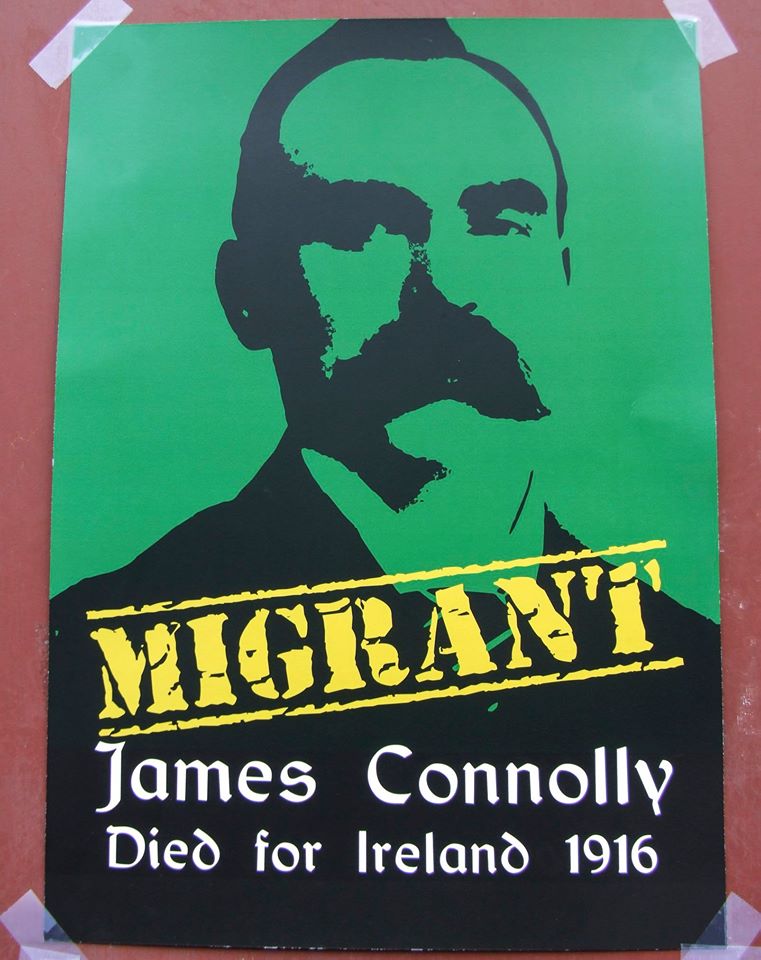

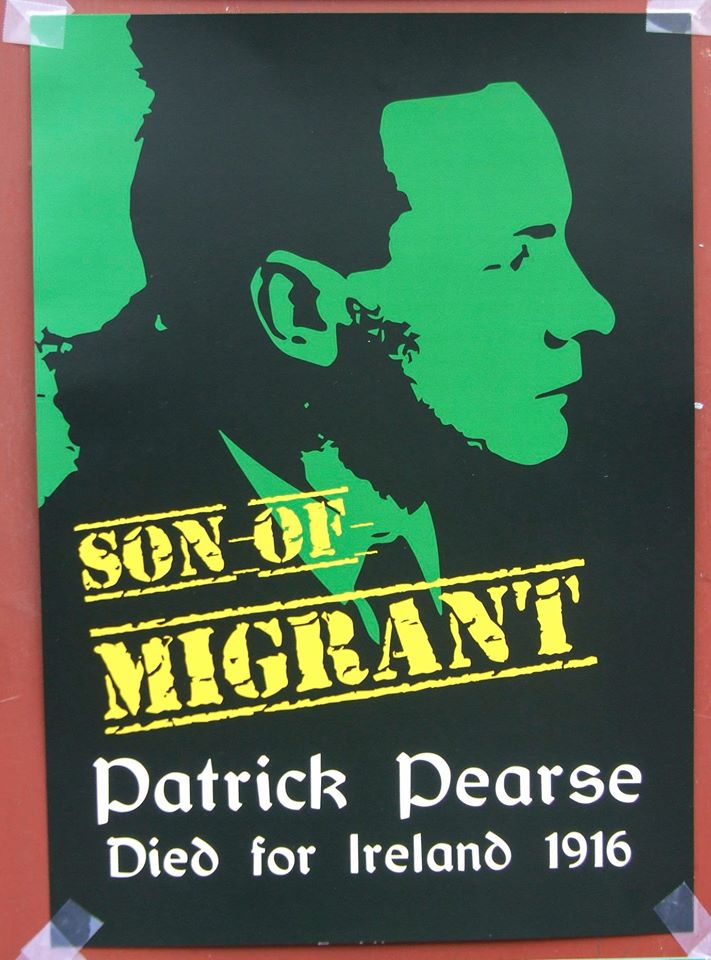


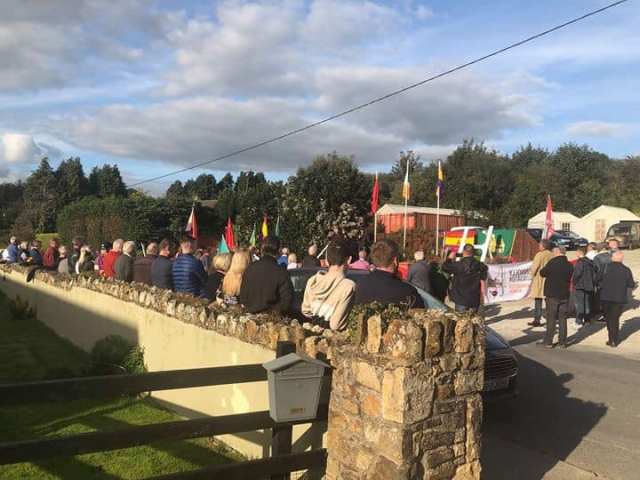

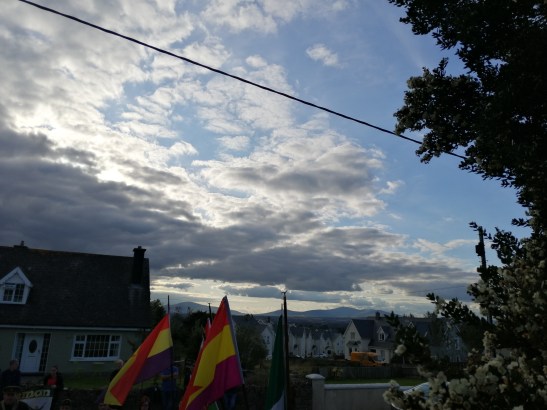
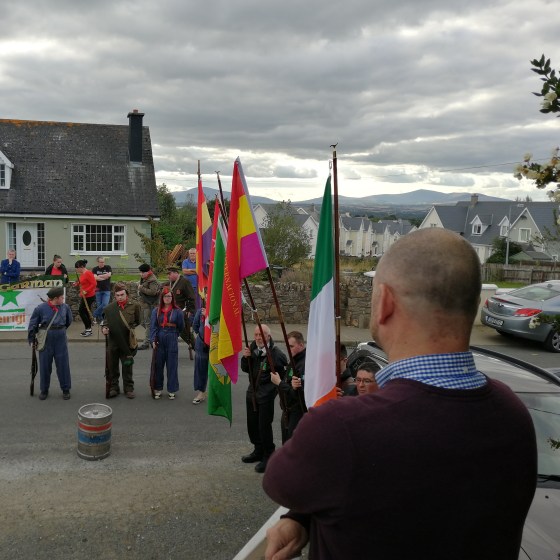
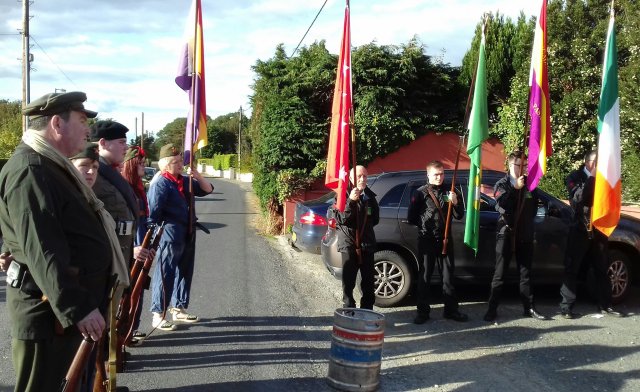
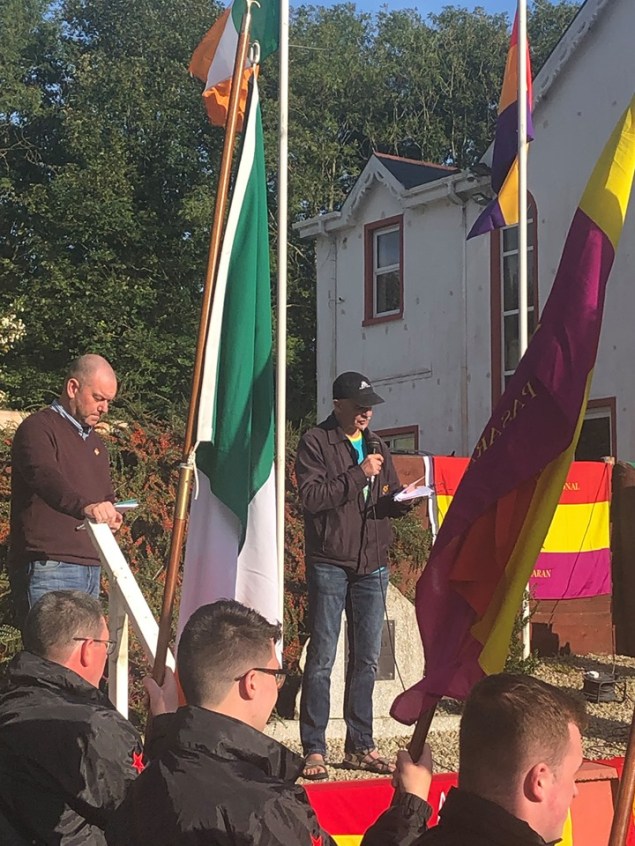
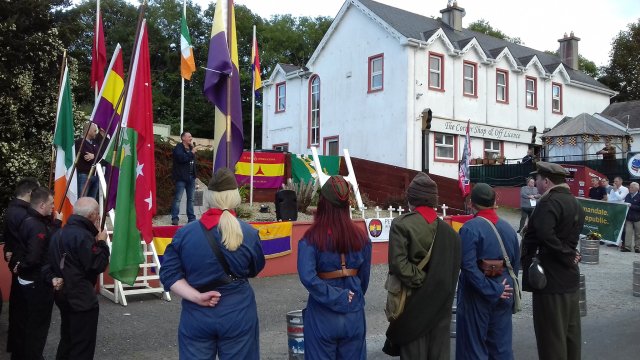

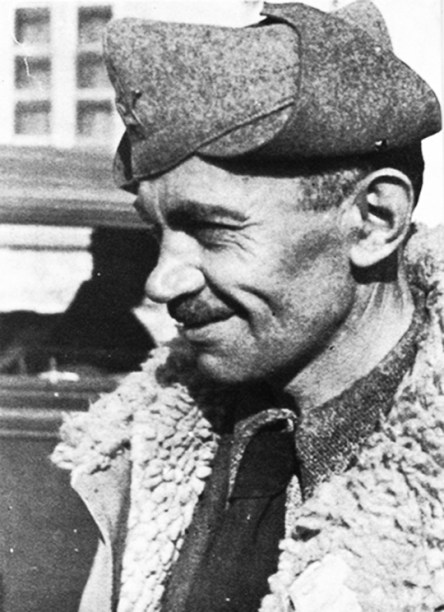


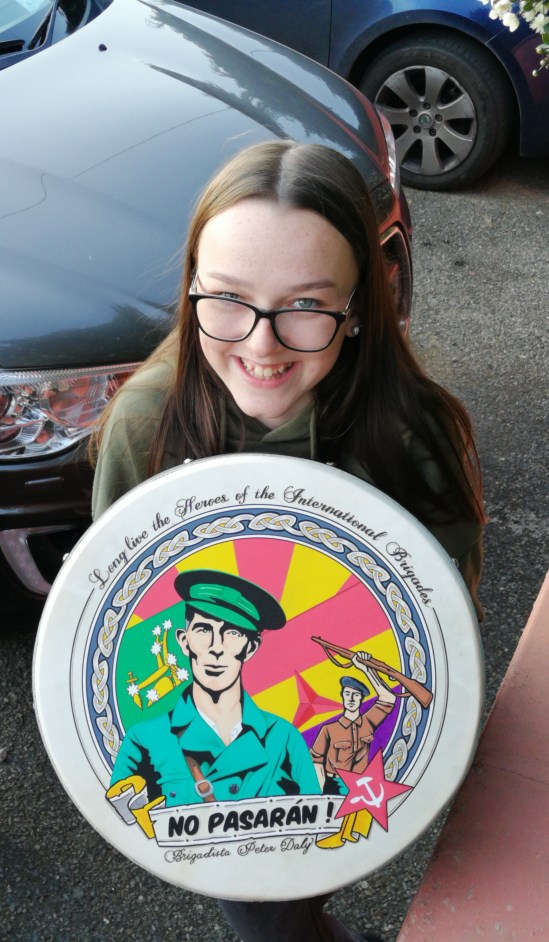
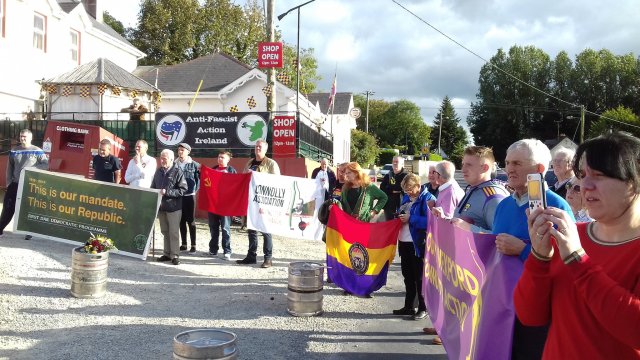
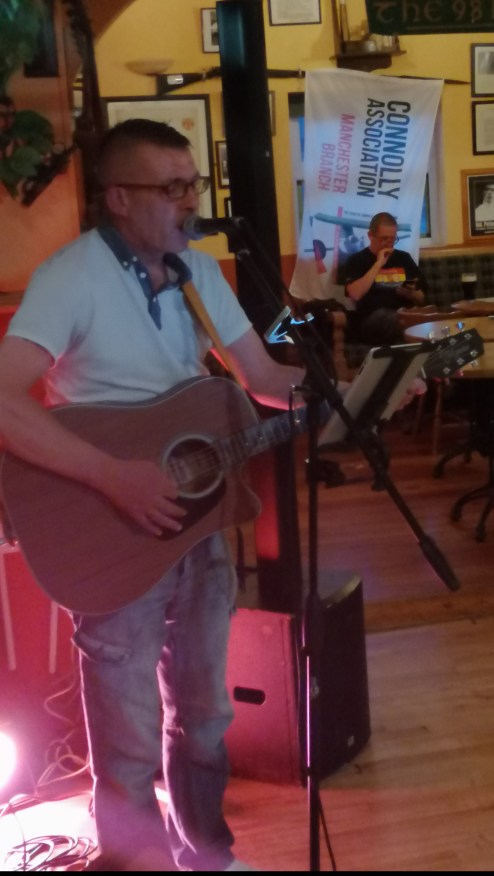
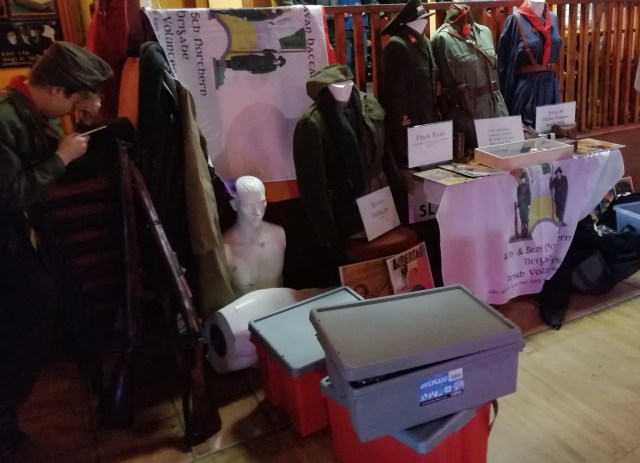
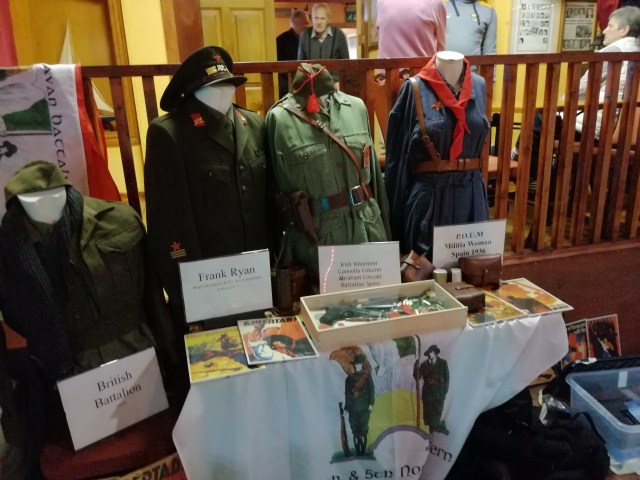
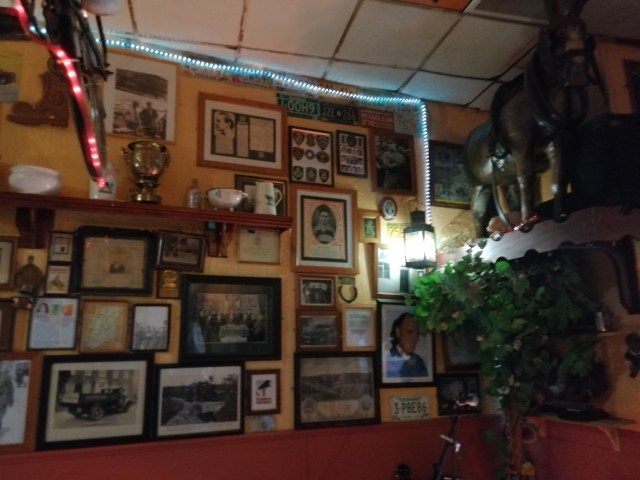


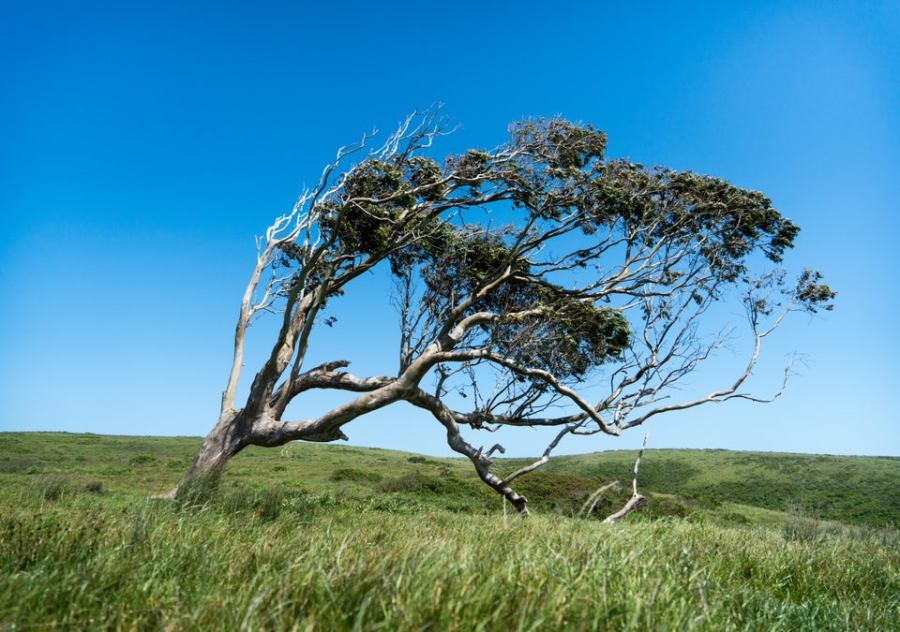

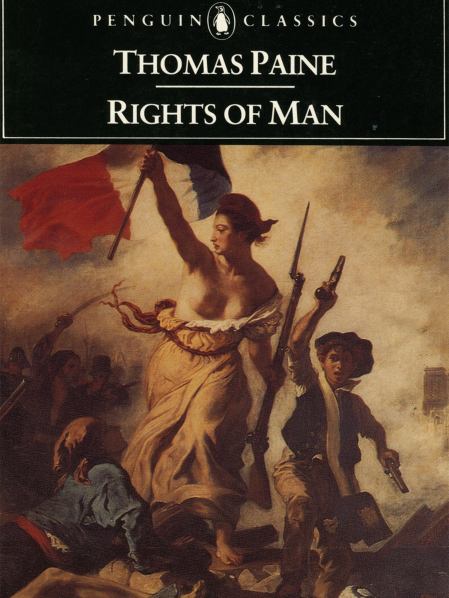
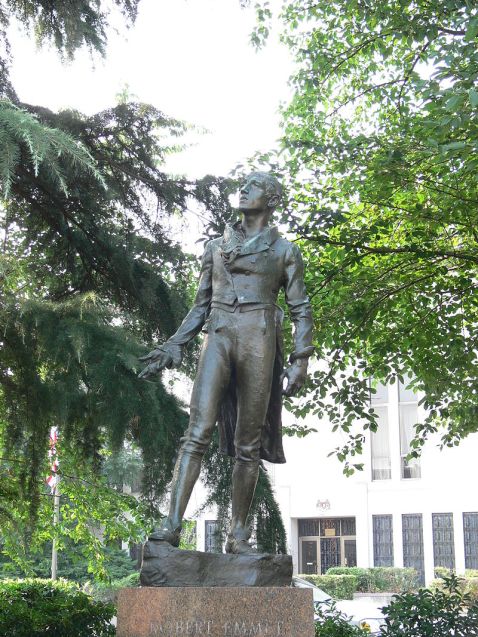
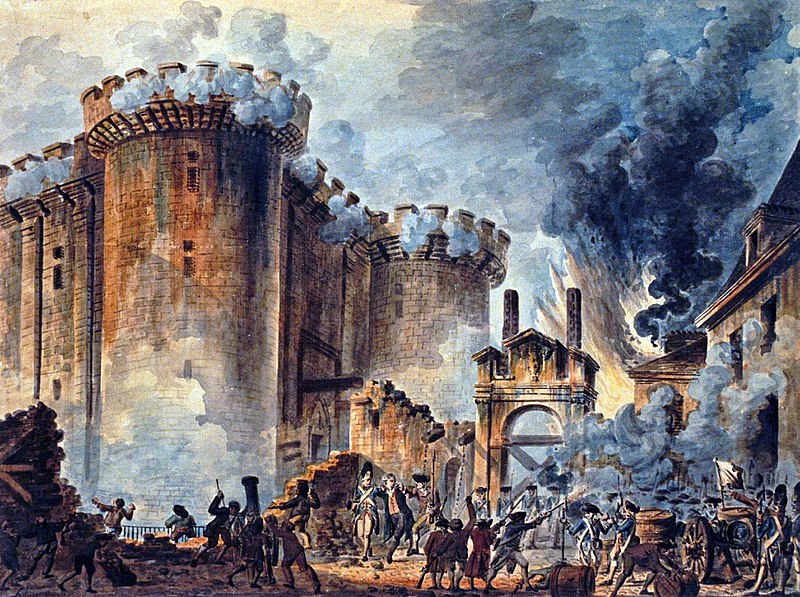

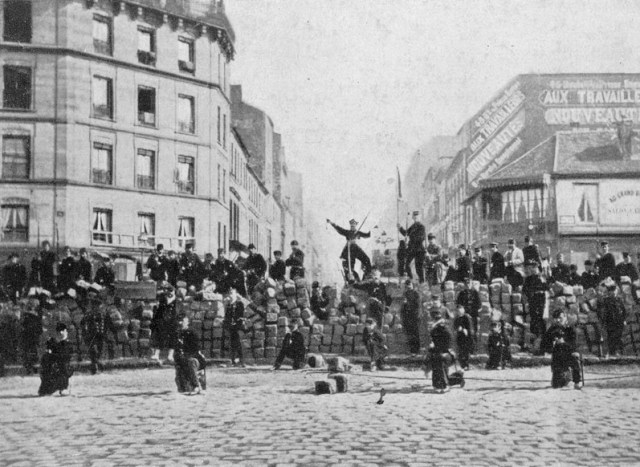


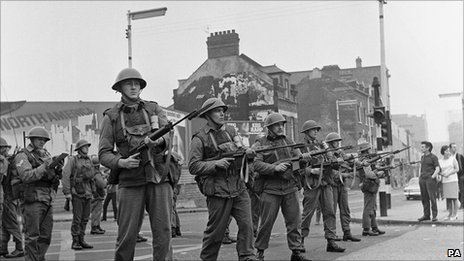
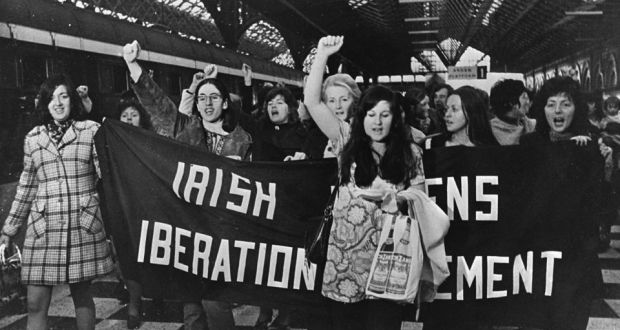




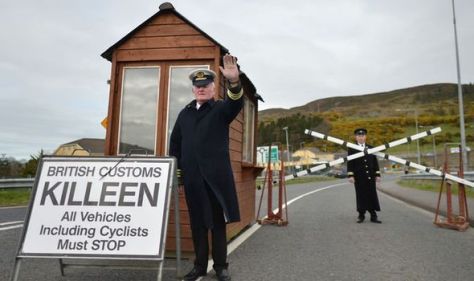

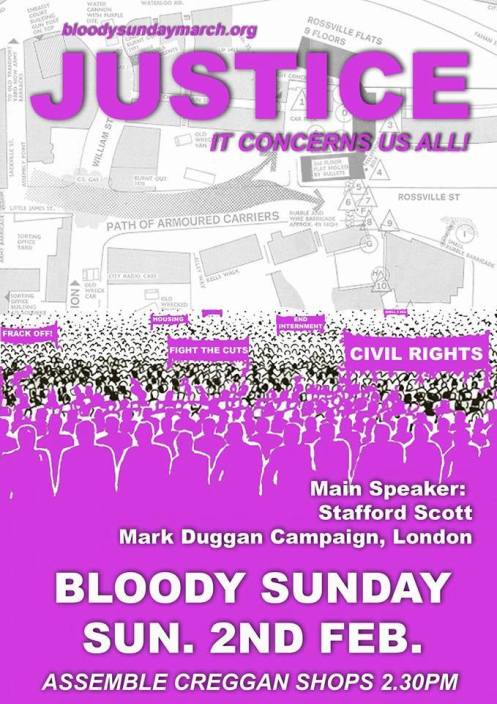
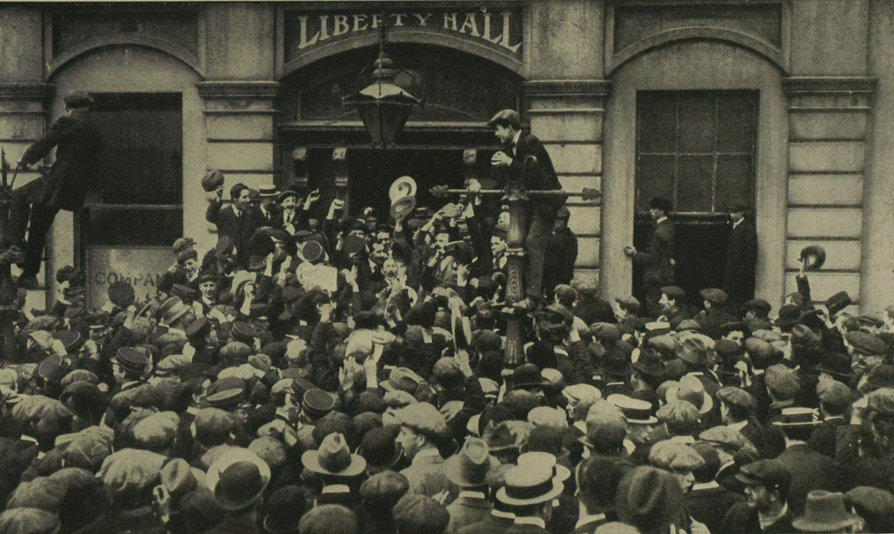


 rebelbreeze