A Palestine solidarity demonstration of around 10,000 in Dublin on Saturday the 11th included a bloc marching behind a banner bearing the legend Saoirse Don Phalaistín and another demanding the expulsion of the Israeli Ambassador.
Since the beginning of Israel’s bombardment of Gaza, Dublin has seen at least two large solidarity events every week, one mid-week and another on Saturdays, marching to the Israeli and USA Embassies or, like this one, to the Irish State’s Department of Foreign Affairs.
(Photo: Rebel Breeze)(Photo: Rebel Breeze)
In addition, there have been smaller more radical events, such as the 2-hour occupation of the offices of Qanta Capital, the landlord of the Israeli Embassy, also another of the Clarence Hotel, recently bought by an Irish company with a loan from an Israeli bank.1
Also the occupations of offices of the Irish Dept. of Transport and of the European Commission2 and a weekday evening rush-hour protest on the forecourt of Dublin’s Connolly Train Station, which hosts major east coast commuting and northern city destination lines.
Section of the march in Cuffe Street, many still behind in Aungier Street (Photo: Rebel Breeze)
On Saturday the march began as usual with a 1.00pm gathering in the city centre, the rear of the densely-packed marchers still in O’Connell Street as the rest had crossed the river into Westmoreland Street, swung into College Green and Dame Street underway to George’s Street.
At one point the march called by the IPSC3 stretched from George’s Street all along Aungier Street, the front had turned into Cuffe Street and was already marching towards Stephen’s Green. The Department of Foreign Affairs is located on the east side of the famous inner-city park.4
The front of the march marching along Stephen’s Green East while the rest is still in Cuffe Street and Aungier Street (Photo: Rebel Breeze)
The bloc marched along gathering people behind as it did so, shouting among others the slogan “Saoirse – don Phalaistín!” and “Zionist Ambassador – Out, out, out!” which was taken up by many, including those who seemed to be Palestinian or at least from the Middle East.
At a separate point, a few professionally-printed placards in Irish could be seen too, e.g “Stad an Slad” and a flag in Palestinian colours with “Saoirse don Phalaistín” printed upon it.
(Photo: Rebel Breeze)
The other slogans that have become standard were shouted also, including the one claimed to be ‘anti-semitic’, ‘terrorist’ and ‘against the law’ by the recently sacked UK Minister of Home Affairs, claimed to be “anti-semitic” and ‘against the law’: “From the river to sea, Palestine will be free!”
Mobbing and threats by British fascists to Palestine supporters5 on the gigantic solidarity march in London on Saturday6 that ended in scuffles with the police were linked by a number of senior politicians to Braverman’s extraordinary claims of police partiality to the demonstrators.
Braverman alleged that London Met police went softly on Palestinian solidarity demonstrations in allowing them to take place while some extreme right-wing mobilisations in the past had been sternly treated – a fantastic claim as any antifascist activist in London knows well.
Section of the crowd standing behind the Saoirse don Phalaistín banner (Photo: Rebel Breeze)
In Dublin on Saturday, upon reaching Stephens Green, the bloc stopped short of the rally outside the Dept. of Foreign Affairs where in any case the crowd was so large that the PA system of the organisers was of insufficient strength to convey to all the words of the scheduled speakers.
A large section of the march stopped behind them and a space cleared in front, at the fringes of which the people turned and joined in the bloc’s almost incessant slogans, at times applauding them. To the solidarity slogans that have become universal, those in the bloc added another two.
Section of the crowd who have turned to face the Saoirse don Phalaistín banner, many joining in the slogans. The speakers’ platform is further beyond outside the Dept. of Foreign Affairs building. (Photo: Rebel Breeze)
These were “There is only one solution – Intifada revolution!” and “Zionist Ambassador – Out, out, out!” Those slogans draw a line away from the liberal demands of “peace” and “negotiations” since the only “peace” that can exist in Israel is a pause before the next bombings.
(Photo: Rebel Breeze)
“Saoirse – Don Phalaistín” was repeated and “Stop the bombing – Now!” seemed at one point to be offered as an alternative to “Ceasefire Now!”7
They also called for serious political repercussions for Israel in the expulsion of its representative in the Irish state, its Ambassador. Currently seven states have expelled Israel’s ambassadors or recalled their own – but none of them are members of the European Union.
Section of the crowd outside the Department of Foreign Affairs (Photo: Rebel Breeze)
The Irish State IS a member of the EU and a symbolic act such as the expulsion of the representative of the Zionist state would have huge reverberations. On Wednesday motions on expulsion of the Ambassador will be debated in the parliament of the Irish State.8
Also, the Sinn Féin party, whose leadership recently reversed their opposition to the expulsion of the Zionist representative, will be calling on the Government to refer Israel to the International Criminal Court for investigation of war crimes.
While this might be of some use as a propaganda move, that Institution has never judged a state nor indeed anyone for war crimes who is part of the western imperialist coalition – which Israel most evidently is.9 The proceedings also tend to be very slow.
All in all, not only will such an action not be effective even if agreed, it will likely serve as a distraction from actions much more likely to be effective, such as expulsion of the Zionist Ambassador, along with arms and other trade sanctions.
(Photo: Rebel Breeze)
A rally has been called to take place outside the home of the Irish parliament, Leinster House, Kildare Street at 6pm on Wednesday10 and a national demonstration on Saturday, starting at 1pm from the Garden of Remembrance.
End.
Some demonstrators walk through Stephens Green after the march. (Photo: Rebel Breeze)
FOOTNOTES
1By activists of the Irish Anti-Imperialist Action group.
3The Ireland Palestine Solidarity Campaign, for decades the main Palestine solidarity organisation in Ireland.
4Which is coincidentally, a 1916 Rising battleground.
5One of the irritants to British fascist mentality was that the Palestine solidarity march was taking place on Armistice Weekend, an annual event including ceremonies commemorating the dead in battles of the UK’s armed forces, one major period which was ironically as part of the Allied forces in the War Against Fascism 1939-’45.
7A ceasefire usually means everyone stops firing where they are, which could be interpreted as binding the Palestinian resistance to leave the Israeli military in occupation of Gaza without retaliation, which some have criticised as favouring the Israeli Zionists.
8The Social Democrats party have tabled the motion, which will be supported by the Sinn Féin party and by People Before Profit party, along with a number of Independents. The Coalition Government of Fianna Fáil, Fine Gael and the Green Party have stated they will oppose it. At this moment the leadership of the IPSC continues to abstain from making such a call
Today marks 184 years since the greatest armed rebellion in 19th-century Britain when Chartist workers fought bloody gun battles with the police and army in the heart of industrial Wales, writes STEPHEN ARNELL
A sketch of the huge crowd in Newport in 1839 as it surrounded the Westgate Hotel hoping to free captive Chartist comrades (via the People’s History Museum).
“Come hail brothers, hail the shrill sound of the horn For ages deep wrongs have been hopelessly borne Despair shall no longer our spirits dismay Nor wither the arms when upraised for the fray; The conflict for freedom is gathering nigh: We live to secure it, or gloriously die.” — Chartist song of the South Wales miners
UNLIKE our friends across the channel in France, the inhabitants of Britain appear a remarkably supine people in the main, usually preferring well-organised demonstrations to anything that whiffs of pre-planned armed revolt, no matter how righteous the cause.
Yes, there have been mass meetings, marches and spontaneous events that took a wrong turn and descended into riots, but we seem singularly ill-equipped by nature to contemplate anything more serious.
But this would be doing this island race a disservice; to paraphrase the emperor Tiberius, there was a time when the British were not a people “fit to be slaves.”
There’s a long and storied history of the working classes attempting to seek redress from a variety of wrongs, including poll taxes (the Peasants’ Revolt, 1381), government corruption (Jack Cade’s Rebellion, 1450), religion (the Pilgrimage of Grace, 1536) and the later Pentrich Rising in Derbyshire of 1817, a muddled affair which aimed to cancel the national debt and repeal the Corn Laws.
1839’s Newport Rising was a more coherent and dangerous challenge than Pentrich, in possessing both a specific democratic political manifesto and its unprecedented scale.
That’s not to say the revolt was a carefully co-ordinated business that worked to a timetable with a pre-planned outcome, but the numbers involved, the potential for encouraging similar risings and the essential justice of the Chartist cause gave Lord Melbourne’s Whig government a serious jolt.
Newport had its origins in both national and local events.
The House of Commons rejection of the People’s Charter of 1838 calling for universal male suffrage, secret ballots, salaries for MPs, equal constituencies, and the end of the property qualification for voting on July 12 1839, and the following conviction and imprisonment in Monmouth of the Chartist leader Henry Vincent for conspiracy and unlawful assembly, stoked the fires of rebellion in industrial southern Wales, a stronghold for the movement.
Combined with this were reasons that directly concerned the rising’s leader, John Frost (1784-1877), namely his six-month imprisonment resulting from a dispute regarding his uncle’s will with Newport town clerk Thomas Prothero, and the wealthy political enemies he made on the way to becoming mayor of the Monmouthshire burgh.
A sketch of Chartist leader John Frost on trial at Monmouth after the uprising.
Despite this, Frost was supposedly reluctant to lead a full-scale armed uprising, and doubtful of its prospects, but the zeal of his supporters forced his hand and preparations were made for the march on Newport.
On Monday November 4 1839, Frost led 4,000 followers to the town, his group including allied coalminers, who armed themselves with home-made pikes, bludgeons, and firearms.
The authorities in Newport got wind of the march and detained several known Chartists at the Westgate Hotel in the town centre. This added impetus to Frost’s mission which was presumably to take over the town in the hope of starting a nationwide insurgency.
At 9.30am, a crowd of anything from 8,000 to 20,000 Chartists (ironically including Allan Pinkerton, later founder of the infamous US strikebreaking detective agency known as “the Pinkertons”) filled the square in front of the hotel, demanding the release of their comrades.
The mayor had gathered a mixed force of around 60 soldiers of the 45th Regiment of Foot and 500 special constables to defend the Westgate, all equipped with weaponry superior to the relatively small number of Chartists possessing guns.
To this day no-one knows for sure who fired the first shot, but a heated exchange between the two sides began, with the engagement lasting approximately half an hour. The result was a total rout for the Chartists.
Up to 24 rebels were slain, with around 50 injured. Four of the defenders were wounded, as was the mayor of Newport Thomas Phillips (later knighted by Queen Victoria), when the attackers briefly succeeded in entering the building. So ended the greatest armed rebellion in 19th-century Britain.
In comparison, the better-known Peterloo Massacre of August 1819 saw 18 people killed and as many as 700 injured when army regulars, special constables and local yeomanry charged peaceful demonstrators calling for parliamentary reform.
Unlike the French, with the storming of the Bastille, the March on Versailles and the Paris Commune, the Newport Chartists appeared to lack the killer instinct of their Gallic counterparts, which may say something of the passive British national character relating to the ruling class.
The leaders of the rising were convicted of treason and were sentenced to be hanged, drawn and quartered, the last in England and Wales to be condemned with this ghoulish form of execution.
Their sentences were commuted by Queen Victoria to transportation for life to Tasmania. Frost was given an unconditional pardon in 1856 and returned briefly to Newport, where he received a rapturous welcome.
His two co-conspirators were also pardoned, but both opted to stay in Australia. Watchmaker William Price continued to ply his trade, but without success and died in poverty; in contrast, collier Zephaniah Williams (who at one point had planned to escape) discovered coal in Tasmania and became one of the richest men in the colony.
Note: the last people to be hanged, drawn, and quartered for treason in Britain are said to be David Tyrie in 1782, and in 1798, Father James Coigly; both were convicted of spying for the French (the Bourbon and revolutionary regimes respectively).
In 1977, John Frost Square, in Newport city centre, was named in the Chartist’s honour. But in 2013, Kenneth Budd’s mosaic in the square commemorating the Chartists was demolished at the behest of the Labour-run Newport council, prompting widespread outrage (from the likes of actor Michael Sheen and former Archbishop of Canterbury Rowan Williams) and public demonstrations.
Comedian Jack Whitehall is a descendant of Welsh lawyer Thomas Jones Phillips, one of the chief opponents of the Newport Rising. Taking no pride in this fact, in 2019 he commented on BBC1’s Who Do You Think You Are, “What’s next? I suppose probably go and visit a mine our ancestor shut down or maybe an orphanage he burned to the ground.”
The Newport Rising also features in a graphic novel published in 2019, Newport Rising, written and illustrated by local artist Josh Cranton; the book was launched at the Westgate Hotel, which unlike Budd’s original mural still stands, recently reincarnated as a “live music, performance, arts and heritage venue.”
Rebel Breeze is grateful for this article about an instance in the long history of workers’ resistance to various features of capitalism.
The article would not have been diminished and might even be thought to be enhanced by mentioning the Irish diaspora’s contribution to the Chartists, both in rank-and-file membership and in leadership, with Bronterre O’Brien and Fergus O’Connor in the latter category.
Or to mention that despite the spying for the French charge against Fr. Ó Coigligh, the last man hanged, drawn and quartered by the civilised British Establishment, the real reason was his membership of and participation in the United Irishmen, an Irish revolutionary Republican organisation.
That organisation had also ‘infected’ the short-lived United Scotsmen and even shorter-lived United English, though in the latter case contributing to the leadership and organisation of the Spithead Naval Mutiny.
Revolt of the English sailors, On each ship they went to tackle, vintage engraved illustration. Journal des Voyage, Travel Journal, (1880-81).
Of course, such references might have tempted the writer to compare revolutionary uprisings in Britain with those in Ireland, rather than in France.
But then, the Communist Party of Great Britain, which owns The Morning Star where the article was published, has never been too fond of the Irish struggle for independence or the means we felt justified in employing.
There’s a new Wailing Wall … THERE’S A NEW WAILING WALL; It’s in Gaza, and here mothers and fathers wail at the bloody bodies of their children; children wail at the bloody bodies of parents; all wail over the bodies of friends and neighbours; the wailing rises and the tears fall.
At this Wailing Wall … AT THIS WAILING WALL, we wail the mendacity of Israel and the West, we wail the complicity of the media in the West; while rockets, shells and bombs rained down upon us the lies fell faster and thicker than rain, a torrent of lies that never stopped. To surge in flood over the bodies of our slain.
You come now with your flag of peace … YOU COME NOW WITH YOUR FLAG OF PEACE tramping along the bloodstained road and up the mountain of our bones and the rubble of our homes and offer us business as before or – bombardment once more.
Now that the bombs have stopped … NOW THAT THE BOMBS HAVE STOPPED we too stop and look around us: our schools gutted and bloodstained, mosques and hospitals in ruins, so many of our buildings rubble, or with gaping shell-holes, in the hell-hole you have made of Gaza.
We had so little and you destroyed so much. WE HAD SO LITTLE AND YOU DESTROYED SO MUCH!
In the days to come, more will sicken and die, of wounds on flesh and wounds on soul, of lack of medicine, fuel or food as even in pause you take your toll.
Many are numb, some try to forget … MANY ARE NUMB, SOME TRY TO FORGET, some try to live without forgetting, but there is a begetting, for in many hearts too, your phosphorus flakes are snowing, the embers of hate are glowing, their machine guns and bombs are mowing you and your children for generations to come.
Against your Goliath … AGAINST YOUR GOLIATH, our slingshots were of no use; yes, God was with you – he’s no longer Hebrew or English – He’s American now; you shot us down like fish in the shooting barrel you made of Gaza.
You wish us to recognise you? YOU WISH US TO RECOGNISE YOU? Of course we recognise you – the imprint of your boots are upon our necks; we carry them from cradle to the grave.
But we will never agree to accept or agree that you should keep what you have stolen and plundered the land you have sundered or that you can make us second-class citizens in our own land.
While we struggle to endure … WHILE WE STRUGGLE TO ENDURE and to ensure that you never defeat us let it be that we do not learn to treat others as you now treat us.
What did you learn from your oppressors? WHAT DID YOU LEARN FROM YOUR OPPRESSORS? If all you learned was how to also do so much of what they did, then truly have the six million died in vain and you mock their memory by invoking them.
Diarmuid, Feabhra 2009
I began to write this just as the December 2008- January 2009 bombardment of Gaza by Israel was coming to an end and I rounded it off in February.
That was the one they called “Operation Cast Lead”, which killed over 1,400 Palestinians, mostly non-combatants, including 400 children and injured over 5,300 — again, mostly non-combatants.
I little thought that so few years later Israel would unleash an even worse bombardment upon the beleaguered Palestinians in Gaza, as it did in July 2014, during which it killed over 2,300, again mostly non-combatants and that time nearly 500 children.
The damage to infrastructure is colossal and the Israeli-Egyptian blockade makes significant repair impossible.
The commentary above was written in 2014. Apart from killing in raids, there were more massacres to come: March 2018, more than 700 Palestinian refugees killed at the borders of the Israeli state and in 2021, over 260 Palestinians killed after Zionist provocation at the Al Aqsa Mosque, in Jerusalem.
In August 2022, over 30 Palestinians, including women and children, killed in Israeli missile attacks and this year, by August, Israel had killed 172 Palestinians. Now, over October-November 2023, they have killed 133 Palestinians in the West Bank and over 9,000 in Gaza, including 3,760 children.
There is no question that this is genocide: “the deliberate killing of a large number of people from a particular nation or ethnic group with the aim of destroying that nation or group.”
“Any of the following acts committed with intent to destroy, in whole or in part, a national, ethnical, racial or religious group, as such:
Killing members of the group;
Causing serious bodily or mental harm to members of the group;
Deliberately inflicting on the group conditions of life calculated to bring about its physical destruction in whole or in part;
Imposing measures intended to prevent births within the group;
Forcibly transferring children of the group to another group.”
Nor did that genocide begin in October this year, nor last year, nor the year before. It began in 1948 with the creation of the state of Israel and has been continuing since.
The roar of Palestinian solidarity slogans outside the Irish Parliament, Leinster House on Wednesday night must surely have reached the ears of the elected representatives as they debated a motion that “Israel has a right to defend itself”.
The motion is widely seen as part of a narrative, under the cover of self-defence, endorsing the Israeli State in its decades of racism, apartheid, genocide and war crimes and takes place during the Zionist state’s genocidal bombardment of Gaza.
Solidarity colours in the rain (Photo: D.Breatnach)
The rally, the third since last Saturday week1 organised by the Ireland Palestine Solidarity Campaign, attracted many hundreds willing to stand in persistent rain, listen to contributions from speakers and chant slogans, these led by voices in both Irish and Middle Eastern accents.
In fact, a strong trend increasing over recent years has been the presence of Palestinian voices at such rallies, both in speaking and in leading slogan chants, which the rally organisers have not hesitated to facilitate.
View late in the rally (Photo: D.Breatnach)
SLOGANS, SONG AND POEM
On Wednesday evening, some slogans were in Arabic also, such as I think “Tahya Filistina!” (long live Palestine) but sadly not the equivalent in Irish, such as “An Phalaistín abú!” or an alternative, for example: “Saoirse don Phalaistín!” However, one placard in Irish was present (see photos).
(Photo: D.Breatnach)
The slogans in English ran the usual range of call and answer: “Free, free – Palestine! From the river to the sea – Palestine will be free! One, two, three, four – occupation no more; five, six, seven, eight – Israel is a terrorist state! (I prefer “Israel is a fascist state!” myself).
In our thousands, in our millions – we are ALL Palestinians! Boycott — Israel! Irish Government – shame on you!
In 2009, as yet another Gaza bombardment came to an end, I had composed a poem I called The New Wailing Wall. On Wednesday I got it printed in a photocopying shop on my way to the event, by which time it was raining fairly heavily but I was glad to be permitted to read it out at the rally.2
A Palestinian woman sang in Arabic a “song of sadness”, i.e a lament the rhythm of which a lot of people got into, clapping in time. In Irish singing we often don’t like this, as it tends to drown out the words and the musical detail but it seemed to work well enough there.
Later she told me that she very rarely sings but felt she had to give voice to her feelings – and I know some of what she means.
Seen from behind, Palestinian woman singing a lament in Arabic at the rally (Photo: D.Breatnach)
MOTION DEBATED
Inside the home of the Irish Parliament,“the Dáil”3 a motion of support for the Zionist state proposed by the Government had run into problems even before Israel’s bombing of the hospital in Gaza, after which they intensified; the Government insists it will not condemn Israel to any degree.
It is likely that a majority-agreed motion amendment will pass but however will neither assert the right of the Palestinians to their land nor to resistance, nor to the return of refugees, much less condemn Zionism; it should be a cause of shame to all parties and individuals who support it.4
Section of the rally crowed after an hour (some had gone home) in front of the gates of Leinster House (Photo: D.Breatnach)
“Expel the Israeli Ambassador!”
In the street outside Leinster House, there were many calls for the expulsion of the Israeli Ambassador (Out! Out! Out!)
Truly that seems the most effective solidarity move of which we are capable currently.5 Sadly there seems no chance that the Government would even consider doing so.
Even among the Opposition, Sinn Féin these days looks unlikely to support such a move. This is so even though the party’s President, Mary Lou called for the expulsion of the Russian Ambassador in April last year6 and a decade ago, Gerry Adams, for the expulsion of the Israeli Ambassador.7
Some solidarity demonstrators as far back as Molesworth Street while most are in front of Leinster House (Photo: D.Breatnach)Rally supporters refuse to be squashed up on the pavements and spill over into the road. Once again the Gardaí have failed to close a road to avoid accidents and Dublin Bus has failed to instruct drivers to take alternate routes; the roof of a trapped bus may be seen in the far background. (Photo: D.Breatnach)
Colombia threatened to expel8 the Israeli Ambassador but the leaderships of the EU and the UK are securely tied to the war-chariot of the USA and there’s never any doubt about what the US wants, which is total support for its safe9 Middle Eastern foothold – Israel.
Colombia told the ambassador to behave himself or leave, after the Zionist publicly criticised Colombia’s President comparing the Israeli state’s discourse about and treatment of the Palestinians to that of the Nazis towards the Jews10 (but Israel is Colombia’s main weapons supplier).
A sentiment increasingly finding favour (Photo: D.Breatnach)
OUTLOOK FOR THE FUTURE
In the immediate future, the Zionist authorities have said they intend to invade Gaza to clear out “Hamas”, in which they will of course include all Palestinian armed resistance. Of course, solidarity demonstrations will continue or even intensify.
If Israel invades, it is difficult to imagine that the Palestinian guerrilla resistance movement, including Hamas, Islamic Jihad and PFLP11, will allow that without putting up a fierce struggle.
(Photo: D.Breatnach)
Israel has the tanks and planes but fighting on the ground in ruined urban landscapes, when every pile of rubble may hide a tunnel, a bomb or a rocket-launcher, is a different game.The 5-months-long Battle of Stalingrad comes to mind and an Al Jazeera contributor came to the same conclusion.12
Also, other elements such a Hizbollah may open up new fronts, in particular in the Golan Heights and Lebannon, as the PFLP has urged. Imperialism and complicit Arab regimes are extremely worried about a flame reaching their combustible possessions in the region.
Massive solidarity demonstrations marched through Yemen, Lebanon and Jordan and even the collaborator military regime in Egypt was obliged to open the Rafah crossing gates for humanitarian aid to reach Gaza (with which the Zionists and the US had to reluctantly agree).
Huge solidarity and protest demonstrations have also taken place in Athens, London and other European cities, while the French government banned any such demonstrations. Texas in the USA also saw a huge demonstration and 500 Israeli protesters were arrested demonstrating in Israel.
However the regimes have weathered such storms before and may do so this time again.
Possibly the West Bank will rise up too, although Al Fatah still has a lot of influence there, despite its discrediting by corruption, nepotism and signing the Oslo Accords and with its leadership deeply compromised as a result.13
The Palestinian Authority goons (there are 80,000 of them) fired on demonstrations demanding action in solidarity with Gaza, and in Jenin killed a 12-year-old girl and seriously wounded a first-year university student. 14
The military command of Al Fatah told collaborator Abbas to step down15 but their objective is still the discredited and impossible two-state “solution”.
The 2-State idea was bad in 1993 but …
… even worse in 2019 (Source image: Carnegie Council)
This “solution”, which the US and the rest of the Western states support, proposed to give the Palestinians less than 40% of their territory, the worst and least-watered, chopped into sections with narrow corridors through the Israeli lands and always under the guns of Israel.16
A Palestinian state would have neither true environmental, population, political nor civil control. Never a good choice instead of a secular state of Palestine for all, even this colonial option is clearly unworkable, sabotaged by the Zionists themselves with their settlements dotted all over it.
It is shameful to even propose it as any kind of solution.17
In the longer term, Israel’s consolidation of partnerships with a number of Arab states may have been harmed by the Zionists’ savagery and racist discourse towards the Palestinians but how deeply is difficult to predict.
Whether the Palestinian resistance and particularly Hamas is strengthened or weakened in the eyes of the Palestinian mass likewise remains to be seen.
The mostly imperialist western states of Europe and America show no sign of weakening their allegiance to the world imperialist leader, the USA and therefore, once they get over their weak criticisms of Israel’s genocide, will continue to support the Zionist state into the future.
Like many other problems on this Earth, workable solutions depend on changing some fundamental features in the world order.
end.
A historical reference to the Balfour Declaration of the Imperial Conference of British Empire leaders in 1926 giving European Jews rights to the British Mandate territory of Palestine, where approximately 10% of the population were Middle Eastern Jews at the time, the rest being Palestinian Muslims and Christians. (Photo: D.Breatnach)The rally, though thinning, is still ongoing behind photographer after perhaps two hours. Gardaí have FINALLY closed Kildare Street and a Dublin Bus has managed to turn around and exit. This has been the pattern in a number of Palestine solidarity rallies so far, when the Gardaí must have known the attendance would be large and the street should be closed for safety and traveler convenience sake. (Photo: D.Breatnach)
FOOTNOTES
1Another, last Monday week, had been organised by the Irish Anti-War Movement (effectively the People Before Profit political party).
3That is its name but there are those who refuse to call it that, saying that only an all-Ireland parliament deserves that title, such as the one founded during the War of Independence 1919-1921.
8It was reported that Colombia HAD expelled him and that was repeated at the rally but according to reports from there reaching now, he was only threatened with expulsion if he didn’t shut up.
9Probably the only state in the Middle East, because of its colonialist nature, that is safe from either national liberation uprising or Muslim fundamentalist revolution.
10This is a parallel so obvious that it occurs to a great many people across the globe but it is one that the Israeli authorities rejects and which it condemns as “anti-semitic” with the backing of many different authorities in the West.
17And the history of the Zionist colonisers shows that even with that, they would be forever pushing further, grabbing more land, killing more Palestinians in flare-ups (think the history of the European colonisation of the indigenous Americans in what is now the USA).
News & Views No.9: Chile Coup – Twin Towers – the Legacy Bill
Diarmuid Breatnach (Reading time: 5 mins.)
September 11th is the anniversary of the al Qaeda attack on the new World Trade Center in the USA known as “the Twin Towers” and also of the Pinochet Coup in Chile. The former caused the deaths of 2,996 people and the latter of over 40,000.
These are not happy anniversaries and US Imperialism bears a major portion of the blame for both events.
How so, one might ask? The coup in Chile, probably with CIA help, sure. But the Twin Towers? That was a Muslim jihadist attack AGAINST the USA! Surely we’re not expected to believe that stupid conspiracy theory that the USA ruling class actually staged the attack?
US proxy soldiers, Special forces Afghan National Army, 2021 (Photo sourced: Internet)Osama Bin Laden (10 March 1957 – 2 May 2011), Saudi-born founder and first general emir of Al Qaeda from 1988 until his assassination. (Photo sourced: Internet)
That is truly a crazy conspiracy theory but the historical truth does indeed involve a conspiracy. In 1997 the government of Afghanistan was socialist which was worrying for the USA, so in partnership with Saudi elements, they funded and even founded Muslim jihadist groups there.
These groups were to be encouraged to overthrow the socialist regime and when the USSR sent troops to support the government, to defeat the Russians too. Which they did.
But forget about fantasy stories of traditional tribesmen with ancient muskets fighting a world power’s army – these were jihadists, fundamentalists, armed with modern automatic weapons and mobile missile launchers including SAMs (Surface to Air Missiles).
Forget too about Rambo-led simple hill people – since the US achieved the overthrow of the socialist regime and invaded Afghanistan alongside their British allies, those jihadist groups have been squabbling over their share of the spoils, often murderously.
In fact, US imperialism is largely responsible for the world pestilence of not only jihadism of the Al Qaeda type, but the even more virulent Islamic State variety (which indicates Mary Wollstonecraft’s story of Frankenstein’s monster to be more prediction than fiction).
Explosion in one of the Twin Towers on 11th September 2001 in Al Qaeda attack. (Photo: Sean Adair/ Reuters)Frankenstein’s monster in Mary Wollstonecraft’s famous story; he returns to attack his creator (Image sourced: Internet)
Although US Imperialism had created Al Qaeda and although Saddam Hussein’s regime in Iraq was totally opposed to the jihadist group (and vice versa), US politicians used the attack on the Twin Towers to ‘justify’ the US military invasion of Iraq.
“Sweet are the uses of adversity” indeed when manipulated by US Imperialism for domestic consumption and for world public opinion, also when assisted by British Imperialism’s Labour Government, in particular by lying-through-his-teeth Tony Blair.
The US-led campaign against Iraq resulted in about 1.5 million deaths through economic sanctions alone followed by over 300,000 civilians in the Western military campaign. These figures do not include deaths and injuries of Iraqi military and of the invading allies under the USA and UK.
Nor do those figures include the many deaths, military and civilian, in internal conflicts since the invasion of Iraq which continue to mount.
The deaths resulting from the coup in Chile were overwhelmingly of civilians as the coup was carried out by the Army with little opposition within the military and the civilian population were mostly unarmed.
Most of the deaths occurred in succeeding days and years as the regime rounded up communists, trade union militants and others suspected of having supported Allende’s party, to torture and execute them, including most famously the renowned musician and singer-songwriter Victor Jara.
The anniversaries of both the Pinochet coup and the Twin Towers have been commemorated in various parts of the world with, it appears, the coup being remembered in most of them, not only in Latin America but also in many countries in Europe where Chilean political exiles found refuge.
In the USA, of course, the attack on the Twin Towers was officially commemorated and probably communally too much more so than the coup in Chile.
Another imperialist-generated disaster, the anniversary of which falls only a couple of days after those two, is that of the Oslo Accords, signed on 13th September 1993 and often also known as a stage in “the Palestinian Peace Process”.
At the White House, supervised by Bill Clinton, elected chief of US Imperialism at the time, Yitzak Rabin for the Israeli Zionist state and Yasser Arafat, for the Palestine Liberation Organisation, signed an agreement, as a result of which the PLO would be permitted to run their own statelet.
Oslo Accords, 13 September 1993, Washington: Yasser Arafat of the PLO shakes hands with Yitzak Rabin of the Zionist State under the stewardship of (then) US President Bill Clinton, representing US Imperialism. (Photo: Gary Hershom/ Reuters)
Hailed as a great breakthrough by most media at the time, the PLO, dominated by Arafat’s Al Fatah, got to have limited self-government within the Zionist State, with the borders of any future Palestinian state undefined and no mention of the millions of Palestinian exiles around the world.
Although the increasing encroachment on Palestinian lands by Zionist settlers was temporarily halted, the land already taken and built upon remained in Zionist hands, that issue and others ‘to be discussed later’ but the Palestinians were to give up the armed resistance immediately.
The South African pacification process had begun earlier and, though enfranchisement of non-white South Africans was not to come until 1994, it was clearly on the way. The ANC promoted pacification processes to Al Fatah and both parties promoted them to Provisional Sinn Féin.1
The Palestinian ‘Process’ was controversial among their people from the start and grew more so as it became clear how little the Palestinian cause had gained and how much had been set aside, along with the growing official corruption and nepotism growing among the Al Fatah organisation.
Though the pacification process was widely rejected in Palestine and failed to install a widely-recognised ‘official’ collusive leadership, it did achieve the fragmentation of the Palestinian leadership and helped to ‘justify’ the demonisation of Hamas, winner of the 2006 elections.
ALTERNATIVES
The Secretary of State for Northern Ireland (sic) is quoted in the media as saying that there is no alternative to the UK’s legacy legislation, which proposes to prevent recourse in law for any crimes committed by its soldiers, colonial police, proxies or Government Ministers.
Secretary of State for the Northern Ireland (sic) colony, Chris Heaton Harris (Photo cred: PA)
The legislation in question is titled The Troubles (Legacy and Reconciliation) Bill.
All political parties in Ireland on both sides of the British Border have vigorously opposed this legislation and THERE CLEARLY IS AN ALTERNATIVE, which is to abandon it. What the UK’s ‘colonial governor’ of the Six Counties means is: no alternative acceptable to the ruling class.
While we’re on alternatives, all liberation movements had and have the alternatives to embracing pacification processes, which is to maintain the path of resistance upon which they embarked until the day they win that for which their people and fighters have sacrificed their liberty and lives.
Allende and the communists in Chile had the alternative of arming the people and purging the Army but instead chose to put their faith in the ‘loyalty’ of Pinochet, ‘democracy’ and the opinion of the Western powers.
“The people armed cannot be harmed”, perhaps, rather than “The people united can never be defeated”.2 Allende’s error cost him his life but also the lives of hundreds of thousands of others.
Women on 11th September hold a candlelit commemoration at La Moneda, Santiago, Chile for the victims – in particular of sexual violence – of the Pinochet coup and dictatorship. (Photo: Adriana Thomasa / EFE)
Imperialists have the alternative of respecting the right to self-determination of the peoples of the world and to cease from exploiting, oppressing and repressing them.
But if they did that, they wouldn’t be imperialists, would they? And since they cannot change their nature, they have to be overthrown.
End.
FOOTNOTES
1Provisional Sinn Féin signed up to the Irish Pacification Process in 1998 and they and the ANC then moved on to promote a pacification process to the leadership of the Basque movement for independence, which also finally signed up to it without even obtaining release of the political prisoners. By that time the Palestinian Process had shown its empty promise and the Second Intifada (2000-2005) demonstrated its rejection by most Palestinian youth and the elections to the 2006 Palestinian Legislative Council were won convincingly by Hamas.
2An alternative slogan to “El pueblo unido jamás será vencido” was even then being promoted by a smaller communist group: “El pueblo armado jamás será aplastado!”, i.e ‘The armed people will never be crushed’.
The Petro government has reached the end of its first year in which it promised a lot, came through on some things and changed a lot of other things, particularly its position on certain issues.
Before taking a look at it, it should be pointed out that the Historic Pact (PH) is not the first left-wing government in Colombia. The country is still waiting for that. It is a remould of liberalism in the style of Ernesto Samper.
Even so, it is worth looking at its proposals and what it did in this year, as unlike Samper, it did give a lot of hope to the people.
It is generally accepted that Petro would not have been elected President if it were not for the big popular revolt that began on April 28th 2021, an uprising that cost the life of over 80 youths.
We don’t know the exact number of dead and disappeared and less still of the number of young women who were raped and sexually abused by the Police as part of the repression. Even the number of political prisoners is a matter of dispute.
Not due to the absence of the number of people detained but because the amongst Prosecutor’s Office, the press and sections of the PH there are those who seek to divest the detained youths of any political motivations.
They simply paint them as criminals and vandals, the last of these words having been covered in glory during those protests.1
The heroic ‘vandals’:Demonstrators clash with riot police during a protest against a tax reform bill launched by Colombian President Ivan Duque, in Bogota, on April 28, 2021. (Photo cred: Juan Barreto/ AFP). (Photo choice and caption by Rebel Breeze)
So, it comes as no surprise that Petro, like Boric in Chile, did not free the political prisoners from the revolt. He made a few lukewarm attempts to get a handful of them out, but a long way from all of them.
They are still in prison, despite his electoral victory being thanks to their struggle and actions that led them to prison.
It is perhaps the most symbolic transgression as it says sacrifice yourselves but don’t expect anything from me, not even when I owe you everything. Petro has defended himself by saying that it is not his decision to free or imprison anyone.
Recently he stated:
There are still many youths in prison and I get blamed, as if it were up to me to imprison or free them. State bodies and people inside them have decided that these youths should not be freed.
Not because they are terrorists, who would think protesting is terrorism? If not a dictator or Fascist. No, but because they want to punish the youths who rebel.2
Some may feel that he is right in a technical sense, i.e. that it is the Prosecution and the judges who imprison them. But that is to ignore reality.
He himself denigrated them when he referred to them as ‘vandals’ during the protests and since taking office, neither Petro nor the PH have been the visible heads of any initiative to free the prisoners. They washed their hands of the issue.
He didn’t even disband the specialised riot squad, the ESMAD. Unlike other proposals he didn’t even try to.
He changed its name and promised a couple of human rights courses for its members, as if the problem was their lack of attendance at a course or two given by some NGO and not a deep-rooted problem. The ESMAD is a unit that murdered many youths.
It is a body whose name is synonymous with violence, torture, sexual abuse and murder. A name change won’t wash away the blood.
… the promise to put an end to the ESMD was just lip service during the presidential campaign.It wasn’t carried out and the government will fail to carry through on its commitment to the youths who brought the president to power, through the existence of a repressive violent force like this one.
The temptations to infiltrate the marches in order to justify confrontations with the kids will continue to be part of the landscape.3
Petro gives his voters a clenched fist on his inauguration as President in August last year but many remain in jail and the rest get little or nothing. (Photo sourced: Internet) (Photo choice and caption by Rebel Breeze)
In economic terms the government promised a lot during the campaign, but once in power, it quickly softened its proposals and in some other cases they didn’t get a majority of votes in Congress.
The lack of votes in Congress is not a simple one of not coming through, nor is it due to betrayals by the PH nor manoeuvres by other forces that Petro can’t control.
The PH is a coalition of sectors of the right with sectors of what passes for social democracy in Colombia. It was not inevitable, but rather Petro actively advocated that it be like that.
It is worth recalling that at first, he wasn’t going to choose Francia Márquez as his vice-president but rather a right winger like Roy Barreras.
However there are economic aspects that are under his control, but for the moment they remain as just proposals, rather than real policies that have gone through Congress. On the land question, Petro proposes monocultures and agribusiness.
This was clearly to be seen in the proposal to buy three million hectares from the cattle ranchers.
Petro’s vision of the countryside is one of it being at the service of big money and the promotion of cash crops, despite some references to the production of foodstuffs for internal consumption and the so-called bio-economy.
Something similar can be seen with his proposals for clean energy. He spoke a great deal about it during the electoral campaign and some of his proposals, or outlines as they stand, look good.
That Colombia no longer depend on oil and coal is not a bad idea and that it be replaced with alternative energy sources such as solar and wind power looks good, until we actually examine the details.
One of his first stumbles, in that sense, was with the Indigenous people, as La Guajira is a poor area that has suffered the consequences of coal mining.
He did not take them into account and they reminded him that what is proposed for their territory should have their support, though legally it is not quite the case, and that it should also benefit them.
He partially rectified the case, but the big question is, if he wants an energy transition why does he have to seek out French and other foreign capital to finance it. Does he want to hand over the wind and solar power as they are still doing with oil and coal?
It would seem so. According to Petro:
We need investments that help us carry this out: we would have a matrix of foreign investment centred on the construction of clean energies in South America, with a guaranteed market, if we have direct link to the United States and by sea with the rest of the world.4
If you substitute oil and coal for clean energy, you begin to see the problem: the resources of Colombia in the service of big money and the countries of the North.
If we are to have a real change and energy transition, we must end the idea of Northern energy consumption regardless of where it comes from as sustainable and that countries such as Colombia must supply energy for a planet-destroying consumption model.
Neither have there been great advances on the issue of peace. He did reactivate the dialogue with the ELN, but stumbled with something that is still an integral part of his policy, the so-called Total Peace.
In his proposal he compared the insurgent group, the ELN to the drug gangs and paramilitary groups such as the Clan de Golfo. It was not a mistake, Petro really does see the ELN as a criminal gang.
He made it clear in his speech to the military and he reaffirmed it when he named the blood thirsty Mafia boss and former Murderer-in-Chief of the paramilitaries, Salvatore Mancuso as a Peace Promoter.
With that he placed the ELN leadership on the same plane as the paramilitaries. And they have implicitly accepted it for the moment.
In Petro’s discourse Colombia is a violent country and there is no way to understand it and peace has to be made with everyone as they are all the same, the insurgency and the narcos. Not even Santos was that creative in delegitimising the guerrillas.
Mancuso took on his role and once again spoke of the land they had stolen, the disappeared etc. He has been telling us for two decades now that tomorrow he will reveal all, but tomorrow never comes.
When Uribe invited Mancuso to the Congress of the Republic, Petro had a different attitude.
His response was blunt and he described Uribe as a president that was captured by the paramilitaries and that Mancuso manipulated the Congress stating that “if under this flag of peace, dirtied by cocaine what is essentially being proposed is an alliance with genocidal drug traffickers and political leaders… then we are not contributing to any sort of peace.”5
And we end the year with a scandal. I have on many occasions compared Petro and the PH to Samper and the Liberal Party of the 90s. But not in my most fertile delirium could I imagine that Petro and his son would give us another Process 8000.
Samper managed to reinvent himself as a statesman and human rights defender, despite his government’s dreadful record, following the outcry over drug money in his election campaign. He has publicly supported Petro and the PH.
Now he can advise them on how to deny what is as plain as day. Illicit funds went into the PH’s campaign as has happened with all election campaigns.
Petro finds himself in the eye of the storm due to the manoeuvres of his son in asking for and receiving money. His ambassador in Caracas has boasted about obtaining 15,000 million pesos [3.3 million euros] that were not reported to the authorities.
Those on the “left” who gave Petro unconditional support defend him, saying that it all happened behind his back.
The only thing left to say about that is, a little bit of respect for Samper please! He established his copyright, authorship of that expression in relation to dirty money. They will have to come up with another one.
For the moment Petro says, I didn’t raise him, which is true. But his son is the beneficiary of a type of political nepotism. As was the case with Samper, the only doubt is whether Petro knew or not.
That a government which is supposedly progressive has found itself entangled in such a storm is revealing of a government in which politics is a family business.
Something similar happened to the FARC commander Iván Márquez with his nephew who turned out to be a DEA informant.
On the drugs issue it is clear that the discourse and reality do not match at any point. Petro went to the UN to announce a new drugs policy. He put forward various aims for his government and criticised the war on drugs.6
It seems like a bad joke that the said policy has not yet been published. What we have seen is that the fumigations continue, the Yanks smile on and occasionally there is talk of going after the big fish, without saying who they are.
We know that he is not talking about the banks, and less still of the European companies that supply the precursor chemicals. The big fish will turn out to be middle ranking thugs in the cities of Colombia, at best.
So, it has been a year that wasn’t that different to others. Yes, there were changes, some proposal or other that was half interesting, but even the right wing does that occasionally.
The vote of confidence cast in the ballot box is still waiting to see the promised changes. But we increasingly see a government without a clear aim and reinventing old policies as new ones, with the same results as before.
End.
FOOTNOTES
1 See Ó Loingsigh’s article Long Live the Vandals – R.B.
Diarmuid Breatnach (Reading time main text: 11 mins.)
LANGUAGE IS A TREASURE CHEST – 2
I observed in Language Is a Treasure Chest 1 that while language is full of wonders, it has some horrors in it too. And I found that to be true again.
I was reading a novel in which the word “Cimarron” appeared and, doing some quick research on the word, I came across a 2004 query in an email website or page called Word Wizard:
What is the etymology of the word cimarron? I’ve always been told that it means “runaway slave” in Mexican Spanish. Can anyone verify this?
The reply is dated the same day:
From Greek. It refers to people who live in perpetual mist and darkness, akin to the ‘land of the dead’. Latin ‘Cimmerius’, Greek ‘Kimmerios’, Assyrian ‘Gimirri’ even the bible ‘Gomer’ Gen.10:2 and Esk. 38:6.
In Western United States it refers to a stretch of land that gets rainfall when other near by areas are desert year round.
Apart from the topographical reference, I thought the expert’s explanation highly dubious. And in fact I happen to know something about the Spanish-language origins of the word.
The searcher replied:
Thanks, Jim. I just wonder what connection this word has to Hispanics of Mexican origin because it shows up in their surnames (although not as common as Lopez or Vargas or Garcia).
Is it just Mexican in origin or did that also come from Spain? So the “runaway slave” theory has no foundation then?
The expert’s reply did come back with a Spanish-language connection and he may be on to something with the topography, though I think he has it the wrong way around (as we shall see).
The “runaway slave” theory is not so obsolete. Mexico did not have slaves (outlawed in 1810) but American slaves who fled to Mexico had to pass through lands with water, or else parish (sic).
When relating their tales of woe to the locals the word ‘cimmaron’ arose to describe their flight through the South West desert.
Very curiously, there was no further contribution to the discussion. I tried to leave one of my own but was required to register, which I did (though wondering if worth the trouble) and never received confirmation1.
“A view of the Cimarron National Grassland, the largest piece of public land in Kansas, a 108,175-acre property in the southwestern part of the state. It was recovered from the Dustbowl ecological devastation by soil recovery and management practices.” (Photo source: The Armchair Explorer – Kansas)
THE FOLK MEMORY WAS TRUE
Continuing with a little light online research I found that the Castilian-language (Spanish) origin is the explanation most often given, with rarely a reference to Greek or other classical or archaic languages. For example, in yourdictionary.com:
American Spanish cimarrón, wild, unruly (from Old Spanish cimarra, thicket): probably origin, originally referring to the wild sheep (bighorn) found along its banks.
(Latin America, of animals) feral (having returned to the wild)
Synonyms: alzado, bagual, feral
(Latin America, of people) rural; campestral
(Latin America, of plants) of a wild cultivar.
But …. what about the “runaway slaves”? Under the title Cimarron People, Wikipedia has this to say: The Cimarrons in Panama were enslaved Africans who had escaped from their Spanish masters and lived together as outlaws.
In the 1570s, they allied with Francis Drake of England to defeat the Spanish conquest.
In Sir Francis Drake Revived (1572), Drake describes the Cimarrons as “a black people which about eighty years past fled from the Spaniards their masters, by reason of their cruelty, and are since grown to a nation, under two kings of their own.
The one inhabiteth to the west, the other to the east of the way from Nombre de Dios”. (location in Panama — DB)
We may indulge ourselves in a sardonic smile at commissioned pirate Francis Drake talking about the cruelty of others, or about slave-owning by a country other than England in 1570.
But we remember also that at the time Spain was the main competitor with England in the rush to plunder the Americas – and had got there well before them.2 Both colonial powers were already plundering Africa for raw materials and slaves.
The meanings of animals having gone “feral” or “returned to the wild” would easily have been applied by the society of the time to escaped African slaves.
A European society which, despite evidence to the contrary including agriculture in Africa, would have considered indigenous inhabitants of Africa as people living in the “wild”. Once escaped and no longer under European control, they would be seen as “returning to the wild”.
So what happened to the Cimarron People? Their settlements were subject to punitive raids by the Spanish, killing people and burning crops, so that in the end they came to a treaty with their old enemy.
The Wikipedia entry says no more except that the “Cimarrons” and the English quarrelled (not surprising, given that they were of no further use to the latter).
I believe some of their settlements in Florida were raided and burned by US “pioneers” and soldiers, the remainder becoming part of the Seminoles, a native American tribe that resisted the USA in the longest and most costly of the USA’s wars against the indigenous people.
The Seminole had many tribe members of part-African origin in their midst.
And here – a surprise: The word “Seminole” is derived from the Muscogee word simanó-li, which may itself be derived from the Spanish word cimarrón, meaning “runaway” or “wild one”!
So, in line with what that on-line searcher back in 2004 had heard, no doubt a folk belief, the word cimarronis, in Mexico (and in the USA), of Castillian (Spanish) language origin and is connected to escaped slaves of African origin.
Some of the sources for “cimarron” also give us “marron” or “marrón” which is also related to escaped slaves and, in English, became “Maroons”. These were escaped slaves inhabiting mountainous regions of Jamaica and elsewhere and became a great problem to English settlers.
The latter had taken the island from the Spanish but they failed totally to quell the Maroons, these emerging victorious in many military engagements.
In the Cockpits area of Jamaica, I have read, there is a place called Nanny Town, which is believed to be one of the settlements of the Maroons; their chief was said to be a woman called “Granny Nanny”3, whether because of her former slave occupation or for other reason4.
In the end, like the Spanish with the Cimarron People, the English had to treat with them. Sadly the treaty required the Maroons to return newly-escaped slaves, which they did and for which they received payment.
Maroons in treaty with the British, shown here in a reversal of the actual power relations in the “Pacification with Maroons on the Island of Jamaica”, by Agostino Runias (1728-96). (Source image: Internet)
However if instead of being a voluntary escapee to go to a wild place, you were forced by people or circumstance, well then, like Alexander Selkirk’s “Crusoe”, you’d be “marooned”!
Well then, what about the “cimarron strips” in the southwest of the USA? Could the word refer to strips of land “gone wild”? Or could the expert replying to the question in 2004 have been on to something?
If the slaves escaping through the desert from the USA to Mexico did indeed make their way through strips of watered land (not just for the water, as the expert speculates but for vegetation to conceal them), then there is a connection between escaped slaves and these strips of land.
But not as the expert sees it, rather the other way around: since the escaped slaves, the “cimarrones” were travelling the strips, they would be called by those who knew about it (escapee hunters, escapee helpers and just observers), “cimarron strips”.
Or in other words, “those strips through which the runaway slaves travel.”
2. CHRISTIAN ETHNIC PREJUDICE
However, if the word comes from Castilian (Spanish) what were the origins of the word in that language?
Perhaps a year before this word-quest, I was reading a book that described the Spanish State as having been characterised, contrary to many other European states, by mass expulsions and exiles on a number of occasions throughout its history5.
First on the list of expulsions was the well-known example of the Moors and the Jews.
Those who were not slaughtered by the forces of the “Christian Monarchs” of Ferdinand and Isabella in the “reconquest” were obliged to convert to Christianity or to leave “with only the clothes on their backs”. This also occurred in Portugal.
Those Jews who left were the Sephardim or Sephardic Jews, who spoke Ladino, an archaic kind of Iberian Romance6 language with Aramaic and Hebrew words, along with the Moors, who spoke an Iberian-Arabic mixture or Arabic.
The key of their houses or gates have been handed down to this day in families of both groups.7
Many converted, often referred to by Christians as “conversos” (Jews) or “moriscos” (Muslims) but were constantly under suspicion of reverting to their old religion even with the threat and constant trials and torture of the Spanish Inquisition.
According to what I have read the latter too were sometimes called “marronos”, i.e in the eyes of the Spanish Christian ruling class, those who had been “domesticated” (Christianised) but had “returned to the their wild way” (Moslem), i.e “gone feral”.
Forcedconversionsthat had to appear genuine: “The Moorish Proselytes of Archbishop Ximenes”, Granada, 1500 by Edwin Long (1829–1891). (Image source: Internet)
Wikipedia on Marrones in Iberia confirms: The (Spanish) Inquisition was aimed mostly at Jews and Muslims who had overtly converted to Christianity but were thought to be practicing their faiths secretly. They were respectively called marranos and moriscos.
However, in 1567 King Phillip II directed Moriscos to give up their Arabic names and traditional dress, and prohibited the use of Arabic. In reaction, there was a Morisco uprising in the Alpujarras from 1568 to 1571. In the years from 1609 to 1614, the government expelled Moriscos.
3. THE BUSH FROM THE NUT?
And is “ci” or “cy” in “cimarron” then merely a prefix? The word “marrón” exists as a colour in Castilian and a number of Romance languages and came into English as the colour “maroon”.
Its development is taken as originating from the colour of the large ripe edible chestnut, rather than given to it later. Of course there are a number of words for colours or tints which have a botanical origin, “orange” being an obvious one.
Castanea Silva, the edible or Sweet Chestnut in Mallora. (Image source: Internet)
Alright, then the nut and tree might have been associated with uncultivated or “wild” areas, similar to those to which the “cimarrons” would escape.
But where did the “ci” suffix come from? Somewhere in the midst of what I have been researching I came across an explanation, derived from Latin, meaning “towering”, “high” etc. But can I find it now? No.
The online sources are telling me that the relevant pages are up for deletion and I can join the discussion. No thanks, I do not have anything like sufficient knowledge to enter a debate on that, nor the patience of an academic to research it thoroughly.
But “high” and “wild” could easily correspond, given that valleys and plains lend themselves more easily to cultivation, as a rule, than mountainy areas, which might remain wooded or with with thick undergrowth.
And that might also give us the “bush” or “thicket” referred to in a number of references for “cimarron”, which in turn might describe the “cimarron strips”. In parts of Latin America such as Chile (and for all I know, in all of them), a “cimarra” is also a thicket or densely-grown area.
The article in the Language Journal (see reference) comments that the “arra” cannot be a Romance language word-ending.
But even if true it seems to me that the author (or authors) quoted might be unaware that among those from Iberia who colonised or settled in the Americas, Romance language speakers were not alone. There were also Basques who spoke Euskera/ Euskara.
And for evidence, they applied a number of toponyms and left family names from the Basque Country (Basque descendants make up to 10% of the population of some Latin American countries). And “-arra” would be a common enough suffix or word-ending in Euskera.8
Opening title for the weekly TV Western series ‘Cimarron Strip’, starring Stuart Whitman, Judy Gleeson, Percy Herbert and Randy Boone. Though popular, only a years’ worth of episodes were screened. (Image source: Internet)
OKLAHOMA PANHANDLE AND THE CIMARRON STRIP
In the 19th Century wars between the Mexican Republic, the USA and the Native Americans in the area, the area was carved up with less and less left to the Native Americans.
Prior to the American Civil War, white Texas wanted to join the Union as a slave state and due to a US federal law prohibiting slavery north of 36°30′ parallel north, white Texas surrendered a strip of land north of that latitude.
The settlement (temporary of course), left a strip as “Neutral Territory” (one can only imagine the temptation for African slaves in Texas to make for there). After the Civil War big cattle ranchers moved in, disregarding treaties and named the area the Cimarron Strip.
Map of Oklahoma territory and “Neutral Strip” before the American Civil War. (Image source: Wikipedia, Texas Panhandle)
But that was because the word ‘Cimarron’ was already in the area, from the “Cimarron Cutoff” leading to a crossing of the ‘Cimarron’ river.
And yes, there was a popular 1967-1968 TV series called “Cimarron Strip”, starring Stuart Whitman. But, though I have watched it, that is only faintly related to the story of the word that set me out on this quest.
End.
FOOTNOTES
1Which days later had still not arrived – perhaps the site is no longer in operation, which would explain the silence after those two posters.
2Columbus voyage to America 1641 and Spain’s first colonial settlement 1565 (now Florida); Mayflower expedition to America with English settlers 1587 (now Virginia). However, Europeans had founded settlements much earlier, as with the Norse in the 10th Century and very likely Irish monks in the 6th Century. But it was the English and Spanish who conquered most, the Dutch, French and Portuguese less. The descendants of the English settlers after gaining independence from England completed the seizure and colonisation of most of the North American continent, while English colonists remaining loyal to the English Crown seized land to form what is now Canada.
4All the folk tradition, albeit conflicting on some points, declares that she had not been a slave which leaves one to wonder how she might have reached Jamaica from Africa without having been enslaved.
5I borrowed the book from the public library and cannot remember its title at the moment. Interestingly it mentioned Ireland as having the only comparable history (though of course there the ‘expulsions’ were due to colonial occupation rather than actions of the indigenous state.
6“Romance languages” is a name given to the group of Indo-European languages including Castilian (Spanish), Catalan, Galician, Portuguese, Romanian, Italian and French. They are sometimes called “Latin-based” or “Latin Languages” but there is some dispute about the origins and developments of these languages.
7Ironically, the door or gate “key” is also a symbol of return for Palestinian refugees driven from their homes by Zionist massacres, threats and fear during the founding of the State of Israel.
8Among toponyms of North America’s southwest, Durango (Colorado and Mexico), Navarro and Zavala Counties (Texas) are perhaps the best known; while Aguirre, Arana, Bolívar (Bolibar), Cortazar (Kortazar), Duhalde, Echevarria (Etxebarria), García, Guevara (Gebarra), Ibarra, Larrazábal, Mendiata, Muzika, Ortiz, Salazar, Ugarte, Urribe and Zabala are but some among a host of family names of Basque origin from the American south-west in Latin America. And of course the country of Bolivia, from Simon Bolívar, a Basque surname from a Basque toponym.
Excerpt on-line from Language journal, Linguistic Society of America, Leo Spitzer, Vol. 14, No. 2 (Apr. – Jun., 1938), pp. 145-147: https://www.jstor.org/stable/408879?seq=1
A heart-breaking story with courage and a heart-warming ending.
Report by Luciana Bertoia from Pagina 12 published through arrangement with Publico.es Translation by D.Breatnach
The last time Julio Santucho saw his wife, Cristina Navajas, was on June 14, 1976. Appointed as head of international policy for the Revolutionary Workers’ Party (Partido Revolucionario de los Trabajadores), he had to leave Argentina for six months.
They had been married for almost five years then and had two children: Camilo, three years old, and Miguel, who had not yet turned one. The three accompanied him to the Retiro terminal, where he took a bus to Sao Paulo and then arrived in Rome.
In the terminal, Cristina had Miguel in her arms and Camilo by the hand. When saying goodbye to him, she insisted on a promise:
– I only ask you one thing. If something happens to me, you have to take the boys with you. They shouldn’t stay with your mom, with my mom, or with other comrades. They have to stay with you.
– But, Cris, we’ve been living in hiding for a long time, and nothing has ever happened to us.
“Now it’s different,” she cut him off.
One day before a month had passed since Julio’s departure, Cristina was kidnapped by the Dictatorship. She was in the apartment at 735 Warnes Avenue, where her sister-in-law Manuela Santucho lived.
Another comrade from the PRT-ERP, Alicia D’Ambra, also lived with them. All three were kidnapped that day. The oppressors left Cristina’s two sons, Camilo and Miguel, and Manuela’s son, Diego, in the apartment.
Cristina managed to ask a neighbour to call her mother, Nélida Navajas. When the phone rang, Nélida had to ask where the boys were. For security reasons, she did not know their address.
When she arrived, she heard the screams of the two youngest, Miguel and Diego, from the street. Camilo was asleep.
Nélida found her daughter’s bag on the ground. Inside was a series of letters that she had written to Julio, waiting to receive an address to to which to send them. She had started writing the last one on Saturday, July 10, but had finished it the next day:
“Miguel is much better, he hardly coughs anymore, but he is more of a bandit and wilder every day. Cami is calmer and doesn’t give me work, the only thing is that he is getting clingy to me. He asked again which house we are going to, which house is this, etc.
Now the one who is not well is me, I do not know if I am pregnant,” she told her husband.
Julio found out about the kidnappings the next day, when he called to greet his brother-in-law on his birthday.
Refugee from Argentinian Dictatorship accompanied by a son as he attends a press conference about his reunion with another son, abducted by the regime, 43 years ago. (Photo: Enrique Garcia Medina/ EFE)
That day he spoke ten times with his mother-in-law. He would not hesitate to return to Buenos Aires to collect his children, but the PRT sent two comrades who, pretending to be a couple , took the children out and abroad to their father.
Forty-six years later, Julio managed to meet his third child, the baby that Cristina had while she was kidnapped in the Pozo de Banfield, after having gone through Coordinación Federal and Orletti Automotive (places of detention of the fascist regime – Trans.).
He is the 133rd grandchild found by the Grandmothers of the Plaza de Mayo (group of women who began the campaign to trace those made missing by the fascist regime – Trans.)
In an interview with Página 12, Julio Santucho relates how he was reunited with his youngest son, now a 47-year-old adult.
How was the search?
The main heroine in this story is Cristina, who for eight or nine months was pregnant in the most inhumane conditions: mistreatment, torture, bad food. She put up with all of this with willpower and finally gave birth to our son.
My son began to question his (new family – Trans.) relationship based on references from those close to the family. A sister who lived with him for 20 years told him “these are not your parents.”
From the way he was treated by the appropriator who raised him, he came to realise that he was not his father.
In 2019, he began to search, although stopped during the pandemic and then resumed. He had a birth certificate from another province. Finally this year he managed to have his DNA tested.
We searched but we had no approximation or probability of discovering my son. It was an exceptional case: he was born in the Pozo de Banfield, but police doctor Jorge Bergés did not sign the certificate. He surprised us.
What is it like to meet a son who is 46 years old?
It is good. The bad thing is that they took 46 years from us. It is a victory for the human rights organizations that have fought for this and it is a defeat for the dictatorship. They wanted to steal my son but I, later than ever, got him back.
My mother-in-law, Nélida Navajas, joined the Abuelas (Grandmothers’ group – Trans.) to look for her grandson. Abuelas is an irreplaceable institution, it is an enormous benefit to society because it is precisely the place where people who have doubts can recover their identity.
In July 1976, you lost much of your family and now, another July but 47 years later, you have your son back.
You strike a chord. On July 13, Cristina, Manuela and Alicia were kidnapped. She was a comrade that I also knew because she worked in the party schools.
On the 19th, six days later, they killed my brother “Roby” (Mario Roberto Santucho, leader of the PRT-ERP), and later my brother Carlos.
It was a tragic week for the family. We are not better-off than others. All the 30,000 disappeared were brave, generous and devoted themselves to a fight for the well-being of society and humanity.
What could he know about Cristina during her captivity?
There are testimonies like that of Adriana Calvo. The Santuchos were visited by all the mothers that were in the Pozo de Banfield. Adriana asked to spend a day with them.
She had her baby in her arms and so as not to worry her Cristina did not tell her that she had had a child and that it had been taken from her.
Adriana, afterwards, spoke at the trial of Cristina’s tremendous generosity in not telling her anything so she wouldn’t worry about her because they could take the baby away from her. Do you realise how far thinking about the welfare of others went?
They were screwed. But they told her: “We are Santucho, we don’t have any possibility of leaving, but they are going to release you.”
And then there is that scene that Adriana recounts: when the officers arrived, all the women made a human wall – led by Manuela, Cristina and Alicia – and the men had to leave without being able to take their baby from her.
They were in a concentration camp. They knew they could shoot them all at that moment.
And now how is the reunion going?
Some ask me about the appropriator of my son, all I say is that I hope that Justice intervenes. For now, this is all like walking on clouds. We talk to my son every day, we see each other often. Now we have the commitment to make a video call to my granddaughters. Let’s go little by little.
Joy is infinite. Besides, we have time. I am 78 years old. My father died at 89. I have a brother in Santiago del Estero who is 101, another who is 96. If they don’t kill us Santucho, we live a long time. So I look forward to enjoying my son for a few more years.
End.
ADDITIONAL NOTESby D. Breatnach
The Argentinian dictatorship lasted from 1976 to 1983 and apart from banning dissenting newspapers and organisations, detained, tortured and killed thousands.
But not only that, very young children and babies were abducted and given to couples who supported the regime to raise as their own. This was also done by other dictatorships, including the Spanish Franco regime of four decades.
In a time when a week-old military coup in Niger is threatened with invasion by France and by some western-allied African states, it is well to remember how other military dictatorships have been viewed by western states.
The lack of democratic elections and opposition parties did not matter to the western states who in fact fully supported the Argentinian and many other coups and dictatorships.
The military dictatorship of Argentina only became a problem to the UK’s ruling class when Argentina’s military invaded the British colony of the Malvinas/ Falkland Islands in 1982, the same year that the USA stopped supporting the junta for the first time.
Revolutionary greetings on the First of May! It is International Workers’ Day, for recalling of the struggles of working people down the centuries past and of resolution to carry the struggle forward until we succeed in building and defending a socialist society.
On that Mayday too we are aware that in some parts of the world, those wishing to mark the date in public will be subject to intimidation or worse: arrest, baton charge or being fired upon. Possibly even trial and death sentence.
HISTORY OF MAYDAY
The day dates from an incident in Chicago 1886, USA, when trade unions and socialist groups of various kinds organised a campaign in many cities of the USA to exchange the common 10-hour1 working day for the 8-hour day. May 1st was set for the start of the campaign
On May 3rd in Chicago, a city central to the campaign for an eight-hour working day, a demonstration as part of the campaign took place outside the McCormick Harvesting Machine company. The police opened fire on striking workers, killing one of them and injuring many.
The anarchists and anarcho-syndicalists organised a demonstration for May 4th to protest the killing of workers. When the police advanced on the peaceful crowd ordering dispersal, a bomb was thrown at them and police opened fire on the crowd, some of whom returned fire.
Some of the police are believed to have shot some of their colleagues by mistake.
Sixty police were injured and one killed; the police chief gave his opinion that more than that number of demonstrators were injured. The media was mostly hostile and many demonstrators wounded would have feared to attend hospital for fear of arrest or worse by police.
Contemporary engraving of the seven originally sentenced to death (Image: Wikipedia)
Subsequently, amidst a wave of police repression, including raids on union halls and people’s homes, eight Anarchists were framed, charged with conspiracy to murder and convicted. One of them was sentenced to 15 years in jail.
The sentences of Schwab and Fielden were commuted to life imprisonment. Linng took his own life in jail but August Spies, Albert R. Parsons, Adolph Fischer and George Engel were hanged by the Chicago State authorities.
Artist’s impression of the hanging of the four (Image: Wikipedia)
In 1889 the (Second) International Workingmen’s Association, a federation of trade unions and socialist organisations, agreed that in memory of that struggle and its martyrs, the First of May should be marked by all socialists around the world as International Workers’ Day.2
The site of the incident was designated a Chicago landmark in 1992 and a sculpture made in 1893 was dedicated there in 2004. In addition, the Haymarket Martyrs’ Monument was designated a National Historic Landmark in 1997 at the defendants’ burial site in Forest Park.
THE FIRST OF MAY BEFORE THAT
In European agricultural society the First of May was celebrated firstly as a pagan festival and later as an allegedly secular one or named for a Christian saint. It celebrated the coming of summer, of growing of crops and of livestock.
Industrial workers originated in agricultural societies or, in the case of early miners, were located near to such. It was natural that they should participate in such festivals and also even generations later create their own around a similar calendar.
European settlers in the USA, many of them from agricultural societies3, brought those traditions with them. That was probably one of the reasons for the date of the Chicago demonstration, although certainly there had been others on other dates.
MAYDAY IN IRELAND
My father took me as a child on my first Mayday march in Dublin. He was an active member of the NUJ and some members of his union and of others participated in a small march through the city centre led by a brass band.
Returning to Ireland in 2003 after decades working in England and marching there on May 1st, I was disappointed by the very small size of Mayday demonstrations in Dublin, though I participated in some and on at least one occasion as part of a Basque contingent.
The oppositional movement to the status quo in Ireland, because of our history of anti-colonial struggle, is dominated by Irish Republicanism. And though all of that movement’s parts would claim to be socialist too, the First of May is not of great importance in their annual calendar.
This is unfortunate because the mass of Irish workers who are not members of the Republican movement need leadership for their class and also, as it happens, most Irish Republicans are workers. And practically all immigrants are workers too.
While fighting for an independent Ireland, do we as workers want to exchange one group of exploiters for another? And is a struggle for an independent Ireland even remotely winnable without enlisting the working class fighting as a class in its own class interests?
James Connolly thought not and our history since his day has certainly attested to the correctness of his view.
NATIONAL HOLIDAY?
On 1st of May for years I took the day off work – unpaid, of course and went into the centre of London, the city in which I was living and working. My destination was usually Hyde Park Corner and if I was then in an organisation I met up others and if not, just joined in as an individual.
Thousands of people met there to rally and perhaps to march and I was aware that around the world not just thousands, or hundreds of thousands but millions were marking that day also. As a day to recall struggles in their own particular countries and in solidarity with others around the world.
Generally the various organisations and tendencies marched with those of their own affiliation but in the same demonstration, with the exception of the Workers’ Revolutionary Party, which on at least one occasion marched in as everyone was leaving.
The WRP was an extremely internally dictatorial and externally politically sectarian trotskyist organisation that at one time up to the mid 1980s was probably the largest socialist organisation,4 certainly outside the ranks of the Communist Party of Great Britain.
The latter organisation, with the support of some other socialists, many of them left social-democrats, began to push for Mayday to become a national holiday, an objective they achieved in 19785 (followed by the Irish State 15 years later)6.
So now I could go to the demonstrations and not lose pay. Great, right?
No, not really. For a start, the holiday was no longer on May 1st but instead on the nearest Monday to the date. More importantly, people tended to treat it as a holiday rather than a day of international workers’ solidarity. Of course people are entitled to holidays but the essence of the day was gone.
And rather than being larger, the demonstrations grew smaller.
Sculpture made in 1893 known as The Haymarket Martyrs’ Monument (Photo: Wikipedia)
A DAY TO RECALL AND AVOW WORKERS’ STRUGGLE
This is not a day for class collaborationists, politicians or union leaders who try to undermine the struggles, water down demands and act as the ruling class’ police on union activists. It is a date for those at minimum in support of militant resistance.
The essence of the day is what we need to keep. A day upholding our struggle, that of the working class against its exploiters, native and foreign. A day remembering our long history of struggle, of victories and defeats, of sacrifices and why the colour of the workers’ flag is red.
It is a day to remember our internationalist duty of solidarity, not as charity or altruism but as partners in struggle across the world, as on a picket line or demonstration we would shield the person beside us and strike out at the company goon, fascist or policeman attacking us.
And rightfully expect the same from those next to us as we ourselves are the subject of assault.
End.
Current mural in Portugal
Footnotes
1That was for a six-day week and 14-hour days were not unknown and in rural areas, even a seven-day week.
2Five years later, U.S. Pres. Grover Cleveland, uneasy with the socialist origins of Workers’ Day, signed legislation to make Labor Day—already held in some states on the first Monday of September—the official U.S. holiday in honour of workers. Canada followed suit not long afterward.
3That would certainly have included most Irish, Italians, Sicilians and East Europeans in the 19th and early 20th Centuries.
4The WRP was the result of a split in socialist organisations and by the mid-1980s was disintegrating in many smaller organisations. It exists still in name but as shade or sliver of its earlier form.
5May Day became an official public holiday all across the UK in 1978 with provisions for it being made in the Banking and Financial Dealings Act. Prior to that time it had been a holiday only in Scotland. The May Day Bank Holiday was instituted by Michael Foot, then the Labour Employment Secretary to coincide with International Labour Day.
6In the Irish State, the first Monday of May became a public holiday following the Public Holiday Regulations 1993 Act. The holiday was first observed in 1994.


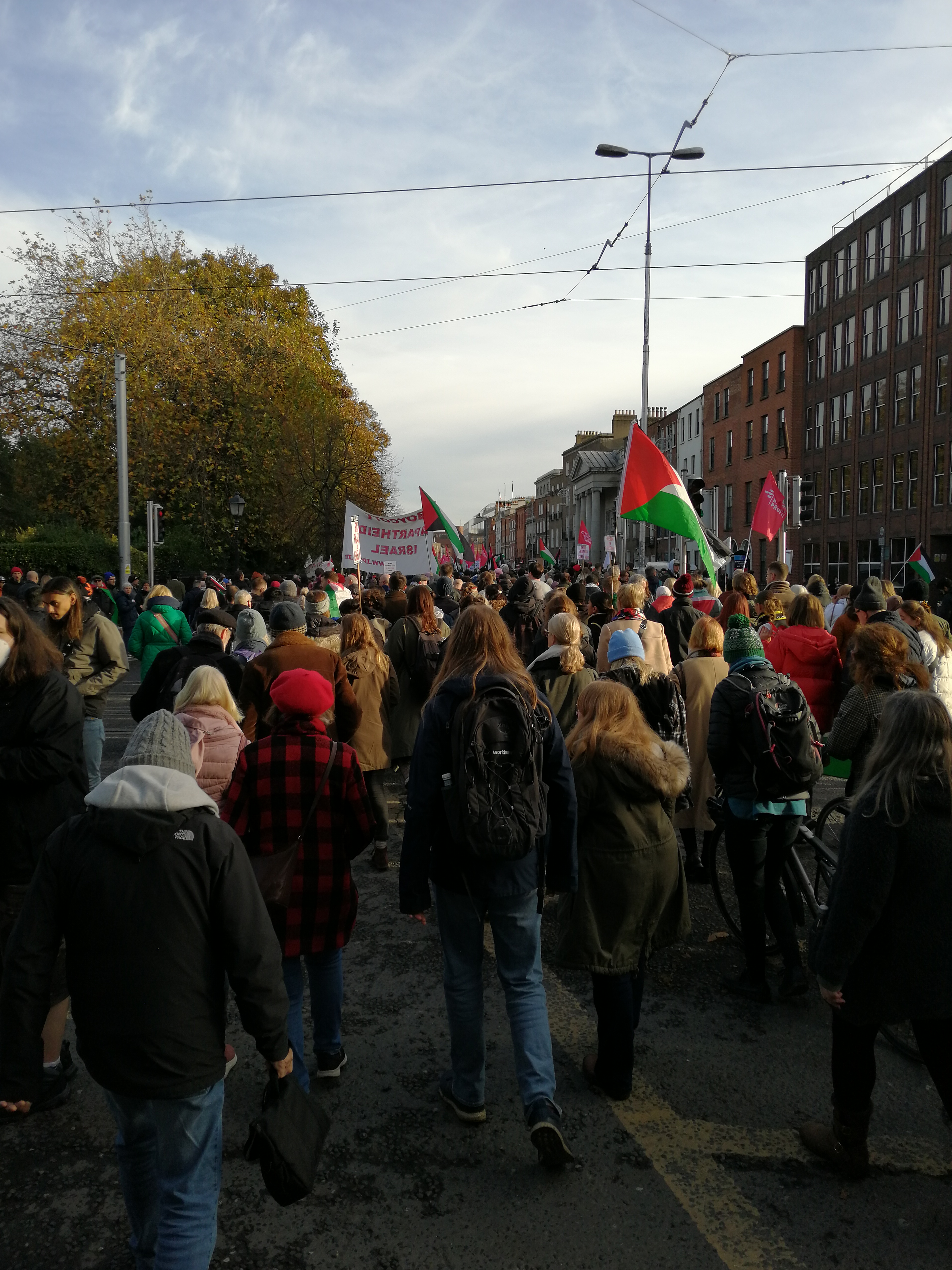

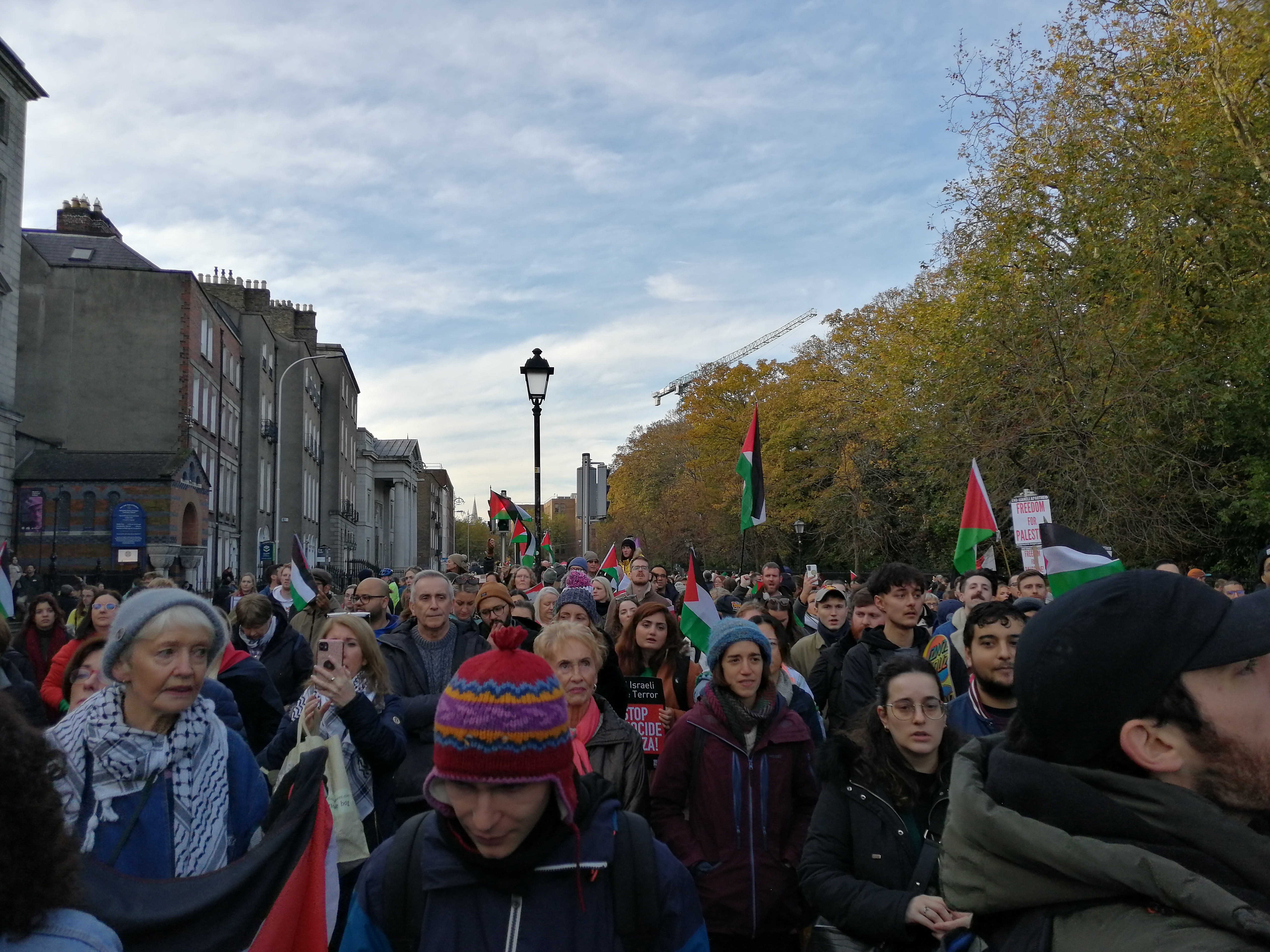


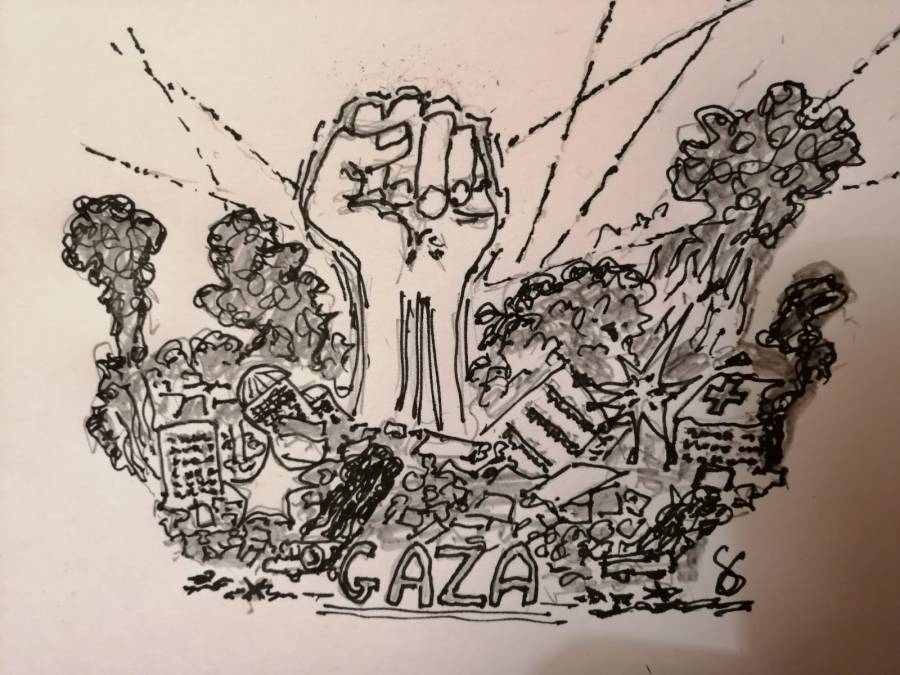

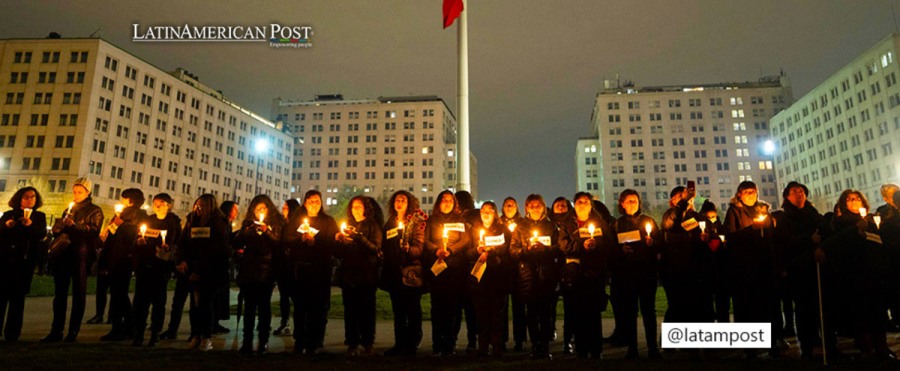
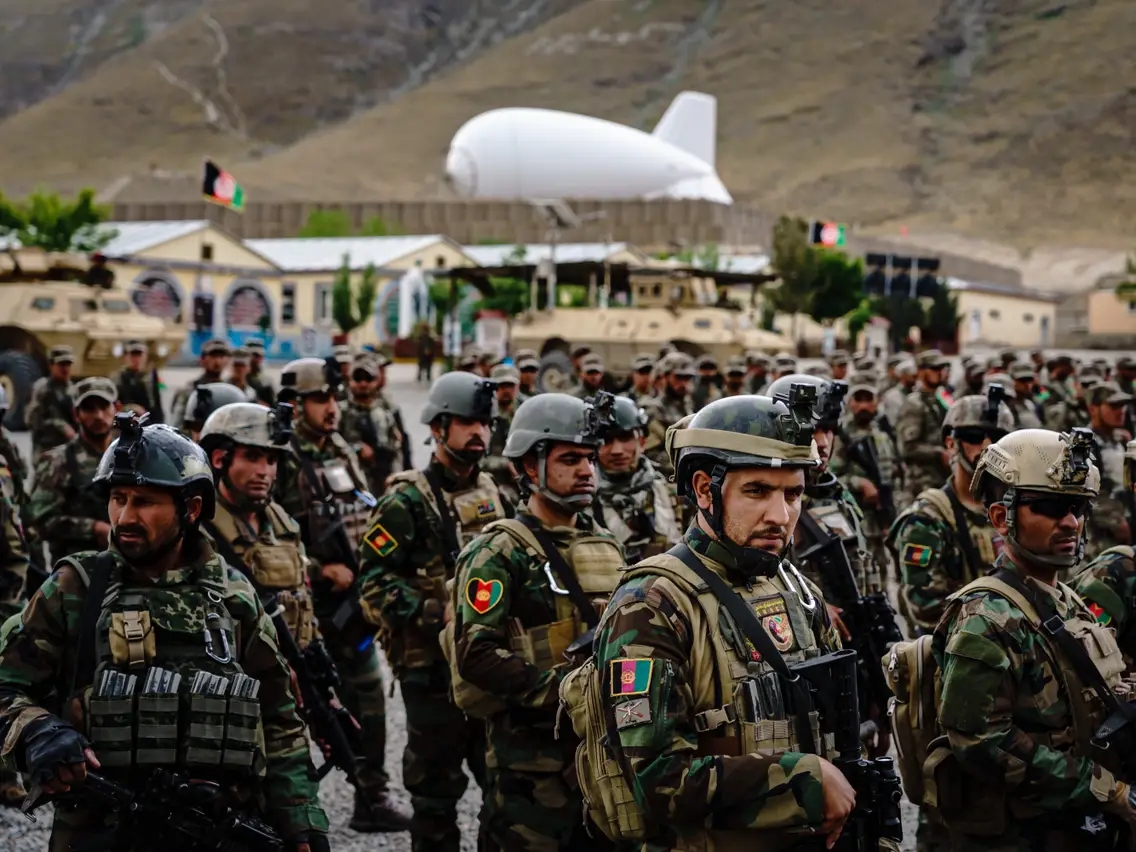
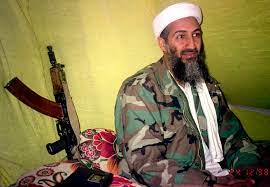
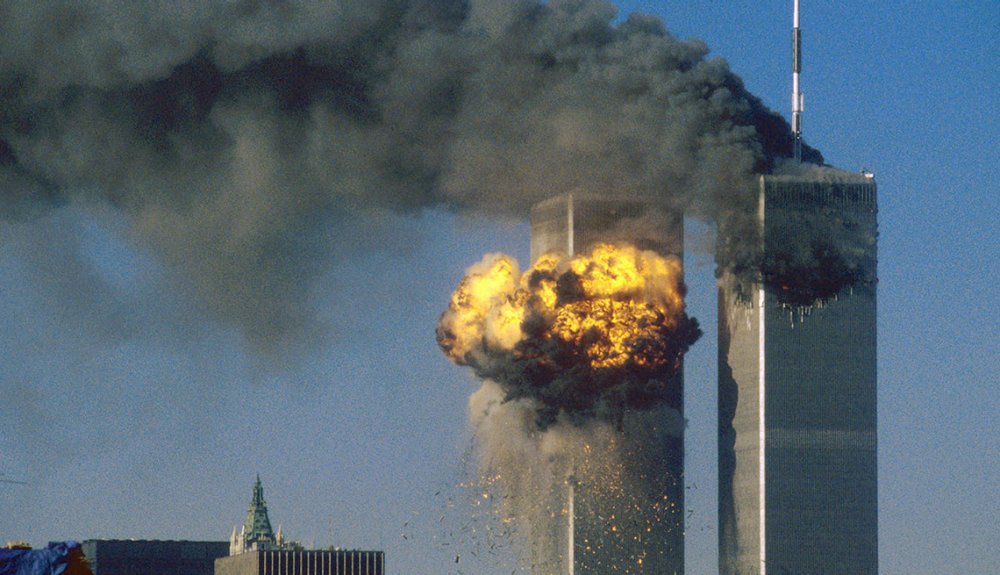

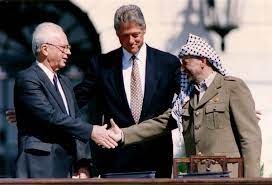
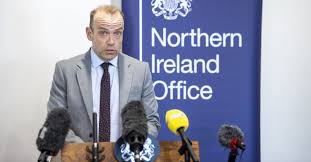
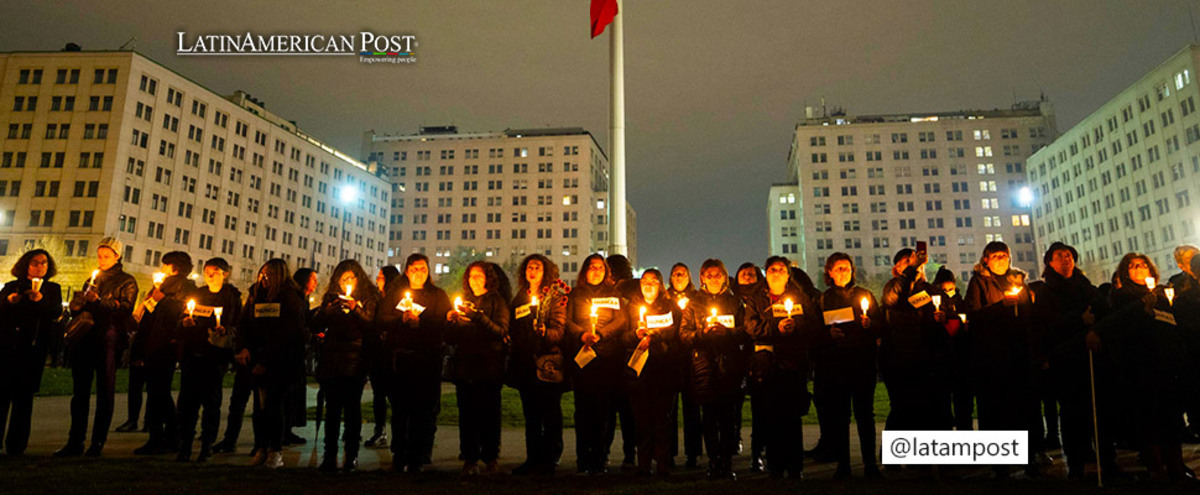


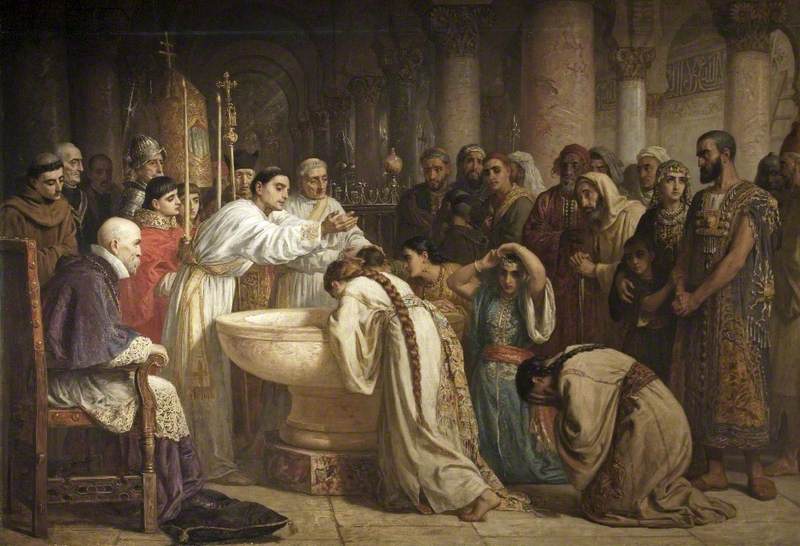



 rebelbreeze

