EUROPEAN UNION TAKES A STEP TOWARDS FASCISM

Diarmuid Breatnach

The General Secretary of the EU prevented two newly-elected Catalan independentist MEPs from collecting their credentials.

Puigdemont & Comin, campaigning for one of the Catalan independentist parties, Junts per Catalunya.  (Image sourced: Internet)

https://www.elnacional.cat/en/news/puigdemont-european-parliament-mep-elect_389599_102.html?fbclid=IwAR1OttxCYNaubBYGGA9C8M0KIdkbUaCdldPQd6fXsBdP72ox6UszBumMfEE

The European Parliament this afternoon prevented former Catalan President Carles Puigdemont and former Minister Toni Comín from collecting their credentials as MEPs after Sunday’s election.

On Twitter, Puigdemont wrote: “The European Parliament’s Secretary General has given instructions that neither Toni Comín, Oriol Junqueras nor myself can go through any formalities as MEPs. No legal reason. Pure discrimination. All the other MEPs-elect have been able to do the processes they’ve blocked us from. Disgraceful!”.

El secretari general del Parlament Europeu ha donat instruccions que ni @toni_comin, ni @junqueras ni jo puguem fer cap tràmit com a eurodiputats. Cap raó legal. Discriminació pura. Tots els altres electes han pogut fer els tràmits que a nosaltres ens han impedit. Vergonya!” pic.twitter.com/xqwNWe2K0O
Carles Puigdemont (@KRLS) 29 de maig de 2019

Spain has not yet officially provided the Parliament with the names of the MEPs elected on Sunday. The successful candidates have, however, been called to appear in Spain’s Congress on 17th June to swear loyalty to the Spanish Constitution.

Speaking to media outside the Parliament, Puigdemont said they were told the reason they couldn’t complete the formalities was that Spain hadn’t yet furnished this list. Spain’s other MEPs-elect, however, did manage to do what they needed to today, for example Diana Riba, second behind Junqueras on ERC’s list, partner of prisoner Raül Romeva.

Also able to collect their credentials were Ciudadanos’ new MEPs, for example former president of the Balearic Islands José Ramón Bauzà: “Very happy after my first day in the European Parliament as an MEP,” he wrote on Twitter.

Contentísimo después de mi primer día en el Parlamento Europeo como Eurodiputado. @ALDEParty ya está en pleno funcionamiento y @CiudadanosCs será la clave para construir la mejor Europa que hayamos conocido nunca!?￰゚ヌᄌ?￰゚ヌᄎ pic.twitter.com/mThaEjlegG

José Ramón Bauzá ?￰゚ヌᄌ?￰゚ヌᄎ (@JRBauza) 29 de maig de 2019


Clare Daly and Mick Wallace campaigning for election as MEPs
(image sourced: Internet)


COMMENT:

The MEPs who were prevented by the Secretary General, Klaus Welle, from collecting their credentials at the EU Parliament, have three things in common (apart from being elected by hundreds of thousands of citizens of an EU member state):

§ They are Catalan

§ They are national independentists

§ They are or have been sought by the Spanish State in politically-inspired criminal proceedings

But other Catalan MEPs have been able to proceed without problems. That they are independentists, then? Well, no, because for example Diana Riba (partner of political detainee Raül Romeva), who came second behind Junqueras on ERC’s list, collected her credentials without difficulty. It seems to me that the last one of the three characteristics is the relevant one. Klaus Welle wants to prevent having MEPs in the EU Parliament who are being sought by their state for politically-inspired criminal proceedings.

It is extremely doubtful that Welle has taken this step without the ruling interests of the EU being in agreement – or at least, without him believing he was acting in accordance with their wishes. If he does not have their agreement or has misjudged it, he will soon be given cause to regret it. But if we assume for the moment that he is ‘on the same page’ as the EU leadership, we must ask ourselves: what does this barring of elected MEPs to the EU Parliament mean?

Some may see it as the President of the EU respecting the wishes of the government of a member state (in this case, of the Spanish state). But with regard to MEPs elected by hundreds of thousands of votes of citizens of an EU member state? Besides, since when have the EU rulers been so considerate of the wishes of a member state? Have they not time and time againpbut the interests of the collective, which is to say in effect of the EU ruling states, above those of an individual state?

It seems to me that the significance of this action is that the rulers of the EU do not want political prisoners or political “fugitives” elected as MEPs. Since they cannot at the moment prevent their election, they are blocking their access to the body to which they were elected.

They are looking ahead, to days when they may have to take similar action in other cases: MEPs elected by independentists from Sardinia, Corsica, Brittany, the Basque Country (either side of the Pyrenees), Galicia, Andalucia, Flemish Belgium, Scotland, Ireland – in cases where they are jailed or sought by their state’s government. After all, as EU President Jean-Claude Junker inferred, if Catalonia is allowed to secede against the wishes of the Spanish state, those in other European states might do the same. And as he actually said, he did not want “an EU of a hundred states”.

So much for independentist MEPs but the implication here goes much further with special dangers for socialists and all democrats. I take just one Irish example. Clare Daly is a left-wing member or Deputy (in Ireland called TD, “Teachta Dála”) of the Irish Parliament (the “Dáil”) and was successful in the EU elections in May, so that she is now an MEP.

Clare Daly, TD, shown in front of the Dáil — could Left-wing MEPs be barred also if avoiding detention of their Government?
(image sourced: Internet)

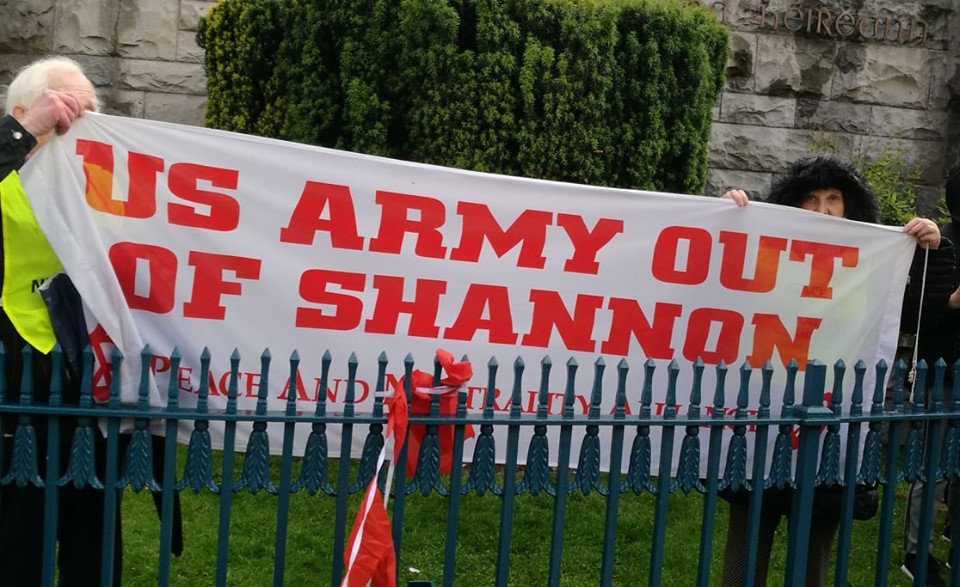
In 2014, Daly and her partner Mick Wallace (also by the way a TD and close to be elected MEP in a recount), carried out a protest trespass on to Shannon Airport land to call for the Irish State to take action in accordance with Irish constitutional neutrality and prevent use of the airport by the US military for refueling to transport soldiers, munitions, equipment and political prisoners.

Both Tds were tried and, in 2015, convicted and fined. They refused to pay the fines and after also declining to surrender to the court, were detained by police to be brought to jail (in the end, they were merely shunted around the country in police custody for a day).

Let us suppose that Daly, instead of allowing herself to be detained by the Gardaí (police of the Irish state) decided to take refuge in some European state and that the Irish State failed in extraditing her. And supposing further, that Daly were elected as MEP while this situation continued. Then the EU Secretary General could take exactly the same action with Daly as he has with the Catalan MEPs in question.

All genuinely socialist and/or democratic people should vigorously protest this barring of the Catalan MEPs.

End

45th ANNIVERSARY OF DUBLIN & MONAGHAN BOMBING — STILL NO JUSTICE

(Reading time main text: up to 15 minutes)

Diarmuid Breatnach

View of section of the crowd (Photo: D.Breatnach)

                    Forty-five years after the highest violent loss of life of any day in the Thirty-Years War in Ireland, survivors and relatives of victims of the Dublin and Monaghan bombing seem no nearer achieving justice. The identities of some of the Loyalist terrorists were known quite quickly after the bombing by Irish Army Intelligence and Garda Special Branch; British Intelligence penetration of some Irish State agencies had already been claimed by Irish Army intelligence and not long afterwards, Commissioner Ned Garvey was exposed as a British agent by a disgruntled British intelligence operative. Yet no arrests by the Royal Ulster Constabulary, no arrest warrants issued by the Irish Government and – incredibly – remains of bomb material were sent by Garvey’s superior to the British colony authorities for analysis. And consecutive British Governments refuse to hand over the relevant files or to disclose their contents.

View of section of the crowd at the commemoration.
(Photo: D.Breatnach)

45th ANNIVERSARY COMMEMORATION IN DUBLIN

          A crowd had gathered at the Dublin and Monaghan Bombings Monument in Talbot Street for some time before the event was due to start on the 17th May.  Aidan Shields, whose mother Maureen was killed in in Talbot Street, acted as the master of ceremonies and, after saying a few words about the bombings and the campaign, outlined the course the proceedings would follow, apologising also to those who had to stand in the rain. 

Irish Minister for Justice Charlie Flanagan spoke about the bombings and about the efforts he had made, on behalf of the Government, to have the British Government lift their embargo on the relevant files. He also used the opportunity to criticise by implication the armed Republican resistance in the British colony and to promote the Good Friday Agreement, seeking collaboration between different political parties in running the Six Counties, i.e the British colony. Although he said he shared the relatives’ frustration at the British Government still not disclosing the information about the bombing in their files, not once did he condemn them, nor criticise successive British governments, British Intelligence nor the administration of the colony and its police force.

Aidan Shields, MC of the event, whose mother Maureen was killed in the bombing.
(Photo: D.Breatnach)

The Mayor of Dublin Niall Ring and Cathaoirleach of Monaghan Council, David Maxwell, also spoke at the event.

It was left to Noel Hegarty, a survivor of the bombing, in a poem (see References) and Pat Savage in his Song for Derek (which I’ve been unable to find on line) to place the blame for the attack and the lack of progress where it belonged.

Noel Hegarty reading his poem (see link for the words). (Photo: D.Breatnach)
Pat Savage performing his Song for Derek
(Photo: D.Breatnach)

Julieann Campbell, author and Derry Bloody Sunday relative – her uncle John Duddy was the first fatal victim of the Paratroopers on that day in 1972 — gave the oration for the ceremony. She talked about the loss through sudden death, the effect on relatives and how it is exacerbated when official lies are told about the deaths with secrecy used to make it harder for the relatives and survivors to get at the truth. She referred to one British file on Bloody Sunday that is embargoed for decades yet and turned to Minister Flanagan, asking him publicly to press the British for the release of that file also, a request which was applauded by the crowd.

Rachel Hegarty read one of her sonnets from her collection, May Day 1974, which she composed based on witness testimonies about the deceased and Ciarán Warfield performed a song about the bombing and the lack of justice obtained. Fr. Tom Clowe led those who wished to respond in a Christian prayer (the Rev. Trevor Sargent had injured himself the day before and was unable to attend). Cormac Breatnach played low whistle while floral wreaths were laid and again at the conclusion of the event.

Rachel Hegarty reading one of her poems about the victims
(Photo: D.Breatnach)

THE BOMBING 45 YEARS AGO – THREE BOMBS IN DUBLIN AND ONE IN MONAGHAN

          What might be considered the official Dublin City centre is the area surrounding O’Connel Street, just north of the river Liffey. The street runs north-south and is bisected at its middle by a thoroughfare running east-west. The eastern part is mostly Talbot Street, with a short continuation named North Earl Street. Crossing over O’Connell Street one now passes by the Spire, where once stood Nelson’s Column (until blown up by dissident Republicans in 1966) and continuing westward, one enters Henry Street. This street contains big stores such as Debenhams and Arnotts and is a higher-class shopping street than are the streets chosen to place two bombs, Talbot Street; could it have been decided that predominantly working and lower-middle class victims were less likely to create pressure on the Irish Government to find those responsible? The other bomb’s target street, Parnell, is also not one of high-end shopping.

Cormac Breatnach, playing at the event.
(Photo: D.Breatnach)

There had been previous Loyalist bombings in Dublin, for example of the Wolfe Tone Monument in Stephens Green and the O’Connell Monument in Glasnevin Cemetery. None of those had caused deaths but a bombing in 1972 had killed a public transport worker and another, in 1973, had killed two and injured 185. No arrests were made in connection with either and in fact the Fianna Fáil government blamed Irish Republicans for the ’72 bombing, using the emotions engendered to push through more repressive legislation. That was an Amendment to the Offences Against the State Act, one which allowed the State to jail people on a charge of belonging to an illegal organisation, without any evidence other than the word of a Garda of Superintendent rank or higher and is regularly used to convict people today.

On the 17th May 1974 four bombs exploded in Dublin and Monaghan – killing 33 people including a woman who was nine months pregnant.

  • Three car bombs exploded without warning in the capital shortly before 5.30pm on Friday 17 May 1974.

  • Two of the bombs went off on Talbot and Parnell Streets before a third blast exploded on South Leinster Street near Trinity College, 27 people died.

  • Shortly afterwards another bomb exploded outside a pub in Monaghan, killing seven people. Hundreds more were injured.

Wreckage in East Parnell Street after the bomb there
(Photo source: Internet)

After the bombings, the most concrete result in Irish Government policy was that Irish Republicans being sought by the British began to be tried in the Irish State. The Criminal Law (Jurisdiction) Act 1976 allowed trial in the Republic for alleged crimes committed in the Six Counties, and vice versa, which facilitated Irish State cooperation with the British State against Republicans, overcoming the many failures in extradition cases up to that date.

This parallels somewhat the 1980s GAL terrorist campaign waged by the Spanish Government against Basque independentists in the northern Basque Country, part of the French State’s territory. After Spanish State-sponsored terrorist shootings and bombings of independentist Basques for some time on what it considers French soil, the French Government began to extradite refugees to the Spanish State. However it was 1984 before the Irish State actually extradited a Republican to the Six Counties, with the extradition of Dominic McGlinchey (who subsequently had his conviction overturned there). It is curious that this possible rationale for the Dublin/ Monaghan bombings does not seem to have been considered – after all, the 1972 bombings by British agents had resulted in a change in Irish law to the disadvantage of Republicans within the Irish State.

Juliann Campbell, niece of Derry Bloody Sunday fatal victim John Duddy, giving the oration at the commemoration.
(Photo: D.Breatnach)

The Justice for the Forgotten campaign organises an annual commemoration on the date of the bombings but internationally and perhaps even in Ireland, this massacre is the least-known of all that took place during the recent 30 Years War. Arguably this is because a) the bombs were not placed by the IRA and the massacre was not therefore of much use in propaganda against them; b) the victims were mostly Irish and/or c) the perpetrators were Loyalists and British Intelligence operatives working together.

Overlooking the Talbot Street Monument of the Bombings, the tower of Connolly Train Station (formerly Amiens St. Stn.), from which British machine-gun bullets were fired at Irish insurgents during the 1916 Rising.
(Photo: D.Breatnach)

SECRETS AND AVOIDANCE

          It is interesting how coyly the media treat the whole question of British collusion with Loyalist death squads, including the Glenanne Gang’s involvement in the Dublin-Monaghan bombings, along with Irish State‘s lack of energy in pursuing the matter, including possible collusion and certain secrecy. There are sometimes ‘suspicions’, ‘concerns’, ‘inferences’, ‘allegations’ ….

And yet most of these matters are beyond speculation, established as facts through a number of different sources. Contrast that with how happy the media are to label the tragic but accidental shooting dead of Lyra McKee as a “murder”, even though legally and in fact, murder can only be when someone intends to kill the victim – which not even the press in its greatest hysteria has tried to suggest was the case.

The Justice for the Forgotten campaign has taken a civil case against the British State which appears to be playing its usual delaying game in situations like this. On 17th April they were due to respond to questions of the campaign’s lawyers but did not do so until eight days later, which resulted in the campaign’s lawyers not being able to proceed at the Belfast High Court on May 1st ….. The relatives will now have to wait until September.

The lack of energy and firmness in pursuing the issues and the disclosure of British files is not the only evidence of the Irish State’s lack of interest. It is also the case that much of the funding for the Justice for the Forgotten campaign was removed by the Irish Government some years ago; the campaign was obliged to leave its Gardiner Street office and remove much of their equipment and files to a portakabin in a supporter’s back garden.

Margaret Urwin speaking, main administrator/organiser in JFF (Justice for the Forgotten), underfunded organisation campaigning for disclosure and justice with regard to the Dublin and Monaghan bombings.
(Photo: D.Breatnach)

The British are not the only ones sitting on secret files. Mrs. O’Neill had called on Leo Varadkar to release the files deposited by the McEntee Commission, which was charged with investigating the Garda inquiry of the time, an inquiry which has been heavily criticised over the years. “I personally ask the Taoiseach to consider this reasonable and fair request,” she had said. Martha O’Neill’s husband, Eddie, was killed in the bombing and her sons Billy, then aged seven and Eddie jnr. aged five, were badly injured but survived.

Last year, Fred Holroyd, a British Army Intelligence officer who was the liaison with the RUC for a number of years during part of the three decades of war in the Six Counties, offered to give evidence on British involvement in the bombings – but in a secret court. Holroyd is suing the British Ministry of Defence over sacking him and has spoken out about collusion between the British administration and Loyalist paramilitaries including those widely believed to be the Loyalist bombers responsible for the carnage on the 17th May 1974.

Another measure of the Irish Government’s lack of enthusiasm for going after the perpetrators of the bombings and their handlers can be seen in the fact that the first documentary to be made about the atrocity in the Irish capital city and Monaghan town, was made not by the State broadcaster, RTÉ but by the English company First Tuesday, Yorkshire TV. “Hidden Hand – The Forgotten Massacre” was broadcast on 6 July 1993. Not everyone who had TV in the state then had ITV – I believe it required a special aerial at the time – and if memory serves me correctly, Yorkshire TV offered simultaneous screening to RTÉ, which it declined. The program made a case that the British Army, the RUC and Loyalist paramilitaries could have been involved in a number of killings, including the Dublin-Monaghan bombings.

The failure of the Irish Government at the time to pursue the case energetically and in a correct manner was responsible for much more than leaving the injured and the the relatives of 33 murdered people without justice. It also left the Glenanne Gang, a Loyalist paramilitary Ulster Volunteer Force death squad that included serving members of the Royal Ulster Constabulary police force and the British Army’s Ulster Defence Force, free to carry out around another 120 sectarian murders in the Six Counties.

(Photo: D.Breatnach)

Year after year, the Dublin/ Monaghan commemoration is held and year after year, relatives call for truth and justice; the Irish politicians express regrets and say that they will ask the British Government for the files again, to be refused again. And there it is left, until the following anniversary.

End.

REFERENCES AND FURTHER INFORMATION:

Justice for the Forgotten campaign: http://www.dublinmonaghanbombings.org/home/

and https://www.facebook.com/Justice4theForgotten1974/

Holroyd: https://www.bbc.com/news/world-europe-48303360

Glenanne Gang: https://www.thejournal.ie/readme/dublinmonaghan-bombings-we-need-to-know-extent-of-british-involvement-with-this-loyalist-gang-3557141-Aug2017/

Coy Irish Times reporting: https://www.irishtimes.com/news/ireland/irish-news/government-presses-for-action-over-dublin-monaghan-bombings-1.3895839

1972 & 1973 Dublin bombings: https://en.wikipedia.org/wiki/1972_and_1973_Dublin_bombings

Hidden Hand TV documentary film: https://www.youtube.com/watch?v=Wr_wdPwipgQ

Noel Hegarty poem: http://www.dublinmonaghanbombings.org/poem6.html

DISCURSO DEL COMÍTE ANTI INTERNAMIENTO DE DUBLÍN PARA LA CONMEMORACIÓN DE PASCUA ABRIL 2019

DISCURSO DEL COMÍTE ANTI INTERNAMIENTO DE DUBLÍN PARA LA CONMEMORACIÓN DE PASCUA ABRIL 2019


A Chomrádaith agus a chairde, go raibh maith agaibh (“Companer@s y amig@s, gracias”) al Acción Anti-Imperialista de Irlanda por invitar al Comité de Anti-Internamiento de Dublín a hablar en este evento.

Tradicionalmente este es un tiempo cada año de conmemoraciones.

Conmemoramos en primer lugar a las mujeres, hombres y chicos que salieron a luchar contra un Imperio, el más grande jamás conocido y, en ese momento, el militar más poderoso del mundo. Algun@s lucharon solo por la independencia de Irlanda, much@s lucharon también por la justicia social y otr@s lucharon contra la guerra imperialista. El nuestro fue el primer alzamiento contra la carnicería de la Guerra imperialista y el mundo tuvo que esperar un año antes de que hubiera otro, en Rusia, y dos años antes del alzamiento espartaquista en Alemania.

Pero también conmemoramos a aquell@s much@s otr@s que lucharon y much@s que dieron su vida contra el invasor a través de los siglos, contra el colonizador, los ladrones de tierras, contra la monarquía inglesa por una República, contra los traidores de la causa de la independencia, contra los Gombeen (capitalistas nativos). Los gobernantes de nuestro propio Estado y los gobernantes coloniales de la colonia inglesa restante en suelo irlandés.

Es correcto y apropiado conmemorar los hechos heroicos y el sacrificio del pasado.

Pero no se trata solo del pasado; también se trata del presente y del futuro. A chomrádaithe (“companer@s), la lucha aún no está terminada y sus objetivos aún no se han alcanzado. Vivimos en un país dividido por una frontera británica y también dividido entre ricos y pobres, donde una pequeña minoría de explotadores vive de los trabajadores y de la clase media baja, convirtiendo la miseria de much@s en los euros y libras de unos pocos.

A medida que el fascismo asoma su fea cabeza y destapa sus sangrientos colmillos nuevamente por todo el mundo, nuestros gobernantes aquí en Irlanda también se vuelven cada vez más a la represión. Recordamos a los que están en juicio ahora por oponerse exitosamente al lanzamiento del fascista Pegida en Dublín en 2012. Y los partidarios del Sinn Féin Republicano atacados en Newry mientras conmemoraban el mismo Alzamiento de 1916 el año pasado, también en juicio ahora, una repetición de los ataques del RUC bajo la Ley de Poderes Especiales. Y las redadas en los hogares de much@s republican@s de otras organizaciones a lo largo del año. Y aquellos que languidecen en la cárcel después de la condena por cortes especiales sin jurado en ambos lados de la Frontera.

Parte del arsenal de la represión ha sido tradicionalmente el internamiento sin juicio. Y camaradas, tras el Alzamiento de 1916, hubo una gran ola de detenciones en Irlanda. Más de 3.500 hombres y mujeres fueron arrestados y se dictaron noventa sentencias de muerte, aunque más tarde todas menos 16 fueron conmutados. 1,852 mujeres y hombres fueron internados en campos de concentración y prisiones en Inglaterra y Gales.

Los británicos recurrieron nuevamente al internamiento durante la Guerra de la Independencia, al igual que los gobiernos irlandeses durante la Guerra Civil y en los años 30 y 40, y los británicos en los Seis Condados en los años 70. Eso fue internamiento masivo, pero el internamiento continúa hoy de forma más selectiva, a través de la revocación de la licencia para ex presos y la negativa de la libertad a fianza para otros. Tod@s l@s republican@s deben oponerse a esta práctica represiva y no solo l@s republican@s, sino también l@s socialistas y, de hecho, todas las personas democráticas. La historia muestra una y otra vez que lo que el Estado se sale con la suya contra un grupo, lo usa más tarde contra otro.

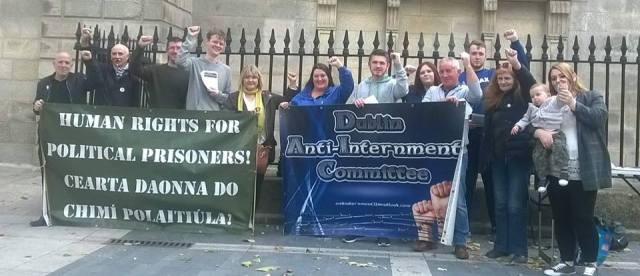
El Comité contra el internamiento de Dublín se esfuerza por celebrar un piquete mensual de información en diferentes partes de Dublín y un evento anual en Newry. No somos sectarios y somos independientes de cualquier partido u organización política, lo que significa que TODAS las organizaciones republicanas deben apoyar nuestros eventos, ya que el internmiento nos afecta a todos. O nos oponemos juntos a la represión estatal, camaradas … o vamos a la cárcel por separado.

Go raibh maith agaibh (gracias a vos).

I DON’T KNOW MADURO – BUT I DO KNOW THE U.S. IN LATIN AMERICA

Diarmuid Breatnach


Some people are saying Maduro is a dictator and ruling undemocratically. Those people seem to be mostly from the imperialist media and the Right but still … The claim seems to rest on the fact that although his party won the 2013 general elections, Maduro now rules without the support of the majority of the legislature in Venezuela.


The Venezuelan Opposition leader Juan Guaidó declared himself President, quoting a Constitutional provision and quickly got the support of the US and European powers. Brazil’s neo-fascist President Bolsonaro is also vociferously backing Guadió. Cuba and Bolivia support Maduro, as does Russia and China. Well, we kind of get used to the European powers being on the same side as the US in international affairs, and of Russia being on the other. And Cuba and Bolivia are biased against the USA, having often accused their powerful neighbour of meddling in the affairs of countries in Latin America.

And as it happens, history supports their accusation. Since the decade after WW2 alone, the USA have intervened, directly by invasion or less directly (i.e by instigating coups), in the following Latin American countries:

  • Argentina (coup 1976 and subsequent support for right-wing dictator)
  • Brazil (coup1964 and subsequent support for right-wing dictator)
  • Chile (coup 1973 and subsequent support for right-wing dictator)
  • Costa Rica (coup-civil war 1948 and many measures since)
  • El Salvador (coup 1975 and civil war to 1992)
  • Guatemala (coup-civil war 1954)
  • Nicaragua (support for right-wing dictator and running terrorist group 1979-1990s)
  • Panama (assassination of President 1981 to support replacement, subsequently military invasion 1989)
  • Paraguay (coups 1954, 2012)
  • Peru (CIA-sponsored governments 1990-2000)
  • Uruguay (coup 1973)
  • Venezuela (coup 2002, supporting opposition to Chavez, ditto with Maduro, inciting military coup [unsuccessfully to date]).

Well even if these methods were subversive and undemocratic, perhaps the USA was intervening to support democracy? After all, isn’t that what its spokespersons say they want in Venezuela?

Well, sadly no. The regimes the USA has supported in power as well as those brought to power by coups, have been military dictatorships and right-wing governments, repressing democratic freedoms, jailing trade unionists or murdering them, banning opposition media, torturing detainees, making hundreds ‘disappear’, and generally, according to many human rights organisations, with appalling civil and human rights records.

In fact, some of the statements of US spokespersons recently revealed interests that had little to do with justice or human rights. A Guardian report (see References and Links) quotes the USA’s national security adviser John Bolton complaining about Russian support for Maduro: “This is our hemisphere. It’s not where the Russians ought to be interfering.” Apart from the fact that this sounds like the USA’s Latin American policy from the 19th Century, one can’t help wondering when in the 20th or so far in the 21st Century, the USA has ever limited its operations to ‘its own hemisphere’.

Apparently, on May 1st, the Venezuelan Opposition leader tried to stage a coup. He sent out a tweet calling on people to mobilise to unseat Maduro and, though at one point he said it would be peaceful, had himself photographed with a few armed men in Army uniforms. Some opposition people did mobilise and the Army, apparently still loyal to Maduro, confronted them and injured many (none apparently with live rounds, thankfully). Where was Guaidó? It’s not clear but certainly not among those confronting (or being confronted by) the Army.

The US Secretary of State Pompeo claimed publicly that Maduro had a plane ready to fly to Cuba when the coup attempt began but was talked out of it by Russia. Evidence for this? He didn’t produce any and Venezuelan officials accused him of trying to undermine the Venezuelan Army’s confidence in the regime.

Almost certainly there will be other attempts. The US feels it has a good chance of destabilising the regime and bringing in one more favourable to itself. And of course, there’s all that oil.

Do I support Maduro? I don’t know him or his practice well enough to do that. But I do know the USA and whatever they are up to there, I am against them. And I think we should all be.

End.

LINKS AND REFERENCES:

US interventions for regime change in Latin America since WW2: https://en.wikipedia.org/wiki/United_States_involvement_in_regime_change_in_Latin_America

US policy towards Latin America in the 19th Century: https://oxfordre.com/latinamericanhistory/view/10.1093/acrefore/9780199366439.001.0001/acrefore-9780199366439-e-41

Recent US statement on sphere of influence: https://www.theguardian.com/world/2019/may/01/russia-denies-us-claim-it-told-maduro-not-to-flee-venezuela


LARGE EASTER RISING COMMEMORATION BY ‘DISSIDENTS’ ON DUBLIN’S MAIN STREET

(Reading time 15 mins. approximately)

Clive Sulish

          The Irish Republican organisation Saoradh staged a large demonstration of its support on Dublin’s O’Connell Street on Saturday afternoon (20th April). Republican marching bands and hundreds of supporters followed the traditional ‘colour party’ flags and lines of men and some women dressed in green-brown military-style clothing, black berets and dark sunglasses.

view section of parade proceeding south along east side of O’Connell St.

   Beginning at the Garden of Remembrance, the procession, carrying large portraits of the executed martyrs of the 1916 Rising, wound its way down the main street past thousands of viewers, many of those taking photos and filming, down to the wall of Trinity College and the Bank of Ireland building, then back up Westmoreland street and up the west side of O’Connell Street to the GPO building, the site of the HQ of the Rising in 1916, for speeches as the ceremony of the commemoration.
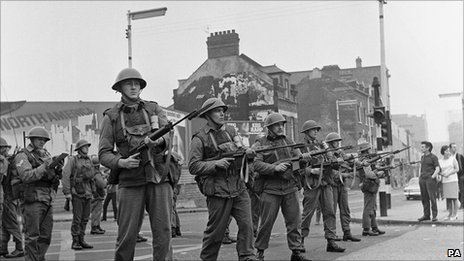
Parade forming up at Garden of Remembrance
The Wolfe Tone RFB from Craigneuk, Glasgow, at the Parnell St/ O’Connell St. junction
Long view of section of the parade proceeding south along the east side of Parnell Square.


     The parade assembled at Dublin’s Garden of Remembrance and remained there for some time without the reason being clear, until the arrival of the participants dressed in green-brown military-style clothing, black berets and dark sunglasses, which many in the waiting crowd applauded. Presumably these were meant to represent the IRA but from the physical appearance of many it was clear that their active duty days, if they had them, were behind them. Presumably too, any organisation that did have an armed section would be reluctant to offer them up to the State for arrest on a parade and their all appearing at the last minute like that was also perhaps to reduce the opportunity for Garda harassment.

Another colur party but in War of Independence (1919-1921) period costume at the Garden of Remembrance, waiting to begin.

   However, the uniformed Garda presence was in low numbers and although the Special Branch had officers there, they did not appear to be harassing Republicans for their names and addresses, as is their usual wont.

The route of the parade had been prepared placards bearing the words “The Unfinished Revolution” and “Saoradh” with tricolour flags attached at intervals to traffic sign and street light posts, including also at least one Palestinian flag. As the colour party and people in uniform lined up with banners and a band behind them and set off down towards the city centre, people joined in behind the band, with another band bringing up the rear.

TRAGEDY AND CONDEMNATION

          The crowd appeared to contain many different elements, mostly men but quite a few women, some parents with small children and some teenagers, young men and older. Included among the attendance were a number of independent Republicans and socialists and a number expressed their decision to attend as having been influenced by the tragedy of the previous Thursday and the media campaign against ‘dissident’ Republicans, along with the apprehension that the Gardaí might take advantage of that to block or harass the paraders.

   A scheduled Easter commemoration by a committee including apparently members of Saoradh to be held in Derry on Easter Monday had been cancelled as a result of a tragic incident. The armed British colonial police force in the Six Counties, the PSNI, had been carrying out house searches in the Galiagh and Creggan areas of Derry, allegedly for arms, to which youth had responded with stones and petrol bombs. During that incident, a gun was fired from the direction of the youth towards the colonial police but struck Lyra McKee, a young female reporter standing near them instead. Tragically the wound was fatal.

Section of banners coming back across O’Connell Bridge towards the GPO

   Saoradh had issued a statement after the event expressing regret for the death and extending condolences to Lyra McKee’s family and friends but also putting the incident in the context of regular harassing raids by the PSNI on houses in ‘nationalist’ areas and the always likely result of resistance (see Links for full statement).

   Possibly in reference to that tragedy, a very tall long-haired man stepped in front of a section of marchers with his hands in the air. Stewards quickly blocked him peacefully and diverted participants around him.

   Past the objector and into O’Connell Street, both the east side pavement and the pedestrian middle reservation were thronged with people watching, photographing and filming. The parade passed on to O’Connell Bridge, into D’Olier Street, turned right towards the Bank of Ireland building and back up Westmoreland Street to the General Post Office, location of the HQ of the Rising in 1916, outside of which the 1916 Proclamation had been read on 24th April by Patrick Pearse with James Connolly by his side.

At the GPO, Saoradh party chairman Brian Kenna welcomed the participants.

Portraits of the executed 1916 martyrs being carried back across O’Connell Bridge


Section of the Coatbridge Unitedmen RFB, Glasgow, marching southward in O’Connell Street.

THE SPEECHES AND CEREMONY

          At the GPO, Saoradh party chairman Brian Kenna welcomed the participants. Republican Easter Rising commemorations tend to follow an established pattern, no matter which organisation is involved: the reading of the Proclamation; messages of solidarity from Republican prisoners; a speech by a representative of the organisation; the lowering of the flags to a drum roll and their raising again, in honour of the fallen; the singing of Amhrán na bhFiann, the Irish National Anthem. In the past, a statement from the IRA was also read but in recent years this have not been customary, for a number of reasons.

   The usual components of the ceremony were present on Saturday outside the GPO with a few variations: a poem by a supporter read out, “James Connolly, the Irish Rebel” sung by another and “Róisín Dubh” played on the uileann pipes. The James Connolly song, with some powerful imagery and an attractive slow air, gives no indication whatsoever of the man’s revolutionary socialism and seems to incorporate him into the IRA, instead of the Irish Citizen Army which he co-founded or even of the Irish Volunteers, with which he joined forces only weeks before the Rising.

In the distance at the GPO, Chairperson of Saoradh Brian Kenna, MC of the event

   The RFB (Republican Flute Band) marching bands were from Scotland: The Wolfe Tone RFB Craigneuk and the Coatbridge Unitedmen RFB. One of the bands played “Take It Down From the Mast, Irish Traitors”, the lyrics of which deny the Tricolour to the Free Staters who waged the Civil War against the Republicans, the legitimate bearers of the flag. A participant remarked that the song was sung first against Free Staters, later against Fianna Fáil, later still against the “Stickies” and more recently against Sinn Féin.

   In his speech on behalf of Saoradh, Dee Fennel from Belfast began by sending solidarity messages to Republican prisoners in Irish jails and to the relatives of all those who had fallen in the struggle against British imperialim. He said that the objectives set out in the 1916 Proclamation had not been achieved and referred to those participants in the struggle who had left it along the way, some to collude in upholding the two failed states of the divided nation.
(at right of photo) Dee Fennel of Saoradh delivering the main oration at the GPO

   Referring to his own activism, Fennel recollected how four years previously he had spoken at an Easter commemoration as an independent Republican, i.e not a member of any political party. He had spoken of the need for Republican activists to engage more with one another and also in the struggles of communities, women and trade unions. Fennel said that as a result of a discussion among Republicans, some had formed Saoradh, building on “maturity and commitment” while others “retreated to their flags” and went on to list the wide areas of struggle in which he said Saoradh activists could be found.

   Fennel also referred to the activity of the IRA and said that while British imperialism remains in possession of a part of Ireland and prevents the exercise of sovereignty of the nation, there will be some form of armed resistance and that this is borne out by history.

   Referring to the harassment and persecution to which Fennel said Saoradh activists were being subjected, including “tens of thousands of stop-and-searches, hundreds of house raids”, he linked that to the PSNI raids in the Creggan area of Derry earlier that week and the tragic accidental killing of Lyra McKee when “a Volunteer fired shots at PSNI forces”. Going on to say that the IRA do make mistakes from time to time, and referring to two women killed by the Provisional IRA in error years before, Fennel said that the IRA should admit and apologise for their mistakes (NB: The New IRA did later issue an apology and express condolences), though he also said that no words could compensate for the feeling of loss.

   In reference to Brexit, Fennel said that the discussion is being focused on what kind of Border is to be imposed, while Republicans object to any kind of Border whatsoever. He stated that as socialists they also object to “the increasingly neo-liberal EU” and concluded with a call for solidarity with Irish Republican prisoners “in Maghaberry, Portlaoise and Mountjoy” who “are in captivity for no other reason thantheir commitment to Republicanism and a 32-county, secular socialist Republic.”

Salute to the fallen as drums roll and flags are lowered slowly and then raised slowly.

TRADITION OF THE PAST AND CLAIM ON TOMORROW

          Republican organisations tend to commemorate the Easter Rising not only as a historic event but also to highlight that for which the Rising was fought has yet to be achieved. But they also do so to show that they are here, present, working for those objectives and often, to promote their organisation, to attract support.

   The display involved in this Easter commemoration was impressive (despite a media claim that the numbers were only “around two hundred”), particularly in view of the inevitable bad press following the death in Derry and the system politicians’ statements on what a social media poster dubbed “The Opportunist Condemnatory Bandwagon”. It also seemed to show an organisation not much harmed overall in Ireland by a recent split over an alleged lack of internal democracy.

end.

Floral wreath carriers re-crossing O’Connell Bridge in the parade on their way to the GPO

Floral wreath from the Information Group of Sweden
Floral wreaths deposited outside the GPO (at the window where the Cúchulainn sculpture symbolises the 1916 Rising.

LINKS

Saoradh statement on the killing of Lyra McKee: http://saoradh.ie/the-death-of-lyra-mckee-in-derry-saoradh-statement/?fbclid=IwAR2nH20ILtiGjgCyih2eo0HEpkK27_F89MRptEb_OIMfA0SbRz4YB8Fneiw

Media and politician reaction to “dissident” Easter Rising commemorations in Dublin (many other similar examples): https://www.independent.ie/irish-news/politics/video-an-insult-to-irish-people-republican-groups-march-48-hours-after-lyra-mckee-murder-dishonored-the-irish-flag-varadkar-38035393.html

Irish Times inaccurate reporting:

https://www.irishtimes.com/news/ireland/irish-news/revolutionary-party-saoradh-in-paramilitary-parade-through-dublin-1.3867379?fbclid=IwAR24E5sZ9iMfINxDcor0T9uRmF5-0yV9_bfWylcCfzC0rctjMaCfmFDfv6w

IRISH REPUBLIC DAY CELEBRATION – FIRST YEAR WITHOUT TOM STOKES

Diarmuid Breatnach


April 24th is Republic Day, the date on which the 1916 Rising began and when Patrick Pearse read out the 1916 Proclamation. Back in 2014, Tom Stokes began a campaign to have this date acknowledged as the Irish national day.  This year, it was celebrated in his absence.

The late Tom Stokes speaking at a Republic Day commemoration (Photo: D.Breatnach)

“Easter Monday is a moving date, different each year,” Tom Stokes had said. “St. Patrick’s Day is based on a religious feast day. The nation needs a fixed day and one to celebrate the Irish Republic.” Tom Stokes would have agree with those who might say that “the Irish Republic” was yet to be achieved, or that it was more aspirational than reality. As he spoke at each annual commemoration of the date, he railed against many of the faults of the Irish state and in particular on its treatment of women. He was a champion of Republican women of the past, for example Margaret Skinnider, Dr. Kathleen Lynne, Winnie Carney, Elizabeth O’Farrell and celebrated that some of the women had been lesbians, supported the right to choose abortion (though some Irish Republicans would have disagreed on the latter).

Banner leaning against the Arbour Hill monument wall.
(Photo B. Hoppenbrouwers)

Tom Stokes died December last year but some people were determined that the celebration of Republic Day should carry on. On the 24th April 2019, some of them gathered in Arbour Hill, by the monument to the executed in the 1916 Rising, the words of the Proclamation etched in large letters, in Irish and in English, on to the stone wall overlooking the site.

The event was chaired by Pearse Brugha (incidentally a descendant of Cathal Brugha, the 1916 Rising veteran and subsequently part-organiser of the IRA, killed by a Free State soldier in the early days of the Irish Civil Wa)r.

Pearse Brugha chairing the event. (Photo B. Hoppenbrouwers)

Brugha welcomed the attendance and in particular members of the Stokes family, then went through the background to Tom Stokes’ campaign for the commemoration of Republic Day, saying that Tom had wished it to be a national holiday. Brugha then asked on the attendance for a minute’s silence in memoriam and called on Tom’s widow Anne Stokes and their son to lay floral wreaths on behalf of the family at the 1916 Rising Monument.

Next, Brugha presented Cormac Bowel and his young son Fionn, who approached playing Fáinne Geal an Lae (“The Dawning of the Day”) on their bagpipes, Cormac in Volunteer officer uniform and Fionn in traditional piping kilt. It was only Fionn’s second public playing, the attendance were told.

Cormac Bowel reciting the 1916 Proclamation. (Photo B. Hoppenbrouwers)
Cormac Bowel and son Fionn approaching the monument while playing Fáinne Geal an Lae. (Photo B. Hoppenbrouwers)

A number of other parts of the ceremony followed.

Fergus Russell sang “The Foggy Dew” and Frank Allen, who had been involved with Frank Stokes in organising Republic Day commemorations, gave an oration praising Tom Stokes as a “true Republican” who believed passionately in equality and also as “a true internationalist, who would be just as likely to be found on a Palestine solidarity demonstration”. Allen also criticised heavily the Irish regime, as Stokes had done in his speeches.

Pat Waters played his own composition, “Where Is Our Republic?”, which he had composed at the request of Tom Stokes.

Cormac Bowell recited from memory the 1916 Proclamation and Fionn played a solo lament on the pipes.

Shane Stokes, speaking, also paid tribute to his father Tom Stokes and to the campaign to have a Republic Day on 24th April.

Fergus Russel singing The Foggy Dew.
(Photo B. Hoppenbrouwers)
Frank Allen speaking at the event. (Photo B. Hoppenbrouwers)
Pat Waters performing his own compostition “Where Is Our Republic?”
(Photo B. Hoppenbrouwers)
Shane Stokes, a son of Tom Stokes, speaking at the event.
(Photo B. Hoppenbrouwers)
Very young piper Fionn Bowel playing a solo lament.
(Photo B. Hoppenbrouwers)

Pearse Brugha, who had been chairing the event throughout, also recited all three verses of the Soldiers’ Song and then sang the chorus, then thanked all for their attendance.

Among those in attendance were members of the 1916 Performing Arts club, activists of the Save Moore Street From Demolition campaign group and Niall Ring, Lord Mayor of Dublin. Also present were Dave Swift, historian and enacter; Las and Dónal Fallon, historians and authors; Brian O’Neill; Deirdre O’Shea; Jim Connolly Heron.

TRAGEDY AND THE CONDEMNATION BANDWAGON

(Comment: Approximate reading time 5 minutes)

Diarmuid Breatnach

A woman dies; she was young, a tragedy. Where did this happen and when? In Derry on Thursday evening. How did she die? Apparently (and I say that advisedly, for I do not know the examining doctor‘s verdict nor has an inquest yet been held) by a gunshot to the head. And according to a number of witness statements, she did not have a gun herself and therefore the bullet came from someone else.

THE CONTEXT

          All this and more has been reported in unanimity. What was the context? Ah, there we have to do some digging.

There was a riot going on at the time – there were petrol bombs and stones thrown at the police. Oh, why? Well, some of the early reports didn’t even try to answer that. But later, we were told: the police were searching houses for IRA arms. The police had “a tip-off”, some papers reported.

OK, now we’re getting somewhere. Reading between the lines, if we know enough about the general situation, we can reconstruct a probable narrative: British armed colonial police were searching the homes of Irish Republicans in ‘nationalist’ areas, just before their Easter commemoration, a commemoration during which they attacked another Republican group in Newry last year and one which was for decades banned under the Special Powers Act in the Six Counties – a ban enforced violently by the forerunners of the very police force carrying out those house searches on Thursday.

And it turns out, as admitted by senior PSNI command and reported in only some media outlets, including the Irish Examiner, that the purpose of the police raid was harassment: PSNI officers were carrying out a search operation in the Creggan area of Derry aimed at disrupting dissident republicans ahead of this weekend’s commemoration of Irish independence.”

And we might know, though not from the general media, that the colonial police have been carrying out these raids on numerous occasions of late, as well as stopping cars of Republican activists and searching them, stopping people out walking and searching them too, as well as questioning them about where they are going and where they have been. Most people of course won’t know that – how could they?

So now that we have context, we might see the rioting as a justified response, even natural perhaps, of a colonised people to provocation and harassment by a militarised police force of a colonial occupation. And a colonial administration with a long history of atrocities by the occupying power. Or we might not – but context gives us the opportunity to interpret, while its absence leaves us bewildered or manipulated.

If we take the view that the people are justified in resistance, does that excuse the killing of the woman in question? No, not at all. But it does take us some way to understanding the situation and perhaps we wouldn’t want to see Irish Republicans as monsters then.

Lyra McKee’s death is a tragedy, as is the premature death of any innocent person and particularly a young person. The Six Counties too, that repressive backward statelet, can ill afford the loss of an LGBT campaigner.

Firing a gun in that situation was highly irresponsible and unnecessary. The shooter (or shooters) could not be sure of hitting a police officer and did, in fact, hit a totally innocent bystander. And if the police had fired back, the shooter(s) would have put everyone around them in mortal danger too.

CONDOLENCES AND CONDEMNATIONS

            Saoradh, an Irish Republican organisation active in the area who were involved in preparing for the Easter Rising commemoration in Derry felt they had to cancel the event after the death. They issued a statement providing context for the riot and also extended condolences to the bereaved family and friends. Most media didn’t quote the relevant parts of the statement and some never even mentioned it.

On Saturday, their representative at their Easter Commemoration outside the GPO building in Dublin repeated the statement and amplified it, saying also that the IRA was not always right and, when they erred, they should apologise for it. The media didn’t report that either.

The media rushed, not to report the shooting and its context, but to condemn Irish Republicans who don’t agree with the Good Friday Agreement, i.e the ‘dissidents’. The BBC, in its first report on line, along with some others, called it a “murder”. Were they justified in saying that?

In law, not all homicides can be called murders.  According to Wikipedia, Murder “…. is considered the most serious form of homicide, in which one person kills another with the intention to cause either death or serious injury unlawfully.” So there has to be intention to cause either death or serious injury to the victim. Are the BBC and other commentators really suggesting that the person or persons intended to kill a journalist? Apart from seriously inaccurate reporting, one might see those kind of claims as prejudicial to a fair trial for anyone arrested for the homicide.

THE CONDEMNATION BANDWAGON

          And then, of course, jumping on to the condemnation bandwagon, we have the usual collection of hypocrites and opportunists. What would we expect from Unionist politicians? They have been running that colony with regular pogroms and armed repression for nearly a century – Irish Republicans are their enemies to the marrow. Arlene Foster couldn’t resist using the opportunity to praise their colonial police and to take a swipe at SF: Those who brought guns onto our streets in the 70s, 80s & 90s were wrong. It is equally wrong in 2019.” Actually, at first it was usually the RUC with the guns on the street, wasn’t it? And then the British Army. But then after the Ballymurphy Massacre, Bloody Sunday …. well, you shoot at people long enough, they shoot back.

British Ministers and politicians had their condemnation to get in as well – well, the colony is theirs, isn’t it? The Republicans are their enemies too (and Theresa May must’ve been glad to be talking about something other than Brexit, for a change).

But then we had the Irish politicians also, including our own Taoiseach (Prime Minister), who presides over a State that is made secure for native and foreign capitalists by, among other things, persecution of Irish Republicans and sending them to jail through non-jury Special Courts. Mr. Varadkar is so supportive of the people of Derry, so sensitive to their needs, that whilst he condemns the Republicans, he praises the people of Derry for being “as strong as your walls.” Is he expressing Loyalist views or is he so ignorant of the people of Derry and their history?

Is Varadkar unaware that the Derry Walls belonged to the foreign occupation force? That the song that celebrates them is a triumphalist anti-Catholic sectarian and colonist song? That during the recent war in the Six Counties those walls were frequently a point of surveillance for the occupying military and that during the Bloody Sunday massacre, some British soldiers were up there with special rifles?

Oh yes and let’s not forget Nancy Pelosi, she too found a place on the bandwagon (well, to be fair, the others made room for her). This is long-standing career US Congresswoman who, although an outspoken opponent of the Iraq War and supporter of civil rights, blocked her party colleagues from going for impeachment of war criminal President Bush because “you never know what might come out”. She also voted for the Patriot Act, a huge attack on civil liberties in the USA and labeled Edward Snowdon “a criminal” for his whistle-blowing. And yes, after a briefing relating to a CIA agent destroying hundreds of hours of videotaping of torture in their US base in Guantanamo, she issued a statement saying that she eventually did protest the techniques (e.g “waterboarding”, euphemism for simulated drowning of prisoners under interrogation – DB) and that she concurred with objections raised by a Democratic colleague in a letter to the C.I.A. in early 2003. Yes you did, Nancy – but you waited four years to do so.

And what are we to say of Sinn Féin, they of association with the late Provisional IRA, putting their name to a joint statement of colony politicians? One would think that considering their past, they would hesitate to join the mob or to climb upon this particular bandwagon. One might think they would remember the innocent people the PIRA killed on occasion by accident, such as for example the Birmingham pub bombings where 21 people were killed and 182 injured or even, on some occasions, with intention.

Perhaps Michelle O’Neill did remember, perhaps she did hesitate, perhaps she wished to issue SF’s own statement. But climb aboard they did – and isn’t it all about climbing with them now?

The political parties that support the occupation said in joint statement: “Lyra’s murder (see that “murder” word again – DB) was also an attack on all the people of this community, an attack on the peace and democratic processes.

“It was a pointless and futile act to destroy the progress made over the last 20 years, which has the overwhelming support of people everywhere.” (Oh, that was its purpose, was it? And this progress has been what, exactly? And towards what?– DB).

O’Neill was herself quoted as saying that the “murder” (that word again !) was “an attack on our peace process and an attack on the Good Friday Agreement.”

And We will remain resolute in our opposition to the pointless actions of these people who care nothing for the people of Derry.

I can’t say whether those people putting up a resistance to the colonial police care for the people of Derry or not but presumably they care for the people of their own neighbourhoods who are being harassed by the PSNI. And I remember in another city, Belfast, how the Loyalists had been threatening the Ardoyne area for many months and that in 2015, the PSNI blocked the Anti-Internment League from marching down to the city centre. Although the march eventually dispersed without incident, the heavy police presence in the area provoked some residents to remonstrate with them and, when the police began to arrest a woman, the area erupted in a riot. Who did SF blame? The local youth and the anti-internment marchers! And when a meeting was convened soon afterwards in a local venue for the march organisers and SF to explain their views, it was the latter that failed to attend.

* * *

Well, it must have been getting tight up there on the bandwagon but there’s always room hanging off the sides and if that doesn’t work …. why, one can run behind. And if not, not to worry, there’ll be another one along soon.

End.

LINKS

BBC initial news on line: https://www.bbc.com/news/uk-northern-ireland-47985469

Irish Examiner (including intention of PSNI to disrupt Republicans): https://www.irishexaminer.com/breakingnews/ireland/a-senseless-loss-of-life-journalist-lyra-mckee-29-shot-dead-during-riots-in-derry-918754.html

The Saoradh statement: http://saoradh.ie/the-death-of-lyra-mckee-in-derry-saoradh-statement/?fbclid=IwAR2nH20ILtiGjgCyih2eo0HEpkK27_F89MRptEb_OIMfA0SbRz4YB8Fneiw

Continuing Internment Brought to Notice in Busy Dublin Shopping Street

(From FB page End Internment by kind permission)

The campaign against continuing internment in Ireland had a visible presence in Dublin’s premier and busy shopping area, Henry Street on Saturday 6th April.

Photo: Dublin Anti-Internment Committee

          Republicans and socialists from a number of organisations — and none — supported the picket, called by Dublin Anti-Internment Committee as part of its ongoing campaign to raise awareness that internment without trial of political activists continues in Ireland, though on a much-smaller scale.

Hundreds of leaflets were distributed to shoppers and sightseers and only one complaint was received – that there wasn’t a petition to sign!

DAIC member handing out leaflets to passing members of the public (Photo: Dublin Anti-Internment Committee

If any reminder were needed that internment is continuing in Ireland, it was provided recently with the case of former Republican prisoner Alan Lundy, who was recently jailed without charge and released some weeks later, being yet again detained and put straight into jail, again without trial or even charge.

IF YOU WANT TO HELP

          If you live in Dublin and would like to help, why not join the DAIC at the next picket? These are roughly on a monthly basis. The DAIC is completely independent of any political party or organisation and organises itself in a democratic manner – however, it is a participative democracy, in that the people who attend public awareness-raising events are those who make the decisions at notified committee meetings.

If you don’t live in Dublin, you could share our posts from time to time ….

Photo: Dublin Anti-Internment Committee

HISTORICAL NOTES

          The Proclamation of Independence was signed in what was then an Irish foods and coffee shop, No.21 Henry Street, about a week before the Rising.

During the actual Rising, the street saw much firing from British troops closing in on the GPO from both directions, east and west. An advance of British soldiers from the west was halted by a Volunteers’ ambush somewhere near where this picket was.

end.

Photo: Dublin Anti-Internment Committee
The plaque commemorating the signing of the 1916 Proclamation of Independence at No.21 Henry Street.
(Photo: D.Breatnach)

BLESSINGS, CURSES, OATHS, THE FENIANS AND POPE PIUS IX

Diarmuid Breatnach

(Reading time: under 10 minutes)

This is an article about grammar, religion and politics. While the last two are often discussed in the same conversation, grammar is usually absent as a subject. But it has its place here.


SWEARING AND CURSING

          “Don’t curse!” or “Don’t swear!” a parent or an elder might have said to us when we were children or teenagers. And particularly when we were teenagers we did exactly what we had been told not to, certainly the boys, in a mistaken sign of manhood. As a verse in the English folk song The Shoals of Herring has it, in fact:

Well you’re up on deck, you’re a fisherman,

You can swear and show a manly bearing,

Take a turn on deck with the other fellows

As you hunt the bonny shoals of herring.”

A related admonition was against “taking the Lord’s name in vain”, which was a prohibition of blasphemy, the misuse of Yahweh’s name, taken from Exodus 20.7: “Thou shalt not take the name of the Lord they God in vain; for the Lord will not hold him guiltless that takes his name in vain.” 1

So most of us grew up thinking that swearing and cursing were the same thing and more or less careful about which company in which to use those words – or not. But we were mistaken, cursing and swearing are not the same thing at all.

We are familiar with swearing in some formal settings, such as courts of law, for example: “I swear by almighty God that the evidence I give shall be the truth, the whole truth ….”2 and also with swearing for entry into some organisations (frequently the armed forces).

Bejaysus”, common in Dublin, is from “by Jesus” and “bedad” is probably a disguised “by God”. The Cockney’s “Blimey” was originally “May God blind me” (e.g “if I am not telling the truth”).

The use of “Bloody” in informal society was often a swearing upon the “blood of Christ” or, strangely sometimes, the blood of “Mary”, the mother of Christ in the religions of “the Book” (Bible, Talmud or Koran). Of course “bloody” could be used pejoratively in the sense of “blood-stained”3, in which case it was not swearing but might still raise objections in some quarters of society, or descriptive of a massacre as in “Bloody Sunday”4.

In fact, swearing is to call a divine Power to witness the truth of what we are saying (in courts of law, for example) and that we intend to carry out the expectations of the organisation (e.g in the armed forces). In swearing, we utter an “oath”. Nowadays, most people who are not highly religious probably attach little importance to the form of words, though some institutions persevere with them. But in older times and not even so long ago, most people viewed an oath as a very important thing.

To break an oath of allegiance in some countries and in some periods incurred severe penalties, including death. “Oath-breaker” was an epithet that might be attached to the name of an “outlaw”, one who had broken his oath of service to a Saxon, Norman or English Lord in the Middle Ages.

The required Oath of Allegiance to the British Crown, simultaneously to the Head of the Anglican Church, prevented many Catholics for centuries from entry into many professions and from being elected as a public representative. And the British Crown was itself particularly worried for centuries by alternative “oath-bound societies” that were seeking united workers’ actions, such as agrarian defence organisations and trade unions, or equality and improvement in social conditions, for example political organisations. Laws were passed against the dispensing and swearing of such oaths.

Representation of the three witches in Shakespeare’s “Macbeth”. throwing a curse.
(Image sourced: Internet)

Cursing, although it may sometimes “take the Lord’s name in vain”, is something else completely. We know in Ireland of the “Curse of Cromwell” but more frequent probably was Mallacht na bPréacháin “the Curse of the crows”, which wished upon the victim a childless land, to be inherited only by the crows. Scread mhaidne was another ill-wish to lay upon someone, that he or she may die in agony, screaming into the morning. Ná feice tú Dia sounded less terrifying but might have been more frightening for a very religious person: “May you (never) see God!”.

Painting of Oliver Cromwell, an English Republican whose name became part of a curse in Ireland (including for Irish Republicans!).
(Image sourced: Internet)


Damn” and “Goddamn” are abbreviations of “May God damn …” (“you, her, it, them” etc) and to utter them in many circles in the USA is considered evidence of bad rearing. They are curses which are also oaths, in calling upon the Devine being to add power to the curse.

Typically, curses and oath-curses use the subjunctive in grammar and, although seemingly strange, this connects them to blessings and greetings. Go raibh maith agat (may you have good”) is the Irish for “thank you” and Go mba hé duit (“may it be [the same] for you”) is the reply to the Irish greetings Sé do bheatha or Móra duit. Slán abhaile (“Safe home”) is an abbreviation of Go dtéigh tú slán etc (“May you go safely home”). All of these are in the subjunctive form of speech.  Vaya con Dios (“May you go with God”) is a castillian-language (Spanish) farewell wish we might come across in tales set in the south-west USA or in Latin America; that is also in the subjunctive. In fact “farewell” was “fare thee well” and probably originally, “May thee fare well”. Instead of the “Go to Hell” or “I hope you break your neck” one might hear today, centuries ago one would have heard “May you go to Hell” or “May you break your neck”.

This constant use of the subjunctive to wish well or ill upon others suggests to me that it was widely believed, at some stage in society, at least in most European societies, that one could make something happen by using a certain form of words. That form was the subjunctive; however, according to many who study language, the subjunctive is disappearing in European language and remains most in use preserved in everyday greetings and well-wishes – and the occasional curse.

It seems to me that the reason for this gradual disappearance is that we no longer believe we can make things happen by the way that we say them. We may wish them – and show the object person that we wish them – but we can’t make them happen. Nor can we expect a thing to happen with anything like a confidence that invoking a God will bring the wish, for good or ill, to fruition.

FENIANS

          Earlier in this discussion I touched on oath-bound societies and the apprehension with which they were often regarded by those in power. Well, the Fenians were such an organisation. Formed on St. Patrick’s Day 1858, in Ireland as the Irish Republican Brotherhood and in the USA as the Irish Fenian Brotherhood, it was a popular movement until the Irish Civil War (1919-1922). Because of their revolutionary credentials and democratic program, they were accepted into the International Workingmen’s Association (the First Socialist International 1864-1889). As a true Republican organisation, they sought the separation of Church and State5 and in that, apparently incurred the wrath of Pope Pius IX (Giovanni Maria Mastai-Feretti, ruled from 1846 to his death in 1878). He excommunicated the Fenians.

Pope Pius IX
(Photo source: Internet)

Although a significant number of Fenians (particularly in the leadership) were of Protestant background (Presbyterian, Anglican, Methodist, Unitarian), most of the Fenians had been brought up in the religious faith of the majority in Ireland, Catholicism. Not only would excommunication be painful to Catholic Fenians but could also lead to their being shunned by other Catholics who might otherwise have supported them. In the end this did not occur to anything like the extent that would have pleased the Catholic Church hierarchy or the British rulers of Ireland, as Irish Catholics have historically shown an ability to set to one side the teachings of the Church when they appear in contradiction to their struggle for national self-determination.

But obviously the public excommunication did the movement some harm and hurt many Fenians who were also strongly Catholic, such as John O’Mahony, co-founder in the USA, who left the Fenians as he approached his death so that he might be administered the last rites of the Church6.

John O’Mayony, c.1867, a Catholic Fenian, excommunicated by Pius IX (Source photo: Internet)

SCHOOL SOPHISTRY

          In an Irish secondary school run by the Christian Brothers, we were taught that the opposition of the Catholic Church to the Fenians (and presumably to the subsequent Republican military organisations), rather than being due to their struggle for Irish independence, was the secret organisation’s dispensing and repetition of an oath of allegiance. Perhaps we were too ill-informed (I know that I was) to bring up the question of oaths given in other circumstances, such as in giving evidence in court or in military service, circumstances with which the Church appeared to have no problem.

Had one of us done so, our Christian Brother teachers might have replied that what was wrong was “taking the Lord’s name in vain” and explained that “in vain” did not, in the English at the time of translation of Bible texts, mean only “for no important purpose” but also “for no good purpose” and that would of course have included “for an evil purpose”.

Had we questioned what the “evil purpose” might have been in the case of the Fenians, we would have put our teachers in some difficulty.

What for example in the two versions of the Fenian Oath recorded, might be considered “evil”?

I, A.B., do solemnly swear, in the presence of Almighty God, that I will do my utmost, at every risk, while life lasts, to make Ireland an independent democratic republic; that I will yield implicit obedience, in all things not contrary to the law of God, to the commands of my superior officers; and that I shall preserve inviolable secrecy regarding all the transactions of this secret society that may be confided to me. So help me God! Amen.”

I, A.B., in the presence of Almighty God, do solemnly swear allegiance to the Irish Republic, now virtually established; and that I will do my very utmost, at every risk, while life lasts, to defend its independence and integrity; and, finally, that I will yield implicit obedience in all things, not contrary to the laws of God, to the commands of my superior officers. So help me God! Amen.

Would a Christian brother have admitted opposition, not only by himself but by the Catholic Church, the dogma of which he was explaining, to the establishment of an “Irish Republic”, or even to “an independent democratic republic”? And if not, what then? The use of armed force, i.e violence? Since when has the Catholic Church hierarchy been against violence in or of itself? Did it not support some side in most inter-European wars and Spanish, French and Portuguese colonial wars? In fact, did the Catholic hierarchy not itself initiate some wars and did the Vatican not have its own army, as pointed out by Fr. Sean McManus in the USA7?

If the objection were not to “a democratic Republic”, against which Pius IX was definitely set, in that he opposed the separation of Church and State, then surely the only honest reply could have been: “The Catholic Church hierarchy in Ireland made a deal first with the British occupation that if they gave Catholics equal rights and let us build up our power here, we would not support their overthrow. Since then we made a similar deal with the Irish State and its rulers. And we intend to honour that deal.”

End.

FOOTNOTES:

2In the courts of many countries one is now permitted to use the words “I affirm that the evidence I shall give …” and one may sometimes be asked by the presiding judge whether one is an atheist, or agnostic – presumably as otherwise the failure to “swear by Almighty God” might be regarded as suspect.

3“Bloody Queen Mary” was an example, Mary Tudor, Mary I Queen of England (1560-1558; ruled ’53-’58), who had nearly 300 Protestants burned at the stake for “heresy”. )

4In Irish history, three are generally recognised: Dublin 1913, Dublin 1920 and Derry 1972.

5Not all organisations dubbing themselves “Republican” do in fact uphold this principle and in fact it could be said that the Irish Republican movement from the early 20th Century until its end did not generally do so, in that it rarely confronted the Church on its social policies or interference in lay matters, except when the Church condemned Republican actions. Also a great many Republican commemorations included the officiating of a member of the Catholic clergy.

6See the Irish Echo article in Links & References.

7Ibid.


LINKS AND REFERENCES

https://www.google.com/search?q=Dictionary#dobs=excommunication

https://www.irishecho.com/2011/02/unholy-row-brews-over-anti-fenian-pope-pius-ix-2/

https://en.wikipedia.org/wiki/Syllabus_of_Errors

https://en.wikipedia.org/wiki/List_of_people_excommunicated_by_the_Catholic_Church

https://www.encyclopedia.com/international/encyclopedias-almanacs-transcripts-and-maps/two-fenian-oaths

CELEBRATED PALESTINIAN CARTOONIST EXHIBITS IN IRISH CITIES

(Lots of images but text reading time less than 5 minutes)

Diarmuid Breatnach

As Palestinians and their supporters around the world mark anniversaries of the Return to Palestine demonstrations and Land Day, Israeli snipers kill Palestinian children.  Dublin marks the day with a solidarity rally and exhibitions and talks by internationally-recognised Palestinian cartoonist Mohammad Saba’aneh.

          The Ireland-Palestine Solidarity Campaign organised a rally to mark the anniversary of the start of the Return to Palestine demonstrations last year and also Land Day. Sadly, marking a Palestinian anniversary usually involves marking the deaths of martyrs and this was no exception, as Israeli Occupation Force snipers killed four demonstrators, three of them 17 years of age.

Section of the Palestine solidarity rally at the Spire in O’Connell Street, as it was ending.

After the rally, of which I just caught the tail end because of the weekly Save Moore Street From Demolition campaign duty, I managed to catch the exhibition of noted Palestinian political cartoonist Mohammad Saba’aneh and to buy his book PALESTINE in black and white. Sadly, a prior appointment meant I had to miss his talk, which I would have loved to attend, especially as I dabble a little in cartoon-drawing myself.

The World (or its governments, including the Arab countries) ignores the oppression of Palestinians by the Israeli Zionists. Artist: Mohammad Saba’aneh.

Fortunately, Mohammad Saba’aneh was still there and was kind enough to autograph his book for me. When I took a photo of him with Fatin Al Tamimi, photographer and Chairperson of the IPSC, she insisted on taking a photo of me with him too – shukran.

Artist: Mohammad Saba’aneh and myself. (Photo: Fatin Al Tamimi with my camera phone)
Photographer and Chairperson IPSC with Artist Mohammad Saba’aneh.

On Thursday, Saba’aneh had also given a talk at the National College of Art & Design, along with Tuqa Al Saraj, also a Palestinian artist but today based in Dublin.

Mohammad Saba’aneh was born in 1978 in Ramallah in occupied Palestine, where he still lives. He is a Palestinian painter and caricaturist who has been imprisoned by Israel because of his art. He has a daily cartoon in the Palestinian newspaper al-Hayat al-Jadida and his work features in publications across the Arab world.

A veritable cartoon strip. Artist: Mohammad Saba’aneh.

HELPING THE DEAF AND THE TRAUMATISED WITH CARTOONS

          Saba’aneh used caricature with deaf students to help them adopt another language to express their feelings and with children who witnessed an Israeli assault to help them psychologically. He took part in many workshops designed for children to develop critical thinking. Saba’aneh was responsible for organizing an international fair at Mahmoud Darwish museum in 2014 in which more than 100 international artists participated. Freedom House chose one of his works in 2016 as one of the year’s most important photos. His first book was published in the US in April 2017.

Children in Israeli Zionist jails — one of my favourites. Artist: Mohammad Saba’aneh.

INTERNATIONAL WORK AND RECOGNITION

          Saba’aneh is the Middle East representative for Cartoonist Rights Network International and the Palestinian ambassador for United Sketches, an international association for freedom of expression and cartoonists in exile and participated in many international publications such as The truth has more than one face in Europe and Sketch of Freedom in the US. He. He is the recipient of numerous awards, including the 2017 Marseille International Cartoon Festival Prix d’Or. Pulitzerwinning cartoonist Matt Wuerker described him as “an inspiration for cartoonists around the world.” Noted graphic journalist Joe Sacco has said of this work that it is a “gut punch that gets straight to the essence of the stark reality of Palestinian life under Israeli occupation.”

Life for children in Palestine under the Israeli Zionists. Artist: Mohammad Saba’aneh.

PROGRAM DATES:

Thursday 28th March – NCAD (Dublin), 7pm, Harry Clarke Lecture Theatre
Friday 29th March – TCD (Dublin), 3pm, Room LTEE1, Hamilton Building
Saturday 30th March – Dublin, 2.30pm, The Pearse Centre, 27 Pearse St

All of the above now over.


Monday 1st April – Waterford, 7.30pm, The Tower Hotel
Tuesday 2nd April – Limerick, 8pm, Perys Hotel
Wednesday 3rd April – Galway, 7pm, Black Gate Cultural Centre
Thursday 4th April – Maynooth University, 4pm, Venue TBC (Afternoon)
Thursday 4th April – Celbridge, 8pm, Celbridge Manor Hotel

End.

Judicial Justice under the Israeli Zionists. Artist: Mohammad Saba’aneh.

SOURCES:

Background information: Wikipedia and IPSC FB page

Photos (unless otherwise indicated): D.Breatnach

LINKS:

IPSC: https://www.facebook.com/groups/20826333992/

Artist: Mohammad Saba’aneh.
A nod to Michaelangelo’s the “Birth of Adam”. Artist: Mohammad Saba’aneh.


The cost of NOT boycotting Israeli products. Artist: Mohammad Saba’aneh.
Posters on railings outside Pearse House.
Praise for Sen. Frances Black’s Bill to ban imports from the “Occupied Territories”. Artist: Mohammad Saba’aneh.


Artist: Mohammad Saba’aneh.
Symbols in Palestinian cartoons. The Key for the right to return is somewhat of an irony, as when the Christian Spanish Monarchs expelled the Sephardic Jews from Al Andalus, many of them also took the key to their house with them.