Revolutionary socialist & anti-imperialist; Rebel Breeze publishes material within this spectrum and may or may not agree with all or part of any particular contribution. Writing English, Irish and Spanish, about politics, culture, nature.
Artem Lobov failed in his Irish High Court attempt to have former friend and associate Conor McGregor desist from calling him “a rat” on social media.
Justice Simon, presiding, took the view that the epithet might be insulting but was not defamatory, i.e did not tend to injure Lobov’s social or business standing.
In order to come to that decision in law, Judge Simons would have to 1) decide that Lobov had no reputation to lose and/ or 2) that the term was accurate or 3) that the term, though insulting, did not undermine his reputation.
The judge took the third view and in doing so, displayed his ignorance of the cultural milieu in which the antagonists operate. Justice Simons thought about his own social circles and others with which he had some familiarity and could see the term only as insulting.
Conor McGregor congratulating Artem Lobov on the latter’s win in 2016 (Image sourced: Internet)
Justice Simons did not look at it from a working class or Irish Republican or even criminal fraternity social viewpoint, each of them different but all with a disdain (and horror even) for the informer, an brathadóir, the turncoat, tout, carey,1 snake, grass, canary, fink — and ‘rat’.
The judge might have approached the weight of such an accusation in other cultures than his own, had he reflected on what “sneak” or “squealer” might have meant in his schooldays, in whatever high-class and expensive school he attended. Or even among fellow-students in university.
Back on the other levels of society, there is a deep understanding of the gap between those in power and those over whom they exercise that power, along with a dislike for those who pass information about any of ‘us’ to ‘them’. Calling someone in that culture a ‘rat’ is indeed to defame them.
Indeed, in some circles, having it believed that someone is an informer to the authorities can be the cause of their receiving physical violence or even their death. Scapaticci, himself an informer in the Provisional IRA for the British secret services, killed many accused of being what he was.2
Donaldson, who admitted to also being an informer with a high-ranking position in the Provisional IRA, was assassinated, either in retaliation by Irish Republicans or to keep him quiet by some branch of the British secret services.3
The Four Courts complex, Dublin, seen from the south side of the river. (Image sourced: Internet)
The test of whether “a reasonable person” might consider the term ‘rat’ to be “defamatory” failed but only because Judge Simons imagined such “a reasonable person” to come from his own social background and not from the circles generally inhabited by McGregor and Lobov.
The judge was wrong in law but Artem did himself no favour by taking the case to law and, apart from losing, appealing to that which is a branch of the authorities.
1However many Irish people disapproved or otherwise of the assassination of Lord Cavendish and Assistant Secretary Burke in Dublin’s Phoenix Park by the Invincibles in 1882, Carey, who had been one of the assassination party but turned against his former comrades and exultantly gave evidence against them, earned a wide disgust across Irish society. For the conviction and execution of the Irish Republicans the informer was rewarded by the Crown with money, false identity and opportunity to settle in a further British colony. When O’Donnell killed him in 1883 while Carey was on his way to South Africa, the feeling that informer deserved it was widespread across Irish society. “Carey” became a slang word for “informer” in some areas of Dubli. Informers are regularly denounced in Irish political ballads across the centuries.
(Translated from Publico report by Danilo Albin and with comment by D.Breatnach)
A few days before Nazi bookseller Pedro Varela’s date for trial in Malaga for the continued crime of provoking hatred and discrimination, the Hitlerite activist gave a talk in which he called for founding “cells of Christian, white, and European men.”
The audience listened in silence. On stage was Pedro Varela, the great leader of Spanish neo-Nazis and one of the few Hitlerites tried in Spain for spreading genocidal ideas.1
It was the morning of Sunday, November 6, there were a few days left before another trial for spreading hate and Varela, in his usual style, had not planned to move an inch from his script.
“You go down a street in Madrid or Barcelona and you see black boys, handsome, tall, stocky, who measure 1.90. They are going to be the owners of the situation and the owners of the country. Do you think they are going to pay your pensions?”2
That was one of the statements made by the owner of Librería Europa during the conference held that day, according to a video that has just seen the light.
The Nazi activist’s speech, organized by the far-right publishing house Fides, was made on November 6 within the framework of the XVI Days of Dissidence3.
The event, which was initially going to be held in a conference room on Calle Hilarión Eslava in Madrid, had to change location after the publication of a news item about said meeting by Público4.
That change of location angered Varela, who did not hesitate to lash out at this newspaper. “As you know, lovers of freedom of expression and democracy have tried and succeeded in cancelling the room in Madrid that for years we used for this rally,” he said.
“The Público newspaper, a pamphlet from the extreme left5, announced the address where the Sixteen Days of Dissidence were going to take place, and encouraged the anti-fascist mobs to call, bother, and outrage the owners of that place so that they finally barred us access to it for holding the ‘Dissidents’,” he continued.
This veteran Nazi activist also referred to an episode of the Cuéntame series in which there was an allusion to his bookshop, located in Barcelona and dedicated to the sale of National Socialist materials.
“The propaganda against this small group of 200 or 300 people here today is tremendous. A newspaper like Público, a television program like Cuéntame, dedicate part of their efforts to combat the spread of our thought and our struggle,” he warned.
As established by Court Number 11 of Barcelona in 2010, this “thought” and this “fight” imply the crime of spreading genocidal ideas. Varela was imprisoned between December 2010 and March 2012.
In 2016, after a raid on the Nazi bookstore in which the Mossos d’Esquadra seized 15,000 books glorifying genocide, the activist spent a few days on the run until he turned himself in at a police station.
Nazi Pedro Varela attending court in Malaga, Spanish state. (Image sourced: Internet)
He then paid a bail of 30,000 euros and returned to the street. Currently he is awaiting a new trial.
The Prosecutor for Hate Crimes and Discrimination requested 12 years in prison for exaltation, justification and denial of the Holocaust and for crimes of incitement to hatred against Jews, migrants, Muslims and homosexuals, among others, as well as the permanent closure of its business, the Europa bookshop in Barcelona.
“Do not fear prison or persecution”
“Whoever had something interesting to say who has not been in prison for that? Do not fear prison or persecution, because they are medalsto your credit in the afterlife,” he said during the conference on November 6.
The latter was held a few days before he was due to face another trial in Malaga as a result of a complaint made by the Movement against Intolerance directed by Esteban Ibarra.
The prosecutor in this case – which is now pending resolution – requested three and a half years in prison for Varela for the continued crime of incitement to hatred and discrimination as a result of the content of some conferences held in Seville and Malaga.
This was given that his rallies created “an evident feeling of hostility towards the affected groups (African, Muslim or Jewish migrants, basically) that generated an objective dangerous to peaceful coexistence”, affirms the Public Ministry.
In the talk on November 6 in Madrid, Varela returned to raise similar issues. Among other things, he linked the number of migrants to the “increase in rape on the streets of Spain, including Valencia.”
“The Spanish are peaceful people6, almost all of them have a partner, a girlfriend, a family… they have a culture of respect for women, something that does not happen with these immigrants.”7
At another point in his speech, he asserted that “60 million blacks are needed to take the place of 100,000 abortions per year that Spain has.”
He also alleged out that immigrants “go to look for a partner in Spain, and if Spanish women do not decide to become their partner, what is happening happens.”
Varela not only did not hesitate to refer to himself as “National Socialist”, but also claimed the role of the ‘Napola’, the male boarding schools of the Hitler Youth that served as a school for the Nazi elites.
In these centres “they educated them in austerity, order and discipline” and offered them “a sense of mission in life”, according to his interpretation.
He encouraged the founding of “those cells of Christian, white, European men”
“What do we have to do to face this world? We cannot organize the Napola, because they are going to be banned, but yes, you can form a Napola among yourselves, in your family, in your circles of friends.”
“You have to mould the youth, your family, the children and yourselves” – he remarked – “in the character of the Napola kids”.
The Nazi bookseller proclaimed that “resistance must be not only political, ideological and human, but also familial, ethical and religious”, while encouraging his followers to have children and “found those cells of Christian, white and European men who, with respect and good neighbourliness with other races and cultures, prefers to defend his own than to succumb”.
“What Happened at Auschwitz”
He alleged that in Spain there is a “gradual loss of freedom of expression” and condemned the Democratic Memory Law8, which he compared to the German laws against Nazi apology.
“In Germany, as you know, the whole question of what happened, what did not happen or could have happened in Auschwitz is not debatable, it is not debatable,” he indicated. “Any German who claims to defend his own identity is suspicious of Auschwitz.”
In his opinion, “this dictatorship against freedom of expression also exists here. This law of historical memory and cancellation of white culture9 is carried out in all Western countries.”10
He even asserted that the legal persecution against Nazi broadcasting in Germany is a “sword of Damocles that hangs above all Germans so that any possible resistance to the cultural and ethnic invasion of the country does not take place.”
Pedro Varela addressing a fascist meeting in the Spanish state (Image sourced: Internet)
“Where do the transsexuals go?”
His speech was also loaded with transphobia. “I read a very curious joke the other day. – Hey dad, women go to the gynaecologist, right? – Yes. – And do men go to the urologist? – Yes.
And where do transgender people go? – I don’t know, kid, probably to the psychiatrist“. As can be seen in the video, the transphobic joke was followed by laughter and applause from the ultra-rightists who inhabited the room.
“This is of course a joke, because otherwise transgender people are going to sue me.11 Humour is what it is, but that is the biological reality. You can feel whatever you want, but biology says what you are.
You are a man or a woman, or to the urologist or the gynaecologist, you cannot go anywhere else,” he concluded.
COMMENT by Diarmuid Breatnach
Fascism in Spain, then and now
The first thing to take into account is that unlike anywhere else in Europe, there was no overthrow of fascism in the Spanish State.
A cosmetic job of painting over four decades of the savage Franco dictatorship with pseudo-democracy was managed by the fascist ruling class with all their politicians, senior military and police officers, judges, bishops, bankers and media moguls remaining in place.
The second thing to note is that despite antifascist laws being passed as part of that “Transition” process, fascist glorification continued to be rampant in the Spanish state with fascist salutes and iconography regularly displayed in public and on photographs and video.
Spanish fascists against Catalan independence, Barcelona January 2020. (Image sourced: Internet)
And fascist speeches too, all with impunity. Except in this case, which is why the report states that Varela is one of the few Hitlerites to be tried: not because there are only a few of them but because the State has decided to make Varela an exception to the rule.
Varela complains about the “dictatorship” that he feels being exercised against him and his rhetoric. Fascists always raise the flag of democracy, which they despise, only when they feel unable to use the mailed fist. Once in power, they give democracy to none except their own12.
It’s not a little amusing that the State is trying to close Varela’s fascist bookshop through the court because they closed Basque social centres, newspapers and social media sites merely be decree and even when their own Constitutional Court made them recant, are yet to pay a cent in compensation.
Hollocaust denial is one pretty frequent plank in the fascist platform, wherever in the world it is erected.
This too is curious, in a way because in the 1930s and 1940s, the Nazis and other fascists boasted about what they were doing, in particular to the Jews in Germany, Austria and in Occupied Europe.
True, they did not admit publicly to the mass exterminations but all the rest of it, expropriations, mass round-ups, concentration camps were no secret and they corresponded among themselves and reported to authority about the rest – the story the photos, film and survivors told the world later.
Vulnerability of the fascist male ego
Varela’s worries about Spanish women’s vulnerability to men of migrant background is another area of irony, given the problem of Spanish gender violence (see below).
Whilst there have been prominent female fascists, historically the cult of the superior male has been prominent in most fascist movements. Indeed Hitler’s Nazis proclaimed the correct areas for women’s activity to be “kinder, kuche und kirke” (‘children, kitchen and church’).
Most fascist movements and organisations have denounced homosexuality and many gays and lesbians have been killed by them, including an estimated 60% fatalities of the 50-60,000 sent to concentration camps by Nazi German courts.
In their hetero-sexual male insecurity, fascists and other racists often fear “their” women being attracted to other men, specifically to men of other ethnic groups13.
Conversely, fascists regularly see themselves as the “defenders” of “helpless females” while simultaneously detesting any exhibition of female independence or assertiveness.
Those circumstances encourage acts of rape and other sexual violence towards women: last year in the Spanish state 37 women died in violence by men and 46 the previous year.
People still remember the “Manada” (‘wolf-pack’) case where five men videoed themselves raping a young woman whom they left in a doorway after they stole her mobile phone. Although it occurred in the Basque province of Navarra, all the assailants were Spanish.
What’s more, one was a Spanish policeman while the other was military and some had previously videoed themselves in a van with an unconscious woman, talking about their intentions. The “Manada” was the name of a WhatsApp group of which they were members.
Historical memory and mass graves
Many people hope that changes in Spanish law, such as the Law of Historical Memory in 2007 and more recent practical steps herald a coming to terms with the state’s fascist past.
Some mass graves of fascist victims have been exhumed and removal Franco’s remains in October 2029 and projected removal of Primo de Rivera’s from their mausoleum in the Valle de Los Caidios gives hope to some14.
The remains of General Queipo de Llano, believed personally responsible for the execution of poet and dramatist Garcia Federico Lorca in 1936, were removed from the La Macarena basilica in Seville on 2nd November this year.
Postcard of fascist General Queipo de Llano, whose remains were exhumed recently from the Macarena Basilica and reinterred in a family cemetery recently. (Image sourced: Internet)
After Cambodia, the Spanish state remains the one with most mass graves in the world and the majority of those have not been exhumed15. The names of fascists still decorate streets and, as noted earlier, fascist events continue with public displays of fascist affiliation.
The fascist political party Vox continues in existence with currently 52 (out of 250) members of the Congress (lower house) of the Spanish Parliament.
There exists a deep fascist pool which has reflected at various times the political parties Partido Popular, Ciudadanos and now Vox with the votes of the pool being divided among those parties according to the wishes of the day.
As is usually the case, Spanish fascism is combined with a reactionary ‘nationalism’ of a unitary Spain based on Castille and León but including all its current territories.
They tack on to that a fictional concept of Spain with Flamenco in Andalusia and holidays in the Balearics and Canaries but seek the suppression of any national self-determination.
The Basque Country, Catalonia and Galicia have all historically declared for self-determination but all three were murderously suppressed during the Civil War and the Dictatorship, with the former two suffering heavy repression in the post-Franco ‘democratic’ Spain.
Any move towards self-determination in those nations stirs a fascist hornet’s nest to venomous buzzing and threats.
Overall, the signs are not favourable for a future Spanish state cleansed of fascism – at any rate not by moderate and peaceful means.
2A variation of the “white replacement” irrational anxiety of racists.
316 Days of activism against gender-based violence:16 Days of Activism against Gender-Based Violence is an international campaign held every year. It begins on November 25, the International Day for the Elimination of Violence against Women, and runs until December 10, Human Rights Day. It is ironic, to say the least, for fascists to locate their events within this framework.
5From the perspective of fascists and far-right in the Spanish state, that on-line newspaper may seem “extreme Left” but although on the Left it is not even revolutionary.
6Oblivious to past and more recent history, obviously!
Recognition of the victims of political, religious and ideological violence on both sides of the Spanish Civil War and of Franco’s State.
Condemnation of the Francoist State
Prohibition of political events at the Valley of the Fallen – Franco’s former burial place.
The removal of objects which exalt the July 1936 coup, civil war and Francoist repression from public buildings and spaces. Exceptions may be given for artistic or architectural reasons, or in the case of religious spaces.
State help in the tracing, identification and eventual exhumation of victims of Francoist repression whose corpses are still missing, often buried in mass graves.
Rejection of the legitimacy of laws passed and trials conducted by the Francoist State.
Temporary change to Spanish nationality law, granting the right of return and de origen citizenship to those who left Spain under Franco for political or economic reasons, and their descendants.
Provision of aid to the victims and descendants of victims of the Civil War and the Francoist State.
9To Varela, there is such a thing as “white culture”, which will be a surprise at least to, let’s say Irish, Basque and Russians.
12And not even to their own, on occasion, as with the violent suppression of the whole leadership of the Browshirts by the Gestapo in The Night of the Long Knives 30th June-2 July 1934 in Germany.
13This has been nowhere more observable perhaps than in the ‘Deep Southern’ states of the USA, where black men were regularly lynched for alleged rape of white women without any proof. Conversely, the evidence of rape of black women in the same area during and after slavery is legion.
14Franco was the fascist dictator of four decades and Primo de Rivera was the founder of the fascist Falange, executed by the Spanish Republic.
15Holding the remains of an estimated 100,000 men and women.
Los compradores navideños del sábado 17 en la calle O’Connell de Dublín, el bulevar principal de la ciudad, estaban interesados en ver una larga línea de piquetes que exhibía pancartas, banderas y pancartas.
El evento fue un recordatorio público organizado conjuntamente de la existencia continua de presos políticos en Irlanda y también un gesto de solidaridad con los presos.
Los organizadores conjuntos fueron la Campaña Antiinternamiento de Irlanda, la Asociación de Bienestar de lxs Presxs Republicanxs Irlandesxs y la organización Acción Antiimperialista. La asistencia fue en su mayoría republicanxs irlandesxs, pero también hubo algunos de las tradiciones socialistas/anarquistas presentes.
Larga fila mirando hacia el sur del evento conjunto de solidaridad con lxs presxs republicanxs (Foto: Rebel Breeze)
Actualmente hay 40 presos republicanos irlandeses en cárceles en Irlanda, entre ambos lados de la frontera británica. Como señaló un orador al final, todos habían sido condenadxs – o se les había denegado la libertad bajo fianza – por tribunales especiales sin jurado de los estados irlandés y británico.
Por supuesto, se exhibieron el Tricolor Irlandés y el Arado Estrellado, pero también una bandera palestina y dos vascas; este último llamó la atención de varios jóvenes del estado español que se mostraron complacidos y se acercaron a los piqueteros para conversar.
Sección del evento conjunto de solidaridad con los presxs republicanos que muestra la caricatura de Latuff en una pancarta (Foto: Rebel Breeze)Sección del acto solidario conjunto de presxs republicanos que muestra un par de banderas vascas y una palestina a media distancia (Foto: Rebel Breeze)
Dos pancartas pedían el fin de la extradición de lxs republicanxs irlandesxs y una ilustraba la ilustración de solidaridad entre lxs presoxs políticxs irlandesxs y palestinxs del caricaturista Carlos Latuff.
Se repartieron folletos de la IRPWA y de la IAIC a los transeúntes.
Sección del evento conjunto de solidaridad con los presos republicanos (Foto: Rebel Breeze)
Cuando el evento llegó a su fin, un representante de cada grupo organizador leyó una breve declaración; tanto la IAIC como la AIA enfatizaron la necesidad de unidad para resistir la represión y cada una junto con la IRPWA pidieron apoyo para los presos republicanos irlandeses.
Final.
“SAOIRSE” (“Libertad”) en luzes (Foto: Rebel Breeze)mde
Christmas shoppers on Saturday 17th in Dublin’s O’Connell Street, the city’s main boulevard, were interested to see a long picket line displaying banners, flags and placards.
The event was a jointly-organised public reminder of the continuing existence of political prisoners in Ireland and as a gesture of solidarity to the prisoners too.
The joint organisers were the Ireland Anti-Internment Campaign, the Irish Republican Prisoners Welfare Association and the Anti-Imperialism Action organisation. The attendance were mostly Irish Republicans but there were also some from the socialist/ anarchist traditions present.
Long line looking southward of joint Republican prisoners’ solidarity event (Photo: Rebel Breeze)
There are currently 40 Irish Republican prisoners in jails in Ireland, on both sides of the British Border. As a speaker noted at the end, all had been sentenced or refused bail by no-jury special courts of the Irish and British states.
The Irish Tricolour and the Starry Plough were displayed of course but also a Palestinian flag and two Basque ones; the latter attracted the attention of a number of young people from the Spanish state who were pleased and approached the picketers for discussion.
Section of the joint Republican prisoners’ solidarity event showing the Latuff cartoon on a banner (Photo: Rebel Breeze)Section of the joint Republican prisoners’ solidarity event showing couple of Basque flags and Palestinian one in the middle distance (Photo: Rebel Breeze)
Two banners called for and end to the extradition of Irish Republicans and one figured cartoonist Carlos Latuff’s illustration of solidarity between Irish and Palestinian political prisoners.
Leaflets of the IRPWA and of the IAIC were distributed to passers-by.
Section of the joint Republican prisoners’ solidarity event (Photo: Rebel Breeze)
As the event came to an end a representative of each organising group read out a short statement; both the IAIC and the AIA emphasised the need for unity in resisting repression and each along with the IRPWA called for support for Irish Republican prisoners.
End.
Section of the joint Republican prisoners’ solidarity event (Photo: Rebel Breeze)Section of the joint Republican prisoners’ solidarity event (Photo: Rebel Breeze)
First published in “Socialist Democracy” December 2022, republished here with kind permission of author.
The death of Vicky Phelan on November 14th was announced by the media. They were full of praise for a woman who was a victim in the cervical smear scandal.
She was one of over 200 women whose cervical smear tests were outsourced to a private US company, which gave back erroneous results.
Women who could have received treatment went on to develop cancer and in the case of Vicky Phelan die. But she didn’t just die. She was murdered.
Engels in his famous tract The Condition of the Working Class in England stated that
When one individual inflicts bodily injury upon another such that death results, we call the deed manslaughter; when the assailant knew in advance that the injury would be fatal, we call his deed murder.
But when society places hundreds of proletarians in such a position that they inevitably meet a too early and an unnatural death, one which is quite as much a death by violence as that by the sword or bullet; when it deprives thousands of the necessaries of life, places them under conditions in which they cannot live – forces them, through the strong arm of the law, to remain in such conditions until that death ensues which is the inevitable consequence – knows that these thousands of victims must perish, and yet permits these conditions to remain, its deed is murder just as surely as the deed of the single individual; disguised, malicious murder, murder against which none can defend himself, which does not seem what it is, because no man sees the murderer, because the death of the victim seems a natural one, since the offence is more one of omission than of commission.(1)
The Irish state has for a long time deprived its population of the necessaries, as Engels put it, of life in relation to health care. One of the first politicians to wreak havoc in the health system in pursuit of her ideology and profit was Mary Harney.
Mary Harney, former Health Minister who set up the Irish health service for privatisation – guilty of murder through neglect. (Photo sourced: Internet)
She and her party the Progressive Democrats were ideological in their commitment to the privatisation of health care. Under her rule and that of successive governments, the health service was privatised.
First, they ran it down, closing hospital wards and reducing the number of beds in the health service, paying Consultant Doctors extravagant salaries, allowing them to moonlight as private consultants, whilst there are now around one million people on public waiting lists.
The system is a shambles and compares poorly in terms of speed and quality of care to even Third World countries.
At the same time a private health care sector has arisen and expanded, all the time promoted by the state through tax breaks and discounts for the companies with affiliates being able to write off part of their private health insurance against tax.
In other words, a public subsidy to the health companies paid for through the taxes of many people who cannot afford to use these services. The Irish health service does not exist to provide health care but rather to generate profit. It is important to understand what this means in practice.
If profit is the motive, then the law of supply and demand takes over and prices and the quantity of services are calculated on the same or similar basis to the sale of a car. It also means that in order for some to be treated and live, others must die.
It is an intrinsic part of the system and they know it. For health care to be profitable some must not have full access to it, some must die in order for others to make profits. If everyone can access cancer treatment without problems then there is no need for private medicine.
This is not the situation in Ireland. Public services are run down in order to encourage private medicine and profit.
It is in this context that the Health Service Executive outsourced the testing of cervical smear tests not only to a private company, but to one in another jurisdiction. Money was to be made, and to hell with the consequences.
Dr David Gibbons, a former member of the screening programme, said he expressed concerns about the outsourcing of smear tests to the US in 2008 but they were dismissed.
Tony O’Brien, former head of the National Cancer Screening Service and Director General of the HSE until 2018 — another one of the guilty (Photo sourced: Internet)
Gibbons, chair of the cytology/histology group within the programme’s quality assurance committee, brought up his worries with Tony O’Brien, then chief executive of the National Cancer Screening Service and director general of the HSE until 2018, but they were not listened to.
Dr Gibbons resigned as a result. O’Brien defended the decision to outsource the testing saying that tests would have otherwise been left idle for a year or been examined by doctors “on their kitchen table”.(2)
Why would they lie idle for a year? Because they had decided not to spend money on it. Why would doctors end up examining them on their kitchen table? Because the facilities weren’t there.
When it all went wrong, they dragged their heels on informing the women, and this is where Vicky Phelan comes in.
She was diagnosed with cancer in 2014, but only informed of the false negative from the unapproved labs used by the HSE in 2011 and sued the US company and the HSE, but her case against the HSE was struck out.
The cat was out of the bag, however, but they continued to drag their heels on informing women that they may in fact have cancer and they stuck by their accountancy guns and continued to outsource the tests.
As Engels stated they know these victims will perish and yet permit the conditions to continue.
When she died, the great and good in Irish society expressed their praise for her. The murderers came back to the crime scene in a perverse act to say “It wasn’t me, I didn’t do it”. The Taoiseach, Micheál Martin stated on Twitter
Very saddened at the passing of Vicky Phelan, a woman of great courage, integrity, honesty & generosity of spirit. She will be long remembered as someone who stood up for the women of Ireland, & globally.(3)
The Tánaiste Leo Varadkar, for his part, was brazen in his Janus-like abilities.
Today Ireland has lost a woman of limitless courage, compassion and strength. I want to extend my deepest sympathies to Vicky’s family, particularly to her children on the loss of their incredible mother.
Vicky was a shining example of the power of the human spirit. Her fight to uncover the truth and the courage with which she faced her illness made her an inspiration to us all. We mourn her as a nation, as a society, and as individuals.(4)
Both of these men bear responsibility for what happened. To listen to them you would swear they were talking about some social justice warrior in a far-off land who stood up to a government that the Irish state is not on good terms with.
Condolences from murderers by neglect, Taoiseach Mícheál Martin and Tánaiste Leo Varadkar, presiding over the privatisation and degradation of the Irish health service. (Photo sourced: Internet)
Varadkar was a government minister in 2011 when Vicky Phelan was tested. He was Minister for Health when she was diagnosed with cancer and he was Minister for Social Protection when she was eventually informed about the mess up with her results.
Martin has been a T.D. in the Irish parliament (Dáil) since 1989 and has served as a minister on and off since 1997 and is the current Taoiseach.
They oversaw the dismantling of the health system, they made up the rules and implemented them. What happened to Vicky Phelan was on their watch. In other jurisdictions functionaries can be held liable for decisions they take, but not in Ireland.
They took decisions on the health service which affect the lives of millions, not just Vicky Phelan. Every year countless patients die in Ireland due to a lack of access to proper healthcare; Varadkar and Martin know this and yet they proceed with their actions.
In a criminal court case where a person carries out an act knowing it could result in the death of a person and decides to proceed nonetheless, they would be liable for that person’s death through recklessness.
Yet, politicians take decisions that kill people knowing that this is the likely outcome. They are guilty of what Engels termed social murder.
Vicky Phelan didn’t just die, Fine Gael and Fianna Fáil along with the Greens murdered her. No amount of praise from Vlad the Impaler a.k.a Leo Varadkar can hide the fact that he bears responsibility for death.
Vicky Phelan, cervical cancer campaigner, 1974-2022.
The news that there has been corruption at a high level in the EU will have shocked no-one except the most ignorant and credulous. It is endemic in the capitalist system for large organisations to become corrupt.
We’ve heard of corruption in police forces, in domestic international sports and culture boards, even in management of charities and, of course, in governments. Those high places occupied by elites bring to their occupants a sense of entitlement beyond even the usual rewards.
WHICH CULPRIT STATE – OR STATES?
When the news first began to break, the reports were saying that the responsible state was unknown, though some speculated on Qatar. We certainly knew was that it wasn’t Israel, since that state gets access to the EU and other bodies without difficulty – but that’s political corruption, which is different.
The speculation is now solidifying around Qatar as the foreign power buying influence but increasingly Morocco is getting mentioned too. What results exactly Qatar is trying to buy is not clear at the moment and the same can be said for Morocco.
The latter state has been trying to normalise its occupation of Western Sahara despite Saharawi political and guerrilla resistance and the EU agreed to exploit Saharawi natural resources as “Moroccan” – until the EU Court of Justice ruled that agreement illegal last year.
Difficult to see what other gain Morocco can get from EU politicians with regard to Western Sahara – unless it’s going to buy some judges which, if it could, it would surely have done before now.
Meanwhile the USA has recognised Moroccan occupation in exchange for its recognition of Israel1.
“UNDERMINING EU DEMOCRACY”
Among the expressions of concern and shock that were expressed from within the EU was the amusing one that the corruption was in danger of undermining democracy in the EU, which would presuppose that the organisation is a democratic one.
Some years ago, the Ministers of Labour of each member of the EU voted to extend the working age before pension entitlement. Of course, that was unanimous and therefore democratic – except that not a single one of those ministers took the question to their own electorate.
Of course not, knowing that the vote would be a resounding NO. Already too many people die before receiving their pension and those statistics are worse as one goes ‘down’ the social scale to manual workers and people in the ‘lower’ social groups2.
Eva Kaili, Greek MEP suspended under allegations of corruption in the EU (Photo cred: AP)
CONCERN ABOUT LOBBYING
It was also amusing to see the concern about money being spent on lobbying, which ALL big capitalist companies do – anywhere they hope to reap benefits, the EU being one of them. In 2017, Google spent nearly $ 7 million on lobbying in the EU, Microsoft tipping on $6 million.
But in lobbying terms, these sums would be considered small.
In the USA, an estimated 3.73 billion U.S. dollars was spent in 2019 -an increase from the 3.53 billion U.S. dollars in 2020 on lobbying its parliament, the House of Representatives.3
Much larger quid pro quo arrangements are made gaining access to markets and facilities through USA state politicians or, in the EU, through individual national states.
Irish politicians may for example offer a good factory site in Ireland, low tax, rent-free years, tax evasion in the company’s home state and of course access to an English-speaking highly-educated workforce. Would those politicians then vote against the company in the EU?
Since just about everything except air (so far) is a market commodity under capitalism, which is the world system, can it ever be possible to eradicate corruption anywhere in the world? It cannot and legislators know this; they seek merely to control it at an “acceptable” level.
Which means that even a socialist country is going to have corruption as long as it exists in a capitalist world.
EU Parliament building, Strasbourg (Photo accessed: Internet)
CORRUPTION IN CURRENT AND PROSPECTIVE EU STATES
Finally, discussing corruption and the EU reminds us that some European states have been criticised by the EU higher circles because of their endemic corruption. One of those is Hungary, which of course rejoiced in the ongoing scandal, declaring that the EU is no position to lecture them.
But it should remind us too that some years ago another European state was judged more corrupt than Hungary – in fact the most corrupt state in Europe. That was the Ukraine, whether under the control of pro-Western or pro-Russian oligarchs.
One of Zelensky’s election platform positions to depose Petro Poroshenko, the West’s choice for Ukranian President in the 2014 coup was to be anti-corruption. Has he cleaned up Ukraine? Hard to say since he controls the media and the opposition groups and individuals are banned or in jail.
But on the other hand, we do know from a number of sources that large amounts of western arms supplied to the Ukrainian regime are believed to be finding their way on to the black market. Yet opposition to Ukraine’s membership of the EU has suddenly melted away.
Which might be an appropriate point at which to remind ourselves again that there is another kind of corruption, other than financial, usually linked to the latter but not always directly — and that’s political corruption.
Corruption is inevitable in fruits of the system because the very seed is contaminated.
End.
FOOTNOTES
1One of Trump’s last decisions on his way out in 2020 but not rescinded by Biden.
2 “Research for former pensions minister Malcolm Wicks has shown that 19% of men from the lowest social classes, including cleaners and manual labourers, die before the age of 65 compared to just 7% of men from the highest social group. It also highlighted that 10% of women from poorer backgrounds die before they reach 60 compared with 4% of women from a better off demographic.” Fifth of men die before state pension age – Investment Sense
3 “In 2021, the total lobbying spending in the United States amounted to 3.73 billion U.S. dollars. This is an increase from the 3.53 billion U.S. dollars spent on lobbying in 2020.” Total lobbying spending U.S. 2021 | Statista
The founding of the Irish Citizen Army, the first workers’ army in the world1, was commemorated in Dublin at the site of Wolfe Tone monument in Stephens Greeen, in song and speech on 23rd November 2022.
Organised by the Connolly Youth Movement, the other participating organisations represented were the Irish Communist Party, Independent Workers Union, Lasair Dhearg2 and Welsh Socialist Republican Solidarity (Ireland) – the Irish branch of the Welsh Underground Network.
In addition, a number of independent activists were also present.
CYM speaker beside the Wolf Tone Monument (by Edward Delaney) which was blown up by Loyalists in 1969; it was recast and the surviving head incorporated. (Photo: Rebel Breeze)
THE IRISH CITIZEN ARMY
The Irish Citizen Army was founded on 23rd November 1913 on a call from Jim Larkin and James Connolly, both leading the Irish Transport and General Workers’ Union in its titanic struggle against the federation of Dublin Employers’ plan to break and disperse the union.
The call for the formation of the ICA arose due to the attacks of the Dublin Metropolitan Police on the workers and their supporters; already in August 1913 the DMP had killed two workers by truncheon blows and injured many, including a youth who would die later as a result.
The ICA’s initial organiser was the writer and dramatist Seán O’Casey, later succeeded by Boer War veteran Jack White.3 In addition to requiring its recruits to be union members, the ICA enrolled women as well as men and some of the former were officers commanding both genders4.
While the ITGWU was defeated in the eight months of the Lockout, it was not smashed and came back stronger in a relatively short period. The ICA faded away then but was reorganised over following years and approximately 120 took part as a unit in the 1916 Rising, alongside other units.5
SPEECHES AND SONG
A small crowd had gathered at the advertised location, the Wolfe Tone Monument in Stephen’s Green and the chairperson of the event called people to order.
Diarmuid Breatnach, an independent activist, was asked to sing one of Connolly’s compositions, ironically titled Be Moderate, often referred to instead by its refrain, “We only Want the Earth”.
An older man with a Dublin accent, Breatnach told his audience that Connolly published the lyrics in New York in 1907, going on to sing the five verses to the air of Thomas Davis’ A Nation Once Again6, using the chorus part to repeat the refrain that “ … we only want the Earth!”7
A representative of the Independent Workers’ Union, a young man with an Ulster accent, spoke about the need for workers to have a trade union and for that union not to align itself with employers or with the State.
In order to truly represent the interests of the workers, the union needs to be independent, he maintained and also democratic in its decision-making.
In conclusion, the speaker said that the IWU is the union that is needed and called on people present to join it and to support it.
“MAKE THE VISION A REALITY”
Amy Margaret, a young woman, also with an Ulster accent, delivered a speech on behalf of the organisers of the event, the Connolly Youth Movement.
“The Citizen Army was a direct response to the brutality carried out by the RIC and Dublin Metropolitan Police during the Dublin Lockout” she said; “the police killed two workers, injured hundreds more with baton charges, and frequently ransacked the tenements where strikers lived.”
“The Citizen Army fought back with some succes” she continued “and as one pointed out, a hurley has a longer reach than a baton. It was in the Citizen Army that the working-class stood up to the RIC and employers,” she continued.
“The same RIC that torched farmer’s homes during the Land war, the same employers who often owned the slums where workers lived; it was here at Stephen’s Green (and elsewhere in the city) that the Citizen Army stood up to the British Empire, alongside comrades in the Irish Volunteers.”
She told her audience that when, during a dockers’ strike in 1915, scabs were imported and police harassed picketers, Connolly sent a squad of the ICA with fixed bayonets to the scene, resulting in the dispute’s resolution with “a considerable increase in wages to the dockers concerned”.
“The Citizen Army was not simply workers armed with guns,” the speaker said, “but also armed with culture” and referred to weekly concerts in Liberty Hall (the ITGWU’s HQ) and to the dramatic acting history of Seán Connolly and whistle-playing of Michael Malin, both 1916 martyrs
“What the ICA stood and fought for in their own words, “… is but one ideal – an Ireland ruled and owned by Irish men and women, sovereign and independent, from the centre to the sea.”
“Connolly was clear however that such a Republic would have no place for the “rack-renting, slum-owning landlord” or the “profit-grinding capitalist”, but should rather be a “beacon-light to the oppressed of every land”.
“The most fitting tribute for the ICA then is to make that Republic a reality. To do so we must learn from the past and their examples. We can learn from them to never be cowed by the odds against us, we can learn from their comradeship to each other.
We can learn from how they combined political, economic and cultural methods to advance the cause of a worker’s republic. But more importantly we must be able to learn from their shortcomings.
After the Rising and the loss of its leadership the ICA began to devolve into a social club and whilst some members played an important role during the Tan War, the ICA was not the revolutionary workers’ army it once was.
Therefore we must build a truly mass movement – not just a committed core of activists, and we must build a movement not reliant upon key personalities so that it can function no matter what.
We all know that things must change in Ireland, and so we reaffirm the principle that the Citizen Army stood by; only the Irish working class is capable of waging the revolutionary struggle necessary to change things; not capitalists and landlords.
Helena Molony of the ICA, said, “We saw a vision of Ireland, free, pure and happy. We did not realise that vision. But we saw it.”
As the socialist-republican youth of today, we commit ourselves to make that vision a reality and to build a Republic that the men and women of the Citizen Army would gladly call their own.”
Some of the gathering at the Wolfe Tone Monument (out of shot to the right) to commemorate the creation of Irish Citizen Army (Photo: Rebel Breeze)
MARKIEVICZ: “RESOLUTION, COURAGE AND COMMITMENT“
Breatnach was called back to the microphone and talked about the lessons to be learned from Constance Markievicz, co-founder of Na Fianna Éireann, the Irish Citizen Army and of Cumann na mBan, born in Britain “as were a number of our national and class heroes”, he said.
“Constance was born into a settler landlord family, the Gore-Booths”, he told the audience and her experience of witnessing deprivation, along with her sister Eva, during the Great Hunger, had a strong effect on both, inclining them to social reform and they became also suffragettes.
The speaker said that in that latter aspect and as a poet Eva became well-known particularly in England but Constance was better known as a revolutionary and for her allegiance to the working class and to the Irish nation.
He reminded his listeners that Markievicz was artistic and apt to strike poses; O’Casey, founder of the ICA had been hostile to her and co-founder of Cumann na mBan and wife of Tom Clarke of the IRB, Kathleen Clarke, had found her irritating.
Breatnach said that Markievicz was 3rd in 1916 garrison command at Stephen Green and had been accused not only shooting dead there a member of the DMP but of exulting in it; however according to witness accounts she had not even been present when the officer was killed.8
Bust of Volunteer Markievicz in Stephen’s Green (Photo: Rebel Breeze).
A British officer at her court-martial after the surrender of the 1916 Rising had claimed that she begged for her life at the court-martial but the official British records published later gave the lie to that and her own account that she demanded equal treatment with the executed leaders rings true.
“Her life as an example,” Breatnach continued, “teaches us not to judge people only by their background or indeed by their idiosyncrasies but primarily by their resolution, courage and commitment, all of which Constance Markievicz had by the bucket-load.”
The speaker also reminded those present that the very Wolfe Tone monument beside which he stood had been blown up in a number of British Loyalist bombings of the city during the 1970s, a number of which would soon be commemorated on the December anniversary of one of them.
The Irish State had prosecuted not a single one of the perpetrators, not even for the Dublin and Monaghan bombings, with the highest death toll9 of any one day during the recent 30 Years War. Instead, they had used the 1972 bombing to pass emergency legislation to attack Irish Republicans!10
Speaking briefly as a historical memory conservation activist, primarily active in the campaign to save the Moore Street market and 1916 battleground from speculators, Breatnach remarked that it was fortunate that the area behind him was a public park.
Otherwise it would all have been a prime target for property speculators. People sometimes express surprise that Irish governments do so little to protect areas of insurrectionary history. He stated however that this was natural since it was not their history but that of the struggling people.
“The history of the Irish ruling class is of a foreign-dependent one”, Breatnach stated, “rather than that of a national bourgeoisie willing to fight for independence. The last time Ireland had such a bourgeoisie was in 1798, mostly led by descendants of settlers and planters.”
“This is why Connolly pointed out that the Irish working class are the true inheritors of the Irish struggle for freedom. National independence and socialism are two different objectives but interdependent in Ireland and for the struggles to succeed they must be led by the working class.”
CONCLUDING
Wreaths were laid on behalf of a number of organisations, including Lasair Dhearg and the chairperson thanked all for their attendance, leaving people to their various ways into the mild autumn-like afternoon.
End.
(Cropped photo: Rebel Breeze)
(Photo: Rebel Breeze)
FOOTNOTES
SOURCES
1Clearly not the first army composed of workers, since these are the members of most armies; nor the first to fight for the workers, as did some for the Paris Commune in 18th March-28th May1871. However, the ICA was founded specifically for the defence of workers, the first in the world to be so, though its constitution was largely Irish nationalist.
2Socialist and anti-fascist Irish Republican organisation mostly represented in Belfast. The name means “Red Flame”.
3A number of Irish were veterans of the Boer War, the British against Dutch colonists in South Africa, most like White were on the British side but some fought for the Boers, to the extent of forming an Irish Brigade for the purpose. Later, a number from both groups ended up fighting alongside one another in the 1916 Rising (and no doubt against others who remained in the British Army).
5The Irish Volunteers, Cumann na mBan, Na Fianna Éireann, the Hibernian Rifles and of course the Irish Republican Brotherhood, the chief architects of the Rising, its members fighting as members of other units, chiefly the Volunteers and the Fianna (the membership of both those organisations was exclusively male though its couriers were often female but Tom Clarke’s wife, Kathleen Clarke, was the IRB’s liaison from Dublin with the sister organisation in the USA.
6James Connolly (1868-1916) did not prescribe any air for the lyrics and they have been sung to several. A Nation Once Again was composed by leading member of the Young Irelanders, Thomas Davis (1814–1845) and published in 1844, for many years considered a candidate for Irish national anthem.
7“For our demands most moderate are: we only want the Earth!”
8Breatnach also said that least two and probably three members of the DMP were killed during the Rising, each one in an area under the control of the ICA, who no doubt remembered well the force’s actions during the 1913 Lockout.
91974: 33 male and female civilians and a full-term unborn baby.
10The Amendment to the Offences Against the State Act, including the introduction of the no-jury Special Courts, essentially for trying Irish Republicans with a much lower quality of evidence required to convict, including the unsupported word of a senior Garda officer.
Kevin O’Higgins, Minister of the Free State, signed the execution order of his former close friend and the Best Man at his wedding, Rory O’Connor, who led Irish Republicans in the occupation of the Four Courts in 1922 in opposition to the Anglo-Irish Treaty.
The historical and ironical reality is the basis for Frank Allen’s play The Best Man, showing until the 10th in the theatre in the Teachers Club, Dublin.
BRENDAN AS BORSTAL BOY
Before the play begins the audience is treated to a short performance by Brendan O’Neill of his portrayal of Brendan Behan from Borstal Boy and the Republican’s return to Ireland after his release from jail. O’Neill has family connections to his subject and has researched him too.
It’s an enjoyable performance and an interesting peek into what is or will become a full play, set already to tour Canada. One wonders whether Canadian society, reputed to be somewhat staid, is ready for Behan on stage.
THE BEST MAN PLAY
Glen Gannon’s direction makes best use of the small stage, adapting it with minimal changes to serve different scenes, while a piano recording of two well-known airs are employed for the same purpose. Elaine sings verses of The Foggy Dew beautifully.
There are four characters who take to the stage: Rory O’Connor (Alan O’Brien), Kevin O’Higgins (Kevin Brennan), ‘Birdie’ (Elaine O’Dea) and Lady Lavery (Niamh Large).
All of the parts are well-written and acted. For dramatic impact however, it is those of Rory O’Connor and Lady Lavery which are the strongest and both O’Brien and Large make the most of them, each dominating their respective scenes.
Searching for information online about ‘Birdy’, O’Higgins’ wife, for this review has been frustrating, with numerous commentaries on O’Higgins not even mentioning her name.
From information supplied by Frank Allen, Birdie was called Brigid Cole and she was an English teacher who taught in Knockbeg College in Carlow. Gearóid O’Sullivan taught there too.
“Birdy”, is brought to life in this play and given expression in moments of humanitarian passion in conflict with her husband Kevin, whose own most powerful moments are expressed in anger and angst during the Civil War, though his interactions with Lavery display passion of a different kind.
HISTORY
In history, Lady Lavery has been associated with Irish cultural interests and romantically with Collins but letters to her from O’Higgins reveal that Michael was not the only Irish fish in her net. Her image, in an Irish shawl, was to grace the Irish Sterling pound note. Suspicions that she was an MI5 agent are unproven but remain..
There may be some legal argument about some of the execution orders of Republicans signed by O’Higgins, though all are regarded by Republicans today as judicial murder.
There can be no argument however about the criminal nature of the executions of O’Connor, McKelvey, Barrett and Mellowes, executed by cabinet executive order in reprisal for a killing that took place while they were in jail and in which they played no part.
It hardly seems possible to view the ideological conflict around the Anglo-Irish Treaty without thinking about another Agreement closer to us in time; as we come up to the 25th anniversary of the Good Friday Agreement we can reflect on the lack of closure of each.
I have no hesitation in recommending a viewing but haste – only three nights remain.
In atrocious weather conditions, Irish Republicans of a number of organisations and of none gathered at the Liam Mellows monument in Finglas today (Sunday 4 December 2022) to honour four Republicans executed by the Irish State in 1922.
Liam Mellows, Rory O’Conor, Joe McKelvey and Richard Barrett were all prominent IRA Volunteers during the War of Independence and rejected the Anglo-Irish Agreement to create a subservient state in a partitioned country.
The Irish State chose the four prisoners in retaliation for the assassination of Seán Hales TD, himself shot in retaliation for Free State executions of Republican prisoners. By coincidence or intent, each one of the four had been born in a different one of Ireland’s four provinces.
Section of the crowd seen from behind, the monument ahead in background and the flags of the colour parties visible to the left. (Photo: D.Breatnach)
THE COMMEMORATION EVENT
A part of the commemoration marched with colour parties, led by lone piper, from Finglas village to the Mellows Monument.
Ado Perry chaired the event, one of a series of Irish Civil War commemorations in Dublin organised by Independent Republicans, which group also erected commemorative panels in various locations around the city, often marking the location where Free State troops killed an IRA Volunteer.
Three colour parties attended the event and a list of all the known Republican victims of the Free State was read out.
Seán Óg performing with Ado Perry in the foreground. (Photo: D.Breatnach)
Sean Óg, accompanying himself on guitar, sang Brian Ó hUigínn’s Soldiers of ‘22 and James Ryan’s Take It Down From the Mast, two of the best-known of a very limited number of songs about the Irish Civil War. A number present joined in on the chorus of the second song:
Take it down from the mast, Irish Traitors,
It’s the flag we Republicans claim;
It can never belong to Free Staters,
For you’ve brought on it nothing but shame.
(Photo: D.Breatnach)
Mags Glennon gave a speech on behalf of the organisers but it was difficult to make out its content (kindly supplied since and given in full in Appendix.
The main speaker advertised for the event was John Crawley, who has found recent fame in Republican circles with the publication of his biographical book The Yank, about his enlisting with the US Marine Corps and attempting to pass on his military skills to the Provisional IRA.
John Crawley speaking (Photo: D.Breatnach)
It was a shame that the volume of the PA was only turned up at around the last quarter or so of his speech. Despite the limited audibility of most of it, the attendance endured the rain and stood there in good order1.
Ado Perry thanked speakers and musicians for participation and all for attendance, making special mention of the colour parties. He announced that the event commemorative event would be at Kilmainham Jail early in January.
A lone piper played a lament and swung into the national anthem, Amhrán na bhFiann. Representatives of the National Graves Association addressed the crowd briefly before the event finally concluded and the wet and the weary headed home or to a warm pub or restaurant.
(Photo: D.Breatnach)
A local resident assured us that the sun does sometimes shine in Finglas. I assured him I believed him as I had seen some photographs to verify it.
The weather really was atrocious, raining almost non-stop and on one occasion during the event, lashing down heavily upon the gathering. One had to feel sympathy for the men and women of the three colour parties, who had to endure the downpour without the shelter of even an umbrella.
Indeed this reporter felt the need to break his bicycle journey away from the event for a bowl of hot soup in a nice eatery across the motorway bridge in Finglas village, before pushing on to my destination in the Glasnevin area.
(Photo: D.Breatnach)
BACKGROUND: THE FREE STATE
The State that came into existence in 1922 was a creation of those forces that accepted Dominion status within the British Commonwealth instead of an Irish Republic, accepting also the partition of Ireland for the first time with six counties becoming a British colony.
While the pro-Treaty position had a majority of votes in the Irish parliament, a large part of the civilian population and the vast majority of the fighters (Irish Volunteers, Cumann na mBan, Na Fianna) rejected the Treaty and their representation left the Government in protest.
Although Anti-Treaty forces had occupied the Four Courts in Dublin, the Civil War was started by the Free State military, shelling the Republican occupants with artillery on loan from the British military and going on to use British transport and weapons to defeat the Republicans.
Rory O’Connor, Joe McKelvey, Richard Barrett and Liam Mellows were already in jail when Seán Hales was killed and could not be considered guilty by any stretch of causality; nevertheless they were executed on 9th December 1922.
oznor
From Century Ireland:
In a statement issued by the National Army’s General Headquarters, the latest round of executions are explained as a ‘reprisal for the assassination…. of Brigadier Sean Hales, TD, and as a solemn warning to those associated with them who are engaged in a conspiracy of assassination against the representatives of the Irish people.’
The executions took place at 9.20 am. The prisoners were marched blindfolded to the rear of the Mountjoy Prison buildings with three clergymen in attendance. They were shot by firing squad and their bodies were subsequently interred within the grounds of the prison.
Commenting on these developments, the Irish Times has editorialised that the ‘Free State Government has committed itself to an act of ‘reprisal’ which eclipses in sudden and tragic severity the sternest measures of the British Crown during the conflict with Sinn Féin.’
The first executions carried out by the Free State took place on 17 November 1922, and then continued a week later with that of Erskine Childers.
On the last day of November, the number of those executed increased to eight when three Dubliners – Joseph Spooner (21), Patrick Farrelly (21), John Murphy (19) – were killed at Beggars Bush Barracks.
The three men were captured on 30 October after an attempt was made to blow up Oriel House, the headquarters of the Criminal Investigation Department (CID)2.
Following the deaths of Spooner, Farrelly and Murphy, the leader of the Labour Party, Thomas Johnston, called for an end to executions as a method of punishment. Mr Johnston, speaking in the Dáil on 30 November, stated:
‘We have been told pretty frequently during the last few weeks that it is the intention of the ministry to re-establish the reign of law, and we were told yesterday, as we have been told frequently, that unless this kind of thing is done anarchy will prevail. I want to make the charge that this kind of trial, this kind of sentence, is, in fact, anarchy. It is not law. It is anarchy- lynch law once removed.’
Colour Parties at the event (Photo: D.Breatnach)
By the time the Civil War ended, the Free State had formally executed around 80 Irish Republicans (many more than had the British occupation 1916-1921) and at least another 20 killed as surrendered fighters or kidnapped, sometimes tortured, then taken somewhere and shot.
Post-Civil War, the class nature of the State became even clearer: led by a foreign-dependent capitalist class, handing over healthcare and education to the Catholic Church, upon the institutions of which it leaned heavily for social control of the masses.
The foreign dependency was at first on the British who helped create the State but subsequently first the USA and then the EU have been added to the list of economic masters. This is the inheritance of the Anglo-Irish Agreement and of the victory of the Free State in the Civil War.
end.
(Photo: D.Breatnach)(Photo: D.Breatnach)
APPENDIX (reading time approx 11 minutes):
SPEECH BY MAGS GLENNON FOR INDEPENDENT REPUBLICANS GROUP
Today we gather to remember and honour Liam Mellows, Rory O’Connor, Joe McKelvey and Dick Barrett, four dedicated volunteers who were executed without even the pretence of a trial by a Free State regime bent on revenge and determined to use any methods to defeat the principles and spirit of Irish Republicanism.
In this case the brutal elimination not just of key IRA military leaders but also the articulate political voices who could expose the betrayal of the revolutionary republican ideals by the Free State.
As the Civil War grew increasingly bitter in the autumn of 1922 the Free State implemented the Public Order Act, allowing for summary execution from anyone caught in possession of weapons. Kevin O Higgins stated that “what was needed to put down the Irregulars were more local executions, and we should just kill them anyway”.
It is important to recognize the context in which these four brave men met their deaths. They were murdered to ensure the supremacy of the Free State elite who felt it was their right to betray the principles of the 1916 Rising and the Democratic Programme of the 1st Dail.
The prosperous catholic and moderate nationalist class had seen their Home Rule party practically eliminated in the 1919 election. Mass campaigns against conscription, transport strikes against British militarism as well as sporadic strikes and workers Soviet revolts worried what Mellows called ‘the state in the country people’.
The political interests of the prosperous middle class catholic merchants, professionals and big farmers were well served by acceptance of the British Treaty, which would ensure they held social, economic and political power in the new Free State. They cared not for partition or royal oaths as they had achieved their Home Rule.
The Free State elite saw the role of working people, many of whom had been at the forefront of the war, was to retreat once more to the slums and to obey their masters.
The democratic and egalitarian basis of a Republicanism expressed in the founding documents of the struggle promised a radical and democratic future, appealing in particular to working people in Dublin who had been fighting since the Lockout of 1913.
WT Cosgrave famously described the urban and rural poor as the ‘sweepings of the workhouses’ and desired that they emigrate as quickly as possible. The original Sinn Fein of Arthur Griffith had supported the employers in 1913 but piggy backed to prominence on the back of the 1916 Rising.
The elimination of men like Mellows – Brugha and Childers were already dead – was to ensure the political head was cut off the Republican movement.
The execution of military commanders like O Connor, Barrett and McKelvey was to send a message to all provinces that the IRA rank and file would suffer similar deaths to their commanding officers.
The terror Dublin had suffered in 1922 was intensified across the south in 1923 with dozens of young volunteers (many just boys) disappeared, tortured, shot at roadsides and dumped behind ditches. Yet Fine Gael still today parrots rubbish about republican ‘violence’, to cover up the savage war crimes on which they built their Free State.
We must all openly question the narrative being put forward by the Free State establishment today, completely ignoring the centenary of the Civil War. Remembering the deaths and honouring the lives of the republican volunteers has been carried out by their families and small local Commemoration groups.
Any further publicity would reveal the betrayal of the democratic and revolutionary principles of Republicanism which the Free State attempted to wipe out in the Civil War. We must rededicate ourselves to the revolutionary, internationalist and anti-imperialist traditions of Irish Republicanism.
As we work to advance these ideas in our communities, we must reject the conservative and xenophobic brands of nationalism, whether orange or green, that seek to deflect the blame for our social and economic problems away from the establishment figures benefiting from and promoting such conflict.
We remember today the sacrifice made 100 years ago by Liam Mellows, Rory O Connor, Joe McKelvey and Dick Barrett. May they rest in peace and their ideas and example form the basis of a strong, principled and united Irish Republicanism into the future. Beir Bua!
SPEECH BY JOHN CRAWLEY, MAIN SPEAKER AT EVENT
At 3:30 am on Friday, the 8th of December 1922, IRA volunteers Liam Mellows, Rory O’Connor, Dick Barrett, and Joe McKelvey were informed they were to be summarily executed by the Free State government in retaliation for the killing of Sean Hales, the previous day.
Hales had voted for the ‘Murder Bill’ permitting the execution of those bearing arms in defence of the Irish Republic.
The Free State made great play of the fact Hales was a T.D. even though the first T.D. slain in the Civil War had been shot by Free Staters when they killed Cathal Brugha, who presided over the first meeting of Dáil hÉireann in January 1919 and had served as Minister for Defence. Free Staters had murdered Harry Boland T.D. in August, and of course, Liam Mellows was a T.D.
Captured as part of the Four Courts garrison the previous June, these four IRA volunteers had been in prison since then. They held no responsibility for IRA operations on the outside.
Those Free Staters who hadn’t the resolve to stand by the Republic demonstrated vicious zeal in proving to the British they had the cruelty to murder those who did.
They attempted to justify these killings by claiming they were implementing the will of the Irish people who approved the Anglo-Irish Treaty under Britain’s threat of immediate and terrible war if it were not ratified.
But it was not the will of the Irish people that led to the bombardment of the Four Courts the previous June with artillery provided by the British army. It was the will of British Prime Minister Lloyd George and Winston Churchill.
The firing squad that shot Rory, Liam, Dick, and Joe that cold December morning was manned by Irishmen who had all served in the British army. They carried rifles and wore uniforms supplied by the British government.
The Free State government called its armed wing the National Army, but it was no national army.
It was an exclusively 26-County force set up under Article 8 of the Anglo-Irish Treaty to fight the only war they ever engaged in – the war to overthrow the Irish Republic. Had it been a national army, the British government would never have permitted it to exist.
Bernard Law Montgomery, who became a Field Marshall during the Second World War and had commanded British forces in Cork during the Irish civil war, wrote in 1923:
‘We [the British Army] could probably have squashed the [IRA 1919-21] rebellion as a temporary measure, but it would have broken out again like an ulcer the moment we removed the troops…
The only way, therefore, was to give them [the Irish] some form of self-government and let them squash the rebellion themselves; they are the only people who could really stamp it out, and they are still trying to do so and as far as one can tell they seem to be having a fair amount of success.’
By May 1923, the Free State Army would have 58,000 men who were armed, equipped, and uniformed by the British government.
Of this number, more than 30,000 were Irishmen who were former British soldiers, approximately 3,000 were IRA deserters who had defected from the Republic, and the remaining 25,000 had no prior experience on either side.
James Connolly had written in 1915, ‘When a foreign invader plants himself in a country which he holds by military force his only hope of retaining his grasp is either that he wins the loyalty of the natives, or if he fails to do so that he corrupts enough of them to enable him to disorganise and dishearten the remainder…The chief method of corruption is by an appeal to self-interest.
The self-interest of the Free Staters lay in the opportunity to achieve managerial control of a state with the pay, pensions, patronage, and prestige that went with it. A state whose parameters had been determined by a Tory-dominated cabinet committee that consulted nobody in Ireland except unionists.
Contrary to what partitionist propagandists would have us believe, the Treaty was not the result of a decision that had to be taken for pragmatic reasons in the face of overwhelming odds that any rational person in Ireland could recognise and accept.
Nor was the Dáil split down the middle. The Treaty passed by only seven votes in January 1922. Had the vote been taken before the Christmas recess, as many had expected, the Treaty would almost certainly have been rejected.
Unfortunately, the Christmas break gave powerful pro-Treaty interests like the Catholic Church, big farmers, big business, and an assortment of gombeen men the opportunity to wear down the resolve of a number of T.D.s.
Liam Mellows presided over an IRA convention held in the Mansion House in Dublin in March 1922. The IRA voted more than 80% against the Treaty and passed a resolution declaring, ‘That the Army reaffirms its allegiance to the Irish Republic…’
Cumann na mBan voted overwhelmingly against the Treaty by 419 votes to 63, and the vast majority of the active IRA units in the field also rejected it.
In a letter to his mother written shortly before his execution, Liam Mellows declared, ‘I die for the truth.
That truth was spoken by James Connolly at his court martial in 1916 when he said, ‘The British Government has no right in Ireland, never had any right in Ireland, and never can have any right in Ireland . . .’
That truth was also spoken by Pádraig Pearse while inspecting Irish Volunteers at Vinegar Hill in Wexford in the early autumn of 1915 when he said, ‘We, the Volunteers, are formed here not for half of Ireland, not to give the British Garrison control of part of Ireland. No! We are here for the whole of Ireland.’
As has been shown so many times in Irish history and is being demonstrated today in a different context, in a revolutionary struggle, the choice one often confronts is whether to do what counts or to make what you can do count.
To do what mattered proved too daunting for many Free Staters, so they made the Treaty count, saved their skins, opened career paths, and shifted the goalposts from the 32-County Irish Republic to a 26-County Dominion of the British Empire moulded by British strategic interests.
In 1948 Fine Gael Taoiseach John A. Costello declared that the Irish Free State would become the Republic of Ireland – a republic that would tell the world Ireland is Ireland without the Six Counties.
In the future, when any Dublin politician would proudly assert, ‘I stand by the Republic,’ they were referring exclusively to the twenty-six-county Republic of Ireland announced by this former Blueshirt in 1948, not the thirty-two-county Irish Republic proclaimed in 1916 and ratified by the First Dáil in 1919.
Again today, Britain is attempting to shape the political environment to suit its strategic interests. Just as in Liam Mellows day, former comrades who swore they would lead us to the Republic are leading us in the opposite direction.
All talk of the Republic is now gone because the Republic was never on the negotiating table in 1998. We no longer hear Ireland referred to as our country but as this island. Our country is one nation. This island has two.
Great play is made about the potential of a united Ireland as outlined in the Good Friday Agreement. We had a united Ireland during the Famine. We had a united Ireland when the Republic was proclaimed in 1916. We had a united Ireland when the United Irishmen was formed in 1791.
So what did the 28 Protestants who founded the Irish republican movement mean by a United Ireland? Not territorial unity, which already existed, but the only unity that matters and the unity the British would never countenance – a unity of Irish citizens across the sectarian divide.
The united Ireland defined by the Good Friday Agreement is not a republic. It envisions a polity where the sectarian dynamic remains intact and the cleavage in national loyalties between Ireland and Britain is constitutionally enshrined.
Consequently, many supporters of this strategy propose a continuing and symbolic role for the British royal family as an institutional point of reference for the loyalties of those who would prefer to see themselves as a civic outpost of Britain rather than as equal citizens of a national democracy within an all-Ireland republic.
Debates and discussions are taking place on changing the Irish national flag, discarding the Irish national anthem, and re-joining the British Commonwealth. Instead of breaking the connection with England, we are being relentlessly conditioned into becoming more closely incorporated into a British sphere of influence on a national level.
When former comrades meet and greet British royalty in Ireland, they are sending out an unambiguous message that Ireland is not one nation but two. That Britain has legitimacy in Ireland and a role to play in influencing the political trajectory of our country.
Our goal as IRA volunteers was to break the connection with England. Not to convince the rest of Ireland to re-join the British Commonwealth.
There are many happy clappy euphemisms being employed to describe the Ireland of the future. A shared island, an agreed Ireland, and a new Ireland. Who in their right mind could be against the concept of sharing and new and agreed arrangements?
When we drill down into it, however, we see the trap being laid for us by the British government. A shared island means we share in Britain’s analysis of the nature of the conflict, we share in the colonial legacy of sectarian apartheid, and we share in the imperial project of divide and rule.
We do this by recognising Ulster unionists as the British presence in Ireland with the right to have their Britishness enshrined in law. Republicans know that unionists are pro-British, but we do not accept they are the British presence.
The British presence is the presence of Britain’s jurisdictional claim to Ireland and the civil and military apparatus that gives that effect. England invaded Ireland hundreds of years before the plantation of Ulster. They claimed sovereignty here long before a single unionist set foot on Irish soil. What was their excuse, then?
An agreed Ireland has come to mean the two traditions agreeing to disagree in peace and harmony about the constitutional source of Irish sovereignty and the legitimacy and extent of British influence in constraining Irish democracy.
A muddled and subversive belief that the conquest and colonisation of Ireland share reciprocal legitimacy with its struggle for independence.
The new Ireland we are being asked to work towards is not new. It is predicated on all the old divisions. Divisions that Britain nurtured to retain the sectarian dynamic and resultant cleavage in national loyalties as this policy of divide and rule is the key to their control in Ireland.
It is designed to prevent us from developing the national cohesion required to achieve a 32-County republic. To make us permanently susceptible to British influence and manipulation.
During the Dáil debates on the Anglo-Irish Treaty, a persistent theme was that a pro-treaty vote was a vote for peace, with the resulting implication that those who stood firmly for the Republic were out for war. Liam Mellows replied:
‘If peace was the only object, why, I say, was this fight ever started? Why did we ever negotiate for what we are now told is impossible?
Why should men have ever been led on the road they travelled if peace was the only object? We could have had peace and could have been peaceful in Ireland a long time ago if we were prepared to give up the ideal for which we fought…’
Today those who stand resolutely for the Republic are accused of being against the peace process. Few republicans are against peace, but many are rightly critical of a process that cannot lead to the republican goals for which countless patriots sacrificed their lives.
A united Ireland rooted in British/Irish identity politics cannot be a republic. That is why the British government is all over this. It is their best opportunity to retain maximum influence in Ireland with a minimum footprint when the demographics eventually prove incontestable.
No one has been preparing more diligently to shape the strategic architecture of a future united Ireland than the British government.
One hundred years ago this week, Liam Mellows, Rory O’Connor, Dick Barrett, and Joe McKelvey were dragged from their cells and murdered in cold blood because they stood for what weaker and more personally ambitious Irishmen could not summon the courage to defend any longer.
We honour them today. We remember with pride all Ireland’s patriots from their day to this who never forgot who they were or what they represented.
Long Live the Irish Republic!
FOOTNOTES
1Thanks to Independent Republicans for posting a copy of his speech and that by Mags Glennon on their behalves.
At noon on Thursday 1st December around a hundred people gathered in a side street off Dublin city’s main street to commemorate the killing of three public transport workers1 by British Loyalist bombs in 1972 and 1973.
The event was organised by the Justice for the Forgotten group that grew out of relatives seeking accountability for the Dublin and Monaghan bombings in 1974. However, the campaign group might well consider replacing the word “Forgotten” with “Ignored”.
In the early 1970s, as people – mostly but not all of of nationalist background – were marching for equal civil rights in the British colony of the Six Counties, British Loyalists began exploding bombs, not all but mostly in Dublin.
Some were aimed at symbolic Irish monuments such as the O’Connell Tower in Glasnevin cemetery (17 January 1971)and the Wolfe Tone monument in Stephens Greeen (8th February)2but the bombings of 1972, ‘73, ‘74 and ‘75 were clearly intended to kill civilians.
British Intelligence Services have been implicated in collusion with Loyalists and, along with agents within the Irish State3 have been implicated at least with regard to the 1974 bombing of Dublin and Monaghan, resulting in the largest loss of life in any one day during the 30 Years War.4
Posters of the names of three public transport workers killed in two bombings by British Loyalists (Photo: Rebel Breeze)Wreaths and the plaque commemorating the atrocity (Photo: Rebel Breeze)
THE COMMEMORATION PROCEEDINGS
A temporary canopy had been erected with a lectern and amplification in Sackville Lane, between busy O’Connell and Marlborough Streets, next to a plaque set in the pavement commemorating the bombing and its victims there. More than a hundred had gathered around to witness the event.
Tom Duffy, son of Tommy Duffy, one of the victims of the 1972 bombs chaired the event. He is also the designer of the commemorative sculpture ‘A Fallen Bouquet’, inlaid into the pavement which was unveiled in 20045.
Chairing the event, Tom Duffy, son of the murdered Tommy Duffy (Photo: Rebel Breeze)
Tom never met his father; Tom had four months to go before birth in his mother’s womb when his father was killed; his sister does not remember her father either.
Margaret Urwin, of Justice for the Forgotten campaigning group, read out biographies of Bradshaw, Tommy Duffy and Tom Douglas (seeAppendix), detailing their origins and recollections of their bereaved loved ones.
Margaret Urwin of Justice for the Forgotten campaign, organisers of the commemoration event (Photo: Rebel Breeze)
The origins of the victims and partners showed that as well as being a tragedy for Dublin the bombings were also that for other parts of the country and the diaspora, in particular Achill (Mayo), Belfast, Castlebar (Mayo), Fethard (Tipperary), Kilkenny and Stirling in Scotland.
Urwin said they also wished to remember John Hayes, whose 47th anniversary had occurred two days previously and she read a short biography of him too. John was employed at Dublin Airport and was killed by a bomb placed in a toilet on the Arrivals floor on 29 November 1975.
Current Lord Mayor of Dublin (Photo: Rebel Breeze)
The Lord Mayor of Dublin6 gave a short speech in which she underlined the need for remembrance while also decrying that the guilty had escaped so far and that proposed legislation, currently going through the Westminster Parliament, sought to prevent such perpetrators being brought to book.
Finance Manager of Dublin Bus (Photo: Rebel Breeze)
The Finance Manager of Dublin Bus spoke also, saying among other things that the company would never forget and that it was like one big family. However the absence of employees of the company present in uniform and the lack of awareness of many gave the lie to her words (workers tell us that the event had not been advertised internally by the company).
The Education Minister Norma Foley,TD spoke at length about the atrocity and need for all actions to take place within “the rule of law”, in the context of which she went on to castigate the British Government for its proposed 30 Years War legacy legislation to limit inquests and litigation.
Foley went on to state the opposition of the Irish Government’s to the proposed legislation, along with that of the opposition parties, with united faith leaders, all parties in the British colony and the US Government.
Somehow she and other speakers however managed to avoid mentioning the British Loyalist origin of the bombers or that these were chronologically leading up to the 1974 Dublin and Monaghan bombings, with a death-toll of 33 in one day.
Minister of Education (Photo: Rebel Breeze)
Or of the fact that the 1973 bombings had been used to push repressive legislation through Leinster House, including the founding of a no-jury Special Criminal Court, targeted not at British Loyalists but instead specifically at Irish Republicans!7
The omission of this important and relevant information, referred to in Ronan McGreevy’s report for the Irish Times (see link in Sources), though not unexpected on past Government performance, was indeed ironic coming from the Minister with responsibility for education.
Wreaths were laid, including some by relatives of the murdered. A priest also recited a prayer.
MUSIC AND POETRY
Poet Rachael Hegarty, who has also composed and performed a longer poem about the Dublin & Monaghan bombing, performed her composition for this event about the loss of husbands and fathers in the killing of public transport workers.
In between some of the speeches, musicians from the Shillelagh Northside Ukelele Group8 performed Simon & Garfunkle’s The Sound of Silence and Bobby Darin’s Things (including the lines “memories are all I have to cling to”).
During another speeches interval, Cormac Breatnach on high whistle & Eoin Dillon on uileann pipes performed Táimse I Mo Chodhladh and later to conclude the event, The Lark in the Morning. The first piece, no doubt chosen for its lament nature, would do well also as political commentary9.
Large group of Northside ukulele players in foreground (Photo: Rebel Breeze)
IGNORING AND FORGETTING
The age profile of the vast majority of those present meant that the atrocities had occurred within their lifetimes, which is natural; however the near absence of representation of the following two or three generations is not.
It might be observed that this absence is a natural part of passing time but one could also comment that the ignoring of this atrocity is causing an unnatural fracture in the historical memory of a people and a workforce, a result of a conscious decision to prevent the transmission of that memory.
The titles of three of the musical pieces may be seen as comment on that.
Cormac Breatnach playing low whistle (Photo: Rebel Breeze)
Eoin Dillon playing the uilleann pipes (Photo: Rebel Breeze)
Yes, the JFTF organisation continues to hold events to mark the bombings and the Lord Mayor and a Government Minister attend. But not only will nothing serious be done to bring the perpetrators to light – never mind justice – but the memory will be allowed to die out among the living.
The Clery’s building site near the commemoration was at work throughout the event with noise of drilling, banging and shouting, the workers no doubt in ignorance of the event or of its significance. Workers in Dublin Bus uniform passed by regularly from their nearby canteen building.
Two of the latter who stopped in curiosity on the outskirts of the crowd and were engaged in conversation, stated that they had no knowledge of the commemoration or of the atrocity. They opined that their union should have informed and mobilised them to attend.
TARGETING WORKING-CLASS PEOPLE
The bus workers’ canteen is in Sackville Street and it is noticeable that other fatal bombings were targeted at areas more associated with working-class shopping and away from the more affluent ones such as the Grafton or Henry streets. That could be have been due to class prejudice but also to hurt those with less political power.
This made it all the more important for the organisations and parties that have been built by the working class to respond to them. The Labour party, founded by James Connolly, is complicit with the Irish Government in this forgetting and ignoring.
The trade unions, even those of the specifically targeted public transport workers are also colluding with this silencing and forgetting.
From a ‘national’ perspective, the Irish State has permitted a foreign (and occupying) power and its proxies to bomb its capital city on a number of occasions, including the massacre of its civilians. Nothing could more clearly point to the neo-colonial foreign-dependent nature of the Irish elite.
Back in the 1960s and ‘70s, when the Irish trade unions were less compromised than they have allowed themselves to become, perhaps it would have been possible to shut down the building site near to the commemoration for the duration of the ceremony.
Perhaps city bus drivers could at least have stopped everywhere at a given time for an announced minute of silence. Ranks of bus workers could have attended the commemoration event in uniform, supported perhaps by the city’s municipal workers.
Are such gestures still possible? Can we make them so? The working class, far from tolerating this occlusion and deletion of historical memory, needs to mark the atrocity and to mark it strongly, in solidarity and for its own dignity as a class.
End.
Section of the crowd in attendance (Marlborough Street in the distance) (Photo: Rebel Breeze)
APPENDIX – THE BRIEF BIOGRAPHIES OF FOUR VICTIMS
GEORGE BRADSHAW
George, a native of Fethard, Co. Tipperary, was a young man of 30 when he was so brutally murdered in this street 50 years ago. He had married Kathleen, a nurse from Belfast and they had two small children, Lynn and Rory. He had met Kathleen when she was visiting relatives in Fethard and she was the light of his life.
George was employed as a bus driver with CIE and the family had moved from Tipperary to Dublin less than two years before tragedy struck on 1 st December 1972. He had worked previously in South Tipperary Farmers’ Co-op for 10 years.
George had big plans for the future – he was an ambitious man and was attending night-classes in business studies at the time of his death. His favourite hobby was dancing and he also loved to play darts. He was cheerful, fun-loving and an extrovert and is greatly missed by all his family.
TOMMY DUFFY
Tommy, a native of Castlebar, Co. Mayo was almost 24 years old when he was killed on 1 st December 1972. He was married to Monica, who was pregnant with their second child, Tom. They already had a small daughter, Caroline. They had met on the 29A bus when Monica was 17 and Tommy 19. Monica quickly fell in love with this witty young man so full of life and mischief.
Tommy worked as a bus conductor and had several hobbies. He loved to play traditional Irish music on the mouth-organ and spent lots of his free time tinkering with cars. He would buy old wrecks, repair them and re-sell them to make some extra money. He had a Yamaha motor-bike which he loved and also had a flair for carpentry. During the summer months, he liked nothing better than to return home to Mayo to help on the farm, especially with saving the hay.
On the day he died, he was due to work an early shift but had changed to facilitate a co-worker. Monica remembers him as a generous, kind and hard-working young man. She is pleased that their son, Tom, was the designer of the commemorative sculpture ‘A Fallen Bouquet’, which was unveiled in 2004.
TOMMY DOUGLAS
Tommy, a native of Stirling in Scotland was only 21 when his life was so cruelly taken from him in this street on 20 th January 1973. He, along with his brothers and sister, was raised in a Scottish mining community. He was an intelligent, fun-loving, outgoing person with a positive outlook on life. He liked swimming and was a fervent supporter of Celtic soccer team. He had a love of nature and enjoyed hill-walking. He also loved music and attending live concerts.
The family had strong leanings towards Ireland and had spent their childhood summers in Achill Island, the native place of their mother. Tommy loved all things Irish and most of the songs he knew were Irish songs.
When he left school, he served his apprenticeship as an electrician and, after he qualified, decided to move to Dublin. He had been living in Dublin only a few short months and had taken a job as a bus conductor while he hoped eventually to find work as an electrician. His fiancée had joined him a very short time before his death.
After his death, his family learned of his many acts of kindness to those less fortunate than himself. He was a devout Catholic but had many Protestant friends, indeed his fiancée was of the Presbyterian faith. His siblings are proud of him as a brother and thank God they had the pleasure of having him with them for 21 years. They only wish he was with them still.
JOHN HAYES
John Hayes’ 47th anniversary occurred two days ago. John was employed at Dublin Airport and was killed by a bomb placed in a toilet on the Arrivals floor on 29 November 1975. John was a hard-working family man with a wife and three children – twins Brian and Karen (aged 11) and Brendan (aged 3). In his free time he enjoyed a pint of Smithwick’s and was an avid Kilkenny fan. He was an ordinary man, devoted to his family.
The gathering breaking up at end of event, with portrait of famed uilleann pipes player Séamus Ennis in the background above the Pipers Corner pub at the end of Sackville Place and glimpse of LUAS tram to the left. (Photo: Rebel Breeze)
FOOTNOTES
1The State public transport system was called CIE (Córas Iompair Éireann) prior to breaking up into sections for easy privatisation in the ruling neo-liberalism of the 1980s onwards. The Dublin Bus company is one of the carved-up parts, competing with other privately-owned bus companies around Dublin.
2While the targeting of a monument to Daniel O’Connell “The Liberator” (his monument in O’Connell Street was also bombed), a campaigner for the repeal of the anti-Catholic Penal Laws might seem as an act of pure religious sectarianism by Protestant bigots, the blowing up of the Wolfe Tone monument was essentially political. Theobald Wolfe Tone was a leader of the revolutionary United Irishmen, a Protestant as were most of his leadership colleagues and is often described as “The Father of Irish Republicanism”. Only the head survived the explosion but it was attached to the recasting of the statue.
3See the Wikipedia entries on the 1972, ‘73 and ‘74 Dublin bombings.
433 people and a full-term unborn child were killed in that day’s bombings.
6 Caroline Conroy of the Green Party holds the position in annual rotation this year.
7The proposed Amendment to the Offences Against the State Act in 1973 was heading for trouble in Leinster House until the bombings apparently stampeded some of its opposition into supporting it. As a result the no-jury Special Criminal Court was established which until very recently, with one exception, tried exclusively Irish Republicans, able to jail them mostly on the word of a senior Garda officer. This undemocratic piece of legislation has been thoroughly condemned by the Irish Council for Civil Liberties; Sinn Féin regularly opposed its renewal until a few years ago when it began abstaining and this year at its congress voted that such legislation is required “in some circumstances”.
8The name of the group was collected from participants but searching on FB and Google has failed to find a link for them.
9“I am asleep and do not wake me”, an Aisling poem/ music in Irish, origin contested between Ireland and Scotland, played in the 18th Century but date of composition unknown.


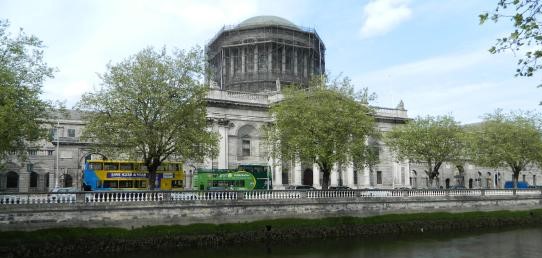


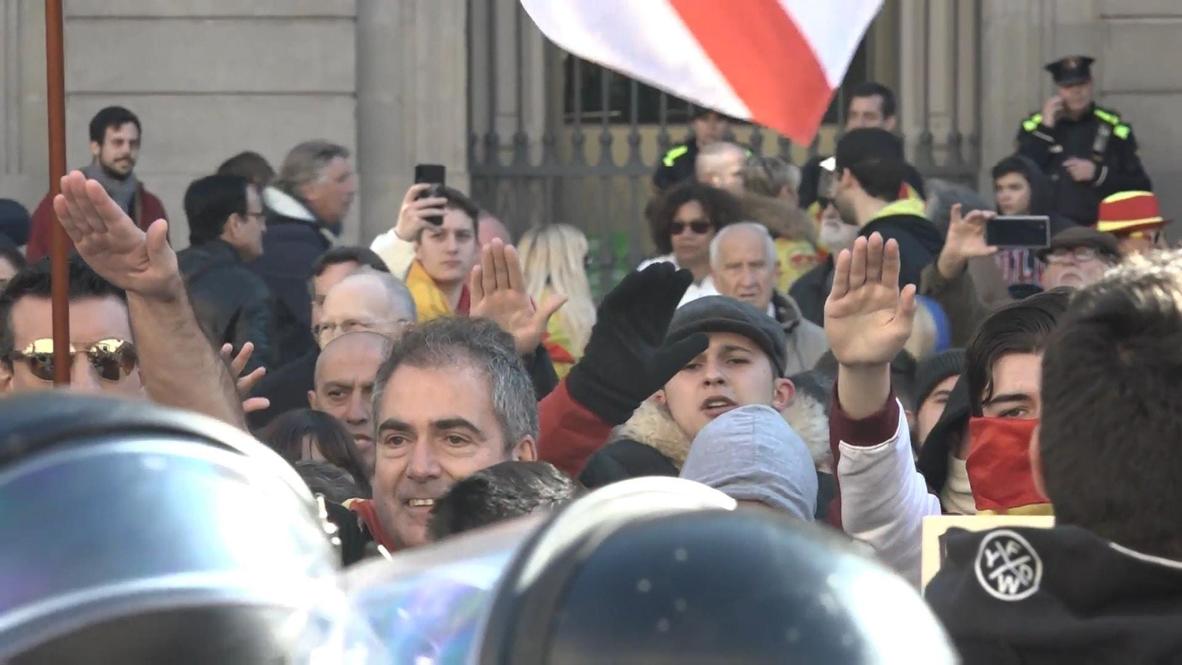
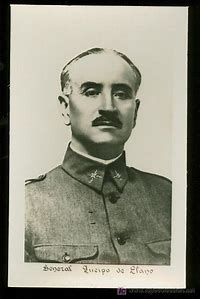


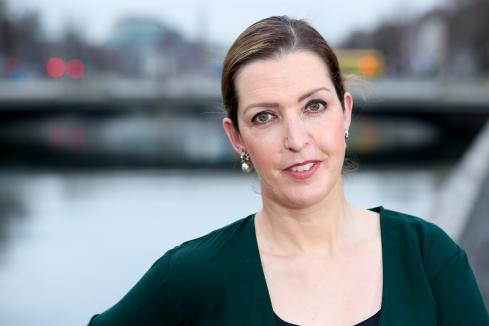


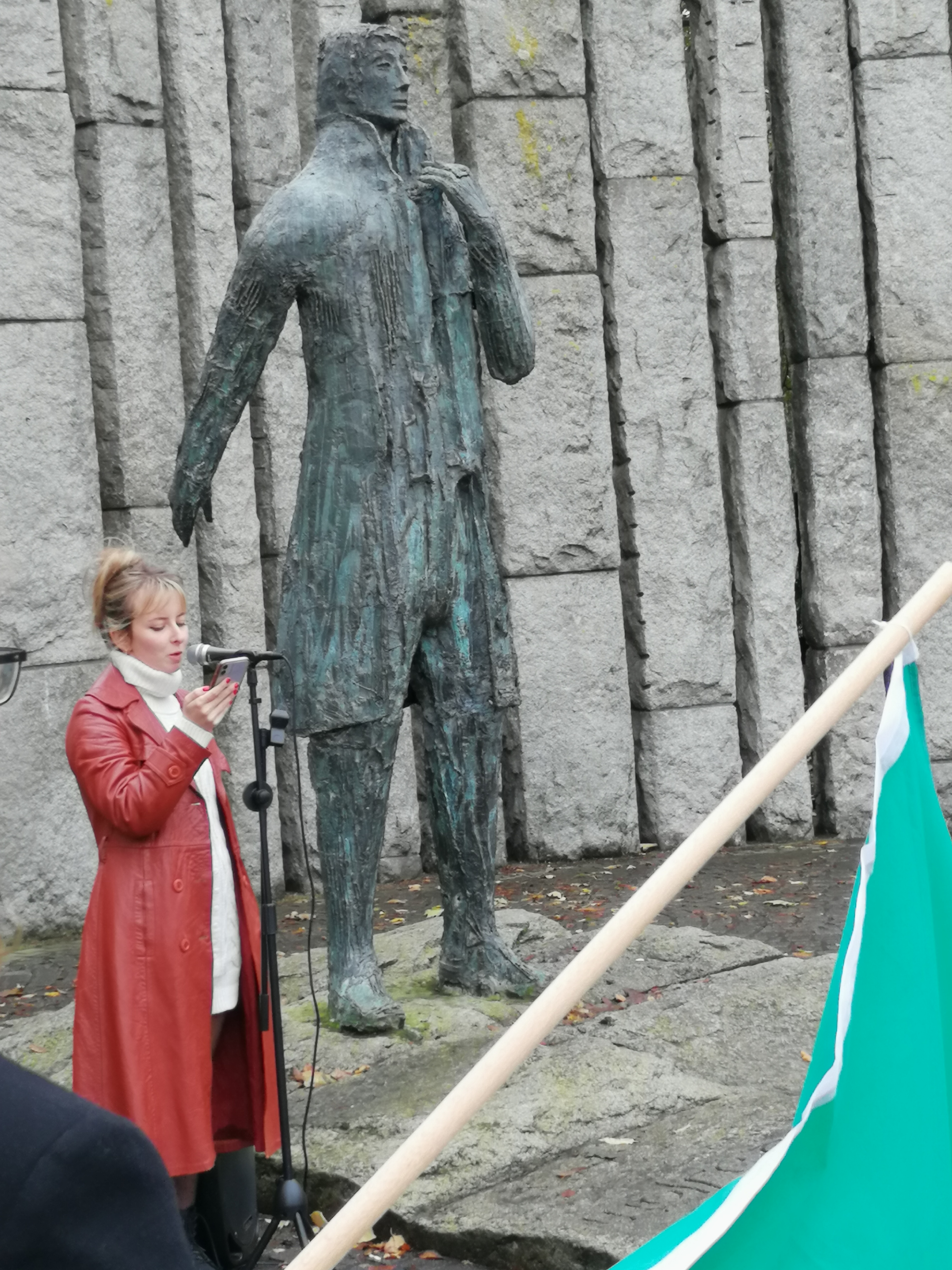
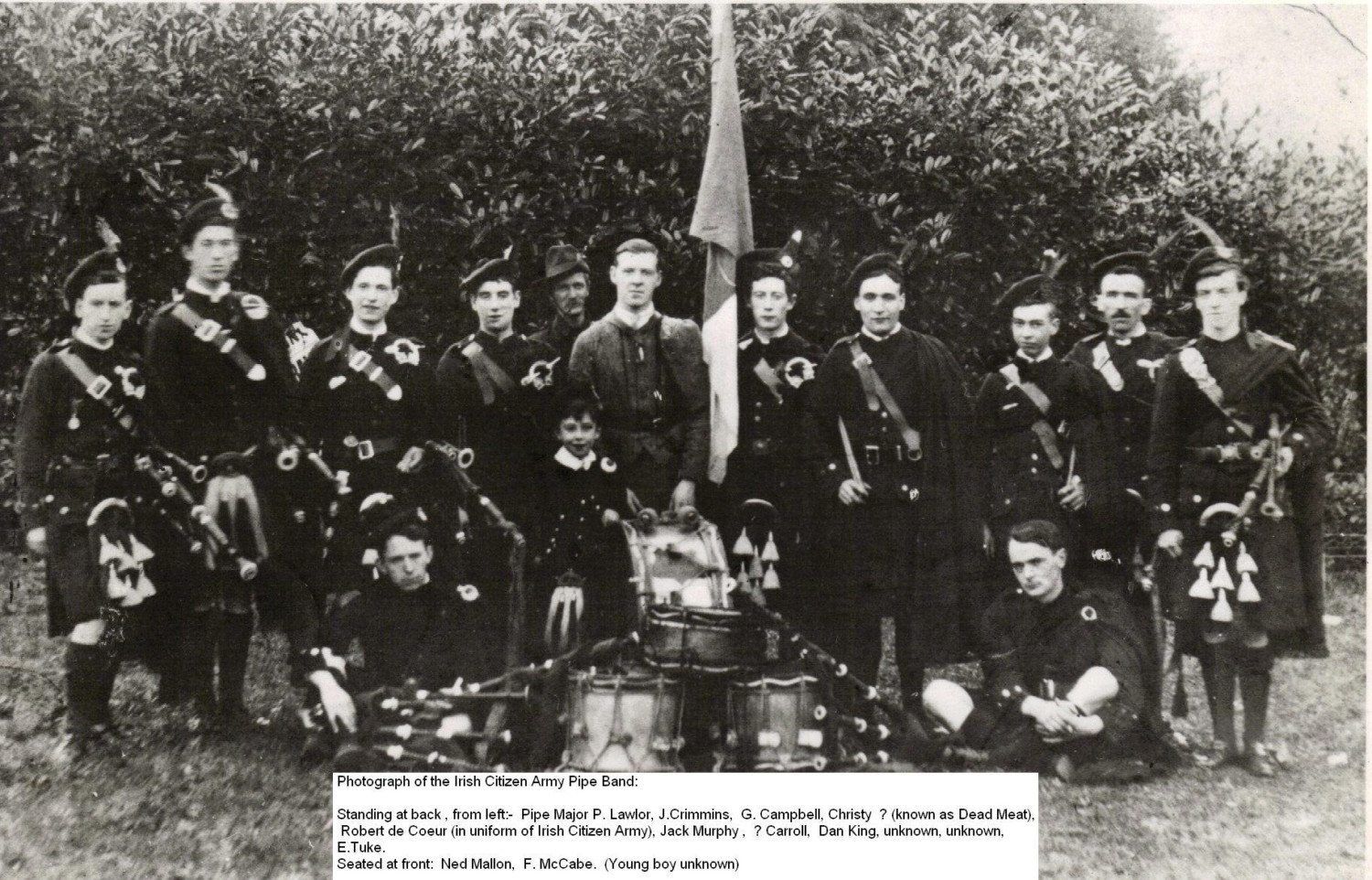
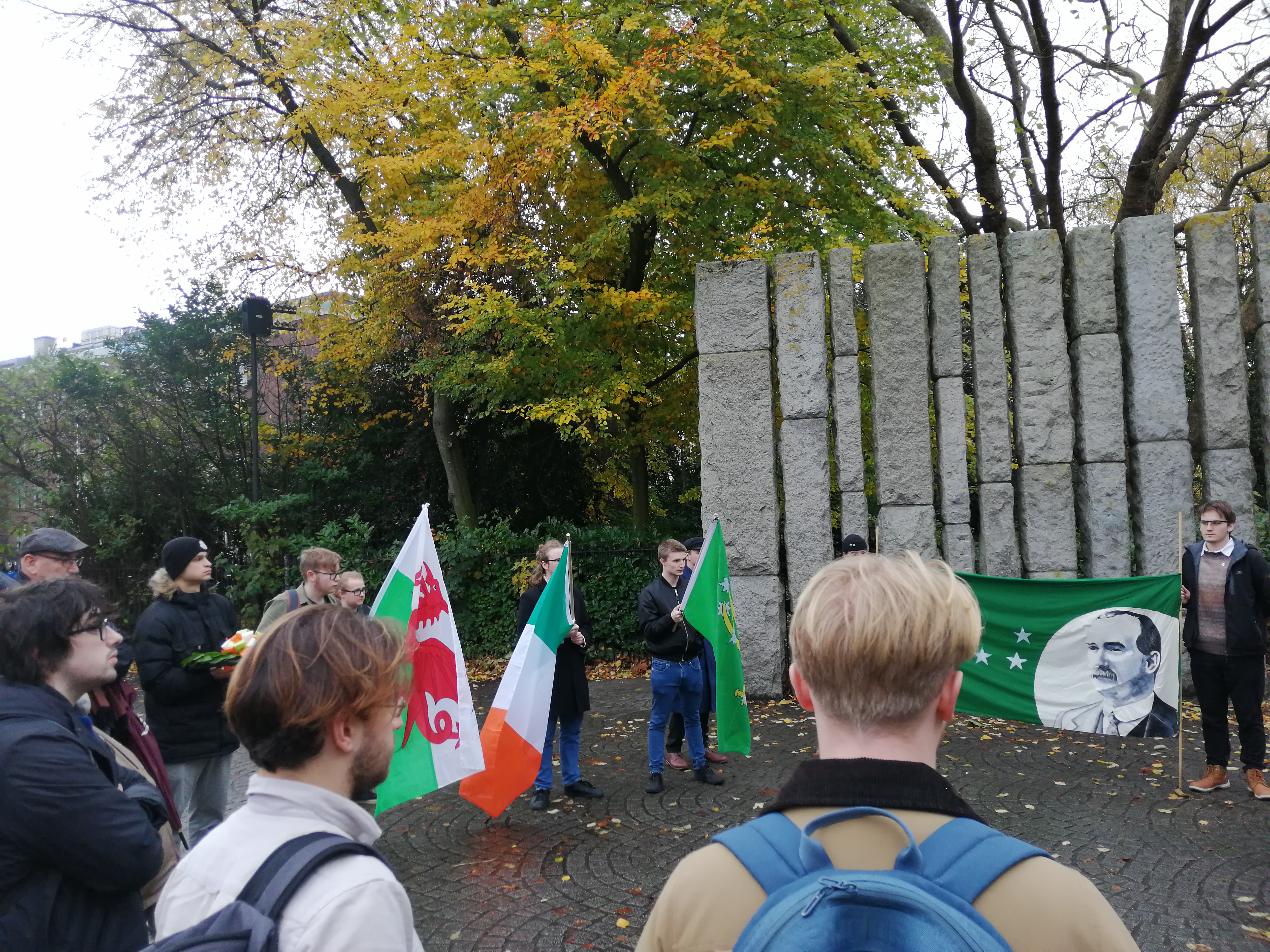
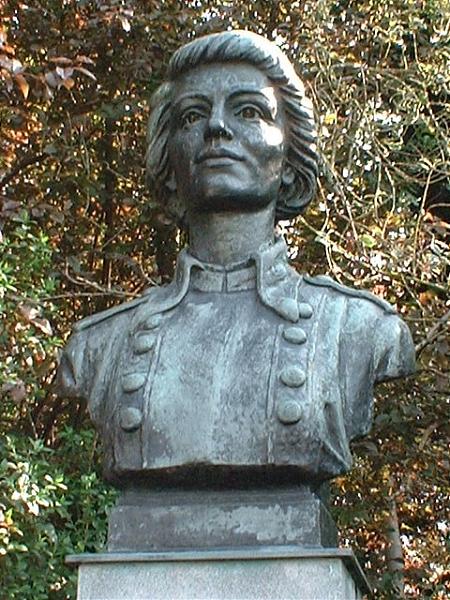
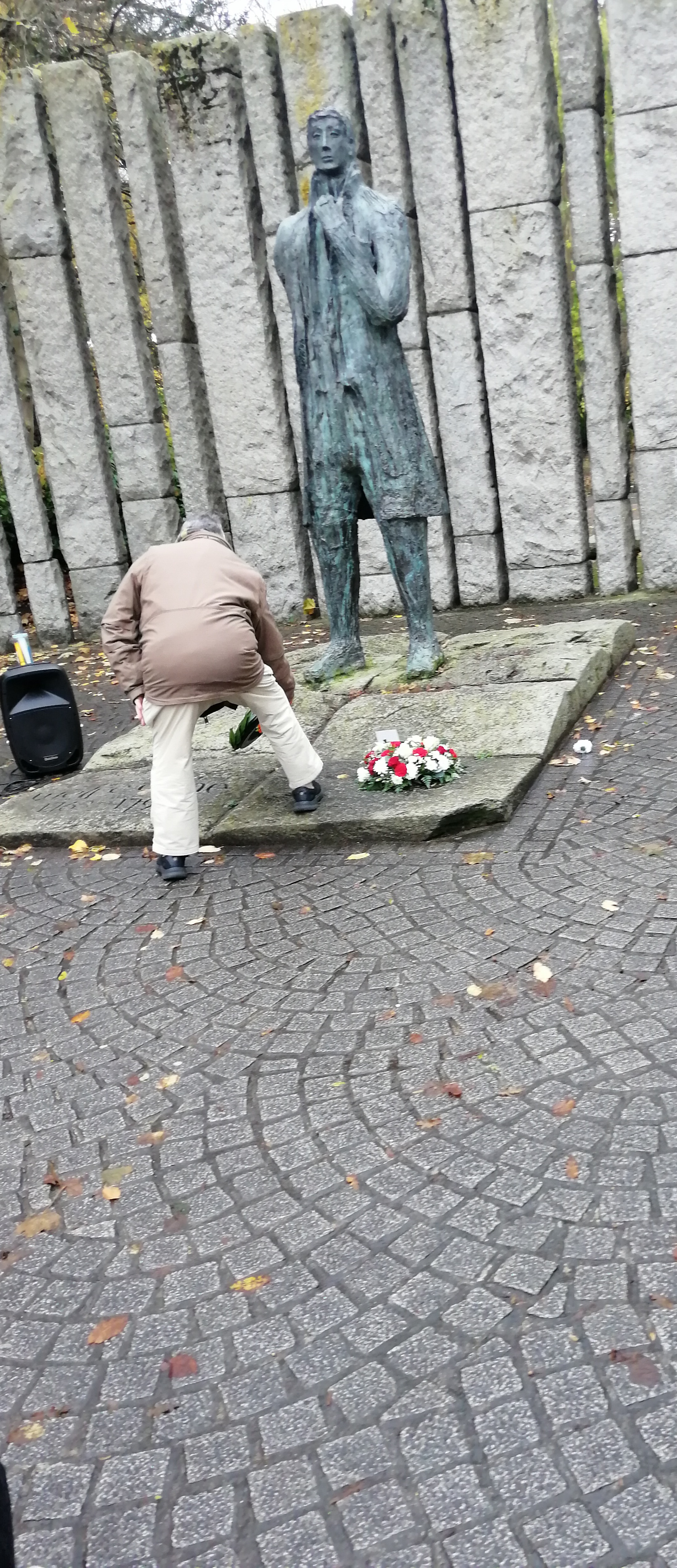
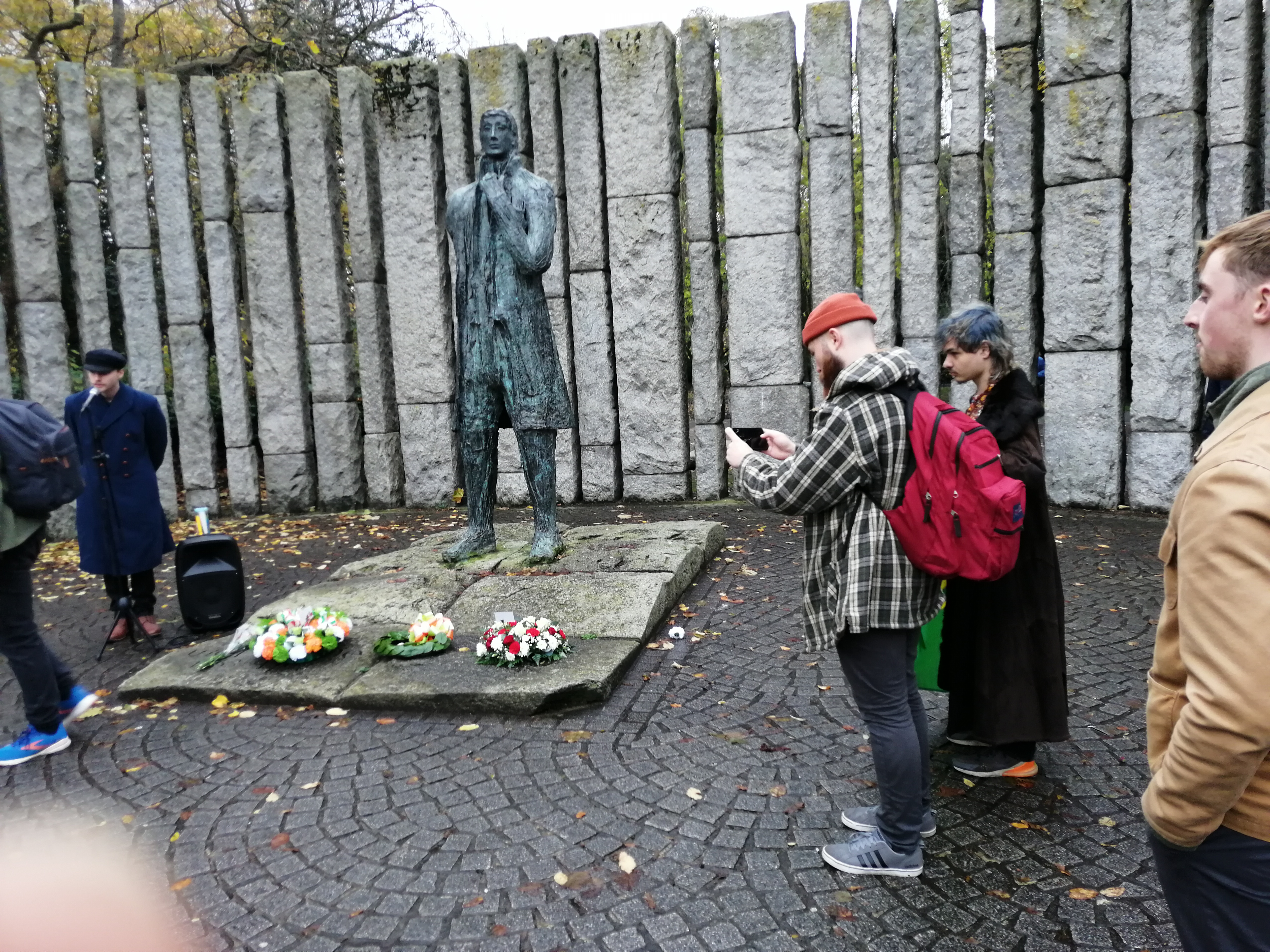
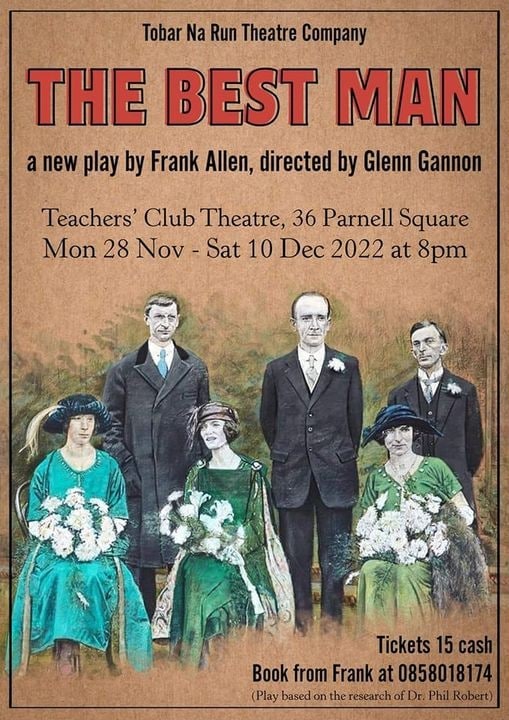
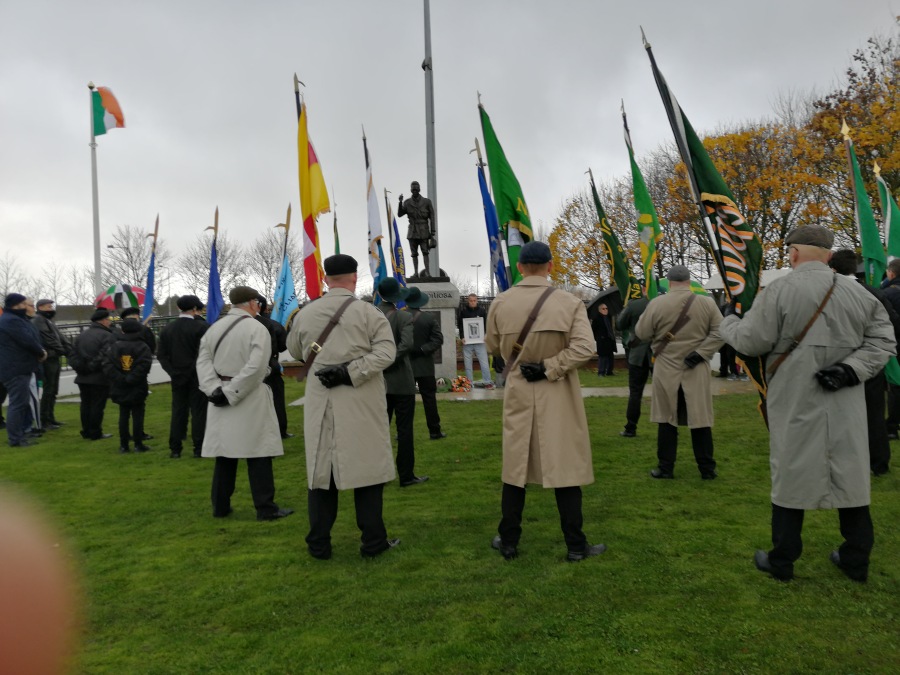
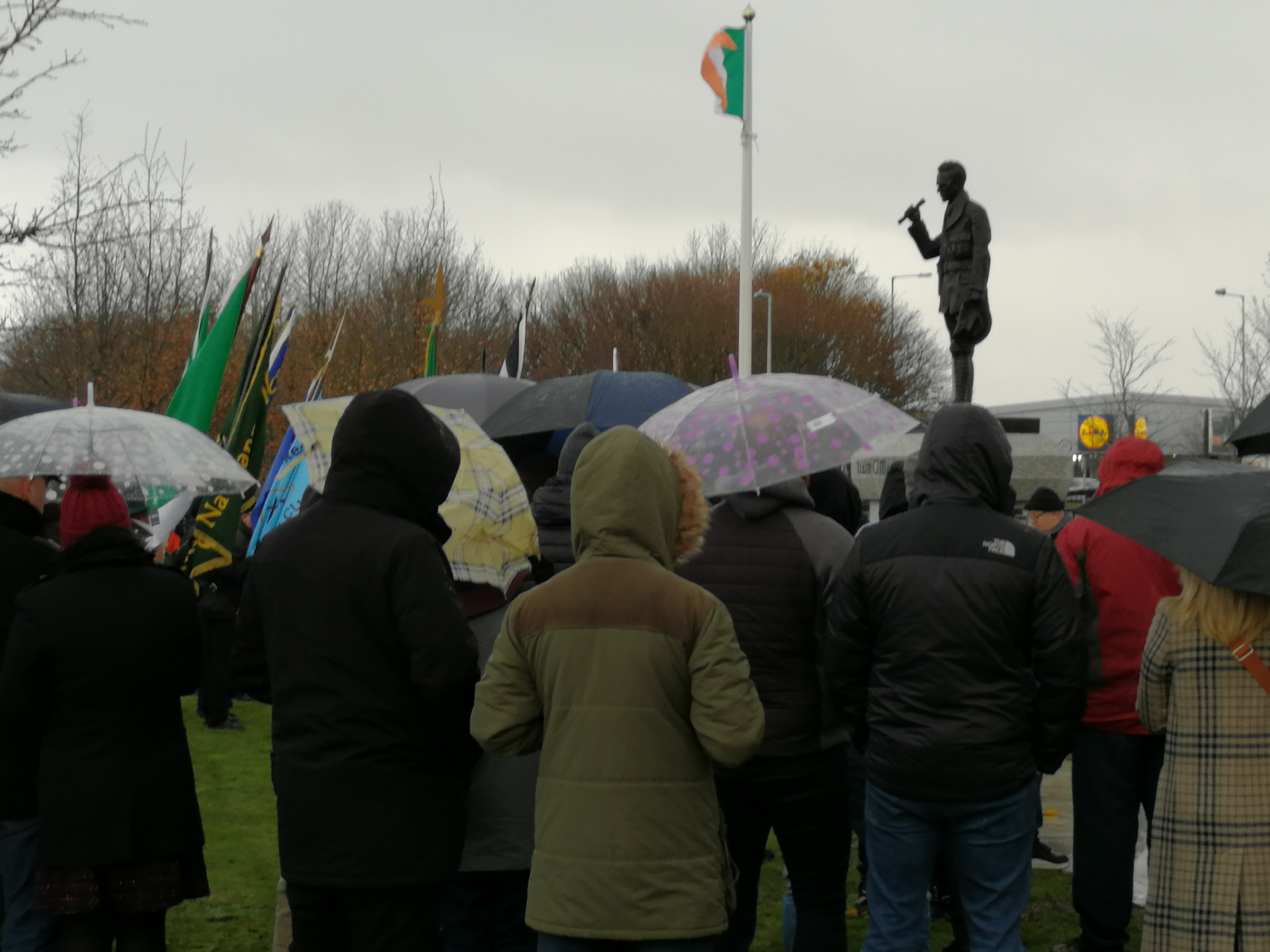
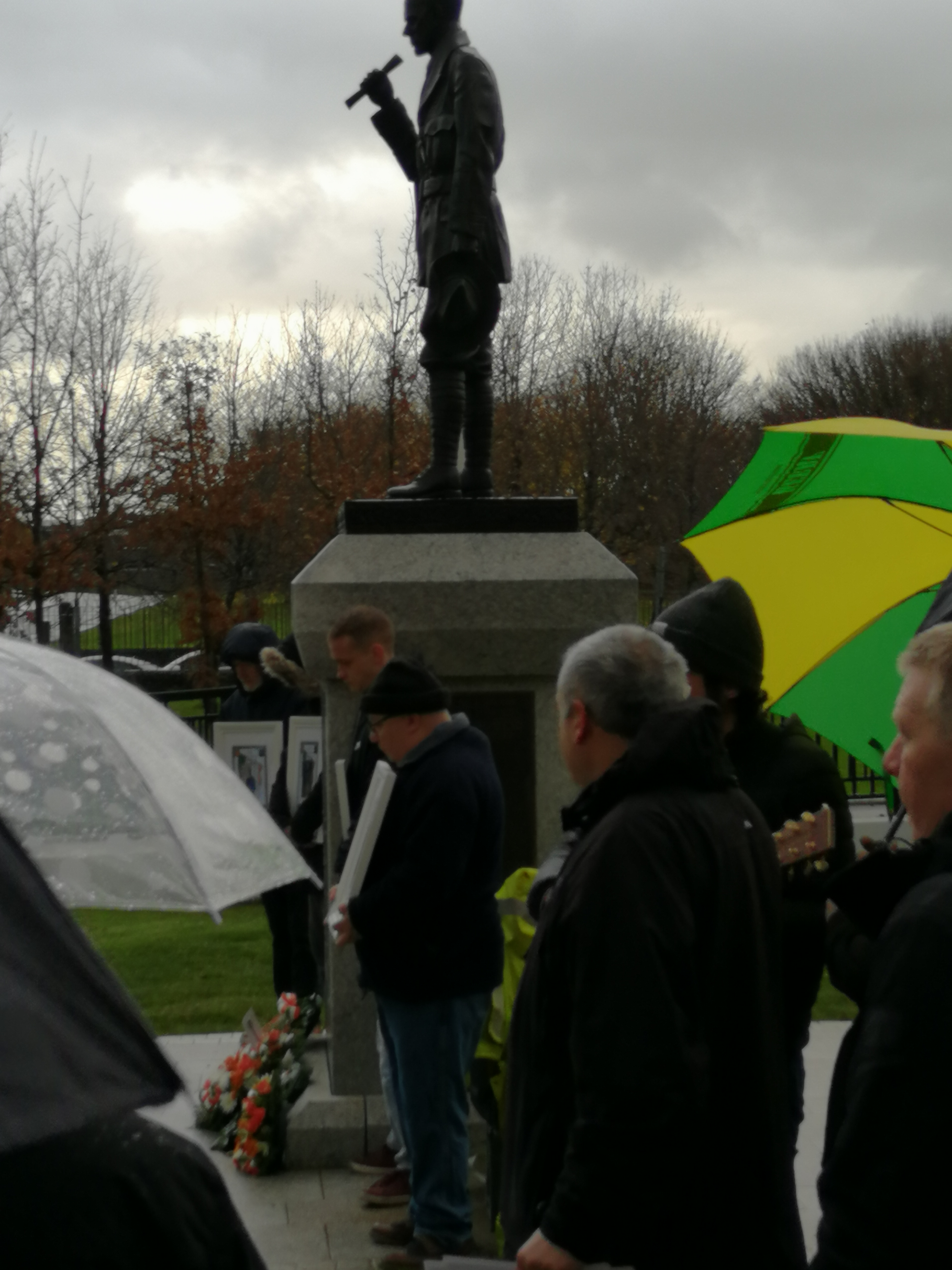
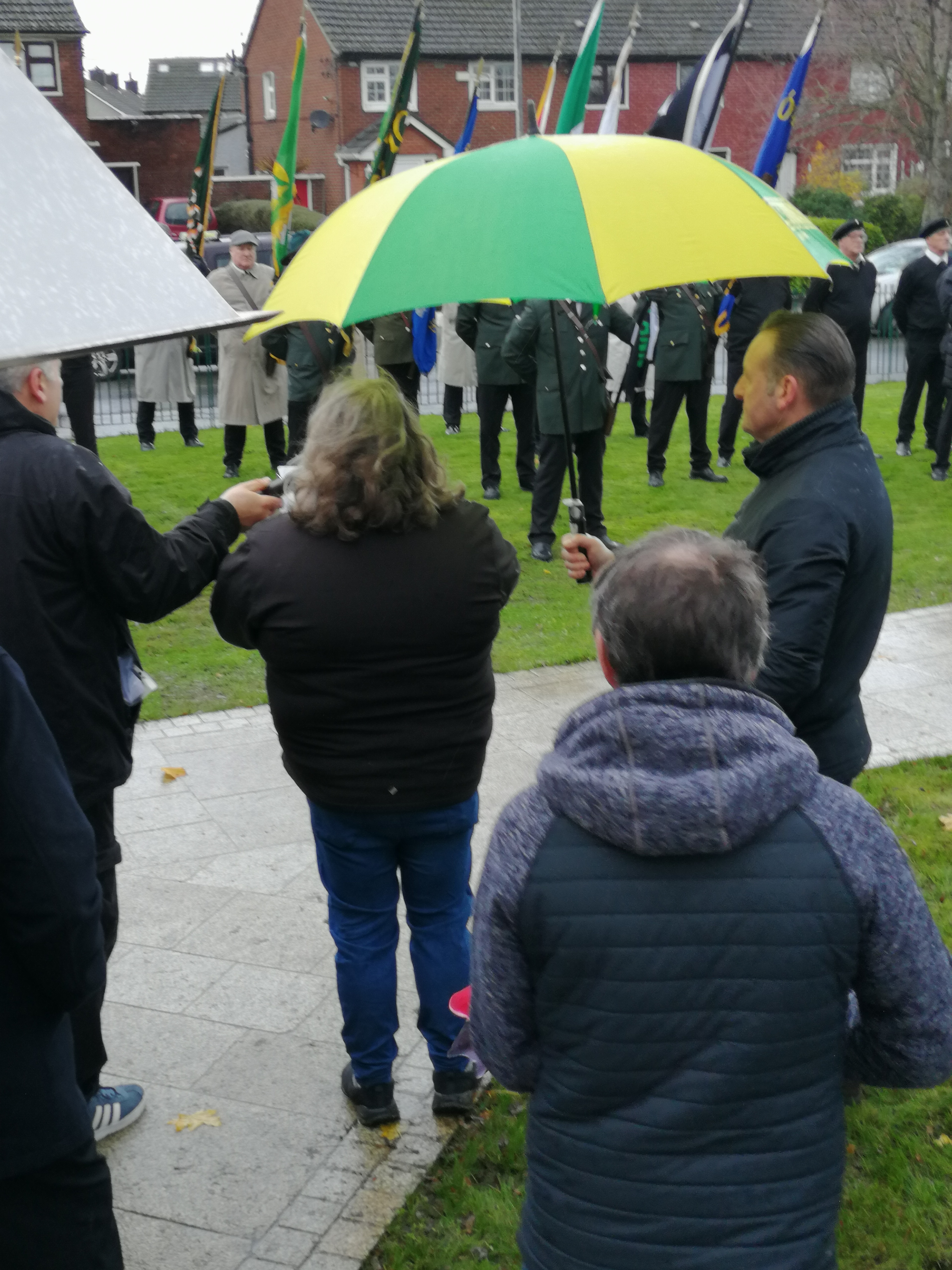
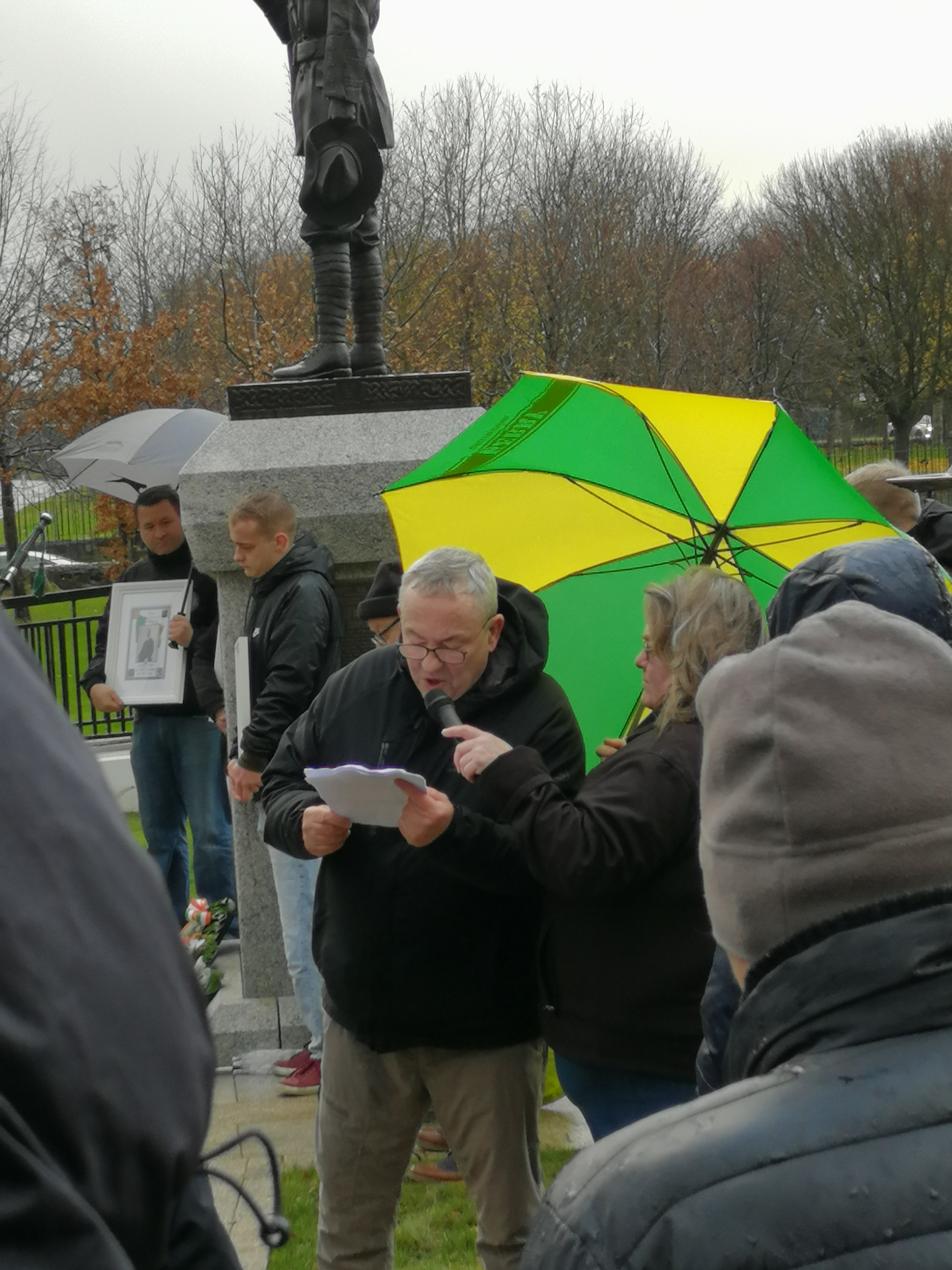
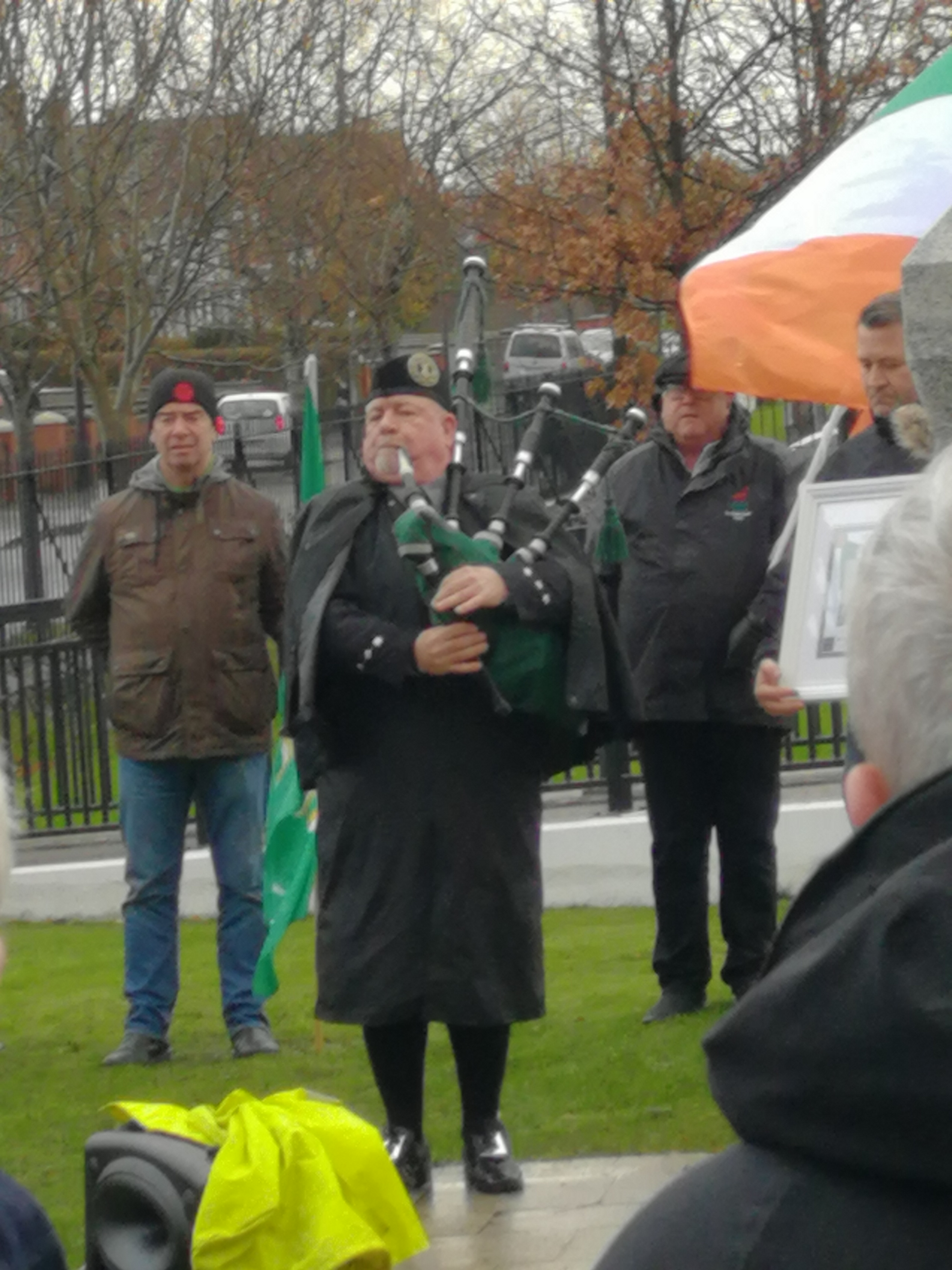
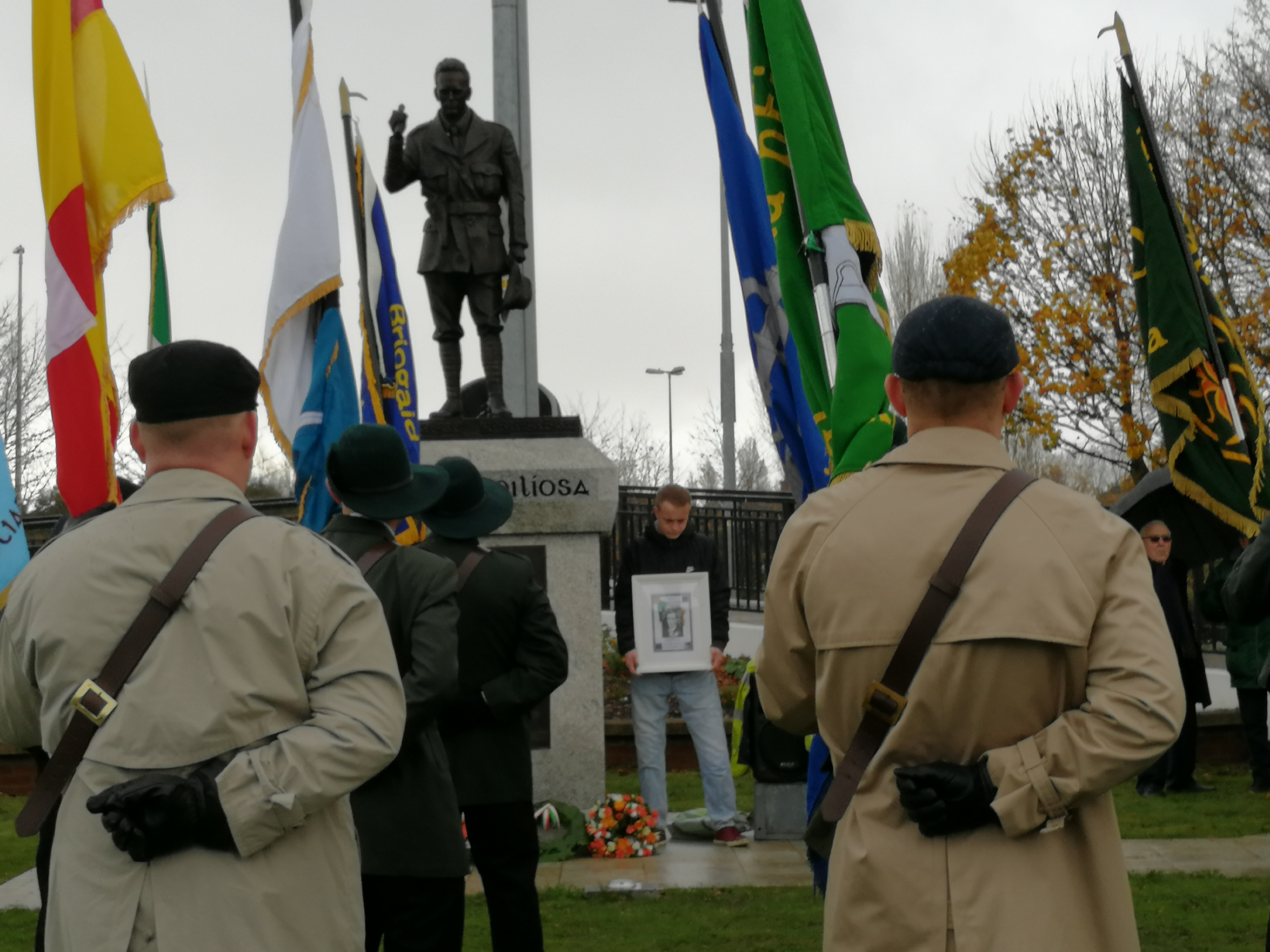
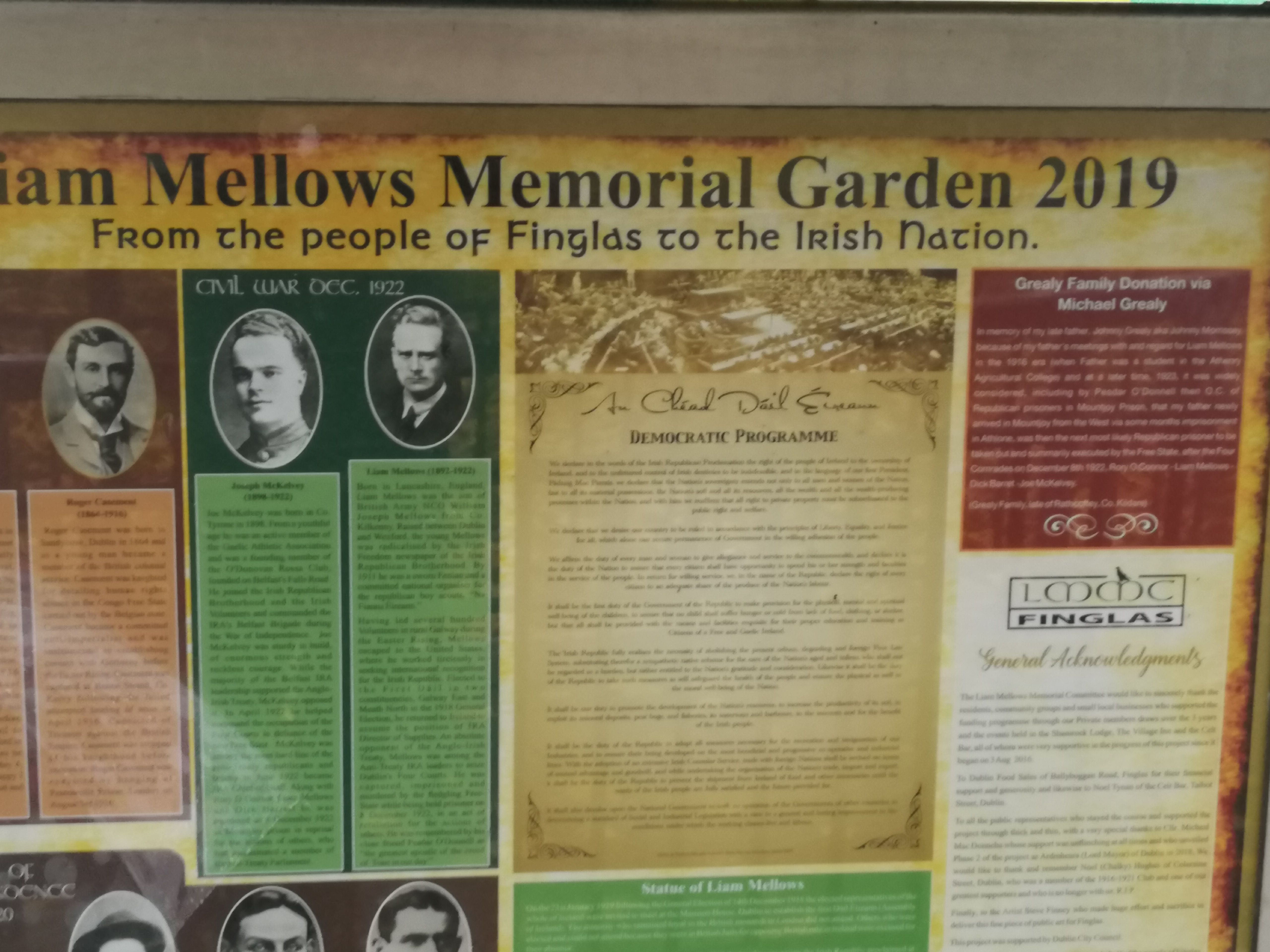
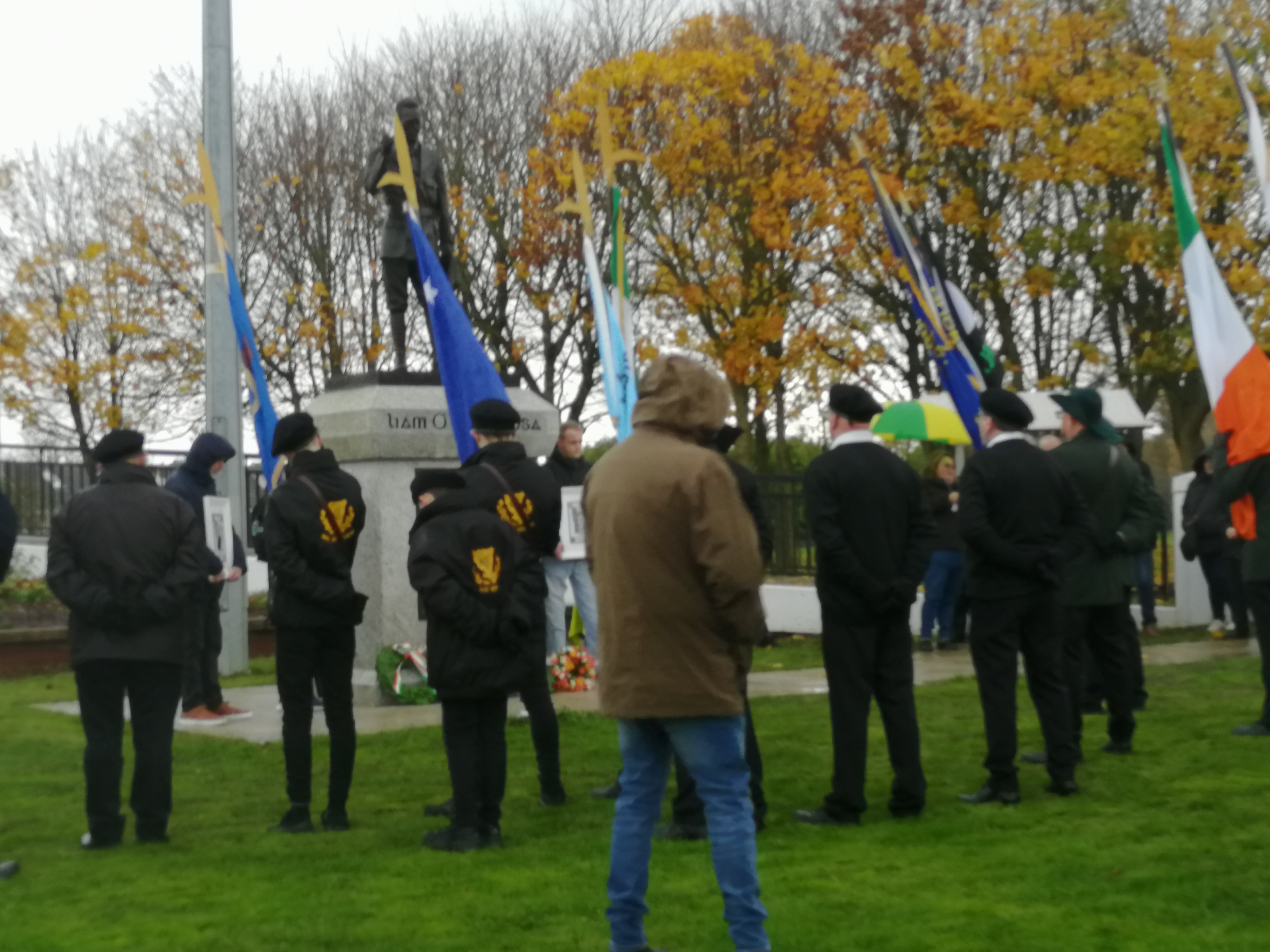
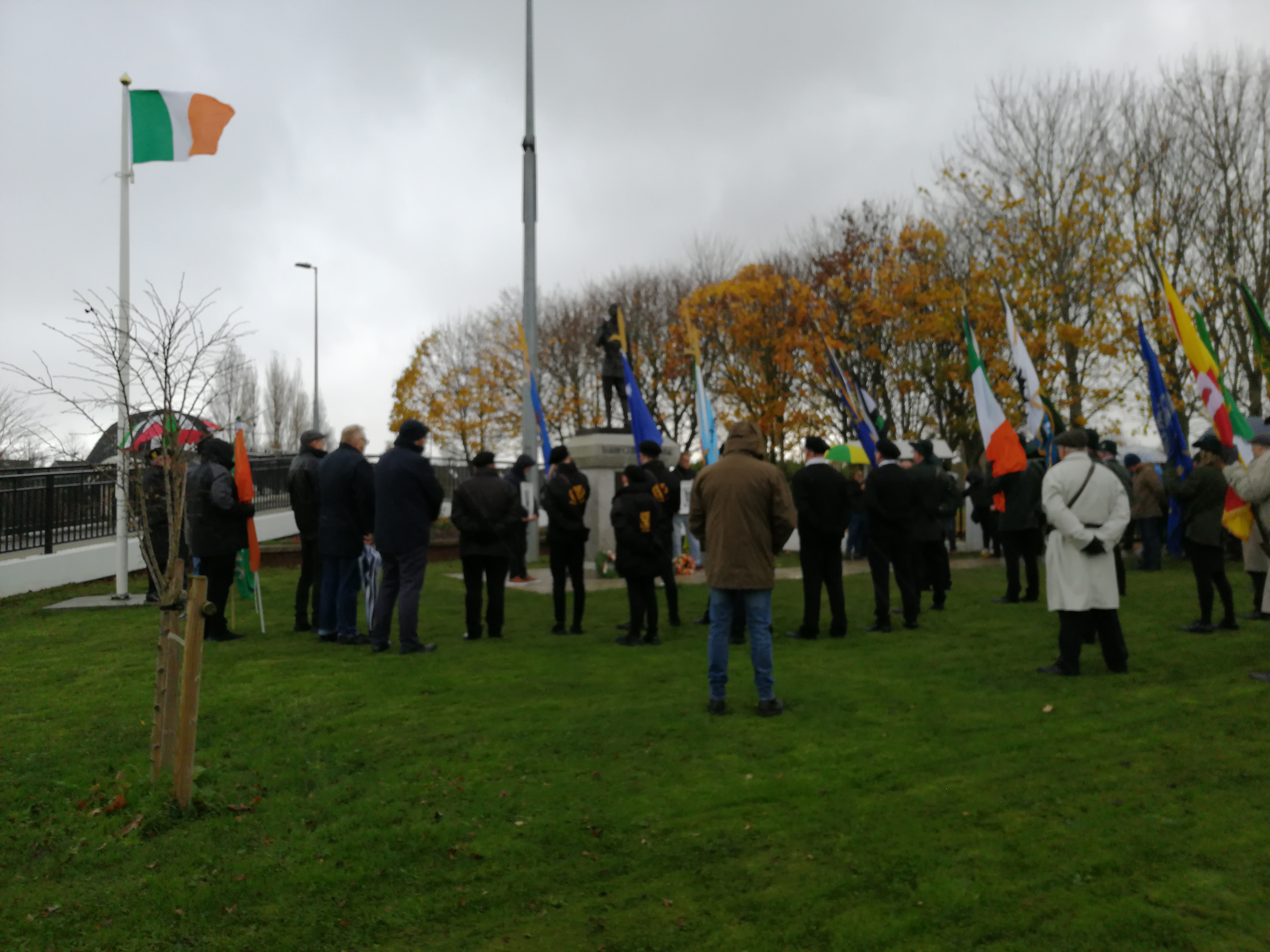
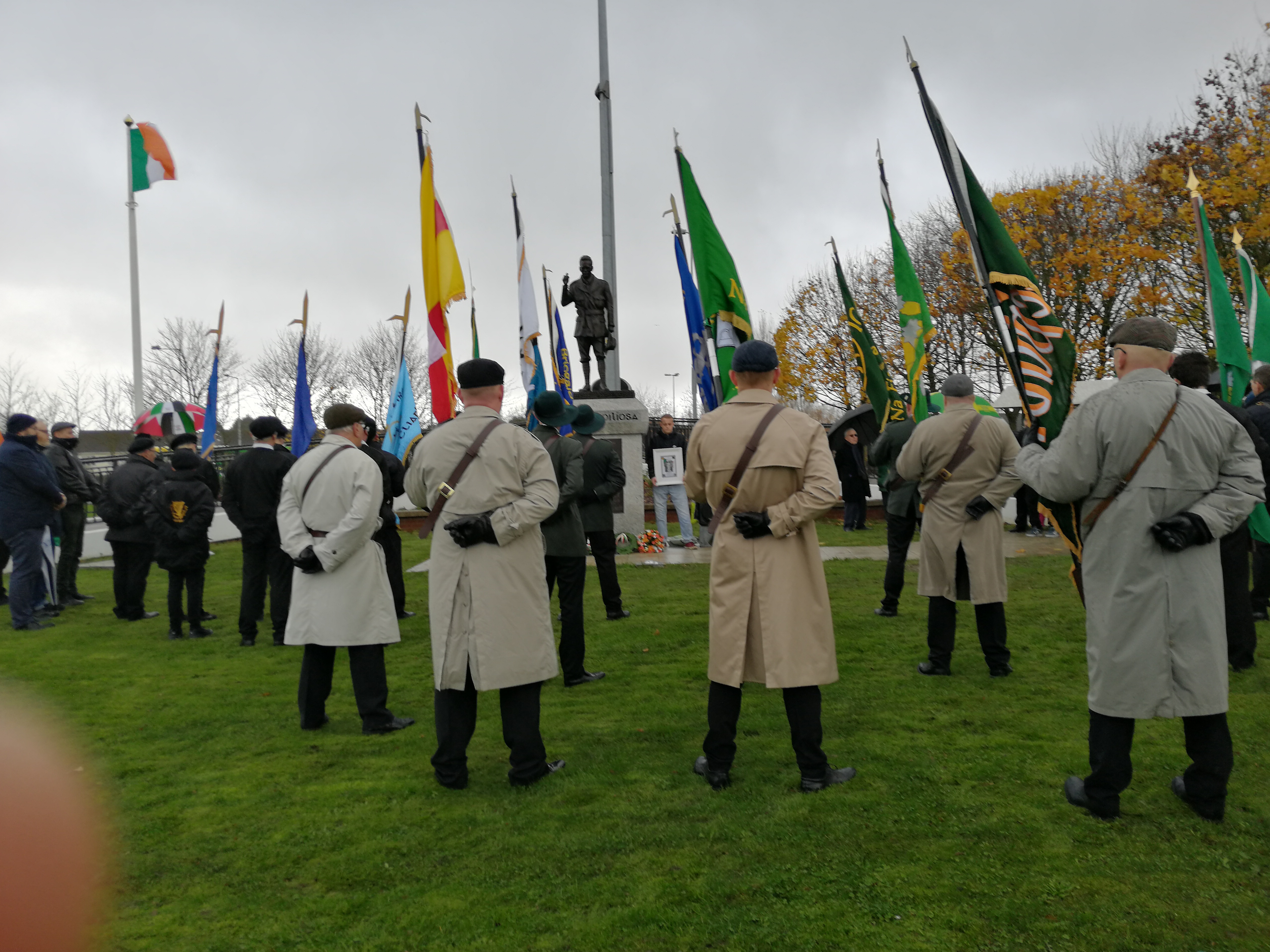


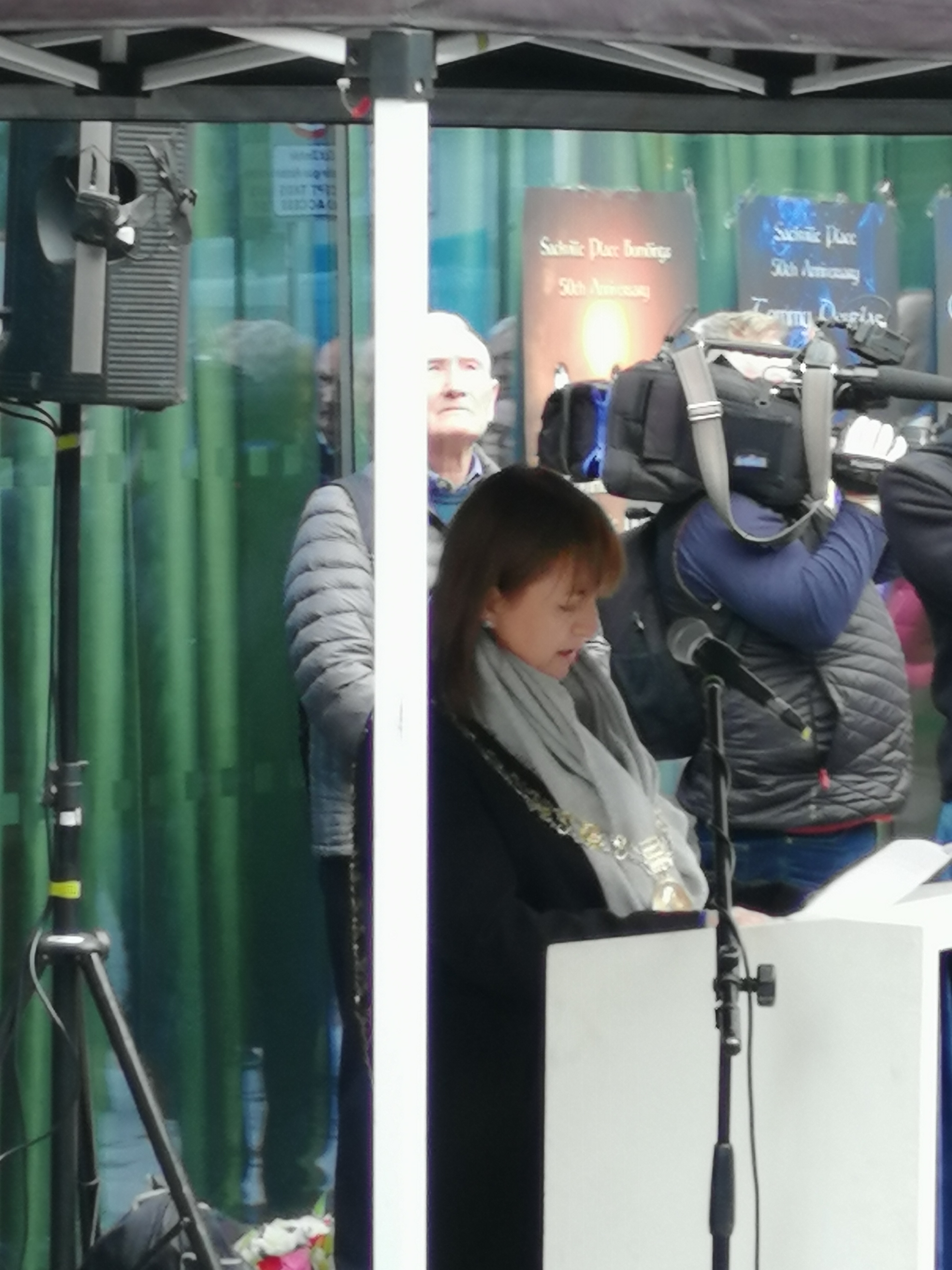


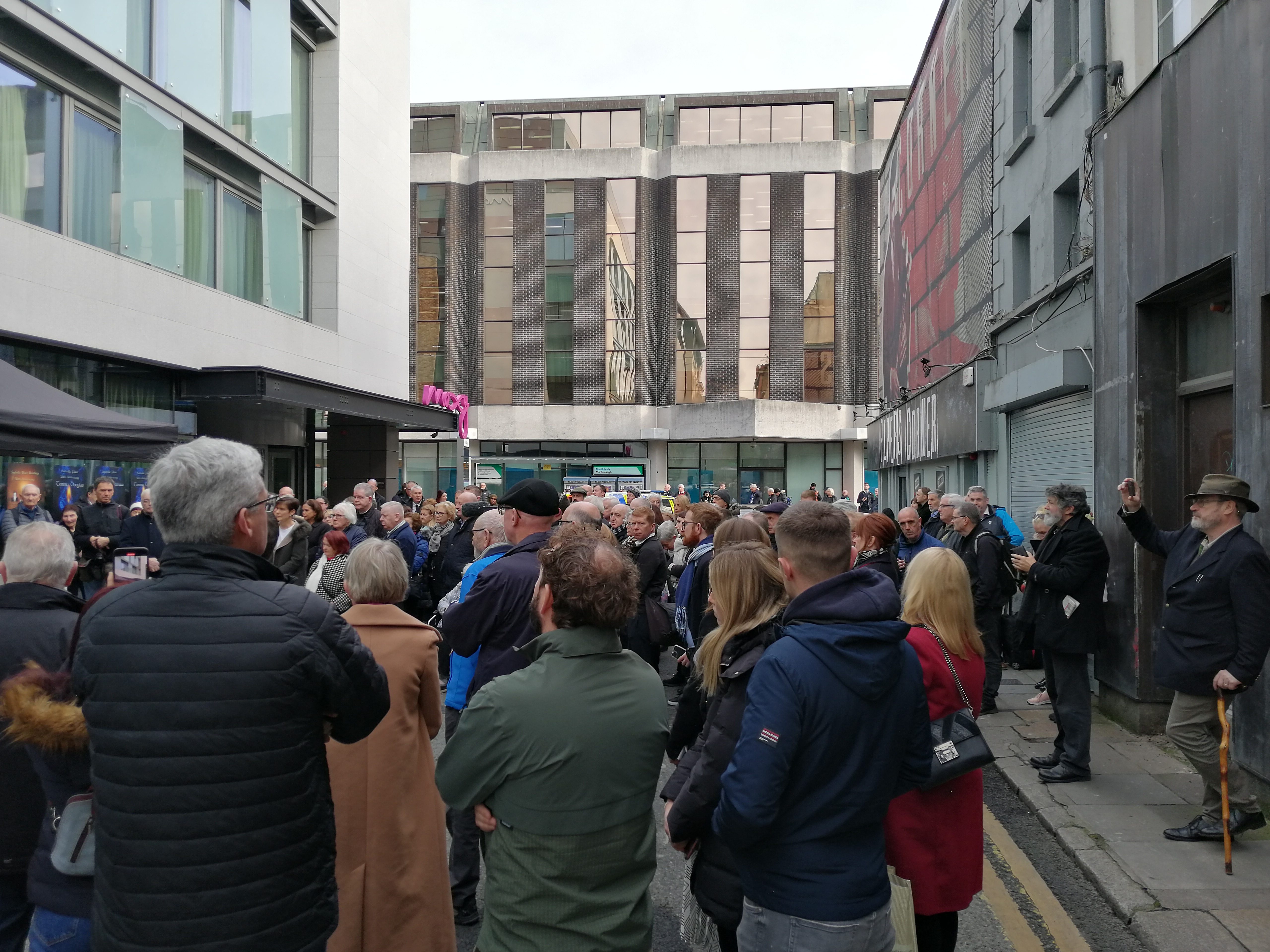

 rebelbreeze