On the 21st of April as he reached his house paramilitaries murdered Narciso Beleño, the leader in Southern Bolívar, Colombia, just two years after the murder of two other leaders Teo Acuña and Jorge Tafur.
I knew Narciso Beleño. Our paths crossed many times, on occasion on literal paths in the countryside as Narciso travelled the country in his struggle to defend rural communities in Colombia.
But I don’t want to talk too much about Narciso, the person, as there are others who can pay greater tribute to him in that regard, though his name always made me curious: Narciso (Narcissus).
Narcissus was a figure in Greek/Roman mythology who as a punishment from the gods fell in love with his own reflection. It is where we get the word narcissist from. But unlike the Greek/Roman figure, our Narciso was kind, caring, generous and selfless.
There are thousands of people, whole communities that can testify to his qualities as a person, a fighter and a leader.
When he was murdered the President, Gustavo Petro tweeted that “we failed Narciso”. But who failed Narciso? The communities? His comrades in Fedeagromisbol? Or were they the youths from the Front Line who are still in jail? Tell us who! A generic “We doesn’t do it, it is a lie.”
He should explain who failed him, how and why and Petro should also tell us what he intends to do prevent there being more murders of leaders.
Once upon a time we never doubted to putting a name and surname to the matter. We didn’t hesitate in naming the company, the board of directors, the landlord, the local politician. Sometimes we even ran the risk of putting a name and military rank to the affair.
A long time ago a gradual process began whereby some stopped naming them. And now under the Petro government it is not thought well to name them. Once upon a time we all named Fedegan, the cattle ranchers’ association, as backing the paramilitaries.
The Fedegan functionaries even acknowledged this. Now one of the representatives of that association, which is currently involved in refounding paramilitary structures, represents the State in the dialogues with the ELN.
Once upon a time we named the mining companies that have been trying for decades to take control of the gold in Southern Bolivar and other regions. It is worth remembering that Narciso travelled the country. More than one mining company had it in for him.
In Science Fiction and Fantasy novels, evil and magic lose their power over mortals when they are named by their real name and so the best kept secret is their real name. In real life something similar happens. Paramilitaries as something dark, shadowy and hidden defeats us.
When we name those behind this black magic with their real names, it begins to lose its power over us. They are not unknown to us. We withdraw cash from their ATMs every day, we purchase their services, we drink their products, we work in their companies and the odd eejit votes for them.
No company will say, “buy my product we are the murderers of social leaders” or “vote for me, I have murdered thousands.” They hide this for a reason and for that same reason we should expose their dark souls to the light of day.
The best tribute Petro can pay is to explain who failed and name the murderers just like he used to do before he was President. They are the usual suspects. Petro likes to say he governs but does not have power.
Well, tell us who holds that power that he don’t have, with names and surnames, economic group, foreign company. If we all failed, then nobody failed, if he was murdered by those who cannot be named, then nobody murdered him.
We usen’t to hesitate in talking about paramilitaries, the economic and political interests and reasons behind their actions. We named the business associations, the megaprojects in each region, we proved it.
Some sought justice in international tribunals, others in Russell style tribunals of opinion. We have to pay tribute to Narciso and other victims of the paramilitaries and name the murderers. Uribe tried to fool us with the Bacrim (Criminal Gang) euphemism. Neither Gulf Clan or anything else.
The same ones who disappeared Edgar Quiroga and Gildardo Fuentes in 1999 (in Southern Bolívar) murdered Narciso 25 years later. Say it loud and clear, Mr. President.
El Levantamiento de 1916 suele considerarse un levantamiento nacionalista de los republicanos irlandeses, quizás con alguna participación socialista.
Incluso Connolly suele ser retratado únicamente como un patriota (véase la canción James Connolly the Irish Rebel) con ideas socialistas.
De las seis organizaciones que participaron activamente en el Alzamiento de 1916 (1) sólo una de ellas pertenecía específicamente a la clase obrera irlandesa. Quizá por eso se suele pasar por alto la gran influencia de la clase obrera en el Alzamiento.
Como es bien sabido, James Connolly es uno de los Siete Firmantes (2) de ese maravilloso y progresista documento, la Proclamación de Independencia de 1916.
Sin embargo, Connolly sólo entró a formar parte del comité de planificación del Alzamiento muy poco antes de la fecha prevista (3) Siendo esto así, deberíamos preguntarnos por qué lo incluyeron.
Los Voluntarios Irlandeses tenían una organización a escala nacional con el movimiento -también nacional- Cumann na mBan como auxiliar, mientras que Connolly quizá podía movilizar quizás tres cientos de combatientes.
Monumento a James Connolly en Chicago, EEUU.
Se dice que lo incluyeron porque el IRB (“Irish Republican Brotherhood”, es decir, “Hermandad Republicana Irlandesa”) creía que su constante demanda de un Alzamiento durante la Primera Guerra Mundial y los ejercicios militares del Ejército Ciudadano Irlandés (ECI) indicaban que Connolly probablemente llevaría al ECI a levantarse por su cuenta y les arruinaría el calendario.
¿Qué probabilidades había de que lo hiciera? Es cierto que, como socialista, Connolly estaba horrorizado por la masacre de la guerra, en la que los trabajadores de un Estado son enviados a matar y ser asesinados por los trabajadores (4) de otro, y la lectura de sus escritos muestra que pensaba que era desesperadamente necesario un levantamiento para sabotear la guerra.
¿Habría seguido adelante sólo con los aproximadamente 300 hombres y mujeres del Ejército Ciudadano Irlandés, esperando quizás inspirar un levantamiento popular y animar a los Voluntarios Irlandeses a unirse a él, a pesar incluso de sus líderes (5)?
Es difícil creerlo pero, por supuesto, es posible.
Sin embargo, desde el momento en que los planificadores republicanos del Alzamiento aceptaron a Connolly, podemos ver un cambio organizativo significativo hacia la clase obrera en Dublín y especialmente alrededor del Liberty Hall, donde se izó la primera bandera para un levantamiento y se imprimió la Proclamación.
Liberty Hall era, por supuesto, la sede del sindicato Irish Transport & General Workers’ Union, del que James Connolly era líder en aquella época y también editor de su periódico, The Irish Worker.
Es asombroso que Connolly recibiera el rango de Comandante General siendo una persona incorporada tan recientemente a la organización.
Una responsabilidad que se tomó en serio, enviando mensajeros por todo el país e intentando dirigir los preparativos de defensa en torno a las distintas guarniciones de Dublín.
La Primera Bandera de Combate del Alzamiento
Una semana antes del Alzamiento, Connolly y el Ejército Ciudadano Irlandés habían izado una bandera republicana irlandesa sobre Liberty Hall como bandera de guerra y la elegida para izarla fue una chica de 16 años, Molly O’Reilly (6).
Merece la pena recordar las circunstancias asociadas, aunque sólo sea para ilustrar la diferencia entre el Liberty Hall de entonces y el de hoy.
Los adultos asistían allí a clases de lengua irlandesa y a actividades culturales, mientras sus hijos y los de los activistas sindicales esperaban a sus padres, asistían a clases de baile o jugaban.
Jugando, Molly O’Reilly rompió accidentalmente una ventana y, aterrorizada y avergonzada, corrió a casa.
Cuando Connolly le envió un mensaje a casa diciéndole que quería verla, ella fue al Liberty Hall esperando una severa reprimenda.
En lugar de eso, le dijo que no se preocupara, y le explicó lo que él esperaba de ella. Estaba orgullosa de hacerlo, pero era tan pequeña que tuvo que subirse a una silla para tirar de la cuerda que izaba la bandera.
Resto de la bandera izada en Liberty Hall (Imagen procedente de: Museo Nacional)Ceremonia de conmemoración “Mujeres de 1916” con familiares de Molly O’Reilly en lugar de honor (tenga en cuenta que los uniformes son de voluntarios irlandeses en lugar de ejército ciudadano irlandés). (Foto: D.Breatnach)
Por supuesto, sabemos que esa bandera no era la de los trabajadores revolucionarios, sino la del arpa sobre verde, que era la de los primeros fenianos y se parecía mucho a la de los United Irishmen, la primera organización republicana revolucionaria irlandesa (7).
Aquellos primeros fenianos estaban compuestos en su mayoría por miembros de la clase obrera y su proclama de 1867 al mundo tenía en gran medida una perspectiva proletaria.
En Gran Bretaña, los fenianos formaron parte de la Primera Asociación Internacional de Trabajadores, dirigida por Marx y Engels.
Su bandera ondeó al menos en una de las guarniciones del Alzamiento de 1916, creo recordar que en la destilería Jameson de Marrowbone Lane.
Bandera similar a la izada sobre Liberty Hall (Foto obtenida: Internet)
Las otras banderas del Alzamiento incluían la Tricolor, regalada a los republicanos de los “Jóvenes Irlandeses” por las mujeres del París revolucionario de 1848, que era una de las dos que ondeaban en el tejado del GPO (General Post Office, es decir, el edificio de Correos), cuartel general del Alzamiento.
Compartiendo el tejado de la GPO con la Tricolor estaba la bandera confeccionada pocos días antes del Alzamiento con material doméstico y pintada con las palabras “República Irlandesa” en casa de Constance Markievicz, oficial del Ejército Ciudadano Irlandés.
La bandera del Ejército Ciudadano Irlandés, el Starry Plough, ondeaba sobre el edificio de Clery’s, frente a la GPO.
Desgraciadamente, hoy en día la mayoría de los irlandeses no conocen esa bandera, aunque la conciencia sobre ella y sus antecedentes están aumentando entre los irlandeses autóctonos y la comunidad inmigrante.
El diseño del Starry Plough (El Arado de Estrellas), bandera del ICI tal como era en 1916 (Imagen obtenida: Internet)
El primer ejército obrero del mundo (8)
El Ejército Ciudadano Irlandés (ECI) se formó como milicia obrera durante el gran cierre patronal y la huelga de 1913-1914, para defenderse de los ataques de la policía, la primera línea física represiva de la clase capitalista; la bandera de la ECI se colocó sobre el Hotel Imperial de Murphy en Clery’s (9).
El Ejército Ciudadano Irlandés en ejercicios en sus terrenos cerca de lo que hoy es Fairview (Foto obtenida: Internet)
Aunque su constitución era más nacionalista que socialista, el ECI fue, por su composición y su finalidad, el primer ejército obrero del mundo y, cuando se reorganizó unos años más tarde, representó también el feminismo de la clase obrera, reclutando a mujeres, algunas de las cuales eran oficiales al mando de hombres.
Una vez que los preparativos para el Levantamiento se fueron a pique por la orden de anulación de MacNeil, ¿dónde se reunieron los organizadores para discutir qué hacer?
En Liberty Hall, el edificio del Sindicato Irlandés de Trabajadores Generales y del Transporte; fue allí donde se tomó la decisión de levantarse el lunes.
No es exagerado remarcar la importancia del hecho de que la decisión de seguir adelante con la insurrección se tomara en el edificio que se había convertido de facto en el cuartel general de la clase obrera revolucionaria de Dublín, con una bandera ilegal de rebelión ondeando y donde se iba a imprimir la Proclamación.
Redacción y texto de la Proclamación
Se cree que la redacción de la Proclamación fue hecha en gran parte por Pearse, pero influenciada por Connolly, incluyendo su destino a “los hombres y mujeres irlandeses” y quizás también “Declaramos el derecho del pueblo irlandés a la propiedad de Irlanda, y al control sin restricciones de los destinos irlandeses”.
Otro fragmento que podría llevar la huella de Connolly reza así: “La República garantiza la libertad religiosa y civil, la igualdad de derechos y la igualdad de oportunidades a todos sus ciudadanos, y declara su resolución de perseguir la felicidad y la prosperidad de toda la nación y de todas sus partes, apreciando por igual a todos los hijos de la nación.”
Copia de la Proclamación de Independencia de 1916 (Imagen procedente de Internet)
Pero, quienquiera que compusiera o influyera en el texto de la Proclamación, ésta fue impresa en Liberty Hall. Un miembro del Ejército Ciudadano Irlandés fue a Stafford Street (hoy Wolfe Tone St.) a pedir a un impresor de allí las letras de imprenta para llevarlas a Liberty Hall, que estaba bajo guardia armada las 24 horas del día.
Habiendo impreso la Proclamación en Liberty Hall bajo guardia armada y habiendo decidido allí sublevarse el Lunes de Pascua, ¿dónde se reunieron los grupos de asalto a Stephens Green, Castillo y la GPO (General Post Office, es decir, edificio de Correos)?
Incluido el Batallón del Cuartel General, la mañana del Alzamiento? …. De nuevo, en Liberty Hall.
Una de las primeras víctimas no combatientes del Alzamiento fue Ernest Kavanagh (10) que dibujaba caricaturas para el periódico del ITGWU, The Irish Worker.
Por alguna razón acudió el martes al Liberty Hall y fue asesinado a tiros en la escalinata del edificio del sindicato, presumiblemente por un francotirador del ejército británico.
La resistencia armada de la clase obrera:
Una vez puesto en marcha el Alzamiento, el Ejército Ciudadano Irlandés era el principal responsable de dos zonas, la guarnición de Stephens Green/Colegio de Cirujanos y la guarnición del Castillo de Dublín/Ayuntamiento, pero también luchó en otras zonas, por ejemplo en Annesley Bridge y en la zona de GPO/Moore Street.
Todos los que lucharon junto a ellos comentaron su valor y disciplina. Tras la rendición, muchos de ellos, junto con los Voluntarios Irlandeses, fueron condenados a muerte, la mayoría conmutada por cadena perpetua.
Pero dos líderes del Ejército Ciudadano Irlandés fueron fusilados.
Una de las zonas desde las que las fuerzas británicas fueron tiroteadas durante días después del Alzamiento fue la de los muelles del Liffey, entonces rodeada predominantemente por zonas residenciales de clase trabajadora.
Una pregunta que deberíamos hacernos es por qué las fuerzas procedentes de Gran Bretaña para reprimir el Alzamiento desembarcaron en Dún Laoghaire, desde donde tuvieron que marchar casi 12 km hasta el centro de Dublín, en lugar de hacerlo en los excelentes muelles dublineses del Liffey.
Hugo McGuinness, especializado en la historia de la zona del Muro Norte, cree que los británicos esperaban que Dublín estuviera en manos de la resistencia obrera y que, sencillamente, era demasiado peligroso desembarcar allí tropas británicas, aunque las cañoneras podían disparar desde el Liffey.
Ciertamente, los británicos creían que Liberty Hall y los edificios a lo largo de Eden Quay estaban ocupados como puestos de combate por el Ejército Ciudadano Irlandés y dispararon artillería contra el edificio del sindicato desde la calle Tara, como atestiguan las fotos de agujeros de proyectiles en ese edificio y en el siguiente.
Foto del Liberty Hall dañado por los proyectiles (primer edificio con la esquina hacia la cámara, visto hacia el norte desde Butt Bridge) como parte de un conjunto de postales conmemorativas. (Foto obtenida: Internet)Otra postal con un primer plano de los daños causados por los bombardeos al Liberty Hall y al edificio contiguo. Curiosamente, en este, Liberty Hall está etiquetado como “el Cuartel General Rebelde”. (Foto obtenida: Internet)
En algunos relatos históricos se habla mucho de la oposición al Alzamiento por parte de algunos sectores de la población de Dublín, durante e inmediatamente después del Alzamiento.
La ciudad era la capital de una colonia británica, y poco más de un siglo antes se hablaba de ella como “la segunda ciudad del Imperio Británico”.
Una parte sustancial de las clases media y acomodada era lealista, incluidos algunos católicos; incluso los sectores “nacionalistas” estaban comprometidos a apoyar al Reino Unido en la Primera Guerra Mundial y John Redmond, líder del partido político “nacionalista”, había reclutado abiertamente para el ejército británico.
Además, entre la clase obrera y el lumpenproletariado, muchos dependían de las “indemnizaciones por separación”, por los varones que servían en el ejército británico.
Es cierto que en algunos lugares los insurgentes tuvieron que amenazar, apalear o incluso disparar a algunos civiles que intentaron obstruir el Alzamiento (11).
Estos incidentes durante el Alzamiento no fueron muchos, pero posteriormente hubo insultos y se lanzaron objetos a los prisioneros que marchaban a la cárcel (o al pelotón de fusilamiento).
La ciudad estaba bajo la ley marcial, pero aun así un periodista canadiense informó de que los insurgentes eran vitoreados en los barrios obreros.
También hubo otros relatos de testigos individuales, como el de un hombre en un tranvía que saludó a los prisioneros en Parnell Street hasta que fue amenazado por los soldados de escolta, y el de un bombero en la GPO que hizo lo mismo.
Un año después, la mayor parte de la hostilidad anterior se había transformado en admiración y orgullo por los combatientes.
El liderazgo de la clase obrera:
James Connolly escribió y dijo muchas cosas de importancia, pero seguramente, con respecto a la lucha por la independencia nacional irlandesa, la más importante fue: “Sólo la clase obrera irlandesa permanece como heredera incorruptible de la lucha por la libertad en Irlanda”.
Con ello quería decir -y estoy de acuerdo- que todas las demás clases sociales pueden ganar algo vendiendo los intereses y recursos de la nación irlandesa, pero que la clase trabajadora no puede ganar nada con ello.
La clase obrera irlandesa se jugó la lucha por la independencia de Irlanda en 1916, pero no tuvo éxito en dirigirla y, por eso, esa lucha está aún por ganar.
Hoy en día, recordando esa larga lucha y a la clase cuyo liderazgo los socialistas revolucionarios pretenden representar y defender, declaramos la necesidad de ese liderazgo sobre un amplio frente de todos los que desean luchar para avanzar.
Al hacerlo, declaramos que lejos de que la clase obrera tenga que esperar al socialismo, en el curso de la lucha nacional también debe dar forma a sus propias reivindicaciones en torno a la economía, los recursos naturales, las infraestructuras, los servicios sociales, las cuestiones sociales, la cultura y, sobre todo, a los frutos de su trabajo.
FIN.
NOTAS A PIE DE PÁGINA:
Hermandad Republicana Irlandesa, Voluntarios Irlandeses, Ejército Ciudadano Irlandés, Cumann na mBan, Na Fianna Éireann, Hibernian Rifles.
Todos ellos fueron ejecutados por un pelotón de fusilamiento británico, junto con otros siete en Dublín y uno más en Cork. La decimosexta ejecución fue en la horca en Londres.
(Véase Fuentes: Cooption of James Connolly etc) Connolly fue un socialista de toda la vida y un revolucionario durante toda su vida adulta, autor, historiador, periodista, compositor de canciones, activista sindical; activo políticamente en Escocia, Irlanda, Nueva York y de vuelta en Irlanda.
El movimiento socialista internacional vio con horror la inclinación de los imperialistas hacia la guerra y en conferencias internacionales prometió oponerse a ella con todas sus fuerzas, incluso convirtiendo la resistencia a la guerra en revolución (“Guerra contra la guerra”). Sin embargo, una vez declarada la guerra imperialista, esa determinación se derrumbó en la mayoría de los Estados, siendo Rusia, Alemania e Irlanda notables excepciones, y en cada una de ellas se produjo un levantamiento contra la guerra, siendo el de Irlanda el primero.
Joseph E.A. O’Connell (Jnr.) sugiere una posible intención de azuzar al Estado para que le ataque a él y al ECI, lo que podría desencadenar el levantamiento general.
(Ver fuentes)
El arpa de la bandera de los Irlandeses Unidos estaba más adornada y llevaba inscritas las palabras “Está recién encordada y se oirá”
Tenía una buena ubicación, céntrica, pero más que eso: el hotel era uno de los negocios de William Martin Murphy, principal organizador del bloque patronal para romper el sindicato Irish Transport & General Workers’ Union.
Kavanagh era partidario de los trabajadores, del voto femenino y contrario a la participación en la guerra imperialista, contribuyendo también con caricaturas a las publicaciones Irish Citizen, Fianna e Irish Freedom, y acompañando poemas de su hermana, Maeve Cavanagh McDowell.
No incluyo en esto a los tres miembros de la Policía Metropolitana de Dublín, que eran una fuerza al servicio de la ocupación británica y también de los capitalistas dublineses. El Ejército Ciudadano Irlandés, en particular, tenía buenas razones para ajustar cuentas con ellos por los ataques que les habían infligido, entre ellos las heridas mortales causadas con porras a dos trabajadores durante una carga contra una reunión sindical el 30 de septiembre de 1913 en Eden Quay y las palizas y destrozos de mobiliario en domicilios en Corporation Street un poco más tarde.
FUENTES:
Cooptación de James Connolly al Consejo Militar que planeaba el Alzamiento:
A common Zionist fabrication is that Palestine was uncultivated until they arrived. Whatever cultivation their settlers added was more than compensated by the Palestinian cultivated lands settlers stole and the destruction they have visited upon the Palestinian people.
Una multitudinaria reunión pública en el centro de la ciudad de Dublín el sábado escuchó y aplaudió a personas destacadas que hablaron en contra de que el Estado irlandés se convierta en parte de alianzas militares, ya sea PESCO1 (“OTAN a escondidas”2) o la propia OTAN.
El panel de oradores de alto perfil presidido por la eurodiputada irlandesa Clare Daly contó con la participación de su colega eurodiputado Mick Wallace, Sevim Dagdalen (MP Die Linke), Medea Benjamin (fundadora de Code Pink) y Anne Wright (ex comandante del ejército de EEUU pero opositora a la Guerra en Irak).
El célebre rapero antiimperialista Lowkey también participó como orador, al igual que Yanis Varoufakis (ex-Syrza)3, quien se dirigió a la reunión mediante un video grabado desde el extranjero y aplaudió a los irlandeses por su larga resistencia al colonialismo y los instó a estar orgullosos de la neutralidad de su estado.
El video del discurso grabado de Yanis Varoufakis se proyectó en la reunión de Neutrality Who Cares el sábado (Foto: Rebel Breeze)
FONDO
Existe un impedimento constitucional para que el estado irlandés participe en una asociación de guerra con otro estado y durante la Segunda Guerra Mundial la posición oficial del estado fue la neutralidad.
Sin embargo, siempre fue una neutralidad pro-aliada con los aviadores británicos derribados que podían cruzar al territorio del Reino Unido y los militares estadounidenses a menudo cruzaban la frontera del Reino Unido para visitar el “sur”, mientras que los aviadores alemanes derribados eran internados durante la guerra.
El impedimento no es absoluto y generalmente se lo conoce como el “Triple bloqueo”, que enumera las tres condiciones que permitirían al gobierno enviar más de 12 tropas al extranjero:
En los últimos años, algunos políticos y comentaristas públicos han planteado la idea de que el estado irlandés podría reincorporarse a la Commonwealth británica y, desde la guerra en Ucrania, ha surgido un discurso de que el estado debe unirse a una alianza militar externa para protegerse de la Rusia.
Sevim Dagdalen, diputado del partido Die Linke, hablando en la reunión de Neutrality Who Cares el sábado (Foto: Rebel Breeze)
La encuesta Irish Times/Ipsos de abril, en medio de críticas por no seguir las mejores prácticas en su diseño e incluso acusaciones de tratar de incitar a los encuestados a favor de unirse a alguna alianza militar externa, arrojó dos tercios claramente en contra de que el Estado irlandés haga tal cosa.
La propaganda rusofóbica ha especulado sobre las actividades de los arrastreros rusos en el Mar de Irlanda. Esto es completamente una alarma y una discusión agitadas sin el más mínimo fundamento, ya que Rusia nunca ha presentado la más mínima amenaza, militar o políticamente, para el pueblo irlandés.
Por otro lado, Gran Bretaña ha invadido y ocupado Irlanda durante más de 800 años y todavía está en posesión de una quinta parte de su territorio y tiene importantes intereses económicos y financieros en el país como, más recientemente, los Estados Unidos y la Unión Europea.
La Royal Navy del Reino Unido entra con frecuencia en aguas nacionales irlandesas y el Estado ha permitido regularmente que sus barcos, junto con los buques de guerra de otros países de la OTAN, atraquen en puertos irlandeses. Y también la Royal Air Force, ha surgido recientemente, para patrullar el espacio aéreo territorial irlandés.
Medea Benjamin, fundadora de Code Pink, hablando en la reunión de Neutrality Who Cares el sábado (Foto: Rebel Breeze)
Como parte de esta falsa alarma y discurso, el Gobierno irlandés5 fundó recientemente el Foro Consultivo sobre Política de Seguridad Internacional que tenía previsto reunirse la semana pasada en Cork y Galway, y luego durante dos días en el Castillo de Dublín.
El presidente del Estado, Michael D. Higgins, en una intervención inusual durante una entrevista con el Examiner expresó su preocupación por lo que percibía como la “deriva hacia la OTAN” y criticó la composición de los oradores y presidente de esta organización por ser pro- OTAN.
Michael D comentó sobre “los almirantes, los generales, la fuerza aérea, el resto” y describió a su presidenta, Louise Richardson, como una persona “con un DBE muy grande – Dama del Imperio Británico”.
El presidente Higgins se disculpó más tarde por lo que calificó como “un comentario trivial” sobre Richardson, pero no retiró sus comentarios sobre la composición general del Foro, que de hecho ha sido criticado por otros, incluidos Richard Boyd Barrett TD6 y la senadora Frances Black.
LA REUNIÓN EN DUBLÍN
Varoufakis se refirió a Irlanda como si la nación hubiera ganado su independencia, como sucedió con todos los oradores que siguieron (con la excepción de Lowkey).
Se escuchó a un miembro de la audiencia comentar irónicamente a otro que estaba agradecido de haber asistido ya que hasta ahora no había estado al tanto de la “independencia” de Irlanda.
Lowkey, Rapero antiimperialista de bajo perfil de Londres, hablando en la reunión en Dublín. (Foto: Rebel Breeze)
Lowkey, el rapero radicado en Gran Bretaña, hizo trizas la ilusión de la neutralidad del estado irlandés al relatar el uso de los aeropuertos irlandeses no solo para los vuelos del Ejército de los EE.UU en el territorio estatal.
El rapero expuso la ‘neutralidad’ del gobierno irlandés en el entrenamiento de soldados que iban a luchar en Ucrania y también en su continuo apoyo al Estado de Israel y fue aclamado cuando declaró que, como iraquí, estaba orgulloso de que su país hubiera “pateado el culo de los británicos”.
En un ejercicio magistral de crítica respaldada por la investigación, Lowkey pasó a despojar de la pretensión de independencia e imparcialidad del “Foro Consultivo” fundado por el gobierno, exponiendo los antecedentes imperialistas e incluso de la OTAN de los principales miembros del panel y su presidente.
Todos los miembros del panel de Neutrality — Who Cares fueron oradores efectivos e hicieron puntos útiles, aunque fue curioso escuchar a uno de ellos denunciar a los “fascistas rusos” sin comentar sobre las unidades fascistas en el ejército nacional del régimen ucraniano.
Fue Lowkey quien clavó los clavos más largos y afilados en la crucifixión verbal de la campaña del gobierno irlandés hacia la OTAN y quien provocó los vítores más fuertes de su audiencia, en su mayoría irlandesa.
Incluso el célebre orador Daly no estuvo muy cerca, aunque ella también expuso la propaganda del Gobierno y las porristas pro-OTAN. El eurodiputado desmintió la excusa de proteger los cables de comunicación subterráneos, señalando que el 25% de ellos están fuera de servicio regularmente.
La eurodiputada Clare Daly hablando en la reunión de Neutrality Who Cares el sábado (Foto: Rebel Breeze)
El eurodiputado irlandés también satirizó la idea de que cualquier cable submarino esté protegido por la OTAN, ¡teniendo en cuenta dónde reside la responsabilidad de la voladura del gasoducto Nord Stream!7
Finalmente, advirtió a la audiencia que esté atenta a un intento de eliminar el Triple Lock bajo algún tipo de excusa como un primer paso para permitir que el Gobierno ingrese a una alianza militar.
UNA PARTE DE IRLANDA YA EN LA OTAN
Se dejó a un joven miembro de la audiencia en la sección de preguntas y respuestas, leyendo una declaración en nombre de la organización Acción Antiimperialista, señalar que una parte de Irlanda ya está en la OTAN, a saber, los Seis Condados, ocupados por Gran Bretaña y una parte del Reino Unido.
El joven llamó a un frente amplio para unirse en torno a la oposición a formar parte de una alianza militar externa y el imperialismo (ver declaración completa en el apéndice). Antes se habían distribuido pequeños volantes que abogaban por el mismo curso de acción dentro de la reunión.
El partido People Before Profit también distribuyó folletos en contra de unirse a la OTAN a las personas que asistieron a la reunión.
De hecho, es difícil ver por qué la presencia de la OTAN en una parte de Irlanda debería estar tan ausente de los discursos del panel. Dado que no puede haber sido accidental, debemos reflexionar sobre cuál podría haber sido la razón de su omisión.
¿Están de acuerdo los del panel con la ocupación colonial de una parte de Irlanda? Eso parece difícil de creer, al menos para algunos de ellos. O tal vez creen que su discusión sería una distracción del tema de la neutralidad y, de ser así, ¿cómo puede ser eso?
¿O es que buscan el apoyo de sectores de la sociedad irlandesa que se sienten cómodos con la continua ocupación y partición de Irlanda? Si es así, están tratando de construir el movimiento contra el ingreso irlandés en la OTAN en términos que consideren aceptables para los tímidos sectores de la clase media.
Cuando se hace necesaria una acción resuelta o cuando la reacción comienza a hacer mella, esas secciones se desvanecerán del movimiento anti-OTAN. Por razones tanto prácticas como ideológicas, la campaña debe atraer a la clase obrera sobre una base descaradamente anticolonial y antiimperialista.
Pancarta de protesta en la reunión del Foro Gubernamental para la Seguridad Internacional en Cork mientras Tánaiste (Viceprimer Ministro, en el extremo izquierdo de la foto) hablaba (Foto obtenida: Internet)
Dondequiera que ha ido el Foro del Gobierno, ha encontrado oposición pública. Hubo piquetes en sus sedes de Cork y Galway, mientras que dentro de la primera se desplegó una pancarta contra la OTAN y muchos en la audiencia denunciaron la dirección del Gobierno.
Incluso después de que sacaron a los manifestantes, otro se puso de pie para denunciar el discurso del presidente antes de que él también fuera maltratado.
En el Castillo de Dublín, sede del Foro el lunes y martes con una larga historia como centro administrativo de la ocupación británica, personas contrarias a la OTAN, la guerra o el militarismo ya favor de la independencia irlandesa desplegaron pancartas y pancartas de protesta y enarbolaron banderas nacionales.
Manifestantes dentro de un patio del Castillo de Dublín contra el Foro Gubernamental sobre Seguridad Internacional celebrado dentro del complejo esta semana. (Foto fuente: Acción Antiimperialista)Tweet del AIA en el que aparece la cadena de televisión nacional RTÉ citando los comentarios ridículos de los líderes del gobierno irlandés sobre la exhibición de banderas republicanas irlandesas por parte de los manifestantes frente a la entrada peatonal principal al Castillo de Dublín en el centro de la ciudad.
EN CONCLUSIÓN
El silencio general de los medios de comunicación sobre la reunión de Neutrality Who Cares en Dublín y la minimización de las protestas contra el Foro en todos sus lugares es parte de la campaña de la clase irlandesa Gombeen para unirse a la OTAN, a pesar de la conocida oposición de la amplia población irlandesa.
No se olvida que cuando decenas de miles atestaron las calles de Dublín marchando contra la triple imposición de impuestos del servicio de agua y la privatización, cómo los medios de comunicación informaron de la participación simplemente de “varios miles” o incluso “cientos”.
Sin embargo, los comentarios del Presidente del Estado y las declaraciones de algunos periodistas en los medios de comunicación revelan que incluso en sus propias secciones, los Gombeen no se salen con la suya. En la población general, sin embargo, el estado de ánimo es claramente de no militarización de Irlanda.
Si el movimiento anti-OTAN permanece activo y militante y adopta una postura antiimperialista generalmente amplia, yendo a la mayoría de los sectores de la sociedad pero especialmente a la clase trabajadora, el impulso de los Gombeen hacia la participación en PESCO y la OTAN será derrotado de manera decisiva.
Fin.
NOTAS AL PIE
1 Cooperación Permanente Estructurada es el extraño nombre de esta alianza militar propuesta para toda la Unión Europea.
3 Syriza es un partido de coalición socialdemócrata de izquierda que fue elegido para el gobierno de Grecia en 2015 con la promesa de implementar las reformas sociales y económicas necesarias frente a la UE y otras resistencias imperialistas. Sin embargo, una vez que la UE y el BCE comenzaron a apretar las tuercas, la resistencia de la dirección del partido se desintegró. Varoufakis había sido nombrado ministro de Finanzas y, para darle lo que le corresponde, trató de reunir a sus colegas del gabinete en torno a un programa de incumplimiento de los dictados de la UE, pero no tuvo éxito. Aunque sigue siendo la principal oposición socialdemócrata en Grecia, el partido ha seguido perdiendo popularidad en las elecciones desde entonces.
4. Las fuerzas irlandesas de mantenimiento de la paz de la ONU que superaban los 12 efectivos han sido enviadas al extranjero con esas tres condiciones satisfechas a muchos conflictos por todo el mundo, sobre todo al Líbano, donde han sufrido algunas bajas y al Congo, donde han sufrido muchas.
5. El Gobierno irlandés es una coalición de los dos principales partidos de oposición tradicionales, Fianna Fáil y Fine Gael, con el Partido Verde. El Partido Laborista no tiene una posición notablemente diferente sobre la alianza militar externa y el Sinn Féin recientemente abandonó su oposición de décadas a la membresía irlandesa en la OTAN y la UE.
6. Barrett es Teachta Dála (miembro del parlamento irlandés) y miembro del partido político de izquierda People Before Profit. Frances Black, con una exitosa carrera como cantante, es una senadora independiente en el mismo parlamento que ha patrocinado un proyecto de ley para prohibir los productos de los asentamientos ilegales israelíes. El Proyecto de Ley de Control de la Actividad Económica (Territorios Ocupados) de 2018 fue aprobado en su totalidad por el Senado en 2018 y pasó su primera votación en el Dáil Éireann a principios de 2019. Luego se envió para un escrutinio detallado en el Comité Selecto de Asuntos Exteriores y Comercio del Oireachtas. Esta revisión se llevó a cabo durante varios meses, escuchando el testimonio y los aportes de expertos, y en diciembre de 2019 el Comité también votó a favor del proyecto de ley. Desde entonces el Gobierno está tardando en sacarlo adelante.
7. Aunque aún no se dispone de pruebas directas, la evidencia circunstancial apunta hacia la responsabilidad de las fuerzas armadas estadounidenses y el periodista Seymour Hersh (ganador del premio Pullitzer por exponer la masacre militar estadounidense en Mai Lai, Vietnam y su posterior intento de encubrimiento) ha confirmado la responsabilidad de las fuerzas armadas estadounidenses sobre la base del conocimiento de sus contactos internos.
APPÉNDICE
Traducción del texto de la declaración leída durante el período de preguntas y respuestas de la reunión pública Neutralidad – a Quien Le Importa? en Dublín el 24 de junio de 2023:
Acción Antiimperialista Irlanda mantiene la posición revolucionaria de que Gran Bretaña, la OTAN y cualquier otro poder imperialista no son bienvenidos en Irlanda. La Acción Antiimperialista se ha mostrado activa en la oposición a todas las formas del imperialismo en Irlanda y ha estado en primer plano en la oposición a la OTAN.
La OTAN es una gran amenaza para Irlanda y el pueblo irlandés, y al darnos cuenta de ello, instamos y llamamos a todos aquí a oponerse abiertamente a la presencia de la OTAN en Irlanda, ya sea uno activista contra la guerra, un republicano socialista, un anti- Fascista, sindicalista o simplemente en contra de la presencia de una potencia extranjera en Irlanda, apoye esta posición y asegúrese de que sus hijos e hijas no sean enviados a ser masacrados en guerras ilegales de conquista.
Si bien todo el enfoque se ha centrado en el impulso hacia la OTAN para los 26 condados, no podemos olvidar que los Seis Condados ya están ocupados por la OTAN en virtud de la ocupación ilegal de Gran Bretaña. Solo un amplio frente militante de fuerzas progresistas en los 32 condados puede oponerse firmemente a la presencia de la OTAN en Irlanda. Todos tienen un papel que desempeñar en tan amplio frente que Acción Antiimperialista y otras se esfuerzan por establecer.
Rechazar la OTAN. ¡Gran Bretaña y la OTAN fuera de Irlanda ahora!
Leaders of both mainstream unions in the Spanish state recently concluded an agreement with the employers of a 4% rise in their members’ wages in 2023 and of 3% for 2024 and 2025.
The deal is effectively a pay cut even on on average inflation and even worse on weekly inflation yet the leader of UGT celebrated the result.
Average inflation in the Spanish state, calculated on a wide range of products and services, was 8.83% in 2022 and is currently projected at 4.3%-4.87%. However the weekly inflation rate in necessities such as food, power, housing etc. as we know always runs substantially higher.
The trade unions concerned are the CCOO (Comisiones Obreras, founded during the Franco era by the Communist Party but no longer controlled by them) and the UGT (Unión General de Trabajadores, linked to the PSOE, Spanish social-democratic party currently in Government).
Except in the southern Basque Country and in Galicia, and in some particular workplaces in the Spanish State, the CCOO and UGT are by far in the majority in members and therefore in representatives (shop stewards, convenors).
Because the CCOO and UGT are also Spanish unionist, i.e opposed to independence for nations and regions within the Spanish state’s territory, they have been rejected in the Basque Country, where Basque unions ELA and LAB are in the majority, along with some smaller ones.
ELA is linked to the Basque Nationalist Party PNV, while LAB is controlled by EH Bildu, main party of the Basque patriotic Left. In Galicia too, the main trade union is Confederación Intesindical Gallega (CIG) and also in favour of independence for Galiza.
In Catalonia and Asturias, CCOO and UGT are by far in the majority though in Catalonia1, Intersindical CSC, which supports Catalan independence, is making progress. However, Intersindical there and in Galiza2 are ‘unions of class’ which the Basque unions are not.
L-R: Presidents of Employer Federations Cepyme Gerardo Cuerva and CEOE Antonio Garmendia with General Secretaries of CCOO and UGT Unai Sordo and Pepe Álvarez (Photo cred: Gabriel Luengas, Europa Press)
President , Antonio Garamendi; Gen Secs CCOO Unai Sordo & UGT, Pepe Álvarez May 2023 Gabriel Lluengas Europa Press
A ‘union of class’ maintains a philosophy of militant struggle and does not recruit from repressive organisations such as police and prison warders or from management levels.
Trade unions were established at enormous sacrifice by working people in strikes and other actions, suffering deprivation, physical attack by police, army and other hired goons, losing liberty in jail and penal colonies and often enough shot dead on the street or executed by the State.
Though by themselves trade unions can never lead to socialism, their struggles have advanced the economic and social conditions of working people in society. But as unions became an accepted part of capitalist society, they became institutionalised.
Their leaders and employees became more committed to the institution of the union than to its original purpose and perceived their role as being exercised within the capitalist status quo, their political allegiances generally reformist.
CCOO section with hospitality sector workers’ banner, Mayday parade, Madrid 2023 (Photo credit: Patricia Cinta, Christian Monitor)
Throughout most of the world, union hierarchies are betraying even the basic economic needs of their members, to say nothing of their social and political needs. Furthermore they often act as police, restraining what they perceive as too radical confrontations.
Yet it is impossible to conceive of a social revolution without mass action by workers and difficult to imagine that without mass workers’ organisation. In the absence of a revolutionary union of those dimensions, a unified militant grass-roots trade union movement is sorely needed.
End.
FOOTNOTES
1And in Paisos Catalans (Catalan countries) of Valencia and the Balearic Islands in the Spanish state and Pau in the French state.
Mucha gente sabe que el 17 de marzo es el Día de San Patricio, una fiesta nacional en Irlanda y un día festivo en algunos otros lugares del mundo donde la diáspora irlandesa ha tenido un impacto (1. ¿Pero por qué? ¿Y por qué el trébol y el color verde?
Al cristiano San Patricio, un esclavo galés fugitivo de los irlandeses que regresó como misionero cristiano a Irlanda, se le atribuye el papel principal en la conversión de los irlandeses de sus religiones paganas al cristianismo. Como tal, es venerado por las iglesias católica y protestante.
A diferencia de muchos lugares de Europa, la conversión parece haber sido en gran parte pacífica, sin evidencia del fuego y la espada con los que se impuso en muchas otras tierras. Quizás debido a esto, los monjes irlandeses registraron gran parte de la rica mitología y leyendas de la Irlanda pagana.
Pero no existe razón histórica cualquiera para asociar a Patrick con el trébol. La afirmación de que lo usó para demostrar el tres en uno de la Trinidad cristiana es una fábula y las copias de su Confessio, ampliamente aceptada como la auténtica autobiografía de Patrick, no lo mencionan.
La referencia a esta fábula no se registra hasta siglos después, pero un argumento mucho más convincente en contra de su veracidad es que los paganos tenían muchas trinidades deístas y los irlandeses no fueron una excepción, entre los cuales la diosa Mór-Righean2 en la saga Táin3 es la mejor recordada.
De hecho, parece que hay pocas razones para creer que los druidas preferían el trébol y la búsqueda en Internet hace años no arrojó ninguna referencia hasta que más recientemente apareció una sola referencia que no proporcionó la fuente de su afirmación.
Entonces, no hay una razón auténtica para el trébol, pero ¿qué pasa con el color verde? Resulta que la asociación de los irlandeses con el color verde también es históricamente reciente, y el azul tiene una asociación anterior. Incluso hoy, solo una de las cuatro provincias, Leinster, tiene verde en su bandera.
Una bandera similar a la de Leinster, un arpa dorada sobre un fondo verde, fue ondeada por primera vez e introducida por Eoghan Rua Ó Néill a la Confederación Católica, la alianza de irlandeses y colonos normandos contra Cromwell y el Parlamento inglés en 1642.
Siguieron varias versiones de Arpa y Corona en banderas, pero la primera organización republicana irlandesa de masas, los Irlandeses Unidos, volvieron a colocar el Arpa sin la Corona sobre un fondo verde para su bandera, con el lema “está recién encordada y se escuchará” al lado del arpa.
El emblema de los Irlandeses Unidos; el arpa fue reproducida dorada sobre fondo verde para la bandera. (Imagen de origen: Internet)
John Sheils, presbiteriano de Drogheda e Irlandés Unido, en su canción The Rights of Man de estilo aisling compuesta en algún momento antes del levantamiento de 1798, reunió los íconos de una Irlanda femenina, el arpa, el color verde, San Patricio y el trébol juntos en su llamado a la unidad contra Inglaterra.
Aludiendo a “la planta de tres hojas”, Sheils hace que San Patricio declame que
“es tres en uno, para probar su unidad en esa comunidad que aguanta impunemente a los Derechos de la Humanidad.” (Traducido del inglés por DB)
El “tres en uno” es una referencia obvia a la unidad de “católicos, protestantes y disidentes4” buscada por los Irlandeses Unidos y vocalizada por Wolfe Tone entre otros líderes. Sin embargo, no hay evidencia de un uso a gran escala por parte de los ‘Unidos del trébol para significar esa unidad.
Y el verde puede haberse inspirado en el color que Camille Desmoulins pidió a los parisinos que usaran en sus sombreros como señal de revolución dos días antes de la toma de la Bastilla en 1789, aunque pronto eligieron el azul para emular la Revolución Americana.
El fracaso de los levantamientos de los Irlandeses Unidos en 1798 y 1803 fue seguido por una severa represión, lo que refleja el temor de la Corona y sus leales colonos de perder su colonia irlandesa. El débil Parlamento irlandés fue abolido por sobornos e Irlanda se convirtió en parte formal del Reino Unido.
Como festividad cristiana, el Día de San Patricio podría haber parecido un día de fiesta inocuo, aceptable para el gobernante y los gobernados, por lo tanto, seguro para celebrar y usar el trébol como algo inocuo.
Llevando el Verde
Me parece probable que en una atmósfera de represión a gran escala, las personas que simpatizan con los republicanos irlandeses podrían optar por vestirse de verde en público al menos un día al año, en forma de trébol en “St. Día de San Patricio.”
La canción The Wearing of the Green hace referencia a la represión que siguió al levantamiento de los Irlandeses Unidos de 1798 con la letra “Están ahorcando a hombres y mujeres por llevar el verde” y “La ley prohíbe que el trébol crezca en suelo irlandés“. (6) (Traducido del inglés por DB)
La Hermandad Republicana Irlandesa, formada el día de San Patricio de 1856 simultáneamente en Nueva York, EE. UU. y en Dublín, Irlanda, adoptó el arpa dorada sobre un fondo verde para su bandera, aunque también usaron el Sunburst, que se cree que es el símbolo de los legendarios guerreros Fianna.
(Imagen procedente de: Historia de Irlanda)
La formación de la IRB, o “los fenianos”, como se les conoció tanto por amigos como por enemigos, se produjo en una época de gran emigración irlandesa, entonces mayoritariamente católica en religión y superando con creces la de la mayoría protestantes y disidentes de finales del siglo XVIII a los EEUU y a Canadá.
Oleadas de emigrantes irlandeses siguieron a quienes lograron salir de Irlanda durante la Gran Hambre de 1845-1848. Cada vez que iban a un país o colonia de habla inglesa, los irlandeses católicos sufrían discriminación por parte de los protestantes anglosajones blancos (WASPs) que se habían establecido allí antes que ellos.
Los irlandeses que formaron un batallón para luchar contra la segunda guerra expansionista de Estados Unidos contra México (1846-48) pueden haber enarbolado la bandera verde y el arpa; ciertamente llamaron a su unidad el Batallón de San Patricio y eran conocidos por los latinoamericanos como “Los San Patricios”.
En el Extranjero
El Día de San Patricio se convirtió en uno de celebración de la identidad irlandesa, más étnica que religiosa, una forma incluso de hacer alarde de esa identidad frente a sus detractores y perseguidores. Los irlandeses que luchaban en gran número en el Ejército de la Unión lo celebraron durante la actual Guerra Civil Estadounidense (1861-65).
En su primera invasión de Canadá en 1866, los veteranos de la Guerra Civil Estadounidense organizados por una rama de los fenianos ondearon una bandera verde con un arpa y, se dice, con las letras “IRA” en ella, el primer uso de este acrónimo en historia.
Pintura representando la Battalla de Ridgeway, la invasión Feniana de Canadá, 1866: observe la bandera irlandesa (Imagen obtenida: Internet).
Después de la guerra, los irlandeses en los EE. UU. celebraron el Día de San Patricio en desfiles masivos con sus veteranos del Ejército de la Unión en sus uniformes de regimiento, arrojando su identidad y su contribución a los EE. UU. frente a sus perseguidores, no solo los intelectuales WASP sino también los nativista “Know Nothings”7.
Los convictos irlandeses en Australia celebraron la fiesta en 1795 y, desde que fueron sentenciados en 1798 y 1803 los Irlandeses Unidos y fueron enviados allí encadenados, probablemente celebrados a menudo después por ellos, así como por los presos políticos posteriores, los Jóven Irlandeses en 1848 y los Fenianos en 1867.
La diáspora irlandesa en Australia, que fue calumniada debido a la oposición de muchos a luchar por el Imperio Británico en la 1a Guerra Mundial, marchó en un desfile el Día de San Patricio en 1921 con veteranos de la Primera Guerra Mundial en uniforme al frente,10 pidiendo la autodeterminación de Irlanda.
Como activista de la comunidad irlandesa en Gran Bretaña, nunca hubo dudas sobre dónde estaría yo el 17 de marzo: celebraría el día de la fiesta con la comunidad en el evento que habíamos organizado, ya sea un desfile o una recepción.
Durante una época de bombardeos del IRA y represión generalizada de la comunidad irlandesa11, hubo algunos llamamientos para abandonar los desfiles de San Patricio, pero otros y yo sentimos que era más importante que nunca celebrarlos en público en un momento en que la comunidad estaba bajo ataque y lo hizimos.
James Connolly debe haber experimentado la celebración del Día de San Patricio en su comunidad de la diáspora irlandesa en Edimburgo, más tarde como inmigrante en Irlanda, nuevamente como inmigrante en Nueva York y nuevamente como inmigrante en Irlanda.
Monumento a James Connolly, Beresford Place, Dublín. (Foto obtenida: Internet)
En marzo de 1916, un mes antes de su conjunto liderazgo del Alzamiento por el que sería fusilado por un pelotón de fusilamiento británico, escribió apoyando la celebración por parte de los irlandeses del Día de San Patricio.
“… la mente irlandesa, incapaz debido a la servidumbre o esclavitud de la raza irlandesa de dar cuerpo y existencia material a sus pensamientos más nobles, crea un emblema para tipificar esa concepción espiritual por la cual la raza irlandesa trabajó en vano.
“Si esa concepción espiritual de la religión, de la libertad, de la nacionalidad existe o no existió en ninguna parte excepto en la mente irlandesa, es sin embargo una realidad histórica tan grande como si estuviera incorporada en un libro de estatutos, o tuviera una existencia material garantizada por todas las páginas de la historia.”
“Por lo tanto, honramos el Día de San Patricio (y su leyenda aliada del trébol) porque en él vemos la concepción espiritual de la identidad separada de la raza irlandesa: un ideal de unidad en la diversidad, de diversidad que no entra en conflicto con la unidad“.(12) (Traducido del inglés por DB)
No pidió, y ciertamente habría repudiado, la celebración del día de la fiesta por parte de una unidad del ejército británico con ramitas de trébol o por políticos irlandeses neo-colones que lo celebraran con líderes del imperialismo estadounidense.
Al comentar sobre el viaje inverso de ese tipo cuando el presidente estadounidense Reagan llegó a Irlanda (en medio de una represión de la oposición anti imperialista a gran escala por parte del Estado irlandés), el bardo irlandés de la canción folklórica Christy Moore cantó en Hey Ronnie Regan:
Estarás llevando el verde Abajo en Ballyporeen, El ‘pueblo de la patata pequeña’; Pon tus brazos alrededor de Garrett Y cuelga tu zanahoria Pero nunca lograrás que me une a la OTAN. (Traducido del inglés por DB)
El poeta anglo irlandés y premio Nobel de Literatura WB Yeats escribió en una reflexión sobre el levantamiento de 1916:
Ahora y en el tiempo de ser, Dondequiera que se use verde, son cambiados, cambiados por completo: Nace una belleza terrible. (Traducido del inglés por DB)
Debería ser “terrible” solo para los enemigos de la libertad y la autodeterminación irlandesas, para los imperialistas, los colonizadores y sus partidarios fascistas y racistas, pero verdaderamente hermoso para todos los demás.
Al despedirnos, volvemos nuevamente a las palabras de John Sheils de la década de 1790 que puso en boca de Irlanda, la diosa Gráinne (traducido del inglés por DB):
Que cada comunidad detesta la desunión; en amor y unidad camina de mano; Y crée a la vieja Gráinne Que esa orgullosa Britannia Nunca más les robará de los Derechos de la Humanidad.
Trifolium dubium, el Trebol Menor o Amarillo, an Seamair Bhuí, candidato más seguro de lista de treboles de ser el “shamrock” tradicional. (Photo: Internet)
Fin.
Notas al pie:
1Terranova en Canadá y la isla caribeña de Monserrat. También es el más celebrado de todos los días festivos nacionales por todo el mundo.
2Suele traducirse en inglés como la “Morrigan”, una trinidad compuesta por tres hermanas, a veces Badb, Macha (número de lugares que llevan su nombre, incluido Ard Mhacha [Armagh]) y Nemain, otras veces Badb, Macha y Anand. A veces se las representaba como hermanas de otra tríada, Banba, Éiriu (de donde se deriva el nombre del país Éire) y Fódla. Las tríadas pueden ser tres aspectos de la única Diosa en cada caso.
3Táin Bó Cuailgne/ The Cattle Raid of Cooley, parte del Ciclo Ulster Cycle de cuentos, protagonizada por el legendario guerrero Sétanta o Cú Chulainn.
4Católicos (la gran mayoría de los irlandeses), Anglicanos (la pequeña minoría pero el grupo religioso reinante) y las otras Sectas protestantes, en particular los presbiterianos, que tenían muchos más seguidores que los anglicanos.
5 Los Irlandeses Unidos fueron muy influenciados por la Revolución Francesa, por supuesto.
6 La versión más conocida es la del dramaturgo Dion Boucicault, adaptada para su obra de 1864 Arragh na Pogue, o La Boda en Wicklow, ambientada en el condado de Wicklow durante la rebelión de 1798 (Wikipedia)
7 Bandas ‘nativistas’ de los primeros colonos estadounidenses que se movilizaron violentamente contra los irlandeses y los afroamericanos; cuando fueron juzgados en la corte, afirmaron “no saber nada”.
9Tal fue la oposición popular que los británicos temieron imponer el servicio militar obligatorio y, en cambio, celebraron un referéndum en el que se votó por no tener servicio militar obligatorio. Un segundo referéndum fracasó nuevamente, aunque por una mayoría más pequeña. Sin embargo, muchos voluntarios australianos de procedencia murieron luchando por el Imperio Británico.
10 Por supuesto, tal identificación con el ‘nuevo país’ de asentamiento puede ser problemática en sí misma, particularmente si ese país es o se vuelve imperialista, como de hecho ha sido el caso con los EE.UU y con Australia).
11Especialmente a partir de 1974 hasta el resurgimiento de la comunidad en apoyo de los Huelgistas de Hambre en 1981.
12Subrayado por mí, seguramente un mensaje apropiado para estos tiempos.
On 2nd June a number of Left anti-imperialist organisations and individuals held a public rally in Bilbo/ Bilbao. The municipal authority refused them use of a building and they held it in the open air in the Etxebarrieta Square. The organisers issued a statement in Euskera (Basque language) and Castillian (Spanish) calling for unity against the war plans of NATO and the EU and denounced the equivocating posture of the ‘official’ left Basque movement, denounced also the militarism of the Spanish coalition Government and advertised a joint demonstration for 18th June in Moyua, on the south side of the river in Bilbao1.
STATEMENT ISSUED BY COORDINATING GROUP (translated by D.Breatnach from Castilian Spanish version published in Ecuador Etxea)
For several weeks, various people and groups from Bilbao, Meatzaldea, Uribe-Kosta, Ezkerraldea and Busturialdea2 have been coming together in this broad initiative to respond to the escalation of war that we are seeing around us. An escalation of war promoted by NATO, with the aim of shielding the world hegemony of the United States against the rise of emerging powers such as China, India, Iran or Russia. A strategy that is doomed to failure, but that will cause, if we do not prevent it first, destruction, misery and death throughout the planet.
In Bilbo/ Bilbao 2nd June, reading the declaration and call to unite and for rally on 18 June in Basque and Castillian (Spanish). (Photo source: Ecuador Etxea)
In relation to the conflict in Ukraine, we believe that in no case can one speak of an inter-imperialist struggle between the NATO countries and Russia. Rather, it is an offensive planned for years to overthrow the legitimate government led by Vladimir Putin and gain control of Russian energy resources and markets. A policy of looting and plundering that the current Russian President put a stop to, no matter how hard it is for some to admit it. Ukraine is nothing more than the operations base and the cannon fodder of Atlanticist imperialism against its historical enemy, Russia.
Many on the Left say that the Russia of today is not the Soviet Union of yesterday. And they are completely correct. The problem is that even the slightest economic planning for social purposes by any State has become an obstacle to the viability of the parasitic capitalism that we live under. There we have the cases of Slovdan Milosevic, Saddam Hussein or Muammar Gaddafi, sadly imprisoned and/or executed in the face of complicit silence or the enthusiastic support of what they call the “international community.”
Those of us who are here today have already learned our lesson: first they demonize the currently out of favour ruler through the media, and then they justify military offensives and imperialist massacres. That is why at this time we cannot make the mistake of placing ourselves at equidistance. Both Russia and the Donetsk and Luhansk People’s Republics have every right in the world to defend themselves against the aggressions of NATO and the EU, which conspire and supply weapons to fascist governments like Zelensky’s to harass Russia and destabilize the region. Not to mention the openly Nazi battalions captured in Azovstal, whose release France and Germany now demand in order to advance in the negotiations. What do European governments owe the Nazis in Azov? What do they have to hide and why do they intend to buy their silence?
The truth is that we still do not know the exact reason why the States of the European Union have completely bowed to the interests of the United States. It is evident that the sanctions against Russia and the new oil and gas supply routes imposed by the US only benefit the Yankee tycoons, the Arab sheikhs and the absolutist monarchies of Saudi Arabia, Qatar or the United Arab Emirates. NATO vassals like Borrell have definitively cast the old European project into History’s dump. They prioritize profit and military spending to the detriment of the health and living conditions of the broad masses and announce a future of misery and sacrifice for a war in favor of a capitalism that is against us. The European Union is definitely a rotting political corpse, in case anyone ever thought that it could have been a progressive alternative or for oppressed nations like ours.
Arnaldo Otegi, leader of “the institutional Abertzale Left” (Basque left-nationalist movement). (Photo source: Internet)
Precisely here in the Basque Country, the official position of the institutional Abertzale Left3 regarding what is happening in the Ukraine is especially embarrassing. It seems unbelievable that those who proclaim themselves heirs to the historic struggles of the Basque Working People, a people of which the majority in 1986 opposed remaining in this criminal organization4, now wave the flag of “no to war” and of ambiguity. It seems immoral to us, both the pacifism that denies the just right to defense of those who are attacked by imperialism, as well as the lukewarm posture of those who do not take a stand, thus facilitating the advance of imperialism. Anti-imperialism and anti-capitalism must be cultivated day by day, if we do not want the ideological and cultural offensive of NATO and the EU to continue having effect, in particular among the sons and daughters of the working class. Thirty-six years later we unambiguously reaffirm ourselves in NO to NATO, no to FASCISM, no to GENOCIDAL IMPERIALISM.
As we said, we are witnessing an implacable propaganda to make us part of this imperialist strategy, so that we do not rebel against what is happening. While they continue to spread one-sided thinking through the big media, television channels that question the official story — such as Russia Today — are closed without the slightest shame, content on the Internet is censored by appealing to supposed “verified information”, journalists like Pablo González5 are imprisonedor political information is systematically eliminated from our streets. They not only want to indoctrinate us, they directly deny us the right to be informed. Where are the defenders of freedom of expression? Are we already living in a hidden state of emergency?
It is our obligation, therefore, to denounce, not only the rise of international fascism, but also the fertile ground that the fascists have in the Spanish State of the bannings, the GAL6, the closure of newspapers and the systematic torture of political dissidents7. Atlantic capitalism will never be able to find a better ally than the PSOE8, veritable experts in the art of manipulating and deceiving the working and broad masses. Sadly, there are times when collective memory seems too fragile. Of course, for this new phase they have found a faithful shield-bearer, the party of Yolanda Díaz9. Seconds were never good, we are already seeing where these wolves in sheep’s clothing are leading us…
We said at the beginning that different people have come together to counteract this hegemonic discourse that manipulates consciences and protects the sequestration of rights and freedoms. From Muskiz to Gernika we rebel today here against this ominous imperialist offensive. All this suffering is not necessary, there is no reason to accept the misery and the war to which NATO and the EU want to condemn us. It is also not the time to stay at home watching, or to follow the war as if it were a video game.
We therefore issue a call to all the towns and neighborhoods of Euskal Herria and other nations to continue organizing the fight against imperialism, capitalism and fascism. And we also invite all the people who are against the imperialist offensive of NATO and the EU to participate in the demonstration that we will carry out in Bilbao, on June 18 at 6:30 p.m. from the Plaza Elíptica.
NO TO NATO! NO TO THE EUROPEAN UNION! NO TO IMPERIALISM!
End statement.
TRANSLATOR FOOTNOTES
1Which is also the location of the representation of the Spanish State in Bizkaia and guarded by armed police.
2A number of towns and districts across the SW Basque province of Bizkaia.
3The ‘official’ leadership of the left-Basque independence movement, e.g the EH Bildu party under the leadership of Arnaldo Otegi and others.
4In the 1986 referendum on whether to remain in NATO, the Basque Country gave the highest majority for No, with the Canaries and Catalonia coming behind. For the whole Spanish state, nearly 57% voted Yes against 43.15%.
5Basque freelance journalist reporting for Publico (Spanish left online media) and La Sexta, threatened and advised to leave Ukraine by state intelligence services, which he did but arrested by Polish intelligence on 28 February as he was about to re-enter Ukraine with a group of journalists. Poland has charged him with spying for Russia but to date produced no evidence and even denied him access to his lawyer. The Spanish State sent intelligence service agents to question his wife, mother and friends.
6GAL: A Spanish state terror and assassination organisation of the 1980s operating against the Basque resistance which was exposed as led by the Prime Minister (though never even questioned) Felipe Gonzales and directed operationally by the Minister of the Interior and senior Army and Police officers, a number of which received prison sentences.
7The Spanish state has long been accused by human rights organisations of torturing political dissidents and convicted in the European Court of Human Rights a number of times of failure to investigate complaints of torture. The State has closed newspaper and social media sites, jailed rappers, banned political parties, banned demonstrations, closed political cultural centres, disqualified political activists from representation in elections and jailed political activists.
8The main Spanish social-democratic party, currently in coalition government with Podemos.
9Yolanda Díaz resigned from Izquierda Unida (United Left – a broad coalition) but remained a member of the Communist Party of Spain; she is currently Deputy Prime Minister in the Spanish coalition government.
(Translation D.Breatnach from Publico report 12 May 2021)
ERC, JxCat and the CUP parties reached a “minimum” agreement this Wednesday to unravel the investiture negotiations to avoid an electoral repetition after the results of the elections on February 14th in Catalonia. The deadline for investing the President of the Generalitat is May 26 (after that new elections would need to be called — DB).
After two hours of meeting in the Parliament, the three organisations issued a joint statement that to promote an “overall National Agreement for Self-determination” and a “space for the debate on the independence strategy beyond governance.”
After the meeting, the Deputy General Secretary and ERC spokesperson, Marta Vilalta, the JxCat Deputy Francesc Dalmases and the leading spokesperson of the CUP in the Catalan Chamber, Eulàlia Reguant, came out together.
In the lobby of the Catalan Parlament after agreement was reached, front row L-R: Eulàlia Reguant, leading parliamentary spokesperson of the CUP; Deputy General Secretary and ERC spokesperson, Marta Vilalta; the JxCat Deputy Francesc Dalmases (Photo credit: Toni Albin, EFE)
Formation of a new Government
The act of separating the debate on the independence strategy from the formation of a new Government was one of the obstacles that prevented the agreement, JxCat until now requiring ERC to link both items.
Although the wording of the statement is ambiguous on this point, it already aims to unlink the creation of a unitary strategic direction of independence from the negotiation for governance, which was threatened recently by the disagreements between ERC and JxCat.
Relations were very strained last Saturday, when the ERC candidate for the investiture, Pere Aragonès, announced that he would no longer continue negotiating a coalition government with JxCat, which he accusef of delaying the negotiation, and that from now on only he would contemplate ruling alone.
In the joint communiqué, entitled “Commitment to a National Agreement for Self-determination”, the three formations emphasize that the results of the 14 February elections “offer the independence movement the possibility of opening a new cycle for national liberation.”
Four “minimum points”
The negotiators have agreed on four “minimum points” based on a proposal that the CUP, convener of the summit in Parliament, had put on the table, in which it has become a mediator to facilitate a rapprochement of positions between ERC and JxCat.
In the first point, they undertake to “provide a response to the social and economic crisis” that Catalonia is experiencing, while in the second they commit to “build a wall to defend fundamental and basic rights that have broad support from Catalan society and which do not fit within the framework of the State “.
Third, they commit to convening a first working meeting to configure “an Overall National Agreement for Self-determination, to go beyond political parties and to bring together the broad social majority of the country in favour” of a referendum.
“With the unequivocal commitment that through dialogue and democratic struggle in the (Spanish) State the exercise of self-determination and amnesty can be achieved during the next legislature,” they added.
Finally, they are committed to “reaching a space for the debate on the independence strategy beyond the framework of governance.” This last paragraph modifies – and adds ambiguity – the fourth point proposed by the draft of the CUP, which suggested “placing the debate on the independence strategy outside the framework of the government pact.”
Unraveling the negotiations
Sources with inside knowledge of the meeting indicated to Efe (news agency) that the meeting was positive in moving forward, although it is too early to say if it will be enough for ERC and JxCat to get back on track to an agreement that in recent days had been difficult.
For his part, the leader of the PSC in Parliament, Salvador Illa, asked ERC to “lift the cordon sanitaire” that he raised against the social democrats before the 14 February elections and to facilitate a left-wing majority led by the PSC. “I challenge them: with the failed independence path not working, at least let a left-wing government be constructed and lift the cordon sanitaire that they signed against the PSC,” he said on a visit to Mataró (Barcelona).
The leader of En Comú Podem in Parliament, Jéssica Albiach, insisted in TV3 that for them “they continue to” attempt to form a Government with ERC, although she also declared the possibility of facilitating Esquerra to govern alone.
The president of Citizens in Parliament, Carlos Carrizosa, rejected the idea of new elections if the Government is not formed because he believes that it would reflect a “lack of respect” for citizens.
For her part, the president of the Catalan National Assembly, Elisenda Paluzie, demanded an agreement from ERC, JxCat and the CUP to form the Government and called a demonstration for this Sunday in Plaça Sant Jaume in Barcelona to demand a pact between them.
Map of Catalunya including the part inside the French state (in dark olive green) and showing position within the Spanish state and comparing size with other countries including Ireland. (Source: Wikipedia)
COMMENT
Diarmuid Breatnach
THE PARTICIPANTS
ERC (Esquerra Republicana de Catalunya – Republican Left of Catalonia), republican party of a left outlook varying from radical to social-democratic. Its leader, MEP Oriol Junqueras, is in jail arising out the Spanish State’s opposition to the holding of the Referendum of October 2017. The party has 32 seats in the Parlament.
JuntsXCat (Junts per Catalunya – Together for Catalunya), a coalition of forces originally brought together by liberal conservatives but pushing hard for independence and more lately adopting many socially progressive policies. It leader, MEP Carles Puigdemont, is en exile in Brussels to avoid Spanish jail, along with others. The party has 33 seats in the Parlament.
CUP (Canditatura d’Unitad Popular – People’s United Candidature) is a more radically left-wing coalition of groups that until recently focused on local democracy than on national politics but is completely in favour of independence from the Spanish State. One of its leading activists, Anna Gabriel, is also in exile to avoid Spanish jail. CUP now has nine seats in the Parlament
ERC and JuntsXCat have 65 seats between them which give them a comfortable enough parliamentary working majority in the 135-seat Parlament and with CUP’s nine seats, could defeat a vote of no confidence even if the social-democratic (but unionist) PCE (33) and Comu Podems (8 — a local version of Podemos) supported a vote of no confidence by the right-wing parties of Ciutadans (6), Vox (11) and PP (3).
ANC (Asamblea Nacional de Catalunya – National Assembly of Catalonia) is a huge grass-roots pro-independence organisation which pushed for the Referendum in the 2017, organised massive demonstrations for independence and participated in organising a number of one-day general strikes of protest in and since 2017. Its former leader Jordi Sanchez is an MP but is also in jail along with another grass-roots movement leader, Jordi Cuixart of Omnium Cultural.
DIFFERENCES
What is at stake here is not merely a power struggle between one independentist political party and its leader and another party and its leader, but also a division over tactics and perhaps even strategy. Puigdemont of JuntsXCat led all the independentist parties and, in a sense, the whole united t movement through the Referendum, Spanish police invasion and violence and as far as declaring a republic – but then blinked and a few minutes later suspended that declaration.
Apparently he had been promised by ‘friends’ in the EU that if he suspended the declaration, they would come in and put pressure on the Spanish State. Predictably, I would say, they didn’t come through on that, Spanish State repression followed and Puigdemont went into exile.
Since the repression, ERC has been insisting they need to sit down and talk with the Spanish Government, which is a coalition of the social democratic PSOE and the radical social-democratic and trotskyist alliance of Unidas Podemos. However, the Prime Minister, Pedro Sanchez, has stated unequivocally that although he wants to talk, he will not be discussing holding a government-authorised referendum on independence for Catalonia nor the freeing of the political prisoners arising out of the last Referendum. They also voted in the Spanish Parliament to support the Government getting its budget approved, thereby helping to keep it in power.
Naturally enough, much of this has raised suspicions that ERC was preparing a sellout and even those who did not necessarily suspect that were exclaiming, since independence referendum and prisoner freedom is ruled out: “Talks with the Spanish Government about what?”
Despite Puigdemont’s faulty judgement at the time of declaring the Republic, he continues to have a lot of support in the independentist movement. However his insistence and therefore that of JuntsXCat that the forum for discussing and deciding independence strategy has to be the Consell per la República (Council for tge Republic) has caused a lot of trouble within the movement for Catalan independence. The Consell was formed as a private organisation by Puigdemont in Barcelona and in Brussels and, while in the latter sense it is out of the reach of the Spanish State, it is also out of any democratic control from within Catalonia, which ERC has pointed out as its reason for not agreeing to that measure.
The current agreement has bridged the gap temporarily and avoided the parties having to go into other elections for the second time this year, purely for the reason that the two main parties of the movement cannot agree with one another on the way forward. And momentum, the loss of which can be fatal for revolutionary movements, can hopefully start gathering force again. But there are likely to be further disagreements ahead. Which must be pretty depressing for the ordinary activists and supporters in a movement that has come so far so quickly and then stalled, while a number of people went to jail and over 700 town mayors are awaiting processing by the Spanish courts.
On the other hand, the role of mediator played by the CUP has no doubt enhanced their standing in the eyes of pro-independence Catalonia.
(Published elsewhere earlier in December, including Red Line; published here with author’s permission and section headings, photo choices (except one) and intro line are by Rebel Breeze editing)
The issue of drugs is one that is never far from public discourse on the Colombian conflict. Biased or just simply lazy journalists use the issue to ascribe motives for an endless list of events, massacre and murders. It is true that drug trafficking has permeated all of Colombian society and there is no sector that has not been impacted by it. But not everyone in Colombia is a drug trafficker. However, once again the King of Clubs is played to describe the conflict in terms of a drug problem.
Several Colombian newspapers have recently published articles on the supposed relationship of the guerrillas of the National Liberation Army (ELN) with drug trafficking and there are already eleven commanders who are under investigation for such crimes and are sought in extradition.[1] They talk as if the ELN dominated the drugs trade, and talk of settling of accounts over drug money, as if they were a crime gang, instead of saying that the ELN takes drastic measures against its members who get involved in drug trafficking and that those internal executions are due to the indiscipline and betrayal of principles of some people and are not an internal dispute over money.[2] Of course, the ELN in an open letter widely distributed on social networks and alternative press, denied any links to the drug trade.[3] But, how true is this new tale? Before looking at the accusations levelled against the ELN it is worth going over the history of drug trafficking in Colombia and the reality of the business in international terms.
POLITICIANS, GUERRILLAS AND BANKS
Let’s start with the obvious. When the FARC and the ELN were founded in 1964 drug trafficking was not a problem in the country and there were no large plantations, i.e. the existence of the guerrillas predates the drugs trade. Later in the 1970s the country went through the marijuana bonanza on the Caribbean coast, but it is the emergence of the large drugs cartels in 1980s around the production of cocaine that would define forever the shape drug trafficking in the country would take. Up till the 1990s the country was not self sufficient in coca leaf, even though it was the main manufacturer of the final product: cocaine. Escobar was dead by the time Colombia achieved self sufficiency and it is in that context that the discourse of blaming the FARC for the drugs trade gained ground, completely ignoring that the main narcos were the founders of the paramilitary groups. One of the most notorious paramilitary groups in the 1980s was the MAS (Death to Kidnappers) founded by the Cali Cartel and other drug traffickers in response to the kidnapping by M-19 of Marta Nieves Ochoa a relative of the Ochoa drug barons.
That discourse, however, was useful in justifying Plan Colombia and there was an element of truth to it, but not that much back then. The FARC’s relationship with the drugs trade has not been static and has evolved over time. Almost everyone accepts that they began by imposing a tax on the production of coca leaf, coca base or cocaine in the territories they controlled. The initial relationship changed and the FARC went from just collecting a revolutionary tax to promoting the crop, protecting laboratories and even having laboratories of their own and in some cases, such as the deceased commander Negro Acacio, got directly involved in the drug trade. There is no doubt on the issue. But neither were they the big drug barons that they tried to have us believe, those barons are in the ranks not just of the Democratic Centre but also the Liberal and Conservative parties. It is forgotten that Samper’s (1994-1998) excuse regarding drug money entering his campaign’s coffers was and still is that it was done behind his back, but no one denies that drug trafficking has to some degree financed every electoral campaign in the country. Although companies like Odebrecht play a role at a national level, at a local and regional level drug trafficking decides who becomes mayor, governor, representative in the house and even senators. Even the brother of the current Vice-President Marta Lucía Ramírez was a drug trafficker and there are loads of photos of many politicians with Ñeñe Hernández and Uribe appears in photos with the son of the paramilitary drug trafficker Cuco Vanoy. It is a matter of public knowledge that several high ranking police officers close to Uribe such as his former head of security Mauricio Santoyo were extradited to the USA for drug related crimes and Uribe’s excuse was the same as Samper’s: it was all done behind his back.
Alvaro Uribe, ex-President of Colombia and patron of current President Duque is under house arrest and investigation for close links with drug cartels and murder paramilitary organisations. (Photo source: Internet)
Late drug mafia boss”Nene” Jose Guillermo Hernandez (r) with President Ivan Duque ((Photo source: La Nueva Prensa)
NOT THE ELN
But when we look at the extent of illicit crops in Colombia, we can clearly see the reason why they are linked to the FARC for so long and not to the ELN. The reason is simple, the majority of the large plantations of coca and opium poppy were to be found in areas under the influence of the FARC. If we look at the crop monitoring carried out by the United Nations Office on Drugs and Crime (UNODC) we can see that in 2001 the main departments (administrative regions: Colombia has 32 — RB editing) where there were crops were almost exclusively FARC fiefdoms.
In 2001, coca was to be found in 22 departments of the country, compared to just 12 in 1999. However, despite the expansion, just two areas accounted for the majority of the crops: Putumayo-Caquetá had 45% of the total amount of coca (about 65,000 hectares) and Meta-Guaviare-Vaupés with 34% of the area (about 49,000 hectares) i.e. 79% of the total area under coca.[4] They were areas that were completely dominated by the FARC, not a single eleno was to be found in those territories and if they did venture in, it was undercover at the risk of execution by the FARC were they discovered as the FARC did not tolerate political competition in their fiefdoms. When one looks at the map of crops back then, one can see not only the concentration in those areas but also almost all the other departments were dominated by the FARC and those where there were significant amounts of coca and also an ELN presence, one finds Cauca with 3,139 hectares, Nariño with 7,494 hectares and the Norte de Santander with 9,145 hectares. But in those areas there was a certain territorial balance between the different guerrillas and one of the few departments where the ELN was clearly the dominant force was Arauca with 2,749 hectares.[5] But when we look at the counties we can see that it is not as clear cut, as in the Norte de Santander 83% of the coca crops were to be found in just one county: Tibú, FARC fiefdom for many years before the paramilitary takeover in 1999.[6] In Arauca the county of Araquita accounted for 60% of the crops in the department and it was also a FARC fiefdom within an area dominated by the ELN. Thus it is obvious as to why they spoke almost exclusively about the role of the FARC in drug trafficking and not the ELN at that time.
Years later the situation had not changed much, the main producing departments were the FARC fiefdoms. The UNODC study on coca crops in the country in 2013 continues to show a concentration in FARC fiefdoms, with a displacement from Putumayo to Nariño due to aerial spraying and the persecution of the FARC by the State. In 2013, there were just 48,000 hectares of coca in the entire country, with significant reductions in some parts. Nariño, Putumayo, Guaviare and Caquetá accounted for 62% of the land under coca, with Norte de Santander representing 13% and Cauca with just 9%.[7] There was a reduction and a displacement of the crops towards new areas with Nariño accounting for the most dramatic increase of all departments.
In 2019, there was 154,000 hectares of coca, a little over three times the amount grown in 2013, though it was slightly down on 2018 when there was 169,000 hectares.[8] Coca production recovered after 2014 in the middle of the peace process with the FARC. It stands out that in 2019, Arauca, a department dominated by the ELN the UNODC did not report any coca crops.[9] Once again Norte de Santander is a department with widespread coca leaf production almost quadrupling the amount reported in 2001. It had 41,749 hectares of coca but the county of Tibú alone had 20,000 hectares and the same UNODC report indicated that these are not new areas and show that the crop has deep roots in the area.[10]
THE BANKS, THE BANKS!
However, despite the role of the FARC in the drugs trade, they weren’t the big drug barons we were led to believe. How can we be sure? Their demobilisation did not alter the flow of cocaine towards the USA and Europe. The big drugs capos in the companies, the Congress of the Republic, the international banks did not stop for a second. Neither did people such as Ñeñe Hernández and other associates of right wing political parties in Colombia stop for a single instant.
Neither the production nor consumption of cocaine halted. The UNODC’s World Drug Report says as much about both phenomena. According to the UNODC consumption of cocaine fell from 2.5% in 2002 to 1.5% in 2011 in the USA, but from that year it increased again reaching 2.0% in 2018 and also there are indications of an increase in the sale of cocaine of high purity at lower prices between 2013 and 2017. The price of a gram fell by 29% and the purity increased by 32%.[11] The report also indicates that in Europe there was a significant increase in various places such as the Netherlands, Norway, Denmark, Estonia and Germany. Nevertheless, some of those countries had seen decreases in consumption in the first years of the century.[12] All of this suggests that there is a greater supply of the drug. This can be seen not only in the previously mentioned figures of an increase in the production of coca leaf in Colombia (or in other countries such as Peru and Bolivia), but can also be seen in drug seizures. An increase in seizures may indicate greater efficiency by the police forces, but combined with stability or an increase in consumption and a reduction in price, rather indicate an increase in production and availability.
According to the UNODC cocaine seizures have increased dramatically since the commencement of Plan Colombia, indicating, although they do not acknowledge it, the failure of their anti-drugs strategy and the tactic of aerial spraying with glyphosate. In 1998 400 tonnes were seized globally and that figure remained relatively stable till 2003, reaching 750 tonnes in 2005 and surpassing the threshold of 900 tonnes in 2015 to finish off at 1,300 tonnes in 2018,[13] i.e. there was no reduction in consumption or the production of cocaine. Throughout the years with or without the FARC there has been coca production and of course the main drug barons never demobilised, the heads of the banks remain in their posts.
The real drug traffickers wear a tie, own large estates, meet with President Duque, it is not the ELN that moves hundreds of tonnes of cocaine around the world. In 2012, the Swiss bank HSBC reached an agreement with the US authorities to pay a kind of fine of $1,920 million dollars for having laundered $881 million dollars from the Sinaloa Cartel and the Cartel of Northern Valle, Colombia. The bank had, despite everything, classified Mexico as a low risk country, thus excluding $670 billion dollars in transactions from monitoring systems and the bank was notified by the authorities but ignored them.[14] Nobody went to jail, in fact no one was prosecuted. As Senator Warren in a session of the Senate Banking Commission pointed out, no one was going to go to jail for this massive crime. Moreover, the Sub Secretary for Terrorism and Financial Intelligence, David S. Cohen refused to recommend a criminal investigation against the bank. There is no need to state that no ELN commander is on the board of this or other banks. The ELN is usually accused of infiltrating universities, but to date no one has accused them of having infiltrated the boards of banks.
In 2012, the Swiss bank HSBC paid US authorities a penalty of $1,920 million for having laundered $881 million dollars from the Sinaloa Cartel and the Cartel of Northern Valle, Colombia. The bank had classified Mexico as a low risk country (!), thus excluding $670 billion dollars in transactions from monitoring systems. (Photo sourced: Internet)
HSBC bank has bought building of former Central Bank Ireland on Central Plaza, Dame Street, Dublin (Photo sourced: Internet).
It is not the only bank implicated in money laundering, in 2015 London was described as one of the main centres for money laundering the proceeds of drug trafficking.[15] A report by the UK National Crime Agency states, on the basis of a UN calculation that between 2% and 5% of global GDP are laundered funds “that there is a realistic possibility [defined as between 40-50%] that it is in the hundreds of billions of pounds annually”[16] and the majority of it comes from crimes committed outside of the UK. There is no need to say that no ELN commander is a director of those companies, nor is there any need to state that these companies continue to operate and their directors are walking about free and according to the report they could only recover £132 million.[17] The NCA cites favourably the reports of Transparency International. According to this organisation, 1,201 companies operating in the British Overseas Territories inflicted £250 billion in damage through corruption in recent decades. They analysed 237 cases of corruption in the last 30 years. The majority of the companies are registered in the British Virgin Islands (92%) and the majority (90%) of the cases happened there[18] in the favourite headquarters of many companies that operate in Colombia, without mentioning those who finance election campaigns. Once again, the ELN does not operate in those territories, although many mining companies in Colombia are registered there. The report points out that due to legislative changes there are fewer reasons to buy property in the UK through those companies registered in the Overseas Territories, yet the number of properties has remained relatively stable at some 28,000.[19] Of course not all them are the result of illicit funds, however… As far as we know the ELN’s Central Command is not the owner of any of these properties.
Transparency International continued with its investigations and its last report highlighted the number of British companies involved in money laundering or dubious transactions. It states that there are 86 banks and financial institutions, 81 legal firms and 62 accounting companies (including the big four that dominate the market). According to this NGO
Whether unwittingly or otherwise, these businesses helped acquire the following assets and entities used to obtain, move and defend corrupt or suspicious wealth: 2,225 Companies incorporated in the UK, its Overseas Territories and Crown Dependencies directly involved in making payments; 17,000 more companies incorporated in the UK that we have reasonable grounds to suspect have facilitated similar activity; 421 Properties in the UK worth more than £5 billion; 7 Luxury Jets 3 Luxury Yachts worth around £237 million worth around £170 million. [20]
Of course not all the laundered funds are drug related but they are all illicit in origin. However, the USA has not sought in extradition any of the banking capos, legal firms and less still the four big accountancy companies in the world. It would simply collapse the financial system were they to do so.
The extradition of criminals from Colombia has always been problematic in legal and political terms. Nowadays, the majority of those extradited are extradited for drug trafficking. The USA receives 73% of all those extradited from Colombia and 60% of them face charges of drug trafficking or money laundering.[21] Though not all those extradited are guilty and there are various cases of people being returned to Colombia, after their extradition, or others more fortunate who managed to demonstrate their innocence before being extradited, such is the case of Ariel Josué, a carpenter from San Vicente del Caguán who didn’t even know how to use a computer and yet for
… the United States and then the Colombian justice system, Ariel Josué was the head of an electronic money laundering network, and had to pay for his crime in a north American prison.
In the absence of an independent investigation nor the verification of his identity, the Supreme Court issued a court order in favour of his extradition and even President Juan Manuel Santos signed the order for him to be taken.[22]
OPEN LETTER FROM THE ELN
Despite those extradited, when not innocent, being poor people or those who have some relationship with right wing political parties or the economic elites of the country, the media and the Colombian and US governments’ focus on the problem is always the same: the guerrillas and not the banks or business leaders. In fact, one of the most famous people extradited is Simón Trinidad, a FARC commander and part of the negotiating team in the Caguán. Trinidad was extradited for drug trafficking and despite being a FARC commander they didn’t manage to prove any link to the drugs trade and thus resorted to the detention and captivity of three north American mercenaries hired by the Dyncorp company, a company denounced for crimes such as trafficking in minors, prostitution, sexual abuse amongst others.[23] So we should be very careful when it comes to accepting these new allegations against the ELN.
Private company mercenaries in Yemen conflict, paid by United Arab Emirates. Dyncorp have replaced Blackwater/ Academi there, who were faring badly against President-loyal troops and guerrillas’ resistance. Vulture capitalists Cerberus now own Dyncorp which has ex-Vice President USA Dan Quayle and Israeli billionaire Steve Feinberg as directors. (Photo source: voltairenet.org)
The ELN in its open letter acknowledges that they collect taxes from the buyers of coca base and cocaine who come into their areas of influence, as they do with other economic activities. So if the ELN is not involved in drug trafficking, how can we explain the presence of illicit crops[24] in their areas? The ELN commanders explain the presence of these crops in the same manner and the same dynamic they describe could be seen in all the regions where they had to deal with the FARC. There was a dispute between the two organisations as to what to do regarding the crops and drug trafficking itself. Initially the ELN opposed the planting of coca and opium poppy in the regions, but the FARC said yes and they authorised the peasants to grow it and moreover in some parts they were willing to buy base or cocaine itself, depending on the region. Faced with this reality the ELN felt that it had no choice but to allow the growing of the crop, as otherwise they would have to militarily face the FARC and the communities. That is why the ELN is to be found in areas with a coca tradition and as they acknowledge in their open letter they tax the buyers as they do with other economic activities. However, it is worth pointing out that the FARC also initially only charged taxes, but given the long ELN tradition on drugs it is unlikely, though not impossible that they do the same.
ELN guerrilla patrol in Colombia (Photo source: GL)
Its open letter not only refutes the allegations against it, but they also put forward proposals as to what to do regarding the problem of crops and drug consumption. It extends an invitation to various organisms to carry out in situ visits and inspections to see the reality of their relationship to the drugs trade, but they go further than clearing up the question of their links or otherwise to the drugs trade and they put forward proposals on the drugs problem as such.
PROPOSALS — SOLUTIONS?
To pick up the proposals made on various occasions by the ELN with the aim of reaching an Agreement that overcomes the phenomenon of drug trafficking that includes the participation of the international community, the communities in the regions that suffer this scourge and various sectors of Colombian society.[25]
The issue of drug trafficking is not one that Colombia can solve on its own, it is an international issue in nature, not just in terms of the distribution and consumption of the final products, such as cocaine and heroine or ecstasy and other drugs generally produced in northern countries, but also because Colombia’s obligations on the issue are covered by various international UN treaties. The ELN makes various points.
Only the legalisation of psychotropic substances will put end to the extraordinary profits of drug trafficking and its raison d’être.
This position has been discussed thousands of times in various fora and international settings. It is partially true. No doubt the legalisation demanded by various social organisations, including health organisations, would put an end to the mafia’s profits, but not the profits as such. The medicinal uses of coca and opium have never been banned, rather the International Narcotics Control Board (INCB) regulates and controls its production and end use. The UNODC calculates that in 2018 there just under 12 billion daily doses of opiates available in the legal market, double the amount available in 1998.[26] Cocaine and medicinal opiates, including heroin, have always been used in a medical context and the use and regulation of cannabis is a growing market. The legalisation of recreational consumption is another matter, the state of Colorado in the USA and Uruguay are two places where they legalised the recreational consumption, with various benefits in terms of crime, health and taxes. The profits are lower in these legal markets but they are large, nonetheless, as are they for other legal drugs such as alcohol and tobacco, products that are controlled in terms of quality and their impact on the health of the consumer. The legal marijuana market in Colorado amounted to $1,750 millions in 2019 with 69,960,024 transactions with an average price per transaction of $51.89, but the price to the consumer continues to fall and quality is guaranteed.[27] However, both Colorado and Uruguay have experienced legal problems with the banking system as their legalisation has no international recognition. The ELN’s proposal could only happen in the context of an international debate and a paradigm shift in the states and regulatory bodies at an international level such as the UNODC and the INCB, amongst others and the recent decision by the WHO on the medicinal use of cannabis is a good start.[28]
A pact on shared responsibility between drug producer and consumer countries is required
This pact already exists. There are various UN pacts on the issue starting with the Single Convention of 1961, the Convention on Psychotropic Substances of 1981 and United Nations Convention Against Illicit Traffic in Narcotic Drugs and Psychotropic Substances. This last treaty deals with aspects related to organised crime, precursor chemicals etc. What is lacking is political will, not another pact. The factories where the acids used to make cocaine are not bombarded but they do attack and bombard the producer communities, neither do they bombard the factories of illegal drugs such as ecstasy in the Netherlands. It is not the case that there is a lack of pacts but rather as they say the law is for the ragged and in geopolitical terms, Colombia is very ragged
The drug addicts are sick and should be treated by the states and should not be pursued as criminals.
This is one point that is always overlooked in the discussions on illicit crops and despite the belligerent tone of the USA, both the north American health system and that of the majority of countries in Europe deal with it as such, some countries do not even pursue consumption as such, acknowledging its character as a health problem and only go after related crimes. The UN accepts the need for treatment for drug addicts and calculates in its World Drug Report that 35.6 million people in the world abuse drugs and just 12.5% of those who need treatment get it, i.e. about 4.45 million people.[29]
The peasants who work with illicit use crops, should have alternative plans for food production or industrial raw materials, financed by the states in order to solve their sustenance without seeking recourse in illicit use crops.
Although this point is well intentioned it makes the same mistake as the FARC, the NGOs, international aid etc. Whilst it is true that the peasants should have alternative plans and receive economic support from the states, the problem is a core issue and cannot be solved through projects or credits: the economic aperture ruined the agricultural production of the country and the peasants can’t compete with the imports subsidised by the US and European governments. The underlying problem is not agricultural, nor economic but political and requires national and international changes. The free trade agreements, the monopoly in the agricultural and food sector exercised by multinationals such as Cargill, Nestlé, Barry Callebaut amongst others are not resolved by subsidies or projects.[30]
As well as pursuing the Cartels in the narcotic producing countries they should also pursue the distribution Cartels in the industrialised consuming countries; as well as the Cartels for the precursor chemicals and money laundering of narco funds in the international financial system and the tax havens.
This is a key point. As long as drugs are illegal, they should go after the points in the production chain there, both the banks and the companies that engage in money laundering and the companies whose chemicals are used in the manufacture of cocaine. They don’t do this, one little bit or not much at least. Whilst the USA seek in extradition just about anyone in Colombia, they have never sought nor will they seek the directors of banks such as HSBC.
There are reasons to accept the ELN’s word on the issue of drugs, and there are more than sufficient reasons to accept the debate on drugs and what to do about them. It is a debate that never occurred in the context of the negotiations with the FARC. The FARC opted to negotiate benefits for themselves, their social base and they never touched the structure of the agricultural economy in the country nor the international law in force on drugs.[31]
The allegations against the ELN lack any basis in fact, but the media does not ask us to treat it as truth, rather it serves as an excuse to delegitimise this organisation in the eyes of Colombian people and in the international area they are useful as excuse to continue to militarily support the Colombian state and in a given moment can be used as a pretext for more direct interventions against the ELN and perhaps Venezuela.
End.
“Freedom for political prisoners; Jail for those who oppress the people.”
Cartoon poster from Chile but which applies to Colombia with thousands of political prisoners
(Image sourced: Internet)
[24] Some NGOs prefer the expression illicit use crops, but it is misnomer. The international treaties on the matter leave us in no doubt on the issue, the crop itself is illicit. The Single Convention of 1961, the convention in force on the issue, in Article 22 No.1 demands the total eradication, the coca leaf and its derivatives are banned. The treaty demands that even the plants belonging to indigenous people be destroyed.
Racists and Fascists, posing as Irish “patriots”, malign migrants to Ireland and target them in racist propaganda. This is a fundamentally unpatriotic activity, flying against not only our own huge history of migration to other lands but also against the great history of migrants’ contribution to the struggle for Irish independence and socialism.
Of the Seven Signatories of the 1916 Proclamation of Independence, two were migrants and two more were sons of migrants.
Of the sixteen of the Rising executed by the English, two were migrants (Connolly and Clarke), another three were sons of migrants (Pearse brothers, Mac Donagh) and at least six bore family names of foreign ancestry (Casement, Ceannt, Clarke, Colbert, Kent, Plunkett).
Numerous migrants took part in the 1916 Rising, mostly from England and Scotland but also some from the USA, one from Argentina, another from Finland and yet another from Sweden).
James Connolly, revolutionary socialist and anti-imperialist, author, songwriter, journalist and trade union organiser was a migrant who did not see Ireland until he was a young man. (Design: Maria Castella; photo: B.Hoppenbrouwers)
Constance Markievicz (nee Gore-Booth), feminist, Irish Republican, Socialist, officer in the Irish Citizen Army, first woman elected to the British Parliament, first female Minister of the Dáil and first Labour Minister in the world, was born in England; she was sentenced to death in 1916 by the English but had her sentence commuted. Volunteer Eamon De Valera, a 1916 Rising garrison Commander, was born in the USA to an Irish mother and a Cuban father. The captain of the Asgard yacht that delivered the Mauser rifles for the 1916 Rising was an Englishman, Erskine Childers and among the crew were his wife Molly from the USA and Mary Spring Rice (born London). Childers fought in the War of Independence and the Civil War and was executed by the Irish Free State in 1922.
Jim Larkin, trade union organiser and Lockout resistance leader, who was in the USA during the Rising, was co-founder of the Irish Transport & General Workers’ Union and of the Irish Citizen Army, also of the Irish Labour Party. Larkin was born and raised in Liverpool and did not see Ireland until sent to Belfast by his England-based trade union.
Constance Markievicz, Irish Republican, revolutionary socialist, officer in the Irish Citizen Army, sentenced to death in 1916 but commuted. She was a migrant, born in England. (Image source: Internet)
A LONG HISTORY OF MIGRANT CONTRIBUTION TO IRISH STRUGGLES
The aforesaid should not surprise us as migrants have often participated in struggles for freedom and social progress in their adopted countries and they and their descendants have a long history of taking up those struggles in Ireland – often sacrificing their liberty and even their lives in doing so.
Patrick Sarsfield, a hero of the resistance to William of Orange in the army of James II was of Anglo-Norman descent (he was a prominent member of the Wild Geese and was killed in military service abroad in 1683).
Nearly all the leaders of the Society of United Irishmen, the first Republican revolutionary organisation of Ireland, were Protestants of various sects and descendants of migrants. Henry and Mary Joy McCracken were active in saving Irish traditional melodies; their ancestors were Huguenots (French Protestant refugees).
Henry Joy was executed publicly in Belfast by the English in 1798, his sister walking hand-in-hand with him to the gallows. General Henry Munro, another Antrim Unitedmen leader, also executed in 1798, was of Scottish descent.
Theobald Wolfe Tone, Anglican co-founder of the Unitedmen and often described as the “father of Irish Republicanism”, was also of Huguenot ancestry; he died in jail in Dublin, while his brother Matthew was hanged. Edward Fitzgerald, another leader of the Unitedmen who died of his injuries in a Dublin jail, was a Protestant and descendant of Norman invaders.
Robert Emmet, another famous United Irishman but martyred in 1803, bore a surname of English origin as did one of his prominent comrades, Thomas Russell (“The Man from God Knows Where”), also executed by the English that year.
The Young Irelanders were the next Irish Republican organisation in history, their leaders a mixture of Protestant and Catholic background. One of the most famous was Thomas Davis, the son of a Welshman in the British Army and an Irish woman descended from Irish chieftain Ó Súilleabháin Béara.
Davis founded The Nation newspaper and composed a number of poems and songs, some of the latter being still sung today (e.g A Nation Once Again and The West’s Awake).
James Stephens and a handful of others founded the Irish Republican Brotherhood on 17th March 1858 in Dublin, the third Irish Republican organisation in Irish history and the life of which extended into the 1920s. Stephens is a family name of Anglo-Norman origin.
John Devoy of the Irish Republican Brotherhood in the USA, who was very active in supporting the 1916 Rising and the War of Independence, carried a family name of Welsh origin. Wales was also the likely origin of Michael Davitt’s family name, he who was chief organiser of the Land League’s base membership.
Volunteers Terence McSwiney and Kevin Barry, who both died in the same week in 1920, the first on hunger strike and the second hanged by the English, had family names of foreign origin.
WHO IS NOT A DESCENDANT OF MIGRANTS?
Of course, we are ALL descendants of migrants. The earliest date for human occupation of parts of Ireland has been calculated as being 7,000 BCE.
Since the earliest date given for the existence of homo sapiens is 300,000 years ago in the Horn of Africa (although throwing spears in Germany have been assessed as being between 380,000 and 400,000 years old), it follows that human settlement in Ireland was comparatively late and that all Irish are descended from migrants.
Stone age people arrived first, then the metal workers of bronze, followed by people of Celtic culture working iron.
Subsequently Ireland saw influxes of other groups, from Norse and Danes when they began to settle in parts of Ireland, followed by their cousins based in Normandy (and mercenaries they brought with them), then English and so on.
Religious groups seeking security such as Jews or fleeing persecution, for example the Huguenots, also entered at various times. Just a study of family names common in the Ireland of today reveals some of those ancestries.
The Norse, Danes, Normans and early English came as invaders, some more came subsequently as planters and many others came just to make a living in Ireland, like most migrants of today.
But descendants of all those groups, including of invaders and planters, contributed to and even led the struggle for Irish independence and social progress. Not only that but a significant number of those who arrived as migrants themselves took a stand for Irish independence, some of them paying the ultimate price.
Patrick Pearse, author in Irish and English, poet, journalist, Irish Republican and in overall command of the insurrectionary forces in 1916, was the son of an Englishman, as was his brother William. Both were executed after the surrender. (Design: Maria Castella; photo: B.Hoppenbrouwers)
CONCLUSION
Far from being “patriotic”, maligning migrants simply for being migrants is counter to the history of the general struggle for Irish independence and of Irish Republicanism in particular. It actually undermines the unfinished struggle for Irish independence and unification as well, of course, as the struggle of the working people for socialism.
End.
TRADUCCIÓN AL CASTELLANO:
LOS INMIGRANTES EN LA HISTORIA IRLANDESA
Los racistas y fascistas, haciéndose pasar por “patriotas” irlandeses, atacan a los inmigrantes en Irlanda en su propaganda racista. Esta actividad es fundamentalmente antipatriótica, que vuela no solo contra nuestra enorme historia de migración a otras tierras sino también contra la gran historia de la contribución de los inmigrantes a la lucha por la independencia y el socialismo irlandés.
De los Siete Signatarios de la Proclamación de Independencia de 1916, dos eran inmigrantes y un tercero era hijo de un inmigrante. De los dieciséis del Azamiento ejecutados por los ingleses, dos eran inmigrantes (Connolly y Clarke), otros dos eran hijos de inmigrantes (hermanos Pearse) y al menos seis tenían apellidos de ascendencia extranjera (Casement, Ceannt, Clarke, Colbert, Kent, Plunkett). Numerosos inmigrantes participaron en el Alzantamiento de 1916, principalmente de Inglaterra y Escocia, pero también algunos de los EEUU, uno de Argentina, otro de Finlandia y otro de Suecia).
Constance Markievicz (soltera Gore-Booth), feminista, republicana irlandesa, socialista, oficial del ejército ciudadano irlandés y primera mujer elegida para el Parlamento británico, la primera mujer ministra del Parlamento irlandés y primera ministra femenina de trabajo del mundo, nació en Inglaterra; fue condenada a muerte en 1916 por los ingleses, pero la conmutaron la pena. El voluntario Eamon De Valera, un comandante de la guarnición del Azamiento de 1916, nació en los Estados Unidos de una madre irlandesa y un padre cubano. El capitán del yate Asgard que entregó los fusiles Mauser para el Alzamiento de 1916 era un inglés, Erskine Childers y entre la tripulación estaban su esposa Molly (de los Estados Unidos) y Mary Spring Rice (nacida en Londres). Childers luchó en la Guerra de la Independencia y la Guerra Civil y fue ejecutado por el Estado Libre de Irlanda en 1922.
Jim Larkin, organizador sindical y líder de la resistencia al Cierre Patronal, que estuvo en los EEUU durante el Alzamiento, fue cofundador del Sindicato de Trabajadores Generales y de Transporte de Irlanda y del Ejército de Ciudadanos de Irlanda, también del Partido Laborista. Larkin nació y creció en Liverpool y no vio Irlanda hasta estar enviado a Belfast por su sindicato con sede en Inglaterra.
UNA LARGA HISTORIA DE CONTRIBUCIÓN MIGRANTE A LAS LUCHA IRLANDESA
Lo anterior no debería sorprendernos, ya que los migrantes a menudo han participado en luchas por la libertad y el progreso social en sus países adoptados y ellos y sus descendientes tienen una larga historia de asumir esas luchas en Irlanda, a menudo sacrificando su libertad e incluso sus vidas al hacerlo. .
Patrick Sarsfield, un héroe de la resistencia a Guillermo Naranja en el ejército de Jaime II de Gran Bretaña, era de ascendencia anglo-normanda (era un miembro destacado de los “Gansos Silvestes” y fue asesinado en el servicio militar en el extranjero en 1683).
Casi todos los líderes de la Sociedad de Irlandeses Unidos, la primera organización revolucionaria republicana de Irlanda, eran protestantes de varias sectas y descendientes de inmigrantes. Henry y Mary Joy McCracken fueron activos en salvar las melodías tradicionales irlandesas; sus antepasados eran hugonotes (refugiados protestantes franceses). Henry Joy fue ejecutado públicamente en Belfast por los ingleses en 1798, su hermana caminó de la mano con él hacia la horca. El general Henry Munro, otro líder de Los Irelandeses Unidos de Antrim, también ejecutado en 1798, era de ascendencia escocesa. Theobald Wolfe Tone, cofundador anglicano de los Irelandeses Unidos y a menudo descrito como el “padre del republicanismo irlandés”, también era de ascendencia hugonote; murió en la cárcel de Dublín, mientras que su hermano Matthew fue ahorcado. Edward Fitzgerald, otro líder de los Irelandeses Unidos que murió por sus heridas en una cárcel de Dublín, era protestante y descendiente de invasores normandos.
Robert Emmet, otro famoso de los Irelandeses Unidos pero martirizado en 1803, tenía un apellido de origen inglés, al igual que uno de sus camaradas prominentes, Thomas Russell (“The Man from God Knows Where”), también ejecutado por los ingleses ese año.
Los Jóvenes Irlandeses fueron la próxima organización republicana irlandesa, sus líderes una mezcla de antecedentes protestantes y católicos. Uno de los más famosos fue Thomas Davis, hijo de un galés en el ejército británico y una mujer irlandesa descendiente del jefe irlandés Ó Súilleabháin Béara. Davis fundó el periódico The Nation y compuso una serie de poemas y canciones, algunas de las cuales todavía se cantan hoy (por ejemplo, A Nation Once Again y The West’s Awake).
James Stephens y un puñado de otros fundaron la Hermandad Republicana Irlandesa el 17 de marzo de 1858 en Dublín, la tercera organización republicana irlandesa en la historia de Irlanda y cuya vida se extendió hasta la década de 1920. Stephens es un apellido de origen anglo-normando.
John Devoy, de la Hermandad Republicana Irlandesa en los EEUU, que fue muy activo en el apoyo al Alzamiento de 1916 y la Guerra de la Independencia, llevaba un apellido de origen galés, lo qual también fue el origen probable del apellido de Michael Davitt, el principal organizador de la membresía base de la Liga de la Tierra.
Los Voluntarios del IRA Terence McSwiney y Kevin Barry, quienes murieron en la misma semana en 1920, el primero en huelga de hambre y el segundo ahorcado por los ingleses, tenían apellidos de origen invasor.
¿QUIÉN NO ES UN DESCENDENTE DE MIGRANTES?
Por supuesto, TODOS somos descendientes de migrantes. La fecha más temprana para la ocupación humana de partes de Irlanda se calculó ser en 7,000 aC. Dado que la fecha más temprana dada para la existencia del homo sapiens es hace 300,000 años en lo que hoy es Marruecos, se deduce que el asentamiento humano en Irlanda fue relativamente tarde y que todos los irlandeses son descendientes de migrantes.
Primero llegaron personas de la edad de piedra, luego los trabajadores metalúrgicos de bronce, seguidos por gente de la cultura celta que trabajaban el hierro. Posteriormente, Irlanda vio la afluencia de otros grupos, de nórdicos y daneses cuando comenzaron a establecerse en partes de Irlanda, seguidos por sus primos con sede en Normandía (y mercenarios que trajeron con ellos), luego ingleses, etc. Los grupos religiosos que buscaban seguridad como los judíos o huían de la persecución, por ejemplo los hugonotes, también ingresaron en varios momentos. Un estudio de apellidos comunes en la Irlanda de hoy basta para revelar algunos de esos antepasados.
Los nórdicos, daneses, normandos y los primeros ingleses llegaron como invasores, algunos más llegaron posteriormente como plantadores y muchos otros vinieron para ganarse la vida en Irlanda, como la mayoría de los inmigrantes de hoy. Pero los descendientes de todos esos grupos, incluidos los invasores y plantadores, contribuyeron e incluso lideraron la lucha por la independencia de Irlanda y el progreso social. No solo eso, sino que un número significativo de los que llegaron como migrantes tomaron posición por la independencia de Irlanda, algunos de ellos pagando el precio final.
CONCLUSIÓN
Lejos de ser “patriótico”, difamar a los migrantes simplemente por ser migrantes es contrario a la historia de la lucha general por la independencia de Irlanda y del republicanismo irlandés en particular. De hecho, mina la lucha todavía inconclusa por la independencia y la unificación irlandesa, así como, por supuesto, la lucha de los trabajadores por el socialismo.


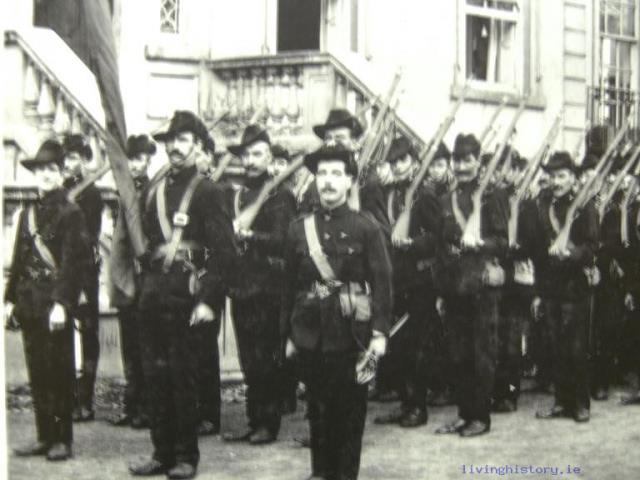


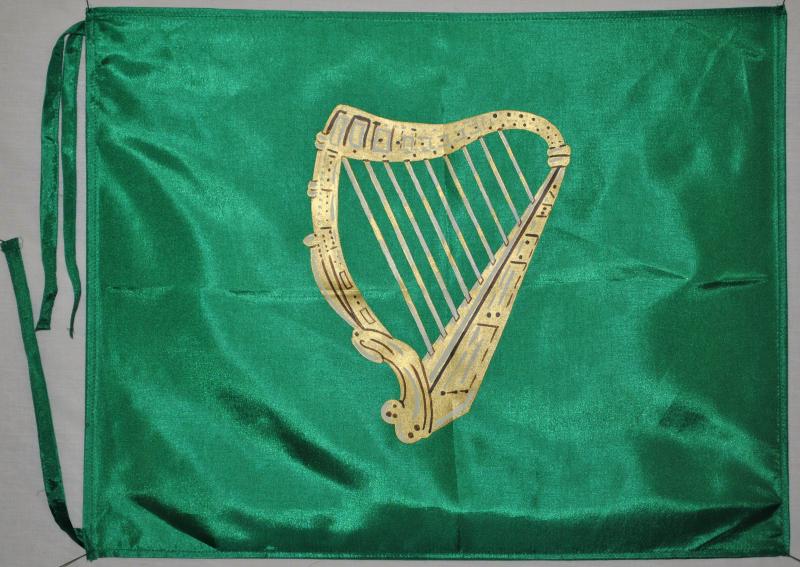


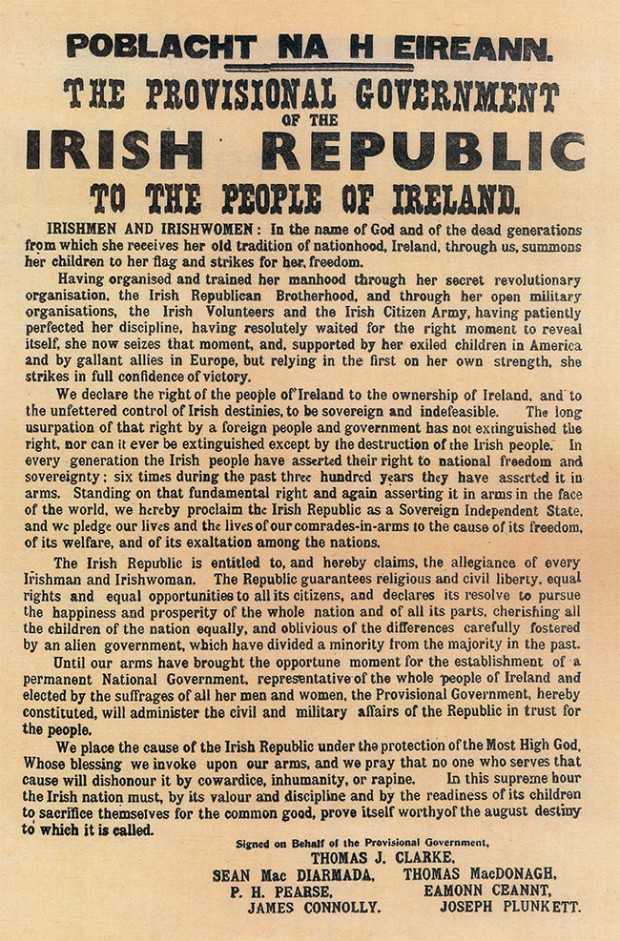
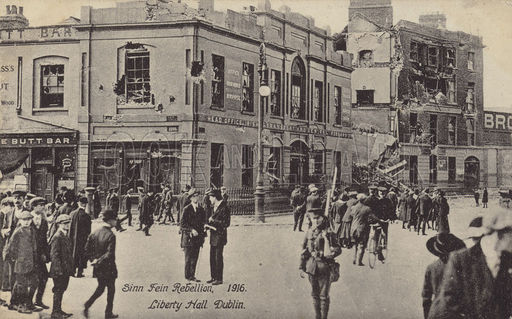

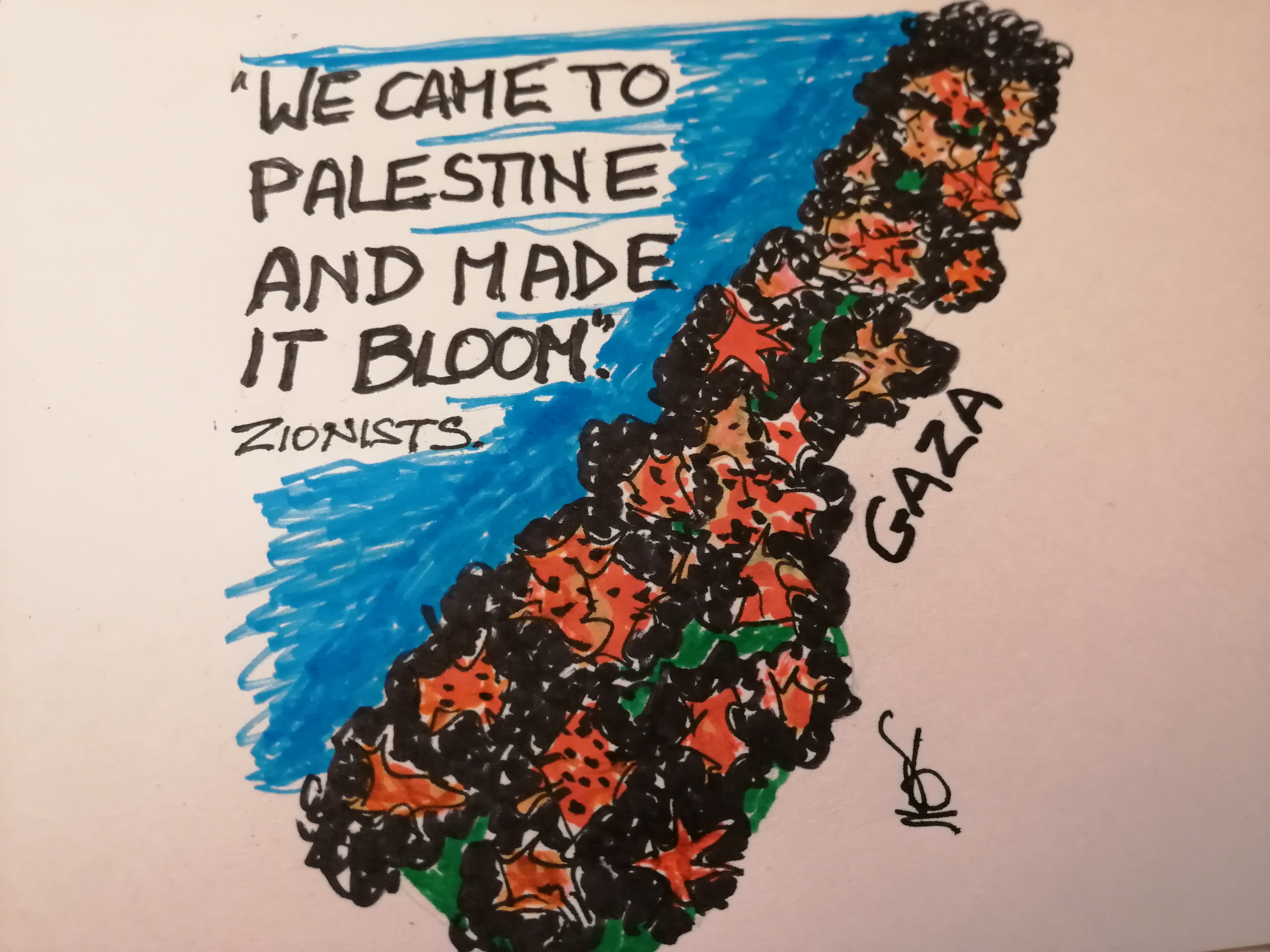


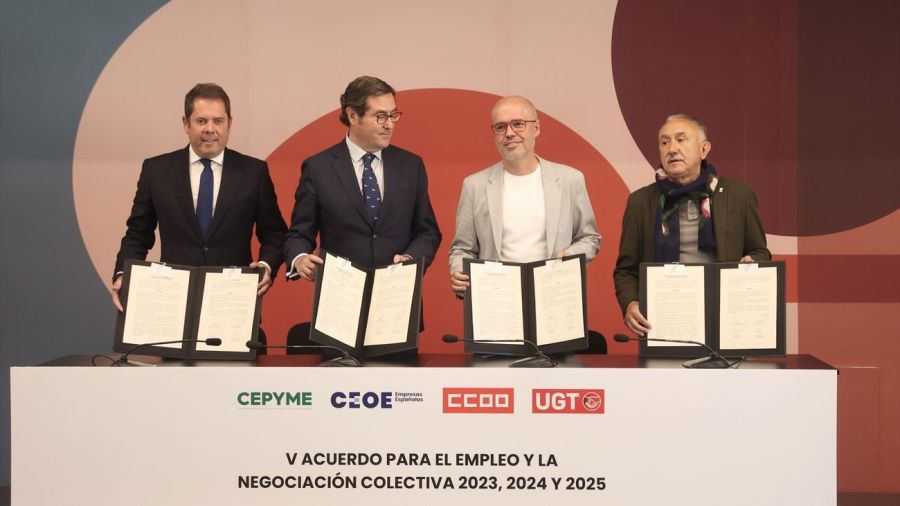
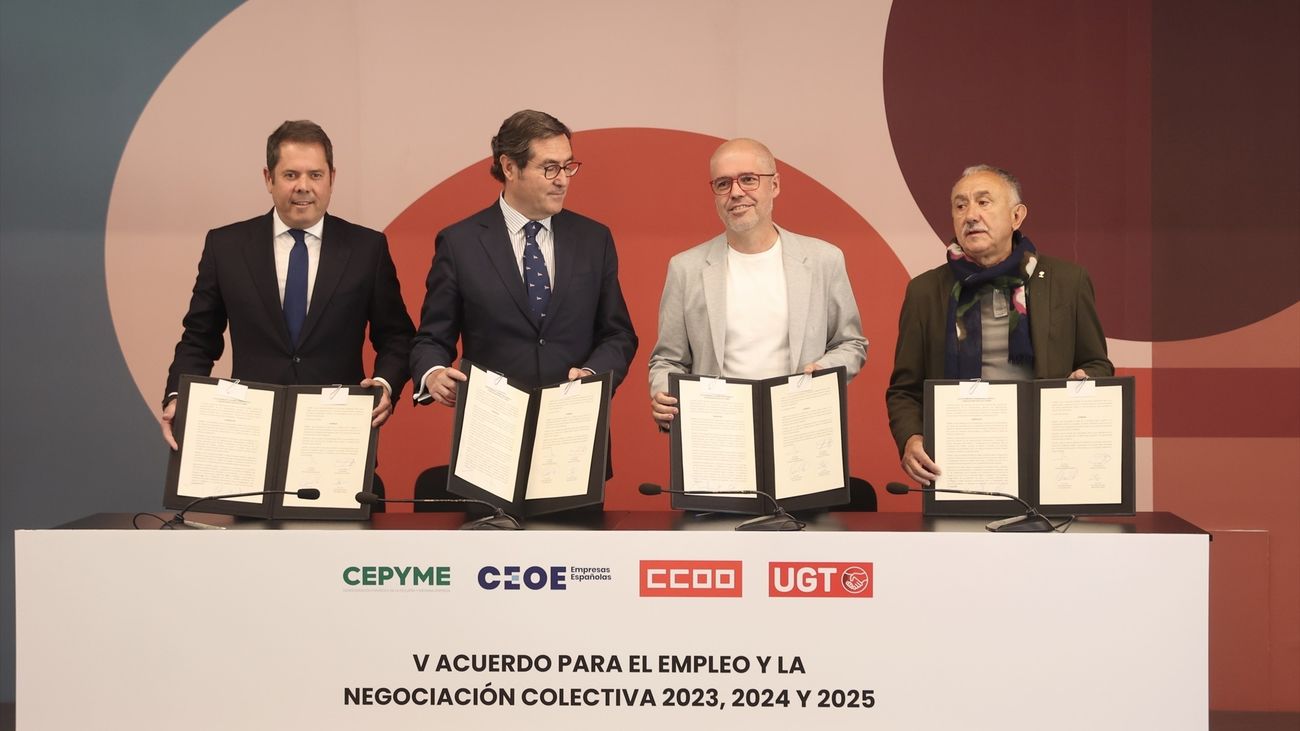
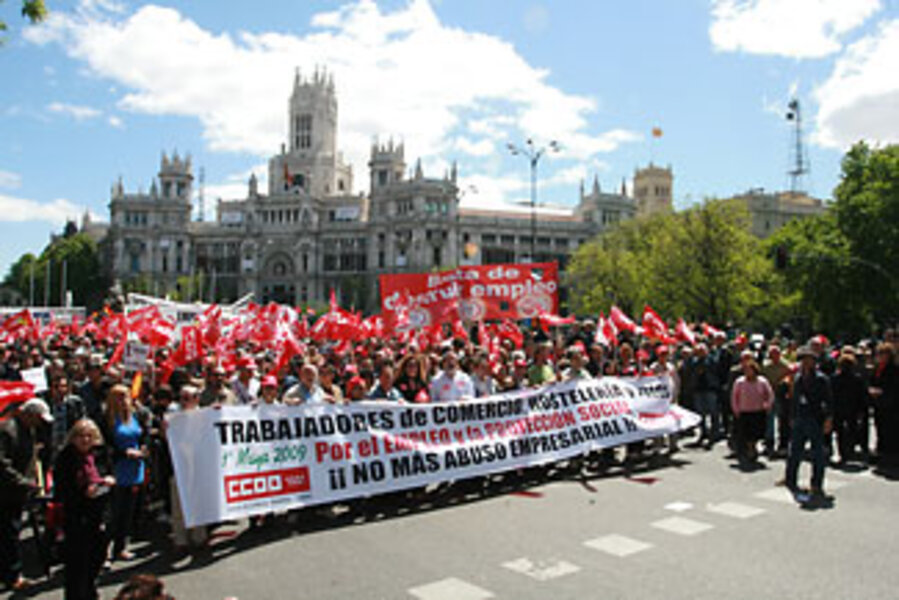


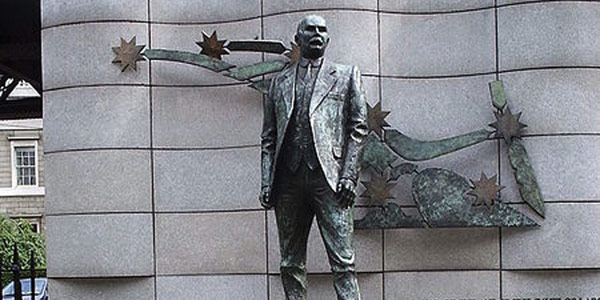




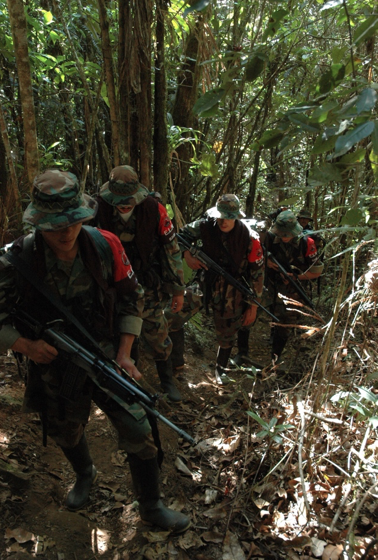


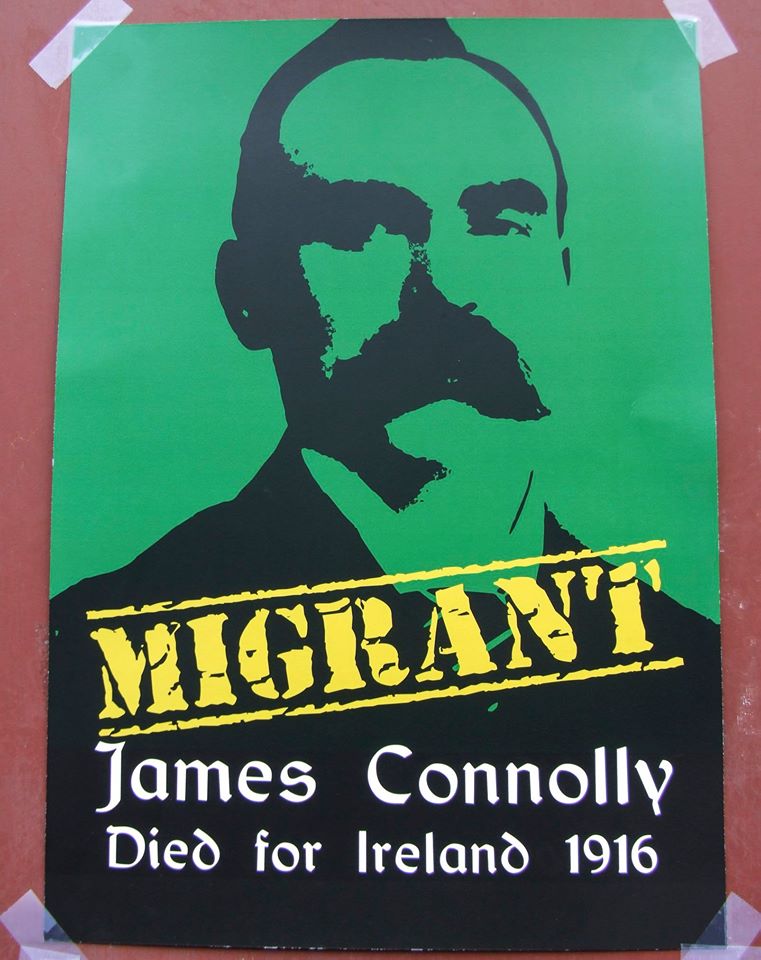

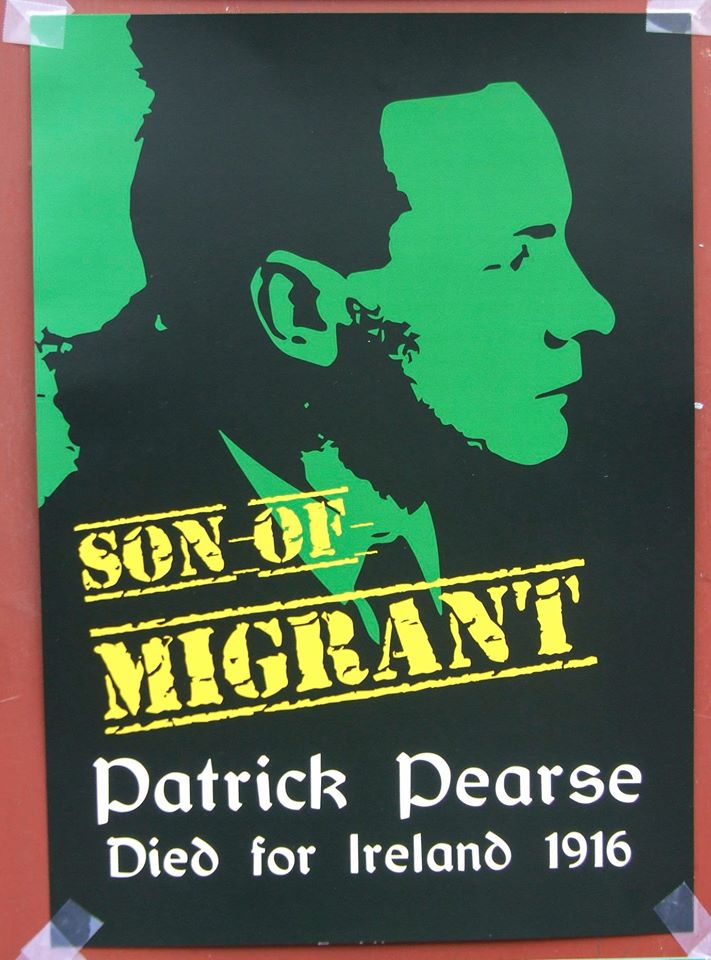
 rebelbreeze