Cumann na mBan (“Women’s Association”), a female military auxiliary and counterpart to the Irish Volunteers, was founded on this day in 1914, one hundred and seven years ago. Its members took part in the 1916 Rising and perhaps even more importantly in keeping up the momentum of the militant movement for independence during martial law after the defeat of the Rising and for years afterwards. They were part of the War of Independence and the Civil War in military and political activities. Many were jailed. The Easter Lily emblem, which many will wear to commemorate the Rising, is their invention. The role of Cumann na mBan, along with that of other women in Irish history, is to this day still not sufficiently highlighted or valued.
Wynne’s Hotel, Lwr. Abbey Street, viewed almost from the junction with O’Connell Street, looking eastward. (Photo sourced: Internet)
Cumann na mBan was formed as a female counterpart and auxiliary to the Irish Volunteers, which had been formed the previous year (as had, separately, the Irish Citizen Army). The inaugural public meeting was held in Wynn’s Hotel, Thursday, 2 April 1914. It was presided over by Agnes O’Farrelly, who was elected President. The provisional executive unveiled at the meeting included Jennie Wyse Power, Nancy O’Rahilly, Agnes MacNeill, Margaret Dobbs, Mary Colum, Nurse McCoy, Louise Gavan Duffy and Elizabeth Bloxham. A constitution was adopted which stated that Cumann na mBan aimed: 1. To advance the cause of Irish liberty 2. To organise Irishwomen in the furtherance of this object 3. To assist in arming and equipping a body of Irishmen for the defence of Ireland 4. To form a fund for these purposes to be called the ‘Defence of Ireland Fund’.
Plaque constructed to be located in Wynne’s Hotel on the centenary of the founding of Cumann na mBan (Photo sourced: Internet)
It was not the first organisation of women to stand for Irish independence that century – Inghinidhe na hÉireann had been formed in 1900 as a cultural organisation and had developed a militant Irish independentist political outlook along with a suffragettist one. Inghinidhe formally dissolved itself and joined Cumann na mBan in 1914 but in effect formed one of its branches and continued to represent a trend for greater activism and female independence within Cumann.
Unlike the Volunteers, membership of the socialist Irish Citizen Army, founded in 1913, was open to both genders and the women who joined that tended to disdain the membership of Cumann na mBan because not only did they not have a social program but were, at that time, under the overall authority of the all-male Irish Volunteers.
Prior to 1916, Cumann na mBan took part in agitation and publicity actions, a number of which they organised themselves. Their marching in the procession to the grave of O’Donavan Rosa’s grave in 1915 was apparently what most impressed other women, in particular young women; they had never witnessed a self-organised women’s organisation on the streets before and the Cumann’s membership swelled thereafter. When Redmond promised Irish men to the rulers of Britain to fight in WW1 the minority part of the movement but the most active split in order to fight for independence from the UK. Cumann na mBan split also but in their case, the majority went for fighting against Britain.
The flag of Cumann na mBan, flying in Dublin (Photo sourced: Internet)
In preparation for the 1916 Rising all members of the main female organisation learned First Aid and prepared field dressings for wounds, which perhaps brought them to face the physical dangers of insurrection more than did the training schedules of the Volunteers. They also engaged in anti-British Army recruitment activities which, after Britain declared War in 1914, increasingly meant being assaulted and arrested by the Dublin Metropolitan Police and the Royal Irish Constabulary. Many also transported secret messages and weapons, often storing the latter. In an informal way, they also provided intelligence they were able to gather. Through their cultural and social activities they provided diversion for male activists as well as a cover for clandestine meetings and other activities. During the Rising, Cumann na mBan members helped deliver arms, ammunition and equipment, construct barricades, set up field hospitals, provided food and water/ tea to combatants, acted as messengers. ICA women did most of that but a number of them were snipers also and one of those, Vol. Margaret Skinnider was gunshot-wounded three times while sniping and in other military activity in the Stephen’s Green/ College of Surgeons garrison area. Most of the Dublin garrisons had Cumann na mBan in them and those in the GPO garrison were asked to leave with some wounded when the building was in danger of collapse. Three women refused to leave with them and were there at the final surrender in Moore Street: Vols. Elizabeth O’Farrell, Winifred Carney and Julia Grenan.
Around 300 women are known to have taken part in the Rising and from the relative numbers of women in CnmB and the ICA, most of those had to be Cumann members; only 157 womens’ names appear on the Roll of Honour for the Rising.
Cumann na mBan was the first organisation of its kind in the world, a point that is often lost sight of: an insurrectionary female military organisation with its own uniform and officers.
Highly decorative and artistic logo of Cumann na mBan — note the rifle fitted into the acronym in the centre. (Photo sourced: Internet)
The greater role of the women in general and in particular of members of Cumann na mBan however was after the Rising when, even under martial law, they organised fund-raising for relief for families who had lost a breadwinner to death or prison; organised also public commemorations, defying arrest to keep the flame and memories alive, helping to create the sea-change in attitude to the Rising and giving a fertile ground for them to plant the seeds of resistance, along with the male and female prisoners released under amnesty.
In 1918 members of the Cumann worked to help the landslide victory for Sinn Féin in the British General Election in Ireland and then helped in the War of Independence, this time greatly organised into intelligence work but also as before as couriers, carrying and hiding weapons, caring for the wounded, running safe houses and other actions, as well as in public demonstrations and pickets, for example outside prisons. They were assaulted on occasion and jailed, sometimes replying with a hunger strike. They could not easily go “on the run” and were subjected by British Army and colonial Police to invasions of their homes and ill-treatment which included shearing their hair.
In 1921, Cumann na mBan again split over the Treaty but once more with the majority against it and in 1922 took the Republican side in the Civil War, for which they suffered repression, home invasions and imprisonment anew, this time by the forces of the Free State.
In 1926 Cumann na mBan invented the Easter Lily emblem in order to raise funds for the dependents of prisoners and killed in action fighters, in addition to those officially and unofficially executed, abducted an murdered. It is purely as a result of their efforts at this time that the emblem is so widely worn and appreciated in the wide Irish Republican movement, especially around this time of year.
Easter lily emblems printed on paper, attached with a pin. (Photo credit: Bryan O’Brien, Irish Times)
Two Cumann na mBan members as part of a Republican commemoration in 1944 (Photo sourced: Internet)
Cumann na mBan ceased to exist soon after the split between the “Officials” and “Provisionals” in 1969 but women continued to be active in the political organisations and also to be recruited into the various military ones.
(note the omission of the Moore Street battlefield at the end, with a Winifred Carney, Elizabeth O’Farrell and Julia Grenan noted as staying on in the GPO but omitting to mention where they went soon afterwards, or Farrell’s important roles thereafter): https://www.richmondbarracks.ie/women-1916/cumann-na-mban/
There is a blind eye being turned to oppression in Ireland – and I use the expression in its usual meaning of “deliberately not seeing”. And it is not the Irish ruling circles I am accusing of that deliberate act, for one could hardly expect anything else of them. No, it is the Irish socialist and liberal sectors I am accusing, along with a section of the Republican movement.
All of these are in Ireland; each of these sectors either knows of this oppression or has chosen not to know. In that respect, in so far as they cry out about injustice or inequality in other areas, they are being hypocritical. And in how much hypocritical activity can one indulge and how long, before one is really and totally a hypocrite, not to be trusted on anything they say they believe?
For years, before the Good Friday Agreement, wide areas in the Six Counties suffered oppression from the colonial statelet, its police force and the imperial armed forces. Those were the working and lower middle-class “nationalist/ Catholic” areas. Prior to the signing of the Good Friday Agreement, sections of the Irish Left and liberal consensus were actively ignoring this oppression and in that respect, nothing has changed. But what has happened since is that while smaller areas, neighbourhoods, are continuing to be oppressed, sections of the Republican movement have joined in that blindness and resultant silence.
Raid by armd British colonial police Belfast and arrest of two Republicans, including pregnant woman, 4th March 2021. (Photo sourced: Republic Media)
British Colonial Police invading the Bone area, Belfast, 4th March (Photo sourced: Republic Media)
HOUSE RAIDS, HUMILIATION, HOSPITALISATION & DEATH THREATS
From Republic Media: A statement released by the Republican party Saoradh quoted Cliodhna McCool, daughter of Kieran McCool who was arrested last week in Derry following a heavy house raid, reading a statement on behalf of the McCool family. Describing the ongoing and escalated harassment she said:
“As a family who hold strong traditional Republican views we have become accustomed to many forms of harassment and intimidation, in fact we have almost come to expect it. However, in recent months the occupiers have escalated this harassment by constantly following every member of our family during almost every aspect of our lives. Something that is somewhat creepy and very distressing is the fact they seem to have prior knowledge of where we are going to or coming from and will be there to mete out their harassment. “
Detailing incidents over the last year she continued: “In the last year alone we have been attacked resulting in my mother, father and younger brother being hospitalised and we have received death threats from British soldiers dressed in Crown Force uniforms.”
Describing the events of last week she said: “Once my father was removed from the house, what can only be described as a nightmare for our family began. My family were shouted at aggressively, verbally abused and threatened with arrest by masked gunmen.”
“My younger brother Fionn, who is autistic, was again manhandled and removed from his bed, searched and evicted from his home; as was my mother and other brother.”
Giving the public details of some of the more grim details of what a search entails for Republicans she explained: “While they were forced to leave our house they were refused access to a toilet, food or water. My mother was also denied her medication. My entire family was searched in an intimate manner of which I prefer not to go into detail; I will let you use your own imagination“
Concluding the family statement she said: “No matter what you think of our family’s politics, no family should ever be treated like this. If it was wrong in the 1970’s, 1980’s and 1990’s then it’s wrong now. Our family have feelings too and refuse to be treated as lesser human beings because politicians say it’s acceptable. It’s not!”
Cliodhna McCool’s statement was read out at a protest press conference of which the purpose was, according to Saoradh “to highlight the continued profiling and targeting of Creggan residents, community activists and those who hold traditional Republican beliefs.”
British colonial police raid and arrest Ardoyne, Belfast, 9th March 2021 (Photo sourced: Republic Media)
“THUGS IN UNIFORM CLIMBING OVER EACH OTHER TO GET TO ME”
Pete Cavanagh, who suffered injuries during the raid, spoke next, describing sectarian jibes and threats handed out to residents. “It was here they began to trade in sectarian and snide remarks, calling Creggan and the people in it ‘dirty and unwashed.’ Some of them began mentioning personal details of individuals gathered there. Some raised and showed off their weapons in an attempt to intimidate us. Many of the cops gathered there were very shaky and nervous. “
Describing his attack by armed police he explained:
“After trying to push us further down the street, these thugs in uniform drew their batons and launched what can only be described as a frenzied attack. It is here I was beat between two cars with my head busted open by a British baton. So reckless was this attack that these thugs in uniform were fighting with each other to get at me. They were climbing over each other to get at me again as I lay on the ground busted open. The cop who hit me called me a “Fenian prick.”
Pete also told how the police lied about how he received the injuries: “When I was in the back of an armoured car I seen and heard the inspector who attacked me tell his superior that I had fell and busted by head. But when asked at the hospital the doctor said there is no way I could have sustained this injury by either falling backwards or forwards given the severity and location of the strike. I received eight stitches.”
Despite Pete being on the receiving end of the physical attacks from Crown forces, he and another member of Saoradh were detained overnight and given bail with restrictive and oppressive measures.
A local resident Clare Friel also gave testimony at the conference:
“The actions and behaviour of the PSNI witnessed on Thursday 18th March were reminiscent of our past. These attacks, as described by our neighbours and community activists, were supposed to be of a bygone era, again that is not the case.
“What happened to the McCool family, residents of Ballymagowan and the wider Creggan community along with political and community activists has only served in raising further tensions between our young people, residents and the police.
“Our young people are sick and tired of being targeted by police; they are sick and tired of watching community and political activist being stopped and searched; they are sick and tired of seeing their school friends being stopped and searched while attempting to get an education; they are sick and tired of the fake community policing being rolled out in Creggan as the PSNI cycle around streets with armoured jeeps on every entry and exit of the estate. This behaviour can’t continue without our youth saying enough is enough! Is it any wonder they react!”
Saoradh National executive member Stephen Murney wrapped up proceedings by giving Saoradh’s analysis of recent events and in reference to other world events he said:
“Whilst this raid was taking place two women were forced to the ground outside and knelt on by several members of the British Forces. This bears all the hallmarks of George Floyd and the recent disturbing images in England. Are all members of the British Forces trained in how to attack women?
Criticising P Sinn Féin’s false promises, Murney pointed out that after such incidents the party regularly promises to complain to the authorities and have the attacks stopped which, however, continue and that the SF party’s support for “the oppressing force” is “unwavering”1.
Continuing, Murney asserted:
“On the other hand the Republican position is clear as day. These raids and attacks are the outworking of British occupation, they were wrong and unjust in previous years and decades and are wrong today. The Crown forces responsible are not welcome or wanted in Creggan, or indeed in any Republican community in the Six Counties.”
Murney called on people to support those being subjected to this harassment and violence and pledged his party to do so too.
HARASSMENT AND INTIMIDATION OF COMMUNITIES AFTER THE GOOD FRIDAY AGREEMENT
This harassment of activists and oppression of neighbourhoods has been ongoing since the signing of the Good Friday Agreement but has intensified in recent years. The colonial statelet wishes to normalise its situation, which means gaining acceptance of the population. But colonial status is not a natural or even desirable state of affairs and human history, in particular perhaps its Irish component, demonstrates that it will always be resisted. When that is so, the State moves in to harass, provoke, disrupt and intimidate the sectors that continue to resist.
Those who expect the resistance to die down and wish for acceptance of the Good Friday Agreement are being unrealistic and flying in the face of human and in particular Irish history. Whatever their wishes, when they turn a blind eye to the continuing oppression of sections of the Irish nation, they are helping it to continue. And when, instead, they support the oppressors or condemn those who continue to resist, they are in active collusion with the oppressor, the colonial invader and occupier. From a different but similar historical experience, history has given a name for such collaborators: Quisling.
One needs to ask what can account for this willful ‘blindness’ and resultant silence? Since those afflicted with the condition do not usually explain it, one must speculate and it seems to me that the following are the likely reasons:
For the socialists:
they do not wish to even seem to be endorsing armed resistance to the statelet
they wish to give no assistance to what is their biggest competition in the opposition to the status quo, along with the one with the largest working class base: the Republican movement,
For a section of the Republicans:
They do not wish to give any support to their competition inside the Republican movement
The Left and Liberals never had any difficulty in supporting the ANC despite the fact that had an armed wing, membership of which was the main charge of which Mandela was convicted. Or if they did, they kept quiet about them. They kept quiet too about the horrific practice of “Pirelli-necklacing”, when alleged informers or spies had tyres doused in petrol placed around their necks which were then set on fire.
And in a sense, that was mostly right, because the main target had to be the South African racist white minority regime and its foreign imperialist backers. Similar positions were taken with regard to the Vietnamese liberation forces and to the Palestinian resistance.
“YOU DON’T HAVE TO BE A REPUBLICAN TO KNOW THAT THIS IS WRONG”
But even if one did not agree with the objectives of the ANC, the NLF in southern Vietnam and NVA, the PLO etc, that should not prevent one from speaking out against oppression of the people. Pastor Niedermeyer put it well in his famous quotation about the oppression of different groups under the Nazis. Anti-Imperialist Action Ireland put it well too when their post stated:
“Last week following a violent attack by a British Police force on women in London there was international media coverage, justified anger and protests in a number of countries including Ireland, as people rightly expressed their outrage at such disgraceful events.
“This week, as Britain’s Colonial militia in Ireland once again attacks women in Derry, some of those same Irish voices so loudly speaking out against police violence in London have said absolutely nothing. These voices remain silent because to speak out would be to raise and condemn Britain’s ongoing illegal occupation of Ireland, something they are ideologically opposed to doing. Are the women of the Creggan to be left fighting alone?
“Police violence is wrong against women in London and it is wrong in Derry. The RUC/PSNI are attempting to provoke the community in Creggan and are invading homes and attacking women and children with impunity.
“It is not acceptable for so called Socialist and progressive forces to stay silent on this. It’s not acceptable to look the other way. You don’t have to be a Republican to know that this is wrong.
“Anyone who is really an advocate for women’s liberation would be calling British Imperialism out for the violence its imperialist militia regularly perpetuates against Republican women in occupied Ireland.
“Ní Saoirse go Saoirse na mBan.”
The point about provocation is well made. It was during one such raid in Creggan on 18th April in advance of a planned Republican commemoration of the 1916 Easter Rising that a Republican youth fired at the colonial police, a bullet of which tragically killed Lyra McKee, a journalist who was standing near an armoured police Land Rover2.
Those who are afflicted with the blind eye need to turn the other eye on the situation in the Six Counties and speak out. Or give up forever any credibility when speaking about injustice towards anyone.
End.
British Colonial police raiding Republicans August 2020 (Photo sourced: Saoradh)
FOOTNOTES:
1The Sinn Féin leadership has formerly accepted the colonial police force in the Six Counties, doing so publicly a number of times.
2Numerous politicians, State figures and mass and social media at the time called her killing “murder”, a clearly inaccurate statement and prejudicial to the trial outcome of anyone who might be charged as a result of her killing.
DESPITE LOW TURNOUT DUE TO PANDEMIC FEARS, THE THREE CATALAN INDEPENDENTIST PARTIES TOGETHER HAVE A COMFORTABLE ABSOLUTE MAJORITY
Despite the Covid19 pandemic and bad weather causing a low turnout for the elections to the Government (Govern) of the Catalan Autonomous Region, elected representatives of political parties for Catalan independence won a comfortable absolute majority of their Parlament and, for the first time in recent history, won more than 50% of the total votes cast.
It is worth noting that although most of the Spanish and much of the European media (including shamefully the Irish) is referring to the victors in this election as “separatists” this is not the correct term and implies or at least leaves open to interpretation that there is some basis for their campaign other than a historic nation seeking independence. The Irish over centuries were not “separatists” with regard to England and the United Kingdom, they were independentists. And those Irish parties that wanted to remain with the UK were — and are – unionists, with a parallel too in the elections in Catalonia.
In a Parlament of 135 seats (absolute majority 68 minimum), the results are:
INDEPENDENTISTS
Total seats: 74
ERC (Esquerra Republicana de Catalunya, traditional left-republican party of various trends)
33 seats (up one) 21.4% votes cast
JxCat (Junsts per Catalunya, independentist party consisting of various trends with origins in alliance with right-wing Catalan nationalist party PdeCat but split from them last year)
32 seats (up 12) 20.0% votes cast
CUP (Convergencia Unida Popular, a confederation of left-wing groups mostly active on a community and municipal level)
9 seats (up 5) 6.67% votes cast
UNIONISTS
Total seats: 53
PSC (Catalan branch of the Partido Socialista Obrero de Espana, social-democratic main government party in the Spanish State)
33seats (up 16) 13.9 % of votes cast
PP (Partido Popular, formed by Franco supporters after the Dictator’s death, main government party in the Spanish State after PSOE)
3 seats (down one) 3.8 % of votes cast
Cs (Ciutadans, Spanish unionist party formed by split from the PP)
6 seats (down 30) 5.6 % of votes cast
Vox (Spanish fascist and unionist party formed by split from PP and Ciutadans)
11 seats, 7.7 % of votes cast
OTHER
Total seats: 8 seats (no change) 6.87 % of votes cast
ECP (En Comú Podem [“Communs”], coalition of Podemos, Izquierda Unida etc, left-social democrats and trotskyists, in theory supporting the right to independence but in practice rarely supporting the independentists).
Results of February 2021 elections to the Catalonian Parliament. (Source image: Internet)
CONTEXT
Most of Catalonia is currently part of the Spanish state, with a small part around Pau, in the southern French state. Catalonia has its own political history and national language, Catalan but its autonomy was ended in conquest by the Bourbons of the Spanish Kingdom in 1741 and its language discriminated against. In 1936 the workers of Barcelona, the capital city, rose and defeated the forces of the Spanish military-fascist coup against the elected Popular Front Government of Spain. But after the victory of the military-fascist forces in 1939 in the Spanish Antifascist War, Catalonia, which had sided with the Government on a promise of autonomy, suffered repression, its leaders and supporters executed and language banned.
Map showing Catalonia in the iberian peninsula and part of southern France (without Pau picked out)
Catalonia is also considered by many to be part of the Paisos Catalans (Catalan Countries), which include the regions such of Valencia and the Balearic islands, where dialects of Catalan are spoken.
Although a small part of the Spanish State in terms of land and population, Catalonia is one of the most economically successful regions of the Spanish State. A wish for national independence gained renewed political support during the recent decade, growing apace when the Spanish State greatly reduced Catalan autonomy in a reinterpretation of the Statute of Autonomy in respect of Catalonia. Grassroots movements in favour of independence grew hugely, in particular the ANC and Omnium; they organised a referendum on independence to take place on 1st October 2017. The Spanish State sent its militarised police to seize ballot boxes and attack voters and protesters. Subsequently the Spanish State jailed the leaders of the Independentist party ERC, the grassroots organisations ANC and Omnium, along with politicians. It issued arrest warrants for a number of others, including the President of the Government and leader of JuntsXCat party and a leading activist of CUP, all of whom are currently in exile. 700 Town Mayors are under investigation for their role in the referendum and activists are in jail or on trial for their activities in protests and one-day general strikes (of which there have been three since 2017).
Man and woman celebrating and displaying the Vermelha, the socialist version of the Catalan independentist flag.
(Source image: Internet)
ELECTION TIMING AND RESULTS
Quim Torra, Puigdemont’s replacement, who had been stripped of his position as President of the Catalan Parliament by a Spanish Court for displaying a banner in support of the political prisoners on a Government building during Catalan municipal elections, had threatened to call snap regional elections; these were expected around October last year but the Covid19 pandemic prevented that plan going ahead.
However, when the Catalan Govern because of the pandemic decided to postpone their elections until this summer,, it was forced by a Spanish State court (at the behest of unionists) to call them for 14th February. That of course led to a low turnout, which usually favours the Right and Unionists, thus making the results even more remarkable.
Catalans queuing to vote in the rain in the midst of a pandemic; the Spanish State did not permit them to postpone for couple of months. (Source image: Internet)
With the independentist parties achieving more than 50% of the vote for the first time and an overall majority in the Parlament, Catalans favouring independence regard the election results as positive overall. But their pleasure is tempered by the unwelcome gains of the Spanish social democrats of the PSC and the ten seats won for the first time in Catalonia by the fascist Vox party.
The PSC is the Catalan branch of the PSOE, the Spanish social-democratic party currently in government in coalition with Podemos-Izquierda Unida, the latter a kind of trotskyist coalition (of which the Catalan version is “En Comú Podems”) and both parties are essentially Spanish unionist, the PSOE bluntly so and the junior partner in practice.
Although the PSC were no doubt aided by having as a candidate Salvador Illa, the former Minister for Health of the current Government of the Spanish State, it seems that some of the votes to elect the PSC came from pro-Spanish unionist Catalans on the Right, deserting their more natural allegiances in order to achieve a strong unionist and Spanish government presence in the Catalan Parlament. The Catalan traditional unionist Right wing took a hammering, losing 31 seats as the PP went down from four to three seats and their upcoming replacement Ciutadants from 36 to just six. But newcomers and more clearly fascist Vox gained eleven seats. In terms of seats alone, as a crude measure, the PSC and Vox gained seats totalled 44, while PP and Cs together lost 31. Looked at that way, it seems clear that the increase of seats for the social-democratic PSC and the fascist Vox came from right-wing unionists, with a gain of another 13 seats unexplained.
The PSC and Vox successes have been of concern to many Catalan independentists. However those parties reflect existing realities in Catalonia with which the independentist republicans will need to grapple. The vote for Vox illustrates quite starkly that much of the base of the allegedly democratic right-wing conservative Ciutadans was in fact fascist, as suspected by more than a few and it is as well to be aware of it and to have that exposed.
The support for the PSC is a wider problem and, while some of it will remain irreconcilably Spanish Unionist for the foreseeable future, there are probably elements among its voters that are capable of being won over to the independentist position.
GOING FORWARD
As noted earlier, the three republican independentist parties have won a comfortable overall majority, in that they have 74 seats between them, six more than the 68 needed for an absolute majority in the 135-seat Parlament. Even if all the Spanish unionist parties vote together, social democrats voting with Right and Far-Right, they can only outvote the Catalan independentists, in the normal course of events, should one of the latter parties join their vote or abstain, which is hard to imagine occurring.
In the last Parlament, the CUP became a left-opposition to the coalition Govern of ERC and JxCat but never joined the unionist parties in voting against the Govern.
Immediately following the announcement of the results, the Communs leader in effect admitted she would try and split the independentist alliance by asking ERC to join with them and with PSC to form “a left-wing government” which is a shameful use of words since the independentist alliance has put forward more proposals of a socialist nature for Catalonia than have been presented by the PSOE in the state, most of them blocked by the Spanish Constitutional Court and the PSOE is in fact now about to renege on the rent controls it had agreed with its coalition partner. However neither its supporters nor the electorate would be likely to forgive ERC’s leadership should they take such a step and whether tempted or not, they will not go there.
Of course, the Spanish State could reduce the Independentist majority by finding some pretext to jail some of their elected members and such a scenario is far from inconceivable, given the nature of the Spanish State and its recent history in Catalunya. But that would be a very high-risk avenue, even for the Spanish State.
The very likely development is for ERC and JxCat to join in a coalition government, with or without CUP (who might choose to remain in opposition but in “confidence and supply” with the Govern, meaning that they would vote for them if necessary to defeat a vote of the unionist opposition). ERC and JxCat are quite deeply divided on how to proceed in relation to the Spanish State. Although ERC has a longer history of Republican opposition and even some armed struggle through the Terra Lliure resistance, and thinks of itself as “Left”, it is JxCat that has been most resolute in its attitude to the Spanish State. ERC wanted to sit down for talks with Sanchez, Prime Minister and leader of the PSOE, even though Sanchez has stated categorically that independence is not up for negotiation; JvCat ridiculed the very idea. When Sanchez needed other party votes to get his Government’s budget through the Cortes (the Spanish Parliament), ERC gave their votes along with the PNV, the Basque Nationalist Party. And now ERC has asked the Spanish Government to authorise a referendum on Catalan independence which, on past performance, can only be denied. In the absence of getting something substantial in return, JxCat refused to give their votes to support the Spanish Government’s budget (as did the Basque independentist members).
Going into the mid-term future, not only will Catalan independence be forbidden by the Spanish ruling class through its State but many of the measures the Catalan Government has agreed to take around social justice, for equality, against bullfighting and so on, will be frustrated by the Spanish State through its upper courts, as before.
There seems no way forward for the Catalan independentists other than at the very least a sustained campaign of civil disobedience to make Catalonia ungovernable by the Spanish State. In such a situation, it is difficult to imagine the Spanish State not sending its military to occupy the nation and repress the resistance. With whatever response that would arouse among Catalans.
End.
POSTSCRIPT:
Clerk in court, Pablo Hasél trial: “Do you swear to tell the whole truth?”
Hasél: “I am here because of telling the whole truth.”
The jailing by the Spanish State of Catalan revolutionary socialist poet-rapper Pablo Hasél on 16th February has led to demonstrations and rioting in Barcelona in which both the Guardia Civil of the Spanish State and the Catalunya police, the Mossos d’Escuadra, have been engaged. The Spanish police have fired rubber bullets which are banned in Catalunya while the Mossos have baton-charged ferociously and, firing foam projectiles, took the eye of a 19-year-old woman. The protests are ongoing.
Over 400 visual artists, also of words and music, have signed a demand for the release of Hasél whose jailing has also been condemned by Amnesty International. Pickets in his support have been organised across the southern Basque Country and Navarran regional police, the Forales, fired rubber bullets at a march in Hasél’s support in Iruna (Pamplona). Other places including Madrid have also seen demonstrations protesting the jailing of the rapper.
Riot police and people protesting jailing of Pablo Hasél. (Source image: Internet)
(Translated from the article in Castillian by Alejandro Torrús [Publico 01/24/2021] by Diarmuid Breatnach)
(Reading time text: 7 mins.)
The descendants of Alexandre Bóveda join the ‘Argentine complaint’ together with the grandchildren of Amancio Caamaño, president of the Pontevedra County Council; and Ramiro Paz, editor. The three were murdered in 1936 in Galicia by Franco’s forces. Around 5,000 Galicians were shot by the Franco regime.
– Provided by the family
Alexandre Bóveda in a conferenece in Vigo (Photo supplied by the family)
They say that after the body of Alexandre Bóveda fell to the ground, shot by firing squad, one of his friends approached and placed a small Galician flag in his jacket pocket, near a heart that no longer beat. Thus was the last will fulfilled of the man that Castelao himself had described as the engine of Galicianism. It was August 17, 1936 and Bóveda was murdered after a farce of a trial that sentenced him to die for treason. Just a few hours later, at dawn on August 18, 1936, at the other end of the peninsula, the poet García Lorca was also murdered by the Francoists. In just a few hours, in two of the most remote territories of the country, two elevated minds of the country were murdered. Point blank. One after a sham called a trial. Another, after being arrested as a criminal. Two elevated brains, two unique sensibilities, and two ways of fighting, fighting for a freer, more democratic and more plural country fell by force of arms. The country was entering the long Francoist night.
The figure of Alexandre Bóveda is so spectacular that it is difficult to summarize in just a few paragraphs. He was one of the drafters of the Statute of Galicia of the Second Republic (which would never come into force due to the Civil War); he was the soul and “motor” of the Galician Party; and, furthermore, he had participated in the founding of the first savings bank in Galicia. The list, in a telephone conversation with his grandson, Valentín García Bóveda, is practically endless. To the political successes must be added a good number of professional successes, which led him to participate in the founding of Campsa, the Hacienda de Pontevedra or to expand the funds of the Pontevedra Council using only the existing law. He was only 33 years old.
The focus of his political struggle, however, was Galicia. He was convinced that the economic and social backwardness of the country was due to the centralism of a State that squeezed every last drop of sweat from the workers of the periphery. His love for the land, in fact, was taken to its ultimate consequences and in front of the same court that sentenced him to death he declared: “My natural homeland is Galicia. I love it fervently, I would never betray it. If the court believes that for this love the heavy death penalty must be applied to mey, I will receive it as one more sacrifice for her. “
So it was. Bóveda stood in the February 1936 elections to Parliament in the Ourense constituency, competing against Calvo Sotelo, who would be finally elected. Months later, Calvo Sotelo would be murdered in Madrid, while, just a few weeks later, Bóveda would be murdered in Galicia. He face it tied to a pine tree, in the mount of A Caeira, in Pontevedra, some bark of which is still kept by the family.
Pieces of bark from the pine tree against which Bóveda was executed (Photo supplied by the family)
His grandson says that he could have escaped, that he was warned on several occasions of the danger he was running, but that Bóveda answered all those warnings with the words he recited in front of the court. “I wanted to do good, I worked for Pontevedra, for Galicia and for the Republic and the confused judgment of men (which I forgive and all of you must forgive) condemns me,” he wrote in a letter to his brother hours before being shot.
“My grandfather was a marvel of the economy and aa elevated brain. Everything he achieved within only 33 years is impressive, which was at the age at which he was killed. I have always wondered what would have happened to this country if people so important such as Bóveda, like Lorca and like so many others who were shot or had to go into exile by Francoism could have lived another 30 years … Surely now we would live in a different country”, explains Valentín García Bóveda, grandson of the political victim and Vice-President of the foundation that bears his name.
Now, almost 85 years after this murder, Valentín takes over the family struggle to reestablish the memory of Alexandre Bóveda and has filed a complaint with the Argentine Judicial system. In doing so, he joins the nearly 1,000 legal actions that the victims of the Franco regime have presented in the last ten years before Judge María Servini de Cubria in Federal Court No.1 of Argentina.
“I go to the Department of Justice of Argentina with several objectives. On the one hand, to reestablish the memory of my grandfather. I do it for him, but also for my grandmother, who had to die seeing how, legally, her husband was listed as being shot for treason to the homeland. I want that sentence to be judicially annulled. On the other hand, I also go to Argentina to fight against this amnesiac democracy that was based on the foundations of oblivion and injustice,” explains García Bóveda, who hopes that Argentina can declare the crimes of the Franco regime to be crimes against humanity.
The case of Alexandre Bóveda is not the only one to reach the Servini court recently. The descendants of the Republican doctor and politician, president of the Pontevedra County Council in May 1931, Amancio Caamaño, and of the printer and political leader Ramiro Paz, have also filed a complaint. Begoña Caamaño, Amancio’s granddaughter, explained to Público that her grandfather was arrested a week after the Francoist coup and shot on November 12, 1936.
“I could never agree with the Amnesty Law or with the Historical Memory Law. In this country the wounds were never closed even though others accuse us of wanting to open them. The Francoist hierarchy passed to democracy without being held accountable. The Police that were torturing was the new democratic police. And for this reason neither my family nor I have been able to sue in Spain about the execution of my grandfather and we have decided to go to Argentina. All I am looking for is justice and for the sentence against my grandfather to be annulled “, Begoña Caamaño explains.
That fateful November 12, 1936, the Francoist forces executed Caamano and Paz in A Caeria, but also doctors Telmo Bernárdez Santomé and Luis Poza Pastrana; the teachers Paulo Novás Souto, Germán Adrio Mañá and Benigno Rey Pavón; the lawyer José Adrio Barreiro; journalist Víctor Casas Rey; and Captain Juan Rico González. Their murders, however, were only a few more drops of pain in the midst of the slaughter that Franco’s forces were carrying out. The repression ended in just a few years with the lives of 4,699 Galician citizens. Seven out of ten (3,233) were executed in the so-called Francoist “strolls”1. The rest, 1,466, were killed by the carrying out of a death sentence, according to data from the Nomes e Voces (Names and Voices) project. A veritable extermination in an area where the war lasted no more than a few days. In the first months of the Civil War alone, the four civil Governors, the Mayors of five of the seven Galician cities and of the 26 most important towns and the highest Galician military authorities who opposed the coup were all murdered in Galicia.
However, selective or indiscriminate murder was not the only means of repression. With the aim of destroying a civil, plural and organized society, 1,597 citizens were sentenced to life imprisonment and 1,981 were sentenced to various shorter prison terms. In total, 28,234 Galician victims suffered some type of judicial persecution by the new military authorities.
The lawsuits of Bóveda, Caamaño and Paz are not the only ones that have reached Argentina for Francoist crimes perpetrated in Galicia. The “Argentine complaint” was born, in fact, after the complaint filed by a Galician citizen, Darío Rivas, for the murder of his father, Severino, Republican mayor of Castro de Rei and the first of the executed exhumed in Galicia.
Doctor and Politician Santiago Caamaño
Likewise, in 2014, Público reported on a good number of complaints filed about crimes committed in Galicia. Among them was the case of the murders of Manuel Díaz González, a doctor from O Incio (Lugo) and the first Mayor of the Republic in that town, and his brother José Díaz, elected in the last elections as the new Mayor of the municipality. His granddaughter Esther García then explained how her grandfather had been dragged for several kilometers tied by the tail of a horse to the municipality to be murdered where he had been Mayor.
The repression in Galicia also led to a long exile to Latin American countries. In 1942 Galician exiles in Argentina established August 17, the day of the assassination of Alexandre Bóveda, as ‘Día da Galiza Mártir’ (Galician Martyr Day) to commemorate a unique generation that was wiped out by the weapons of Francoism.
Descendants of victims at the Argentine Consulate in Vigo (Photo supplied by the Pontevedra Council)
COMMENT:
The dictator and leader of the coup General Franco was himself a Gallego, a Galician. So was Manuel Fraga Ibibarne (despite the Basque second surname), Minister of propaganda during the Franco Dictatorship and director of repression during the Transition years after Franco’s death (“The streets are mine” — yet claimed by some as steering the ‘democratic transition”) and founder of the Alianza Popular/ Partido Popular party. The claim of fascists to uphold and defend nationalism was exposed as a lie in so many examples in history but very starkly indeed in the Celtic nation of Galicia. The foremost national intelligentsia of Galicia, political, cultural and law-making – those that did not flee — was wiped out by the Franco military and the fascist Falange.
Also a Gallician — an elderly Franco on a Spanish State occasion (Photo sourced: Internet)
Also a Gallician, fascist Manuel Fraga, propaganda Minister and director of repression. (Photo sourced: Wikipedia)
The supporters of the military-fascist coup against the democratically-elected Popular Front Government of the Spanish State called themselves “Nationalists” and the media in much of the rest of the world did them the favour of referring to them likewise.
But it was the Spanish imperialist “nationalism” that was upheld by the coupists, one which denied the social aspirations of the population of the central “Spain” and denied the cultural, social and political aspirations of the Basque, Catalan, Galician and Asturian nations within the State and those of its colonies outside, for example the people of Western Sahara.
Today that false nationalism remains in power in the Spanish State, whether the social-democratic PSOE or the right-wing conservative PP are in government. It is supported in effect by sections of the Left as represented by the (old) CPE/ Izquierda Unida/ Podemos and by the extreme right-wing of Ciudadanos and Vox. The struggle between progressive national independentism and that centralist-imperialist bloc continues.
Diarmuid Breatnach
End.
Alexandre Bóveda addressing a mass meeting in Vigo (Photo supplied by the family)
1Translator: Many of those murdered by the Francoist repression were not as a result of firing squad ordered by military tribunal but, in particular by the fascist Falange, by unofficial execution which the perpetrators called “paseos” (strolls). They would collect the victims from places of detention or their homes, telling them that “We are going for a walk”.
On 2nd September 2020, a Paraguayan military operation took place in the north of the country which resulted in the deaths of two Argentinian girls of 11 years of age. Later three men were killed and the aunt of those girls was captured by Paraguayan military and is currently in jail. Those are the only elements upon which everyone is agreed; the rest is a matter of hot dispute, not only between the Paraguayan authorities and relatives of the dead girls and the detained woman, but also between those authorities and human rights organisations in Argentina, a feminist collective in Paraguay (currently subject to repression) and the appropriate organisation of the United Nations. There is also the question of a missing 14-year old girl.
Some of the human rights organisations, such as the Gremial de Abogados de Argentina (Association of Argentinian Lawyers) and feminist collectives in Paraguay itself have said the girls were captured alive and subsequently murdered. Some others, such as Human Rights Watch have cast heavy doubts on the version (actually, a number of different versions) of the Paraguayan authorities, also pointing out a number of actions taken which raise suspicions of murder and of attempts to cover up the events.
ACCORDING TO THE FAMILY AND SUPPORTERS
Last year Laura Villalba Ayala – sister of Carmen Villalba, one of the former top leaders of the EPP guerrilla organisation who has been in prison for 17 years – travelled from Argentina to Paraguay with three girls who were going to visit their relatives. According to some sources, to visit their fathers, whom they had never met in person, having been born in Argentina to where their mothers had fled and been brought up there.
Paraguayan intelligence detected the group and they were ambushed on 2nd September in the El Paraíso ranch, located in the city of Yby Yaú, in the Department of Concepción of the Republic of Paraguay. The belief is that they took them alive as prisoners and then executed two of the 11-year-old girls, Lilian and Maria Carmen Villalba and wounded 14-year-old Carmen Elizabeth (Lichita) who managed to flee along with others. Or executed the girls after the others had successfully got away – after interrogating them.
Two 11 year-old cousins killed by Paraguayan military last year who they claim were “guerrilleras”. (Photo sourced: Internet)
A relentless hunt pursued the fugitives and on 20th November 2020, while passing through the forest the three men who accompanied them were executed in cold blood: Lucio Silva, Esteban Marín López and Rodrigo Arguello. Their executioners fired infrared targeted shots at a distance of 500 meters.
Alone and without knowing the area, the girl and woman fled the hunt into the forest but got lost and separated and on December 23rd when Laura was looking for Carmen Elizabeth, she was arrested. The girl is still missing, while Laura is prisoner in a military camp and, according to her family and supporters, probably being tortured.
Carmen Elizabeth Villaba, the 14 year-old still missing after Paraguayan military attacked an EPP camp.
(Image sourced: Internet)
ACCORDING TO THE PARAGUAYAN AUTHORITIES
The “raid on an EEP camp” was hailed by the President of Paraguay, Mario Abdo Benítez himself as a great victory against the EEP and mentioned that some young women guerrilleras had been killed. When giving more detail, the military said that the young women were around 14 or 15 and supplied photographs of their bodies in military-style fatigues/ uniform.
The authorities reported that the bodies had been found with weapons, that a paraffin test on one of them established that she had fired a weapon, that both had ammunition in their pockets, their clothes had been burned (“due to Covid19 precautions”) and both had been buried without autopsy.
Ferreira, a Government official who arrived at the site of the incident after it had occurred, said that he recorded bullet wounds which he said had been at a distance of between 10 and 20 metres and that the girls had been shot while running away.
Paraguayan anti-insurgency military in training. (Image sourced: Internet)
After enquiries from anxious relatives, the Paraguayan authorities requested the Argentinian state to send copies of the birth certificates of the girls which, when supplied, confirmed that the girls had been 11 years of age. The Director of Forensic Science of the Paraguayan Prosecutor’s office then had the bodies exhumed and, carrying out tests on them, confirmed their ages at around 11 years of age. After that examination of the remains, the Forensic Science Director, Pablo Lemir said one girl was shot seven times – from the front, the back, and the side – while the other girl was shot twice, from the front and the side.
Paraguayan special forces on parade.
(Image sourced: Internet)
The Paraguayan State and its supporting media then began to talk of a “training camp for child soldiers” and accusing Laura Villalba Ayala of having accompanied them into Paraguay for that purpose.
DOUBTS AND SUSPICIOUS CIRCUMSTANCES
Numerous sources including Human Rights Watch, commenting on the available information, cast doubts or outright challenged the Paraguayan state account, pointing out the following:
no autopsy was carried out on the bodies prior to burial as is required in particular by the Minnesota Protocol in cases of death caused by government agents (the international standard for conducting autopsies and other forensic analysis in the United Nations Manual on the Effective Prevention of Extra-legal, Arbitrary, and Summary Executions).
neither family, Argentinian Consul or independent observers were permitted to attend the eventual autopsy
the clothes of the deceased, material of great forensic importance were not only not preserved but burned
the reason given for that burning, defence against Covid19 contagion, is not recommended in any of the Covid19 procedures and was not carried out with regard to other material in the camp (bedding, food sacks etc) and in any case makes no sense since the bodies were immediately buried, according to the military
despite videoing by Government forces of previous such operations, there was none of this one
there were no interviews of the military personnel to establish what weapons they had or who had fired or their account of the incident
the photos seen showed the uniforms clean and without bullet holes while the girls were by military admission killed by a number of bullets and relatives shown the photos contrasted the clean state of the uniforms with the girls’ faces and hands, which suggested to them that they had been dressed in the uniforms after torture and execution
Beyond 1.5 metres, it is not possible to determine the distance of firing since the entry wound will look the same at vastly different distances, according to two IFEG forensic analysts (Independent Forensic Expert Group of the International Rehabilitation Council for Torture Victims) giving Human Rights Watch their expert opinions in this case.
The paraffin test is not considered conclusive of having fired a gun, according to the IFEG experts, since there is a wide range of other substances that can give the same result.
According to Pablo Lemir, Director of Forensic Science of Paraguay’s Prosecutor’s Office, the failure to carry out an autopsy and burning of clothes violated standard procedures for such cases.
The Government expended some effort originally to claim that the girls were years older than their actual age. Now it is refusing to allow an experienced Argentinian team to exhume the girls and carry out a forensic examination.
REPRESSION AND RESISTANCE IN PARAGUAY ARISING FROM THIS CASE
A feminist collective responded spontaneously to the news of the killing with around 70 demonstrating with a samba band at the national building of the Pantheon of Heroes, carrying placards stating that the victims were only girls (“eran niñas” — which also became a hashtag about the case). The Pantheon building had been sprayed earlier with graffiti quoting from Paraguay’s child protection legislation and there was an attempt to burn a flag of the state’s colours.
The Attorney General’s Office immediately issued arrest warrants for three women on charges of “damage to national heritage”, which carries a maximum sentence of 10 years. Paloma Chaparro, who had been recorded carrying out the acts, later surrendered herself to authorities, while Marian Abdala and Giselle Ferrer fled to Argentina despite continued border closures due to Covid-19. Subsequently summonses were issued for at least six of the organisers of the protest to answer charges of violation of Covid19 regulations and extradition requests were made of Argentina for the two who fled the country.
Paraguayan politicians, who have nothing to say about the killing of 11-year-old girls by their military, have vied to express disgust and horror at the crimes on the national monument, with patriotic associations even laying floral tributes of thousands of dollars at the monument. The Paraguayan media, all very aligned with the regime, has made great issue of this “crime” (at worst mild vandalism) with the effect of drawing a veil over the case of executions of two 11-year-old girls and three adults, the continuing disappearance of a 14-year-old girl and the continuing detention of their adult relative in a male-only military compound.
Paraguayan politicians and other right-wingers lay floral and flag tributes at the national monument in abhorrence of the feminists’ protest but without mention of two 11 year-old girls killed and a 14 year-old missing.
(Image sourced: Internet)
Both women who fled to Argentina gave numerous death and rape threats as their reason, along with lack of faith in fair treatment by Paraguay’s judicial system.
Paloma Chaparro spent two weeks in jail before being bailed at $14,300 to house arrest.
During a press conference on Monday 11th, a member of the lawyers’ delegation who had entered the conflict zone in an effort to find and rescue Carmen Elizabeth Oviedo Villalba and also to investigate the incident, said they were accompanied throughout by five military vans and that the intimidation of the local people was such that they were unable to talk to any of them. However, some who separatedly had managed to speak to local people confirmed that the girls had been arrested alive during the raid.
Later the Paraguayan authorities claimed that one of the lawyers is the new leader of the EPP! Commenting on the accusation during the press conference a representative of the organisation clearly found it amusing but then became serious, pointing out that such accusations could put their lives in danger.
On 11 September 2020 the Paraguayan government stated that former Vice President Óscar Denis and one of his employees were kidnapped by members of the EPP not far from the site of the guerrilla camp assaulted by the army on 2nd September. The pick-up vehicle in which the two men were riding was found abandoned with propaganda leaflets scattered around, the statement said. The EPP appears to have made no statement in that regard.
Both men are reported still missing.
THE EPP
The Ejército del Pueblo Paraguayo (Paraguayan People’s Army) is a very small guerrilla army of communist ideology, which sees itself as a liberation organisation but which the regime classifies as a terrorist organisation. Estimates of its numbers vary from 50-100 and it operates mostly in the Concepción department (administrative area) in northern Paraguay and also in the neighbouring departments of Caníndeyu and San Pedro.
EPP Guerilla fighters, one reading a statement while others stand guard. (Image sourced: Internet)
Wikipedia and other websites describing such organisations regularly list the alleged killings, kidnappings etc by the guerrilla organisations without listing the corresponding arrests, killings and other actions by the police and army forces or other arms of the State or proxy forces. In those circumstances quoting statistics of armed actions by the guerrilla organisation can amount to propaganda in favour of the state in question.
Logo or arms of the EPP.
(Image sourced: Internet)
The origins of the organisation are in the taking apart of the Partido Patria Libre (Free Homeland Party) by Paraguayan police in 2005.
Whatever others may say about them it does appear that the guerrilleros are well-regarded in the EPP operational area and the chairperson of the press conference in Argentina on Monday commented in passing that the funerals of the three fighters executed by the Paraguayan military were attended by large crowds of local people paying their respects.
Paraguayan Army vehicle overturned in explosion 2014, officer and private killed. (Image sourced: Internet)
ACTION
A coalition of Argentinian human rights organisations have written an Open Letter (see Appendix 2) to Alberto Fernandez, the President of Argentina, calling on him to suspend commercial relations with Paraguay until the regime responds satisfactorily to the following
“Demand the Paraguayan government authorize the immediate entry of the Argentine Forensic Anthropology Team to carry out an autopsy within the framework of an impartial investigation that can guarantee justice for the girls María Carmen and Lilian Mariana Villalba.
“Demand of the Paraguayan government the appearance alive of Carmen Elizabeth Oviedo Villalba, aged 14, who has been missing since November 30, 2020.
“Demand of the Paraguayan government the immediate release of Laura Villalba, who is being held illegally in a military prison, probably subjected to torture.
“Grant political refuge in Argentina for the Villalba family, which is constantly harassed and criminalized by the Paraguayan government.”
Supporters of the family and human rights organisations in Argentina are asking for details of the case to be widely disseminated and for people internationally to add their voices to the campaign (should you wish to add your name or organisation in support of the letter, please notify estadoparaguayoinfantocida@gmail.com and name which category you come under from the list on the open letter).
At an on-line press conference on Monday last week it seemed that the only media present from outside Latin America were from the Italian and Spanish states. A member of the family, Myrian, thanked all for their efforts and vowed to continue the campaign while an elderly Nor Cortiñas, a member of the famous Mothers of May Square, who in the 1970s and 80s demonstrated in Buenos Aire’s city centre demanding justice regarding those “disappeared” by the military dictatorship then, spoke words of encouragement and said “Venceremos!” (“We shall win`!”) with upraised clenched fist.
Both the United Nations and the Inter-American Commission on Human Rights have demanded an investigation into the killings.
ACCURACY:
Under a feeling of some urgency I have done best I have been able to assist in a small way the application of international pressure upon firstly the Paraguayan state to admit a proper investigation, along with the return to Argentina of Laura Villalbaand the currently disappeared 14-year-oldCarmen Elizabeth Oviedo Villalba and, in the second place, that the Argentinian Government take all action possible to achieve those aims. It was just a few days ago that I received the first knowledge I had of this case through a comrade abroad forwarding me the press release of the Argentinian Lawyers’ Association, since when I have tried to find more details and also some press coverage (see Sources). It is possible therefore that I have omitted some relevant matters or erred in some detail and if so, I can only apologise and hope that will not be the cause of anyone failing to disseminate information about this atrocity and the present and continuing danger to a woman in jail and a 14 year-old girl missing in Paraguay.
End.
APPENDED DOCUMENTS (total 2)
APPENDIX (1)
THE ARGENTINIAN LAWYERS’ ASSOCIATION REPORTS THE ARRIVAL OF A DELEGATION OF INTERNATIONAL LAWYERS IN THE CONFLICT ZONE IN SEARCH OF INFORMATION ABOUT THE WHEREABOUTS OF CARMEN ELIZABETH OVIEDO VILLALBA (English translation from original by DB)
It was public knowledge in the past that more than ten years ago several members of the Villalba family, mostly boys and girls, had to settle in our country (Argentina) fleeing the persecution unleashed by the Paraguayan Government against the families of the combatants of the EPP (Ejercito del Pueblo Paraguayo- Paraguayan People’s Army), who are not part of the organization.
Last year Laura Villalba Ayala – Carmen Villalba’s sister, one of the top leaders of the EPP who has been in prison for 17 years – travelled to Paraguay with three girls who were going to visit their relatives.
Paraguayan intelligence detected the group and the persecution against them was unleashed immediately, managing to ambush them on 2nd September in the El Paraíso ranch, located in the city of Yby Yaú, in the Department of Concepción of the Republic of Paraguay. They took them alive as prisoners and then executed two of the 11-year-old girls, Lilian and Maria Carmen Villalba and wounded 14-year-old Carmen Elizabeth (Lichita) who managed to flee along with the others.
From there, the chase after them was relentless. In this context, on 20th November 2020, the three people who accompanied them: Lucio Silva, Esteban Marín López and Rodrigo Arguello were executed in cold blood while passing through the forest. The executioners fired shots at 500 meters distance with weapons equipped with caloric and infrared mechanisms that detect human heat and direct the shot.
Alone and without knowing the area, they went into the forest trying to flee the persecution. They got lost and on December 23rd when Laura was looking for Carmen Elizabeth, she was arrested.
From the testimonies of local people collected by Laura before her arrest, some said that the army had captured Carmen Elizabeth and others said that a group of civilians captured her.
Throughout these days the Government of Paraguay has launched an intense campaign against the EPP, in particular against the Villalba family. To justify the executions of the girls and now the disappearance of Carmen Elizabeth “Lichita”, they are spreading false news about the recruitment of minors in the EPP, obscenely conducting a cover-up for their crimes and their need to use the persecution of girls as spoils of war in their fight against the EPP.
For that reason, several colleagues offered to organize a search group with the participation of our colleague Gustavo Franquet, along with the lawyer Daysi Irala from Paraguay, the lawyer Sabrina Diniz Bittencourt Nepomuceno from Brazil and the comrade Germán from Aníbal Verón’s CTD, who also volunteered to accompany and assist.
On the 4th of January 2021 this delegation arrived at Yby Yaú, North of Paraguay after 6 hours by the bus. From there, they will have to walk into the conflict zone, in an area with a lot of forest to try to reach the area where aboriginal communities have reported that they saw Lichita alive.
They will try to confirm the information gathered so far and look for more information about the 14-year-old girl (twin) daughter of Carmen Villalba.
We publicise the presence of our colleagues in the area, aware of the danger that the delegation has assumed when entering the conflict zone.
The Government and the Paraguayan military forces are informed of the entry into the area of a non-belligerent foreign group of which none carry any weapons.
We hold the Government and the Joint Task Forces of Paraguay responsible for the physical integrity, life, and liberty of our comrades, since the official Paraguayan organizations and the Argentine consul in Asunción have been formally notified of their presence.
Finally, and with all our heart, we want to show our immense gratitude to so many colleagues, as well as to very diverse organizations of different political positions that assisted with money (in some cases a lot of money, which was unexpected by us) to pay for the trip, tickets and the huge expenses that this mission entails for us.
Know that we will never ever forget such a gesture and that without this assistance this trip would have been impossible.
We will continue to provide all the information that we receive.
APPENDIX (2)
Open letter to President Alberto Fernández: You cannot do “business” with an infanticidal state.
We the undersigned, social organizations, intellectuals, academics, trade unionists, activists, defenders of human rights, feminists, professionals, members of civil society, political organizations, ask the Argentina Government presided over by Alberto Fernández to suspend commercial relations with the Paraguayan State until the clarification of the crime perpetrated by the Joint Task Forces (FTC) against the Argentinian girls María Carmen and Lilian Mariana Villalba, who were only 11 years old, in Yby Yaú, Concepción, Paraguay, on September 2, 2020, and thatCarmen Elizabeth Oviedo Villalba, 14 years old, disappeared since November 30, appears alive.
Along the same lines, the immediate cessation of the persecution of the Villalba family is required, which currently has Laura Villalba, mother of one of the massacred girls, illegally detained in the Viñas Cué military prison. Both Carmen Elizabeth and Laura witnessed the capture of the girls at Yby Yau on September 2nd. Therefore, the arrest of one and the disappearance of the other are intimately related to the intention of the terrorist state of Paraguay,faced with a fact that is internationally known, to erase the evidence and viciously punish the next of kin.
Laura, María Carmen, Lilian Mariana and Carmen Elizabeth resided in the missionary town of Puerto Rico (Argentina) and were stranded in Paraguay by the COVID 19 pandemic. The Paraguayan State had a duty to protect them and return them in good health. On the contrary, the repressive forces of that country violated their lives, with the operation celebrated as a success by the President of the country himself, Mario Abdo Benítez.
The bodies of the girls were not subjected to an autopsy and were quickly buried, with false information from official sources about the age and condition of the girls at the time of being killed. The alleged clothes that the girls were wearing were cremated as a preventive operation against COVID 19, a fact that lacks substance and reason. The second autopsy that was carried out under pressure from civil society determined the age of the girls and added more confusion to the way in which they were executed, so we understand that an impartial investigation is still necessary to determine what happened and to allow progress in a process of reparation and justice.
Although the Paraguayan Government has supposedly responded affirmatively to the request for an investigation made by the Argentinian State, it has done nothing in that direction and, on the contrary, has withdrawn its support for the UN in the face of its pronouncement in this case; it has persecuted the protesters who demand justice, has criminalized children, adolescents and indigenous communities in the region, has held the families of the victims responsible as well as relatives who suffer persistent persecution, has fostered wild hypotheses about Argentina, as some kind of “guerrilla nursery” place, has wished to prohibit the dissemination of information about the murdered girls, thereby trying to hide the fact that they were girls and push the case into oblivion, has continued with its policy of militarization of the northern region of the country. As if all this were not enough, we also observe an intention – reinforced by the hegemonic media and social networks – to deny the Argentinian nationality of the girls María Carmen and Lilian Mariana, to remove relevance of the incident from the Argentinian State, which worries us doubly: first, because it is intended to strip us of the tool of international law; second, because in this way the Paraguayan State demonstrates that it assumes the power to murder girls if it so wishes.
The Paraguayan State has a history of abuses that are recorded with six judgments of the IACHR, of which it has only partially complied with one of them, so we are talking about a serial violator of human rights. Under no point of view can we entrust the clarification of the massacre of our girls to whoever murdered them. Such is the impunity that no person is charged, investigated or detained for such an outrage, unlike the case of the people who participated in the protests demanding justice for the girls, for which there are summons, detentions and requests for international arrest. These recent verified events reveal not only disproportionate cruelty but also the direction taken by the Paraguayan judiciary.
If the Argentinian State is committed to the defense of human rights, in no way can it ignore such an outrage that physically assaults the bodies of girls, women and social activists. That is why through this letter we urge the Argentinian government to:
Demand the Paraguayan government authorize the immediate entry of the Argentine Forensic Anthropology Team to carry out an autopsy within the framework of an impartial investigation that can guarantee justice for the girls María Carmen and Lilian Mariana Villalba.
Demand of the Paraguayan government the appearance alive of Carmen Elizabeth Oviedo Villalba, aged 14, who has been missing since November 30, 2020.
Demand of the Paraguayan government the immediate release of Laura Villalba, who is being held illegally in a military prison, probably subjected to torture.
Grant political refuge in Argentina for the Villalba family, constantly harassed and criminalized by the Paraguayan government.
We are convinced that you cannot do business with the infanticidal state led by Mario Abdo Benítez, direct heir to the Stroessner dictatorship.
Without further ado and awaiting a favorable response, sincerely:
HUMAN RIGHT ORGANIZATIONS (original endorsements but many more since then: 10)
TRADE UNIONS (original endorsements but many more since then: 7)
POLITICAL ORGANIZATIONS (original endorsements but many more since then: 33)
SOCIAL AND PROFESSIONAL MOVEMENTS AND ORGANIZATIONS (original endorsements but many more since then: 119)
INTERNATIONAL SOLIDARITY ORGANISATIONS (original endorsements but many more since then: 33)
INDIVIDUAL ACTIVISTS (original endorsements but many more since then: 200+)
As we in the SE London, Lewisham branch of the Irish in Britain Representation Group began to plan our Easter Rising commemoration locally in 2000, we could not have imagined the drama it would bring. It resulted in calls for the event’s cancellation, for the Lewisham Irish Community Centre to revoke our hire of the hall and even for the withdrawal of the Centre’s meagre funding from the local authority. And shortly afterwards an attempt was made to burn down the Centre.
Even in the general atmosphere of anti-Irish racism in Britain and context of the 30 Years’ War in Ireland, we could not have expected these developments. The Lewisham Branch of the IBRG, founded towards the end of 19861, had been hosting this annual event locally long before the Irish Centre had opened in 1992 and in fact the branch was instrumental in getting the disused building, which had belonged to the Cooperative Society, handed over to the Irish community and refurbished by the local authority. Furthermore, the 1916 Rising had been commemorated at the Lewisham Irish Centre by the local IBRG branch for a number of years running without any fuss.
As usual, whenever the event was to take place we naturally hoped others would promote it. In the days before Facebook and Twitter etc, email would would reach some contacts, a poster in the centre would be seen by users, some illegal street postering might be done and the Irish Post or Irish World might publicise the event. The rest would be by word of mouth.
“Beginning of the siege”, one of the GPO 1916 Rising series of ten paintings by Norman Teeling. (Image sourced: Internet)
It happened that in the week preceding the 1998 event, an activist of the 32 County Sovereignty Movement in London was in touch with the branch and he posted the event on the 32CSM site, intending it as a supportive advertisement. However, someone who hated that organisation took it to be an event of the 32 CSM themselves.
Victor Barker’s son James had been killed in the Omagh car bombing of 15th August 1998, carried out by the “Real IRA”, a group opposed to the Provisional IRA’s signup to the Good Friday Agreement and to the British colonial occupation of Ireland. Although the organisation responsible has always stated that it intended to kill no civilians2, with 29 fatalities the bombing took the highest death toll of a single incident (but not of a single day, which was the British intelligence bombing of Dublin and Monaghan in May 1974) during the 30 Years War.
Understandably Victor Barker had pursued a vendetta against the Real IRA since and, less understandably perhaps, against anything connected with it, including the 32CSM and even, in this case, the right of an unrelated Irish community organisation to commemorate its national history.
Barker contacted the Lewisham Irish Centre and expressed his outrage, demanding the event be cancelled. A nonplussed Brendan O’Rourke, Manager of the Centre, explained that the event was an annual one and booked by a local comunity organisation and affiliate of the Centre. Not in the least mollified, Barker then got to the local authority, an official of which rang Brendan, he repeated the explanation and the official seemed satisfied.
Logo of the Lár-Ionad na nGael/ Lewisham Irish Community Centre. (Design by D.Breatnach)
Program leaflet for the Lewisham Irish Festival (1998), founded by the Lewisham irish Centre with support from Lewisham IBRG. It ran for a few years before funding became unavailable.
(Photo source: Internet)
But Brendan was getting a bit worried and phoned me at work – I had been Chair of the Management Committee since the Centre opened and was at the same time Secretary of the local IBRG branch. We discussed the matter and agreed to cary on but his next phone call was to alert me that the matter was now national or at least London-wide news, with a report in an early edition of the Evening Standard headlining that we were running a “London fundraiser for the Omagh bombers”3. Furthermore, the cowardly local authority official was now saying – and quoted — that while they had no power to cancel the booking, they would be looking at the Irish Centre’s funding.
I hurried home to Lewisham as fast as I could – the SE London borough is about 90 minutes’ journey by underground line and overground train from King’s Cross, where I worked. With no time for a meal, I got some things ready and got down to the Centre, about 15 minutes’ walk from my flat.
By virtue of being Chairperson of the Irish Centre’s management committee, I had a key, opened the door, turned off the burglar alarm and locked the door again, then began to get things ready. The part-time Caretaker would lay out tables and chairs for events but I generally liked to change it to a less formal arrangement for our events and so I set to that. There was also “decoration” to be done: some posters and portraits of 1916 martyrs to put up in places, flags to hang etc.
Photo taken earlier this year showing the front of the irish Centre in Davenport Road, London SE6, more or less unchanged. The gathering in front is part of a Lockdown bicycle meals delivery service introduced by the Centre and facilitated by Inclusive Cycling volunteers. (Photo source: Lewisham Irish Centre website)
In the lobby I placed a chair by a table there and also some hidden short stout lengths of wood. This was a provision inherited from earlier days when Irish or British left-wing meetings might be attacked by fascists of the National Front or the British Movement but we hadn’t felt the need at the Irish Centre for some years now. However, with the current hysteria being whipped up by Barker and the Evening Standard and assisted by the wriggling of the Council officer, fascists might well decide the conditions favoured an attack.
Another possibility was a police raid. The “Prevention of Terrorism Act” in force since 1974 in Britain specifically targeted the Irish community and gave the police the power to detain someone for up to five days without access even to a lawyer.4
Early arrivals started to knock at the door and I was in a quandary – until I had some reliable able-bodied people to staff the door, I didn’t want to start letting people in. On the other hand if we were going to be attacked, I couldn’t leave them outside either. So it was open, let them in, lock the door again, open, let some more in …. until the arrival of some I could ask to mind the door (after I’d told them about the “extras” in case they were needed).
Then there were sound amplification checks and gradually the hall was filling up. I was to be MC and so on duty inside the hall but kept checking the lobby to see everything was ok. And of course people wanted to chat about the news so would stop me and ask me about it …
For the evening’s program, the MC was to welcome people, introduce the Irish ballad band and have them play for an hour. Then intermission, MC on again with a few words on behalf of the local organisation, introduce the featured speaker, get the band on again for an hour or so to finish. So, some time to kill, to worry before the hour for which the band was booked.
The time came but the band didn’t. At half an hour late I started to worry and the supporter who had booked the band on behalf of the branch couldn’t get any reply from them by phone. As MC I apologised to the attendance and asked for their patience. Over an hour late, the band’s manager finally phoned to say they would not be coming. Because of worry arising out of the media reporting.
A few of us in the organising group held a quick conference. Nothing for it but to face the music – or rather its absence – and so I got on the stage and told the audience that the band had pulled out and everyone was entitled to a refund of their ticket price without any hard feelings whatsoever or …
Before I could lay out the alternative, a guy sitting near the stage jumped up and shouted “We will NOT accept our money back!” to the applause of some others. A little taken aback, I thanked him for his spirit but said people should have the choice and laid out the alternative, which would be to hear the speaker and just socialise for the rest of the evening. Nobody made a move to get up and approach the door so ….. I introduced the speaker, who that year might have been from the IRSP (a previous speaker had been Michelle Gildernew, then representing Sinn Féin in Britain). He did his bit, I did mine, much of that not surprisingly being devoted to censorship, intimidation and repression of the Irish community as well as the commemoration of our history.
Then a guy approached and said he’d play guitar and sing, so he went up on stage, I followed with a few songs acapella, someone else sang a few …. Everyone seemed to be enjoying the evening, there was no trouble at the door …. and because there was no band to pay, we made more money than we had ever done for function organised by the local IBRG branch!
But there were to be two dramatic sequels to this controversy. And tensions between myself and the Centre Manager would follow.
THE “MAC CHICKEN BROTHERS”
The professional name of the Irish ballad band was The Mac Namara Brothers but Brian, a resilient Dublin comrade from a deprived background, that night baptised them the Mac Chicken Brothers (a play on the Mac Donald chain’s naming of items and a reference to the band members’ cowardice.
Our event had been on a Friday night and they were due to play Sunday afternoon at an Irish bar a five minutes’ drive from the Lewisham Irish Centre. We didn’t see how we could let them do that without confronting them. In discussion I suggested we present them with some white feathers and denounce them and Brian was all up for that; he was taking the kids to the seaside and would pick up some white feathers around the beach. But, unbelievably, he could find none. Nor could I in a local park. In the end, I opened a pillow and took out handfuls but they were all small.
The next day, we declined to invite anyone who might get hurt without being accustomed to defending themselves or who might not be sufficiently disciplined in behaviour and of the remainder, only myself and Brian were available. The pub, The Graduate, was under new management, one of three sisters from the Six Counties (perhaps Armagh), who lived in South-East London. I knew her from when she had been barmaid and perhaps manager at the Woodman, another Irish pub in the general area, where I attended Irish traditional music sessions (and sometimes a lock-in for an extra hour or so).
On Sunday we were a bit late in getting going but Brian drove us there and we entered the crowded area that would have been the public bar before the lounge and that area were combined. I bought us a round and we tried to act as relaxed and natural as possible, nodded to people we knew … It was certain that many of those present already knew what had happened but no-one came to ask us about it.
The “Mac Chicken Brothers” were playing and I was unsure whether we had perhaps missed their break. I got another round in but that was going to be my limit. To our relief, the band took a break but now my tension racked higher as I positioned myself nonchalantly near the stage and waited for the band to get ready for the second half of their act.
Finally, I saw them coming and with a small plastic bag in my hand I jumped up on to the low stage, Brian ready to handle any trouble from the floor.
“Ladies and gentlemen!” I called out loudly and got instant attention. “A few nights ago the British press ran a scare story about a 1916 Rising commemoration in Lewisham,” I continued. “This band here was booked to attend but didn’t turn up, leaving a couple of hundred people waiting. This is what we think of you,” I said, turning to the band members and threw a handful of the feathers from the bag in their direction.
“Hear, hear!” shouted someone in the crowd and I got down from the stage, glanced at Brian and made for the door, with him following closely behind. Incredibly I heard one of the band members say to me: “You might have told us you were going to do that!”
As we walked away outside, my heart thumping, the manager came rushing out.
“You had no right to do that,” she said, her eyes flashing fire. “Not in my pub!”
“Sorry, Bridget,” (not her real name), I replied, “It had to be done!”
“Not in my pub!”
“But that’s where the band was! It just had to be done.”
Now a customer came haring out looking for us and, from the look on his face, it wasn’t to offer congratulations. I felt Brian beside me change his stance to take him on but the manager took the guy by the arm and talked him back inside and we got in Brian’s van and car and drove off. “Bridge” wouldn’t talk to me for some years afterwards, though one of her sisters would.
The following day, I wrote a letter about the matter to the Irish Post5, attacking the Labour Council for its cowardice, the band for failing to comply with their booking and the Evening Standard for its felon-setting. Since I was Chairperson of the Management Committee of the Centre, which was already under some pressure, I wrote it under a pseudonym. The letter was published.
I felt that not only our branch of the IBRG but the Irish community had been attacked and we had responded appropriately and publicly, both locally and in the wider context. We would now face the next move, if one was to come, from the Council, as an Irish community with pride.
Part of IBRG Ard-Choiste delegation after lobbying Mo Mowlam in Westminster, London, 15 February 1995: (r-l) Laura Sullivan, Diarmuid Breatnach, Virginia Moyles, Pat Reynolds. (Photo source: Irish Post).
But at the next monthly meeting Management Committee, I was surprised to find that Brendan, the Centre Manager, believed that either Lewisham IBRG had organised the event jointly with 32CSM or that I had placed the advertisement. But worse, I was genuinely shocked to see that he believed my use of a pseudonym for the Irish Post letter was an attempt to distance the IBRG and myself from the controversy and leave him to face it alone. Brendan and I disagreed politically (he was a Sinn Féin supporter and I was by this time hostile to the party’s new trajectory with respect to the conflict in Ireland) but I supported him as Manager of the Centre while as Irishmen we stood together against oppression. But no matter what I said now, I seemed unable to convince him that the use of a pseudonym, far from being a device to have a say and protect myself at the same time, was to protect the Centre and himself as its Manager.
We got through the meeting and the Council officials seemed happy to let the matter rest, since the Standard lost interest and moved on to the next sensation.
But a more direct attack than that of Barker and the media was being planned somewhere.
Ard-Choiste meeting of the IBRG at the Working Class Library & Museum, Salford, 1992.
(Photo source: Bernadette Hyland)
ARSON ATTACK ON THE CENTRE
In the early hours of one morning a couple of weeks later, I received a phone call from the Fire Brigade, attending at the Lewisham Irish Centre. I was one of the emergency nominees. When I got down there, Pat Baczor6, another member of the Management Committee and also an emergency nominee, was there already. So were the Fire Brigade and the police.
There had been an arson attempt and a hole was burned in the wood of the front door. We opened up and let the Fire Brigade in, who came out a few minutes later, pronouncing the building safe. A container with some inflammable liquid had been set by the door and had burned a hole about the size of my fist but the floor inside was tile and had not caught.
In response to the police, I said while we had received no threats, there had been some controversy in the media about a history commemoration and though I would suspect local fascists, I had no specific individuals in mind.
If we hadn’t wire screens on all the external windows, it would have been easy to smash a glass pane and to throw in the container with a lit fuse. The flooring of the whole hall was wooden and the result would have been quite different. I was very glad that during discussion on the refurbishment of the Coop Hall for use as an Irish Centre more than many years earlier, as Chair of the Steering Group, I had made a point of insisting on the wire screens. An Irish Centre in Britain could expect to be the target of an attack some day.
Christmas lunch in the hall of the Lewisham Irish Community Centre, 2014. The photo is taken with back to the stage, facing the door to the lobby on the way to the front door of the Centre. (Photo source: Lewisham Irish Centre website)
AFTER ALL THAT
We weathered that storm and the following year’s 1916 Rising commemoration took place without incident.
The next crisis for the Irish Centre came some two years later when the Council’s Labour Party Leadership, which had been “Blairite before Blair” as one local Leftie commented, listed the Centre for cuts to our total staffing: one (underpaid) Manager and one part-time caretaker-handyman. There were heavy cuts planned to the whole Council-funded service sector across the Borough of Lewisham so, although in our case the cuts would have meant wiping out our entire staffing, it was difficult to say whether the controversy some years earlier had played a role or not.
But that was another day’s battle.
End.
Publication of the IBRG (Intended to be quarterly, it ran to perhaps four editions more widely spaced apart before it ceased publication.
(Photo source: Internet)
FOOTNOTES
1The wider IBRG had been founded in 1981 and consolidated in 1982. The Lewisham branch was founded from an initiative by a core of people who had taken over organising the 1985-1986 Irish Aspects course at Goldsmiths (then) Community College from its original organiser, Derry-born Peter Moloney, who was stepping down and invited them to run it in his place or that the course would come to an end. Peter was one of founding members of the branch and active within it for a few years.
2The intentions of this bombing are still the subject of dispute. The killing of civilians would have been against the interests of the organisation and in the event were strongly so; it strengthened the hands of the authorities in enacting further repressive legislation and also ideologically for the authorities and the Provisionals in gathering support for the Good Friday Agreement and in neutralising its opponents within the Irish Republican movement. Over the years the Wikipedia page on the bombing has changed substantially as cases against accused collapsed, including one in which the Gardaí were found to have concocted notes of an interview and revelation has followed revelation of intelligence services awareness of elements of the plans and failure to alert the RUC (colonial police) on the ground. Four defendants were found responsible in a controversial civil case and it seems clear that that Mickey Kevitt’s criminal conviction on questionable evidence in another case in 2003 was related to his believed involvement as was the refusal to apply all possible reductions which would have seen him released in 2016. McKevitt died of cancer on 2nd January 2021, still serving his sentence of 20 years. The full truth may never be known.
3Pat Reynolds, PRO of the IBRG throughout most of its existence, in his year-by-year review of the IBRG commented: “The London Evening Standard with a long history of anti-Irish racism came out with the headline London fundraiser for the Omagh Bombers alleging that the event was organised by supporters of the real IRA. The IBRG were seeking legal advice on the article as the event was organised by Lewisham IBRG.” Busy with more practical organising and without perhaps the right contacts, Lewisham IBRG never did take up the misreporting legally or with the Press Council.
4As Irish community activists warned the British public, it would lead to wider repressive legislation if permitted to stand, which it did. The 2006 Act allows for detention up to 28 days without charge.
5The Irish Post was founded in 1971 as a newspaper aimed at the Irish community in Britain and played a generally progressive role until its editor-owner, Brendan Mac Lua and Thomas Beattie sold the title and company to Thomas Crosbie Holdings (TCH) in 2003. In 1981 the founding of the Irish in Britain Representation Group was in part inspired by comment in the paper’s “Dolan” column (a pen-name of Mac Lua’s). In later years the newspaper suffered competition from other titles aiming at the same community, The Irish World and The London Irish News(?). More about the Post’s later history (but next to nothing about it earlier work including promoting the cases of the Birmingham Six, Guildford Four, Maguire Seven etc and also covering protests against anti-Irish racism and promoting new Irish writing) here https://en.wikipedia.org/wiki/The_Irish_Post
6Patricia Ellen Baczor owed her surname to having married a Polish man. There were many such marriages between Polish refugees and servicemen who met young Irish women at Catholic parish social events in Britain during WW2. Pat was a strong widow and supporter of the rights of the Irish community, progressive in her thinking, anti-racist but not one to push herself forward. She was generally very supportive of me as Chair of the Management Committee and appreciative of the other hat I wore in the local and ‘national’ IBRG and the tensions thereby I sometimes had to negotiate.
(Published elsewhere earlier in December, including Red Line; published here with author’s permission and section headings, photo choices (except one) and intro line are by Rebel Breeze editing)
The issue of drugs is one that is never far from public discourse on the Colombian conflict. Biased or just simply lazy journalists use the issue to ascribe motives for an endless list of events, massacre and murders. It is true that drug trafficking has permeated all of Colombian society and there is no sector that has not been impacted by it. But not everyone in Colombia is a drug trafficker. However, once again the King of Clubs is played to describe the conflict in terms of a drug problem.
Several Colombian newspapers have recently published articles on the supposed relationship of the guerrillas of the National Liberation Army (ELN) with drug trafficking and there are already eleven commanders who are under investigation for such crimes and are sought in extradition.[1] They talk as if the ELN dominated the drugs trade, and talk of settling of accounts over drug money, as if they were a crime gang, instead of saying that the ELN takes drastic measures against its members who get involved in drug trafficking and that those internal executions are due to the indiscipline and betrayal of principles of some people and are not an internal dispute over money.[2] Of course, the ELN in an open letter widely distributed on social networks and alternative press, denied any links to the drug trade.[3] But, how true is this new tale? Before looking at the accusations levelled against the ELN it is worth going over the history of drug trafficking in Colombia and the reality of the business in international terms.
POLITICIANS, GUERRILLAS AND BANKS
Let’s start with the obvious. When the FARC and the ELN were founded in 1964 drug trafficking was not a problem in the country and there were no large plantations, i.e. the existence of the guerrillas predates the drugs trade. Later in the 1970s the country went through the marijuana bonanza on the Caribbean coast, but it is the emergence of the large drugs cartels in 1980s around the production of cocaine that would define forever the shape drug trafficking in the country would take. Up till the 1990s the country was not self sufficient in coca leaf, even though it was the main manufacturer of the final product: cocaine. Escobar was dead by the time Colombia achieved self sufficiency and it is in that context that the discourse of blaming the FARC for the drugs trade gained ground, completely ignoring that the main narcos were the founders of the paramilitary groups. One of the most notorious paramilitary groups in the 1980s was the MAS (Death to Kidnappers) founded by the Cali Cartel and other drug traffickers in response to the kidnapping by M-19 of Marta Nieves Ochoa a relative of the Ochoa drug barons.
That discourse, however, was useful in justifying Plan Colombia and there was an element of truth to it, but not that much back then. The FARC’s relationship with the drugs trade has not been static and has evolved over time. Almost everyone accepts that they began by imposing a tax on the production of coca leaf, coca base or cocaine in the territories they controlled. The initial relationship changed and the FARC went from just collecting a revolutionary tax to promoting the crop, protecting laboratories and even having laboratories of their own and in some cases, such as the deceased commander Negro Acacio, got directly involved in the drug trade. There is no doubt on the issue. But neither were they the big drug barons that they tried to have us believe, those barons are in the ranks not just of the Democratic Centre but also the Liberal and Conservative parties. It is forgotten that Samper’s (1994-1998) excuse regarding drug money entering his campaign’s coffers was and still is that it was done behind his back, but no one denies that drug trafficking has to some degree financed every electoral campaign in the country. Although companies like Odebrecht play a role at a national level, at a local and regional level drug trafficking decides who becomes mayor, governor, representative in the house and even senators. Even the brother of the current Vice-President Marta Lucía Ramírez was a drug trafficker and there are loads of photos of many politicians with Ñeñe Hernández and Uribe appears in photos with the son of the paramilitary drug trafficker Cuco Vanoy. It is a matter of public knowledge that several high ranking police officers close to Uribe such as his former head of security Mauricio Santoyo were extradited to the USA for drug related crimes and Uribe’s excuse was the same as Samper’s: it was all done behind his back.
Alvaro Uribe, ex-President of Colombia and patron of current President Duque is under house arrest and investigation for close links with drug cartels and murder paramilitary organisations. (Photo source: Internet)
Late drug mafia boss”Nene” Jose Guillermo Hernandez (r) with President Ivan Duque ((Photo source: La Nueva Prensa)
NOT THE ELN
But when we look at the extent of illicit crops in Colombia, we can clearly see the reason why they are linked to the FARC for so long and not to the ELN. The reason is simple, the majority of the large plantations of coca and opium poppy were to be found in areas under the influence of the FARC. If we look at the crop monitoring carried out by the United Nations Office on Drugs and Crime (UNODC) we can see that in 2001 the main departments (administrative regions: Colombia has 32 — RB editing) where there were crops were almost exclusively FARC fiefdoms.
In 2001, coca was to be found in 22 departments of the country, compared to just 12 in 1999. However, despite the expansion, just two areas accounted for the majority of the crops: Putumayo-Caquetá had 45% of the total amount of coca (about 65,000 hectares) and Meta-Guaviare-Vaupés with 34% of the area (about 49,000 hectares) i.e. 79% of the total area under coca.[4] They were areas that were completely dominated by the FARC, not a single eleno was to be found in those territories and if they did venture in, it was undercover at the risk of execution by the FARC were they discovered as the FARC did not tolerate political competition in their fiefdoms. When one looks at the map of crops back then, one can see not only the concentration in those areas but also almost all the other departments were dominated by the FARC and those where there were significant amounts of coca and also an ELN presence, one finds Cauca with 3,139 hectares, Nariño with 7,494 hectares and the Norte de Santander with 9,145 hectares. But in those areas there was a certain territorial balance between the different guerrillas and one of the few departments where the ELN was clearly the dominant force was Arauca with 2,749 hectares.[5] But when we look at the counties we can see that it is not as clear cut, as in the Norte de Santander 83% of the coca crops were to be found in just one county: Tibú, FARC fiefdom for many years before the paramilitary takeover in 1999.[6] In Arauca the county of Araquita accounted for 60% of the crops in the department and it was also a FARC fiefdom within an area dominated by the ELN. Thus it is obvious as to why they spoke almost exclusively about the role of the FARC in drug trafficking and not the ELN at that time.
Years later the situation had not changed much, the main producing departments were the FARC fiefdoms. The UNODC study on coca crops in the country in 2013 continues to show a concentration in FARC fiefdoms, with a displacement from Putumayo to Nariño due to aerial spraying and the persecution of the FARC by the State. In 2013, there were just 48,000 hectares of coca in the entire country, with significant reductions in some parts. Nariño, Putumayo, Guaviare and Caquetá accounted for 62% of the land under coca, with Norte de Santander representing 13% and Cauca with just 9%.[7] There was a reduction and a displacement of the crops towards new areas with Nariño accounting for the most dramatic increase of all departments.
In 2019, there was 154,000 hectares of coca, a little over three times the amount grown in 2013, though it was slightly down on 2018 when there was 169,000 hectares.[8] Coca production recovered after 2014 in the middle of the peace process with the FARC. It stands out that in 2019, Arauca, a department dominated by the ELN the UNODC did not report any coca crops.[9] Once again Norte de Santander is a department with widespread coca leaf production almost quadrupling the amount reported in 2001. It had 41,749 hectares of coca but the county of Tibú alone had 20,000 hectares and the same UNODC report indicated that these are not new areas and show that the crop has deep roots in the area.[10]
THE BANKS, THE BANKS!
However, despite the role of the FARC in the drugs trade, they weren’t the big drug barons we were led to believe. How can we be sure? Their demobilisation did not alter the flow of cocaine towards the USA and Europe. The big drugs capos in the companies, the Congress of the Republic, the international banks did not stop for a second. Neither did people such as Ñeñe Hernández and other associates of right wing political parties in Colombia stop for a single instant.
Neither the production nor consumption of cocaine halted. The UNODC’s World Drug Report says as much about both phenomena. According to the UNODC consumption of cocaine fell from 2.5% in 2002 to 1.5% in 2011 in the USA, but from that year it increased again reaching 2.0% in 2018 and also there are indications of an increase in the sale of cocaine of high purity at lower prices between 2013 and 2017. The price of a gram fell by 29% and the purity increased by 32%.[11] The report also indicates that in Europe there was a significant increase in various places such as the Netherlands, Norway, Denmark, Estonia and Germany. Nevertheless, some of those countries had seen decreases in consumption in the first years of the century.[12] All of this suggests that there is a greater supply of the drug. This can be seen not only in the previously mentioned figures of an increase in the production of coca leaf in Colombia (or in other countries such as Peru and Bolivia), but can also be seen in drug seizures. An increase in seizures may indicate greater efficiency by the police forces, but combined with stability or an increase in consumption and a reduction in price, rather indicate an increase in production and availability.
According to the UNODC cocaine seizures have increased dramatically since the commencement of Plan Colombia, indicating, although they do not acknowledge it, the failure of their anti-drugs strategy and the tactic of aerial spraying with glyphosate. In 1998 400 tonnes were seized globally and that figure remained relatively stable till 2003, reaching 750 tonnes in 2005 and surpassing the threshold of 900 tonnes in 2015 to finish off at 1,300 tonnes in 2018,[13] i.e. there was no reduction in consumption or the production of cocaine. Throughout the years with or without the FARC there has been coca production and of course the main drug barons never demobilised, the heads of the banks remain in their posts.
The real drug traffickers wear a tie, own large estates, meet with President Duque, it is not the ELN that moves hundreds of tonnes of cocaine around the world. In 2012, the Swiss bank HSBC reached an agreement with the US authorities to pay a kind of fine of $1,920 million dollars for having laundered $881 million dollars from the Sinaloa Cartel and the Cartel of Northern Valle, Colombia. The bank had, despite everything, classified Mexico as a low risk country, thus excluding $670 billion dollars in transactions from monitoring systems and the bank was notified by the authorities but ignored them.[14] Nobody went to jail, in fact no one was prosecuted. As Senator Warren in a session of the Senate Banking Commission pointed out, no one was going to go to jail for this massive crime. Moreover, the Sub Secretary for Terrorism and Financial Intelligence, David S. Cohen refused to recommend a criminal investigation against the bank. There is no need to state that no ELN commander is on the board of this or other banks. The ELN is usually accused of infiltrating universities, but to date no one has accused them of having infiltrated the boards of banks.
In 2012, the Swiss bank HSBC paid US authorities a penalty of $1,920 million for having laundered $881 million dollars from the Sinaloa Cartel and the Cartel of Northern Valle, Colombia. The bank had classified Mexico as a low risk country (!), thus excluding $670 billion dollars in transactions from monitoring systems. (Photo sourced: Internet)
HSBC bank has bought building of former Central Bank Ireland on Central Plaza, Dame Street, Dublin (Photo sourced: Internet).
It is not the only bank implicated in money laundering, in 2015 London was described as one of the main centres for money laundering the proceeds of drug trafficking.[15] A report by the UK National Crime Agency states, on the basis of a UN calculation that between 2% and 5% of global GDP are laundered funds “that there is a realistic possibility [defined as between 40-50%] that it is in the hundreds of billions of pounds annually”[16] and the majority of it comes from crimes committed outside of the UK. There is no need to say that no ELN commander is a director of those companies, nor is there any need to state that these companies continue to operate and their directors are walking about free and according to the report they could only recover £132 million.[17] The NCA cites favourably the reports of Transparency International. According to this organisation, 1,201 companies operating in the British Overseas Territories inflicted £250 billion in damage through corruption in recent decades. They analysed 237 cases of corruption in the last 30 years. The majority of the companies are registered in the British Virgin Islands (92%) and the majority (90%) of the cases happened there[18] in the favourite headquarters of many companies that operate in Colombia, without mentioning those who finance election campaigns. Once again, the ELN does not operate in those territories, although many mining companies in Colombia are registered there. The report points out that due to legislative changes there are fewer reasons to buy property in the UK through those companies registered in the Overseas Territories, yet the number of properties has remained relatively stable at some 28,000.[19] Of course not all them are the result of illicit funds, however… As far as we know the ELN’s Central Command is not the owner of any of these properties.
Transparency International continued with its investigations and its last report highlighted the number of British companies involved in money laundering or dubious transactions. It states that there are 86 banks and financial institutions, 81 legal firms and 62 accounting companies (including the big four that dominate the market). According to this NGO
Whether unwittingly or otherwise, these businesses helped acquire the following assets and entities used to obtain, move and defend corrupt or suspicious wealth: 2,225 Companies incorporated in the UK, its Overseas Territories and Crown Dependencies directly involved in making payments; 17,000 more companies incorporated in the UK that we have reasonable grounds to suspect have facilitated similar activity; 421 Properties in the UK worth more than £5 billion; 7 Luxury Jets 3 Luxury Yachts worth around £237 million worth around £170 million. [20]
Of course not all the laundered funds are drug related but they are all illicit in origin. However, the USA has not sought in extradition any of the banking capos, legal firms and less still the four big accountancy companies in the world. It would simply collapse the financial system were they to do so.
The extradition of criminals from Colombia has always been problematic in legal and political terms. Nowadays, the majority of those extradited are extradited for drug trafficking. The USA receives 73% of all those extradited from Colombia and 60% of them face charges of drug trafficking or money laundering.[21] Though not all those extradited are guilty and there are various cases of people being returned to Colombia, after their extradition, or others more fortunate who managed to demonstrate their innocence before being extradited, such is the case of Ariel Josué, a carpenter from San Vicente del Caguán who didn’t even know how to use a computer and yet for
… the United States and then the Colombian justice system, Ariel Josué was the head of an electronic money laundering network, and had to pay for his crime in a north American prison.
In the absence of an independent investigation nor the verification of his identity, the Supreme Court issued a court order in favour of his extradition and even President Juan Manuel Santos signed the order for him to be taken.[22]
OPEN LETTER FROM THE ELN
Despite those extradited, when not innocent, being poor people or those who have some relationship with right wing political parties or the economic elites of the country, the media and the Colombian and US governments’ focus on the problem is always the same: the guerrillas and not the banks or business leaders. In fact, one of the most famous people extradited is Simón Trinidad, a FARC commander and part of the negotiating team in the Caguán. Trinidad was extradited for drug trafficking and despite being a FARC commander they didn’t manage to prove any link to the drugs trade and thus resorted to the detention and captivity of three north American mercenaries hired by the Dyncorp company, a company denounced for crimes such as trafficking in minors, prostitution, sexual abuse amongst others.[23] So we should be very careful when it comes to accepting these new allegations against the ELN.
Private company mercenaries in Yemen conflict, paid by United Arab Emirates. Dyncorp have replaced Blackwater/ Academi there, who were faring badly against President-loyal troops and guerrillas’ resistance. Vulture capitalists Cerberus now own Dyncorp which has ex-Vice President USA Dan Quayle and Israeli billionaire Steve Feinberg as directors. (Photo source: voltairenet.org)
The ELN in its open letter acknowledges that they collect taxes from the buyers of coca base and cocaine who come into their areas of influence, as they do with other economic activities. So if the ELN is not involved in drug trafficking, how can we explain the presence of illicit crops[24] in their areas? The ELN commanders explain the presence of these crops in the same manner and the same dynamic they describe could be seen in all the regions where they had to deal with the FARC. There was a dispute between the two organisations as to what to do regarding the crops and drug trafficking itself. Initially the ELN opposed the planting of coca and opium poppy in the regions, but the FARC said yes and they authorised the peasants to grow it and moreover in some parts they were willing to buy base or cocaine itself, depending on the region. Faced with this reality the ELN felt that it had no choice but to allow the growing of the crop, as otherwise they would have to militarily face the FARC and the communities. That is why the ELN is to be found in areas with a coca tradition and as they acknowledge in their open letter they tax the buyers as they do with other economic activities. However, it is worth pointing out that the FARC also initially only charged taxes, but given the long ELN tradition on drugs it is unlikely, though not impossible that they do the same.
ELN guerrilla patrol in Colombia (Photo source: GL)
Its open letter not only refutes the allegations against it, but they also put forward proposals as to what to do regarding the problem of crops and drug consumption. It extends an invitation to various organisms to carry out in situ visits and inspections to see the reality of their relationship to the drugs trade, but they go further than clearing up the question of their links or otherwise to the drugs trade and they put forward proposals on the drugs problem as such.
PROPOSALS — SOLUTIONS?
To pick up the proposals made on various occasions by the ELN with the aim of reaching an Agreement that overcomes the phenomenon of drug trafficking that includes the participation of the international community, the communities in the regions that suffer this scourge and various sectors of Colombian society.[25]
The issue of drug trafficking is not one that Colombia can solve on its own, it is an international issue in nature, not just in terms of the distribution and consumption of the final products, such as cocaine and heroine or ecstasy and other drugs generally produced in northern countries, but also because Colombia’s obligations on the issue are covered by various international UN treaties. The ELN makes various points.
Only the legalisation of psychotropic substances will put end to the extraordinary profits of drug trafficking and its raison d’être.
This position has been discussed thousands of times in various fora and international settings. It is partially true. No doubt the legalisation demanded by various social organisations, including health organisations, would put an end to the mafia’s profits, but not the profits as such. The medicinal uses of coca and opium have never been banned, rather the International Narcotics Control Board (INCB) regulates and controls its production and end use. The UNODC calculates that in 2018 there just under 12 billion daily doses of opiates available in the legal market, double the amount available in 1998.[26] Cocaine and medicinal opiates, including heroin, have always been used in a medical context and the use and regulation of cannabis is a growing market. The legalisation of recreational consumption is another matter, the state of Colorado in the USA and Uruguay are two places where they legalised the recreational consumption, with various benefits in terms of crime, health and taxes. The profits are lower in these legal markets but they are large, nonetheless, as are they for other legal drugs such as alcohol and tobacco, products that are controlled in terms of quality and their impact on the health of the consumer. The legal marijuana market in Colorado amounted to $1,750 millions in 2019 with 69,960,024 transactions with an average price per transaction of $51.89, but the price to the consumer continues to fall and quality is guaranteed.[27] However, both Colorado and Uruguay have experienced legal problems with the banking system as their legalisation has no international recognition. The ELN’s proposal could only happen in the context of an international debate and a paradigm shift in the states and regulatory bodies at an international level such as the UNODC and the INCB, amongst others and the recent decision by the WHO on the medicinal use of cannabis is a good start.[28]
A pact on shared responsibility between drug producer and consumer countries is required
This pact already exists. There are various UN pacts on the issue starting with the Single Convention of 1961, the Convention on Psychotropic Substances of 1981 and United Nations Convention Against Illicit Traffic in Narcotic Drugs and Psychotropic Substances. This last treaty deals with aspects related to organised crime, precursor chemicals etc. What is lacking is political will, not another pact. The factories where the acids used to make cocaine are not bombarded but they do attack and bombard the producer communities, neither do they bombard the factories of illegal drugs such as ecstasy in the Netherlands. It is not the case that there is a lack of pacts but rather as they say the law is for the ragged and in geopolitical terms, Colombia is very ragged
The drug addicts are sick and should be treated by the states and should not be pursued as criminals.
This is one point that is always overlooked in the discussions on illicit crops and despite the belligerent tone of the USA, both the north American health system and that of the majority of countries in Europe deal with it as such, some countries do not even pursue consumption as such, acknowledging its character as a health problem and only go after related crimes. The UN accepts the need for treatment for drug addicts and calculates in its World Drug Report that 35.6 million people in the world abuse drugs and just 12.5% of those who need treatment get it, i.e. about 4.45 million people.[29]
The peasants who work with illicit use crops, should have alternative plans for food production or industrial raw materials, financed by the states in order to solve their sustenance without seeking recourse in illicit use crops.
Although this point is well intentioned it makes the same mistake as the FARC, the NGOs, international aid etc. Whilst it is true that the peasants should have alternative plans and receive economic support from the states, the problem is a core issue and cannot be solved through projects or credits: the economic aperture ruined the agricultural production of the country and the peasants can’t compete with the imports subsidised by the US and European governments. The underlying problem is not agricultural, nor economic but political and requires national and international changes. The free trade agreements, the monopoly in the agricultural and food sector exercised by multinationals such as Cargill, Nestlé, Barry Callebaut amongst others are not resolved by subsidies or projects.[30]
As well as pursuing the Cartels in the narcotic producing countries they should also pursue the distribution Cartels in the industrialised consuming countries; as well as the Cartels for the precursor chemicals and money laundering of narco funds in the international financial system and the tax havens.
This is a key point. As long as drugs are illegal, they should go after the points in the production chain there, both the banks and the companies that engage in money laundering and the companies whose chemicals are used in the manufacture of cocaine. They don’t do this, one little bit or not much at least. Whilst the USA seek in extradition just about anyone in Colombia, they have never sought nor will they seek the directors of banks such as HSBC.
There are reasons to accept the ELN’s word on the issue of drugs, and there are more than sufficient reasons to accept the debate on drugs and what to do about them. It is a debate that never occurred in the context of the negotiations with the FARC. The FARC opted to negotiate benefits for themselves, their social base and they never touched the structure of the agricultural economy in the country nor the international law in force on drugs.[31]
The allegations against the ELN lack any basis in fact, but the media does not ask us to treat it as truth, rather it serves as an excuse to delegitimise this organisation in the eyes of Colombian people and in the international area they are useful as excuse to continue to militarily support the Colombian state and in a given moment can be used as a pretext for more direct interventions against the ELN and perhaps Venezuela.
End.
“Freedom for political prisoners; Jail for those who oppress the people.”
Cartoon poster from Chile but which applies to Colombia with thousands of political prisoners
(Image sourced: Internet)
[24] Some NGOs prefer the expression illicit use crops, but it is misnomer. The international treaties on the matter leave us in no doubt on the issue, the crop itself is illicit. The Single Convention of 1961, the convention in force on the issue, in Article 22 No.1 demands the total eradication, the coca leaf and its derivatives are banned. The treaty demands that even the plants belonging to indigenous people be destroyed.
Basques marked the 50th anniversary of the Burgos military trials by the Franco dictatorship of 16 members of ETA, the armed Basque socialist independentist organisation. A few days ago a group went to the town of Burgos itself and posted slogans on the wall of the Spanish Ministry of Defence building there declaring that the Spanish State had not succeeded in its repression in 1970 and would not do so in future. In the Basque Country itself events were also held in commemoration.
The military trials of 16 members of ETA took place between 3rd and 9th December 1970 in the Spanish city of Burgos in Castille (north-central Spain). The trial concluded on the 28th with sentences of death on six and sentences up to 70 years on the remaining ten. Intended to be a mortal blow to ETA and to Basque resistance the trials instead inspired greater and more united resistance in the Basque Country and became an international publicity debacle for the Franco dictatorship.
Within the Basque Country, demonstrations and pickets took place and a general strike saw 100,000 workers there out on strike. ETA distributed pamphlets and leaflets among the people and in its repressive measures the Spanish police beat many workers and killed a number, as in Etxarri in Nafarroa (Navarra) province.
Internationally, protest demonstrations took place across Europe and other parts of the world, particularly outside Spanish Embassies, often leading to battles with the police of the host country. Pope Paul VI appealed for the death sentences to be commuted and Jean-Paul Sartre, a leading intellectual of the French Left and with an international literary reputation congratulated the defendants on having brought the situation of the Basque Country under Franco to international attention.
ETA hired prominent lawyers of Left and Human Rights reputation to defend the sixteen. The organisation also kidnapped the German honorary Consul as a hostage (and later released him unharmed). The defendants themselves used the trial politically, turning it into an exposure of the Franco regime and its repression. A number described the tortures to which they had been subjected, all of them declared their commitment to socialist freedom and some even stated that they were fighting for the rights of all working people.
Protest demonstration in front of Spanish Embassy, Caracas, Venezuela in December 1970 (Photo sourced: Internet)
The military judges, aware that the publicity of the trial was going against the Dictatorship, began to clamp down and restrict the defendants from saying anything that was not directly, as they saw it, pertinent to the charges, after which the defendants refused to speak at all. At one point during the trial the defendants all stood and sang the battle-song and national anthem of the Basque nation, Eusko Gudariak1. An even greater sensation occurred in a brief incident when the final defendant to speak, Mario Onaindia, attempted to attack the judges with an axe.2
Demonstration in Barceloneta, Catalonia in solidarity with Burgos defendants, December 1970 (Photo sourced: Internet)
BACKGROUND
A military-fascist uprising against the elected Popular Front government of Spain took place in 1936 and in the Spanish Antifascist War that followed, the Spanish Republic was defeated by the military with substantial assistance from Nazi Germany and Fascist Italy, while the UK and France blockaded the Republican forces.
Hitler and Franco reviewing invader Nazi troops in Hendaye, French Basque Country.
(Photo source: Internet)
A military-fascist dictatorship with the strong assistance of the Spanish Catholic Church followed amongst huge repression, making Spain the state with the most mass graves in Europe and second only to Cambodia in the world.
The Popular Front Government had granted autonomy to the Basque Nation (and to Catalonia) for the first time in centuries of the Spanish State, although Nafarroa province had sided with the military-fascist forces. Any notion of autonomy was withdrawn under the Dictatorship and even use of the Basque and Catalan languages in public or in education was forbidden.
Some guerrilla resistance continued for a period in the mountains of the Basque Country, Catalonia and other parts of the Spanish state territory but the fighters were hunted down or fled the Spanish state. The Communist Party and some socialist organisations continued an underground existence and built illegal trade unions but the CP of Spain did not support independence for the Basque Country or for Catalonia, on the theory that this would “break up the Spanish working class” (however later they all mobilised against the Franco Dictatorship and in solidarity with the Burgos defendants).
Euskadi3 Ta Asakatasuna (Basque Land and Freedom) was formed in 1959 out of a coalition between a left-wing Basque youth group and the youth wing of the Basque Nationalist Party (PNV) who were discontented with the lack of action of their elders. In June 1968 ETA carried out its first armed action against Spanish police when killing a police officer asking for their identification papers at a checkpoint and shortly afterwards one of the ETA pair was gunned down by police. Two months later the organisation carried out its first planned attack when they killed Melitón Manzanas, Commander the Political Police Brigade in Alava Province. Manzanas was a notorious fascist and torturer who had hunted down Jewish refugees to turn them over to the Nazis during WWII.
The Burgos trials was intended to smash ETA completely but as outlined above, had an entirely opposite effect. The death sentences were commuted in an attempt to reduce the damage the trials had caused the international reputation of the Spanish State.4
Solidarity with Burgos Defendants in Paris, Dec. 3rd 1970 (Photo sourced: Internet)
Angry Brigade Communique on machine-gunning of Spanish Embassy, London on 3rd December 1970. (Photo sourced: Internet)
AFTER BURGOS AND TODAY
ETA continued its armed and non-military actions and other revolutionary armed communist resistance began to take shape elsewhere in the Spanish territory.
Despite the huge success of the Basque solidarity mobilisations to prevent the executions in 1970, five years later a similar wave failed to prevent the executions of another two ETA members and three FRAP (Revolutionary Anti-Fascist Patriotic Front) members: Ángel Otaegui Etxeberria; Juan “Txiki” Paredes Manot; José Humberto Baena; Ramón García Sanz; and José Luis Sánchez Bravo.
French solidarity with ETA defendants 1975. This time the international campaign was unsuccessful and the Spanish State executed the two ETA and three FRAP activists (Photo sourced: Internet)
ETA counted some actions notable for the harmful effect on them but also some spectacular successes in its armed campaign. Included in the latter were the assassination in Madrid in 1973 of Admiral Carrillo Blanco, Franco’s appointed successor and the abandonment of the nuclear reactor project in Lemoiz5 in Bizkaia in 1983. Blanco’s assassination and the death of the Dictator Franco in 1975 hastened the Transition of the Spanish State to an alleged democracy and a monarchical and unitary state constitution in 1978.
The Basque resistance constructed a network which beyond the armed group consisted of trade unions, youth organisation, social centres, daily bilingual newspaper and political parties. The Spanish State waged war against that movement with repressive laws, arrests, torture, jailings, closure of organisations and media, along with armed action against ETA. In addition, it organised and funded a terror and assassination campaign over a period of 26 years6.
In the late 1990s the Basque Left-Independentist movement began a process of unilateral disarmament and change in political direction which led first to an indefinite ETA truce in 2010, then to decommissioning of arms and finally to the dissolution of ETA in 2018. However around 250 Basque political prisoners remain in jail, a tiny group of which have declared their dissidence from the leadership’s path and are supported outside the jails by a growing movement which has a very different line to that of the “official” leadership.
The Spanish State insists that the only possible relaxation of prison conditions, end of dispersal7 or granting of parole for the prisoners is “if they recant their beliefs and apologise to the victims.”
Political repression continues at some level within the Basque Country. There is no indication that there is any intention in Spanish ruling circles to grant independence to the southern Basque Country – quite the contrary (as seen also in Catalonia).
THE 50th ANNIVERSARY
A group of activists from the official Abertzale Left carried out a publicity commando raid in Burgos recently (see video below) and attached a banner poster to the Spanish Ministry of Defence building which read: “NEITHER WERE YOU ABLE to repress the struggle of the people NOR WILL YOU BE ABLE” and LONG LIVE THE REPUBLIC!
A number of public meeting and on-line events were also held this month, including the commemoration in Etxarri of two Basques who were killed by Spanish police during the Burgos Trials protests.
In Eibar city in Gipuzkoa province around 100 people assembled despite Covid19 restrictions in the open air to mark the anniversary and included one of the Burgos trial defendants who, along with another woman, read out a manifesto which has been signed by many in the Basque independentist movement.
Burgos Trials 50th Anniversary Commemoration in Eibar, Gipuzkoa, Dec.2020. (Photo source: Naiz.eu)
“The Franco regime wanted to prosecute, punish and subdue again a people that in the darkness of the dictatorship had dared to rise from the ashes of war,” they read, introducing the manifesto.
Recalling the moment when the defendants rose in court and with upraised clenched fists sang the Eusko Gudariak, the manifesto commented: “With their courage, that handful of young militants taught us to stand up even when it seems impossible, and their example lives on today in us and in the future in the actions and dreams of the new generations.”8
The manifesto also states that the Burgos Trials were “a milestone” for the survival of Euskal Herria. However today, 50 years later, the substantive process has not concluded, since “they continue to take Basque youth to court, thinking that by disciplining them they will quench the desire for freedom of this people, and the states that surround us have not abandoned their strategy against the independence movement.”
The anniversaries of milestones in the struggle, of successes and failures, of martyrs, continue to be marked. And the journey is far from finished.
End.
FOOTNOTES
1“Soldiers of the Basque Country”, very similar in title and theme to the Irish national anthem, Amhrán na bhFiann/ The Soldiers’ Song.
2How Onaindia managed to get his hands on an axe in court is one question but the significance of the axe cannot be underestimated – it was a traditional tool of foresters but also of ancient Basques in war and formed one part of ETA’s emblem, the other being the snake, representing wisdom.
3Formerly used to describe the whole Basque nation, “Euskadi” nowadays mainly describes the Basque Autonomous Region of the provinces of Bizkaia, Alaba and Gipuzkoa. “Euskal Herria” (The Country of Basque Language”) is more commonly used today to describe the whole seven provinces of the Basque nation, four currently within the Spanish and three within the French states.
4It also increased the pressure on the Spanish ruling class from the USA and European states to become more moderate politically and less vulnerable to revolution.
5This was in addition to frequent large protest mobilisations.
7The vast majority of the prisoners are in jails dispersed throughout the Spanish and French states, between hundreds and even a thousand kilometres from their homes, placing a huge burden on their families and friends in visiting them.
8Comment: One wonders whether they felt any sense of irony in reading that out, considering that only in September last year 47 Basque prisoner solidarity activists pleaded guilty in a plea deal that ended their trial in 25 minutes with suspended sentences for all except for a few months’ jail for a couple of them. The deal came as a total shock to the estimated 50,000 people who had, only two days earlier, marched in solidarity with the accused, defending their right to do solidarity work without being persecuted or prosecuted.
Around 30 Republicans and Socialists gathered on a very wet O’Connell Street in the Dublin City centre on Friday evening in solidarity with Irish Republican prisoners. Despite the rain and darkness, many passers-by took an interest in the banners and placards and some stopped to converse with the picketers. Behind the picket line other events were illustrating the sad state of a section of Irish society: one voluntary free meals service finished and another began, a Muslim one, with a queue along half the length of the General Post Office.
View of picket line from across the road
(Photo: C. Sulish)
The December prisoner solidarity event is organised annually by the Anti-Internment Group of Ireland, an independent collective of activists which also organises other awareness-raising pickets during the year; this evening it was supported by Irish Republicans and Socialists of different organisations and by independent activists.
(Photo: C. Sulish)
As the picket drew near to its scheduled end, placards were gathered, banners rolled up and picketers gathered (though some had already left) to hear a few words from the organisers.
The man speaking on behalf of the AIGI spoke a little in Irish welcoming those present before doing so again in English.
(Photo: C. Sulish)
“60 POLITICAL PRISONERS IN IRELAND BETWEEN BOTH ADMINISTRATIONS”
“We send solidarity greetings from here to the political prisoners in jail,” he said. “We do this every year at a particularly difficult time for the prisoners and their families and friends.”
He went on to say that they also did it to remind people, “those who would like to be reminded and those who would not” of the existence of “60 political prisoners in Ireland between both administrations.”
In reference to the pandemic, the speaker noted that it had been a difficult year for ordinary people but even more so for the prisoners, their families and friends, with restrictions and reduced visits and that in some cases the authorities had used the health restrictions “as a stick to beat the prisoners with.”
“It’s been a hard year too for Republicans, for some more than others”, he continued, alluding to house raids, arrests, incarcerations, cars stopped and searched, intimidation and harassment of pickets by the police.
On the other hand, the AIGI spokesperson stated, “anti-vaxers, racists and fascists” had been “strutting around” pretending to be patriots and “desecrating our national monuments”, without any attempt being made to compel them to adhere to the pandemic regulations.
(Photo: C. Sulish)Closeup Saoirse Banner (Photo: C. Sulish)
The speaker said that when Republicans and socialists had confronted with approaching or equal numbers those elements, they had “seen them off” clinging to “the protection of the British colonial police or of the Gardaí.” He pointed out that “They scream about ‘freedom’” but “they don’t know what freedom is”, pointing out that they are not being jailed for being active for the freedom of their country (implying that such is what is happening to Irish Republicans).
View of section solidarity picket line looking southward
(Photo: C. Sulish)
“We are here today,” said the spokesperson, “for those who cannot be, who would be here for us if we, in turn, could not.”
He thanked all who had attended the event that evening, “go raibh maith agaibh, particularly those who have supported our picket during the year.” On behalf of Anti-Internment Group of Ireland he thanked those present again and wished them and the prisoners, along with their friends and families all the best for the festive season.
The AIGI spokesperson concluded by saying. “Feicfimíd sibh arís ar an tsráid. We will see you again on the street.”
end.
NB: An updated list of political prisoners and the addresses of the prisons may be found on the End Interment FB page.
View of section of solidarity picket line looking northward (Photo: C. Sulish)
Last Saturday (November 28th) saw the centenary of the Kilmichael Ambush, when a column of the West Cork IRA commanded by Tom Barry ambushed two lorry-loads of Auxiliaries and fought them to a finish, losing three of their own in the fight. It was a battle of tremendous importance in rural Ireland during the War of Independence, when the forces of British occupation of the nation turned to undisguised terrorism and employed the Auxiliaries as the knife edge of that terror. Despite the Covid19 pandemic restrictions, the 100th centenary was marked by physical commemorations in addition to on-line talks and articles. However, it appears that the “patriots” of the Far Right and fascists1 in Ireland failed to commemorate this important event – why might this be?
The Auxiliary Division were all ex-British Army officers but were recruited in July 1920 as a mobile strike force to bolster the British colonial police, the paramilitary Royal Irish Constabulary. This was in addition to another police support group which became known as the “Black and Tans”. The massive swelling of the ranks of the police was because the British rulers wanted to deny that they were fighting a liberation war and instead to present it as a policing problem (though they were obliged to use 20,000 British Army nevertheless)2. Both the ‘Tans and the Auxies gained a reputation for rough and arrogant treatment of civilians, torture of captives, theft, drunkenness and general indiscipline. However, a fear of the the “Auxies” had also grown, a feeling that they could not be beaten. The Kilmichael Ambush smashed that myth and was as important in the rural areas as the wiping out of much of the British intelligence network in Dublin was for the city.
Auxies raiding the James Connolly College and Irish Socialist Party at 42 North Gt. Georges Street, November 1920 (they raided the building twice that month, along with many other organisations considered subversive by the colonial authorities).
However although they have been posing as Irish patriots, we saw no sign of the commemorative celebration of the Kilmichael Ambush from the Irish Far-Right and fascists. They have played patriotic ballads and anthems often at events and strutted around under — and sometimes wrapped in — Irish flags. They have tried to appropriate Irish patriot heroes and martyrs including Wolfe Tone, James Connolly and Terence MacSwiney. But they left Tom Barry untouched.
Niall McConnell, head of the fascist organisation (registered as a business) Síol na hÉireann, posted about James Connolly as though Connolly would have supported McConnell’s type of people and claimed Connolly was born in Ireland. Laughable though it may be to think that revolutionary socialist and anti-sectarian, anti-imperialist Connolly would ever have supported a little Ireland religious sectarian and fascist like McConnell, the latter did try to appropriate him. And although Connolly was born to Irish parents in Edinburgh, where he grew up, that was not enough for McConnell, who had to claim he’d been born in Ireland.
Wolfe Tone, a revolutionary patriotic democrat who strove to unite the mass of people in Ireland of different religions and who fought for a secular independent state, would have crossed the street to avoid the likes of McConnell – but that didn’t prevent McConnell from trying to appropriate him.
Recently we passed through the 100th anniversary of the death on hunger strike of Terence MacSwiney – and they tried to appropriate him too. MacSwiney was a devout Catholic but the IRA, of which he was a prominent officer in Cork, was a non-sectarian body. Presumably MacSwiney, like his IRA comrades, fought under the principles of the 1916 Proclamation, part of which read: “The Republic guarantees civil and religious liberty to all ….” Nevertheless, got up somewhat reminiscently of the Ku Klux Klan, McConnell led a small torchlit group allegedly to MacSwiney’s grave and had himself videoed making a speech there.
Dee Wall (real name Dolores Webster), whose Saturday afternoon screeching on behalf of the QAnon negationists and conspiracy theorists assails the ears of people passing the GPO in Dublin and whose social media tries to reach those who avoided that experience, tried to claim MacSwiney too, only she pronounced the surname as rhyming with “tiny” instead of like “sweeney” (as one who had never heard the name before might from the spelling alone).
Jim Dowson, a British fascist and sectarian Loyalist, who has shared a platform with fascists Rowan Croft (aka “Tan” Torino) and Herman Kelly of the Irish Freedom Party (but formerly of UKIP), has cheered the armed fascists of the National Party in attacking unarmed counter-protesters, calling them “my Fenians”. Yes, bizarre to call his fascist comrades anything to do with the revolutionary Irish Republican Brotherhood but even more so when “Fenians” is one of the hate-names of Dowson’s Loyalist brethren for Irish Republicans.
Another centenary we passed by very recently with a number of commemorations held outside the stadium was that of the Bloody Sunday Massacre in Croke Park by Auxiliaries, ‘Tans and RIC. Apparently the fascist National Party sneaked in an early videoed commemoration of their own before anyone else on the day and left a wreath among other floral tributes there.
Yet, despite this focus on recent centenaries in the Irish struggle for independence, the “patriots” of the Far Right and fascists in Ireland seem to have let that great event of the Kilmichael Ambush slip them by without a commemoration of any kind. Not a murmur, not a video, not a post, not a photo, not even a tweet from these publicity-obsessed types.
The start of the action in the Kilmichael Ambush as depicted in a scene from Loach’s film The Wind that Shakes the Barley. (Image sourced: Internet)
THEIR PROBLEM WITH KILMICHAEL AND TOM BARRY
What possible reason could there be for this omission by the fascists and Far Right?
Was it because Tom Barry, who led that ambush was anti-sectarian and proved it by publicly punishing two men who had robbed from a Protestant chapel in West Cork? Doubtful, because that did not stop the fascists trying to appropriate Wolfe Tone, whose main effort was precisely to end sectarianism.
Photo of a young Tom Barry, guerrilla leader, on the cover of a reprint copy of his memoir (Image sourced; Internet)
Or was it because following the Kilmichael Ambush, the IRA were condemned by the Bishop of Cork, Daniel Colohan? We might be on to something there. “Demented” Dee Wall, Niall McConnell and National Party representatives all attended the anti-Muslim protest earlier this year, organised by Gemma O’Doherty, who unfurled a banner bearing the slogan “Make Ireland Catholic Again”, where they prayed the rosary through amplification. The new fascist parties, far-right organisations and the anti-mask people are building on the remaining fundamentalist hard-right reactionary core of the Catholic Church in Ireland who have seen its grip on the social and political life of society slipping over the years, due to its scandals and people’s democratic desire for equality.
By the way, Barry commented in his memoir that, although practicing Catholics, the threat of excommunication deterred the patriots of West Cork not in the least, as they were able to separate their religious from their patriotic views.
It may be that the false patriots have another problem with Barry: he fought against the Free State at least twice. Tom Barry, like the overwhelming majority of the military part of the resistance movement, rejected the terms of the Anglo-Irish Agreement of 1921 and refused allegiance to the 26-County Free State. The latter, in 1922 under Michael Collins, opened artillery fire upon the Republicans, launching a civil war which persisted until 1923 and during which the State, apart from those killed in battle, killed at least another 120, either through shooting prisoners, martial court executions or covert assassinations. Barry was part of the IRA’s leadership in the Civil War.
Bombardment of Republican-held Four Courts in Dublin by Free State forces from the bottom of Winetavern Street (with British artillery on loan) starts the Civil War on 28 June 1922 (Source Internet)
Although because he felt the war could no longer be won and was narrowly outvoted on ending it, Barry had resigned his leadership position shortly before the end of the Civil War, he rejoined the IRA leadership in 1927 and was jailed by the DeValera Government in 1934 for seven months on a charge of illegal possession of firearms.
In March 1936 Barry was suspected — but never charged — of involvement in the assassination of retired Vice-Admiral Henry Somerville at his home in Cork, because he was attempting to recruit people into the British Naval forces3. In 1937 Tom Barry was elected Chief of Staff of the IRA after the resignation of Seán McBride but resigned the position himself in 1938 over a tactical dispute.
Yet another problem for the Far Right and the fascists is that from the 1970s onward, though he publicly disagreed with some of their actions, Tom Barry stated he supported the Provisionalsand later, Republican prisoners in the H-Blocks. At a commemoration at Crossbarry in 1980, the scene of another of Barry’s famous battles, shortly before his death, he was quoted as saying:
‘I don’t want you to fall out4 until the same prayers are said for men who are being crucified in H-block, Long Kesh. I want you to say prayers for them to show our unity with these men, many of whom are completely innocent and are railroaded by the same British that killed these men whom we are commemorating.’
The Far Right and fascist “patriots” have a big problem with the Provisionals5 and others who were, during the recent war of three decades, at the time fighting against British occupation for a united, independent Ireland.
IN CONCLUSION
Of course, given their flexibility with history, logic and integrity6, there is no guarantee that at some time in the future the Far Right and fascists will not try to appropriate the Kilmichael Ambush. However, their present difficulty with commemorating the event and celebrating the memory of a true patriot, Tom Barry, exposed the false patriotism of the Far Right and fascists in Ireland. But it did more: it gave a clear indication of what they do support.
The Far Right and fascists in Ireland support:
the 26-County neo-colonial State
the continuation of British colonial occupation and division of Ireland
a Catholic Church dictating in political and social affairs to the population within the Irish state
The Far Right and fascists, for all their slogans about “freedom”, “free speech” and posturing as “patriots”, are in oppositionto freedom, both national, social and individual. There is nothing patriotic about them.
End.
FOOTNOTES:
1 Though the dividing line in Ireland between most of of the Far Right and committed fascists is a thin one, it nevertheless exists but it is important to note their past cooperation in staging public events and the continued presence of fascists within the Far Right.
2 Wikipedia gives the following figures: British Army 20,000; Royal Irish Constabulary 9,700; Black and Tans 7,000; Auxiliary Division 1,400; Ulster Special Constabulary 4,000 (i.e a total of 42,000 combatants). These were opposed in fighting by little more than 15,000 IRA and about 250 ICA (although those were supported by a large network of formal and informal non-combatants).
3 With the signing of the Anglo-Irish Agreement of 1921, the British had retained the three deepwater “Treaty Ports” of Lough Swilly in Donegal, Berehaven and “Queenstown” (Cóbh) in Cork. The Irish State took these ports over with British agreement in 1938. De Valera’s refusal to allow the UK to use these ports during WW2 led to a threat of invasion by Churchill and the resultant declaration of an “Emergency” by the Irish Government and recruitment into its armed forces; the threat was unfulfilled and the Irish State remained neutral through the war though generally friendly to the Allies.
4 A military parade command: “Fall out” indicates that the parade is formally over and soldiers may disperse for recreation or take up other duties.
5 However the history-illiterate Dee Wall of the QAnon group, protesting outside Maghaberry Jail in solidarity with an anti-masker jailed for a few days in Maghaberry for refusing to give his name, stated that Bobby Sands had died there. Bobby Sands, the first of ten hunger strikers of the Provisional IRA and of the INLA, died on hunger strike in the H-Blocks of the Maze prison, which was closed 20 years ago.
6 Along with their willingness to libel with the most vile and outlandish personal accusations individuals who oppose them

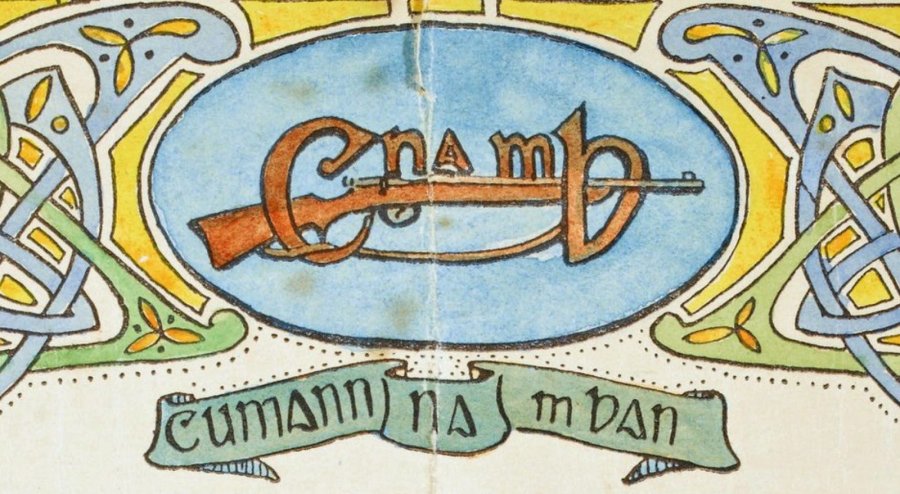
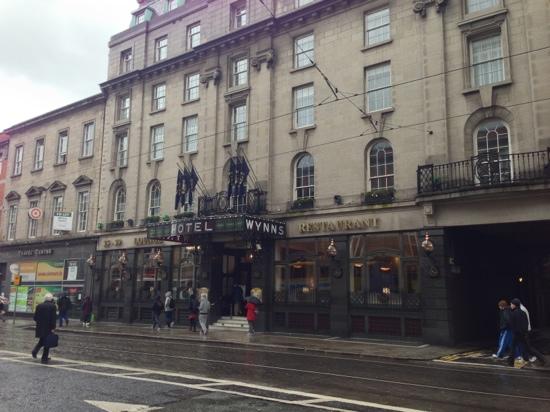
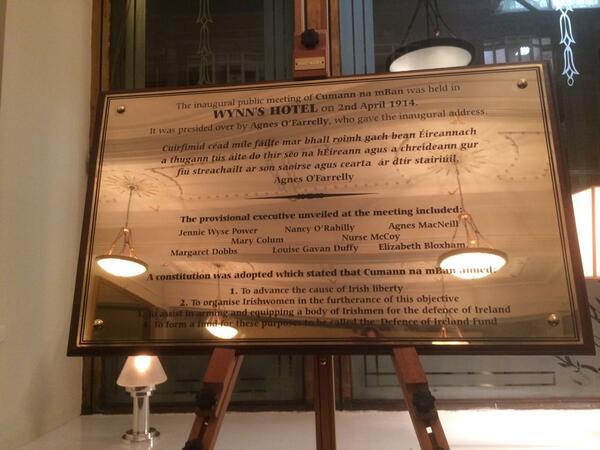
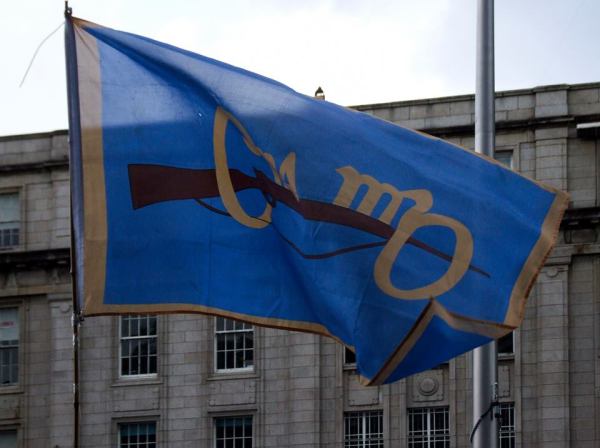
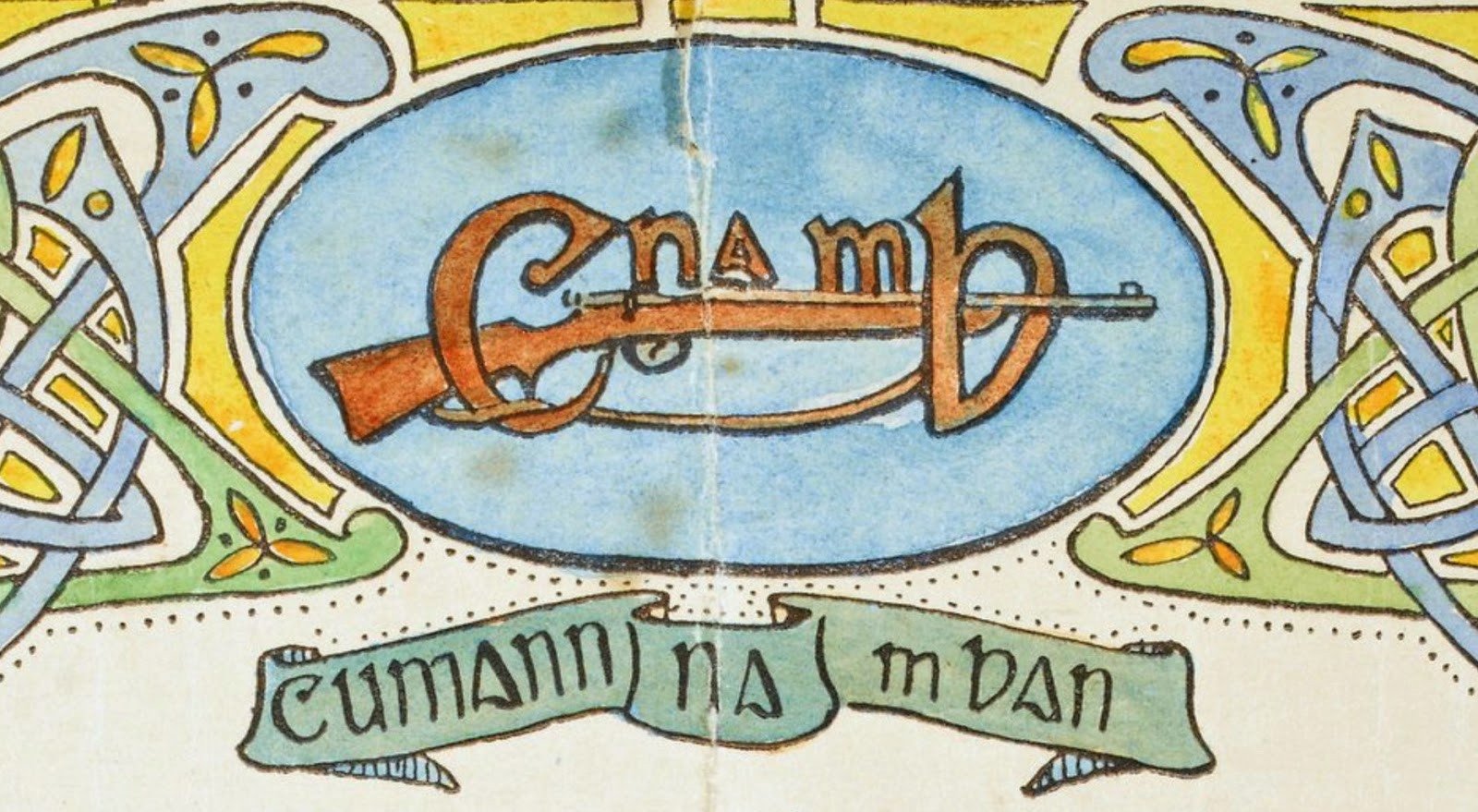
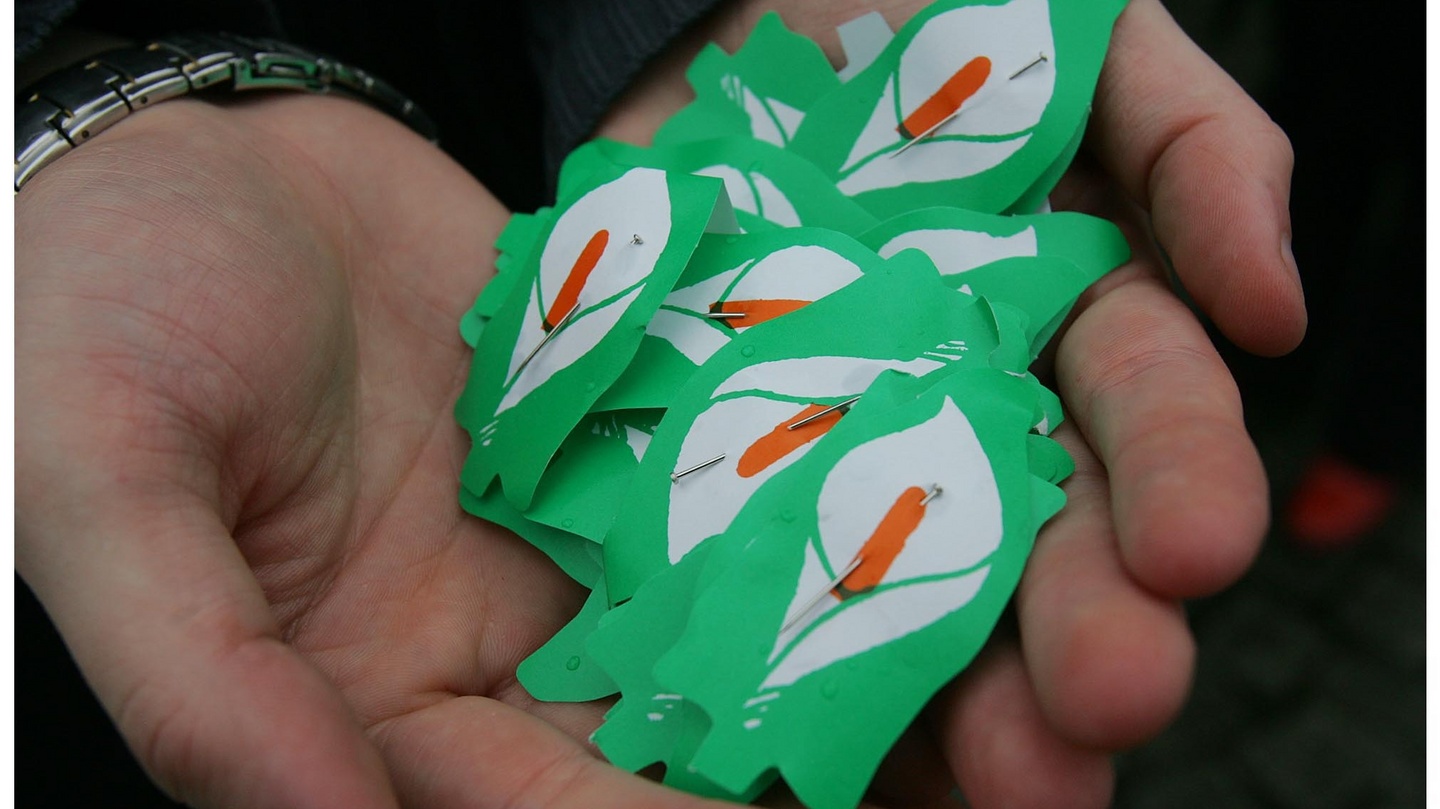
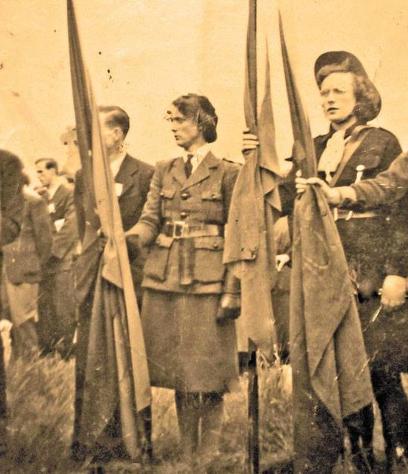


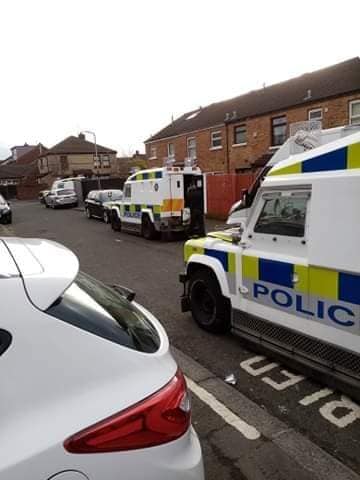


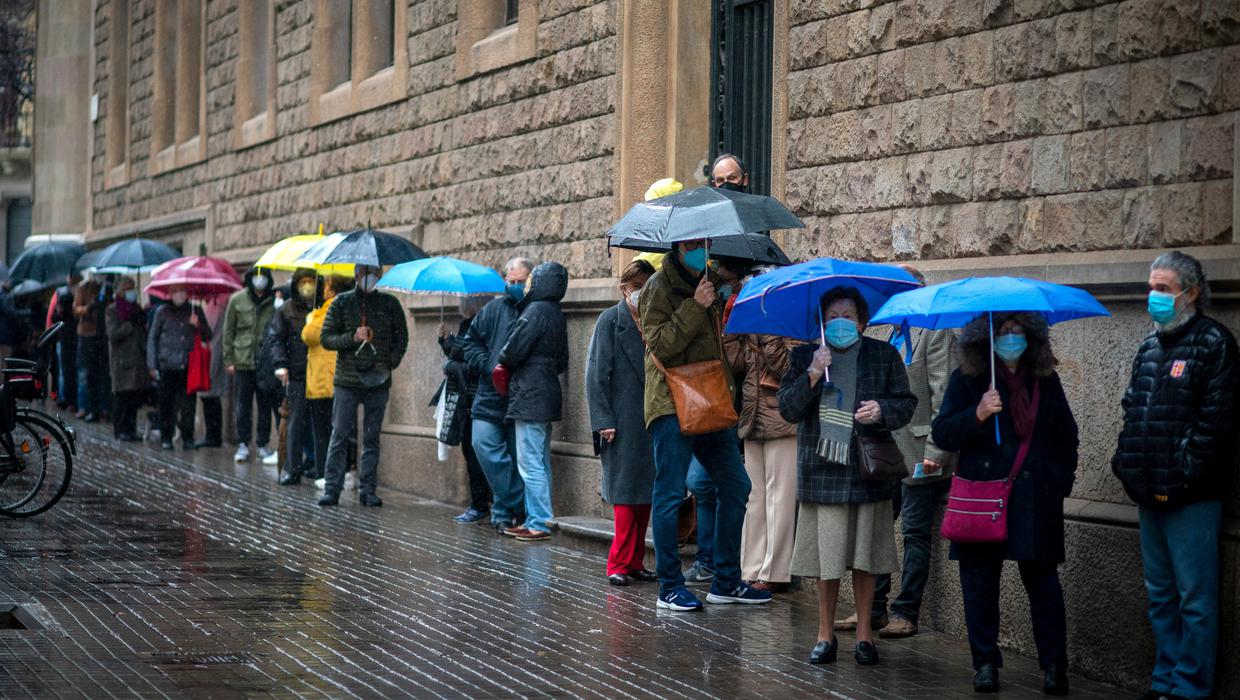


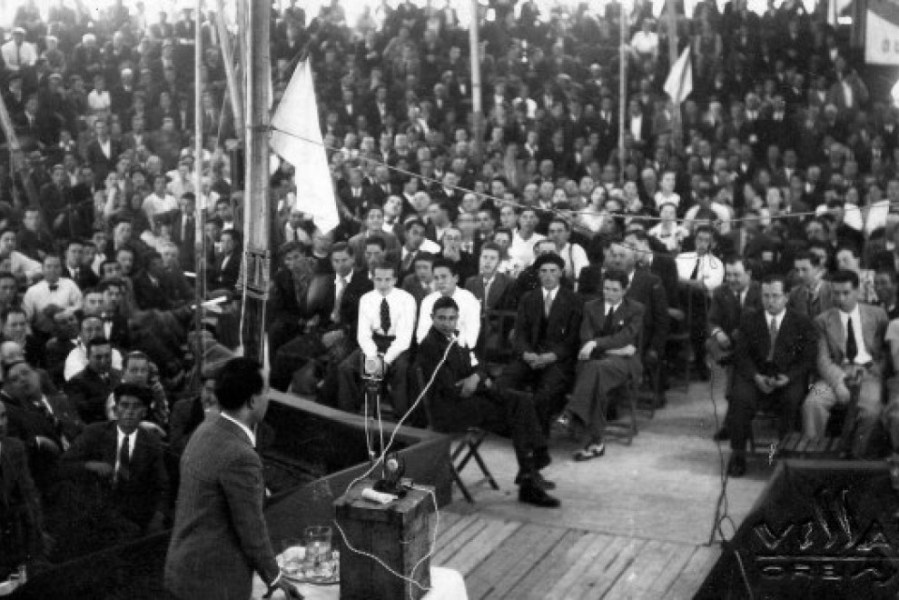
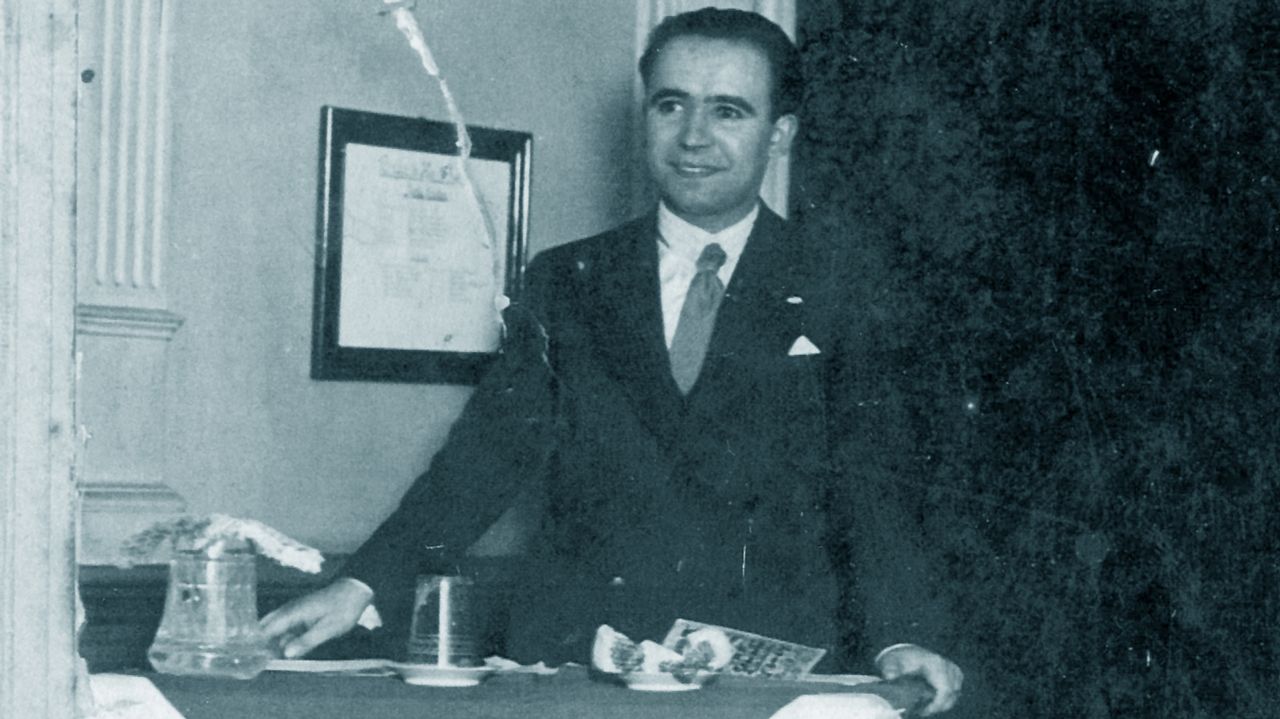


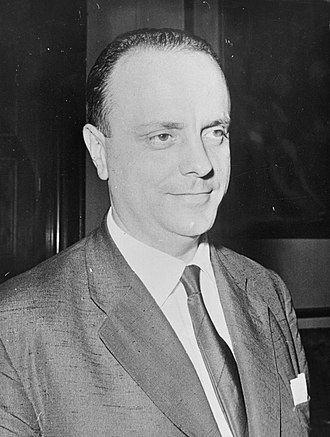
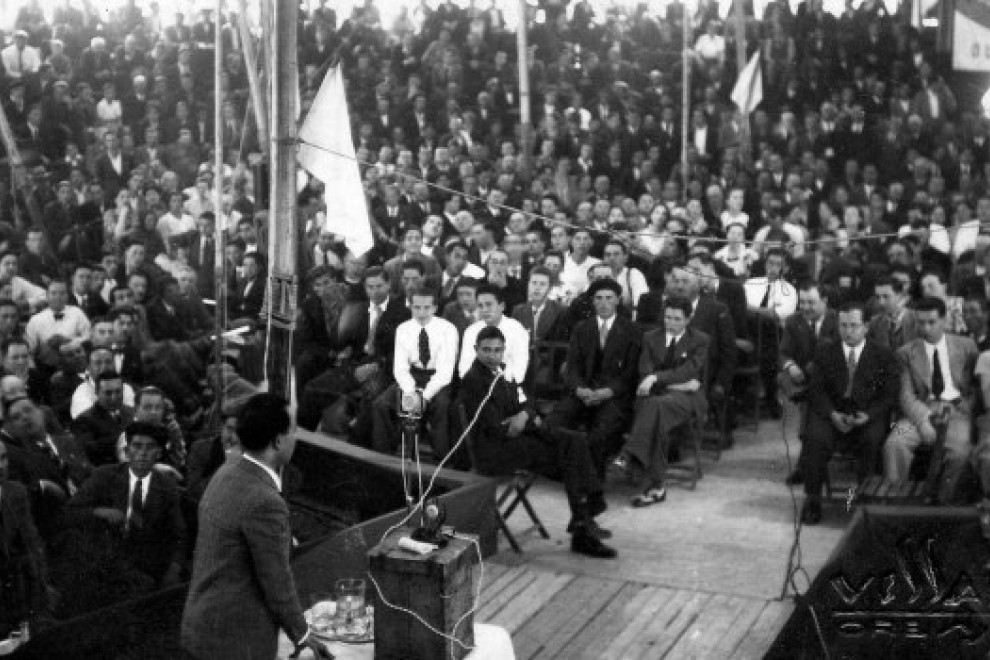


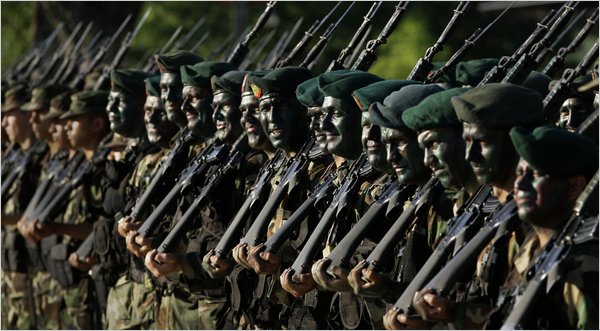

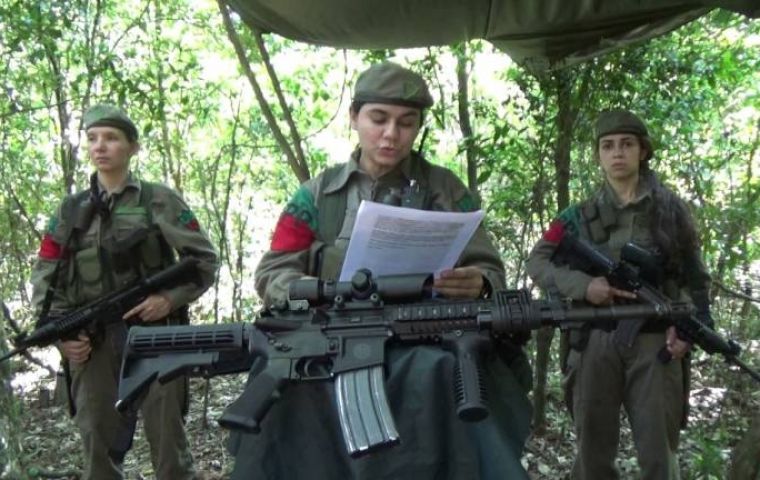

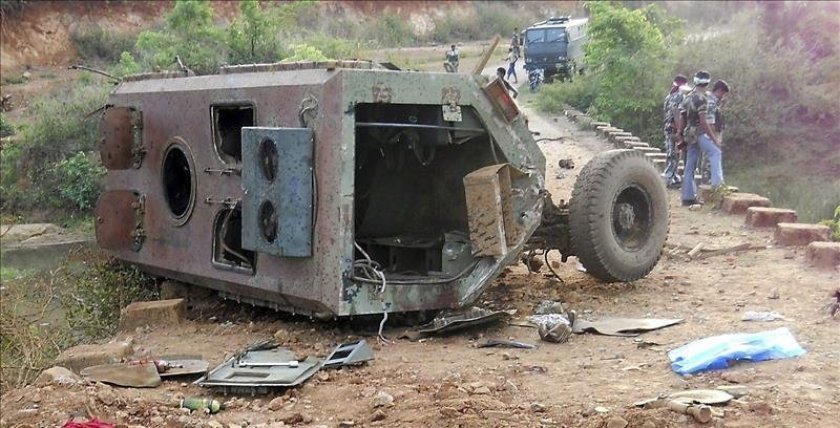





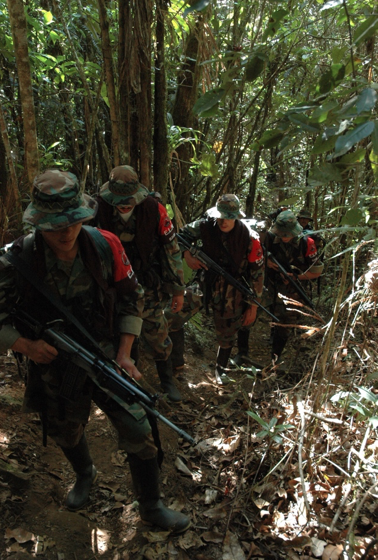

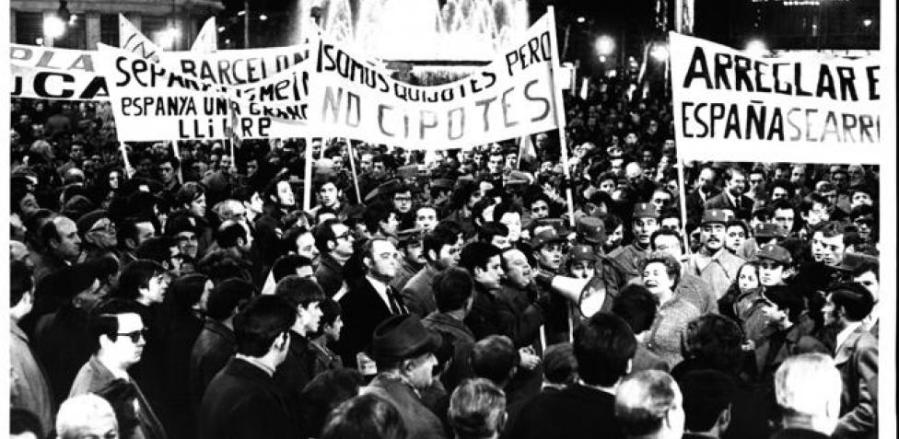
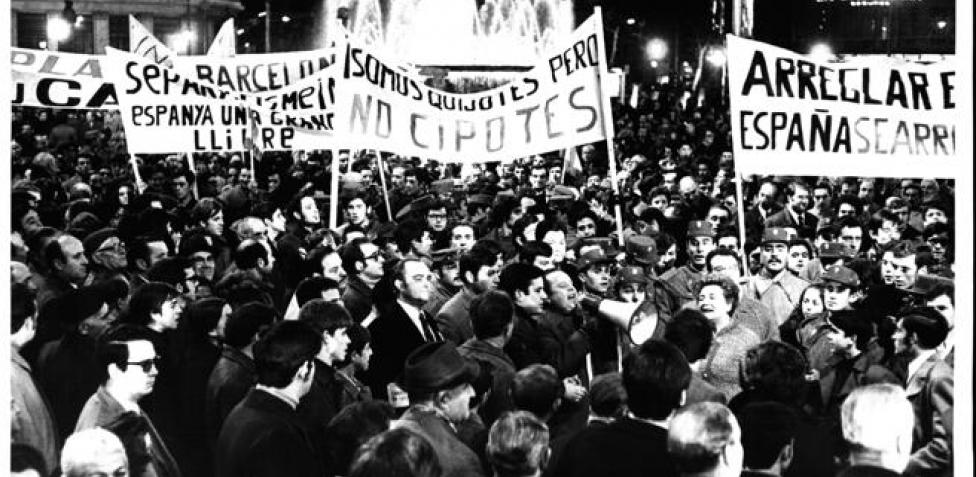




 rebelbreeze