(translated from Castillian by Diarmuid Breatnach)
(Reading time: 2 mins.)
STATEMENT BEFORE MY IMMINENT IMPRISONMENT:
In ten days the armed wing of the State will come to kidnap me by force to imprison me because I am not going to present myself at the prison voluntarily. I don’t know to which jail they will take me or for how long (I will be detained). Among all the cases that I have accumulated through struggle, some with convictions pending appeal and others pending trial, I could spend up to almost 20 years in prison.
This constant harassment that I have suffered for many years and that goes beyond prison sentences, is not only due to my revolutionary songs, but also because of my activism beyond music and writing. The Prosecutor herself put it into words: “he is dangerous for being so well known and inciting social mobilization.” Putting the struggle I speak of in my songs into practice is what has put me especially in the spotlight, in addition to supporting organizations that have fought the State, being in solidarity with their political prisoners and raising awareness by denouncing injustices by pointing out the culprits loudly and clearly.
“Do you swear to tell the whole truth?” “I am here because of telling the whole truth.” (Image sourced: Internet)
It is very important to be clear that this is not an attack only against me, but against freedom of expression and therefore against the vast majority who are not guaranteed it like so many other democratic freedoms. When they repress one, they do it to scare the rest. With this terrorism they want to prevent their crimes and policies of exploitation and misery from being denounced, we cannot allow it. They know that I’m not going to give up because I’m in prison, but they they do it in particular so that the rest do. By not internalizing that it is an aggression against any anti-fascist, solidarity has been lacking to avoid my imprisonment like so many others. The regime grows in the face of the lack of resistance and every day it takes away more rights and freedoms without thinking twice when it comes to attacking us — we need to organize self-defense against its systematic attacks. Many people write to me asking what they can do. It takes a lot of diffusion so that everyone knows what they are doing and is aware of it, but above all organization is urgent not only to bring solidarity to the events in the streets and coordinate it well, also to defend all the rights that they trample on with impunity.
It is also necessary to call out the badly-named “progressive” Government1 for allowing this and so much more; while protecting the Monarchy and increasing its budget, they do not touch the gag law and other repressive laws, they have also added the “digital gag law”, they continue to keep jails full of fighters in terrible conditions, in addition to other policies against the working class. There is no doubt that if we were imprisoned during a government of PP and VOX2 there would be much more of a scandal, but these phonies who while claiming to be left-wing have not even firmly opposed this.
“From above they mock the past,
they tread on us in the present
to rob us of our future.” (Image sourced: Internet)
I will not repent3 to reduce the sentence or avoid jail, serving a just cause is a cause of pride that I will never renounce. If they release me before the end of my sentence, it will be because solidarity pressure conquers them. Prison is another trench from which I will continue to contribute and grow, like so many other people I began to fight inspired by the example of resistance and other contributions of numerous political prisoners. I hope that this serious outrage will be used to add more people to the fight against the regime, enemy of our dignity, that if they imprison me to silence the message, they will give rise to a much greater voice and lose out. With regard to going into exile,4 I decided to remain here so that this opportunity can be used to expose them even more. This blow against our freedoms can turn against them, let’s get down to work.
Pablo Hasél.
(Image sourced: Internet)
BRIEF INTRODUCTION TO PABLO HASÉL:
Pablo Hasél (Pablo Rivadula Duró), poet, writer, political rapper and activist from Leida in Catalonia, 32 years of age, has described himself as a revolutionary Marxist. Since 2011 Hasél has been convicted in Spanish courts on a number of occasions of “promoting terrorism” and for “slandering” Spanish State and Royal institutions in his lyrics, as well as for allegedly assaulting a TV3 reporter and being party to an assault on a Catalan far-right group.
Pablo Hasél burning the colours of the Spanish monarchical state during a performance.
(Image sourced: Internet)
Hasél began his recording in 2005 with Esto no es un Paradiso (This Is Not a Paradise) since when he has recorded another 64 discs on his own and another 35 in collaboration with others. In 2020 alone Hasél recorded two discs. He is also that author of nine poem collections, four of which are in collaboration with Aitor Cuervo Taboada, and one collection of stories.
FOOTNOTES
1The current Government, a coalition between the PSOE and Podemos. The former is the social-democratic party of the two-party system of the Spanish State which has been breaking down of late. Podemos-Izquierda is a coalition of trotskyist Left tendencies, Left social-democrats and the old Spanish Communist Party.
2The PP has been the right-wing conservative party of the two-party system of the Spanish State while Vox is even further to the Right.
3The Spanish penal and judicial system requires prisoners to repent of the “crimes” of which they have been convicted if they are to be moved to less harsh prison conditions or to be paroled. This is a particularly crushing requirement of inmates convicted of politically-inspired actions who are serving long sentences of a number of decades.
4 In May 2018, the day before he was due to surrender himself to Spanish jail, rapper Valtónyc (José Miguel Arenas) went into exile in Brussels.
(Published elsewhere earlier in December, including Red Line; published here with author’s permission and section headings, photo choices (except one) and intro line are by Rebel Breeze editing)
The issue of drugs is one that is never far from public discourse on the Colombian conflict. Biased or just simply lazy journalists use the issue to ascribe motives for an endless list of events, massacre and murders. It is true that drug trafficking has permeated all of Colombian society and there is no sector that has not been impacted by it. But not everyone in Colombia is a drug trafficker. However, once again the King of Clubs is played to describe the conflict in terms of a drug problem.
Several Colombian newspapers have recently published articles on the supposed relationship of the guerrillas of the National Liberation Army (ELN) with drug trafficking and there are already eleven commanders who are under investigation for such crimes and are sought in extradition.[1] They talk as if the ELN dominated the drugs trade, and talk of settling of accounts over drug money, as if they were a crime gang, instead of saying that the ELN takes drastic measures against its members who get involved in drug trafficking and that those internal executions are due to the indiscipline and betrayal of principles of some people and are not an internal dispute over money.[2] Of course, the ELN in an open letter widely distributed on social networks and alternative press, denied any links to the drug trade.[3] But, how true is this new tale? Before looking at the accusations levelled against the ELN it is worth going over the history of drug trafficking in Colombia and the reality of the business in international terms.
POLITICIANS, GUERRILLAS AND BANKS
Let’s start with the obvious. When the FARC and the ELN were founded in 1964 drug trafficking was not a problem in the country and there were no large plantations, i.e. the existence of the guerrillas predates the drugs trade. Later in the 1970s the country went through the marijuana bonanza on the Caribbean coast, but it is the emergence of the large drugs cartels in 1980s around the production of cocaine that would define forever the shape drug trafficking in the country would take. Up till the 1990s the country was not self sufficient in coca leaf, even though it was the main manufacturer of the final product: cocaine. Escobar was dead by the time Colombia achieved self sufficiency and it is in that context that the discourse of blaming the FARC for the drugs trade gained ground, completely ignoring that the main narcos were the founders of the paramilitary groups. One of the most notorious paramilitary groups in the 1980s was the MAS (Death to Kidnappers) founded by the Cali Cartel and other drug traffickers in response to the kidnapping by M-19 of Marta Nieves Ochoa a relative of the Ochoa drug barons.
That discourse, however, was useful in justifying Plan Colombia and there was an element of truth to it, but not that much back then. The FARC’s relationship with the drugs trade has not been static and has evolved over time. Almost everyone accepts that they began by imposing a tax on the production of coca leaf, coca base or cocaine in the territories they controlled. The initial relationship changed and the FARC went from just collecting a revolutionary tax to promoting the crop, protecting laboratories and even having laboratories of their own and in some cases, such as the deceased commander Negro Acacio, got directly involved in the drug trade. There is no doubt on the issue. But neither were they the big drug barons that they tried to have us believe, those barons are in the ranks not just of the Democratic Centre but also the Liberal and Conservative parties. It is forgotten that Samper’s (1994-1998) excuse regarding drug money entering his campaign’s coffers was and still is that it was done behind his back, but no one denies that drug trafficking has to some degree financed every electoral campaign in the country. Although companies like Odebrecht play a role at a national level, at a local and regional level drug trafficking decides who becomes mayor, governor, representative in the house and even senators. Even the brother of the current Vice-President Marta Lucía Ramírez was a drug trafficker and there are loads of photos of many politicians with Ñeñe Hernández and Uribe appears in photos with the son of the paramilitary drug trafficker Cuco Vanoy. It is a matter of public knowledge that several high ranking police officers close to Uribe such as his former head of security Mauricio Santoyo were extradited to the USA for drug related crimes and Uribe’s excuse was the same as Samper’s: it was all done behind his back.
Alvaro Uribe, ex-President of Colombia and patron of current President Duque is under house arrest and investigation for close links with drug cartels and murder paramilitary organisations. (Photo source: Internet)
Late drug mafia boss”Nene” Jose Guillermo Hernandez (r) with President Ivan Duque ((Photo source: La Nueva Prensa)
NOT THE ELN
But when we look at the extent of illicit crops in Colombia, we can clearly see the reason why they are linked to the FARC for so long and not to the ELN. The reason is simple, the majority of the large plantations of coca and opium poppy were to be found in areas under the influence of the FARC. If we look at the crop monitoring carried out by the United Nations Office on Drugs and Crime (UNODC) we can see that in 2001 the main departments (administrative regions: Colombia has 32 — RB editing) where there were crops were almost exclusively FARC fiefdoms.
In 2001, coca was to be found in 22 departments of the country, compared to just 12 in 1999. However, despite the expansion, just two areas accounted for the majority of the crops: Putumayo-Caquetá had 45% of the total amount of coca (about 65,000 hectares) and Meta-Guaviare-Vaupés with 34% of the area (about 49,000 hectares) i.e. 79% of the total area under coca.[4] They were areas that were completely dominated by the FARC, not a single eleno was to be found in those territories and if they did venture in, it was undercover at the risk of execution by the FARC were they discovered as the FARC did not tolerate political competition in their fiefdoms. When one looks at the map of crops back then, one can see not only the concentration in those areas but also almost all the other departments were dominated by the FARC and those where there were significant amounts of coca and also an ELN presence, one finds Cauca with 3,139 hectares, Nariño with 7,494 hectares and the Norte de Santander with 9,145 hectares. But in those areas there was a certain territorial balance between the different guerrillas and one of the few departments where the ELN was clearly the dominant force was Arauca with 2,749 hectares.[5] But when we look at the counties we can see that it is not as clear cut, as in the Norte de Santander 83% of the coca crops were to be found in just one county: Tibú, FARC fiefdom for many years before the paramilitary takeover in 1999.[6] In Arauca the county of Araquita accounted for 60% of the crops in the department and it was also a FARC fiefdom within an area dominated by the ELN. Thus it is obvious as to why they spoke almost exclusively about the role of the FARC in drug trafficking and not the ELN at that time.
Years later the situation had not changed much, the main producing departments were the FARC fiefdoms. The UNODC study on coca crops in the country in 2013 continues to show a concentration in FARC fiefdoms, with a displacement from Putumayo to Nariño due to aerial spraying and the persecution of the FARC by the State. In 2013, there were just 48,000 hectares of coca in the entire country, with significant reductions in some parts. Nariño, Putumayo, Guaviare and Caquetá accounted for 62% of the land under coca, with Norte de Santander representing 13% and Cauca with just 9%.[7] There was a reduction and a displacement of the crops towards new areas with Nariño accounting for the most dramatic increase of all departments.
In 2019, there was 154,000 hectares of coca, a little over three times the amount grown in 2013, though it was slightly down on 2018 when there was 169,000 hectares.[8] Coca production recovered after 2014 in the middle of the peace process with the FARC. It stands out that in 2019, Arauca, a department dominated by the ELN the UNODC did not report any coca crops.[9] Once again Norte de Santander is a department with widespread coca leaf production almost quadrupling the amount reported in 2001. It had 41,749 hectares of coca but the county of Tibú alone had 20,000 hectares and the same UNODC report indicated that these are not new areas and show that the crop has deep roots in the area.[10]
THE BANKS, THE BANKS!
However, despite the role of the FARC in the drugs trade, they weren’t the big drug barons we were led to believe. How can we be sure? Their demobilisation did not alter the flow of cocaine towards the USA and Europe. The big drugs capos in the companies, the Congress of the Republic, the international banks did not stop for a second. Neither did people such as Ñeñe Hernández and other associates of right wing political parties in Colombia stop for a single instant.
Neither the production nor consumption of cocaine halted. The UNODC’s World Drug Report says as much about both phenomena. According to the UNODC consumption of cocaine fell from 2.5% in 2002 to 1.5% in 2011 in the USA, but from that year it increased again reaching 2.0% in 2018 and also there are indications of an increase in the sale of cocaine of high purity at lower prices between 2013 and 2017. The price of a gram fell by 29% and the purity increased by 32%.[11] The report also indicates that in Europe there was a significant increase in various places such as the Netherlands, Norway, Denmark, Estonia and Germany. Nevertheless, some of those countries had seen decreases in consumption in the first years of the century.[12] All of this suggests that there is a greater supply of the drug. This can be seen not only in the previously mentioned figures of an increase in the production of coca leaf in Colombia (or in other countries such as Peru and Bolivia), but can also be seen in drug seizures. An increase in seizures may indicate greater efficiency by the police forces, but combined with stability or an increase in consumption and a reduction in price, rather indicate an increase in production and availability.
According to the UNODC cocaine seizures have increased dramatically since the commencement of Plan Colombia, indicating, although they do not acknowledge it, the failure of their anti-drugs strategy and the tactic of aerial spraying with glyphosate. In 1998 400 tonnes were seized globally and that figure remained relatively stable till 2003, reaching 750 tonnes in 2005 and surpassing the threshold of 900 tonnes in 2015 to finish off at 1,300 tonnes in 2018,[13] i.e. there was no reduction in consumption or the production of cocaine. Throughout the years with or without the FARC there has been coca production and of course the main drug barons never demobilised, the heads of the banks remain in their posts.
The real drug traffickers wear a tie, own large estates, meet with President Duque, it is not the ELN that moves hundreds of tonnes of cocaine around the world. In 2012, the Swiss bank HSBC reached an agreement with the US authorities to pay a kind of fine of $1,920 million dollars for having laundered $881 million dollars from the Sinaloa Cartel and the Cartel of Northern Valle, Colombia. The bank had, despite everything, classified Mexico as a low risk country, thus excluding $670 billion dollars in transactions from monitoring systems and the bank was notified by the authorities but ignored them.[14] Nobody went to jail, in fact no one was prosecuted. As Senator Warren in a session of the Senate Banking Commission pointed out, no one was going to go to jail for this massive crime. Moreover, the Sub Secretary for Terrorism and Financial Intelligence, David S. Cohen refused to recommend a criminal investigation against the bank. There is no need to state that no ELN commander is on the board of this or other banks. The ELN is usually accused of infiltrating universities, but to date no one has accused them of having infiltrated the boards of banks.
In 2012, the Swiss bank HSBC paid US authorities a penalty of $1,920 million for having laundered $881 million dollars from the Sinaloa Cartel and the Cartel of Northern Valle, Colombia. The bank had classified Mexico as a low risk country (!), thus excluding $670 billion dollars in transactions from monitoring systems. (Photo sourced: Internet)
HSBC bank has bought building of former Central Bank Ireland on Central Plaza, Dame Street, Dublin (Photo sourced: Internet).
It is not the only bank implicated in money laundering, in 2015 London was described as one of the main centres for money laundering the proceeds of drug trafficking.[15] A report by the UK National Crime Agency states, on the basis of a UN calculation that between 2% and 5% of global GDP are laundered funds “that there is a realistic possibility [defined as between 40-50%] that it is in the hundreds of billions of pounds annually”[16] and the majority of it comes from crimes committed outside of the UK. There is no need to say that no ELN commander is a director of those companies, nor is there any need to state that these companies continue to operate and their directors are walking about free and according to the report they could only recover £132 million.[17] The NCA cites favourably the reports of Transparency International. According to this organisation, 1,201 companies operating in the British Overseas Territories inflicted £250 billion in damage through corruption in recent decades. They analysed 237 cases of corruption in the last 30 years. The majority of the companies are registered in the British Virgin Islands (92%) and the majority (90%) of the cases happened there[18] in the favourite headquarters of many companies that operate in Colombia, without mentioning those who finance election campaigns. Once again, the ELN does not operate in those territories, although many mining companies in Colombia are registered there. The report points out that due to legislative changes there are fewer reasons to buy property in the UK through those companies registered in the Overseas Territories, yet the number of properties has remained relatively stable at some 28,000.[19] Of course not all them are the result of illicit funds, however… As far as we know the ELN’s Central Command is not the owner of any of these properties.
Transparency International continued with its investigations and its last report highlighted the number of British companies involved in money laundering or dubious transactions. It states that there are 86 banks and financial institutions, 81 legal firms and 62 accounting companies (including the big four that dominate the market). According to this NGO
Whether unwittingly or otherwise, these businesses helped acquire the following assets and entities used to obtain, move and defend corrupt or suspicious wealth: 2,225 Companies incorporated in the UK, its Overseas Territories and Crown Dependencies directly involved in making payments; 17,000 more companies incorporated in the UK that we have reasonable grounds to suspect have facilitated similar activity; 421 Properties in the UK worth more than £5 billion; 7 Luxury Jets 3 Luxury Yachts worth around £237 million worth around £170 million. [20]
Of course not all the laundered funds are drug related but they are all illicit in origin. However, the USA has not sought in extradition any of the banking capos, legal firms and less still the four big accountancy companies in the world. It would simply collapse the financial system were they to do so.
The extradition of criminals from Colombia has always been problematic in legal and political terms. Nowadays, the majority of those extradited are extradited for drug trafficking. The USA receives 73% of all those extradited from Colombia and 60% of them face charges of drug trafficking or money laundering.[21] Though not all those extradited are guilty and there are various cases of people being returned to Colombia, after their extradition, or others more fortunate who managed to demonstrate their innocence before being extradited, such is the case of Ariel Josué, a carpenter from San Vicente del Caguán who didn’t even know how to use a computer and yet for
… the United States and then the Colombian justice system, Ariel Josué was the head of an electronic money laundering network, and had to pay for his crime in a north American prison.
In the absence of an independent investigation nor the verification of his identity, the Supreme Court issued a court order in favour of his extradition and even President Juan Manuel Santos signed the order for him to be taken.[22]
OPEN LETTER FROM THE ELN
Despite those extradited, when not innocent, being poor people or those who have some relationship with right wing political parties or the economic elites of the country, the media and the Colombian and US governments’ focus on the problem is always the same: the guerrillas and not the banks or business leaders. In fact, one of the most famous people extradited is Simón Trinidad, a FARC commander and part of the negotiating team in the Caguán. Trinidad was extradited for drug trafficking and despite being a FARC commander they didn’t manage to prove any link to the drugs trade and thus resorted to the detention and captivity of three north American mercenaries hired by the Dyncorp company, a company denounced for crimes such as trafficking in minors, prostitution, sexual abuse amongst others.[23] So we should be very careful when it comes to accepting these new allegations against the ELN.
Private company mercenaries in Yemen conflict, paid by United Arab Emirates. Dyncorp have replaced Blackwater/ Academi there, who were faring badly against President-loyal troops and guerrillas’ resistance. Vulture capitalists Cerberus now own Dyncorp which has ex-Vice President USA Dan Quayle and Israeli billionaire Steve Feinberg as directors. (Photo source: voltairenet.org)
The ELN in its open letter acknowledges that they collect taxes from the buyers of coca base and cocaine who come into their areas of influence, as they do with other economic activities. So if the ELN is not involved in drug trafficking, how can we explain the presence of illicit crops[24] in their areas? The ELN commanders explain the presence of these crops in the same manner and the same dynamic they describe could be seen in all the regions where they had to deal with the FARC. There was a dispute between the two organisations as to what to do regarding the crops and drug trafficking itself. Initially the ELN opposed the planting of coca and opium poppy in the regions, but the FARC said yes and they authorised the peasants to grow it and moreover in some parts they were willing to buy base or cocaine itself, depending on the region. Faced with this reality the ELN felt that it had no choice but to allow the growing of the crop, as otherwise they would have to militarily face the FARC and the communities. That is why the ELN is to be found in areas with a coca tradition and as they acknowledge in their open letter they tax the buyers as they do with other economic activities. However, it is worth pointing out that the FARC also initially only charged taxes, but given the long ELN tradition on drugs it is unlikely, though not impossible that they do the same.
ELN guerrilla patrol in Colombia (Photo source: GL)
Its open letter not only refutes the allegations against it, but they also put forward proposals as to what to do regarding the problem of crops and drug consumption. It extends an invitation to various organisms to carry out in situ visits and inspections to see the reality of their relationship to the drugs trade, but they go further than clearing up the question of their links or otherwise to the drugs trade and they put forward proposals on the drugs problem as such.
PROPOSALS — SOLUTIONS?
To pick up the proposals made on various occasions by the ELN with the aim of reaching an Agreement that overcomes the phenomenon of drug trafficking that includes the participation of the international community, the communities in the regions that suffer this scourge and various sectors of Colombian society.[25]
The issue of drug trafficking is not one that Colombia can solve on its own, it is an international issue in nature, not just in terms of the distribution and consumption of the final products, such as cocaine and heroine or ecstasy and other drugs generally produced in northern countries, but also because Colombia’s obligations on the issue are covered by various international UN treaties. The ELN makes various points.
Only the legalisation of psychotropic substances will put end to the extraordinary profits of drug trafficking and its raison d’être.
This position has been discussed thousands of times in various fora and international settings. It is partially true. No doubt the legalisation demanded by various social organisations, including health organisations, would put an end to the mafia’s profits, but not the profits as such. The medicinal uses of coca and opium have never been banned, rather the International Narcotics Control Board (INCB) regulates and controls its production and end use. The UNODC calculates that in 2018 there just under 12 billion daily doses of opiates available in the legal market, double the amount available in 1998.[26] Cocaine and medicinal opiates, including heroin, have always been used in a medical context and the use and regulation of cannabis is a growing market. The legalisation of recreational consumption is another matter, the state of Colorado in the USA and Uruguay are two places where they legalised the recreational consumption, with various benefits in terms of crime, health and taxes. The profits are lower in these legal markets but they are large, nonetheless, as are they for other legal drugs such as alcohol and tobacco, products that are controlled in terms of quality and their impact on the health of the consumer. The legal marijuana market in Colorado amounted to $1,750 millions in 2019 with 69,960,024 transactions with an average price per transaction of $51.89, but the price to the consumer continues to fall and quality is guaranteed.[27] However, both Colorado and Uruguay have experienced legal problems with the banking system as their legalisation has no international recognition. The ELN’s proposal could only happen in the context of an international debate and a paradigm shift in the states and regulatory bodies at an international level such as the UNODC and the INCB, amongst others and the recent decision by the WHO on the medicinal use of cannabis is a good start.[28]
A pact on shared responsibility between drug producer and consumer countries is required
This pact already exists. There are various UN pacts on the issue starting with the Single Convention of 1961, the Convention on Psychotropic Substances of 1981 and United Nations Convention Against Illicit Traffic in Narcotic Drugs and Psychotropic Substances. This last treaty deals with aspects related to organised crime, precursor chemicals etc. What is lacking is political will, not another pact. The factories where the acids used to make cocaine are not bombarded but they do attack and bombard the producer communities, neither do they bombard the factories of illegal drugs such as ecstasy in the Netherlands. It is not the case that there is a lack of pacts but rather as they say the law is for the ragged and in geopolitical terms, Colombia is very ragged
The drug addicts are sick and should be treated by the states and should not be pursued as criminals.
This is one point that is always overlooked in the discussions on illicit crops and despite the belligerent tone of the USA, both the north American health system and that of the majority of countries in Europe deal with it as such, some countries do not even pursue consumption as such, acknowledging its character as a health problem and only go after related crimes. The UN accepts the need for treatment for drug addicts and calculates in its World Drug Report that 35.6 million people in the world abuse drugs and just 12.5% of those who need treatment get it, i.e. about 4.45 million people.[29]
The peasants who work with illicit use crops, should have alternative plans for food production or industrial raw materials, financed by the states in order to solve their sustenance without seeking recourse in illicit use crops.
Although this point is well intentioned it makes the same mistake as the FARC, the NGOs, international aid etc. Whilst it is true that the peasants should have alternative plans and receive economic support from the states, the problem is a core issue and cannot be solved through projects or credits: the economic aperture ruined the agricultural production of the country and the peasants can’t compete with the imports subsidised by the US and European governments. The underlying problem is not agricultural, nor economic but political and requires national and international changes. The free trade agreements, the monopoly in the agricultural and food sector exercised by multinationals such as Cargill, Nestlé, Barry Callebaut amongst others are not resolved by subsidies or projects.[30]
As well as pursuing the Cartels in the narcotic producing countries they should also pursue the distribution Cartels in the industrialised consuming countries; as well as the Cartels for the precursor chemicals and money laundering of narco funds in the international financial system and the tax havens.
This is a key point. As long as drugs are illegal, they should go after the points in the production chain there, both the banks and the companies that engage in money laundering and the companies whose chemicals are used in the manufacture of cocaine. They don’t do this, one little bit or not much at least. Whilst the USA seek in extradition just about anyone in Colombia, they have never sought nor will they seek the directors of banks such as HSBC.
There are reasons to accept the ELN’s word on the issue of drugs, and there are more than sufficient reasons to accept the debate on drugs and what to do about them. It is a debate that never occurred in the context of the negotiations with the FARC. The FARC opted to negotiate benefits for themselves, their social base and they never touched the structure of the agricultural economy in the country nor the international law in force on drugs.[31]
The allegations against the ELN lack any basis in fact, but the media does not ask us to treat it as truth, rather it serves as an excuse to delegitimise this organisation in the eyes of Colombian people and in the international area they are useful as excuse to continue to militarily support the Colombian state and in a given moment can be used as a pretext for more direct interventions against the ELN and perhaps Venezuela.
End.
“Freedom for political prisoners; Jail for those who oppress the people.”
Cartoon poster from Chile but which applies to Colombia with thousands of political prisoners
(Image sourced: Internet)
[24] Some NGOs prefer the expression illicit use crops, but it is misnomer. The international treaties on the matter leave us in no doubt on the issue, the crop itself is illicit. The Single Convention of 1961, the convention in force on the issue, in Article 22 No.1 demands the total eradication, the coca leaf and its derivatives are banned. The treaty demands that even the plants belonging to indigenous people be destroyed.
Basques marked the 50th anniversary of the Burgos military trials by the Franco dictatorship of 16 members of ETA, the armed Basque socialist independentist organisation. A few days ago a group went to the town of Burgos itself and posted slogans on the wall of the Spanish Ministry of Defence building there declaring that the Spanish State had not succeeded in its repression in 1970 and would not do so in future. In the Basque Country itself events were also held in commemoration.
The military trials of 16 members of ETA took place between 3rd and 9th December 1970 in the Spanish city of Burgos in Castille (north-central Spain). The trial concluded on the 28th with sentences of death on six and sentences up to 70 years on the remaining ten. Intended to be a mortal blow to ETA and to Basque resistance the trials instead inspired greater and more united resistance in the Basque Country and became an international publicity debacle for the Franco dictatorship.
Within the Basque Country, demonstrations and pickets took place and a general strike saw 100,000 workers there out on strike. ETA distributed pamphlets and leaflets among the people and in its repressive measures the Spanish police beat many workers and killed a number, as in Etxarri in Nafarroa (Navarra) province.
Internationally, protest demonstrations took place across Europe and other parts of the world, particularly outside Spanish Embassies, often leading to battles with the police of the host country. Pope Paul VI appealed for the death sentences to be commuted and Jean-Paul Sartre, a leading intellectual of the French Left and with an international literary reputation congratulated the defendants on having brought the situation of the Basque Country under Franco to international attention.
ETA hired prominent lawyers of Left and Human Rights reputation to defend the sixteen. The organisation also kidnapped the German honorary Consul as a hostage (and later released him unharmed). The defendants themselves used the trial politically, turning it into an exposure of the Franco regime and its repression. A number described the tortures to which they had been subjected, all of them declared their commitment to socialist freedom and some even stated that they were fighting for the rights of all working people.
Protest demonstration in front of Spanish Embassy, Caracas, Venezuela in December 1970 (Photo sourced: Internet)
The military judges, aware that the publicity of the trial was going against the Dictatorship, began to clamp down and restrict the defendants from saying anything that was not directly, as they saw it, pertinent to the charges, after which the defendants refused to speak at all. At one point during the trial the defendants all stood and sang the battle-song and national anthem of the Basque nation, Eusko Gudariak1. An even greater sensation occurred in a brief incident when the final defendant to speak, Mario Onaindia, attempted to attack the judges with an axe.2
Demonstration in Barceloneta, Catalonia in solidarity with Burgos defendants, December 1970 (Photo sourced: Internet)
BACKGROUND
A military-fascist uprising against the elected Popular Front government of Spain took place in 1936 and in the Spanish Antifascist War that followed, the Spanish Republic was defeated by the military with substantial assistance from Nazi Germany and Fascist Italy, while the UK and France blockaded the Republican forces.
Hitler and Franco reviewing invader Nazi troops in Hendaye, French Basque Country.
(Photo source: Internet)
A military-fascist dictatorship with the strong assistance of the Spanish Catholic Church followed amongst huge repression, making Spain the state with the most mass graves in Europe and second only to Cambodia in the world.
The Popular Front Government had granted autonomy to the Basque Nation (and to Catalonia) for the first time in centuries of the Spanish State, although Nafarroa province had sided with the military-fascist forces. Any notion of autonomy was withdrawn under the Dictatorship and even use of the Basque and Catalan languages in public or in education was forbidden.
Some guerrilla resistance continued for a period in the mountains of the Basque Country, Catalonia and other parts of the Spanish state territory but the fighters were hunted down or fled the Spanish state. The Communist Party and some socialist organisations continued an underground existence and built illegal trade unions but the CP of Spain did not support independence for the Basque Country or for Catalonia, on the theory that this would “break up the Spanish working class” (however later they all mobilised against the Franco Dictatorship and in solidarity with the Burgos defendants).
Euskadi3 Ta Asakatasuna (Basque Land and Freedom) was formed in 1959 out of a coalition between a left-wing Basque youth group and the youth wing of the Basque Nationalist Party (PNV) who were discontented with the lack of action of their elders. In June 1968 ETA carried out its first armed action against Spanish police when killing a police officer asking for their identification papers at a checkpoint and shortly afterwards one of the ETA pair was gunned down by police. Two months later the organisation carried out its first planned attack when they killed Melitón Manzanas, Commander the Political Police Brigade in Alava Province. Manzanas was a notorious fascist and torturer who had hunted down Jewish refugees to turn them over to the Nazis during WWII.
The Burgos trials was intended to smash ETA completely but as outlined above, had an entirely opposite effect. The death sentences were commuted in an attempt to reduce the damage the trials had caused the international reputation of the Spanish State.4
Solidarity with Burgos Defendants in Paris, Dec. 3rd 1970 (Photo sourced: Internet)
Angry Brigade Communique on machine-gunning of Spanish Embassy, London on 3rd December 1970. (Photo sourced: Internet)
AFTER BURGOS AND TODAY
ETA continued its armed and non-military actions and other revolutionary armed communist resistance began to take shape elsewhere in the Spanish territory.
Despite the huge success of the Basque solidarity mobilisations to prevent the executions in 1970, five years later a similar wave failed to prevent the executions of another two ETA members and three FRAP (Revolutionary Anti-Fascist Patriotic Front) members: Ángel Otaegui Etxeberria; Juan “Txiki” Paredes Manot; José Humberto Baena; Ramón García Sanz; and José Luis Sánchez Bravo.
French solidarity with ETA defendants 1975. This time the international campaign was unsuccessful and the Spanish State executed the two ETA and three FRAP activists (Photo sourced: Internet)
ETA counted some actions notable for the harmful effect on them but also some spectacular successes in its armed campaign. Included in the latter were the assassination in Madrid in 1973 of Admiral Carrillo Blanco, Franco’s appointed successor and the abandonment of the nuclear reactor project in Lemoiz5 in Bizkaia in 1983. Blanco’s assassination and the death of the Dictator Franco in 1975 hastened the Transition of the Spanish State to an alleged democracy and a monarchical and unitary state constitution in 1978.
The Basque resistance constructed a network which beyond the armed group consisted of trade unions, youth organisation, social centres, daily bilingual newspaper and political parties. The Spanish State waged war against that movement with repressive laws, arrests, torture, jailings, closure of organisations and media, along with armed action against ETA. In addition, it organised and funded a terror and assassination campaign over a period of 26 years6.
In the late 1990s the Basque Left-Independentist movement began a process of unilateral disarmament and change in political direction which led first to an indefinite ETA truce in 2010, then to decommissioning of arms and finally to the dissolution of ETA in 2018. However around 250 Basque political prisoners remain in jail, a tiny group of which have declared their dissidence from the leadership’s path and are supported outside the jails by a growing movement which has a very different line to that of the “official” leadership.
The Spanish State insists that the only possible relaxation of prison conditions, end of dispersal7 or granting of parole for the prisoners is “if they recant their beliefs and apologise to the victims.”
Political repression continues at some level within the Basque Country. There is no indication that there is any intention in Spanish ruling circles to grant independence to the southern Basque Country – quite the contrary (as seen also in Catalonia).
THE 50th ANNIVERSARY
A group of activists from the official Abertzale Left carried out a publicity commando raid in Burgos recently (see video below) and attached a banner poster to the Spanish Ministry of Defence building which read: “NEITHER WERE YOU ABLE to repress the struggle of the people NOR WILL YOU BE ABLE” and LONG LIVE THE REPUBLIC!
A number of public meeting and on-line events were also held this month, including the commemoration in Etxarri of two Basques who were killed by Spanish police during the Burgos Trials protests.
In Eibar city in Gipuzkoa province around 100 people assembled despite Covid19 restrictions in the open air to mark the anniversary and included one of the Burgos trial defendants who, along with another woman, read out a manifesto which has been signed by many in the Basque independentist movement.
Burgos Trials 50th Anniversary Commemoration in Eibar, Gipuzkoa, Dec.2020. (Photo source: Naiz.eu)
“The Franco regime wanted to prosecute, punish and subdue again a people that in the darkness of the dictatorship had dared to rise from the ashes of war,” they read, introducing the manifesto.
Recalling the moment when the defendants rose in court and with upraised clenched fists sang the Eusko Gudariak, the manifesto commented: “With their courage, that handful of young militants taught us to stand up even when it seems impossible, and their example lives on today in us and in the future in the actions and dreams of the new generations.”8
The manifesto also states that the Burgos Trials were “a milestone” for the survival of Euskal Herria. However today, 50 years later, the substantive process has not concluded, since “they continue to take Basque youth to court, thinking that by disciplining them they will quench the desire for freedom of this people, and the states that surround us have not abandoned their strategy against the independence movement.”
The anniversaries of milestones in the struggle, of successes and failures, of martyrs, continue to be marked. And the journey is far from finished.
End.
FOOTNOTES
1“Soldiers of the Basque Country”, very similar in title and theme to the Irish national anthem, Amhrán na bhFiann/ The Soldiers’ Song.
2How Onaindia managed to get his hands on an axe in court is one question but the significance of the axe cannot be underestimated – it was a traditional tool of foresters but also of ancient Basques in war and formed one part of ETA’s emblem, the other being the snake, representing wisdom.
3Formerly used to describe the whole Basque nation, “Euskadi” nowadays mainly describes the Basque Autonomous Region of the provinces of Bizkaia, Alaba and Gipuzkoa. “Euskal Herria” (The Country of Basque Language”) is more commonly used today to describe the whole seven provinces of the Basque nation, four currently within the Spanish and three within the French states.
4It also increased the pressure on the Spanish ruling class from the USA and European states to become more moderate politically and less vulnerable to revolution.
5This was in addition to frequent large protest mobilisations.
7The vast majority of the prisoners are in jails dispersed throughout the Spanish and French states, between hundreds and even a thousand kilometres from their homes, placing a huge burden on their families and friends in visiting them.
8Comment: One wonders whether they felt any sense of irony in reading that out, considering that only in September last year 47 Basque prisoner solidarity activists pleaded guilty in a plea deal that ended their trial in 25 minutes with suspended sentences for all except for a few months’ jail for a couple of them. The deal came as a total shock to the estimated 50,000 people who had, only two days earlier, marched in solidarity with the accused, defending their right to do solidarity work without being persecuted or prosecuted.
Around 30 Republicans and Socialists gathered on a very wet O’Connell Street in the Dublin City centre on Friday evening in solidarity with Irish Republican prisoners. Despite the rain and darkness, many passers-by took an interest in the banners and placards and some stopped to converse with the picketers. Behind the picket line other events were illustrating the sad state of a section of Irish society: one voluntary free meals service finished and another began, a Muslim one, with a queue along half the length of the General Post Office.
View of picket line from across the road
(Photo: C. Sulish)
The December prisoner solidarity event is organised annually by the Anti-Internment Group of Ireland, an independent collective of activists which also organises other awareness-raising pickets during the year; this evening it was supported by Irish Republicans and Socialists of different organisations and by independent activists.
(Photo: C. Sulish)
As the picket drew near to its scheduled end, placards were gathered, banners rolled up and picketers gathered (though some had already left) to hear a few words from the organisers.
The man speaking on behalf of the AIGI spoke a little in Irish welcoming those present before doing so again in English.
(Photo: C. Sulish)
“60 POLITICAL PRISONERS IN IRELAND BETWEEN BOTH ADMINISTRATIONS”
“We send solidarity greetings from here to the political prisoners in jail,” he said. “We do this every year at a particularly difficult time for the prisoners and their families and friends.”
He went on to say that they also did it to remind people, “those who would like to be reminded and those who would not” of the existence of “60 political prisoners in Ireland between both administrations.”
In reference to the pandemic, the speaker noted that it had been a difficult year for ordinary people but even more so for the prisoners, their families and friends, with restrictions and reduced visits and that in some cases the authorities had used the health restrictions “as a stick to beat the prisoners with.”
“It’s been a hard year too for Republicans, for some more than others”, he continued, alluding to house raids, arrests, incarcerations, cars stopped and searched, intimidation and harassment of pickets by the police.
On the other hand, the AIGI spokesperson stated, “anti-vaxers, racists and fascists” had been “strutting around” pretending to be patriots and “desecrating our national monuments”, without any attempt being made to compel them to adhere to the pandemic regulations.
(Photo: C. Sulish)Closeup Saoirse Banner (Photo: C. Sulish)
The speaker said that when Republicans and socialists had confronted with approaching or equal numbers those elements, they had “seen them off” clinging to “the protection of the British colonial police or of the Gardaí.” He pointed out that “They scream about ‘freedom’” but “they don’t know what freedom is”, pointing out that they are not being jailed for being active for the freedom of their country (implying that such is what is happening to Irish Republicans).
View of section solidarity picket line looking southward
(Photo: C. Sulish)
“We are here today,” said the spokesperson, “for those who cannot be, who would be here for us if we, in turn, could not.”
He thanked all who had attended the event that evening, “go raibh maith agaibh, particularly those who have supported our picket during the year.” On behalf of Anti-Internment Group of Ireland he thanked those present again and wished them and the prisoners, along with their friends and families all the best for the festive season.
The AIGI spokesperson concluded by saying. “Feicfimíd sibh arís ar an tsráid. We will see you again on the street.”
end.
NB: An updated list of political prisoners and the addresses of the prisons may be found on the End Interment FB page.
View of section of solidarity picket line looking northward (Photo: C. Sulish)
In the midst of an arrest operation on Wednesday of 21 people for alleged misuse of public funds to assist the Catalan independence movement, the Spanish State issued a statement alleging that Russia had offered the movement 10,000 Russian soldiers to aid their struggle. It wasn’t the only Russian connection to the Spanish police operation, which they had named Operación Volkhov.
The arrests this week form part of measures by the State against Catalan independence activists since 2017. That year, a coalition of pro-independence political parties and a huge grassroots movement in Catalonia pushed for a referendum to vote for or against an independent Catalan republic, which the pro-Spanish union opposition called on people to boycott. The Spanish State sent its police to raid Catalan regional government offices, confiscate ballot papers, search for ballot boxes (unsuccessfully) and, on the day of the Referendum itself on October 1st, to storm polling stations and beat up voters.
Since then, the Spanish State has jailed seven Catalan politicians and two leaders of grassroots movements on charges of sedition, charged senior Catalan police officers with disobedience (recently acquitted), charged activists with possession of explosives (turned out to be fireworks), other Catalan politicians – including the former President — are in exile, the current President of the regional government has been banned from holding office, 700 local town mayors are under investigation and others are facing charges arising out of strikes and acts of civil disobedience such as blocking streets and a motorway (for which one activist was charged with terrorism). The raid this week comes in addition to all those legal processes.
Members of the Guardia Civil (spanish militarized police) arrested pro Catalonia independence activists.
(Photo source: Internet)
There is something of an irony in charging Catalan activists with misuse of public funds in pursuance of independence, given that independence is what many of the Catalan public desire but even more ironic considering the rampant corruption endemic in Spanish political circles and the Monarchy itself, the former King Juan Carlos resigning amidst allegations of financial corruption and being allowed to flee the country ahead of an investigation.
Whatever about the charges of misuse of public funds it is unlikely that most political observers will take the allegations of an offer of Russian military intervention seriously and not only because it comes from Guardia Civil intelligence, a police force maintaining the fascist Franco dictatorship for four decades and, according to many, especially Basques and Catalans, not much changed since. The notion that Russia would risk a war with the EU and the US-dominated NATO, in order to help free a nation of 7.5 million people nowhere near its own territory, must be laughable.
For those facing charges, under investigation, in exile or already in jail, the situation is not humorous. And then there is the sinister name of the police operation. During WW2, General Franco, dictator of a neutral Spain sent fascist volunteers to aid the Axis in Europe, many of them fighting on the Russian front. Franco had quite recently led a successful military-fascist uprising against the Spanish left-wing Popular Front Government, for which he had been aided by Nazi German and Fascist Italian armament and men. His victory was followed by a repression that left Spain with more mass graves than anywhere else other than Cambodia. The Spanish volunteers to fight Soviet communism formed the Blue Division – blue, from the colour of the Falangist shirts and uniforms.
SPANISH FASCISTS ON THE VOLKHOV FRONT
Among the Nazi German forces in the Volkhov region were the men of the Blue Division and it seems they carried out a successful night crossing of the Volkhov River on 18th October 1941. A subsequent Red Army advance in January 1942 failed ultimately because not all the components of the operation had advanced according to plan. In August 1942 the Blue Division was transferred north to take part in the Siege of Leningrad, on the south-eastern flank of the German Army.
However in February of that 1943, operations on the Volkhov Front formed Part of the Red Army plan to first break the siege of Leningrad and then trap Nazi forces in encirclement. According to what seems a Spanish-sympathetic Wikipedia account of the battle at Krasny Bor, in the vicinity of Volkov, the Blue Division fought stubbornly from 10-13 February 1943. On February 15, the Blue Division reported casualties of 3,645 killed or wounded and 300 missing or taken prisoner, which amounted to a 70–75% casualty rate of the troops engaged in the battle. The remnants were relieved and moved back towards the rear.
Red Army casualties were much higher and, although forces attacking well-fortified positions backed by good artillery and tanks, all of which the Nazis had, can expect to lose three attackers for every one defender, Russian analysis later blamed bad leadership, ineffective use of artillery and clumsy use of tanks for their losses.
A Spanish police force evoking today the memory of Spain’s fascist troops in WW2 might seem ominous but to those who believe that the Spanish ruling class and their police force have never ceased to be fascist, the only surprise will be its effrontery. To the Guardia Civil, the fighting in the vicinity of Volkhov in October 1941 might seem the finest hour of the Blue Division but they might do well to remember that effectively it also met its end there in 1943: the Division ceased to exist and was reformed as the Blue Legion, soon afterwards to be disbanded, some soldiers absorbed into the Waffen SS and others withdrawn home.
RUSSIAN TROOPS FOR CATALONIA?
Fast forwarding to the present, the Russians, at least in their Embassy in Madrid, treated the allegation of their offering troops to support Catalan independence as a joke. The following post in Spanish appeared on their electronic notice and comment board (translated):
Note: The information that appeared in the Spanish media about the arrival of 10,000 Russian soldiers in Catalonia is incomplete. It is necessary to add a further two zeros to the number of soldiers and the most shocking thing of all this conspiracy: the troops were to be transported by “Mosca” and “Chato” planes assembled in Catalonia during the Civil War and hidden in a safe place in the Catalan Sierra (mountain range) until they received the encrypted order to act through these publications.
Russian Embassy Madrid, Main entrance (Photo source: Internet)
Around 30 Irish Republican prisoners in Roe House, a wing of Maghaberry Prison in Co. Antrim (occupied Six Counties) and in Portlaoise Jail in the Irish state announced a two-week hunger strike on Wednesday 16th in solidarity with Dr. Issam Hiijawi, a Palestinian, who is also on hunger strike within Maghaberry jail. Over 30 attended a solidarity picket this evening in Dublin, which was harassed by Garda Special Branch.
(Source photo: Internet)
A number of Irish Republicans in the Six Counties were arrested some weeks ago in what was admitted to be an operation fed by MI5 intelligence and which involved entrapment with a British agent named in a number of reports as Dennis McFadden. Dr. Issam Hiijawi, a Palestinian, was arrested along with them.
All the arrested were remanded in custody and went through solitary confinement in a different block to the usual one for Republican prisoners, allegedly for Covid19 quarantine but have been back in Roe House for some time. Dr. Issam Hiijawi had been waiting for an MRI scan due to his medical condition but, after finally being taken to an outside hospital for the scan, was returned to solitary confinement once again upon his return to the prison. This is in Foyle House, which the prisoners describe as “filthy and dilapidated” and point out that Dr. Hiijawi could easily have been quarantined in Roe House, in communication with other political prisoners but was not permitted to do so. The prison guards who accompanied him to the hospital are under no restrictions. Vindictive harassment and oppression and not health requirements appear to be the real motivation here and Dr. Hiijawi went on hunger strike.
The Irish Republican prisoners of Maghaberry Jail, Roe House and Portlaoise Jail landings E3 and E4 said in a statement that Dr. Hiijawi has been subjected to “concerted, petty targeting ……. since entering Maghaberry” and took their action in solidarity with him. The IRPWA called on “the Maghaberry regime to step back from confrontation and apply common sense by transferring Issam to Roe House ….”
Banner in Irish on the Dublin picket (Source photo: D.Breatnach)
DUBLIN PICKET HARASSED BY POLITICAL POLICE
Over 30 Irish Republicans and independent socialists responded to a short-notice call by Saoradh and the Irish Republican Prisoners’ Welfare Association to assemble in Dublin to highlight the hunger-strike. The picket was held on O’Connell Bridge and received some support from passing vehicle drivers and pedestrians, with others interested in reading the leaflet being distributed or hearing the reason for the picket.
A small section of the picket on the other side of the road. (Source photo: D.Breatnach)
A section of the picket (Source photo: D.Breatnach)
There were a number of uniformed Gardaí hanging around on both sides of the Bridge, including some in plainclothes, i.e the specifically political section known as “the Special Branch”. It was not long before two of the latter force began to accost picketers, demanding their names and addresses under threat of arrest if they refused, under the Offences Against the State Act. This Act is supposed to be used by the police to prevent a crime being committed but these Branchmen were using it to build up profiles on peaceful and legal political activists and also as an act of intimidation.
Two Special Branch officers who had been harassing the pickets. (Source photo: D.Breatnach)
Some of the Gardai in the vicinity of the picket, including three Special Branch officers. (Source photo: Internet)
Picket looking northward towards O’Connell St. (Source photo: D.Breatnach)
Some passers-by took notice when one of the picketers began to shout out to them explaining what was happening but the Branchmen just ignored him and carried on filling their notebooks.
The Dublin protest was the first on this issue but others are planned in various towns and cities in Ireland, in particular in the occupied Six Counties.
The construction of an Independent and Socialist State that integrates Araba, Bizkaia, Gipuzkoa, Lapurdi, Nafarroa Behera, Nafarroa Garaia and Zuberoa.
(On the 18th I reported on the launch of the Basque organisation Jardun, a coordinating body seeking to unite Basque left-national organisations and collectives in a revolutionary movement. Since then they have published a fuller manifesto of their aims, here translated from the Castillian version.)
The construction of a society based on the power of the Basque working class, on overcoming the class struggle and on the socialization of the means of production.
Overcoming all oppression against working women.
Reunification of Euskal Herria.
Remaking Euskal Herria Basque-speaking.
Map showing the seven provinces of the Basque Country — the three northern ones are currently ruled by the French State, the others by the Spanish State. (Source image: Internet)
The new alternative of the Basque Working People is a pro-independence and socialist political project whose ideological principles have six main points:
Independence.
Socialism.
Internationalism.
Class feminism.
Amnesty.
Environmentalism.
Independence.
The national question is framed within the various oppressions suffered by the Basque Working People, oppression that in the opinion of this coordinating organisation can only be overcome through independence. In other words, when we speak of self-determination, we are referring to the undeniable right of the Basque Working People to separate from the states that oppress them and to undertake a process of building an independent and socialist state.
Socialism.
Before talking about socialism, it is convenient to specify what we mean when we speak of the Basque Working People. The Basque Working People is made up of everyone who lives and sells their labour power in Euskal Herria. Every worker within the Basque Working People, from the moment they suffer exploitation and oppression, that is, from the moment they suffer the blow of capital in a crude way in their day to day life, has the potential to organize the revolution. Therefore, when we speak of socialism, we refer to overcoming the class oppression suffered by the Basque Working People, on the way to creating a classless society.
Internationalism.
We must understand that the Basque Working People cannot undertake the fight against capital alone. It is necessary to maintain contact with the different oppressed peoples and to acceptmutual aid. Even so, JARDUN will always set down an unpassable red line, that the national framework of the Basque working people can never be doubted. (Translator’s note: I was unsure about what exactly was meant by this sentence but one Jardun’s supporters told me it means that any struggle expecting solidarity from Jardun must accept the Basque people as a nation).
Class feminism.
It is necessary to overcome the sex-gender dichotomy and the reproductive role that capital imposes on working women, in order to overcome the oppression suffered by working women and the structural reasons that originate it.
“Freedom for political prisoners; Jail for those who oppress the people.” Cartoon poster from Chile but which summarises the Jardun position. (Image sourced: Internet)
Amnesty.
Amnesty is a strategic term that, going beyond confining itself to the freedom of all those fighterswho have worked for the freedom of Euskal Herria, implies political recognition in the eyes of working people of the struggle they have carried out and placing at the disposal of popular justice those who have systematically oppressed them.
Environmentalism.
Within the current capitalist production model, the environment suffers from overexploitation, responding to the logic of obtaining the highest possible economic performance, generating more waste than can be managed and creating a degradation that in many cases puts living conditions at risk. That is why the environmental struggle can only be approached from a root change in the production processes.
Photo taken during the Albertia battle commemoration and launch of Jardun earlier this month. (Photo source: Jardun)
The six points outlined above that define the ideology of JARDUN cannot be understood or addressed in an isolated way, since if their achievement does not go hand in hand with the others, the only thing that we will achieve will be to perpetuate the oppression suffered by the Basque Working People. In the same way, only by addressing these points from a class point of view will the workers of Euskal Herria be able to obtain control of the productive processes and political power, neutralizing the bourgeoisie.
Although the Basque Working People have the potential to carry out the revolution, only by acquiring awareness of their situation and organizing themselves in pursuit of national and social liberation can they begin the revolutionary process, forming the Basque Revolutionary Proletariat. JARDUN needs to be the organizational space of the Basque Revolutionary Proletariat. At the same time, the working people at an organic levelshould be composed of different sectoral organizations working under the same strategic objectives, for the construction of an independent and socialist Euskal Herria.
In the same way that our predecessors faced the oppression that this people has suffered and fought against fascism in Albertia, today, it is up to us to confront the oppression that working people suffer and for that, unity is necessary, it is necessary join forces. It is time to start joining forces. It is time to start adding forces. It is necessary to get together with different groups in Euskal Herria and defend a common project. It is necessary for different groups to join JARDUN, so that each one from their own fighting trenches can contribute what they can, with a firm commitment, and thus respond as a people, as a working people to capital. Since we are very clear about the way forward and what strategy has to be carried out. And let there be no doubt that we will continue working in that direction. For those who have given their lives, for Euskal Herria and for the workers of Euskal Herria.
“Whaaa ?” You wake up suddenly, wondering what was that noise. Your partner sits up beside you. The bedside clock says it’s 5 a.m While you’re still wondering what it was, there’s another crash. Your front door? “The children!” you think, jumping out of bed to protect them, as you hear men bursting into your house, running up the stairs ….. Too late, they’re in the doorway of your bedroom, shouting at you, at your partner, pointing guns at you … you can hear one of the children screaming ….
On Tuesday this week, 18th August, members of the Garda Armed Response Unit raided the homes of Irish Republicans in Dublin, Cork, Laois and Kerry, smashing through the front doors of their houses, frightening children ….
They took away laptops, phones, paperwork (including children’s school work and test results). In helpless rage or frightened, their victims could only watch ……. they were outnumbered and the invaders of their homes were armed.
Much more than an information-gathering exercise, this was a brutal act of State terror, to intimidate Republican activists, terrify their partners and children.
On the other side of the British Border, the counterparts of the Gardaí, the PSNI, armed British colonial police, raided Republican centres in Belfast, Derry, Dungannon and Lurgan, turning the places upside down, confiscating electronic equipment and documents. On Tuesday 18th, they also detained people, holding seven men and two women without charge and, according to a legal firm acting for some of the victims, were intending to hold them for further five days without charge.
PSNI, mostly in their ‘normal’ uniform at one of the scenes of raids (Photo source: Saoradh)
The activists subjected to the early morning raids by the Garda Armed Response Unit are all supporters of the socialist Republican organisation Saoradh and it was their centres that were raided by the PSNI. For months members have had their cars stopped by the PSNI and searched as they went about their lives. The raiding parties claimed to be searching for evidence of involvement in “the New IRA” (a previously unheard of organisation).
SHAMEFUL REPORTING AND FELON-SETTING
The media reporting on this was a shameful exercise in parroting the line of the States involved, giving the victims no voice to tie the “New IRA” (sic) in with the killing of Lyra McKee, which has never been proven and going further to call it “murder” (i.e intentional homicide) which has not been proven either (and was most likely unintentional – an organisation calling itself the “IRA” did claim the shooting and stated the killing was accidental).
Irish newspapers quoted Sinn Féin fears of bomb attacks on them by the organisation on the basis of information they allegedly received from the PSNI, which is dubious reporting at best (hearsay second-hand from an unverifiable source) and absolutely shameful felon-setting collaboration from Provisional Sinn Féin. BBC reporting to its credit did not report the PSF-PSNI allegations, nor call the killing of Lyra McKee “murder”, though it did link “the New IRA” to her killing and also prejudged the detained (who have not even been charged), calling them the “New IRA nine”; interestingly, the report gave MI5 as the source for the intelligence upon which the raids were allegedly based.
Felon-setting: Gerry Kelly and Michelle O’Neill, Vice-President SF, who publicly alleged ‘dissident’ bomb threat against them on the basis of unverified PSNI statement. (Photo source: Internet)
The linking of the raids both sides of the Border on the proclaimed basis of information from the British secret service, MI5, raises questions not only about democratic rights and the powers of the states in question but even about the alleged independence of the Irish State. It intensifies the speculation that was rife when Drew Harris was appointed Garda Commissioner, having come straight from the PSNI, with allegations that he was an MI5 asset.
SOLIDARITY?
What should be our response to these raids, as Irish Republicans, as Socialists or as just plain Democratic people? Clearly it should be solidarity with the victims and condemnation of the attacks by the states. Of whatever the states may or may not suspect the organisation, according to the alleged democratic system, they are supposed to charge them or leave them alone. We are not supposed to tolerate the states deciding they don’t like an organisation or consider it “dangerous” and on that basis set out to harass and intimidate them and terrorise their families. States where that can happen are not democratic and we are all vulnerable to those assumptions of secret services and the actions of police forces. Gárdaí acting in this manner led to the unjust jailing of the IRSP Three, the false confession forced out of Joanna Hayes and her family, the harassment of the McBrearties, etc. In Britain it led to the jailing of a score of innocent Irish people in five different cases in the 1970s (including the Birmingham Six) under the Prevention of Terrorism Act and, in fact, the successor of that Act is now the Terrorism Act in the UK, the one under which nine Republicans are detained currently in the British colony.
PSNI, the British colonial police, next to a Saoradh centre. (Photo source: Saoradh)
It is not too difficult to proclaim one’s solidarity with struggles far from home, particularly when they gather a lot of international support. It is a different matter to stand in solidarity with the victims of the State at home. It is also more of a test when one may not agree with the ideology or some of the actions of those persecuted by the State. But if we do not stand in solidarity with victims of the State, we are telling it, in effect, that it may continue acting in the way it is doing, until the early morning we wake to our own doors being battered down, our own partner and children being terrorised and ourselves sitting in cells without daylight being deprived of sleep and interrogated without access to solicitor, family or our own doctor.
end.
British colonial police, the PSNI, raiding a Republican centre, some with guns unlimbered. (Photo source: Saoradh)
The monthly picket of the Dublin Anti-Internment Committee on Saturday attracted broad support across the spectrum from Irish Republican to Anarchist and revolutionary Socialist. Shoppers and passers-by on Dublin’s busy Henry Street observed the picket with interest, some stopping to engage the picketers in discussion. Several hundred leaflets were distributed explaining that, albeit under another name, internment without trial continues in Ireland on both sides of the British Border.
The anti-racist group on Henry St just before the anti-internment picket (Photo: D.Breatnach)
Just prior to that event, a mostly young Black Lives Matter campaign group had held a lively protest also in Henry Street and the Debenham’s sacked workers’ campaign were demonstrating outside the entrance to the store from which the staff were sacked while they were out due to the pandemic lockdown. The BLM group protest then moved to the Spire and apparently there had been a protest about political prisoners in Belarus outside the GPO, while the Far-Right and fascists gathered to support an Irish Yellow Vests demonstration outside the Custom House on the north quays. Earlier there had also been a protest in Molesworth Street at the auctioning by Whyte’s of a large number of artifacts of Irish history, including a Wolfe Tone’s handwritten notes for his address to the court that sentenced him to hang in 1798.
The two banners and a few of the protesters. (Photo: D.Breatnach)
AGAINST EXTRADITION
As well as about the practice of jailing Republican activists without jail, the picket today focused on the cases of three Irish people being extradited to other states and of Georges Ibrahim Abdallah, 36 years so far in a French jail.
A spokesperson on the issue of extradition pointed to, apart from Liam Campbell, another two Republicans: Ciaran Maguire, currently in Port Laoise jail fighting extradition to the Six Counties British colony and Sean Farrell, who was extradited there fairly recently from Scotland. The spokesperson conveyed solidarity greetings to their families and supporters and, in regard to Maguire and Farrell, to stated their attendance in order to “highlight injustice by the British and the the ineffectiveness of the ‘Free State’ Government” in allowing these.
video-1595691448.mp4
(Photo: D.Breatnach)
Liam Campbell is a veteran Irish Republican whom the Lithuanian state seek to extradite to face charges of arms smuggling but he has never been nor is he accused of ever having set foot in that country. For a state to be able to extradite a person who has never been in their country is a serious precedent to set — it would have permitted the USA for example to extradite Julian Assange to face trial there for what a number of their politicians have described as “spying” — i.e exposing many dark secrets of human rights violations through “Wikileaks” In fact the USA military brought prisoners to an illegal jail they ran in Lithuania for which they were heavily criticised. Nevertheless a judge in the Irish High Court has agreed to the extradition and Campbell, currently in custody, awaits to appear in court to be served with the warrant and flown abroad. During this week Donegal Council passed a motion condemning the extradition of Campbell and will be writing to the Government to ask that the extradition be not permitted.
(Photo: D.Breatnach)
36 YEARS IN JAIL, SEVEN YEARS PAST RELEASE DATE
According to the End Internment FB page, this month’s international focus was on Georges Ibrahim Abdallah, Lebanese but “in a French jail for 36 years now due to fighting in defence of Palestine during the 1982 Lebanon War. 14 January 2013 was the scheduled date for Abdallah to be released and deported to Lebanon after almost 30 years of imprisonment in France.”
Georges Ibrahim Abdallah. (Photo source: Internet)
BIG POWER INFLUENCE
There are allegations that both the extradition demands and the ongoing keeping in jail of Georges Ibrahim Abdallah are influenced by the interventions of other powerful states. It is claimed that Campbell’s extradition to Lithuania is influenced by the UK authorities, although similar charges against Campbell have already failed to have him convicted by a British court. In Abdallah’s case, after a number of legal cases his release date was set for six years ago but the USA objected, the French Minister of the Interior then refused to sign his release papers and Abdallah remains in a French jail.
Commenting on the picket today, a spokesperson for the Dublin Anti-Internment Committee indicated that the organisers were pleased with the numbers attending and the broad spread of political ideology represented there.
“The Starry Plough” flag of the Irish Citizen Army and two banners (Photo: D.Breatnach)
“We are an independent committee and we welcome the participation of all who are genuinely concerned with civil rights, in particular the right to organise and to protest to affect change” said the spokesperson. “Today there are Irish Republicans, Anarchists and revolutionary Socialists here, many of them independent activists and we view “that very positively. Indeed there are other bodies that we think should be represented here too – the protection of civil rights is a concern for all democratic people.”
The Dublin Anti-Internment Committee expects to organise another picket on similar issues next month, the details as usual to be announced on the End Internment FB page.
(Photo: D.Breatnach)
End.
The Palestinian flag was flown in solidarity with Georges Ibrahim Abdallah, a Lebanese but a fighter for the Palestinian cause. (Photo: D.Breatnach)
Basque independentist militant Itxaso Zaldua was arrested on Tuesday in Hernani, in the Basque province of Gipuzkoa and according to media is to be charged with complicity in the killing of a senior right-wing politician in 2001. She has spent only three years at liberty in the southern Basque Country after nearly twelve in a French jail and is now back in custody pending trial. Her arrest has been denounced by both wings of the Basque pro-independence movement but from different perspectives.
As according to the bilingual GARA newspaper Zaldua was not held incommunicado, i.e without access to friends and relations, lawyer or doctor of choice, it is not likely that she will be tortured. Until a few years ago the use of a variety of types of torture during the five-day incommunicado period under the “anti-terror” (sic) laws was the rule rather than the exception. However, all detainees charged under the terrorism laws of the Spanish State are always taken to Madrid for interrogation by the Guardia Civil and then for court appearance, the distance from their homes placing an additional burden on friends, relatives and supporters (it is 450 km from Hernani). Some of those will be given temporary accommodation and support by Madrid organisations in solidarity.
TWELVE YEARS IN JAIL
Back in April 2005 Itxaso Zaldua was arrested in the Lannemezan area of the Occitan region of the French state, along with her comrade José Segurola Querejeta. They were charged with membership of ATAKA (sub-structure of the armed Basque resistance organisation ETA), of which she was accused of leading and duly convicted and jailed in the French system (which also disperses political prisoners to jails throughout the territory).
Zaldua was released in 2017 and right-wing Spanish unionist organisations including the “Association of Victims of Terrorism”, many of their members relatives of Spanish police or military, complained at the traditional honouring reception she received upon her return home from French jail. Zaldua walked hand-in-hand with her young daughter down a street with well-wishers on both sides cheering, was presented with a floral bouquet, two women danced the aurresku (honour dance) before here and another shouted the irrintzi, the high-pitched yodeling cry reputed to have been a battle-cry (see embedded video) and the Eusko Gudariak (“Basque Soldiers”, similar to the Irish “Soldiers’ Song”) was sung by all.
2017-08-23, Hernani. Itsaso, euskal preso politikoa aske, ongi etorria. 23-08-2017, Hernani. Itsaso, presa politica vasca libre, recibimiento.
“TIME TO BE EMPTYING THE JAILS, NOT FILLING THEM”
The “official” Basque independentist movement responded quickly to the ex-prisoner’s new arrest: the Sare organisation convened a demonstration in Hernani the same afternoon demanding Zaldua’s release and the trade union works committee of her place of employed also denounced her arrest. The official movement’s political party EH Bildu (headed by Arnaldo Otegi), issued a statement that “It is time to be emptying the jails, not filling them,” a reference to the nearly 250 Basque political prisoners still in jail.
2020-07-21, Demonstration Tuesday afternoon in Hernani in protest at arrest of Itxaso Zaldua in the town earlier that day. (Photo sourced: Naiz.info)
The party’s statement called the arrest “another obstacle in the path chosen by this nation towards peace, coexistence and freedom; a path which, cost whatever it may, we are determined to follow”.
However the ‘dissident’ organisation Amnistia (Movement for Amnesty and Against Repression), which also condemned the arrest, issued a statement declaring that “There will be no peace until the reasons that are at base of the conflict are resolved and until all the militants who are punished as a consequence of said conflict are free.
Both organisations called the people to action, with EH Bildu referring to “the participation and activation of Basque society” and Amnistia in contrast stating that “the working class need to organize”.
“THEY WANT TO HUMILIATE THE BASQUE COUNTRY”
The Basque organisation ETA ended its armed struggle in 2012 as part of a unilateral bid for a peace process of the movement under the leadership of Arnaldo Otegi. However, a peace process requires the participation of at least both antagonists and the Spanish State has shown no interest in negotiation. Whatever one may say about such processes in Ireland or in South Africa, the resistance organisations in those countries ensured the freedom of their imprisoned members before they signed up to the deal. This was not so in the Basque case.
It is no doubt difficult for observers to understand why the Spanish State is now pursuing an ex-prisoner for alleged complicity in an assassination nineteen years ago when State has gained not only the ETA’s abandonment of armed struggle but even its dissolution. Nor is there any sign that Zaldua is a sympathiser of the “dissident” movement; the statements in her support from across the “official” movement and the speed of response is in stark contrast to the “officials’” response to the hunger and thirst strike of political prisoner Patxi Ruiz in May. Ruiz had denounced the “official” leadership some years ago and been expelled from the collective that leadership controls (and which precipitated the resignations of another four Basque prisoners in solidarity).
Ironically, it is the assessment of the “dissident” Amnistia which seems correct: “This arrest, like other previous ones, shows that the States (i.e French and Spanish) want to humiliate the Basque Country. By means of life sentences against a specific against a specific model of resistance, they want to intimidate the new generations that join the struggle.”
Itxaso Zaldua, photographed a year after her release from 12 years in French jails. (Photo sourced: Internet)
DIFFERENT PATHS
Whatever the eventual outcome of the judicial process against Zaldua in the no-jury National Court in Madrid, it is clear that the struggle against the Spanish State is far from finished in the southern Basque Country, though its armed stage seems over at least for the present.
The “official” leadership has been following an electoral path and quoting the support of external political figures such as Bertie Ahern, Gerry Adams, Kofi Anan, Tony Blair and Brian Currin of South Africa.
In the Euskadi regional government elections on Sunday in the southern Basque Country, the “official” party led by Otegi, EH Bildu, as expected came in second. The PNV, the Basque Nationalist Party, came in first and the PSE, Basque version of the Spanish unionist PSOE, in third place. Despite periodic approaches by the EH Bildu leadership, the PNV will govern the three provinces either in coalition with the PSE or in “confidence and supply” agreement with the party.
Even if EH Bildu in years to come were able to reach first place in Euskadi regional elections, what of the other region, Nafarroa? And the three northern provinces of the Basque Country, under French rule? And, even with an eventual majority in all seven provinces, if the Spanish State were still to deny independence, as it does with an independentist majority in Catalonia, what then?
Over to the Amnistia movement, which advocates street power: “If we are to achieve peace, it will come from the full implementation of total amnesty, with the unconditional release of prisoners, refugees and political deportees, with the expulsion of the occupation forces and with the overcoming of the reasons that pushed so many people to fight. That will be the only guarantee to end arrests like today and other similar repressive actions.”
That seems a realistic enough assessment. But as to how to achieve their objectives against the opposition of the Spanish and French states, neither section of the Basque independentist movement seems to have an answer.
End.
Workmates of Itxaso Zaldua at company CAF Besain demand her release. (Photo sourced: Internet)





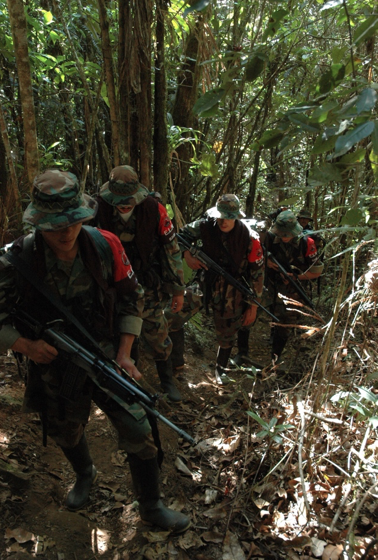

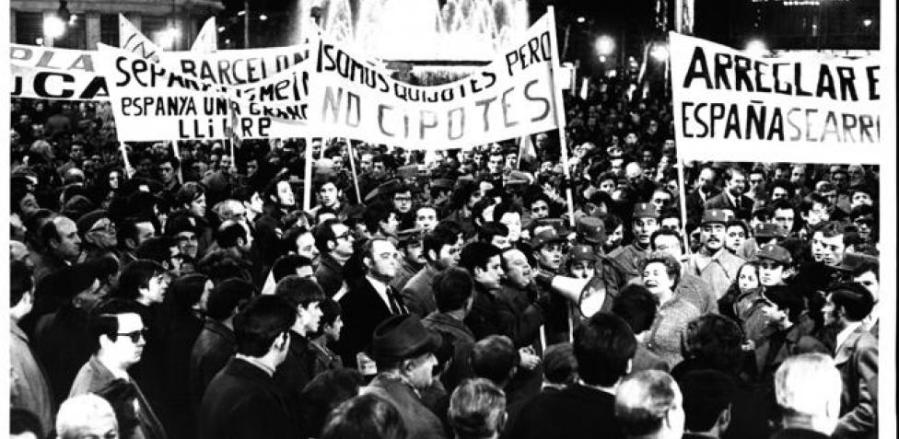
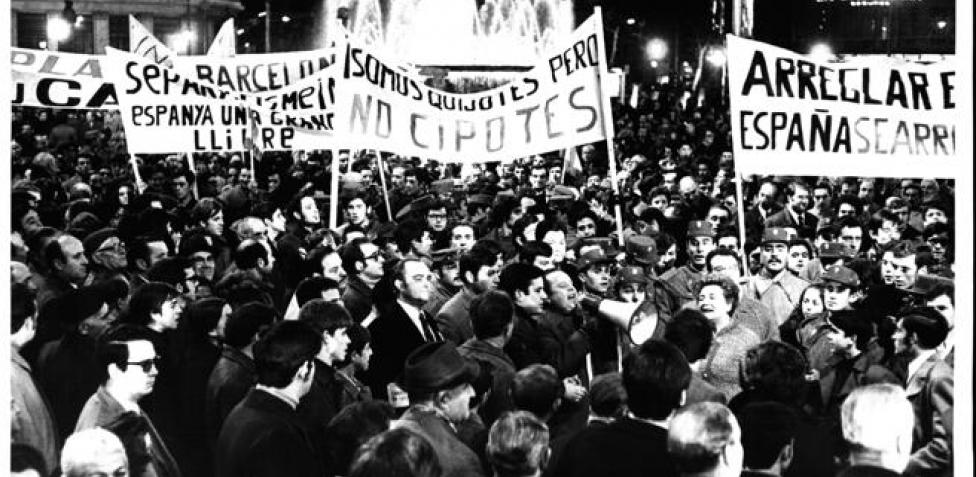

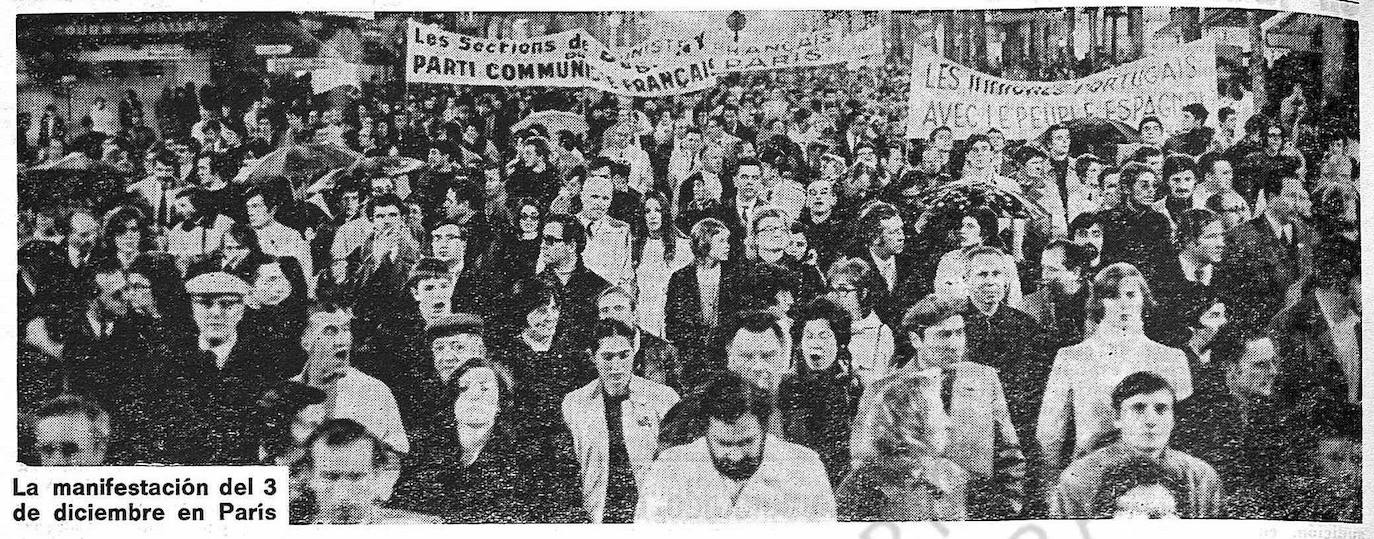

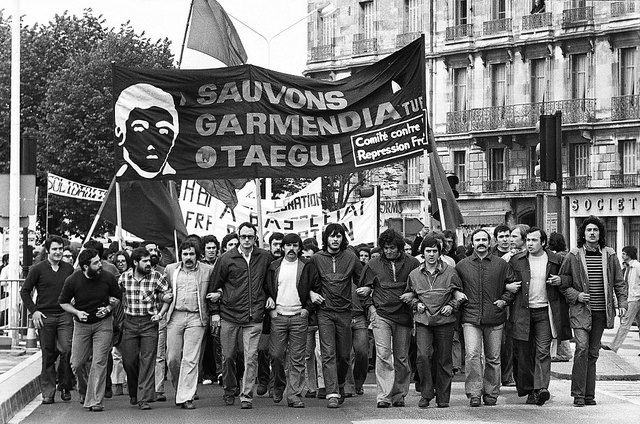
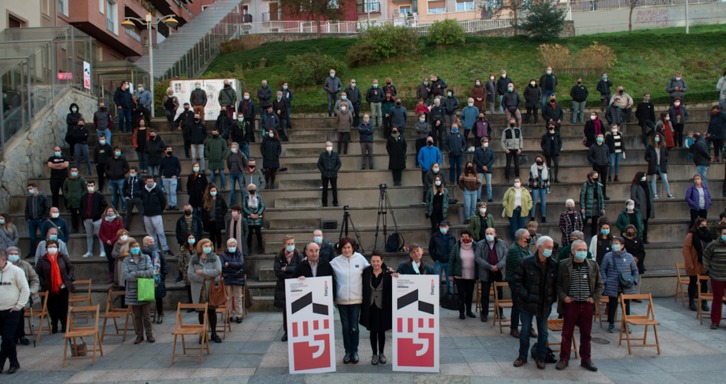


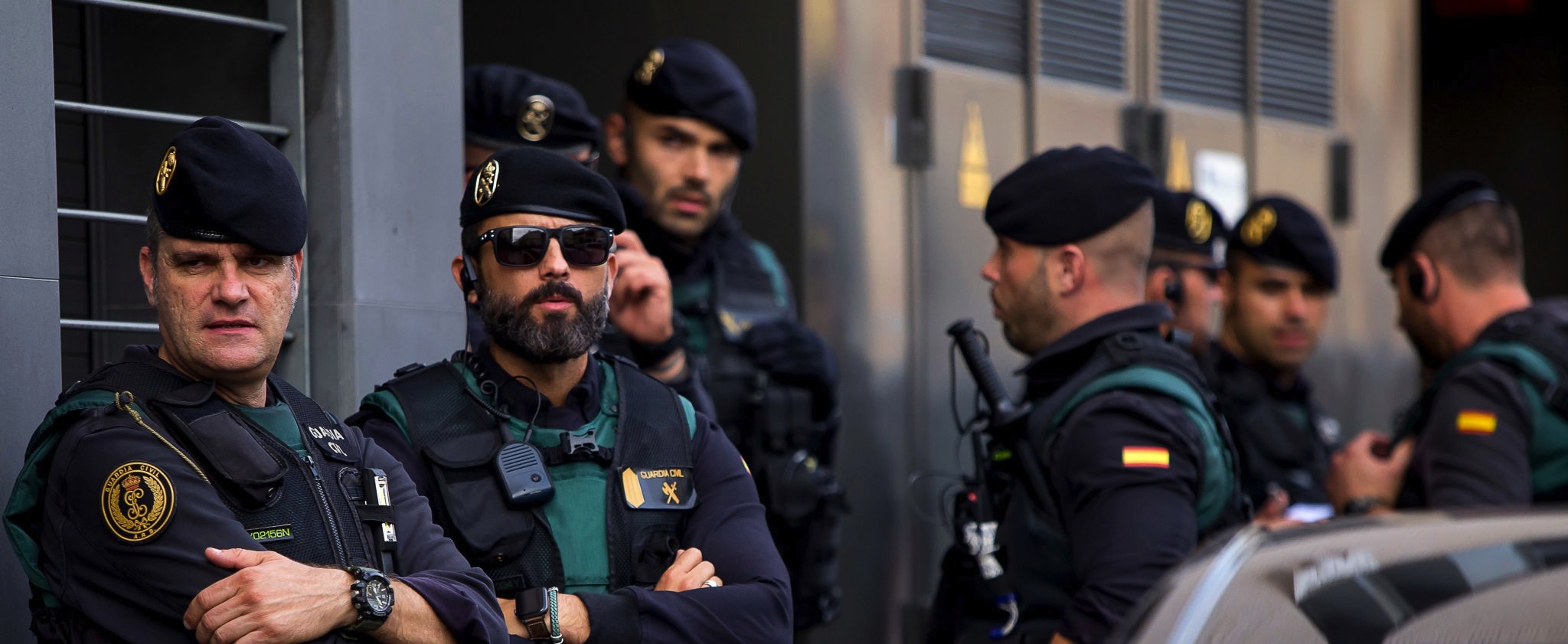

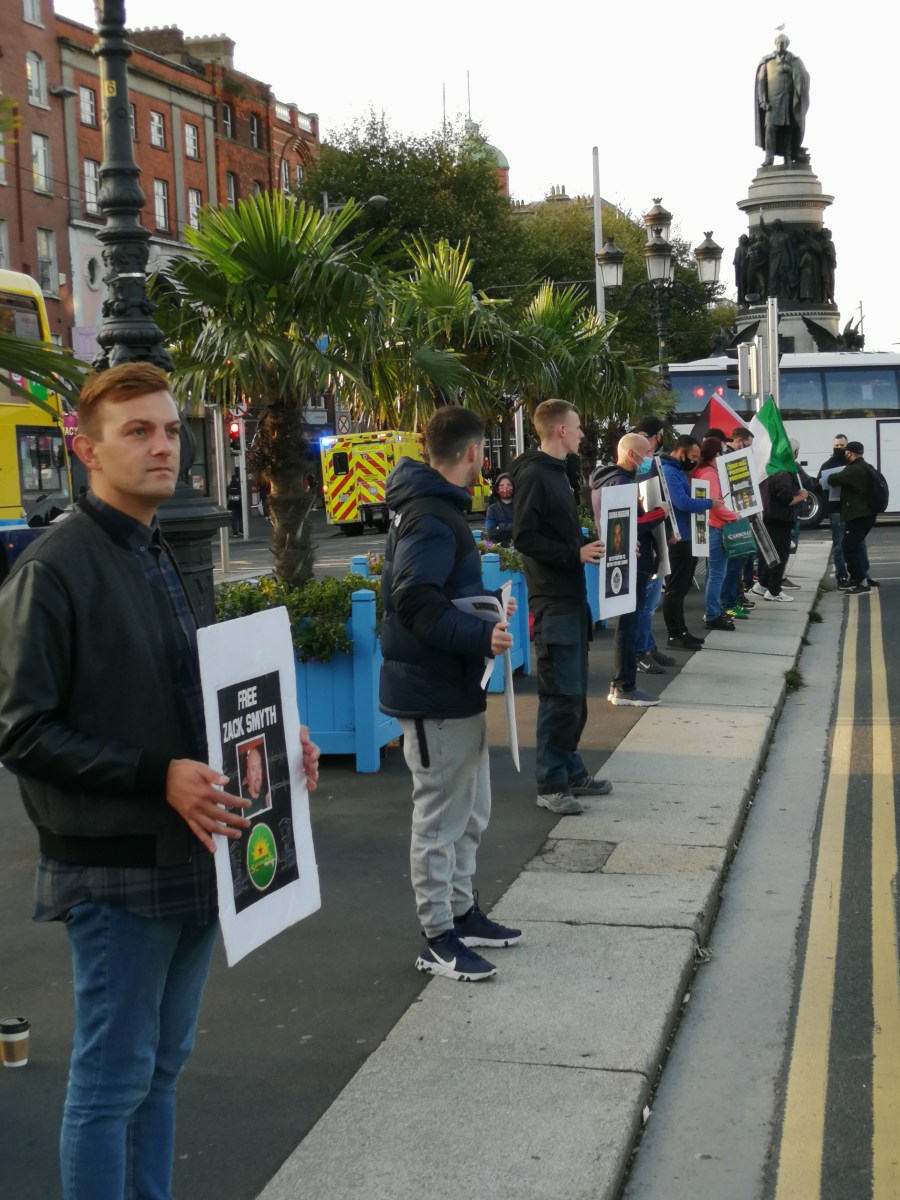
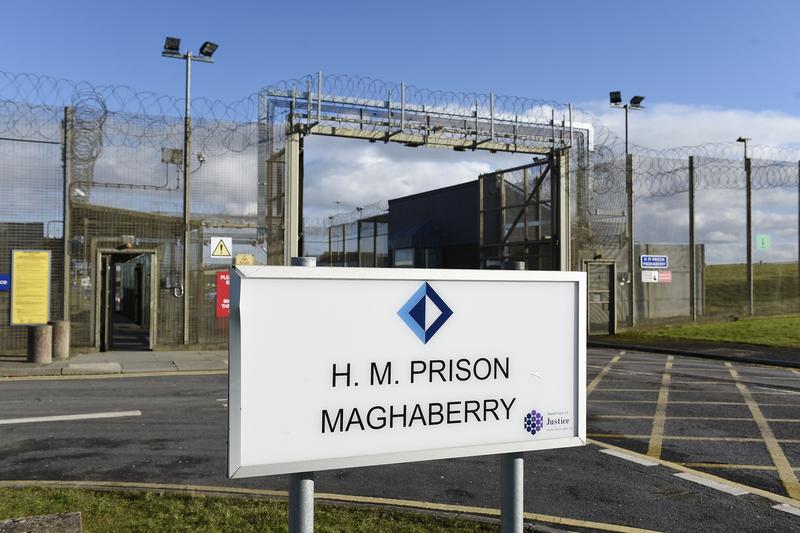
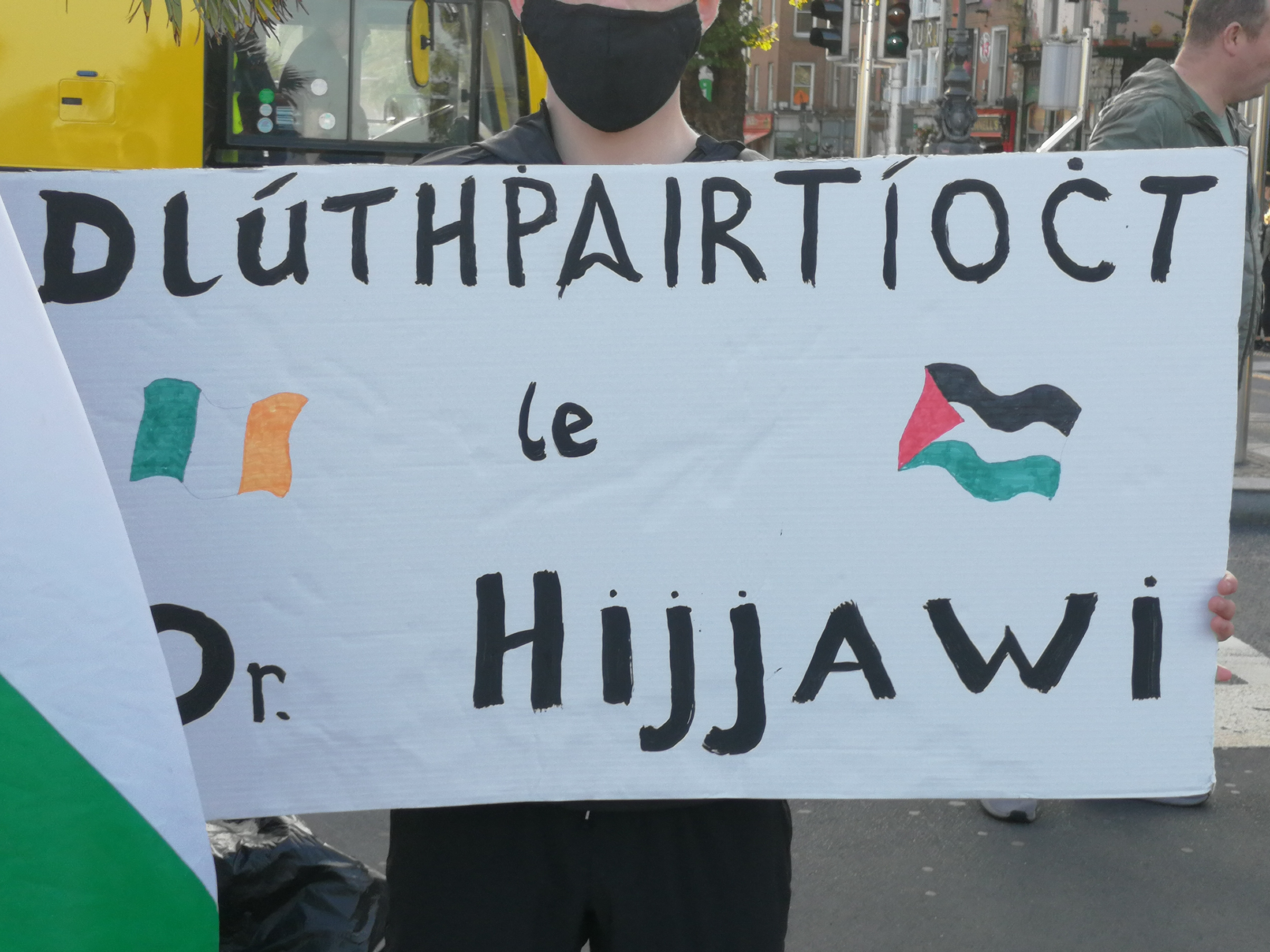
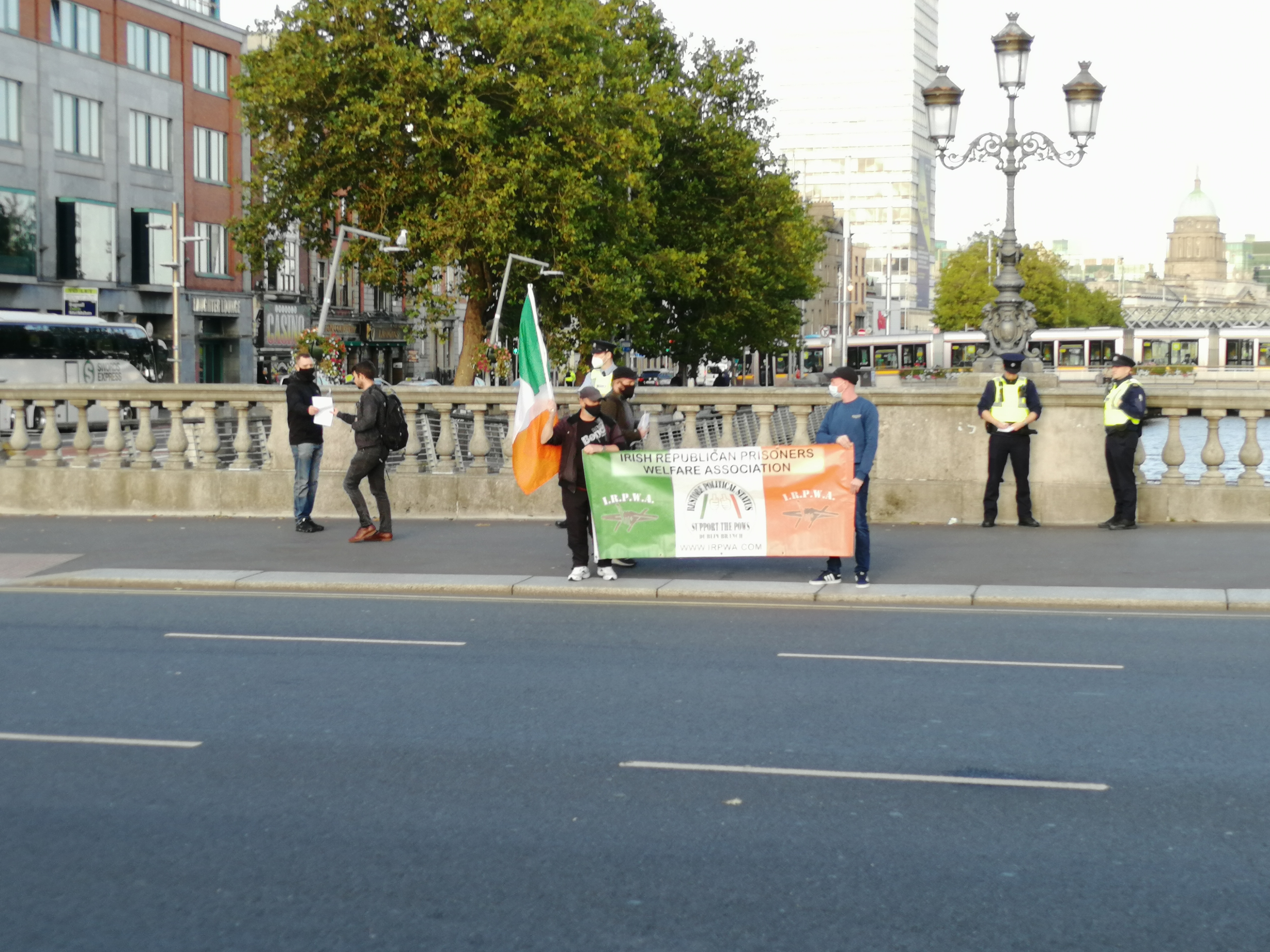
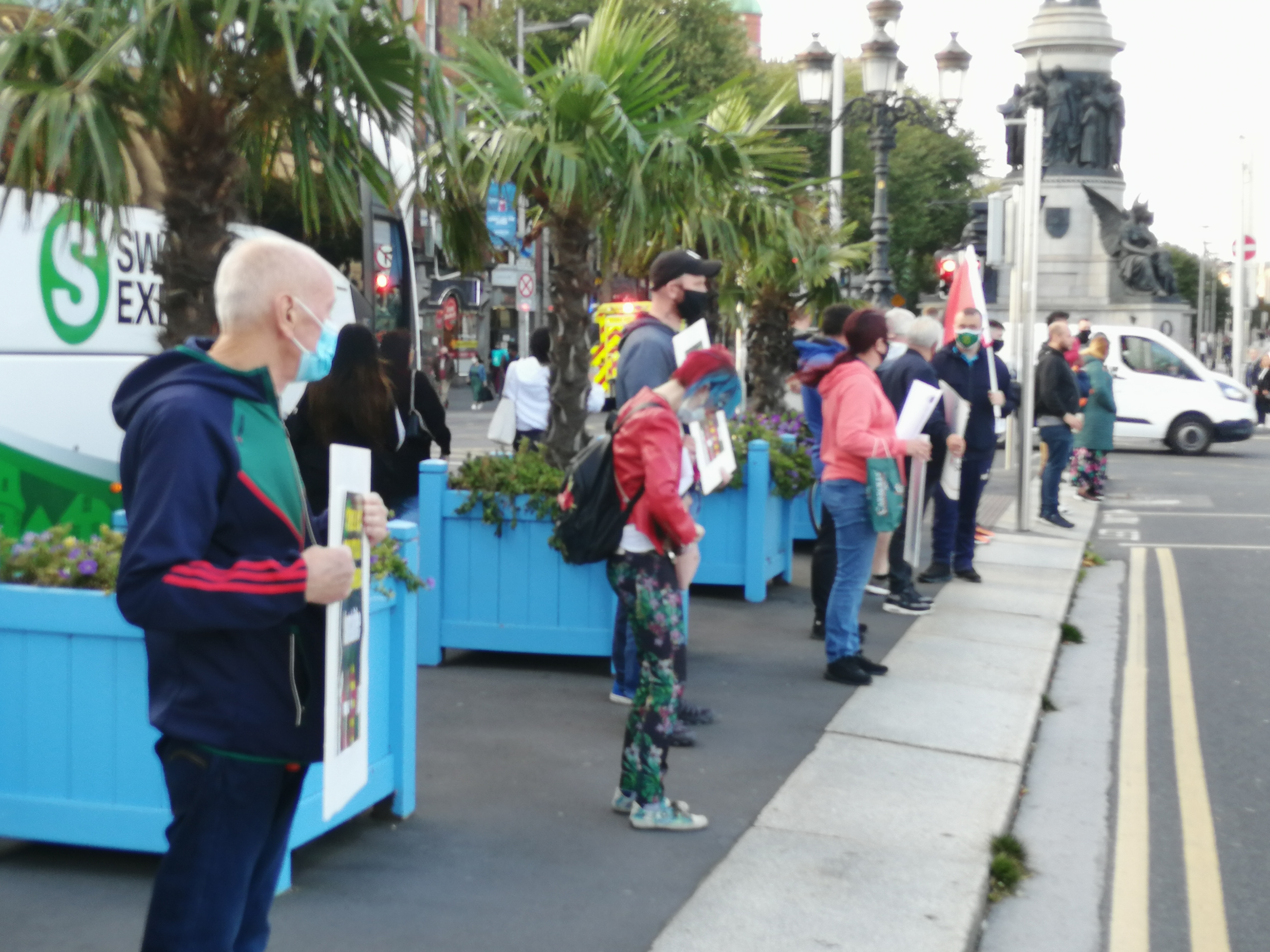
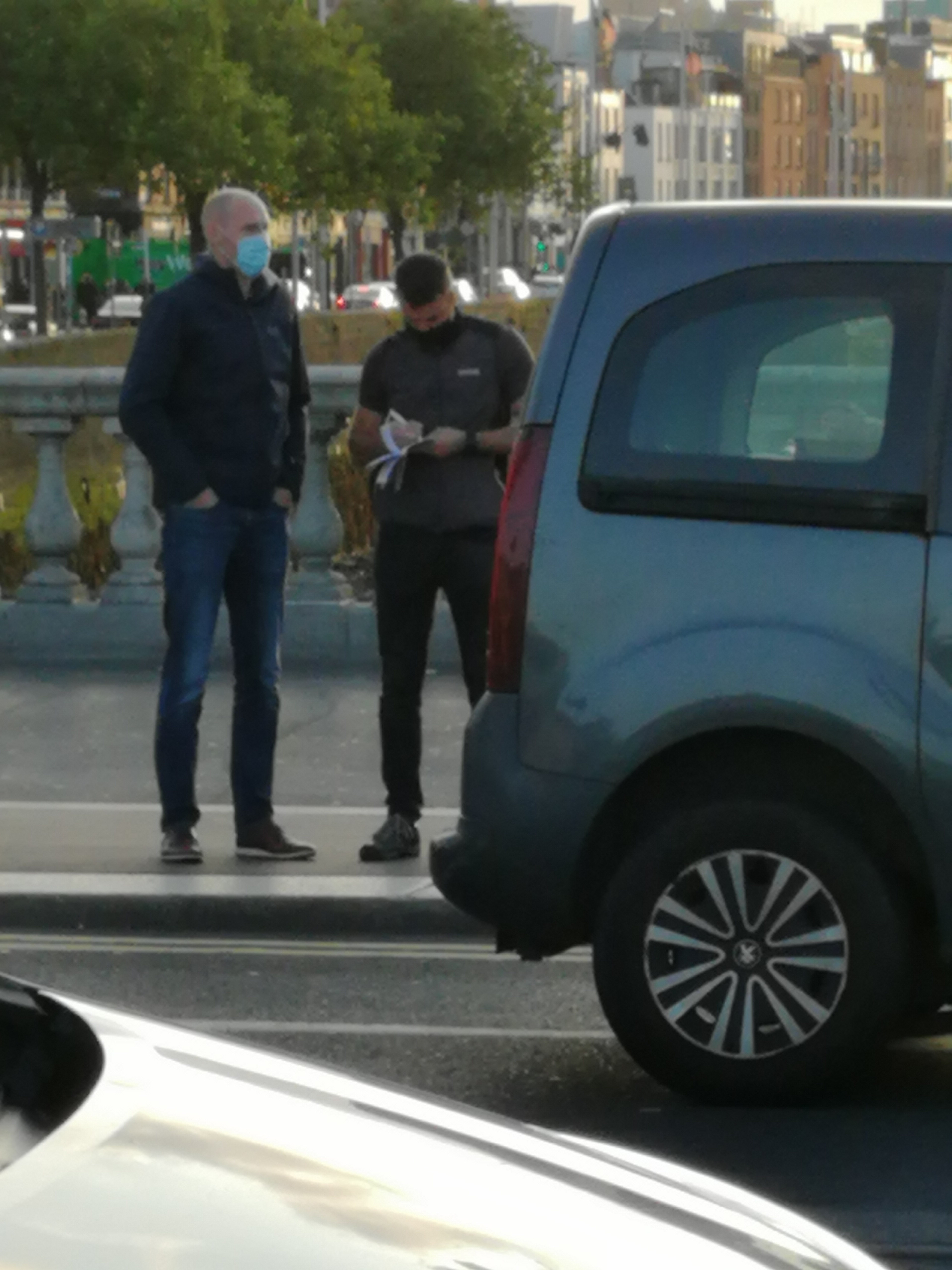
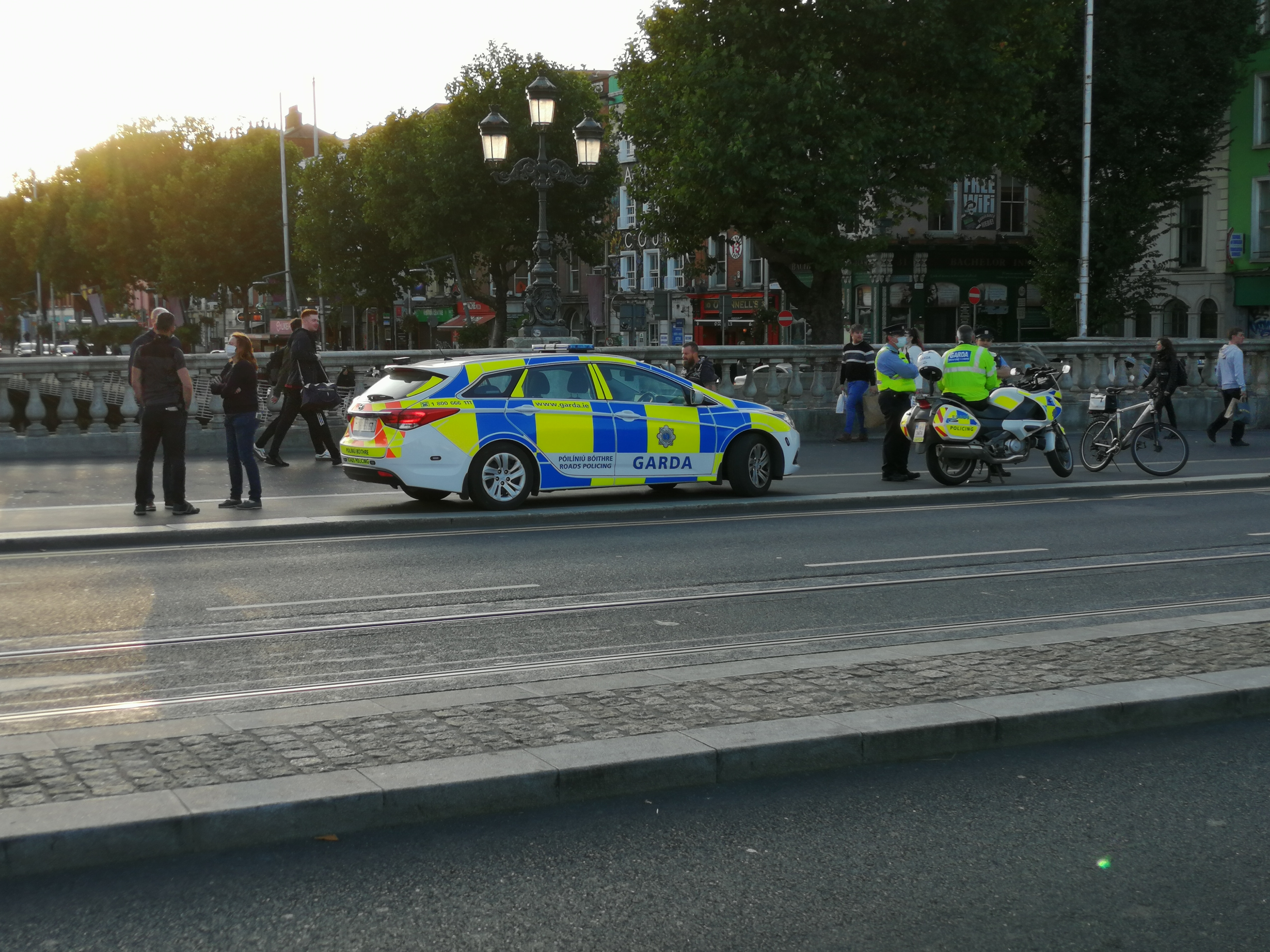
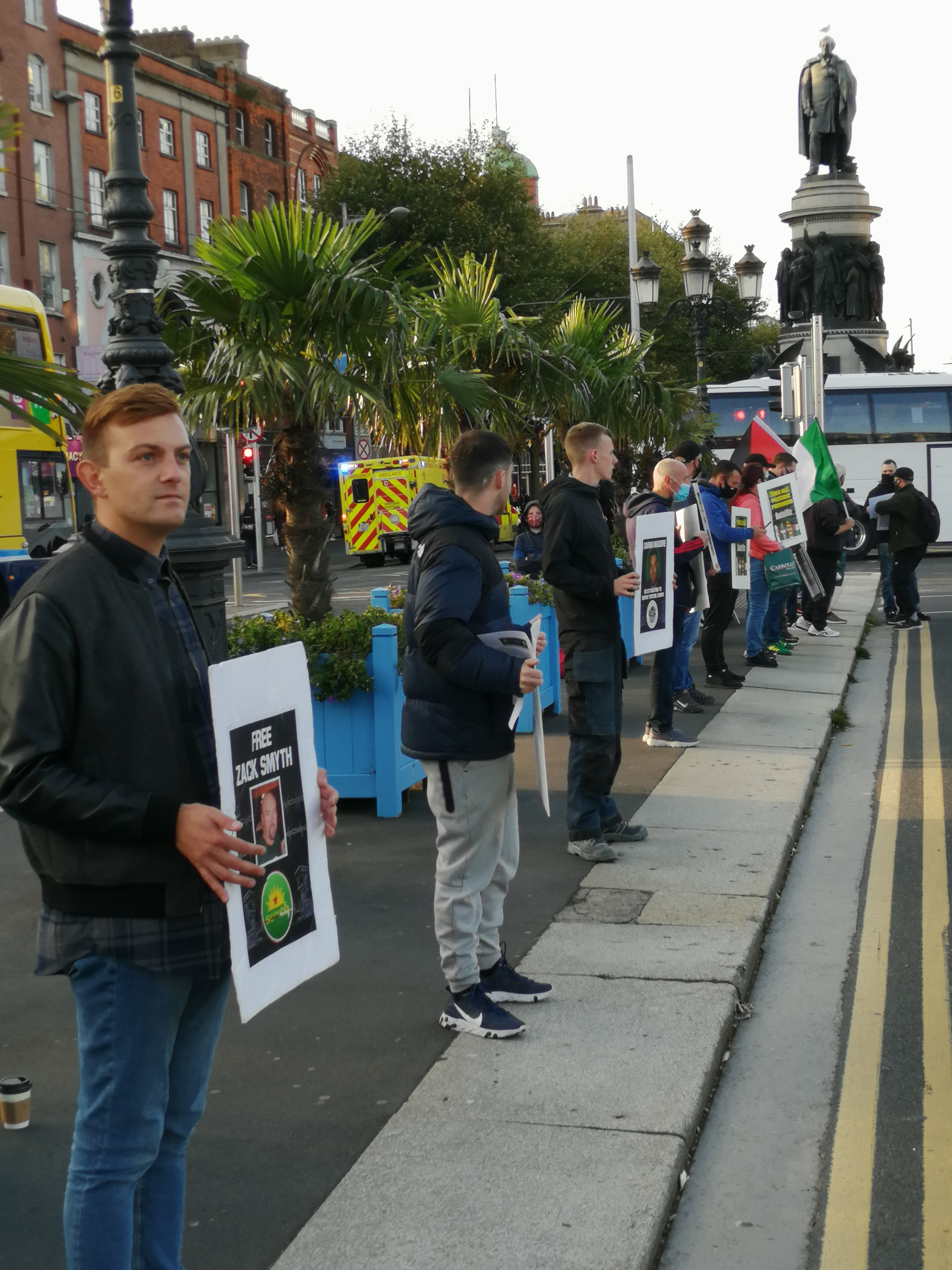
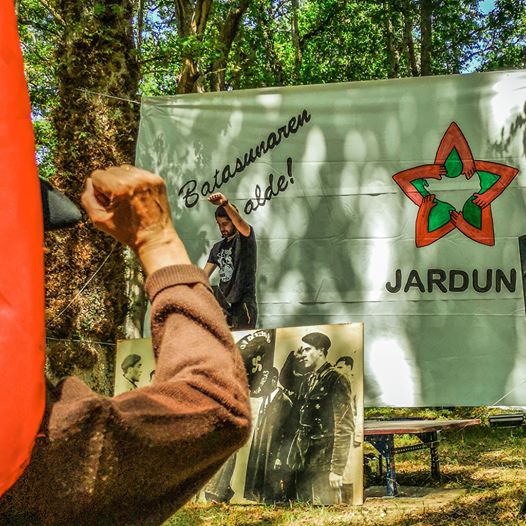
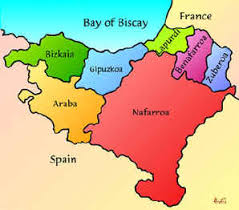
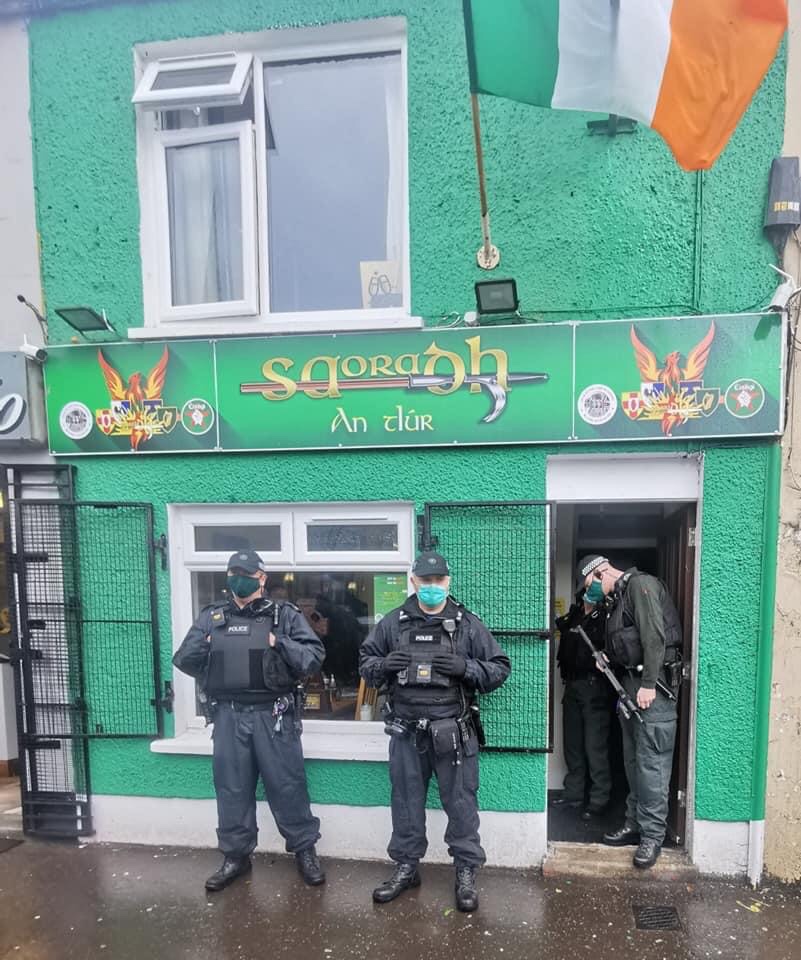


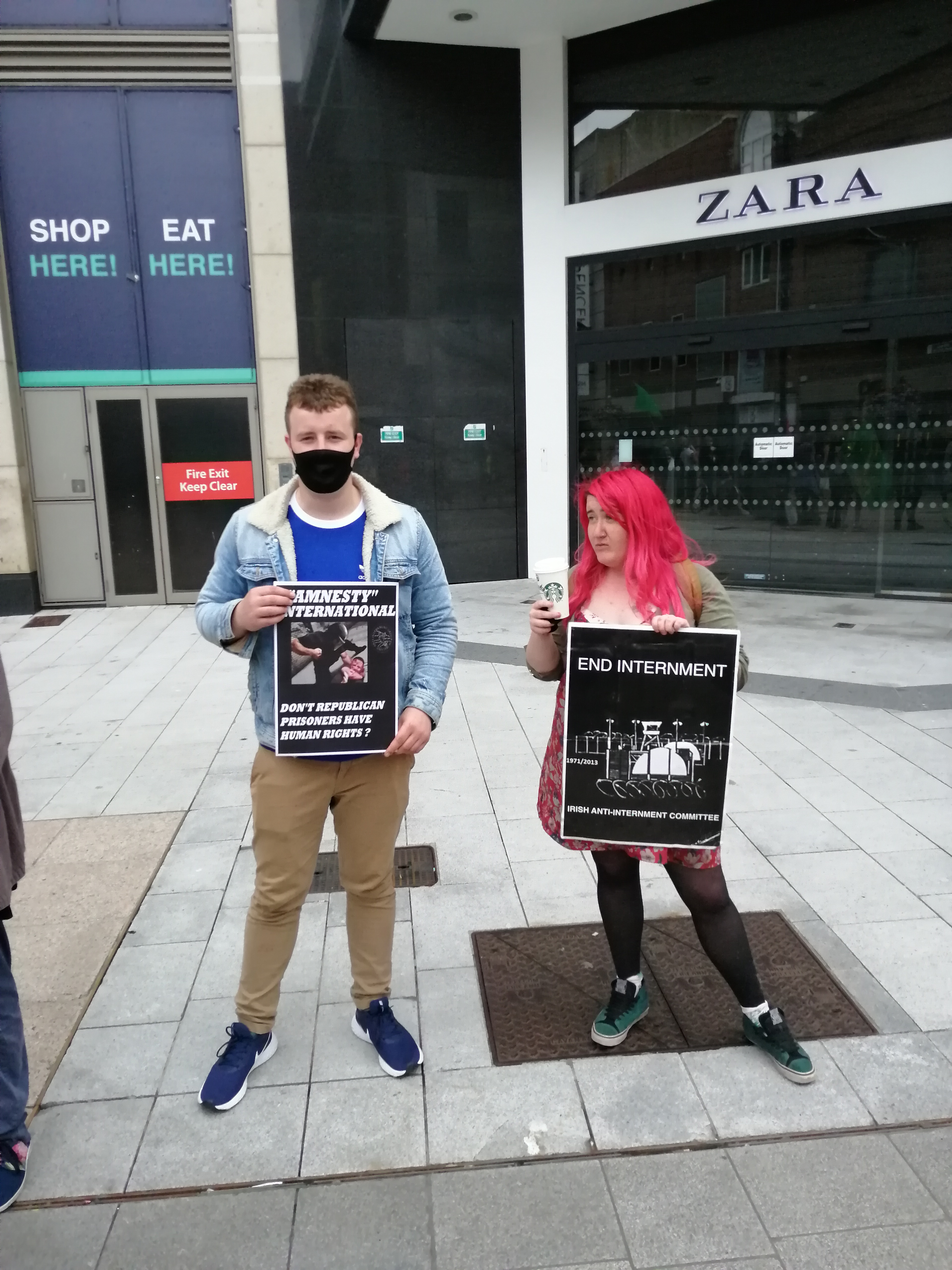

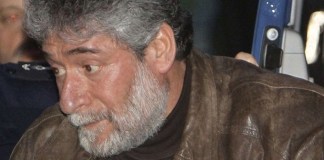

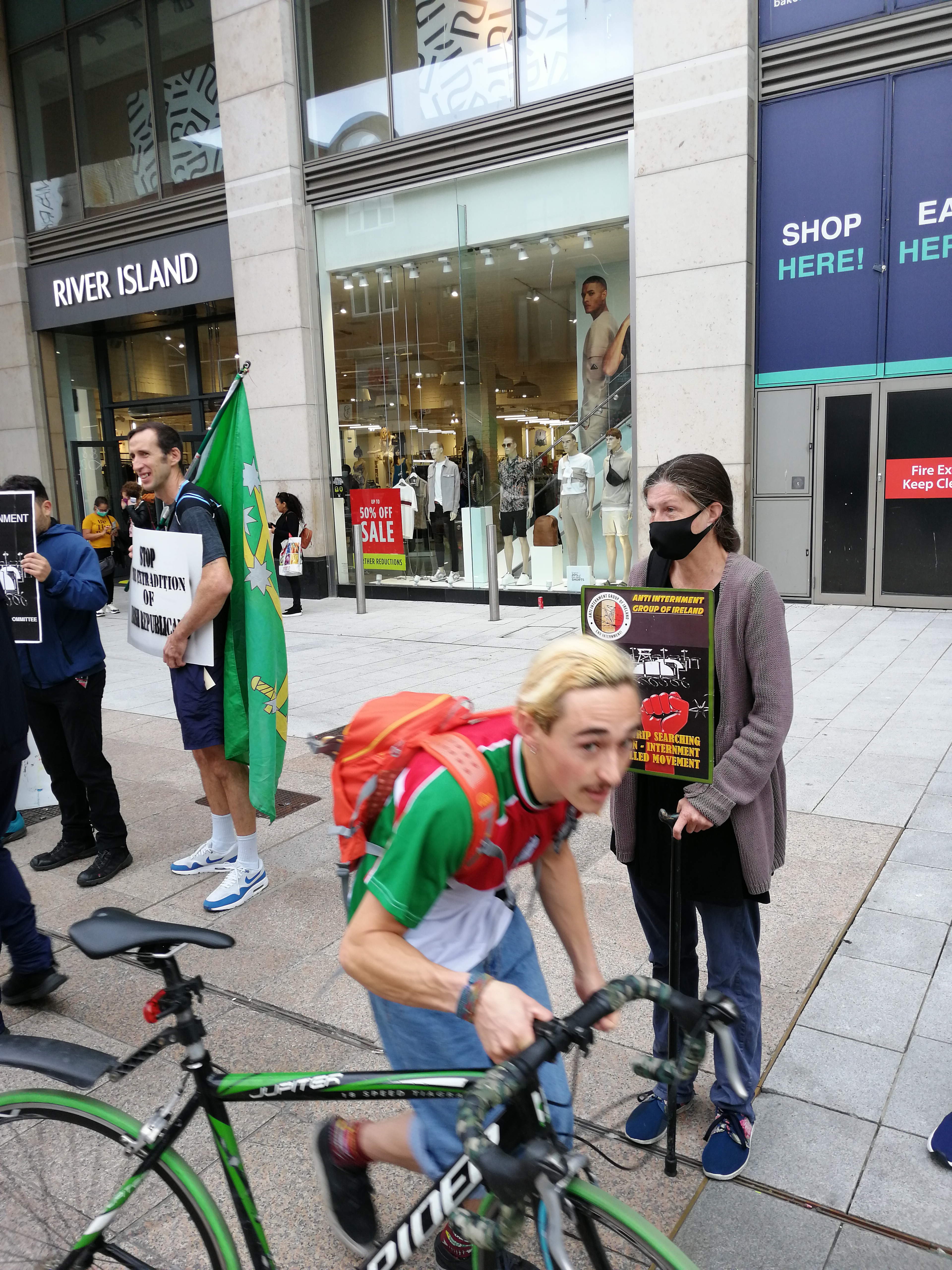


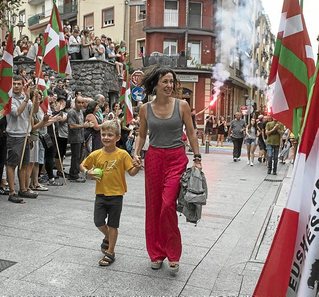
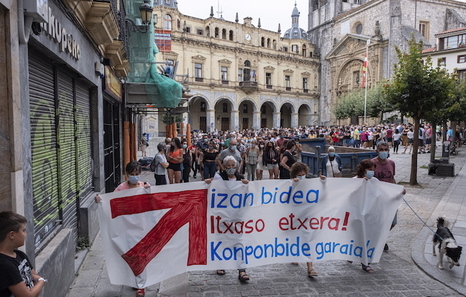


 rebelbreeze