Eamon McGrath (31 October 1955 – 11 January 1923) singer and song lyrics-writer, activist in areas of housing, water and national sovereignty, historical memory and anti-fascism.
He was getting buried on Saturday and I wasn’t able to be at the service nor at the celebration of his life with comrades afterwards.
I hope this eulogy, if that’s the right word for this, will make up for my absence to his family, comrades and friends and, of course, to me.
Eamon came into my life through the Moore Street occupation in January of 2016. The property speculator Joe O’Reilly (Chartered Land) and the State were about to collude in the demolition of three buildings in the 1916 Terrace.
The State had declared only four buildings in the 16-building terrace, after a long struggle, to be a historical monument and even later, purchased – but around 300 men and women hadn’t occupied just four buildings in 1916.
The Save Moore Street From Demolition campaign group had called emergency demonstrations on to the street following which the buildings had been occupied by protesting conservationists.
The weather was bitterly cold but the occupiers held firm for a week until a stay of demolition had been imposed by the High Court. Despite his health status and challenged mobility, Eamon was there throughout, with humour and song.
Eamon McGrath to far right of photo while Dave Swift (centre) in Irish Volunteer uniform reads a historical document April 2017 in Moore Street, during historical commemoration event (the hoarding behind is covering the extension of the ILAC further into Moore Street, killing the market appearance for that side of the street for the block).
Subsequently, to prevent internal damage by contractors, a six-weeks’ blockade was imposed on the building by conservationists from 6.30am to 4.30pm each weekday. Eamon was very much a part of that too, driving himself and his close comrade Sean Doyle up from Wicklow every day.
Eamon was intensely loyal to close friends and comrades. On occasion I found him prickly or grumpy (especially at 6.30 am) but throughout any disagreements he never lost sight of who were his comrades and other people he respected.
Though a proud man, when he recognised himself in error, he didn’t hesitate to apologise.
A new broader group came out of the occupation and blockade, called Save Moore Street 2016 and Eamon attended and contributed to internal organising meetings and events we called on to the street – re-enactments, fake funerals of history, pickets, demonstrations and rallies.
As others drifted or were called away from the group by other commitments, Eamon remained with the active core.
(L-R) Paddy Reilly and Eamon McGrath in period costumes having a conversation during a history education event and anniversary commemoration of the founding of the Save Moore Street From Demolition campaign group. (Photo from Save Moore Street From Demolition FB page)
Of course, Eamon had been active before 2016: certainly very much so in the general awareness-raising and mass campaign against planned privatisation of our water and the installation of water meters.
He was to continue that activism, which resulted in assaults by a water contractor on him and Seán Doyle, court appearances for both and in May 2016 both of them went to jail for a period but remained unbowed.
Eamon was one of the original occupiers of Apollo House in December 2016 in protest against homelessness and as a co-founder of the Anti Eviction Flying Column, Eamon was to the fore in resisting evictions across the country and also a co-founder of the Bring It to Their Doors campaign.
The State authorities were making things awkward for Eamon by then, both in terms of working as a taxi driver and claiming benefit when he was not. His ability to reach events in Dublin declined but he still got there often enough on public transport, while remaining active nearer to home.
As his physical mobility declined further, comrades in Carlow started an on-line collection to buy him an electric wheelchair. Even as I made enquiries to contribute, the fund had already reached its target, so quickly did people support it.
Later still, his family installed a new chairlift for his home so he could access the room where he recorded his songs with lyrics commenting on the ongoing political struggles, adapted to popular airs.
Though our voices didn’t go well together, we sang together a couple of times – outside the GPO and outside Dublin City Hall.
Eamon McGrath, centre right after April 2016 event in Moore Street after which we brought it to in front of the General Post Office in Moore Street for awhile. Myself near centre, Glenda further to the left of photo, Sean Doyle nearly out of shot.
He remained active on social media but in particular in keeping an eye on the activities of right-wing people, covid-deniers, racists, fascists …. Eamon was a handy source for a quick update on the status of many of them.
Eamon arranged an interview for us both with the Dublin Near FM radio station, the interviewer being then a former drug addict who sadly returned later to his addiction and died on the street. It was on the way back from the interview that Eamon told me a little about his earlier years.
He had a difficult time in his childhood, including institutional confinement and his formal education suffered as a result. However, he educated himself about many things by reading, listening, discussing and viewing on line.
I think the last time I saw Eamon was at a commemoration at the Peter Daly monument in Wexford inSeptember 2022, in his electric wheelchair and attached oxygen cylinder for his lung condition and all in good cheer, asking me for Moore Street campaign updates in detail.
Eamon McGrath, centre in wheelchair, at Peter Daly commemoration in Wexford, September 2022 (Photo from Peter Daly FB page)
His comrades in Anti-Imperialist Action Ireland, which he had joined at its foundation in 2017 correctly called him “one ot the most dedicated political activists of the last decade” and no-one who knew him could argue with that.
I knew little of Eamon’s family life but he often emphasised how important family was, not just to him but in general. Though I do not know them tá mé i gcomhbhrón leo, offering them my condolences along with the many they have received and are no doubt still arriving.
A partner, father, grandfather, great-grandfather, extended family member and friend to many.
Eamon McGrath of Kenmare Heights, Greystones & formerly Wolfe Tone Square, Bray, Co. Wicklow, was buried in Radford Cemetery, Greystones Saturday after a service in the Holy Rosary Church, Bray, attended by family, comrades and friends.
Working people have experienced many betrayals in history and the struggle for self-determination of the Irish nation has been – and is being – betrayed also.
When such betrayals occur, a range of common reactions is evoked; thinking about those responses may help the betrayed at least to moderate the harm and turn the experience to some benefit.
Equally, some ways of handling the experience can magnify and deepen the harm already caused.
Betrayal is a difficult experience for the betrayed certainly but not without some cost to the betrayer too and each has a number of common responses. This applies to the personal as well as to the political but there are some differences.
The betrayers have their followers to different degrees and these too have psychological reactions to the betrayal — and to criticism of the betrayal. We can observe these reactions in a number of recent historical cases of high levels of resistance subsequently betrayed.
The most recent phase of high degree resistance in Ireland took place largely in the British colony of the Six Counties, beginning with mass struggles for civil rights before passing through protracted guerrilla war and intense struggles of political prisoners in the jails.
In the Basque Country, the corresponding phase began with ideological-cultural struggle and mass industrial actions against the Franco dictatorship, quickly developing into a guerrilla campaign combined with street battles, resistance to conscription and struggles around prisoners in the jails.
The leadership of the Irish struggle came to political agreement with the colonial occupier, disbanded and decommissioned its guerrilla forces and acceding to its right of conquest, joined the occupier’s colonial administration, concentrating thereafter on building up its electoral base.
A similar process took place in the Basque Country but with important differences: the imprisoned activists were not released and the movement’s political leadership was not even admitted into joint management of the colonial administration.
Each nation witnessed splits, recrimination, dissidence, repression on groups continuing resistance but also a range of psychological responses which at best did not assist recuperation and in fact often deepened the harm of betrayal by the leadership.
STANDARD RESPONSES BY THE BETRAYED
DISMAY is a common reaction: How could he/ she/ they? I never thought they would. We’re finished now.
BLAME is another also common response: It was that leader’s or leadership’s fault. We didn’t fight hard enough. Those comrades criticised too much.
SELF-CENSORSHIP And EXCESSIVE CAUTION: We can see the harm in some of the leadership’s actions but we must be careful not to step too far out of the movement, where we will be marginalised and unable to have an effect1.
DESPAIR: That’s the end of everything. There’s no way out of this. It was all for nothing – all those sacrifices, all that pain.I’ll never trust people or get involved again.
APATHY: So I/ we might as well forget about it all. Just think about ourselves/ myself/ family. Drop out. Drink. Take drugs.
DENIAL: We’ve not really been betrayed. It’s just another way to go for the same thing. This is the only reasonable choice. We couldn’t keep on that way any longer, this is just a change of method. We’re just having a pause. The leadership is clever and has tricks up their sleeves. This is just to fool the authorities. It’s just going to take a little longer to win than we thought.
Those are defensive constructions in emotion and, in so far as that takes place, in thinking. But defensiveness can turn to aggression – and frequently does. The betrayers – and often the duped also – resent being reminded of what and where they are. It makes them uncomfortable.
HOSTILITY: How dare those people criticise us/ the leadership? They don’t understand and just want continual conflict. They’re endangering our secret plan. Who do they think they are? They’re just wrecking everything, undermining our new plans. They need to be taught a lesson.
PERSONAL ATTACKS: That critic is no great activist. S/he hasn’t suffered as some of us have. They were always troublemakers. Jealous, that’s what they are. They’re not very bright; no idea about real politics. They are in fact traitors, helping our enemies.
MARGINALISATION: We are not going to listen to those critics. We will not allow them space on our media. We’ll try to make sure they don’t get venues in which to spread their poison. If people are friends with them they can’t be our friends too. Such people will not enjoy our hospitality or invitations to our events. People should not even talk to them. If the authorities attack those dissidents, we are not going to trouble ourselves about them – it’s their own look out.
MANAGING THE BETRAYAL
PROMOTING LEADER ADULATION is a useful tool in shutting down the opportunities for criticism and in repressing them when they arise. “Who are we to criticise this great comrade’s thinking or actions?” becomes an implicit question, clearing the way for betrayal.
Leaders who have surrendered or compromised the struggle, L-R: Gerry Adams and Martin McGuinness of the Provisionals, Arnaldo Otegi of the Basque Patriotic Left, Abdullah Ocalan of the PKK and Yasser Arafat of Al Fatah. The latter seemed to be attempting to to turn back from the path of betrayal when he became very ill (quite probably poisoned) and died.
SEEKING COUNTER-REVOLUTIONARY ALLIANCES is engaged upon so as to appear to its members to make the organisation’s influence greater, or to outflank and isolate more revolutionary tendencies and often ultimately to make the leadership acceptable to the ruling circles.
BEGGING FOR CONCESSIONS when the revolutionary path has been abandoned can often be observed, as in “we’ve abandoned our militant struggle, please stop repressing us”, for example, a frequent response to repression of the Basque leadership once it abandoned the revolutionary path.
COLLUDING WITH THE OCCUPIER becomes a new second nature to a leadership abandoning revolution, not only in abandoning armed struggle, for example but in destroying weapons and suppressing elements still in resistance.
PROVING THEIR READINESS TO COLLUDE FURTHER, revolutionaries turned collaborators denounce continued resistance, try to convince revolutionaries to desist (or threaten or physically attack them), promote the repressive arms of the State such as the police and so on.
INTOLERANCE OF CRITICISM becomes default position; such criticism tends to expose the contradiction between the original purpose of the organisation and its concrete actions in the present. Censorship, expulsion and misrepresentation become common.
MARGINALISATION OF CRITICS follows from intolerance of criticism – the individuals or groups must be made pariahs so as to nullify or at least reduce their influence. Association with them, socially or politically – even in agitating around civil rights – must be discouraged.
REPRESSION OF DISSIDENTS finally becomes necessary, whether by threats or by actual violence or, when admitted to governing circles, by use of repressive state machinery.
DEALING WITH BETRAYAL RATIONALLY
The first necessary step is to analyse how the betrayal came about: how was it organised? What were the conditions that made it possible? What were the early signs?
Then, proceed to: what could we have done differently? What WILL we do differently in future?
Electoral work
One common assumption here in Ireland, especially in Irish Republican circles, is that the rot began with standing in elections. This is not logical and it is in effect making a negative fetish of electoral work, a taboo to be avoided.
It is often useful to the revolution in many ways to have representation in the parliament and local authorities, for example in promoting or blocking practical or legislative measures, getting media air time, visiting prisons — all without ever promoting reformism as a way forward.
Certainly the prioritisation of electoral work over other aspects is a sign that something has gone wrong: the strength of the popular revolutionary movement is on the street, in workplaces, communities, places of education, rather than in parliaments and local authorities.
The drive towards electoral representation can encourage bland slogans of the soap powder kind (“new improved” or “washes even better”) rather than those with revolutionary content and also the promotion of more bourgeois individuals in preference to grass-roots organisers.
Anodyne election slogan in both languages for Sinn Féin.
But none of that means that representation in those bodies cannot be used to further the popular struggles or that such aberrations cannot be avoided. And in fact, the concentration on criticism on the electoral factor served to distract from a more fundamental error.
Of course, electoral work should never, for revolutionaries, be about entering government under the current socio-economic system, i.e sharing in the administration of the State.
Leader adulation & intolerance of criticism
If criticism is not tolerated when errors are committed, they can hardly be corrected. Again and again it has been observed that the party/ organisation faithful refuse to accept external criticism from non-enemies. Internally the leadership inhibits criticism by the members.
The cult of the leader also inhibits criticism and therefore correction of errors. And behind this image others can hide and also commit errors. Problematic as dead icons may be, living ones are many times more dangerous – deceased ones at least do not change their trajectories.
Such created living icons have been Mandela in South Africa, Yasser Arafat among Palestinians, Gerry Adams and Martin McGuinness in Ireland, Arnaldo Otegi in the Basque Country and Abdullah Ocalan among Kurds (particularly in the Turkish and Syrian states).
Nobody knows everything or is always right. Bothersome as being criticised may be, its total absence is worse, allowing us no opportunity to question ourselves as activists and in particular as revolutionary organisations.
The revolutionary leadership, party or organisation is not the people
The revolutionary leadership, party or organisation does not have all the answers and is not the people. This might seem obvious but from the behaviour of such leaderships and their followers in the past it is clear that the opposite philosophy has been dominant.
Confusing the organisation with the people or with revolution itself, we assume that what is good for the organisation is also good for the people and the revolution. This however is not always so and leads to placing the perceived well-being of the organisation above the needs of the revolution.
Indulging this confusion leads to political opportunism and sectarianism, bad relations with other revolutionaries, ignoring all external criticism and placing the needs of the leadership higher than those of the membership and of the membership higher than those of the mass movement.
Internationalist solidarity
In internationalist solidarity work we build the unity of the people across borders and against the same or different enemies than those against which we are struggling.
One feature observed in a number of organisations where the leadership is moving towards betrayal is a reduction or elimination of such work.
To those in our ranks seeking an accommodation with imperialism and capitalism, those internationalist solidarity alliances are either a) unimportant or b) a hindrance to the alternative reactionary alliances to which they aspire.
The latter was very much the case with the Provisionals’ attitude to US imperialism. For decades, their leadership maintained apparently mutually-contradictory positions on what is the biggest imperialist superpower in the world.
On the one hand, for example, there could be involvement in solidarity with Cuba against the US economic blockade and, in the past, against US sabotage and terrorism against the Sandinista regime in Nicaragua.
On the other hand, the leadership sought the support of the US elite against British colonialism, which is occupying a part of Ireland and against which the movement was waging, in that colony, an armed and popular struggle.
Seeking support from the US imperialist elite entailed distancing from left-wing Irish USA and dropping support for even long-term inmates of US jails, such as American Indian Leonard Peltier and Black American Mumia Abu Jamal, arising out of popular struggles inside the US.2
Leonard Peltier, Native American convicted in 1977 in deeply flawed trial for murder of two FBI agents in 1975 shootout on Pine Ridge Reservation. Nearly 80 years of age now and with multiple health issues, even release on clemency grounds is constantly blocked. His is one of many campaigns in the USA which SF cannot support as they seek to remain friends with the Democratic Party elite there.
Black American journalist and activist, framed for the murder of a corrupt Philadelphia policeman in 1981 and sentenced to death in 1982, sentence commuted to imprisonment for life without parole in 2011. Mumia is nearly 70 years of age now with a number of health issues. Another of the type of injustice in the USA about which SF cannot campaign as they seek to stay close to the Democratic Party elite. Anecdotally, a SF Councillor who was regularly writing to him was obliged to desist on instruction from her party leadership.
Unprincipled alliances
Another warning sign is the founding of unprincipled alliances with other organisations in struggle. For example, although it is correct to have a position of support for the Palestinian people, that should not necessarily bind us to exclusively support the fighters of one organisation only.
The Provisionals made their alliance with the Al Fatah organisation to the exclusion of all others in Palestine but worse was to come, for Al Fatah shoved aside the idea of a free Palestine and the right of return in exchange for administrative partial autonomy and funding.3
From there, Al Fatah became so corrupt that the Palestinian people, that had long supported a secular leadership, voted overwhelmingly for an islamic fundamentalist party, Hamas4. The unprincipled alliance with Al Fatah and the ANC was used to ‘sell’ the GFA to Irish Republicans.5
In the Basque Country, the mass movement’s leadership developed close links with the leadership of the Provisionals and refused links with Irish Republican organisations that dissented from the Provisionals’ position or with Republican prisoners after the Good Friday Agreement.
That should have sounded alarm trumpets in the Basque movement but if it did, it remained largely without practical effect. Askapena, the Basque internationalist solidarity organisation did split from the main movement but did not go so far as to support ‘dissident’ Irish Republican prisoners.
LESSONS
On the basis of the preceding I think we can draw a number of primary lessons.
LESSON ONE: ANALYSE THE MISTAKES OF THE PAST AND SEEK TO AVOID REPLICATING THEM
The type of struggle, location, timing, peripheral situation, long, medium and short-term objectives, experience and expertise of personnel, resources … all need to be analysed, in conjunction with the strengths and weaknesses of the enemy.
In carrying out this kind of analysis on the Irish struggle, we see that we faced one of the military superpowers, also well linked into the western imperialist world. The Republican movement’s battle area was in total one-sixth of the nation’s territory and the location deeply divided.
The rest of the nation was ruled by a weak foreign-dependent ruling class.
Map of Ireland showing the British colony of the Six Counties. The Provisionals took on the British state, mostly confining their struggle in that deeply divided politically and culturally region shown in yellow.
A movement cannot choose when it has to step forward in defence but it can choose how it develops the struggle afterwards. It seems obvious that in order to be victorious, at the very least the struggle would have to be spread throughout the nation.
That in turn would entail putting forward social and economic objectives to attract wider support which, in turn, would mean taking on the Catholic Church hierarchy.
In addition, the question of effective external allies was relevant here but even more so in the Basque Country, located across the borders of two powerful European states.
The total population of the portion of the Basque nation within the Spanish state is far short of three million, that of the rest of the state over 44 million.
Clearly allies external to the Basque nation would be essential for victory and these would have to come from across most of the Spanish state at least.
Map showing the ‘autonomous’ regions of the Spanish State; the southern Basque Country is shown in pink at the top, including ‘Navarre’ shown in yellow next to it. Essentially, the Basque Patriotic Left without allies confronted the Spanish state from there.
Such an assumption would entail, in turn, outlining objectives to attract considerable numbers from across the Spanish state which in turn would mean creating alliances with revolutionary and other progressive forces across the state.
LESSON TWO: REFRAIN FROM PERSONALISING THE ISSUES
When criticism of the counter-revolutionary line put forward by individual leaders becomes personalised, the political essence of the criticism becomes lost or at least obscured. It can seem as though the critics have personal reasons for their hostility or even jealousy of the individuals.
Much of what one sees publicly posted by opponents of pacification programs in Ireland and the Basque Country often seems more about hostility to the personalities of MaryLou MacDonald, Gerry Adams, Martin McGuinness or Arnaldo Otegi than about specific policies and actions.6
Crucially, focusing criticism on individual leaders serves to conceal other underlying causes of failure and betrayal that are usually more fundamental: problems in objectives, errors of strategy, in particular and also of tactics along with unhealthy organisational dynamics.
LESSON THREE: DEVELOP INTERNATIONALISM AND AVOID UNPRINCIPLED ALLIANCES
In the face of imperialist and other reactionary alliances, revolutionaries need internationalist solidarity, the basis for which should be revolutionary positions and action. Exclusive alliances are generally to be avoided as is uncritical support or unquestioning approval of all actions.
LESSON FOUR: CONTRIBUTE TO BROAD FRONTS WITHOUT SURRENDERING THE REVOLUTIONARY LINE
A broad front is essential not only for successful revolution but also often for defence against repression. Such fronts should be built on a principled basis with respect for the participating groups and individuals but without surrendering the revolutionary line.
At the same time, the possibility of betrayal, opportunism or sabotage and marginalisation by partners in broad fronts need to be guarded against and, if occurring, to be responded to in a principled and measured manner.
Broad fronts not only increase the numbers in resistance in a unified manner but also expose the activities of the constituent groups to the members of other parts of the broad front. Activists can then evaluate organisations and one another on the basis of experience rather than of reputation.
The revolutionary line should not be abandoned or concealed when in a broad front with organisations and individuals who have varying lines. At the same time, it is not necessary to be pushing the revolutionary line every minute.
LESSON FIVE: DON’T GIVE UNCONDITIONAL TRUST TO LEADERS
Of course, our leaders and activists must be trusted – but always in the knowledge that no-one is perfect or above the possibility of error. The shutting down of opportunity to voice criticism should sound alarm bells in any revolutionary movement.
There are of course “time and place” considerations in criticism; for example, the capitalist mass media, police interrogation or trial in court are hardly appropriate places to criticise a revolutionary movement’s leadership.
LESSON SIX: TOLERATE INTERNAL CRITICISM AND CAUCUSES IN BALANCE WITH COLLECTIVE RESPONSIBILITY
The above touches upon this area too. People who follow us without question may equally do so with another.
The right to caucus, i.e to collect around a particular revolutionary trend or focus needs to be acknowledged and formalised. Like-minded people will naturally associate and it is far healthier to have this occur in the open rather than in secret.
At the same time, when a discussion reaches democratic decision, the minority whose positions were rejected need to present a common front with the rest of the organisation or movement.
Similarly, political and organisation criticism needs to be welcomed or at least tolerated within the organisation or movement because it may be correct and point an alternative way forward and even if it isn’t, the discussion around the criticism will help to clarify matters.
Such openess to criticism and discussion encourages a conscious and thinking membership which by that measure alone and organisationally makes it more difficult for some individual or clique to manipulate the membership.
1“Outside the broad movement it is very cold”, said a Basque to me once. He was a member of a small Left group critical of the leadership’s approach but unwilling to completely rupture with them.
3With the Camp David (1978) and Oslo Accords (1993 & 1995).
4In 2006 (the most recent) Palestinian parliamentary elections, Change and Reform (Hamas) won 74 seats and Al Fatah 45. In Gaza Al Fatah rejected the result and tried to seize power but were defeated in a short battle, though Hamas did not battle their assumption of power in the West Bank. All dates for elections to Palestinian Parliament since have passed without polling.
5And since then, unprincipled alliances with Provisional Sinn Féin have been used by the main Basque organisation leadership and ditto with Colombia to ‘sell’ pacification processes in those countries (which have been even worse for them than has the GFA been in Ireland).
6As a historical note, it is said that some of the delegates who voted for the Anglo-Irish Treaty in January 1922 were moved to do so by the nature of the attacks of Cathal Brugha, for the anti-Treaty side on Michael Collins, leader of those for the Treaty. The majority of delegates voting in favour was only seven.
Speech by Pat Reynolds2 in Commemoration of Irish Civil Wars 1920-1923 on a sub-zero evening outside Camden Irish Centre, London on 8th Dec 2022
(Reading time: 15 mins.)
A Chairde Ghaeil agus a Chomrádaithe, tonight we are gathered here to remember and celebrate the lives of Liam Mellows, Rory O’Connor, Dick Barrett and Joe McKelvey, four great Irish patriots.
We also call out the neo-colonial Irish Free State for those unlawful murders and all other executions carried out by this British Imperialism-backed Dublin regime, acting on orders to attack the Irish Republic and its army and people.
In remembering this time and the setting up of the Irish Free State and the Northern Ireland government 1920 -1923 we take the Republican view of history in an All-Ireland context and avoid the narrow structures of the Free State 26-County centenaries.
These ignore the Six Counties and the heroic role played by the people there in defence of the Republic and a United Ireland.
In looking at this time in history we consider the two proxy wars waged in Ireland by British guns and on behalf of imperialistic interest to put down the Republican fight for a 32-county Irish Republic declared in Dublin at Easter 1916.
That was voted by a very large majority in 1918 for the same All-Ireland Republic, fought for in a war of independence from 1919 -1920 by an undefeated IRA.
The revisionists try to partition the Irish struggle to backdate some kind of imaginary Loyalist/Unionist state which never existed, was never fought for or voted on to create a colonial divide-and-rule in what was always even — under colonial rule — one country.
As Republicans we reject the 1948 Republic declared by the Blueshirts3 and fascist Franco ally Costello.
Those who want to read about this heroic struggle by the Irish people should read the two books by Ernie O’Malley TheSinging Flame on the War of Independence and On Another’s Man’s Wound on the Civil War.
In looking at the history of this time we see two wars being fought against the Republic, the first in what became Northern Ireland from June 1920 to June 1922, a two-year war to put down the Republican people in the North East of Ireland.
The second war was within the newly created 26 Counties Free State from November 1922 to May 1923, a nine-month war by British guns against the Republic.
It is sad to state here tonight that the only war ever fought by the Free State Army was to put down the Irish Republic and its own people.
James Joyce in the Dubliners short story collection has this wonderful story The Dead where at the end he looks out the window and sees it is snowing, in his words “it is snowing all over Ireland, snowing, on the living and the dead.”
At that time in history, we see British guns firing down all over Ireland, leaving us the heroic dead and the living nightmare that became the Irish Free State and the Six Counties, seen years earlier by James Connolly as “a carnival of reaction”.
What we see happening at this time of history is that Imperialism tried and won by negotiation what they had failed to do in war, to defeat the undefeatable IRA and the undefeated people.
The imposition of Partition upon the Irish people required the breaking up of the Republic declared in 1916 in rebellion, by democratic vote in 1918, and fought for in the War of Independence from 1919-1921.
The Imperialists moved first to break the Republicans and Nationalists in the North East of Ireland.
We see from Churchill’s father playing “the Orange card”4 to benefit the Tory party in the late 1800 to the Curragh Mutiny in 1913, and the arming of the Unionists their intentions on retaining the wealthiest part of Ireland and the Belfast manufacturing base of shipbuilding.
We see the hand of Sir Henry Wilson at play from the aftermath of the Curragh Mutiny, where he protected senior army officers, to his role in being political and military advisor to the emerging Northern Ireland government, and the arming of the new Unionist state.
We see his hand in diverting the body of Terence MacSwiney from Holyhead to Cork, the hanging of young Kevin Barry and the Orange led anti-Catholic pogroms of Belfast and Banbridge.
We see it in other links too with the Orange murder gangs which, led by Orangemen were involved in murders in Cork, and in the murder of Thomas MacCurtain Lord Major of Cork.
District Inspector Swanzy5 was believed to be responsible for the gang who murdered Thomas MacCurtain who was then moved to Lisburn, Co. Antrim. He was tracked there and executed by the IRA.
Sir Edward Carson in the House of Commons supported the Amritsar Massacre6 as did Churchill who falsely claimed that the protesters were armed and stated, ‘Men who take up arms against the State must expect at any moment to be fired on.
Men who take up arms unlawfully cannot expect that troops will wait until they are quite ready to begin the conflict. When asked What about Ireland?, Churchill stated, I agree and it is in regard to Ireland that I am specially making this remark.
We can see this in the murder of Thomas Mac Curtain7 and other Republicans
Also when another Orangeman from Banbridge, Colonel Smyth stated this policy that suspects could be shot on sight if the RUC had good reason to believe they might be carrying weapons or did not put up their hands.
Smyth’s new shoot-to-kill policy was published and he was recalled to London to meet Lloyd George. Michael Collins ordered that Smyth be executed before he could implement his shoot to kill policy.
Later on, Smyth’s brother,8 also in special forces was shot dead in a shoot-out with Dan Breen in Dublin. After Smyth’s funeral in Banbridge there was organised large scale anti-Catholic attacks on businesses and houses.
The anti-Catholic pogroms lasted for two years from June 1920-June 1922 in the North-East of Ireland in Belfast, Banbridge and other areas. There were over 500 deaths in these pogroms but only 13% (65) were army/police or IRA while the other 87% were civilians.
Here civilians are the main targets, with 58% of these being Catholic and 42% being Protestant. But based on the population of Belfast at the time, 76% Protestant and 24% Catholic, Catholics were four times more likely to be killed than Protestants.
The British government stood largely idly by while these pogroms went on and did absolutely nothing about it.
We see this clearly in how Catholic workers and Protestant socialists were driven out of the shipyards, some ten thousand Catholic workers driven out of their jobs for being Irish and Catholic and we see one thousand homes and business burned out.
Damaged buildings in Lisburn due to sectarian riots. Note parochial hall gutted on far right.
Some 80%of the places burned out were Catholic-occupied or owned and 80% of the refugees were Catholic. Considering Catholics only made up one quarter of the Belfast population we can see what happened here.
This was the putting down of the Republican nationalist community to enforce the partition in Ireland and to prepare for a one-party neo-fascist apartheid Protestant statelet.
The impact of the ten thousand job losses and the burning of houses and businesses led to large scale migration of Catholics from the North east to Britain and to Dublin.
We also see at this time the use of British death squads to murder Catholic as they did in Cork City with McCurtain and now in Belfast with the McMahon family and others. These death squads were operating within the RUC9.
In the 1970-1995 period we see the emergence again of these British death squads in Northern Ireland linked to British intelligence, army and police with often open collusion and sharing of agents and information.
Collins had asked a Catholic priest and a university professor to record and write up each of the deaths during the pogroms, but when it was at the printers the Free State government after Collins death decided to pulp the whole print run.
This was in order to cover up what had happened to the Republican/nationalist community around Belfast in the pogroms, probably because of their own shame with the own war crimes of executions of prisoners and atrocities during the war.
It was to add to their shameful record. The story of the Orange pogrom was not published until the 1990s. Those who want to can read it under the title Orange Terror. Equally The Orange State or Arming the Protestants by Michael Farrell cover this time.
The execution of Sir Henry Wilson in London in June 1922 put an end to these pogroms against Catholics in that the head of the serpent, the rabid anti-Catholic Orange Bigot was gone.
He was a political and military advisor to the new Northern Ireland government and was largely responsible for the arming of the new Protestant state, including the B Specials10.
Tonight, we honour those brave Irish volunteers and community activists who tried to stop the pogroms and defend isolated Catholic areas in Belfast where most of the killings took place, those who stood for an All-Ireland Republic and against the imposition of Partition.
We must never separate their fight from the fight in the rest of Ireland to defend the Republic. The partitionist mind has no place in Republican history.
The war in Ireland to smash the Republic now turned to the rest of Ireland when under Churchill’s orders and Churchill-supplied weapons, Collins attacked the Republican army in the Four Courts starting a second proxy war on behalf of British imperialism in Ireland.
The Truce between the undefeated IRA and the British government started on 6th July 1921 and ended with the Treaty of 5/6 December 1921. The Treaty was signed under threats by Lloyd George of immediate and terrible war.
The Treaty today would be seen as unconstitutional under international law given the violent threats made by Lloyd George. The Treaty was for the Partition of Ireland with a British Governor General in Dublin and an oath of loyalty to the English King.
Two of the big lies around the Treaty were when Collins stated it was a stepping stone towards a united Ireland, in fact it was a millstone around the necks of the Irish people since then.
The second lie to justify this surrender was that the IRA was weak and low in arms. This was nonsense as evidenced by the Civil war fight.
The Dáil on 7th January 1922 voted 64-57 in favour of the Treaty, once again the Dáil11 voted under the duress of immediate and terrible war.
All the women deputies voted against it, as did the female relatives of the 1916 leaders Pearse, Connolly, the MacSwineys and Cumann na mBan
The Catholic Bishops fully supported the Treaty as they did with the Act of Union in 1800, and every priest in Maynooth took an oath of loyalty to the English Crown on ordination.
The Press in Dublin, TheIrish Times, Independent and The Freema ns Journal all supported the Treaty as did big businesses, big farmers and the Unionist community which included four Unionist TDs.
From January to May 1922 Collins rebuilt the new Irish army up to some 58,000 men. These included some 30,000 ex-British Army men, some 3,000 deserters from the IRA and some 25,000 new recruits.
The British Army allowed any serving Irishman to transfer into the new Irish army without any loss of pay or rank.
Collins was running to London on a regular basis to see Churchill who wanted to see the new army attack the IRA. In May 1922 Churchill stated that ‘there is a general reluctance to kill each other’.
There was a General Election on 16th June 1922 when Pro-Treaty group won 58 seats with 35 going to anti-Treaty, four to Unionists, 17 Labour, seven to a Farmers’ party and 17 others.
Collins broke the Pact with De Valera under orders from Britain and by June 1922 there were two armies in Ireland, the IRA and the new army set up by Collins and Mulcahy.
The IRA held an Army Convention in Dublin with over 200 delegates representing about 75% of the IRA and they voted to stand by the Republic.
They took over the Four Courts under the leadership of Rory O’Connor and Liam Mellows with Liam Lynch as Chief of Staff.
After the execution of Sir Henry Wilson on Collins’ command, the British government blamed the Four Courts garrison and Lloyd George openly called for the Four Courts to be attacked or the Treaty would be declared void.
On 28th June 1922 Collins ordered the Four Courts to be attacked using borrowed British big guns, but even the uniforms boots and the Lee Enfield rifles had been supplied by Churchill.
A big explosion of ammunition inside the Four Courts led to their surrender, while fighting continued around O’Connell Stree and Cathal Burgha died emerging from one building. The IRA retreated from Dublin towards their new Munster Republic.
Griffiths and Collins were to die in August 1922 and the war against the Republic entered a new and ugly phase. Mulcahy set up a semi-dictatorship, fascist in outlook and in practise. On 15th October he introduced the new Bill labelled “the Murder Bill” into Dáil Éireann.
The new government’s links with fascists can be clearly seen later on in the 1930s with their linking up with Blueshirts, their support for Franco and we saw against in the 1970s, with their police Heavy Gangs, press censorship and emergency courts12.
The Emergency Powers Act aka the Murder Bill is a shameful chapter of history which that party and the people involved including the church by its silence needs to be held accountable.
In November 1922 Ernie O Malley was arrested lucky for him he was badly wounded so escaped being executed, but on 17th November 1922 four young Republicans were executed by their State to get the public ready for bigger executions.
The Mountjoy Four executions by the Irish Free State in 1922 of one IRA Volunteer from each province.
The later execution of Erskine Childers a patriotic Irish man was most shameful. Griffiths’ mocking of Childers was racist and shocking as all the Irish abroad and at home would be offended by Griffiths. Childers with an Irish mother was as Irish as De Valera, Pearse, Cathal Brugha or Terence MacSwiney.
The Free state was formally up on 6th December 1922, on 7th Sean Hayes TD was shot dead by the IRA and the following morning the Free state executed Rory O’Connor, Liam Mellows Dick Barrett and Joe McKelvey from Belfast one from each province.
While the Free State made a big issue of a TD being killed, they themselves killed in cold blood Cathal Brugha, Harry Boland and Liam Mellows, all TDs.
The song composed after the executions,
Take it down from the mast Irish traitors, It’s the flag we Republicans claim. You murdered brave Liam and Rory You have taken young Richard and Joe.13
The Free State went on to commit further war crimes against the Republic and Republicans; in all they murdered over 80 men without proper trial and in cold blood.
They executed four young IRA men in Donegal and Sean McKeown was responsible for the cold-blooded murder of the Noble Six Republican prisoners in Sligo.
Co Kerry was the worst for Free State atrocities, in one case nine IRA prisoners were tied to a land mine and blown to pieces, along with four more executed in Kerry and more again executed by land mine in Cahirciveen.
In total 17 were murdered in cold blood by the Free State army in Kerry. There had been over 400 sentenced to death over 80 state executions, but we must also add in the number of surrendered prisoners who were executed.
Tod Andrews in his Book Dublin Made Me suggested the total figure of State and army executions during this time to be 153.
After the death of Liam Lynch, the IRA decided to dump arms at the end of April 1922.
In a general election in August 1922 the Free State got 63 seats with Sinn Féin getting 44 despite the loss of the Civil War. In 1926 DeValera14 broke with Sinn Féin and in 1927 won 44 seats with Fianna Fáil, thus taking the Sinn Féin vote.
In 1932 De Valera came to power and he in turn after using the IRA in the 1930s to defeat the Blueshirts turned against them and was cruel in his jailing and treatment of Republicans.
To finish, we are here tonight in Camden to honour all those who stood with the Republic in the War of Independence and in the battle to prevent the Partition of Ireland.
Those who died in the pogroms in the North East as much as the young soldiers who died defending the Republic in the Civil War.
In the Republic too the Free State used the same tool as the Unionists in using a form of ethnic cleansing to push out their opponents out by emigration.
Just as the Catholics in the North East were driven out of Harland and Wolf and driven abroad, so too were the defeated Republicans in the rest of Ireland who could not get a job in the army, police or civil service, in teaching or in any other public service.
We see in Sean Sexton’s book of Irish Photos15 whole IRA battalions in New York and in Chicago at their annual dinner dances driven out of |Ireland by the new Free state.
By 1923 the Irish Republican Army had been defeated in the battle for the Republic but their spirit was still alive among the Irish people. In every generation the Republican movement would attempt to fight on towards that original dream of a United Irish republic.
More so the Spirit of the Republic came alive in the 30-year war in Northern Ireland from 1969 -1998, and it came alive in the 1981 Hunger strike of Bobby Sands MP and his nine comrades.
As we approach another crucial stage in Irish history, we need to be wary of the dying embers of British imperialism, they will again try and dilute that Republican dream with offers of NATO, Commonwealth, and a role for British monarchy.
We can see the Tory Right again use the Orange card with the Protocol where they are prepared to break an international agreement.
And we see in the Legacy Bill how the Tory Party has contempt for all the people of Northern Ireland, Unionist and Nationalist, when it comes to protecting British imperial interest there.
We see it in unionist Keir Starmer16 when he stated that he would campaign for Northern Ireland to stay in the Union, contrary to another agreed international treaty to remain neutral on this issue. Let us as Republicans remain eternally vigilant against British deceit.
Pat Reynolds (extreme left of photo) speaking outside the Camden Irish Centre on the Free State executions.
Tonight, as we honour the men and women who stood by the Republic and against the Partition of Ireland, we should stand by the same Republic declared by the 1916 Proclamation free from any British interference and the pledge to treat all our children equally17.
We stand here too in the spirit of Tone and Connolly.
We stand proudly in honour of four brave Irish patriots here tonight, in honour of the workers driven from the shipyards of Belfast, the people who perished in the pogroms, the men and women in the North East and in the whole of Ireland who stood with the Republic, all those who gave their lives for the Republic, and those who down the long years have fought and kept that flame alive.
The view of Joyce that it is snowing all over Ireland stays with me on this cold night, but it moves on to a vision of Ireland of Easter lilies growing in freedom all over Ireland and dancing freely in the breeze.
It is there in the struggle of those who fought and died for the Republic. That we remember tonight. It is there in the words of Bobby Sands in his Rhythm of Time18 when he shouts that they, the Republicans, were Right.
End.
FOOTNOTES
1The title was chosen be Rebel Breeze as this take on the Irish Civil War consisting of two wars (or campaigns?) is unusual and worthy of consideration. The editing for publication and footnotes are Rebel Breeze’s also. The text was supplied thanks to Pat Reynolds.
2Pat Reynolds, from Longford, is a long-time Irish community activist settled in London. He was co-founder of the campaigning Irish in Britain Representation Group and is co-founder of the Terence McSwiney Commemoration Committee.
3Irish fascist organisation of the 1930s led by former Free State Commissioner of Police and former IRA officer Eoin O’Duffy.
4A reference to the 1886 quotation of the senior Churchill with regard to whipping up members of the unionist Orange Order in Ireland to defeat British Government proposals on Ireland.
5Of the Royal Irish Constabulary, the British colonial gendarmerie in Ireland.
6In India, 1919 when over 1,000 unarmed people were shot dead by British Army soldiers.
7IRA Volunteer and elected Lord Mayor of Cork in January 1920, murdered by Royal Irish Constabulary in March 1920.
8Major George Osbert Smyth, one of the British Army killed during an escape from a raid on a house in Drumcondra, Dublin of IRA Volunteers Dan Breen and Sean Tracy during raid to capture them.
9Royal Ulster Constabulary, British colonial gendarmerie, currently renamed Police Service of Northern Ireland.
10A part-time reserve of the RUC which had weapons at home or at work, greatly detested and feared among the nationalist community. The reserve was disbanded in May 1970 with many members incorporated into the Ulster Defence Regiment of the British Army.
11Dáil Éireann, an all-Ireland Parliament prior to Partition, now of the Irish State and excluding the six counties of the British colony.
12Reference to a special political police force tasked with repression of Republicans and gaining confessions under torture (see for example framing of The Sallins accused and Joanne Hayes case), the censorship under Section 31 of the Broadcasting Act and the Special no-jury Courts set up under the Amendment to the Offences Against the State Act.
13Two couplets from different verses of the Soldiers of Twenty-Two Irish Republican song.
14Éamonn De Valera, a 1916 commandant, later anti-Treaty leader, later still founder of the Fianna Fáil party after splitting from Sinn Féin, Taoiseach (Prime Minister) and later President of the Irish State.
Despite complaining of stomach pain, political prisoner and rapper Pablo Hasel waited over a year for a medical examination, according to excerpts of a letter of his being shared on social media, in which he complains of medical neglect.
Hasel, a Catalan marxist, was jailed for the content of videos in which he denounced the Spanish State, its history and its former King. He was also convicted of a physical attack with others on Spanish fascists.
In the past the rapper has also created a video rap in which he celebrated Irish resistance to English colonialism and promoted the IRA. Hasel’s description of the former King as a criminal has been largely vindicated by what is known publicly.
Hasel views his ongoing medical neglect, despite frequent complaints of stomach pains, as additional punishment by the system. Although according to public penal policy the deprivation of liberty is the full content of sentence, to that is being added humiliation and neglect, he says.
The rapper had to refuse a scheduled colonoscopy because the Mossos d’Escuadra, Catalan regional police, insisted they would have to be present in the room with him while he was naked with a tube inserted into his rectum and during which although sedated he would be handcuffed.
Indeed, though serious enough, deprivation of liberty is rarely the only content of penal punishment. For political prisoners in particular, humiliation, as in strip searches is a frequent attendant, as also can be violence by guards or by social prisoners.
Other frustrations are known too as solitary confinement, harassment, refusing access to educational or creative opportunities or materials, blocking visits by family and friends, harassing the visitors themselves, even deliberate dispersal to prisons located far from their social environment.
Medical neglect can have consequences beyond worry for the prisoner and their friends and family but can also be the cause of pain, discomfort and even early death. Hasel says that he is “being treated worse than rapists or paedophiles.”
Political prisoners often endure these privations silently in the knowledge of the intentions of their tormentors and of the reality of their powerlessness as prisoners of the State. However, resistance against the conditions in prison is also a well-documented part of revolutionary struggle.
In solidarity with political prisoners, those on the outside disseminate information about the prisoners’ conditions, organise pickets and demonstrations, write to or visit prisoners. Complaining to the responsible authorities is also another avenue, informing them that they are under scrutiny.
When prisoners concerned are within the administration of another state, it can sometimes be effective to register a complaint with the embassy of the relevant state. Embassies are obliged to inform their state of concerns about their government raised in the state where they are located.
UPDATE
Good news from the Free Pablo Hasel Facebook page in Catalan but translation here:
👋 Good news! 🗣 Pablo Hasél, will have a visit from a specialist on January 23, respecting his right to privacy. We achieved it with the pressure in the streets. We will have to be alert so that Esquerra Republicana de Catalunya does not violate any rights again ❗ 🔥 Thanks to all the supporters, like Plataforma Antirepressiva de Barcelona, for making it possible ❗ 💥 Today as yesterday, solidarity is our best weapon ❗
NB: ERC, the Esquerra Republicana (Republican Left) de Catalunya party is currently in power in the Government of the Catalunya autonomous region of the Spanish State.
End.
Spanish Embassy in Ireland, 17A Merlyn Park, Ballsbridge, Dublin 4 Ireland
Telephone Number:
(+353) 1 269 1640 / 2597 (+353) 1 283 9900
Fax Number:
(+353) 1 269 1854
Email:
emb.dublin@maec.es
Writing to Pablo Hasel: Pablo Hasel, Centre Penitenciari Ponent, Módul 7, Victoria Kent, s/n 25071, Lleida, Catalunya, Spanish State.
Christmas shoppers on Saturday 17th in Dublin’s O’Connell Street, the city’s main boulevard, were interested to see a long picket line displaying banners, flags and placards.
The event was a jointly-organised public reminder of the continuing existence of political prisoners in Ireland and as a gesture of solidarity to the prisoners too.
The joint organisers were the Ireland Anti-Internment Campaign, the Irish Republican Prisoners Welfare Association and the Anti-Imperialism Action organisation. The attendance were mostly Irish Republicans but there were also some from the socialist/ anarchist traditions present.
Long line looking southward of joint Republican prisoners’ solidarity event (Photo: Rebel Breeze)
There are currently 40 Irish Republican prisoners in jails in Ireland, on both sides of the British Border. As a speaker noted at the end, all had been sentenced or refused bail by no-jury special courts of the Irish and British states.
The Irish Tricolour and the Starry Plough were displayed of course but also a Palestinian flag and two Basque ones; the latter attracted the attention of a number of young people from the Spanish state who were pleased and approached the picketers for discussion.
Section of the joint Republican prisoners’ solidarity event showing the Latuff cartoon on a banner (Photo: Rebel Breeze)Section of the joint Republican prisoners’ solidarity event showing couple of Basque flags and Palestinian one in the middle distance (Photo: Rebel Breeze)
Two banners called for and end to the extradition of Irish Republicans and one figured cartoonist Carlos Latuff’s illustration of solidarity between Irish and Palestinian political prisoners.
Leaflets of the IRPWA and of the IAIC were distributed to passers-by.
Section of the joint Republican prisoners’ solidarity event (Photo: Rebel Breeze)
As the event came to an end a representative of each organising group read out a short statement; both the IAIC and the AIA emphasised the need for unity in resisting repression and each along with the IRPWA called for support for Irish Republican prisoners.
End.
Section of the joint Republican prisoners’ solidarity event (Photo: Rebel Breeze)Section of the joint Republican prisoners’ solidarity event (Photo: Rebel Breeze)
The founding of the Irish Citizen Army, the first workers’ army in the world1, was commemorated in Dublin at the site of Wolfe Tone monument in Stephens Greeen, in song and speech on 23rd November 2022.
Organised by the Connolly Youth Movement, the other participating organisations represented were the Irish Communist Party, Independent Workers Union, Lasair Dhearg2 and Welsh Socialist Republican Solidarity (Ireland) – the Irish branch of the Welsh Underground Network.
In addition, a number of independent activists were also present.
CYM speaker beside the Wolf Tone Monument (by Edward Delaney) which was blown up by Loyalists in 1969; it was recast and the surviving head incorporated. (Photo: Rebel Breeze)
THE IRISH CITIZEN ARMY
The Irish Citizen Army was founded on 23rd November 1913 on a call from Jim Larkin and James Connolly, both leading the Irish Transport and General Workers’ Union in its titanic struggle against the federation of Dublin Employers’ plan to break and disperse the union.
The call for the formation of the ICA arose due to the attacks of the Dublin Metropolitan Police on the workers and their supporters; already in August 1913 the DMP had killed two workers by truncheon blows and injured many, including a youth who would die later as a result.
The ICA’s initial organiser was the writer and dramatist Seán O’Casey, later succeeded by Boer War veteran Jack White.3 In addition to requiring its recruits to be union members, the ICA enrolled women as well as men and some of the former were officers commanding both genders4.
While the ITGWU was defeated in the eight months of the Lockout, it was not smashed and came back stronger in a relatively short period. The ICA faded away then but was reorganised over following years and approximately 120 took part as a unit in the 1916 Rising, alongside other units.5
SPEECHES AND SONG
A small crowd had gathered at the advertised location, the Wolfe Tone Monument in Stephen’s Green and the chairperson of the event called people to order.
Diarmuid Breatnach, an independent activist, was asked to sing one of Connolly’s compositions, ironically titled Be Moderate, often referred to instead by its refrain, “We only Want the Earth”.
An older man with a Dublin accent, Breatnach told his audience that Connolly published the lyrics in New York in 1907, going on to sing the five verses to the air of Thomas Davis’ A Nation Once Again6, using the chorus part to repeat the refrain that “ … we only want the Earth!”7
A representative of the Independent Workers’ Union, a young man with an Ulster accent, spoke about the need for workers to have a trade union and for that union not to align itself with employers or with the State.
In order to truly represent the interests of the workers, the union needs to be independent, he maintained and also democratic in its decision-making.
In conclusion, the speaker said that the IWU is the union that is needed and called on people present to join it and to support it.
“MAKE THE VISION A REALITY”
Amy Margaret, a young woman, also with an Ulster accent, delivered a speech on behalf of the organisers of the event, the Connolly Youth Movement.
“The Citizen Army was a direct response to the brutality carried out by the RIC and Dublin Metropolitan Police during the Dublin Lockout” she said; “the police killed two workers, injured hundreds more with baton charges, and frequently ransacked the tenements where strikers lived.”
“The Citizen Army fought back with some succes” she continued “and as one pointed out, a hurley has a longer reach than a baton. It was in the Citizen Army that the working-class stood up to the RIC and employers,” she continued.
“The same RIC that torched farmer’s homes during the Land war, the same employers who often owned the slums where workers lived; it was here at Stephen’s Green (and elsewhere in the city) that the Citizen Army stood up to the British Empire, alongside comrades in the Irish Volunteers.”
She told her audience that when, during a dockers’ strike in 1915, scabs were imported and police harassed picketers, Connolly sent a squad of the ICA with fixed bayonets to the scene, resulting in the dispute’s resolution with “a considerable increase in wages to the dockers concerned”.
“The Citizen Army was not simply workers armed with guns,” the speaker said, “but also armed with culture” and referred to weekly concerts in Liberty Hall (the ITGWU’s HQ) and to the dramatic acting history of Seán Connolly and whistle-playing of Michael Malin, both 1916 martyrs
“What the ICA stood and fought for in their own words, “… is but one ideal – an Ireland ruled and owned by Irish men and women, sovereign and independent, from the centre to the sea.”
“Connolly was clear however that such a Republic would have no place for the “rack-renting, slum-owning landlord” or the “profit-grinding capitalist”, but should rather be a “beacon-light to the oppressed of every land”.
“The most fitting tribute for the ICA then is to make that Republic a reality. To do so we must learn from the past and their examples. We can learn from them to never be cowed by the odds against us, we can learn from their comradeship to each other.
We can learn from how they combined political, economic and cultural methods to advance the cause of a worker’s republic. But more importantly we must be able to learn from their shortcomings.
After the Rising and the loss of its leadership the ICA began to devolve into a social club and whilst some members played an important role during the Tan War, the ICA was not the revolutionary workers’ army it once was.
Therefore we must build a truly mass movement – not just a committed core of activists, and we must build a movement not reliant upon key personalities so that it can function no matter what.
We all know that things must change in Ireland, and so we reaffirm the principle that the Citizen Army stood by; only the Irish working class is capable of waging the revolutionary struggle necessary to change things; not capitalists and landlords.
Helena Molony of the ICA, said, “We saw a vision of Ireland, free, pure and happy. We did not realise that vision. But we saw it.”
As the socialist-republican youth of today, we commit ourselves to make that vision a reality and to build a Republic that the men and women of the Citizen Army would gladly call their own.”
Some of the gathering at the Wolfe Tone Monument (out of shot to the right) to commemorate the creation of Irish Citizen Army (Photo: Rebel Breeze)
MARKIEVICZ: “RESOLUTION, COURAGE AND COMMITMENT“
Breatnach was called back to the microphone and talked about the lessons to be learned from Constance Markievicz, co-founder of Na Fianna Éireann, the Irish Citizen Army and of Cumann na mBan, born in Britain “as were a number of our national and class heroes”, he said.
“Constance was born into a settler landlord family, the Gore-Booths”, he told the audience and her experience of witnessing deprivation, along with her sister Eva, during the Great Hunger, had a strong effect on both, inclining them to social reform and they became also suffragettes.
The speaker said that in that latter aspect and as a poet Eva became well-known particularly in England but Constance was better known as a revolutionary and for her allegiance to the working class and to the Irish nation.
He reminded his listeners that Markievicz was artistic and apt to strike poses; O’Casey, founder of the ICA had been hostile to her and co-founder of Cumann na mBan and wife of Tom Clarke of the IRB, Kathleen Clarke, had found her irritating.
Breatnach said that Markievicz was 3rd in 1916 garrison command at Stephen Green and had been accused not only shooting dead there a member of the DMP but of exulting in it; however according to witness accounts she had not even been present when the officer was killed.8
Bust of Volunteer Markievicz in Stephen’s Green (Photo: Rebel Breeze).
A British officer at her court-martial after the surrender of the 1916 Rising had claimed that she begged for her life at the court-martial but the official British records published later gave the lie to that and her own account that she demanded equal treatment with the executed leaders rings true.
“Her life as an example,” Breatnach continued, “teaches us not to judge people only by their background or indeed by their idiosyncrasies but primarily by their resolution, courage and commitment, all of which Constance Markievicz had by the bucket-load.”
The speaker also reminded those present that the very Wolfe Tone monument beside which he stood had been blown up in a number of British Loyalist bombings of the city during the 1970s, a number of which would soon be commemorated on the December anniversary of one of them.
The Irish State had prosecuted not a single one of the perpetrators, not even for the Dublin and Monaghan bombings, with the highest death toll9 of any one day during the recent 30 Years War. Instead, they had used the 1972 bombing to pass emergency legislation to attack Irish Republicans!10
Speaking briefly as a historical memory conservation activist, primarily active in the campaign to save the Moore Street market and 1916 battleground from speculators, Breatnach remarked that it was fortunate that the area behind him was a public park.
Otherwise it would all have been a prime target for property speculators. People sometimes express surprise that Irish governments do so little to protect areas of insurrectionary history. He stated however that this was natural since it was not their history but that of the struggling people.
“The history of the Irish ruling class is of a foreign-dependent one”, Breatnach stated, “rather than that of a national bourgeoisie willing to fight for independence. The last time Ireland had such a bourgeoisie was in 1798, mostly led by descendants of settlers and planters.”
“This is why Connolly pointed out that the Irish working class are the true inheritors of the Irish struggle for freedom. National independence and socialism are two different objectives but interdependent in Ireland and for the struggles to succeed they must be led by the working class.”
CONCLUDING
Wreaths were laid on behalf of a number of organisations, including Lasair Dhearg and the chairperson thanked all for their attendance, leaving people to their various ways into the mild autumn-like afternoon.
End.
(Cropped photo: Rebel Breeze)
(Photo: Rebel Breeze)
FOOTNOTES
SOURCES
1Clearly not the first army composed of workers, since these are the members of most armies; nor the first to fight for the workers, as did some for the Paris Commune in 18th March-28th May1871. However, the ICA was founded specifically for the defence of workers, the first in the world to be so, though its constitution was largely Irish nationalist.
2Socialist and anti-fascist Irish Republican organisation mostly represented in Belfast. The name means “Red Flame”.
3A number of Irish were veterans of the Boer War, the British against Dutch colonists in South Africa, most like White were on the British side but some fought for the Boers, to the extent of forming an Irish Brigade for the purpose. Later, a number from both groups ended up fighting alongside one another in the 1916 Rising (and no doubt against others who remained in the British Army).
5The Irish Volunteers, Cumann na mBan, Na Fianna Éireann, the Hibernian Rifles and of course the Irish Republican Brotherhood, the chief architects of the Rising, its members fighting as members of other units, chiefly the Volunteers and the Fianna (the membership of both those organisations was exclusively male though its couriers were often female but Tom Clarke’s wife, Kathleen Clarke, was the IRB’s liaison from Dublin with the sister organisation in the USA.
6James Connolly (1868-1916) did not prescribe any air for the lyrics and they have been sung to several. A Nation Once Again was composed by leading member of the Young Irelanders, Thomas Davis (1814–1845) and published in 1844, for many years considered a candidate for Irish national anthem.
7“For our demands most moderate are: we only want the Earth!”
8Breatnach also said that least two and probably three members of the DMP were killed during the Rising, each one in an area under the control of the ICA, who no doubt remembered well the force’s actions during the 1913 Lockout.
91974: 33 male and female civilians and a full-term unborn baby.
10The Amendment to the Offences Against the State Act, including the introduction of the no-jury Special Courts, essentially for trying Irish Republicans with a much lower quality of evidence required to convict, including the unsupported word of a senior Garda officer.
In atrocious weather conditions, Irish Republicans of a number of organisations and of none gathered at the Liam Mellows monument in Finglas today (Sunday 4 December 2022) to honour four Republicans executed by the Irish State in 1922.
Liam Mellows, Rory O’Conor, Joe McKelvey and Richard Barrett were all prominent IRA Volunteers during the War of Independence and rejected the Anglo-Irish Agreement to create a subservient state in a partitioned country.
The Irish State chose the four prisoners in retaliation for the assassination of Seán Hales TD, himself shot in retaliation for Free State executions of Republican prisoners. By coincidence or intent, each one of the four had been born in a different one of Ireland’s four provinces.
Section of the crowd seen from behind, the monument ahead in background and the flags of the colour parties visible to the left. (Photo: D.Breatnach)
THE COMMEMORATION EVENT
A part of the commemoration marched with colour parties, led by lone piper, from Finglas village to the Mellows Monument.
Ado Perry chaired the event, one of a series of Irish Civil War commemorations in Dublin organised by Independent Republicans, which group also erected commemorative panels in various locations around the city, often marking the location where Free State troops killed an IRA Volunteer.
Three colour parties attended the event and a list of all the known Republican victims of the Free State was read out.
Seán Óg performing with Ado Perry in the foreground. (Photo: D.Breatnach)
Sean Óg, accompanying himself on guitar, sang Brian Ó hUigínn’s Soldiers of ‘22 and James Ryan’s Take It Down From the Mast, two of the best-known of a very limited number of songs about the Irish Civil War. A number present joined in on the chorus of the second song:
Take it down from the mast, Irish Traitors,
It’s the flag we Republicans claim;
It can never belong to Free Staters,
For you’ve brought on it nothing but shame.
(Photo: D.Breatnach)
Mags Glennon gave a speech on behalf of the organisers but it was difficult to make out its content (kindly supplied since and given in full in Appendix.
The main speaker advertised for the event was John Crawley, who has found recent fame in Republican circles with the publication of his biographical book The Yank, about his enlisting with the US Marine Corps and attempting to pass on his military skills to the Provisional IRA.
John Crawley speaking (Photo: D.Breatnach)
It was a shame that the volume of the PA was only turned up at around the last quarter or so of his speech. Despite the limited audibility of most of it, the attendance endured the rain and stood there in good order1.
Ado Perry thanked speakers and musicians for participation and all for attendance, making special mention of the colour parties. He announced that the event commemorative event would be at Kilmainham Jail early in January.
A lone piper played a lament and swung into the national anthem, Amhrán na bhFiann. Representatives of the National Graves Association addressed the crowd briefly before the event finally concluded and the wet and the weary headed home or to a warm pub or restaurant.
(Photo: D.Breatnach)
A local resident assured us that the sun does sometimes shine in Finglas. I assured him I believed him as I had seen some photographs to verify it.
The weather really was atrocious, raining almost non-stop and on one occasion during the event, lashing down heavily upon the gathering. One had to feel sympathy for the men and women of the three colour parties, who had to endure the downpour without the shelter of even an umbrella.
Indeed this reporter felt the need to break his bicycle journey away from the event for a bowl of hot soup in a nice eatery across the motorway bridge in Finglas village, before pushing on to my destination in the Glasnevin area.
(Photo: D.Breatnach)
BACKGROUND: THE FREE STATE
The State that came into existence in 1922 was a creation of those forces that accepted Dominion status within the British Commonwealth instead of an Irish Republic, accepting also the partition of Ireland for the first time with six counties becoming a British colony.
While the pro-Treaty position had a majority of votes in the Irish parliament, a large part of the civilian population and the vast majority of the fighters (Irish Volunteers, Cumann na mBan, Na Fianna) rejected the Treaty and their representation left the Government in protest.
Although Anti-Treaty forces had occupied the Four Courts in Dublin, the Civil War was started by the Free State military, shelling the Republican occupants with artillery on loan from the British military and going on to use British transport and weapons to defeat the Republicans.
Rory O’Connor, Joe McKelvey, Richard Barrett and Liam Mellows were already in jail when Seán Hales was killed and could not be considered guilty by any stretch of causality; nevertheless they were executed on 9th December 1922.
oznor
From Century Ireland:
In a statement issued by the National Army’s General Headquarters, the latest round of executions are explained as a ‘reprisal for the assassination…. of Brigadier Sean Hales, TD, and as a solemn warning to those associated with them who are engaged in a conspiracy of assassination against the representatives of the Irish people.’
The executions took place at 9.20 am. The prisoners were marched blindfolded to the rear of the Mountjoy Prison buildings with three clergymen in attendance. They were shot by firing squad and their bodies were subsequently interred within the grounds of the prison.
Commenting on these developments, the Irish Times has editorialised that the ‘Free State Government has committed itself to an act of ‘reprisal’ which eclipses in sudden and tragic severity the sternest measures of the British Crown during the conflict with Sinn Féin.’
The first executions carried out by the Free State took place on 17 November 1922, and then continued a week later with that of Erskine Childers.
On the last day of November, the number of those executed increased to eight when three Dubliners – Joseph Spooner (21), Patrick Farrelly (21), John Murphy (19) – were killed at Beggars Bush Barracks.
The three men were captured on 30 October after an attempt was made to blow up Oriel House, the headquarters of the Criminal Investigation Department (CID)2.
Following the deaths of Spooner, Farrelly and Murphy, the leader of the Labour Party, Thomas Johnston, called for an end to executions as a method of punishment. Mr Johnston, speaking in the Dáil on 30 November, stated:
‘We have been told pretty frequently during the last few weeks that it is the intention of the ministry to re-establish the reign of law, and we were told yesterday, as we have been told frequently, that unless this kind of thing is done anarchy will prevail. I want to make the charge that this kind of trial, this kind of sentence, is, in fact, anarchy. It is not law. It is anarchy- lynch law once removed.’
Colour Parties at the event (Photo: D.Breatnach)
By the time the Civil War ended, the Free State had formally executed around 80 Irish Republicans (many more than had the British occupation 1916-1921) and at least another 20 killed as surrendered fighters or kidnapped, sometimes tortured, then taken somewhere and shot.
Post-Civil War, the class nature of the State became even clearer: led by a foreign-dependent capitalist class, handing over healthcare and education to the Catholic Church, upon the institutions of which it leaned heavily for social control of the masses.
The foreign dependency was at first on the British who helped create the State but subsequently first the USA and then the EU have been added to the list of economic masters. This is the inheritance of the Anglo-Irish Agreement and of the victory of the Free State in the Civil War.
end.
(Photo: D.Breatnach)(Photo: D.Breatnach)
APPENDIX (reading time approx 11 minutes):
SPEECH BY MAGS GLENNON FOR INDEPENDENT REPUBLICANS GROUP
Today we gather to remember and honour Liam Mellows, Rory O’Connor, Joe McKelvey and Dick Barrett, four dedicated volunteers who were executed without even the pretence of a trial by a Free State regime bent on revenge and determined to use any methods to defeat the principles and spirit of Irish Republicanism.
In this case the brutal elimination not just of key IRA military leaders but also the articulate political voices who could expose the betrayal of the revolutionary republican ideals by the Free State.
As the Civil War grew increasingly bitter in the autumn of 1922 the Free State implemented the Public Order Act, allowing for summary execution from anyone caught in possession of weapons. Kevin O Higgins stated that “what was needed to put down the Irregulars were more local executions, and we should just kill them anyway”.
It is important to recognize the context in which these four brave men met their deaths. They were murdered to ensure the supremacy of the Free State elite who felt it was their right to betray the principles of the 1916 Rising and the Democratic Programme of the 1st Dail.
The prosperous catholic and moderate nationalist class had seen their Home Rule party practically eliminated in the 1919 election. Mass campaigns against conscription, transport strikes against British militarism as well as sporadic strikes and workers Soviet revolts worried what Mellows called ‘the state in the country people’.
The political interests of the prosperous middle class catholic merchants, professionals and big farmers were well served by acceptance of the British Treaty, which would ensure they held social, economic and political power in the new Free State. They cared not for partition or royal oaths as they had achieved their Home Rule.
The Free State elite saw the role of working people, many of whom had been at the forefront of the war, was to retreat once more to the slums and to obey their masters.
The democratic and egalitarian basis of a Republicanism expressed in the founding documents of the struggle promised a radical and democratic future, appealing in particular to working people in Dublin who had been fighting since the Lockout of 1913.
WT Cosgrave famously described the urban and rural poor as the ‘sweepings of the workhouses’ and desired that they emigrate as quickly as possible. The original Sinn Fein of Arthur Griffith had supported the employers in 1913 but piggy backed to prominence on the back of the 1916 Rising.
The elimination of men like Mellows – Brugha and Childers were already dead – was to ensure the political head was cut off the Republican movement.
The execution of military commanders like O Connor, Barrett and McKelvey was to send a message to all provinces that the IRA rank and file would suffer similar deaths to their commanding officers.
The terror Dublin had suffered in 1922 was intensified across the south in 1923 with dozens of young volunteers (many just boys) disappeared, tortured, shot at roadsides and dumped behind ditches. Yet Fine Gael still today parrots rubbish about republican ‘violence’, to cover up the savage war crimes on which they built their Free State.
We must all openly question the narrative being put forward by the Free State establishment today, completely ignoring the centenary of the Civil War. Remembering the deaths and honouring the lives of the republican volunteers has been carried out by their families and small local Commemoration groups.
Any further publicity would reveal the betrayal of the democratic and revolutionary principles of Republicanism which the Free State attempted to wipe out in the Civil War. We must rededicate ourselves to the revolutionary, internationalist and anti-imperialist traditions of Irish Republicanism.
As we work to advance these ideas in our communities, we must reject the conservative and xenophobic brands of nationalism, whether orange or green, that seek to deflect the blame for our social and economic problems away from the establishment figures benefiting from and promoting such conflict.
We remember today the sacrifice made 100 years ago by Liam Mellows, Rory O Connor, Joe McKelvey and Dick Barrett. May they rest in peace and their ideas and example form the basis of a strong, principled and united Irish Republicanism into the future. Beir Bua!
SPEECH BY JOHN CRAWLEY, MAIN SPEAKER AT EVENT
At 3:30 am on Friday, the 8th of December 1922, IRA volunteers Liam Mellows, Rory O’Connor, Dick Barrett, and Joe McKelvey were informed they were to be summarily executed by the Free State government in retaliation for the killing of Sean Hales, the previous day.
Hales had voted for the ‘Murder Bill’ permitting the execution of those bearing arms in defence of the Irish Republic.
The Free State made great play of the fact Hales was a T.D. even though the first T.D. slain in the Civil War had been shot by Free Staters when they killed Cathal Brugha, who presided over the first meeting of Dáil hÉireann in January 1919 and had served as Minister for Defence. Free Staters had murdered Harry Boland T.D. in August, and of course, Liam Mellows was a T.D.
Captured as part of the Four Courts garrison the previous June, these four IRA volunteers had been in prison since then. They held no responsibility for IRA operations on the outside.
Those Free Staters who hadn’t the resolve to stand by the Republic demonstrated vicious zeal in proving to the British they had the cruelty to murder those who did.
They attempted to justify these killings by claiming they were implementing the will of the Irish people who approved the Anglo-Irish Treaty under Britain’s threat of immediate and terrible war if it were not ratified.
But it was not the will of the Irish people that led to the bombardment of the Four Courts the previous June with artillery provided by the British army. It was the will of British Prime Minister Lloyd George and Winston Churchill.
The firing squad that shot Rory, Liam, Dick, and Joe that cold December morning was manned by Irishmen who had all served in the British army. They carried rifles and wore uniforms supplied by the British government.
The Free State government called its armed wing the National Army, but it was no national army.
It was an exclusively 26-County force set up under Article 8 of the Anglo-Irish Treaty to fight the only war they ever engaged in – the war to overthrow the Irish Republic. Had it been a national army, the British government would never have permitted it to exist.
Bernard Law Montgomery, who became a Field Marshall during the Second World War and had commanded British forces in Cork during the Irish civil war, wrote in 1923:
‘We [the British Army] could probably have squashed the [IRA 1919-21] rebellion as a temporary measure, but it would have broken out again like an ulcer the moment we removed the troops…
The only way, therefore, was to give them [the Irish] some form of self-government and let them squash the rebellion themselves; they are the only people who could really stamp it out, and they are still trying to do so and as far as one can tell they seem to be having a fair amount of success.’
By May 1923, the Free State Army would have 58,000 men who were armed, equipped, and uniformed by the British government.
Of this number, more than 30,000 were Irishmen who were former British soldiers, approximately 3,000 were IRA deserters who had defected from the Republic, and the remaining 25,000 had no prior experience on either side.
James Connolly had written in 1915, ‘When a foreign invader plants himself in a country which he holds by military force his only hope of retaining his grasp is either that he wins the loyalty of the natives, or if he fails to do so that he corrupts enough of them to enable him to disorganise and dishearten the remainder…The chief method of corruption is by an appeal to self-interest.
The self-interest of the Free Staters lay in the opportunity to achieve managerial control of a state with the pay, pensions, patronage, and prestige that went with it. A state whose parameters had been determined by a Tory-dominated cabinet committee that consulted nobody in Ireland except unionists.
Contrary to what partitionist propagandists would have us believe, the Treaty was not the result of a decision that had to be taken for pragmatic reasons in the face of overwhelming odds that any rational person in Ireland could recognise and accept.
Nor was the Dáil split down the middle. The Treaty passed by only seven votes in January 1922. Had the vote been taken before the Christmas recess, as many had expected, the Treaty would almost certainly have been rejected.
Unfortunately, the Christmas break gave powerful pro-Treaty interests like the Catholic Church, big farmers, big business, and an assortment of gombeen men the opportunity to wear down the resolve of a number of T.D.s.
Liam Mellows presided over an IRA convention held in the Mansion House in Dublin in March 1922. The IRA voted more than 80% against the Treaty and passed a resolution declaring, ‘That the Army reaffirms its allegiance to the Irish Republic…’
Cumann na mBan voted overwhelmingly against the Treaty by 419 votes to 63, and the vast majority of the active IRA units in the field also rejected it.
In a letter to his mother written shortly before his execution, Liam Mellows declared, ‘I die for the truth.
That truth was spoken by James Connolly at his court martial in 1916 when he said, ‘The British Government has no right in Ireland, never had any right in Ireland, and never can have any right in Ireland . . .’
That truth was also spoken by Pádraig Pearse while inspecting Irish Volunteers at Vinegar Hill in Wexford in the early autumn of 1915 when he said, ‘We, the Volunteers, are formed here not for half of Ireland, not to give the British Garrison control of part of Ireland. No! We are here for the whole of Ireland.’
As has been shown so many times in Irish history and is being demonstrated today in a different context, in a revolutionary struggle, the choice one often confronts is whether to do what counts or to make what you can do count.
To do what mattered proved too daunting for many Free Staters, so they made the Treaty count, saved their skins, opened career paths, and shifted the goalposts from the 32-County Irish Republic to a 26-County Dominion of the British Empire moulded by British strategic interests.
In 1948 Fine Gael Taoiseach John A. Costello declared that the Irish Free State would become the Republic of Ireland – a republic that would tell the world Ireland is Ireland without the Six Counties.
In the future, when any Dublin politician would proudly assert, ‘I stand by the Republic,’ they were referring exclusively to the twenty-six-county Republic of Ireland announced by this former Blueshirt in 1948, not the thirty-two-county Irish Republic proclaimed in 1916 and ratified by the First Dáil in 1919.
Again today, Britain is attempting to shape the political environment to suit its strategic interests. Just as in Liam Mellows day, former comrades who swore they would lead us to the Republic are leading us in the opposite direction.
All talk of the Republic is now gone because the Republic was never on the negotiating table in 1998. We no longer hear Ireland referred to as our country but as this island. Our country is one nation. This island has two.
Great play is made about the potential of a united Ireland as outlined in the Good Friday Agreement. We had a united Ireland during the Famine. We had a united Ireland when the Republic was proclaimed in 1916. We had a united Ireland when the United Irishmen was formed in 1791.
So what did the 28 Protestants who founded the Irish republican movement mean by a United Ireland? Not territorial unity, which already existed, but the only unity that matters and the unity the British would never countenance – a unity of Irish citizens across the sectarian divide.
The united Ireland defined by the Good Friday Agreement is not a republic. It envisions a polity where the sectarian dynamic remains intact and the cleavage in national loyalties between Ireland and Britain is constitutionally enshrined.
Consequently, many supporters of this strategy propose a continuing and symbolic role for the British royal family as an institutional point of reference for the loyalties of those who would prefer to see themselves as a civic outpost of Britain rather than as equal citizens of a national democracy within an all-Ireland republic.
Debates and discussions are taking place on changing the Irish national flag, discarding the Irish national anthem, and re-joining the British Commonwealth. Instead of breaking the connection with England, we are being relentlessly conditioned into becoming more closely incorporated into a British sphere of influence on a national level.
When former comrades meet and greet British royalty in Ireland, they are sending out an unambiguous message that Ireland is not one nation but two. That Britain has legitimacy in Ireland and a role to play in influencing the political trajectory of our country.
Our goal as IRA volunteers was to break the connection with England. Not to convince the rest of Ireland to re-join the British Commonwealth.
There are many happy clappy euphemisms being employed to describe the Ireland of the future. A shared island, an agreed Ireland, and a new Ireland. Who in their right mind could be against the concept of sharing and new and agreed arrangements?
When we drill down into it, however, we see the trap being laid for us by the British government. A shared island means we share in Britain’s analysis of the nature of the conflict, we share in the colonial legacy of sectarian apartheid, and we share in the imperial project of divide and rule.
We do this by recognising Ulster unionists as the British presence in Ireland with the right to have their Britishness enshrined in law. Republicans know that unionists are pro-British, but we do not accept they are the British presence.
The British presence is the presence of Britain’s jurisdictional claim to Ireland and the civil and military apparatus that gives that effect. England invaded Ireland hundreds of years before the plantation of Ulster. They claimed sovereignty here long before a single unionist set foot on Irish soil. What was their excuse, then?
An agreed Ireland has come to mean the two traditions agreeing to disagree in peace and harmony about the constitutional source of Irish sovereignty and the legitimacy and extent of British influence in constraining Irish democracy.
A muddled and subversive belief that the conquest and colonisation of Ireland share reciprocal legitimacy with its struggle for independence.
The new Ireland we are being asked to work towards is not new. It is predicated on all the old divisions. Divisions that Britain nurtured to retain the sectarian dynamic and resultant cleavage in national loyalties as this policy of divide and rule is the key to their control in Ireland.
It is designed to prevent us from developing the national cohesion required to achieve a 32-County republic. To make us permanently susceptible to British influence and manipulation.
During the Dáil debates on the Anglo-Irish Treaty, a persistent theme was that a pro-treaty vote was a vote for peace, with the resulting implication that those who stood firmly for the Republic were out for war. Liam Mellows replied:
‘If peace was the only object, why, I say, was this fight ever started? Why did we ever negotiate for what we are now told is impossible?
Why should men have ever been led on the road they travelled if peace was the only object? We could have had peace and could have been peaceful in Ireland a long time ago if we were prepared to give up the ideal for which we fought…’
Today those who stand resolutely for the Republic are accused of being against the peace process. Few republicans are against peace, but many are rightly critical of a process that cannot lead to the republican goals for which countless patriots sacrificed their lives.
A united Ireland rooted in British/Irish identity politics cannot be a republic. That is why the British government is all over this. It is their best opportunity to retain maximum influence in Ireland with a minimum footprint when the demographics eventually prove incontestable.
No one has been preparing more diligently to shape the strategic architecture of a future united Ireland than the British government.
One hundred years ago this week, Liam Mellows, Rory O’Connor, Dick Barrett, and Joe McKelvey were dragged from their cells and murdered in cold blood because they stood for what weaker and more personally ambitious Irishmen could not summon the courage to defend any longer.
We honour them today. We remember with pride all Ireland’s patriots from their day to this who never forgot who they were or what they represented.
Long Live the Irish Republic!
FOOTNOTES
1Thanks to Independent Republicans for posting a copy of his speech and that by Mags Glennon on their behalves.
At noon on Thursday 1st December around a hundred people gathered in a side street off Dublin city’s main street to commemorate the killing of three public transport workers1 by British Loyalist bombs in 1972 and 1973.
The event was organised by the Justice for the Forgotten group that grew out of relatives seeking accountability for the Dublin and Monaghan bombings in 1974. However, the campaign group might well consider replacing the word “Forgotten” with “Ignored”.
In the early 1970s, as people – mostly but not all of of nationalist background – were marching for equal civil rights in the British colony of the Six Counties, British Loyalists began exploding bombs, not all but mostly in Dublin.
Some were aimed at symbolic Irish monuments such as the O’Connell Tower in Glasnevin cemetery (17 January 1971)and the Wolfe Tone monument in Stephens Greeen (8th February)2but the bombings of 1972, ‘73, ‘74 and ‘75 were clearly intended to kill civilians.
British Intelligence Services have been implicated in collusion with Loyalists and, along with agents within the Irish State3 have been implicated at least with regard to the 1974 bombing of Dublin and Monaghan, resulting in the largest loss of life in any one day during the 30 Years War.4
Posters of the names of three public transport workers killed in two bombings by British Loyalists (Photo: Rebel Breeze)Wreaths and the plaque commemorating the atrocity (Photo: Rebel Breeze)
THE COMMEMORATION PROCEEDINGS
A temporary canopy had been erected with a lectern and amplification in Sackville Lane, between busy O’Connell and Marlborough Streets, next to a plaque set in the pavement commemorating the bombing and its victims there. More than a hundred had gathered around to witness the event.
Tom Duffy, son of Tommy Duffy, one of the victims of the 1972 bombs chaired the event. He is also the designer of the commemorative sculpture ‘A Fallen Bouquet’, inlaid into the pavement which was unveiled in 20045.
Chairing the event, Tom Duffy, son of the murdered Tommy Duffy (Photo: Rebel Breeze)
Tom never met his father; Tom had four months to go before birth in his mother’s womb when his father was killed; his sister does not remember her father either.
Margaret Urwin, of Justice for the Forgotten campaigning group, read out biographies of Bradshaw, Tommy Duffy and Tom Douglas (seeAppendix), detailing their origins and recollections of their bereaved loved ones.
Margaret Urwin of Justice for the Forgotten campaign, organisers of the commemoration event (Photo: Rebel Breeze)
The origins of the victims and partners showed that as well as being a tragedy for Dublin the bombings were also that for other parts of the country and the diaspora, in particular Achill (Mayo), Belfast, Castlebar (Mayo), Fethard (Tipperary), Kilkenny and Stirling in Scotland.
Urwin said they also wished to remember John Hayes, whose 47th anniversary had occurred two days previously and she read a short biography of him too. John was employed at Dublin Airport and was killed by a bomb placed in a toilet on the Arrivals floor on 29 November 1975.
Current Lord Mayor of Dublin (Photo: Rebel Breeze)
The Lord Mayor of Dublin6 gave a short speech in which she underlined the need for remembrance while also decrying that the guilty had escaped so far and that proposed legislation, currently going through the Westminster Parliament, sought to prevent such perpetrators being brought to book.
Finance Manager of Dublin Bus (Photo: Rebel Breeze)
The Finance Manager of Dublin Bus spoke also, saying among other things that the company would never forget and that it was like one big family. However the absence of employees of the company present in uniform and the lack of awareness of many gave the lie to her words (workers tell us that the event had not been advertised internally by the company).
The Education Minister Norma Foley,TD spoke at length about the atrocity and need for all actions to take place within “the rule of law”, in the context of which she went on to castigate the British Government for its proposed 30 Years War legacy legislation to limit inquests and litigation.
Foley went on to state the opposition of the Irish Government’s to the proposed legislation, along with that of the opposition parties, with united faith leaders, all parties in the British colony and the US Government.
Somehow she and other speakers however managed to avoid mentioning the British Loyalist origin of the bombers or that these were chronologically leading up to the 1974 Dublin and Monaghan bombings, with a death-toll of 33 in one day.
Minister of Education (Photo: Rebel Breeze)
Or of the fact that the 1973 bombings had been used to push repressive legislation through Leinster House, including the founding of a no-jury Special Criminal Court, targeted not at British Loyalists but instead specifically at Irish Republicans!7
The omission of this important and relevant information, referred to in Ronan McGreevy’s report for the Irish Times (see link in Sources), though not unexpected on past Government performance, was indeed ironic coming from the Minister with responsibility for education.
Wreaths were laid, including some by relatives of the murdered. A priest also recited a prayer.
MUSIC AND POETRY
Poet Rachael Hegarty, who has also composed and performed a longer poem about the Dublin & Monaghan bombing, performed her composition for this event about the loss of husbands and fathers in the killing of public transport workers.
In between some of the speeches, musicians from the Shillelagh Northside Ukelele Group8 performed Simon & Garfunkle’s The Sound of Silence and Bobby Darin’s Things (including the lines “memories are all I have to cling to”).
During another speeches interval, Cormac Breatnach on high whistle & Eoin Dillon on uileann pipes performed Táimse I Mo Chodhladh and later to conclude the event, The Lark in the Morning. The first piece, no doubt chosen for its lament nature, would do well also as political commentary9.
Large group of Northside ukulele players in foreground (Photo: Rebel Breeze)
IGNORING AND FORGETTING
The age profile of the vast majority of those present meant that the atrocities had occurred within their lifetimes, which is natural; however the near absence of representation of the following two or three generations is not.
It might be observed that this absence is a natural part of passing time but one could also comment that the ignoring of this atrocity is causing an unnatural fracture in the historical memory of a people and a workforce, a result of a conscious decision to prevent the transmission of that memory.
The titles of three of the musical pieces may be seen as comment on that.
Cormac Breatnach playing low whistle (Photo: Rebel Breeze)
Eoin Dillon playing the uilleann pipes (Photo: Rebel Breeze)
Yes, the JFTF organisation continues to hold events to mark the bombings and the Lord Mayor and a Government Minister attend. But not only will nothing serious be done to bring the perpetrators to light – never mind justice – but the memory will be allowed to die out among the living.
The Clery’s building site near the commemoration was at work throughout the event with noise of drilling, banging and shouting, the workers no doubt in ignorance of the event or of its significance. Workers in Dublin Bus uniform passed by regularly from their nearby canteen building.
Two of the latter who stopped in curiosity on the outskirts of the crowd and were engaged in conversation, stated that they had no knowledge of the commemoration or of the atrocity. They opined that their union should have informed and mobilised them to attend.
TARGETING WORKING-CLASS PEOPLE
The bus workers’ canteen is in Sackville Street and it is noticeable that other fatal bombings were targeted at areas more associated with working-class shopping and away from the more affluent ones such as the Grafton or Henry streets. That could be have been due to class prejudice but also to hurt those with less political power.
This made it all the more important for the organisations and parties that have been built by the working class to respond to them. The Labour party, founded by James Connolly, is complicit with the Irish Government in this forgetting and ignoring.
The trade unions, even those of the specifically targeted public transport workers are also colluding with this silencing and forgetting.
From a ‘national’ perspective, the Irish State has permitted a foreign (and occupying) power and its proxies to bomb its capital city on a number of occasions, including the massacre of its civilians. Nothing could more clearly point to the neo-colonial foreign-dependent nature of the Irish elite.
Back in the 1960s and ‘70s, when the Irish trade unions were less compromised than they have allowed themselves to become, perhaps it would have been possible to shut down the building site near to the commemoration for the duration of the ceremony.
Perhaps city bus drivers could at least have stopped everywhere at a given time for an announced minute of silence. Ranks of bus workers could have attended the commemoration event in uniform, supported perhaps by the city’s municipal workers.
Are such gestures still possible? Can we make them so? The working class, far from tolerating this occlusion and deletion of historical memory, needs to mark the atrocity and to mark it strongly, in solidarity and for its own dignity as a class.
End.
Section of the crowd in attendance (Marlborough Street in the distance) (Photo: Rebel Breeze)
APPENDIX – THE BRIEF BIOGRAPHIES OF FOUR VICTIMS
GEORGE BRADSHAW
George, a native of Fethard, Co. Tipperary, was a young man of 30 when he was so brutally murdered in this street 50 years ago. He had married Kathleen, a nurse from Belfast and they had two small children, Lynn and Rory. He had met Kathleen when she was visiting relatives in Fethard and she was the light of his life.
George was employed as a bus driver with CIE and the family had moved from Tipperary to Dublin less than two years before tragedy struck on 1 st December 1972. He had worked previously in South Tipperary Farmers’ Co-op for 10 years.
George had big plans for the future – he was an ambitious man and was attending night-classes in business studies at the time of his death. His favourite hobby was dancing and he also loved to play darts. He was cheerful, fun-loving and an extrovert and is greatly missed by all his family.
TOMMY DUFFY
Tommy, a native of Castlebar, Co. Mayo was almost 24 years old when he was killed on 1 st December 1972. He was married to Monica, who was pregnant with their second child, Tom. They already had a small daughter, Caroline. They had met on the 29A bus when Monica was 17 and Tommy 19. Monica quickly fell in love with this witty young man so full of life and mischief.
Tommy worked as a bus conductor and had several hobbies. He loved to play traditional Irish music on the mouth-organ and spent lots of his free time tinkering with cars. He would buy old wrecks, repair them and re-sell them to make some extra money. He had a Yamaha motor-bike which he loved and also had a flair for carpentry. During the summer months, he liked nothing better than to return home to Mayo to help on the farm, especially with saving the hay.
On the day he died, he was due to work an early shift but had changed to facilitate a co-worker. Monica remembers him as a generous, kind and hard-working young man. She is pleased that their son, Tom, was the designer of the commemorative sculpture ‘A Fallen Bouquet’, which was unveiled in 2004.
TOMMY DOUGLAS
Tommy, a native of Stirling in Scotland was only 21 when his life was so cruelly taken from him in this street on 20 th January 1973. He, along with his brothers and sister, was raised in a Scottish mining community. He was an intelligent, fun-loving, outgoing person with a positive outlook on life. He liked swimming and was a fervent supporter of Celtic soccer team. He had a love of nature and enjoyed hill-walking. He also loved music and attending live concerts.
The family had strong leanings towards Ireland and had spent their childhood summers in Achill Island, the native place of their mother. Tommy loved all things Irish and most of the songs he knew were Irish songs.
When he left school, he served his apprenticeship as an electrician and, after he qualified, decided to move to Dublin. He had been living in Dublin only a few short months and had taken a job as a bus conductor while he hoped eventually to find work as an electrician. His fiancée had joined him a very short time before his death.
After his death, his family learned of his many acts of kindness to those less fortunate than himself. He was a devout Catholic but had many Protestant friends, indeed his fiancée was of the Presbyterian faith. His siblings are proud of him as a brother and thank God they had the pleasure of having him with them for 21 years. They only wish he was with them still.
JOHN HAYES
John Hayes’ 47th anniversary occurred two days ago. John was employed at Dublin Airport and was killed by a bomb placed in a toilet on the Arrivals floor on 29 November 1975. John was a hard-working family man with a wife and three children – twins Brian and Karen (aged 11) and Brendan (aged 3). In his free time he enjoyed a pint of Smithwick’s and was an avid Kilkenny fan. He was an ordinary man, devoted to his family.
The gathering breaking up at end of event, with portrait of famed uilleann pipes player Séamus Ennis in the background above the Pipers Corner pub at the end of Sackville Place and glimpse of LUAS tram to the left. (Photo: Rebel Breeze)
FOOTNOTES
1The State public transport system was called CIE (Córas Iompair Éireann) prior to breaking up into sections for easy privatisation in the ruling neo-liberalism of the 1980s onwards. The Dublin Bus company is one of the carved-up parts, competing with other privately-owned bus companies around Dublin.
2While the targeting of a monument to Daniel O’Connell “The Liberator” (his monument in O’Connell Street was also bombed), a campaigner for the repeal of the anti-Catholic Penal Laws might seem as an act of pure religious sectarianism by Protestant bigots, the blowing up of the Wolfe Tone monument was essentially political. Theobald Wolfe Tone was a leader of the revolutionary United Irishmen, a Protestant as were most of his leadership colleagues and is often described as “The Father of Irish Republicanism”. Only the head survived the explosion but it was attached to the recasting of the statue.
3See the Wikipedia entries on the 1972, ‘73 and ‘74 Dublin bombings.
433 people and a full-term unborn child were killed in that day’s bombings.
6 Caroline Conroy of the Green Party holds the position in annual rotation this year.
7The proposed Amendment to the Offences Against the State Act in 1973 was heading for trouble in Leinster House until the bombings apparently stampeded some of its opposition into supporting it. As a result the no-jury Special Criminal Court was established which until very recently, with one exception, tried exclusively Irish Republicans, able to jail them mostly on the word of a senior Garda officer. This undemocratic piece of legislation has been thoroughly condemned by the Irish Council for Civil Liberties; Sinn Féin regularly opposed its renewal until a few years ago when it began abstaining and this year at its congress voted that such legislation is required “in some circumstances”.
8The name of the group was collected from participants but searching on FB and Google has failed to find a link for them.
9“I am asleep and do not wake me”, an Aisling poem/ music in Irish, origin contested between Ireland and Scotland, played in the 18th Century but date of composition unknown.
Delighted to repost with thanks another contribution to recent discussion of the British monarchy — delayed by technological difficulties.
Gearóid Ó Loingsigh
11 September 2022
The British monarch Elizabeth Windsor, formerly Saxe Coburg Gotha, has died at the grand old age of 96, thanks in no small part to the subsidised lifestyle and medical care she enjoyed throughout her long life. Her death has produced the usual outpouring of manufactured grief from the media and also “genuine” grief from a sector of that population groomed by that same media.
But what is to be said of her passing? There has been some reaction to her death that concentrated on her being a mother and grandmother. But we were not invited to mourn the passing of mothers or grandmothers, but the death of a monarch and all that monarchy represented. So, before we look at the legacy of Elizabeth Windsor we should ask ourselves what is monarchy. The Irish revolutionary James Connolly, executed by the British state under the reign of George V, stated in relation to that same king’s visit to Ireland.
What is monarchy? From whence does it derive its sanction? What has been its gift to humanity? Monarchy is a survival of the tyranny imposed by the hand of greed and treachery upon the human race in the darkest and most ignorant days of our history. It derives its only sanction from the sword of the marauder, and the helplessness of the producer, and its gifts to humanity are unknown, save as they can be measured in the pernicious examples of triumphant and shameless iniquities.(1)
In this, Connolly only described monarchies in general as the most ignorant and backward manifestations of humanity. It is a point that bourgeois revolutionaries such as Rousseau and Voltaire would not have disagreed with. In fact, it was a standard capitalist argument for much of history. However, various capitalist nations hung on to their royal households, either as symbolic figures or as propaganda figures for their campaigns and conquests.
Much is now made of the contribution of Mrs Windsor to society, the arts, and even peace through her now celebrated handshake with Martin McGuinness, though who gave more in that handshake is not questioned. Connolly was very clear about the contribution of monarchies to the progress of society.
Every class in society save royalty, and especially British royalty, has through some of its members contributed something to the elevation of the species. But neither in science, nor in art, nor in literature, nor in exploration, nor in mechanical invention, nor in humanizing of laws, nor in any sphere of human activity has a representative of British royalty helped forward the moral, intellectual or material improvement of mankind. But that royal family has opposed every forward move, fought every reform, persecuted every patriot, and intrigued against every good cause. Slandering every friend of the people, it has befriended every oppressor. Eulogized today by misguided clerics, it has been notorious in history for the revolting nature of its crimes.(2)
Connolly had no truck with royalty. No time for tales of cute old grannies who shook the hands of erstwhile enemies. Any evaluation of the queen of the British state has to go beyond her supposed personal qualities. Criticisms of royals are not well received. When the then British diplomat and future Irish revolutionary, Roger Casement, exposed the atrocities of the Belgium king Leopold II in Congo and his mass murder of over ten million Congolese, the report was not well received initially and the descendants of the man who murdered more than Hitler are the actual monarchs in Belgium and are apparently a lovely couple and third cousins of Mrs. Windsor. Discussions about royalty are not about the individual qualities of the monarchs but the system as such. Though even on this point Mrs. Windsor comes a cropper.
In 1972 the British army murdered 14 civilians in Derry on what was to be the last Civil Rights march in the country. The British quickly engaged in a cover up which basically blamed those murdered as having been armed members of the IRA. Everyone now accepts that this was not true. Even the Saville Inquiry which stopped short of blaming the British state directly for the murders accepted they were all unarmed civilians. But Elizabeth Windsor nonetheless decorated Lt Colonel Derek Wilford, the man in charge on the day and has never apologised for that. Her role in this is often forgotten.
So, any question of looking at the death of Elizabeth Windsor cannot be ahistorical. Though Sinn Féin have issued statements that are breath taking in their servility. The Sinn Féin leader Mary Lou McDonald tweeted.
To the Royal Family and all who mourn the death of Queen Elizabeth, especially Irish Unionists, I extend sincere sympathy. She lived a long, full life. In her lifetime relationships between our countries were changed and changing. I salute her contribution to this transformation.(3)
She is of course, referring to the Peace Process and her handshake with Martin McGuinness. This says more about Sinn Féin than it does about Elizabeth Windsor. As a monarch she never had a problem dealing with people she saw as her inferiors, or those bowed in deference to her. Michele O’ Neill was equally effusive about the queen acknowledging the apparently profound sorrow of Unionists. And added that.
Having met Queen Elizabeth on a number of occasions alongside my colleague, the late Martin McGuinness, I appreciated both her warmth and courtesy.(4)
Her courtesy is a diplomatic ploy, as for her warmth that is not the image given in any of her public engagements, not even when greeting her son Charles after a long trip. The poor kid did not get a hug, he was made genuflect. But we can take O’Neill’s word for it. It is not important. Neither her courtesy or alleged warmth are political evaluations. Whether we should mourn a monarch does not depend on such personal qualities. Henry Kissinger the Butcher of Cambodia and Chile comes across as an affable, even charming old man, and he may well be in real life, but that is not how we judge him. Likewise, George Bush the Lesser (as Arundhati Roy dubbed him) also comes across as likeable, though it would be hard to convince the dead of Iraq that this mattered one jot: it doesn’t.
The press coverage of her death and much of the commentaries indicate that there is clear obfuscation on the part of the press and ignorance on the part of the population about the nature of the English royal family and the role of Elizabeth Windsor as queen. One of the myths is that she is just a mere figurehead, with little or no power. It is true that most power rests with Parliament and the Prime Minister and the Cabinet. But she has powers that she has exercised from time to time. She has instructed governors of overseas territories not to sign laws. In 1975, through John Kerr, her governor general in Australia, she dismissed the then prime minister Gough Whitlam.(5) It was a rarely used power, but it exists as do other powers she never had to invoke, like her control over the military. She has invoked the Queen’s Consent more frequently to prevent parliament discussing Bills she was not happy with. She also was the last port of call for those sentenced to death, when capital punishment was still on the statute book.
In the 1950s three Greek Cypriots were sentenced to death, Michalaki Karaolis, Andreas Dimitriou and Evagora Pallikaridis. The last of these was a particularly notable case. Pallikardis confessed under torture to carrying weapons. His lawyers pleaded to Elizabeth Windsor for clemency. She refused. The warmth that Sinn Féin leader O’ Neill felt was not on display for the 18-year-old, nor was she the loveable old grandmother that others have referred to. Likewise, the other two were also hanged. On the rare occasions that she has had to exercise power she has shown herself to be of the same pedigree as her blood thirsty forebears who raped and pillaged their way across the planet.
She never spoke out about the situation in Kenya and the Mau Mau rebellion, which kicked off early in her reign. The Pipeline, as it was known, that the British set up in Kenya was a camp system in which prisoners were moved up and down it according to the degree of torture that was required to break them. That matter was raised in Parliament at the time by some Labour MPs. The prisoners even managed to smuggle out letters to MPs and other officials, amongst them Elizabeth Windsor.(6) She knew what was happening. She was fully aware. She exercised no powers to bring an end to it. She just didn’t talk about it publicly, ever. It was not the only situation that she kept quiet about. Her relationship with the issue of race has never been a good one. She negotiated exemptions to racial and sexual discrimination laws and employs very few non-whites.
In 1990 the journalist Andrew Morton reported in the Sunday Times that “a black face has never graced the executive echelons of royal service – the household and officials” and “even among clerical and domestic staff, there is only a handful of recruits from ethnic minorities”.
The following year, the royal researcher Philip Hall published a book, Royal Fortune, in which he cited a source close to the Queen confirming that there were no non-white courtiers in the palace’s most senior ranks.(7)
In her Christmas speeches she tended to talk of banal matters and family. However, she did wade into politics some times and these speeches, unlike the speeches when she opens Parliament, are hers.
In her Christmas speech of 1972, she referred to various situations around the world and also the North of Ireland. Her take on it was simple.
We know only too well that a selfish insistence upon our rights and our own point of view leads to disaster. We all ought to know by now that a civilised and peaceful existence is only possible when people make the effort to understand each other.(8)
Exactly who was selfishly insisting on their rights was not explicitly spelt out, but it was obvious that she didn’t mean the British state, but uppity Paddies and others around the world. This was made clear when in 1973 she awarded an OBE to Lt Col Wilford, the officer in charge of the Bloody Sunday massacre in Derry in 1972. The families of those murdered and injured on that day called upon her to apologise.(9) She did not do so. The nearest she came to it was a banal statement on history during a visit to Ireland in 2011 when she stated “It is a sad and regrettable reality that through history our islands have experienced more than their fair share of heartache, turbulence and loss… with the benefit of historical hindsight we can all see things which we wish had been done differently, or not at all.”(10) She did not accept Britain’s actual role in that and there was no specific reference to the Bloody Sunday massacre.
There is no shortage of sycophants and royalists who claim she had no powers, when in fact, she did as her son Charles now has. Others have preferred to go the route of she didn’t do it, it was others. Not quite true. She did preside over the dying days of Empire and gave succour to the troops busy murdering and torturing people in places she liked to visit on the Royal Yacht. But the many atrocities committed before she acceded to the throne are also hers. The Irish revolutionary James Connolly said of the visit to Ireland of one of her predecessors in the role.
We will not blame him for the crimes of his ancestors if he relinquishes the royal rights of his ancestors; but as long as he claims their rights, by virtue of descent, then, by virtue of descent, he must shoulder the responsibility for their crimes.(11)
And she did claim them. One of her other forays into matters of Empire was her Christmas speech of 1982.
Earlier this year in the South Atlantic the Royal Navy and the Merchant Navy enabled our sailors, soldiers and airmen to go to the rescue of the Falkland Islanders 8,000 miles across the ocean; and to reveal the professional skills and courage that could be called on in defence of basic freedoms.(12)
It should be remembered that Britain gained control of the Malvinas in a colonial war, in 1833, against the newly independent Argentina. In 1982, what was at stake was mineral wealth in the sea. She, like Thatcher, rejoiced at the sinking of the General Belgrano ship, lest we forget that those who now joke about her death are not that far removed from her own sense of mourning people she sees as enemies of her dwindling Empire. She had no sense of shame. In 1990, following Saddam Hussein’s invasion of Iraq she stated without any sense of irony that
The invasion of Kuwait was an example on an international scale of an evil which has beset us at different levels in recent years – attempts by ruthless people to impose their will on the peaceable majority.(13)
This was the queen of a country that had imposed itself on more of humanity than any other previous empire had ever done. Of course, Hussein had been a friend of Britain. In 1953, the CIA and the British overthrew the democratically elected government of Iran, which had nationalised the oil industry dealing a blow to the Anglo Persian Oil Company, now known as B.P. This set in motion a chain of events that would see Britain install another royal, the Shah of Iran, Reza Pahlavi whose despotic rule would lead to the Islamic Revolution of 1979. Enter Saddam. He launched a brutal and bloody war against Iran, invading it in 1980. The war lasted 8 years and cost 500,000 lives. It was bankrolled by the west through the Saudis. There was no one claiming that he had imposed his will, nor were British troops sent to attack this important ally.
Part of her role is that of cheerleader for empire and war. British troops serve under her, not Parliament. They are called upon to serve Queen/King and country and a major part of her role is to encourage young men (and lately women) to throw their lives away in places like Iraq as part of imperial exercises in power and the theft of natural resources.
It is also laughable that the English monarch talks of the peaceable majority when Britain is one of the major arms manufacturers and exporters in the world, supplying despots around the world with the necessary wherewithal to keep local populations in line. Her own son Andrew was appointed Special Representative for International Trade and Investment for the UK Trade & Investment (UKTI) in 2001 and in that role he promoted arms sales. When he was forced by circumstances surrounding his role in the abuse of young girls alongside Jeffrey Epstein to step back from a public role, Andrew Smith of the Campaign Against the Arms Trade commented that:
The news that Prince Andrew will step back from Royal duties is unlikely to provoke feelings of sorrow or regret for most British citizens – but for despots, dictatorships and arms dealers around the world it will be a sad day. They have lost one of their most high profile and influential supporters.(14)
During Mrs. Windsor’s reign Britain exported almost 135 billion (in current prices for each year) of arms and is the fourth largest exporter of arms in the world.(15) Some British companies with operations outside of Britain also export arms. These figures do not include what Britain manufactures for its own armed forces or what it buys from other countries.
Remarkably even feminists in Britain and Ireland have publicly lamented the death of Mrs. Windsor ignoring her role in her son’s abuse of young girls. What little action she took against him was due to public outcry and pressure helped along by a disastrous interview in which his sense of entitlement oozed out of the pores he claims not to sweat from. She also forked out part of the money that was paid as part of the settlement with Virginia Guiffre, one of his and Epstein’s victims, though her part could not be used directly to pay the victim but only for the part that went to charities.(16) Not a minor point for feminists, you would have thought. Nonetheless, they lament the death of the loving mother and grandmother. One who showed none of the warmth Sinn Féin claim she shows.
Monarchies are inherently reactionary, even without the atrocities committed by them or in their name. They are hereditary positions occupied by parasites living off the public purse. A lavish funeral and later coronation of Charles will be held, costing millions of pounds. Other old grandmothers will go hungry this winter or die of hypothermia as energy prices soar, a fate Elizabeth did not face and neither will Charles. The old grandmothers around England, who will die of hypothermia this year, through their taxes ensure that Charles will see the winter through, unless a horse-riding accident upsets his plans. Monarchy is all that is rotten in society, the sycophantic outpouring of fake grief is of a people who do not seek a better society, who are enthralled to their masters and their betters, those who bow down to the great and the good. But it was again James Connolly who had said “the great appear great because we are on our knees, let us rise!”
The idea of rising off our knees has been abandoned by most. Sinn Féin is lavish in its praise for her, one of the political and cultural shifts that results from the Good Friday Agreement. The rot has even spread to their friends in Colombia. Timochenko the former FARC guerrilla leader tweeted his condolences to the people of Great Britain and also mentioned that handshake with McGuinness.(17) Britain’s trade unions through the TUC have also bowed down to the royals. The ideological role of the Windsors in class conflict is ignored. Even the otherwise militant RMT has called off strikes planned for September 15th and 17th. There was a time calling for the abolishment of the monarchy was a no brainer for progressives. In the 1980s Arthur Scargill made just that call and when questioned as to what the royals would do then, he replied, “they can work in Sainsburys”. Though some of them have pilots licences, maybe they can do the Gatwick – Dublin route with Ryanair.
Those who mourn Elizabeth Windsor are complicit in what she represents: privilege, war, torture, racism. There are no ifs or buts to that. It is as Robespierre said, “The King must die so the country can live”. It is time to abolish the monarchy and throw onto the putrid rubbish pile of history all that it represents and Charles and William can, as Scargill suggested, get a job and sycophants can go back to worrying about Madonna or Beyoncé.
The intensively mediated death of Elizabeth Windsor, accompanied by the relentlessly maudlin and invasive coverage of official mourning and her funeral, had an intensity that can only be described as imperial. Forced as it was into every corner of public discourse, this coercive atmosphere of state sorrow had a distinctly colonising thrust and meaning. Unleashed during a moment of total class warfare within her very disunited kingdom, it also marked an endpoint in the trajectory of her most obedient servants: the formerly Irish but now thoroughly British political party, Sinn Féin. During Windsor’s reign colonial chickens came home to roost as the woman who presided over British forces while they rampaged across the six counties of British-occupied Ireland then became over the past decade and a half the queen of foodbanks in her own country. (1) Her reign spanned a long period during which overt political violence in Ireland was…


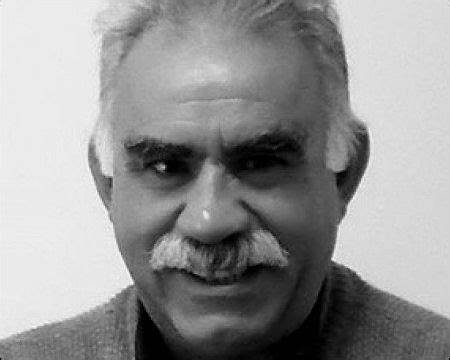
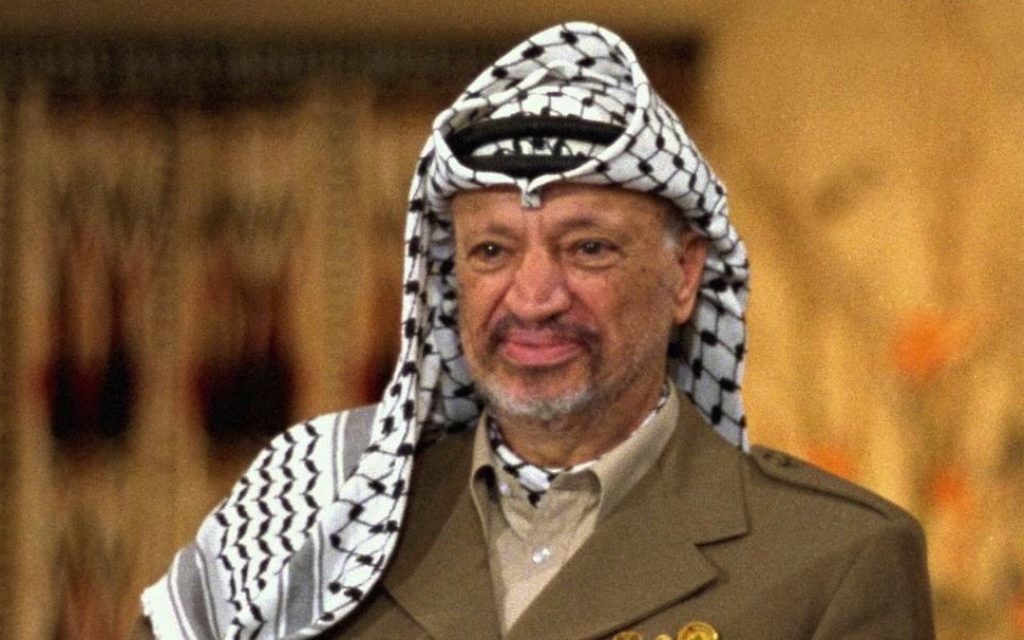

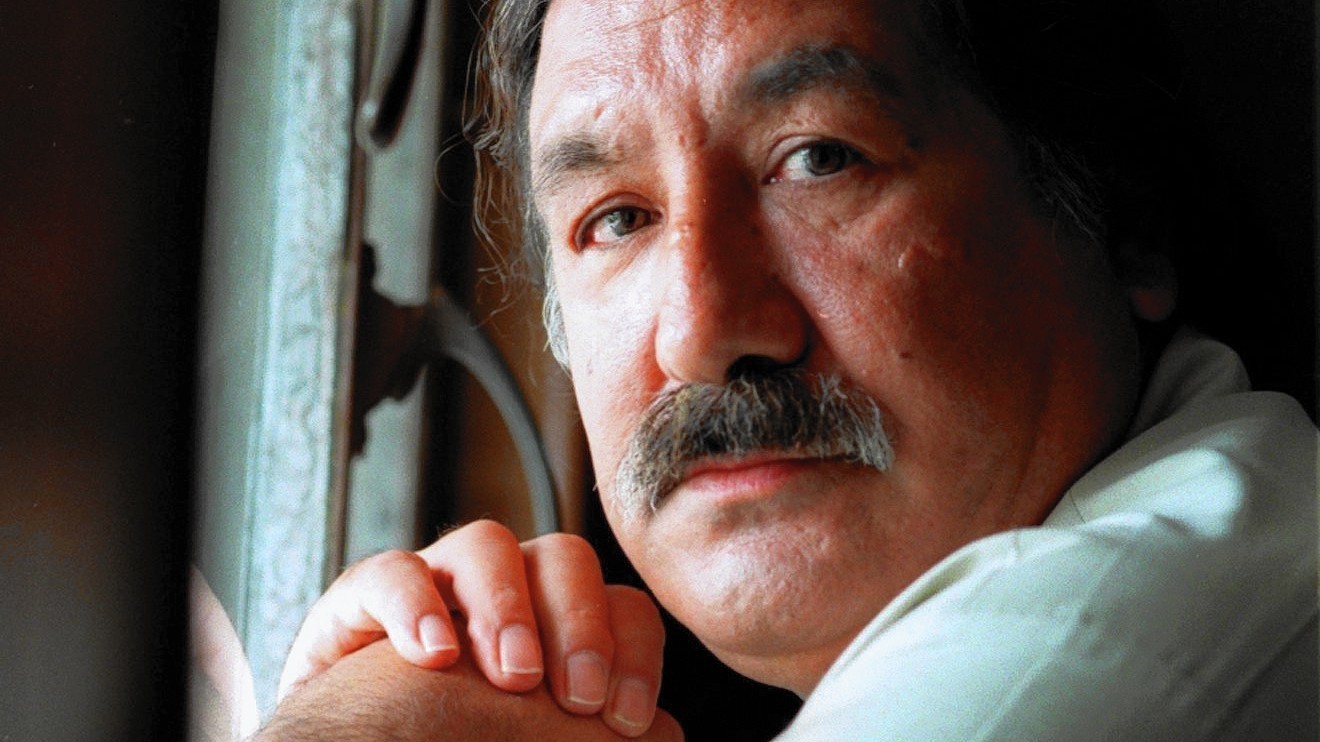


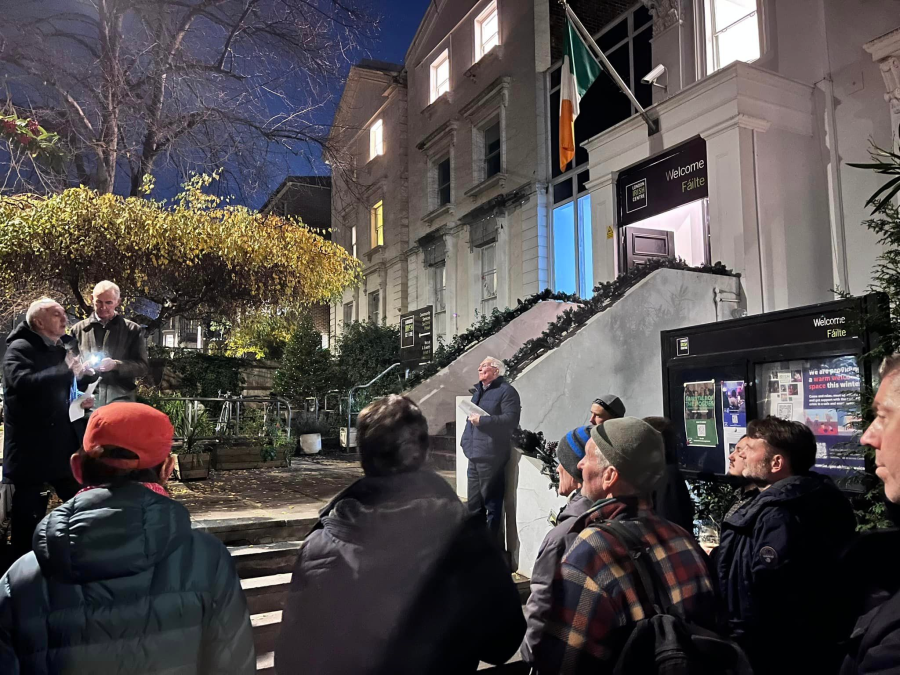
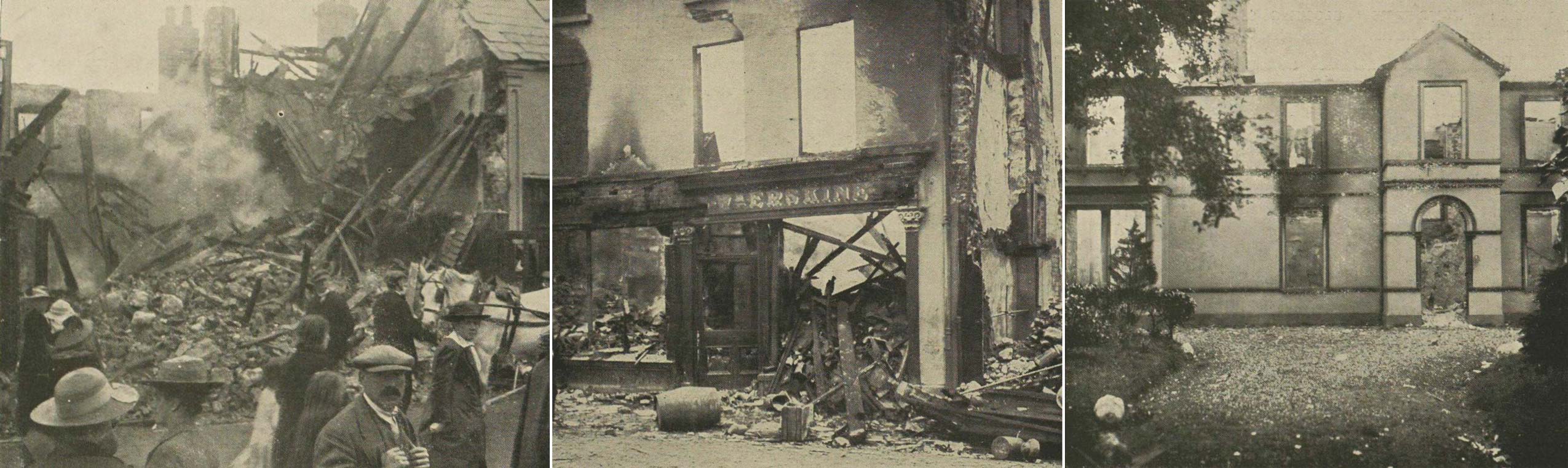
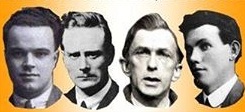
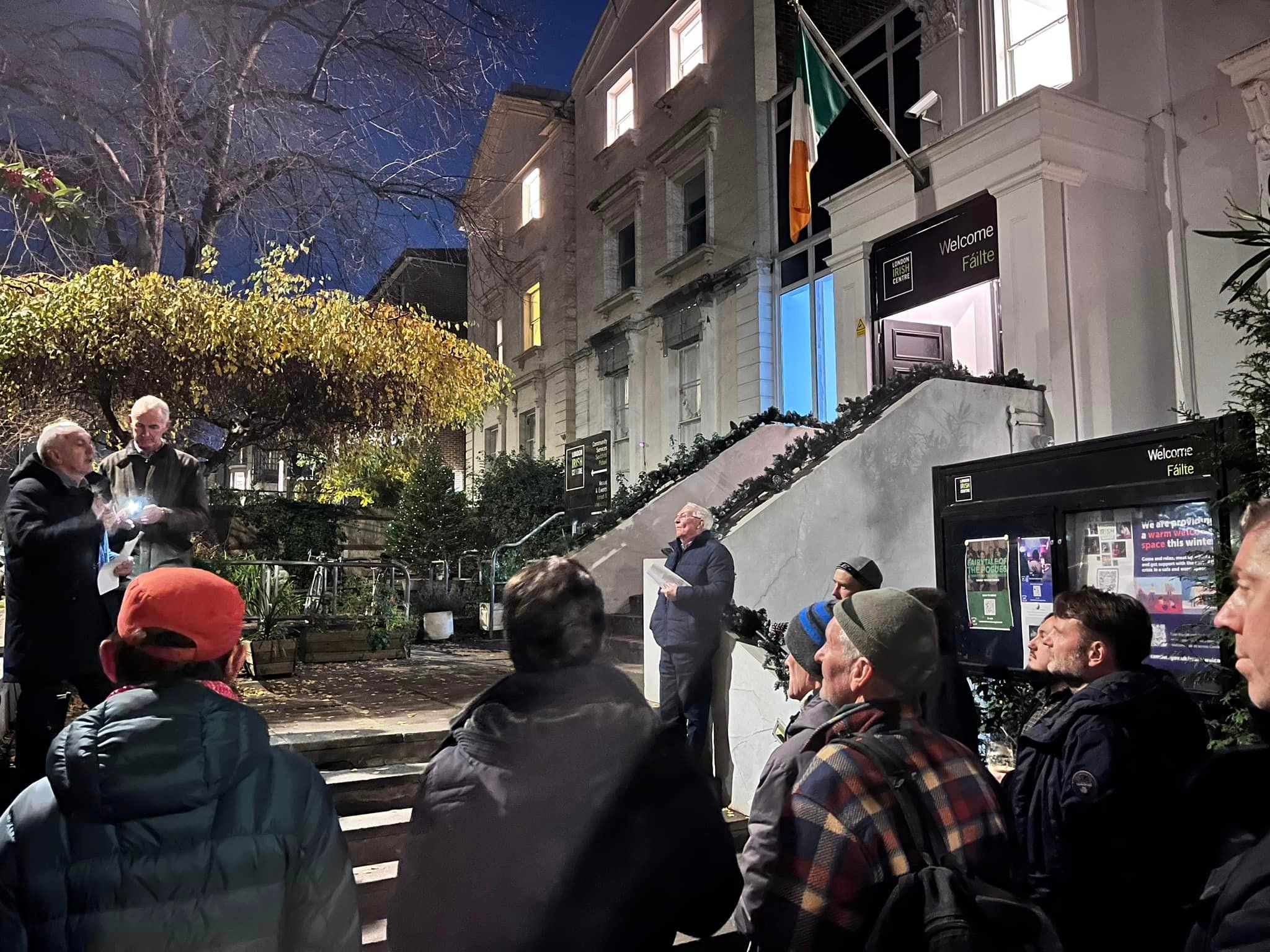
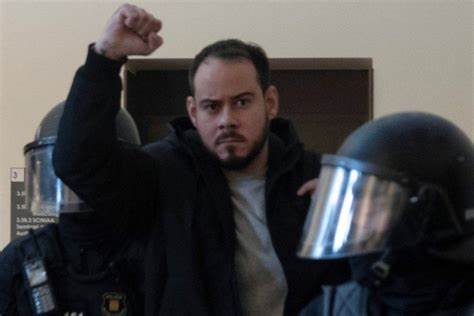
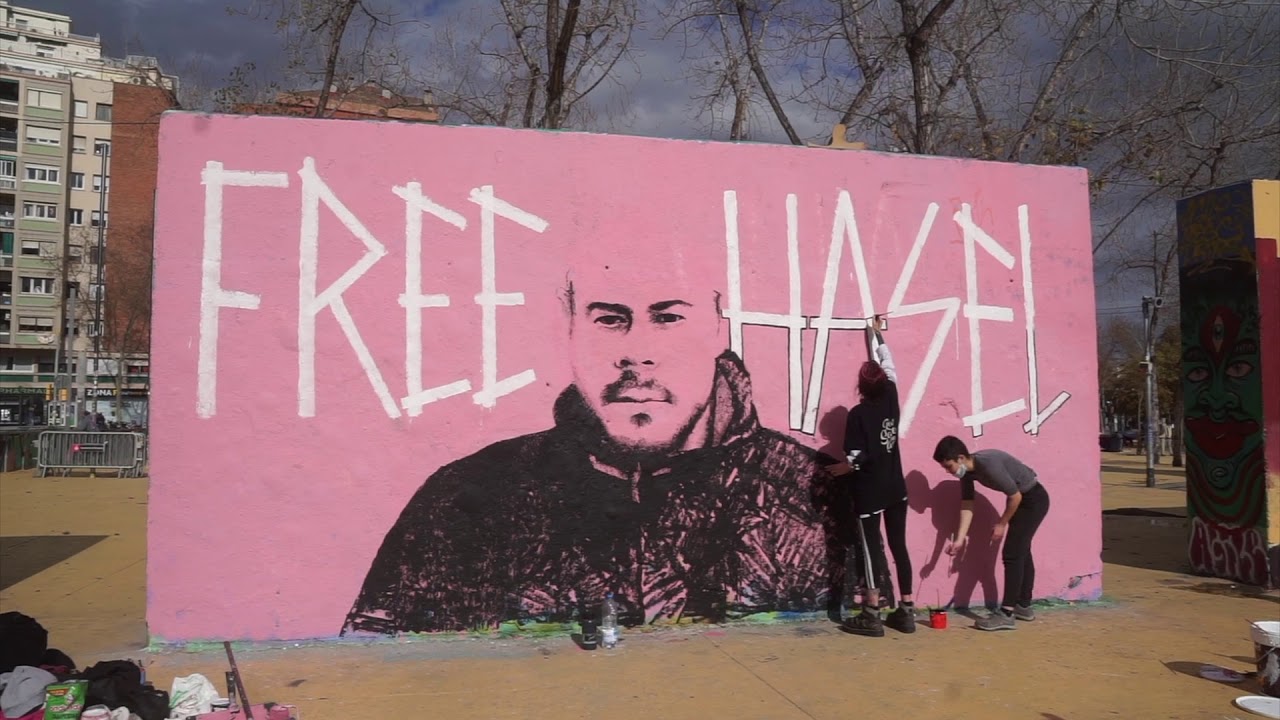


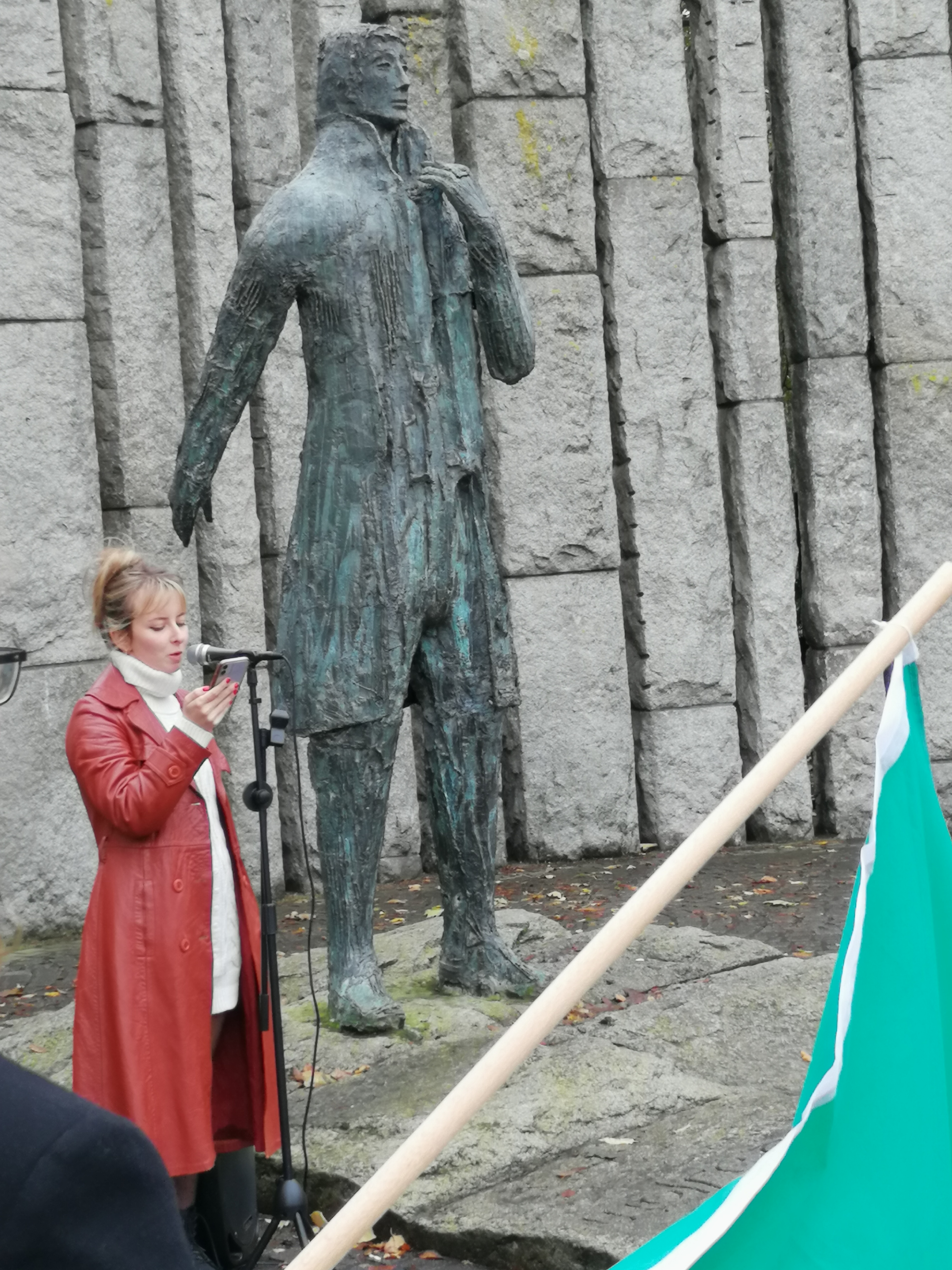
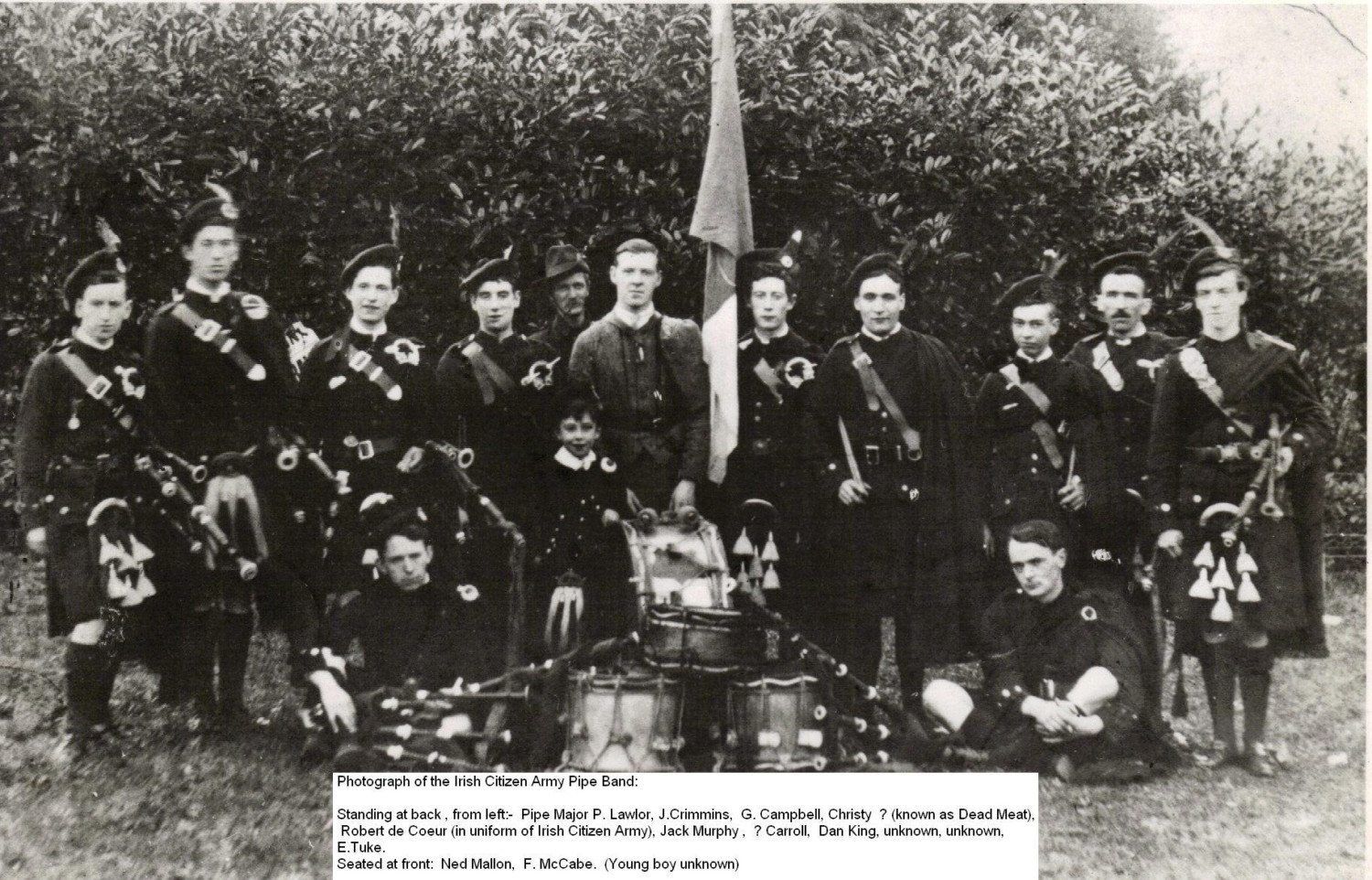
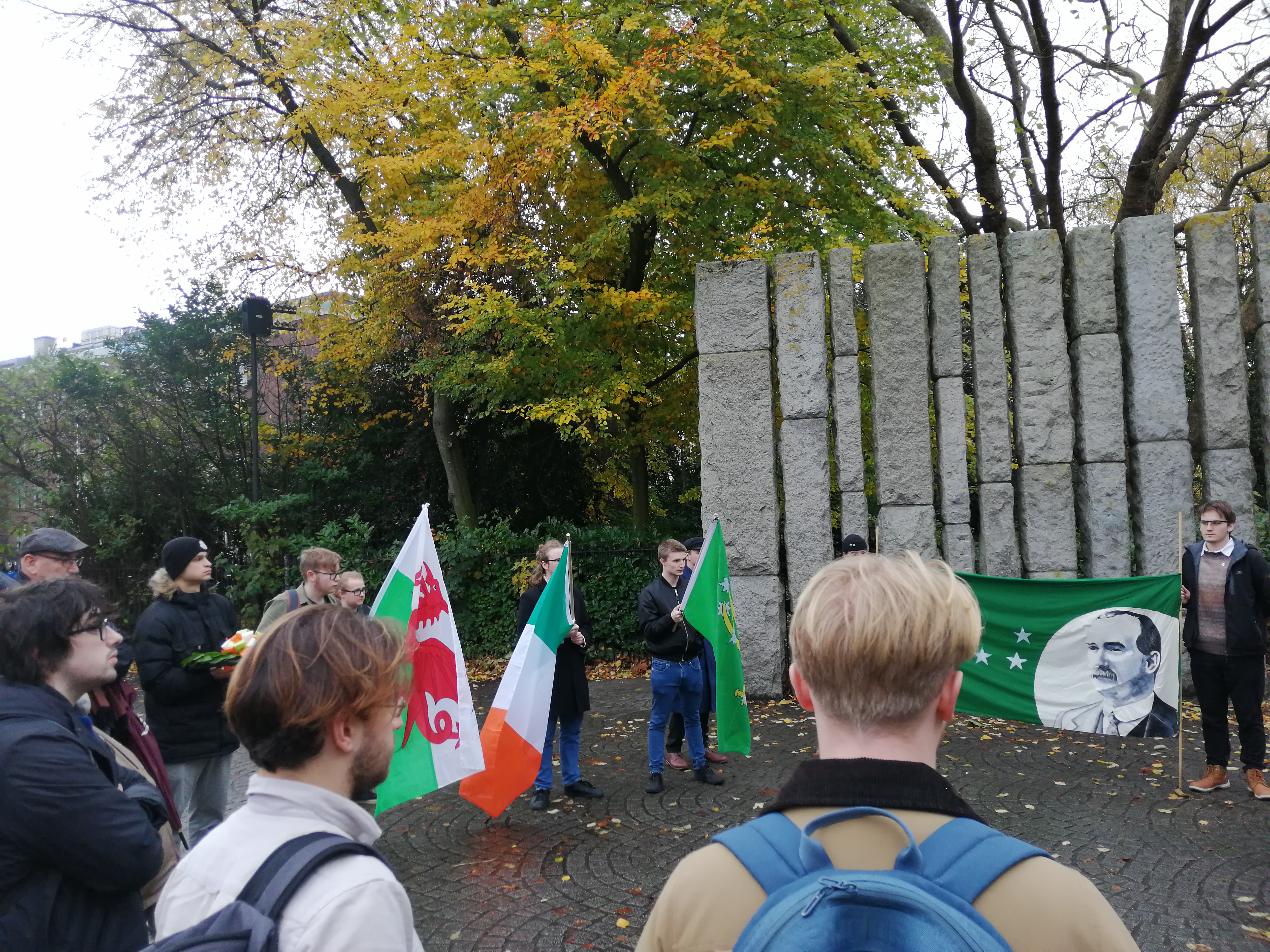
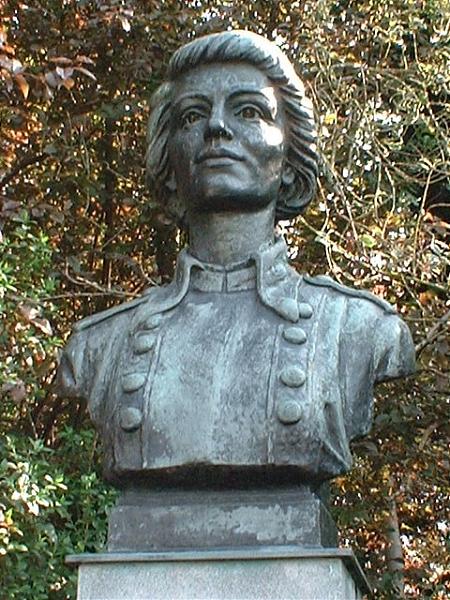
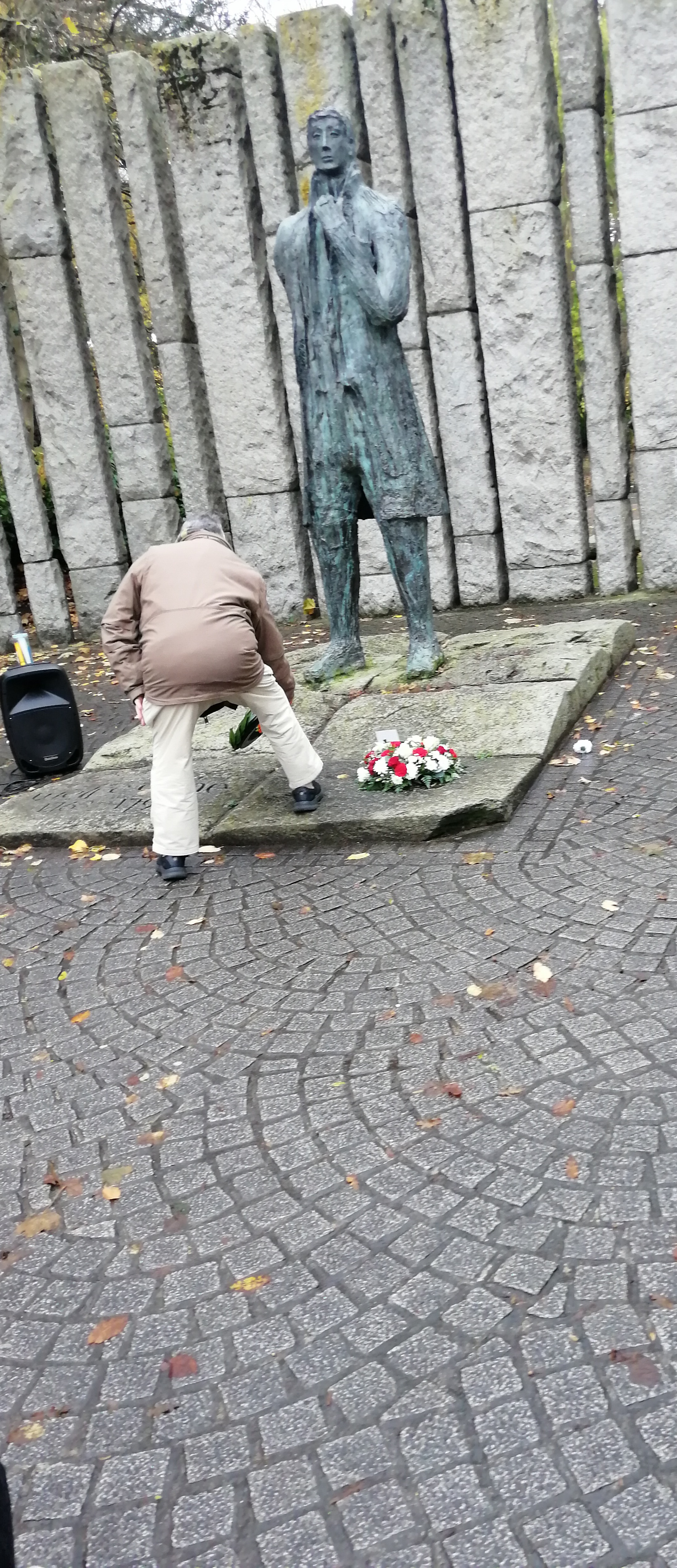
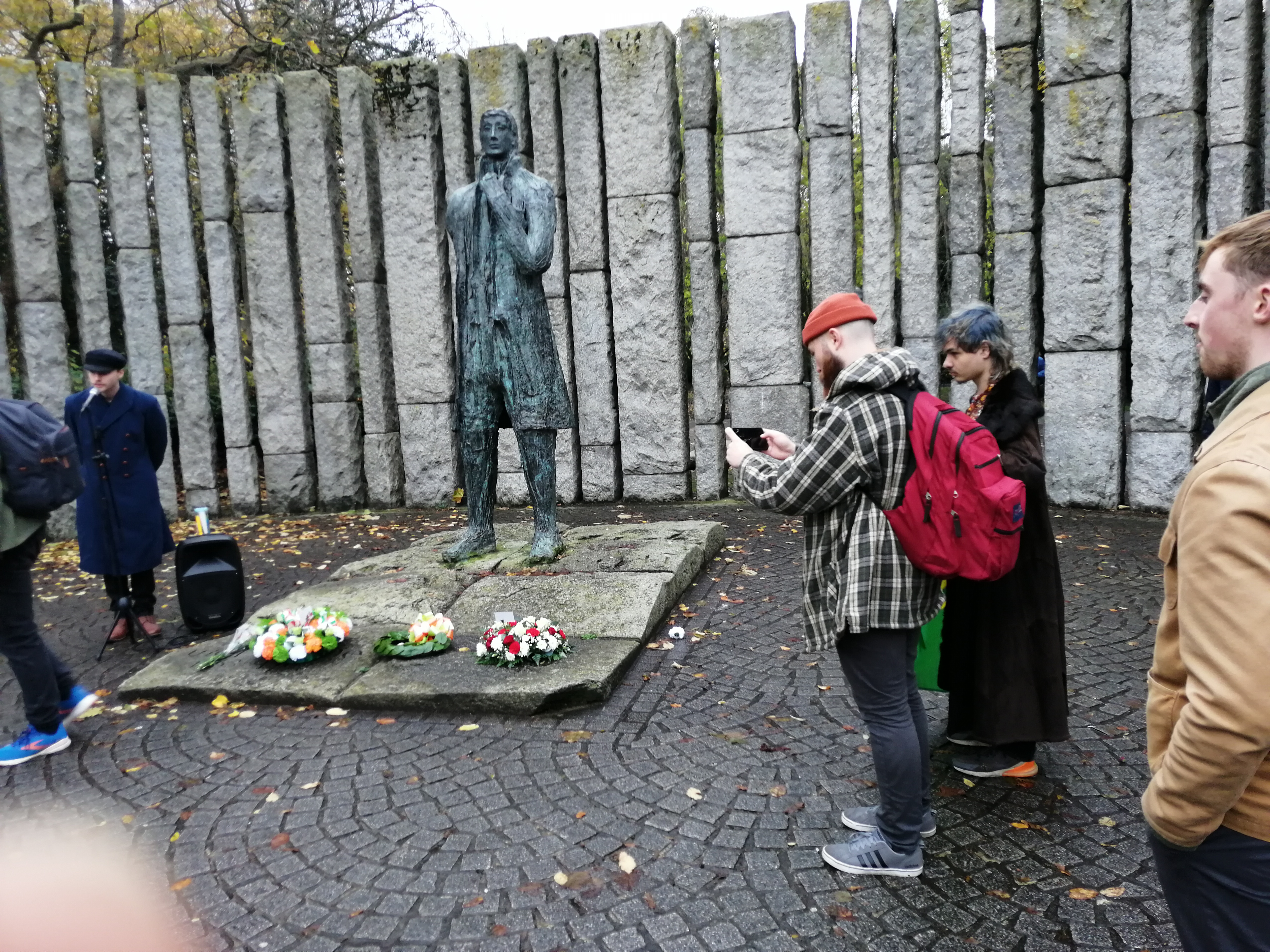
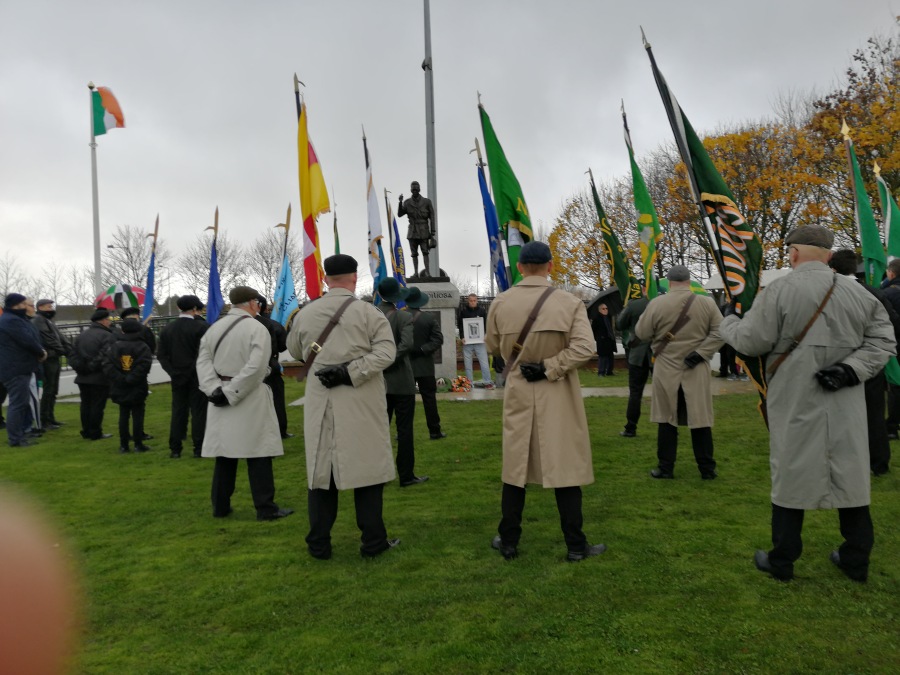
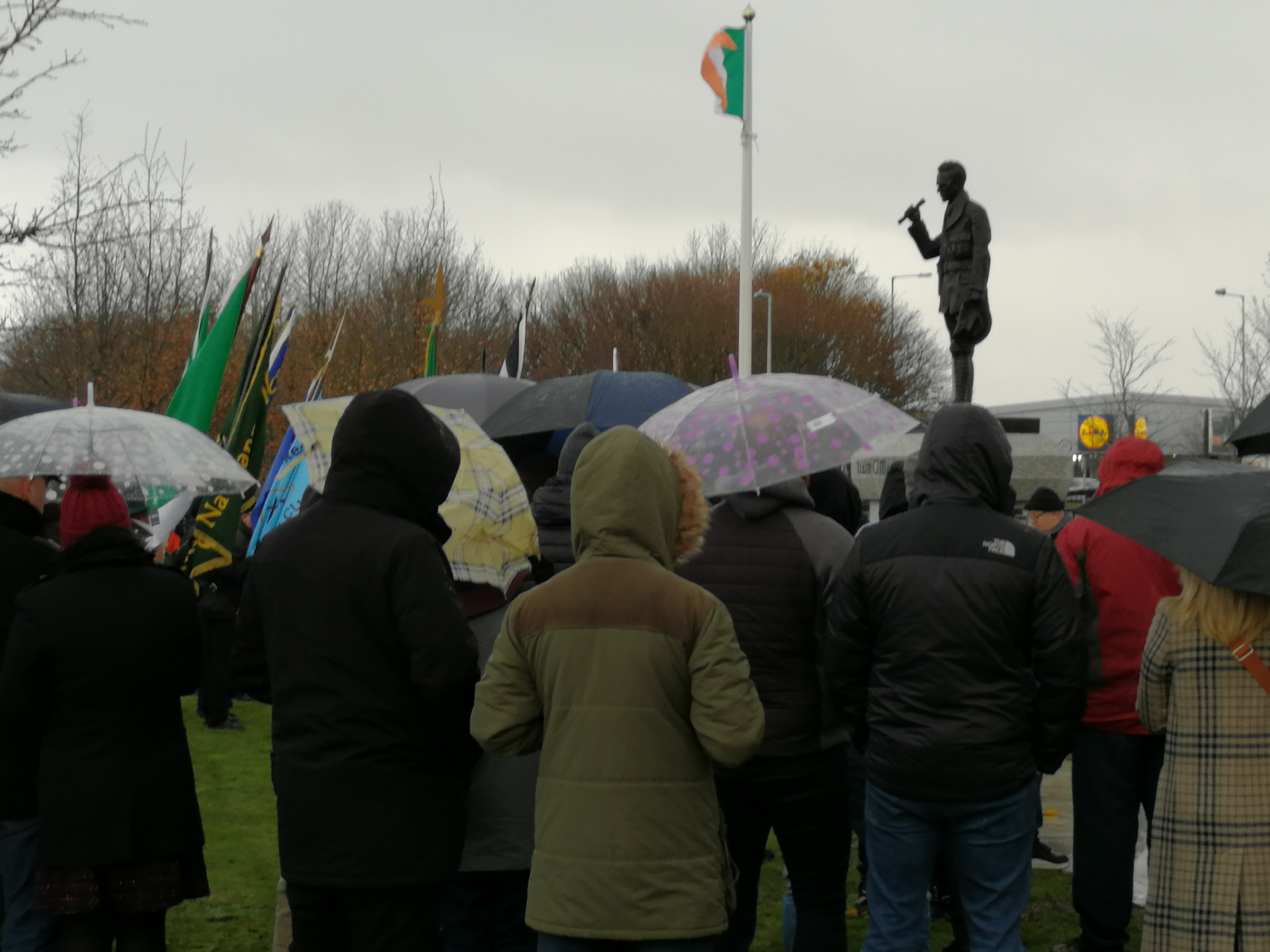
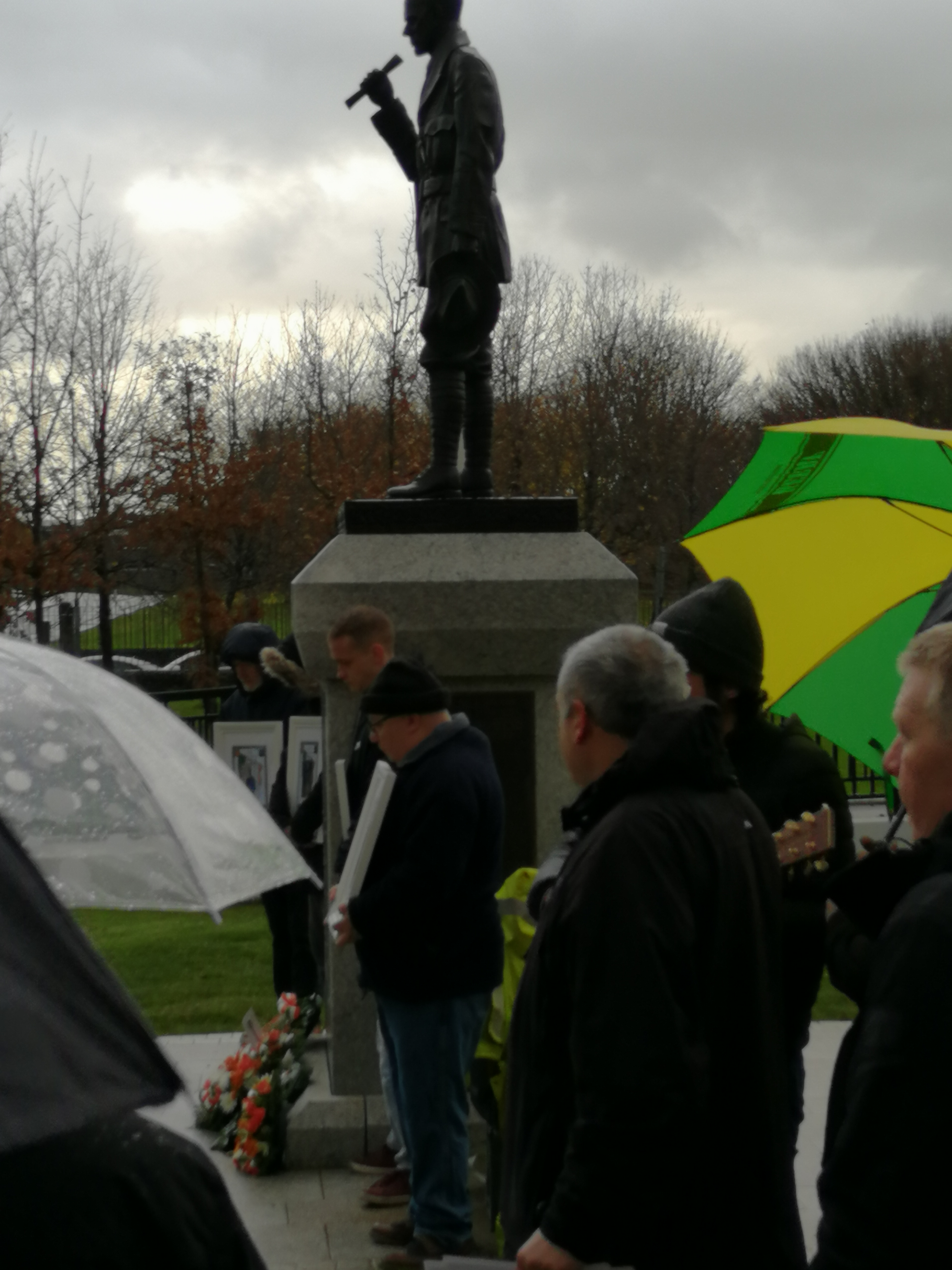
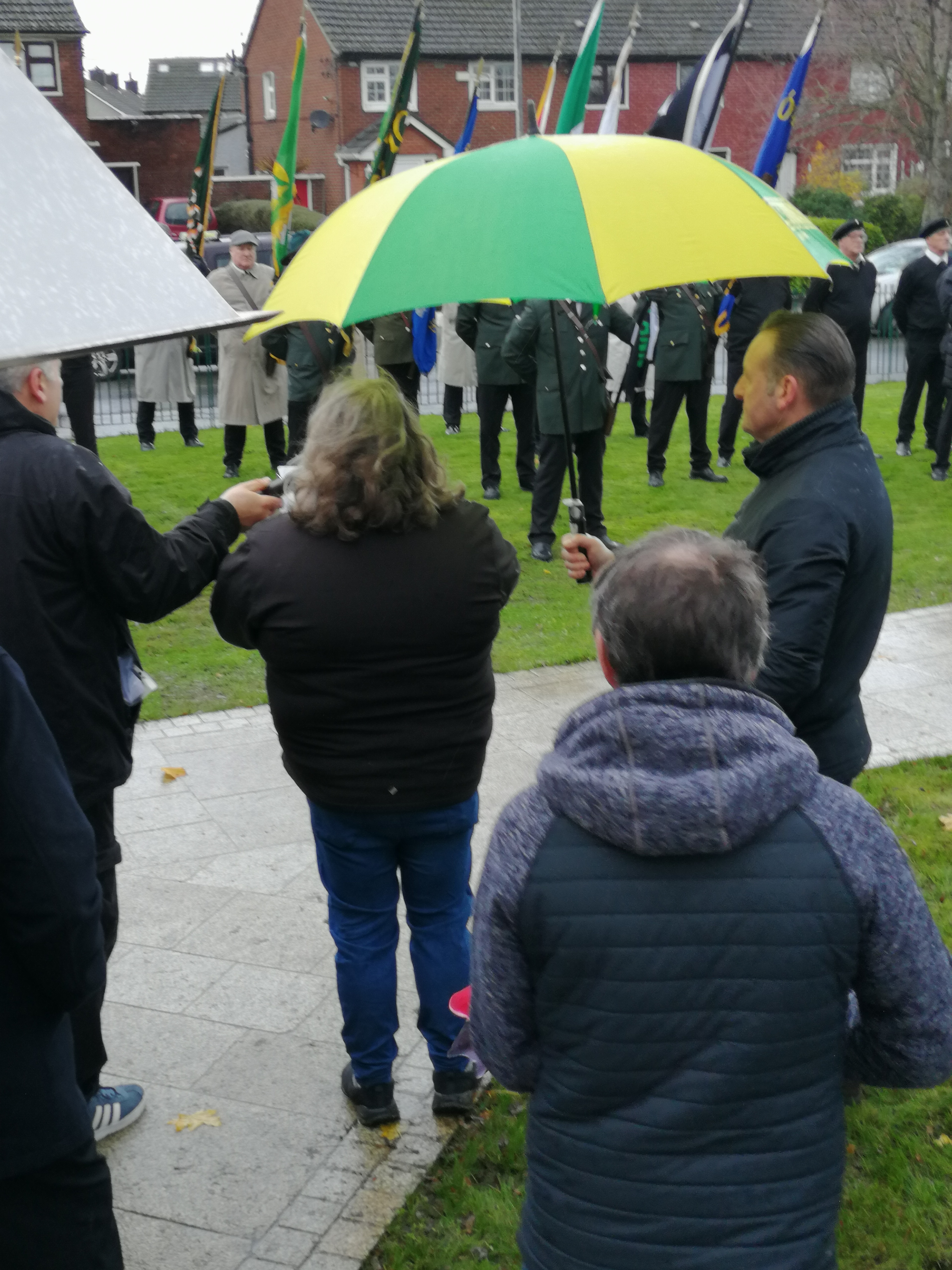
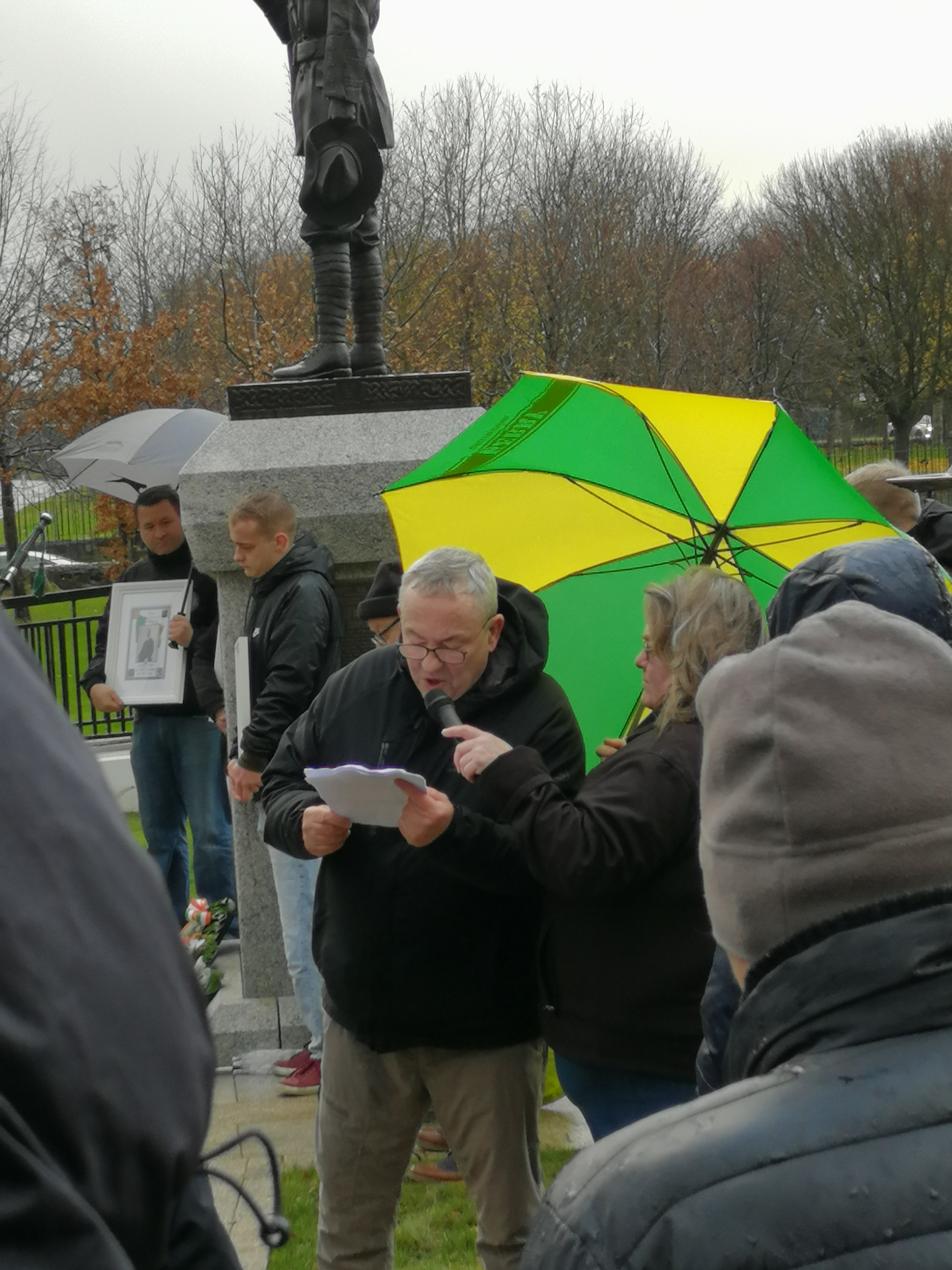
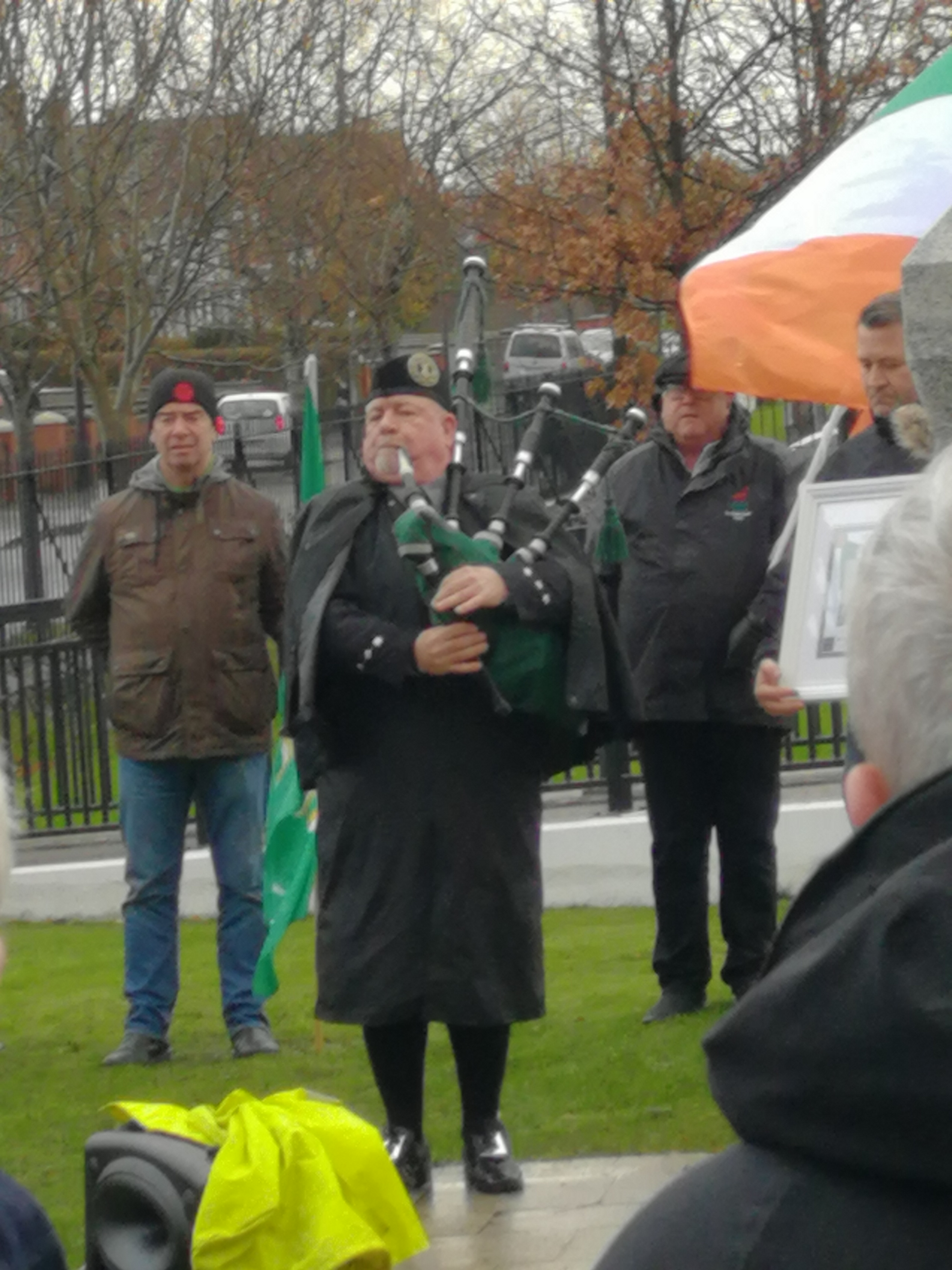
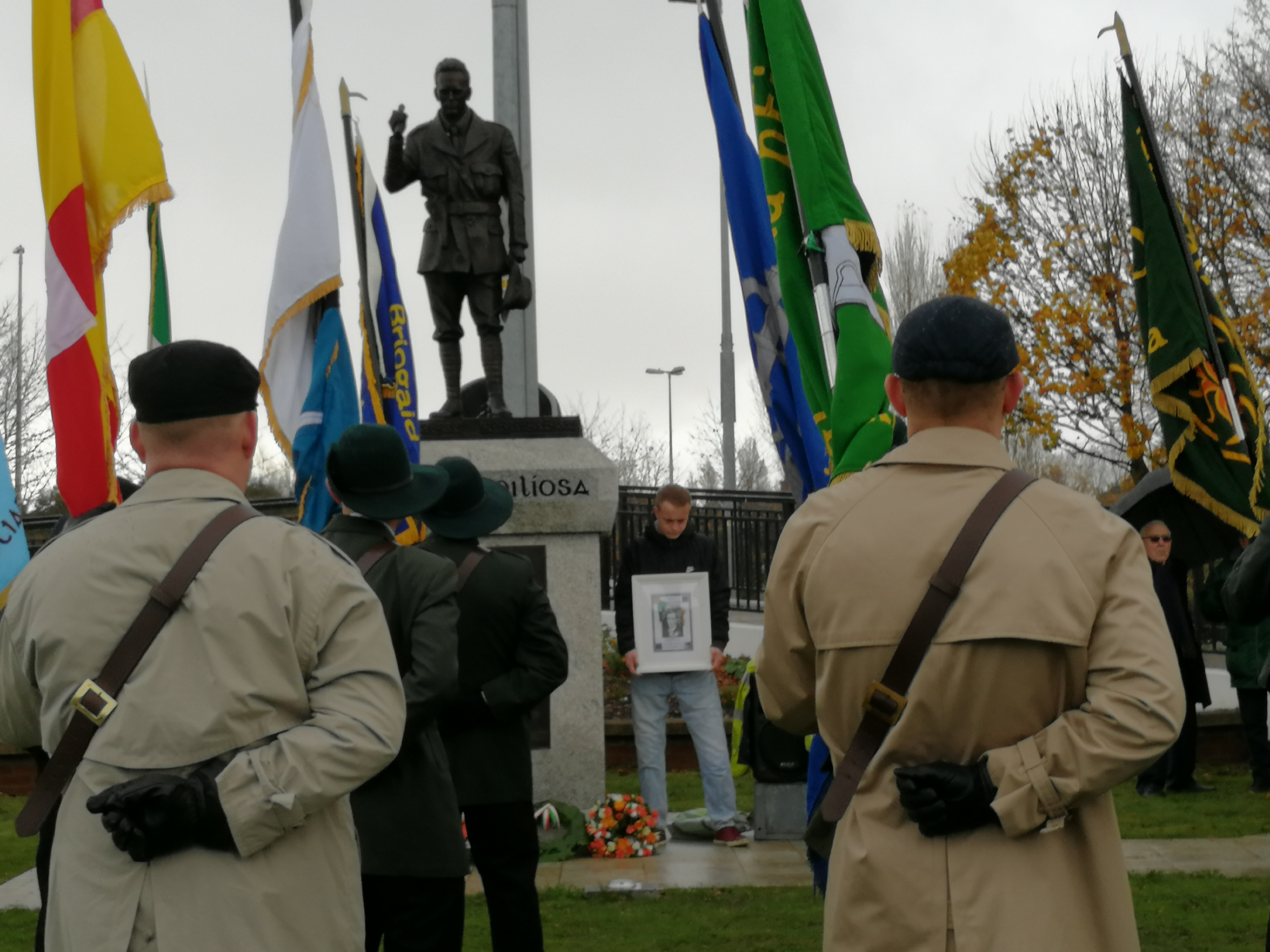
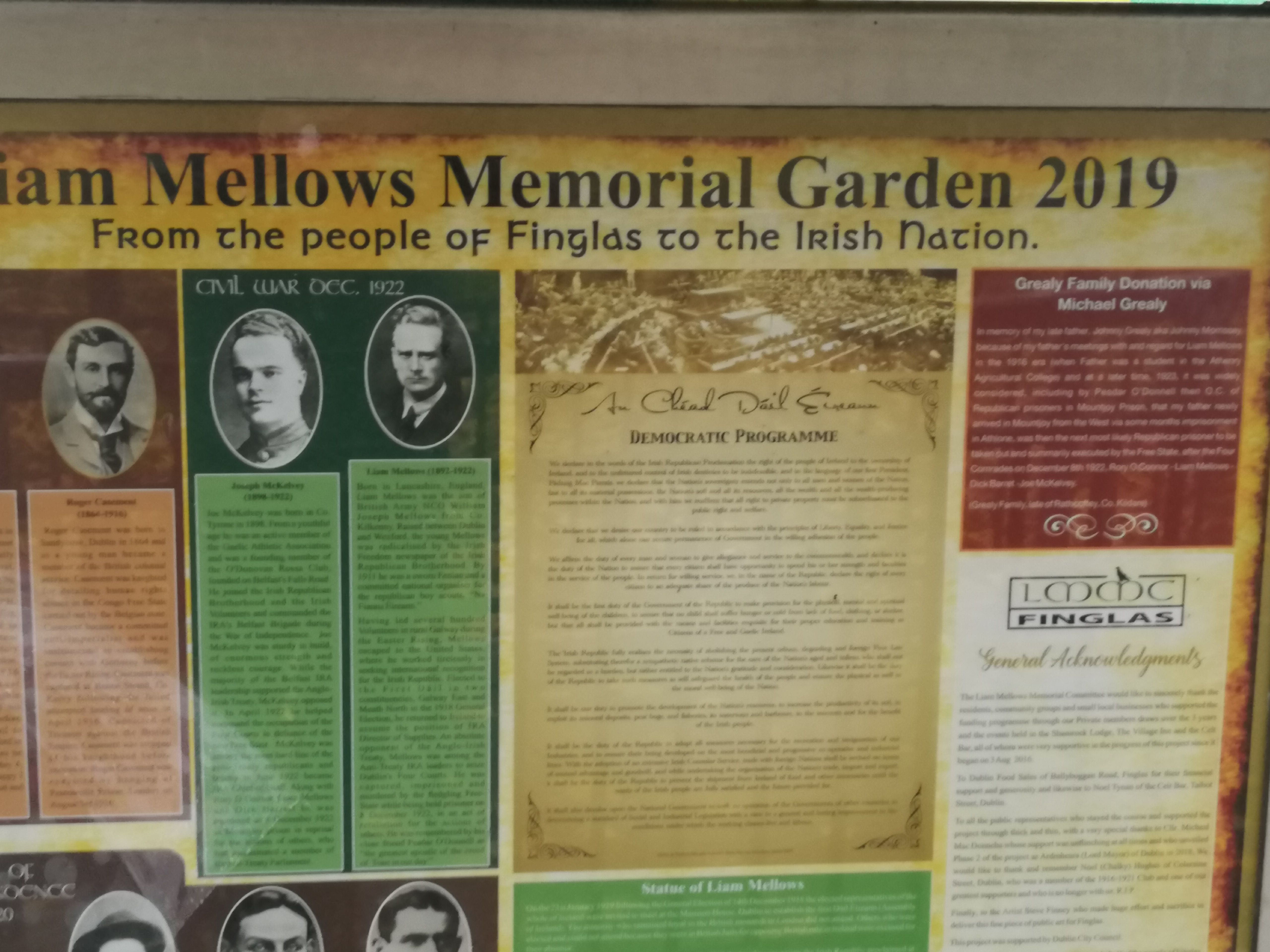
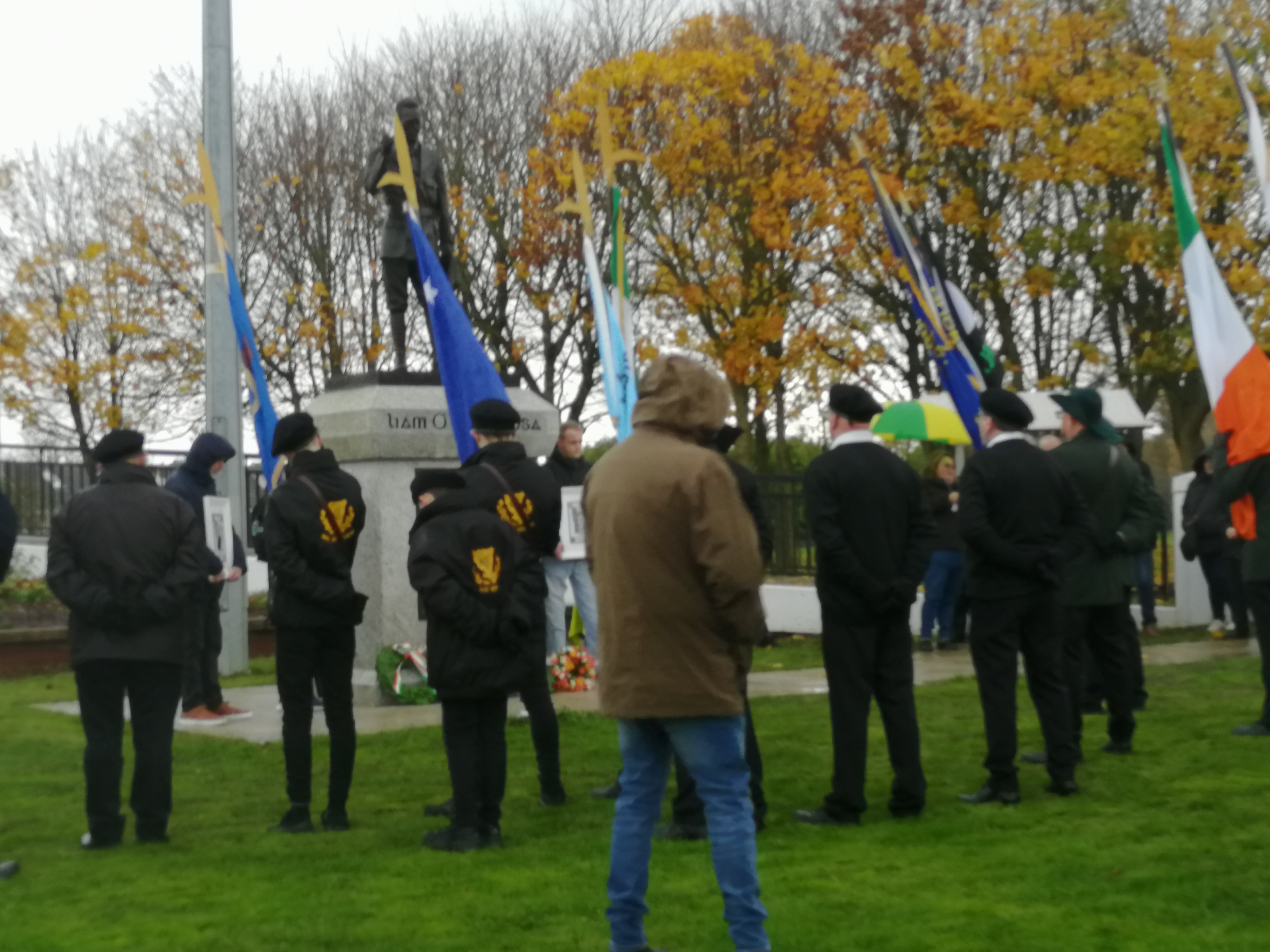
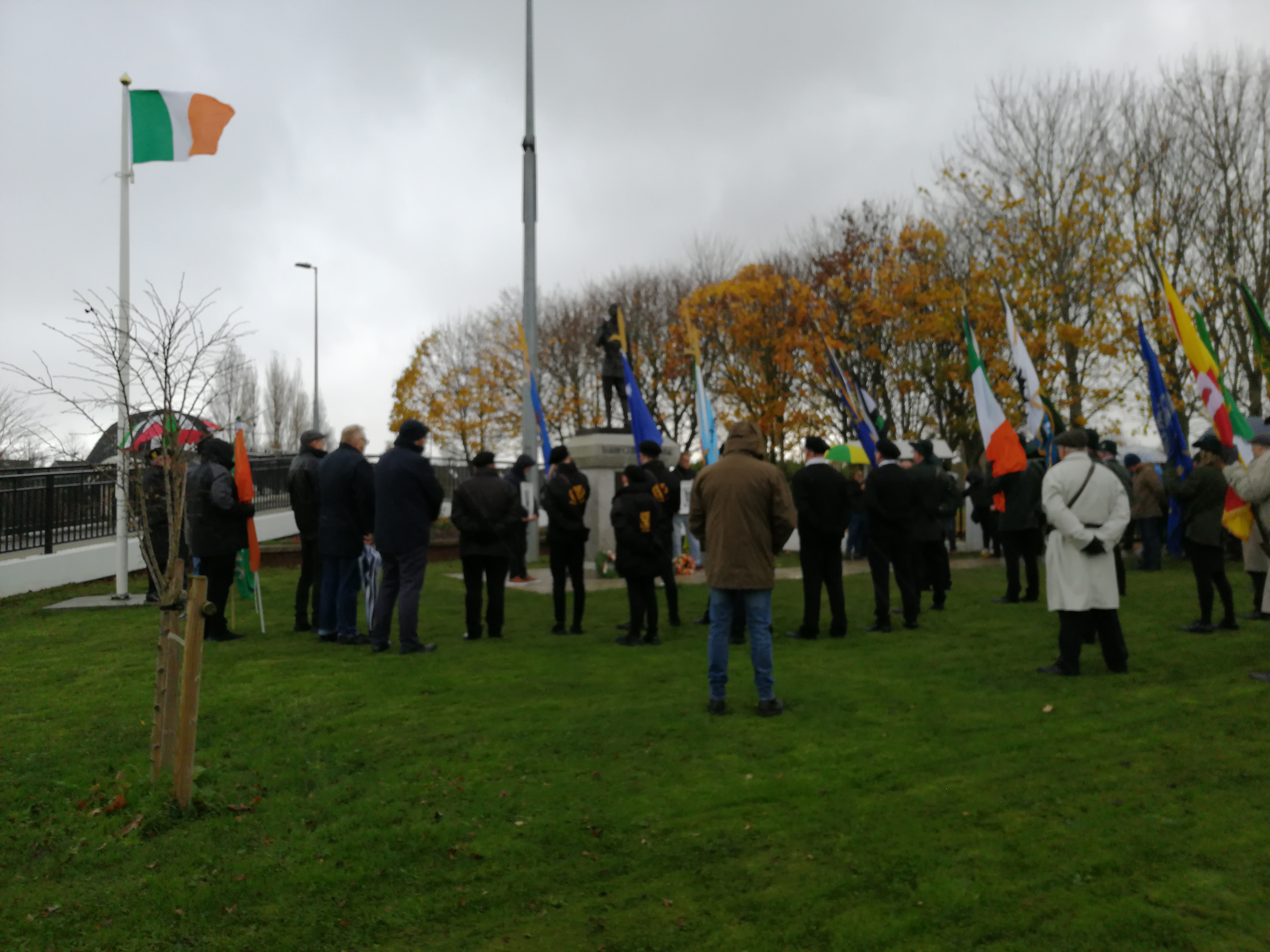
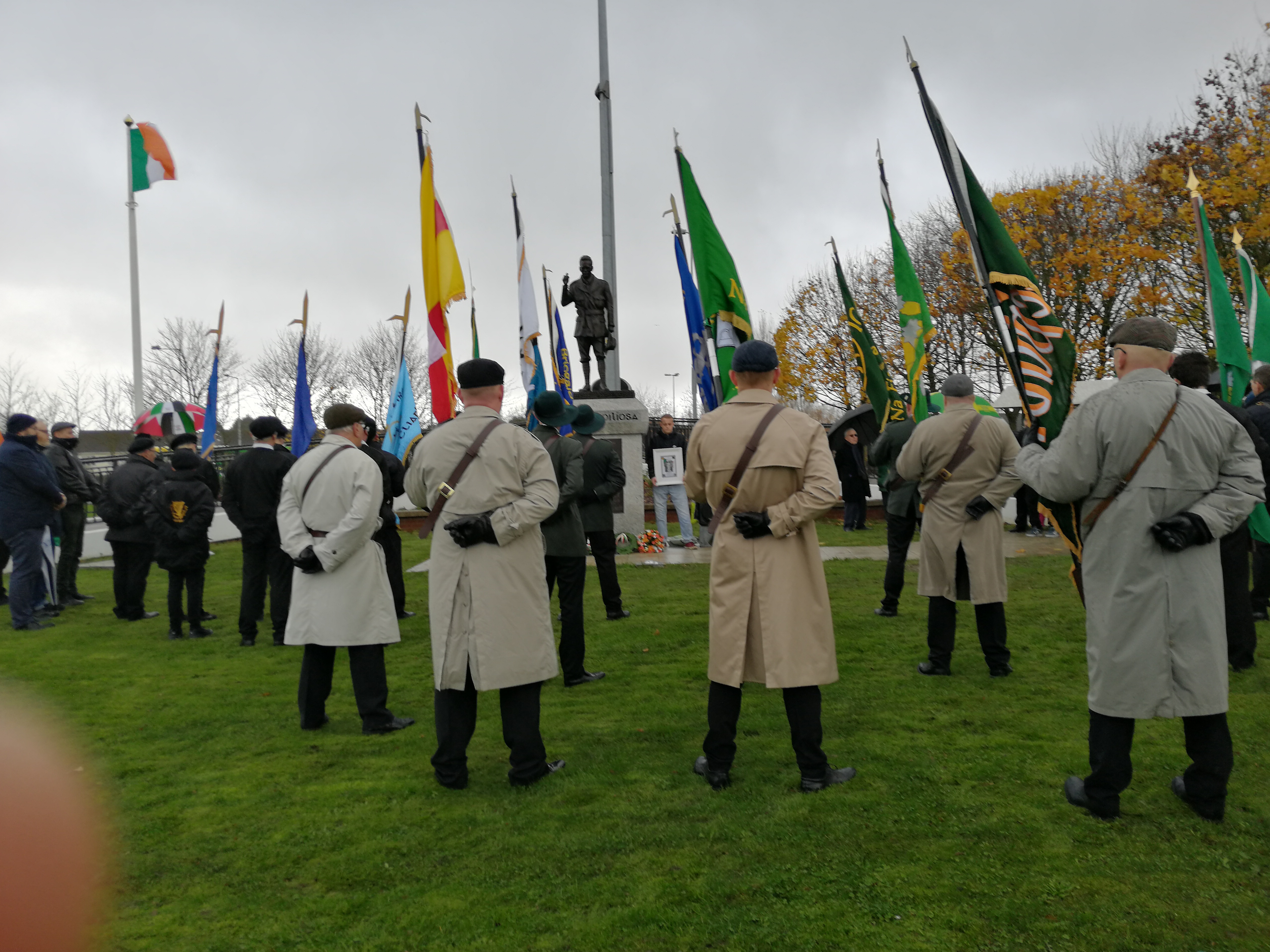


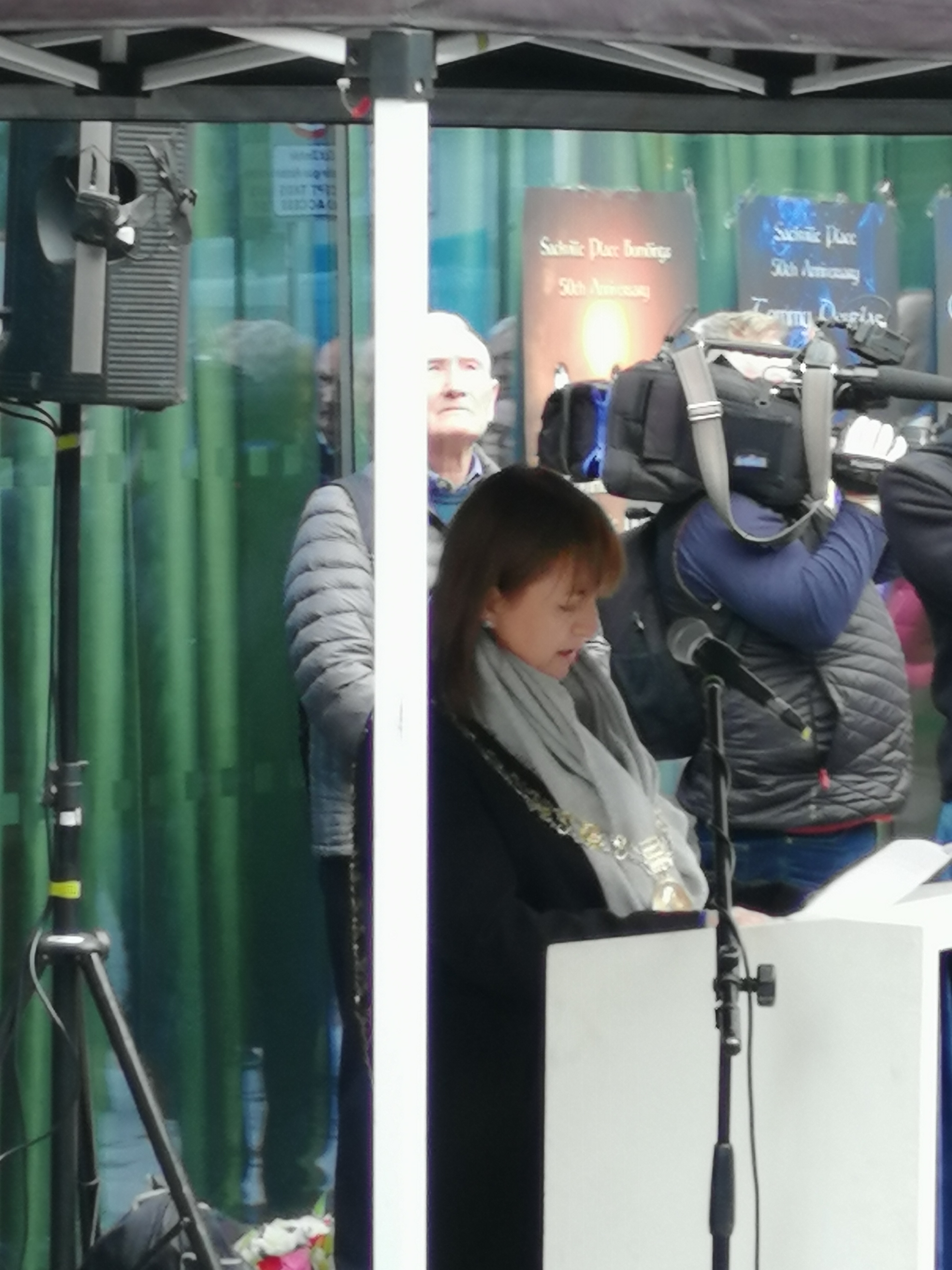


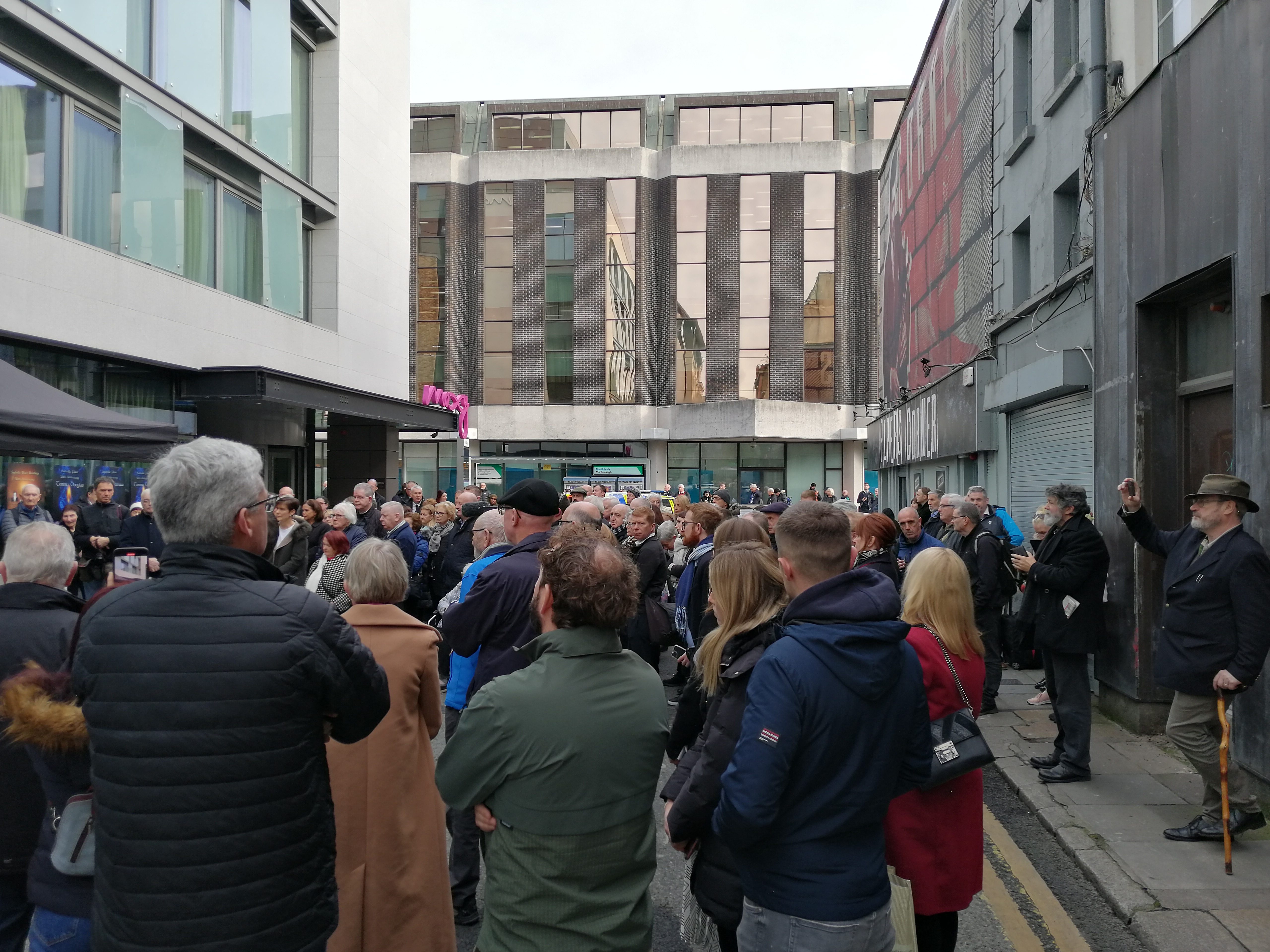


 rebelbreeze