You don’t care about history? Well, perhaps but history cares about you. Or rather, it affects you and the world you live in, explains how you got to where you are, your successes and failures – and where you might yet go.
Of course, what I said earlier was kind of a slick answer; history doesn’t really care about you …. or about me …. or anyone else. The wind moves the trees, fills the sails, cools us or brings rain or snow – it affects us, moves us and things around us …. but is not moved by us. That is a useful metaphor because often people think they can stop some things happening by wishing strongly that they would not. Liberals and social democrats, for example …. But the metaphor breaks down – unlike our relationship with the wind, we can move things.
The shape of a tree testifies to the forces that have come to bear upon it as it was growing and its bark rings tell us of years of plenty or scarcity. To say that you don’t care about history is like, in a way, saying you don’t care about your childhood. That period of your past life and the influences that came to bear upon it and how you reacted to them have made you, to an extent, who you are today. Certainly they have hugely affected you, as any psychologist will tell.
A tree shaped in its growing by prevailing wind etc, revealing an important part of its history. (Photo source: Internet)
If you really don’t care about history, you should not care whether you experience pain or pleasure. Typically, humans like to repeat pleasure and to avoid pain. But how do we know in advance what will give us pleasure or instead cause us pain? Experience. And that too is a kind of history. Which may also teach us what pleasure may be reached through pain, as for example in certain kinds of exercise – or what pleasures may end in pain, as with addictions. And we don’t only have our own experience to go on but that of many others, in their stories and in the accounts of those who have studied them. Another kind of history.
To say that you don’t care about history is to say that you don’t care about cause and effect. You don’t care about science, in other words. Science, in the sense of observation of processes and in the sense of experiment, is a kind of history. If you do this to that, in this atmosphere at that temperature, this will be the result. How do we know? It has been observed or tested, time and time again and recorded. Very like history.
Perhaps history was not taught to you in the way most suited to you at the time. Or rather, perhaps it was not introduced to you as it would best have been. A required subject to study, to gain marks and to ignore forever afterwards is hardly likely to inspire. A list of dates, of kings and queens, of prime ministers, along with their desires, though they figure in it, is not really history. “Facts” without encouragement to challenge, to interpret, to ask and to search for why and how – these drive some minds away while others learn them – but only as dogma.
Kings, Queens, Generals and Leaders of insurgents helped make history – but they didn’t really make history, though we are told they did and often say it ourselves. No king built a castle or a city though we are often told that is what happened. People build castles and cities: they dig foundations and sewers or latrines, dig wells or canals, cut timber and stone, mine and forge metal, construct buildings, grow food, settle, take up livelihoods, raise children, study nature, perform arts, record in print or orally …. History was made by people, ordinary people mostly with a few extraordinary individuals; history was made by people like you and I.
Or perhaps you acknowledge all that but think ok, as an ordinary person, there is nothing you can consciously do to alter the course of things now? Yes, our masters would like you to think that. The reality is that you can make choices: to join that organisation or movement, participate in that action or demonstration …. or not. To vote for one person or party or another – or to abstain. To treat people in this or that way.
What will help you make those choices? Well, for a start, your experience. And experience is a personal history. I did that and this happened; I didn’t agree with that outcome so now I will do something else. But we also have the experiences of millions of others upon which to draw, across thousands of years. History.
Thomas Paine’s writings influenced republican thinking which in turn led many to revolution. (Photo source: Internet)Washington DC Monument to Irish Republican revolutionary Robert Emmet, a United irishman (a copy of the monument is in Stephens Green, Dublin). He was part of a historical process. (Photo source: Internet)
You are not an isolated individual and your people, your nation or state, is not an isolated mass. The productive forces of emerging capitalism struggled with monarchy and feudalist systems and elites and produced republicanism. Republican ideas were promoted by English and French intellectuals, for example and found receptive minds among the capitalist sons and daughters of English colonists in Ireland, bringing about the bid for a democratic parliament of all the people in Ireland. When that attempt failed, the ideas impelled some to found the United Irishmen, which hundreds of thousands of others supported because they wished for freedom from the colonial power. Less than a decade after the failure of Grattan’s Parliament to admit representation by Catholic and Dissenter, the United Irish rose in revolutionary upsurge. That was in 1798 and they looked for support from republican France, which had its revolution less than a decade earlier, in 1789. The Irish and the French republicans were encouraged by the American Revolution, which had begun in 1765 and emerged victorious in 1783.
The republican revolutions were carried out by the ordinary mass of people but it was the capitalist class that they brought to power; today the working class struggle to overcome them and come into power themselves, for the first time a majority class taking power and holding up the possibility of the end of classes and therefore of class exploitation. “The history of all hitherto existing society is the history of class struggles”, wrote Karly Marx and Frederick Engels in the Communist Manifesto, published in 1848.
You are in history. You are a product of history. What you do now affects the historical outcome to some degree at least – to one degree or another you are making history. You might as well study its process and use its lessons to illuminate your way: the distilled and concentrated experiences of millions of human beings like you.
(Reading time: Introduction, one minute; Part One: 5 mins; Part Two 2 mins: Part Three: 3 mins; Part Four: 2 mins; Total: 13 mins.)
Diarmuid Breatnach
INTRODUCTION:
Although I often think about the big questions – and am generally guided by my philosophy on them, my mind and energy are usually too occupied with specific struggles to focus on them for long. Recently however I had the opportunity and the need to think about the war, the one we have yet to win.
The Storming of the Bastille (translation), French Revolution, 1789 by Jean-Pierre Houel. (Image sourced: Internet)
But to which war am I referring? The Irish war of national liberation that has been flaring up for centuries, being lost each time before flaring up again? Or the class war, which has had a few sharp Irish episodes but has been, for the most part in Ireland, in abeyance? The answer is BOTH, though it may seem that my emphasis in the discussion, certainly in the early part, is on the national liberation war.
In order to imagine how we might win, it is helpful to examine past struggles and analyse what went wrong with them. Pessimists love to focus on those things I know – but in order to push us towards reformism or just surrender; my approach instead is from a revolutionary perspective.
Generally, Socialists analysing the class struggle don’t even ask themselves why we have not had a revolution yet. From week to week, month to month, they tend to focus on this or that particular trade union or social struggle but without going into the big picture. It seems as though they can’t even imagine a socialist uprising in Ireland, it’s just too far away to think about, apparently. But if one can’t even imagine such a revolution, how could one consider the necessary steps to get there?
Communards at barricade, Paris Commune 1871. (Image source: Internet)
Irish Republicans on the other hand are often thinking in terms of revolution, usually including armed struggle. However it seems to me that Irish Republicans don’t like analysing past failures of the movement but when they do, their verdicts tend to be that the leaders betrayed the struggle or that taking part in public elections corrupted the movement; or that infiltration, spies and informers was the problem. And some other reasons. The thing is, although all those things played a particular part, they are not the fundamental reason.
“Defeat of the Rebels at Vinegar Hill” by George Cruikshanks, i.e United Irishmen last major position in Wexford overrun, 1798.
PART ONE: THE THIRTY-YEARS’ WAR – DOOMED TO LOSE
(Reading time this section: less than 5 minutes)
Derry Monument and Mural of the Civil Rights struggle which preceded the armed struggle in the Six Counties. (Image sourced: Internet)
The national liberation war that began in 1969 in the Six Counties and ended in 1998 (though some armed incidents continue from time to time) began as a civil rights struggle and changed into a war of communal defence and of national liberation. The military part of the struggle for the most part took place in the occupied Six Counties. The political element of the struggle was waged all over Ireland (and abroad) but in the main consisted of support for the struggle in the Six occupied Counties.
Fought in that way, the struggle was bound to lose. It could never win. How could anyone imagine that they could win a struggle fought against a world power in one-sixth of the country, where even the population there was divided against them? What could they have been thinking?
To my mind, there are only two possible sane replies to that question, which is that they believed: 1) that the British ruling class would get worn down by struggle and leave and/ or 2) that the Irish ruling class would intervene in some way to assist the struggle and make continued British occupation untenable.
1) ‘The British ruling class would get worn down and leave’: This theory must have depended on British repression being condemned abroad and being unpopular at home but had to rest fundamentally on the British having no great stake in continuing its possession of its colony there.
Anyone who thought that (and there were many who did and still many who do, not just Irish Republicans) made a fundamental error. Time and again the British ruling class has shown its determination to hang on to what might be considered its first colony, even as the ruling class’ composition changed from feudal-colonialist to capitalist-imperialist and as the world changed around it.
Mural in nationalist area in the Six Counties (Image sourced: Internet)
Even when the British ruling class, weakened by WW1 and facing an Irish guerrilla war which enjoyed the support of the vast majority of Irish people, with national liberation uprisings breaking out across its Empire and with its repression in Ireland increasingly unpopular at home, entered into negotiations with the Irish resistance, it held on to a foothold, the Six Counties.
Subsequently, it had that colony managed in a permanent state of emergency laws, with institutionalised sectarian discrimination at all official levels and outbreaks of pogroms in the street and workplace.
That became even more exposed during the civil rights struggle and the national liberation war that followed when the British State compromised whatever good international reputationremained to its Armed Forces, its judiciary, its legal establishment, its media and its very legal framework.
Even now, when many believe that the Good Friday Agreement means that a 50% plus-one-vote in favour in the Six Counties will be sufficient to end Partition, they do not realise that such a decision will have to also obtain a majority in the British Parliament and be endorsed by the British Monarch. They are also forgetting the broken promises that surrounded Partition in the first place.
British Army in Belfast 1969 (bayonets and guns pointed towards nationalist area). (Image sourced: Internet)
When analysing what holding on to the Six Counties has cost the British State in terms of reputation, military and financial contributions, one can only rationally assume that continuing to hold on to that foothold is of great importance to the British State. One may speculate as to the reasons underlying that but the central fact cannot be denied.
2) ‘The Irish ruling class would intervene in some way to assist the struggle and make continued British occupation untenable’:
There was some basis for this belief in that a section of Fianna Fáil, a party that had emerged from a split in Sinn Féin in the 1930s and had become one of the mainstream parties in the Irish state, had retained some traditional commitment to seeking a united Ireland. However it was a thin enough basis on which to depend in a national liberation struggle since that section had no majority within the party itself, to say nothing of the foreign-dependent nature of the Irish native capitalist class, the Gombeens, as a whole.
The question came to a trial of strength in the Arms Crisis of 1970, in which at least two Fianna Fáil Government Ministers were involved in secretly buying arms for the defence of nationalist areas in the Six Counties (since the IRA had insufficient weapons at the time) from rampaging Loyalist mobs and the Royal Ulster Constabulary (including the part-time B-Specials). The Ministers alleged that they had acted in the full knowledge of the rest of the Government. By the time the whole affair was over, two Ministers had been sacked and another two resigned in protest.
If it had not been clear before that the Gombeens, the native Irish capitalist class was no patriotic capitalist class but rather a neo-colonial one, it should have been clear after that. But the armed struggle in the Six Counties intensified, especially after the massacres of unarmed civilians carried out by British Paratroopers the following year, 1971 in Belfast and again in Derry in 1972. And the war lasted until 1998.
If, as had been demonstrated to be the case that the British ruling class were determined to hold on to the Six Counties and the Irish ruling class was not going to seriously challenge that possession, did the Republican movement have any other option than to fight on a war that they could not possibly win?
I am clear that it did.
Clearly, in order to have a chance of success, the war had to be extended to the other five-fifths of the country, which is to say into the territory under the control of the Irish native capitalist class. This class had seized power after the War of Independence (1919-1921) and had beaten and suppressed its opposition duringand afterthe Civil War (1922-1923) and furthermore was supported by a powerful ally, the Irish Catholic Church. Since the founding of the first Irish Republican organisation, the United Irishmen of the late 1790s, the Catholic Church hierarchy had opposed Irish Republicanism; it had condemned four Irish priests who participated in the uprising of 1798, excommunicated the Fenians, had at first condemned the 1916 Rising and the War of Independence only to latch on to it at the end along with the Gombeen class.
The general Irish population likely would not have supported or sustained an armed struggle in the 1970s against the Gombeen class but that class could have been fought politically, through agitation and mobilisation, on many social, political and economic fronts. Without going into the specific details of each, these were:
against the huge wastage of Irish youth through emigration
to remedy the shortage of affordable housing (which in part contributed to the above)
to end unemployment (also contributing hugely to emigration)
to raise the level of wages and lower wage earners’ taxation
for the right to divorce
for equality for women in law
for the right to contraception devices and medication for men and women
against decriminalisation and for equal rights for gay and lesbians
to halt the decline of the Irish language, in particular of the rural Irish-speaking areas
to improve services for the rural areas
to oppose the open-door policy for foreign multinationals to exploit Irish natural and human resources
to secularise the education service
and the health service.
to remove the privileged status of the Catholic Church within the state.
Irish women photographed at Connolly Station 1971, about to board train to Belfast to purchase contraceptives to bring back to the Irish state, illegal at the time. There was no right to abortion either or divorce and a husband’s signed permission was necessary to take out a hire purchase agreement. (Image sourced: Internet)
The Republican movement in general, with some exceptions, declined to take on any of those struggles. They did not organise in the trade union movement, left the social struggles to others and most of all, declined to take on the Catholic Church on any issue except its opposition to the national liberation struggle. Even there, it was happy to publicly avail of the services of members of the Church clergy who supported them. Republicanism was, from its very beginning, as well as anti-monarchist, about separation of Church and State but it was difficult to see that in the Irish Republican movement, particularly after the War of Independence.
A full half of those fourteen points above (nos. 5,6, 7, 8, 12, 13 and 14) would have meant taking on the Church head-on and no doubt the hierarchy would have hindered the struggle over most of the others too, due to its strong links with the State and its ruling class.
Because of its tactical and no doubt ideological refusal to take up those struggles, the Republican movement could do little more in the 26-County state than to agitate for solidarity with the beleaguered nationalist population inside the British colony.
Though this could be effective for a time it could not become a mass movement, nor survive a long struggle, without any remedy being sought for the issues facing the population within the state.
The wonder is not that the majority leadership of the Republican Movement threw in the towel on the military struggle in 1998 but that they had waited so long to do it. Of course, they never admitted the true nature of what they were doing: abandoning the armed struggle and revolution in total and instead, using their negotiating position to advance themselves politically – not in the economic, social and political struggle envisioned above but rather in a political struggle to find themselves a place among the Gombeen political class in the Irish state and as accomplices in the governing of the colonial state.
PART 2: COLLECTING THE FORCES FOR REVOLUTION
(Reading time this section: 2 minutes)
A successful revolution in Ireland, as in most places, would require the involvement of a mass movement. That mass movement would be unlikely to be one that had national self-determination as its only aim – certainly not in the 26 Counties (the Irish state). Mass movements arise at times around different issues and exist as long as the issue does or instead until the movement gets worn down or broken up. Such movements arose around the Household Tax and, later, around the additional Water Charges.
Section of protest against water charges, O’Connell Street, Dublin, 29 Aug. 2015 (Image source: Internet)
Even though the objectives of such movements are often not revolutionary, the participation in them by revolutionaries is necessary if, in the future, there is to be a revolution. Revolutionary activists can make contacts and prove themselves by the way they participate whilst at the same time pointing out that a revolution is necessary in order to resolve all these issues completely and permanently. Such activists can also influence the movement (or sections of it) to act in more revolutionary ways, so that the movement can be guided by – and imbued with — revolutionary spirit.
Working people in struggles come up against concrete problems which need to be resolved in order to move forward. Prior to 1913 in Ireland, workers learned the need for unity in struggle which was emphasised by the employers’ attempts to break the Irish Transport and General Workers’ Union in August 1913. The attacks on them by the Dublin Metropolitan Police illustrated the need for organised defence and Larkin and Connolly called for the formation of what became the Irish Citizen Army, which later also fought prominently in the 1916 Rising.
Members and supporters of the Irish Transport & General Workers’ Union cheering outside the union’s HQ, Liberty Hall, August 1913. Later the union formed the ICA to defend themselves from the DMP; the ICA took a prominent part in the 1916 Rising. (Image source: Internet)
Trade unions are the only mass organisations of the working class in Ireland and it is necessary for revolutionaries to be active within them. Currently, other than social democrats, it is mainly members of both trotskyist parties and independent activists who engage politically with the trade unions. Those members are mostly in clerical work and their political work tends to concentrate on employment demands around wages and working conditions. When they introduce politics it is generally to get some motion passed by their branch. Also at times, they will campaign to get a perceived left-wing candidate elected to some position within the trade union bureaucracy.
None of the above are without value but they remain disjointed in terms of program and often confined to just one trade union. Not only that, but often the Left party involved will engage in order to recruit some new members and in order also to retain their own members by providing them with activity. When broad front trade union groups are formed, they tend to become an arena where the dominant trotskyist parties compete for dominance.
If we are to have a successful revolution – and in particular a socialist one – participation in the struggles of workers in the trade union movement is absolutely necessary. But participation should be primarily among the rank and file of the trade union and also across trade unions, focused on providing solidarity to members of whichever union is in struggle – in addition to encouraging unorganised workers to organise and become active. The objective is not to help make one trade union or one section more militant but rather to create a militant workers‘ solidarity movement within the whole trade union movement. It is essential to have members in the ‘blue-collar’ work unions or departments as well as in the clerical unions or sections. And the cross-union organisation I advocated should be independent — the preserve of no political party.
Participation in such struggles provides an opportunity for revolutionaries to make contact with people who are activists but not yet revolutionaries and to give those people an opportunity to evaluate the revolutionaries in terms of their actual practice. Revolutionaries can support the people struggling for worthwhile reforms while at the same time pointing to their partial and temporary nature. Revolutionary activists can play an educational role in the mass movements while at the same time becoming educated themselves by the daily reality faced by the masses in this system.
PART 3: THE ABSOLUTE NEED FOR UNITY – BUT WHAT KIND?
(Reading time this section: 3 minutes)
It is, most people would think, a ‘no-brainer’ (i.e an obvious truth) that unity is necessary in the struggle to overthrow the current system. It might be thought surprising, therefore, that disunity is more the rule among those who aspire to revolution.
Generally, those who claim to be revolutionary socialists will not unite with Irish Republicans. In addition, those socialists of one party will often fail to unite with those of a different party. The same dynamic is to be seen among Irish Republicans also.
There have been many attempts to overcome this problem. In the 1930s the Republican Congress sought to unite Irish Republicans with revolutionary socialists. In the face of hostility within the mainstream Republican movement and also with divisions among the communist element in Ireland at the time, faced in addition with anti-communist hysteria whipped up by the Catholic Church, the experiment failed. The leadership of the Sinn Féin and the IRA of the later 1960s tried to combine socialism and republicanism within one party and military organisation, an attempt that crashed when it was discovered that the arms necessary to defend ‘nationalist’ community areas in the Six Counties, particularly in Belfast, were unavailable, leading to an acrimonious split in the movement. A subsequent attempt to combine the socialist and republican elements in another organisation survived a little longer but also failed for a number of reasons, some internal and also due to Irish State repression.
Socialist Republicans, members of Republican Congress from Shankhill Road, marching to annual Wolfe Tone commemoration, Bodenstown 1934. They were attacked by conservative Republicans. (Photo source: Internet)
There have been some attempts to unite the non-republican Left itself also, which usually failed due in part to ideological differences but also to political sectarianism and personality clashes. Currently both trotskyist parties have an uneasy working relationship, the small grouping of Independents for Change exists also, the Communist Party is very small too and the anarchists are scattered and unable for years now, for the most part, to mount united action.
Attempts to unite the various parts of the Irish Republican movement have, in general, focused on creating a new organisation or absorbing activists unhappy with one organisation into another.
A frequent approach has been for some people to sit down and produce what they consider solid policy and a constitution, then to propose this format to others around which to unite. Even when accepting amendments from the elements they seek to recruit, these attempts too have largely failed.
It seems a rational approach: if we want unity, surely first we have to agree on what for, how, etc, etc before we can go into action? I believe, contrary though it may seem, that actually we should unite in action first. Uniting in action tends to break down barriers of mistrust that are built on hearsay or suspicions fostered by sectarian elements. Action also tends to clarify certain questions that until then are theoretical only. Of course, at some point, action will need to be guided by worked out policy but initially the action itself can be sufficient guide, especially since approaching the question the other way around has been so generally unproductive.
The question then arises: with whom to unite? In general, I would say that the answer is: with all with whom we can, in actual practice, unite: different types of revolutionary socialists (including anarchists), Irish Republicans, Left social democrats, human and civil rights activists.
There are some exceptions I think necessary to mention: fascists, racists, religious sectarians and parties that participate in Government. Fascists seek to impose an undemocratic regime completely hostile to the interests of working people and, far from our uniting with them, need to be defeated; racists and religious sectarians seek to divide the movement along lines of ethnicity or religious affiliation. Revolutionaries need to draw a clear line of distinction between the movements of resistance and those who participate in a native capitalist or colonial government, i.e the management organisations of the enemy.
Many issues lend themselves to united action but perhaps none more so, and none are more essential, than against repression.
PART FOUR: UNITY AGAINST REPRESSION
(Reading time this section: 3 minutes)
All revolutionary movements – and many that are progressive but not revolutionary – face repression at some point in their existence. Not to recognise that fact and to have some kind of preparation for it, even if very basic, is indicative of a non-revolutionary attitude to the State. Nor have we any reason in Ireland to be complacent on this question.
The Irish State turned to military suppression in the first year of its existence as did also the colonial statelet. Detentions, torture, murders and official executions were carried out by Free State forces over a number of years, followed by censorship and arrests, all facilitated by emergency repressive legislation. In the Six Counties, in addition to similar even more repressive legislation, there were two sectarian militarised police forces and sectarian civilian organisations.
After a change of government, the Irish State introduced internment without trial during the Emergency (1939-1946), the Offences Against the State Act in 1939, Special Criminal (sic) Courts in 1972 and the Amendment to the OAS in that same year.
Poster for 2014 Commemoration of Bloody Sunday massacre, Derry 1972. The poster calls for unity. (Image source: Internet)
The Six County statelet had the Special Powers Act (1922) and brought in internment without trial in 1971 (the Ballymurphy Massacre that year and the Derry Massacre the following year, both by the Parachute Regiment, were of people protesting the introduction of internment). The statelet also introduced the Emergency Provisions Act and the no-jury Diplock Courts in 1973 and, though technically abolished in 2007, non-jury trials can and do take place up to today.
The British state targeted the Irish diaspora in Britain in 1974 with the Prevention of Terrorism (sic) Act and that same year and the following, framed and convicted nearly a score of innocent people of bombings in five different cases – had the death penalty not been previously abolished for murder, most of them would have been executed. It took the victims over 15 years to win their freedom, by which time one had died in jail. Brought in as a temporary measure, the PTA continued in force until 1989 but a general Terrorism Act was brought into British Law in 2000 and remains in force today.
Photos of the Birmingham Six, Irishmen resident in England, showing bruises from police beatings after their arrest in 1974; they were also beaten by jailers. Also arrested, brutalised, framed and convicted were the Guildford Four, Maguire Seven and Giuseppe Conlon and Judith Ward. (Photo source: Internet)
State repression rarely targets the whole population and, particularly in a capitalist “democracy” focuses on particular groups which it fears or feels it can safely persecute. However, we should also recall Pastor Niemoller’s words about the creeping repression which even the German Nazi state instituted, going after first one group, then another, and another …. Among the list of groups targeted eventually by the Nazis were Jews, Roma, Communists, Socialists, Anarchists, Social Democrats, Jehova’s Witnesses, Free Masons, Gays and Lesbians, Mentally Ill or challenged, physically challenged ….
It is in the interests of the vast majority of the population to oppose repression of different groups, whether those groups be based on ethnicity, gender, sexuality, citizenship status or democratic politics. Not everyone recognises this of course but one might expect that political activists challenging the status quo would do so. Sadly, experience shows that they do not in practice (though they may acknowledge it intellectually).
Anti-Internment and political prisoner solidarity picket September 2016 at Kilmainham Jail, Dublin (a former place of detention and execution for political prisoners under both the British occupation and the Irish State, now a museum). (Photo source: Rebel Breeze)
With some periodic exceptions, socialist groups in Ireland do not support protests against repression of republicans. Furthermore, some republican groups will not support others when the latter are subjected to repression. Yet at any time, Republicans of any group can be and are regularly harassed in public or raided at home; their employers may be warned about them by the political police; they may be detained on special repressive legislation, denied bail, effectively interned; they can be easily convicted in the non-jury Special Criminal Courts or Diplock Courts; ex-prisoners released on licence in the Six Counties can be returned to jail without any charge or possibility of defence.
The Irish State’s non-jury Special Criminal Court is a tempting facility for putting away people whom the State finds annoying and it is widely thought it was considered for the trials of the Jobstown protesters. The result of the trial, where the jury clearly took a different view to the presiding judge, may well have justified the opinion of those in the State who considered sending the defendants to the SCC.
Unity against repression is a fundamental need of a healthy society and of movements that challenge the status quo. Practical unity in any kind of action also tends to break down barriers and assists general revolutionarybroad unity. Unity against repression is so basic a need that agreement with this or that individual is unnecessary, nor with this or that organisation in order to defend them against repression. Basic democratic rights were fought for by generations and have to be defended; in addition they give activists some room to act without being jailed. On this basis, all must unite in practice and political sectarianism has no place in that.
Without some basic unity in practice across the sector challenging the status quo, there can be no revolution. But more than that: we stand together against repression ….. or we go to jail separately.
End.
Diarmuid Breatnach is a veteran independent revolutionary activist, currently particularly active in committees against repression, in some areas of internationalist solidarity and in defence of historical memory.
(Part of series “HOW TO WIN THE WAR — GETTING INTO POSITION”. See also INTRODUCTION; PART 1: THE THIRTY-YEARS’ WAR – DOOMED TO LOSE; PART 2: COLLECTING THE FORCES FOR REVOLUTION; PART 4: UNITY AGAINST REPRESSION)
It is, most people would think, a ‘no-brainer’ (i.e an obvious truth) that unity is necessary in the struggle to overthrow the current system. It might be thought surprising, therefore, that disunity is more the rule among those who aspire to revolution.
Generally, those who claim to be revolutionary socialists will not unite with Irish Republicans. In addition, those socialists of one party will often fail to unite with those of a different party. The same dynamic is to be seen among Irish Republicans also.
There have been many attempts to overcome this problem. In the 1930s the Republican Congress sought to unite Irish Republicans with revolutionary socialists. In the face of hostility within the mainstream Republican movement and also with divisions among the communist element in Ireland at the time, faced in addition with anti-communist hysteria whipped up by the Catholic Church, the experiment failed. The leadership of the Sinn Féin and the IRA of the later 1960s tried to combine socialism and republicanism within one party and military organisation, an attempt that crashed when it was discovered that the arms necessary to defend ‘nationalist’ community areas in the Six Counties, particularly in Belfast, were unavailable, leading to an acrimonious split in the movement. A subsequent attempt to combine the socialist and republican elements in another organisation survived a little longer but also failed for a number of reasons, some internal and also due to Irish State repression.
Socialist Republicans, members of Republican Congress from Shankhill Road, marching to annual Wolfe Tone commemoration, Bodenstown 1934. They were attacked by conservative Republicans. (Photo source: Internet)
There have been some attempts to unite the non-republican Left itself also, which usually failed due in part to ideological differences but also to political sectarianism and personality clashes. Currently both trotskyist parties have an uneasy working relationship, the small grouping of Independents for Change exists also, the Communist Party is very small too and the anarchists are scattered and unable for years now, for the most part, to mount united action.
Attempts to unite the various parts of the Irish Republican movement have, in general, focused on creating a new organisation or absorbing activists unhappy with one organisation into another.
A frequent approach has been for some people to sit down and produce what they consider solid policy and a constitution, then to propose this format to others around which to unite. Even when accepting amendments from the elements they seek to recruit, these attempts too have largely failed.
It seems a rational approach: if we want unity, surely first we have to agree on what for, how, etc, etc before we can go into action? I believe, contrary though it may seem, that actually we should unite in action first. Uniting in action tends to break down barriers of mistrust that are built on hearsay or suspicions fostered by sectarian elements. Action also tends to clarify certain questions that until then are theoretical only. Of course, at some point, action will need to be guided by worked out policy but initially the action itself can be sufficient guide, especially since approaching the question the other way around has been so generally unproductive.
The question then arises: with whom to unite? In general, I would say that the answer is: with all with whom we can, in actual practice, unite: different types of revolutionary socialists (including anarchists), Irish Republicans, Left social democrats, human and civil rights activists.
There are some exceptions I think necessary to mention: fascists, racists, religious sectarians and parties that participate in Government. Fascists seek to impose an undemocratic regime completely hostile to the interests of working people and, far from our uniting with them, need to be defeated; racists and religious sectarians seek to divide the movement along lines of ethnicity or religious affiliation. Revolutionaries need to draw a clear line of distinction between the movements of resistance and those who participate in a native capitalist or colonial government, i.e the management organisations of the enemy.
Many issues lend themselves to united action but perhaps none more so, and none are more essential, than against repression.
Diarmuid Breatnach is a veteran independent revolutionary activist, currently particularly active in committees against repression, in some areas of internationalist solidarity and in defence of historical memory.
PART THREE: THE ABSOLUTE NEED FOR UNITY – BUT HOW AND WHAT KIND? WITH WHOM?
PART FOUR: UNITY AGAINST REPRESSION
The national liberation war that began in 1969 in the Six Counties and ended in 1998 (though some armed incidents continue from time to time) began as a civil rights struggle and changed into a war of communal defence and of national liberation. The military part of the struggle for the most part took place in the occupied Six Counties. The political element of the struggle was waged all over Ireland (and abroad) but in the main consisted of support for the struggle in the Six occupied Counties.
Derry Monument and Mural of the Civil Rights struggle which preceded the armed struggle in the Six Counties. (Image sourced: Internet)
Fought in that way, the struggle was bound to lose. It could never win. How could anyone imagine that they could win a struggle fought against a world power in one-sixth of the country, where even the population there was divided against them? What could they have been thinking?
To my mind, there are only two possible sane replies to that question, which is that they believed: 1) that the British ruling class would get worn down by struggle and leave and/ or 2) that the Irish ruling class would intervene in some way to assist the struggle and make continued British occupation untenable.
1) ‘The British ruling class would get worn down and leave’: This theory must have depended on British repression being condemned abroad and being unpopular at home but had to rest fundamentally on the British having no great stake in continuing its possession of its colony there.
Anyone who thought that (and there were many who did and still many who do, not just Irish Republicans) made a fundamental error. Time and again the British ruling class has shown its determination to hang on to what might be considered its first colony, even as its ruling class’ composition changed from feudal-colonialist to capitalist-imperialist and as the world changed around it.
Mural in nationalist area in the Six Counties (Image sourced: Internet)
Even when the British ruling class, weakened by WW1 and facing an Irish guerrilla war with the support of the vast majority of Irish people, with national liberation uprisings breaking out across its Empire and with its repression in Ireland increasingly unpopular at home, entered into negotiations with the Irish resistance, it held on to a foothold, the Six Counties.
Subsequently, it had that colony managed in a permanent state of emergency laws, with institutionalised sectarian discrimination at all official levels and outbreaks of pogroms in the street and workplace.
That became even more exposed during the civil rights struggle and the national liberation war that followed when the British State compromised whatever good international reputation its Armed Forces had, its judiciary, its legal establishment, its media and its very legal framework.
Even now, when many believe that the Good Friday Agreement means that a 50% plus one vote in favour in the Six Counties will be sufficient to end Partition, they do not realise that such a decision will have to also obtain a majority in the British Parliament and be endorsed by the British Monarch. They are also forgetting the broken promises that surrounded Partition in the first place.
When analysing what holding on to the Six Counties has cost the British State in terms of reputation, military and financial contributions, one can only rationally assume that continuing to hold on to that foothold is of great importance to the British State. One may speculate as to the reasons underlying that but the central fact cannot be denied.
2) that the Irish ruling class would intervene in some way to assist the struggle and make continued British occupation untenable:
There was some basis for this belief in that a section of Fianna Fáil, a party that had emerged from a split in Sinn Féin in the 1930s and had become one of the mainstream parties in the Irish state, had retained some traditional commitment to seeking a united Ireland. However it was a thin enough basis on which to depend in a national liberation struggle since that section had no majority within the party itself, to say nothing of the foreign-dependent nature of the Irish native capitalist class, the Gombeens, as a whole.
British Army in Belfast 1969 (bayonets and guns pointed towards nationalist area). (Image sourced: Internet)
The question came to a trial of strength in the Arms Crisis of 1970, in which at least two Fianna Fáil Government Ministers were involved in secretly buying arms for the defence of nationalist areas in the Six Counties (since the IRA had insufficient weapons at the time) from rampaging Loyalist mobs and the Royal Ulster Constabulary (including the part-time B-Specials). The Ministers alleged that they had acted in the full knowledge of the rest of the Government. By the time the whole affair was over, two Ministers had been sacked and another two resigned in protest.
If it had not been clear before that the Gombeens, the native Irish capitalist class was no patriotic capitalist class but rather a neo-colonial one, it should have been clear after that. But the armed struggle in the Six Counties intensified, especially after the massacres of unarmed civilians carried out by British Paratroopers the following year, 1971 in Belfast and again in Derry in 1972. And the war lasted until 1998.
If, as had been demonstrated to be the case that the British ruling class were determined to hold on to the Six Counties and the Irish ruling class was not going to seriously challenge that possession, did the Republican movement have any other option than to fight on a war that they could not possibly win?
I am clear that they did.
Clearly, in order to have a chance of success, the war had to be extended to the other five-fifths of the country, which is to say into the territory under the control of the Irish native capitalist class. This class had seized power after the War of Independence 1919-1921 and had beaten and suppressed its opposition during the Civil War (1922-1923) and after and furthermore was supported by a powerful ally, the Irish Catholic Church. Since the founding of the first Irish Republican organisation, the United Irishmen of the late 1790s, the Catholic Church hierarchy had opposed Irish Republicanism; it had condemned four Irish priests who participated in the uprising of 1798, excommunicated the Fenians, had at first condemned the 1916 Rising and the War of Independence only to latch on to it at the end along with the Gombeen class.
The general Irish
population likely would not have supported or sustained an armed struggle in the 1970s against the Gombeen class but that class could have been fought politically, through agitation and mobilisation, on many social, political and economic fronts. Without going into the specific details of each, these were:
against the huge wastage of Irish youth through emigration
to remedy the shortage of affordable housing (which in part contributed to the above)
to end unemployment (also contributing hugely to emigration)
to raise the level of wages and lower wage earners’ taxation
for the right to divorce
for equality for women in law
for the right to contraception devices and medication for men and women
against decriminalisation and for equal rights for gay and lesbians
to halt the decline of the Irish language, in particular of the rural Irish-speaking areas
to improve services for the rural areas
to oppose the open-door policy for foreign multinationals to exploit Irish natural and human resources
to secularise the education service
and the health service.
to remove the privileged status of the Catholic Church within the state.
The Republican movement in general, with some exceptions, declined to take on any of those struggles. They did not organise in the trade union movement, left the social struggles to others and most of all, declined to take on the Catholic Church on any issue except its opposition to the national liberation struggle. Even there, it was happy to publicly avail of the services of members of the Church clergy who supported them. Republicanism was, from its very beginning, as well as anti-monarchist, about separation of Church and State but it was difficult to see that in the Irish Republican movement, particularly after the War of Independence.
Irish women photographed at Connolly Station 1971, about to board train to Belfast to purchase contraceptives to bring back to the Irish state, illegal at the time. There was no right to abortion either or divorce and a husband’s signed permission was necessary to take out a hire purchase agreement. (Image sourced: Internet)
A full half of those fourteen points above (nos. 5,6, 7, 8, 12, 13 and 14) would have meant taking on the Church head-on and no doubt the hierarchy would have hindered the struggle over most of the others too, due to its strong links with the State and its ruling class.
Because of its tactical and no doubt ideological refusal to take up those struggles, the Republican movement could do little more in the 26-County state than to agitate for solidarity with the beleaguered nationalist population inside the British colony.
Though this could be effective for a time it could become a mass movement, nor survive a long struggle, without any remedy being sought to the issues facing the population within the state.
The wonder is not that the majority leadership of the Republican Movement threw in the towel on the military struggle in 1998 but that they had waited so long to do it. Of course, they never admitted the true nature of what they were doing: abandoning the armed struggle and revolution in total and instead, using their negotiating position to advance themselves politically – not in the economic, social and political struggle envisioned above but rather in a political struggle to find themselves a place among the Gombeen political class in the Irish state and as accomplices in the governing of the colonial state.
Diarmuid Breatnach is a veteran independent revolutionary activist, currently particularly active in committees against repression, in some areas of internationalist solidarity and in defence of historical memory.
(Reading time: Introduction, one minute; Part One: 5 mins; Part Two 2 mins: Part Three: 3 mins; Part Four: 2 mins; Total: 13 mins.)
Diarmuid Breatnach
INTRODUCTION:
Although I often think about the big questions – and am generally guided by my philosophy on them, my mind and energy are usually too occupied with specific struggles to focus on them for long. Recently however I had the opportunity and the need to think about the war, the one we have yet to win.
The Storming of the Bastille (translation), French Revolution, 1789 by Jean-Pierre Houel. (Image sourced: Internet)
But to which war am I referring? The Irish war of national liberation that has been flaring up for centuries, being lost each time before flaring up again? Or the class war, which has had a few sharp Irish episodes but has been, for the most part in Ireland, in abeyance? The answer is BOTH, though it may seem that my emphasis in the discussion, certainly in the early part, is on the national liberation war.
Communards at barricade, Paris Commune 1871. (Image source: Internet)
In order to imagine how we might win, it is helpful to examine past struggles and analyse what went wrong with them. Pessimists love to focus on those things I know – but in order to push us towards reformism or just surrender; my approach instead is from a revolutionary perspective.
Generally, Socialists analysing the class struggle don’t even ask themselves why we have not had a revolution yet.
From week to week, month to month, they tend to focus on this or that particular trade union or social struggle but without going into the big picture. It seems as though they can’t even imagine a socialist uprising in Ireland, it’s just too far away to think about, apparently. But if one can’t even imagine such a revolution, how could one consider the necessary steps to get there?
“Defeat of the Rebels at Vinegar Hill” by George Cruikshanks, i.e United Irishmen last major position in Wexdord overrun, 1798.
Irish Republicans on the other hand are often thinking in terms of revolutionary struggle, usually including armed struggle. However it seems to me that Irish Republicans don’t like analysing past failures of the movement but when they do, their verdicts tend to be that the leaders betrayed the struggle or that taking part in public elections corrupted the movement; or that infiltration, spies and informers was the problem. And some other reasons. The thing is, although all those things played a particular part, they are not the fundamental reason.
Sections to follow:
PART ONE: THE THIRTY-YEARS’ WAR – DOOMED TO LOSE
PART TWO: COLLECTING THE FORCES FOR REVOLUTION
PART THREE: THE ABSOLUTE NEED FOR UNITY – BUT HOW AND WHAT KIND? WITH WHOM?
PART FOUR: UNITY AGAINST REPRESSION
Diarmuid Breatnach is a veteran independent revolutionary activist, currently particularly active in committees against repression, in some areas of internationalist solidarity and in defence of historical memory.
Published by kind permission of Dublin Anti-Internment Committee from their Facebook page End Internment
INTERNATIONAL FLAVOUR ON IRISH ANTI-INTERNMENT PICKET
Clive Sulish
The Dublin Anti-Internment Committee was out again on Saturday 13 July (the day before Bastille Day, which marks the French Revolution, the taking of the Bastille prison in Paris in 1789 and the freeing of political prisoners by revolutionary forces).
The campaigners were out on their monthly picket to raise awareness that, as their leaflet headline says: INTERNMENT CONTINUES IN IRELAND BUT BY OTHER NAMES. When political activists (at the moment Irish Republicans) are arrested and refused bail, that is effectively internment without trial. When political ex-prisoners released under the Good Friday Agreement have their licenses revoked and are taken to jail without charge or hearing, that is also effectively internment.
The picketers lined up with their banners and some placards outside the St. Stephen’s Green Shopping Centre which is at the top of Grafton Street and facing the main entrance arch to the Stephen’s Green park. The official name of this monument is Fusiliers’ Arch as it carries the names of many of the Dublin Fusiliers who were killed in the Second Boer War fighting for the British; for the same reason it also widely known as Traitors’ Arch.
Stephen’s Green Shopping Centre in backgrounBasque couple joins the protestCatalan supporter inlcuded in photo with west side of Stephen’s Green Park in the backgroundDAIC supporter hands out leaflets to passers-by (part of Fusiliers’/ Traitors’ Arch in background)
Stephen’s Green also contains monuments to people who were political prisoners in their time: Ó Donnobháin Rosa, a Fenian who survived where many died as a result of the conditions of their long imprisonment; United Irishmen Emmet and Tone, both before execution and ICA officer Markievicz, who was an officer in the 1916 Rising Garrison here (and whose death sentence was commuted).
Just over a hundred years ago, this whole area was a battleground under the command of the Irish Citizen Army, the workers’ army created in 1913 to defend striking workers from the Dublin Metropolitan Police. Some of the structures here carry the marks of many bullet impacts.
The area chosen for the picket on Saturday is a very busy one with a constant flow of pedestrians shopping in Grafton Street and Stephen’s Green Centre, tourists and people relaxing walking through, going to and coming from the Green. Many leaflets were distributed.
The protester were joined today by the Abolish the Special Courts campaign and appropriately so, since many Republican activists are charged and taken before these courts where they may be denied bail and kept in jail until their trial so that in the unlikely event of their being found not guilty by these no-jury political courts a couple of years later, they will already have spent that time in jail anyway. The Special “Criminal” Courts are the Irish state’s equivalent of the Diplock Court in the Six County colony.
There was something of an international flavour to the picket on Saturday, with a Catalan comrade supporting the picket and distributing leaflets and briefly a Basque couple supporting it too.
The Dublin Anti-Internment Committee expects to be at another location in Dublin town in some weeks’ time and welcomes support from across the democratic spectrum.
(Translation from article in Castillian by Diarmuid Breatnach)
The Andalusian Union of Workers (SAT) has accused CCOO (Comisiones Obreras,major Spanish trade union – Translator) of “betraying” agricultural workers with the signing of an agreement with the Asaja employers — the signing took place last Thursday in Seville — where hard-won rights have been surrendered, including the 15-minute sandwich break. Accordingly, it will propose a common front to all trade unions to promote the fight for an (alternative) Andalusian agreement.
Migrant workers in a sweet potato plantation in Jerez, Andalusia. (Source photo: Juan Carlos Toro, La Voz del Sur)
The SAT “cannot endorse an agreement where you give up the 15 minutes sandwich break, a workers’ victory from a long time back, which has been respected for generations, even during the Franco regime. An achievement that the employer, Asaja, has always wanted to eliminate and has succeeded now thanks to the betrayal of bureaucrats who never got their hands dirty or set foot on the field in their life”.
To this, adds the union, “you cannot endorse a de facto wage loss since the Pyrrhic rise of 1.25% per year does not compensate for the loss of the 15-minute sandwich break, which amounts to 3.8%. In other words, in reality, what CCOO has signed is a salary reduction of two and a half points” (per cent). “This is an outrage and a complete betrayal. There is no other name for it. We would like to say something very different, but above all our duty is to the workers who have been sold and betrayed once more”, they added.
The situation in the Andalusian countryside and the province of Seville, in particular, where some 120,000 people work in the sector, is very precarious. The economic crisis has hit the countryside and its workers hard. The working conditions implemented in the Andalusian countryside, according to the SAT, “seem from other times, thankfully now past.” Breach of agreements is the rule, piece-work predominates, which sometimes means that after a long day of work you only take 20 euros home, well below the salary established in the agreements.
Map showing Andalucia region (in red), Spanish State (in cream) also Canaries and part of coast of North Africa. (Source image: Internet)
There are situations, they add, where fraud is evident by not declaring the workers employed. A fraud that can make a millionaire, since it can mean millions of undeclared euros that put health, pensions and our social protection system at risk. In addition to situations of genuine exploitation of workers — which in many cases border on pure slavery — there continues to be a significant reduction in income to Social Security, as well as a smaller amount of peonages that subsequently give the right to recognition of the subsidy and other benefits (? — Trans).
The reality that is being imposed not only affects labour rights, it is also “strategic suicide”. “The reality,” explains SAT, “is that with these mafia practices they are dropping the market price, so the product loses added value and undermines the market. The final result is to depreciate the product having a direct impact on the living conditions of day-labourers and on the economy of the towns. There have been innumerable complaints filed in the Labour Inspectorate, some of which have led to criminal proceedings being taken for crimes against the rights of workers.”
Accordingly, an Andalusian agreement that puts in place a minimum is necessary and urgent: six hours of work (sandwich break included); 60 euros for the normal working day; 84 on Sundays and holidays; effective ban on piece-work; wage of 69 euros for work with machinery; 96, on Sundays and holidays; on rainy days (when work is not possible) 50% will be paid for showing up at work, and the full wage from two hours of work; 0.27 euros mileage.
It is fundamental, they state in concluding their communiqué, to establish “a common front to fight for an Andalusian agreement with these minimums. It is also necessary and urgent to change the system of union elections in the field, a measure approved in the Congress of Deputies, and grant voting rights to non-permanent workers who represent more than 95% of the workforce in the Andalusian countryside.”
COMMENT:
Diarmuid Breatnach
The CCOO, Comisiones Obreras is one of the two mega-unions in the Spanish State, the other being the UGT. The CCOO was controlled by the Communist Party of Spain (PCE) and the UGT by the social-democratic PSOE; both parties and their affiliated unions were outlawed during Franco’s time. When the Transition to “democracy” was being engineered after Franco’s death, it was considered necessary to legalise the PSOE in order to have a two-party system and therefore necessary to legalise the UGT. However, it was the other way around for the CCOO and the CP. The Comisiones Obreras were by far the largest and most militant trade union and, though illegal, had built up a substantial following among the workers of the Spanish State. To effect as smooth a Transition as possible, it was crucial to legalise the CCOO and therefore to bring the Communist Party on board. Both political parties agreed to a deal, including recognising a monarchy with a King chosen by Franco and publicly supporting a forced union of all nations within the state by a new constitution.
The southern Basque Country and Galicia have a majority of unions of their own nation but everywhere else within the state, the CCOO and the UGT have the majority of workers as members and the majority of elected representatives. Although the CP’s control of CCOO has slipped over the years, the UGT is still strongly associated with the PSOE. There are also some independent trade unions, like the SAT above and also some others based on specific work locations.
SAT has a history of militancy, fighting for its mainly agricultural work force in which, as it states above, the vast majority are migrant workers. The union also campaigns for efficient and socialised use of Andalusian land, much of which is owned by banks and left empty; in addition its spokesperson was arrested last year for “insulting the Monarchy”. It is worth remembering that Andalusia was in medieval times the famed Moorish caliphate of Al Andalus, in many ways the jewel of the Iberian peninsula.
When Franco’s troops were ferried to Andalusia from the Canaries by German Nazi transport, largely without armed opposition in 1936, they butchered 55,000 republicans, socialists, communists, communists, trade unionists and anti-fascists.
As soon as the “Transition” went through after the death of Franco, the PSOE was voted into power in the Andalusian regional government, where it has held the absolute majority ever since – until the regional elections this year. Years of corruption and complacency saw its voting base diminish and, though it still holds the most seats, a right-wing coalition of the Partido Popular, Ciudadanos and Vox, all of which can trace their origins to Franco, has taken over. Many observers think is therefore all the stranger that the CCOO should bring in this agreement at this time.
Introduction: The Spanish State requires the Basque resistance to repent. The State refused Basque independence and suppressed the movement for self-determination and the language, arrested and tortured its activists. In response ETA (Basque Homeland and Freedom) was created and for nearly a decade carried out no armed action until finally it killed an armed policeman when stopped at a checkpoint (the activist was also killed in the incident) and later also the police chief in charge of tortures. Years of struggle and repression added hundreds of Basque prisoners to Spanish (and French) jails, dispersed all over the state.
The Spanish State in more recent years insisted at first that in order for the repression to end, that ETA would have to end its armed activity. ETA did so in 2010 but successively the State insisted on decommissioning of arms, then disbandment of the organisation (which ETA did in 2017 and 2018 respectively), then that its prisoners and Basque leaders apologise for their armed actions. Most of the prisoners still refuse to do that and serve out their sentences or die in jail – but some of the leadership outside have done so, including taking part in commemorations of some of the agents of the Spanish State killed by ETA. Meanwhile, the Spanish State considers it a terrorist-law crime to commemorate the fallen fighters of ETA who died in prison or were gunned down by the forces of the State.
So …. this is on behalf of those who have apologised and those who are planning to.
WE REPENTEVERYTHING, SPANISH STATE!
We repent everything … everything! We beg your forgiveness for all that we have done – we have been like bad children in the face of your goodness. Even worse – much worse!
It’s difficult to know where to start ….
Firstly, we repent having come to this land before you, with our own language that was not even Indo-European. What arrogance! What an insult to your rightful sovereignty! Not even the Moors of Al Andalus, with their lofty science and their pretentious toleration of all religions, had the arrogance to arrive before you. We beg your forgiveness.
We are sorry also for having fought for the independence and rights of the Kingdom of Navarra and for even having supplied some of your early royal families. Again, what arrogance! We beg your forgiveness once more.
We regret not having participated wholeheartedly in your rightful, restrained and proportionate Inquisition. We heartily repent leaving so many witches unburned. Please, please forgive us for that, though in truth it was unpardonable.
And throughout, still speaking that language, probably the oldest in Europe! What shameful arrogance. What lack of gratitude for the Indo-European language you offered us!
We regret – oh, how we regret! — having stood against that wonderful, righteous and Christian leader, Generalisimo Franco. We find it hard to believe now that we had the arrogance to stand with a government elected by the people against the rightful military intervention of the Four Generals and especially his exalted self, General Franco. What could we have been thinking of? How right he was to have his German allies – may they be blessed! — bomb Gernika (sorry, Guernica)!
We apologise for those priests, monks and nuns who did not embrace the Christian Crusade of the Caudillo and the Spanish hierarchy, who persisted in defending the indefensible ideas of nationhood, of giving aid to prisoners and in teaching our accursed language. Of course it was right to shoot some of them – they should all have been shot!
We feel ashamed and deeply repent that even after Franco and his troops showed us the correct way — having had to shoot thousands to do it – that we continued to speak that unChristian language and to teach it in secret in houses, even when you had lawfully forbidden it.
We humbly apologise for the industrial strikes we have carried out in protest against your wise guidance and are very sorry that we forced you to shoot or imprison us.
We can hardly continue, we are so choked with grief and yet must do so; we beg your indulgence, for in some ways, our worst is to come.
On bended knee — no, prostrate on the ground – we beg your forgiveness for having formed the organisation “Land and Freedom”. To have banded together to spread ideas of independence and socialism – independence from you! Atheistic socialism! Your police were quite right to hound us, arrest, torture us and even shoot us. But did we learn? No – instead we took up arms! Against the Power in the land!
For our newspapers that you rightly banned, for our radio stations you rightly shut down; for our activists you rightly forced to confess and jailed, for our other activists who had the temerity to flee so that you had to send assassination squads after them into another state’s administration; for the disgraceful conduct of relatives of people imprisoned who traveled hundreds of kilometres to visit them and had the temerity to campaign for an end to their dispersal; for the prisoners who continued to resist and those who had the arrogance to shame you by ending their own lives; for the refugees whom you had to pursue to Latin America, to Canada and to states of Europe; for continuing to speak that accursed language, for singing it and for even developing an art form of impromptu dialogues in it …..
For all of that, we repent, we apologise, we humbly beg your forgiveness, even though we know we are not worthy of it.
If you allow us, in your benevolence and forbearance, undeserving as we are, although we know we can never achieve it properly and will be but pale imitations, we will try – really, really try – to become like you.
End.
EH Bildu (Abertzale Left party) Mayor of Errentería, Julen Mendoza (nearest to viewer) in commemoration ceremony for four Guardia Civil killed by ETA in the area in 1982 (Source photo: Internet)
CASTELLANO
NOS ARREPENTIMOS DE TODO, ESTADO ESPANOL!
Lo arrepentimos de todo … pero detodo! Pedimos vuestro perdón por todo lo que hemos hecho, hemos sido como niños malos ante su bondad. Aún peor, mucho peor!
Es difícil saber por dónde empezar …
En primer lugar, lamentamos haber llegado a esta tierra antes que ustedes, con nuestro propio lenguaje que ni siquiera era indoeuropeo. Qué arrogancia! Qué insulto a vuestra soberanía legítima! Ni siquiera los moros de Al-Andalus, con su gran ciencia y su pretendida tolerancia a todas las religiones, tuvieron la arrogancia de llegar antes que ustedes. Pedimos perdón.
Arrepentimos también haber luchado por la independencia y los derechos del Reino de Navarra e incluso por haber proporcionado algunas de sus familias reales. Otra vez, qué arrogancia! Pedimos vuestro perdón una vez más.
Lamentamos no haber participado de manera sincera en vuestra Inquisición legítima, moderada y proporcionada. Lamentamos profundamente dejar muchas brujas y herejes sin quemar. Por favor, perdónenos por ello, aunque, en en realidad, es imperdonable.
Y encima, hablando este idioma vasco, probablemente el más antiguo de Europa! Qué vergonzosa arrogancia. Qué falta de gratitud por la lengua indoeuropea que nos ofrecisteis!
Lamentamos – oh, como lo lamentamos! – habernos mantenido en contra de ese maravilloso, justo y cristiano líder, el Generalísimo Franco. Nos resulta difícil creer ahora que teníamos la arrogancia de apoyar a un gobierno elegido por la gente contra la legítima intervención militar de los Cuatro Generales y sobre todo su exaltado persona, el general Franco. En que podíamos haber estado pensando? ¿Que acertado estuvisteis con sus aliados alemanes – ! benditos sean! – en bombardear a Gernika (perdoname, Guernica)!
Nos disculpamos por nuestros sacerdotes, monjes y religiosas que no aceptaron la cruzada cristiana del Caudillo y la jerarquía Española, que persistieron en la defensa de las ideas indefendibles de la nacionalidad, de dar ayuda a los prisioneros y de enseñar nuestro idioma torpe. Por supuesto, era correcto disparar a algunos de ellos: todos debían de haber sido fusilados!
Nos sentimos avergonzados y profundamente arrepentidos de que, incluso después que Franco y sus tropas nos mostraran el camino correcto — habiendo tenido que disparar miles para ello — seguimos hablando de esta lengua no cristiana y la enseñamos en secreto en las casas , incluso cuando había estado ya prohibido legalmente.
Humildemente nos disculpamos por las huelgas industriales que hemos llevado a cabo en protesta contra vuestra sabia dirección y lamentamos mucho haberles obligado a dispararnos o encarcelarnos.
Apenas podemos continuar, estamos tan abrumados por el dolor y, sin embargo, debemos hacerlo; rogamos su indulgencia, porque de alguna manera, nuestro peor final ha llegado.
De rodillas – no! postrado en el suelo! – le pedimos perdón por haber formado la organización “Tierra y Libertad”. Reunirse para difundir ideas de independencia, socialismo –¡independencia de ustedes! ¡Socialismo ateo! Su policía tenía toda la razón para perseguirnos, arrestarnos y torturarnos e incluso dispararnos. Pero, ¿aprendimos? No, en cambio tomamos las armas! ¡Contra el poder de la tierra!
Para nuestros periódicos que con tanta razón prohibisteis, para nuestras estaciones de radio cerrados correctamente, para nuestros activistas a los que con razón obligasteis confesar y encarcelar, para nuestros otros activistas que tuvieron la temeridad de huir, por lo que tuvisteis que enviar escuadrones de asesinatos en la tierra de otro estado, por la vergonzosa conducta de familiares de personas encarceladas que viajaron cientos de kilómetros para visitarlos y tuvieron la temeridad de hacer campaña para poner fin a su dispersión, por los prisioneros que continuaron resistiendo y los que tenían la arrogancia para avergonzarles por poniendo fin a sus propias vidas, a los refugiados que tuvisteis que perseguir en América Latina, a Canadá y a los estados de Europa, por continuar hablando ese lenguaje maldito, por cantarlo e incluso por desarrollar una forma de arte de diálogos improvisados en él. …
Por todo eso, nos arrepentimos, nos disculpamos, pedimos humildemente vuestro perdón, aunque sabemos que no somos dignos de ello.
Si nos permiten, en vuestra benevolencia y paciencia, sin merecer lo que somos, aunque sepamos que nunca podremos lograrlo correctamente y seremos solo imitaciones pálidas, intentaremos, realmente, realmente intentaremos llegar a ser como vosotros.
Basque victim of Spanish police tortue, Joxe Arregi Izagirre, who incredibly survived until brought to hospital but died quickly afterwards, February 1981.
CATALAN
ENS PENEDIM DE TOT, ESTAT ESPANYOL!
Ens penedim de tot … pero de tot! Demanem el vostre perdó per tot el que hem fet, hem estat com a nens dolents davant la vostra bondat. Encara pitjor, molt pitjor!
És difícil saber per on començar …
En primer lloc, lamentem haver-nos arribat a aquesta terra abans que tu, amb el nostre propi llenguatge que ni tan sols era indoeuropeu. Quina arrogància! Quin insult a la vostra sobirania legítima! Ni tan sols els moros d’Al-Andalus, amb la seva gran ciència i la seva pretesa tolerància a totes les religions, van tenir l’arrogància d’arribar abans que vosaltres. Demanem perdó.
Sentim també haver lluitat per la independència i els drets del Regne de Navarra i fins i tot per haver subministrat algunes de les seves famílies reals. Una altra vegada, quina arrogància! Demanem el perdó una vegada més.
Lamentem no haver participat de manera sincera en la vostra Inquisició legítima, moderada i proporcionada. Lamentem profundament deixar que moltes bruixes i heretges sense cremar. Si us plau, perdoneu-nos per això, encara que, en veritat, no era vàlid.
I tot, parlant encara aquest idioma basc, probablement el més antic d’Europa! Quina vergonyosa arrogància. Quina falta de gratitud per la llengua indoeuropea que ens vau oferir!
Lamentem – oh, com ho lamentem! – Davant d’aquest meravellós, just i líder cristià, el Generalíssim Franco. Ens resulta difícil creure ara que teníem l’arrogància d’estar amb un govern elegit per la gent contra la legítima intervenció militar dels Quatre Generals i sobretot el seu exaltat general, el general Franco. En què podíem estar pensant? Quin dret era tenir els seus aliats alemanys, que beneïts siguin! – Bombardejar Gernika (ho sento, Guernica)!
Ens disculpem pels nostres sacerdots, monjos i religioses que no van acceptar la creuada cristiana del Caudillo i la jerarquia Espanyola, que va persistir en la defensa de les idees indefensables de la nacionalitat, de donar ajuda als presoners i d’ensenyar el nostre idioma maldestre. Per descomptat, era correcte disparar alguns d’ells: tots haurien estat disparats!
Juan Mañas Morales, Luis Montero García and Luis Manuel Cobo Mier, uninvolved Basques tortured and killed by Guardia Civil in 1981. Their bodies were then placed in a car, shot at and the car set on fire. (Source images: Internet)
Ens sentim avergonyits i profundament penedits que, fins i tot després que Franco i les seves tropes ens mostressin la manera correcta: havent hagut de disparar milers per fer-ho, continuem parlant d’aquesta llengua cristiana i ensenyem-la en secret a les cases, fins i tot quan tenies ho ha prohibit legalment.
A Mayor of the Abertzale Left attends commemoration of four Guardia Civil killed by ETA in Errentería (an area somtimes nicknamed “the Basque Belfast”, where resistance was strong and many Basques were killed by police, by state-sponsored murder gangs, including kidnappings and rapes): https://www.eldiario.es/norte/navarra/Ongi-Jose-Miguel-Maria-Dolores_0_814718789.html
Report by RAÚL BOCANEGRA in Publico.es (translation and comment by Diarmuid Breatnach).
Mass grave of victims of Francoist repression, Burgos. (Photo source: Internet)
“The City Council of Seville has guaranteed on its own to provide the necessary funding — 1.2 million euros — to exhume the Pico Reja pit, in which historians believe that there are at least 1,103 bodies of of victims of the repression, led by the General Queipo de Llano, following the military coup of July 18, 1936.
This exhumation will be the largest ever to be undertaken in Spain, following that which that was carried out in Malaga, in the San Rafael Trench, between 2006 and 2009, and may indicate the path to take for the other capitals (of Spanish state regions – Trans).
The Mayor of Seville, Juan Espadas (PSOE), guaranteed that the grave will be exhumed throughout the mandate of the current Council. “It is a truly historic step in Seville and one of national importance, since it is perhaps the biggest mass grave that [at this moment] has a definite project for its exhumation,” the Councilor said at a press conference.
“And, therefore, it is also one of the most important projects in terms of Historical Memory to be undertaken in our land, due to the importance and volume of the Pico Reja mass grave. It was a commitment that this Government (i.e of the Andalusian region) gave during the past mandate to relatives and memorial groupsand today it is made a reality with this tender,” added Espadas.
“Next Friday the City Council of Seville, through the Governing Board will approve the specifications and, therefore, the public tender for a technical service for the exhumation and genetic identification of the bodies of the Pico Reja mass grave, in the Cemetery of San Fernando,” reads a statement issued by the City Council. “The ultimate goal [of the exhumation] is to dignify the memory of the people who were thrown there, give them a dignified burial and attend to the requests of their families,” adds the Council (statement – Trans).”
Militia Women of the Anarchist FAI -CNT in Catalonia, early years of the Spanish Anti-Fascist War. Women in areas captured by the Franco forces were exposed to endemic rape and many female prisoners were shot after being raped. (Photo source: Internet).
BEGINNING AND COMPLETION OF WORK
“Accordingly, Espadas will not wait for the Council of Andalucía or the Regional Government to sign the agreement, to which they had committed themselves. Confirming now, at the start of the mandate, the works, the Mayor ensures that the exhumation will not be delayed and will be carried out throughout this term. Municipal sources assured Público of their belief that both the Council and the Andalusian Government will collaborate with the exhumation, the Andalusian Council not before September.
Should they contribute money, the amount would be deducted from the 1.2 million that the Council calculates as necessary to carry out the works. Espadas recalled that the signing of an agreement in this regard with the Board and the County Council to finance these works is still outstanding. “And let’s hope that it is signed as soon as possible.”
“This contract guarantees the beginning of the work and its conclusion, without waiting for the remaining public administrations –- provincial, Andalusian and national — to finalise their contributions,” reads the Council’s note.
Espadas and the Delegate for the Department for Equality, Education, Citizen Participation and District Coordination, Adela Castaño, related the details of this contract to relatives of the victims and to the different organisations involved in the area of Historical Memory in Seville. “Do not fear, the exhumation and the identification of bodies will be done,” the Mayor assured them.
THE DETAILS
The company that gains the contract must include at least one historian, five professionals in Forensic and Physical Anthropology, five in Archeology and 10 auxiliary support workers. “With the maximum guarantees of scientific rigor, a survey will be performed, material collected on the surface, excavations made in the pit, exhumations and recovering of bodies and remains,” says the City Council in the note. “Likewise, it must preserve and safeguard, also with all scientific guarantees, the samples of bone remains and biological samples taken from the family members until delivery to the University of Granada for genetic identification,” the City Council insists.
The project will be be completed in three phases, explained the Council. The first concerns the exhumation itself and the identification of the bodies, along with works including: the archaeological excavation; dealing with the remains found (the excavation and the direct and individualized identification of these bodies will determine whether or not they are relatives); exhumation (identification, recording of traces of violence and individual extraction of each body or remains); forensic anthropology (that is, determining sex, age, pathologies or anomalies); anthropological analysis in a laboratory manner; and conservation and protection to preserve these skeletal remains and DNA analysis.
The second phase will consist of the presentation of a final report as a logical contribution to the history of Franco’s repression. And the last phase will be the final destination of the remains.
The City Council will respect at all times the wishes of relations about the identified remains. The unidentified remains and those which the relatives wish to remain in the same place, “will be buried in an authorised space with appropriate technical indications for future identification”.
After finishing the works, “the area will be restored as an expository and explanatory site of the historical significance of the Pico Reja pit”. The successful bidder must submit a proposal for reconstruction of the current site that includes a columned monument to honor the victims.
Exhumation work on mass grave of Franco’s victims in Burgos. (Photo source: Unai Aranzadi)
COMMENT:
(Diarmuid Breatnach)
According to official figures, 120,000 victims have been identified (not exhumed) from 2,591 unmarked graves around the Spanish state. The areas with the largest number of graves are Andalusia in the south and the northern regions of Aragón and Asturias – in Andalusia alone, 55,000.
Map of grave sites of victims of Francoist repression in Andalucia (Photo source: Internet)
A mapping work undertaken by the Council of Andalusia region, which was presented publicly in the regional capital in 2011, illustrates 614 mass graves in 359 Andalusian municipalities. Only around half of the 47,000 bodies that were discovered have been identified due to there being no relatives available for DNA tracing or because calcium oxide (quicklime) had been thrown over the bodies.1
“In Malaga province alone there are 76 mass graves in 52 towns, containing the remains of 7,471 people who were killed by General Franco’s forces. The largest of these mass graves was discovered in Malaga city’s San Rafael cemetery. 2,840 bodies were exhumed in early 2010, although more than 4,500 are registered as having been buried there”.2
The usual figure given for the total of non-combat killing by Franco’s forces is 150,000 and which does not include those who died of malnutrition and lack of adequate medical care in prisons and “penal battalions” or through confiscations, or economic and financial sanctions in areas occupied by his forces. Nor does it include the civilian victims of bombing by military-fascist air force, whether of cities or of refugee columns.
Against that, the total figure for non-combat killings by the forces against Franco are estimated at around 50,000. Also, while the latter killings for the most part took place in the early months of the military uprisings, before Republican Government control could be established, most of the non-combat killings by Franco’s forces were carried out after they had beaten the resistance and occupied the area and much of it also after the war was over. Typically too, according to Paul Preston (The Spanish Holocaust (2012), Harper Press), women were routinely raped before they were shot.3
The issue of the executed after a cursory military trial or simply taken out and murdered by Franco’s forces is a live one in the Spanish state today. Before Franco’s death it was not even possible to discuss it publicly and bereaved relatives were not permitted to mourn publicly – to hold a funeral or to have a mass said for their souls according to Catholic custom or even to mark their graves.
The Transition process to convert Franco’s Spain into a “democracy” accorded legal impunity to the perpetrators of even the worst atrocities during the Civil War but unofficially extended beyond, to the years afterwards and even to murders carried out during the “Transición” itself. And why not, when all the upper echelons of police, army, judiciary, civil service, Church, media and business were and are for the most part the same people as before — or their sons and daughters? When the Head of State and of the Armed Forces, the King Juan Carlos, was specifically chosen by Franco to be his successor and even after the Dictator’s death glorified him and his political trajectory.
‘LET THE DEAD STAY BURIED’
The fascists and their descendants want the dead and their stories to stay buried and even when a very senior judge like Baltasar Garsón, who presided over the repression and torture of many Basque and Catalan political detainees (but is incredibly lauded as “a foremost human rights defender” by liberals!) decided to play a power and publicity game and and became a problem by authorising the opening of some mass graves in 2012, he was slapped with legal appeals, charges of wire-tapping and disbarred from office for 11 years.
The other graves they don’t want opened are the mausoleum of Franco himself and of Rivera, founder of the Spanish fascist Falange, who lie in the memorial park built by political prisoner slave labour to honour Dictatorship and Fascism, a shrine for fascists today. The order of the PSOE Government to exhume and transfer them to a family graveyard has been paralysed by the Spanish Supreme Court after protests by Franco’s descendants.
If the Pico Reja exhumation in Seville goes ahead and is properly documented, it will be as the PSOE-controlled Seville City Council says, of huge historical — but also of huge political – importance. Can this happen in the same region where the corrupt PSOE administration has lost power after decades without se
The “Valle de Los Caidos” memorial park, constructed by slave prisoner labour, which contains the mausoleum containing the bodies of Franco and Rivera (Photo: Paul Hanna, Reuters)
rious challenge and is now ruled by a de facto coalition of all the main parties descended from Franco, the Partido Popular, Ciudadanos and Vox? The Seville City Council says it can and that if necessary they will fund it all themselves. We can hope.
Introduction and translation by Diarmuid Breatnach
The San Fermines Festival in Iruña (Pamplona in Castillian) is renowned around much of the world for its colour and also danger with the running (corrida) of the bulls. But for many years it has been the occasion and site of sharp political struggle and there have been other dangers too.
ANTI-BASQUE NATIONALISM IN NAFARROA
Although the city is Basque, centre of the medieval kingdom of Nafarroa (Navarre), it was run for decades by UPN (Union of Navarrese People), what some considered the Basque version of the Partido Popular, post-Franco Spanish political party founded by the Dictator’s supporters. Although in 2008 UPN broke from its fraternal relations with the PP, the party remains Spanish-unionist and conservative, strongly opposed to Basque independentism and wishing to remain separate from the rest of the Basque Country, whether the other three southern provinces or the three across the French border.
During the Spanish Republic of 1936, the ruling political interests in Nafarroa broke with the Basque nationalists and opted for supporting the military-fascist coup of Franco and the other three generals – the reactionary Nafarroan Carlists murdered 3,000 Basque nationalists, republicans, communists, anarchists and social democrats in their province alone. They also took part in fighting as part of the military-fascist forces.
For many years, the first day of the San Fermines festival has been the scene of struggle between those who sought to bring the Basque national flag, the Ikurriña, into the main square, to be present during the launch of the week of festivities. And beatings and for Basque independentists have resulted, even fines and jail sentences, especially when they have been successful.
But in the elections of 2015, a coalition of political parties of Basque independentism, nationalism, and left-social democracy took power in the Navarrese regional Government and began to change matters on a number of fronts. In 2017 the Ikurrina was flown from the official balcony and the the Spanish Government Delegation in the region took a judicial case against those responsible and the same people in 2018, EH Bildu, refrained from flying it, displaying instead a bare flagpole. However, that coalition lost its majority of seats in the elections this year and the UPN came back into power, with the resumption of ‘business as usual’.
ASSAULT AND RAPE
In recent years, another menace has come to the fore, with some men assaulting women in the press of the crowd. Most horrifying was the multiple rape of an 18-year-old woman on July 7th, during the San Fermines festival of 2016. The woman, who approached a few men to help her find her way and was apparently under the influence of intoxicants, was led into a doorway, her phone taken off her and raped in a number of ways by each, who also videoed the event and put it up on the Internet. Due to the description to the Nafarroan police by the victim and their promotion of their act on social media, the perpetrators were soon arrested. But they were tried not for the more serious crime of rape but for sexual abuse, because she appeared not to resist and therefore no violence was necessary to restrain her – a feature of Spanish law.
The group of five violators and rapists had given themselves the boastful title of La Manada (the Wolf-Pack) contained a Spanish Army soldier and a Spanish Guardia Civil policeman among its members. And they on a previous occasion filmed themselves having sex with an intoxicated woman on the flat bed of a truck and put that too out on social media.
Gang-rapists, the self-styled La Manada (“the wolf-pack”) (Photo source: Internet)
The Pack claimed that their victim was willing but found it difficult to explain that she had only met them seven minutes before the assaults or their taking of her mobile phone and some other matters and were found guilty and sentenced to nine years jail but allowed bail when they appealed. Since their appeal might find them not guilty, one might argue that they were entitled to bail while awaiting the hearing.
BASQUE AND CATALAN INDEPENDENTISM V. RAPE
However, the youth from Alsasua (Basque town in Nafarroa), who were accused of assaulting off-duty Guardia Civil policemen who entered a Basque independentist late-night bar as a provocation in October 2016, were not only kept in jail while awaiting trial in Madrid but also four of them while awaiting an appeal hearing (against sentences of between two and 13 years jail!). And the Catalan independence grass-roots campaign leaders and elected politicians who were charged with sedition, rebellion and misuse of public funds for organising a referendum on independence in October 2017, were kept in jail until their trial and are there still, now awaiting judgement. They include one who was elected an MP while in jail and another who was elected an MEP (Jordi Sanchez and Oriol Junqueras).
Many aspects of the Manada case led to an outcry over the whole Spanish state. Although the Prosecution had asked for sentences of 22 year and 10 months, they were sentenced to nine year jail. On December 5th 2018 their sentences were confirmed to those nine years, although two judges on the panel disagreed, wishing for sentences of a little over 14 years as they felt that there had been intimidation and coercion, there had been “degrading acts” and she had been left half-naked on the ground with her mobile phone taken (and memory cards removed). The five-judge panel however ordered the first court that tried them to issue another sentence for the filming and publishing of the rape as her privacy had been violated. The Defence lawyer has indicated that his clients would appeal the sentence as did also the City of Iruna (Pamplona).
THE BATTLE OF THE FLAGS
The town square of Iruna/ Pamplona, traditional site of the launch of the San Fermines folk festival, this year showing, despite threats of the UPN Mayor, Ikurrinak and banner against the dispersal of Baque political prisoners prominently displayed. (Photo sourced: publico.es)
Translation of short article in Publico.es
In the end, the ikurriña was present. The images of the first Sanfermines after the return of the Right to the City Council of Pamplona are already crossing the world and they do it with the ikurriña and the flag of Navarre displayed among the public. The earlier threats of Mayor Enrique Maya (UPN) had no effect, nor did the police deployment in the surrounding area.
Under an intense sun and in a crowded square, the txupinazo (firing of ceremonial rocket — Translator) of the Sanfermines – the act that marks the beginning of the festivities — took place at 12.00 o’clock. Minutes before, (many of) the attendees managed to deploy a ikurriña of great proportions, accompanied by the Flag of Navarra. A white placard also appeared in which the return of the ETA prisoners was demanded (i.e end of the dispersal of independentist prisoners all over the Spanish state — Trans).
“UPN, kanpora” (UPN, out!) was heard in the square when the Mayor was on the balcony. A few days before, Maya had issued a notice announcing that entering with fabric of large proportions was strictly forbidden, citing security reasons. However, the same Councilor said shortly after in an interview in the newspaper El Mundo that there would also be “a device” to prevent the EH Bildu councilors unfurling the Basque flag on the balcony of the town hall.
POLICE SEIZURE OF FLAGS
One hour before the txupinazo, journalist Gara Aritz Intxusta reported by Twitter that local police had seized “150 small ikurriñas that were going to be used in a kalejira” (festival parade) that was going to be performed in the streets of the city to protest against the Mayor’s party.
of daring event as the hour for the launch approached, Basque independentists in “disguise” of anglers, cast a line across from the rooftop on one side of the square to the other and then a stronger line was taken across with a giant ikurrina attached. One can see earlier, police rushing to confiscate a flag or banner and a giant political prisoners’ banner being held above many in the crowd. In 2013 the UPN Mayor deliberately delayed the launch past the traditional hour of noon so as to give secret police time to cut the line and not to have it happening with the Ikurrina hanging over the square.

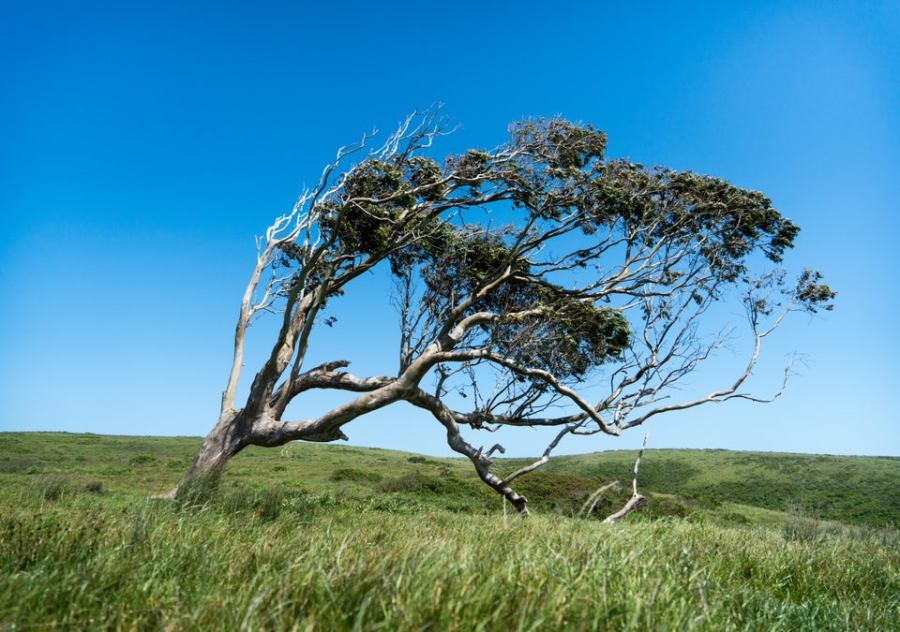


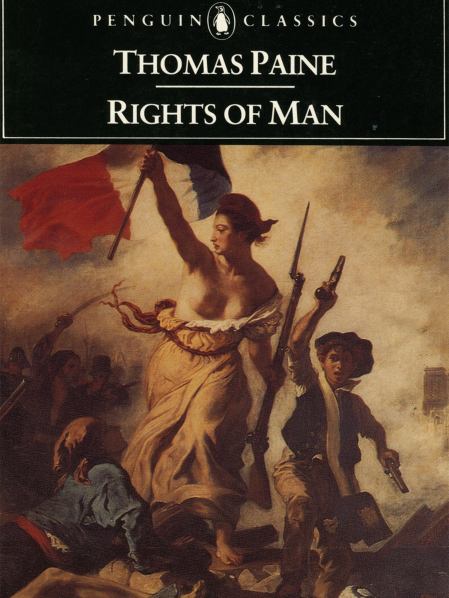
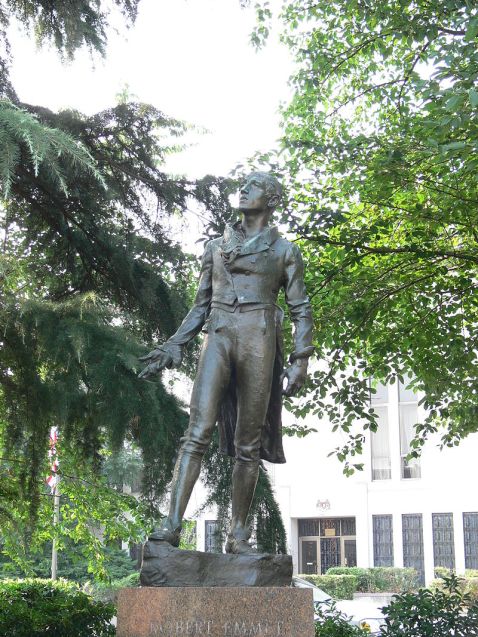
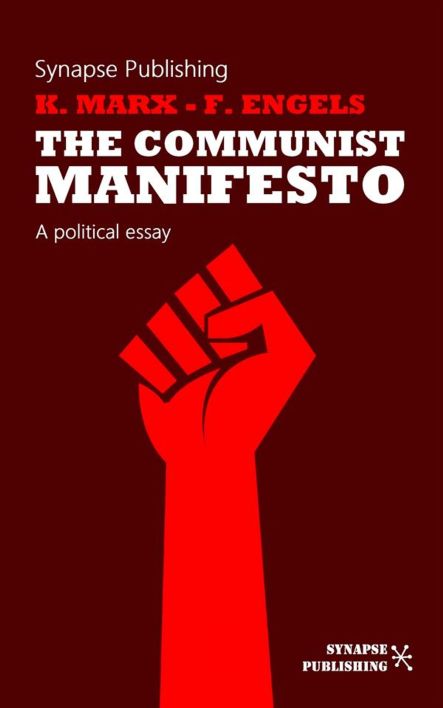
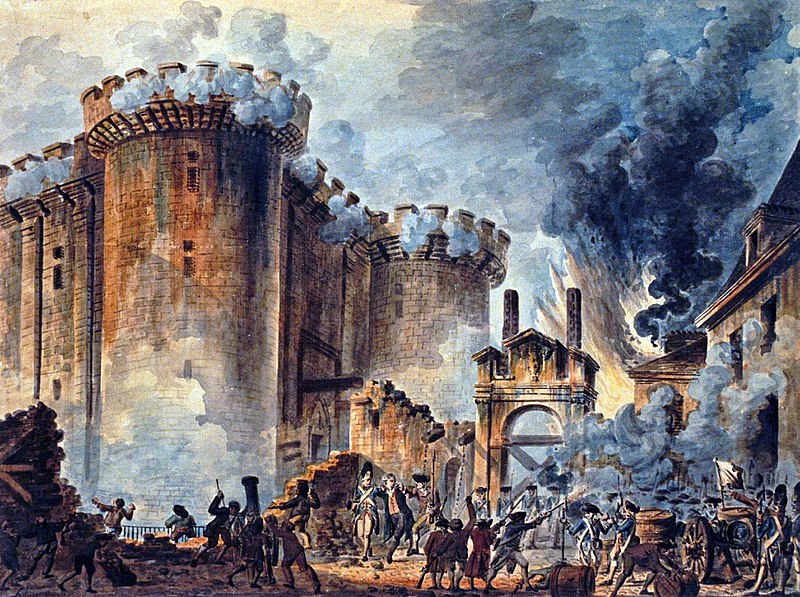

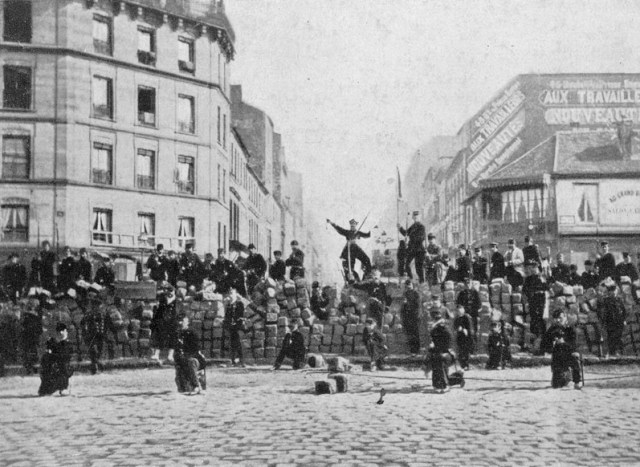


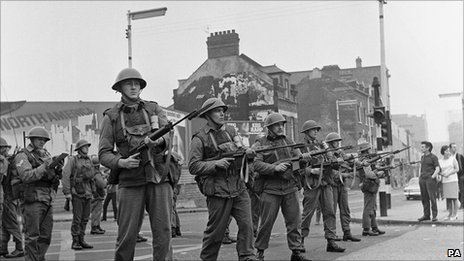
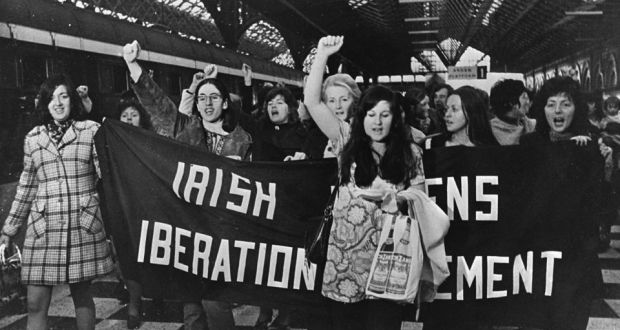


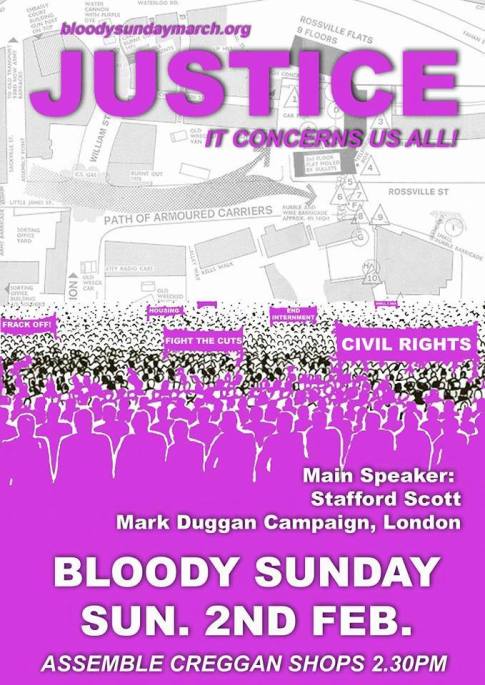
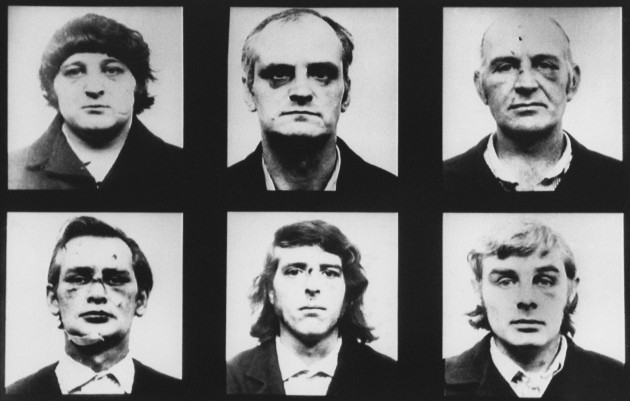
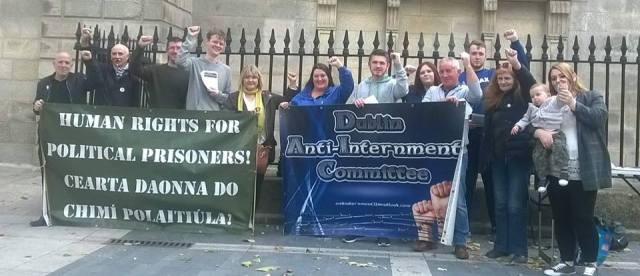


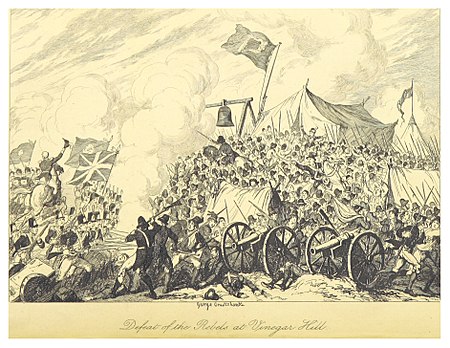

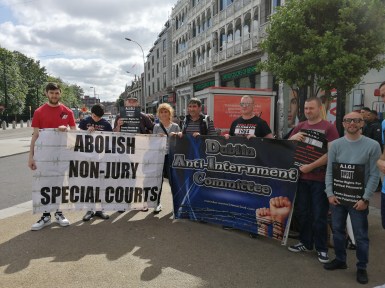


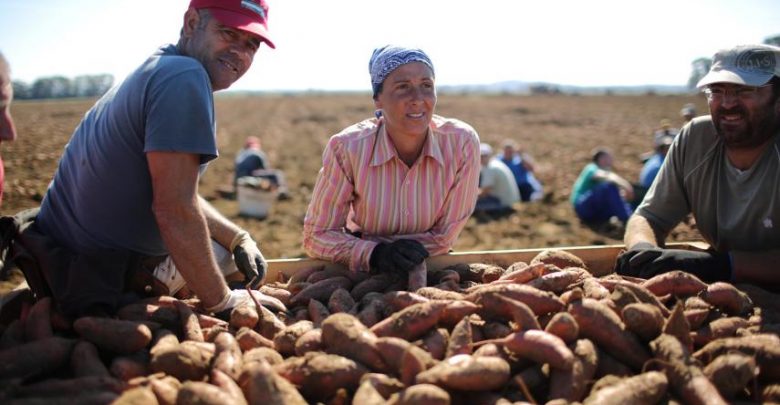


 rebelbreeze