CIMARRON: GOING FERAL AND ETHNIC PREJUDICE

Diarmuid Breatnach

(Reading time: 15 minutes)

LANGUAGE IS A TREASURE CHEST – 2

I observed in Language Is a Treasure Chest 1 that it is full of wonders but that it has some horrors in it too. And I found it to be so again.

I was reading a novel in which the word “Cimarron” appeared and, doing some quick research on the word, I came across a 2004 query in an email website or page called Word Wizard:

What is the etymology of the word cimarron? I’ve always been told that it means “runaway slave” in Mexican Spanish. Can anyone verify this?

The reply is dated the same day:

From Greek. It refers to people who live in perpetual
mist and darkness, akin to the ‘land of the dead’.
Latin ‘Cimmerius’, Greek ‘Kimmerios’, Assyrian
‘Gimirri’ even the bible ‘Gomer’ Gen.10:2 and
Esk. 38:6.
In Western United States it refers to a stretch of 
land that gets rainfall when other near by areas are 
desert year round.

Apart from the topographical reference, I thought the expert’s explanation highly dubious. And in fact I happen to know something about the Spanish-language origins of the word.

The searcher replied:

Thanks, Jim. I just wonder what connection this word has to Hispanics of Mexican origin because it shows up in their surnames (although not as common as Lopez or Vargas or Garcia). Is it just Mexican in origin or did that also come from Spain? So the “runaway slave” theory has no foundation then?

The expert’s reply did come back with a Spanish-language connection and he may be on to something with the topography, though I think he has it the wrong way around (as we shall see).

The “runaway slave” theory is not so obsolete.
Mexico did not have slaves (Outlawed in 1810)but
American slaves who fled to Mexico had to pass
through lands with water, or else parish
(sic).
When relating their tales of woe to the locals
the word ‘cimmaron’ arose to describe their flight
through the South West desert.

Very curiously, there was no further contribution to the discussion. I tried to leave my own but had to register, which I have done (though wondering if worth the trouble) and am now awaiting confirmation1.

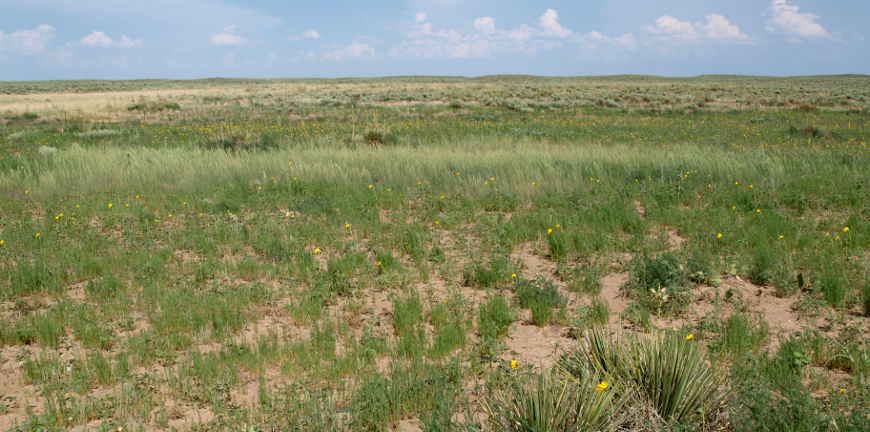
A view of the Cimarron National Grassland, the largest piece of public land in Kansas, a 108,175-acre property in the southwestern part of the state. It was recovered from the Dustbowl ecological devastation by soil recovery and management practices. (Photo source: The Armchair Explorer – Kansas)

THE FOLK MEMORY WAS TRUE

          Continuing with a little light online research I find that the Castillian-language (Spanish) origin is the explanation most often given, with rarely a reference to Greek or other classical or archaic languages. For example, in yourdictionary.com:

American Spanish cimarrón, wild, unruly ( from Old Spanish cimarra, thicket): probably origin, originally referring to the wild sheep (bighorn) found along its banks

While in Wiktionary:

cimarrón (feminine singular cimarrona, masculine plural cimarrones, feminine plural cimarronas).

  1. (Latin America, of animals) feral (having returned to the wild)

  2. Synonyms: alzado, bagual, feral

  3. (Latin America, of people) rural; campestral

  4. (Latin America, of plants) of a wild cultivar.

But …. what about the “runaway slaves”? Under the title Cimarron People, Wikipedia has this to say: The Cimarrons in Panama were enslaved Africans who had escaped from their Spanish masters and lived together as outlaws. In the 1570s, they allied with Francis Drake of England to defeat the Spanish conquest. In Sir Francis Drake Revived (1572), Drake describes the Cimarrons as “a black people which about eighty years past fled from the Spaniards their masters, by reason of their cruelty, and are since grown to a nation, under two kings of their own. The one inhabiteth to the west, the other to the east of the way from Nombre de Dios”. (location in Panama — DB)

While we may indulge ourselves in a sardonic smile at commissioned pirate Francis Drake talking about the cruelty of others, or about slave-owning by a country other than England in 1570, we remember also that at the time Spain was the main competitor with England in the rush to plunder the Americas – and had got there well before them.2 Both colonial powers were already plundering Africa for raw materials and slaves.

The meanings of animals having gone “feral” or “returned to the wild” would easily have been applied by the society of the time to escaped African slaves, a society which, despite evidence to the contrary including agriculture in Africa, would have considered indigenous inhabitants of Africa as people living in the “wild”. Once escaped and no longer under European control, they would be seen as “returning to the wild”.

So what happened to the Cimarron People? Their settlements were subject to punitive raids by the Spanish, killing people and burning crops, so that in the end they came to a treaty with their old enemy. The Wikipedia entry says no more except that the “Cimarrons” and the English quarreled (not surprising, given that they were of no further use to the latter). I believe some of their settlements in Florida were raided and burned by US “pioneers” and soldiers and that the remainder became part of the Seminoles, a native American tribe that resisted the USA in the longest and most costly of the USA’s wars against the indigenous people, the Native (North) Americans. The Seminole had many tribe members of part-African origin in their midst.

And here – a surprise: The word “Seminole” is derived from the Muscogee word simanó-li, which may itself be derived from the Spanish word cimarrón, meaning “runaway” or “wild one”!

So, in line with what that on-line searcher back in 2004 had heard, no doubt a folk belief, the word cimarron is, in Mexico (and in the USA), of Castillian (Spanish) language origin and is connected to escaped slaves of African origin.

Some of the sources for “cimarron” also give us “marron” or “marrón” which is also related to escaped slaves and, in English, became “Maroons”. The Maroons, escaped slaves who inhabited mountainous regions of Jamaica and elsewhere became a great problem to the English settlers (after they took the island from the Spanish) which they failed totally to quell, the Maroons emerging victorious in many military engagements. In the Cockpits area of Jamaica, I have read, there is a place called Nanny Town, which is believed to be one of the settlements of the Maroons; their chief was said to be a woman called “Granny Nanny”3, whether because of her former slave occupation or for other reason4. In the end, like the Spanish with the Cimarron People, the English had to treat with them. Sadly the treaty required the Maroons to return newly-escaped slaves, which they did and for which they received payment.

Marroons in treaty with the British, shown here in a reversal of the actual power relations in the “Pacification with Maroons on the Island of Jamaica, by Agostino Runias (1728-96).
(Source image: Internet)

However if instead of being a voluntary escapee to go to a wild place you were forced by people or circumstance, well then, like Alexander Selkirk’s “Crusoe”, you’d be “marooned”!

Well then, what about the “cimarron strips” in the southwest of the USA? Could the word refer to strips of land “gone wild”? Or could the expert replying to the question in 2004 have been on to something?

If the slaves escaping through the desert from the USA to Mexico did indeed make their way through strips of watered land (not just for the water, as the expert speculates but for vegetation to conceal them), then there is a connection between escaped slaves and these strips of land. But not as the expert sees it, rather the other way around: since the escaped slaves, the “cimarrones” were travelling the strips, they would be called by those who knew about it (escapee hunters, escapee helpers and just observers), “cimarron strips”, i.e “those strips through which the runaway slaves travel.”

CHRISTIAN ETHNIC PREJUDICE

          However, if the word comes from Castillian (Spanish) what were the origins of the word in that language?

Perhaps a year ago, I was reading a book that described the Spanish State as having been characterised, contrary to many other European states, by mass expulsions and exiles on a number of occasions throughout its history5. Naturally enough, first on the list of expulsions was the well-known example of the Moors and the Jews. Those who were not slaughtered by the forces of the “Christian Monarchs” of Ferdinand and Isabella in the “reconquest” were obliged to convert to Christianity or to leave “with only the clothes on their backs”. This also occurred in Portugal.

Those Jews who left were the Sephardim or Sephardic Jews, who spoke Ladino, an archaic kind of Iberian Romance6 language with Aramaic and Hebrew words, along with the Moors, who spoke an Iberian-Arabic mixture or Arabic. The key of their houses or gates have been handed down to this day in families of both groups.7

Many converted, often referred to by Christians as “conversos” (Jews) or “moriscos” (Arabs) but were constantly under suspicion of reverting to their old religion even with the threat and constant trials and torture of the Spanish Inquisition. According to what I have read they too were sometimes called “marronos”, i.e in the eyes of the Spanish Christian ruling class, those who had been “domesticated” (Christianised) but had “returned to the their wild way”, (Moslem) i.e “gone feral”.

Forced conversions that had to appear genuine: “The Moorish Proselytes of Archbishop Ximenes”, Granada, 1500 by Edwin Long (1829–1891). (Image source: Internet)

Wikipedia on Marrones in Iberia confirms: The (Spanish) Inquisition was aimed mostly at Jews and Muslims who had overtly converted to Christianity but were thought to be practicing their faiths secretly. They were respectively called marranos and moriscos. However, in 1567 King Phillip II directed Moriscos to give up their Arabic names and traditional dress, and prohibited the use of Arabic. In reaction, there was a Morisco uprising in the Alpujarras from 1568 to 1571. In the years from 1609 to 1614, the government expelled Moriscos.

THE BUSH FROM THE NUT?

          And is “ci” or “cy” in “cimarron” then merely a prefix? The word “marrón” exists as a colour in Castilian and a number of Romance languages and came into English as the colour “maroon”. Its development is taken as originating from the colour of the large ripe chestnut, rather than given to it later. Of course there are a number of words for colours or tints which have a botanical origin, “orange” being an obvious one.

Castanea Silva, the edible or Sweet Chestnut.
(Image source: Internet)

Alright, then the nut and tree might have been associated with uncultivated or “wild” areas, similar to those to which the “cimarrons” would escape. But where did the “ci” suffix come from? Somewhere in the midst of what I have been researching I came across an explanation, derived from Latin, meaning “towering”, “high” etc. But can I find it now?

The online sources are telling me that the relevant pages are up for deletion and I can join the discussion. No thanks, I do not have anything like sufficient knowledge to enter a debate on that, nor the patience of an academic to research it thoroughly.

But “high” and “wild” could easily correspond, given that valleys and plains lend themselves more easily to cultivation, as a rule, than mountainy areas, which might remain wooded or with with thick undergrowth. And that might also give us the “bush” or “thicket” referred to in a number of references for “cimarron”, which in turn might describe the “cimarron strips”. In parts of Latin America (and for all I know, in all of them) such as Chile, a “cimarra” is also a thicket or densely-grown area. The article in the Language Journal (see reference) comments that the “arra” cannot be a Romance language word-ending but even if true it seems to me that the author (or authors quoted) might be unaware that among those from Iberia who colonised or settled in the Americas, Romance language speakers were not alone. There were also Basques who spoke Euskera/ Euskara and for evidence, they applied a number of toponomics and left family names from the Basque Country (Basque descendants make up to 10% of the population of some Latin American countries). And “-arra” would be a common enough suffix or word-ending in Euskera.8

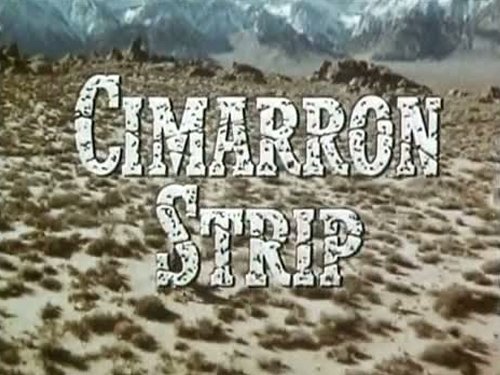
Opening title for the weekly TV Western series Cimarron Strip, starring Stuart Whitman, Judy Gleeson, Percy Herbert and Randy Boone. Though popular, only a years’ worth of episodes were screened.
(Image source: Internet)

OKLAHOMA PANHANDLE AND THE CIMARRON STRIP

          In the 19th Century wars between the Mexican Republic, the USA and the Native Americans in the area, it was carved up with less and less left to the Native Americans.   Prior to the American Civil War, white Texas wanted to join the Union as a slave state  and due to a US federal law prohibiting slavery north of 36°30′ parallel north, white Texas surrendered a strip of land north of that latitude. The settlement (temporary of course), left a strip as “Neutral Territory” (one can only imagine the temptation for African slaves in Texas to make for there).  After the Civil War big cattle ranchers moved in, disregarding treaties and named the area the Cimarron Strip.

Map of Oklahoma territory and “Neutral Strip” before the American Civil War.
Image source: Wikipedia, Texas Panhandle.

But that was because the word Cimarron was already in the area, from the “Cimarron Cutoff” leading to a crossing of the  Cimarron river.  And yes, there was a popular 1967-1968 TV series called “Cimarron Strip”, starring Stuart Whitman.  But, though I used to watch it, that is only faintly related to the story of the word that set me out on this journey.

End.

FOOTNOTES

1Which days later had still not arrived – perhaps the site is no longer in operation, which would explain the silence after those two posters.

2Columbus voyage to America 1641 and Spain’s first colonial settlement 1565 (now Florida); Mayflower expedition to America with English settlers 1587 (now Virginia). However, Europeans had founded settlements much earlier, as with the Norse in the 10th Century and very likely Irish monks in the 6th Century. But it was the English and Spanish who conquered most, the Dutch, French and Portuguese less. The descendants of the English settlers after gaining independence from England completed the seizure and colonisation of most of the North American continent, while English colonists remaining loyal to the English Crown seized land to form what is now Canada.

4All the folk tradition, albeit conflicting on some points, declares that she had not been a slave which leaves one to wonder how she might have reached Jamaica from Africa without having been enslaved.

5 I borrowed the book from the public library and cannot remember its title at the moment.

6“Romance languages” is the name give to the group on Indo-European languages such as Castillian (Spanish), Catalan, Galician, Portuguese, Romanian, Italian and French. They are sometimes called “Latin-based” or “Latin Languages” but there is some dispute about the origins and developments of these languages.

7 Ironically, the door or gate “key” is also a symbol of return for Palestinian refugees driven from their homes by Zionist massacres, threats and fear during the founding of the State of Israel.

8 Among toponomics of North America’s southwest Durango (Colorado and Mexico), Navarro and Zavala Counties (Texas) are perhaps the best known; while Aguirre, Arana, Bolívar (Bolibar), Cortazar (Kortazar), Duhalde, Echevarria (Etxebarria), García, Guevara (Gebarra), Ibarra, Larrazábal, Mendiata, Muzika, Ortiz, Salazar, Ugarte, Urribe and Zabala are but some among a host of family names of Basque origin from the American south-west to Latin America. And of course the country of Bolivia, from Simon Bolívar, a Basque surname from a Basque toponomic.

SOURCES, REFERENCES:

http://www.wordwizard.com/phpbb3/viewtopic.php?t=1342

https://www.yourdictionary.com/cimarron

https://en.wiktionary.org/wiki/cimarr%C3%B3n

Excerpt on-line from Language journal, Linguistic Society of America, Leo Spitzer, Vol. 14, No. 2 (Apr. – Jun., 1938), pp. 145-147: https://www.jstor.org/stable/408879?seq=1

Cimarron People: https://en.wikipedia.org/wiki/Cimarron_people_(Panama )

Seminole People: https://en.wikipedia.org/wiki/Seminole

Marrons, Marrónes, Maroons: https://en.wikipedia.org/wiki/Jamaican_Maroons

Marronos” in Iberia: https://en.wikipedia.org/wiki/Moors#Etymology

Marooned: https://www.etymonline.com/word/maroon

Marrón/ maroon as a colour, derived from the nut: https://www.etymonline.com/word/maroon

Basque diaspora to Latin America: https://en.wikipedia.org/wiki/Basque_diaspora

Family names of Basque origin in Latin America: https://www.academia.edu/7889462/Basque_legacy_in_the_New_World_on_the_surnames_of_Latin_American_presidents

Basque words ending in -arra: https://www.ezglot.com/words-ending-with.php?l=eus&w=arra

https://en.wikipedia.org/wiki/Oklahoma_Panhandle#Cimarron_Territory


IRISH REPUBLICAN, SOCIALIST, ANTI-RACIST, TRADE UNION FOUNDER: MICHAEL J. QUILL

“A man the ages will remember.” -Rev. Dr. Martin Luther King, Jr.

By Kevin Rooney (reprinted by kind permission of author).

Michael J. Quill and Martin Luther King at a trade union conference, USA, 1961, to which Quill had invited ML King.
(Photo source: Internet)

Michael Joseph Quill was born in Gortloughera, near Kilgarvan Co. Kerry on 18 September, 1905. His parents were John Daniel Quill and Margaret (née Lynch). Fighting injustice seemed to be in his blood. He remembered: “My father knew where every fight against an eviction had taken place in all the parishes around”. His Irish-speaking family’s home served as headquarters for the No. 2 Kerry Brigade Of The Irish Republican Army during the War Of Independence Of 1919-1921. His uncle’s house was so well known for rebel activity, it is said that the Black and Tans in the area referred to the house as “Liberty Hall”; a reference to James Connolly’s ITGWU Union Headquarters in Dublin which was to prove prophetic.

IRISH REPUBLICAN ACTIVITY

          While still a boy of 14, Michael was a dispatch rider for the IRA during the War of Independence. He served in 3rd Battalion of the No. 2 Kerry Brigade. Once on a scouting mission, he stumbled on a patrol of Black and tans asleep in a ditch. He stole all their ammunition without rousing them. He eventually graduated to carrying a rifle and organized a group of about thirty boys in the village into an IRA scout group, and drilled several times a week.

When the Civil War began in 1921, Quill joined the Republican side which opposed the Anglo-Irish Treaty that ended the War Of Independence. He took part in the re-capture of the town of Kenmare from The Free State Army in August of 1922, one of few Republican victories. He was said to have been involved in robbing a bank for the IRA during the war. He was much affected by the brutality and violence dished out by the Government Forces (Free Staters) to his Republican comrades in Kerry who were captured.

Michael J. Quill Centre, Kilgarvan, Co. Kerry, Ireland
(Photo source: Internet)

The worst atrocity was the Ballyseedy massacre where eight Republican prisoners were killed by being tied to a landmine, which was then detonated. In March of 1923, at total of 23 Republican prisoners in Kerry were killed in similar manner, or summarily executed by shooting on different occasions. Another five were officially executed by firing squad. The most of any county.

His mother died in September 1923. The local priest refused to request a temporary amnesty so that Michael and his brother John could attend her funeral without risking arrest by National troops. It left a lasting bitterness in him toward the Catholic Church.

During the Wars, he met many prominent Republican leaders of the time who passed through his area; including Eamon de Valera, Liam Lynch, Tom Barry, Liam Deasy, Dan Breen, Erskine Childers among them. While still young, he conversed with these great minds.

EMIGRATION TO THE USA

          After the war, Quill found opportunities limited for him as he had supported the losing side. He was also blacklisted after a sit-in strike with his brother John at a saw mill in Kenmare. He emigrated to the US, arriving on 16 March, 1926 in New York, where he stayed with an aunt on 104th Street in East Harlem (New York).

He hustled to make a living working a series of menial jobs which included what was called “bootlegging”: smuggling alcohol during Prohibition, during which time the sale of alcohol was illegal in the US. He worked passing coal and peddling roach powder and religious articles in Pennsylvania coal country. While there he wrote his father his observation that “the cows and pigs in Kerry were better housed and fed than were the miners’ children in America.”

Quill returned to New York and met a young Kerry woman named Maria Theresa O’Neill, known as Mollie who came from Cahersiveen. With the onset of the Great Depression she became unemployed and decided to return to Ireland. She and Quill maintained a patient long-distance courtship, keeping in touch with weekly letters.

Quill found employment with the IRT (Interborough Rapid Transit) railroad in 1929. He worked several jobs before becoming a ticket agent. The IRT, the largest transit company in New York attracted employment from many Irishmen; particularly Republican veterans of the Irish Civil War like Quill. There was a joke that IRT stood for “Irish Republican Transit”. Their advantage over other immigrant groups was that they already spoke English. Coming from mostly farm land, they were also able for the twelve to fourteen-hour days demanded of them seven days a week. About half of the employees were Irish.

Moving from station to station, he got to know many of the employees. Along with deplorable working conditions, Quill also observed discrimination based on racism and bigotry, which he hated. He said: “During those twelve hour nights we’d chat about the motormen, conductors, guards etc. whose conditions were even worse. They had to work a ‘spread’ of 16 hours each day in order to get 10 hours pay. Negro workers could get jobs only as porters. They were subjected to treatment that makes Little Rock (Arkansas) and Birmingham (Alabama) seem liberal and respectable by comparison. I also saw Catholic ticket agents fired by Catholic bosses for going to Mass early in the morning while the porter ‘covered’ the booth for half an hour. Protestant bosses fired Protestant workers for similar crimes, going to Church. The Jewish workers had no trouble with the subway bosses. Jews were denied employment in the transit lines”.

INFLUENCED BY CONNOLLY’S WRITINGS

          While working a 12-hour overnight shift, Quill passed the time with reading to supplement his education, which had ended with National school. The main influence on his political thinking was James Connolly. Connolly had also organised unions in New York, where he lived for a few years before returning to Dublin where he was executed in 1916 for his part in the Easter Rising.

Michael J. Quill speaking at a conference with the image of James Connolly, whose writings he admired, on the wall behind him, uncomfortably perhaps next to the flag of the USA.
(Photo source: Internet)

Quill’s second wife Shirley later wrote: “Connolly’s two basic theories were to guide Mike Quill’s thinking for the next three decades: that economic power precedes and conditions political power, and that the only satisfactory expression of the workers’ demands is to be found politically in a separate and independent labour party, and economically in the industrial union.” He then set about organizing a union. He stood on his soap box during lunch hour in power-houses and shops all over the city.

Quill recalled: “We were no experts in the field of labor organization, but we had something in common with our fellow workers; we were all poor, we were all overworked, we were all victims of the 84 hour week. In fact, we were all so low down on the economic and social ladder that we had nowhere to go but up.”

Quill and some of his fellow Irish immigrants became involved in Irish Worker’s Clubs that were established by James Gralton, and were affiliated with the American Communist Party. Gralton’s political views got him deported from Ireland in 1933 as an “undesirable alien”; even though he was born in Co. Leitrim because of pressure from the Catholic Church. This made him the only Irishman ever to be deported by the Irish government.

Quill didn’t find much difference in the attitude of Irish-American Organisations that were Catholic church-based. Quill recalled: “We went to the Friendly Sons of St. Patrick, but they would have nothing to do with the idea of organizing Irishmen into a legitimate union. We went to the Ancient Order of Hibernians, and they threw us out of their meeting hall. They wanted no part of Irish rebels or Irish rabble. That was the reception we got from those conservative descendants of Ireland’s revolutionists of a hundred years ago.”

Making no bones or apologies, he said “I worked with the Communists. In 1933 I would have made a pact with the Devil himself if he could have given us the money, the mimeograph machines and the manpower to launch the Transport Workers Union. The Communist Party needed me, and I needed them. I knew what the transit workers needed. The men craved dignity, longed to be treated like human beings. The time had come to get off our knees and fight back.”

FOUNDING A TRADE UNION

          On 12 April 1934, Quill, along with six other Irishmen including Thomas H. O’Shea and Austin Hogan from Co. Cork, and Gerald O’Reilly from Co. Meath formed the Transport Workers Union of America (TWU). All seven including Quill were members of Clan na Gael, an Irish Republican organisation that succeeded the Fenian Brotherhood as the American branch of the Irish Republican Brotherhood (IRB). They were said to have initially applied the rules and practices of secrecy from that tradition. Quill was to remain a silent financial supporter of the Republican cause in Ireland his whole life.

Like Quill, they were all influenced by Connolly’s ideas and writings; in particular, Connolly’s 1910 pamphlet “The Axe To The Root” where he wrote specifically about a recent 1910 transit workers strike in New York that had failed, known as the New York Express Strike.

Connolly wrote: “It was not the scabs (strikebreakers, replacements) however, who turned the scale against the strikers in favour of the masters. That service to capital was performed by good union men with union cards in their pockets. These men were the engineers in their power-houses which supplied the electric power to run their cars, and without whom all the scabs combined could not have run a single trip.”

The very name of the union was a tip of the hat to James Larkin and James Connolly’s Irish Transport & General Workers Union (ITGWU). In fact the word “Transit” is more normally used than “Transport” regarding that industry in the US. Thomas H. O’Shea was the Union’s first president, followed by Quill, who would remain president for the remainder of his life.

The Union began with a membership of 400, then eventually represented all 14,000 IRT workers. An African-American porter named Clarence King was elected to the first TWU executive board. In 1937 there was a sit-down strike on the Brooklyn-Manhattan Transit (BMT); the second-largest Transit company in New York. Two BMT employees at the Kent Avenue Brooklyn station were fired for union activity. The 500 members of TWU in the company secured their re-instatement. It eventually represented all BMT employees as well.

Quill began to involve himself in city politics and was elected to the New York City Council in 1937 representing the American Labor Party. His whole career people loved or hated him, with no middle ground. He returned to Ireland to marry Mollie on 26 December 1937. They would return to New York to live, where she bore a son; John Daniel Quill, named after Michael’s father. Theirs proved to be an unhappy marriage of convenience. Quill filled this void first with drink, later with extramarital romance.

While in Ireland, he met with Michael O’Riordan from Co. Cork, who was headed to Spain to fight for the Spanish Republic in that country’s Civil War; which side Quill supported. Michael Lehane, the child of a neighbor from Kilgarvan, also went to Spain to fight fascism.

AGAINST ANTI-SEMITISM

          In 1939, he organized a rally against anti-semitism in a heavily Irish neighborhood in The South Bronx attended by four thousand. This was in response to Father Charles Coughlin’s anti-semitic campaign preaching to New York’s Irish. Fr. Coughlin was born in Canada of Irish parents, but moved to the US. He began radio broadcasting in 1926 in response to a Ku Klux Klan anti-catholic attack on his church in Michigan, but moved into political commentary and also moved far to the political right. Fr. Coughlin’s sympathies to the fascism of Hitler and Mussolini got him removed from the air later in 1939.

Having little use for the church, this is how Quill summed up his personal philosophy: “I believe in the Corporal Works Of Mercy, the Ten Commandments, the American Declaration Of Independence and James Connolly’s outline of a socialist society. Most of my life I’ve been called a lunatic because I believe that I am my brother’s keeper. I organise poor and exploited workers, I fight for the civil rights of minorities, and I believe in peace. It appears to have become old-fashioned to make social commitments; to want a world free of war, poverty and disease. This is my religion.”

TESTIFYING AT MC CARTHY HEARINGS

          In April of 1940, former TWU President and founder Thomas O’Shea; who had been earlier been ousted from the union testified against his former fellow union leaders including Quill. He alleged that the union was in complete control of the communist party and their goal was to promote revolution through strikes. Quill testified in the US House Of Representatives before the House Committee on Un-American Activities and denied these allegations, calling O’Shea a “stool pigeon.” He told Chairman Martin Dies: “You are afraid to hear the truth about our union. You can’t take it, but the American labour movement will live.”

Also in 1940, the city purchased the BMT and IRT. This put Quill in the path of every New York mayor from then on, beginning with Italian-American Republican Fiorello LaGuardia. Years ahead of his time, in 1944, Quill introduced a bill in the City Council to establish free childcare centers for working mothers. Also in 1944, he ended a TWU wildcat (unauthorised) strike in Philadelphia initiated by a racist reaction to a contract that secured promotions to conductor for eight black porters.

After World War II and the Holocaust, Quill said “We licked the race haters in Europe, but the millions of Jewish dead cannot be restored to life”. He was re-elected to the City Council also in 1945. His election campaign manager was Shirley Ukin, a fiery former communist born in Brooklyn Of Russian-Jewish parents with whom he began a longtime affair. She had worked with him in TWU from the beginning. In the late 40’s the union expanded to include airline workers, utility workers and railroad workers.

Also after the war, under pressure from the government on communists in the labor movement but mostly his own dissatisfaction and mistrust caused him to purge the communists out of the Union. In 1948 he secured a large increase for subway workers from Democratic Mayor William O’Dwyer, a native of Bohola, Co. Mayo.

In the 50’s he supported the candidacy of Democrat Robert F. Wagner for mayor. Wagner’s German-born father, a US Senator for New York (Democrat 1927-1949) had authored the Wagner Act Of 1935 that created the National Labor Relations Board (NLRB), which protected workers’ rights to organise and strike.

Quill’s past relationship with the communist party continued to be criticised. He was nicknamed “Red Mike”. Wagner was elected to three terms and his administration was able to come to collective bargaining agreements with the TWU.

IN THE US TRADE UNION MOVEMENT AGAINST RACISM

          Mollie died August 16, 1959. In 1961 he married Shirley; his longtime girlfriend who had previously been married and divorced twice. She would later carry on his union work and write his biography. Also in 1961, Quill received a letter from twenty-five TWU members in Tennessee protesting the Union’s support for Civil Rights and de-segregation. He responded by inviting a prominent black Civil Rights leader to address the Union Convention, the Rev. Dr. Martin Luther King, Jr., whom he admired.

He introduced Dr. King as “The man who is entrusted with the banner of American liberty that was taken from Lincoln when he was shot 95 years ago.” This was indeed high praise as the only two pictures in Quill’s office were of President Abraham Lincoln and James Connolly. The two became friends. As far back as 1938, Quill made a statement much like Dr. King’s famous speeches: “If we, black and white, Catholic and non-Catholic, Jew and gentile, are good enough to slave and sweat together, then we are good enough to unite and fight together”.

In November 1965, John Lindsay was elected Mayor. The aristocratic Protestant Republican whose name he intentionally mispronounced as “Linsley” immediately rubbed Quill the wrong way. Quill quipped: “we explored his mind (Lindsay) yesterday and found nothing there.” This was amid the union negotiating a raise for its members due to inflation caused by the War in Vietnam, of which Quill was typically an early critic.

STRIKE!

          The TWU had always threatened a strike that could cripple the city of New York, the largest in the US; a city of 8 million where many people’s commutes involve travel across rivers. Manhattan, the center of commerce is an island. Quill knew and stated that this was from where came the union’s power. Quill had seen many Mayors come and go and such a situation had always been averted.

Before he took office, Lindsay felt empowered and entitled to “call their bluff”. He felt such a strike was illegal as it would endanger public safety as transportation is a public utility. He also seemed to feel the union was incapable of pulling it off as history had shown. Irish-American newspaper journalist Jimmy Breslin observed: “[Lindsay] was talking down to old Mike Quill, and when Mike Quill looked up at John Lindsay he saw the Church of England. Within an hour, we had one hell of a transit strike.”

Lindsay was sworn in on 1 January 1966. The same day, 33,000 members of the TWU announced a strike and 2,000 members of the Amalgamated Transit Union (ATU) also joined them. This demonstrated James Connolly’s lesson from “Axe To The Root” put into action.

(Photo source: Internet)

A legal injunction was issued to stop the strike along with an order for the arrest of Quill and eight others: Matthew Guinan, Frank Sheehan, Daniel Gilmartin, Ellis Van Riper, and Mark Kavanagh of the TWU and John Rowland, William Mangus, and Frank Kleess of the ATU) effective at 1am January 4th.

Quill tore up the injunction and famously said in his thick Kerry accent: “The judge can drop dead in his black robes. I don’t care if I rot in jail. I will not call off the strike.” Only two hours after being imprisoned; Quill who was sixty years old and had health issues with his heart, suffered a heart attack and was sent to Bellevue Hospital. He had ignored all medical advice from his doctors and the strain of the battle was taking its toll. Ironically, he had to wait two hours for an ambulance because the strike had indeed brought the city to a grinding halt.

Right-wing newspaper Daily News headline and photo showing Mike Quill tearing up a court order.
(Photo source: Internet)


15,000 workers picketed City Hall on 10 January. The strike ended on 13 January with a huge victory. The TWU had secured the workers a package worth $60 million. Hourly wages rose from $3.18 to $4.14 per hour. Quill seemed to be on the mend and was released from the hospital on 25 January. Quill died in his sleep of congestive heart failure on 28 January. Like ancient Irish High King Brian Boru, he had won his greatest victory at the cost of his own life. His coffin was draped in the Irish

Pickets during the January 1961 strike of the TWU.
(Photo source: Internet)

tricolour.

Scene from TWU strike Jan 1966.
Pickets during the January 1961 strike of the TWU.
(Photo source: Internet)
Pickets during the January 1966 strike of the TWU.
(Photo source: Internet)

Upon his death, the TWU Express newspaper reported: “Mike Quill did not hesitate or equivocate. He died as he lived fighting the good fight for the TWU and its members.” His friend Rev. Dr. Martin Luther King said of him: “Mike Quill was a fighter for decent things all his life: Irish independence, labor organization, and racial equality. He spent his life ripping the chains of bondage off his fellow man. When the totality of a man’s life is consumed with enriching the lives of others, this is a man the ages will remember. This is a man who has passed on but who has not died.”

Aerial view of Michael J Quill cultural & sports centre in East Durham, NY, USA.
(Photo source: Internet)

In 1987, The Michael J. Quill Cultural & Sports Centre was opened in the predominantly Irish-American hamlet of East Durham, NY featuring an authentic Irish cottage and the largest scale map of Ireland in the world. There is also a Michael J. Quill centre in Kilgarvan, Co. Kerry. In 1999, the MTA named the West Side bus garage the Michael J. Quill Depot. The TWU today has a diverse membership of over 100,000.

Kevin Rooney©️

*Originally posted by K. Rooney September 23, 2018

POSTSCRIPT

by Diarmuid Breatnach

In 1964 the TWU offered the Irish Government to carefully remove Nelson’s Column in O’Connell Street.  Quill wrote that the scale of the statue and its location would give the impression to visitors that the Irish looked up to Nelson and that it meant to them what the Statue of Liberty meant to US citizens.  The TWU volunteered to pay for its removal and its replacement with a more appropriate one among which they included Pearse, Connolly or Larkin.

A British soldier stands guard over the shell of the GPO after the 1916 Rising behind him. Nelson’s Pillar is to the right of the photo. In 1966 a Republican explosion left only the stump, later removed by the State.
(Photo source: Dublin Libraries)

The Irish Government passed the letter to Dublin Corporation (now DCC) who claimed that since the column was managed by a Trust, the Corporation had no power to remove it.

Two years later, the 50th anniversary year of the Easter Rising, a ‘dissident’ group of the IRA, Saor Éire, took matters into their own hands and demolished the structure, commonly known as Nelson’t Pillar.

End.

Plaque on the Manhattan depot named in honour of Michael J. Quill.
Pickets during the January 1961 strike of the TWU.
(Photo source: Internet)


FURTHER READING


Red Mike Quill and Nelson’s Pillar.

APPEAL TO ACT IN SELF-RESPECT – an open letter

Diarmuid Breatnach

Friends and Comrades, self-respecting people of all organisations and none, Irish or migrants, who understand what it is to resist colonialism and imperialism and exploitation of labour: this is an appeal to act in defence of our self-respect.

As you must all be aware by now, the current Government of the Irish State plans to hold an event honouring the Royal Irish Constabulary and the Dublin Metropolitan Police in Dublin on the 17th of this month. Some at least are probably already considering how to react to this shameful event; I hope you are and if so, that you will give my suggestions some consideration. If you have not yet decided to respond to this event then I hope all the more that you will consider what I have to say.

The need to protest this event in a large and unified way is great. It is a matter of our self-respect as a nation, as a colonised people (and colonised peoples) that never ceased resisting, as workers, as trade unionists, as Irish Republicans and all varieties of the Left in Ireland.

The RIC and the DMP were not only the eyes and ears of the English colonist regime but also its first rank arm of repression after the British Army; they were the enforcement bodies of the landlords and bosses.

RIC still on site after assisting an eviction — see the battering ram that was used by the bailiffs to demolish much of the wall. (Photo source: Internet)

ROYAL IRISH CONSTABULARY

          Formed in 1822, the armed nationwide Irish Constabulary got the “Royal” appellation from Victoria, the Famine Queen herself, in recognition of that organisation’s role in the suppression of the Fenian uprising of 1867. During the evictions of poor peasants and agricultural labourers from their lowly cottages and huts, the RIC attended every one, having become the FIRST RANK force of repression in Ireland, the Army being relegated to their backup should it be required. The RIC was the ever-present force of repression during the Tithes War, the Great Hunger and the Land War and was the main force responsible for the suppression of the Young Irelanders in 1848. On 5th May 1882 in Ballina, Co. Mayo, there were children among the slain when the RIC opened fire on a demonstration celebrating the release of the Land League leader prisoners.

RIC constables assisting eviction of Thomas Considine and family, Moyasta, Co. Clare 1767.
(Source photo: Internet)

During the 1916 Rising, the RIC again played its part in repression of the resistance movement, particularly outside Dublin and it was they who attacked the Kent house in Cork, killing one son and arresting two others, including Thomas Kent which the British colonial regime executed, being one of the Sixteen the British killed in reprisal for the Rising. The RIC was the principal organisation supplying the names of non-participants in the Rising to be arrested and interned in jails and concentration camps in Britain.

After the Rising, the RIC continued one of its main roles as the eyes and ears of the British occupation in Ireland, collecting information on anyone who sang patriotic songs, spoke for independence or against the landlords, joined an Irish cultural organisation, agitated for women’s suffrage, organised a trade union branch ….

It was largely due to this role that the armed Republican forces made the RIC its first target in the War of Independence and in fact, the very first shots of that war were fired at the RIC in Soloheadbeg, killing two of them – this very month, 21st January 1919, 101 years ago and only four days after the date upon which this quisling State plans to honour that force.

RIC assisting bailiffs carrying out an eviction. The defenders have blocked the door with thorn brush and are throwing hot water out on their attackers.
(Source photo: Internet)

When the “Black and Tans” and “Auxiliaries”, the RIC Special Reserve and the RIC Auxiliary Division to give them their official titles, were dispatched in March 1920 at Churchill’s initiative to terrorise and murder Irish people, outside Dublin they became part of the of the RIC and from then on, the existing RIC became responsible not only for its prior crimes but for those of the ‘Tans and Auxies too, such as the many murders, including those of the Mayors of Cork and Limerick; the torture of suspects and violation of women; the burning of farmhouses and cooperatives and even of villages and towns: Tuam, Trim, Balbriggan, Knockcroghery, Thurles and Cork – among others.

In 1922, while the RIC ceased to exist in the ‘Free State’, they became the Royal Ulster Constabulary in the Six Counties, with their even-more murderous reserve, the B-Specials. The B-Specials were incorporated into the Ulster Defence Regiment in 1970 and the RUC was renamed the PSNI (Police Force of Northern Ireland) in 2001. Both organisations have been active in carrying out or in collusion with sectarian murders, acting as members or in collusion with Loyalist paramilitaries and under British intelligence operatives.

Bailiffs using battering ram to gain entry to evict a family in Ireland. The RIC are present to protect the bailiffs. (Photo source: Internet)
RIC King Street barracks after attack during War of Independence.
(Photo source: Internet)

DUBLIN METROPOLITAN POLICE

          The DMP was the colonial police force specifically responsible for controlling Dublin, the capital city of the colony. During the 1913 Lockout it showed itself capable of serving Irish capitalists, whether native or of colonist background, without discrimination. Indeed the leader of the Dublin 400 capitalists out to break the Irish Transport and General Workers’ Union, was an Irish nationalist, Catholic and owner of The Irish Independent: William Martin Murphy.

Apart from any others this force of tall thugs may have killed or fatally injured with beatings in their cells, the DMP killed a number of workers during the eight months of the struggle, raided houses and sent many to jail. Two workers, James Nolan and John Burke, died of their injuries within days of the DMP’s baton charge on a street meeting in Eden Quay just by Liberty Hall on 30th August 1913. The following day, in what became known as Bloody Sunday Dublin 1913, the DMP was in action again on O’Connell Street and in Princes Street, mercilessly beating people there (including those already knocked down), during which they knocked unconscious Patsy O’Connor, a young Fianna boy of 16 giving first aid to one of the wounded. Patsy died two years later from his injuries at the age of 18.

The DMP in action on O’Connell St on Bloody Sunday 1913, the second day of police riots in Dublin, early during the Lockout.
(Photo source: Internet)

In a rage at the defence by the residents of Corporation Flats of people fleeing the police charge on Eden Quay, the DMP returned there on the 31st, leaving hardly a door or stick of furniture unbroken or person unbeaten, including women and children.

The special political secret police in Dublin were the G Division of the DMP, spying and compiling files on active nationalists, republicans, socialists, suffragettes, Irish speakers, pacifists. After the Surrender of the 1916 Rising, it was they who came among the prisoners to identify them for the British Army, leading to many receiving death and jail sentences. During the 1916 Rising it appears that three DMP officers were killed by the Irish Citizen Army – while many hid in their cells.

Arrest of Jim Larkin by DMP, shortly before the rest of the DMP present attacked supporters and onlookers.
(Photo source: Internet)

During the War of Independence, the DMP G Division spied on and targeted Irish Republicans and other dissident groups. The Irish Republican Army of course targeted this force and killed a number of them. On the day when the IRA mobilised in Dublin to eliminate the special British Army counterinsurgency intelligence network, the DMP and the Auxiliaries seconded to them had already murdered Conor Clune and Volunteers Peadar Clancy and Dick McKee in Dublin Castle.

Later that day, the DMP and RIC went down to attack the GAA and murdered 14 unarmed people, including two players on the field, also injuring 60-70 people.

Aftermath of DMP baton attack on Sinn Féin public meeting in front of ruins of Liberty Hall to arrest Cathal Brugha and George Snr. Plunkett. Inspector John Mills was struck on the head by a hurley and died later in Jervis St. Hospital. His assailant was a member of Na Fianna and he was never apprehended. Mills was the first DMP officer killed after 1916 and the blow was probably not intended to be fatal. A number were shot with intention to kill during the War of Independence.
(Photo source: Internet)

AN ADEQUATE PUBLIC RESPONSE IS NECESSARY

          It is not only appropriate but absolutely necessary, as a matter of self-respect, that we mobilise a public opposition to this disgusting honouring of the spies on our people and the murderers of our martyrs.

There are many ways that this can be done but I would humbly suggest that two in particular are necessary:

  1. A mass public demonstration near the day of the ceremony (or at least near it) and near Dublin Castle (where the event is to be held);

  2. An electronic petition something along the lines of “Self-Respect: Against honouring colonial spies and murderers of our martyrs”.

          Although our people have achieved a number of successes in struggle over the years, we have often failed too. In particular we failed to give an adequate response to the visit of the British Queen (and Commander-in-Chief of the Paratroopers) to Dublin, or to Wall of Shame in Glasnevin Cemetery. There were some other visits of notable imperialists which also did not receive an adequate response.

Failure is not fatal and we can recover from it – but we cannot build on failure. We can only build on success. This public response needs to be a success and in order to achieve that it cannot be the response of one organisation or of two but needs to be a broad one in which anyone can take part who are not racists or fascists. In order to achieve that, the organising committee should be broad enough to include activists from across the oppositional spectrum who are not part of a party of government (or part of previous government) in either jurisdiction in Ireland. Such an organising committee should be able to include representatives of socialist and republican parties and collectives and also trade unionists.

A broad demonstration of that kind should be free of paramilitary displays which would represent only a section and quite probably alienate another. But all Irish and migrant community and trade union flags and banners should be permitted (with the exception of racist or fascist ones) and the broad banner on the front should spell the general theme of the demonstration.

I am conscious that I am nobody in particular to make this call but given that I think such a response is necessary and that I really want to see this, I make the call anyway and pledge myself to help.

End.

FURTHER INFORMATION LINKS

Report on planned commemoration by the Government: https://www.irishtimes.com/news/ireland/irish-news/ric-and-dmp-policemen-to-be-commemorated-for-first-time-by-state-1.4128214

Collection of letters protesting whitewashing of the RIC and DMP to the Irish Times in 2013 found on Internet: http://www.inc-cne.com/RIC-DMP.pdf

JARKI – NEW BASQUE ORGANISATION FOR INDEPENDENCE AND SOCIALISM

Diarmuid Breatnach

(Reading time text: 15 minutes)

When Basque independentists celebrated Gudari Eguna this year, the Day of the Basque Soldier, some of the celebrants were affiliates of the Abertzale (Basque pro-Independence) Left while others were supporters of the Basque Nationalist Party, nominally at least and often in reality, political enemies. However, it is not the same day for each.

Flagpole with the ikurrina, Basque national flag, at Sollube, scene of a battle between the Francoist forces and the Basque Gudari during the Antifascist War. This was erected probably by the PNV for their commemoration but commemorations are also held at the site by ‘dissidents’ of the Abertzale Left.
(Photo source: D.Breatnach)
A beech seedling (native tree, sacred in folklore, of reputed medicinal qualities, e.g in helping the body to resist infection) had been planted by ‘dissidents’ at the Sollube memorial and, although the surrounding protective netting had collapsed, was still alive. Subsequently Amnistia supporters returned and tidied up the area and left stone markers too.
(Photo source: D.Breatnach)
Mount of sollube: the Francoist forces had invaded from that far background direction, coming in from Nafarroa, which had been taken over to Franco by the Basque Carlists.
(Photo source: D.Breatnach)

          The PNV (Basque Nationalist Party) commemorates the execution of 42 Basque fighters in one jail by the Franco forces on 28th October in 1937, whilst the Abertzale Left carries out their commemoration a month earlier, on the 27th of September, anniversary of the last executions under Franco (and, officially, in the Spanish state since): ETA martyrs Juan Paredes Manot (Txiki) and Ángel Otaegi Etxeberria, along with three members of FRAP (Revolutionary Antifascist Patriotic Front) Jose Luis Sanchez Bravo, Ramón Garcia Sanz and Humberto Baena, all shot by firing squads in 1975 (despite world-wide protests and riots outside Spanish embassies).

For much of the Abertzale Left, Gudari Eguna commemorates not only the martyrs of the 27th September 1975 but also all those who fought for Basque independence during the Spanish Anti-Fascist War and all who fought for it since, in particular those martyred in the struggle.

But even in agreement on that date and that purpose, there are differences too. For some years now some commemorations have been by supporters of Amnistia Ta Askatasuna (Amnesty and Freedom), who denounce the “Officials” for dropping the demand for an amnesty for political prisoners but also criticise them on many other political and cultural grounds: ceasing to push for the everyday use of Euskera (the Basque language), making political pacts with social democrats, etc.

Increasingly, ATA and the “Officials” find themselves incapable of sharing a commemoration or a platform as the latter move further down the path of accommodation to the Spanish regime, social democracy and the PNV, commemorating police killed, apologising for the ‘crimes’ of the now-defunct Basque armed organisation ETA.

A poster of the “Officials” highlights two ETA martyrs, one killed by the Policía Nacional and the other by the Guardia Civil. (Photo source: D.Breatnach)
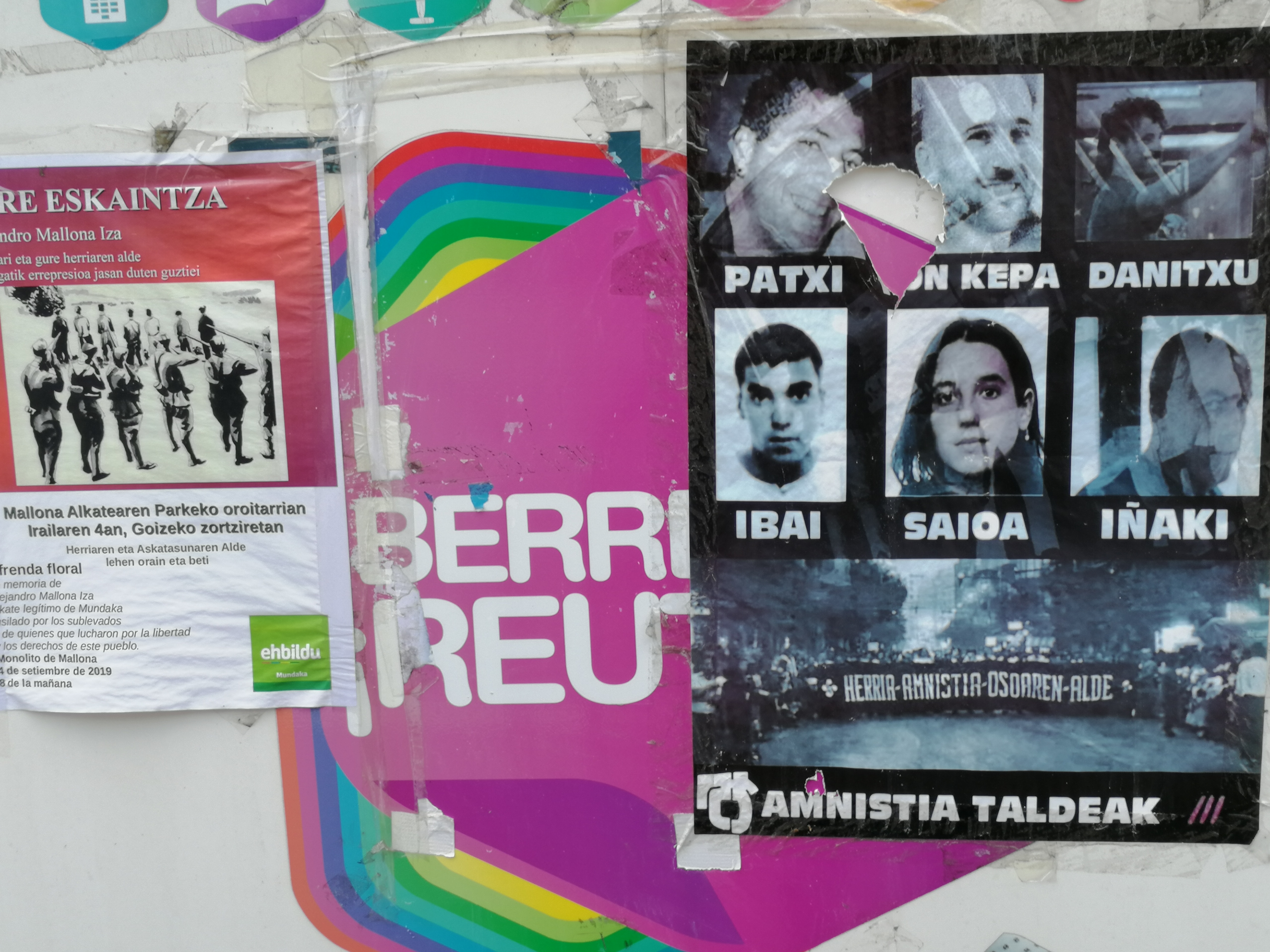
A poster for Gudari Eguna of the ‘Official’ leadership, the party EH Bildu, next to a poster of the ‘dissident’ ATA listing six prisoners whose situation is being highlighted.
(Photo source: D.Breatnach)

JARKI – A COMPARATIVELY NEW ORGANISATION REJECTING THE ABERTZALE LEFT “OFFICIAL” LEADERSHIP

          In Ireland, though they themselves might reject that appellation, the equivalent to ATA would be called “dissident Republicans” and Basques are not as touchy about being counted part of the dissidencia. But one new group has emerged which does reject that term as descriptive of themselves, while at the same time very clearly against the positions of the “Officials” and resolutely for independence and socialism.

This group is called Jarki, (of various meaning: “Resist/ Stand fast/ Push back/ Commit”; the first letter is pronounced like the Spanish “j” or the Irish “ch”).

Among other posters of factions of the Abertzale Left proclaiming Gudari Eguna in the Basque Country this September, I had seen one, very large, side by side with a declaration of position against the subjugation of the Basque nation, for socialism and class struggle. Curiously, there had been no venue advertised for a commemoration ceremony to take place. Was this group, this Jarki, not intending to have one? I made discreet enquiries, someone spoke to someone ….. who perhaps spoke to someone else ….

Jarki poster for Gudari Eguna — note no venue details
(Photo source: D.Breatnach)

On Gudari Eguna this year,

Text poster of Jarki’s alongside their image poster (Photo source: D.Breatnach)

27th September, I was met fairly early in the morning by my appointed guide. The mist gathered high upon the marshes and river and in the valleys as we drove higher, eventually coming out on a scenic site, the day cold but the climbing sun burning off the last of the mists. We rendezvoused with other carloads, then drove to another spot and parked. Asked to leave my mobile in the car, I accompanied my hosts on a long walk in unseasonal sun and heat to a field, where a temporary stage had been set up. It was to be a Gudari Eguna event organised by the Jarki organisation.

The security precautions were not excessive. This was taking place in the Spanish state, where fascism had never been defeated but had instead had a paint-over job in order to allow the Western states, after the death of Franco, to pretend it was a democracy. Until a few years ago, detentions of Basques had been like an epidemic, torture by police and army routine and just as routinely ignored by judges who sentenced the prisoners on the basis of their “confessions” or those of others to long years in jail. In contravention of EU and UN protocols for the treatment of prisoners, the political victims of the State had been dispersed to its furthest reaches, far from spouses, children, relatives and friends. And though the armed group ETA had ceased operation in 2012 and was now disbanded, persecution went on: that very month, 45 people of various organisations arrested in 2013, 2014 and 2015 for supporting the prisoners, including psychologists and lawyers, “supporting terrorism” according to the State, had been brought to trial1.

On the way to the rally, I saw many young men and women, in their middle-to-late teens or early twenties and also many others in ages ranging from late 50’s to 80s, also with a sprinkling of young adolescents. In other words, there were hardly any there of raising a family age. The sun was very hot now and I took off my jacket and tied it around my waist and, even so, was soon sweating.

I and one other were provided with a translator to Castillian (Spanish) for the speeches in Euskera – nobody else seemed to need one, a state of affairs that would not be matched in Irish Republican or Socialist circles with regard to our native language.

The heat beat down and I worried about getting sunburned, while at the same time very interested in what was going on. A large dragonfly wheeled above us, hovered a second then shot off. One of the folkloric Basque names for it translates as “Witch’s Needle” but it is important to recognise that in Basque society, sorgina or “witch” does not have the same negative connotations as can be found in much of western society, even today.

“THE STRUGGLE MUST CONTINUE — IN ONE FORM OR ANOTHER”

          A man perhaps in his 60s took to the stage and recalled his years in guerrilla resistance (i.e in ETA), his capture and the killing of his comrades (one was executed on the spot by the Guardia Civil2). He went on to talk about his years being dispersed around Spanish jails throughout the territory of the State. Speaking about the historical memory of resistance, the man commented that it was necessary to keep that alive – both of the Antifascist War and of the resistance afterwards.

Euskal Herria3 was still divided and still not free, he continued and therefore the struggle had to continue in one form or another, despite the abandonment of the path of resistance by the current leadership of the Abertzale Left. Similarly the demand had to be maintained not only for an end to dispersal but for an amnesty for political prisoners.

After his speech, a young male bertxolari stepped forward to sing his composition. This is a cultural form of social and/ or political commentary, composed by those skilled in the art to fixed rules of rhyme, length of line and a selection of airs.4

He was followed by an elderly left-wing journalist who, apologising for her inability to speak in Euskara, did so in Castillian (Spanish). She referred to her family’s history of anti-fascist struggle, both in the War and in the resistance that followed the victory of the military-fascist forces. She too spoke about the need to continue resistance to unjust regimes and for the right to self-determination.

The journalist speaker was followed by the performance of another bertxolari, this time a young female.

Last to speak was a young woman, speaking on behalf of the Jarki organisation. She recalled the anti-fascist resistance in the Basque Country in ……….. (a nearby battle during the Anti-Fascist War) and elsewhere, also by ETA in the years following the victory of the military-fascist forces. While others might try to pacify the people and to wind down the resistance, the need for active participation in resistance is as great as ever, she said. The woman ended with the call “Gora Euskal Herria askatatua eta independentzia!” (“Long live a free and independent Basque Country!”), to which all the audience (myself included) responded with a roar of “Gora!”.

The young woman then led the audience with the song Eusko Gudariak (“Basque Soldiers”, similar in content to the Irish national anthem, the Soldiers’ Song), most of us who knew the words or not with raised fists, then a couple of women let out the irrintzi5 yell, raising goose pimples on my skin.

Obviously, given my presence, not all the attendance had been Jarki activists but on the other hand, not all its supporters had been able to come either, I was told on the long walk back to the car on tired leg muscles in the blistering unseasonal heat. I joked that if I’d had my mobile with me I’d have phoned an ambulance. Some cured sausage sandwiches and a few mouthfuls of ardoa (wine) from a traditional wineskin, kindly offered where the vehicles were parked revived me somewhat for the journey back to my pickup point that morning but thankfully, we also stopped on the way for lunch and a cold beer at a Basque bar (for which my attempts to pay were kindly but firmly refused by my other travelling companions).

“MOST OF THE RESISTANCE NEEDS TO BE AT STREET LEVEL”

          Later, at an appointment with a Jarki activist, I asked what the relationship with other Basque organisations was, given that his group will not accept the appellation of “dissident” and others will. He told me that they enjoy friendly relationships with a number of other Basque political and cultural organisations that have also broken away from the “Official” leadership. Jarki is a revolutionary socialist organisation for an independent Basque country and in support of the Basque language, he told me. “Although we do not at the moment put forward electoral candidates, we are not necessarily against doing so as a tactic”, he added, speaking quietly. “But the ‘officialistas’ are only interested in the electoral path and we think most of the resistance needs to be at street level”.

The organisation expects a disciplined commitment from its members, for which it also recognises the need for political education, especially of the youth. There had been wide criticism of the lack of this kind of education within the Abertzale Left since the 1990s and earlier, right up to the present.6

The national independence and socialism of the Basque Country is of benefit to the world and the independence and socialism of other countries is of benefit to our nation,” he said in reply to my question about the issue of internationalist solidarity. He admitted that the representative of Jarki at their Gudari Eguna commemoration had not mentioned that aspect.

Jarki call for rupture with the Spanish Constitution and demonstration on 6th December.
(Photo source: Internet)

CALL FOR RUPTURE WITH THE SPANISH CONSTITUTION

          A few days ago, while I was writing this long-overdue piece from contemporary notes, Jarki issued a national call to Basque society (translated by me from a Castillian version): “The Basque working-class people responds with rupture to the Spanish Constitution.”

The Spanish Constitution, despite not being accepted in the Basque Country7, is being imposed upon us. It is a document edited by the Francoists in a pact with the Spanish political parties. This document denies the self-determination of the peoples and besides accords to the military the role of guarantor of the union of Spain.

This Constitution designed the administrative separation of the provinces of the southern Basque Country.8

Faced with this imposition it is more important than ever that the working-class population of the Basque Country creates a revolutionary alternative which should be a political vision to lead the struggle for national construction and liberation and for socialism, the struggle for a united Basque Country, without classes.

For all those reasons we call for the organisation and mobilisation against the imposition, in which the Basque working-class population should follow its own path. Because of all that, we call for participation in the demonstration to take place on 6th December (Spanish Constitution Day) in Durango.

Although they wished to silence us, they will hear us. We have enough reasons. It is time to take to the streets. This people needs a revolutionary alternative.

End.

Poster by Jarki calling for demonstration against the Spanish Constitution (Photo source: Internet)

FOOTNOTES

1The day after 50,000 demonstrated for the right to support the prisoners and in solidarity with those on trial, Basque society was shocked when those charged admitted their “guilt” in exchange for walking free or a maximum sentence of five years’ jail for the “leaders” (instead of the up to 20 years normal from the Spanish court). The reverberations of that – the act of pleading ‘guilt’ itself but also permitting 50,000 to demonstrate in ignorance of the intention — are still travelling through the Abertzale Left and are likely to cost the “Official” leadership, who must have approved or perhaps even brokered the deal, very dearly. In contrast to the 45, another four, leaders of Askapena, Basque organisation for internationalist solidarity, charged with similar ‘crimes’, had fought the case earlier, for which they had won much respect and had beat the charges. Askapena, however, had quietly split from the Abertzale Left some years previously.

2The Guardia Civil is a militarised police force of the Spanish State with a very political role, the most active in the past against the Basque national movement and now similarly against the Catalonian. In addition the Spanish State has the Policía Nacional, also armed and active against movements for self-determination. Each region also has a separate police force, for example the Policía Foral in Nafarroa, the Ertzaintza in Euskadi, Mossos d’Esquadra in Catalonia, etc. And there are urban police forces too in every town or village.

3Meaning “the country where they speak Basque”, the term is now used to describe the whole Basque nation of seven provinces, three currently within the French state and four within the Spanish territory. “Euskadi”, the former term, now only describes the “Basque Authority” area of three provinces: Bizkaia, Alava and Gipuzkoa.

4This cultural form, at one time perhaps in danger of dying out, has become very popular and national competitions are broadcast on the Basque TV network. I have witnessed two bertxolari given pieces of paper laying out their respective roles (for example an Irish landlord and a Polish tenant) and, minutes later, engage in a battle of bertxos (verses) which had a Basque audience in roars of laughter and appreciation for the wit and skill of each. Close attention is paid by Basque listeners to bertxolari which, for a nation not culturally given to admiration for the song of the single voice (unless they can join to sing along), is truly remarkable. The Irish “comhrá beirte” is a similar performance art form but much less developed, certainly now, in Irish tradition.

5It is a long ullulating or yodelling cry, by males or females, said to be a call to war or to encourage Basques while fighting (it was also the name of a short-lived Basque resistance organisation functioning in the “French” Basque provinces). Such calls are common for communication of different kinds among mountain people, the sound carrying from one mountain to another and echoing but curiously enough it is also a feature of Arab culture in the desert and of some Native Americans. Example with a commentary in Castillian: https://www.youtube.com/watch?v=gcSaW6JUnUc

6That this has been neglected for decades in the Abertzale Left is a fact admitted even by many who remain within the “official” line.

7The Spanish Constitution was presented on a “take it or leave it” basis during the Transition period after the death of Franco, with much violence from police and fascist organisations and the fear of a return to the full-blown fascist dictatorship. The Spanish Communist Party with its huge and then militant trade union, Comisiones Obreras and the social-democratic PSOE, with its smaller Unión General de Trabajadores, were both legalised on condition they supported the monarchist and unitary state Constitution. In such circumstances it was hardly surprising that the referendum on 6th December 1978 brought in a huge majority for the Constitution – but not in the Basque Country, where it was rejected.

8Three of the four southern provinces, i.e those currently within the Spanish State, are under one regional government administration while the fourth, Nafarroa, has its own.

HOW TO WIN THE WAR – GETTING INTO POSITION

(Reading time: Introduction, one minute; Part One: 5 mins; Part Two 2 mins: Part Three: 3 mins; Part Four: 2 mins; Total: 13 mins.)

Diarmuid Breatnach

INTRODUCTION:

Although I often think about the big questions – and am generally guided by my philosophy on them, my mind and energy are usually too occupied with specific struggles to focus on them for long. Recently however I had the opportunity and the need to think about the war, the one we have yet to win.

Storming Bastille Painting Jean-Pierre Houel
The Storming of the Bastille (translation), French Revolution, 1789 by Jean-Pierre Houel. (Image sourced: Internet)

But to which war am I referring? The Irish war of national liberation that has been flaring up for centuries, being lost each time before flaring up again? Or the class war, which has had a few sharp Irish episodes but has been, for the most part in Ireland, in abeyance? The answer is BOTH, though it may seem that my emphasis in the discussion, certainly in the early part, is on the national liberation war.

In order to imagine how we might win, it is helpful to examine past struggles and analyse what went wrong with them. Pessimists love to focus on those things I know – but in order to push us towards reformism or just surrender; my approach instead is from a revolutionary perspective.

Generally, Socialists analysing the class struggle don’t even ask themselves why we have not had a revolution yet. From week to week, month to month, they tend to focus on this or that particular trade union or social struggle but without going into the big picture. It seems as though they can’t even imagine a socialist uprising in Ireland, it’s just too far away to think about, apparently. But if one can’t even imagine such a revolution, how could one consider the necessary steps to get there?

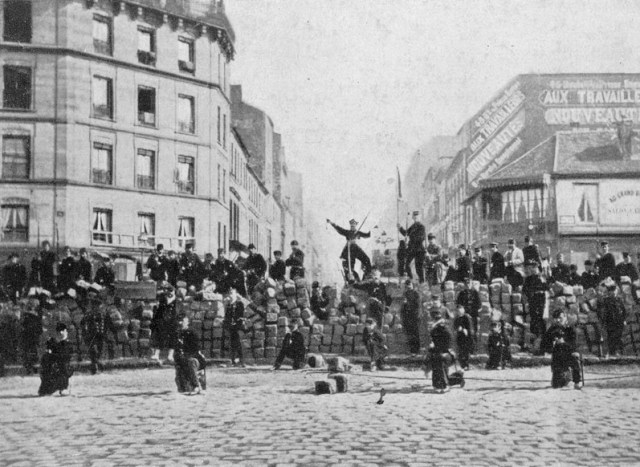
Communards Paris Barricade 1871
Communards at barricade, Paris Commune 1871. (Image source: Internet)

Irish Republicans on the other hand are often thinking in terms of revolution, usually including armed struggle. However it seems to me that Irish Republicans don’t like analysing past failures of the movement but when they do, their verdicts tend to be that the leaders betrayed the struggle or that taking part in public elections corrupted the movement; or that infiltration, spies and informers was the problem. And some other reasons. The thing is, although all those things played a particular part, they are not the fundamental reason.

Defeat Rebels Vinegar Hill Drawing George Cruikshank
“Defeat of the Rebels at Vinegar Hill” by George Cruikshanks, i.e United Irishmen last major position in Wexford overrun, 1798.

PART ONE: THE THIRTY-YEARS’ WAR – DOOMED TO LOSE

(Reading time this section: less than 5 minutes)

Free Derry Corner Gas Mask Images
Derry Monument and Mural of the Civil Rights struggle which preceded the armed struggle in the Six Counties. (Image sourced: Internet)

          The national liberation war that began in 1969 in the Six Counties and ended in 1998 (though some armed incidents continue from time to time) began as a civil rights struggle and changed into a war of communal defence and of national liberation. The military part of the struggle for the most part took place in the occupied Six Counties. The political element of the struggle was waged all over Ireland (and abroad) but in the main consisted of support for the struggle in the Six occupied Counties.

Fought in that way, the struggle was bound to lose. It could never win. How could anyone imagine that they could win a struggle fought against a world power in one-sixth of the country, where even the population there was divided against them? What could they have been thinking?

To my mind, there are only two possible sane replies to that question, which is that they believed: 1) that the British ruling class would get worn down by struggle and leave and/ or 2) that the Irish ruling class would intervene in some way to assist the struggle and make continued British occupation untenable.

1) ‘The British ruling class would get worn down and leave’: This theory must have depended on British repression being condemned abroad and being unpopular at home but had to rest fundamentally on the British having no great stake in continuing its possession of its colony there.

Anyone who thought that (and there were many who did and still many who do, not just Irish Republicans) made a fundamental error. Time and again the British ruling class has shown its determination to hang on to what might be considered its first colony, even as the ruling class’ composition changed from feudal-colonialist to capitalist-imperialist and as the world changed around it.

Collusion State Murder Mural
Mural in nationalist area in the Six Counties (Image sourced: Internet)

Even when the British ruling class, weakened by WW1 and facing an Irish guerrilla war which enjoyed the support of the vast majority of Irish people, with national liberation uprisings breaking out across its Empire and with its repression in Ireland increasingly unpopular at home, entered into negotiations with the Irish resistance, it held on to a foothold, the Six Counties.

Subsequently, it had that colony managed in a permanent state of emergency laws, with institutionalised sectarian discrimination at all official levels and outbreaks of pogroms in the street and workplace.

That became even more exposed during the civil rights struggle and the national liberation war that followed when the British State compromised whatever good international reputation remained to its Armed Forces, its judiciary, its legal establishment, its media and its very legal framework.

Even now, when many believe that the Good Friday Agreement means that a 50% plus-one-vote in favour in the Six Counties will be sufficient to end Partition, they do not realise that such a decision will have to also obtain a majority in the British Parliament and be endorsed by the British Monarch. They are also forgetting the broken promises that surrounded Partition in the first place.

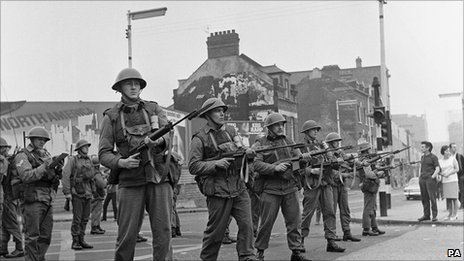
British Soldiers Helmeted Belfast 1969
British Army in Belfast 1969 (bayonets and guns pointed towards nationalist area). (Image sourced: Internet)

When analysing what holding on to the Six Counties has cost the British State in terms of reputation, military and financial contributions, one can only rationally assume that continuing to hold on to that foothold is of great importance to the British State. One may speculate as to the reasons underlying that but the central fact cannot be denied.

2) ‘The Irish ruling class would intervene in some way to assist the struggle and make continued British occupation untenable’:

There was some basis for this belief in that a section of Fianna Fáil, a party that had emerged from a split in Sinn Féin in the 1930s and had become one of the mainstream parties in the Irish state, had retained some traditional commitment to seeking a united Ireland. However it was a thin enough basis on which to depend in a national liberation struggle since that section had no majority within the party itself, to say nothing of the foreign-dependent nature of the Irish native capitalist class, the Gombeens, as a whole.

The question came to a trial of strength in the Arms Crisis of 1970, in which at least two Fianna Fáil Government Ministers were involved in secretly buying arms for the defence of nationalist areas in the Six Counties (since the IRA had insufficient weapons at the time) from rampaging Loyalist mobs and the Royal Ulster Constabulary (including the part-time B-Specials). The Ministers alleged that they had acted in the full knowledge of the rest of the Government. By the time the whole affair was over, two Ministers had been sacked and another two resigned in protest.

If it had not been clear before that the Gombeens, the native Irish capitalist class was no patriotic capitalist class but rather a neo-colonial one, it should have been clear after that. But the armed struggle in the Six Counties intensified, especially after the massacres of unarmed civilians carried out by British Paratroopers the following year, 1971 in Belfast and again in Derry in 1972. And the war lasted until 1998.

If, as had been demonstrated to be the case that the British ruling class were determined to hold on to the Six Counties and the Irish ruling class was not going to seriously challenge that possession, did the Republican movement have any other option than to fight on a war that they could not possibly win?

I am clear that it did.

Clearly, in order to have a chance of success, the war had to be extended to the other five-fifths of the country, which is to say into the territory under the control of the Irish native capitalist class. This class had seized power after the War of Independence (1919-1921) and had beaten and suppressed its opposition during and after the Civil War (1922-1923) and furthermore was supported by a powerful ally, the Irish Catholic Church. Since the founding of the first Irish Republican organisation, the United Irishmen of the late 1790s, the Catholic Church hierarchy had opposed Irish Republicanism; it had condemned four Irish priests who participated in the uprising of 1798, excommunicated the Fenians, had at first condemned the 1916 Rising and the War of Independence only to latch on to it at the end along with the Gombeen class.

The general Irish population likely would not have supported or sustained an armed struggle in the 1970s against the Gombeen class but that class could have been fought politically, through agitation and mobilisation, on many social, political and economic fronts. Without going into the specific details of each, these were:

  1. against the huge wastage of Irish youth through emigration

  2. to remedy the shortage of affordable housing (which in part contributed to the above)

  3. to end unemployment (also contributing hugely to emigration)

  4. to raise the level of wages and lower wage earners’ taxation

  5. for the right to divorce

  6. for equality for women in law

  7. for the right to contraception devices and medication for men and women

  8. against decriminalisation and for equal rights for gay and lesbians

  9. to halt the decline of the Irish language, in particular of the rural Irish-speaking areas

  10. to improve services for the rural areas

  11. to oppose the open-door policy for foreign multinationals to exploit Irish natural and human resources

  12. to secularise the education service

  13. and the health service.

  14. to remove the privileged status of the Catholic Church within the state.
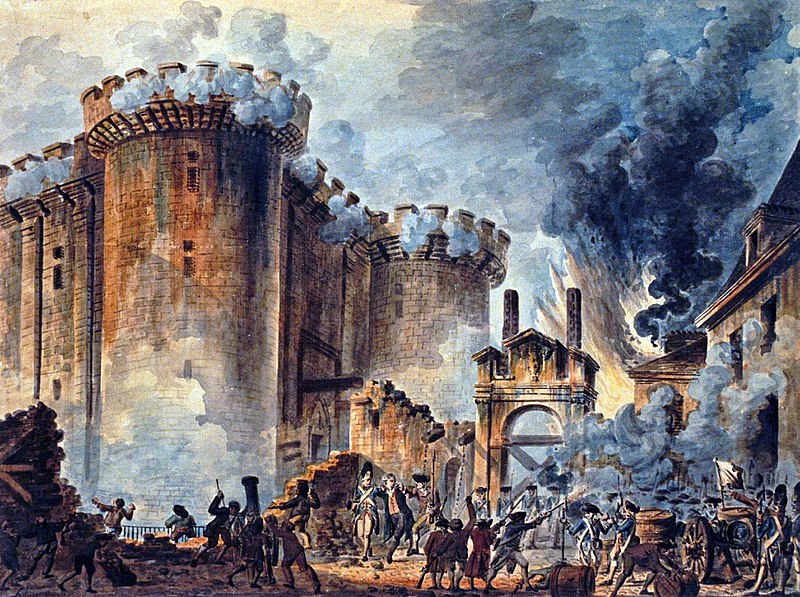
Irish Womens Liberation Connolly Station
Irish women photographed at Connolly Station 1971, about to board train to Belfast to purchase contraceptives to bring back to the Irish state, illegal at the time. There was no right to abortion either or divorce and a husband’s signed permission was necessary to take out a hire purchase agreement. (Image sourced: Internet)

The Republican movement in general, with some exceptions, declined to take on any of those struggles. They did not organise in the trade union movement, left the social struggles to others and most of all, declined to take on the Catholic Church on any issue except its opposition to the national liberation struggle. Even there, it was happy to publicly avail of the services of members of the Church clergy who supported them. Republicanism was, from its very beginning, as well as anti-monarchist, about separation of Church and State but it was difficult to see that in the Irish Republican movement, particularly after the War of Independence.

A full half of those fourteen points above (nos. 5,6, 7, 8, 12, 13 and 14) would have meant taking on the Church head-on and no doubt the hierarchy would have hindered the struggle over most of the others too, due to its strong links with the State and its ruling class.

Because of its tactical and no doubt ideological refusal to take up those struggles, the Republican movement could do little more in the 26-County state than to agitate for solidarity with the beleaguered nationalist population inside the British colony.

Though this could be effective for a time it could not become a mass movement, nor survive a long struggle, without any remedy being sought for the issues facing the population within the state.

The wonder is not that the majority leadership of the Republican Movement threw in the towel on the military struggle in 1998 but that they had waited so long to do it. Of course, they never admitted the true nature of what they were doing: abandoning the armed struggle and revolution in total and instead, using their negotiating position to advance themselves politically – not in the economic, social and political struggle envisioned above but rather in a political struggle to find themselves a place among the Gombeen political class in the Irish state and as accomplices in the governing of the colonial state.

PART 2: COLLECTING THE FORCES FOR REVOLUTION

(Reading time this section: 2 minutes)

          A successful revolution in Ireland, as in most places, would require the involvement of a mass movement. That mass movement would be unlikely to be one that had national self-determination as its only aim – certainly not in the 26 Counties (the Irish state). Mass movements arise at times around different issues and exist as long as the issue does or instead until the movement gets worn down or broken up. Such movements arose around the Household Tax and, later, around the additional Water Charges.

Water Protest Long View 29 Aug 2015
Section of protest against water charges, O’Connell Street, Dublin, 29 Aug. 2015 (Image source: Internet)

Even though the objectives of such movements are often not revolutionary, the participation in them by revolutionaries is necessary if, in the future, there is to be a revolution. Revolutionary activists can make contacts and prove themselves by the way they participate whilst at the same time pointing out that a revolution is necessary in order to resolve all these issues completely and permanently. Such activists can also influence the movement (or sections of it) to act in more revolutionary ways, so that the movement can be guided by – and imbued with — revolutionary spirit.

Working people in struggles come up against concrete problems which need to be resolved in order to move forward. Prior to 1913 in Ireland, workers learned the need for unity in struggle which was emphasised by the employers’ attempts to break the Irish Transport and General Workers’ Union in August 1913. The attacks on them by the Dublin Metropolitan Police illustrated the need for organised defence and Larkin and Connolly called for the formation of what became the Irish Citizen Army, which later also fought prominently in the 1916 Rising.

Packed Workers Liberty Hall 1913
Members and supporters of the Irish Transport & General Workers’ Union cheering outside the union’s HQ, Liberty Hall, August 1913. Later the union formed the ICA to defend themselves from the DMP; the ICA took a prominent part in the 1916 Rising. (Image source: Internet)

Trade unions are the only mass organisations of the working class in Ireland and it is necessary for revolutionaries to be active within them. Currently, other than social democrats, it is mainly members of both trotskyist parties and independent activists who engage politically with the trade unions. Those members are mostly in clerical work and their political work tends to concentrate on employment demands around wages and working conditions. When they introduce politics it is generally to get some motion passed by their branch. Also at times, they will campaign to get a perceived left-wing candidate elected to some position within the trade union bureaucracy.

None of the above are without value but they remain disjointed in terms of program and often confined to just one trade union. Not only that, but often the Left party involved will engage in order to recruit some new members and in order also to retain their own members by providing them with activity. When broad front trade union groups are formed, they tend to become an arena where the dominant trotskyist parties compete for dominance.

If we are to have a successful revolution – and in particular a socialist one – participation in the struggles of workers in the trade union movement is absolutely necessary. But participation should be primarily among the rank and file of the trade union and also across trade unions, focused on providing solidarity to members of whichever union is in struggle – in addition to encouraging unorganised workers to organise and become active. The objective is not to help make one trade union or one section more militant but rather to create a militant workers solidarity movement within the whole trade union movement. It is essential to have members in the ‘blue-collar’ work unions or departments as well as in the clerical unions or sections. And the cross-union organisation I advocated should be independent — the preserve of no political party.

Participation in such struggles provides an opportunity for revolutionaries to make contact with people who are activists but not yet revolutionaries and to give those people an opportunity to evaluate the revolutionaries in terms of their actual practice. Revolutionaries can support the people struggling for worthwhile reforms while at the same time pointing to their partial and temporary nature. Revolutionary activists can play an educational role in the mass movements while at the same time becoming educated themselves by the daily reality faced by the masses in this system.

PART 3: THE ABSOLUTE NEED FOR UNITY – BUT WHAT KIND?

(Reading time this section: 3 minutes)

          It is, most people would think, a ‘no-brainer’ (i.e an obvious truth) that unity is necessary in the struggle to overthrow the current system. It might be thought surprising, therefore, that disunity is more the rule among those who aspire to revolution.

Generally, those who claim to be revolutionary socialists will not unite with Irish Republicans. In addition, those socialists of one party will often fail to unite with those of a different party. The same dynamic is to be seen among Irish Republicans also.

There have been many attempts to overcome this problem. In the 1930s the Republican Congress sought to unite Irish Republicans with revolutionary socialists. In the face of hostility within the mainstream Republican movement and also with divisions among the communist element in Ireland at the time, faced in addition with anti-communist hysteria whipped up by the Catholic Church, the experiment failed. The leadership of the Sinn Féin and the IRA of the later 1960s tried to combine socialism and republicanism within one party and military organisation, an attempt that crashed when it was discovered that the arms necessary to defend ‘nationalist’ community areas in the Six Counties, particularly in Belfast, were unavailable, leading to an acrimonious split in the movement. A subsequent attempt to combine the socialist and republican elements in another organisation survived a little longer but also failed for a number of reasons, some internal and also due to Irish State repression.

Shankhill Rd Republican Congress WT Commemoration 1934
Socialist Republicans, members of Republican Congress from Shankhill Road, marching to annual Wolfe Tone commemoration, Bodenstown 1934. They were attacked by conservative Republicans. (Photo source: Internet)

There have been some attempts to unite the non-republican Left itself also, which usually failed due in part to ideological differences but also to political sectarianism and personality clashes. Currently both trotskyist parties have an uneasy working relationship, the small grouping of Independents for Change exists also, the Communist Party is very small too and the anarchists are scattered and unable for years now, for the most part, to mount united action.

Attempts to unite the various parts of the Irish Republican movement have, in general, focused on creating a new organisation or absorbing activists unhappy with one organisation into another.

A frequent approach has been for some people to sit down and produce what they consider solid policy and a constitution, then to propose this format to others around which to unite. Even when accepting amendments from the elements they seek to recruit, these attempts too have largely failed.

It seems a rational approach: if we want unity, surely first we have to agree on what for, how, etc, etc before we can go into action? I believe, contrary though it may seem, that actually we should unite in action first. Uniting in action tends to break down barriers of mistrust that are built on hearsay or suspicions fostered by sectarian elements. Action also tends to clarify certain questions that until then are theoretical only. Of course, at some point, action will need to be guided by worked out policy but initially the action itself can be sufficient guide, especially since approaching the question the other way around has been so generally unproductive.

Unity Is Strength Image copy

The question then arises: with whom to unite? In general, I would say that the answer is: with all with whom we can, in actual practice, unite: different types of revolutionary socialists (including anarchists), Irish Republicans, Left social democrats, human and civil rights activists.

There are some exceptions I think necessary to mention: fascists, racists, religious sectarians and parties that participate in Government. Fascists seek to impose an undemocratic regime completely hostile to the interests of working people and, far from our uniting with them, need to be defeated; racists and religious sectarians seek to divide the movement along lines of ethnicity or religious affiliation. Revolutionaries need to draw a clear line of distinction between the movements of resistance and those who participate in a native capitalist or colonial government, i.e the management organisations of the enemy.

Many issues lend themselves to united action but perhaps none more so, and none are more essential, than against repression.

PART FOUR: UNITY AGAINST REPRESSION

(Reading time this section: 3 minutes)

          All revolutionary movements – and many that are progressive but not revolutionary – face repression at some point in their existence. Not to recognise that fact and to have some kind of preparation for it, even if very basic, is indicative of a non-revolutionary attitude to the State. Nor have we any reason in Ireland to be complacent on this question.

The Irish State turned to military suppression in the first year of its existence as did also the colonial statelet. Detentions, torture, murders and official executions were carried out by Free State forces over a number of years, followed by censorship and arrests, all facilitated by emergency repressive legislation. In the Six Counties, in addition to similar even more repressive legislation, there were two sectarian militarised police forces and sectarian civilian organisations.

After a change of government, the Irish State introduced internment without trial during the Emergency (1939-1946), the Offences Against the State Act in 1939, Special Criminal (sic) Courts in 1972 and the Amendment to the OAS in that same year.

Bloody Sunday march Derry 2014
Poster for 2014 Commemoration of Bloody Sunday massacre, Derry 1972. The poster calls for unity. (Image source: Internet)

The Six County statelet had the Special Powers Act (1922) and brought in internment without trial in 1971 (the Ballymurphy Massacre that year and the Derry Massacre the following year, both by the Parachute Regiment, were of people protesting the introduction of internment). The statelet also introduced the Emergency Provisions Act and the no-jury Diplock Courts in 1973 and, though technically abolished in 2007, non-jury trials can and do take place up to today.

The British state targeted the Irish diaspora in Britain in 1974 with the Prevention of Terrorism (sic) Act and that same year and the following, framed and convicted nearly a score of innocent people of bombings in five different cases – had the death penalty not been previously abolished for murder, most of them would have been executed. It took the victims over 15 years to win their freedom, by which time one had died in jail. Brought in as a temporary measure, the PTA continued in force until 1989 but a general Terrorism Act was brought into British Law in 2000 and remains in force today.

Birmingham Six Photos Bruises
Photos of the Birmingham Six, Irishmen resident in England, showing bruises from police beatings after their arrest in 1974; they were also beaten by jailers. Also arrested, brutalised, framed and convicted were the Guildford Four, Maguire Seven and Giuseppe Conlon and Judith Ward. (Photo source: Internet)

State repression rarely targets the whole population and, particularly in a capitalist “democracy” focuses on particular groups which it fears or feels it can safely persecute. However, we should also recall Pastor Niemoller’s words about the creeping repression which even the German Nazi state instituted, going after first one group, then another, and another …. Among the list of groups targeted eventually by the Nazis were Jews, Roma, Communists, Socialists, Anarchists, Social Democrats, Jehova’s Witnesses, Free Masons, Gays and Lesbians, Mentally Ill or challenged, physically challenged ….

It is in the interests of the vast majority of the population to oppose repression of different groups, whether those groups be based on ethnicity, gender, sexuality, citizenship status or democratic politics. Not everyone recognises this of course but one might expect that political activists challenging the status quo would do so. Sadly, experience shows that they do not in practice (though they may acknowledge it intellectually).

Lineup Clenched Fists & Banner
Anti-Internment and political prisoner solidarity picket September 2016 at Kilmainham Jail, Dublin (a former place of detention and execution for political prisoners under both the British occupation and the Irish State, now a museum). (Photo source: Rebel Breeze)

With some periodic exceptions, socialist groups in Ireland do not support protests against repression of republicans. Furthermore, some republican groups will not support others when the latter are subjected to repression. Yet at any time, Republicans of any group can be and are regularly harassed in public or raided at home; their employers may be warned about them by the political police; they may be detained on special repressive legislation, denied bail, effectively interned; they can be easily convicted in the non-jury Special Criminal Courts or Diplock Courts; ex-prisoners released on licence in the Six Counties can be returned to jail without any charge or possibility of defence.

The Irish State’s non-jury Special Criminal Court is a tempting facility for putting away people whom the State finds annoying and it is widely thought it was considered for the trials of the Jobstown protesters. The result of the trial, where the jury clearly took a different view to the presiding judge, may well have justified the opinion of those in the State who considered sending the defendants to the SCC.

solidarity woodcut

Unity against repression is a fundamental need of a healthy society and of movements that challenge the status quo. Practical unity in any kind of action also tends to break down barriers and assists general revolutionary broad unity. Unity against repression is so basic a need that agreement with this or that individual is unnecessary, nor with this or that organisation in order to defend them against repression. Basic democratic rights were fought for by generations and have to be defended; in addition they give activists some room to act without being jailed. On this basis, all must unite in practice and political sectarianism has no place in that.

Without some basic unity in practice across the sector challenging the status quo, there can be no revolution. But more than that: we stand together against repression ….. or we go to jail separately.

End.

Diarmuid Breatnach is a veteran independent revolutionary activist, currently particularly active in committees against repression, in some areas of internationalist solidarity and in defence of historical memory.

PART ONE: THE THIRTY-YEARS’ WAR – DOOMED TO LOSE

(Reading time this section: less than 5 minutes)

Part of the series HOW TO WIN THE WAR — GETTING INTO POSITION

See also:

INTRODUCTION: https://rebelbreeze.wordpress.com/2019/08/07/how-to-win-the-war-getting-into-position/

PART TWO: COLLECTING THE FORCES FOR REVOLUTION https://rebelbreeze.wordpress.com/2019/08/07/part-2-collecting-the-forces-for-revolution/

PART THREE: THE ABSOLUTE NEED FOR UNITY – BUT HOW AND WHAT KIND? WITH WHOM?

PART FOUR: UNITY AGAINST REPRESSION

The national liberation war that began in 1969 in the Six Counties and ended in 1998 (though some armed incidents continue from time to time) began as a civil rights struggle and changed into a war of communal defence and of national liberation. The military part of the struggle for the most part took place in the occupied Six Counties. The political element of the struggle was waged all over Ireland (and abroad) but in the main consisted of support for the struggle in the Six occupied Counties.

Free Derry Corner Gas Mask Images
Derry Monument and Mural of the Civil Rights struggle which preceded the armed struggle in the Six Counties. (Image sourced: Internet)

Fought in that way, the struggle was bound to lose. It could never win. How could anyone imagine that they could win a struggle fought against a world power in one-sixth of the country, where even the population there was divided against them? What could they have been thinking?

To my mind, there are only two possible sane replies to that question, which is that they believed: 1) that the British ruling class would get worn down by struggle and leave and/ or 2) that the Irish ruling class would intervene in some way to assist the struggle and make continued British occupation untenable.

1) ‘The British ruling class would get worn down and leave’: This theory must have depended on British repression being condemned abroad and being unpopular at home but had to rest fundamentally on the British having no great stake in continuing its possession of its colony there.

Anyone who thought that (and there were many who did and still many who do, not just Irish Republicans) made a fundamental error. Time and again the British ruling class has shown its determination to hang on to what might be considered its first colony, even as its ruling class’ composition changed from feudal-colonialist to capitalist-imperialist and as the world changed around it.

Collusion State Murder Mural
Mural in nationalist area in the Six Counties (Image sourced: Internet)

Even when the British ruling class, weakened by WW1 and facing an Irish guerrilla war with the support of the vast majority of Irish people, with national liberation uprisings breaking out across its Empire and with its repression in Ireland increasingly unpopular at home, entered into negotiations with the Irish resistance, it held on to a foothold, the Six Counties.

Subsequently, it had that colony managed in a permanent state of emergency laws, with institutionalised sectarian discrimination at all official levels and outbreaks of pogroms in the street and workplace.

That became even more exposed during the civil rights struggle and the national liberation war that followed when the British State compromised whatever good international reputation its Armed Forces had, its judiciary, its legal establishment, its media and its very legal framework.

Even now, when many believe that the Good Friday Agreement means that a 50% plus one vote in favour in the Six Counties will be sufficient to end Partition, they do not realise that such a decision will have to also obtain a majority in the British Parliament and be endorsed by the British Monarch. They are also forgetting the broken promises that surrounded Partition in the first place.

When analysing what holding on to the Six Counties has cost the British State in terms of reputation, military and financial contributions, one can only rationally assume that continuing to hold on to that foothold is of great importance to the British State. One may speculate as to the reasons underlying that but the central fact cannot be denied.

2) that the Irish ruling class would intervene in some way to assist the struggle and make continued British occupation untenable:

There was some basis for this belief in that a section of Fianna Fáil, a party that had emerged from a split in Sinn Féin in the 1930s and had become one of the mainstream parties in the Irish state, had retained some traditional commitment to seeking a united Ireland. However it was a thin enough basis on which to depend in a national liberation struggle since that section had no majority within the party itself, to say nothing of the foreign-dependent nature of the Irish native capitalist class, the Gombeens, as a whole.

British Soldiers Helmeted Belfast 1969
British Army in Belfast 1969 (bayonets and guns pointed towards nationalist area). (Image sourced: Internet)

The question came to a trial of strength in the Arms Crisis of 1970, in which at least two Fianna Fáil Government Ministers were involved in secretly buying arms for the defence of nationalist areas in the Six Counties (since the IRA had insufficient weapons at the time) from rampaging Loyalist mobs and the Royal Ulster Constabulary (including the part-time B-Specials). The Ministers alleged that they had acted in the full knowledge of the rest of the Government. By the time the whole affair was over, two Ministers had been sacked and another two resigned in protest.

If it had not been clear before that the Gombeens, the native Irish capitalist class was no patriotic capitalist class but rather a neo-colonial one, it should have been clear after that. But the armed struggle in the Six Counties intensified, especially after the massacres of unarmed civilians carried out by British Paratroopers the following year, 1971 in Belfast and again in Derry in 1972. And the war lasted until 1998.

If, as had been demonstrated to be the case that the British ruling class were determined to hold on to the Six Counties and the Irish ruling class was not going to seriously challenge that possession, did the Republican movement have any other option than to fight on a war that they could not possibly win?

I am clear that they did.  

Clearly, in order to have a chance of success, the war had to be extended to the other five-fifths of the country, which is to say into the territory under the control of the Irish native capitalist class. This class had seized power after the War of Independence 1919-1921 and had beaten and suppressed its opposition during the Civil War (1922-1923) and after and furthermore was supported by a powerful ally, the Irish Catholic Church. Since the founding of the first Irish Republican organisation, the United Irishmen of the late 1790s, the Catholic Church hierarchy had opposed Irish Republicanism; it had condemned four Irish priests who participated in the uprising of 1798, excommunicated the Fenians, had at first condemned the 1916 Rising and the War of Independence only to latch on to it at the end along with the Gombeen class.

The general Irish

population likely would not have supported or sustained an armed struggle in the 1970s against the Gombeen class but that class could have been fought politically, through agitation and mobilisation, on many social, political and economic fronts. Without going into the specific details of each, these were:

  1. against the huge wastage of Irish youth through emigration

  2. to remedy the shortage of affordable housing (which in part contributed to the above)

  3. to end unemployment (also contributing hugely to emigration)

  4. to raise the level of wages and lower wage earners’ taxation

  5. for the right to divorce

  6. for equality for women in law

  7. for the right to contraception devices and medication for men and women

  8. against decriminalisation and for equal rights for gay and lesbians

  9. to halt the decline of the Irish language, in particular of the rural Irish-speaking areas

  10. to improve services for the rural areas

  11. to oppose the open-door policy for foreign multinationals to exploit Irish natural and human resources

  12. to secularise the education service

  13. and the health service.

  14. to remove the privileged status of the Catholic Church within the state.

The Republican movement in general, with some exceptions, declined to take on any of those struggles. They did not organise in the trade union movement, left the social struggles to others and most of all, declined to take on the Catholic Church on any issue except its opposition to the national liberation struggle. Even there, it was happy to publicly avail of the services of members of the Church clergy who supported them. Republicanism was, from its very beginning, as well as anti-monarchist, about separation of Church and State but it was difficult to see that in the Irish Republican movement, particularly after the War of Independence.

Irish Womens Liberation Connolly Station
Irish women photographed at Connolly Station 1971, about to board train to Belfast to purchase contraceptives to bring back to the Irish state, illegal at the time. There was no right to abortion either or divorce and a husband’s signed permission was necessary to take out a hire purchase agreement. (Image sourced: Internet)

A full half of those fourteen points above (nos. 5,6, 7, 8, 12, 13 and 14) would have meant taking on the Church head-on and no doubt the hierarchy would have hindered the struggle over most of the others too, due to its strong links with the State and its ruling class.

Because of its tactical and no doubt ideological refusal to take up those struggles, the Republican movement could do little more in the 26-County state than to agitate for solidarity with the beleaguered nationalist population inside the British colony.

Though this could be effective for a time it could become a mass movement, nor survive a long struggle, without any remedy being sought to the issues facing the population within the state.

The wonder is not that the majority leadership of the Republican Movement threw in the towel on the military struggle in 1998 but that they had waited so long to do it. Of course, they never admitted the true nature of what they were doing: abandoning the armed struggle and revolution in total and instead, using their negotiating position to advance themselves politically – not in the economic, social and political struggle envisioned above but rather in a political struggle to find themselves a place among the Gombeen political class in the Irish state and as accomplices in the governing of the colonial state.

Diarmuid Breatnach is a veteran independent revolutionary activist, currently particularly active in committees against repression, in some areas of internationalist solidarity and in defence of historical memory.

WE REPENT EVERYTHING!

WE REPENT EVERYTHING!

(Reading time text: 3 minutes)

Diarmuid Breatnach

Versiones en castellano y en catalan de bajo

Introduction: The Spanish State requires the Basque resistance to repent.  The State refused Basque independence and suppressed the movement for self-determination and the language, arrested and tortured its activists. In response ETA (Basque Homeland and Freedom) was created and for nearly a decade carried out no armed action until finally it killed an armed policeman when stopped at a checkpoint (the activist was also killed in the incident) and later also the police chief in charge of tortures. Years of struggle and repression added hundreds of Basque prisoners to Spanish (and French) jails, dispersed all over the state.

          The Spanish State in more recent years insisted at first that in order for the repression to end, that ETA would have to end its armed activity. ETA did so in 2010 but successively the State insisted on decommissioning of arms, then disbandment of the organisation (which ETA did in 2017 and 2018 respectively), then that its prisoners and Basque leaders apologise for their armed actions. Most of the prisoners still refuse to do that and serve out their sentences or die in jail – but some of the leadership outside have done so, including taking part in commemorations of some of the agents of the Spanish State killed by ETA. Meanwhile, the Spanish State considers it a terrorist-law crime to commemorate the fallen fighters of ETA who died in prison or were gunned down by the forces of the State.

So …. this is on behalf of those who have apologised and those who are planning to.

WE REPENT EVERYTHING, SPANISH STATE!

We repent everything … everything! We beg your forgiveness for all that we have done – we have been like bad children in the face of your goodness. Even worse – much worse!

It’s difficult to know where to start ….

Firstly, we repent having come to this land before you, with our own language that was not even Indo-European. What arrogance! What an insult to your rightful sovereignty! Not even the Moors of Al Andalus, with their lofty science and their pretentious toleration of all religions, had the arrogance to arrive before you. We beg your forgiveness.

We are sorry also for having fought for the independence and rights of the Kingdom of Navarra and for even having supplied some of your early royal families. Again, what arrogance! We beg your forgiveness once more.

We regret not having participated wholeheartedly in your rightful, restrained and proportionate Inquisition. We heartily repent leaving so many witches unburned. Please, please forgive us for that, though in truth it was unpardonable.

And throughout, still speaking that language, probably the oldest in Europe! What shameful arrogance. What lack of gratitude for the Indo-European language you offered us!

We regret – oh, how we regret! — having stood against that wonderful, righteous and Christian leader, Generalisimo Franco. We find it hard to believe now that we had the arrogance to stand with a government elected by the people against the rightful military intervention of the Four Generals and especially his exalted self, General Franco. What could we have been thinking of? How right he was to have his German allies – may they be blessed! — bomb Gernika (sorry, Guernica)!

We apologise for those priests, monks and nuns who did not embrace the Christian Crusade of the Caudillo and the Spanish hierarchy, who persisted in defending the indefensible ideas of nationhood, of giving aid to prisoners and in teaching our accursed language. Of course it was right to shoot some of them – they should all have been shot!

We feel ashamed and deeply repent that even after Franco and his troops showed us the correct way — having had to shoot thousands to do it – that we continued to speak that unChristian language and to teach it in secret in houses, even when you had lawfully forbidden it.

We humbly apologise for the industrial strikes we have carried out in protest against your wise guidance and are very sorry that we forced you to shoot or imprison us.

We can hardly continue, we are so choked with grief and yet must do so; we beg your indulgence, for in some ways, our worst is to come.

On bended knee — no, prostrate on the ground – we beg your forgiveness for having formed the organisation “Land and Freedom”. To have banded together to spread ideas of independence and socialism – independence from you! Atheistic socialism! Your police were quite right to hound us, arrest, torture us and even shoot us. But did we learn? No – instead we took up arms! Against the Power in the land!

For our newspapers that you rightly banned, for our radio stations you rightly shut down; for our activists you rightly forced to confess and jailed, for our other activists who had the temerity to flee so that you had to send assassination squads after them into another state’s administration; for the disgraceful conduct of relatives of people imprisoned who traveled hundreds of kilometres to visit them and had the temerity to campaign for an end to their dispersal; for the prisoners who continued to resist and those who had the arrogance to shame you by ending their own lives; for the refugees whom you had to pursue to Latin America, to Canada and to states of Europe; for continuing to speak that accursed language, for singing it and for even developing an art form of impromptu dialogues in it …..

For all of that, we repent, we apologise, we humbly beg your forgiveness, even though we know we are not worthy of it.

If you allow us, in your benevolence and forbearance, undeserving as we are, although we know we can never achieve it properly and will be but pale imitations, we will try – really, really try – to become like you.

End.

EH Bildu (Abertzale Left party) Mayor of Errentería, Julen Mendoza (nearest to viewer) in commemoration ceremony for four Guardia Civil killed by ETA in the area in 1982 (Source photo: Internet)

CASTELLANO

NOS ARREPENTIMOS DE TODO, ESTADO ESPANOL! 

Lo arrepentimos de todo … pero de todo! Pedimos vuestro perdón por todo lo que hemos hecho, hemos sido como niños malos ante su bondad. Aún peor, mucho peor!

Es difícil saber por dónde empezar …

En primer lugar, lamentamos haber llegado a esta tierra antes que ustedes, con nuestro propio lenguaje que ni siquiera era indoeuropeo. Qué arrogancia! Qué insulto a vuestra soberanía legítima! Ni siquiera los moros de Al-Andalus, con su gran ciencia y su pretendida tolerancia a todas las religiones, tuvieron la arrogancia de llegar antes que ustedes. Pedimos perdón.

Arrepentimos también haber luchado por la independencia y los derechos del Reino de Navarra e incluso por haber proporcionado algunas de sus familias reales. Otra vez, qué arrogancia! Pedimos vuestro perdón una vez más.

Lamentamos no haber participado de manera sincera en vuestra Inquisición legítima, moderada y proporcionada. Lamentamos profundamente dejar muchas brujas y herejes sin quemar. Por favor, perdónenos por ello, aunque, en en realidad, es imperdonable.

Y encima, hablando este idioma vasco, probablemente el más antiguo de Europa! Qué vergonzosa arrogancia. Qué falta de gratitud por la lengua indoeuropea que nos ofrecisteis!

Lamentamos – oh, como lo lamentamos! – habernos mantenido en contra de ese maravilloso, justo y cristiano líder, el Generalísimo Franco. Nos resulta difícil creer ahora que teníamos la arrogancia de apoyar a un gobierno elegido por la gente contra la legítima intervención militar de los Cuatro Generales y sobre todo su exaltado persona, el general Franco. En que podíamos haber estado pensando? ¿Que acertado estuvisteis con sus aliados alemanes – ! benditos sean! – en bombardear a Gernika (perdoname, Guernica)!

Nos disculpamos por nuestros sacerdotes, monjes y religiosas que no aceptaron la cruzada cristiana del Caudillo y la jerarquía Española, que persistieron en la defensa de las ideas indefendibles de la nacionalidad, de dar ayuda a los prisioneros y de enseñar nuestro idioma torpe. Por supuesto, era correcto disparar a algunos de ellos: todos debían de haber sido fusilados!

Nos sentimos avergonzados y profundamente arrepentidos de que, incluso después que Franco y sus tropas nos mostraran el camino correcto — habiendo tenido que disparar miles para ello — seguimos hablando de esta lengua no cristiana y la enseñamos en secreto en las casas , incluso cuando había estado ya prohibido legalmente.

Humildemente nos disculpamos por las huelgas industriales que hemos llevado a cabo en protesta contra vuestra sabia dirección y lamentamos mucho haberles obligado a dispararnos o encarcelarnos.

Apenas podemos continuar, estamos tan abrumados por el dolor y, sin embargo, debemos hacerlo; rogamos su indulgencia, porque de alguna manera, nuestro peor final ha llegado.

De rodillas – no! postrado en el suelo! – le pedimos perdón por haber formado la organización “Tierra y Libertad”. Reunirse para difundir ideas de independencia, socialismo –¡independencia de ustedes! ¡Socialismo ateo! Su policía tenía toda la razón para perseguirnos, arrestarnos y torturarnos e incluso dispararnos. Pero, ¿aprendimos? No, en cambio tomamos las armas! ¡Contra el poder de la tierra!

Para nuestros periódicos que con tanta razón prohibisteis, para nuestras estaciones de radio cerrados correctamente, para nuestros activistas a los que con razón obligasteis confesar y encarcelar, para nuestros otros activistas que tuvieron la temeridad de huir, por lo que tuvisteis que enviar escuadrones de asesinatos en la tierra de otro estado, por la vergonzosa conducta de familiares de personas encarceladas que viajaron cientos de kilómetros para visitarlos y tuvieron la temeridad de hacer campaña para poner fin a su dispersión, por los prisioneros que continuaron resistiendo y los que tenían la arrogancia para avergonzarles por poniendo fin a sus propias vidas, a los refugiados que tuvisteis que perseguir en América Latina, a Canadá y a los estados de Europa, por continuar hablando ese lenguaje maldito, por cantarlo e incluso por desarrollar una forma de arte de diálogos improvisados en él. …

Por todo eso, nos arrepentimos, nos disculpamos, pedimos humildemente vuestro perdón, aunque sabemos que no somos dignos de ello.

Si nos permiten, en vuestra benevolencia y paciencia, sin merecer lo que somos, aunque sepamos que nunca podremos lograrlo correctamente y seremos solo imitaciones pálidas, intentaremos, realmente, realmente intentaremos llegar a ser como vosotros.

Basque victim of Spanish police tortue, Joxe Arregi Izagirre, who incredibly survived until brought to hospital but died quickly afterwards, February 1981.

CATALAN

ENS PENEDIM DE TOT, ESTAT ESPANYOL!

Ens penedim de tot … pero de tot! Demanem el vostre perdó per tot el que hem fet, hem estat com a nens dolents davant la vostra bondat. Encara pitjor, molt pitjor!

És difícil saber per on començar …

En primer lloc, lamentem haver-nos arribat a aquesta terra abans que tu, amb el nostre propi llenguatge que ni tan sols era indoeuropeu. Quina arrogància! Quin insult a la vostra sobirania legítima! Ni tan sols els moros d’Al-Andalus, amb la seva gran ciència i la seva pretesa tolerància a totes les religions, van tenir l’arrogància d’arribar abans que vosaltres. Demanem perdó.

Sentim també haver lluitat per la independència i els drets del Regne de Navarra i fins i tot per haver subministrat algunes de les seves famílies reals. Una altra vegada, quina arrogància! Demanem el perdó una vegada més.

Lamentem no haver participat de manera sincera en la vostra Inquisició legítima, moderada i proporcionada. Lamentem profundament deixar que moltes bruixes i heretges sense cremar. Si us plau, perdoneu-nos per això, encara que, en veritat, no era vàlid.

I tot, parlant encara aquest idioma basc, probablement el més antic d’Europa! Quina vergonyosa arrogància. Quina falta de gratitud per la llengua indoeuropea que ens vau oferir!

Lamentem – oh, com ho lamentem! – Davant d’aquest meravellós, just i líder cristià, el Generalíssim Franco. Ens resulta difícil creure ara que teníem l’arrogància d’estar amb un govern elegit per la gent contra la legítima intervenció militar dels Quatre Generals i sobretot el seu exaltat general, el general Franco. En què podíem estar pensant? Quin dret era tenir els seus aliats alemanys, que beneïts siguin! – Bombardejar Gernika (ho sento, Guernica)!

Ens disculpem pels nostres sacerdots, monjos i religioses que no van acceptar la creuada cristiana del Caudillo i la jerarquia Espanyola, que va persistir en la defensa de les idees indefensables de la nacionalitat, de donar ajuda als presoners i d’ensenyar el nostre idioma maldestre. Per descomptat, era correcte disparar alguns d’ells: tots haurien estat disparats!

Juan Mañas Morales, Luis Montero García and Luis Manuel Cobo Mier, uninvolved Basques tortured and killed by Guardia Civil in 1981. Their bodies were then placed in a car, shot at and the car set on fire. (Source images: Internet)

Ens sentim avergonyits i profundament penedits que, fins i tot després que Franco i les seves tropes ens mostressin la manera correcta: havent hagut de disparar milers per fer-ho, continuem parlant d’aquesta llengua cristiana i ensenyem-la en secret a les cases, fins i tot quan tenies ho ha prohibit legalment.

REFERENCES

A Councillor of the official Abertzale (Basque pro-Independence) Left attends memorial of victim of ETA and lays flowers at memorial: https://www.efe.com/efe/espana/politica/eh-bildu-asiste-por-primera-vez-en-19-anos-al-homenaje-a-miguel-angel-blanco/10002-2984272

EH Bildu, party of the Abertzale Left, declares it wished to attend commemoration of victim of ETA: https://www.europapress.es/nacional/noticia-eh-bildu-afirma-ausencia-homenaje-blanco-nadie-deberia-ir-sitio-donde-no-bienvenido-20140714112609.html

A Mayor of the Abertzale Left attends commemoration of four Guardia Civil killed by ETA in Errentería (an area somtimes nicknamed “the Basque Belfast”, where resistance was strong and many Basques were killed by police, by state-sponsored murder gangs, including kidnappings and rapes): https://www.eldiario.es/norte/navarra/Ongi-Jose-Miguel-Maria-Dolores_0_814718789.html

LARGE EASTER RISING COMMEMORATION BY ‘DISSIDENTS’ ON DUBLIN’S MAIN STREET

(Reading time 15 mins. approximately)

Clive Sulish

          The Irish Republican organisation Saoradh staged a large demonstration of its support on Dublin’s O’Connell Street on Saturday afternoon (20th April). Republican marching bands and hundreds of supporters followed the traditional ‘colour party’ flags and lines of men and some women dressed in green-brown military-style clothing, black berets and dark sunglasses.

view section of parade proceeding south along east side of O’Connell St.

   Beginning at the Garden of Remembrance, the procession, carrying large portraits of the executed martyrs of the 1916 Rising, wound its way down the main street past thousands of viewers, many of those taking photos and filming, down to the wall of Trinity College and the Bank of Ireland building, then back up Westmoreland street and up the west side of O’Connell Street to the GPO building, the site of the HQ of the Rising in 1916, for speeches as the ceremony of the commemoration.

Parade forming up at Garden of Remembrance
The Wolfe Tone RFB from Craigneuk, Glasgow, at the Parnell St/ O’Connell St. junction
Long view of section of the parade proceeding south along the east side of Parnell Square.


     The parade assembled at Dublin’s Garden of Remembrance and remained there for some time without the reason being clear, until the arrival of the participants dressed in green-brown military-style clothing, black berets and dark sunglasses, which many in the waiting crowd applauded. Presumably these were meant to represent the IRA but from the physical appearance of many it was clear that their active duty days, if they had them, were behind them. Presumably too, any organisation that did have an armed section would be reluctant to offer them up to the State for arrest on a parade and their all appearing at the last minute like that was also perhaps to reduce the opportunity for Garda harassment.

Another colur party but in War of Independence (1919-1921) period costume at the Garden of Remembrance, waiting to begin.

   However, the uniformed Garda presence was in low numbers and although the Special Branch had officers there, they did not appear to be harassing Republicans for their names and addresses, as is their usual wont.

The route of the parade had been prepared placards bearing the words “The Unfinished Revolution” and “Saoradh” with tricolour flags attached at intervals to traffic sign and street light posts, including also at least one Palestinian flag. As the colour party and people in uniform lined up with banners and a band behind them and set off down towards the city centre, people joined in behind the band, with another band bringing up the rear.

TRAGEDY AND CONDEMNATION

          The crowd appeared to contain many different elements, mostly men but quite a few women, some parents with small children and some teenagers, young men and older. Included among the attendance were a number of independent Republicans and socialists and a number expressed their decision to attend as having been influenced by the tragedy of the previous Thursday and the media campaign against ‘dissident’ Republicans, along with the apprehension that the Gardaí might take advantage of that to block or harass the paraders.

   A scheduled Easter commemoration by a committee including apparently members of Saoradh to be held in Derry on Easter Monday had been cancelled as a result of a tragic incident. The armed British colonial police force in the Six Counties, the PSNI, had been carrying out house searches in the Galiagh and Creggan areas of Derry, allegedly for arms, to which youth had responded with stones and petrol bombs. During that incident, a gun was fired from the direction of the youth towards the colonial police but struck Lyra McKee, a young female reporter standing near them instead. Tragically the wound was fatal.

Section of banners coming back across O’Connell Bridge towards the GPO

   Saoradh had issued a statement after the event expressing regret for the death and extending condolences to Lyra McKee’s family and friends but also putting the incident in the context of regular harassing raids by the PSNI on houses in ‘nationalist’ areas and the always likely result of resistance (see Links for full statement).

   Possibly in reference to that tragedy, a very tall long-haired man stepped in front of a section of marchers with his hands in the air. Stewards quickly blocked him peacefully and diverted participants around him.

   Past the objector and into O’Connell Street, both the east side pavement and the pedestrian middle reservation were thronged with people watching, photographing and filming. The parade passed on to O’Connell Bridge, into D’Olier Street, turned right towards the Bank of Ireland building and back up Westmoreland Street to the General Post Office, location of the HQ of the Rising in 1916, outside of which the 1916 Proclamation had been read on 24th April by Patrick Pearse with James Connolly by his side.

At the GPO, Saoradh party chairman Brian Kenna welcomed the participants.

Portraits of the executed 1916 martyrs being carried back across O’Connell Bridge


Section of the Coatbridge Unitedmen RFB, Glasgow, marching southward in O’Connell Street.

THE SPEECHES AND CEREMONY

          At the GPO, Saoradh party chairman Brian Kenna welcomed the participants. Republican Easter Rising commemorations tend to follow an established pattern, no matter which organisation is involved: the reading of the Proclamation; messages of solidarity from Republican prisoners; a speech by a representative of the organisation; the lowering of the flags to a drum roll and their raising again, in honour of the fallen; the singing of Amhrán na bhFiann, the Irish National Anthem. In the past, a statement from the IRA was also read but in recent years this have not been customary, for a number of reasons.

   The usual components of the ceremony were present on Saturday outside the GPO with a few variations: a poem by a supporter read out, “James Connolly, the Irish Rebel” sung by another and “Róisín Dubh” played on the uileann pipes. The James Connolly song, with some powerful imagery and an attractive slow air, gives no indication whatsoever of the man’s revolutionary socialism and seems to incorporate him into the IRA, instead of the Irish Citizen Army which he co-founded or even of the Irish Volunteers, with which he joined forces only weeks before the Rising.

In the distance at the GPO, Chairperson of Saoradh Brian Kenna, MC of the event

   The RFB (Republican Flute Band) marching bands were from Scotland: The Wolfe Tone RFB Craigneuk and the Coatbridge Unitedmen RFB. One of the bands played “Take It Down From the Mast, Irish Traitors”, the lyrics of which deny the Tricolour to the Free Staters who waged the Civil War against the Republicans, the legitimate bearers of the flag. A participant remarked that the song was sung first against Free Staters, later against Fianna Fáil, later still against the “Stickies” and more recently against Sinn Féin.

   In his speech on behalf of Saoradh, Dee Fennel from Belfast began by sending solidarity messages to Republican prisoners in Irish jails and to the relatives of all those who had fallen in the struggle against British imperialim. He said that the objectives set out in the 1916 Proclamation had not been achieved and referred to those participants in the struggle who had left it along the way, some to collude in upholding the two failed states of the divided nation.

(at right of photo) Dee Fennel of Saoradh delivering the main oration at the GPO

   Referring to his own activism, Fennel recollected how four years previously he had spoken at an Easter commemoration as an independent Republican, i.e not a member of any political party. He had spoken of the need for Republican activists to engage more with one another and also in the struggles of communities, women and trade unions. Fennel said that as a result of a discussion among Republicans, some had formed Saoradh, building on “maturity and commitment” while others “retreated to their flags” and went on to list the wide areas of struggle in which he said Saoradh activists could be found.

   Fennel also referred to the activity of the IRA and said that while British imperialism remains in possession of a part of Ireland and prevents the exercise of sovereignty of the nation, there will be some form of armed resistance and that this is borne out by history.

   Referring to the harassment and persecution to which Fennel said Saoradh activists were being subjected, including “tens of thousands of stop-and-searches, hundreds of house raids”, he linked that to the PSNI raids in the Creggan area of Derry earlier that week and the tragic accidental killing of Lyra McKee when “a Volunteer fired shots at PSNI forces”. Going on to say that the IRA do make mistakes from time to time, and referring to two women killed by the Provisional IRA in error years before, Fennel said that the IRA should admit and apologise for their mistakes (NB: The New IRA did later issue an apology and express condolences), though he also said that no words could compensate for the feeling of loss.

   In reference to Brexit, Fennel said that the discussion is being focused on what kind of Border is to be imposed, while Republicans object to any kind of Border whatsoever. He stated that as socialists they also object to “the increasingly neo-liberal EU” and concluded with a call for solidarity with Irish Republican prisoners “in Maghaberry, Portlaoise and Mountjoy” who “are in captivity for no other reason thantheir commitment to Republicanism and a 32-county, secular socialist Republic.”

Salute to the fallen as drums roll and flags are lowered slowly and then raised slowly.

TRADITION OF THE PAST AND CLAIM ON TOMORROW

          Republican organisations tend to commemorate the Easter Rising not only as a historic event but also to highlight that for which the Rising was fought has yet to be achieved. But they also do so to show that they are here, present, working for those objectives and often, to promote their organisation, to attract support.

   The display involved in this Easter commemoration was impressive (despite a media claim that the numbers were only “around two hundred”), particularly in view of the inevitable bad press following the death in Derry and the system politicians’ statements on what a social media poster dubbed “The Opportunist Condemnatory Bandwagon”. It also seemed to show an organisation not much harmed overall in Ireland by a recent split over an alleged lack of internal democracy.

end.

Floral wreath carriers re-crossing O’Connell Bridge in the parade on their way to the GPO

Floral wreath from the Information Group of Sweden
Floral wreaths deposited outside the GPO (at the window where the Cúchulainn sculpture symbolises the 1916 Rising.

LINKS

Saoradh statement on the killing of Lyra McKee: http://saoradh.ie/the-death-of-lyra-mckee-in-derry-saoradh-statement/?fbclid=IwAR2nH20ILtiGjgCyih2eo0HEpkK27_F89MRptEb_OIMfA0SbRz4YB8Fneiw

Media and politician reaction to “dissident” Easter Rising commemorations in Dublin (many other similar examples): https://www.independent.ie/irish-news/politics/video-an-insult-to-irish-people-republican-groups-march-48-hours-after-lyra-mckee-murder-dishonored-the-irish-flag-varadkar-38035393.html

Irish Times inaccurate reporting:

https://www.irishtimes.com/news/ireland/irish-news/revolutionary-party-saoradh-in-paramilitary-parade-through-dublin-1.3867379?fbclid=IwAR24E5sZ9iMfINxDcor0T9uRmF5-0yV9_bfWylcCfzC0rctjMaCfmFDfv6w

“THE LAST COLONY IN AFRICA” — REPRESENTATIVES SPEAK IN DUBLIN

(Approx. reading time: report 10 mins; background 2 mins.)

Report by Diarmuid Breatnach

On Tuesday March 5th a meeting in the Teachers’ Club, Parnell Square, was addressed by representatives of the Western Sahara people and by experts in human rights matters.

2015 protest by Saharawis, mostly women.
(Photo source: Internet)

          Western Sahara, a territory of 266,000 square kilometers (103,000 sq. miles) in the Maghreb, was part of Europe’s carve-up of North Africa, when it was known among most states as Spanish Sahara, in acknowledgement of the European state that occupied it. Its people speak Arabic and Castillian (Spanish) and some also speak French, an influence from neighbouring French ex-colonies.  Few speak Berber.

Mohamed Belsat of the Polisario speaking at the event (Photo: D.Breatnach)

The UN General Assembly in 1964 called on Spain to hold a referendum there which the Franco fascist regime declined to do but in 1975, after the dictator’s death, the new regime pulled out of the territory, practically handing it over to Morocco and Mauritania. After a conflict between those two states, Morocco emerged as the sole occupier and the conflict since then has been between the Kingdom of Morocco and the Saharawi people, who seek independence.

Chaired by Mark McLoughlin, filmmaker, the Dublin meeting had been arranged at short notice and its advertising further hampered by cancellation of a booking at Trinity College.

TRACING THE PLUNDER OF SAHARAWI NATURAL RESOURCES

          Erik Hagen, of Western Sahara Resource Watch, with a display projected on a screen, showed how his organisation traces the ships arriving at the territory and departing with phosphates mined there to their destinations. From the registered tonnage of the ships, the amount of phosphates plundered can be calculated. The companies involved claim that they are doing no wrong, since they pay Morocco for the cargoes.

Mark Hagen illustrating a point with reference to the display. (Photo: D.Breatnach)

But according to the UN, no state may extract resources from a disputed territory without the consent of the people. Hagen talked about how EU had changed the wording to replace “consent of” with “being of benefit to” and then went on to effectively falsify agreement on benefit, using a document on consultation with huge majority – and a total of Saharawi organisations – voting against as evidence for.

The only company currently exploring for oil in Western Sahara is San Leon, an Irish company, although they failed to find any and are currently fighting in financial difficulties.

Clive Symmonds, expert in international law talked about the policy of isolating produce from occupied territories, by first compelling their labeling as such, which, although that would not ban the products, would facilitate a ban if such were decided. The Control of Economic Activity (Occupied Territories) Bill 2018 introduced to the Oireachtas (Irish legislature) and currently being processed with cross-house support despite Government opposition, is an example of how such a ban may be implemented (and Senator Black’s Bill will also be valid for Western Sahara). Of course, as Symmonds pointed out, such labeling is left to the exporter which in this case would be the Kingdom of Morocco.

Clive Symmonds speaking on human rights legislation and W. Sahara (Photo: D.Breatnach)

 Symmonds also referred to the EU Fisheries Agreement which, in permitting fishing within what Morocco claims as its territorial waters without reference to the Saharawi people, is permitting the plunder of the Saharawi people’s fish stocks – and the Irish State is a party to this, having signed the Agreement. Symmonds pointed out that the judgement of the European Court of Justice on 21st December 2016, stated that Western Sahara is a “separate and distinct” territory from Morocco and that trade agreements between the EU and Morocco do not apply to the occupied territory. The EU is in violation of this judgement.

A REFERENDUM IS THE ONLY DEMOCRATIC WAY”

          Mohamed Belsat, Frente Polisario Ambassador to Europe, talked about the policies of the Irish state, the EU and, in particular, France. Belsat said that they were in collusion with the Kingdom of Morocco and that in particular, France often seemed to be the opponent of the Saharawi people even more than Morocco.

Referring to what he said was the only democratic of ascertaining the will of the Saharawi people, Belsat said that it was a referendum. Morocco had called for this since they had flooded Western Sahara with Moroccans but, since the process of registration of genuine and historical residents of the area had been completed by the UN, the Moroccan Kingdom had withdrawn all support for a referendum.

(Photo: D.Breatnach)

The cost of the occupation to the Moroccan kingdom is huge, in terms of military presence maintenance and so on,” Belsat said, adding that the cost of every litre of water supplied to the occupation forces was equal to four times the price of a litre of whiskey. Furthermore, the cost to the Kingdom exceeded the benefits it extracted from the colony. In January, Morocco had at last joined and signed up to the constitution of the African Union, the organisation of African states, of which Western Sahara is a founding member and which has a long-standing position on Western Sahara being an occupied colonyFor all these and other reasons, including dissatisfaction with the regime among the Moroccan general population, he felt that a campaign of pressure on Morocco and on the EU might well bear fruit in terms of the decolonisation of this “last colony in Africa”.

Later, Belsat’s response to a question from the audience amounted to an admission that there was no “peace process.” (sic) in operation (despite a reference to it by a number of speakers) and that as a result of this and the conditions under which they were kept by their oppressors, it was increasingly difficult to restrain the youth from resorting to armed resistance. At this a member of the audience commented that armed struggle against the army of the Moroccan Kingdom backed up by France would be “suicidal”.

57 POLITICAL PRISONERS BUT MANY MORE HAVE DISAPPEARED WITHOUT TRACE”

          ElGhalia Djimi, Vice-President of ASDH (Saharawi Association of Victims of grave violations of human rights by the Moroccan State), which cooperates with the League for the Protection of Western Sahara Political Prisoners in Moroccan Jails (LPPS), who had arrived in Ireland that day, made her presentation next.  Speaking in French through a translator, Djimi talked about the conditions of life under occupation for the Saharawi people. Djimi showed a compilation of clips of soldiers, police and people in civilian clothes physically assaulting protesting Saharawi women, pulling their hair, punching and kicking them and informed the meeting that those in plainclothes were Moroccan police.

ElGhalia Djimi speaking on Moroccan Kingdom repression of Saharawi people (Photo: D.Breatnach)

There are 57 Saharawi political prisoners in Moroccan jails,” ElGhalia Djimi said, “but many more that have disappeared without trace.”

Unemployment is high among the Western Sahara people and as a result of that and other deficiencies in their lives, a drug problem has arisen, she told her audience. There are no third-level education facilities in the territory, obliging them to go to institutions in Morocco. Although they can study to gain professional qualifications for civil employment, those available are not usually those required by the employers, which is not true for their equivalent in Morocco, with the result that often Moroccans fit into the administrative jobs better than do the Saharawi people. In terms of their treatment by the authorities, all Sahawaris carry a Moroccan ID card but letters on it indicate their ethnic origin (which Belsat likened to the Nazi State’s requirement that German Jews by identifiable in their national ID documentation).

Moroccan citizen settlement in Layoune, the capital of Western Sahara, had now placed the indigenous people, once the majority, in a minority.

Mark Hagen, of Western Sahara Resources Watch.
(Photo: D.Breatnach)

SOLIDARITY IN DUBLIN

          In conclusion of the speakers’ presentations, Mohamed Belsat asked for support from the Irish people with their “history of struggle for freedom and solidarity with other struggling nations”

A couple of members of the audience mentioned that there had been an active solidarity committee with Western Sahara in Dublin in the past and one wondered about the possibility of resuscitating it.

Comment: The solidarity Committee in Dublin was independent of any political party or organisation, its name was Western Sahara Action Ireland and its FB page is still in existence. Between 2011 and 2012, the group organised a number of public events, including: two protests about Moroccan repression of Saharawi protesters, one in Dame Street and another in O’Connell Street; a protest against the EU’s Fisheries Agreement outside the Dublin offices of the EU in Dawson Street; the construction and maintenance of a “Western Sahara Tent” at the Electric Picnic of 2012, along with an exhibition of photographs taken in the territory. The latter was visited by Michael O’Higgins who was then campaigning for the Presidency of Ireland (he also appeared in the film shown at the beginning of public meeting in Dublin).

On each of the Dublin street events, a small group of Moroccans had attended to harass and attempt to intimidate the protesters, almost certainly sent by the Moroccan Embassy but their efforts were to no avail.

Flag of the Western Sahara liberation movement.
(Photo source: Western Sahara Action Ireland)

BACKGROUND

          There had been many uprisings against colonial rule in the history of Western Sahara and the last Rif War, from 1920 to 1927, had cost the Spanish State military 23,000 casualties, of which 18,000 were fatalities. Only for the intervention of the French1, the forces led by Abd el Krim would have kicked the Spanish colonialists out of the footholds to which they were still clinging.2

Like the French in their North African colonies, the Spanish occupiers had suppressed risings not only by military force against insurgents and torture of captives, including electric shocks, but also by terror against the civilian population, including assassinations, massacres, rape and internment without trial.

Both European states also developed their own Foreign Legions. Forget about the 1924 Beau Geste novel by PC Wren and the various screenplays3 to which it gave rise; the Foreign Legions were tough terrorists in uniform, founded not to fight in open war but against resisting colonial peoples.

Since 1963, Western Sahara has been on the United Nations’ list of “non self-governing nations”.  In 1965, the UN General Assembly, in its first declaration on Western Sahara, called on the Spanish State to decolonise the territory and, in 1967, to hold a referendum on self-determination but Spain refused. From 1973 to 1975, the Frente Polisario fought an armed struggle for national liberation.

Western Sahara in context. (Source image: Internet)

After the Spanish State abruptly pulled out in 1975 (following the death of its fascist dictator General Franco) and – without allowing elections of an independent Saharawi government before doing so – it relinquished control to the Kingdom of Morocco (which had formally claimed the territory since 1957) and Mauritania and conflict broke out between those states. Mauritania in time abandoned its claim and Morocco moved in and seized Western Sahara.

The Saharawi people protested Morocco’s occupation of their land and were suppressed by military and police. The Frente Polisario fought the occupying Moroccan military from 1975 until a UN-brokered ceasefire in 1991, since which there has been no Saharawi armed struggle but plenty of Moroccan repression. One of the features of the struggle was the displacement of a large part of the Saharawi population as people fled the Moroccan military, many to Algeria (which had won independence from France in 1962 after a fierce and dirty war), where they remain in a refugee camp. The Moroccan Kingdom then built a wall to prevent Saharawis from returning, which it guards by troops and miles of landmines.

End.

FOOTNOTES

1The casualties of the French, according to Wikipedia, amounted to 10,000 with 2,500 killed in battle. The casualties of the insurgents and of the indigenous civilian population, as usual in these situations, is difficult to determine but, according to Wikipedia, came to 30,000, of which 10,000 were fatalities.

2For more on the Rif War 1920, read the article about it (see link in Resources and Useful Links).

3Including those of 1939 starring Gary Cooper and Ray Miland, 1966 with Telly Savalas and Doug McClure and the BBC serial of 1982.


REFERENCES AND USEFUL LINKS

Sahara Press Service: https://www.spsrasd.info/news/en

Western Sahara Resources Watch: https://www.wsrw.org/

Western Sahara Action Ireland facebook page (please bear in mind that at the time of writing this group is not active): https://www.facebook.com/groups/256377861125569/

Article on the Rif War 1920 by me: https://rebelbreeze.wordpress.com/2018/08/09/an-old-war-with-a-lesson-for-today/

Recent Amnesty International report on Western Sahara under Moroccan rule: https://www.refworld.org/docid/5a9938ac4.html


TEN DAYS IN KURDISTAN — a retrospective

Diarmuid Breatnach

          I was anxious for the Turkish airline plane to take off but it was being held up by Turkish State security agents. Two of them were walking down the airplane aisle from the forward exit, casually casting eyes over the passengers of the plane.

Not looking at them would have been suspicious and would have conveyed guilt or fear, so I glanced equally casually at them and then away.

Average height, in suits and sunglasses, dark-haired, one of what might be termed “Mediterranean” appearance in his mid-thirties, the other “Middle-Eastern”, forties perhaps. Secret police for sure – not that their profession was in any way secret. Political police.

Almost certainly the same ones who had passed us in town a couple of times as we sat in the cafe killing a few hours before we headed for the airport. Nothing secret about that either – nor even subtle, driving a couple of times up and down the deserted street. They wanted us to know that they knew.

Knew what we were. Tightening the cords of fear.

The two came slowly down the airplane aisle towards me. I tried not to tense as they drew near ….. and then they passed on towards the rear. I did not turn to look at them. This might have been a regular kind of security check as far as other passengers were concerned but I knew it wasn’t — they were here for us.

So what now? Drag us off the plane? Drag one or two and leave the rest? What would I do if they arrested one or more of the others but not me? Keep quiet until I got back and raise hell there? Or make a fuss here and get arrested as well? Think about it too much and I’d get really scared.

Fear can paralyse. Also might send out the wrong signals. Put it to the back of my mind now …… wait to see what happens, then react. Or not.

I didn’t want to be in any prison, least of all a Turkish one — I’d seen the Midnight Express film. OK, some people, including the original central character of the story, had protested that the film was not true to life, that it made the Turks out to be monsters.

But even those people had not defended Turkish prisons. And if even a tiny percentage of Turks were nasty psychopaths, the police, army and prison service were sure to have more than their share. And I knew what those elements had been doing to the Kurds …. which is why we were there.

Time was slowing down. They were still behind me somewhere but caution was telling me not to turn to look. If we were detained, even for questioning only, they’d go through our luggage. Maybe had done so already.

I really wished that thought had not occurred to me.

* * *

Map showing the Kurdish areas of the states of Turkey, Syria, Iraq, Iran and Azerbaijan. (Source image: Internet)

THE KURDS

          The Kurds are a huge ethnic group, population estimates varying between 35 and 45 million, with parts of their people spread through the states of Turkey, Iraq, Iran, Syria and Azerbaijan, also with a large diaspora over much of the world, the most numerous in Germany (often those we think of as Turks, for example in kebab shops, are actually Kurds).

It is what many might consider the Kurds’ good fortune to be sitting on oil and huge water reserves and a very strategic situation between Europe, Asia and the Middle East. But that had turned out unluckily for them.

They’d been overrun by the armies of many conquerors and, as is the way of these things, had participated in a fair few of those armies themselves.

Kurds are usually classified ethnically as an Iranian people and their language as in the Iranian group but the dominant language in the states in which they find themselves, apart from Iran itself, is mostly Turkish, Arabic or Azeri.

Although with long-held nationalist ideas, the Kurds had experienced self-government twice and only for a total of eight years, each time under the protection of the Soviet Union: 1923-1929/’30 (Azerbaijan) and for almost all of 1946 (in northwestern Iran).

But neither the British nor the French, world masters before WW2, wanted an independent Kurdistan. The British had bombed Kurdish villages, probably the first deliberate aerial bombing of civilians, in their repression campaigns in Mesopotamia (now Iraq) and Persia (now Iran).

The bombing was under the command of Squadron Leader Arnold Harris1, developer of the area-bombing tactic, essentially to strike terror into civilian populations and damage their infrastructure. He later put his expertise to use against the German population in WW2, including the horrific bombing of Dresden.

By then, of course, the Italian Fascists and German Nazis had learned from Harris’ earlier innovation, the Italians using them against the Ethiopians and the Nazis against Gernika and other towns, later they and the Italian fascists over much of Europe and the Soviet Union.

Neither the post-WW1 treaties among the victors nor the upsurge of anti-British and anti-French nationalism and republicanism across the region had done the Kurds much good.

Those carving states out of former empires wanted them as big as possible and would brook no independentism from different ethnic groups on the territory they claimed for their state.

Kemal Attaturk, who led a secularising and modernising movement in building the Turkish State, denied that there was any such thing as a Kurdish people – they are just “mountain Turks”, he famously stated.

In 1946 the USA, by then the top imperialist power, didn’t want an independent Kurdistan either and nor of course did the Shah of Persia (Iran) and his supporters so, some time after the Soviets withdrew, the Royal Iranian army invaded and suppressed first the Azerbaijan Republic and then the Kurdish one and executed its leadership.

By 1984 the PPK’s2 communist-led guerrillas, including female units, were fighting a war of Kurdish national liberation against Turkish troops, who were occupying areas, bombing suspected guerrilla bases, destroying villages, forcibly relocating civilians3 and carrying out atrocities, including torture, rape and summary executions.

In Iraq, the Kurds seemed mostly under the tribal leadership of Barzani and Talibani, their peshmergas or guerrillas sometimes collaborating with the Kurds in the Turkish state and more often not.4

During the Iraq-Iran War of 1980-1988, the Hussein regime had bombed Kurds with chemical weapons, including mustard gas, in one incident at Halabja killing up to 5,000 and injuring twice as many, mostly civilian men, women and children.

But, strange to know now, at that time the western imperialist powers were supporting Hussein’s invasion of Iran, because Iran was the ‘big monster’ and Hussein was friendly towards the West. Journalists found it difficult to get their editors interested in the massacre story.

And the CIA tried to pin the attack on the Iranians!

Only when, years later, Hussein had annoyed the western powers sufficiently by invading Kuwait and they soon afterwards went to all-out war against him, did the story suddenly become generally newsworthy and the then Iraqi military commander Ali Hassan Al-Majid become known as “Chemical Ali”.

The chemicals came from west-European companies and US satellite surveillance supplied the targeting references.

Scene from the Halabja Massacre of the Iraqi State against Kurds which the Western media lacked interest in because Hussein was their ally against Iran at the time. (Image source: Internet)

Following the defeat of the Iraqi invasion of Kuwait by the USA-led coalition forces of the time (35 states overall but with Saudi Arabia and British forces next in number to the USA’s), the CIA called on the Kurds to rise up against the Saddam Hussein regime, leading them to believe that the USA would support them and that Hussein’s overthrow was imminent.

They rose but neither the external support nor Iraqi-wide uprising was delivered and they faced heavy military suppression and repression with many atrocities, causing millions of Kurds to flee to the Kurdish areas of Iran and Turkey, hundreds being killed on the way by helicopter strafing attacks or by wandering into minefields.

Of the 200 mass graves the Iraqi Human Rights Ministry had registered between 2003-2006, the majority were in the south, including one believed to hold the remains of as many as 10,000 victims.5

The Assad regime in Syria suppressed Kurdish national aspirations, forced Arabic while punishing expression in Kurdish and jailed a number of Kurdish artists, in particular musicians.

The Kurds of Iran had been repressed under the Shah of Iran but after his overthrow by the Iranian Revolution, they also suffered repression by the fundamentalist clerical regime that took power and executions of Kurdish activists took place. T

his although during the eight-year Iraq-Iran War, two of the Iraqi Kurdish forces, the Barzani-led KDP and the Talibani-led PUK, had supported the Iranians against the Iraqi regime.

* * *

LONDON

          The earliest I can remember reading about the Kurds was about Turkish State repression of cultural expression by their Kurdish ethnic citizens, banning of language and song, suppression of history and extending even to arrests of Kurdish women who hung their washing out in the red, white and green sequence — sometimes with yellow in the middle — of Kurdish national colours.

Being Irish, I felt something of an identification with them, of course I did. Being a revolutionary socialist in addition, I had no love of the rulers of the repressive Turkish State, nor of the fact of its membership of the USA-dominated military alliance of NATO since 1952.

London, a major European city with a population of over eight millions, larger than the entire population of Ireland (but about the same as the latter’s pre-Great Hunger levels), was temporary or permanent home to a large number and variety of people of non-English ethnic background.

Foremost in number was my own, the Irish, largely unacknowledged in multi-racial discourse but the opposite in terms of security, surveillance, harassment and racialisation.

I had not heard of the Kurds previously but as one becomes newly aware of the existence of something, it tends to start popping up into one’s consciousness in different places. So not long after reading of them, I found myself at a Kurdish solidarity meeting in London and leaving my email address with them.

Which is how eventually, a couple of years later, I sat in a Turkish airplane in a Kurdistan airport, watching Turkish state political police walking down the aisle towards me.

I happened to be visiting London and heard this demonstration was happening. I borrowed the placard from a demonstrator for the photo on my phone.
Kobane solidarity rally, Trafalgar Square, London, in 2014, many years after my visit to Kurdistan.
(Image source: D.Breatnach)

The Kurdish solidarity people in London set up a committee of activists and I became part of it.

The idea came up of building trade union links between Britain and the Kurds, for which it was proposed to send a delegation of British-based trade unionists on a tour of Turkish Kurdistan, whose report could then be used to generate further and increased solidarity work.

A boycott of Turkish tourism was one tactic being considered by some of us which, if promoted by the trade union movement in Britain, would have a significant impact on the Turkish economy.

Friendly relationships already existed between British trade unions and Turkish ones, which were sometimes repressed by their State but the social-democratic and Moscow-style Communist leaderships on both sides had no sympathy for independence movements which they saw as weakening and splintering the workers’ movement within the Turkish state.

There were no specifically Kurdish trade unions but large sections of Turkish unions existed inside the Kurdish region and the solidarity committee had contacts there.

Some of us were asked whether we would like to go, for which we would need to be sponsored by a trade union and raise our own air fares and some money for food — but accommodation and travelling expenses within the region would be taken care of.

Most of the money would go towards the flights but our spending money, we were advised, should be in dollars or marks. Turkish Lira is the currency of Turkey but it would be hard to get and anyway those other two currencies would be more valued.

I was excited by the idea of going but doubted I could raise the money – living little above subsistence rates as I was.

Having been accepted by the University of North London on a BA combined studies course of History and Irish Studies6 and although in receipt of tuition fees and subsistence support, I was nevertheless having to continue working part-time in order to pay the rent on my flat. It was just my luck that was the year that students in Britain ceased to be eligible for Housing Benefit.

Teaching Irish language at Beginners’ level to adults and some weekly youthwork sessions was my only employment then, my last welding job having ended some years earlier – around the same time as the final breakup of my marriage.

The part-time employment and full-time studies course would keep me busy enough but by then I was also a member of the Ard-Choiste7 of an active Irish diaspora campaigning organisation, the Irish in Britain Representation Group8.

In addition I was also on the Branch Committee of my trade union, NALGO (Clerical Section)9, as a part-time (which meant no time off work for union activity) Assistant Branch Secretary and also occasionally representing workers in the grant-aided NGO sector.

These workers were usually managed by a voluntary committee of people who considered themselves left-wing or at least liberal but often treated their staff atrociously and rarely abided by due process in disciplining them or responding to grievances.

Their employees worked in very small organisations (sometimes with only one or two employees) and were isolated, deprived of the solidarity of larger workforces and often played off against one another.

How likely was it that my trade union branch would sponsor me, even nominally? I was unsure. The local NALGO leadership at the time was what I considered collaborationist with the Council’s management, rather than fighting for improvement of conditions and salaries.

Also I was new to employment by Lewisham Council. And if the branch were to sponsor me, how likely was it that they would put up some funds to get me to Kurdistan?

In the end, the branch did sponsor me to go to investigate and report back, also making a contribution towards my plane fare.

Surprisingly, my funding included a personal contribution from a middle-management figure in the Council which, although she was a union member, surprised me considerably, mostly on a political level.

She told me later that despite our differences she admired my courage in undertaking the risk implicit in the delegation.

The NALGO Irish Workers’ Group10, of which I was also an activist, contributed a sum too from their meagre resources, for which I was very grateful personally and appreciated also as an example of internationalist solidarity.

And so, after a mad rush to sort out and renew my Irish passport, which I had never needed to travel between Britain and Ireland but would for most other destinations, I arrived late and stressed out at Heathrow Airport to meet the others of our delegation bound for Kurdistan.

Just in case anything should happen to me over there, I informed a few of my siblings over in Ireland, insisting my parents not be told until I telephoned that I had returned. There seemed no point in them worrying while I was away.

We are not very good at keeping secrets from one another and, of course, someone told my mother, as I found out later.

* * *

ISTANBUL

          The introductions were brief and hurried before we entered the queue for the Departures gate. Arnold, our English interpreter for Turkish, I had already met several times through the solidarity committee.

In addition there was a jocular English photographer called Paddy, a London Afro-Caribbean male trade unionist by the name of Damien from North London and an English woman trade unionist called Rose from another part of England.11

The initial list had contained another two but they had to drop out for various reasons.

It was late afternoon on a cloudy day around four hours later when we landed at Istanbul airport and in the city we booked into a four-star hotel, apparently arranged by our hosts.

Just as New York is seen as the main city in the USA but the capital is actually Washington DC, Istanbul is seen as Turkey’s main city but Ankara is its capital city.

That evening we went out for a little stroll around the older part of the city and to eat and a little later, were brought to a pub apparently frequented by the Turkish Left. After a few pints I sang a couple of Irish songs which seemed well-received but cannot now remember which they were.

The following day we learned that our departure on the next leg of our journey had been delayed and so we had time for a little sight-seeing.

After coffee in one of our host’s flats overlooking the Bosporus Strait, where we were told that we were on the European side and on the other was Asia, we split up to see some of the sights.

With one other I visited the Sultan Ahmed Mosque (“Blue Mosque”) opened in 1616, functioning as a mosque for Muslim prayer but with parts open to non-believers.

The ‘Blue Mosque’ at sunset, Istanbul.
(Image source: Internet)

A historic monument in Istanbul is the bronze Serpent Column, created from melted-down Persian weapons, acquired in the plunder of the Persian force’s camp after their defeat at the battle of Platea in 479 BCE, erected at Delphi but transferred to Constantinople

The “Serpent Column” cast from defeated Persian Empire invader weapons by the victorious Greek cities.
(Image source: Internet)

(heart of the European side of Istanbul) by Emperor Constantine I “the Great”. Listed on the column were all the Greek city-states that had participated in the battle. Although a part at the top was removed, the Column survived a number of disasters, including the tragic burning and sacking of the city at the hands of the Fourth Crusade (although it was a Christian city) by forces under the Doge of Venice Enrico Dandolo in 1204 AD.

Then we got word to be ready as that night we’d be taking a plane to Batman. Really, Batman? Not to Robin? They had heard the jokes before, of course.

Batman is a town in the province of the same name, south-east of Anatolia or Asia Minor, i.e in Kurdistan but more to the point, was where our hosts were based – the Petrol Is trade union.

On the journey, looking down from the passenger plane, I could see vast mountain areas seeming like a wrinkled and rucked fabric, in many places covered or streaked in snow. A little over two hours later, we landed at Batman airport.

* * *

TURKISH KURDISTAN

          Batman was a bit of a shock, to be honest. Not so much the very small airport but the town itself, which seemed to be little more than a long and very wide high street forking at one end.

A few shops, cafes or restaurants on one side of the road and some half-constructed buildings and empty sites on the other.

A cow walked down the street unattended, stopped by a rubbish bin and began to eat waste cardboard; cows’ stomachs of course can break down cellulose and extract nutrition from it – but still, not what one from our parts of the world expects to see in a town.

On a map of the Kurdish area of the Turkish state, Bitlis would appear to be roughly in the middle; Batman is a little over 100 kilometres from there, heading south-westward.

Map of Eastern Anatolia showing Ankara, capital of Turkey to the west and the Kurdish region to the east. Our delegation traveled mostly through the quadrant west, south and east of Batman. The Syrian border is to the south, Iraqi to the southeast.

After spending the night in a very quiet and basic enough Batman hotel but with single rooms each, after breakfast of bread, biscuits and coffee, we got a taxi to the regional Petrol Is headquarters, a large building but which seemed almost empty, where we were asked to wait.

After an hour the area where we were, somewhat like an auditorium in size but without many chairs, had begun to fill up. The first thing that struck me was that they were all men – even the administrative staff, it seemed – so that I felt sympathy for Rose.

She was wearing a long scarf over her head in recognition of the cultural norms of the area and, although I was not at all sure that I agreed with that, in the end it was her decision.

Eventually the President of the regional branch arrived and we sat down with him and a few of his committee, with some other Petrol Is members standing around us. We were drinking chai, light-coloured tea without milk and with nearby sugar-cubes to add to taste.

The discussions were in Turkish, with Arnold interpreting for us and for the union President. After the introductions, the President welcomed “the British trade unionists” who were coming to enquire about conditions and promised the assistance of the union while we were there.

Naturally I couldn’t let that go and asked Arnold to translate the following for me:
“For my own part, as an Irishman in a British trade union, I thank you for your hospitality. The British state has occupied my country for hundreds of years and we have struggled – and continue to struggle – for full independence.”

The regional President acknowledged the statement but no doubt understood that I was by inference making a point also about Kurdish members of Turkish trade unions. I was interested in precisely the nature of that relationship and a little later probed deeper, with Arnold of course translating.

The President limited himself to stating that the union’s HQ in Turkey supported the regional branches in their struggles for better wages and conditions and for freedom to organise.

Of course, even if he were an ardent nationalist, he would have to be very circumspect; there were certain to be State spies in the union.

Petrol Is workers were scattered around the region at oil depots and refineries and often living away from home for long periods. Inclement weather could be an issue as could work accidents.

Wages were considered generally good but did not keep up with the rising prices of necessities, not to speak of more luxurious goods – a common experience of the working class around the world.

After about an hour he bade us farewell and we were introduced to our driver for the rest of our stay, Genghis.12

Genghis spoke little English but was fluent in both Turkish and his native Kurdish. A good-natured man in his early thirties who lived locally with his wife and children, we were to spend a week in his company as he drove us many hundreds of kilometres.

His salary, accommodation and traveling costs, we understood, were being paid by the union.

After Genghis dropped us off back at our hotel, I and some of the others fancied a couple of beers with relaxed conversation but were in for a surprise – the area was under islamic norms. Not only did the hotel have no bar – there were no bars.

No alcohol? It is amusing now that some of us seemed more shocked by the prospect of no beer than the fact that we were in an insurgency war zone.

There was, however, a shop where we could buy cans of beer. What kind of islamic no-alcohol policy could that be? We asked no more questions, bought some beers and discreetly brought them back to the hotel, piled into one of the bedrooms and relaxed with a couple of cans for awhile.

Paddy and Damien were quite lively and amusing guys, Arnold and Rose quieter. Of the first two, Paddy was the perhaps the funniest. He seemed to think I looked like Sean Connery (some people years ago thought that) and kept calling me “Big Sean”.

He was a freelance professional photographer. Damien was a member, like myself, of a NALGO branch but in North London. Rose was not only on the executive committee of her trade union but also on the joint union area committee.

After a while, we separated, each to his or her own room. Next morning, we were to be up at 7am, meet Genghis and begin our investigative journeys. We’d stop off at a cafe for breakfast on the way.

* * *

ARMY ROADBLOCK AND A CANNON-SHELL HOLE IN MY WALL

          Driving into a town (I can’t remember which one now) we could see light cannon and heavy machine-gun missile impact marks on the walls of houses.

Suddenly ahead was an Army checkpoint and turning back now they’d seen us would be suicidal. There was nothing to do but to drive up and greet them casually. I was thinking that either this is purely coincidence and nothing is likely to occur or it is not and something will definitely happen to us here.

One of the soldiers returned Genghis’ greeting, looked at his passengers and asked to see our ID. I didn’t know whether he was entitled to see more than our driver’s documentation but I was certainly not going to make an issue of it as guns trump legal arguments every time.

The soldier went away with our passports and Genghis’ driving licence, presumably to his officer. An Army truck was blocking our view and we couldn’t see where he was. I looked casually around, saw more bullet-holes. Everywhere.

A little later I saw the soldier coming back towards us and I started doing breathing exercises. He handed over our documents and bade us goodbye. Genghis pulled away slowly – damn right!

From a jeweller in Mediyat I bought a silver ring with a black stone set in it. The shops, a row of what looked like sheds, with bars in front but no shutters we could see, were mostly empty, possibly in fear of the Turkish Army.

I am not sure whether it was in that town or another that we booked into a hotel, free of charge again.

Bringing my haversack up to my room on the first floor, I looked out the window on to the street below. When I turned back to the room I got real shock: there was a small diameter cannon shell hole in the wall! It might have been only 20 or 30mm but it seemed huge to my eyes.

The shell must have gone in through the window without exploding and then into the wall opposite, again apparently without detonation. Still, anyone in the path of that shell would have been killed.

Small-calibre cannon shell or heavy machine-gun bullet hole in a Kurdish wall.  (Image source: Internet)

The bed was below the level of the window ledge and any time I wanted to go to the toilet from my bed, I crawled there on my hands and knees – and back again the same way. And you know what? I never felt stupid doing that, either.

It was raining out so we stayed in and, sitting smoking later that night, the front door open so I could see the street clearly, the owner started talking to me and had me brought free cups of chai. He could speak fair English.

Was the room ok, he asked? I asked him about the shell hole. Did I want to change rooms? No, not at all thanks, I just wanted to know what happened (I was thinking maybe a shell wouldn’t land in the same place twice).

Apparently a few days previously, in another part of town, Kurdish guerrillas had ambushed one of the Turkish armoured cars, destroyed it and got away. The Turkish soldiers, enraged, shot up the town, including his hotel.

“I am a businessman. My hotel is a three-star hotel. But because I am Kurdish, the Army can shoot up my place,” he said, “I get no compensation and me and my staff could have been killed”.

* * *

MASSACRE OF CHILDREN

          One day Arnold told us that there had been a terrible incident two days earlier – the Turkish Army had killed people in a village – did we want to go there? Of course we did!

He would make enquiries whether they would want us to visit – after all, we might be bringing more trouble on them.

With their agreement obtained, we set off some hours later. I cannot now remember the name of the village, which was reached by a track off the road.

The area was pretty level and the houses were single-storey and rectangular, with white or greyish walls, somewhat similar to the adobe houses one sees in westerns set in the southwest of the USA or Mexico. Entering the village, we passed one of the houses, blackened with huge scorch marks.

Invited into one of the houses, firstly I was surprised at the couple of steps up into the building, secondly by the carpets on the floor inside and thirdly by a TV set in the corner. It was just not what I had expected when viewing the buildings from the outside.

They were all men inside (unless there were women out of sight), apparently village elders and some young men. We sat down on cushions on the carpet to hear the story, translated by Arnold.

Two nights earlier, men had come and knocked at the victim’s house, the one with the scorch marks, saying that they were guerrillas and asking the son, a young man, to come out to talk to them. His mother said “They are not guerrillas” and asked him not to go.

He replied that there would be trouble for the family if he did not and so he would go. (What his mother was implying was that the men outside were either soldiers in disguise or State proxy assassination squad people). The son left and they heard him and the others walk away.

After a little, the young man’s father picked up his gun (it is common for people in those areas to have a gun) and went out after his son. A little later, firing was heard down the track.

Eventually, when people went to investigate, they found blood on the ground in some places but no bodies. Their belief was that the son was being mistreated in some way, the father intervened and perhaps shot some of the men but that he and his son were killed too.

Then the surviving men took the bodies away.

But worse, much worse was to come, which was what had brought us out there.

For the Army arrived and announced a curfew on the village throughout the day and, that night, an army vehicle (the words sounding like a “panzer flamethrower”) had driven up and incinerated the house, the victims including six children.

They showed us the photo, the little charred bodies laid out side by side. It was hard (sometimes still is, thinking about it) not to cry, not to scream in rage13.

We said we would tell who we could, thanked them and left. I imagined in turn being the son, then the father, then the neighbours. I did not want to imagine being the victims in the house. We were quiet in the car for a long time.

* * *

DIYARBAKIR

          Diyarbakir is the capital city of Turkish Kurdistan, a city then of maybe a million or more in population (the estimate for the metropolitan district now is 1.7 million).

The Turkish State has had a policy of forcing the Kurds out of their small towns and villages – especially those in the mountains – and directing them in one manner or another to the big city.

Such a population reallocation makes the countryside easier to control, removing ‘the sea (the people) that the fish (the guerrillas) swim through‘, to paraphrase a famous phrase of Mao-Tse-Tung. The British did it in Kenya and the USA in Vietnam, in somewhat different manner but the principle is the same.

Of course revolutions happen in cities too and urbanisation tends towards proletarianisation of the majority, which may cause a different kind of problem for the Turkish ruling class in the longer run.

Genghis left us at the hotel and headed home, about 50 kilometres. He wanted to see his wife and children and he’d also heard that the Turkish police had called at his house and questioned his wife. She seemed to be ok but he was worried. And so were we.

Handing in our passports at the Diyarbakir hotel registration, we filled in our forms and a boy took them to the local police station as required (this had not been the case in Batman or in Istanbul but perhaps copies had been supplied). We had of course described ourselves as tourists.

While we were eating, the boy returned with the passports and said something to Arnold, who smiled. “He says the police said ‘They are not tourists’,” Arnold told us in response to our queries. My heart gave a little jolt – but what did I expect? Of course they were keeping an eye on us.

And letting the boy overhear, knowing he would communicate it back to us …. intimidation? Kind of reassuring because what would be the point of intimidation if they were going to arrest us anyway, or worse? Well, maybe to soften us up a little beforehand ….

I pushed the thoughts out of my mind.

The following day we had a number of meetings arranged, the first at a kind of municipal building, was with trade union representatives, many of them women: teaching, municipal service both manual and clerical, health workers’ unions.

It was slow work since everything had to be translated – ours mostly into Turkish, I think and theirs into English for us.

These were much more explicit about their problems with Turkish State repression: censorship, cultural eradication, arrests, threats, a few assassinations by the State proxy so-called “Turkish Hizbollah”14. This was their reality, day in, day out.

About a year later, looking at a list of the names of Kurdish activists assassinated by these State proxy gangs, I recognised the name of at least one of those we had met and talked to, a woman teacher and trade union activist.

And felt guilt, the thought that maybe our visit had been part of the decision to kill her. But of course, all Kurdish activists were and are vulnerable, even sometimes abroad – and the Kurds want their stories told out there in the world.

Another meeting took place in what they were calling their human rights centre and here I got the impression of the human rights people working closely with the Kurdish political party – not the PKK, which was banned but perhaps a reformation of it in part, to comply with Turkish laws and allow them to stand in elections.

They already had municipal councillors but were heading for Turkey-wide elections. Having the status of a member of the Turkish Parliament in Ankara didn’t really protect one that much, as a number of elected Kurds have found over the years.15

For some reason we were kept waiting there for over a hour, although other people were coming and going. I was hungry and not impressed but then, what did I know of what other concerns they might have? Eventually we got to talk to a couple of the human rights people and the politicians.

They were very concerned to talk in terms of human rights and not Kurdish independence or even autonomy.

With all the people hanging around and listening (which I thought a most inappropriate way to have our meeting), it seemed unwise to push them on that issue. Also, these people too were in constant danger of arrest and even assassination.

We never made any promises to anyone, except that we would report back and try and get publicity for their struggles. We outlined the possible outcomes, such as more media coverage or our trade unions taking up a policy of solidarity with them … but we could not even guarantee that.

Later we wandered through a market area; Damien was anxious to buy a kilim rug and haggled with the seller until they reached agreement. I know that haggling is expected but it is something I cannot do and I left empty-handed.

Back at the hotel, we received a phone call from Genghis – he’d collect us the following day and drive where wished to. His family was ok, the Army had just asked where he was, his wife told them he was away on a driving job for the union but she did not know where.

Of course, they knew that – it was a reminder by the Army of his vulnerability and of his family’s.

* * *

THE ANCIENT AND OLD

          We did get to see some other things, not so directly connected with human rights, conflict or politics.

The Zoroastrian monastery, looking like a fortress standing on its own but I cannot remember where it was. We were received courteously, allowed to see the church and served chai. Did the Army bother them? Rarely but sometimes, was the reply.

Zoroastrianism or Mazdayasna, is the oldest monotheistic religion on record and one of the world’s oldest active religions. Its number of adherents generally world-wide is declining but was reported recently to be increasing somewhat among some of the Kurds.

With a single god and good-bad split influences, along with free will and responsibility for one’s actions, it would seem to have influenced the creation of the Judaic faith, which in turn led to the creation of Christianity and, somewhat later, Islam.

The religion’s Wikipedia page contains this possibly contradictory entry: “Recent estimates place the current number of Zoroastrians at around 190,000, with most living in India and in Iran; their number is declining.

In 2015, there were reports of up to 100,000 converts in Iraqi Kurdistan. Besides the Zoroastrian diaspora, the older Mithraic faith Yazdanism is still practiced among Kurds.”

Nomads

Another time we drove past a group of nomads on a hillside, their big black tents pitched wide, their flocks of sheep nearby. I would have loved to have talked to them but we were expected elsewhere without time to stop. These were probably Yoruk people.

Ancient site threatened

Hasankeyf is an ancient settlement area along the Tigris river in the south-east of the Turkish state, i.e in Kurdistan. Although it was declared a conservation area by the Turkish Government in 1981, it is now threatened by a dam to be built by the Turkish Government of today.

Even back then when we visited, the threat was known although further away.

With a history spanning nine civilizations, it should have World Heritage status. According to Wikipedia:

The city of Ilānṣurā mentioned in the Akkadian and Northwest Semitic texts of the Mari Tablets (1800–1750 BC) may possibly be Hasankeyf, although other sites have also been proposed.

By the Roman period, the fortified town was known in Latin as Cephe, Cepha or Ciphas, a name that appears to derive from the Syriac word (kefa or kifo), meaning “rock”. As the eastern and western portions of the Roman Empire split around AD 330, Κιφας (Kiphas) became formalized as the Greek name for this Byzantine bishopric.

Following the Arab conquest of 640, the town became known under the Arabic name حصن كيفا (Hisn Kayf). “Hisn” means “fortress” in Arabic, so the name overall means “rock fortress”.”

The site we visited was of the caves, rather than the city. There were thousands of man-made caves, of which we only saw a few.

Paddy displayed his Arabic phrases with an elderly man sitting outside a cafe, while we bought some chai. Up to fairly modern times, people had lived in some of the caves, we were told.

Doomed lovers

In Cizre, over 166 km from our Batman base, we went to see the alleged grave of Mem and Zin, star-crossed lovers without any apparently religious significance but whose grave is cared for and visited by many.

We were allowed to enter but there was not much to see – the interesting content is in their story, written down in 1692 and which is performed in a mixture of prose and poetry.

Painting depicting the Kurdish legend: Mem lies dead, mourned by Zim.
(Image source: Internet)

Mem, a young Kurdish boy of one clan and heir to the “City of the West” falls in love with Zin, of the “Botan” clan and daughter of the Governor of Butan.

Their meeting is during New Roz, the ancient fire-festival of the Kurds still celebrated today (often with political independence symbolism) but their union is prevented by a man of a different clan who some time later causes the death of Mem.

Zin dies mourning at his grave in Cizre, being buried beside her deceased lover.

Bakr, the author of Mem’s death, is killed by the victim’s friend and he is buried near the lovers so that he can witness their being together. However, his hatred is such that it nourishes a thorn tree to grow, sending roots deep into the earth to separate the two lovers, even in death.

Sadly, I knew very little of this wonderful story then and had to look it up on the Internet much later.

Workers on a cotton plantation

On another occasion, on impulse we pulled in off the road at a cotton plantation. The manager politely made time for us, talking about the product, its cultivation etc. Although most Turkish cotton is grown in the Aegean region, there were fields of it here.

The cotton grown in Turkey is long-threaded, with fewer joins, therefore higher quality, especially for towels: strong and smooth and not too absorbent.

Were his workers members of a union? He didn’t know, that would be their business. They were well treated; in any case, he did not receive any complaints. Would it be possible to talk to some of the workers? Alas, no, they were in the middle of their shift. But he did not suggest an alternative time when it would be convenient.

New Roz celebration by Kurds in Diyarbakir, capital of Kurdish region of the Turkish state 2017.
(Image source: Internet)

* * *

AT THE IRAQI AND SYRIAN BORDERS

As our time in Kurdistan drew to a close, Arnold asked whether we’d be interested in seeing the Iraqi and Syrian borders. Of course we would! After Arnold’s brief discussion with Genghis, we set off.

It is approximately 300 kilometres from Batman to the Border but we might have been around Mardin by then, which is nearer.

Our road wound higher and higher through hills into the mountains and we rarely saw traffic on the road; as we got nearer we’d need to be more cautious. In a quiet mountainy area we stopped beside a stream to stretch our legs and for Genghis to take a short break.

Always interested in nature generally and water life in particular, I wandered to the stream and to my amazement saw crabs very like the marine shore crabs of home, both in appearance and size. I soon caught one and had my photo taken holding it up.

A middle-aged and young woman appeared on the road and I greeted them in the few words of Kurdish I knew to which they responded with a muttered reply and turned away.

It was probably to do with gendered cultural mores of the area but they might also have seen us as something to do with the Turkish state or even foreign intelligence people operating in the area.

I released the crab back into the water, watched it make off sideways, its pincers threatening. We got back in the car and drove off towards the Border.

The US-led Coalition forces in March 1991 had imposed a no-fly zone on the Kurdish region of Iraq from which even Iraqi helicopters were banned, which of course brought some relief to those areas suffering repression after the US-incited uprising.

But it also gave the Kurdish tribal leaders unfettered access to Iraqi-drilled oil wells. And so the plunder began.

Stopping a few hundred yards from the Iraqi border we watched the trucks coming over from the Iraqi state, pause momentarily, hand something over to the Turkish soldier on “border control” duty and drive on.

Each lorry had an additional fuel tank welded on underneath with little clearance before the road surface. All illegal, of course, not only in Iraqi but also international and even Turkish law. It was a lonely spot for Turkish soldiers garrisoned there but no doubt a lucrative posting.

And surely Turkish Government officials were taking a bigger rake-off, though nothing as crude as being slipped a bribe at a border crossing.

After that we went to visit the Syrian border. This time it was just to see, set back a little from the road, a barbed wire fence stretching east-west. On the other side was Syria but with nothing to see there.

Just for the sake of having done so, I picked up a pebble on the Turkish side and threw it over the fence – when it landed, it looked no different to the Syrian pebbles.

* * *

CARRYING CONTRABAND?

          On our last evening, in the hotel in Batman, we trade unionists were taken aside and asked to carry sheets of typed paper in secret back to London. The precise nature of the content was not revealed to us but they did not contain maps or diagrams, which we confirmed with a quick riffle through them.

We were disturbed and also somewhat angry and resentful, one more than the rest, who refused. Under protest, for all the good that would do me if we were searched, I agreed, distributed the papers among my belongings and said no more about it.

I chose not to examine them too closely on the vague principle that the least I knew the less I could tell and to this day am not entirely sure what the contents were. Rose, having said little in the first place, packed them away quietly.

I had the impression that this quiet woman was the bravest of us all, certainly of us trade unionists.

Next morning we got up at a decent hour, had breakfast and headed out to the local cafe-restaurant to kill time before we needed to head out to the airport, where waiting would be even worse than where we were.

We did not see Genghis again but learned that he had returned home and things seemed ok. The State police must have known where he was now but had not detained him.

If they questioned him he could, we supposed, say he knew nothing except the places we had asked him to go to, for which he was being paid. That would be his wisest course of action and hopefully the one he’d adopt. Hopefully too his union would exert itself to protect him.

The street being so quiet, there was little to do but chat over chai or coffee, read or look out the window.

So even if we had not been somewhat nervous, it would have been difficult to miss the car that passed down the street a number of times, going first in one direction, then the other, with two men inside, wearing sunglasses.

“Political police”, I said to Arnold. He glanced out the window, nodded, returned to sipping his chai. Nobody else said anything.

At the airport, there was no sign of the plainclothes cops, only the armed Turkish airport guards and customs officials.

We were processed pretty quickly and then on to the Turkish airline passenger jet, bound for Istanbul. We sat down, somewhat relieved but knew there was still the next airport to get through.

But twenty minutes later, we were still there with no sign of preparations to take off. And then there they were, the two of them coming through the plane’s forward exit, in their suits and sunglasses.

As they walked casually down the aisle towards me, I tried to empty my head and concentrate on my breathing. Tried to feel at ease so I would look it. They passed me and I did not turn my head. A little later, they passed me again heading back forward. Over the top of the passenger seat in front, I watched them as casually as I was able.

They were talking to a couple of male members of the cabin crew, near the exit. About to leave? Informing them that some of their passengers were going to be arrested? Just making us sweat a bit more?

The conversation with the cabin crew was dragging on. Then a kind of wave from one and they ducked their heads to exit on to the stairs.

A crew member closed the hatch and dogged it securely. The engines whined, then slowly increased in pitch. The plane began to taxi, stopped, turned slowly, the engine noise increased to a roar and …. the plane jumped forward to gather take-off speed.

I heaved a sigh of relief. We were safe now, at least until our disembarkation at Istanbul. Then the flight to London and safety. Well not entirely … there would be another hurdle at Heathrow: customs and police. But they wouldn’t be interested in some papers, would they? British political police?

Well, the very worst they could do to us would be detention and interrogation, possible but unlikely custody, trial and sentence. The Irish in Britain were subject to the Prevention of Terrorism (sic) Act, a “temporary” suspension of civil rights introduced in 1974 and renewed annually.

I had some experience of arrest and detention in Britain and, however bad it might be, I was sure there would be no close comparison with a Turkish jail. And I’d be within reach of family visits.

POSTSCRIPT:

          The journey back to London was without incident. I handed the “contraband” papers over to the intended recipient and that was that; phoned my family to let them know I had returned safely.

Our delegation and some of the solidarity committee arranged to meet in order to prepare our report. Rose was back on her home ground and corresponded by email, while Damien attended a few meetings. Paddy contributed his photos.

Arnold and I and one other did most of the writing text, discussion and editing and in time an attractive and informative report, magazine-size with a full-colour cover was produced, featuring some of Paddy’s photos.

I submitted a copy to each of my funders, sent one home, kept one and ………. None can be found now, apparently.

After reporting to my union (a brief announcement recommending the reading of the report, offering to speak at meetings and to bring other speakers), I expected to receive invitations to speak on the subject of the Kurds and the Turkish State, hopefully in support of a campaign such as a tourism boycott.

No such requests came from activists in my union branch.

In all, I received one invitation to address a very small meeting in North London with which I complied and tried unsuccessfully to organise one myself in the University of North London.

There were no other invitations nor meetings organised by the solidarity group, which seemed to be a singular failure to capitalise on the delegation, so well organised and the report, so well produced.

I had told Arnold, once we got out of Turkey, that I thought the walk through the plane in Batman of the Turkish political police was intended as a warning to him. The rest of us had not been there before and were unlikely to return whereas he was a fairly regular visitor.

I told him that the next time he visited, they would lift him. I was wrong; his next visit was with the Liberal British peer Lord Avebury, a campaigner for human rights in Turkey.

But the next visit after that, without Avebury, he was arrested and spent some weeks detained in a Turkish jail before various efforts combined to have him released.

I lost contact over the years with Damien, then with Rose and eventually with Arnold too. Paddy disappeared, resurfaced, then disappeared again.

There seemed little more I could do for the Kurds and in any case, had completed my course of studies and was searching for and taking up full-time employment and involved in other struggles, though I attended the occasional Kurdish solidarity public event.

In Turkey, the State’s war against the PKK has continued on and off, with the latter varying their combat position and also reducing their demand from Kurdish independence to regional autonomy within Turkey.

This position developed after 1999 when the PKK’s co-founder and leader Abdullah Ocalan was kidnapped in Kenya by the CIA and Turkish Intelligence and brought to Turkey, where his death sentence was later commuted to life imprisonment after the abolition of the death penalty.

Ocalan was jailed on his own in an island prison until 2009 and has published articles and books from jail, among other things arguing for a “peace process” for Turkey, the delivery of which he insists requires himself set at liberty16.

In 2014 and 2015 the Turkish Army attacked the PPK fighters and the civilian population of a number of cities, including Cizre and Sirnak (see Links), turning large areas into rubble, killing and injuring many and causing huge numbers of refugees (the total lost housing has yet to be replaced).

The Kurds in Syria have been the only effective force to repel ISIS (Islamic State) in the area bordering on Turkey and also rescued a great many Yazidis from murder, rape and slavery by the ISIS fighters.

Later the Kurdish armed forces there received US Coalition aid and a few years ago their commander stated in an interview that they and the Coalition were going to overthrow the Assad regime.

They went on to build the nucleus of a federal administration defended by their fighters (reputedly about 40% of which are female – see Links for video interviews).

Turkey attacked Kurdish cross-border traffic (supplies, recruits) but more recently invaded Syria ostensibly to support the jihadist anti-Assad forces that they support but more seriously to attack the Kurdish YPG, which they consider an offshoot of the PKK.

Many Arab states are unhappy with Turkey occupying Arab land.  Assad is unlikely to agree to Kurdish regional autonomy, even the US seems ready to drop them and the future looks dark for the Kurdish forces there.

In Iraq the Kurdish movement, mainly organised along tribal lines originally, split into war-bands during the Second Iraq War fighting alongside the US Coalition forces.

They took part in the plunder of Iraqi non-Kurdish areas, including Baghdad, along with other forces and shootouts between different warbands were not unknown. The Kurds have their oil-rich area protected within Iraq but the overall administration of Iraq is a US-dependent puppet regime and very unstable.

In Iran, suppression of Kurdish national identity continues under the religious regime.

The Kurds continue their struggle, the largest nation without a state.

end. 

CIZRE, TURKISH KURDISTAN – MARCH 2 2016: A man looks out at ruined houses of Cizre. Turkish authorities scaled down a 24-hour curfew imposed on the mainly Kurdish town of Cizre in southeast Turkey, nearly three weeks after declaring the successful conclusion of military operations there. The curfew was lifted at 5 a.m., allowing residents to return to their conflict-stricken neighborhoods for the first time since December 14, but it will remain in effect between 7:30 p.m. and 5 a.m. Residents began trickling back at first light, their vehicles loaded with personal belongings and, in some cases, children. Many residents were killed and injured and even today not all the ruined housing has been replaced (Image source: Internet).

FOOTNOTES:

1Later Air Officer Commanding-in-Chief RAF Bomber Command, later still Marshal of the Air Force Sir Arnold Harris, First Baronet of Stowford. As well as his WW2 record, he was proud of his earlier career of attacking people rising up against the British Empire and was recorded as saying that “the only thing an Arab understands is a heavy hand.”

2 Partiya Karkerên Kurdistan (Kurdish for ‘Workers Party of Kurdistan’)

3Forcible relocation of Kurds and settling Turks in their areas had been official State policy since the time of Attaturk.

4On one infamous occasion, some of the Syrian peshmergas were reported to be collaborating with Turkish troops in their attack on PKK guerrillas.

5Quoted in https://en.wikipedia.org/wiki/1991_uprisings_in_Iraq#Casualties. Although this authority was part of an imperialist occupation puppet regime, the figures may well be accurate.

6I would have applied for a stand-alone Irish Studies course if that had been available but there was not one in the whole of the UK and very few even of the combined kind. This in a state which has had an association through invasion, colonisation and war of nearly a thousand years with Ireland! Although my History modules included some Irish history I also did modules on British colonialism in India and Africa, Latin American history, Palestine ….. I didn’t regret them either.

7Executive Committee

8Formed in 1981 after the Federation of Irish Societies (in Britain) had refused to have any official mention, even of condolences to his family, on the death of Bobby Sands which took place during their Annual General Meeting. The IBRG was radically different from the FIS, campaigned against anti-Irish racism in the media, for the release of the Birmingham Six, Guildford Four, Maguire Seven, Judith Ward and others, for the abolition of the Prevention of Terrorism Act, for Irish national self-determination, for the implementation of the McBride Principles to the occupied Six Counties (“Northern Ireland”), for ethnic monitoring and anti-racist measures to include the Irish and for an Irish diaspora dimension to health, welfare and educational services in Britain. Its activists represented a variety of ideologies but all somewhere on the Left, anti-racist and anti-imperialist.

9National Association of Local Government Officers, which union I had joined while employed by the Inner London Education Authority. When Margaret Thatcher abolished that organisation in 1990 its employees were dispersed to the Education Departments of the 12 London Boroughs and the City of London and I was allocated to Lewisham, one of those boroughs were I was already working; in effect, a transfer to different management but working in the same places, with less resources and less mobility. In 1993, NALGO, already the largest British trade union, joined with NUPE and health service union COHSE to become Unison: for awhile, the largest trade union in Europe but which is now the second-largest union in Britain.

10NALGO recognised the right of oppressed sections in society to organise their own groups within the union; those recognised by the union received some funding for running costs and educational activities. At this time such groups included those of Lesbian & Gays, Disabled and Afro-Caribbean. The activists of NALGO IWG campaigned energetically to change the union’s policy to recognise anti-irish racism, to demand the freedom of the framed Irish prisoners, against strip-searching of Irish Republican prisoners, against the Prevention of Terrorism Act. The IWG was never recognised officially and its work was blocked both by the Left and Right in the union’s leadership, mostly by procedural obstruction in preventing motions being heard at the Biannual National Conference or weakening them when they rarely succeeded in reaching there.

11None of those are their real names.

12Not his true name.

13That photo was published at the time in other media and in our later Report but I have failed to find it on the Internet.

14None of the Kurds I spoke to believed that this was a genuinely independent organisation, although it might have contained some Islamic fundamentalists recruited by the Turkish State. Another paramilitary assassination squad, fascist in ideology with which the State colluded was Ergenekon.

15In November 2018, the European Court of Human Rights adjudged that a Kurdish representative to the Turkish Parliament had his detention in custody deliberately extended in order to hamper his party’s electoral work. Selahattin Demirtas had been arrested on ‘suspicion of illegal activities’ two years earlier and was still in jail awaiting trial. Demirtas, 45, was a co-leader of the pro-Kurdish Peoples’ Democratic Party (HDP) and accused of links to the outlawed PPK, which he denied. He was also convicted last September of “terrorist propaganda” arising out of a speech he made in public in 2013. The ECHR judgement did not result in Demirtas’ release but it did push the State to begin his trial the following month; he faces a possible sentence of 142 years in jail.

In 2015 thirteen of the 55 elected parliamentarians of HDP, the Kurdish nationality party, were jailed and the State took over direct control of 82 municipalities, arresting town mayor members of the Kurdish party.

16Ocalan (nicknamed ‘Apo’) has iconic status among many Kurds and a Kurdish picket or demonstration without his image on placards or banners would be a rare one. This was an aspect of the Kurdish independence movement, particularly of the ‘Turkish’ part, with which I made plain on a number of occasion that I did not agree. Similarly, the experience of the so-called peace processes around the world has demonstrated that they are in reality pacification processes which bring an end to armed struggle but leave all or most of the causes of the conflict unresolved.

LINKS FOR REFERENCES AND FURTHER INFORMATION:

https://en.wikipedia.org/wiki/Turkish_Kurdistan

Kurdish Republic 1923: https://en.wikipedia.org/wiki/Kurdistansky_Uyezd

Kurdish Republic 1946: https://en.wikipedia.org/wiki/Republic_of_Mahabad

Iraq regime chemical attack on Kurds: https://www.thetimes.co.uk/article/halabja-the-massacre-the-west-tried-to-ignore-qsl8n6nspc7

https://en.wikipedia.org/wiki/Halabja_chemical_attack

Armed conflict between Turkish state and Kurdish resistance:

By Avebury: http://kurdistan.org/turkeys-kurdish-policy-in-the-nineties/

https://en.wikipedia.org/wiki/Kurdish%E2%80%93Turkish_conflict_(1978%E2%80%93present)

Photos Turkish military damage to Kurdish city of Cizre: https://www.theatlantic.com/photo/2016/03/kurdish-residents-return-to-their-devastated-city-in-southeast-turkey/472122/

Turkish military damage to Kurdish city of Cizre: https://www.middleeasteye.net/news/kurds-look-rebuild-their-destroyed-homes-turkeys-sirnak-1247957161?fbclid=IwAR1WIS_YV38yu4daCW2kcDCchRDiIayGNTMm8WmwBsLgGW7ILGYhTCUGYVg

Istanbul monument: https://medium.com/stories-to-imagine/horses-a-column-the-battle-that-changed-the-world-12aa3604067f

Ergenekon group: https://www.bbc.com/news/world-europe-23581891

Kurdish elected representative detained unreasonable length of time: https://www.aljazeera.com/news/2018/11/european-court-orders-release-kurdish-politician-demirtas-181120093432466.html

Arrests and jailing of Kurdish elected representatives:  https://www.hrw.org/news/2017/03/20/turkey-crackdown-kurdish-opposition

Ancient and Old

https://www.alaraby.co.uk/english/indepth/2018/2/5/the-quest-for-identity-how-kurds-are-rediscovering-zoroastrianism

Hasankeyf archaelogical site threatened: https://en.wikipedia.org/wiki/Hasankeyf#Archeological_sites

Yoruks (nomads): https://en.wikipedia.org/wiki/Y%C3%B6r%C3%BCks

Synopsis of the story of the star-crossed lovers: https://en.m.wikipedia.org/wiki/Mem_and_Zin?fbclid=IwAR2K7umXF41Awt0wwo6lbZXVB-3KIRY8AUwu7Wow5U477oJyYMwuoNbZZ2E

Quite propagandistic but very interesting video (2014) of interviews with Kurdish female fighter’s unit in the Syrian Kurdish region (note Apo’s i.e Ocalan’s) iconography; the language is Kurdish but with English subtitles: https://www.youtube.com/watch?v=1aEwvfmk8Tc