“GAELIC IRELAND” WITH A SNEER

Diarmuid Breatnach


When one hears or reads the words “Gaelic Ireland”, the reference usually takes one of four forms:

  1. Historical

  2. Geographical-cultural

  3. Nostalgical

  4. Sneering

Historically

Gaelic Ireland”, when used in a historical sense, is a reference to either a time when the majority of Irish people spoke the Irish language (up to 1800 CE many scholars agree) or to a time when the Gaelic order of society was dominant or when the Gaelic Order survived in some part of Ireland (for example up to the Flight of the Earls in 1607) .

Geographically-Culturally

Perhaps used to describe those shrinking parts of Ireland where Irish remains the mother tongue, more normally called the “Gaeltacht” or “Gaeltachtaí”.

Nostalgically

This is a usage which corresponds somewhat to the historical sense above but is also imbued with nostalgia, a regret for what passed then and perhaps a wish to restore it. Despite the accusations of many of those hostile to the Irish language, relatively few people — including among Irish speakers, have any wish to return to that historical period.

Sneeringly

When referred to in this way, it is to link Irish-speaking with out-of-date things, some kind of anachronism, a backward thing, not suitable for our modern society; frequently linked also to Irish nationalism and De Valera’s concept of the desirable kind of society for Ireland and the 1937 Constitution, therefore linked also to the social and political dominance of the Catholic Church. Such a disdainful attitude is often connected to the disparaging way in which a person may speak about a “Gaeilgeoir” — it is as though the person referring to the Gaeilgeoir, which originally meant only “Irish language speaker”, has in mind a devout Catholic wearing an Aran jumper and generally unfashionable clothes and hairstyle, with a gold “fáinne” (a ring-shaped pin awarded for proficiency in Irish) in his or her jacket (probably Irish tweed).

I fear that this type of attitude is present in most enunciations of “Gaelic Ireland” — certainly outside those of the historical sense.

Although by no means associating the writer of a recent article with this contemptuous opinion of Irish speakers, there was more than a hint of a disparaging attitude expressed, in my opinion, in an article much-praised by many Republicans and some socialists, commenting on the racist expressions of some people after the recent lethal incident in Drogheda recently. Dieter Reinisch, whom I understand to be a left-wing Irish Republican, wrote to separate Irish racist commentators on the recent fatal incident in Drogheda from Irish Republicanism.

The article had a progressive intent and made some valuable points but it also linked this Irish racism with “Gaelic Ireland nationalism”1. Although the article does this through reference to individuals it smears “Gaelic Ireland” through doing so. I would doubt that those Irish racists were even Irish speakers, never mind campaigners for the retention of the language.

IRISH NATIONALISM AND REPUBLICANISM

Reinisch is of course correct historically to say that Irish Republicanism is not fundamentally linked to “Gaelic Ireland” but what is the point he is making? Irish nationalism as a force, in the sense of wanting and acting to achieve an Ireland under its own cultural-social order and not under the economic, social and political rule of a foreign power, can be traced as far back as the time of the O’Neill and O’Donnell partnership, who tried to unite the clans of the native people, the Gael, to oust English occupation from Ireland. They came close to succeeding but in the end, failed and with their exile and that of other Irish clan chiefs the Gaelic Order of society collapsed. The Gaelic Order by the way was in many ways socially superior to that of the feudal Norman invaders, which is one reason why most of the invaders adopted so much of it that, less than two centuries after the start of their invasion of Ireland, their England-based relatives called them “the degenerate English” and passed laws to forbid their adoption of Irish custom and law and end their integration into Gaelic Ireland.2

Irish nationalism continued to try to assert itself, finding large-scale expression at two particular moments in the 17th Century – firstly against Cromwell and secondly against William of Orange. Irish nationalism at that point fought in alliance with the Gall-Ghael, the Irish-speaking or bilingual descendants of the Norman invaders (“the degenerate English”, according to their England-based relatives in 1366), who were mostly concerned with preserving and defending their religion against the imposition of the English Reformation.

A kind of Irish nationalism later began to develop among the colonial settlers, a similar type to that expatriate or colonist nationalism developing among the colonists of Northern America and of what is now called Latin America. Since what made them Irish rather than English, Welsh or Scots was that they lived in Ireland (and for many, had been there for a few generations), they looked through the history of Gaelic Ireland to establish a historical background. They organised the Granard Harp Festival in 1786 and the Belfast Harp Festival in 1792. Edward Bunting noted down the airs played at the latter and published a collection in 1796 (and twice again over following decades).

The colonists of North and Latin America did not, for the most part, incorporate the original natives into their new nationalism3. They did not incorporate them in Ireland either but the United Irishmen did have that as their program and they did try to make it a reality. When Grattan’s attempt to open the Anglican-sectarian Irish Parliament to Presbyterians and Catholics failed through bribery and fear of Anglicans being outvoted, of planters losing the lands their ancestors had grabbed, the United Men became convinced that only armed insurrection could bring about a majority (male) democracy and Irish control of Irish affairs. And the symbol on their flag was that of Gaelic Ireland: the Harp. Underneath it, they had the words: “It is new-strung and shall be heard”.

United Irishmen Harp Motif
(Image sourced on Internet)

Reinisch in his article quotes approvingly on three separate occasions from the writings and speeches of Seán Ó Brádaigh. It might surprise some readers to know that this same Ó Brádaigh and his brother the late Ruairí, were Irish-speakers and writers and promoted the speaking of the language. They were for a Gaelic Ireland, albeit a Republican one. They and the organisation they helped create, Provisional Sinn Féin and Provisional IRA, unfortunately in many ways bowed to the influence of the Catholic Church, even though the hierarchy and many clergy denounced them continuously. Mac Stiofáin, who also gets a mention in Reinisch’s article, told me once that although he believed Church and State should be separated, in true republican fashion, also maintained that there should be no freedom to propagandise against religion!

Could Irish Republicanism in the 1700s not have adopted the language of the majority of the people? Some did indeed learn Irish and probably most Ulster Presbyterians, at least outside Belfast city, were at least competent in the basics up to 1798 and many probably fluent. It is hard to imagine that anyone living in Mayo in that year, whether planter or native, was not conversant with the Irish language and certainly it would have been the language of the vast majority there and in the surrounding counties. Wexford is generally agreed an exception by historians, in having been the most Anglicised of Irish counties in 1798.

English was the dominant language of the State and of the colonist administration. But also of the United Irishmen leaders, we can assume – certainly it was the dominant language of their political discourse as recorded in both their own publications and in the reports of the Crown spies and witnesses. Radical and revolutionary ideas were coming in from Revolutionary France and from the revolutionaries of the United States, as Reinisch relates but also very importantly from England – for example Tom Paine’s “The Rights of Man”. The native Irish were either totally excluded from the strata of society where – and the language in which — these ideas were being discussed or they occupied a much more insecure position in which they tried to improve their situation through English without calling down disfavour or even repression upon themselves. There was probably a strata which tried to advance itself under colonial rule and considered that Irish would ‘hold them back’.

There is very little contemporary folk record in existence in Irish of the United Irishmen and one must go to Mícheál Óg Ó Longáin4, Irish language scholar, poet and Unitedman who was “out” or “up” that fateful year, to find his “Buachaillí Loch Garman” (“the Boys of Wexford”) and lyrics of “Sliabh na mBan” to the song’s wonderful air …. and probably “Maidin Luan Chincíse” too.5

The Rising of 1798 failed as did Emmet’s attempt in 1803. Irish Republicanism and Irish nationalism continued to exist and were partly asserted by O’Connell’s campaigns for Catholic civil rights and repeal of the Union as well as by trends such as those of Mitchell and the “Young Irelanders”, most of the latter being Protestants and often hostile to what they saw as O’Connell’s linking Irish nationalism to Catholicism. Mitchell was not a democratic republican but other Young Irelanders were.

Here again, the creation (or renewal) of an Irish nationalism did not incorporate the Irish language although there were nods in its direction. Again, most of its leaders were Protestants but they looked back, as others of colonist background had before, to a Gaelic Ireland. Take Thomas Davis’ celebration of the 1798 uprising in Mayo:

That chainless wave and lovely land 
Freedom and nationhood demand; 
Be sure the great God never planned 
For slumb’ring slaves a home so grand. 
And long a brave and haughty race 
Honoured and sentinelled the place. 
Sing, Oh! not even their sons’ disgrace 
Can quite destroy their glory’s trace. 

For often, in O’Connor’s van, 
To triumph dashed each Connacht clan. 
And fleet as deer the Normans ran 
Thro’ Corrsliabh Pass and Ardrahan; 
And later times saw deeds as brave, 
And glory guards Clanricard’s grave, 
Sing, Oh! they died their land to save 
At Aughrim’s slopes and Shannon’s wave. 

Davis here looks to the history of the Gaelic clans of Connacht resisting foreign invasion, incorporating also the mostly Gaelicised Norman-Irish clan of Clanricarde, the Mac Williams who became Burkes or De Búrca.

It is well to remember, particularly for those who link “Gaelic Ireland” with Irish Catholic nationalism, that many of those prominent in the latter category had no time for the Irish language – in fact, on that issue at least, they would have seemed very at home among those today who say the words “Gaelic Ireland” with a sneer. Daniel O’Connell, who was a native Irish speaker and apparently spoke only Irish until five years of age, stated that he was “sufficiently utilitarian not to regret ….. the gradual abandonment” (of the Irish language) – and this at a time when probably 40% of the country’s population were Irish-speaking.
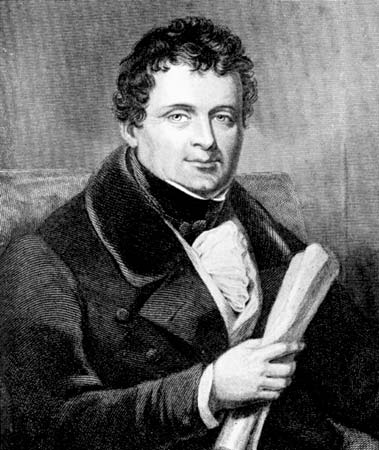
Portrait of Daniel O’Connell, campaigner for Catholic rights and the repeal of the Union — but no lover of the Irish language
(Image source: Internet)

Irish nationalism and republicanism continued as a strong thread through Irish history, peaking again in the late 19th Century with the Fenians. The Irish Republican Brotherhood or ‘Fenians’ as we know them in that period today contained many Irish-speakers including the famous O’Donabháin Rosa, who wrote his biography in Irish but the Irish language was still not their main language of political literature.

Some of the IRB were deeply working class and they were accepted into the First International Working Men’s Association in England, championed by Marx and Engels (the latter was learning Irish with the intention of writing a history of Ireland which sadly he did not bring to fruition). In the USA also most of the Fenians would have been working class although they included some of the upper middle class among the Irish diaspora. The Fenian conspiracy in Ireland was discovered and plans for insurrection largely upset, leaders and journalists arrested and the military units considered at risk sent away out of Ireland.

IRISH LANGUAGE REVIVAL

Another kind of Irish nationalism saw a resurgence in the later years of the 20th Century and, again, it was the Anglo-Irish, descendants of planters and mostly Protestant, who were the intelligentsia leading it. A kind of antiquarian and romantic interest in the Irish language and culture was followed by a more practical and restorative one and the Gaelic League (now Connradh na Gaeilge) was founded in 1893 by a group led by Douglas Hyde (Dubhghlas de hÍde)6, an Anglican and son of Anglican clergy, who became fluent in the language. This was followed in 1898 with the founding of the Irish Texts Society, a publishing initiative with Hyde as one of the founders and its publication of Dineen’s thick dictionary, Foclóir Gaedhilge agus Béarla, which was first published in 1904 (and still a wonderful source of words and phrases).

The Gaelic League promoted Irish dance, games and culture in addition to the language. Although Hyde’s passion for an Ghaeilge originated in his childhood and early adolescence in Co. Roscommon, he graduated in 1884 as a Moderator in Modern Literature from Trinity College, Dublin, where he had became fluent in French, Latin, German, Greek and Hebrew.

The League/ Connradh grew fast, branches and courses attracting not only the Anglo-Irish aristocracy and upper middle classes but also other social strata. In fact it became a mass movement, with 600 branches in 1903 and through its influence the language was introduced to 1,300 national schools.7

A year later, Conradh na Gaeilge’s membership extended to some 50,000 members in 600 branches8, probably assisted by rising nationalist feeling but in turn it certainly fed that outlook. As a mass movement, it took in professionals and others of middle-class background, as well as labourers and tradesmen.

Among the many prominent Irish nationalists and Republicans (called “progressive nationalists” at the time) of those years was Patrick Pearse/ Pádraig Mac Piarais and Reinisch reminds us that his father was not Irish. Son of a Cornishman and Unitarian who formally converted to Catholicism, Pearse soon gained prominence as a writer and speaker in both English and the Irish language and also founded a school to teach through the medium of the Irish language.

Like many other active Republicans of his day, Pearse was recruited into the IRB and chosen to give the seminal oration at the interment of repatriated Fenian O’Donobháin Rosa’s body in 1915. As related earlier, O’Donobháin Rosa was an Irish speaker and when Pearse spoke at his grave, first in Irish which is rarely quoted, in the rest of his speech in English he said: “The clear true eyes of this man almost alone in his day visioned Ireland as we of to-day would surely have her: not free merely, but Gaelic as well; not Gaelic merely, but free as well.”

Pearse was chosen again as Commander-in-Chief of the insurrectionary forces in the 1916 Rising. Pearse’s memory is often attacked by ‘revisionist’ historians and some of the “Gaelic Ireland with a sneer” crowd – accusations of a repressed homosexual identity, of ‘green nationalism’, of blood-thirst etc. However, a fair assessment of his life would reveal a political activist who sympathised with the workers fighting the Lockout in 1913 and objected to Redmond’s refusal to allow women to speak at a meeting on Home Rule; would find also an individual generous with his time and energy, a talented writer who sought the creation of a modern literature in Irish on a par with those of England, France and Germany, as well as being an educator and proponent of progressive youth educational theory that stands well the test of time.

Pearse was among the people that Hyde accused of politicising the language, which Hyde gave as his reason for resignation of the Presidency of Connradh na Gaeilge. Looking back now, we might well ask how could it have been otherwise? Everything cultural of a national aspect was becoming politicised in those years: sport, song, drama, literature, journalism, oratory, lectures, representational art – even cooperatives, trade unions and some commercial ventures – why expect language to be any different? In fact, surely instead expect politicisation there first of all!

The other Irish nationalists of the time, the Irish Parliamentary Party led by John Redmond, ‘constitutionalist’, Catholic and socially conservative, expressed no great interest in the Irish language. Another branch of Irish constitutional nationalism, represented by William Martin Murphy, was no friend of the Irish language either and ran the most vicious campaigns against the Irish Republicans.

Of the Seven Signatories of the 1916 Proclamation of Independence, four (Ceannt, MacDiarmada, Mac Donagh and Patrick Pearse) were members of the Connradh. The remaining three were at least neutral or approving of the movement. Of the fifteen executions by British firing squads and one by hanging following the Rising, at least six were members of the Gaelic League. Large numbers of activists and leaders in the Republican movement from 1916 to 1922 were Irish speakers, either fluent or at least competent and christening records of the period show increasing numbers of Irish language names (or Irish versions of names from abroad) given to children. This period was the last great flowering of the Irish language as a mass movement in modern history.9

What of the Left in Ireland? A house painter by trade, Peadar Kearney (Peadar Ó Cearnaigh)10 of Catholic background joined the Gaelic League and at some point attendees at Irish classes he taught included the socialist writer and founder of the Irish Citizen Army, Sean O’Casey11 (Seán Ó Cathasaigh), of Anglican background. Irish was taught in Liberty Hall, HQ of the Irish Transport & General Workers’ Union.

Later, native Irish speaker Peadar O’Donnell, republican fighter, socialist activist and writer, was employed for a while teaching in Aranmore, Co. Donegal, an Irish-speaking area, where he apparently adopted socialism and joined the IT&GWU, for which he also became an organiser. In later years he founded the ill-fated Republican Congress, fought against Franco and founded The Bell literary journal. O’Donnell seems to have written little in Irish but in his acclaimed “Islanders”, the construction of dialogue is clearly derived from the Irish language. Later still, Brendan Behan (Breandán Ó Beacháin), a socialist Republican, wrote in Irish and in English and a Republican who became a Marxist, Connemara man Máirtín Ó Cadhain12, wrote in Irish and campaigned on the rights of Irish speakers and of people living in the Gaeltacht.

In and around those names there would have been many others, Left activists and supporters, unknown now but native speakers or those who learned the language, thought it important and spoke it.

Many socialists seem sometimes to think that the “unity of the working class” is best achieved by doing away with different cultures. They seem to forget that though there is one working class, there are a great many national cultures — and what a poor world it would be if those cultures disappeared.

THE STATE AND POLITICAL PARTIES

Some of the attacks on “Gaelic Ireland” seek to tie it first of all to the right-wing neo-colonial state set up in 1921, or the form it took after 1922, or as mentioned earlier, the De Valera/ Fianna Fáil state from the mid-1930s.

The New State

When the Irish Free State was set up as a compromise with British imperialism and colonialism, backed by a section of the nationalist-Republican movement and in alliance with Irish gombeen capitalism and the Catholic Church, it was actually a very insecure and uncertain endeavour. This perhaps explains the ferocity of the State in the Civil War and afterwards, with large-scale repression, 83 official executions and around a 120 assassinations of Republicans – in less than a 12-month period. Two years later, in 1924 the State faced an attempted Army mutiny and possible coup d’etat, led by Major-General Liam Tobin, with a number of prominent right-wing nationalist politicians in support.

The new owners of the State tried to ensure that nationalist symbols were not left unclaimed to be appropriated by Irish Republicans and so appropriated them themselves: the Tricolour, the Soldiers’ Song and the Irish language. However, this was no foregone conclusion nor an easy process. They had to bear in mind also the British, who had merely stepped off stage into the wings, who were also on stage in the Six Counties, as well as the large constituency of Unionists on both sides of the Border.

For example, God Save the King was played and sung at some State and many other formal occasions, though The Soldiers’ Song was sung by many Republicans. Let Erin Remember was the song favoured by some in the State and it was the air played for the Irish State at the 1924 Paris Olympics. After a struggle, The Soldiers’ Song was finally agreed as the National Anthem in 1926.

Far from being enthusiasts for any kind of “Gaelic Ireland”, the new State continued to use English as the language of administration, even in areas where 80% of the population were Irish-speaking.

A qualification in Irish was required to apply for state jobs but a high level of fluency was not needed13, “and few public employees were ever required to use Irish in the course of their work. On the other hand, state employees had to have perfect command of English and had to use it constantly. Because most public employees had a poor command of Irish, it was impossible to deal with them in Irish. If an Irish speaker wanted to apply for a grant, obtain electricity, or complain about being over-taxed, they would typically have had to do so in English.”14 As late as 1986, a Bord na Gaeilge report noted “…the administrative agencies of the state have been among the strongest forces for Anglicisation in Gaeltacht areas”15

The two main daily newspapers at the time in Ireland were the right-wing nationalist Irish Independent and the Unionist-minded Anglophile Irish Times16 and neither promoted the Irish language nor even covered Gaelic games, although they reported on rugby and cricket matches.

Fianna Fáil and the Blueshirts

Fianna Fail was created early in 1926 and in 1932, only six years later it was in government of the State. One year later, the right-wing Army Comrades Association adopted the uniform which included the blue shirt and by that time had over 30,000 members and battles were taking place between them and the IRA and other Republicans. Eoin O’Duffy had been an IRA guerrilla leader in the Irish War of Independence, a general in the Free State Army in the Civil War and Commissioner of the state’s police force, the Garda Síochána from 1922 to 1933. After Fianna Fáil’s easy re-election in February 1933, De Valera dismissed O’Duffy as Commissioner and a few months later O’Duffy took leadership of the ACA and renamed it the National Guard, adopting the straight-arm Roman salute favoured by the fascists.

That same year the Blueshirts planned a march on Dublin, believed my many historians to be a prelude to a coup d’etat; certainly De Valera thought so and, unsure of the Army’s loyalty, banned the march and subsequently outlawed the organisation. That year also Fine Gael was formed, incorporating the Blueshirts, Cumann na nGaedhal and the National Centre Party, with O’Duffy as its President.

De Valera founded the daily newspaper Irish Press in 1931 which had an alternative version of its title in Irish – Scéala Éireann – and as well as covering the GAA games, had sections in Irish. However the position of the Irish language in the affairs of the State did not change.
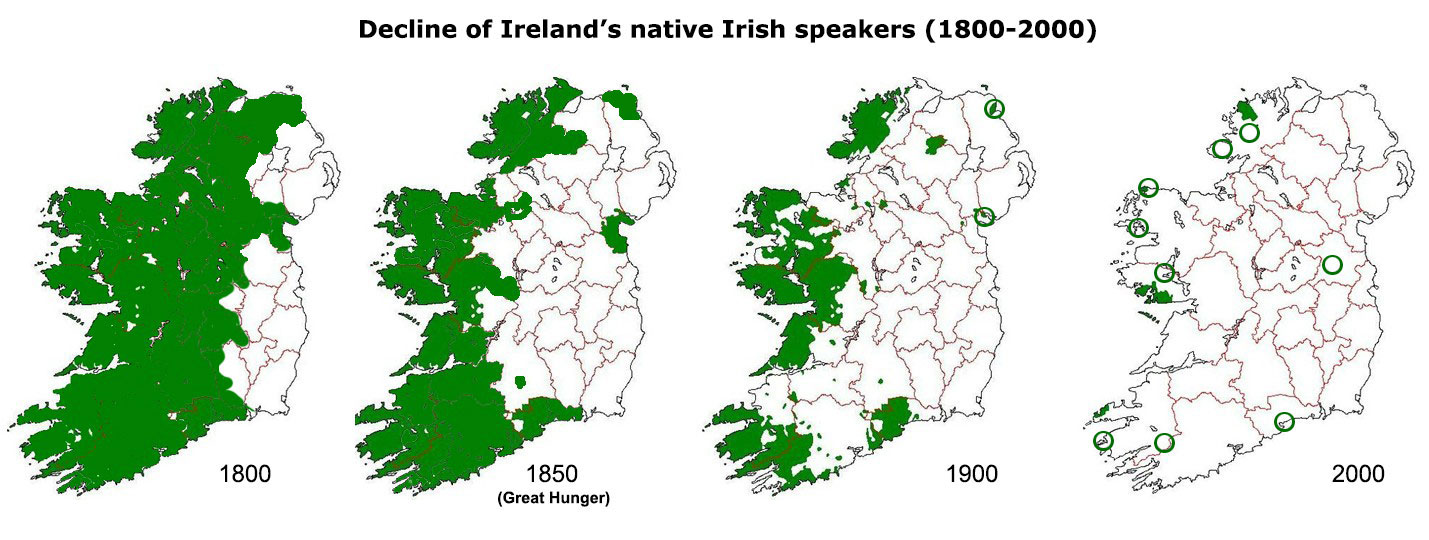
Though the Great Hunger caused he most impressive loss of Irish-speaking modern Ireland on the map, the percentage lost by the Irish state is greater.
(Image source: Internet)

Throughout Fianna Fáil and Fine Gael governments, the Gaeltacht – the Irish-speaking areas – continued to suffer deprivation of resources. Even by the early 1960s, many homes in those areas did not have electricity, running water or sewage drains. Primary schools typically had a headmaster and female teacher to administer and teach all subjects at all levels. Deprivation led to massive emigration, not only to the metropolis but also to the USA and to Britain. Today, the Gaeltacht is 9.1% the size of what it was when the Irish State was created or, in other words, the State has presided over a Gaeltacht decline of over 90%17 — as a friend commented: “Not even Cromwell or the Great Hunger wreaked such linguistic devastation”.

In the 1960s, no matter what party was in government or in local authority, Irish-language campaigners had to fight for minimal funding for land allocation, schools and broadcasting in Irish. People went to jail for civil disobedience and were fined for refusing to pay for their TV and radio licences and, briefly, a pirate Gaeltacht radio station was in operation.

The Labour Party and Sinn Féin

The Labour Party, whether to the right or left, has never shown itself to be a friend of the Irish language.

Sinn Fein (Provisional) would nominally be expected to be supportive of the Irish language but the real test is in its campaigning and practice within its own party. Its public and internal meetings are held in English (as with other Republican parties) and throughout the three decades of the war in the Six Counties it did not organise or mobilise the Gaeltacht people to improve their position and defend their communities from emigration and the penetration and eventual supremacy of the English language.

In conclusion, to associate the Irish language or culture with any of the political parties or any administration of the State is fundamentally incorrect from a historical point of view.

FOCAL SCOIR OR IN CONCLUSION

Would those who sneer when they say “Gaelic Ireland” do likewise at the mention of “French France”, “Spanish Spain”18, “Italian Italy”, “German Germany” or “Polish Poland”? I think not. No, national cultures are not sneered at by the Right or the Left in Ireland – only Irish culture and, particularly, the language.

John Kells Ingram19, an academic, mathematician and writer of planter descent from southeast Donegal (and probably bilingual), in 1843 wrote the lyrics “In Memory of the Dead” (better known as “Who Fears to Speak of ’98”). He was decrying the distancing by Daniel O’Connell and his Catholic movement from the deeds and principles of the United Irish Men in 1798. If I may paraphrase him a little to refer to the kind of Irish person today who says “Gaelic Ireland” with a sneer: “He’s all a knave or half a slave, who slights his people’s culture thus”.

Fanon20 would agree, I’m sure.

A chríoch.

SOME SOURCES AND REFERENCES:

https://me.eui.eu/dieter-reinisch/blog/dundalk-racism-republicanism/

https://en.wikipedia.org/wiki/Amhr%C3%A1n_na_bhFiann#Official_adoption

https://en.wikipedia.org/wiki/Irish_Army_Mutiny

https://en.wikipedia.org/wiki/Blueshirts

https://en.wikipedia.org/wiki/History_of_the_Irish_language#Independent_Ireland_and_the_language

Black Skin, White Masks (1952), (1967 translation by Charles Lam Markmann: New York: Grove Press)

The Wretched of the Earth (1961), (1963 translation by Constance Farrington: New York: Grove Weidenfeld)

1 “……. individual Republican activists use Gaelic Nationalism to justify their anti-migrant and racist parochialism”

3The North American republicans did not admit the Indigenous People as citizens and many set out to exterminate them. Many also condoned slavery and some owned slaves. The Latin American republicans also mostly sought the expropriation of Indigenous people and also organised massacres but, for the most part, abandoned slavery earlier than the USA.

4Cork poet and strong Republican Mícheál Óg Ó Longáin (1766/-1837) is usually credited with writing Buachaillí Loch Garman and Sliabh na mBan (although one source, probably mistaken, credits his son Peadar with the latter two). Mícheál’s work as a scribe, scholar and teacher was a useful cover for acting as a United Irishmen courier.

5There are a few songs from Mayo too, by unknown authors.

6Douglas Hyde (Dubhghlas De hÍde) was elected first Uachtarán na hÉireann (President of the Irish state) from 1938-1945.

9The last to date but hopefully not the last.

10Peadar Kearney was a member of the Irish Volunteers and IRB, fought in 1916 and was interned; he became a prolific writer of nationalist ballads — but also of “Labour’s Call”, a song with very socialist lyrics – and is the co-author with Patrick Heeney of “The Soldiers’ Song”, the national anthem of the Irish state.

11Sean O’Casey (1880-1964) was born in Dublin into a lower middle-class family in straitened circumstances.

12Máirtín Ó Cadhain (1906-1970); interned by the Irish State during the 2nd World War years and later activist for the Gaeltacht which led to the founding of the Rath Cairn Gaeltacht in Co. Meath. Ó Cadhain’s most famous written work, the novel “Cré na Cille” (1949) was later translated into many languages. Ó Cadhain was also a founder and leading activist of the original Irish-language civil rights campaign Misneach which engaged in agitation and civil disobedience (another campaign by the same name now exists) in Dublin and other places.

13Hence the jibe about the mere “cúpla focal” of Irish of politicians and civil servants.

14See Wikipedia in Sources

15 Advisory Planning Committee of Bord na Gaeilge, The Irish Language in a Changing Society: Shaping The Future, p.41. Criterion, 1986 (quoted in Wikipedia – see Sources).

16Both had called for the punishment by the British of the 1916 Rising leaders but the Independent had actually called for the executions of Connolly and Mac Diarmada.

17Extrapolation from the Census statistics of the years 1926, when there were 246,811 Irish speakers in the Gaeltacht and the 2016 Census when 20,586 remained, which is 8.34% of the 1926 number or a reduction of 91%. http://www.cso.ie/en/media/csoie/census/census1926results/volume8/C_1926_VOL_8_T8,9,10.pdf

18In fact, there are ground for objecting to the terminology of “French France” and “Spanish Spain” but only because those two states do not value and even suppress the other national languages within their state boundaries, e.g Euskera, Catalan, Occitan, Corse, Asturian, Galician ….

19John Kells Ingram (1823-1907)

20Franz Omar Fanon (1925-1961) was born and raised in Martinique; qualifying as an MD and psychiatrist, practised in Algeria during the war of liberation against the French, where he was a covert member of the resistance. Fanon was a politically radical intellectual, Pan-Africanist and Marxist humanist whose written work is very influential in particular in “post-colonial studies”. He described the psychopathology of colonisation in quite accessible writing, showing how – among other things – the colonised internalise the image of themselves projected by the coloniser and aspire to the “sophistication” of the latter and his culture (see two of his works listed in the Sources & References section.

THE SCENT OF SEX — but not for you

  • Diarmuid Breatnach

You sniff the scent of blooms in the air and it pleases you. But that’s not what it’s for – the scent was not manufactured to please you. Scents derived from plants are used by humans to add to their sexual allure and plants also have a sexual function in producing them — but it is not humans the plants are trying to attract.

The scents are there to attract pollinators, insects, mammals or birds that will go to them to collect pollen and/ or nectar, in the course of which they will spread pollen from plant to plant and bring about fertilisation.

There are huge numbers of different chemicals producing scents and combinations of scents and, as the plants have developed them, their pollinators have also developed the ability to distinguish between them and to home in on the appropriate ones. It is likely that inside the pollinators some kind of receptor is created which is keyed into the specific scent, in much the same way as sexual pheromones are keyed into receptors inside so many species, including humans.

Irish Hawthorn (Sceach Gheal) bush or shrub in bloom. Its blooms produce a scent more pleasant to humans at a distance than very close up.  (Source photo: AP.Pfeiffer)

Irish Gorse (or Furze) (Aiteann) in bloom. The scent often reminds humans of coconut.
(Source: Environmental Protection Agency)

These pollinators then, quite unintentionally, dive into another bloom somewhere and like some kind of romantic couriers, deliver the pollen to the eager recipient. But unromantic really, to receive fertilisation from an unknown lover, unseen and barely felt. Yet it works, as around 400,000 flowering plants testify (though not all flowers use scent — colour and form suffice for some). And it will continue to work, as long as there are pollinators around (which is turning out to be a problem with large-scale deaths of bees, by far the most active of pollinators). But the animal kingdom? With some exceptions, its members need the presence of both sexual actors or more and stimuli to engage in sexual activity that will lead to procreation: temperature, light, foods, natural odours, shape, touch, erotic imagining, poetry, music, clothing, colour …. and yes, applied plant and artificial fragrances.

Irish Honeysuckle (Féithleann) in bloom; a climbing plant, its flowers produce a scent pleasing to most humans. (Photo source: Internet)

The scent of flowers is composed of a variety of VOCs (volatile organic compounds), most plant scents being composed of many compounds and some of up to several hundred. Collecting, isolating and analysing these compounds present great challenges to scientists but even small insects know what they mean, like an olfactory equivalent of a neon sign: NECTAR AND POLLEN HERE!.

Some plants emit scent throughout daylight and some at specific times of day only. And some not until after the sun has set. At night of course the plants do not have much competition but which pollinators will be active at night? Moths are the big group here but there are others, such as some bats.

There’s a night-scented shrub near my home that made me want to look into this subject and write about it a little. This time of year at night it is producing a strong sweet scent (with, to my nose, just a touch of urine smell in there too). You won’t find moths flying around at this time of year in Ireland and it’s not attracting bats so I guessed that it’s a foreigner and, where it comes from, that this time of year would be perfect. The shrub in question is the “Sweet Box” (Sarcoccoca confusa) and I was not surprised to find that its “native heath” is in eastern and southeastern Asia and the Himalayas.

The Sweet Box ( Sarcoccoca confusa), non-native, emits its scent at night (Photo: D.Breatnach)

People like the scent but it’s kind of sad when one thinks more about it, what it’s trying to do, like posting a message of sexual availability and procreation-wish on to a dating page and …. no-one replies.

Blooms and other parts of plants also produce scents which do not appear to have any role in attracting pollinators and scientists believe that these are defensive scents to ward off herbivores. In this case the olfactory sign is saying: “HORRIBLE TASTE! REMEMBER?” Not only that but plants can increase the production of such scents as parts of them are being eaten, to the extent that their attacker feels obliged to desist1. And some scientists also speculate that scents for pollinators developed first as scents to discourage herbivores.

Hemlock (Moing Mhear), a very poisonous native plant that looks like cow parsley. It has an aroma unpleasant to humans and probably to herbivores.

Given that some animal appropriators of plant products have learned to home in on the repellent scents of some plants this seems quite likely. Imagine a plant exuding a smell to ward off a herbivore and imagine an insect learning that where that particular smell is to be found, so is food such as nectar or pollen. The sign now says: HORRIBLE-TASTING TO HERBIVORES AND PARASITES but is accompanied by another sign that declares: FREE DELICIOUS FOOD FOR OTHERS! And the plants that most reach and “please” the accidental pollinators will naturally be more successful, be visited more often and spread their genes wider. Unless yet other animals learn to follow that scent in order to consume the plant, or lay their eggs on it for the larvae to feed on the plant. Cabbages and carrots for example, both of which have an odour we can identify, have eggs laid on them respectively by the cabbage butterfly and the carrot fly, which are then fed upon by the larvae as they hatch. And the butterfly and carrot fly find the plants by smell.

It is a difficult balance, to attract pollinators and yet repel herbivores and parasites and no doubt the balance is constantly being adjusted through the evolutionary processes of plants, herbivores, pollinators and parasites, in a kind of dance of love and death.

Cut red roses, often purchased from a florist — but do they have a scent?
(Source photo: Internet)

Those volatile compounds to be found in the scents of flowers almost certainly also make them difficult to keep fresh. The cut flowers business is a billion-euro one and growers have now produced blooms that last longer after cutting than they used to – sometimes for weeks. But scent?One of the most delightful scents to the human nose is that of the rose, about which songs have been sung and poems composed. Go into a florist, go to a bunch of roses and try and smell them — the chances are you won’t be able to.

The real thing, form, colour and scent — a pink rose.
(Source photo: Internet)

Shakespeare’s Juliet, who said that “a rose by any other name would smell as sweet”2 might say today that “A rose without a scent is but half a rose”. When you do find a rose or another flower that is sweetly scented, breathe deep and enjoy the scent … but remember it’s not made for you. It’s for another flower, through the agency of a courier, a messenger.

It’s all about sex. And it’s a jungle out there.

End.

Sources and further information:

Flower fragrance:

https://en.wikipedia.org/wiki/Floral_scent

https://www.scientificamerican.com/article/why-do-flowers-have-scent/

https://www.smithsonianmag.com/smart-news/why-do-flowers-smell-good-349826/

https://www.theflowerexpert.com/content/giftflowers/flowersandfragrances/specific-flower-fragrances

http://www.wildflowersofireland.net/plant_detail.php?id_flower=366

https://phys.org/news/2010-09-species.html

Night-scented shrub near me:

https://www.rhs.org.uk/Plants/16452/Sarcococca-confusa/Details

https://en.wikipedia.org/wiki/Sarcococca

Cut flower industry:

http://www.hortibiz.com/item/news/top-10-cut-flower-exporters-in-the-world/

https://www.ft.com/content/becc846e-3595-11e7-99bd-13beb0903fa3


FOOTNOTES

1Some plants can do this with poisons too

2Romeo and Juliet by William Shakespeare

GEORGE GALLOWAY ADDRESSES ANTI-IMPERIALIST MARCH IN DUBLIN

Clive Sulish

A crowd gathered at the Dublin and Monaghan Bombing Monument in Talbot Street this evening for a short ceremony and the start of a march to rally at the General Post Office building in Dublin city’s main street. The event was organised by Anti-Imperialist Action Ireland “to highlight imperialist war-crimes around the world, from Ireland to Yemen and Syria.”

View of section of crowd before start of event with the Memorial in the background (Photo: D.Breatnach)

View of section of crowd near the Memorial before start of event
(Photo: D.Breatnach)
View of section of crowd near the Memorial before start of event
(Photo: D.Breatnach)
View of section of crowd near the Memorial before start of event
(Photo: D.Breatnach)

As people assembled, a crowd of European youngsters was noted passing by, no doubt part of some scheme to learn English and something of the culture outside their own country. Sadly their teacher passed by the Monument without calling their attention to it.

The bombings on 17 May 1974, killing 33 civilians and a full-term unborn child and injuring almost 300, claimed the highest toll of any event during the 30 Years War and was the deadliest attack in the history of the Irish State. The bombings were organised by British Intelligence agents with Loyalist participation and not one person was ever charged.

It was not a good day for the march and participants came prepared for the worst but the rain stopped just before the event and held off, apart from an occasional drizzle, until after the event, when it fairly lashed down.

George Galloway approaching the Monument to lay a floral (Photo: D.Breatnach)
George Galloway after laying wreath, hat removed for a moment in respect. (Photo: D.Breatnach)

Pádraig Ó Fearghaill spoke first in Irish welcoming all who had attended, outlined the order of events and then called on George Galloway, famous British anti-imperialist politician, writer and broadcaster, to lay a floral wreath at the monument, which he did. Ó Fearghaill then called on Diarmuid Breatnach to sing the Woody Guthrie song about the massacre of mineworkers in Colorado, USA, by capitalists including the imperialist John D.Rockefeller. Breatnach sang “The Ludlow Massacre”.

The march then formed up and, led by a floral wreath-holder and black flags, proceeded up Talbot Street, into North Earl Street and up to the GPO. Along the way they chanted “From Ireland to Palestine- Occupation is a Crime” and “Donald Trump/Theresa May- How many kids did you kill today?” The demonstration received a lot of support from passers by along the way and drivers of cars and buses who beeped to show support. The marchers, some of who were carrying candles or light up boards made there way to the GPO where a further crowd had already gathered.

Section of crowd at GPO (Photo: D.Breatnach)

From well-known activists participating and banners carried it was clear that the march had attracted wide support across sections of the Republican movement in parties and campaigns, with participation of independent activists of republican, anarchist and socialist background.

Section of crowd at GPO (Photo: D.Breatnach)

Outside the GPO building, Ó Fearghaill called on Máire Uí Mhaoileoin to lay a wreath in memory of those who have lost their lives as a result of imperialist war-crimes and then introduced George Galloway, who remarked that he was proud to speak outside the building that had played such a part in the first blow against the British Empire of the last century. Galloway went on to refer to continuing British occupation of the Six Counties of Ireland and imperialist interference in the Middle East and the occupation of some countries. In the latter category he praised the Palestinian Ehed Tamimi, whose 17th birthday was just that day and called her “a leader of the resistance for the whole Middle East”.

Section of crowd at GPO (Photo: D.Breatnach)

Reminding the attendance of the ongoing crime of internment, Ó Fearghaill announced a representative of a campaign around Tony Taylor, who announced he was reading a statement from Lorraine Taylor, Tony’s wife. Taylor, a Derry Republican, was detained in March 2016 and has been in jail since, without trial or even charge.

Section of crowd at GPO (Photo: D.Breatnach)

Presenting Diarmuid Breatnach again to sing the famous Eric Bogle anti-war song “The Band Played Waltzing Matilda” referencing the bush-ballad of “Waltzing Matilda”, the Australian unofficial national anthem. However, following

Section of crowd at GPO (Photo: D.Breatnach)

a suggestion from a participant, Breatnach led the crowd in singing “Happy Birthday” in English and in Irish to Palestinian child-prisoner Ehed Tamimi. After Breatnach’s rendition of Bogle’s song, Ó Fearghaill thanked all the the participants and promised that Anti-Imperialist Ireland would continue to build up resistance against imperialism in Ireland and in the world beyond.

End

Section of crowd at GPO (Photo: D.Breatnach)

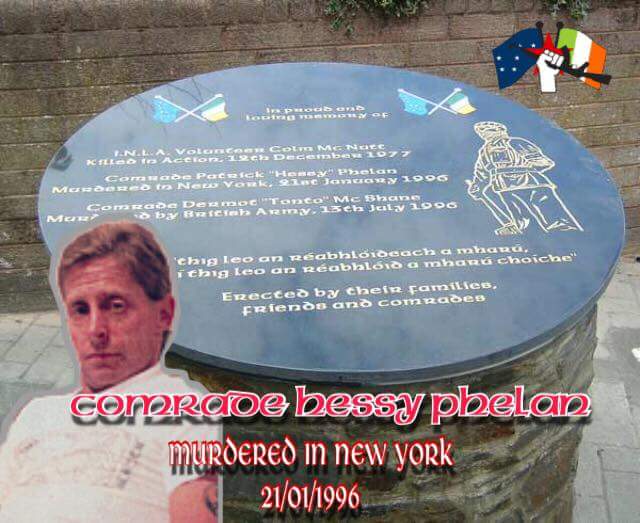
Comrade Hessy Phelan murdered in New York 21/01/1996

seachranaidhe1's avatarseachranaidhe1

Hessy Phelan who was murdered this day in 1996. Hessy had escaped the SAS bullets that claimed the live of his comrade Colm McNutt in 1977 only to be murdered by a thug member of the NYPD two decades later.

Hessy was a former member of the IRSP and the INLA and long term political prisoner prior to moving to New York.

On 21 January 1996, a friend of Hessy’s, a bartender at a New York pub, asked her boyfriend, a New York cop with a record of excessive force complaints, to take Hessy to his apartment.

Once there, according to witnesses and trial testimony, the boyfriend shot Hessy in the head, and was convicted of manslaughter in 1999.

With many thanks to the: James Connolly Association Sydney, Australia

Below is a copy of the Irish Times about his murder

NY policeman on charge of killing Derry immigrant
A NEW…

View original post 329 more words

“Back Home in Derry” with new air

Bobby Sands, who was the first of the ten hunger strikers to die in 1981, had written a number of articles, songs and poems.  One of the latter was arranged for song by Christy Moore, calling it “Back Home In Derry” to the air of “The Wreck of the Edmund Fitzgerald” (by Canadian singer Gordon Lightfoot).

The rendition here by Diarmuid Breatnach is to a new air composed also by Breatnach.  Although he has been singing it for some years in song sessions, this is the first time it has been posted as a video.

“I thought that the lyrics and the original author deserved a new air”, said Breatnach, a Dublin singer.  “Christy Moore did a great job arranging the lyrics for song.  I hope the new air becomes at least as popular as Gordon Lightfoot’s.”

https://www.dropbox.com/s/dosrz71cmcw1s3p/Song%20Video%20edit%20%202%20made%20jan%202018.mp4?dl=0


“Be Moderate” (or “We Only Want the Earth”) by James Connolly

The lyrics were written by James Connolly and published in his songbook Songs of Freedom in New York in 1907.  Diarmuid replaced the words “labour” with “workers” and “true men” with “true hearts”.  There was no indication of to what air the song should be sung (quite common, the expectation being that being would use a popular air at the time) and it has been put to at least three airs.

Diarmuid Breatnach here sings it to the air of A Nation Once Again (by Thomas Davis, ‘Young Irelander’) which is the air he heard it sung by Cornelius Cardew, an English communist composer.  This air suits it and the arrangement provides a chorus in which people can join.

The recording was done at the weekly Save Moore Street From Demolition campaign table (Saturdays 11.30am-1.30pm) with Bart Hoppenbrouwers videoing.

James Connolly was one of around 350 men and women who occupied the Moore Street area during the 1916 Rising after the evacuation of the burning GPO, which had been the HQ of the Rising.  Connolly was one of five signatories of the Proclamation who spent their last hours of freedom in those houses and one of six of the fourteen executed after they surrendered in Moore Street.

The Irish Government, property speculators and the Planning Dept. of Dublin City Council are all pushing that only four buildings in that battleground be saved and a huge supermarket be built over the whole area but the SMSFD campaign wants the whole quarter saved and sensitively developed.

end.

https://www.facebook.com/save.moore.st.from.demolition/

ISRAEL: FREE ALL THE CHILDREN!

Diarmuid Breatnach


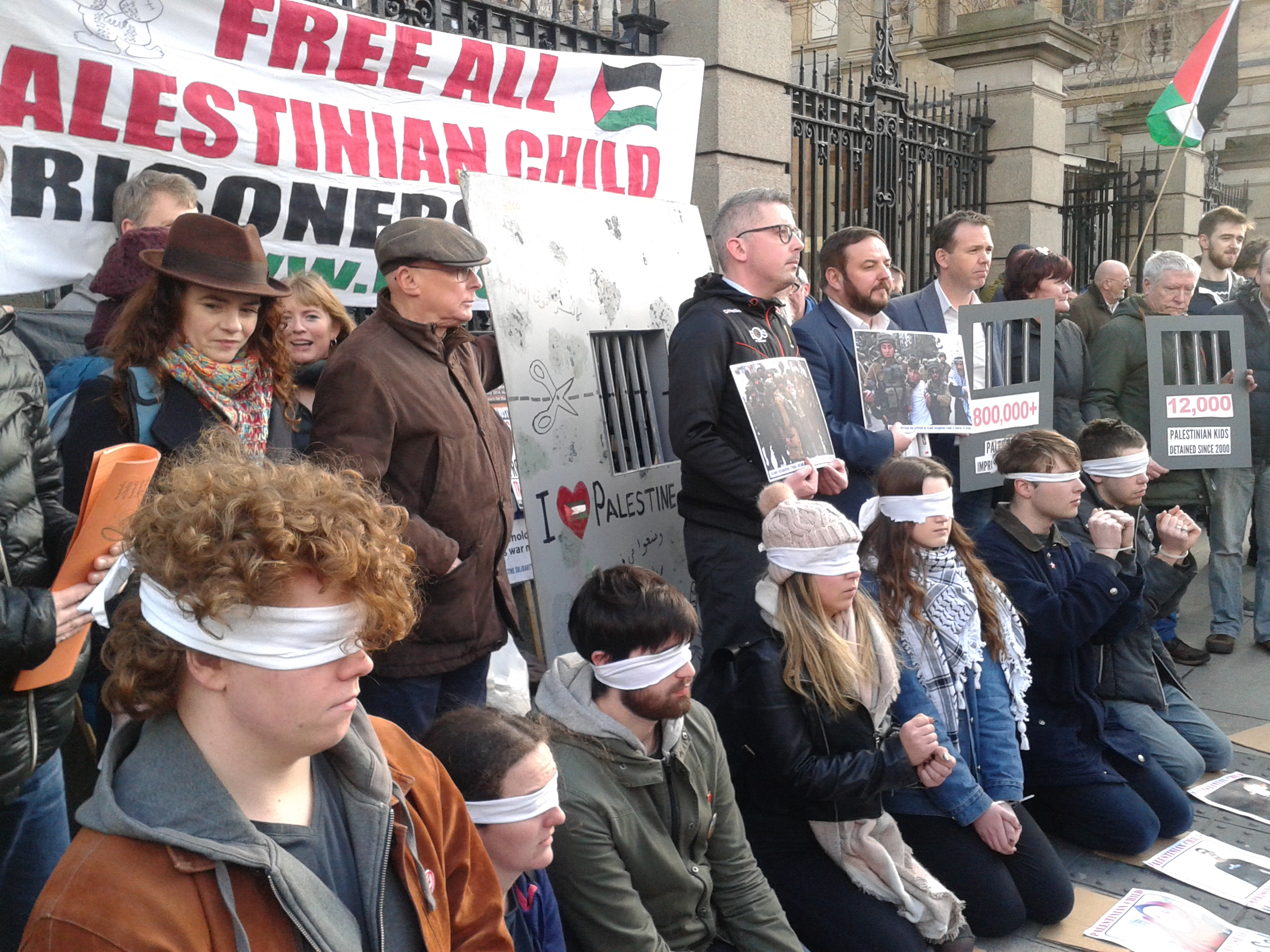
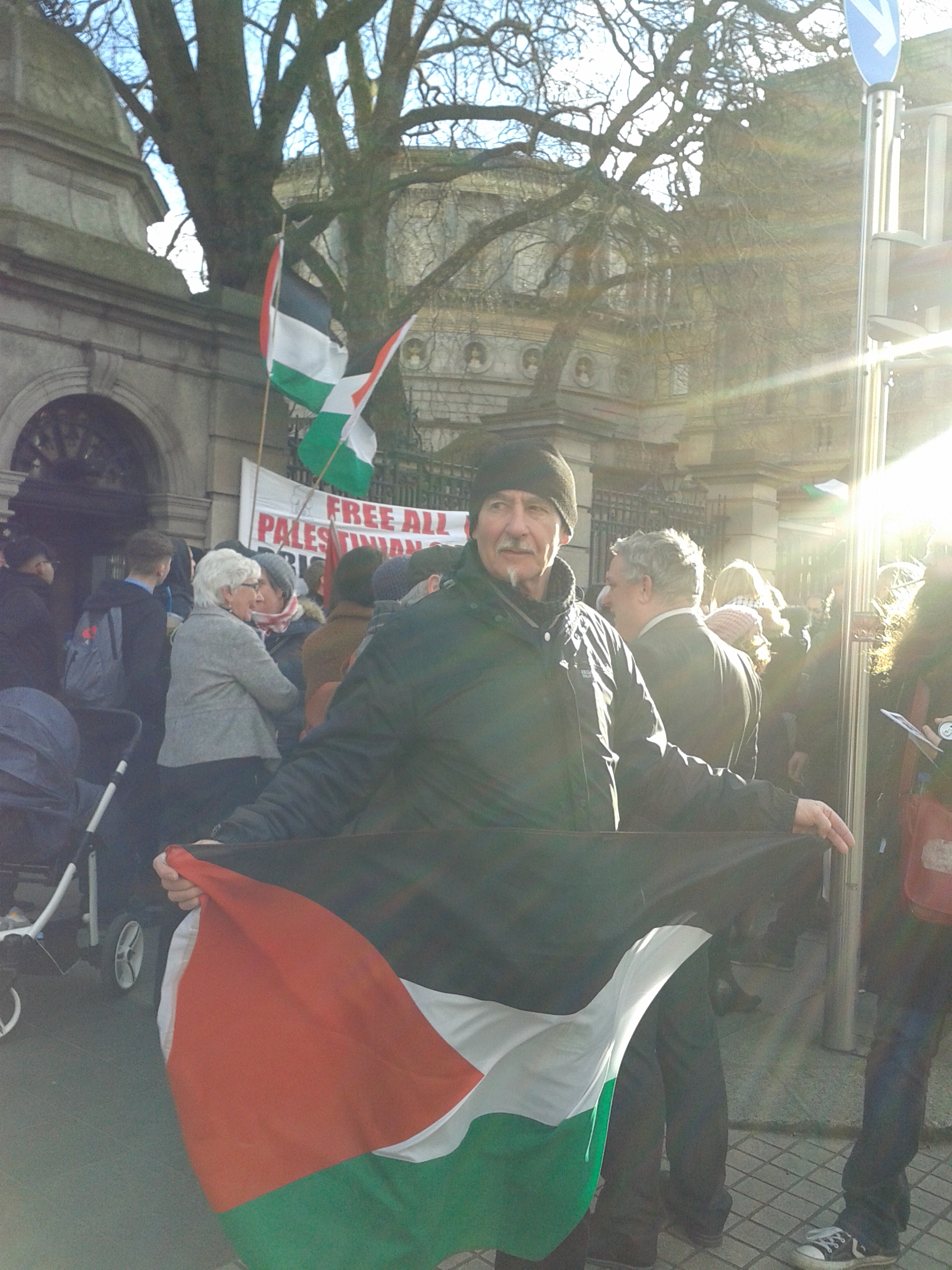
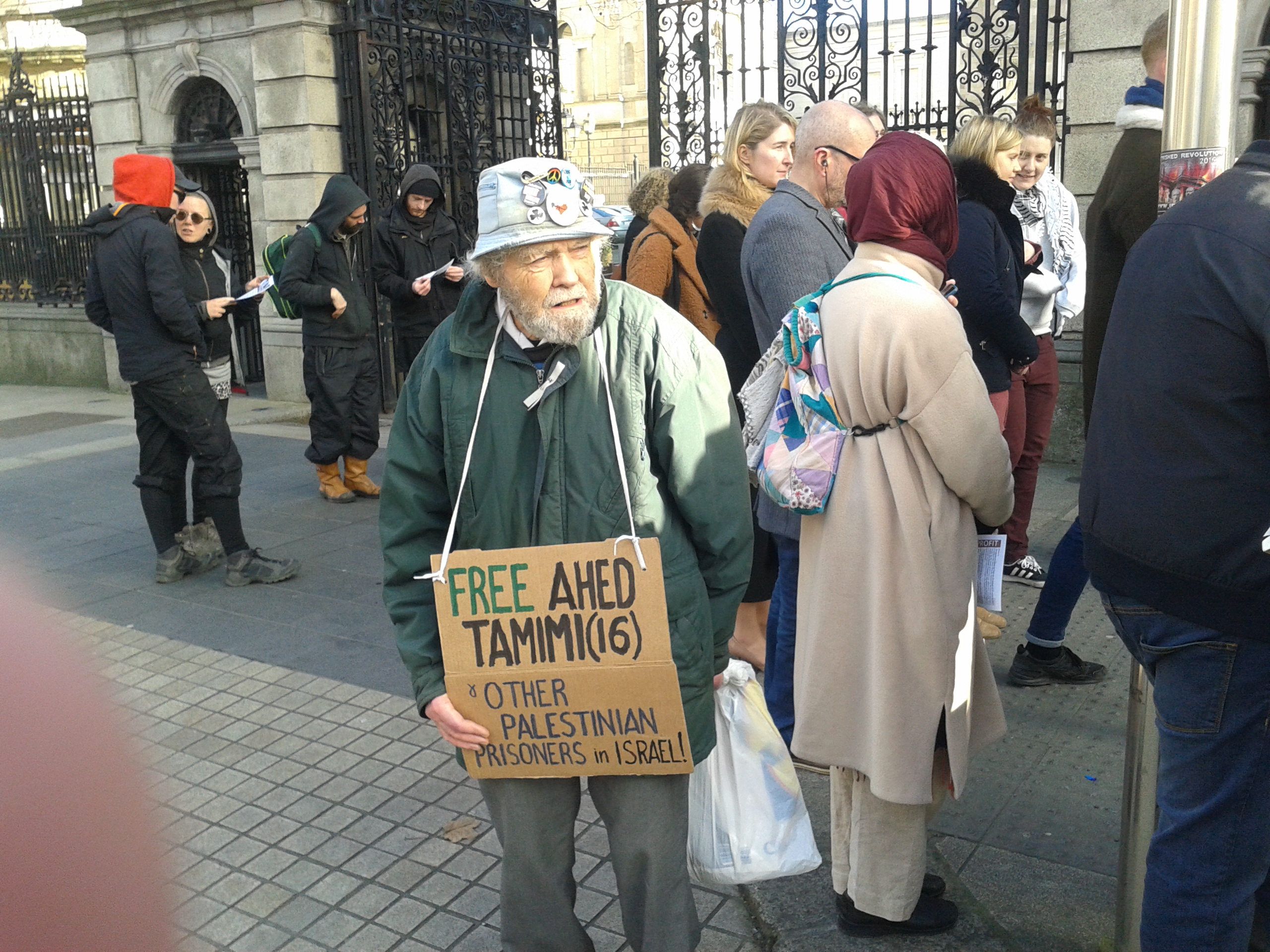
A dense crowd gathered outside Leinster House, home of the Dáil (Irish Parliament), at lunchtime today. Palestinian flags were in evidence as was a banner denouncing the jailing of Palestinian children by the Israeli authorities. Some passing drivers tooted their horns in solidarity.

View of section of crowd outside the Dáil
(Photo: D.Breatnach)

A hollow space existed inside the crowd where young people knelt, blindfolded and with hands bound, to represent children taken prisoner by the Israeli state. According to the Ireland Palestine Solidarity Campaign, which organised the solidarity protest, between 500 and 700 children are detained every year by the Israeli military, i.e up to an average of two a day.

Young people acting as Palestinian children arrested by Israeli military (Photo: D.Breatnach)

The protest was attended by many TDs (members of the Irish Parliament) and Senators comprising a broad representation of political parties and independents. Ibrahim Halawa, the Irish citizen who was arrested by Egyptian police while still a minor of 17 years of age, subsequently to spend four years in jail without trial, also attended.

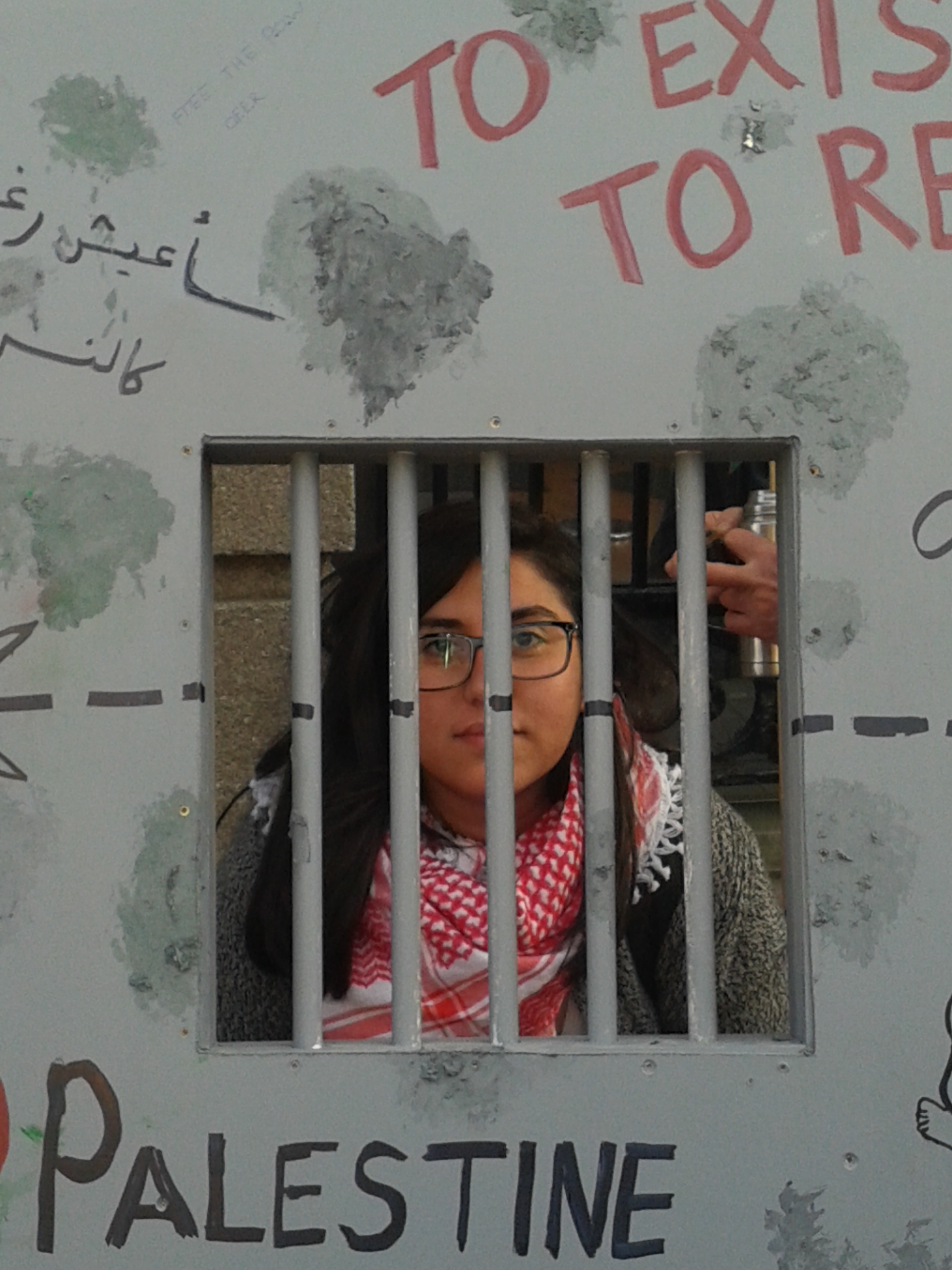
Young woman representing Palestinian children jailed by the Israeli authorities
(Photo: D.Breatnach)

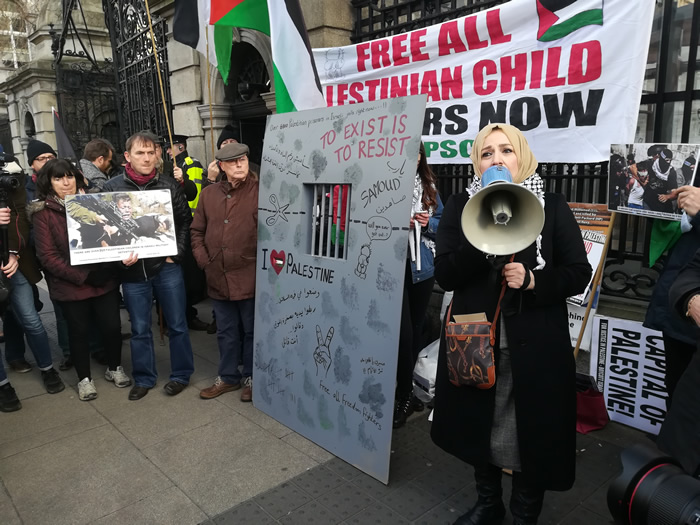
IPSC Chairperson Fatin Al Tamimi addressed the gathering and referred to “Israel’s apartheid prison system where torture and ill treatment during arrest and detention are routine, including horrendous abuses against children.” Tamimi went on to say, to loud applause: “Apartheid Israel must be held to account for its outrageous treatment of Palestinian children which violates the right of the child.”

After the protest a letter was handed in to the Irish Minister for Foreign Affairs calling on the “the Irish Government to do all it possibly can to end these abuses of Palestinian children by Apartheid Israel. More than just condemnation, action is needed to bring pressure to bear of Israel to end these attacks on children, children who have known nothing but occupation and systemic violence their whole lives. Palestinians, not least Palestinian children, deserve freedom, justice and equality.”

The Irish Government action required was not specified but over the years demands have been made to call the Israeli Ambassador in for censure or even to expel him but no such action has taken place. As a participant on the demonstration said: “When the Irish Government did not even take serious action at the use of forged Irish passports by Mossad assassination squads, you know that they are not going to do anything about Palestinian children being jailed and ill-treated.” (The Irish Government expelled one minor diplomat only over that revelation in 2010 and even then the Ambassador stated that he could not guarantee that such faked passports would not be used again).

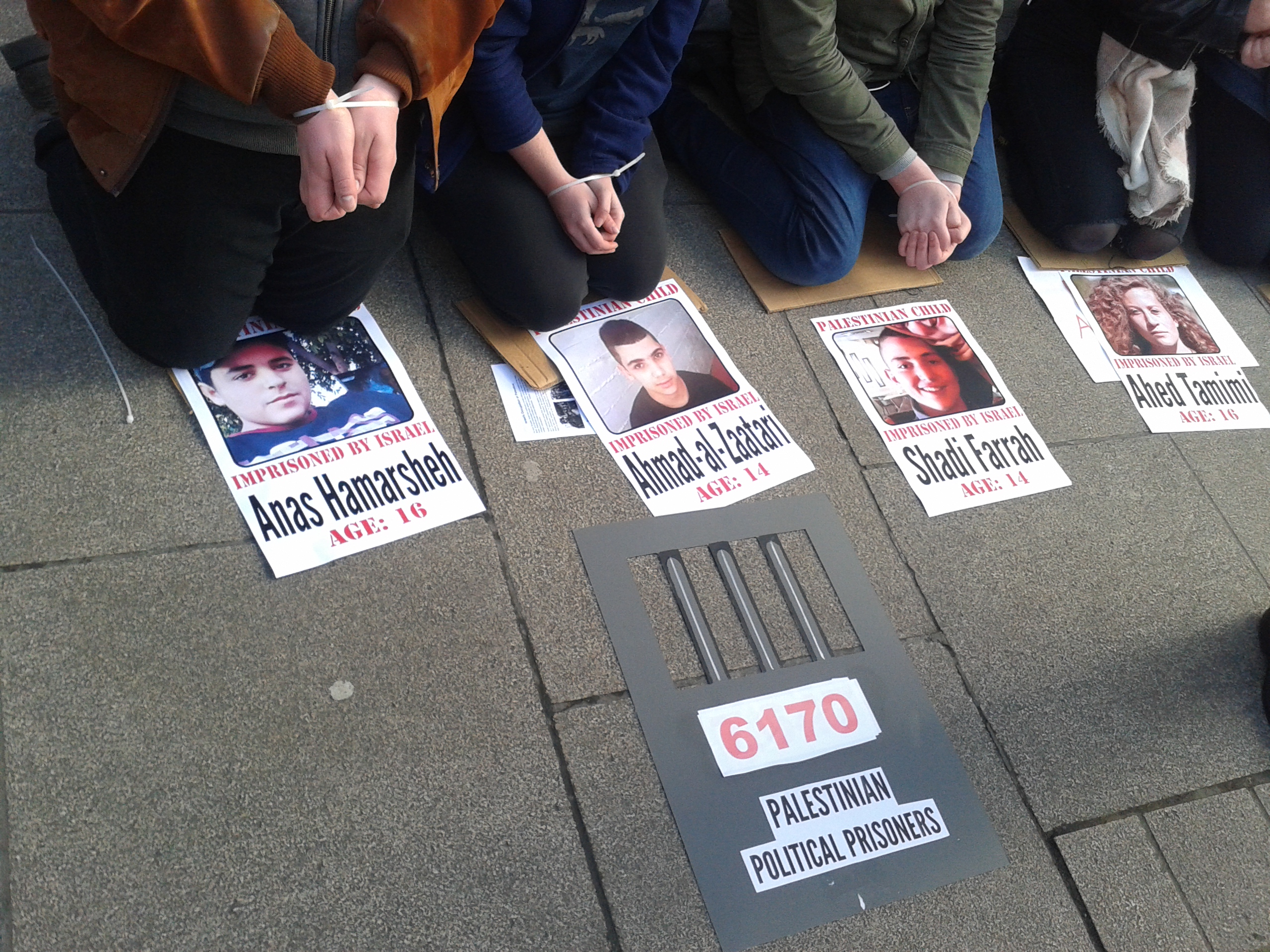
Photos of a small sample of detained children
(Photo: D.Breatnach)
Photos of another small sample of Palestinian children detained by Israeli Occupation Force
(Photo: D.Breatnach)

WIDESCALE VIOLATION OF THE RIGHTS OF THE CHILD

According to the UN Convention on the Rights of the Child, apart from rights to survival (violated by Israel in its 2014 bombardment of Gaza, for example, when it killed 504 children and made thousands homeless), and adequate living standards (also violated by Israel in Gaza with damaged sewage treatment plants and water, power and fuel restrictions), children also have

  1. Development rights: include the right to education, play, leisure, cultural activities, access to information, and freedom of thought, conscience and religion.
  2. Protection rights: ensure children are safeguarded against all forms of abuse, neglect and exploitation, including special care for refugee children; safeguards for children in the criminal justice system; protection for children in employment; protection and rehabilitation for children who have suffered exploitation or abuse of any kind.
  3. Participation rights: encompass children’s freedom to express opinions, to have a say in matters affecting their own lives, to join associations and to assemble peacefully. As their capacities develop, children should have increasing opportunity to participate in the activities of society, in preparation for adulthood.

By jailing children, Israel is violating the rights of the child in each of these three broad categories above. Yet, according to UNICEF, only two states have currently failed to ratify the Convention after signing: the USA and Somalia. In other words, Israel has signed it but clearly is violating it as a matter of course.

Trials of Palestinian children have a 99.74% conviction rate, and “do not meet international standards for fair trial” according to Amnesty International. According to the IPSC, many more children are temporarily detained, sometimes taken by soldiers raiding homes in the dead of night, and later released after severe interrogation periods without prosecution. Defence for Children International Palestine states that some two-thirds of all children detained will face some sort of physical or mental abuses, including torture and sexual threats, during this process. UNICEF says that “Ill-treatment of Palestinian children in the Israeli military detention system appears to be widespread, systematic and institutionalised”.

According to the IPSC, “over 12,000 Palestinian children have gone through the Israeli prison system since 2000, while nearly 2,500 have been killed and countless thousands wounded. In Gaza alone, where children have borne the brunt of three vicious Israeli assaults over the past decade, UNRWA estimates that “more than 300,000 children are in need of psycho-social support”.”

(Photo: D.Breatnach)


LINKS, SOURCES:

http://www.ipsc.ie/child-prisoners/pictures-solidarity-ahed-tamimi-palestinian-child-prisoners
https://www.unicef.org/crc/index_30229.html


THE CATALAN PARLIAMENT – RECENT ELECTIONS & THREATS

Diarmuid Breatnach

The Catalan Parlament went ahead recently with its house management work, electing a Speaker and Deputy Speaker and four Secretaries (see fly-on-the-wall report below).

After that, they had 10 days to elect a President of the Government. The choice of the Independists seems to be unanimously for Carles Puigdemont, the previous Government’s President; however, the Spanish State wants to arrest him (as it has done with other independist parliamentarians, without granting bail and threatened to others, including the previous Speaker of the Parlament, which is one reason why Puigdemont has been living in Brussels in recent months). The President of the Catalan Parlament, Roger Torrent, despite a threat by the Spanish State to arrest him also, announced that Puigdemont was the only choice for President of the Government. Naturally the Spanish unionists in the Parlament objected vociferously but the independists have the majority.

Roger Torrent, the newly-elected Speaker of the Catalan Parlament
(Photo source: Internet)

Could Puigdemont be sworn in as President by proxy? This was a question to which contrary replies were given. The Spanish State said not but a number of others said it was a possibility. The Spanish State is not preventing the jailed Catalan politicians from having proxies vote on their behalves and presumably, even if they jail Puigdemont, though it would disrupt the Parlament considerably, he would still be able to vote through a proxy. The Spanish National Court in Madrid seems to have had this in mind when it rejected an application by the state’s Attorney General to renew the European Warrant for the arrest of Puigdemont when he arrived in Denmark. Puigdemont was there to take part in a debate organised by the University of Copenhagen titled “Catalonia and Europe at a Crossroads for Democracy? Debate with Carles Puigdemont.” 

In a statement which clearly revealed the political nature of the Spanish Court, Judge Pablo Llarena declared Mr Puigdemont was seeking to “provoke” his own detention in order to “force the context” in which he could delegate his vote, and therefore he refused to renew the EAW which the state had withdrawn on 5th December (apparently on advice that the Belgian court was not going to grant it — the “crimes” with which the Spanish court charged Puigdemont a) do not have criminal status in Brussels or b) are not those covered by the convention on the EAWs).

Puigdemont has asked the Spanish State whether it is going to arrest him if he returns to Catalunya in order to be inaugurated as President of the Parlament. Torrent has asked for dialogue to discuss the matter with the Spanish Prime Minister, Rajoy, who has refused. Rajoy’s party, the Partido Popular, lost heavily in the recent elections in Catalunya and had only one member elected to the Parlament (it also has only one elected town mayor in the whole of Catalunya). The Spanish Government has also threatened to continue its direct rule under Article 155, which it imposed after the Catalan Government declared for independence, on foot of the referendum on October 1st.

Carles Puigdemont in Copenhagen in the company of young local supporters (Photo source: Internet)

ELECTIONS OF HOUSE COMMITTEE POSITIONS IN CATALAN PARLAMENT

The Catalan Parlament pressed ahead with some necessary internal work on 17th January. They needed to elect the President del Parlament (not of the Government – this position is like the Ceann Comhairle in the Dáil or the Speaker in Westminster), a Vice-President and four Secretaries. As they were doing this in the public eye, Alan King, of the FB page Support Catalonia, translated and posted as it was happening. The summary below is taken from that commentary with his permission and our thanks.

Voting is taking place for the “speaker” (president del Parlament – not the same as the President of the Goverment). The name of each MP is called out and they walk up and hand over their ballot at the front of the chamber. Loud applause accompanies the names of those who are imprisoned or in exile. Those who are political prisoners have delegated their votes except for Carles Puigdemont, who has refused to do so.

The seats in the chamber have been decorated with large yellow ribbons. (This is to remember the members of the Parlament jailed by the Spanish State while awaiting trial for carrying out the wishes of their electorate and defying the Spanish Government; also for a leader of a Catalan independist organisation).

The new candidate for speaker is Roger Torrent, who will be the youngest person to occupy the position. Voting has ended and the names on each ballot are being read out. Hundreds of people are standing outside, surrounded by many Catalan flags, to follow the proceedings live from the street.

The candidate of the independence parties, Roger Torrent, was born in 1979. Here is a piece about him (in Catalan):

The “now you see me now you don’t” Podemos group decided to abstain in the vote. As a result, with the votes counted, no candidate has the absolute majority which means that now there will be a second vote, which is taking place. In this second round a simple majority will suffice.

The Podemos group which represents a Spanish so-called “left” movement go under the name of “Catalunya En Comú” (Catalonia in Common). They suffered heavy losses in the latest elections and only have eight Mps.

The people outside are chanting: “PUIGDEMONT! FREEDOM!”

 Loud applause in the chamber as Puigdemont’s name is called out as the second round of voting continues.

Comment from another observer at this point: “I’ve been watching live reporting on the Al-Jazeera TV news programme. Nothing on BBC ….”

The count for the first round of votes was:
Torrent (the independence candidate): 65
Espejo (the unionist candidate): 56
Abstentions; 9

The voting is over for the second round and the ballots are now being counted.

Roger Torrent is 38 years old and a member of the Esquerra Republicana (Republican Left) party. He is described as a perfectionist and a good communicator.

Torrent has replaced Carme Forcadell as speaker of the Catalan Parliament. Forcadell announced she wanted to step down on account of the many legal issues she must face because of persecution by the Spanish courts.

One of Torrent’s well-known quotes: “We will build the Republic without asking permission” (Farem República sense demanar permís).

The session now continues with the election of the Deputy Speaker (vice-president de la Mesa). There are two candidates again, put forward by Junts Per Si and Ciudadanos respectively.

The election of Deputy Speakers has concluded. The First Deputy Speaker will be Costa (the independence candidate), while Espejo (Ciudadanos’ unionist candidate) will be the Second Deputy.

Finally, votes are now being counted for the four secretaries of the Mesa del Parlament. It is expected that there will be one secretary each proposed by Junts Per Catalunya, Esquerra Republicana and the unionist parties Ciudadanos and PSC.

It has been pointed out that the presence of more men than women in the Mesa fails to reflect the fact that women are in the majority in the parliament as a whole.

Roger Torrent is beginning his first speech as Speaker of the Catalan Parliament.

Torrent promises to try to win the confidence of all the members of parliament.

He is going on to draw attention to the intolerable situation with political prisoners and cabinet members in Brussels who cannot return to their country.

It is his job to represent the voices of all the elected members of parliament including those who cannot be present today.

There is an unprecedented situation where the Catalan institutions are under attack, and the first task must be to stop that. He calls on everyone to join forces to retrieve the institutions and put them at the service of the whole country.

The polls are the maximum expression of the will of the people and must be respected. The country’s civil and social rights depend on it.

Social progress is one of parliament’s essential goals.

It is their responsibility to forge agreements and understandings even among groups who don’t see eye to eye. He has worked for that as Mayor and will now do it in his new position.

But he demands one thing: respect. For the institutions, for each other, and for will of the people.

Democracy and coexistence are the two basic principles.

Catalonia is a diverse country and that diversity is reflected in the composition of parliament.

He has referred to his two female predecessors and says that he personally espouses the feminist vision, which is still unachieved in Catalan society and its institutions, but which he promises to do his best to advance.

After his speech, all stand for the Catalan national anthem, Els Segadors.

The anthem is followed by shouts of “Visca Catalunya” (Long live Catalunya!) and “Lliure!” (Free!), and of “Llibertat!” (freedom).

The session is over. The President of the Government remains to be elected, which needs to be done tend days from now.

DUBLIN PICKET DENOUNCES UNDEMOCRATIC AND REPRESSIVE COURTS: ABOLISH THE SPECIAL COURTS!

Clive Sulish


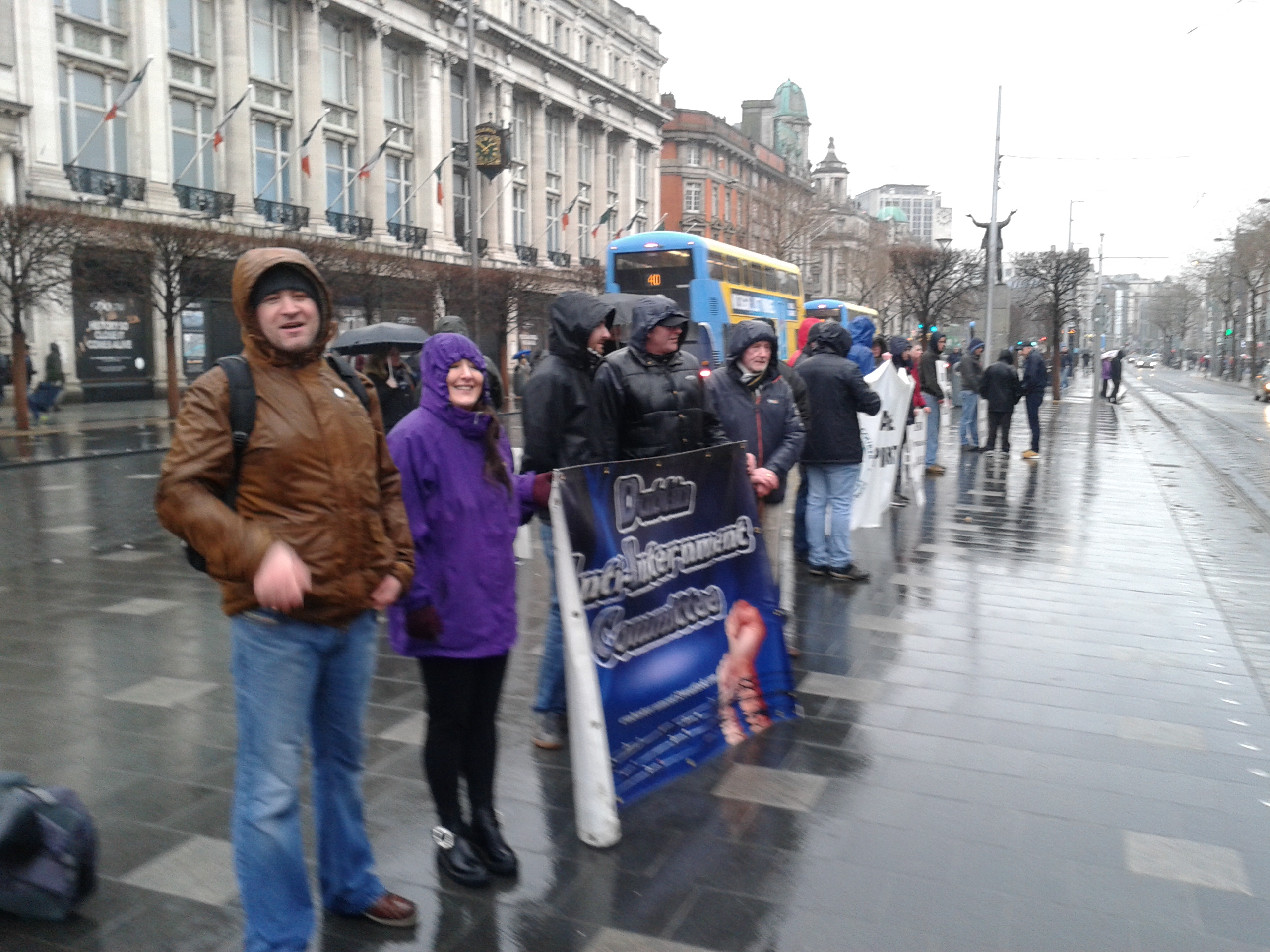
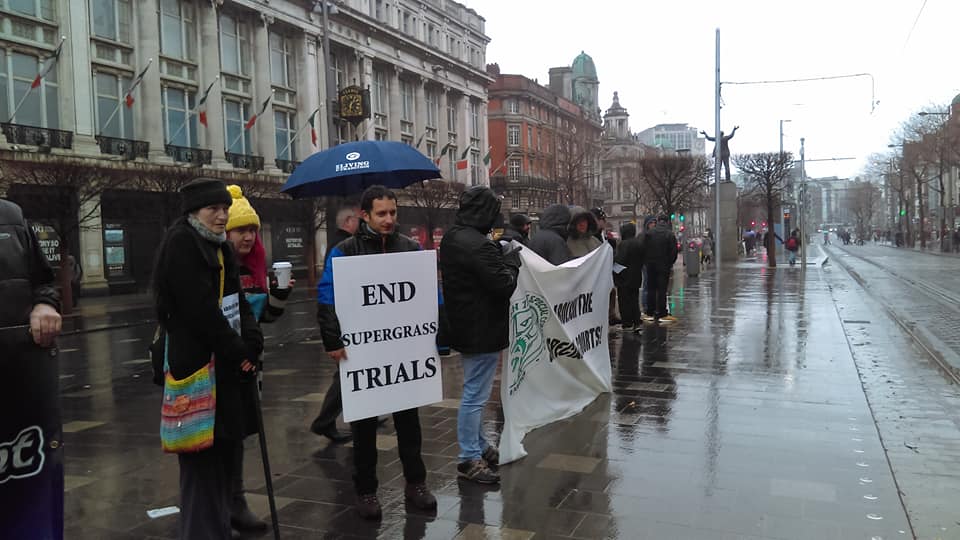
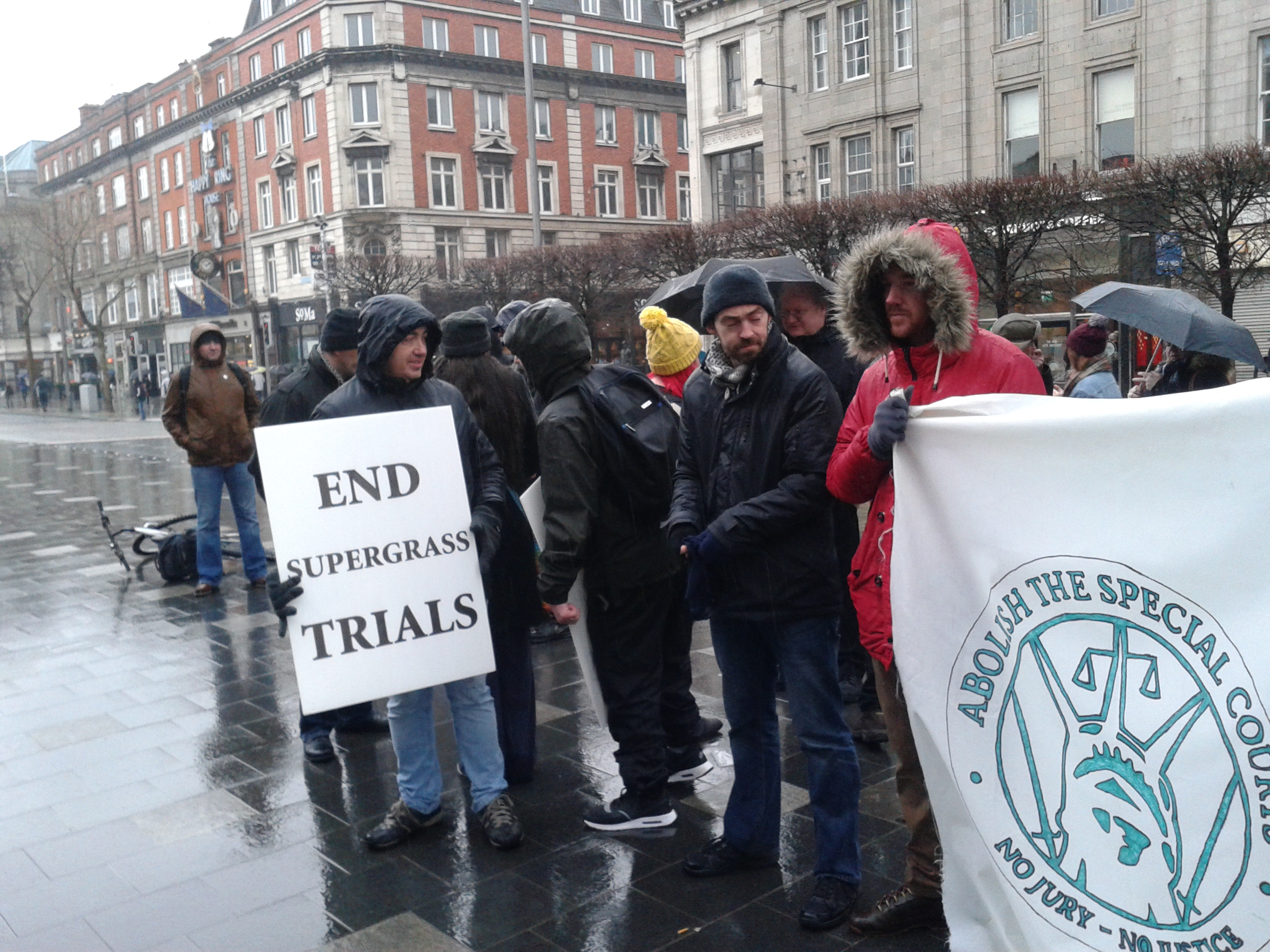
On a wet and cold Saturday, up to two score protesters gathered on the pedestrian reservation in O’Connell Street to denounce the Special Criminal Courts and their operation.

A section of the picket line in O’Connell Street – the Clery’s building is in the background with the Jim Larkin monument in the distance. (Photo: D.Breatnach)

They lined up opposite the iconic General Post Office, site of the HQ of the Easter Rising in 1916 and still bearing the marks of British Army bullet and shrapnel strikes. As traffic and shoppers hurried by or stopped to stare, the protesters were observed by members of the Garda Special Branch, the political section of the police force of the Irish state, one of whom ducked behind one of the GPO’s columns as someone pointed a camera in his direction (to cause some mirth among the picketers).

(Photo: D.Breatnach)

Among the picketers on the 20th January 2017 were members of different Irish Republican groups and campaigns as well as a number of independent activists of Republican, Socialist and Anarchist backgrounds.

After standing for a while displaying placards and banners, the protesters gathered around to hear Sean Doyle, who had been presented as the campaign’s spokesperson.

A section of the picketers (Photo: D.Breatnach)

Remarking that the Special Courts are “a travesty in law”, Doyle added that one should “never equate law with justice.” Doyle accused the Courts of being “a political tool to deny due process”. He encouraged those present to ask themselves whether Maurice McCabe or John Wilso (both Gardaí who fell foul of the force) would nowadays trust uncontested evidence. Doyle went on to say, in reference to administrations both sides of the Border, that “Political special courts are structured to deny your civil and human rights and must be abolished.”

Special courts of the Israeli Zionist regime, or US military-occupied areas were also condemned by the speaker, who called for “cooperation and sharing of information across the world” because “injustice knows no borders.”

Sean Doyle speaking (Photo: D.Breatnach)

After Doyle’s short speech had been applauded, Ger Devereaux thanked everyone for attending and informed them that the campaign against the Special Courts would continue with pickets and meetings and asked people to spread the word to help the campaign to grow and to achieve success.

Ger Devereaux addressing the crowd
(Photo: D.Breatnach)

HISTORY AND COMMENT

The operation of the law in what are called “democratic” societies is supposed to be that a person suspected of committing a crime is accused and brought to trial, where the evidence is presented against him and should he choose to do so, he or his representation defend him. A jury drawn at random then considers the evidence, decides the verdict and, should that be of “guilty”, the judge pronounces sentence, within the parameters of the maximum and minimum set by law. That’s the theory, anyway.

We all know that there are flaws in that system, even without considering the laws under which the operate and the real power and wealth in society, as well as the power of the media, prejudices among jury members, lying witnesses, faulty expert testimony, etc. Nevertheless, the system is an advance on what existed before and provides some protection to the accused. At times the jury arrives at a verdict which is manifestly contrary to that desired by the forces of the State, i.e on the side of democracy and justice and against repression. A quite recent example was the finding of “not guilty” for the Jobstown protesters last year after a politically-orchestrated attempt by State, politicans and media to find them “guilty”. Another example, further back, was the exoneration of the five anti-war activists in 2006 for their actions against US warplanes in “neutral” Shannon airport.

The State has decided upon a way to overcome this problem, which is to do away with juries completely and, with the Special Courts, it has achieved this: these courts have no juries and, furthermore, a majority verdict of two out of three judges is sufficient for conviction. This would be of concern enough were it not for the fact that the Government appoints all of those judges.
A view of the GPO building across the road from the picket. The leg of a Special Branch officer may be seen as he ducks behind a column on the right.

The first of these courts was set up in 1939 under De Valera, as part of the Offences Against the State Act but fell into general disuse after the 2nd World War, to be briefly brought back during the IRA’s Border Campaign of the 1950s, when hundreds were interned. The Special Court was resuscitated in 1972 (as was the Amendment to the Offences Against the State Act – more about this below), again by a Fianna Fáil government under Jack Lynch.

A second Special Court was created by Minister for Justice Frances Fitzgerald, in the FG-Labour coalition Government, ironically on the centenary year and month of the Easter Rising. The justification was quite baldly that it was difficult for the State to achieve verdicts of guilty in some cases through the use of a jury. Of course the State declares that the difficulty arises in that the members of a jury may be intimidated by criminals or “terrorists”. But might it not equally be that the accused are not guilty at all? Or that the State has not bothered with the niceties of the democratic system and carried out its investigation? And if the jury system is to be judged ineffective in one kind of case, why not in others?

Originally, the target of the Special Courts was clearly political activists. When the atmosphere allowing political persecution by the State dissipated somewhat, it was claimed that the target was gangsters. However, for long years the victims continued to be political activists – exclusively of the Irish Republican brand. With an occasional suspect of the gangster type occasionally brought before the Special Courts however a stream of Irish Republicans find themselves facing them.

FAMOUS CASES

Among the famous convictions of the Special Courts were the sentencing to death in 1976 of the Anarchist couple Noel and Marie Murray for alleged murder of a Garda, the sentences being quashed on appeal after a campaign and reduced to life instead.

In 1978, then IRSP members Osgur Breatnach, Brian McNally and Nicky Kelly were all sentenced to long terms in jail. Their sentences were overturned in 1980 (and 1984 for Kelly) and years later they received compensation, reportedly in six figures.

Nicky Kelly & Osgur Breatnach at press conference after their convictions in the Special Criminal Court had been overturned (Photo: An Phoblacht)

A few more big convictions of political activists followed which were not overturned on appeal until in 2001, Colm Murphy was convicted of conspiracy to cause the Omagh bombing but in 2005 his conviction was quashed after revelations that the judges had acted improperly and that Garda witnesses for the Prosecution had falsified their notes. He was finally cleared by the SCC in 2010.

In 2003, Michael McKevitt was convicted by the Special Court of allegedly “directing terrorism” and “membership of ….. the Real IRA” in a judgement which has been criticised by a number of people unconnected to him.

There were no ‘gangland’ cases before the SCC until 1977/’78 and the Guerin murder trials, when one man was convicted on the evidence of a gang member turned State’s witnesses, a case about which many questions remain today. A big gap followed in ‘gangland’ cases until the years 2013, 2014 and 2016, with one case in each of those years..

Throughout all these years a steady stream of convictions and jailing of Irish Republicans for the lesser charges of “membership of an illegal organisation” have been processed through the Special Courts.

BRITISH TERRORISM

The same year that the Special Criminal Courts were introduced, i.e 1972, was when the Amendment to the Offences Against the State Act was brought into law. This provision permits conviction with the only evidence being the word of a Garda officer of the rank of Chief Superintendent or higher. Although historically judges have been reluctant to convict on this alone the quality of what other evidence they require has been slipping lower in recent years. Irish Republicans are now being convicted, for example of membership of an illegal organisation, on the word of a senior Garda who says that he has reason to believe that they are such, supported by spurious “evidence”. In one case this “evidence” consisted of a piece of paper allegedly from a prisoner the man had been visiting which discussed some recent events and in another, that Gardaí had “seen him turn down a dark lane”.

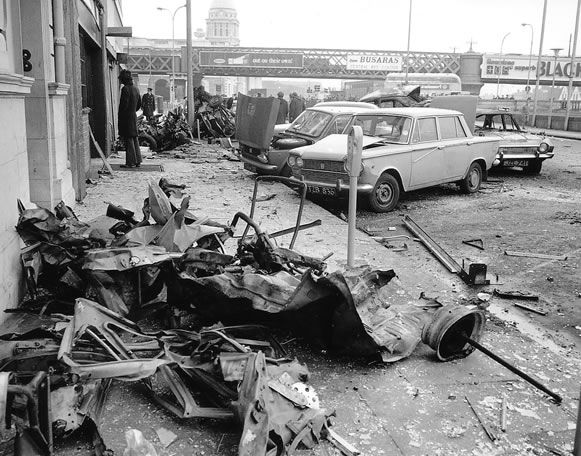
The irony is that the resuscitation of the Special Courts and the introduction of the Amendment to the OAS Act were voted in after a terrorist bomb planted by British agents. The Jack Lynch Fianna Fáil Government seemed to be heading for a defeat in the Dáil on their proposal, with Fine Gael. Labour TDs and others set to vote against. During the debate, on 1st December 1972, two car bombs exploded in Dublin, one Eden Quay and another on Burgh Quay, killing two CIE workers and wounding 131. In the succeeding panic, the opposition to the measure collapsed and it was was passed. Wikipedia: “It is believed that the 26 November and 1 December bombings were executed to influence the outcome of the voting.”

One of two Dublin bombs by British agents in December 1972 which helped introduce additional anti-Republican legislation
(Photo source: Indymedia)

Both sides of the Border, Irish Republicans are now being convicted and sent to jail by non-jury courts, by the Diplock Courts of the Six Counties colonial administration one side and by the Special Courts of the Irish State on the other. Ironically, in Britain itself there are no non-jury criminal courts.


WHO PROTESTS?

Given the patently undemocratic nature of the courts and the clearly political use by the State, what has the reaction of the civil and human rights sector been? In earlier days, it has been criticised by the Irish Council for Civil Liberties, Amnesty International and the UN Commission on Human Rights. In recent years, these critics, especially the Irish ones, have tended towards silence on the matter. The non-Republican Irish organised Left has likewise remained silent, as it tends to do with all persecution of Irish Republicans.

However, history has shown us that once the State succeeds in repression against one sector, it moves on to another it finds threatening or an inconvenience. It is therefore in the interests of all democratic and Left sections of society to unite against these undemocratic and repressive courts and to campaign for their total abolition.
End.
LINKS:

https://en.wikipedia.org/wiki/Special_Criminal_Court

https://en.wikipedia.org/wiki/1972_and_1973_Dublin_bombings

https://en.wikipedia.org/wiki/Offences_against_the_State_Acts_1939%E2%80%931998

http://www.irishstatutebook.ie/eli/1972/act/26/enacted/en/html